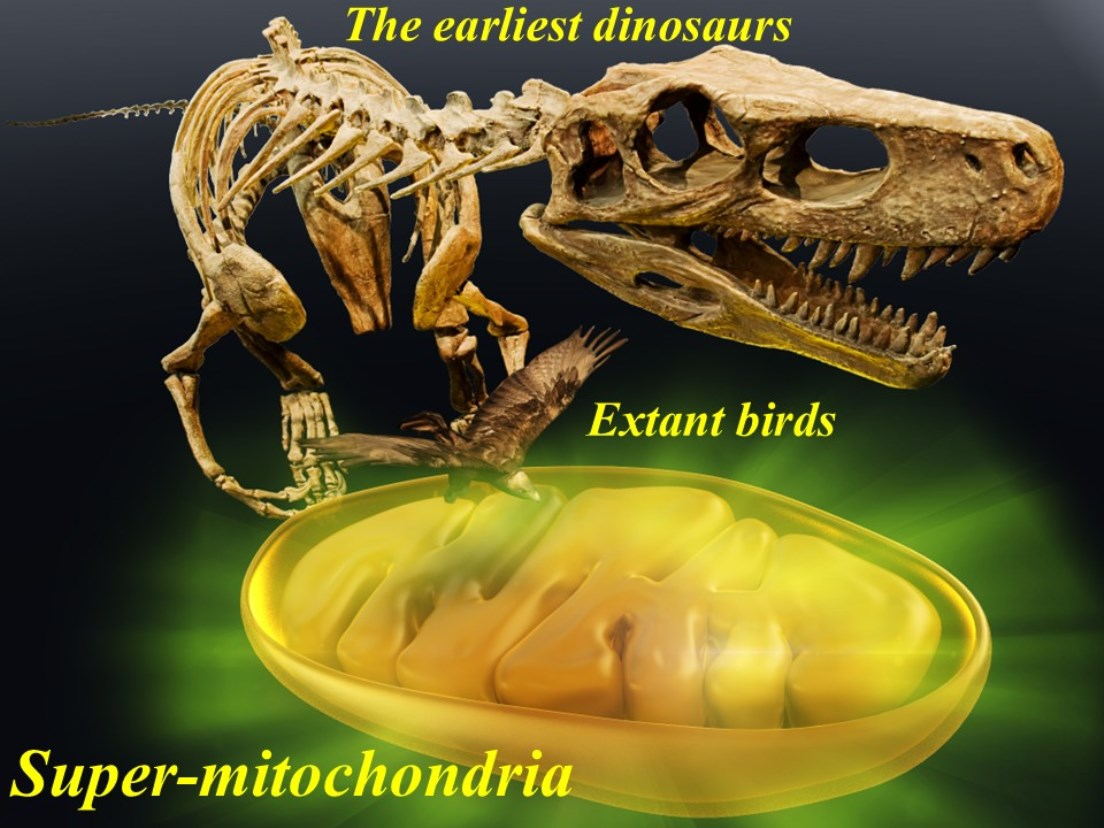

Origins of Avian Hyperactive Mitochondria, Genome Compaction, and Air-Sac Physiology in Early Theropods During the Carnian Pluvial Episode

Abstract
1. Introduction
2. Avian Physical Performance
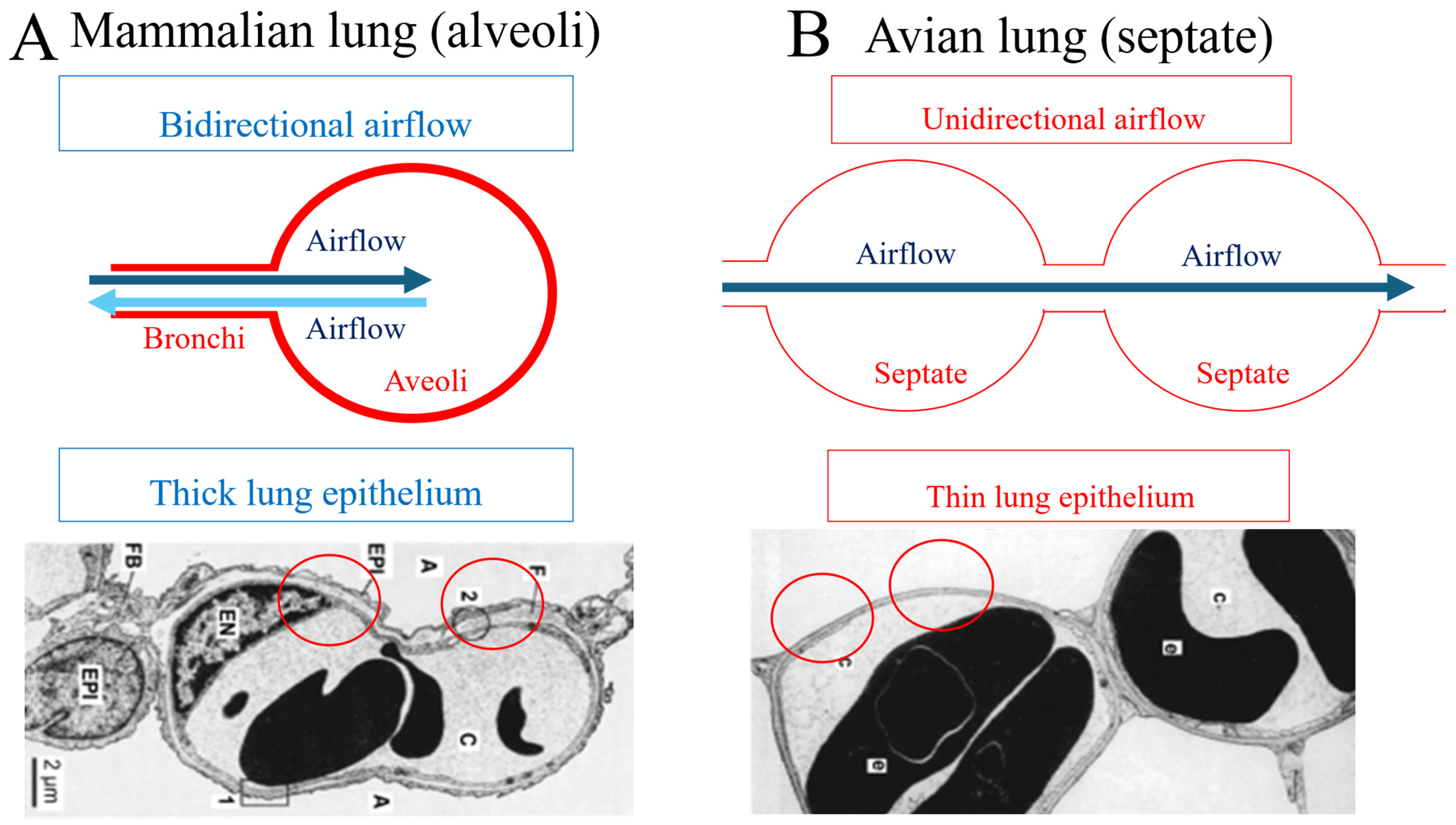
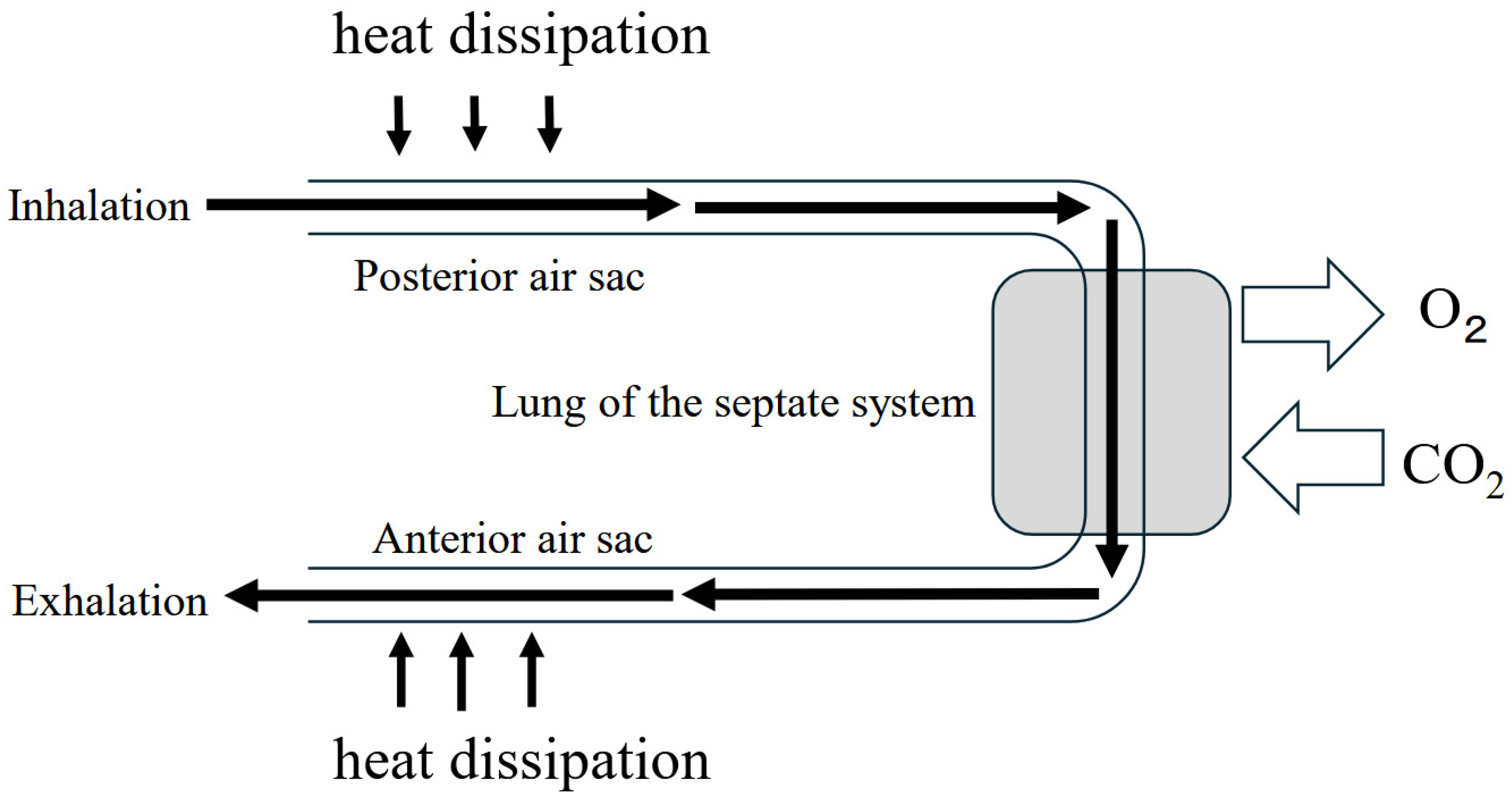
3. Avian and Mammalian Lungs
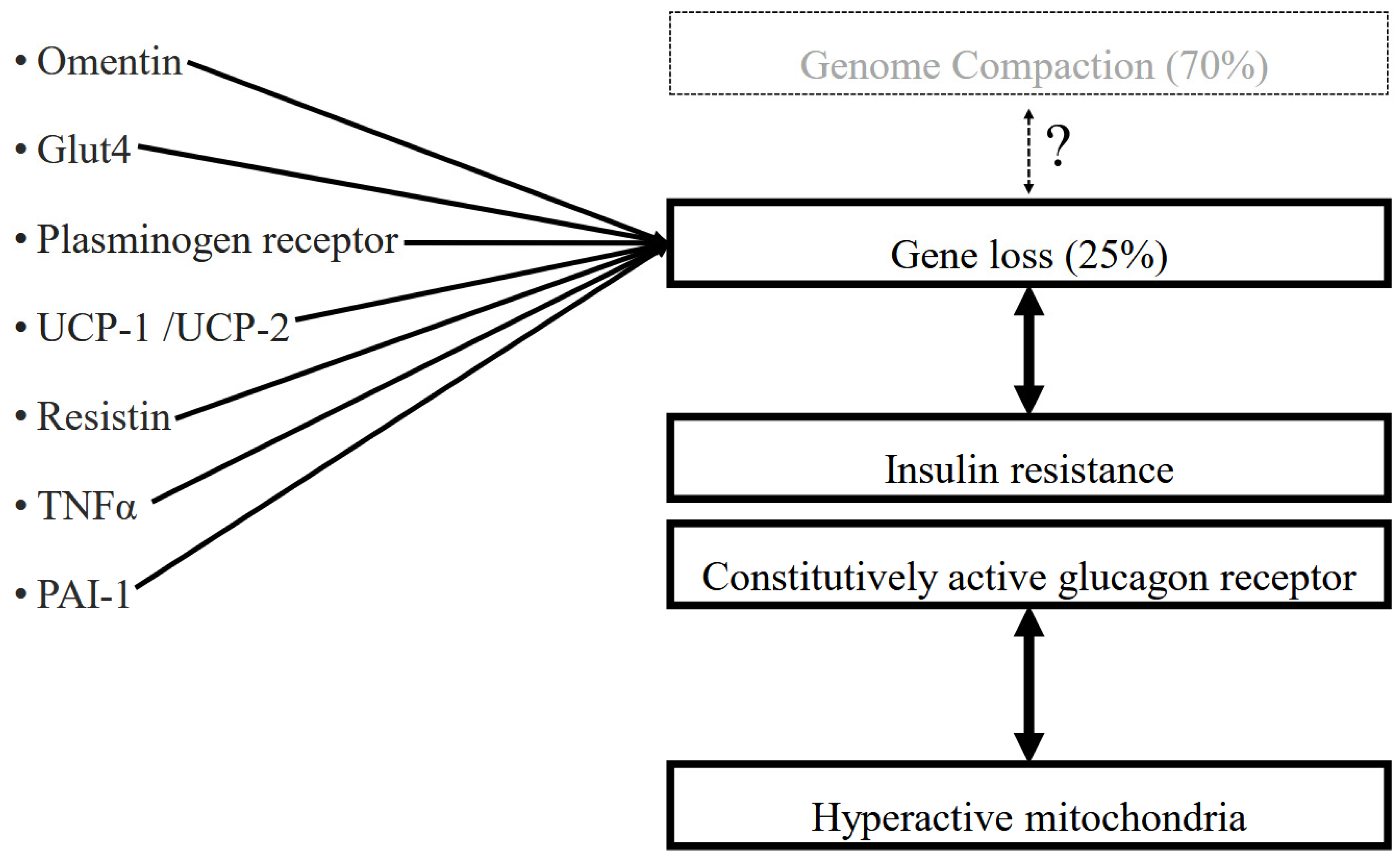
4. Insulin–Glucagon Axis (IGA)
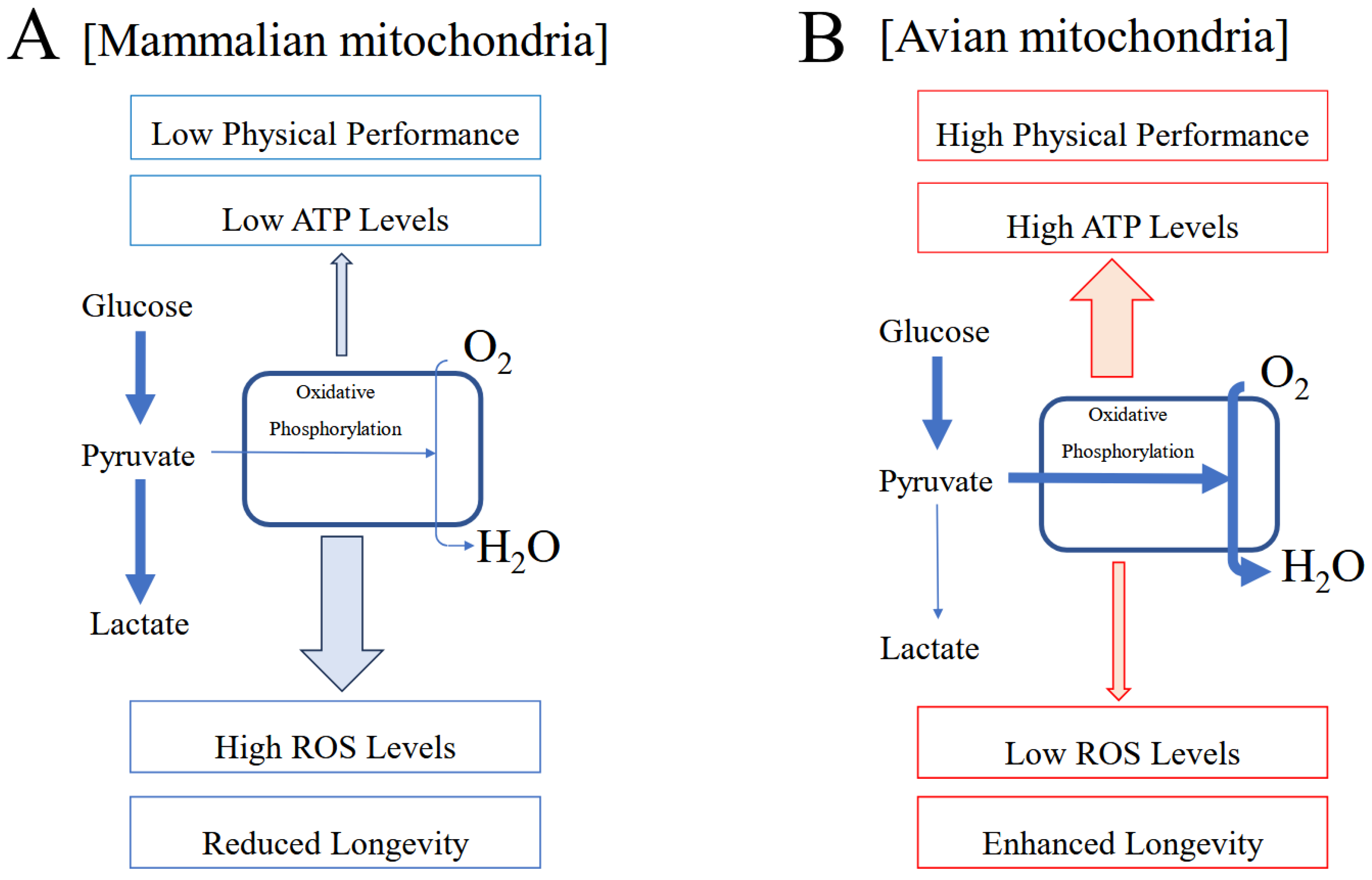
5. Avian and Mammalian Mitochondria
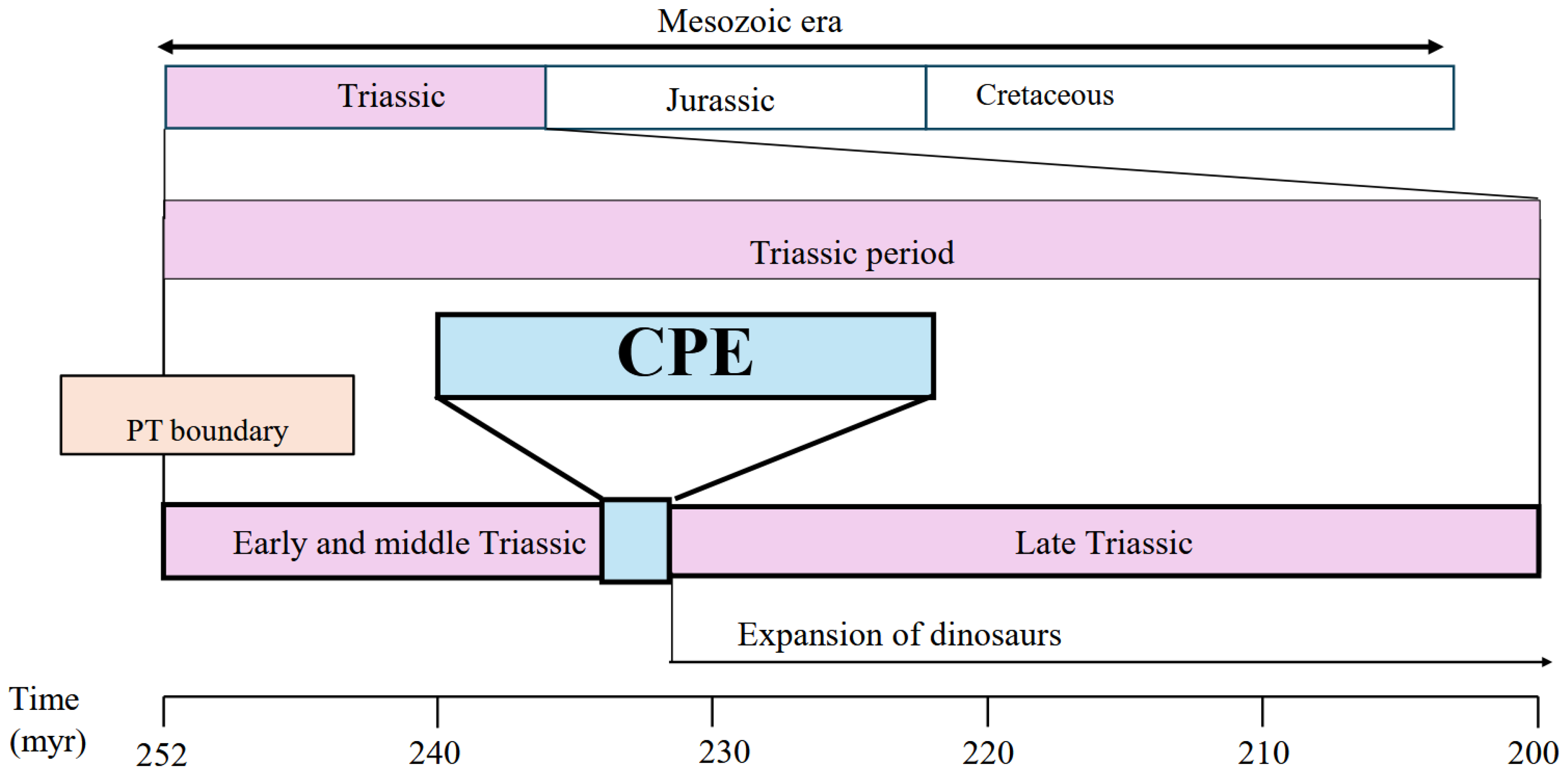
6. Theropod–Bird Lineage and the Triassic Environment
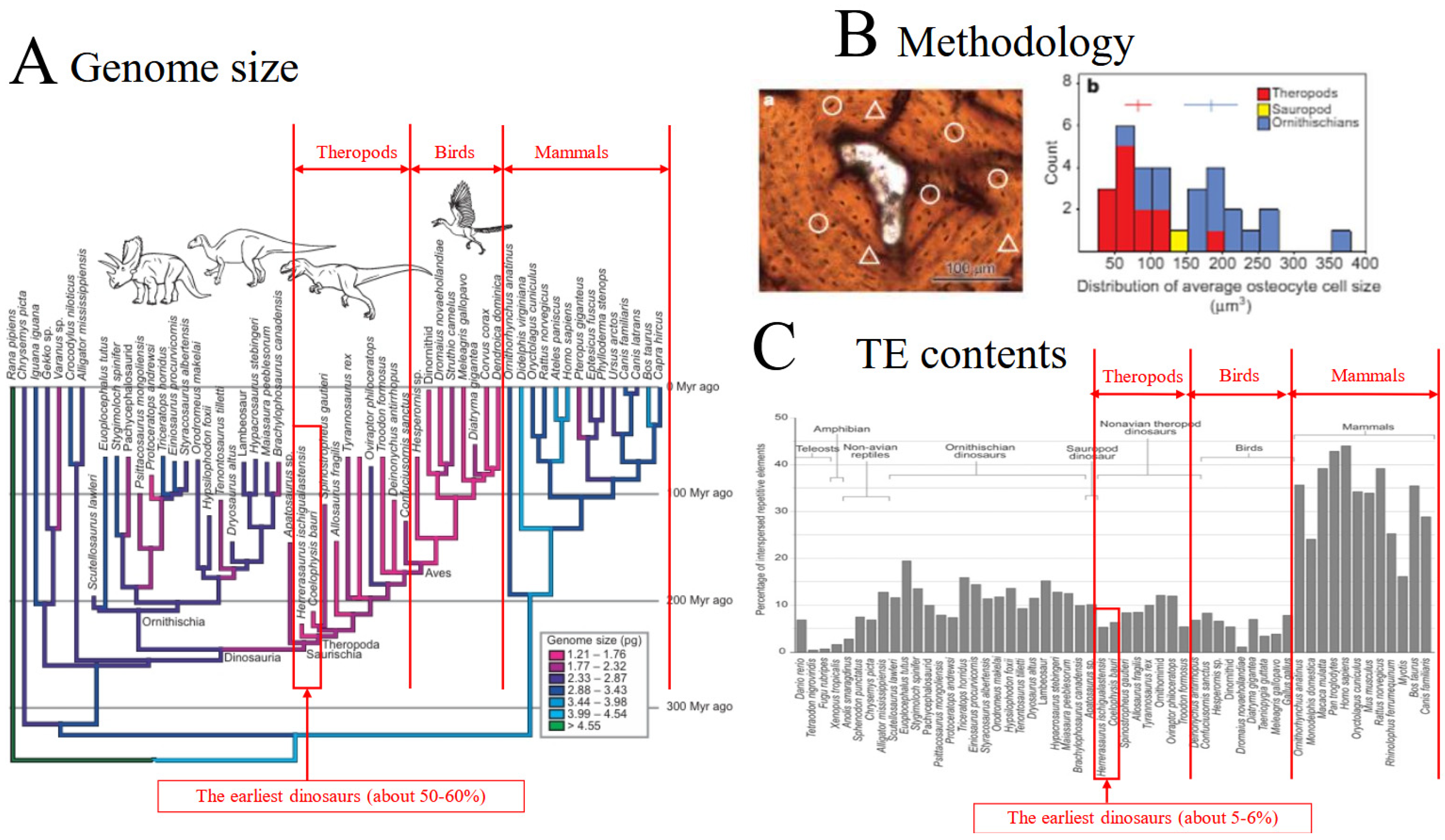
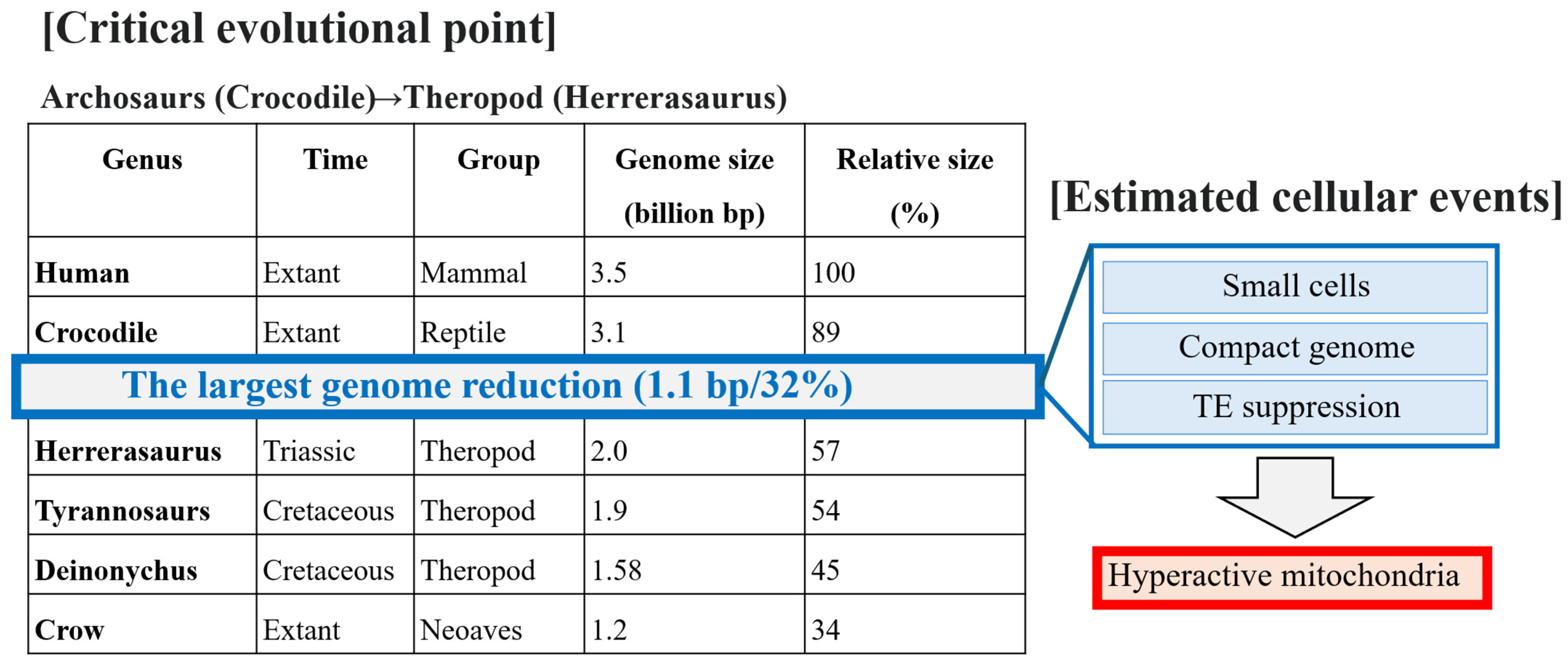
7. Compact Genome of the Earliest Dinosaurs
8. Emergence of Hyperactive Mitochondria
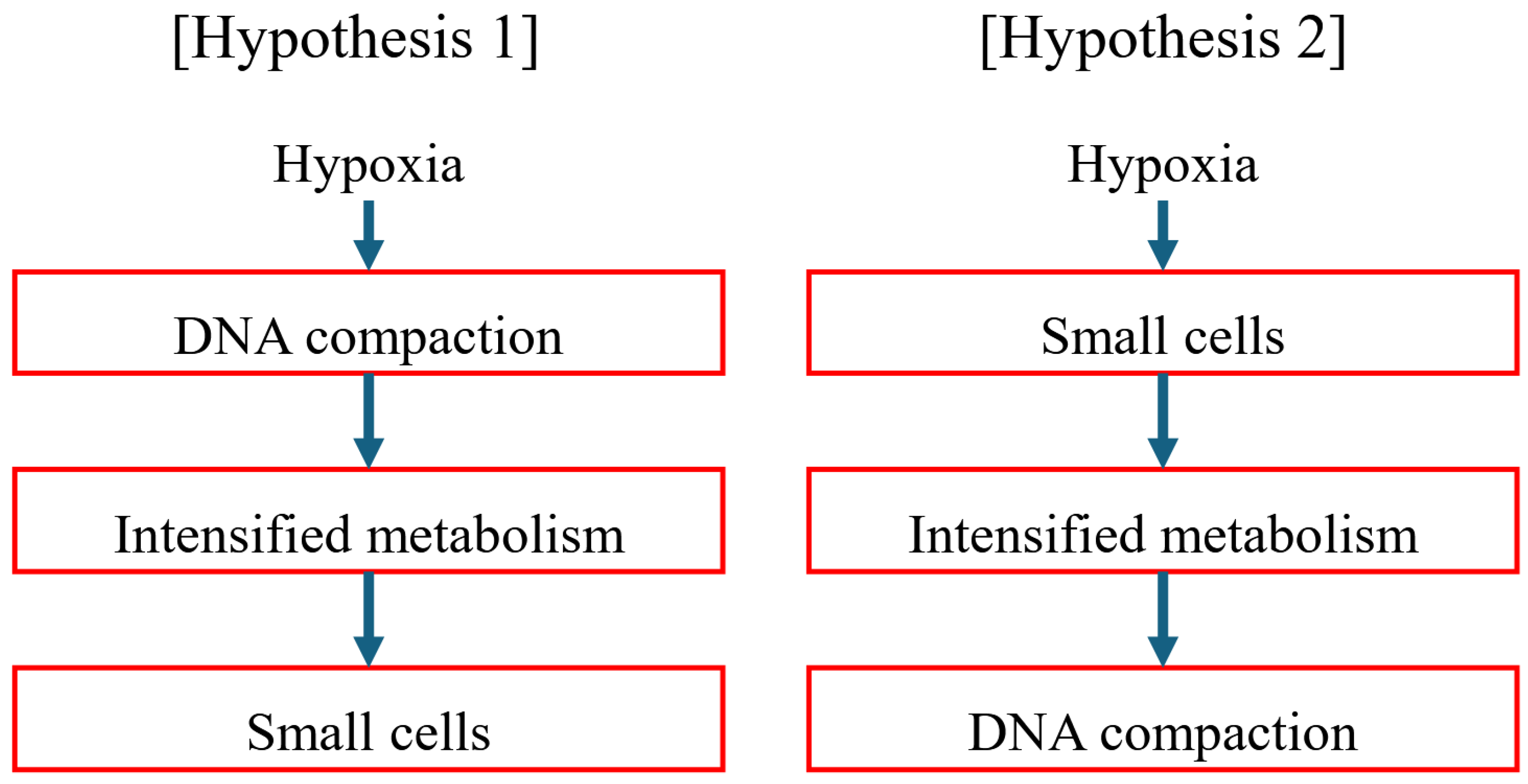
9. How Did Hypoxia Lead to Avian Hyperactive Mitochondria?
10. CPE as the Final Boost for Dinosaurs’ Expansion
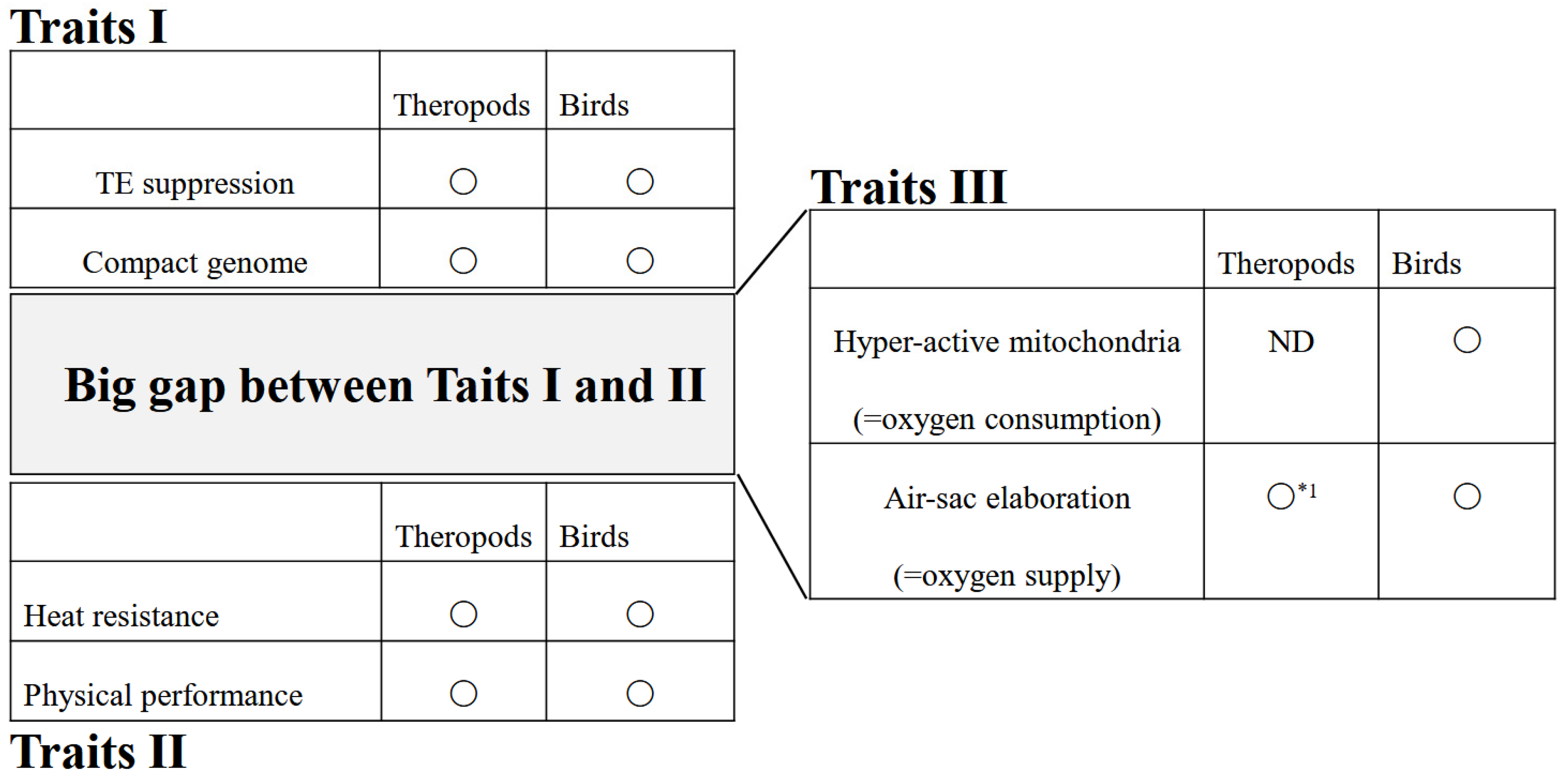
11. New Avenues and Limitations of the Present Study
12. Conclusions
13. Methodological Framework
Funding
Data Availability Statement
Conflicts of Interest
Abbreviations
| CPE | Carnian Pluvial Episode |
| IGA | insulin–glucagon axis |
| myr | million years ago |
| PT boundary | Permian–Triassic boundary |
| ROS | reactive oxygen species |
| TE | transposable element |
References
- Satoh, T. Bird evolution by insulin resistance. Trends Endocrinol. Metab. 2021, 32, 803–813. [Google Scholar] [CrossRef]
- Hickey, A.J.; Jüllig, M.; Aitken, J.; Loomes, K.; Hauber, M.E.; Phillips, A.R. Birds and longevity: Does flight driven aerobicity provide an oxidative sink? Ageing Res. Rev. 2012, 11, 242–253. [Google Scholar] [CrossRef] [PubMed]
- Organ, C.L.; Shedlock, A.M.; Meade, A.; Pagel, M.; Edwards, S.V. Origin of avian genome size and structure in non-avian dinosaurs. Nature 2007, 446, 180–184. [Google Scholar] [CrossRef] [PubMed]
- Bernardi, M.; Gianolla, P.; Petti, F.M.; Mietto, P.; Benton, M.J. Dinosaur diversification linked with the Carnian Pluvial Episode. Nat. Commun. 2018, 9, 1499. [Google Scholar] [CrossRef] [PubMed]
- Scott, G.R. Elevated performance: The unique physiology of birds that fly at high altitudes. J. Exp. Biol. 2011, 214, 2455–2462. [Google Scholar] [CrossRef]
- Barve, S.; Dhondt, A.A.; Mathur, V.B.; Cheviron, Z.A. Life-history characteristics influence physiological strategies to cope with hypoxia in Himalayan birds. Proc. Biol. Sci. 2016, 283, 20162201. [Google Scholar] [CrossRef]
- Laguë, S.L. High-altitude champions: Birds that live and migrate at altitude. J. Appl. Physiol. 2017, 123, 942–950. [Google Scholar] [CrossRef]
- Faraci, F.M. Adaptations to hypoxia in birds: How to fly high. Annu Rev Physiol. 1991, 53, 59–70. [Google Scholar] [CrossRef]
- Snyder, G.K. Capillarity and diffusion distances in skeletal muscles in birds. J. Comp. Physiol. B 1990, 160, 583–591. [Google Scholar] [CrossRef]
- Butler, P.J. The physiological basis of bird flight. Phil. Trans. R. Soc. B 2016, 371, 20150384. [Google Scholar] [CrossRef]
- Farmer, C.G. The evolution of unidirectional pulmonary airflow. Physiology 2015, 30, 260–272. [Google Scholar] [CrossRef]
- Schachner, E.R.; Cieri, R.L.; Butler, J.P.; Farmer, C.G. Unidirectional pulmonary airflow patterns in the savannah monitor lizard. Nature 2014, 506, 367–370. [Google Scholar] [CrossRef] [PubMed]
- Cieri, R.L.; Farmer, C.G. Unidirectional pulmonary airflow in vertebrates: A review of structure, function, and evolution. J. Comp. Physiol. B 2016, 186, 541–552. [Google Scholar] [CrossRef] [PubMed]
- Maina, J.N. Development, structure, and function of a novel respiratory organ, the lung-air sac system of birds: To go where no other vertebrate has gone. Biol. Rev. Camb. Philos. Soc. 2006, 81, 545–579. [Google Scholar] [CrossRef] [PubMed]
- Hillenius, W.J.; Ruben, J.A. The evolution of endothermy in terrestrial vertebrates: Who? When? Why? Physiol. Biochem. Zool. 2004, 77, 1019–1042. [Google Scholar] [CrossRef]
- Schachner, E.R.; Moore, A.J. Unidirectional airflow, air sacs or the horizontal septum: What does it take to make a bird lung? Philos. Trans. R. Soc. B Biol. Sci. 2025, 380, 20230418. [Google Scholar] [CrossRef]
- West, J.B.; Watson, R.R.; Fu, Z. The human lung: Did evolution get it wrong? Eur. Respir. J. 2007, 29, 11–17. [Google Scholar] [CrossRef]
- West, J.B. Comparative physiology of the pulmonary blood-gas barrier: The unique avian solution. Am. J. Physiol. Regul. Integr. Comp. Physiol. 2009, 297, R1625–R1634. [Google Scholar] [CrossRef]
- West, J.B.; Watson, R.R.; Fu, Z. The honeycomb-like structure of the bird lung allows a uniquely thin blood-gas barrier. Respir. Physiol. Neurobiol. 2006, 152, 115–118. [Google Scholar] [CrossRef]
- Quattrone, A.; Picozzi, I.; Lubian, E.; Fehri, N.E.; Menchetti, L.; Barbato, O.; Vigo, D.; Agradi, S.; Sulçe, M.; Faustini, M.; et al. Blood Glucose in Birds: Another Way to Think About “Normal” Glycemia and Diabetes Mellitus in Animals. Diversity 2025, 17, 355. [Google Scholar] [CrossRef]
- Sojka, P.A. Glucose Homeostasis and Derangement in Birds. Vet. Clin. Exot. Anim. Pract. 2025, 28, 165–178. [Google Scholar] [CrossRef] [PubMed]
- Scanes, C.G.; Braun, E. Avian metabolism: Its control and evolution. Front. Biol. 2013, 8, 134–159. [Google Scholar] [CrossRef]
- Zhang, C.; Xiang, X.; Liu, J.; Huang, Y.; Xue, J.; Sun, Q.; Leng, S.; Liu, S.; He, X.; Hu, P.; et al. Constitutively active glucagon receptor drives high blood glucose in birds. Nature 2025, 641, 1287–1297. [Google Scholar] [CrossRef] [PubMed]
- Ballantyne, J.S.; John, T.M.; George, J.C. The effects of glucagon on hepatic mitochondrial metabolism in the pigeon, Columba livia. Gen. Comp. Endocrinol. 1988, 72, 130–135. [Google Scholar] [CrossRef] [PubMed]
- Barre, H.; Berne, G.; Brebion, P.; Cohen-Adad, F.; Rouanet, J.-L.; Fongy, A.; Romestaing, C.; Blanc, C.; Lacoste-Garanger, N.; Raccurt, M.; et al. Loose-coupled mitochondria in chronic glucagon-treated hyperthermic ducklings. Am. J. Physiol. 1989, 256, R1192–R1199. [Google Scholar] [CrossRef][Green Version]
- Sweazea, K.L.; McMurtry, J.P.; Elsey, R.M.; Redig, P.; Braun, E.J. Comparison of metabolic substrates in alligators and several birds of prey. Zoology 2014, 117, 253–260. [Google Scholar] [CrossRef]
- CColca, J.R.; Hazelwood, R.L. Persistence of immunoreactive insulin, glucagon and pancreatic polypeptide in the plasma of depancreatized chickens. J. Endocrinol. 1982, 92, 317–326. [Google Scholar] [CrossRef]
- Coon, C.N.; Tarnavsky, G.K.; Penner, M.; McFarland, D. A radioimmunoassay for pancreatic-glucagon in chickens. Poult. Sci. 1980, 59, 86–90. [Google Scholar] [CrossRef]
- Sweazea, K.L. Revisiting glucose regulation in birds—A negative model of diabetes complications. Comp. Biochem. Physiol. B Biochem. Mol. Biol. 2022, 262, 110778. [Google Scholar] [CrossRef]
- Dupont, J.; Métayer-Coustard, S.; Ji, B.; Ramé, C.; Gespach, C.; Voy, B.; Simon, J. Characterization of major elements of insulin signaling cascade in chicken adipose tissue: Apparent insulin refractoriness. Gen. Comp. Endocrinol. 2012, 176, 86–93. [Google Scholar] [CrossRef]
- Ng, D.; Pawling, J.; Dennis, J.W. Gene purging and the evolution of Neoave metabolism and longevity. J Biol Chem. 2023, 299, 105409. [Google Scholar] [CrossRef] [PubMed]
- Trujillo, N.; Martínez-Pacheco, M.; Soldatini, C.; Ancona, S.; Young, R.C.; Albores-Barajas, Y.V.; Orta, A.H.; Rodríguez, C.; Székely, T.; Drummond, H.; et al. Lack of age-related mosaic loss of W chromosome in long-lived birds. Biol. Lett. 2022, 18, 20210553. [Google Scholar] [CrossRef] [PubMed]
- Hughes, A.L.; Friedman, R. Genome size reduction in the chicken has involved massive loss of ancestral protein-coding genes. Mol. Biol. Evol. 2008, 25, 2681–2688. [Google Scholar] [CrossRef] [PubMed]
- Bird, A.P. Gene number, noise reduction and biological complexity. Trends Genet. 1995, 11, 94–100. [Google Scholar] [CrossRef]
- Daković, N.; Térézol, M.; Pitel, F.; Maillard, V.; Elis, S.; Leroux, S.; Lagarrigue, S.; Gondret, F.; Klopp, C.; Baeza, E.; et al. The loss of adipokine genes in the chicken genome and implications for insulin metabolism. Mol. Biol. Evol. 2014, 31, 2637–2646. [Google Scholar] [CrossRef]
- Seki, Y.; Sato, K.; Kono, T.; Abe, H.; Akiba, Y. Broiler chickens (Ross strain) lack insulin-responsive glucose transporter GLUT4 and have GLUT8 cDNA. Gen. Comp. Endocrinol. 2003, 133, 80–87. [Google Scholar] [CrossRef]
- Emre, Y.; Hurtaud, C.; Ricquier, D.; Bouillaud, F.; Hughes, J.; Criscuolo, F. Avian UCP: The killjoy in the evolution of the mitochondrial uncoupling proteins. J. Mol. Evol. 2007, 65, 392–402. [Google Scholar] [CrossRef]
- Sharma, S.; Shinde, S.S.; Teekas, L.; Vijay, N. Evidence for the loss of plasminogen receptor KT gene in chicken. Immunogenetics 2020, 72, 507–515. [Google Scholar] [CrossRef]
- Shiraishi, J.; Yanagita, K.; Fukumori, R.; Sugino, T.; Fujita, M.; Kawakami, S.; McMurtry, J.P.; Bungo, T. Comparisons of insulin related parameters in commercial-type chicks: Evidence for insulin resistance in broiler chicks. Physiol Behav. 2011, 103, 233–239. [Google Scholar] [CrossRef]
- Dupont, J.; Tesseraud, S.; Simon, J. Insulin signaling in chicken liver and muscle. Gen. Comp. Endocrinol. 2009, 163, 52–57. [Google Scholar] [CrossRef]
- Dupont, J.; Dagou, C.; Derouet, M.; Simon, J.; Taouis, M. Early steps of insulin receptor signaling in chicken and rat: Apparent refractoriness in chicken muscle. Domest. Anim. Endocrinol. 2004, 26, 127–142. [Google Scholar] [CrossRef] [PubMed]
- Liu, H.Y.; Yehuda-Shnaidman, E.; Hong, T.; Han, J.; Pi, J.; Liu, Z.; Cao, W. Prolonged exposure to insulin suppresses mitochondrial production in primary hepatocytes. J. Biol. Chem. 2009, 284, 14087–14095. [Google Scholar] [CrossRef] [PubMed]
- Katic, M.; Kennedy, A.R.; Leykin, I.; Norris, A.; McGettrick, A.; Gesta, S.; Russell, S.J.; Bluher, M.; Maratos-Flier, E.; Kahn, C.R. Mitochondrial gene expression and increased oxidative metabolism: Role in increased lifespan of fat-specific insulin receptor knock-out mice. Aging Cell 2007, 6, 827–839. [Google Scholar] [CrossRef] [PubMed]
- Danford, H.G.; Galvin, R.D.; Horita, A. Oxygen consumption in dogs as influenced by the altered metabolism of diabetes mellitus. J. Clin. Invest. 1956, 35, 1205–1212. [Google Scholar] [CrossRef]
- Accili, D.; Drago, J.; Lee, E.J.; Johnson, M.D.; Cool, M.H.; Salvatore, P.; Asico, L.D.; José, P.A.; Taylor, S.I.; Westphal, H. Early neonatal death in mice homozygous for a null allele of the insulin receptor gene. Nat. Genet. 1996, 12, 106–109. [Google Scholar] [CrossRef]
- Liu, J.P.; Baker, J.; Perkins, A.S.; Robertson, E.J.; Efstratiadis, A. Mice carrying null mutations of the genes encoding insulin-like growth factor I (Igf-1) and type 1 IGF receptor (Igf1r). Cell 1993, 75, 59–72. [Google Scholar] [CrossRef]
- Waldbillig, R.J.; Arnold, D.R.; Fletcher, R.T.; Chader, G.J. Insulin and IGF-1 binding in chick sclera. Invest. Ophthalmol. Vis. Sci. 1990, 31, 1015–1022. [Google Scholar]
- Barja, G. Mitochondrial free radical production and aging in mammals and birds. Ann. N. Y. Acad. Sci. 1998, 854, 224–238. [Google Scholar] [CrossRef]
- Butler, P.J. Metabolic regulation in diving birds and mammals. Respir. Physiol. Neurobiol. 2004, 141, 297–315. [Google Scholar] [CrossRef]
- Barja, G.; Cadenas, S.; Rojas, C.; Pérez-Campo, R.; López-Torres, M. Low mitochondrial free radical production per unit O2 consumption can explain the simultaneous presence of high longevity and high aerobic metabolic rate in birds. Free Radic. Res. 1994, 21, 317–327. [Google Scholar] [CrossRef]
- Scanes, C.G.; Witt, J.; Ebeling, M.; Schaller, S.; Baier, V.; Bone, A.J.; Preuss, T.G.; Heckmann, D. Quantitative Comparison of Avian and Mammalian Physiologies for Parameterization of Physiologically Based Kinetic Models. Front. Physiol. 2022, 13, 858386. [Google Scholar] [CrossRef]
- Else, P.L.; Hulbert, A.J. An allometric comparison of the mitochondria of mammalian and reptilian tissues: The implications for the evolution of endothermy. J. Comp. Physiol. B 1985, 156, 3–11. [Google Scholar] [CrossRef] [PubMed]
- Schell, E.R.; Scott, G.R.; Dawson, N.J.; Winker, K.; McCracken, K.G. Consistent changes in muscle phenotype and mitochondrial abundance underlie dive performance across multiple lineages of diving ducks. J. Exp. Biol. 2024, 227, jeb247550. [Google Scholar] [CrossRef] [PubMed]
- Huey, R.B.; Ward, P.D. Climbing a triassic Mount Everest: Into thinner air. JAMA 2005, 294, 1761–1762. [Google Scholar] [PubMed]
- Xu, G.-H.; Zhao, L.-J.; Gao, K.-Q.; Wu, F.-X. A new stem-neopterygian fish from the Middle Triassic of China shows the earliest over-water gliding strategy of the vertebrates. Proc. Biol. Sci. 2013, 280, 20122261. [Google Scholar] [CrossRef]
- Ward, P.D.; Haggart, J.W.; Carter, E.S.; Wilbur, D.; Tipper, H.W.; Evans, T. Sudden productivity collapse associated with the Triassic-Jurassic boundary mass extinction. Science 2001, 292, 1148–1151. [Google Scholar] [CrossRef]
- Rampino, M.R.; Rodriguez, S.; Baransky, E.; Cai, Y. Global nickel anomaly links Siberian Traps eruptions and the latest Permian mass extinction. Sci. Rep. 2017, 7, 12416. [Google Scholar] [CrossRef]
- Petaev, M.I.; Huang, S.; Jacobsen, S.B.; Zindler, A. Large Pt anomaly in the Greenland ice core points to a cataclysm at the onset of Younger Dryas. Proc. Natl. Acad. Sci. USA 2013, 110, 12917–12920. [Google Scholar] [CrossRef]
- Gale, A.S. A new comb-star (Asteroidea, Astropectinidae) from the Upper Triassic (Carnian) of China. Zootaxa 2020, 4861, 139–144. [Google Scholar] [CrossRef]
- Zhu, Z.; Liu, Y.; Kuang, H.; Benton, M.J.; Newell, A.J.; Xu, H.; An, W.; Ji, S.; Xu, S.; Peng, N.; et al. Altered fluvial patterns in North China indicate rapid climate change linked to the Permian-Triassic mass extinction. Sci. Rep. 2019, 9, 16818. [Google Scholar] [CrossRef]
- Schobben, M.; Stebbins, A.; Ghaderi, A.; Strauss, H.; Korn, D.; Korte, C. Eutrophication, microbial-sulfate reduction and mass extinctions. Commun. Integr. Biol. 2015, 9, e1115162. [Google Scholar] [CrossRef] [PubMed]
- Rey, K.; Amiot, R.; Fourel, F.; Abdala, F.; Fluteau, F.; Jalil, N.-E.; Liu, J.; Rubidge, B.S.; Smith, R.M.; Steyer, J.S.; et al. Oxygen isotopes suggest elevated thermo metabolism within multiple Permo-Triassic therapsid clades. eLife 2017, 6, e28589. [Google Scholar] [CrossRef] [PubMed]
- Bordy, E.M.; Rampersadh, A.; Abrahams, M.; Lockley, M.G.; Head, H.V. Tracking the Pliensbachian-Toarcian Karoo firewalkers: Trackways of quadruped and biped dinosaurs and mammaliaforms. PLoS ONE 2020, 15, e0226847. [Google Scholar] [CrossRef] [PubMed]
- Sciscio, L.; Bordy, E.M.; Abrahams, M.; Knoll, F.; McPhee, B.W. The first megatheropod tracks from the Lower Jurassic upper Elliot Formation, Karoo Basin, Lesotho. PLoS ONE 2017, 12, e0185941. [Google Scholar] [CrossRef]
- Smith, D.K. Hindlimb locomotor biomechanics of the derived the rizinosaur Nothronychus: Functional changes in the line to birds and convergence with large-bodied neornitheans. Anat. Rec. 2024, 308, 2347–2370. [Google Scholar] [CrossRef]
- Dal Corso, J.; Bernardi, M.; Sun, Y.; Song, H.; Seyfullah, L.J.; Preto, N.; Gianolla, P.; Ruffell, A.; Kustatscher, E.; Roghi, G. Extinction and dawn of the modern world in the Carnian (Late Triassic). Sci. Adv. 2020, 6, eaba0099. [Google Scholar] [CrossRef]
- Foffa, D.; Dunne, E.M.; Chiarenza, A.A.; Wynd, B.M.; Farnsworth, A.; Lunt, D.J.; Valdes, P.J.; Nesbitt, S.J.; Kligman, B.T.; Marsh, A.D.; et al. Climate drivers and palaeobiogeography of lagerpetids and early pterosaurs. Nat. Ecol. Evol. 2025, 9, 1359–1372. [Google Scholar] [CrossRef]
- Lestari, W.; Al-Suwaidi, A.; Fox, C.P.; Vajda, V.; Hennhoefer, D. Carbon cycle perturbations and environmental change of the middle permian and Late Triassic Paleo-Antarctic circle. Sci. Rep. 2024, 14, 9742. [Google Scholar] [CrossRef]
- Lu, J.; Zhang, P.; Corso, J.D.; Yang, M.; Wignall, P.B.; Greene, S.E.; Shao, L.; Lyu, D.; Hilton, J. Volcanically driven lacustrine ecosystem changes during the Carnian Pluvial Episode (Late Triassic). Proc. Natl. Acad. Sci. USA 2021, 118, e2109895118. [Google Scholar] [CrossRef]
- Miller, C.S.; Peterse, F.; da Silva, A.-C.; Baranyi, V.; Reichart, G.J.; Kürschner, W.M. Astronomical age constraints and extinction mechanisms of the Late Triassic Carnian crisis. Sci. Rep. 2017, 7, 2557. [Google Scholar] [CrossRef]
- Haserbek, T.; Tian, L.; Huang, J.; Shu, W.; Liu, Y.; Hua, X.; Kemp, D.B.; Roghi, G.; Alverà, G.; Gianolla, P.; et al. High latitude terrestrial carbon isotope and mercury perturbations across the Late Triassic Carnian Pluvial Episode in Northwestern China. Sci. Rep. 2025, 15, 16222. [Google Scholar] [CrossRef]
- Langer, M.C.; Ezcurra, M.D.; Bittencourt, J.S.; Novas, F.E. The origin and early evolution of dinosaurs. Biol. Rev. Camb. Philos. Soc. 2010, 85, 55–110. [Google Scholar] [CrossRef] [PubMed]
- Wagner, G.P. The developmental evolution of avian digit homology: An update. Theory Biosci. 2005, 124, 165–183. [Google Scholar] [CrossRef] [PubMed]
- Sereno, P.C.; Novas, F.E. The complete skull and skeleton of an early dinosaur. Science 1992, 258, 1137–1140. [Google Scholar] [CrossRef] [PubMed]
- Rashid, D.J.; Chapman, S.C.; Larsson, H.C.; Organ, C.L.; Bebin, A.-G.; Merzdorf, C.S.; Bradley, R.; Horner, J.R. From dinosaurs to birds: A tail of evolution. EvoDevo 2014, 5, 25. [Google Scholar] [CrossRef]
- Organ, C.L.; Shedlock, A.M. Palaeogenomics of pterosaurs and the evolution of small genome size in flying vertebrates. Biol. Lett. 2009, 5, 47–50. [Google Scholar] [CrossRef]
- Kapusta, A.; Suh, A.; Feschotte, C. Dynamics of genome size evolution in birds and mammals. Proc. Natl. Acad. Sci. USA 2017, 114, E1460–E1469. [Google Scholar] [CrossRef]
- Redi, C.A.; Capanna, E. Genome size evolution: Sizing mammalian genomes. Cytogenet. Genome Res. 2012, 137, 97–112. [Google Scholar] [CrossRef]
- Schartl, M.; Woltering, J.M.; Irisarri, I.; Du, K.; Kneitz, S.; Pippel, M.; Brown, T.; Franchini, P.; Li, J.; Li, M.; et al. The genomes of all lungfish inform on genome expansion and tetrapod evolution. Nature 2024, 634, 96–103. [Google Scholar] [CrossRef]
- Wang, J.; Lu, X.; Zhang, W.; Liu, G.-H. Endogenous retroviruses in development and health. Trends Microbiol. 2024, 32, 342–354. [Google Scholar] [CrossRef]
- Durdevic, Z.; Pillai, R.S.; Ephrussi, A. Transposon silencing in the Drosophila female germline is essential for genome stability in progeny embryos. Life Sci. Alliance 2018, 1, e201800179. [Google Scholar] [CrossRef] [PubMed]
- Cullen, H.; Schorn, A.J. Endogenous Retroviruses Walk a Fine Line between Priming and Silencing. Viruses 2020, 12, 792. [Google Scholar] [CrossRef] [PubMed]
- Miettinen, T.P.; Björklund, M. Mitochondrial Function and Cell Size: An Allometric Relationship. Trends Cell Biol. 2017, 27, 393–402. [Google Scholar] [CrossRef] [PubMed]
- Miettinen, T.P.; Caldez, M.J.; Kaldis, P.; Björklund, M. Cell size control—A mechanism for maintaining fitness and function. BioEssays 2017, 39, 170058. [Google Scholar] [CrossRef]
- Bradbury, J.J.; Hulmes, G.E.; Viswanathan, R.; Costa, G.; Lovegrove, H.E.; Herbert, S.P. mRNA trafficking directs cell-size-scaling of mitochondria distribution and function. Nat. Commun. 2025, 16, 7029. [Google Scholar] [CrossRef]
- Albertsen, M.; Hugenholtz, P.; Skarshewski, A.; Nielsen, K.L.; Tyson, G.W.; Nielsen, P.H. Genome sequences of rare, uncultured bacteria obtained by differential coverage binning of multiple metagenomes. Nat. Biotechnol. 2013, 31, 533–538. [Google Scholar] [CrossRef]
- Nell, L.A.; Weng, Y.-M.; Phillips, J.S.; Botsch, J.C.; Book, K.R.; Einarsson, Á.; Ives, A.R.; Schoville, S.D. Shared Features Underlying Compact Genomes and Extreme Habitat Use in Chironomid Midges. Genome Biol. Evol. 2024, 16, evae086. [Google Scholar] [CrossRef]
- Wiemann, J.; Menéndez, I.; Crawford, J.M.; Fabbri, M.; Gauthier, J.A.; Hull, P.M.; Norell, M.A.; Briggs, D.E.G. Fossil biomolecules reveal an avian metabolism in the ancestral dinosaur. Nature 2022, 606, 522–526. [Google Scholar] [CrossRef]
- O’Connor, P.M.; Claessens, L.P. Basic avian pulmonary design and flow-through ventilation in non-avian theropod dinosaurs. Nature 2005, 436, 253–256. [Google Scholar] [CrossRef]
- Codd, J.R.; Manning, P.L.; Norell, M.A.; Perry, S.F. Avian-like breathing mechanics in maniraptoran dinosaurs. Proc. Biol. Sci. 2008, 275, 157–161. [Google Scholar] [CrossRef]
- Quick, D.E.; Ruben, J.A. Cardio-pulmonary anatomy in theropod dinosaurs: Implications from extant archosaurs. J. Morphol. 2009, 270, 1232–1246. [Google Scholar] [CrossRef]
- Goel, A. Heat stress management in poultry. J. Anim. Physiol. Anim. Nutr. 2021, 105, 1136–1145. [Google Scholar] [CrossRef]
- Mangan, M.; Siwek, M. Strategies to combat heat stress in poultry production-A review. J. Anim. Physiol. Anim. Nutr. 2024, 108, 576–595. [Google Scholar] [CrossRef]
- Liew, P.K.; Zulkifli, I.; Hair-Bejo, M.; Omar, A.R.; Israf, D.A. Effects of early age feed restriction and heat conditioning on heat shock protein 70 expression, resistance to infectious bursal disease, and growth in male broiler chickens subjected to heat stress. Poult. Sci. 2003, 82, 1879–1885. [Google Scholar] [CrossRef]






| Mammals | Birds | Refs | |
|---|---|---|---|
| Glucose (mg/dL) | 80–100 | 300–400 | [26] |
| Ketone bodies (mg/dL) | 1–2 | 10–25 | [26] |
| Insulin (pmol/L) | 14–700 | 7–210 | [27] |
| Glucagon (pg/mL) | 20–50 | 300–900 | [28] |
| Mammals | Birds | Refs | |
|---|---|---|---|
| O2 consumption (pmol/min/2000 cells) | 30–35 | 60–80 | [51] |
| Oxidative damage (mM H2O2 equivalent) | 23–28 | 5–8 | [51] |
| Mitochondrial density per muscle cell (%) | 8–10 | 40–50 | [52,53] |
Disclaimer/Publisher’s Note: The statements, opinions and data contained in all publications are solely those of the individual author(s) and contributor(s) and not of MDPI and/or the editor(s). MDPI and/or the editor(s) disclaim responsibility for any injury to people or property resulting from any ideas, methods, instructions or products referred to in the content. |
© 2026 by the author. Licensee MDPI, Basel, Switzerland. This article is an open access article distributed under the terms and conditions of the Creative Commons Attribution (CC BY) license.
Share and Cite
Satoh, T. Origins of Avian Hyperactive Mitochondria, Genome Compaction, and Air-Sac Physiology in Early Theropods During the Carnian Pluvial Episode. J. Dev. Biol. 2026, 14, 11. https://doi.org/10.3390/jdb14010011
Satoh T. Origins of Avian Hyperactive Mitochondria, Genome Compaction, and Air-Sac Physiology in Early Theropods During the Carnian Pluvial Episode. Journal of Developmental Biology. 2026; 14(1):11. https://doi.org/10.3390/jdb14010011
Chicago/Turabian StyleSatoh, Takumi. 2026. "Origins of Avian Hyperactive Mitochondria, Genome Compaction, and Air-Sac Physiology in Early Theropods During the Carnian Pluvial Episode" Journal of Developmental Biology 14, no. 1: 11. https://doi.org/10.3390/jdb14010011
APA StyleSatoh, T. (2026). Origins of Avian Hyperactive Mitochondria, Genome Compaction, and Air-Sac Physiology in Early Theropods During the Carnian Pluvial Episode. Journal of Developmental Biology, 14(1), 11. https://doi.org/10.3390/jdb14010011