Design and Physicochemical Characterization of Hybrid PLGA–Curcumin/Carbon Dot Nanoparticles for Sustained Galantamine Release: A Proof-of-Concept Study



 ,
,  ,
,  and
and 
Abstract
1. Introduction
2. Materials and Methods
2.1. Materials
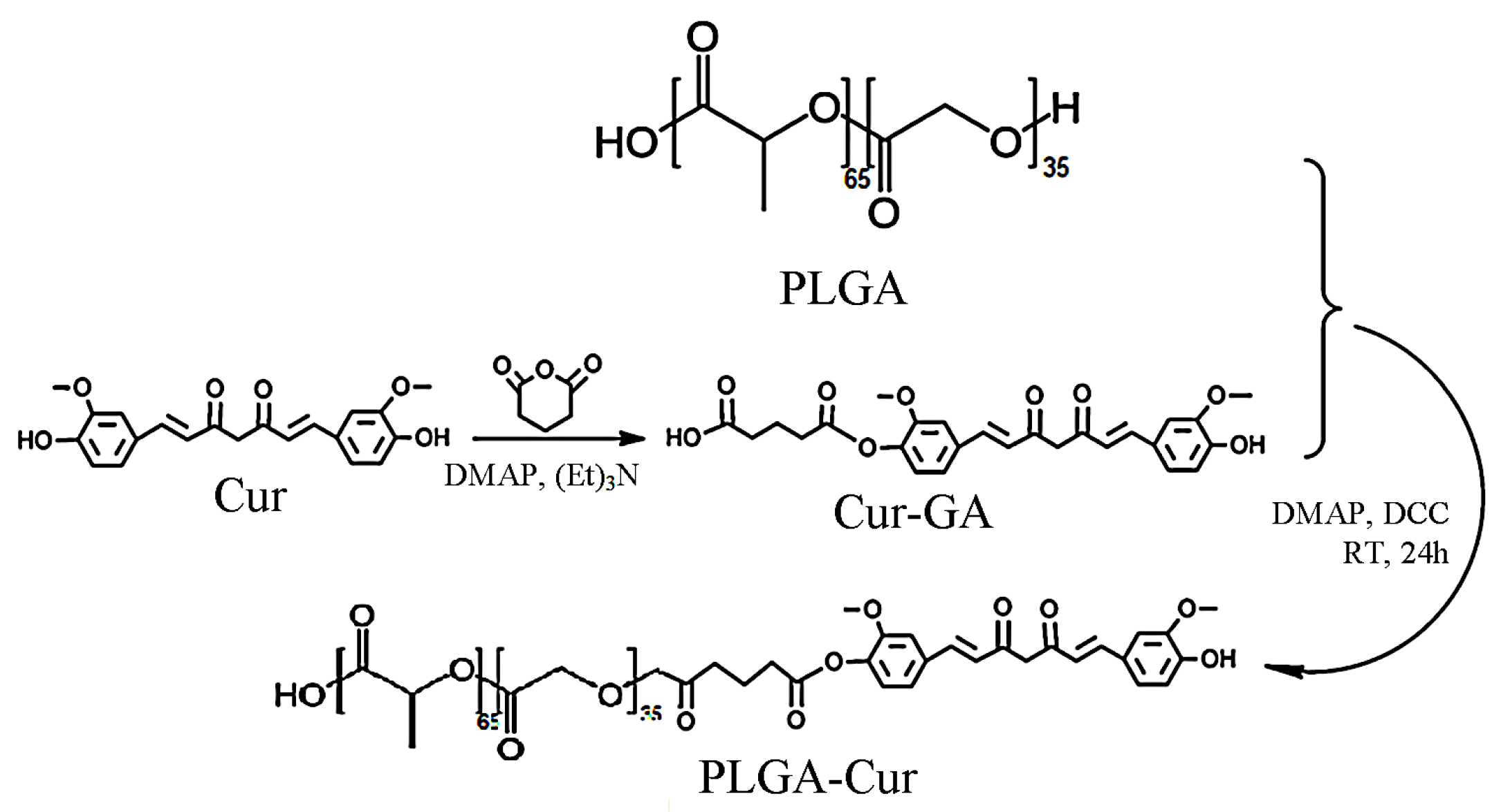
2.2. Synthesis of the New PLGA-Cur Carrier
2.3. Characterization of the New PLGA-Cur Carrier
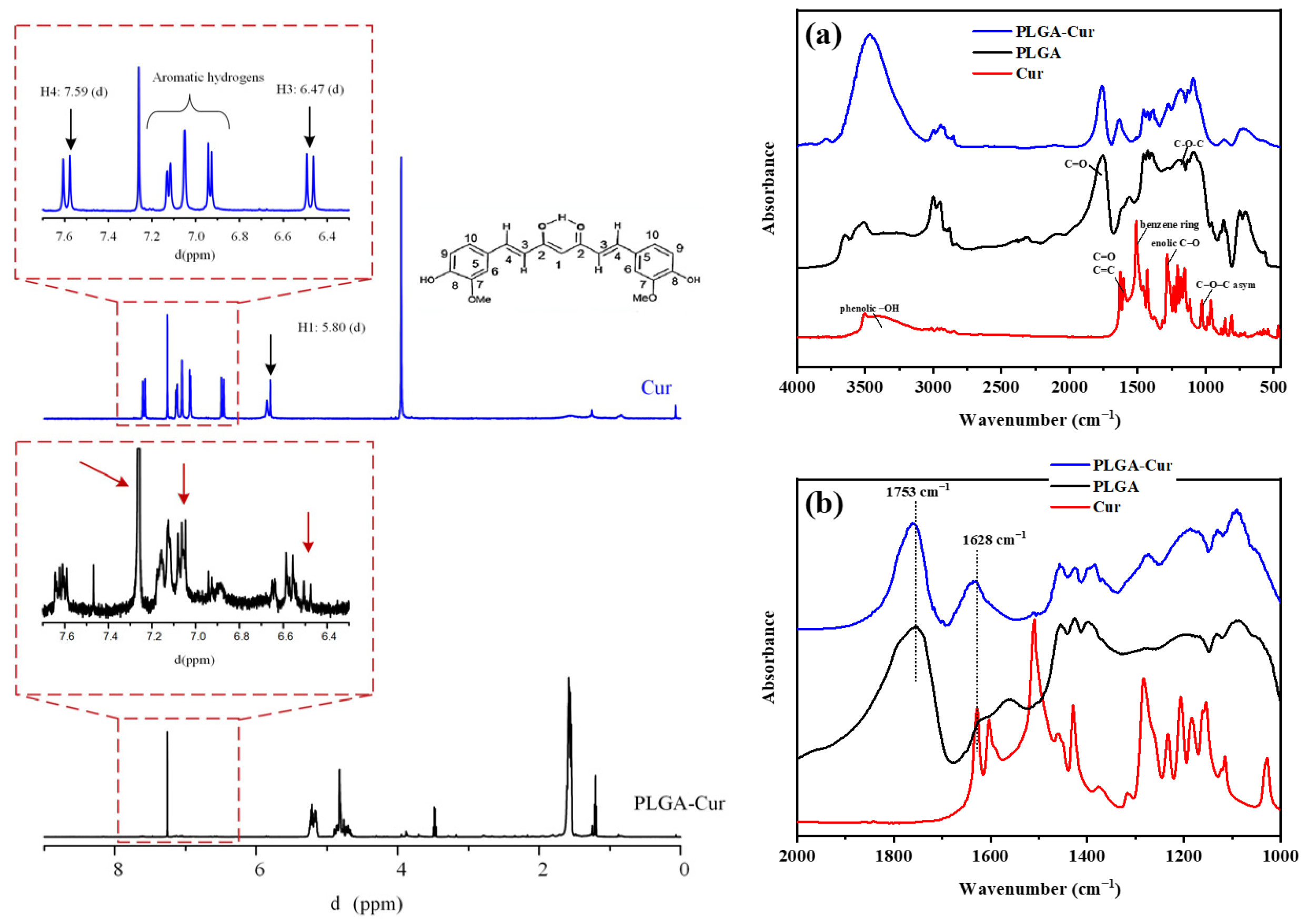
2.3.1. 1H NMR
2.3.2. Fourier Transform Infrared (FTIR) Spectroscopy
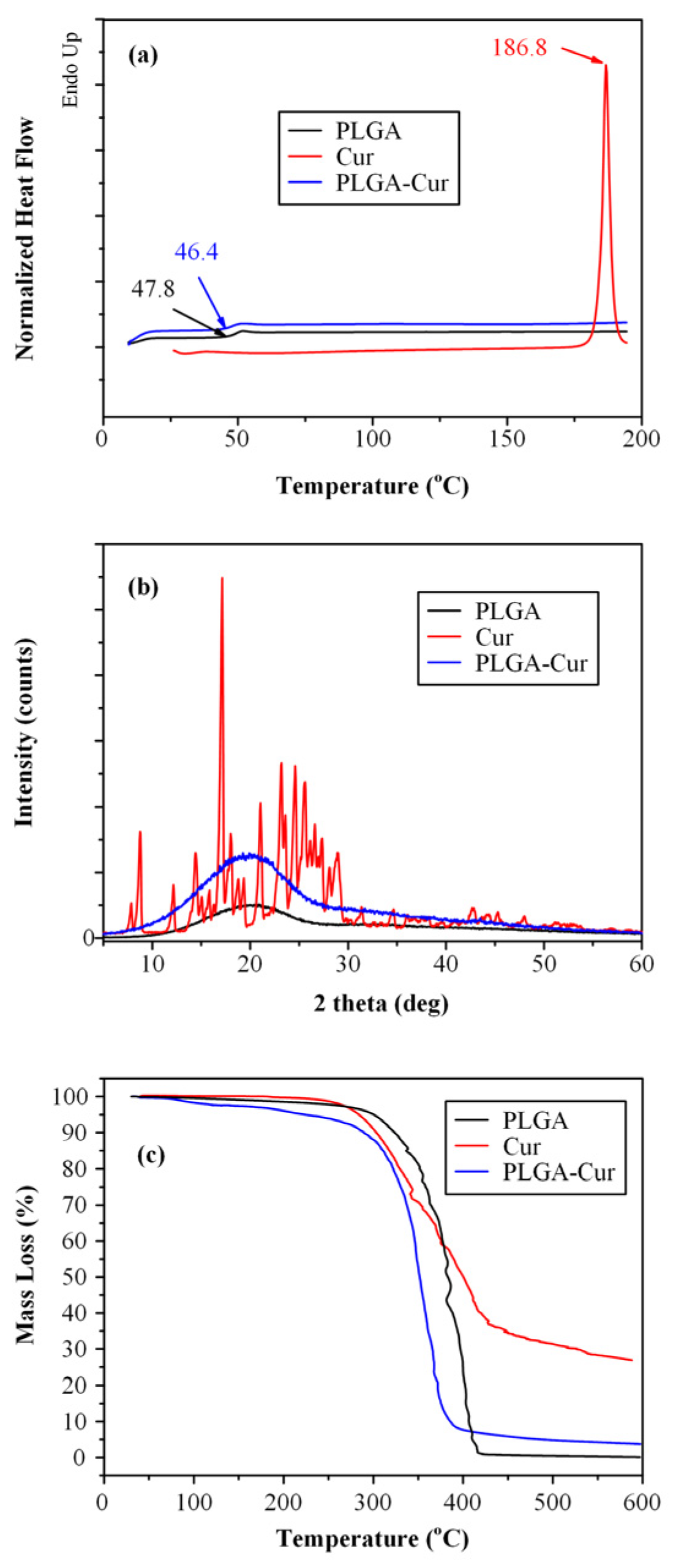
2.3.3. Thermogravimetric Analysis (TGA)
2.3.4. Differential Scanning Calorimetry (DSC)
2.3.5. Powder X-Ray Diffractometry (pXRD)
2.4. Preparation of NPs
2.4.1. CDs and GAL-Loaded CDs Fabrication
2.4.2. Embedding GAL-CDs into the NPs
2.5. Characterization of NPs
2.5.1. FTIR Spectroscopy, DSC and pXRD
2.5.2. Particle Size and ζ-Potential via Dynamic Light Scattering (DLS)
2.5.3. Scanning Electron Microscopy (SEM)
2.5.4. Drug Loading, Yield and Entrapment Efficiency (EE)
2.5.5. Dissolution Studies
2.5.6. HPLC Analysis for the Determination of GAL
2.5.7. Statistical Analysis
3. Results and Discussion
3.1. Synthesis and Characterization of the New PLGA-Cur Carrier
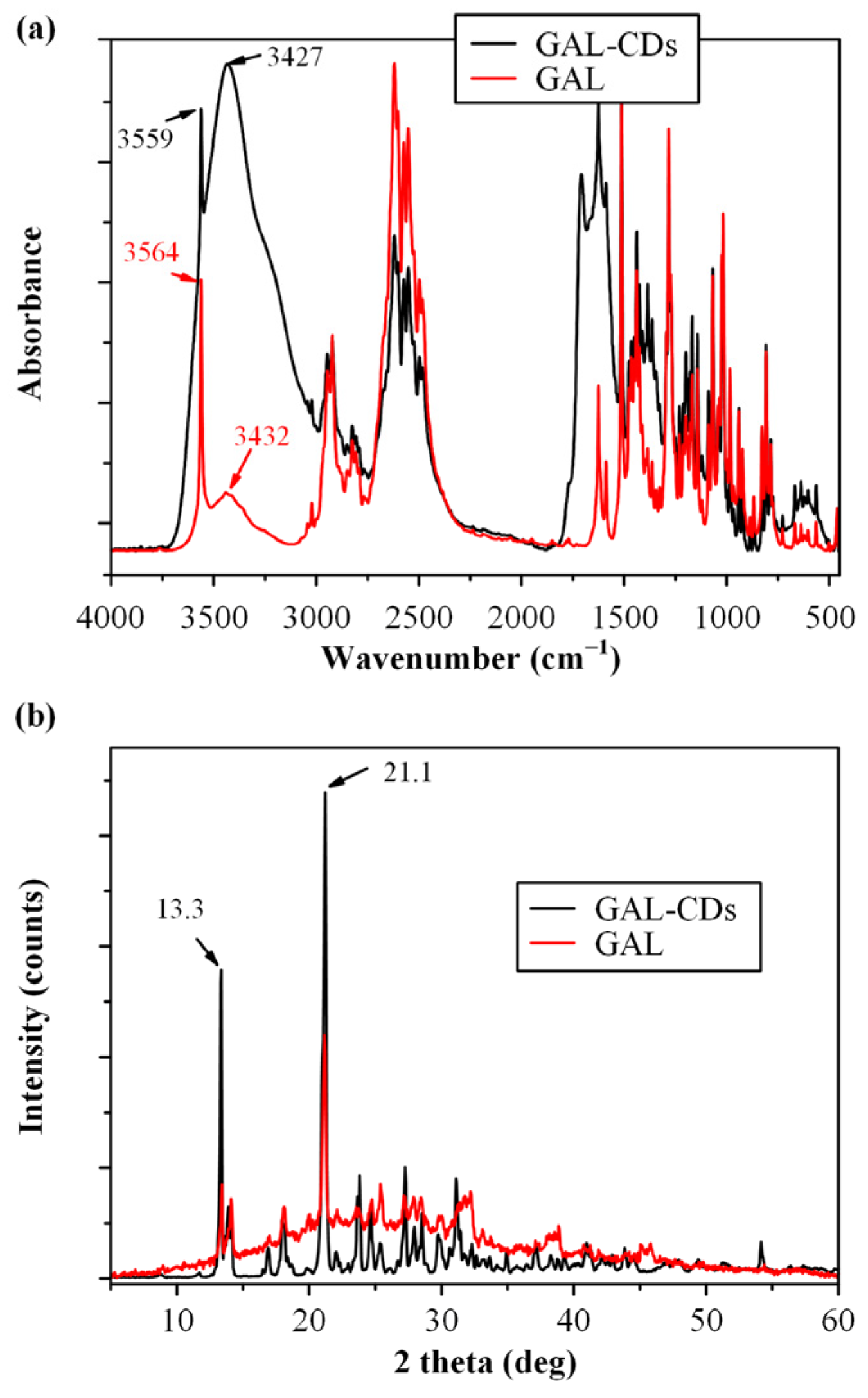
3.2. Synthesis and Characterization of the GAL-CDs
3.3. Preparation and Characterization of GAL-CDs Loaded into PLGA-Cur NPs
3.3.1. NP’s Drug Loading, EE and Yield
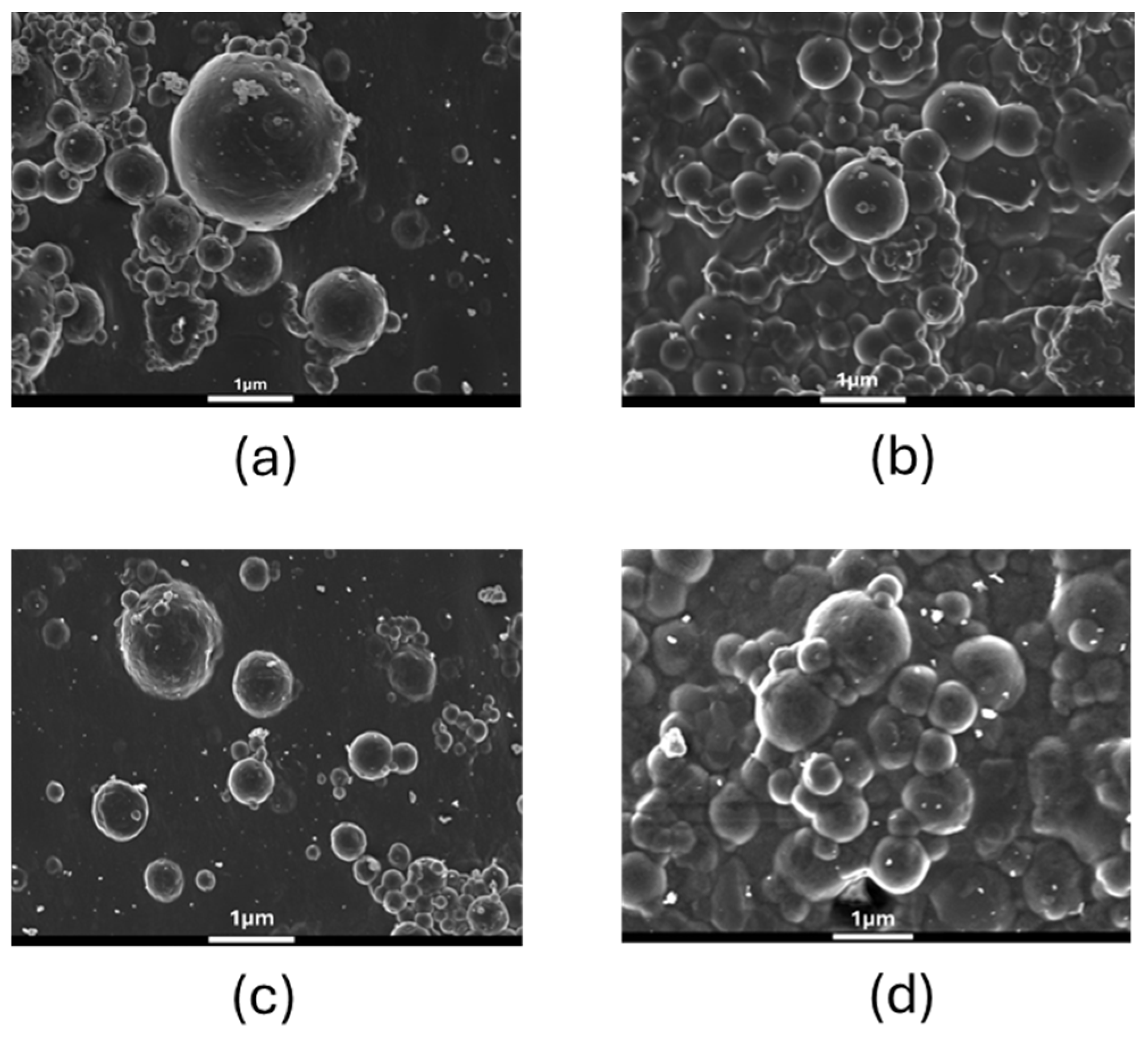
3.3.2. Evaluation of NP’s Morphology, Particle Size and ζ-Potential
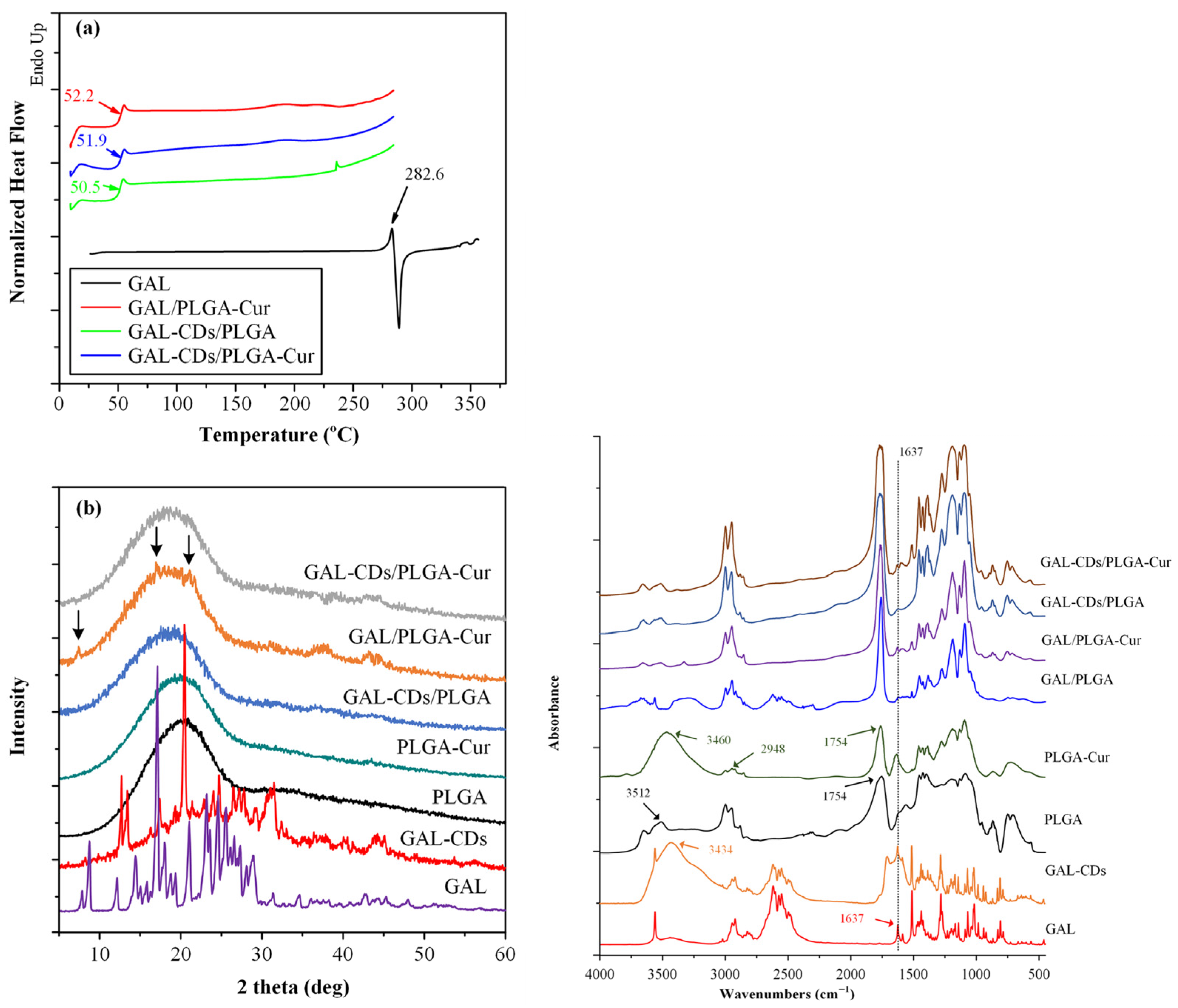
3.3.3. Evaluation of Drug Physical State
3.3.4. Evaluation of Molecular Interactions
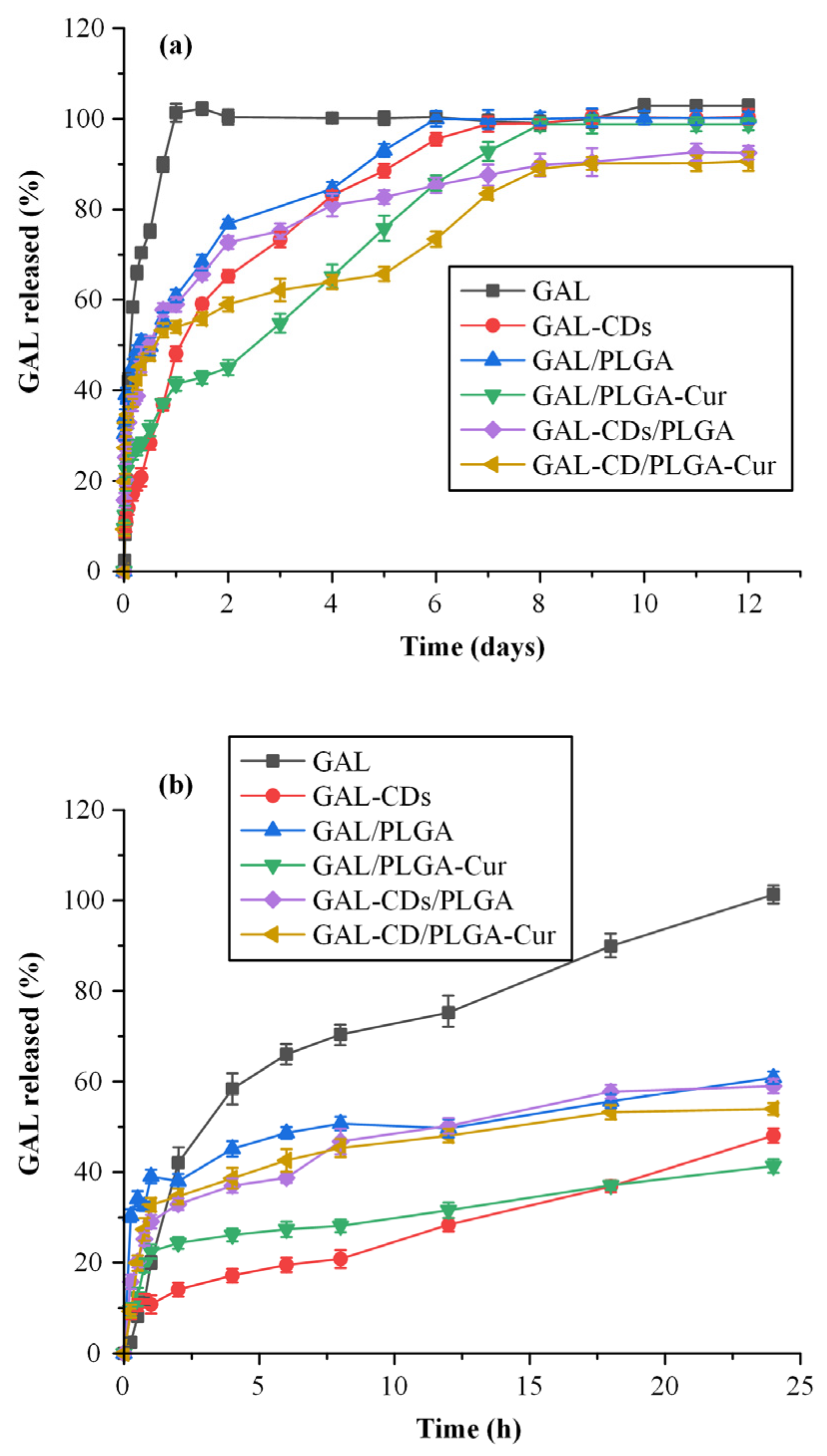
3.3.5. In Vitro Dissolution Release Results
4. Conclusions
Author Contributions
Funding
Institutional Review Board Statement
Informed Consent Statement
Data Availability Statement
Conflicts of Interest
References
- Naguy, A.; Husain, K.; Alamiri, B. Galantamine beyond Alzheimer’s disease—A fact or artefact? CNS Spectr. 2022, 27, 268–271. [Google Scholar] [CrossRef]
- Prvulovic, D.; Hampel, H.; Pantel, J. Galantamine for Alzheimer’s disease. Expert Opin. Drug Metab. Toxicol. 2010, 6, 345–354. [Google Scholar] [CrossRef]
- Ago, Y.; Koda, K.; Takuma, K.; Matsuda, T. Pharmacological aspects of the acetylcholinesterase inhibitor galantamine. J. Pharmacol. Sci. 2011, 116, 6–17. [Google Scholar] [CrossRef]
- Fan, F.; Liu, H.; Shi, X.; Ai, Y.; Liu, Q.; Cheng, Y. The Efficacy and Safety of Alzheimer’s Disease Therapies: An Updated Umbrella Review. J. Alzheimers Dis. 2022, 85, 1195–1204. [Google Scholar] [CrossRef]
- Marucci, G.; Buccioni, M.; Ben, D.D.; Lambertucci, C.; Volpini, R.; Amenta, F. Efficacy of acetylcholinesterase inhibitors in Alzheimer’s disease. Neuropharmacology 2021, 190, 108352. [Google Scholar] [CrossRef]
- Maelicke, A.; Hoeffle-Maas, A.; Ludwig, J.; Maus, A.; Samochocki, M.; Jordis, U.; Koepke, A.K.E. Memogain is a Galantamine Pro-drug having Dramatically Reduced Adverse Effects and Enhanced Efficacy. J. Mol. Neurosci. 2010, 40, 135–137. [Google Scholar] [CrossRef]
- Agrawal, M.; Ajazuddin; Tripathi, D.K.; Saraf, S.; Saraf, S.; Antimisiaris, S.G.; Mourtas, S.; Hammarlund-Udenaes, M.; Alexander, A. Recent advancements in liposomes targeting strategies to cross blood-brain barrier (BBB) for the treatment of Alzheimer’s disease. J. Control. Release 2017, 260, 61–77. [Google Scholar] [CrossRef] [PubMed]
- Fonseca, L.C.; Lopes, J.A.; Vieira, J.; Viegas, C.; Oliveira, C.S.; Hartmann, R.P.; Fonte, P. Intranasal drug delivery for treatment of Alzheimer’s disease. Drug Deliv. Transl. Res. 2021, 11, 411–425. [Google Scholar] [CrossRef] [PubMed]
- Hanson, L.R.; Frey, W.H. Intranasal delivery bypasses the blood-brain barrier to target therapeutic agents to the central nervous system and treat neurodegenerative disease. BMC Neurosci. 2008, 9, S5. [Google Scholar] [CrossRef] [PubMed]
- Singh, Y.P.; Prasad, S.; Kumar, H. A Comprehensive Analysis on Galantamine Based Hybrids for the Management of Alzheimer’s Disease. Chem. Biol. Drug Des. 2024, 104, e70004. [Google Scholar] [CrossRef]
- Wu, D.; Chen, Q.; Chen, X.; Han, F.; Chen, Z.; Wang, Y. The blood-brain barrier: Structure, regulation, and drug de-livery. Signal Transduct. Target. Ther. 2023, 8, 217. [Google Scholar] [CrossRef]
- Agrawal, M.; Saraf, S.; Saraf, S.; Antimisiaris, S.G.; Chougule, M.B.; Shoyele, S.A.; Alexander, A. Nose-to-brain drug delivery: An update on clinical challenges and progress towards approval of anti-Alzheimer drugs. J. Control. Release 2018, 281, 139–177. [Google Scholar] [CrossRef] [PubMed]
- Dhuria, S.V.; Hanson, L.R.; Frey, W.H. Intranasal delivery to the central nervous system: Mechanisms and experimental considerations. J. Pharm. Sci. 2010, 99, 1654–1673. [Google Scholar] [CrossRef]
- Kashyap, K.; Shukla, R. Drug Delivery and Targeting to the Brain Through Nasal Route: Mechanisms, Applications and Challenges. Curr. Drug Deliv. 2019, 16, 887–901. [Google Scholar] [CrossRef]
- Patel, M.M.; Patel, B.M. Crossing the Blood-Brain Barrier: Recent Advances in Drug Delivery to the Brain. CNS Drugs 2017, 31, 109–133. [Google Scholar] [CrossRef] [PubMed]
- Formica, M.L.; Real, D.A.; Picchio, M.L.; Catlin, E.; Donnelly, R.F.; Paredes, A.J. On a highway to the brain: A review on nose-to-brain drug delivery using nanoparticles. Appl. Mater. Today 2022, 29, 101631. [Google Scholar] [CrossRef]
- Jeong, S.H.; Jang, J.H.; Lee, Y.B. Drug delivery to the brain via the nasal route of administration: Exploration of key targets and major consideration factors. J. Pharm. Investig. 2023, 53, 119–152. [Google Scholar] [CrossRef]
- Lee, D.; Minko, T. Nanotherapeutics for Nose-to-Brain Drug Delivery: An Approach to Bypass the Blood Brain Barrier. Pharmaceutics 2021, 13, 2049. [Google Scholar] [CrossRef]
- Li, W.; Zhou, Y.; Zhao, N.; Hao, B.; Wang, X.; Kong, P. Pharmacokinetic behavior and efficiency of acetylcholinesterase inhibition in rat brain after intranasal administration of galanthamine hydrobromide loaded flexible liposomes. Environ. Toxicol. Pharmacol. 2012, 34, 272–279. [Google Scholar] [CrossRef]
- Hanafy, A.S.; Farid, R.M.; Elgamal, S.S. Complexation as an approach to entrap cationic drugs into cationic nanoparticles administered intranasally for Alzheimer’s disease management: Preparation and detection in rat brain. Drug Dev. Ind. Pharm. 2015, 41, 2055–2068. [Google Scholar] [CrossRef]
- Bhattacharya, S.; Maelicke, A.; Montag, D. Nasal Application of the Galantamine Pro-drug Memogain Slows Down Plaque Deposition and Ameliorates Behavior in 5X Familial Alzheimer’s Disease Mice. J. Alzheimers Dis. 2015, 46, 123–136. [Google Scholar] [CrossRef]
- Hanafy, A.S.; Farid, R.M.; Helmy, M.W.; ElGamal, S.S. Pharmacological, toxicological and neuronal localization assessment of galantamine/chitosan complex nanoparticles in rats: Future potential contribution in Alzheimer’s disease management. Drug Deliv. 2016, 23, 3111–3122. [Google Scholar] [CrossRef]
- Nanaki, S.G.; Spyrou, K.; Veneti, P.; Karouta, N.; Gournis, D.; Baroud, T.N.; Barmpalexis, P.; Bikiaris, D.N. L-Cysteine Modified Chitosan Nanoparticles and Carbon-Based Nanostructures for the Intranasal Delivery of Galantamine. Polymers 2022, 14, 4004. [Google Scholar] [CrossRef]
- Caprifico, A.E.; Foot, P.J.S.; Polycarpou, E.; Calabrese, G. Overcoming the Blood-Brain Barrier: Functionalised Chitosan Nanocarriers. Pharmaceutics 2020, 12, 1013. [Google Scholar] [CrossRef]
- Cortés, H.; Alcalá-Alcalá, S.; Caballero-Florán, I.H.; Bernal-Chávez, S.A.; Ávalos-Fuentes, A.; González-Torres, M.; Carmen, M.G.-D.; Figueroa-González, G.; Reyes-Hernández, O.D.; Floran, B.; et al. A Reevaluation of Chitosan-Decorated Nanoparticles to Cross the Blood-Brain Barrier. Membranes 2020, 10, 212. [Google Scholar] [CrossRef] [PubMed]
- Yu, S.; Xu, X.; Feng, J.; Liu, M.; Hu, K. Chitosan and chitosan coating nanoparticles for the treatment of brain disease. Int. J. Pharm. 2019, 560, 282–293. [Google Scholar] [CrossRef] [PubMed]
- Balla, E.; Daniilidis, V.; Karlioti, G.; Kalamas, T.; Stefanidou, M.; Bikiaris, N.D.; Vlachopoulos, A.; Koumentakou, I.; Bikiaris, D.N. Poly(lactic Acid): A Versatile Biobased Polymer for the Future with Multifunctional Properties—From Monomer Synthesis, Polymerization Techniques and Molecular Weight Increase to PLA Applications. Polymers 2021, 13, 1822. [Google Scholar] [CrossRef]
- Vlachopoulos, A.; Karlioti, G.; Balla, E.; Daniilidis, V.; Kalamas, T.; Stefanidou, M.; Bikiaris, N.D.; Christodoulou, E.; Koumentakou, I.; Karavas, E.; et al. Poly(Lactic Acid)-Based Microparticles for Drug Delivery Applications: An Overview of Recent Advances. Pharmaceutics 2022, 14, 359. [Google Scholar] [CrossRef]
- Georgieva, D.; Nikolova, D.; Vassileva, E.; Kostova, B. Chitosan-Based Nanoparticles for Targeted Nasal Galantamine Delivery as a Promising Tool in Alzheimer’s Disease Therapy. Pharmaceutics 2023, 15, 829. [Google Scholar] [CrossRef] [PubMed]
- Mufamadi, M.S.; Kumar, P.; du Toit, L.C.; Choonara, Y.E.; Obulapuram, P.K.; Modi, G.; Naidoo, D.; Iyuke, S.E.; Pillay, V. Liposome-embedded, polymeric scaffold for extended delivery of galantamine. J. Drug Deliv. Sci. Technol. 2019, 50, 255–265. [Google Scholar] [CrossRef]
- Nanaki, S.G.; Spyrou, K.; Bekiari, C.; Veneti, P.; Baroud, T.N.; Karouta, N.; Grivas, I.; Papadopoulos, G.C.; Gournis, D.; Bikiaris, D.N. Hierarchical Porous Carbon-PLLA and PLGA Hybrid Nanoparticles for Intranasal Delivery of Galantamine for Alzheimer’s Disease Therapy. Pharmaceutics 2020, 12, 227. [Google Scholar] [CrossRef] [PubMed]
- Jabczyk, M.; Nowak, J.; Hudzik, B.; Zubelewicz-Szkodzińska, B. Curcumin in Metabolic Health and Disease. Nutrients 2021, 13, 4440. [Google Scholar] [CrossRef]
- Kotha, R.R.; Luthria, D.L. Curcumin: Biological, Pharmaceutical, Nutraceutical, and Analytical Aspects. Molecules 2019, 24, 2930. [Google Scholar] [CrossRef] [PubMed]
- Peng, Y.; Ao, M.; Dong, B.; Jiang, Y.; Yu, L.; Chen, Z.; Hu, C.; Xu, R. Anti-Inflammatory Effects of Curcumin in the Inflammatory Diseases: Status, Limitations and Countermeasures. Drug Des. Devel. Ther. 2021, 15, 4503–4525. [Google Scholar] [CrossRef]
- Unlu, A.; Nayir, E.; Kalenderoglu, M.D.; Kirca, O.; Ozdogan, M. Curcumin (Turmeric) and cancer. J. BUON 2016, 21, 1050–1060. [Google Scholar]
- Chen, M.; Du, Z.Y.; Zheng, X.; Li, D.L.; Zhou, R.P.; Zhang, K. Use of curcumin in diagnosis, prevention, and treatment of Alzheimer’s disease. Neural Regen. Res. 2018, 13, 752. [Google Scholar] [CrossRef]
- Mishra, S.; Palanivelu, K. The effect of curcumin (turmeric) on Alzheimer’s disease: An overview. Ann. Indian Acad. Neurol. 2008, 11, 19. [Google Scholar] [CrossRef]
- Teter, B.; Morihara, T.; Lim, G.P.; Chu, T.; Jones, M.R.; Zuo, X.; Paul, R.; Frautschy, S.; Cole, G. Curcumin restores innate immune Alzheimer’s disease risk gene expression to ameliorate Alzheimer pathogenesis. Neurobiol. Dis. 2019, 127, 432–448. [Google Scholar] [CrossRef]
- Ege, D. Action Mechanisms of Curcumin in Alzheimer’s Disease and Its Brain Targeted Delivery. Materials 2021, 14, 3332. [Google Scholar] [CrossRef] [PubMed]
- Yang, H.; Zeng, F.; Luo, Y.; Zheng, C.; Ran, C.; Yang, J. Curcumin Scaffold as a Multifunctional Tool for Alzheimer’s Disease Research. Molecules 2022, 27, 3879. [Google Scholar] [CrossRef]
- Stavrakov, G.; Philipova, I.; Lukarski, A.; Atanasova, M.; Zheleva, D.; Zhivkova, Z.D.; Ivanov, S.; Atanasova, T.; Konstantinov, S.; Doytchinova, I. Galantamine-Curcumin Hybrids as Dual-Site Binding Acetylcholinesterase Inhibitors. Molecules 2020, 25, 3341. [Google Scholar] [CrossRef]
- USER COM 4. Information for Users of Mettler Toledo Thermal Analysis Systems; Mettler-Toledo AG, Analytical: Schwerzenbach, Switzerland, 1997; pp. 1–5. [Google Scholar]
- Mauro, N.; Utzeri, M.A.; Drago, S.E.; Buscarino, G.; Cavallaro, G.; Giammona, G. Carbon Nanodots as Functional Excipient to Develop Highly Stable and Smart PLGA Nanoparticles Useful in Cancer Theranostics. Pharmaceutics 2020, 12, 1012. [Google Scholar] [CrossRef]
- Kouloumpis, A.; Thomou, E.; Chalmpes, N.; Dimos, K.; Spyrou, K.; Bourlinos, A.B.; Koutselas, I.; Gournis, D.; Rudolf, P. Graphene/Carbon Dot Hybrid Thin Films Prepared by a Modified Langmuir–Schaefer Method. ACS Omega 2017, 2, 2090–2099. [Google Scholar] [CrossRef]
- Sawant, A.; Kamath, S.; Kg, H.; Kulyadi, G.P. Solid-in-Oil-in-Water Emulsion: An Innovative Paradigm to Improve Drug Stability and Biological Activity. AAPS PharmSciTech 2021, 22, 199. [Google Scholar] [CrossRef] [PubMed]
- Costa, P.; Sousa Lobo, J.M. Modeling and comparison of dissolution profiles. Eur. J. Pharm. Sci. 2001, 13, 123–133. [Google Scholar] [CrossRef]
- Flores-Frias, E.A.; Barba, V.; Lucio-Garcia, M.A.; Lopez-Cecenes, R.; Porcayo-Calderon, J.; Gonzalez-Rodriguez, J.G. Use of Curcuma and Curcumin as a Green Corrosion Inhibitors for carbon Steel in Sulfuric Acid. Int. J. Electrochem. Sci. 2019, 14, 5026–5041. [Google Scholar] [CrossRef]
- Nifant’ev, I.E.; Tavtorkin, A.N.; Shlyakhtin, A.V.; Ivchenko, P.V. Chemical features of the synthesis, degradation, molding and performance of poly (lactic-co-glycolic) acid (PLGA) and PLGA-based articles. Eur. Polym. J. 2024, 215, 113250. [Google Scholar] [CrossRef]
- Pereira, E.D.; Cerruti, R.; Fernandes, E.; Peña, L.; Saez, V.; Pinto, J.C.; Ramón, J.A.; Oliveira, G.E.; Júnior, F.G.d.S. Influence of PLGA and PLGA-PEG on the dissolution profile of oxaliplatin. Polimeros 2016, 26, 137–143. [Google Scholar] [CrossRef]



| Sample | Drug Loading (%) | EE (%) | NPs’ Yield (%) | Mean Particle Size (nm) | RSD (%) | PDI | ζ-Potential (mV) |
|---|---|---|---|---|---|---|---|
| GAL/PLGA | 9.57 ± 0.73 | 29.04 ± 2.88 | 78.71 ± 3.15 | 198.0 ± 2.35 | 1.2 | 0.250 | −27.4 ± 0.9 |
| GAL/PLGA-Cur | 13.65 ± 0.64 | 38.78 ± 4.50 | 89.34 ± 4.01 | 256.3 ± 3.89 | 1.5 | 0.136 | −18.2 ± 0.7 |
| GAL-CDs/PLGA | 6.03 ± 0.90 | 16.70 ± 1.34 | 43.30 ± 2.72 | 153.7 ± 1.77 | 1.2 | 0.144 | −22.6 ± 1.1 |
| GAL-CDs/PLGA-Cur | 5.33 ± 0.81 | 11.65 ± 1.02 | 57.56 ± 3.19 | 220.5 ± 2.01 | 0.9 | 0.143 | −24.1 ± 1.4 |
| Release Model | NPs’ Formulations | |||||||
|---|---|---|---|---|---|---|---|---|
| GAL/PLGA | GAL/PLGA-Cur | GAL-CDs/PLGA | GAL-CDs/PLGA-Cur | |||||
| R2 | k | R2 | k | R2 | k | R2 | k | |
| Phase II | ||||||||
| Zero order | 0.993 | 17.6 d−1 | 0.950 | 9.73 d−1 | 0.970 | 14.89 d−1 | 0.978 | 7.45 d−1 |
| First order | 0.315 | 0.80 d−1 | 0.830 | 0.33 d−1 | 0.691 | 0.24 d−1 | 0.315 | 0.80 d−1 |
| Higuchi | 0.464 | 36.73 d−1/2 | 0.926 | 31.51 d−1/2 | 0.530 | 33.10 d−1/2 | 0.498 | 30.48 d−1/2 |
| Hixson-Crowell | 0.378 | 0.13 d−1 | 0.800 | 0.08 d−1 | 0.386 | 0.13 d−1 | 0.129 | 0.11 d−1 |
| Korsmeyer-Peppas | 0.984 | 64.80 d−n (n = 0.196) | 0.971 | 41.71 d−n (n = 0.352) | 0.989 | 56.61 d−n (n = 0.212) | 0.958 | 52.49 d−n (n = 0.206) |
| Phase III or IV | ||||||||
| Zero order | 0.968 | 5.80 d−1 | 0.981 | 8.40 d−1 | 0.964 | 2.63 d−1 | 0.994 | 8.90 d−1 |
| First order | 0.612 | 1.36 d−1 | 0.829 | 3.28 d−1 | 0.691 | 1.22 d−1 | 0.534 | 0.12 d−1 |
| Higuchi | 0.388 | 36.80 d−1/2 | 0.925 | 31.51 d−1/2 | 0.531 | 0.33 d−1/2 | 0.508 | 30.25 d−1/2 |
| Hixson-Crowell | 0.287 | 0.13 d−1 | 0.800 | 0.08 d−1 | 0.386 | 0.12 d−1 | 0.206 | 0.12 d−1 |
| Korsmeyer-Peppas | 0.984 | 64.52 d−n (n = 0.194) | 0.970 | 41.71 d−n (n = 0.352) | 0.989 | 56.61 d−n (n = 0.212) | 0.969 | 53.46 d−n (n = 0.207) |
Disclaimer/Publisher’s Note: The statements, opinions and data contained in all publications are solely those of the individual author(s) and contributor(s) and not of MDPI and/or the editor(s). MDPI and/or the editor(s) disclaim responsibility for any injury to people or property resulting from any ideas, methods, instructions or products referred to in the content. |
© 2026 by the authors. Licensee MDPI, Basel, Switzerland. This article is an open access article distributed under the terms and conditions of the Creative Commons Attribution (CC BY) license.
Share and Cite
Samiotaki, C.; Nanaki, S.; Bikiaris, R.E.; Christodoulou, E.; Kyzas, G.Z.; Barmpalexis, P.; Bikiaris, D.N. Design and Physicochemical Characterization of Hybrid PLGA–Curcumin/Carbon Dot Nanoparticles for Sustained Galantamine Release: A Proof-of-Concept Study. Biomolecules 2026, 16, 176. https://doi.org/10.3390/biom16010176
Samiotaki C, Nanaki S, Bikiaris RE, Christodoulou E, Kyzas GZ, Barmpalexis P, Bikiaris DN. Design and Physicochemical Characterization of Hybrid PLGA–Curcumin/Carbon Dot Nanoparticles for Sustained Galantamine Release: A Proof-of-Concept Study. Biomolecules. 2026; 16(1):176. https://doi.org/10.3390/biom16010176
Chicago/Turabian StyleSamiotaki, Christina, Stavroula Nanaki, Rizos Evangelos Bikiaris, Evi Christodoulou, George Z. Kyzas, Panagiotis Barmpalexis, and Dimitrios N. Bikiaris. 2026. "Design and Physicochemical Characterization of Hybrid PLGA–Curcumin/Carbon Dot Nanoparticles for Sustained Galantamine Release: A Proof-of-Concept Study" Biomolecules 16, no. 1: 176. https://doi.org/10.3390/biom16010176
APA StyleSamiotaki, C., Nanaki, S., Bikiaris, R. E., Christodoulou, E., Kyzas, G. Z., Barmpalexis, P., & Bikiaris, D. N. (2026). Design and Physicochemical Characterization of Hybrid PLGA–Curcumin/Carbon Dot Nanoparticles for Sustained Galantamine Release: A Proof-of-Concept Study. Biomolecules, 16(1), 176. https://doi.org/10.3390/biom16010176