Article

Differential Impacts of Environmentally Relevant Microplastics on Gut Barrier Integrity in Mice Fed High-Fat Diet Versus Normal Chow Diet


by
Huixia Niu
1,2,†,
Ying Yang
1,†,
Yuting Zhou
2,
Xue Ma
2,
Zhehao Ding
2,3,
Manjin Xu
2,
Lizhi Wu
2,
Xueqing Li
2,
Mingluan Xing
2,
Qin Zhang
1,
Hao Chen
1,
Xiongwei Tao
1,
Zhe Mo
2,
Zhijian Chen
2,
Pengcheng Tu
2,* and
Xiaoming Lou
2,*
1
Center for Disease Control and Prevention of Jinyun County, 89 Cuizhu Road, Jinyun 321400, China
2
Zhejiang Provincial Center for Disease Control and Prevention, 3399 Binsheng Road, Hangzhou 310051, China
3
School of Medicine, Zhejiang University, 866 Yuhangtang Road, Hangzhou 310012, China
*
Authors to whom correspondence should be addressed.
These authors contributed equally to this work.
Metabolites 2025, 15(8), 557; https://doi.org/10.3390/metabo15080557

Submission received: 30 June 2025 / Revised: 7 August 2025 / Accepted: 16 August 2025 / Published: 20 August 2025
(This article belongs to the Special Issue Effects of Environmental Exposure on Host and Microbial Metabolism)

Abstract

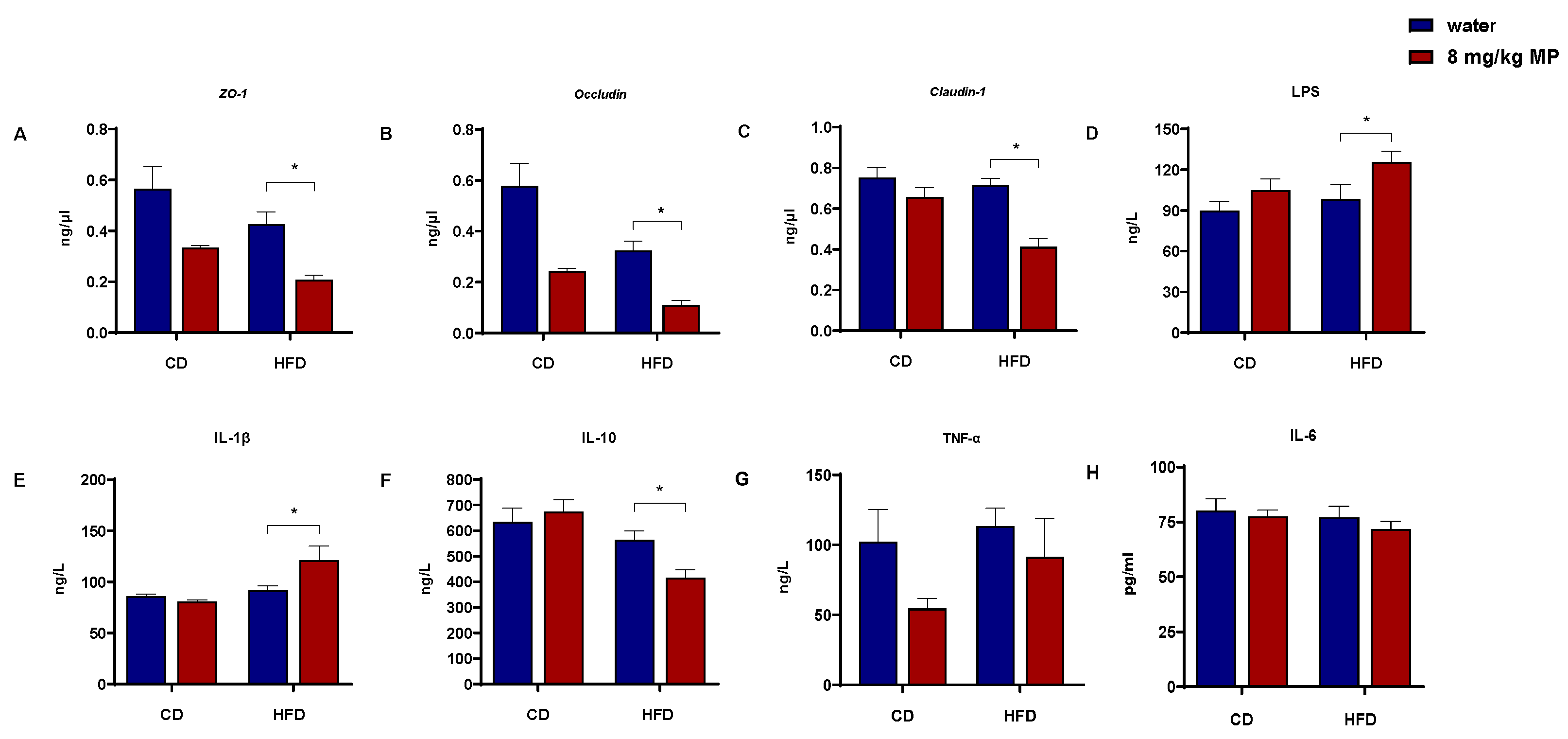
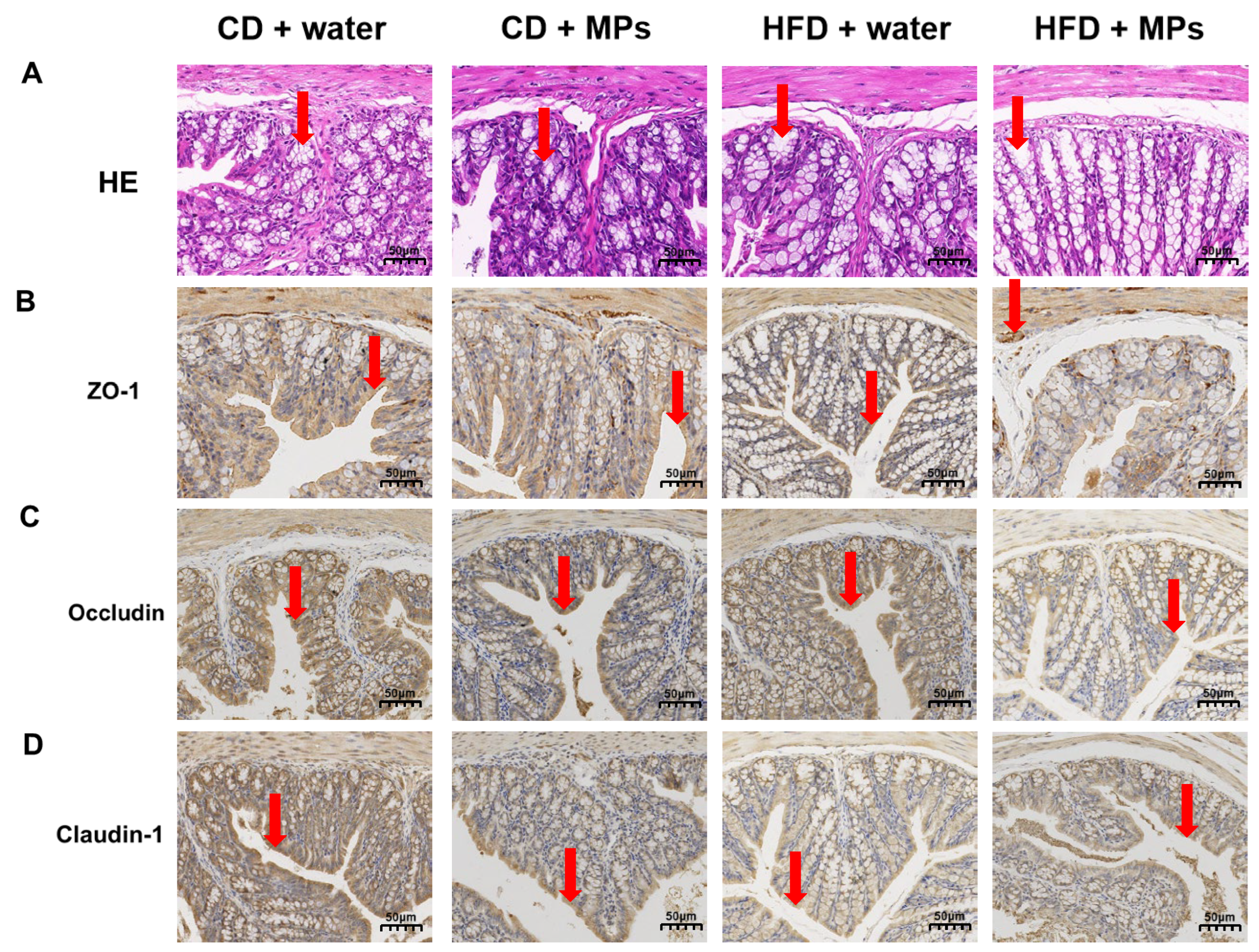
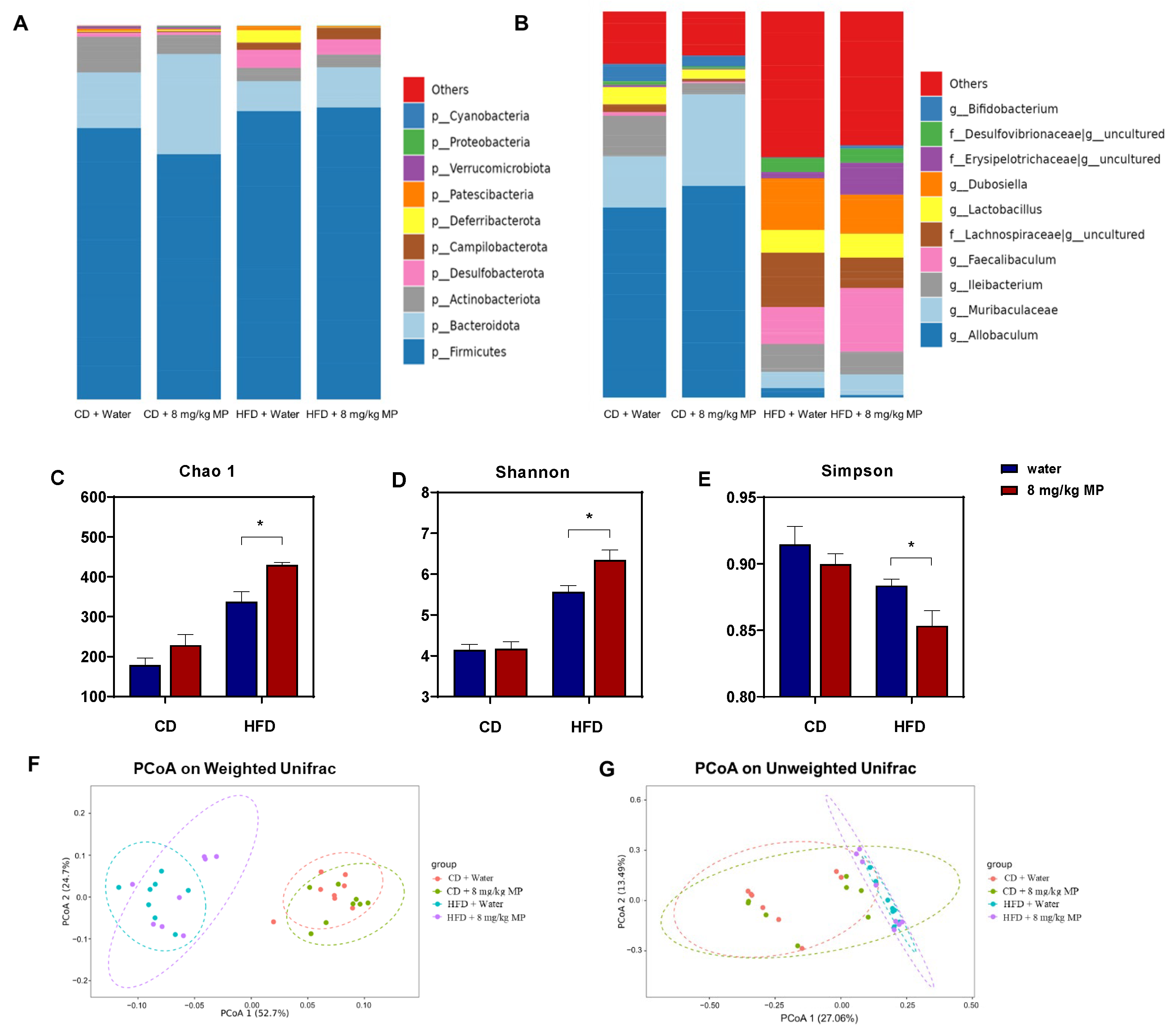
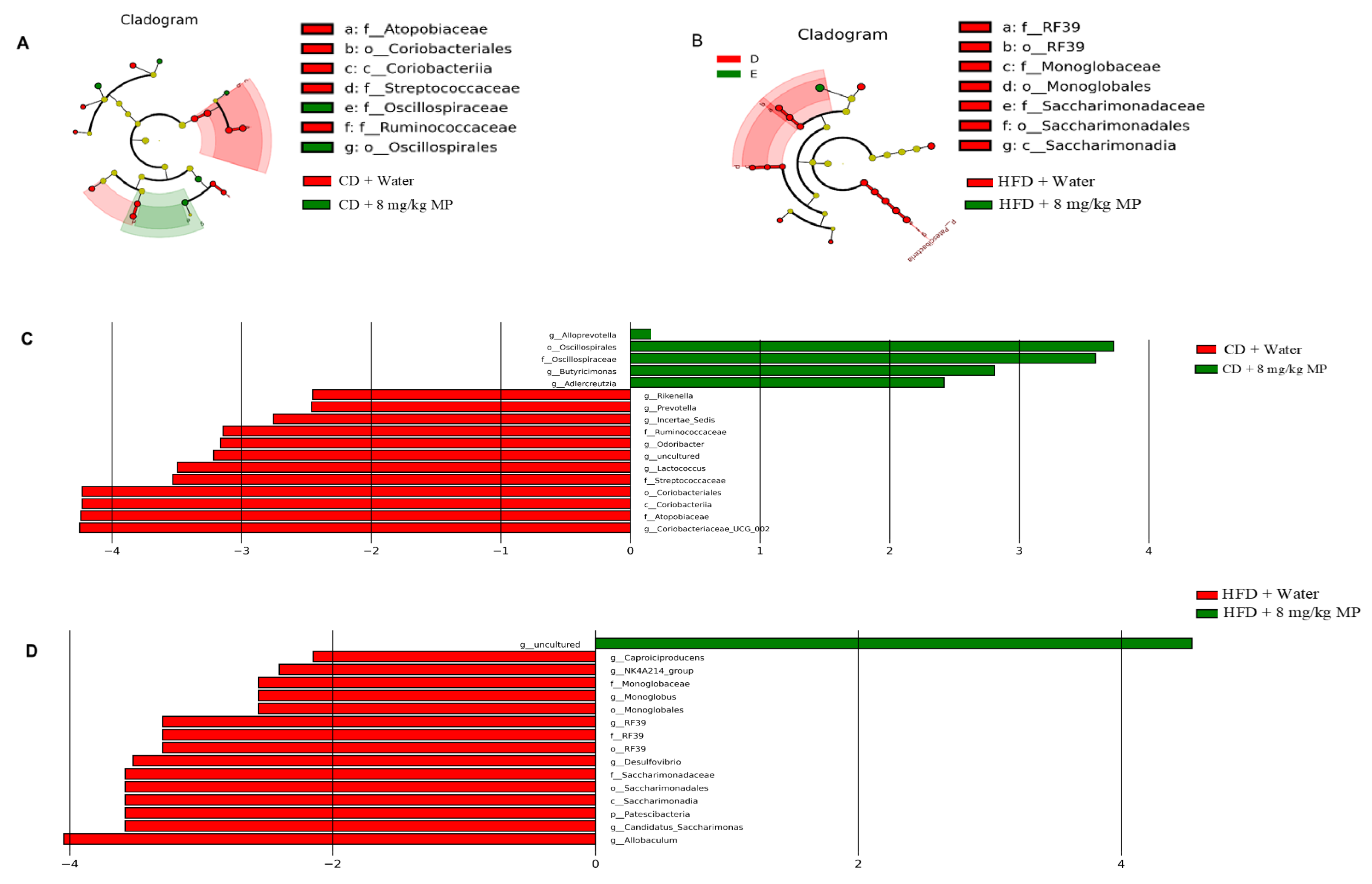
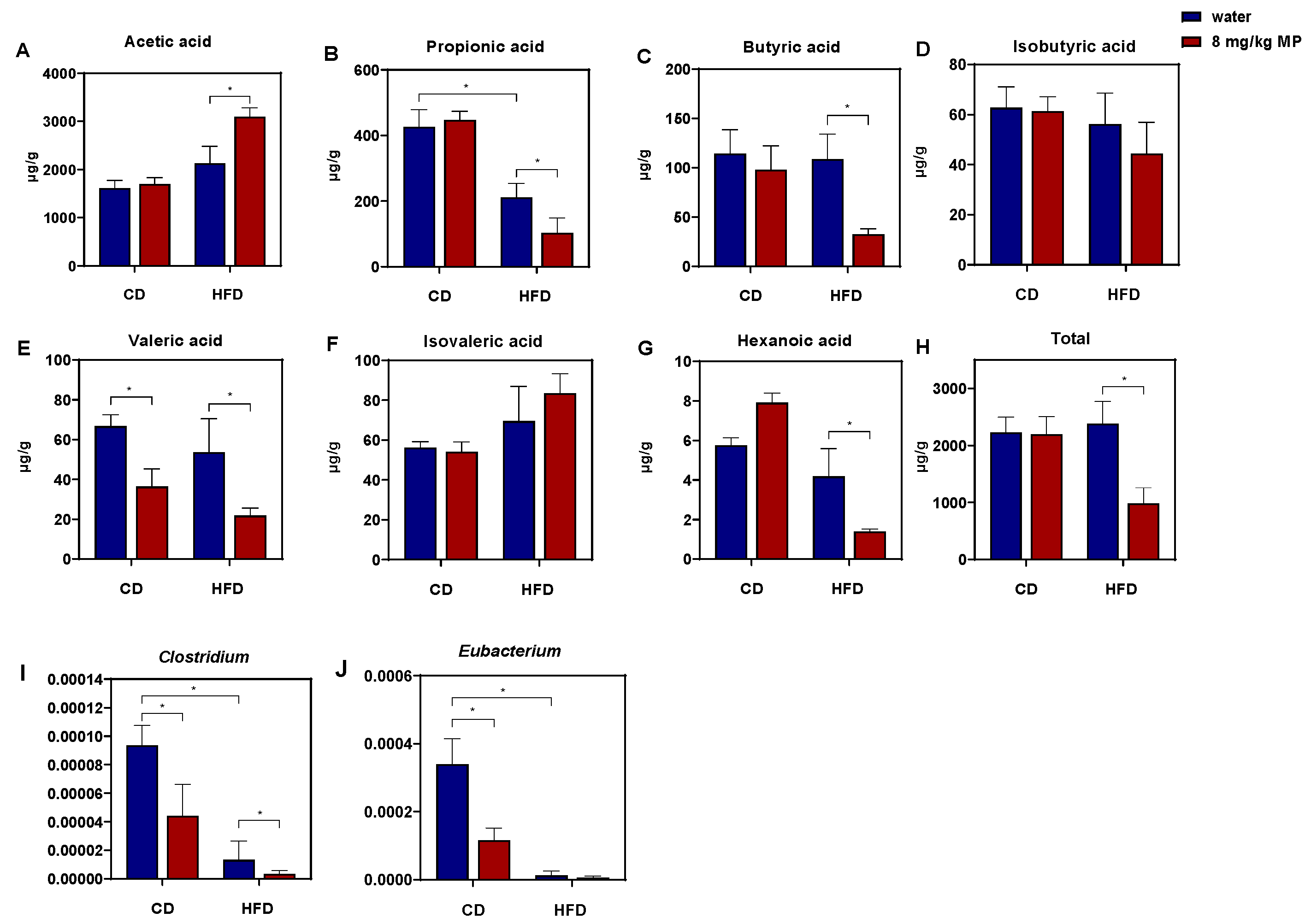
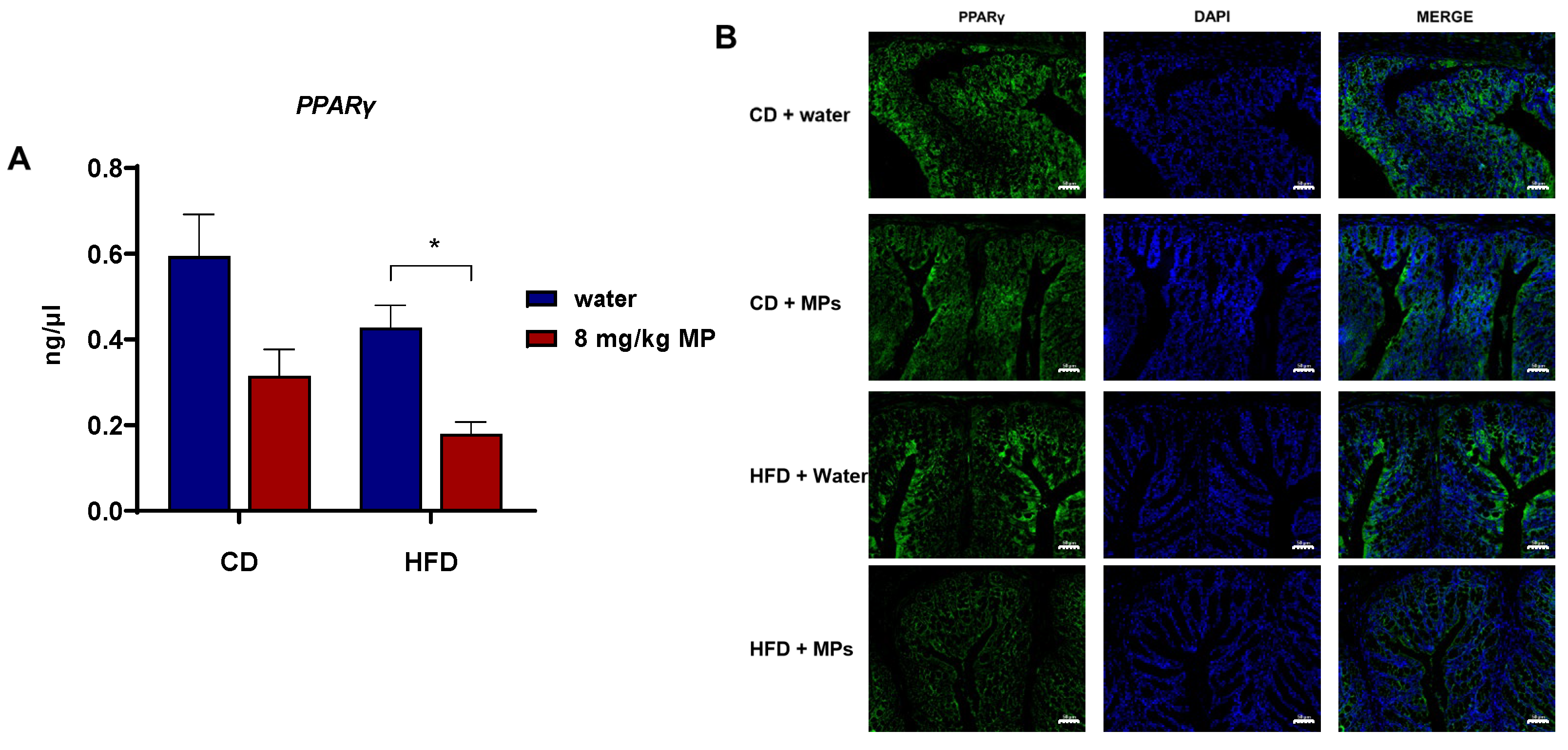
Background: Despite escalating global pollution from microplastics (MPs) and the concurrent surge in high-fat food consumption, the health impacts of MP exposure on individuals under different dietary patterns remain poorly understood. Methods: This study investigated the differential effects of environmentally relevant concentrations of polystyrene microplastics (5 μm, 8 mg/kg) on gut barrier function in mice fed either a normal chow diet (CD) or a high-fat diet (HFD). Results: Key findings revealed that, in HFD-fed mice, MP exposure significantly reduced (p < 0.05) the transcriptional levels of genes encoding the tight junction proteins (ZO-1, Occludin, and Claudin-1), as well as the mucin protein Muc-2, accompanied by decreased protein expression levels of these markers in both colonic and ileal tissues. In contrast, no significant differences were observed in CD-fed mice exposed to MPs. Analysis of the gut microbiota and measurement of short-chain fatty acid (SCFA) metabolites showed that MPs induced significant alterations in the composition and diversity indices of the gut microbiota, along with a marked decrease (p < 0.05) in the levels of the characteristic metabolite butyrate in HFD-fed mice. Conversely, butyrate levels remained unchanged in CD-fed mice following MP exposure. Quantitative PCR (qPCR) and immunofluorescence staining of colonic tissues demonstrated that MP exposure significantly downregulated (p < 0.05) both the transcription and protein expression of peroxisome proliferator-activated receptor γ (PPARγ) in HFD-fed mice. Again, no significant changes were detected in CD-fed mice. Conclusions: These results collectively indicate that the impact of microplastics on the intestinal barrier differs significantly between mice fed normal and high-fat diets. The gut microbiota and its metabolites, particularly butyrate, may play a critical role, possibly through modulating PPARγ signaling. This study contributes valuable insights into understanding the toxicity profiles of microplastics and establishing crucial links between dietary patterns and the health effects of emerging pollutants.
Keywords: emerging pollutants; microplastics; gut barrier; gut microbiota emerging pollutants; microplastics; gut barrier; gut microbiota