
Cannabinoid Therapies in Less-Common Disorders: Clinical Evidence and Formulation Strategies

 , ,
, ,  , ,
, ,  and
and 
Abstract
1. Introduction
2. Overview of Cannabinoids and the Endocannabinoid System
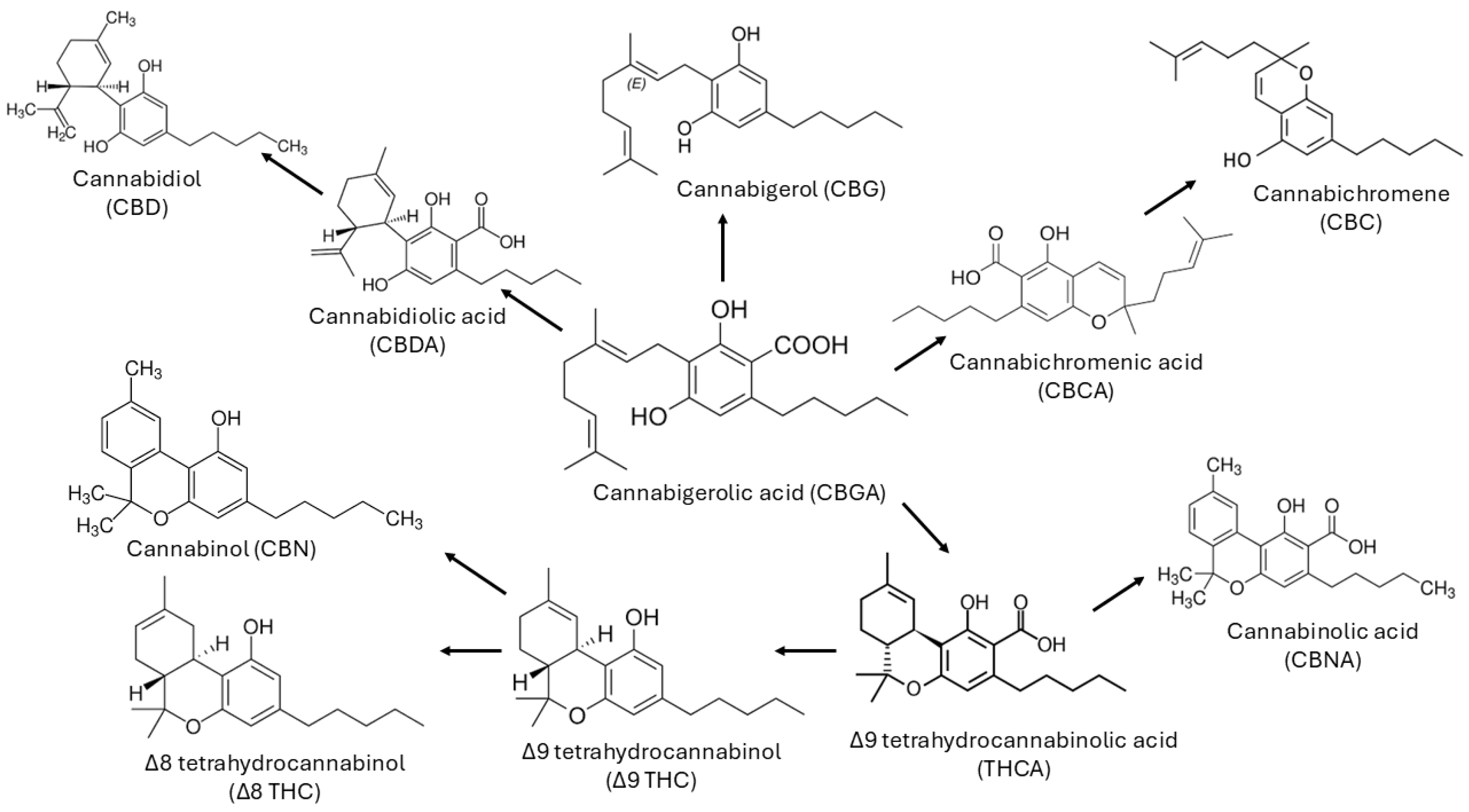
2.1. Brief Description of the Main Cannabinoids
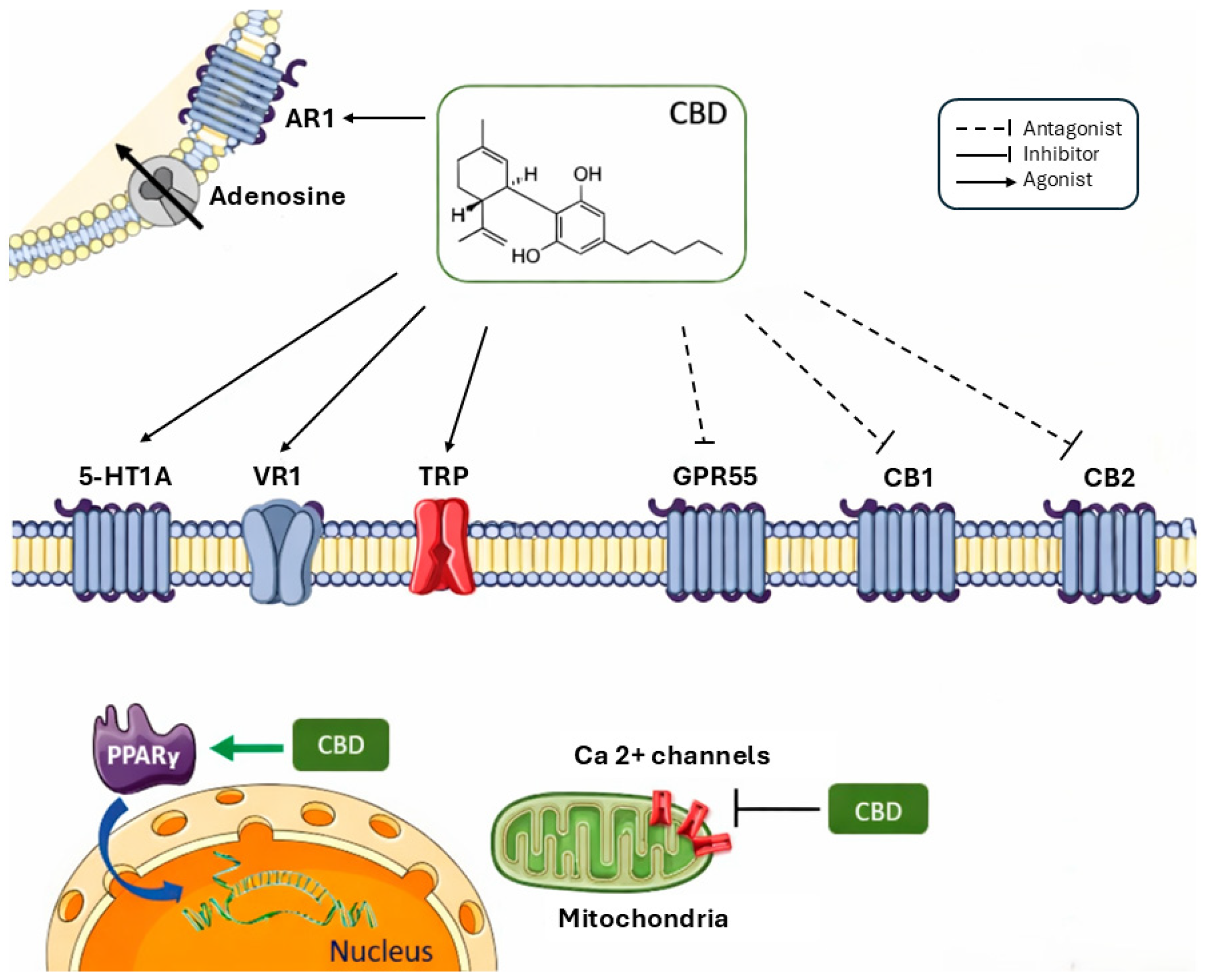
2.2. Relevant Mechanisms of Action
2.3. Formulation Challenges According to General Pharmacokinetic/Pharmacodynamic Processes
2.4. Regulatory Status and Approved Products for Common Indications
3. Clinical Evidence in Less-Common Disorders
3.1. Refractory Epilepsies Beyond Dravet and Lennox–Gastaut Syndromes
3.2. Movement, Neurodegenerative and Sleep-Related Disorders
3.3. Rare and Severe Dermatological Disorders
3.4. Gastrointestinal and Systemic Inflammatory Disorders
3.5. Negative or Unsuccessful Clinical Outcomes: Lessons Learned
4. Formulation Strategies, Safety Considerations and Regulatory Aspects
4.1. Why Formulation Matters in Rare Disorders
4.2. Relevant Pharmaceutical Approaches
4.2.1. Oromucosal Sprays
4.2.2. Transdermal/Topical: Gels and Patches
4.2.3. Nanocarriers
4.3. Safety Profile Across Rare Conditions
4.4. Regulatory Considerations
5. Conclusions
Author Contributions
Funding
Institutional Review Board Statement
Informed Consent Statement
Data Availability Statement
Conflicts of Interest
References
- Zhai, X.; Sarkar, P.R.; Hill, K.P. Therapeutic Use of Cannabis and Cannabinoids: Benefits and Risks. Pol. Arch. Intern. Med. 2025, 135, 17117. [Google Scholar] [CrossRef]
- Renard, J.; Gabrys, R.; Sanger, N. Clearing the Smoke on Cannabis and Cannabinoids: Medical Use of Cannabis and Cannabinoids; Canadian Centre on Substance Use and Addiction: Ottawa, ON, Canada, 2024; ISBN 978-1-77871-139-8. [Google Scholar]
- Pertwee, R.G. The Pharmacology of Cannabinoid Receptors and Their Ligands: An Overview. Int. J. Obes. 2006, 30, S13–S18. [Google Scholar] [CrossRef]
- De Petrocellis, L.; Di Marzo, V. An Introduction to the Endocannabinoid System: From the Early to the Latest Concepts. Best Pract. Res. Clin. Endocrinol. Metab. 2009, 23, 1–15. [Google Scholar] [CrossRef]
- Hoch, E.; Volkow, N.D.; Friemel, C.M.; Lorenzetti, V.; Freeman, T.P.; Hall, W. Cannabis, Cannabinoids and Health: A Review of Evidence on Risks and Medical Benefits. Eur. Arch. Psychiatry Clin. Neurosci. 2025, 275, 281–292. [Google Scholar] [CrossRef] [PubMed]
- INFARMED Deliberação n.o 11/CD/2019. Available online: https://www.infarmed.pt/web/infarmed/institucional/documentacao_e_informacao/campanhas?p_p_id=101&p_p_lifecycle=0&p_p_state=maximized&p_p_mode=view&_101_struts_action=%2Fasset_publisher%2Fview_content&_101_returnToFullPageURL=https%3A%2F%2Fwww.infarmed.pt%2Fweb%2Finfarmed%2Finstitucional%2Fdocumentacao_e_informacao%2Fcampanhas%3Fp_auth%3DxIDXTisp%26p_p_id%3D3%26p_p_lifecycle%3D1%26p_p_state%3Dnormal%26p_p_state_rcv%3D1&_101_assetEntryId=2965223&_101_type=document&inheritRedirect=false (accessed on 22 December 2025).
- Chou, R.; Ahmed, A.Y.; Morasco, B.J.; Bougatsos, C.; Dana, T.; Fu, R.; Gilbreath, T. Living Systematic Review on Cannabis and Other Plant-Based Treatments for Chronic Pain: 2023 Update; Agency for Healthcare Research and Quality: Rockville, MD, USA, 2023. [PubMed]
- Mick, G.; Douek, P. Clinical Benefits and Safety of Medical Cannabis Products: A Narrative Review on Natural Extracts. Pain Ther. 2024, 13, 1063–1094. [Google Scholar] [CrossRef] [PubMed]
- Bhuller, R.; Schlage, W.K.; Hoeng, J. Review of the Current Ongoing Clinical Trials Exploring the Possible Anti-Anxiety Effects of Cannabidiol. J. Cannabis Res. 2024, 6, 40. [Google Scholar] [CrossRef]
- Parovincaka, J.; Szijj, J.V.; Serracino-Inglott, A.; Azzopardi, L.M. Cannabis for Medicinal Use in Patients with Rare Diseases. Transl. Sci. Rare Dis. 2023, 6, 123–135. [Google Scholar] [CrossRef]
- Pagano, C.; Navarra, G.; Coppola, L.; Avilia, G.; Bifulco, M.; Laezza, C. Cannabinoids: Therapeutic Use in Clinical Practice. Int. J. Mol. Sci. 2022, 23, 3344. [Google Scholar] [CrossRef]
- Kaszewska, M.; Woźniczka, K.; Sztormowska-Achranowicz, K.; Mosińska, A.; Trojan, V.; Schreiber, P.; Balog, N.; Bączek, T.; Roszkowska, A. Perspectives of Cannabis-Based Medicines in a View of Pharmacokinetic Studies of Δ9-THC and CBD in Humans. Biomed. Pharmacother. 2025, 192, 118673. [Google Scholar] [CrossRef]
- Zendulka, O.; Dovrtělová, G.; Nosková, K.; Turjap, M.; Šulcová, A.; Hanuš, L. Cannabinoids and Cytochrome P450 Interactions. Curr. Drug Metab. 2016, 17, 206–226. [Google Scholar] [CrossRef] [PubMed]
- Bonini, S.A.; Premoli, M.; Tambaro, S.; Kumar, A.; Maccarinelli, G.; Memo, M.; Mastinu, A. Cannabis sativa: A Comprehensive Ethnopharmacological Review of a Medicinal Plant with a Long History. J. Ethnopharmacol. 2018, 227, 300–315. [Google Scholar] [CrossRef] [PubMed]
- Protti, M.; Brighenti, V.; Battaglia, M.R.; Anceschi, L.; Pellati, F.; Mercolini, L. Cannabinoids from Cannabis sativa L.: A New Tool Based on HPLC–DAD–MS/MS for a Rational Use in Medicinal Chemistry. ACS Med. Chem. Lett. 2019, 10, 539. [Google Scholar] [CrossRef] [PubMed]
- Gonçalves, J.; Rosado, T.; Soares, S.; Simão, A.Y.; Caramelo, D.; Luís, Â.; Fernández, N.; Barroso, M.; Gallardo, E.; Duarte, A.P.; et al. Cannabis and Its Secondary Metabolites: Their Use as Therapeutic Drugs, Toxicological Aspects, and Analytical Determination. Medicines 2019, 6, 31. [Google Scholar] [CrossRef]
- Appendino, G.; Chianese, G.; Taglialatela-Scafati, O. Cannabinoids: Occurrence and Medicinal Chemistry. Curr. Med. Chem. 2011, 18, 1085–1099. [Google Scholar] [CrossRef]
- ElSohly, M.A.; Slade, D. Chemical Constituents of Marijuana: The Complex Mixture of Natural Cannabinoids. Life Sci. 2005, 78, 539–548. [Google Scholar] [CrossRef]
- De Backer, B.; Debrus, B.; Lebrun, P.; Theunis, L.; Dubois, N.; Decock, L.; Verstraete, A.; Hubert, P.; Charlier, C. Innovative Development and Validation of an HPLC/DAD Method for the Qualitative and Quantitative Determination of Major Cannabinoids in Cannabis Plant Material. J. Chromatogr. B Analyt. Technol. Biomed. Life Sci. 2009, 877, 4115–4124. [Google Scholar] [CrossRef]
- Hanuš, L.O.; Meyer, S.M.; Muñoz, E.; Taglialatela-Scafati, O.; Appendino, G. Phytocannabinoids: A Unified Critical Inventory. Nat. Prod. Rep. 2016, 33, 1357–1392. [Google Scholar] [CrossRef]
- Izzo, A.A.; Borrelli, F.; Capasso, R.; Di Marzo, V.; Mechoulam, R. Non-Psychotropic Plant Cannabinoids: New Therapeutic Opportunities from an Ancient Herb. Trends Pharmacol. Sci. 2009, 30, 515–527. [Google Scholar] [CrossRef]
- Pertwee, R.G. The Diverse CB1 and CB2 Receptor Pharmacology of Three Plant Cannabinoids: Delta9-Tetrahydrocannabinol, Cannabidiol and Delta9-Tetrahydrocannabivarin. Br. J. Pharmacol. 2008, 153, 199–215. [Google Scholar] [CrossRef]
- Grotenhermen, F. Pharmacokinetics and Pharmacodynamics of Cannabinoids. Clin. Pharmacokinet. 2003, 42, 327–360. [Google Scholar] [CrossRef] [PubMed]
- Pertwee, R.G. Pharmacology of Cannabinoid CB1 and CB2 Receptors. Pharmacol. Ther. 1997, 74, 129–180. [Google Scholar] [CrossRef] [PubMed]
- Grant, K.S.; Petroff, R.; Isoherranen, N.; Stella, N.; Burbacher, T.M. Cannabis Use during Pregnancy: Pharmacokinetics and Effects on Child Development. Pharmacol. Ther. 2017, 182, 133. [Google Scholar] [CrossRef] [PubMed]
- Solymosi, K.; Kofalvi, A. Cannabis: A Treasure Trove or Pandora’s Box? Mini Rev. Med. Chem. 2017, 17, 1223–1291. [Google Scholar] [CrossRef]
- dos Santos, R.G.; Hallak, J.E.C.; Crippa, J.A.S. Neuropharmacological Effects of the Main Phytocannabinoids: A Narrative Review. Adv. Exp. Med. Biol. 2021, 1264, 29–45. [Google Scholar] [CrossRef]
- McCarberg, B.H.; Barkin, R.L. The Future of Cannabinoids as Analgesic Agents: A Pharmacologic, Pharmacokinetic, and Pharmacodynamic Overview. Am. J. Ther. 2007, 14, 475–483. [Google Scholar] [CrossRef]
- Laprairie, R.B.; Bagher, A.M.; Kelly, M.E.M.; Denovan-Wright, E.M. Cannabidiol Is a Negative Allosteric Modulator of the Cannabinoid CB1 Receptor. Br. J. Pharmacol. 2015, 172, 4790–4805. [Google Scholar] [CrossRef]
- Pellati, F.; Borgonetti, V.; Brighenti, V.; Biagi, M.; Benvenuti, S.; Corsi, L. Cannabis sativa L. and Nonpsychoactive Cannabinoids: Their Chemistry and Role against Oxidative Stress, Inflammation, and Cancer. Biomed Res. Int. 2018, 2018, 1691428. [Google Scholar] [CrossRef]
- Manduca, A.; Buzzelli, V.; Rava, A.; Feo, A.; Carbone, E.; Schiavi, S.; Peruzzi, B.; D’Oria, V.; Pezzullo, M.; Pasquadibisceglie, A.; et al. Cannabidiol and Positive Effects on Object Recognition Memory in an in Vivo Model of Fragile X Syndrome: Obligatory Role of Hippocampal GPR55 Receptors. Pharmacol. Res. 2024, 203, 107176. [Google Scholar] [CrossRef]
- Micale, V.; Di Bartolomeo, M.; Di Martino, S.; Stark, T.; Dell’Osso, B.; Drago, F.; D’Addario, C. Are the Epigenetic Changes Predictive of Therapeutic Efficacy for Psychiatric Disorders? A Translational Approach towards Novel Drug Targets. Pharmacol. Ther. 2023, 241, 108279. [Google Scholar] [CrossRef]
- Thomas, A.; Baillie, G.L.; Phillips, A.M.; Razdan, R.K.; Ross, R.A.; Pertwee, R.G. Cannabidiol Displays Unexpectedly High Potency as an Antagonist of CB1 and CB2 Receptor Agonists in Vitro. Br. J. Pharmacol. 2007, 150, 613–623. [Google Scholar] [CrossRef] [PubMed]
- Bisogno, T.; Hanuš, L.; De Petrocellis, L.; Tchilibon, S.; Ponde, D.E.; Brandi, I.; Moriello, A.S.; Davis, J.B.; Mechoulam, R.; Di Marzo, V. Molecular Targets for Cannabidiol and Its Synthetic Analogues: Effect on Vanilloid VR1 Receptors and on the Cellular Uptake and Enzymatic Hydrolysis of Anandamide. Br. J. Pharmacol. 2001, 134, 845. [Google Scholar] [CrossRef] [PubMed]
- Marzo, V.D.; Petrocellis, L.D. Endocannabinoids as Regulators of Transient Receptor Potential (TRP) Channels: A Further Opportunity to Develop New Endocannabinoid-Based Therapeutic Drugs. Curr. Med. Chem. 2010, 17, 1430–1449. [Google Scholar] [CrossRef] [PubMed]
- Zygmunt, P.M.; Petersson, J.; Andersson, D.A.; Chuang, H.H.; Sørgård, M.; Di Marzo, V.; Julius, D.; Högestätt, E.D. Vanilloid Receptors on Sensory Nerves Mediate the Vasodilator Action of Anandamide. Nature 1999, 400, 452–457. [Google Scholar] [CrossRef]
- Zuardi, A.W. Cannabidiol: From an Inactive Cannabinoid to a Drug with Wide Spectrum of Action. Braz. J. Psychiatry 2008, 30, 271–280. [Google Scholar] [CrossRef]
- Russo, E.B.; Burnett, A.; Hall, B.; Parker, K.K. Agonistic Properties of Cannabidiol at 5-HT1a Receptors. Neurochem. Res. 2005, 30, 1037–1043. [Google Scholar] [CrossRef]
- Campos, A.C.; Guimarães, F.S. Involvement of 5HT1A Receptors in the Anxiolytic-like Effects of Cannabidiol Injected into the Dorsolateral Periaqueductal Gray of Rats. Psychopharmacology 2008, 199, 223–230. [Google Scholar] [CrossRef]
- Ligresti, A.; Moriello, A.S.; Starowicz, K.; Matias, I.; Pisanti, S.; De Petrocellis, L.; Laezza, C.; Portella, G.; Bifulco, M.; Di Marzo, V. Antitumor Activity of Plant Cannabinoids with Emphasis on the Effect of Cannabidiol on Human Breast Carcinoma. J. Pharmacol. Exp. Ther. 2006, 318, 1375–1387. [Google Scholar] [CrossRef]
- Massi, P.; Vaccani, A.; Bianchessi, S.; Costa, B.; Macchi, P.; Parolaro, D. The Non-Psychoactive Cannabidiol Triggers Caspase Activation and Oxidative Stress in Human Glioma Cells. Cell. Mol. Life Sci. 2006, 63, 2057–2066. [Google Scholar] [CrossRef]
- Kogan, N.M.; Schlesinger, M.; Peters, M.; Marincheva, G.; Beeri, R.; Mechoulam, R. A Cannabinoid Anticancer Quinone, HU-331, Is More Potent and Less Cardiotoxic than Doxorubicin: A Comparative in Vivo Study. J. Pharmacol. Exp. Ther. 2007, 322, 646–653. [Google Scholar] [CrossRef]
- O’Sullivan, S.E. An Update on PPAR Activation by Cannabinoids. Br. J. Pharmacol. 2016, 173, 1899–1910. [Google Scholar] [CrossRef] [PubMed]
- De Petrocellis, L.; Vellani, V.; Schiano-Moriello, A.; Marini, P.; Magherini, P.C.; Orlando, P.; Di Marzo, V. Plant-Derived Cannabinoids Modulate the Activity of Transient Receptor Potential Channels of Ankyrin Type-1 and Melastatin Type-8. J. Pharmacol. Exp. Ther. 2008, 325, 1007–1015. [Google Scholar] [CrossRef] [PubMed]
- McPartland, J.M.; Duncan, M.; Di Marzo, V.; Pertwee, R.G. Are Cannabidiol and Δ(9) -Tetrahydrocannabivarin Negative Modulators of the Endocannabinoid System? A Systematic Review. Br. J. Pharmacol. 2015, 172, 737–753. [Google Scholar] [CrossRef] [PubMed]
- Riedel, G.; Fadda, P.; McKillop-Smith, S.; Pertwee, R.G.; Platt, B.; Robinson, L. Synthetic and Plant-Derived Cannabinoid Receptor Antagonists Show Hypophagic Properties in Fasted and Non-Fasted Mice. Br. J. Pharmacol. 2009, 156, 1154–1166. [Google Scholar] [CrossRef]
- Hill, A.J.; Weston, S.E.; Jones, N.A.; Smith, I.; Bevan, S.A.; Williamson, E.M.; Stephens, G.J.; Williams, C.M.; Whalley, B.J. Δ9-Tetrahydrocannabivarin Suppresses in Vitro Epileptiform and in Vivo Seizure Activity in Adult Rats. Epilepsia 2010, 51, 1522–1532. [Google Scholar] [CrossRef]
- Lucas, C.J.; Galettis, P.; Schneider, J. The Pharmacokinetics and the Pharmacodynamics of Cannabinoids. Br. J. Clin. Pharmacol. 2018, 84, 2477–2482. [Google Scholar] [CrossRef]
- Huestis, M.A. Pharmacokinetics and Metabolism of the Plant Cannabinoids, Delta9-Tetrahydrocannabinol, Cannabidiol and Cannabinol. Handb. Exp. Pharmacol. 2005, 168, 657–690. [Google Scholar] [CrossRef]
- Huestis, M.A.; Henningfield, J.E.; Cone, E.J. Blood Cannabinoids. I. Absorption of THC and Formation of 11-OH-THC and THCCOOH during and after Smoking Marijuana. J. Anal. Toxicol. 1992, 16, 276–282. [Google Scholar] [CrossRef]
- Ohlsson, A.; Lindgren, J.-E.; Andersson, S.; Agurell, S.; Gillespie, H.; Hollister, L.E. Single-Dose Kinetics of Deuterium-Labelled Cannabidiol in Man after Smoking and Intravenous Administration. Biomed. Environ. Mass Spectrom. 1986, 13, 77–83. [Google Scholar] [CrossRef]
- Toennes, S.W.; Ramaekers, J.G.; Theunissen, E.L.; Moeller, M.R.; Kauert, G.F. Comparison of Cannabinoid Pharmacokinetic Properties in Occasional and Heavy Users Smoking a Marijuana or Placebo Joint. J. Anal. Toxicol. 2008, 32, 470–477. [Google Scholar] [CrossRef]
- Solowij, N.; Broyd, S.J.; van Hell, H.H.; Hazekamp, A. A Protocol for the Delivery of Cannabidiol (CBD) and Combined CBD and ∆9-Tetrahydrocannabinol (THC) by Vaporisation. BMC Pharmacol. Toxicol. 2014, 15, 58. [Google Scholar] [CrossRef]
- Martin, J.H.; Schneider, J.; Lucas, C.J.; Galettis, P. Exogenous Cannabinoid Efficacy: Merely a Pharmacokinetic Interaction? Clin. Pharmacokinet. 2018, 57, 539–545. [Google Scholar] [CrossRef] [PubMed]
- Goullé, J.P.; Saussereau, E.; Lacroix, C. Pharmacocinétique Du Delta-9-Tétrahydrocannabinol (THC). Ann. Pharm. Fr. 2008, 66, 232–244. [Google Scholar] [CrossRef] [PubMed]
- Agurell, S.; Carlsson, S.; Lindgren, J.E.; Ohlsson, A.; Gillespie, H.; Hollister, L. Interactions of Delta 1-Tetrahydrocannabinol with Cannabinol and Cannabidiol Following Oral Administration in Man. Assay of Cannabinol and Cannabidiol by Mass Fragmentography. Experientia 1981, 37, 1090–1092. [Google Scholar] [CrossRef] [PubMed]
- Eichler, M.; Spinedi, L.; Unfer-Grauwiler, S.; Bodmer, M.; Surber, C.; Luedi, M.; Drewe, J. Heat Exposure of Cannabis sativa Extracts Affects the Pharmacokinetic and Metabolic Profile in Healthy Male Subjects. Planta Med. 2012, 78, 686–691. [Google Scholar] [CrossRef]
- Millar, S.A.; Maguire, R.F.; Yates, A.S.; O’sullivan, S.E. Towards Better Delivery of Cannabidiol (CBD). Pharmaceuticals 2020, 13, 219. [Google Scholar] [CrossRef]
- Ahmed, A.I.A.; Van Den Elsen, G.A.H.; Colbers, A.; Kramers, C.; Burger, D.M.; Van Der Marck, M.A.; Olde Rikkert, M.G.M. Safety, Pharmacodynamics, and Pharmacokinetics of Multiple Oral Doses of Delta-9-Tetrahydrocannabinol in Older Persons with Dementia. Psychopharmacology 2015, 232, 2587–2595. [Google Scholar] [CrossRef]
- Schwilke, E.W.; Schwope, D.M.; Karschner, E.L.; Lowe, R.H.; Darwin, W.D.; Kelly, D.L.; Goodwin, R.S.; Gorelick, D.A.; Huestis, M.A. Delta9-Tetrahydrocannabinol (THC), 11-Hydroxy-THC, and 11-nor-9-Carboxy-THC Plasma Pharmacokinetics during and after Continuous High-Dose Oral THC. Clin. Chem. 2009, 55, 2180–2189. [Google Scholar] [CrossRef]
- Garrett, E.R.; Hunt, C.A. Physicochemical Properties, Solubility, and Protein Binding of Δ9-tetrahydrocannabinol. J. Pharm. Sci. 1974, 63, 1056–1064. [Google Scholar] [CrossRef]
- Challapalli, P.V.N.; Stinchcomb, A.L. In Vitro Experiment Optimization for Measuring Tetrahydrocannabinol Skin Permeation. Int. J. Pharm. 2002, 241, 329–339. [Google Scholar] [CrossRef]
- Stinchcomb, A.L.; Valiveti, S.; Hammell, D.C.; Ramsey, D.R. Human Skin Permeation of Delta8-Tetrahydrocannabinol, Cannabidiol and Cannabinol. J. Pharm. Pharmacol. 2004, 56, 291–297. [Google Scholar] [CrossRef]
- Lodzki, M.; Godin, B.; Rakou, L.; Mechoulam, R.; Gallily, R.; Touitou, E. Cannabidiol—Transdermal Delivery and Anti-Inflammatory Effect in a Murine Model. J. Control. Release 2003, 93, 377–387. [Google Scholar] [CrossRef]
- Valiveti, S.; Hammell, D.C.; Earles, D.C.; Stinchcomb, A.L. In Vitro/in Vivo Correlation Studies for Transdermal Δ 8-THC Development. J. Pharm. Sci. 2004, 93, 1154–1164. [Google Scholar] [CrossRef] [PubMed]
- Lucas, C.J.; Galettis, P.; Song, S.; Solowij, N.; Reuter, S.E.; Schneider, J.; Martin, J.H. Cannabinoid Disposition After Human Intraperitoneal Use: An Insight Into Intraperitoneal Pharmacokinetic Properties in Metastatic Cancer. Clin. Ther. 2018, 40, 1442–1447. [Google Scholar] [CrossRef] [PubMed]
- Huestis, M.A. Human Cannabinoid Pharmacokinetics. Chem. Biodivers. 2007, 4, 1770–1804. [Google Scholar] [CrossRef] [PubMed]
- Gaston, T.E.; Friedman, D. Pharmacology of Cannabinoids in the Treatment of Epilepsy. Epilepsy Behav. 2017, 70, 313–318. [Google Scholar] [CrossRef]
- Dinis-Oliveira, R.J. Metabolomics of Δ9-Tetrahydrocannabinol: Implications in Toxicity. Drug Metab. Rev. 2016, 48, 80–87. [Google Scholar] [CrossRef]
- Heiskanen, T.; Mätzke, S.; Haakana, S.; Gergov, M.; Vuori, E.; Kalso, E. Transdermal Fentanyl in Cachectic Cancer Patients. Pain 2009, 144, 218–222. [Google Scholar] [CrossRef]
- Consroe, P.; Laguna, J.; Allender, J.; Snider, S.; Stern, L.; Sandyk, R.; Kennedy, K.; Schram, K. Controlled Clinical Trial of Cannabidiol in Huntington’s Disease. Pharmacol. Biochem. Behav. 1991, 40, 701–708. [Google Scholar] [CrossRef]
- Brown, J.D.; Winterstein, A.G.; Brown, J.D.; Winterstein, A.G. Potential Adverse Drug Events and Drug–Drug Interactions with Medical and Consumer Cannabidiol (CBD) Use. J. Clin. Med. 2019, 8, 989. [Google Scholar] [CrossRef]
- Devinsky, O.; Marsh, E.; Friedman, D. Cannabidiol in Patients with Treatment-Resistant Epilepsy—Authors’ Reply. Lancet Neurol. 2016, 15, 545–546. [Google Scholar] [CrossRef] [PubMed]
- Atsmon, J.; Heffetz, D.; Deutsch, L.; Deutsch, F.; Sacks, H. Single-Dose Pharmacokinetics of Oral Cannabidiol Following Administration of PTL101: A New Formulation Based on Gelatin Matrix Pellets Technology. Clin. Pharmacol. Drug Dev. 2018, 7, 751–758. [Google Scholar] [CrossRef] [PubMed]
- Paton, W.D.M.; Pertwee, R.G. Effect of Cannabis and Certain of Its Constituents on Pentobarbitone Sleeping Time and Phenazone Metabolism. Br. J. Pharmacol. 1972, 44, 250–261. [Google Scholar] [CrossRef] [PubMed]
- Borys, H.K.; Karler, R. Cannabidiol and Δ9-Tetrahydrocannabinol Metabolism: In Vitro Comparison of Mouse and Rat Liver Crude Microsome Preparations. Biochem. Pharmacol. 1979, 28, 1553–1559. [Google Scholar] [CrossRef]
- Nadulski, T.; Pragst, F.; Weinberg, G.; Roser, P.; Schnelle, M.; Fronk, E.M.; Stadelmann, A.M. Randomized, Double-Blind, Placebo-Controlled Study about the Effects of Cannabidiol (CBD) on the Pharmacokinetics of Delta9-Tetrahydrocannabinol (THC) after Oral Application of THC Verses Standardized Cannabis Extract. Ther. Drug Monit. 2005, 27, 799–810. [Google Scholar] [CrossRef]
- Maurer, H.H.; Sauer, C.; Theobald, D.S. Toxicokinetics of Drugs of Abuse: Current Knowledge of the Isoenzymes Involved in the Human Metabolism of Tetrahydrocannabinol, Cocaine, Heroin, Morphine, and Codeine. Ther. Drug Monit. 2006, 28, 447–453. [Google Scholar] [CrossRef]
- Costa, B.; Trovato, A.E.; Comelli, F.; Giagnoni, G.; Colleoni, M. The Non-Psychoactive Cannabis Constituent Cannabidiol Is an Orally Effective Therapeutic Agent in Rat Chronic Inflammatory and Neuropathic Pain. Eur. J. Pharmacol. 2007, 556, 75–83. [Google Scholar] [CrossRef]
- United Nations. The Single Convention on Narcotic Drugs. Available online: https://www.euda.europa.eu/drugs-library/single-convention-narcotic-drugs-1961_en (accessed on 17 December 2025).
- Abuhasira, R.; Shbiro, L.; Landschaft, Y. Medical Use of Cannabis and Cannabinoids Containing Products—Regulations in Europe and North America. Eur. J. Intern. Med. 2018, 49, 2–6. [Google Scholar] [CrossRef]
- Food and Drug Administration. FDA Regulation of Cannabis and Cannabis-Derived Products, Including Cannabidiol (CBD)|FDA. Available online: https://www.fda.gov/news-events/public-health-focus/fda-regulation-cannabis-and-cannabis-derived-products-including-cannabidiol-cbd (accessed on 17 December 2025).
- Food and Drug Administration. FDA and Cannabis: Research and Drug Approval Process|FDA. Available online: https://www.fda.gov/news-events/public-health-focus/fda-and-cannabis-research-and-drug-approval-process (accessed on 17 December 2025).
- European Union Drugs Agency. New Report Describes Growing Complexity and Change in Cannabis Laws in Europe|www.euda.europa.eu. Available online: https://www.euda.europa.eu/news/2023/cannabis-laws-europe-questions-and-answers-policymaking_en (accessed on 15 December 2025).
- Kiran Vemuri, V.; Makriyannis, A. Medicinal Chemistry of Cannabinoids. Clin. Pharmacol. Ther. 2015, 97, 553–558. [Google Scholar] [CrossRef]
- Voicu, V.; Brehar, F.M.; Toader, C.; Covache-Busuioc, R.A.; Corlatescu, A.D.; Bordeianu, A.; Costin, H.P.; Bratu, B.G.; Glavan, L.A.; Ciurea, A.V. Cannabinoids in Medicine: A Multifaceted Exploration of Types, Therapeutic Applications, and Emerging Opportunities in Neurodegenerative Diseases and Cancer Therapy. Biomolecules 2023, 13, 1388. [Google Scholar] [CrossRef] [PubMed]
- Hasin, D.S. US Epidemiology of Cannabis Use and Associated Problems. Neuropsychopharmacology 2018, 43, 195–212. [Google Scholar] [CrossRef] [PubMed]
- New York State Office of Cannabis Management|Office of Cannabis Management. Available online: https://cannabis.ny.gov/ (accessed on 17 December 2025).
- FDA CESAMETTM (Nabilone) Capsules. 2006. Available online: https://www.accessdata.fda.gov/drugsatfda_docs/label/2006/018677s011lbl.pdf (accessed on 17 December 2025).
- FDA SYNDROS (Dronabinol) Oral Solution, CX. Available online: https://www.accessdata.fda.gov/drugsatfda_docs/label/2016/205525s000lbl.pdf (accessed on 17 December 2025).
- Klieger, S.B.; Gutman, A.; Allen, L.; Pacula, R.L.; Ibrahim, J.K.; Burris, S. Mapping Medical Marijuana: State Laws Regulating Patients, Product Safety, Supply Chains and Dispensaries, 2017. Addiction 2017, 112, 2206–2216. [Google Scholar] [CrossRef] [PubMed]
- Florida Department of State Constitutional Initiatives. Available online: https://constitutionalinitiatives.dos.fl.gov/ (accessed on 17 December 2025).
- Ablin, J.; Ste-Marie, P.A.; Schäfer, M.; Häuser, W.; Fitzcharles, M.A. Medical Use of Cannabis Products. Schmerz 2016, 30, 3–13. [Google Scholar] [CrossRef]
- Canada Ministry of Justice Access to Cannabis for Medical Purposes Regulations. 2018. Available online: https://laws-lois.justice.gc.ca/eng/regulations/sor-2018-144/20180627/P1TT3xt3.html (accessed on 17 December 2025).
- Government of Canada Understanding the Access to Cannabis for Medical Purposes Regulations—Canada. Available online: https://www.canada.ca/en/health-canada/services/publications/drugs-health-products/understanding-new-access-to-cannabis-for-medical-purposes-regulations.html?_ga=2.160051705.575108858.1511160845-1024719169.1511160845 (accessed on 17 December 2025).
- Government of Canada Information for Health Care Professionals: Cannabis (Marihuana, Marijuana) and the Cannabinoids. Available online: https://www.canada.ca/en/health-canada/services/drugs-medication/cannabis/information-medical-practitioners/information-health-care-professionals-cannabis-cannabinoids.html (accessed on 17 December 2025).
- Hurley, E.N.; Ellaway, C.J.; Johnson, A.M.; Truong, L.; Gordon, R.; Galettis, P.; Martin, J.H.; Lawson, J.A. Efficacy and Safety of Cannabidivarin Treatment of Epilepsy in Girls with Rett Syndrome: A Phase 1 Clinical Trial. Epilepsia 2022, 63, 1736–1747. [Google Scholar] [CrossRef]
- Lamonarca, J.; Mintz, I.; Bayarres, L.; Kochen, S.; Oddo, S. Psychiatric Comorbidities before and after Cannabidiol Treatment in Adult Patients with Drug Resistant Focal Epilepsy. Epilepsy Behav. 2024, 160, 110032. [Google Scholar] [CrossRef]
- O’Brien, T.J.; Berkovic, S.F.; French, J.A.; Messenheimer, J.A.; Sebree, T.B.; Bonn-Miller, M.O.; Gutterman, D.L. Adjunctive Transdermal Cannabidiol for Adults with Focal Epilepsy: A Randomized Clinical Trial. JAMA Netw. Open 2022, 5, E2220189. [Google Scholar] [CrossRef]
- Wu, J.Y.; Cock, H.R.; Devinsky, O.; Joshi, C.; Miller, I.; Roberts, C.M.; Sanchez-Carpintero, R.; Checketts, D.; Sahebkar, F. Time to Onset of Cannabidiol Treatment Effect and Resolution of Adverse Events in Tuberous Sclerosis Complex: Post Hoc Analysis of Randomized Controlled Phase 3 Trial GWPCARE6. Epilepsia 2022, 63, 1189–1199. [Google Scholar] [CrossRef]
- Fortini, P.S.; Toibaro, J.J.; Caraballo, R.H. Purified Cannabidiol Leads to Improvement of Severe Treatment-Resistant Behavioral Symptoms in Children with Autism Spectrum Disorder. Pharmacol. Biochem. Behav. 2025, 249, 173971. [Google Scholar] [CrossRef]
- Aran, A.; Harel, M.; Cassuto, H.; Polyansky, L.; Schnapp, A.; Wattad, N.; Shmueli, D.; Golan, D.; Castellanos, F.X. Cannabinoid Treatment for Autism: A Proof-of-Concept Randomized Trial. Mol. Autism 2021, 12, 6. [Google Scholar] [CrossRef]
- Smegal, L.F.; Vedmurthy, P.; Ryan, M.; Eagen, M.; Andrejow, N.W.; Sweeney, K.; Reidy, T.G.; Yeom, S.E.; Lin, D.D.; Suskauer, S.J.; et al. Cannabidiol Treatment for Neurological, Cognitive, and Psychiatric Symptoms in Sturge-Weber Syndrome. Pediatr. Neurol. 2023, 139, 24–34. [Google Scholar] [CrossRef]
- Kaplan, E.H.; Offermann, E.A.; Sievers, J.W.; Comi, A.M. Cannabidiol Treatment for Refractory Seizures in Sturge-Weber Syndrome. Pediatr. Neurol. 2017, 71, 18–23.e2. [Google Scholar] [CrossRef]
- Stefanović, M.; Osredkar, D.; Rener-Primec, Z.; Peterlin, J.; Laptoš, T.; Neubauer, D. Plant-Derived Cannabinoids for Treatment of Spasticity in Children and Adolescents with Severe Cerebral Palsy: Double-Blind, Placebo-Controlled Trial. Eur. J. Paediatr. Neurol. 2025, 54, 18–24. [Google Scholar] [CrossRef]
- Cury, R.D.M.; da Silva, T.; Cezar-dos-Santos, F.; Fakih, Y.R.C.; Narvaez, K.A.R.; Gouvea, M.C.; Espínola, C.; Ferreira, C.F.; de Castro, W.A.C.; Pamplona, F.A.; et al. A Randomized Clinical Trial of Low-Dose Cannabis Extract in Alzheimer’s Disease. J. Alzheimer’s Dis. 2025, 108, 1602–1613. [Google Scholar] [CrossRef] [PubMed]
- Walsh, J.H.; Maddison, K.J.; Rankin, T.; Murray, K.; McArdle, N.; Ree, M.J.; Hillman, D.R.; Eastwood, P.R. Treating Insomnia Symptoms with Medicinal Cannabis: A Randomized, Crossover Trial of the Efficacy of a Cannabinoid Medicine Compared with Placebo. Sleep 2021, 44, zsab149. [Google Scholar] [CrossRef] [PubMed]
- Saleska, J.L.; Bryant, C.; Kolobaric, A.; D’Adamo, C.R.; Colwell, C.S.; Loewy, D.; Chen, J.; Pauli, E.K. The Safety and Comparative Effectiveness of Non-Psychoactive Cannabinoid Formulations for the Improvement of Sleep: A Double-Blinded, Randomized Controlled Trial. J. Am. Nutr. Assoc. 2024, 43, 1–11. [Google Scholar] [CrossRef] [PubMed]
- Narayan, A.J.; Downey, L.A.; Rose, S.; Di Natale, L.; Hayley, A.C. Cannabidiol for Moderate-Severe Insomnia: A Randomized Controlled Pilot Trial of 150 Mg of Nightly Dosing. J. Clin. Sleep Med. 2024, 20, 753–763. [Google Scholar] [CrossRef]
- de Almeida, C.M.O.; Brito, M.M.C.; Bosaipo, N.B.; Pimentel, A.V.; Tumas, V.; Zuardi, A.W.; Crippa, J.A.S.; Hallak, J.E.C.; Eckeli, A.L. Cannabidiol for Rapid Eye Movement Sleep Behavior Disorder. Mov. Disord. 2021, 36, 1711–1715. [Google Scholar] [CrossRef]
- Narayan, A.J.; Hayley, A.C.; Rose, S.; Di Natale, L.; Downey, L.A. The Effect of Nightly Use of 150 Mg Cannabidiol on Daytime Neurocognitive Performance in Primary Insomnia: A Randomized Controlled Pilot Trial. Psychopharmacology 2025, 242, 297–308. [Google Scholar] [CrossRef]
- Siani-Rose, M.; McKee, R.; Cox, S.; Goldstein, B.; Abrams, D.; Taylor, M.; Kurek, I. The Potential of Salivary Lipid-Based Cannabis-Responsive Biomarkers to Evaluate Medical Cannabis Treatment in Children with Autism Spectrum Disorder. Cannabis Cannabinoid Res. 2023, 8, 642–656. [Google Scholar] [CrossRef]
- Dell’Isola, G.B.; Antonella, F.; Francesco, P.; Mario, M.; Cordelli, D.M.; Piero, P.; Pasquale, P.; Alessandro, F.; Operto, F.F.; Maurizio, E.; et al. CDKL5 Deficiency-Related Neurodevelopmental Disorders: A Multi-Center Cohort Study in Italy. J. Neurol. 2024, 271, 5368–5377. [Google Scholar] [CrossRef] [PubMed]
- Pretzsch, C.M.; Floris, D.L.; Voinescu, B.; Elsahib, M.; Mendez, M.A.; Wichers, R.; Ajram, L.; Ivin, G.; Heasman, M.; Pretzsch, E.; et al. Modulation of Striatal Functional Connectivity Differences in Adults with and without Autism Spectrum Disorder in a Single-Dose Randomized Trial of Cannabidivarin. Mol. Autism 2021, 12, 49. [Google Scholar] [CrossRef] [PubMed]
- Albertyn, C.P.; Guu, T.W.; Chu, P.; Creese, B.; Young, A.; Velayudhan, L.; Bhattacharyya, S.; Jafari, H.; Kaur, S.; Kandangwa, P.; et al. Sativex (Nabiximols) for the Treatment of Agitation & Aggression in Alzheimer’s Dementia in UK Nursing Homes: A Randomised, Double-Blind, Placebo-Controlled Feasibility Trial. Age Ageing 2025, 54, afaf149. [Google Scholar] [CrossRef] [PubMed]
- Palmieri, B.; Vadalà, M. Oral Thc: Cbd Cannabis Extract in Main Symptoms of Alzheimer Disease: Agitation and Weight Loss. Clin. Ter. 2023, 174, 53–60. [Google Scholar] [CrossRef]
- van Boxel, R.; Gangadin, S.S.; Janssen, H.; van der Steur, S.; van der Vinne, L.J.C.; Dortants, L.; Pelgrim, T.A.D.; Draisma, L.W.R.; Tuura, R.; van der Meer, P.; et al. The Impact of Cannabidiol Treatment on Resting State Functional Connectivity, Prefrontal Metabolite Levels and Reward Processing in Recent-Onset Patients with a Psychotic Disorder. J. Psychiatr. Res. 2023, 163, 93–101. [Google Scholar] [CrossRef]
- Bolsoni, L.M.; Crippa, J.A.S.; Hallak, J.E.C.; Guimaraes, F.S.; Zuardi, A.W. The Anxiolytic Effect of Cannabidiol Depends on the Nature of the Trauma When Patients with Post-Traumatic Stress Disorder Recall Their Trigger Event. Braz. J. Psychiatry 2022, 44, 298–307. [Google Scholar] [CrossRef]
- Bolsoni, L.M.; Crippa, J.A.S.; Hallak, J.E.C.; Guimarães, F.S.; Zuardi, A.W. Effects of Cannabidiol on Symptoms Induced by the Recall of Traumatic Events in Patients with Posttraumatic Stress Disorder. Psychopharmacology 2022, 239, 1499–1507. [Google Scholar] [CrossRef]
- Zabik, N.L.; Rabinak, C.A.; Peters, C.A.; Iadipaolo, A. Cannabinoid Modulation of Corticolimbic Activation during Extinction Learning and Fear Renewal in Adults with Posttraumatic Stress Disorder. Neurobiol. Learn. Mem. 2023, 201, 107758. [Google Scholar] [CrossRef]
- Gundugurti, P.R.; Banda, N.; Yadlapalli, S.S.R.; Narala, A.; Thatikonda, R.; Kocherlakota, C.; Kothapalli, K.S. Evaluation of the Efficacy, Safety, and Pharmacokinetics of Nanodispersible Cannabidiol Oral Solution (150 mg/ML) versus Placebo in Mild to Moderate Anxiety Subjects: A Double Blind Multicenter Randomized Clinical Trial. Asian J. Psychiatr. 2024, 97, 104073. [Google Scholar] [CrossRef]
- Schräder, N.H.B.; Duipmans, J.C.; Renken, R.J.; Sörös, P.; Vermeulen, K.M.; Bolling, M.C.; Wolff, A.P. The C4EB Study—Transvamix (10% THC/5% CBD) to Treat Chronic Pain in Epidermolysis Bullosa: A Protocol for an Explorative Randomized, Placebo Controlled, and Double Blind Intervention Crossover Study. PLoS ONE 2022, 17, e0277512. [Google Scholar] [CrossRef]
- Herrmann, L.; Andreev, S.; Ziegler, R.; Neubauer, C.; Moritz, K.; Maehler, N.; Steindl, H.; Daehnhardt-Pfeiffer, S.; Abels, C. Long-Term Progressive Improvement of Atopic Dermatitis by an Herbal Emollient Plus Combination in a 12-Week Clinical Trial. Acta Derm. Venereol. 2025, 105, adv43026. [Google Scholar] [CrossRef]
- Jirasek, P.; Jusku, A.; Frankova, J.; Urbankova, M.; Diabelko, D.; Ruzicka, F.; Papouskova, B.; Chytilova, K.; Vrba, J.; Havlasek, J.; et al. Phytocannabinoids and Gingival Inflammation: Preclinical Findings and a Placebo-Controlled Double-Blind Randomized Clinical Trial with Cannabidiol. J. Periodontal Res. 2024, 59, 468–479. [Google Scholar] [CrossRef] [PubMed]
- Naftali, T.; Bar-Lev Schleider, L.; Almog, S.; Meiri, D.; Konikoff, F.M. Oral CBD-Rich Cannabis Induces Clinical but Not Endoscopic Response in Patients with Crohn’s Disease, a Randomised Controlled Trial. J. Crohns Colitis 2021, 15, 1799–1806. [Google Scholar] [CrossRef] [PubMed]
- Zheng, T.; BouSaba, J.; Taylor, A.; Dilmaghani, S.; Busciglio, I.; Carlson, P.; Torres, M.; Ryks, M.; Burton, D.; Harmsen, W.S.; et al. A Randomized, Controlled Trial of Efficacy and Safety of Cannabidiol in Idiopathic and Diabetic Gastroparesis. Clin. Gastroenterol. Hepatol. 2023, 21, 3405–3414.e4. [Google Scholar] [CrossRef] [PubMed]
- Berry-Kravis, E.; Hagerman, R.; Budimirovic, D.; Erickson, C.; Heussler, H.; Tartaglia, N.; Cohen, J.; Tassone, F.; Dobbins, T.; Merikle, E.; et al. A Randomized, Controlled Trial of ZYN002 Cannabidiol Transdermal Gel in Children and Adolescents with Fragile X Syndrome (CONNECT-FX). J. Neurodev. Disord. 2022, 14, 56. [Google Scholar] [CrossRef]
- Berry-Kravis, E.; Hagerman, R.; Cohen, J.; Budimirovic, D.; Buchanan, C.B.; Silove, N.; Tich, N.; Thibodeau, A.; Dobbins, T.; Sebree, T.; et al. Long-Term Safety and Tolerability of Transdermal Cannabidiol Gel in Children and Adolescents with Fragile X Syndrome (ZYN2-CL-017): An Interim Analysis of an Ongoing Open-Label Extension Study. J. Neurodev. Disord. 2025, 17, 69. [Google Scholar] [CrossRef]
- Santos de Alencar, S.; Crippa, J.A.S.; Brito, M.C.M.; Pimentel, Â.V.; Cecilio Hallak, J.E.; Tumas, V. A Single Oral Dose of Cannabidiol Did Not Reduce Upper Limb Tremor in Patients with Essential Tremor. Parkinsonism Relat. Disord. 2021, 83, 37–40. [Google Scholar] [CrossRef]
- Suraev, A.; McCartney, D.; Marshall, N.S.; Irwin, C.; Vandrey, R.; Grunstein, R.R.; D’Rozario, A.L.; Gordon, C.; Bartlett, D.; Hoyos, C.M.; et al. Evaluating Possible ‘next Day’ Impairment in Insomnia Patients Administered an Oral Medicinal Cannabis Product by Night: A Pilot Randomized Controlled Trial. Psychopharmacology 2024, 241, 1815–1825. [Google Scholar] [CrossRef]
- Lavender, I.; McCartney, D.; Marshall, N.; Suraev, A.; Irwin, C.; D’Rozario, A.L.; Gordon, C.J.; Saini, B.; Grunstein, R.R.; Yee, B.; et al. Cannabinol (CBN; 30 and 300 Mg) Effects on Sleep and next-Day Function in Insomnia Disorder (“CUPID” Study): Protocol for a Randomised, Double-Blind, Placebo-Controlled, Cross-over, Three-Arm, Proof-of-Concept Trial. BMJ Open 2023, 13, e071148. [Google Scholar] [CrossRef]
- Kwee, C.M.; Baas, J.M.; van der Flier, F.E.; Groenink, L.; Duits, P.; Eikelenboom, M.; van der Veen, D.C.; Moerbeek, M.; Batelaan, N.M.; van Balkom, A.J.; et al. Cannabidiol Enhancement of Exposure Therapy in Treatment Refractory Patients with Social Anxiety Disorder and Panic Disorder with Agoraphobia: A Randomised Controlled Trial. Eur. Neuropsychopharmacol. 2022, 59, 58–67. [Google Scholar] [CrossRef]
- Wolinsky, D.; Mayhugh, R.E.; Surujnarain, R.; Thrul, J.; Vandrey, R.; Strickland, J.C. Acute and Chronic Effects of Medicinal Cannabis Use on Anxiety and Depression in a Prospective Cohort of Patients New to Cannabis. J. Affect. Disord. 2025, 390, 119829. [Google Scholar] [CrossRef] [PubMed]
- Pinto, J.V.; Crippa, J.A.S.; Ceresér, K.M.; Vianna-Sulzbach, M.F.; Silveira Júnior, É.d.M.; Santana da Rosa, G.; Testa da Silva, M.G.; Hizo, G.H.; Simão Medeiros, L.; Santana de Oliveira, C.E.; et al. Cannabidiol as an Adjunctive Treatment for Acute Bipolar Depression: A Pilot Study: Le Cannabidiol Comme Traitement d’appoint de La Dépression Bipolaire Aiguë: Une Étude Pilote. Can. J. Psychiatry 2024, 69, 242–251. [Google Scholar] [CrossRef] [PubMed]
- Mitarnun, W.; Kanjanarangsichai, A.; Junlaor, P.; Kongngern, L.; Mitarnun, W.; Pangwong, W.; Nonghan, P. Cannabidiol and Cognitive Functions/Inflammatory Markers in Parkinson’s Disease: A Double-Blind Randomized Controlled Trial at Buriram Hospital (CBD-PD-BRH Trial). Parkinsonism Relat. Disord. 2025, 135, 107841. [Google Scholar] [CrossRef] [PubMed]
- Domen, C.H.; Sillau, S.; Liu, Y.; Adkins, M.; Rajkovic, S.; Bainbridge, J.; Sempio, C.; Klawitter, J.; Leehey, M.A. Cognitive Safety Data from a Randomized, Double-Blind, Parallel-Group, Placebo-Controlled Phase IIb Study of the Effects of a Cannabidiol and Δ9-Tetrahydrocannabinol Drug on Parkinson’s Disease-Related Motor Symptoms. Mov. Disord. 2023, 38, 1341–1346. [Google Scholar] [CrossRef]
- Liu, Y.; Bainbridge, J.; Sillau, S.; Rajkovic, S.; Adkins, M.; Domen, C.H.; Thompson, J.A.; Seawalt, T.; Klawitter, J.; Sempio, C.; et al. Short-Term Cannabidiol with Δ-9-Tetrahydrocannabinol in Parkinson’s Disease: A Randomized Trial. Mov. Disord. 2024, 39, 863–875. [Google Scholar] [CrossRef]
- De Almeida, C.M.O.; Brito, M.M.C.; Bosaipo, N.B.; Pimentel, A.V.; Sobreira-Neto, M.A.; Tumas, V.; Zuardi, A.W.; De Souza Crippa, J.A.; Hallak, J.E.C.; Eckeli, A.L. The Effect of Cannabidiol for Restless Legs Syndrome/Willis-Ekbom Disease in Parkinson’s Disease Patients with REM Sleep Behavior Disorder: A Post Hoc Exploratory Analysis of Phase 2/3 Clinical Trial. Cannabis Cannabinoid Res. 2023, 8, 374–378. [Google Scholar] [CrossRef]
- Chesney, E.; Oliver, D.; Sarma, A.; Lamper, A.D.; Slimani, I.; Lloyd, M.; Dickens, A.M.; Welds, M.; Kråkström, M.; Gasparini-Andre, I.; et al. Does Cannabidiol Reduce the Adverse Effects of Cannabis in Schizophrenia? A Randomised, Double-Blind, Cross-over Trial. Neuropsychopharmacology 2025, 50, 1759–1767. [Google Scholar] [CrossRef]
- Gertz, B.; Mullen, M.; Pesavento, T. An Adolescent Female with Disordered Eating and Cannabis Use Found to Have Acute Intermittent Porphyria. Case Rep. Psychiatry 2025, 2025, 8875138. [Google Scholar] [CrossRef]
- Zhang, Q.; Melchert, P.W.; Markowitz, J.S. Pharmacokinetic Variability of Oral Cannabidiol and Its Major Metabolites after Short-Term High-Dose Exposure in Healthy Subjects. Med. Cannabis Cannabinoids 2024, 7, 1–9. [Google Scholar] [CrossRef]
- Braun, I.M.; Bohlke, K.; Abrams, D.I.; Anderson, H.; Balneaves, L.G.; Bar-Sela, G.; Bowles, D.W.; Chai, P.R.; Damani, A.; Gupta, A.; et al. Cannabis and Cannabinoids in Adults with Cancer: ASCO Guideline. J. Clin. Oncol. 2024, 42, 1575–1593. [Google Scholar] [CrossRef]
- Naya, N.M.; Kelly, J.; Corna, G.; Golino, M.; Polizio, A.H.; Abbate, A.; Toldo, S.; Mezzaroma, E.; Naya, N.M.; Kelly, J.; et al. An Overview of Cannabidiol as a Multifunctional Drug: Pharmacokinetics and Cellular Effects. Molecules 2024, 29, 473. [Google Scholar] [CrossRef]
- Lee, J.; Beers, J.L.; Geffert, R.M.; Jackson, K.D. A Review of CYP-Mediated Drug Interactions: Mechanisms and In Vitro Drug-Drug Interaction Assessment. Biomolecules 2024, 14, 99. [Google Scholar] [CrossRef]
- Wright, J.A.; Huang, L.; Katamesh, B.E.; Yadav, S.; Singla, A.; Vincent, A. Hypothesized Pharmacogenomic and Medication Influences on Tetrahydrocannabinol and Cannabidiol Metabolism in a Cohort of Unselected Oral Cannabis Users. J. Cannabis Res. 2025, 7, 1. [Google Scholar] [CrossRef] [PubMed]
- Shevchuk, M.; Hasiuk, O.-P. Specific Features of Cannabidiol Metabolism and Excretion during Long-Term Consumption of Cannabis. Int. J. Minor Fruits Med. Aromat. Plants 2025, 11, 41–55. [Google Scholar] [CrossRef]
- Storgaard, I.K.; Nielsen, R.L.; Houlind, M.B.; Bornæs, O.; Christensen, L.W.S.; Andersen, A.L.; Juul-Larsen, H.G.; Jørgensen, L.M.; Breindahl, T.; Jawad, B.N.; et al. Population Pharmacokinetic Modelling Revealed Large Variability in Oromucosal Absorption of Δ9-Tetrahydrocannabinol in Older Patients with Poor Appetite. Br. J. Clin. Pharmacol. 2025, 92, 504–514. [Google Scholar] [CrossRef] [PubMed]
- Reddy, T.S.; Zomer, R.; Mantri, N. Nanoformulations as a Strategy to Overcome the Delivery Limitations of Cannabinoids. Phytother. Res. 2023, 37, 1526–1538. [Google Scholar] [CrossRef]
- O’Sullivan, S.E.; Jensen, S.S.; Kolli, A.R.; Nikolajsen, G.N.; Bruun, H.Z.; Hoeng, J. Strategies to Improve Cannabidiol Bioavailability and Drug Delivery. Pharmaceuticals 2024, 17, 244. [Google Scholar] [CrossRef]
- Pomey, M.P.; Jutras-Aswad, D.; Paquette, J.; Saadi, K.; Taguemout, M.; Ikene, D.L.; Arbour, N.; Zertal, A.; Fréjeau, N.; Morin, D.; et al. Perceptions and Engagement of Patients with Chronic Conditions on the Use of Medical Cannabis: A Scoping Review. Eur. J. Med. Res. 2024, 29, 211. [Google Scholar] [CrossRef]
- Ahmed, M.A.; Krishna, R.; Rayad, N.; Albusaysi, S.; Mitra, A.; Shang, E.; Hon, Y.Y.; AbuAsal, B.; Bakhaidar, R.; Roman, Y.M.; et al. Getting the Dose Right in Drug Development for Rare Diseases: Barriers and Enablers. Clin. Pharmacol. Ther. 2024, 116, 1412–1432. [Google Scholar] [CrossRef]
- Debnath, A.; Mazumder, R.; Mazumder, A.; Tyagi, P.K.; Singh, R.K. Challenges and Progress of Orphan Drug Development for Rare Diseases. Curr. Pharm. Biotechnol. 2025, 26. [Google Scholar] [CrossRef]
- Bahraminejad, S.; Almoazen, H.; Bahraminejad, S.; Almoazen, H. Sublingual and Buccal Delivery: A Historical and Scientific Prescriptive. Pharmaceutics 2025, 17, 1073. [Google Scholar] [CrossRef] [PubMed]
- Bácskay, I.; Arany, P.; Fehér, P.; Józsa, L.; Vasvári, G.; Nemes, D.; Pető, Á.; Kósa, D.; Haimhoffer, Á.; Ujhelyi, Z.; et al. Bioavailability Enhancement and Formulation Technologies of Oral Mucosal Dosage Forms: A Review. Pharmaceutics 2025, 17, 148. [Google Scholar] [CrossRef] [PubMed]
- Nair, V.V.; Cabrera, P.; Ramírez-Lecaros, C.; Jara, M.O.; Brayden, D.J.; Morales, J.O. Buccal Delivery of Small Molecules and Biologics: Of Mucoadhesive Polymers, Films, and Nanoparticles—An Update. Int. J. Pharm. 2023, 636, 22–28. [Google Scholar] [CrossRef] [PubMed]
- Ahmad, A.; Akhtar, J.; Ahmad, M.; Wasim, R.; Badruddeen; Khan, M.I. Drug Delivery Approaches for Buccal and Sublingual Administration. Drug Res. 2025, 75, 239–250. [Google Scholar] [CrossRef]
- Sacco, R.; Riccitelli, G.C.; Disanto, G.; Bogousslavsky, J.; Cavelti, A.; Czell, D.; Kamm, C.P.; Kliesch, U.; Ramseier, S.P.; Gobbi, C.; et al. Effectiveness, Safety and Patients’ Satisfaction of Nabiximols (Sativex®) on Multiple Sclerosis Spasticity and Related Symptoms in a Swiss Multicenter Study. J. Clin. Med. 2024, 13, 2907. [Google Scholar] [CrossRef]
- Müller-Vahl, K.R.; Pisarenko, A.; Szejko, N.; Haas, M.; Fremer, C.; Jakubovski, E.; Musil, R.; Münchau, A.; Neuner, I.; Huys, D.; et al. CANNA-TICS: Efficacy and Safety of Oral Treatment with Nabiximols in Adults with Chronic Tic Disorders—Results of a Prospective, Multicenter, Randomized, Double-Blind, Placebo Controlled, Phase IIIb Superiority Study. Psychiatry Res. 2023, 323, 115135. [Google Scholar] [CrossRef]
- Sivadasan, D.; Madkhali, O.A.; Sivadasan, D.; Madkhali, O.A. The Design Features, Quality by Design Approach, Characterization, Therapeutic Applications, and Clinical Considerations of Transdermal Drug Delivery Systems—A Comprehensive Review. Pharmaceuticals 2024, 17, 1346. [Google Scholar] [CrossRef]
- Bakhrushina, E.O.; Shumkova, M.M.; Avdonina, Y.V.; Ananian, A.A.; Babazadeh, M.; Pouya, G.; Grikh, V.V.; Zubareva, I.M.; Kosenkova, S.I.; Krasnyuk, I.I.; et al. Transdermal Drug Delivery Systems: Methods for Enhancing Skin Permeability and Their Evaluation. Pharmaceutics 2025, 17, 936. [Google Scholar] [CrossRef]
- Brito, S.; Baek, M.; Bin, B.H. Skin Structure, Physiology, and Pathology in Topical and Transdermal Drug Delivery. Pharmaceutics 2024, 16, 1403. [Google Scholar] [CrossRef]
- Chelu, M.; Musuc, A.M.; Chelu, M.; Musuc, A.M. Polymer Gels: Classification and Recent Developments in Biomedical Applications. Gels 2023, 9, 161. [Google Scholar] [CrossRef]
- Chu, P.C.; Liao, M.H.; Liu, M.G.; Li, C.Z.; Lai, P.S. Key Transdermal Patch Using Cannabidiol-Loaded Nanocarriers with Better Pharmacokinetics in Vivo. Int. J. Nanomedicine 2024, 19, 4321–4337. [Google Scholar] [CrossRef] [PubMed]
- Zamarripa, C.A.; Tilton, H.E.; Lin, S.; Cone, E.J.; Winecker, R.E.; Flegel, R.R.; Kuntz, D.; Beals, M.; Jacques, M.; Clark, M.; et al. Pharmacokinetics and Pharmacodynamics of Five Distinct Commercially Available Hemp-Derived Topical Cannabidiol Products. J. Anal. Toxicol. 2024, 48, 81–98. [Google Scholar] [CrossRef] [PubMed]
- Mahmoudinoodezh, H.; Telukutla, S.R.; Bhangu, S.K.; Bachari, A.; Cavalieri, F.; Mantri, N. The Transdermal Delivery of Therapeutic Cannabinoids. Pharmaceutics 2022, 14, 438. [Google Scholar] [CrossRef] [PubMed]
- Marciniak, K.; Jurczuk, A.; Olszanska, M.; Rafałowicz, A. The Role of Cannabinoids in the Treatment of Skin Diseases: A Review of Mechanisms of Action and Clinical Evidence. J. Educ. Health Sport 2025, 85, 66595. [Google Scholar] [CrossRef]
- InMed Pharmaceuticals INM-755 Topical Cream for Epidermolysis Bullosa (EB). Available online: https://www.inmedpharma.com/pharmaceutical/inm-755-for-epidermolysis-bullosa/ (accessed on 21 December 2025).
- Paudel, K.S.; Hammell, D.C.; Agu, R.U.; Valiveti, S.; Stinchcomb, A.L. Cannabidiol Bioavailability after Nasal and Transdermal Application: Effect of Permeation Enhancers. Drug Dev. Ind. Pharm. 2010, 36, 1088–1097. [Google Scholar] [CrossRef]
- Lazzarotto Rebelatto, E.R.; Rauber, G.S.; Caon, T. An Update of Nano-Based Drug Delivery Systems for Cannabinoids: Biopharmaceutical Aspects & Therapeutic Applications. Int. J. Pharm. 2023, 635, 122727. [Google Scholar] [CrossRef]
- Assadpour, E.; Rezaei, A.; Das, S.S.; Rao, B.V.K.; Singh, S.K.; Kharazmi, M.S.; Jha, N.K.; Jha, S.K.; Prieto, M.A.; Jafari, S.M.; et al. Cannabidiol-Loaded Nanocarriers and Their Therapeutic Applications. Pharmaceuticals 2023, 16, 487. [Google Scholar] [CrossRef]
- Paczkowska-Walendowska, M.; Trzaskoma, P.; Dziopa, A.; Moeini, A.; Soczawa, M.; Krasiński, Z.; Cielecka-Piontek, J.; Paczkowska-Walendowska, M.; Trzaskoma, P.; Dziopa, A.; et al. Innovative Strategies to Enhance the Bioavailability of Cannabidiol: Nanotechnology and Advanced Delivery Systems. Pharmaceuticals 2025, 18, 1637. [Google Scholar] [CrossRef]
- Villate, A.; Barreto, G.P.; Nicolás, M.S.; Aizpurua-Olaizola, O.; Olivares, M.; Usobiaga, A. Development, Characterization and In Vitro Gastrointestinal Release of PLGA Nanoparticles Loaded with Full-Spectrum Cannabis Extracts. AAPS PharmSciTech 2024, 25, 120. [Google Scholar] [CrossRef]
- Rittiphairoj, T.; Leslie, L.; Oberste, J.P.; Yim, T.W.; Tung, G.; Bero, L.; Riggs, P.; Hutchison, K.; Samet, J.; Li, T. Stronger Weed, Higher Risk? Potent THC Linked to Psychosis and Addiction. ScienceDaily 2025, 178, 1429–1440. [Google Scholar] [CrossRef]
- Nachnani, R.; Knehans, A.; Neighbors, J.D.; Kocis, P.T.; Lee, T.; Tegeler, K.; Trite, T.; Raup-Konsavage, W.M.; Vrana, K.E. Systematic Review of Drug-Drug Interactions of Delta-9-Tetrahydrocannabinol, Cannabidiol, and Cannabis. Front. Pharmacol. 2024, 15, 1282831. [Google Scholar] [CrossRef]
- Bansal, S.; Zamarripa, C.A.; Spindle, T.R.; Weerts, E.M.; Thummel, K.E.; Vandrey, R.; Paine, M.F.; Unadkat, J.D. Evaluation of Cytochrome P450-Mediated Cannabinoid-Drug Interactions in Healthy Adult Participants. Clin. Pharmacol. Ther. 2023, 114, 693–703. [Google Scholar] [CrossRef] [PubMed]
- Geneau, H.; Kovasala, M.; Brown, G.; Holmes, S.; Hime, O.; McNally, M.; McFayden, M.; Brewer, K.; Jones, G.K. Prevalence of Cannabidiol (CBD) Use Among Patients Taking Medications with Known Drug-Drug Interactions: A Cross-Sectional Analysis. J. Clin. Med. 2025, 14, 7776. [Google Scholar] [CrossRef] [PubMed]
- Gaston, T.E.; Bebin, E.M.; Cutter, G.R.; Grayson, L.; Szaflarski, J.P. Final Analysis of Potential Drug-Drug Interactions between Highly Purified Cannabidiol and Anti-Seizure Medications in an Open-Label Expanded Access Program. Epilepsia Open 2023, 8, 1405–1412. [Google Scholar] [CrossRef] [PubMed]
- Tseng, K.Y.; Molla, H.M. Cannabinoid CB1 Receptor-Sensitive Neurodevelopmental Processes and Trajectories. Mol. Psychiatry 2025, 30, 3792–3803. [Google Scholar] [CrossRef]
- Qian, L.; Beers, J.L.; Jackson, K.D.; Zhou, Z. CBD and THC in Special Populations: Pharmacokinetics and Drug-Drug Interactions. Pharmaceutics 2024, 16, 484. [Google Scholar] [CrossRef]
- Koyama, S.; Etkins, J.; Jun, J.; Miller, M.; So, G.C.; Gisch, D.L.; Eadon, M.T. Utilization of Cannabidiol in Post-Organ-Transplant Care. Int. J. Mol. Sci. 2025, 26, 699. [Google Scholar] [CrossRef]
- Leino, A.D.; Emoto, C.; Fukuda, T.; Privitera, M.; Vinks, A.A.; Alloway, R.R. Evidence of a Clinically Significant Drug-Drug Interaction between Cannabidiol and Tacrolimus. Am. J. Transplant. 2019, 19, 2944–2948. [Google Scholar] [CrossRef]
- Lippert, A.; Renner, B. Herb–Drug Interaction in Inflammatory Diseases: Review of Phytomedicine and Herbal Supplements. J. Clin. Med. 2022, 11, 1567. [Google Scholar] [CrossRef]
- Kreusel, K. Clinical Overview: Cannabis May Interact with Prescription Medications. Pharmacy Times, 2023. Available online: https://www.pharmacytimes.com/view/clinical-overview-cannabis-may-interact-with-prescription-medications (accessed on 20 December 2025).
- So, G.C.; Lu, J.B.L.; Koyama, S.; Cheng, Y.H.; Gisch, D.L.; McClara, K.; Dexter, P.R.; Sharfuddin, A.A.; Etkins, J.; Tillman, E.M.; et al. A Phase I Trial of the Pharmacokinetic Interaction Between Cannabidiol and Tacrolimus. Clin. Pharmacol. Ther. 2025, 117, 716–723. [Google Scholar] [CrossRef]
- Simei, J.L.Q.; Souza, J.D.R.; Pedrazzi, J.F.; Guimarães, F.S.; Campos, A.C.; Zuardi, A.; Hallak, J.E.C.; Crippa, J.A.S. Research and Clinical Practice Involving the Use of Cannabis Products, with Emphasis on Cannabidiol: A Narrative Review. Pharmaceuticals 2024, 17, 1644. [Google Scholar] [CrossRef]
- Silva, R.F.d.O.E.; Figueiredo, E.N. Current Legislation on Medical Cannabis in the European Union: Historical Background, Movements, Trends, and Counter-Trends Lessons for Brazil. BrJP 2023, 6, 90–94. [Google Scholar] [CrossRef]
- Veit, M. Quality Requirements for Medicinal Cannabis and Respective Products in the European Union—Status Quo. Planta Med. 2023, 89, 808–823. [Google Scholar] [CrossRef] [PubMed]
- Jardim, C.; Delgado-Charro, M.B. The Regulatory Environment Surrounding Cannabis Medicines in the EU, the USA, and Australia. Pharmaceutics 2025, 17, 635. [Google Scholar] [CrossRef] [PubMed]
- European Medicines Agency Epidyolex|European Medicines Agency (EMA). Available online: https://www.ema.europa.eu/en/medicines/human/EPAR/epidyolex (accessed on 21 December 2025).
- Hahl, E.; Kurko, T.; Koskinen, H.; Airaksinen, M.; Sarnola, K. EMA Approved Orphan Medicines since the Implementation of the Orphan Legislation. Orphanet J. Rare Dis. 2025, 20, 266. [Google Scholar] [CrossRef]
- Alum, E.U.; Ekpang, J.E.; Ekpang, P.O.; Ainebyoona, C.; Nwagu, K.E.; Nwuruku, O.A.; Muhammad, K. Toward an Ethical Future for Orphan Drugs: Balancing Access, Affordability, and Innovation. J. Med. Econ. 2025, 28, 1869–1886. [Google Scholar] [CrossRef]
- Orphanet Orphanet: Quality Charter: Knowledge on Rare Diseases and Orphan Drugs. Available online: https://www.orpha.net/en/other-information/about-orphan-drugs (accessed on 21 December 2025).
- Michaeli, T.; Jürges, H.; Michaeli, D.T. FDA Approval, Clinical Trial Evidence, Efficacy, Epidemiology, and Price for Non-Orphan and Ultra-Rare, Rare, and Common Orphan Cancer Drug Indications: Cross Sectional Analysis. BMJ 2023, 381, e073242. [Google Scholar] [CrossRef]
- Chen, Q.; Xu, Y.; Qu, R.; Luo, X.; Yang, Y. Clinical Trial Evidence Supporting FDA Approval of Novel Orphan Drugs between 2017 and 2023. Drug Discov. Today 2024, 29, 104102. [Google Scholar] [CrossRef]
- Xu, M.; Li, G.; Li, J.; Xiong, H.; He, S. Pharmacovigilance for Rare Diseases: A Bibliometrics and Knowledge-Map Analysis Based on Web of Science. Orphanet J. Rare Dis. 2023, 18, 303. [Google Scholar] [CrossRef]



| Ref. | [97] | [112] | [101] | [104] | [102] | [113] | |
|---|---|---|---|---|---|---|---|
| Safety | Reported as safe and well tolerated (no major safety signals described) | Not specifically detailed | No major safety concerns reported | Well tolerated; no significant neuroscore changes | Somnolence correlated with response; generally acceptable tolerability | Suggests comparatively good tolerability | |
| Key Findings | Median seizure reduction 82%; 4/5 achieved ≥50% reduction; 3/5 > 75%; median seizures reduced from 32/month to ~6–7/month; 4 patients reduced/discontinued ≥1 ASM | Parental-reported improvements in irritability, emotional regulation, social responsiveness; 22 lipid biomarkers identified (46% significantly modulated); modulation of sphingolipids/phospholipids/fatty acids suggesting homeostatic effect | 90% improved in ≥1 severe symptom; 83.5% of symptoms improved; 30–40% mean improvement in irritability, withdrawal, hyperactivity; 50% improved RRBs; modest sleep improvement | Significant seizure reduction at week 14 and follow-up; 3/5 sustained ≥50% reduction; improved QoL; subjective functional gains | 49% “much/very much improved” with whole-plant vs. 21% placebo; modest BMI reduction; male sex/younger age associated with greater response; dose-response trend | 9/34 received CBD; partial seizure reduction in majority; no sustained seizure freedom; lower withdrawal rate vs. other ASMs | |
| Main Outcomes | Seizure frequency reduction | Behavioural domains; salivary lipid biomarkers | Behavioural scales (ABC, Vineland-II), sleep, parental stress | Seizure frequency; quality of life; neuroscore | Clinical Global Impression–Improvement; behavioural scales; BMI | Seizure control; long-term outcomes | |
| Compound/Formulation Dose & Duration | CBDV 2.5 mg/kg/day titrated to ~10 mg/kg/day; duration not explicitly stated | Individualised medical cannabis treatment (CBD 7.5–200 mg/dose; THC 0.05–50 mg/dose; up to TID) ≥1 year | Purified CBD Median initial dose 138.75 mg; median total 363.5 mg; median follow-up 11 months | Adjunctive CBD 5–25 mg/kg/day; long-term extension up to 63–80 weeks | Whole-plant CBD:THC (20:1); purified CBD:THC (20:1) 12 weeks | Oil-diluted cannabis extract, Bedrocan® 22% THC, 0.5% CBD, Olive Oil 50 mL, twice a day for 12 weeks | |
| Population | 5 female children; median age 12.6 years; severe drug-resistant epilepsy | 15 children (mean age 9.4 years) on medical cannabis ≥ 1 year; 9 controls | 20 paediatric patients (85% male); mean age 10 ± 4.6 years; multiple psychotropics | 5 patients (4F, 1M); mean age 8.8 ± 6.3 years | 150 participants aged 5–21 years | 34 patients (30F, 4M); age 1–28 years; early-onset refractory epilepsy | |
| Study Design | Phase 1, open-label | Observational | Prospective, observational, before–after | Open-label exploratory study | Randomised, double-blind, placebo-controlled trial | Multicentre observational | |
| Disease | Rett Syndrome (MECP2-related) with refractory epilepsy | Autism Spectrum Disorder | Autism Spectrum Disorder with intellectual disability | Sturge–Weber Syndrome with treatment-resistant epilepsy | Autism Spectrum Disorder (severe) | CDKL5 Deficiency Disorder | |
| Ref. | [103] | [100] | [114] | [98] | [99] | ||
| Safety | No cognitive deterioration; well tolerated | Dose-dependent transaminase elevations, especially with valproate | No major safety concerns reported (acute study) | Generally well tolerated; no major safety signals highlighted | Acceptable tolerability; no major safety concerns | ||
| Key Findings | Significant improvement in neurological function and QoL; reduced anxiety, depression, emotional dysregulation; stable cognition | Early efficacy (Day 6–10); median seizure reduction 37% (CBD25) & 36% (CBD50) vs. 18% placebo; higher ≥50% responder rates | CBDV modulated atypical striatal connectivity; attenuation of hyperconnectivity in language/social circuits; mechanistic relevance to ASD domains | 86% responders; 95.4% with baseline depression improved; mood/anxiety improvements independent of seizure response; QoL improved in 68% | No significant effect during blinded phase; 60.8% achieved ≥50% reduction by month 6 in OLE; sustained reductions in long-term follow-up | ||
| Main Outcomes | Neuroscore; QoL; behavioural and anxiety scales | Seizure frequency; timing of efficacy; AEs | Resting-state fMRI connectivity | Seizure response; depression (BDI-II); anxiety; QoL (QOLIE-10) | Seizure frequency | ||
| Compound/Formulation Dose & Duration | Oral CBD 5–20 mg/kg/day for 6 months | Purified plant-derived CBD 25 or 50 mg/kg/day; 16 weeks | CBDV acute administration Single-dose 600 mg | Highly purified CBD oil 250 mg/day, dose adjustment, escalation by 1 mL (100 mg), reaching 500 mg/day 6 months, adjustment every 4 weeks | Transdermal CBD (195 mg or 390 mg) 12-week RCT + OLE up to 2 years | ||
| Population | 10 patients (6F,4M); mean age 13.8 ± 9.7 years | 224 patients aged 1.1–56.8 years | 28 adult men (13 cases, 15 controls) | 44 adults | 150 participants (age 5–21 years) | ||
| Study Design | Prospective, open-label pilot | Post hoc analysis of Phase 3 RCT (double-blind, placebo-controlled) | Double-blind, placebo-controlled, repeated-measures pilot | Prospective, observational, open-label cohort | Randomised, double-blind, placebo-controlled; open-label extension | ||
| Disease | Sturge–Weber Syndrome (controlled seizures) | Tuberous Sclerosis Complex–related drug-resistant epilepsy | Autism Spectrum Disorder | Drug-resistant focal epilepsy | Drug-resistant focal epilepsy | ||
| Ref. | [115] | [106] | [116] | [105] | [117] | [118] | |||
|---|---|---|---|---|---|---|---|---|---|
| Safety | Well tolerated; no intervention-attributable serious Adverse Effects | Sub-milligram dosing; no major safety concerns reported | Generally well tolerated; uncontrolled design limits inference | Increased drowsiness vs. placebo | Mild Adverse Effects (somnolence, nausea); overall favourable tolerability | No major safety concerns reported | |||
| Key Findings | No substantial benefit for agitation; demonstrated feasibility in the frail elderly population | Significant MMSE advantage vs. placebo; 64% maintained/improved vs. 33% placebo; relative cognitive stabilisation | Reduced agitation, irritability, apathy, sleep disturbance; decreased caregiver distress; heterogeneous cognitive effects | No significant efficacy differences vs. placebo; subjective improvements in relaxation, communication, sleep in subset | No significant symptom or cognitive change; plasma THC increased more in the placebo group | CBD reduced anxiety and cognitive impairment in the nonsexual trauma subgroup; no effect in the sexual trauma subgroup | |||
| Main Outcomes | Agitation | MMSE cognitive performance | NPI-Q; CMAI; MMSE | Spasticity; caregiver-reported outcomes | Symptom severity; cognition | Subjective anxiety; cognitive impairment | |||
| Compound/Formulation Dose & Duration | Nabiximols (THC:CBD 1:1 oromucosal spray) 8 weeks (4-week titration + 4-week treatment) | Balanced THC–CBD oral extract (THC 0.350 mg + CBD 0.245 mg daily) 26 weeks | THC-dominant extract (Bedrocan®; ~22% THC, 0.5% CBD) Twice daily for 12 weeks | Full-spectrum cannabis oil (CBD:THC 10:1) 6-week double-blind phase + 6-week open-label extension phase | CBD 600 mg/day 28 days | Single oral CBD 300 mg Acute administration prior to trauma recall | |||
| Population | 29 nursing home residents (moderate–severe cases) | 29 patients aged 60–80 years | 30 patients aged 65–90 years | 53 patients aged 5–25 years | 31 clinically stable individuals (≤5 years diagnosis) | 33 adults | |||
| Study Design | Randomised, double-blind, placebo-controlled feasibility trial | Phase II randomised, double-blind, placebo-controlled trial | Retrospective observational case series | Prospective, double-blind, randomised, placebo-controlled trial | Randomised, double-blind, placebo-controlled add-on trial | Randomised, double-blind, placebo-controlled experimental study | |||
| Disease | Alzheimer’s disease–related dementia (agitation) | Alzheimer’s disease–associated dementia | Alzheimers disease | Severe spastic cerebral palsy (Gross Motor Function Classification System IV–V) | Psychotic disorders (recent onset, cannabis users) | Post-traumatic Stress Disorder | |||
| Ref. | [119] | [120] | [121] | [107] | [109] | [111] | [108] | ||
| Safety | Well tolerated | Acute administration; no major safety issues described | Well tolerated; no serious Adverse Effects | Short-term use well tolerated | Well tolerated; no cognitive impairment | Well tolerated | No major safety concerns reported | ||
| Key Findings | Reduced recall-induced cognitive impairment; effect persisted at 1 week; limited anxiolytic effect at 300 mg | Increased vmPFC activation in PTSD (suggesting partial normalisation of extinction circuitry); increased amygdala activation during renewal; no behavioural change | Mean GAD-7 reduction −7.02 vs. placebo; HAM-A −11.9; significant improvements in anxiety, depression, sleep | Significant ISI reduction; ↓ sleep onset latency; ↑ total sleep time (>1 h); ↑ sleep efficiency; large effect size | No major ISI change; ↑ sleep efficiency; transient sleep quality improvement; improved well-being | No cognitive deterioration; improved calmness, alertness, energy; possible mood benefits | ~2/3 achieved clinically meaningful improvement; no overall superiority between formulations | ||
| Main Outcomes | Cognitive impairment after recall | Neural activation (vmPFC, amygdala); fear extinction | GAD-7; HAM-A; CGI; PHQ-9; PSQI | ISI; sleep diary; actigraphy | Sleep efficiency (actigraphy); sleep quality; WHO-5 | Neurocognition (CogPro); mood states | PROMIS Sleep Disturbance | ||
| Compound/Formulation Dose & Durationtion | Single oral CBD 300 mg Acute + 1-week follow-up | Single administration prior to conditioning/extinction task Acute low-dose oral THC | Nanodispersible oral CBD solution (150 mg/mL) 15 weeks | ZTL-101 sublingual cannabinoid extract Two 2-week treatment periods | Sublingual CBD 150 mg nightly 2 weeks | Sublingual CBD 150 mg nightly 2 weeks | CBD isolate 15 mg; CBD + CBN ± CBC; melatonin ± cannabinoids 4 weeks | ||
| Population | 33 adults | 71 participants (19 cases; 26 TEC; 26 HC) | 178 adults (89 CBD; 89 placebo) | 23 adults; mean age ~53 years | 30 adults (15 CBD; 15 placebo) | 30 adults (15 CBD; 15 placebo) | 1298 adults; mean age ~46 years (mixed population) | ||
| Study Design | Randomised, double-blind, placebo-controlled experimental study | Randomised, double-blind, placebo-controlled fMRI study | Phase III multicentre randomised, double-blind, placebo-controlled trial | Randomised, double-blind, placebo-controlled crossover (Phase 1b) | Randomised, placebo-controlled pilot (parallel) | Randomised, double-blind, placebo-controlled | Large randomised, double-blind comparative effectiveness trial | ||
| Disease | Post-traumatic Stress Disorder (memory reconsolidation focus) | Post-traumatic Stress Disorder (fear extinction paradigm) | Mild–moderate anxiety | Chronic insomnia | Primary insomnia | Primary insomnia (daytime cognition study) | Sleep disturbance | ||
| Ref. | [122] | [123] | [124] |
|---|---|---|---|
| Safety | Not yet reported (trial ongoing) | Well tolerated; no serious Adverse Effects | No safety concerns reported |
| Key Findings | Trial initiated to address prior anecdotal evidence; efficacy results pending; methodological advancement with quantitative endpoints | Sustained pruritus reduction; improved clinical severity scores; improved epidermal barrier function; reduced corticosteroid requirement (steroid-sparing effect) | Significant reductions in gingival index and bleeding vs. placebo; supports the feasibility of local cannabinoid delivery |
| Main Outcomes | Affective pain (validated pain scales); overall pain; pruritus; rescue analgesic use; functional neuroimaging | Pruritus severity; eczema area and severity indices; transepidermal water loss; corticosteroid use | Gingival index; bleeding on probing |
| Compound/Formulation Dose & Duration | CBM oil/THC (100 mg/mL)/CBD (50 mg/mL) (Transvamix®); 1 mL sublingually administration; Maximum Dose: 0.75 mL/day, 4 administrations/day;. 64 days (baseline measurements, two intervention phases, washout period, follow-up) | Topical oil-in-water emulsion containing CBD and ginger extract (lipophilic CO2 extract) Topical application for 12 weeks | CBD-containing toothpaste and dental gel 56 days (adjunct to oral hygiene) |
| Population | 28 Adults (≥16) | 100 Adult and paediatric patients | 90 Adults |
| Study Design | Randomised, double-blind, placebo-controlled crossover trial (ongoing) | Clinical study | Randomised, double-blind, placebo-controlled trial |
| Disease | Epidermolysis bullosa (chronic pain) | Atopic dermatitis (mild–moderate; refractory cases included) | Periodontitis (gingival inflammation) |
| Ref. | [125] | [126] |
|---|---|---|
| Safety | No major safety concerns reported in text | No major safety concerns reported; physiological slowing of gastric emptying noted |
| Key Findings | Significant reduction in Crohn’s Disease Activity Index (median 282→166; p < 0.05) and improved QoL vs. placebo; no significant changes in endoscopic scores or inflammatory biomarkers; no evidence of mucosal healing | Significant reduction in total Gastroparesis Cardinal Symptom Index (p = 0.008); improved nausea, vomiting, meal completion; increased tolerated intake volumes; paradoxical slowing of gastric emptying |
| Main Outcomes | Crohn’s Disease Activity Index; quality of life; endoscopy; CRP; faecal calprotectin | Gastroparesis Cardinal Symptom Index; gastric emptying; nutrient tolerance |
| Compound/Formulation Dose & Duration | Oral CBD-rich cannabis oil (16% CBD, 4% THC) 8 weeks | Pharmaceutical-grade CBD (Epidiolex®) Up to 20 mg/kg/day for 4 weeks |
| Population | 56 patients (34.5 ± 11 years), 30 men/26 women; 30 cases/26 placebo group | 44 patients (32 idiopathic, 6 diabetes mellitus type 1, 6 diabetes mellitus type 2) |
| Study Design | Randomised, double-blind, placebo-controlled trial | Randomised, double-blind, placebo-controlled trial |
| Disease | Crohn’s disease | Idiopathic or diabetic gastroparesis |
| Ref. | [127] | [128] | [129] | [130] | [131] |
|---|---|---|---|---|---|
| Safety | No major safety concerns highlighted | Acceptable tolerability (no major safety signals reported) | Well tolerated | No serious adverse events reported; no clinically meaningful next-day cognitive or driving impairment; mild increase in subjective sedation | No major safety issues reported |
| Key Findings | Modest, inconsistent behavioural improvements; no robust statistical significance; limited power | Failed to meet primary and secondary endpoints; no clinically meaningful benefit | No significant reduction in tremor or motor improvement vs. placebo | No significant differences in 27/28 cognitive and psychomotor tests vs. placebo; small reduction in Stroop–Colour accuracy (−1.4%, p = 0.016; likely not clinically meaningful); no impairment in simulated driving performance; small increase in subjective sedation at 10 h post-dose | No significant between-group differences in objective sleep outcomes; substantial placebo response |
| Main Outcomes | Behavioural scales (caregiver- and clinician-rated) | Behavioural functioning (primary endpoint) | Tremor amplitude (accelerometry); motor performance | Next-day cognitive performance; psychomotor function; simulated driving performance; subjective drug effects; mood | Actigraphy sleep parameters; subjective sleep quality |
| Compound/Formulation Dose & Duration | CBD 250 mg or 500 mg daily [weight-based] 12 weeks | CBD 250 mg or 500 mg daily [weight-based] 12 weeks | Single oral CBD 300 mg; Acute administration; two experimental sessions performed 2-weeks apart | Oral medicinal cannabis oil; 10 mg Δ9-THC + 200 mg CBD (1:20 THC:CBD ratio); suspended in medium-chain triglyceride (MCT); Single dose (10 mg THC + 200 mg CBD); administered 1 h before bedtime; outcomes assessed ≥9–10 h post-dose | Oral liquid dose of 30 mg CBN, 300 mg CBN |
| Population | 212 patients, mean age 9.7 years, 75% males | 240 patients; mean age 9.7 years (range 3–17 years); male (76.3%) | 19 patients; 10 males/9 females; mean 63 years of age | 20 adults; Mean age 46.1 ± 8.6 years; 16 females | 20 adults |
| Study Design | Early-phase clinical study | Phase III randomised, double-blind, placebo-controlled trial | Randomised, double-blind, placebo-controlled crossover | Pilot randomized, double-blind, placebo-controlled, crossover trial; two 24-h in-laboratory visits; 1:1 randomization; ≥7-day washout | Placebo-controlled trial |
| Disease | Fragile X syndrome | Fragile X syndrome | Essential tremor | Insomnia disorder (DSM-5 criteria) | Insomnia |
| Ref. | [132] | [133] | [134] | [135] | [136] |
| Safety | No major safety signals described | Generally well tolerated; mostly mild adverse events; no signal of worsening suicidality | Acceptable tolerability; mostly mild adverse events; no serious adverse events attributed to CBD | No major safety concerns reported | Increased cognitive adverse events |
| Key Findings | Symptom reduction in both groups; no significant between-group differences; high placebo response | Reduction in depressive symptom severity compared to placebo; improvement observed in secondary anxiety measures; effect size in the small-to-moderate range | No significant additive benefit vs. placebo; no increased risk of manic switch observed; response/remission rates not significantly different between groups | No improvement vs. placebo across motor, cognitive, or inflammatory outcomes | Worsened semantic verbal fluency; higher subjective cognitive AEs |
| Main Outcomes | Anxiety and depression scales | Change in depressive symptoms, Anxiety symptoms, sleep measures, safety/tolerability assessments | Change in depressive symptoms (Montgomery–Åsberg Depression Rating Scale); Response and remission rates; anxiety symptoms; manic symptom monitoring; safety and tolerability | Cognition; MDS-UPDRS III; affective symptoms; inflammatory markers | Cognitive measures; verbal fluency |
| Compound/Formulation Dose & Duration | 300 mg oral CBD; 3 and 6 months follow-up | Standard oral THC doses (5 mg); daily oral dose; 4–8 weeks | Highly purified pharmaceutical-grade CBD; daily oral solution as adjunctive therapy to ongoing mood stabilizers/antipsychotics; Initiated at 150 mg/day, titrated up to 300 mg/day based on tolerability/clinical response; 8 weeks | Sublingual CBD-enriched product (101.9 mg/mL CBD, 4.8 mg/mL THC); CBD 26 mg/day, THC 1.2 mg/day; 12 weeks | Oral CBD/THC (100 mg CBD/3.3 mg THC) 16.3 (SD: 4.2) days; dosage escalating to twice/day |
| Population | 39 cases/41 placebos | n = 33; average age 40 years (range 20–66); 36% male/64% female | 30 adults | 51 participants (CBD: 27; placebo: 24) | 58 patients |
| Study Design | Randomised controlled trial | Randomised controlled trial | Randomized, double-blind, placebo-controlled, parallel-group pilot trial; adjunctive design | Randomized, double-blind, placebo-controlled, parallel-group clinical trial | Randomized, double-blind, parallel-group, placebo-controlled study |
| Disease | Anxiety and depressive disorders | Anxiety and depressive disorders | Bipolar depression (adjunctive) | Parkinson’s disease | Parkinson’s disease |
| Ref. | [137] | [110,138] | [110,138] | [139] | [140] |
| Safety | No major safety signals reported | Well tolerated | Well tolerated | ↑ systolic BP; transient delusions; hypertension; potential harm signal | Illustrates diagnostic risk rather than therapeutic effect |
| Key Findings | No superiority vs. placebo; some caregiver-reported domains favoured placebo | CBD did not reduce RBD manifestations in PD patients; No objective improvement on v-PSG; Temporary improvement in subjective sleep satisfaction | No improvement in sleep severity or objective parameters | CBD worsened delayed recall; greater increase in psychotic symptoms; 7 marked psychotic exacerbations | Cannabis use masked porphyria presentation, delaying diagnosis |
| Main Outcomes | Motor and non-motor outcomes | Transient improvement in sleep satisfaction at weeks 4 and 8 (CBD vs. placebo); No significant changes in motor, mood, anxiety, or polysomnography measures; No significant difference vs. placebo for RBD frequency; No significant difference in Clinical Global Impression—Severity and Improvement | Sleep scales; polysomnography | HVLT-R delayed recall; PANSS-P | Diagnostic course |
| Compound/Formulation Dose & Duration | Oral cannabis extract (up to 2.5 mg/kg/day) 2 weeks | CBD, 99.6% pure powder Oral capsules (corn oil) Dose escalation (week 1: 75 mg/day; week 2: 150 mg/day; weeks 3–12: 300 mg/day) Once daily after dinner | CBD, 75–300 mg 12 weeks | Single oral CBD 1000 mg prior to THC (20–60 mg inhaled) | Cannabis exposure (non-standardised) |
| Population | CBD/THC (n = 31)/placebo (n = 30) | 33 Adults (mean age ~57 years) | 18 adults (6 cases, 12 placebos) | 30 patients (18–65 years) | Single patient |
| Study Design | Randomised trial | Phase II/III Randomized, double-blind, placebo-controlled, parallel-group trial | Phase II/III, parallel, double-blind, placebo-controlled clinical trial | Randomised, double-blind, placebo-controlled crossover | Case report |
| Disease | Parkinson’s disease | REM Sleep Behavior Disorder in Parkinson’s Disease | Restless Legs Syndrome/Willis–Ekbom Disease in patients with Parkinson’s disease and Rapid Eye Movement sleep behavior disorder | Schizophrenia with cannabis use disorder | Porphyria (diagnostic interference case) |
Disclaimer/Publisher’s Note: The statements, opinions and data contained in all publications are solely those of the individual author(s) and contributor(s) and not of MDPI and/or the editor(s). MDPI and/or the editor(s) disclaim responsibility for any injury to people or property resulting from any ideas, methods, instructions or products referred to in the content. |
© 2026 by the authors. Licensee MDPI, Basel, Switzerland. This article is an open access article distributed under the terms and conditions of the Creative Commons Attribution (CC BY) license.
Share and Cite
Afonso, S.; Gonçalves, J.; Brinca, A.T.; Rosendo, L.M.; Rosado, T.; Duarte, A.P.; Gallardo, E. Cannabinoid Therapies in Less-Common Disorders: Clinical Evidence and Formulation Strategies. Diseases 2026, 14, 83. https://doi.org/10.3390/diseases14020083
Afonso S, Gonçalves J, Brinca AT, Rosendo LM, Rosado T, Duarte AP, Gallardo E. Cannabinoid Therapies in Less-Common Disorders: Clinical Evidence and Formulation Strategies. Diseases. 2026; 14(2):83. https://doi.org/10.3390/diseases14020083
Chicago/Turabian StyleAfonso, Silvia, Joana Gonçalves, Ana T. Brinca, Luana M. Rosendo, Tiago Rosado, Ana Paula Duarte, and Eugenia Gallardo. 2026. "Cannabinoid Therapies in Less-Common Disorders: Clinical Evidence and Formulation Strategies" Diseases 14, no. 2: 83. https://doi.org/10.3390/diseases14020083
APA StyleAfonso, S., Gonçalves, J., Brinca, A. T., Rosendo, L. M., Rosado, T., Duarte, A. P., & Gallardo, E. (2026). Cannabinoid Therapies in Less-Common Disorders: Clinical Evidence and Formulation Strategies. Diseases, 14(2), 83. https://doi.org/10.3390/diseases14020083