1. Introduction
Modern vehicles are equipped with various Car-to-Car and Car-to-Infrastructure communication systems to support various services including AM radio, FM radio, electronic toll collection, navigation, automated driver assistance, etc. Hence, many types of antennas that operate in different frequency bands are integrated into a single vehicle. Antenna design at high-frequency (HF) and very-high-frequency (VHF) bands is very challenging for two reasons: First, the complex conducting car frame influences the antenna performance severely for the wavelength-comparable sizes of cars, thus the materials and metal body shapes around antennas must be considered. The second reason is that the large operating wavelengths inherently require larger physical dimensions, as dictated by the scaling properties of Maxwell’s equations. However, the limitations of overall available space, aesthetics, and wind resistance bring strong demand for electrically small antennas. According to Chu’s limit [
1], there is an intrinsic trade-off between the impedance bandwidth and the electrical dimension. Namely, electrically small antennas suffer from narrow bandwidth.
One promising strategy for enhancing the operational bandwidth is to utilize the metallic body of the vehicle as the primary radiator for the antenna. In this platform-based paradigm, the electrically large chassis supports most of the radiating currents, whereas the antenna is reduced to one or several compact coupling elements that are judiciously positioned and tuned to excite the desired current distributions and radiation patterns. The corresponding design problem therefore shifts from shaping a standalone radiator to engineering efficient coupling between the feed element and the characteristic modes supported by the vehicle platform. This concept has been demonstrated in various platforms including aircraft, shipboard, unmanned ground vehicles, and amphibious assault vehicles [
2,
3,
4,
5,
6]. In [
2], a platform-integrated vehicle antenna operating in the VHF band achieves a fractional bandwidth of 12.6% by leveraging the vehicle body; however, the associated feed network is relatively intricate, and a three-dimensional metallic structure must be added near the headlight region, which complicates integration and aesthetics. An electrically small platform-based antenna designed for an unmanned ground vehicle is reported in [
3], but the overall physical footprint remains sizable, limiting its suitability for compact or constrained installations. In [
4], a military platform-mounted antenna is developed to support operation in both the HF and VHF bands, yet the radiating structure still relies on bulky metal components that are difficult to conform to existing vehicle geometries.
In the conventional platform-based antenna design, understanding the complex electromagnetic interactions between the coupling element and the vehicle platform is essential. This process relies heavily on extensive full-wave numerical simulations, where each candidate geometry must be iteratively tuned through repeated structural modifications and re-evaluations. Achieving a satisfactory radiation response therefore requires numerous case-by-case simulations, with each adjustment only marginally improving performance. Such a mechanical trial-and-error workflow not only obscures the underlying physical mechanisms but also leads to prohibitive computational costs, ultimately slowing down the entire design cycle and limiting the designer’s ability to explore broader solution spaces.
Characteristic mode theory, first proposed in the 1960s by Garbacz et al. and Harrington et al. [
7,
8], is widely used in the design of various antennas such as slot antennas [
9,
10], dipole antennas [
11], and MIMO antennas [
12,
13,
14]. Potential radiation modes of the antenna can be analyzed by the CMT without prior excitation or feeding network. Therefore, CMT is well-suited for analyzing the potential radiation patterns of an electrically large vehicle body as the primary radiator, providing a blueprint for designing vehicle-mounted antennas. In [
15], the CMT is employed to determine the optimal location of the feeding on the shipboard to form a platform-embedded HF band antenna. A bandwidth-enhanced expeditionary fighting vehicle -mounted antenna is investigated by resorting to the CMT [
16]. In [
17], the radiation efficiency of the platform-mounted antenna is improved by achieving a good level of excitation purity with CMT. An aircraft-mounted antenna for direction finding at the HF band is demonstrated using CMT [
18]. While much attention has been devoted to the study of military applications with CMT, to the best of the author’s knowledge, platform-integrated antennas for FM broadcast applications on civilian vehicles have yet to be reported.
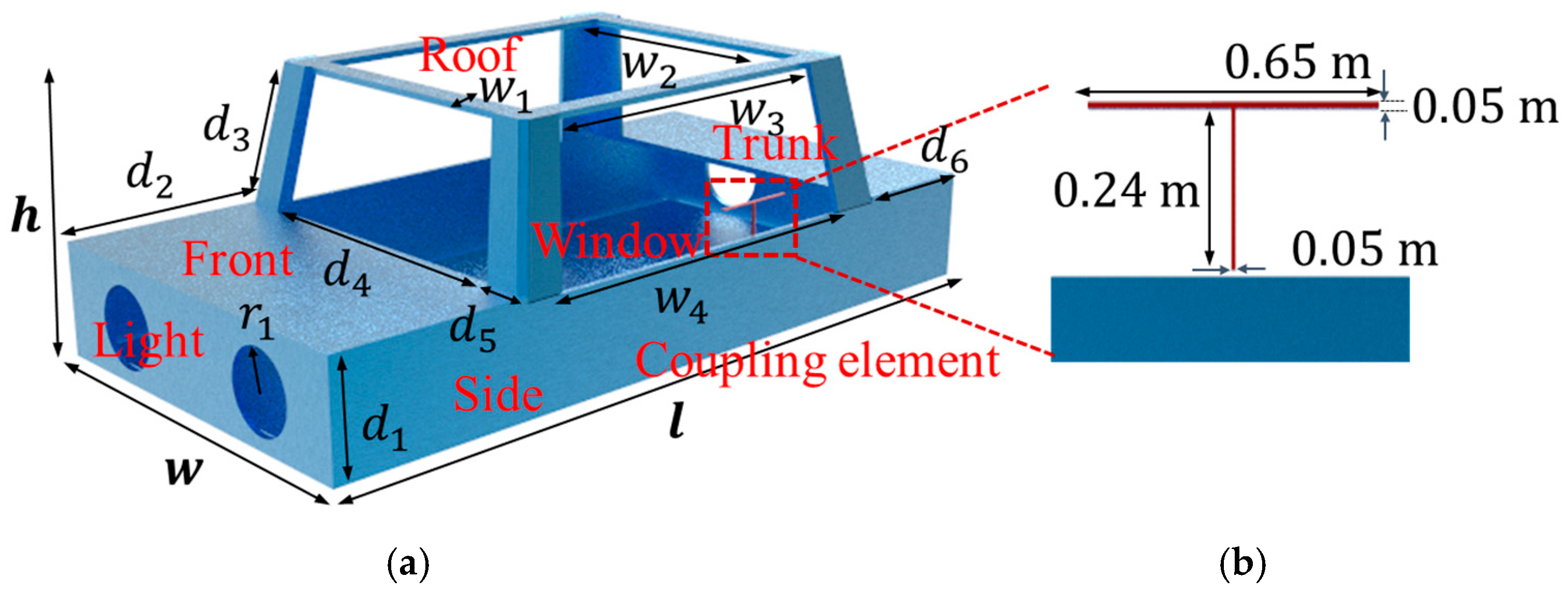
In this work, we develop a wideband vehicle-mounted antenna for FM audio broadcast services. The potential characteristic modes are pre-calculated by the CMT. Then, a window-embedded T-shape coupling element with the size of 0.65 m × 0.24 m × 0.05 m is employed to simultaneously excite multiple significant modes, resulting in a −10 dB impedance bandwidth from 87 MHz to 108 MHz (21.5% relative bandwidth). A 1:10 scaled-model prototype is fabricated and measured. The measured normalized radiation patterns agree well with the simulated ones of the full-scale model in xoy, xoz, and yoz planes, and the measured peak gains at 870 MHz, 950 MHz, and 1080 MHz are 5.8 dBi, 7.49 dBi, and 5.83 dBi, respectively. The proposed antenna is well-suited for vehicular applications including navigation, infotainment, and autonomous driving systems.
2. Antenna Design and Operating Principles
A general three-dimensional civil vehicle model with an overall size of 6 m × 3 m × 1.9 m is shown in
Figure 1. For clarity and to facilitate electromagnetic analysis, only the metallic components that significantly influence the radiation characteristics are retained in the model. These include the main vehicle body, the roof frame, and the surrounding structural pillars, while other nonessential details are omitted. The comprehensive geometric specifications of the modeled platform are summarized in
Table 1.
Characteristic mode analysis is implemented with commercial full-wave simulation software CST 2021. Modal significance (MS) is exploited to identify the potential contribution of each mode and is defined as follows:
where
λn represents the eigenvalue of the n-th mode. Physically, the eigenvalue λ
n represents the ratio between the net reactive power and the radiated power associated with the corresponding characteristic mode. Thus, a mode is considered to dominate the radiation patterns if the value of the MS is greater than 0.7 [
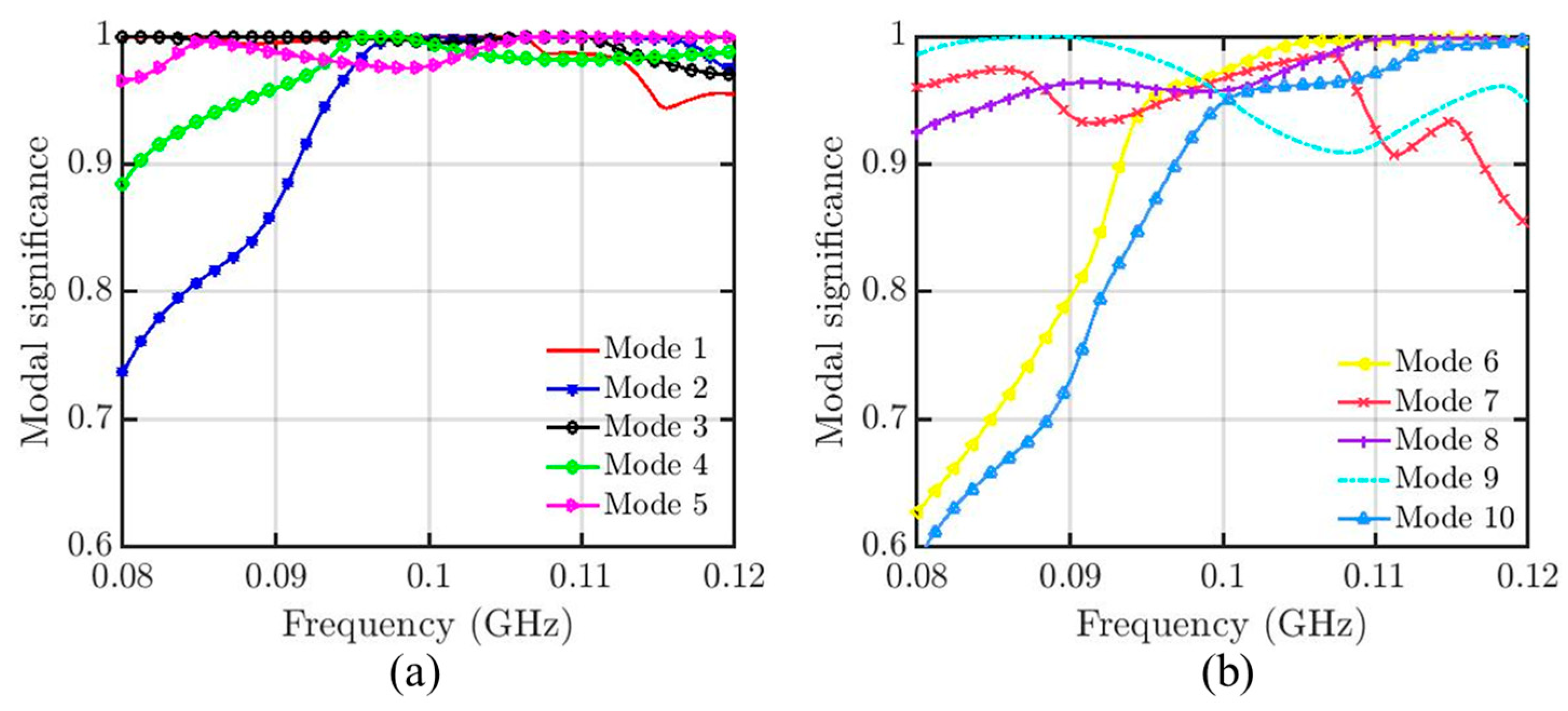
19]. MS equals 1 denotes the mode is resonant. In addition, the MS value in the range of 0.2 and 0.7 indicates that the mode is partially excited; this part of the mode is carefully utilized to improve the radiation efficiency and pattern quality. However, for an MS value less than 0.2, the corresponding mode can usually be ignored. The MS of the first ten modes within the 87–108 MHz bandwidth is depicted in
Figure 2 as a function of the frequency. As seen, MS values of ten modes are larger than 0.7, indicating that all modes can be excited in the operating band. This property is because the overall size of the car is comparable to the wavelength of the interested band, especially the length of the roof frame is about one wavelength.
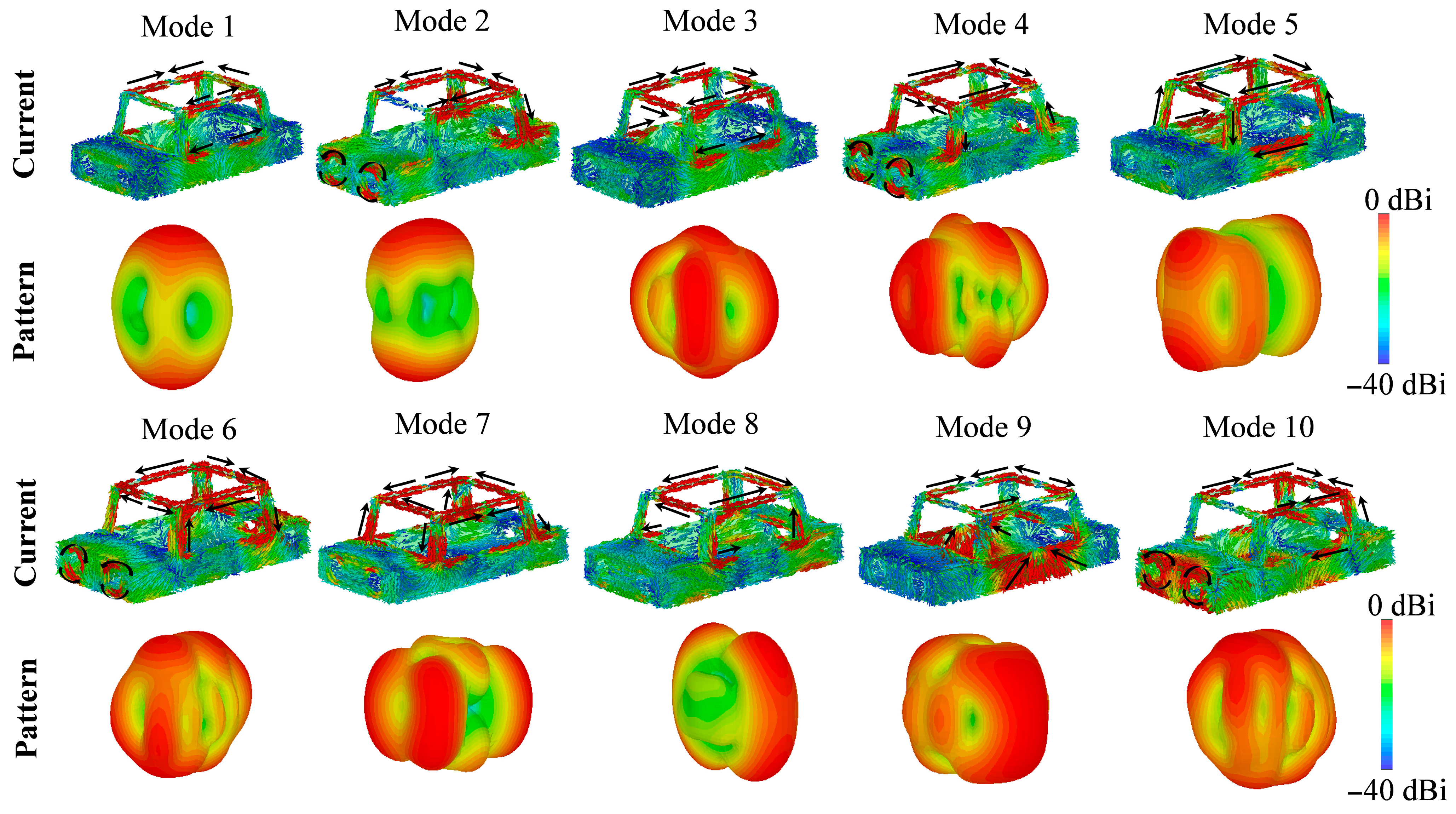
The electric current distributions and the radiation patterns of the first ten CMs at 100 MHz are presented in
Figure 3. It shows that the current distributions for all modes are mainly concentrated on the roof, surrounding metal brackets, and lamp positions. The current orientation of each mode is different, and it has distinct amplitude distributions at different positions on the vehicle. Modes 1, 2, and 8 have dipole-like radiation patterns, with the maximum radiation direction pointing to the direction perpendicular to the roof surface. For modes 3, 4, 5, 6, 7, 9, and 10, the corresponding far-field patterns are closer to omnidirectional radiation due to their complex distribution of currents. To achieve the desired radiation pattern, multiple modes should be combined with a certain linear weighting. There are usually two approaches to excite CM, including inductive coupling element (ICE) and capacitive coupling element (CCE) [
20]. ICE is commonly placed at the position with the maximum current densities to couple energy by the magnetic field. However, CCE is typically located at the place where the weakest current occurs; thus, the energy can be coupled through the electric field. Specifically, a monopole antenna [
21,
22] can be regarded as a practical implementation of a CCE.
By analyzing the characteristic mode current distributions of the vehicle platform, it can be observed that efficiently exciting a single pure mode generally requires multiple coupling elements distributed at different locations. However, for broadband operation, where multiple characteristic modes are intentionally excited simultaneously using a single coupling element, the feeding location should be carefully selected to minimize mode competition. In this case, an optimal feeding point corresponds to a region where the surface current densities of the dominant characteristic modes are simultaneously weak, such that no individual mode is excessively favored.
As shown by the modal current analysis, Modes 1, 2, 3, 4, 6, 8, and 10 all exhibit relatively low current magnitudes in the middle region of the side windows, whereas stronger and more uneven current concentrations are observed in the roof, hood, and trunk regions. Therefore, the middle area of the side window provides a physically justified and robust feeding location for enabling simultaneous multi-mode excitation, which is essential for achieving broadband impedance matching in the FM band.
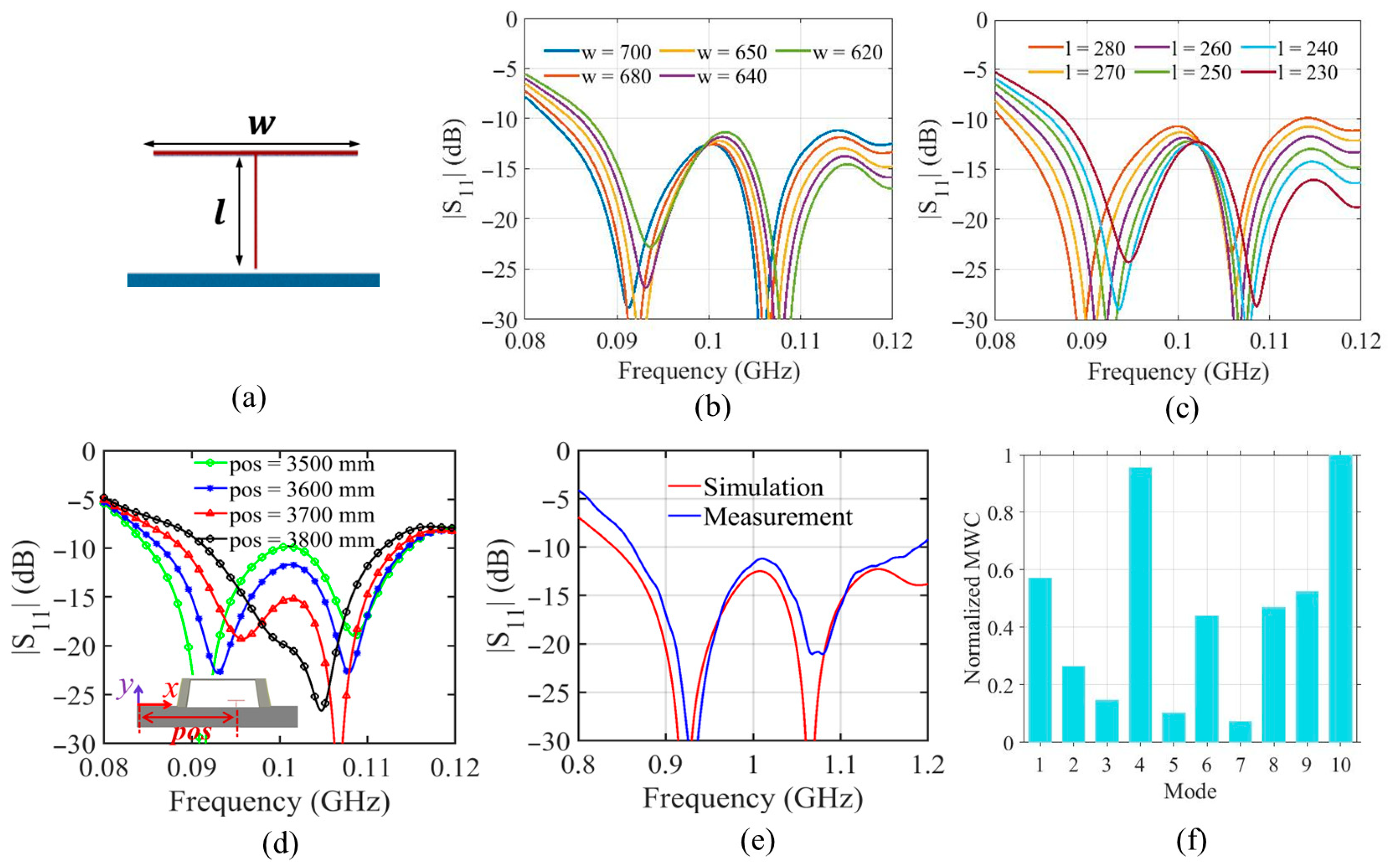
To systematically determine the optimal dimensions of the coupling element, as shown in
Figure 4a, a series of parametric studies are carried out. First, the influence of the horizontal arm width w on the impedance matching performance is investigated, presenting the simulated reflection coefficients for different values of w. It can be observed from
Figure 4b that increasing w from 640 mm to 700 mm mainly affects the impedance matching in the lower-frequency region. When w = 620 mm, the reflection coefficient at approximately 0.087 GHz is close to the −10 dB threshold. Considering both impedance bandwidth robustness and structural compactness, w = 650 mm is selected as an optimal compromise. Subsequently, the effect of the vertical arm length
l is examined, as shown in
Figure 4c. As
l increases from 230 mm to 280 mm, the impedance matching band gradually shifts from higher to lower frequencies. However, the impedance matching around the center frequency of 0.1 GHz deteriorates with excessively large values of
l. Considering the overall bandwidth coverage and matching stability across the entire FM band, the vertical arm length is chosen as
l = 240 mm. Finally, the feeding position is optimized based on the selected coupling element dimensions.
Figure 4d illustrates the simulated reflection coefficients for different feeding positions pos, indicating that pos has a pronounced impact on the impedance matching performance. When pos = 3450 mm, the proposed antenna achieves a −10 dB reflection coefficient bandwidth of 86–110 MHz, which fully covers the FM broadcast band. To quantitatively evaluate the relative contributions of different characteristic modes across the operating band, the normalized modal weighting coefficients (MWCs) of the proposed multimode antenna at 0.1 GHz are presented in
Figure 4f. The modal weighting coefficient of a characteristic mode represents the strength with which that mode is excited relative to the others. It is calculated by projecting the total excited surface current onto the corresponding characteristic modal current, thereby providing a direct and physically meaningful measure of modal excitation under the given feeding condition. As observed in
Figure 4f, Modes 1, 4, and 10 exhibit significantly higher MWCs over the FM operating band, indicating that these modes contribute dominantly to the radiation behavior of the proposed antenna. In contrast, the remaining modes show relatively weaker excitation levels and play a secondary role. The coexistence and complementary contributions of these dominant modes enable broadband impedance matching and stable radiation performance.
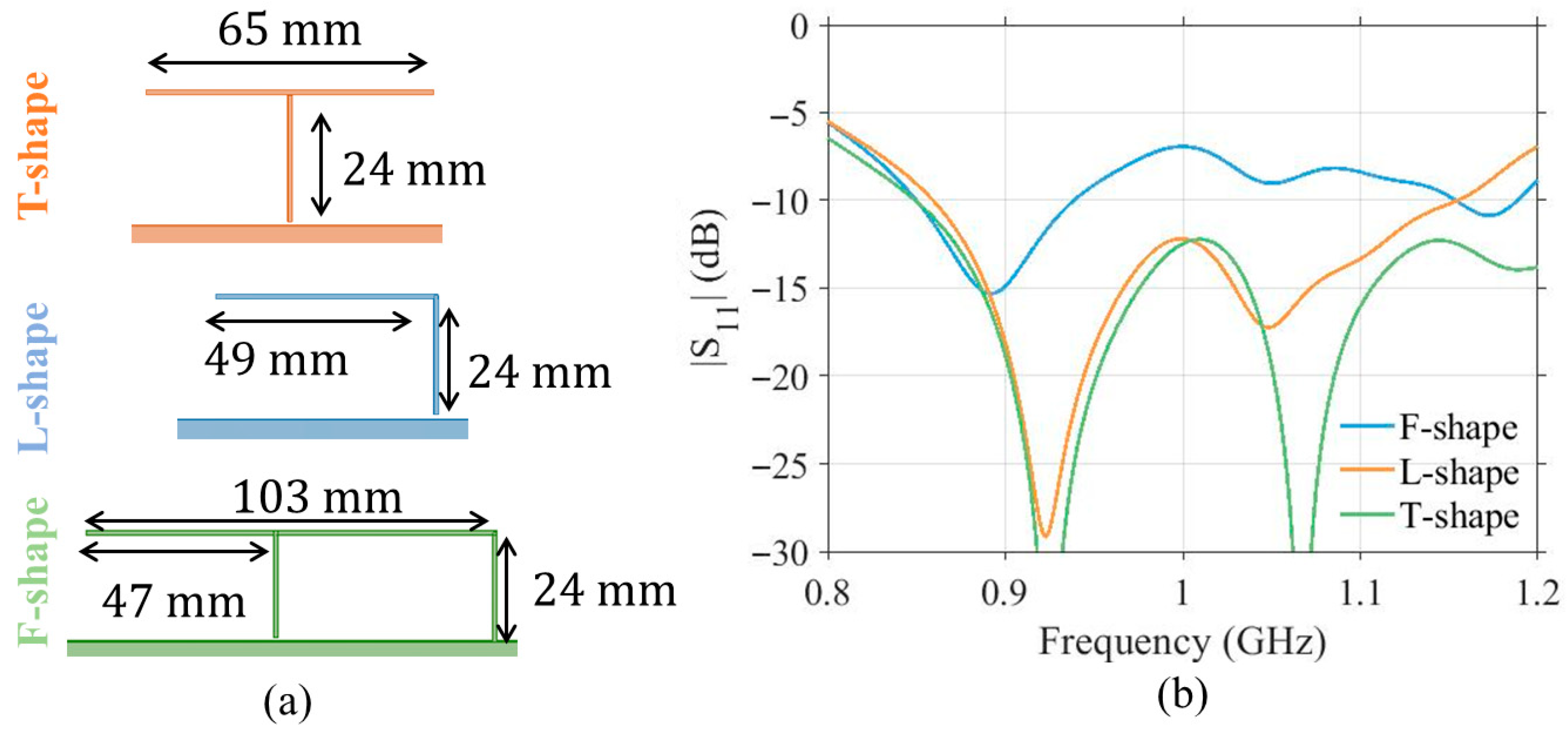
The selection of the T-shaped coupling element is further validated, and a comparative study involving different coupling geometries was conducted. Specifically, three representative coupling structures, namely L-shaped, T-shaped, and F-shaped elements, were investigated under the same feeding position. The optimized geometrical configurations of these coupling elements are illustrated in
Figure 5a, and their corresponding simulated reflection coefficients are compared in
Figure 5b. It can be seen that the T-shaped and L-shaped coupling elements exhibit similar impedance matching performance over a large portion of the FM broadcast band. However, the T-shaped structure provides improved impedance matching at the higher-frequency region, resulting in a more robust −10 dB impedance bandwidth across the entire operating band. In contrast, the F-shaped coupling element shows inferior matching characteristics, and its impedance response is more difficult to optimize within the desired frequency range. Moreover, the inverted-F structure requires a relatively larger physical size, which is less favorable for compact and conformal window-embedded implementations. Considering the overall impedance bandwidth, matching robustness, and structural compactness, the T-shaped coupling element offers a more balanced and practical solution for the proposed vehicle-mounted FM antenna design.
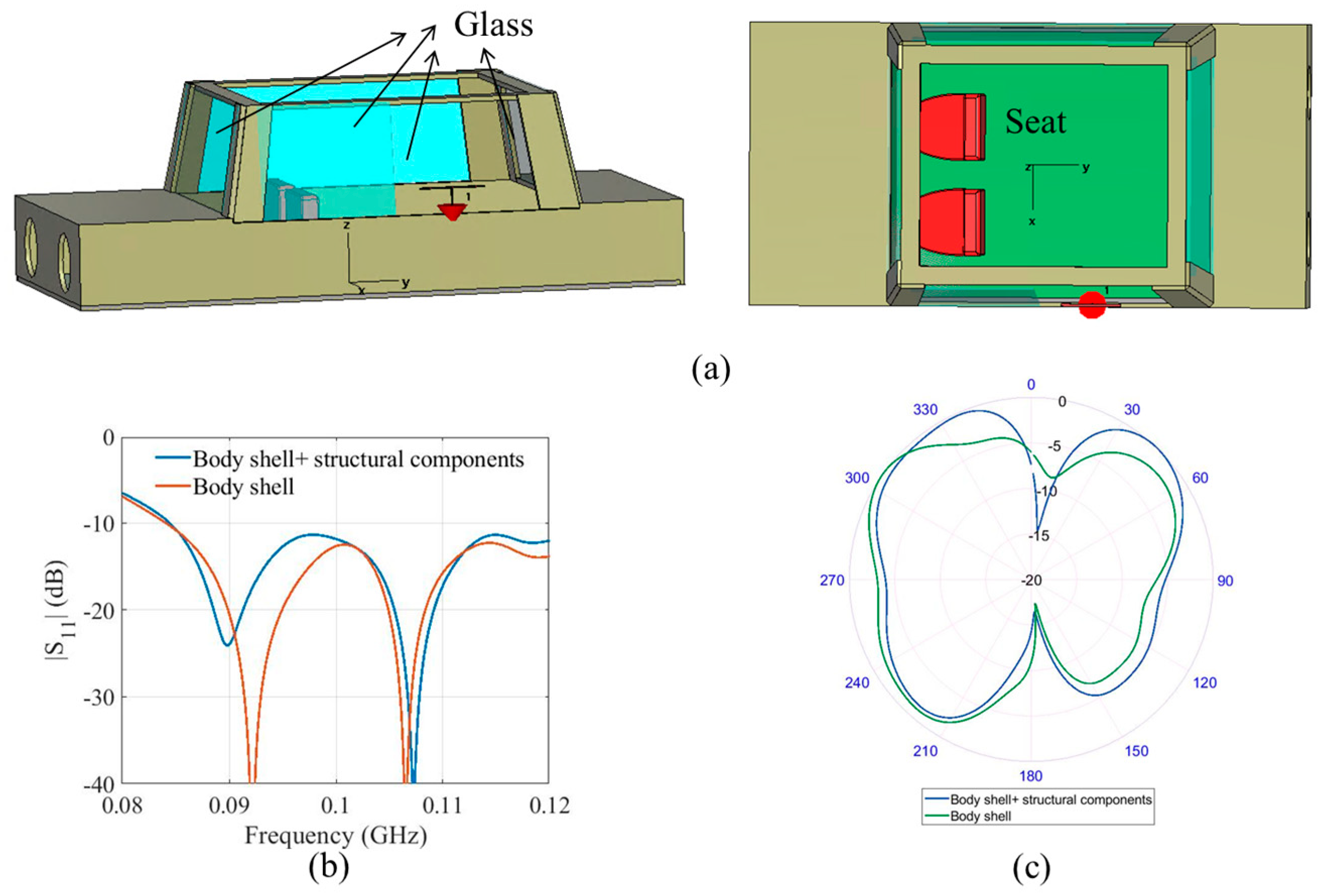
To evaluate the impact of model simplification on antenna performance, an enhanced vehicle model was further investigated. As shown in
Figure 6a, representative dielectric components were introduced into the simplified metallic vehicle shell, including interior seats with a relative permittivity of 1.3 and surrounding window glass with a relative permittivity of 7. These elements were selected to capture the dominant dielectric effects present in a realistic vehicle environment while maintaining a manageable modeling complexity. The comparison results are presented in
Figure 6b,c. It can be observed that the inclusion of dielectric windows and interior structures causes only minor variations in the resonance behavior, and the −10 dB impedance matching bandwidth remains essentially unchanged, still fully covering the FM broadcast band. In addition, the radiation patterns at 0.95 GHz obtained from the enhanced model preserve the quasi-omnidirectional characteristics observed in the simplified metallic model. Only slight distortions appear in certain angular directions. These results indicate that although the simplified metallic model does not include all structural details of a real vehicle, it is sufficiently accurate for analyzing dominant characteristic modes and guiding the coupling element-based antenna design. The proposed method therefore demonstrates good robustness against the inclusion of realistic dielectric features commonly found in practical vehicle platforms.
3. Fabrication and Experimental Demonstration
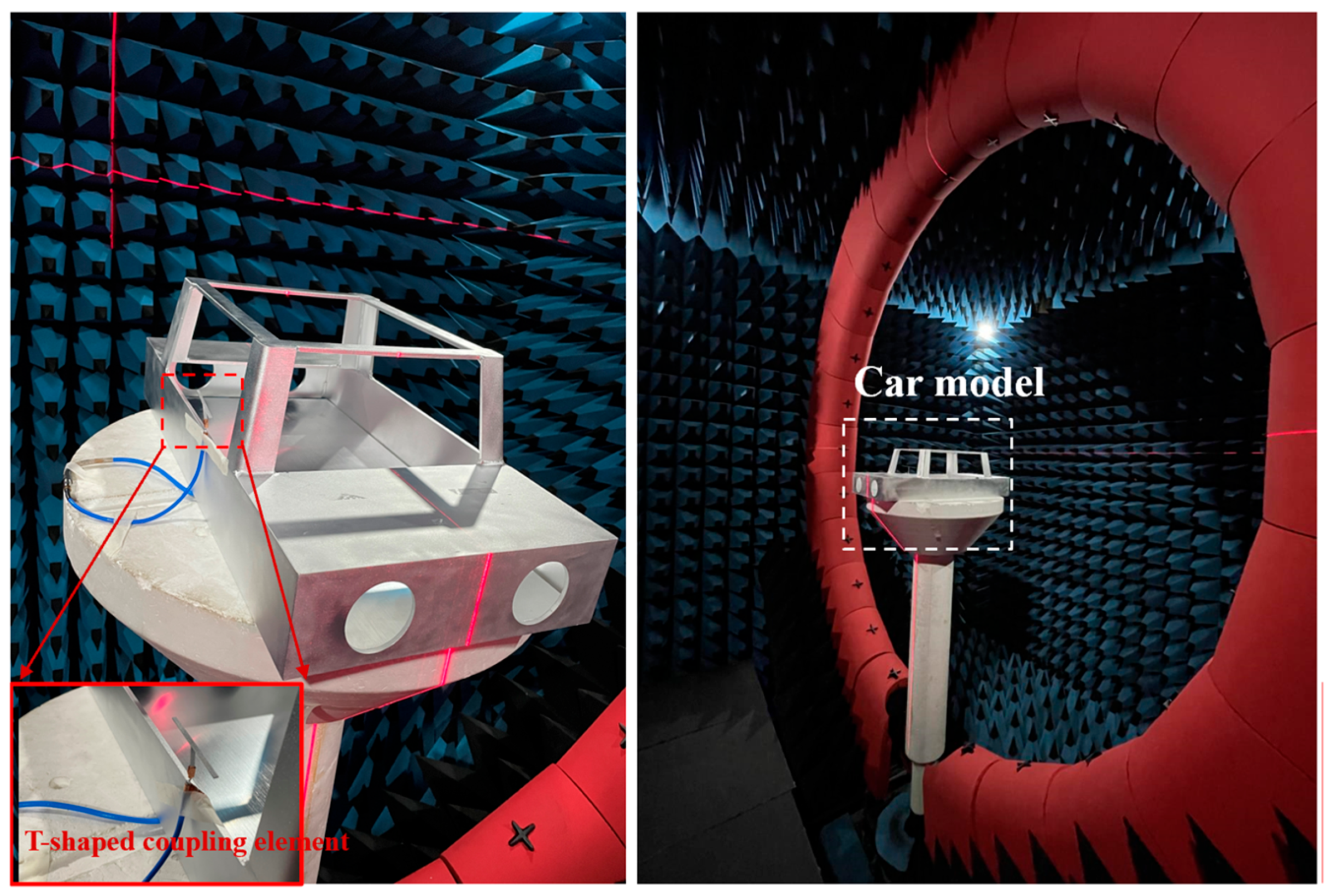
To experimentally validate the performance of the proposed antenna, a 1:10 scaled car model and a correspondingly miniaturized T-shaped coupling element are designed for the convenience of fabrication and measurement under laboratory conditions. The scaled fabricated prototype is illustrated in
Figure 7. The reflection coefficient is tested in a microwave anechoic chamber with the vector network analyzer.
Figure 4e compares the simulated and measured reflection coefficients of the scaled prototype. Overall, good agreement between simulation and measurement is achieved in terms of impedance matching characteristics. A slight frequency shift in the resonant points can be observed in the measured results, and the measured ∣S
11∣ < −10 dB bandwidth of the scaled prototype covers 0.86–1.18 GHz. The observed frequency discrepancies are mainly attributed to several practical factors. First, the fabrication tolerances of the scaled metallic platform and the coupling element inevitably introduce dimensional deviations, which are more pronounced at the scaled frequency range. Second, uncertainties in the effective electrical properties of the supporting materials and the simplified modeling of the feeding structure in the simulation contribute to additional deviations. Third, the influence of the coaxial feed and connector, which is difficult to fully de-embed in the measurement, may also result in a minor downward frequency shift. Despite these discrepancies, the measured results confirm the broadband behavior predicted by the characteristic mode-based design, validating the robustness of the proposed antenna configuration.
To characterize the radiation behavior, far-field patterns were measured using a multiprobe spherical near-field system (Satimo StarLab, Paris, France), as illustrated in
Figure 7. In the multiprobe spherical near-field measurement system, the antenna under test is surrounded by an array of probes distributed on a spherical surface. The electromagnetic field components are sampled simultaneously over the spherical surface without requiring the antenna to be placed in the far-field region of the probes. Based on spherical wave expansion, the measured near-field data are decomposed into spherical wave coefficients, which uniquely represent the radiated fields of the antenna. The far-field radiation patterns, gain, and polarization characteristics are then obtained through a standard near-to-far-field transformation. As demonstrated in
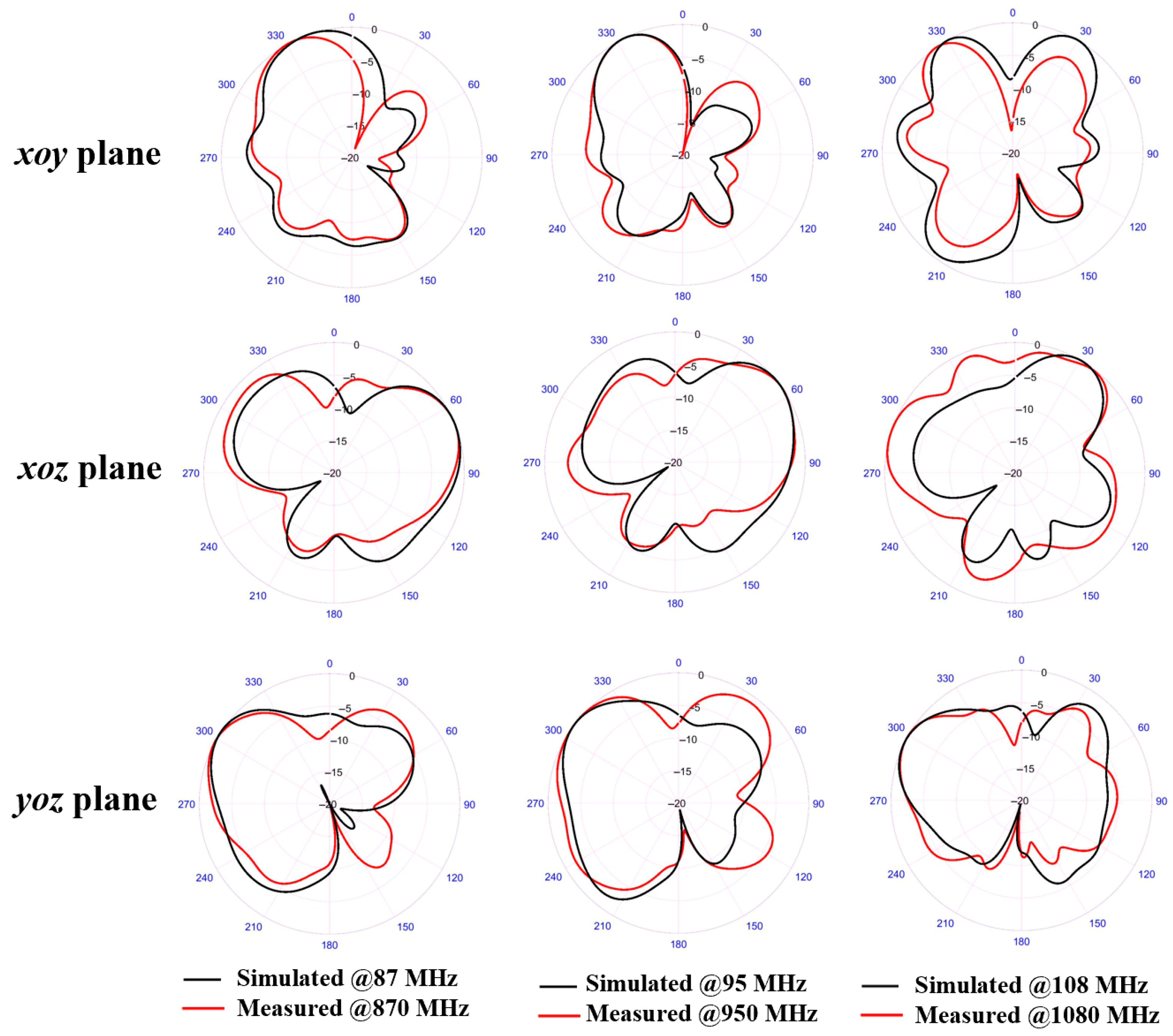
Figure 8, the measured normalized two-dimensional (2-D) radiation patterns along the
xoy, xoz, and
yoz planes at different frequencies (870 MHz, 950 MHz, and 1080 MHz) are compared with the simulation results of full-scale model at 87 MHz, 95 MHz, and 108 MHz, respectively. Across all planes and frequencies, the measured patterns closely follow the simulated ones, confirming that the dominant radiation features of the full-scale antenna are faithfully preserved in the scaled prototype. The maximum measured realized gain reaches 7.4 dBi at 950 MHz. Minor discrepancies observed between measurement and simulation can be attributed to several practical factors, including fabrication imperfections, soldering uncertainties, and measurement-induced errors.
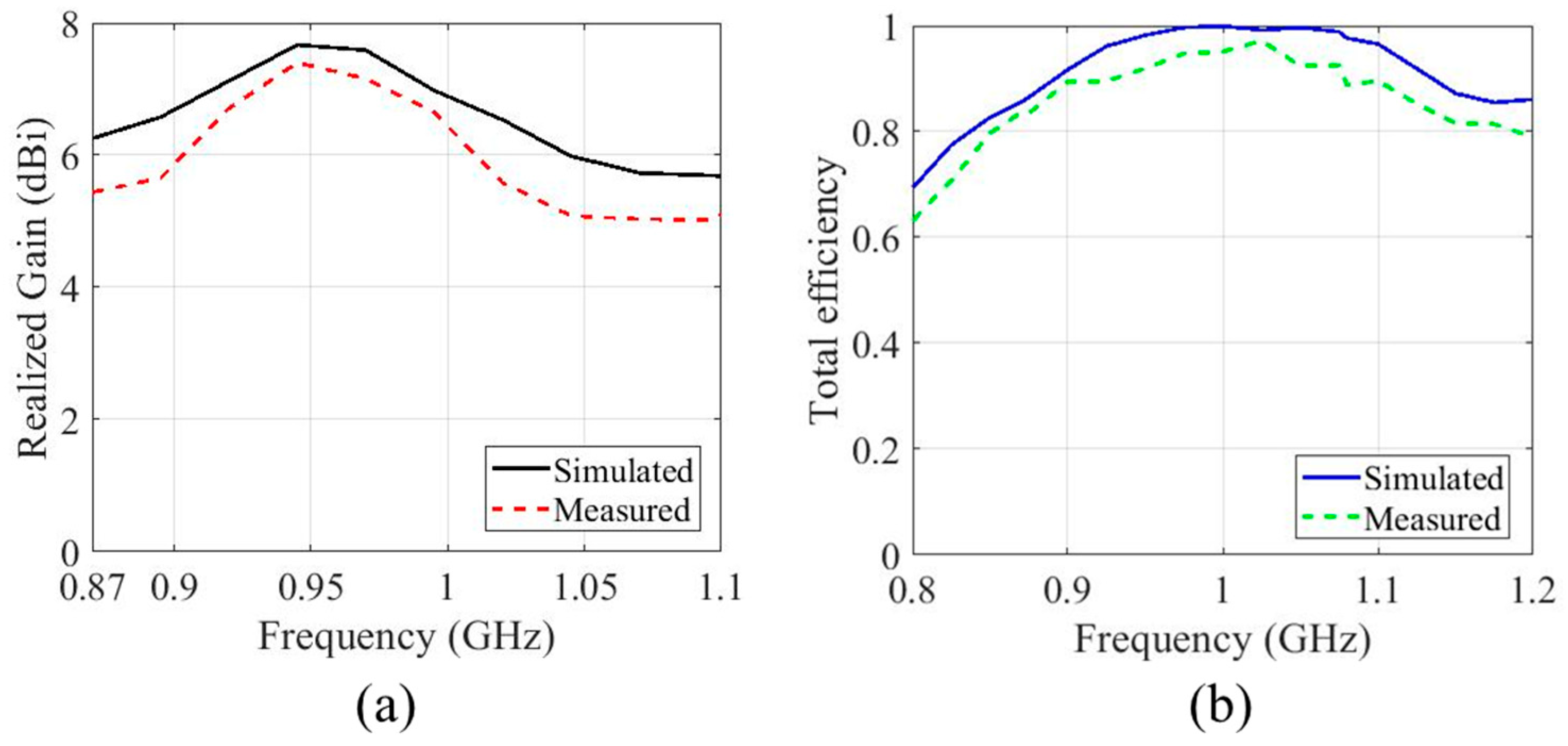
For radiation performance evaluation, the simulated and measured realized gains of the proposed antenna as a function of frequency are presented in
Figure 9a. It can be observed that the measured gain exhibits small variation across the operating band, remaining between 5 and 7.4 dBi from 0.87 to 1.08 GHz. This stable gain indicates effective radiation over the entire FM broadcast band. In addition, the measured total radiation efficiency of the proposed antenna is shown in
Figure 9b, which is obtained using a multiprobe spherical near-field measurement system. The total radiated power is obtained by integrating the reconstructed far-field over the entire solid angle, and the total radiation efficiency is evaluated as the ratio of radiated power to the input power at the antenna port. As illustrated, the antenna efficiency remains high throughout the operating frequency range, varying from 0.83 to 0.97 over 0.87–1.08 GHz. The high efficiency confirms that most of the accepted power is effectively radiated, which is particularly important for vehicle-mounted FM reception applications.
Comparisons among different VHF antennas are presented in
Table 2. Compared to the platform-mounted antennas designed with CMT in [
2,
4], our proposed antenna has the easiest feeding structure without the additional complex matching network. Moreover, the coupling element embedded in the window can satisfy the requirements of the vehicle for wind resistance and aesthetics. Although the platform-mounted antenna shown in [
4] has a wider working bandwidth, our proposed antenna has a much smaller size and a better reflection coefficient than that. Furthermore, the proposed antenna has a much higher peak gain and a wider −10 dB reflection coefficient bandwidth compared with the FM antennas in [
23,
24,
25]. In a word, our proposed vehicle-mounted antenna provides the advantages of compact feeding structure, wide operating bandwidths, and high gains.
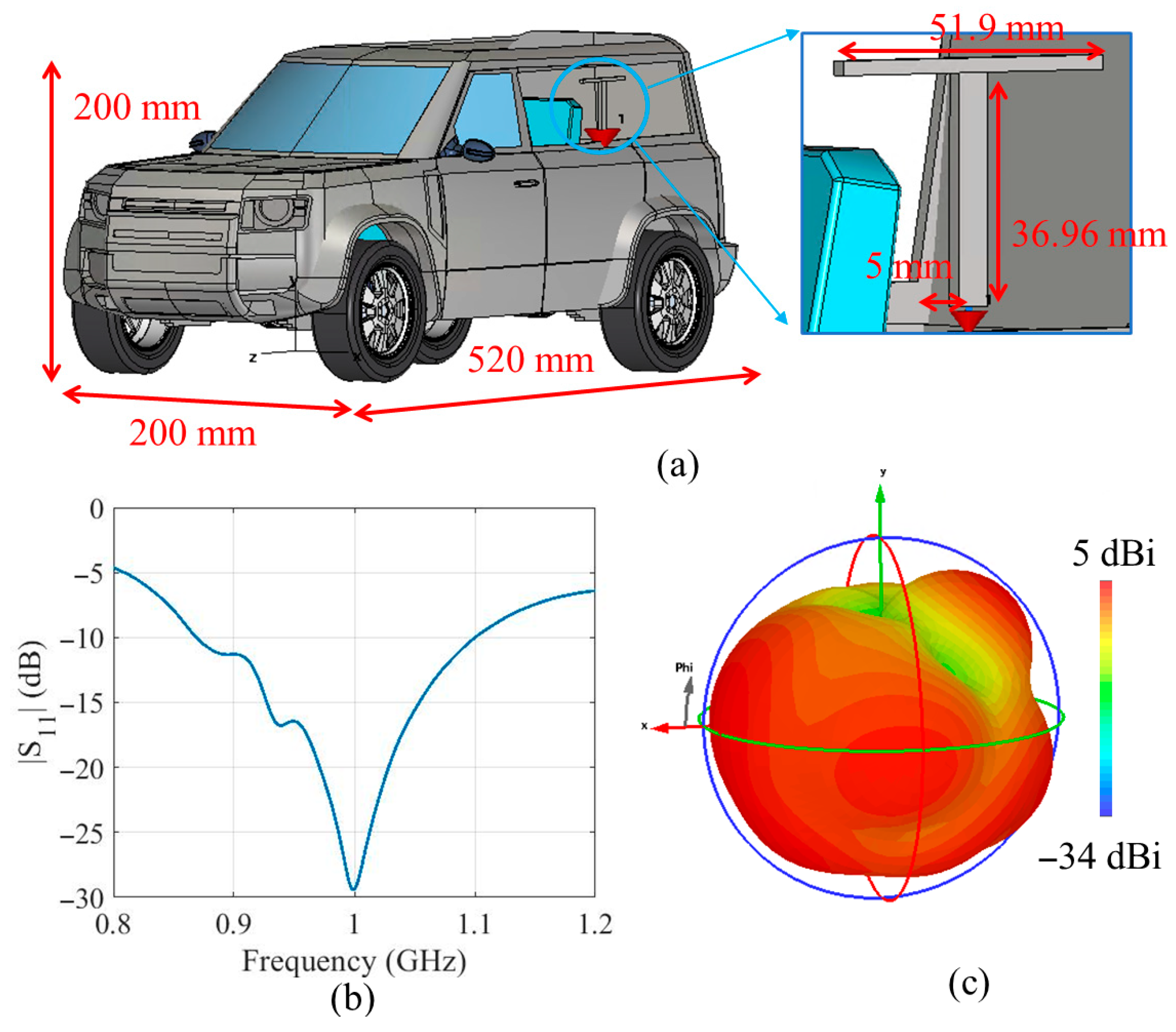
To further validate the effectiveness of the proposed design approach, a more specific SUV vehicle model is considered, as shown in
Figure 10a, whose dimensions are approximately scaled at a ratio of 1:10 from a real vehicle. Following the same design procedure, the optimal feeding position is identified to enable the simultaneous excitation of multiple characteristic modes. As illustrated in
Figure 10b, the simulated impedance matching bandwidth covers 0.87–1.08 GHz, fully encompassing the FM broadcast band. The far-field radiation patterns at 1 GHz, as shown in
Figure 10c, exhibit quasi-omnidirectional characteristics, and the simulated maximum gain reaches approximately 5 dBi.
Despite these encouraging results, the proposed approach still has certain limitations. Since the vehicle body itself acts as the primary radiating structure, the antenna performance is inherently dependent on the geometry and electrical characteristics of the vehicle platform. Variations in vehicle size, body shape, and window configuration may alter the characteristic mode distributions and resonance conditions, thereby requiring re-analysis and re-optimization of the feeding position. In addition, the present study is based on a simplified metallic vehicle model and scaled simulations; in practical vehicles, dielectric windows, plastic components, and interior structures may introduce frequency shifts or slight performance degradation. Although these factors are not expected to fundamentally change the underlying radiation mechanism, their influence should be further investigated. Moreover, the proposed method is primarily validated for broadband FM-band reception, and its applicability to other frequency bands or multi-antenna coexistence scenarios has not yet been systematically evaluated. Future work should include full-scale prototype measurements to validate the scaling approach.
4. Conclusions
A window-embedded broadband vehicle-mounted antenna is proposed and experimentally demonstrated in FM broadcast band. By analyzing the dominant characteristic modes of the vehicle platform, an optimal feed position was identified, enabling the use of an electrically small and conformal T-shaped coupling element to simultaneously excite multiple radiation modes. A 1:10 scaled prototype is fabricated and measured, and both simulated and measured results demonstrated a relative bandwidth of 21.5% together with stable radiation characteristics.
Beyond the demonstrated performance, the proposed design strategy highlights the advantages of exploiting the vehicle structure itself as an effective radiator to overcome the inherent bandwidth and efficiency limitations of electrically small antennas at sub-gigahertz frequencies. Owing to its compact size, simple planar geometry, and window-embedded configuration, the antenna is well-suited for low-cost fabrication and practical vehicle integration.
Future work will focus on extending the proposed characteristic mode theory-guided design methodology to different vehicle platforms and frequency bands, as well as evaluating long-term reliability under realistic operating conditions, such as temperature variations, vibration, and environmental aging. In addition, the concept of structurally integrated antennas may be further explored toward higher-frequency applications and energy-interaction scenarios [
26], offering potential opportunities for emerging in-vehicle communication and sensing systems.