1. Introduction
Local government borrowing and financing is an important means for many countries to develop their economies [
1,
2]; the rapid development of the Chinese economy is largely due to the issuance of a large amount of local government debt [
3,
4]. Based on this, local government debt is defined as sustainable if it can consistently stimulate economic growth. However, the current scale of local government debt in China is too huge, especially the implicit local debt formed by raising funds through local government financing platforms in order to circumvent China’s budget restrictions, which has attracted attention from all walks of life. According to IMF estimates, China’s implicit local debt is about twice that of the explicit debt in 2024, accounting for 60% of the GDP [
5]. The huge scale of debt has also raised concerns about financial stability, especially regarding the novel financing methods and diverse entities within the financial ecosystem, which can also create regulatory blind spots [
6], potentially enabling local governments to circumvent regulations and engage in divergent borrowing practices. Therefore, we hope to moderately increase the scale of implicit local debt while controlling risks so as to ensure the sustainability of its contribution to economic growth. This issue has always been a focus of macro-management in many countries, and it is also the most important part of China’s prevention and resolution of systemic risks.
In many cases, risk is regarded as a negative issue that needs to be addressed with effort [
7]. The existing research has focused on the concept, types, characteristics, and risk prevention of local implicit debt and has produced many achievements in risk prevention [
8,
9]. But the purpose of these studies is to control the risk of local implicit debt, reduce the scale of local implicit debt, and thus believe that finance is safe [
10]. But this can also bring some negative phenomena, as local implicit debt has a significant impact on economic growth and social stability [
11]. If this impact is positive, it can be considered that local implicit debt is sustainable, but this issue has not received enough attention. Given the large scale of local implicit debt in China, whether it still has a promoting effect on economic growth and under what circumstances there may be a threshold effect have not been thoroughly studied. Therefore, we need to conduct more analyses on the sustainability of local implicit debt in order to make reasonable use of it to stimulate economic growth and enhance national competitiveness, and it is this exact issue that this paper wants to focus on.
2. Literature
Local government debt, as a kind of government liability, has attracted many scholars, who have focused on its basic connotation, formation path, transmission, early-warning method, and risk prevention theory [
12,
13,
14]. In particular, the relationship between local debt and financial risk is a topic that many people are exploring [
15]. As a result, China has become more proactive in managing implicit local government debt [
16], and some regulations, including bureaucratic transfers, are currently being explored, formulated, and improved [
17]. It is hoped that the effective management of implicit local debt can further alleviate the economic pressure on enterprises, reduce the risk impact on the financial system, especially banks, and maintain the image and efficiency of fiscal work [
18]. However, scholars have found that, despite the risk of the “grey rhino”, it is generally believed that implicit local debt, including pensions, urban investment bonds, and government guarantees, is an important driving force for China’s stimulus, even though the way is somewhat non-green [
19].
Therefore, it is necessary to maintain a moderate scale of implicit local debt. Some scholars believe that the higher the proportion of central government debt to GDP, the more significant the positive effect on economic growth [
20]. However, most scholars believe that the debt-to-GDP ratio has specific standards in most cases, and exceeding this standard will seriously affect economic development [
21].
It is precisely because of these debates that many people are currently exploring whether China’s established scale of local implicit debt matches economic growth, in other words, whether local government debt (including explicit debt) is sustainable and whether it will have an effective effect on economic growth. How can we study the issue of debt sustainability? There have been many explorations in the academic community [
11,
22]. For instance, some scholars have extended the discussion on the relationship between debt and economic growth from the perspective of foreign debt, such as Sub-Saharan Africa and the West African Agenda [
23,
24], but this is not a local implicit debt issue in this sense and is quite different from our research topic.
Different schools of thought, such as Keynesianism, Neoclassicism, New Keynesianism, Ricardianism, etc., believe that debt affects economic growth by influencing unemployment and savings offset, increasing welfare public service expenditure, and so on. However, these theories are based on the debt surplus, which is not quite in line with the actual situation [
25,
26,
27,
28] because, even if the surplus condition is not satisfied, debt still plays a role in economic growth. Therefore, some scholars also consider this issue from other perspectives. In particular, after Andres et al. (2013) [
29] proposed the concept of “fiscal fatigue” and pointed out the definition basis of debt sustainability standards, others have analyzed it from the perspective of intergovernmental transfer payments [
30], fiscal fatigue [
31], and fiscal sustainability [
32]. The empirical research results show that local debt will limit the investment efficiency of non-state-owned enterprises but will not worsen the phenomenon of fiscal sustainability. Of course, there are many factors that need to be considered when analyzing the impact of debt sustainability, including high financial deficits, the low-growth and high-risk premium on sovereign debt [
33], infrastructure investment [
34], banks’ political power [
35], interest rate swaps within the European Union [
36,
37], and small-scale manufacturing enterprises in a low-income economy [
38]. These influencing factors actually tell us that, to prevent and resolve implicit debt risks at the local level, we should address them from multiple aspects, such as fiscal rule constraints, interest rate fluctuations, and transparency [
39,
40].
There is also a more significant issue, which is that, in order to analyze local implicit debt, the first step is to calculate its scale. In recent years, there have been many studies on measuring the scale of implicit debt, with PPP or financing platform debt as the core. PPP is a long-term cooperative relationship established between the government and social capital in the fields of infrastructure and public services through franchising and other means, characterized by shared benefits and risks. It achieves reasonable returns through user payments and government payments and has a clear government guarantee nature. Therefore, it is usually regarded as an important component of local implicit debt. For example, Ambrose et al. (2015) [
41], Bai et al. (2016) [
42], and Bo et al. (2017) [
43] adopted a measurement method based on the relevant financial report data of financing platforms; Yawovi (2023) [
44] used the PPP new investment scale as a proxy indicator for implicit debt. Overall, the statistical data of these scholars on local implicit debt often focus on the perspective of PPP or financing platforms, which makes the results somewhat limited because the local implicit debt is also reflected in more aspects. In order to solve this problem, some institutions such as Yuekai Securities, Haitong Securities, and the International Monetary Fund have calculated using multiple calibrations for some years, but they are still relatively scattered and have not formed a systematic calculation result. At the present, most domestic scholars mainly refer to the debt decomposition matrix of Hana P and use the index accounting method [
45], which is relatively more comprehensive because it takes into account multiple indicators. Some scholars have once again proposed, as suggested by Carmen and Rein (2011) [
46], that the calculation of the scale of local implicit debt needs to pay attention to the debt of the central bank, implicit guarantees, and off-balance sheet liabilities of financial derivatives because these are important components of local implicit debt. At the time, the way of accounting for local implicit debt in different countries or regions should be flexible rather than adopting fixed accounting calibrations. It can be seen that it is controversial in academic circles to accurately find all the components to calculate local implicit debt because many components are concealed and are difficult to observe completely. So, we need to reconsider how to measure the scale of local implicit debt.
The use of indicator accounting to measure local implicit debt is relatively simple and helps to analyze the internal structure of local implicit debt. However, due to the lack of a strict definition of local implicit debt in China, there are significant differences in the statistical approaches considered by different scholars, which also leads to significant differences in the conclusions drawn from indicator accounting methods. Based on this, some scholars have adjusted their thinking and adopted statistical methods or mathematical models to conduct research on the accounting of implicit debt. Narayana (2014) [
47] used inter-generational accounting methods to design actuarial models and attempted to conduct research on measuring implicit local debt; Ouyang and Gao (2020) [
48] designed a fiscal revenue and expenditure gap model based on the sources of local implicit debt to solve the problem of measuring the scale of local implicit debt. However, these estimation methods also have some defects because both the intergenerational accounting method and the fiscal gap model need the government department to publish ready basic debt data, which is very difficult in China because some debt data are not well published. Therefore, it is necessary for us to consider some new methods to measure local implicit debt, which is also an important issue that this article needs to think about.
By combing the research results of scholars, we find that these research results hardly analyze this problem from the perspective of the implicit debt of local government [
49] and seldom perform a case analysis [
50]. In fact, China has some differences from other countries in terms of its administrative management system and debt issuance regulations. China is the largest developing country in the world, and it can become the second largest country in the global economy; it has created “economic miracles” many times, which are closely related to local government debt, especially local implicit debt. Therefore, we focus our research perspective on China, hoping that it can provide some reference for the economic development of other countries.
However, it is not enough to analyze the problem of local implicit debt based on the sample of the whole of China, or to compare it with other countries [
51]. It is also necessary to further carry out research by region, as China has 31 provinces, municipalities, and autonomous regions which have significant differences in geographical location, transportation conditions, economic development, and financial levels. In addition, each region has different reasons and scales for issuing local government debt, so we need to conduct an analysis by region in order to better understand the sustainability of China’s local implicit debt. Therefore, it is necessary to use data at the provincial level for the analysis. Unfortunately, scholars have not yet calculated provincial data. Although many people try to solve the problem of provincial data, almost all of them only use data from urban investment bonds as a replacement or use indicator accounting methods to obtain local implicit debt data [
4,
52]. The implicit debt reflected in this way is not comprehensive enough, which makes the existing research not thorough enough. Therefore, this article attempts to use statistical methods to solve the problem of missing provincial data, while exploring the sustainability of local implicit debt in the current economic downturn in order to make the research more innovative and to grasp the local implicit debt more reasonably, so as to more accurately analyze the risks of local implicit debt and use it to promote economic development.
The contribution of this article mainly lies in three aspects. (1) The MIMIC method with multiple indicators and multiple causality is adopted to calculate the implicit debt data of China’s provinces to solve the problem of incomplete published data in China, resulting in the inability to carry out empirical research, and at the same time avoids the debate on the theoretical connotation of debt. (2) The sustainability of local implicit debt is described as the driving force for economic growth, and the relationship between local implicit debt and economic growth is examined through an empirical lens. (3) The formation path of local implicit debt in different regions is different, so this paper also explores the different effects of local implicit debt on economic growth in different regions and combines the threshold effect to evaluate the critical standard of the impact, which can help different regions establish different economic growth drivers.
3. Measurement of Local Implicit Debt Scale
3.1. Measurement Model
Since local implicit debt has a strong concealment, it is difficult for us to estimate the scale of local implicit debt by accurately finding the specific composition factors at different levels. Therefore, we must adopt a new perspective, and we can consider designing specific measurement methods from the two aspects of the influencing causes and influencing effects of the indicators because, if the indicators in these two aspects are easier to obtain, it will help us solve the difficulty of finding the indicator data of the composition factors very well. Fortunately, the MIMIC model is designed for this. The advantage of using the MIMIC model is that we do not need to know exactly which elements make up local implicit debt. Instead, we only need to identify the main reasons that may trigger local implicit debt and analyze the possible outcomes of local implicit debt. By quantifying these reasons and outcomes, we can calculate the size of local implicit debt using the MIMIC model. It is also because of this feature that the MIMIC model can effectively solve the shortcomings of direct variable acquisition difficulties, thus being widely used in the field of economic society. Therefore, this paper adopts the MIMIC model to estimate the provincial data for local implicit debt.
The MIMIC model contains two equations: the first is the structural equation, measuring the factors that affect local implicit debt, and the second is the measurement equation, which mainly analyzes what economic variables will be affected by local implicit debt. The MIMIC model for measuring implicit local debt includes both structural equations and measurement equations, designed as follows:
While is the local implicit debt (latent variable), is a series of explicit variables that trigger implicit local debt, is a series of implicit variables caused by local implicit debt, and are the parameters to be estimated, and is the estimated residual.
Using matrices, Equations (1) and (2) can be expressed as follows:
Substituting Equation (3) into Equation (4) yields the following:
The advantage of this conversion is that Equation (5) no longer contains latent variables lacking a data basis, and the estimation of parameters and can be achieved based on explicit and implicit variables. This is also the empirical strategy of the MIMIC model, which solves the problem of obtaining data for latent variables. Therefore, as long as Equation (5) can be effectively identified, local implicit debt can be calculated based on Equation (4).
3.2. Indicators and Data
Based on the features of the MIMIC model, several explicit and implicit variables need to be set. Explicit variables mainly examine which factors may lead to the emergence of local implicit debt, while the implicit variables mainly examine what results the rapidly expanding local implicit debt will bring. In China, the formation of local implicit debt has special government and market reasons, and many influencing factors can be considered regarding the aspects of fiscal pressure and financial system market reform. So, referring to the research results of other scholars [
53,
54,
55,
56], this paper selects explicit variables from six aspects, explicit debt control (
), fiscal revenue and expenditure gaps (
), financial innovation (
), performance impulse (
), fiscal competition (
), and illegal lending by commercial banks (
), to examine their impact on local implicit debt. We select implicit variables from two aspects, relative wage gap (
) and government financing (
), to examine the impact of implicit local debt on these variables.
This paper reports the selection and data explanation of the above six explicit variables and two explicit variables.
The theory of weak budget constraint holds that, when the government faces fiscal deficits and expects to be bailed out externally, the budget constraint is “weakened”, and local governments and financing platforms, without being strictly regulated, will breach the budget boundary and form more implicit local debts. Therefore, for explicit debt control, according to China’s debt management system, the year with relatively strict explicit debt management is set as 1, and the year with relatively loose explicit debt management is set as 0.
Deficit-implicit liability substitution and balance sheet effects (Easterly and David, 2002) [
57] suggest that, in the face of persistent fiscal deficit debt accumulation, the government may substitute implicit liabilities for explicit liabilities for “fiscal adjustment”, leading to a rapid rise in local implicit debt. So, for the fiscal revenue and expenditure gap, the calculation method is (fiscal expenditure − fiscal revenue)/fiscal revenue.
For financial innovation, Hana’s fiscal risk matrix believes that local governments will institutionalize local implicit debt through financial innovation means such as PPP, purchasing services, etc., which will increase the actual fiscal burden and amplify debt risks (Hana, 1998) [
45]. This article uses the ratio of the average salary of urban employees in the financial industry to the average salary of urban employees.
The view of official term-driven debt expansion by De and Orriols (2010) [
58] finds that local officials, under short-term incentives and frequent transfers, will use all resources to fight for political achievements in order to obtain better promotion opportunities, which will bring greater debt risks. Therefore, for the impulse of political achievements, as local governments mainly use the construction industry as the direct basis for performance evaluation, the total output value of the construction industry/GDP is used as a substitute. For fiscal competition, it is measured by the ratio of regional fiscal revenue to the average fiscal revenue of all regions in the country.
The illegal loans of commercial banks are due to their failure to comply with banking regulatory standards, which makes it difficult for bank credit funds to be safely and effectively recovered. Therefore, the selected indicator is the non-performing loan ratio of commercial banks.
The theory of public debt redistribution (Nisreen S., 2015) [
59] suggests that local implicit debt, as an extension of public debt, has its interest and repayment costs shared through taxation and other means. Since high-income individuals are more likely to hold relevant financial assets, local implicit debt amplifies the redistribution effect, leading to a widening income gap. For the relative wage gap, it is measured using the (average monetary wage index of urban unit employees − GDP index)/100.
The relevant theories of local government competition hold that local governments generally engage in competitive behaviors, and, against the background of financial decentralization, local governments have a strong incentive to expand public investment in short-term implicit debt, but they need to continuously raise funds to solve the debt repayment pressure in the long term, while the fiscal revenue and land appreciation income brought on by development of the real estate market become important financing channels. Therefore, for government financing, real estate development investment/fiscal revenue is used as a substitute.
From the website of the National Bureau of Statistics, the website of the China Banking and Insurance Regulatory Commission, the WIND database, and the annual China Financial Yearbook, we manually collect the data of the above indicators. The sample scope covers 31 provinces, municipalities, and autonomous regions in China from 2006 to 2020 (excluding Hong Kong, Macao, and Taiwan).
3.3. Estimation of MIMIC Model Results
The MIMIC model requires variables to be stationary. According to ADF statistics, it was found that almost all variables maintain a good stationarity after first-order differencing. Therefore, the first-order differencing of each variable was used for modeling.
Firstly, we select 6 external variables and 2 non-observable variables to estimate 1 latent variable with the software Amos 7.0, so we first set the MIMIC model to 6-1-2. However, due to the fact that the estimated coefficients of some observable variables in some provinces are not significant, we gradually reduce the number included in the model according to the significance of the variables and the results of the model test and finally ensure that all the variables are significant. The numbers in columns 2–7 of
Table 1 give the estimated coefficients of the external variables in the MIMIC model for a certain province, so we can obtain the MIMIC model for the local implicit debt in 31 provinces in China.
Table 1 presents the chi-square values and degrees of freedom of the MIMIC model estimation results, as well as the path parameters from implicit local debt to relative wage gap (
) and government financing (
), and the iteration limit of the model, so as to ensure the variables pass the significance test. In order to improve the accuracy of variable estimation and the efficiency of model convergence estimation, this paper adjusts the path parameters of
and
appropriately based on the model fitting results in different regions, as shown in columns 9 and 10 of
Table 1. At the same time, in the MIMIC model, the number of iterations is an important parameter that affects the effectiveness of the model processing, especially in the aspect of the smoothing processing. It is very critical to set the number of iterations when performing smoothing processing. If the number of iterations is set too low, it may not achieve the desired smoothing effect. On other hand, if it is set too high, it may lead to an excessive smoothing of the model, resulting in the loss of some important feature details. In order to improve the accuracy of chi-square values and parameter estimation, we ensure that the iterative conditional threshold is set to a minimum of 1 × 10
−6 and the initial iteration limit is set to 2000 times. When the standardized or non-standardized estimation value model cannot be accurately identified, resulting in the iterative conditional threshold being unable to be lowered, the iteration limit is adjusted appropriately until the estimation is completed. The actual adjustment times are shown in the last column of
Table 1.
Based on the estimation results in
Table 1, it can be observed that the overall chi-square statistic is large, and the P statistics corresponding to the RMSEA value and the number of iterations are also large, indicating that the estimation effect of the MIMIC model is generally satisfactory. At the same time, the majority of variables have passed the significance test, indicating that, in most regions, the estimating scale of local implicit debt needs to consider more explicit variables at the same time, thus verifying the rationality of the variables included in the MIMIC model considered in this article.
3.4. Statistical Measurement of the Growth Rate of Local Implicit Debt
Due to the use of differential variables in fitting the MIMIC model, the measurement model in
Table 1 reflects the relative influence of variables. Therefore, by substituting the data into the model in
Table 1, the growth rate of local implicit debt is shown in
Appendix A.
According to
Appendix A, during the sample period, there were 18 regions with an average annual growth rate of implicit debt greater than 0, 3 regions with an average annual growth rate of 0, and 10 regions with an average annual growth rate of negative implicit debt. The average annual growth rate of implicit debt among regions in China was 0.008, indicating an overall upward trend in the scale of local implicit debt. From the perspective of the growth rate of implicit debt at the provincial level, the debt growth in Xizang, Yunnan, and other regions is relatively fast, followed by Beijing, Hunan, and Anhui. The average annual growth rate of local implicit debt in Guangxi is the smallest, −0.027, indicating that the local implicit debt in Guangxi is decreasing at an average annual rate of 2.7%, reflecting that Guangxi has a better effect in controlling the growth rate of local implicit debt, followed by Guangdong, Jilin, and other regions. The estimation results in
Appendix A indicate that the scale of implicit debt in different regions of China shows heterogeneous growth characteristics, and thes heterogeneous characteristics hold true in the eastern, central, and western regions.
According to the measured data in
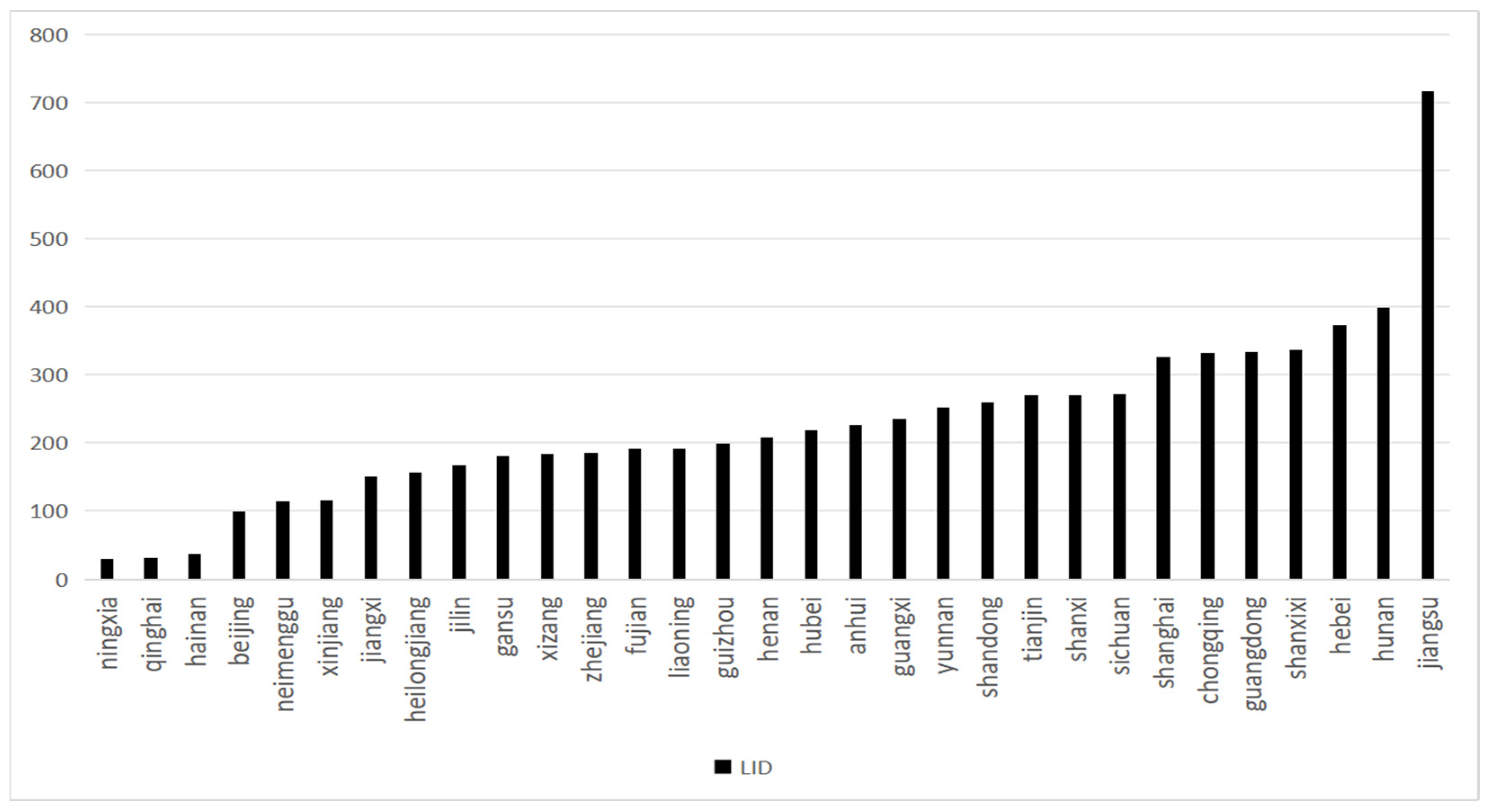
Appendix A and according to the audit results of government debts required by the National Audit Office in 2013, the absolute scale of inter-provincial local implicit debts in 2006–2020 can be obtained (
Figure 1).
This paper regards the debts and contingent government debts in the audit results of government debts in various regions as local implicit debts; the data of the Xizang Autonomous Region come from the national data minus the data of the other 30 regions. From the perspective of the implicit debt scale at the inter-provincial level, the local implicit debt of 31 provinces, municipalities, and autonomous regions in China (excluding Hong Kong, Macao, and Taiwan) can be divided into three tiers (see
Table 2): the first tier includes provinces, municipalities, and autonomous regions whose local implicit debt scale is one standard deviation higher than the national average, representing regions with an abnormally high local implicit debt scale; the main reason is the strong economic tournament pressure of local government officials. The second tier consists of regions where local implicit debt is within plus or minus one standard deviation of the national average, and the implicit debt in these regions is relatively stable. The third tier refers to regions where the local implicit debt is less than one standard deviation from the national average, reflecting the small-scale characteristics of local implicit debt; such regions are mainly western provinces and Beijing, where the size of local implicit debt is low because of the imperfect financial system in the west, while Beijing is the administrative center of China, with more stringent financial regulation.
4. Empirical Analysis
4.1. Theoretical Model
Based on the experience provided by the C-D function and the reference of existing academic achievements [
60,
61], this article constructs the following model of the impact of implicit debt on economic growth:
Equation (6) is a theoretical model for the independent impact of local implicit debt on economic growth, while Equation (7) is a model for analyzing the impact of local implicit debt on economic growth while considering control variables. is an economic growth variable, is implicit local debt, is a series of controlled variables, is individual fixed effects, is time effects, is error, is an inter-provincial variable which represent provinces, cities, or autonomous regions, and is an annual variable.
4.2. Variables and Data
(1) Dependent variable: The existence of implicit local debt has important economic implications, as it requires moderate borrowing to maintain social stability and maintain the established economic growth trend, while also being appropriately controlled to reduce systemic financial risks. Therefore, this article uses the impact of local implicit debt on regional economic growth to determine its sustainability. In indicator design, nominal regional GDP is used to measure the economic growth status between regions, while, in robustness testing, the actual regional GDP obtained through GDP index adjustment is used for analysis.
(2) Explanatory variables: The local implicit debt is based on the calculation results obtained from
Appendix A and the data published by the China National Audit Office.
(3) Control variables: To control for the influence of other factors on this study, this article considers introducing two sets of control variables by referring to the methods used by some scholars [
62]. The first set of control variables is based on the theoretical framework of the C–D function, with technological progress (
), human capital (
), and investment (
) as control variables. Among them, technological progress selects the number of domestic patent applications authorized. According to common practices in academia, human capital is based on the number of students enrolled in regular higher education institutions. Considering the feasibility of data sources and the fact that regional investment is mainly reflected in government actions, the investment indicator selected is the general budget expenditure of local finance. The second set of control variables mainly refers to the expenditure accounting method based on GDP, considering the indicators from three aspects of consumption (
), investment (
), and net exports (
) as control variables. Among them, the consumption is measured by the proportion of household consumption expenditure, the net exports is measured by the ratio of export volume minus total import to GDP (the total export and import volume is converted using the exchange rate of CNY to USD), and the investment indicator uses the length of long-distance optical cable lines as a proxy indicator, because China’s economic investment in recent years has mainly focused on transportation development.
The data for the above indicators come from the estimation results in the previous part of this article and the annual China Statistical Yearbook. The sample data used are relevant data from 31 provinces, municipalities, and autonomous regions in China from 2006 to 2020 (excluding Hong Kong, Macao, and Taiwan).
4.3. Descriptive
To form a basic understanding of the distribution characteristics of the relevant variables, the descriptive statistical results of the empirical research on the relevant variables in this article are first reported, as shown in
Table 3. It can be observed that the average GDP index of the region is CNY 2005.108 billion, with a standard deviation of 1885.846, reflecting the extreme imbalance of regional economic growth. The average value of the local implicit debt is CNY 227.8462 billion, with minimum and maximum values of CNY 28.5761 billion and CNY 780.3273 billion, respectively, indicating significant differences in the scale of implicit debt among different local governments. Therefore, it is necessary to conduct empirical research on the sustainability of the local implicit debt scale at the inter-provincial level.
4.4. Full Sample Analysis
Firstly, we performed logarithmic processing on , , , , , respectively, represented as , , , , and . Then, we conducted the Granger causality test between variables and found that the F statistic is 2.7958 and the corresponding p value is 0.0621 when is not the cause of , while the F statistic is only 0.0137 and the corresponding p value is 0.9864 when is not the cause of . This shows that local implicit debt is more likely to trigger rapid economic growth, and also shows that the theoretical design of Formulas (6) and (7) is reasonable.
Based on the full sample estimation of Equations (6) and (7), the sustainability impact of local implicit debt on economic growth was obtained using the software Stata 16, as shown in
Table 4. Model (1) in
Table 4 is an economic growth model that only considers the impact of implicit local debt, and the results of the Hausman test support the null hypothesis of random effects. However, after controlling for variables, the use of random effects was significantly rejected due to the significantly lower
p-values of the Hausman test compared to 0.001. Therefore, models (2) and (3) switched to using fixed effects models.
According to the estimation results given in
Table 4, local implicit debt has a significant positive impact on regional economic growth, indicating that China’s current local implicit debt has a certain positive effect on promoting economic growth and is sustainable. In models (2) and (3), there was no significant change in the size of the estimated coefficient of local implicit debt, indicating that there was no significant difference between the two control variables. At the same time, considering the control variables, the R-sq was significantly improved, indicating that controlling for other influencing factors can significantly improve the accuracy of model estimation and enhance the robustness of the
coefficient estimation.
From the results of the full sample analysis, it can be seen that local implicit debt has a positive promoting effect on economic growth, indicating the necessity of moderate-scale local implicit debt in China. The reason for this phenomenon still needs to be explained in conjunction with the new budget law. In 2015, China officially introduced a new budget law, which abolished the budget law that was originally implemented in 1994. The new budget law has redefined the borrowing power of local governments, playing an important role in curbing their illegal borrowing. Before the implementation of the new budget law, local governments did not have a clear borrowing power, and the reform of the tax sharing system and urbanization construction continued to widen the gap between local fiscal revenue and expenditure, resulting in local governments having to open up new financing channels outside of open, transparent, and legal channels, hoping to meet the funding needs of economic construction. After the implementation of the new budget law, issuing government bonds has become an important means of local financing, and the growth rate of local implicit debt has also shown a trend of slowing down. The scale of implicit debt is in a stage of controllable risk. But the fiscal policy of living a “tight life” determines that local governments are still willing to take risks and innovate financing models to alleviate the current downward pressure on the economy by maintaining a moderate scale of implicit debt. In particular, against a backdrop where COVID-19 is still generating an aftermath and global economic recovery is still difficult, local implicit debts have become an important fiscal issue for China to respond to in the global economic recession. As a result, China’s current local implicit debt exhibits certain sustainability characteristics, and the funds formed from it can be regarded as an important investment indicator, playing a crucial role in economic growth.
4.5. Endogeneity
The research results of some scholars indicate that the economic growth rate can also affect debt sustainability to some extent [
63], which means that there may be endogeneity between local implicit debt and economic growth. To alleviate potential endogeneity issues in empirical research, this article employs two methods for adjustment. One approach is to re-estimate using the one-order lagged term of the explanatory variable. The second approach is to use the instrumental variable method for re-estimation. Based on the selection requirements of instrumental variables and the estimation results in
Table 1, this paper selects the share of health expenditure in local government expenditure as an instrumental variable, because health expenditure belongs to relatively exogenous rigid livelihood expenditure, which is less related to the current economic fluctuation, but can affect the fiscal revenue and expenditure and budget constraint, thus having a strong connection with local government debt. The 2SLS method is used for estimation.
Table 5 reports the results of two endogeneity testing methods. It can be observed that, when using the one-order lagged term of the explanatory variable for re-estimation, except for the coefficient that only includes the second set of control variables, which is not significant, the estimated values of the
coefficient are still significantly positive. The endogeneity test results of the instrumental variable considering the Hausman test show that the F-statistic corresponding to the Wald test has passed the significance test, so the likelihood of weak instrumental variables is relatively low. The
p-values corresponding to the Score test are all above the significance level of 0.1, indicating that the instrumental variables have a strong exogeneity. Based on the comprehensive test results, the selection of instrumental variables is relatively reasonable. The results of re-estimation using instrumental variables showed that the
fitting coefficient was significantly positive, indicating that there is sufficient evidence for the sustainability of local implicit debt.
4.6. Robustness
This article conducts robustness tests on the sustainability of local implicit debt from three aspects. Robustness test 1: This uses the real economic growth obtained by flattening the GDP index instead of nominal economic growth, and then re-empirical analysis. Robustness test 2: Considering the historical nature of China’s debt management practice, this paper takes the 2015–2020 period after the promulgation of the new budget law as a sample for re-analysis. Robustness test 3: We simultaneously consider the first two sets of control variables. The robustness test results obtained are shown in
Table 6.
The results of robustness test 1 show that local implicit debt can not only pull up the nominal economic growth but also stimulate real economic growth; the results of robustness test 2 show that the stimulus effect of local implicit debt on economic growth is stronger after the implementation of the new budget law, and the sustainability of local implicit debt is improved; the coefficients of local implicit debt in robustness test 3 are also significantly positive, indicating that the sustainability of local implicit debt can still be guaranteed by controlling more variables.
By comparing the results of
Table 6 with the benchmark regression results in
Table 4, it was found that the coefficient of the local implicit debt variable remained significantly positive, except for some changes in numerical magnitude, which supports the results of this study.
6. Conclusions, Implications, and Limitations
6.1. Conclusions
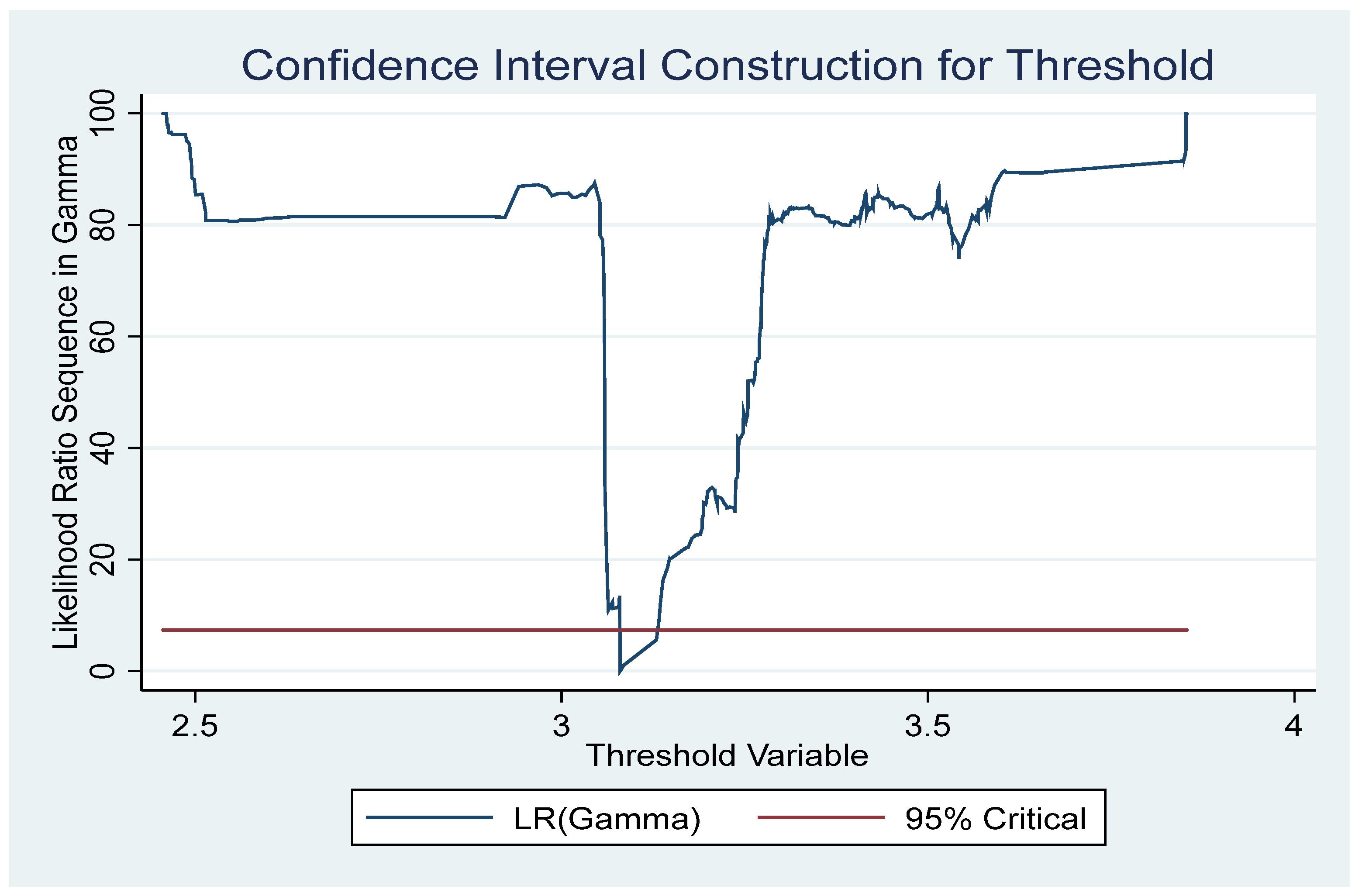
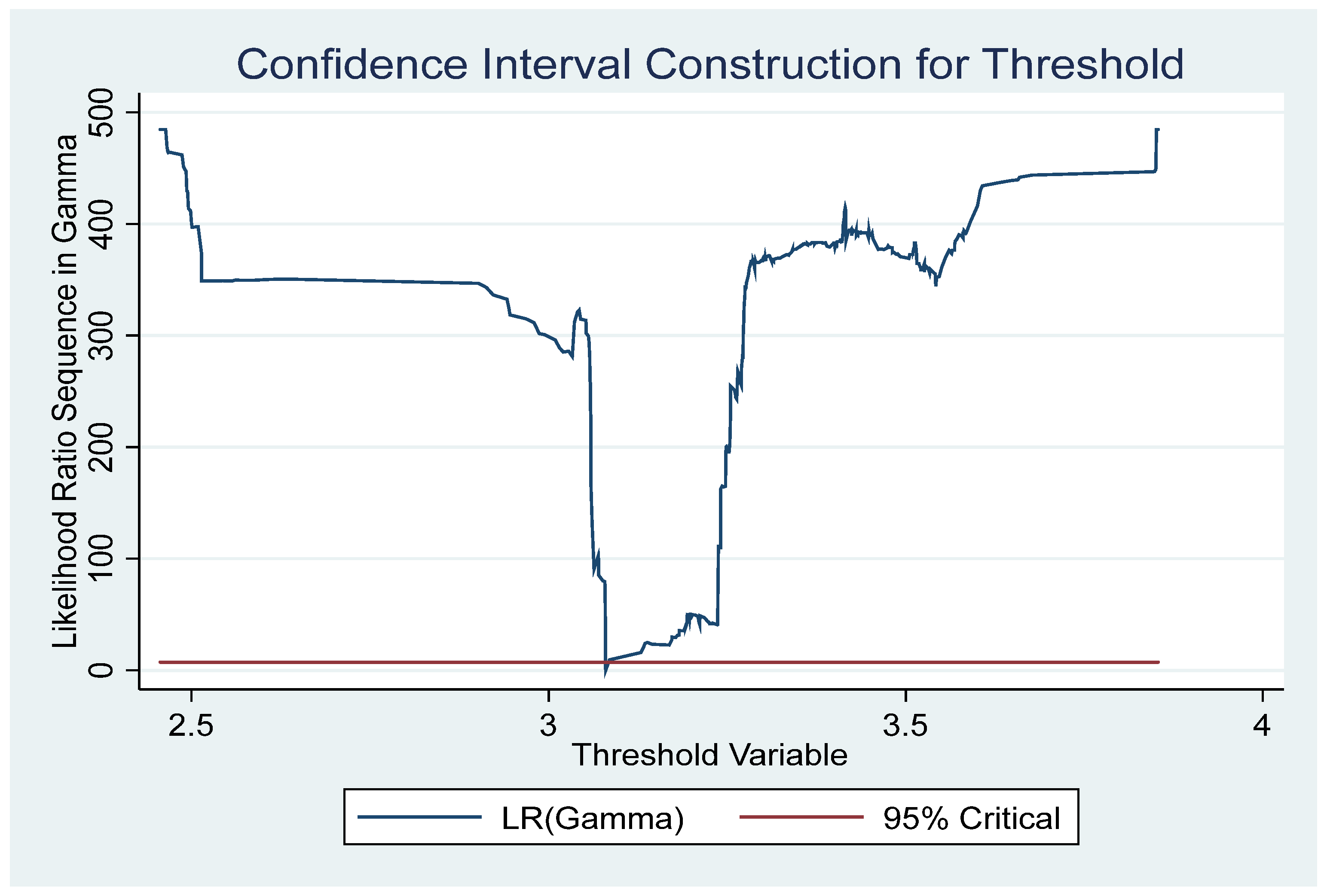
This article focuses on local implicit debt as the research object. Based on the review of research results on how to measure local implicit debt, it proposes to identify local implicit debt by designing explicit variables and implicit variables using the MIMIC model and comprehensively analyze its sustainability. Finally, three research conclusions are drawn: (1) Local implicit debt has shown an overall upward trend and conforms to the normal distribution among regions in the country, but intense economic tournament pressure on local government officials can lead to a rise in the scale of local implicit debt, while the imperfect financial system of more stringent financial regulation may reduce the scale of implicit debt. (2) Local implicit debt has a positive contribution to economic growth, indicating that local implicit debt is sustainable, and the stimulus effect of local implicit debt on economic growth is stronger after the implementation of the new budget law, which also means that China should maintain a moderate level of local implicit debt. (3) The sustainability of local implicit debt shows a heterogeneity among regions, in which the western region is the most sustainable, while the eastern and central regions are not significant. (4) Local implicit debt exerts a negative impact on economic growth at a low threshold, but is stronger at a high threshold, so keeping the moderate scale of local implicit debt can improve its sustainability and is also helpful to ease the local government’s fiscal pressure and promote China’s economic recovery.
6.2. Implications
Based on the above conclusions, this article summarizes the following three implications:
Firstly, it is necessary to continue to maintain a moderate scale of local implicit debt to support China’s economic growth under a complex background. Therefore, it is necessary to have an objective understanding of the positive effects of local implicit debt on economic growth, moderately relax the supervision of local government implicit debt, end local governments with limited debt power, and avoid too strict of a supervision leading to a significant decrease in the scale of local implicit debt.
Secondly, it is necessary to improve the sustainability of local implicit debt in the eastern and central regions. We need to strengthen the importance of economic construction, encourage all local governments to continuously find the direction of economic growth, especially to strive to improve the speed of economic growth in the central region, and provide power for the sustainability of local implicit debt. It is also necessary to actively explore new fiscal financing models in the eastern central regions and improve the driving effect of local implicit debt in the eastern and central regions on economic growth.
Thirdly, it is necessary to strengthen the research on debt and risk prevention and be alert to the “Minsky” moment. Therefore, on the one hand, it is necessary to determine regulatory measures according to the economic development conditions of different regions, closely monitor the scale and growth rate of local implicit debt, and prevent the excessive growth of debt from increasing the financial pressure of local governments. On the other hand, it is necessary to explore new debt resolution plans, assess the probability of local implicit debt becoming explicit, and find and block the cross-regional transmission path of local implicit debt risk and systemic financial risks.
6.3. Limitations
Some limitations of this study are worth mentioning here. Firstly, this article uses the MIMIC model, which has powerful functions but also has limitations. For example, although the MIMIC model provides estimates of the relationship between explicit variables and observed variables, the interpretation and verification of these relationships may be challenging. In particular, when there are multiple explicit variables in the model, it may be relatively difficult to determine the actual significance and impact of each explicit variable. It is also necessary to strengthen the overall fitness test of the model. Secondly, in terms of the consideration of the variables, the perspective can be broadened. For example, policy variables such as intergovernmental transfers, local tax autonomy, and administrative constraints, etc., may also be considered in control variables. Thirdly, this article carries out an empirical analysis at the provincial level, but there are also great differences among different prefecture-level cities within the same province. Therefore, in the next step, we can consider expanding the sample to the prefecture level and city level for analysis. Fourth, both benchmark regression and the threshold model find that local implicit debt has sustainable effects on stimulating economic growth, but the specific channels need to be further clarified, and the theoretical mechanism of local implicit debt (distinct from explicit debt) driving economic growth should be further investigated.