Article

Executive Cognition, Capability Reconstruction, and Digital Green Innovation Performance in Building Materials Enterprises: A Systems Perspective

School of Economics & Management, Harbin Engineering University, Harbin 150001, China
*
Author to whom correspondence should be addressed.
Systems 2025, 13(12), 1096; https://doi.org/10.3390/systems13121096
Submission received: 20 October 2025 / Revised: 24 November 2025 / Accepted: 30 November 2025 / Published: 3 December 2025
(This article belongs to the Special Issue Systems Analysis of Enterprise Sustainability: Second Edition)

Abstract

In the context of China’s “dual carbon” strategy, building materials enterprises (BMEs) are in a critical period of digital and green transformation. Their diverse ownership structure and complex industrial types make them important objects of research. To address gaps in the existing literature, particularly regarding executive cognitive structure segmentation, ecological scenario (ES) influence mechanisms, and enterprise heterogeneity, this study uses Chinese BMEs as samples and incorporates industry characteristics, such as strong policy-driven conditions, a complete industrial chain, and diverse ownership types, to explore the relationship between executive cognition, ability reconstruction, and digital green innovation (DGI) performance (DGIP). Executive cognition is conceptualized through two dimensions: environmental protection cognition and digital intelligence cognition (DIC). A comprehensive test is conducted using fuzzy set qualitative comparative analysis (fsQCA). The results show that (1) both executive cognition and capability reconstruction (CR) significantly promote DGIP, and executive cognition has a positive effect on CR; (2) competency reconfiguration plays a mediating role in the influence of executives’ cognition on innovation performance, with the ES having a positive moderating effect on the relationship between the two types of cognitive role competency reconfiguration; (3) the influence of executive cognition varies depending on the nature of the enterprise and the industry; and (4) three types of performance improvement paths emerge: environmental-cognition-driven, cognitive ability connection, and ES-guided paths. The research’s contributions include (1) dividing executive cognition into two dimensions to enrich its conceptualization; (2) introducing the ES to reveal the dynamic mechanisms of cognition–ability–performance; and (3) conducting a heterogeneity analysis based on the nature of enterprises to deepen insights into paths of differentiated influence. This study provides a theoretical basis and practical inspiration for BMEs to enhance their DGIP.

1. Introduction

Building materials enterprises (BMEs) are directly related to important development goals, such as promoting health and well-being, driving responsible consumption and production, and implementing actions to address climate change [1]. BMEs’ output is characterized by high energy consumption, low efficiency, and low sustainability, which is incompatible with climate change mitigation [2]. In 2021, China issued the “Action Plan for Carbon Dioxide Peaking Before 2030,” which includes the development of green building materials as a key direction for carbon dioxide peaking. The Action Plan also included proposals to create a green building materials production system and promote the certification of green building materials, providing clear guidance for the green transformation of the industry [3].
Some scholars have explored the impact of external factors on the performance of digital green innovation (DGI) from the perspectives of consumers, government environmental regulations, and competitors. However, in practice, there are differences in enterprises’ DGI performance (DGIP) in the same external environment [4]. Therefore, researchers have gradually explored the impact of internal factors, such as human resources and green knowledge identification, on DGIP. As resource allocators who make corporate decisions, senior executives have a significant influence on manufacturing enterprises’ green behaviors and help them set agendas and make decisions in green innovation. According to higher-order theory, executives’ cognition largely determines their interpretation of external information [5]. Under the influence of past experiences, different executives may have different perceptions of environmental protection and digital intelligence, leading enterprises to adopt different DGI strategies. Executive environmental awareness (EA) refers to executives’ perception and interpretation of environmental issues faced by enterprises based on their values and knowledge. Executive digital intelligence cognition (DIC) refers to the extent to which senior managers accept and apply digital transformation and digital intelligence technologies based on their knowledge and values.
Previous research has shown that senior executives’ cognitive structure in relation to environmental protection and digital intelligence is a key factor influencing a company’s DGI strategy [6]. Business executives with a deep understanding of ecological and environmental issues and the digital economy will closely follow environmental protection policies and digital transformation, continuously deepen their understanding of the significance of DGI and development, obtain more information related to green development and digital intelligence applications, and take actions within the enterprise to carry out DGI work in relation to products and production processes. They will also pay more attention to environmental protection and actively disclose enterprises’ environmental information [7]. Given the influence of executive cognition on enterprises’ DGI behavior, it is necessary to further explore the relationship between executive cognition and DGIP.
Capacity reconfiguration is an important organizational activity for BMEs to better adapt to environmental changes by replacing and upgrading their original capabilities and integrating and reorganizing new and old resources in response to changes in the external environment [8]. Executive cognition is a key factor driving BMEs to carry out capacity reconstruction activities. When senior executives perceive environmental changes, they will actively integrate BMEs’ internal and external resources, promote the development of new capabilities, enhance their adaptability to the environment, and solve problems caused by environmental changes to BMEs [9]. The DGI ecosystem is a new path for the survival and development of BMEs. “Embracing the Innovation 3.0 Era” describes Innovation 3.0 is an innovation ecosystem, emphasizing the synergy of the ecological environment. Innovation 3.0 embodies the new concept of ecological and innovative development for BMEs, and it has become an innovative paradigm for the country and for BMEs to enhance their sustainable development. Supporting an innovative ecosystem has become a new strategy for the survival and development of China’s BMEs [10]. When senior executives carry out capacity reconstruction activities within the enterprise based on their own EA and digital intelligence awareness, there may be differences in the effects due to different ecological scenarios (ESs).
Although there has been some progress, gaps in the literature remain. Most studies focus on the pairwise one-way relationship between executive cognition, capability reconstruction (CR), and DGI, lacking a systematic exploration of the internal logic of the impact of the sub-dimensions of executive cognition on innovation performance. Likewise, the dynamic regulatory role of the key external factor of ESs has been ignored, as well as the impacts of different contexts. The nature of enterprises is rarely considered when conducting heterogeneity analyses, resulting in inaccuracy, less generalizable findings, and challenges meeting the practical needs of different types of enterprises. These gaps have led to an incomplete understanding of the driving mechanisms of DGIP and restricted the development of targeted strategies.
To fill these gaps, this study aims to reveal the intrinsic mechanisms through which executive cognition influences the DGIP of BMEs through CR, clarify the regulatory role of the ES and the differentiated impact of enterprise heterogeneity, and provide theoretical support and practical guidance for the green digital transformation of the industry. To this end, a chain transmission model of “executive cognition–CR–DGIP” is constructed in which executive cognition is conceptualized as comprising two dimensions: environmental protection cognition and DIC. In addition, the ES is introduced as a moderating variable, and a comparative analysis is conducted based on enterprises’ heterogeneous characteristics. By systematically exploring the interaction mechanisms among multiple variables, this research not only enriches the theoretical framework of the DGI field and expands the boundaries of higher-order theories and CR theories; it also provides practical guidance for BMEs to optimize the cognitive structure of senior executives, enabling them to adapt to and formulate different innovation strategies. This will support enterprises in enhancing their competitiveness in green transformation and digital change.
The layout of this paper is as follows. Section 2 describes the theoretical basis of the study and the hypotheses. Section 3 presents the sample and the methods. Section 4 presents the empirical results, and Section 5 provides the conclusions and approaches for future research.

2. Literature Review and Hypotheses

2.1. Literature Review

2.1.1. Executive Cognition and DGI Performance

Many theories have been put forward regarding the impact of executive cognition on innovation performance. Fannon et al. (2021) [11] focused on exploring the crucial role of executive competency cognition. Their research indicates that the diverse knowledge reserves and professional skills possessed by senior managers are an important foundation for an enterprise’s innovation activities. This contextual knowledge system not only provides rich reference for enterprise innovation but also significantly enhances the implementation efficiency, frequency, and quality of innovation. Zeng et al. (2023) [12] took the perspective of environmental perception and found that when senior managers accurately identify changes in the competitive market and technological iteration trends, they will proactively adjust the direction of innovation strategies and optimize resource allocation. This adaptability significantly enhances innovation performance. Wu et al. (2024) [13] proposed that executives will be willing to take risks and encourage enterprises to develop pollution-free processes to cater to consumers’ demands. By implementing these measures, enterprises can not only expand their market share but also establish a green image, enhancing green innovation. It further proposed that in a market environment where consumers’ EA is growing, the executives’ EA will prompt them to break through traditional thinking and actively promote the research and development of environmentally friendly products and production processes. These measures help enterprises gain competitive advantages in the market and create an image of environmental responsibility, promoting green innovation.
Digital green transformation has become a key path for enterprises to survive and achieve sustainable development. During the transformation process, senior executives’ awareness of environmental challenges and digital technologies plays a significant role in enterprises’ operation and development. Different levels of understanding lead executives to make different DGI decisions and also have an impact on enterprises’ DGIP [14]. This difference is not only reflected in decision making but also allocation of resources and strategic layout. These choices have a profound impact on DGIP. For instance, executives with a higher cognitive level may be more inclined to actively promote DGI projects and rationally allocate resources, thereby enhancing innovation performance. Executives with relatively low cognitive levels may be more conservative in making decisions, miss development opportunities, and thereby affect innovation performance [15].
Although some scholars have explored the impact of executive cognition on enterprise innovation from different perspectives, there are still several gaps in the literature. Research has tended to focus on senior executives’ overall perception without distinguishing between perceptions of environmental protection and perceptions of digital intelligence in the context of DGI. Furthermore, there has been little attention paid to cognitive differences among executives during the green transition process and their impact on DGI. To date, research has mainly focused on green technological innovation without fully integrating digital transformation, and there are few systematic studies on the interaction between digital intelligence cognition and environmental protection cognition.

2.1.2. Reconceptualizing DGI Performance and Capabilities

CR plays a key mediating role in enhancing innovation. Ge et al. (2023) found that embedding knowledge acquisition in intermediary networks plays a mediating role in digital innovation, supporting the relationship between digital technology and enterprise performance [16]. Wen et al. (2022) suggest that during the process of digital transformation, enterprises can obtain a large amount of information about products and markets, which not only helps them in research and development, product design, and manufacturing but also enables them to carry out process and technological innovation [17]. Cao et al. (2021) systematically demonstrated the partial mediating transmission effect of capability reconfiguration in this process by constructing a relationship model between cross-border search and sustainable enterprise innovation [18]. Shen et al. (2022) [19] further refined the mechanism of capability reconfiguration. They found that dynamic capabilities, as higher-order capabilities, mainly exert an indirect effect on enterprise performance by influencing operational capabilities as a mediating variable. This transmission mechanism is more prominent when environmental volatility increases. Wang et al. (2024) explained the mechanism of CR from the perspective of knowledge management, arguing that its value lies in supporting enterprises to effectively integrate knowledge resources and apply them to innovation practices, thereby driving breakthrough innovation achievements [20]. Li et al. (2024) [21] regarded human resources as a special form of organizational capability. Through empirical analysis, they revealed that human resource elements must interact and collaborate with the human resource utilization process to improve enterprise performance. This deepens our understanding of the mediating role of CR. The latest research by Mishra et al. (2025) further supplements the action path of dynamic capabilities, confirming that it indirectly exerts its influence through intermediate links, such as optimizing an organization’s operational utility and efficiency [22].
Although many studies have confirmed the key mediating role of capability reconfiguration in enhancing enterprise innovation, gaps in the literature remain. Existing research on the conceptualization of CR and its mechanism of action in the context of digital green transformation lacks systematic analyses that combine digital and green dimensions. Although some studies have systematically demonstrated the mediating transmission effect of capacity reconfiguration and the indirect impact of dynamic capabilities, most have focused on traditional manufacturing or single-industry environments without fully considering the ES in which enterprises are located and the complex dynamics of digital green transformation.

2.1.3. Executive Cognition and Capability Reconstruction

Executive cognition is the core factor driving capability reconfiguration, which enables enterprises to better adapt to environmental changes by replacing and upgrading their original capabilities and integrating and reorganizing new and old resources when responding to changes in the external environment [23]. Furthermore, executive cognition supports enterprises in carry outing capacity reconstruction. When senior executives perceive environmental changes, they will actively integrate internal and external resources, promote capability reconstruction, enhance the enterprise’s adaptability, and solve problems brought about by environmental changes. Lin et al. (2023) [24] found that executives’ perceptions of opportunities and threats brought about by external changes change based on strategic flexible adjustment of CR. Opportunity perception positively drives CR, while threat perception shows an inverted U-shaped impact. Some scholars have found that the ability to search for and absorb knowledge is an important driving force for ability reconstruction. Wang et al. (2020) demonstrated that network conventions reduce the transaction costs of cross-border searches by regulating members’ behavior and positively regulate the relationship between cross-border resource identification and CR [25]. Feng et al. (2021) [26] found that dual network embedding (commercial networks and political networks) enhances the effect of CR through formal and informal knowledge integration mechanisms. In addition, the width and depth of the knowledge base have moderating effects on CR. Chen et al. (2022) found that specialized knowledge searches influence capacity reconstruction through the chain mediating effect between potential absorptive capacity and realized absorptive capacity, among which scientific knowledge searches have the strongest promoting effect on technological breakthroughs [27].
CR as a mediating transmission mechanism has become a topic of considerable academic concern. Peng et al. (2021) [28] found that management cognition constitutes the micro-foundation of CR and plays a crucial role in the adoption of CR methods. Even under the logic of opportunity, enterprises will still resort to capability reconfiguration to cope with drastic environmental changes. Liang et al. (2022) conducted an empirical study based on data from 135 manufacturing enterprises to evaluate the mediating effect of dynamic capabilities and found that executives’ EA enhances green innovation performance through dynamic capabilities [29]. Executives’ strategic understanding of environmental issues can drive enterprises to restructure their resource integration and technological iteration capabilities, thereby promoting green process and product innovation. Lin et al. (2023), from the perspective of organizational duality, found that executives’ perception of modular design, by reconfiguring production and operation capabilities, increased enterprises’ green innovation efficiency by 28%, confirming the bridging role of capability reconfiguration in the implementation of cognition [30].
Existing research generally acknowledges that executive cognition is the core factor driving the reconfiguration of enterprises’ capabilities, revealing multiple driving mechanisms for capability reconfiguration, such as cognitive opportunities and threats, knowledge searches and absorption, and network embedding. However, there are also gaps in the literature. Most studies focus on the direct impact of executive cognition on CR, lacking a detailed and systematic exploration of different dimensions of executive cognition (such as environmental protection cognition and DIC in the context of digital green transformation). Although existing studies have focused on driving factors, such as knowledge searching and network embedding, there is relatively little exploration of the moderating role of ES or the impacts of the complexity of the external environment on the effectiveness of executive-cognition-driven CR. The specific impact of CR on DGI performance and its interaction with executive cognition remain unclear, and there is a need for moderating analyses that account for enterprise heterogeneity, including property rights and industrial categories.

2.1.4. Executive Cognition, DGI Performance, and Capability Reconstruction

Most existing studies focus on pairwise relationships, and there is a lack of systematic analyses of three-way relationships. As a result, the mechanisms through which different cognitive dimensions influence DGI performance through CR have not been fully revealed. In researching the impact of executive cognition on innovation strategies, scholars have described the influence of managers’ value orientation on innovation activities based on higher-order theories. Zhang et al. (2018) [31] found in their research that senior managers’ cognitive characteristics, a key element of enterprises’ strategic decision making, have a decisive impact on the cultivation and improvement of enterprises’ innovation capabilities. Pang et al. (2021) [32] studied start-up enterprises, demonstrating that an executive team’s cognitive advantages can drive enterprises to carry out breakthrough business model innovations. This cognitive advantage is specifically manifested in acute insight into market opportunities and accurate assessments of innovation risks. Hu et al. (2022) [33] found a significant positive correlation between an executive team’s cognitive abilities and innovation in efficiency-based business models. This further enriches the theoretical basis for the influence of executive cognition on enterprise innovation output. With continuing advances in research, attention has shifted from the indirect effects to the direct effects of executives’ cognition. Wang et al. (2018) [34] studied listed companies in China’s electronics industry from 2012 to 2015 and used panel data regression analysis to confirm that senior executives’ cognitive characteristics, including innovation awareness, risk preference, attention to career development, and financial flexibility, affect innovation performance. Petti et al. (2021) [35] reveal how evolving market cognition drives latecomer firms’ technological catch-up, while Hällerstrand et al. (2023) show that executives’ environmental cognition and dynamic capabilities enhance green innovation under uncertainty [36]. These studies provide an important theoretical basis for understanding the mechanisms of executive cognition in innovation.
Research on the regulatory effects of ES has expanded theoretical boundaries. Recent studies have focused on the impact of niche evolution. Wang et al. (2023) [37] confirmed that there is an optimal adaptation interval for the interaction between niche width and knowledge absorption capacity. When the ratio of the two is between 1.2 and 1.5, the probability of green innovation emergence increases by 73%. Wang et al. (2023) [37] introduced network conventions as moderating variables and found that the positive relationship between cross-border resource recognition and green innovation performance was more significant in the context of high network convention intensity. Research indicates that a standardized cooperation mechanism can reduce the cost of knowledge integration and promote the transformation of senior executives’ EA into innovative practices. Liu (2024) [38] discovered that strategic flexibility positively moderates the relationship between embedding digital technology and green innovation. Flexible resource allocation can also amplify the effect of executives’ EA. These studies offer a new perspective on solving the problem of environmental dependence in the process of “cognitive ability–performance” transformation.
To date, the literature has mainly focused on the bilateral relationship between executive cognition and innovation performance, lacking systematic three-way interactive analyses of the impact of different dimensions of executive cognition in relation to DGIP and CR. There is a need for more detailed explanations of how ESs regulate cognitive ability reconstruction. Most existing research focuses on a single dimension of cognition or ability and rarely systematically integrates multiple factors, such as executives’ environmental protection cognition, DIC, and the ES, resulting in an insufficient understanding of the mechanisms of DGIP. Meanwhile, the moderating role of enterprise heterogeneity, which encompasses characteristics such as the type of industry and property, requires further study, which limits the theory’s applicability.

2.2. Hypotheses

2.2.1. The Impact of Executive Cognition on Digital Green Innovation Performance

(1)
The impact of senior executives’ EA on DGI performance
According to higher-order theories, the cognition of senior executives in BMEs profoundly influences enterprises’ choices and performance. In a sense, BMEs’ strategic decisions depend on the values, ways of thinking, and ideologies of the senior executives. Executives are the formulators and executors of environmental protection strategies in BMEs. Their understanding and interpretation of environmental protection policies and their significance will influence their choices and, consequently, BMEs’ DGI performance [39]. Because DGI is “high risk, high investment, and long return,” BMEs lack effective organizational resources and capacity allocation mechanisms during the process of DGI [40]. Some senior executives believe DGI is unpredictable and that it may pose a threat to the BMEs’ management and performance. If DGI knowledge and technologies are introduced, they could disrupt existing production and operations and negative impact economic benefits [41]. Therefore, executives with a relatively low level of EA are unlikely to carry out DGI activities within BMEs [42]. Executives with a relatively high level of EA view green demands and environmental regulations as opportunities [43], transform DGI into market value, promote the digital and green development of production and operation, help BMEs remain competitive, and therefore improve DGI performance [44].
Senior executives’ perception of environmental protection affects whether they use resources for digital green development [45]. The greater their EA, the more likely they are to implement forward-looking digital green management strategies and carry out various DGI activities within BMEs. This paper holds that a high level of EA is conducive to enhancing DGI performance, which informs the first hypothesis.
Hypothesis 1.
Executives’ EA positively affects DGI performance.
(2)
The impact of senior executives’ DIC on DGI performance
Studies show that in addition to explicit characteristics that influence DGI performance, such as executives’ gender and age, DIC is also important [46]. Driven by the digital economy, BMEs’ business logic and management have undergone fundamental changes. BME executives have realized that relying solely on product supply is insufficient to adapt to rapidly changing market demands. It is difficult to bring sustainable and growth-oriented competitive advantages to BMEs [47]. If BMEs can fully utilize the benefits of digital technology, such as derivatives, connectivity, and openness, and provide integrated and customized services, they can not only better adapt to the requirements of the digital economy era but also provide more development opportunities for BMEs [48]. Within this context, digital intelligence technologies can reduce the cost of DGI [49]. By using digital technologies, BMEs can achieve low-cost penetration and reduce the cost of knowledge and information transmission between BMEs and stakeholders and within enterprises, thereby lowering innovation costs and enhancing revenue levels. This would provide a material basis for BMEs to carry out green technology innovation [50]. BMEs with senior executives with high levels of DIC can better utilize digital technologies, integrate into the digital economy, and share digital dividends [51]. Executives with a high level of digital intelligence awareness can recognize the significance of digital green development, are more inclined towards digital and intelligent business development, and can leverage their technical expertise to play an expert role, enhancing the success rate of digital transformation in BMEs and promoting DGIP [52,53].
Existing research shows that executives with a high level of DIC and employees with digital intelligence are conducive to promoting BMEs’ implementation of digital strategies, adapting to the new environment of digital transformation, and enhancing BMEs’ international competitiveness. BMEs’ successful digital transformation also provides technical support for digital green innovation, which further supports DGI performance. This paper hypothesizes that executives with a higher level of DIC are more likely to help BMEs enhance their DGIP.
Hypothesis 2.
Executives’ DIC positively affects DGI performance.

2.2.2. The Impact of Executive Cognition on Capability Reconstruction

(1)
The impact of executives’ EA on CR
Executive cognition influences the allocation of enterprises’ resources and capabilities. Only when executives view environmental regulations as market opportunities can the role of CR be maximized [54]. Executives who hold a positive attitude towards environmental protection will proactively carry out capacity reconstruction activities, integrate and adjust organizational resources, and restructure organizational and operation systems. This reduces the obstacles BMEs encounter in conducting DGI activities, provides resources and technical support for green product research, development, and production, and offers internal support for BMEs to enhance their DGIP [55]. This paper hypothesizes that executives with a higher level of EA are more likely to choose to carry out capacity reconstruction activities in BMEs.
Hypothesis 3.
Executives’ EA plays a significant positive role in the process of CR.
(2)
The Impact of senior executives’ DIC on CR
The digital economy has accelerated the pace of change in BMEs’ external environment. As executives’ understanding of digital intelligence improves, they realize that the digital transformation of BMEs involves the application of digital intelligence technologies as well as the transformation of business models [56]. Executives with a high level of DIC believe that in the digital environment, competition among BMEs is more flexible, which contradicts traditional BME models. Executives must balance existing functions while establishing new digital intelligence functions. Therefore, BMEs must restructure their capabilities to continuously gain competitive advantages [57]. Senior executives’ digital intelligence can help BMEs integrate digital intelligence resources, improve the efficiency of digital intelligence knowledge management, cultivate digital intelligence talents, achieve effective coordination of capabilities, digital intelligence knowledge, and resources, and thereby build and enhance core competitiveness [58]. Executive DIC can help BMEs understand changing trends in digital intelligence technologies, reduce operational risks, and effectively promote CR.
Hypothesis 4.
Senior executives’ DIC has a positive impact on BMEs’ CR.

2.2.3. The Impact of DGI Performance on Capability Reconstruction

Capability reconfiguration can help BMEs integrate their existing capabilities with new technologies and resources, optimize their organizational structure, and accelerate the research, development, and production of green digital products [59]. In addition, capability reconfiguration can help BMEs break through path dependence and organizational conventions, promote the formation of new capabilities and functions, enhance internal innovation and resource allocation, enable products to quickly match emerging markets in an unpredictable environment, and thereby improve DGIP [60].
Hypothesis 5.
CR positively affects DGI performance.

2.2.4. Connections Between Executive Cognition, DGI Performance, and Capability Reconstruction

(1)
The mediating effect of CR
Based on hypotheses H1 to H5, this paper holds that capability reconfiguration plays a mediating role in the process of executives’ cognition influencing DGI performance. Executives have significant decision making power over the allocation of organizational resources and capabilities. From a resource-based perspective, the effect of DGI depends on whether organizational resources and capabilities are allocated reasonably and efficiently. CR allocates resources rationally through the integration and reconstruction of internal and external resources [61]. In addition, senior executives’ interest in environmental protection and DIC can help BMEs identify components of existing capabilities that need to be reorganized and updated, guide BMEs to develop new capabilities to make up for or replace existing ones, explore new functions of existing capabilities or generate new ones, and help BMEs efficiently utilize existing technologies to carry out DGI activities [62]. This paper holds that CR plays a mediating role between executive cognition and DGIP.
Hypothesis 6a.
CR plays a mediating role between EA and DGIP.
Hypothesis 6b.
CR plays a mediating role between DIC and DGIP.
(2)
The regulatory effect of ES
The various elements within the innovation ecosystem form a complex symbiotic relationship, highlighting the flow, dynamism, and evolution of resources and information within the system [63]. When BMEs carry out capacity reconstruction, they should take into account not only environmental changes but also links between internal elements of the ecosystem. Comprehensive capabilities cannot be measured based on a single factor or the response of a single BME. Instead, evaluations should also take into account the enabling effect of the entire system [64]. The innovation ecosystem provides resources, such as environmental protection policy guidance and digital intelligence technologies, offering support for senior executives [65]. This paper holds that in different ESs, the impact of executives’ cognition on CR varies.
The constantly changing external environment poses severe challenges for weak BMEs. Against this backdrop, the entrepreneurial environment for BMEs has gradually become “ecological.” Many BMEs have joined in, hoping to establish connections with mature BMEs, research institutions, and investment institutions and build a community to better cope with challenges and seize opportunities [66]. The concept of the innovation ecosystem has been proposed by researchers to understand competitive situations, and its purpose coincides with the motivation of CR. As senior executives’ EA improves, their willingness to promote BME’s capacity reconstruction becomes stronger. BMEs in the innovation ecosystem can better obtain more cutting-edge industry information and information about green environmental protection technology and policies. This enhances BMEs’ information accuracy and improves their resource integration rate, enabling senior executives to use resources to promote BMEs’ CR [67]. In this ES, the positive impact of environmental protection awareness on capacity reconstruction is more significant.
Hypothesis 7a.
The ES positively moderates the relationship between executives’ EA and BMEs’ capacity reconstruction.
As market competition becomes increasingly fierce, senior executives with higher levels of digital and cognitive intelligence can more easily recognize outdated technologies and declining performance. As such, they are also more likely to realize that BMEs must optimize resource allocation and use digital and intelligent technologies to transform their products to adapt to changes in the external environment. However, isolated BMEs find it difficult to obtain technology, resources, and other forms of support from the ecosystem. Therefore, BMEs must invest a considerable amount of time and money into new technologies and markets to enhance their flexibility and their adaptability. This will allow them to meet BMEs’ long-term development needs. BMEs in the ecosystem can utilize existing digital intelligent technologies and resources to assist them in carrying out capacity reconstruction activities, thus enhancing their core competitiveness [67]. BMEs can also leverage the ecosystem to address problems arising from a lack of digital intelligence technology and resource support during CR. When facing crises, they can obtain greater adjustment space and more response time through the ecosystem, further supporting CR [68]. In conclusion, in the ES, senior executives’ DIC plays a positive role in BMEs’ CR.
Hypothesis 7b.
The ES plays a positive moderating role between the digital and intelligence cognition of senior executives and BMEs’ CR.

2.3. Model Design

Through a grounded theory approach, this paper constructs a conceptual model of the impact of executive cognition on BMEs’ DGIP, as well as the mechanisms through which this effect occurs. In this model, executive cognition is an independent variable subdivided into executive environmental protection cognition and executive DIC. DGIP is the dependent variable; capacity reconstruction serves as a mediating variable; and the ES acts as a moderating variable. Here, the ES is the innovation ecosystem in which BMEs are embedded, which is marked by factors including the degree of collaboration among partners, the density of knowledge flow, and the complementarity of ecological niches. Figure 1 shows the framework of the theoretical model developed in this paper.

3. Methodology

3.1. Methods

This study takes a qualitative approach. SPSS25.0 and Amos24.0 were used to perform regression analyses and heterogeneous response analyses to identify the mechanisms through which executive cognition affects BMEs’ DGIP through CR. The fsQCA method was used to identify combined factors and conditions driving DGIP improvements.

3.2. Sample Selection

3.2.1. Questionnaire Data Collection and Screening

The research was conducted from March 2024 to December 2024 with BMEs in regions including Beijing, Shanghai, Shenzhen, Hebei, Henan, and Heilongjiang. Questionnaire data were collected from middle and senior management personnel in manufacturing enterprises. These responses provided rich information about innovation measures taken by enterprises and the application of digital and intelligent technologies. Questionnaires were distributed and collected on-site at enterprises and enterprise meetings, and relevant information about the enterprises was collected through the Entrepreneurs’ Association. Using a list provided by the association, enterprises were contacted individually and asked to distribute and collect questionnaires. The questionnaire was not distributed by any third-party institutions to avoid potential data confusion and to ensure the accuracy and reliability of the results.

3.2.2. Data Screening

Among the retrieved questionnaires, some respondents were excluded, including those who did not answer the questions or whose answers matched the patterns of at least two other people. This ensured the quality and credibility of the results. A total of 596 valid questionnaires were collected, with an effective recovery rate of 74.5%. To ensure data quality, screening was also conducted. Following screening, 491 valid questionnaires were included, with an effective questionnaire rate of 82.4%. These data provide strong support for subsequent research and analysis. The sampled enterprises cover a wide range of industry categories, types of enterprises, and digitalization levels, ensuring the extensiveness and representativeness of the results.

3.2.3. Variable Selection Using the fsQCA Method

Four variables, environmental protection cognition, DIC, ability reconstruction, and the ES, were selected as antecedent conditions, as detailed in Table 1. For use in subsequent analyses, the average of multiple questions pertaining to the same variable was used for fsQCA analyses.

3.3. Variable Measurement

3.3.1. Measurement of Main Variables

Methods used to measure executive cognition were mainly derived from the literature. The main variables were measured using a 7-point Likert scale, where “1” indicates complete inconsistency and “7” indicates complete consistency. Based on previous studies, the purpose of this paper, and the corporate culture of BMEs in China, the measurement of executives’ environmental protection cognition and DIC was revised. Measurement of CR was based on the work of Lavie and Hu to determine whether BMEs can replace their existing capabilities through large-scale reorganization and renewal, with a total of four items. The ES was analyzed to examine the degree of correlation between the ES and BMEs, with a total of four items. DGIP measurement focused on financial performance and market performance. Please refer to in Appendix A.1 for details.

3.3.2. Control Variable Measurement

As BMEs’ years of operation, scale, nature, and industry shape DGI performance, they were controlled for. BMEs’ age was based on their year of establishment to 2023, with “1” indicating those within 3 years, “2” indicating those within 3 to 5 years, “3” indicating those within 5 to 10 years, and “4” indicating those that have existed for 10 years or more. Scale was based on the number of employees, with “1” indicating less than 100 employees, “2” indicating 100 to 300 employees, “3” indicating 300 to 500 employees, “4” indicating 500 to 1000 employees, and “5” indicating over 1000 employees. BMEs were categorized as labor-intensive (1), capital-intensive (2), or technical-intensive (3). They were also classified as state-owned (1) and non-state-owned (2).

3.3.3. Variable Calibration

Direct calibration was performed to process the data and achieve variable calibration [69]. The constant 0.01 was manually added [70] in accordance with relevant standards to integrate each case into the corresponding configuration analysis.
To more clearly demonstrate this process, the calibration anchor points of the condition variables and outcome variables are listed in Table 2, which includes detailed calibration information for each variable under different states. Calibration provided an important basis for subsequent analyses and ensured the accuracy and reliability of the study.

3.4. Common Method Bias

To ensure the authenticity of the data collected through questionnaires, questions were randomly arranged and duplicate items were included. Furthermore, anonymous surveys and psychological isolation methods were used in the distribution and completion of questionnaires to avoid homologous variance issues. The Harman single-factor test was used to test the homologous variance of the data. Without data rotation, the first common factor accounts for 18.67% of the total load, indicating that no single factor can explain most of the variations. There is no serious common method bias problem in the data.

3.5. Reliability and Validity Analysis

3.5.1. Reliability Analysis

According to the reliability analysis results in Table 3, it can be concluded that the Cronbach’s alphas of environmental protection cognition, DIC, DGIP, capacity reconstruction, ES, and the total scale are higher than 0.8, indicating that the items have good internal consistency and can be used for subsequent validity analysis.

3.5.2. Validity Analysis

Existing scales were adopted and revised, and these scales were analyzed for content validity. In Table 4, among all of the factor models, the five-factor model has the best-fitting index (χ2/df = 1.862, RMSEA = 0.043, CFI = 0.958, TLI = 0.958, SRMR = 0.100), indicating that the model has a good degree of fit and discriminative validity and can be used for the next step of hypothesis testing.

4. Results

To further ensure the robustness and internal validity of the correlation analysis and subsequent regression results, the main regression models were submitted to systematic diagnostic tests, including residual normality tests, multicollinearity tests, and heteroscedasticity tests.
Residual normality is the core prerequisite for ensuring unbiased estimation of regression parameters and the validity of hypothesis testing. It was verified by combining the K-S test with the residual normal Q-Q plot. From the test results, the p-values corresponding to the K-S statistics of all regression models (including direct effect, mediating effect, and moderating effect models) are all greater than 0.05. The minimum p-value is 0.127. The null hypothesis that “residuals follow a normal distribution” was not rejected. In the residual Q-Q graph, the residual points are essentially distributed along the 45° theoretical reference line without systematic deviations, such as “S-shaped” or “discrete type” deviations, and only a few edge points have slight fluctuations. This indicates that the model residuals fully meet normality requirements, ensuring the reliability of subsequent parameter estimation.
To avoid the distortion of regression coefficients caused by linear correlation among independent variables, the degree of multicollinearity was evaluated using the variance inflation factor (VIF) and Tolerance. The results show that the VIF values of the core independent variables (environmental protection cognition, DIC, ability reconstruction, ES) and the interaction terms (environmental protection cognition × ES, DIC × ES) are all within the range of 1.27 to 3.46, which is much lower than the warning value of “severe collinearity,” which is 10. Moreover, the tolerance of all variables is greater than 0.1, among which the tolerance of the ES is the highest, reaching 0.787. This demonstrates that the degree of linear correlation among the independent variables is extremely low. The model does not show multicollinearity, the regression coefficient estimation is stable and reliable, and no coefficient sign inversion or abnormal increase in standard errors occurs.
Heteroscedasticity can affect the accuracy of hypothesis testing. In this study, the BP test, the White test, and a residual-fit scatter plot were used for comprehensive verification. The results of the BP test and the White test showed that the p-values corresponding to the statistics of all regression models were greater than 0.05, with the minimum p-values being 0.183 and 0.215, respectively, and the null hypothesis of “homoscedasticity” was not rejected. In the residual-fit value scatter plot, the residuals are randomly distributed on both sides of the fit values without systematic trends, such as “funnel-shaped” or “increasing/decreasing” trends, and the scatter density is uniform. To further confirm the results, all models were re-estimated using the Robust standard error (Robust SE). The direction of the regression coefficients of the core variables did not change, and the fluctuation of the significance level was less than 0.02, remaining within the original significance level. As such, there was no obvious heteroscedasticity in the models, and the hypothesis test results are reliable.
The regression model fully meets the basic assumptions of multiple linear regression. The residuals follow a normal distribution and have no multicollinearity or significant heteroscedasticity. The model’s settings are reasonable, and the estimation process is robust, which supports the hypothesis tests of direct effects (H1–H2), mediating effects (H3–H6), and moderating effects (H7a–H7b). The conclusions are statistically valid.

4.1. Descriptive Statistics Analysis

4.1.1. Basic Characteristics

According to the statistical analysis results in Appendix A.2, 47.2% of BMEs have been established for 3 to 10 years, 69.5% have more than 100 employees, and 29.3% are state-owned BMEs. This indicates that the majority of the sampled BMEs are non-state-owned and currently in a stage of rapid development. In addition, the proportions of labor-intensive, capital-intensive, and technology-intensive BMEs are 31.9%, 32.5% and 35.6%, respectively. Overall, the sample is relatively balanced and representative.

4.1.2. Statistics Analysis

According to Appendix A.3, there is a significant positive correlation between EA and DGIP (r = 0.338, p < 0.01). There is also a significant positive correlation between DIC and DGIP (r = 0.507, p < 0.01). CR is significantly positively correlated with DGIP (r = 0.315, p < 0.01). Environmental protection awareness has a positive impact on CR (r = 0.350, p < 0.01), and DIC has a positive impact on capability reconstruction (r = 0.361, p < 0.01). The results initially support some of the hypotheses of this study.

4.2. Hypothesis Testing

4.2.1. Direct Effect Test

SPSS 25.0 software was used to conduct regression analyses to measure the impact of executive cognition on enterprises’ DGIP. The results are shown in Table 5.
The impact of senior executives’ EA on enterprises’ DGIP was first examined. The results show that EA has a positive impact on DGIP (M2, β = 0.288, p < 0.01). This indicates that the higher the level of awareness of environmental protection issues among senior executives, the better the DGIP. This validates Hypothesis H1. Executives’ awareness of and emphasis on environmental protection can significantly enhance a company’s DGI performance.
Next, the impact of senior executives’ DIC on DGIP was examined. The results show that the regression coefficient between DIC and DGIP is significantly positive (M3, β = 0.442, p < 0.01), indicating that senior executives’ DIC has a positive impact on the DGIP and supporting H2. Executives’ cognition and capabilities in relation to digital intelligence technologies can significantly enhance enterprises’ DGI.
The promoting effect of executives’ EA and digital intelligence on DGI performance was evaluated through regression analysis. The results support the study’s hypothesis. Based on these findings, enterprises can enhance their DGI performance by improving senior executives’ awareness of environmental protection and digital intelligence technologies, thereby optimizing resource allocation and innovation strategies.

4.2.2. The Mediating Effect of Capability Reconstruction

In this study, CR is introduced as a mediating variable, and the influence mechanism of executive cognition on DGIP is explored through regression analysis. The results are shown in Table 6.
Senior executives’ EA has a significant positive impact on the reconstruction of enterprises’ capabilities (M5, β = 0.395, p < 0.01). This indicates that the higher the level of awareness of environmental protection among senior executives, the greater the degree to which enterprises restructure their capabilities. Assuming that H3 is verified (executives’ EA positively affects the reconstruction of enterprises’ capabilities), executives’ EA may drive enterprises to make necessary adjustments and optimizations in terms of resources and capabilities.
Further analysis shows that there is a significant positive correlation between executives’ DIC and CR (M6, β = 0.418, p < 0.01). Assuming that H4 is verified, this indicates that senior executives’ cognitive and application capabilities in relation to digital intelligence technology can significantly promote an enterprise’s CR. This highlights the significance of executives’ understanding of digital and intelligent technologies in the reconstruction of enterprises’ capabilities.
Furthermore, capability reconfiguration has a significant positive impact on DGIP (M8, β = 0.236, p < 0.01), which validates hypothesis H5 and indicates that enterprises can enhance their DGIP through capability reconfiguration. This suggests that capability reconfiguration is an important means through which enterprises can achieve DGI.
To verify the mediating role of capability reconfiguration, CR variables were added to the model. The results show that CR has a positive impact on DGIP (M9, β = 0.168, p < 0.01), and the positive influence of executives’ EA on DGIP remains significant (M9, β = 0.225, p < 0.01). This indicates that capability reconfiguration plays a significant mediating role between executives’ EA and DGIP, verifying Hypothesis H6a.
Similarly, as shown in Table 7, CR has a positive impact on DGIP (M10, β = 0.109, p < 0.01), and the positive influence of DIC on DGIP remains significant (M10, β = 0.398, p < 0.01). This indicates that capability reconfiguration plays a mediating and bridging role between executives’ DIC and DGIP, verifying Hypothesis H6b.
In conclusion, CR plays a significant mediating role in the impact of executives’ EA and digital intelligence awareness on DGI performance. This provides theoretical support for enterprises’ efforts to enhance DGI performance by improving executives’ awareness and optimizing CR.

4.2.3. Regulatory Effect of the Ecological Context

To explore the moderating effect of ES between executive cognition and CR, two interaction term models were used for analysis and hypothesis testing. The results are shown in Table 7.
In Model 11, the interaction term between environmental protection cognition and ES is incorporated into the regression model. The results show that the coefficient of this interaction term is significantly positive (β = 0.064, p < 0.01). This result indicates that the ES plays a positive moderating role between executives’ EA and their DGIP. Specifically, when enterprises are in an ES that supports environmental protection policies, senior executives’ EA has a more significant impact on enterprises’ DGIP. This validates Hypothesis H7a, indicating that in an ecosystem that encourages innovation, executives’ emphasis on environmental protection can be more effectively translated into innovation performance.
Furthermore, in Model 12, the interaction terms between DIC and ES were analyzed. The results show that the regression coefficient of this interaction term is significantly positive (β = 0.086, p < 0.01), and the ES also strengthens the positive correlation between executives’ DIC and ability reconstruction. Specifically, when enterprises are in an ES that supports digital transformation, senior executives’ DIC has a more significant impact on DGIP. This validates Hypothesis H7b and suggests that in an ecosystem that encourages digital innovation, executives’ cognition in relation to digital intelligence technologies can more effectively promote CR and innovation.
The results support the moderating role of the ES between executive cognition and DGIP and the impacts of executive cognition on enterprise innovation in different ESs. This provides an important theoretical basis and practical guidance for enterprises seeking to enhance senior executives’ cognition in specific ESs to improve DGI performance.

4.3. Heterogeneity Analysis

When exploring the impact of executive cognition on DGI performance, corporate heterogeneity may influence the promoting effect of executive cognition. Therefore, drawing on other studies, an in-depth heterogeneity analysis was conducted to examine two factors: enterprise type and industry.
The type of enterprise may lead to variations in the impact of executive perception on DGI performance. For instance, there are significant differences between state-owned enterprises and non-state-owned enterprises in terms of resource acquisition, policy support, and market competition. Therefore, a comparative analysis was conducted to explore how executive cognition affects DGI performance depending on the type of enterprise. In addition, the industry to which an enterprise belongs may also have a significant impact on senior executives’ perceptions based on differences in technological demands, market environments, and policy orientations. As such, a comparative analysis was also conducted to examine the moderating effect of the industry (labor-intensive, capital-intensive, or technology-intensive) on the relationship between executive cognition and DGIP.
Through a heterogeneity analysis, the impacts of executive cognitive functions in different corporate contexts were examined, providing theoretical support and practical guidance for enterprises seeking to develop targeted strategies to enhance their DGIP.

4.3.1. Types of BMEs

The sampled BMEs were divided according to their type (state-owned and non-state-owned), and regression analyses were conducted. The results are shown in Table 8 and Table 9.
It can be seen from Table 8 that the regression coefficient between environmental protection awareness and DGIP is 0.168, which is significant at the 1% level. The regression coefficient between DIC and DGIP is 0.446, which is significant at the 1% level. Environmental protection cognition and DIC have a significant positive impact on ability reconstruction (M2, β = 0.382, p < 0.01; M3, β = 0.512, p < 0.01). CR has a significant positive impact on DGI performance (M6, β = 0.238, p < 0.01). In state-owned BMEs, environmental protection awareness, digital intelligence awareness, and CR all positively affect DGIP performance, and senior executives’ awareness positively influences CR.
After CR was added to Model 7, the positive impact of executives’ EA on DGIP (β = 0.217, p < 0.01) significantly increased, and DIC still positively affected DGIP (M9, β = 0.396, p < 0.01). Capacity reconstruction in state-owned BMEs played a mediating and bridging role between the cognition of senior executives and DGI performance. After incorporating environmental protection cognition and ES into the regression model, the regression coefficient of the interaction term was 0.091 (M10, p < 0.05), reaching significance, while the regression coefficient of the interaction term between DIC and ES did not reach significance. In state-owned BMEs, the ES positively regulates the relationship between environmental protection cognition and capacity reconstruction.
As shown in Table 9, in non-state-owned BMEs, the regression coefficient between EA and DGIP is 0.349, which is significant at the 1% level. The regression coefficient between DIC and DGIP is 0.462, which is significant at the 1% level. Environmental protection cognition and DIC have a significant positive impact on ability reconstruction (M2, β = 0.402, p < 0.01; M3, β = 0.376, p < 0.01). CR has a significant positive impact on DGI performance (M6, β = 0.196, p < 0.01). Environmental protection awareness, digital intelligence awareness, and CR all positively affect state-owned BMEs’ DGIP, and senior executives’ awareness positively influences CR.
After the addition of CR to Model 7, environmental protection cognition and DIC still positively affect the performance of DGI (M7, β = 0.309, p < 0.01; M9, β = 0.438, p < 0.01). CR therefore plays a mediating role in this relationship. After incorporating DIC and the ES into the regression model, its regression coefficient did not reach significance. However, after incorporating DIC and ES into the regression model, the regression coefficient of the interaction term obtained was 0.109 (M11, p < 0.01). In non-state-owned BMEs, the ES positively regulates the relationship between DIC and CR.
In conclusion, both EA and digital intelligence awareness have a more significant positive impact on DGI performance in non-state-owned enterprises. The positive impact of capacity reconstruction on state-owned enterprises’ DGIP is more significant. Environmental protection awareness plays a more positive role in non-state-owned enterprises’ capacity reconstruction, while DIC has a more significant positive impact on state-owned enterprises’ capacity reconstruction. The mediating role played by state-owned enterprises’ capacity reconstruction between EA and DGIP is more significant than that of non-state-owned enterprises. In state-owned enterprises, the ES positively moderates the relationship between environmental protection cognition and capacity reconstruction. In non-state-owned enterprises, the ES positively moderates the relationship between DIC and capacity reconstruction.

4.3.2. Type of Industry

It can be seen from Table 10 that the regression coefficient between environmental protection awareness and DGIP is 0.208, which is significant at the 1% level. The regression coefficient between DIC and DGIP is 0.423, which is significant at the 1% level. Environmental protection cognition and DIC have a significant positive impact on ability reconstruction (M2, β = 0.382, p < 0.01; M3, β = 0.375, p < 0.01). CR has a significant positive impact on DGI performance (M6, β = 0.186, p < 0.01). In labor-intensive BMEs, environmental protection awareness, digital intelligence awareness, and CR positively affect DGIP, and senior executives’ awareness positively influences CR.
After adding the mediating variable (CR) to Model 7, the significance level of the positive impact of executives’ EA on DGIP (M7, β = 0.159, p < 0.05) decreased, while the positive impact of executives’ digital intelligence awareness on DGIP (M9, β = 0.408, p < 0.01) remained significant. CR plays a mediating role between executive cognition and DGIP. After incorporating the product term of environmental protection cognition and ES into the regression model, the regression coefficient of the interaction term was 0.098 (M10, p < 0.1), reaching significance. The regression coefficient of the interaction term between DIC and ES also reached significance, with a regression coefficient of 0.158 (M10, p < 0.01). In labor-intensive BMEs, the ES positively regulates the relationship between executive cognition and ability reconstruction, and its positive impact in regulating the relationship between DIC and ability reconstruction is the most significant.
It can be seen from Table 11 that the regression coefficient between environmental protection awareness and DGIP is 0.341, which is significant at the 1% level. The regression coefficient between DIC and DGIP is 0.423, which is significant at the 1% level. Environmental protection cognition and DIC have a significant positive impact on ability reconstruction (M2, β = 0.368, p < 0.01; M3, β = 0.462, p < 0.01). CR has a significant positive impact on DGI performance (M6, β = 0.259, p < 0.01). In capital-intensive BMEs, environmental protection awareness, digital intelligence awareness, and CR positively affect state-owned BMEs’ DGIP, and senior executives’ awareness positively influences CR.
After the addition of CR to Model 7, environmental protection cognition and DIC still positively affect the performance of DGI (M7, β = 0.272, p < 0.01; M9, β = 0.359, p < 0.01). CR plays a mediating role in this relationship. The regression coefficient of the interaction term between DIC and ES is 0.009 (M10, p < 0.01), reaching significance. In state-owned BMEs, the ES positively regulates the relationship between DIC and CR.
It can be seen from Table 12 that the regression coefficient between EA and DGIP is 0.308, which is significant at the 1% level. The regression coefficient between DIC and DGIP is 0.479, which is significant at the 1% level. Environmental protection cognition and DIC have a significant positive impact on ability reconstruction (M2, β = 0.429, p < 0.01; M3, β = 0.426, p < 0.01). CR has a significant positive impact on DGI performance (M6, β = 0.249, p < 0.01). In technology-intensive BMEs, environmental protection awareness, digital intelligence awareness, and CR positively affect state-owned BMEs’ DGIP, and senior executives’ awareness positively influences CR.
After the addition of CR to Model 7, environmental protection cognition and DIC positively affect the performance of DGI (M7, β = 0.235, p < 0.01; M9, β = 0.423, p < 0.01). CR plays a mediating role in this relationship. The regression coefficient of the interaction term between DIC and ES is 0.136 (M10, p < 0.05), reaching significance. In state-owned BMEs, the ES positively regulates the relationship between DIC and CR.
In conclusion, the positive impact of EA on DGIP is most significant in capital-intensive enterprises, while the positive impact of digital intelligence awareness on DGIP is most significant in technology-intensive enterprises. The mediating role of capacity reconstruction between the EA and DGIP of capital-intensive and technology-intensive enterprises is the most significant. The ES plays a significant moderating role in the reconfiguration of environmental protection cognition and capabilities in labor-intensive enterprises. The moderating role of the ES in the reconfiguration of DIC and capabilities is the most significant in both labor-intensive and capital-intensive enterprises.

4.4. Discussion

4.4.1. Necessary Condition Analysis

fsQCA software (version 4.1) was used to conduct a detailed necessity analysis of each condition variable. It can be seen from the data presented in Table 13 that the consistency levels of each condition variable are all less than 0.9. This indicates that the generation of DGIP does not rely on a specific conditional variable. Instead, it is the result of the combined effect of multiple conditional variables.

4.4.2. Analysis of the Performance Path of DGI

The core of the fsQCA method lies in analyzing the sufficiency of conditional configurations, with a focus on exploring the impact of configurations formed by different antecedent conditions on the sufficiency of the results. Although the sufficiency of the configuration is also reflected by consistency, its calculation and standard differ from the conventional method. Firstly, in setting consistency valves, existing studies generally suggest that the minimum acceptable standard is 0.750. However, depending on different scenarios, scholars have also adopted various consistency thresholds, such as 0.700, 0.800, etc. Based on the data used in this paper, after careful consideration, the consistency threshold was set at 0.800 [71]. Second, the value of the frequency valve should be greater than or equal to 1. Given that the number of cases involved in this article reaches 384, which falls within the category of large samples, the frequency valve was set to 2. In addition, to effectively avoid the occurrence of contradictory configuration situations, the PRI value must not be lower than 0.5; otherwise, there is substantive inconsistency. In this study, the PRI (Proportional Reduction in Inconsistency) consistency threshold was set to the minimum acceptable standard of 0.050 [72].
Based on the structure of the univariate necessity analysis, the relationship between the condition variables and DGI performance is not consistent, making it difficult to conduct an effective counterfactual analysis. In view of this, a sufficiency analysis of the condition configuration was performed. In analyzing which state of the four conditions would lead to the result, an “existence or absence” approach was adopted. When organizing and outputting the results, the intermediate solutions were primarily used, while the simplified solutions were used as auxiliary references. Specifically, the configuration conditions in the intermediate solution were set as auxiliary conditions, while the configuration conditions that cover both the intermediate solution and the parsimony solution were core conditions. The configuration closely related to DGIP is described in Table 14.
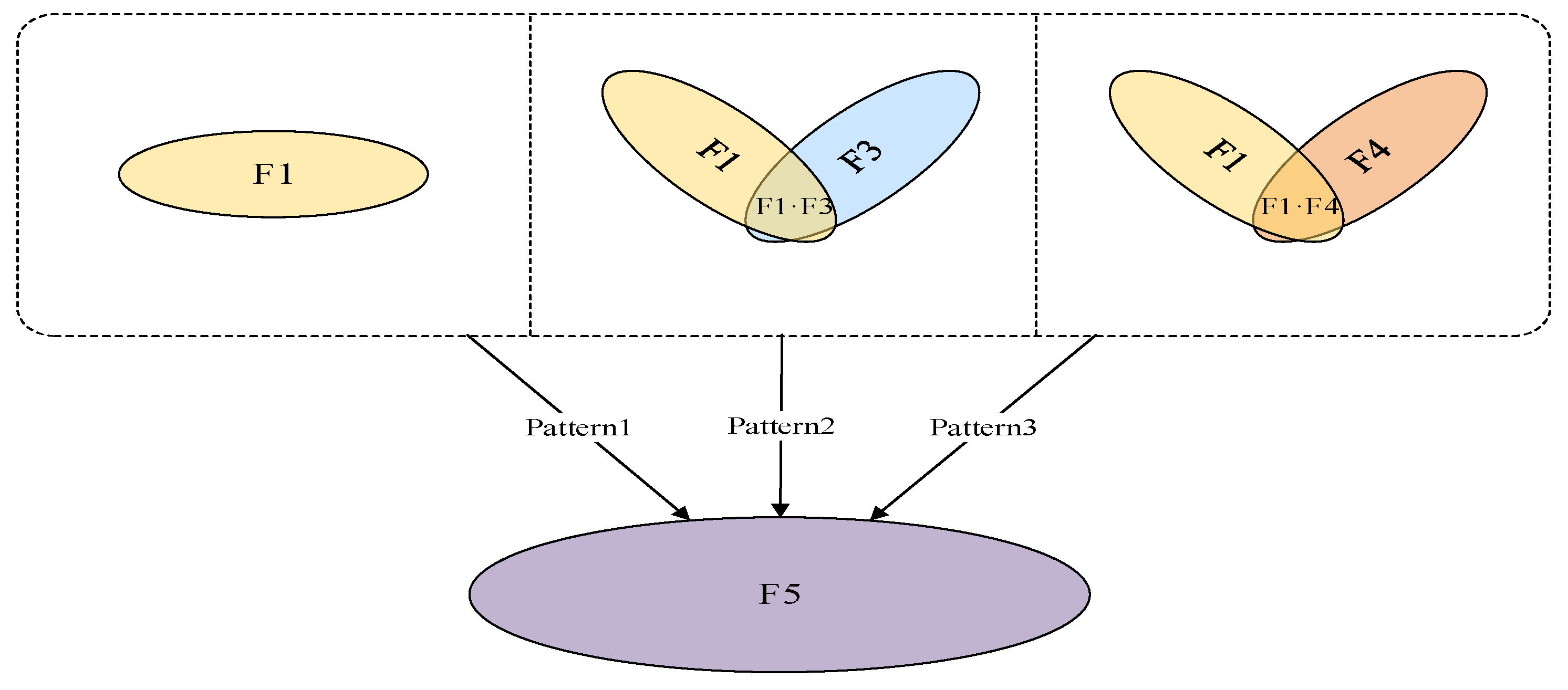
The analysis yielded three conditional configurations. Based on Boolean operations, they are categorized into three paths to analyze the mechanism through which executive cognition enhances DGIP through CR in an ES.
(1)
Environmental-cognitive-driven type.
The typical case analysis represented by Configuration 1 of this path shows that the EA ability of senior executives in BMEs has a significant promoting effect on DGIP. The original coverage of this configuration is 0.456, indicating that nearly half of the sampled BMEs have achieved an improvement in DGIP by enhancing senior executives’ EA. Research has shown that when senior executives internalize environmental responsibility as a core value, they will significantly increase the allocation of funds for green technology research and development. Executives with high EA can accurately identify market signals, such as changes in ESG ratings and fluctuations in the green consumption index. By reshaping resource allocation in BMEs, they can transform external environmental pressure into internal innovation impetus. By establishing a closed loop of “environmental insight–strategic response–technology implementation,” they can also shorten the cycle of green innovation from concept to commercial application.
(2)
Cognitive–ability synergy type.
The core condition of this path, with Configuration 2 as a representative case, is the dual driving effect of executives’ EA and ability reconstruction, while executives’ digital intelligence awareness and ES are blank conditions. The results of the questionnaire show that 53.9% of cases meet this condition. Research shows that when the executive team has a high level of EA (such as incorporating environmental responsibility into the strategic decision making framework) and basic digital literacy (such as mastering digital tools), it must achieve creative reorganization of organizational resources through CR. The underlying logic behind this path can be depicted by constructing a three-stage transmission model of “cognitive triggering–ability reconstruction–resource reorganization.”
(3)
Cognitive–situational symbiosis type.
Configuration 3 represents this path. Its core condition is the deep coupling of environmental protection awareness and ES. Empirical data show that 55.0% of cases conform to this path. The improvement of senior executives’ EA is not an isolated process but rather a dynamic evolution achieved through in-depth interaction with the innovation ecosystem. The underlying mechanism of this symbiotic relationship can be summarized as a three-stage cycle of “contextual empowerment–cognitive iteration–contextual optimization.” The ES forms a compound stimulus field through policy pressure (such as carbon tariffs), market pull (such as green consumption index), and technological promotion (such as breakthroughs in clean energy technology), which prompts executives to break through traditional cognitive boundaries. This dynamic coupling of cognition and context requires BMEs to establish a regular knowledge sharing platform to enhance conversion efficiency and a positive feedback loop of “cognitive upgrade–context adaptation–innovation emergence.” The path mechanism diagram is shown in Figure 2.

4.4.3. Robustness Test

To fully verify the reliability of the conclusions, a theory-specific [73] method was used for robustness tests. The consistency threshold of the entire analytical framework can reflect the degree of overlap among various conditions. When this threshold is raised, it means that the matching requirements for the relationships between variables become more stringent. This strict matching and screening mechanism can effectively eliminate non-critical interfering factors among numerous complex variable relationships, thereby screening out configurations that are more explanatory. It can also more accurately reflect the essential characteristics of the research object. In other words, increasing the consistency threshold can eliminate interference. Meanwhile, the frequency threshold also plays an indispensable role by controlling the representativeness of cases. Among a large number of research samples, there may exist some extreme cases. Due to their unique nature and circumstances, these special cases may overly interfere with the research results, thereby affecting objectivity and universality. The frequency threshold acts as a precise filter by excluding these extreme cases, ensuring that the research is mainly based on representative cases, supporting the stability and reliability of the results, and reflecting the real-world context. Based on an empirical study by Ordanini et al. (2014) [74], the consistency threshold was raised by 0.05 (from the conventional 0.80 to 0.85), with the configuration remaining unchanged. This indicates the robustness of the research.

5. Conclusions and Future Research Prospects

5.1. Conclusions

This paper takes executive cognition as the entry point and, by introducing CR and ES, explores the paths and mechanisms of environmental protection cognition and DIC in influencing DGI performance. Through regression analysis, the following conclusions were drawn. (1) Executives’ EA, digital intelligence awareness, and CR have a positive impact on DGIP, and the influence of digital intelligence awareness is more significant. (2) CR plays a mediating role between executive cognition and DGIP, while the ES positively moderates the relationship between the two. (3) EA has a greater impact on the DGIP of non-state-owned and capital-intensive BMEs, while digital intelligence awareness has a more significant influence on non-state-owned and technology-intensive BMEs. (4) The significant impact of CR on the DGIP of state-owned BMEs is stronger, and the mediating role of CR in state-owned BMEs is more significant. (5) In state-owned and labor-intensive BMEs, the ES gradually moderates the relationship between environmental protection cognition and capacity reconstruction, while in non-state-owned BMEs it moderates the relationship between DIC and capacity reconstruction. Moreover, in labor-intensive and capital-intensive BMEs, the moderating effect of the ES on DIC and capacity reconstruction is more significant. (6) Strategies to enhance BMEs’ DGIP include environmental-cognitive-driven, cognitive–ability-driven, and ES–cognitive-driven pathways.
This study, by integrating higher-order theories, dynamic capability views, and ecosystem perspectives, systematically reveals the complex mechanism through which executive cognition influences enterprises’ DGIP through CR. The results show that the transmission path of “cognition–ability–performance” does not unfold in a linear and isolated manner. Instead, it is regulated by both the ES and the nature of the enterprise. This represents a significant expansion of existing theories, clarifying the mediating role of capability reconfiguration between cognition and performance and extending higher-order theories from strategic decision making to organizational capability. Furthermore, the three differentiated paths indicate that there are multiple equivalent solutions for enterprises to enhance their DGIP, which departs from the traditional paradigm of pursuing “optimal practices.” While EA is the cornerstone of green innovation, it is constrained by context. CR is key to cognitive transformation, but it requires synergy between digital intelligence tools and ecological collaboration. These conclusions refine the theory of green innovation motivation, distinguish the differentiated driving mechanisms of strategic innovation and substantive innovation, and provide guidance for enterprises. Different types of enterprises should choose appropriate cognitive cultivation paths and ecological cooperation strategies to promote DGI.

5.2. Implications

5.2.1. Theoretical Implications

This paper provides a new perspective on and support for BMEs in enhancing their DGIP. Firstly, regarding the impact of executive cognition on innovation performance, existing studies have mostly focused on single-dimensional cognition (such as environmental protection cognition or DIC) [75,76]. However, this study combines the two and introduces ability reconstruction as a mediating variable, systematically revealing the process through which cognition is transformed into innovation performance through dynamic capabilities. Identification of this mechanism supports the application of dynamic capability theory [77]. Secondly, regarding the moderating role of the ES, the existing literature mostly emphasizes the direct promotion of innovation through resource support and cooperative networks in the ecosystem [78]. However, this study proposes that the ES not only directly affects innovation performance but also serves as a key moderating variable influencing the relationship between cognition and ability reconstruction. This expands ecosystem theory in the field of green innovation, deepening the understanding of environmental conditions for the interaction between organizational cognition and capabilities.
Furthermore, through a heterogeneity analysis of enterprises of different natures, the study highlights the diversity and complexity of BMEs’ DGI paths, echoing and refining existing theories on the impact of organizational heterogeneity on innovation strategy [79]. This study emphasizes the existence of multiple equivalent paths, challenging the traditional “one-size-fits-all” model for enhancing innovation performance, promoting a theoretical shift from a single optimal path to a multi-configuration perspective, and facilitating the integration of complexity theory and strategic management theory. In conclusion, this paper not only fills the gap in empirical research on the multi-dimensional influence of executive cognition on green digital innovation performance but also enriches strategic management and innovation theory from the perspective of the interaction between CR and ES, providing strong support for the improvement and expansion of the theoretical framework.

5.2.2. Practical Implications

The findings have practical value for BMEs seeking to enhance their competitiveness in the current environment. Firstly, by systematically analyzing the mechanism through which senior executives’ DIC and environmental protection cognition affect DGI performance, the intrinsic connection between cognitive factors and innovation performance can be clarified. This can guide senior executives looking to improve their cognitive systems and enhance BMEs’ management efficiency. Secondly, this study introduces the ES as a moderating variable and focuses on the interaction between executive cognition and ability reconstruction under different ES conditions. This will help guide senior executives to grasp the key nodes of organizational practice updates and provide a methodological basis for the dynamic optimization of management practices in BMEs. In addition, this study employs fsQCA analysis to further explore the complex causal relationships among various factors, including EA, digital intelligence awareness, CR, and ES. Through this approach, it more comprehensively presents multiple possible paths for BMEs to enhance their DGIP and a reference for BMEs to accurately identify development models that suit them.

5.3. Limitations and Prospects

This study has several limitations. First, the studied enterprises are concentrated in China’s building materials industry, and the scale is relatively limited, which restricts the applicability of the results. Future research may consider expanding the sample range to cover different regions, different development stages, and more industry types to enhance the external validity and universality of the research. Second, this paper focuses on two dimensions of executives’ EA and digital intelligence awareness without fully considering the possible impacts of other psychological traits (such as risk preference and leadership style) and cognition at the team level. Future research could incorporate these factors into the model to deepen the understanding of the influence of executives’ cognition.

Author Contributions

Conceptualization, Y.M.; Methodology, Y.M. and Z.W.; Investigation, Y.M. and Z.W.; Resources, Z.W.; Data curation, Y.M.; Writing—original draft, Z.W.; Writing—review & editing, Z.W.; Supervision, Z.W.; Funding acquisition, Z.W. All authors have read and agreed to the published version of the manuscript.

Funding

This work was supported by grants from the National Natural Science Foundation of China [grant numbers 72374053 and 71874040], the Heilongjiang Provincial Natural Science Fund [grant number LH2021G007] and The Key Talents of Hebei Yanzhao Golden Platform Gathering Program grant number [grant numbers HJYB202527].

Institutional Review Board Statement

Not applicable.

Data Availability Statement

The data reported in this study are available upon request from the corresponding author.

Conflicts of Interest

The authors declare no conflicts of interest.

Abbreviations

The following abbreviations are used in this manuscript:
BMEsBuilding materials enterprises
EAEnvironmental awareness
DICDigital intelligence cognition
CRCapability reconstruction
DGIPDGI performance
ESEcological scenario

Appendix A

Appendix A.1

Executive Perception and DGI Performance Questionnaire.
Thank you sincerely for your participation in this questionnaire survey. This survey is conducted anonymously and will not disclose any of your information. Your responses will be strictly confidential (only accessible to the researchers) and will not be used for any purpose other than academic research. Please read each question carefully and answer truthfully. Thank you again for your active participation!
Table A1. Questionnaire Information.
VariableItemOptions
Basic InformationYears of operationLess than 3 years
3–5 years
5–10 years
More than 10 years
Scale of operation1. Less than 100 people;
2. 100–300 people;
3. 300–500 people;
4. 500–1000 people;
5. More than 1000 people
Industry category to which it belongs1. labor-intensive
2. capital-intensive
3. technology-intensive
Nature 1. State-owned enterprises
2. Non-state-owned enterprises
Environmental awarenessYou can actively engage in environmental governance and planning.
You believe that green innovation can enhance the comprehensive competitiveness of enterprises.
You think that the current market has a preference for green consumption.
Your enterprise actively improves green processes to increase production efficiency.
1. Very inconsistent
2. Relatively inconsistent
3. Somewhat inconsistent
4. Average
5. Somewhat consistent
6. Relatively consistent
7. Very consistent
Digital intelligence cognitionYou can proactively acquire knowledge about digital intelligence technology.
You believe that enterprises should actively develop digital intelligence technology to enhance their comprehensive competitiveness.
You can leverage digital intelligence technology to boost employees’ R&D and innovation capabilities.
You can utilize digital intelligence technology to make strategic plans for the enterprise.
Reconstruction of capabilitiesYour enterprise can appropriately adjust its existing organizational capabilities and conventional practices.
Your enterprise absorbs new knowledge to consolidate and supplement its existing knowledge base.
Your enterprise explores and develops brand-new concepts or principles.
Your enterprise innovates and adopts different methods, conventions and processes.
Ecological scenarioYour enterprise frequently collaborates with major universities, research institutions, and others on DGI.
Your enterprise and its partners mutually disclose relevant information that is helpful for decision-making.
Your enterprise and its partners share various types of resources.
The innovation ecosystem provides convenience for communication and exchange among each other.
DGI performanceThe output value of your company’s new digital green innovative products accounts for a large proportion of the total sales.
The customer satisfaction rate of the digital green innovative products developed by your company is relatively high.
The digital green innovative activities have increased the company’s sales and profits.
Your company has relatively advanced production equipment or technological processes.
The market share of the digital green innovative products developed by your company is relatively high.

Appendix A.2

Table A2. Basic characteristics of sampled enterprises (N = 491).
FeatureCategoryPercentage
AgeWithin three years25.2%
Three to five years23.6%
5–10 years23.6%
Over 10 years27.6%
ScaleLess than 100 people30.5%
100–300 people31.3%
300–500 people12.2%
500–1000 people12.3%
Over 1000 people13.7%
CategoryLabor-intensive31.9%
Capital-intensive32.5%
Technology-intensive35.6%
NatureState-owned BMEs29.3%
Non-state-owned BMEs70.7%

Appendix A.3

Table A3. Descriptive statistics and correlation analysis results.
Variables123456789
1. EA1
2. DIC0.546 ***1
3. ES−0.05390.0041
4. CR0.350 ***0.361 ***−0.106 **1
5. DGIP0.338 ***0.507 ***0.0570.315 ***1
6. Age0.0820.056−0.0650.031−0.0021
7. Scale0.022−0.0180.026 *0.048−0.0030.263 ***1
8. Category0.0810.0580.0860.0520.0520.0130.0761
9. Nature0.056−0.0020.021−0.053−0.101 **−0.043−0.193 ***0.0081
Mean4.2584.3054.2304.0664.1752.5322.4862.0381.713
Std. dev. 1.2761.2291.4111.4171.0651.1461.3920.8230.456
Note: The symbols ***, ** and * denote statistical significance at the 1%, 5%, and 10% levels, respectively.

References

  1. Jha, S.K.; Farooq, A.S.; Ghosh, A. Thin-Film Solar Cells for Building-Integrated Photovoltaic (BIPV) Systems. Architecture 2025, 5, 116. [Google Scholar] [CrossRef]
  2. Balaji, C.R.; de Azevedo, A.R.G.; Madurwar, M. Sustainable Perspective of Ancillary Construction Materials in Infrastructure Industry: An Overview. J. Clean. Prod. 2022, 365, 132864. [Google Scholar] [CrossRef]
  3. Orenga Panizza, R.; Jalaei, F.; Nik-Bakht, M. Towards Circular Construction: Material and Component Stock Assessment in Montréal’s Residential Buildings. Designs 2025, 9, 129. [Google Scholar] [CrossRef]
  4. FPalma, G.; Scotti, F. Synergies in Sustainability: Assessing the Innovation Effects of Digital and Green Investments in EU Cohesion Policy. Sustainability 2025, 17, 10446. [Google Scholar] [CrossRef]
  5. Wang, Q.; Lau, R.Y.K.; Xie, H.; Liu, H.; Guo, X. Social Executives’ Emotions and Firm Value: An Empirical Study Enhanced by Cognitive Analytics. J. Bus. Res. 2024, 175, 114575. [Google Scholar] [CrossRef]
  6. Ashraf, U.; Zhang, H.; Thanh, H.V.; Anees, A.; Ali, M.; Duan, Z.; Zhang, X. A Robust Strategy of Geophysical Logging for Predicting Payable Lithofacies to Forecast Sweet Spots Using Digital Intelligence Paradigms in a Heterogeneous Gas Field. Nat. Resour. Res. 2024, 33, 1741–1762. [Google Scholar] [CrossRef]
  7. Turkcan, H. How to Improve Financial Performance Through Sustainable Manufacturing Practices? The Roles of Green Product Innovation and Digital Transformation. J. Manuf. Technol. Manag. 2025, 36, 577–596. [Google Scholar] [CrossRef]
  8. Browder, R.E.; Dwyer, S.M.; Koch, H. Upgrading Adaptation: How Digital Transformation Promotes Organizational Resilience. Strateg. Entrep. J. 2024, 18, 128–164. [Google Scholar] [CrossRef]
  9. Gandia, J.A.G.; Gavrila, S.G.; de Lucas Ancillo, A.; del Val Núñez, M.T. Towards Sustainable Business in the Automation Era: Exploring Its Transformative Impact from Top Management and Employee Perspective. Technol. Forecast. Soc. Change 2025, 210, 123908. [Google Scholar] [CrossRef]
  10. Terchila, S. The Future of Entrepreneurship: Strategic Approaches for Business Adaptation in a Changing Global Environment. From Risks to Opportunities. Stud. Bus. Econ. 2025, 20, 263–280. [Google Scholar] [CrossRef]
  11. Fannon, R.S.; Hernandez, M.E.J.; Campean, F. Mastering Continuous Improvement (CI): The Roles and Competences of Mid-Level Management and Their Impact on the Organisation’s CI Capability. TQM J. 2021, 34, 102–124. [Google Scholar] [CrossRef]
  12. Zeng, X.; Ning, Z.; Chen, L.; Zhang, W. The Impact of Interactive Control in Budget Management on Innovation Performance of Enterprises: From the Perspective of Manager Role Stress. Int. J. Environ. Res. Public Health 2023, 20, 2190. [Google Scholar] [CrossRef] [PubMed]
  13. Wu, L.; Wang, C.; Ren, H.; Zhang, W. How Does Executive Green Cognition Affect Enterprise Green Technology Innovation? The Mediating Effect of ESG Performance. Heliyon 2024, 10, e34287. [Google Scholar] [CrossRef] [PubMed]
  14. Ru, Q. The Impact of Executive Resource Cognition Diversity on Enterprise Innovation Output. Master’s Thesis, Anhui University, Hefei, China, 2023; pp. 15–25. [Google Scholar]
  15. Ying, Q.; Chen, Y. The Impact of Executive Cognition on Product Innovation in the New Digital Context. Sci. Res. Manag. 2023, 44, 167–178. [Google Scholar]
  16. Ge, C.; Lv, W.; Wang, J. The Impact of Digital Technology Innovation Network Embedding on Firms Innovation Performance: The Role of Knowledge Acquisition and Digital Transformation. Sustainability 2023, 15, 6938. [Google Scholar] [CrossRef]
  17. Wen, H.; Zhong, Q.; Lee, C.C. Digitalization, Competition Strategy and Corporate Innovation: Evidence from Chinese Manufacturing Listed Companies. Int. Rev. Financ. Anal. 2022, 82, 102166. [Google Scholar] [CrossRef]
  18. Cao, N.; Wang, J.; Wang, Y.; Yu, L. Towards Enterprise Sustainable Innovation Process: Through Boundary-Spanning Search and Capability Reconfiguration. Processes 2021, 9, 2092. [Google Scholar] [CrossRef]
  19. Shen, L.; Zhang, X.; Liu, H. Digital Technology Adoption, Digital Dynamic Capability, and Digital Transformation Performance of the Textile Industry: Moderating Role of Digital Innovation Orientation. Manag. Decis. Econ. 2021, 43, 2038–2054. [Google Scholar] [CrossRef]
  20. Wang, X.; Huang, J. The Realization and Transformation Law of the Boundary-Spanning Technological Innovation of Manufacturing Enterprises Based on the Framework of “Internal Reconfiguration—Networking Capability—BSTI”. J. Manuf. Technol. Manag. 2024, 35, 1581–1604. [Google Scholar] [CrossRef]
  21. Li, Z.; Jamaluddin, Z. Research on the Impact of Human Resource Management on Improving Enterprise Performance. Forum Res. Innov. Manag. 2024, 2, 18–29. [Google Scholar]
  22. Mishra, R.; Kiran, K.B. Unveiling the Dynamic Capabilities’ Influence on Sustainable Performance in MSMEs: A Systematic Literature Review Utilizing ADO-TCM Analysis. Asia-Pac. J. Bus. Adm. 2025, 17, 561–592. [Google Scholar] [CrossRef]
  23. Zhao, Y.; Jing, Y.; Song, S.; Liu, W. Prompt Literacy for AIGC Empowerment: Reconstructing Human-AI Interaction Capabilities in the Generative AI Era. Inf. Doc. Serv. 2025, 46, 14–25. [Google Scholar] [CrossRef]
  24. Lin, C.; Zhu, X.; Yu, C.; Zhao, G. Executive External Change Cognition, Capability Reconfiguration and Enterprise Disruptive Innovation. Sci. Sci. Manag. S&T 2023, 44, 164–182. [Google Scholar]
  25. Wang, H.; Li, X. Resource Sensing Behavior, Capability Reconfiguration and Enterprise Innovation Performance: The Moderating Role of Network Routines. J. Cent. South Univ. (Soc. Sci. Ed.) 2020, 26, 128–136. [Google Scholar]
  26. Feng, X.; Li, H.; Ma, X. The Impact of Ambidextrous Alliances on Enterprise Capability Reconfiguration under the Moderating Role of Knowledge Aggregation. Manag. J. 2021, 18, 99–109. [Google Scholar]
  27. Chen, X.; Qiu, G. From Product-Dominant Logic to Service-Dominant Logic: Digital Transformation of Enterprises from the Perspective of Capability Reconfiguration. R&D Manag. 2022, 34, 39–53. [Google Scholar]
  28. Peng, X.; Liu, D. Market Cognition Evolution Mechanism of Latecomer Firms Based on the Dynamic Process of Technological Catch-Up. Manag. World 2021, 37, 180–198. [Google Scholar]
  29. Liang, M.; Cao, H.; Wang, X. Executive Environmental Cognition, Dynamic Capability and Enterprise Green Innovation Performance: The Moderating Effect of Environmental Uncertainty. Sci. Technol. Manag. Res. 2022, 42, 209–216. [Google Scholar]
  30. Lin, R.; Wang, L. The Impact of Knowledge Integration Capability on Breakthrough Innovation Based on Exploratory Innovation: The Moderating Effects of Absorptive Capacity and Innovation Openness. Sci. Technol. Manag. Res. 2023, 43, 19–27. [Google Scholar]
  31. Zhang, J.; Xu, Q. Research on the Relationship Between Managerial Cognitive Characteristics and Enterprise Innovation Capability. Sci. Res. Manag. 2018, 39, 1–9. [Google Scholar]
  32. Pang, C.; Wang, Q.; Liu, L. Executive Team Cognition and Novel Business Model Innovation in Startup Enterprises: A Moderated Mediation Effect. R&D Manag. 2021, 33, 97–110. [Google Scholar]
  33. Hu, P.; Wang, C.; Dai, B. Executive Team Cognitive Ability, External Knowledge Search and Efficiency-Oriented Business Model Innovation: The Moderating Role of Big Data Management Skills. Sci. Technol. Manag. Res. 2022, 42, 129–138. [Google Scholar]
  34. Wang, J.; Wu, Y.; Lan, M.; Ning, X. Factors Influencing Innovation Performance in the Electronics Industry Based on Upper Echelons Theory: A Perspective of Executive Cognition. Ind. Technol. Econ. 2018, 37, 20–27. [Google Scholar]
  35. Petti, C.; Nguyen Dang Tuan, M.; Nham Phong, T.; Pham Thi, M.; Ta Huong, T.; Perumal, V.V. Technological Catch-Up and Innovative Entrepreneurship in Vietnamese Firms. Adm. Sci. 2021, 11, 100. [Google Scholar] [CrossRef]
  36. Hällerstrand, L.; Reim, W.; Malmström, M. Dynamic capabilities in environmental entrepreneurship: A framework for commercializing green innovations. J. Clean. Prod. 2023, 402, 136692. [Google Scholar] [CrossRef]
  37. Wang, F.; An, B.; Liu, L.; Li, B. The Evolution of China’s Management Academic Ecology: A Longitudinal Study from the Perspective of Process Theory. J. Renmin Univ. China 2023, 37, 58–73. [Google Scholar]
  38. Liu, J.; Ning, L.; Gao, Q. How Does Multi-Agent Collaboration Achieve High Digital Innovation Performance? A Configuration Study from the Perspective of the Digital Innovation Ecosystem. J. Northeast. Univ. (Soc. Sci. Ed.) 2024, 26, 52–64. [Google Scholar]
  39. Sjöstrand, S. Social and Environmental Protection: The Effects of Social Insurance Generosity on the Acceptance of Material Sacrifices for the Sake of Environmental Protection. J. Soc. Policy 2025, 54, 249–269. [Google Scholar] [CrossRef]
  40. Mishra, N.K.; Mishra, N.; Sharma, P.P. Unraveling the Relationship between Corporate Governance and Green Innovation: A Systematic Literature Review. Manag. Res. Rev. 2025, 48, 825–845. [Google Scholar] [CrossRef]
  41. Indrawati, H.; Caska, C.; Hermita, N.; Sumarno, S.; Syahza, A. Green Innovation Adoption of SMEs in Indonesia: What Factors Determine It? Int. J. Innov. Sci. 2025, 17, 19–37. [Google Scholar]
  42. Mansour, M.; Shubita, M.F.; Lutfi, A.; Saleh, M.W.; Saad, M. Female CEOs and Green Innovation: Evidence from Asian Firms. Sustainability 2024, 16, 9404. [Google Scholar] [CrossRef]
  43. Lakhal, F.; Hamrouni, A.; Jilani, I.; Mahjoub, I.; Benkraiem, R. The Power of Inclusion: Does Leadership Gender Diversity Promote Corporate and Green Innovation? Res. Int. Bus. Financ. 2024, 67, 102128. [Google Scholar] [CrossRef]
  44. Shehzad, M.U.; Zhang, J.; Naveed, K.; Zia, U.; Sherani, M. Sustainable Transformation: An Interaction of Green Entrepreneurship, Green Innovation, and Green Absorptive Capacity to Redefine Green Competitive Advantage. Bus. Strat. Environ. 2024, 33, 7041–7059. [Google Scholar] [CrossRef]
  45. Zhu, S.; Tang, L.; Ekow, V.A.; Hui, H. Impacts of Digital Government on Regional Eco-Innovation: Moderating Role of Dual Environmental Regulations. Technol. Forecast. Soc. Change 2023, 196, 1–26. [Google Scholar] [CrossRef]
  46. Lee, S.C.; Huang, S.Y. The Effect of Chinese-Specific Environmentally Responsible Leadership on the Adoption of Green Innovation Strategy. Energy Environ. 2024, 35, 4114–4132. [Google Scholar] [CrossRef]
  47. Iriantini, D.B.; Pratono, R.; Suryani, W. Strategy to Build Marketing Performance in the Competitive Advantage of MSMEs in Surabaya. Asia Pac. J. Bus. Econ. Technol. 2024, 4, 38–47. [Google Scholar]
  48. Anomah, S.; Ayeboafo, B.; Aduamoah, M.; Agyabeng, O. Blockchain Technology Integration in Tax Policy: Navigating Challenges and Unlocking Opportunities for Improving the Taxation of Ghana’s Digital Economy. Sci. Afr. 2024, 24, e02210. [Google Scholar] [CrossRef]
  49. Rani, S.; Ding, J.; Shah, D.; Xaba, S.; Shoukat, K. Examining the Impacts of Artificial Intelligence Technology and Computing on Digital Art: A Case Study of Edmond de Belamy and Its Aesthetic Values and Techniques. AI Soc. 2025, 40, 2417–2435. [Google Scholar] [CrossRef]
  50. Sahoo, S.; Kumar, A.; Upadhyay, A. How Do Green Knowledge Management and Green Technology Innovation Impact Corporate Environmental Performance? Understanding the Role of Green Knowledge Acquisition. Bus. Strategy Environ. 2023, 32, 551–569. [Google Scholar] [CrossRef]
  51. Pacheco, F.; Velez, M.J. Between Regulation and Global Influence: Can the EU Compete in the Digital Economy? Reg. Sci. Environ. Econ. 2025, 2, 30. [Google Scholar] [CrossRef]
  52. Teece, H.G.; Devinney, J.E. Resource Reconfiguration by Surviving SMEs in a Disrupted Industry. J. Small Bus. Manag. 2024, 62, 140–174. [Google Scholar]
  53. Selcuk, Y. Digital Intelligence as a Partner of Emotional Intelligence in Business Administration. Asia Pac. Manag. Rev. 2023, 28, 390–400. [Google Scholar] [CrossRef]
  54. Alharbi, K.M.; Elshamly, A.; Mahgoub, I.G. Do Regulatory Pressures and Stakeholder Expectations Drive CSR Adherence in the Chemical Industry? Sustainability 2025, 17, 2128. [Google Scholar] [CrossRef]
  55. Xu, Q.; Liu, Y.; Chen, C.; Lou, F. Research on Multi-Stage Strategy of Low Carbon Building Material Production by SMEs: A Three-Party Evolutionary Game Analysis. Front. Environ. Sci. 2023, 10, 1086642. [Google Scholar] [CrossRef]
  56. Mohsen, S.E.; Hamdan, A.; Shoaib, H.M. Digital Transformation and Integration of Artificial Intelligence in Financial Institutions. J. Financ. Rep. Account. 2025, 23, 680–699. [Google Scholar] [CrossRef]
  57. Huang, S.; Chau, K.; Chien, F.; Shen, H. The Impact of Startups’ Dual Learning on Their Green Innovation Capability: The Effects of Business Executives’ Environmental Awareness and Environmental Regulations. Sustainability 2020, 12, 6526. [Google Scholar] [CrossRef]
  58. Guerra, J.M.M.; Danvila-del-Valle, I.; Méndez-Suárez, M. The Impact of Digital Transformation on Talent Management. Technol. Forecast. Soc. Change 2023, 188, 122291. [Google Scholar] [CrossRef]
  59. Mustafa, M.R.; Gbadegesin, R.G.; Ke, Y. Multinational Enterprise Organizational Structures and Subsidiary Role and Capability Development: The Moderating Role of Establishment Mode. Group Organ. Manag. 2023, 48, 908–952. [Google Scholar]
  60. Kozachenko, E.; Shirokova, G.; Bodolica, V. Antecedents of Effectuation and Causation in SMEs from Emerging Markets: The Role of CEO Temporal Focus. Int. J. Organ. Anal. 2025, 33, 1742–1764. [Google Scholar] [CrossRef]
  61. Su, Y.; Chai, J.; Lu, S.; Lin, Z. Evaluating Green Technology Innovation Capability in Intelligent Manufacturing Enterprises: A Z-Number-Based Model. IEEE Trans. Eng. Manag. 2024, 71, 5391–5409. [Google Scholar] [CrossRef]
  62. Chen, X.; Huang, R.; Yang, Z.; Dube, L. CSR Types and the Moderating Role of Corporate Competence. Eur. J. Mark. 2018, 52, 1358–1386. [Google Scholar] [CrossRef]
  63. Yuan, N.; Li, M. Research on Collaborative Innovation Behavior of Enterprise Innovation Ecosystem under Evolutionary Game. Technol. Forecast. Soc. Change 2024, 206, 123508. [Google Scholar] [CrossRef]
  64. Zhang, X.; Gao, C.; Zhang, S. The Niche Evolution of Cross-Boundary Innovation for Chinese SMEs in the Context of Digital Transformation—Case Study Based on Dynamic Capability. Technol. Soc. 2022, 68, 15–26. [Google Scholar] [CrossRef]
  65. Ben Slimane, S.; Coeurderoy, R.; Mhenni, H. Digital Transformation of Small and Medium Enterprises: A Systematic Literature Review and an Integrative Framework. Int. Stud. Manag. Organ. 2022, 52, 96–120. [Google Scholar] [CrossRef]
  66. Jeandri, R.; Albert, C.; Caitlin, F. Innovation Performance: The Effect of Knowledge-Based Dynamic Capabilities in Cross-Country Innovation Ecosystems. Int. Bus. Rev. 2023, 32, 58–71. [Google Scholar]
  67. Zhang, S.; Hu, B.; Xiang, Y. Business Ecosystem Governance, Top Management Team Social Capital and Enterprise Business Model Innovation. Manag. Rev. 2023, 35, 163–174. [Google Scholar]
  68. Du, J.; Gong, X. Energy Efficiency “Leader” System and Enterprise Green Innovation: The Moderating Role of Government Ecological Environment Attention and Executive Environmental Experience. Sci. Technol. Prog. Policy 2024, 41, 141–150. [Google Scholar]
  69. Chen, J. Exploration and Practice of Rural Ecological Civilization Construction Path under Rural Revitalization. Heilongjiang Grain 2024, 15, 123–125. [Google Scholar]
  70. Fiss, C.P. Building Better Causal Theories: A Fuzzy Set Approach to Typologies in Organization Research. Acad. Manag. J. 2011, 54, 393–420. [Google Scholar] [CrossRef]
  71. Cheng, C.; Jia, L. Research on the Driving Mechanism of Chinese Enterprises’ Cross-Border M&A: Based on Qualitative Comparative Analysis of Crisp Sets. Nankai Bus. Rev. 2016, 19, 113–121. [Google Scholar]
  72. Greckhamer, T.; Furnari, S.; Fiss, C.P.; Aguilera, R.V. Studying Configurations with Qualitative Comparative Analysis: Best Practices in Strategy and Organization Research. Strateg. Organ. 2018, 16, 482–495. [Google Scholar] [CrossRef]
  73. Verweij, S.; Noy, C. Set-Theoretic Methods for the Social Sciences: A Guide to Qualitative Comparative Analysis. Int. J. Soc. Res. Methodol. 2013, 16, 165–169. [Google Scholar] [CrossRef]
  74. Ordanini, A.; Parasuraman, A.; Rubera, G. When the Recipe Is More Important Than the Ingredients: A Qualitative Comparative Analysis (QCA) of Service Innovation Configurations. J. Serv. Res. 2014, 17, 134–149. [Google Scholar] [CrossRef]
  75. Khalid, Z.; Zhao, L.; Elahi, E.; Chang, X. The impact of green management on green innovation in sustainable technology: Moderating roles of executive environmental awareness, regulations, and ownership. Environ. Dev. Sustain. 2024, 9, 11–27. [Google Scholar] [CrossRef]
  76. Li, Y.; Fei, G.Z. Network Embeddedness, Digital Transformation, and Enterprise Performance—The Moderating Effect of Top Managerial Cognition. Front. Psychol. 2023, 14, 1098974. [Google Scholar] [CrossRef]
  77. Strilets, V.Y.; Matrynko, V.; Sokol, A. Intermediary Mechanisms for Reconfiguring the Capabilities of Digital Platforms to Create Innovative Business Models for SMEs. Mark. Infrastruct. 2023, 10, 16–25. [Google Scholar] [CrossRef]
  78. Chandra, A.; Shukla, D.M.; Sharma, S.; Dwivedi, G. Fostering Environmentally Sustainable Business: Analysis of Factors from Entrepreneurial Ecosystem Perspective. J. Clean. Prod. 2024, 476, 143667. [Google Scholar] [CrossRef]
  79. Sun, Z.; Zhao, L.; Mehrotra, A.; Salam, M.A.; Yaqub, M.Z. Digital Transformation and Corporate Green Innovation: An Affordance Theory Perspective. Bus. Strategy Environ. 2025, 34, 433–449. [Google Scholar] [CrossRef]
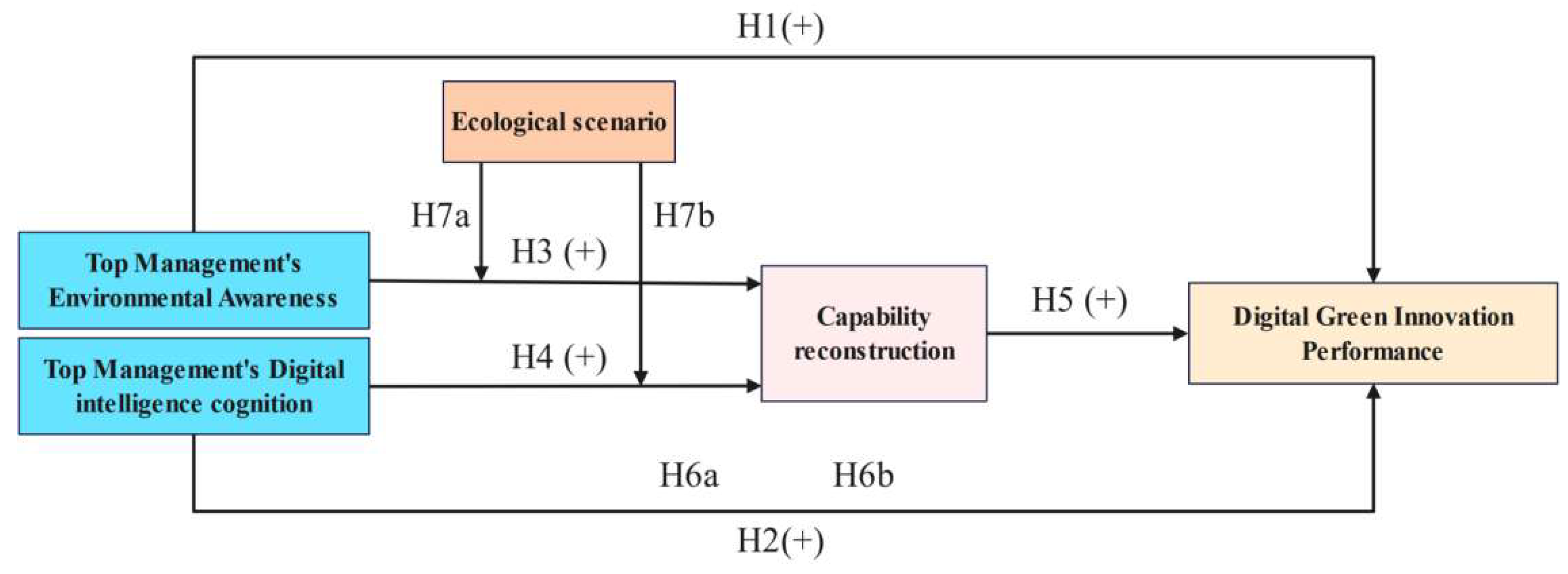
Figure 1. Conceptual model of the impact of senior executives’ cognition on enterprise DGIP. Note: “a” and “b” are distinctions between sub-assumptions of different dimensions or scenarios under the same main assumption. The “+” indicates that the variable starting with the arrow will have a positive promoting effect on the variable pointed to by the arrow.
Systems 13 01096 g001
Figure 2. A path and map depicting how senior executives’ cognition influences enterprises’ DGIP. Note: F1–F5 represent EA, DIC, CR, ES, and DGIP, respectively.
Systems 13 01096 g002
Table 1. Definitions and assignment of variables.
TypeNameVariable Operational Definition
Condition variableEAEA is understood here to encompass the active implementation of environmental governance and planning, the recognition that green innovation enhances the comprehensive competitiveness of BMEs, the understanding that the current market has a green consumption preference, and the active improvement of green processes to increase production efficiency.
DICDIC includes proactively learning about DIC technologies, actively participating in their development, utilizing these technologies to enhance employees’ research and innovation capabilities, and applying them to formulate strategic measures for BMEs.
CRCR includes appropriately adjusting existing organizational capabilities and conventional practices, absorbing new knowledge to consolidate and supplement existing knowledge, exploring and developing new concepts or principles, innovating, and adopting different methods, routines, and processes.
ESThe ES encompasses DGI cooperation with universities, research institutes, scientific research institutions, etc., the mutual disclosure of relevant information that supports decision making among partners, the sharing of various types of resources, and communication and exchange.
Outcome variableDGIPDGIP indicators include DGI product output value in total sales, customer satisfaction, sales and profits, and market share.
Table 2. Calibration anchors of antecedent and outcome variables.
ConditionCalibrationDescriptive Statistical Analysis
Subordinate to (95%)Intersection (50%)Independent of (5%)MaxMinMeanStd. Dev.
EA6.00004.25002.25007.001.504.1351.164
DIC6.43754.12502.50007.001.754.2211.152
CR6.43754.25002.50007.001.504.2171.162
ES6.25004.25002.25007.001.504.1911.155
DGIP6.20004.20003.0507.002.64.4230.914
Table 3. Questionnaire reliability and validity.
VariableQuestion ItemLoad ValueCronbach’s AlphaαCR
EAX10.7510.8150.8250.847
X20.7830.816
X30.7350.820
X40.7680.823
DICX50.7290.8180.7880.801
X60.6640.821
X70.7620.819
X80.6500.823
EST10.8460.8400.8820.914
T20.8620.841
T30.8410.841
T40.8520.842
CRZ10.7420.8330.7890.842
Z20.7060.829
Z30.8180.831
Z40.7480.828
DGIPY10.7680.8290.7990.833
Y20.7480.830
Y30.6920.831
Y40.6680.832
Y50.6410.833
Note: All loadings are significant at the 1% level; “α” represents the internal consistency reliability coefficient; “CR” stands for the composite reliability coefficient.
Table 4. Confirmatory factor analysis.
Modelχ2/dfCFITLIRMSEASRMR
5-Factor1.8620.9580.9580.0430.100
4-Factor3.1140.9020.8910.0670.135
3-Factor8.4080.6550.6130.1240.310
2-Factor10.2890.5620.5140.1390.356
1-Factor11.9080.4820.4290.1510.371
Note: five-factor model: EA, DIC, CR, ES, DGIP; four-factor model: EA + DIC, CR, ES, DGIP; three-factor model: EA + DIC, CR + ES, DGIP; two-factor model: EA + DIC + CR + ES, DGIP; one-factor model: EA + DIC + CR + ES + DGIP.
Table 5. Direct effect test.
VariableDGIP
M1M2M3
Age−0.003−0.029−0.033
Scale−0.021−0.022−0.006
Category0.0720.0350.031
Nature−0.248 **−0.295 ***−0.238 **
EA 0.288 ***
DIC 0.442 ***
Constant4.521 ***3.514 ***2.719 ***
R20.0060.1220.265
F1.633 ***14.523 ***35.839 ***
Note: The symbols *** and ** denote statistical significance at the 1%, and 5% levels, respectively.
Table 6. Mediating effect of CR.
VariableCRDGIP
M4M5M6M7M8M9M10
Age0.026−0.012−0.005−0.003−0.009−0.025−0.032
Scale0.0320.0290.046−0.022−0.029−0.024−0.011
Category0.0960.0480.0580.0720.0490.0280.025
Nature−0.146−0.215−0.126−0.251 **−0.215 ***−0.268 ***−0.225 **
EA 0.395 *** 0.225 ***
DIC 0.418 *** 0.398 ***
CR 0.236 ***0.168 ***0.109 ***
Constant 2.638 ***2.299 *** 2.635 ***2.299 ***2.472 ***
R2 0.1260.129 0.1230.1270.281
F 14.442 ***15.379 *** 14.438 ***15.379 ***32.589 ***
Note: The symbols *** and ** denote statistical significance at the 1%, and 5% levels, respectively.
Table 7. Ecological scenario moderating effect.
VariableCR
M11M12
Age−0.022−0.023
Scale0.0250.047
Category0.0640.086
Nature−0.218−0.154
EA0.109
DIC 0.052
CR−0.356 **−0.468 ***
EA × ES0.064 ***
DIC × ES 0.086 ***
Constant4.210 ***4.323 ***
R20.1340.512
F11.578 ***13.419 ***
Note: The symbols *** and ** denote statistical significance at the 1%, and 5% levels, respectively.
Table 8. Regression analysis results of state-owned enterprises.
VariableCRDGIP
M1M2M3M10M11M4M5M6M7M8M9
Age−0.031−0.066−0.086−0.081−0.109−0.003−0.021−0.007−0.029−0.033−0.032
Scale−0.010−0.0430.002−0.0510.108−0.005−0.051−0.014−0.0130.0120.008
Category0.052−0.0060.037−0.0220.0480.069−0.0190.0480.0250.0280.023
Nature 0.382 *** −0.015 0.168 *** 0.217 ***
EA 0.512 *** 0.279 0.446 ***0.396 ***
DIC 0.238 ***0.169 *** 0.113 ***
CR −0.396 *−0.278
EA × ES 0.095 **
DIC × ES 0.058
Constant 4.182 **2.916 ***2.123 ***4.739 ***3.318 ***4.056 ***3.792 ***3.188 ***2.613 ***2.276 ***2.052 ***
R2−0.0030.1280.2180.1460.219−0.0050.0290.0960.1560.5480.271
F0.0896.108 ***10.696 ***4.856 ***7.429 ***0.4221.992 ***13.514 ***18.293 ***42.661 ***37.541 ***
Note: The symbols ***, ** and * denote statistical significance at the 1%, 5%, and 10% levels, respectively.
Table 9. Analysis results of non-state-owned enterprises.
VariableCRDGIP
M1M2M3M10M11M4M5M6M7M8M9
Age0.0090.0160.031−0.0030.012−0.019−0.049−0.028−0.049−0.042−0.046
Scale0.0520.0630.0680.0560.052−0.0130.003−0.022−0.0060.0070.005
Category0.1090.0630.0650.0960.1060.0930.0530.0760.0450.0420.036
Nature 0.402 *** 0.153 0.349 *** 0.309 ***
EA 0.376 *** −0.083 0.462 ***0.438 ***
DIC 0.196 ***0.106 ** 0.078 **
CR −0.348 **−0.573 ***
EA × ES 0.058
DIC × ES 0.109 ***
Constant 3.568 ***1.972 ***2.031 ***3.500 ***4.849 ***3.983 ***2.614 ***3.304 ***2.412 ***2.115 ***1.968 ***
R20.0010.1580.0990.1240.127−0.0060.0160.0570.1662.6320.272
F0.96812.365 ***10.492 ***9.371 ***9.518 ***0.61316.405 ***6.438 ***14.661 ***32.108 ***26.775 ***
Note: The symbols *** and ** denote statistical significance at the 1%, and 5% levels, respectively.
Table 10. Results of labor-intensive regression analysis.
VariableCRDGIP
M1M2M3M10M11M4M5M6M7M8M9
Age0.0380.008−0.015−0.016−0.088−0.027−0.046−0.036−0.045−0.086−0.085
Scale0.018−0.0060.039−0.0420.003−0.043−0.055−0.048−0.055−0.023−0.025
Category−0.208−0.276−0.152−0.0376−0.259−0.482 **−0.516 ***−0.442 **−0.483 **−0.418 **−0.409 **
Nature 0.382 *** −0.015 0.208 *** 0.159 **
EA 0.375 *** −0.252 0.423 ***0.408 ***
DIC 0.186 ***0.128 *** 0.046
CR −0.493 **−0.811 ***
EA × ES 0.098 *
DIC × ES 0.158 ***
Constant4.203 ***2.872 ***2.624 ***5.273 ***6.332 ***5.065 ***4.351 ***4.298 ***3.989 ***3.281 ***3.162 ***
R2−0.0020.1230.1120.1420.1780.0240.0090.0710.0980.2750.273
F0.4166.411 ***5.852 ***5.242 ***6.589 ***2.235 *4.3379 ***3.902 ***4.283 ***15.618 ***12.576 ***
Note: The symbols ***, ** and * denote statistical significance at the 1%, 5%, and 10% levels, respectively.
Table 11. Capital-intensive regression analysis.
VariableCRDGIP
M1M2M3M10M11M4M5M6M7M8M9
Age0.0660.0460.0880.0280.072−0.012−0.032−0.029−0.0390.011−0.003
Scale0.0130.0180.0280.0360.048−0.032−0.028−0.036−0.032−0.018−0.025
Category−0.169−0.296−0.189−0.235−0.136−0.013−0.1060.059−0.056−0.0050.025
Nature 0.368 *** 0.192 0.341 *** 0.272 ***
EA 0.462 *** 0.431 0.423 ***0.359 ***
DIC 0.259 ***0.179 *** 0.136 **
CR −0.386−0.186 *
EA × ES 0.049
DIC × ES 0.009 ***
Constant4.136 ***2.809 ***2.056 ***4.189 ***2.719 **4.291 ***3.062 ***3.226 ***2.563 ***2.418 ***2.139 ***
R2−0.0150.0880.1420.1120.152−0.0180.1490.1020.1980.2230.246
F0.3084.857 ***7.628 ***4.348 ***5.782 ***0.1137.882 ***5.453 ***8.723 ***12.234 ***11.268 ***
Note: The symbols ***, **, and * denote statistical significance at the 1%, 5%, and 10% levels, respectively.
Table 12. Technology-intensive regression analysis.
VariableCRDGIP
M1M2M3M10M11M4M5M6M7M8M9
Age−0.012−0.066−0.058−0.065−0.055−0.036−0.0080.0350.006−0.019−0.012
Scale0.0560.0680.0690.0580.076−0.0090.002−0.023−0.013−0.0120.001
Category−0.061−0.074−0.075−0.062−0.083−0.263−0.273−0.249−0.258−0.281 *−0.272 *
Nature 0.429 *** 0.081 0.308 *** 0.238 ***
EA 0.426 *** −0.213 0.479 ***0.428 ***
DIC 0.249 ***0.179 *** 0.134 **
CR −0.315−0.583 **
EA × ES 0.073
DIC × ES 0.136 **
Constant24.168 ***2.429 ***2.409 ***3.968 ***5.191 ***4.612 ***3.368 ***3.589 **2.948 ***2.629 ***2.318 ***
R2−0.0180.1180.0990.1150.121−0.0060.1240.1090.1730.2780.305
F0.1786.648 ***5.698 ***4.728 ***4.921 ***0.7787.118 ***6.279 **8.108 ***17.572 ***16.012 ***
Note: The symbols ***, **, and * denote statistical significance at the 1%, 5%, and 10% levels, respectively.
Table 13. Test results of necessary conditions for a single variable.
Previous Cause and ConditionHigh-DGIPLow-DGIP
ConsistencyCoverage RateConsistencyCoverage Rate
EA0.7020.560.5810.586
~ EA0.6180.6090.7590.708
DIC0.7160.7280.6580.612
~ DIC0.6140.6490.7180.706
CR0.6920.7650.5790.601
~ CR0.6380.6190.7730.702
ES0.6850.7480.6090.612
~ ES0.6290.6350.7460.701
Note: “~” represents the logical operation “not.”.
Table 14. Configuration closely related to DGIP.
VariableDGIP
Configuration 1Configuration 2Configuration 3
EA
DIC
CR
ES
Consistency0.8160.8760.579
Original coverage0.4560.5420.554
Unique coverage0.0430.0390.026
Overall coverage0.682
Overall consistency0.813
Note: “●” denotes the existence of a core condition, “⊗” signifies the absence of a core condition, and a blank space suggests that the condition can either be present or absent.
Disclaimer/Publisher’s Note: The statements, opinions and data contained in all publications are solely those of the individual author(s) and contributor(s) and not of MDPI and/or the editor(s). MDPI and/or the editor(s) disclaim responsibility for any injury to people or property resulting from any ideas, methods, instructions or products referred to in the content.