

Article

Systemic Assessment of IoT Readiness and Economic Impact in Postal Services

by
Kristína Kováčiková
1,
Martin Baláž
2,
Martina Kováčiková
2 and
Andrej Novák
1,*
1
Air Transport Department, University of Zilina, Univerzitna 1, 010 26 Zilina, Slovakia
2
Department of Communications, University of Zilina, Univerzitna 1, 010 26 Zilina, Slovakia
*
Author to whom correspondence should be addressed.
Systems 2025, 13(10), 910; https://doi.org/10.3390/systems13100910
Submission received: 20 August 2025 / Revised: 6 October 2025 / Accepted: 16 October 2025 / Published: 17 October 2025
(This article belongs to the Section Systems Practice in Social Science)

Abstract

This research develops and applies the IoTRIM model to assess the economic and operational implications of IoT integration in postal and courier enterprises in Slovakia. Combining a multi-criteria evaluation framework with an extended Cobb–Douglas production function, the analysis captures both readiness levels and their translation into output performance. The IoTRIM assessment reveals heterogeneous distributions of strengths across four strategic and technical pillars, with notable disparities between connectivity, data analytics, and interoperability capacities. Monte Carlo simulations under pessimistic, realistic, and optimistic scenarios highlight divergent digital trajectories among enterprises, with some demonstrating accelerated gains from IoT readiness while others face structural bottlenecks in infrastructure and process integration. Hypothesis testing indicates that while a positive and statistically significant relationship between IoT readiness and output is observed in selected cases, this effect is not universal across all enterprises and scenarios. However, the inclusion of IoT readiness consistently improves the explanatory power of the production function models. The findings underline that digital transformation outcomes depend not only on investment scale but also on systemic absorption capacity, including interoperability, data governance, and organizational alignment. The proposed approach offers both a methodological contribution for measuring digital readiness impacts and practical insights for strategic planning in the postal and courier sector.

1. Introduction

Digital transformation has emerged as one of the defining phenomena of contemporary economic development [1]. While the term itself is frequently associated with advanced analytics, automation, and real-time decision-making, its implications are far broader encompassing organizational restructuring, changes in business models, and new approaches to value creation [2,3,4]. Since the early 2000s, research and policy agendas have increasingly emphasized the potential of digital technologies to enhance productivity, drive innovation, and enable more resilient economies [5,6,7,8]. However, the benefits of digital transformation have not been evenly distributed. Sectors such as finance, telecommunications, and manufacturing have seen rapid adoption, whereas others including healthcare, education, and public services have lagged [9]. These disparities are particularly pronounced in traditional service sectors, where operational routines, legacy infrastructure, and regulatory frameworks often pose significant barriers to technological advancement [10].
Unlike manufacturing, where digitalization is often concentrated around automation and optimization of production lines, traditional service sectors face different challenges [11]. Services are typically labor-intensive, customer-facing, and context-dependent, which makes the integration of digital technologies more complex [12]. Moreover, digital transformation in services requires not only technological tools but also changes in workflows, staff capabilities, and service delivery mechanisms [13]. Sectors such as hospitality, transport, and postal services exemplify these dynamics. While technology can enhance efficiency for instance, through route optimization, self-service kiosks, or predictive maintenance the shift demands significant reconfiguration of internal systems, data flows, and organizational culture [14,15]. As a result, even when the technological components are available, full-scale digital integration remains elusive for many service providers [16].
Postal and courier services represent a particularly interesting case within this context. Despite being logistics-heavy and reliant on time-sensitive operations, the sector has historically evolved within a framework of physical infrastructure, standardized routines, and low-margin competition [17]. The pressure to digitalize has intensified over the last decade, driven by e-commerce growth, environmental regulation, and rising customer expectations around transparency, speed, and personalization [18,19,20]. In response, postal operators have begun adopting solutions such as track-and-trace systems, automated parcel sorting, and smart lockers [21]. Yet, many still operate with fragmented IT systems and lack long-term digital strategies. Small- and medium-sized enterprises often face challenges related to investment capacity, skills shortages, and interoperability with external platforms [22,23]. In this regard, digital transformation is not simply a matter of acquiring new technologies, but requires systemic readiness across technical, organizational, and strategic dimensions.

1.1. The Role and Potential of IoT in Postal and Courier Services

The Internet of Things (IoT) has become a central enabler of digital transformation across various domains, yet its application in postal and courier services remains underexplored [24]. In contrast to capital-intensive industries such as manufacturing or energy, where IoT adoption is often driven by automation of production processes, the postal sector offers a distinctive environment with highly dispersed operations, time-sensitive service requirements, and close interaction with both physical infrastructure and human labor [25]. This complexity creates a rich context for IoT deployment but also introduces a series of implementation challenges.
At its core, IoT refers to a network of interconnected physical devices sensors, actuators, vehicles, handheld terminals capable of collecting, transmitting, and processing data without human intervention [26,27,28,29,30]. In postal and courier operations, such technologies can fulfill a wide range of functions. Smart sensors embedded in parcels or vehicles can monitor temperature, humidity, or shock during transportation, ensuring compliance with handling standards [31]. Real-time vehicle tracking systems enhance operational control, enabling dynamic rerouting based on traffic patterns or delivery priorities [32]. Predictive maintenance of delivery fleets, supported by IoT data, reduces downtime and extends asset life cycles [33]. At the customer interface, IoT-based smart lockers and notification systems improve delivery convenience and reduce failed delivery attempts addressing one of the sector’s chronic inefficiencies [34].
Beyond these operational applications, the strategic potential of IoT lies in data-driven service design and managerial decision-making [35]. With a continuous stream of granular data, enterprises can forecast demand, personalize customer experiences, and monitor performance metrics in near-real time [36]. IoT can also support compliance with sustainability targets by enabling carbon tracking, energy monitoring, and route optimization [37,38]. This multidimensional functionality positions IoT as a transformative technology for the postal and courier industry capable not only of enhancing efficiency but also of generating new value propositions and service models. Nevertheless, the adoption of IoT in the sector is far from uniform. While some national operators and global logistics firms have made significant strides, many small- and medium-sized enterprises continue to face considerable barriers [39]. These include limited access to capital for technology investments, insufficient in-house digital competencies, and fragmented legacy IT systems that are difficult to integrate with modern IoT architectures [40]. Moreover, regulatory uncertainties around data privacy, cybersecurity, and interoperability further complicate large-scale deployment [41]. The sector’s traditional focus on reliability and cost containment also leads to a conservative approach toward technological innovation, making it difficult to justify upfront investments in the absence of proven short-term returns [42].

1.2. Systems Thinking and the Evaluation of Complex Innovations

The implementation of digital technologies in service sectors such as postal and courier services often unfolds within organizational environments characterized by high interdependence, operational complexity, and structural inertia [43]. These conditions challenge traditional models of innovation evaluation, which typically assume linear causality between technological adoption and performance improvement [44]. In contrast, systems thinking offers an alternative perspective one that emphasizes the interconnectedness of components, feedback loops, and emergent properties within organizations undergoing transformation [45,46,47,48].
Systems thinking views an enterprise not as a collection of independent units, but as a dynamic system in which changes in one area inevitably affect others [49]. This is particularly relevant in the context of digital transformation, where new technologies often require concurrent changes in processes, competencies, infrastructure, and culture. For example, the deployment of IoT devices in a courier operation affects not only delivery logistics but also data governance, customer service interfaces, employee training, and decision-making structures [50]. Ignoring these systemic relationships can lead to fragmented implementations and suboptimal outcomes.
The system’s perspective is especially important in legacy-heavy service sectors, where existing infrastructure, institutional practices, and regulatory constraints limit the freedom to adopt and scale new technologies [51]. Here, innovation does not occur in a vacuum; it is shaped by the systemic configuration of the organization and its environment. Evaluating innovation in such contexts requires a shift from static benchmarking tools to frameworks capable of capturing dynamics, dependencies, and cross-domain effects [52]. Systems thinking thus provides a crucial foundation for developing meaningful evaluative models that reflect the real conditions under which digital transformation takes place.

1.3. Research Gap and Objective of the Research

While the discourse on digital transformation has produced a wide range of maturity models, readiness assessments, and strategic frameworks, most existing tools are either overly generic or insufficiently operationalized for the specific needs of service sectors. In the context of postal and courier services, this limitation becomes particularly pronounced. The sector combines logistical complexity, thin margins, and legacy systems yet is increasingly expected to integrate advanced technologies such as the IoT to remain competitive, responsive, and sustainable.
Despite growing attention to IoT adoption, few analytical models capture both the readiness of service providers to implement such technologies and the measurable economic impact of doing so. Existing frameworks tend to either focus narrowly on infrastructure and technical indicators or adopt a qualitative, checklist-style approach that lacks empirical depth. As a result, decision-makers in the sector often lack robust, data-driven tools to guide investment, benchmark progress, or quantify returns. Existing digital maturity and readiness frameworks, such as the Digital Capability Maturity Model (DCMM), the Industry 4.0 Maturity Index, and the Cisco Digital Readiness Framework, have been widely applied in manufacturing and ICT. While these models provide broad conceptual guidance, they remain relatively generic and are not sufficiently operationalized for the specific context of postal and courier services. Sector-specific dimensions such as logistics integration, regulatory constraints, and workforce adaptation tend to be underrepresented. By contrast, the IoTRIM model has been developed with a multi-level structure of pillars, criteria, and indicators tailored to this sector and embedded into a production function to allow for the quantification of economic effects. This methodological gap also hinders comparative research across firms and countries, limiting understanding of how digital transformation unfolds in heterogeneous organizational contexts.
Moreover, much of the research on digital maturity remains rooted in deterministic assumptions viewing technology adoption as a unidirectional process leading to performance gains. As discussed earlier, a systems perspective reveals that the relationship between digital readiness and economic outcomes is more complex and context dependent. It involves multi-layered interactions across infrastructure, human capital, management practices, and institutional settings. Evaluating such complexity requires a model that is both multidimensional and analytically tractable. In this research, IoT readiness is defined as the organization’s capacity to adopt, integrate, and leverage IoT technologies for strategic, operational, and performance-based outcomes. This definition captures both the enabling conditions and the actual ability to transform technological potential into measurable value.
To address this gap, the paper introduces the IoT Readiness & Impact Model (IoTRIM) a systems-informed evaluative framework specifically designed for the postal and courier sector. IoTRIM captures organizational readiness across four key pillars and links these dimensions to productivity outcomes via integration into an extended production function. The model was developed through a synthesis of existing literature, expert consultation, and empirical data from logistics enterprises. By combining qualitative structure with quantitative measurement, IoTRIM offers a novel approach to assessing digital transformation in a complex service environment.
The primary objective of this paper is to operationalize and validate the model through application in real-world settings. In doing so, the research contributes to both theory and practice: it advances methodological tools for evaluating digital transformation and provides actionable insights for postal and courier service providers navigating the path toward smarter, more connected operations.

2. Materials and Methods

To address the multifaceted nature of digital transformation in postal and courier services, a structured methodological approach is adopted. The aim is to evaluate not only the readiness of organizations to implement IoT technologies, but also the economic impact of such readiness on organizational performance. Given the systemic nature of innovation in service sectors, it is necessary to combine conceptual modeling, quantitative measurement, and simulation-based validation. The methods employed in this research are grounded in systems thinking, recognizing that digital transformation processes involve multiple interacting subsystems technological, organizational, and strategic.
The methodology is implemented in three complementary stages. First, a multi-dimensional evaluative framework, the IoTRIM is developed to capture the organizational conditions that enable effective IoT deployment. This model is constructed based on literature synthesis, expert input, and iterative refinement. Second, IoTRIM is integrated into an extended Cobb–Douglas production function to quantify the relationship between digital readiness and labor productivity. Third, Monte Carlo simulations are applied to validate the robustness of the model and assess the variability of outcomes under different configurations of readiness factors. Each stage of the methodology is described in detail in the following subsections.

2.1. IoTRIM Model: Readiness Assessment Methodology

The IoTRIM model is developed as a systemic and modular framework to assess both the organizational preparedness for IoT implementation and its economic impact in the postal and courier services sector. As digital transformation in logistics increasingly relies on interconnected devices and data-driven decision-making, there is a pressing need for a standardized and practically applicable tool to quantify this readiness across key strategic and operational dimensions. IoTRIM addresses this gap by offering a multi-level evaluative structure grounded in systems thinking.
The model builds on the conceptual definition of IoT adopted in this paper: “IoT constitutes part of the digital infrastructure that enables interconnection of devices and systems for the purpose of data collection and processing, through integration and interoperability of technologies, reflecting the strategic orientation of organizations towards efficiency and digitalization.” This definition forms the basis of the model’s architecture. IoTRIM is structured into four main pillars, each representing a critical domain affected by IoT implementation:
  • Digital Infrastructure.
  • Data Collection and Processing.
  • Integration and Interoperability.
  • Strategic Orientation.
Each pillar is broken down into two evaluation criteria, which further contain a set of quantifiable indicators. In total, the model consists of 8 criteria and 24 indicators. The hierarchy enables both detailed diagnosis and aggregated evaluation, allowing organizations to identify areas of strength and improvement.
The full structure of the model is summarized in Table 1, which outlines the mapping of pillars, criteria, and indicators. A detailed definition of each indicator including units, data sources, and scaling methods is provided in Appendix A.
The development of IoTRIM followed a hybrid approach combining literature analysis, expert consultation, and practical validation. The criteria and indicators were designed to be:
  • Collectible, favoring data that can realistically be obtained from internal reports, databases, or structured expert interviews.
  • Comparable, allowing benchmarking across organizations or time periods.
  • Representative, capturing technological, data, organizational, and strategic aspects of IoT readiness.
  • Flexible, enabling adaptation to other sectors beyond postal services.
To ensure consistency and transparency in scoring, all indicators are scaled to a common 0–100 range. This includes direct percentage indicators, categorical indicators transformed via expert-based scoring scales, and binary indicators scored as 0 or 100.
Each pillar contributes equally (25%) to the overall readiness score. Within each pillar, the two criteria are weighted equally, and each indicator within a criterion is assigned equal weight. This bottom-up aggregation method facilitates clarity and interpretability, while allowing for proportional recalculation if data for a specific indicator are missing.
The model’s structure also supports its integration into broader economic analysis. The aggregated IoTRIM score is used in subsequent stages of this research as an input variable in a modified Cobb–Douglas production function, enabling the quantification of IoT’s economic impact.
The final version of the IoTRIM model was validated through structured expert interviews. Participants confirmed the feasibility of data collection and the relevance of each indicator to real-world IoT readiness. Feedback from these interviews, for example, led to the addition of the Strategic Orientation pillar and refinement of certain indicators to enhance interpretability and data accessibility.

2.2. Integration of IoTRIM into the Cobb–Douglas Production Function

To quantify the economic contribution of IoT implementation, this research employs an extended Cobb–Douglas production function, adapted to include IoT readiness as a distinct explanatory variable. The traditional Cobb–Douglas model has long been used to capture the relationship between input factors typically labor and capital and output, measured as gross value added or revenue [53,54]. While suitable for modeling physical production environments, this formulation can be extended to incorporate intangible and systemic inputs that increasingly drive performance in service-oriented sectors such as logistics and postal delivery. The extended version used in this research takes the following general form:
y = A K α L β I γ ,
where
  • Y = value added (economic output),
  • A = total factor productivity (TFP),
  • L = labor input (e.g., number of employees or full-time equivalents),
  • K = capital input (e.g., physical assets, IT infrastructure),
  • I = IoT readiness index (composite score from IoTRIM),
  • α, β, γ = elasticity coefficients of respective inputs.
In this formulation, the coefficient γ captures the marginal contribution of IoT readiness to output, holding other factors constant. This allows us not only to evaluate the significance of IoT as a production input, but also to compare its relative importance with that of labor and capital. Data for Y, L, and K were derived from internal financial and operational reports, while the I variable is the composite IoTRIM index constructed in the previous phase.
For estimation purposes, the production function is log-linearized, enabling the use of linear regression techniques while preserving the multiplicative structure of the original model. This transformation simplifies the interpretation of parameters, as the elasticities can be directly estimated as regression coefficients. The analysis is performed using outputs and inputs collected from postal and courier service providers across various operational profiles.
The integration of the IoTRIM index into the production model represents a novel methodological contribution. It bridges qualitative assessments of digital transformation with quantifiable performance outcomes, advancing the current state of digital readiness evaluation. Furthermore, due to the internal structure of the IoTRIM comprising multiple pillars and indicators, the approach allows for disaggregated analysis, in which specific components of readiness (e.g., infrastructure, interoperability) can be tested for their individual contributions to productivity.
This modeling approach provides not only theoretical coherence, grounded in systems thinking, but also practical utility. The robustness of the estimates is tested and validated through Monte Carlo simulations, as presented in the following section.

2.3. Simulation and Estimation Approach

To assess the robustness of the extended production model and the statistical significance of the IoT readiness variable, a Monte Carlo simulation approach is applied. This method enables the generation of synthetic datasets under controlled assumptions, allowing for the evaluation of parameter stability, estimation variance, and sensitivity to input perturbations. Given the multidimensional nature of the IoTRIM index and the contextual heterogeneity across service providers, simulations serve as an important complement to empirical regression analysis.
Monte Carlo simulation involves repeated random sampling of input parameters from predefined distributions. In this research, probability distributions are assigned to the input variables L, K, and I, based on empirical ranges derived from real-world datasets and expert input. Output values (Y) are then generated using the extended Cobb–Douglas function, incorporating noise terms to reflect realistic uncertainty. The process is repeated across thousands of iterations to build a probabilistic understanding of how variations in digital readiness and traditional inputs affect overall productivity.
The simulation framework enables several key analytical outcomes. First, it allows for the testing of different elasticity scenarios, including both conservative and optimistic assumptions about the impact of IoT readiness. Second, it facilitates robustness checks under varying levels of data quality, such as incomplete reporting or skewed distributions. Third, it supports the identification of threshold effects points at which incremental improvements in readiness lead to disproportionately high productivity gains.
The parameters used in the simulations are calibrated based on descriptive statistics from operational data collected during model development, as well as secondary sources from sectoral reports from Finstat.sk portal. In the absence of full population-level data, this approach provides a statistically grounded basis for inference, particularly valuable in under-researched sectors such as postal and courier logistics.
All simulations are conducted using Python 3.11 and R environments 4.3.1, leveraging open-source statistical packages for reproducibility and scalability. Confidence intervals and sensitivity plots are generated to illustrate the relative stability of estimated elasticities, and to highlight the interaction effects among capital, labor, and IoT readiness. By combining simulation-based inference with classical regression analysis, the methodological design reinforces the credibility of findings and accommodates the systemic nature of digital transformation captured by the IoTRIM framework.

2.4. Hypotheses

In order to examine the relationship between IoT implementation and economic performance in the postal and courier services sector, two research hypotheses were formulated. These hypotheses reflect the dual objective of the paper: to assess the direct contribution of IoT readiness to output and to determine the explanatory power of an extended production model incorporating digital readiness indicators.
H1: 
The implementation of IoT has a positive effect on the output of postal and courier service providers.
H01: 
The elasticity coefficient of IoT readiness (γ) is less than or equal to zero (γ ≤ 0).
H11: 
The elasticity coefficient of IoT readiness (γ) is greater than zero (γ > 0).
This hypothesis is tested using regression results from the extended Cobb–Douglas production function introduced in Section 2.2. A statistically significant and positive value of γ is interpreted as evidence supporting the hypothesis.
H2: 
The Cobb–Douglas model extended by the IoT readiness index explains the variability of output better than the traditional model.
H02: 
The inclusion of the IoT readiness variable does not significantly improve the explanatory power of the model.
H12: 
The inclusion of the IoT readiness variable significantly improves the explanatory power of the model.
This hypothesis is evaluated by applying the F-test for nested models. Comparison is made between the baseline Cobb–Douglas function and the extended version including the IoT readiness index. A significant result of the F-statistic supports the hypothesis that digital readiness contributes meaningfully to output variability.
The testing of both hypotheses is carried out in the following sections using simulated datasets based on real-world parameter ranges observed in postal and courier logistics.

3. Results

3.1. IoTRIM Model Outcomes

The application of the IoTRIM framework to the case study enterprise resulted in a total readiness score of 66.66 in 2024, indicating a moderately advanced stage of IoT integration. This value reflects a balanced yet uneven distribution of performance across the four pillars, with certain strategic capabilities outpacing technical implementation.
Table 2 presents the scores achieved at the criterion level. The highest-performing criteria in 2024 were Solution Adaptability (83.33) and Governance and Planning (87.20), suggesting that the enterprise has already established a solid strategic orientation and the capacity to integrate digital solutions into its operations effectively. These also results imply that the enterprise can capture relevant operational data at a high frequency and convert it into actionable insights for process optimization.
In contrast, in 2024 Digital Infrastructure (63.75) and Strategic Orientation (63.10) recorded the lowest values, as shown in Table 3 at the pillar level. These scores indicate persistent weaknesses in the modernization of technological assets and in the long-term strategic alignment of IoT initiatives, which may constrain the overall pace of digital transformation in the enterprise. Such constraints may slow the pace at which IoT-generated data can be utilized across departments.
From a systemic perspective, the disparity between the strategic and technical dimensions suggests that the enterprise is well-positioned in terms of vision and planning but must bridge the execution gap by reinforcing the underlying infrastructure. Addressing weaknesses in network availability and interoperability is likely to yield a disproportionate positive effect, as improvements in these areas would enable more effective use of the already well-developed device and analytics capabilities.
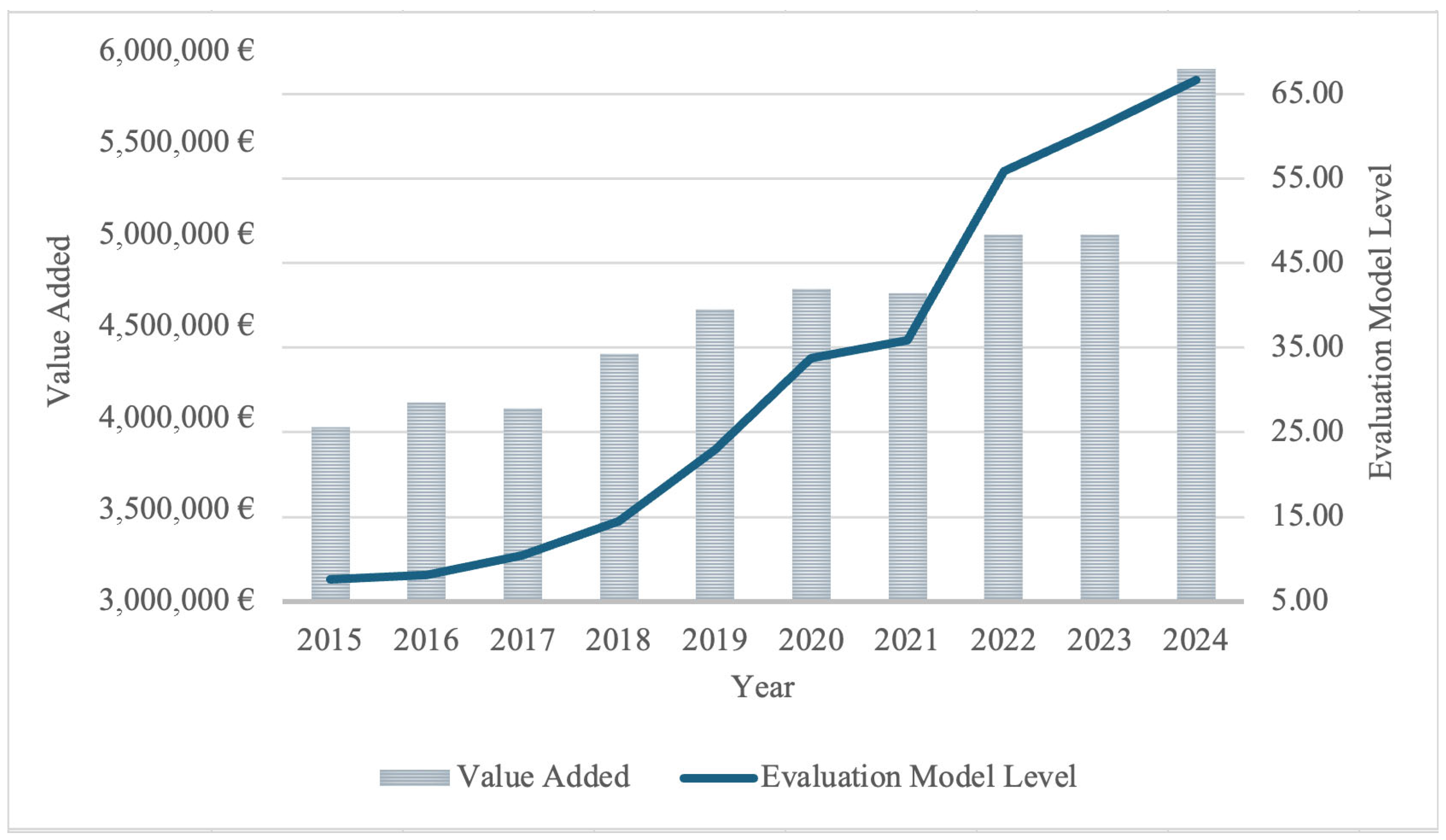
Figure 1 illustrates the temporal evolution of the IoTRIM score for the analyzed enterprise over the period 2015–2024. In the initial years, the enterprise displayed minimal readiness for IoT implementation, with only marginal year-on-year growth. A more pronounced increase is observable after 2020, corresponding to the adoption of more systematic integration practices for digital technologies. The year 2022 marks a clear turning point, after which the rate of improvement accelerated particularly in the domains of data collection and processing efficiency, interoperability, and the formalization of an IoT strategy at the managerial level.
The observed trajectory indicates that IoT adoption within the enterprise has transitioned from an experimental phase to a structured and strategically supported process. This sustained upward trend suggests that the enterprise has reached a level of maturity where further gains are likely to come from optimizing interoperability and network resilience, rather than from expanding basic device deployment. Consequently, future development should prioritize the consolidation of existing IoT assets into a unified operational ecosystem, ensuring that data flows seamlessly across departments and supports both operational efficiency and long-term strategic objectives.

3.2. Extended Cobb–Douglas Production Function

The Cobb–Douglas production function was applied to examine the relationship between output and the two primary production inputs: capital (K) and labor (L). Table 4 summarizes the annual values of gross value added, depreciation of fixed assets (proxy for capital), and personnel costs (proxy for labor) for the period 2015–2024. These values formed the basis for the estimation of the model parameters and reflect a gradual increase in all three variables over the observed period, with the most notable growth in capital after 2021.
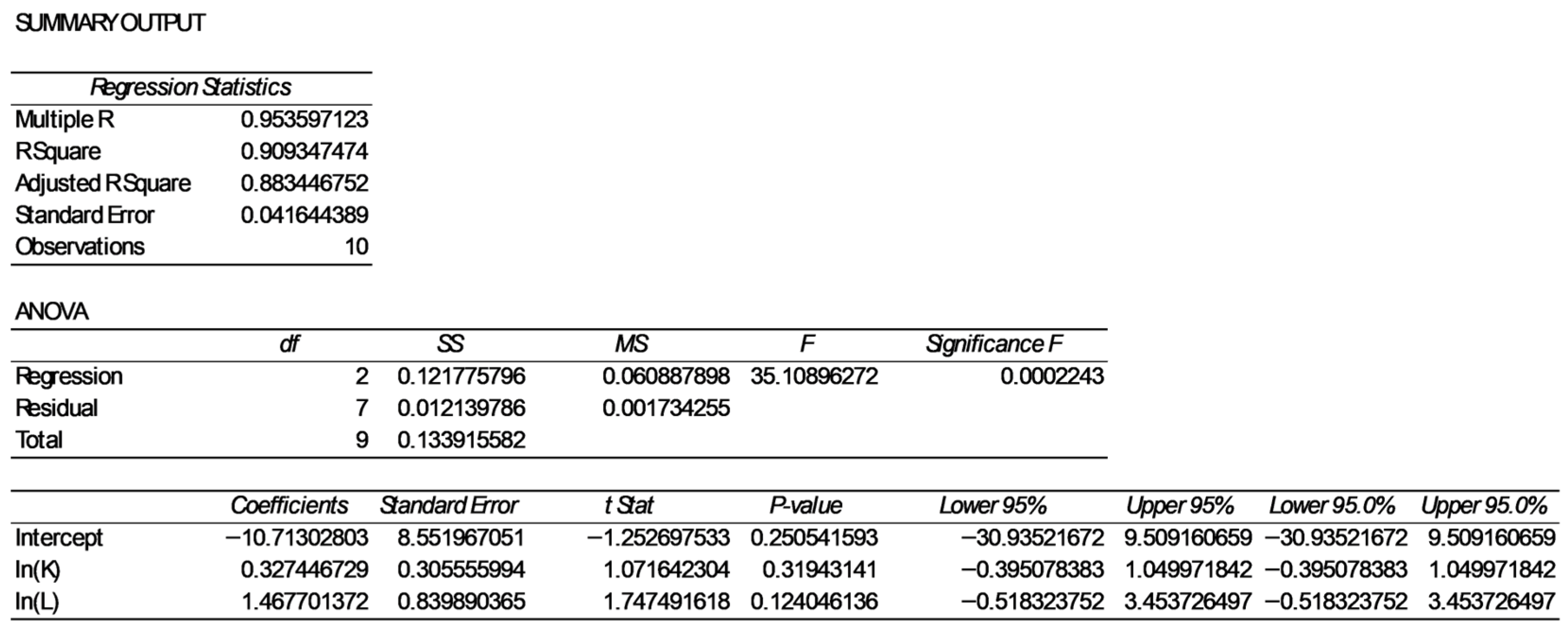
Figure 2 presents the baseline model results, estimated without the IoTRIM index. The capital elasticity was 0.33, while the labor elasticity reached 1.47. The sum of coefficients (1.80) suggests increasing returns to scale, meaning that a proportional increase in both inputs leads to a more than proportional increase in output. This pattern highlights the enterprise’s strong labor intensity, where output growth is particularly sensitive to changes in personnel-related inputs.
To account for technological factors, the model was extended by including the IoTRIM index as an additional explanatory variable.
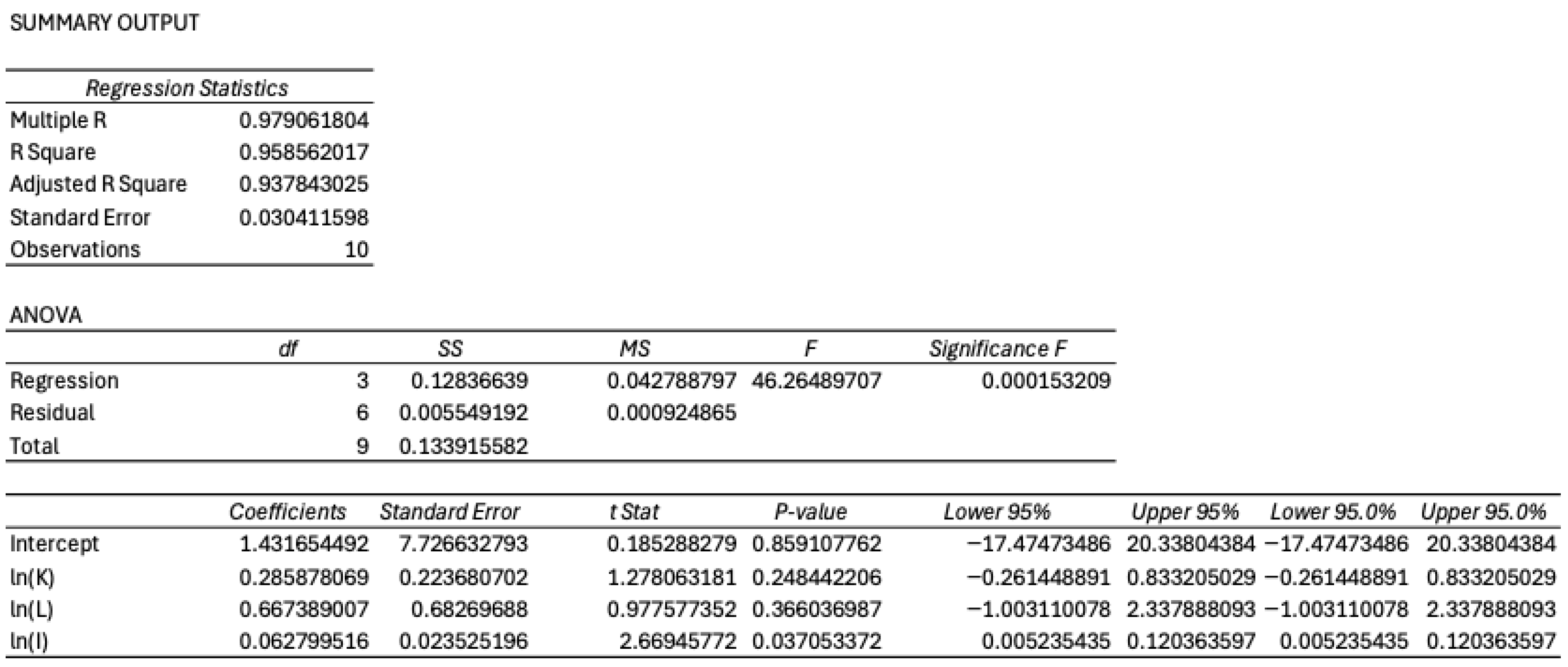
Based on results shown in Figure 3 it is possible to compare the adjusted R2 values of the baseline and extended models, showing an improvement in explanatory power when IoTRIM is included. The observed increase demonstrates that technological readiness has a measurable impact on the variability of output, even when traditional inputs are controlled for.
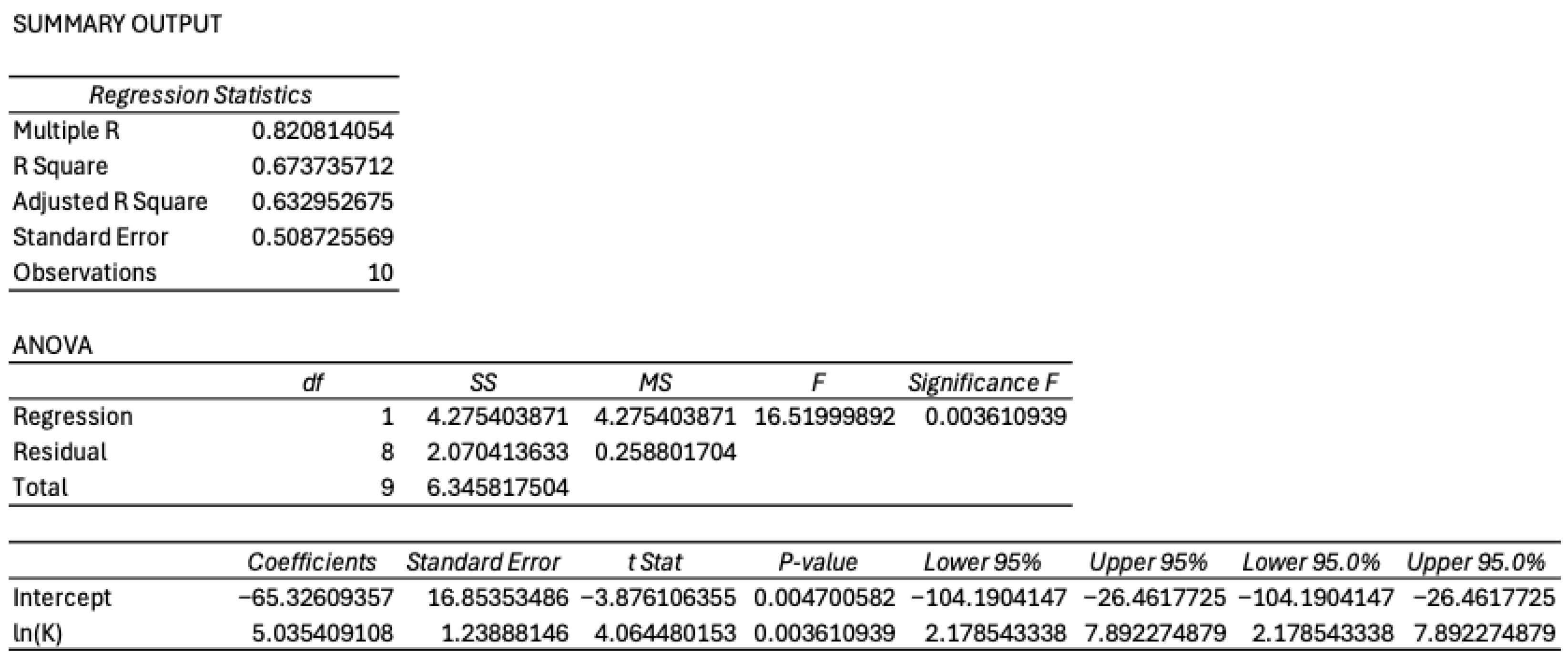
Regression analysis results in Figure 4 show potential multicollinearity, revealing only a weak correlation between capital and IoT readiness. This supports the interpretation that IoT adoption operates as an independent factor that complements, rather than substitutes, capital investment.
To verify the statistical significance of the linear dependence between the variables ln(K) and ln(I), the Farrar–Glauber test of multicollinearity was applied. This test is commonly used to detect correlations among explanatory variables through the transformation of the correlation matrix. In the first step, a correlation matrix between ln(K) and ln(I) was constructed in Microsoft Excel using the “Correlation” function within the “Data Analysis” add-in. The correlation coefficient between the variables was r = 0.820814. The determinant of the correlation matrix was then computed using the function = MDETERM(), resulting in |R| = 0.326264. Based on this, the test statistic X2 was calculated according to the formula:
χ 2 = n 1 2 p + 5 6 ln R ,
where n denotes the number of observations and p the number of variables in the correlation matrix. For n = 10 (the analyzed period 2015–2024) and p = 2, the result was:
χ 2 = 10 1 2 2 + 5 6 ln 0.326264 = 8.40 ,
The critical value at the 0.05 significance level with one degree of freedom is 3.841. Since the calculated test statistic exceeds the critical value, the null hypothesis of no correlation is rejected. This confirms that a statistically significant correlation exists between ln(K) and ln(I).

3.2.1. Variance Inflation Factor and Tolerance

To further assess the impact of this dependence on model stability, diagnostic measures of multicollinearity were calculated: the Variance Inflation Factor (VIF) and its inverse value, tolerance. Given that the regression produced R2 = 0.674, the indicators were computed as follows:
V I F = 1 1 R 2 = 1 1 0.674 = 3.065 ,
T o l e r a n c e = 1 I F R = 1 3.065 = 0.326 ,
According to standard methodological recommendations, VIF values below 5 and tolerance values above 0.2 are considered acceptable and do not indicate a serious multicollinearity problem. In this case, both indicators fall within the acceptable ranges, suggesting that while a correlation between the variables is present, it does not reach a level that would inflate standard errors of the estimated coefficients or reduce the reliability of the model.
In line with these calculations, a statistically significant linear dependence between ln(K) and ln(I) was identified and confirmed by both regression analysis and the Farrar–Glauber test. However, the results of VIF and tolerance confirm that the degree of correlation does not exceed methodological thresholds and does not destabilize the regression model. For this reason, both variables were retained in the extended Cobb–Douglas production function, with their statistical interdependence considered in the interpretation of results.

3.2.2. Comparison of Coefficients for the Basic and Extended Model

The results, presented in Table 5, reveal that after incorporating IoTRIM, the elasticity of labor decreased from 1.47 to 0.67 and the elasticity of capital from 0.33 to 0.29, while the IoTRIM coefficient was positive and statistically significant. This indicates that part of the output growth previously attributed to labor input is more accurately explained by the enterprise’s IoT readiness.
Finally, Figure 5 illustrates the marginal effect of IoT readiness on output. Holding capital and labor constant, an increase of 0.1 in the IoTRIM index corresponds to an estimated 2–3% increase in output. This finding reinforces the role of IoT readiness as a productivity-enhancing factor and suggests that further technological integration could yield substantial efficiency gains.
From a managerial standpoint, the results suggest that IoT readiness not only improves efficiency in existing processes but also changes the optimal allocation of resources between capital and labor. The observed reduction in labor elasticity in the extended model implies that technological tools can substitute for some labor-intensive activities, enabling staff to focus on higher value-added tasks. Similarly, the slightly lower capital elasticity indicates that part of the productivity gains from physical assets is now mediated through smart technology integration.
Moreover, the combination of increasing returns to scale and the positive marginal effect of IoT readiness points to an opportunity for synergistic growth: scaling operations while simultaneously deepening technological maturity. For the case study enterprise, this means that future investment strategies should not consider capital, labor, and IoT readiness in isolation, but as mutually reinforcing components of a modern production system. Such an integrated approach would maximize the long-term benefits of digital transformation and sustain competitiveness in a technology-driven market environment.

3.3. Scenario Analysis and Monte Carlo Simulation

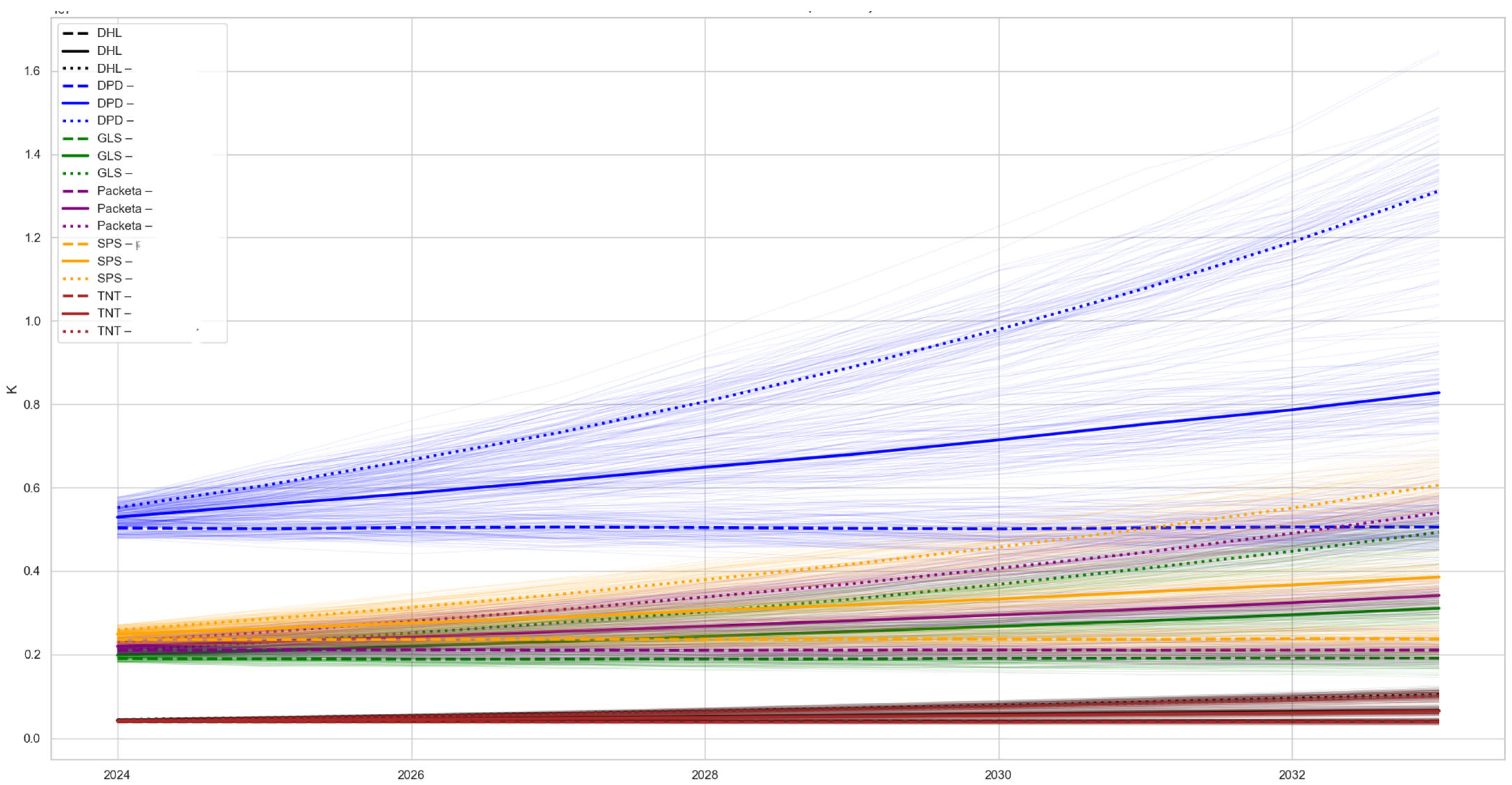
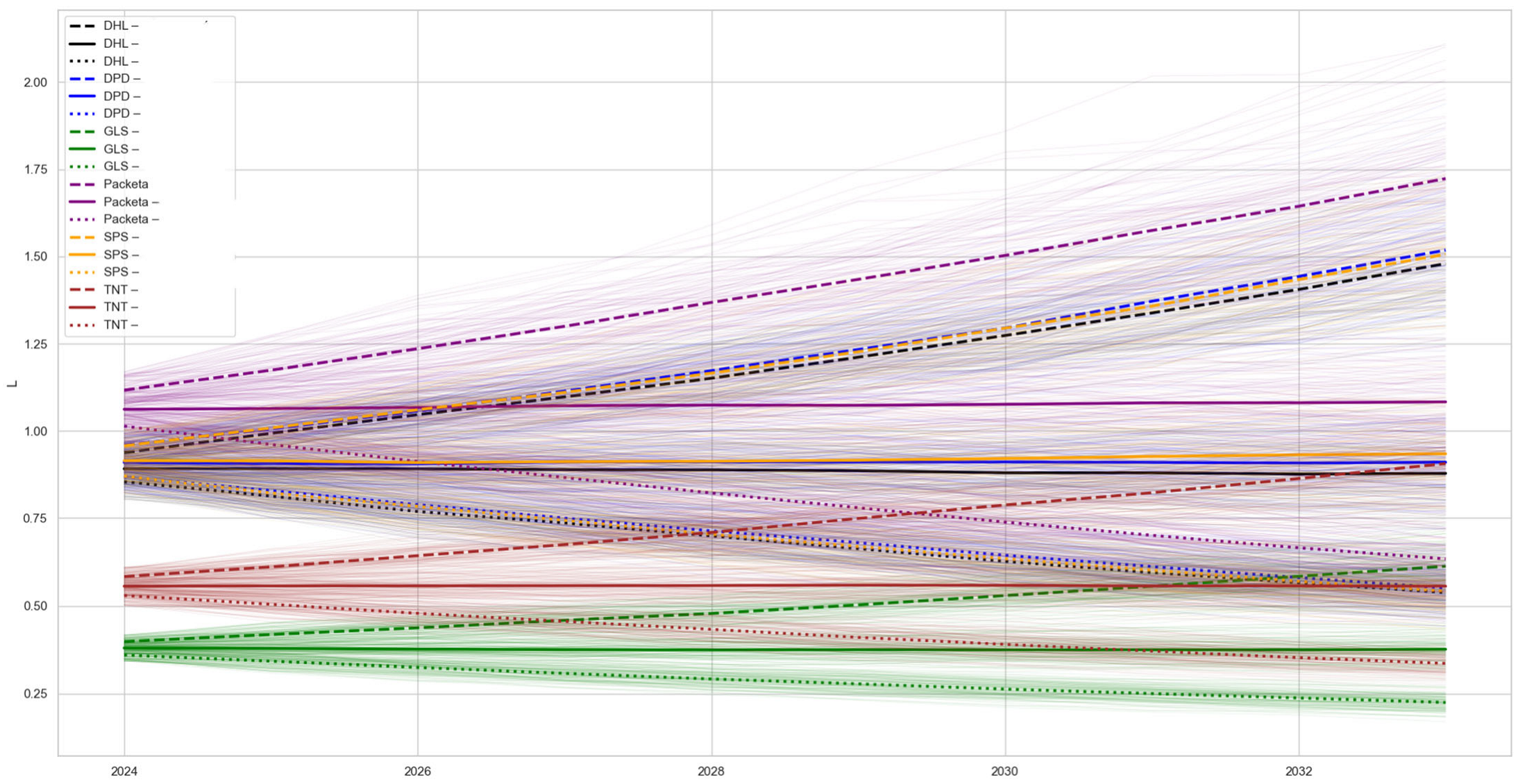
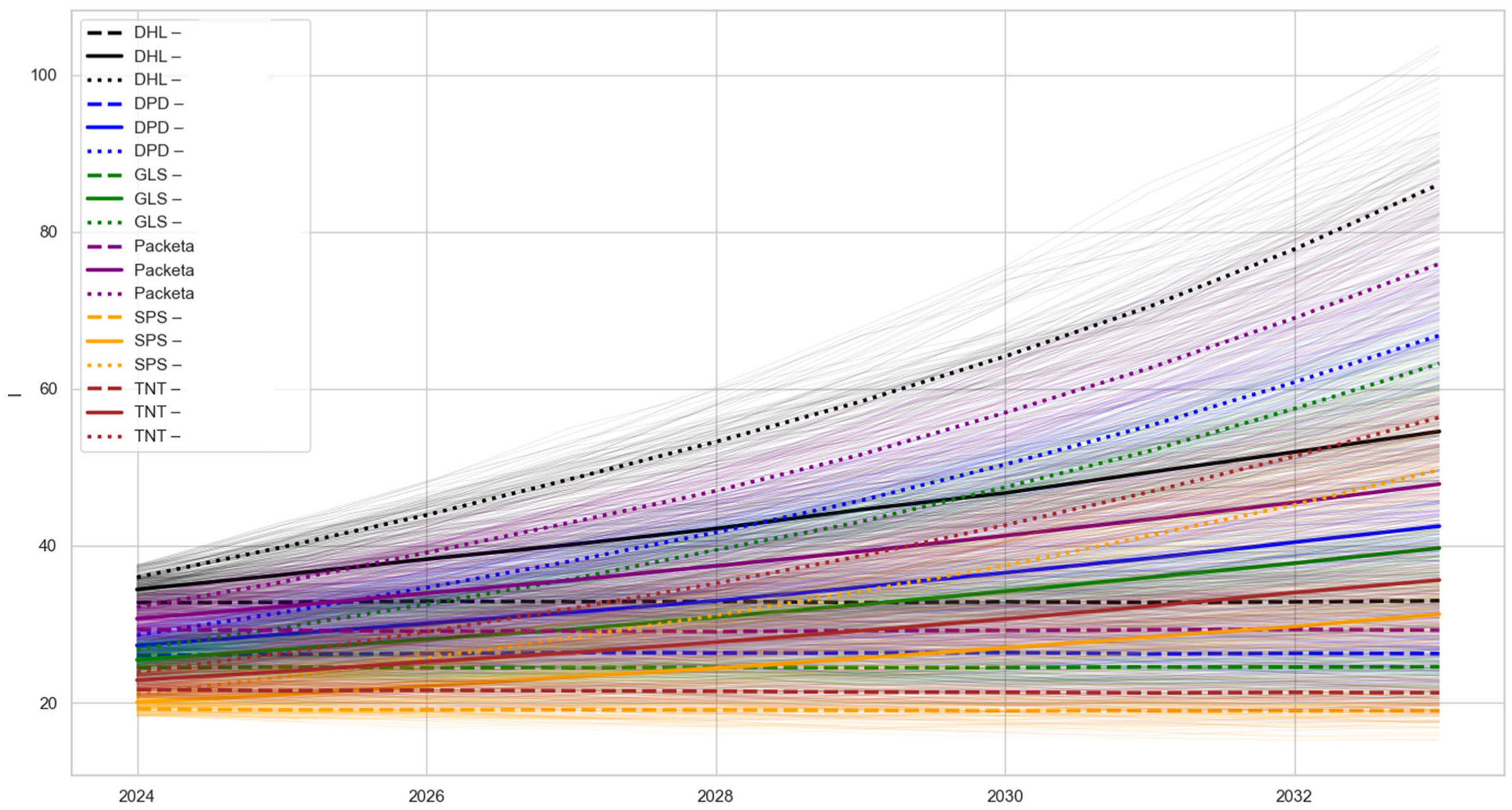
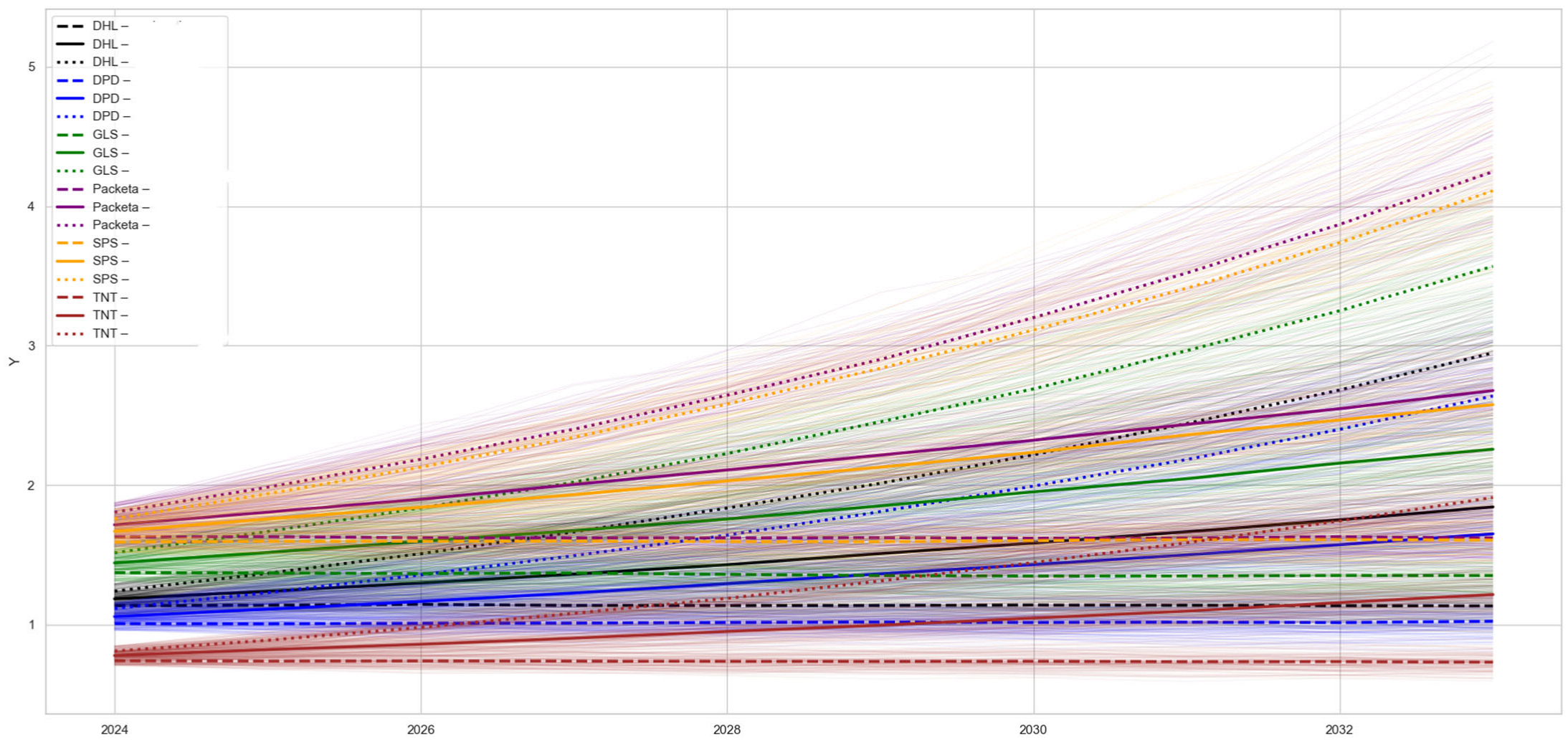
To assess the longer-term impacts of digital transformation under conditions of uncertainty, the evolution of four variables capital (K), labor (L), IoT readiness (I), and output (Y)—was simulated for six postal and courier enterprises operating in Slovakia (DHL, DPD, GLS, Packeta, SPS, TNT). Baseline values from 2023 were used as starting points, reflecting the most recent operational and technological status of each enterprise. For each enterprise, 1000 Monte Carlo simulations per scenario were conducted over the 2024–2033 horizon. Annual growth rates were drawn from predefined intervals representing three distinct scenarios: pessimistic, realistic, and optimistic. In each simulation, the extended Cobb–Douglas model was re-estimated to obtain updated elasticities, and the resulting average trajectories and coefficients were subjected to comparative analysis. Detailed graphical trajectories for K, L, I, and Y are presented in Appendix B.
The design of scenarios reflects both macroeconomic uncertainties and the anticipated pace of digital adoption in the sector. Each scenario is constructed to capture a plausible pathway rather than a precise prediction, enabling the exploration of alternative futures and their strategic implications.
  • Pessimistic scenario: Characterized by adverse macroeconomic conditions, weak investment activity, and slow technological uptake. Under these conditions, output (Y) remains stagnant or declines, capital investment (K) grows minimally, and IoT readiness (I) advances only marginally, while labor (L) changes little. This scenario may correspond to environments with technological debt, operational inefficiencies, or disruptive external shocks, such as regulatory hurdles or prolonged economic downturns.
  • Realistic scenario: Represents a continuation of current sectoral trends, with balanced growth in all key variables. Output and capital expand moderately, labor demand remains stable with minor fluctuations, and IoT readiness rises gradually in line with steady digitalization initiatives. Such a trajectory aligns with historical averages and assumes a supportive but not exceptional macroeconomic environment.
  • Optimistic scenario: Envisions strong macroeconomic performance, substantial digital investment, and accelerated organizational transformation. Capital and output increase at the highest rates, IoT readiness achieves the most substantial gains, and labor requirements decrease in certain areas due to process automation. This trajectory aligns with global best-practice adoption curves for advanced logistics and smart supply chain systems.
These three scenarios provide a structured framework for the subsequent Monte Carlo analysis, allowing not only the estimation of potential output levels but also the assessment of how different investment and technology adoption patterns influence long-term performance.

3.3.1. Simulation Highlights

The simulation results reveal notable differences in the trajectories of the analyzed variables across enterprises and scenarios. Capital growth is led by DPD, which surpasses €13 million by 2033 in the optimistic scenario representing nearly a threefold increase from baseline. By contrast, TNT and DHL maintain a conservative investment profile even under favorable conditions, while SPS, Packeta, and GLS display more pronounced expansion in the optimistic path. Realistic trajectories are generally linear, reflecting steady but unspectacular growth.
Labor trends vary considerably—Packeta and SPS record growth in all scenarios, driven by service expansion, whereas GLS and TNT register slight declines in the optimistic case, consistent with automation reducing labor intensity. For SPS, the gap between optimistic and pessimistic labor cost paths approaches €5 million, illustrating the potential impact of technology-driven efficiency gains.
IoT readiness scores (I) offer the clearest scenario differentiation. In the optimistic case, multiple enterprises exceed 90 points on the IoTRIM scale, with Packeta and DHL nearly doubling their readiness levels compared to baseline. The realistic scenario produces gradual and stable improvements, while the pessimistic path yields only marginal gains.
Output trajectories (Y) follow a similar pattern, strongly reflecting the interplay between capital, labor, and IoT readiness. Packeta emerges as the top performer, surpassing €42 million in output by 2033 in the optimistic scenario more than 160% above the baseline. SPS and GLS also accelerate markedly under favorable conditions. In the pessimistic case, growth remains subdued, with the gap between optimistic and pessimistic outcomes reaching approximately €18 million for DHL.

3.3.2. Elasticity Patterns

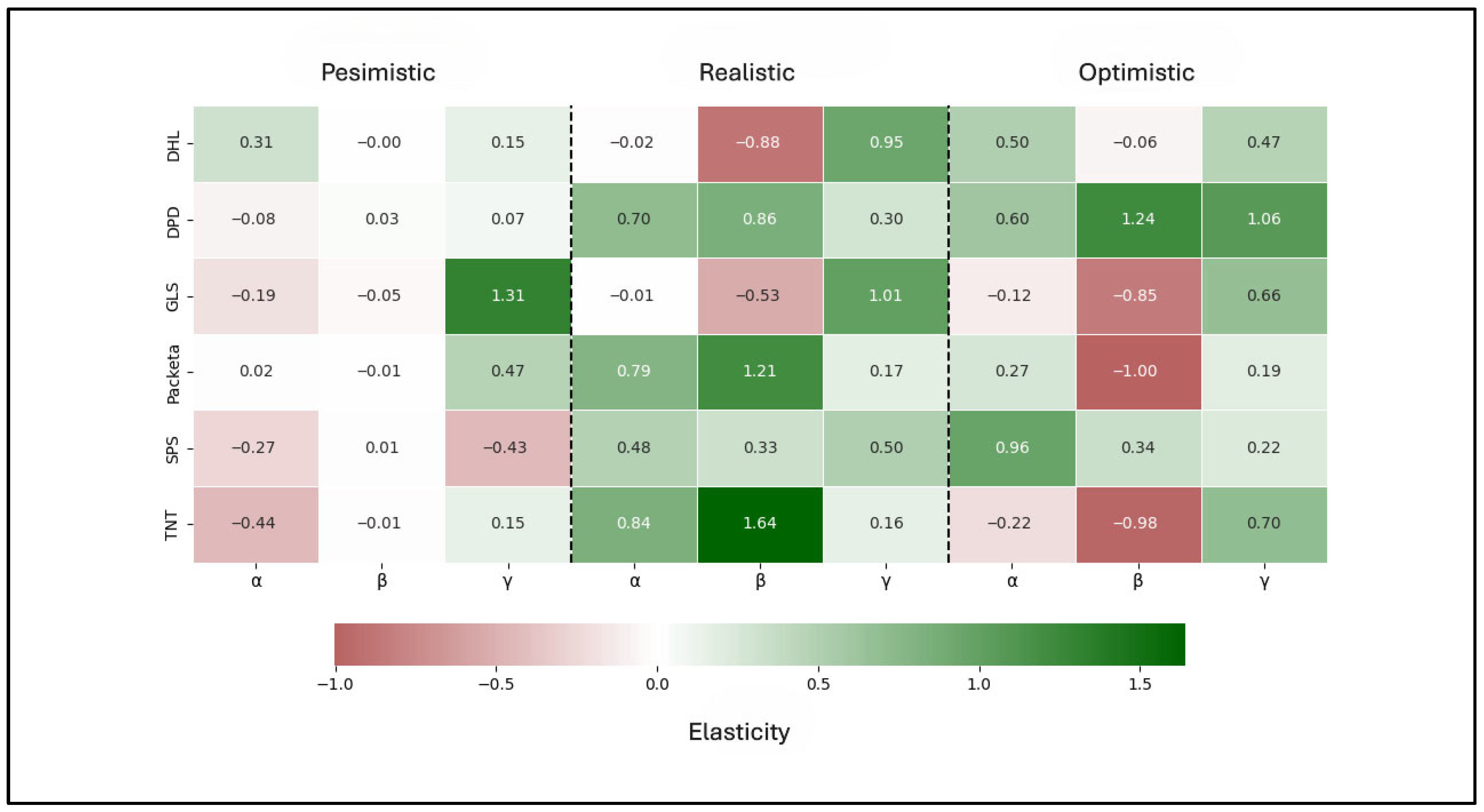
Figure 6 summarizes the extended Cobb–Douglas coefficients by scenario and enterprise. Cell color represents both sign and magnitude (green = positive; red = negative). While a modest correlation between capital (K) and IoT readiness (I) must be acknowledged, the coefficients nonetheless provide meaningful comparative insights.
Enterprise-level patterns are heterogeneous. DHL exhibits the strongest potential responsiveness to improvements in IoT readiness under favorable technological conditions. DPD shows a balanced and mutually reinforcing effect of K, L, and I in the optimistic scenario. GLS remains labor-led but has clear scope for productivity gains from increased I. Packeta demonstrates the highest dependency on I, with K and L acting as supporting drivers. SPS is currently labor driven but experiences substantial improvements as I deepens. TNT remains primarily reliant on traditional inputs, with limited short-term gains from I, suggesting that modernization should be targeted before expecting significant digital returns.
These patterns highlight distinct digital transformation pathways: enterprises already engaged in data-driven operations can monetize IoT readiness more rapidly, whereas others must first develop the infrastructural and organizational foundations needed for I to contribute meaningfully to productivity. This reinforces the notion that returns to digital investment are convex for sector leaders and delayed for late adopters, underscoring the importance of synchronized upgrades in infrastructure, skills, and process integration.

3.3.3. Total Factor Productivity

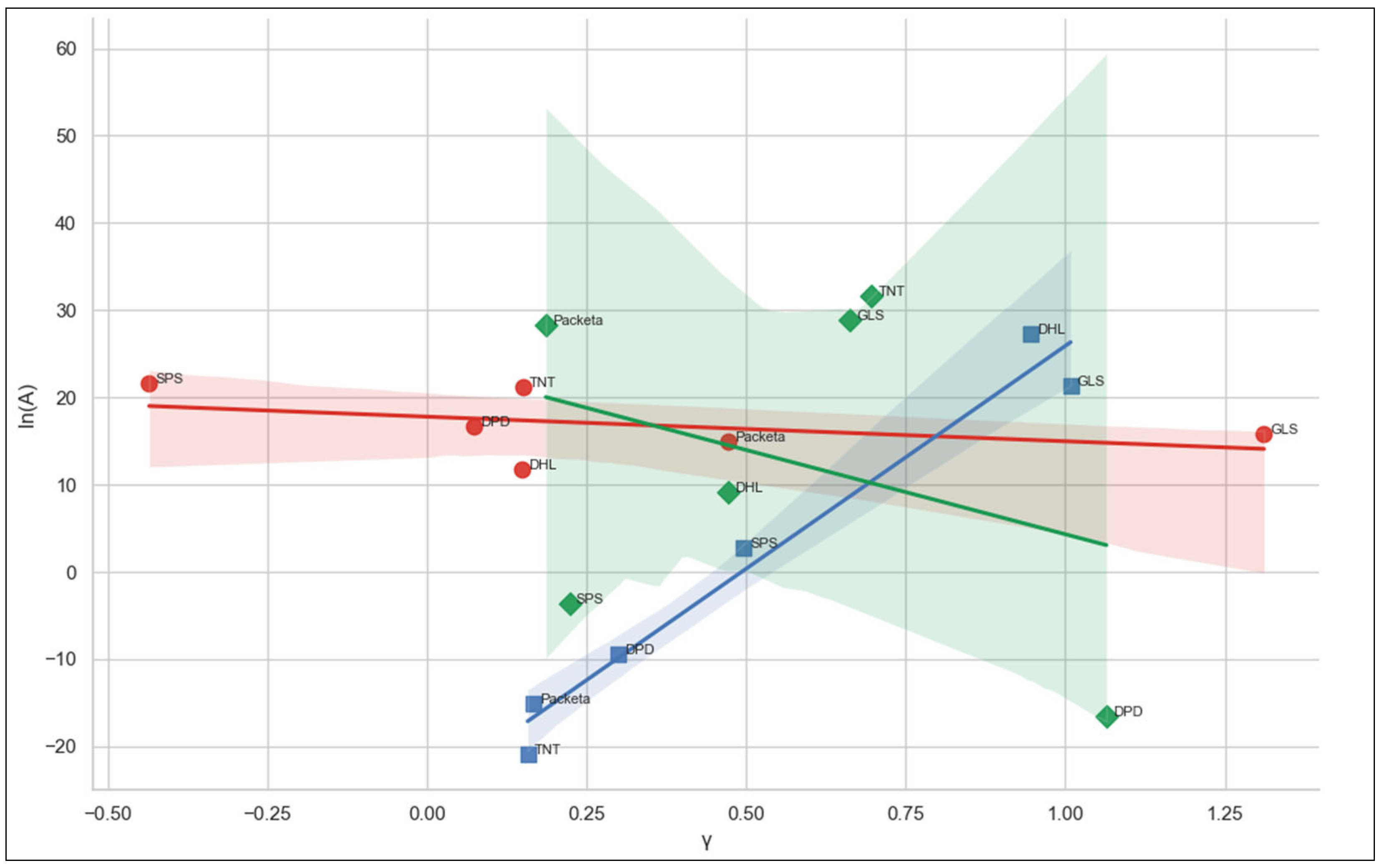
In the extended Cobb–Douglas regressions estimated on simulated data, the intercept term corresponds to ln(A), where A denotes total factor productivity not explained by K, L, or I. Consequently, A = e^(intercept), offering a concise measure of residual efficiency linked to management quality, process design, and organizational agility.
Figure 7 relates TFP to the elasticity of IoT readiness across the three scenarios. In the realistic scenario, the relationship is clearly positive, indicating that incremental gains in I are associated with proportionate improvements in overall efficiency. In the optimistic scenario, the relationship becomes slightly negative, suggesting that rapid expansion of I may not automatically lead to higher TFP without parallel investments in complementary capabilities. In the pessimistic scenario, the association remains weak, consistent with the notion that constrained operating environments limit the payoff from digital tools.
Overall, the Monte Carlo simulations combined with the extended production function demonstrate that while the magnitude of digital investment is a decisive factor, its effectiveness ultimately depends on absorption capacity encompassing interoperability, data governance, and alignment of technological tools with operational processes. For decision-makers, this implies a dual-track strategy: maintain disciplined investment in IoT readiness while mitigating risks through standardization and workforce development, ensuring that positive scenario conditions translate into sustainable productivity rather than transient gains.

3.4. Hypothesis Verification

The verification of the research hypotheses established in Section 2 was carried out using the results of the IoTRIM evaluation model in conjunction with outputs from the extended Cobb–Douglas production function under different development scenarios. The analysis considered not only the statistical significance of individual parameters but also their economic interpretation and strategic implications.

3.4.1. Hypothesis H1

H1: 
Implementation of IoT has a positive impact on the output of enterprises providing other postal services and courier activities.
H01: 
γ ≤ 0 (IoT does not have a positive effect on output).
H11: 
γ > 0 (IoT has a positive effect on output).
The hypothesis was tested on a sample of 18 models (six enterprises and three development scenarios) by observing the coefficient γ, representing the elasticity of output with respect to the IoT input, together with its p-value at a significance level of α = 0.05. Values of γ and their p-values are presented in Table 6.
From the results, γ was positive and statistically significant in four out of eighteen cases. In these instances, the null hypothesis was rejected, confirming a positive IoT impact on enterprise output. In the remaining fourteen models, either statistical significance was not achieved despite a positive γ, or, in one case, the coefficient was negative. This implies that, for most models, the null hypothesis cannot be rejected, and the positive effect of IoT on output cannot be statistically confirmed.
Consequently, Hypothesis H1 cannot be accepted as universally valid across all tested models. Nevertheless, the results indicate that under certain conditions particularly in scenarios with stronger technological adoption the impact of IoT can be both positive and significant. This highlights the importance of complementary capabilities and enabling conditions in translating IoT integration into measurable performance gains.

3.4.2. Hypothesis H2

H2: 
The Cobb–Douglas model extended by the IoT readiness variable exhibits a higher explanatory power of output variability than the traditional model.
H02: 
Adding the IoT variable does not increase the explanatory power of the model.
H12: 
Adding the IoT variable increases the explanatory power of the model.
Verification was performed using the F-test to compare the baseline Cobb–Douglas model with its extended version for each of the 18 models. Differences in residual sum of squares (SSE) were calculated, followed by the computation of the F-statistic to determine whether the extended model provided a statistically significant improvement in explanatory power. Results are summarized in Table 7.
In all 18 cases, the inclusion of the IoT variable resulted in a statistically significant increase in explanatory power. The F-statistics reached very high values, and p-values in all cases were far below the α = 0.05 threshold.
Therefore, Hypothesis H2 is confirmed, indicating that the extended Cobb–Douglas model consistently explains output variability more effectively. These findings support the view that integrating digital readiness into economic models enhances their ability to capture real-world performance dynamics in postal and courier services.
The combined results suggest that while the inclusion of IoT readiness markedly improves model fit (H2), the direct and statistically significant positive effect of IoT on output (H1) is not universally observed. This asymmetry implies that IoT readiness contributes to the structural explanatory power of the model, but its realized effect on output depends on specific organizational and contextual factors. In strategic terms, IoT adoption appears to act as an enabler whose benefits materialize when coupled with adequate infrastructure, interoperability, and process alignment.

4. Discussion

The evidence derived from this research provides substantial insights into how digital transformation, and specifically IoT readiness, influences productivity in the postal and courier sector. While IoT readiness significantly enhanced the explanatory power of the extended Cobb–Douglas model in all evaluated cases (supporting H2), a statistically significant positive effect on output (H1) was confirmed only in selected scenarios and enterprises. This aligns with previous research [27] indicating that early-stage IoT adoption can yield real but modest productivity improvements, with the magnitude of impact dependent on organizational readiness and integration into core processes. More recent evidence confirms that IoT’s contribution to organizational performance is mediated by factors such as supply chain integration, digital skills, and competitive positioning, rather than stemming from technological deployment alone [28].
From a methodological perspective, embedding IoTRIM into the Cobb–Douglas framework offers a refined means of quantifying the economic role of intangible digital assets. Similar integration of digital readiness measures into production functions has been successfully applied in manufacturing, where the introduction of IoT significantly improved total factor productivity through innovation diffusion and process optimization [53]. The present findings echo these results, as IoT readiness emerges as a valuable intangible input, yet one whose impact on total factor productivity is contingent on complementary capabilities such as governance quality, workforce competencies, and interoperability of systems.
Enterprise-level differences observed in the simulations underscore the heterogeneous nature of digital transformation. In optimistic scenarios, enterprises with strong digital infrastructure such as Packeta and DHL translated higher IoT readiness into notable output growth and even TFP gains. In contrast, enterprises in less mature digital contexts demonstrated improved model fit after including IoT readiness but did not achieve immediate performance increases. This asymmetry mirrors broader empirical patterns, where digital investment returns are often delayed until organizations complete structural and process adjustments [26,35].
In the context of postal enterprises, several sector-specific constraints have been identified that influence the scope and pace of IoT application. These include limited financial capacity for large-scale digital investments, reliance on legacy infrastructure that reduces flexibility in adopting new technologies, strict regulatory and data protection requirements, and the need for workforce adaptation to digital tools. Such challenges highlight why a systemic assessment framework is required, as isolated technological initiatives may not sufficiently address the structural and organizational barriers present in this sector.
It is important to note that the extended Cobb–Douglas model was estimated on a limited sample of ten annual observations, which constrains the statistical power of the analysis. These represent the only consistent time-series data available for the enterprise under research. Accordingly, the results are to be interpreted primarily as a proof of concept, demonstrating the feasibility of integrating IoT readiness into a production function framework. It is acknowledged that an expansion of the dataset through higher-frequency data or multi-enterprise panel structures would increase the robustness and generalizability of the findings, which is recommended as a direction for future research. Moreover, the analysis is restricted to a single national context, which limits its geographic scope, and several estimated coefficients did not reach statistical significance. Therefore, future research should focus on broadening the geographical scope. The IoTRIM framework has been designed in a way that allows its adaptation and validation across different countries and service sectors, which also represents an important direction for future research.
A significant implication is that IoT readiness acts as a form of strategic optionality rather than an immediate productivity lever. Its presence allows enterprises to rapidly exploit favorable market or technological shifts but does not guarantee automatic gains in the absence of supportive organizational and process environments. This is consistent with the absorptive capacity perspective, which stresses the necessity of complementary capabilities for translating external knowledge and technology into economic performance [54].
The managerial and policy relevance of these findings is substantial. Effective digital transformation requires more than capital expenditure on IoT technologies; it depends on orchestrated investments in governance frameworks, workforce training, and cross-platform interoperability. The McKinsey IoT Value Report emphasizes that technology deployment alone is insufficient, with scalability, ecosystem support, and leadership engagement determining the extent to which potential value is captured [55]. In the postal and courier domain, recent applications of extended Cobb–Douglas models have confirmed that the realization of productivity benefits from IoT is highly context-dependent, requiring alignment of technology with strategic and operational objectives [26].
The distribution of statistically significant positive elasticities for IoT readiness across scenarios suggests that certain market conditions such as growth in e-commerce demand, logistics network optimization, and integration with advanced tracking systems can amplify IoT’s productivity effects. In pessimistic scenarios, macroeconomic stagnation, cost constraints, and technological debt appear to neutralize the benefits of IoT integration. This highlights the importance of scenario-based planning and strategic resilience, allowing enterprises to calibrate investment pace to economic conditions while preserving the option to accelerate when opportunities arise [56].
Another relevant finding is the varying role of labor across enterprises. While some experienced labor efficiency gains through automation in optimistic scenarios, others saw stable or even increasing labor requirements despite IoT integration. This reinforces the observation that automation’s impact is uneven and may require targeted workforce reskilling programs to avoid bottlenecks in adoption. Research in logistics and manufacturing confirms that technology-led labor displacement is rarely linear, and in many cases, labor is redeployed into higher-value activities rather than eliminated [57,58].
From a policy standpoint, there is an opportunity to design targeted incentives for IoT adoption in logistics, focusing not only on technology acquisition but also on interoperability standards, cybersecurity readiness, and training initiatives. Regulatory support for open data exchange within supply chains could also accelerate the integration of IoT-derived data into decision-making processes, maximizing the economic impact of digital readiness.
The IoTRIM model can be applied in managerial practice to support both decision-making and investment planning. By quantifying the scores across individual pillars, it can be identified which areas, such as digital infrastructure or system interoperability, represent the most critical bottlenecks to IoT adoption. This allows investment priorities to be directed towards the areas with the highest potential impact. Furthermore, the integration of IoTRIM into a production function framework enables the simulation of alternative investment scenarios, providing an evidence-based estimate of their potential contribution to productivity. In this way, the model offers managers a systematic tool for aligning digital transformation initiatives with strategic objectives and resource allocation.
Looking ahead, several research directions emerge. First, extending the model to cross-sectoral analyses could reveal how differences in industry dynamics and capital intensity influence IoT productivity effects. Second, integrating additional intangible variables such as organizational agility, innovation culture, and ecosystem engagement could refine the explanatory power of extended production functions. Third, exploring hybrid modelling approaches that combine econometric estimation with system dynamics or agent-based simulation may offer a more nuanced understanding of feedback effects in digital transformation. Finally, longitudinal research is essential for capturing the delayed but potentially exponential returns from IoT integration once enterprises reach full digital maturity.
Overall, this paper positions IoT readiness not merely as a technological metric but as a strategic resource whose productivity impact depends on timing, context, and complementary investments. The results support a dual-track approach in both managerial practice and policy design: maintain steady investment in IoT capabilities while simultaneously building the absorptive capacity required to translate readiness into sustained competitive advantage.

5. Conclusions

This paper set out to integrate IoT readiness into an extended Cobb–Douglas production function to evaluate its contribution to output variability in the postal and courier sector. The proposed IoTRIM-based approach provided a structured means of quantifying digital capability and incorporating it alongside capital and labor in productivity analysis. This integration yielded two key insights: first, that IoT readiness consistently enhanced the explanatory power of the model, and second, that its measurable impact on output is not universal but shaped by enterprise-specific conditions and broader economic contexts.
Both hypotheses addressed in the research were thus resolved in distinct ways. The first hypothesis that IoT implementation has a positive impact on enterprise output was confirmed only in selected scenarios and organizational settings, indicating that technological potential does not automatically translate into productivity gains. The second hypothesis that extending the Cobb–Douglas model with IoT readiness improves explanatory accuracy was strongly supported across all enterprises and scenarios, highlighting the analytical value of incorporating digital variables into established economic frameworks.
In comparison with existing digital maturity or readiness frameworks commonly applied in manufacturing, logistics, and the ICT sector, the IoTRIM model introduces two incremental contributions. First, the assessment of IoT readiness is embedded directly into an extended Cobb–Douglas production function, which allows not only the evaluation of the current state of adoption but also the estimation of its measurable economic impact on productivity. Second, the model has been structured into pillars, criteria, and indicators specifically tailored to the postal and courier services sector, thereby addressing contextual characteristics that are not captured in general-purpose maturity frameworks.
Beyond methodological contributions, the findings offer a practical message: IoT readiness should be treated as a strategic enabler whose economic benefits depend on complementary investments in interoperability, workforce skills, and process alignment. For policymakers, this underscores the need for measures that accelerate not only technology acquisition but also its effective absorption and integration into enterprise operations.
The framework and findings presented here create a basis for further research into the economic role of digital readiness in other segments of transport and logistics. Future work could extend the model to incorporate additional intangible factors, adopt longitudinal data for post-implementation tracking, and test cross-country differences in digital transformation outcomes.
In summary, IoT readiness is not merely a technological attribute it is a capacity whose productivity effects are contingent, context-dependent, and maximized only when supported by strong organizational foundations. Recognizing and acting on this dependency is essential for enterprises and policymakers aiming to achieve sustainable competitive advantage in an increasingly digital logistics ecosystem. In an era where digital transformation is both inevitable and uneven, the real measure of success will not lie in the mere presence of IoT technologies, but in the ability of enterprises to turn readiness into measurable, lasting performance gains. The results of this research suggest that the winners in the next decade’s logistics sector will be those who master not just the tools, but the systemic integration that makes those tools matter.

Author Contributions

Conceptualization, M.B. and K.K.; methodology, M.B. and M.K.; software, M.B.; validation, A.N., M.B. and K.K.; formal analysis, M.K.; investigation, M.B. and M.K.; resources, A.N.; data curation, M.B. and K.K.; writing—original draft preparation, M.B., K.K., M.K. and A.N.; writing—review and editing, M.B., K.K., M.K. and A.N.; visualization, M.B.; supervision, A.N. and M.K.; project administration, A.N.; funding acquisition, A.N. All authors have read and agreed to the published version of the manuscript.

Funding

This paper is an output of the project KEGA 54ŽU—4/2025 Possibilities for the Use of Artificial Intelligence in the Study Program “Air Transport” for Pilot and Maintenance Technician Training (SmartSkyEdu).

Data Availability Statement

The original contributions presented in the study are included in the article. Further inquiries can be directed to the corresponding author.

Conflicts of Interest

The authors declare no conflicts of interest.

Abbreviations

The following abbreviations are used in this manuscript:
IoTInternet of Things
IoTRIMIoT Readiness & Impact Model
ITInformation Technology
SSESum of Squared Residuals
TFPTotal Factor Productivity
VIFVariance Inflation Factor

Appendix A

Table A1. Detailed definition of each IoTRIM indicator.
IndicatorDescription
Ratio of IoT devices per employeeThis indicator provides a detailed view of the organization’s technical readiness for IoT implementation. It serves as a key input for assessing overall digital maturity and identifying areas for improvement. Higher values typically correlate with greater automation, stronger system integration, and better responsiveness to operational needs. It is important to track this indicator over time and benchmark it across the industry to evaluate the enterprise’s competitive position in IoT.
➔ Evaluation: 0–100%
Share of devices connected in real timeThis indicator expresses the extent to which devices are directly connected to the network in real time, which is essential for ensuring immediate responsiveness to operational stimuli. A higher value indicates the ability of the enterprise to dynamically react to changes in the environment or technical conditions. Real-time connectivity provides valuable data for process management, predictive maintenance, and instant decision-making.
➔ Evaluation: 0–100%
Share of company premises covered by high-throughput networkThis indicator measures the coverage of the enterprise with next-generation networks (e.g., Wi-Fi 6) that allow stable high-capacity data transmission. Availability of such networks is crucial for modern IoT solutions, especially in data-intensive environments. Greater coverage ensures reliable data transfer and supports the scalability of digital solutions.
➔ Evaluation: 0–100%
Number of connection outages per monthThe number of outages represents an important indicator of the reliability and stability of digital infrastructure. Frequent outages may cause data loss, process interruptions, and reduced trust in IoT solutions. A low frequency of outages indicates a robust network that enables continuous monitoring, data collection, and real-time management.
➔ Evaluation: 0–100% (0/month—100%; 1–4/month—75%; 5–8/month—50%; 9–12/month—25%; >12/month—0%)
Share of sensor-acquired data in total data volumeThis indicator shows the proportion of data collected through sensors and IoT devices. Sensor-based data are more accurate and timelier, enabling greater automation of processes. A higher share supports the development of a data-driven enterprise and opens opportunities for advanced analytics and predictive modeling.
➔ Evaluation: 0–100%
Frequency of data collectionThis indicator signals how often the enterprise collects data from its IoT systems. More frequent collection increases decision-making accuracy but requires stronger processing capacities. It balances technical capabilities with operational efficiency.
➔ Evaluation: 0–100% (continuous/<1 s—100%; 1×/1 min—80%; 1×/5 min—60%; 1×/hour—40%; 1×/day—20%; irregular—0%)
Share of analytical reports generated monthlyThe share of analytical reports generated monthly based on IoT data indicates the extent to which enterprises exploit their data sources for process management and optimization. A higher share reflects advanced use of analytics, supports evidence-based decision-making, and demonstrates digital maturity in data management.
➔ Evaluation: 0–100%
Share of automatically processed dataThis indicator reflects the degree to which data are processed automatically, without manual intervention. Automation shortens the time between data collection and its use, contributing to rapid process optimization. It also signals advanced data infrastructure and system integration.
➔ Evaluation: 0–100%
Existence of an IoT data management platformThis indicator captures whether the enterprise has a platform for managing, monitoring, and visualizing IoT data. Such platforms enable centralized oversight of system performance, support decision-making, and ensure transparency. They are a fundamental tool for effective IoT utilization.
➔ Evaluation: 0–100% (available—100%; not available—0%)
Share of departments. using IoT data in decision-makingThis indicator expresses the extent to which IoT data are used in enterprise decision-making across departments. It shows whether technologies are strategically embedded or remain marginal. A higher share indicates greater digital maturity and organizational integration.
➔ Evaluation: 0–100%
Share of systems connected via API / middlewareThis indicator measures the degree of technical integration through standardized interfaces (e.g., APIs, middleware). Such connections enable real-time data exchange, minimize duplication, and enhance interoperability.
➔ Evaluation: 0–100%
Share of IoT systems integrated with ERP/CRM/SCMThis indicator tracks the integration of IoT systems with core business applications such as ERP, CRM, or SCM. Integration ensures seamless data flows across organizational levels and supports coordinated decision-making. It is a sign of a mature digital architecture.
➔ Evaluation: 0–100%
Share of IoT devices connected via cloud servicesThis indicator expresses the extent to which IoT devices are connected through cloud services. Cloud solutions provide flexibility, scalability, and real-time availability of data, increasing efficiency and reducing server costs.
➔ Evaluation: 0–100%
Existence of unified data interface for IoT dataThis indicator evaluates whether a unified data interface exists to ensure consistent access to IoT data across systems and departments. It reduces risks of data fragmentation and enables effective analysis.
➔ Evaluation: 0–100% (available—100%; not available—0%)
Existence of standardized protocol (MQTT, CoAP)This indicator reflects whether the enterprise uses standardized communication protocols that ensure interoperability between IoT devices. Such protocols allow flexible integration of new components into existing systems.
➔ Evaluation: 0–100% (available—100%; not available—0%)
Share of devices supporting remote updatesThis indicator measures the share of devices that support remote software updates, which are crucial for security, scalability, and reducing maintenance costs.
➔ Evaluation: 0–100%
Existence of centralized IoT device management across the entire networkThis indicator captures whether a central management system exists for IoT devices across the enterprise. Such systems ensure unified control, greater security, and simplified maintenance.
➔ Evaluation: 0–100% (available—100%; not available—0%)
Share of IoT-related expenditure in total investmentThis indicator evaluates the enterprise’s investment intensity in IoT technologies. A higher share indicates that digitalization is seen as a priority and that innovative activities are strategically supported.
➔ Evaluation: 0–100%
Number of IoT projects implemented in last two yearsThis indicator tracks the number of IoT projects implemented in the last two years. It signals the enterprise’s technological activity and adaptation to changing market conditions.
➔ Evaluation: 0–100% (≥4 projects—100%; 3 projects—75%; 2 projects—50%; 1 project—25%; none—0%)
Existence of a company-level IoT strategyThis indicator evaluates whether the enterprise has a formally defined IoT strategy at the top management level. The presence of such a strategy signals that digitalization is integrated into long-term development and transformation goals, ensuring coordinated implementation and resource allocation.
➔ Evaluation: 0–100% (available—100%; not available—0%)
Consideration of IoT data in management decision makingThis indicator measures whether data collected from IoT systems are used in decision-making processes at different management levels. It reflects the link between technology infrastructure and management practice, fostering data-driven culture and transparency.
➔ Evaluation: 0–100% (used—100%; not used—0%)
Share of employees trained in IoT-related topicsThis indicator expresses the share of employees trained in IoT, reflecting the preparedness of human capital to work with new technologies. Skilled staff are a prerequisite for effective IoT implementation.
➔ Evaluation: 0–100%
Existence of a performance monitoring system for IoT projectsThis indicator tracks the presence of tools for monitoring IoT project performance (e.g., KPIs, dashboards). Transparency and monitoring capabilities increase implementation success.
➔ Evaluation: 0–100% (available—100%; not available—0%)
Existence of regular internal audits of IoT implementationThis indicator evaluates whether the enterprise conducts regular audits or evaluations of IoT initiatives. Such practices demonstrate control capacity and continuous improvement.
➔ Evaluation: 0–100% (present—100%; not present—0%)

Appendix B

Figure A1. Simulated development of Variable K.
Systems 13 00910 g0a1
Figure A2. Simulated development of Variable L.
Systems 13 00910 g0a2
Figure A3. Simulated development of Variable I.
Systems 13 00910 g0a3
Figure A4. Simulated development of Variable Y.
Systems 13 00910 g0a4

References

  1. Zaoui, F.; Souissi, N. Roadmap for digital transformation: A literature review. Procedia Comput. Sci. 2020, 175, 621–628. [Google Scholar] [CrossRef]
  2. Vial, G. Understanding digital transformation: A review and a research agenda. J. Strateg. Inf. Syst. 2019, 28, 118–144. [Google Scholar] [CrossRef]
  3. Gobble, M.M. Digital strategy and digital transformation. Res.-Technol. Manag. 2018, 61, 66–71. [Google Scholar] [CrossRef]
  4. Rupeika-Apoga, R.; Petrovska, K.; Bule, L. The effect of digital orientation and digital capability on digital transformation of SMEs during the COVID-19 pandemic. J. Theor. Appl. Electron. Commer. Res. 2022, 17, 669–685. [Google Scholar] [CrossRef]
  5. Lanzolla, G.; Anderson, J. Digital transformation. Bus. Strategy Rev. 2008, 19, 72–76. [Google Scholar] [CrossRef]
  6. Mhlongo, S.; Mbatha, K.; Ramatsetse, B.; Dlamini, R. Challenges, opportunities, and prospects of adopting and using smart digital technologies in learning environments: An iterative review. Heliyon 2023, 9, e16348. [Google Scholar] [CrossRef] [PubMed]
  7. Schallmo, D.R.; Williams, C.A. History of digital transformation. In Digital Transformation Now! Guiding the Successful Digitalization of Your Business Model; Springer: Cham, Switzerland, 2018; pp. 3–8. [Google Scholar] [CrossRef]
  8. Usai, A.; Fiano, F.; Petruzzelli, A.M.; Paoloni, P.; Briamonte, M.F.; Orlando, B. Unveiling the impact of the adoption of digital technologies on firms’ innovation performance. J. Bus. Res. 2021, 133, 327–336. [Google Scholar] [CrossRef]
  9. Kim, S.S. Sustainable growth variables by industry sectors and their influence on changes in business models of SMEs in the era of digital transformation. Sustainability 2021, 13, 7114. [Google Scholar] [CrossRef]
  10. Rupeika-Apoga, R.; Petrovska, K. Barriers to sustainable digital transformation in micro-, small-, and medium-sized enterprises. Sustainability 2022, 14, 13558. [Google Scholar] [CrossRef]
  11. Chin, H.; Marasini, D.P.; Lee, D. Digital transformation trends in service industries. Serv. Bus. 2023, 17, 11–36. [Google Scholar] [CrossRef]
  12. Kraus, S.; Jones, P.; Kailer, N.; Weinmann, A.; Chaparro-Banegas, N.; Roig-Tierno, N. Digital transformation: An overview of the current state of the art of research. Sage Open 2021, 11, 21582440211047576. [Google Scholar] [CrossRef]
  13. Soto Setzke, D.; Riasanow, T.; Böhm, M.; Krcmar, H. Pathways to digital service innovation: The role of digital transformation strategies in established organizations. Information Systems Frontiers 2023, 25, 1017–1037. [Google Scholar] [CrossRef]
  14. Bonnet, D.; Westerman, G. The new elements of digital transformation. MIT Sloan Manag. Rev. 2021, 62, 82–89. [Google Scholar]
  15. Shehadeh, M.; Almohtaseb, A.; Aldehayyat, J.; Abu-AlSondos, I.A. Digital transformation and competitive advantage in the service sector: A moderated-mediation model. Sustainability 2023, 15, 2077. [Google Scholar] [CrossRef]
  16. Sarwar, M.I.; Abbas, Q.; Alyas, T.; Alzahrani, A.; Alghamdi, T.; Alsaawy, Y. Digital transformation of public sector governance with IT service management–A pilot study. IEEE Access 2021, 11, 6490–6512. [Google Scholar] [CrossRef]
  17. Mokgohloa, K.; Kanakana-Katumba, M.G.; Maladzhi, R.W.; Xaba, S. Postal digital transformation dynamics—A system dynamics approach. Systems 2023, 11, 508. [Google Scholar] [CrossRef]
  18. Samambet, M.; Khouangvichit, C. Outsmarting the hurdles to digitalizing the postal sector: The case of deutsche post, poste italiane, and royal mail. Int. J. Prof. Bus. Rev. 2025, 10, 13. [Google Scholar] [CrossRef]
  19. Mikavica, B.; Blagojević, M.; Kostić-Ljubisavljević, A. Digital transformation of postal services–key success triggers. In Proceedings of the First International Conference on Advances in Traffic and Communication Technologies, Sarajevo, Bosnia and Herzegovina, 26–27 May 2022; pp. 93–98. [Google Scholar]
  20. Papanikolaou, A.; Varvarousi, E.; Gavala, E. Postal sector digitalisation: Security and vulnerabilities. Int. J. Appl. Syst. Stud. 2024, 11, 42–51. [Google Scholar] [CrossRef]
  21. Onifade, A.Y.; Dosumu, R.E.; Abayomi, A.A.; Agboola, O.A.; Ogeawuchi, J.C. Systematic review of data-integrated GTM strategies for logistics and postal services modernization. Int. J. Sci. Res. Sci. Technol. 2024, 11, 587–604. [Google Scholar] [CrossRef]
  22. Zdolsek Draksler, T.; Cimperman, M.; Obrecht, M. Data-driven supply chain operations—The pilot case of postal logistics and the cross-border optimization potential. Sensors 2023, 23, 1624. [Google Scholar] [CrossRef]
  23. Sagala, G.H.; Őri, D. Toward SMEs digital transformation success: A systematic literature review. Inf. Syst. E-Bus. Manag. 2024, 22, 667–719. [Google Scholar] [CrossRef]
  24. Soori, M.; Arezoo, B.; Dastres, R. Internet of things for smart factories in industry 4.0, a review. Internet Things Cyber-Phys. Syst. 2023, 3, 192–204. [Google Scholar] [CrossRef]
  25. Illakya, T.; Keerthana, B.; Murugan, K.; Venkatesh, P.; Manikandan, M.; Maran, K. The role of the internet of things in the telecom sector. In Proceedings of the 2024 International Conference on Communication, Computing and Internet of Things, Paris, France, 27–29 September 2024; pp. 1–5. [Google Scholar] [CrossRef]
  26. Baláž, M.; Vaculík, J.; Corejova, T. Evaluation of the impact of the internet of things on postal service efficiency in Slovakia. Economies 2024, 12, 271. [Google Scholar] [CrossRef]
  27. Espinoza, H.; Kling, G.; McGroarty, F.; O’Mahony, M.; Ziouvelou, X. Estimating the impact of the Internet of Things on productivity in Europe. Heliyon 2020, 6, e03935. [Google Scholar] [CrossRef]
  28. Mashat, R.M.; Abourokbah, S.H.; Salam, M.A. Impact of internet of things adoption on organizational performance: A mediating analysis of supply chain integration, performance, and competitive advantage. Sustainability 2024, 16, 2250. [Google Scholar] [CrossRef]
  29. Sallam, K.; Mohamed, M.; Mohamed, A.W. Internet of Things (IoT) in supply chain management: Challenges, opportunities, and best practices. Sustain. Mach. Intell. J. 2023, 2, 32. [Google Scholar] [CrossRef]
  30. Mansour, M.; Gamal, A.; Ahmed, A.I.; Said, L.A.; Elbaz, A.; Herencsar, N.; Soltan, A. Internet of things: A comprehensive overview on protocols, architectures, technologies, simulation tools, and future directions. Energies 2023, 16, 3465. [Google Scholar] [CrossRef]
  31. Isaia, C.; Michaelides, M.P. A review of wireless positioning techniques and technologies: From smart sensors to 6G. Signals 2023, 4, 90–136. [Google Scholar] [CrossRef]
  32. Mohammed, K.; Abdelhafid, M.; Kamal, K.; Ismail, N.; Ilias, A. Intelligent driver monitoring system: An Internet of Things-based system for tracking and identifying the driving behavior. Comput. Stand. Interfaces 2023, 84, 103704. [Google Scholar] [CrossRef]
  33. Haque, R.; Bajwa, A.; Siddiqui, N.A.; Ahmed, I. Predictive Maintenance In Industrial Automation: A Systematic Review Of IOT Sensor Technologies And AI Algorithms. Am. J. Interdiscip. Stud. 2024, 5, 01–30. [Google Scholar] [CrossRef]
  34. Ileana, M.; Petrov, P.; Milev, V. Optimizing customer experience by exploiting real-time data generated by IoT and leveraging distributed web systems in CRM systems. IoT 2025, 6, 24. [Google Scholar] [CrossRef]
  35. Chen, K.L.; Lassen, A.; Li, C.; Møller, C. Exploring the value of IoT data as an enabler of the transformation towards servitization: An action design research approach. Eur. J. Inf. Syst. 2023, 32, 735–761. [Google Scholar] [CrossRef]
  36. Kumar, V.; Sharma, N.K.; Mittal, A.; Verma, P. The role of IoT and IIoT in supplier and customer continuous improvement interface. In Digital Transformation and Industry 4.0 for Sustainable Supply Chain Performance; Springer: Cham, Switzerland, 2023; pp. 161–174. [Google Scholar] [CrossRef]
  37. Tannad, H.; Andry, J.F. The Sustainable Logistics: Big Data Analytics and Internet of Things. Int. J. Sustain. Dev. Plan. 2023, 18, 621. [Google Scholar] [CrossRef]
  38. Ding, S.; Ward, H.; Tukker, A. How Internet of Things can influence the sustainability performance of logistics industries—A Chinese case study. Clean. Logist. Supply Chain 2023, 6, 100094. [Google Scholar] [CrossRef]
  39. Parab, S.D.; Deshmukh, A.; Vasudevan, H. Understanding the Drivers and Barriers in the Implementation of IoT in SMEs. In Proceedings of the International Conference on Intelligent Manufacturing and Automation, Changsha, China, 22–24 December 2023; pp. 267–279. [Google Scholar] [CrossRef]
  40. Basit, S.A.; Gharleghi, B.; Batool, K.; Hassan, S.S.; Jahanshahi, A.A.; Kliem, M.E. Review of enablers and barriers of sustainable business practices in SMEs. J. Econ. Technol. 2024, 2, 79–94. [Google Scholar] [CrossRef]
  41. Lone, A.N.; Mustajab, S.; Alam, M. A comprehensive study on cybersecurity challenges and opportunities in the IoT world. Secur. Priv. 2023, 6, e318. [Google Scholar] [CrossRef]
  42. Baimukhanbetova, E.; Tazhiyev, R.; Sandykbayeva, U.; Jussibaliyeva, A. Digital technologies in the transport and logistics industry: Barriers and implementation problems. Eurasian J. Econ. Bus. Stud. 2023, 67, 82–96. [Google Scholar] [CrossRef]
  43. Gulchehra, N. Digital Technologies in Postal Infrastructure. J. Mod. Educ. Achiev. 2023, 7, 173–178. [Google Scholar]
  44. Boom-Cárcamo, E.; Molina-Romero, S.; Galindo-Angulo, C.; del Mar Restrepo, M. Barriers and strategies for digital marketing and smart delivery in urban courier companies in developing countries. J. Knowl. Econ. 2024, 15, 19203–19232. [Google Scholar] [CrossRef]
  45. Rajagopal, R.; Hettiarachchi, C.; Zürn, S.G. Using a Result-Oriented Systems Thinking approach to design and evaluate strategies for the digital transformation management of small and medium-sized enterprises (SMEs). Sustain. Manuf. Serv. Econ. 2024, 3, 100023. [Google Scholar] [CrossRef]
  46. Armenia, S.; Barnabé, F.; Nazir, S. Training Present and Future Generations on Sustainable Development and Digital Transformation Through the Lens of Systems Thinking. In Proceedings of the 16th Annual International Conference of Education, Research and Innovation, ICERI2023 Proceedings, Seville, Spain, 3–15 November 2023; pp. 6605–6613. [Google Scholar] [CrossRef]
  47. Mokgohloa, K.; Kanakana-Katumba, M.G.; Maladzhi, R.W.; Xaba, S. A system dynamics approach to postal digital transformation dynamics: A causal loop diagram (CLD) perspective. South Afr. J. Ind. Eng. 2022, 33, 10–31. Available online: https://hdl.handle.net/10520/ejc-indeng_v33_n4_a3 (accessed on 2 July 2025). [CrossRef]
  48. Kurti, E.; Salavati, S.; Mirijamdotter, A. Using systems thinking to illustrate digital business model innovation. Systems 2021, 9, 86. [Google Scholar] [CrossRef]
  49. Fichman, R.G.; Nambisan, S.; Halpern, M. Configurational thinking and value creation from digital innovation: The case of product lifecycle management implementation. In Innovation and IT in an International Context: R&D Strategy and Operations; Palgrave Macmillan: London, UK, 2013; pp. 115–139. [Google Scholar] [CrossRef]
  50. Prapinit, P.; Kafi, A.; Osman, N.H.; Melan, M. IoT in Courier Services: Impact on Customer Satisfaction and Supply Chain Sustainability. Int. J. Sustain. Dev. Plan. 2024, 19, 671–679. [Google Scholar] [CrossRef]
  51. Lavi, R.; Dori, Y.J.; Dori, D. Assessing novelty and systems thinking in conceptual models of technological systems. IEEE Transactions on Education 2020, 64, 155–162. [Google Scholar] [CrossRef]
  52. Giray, G.; Tekinerdogan, B.; Tüzün, E. IoT system development methods. In Internet of Things; Chapman and Hall/CRC: Boca Raton, FL, USA, 2017; pp. 141–159. ISBN 9781498778510. [Google Scholar]
  53. Zou, L.; Li, W.; Wu, H.; Liu, J.; Gao, P. Measuring Corporate digital transformation: Methodology, indicators and applications. Sustainability 2024, 16, 4087. [Google Scholar] [CrossRef]
  54. Zahra, S.; George, G. International entrepreneurship: The current status of the field and future research agenda. In Strategic Entrepreneurship: Creating an Integrated Mindset; Hitt, M., Ireland, D., Sexton, D., Camp, M., Eds.; John Wiley & Sons: Hoboken, NJ, USA, 2002; pp. 255–288. [Google Scholar]
  55. McKinsey & Company. McKinsey Global Surveys 2021: A Year in Review. 2021. Available online: https://www.mckinsey.com/~/media/mckinsey/featured%20insights/mckinsey%20global%20surveys/mckinsey-global-surveys-2021-a-year-in-review.pdf (accessed on 18 August 2025).
  56. OECD. OECD Digital Economy Outlook 2024 (Volume 2): Strengthening Connectivity, Innovation and Trust; OECD Publishing: Paris, France, 2024; Volume 2. [Google Scholar] [CrossRef]
  57. Daugherty, P.; Wilson, H.J. Radically Human: How New Technology Is Transforming Business and Shaping Our Future; Harvard Business Press: Brighton, MA, USA, 2022; ISBN 1647821096. [Google Scholar]
  58. Johri, A.; Asif, M.; Tarkar, P.; Khan, W.; Wasiq, M. Digital financial inclusion in micro enterprises: Understanding the determinants and impact on ease of doing business from World Bank survey. Humanit. Soc. Sci. Commun. 2024, 11, 361. [Google Scholar] [CrossRef]
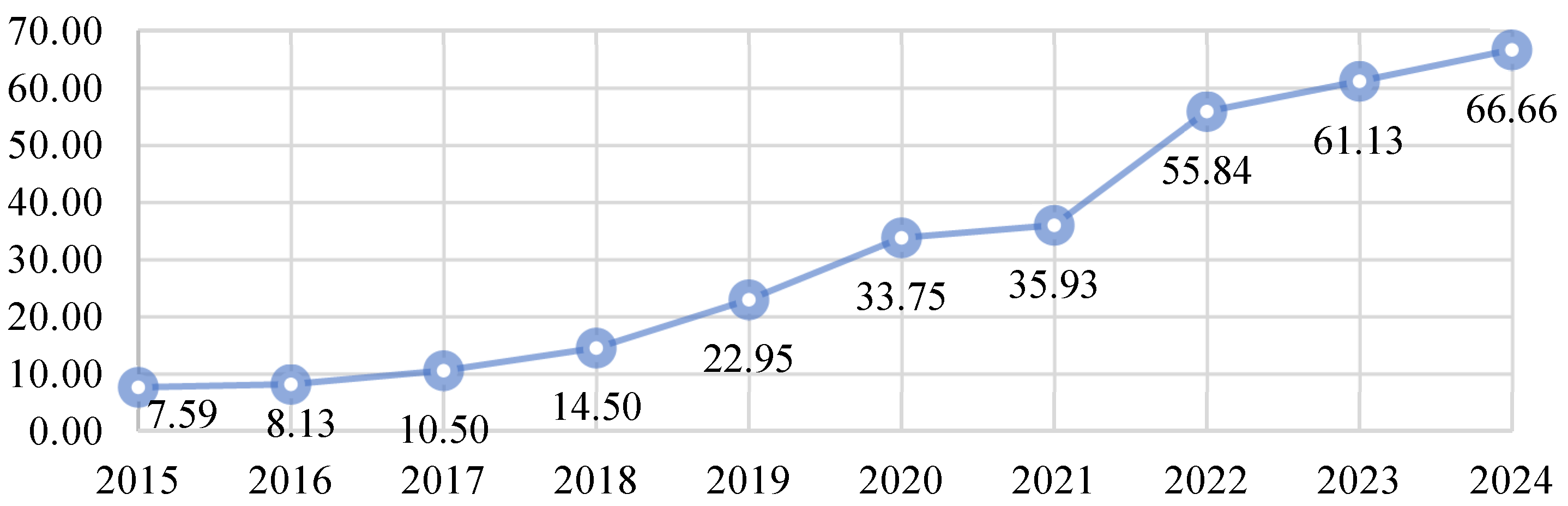
Figure 1. Evolution of the IoTRIM score.
Systems 13 00910 g001
Figure 2. Baseline model regression analysis.
Systems 13 00910 g002
Figure 3. Extended model regression analysis.
Systems 13 00910 g003
Figure 4. Regression analysis ln(K) & ln(I).
Systems 13 00910 g004
Figure 5. Relationship between the Evaluation Model Level and Value Added.
Systems 13 00910 g005
Figure 6. Heatmap of elasticity coefficients.
Systems 13 00910 g006
Figure 7. Total factor productivity and IoT.
Systems 13 00910 g007
Table 1. Structure of the IoTRIM.
PillarEvaluation CriterionIndicator
Digital infrastructureDevice connectivityShare of IoT devices per employee
Share of devices connected in real time
Network availabilityShare of company premises covered by high-throughput network
Number of connection outages per month
Data collection & processingData collection automationShare of sensor-acquired data in total data volume
Frequency of data collection
Data analytics utilizationShare of analytical reports generated monthly
Share of automatically processed data
Existence of an IoT data management platform
Share of depts. using IoT data in decision-making
Integration & interoperabilitySystem connectivityShare of systems connected via API / middleware
Share of IoT systems integrated with ERP/CRM/SCM
Share of IoT devices connected via cloud services
Existence of unified data interface for IoT data
Solution adaptabilityExistence of standardized protocol (MQTT, CoAP)
Share of devices supporting remote updates
Existence of centralized IoT device management across the entire network
Strategic orientationIoT investmentShare of IoT-related expenditure in total investment
Number of IoT projects implemented in last two years
Governance & planningExistence of a company-level IoT strategy
Consideration of IoT data in management d.-making
Share of employees trained in IoT-related topics
Existence of a perf. monitoring system for IoT projects
Existence of regular int. audits of IoT implementation
Table 2. Case study criterion level scores.
Evaluation Criterion2015201620172018201920202021202220232024
Device connectivity3.505.006.5011.0017.5021.5025.0033.5041.5052.50
Network availability54.0056.0058.0047.5051.5042.5044.0063.5070.5075.00
Data collection automation2.503.0014.5017.5031.0045.0046.0064.0068.0072.00
Data analytics utilization0.751.003.7533.2538.0043.2547.0055.2560.5066.75
System connectivity0.000.001.253.2534.0037.2538.0045.5051.7557.50
Solution adaptability0.000.000.000.001.6770.0073.3377.3380.6783.33
IoT investment0.000.000.002.507.509.5012.5024.0030.5039.00
Governance & planning0.000.000.001.002.401.001.6083.6085.6087.20
Table 3. Case study pillar level scores.
Pillar2015201620172018201920202021202220232024
Digital infrastructure28.7530.5032.2529.2534.5032.0034.5048.5056.0063.75
Data collection & processing1.632.009.1325.3834.5044.1346.5059.6364.2569.38
Integration & interoperability0.000.000.631.6317.8353.6355.6761.4266.2170.42
Strategic orientation0.000.000.001.754.955.257.0553.8058.0563.10
Table 4. Baseline input data for the Cobb–Douglas Model in €.
YearValue Added (Y) in €Depreciation of Fixed Assets (K) in €Personnel Cost (L) in €
20153,951,482681,1042,301,879
20164,083,907722,5372,394,751
20174,051,199741,6882,298,172
20184,349,418791,5112,472,689
20194,593,821810,3462,485,994
20204,703,179771,2642,454,411
20214,682,109759,3832,430,178
20225,004,568853,9102,543,628
20235,002,311943,2072,582,742
20245,905,8231,083,6612,701,884
Table 5. Comparison of coefficients.
NoBaseline ModelExtended ModelDifference
ln(K)0.330.29−0.04
ln(L)1.470.67−0.80
Table 6. Verification of Hypothesis H1.
EnterpriseScenarioγ p-Value (γ)
DHLpessimistic0.14960.7585
realistic0.94540.0413
optimistic0.47210.0625
DPDpessimistic0.07300.7982
realistic0.29880.2684
optimistic1.06430.0040
GLSpessimistic1.31110.2287
realistic1.00830.0022
optimistic0.66200.2513
Packetapessimistic0.47250.1015
realistic0.16680.7233
optimistic0.18630.2393
SPSpessimistic−0.43500.4350
realistic0.49650.3346
optimistic0.22350.2240
TNTpessimistic0.15030.6176
realistic0.15780.7152
optimistic0.69650.0067
Table 7. Verification of Hypothesis H2.
EnterpriseScenarioSSE (Baseline)SSE (Extended)Fp-ValueResult
DHLpessimistic0.0214850.0000632732.391.99 × 10−11H0 not accepted
realistic0.0214850.0000871964.887.41 × 10−11H0 not accepted
optimistic0.0214850.0000632732.391.99 × 10−11H0 not accepted
DPDpessimistic0.2623310.00007727,289.732.00 × 10−15H0 not accepted
realistic0.2623310.00006731,184.771.22 × 10−15H0 not accepted
optimistic0.2623310.00002680,958.411.11 × 10−16H0 not accepted
GLSpessimistic0.0806060.0001105879.919.32 × 10−13H0 not accepted
realistic0.0806060.00002327,883.191.89 × 10−15H0 not accepted
optimistic0.0806060.0001344787.092.12 × 10−12H0 not accepted
Packetapessimistic0.1147490.00001826,016.168.86 × 10−9H0 not accepted
realistic0.1147490.00004111,201.954.78 × 10−8H0 not accepted
optimistic0.1147490.00000594,829.816.67 × 10−10H0 not accepted
SPSpessimistic0.1873420.00004032,517.594.25 × 10−14H0 not accepted
realistic0.1873420.00008116,199.024.88 × 10−13H0 not accepted
optimistic0.1873420.000007187,334.641.11 × 10−16H0 not accepted
TNTpessimistic0.0881980.00002330,510.251.33 × 10−15H0 not accepted
realistic0.0881980.00005812,090.465.23 × 10−14H0 not accepted
optimistic0.0881980.00001452,180.011.11 × 10−16H0 not accepted
Disclaimer/Publisher’s Note: The statements, opinions and data contained in all publications are solely those of the individual author(s) and contributor(s) and not of MDPI and/or the editor(s). MDPI and/or the editor(s) disclaim responsibility for any injury to people or property resulting from any ideas, methods, instructions or products referred to in the content.