1. Introduction
In the context of accelerating globalization and the increasingly intricate international division of labor, the GVC has become a critical mechanism driving economic growth and enhancing national competitiveness [
1,
2]. Through GVC participation, countries and enterprises can integrate global resources, technologies, and markets across geographical boundaries, optimizing resource allocation and enhancing production efficiency [
3,
4]. East Asian countries, in particular, have gained a competitive edge in the global production and trade system, leveraging GVC participation to achieve remarkable export competitiveness [
5,
6]. By advancing production efficiency and technological capabilities, these countries have solidified their roles within the global supply chain and contributed to regional economic integration [
7,
8,
9,
10]. However, with ongoing shifts in the global economy and the accelerated pace of digital transformation, GVCs face profound structural changes. As international trade evolves, countries are increasingly prioritizing supply chain resilience, security, and sustainability, making GVC restructuring a central focus for policymakers and corporate strategy planners [
8].
Given this context, effectively leveraging the new opportunities provided by GVC restructuring to optimize the export structure of East Asian countries has become a core focus in both policy and academic circles. This process not only entails optimizing production efficiency and market layout but also requires companies to dynamically adjust to changing market demands. In this paper, export structure optimization refers to improving a country’s export composition through GVC restructuring, technological innovation, cross-border e-commerce, and market access policies to boost. Historically, East Asian countries have functioned as the “world’s factory” within the global supply chain, focusing primarily on labor-intensive manufacturing and assembly for global markets. In this “factory economy” model, countries specialized in mass production, cost efficiency, and serving as the backbone of global manufacturing networks [
11]. In contrast, a “headquarters economy” emphasizes high-value-added activities such as research and development, innovation, product design, and strategic management. Countries transitioning to headquarters economies move beyond just manufacturing to become centers of innovation and global business leadership, driving technological advancements, intellectual property development, and strategic market positioning [
7,
12]. With the rapid development of digitalization and technological innovation, these countries must upgrade their export structure through value-added, innovation, and technology spillover effects, so as to transform into “world innovation centers” [
13]. Ref. [
12] emphasizes that while digitalization can enhance performance, it is not a guaranteed outcome and must be carefully managed to avoid exacerbating existing economic disparities. Ref. [
14] further argues that factory economies encounter significant barriers in pursuing innovation-driven upgrades, primarily due to the lack of institutional support and infrastructure necessary to foster startups and integrate into global, technology-driven GVCs. In contrast, East Asian countries are presented with multiple opportunities for transformation and upgrading as they strive to achieve these goals. Rapid global market shifts, changing consumer preferences, and ongoing technological advances impose considerable pressure for adjustment. Moreover, the rise of digital trade platforms, cross-border e-commerce, and the internet of things presents new avenues for export optimization. However, sustaining competitiveness in this increasingly technology-driven environment remains a critical area of concern that demands further exploration [
15]. These digital advancements offer East Asian countries significant potential for innovation-led export growth, but they also introduce new risks and uncertainties. In particular, cross-border e-commerce has expanded market reach, enabling diverse export models. By leveraging digital technologies, companies can more flexibly respond to global demand fluctuations, thereby achieving more efficient supply chain management and faster market responsiveness [
16].
Against the backdrop of a reshaping global economy and rapid digital transformation, GVCs are undergoing significant change. As a central region in the global production network, East Asian countries have gained notable export competitiveness through GVC participation [
5]. However, with swift shifts in global market demand and technology, these countries must seize new opportunities within GVC restructuring. Both current policy and academic research focus on how to leverage GVC restructuring to optimize export structures and sustain East Asia’s competitive edge in global markets [
11]. While existing research has investigated the impact of GVCs on export structures, many studies are limited to a single dimension, such as aggregate volume or industry chain upgrading, and lack systematic analysis of key success factors [
17]. Specifically, the roles of innovation, technology spillovers, and policy support have yet to be clearly defined, especially regarding how East Asian countries can strategically leverage these factors to adapt to dynamic markets in the context of GVC restructuring [
3,
18]. First, while the influence of GVCs on national and regional export performance has been noted, there is insufficient deep analysis on the role of innovation. Second, the current literature often focuses on trade policies and market demand adjustments but lacks a comprehensive examination of systematic impacts, such as technology spillovers within GVCs [
5,
11,
15,
17,
19]. Additionally, research on digital technology applications in GVCs is limited, with few studies identifying key success factors for emerging technologies like IoT and e-commerce in export management [
12,
14,
20,
21]. Therefore, it is essential to conduct a thorough investigation into the systematic impact of GVC restructuring on export structure optimization in East Asia from a multidimensional perspective. This approach will not only provide strategic guidance for policy development but also establish a foundation for future academic research, enabling East Asian countries to strengthen their competitive positions in the global market.
To address these research gaps, this study systematically identifies key success factors for promoting export optimization in East Asian countries under GVC restructuring, based on global value chain theory, resource-based theory, and innovation diffusion theory. Through a comprehensive literature review and expert interviews, we screened 14 key factors, which were analyzed using the DEMATEL-ISM-MICMAC integrated approach for both qualitative and quantitative assessment. The study reveals that enhancing innovation capacity, technology spillover effects, investing in and developing cross-border e-commerce and digital trade platforms, and strengthening market access policies and trade process optimization are core factors driving export structure optimization in East Asia. The combined effect of these factors provides substantial support for increasing export competitiveness within the context of GVC restructuring.
Theoretically, this study enriches the research framework on GVC restructuring and export structure optimization while also deepening the application of resource-based and innovation diffusion theories in export strategy. From a managerial perspective, the study offers decision-making insights for East Asian countries in crafting export policies that support GVC restructuring, helping governments and businesses prioritize areas like technological innovation, digital trade platform development, and market access policy optimization. These findings are not only practically relevant to the East Asian region but also offer valuable insights for other emerging market economies aiming to optimize their export structures within the GVC framework.
The remainder of this paper is structured as follows:
Section 2 presents the literature review;
Section 3 outlines the DEMATEL-ISM-MICMAC integrated approach;
Section 4 presents the research findings; and
Section 5 provides conclusions and discussion, including study limitations and future research directions.
3. Research Methodology
3.1. Research Process
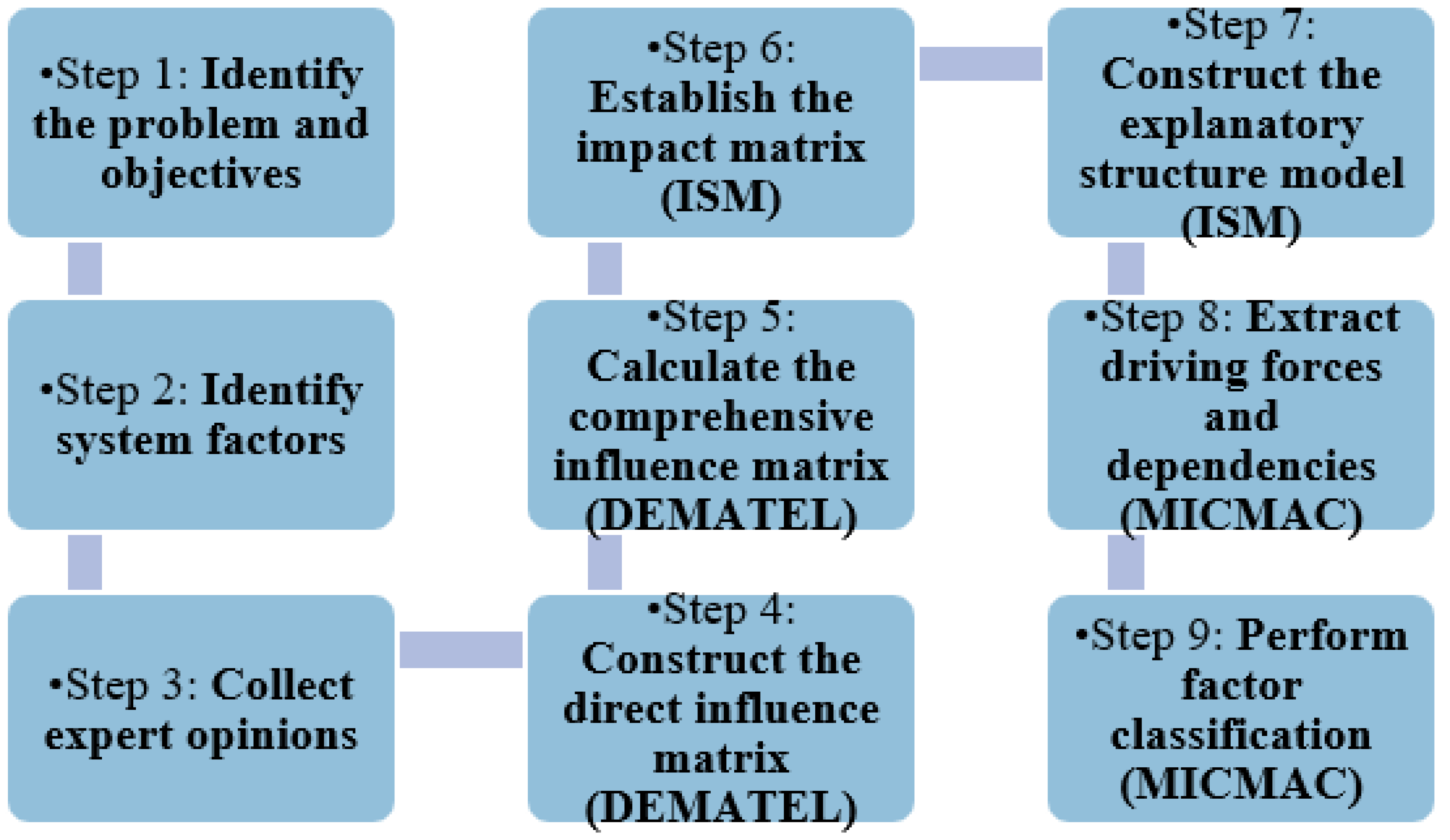
Figure 1 illustrates the overall research process of this study, followed by a detailed breakdown of the integrated DEMATEL-ISM-MICMAC approach.
In the initial phase of this study, we conducted an extensive literature search and expert evaluation to identify critical success factors for optimizing the export structure of East Asian countries within the context of GVC restructuring. Databases such as Google Scholar, Web of Science, and SCOPUS were utilized to pinpoint 14 key success factors driving export structure optimization in this GVC restructuring context. To validate these factors, we conducted interviews with two experts who each have over sixteen years of experience in international trade and export management. Additionally, a comprehensive literature review was performed, examining global standards, regional policies, and regulatory guidelines impacting GVC restructuring and export optimization in East Asia. These assessments clarified the primary success factors promoting export structure optimization in the framework of the GVC (
Table 1). Moreover, theoretical foundations such as Global Value Chain Theory, Resource-Based Theory, and Diffusion of Innovation Theory underpinned the identification and application of these critical success factors.
In the second phase of the study, we contacted over 100 institutions from China, South Korea, and Japan involved in foreign trade, imports and exports, and related industries. From this group, 37 potential partners were identified. After introducing the study via email, we received positive responses from 11 institutions. Due to scheduling constraints, three experts were unable to participate, leaving a total of eight experts with over eight years of industry experience (
Table 2). The selection criteria for the experts included more than eight years of industry experience, with a preference for experts who are professors, researchers, or senior executives in companies. These experts possess not only extensive industry experience but also a strong academic background. The data collection period spanned from 6 May to 23 August 2024, and primarily involved email communication and online survey questionnaires. A mixed-method approach was employed, combining online surveys with telephone/video interviews to ensure the comprehensiveness and depth of the data. During the data collection process, we initially distributed the survey questionnaires to the experts via email, allowing them to complete the surveys according to their own schedules. Ultimately, all eight experts completed the questionnaires. To gain further insights from the experts, we conducted a total of five telephone or video interviews with three of the experts. The remaining five experts completed the surveys through email or online platforms. Although face-to-face interviews were initially considered, given the experts’ schedules and geographical differences, email and online surveys were deemed the most effective and practical methods. The telephone/video interviews provided qualitative insights that complemented the quantitative data from the surveys, thereby enhancing the depth and correlation of the collected data. Thus, this study utilized a combination of online surveys distributed via email and telephone/video interviews, ensuring the breadth, flexibility, and depth of the data collection process.
This study collected expert opinions through emails, interviews, and surveys. Initially, we used a matrix-filling approach, but experts reported difficulties in matching factor codes with their names. To improve usability, we adopted a Likert-scale-based questionnaire [
43,
44] that provided detailed descriptions of the concepts, simplifying the completion process. Data from only one expert are presented in this paper (
Table 3).
In the third phase of this study, we applied the DEMATEL-ISM-MICMAC integrated approach to conduct an in-depth structural analysis of the critical success factors driving export structure optimization in East Asian countries through GVC restructuring. Although various quantitative models, such as ANP, AHP, Fuzzy DEMATEL, and SEM could be used to evaluate these factors (
Table 4), the DEMATEL-ISM-MICMAC approach demonstrated unique advantages, particularly in analyzing complex systems with uncertain information.
Firstly, DEMATEL reduces the need for extensive parameter estimation and large statistical datasets when handling complex systems. This method, grounded in graph theory and matrix analysis, utilizes expert insights to examine causal relationships within complex systems, thereby identifying strategic and critical factors through hierarchical structuring [
43,
45]. By numerically assessing relationships, DEMATEL builds a structural model of the system, showcasing its exceptional structural modeling capability. Building on DEMATEL analysis, the ISM method further enhances understanding of hierarchical relationships among elements. ISM is a progressive structural analysis approach that transforms the direct relationship matrix of a complex system into a directed graph to construct a multi-level system structure. This method clarifies dependencies and influence pathways among elements, making it especially effective for strategic issue analysis [
46]. Through ISM, factors can be organized by their degree of influence and dependency, aiding decision-makers in prioritizing key, driving elements to optimize strategic planning.
MICMAC further amplifies the advantages of this integrated approach. By analyzing the direct influence matrix, MICMAC identifies the driving power and dependency of elements within the system, helping to clarify each element’s role within the overall structure. MICMAC’s categorization facilitates differentiated management strategies by decision-makers based on factor types and highlights highly influential elements, thereby delineating pathways for system optimization [
47].
Overall, the DEMATEL-ISM-MICMAC integrated method excels in its multi-layered, multi-dimensional analytical capabilities for complex systems [
46]. DEMATEL offers a quantitative understanding of causal relationships, reducing data and parameter dependency, making it especially useful in information-scarce scenarios. ISM then reveals systemic influences among elements by building a hierarchical structure, providing decision-makers with a clear strategic roadmap. Finally, MICMAC refines the analysis of driving power and dependency, identifying the most impactful elements within the system. This integrated method not only deepens complex system analysis but also provides theoretical support and practical guidance for leveraging digital technologies to promote zero-carbon transition in Korean ports.
3.2. DEMATEL-ISM-MICMAC Integrated Method Overall Calculation Steps
Direct Influence Matrix. Using expert scoring, the influence of
on
is compared, with no self-influence (the diagonal is zero). The direct influence matrix
is obtained.
Normalized Influence Matrix. There are various methods for normalization; here, the row maximum method is used. The sum of each row of matrix
is calculated, and the maximum value is taken. All elements of matrix
are then divided by this maximum value to obtain the normalized influence matrix
.
Total Influence Matrix. The Total Influence Matrix represents the combined direct and indirect effects of all elements within a system, showing the overall influence relationships between them.
In the formula, represents the identity matrix.
Calculate the influence, influenced, centrality, cause, and weight of each element.
The influence refers to the sum of each row in matrix
, representing the overall influence of each element on all other elements. It is denoted as
.
The influenced degree refers to the sum of each column in matrix
, representing the overall influence each element receives from all other elements. It is denoted as
.
Centrality indicates the position and significance of a factor within the evaluation system. The centrality of an element is the sum of its influence degree and influenced degree, denoted as
.
Causality (or cause degree) is obtained by subtracting the influenced degree from the influence degree of an element, denoted as
.
By normalizing the centrality, the weight of the indicator can be obtained.
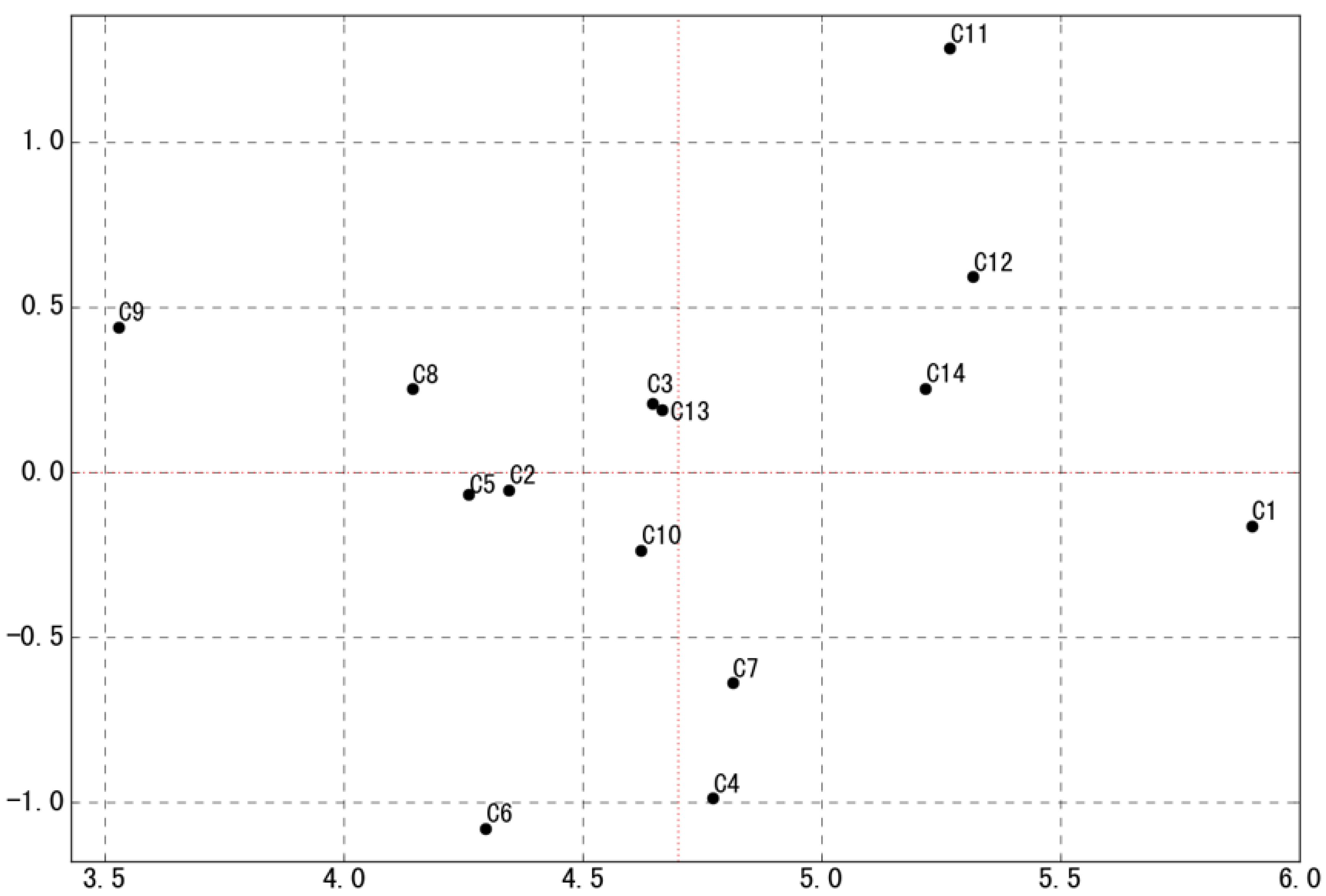
Draw the Causal Diagram. Plot the centrality on the horizontal axis and the causality on the vertical axis to create the causal relationship diagram.
Calculate the Reachability Matrix. The overall influence matrix
, where
is the total influence matrix and
is the identity matrix. In matrix
, values smaller than the threshold
are set to 0, and others are set to 1, resulting in the reachability matrix
.
where
is the average value of the total influence matrix.
Calculate the reachability set, antecedent set, and intersection.
The reachability set represents the set of factors that can be reached from the given factor. It includes all factors corresponding to the columns with a value of 1 in each row.
The antecedent set represents the set of factors that can reach the given factor. It includes all factors corresponding to the rows with a value of 1 in each column.
Then, calculate the intersection .
Factor Layering.
When a factor satisfies , it indicates that is the top-level factor. Remove the row and column corresponding to factor in the reachability matrix , recalculate the reachability set, antecedent set, and intersection, and continue this process to identify the next level until all factors are classified, forming the final factor hierarchy.
Calculate driving forces and dependencies. Driving forces indicate the degree of influence on other factors and are calculated by summing across the reach matrix. Dependencies indicate the degree of influence by other factors and are calculated by summing down the reach matrix.
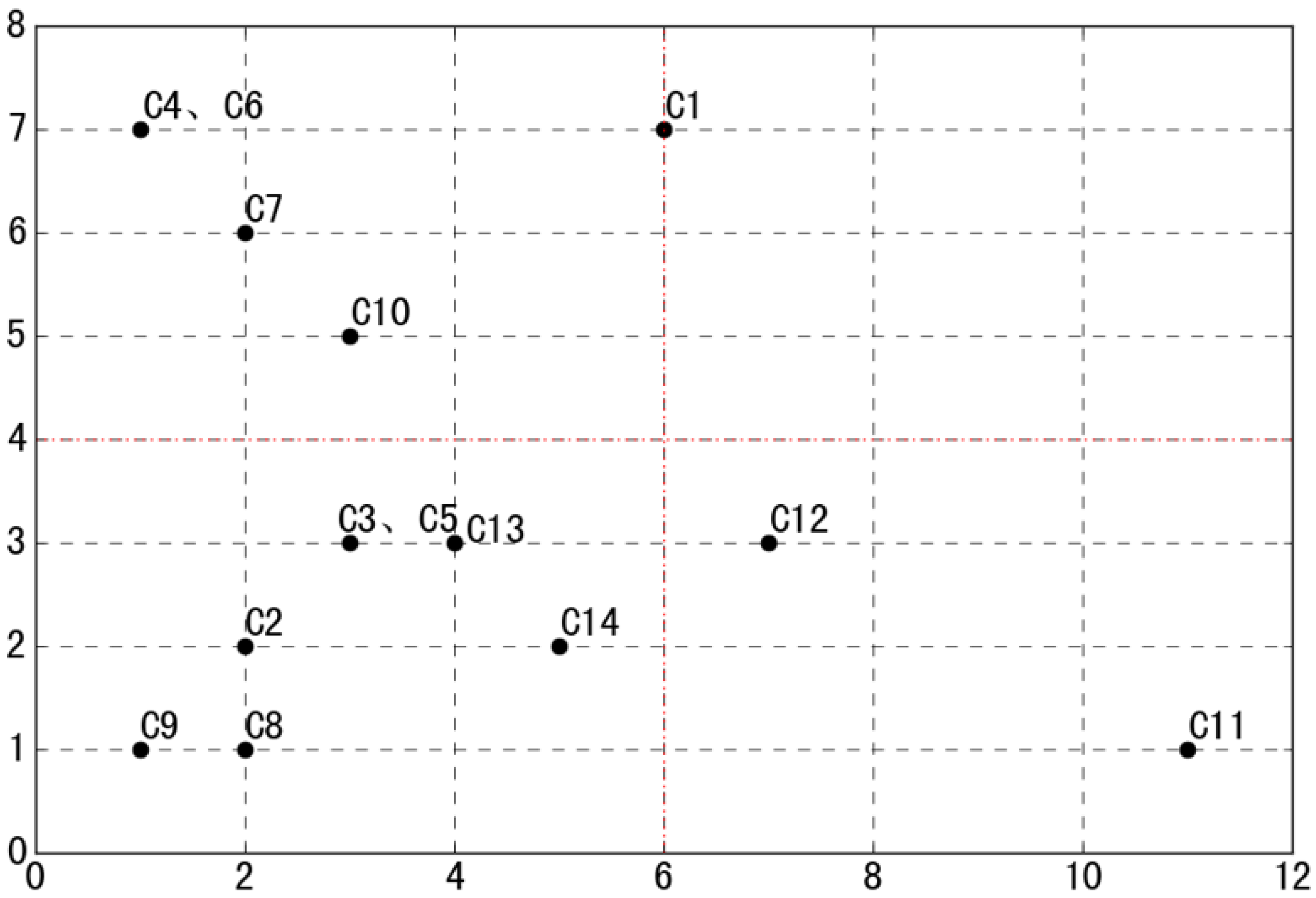
Draw a driving force-dependency diagram. Plot a scatter diagram with driving forces as the abscissa and dependencies as the ordinate.
4. Results
4.1. DEMATEL Method Results
Based on the DEMATEL method, the comprehensive influence matrix was computed to capture the interdependencies among the critical success factors (
Table 5). This matrix shows the degree to which each factor influences others, with higher values indicating a stronger influence.
Secondly, the results further detail multiple attributes of the 14 factors (C1 to C14), including their influence on other factors, degree of being influenced, centrality, causality, weight, as well as their ranking and classification (as either causal or outcome factors) in the analysis (
Table 6).
In the context of GVC restructuring, optimizing the export structure of East Asian countries requires the interplay of multiple factors. Based on the analysis, the top three critical factors identified are enhancing independent innovation capabilities and technology spillover effects (C1), investing in and developing cross-border e-commerce and digital trade platforms (C12), and strengthening market access policies while optimizing cross-border trade processes (C11). These factors play indispensable roles in enhancing export structures, increasing the export of high-value-added products, and bolstering international competitiveness, thereby laying a strong foundation for East Asia’s position in the global market.
First, enhancing independent innovation capabilities and technology spillover effects (C1) ranks highest, with a weight of 0.08967 and centrality of 5.90031. This factor highlights the sustained drive toward export structure optimization through strengthened technology R&D. Improvements in independent innovation not only advance technological products themselves but also benefit other segments within the value chain through technology spillover effects, increasing overall industry innovation and efficiency. In the GVC, technology innovation and spillover effects serve as powerful means for East Asia to transition toward high-value-added, technology-intensive industries [
1,
5]. By fostering local R&D, East Asia can further reduce reliance on foreign technology, enhancing the uniqueness and competitiveness of export products and enabling local firms to secure greater bargaining power in international markets [
7].
Second, investing in and developing cross-border E-Commerce and digital trade platforms (C12) holds a weight of 0.0808 and a centrality of 5.31675, underscoring the importance of digital trade platforms in enabling East Asian enterprises to swiftly access global markets. The growth of cross-border e-commerce not only reduces traditional trade barriers but also improves trade efficiency, allowing more small and medium-sized enterprises (SMEs) to engage in international trade. This transformation brings diversification to exports and enhances the value of export products. Through digital platforms, East Asian countries can more readily access new international markets and expand their export volume. Additionally, cross-border e-commerce platforms allow exporters to connect directly with overseas consumers, reducing intermediary costs and enhancing firms’ responsiveness to consumer demands [
7,
12]. In a highly competitive global market, this direct market access offers valuable growth opportunities for East Asian enterprises, enabling them to seize more high-value-added export opportunities.
Third, strengthening market access policies and optimizing cross-border trade processes (C11) holds a weight of 0.08006 and a centrality of 5.26823, indicating the critical role of policy support in export structure optimization. By improving market access policies and simplifying cross-border trade processes, East Asian countries can effectively reduce international trade barriers, offering local enterprises more accessible international pathways. Policy enhancements in market access directly reduce trade costs, enabling firms to control costs while enjoying greater market reach [
6,
40]. Especially when navigating complex trade policies and regulations across countries, streamlined processes and reduced bureaucratic steps can significantly improve East Asia’s export efficiency. Furthermore, policy support can attract greater foreign investment into local markets and encourage local firms to expand globally, further boosting the share of high-value-added export products and enhancing the competitiveness of the export structure [
7,
13]. The effective implementation of these policies provides vital support for optimizing the export structure of East Asian countries in the global market.
Beyond these top three factors, other factors also contribute significantly to export structure optimization. For instance, deepening the integration of digital and intelligent manufacturing technologies (C2), with a weight of 0.06604 and centrality of 4.34517, enhances production process efficiency and quality, enabling East Asian countries to better meet the dynamic demands of global markets. Promoting value-Added production and upstream extension (C3), with a weight of 0.07063 and centrality of 4.64727, demonstrates how value-adding production processes can further elevate East Asia’s position in the GVC. Improving infrastructure and regional logistics networks (C7), with a weight of 0.07315 and centrality of 4.81343, ensures the smooth flow and efficient transport of exports, which is crucial for timely responses to international market demands. Additionally, advancing green transformation and environmental sustainability (C9) and focusing on high value-added industrial chains (C10) contribute significantly to environmental alignment and high-value product positioning, enhancing East Asia’s brand competitiveness in global markets [
39].
In summary, enhancing independent innovation capabilities, developing digital trade platforms, and optimizing market access policies constitute the core framework for advancing export structure optimization in East Asian countries. These factors not only directly boost the export share of high-value-added products but also establish a solid foundation for export structure optimization from multiple perspectives, including market access, technology advancement, and digital application. This comprehensive approach ensures that East Asian countries achieve a stronger market position and sustained growth momentum within the restructured GVC [
5,
17].
Subsequently, a cause–effect diagram was plotted with centrality on the x-axis and causality on the y-axis (
Figure 2).
4.2. ISM
Reachability matrices are used to display direct influence relationships between critical success factors (CSFs). They are a tool used in decision structure analysis to depict the interactions between factors. The value of each matrix indicates whether a CSF (represented in the row) can directly influence another CSF (represented in the column). The construction of such a matrix helps to clearly identify the relationships and interdependencies between the various critical factors. By analyzing the reachability matrix, it is possible to determine which factors have a proactive or dominant role in the system, thus providing a basis for further influence and dependency analysis. This structured representation provides an intuitive framework for understanding the cause-and-effect relationships and interactions in complex systems and provides critical support for subsequent decision modeling and strategy optimization (
Table 7).
Secondly, based on the reachability matrix, the reachability set, antecedent set, and intersection set were established (
Table 8).
By analyzing the reachability set, antecedent set, and intersection set, the hierarchical positioning of various factors within the system was determined (
Table 9).
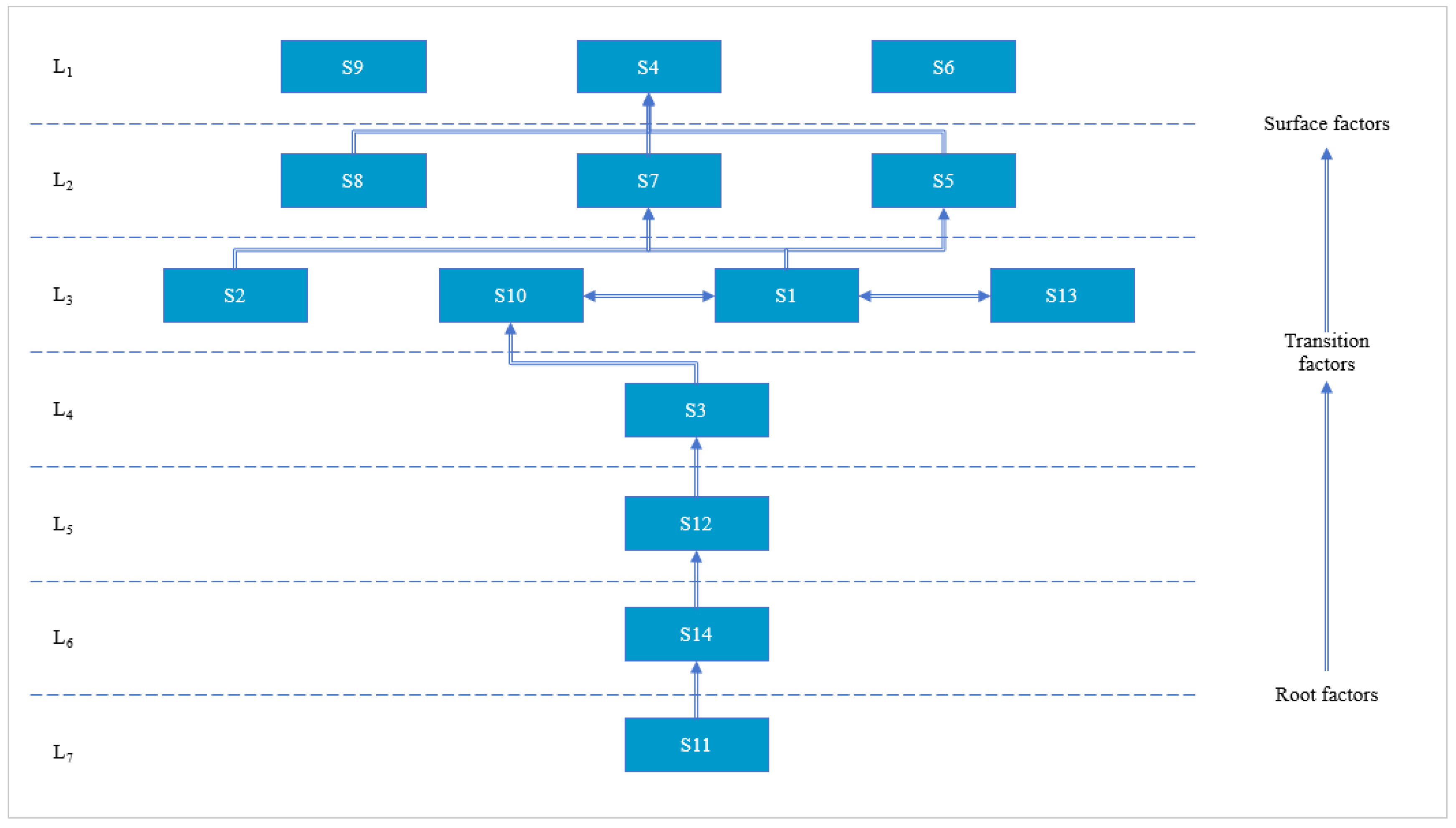
In the process of GVC restructuring, the hierarchical classification of factors through the ISM method helps to clarify each factor’s role and impact on the optimization of East Asian countries’ export structure. Factors at each level perform distinct functions, forming a bottom-up support system that ultimately drives the achievement of top-tier strategic goals. At the foundational level, C4, C6, and C9 serve as foundational factors supporting GVC restructuring. These factors provide sustainable support for the system by promoting regional co-operation, enhancing innovation capacity, and advancing green development. In the context of globalization and value chain restructuring, these foundational factors ensure that adjustments to East Asia’s export structure address not only economic but also social and environmental benefits, thereby laying a stable groundwork for higher-level factors [
18,
22].
In the lower-middle and middle levels, factors increasingly focus on operational aspects. C5, C7, and C8 form the lower-middle level, focusing on establishing robust infrastructure and human resources capable of withstanding supply chain risks. In the middle level, factors such as C1, C2, C10, and C13 play a more direct role. These factors support the optimization of export structure by enhancing innovation capacity, driving technology integration, and aligning regulatory standards to improve the value of East Asian export products.
At the upper-middle and upper levels, factors exhibit stronger driving forces and have significant impacts on the overall strategy for GVC restructuring. C12, an upper-middle-level factor, expands market reach for East Asian export products by developing cross-border e-commerce platforms, greatly enhancing the efficiency of GVC restructuring through digital support. C14, positioned at the upper level, further strengthens the global recognition and competitiveness of East Asian products, enhancing the trust and quality assurance of export goods in high-end markets by aligning with international standards.
At the top level, C11 serves as the core driving force in the entire hierarchy. By optimizing market access policies and streamlining cross-border trade processes, East Asian countries can effectively reduce trade barriers, making it easier for export goods to enter international markets. This top-tier factor plays a leading role in enhancing East Asian countries’ export structure, bringing direct market-driven outcomes that leverage the support provided by factors at other levels.
Figure 3 illustrates the hierarchical structure of factors under the ISM method.
4.3. MICMAC
Firstly, we analyzed the driving power and dependency of the 14 factors (
Table 10).
The results in
Table 10 indicate that, among the factors with very high driving power, C11 provides a significant competitive advantage for East Asian exports by improving trade access and simplifying procedures. Efficient market access policies break down trade barriers, enhancing the circulation efficiency and competitiveness of goods in international markets, thereby serving as a critical force in export structure optimization [
5]. C12, which exhibits high driving power, has opened new market channels for products from East Asia. These platforms not only expand the market reach of export goods but also support the restructuring of the value chain and the in-depth expansion into international markets through digital means. At the same time, C1 is also a key factor. By strengthening innovation capacity, East Asian countries drive technological advancement and generate spillover effects, providing technical support to industries within the region and enhancing regional competitiveness.
At the moderate driving power level, C6 has a limited driving force but plays a crucial role in shaping an environment conducive to innovation. Increased R&D investment supports the growth of innovative enterprises, enabling stronger competitiveness within the restructured value chain. C7 also has moderate driving power, providing foundational support for GVC restructuring. A well-developed logistics network reduces export costs and increases the responsiveness of international trade, ensuring material support for the globalization of export goods. C10 enhances the added value of export products, thereby boosting East Asia’s competitiveness in global markets.
Low driving power factors play a supportive role in the optimization process. While C2 has limited driving power, it offers long-term value in improving flexibility and production efficiency in manufacturing. C3 aids in extending the industrial chain and increasing production value in East Asia. Additionally, although C4 has a smaller impact, it lays an essential foundation for the smooth implementation of GVC restructuring by reducing regional trade barriers and enhancing economic co-operation within the region [
20]. C5, though low in driving power, provides essential support to the economic system. C8 also has low driving power but plays an important role in managing risk associated with dependence on single markets and external shocks. C9 holds a position in GVC restructuring as well; although its short-term effects may be limited, it aligns with global sustainability goals in the long run. Moreover, C13 provides necessary support for compliance and trade facilitation, while C14 enhances the recognition and competitiveness of East Asian exports in the international market.
Based on
Table 10, we constructed a driving power-dependency diagram, with driving power on the x-axis and dependency on the y-axis (
Figure 4).
Based on the results of the MICMAC analysis, and in conjunction with the theoretical frameworks of GVC theory, the resource based theory, and innovation diffusion theory, this study identifies the key drivers behind the optimization of East Asia’s export structure. The driving power-dependency analysis highlights the critical role of C11 (Very High Driving Power) and C12 (High Driving Power) in reshaping the region’s global positioning. These factors, through enhancing trade access and expanding market channels via digital platforms, align with GVC theory, which emphasizes reducing trade barriers and fostering deeper market integration. C1 (Moderate Driving Power), with its focus on strengthening innovation capacity, reflects the RBV by demonstrating how technological advancements can bolster regional industries and create a sustainable competitive advantage. Similarly, C7 (Moderate Driving Power), by improving logistics and reducing export costs, plays an essential role in maintaining supply chain efficiency and further enhancing global competitiveness. The findings underscore that while high-driving power factors like C11 and C12 directly influence the integration of East Asia into global markets, moderate-driving factors such as C1 and C7 provide crucial support for long-term export competitiveness and the sustainable growth of the region’s export-driven economy (Boschma, 2024).
5. Conclusions and Discussion
With the restructuring of Global Value Chains (GVCs) and advancements in digital technology, optimizing the export structure of East Asian countries has become a crucial pathway to enhancing their global competitiveness. This study explores key success factors for driving export structure optimization in East Asian countries from a strategic perspective. By integrating expert insights and the DEMATEL-ISM-MICMAC approach, we conducted a systematic quantitative and qualitative analysis of 14 critical factors. On this basis, we developed a comprehensive analytical framework that incorporates Global Value Chain Theory, Resource-Based Theory, and Diffusion of Innovation Theory, providing a deep analysis of these factors and their complex interrelationships.
The results indicate that Enhancing Independent Innovation Capabilities and Technology Spillover Effects (C1), Investing in and Developing Cross-Border E-Commerce and Digital Trade Platforms (C12), and Strengthening Market Access Policies and Optimizing Cross-Border Trade Processes (C11) are core factors driving export structure optimization in East Asian countries. Additionally, Strengthening Market Access Policies and Optimizing Cross-Border Trade Processes (C11), Aligning Enterprises with International Standards (C14), and Investing in Cross-Border E-Commerce and Digital Trade Platforms (C12) exhibit strong driving forces within the system. This study aims to provide systematic strategic guidance for policymakers, export firms, and stakeholders in East Asia to optimize export structures and enhance competitiveness within the GVC framework. Furthermore, it offers valuable insights for other emerging economies seeking export optimization amid GVC restructuring.
5.1. Theoretical Implications
This study makes significant theoretical contributions on multiple levels. First, it advances the theory of export structure optimization in the context of GVC restructuring. While existing research discusses the impact of GVCs, most studies focus primarily on trade policy and macroeconomic factors, with limited attention to the deeper mechanisms of export structure optimization through innovation capacity, market access, and digital technology integration. By combining Global Value Chain Theory, Resource-Based Theory, and Diffusion of Innovation Theory, this study identifies and validates key success factors for export structure optimization in East Asia under GVC restructuring, addressing a theoretical gap in this field.
Secondly, this study deepens our understanding of resource allocation and innovation diffusion in GVC restructuring. The findings reveal that technology innovation and digital trade platforms significantly enhance export value and stimulate industry-wide progress through technology spillovers. In contrast to studies by [
22,
28], which analyzed the positive effects of GVC on East Asian export structure, our study constructs a comprehensive theoretical framework to elucidate the complex relationship between GVC restructuring and export structure optimization. This study also provides theoretical support for policymakers, emphasizing the need to balance technological advancement, resource allocation, and policy support in promoting GVC participation in East Asia, offering a new theoretical perspective for export optimization policy within the GVC context.
5.2. Managerial Applications
To drive export structure optimization in East Asian countries, governments, enterprises, and stakeholders should adopt coordinated management measures to ensure the effective and sustainable application of GVC restructuring and digital technology [
12,
22]. First, export firms should focus on the dual impact of independent innovation and technology spillover in market strategy planning. Technology innovation not only enhances the value-added of export products but also promotes the overall competitiveness of upstream and downstream industries, fostering regional economic growth [
3,
24]. Firms should make long-term plans for resource allocation, innovation capacity building, and investment in cross-border e-commerce platforms to secure a sustained competitive advantage. Establishing systematic technology evaluation and feedback mechanisms is also essential to ensure continuous support from technological innovation for export structure optimization.
Secondly, governments play a crucial role in GVC restructuring by providing policy support and institutional innovation, which ensure a favorable environment for corporate innovation and smooth trade processes [
25,
28]. Governments should create policy frameworks that support innovation and market access, fostering cross-sector and cross-border co-operation to optimize the export management environment. Additionally, governments should encourage digital trade platforms and cross-border e-commerce through financial incentives and international co-operation. Digital collaboration should extend beyond domestic markets to global value chain partners, ensuring East Asia’s sustainable competitiveness within the GVC restructuring context [
5,
25].
For other stakeholders within the supply chain, such as logistics companies and industry associations, digital technology serves as an effective tool for cross-border trade and a critical means of enhancing supply chain transparency and compliance. Logistics companies should invest in intelligent cargo systems, blockchain-enabled logistics tracking systems, and digital operations platforms to achieve more efficient and transparent cross-border trade processes. Furthermore, collaboration with global supply chain partners is essential to ensure the coherence and sustainability of logistics and export processes. Training employees in digital skills and raising environmental awareness are also key to advancing green export structure optimization. Although some factors, such as brand development, financial service support, and intellectual property protection, have lower influence, they provide essential support for export optimization in specific contexts. Through these measures, East Asian countries can maintain continuous export structure optimization and a competitive edge within the restructured global value chain.
5.3. Limitations and Future Research
While this study provides an in-depth analysis of key success factors for export structure optimization in East Asia through the DEMATEL-ISM-MICMAC approach, some limitations remain. First, the data primarily come from expert opinions, which, while ensuring professional insight, may lack broader applicability. Future research should consider incorporating real trade and international data to validate the generalizability of the results. Secondly, this study focuses on East Asian countries, yet policy environments and technological applications vary widely across regions. Future research should expand to other emerging economies to provide more comprehensive export optimization strategies. Additionally, future studies should explore how to optimize the synergy between GVC restructuring and export structure optimization within a multi-stakeholder collaboration framework, providing systematic solutions for export structure optimization in global emerging markets.