1. Introduction
The class of fluids concerning the nanostructured asymmetrically copolymerized particles with intrinsic motion in a viscous medium is termed micropolar fluids. These fluids consist of gyratory micro-sized specks that make new subtleties in modern hi-tech engineering mechanisms and ergonomics. The extraction of crude oil, cruddy flows, blood flows, polymeric moratorium, liquid precipitation and fluids containing bar-like components are some of the common examples of micropolar fluids. Micropolar fluids are a branch of polar fluids that exhibit rotational and translational momentums simultaneously in contrast with the classical fluids, which show only translational momentum. This unique feature of six degrees of freedom has made these fluids an attractive class for the scientists of non-Newtonian fluid dynamics. A brief experimental review of the flow of high-polymer solutions through rotating disks has been presented by Hoyt and Fabula [
1], considering the addition of soluble polymers that causes a substantial reduction in friction. Ariman et al. [
2] conferred an outstanding analysis on the theory of micromomenta with different types of applications of micropolar fluid.
The basic idea of micropolar fluid, revealed by Eringen [
3], was used to study different flux conditions and framed the fundamental continuum theory for the fluids with microstructures and rotating microscopic crystals. This theory has been used to describe a prototypical framework for various colloidal materials and chemicals, liquid crystals, synovial joint lubricants, slurry dynamics, blood and biological fluid flows in thin vessels. The microrotation of the colloidal suspensions of macro-molecules has been studied by Hadimoto and Tokioka [
4] with reference to the principle of Eringen. With the passage of time, many researchers have reconnoitered the flow behavior of microrotational fluidics on different geometries. For example, Perdikis and Raptis [
5] reviewed the mass and heat transfer analysis of micropolar fluid through a smooth horizontal plate. Bakr [
6] investigated the chemical reaction boundary layer impact on hydromagnetic free convection and the mass transfer of micropolar fluid in a spinning frame of reference with vibrational plate velocity and an unceasing source of heat. The author compared the analytical results thus obtained by employing a small perturbation approximation and found it in good agreement with the results corresponding to the Newtonian fluid. Lockwood et al. [
7] examined the rheology and elastic behavior of liquid crystals and observed that these are the shear thinning non-Newtonian crystalline fluids. Dupuy et al. [
8,
9] considered different flow geometries to analyze the asymptotic behavior of steady micropolar fluid through a curvilinear channel and wavy tube by engaging the partial asymptotic decomposition (PAD) technique. Pažanin [
10] introduced a mathematical algorithm based on the analysis of micropolar fluid flow within a pipe of varying cross-sectional areas and narrowing pipe ends.
The fluid dynamics of two non-mixing fluids through microchannels with different orientations of channels, along with porous media assumptions, is an evolving challenge for the investigators of this field. Yadav et al. [
11] produced a systematic solution for the flow model of two non-miscible (azeotropic) fluids with a simple micropolar fluid in the upper portion of the porous channel and a viscid Newtonian fluid flowing in the lower portion of the channel. Si et al. [
12] analytically found the solution flow of micropolar liquid via simultaneously stretching and shrinking a channel with porosity in the channel’s walls by applying the homotopy analysis method (HAM). Many researchers from the 20th century [
13,
14,
15,
16,
17] have revealed the porosity effects of micropolar biological fluid flow through different microchannels, narrow tubes, arteries and peristaltic vessels.
In these studies, the importance of hydromagnetic flows has been overlooked in spite of their large-scale industrial and engineering applications—mainly in the pharmaceutical products, curative drugs, metallurgy, paper production, fabrication of glass, MHD flowmeters and pumps, etc. Shamshuddin et al. [
18] discussed the nonlinear electro-conductive microrotational fluid flow with magnetic field and heat generation effects using numerical methods. In recent times, Ghadikolaei et al. [
19] numerically analyzed the hydromagnetic flow of a micropolar dusty fluid with heat radiation effects. Van Gorder et al. [
20] established a unique comparison between the analytical and numerical solutions for the different physical parameters on the MHD flow of a viscous fluid through a shrinking/stretching nonlinear surface at a stagnation point. Kameswaran et al. [
21] considered the magnetic force effects on a water-based nanofluid flow due to a stretched nonlinear sheet with viscous dissipation properties and chemical reaction boundary layer effects. In another study, Kameswaran et al. [
22] evaluated the steady state numerical solution of homogeneous–heterogeneous chemical reactions in a water-based fluid flow with copper and silver nanoparticles over a stretching sheet with permeability effects. Recently, Borrelli et al. [
23] established the existence of the oblique stagnation-point flow of a conducting micropolar liquid by numerically analyzing the effects of the external magnetic field when applied parallel to the separating streamline while neglecting the impact of an induced magnetic field. A magnetohydrodynamic heat and mass transfer of a micropolar fluid over a vertical stretching sheet has been iteratively solved by Eldabe and Ouaf [
24] by applying the Chebyshev finite difference method (CFMD) with dissipative effects.
Mishra et al. [
25] numerically estimated the thermophysical aspects of the mass transfer MHD micropolar fluid via a porous medium, along with external factors, such as a magnetic field, thermal radiation and heat source. Prakash et al. [
26] assumed the micropolar fluid dynamics through a non-horizontal permeable channel with infinite length. They examined the flow under the control of a 3rd kind of boundary condition by simulating the problem with the help of the C–N finite difference scheme. The radiative heat flux is resolved by a Cogley–Vincent–Gilles formulation. Rashidi et al. [
27,
28,
29] presented different types of solution approximations over a porous gyrating disk and non-vertical sheet geometries for the MHD flow of a second-grade fluid. They considered various analytical methods (i.e., DTM, HAM, Padé approximation, and modified DTM) for approximating the mathematical formulations of the second-grade fluids. Umavathi and Sultana [
30] examined the heat source and sink impacts on the buoyant flow of micropolar liquid through a porous channel with velocity and thermal slip boundary assumptions. They compared the features of the micropolar liquid with Newtonian fluid and reported that various governing thermophysical parameters exhibit a reduction in fluxes of the flow field.
Through the survey and review of the available literature on MHD micropolar liquid flow through channels with porosity effects, it is revealed that the numerical simulation on the proposed flow field has not been overviewed specifically using the quasi-linearization technique. The gyration with chemical reactions under the effects of the Lorentz force has leeway in the fields of modern industries and micro-technologies, for example, alloys of molten metals, elastomer blends, emollients and paints, pharmaceutical areoles and food emulsifiers. Furthermore, the copious uses are in the field of biomedical magnetic devices, such as MHD stirrer, cancer tumor treatment setup, magnetic targeting drugs (MTD), magnetic endoscopy, designing of artificial hearts under magnetic levitation, etc. The motivation for this investigation is to research the characteristics of micropolar fluids via porous media that have not been discussed in previous literature. The graphical and tabular data have been obtained through numerical simulations of concerned constituent relations using a strongly convergent algorithm based on computer programming software.
2. Description of Mathematical Model
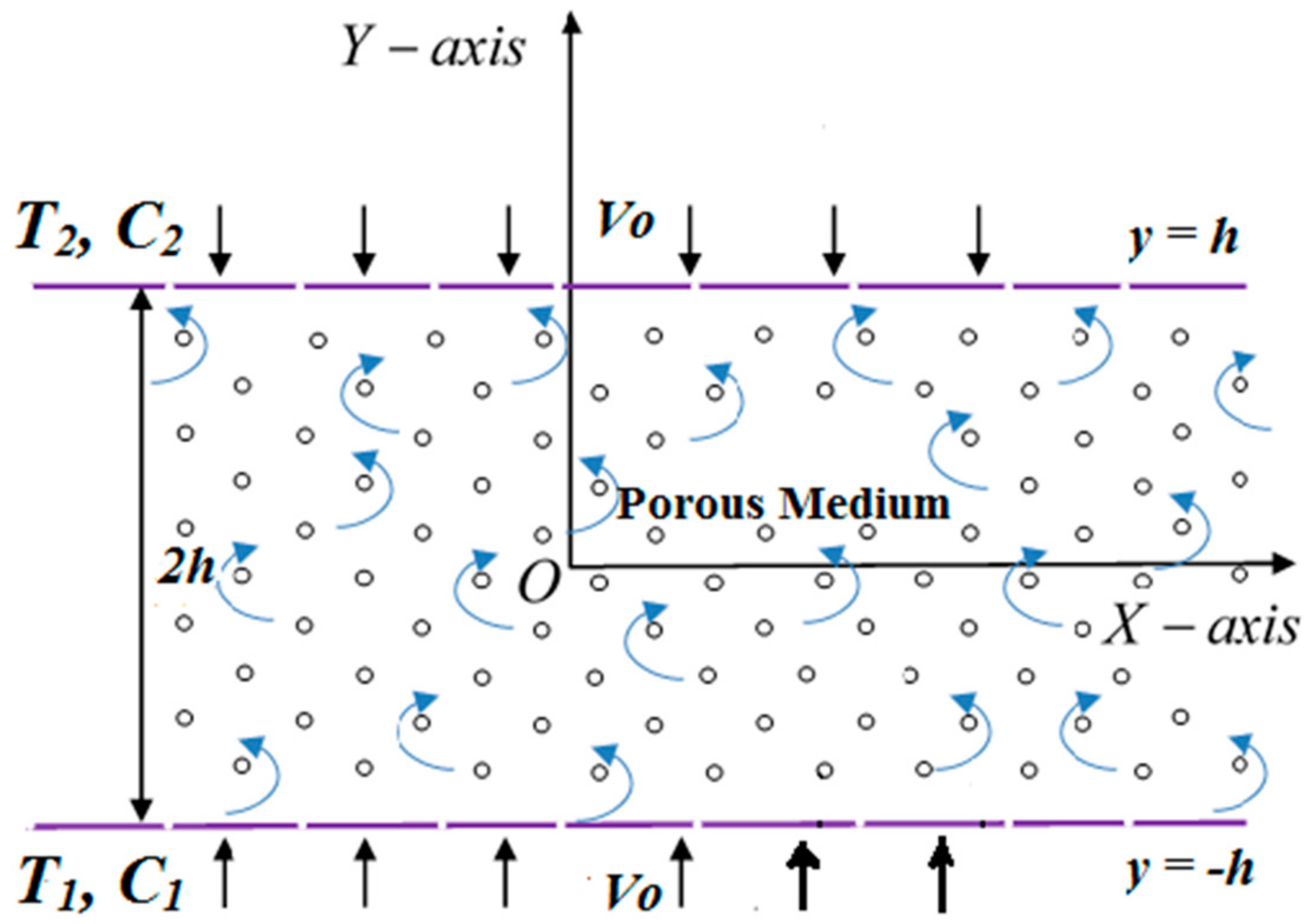
Here, we assume a two-dimensional, time-independent flow of a conducting micropolar fluid past a channel constructed by two permeable walls. The density of fluid has been taken as a constant throughout the analysis. The walls of the channel are taken corresponding to the
x-axis, and
represents channel width between two parallel walls with
(as shown in
Figure 1). The flow is under the strong effects of the magnetic force and chemical reaction between the channel walls. The velocity of the flowing fluid is
along the
-plane, accordingly.
The governing equations for the flow under the above-stated assumptions (following Ahmad et al. [
31]) can be written as
Here, the microrotational viscosity is formulated as .
The boundary conditions controlling both walls of the channel are defined as
In these boundary assumptions,
is referred to as a boundary parameter, and
describes the suction velocity, while
mentions the injection velocity. Here, we assume the case
pronounces the rotation free movement of micro-rotating particles in the vicinity of the porous walls of the channel [
32]. Some other cases have also been discussed in the existing literature, for example
(weak concentrations) and
(turbulent flow).
We define the similarity transformation variables (succeeding Si et al. [
33]) as
Here
are defined as
and
containing
and
as constants. The similarity variables given in Equation (8) identically verify the continuity Equation (1), while Equations (2)–(6) are transmuted to the following set of ordinary equations:
The corresponding boundary conditions after using transformations become
The following are the non-dimensional parameters involved in the system of Equations (9)–(12):
Furthermore,
—the local Nusselt number and
—the local Sherwood number are parameters of prime concern in many engineering processes, and these are defined by the following relations:
In these relations, —the local heat flux and —the local mass flux are governing quantities in the heat and mass transfer analysis.
3. Quasi-Linearization Method
Quasi-linearization is an illustrious technique used to obtain the approximate solutions of nonlinear differential equations with quite a rapid convergence. The quasi-linearization method plays a fundamental role in solving complex nonlinear problems numerically. In addition, one can comment that this technique is a modified form of Newton’s method and can be applied to both boundary and initial value problems. Mostly, the problems comprising nonlinearities (convex or concave) are treated by the quasi-linearization method. Due to its frequent manipulations and implementations, the quasi-linearization technique is rather marvelous when contributing to an ancestry approach to attain the unique solutions of highly nonlinear boundary value problems.
We took the quasi-linearization method (QLM) for the quantization of the nonlinear equations. For this purpose, we formulated the unique sequences of the transformed vectors
and
, which iteratively converge to the approximate solution of Equations (9)–(12), correspondingly. Hence, Equation (9) was linearized by constructing the sequence of the velocity function
. Consider a new function
defined as
The new function
was expanded by incorporating the Taylor-series expansion, and the higher-order terms were truncated by holding only the 1st order terms, thus we have
After solving (15) and (16), we obtained
When substituting the derivatives in the ordinary differential Equation (17) using central differences, we attained the following equation for computing the sequence vector
:
Equations (10)–(12) were linearized in an analogous way. Consequently, we attained a system of the following equations for computing the sequence vectors
and
:
The successive iterative technique was adopted (please see [
34,
35,
36,
37,
38]) to acquire the approximate solutions of sequential systems (18) and (19) based on numerical algorithms.
The boundary conditions given in Equation (13) were satisfied by the provided initial guess and .
The linearized system specified in Equation (18) was solved to find .
The system of Equation (19) was discretized by finite differences and then solved, using known , to obtain and .
Once the functions at the first level and were uniquely determined, the iterative process was reiterated in anticipation of the sequences and converging to vectors and , respectively.
The four sequences were repeatedly generated as far as
For a better accuracy in the calculations, it was presumed that the value of would be taken as at least .
5. Results and Discussion
In the following section, we portray the numerical outcomes of the physical parameters through tables and graphs. The mass and heat transport rates, together with the shear stresses at both walls of the channel, are the physical quantities of primary interest and are proportionate to the values of
,
and
, respectively. Additionally, we intend to examine the effects of the various parameters at the two walls of the channel for velocity, temperature, microrotation and concentration. The step of the non-dimensional coordinate
is so accustomed that all the distribution curves make evident asymptotic behavior. Moreover, the numerical results for the various steps of
at three different grids are enumerated in
Table 2.
We take fixed values of the parameters (see
Table 2) throughout the problem hereafter otherwise identified.
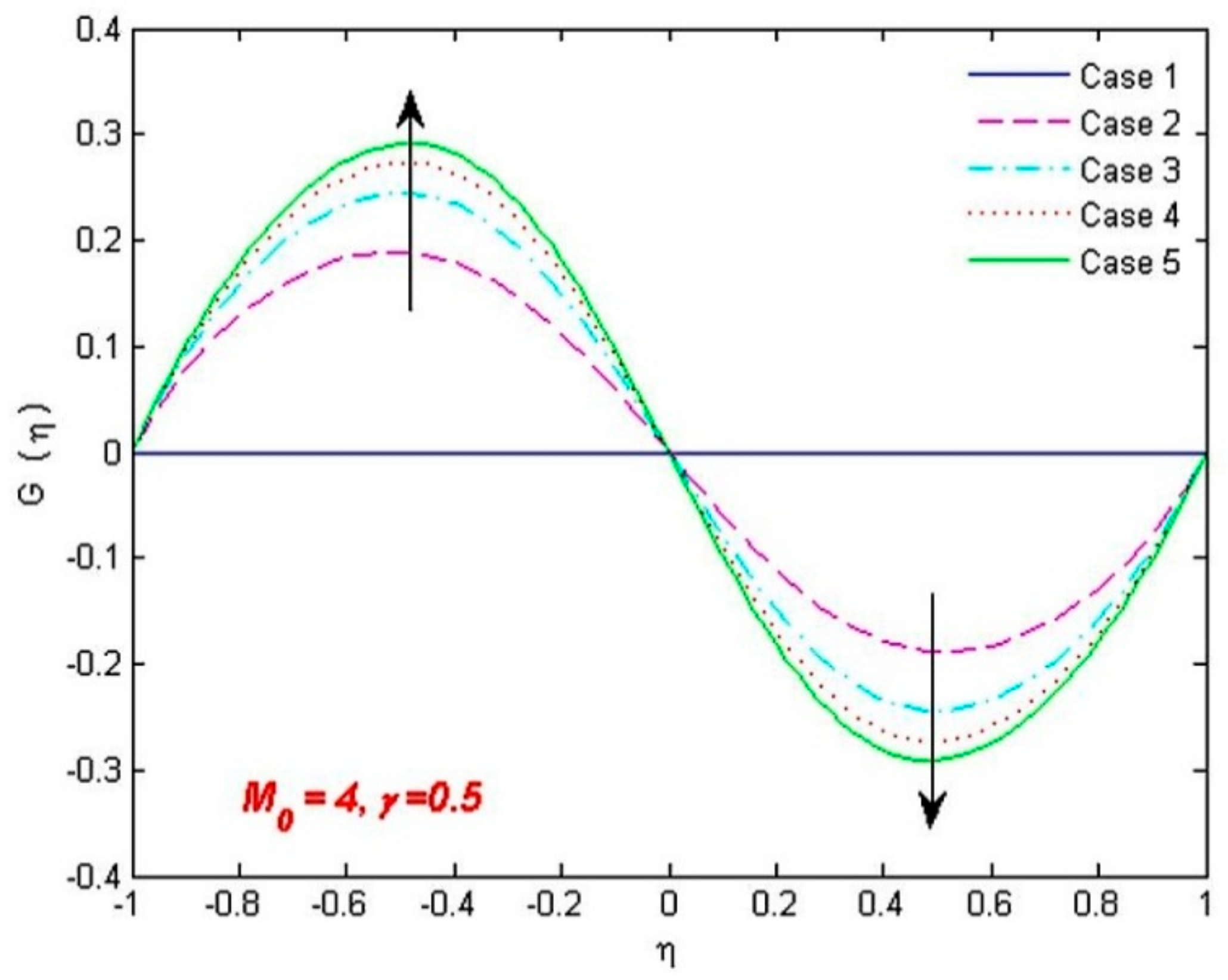
Figure 3 is drawn against microrotation as functions of
η for the multiple values of micropolar material parameters
(see
Table 3). These parameters cause an enhancement in the microrotation of fluid.
The analyses of skin frictions, flow and heat transport on either wall of the channel with porosity effects for different values of material parameters are listed in
Table 3. We take random values from the micropolar parameters other than the first case, where
is taken for the Newtonian case to determine their combined impact on the flow, as described in [
41,
42,
43,
44,
45]. Micropolar physical parameters tend to decrease the shear stresses and intensify the rates of heat transfer and mass flow. It is evident from this table that the mass and heat transport rates on both walls of the channel become enhanced, whereas the shear stresses become reduced with micropolar parameters. We may conclude that the microstructures of the fluid tend to reduce the surface drag, which is according to the experimental results of Hoyt and Fabula [
1]. In addition, the role of the micro-constituents of micropolar fluid in producing very small heat and mass transport effects on either wall of the channel is due to the fact that the material parameters
are not involved in the concentration and heat equations and, thus, do not interrupt the mass and heat transport features of the problem directly.
The variation of shear stresses, mass and thermal transmission rates on either wall of the porous channel with multiple values of the magnetic and porosity parameters are enumerated in
Table 4 and
Table 5, respectively. It is evident from the tabular data that the values of
and
are decreased and that
increased with the effects of these parameters. The uniformity in the values of
and
on the upper and lower wall, respectively, is due to the same permeability ratios on the walls with opposite signs (e.g.,
and
). Due to this reason, the rates of heat and mass transfer are anti-symmetric on either wall of the channel. The magnetic parameter tends to raise the shear stresses, whereas it reduces the transportation rate of heat and mass on both walls. The magnetic field applies a frictional force that is recognized as the Lorentz force. By the virtue of body force behavior, it has a tendency to drag or shift the fluid towards the channel walls. This anomaly not only enhances skin friction but also tends to rotate microfluid particles rapidly at the walls. Moreover, the Lorentz force produces the temperature difference (between the temperature at channel walls and the temperature of fluid) and, hence, decreases the heat transport at both walls. The magnetic as well as the porosity parameter inserts a low effect on the mass transfer rates
and
, and heat transfer rates
and
.
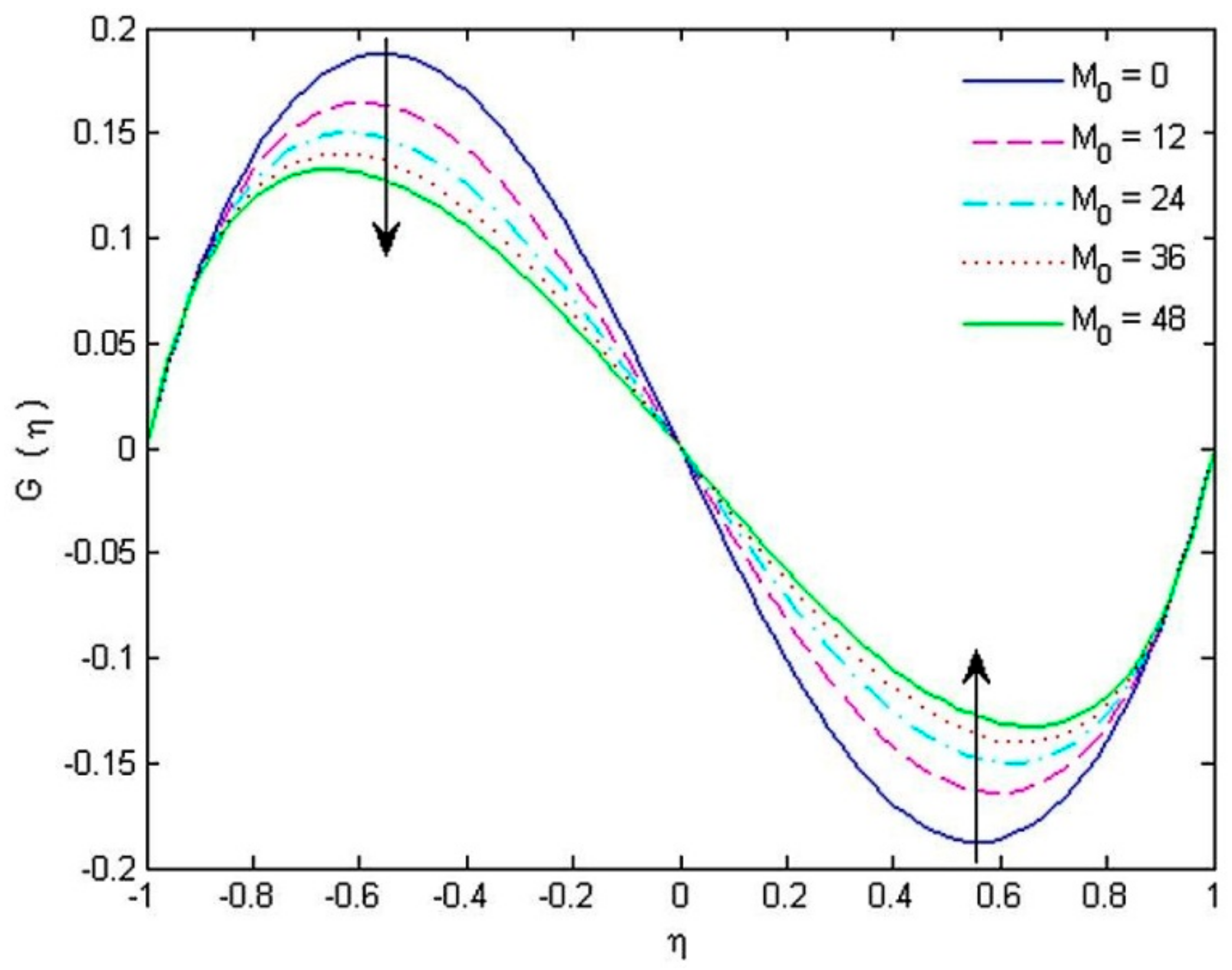
The impacts of the magnetic parameter
and the porosity parameter
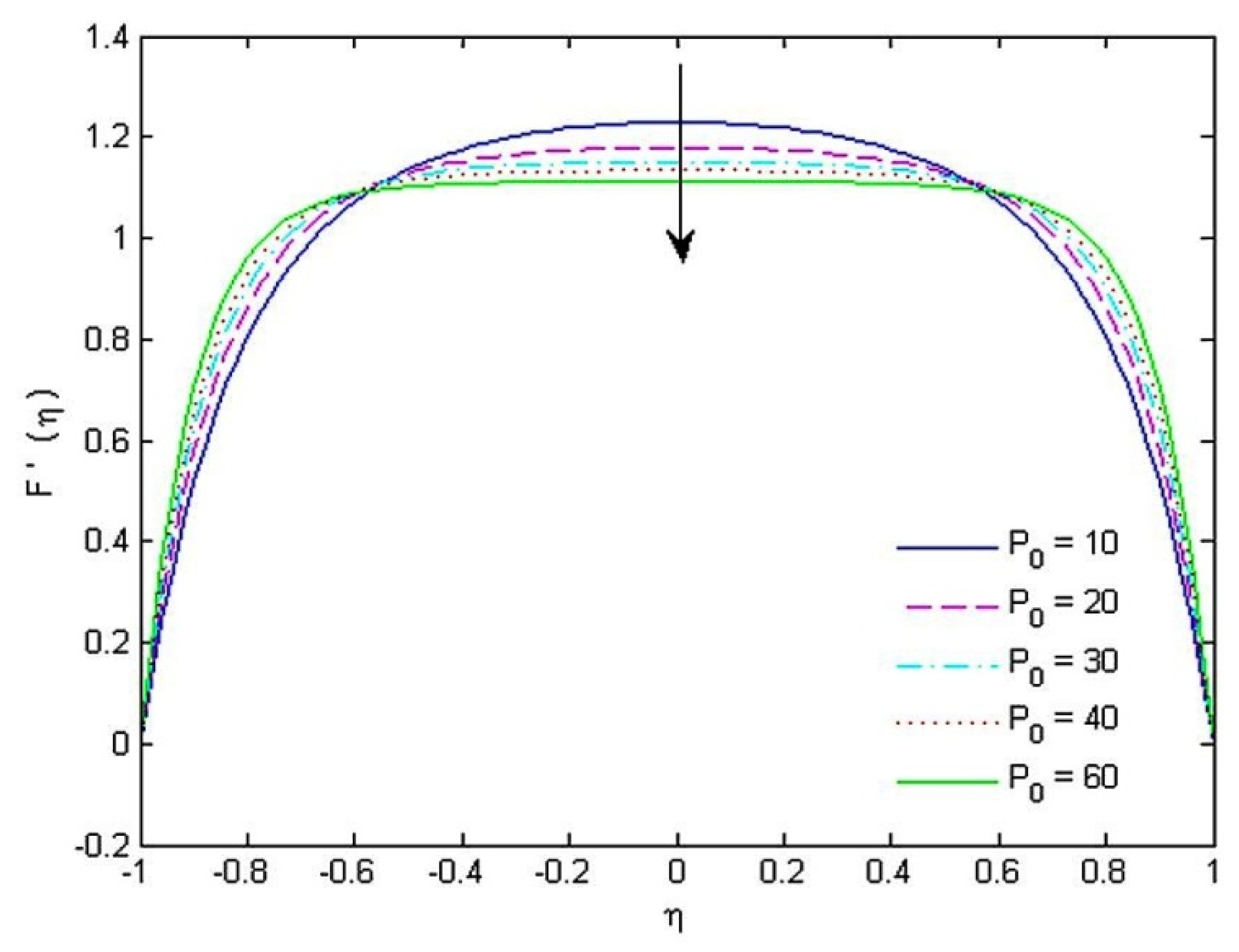
on the microrotation and velocity are portrayed in
Figure 4 and
Figure 5, respectively. The angular velocity profile changes the concavity somewhere near the midpoint of the channel for the magnetic parameter. Material parameters tend to increase the streamwise velocity near the upper wall while the other parameters produce opposite effects on the velocity due to the permeability of the upper wall, which drives streamwise moving fluid beyond the wall and causes a decrease in velocity near the upper wall. The reduction in velocity
(see
Figure 5) happens by enhancing the surface permeability of the channel. Rational reasoning for such a diminishing tendency is linked with the sizes of pores inside the permeable walls. Consequently, a repellant force from the reverse direction of the flow field reacts with the fluid and, as a result, the velocity boundary layer thickness decreases. It is profound that the angular velocity
decelerates near the lower and upper walls by augmenting the values of magnetic parameter
, whereas an enhancement in the microrotation near both walls is noticed with an increase in
. Nevertheless, the material parameters and the porosity parameter have no significant effect on the concentration and temperature.
The impacts of the parameters such as
and
on heat and mass transmission rates can be examined in
Table 6. The mass transport rate drops at the upper wall and grows at the lower wall with the influence of chemical reactions. The values of
decrease and that of
enhance with the effect of
. Likewise, an increment in the Peclet number
causes an increase in the rate of mass transfer on the upper channel wall and decreases the mass transfer rate on the lower channel.
It is observed here that the heat and mass transfer rates tend to increase for both Peclet numbers (e.g., heat and mass) on the upper wall and decrease on the lower channel wall. Additionally, both parameters and are proportional to each other in case of the heat and mass transport rates. It may be better to mention here that the effect of the porosity parameter is more dominant on the skin friction rather than its effect on heat and mass transfer rates. We can attain heat and mass transfer rates by our own choice from appropriately choosing the suction/injection velocity and other parametric values. In this way, we can attain desirable consequences in industrial employments.
The angular velocity profile for the micropolar parameters is concave downward in the lower half of the channel and concave upward in the upper half of the channel. When
at both permeable walls, the effect of skin frictions equally spreads from the walls such that the angular velocity (microrotation) is zero at the center of the channel (see
Figure 3). The angular velocity gets reduced with the effect of porosity and magnetic parameters at the upper as well as lower channel wall when
and
, respectively. Contrarily, the microrotation gets enhanced with the micropolar material parameters near both walls when
and
. The surface drag caused by the micropolar fluid tends to rotate the fluid on the two walls in opposite directions. Due to this reason, microrotation adjacent to either wall of the channel possesses opposite signs. The temperature
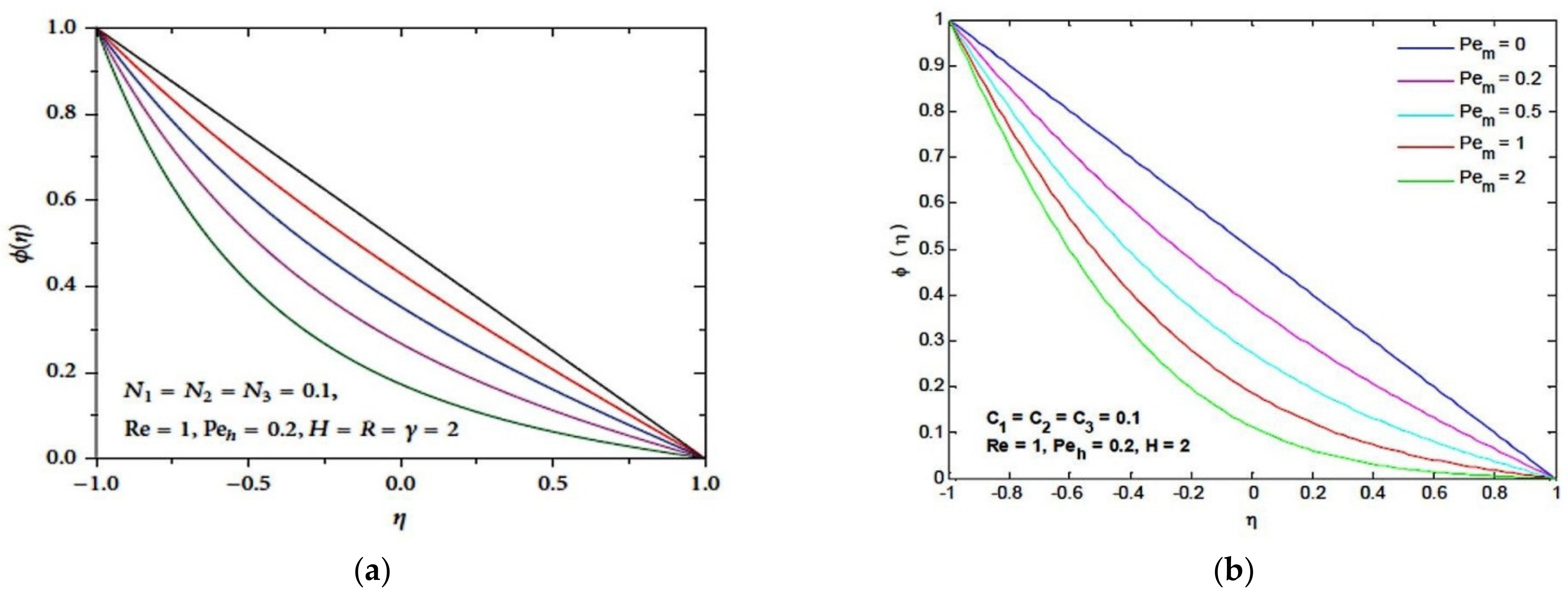
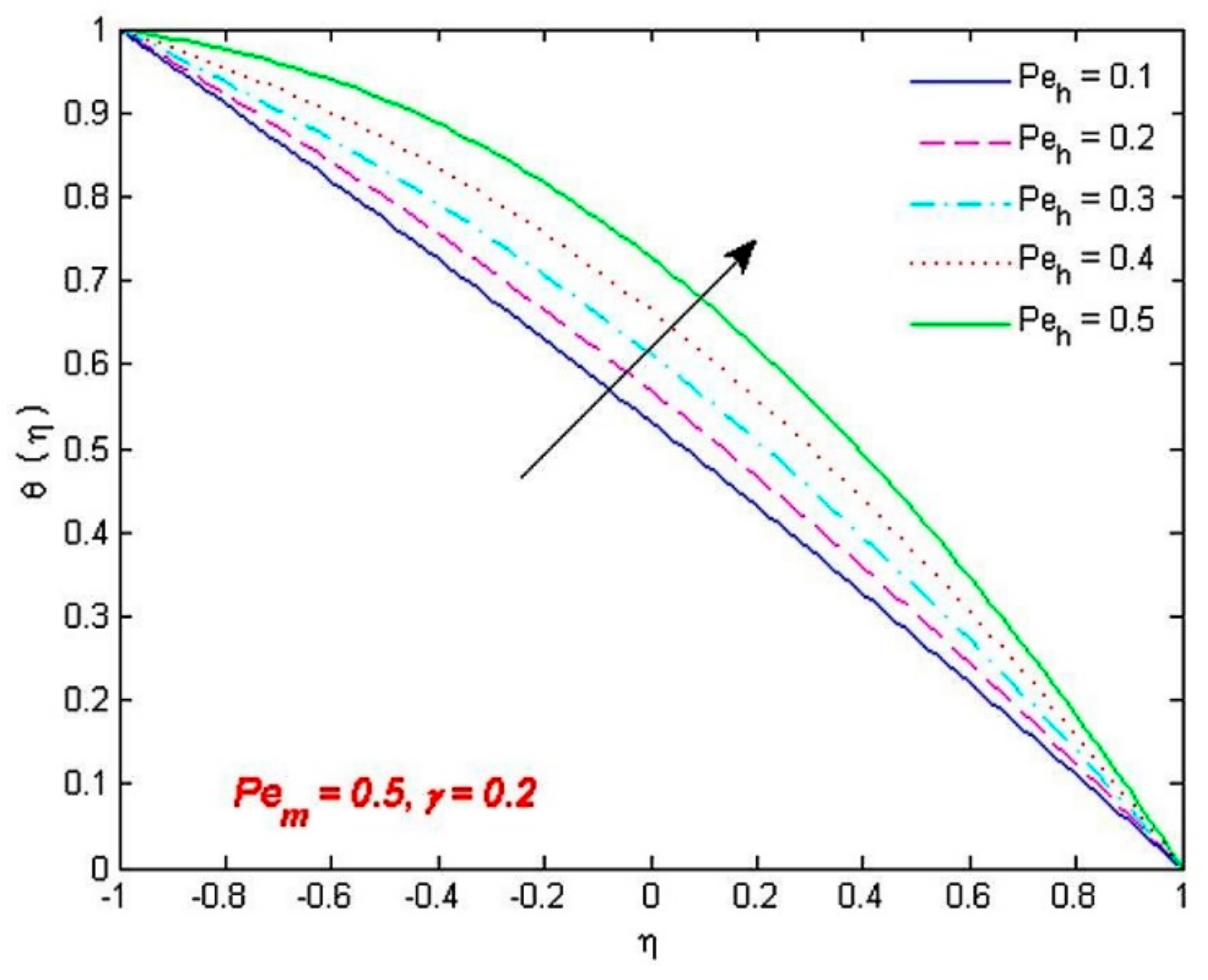
is portrayed in
Figure 6 for diverse estimations of the Peclet number
as a function of the coordinate
η. It is seen that the temperature is elevated with the effect of this parameter. The consequences of
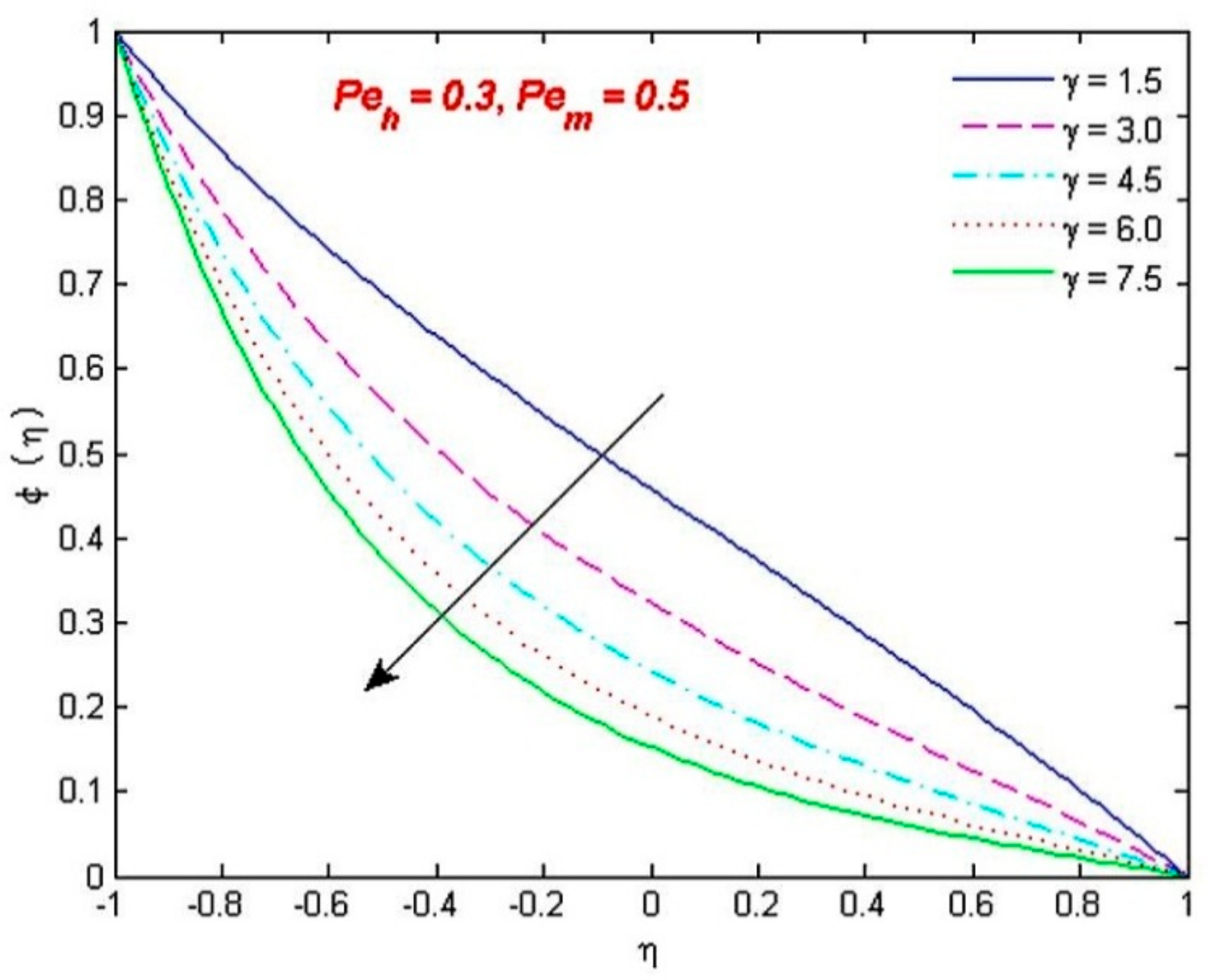
Figure 7 illustrate how the chemical reaction parameter
tends to downturn the concentration
.




 ,
,