

Effect of the ORMOSIL Used for the Functionalization of MSNs in the Removal of Anionic Contaminants from Sugarcane Processing Wastewater

 , , ,
, , ,
Abstract
1. Introduction
2. Materials and Methods
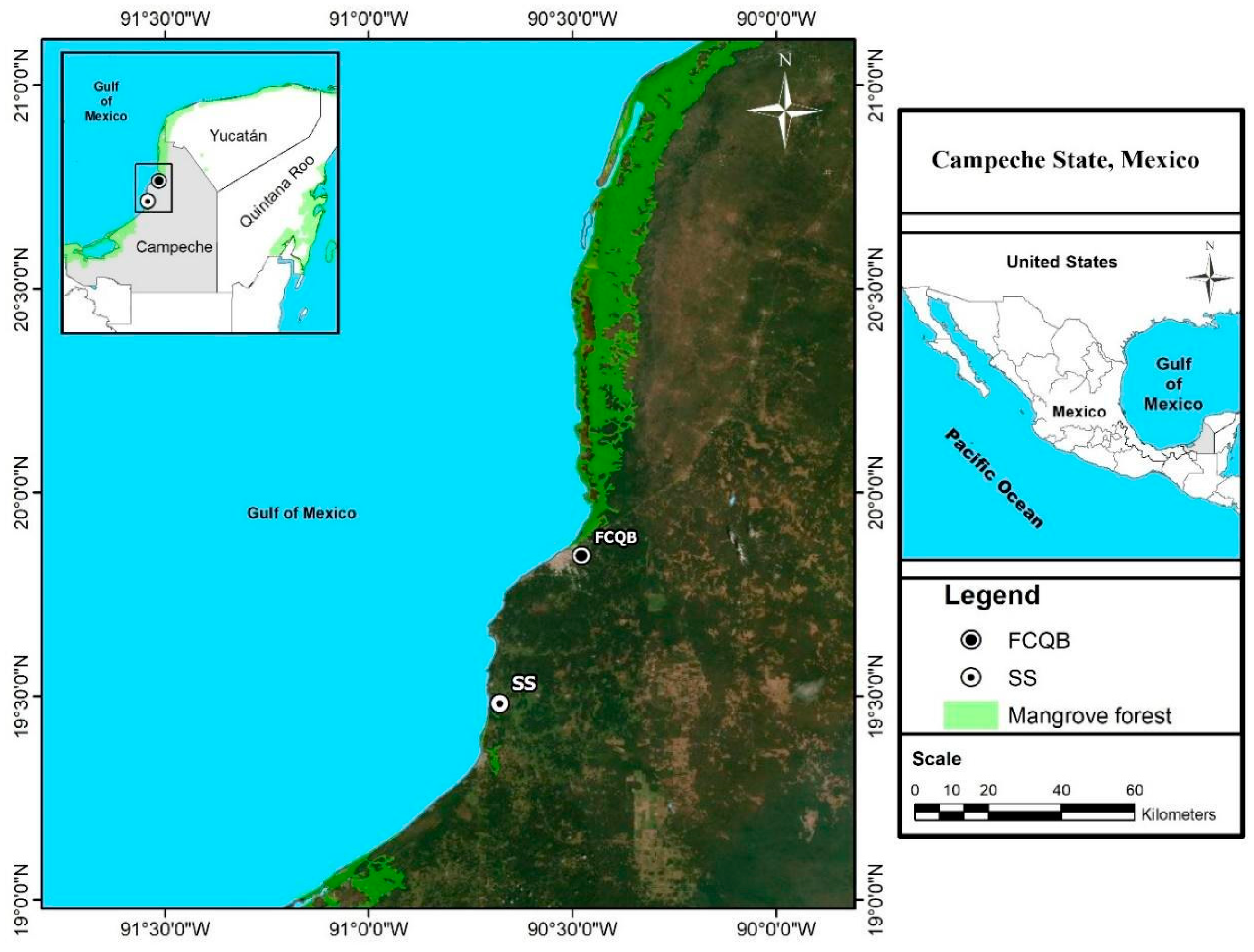
2.1. Collection of Wastewater Samples from Sugarcane Processing
2.2. Determination of the Physicochemical Parameters of Wastewater
2.3. Synthesis and Functionalization of Nanoparticles
2.4. Characterization of Nanoparticles
2.5. Removal of Anions with Functionalized Nanoparticles
2.6. Anion Removal Efficiency
3. Results and Discussion
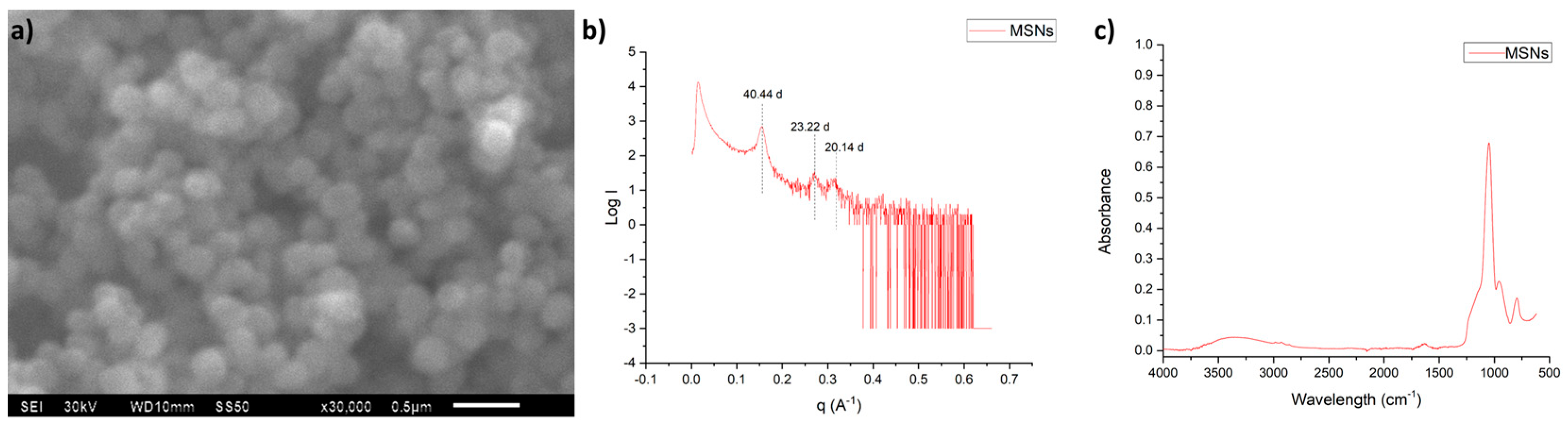
3.1. Physicochemical Characterization of Pristine Nanoparticles
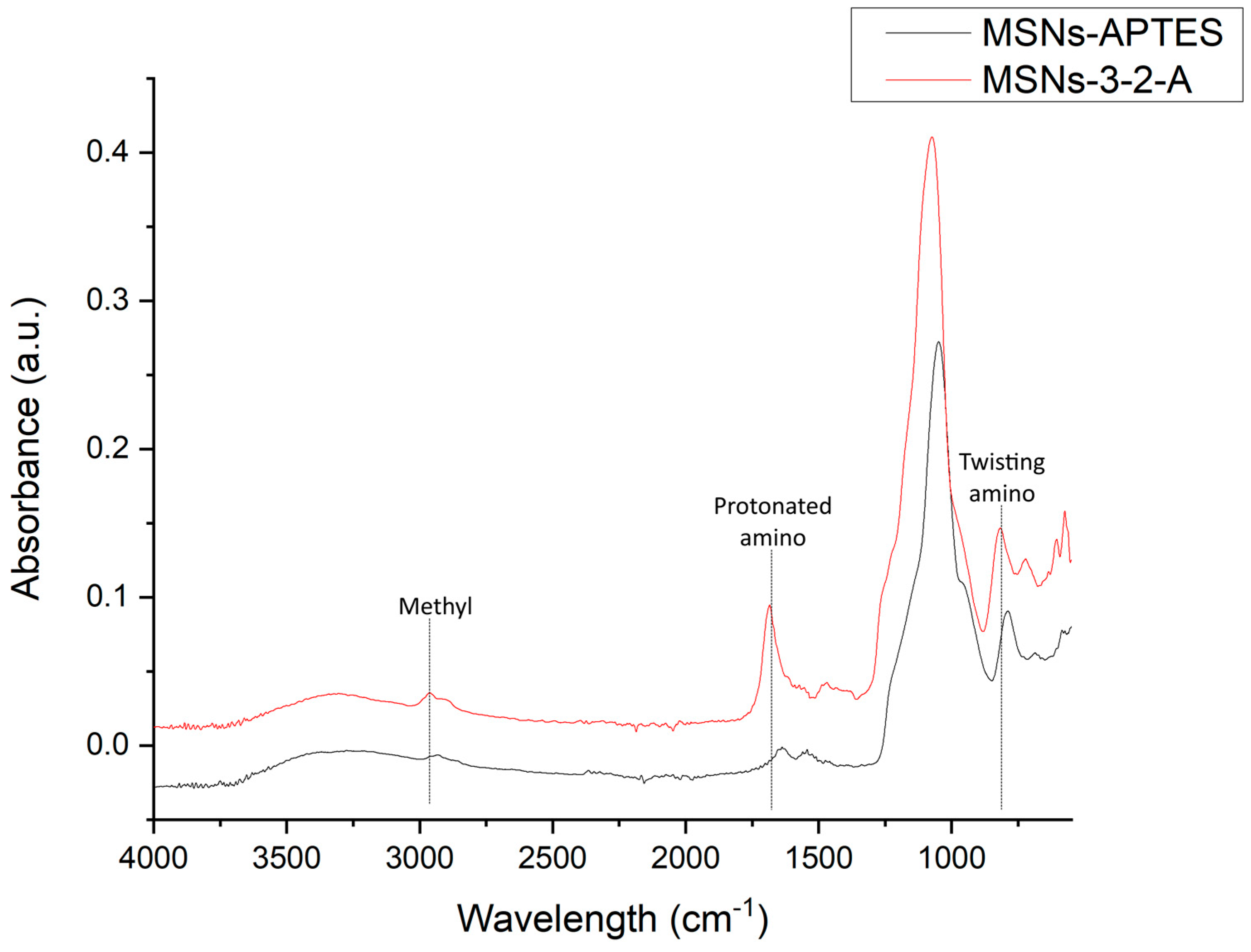
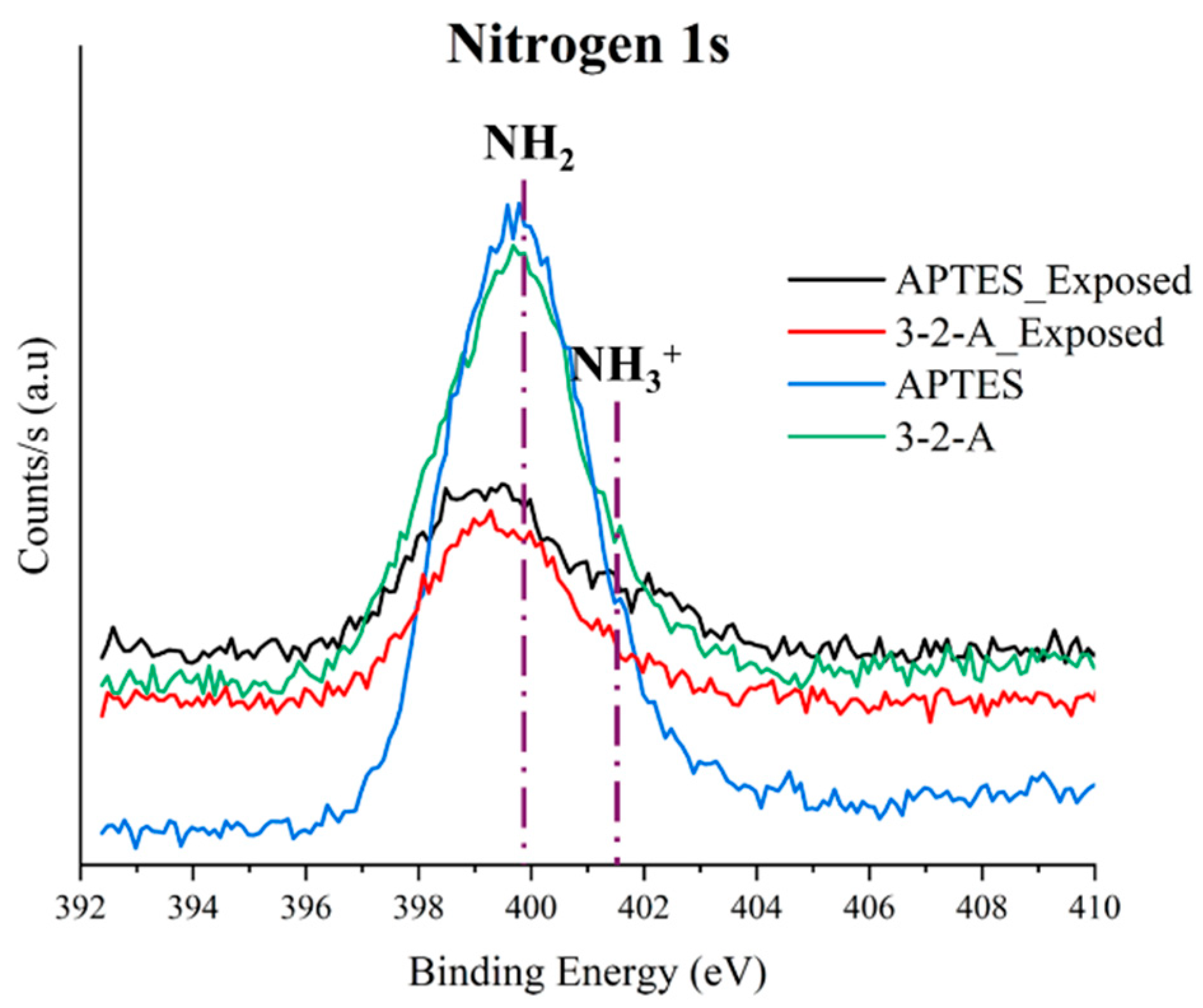
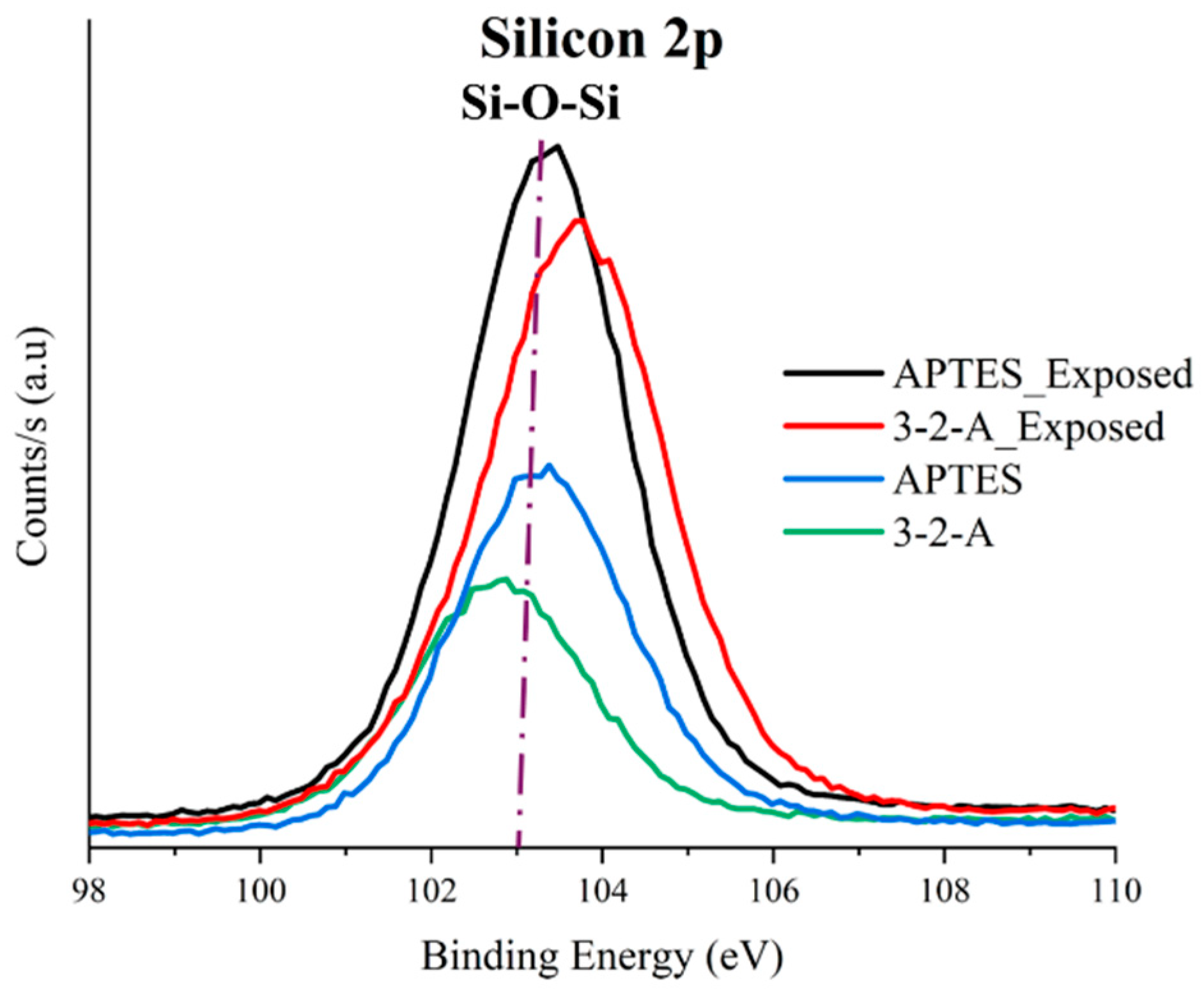
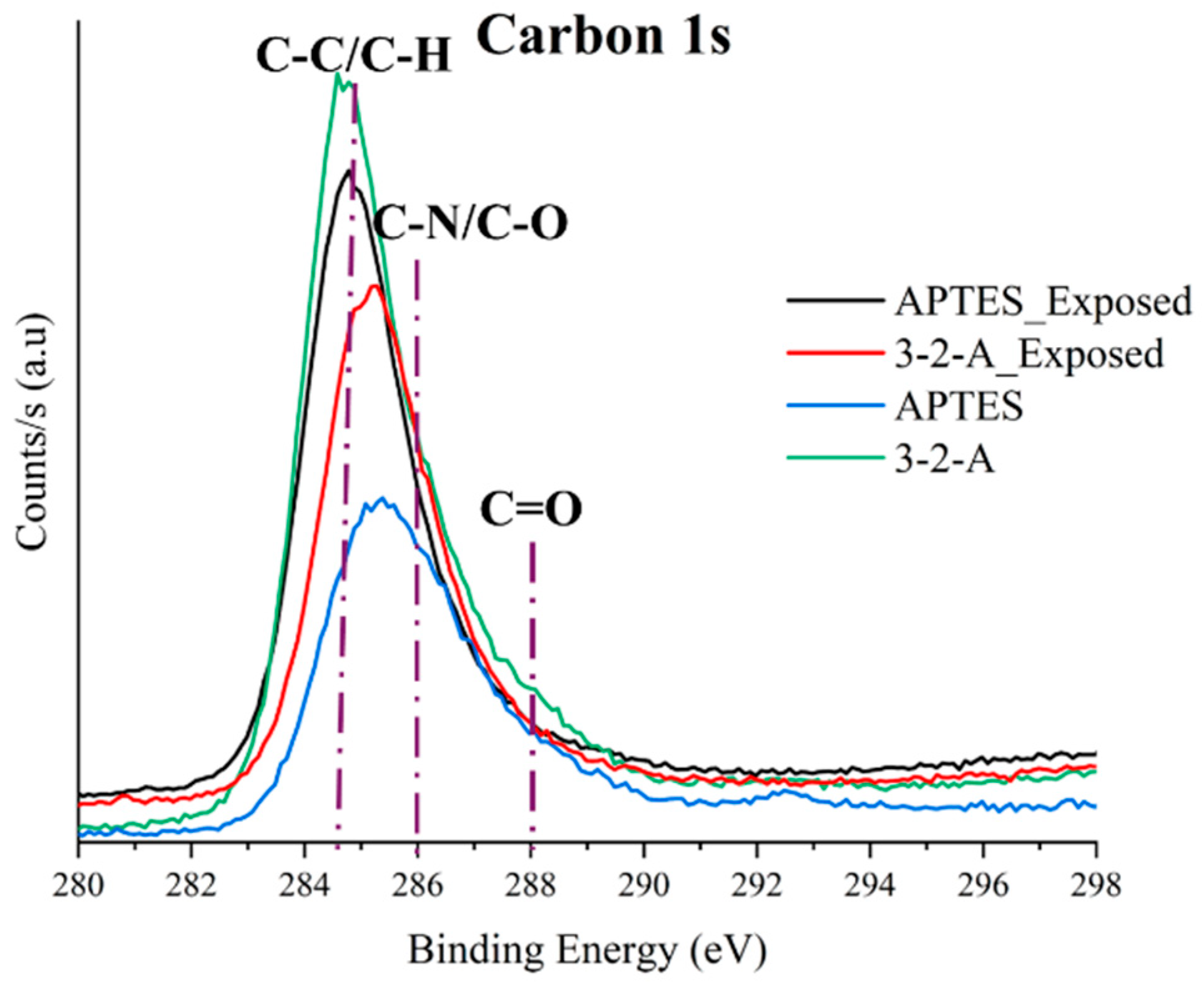
3.2. Physicochemical Characterization of Functionalized Nanoparticles
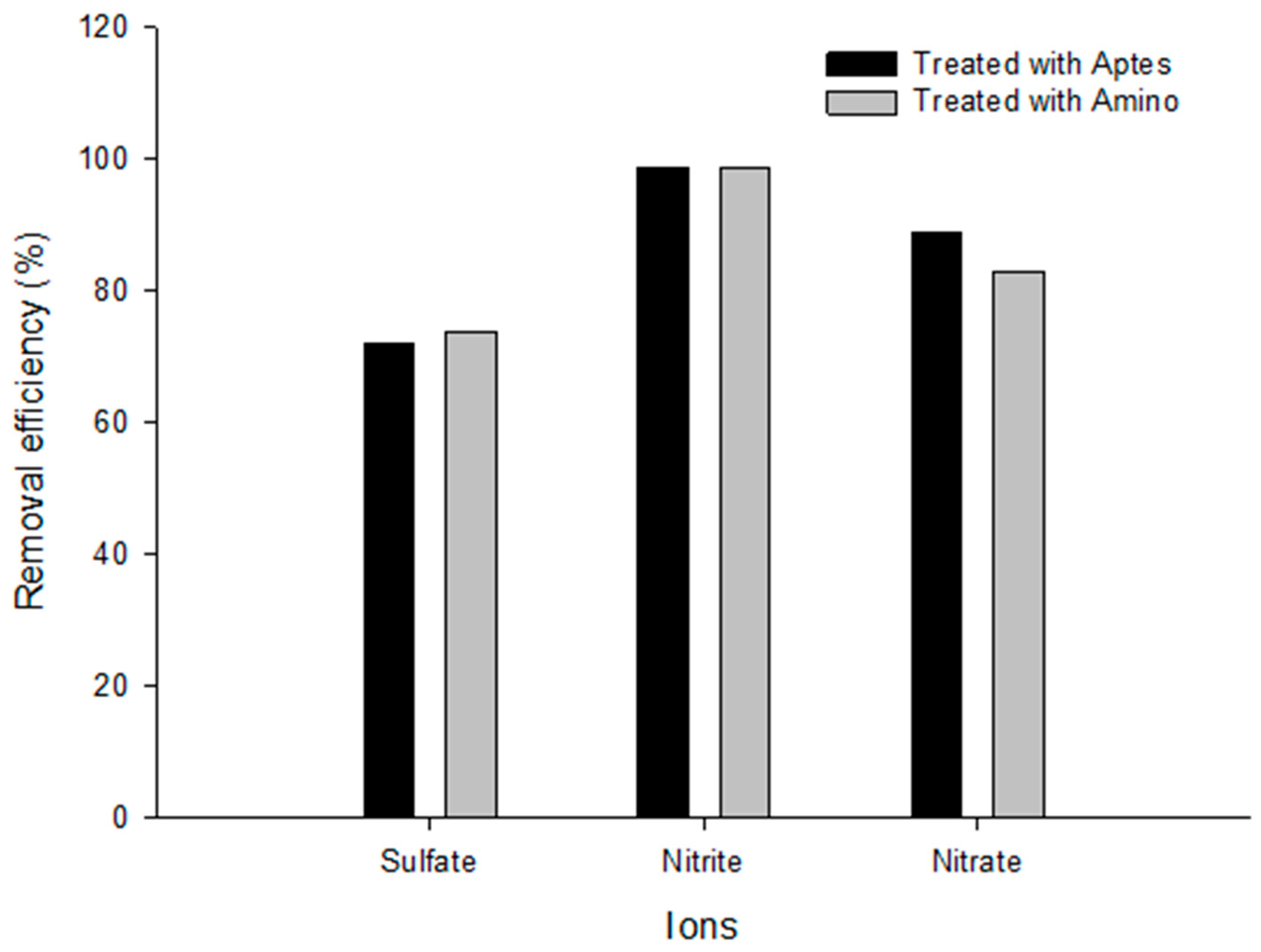
3.3. Concentration and Values of Physicochemical Parameters of Wastewater
4. Conclusions
Author Contributions
Funding
Data Availability Statement
Acknowledgments
Conflicts of Interest
References
- Ramos, G.; Roque, Q.; Mendoza, R.; García Ramos, L.C.; de El Salvador, U.; Salvador, E.; Salvador Quirós Roque, E.V.; Salvador Rosales Mendoza, E. LE Los Residuos Generados En La Producción de La Industria Azucarera En Los Últimos 25 Años. Rev. Iberoam. Bioecon. Cambio Climático 2022, 8, 1979–1991. [Google Scholar] [CrossRef]
- Orduña Gaytán, F.; Alvarado Lassman, A. Tratamiento Híbrido de Aguas Residuales de la Industria Azucarera en un Biorreactor Anaerobio para la Producción de Biogás Combinado con Sistemas Ecológicos. Doctoral Dissertation, National Technological Institute of Mexico, Mexico City, Mexico, 2023. [Google Scholar]
- Basanta, R.; García Delgado, M.A.; Cervantes Martínez, J.E.; Mata Vázquez, H.; Bustos Vázquez, G. Sustainable Recycling of Waste from Sugarcane Agroindustry: A Review. Cienc. Tecnol. Aliment. 2007, 5, 293–305. [Google Scholar] [CrossRef]
- Kushwaha, J.P. A Review on Sugar Industry Wastewater: Sources, Treatment Technologies, and Reuse. Desalination Water Treat. 2015, 53, 309–318. [Google Scholar] [CrossRef]
- Wang, Y.; Wu, P.; Wang, Y.; He, H.; Huang, L. Dendritic Mesoporous Nanoparticles for the Detection, Adsorption, and Degradation of Hazardous Substances in the Environment: State-of-the-Art and Future Prospects. J. Environ. Manag. 2023, 345, 118629. [Google Scholar] [CrossRef]
- Mladenović, M.; Jarić, S.; Mundžić, M.; Pavlović, A.; Bobrinetskiy, I.; Knežević, N. Biosensors for Cancer Biomarkers Based on Mesoporous Silica Nanoparticles. Biosensors 2024, 14, 326. [Google Scholar] [CrossRef]
- Talavera-Pech, W.A.; Ávila-Ortega, A.; Pacheco-Catalán, D.; Quintana-Owen, P.; Barrón-Zambrano, J.A. Effect of Functionalization Synthesis Type of Amino-MCM-41 Mesoporous Silica Nanoparticles on Its RB5 Adsorption Capacity and Kinetics. Silicon 2018, 11, 1547–1555. [Google Scholar] [CrossRef]
- Putz, A.M.; Ciopec, M.; Negrea, A.; Grad, O.; Ianăşi, C.; Ivankov, O.I.; Milanović, M.; Stijepović, I.; Almásy, L. Comparison of Structure and Adsorption Properties of Mesoporous Silica Functionalized with Aminopropyl Groups by the Co-Condensation and the Post Grafting Methods. Materials 2021, 14, 628. [Google Scholar] [CrossRef] [PubMed]
- Pongkitdachoti, U.; Unob, F. Simultaneous Adsorption of Silver Nanoparticles and Silver Ions on Large Pore Mesoporous Silica. J. Environ. Chem. Eng. 2018, 6, 596–603. [Google Scholar] [CrossRef]
- Meng, C.; Zhikun, W.; Qiang, L.; Chunling, L.; Shuangqing, S.; Songqing, H. Preparation of Amino-Functionalized Fe3O4@mSiO2 Core-Shell Magnetic Nanoparticles and Their Application for Aqueous Fe3+ Removal. J. Hazard. Mater. 2018, 341, 198–206. [Google Scholar] [CrossRef]
- Zhang, L.; Song, F.; Wu, Y.; Cheng, L.; Qian, J.; Wang, S.; Chen, Q.; Li, Y. A Novel Amino and Carboxyl Functionalized Mesoporous Silica as an Efficient Adsorbent for Nickel(II). J. Chem. Eng. Data 2018, 64, 176–188. [Google Scholar] [CrossRef]
- El-Nahhal, I.M.; Chehimi, M.; Selmane, M. Synthesis and Structural Characterization of G-SBA-IDA, G-SBA-EDTA and G-SBA-DTPA Modified Mesoporous SBA-15 Silica and Their Application for Removal of Toxic Metal Ions Pollutants. Silicon 2017, 10, 981–993. [Google Scholar] [CrossRef]
- Jadhav, S.A.; Patil, V.S.; Shinde, P.S.; Thoravat, S.S.; Patil, P.S. A Short Review on Recent Progress in Mesoporous Silicas for the Removal of Metal Ions from Water. Chem. Pap. 2020, 74, 4143–4157. [Google Scholar] [CrossRef]
- Alswieleh, A.M. Remediation of Cationic and Anionic Dyes from Water by Histidine Modified Mesoporous Silica. Int. J. Environ. Anal. Chem. 2023, 103, 1140–1152. [Google Scholar] [CrossRef]
- Iglesias, E. Atlas: Escenarios de Cambio Climático En La Península de Yucatán. Probl. Desarro. 2012, 43, 191–193. [Google Scholar]
- APHA. Standard Methods for the Examination of Water and Wastewater, 23rd ed.; American Public Health Association: Washington, DC, USA, 2017; Available online: https://www.scirp.org/reference/referencespapers?referenceid=2459667 (accessed on 22 February 2026).
- Chen, H.; Zhen, Z.; Tang, W.; Todd, T.; Chuang, Y.J.; Wang, L.; Pan, Z.; Xie, J. Label-Free Luminescent Mesoporous Silica Nanoparticles for Imaging and Drug Delivery. Theranostics 2013, 3, 650–657. [Google Scholar] [CrossRef] [PubMed]
- Szeląg, M.; Janek, M.; Panek, R.; Madej, J.; Fronczyk, J. Modification of the MCM-41 Mesoporous Silica and Its Influence on the Hydration and Properties of a Cement Matrix. Constr. Build. Mater. 2022, 344, 128253. [Google Scholar] [CrossRef]
- Kamarudin, N.H.N.; Jalil, A.A.; Triwahyono, S.; Salleh, N.F.M.; Karim, A.H.; Mukti, R.R.; Hameed, B.H.; Ahmad, A. Role of 3-Aminopropyltriethoxysilane in the Preparation of Mesoporous Silica Nanoparticles for Ibuprofen Delivery: Effect on Physicochemical Properties. Microporous Mesoporous Mater. 2013, 180, 235–241. [Google Scholar] [CrossRef]
- Talavera-Pech, W.A.; Esparza-Ruiz, A.; Quintana-Owen, P.; Vilchis-Nestor, A.R.; Carrera-Figueiras, C.; Ávila-Ortega, A. Effects of Different Amounts of APTES on Physicochemical and Structural Properties of Amino-Functionalized MCM-41-MSNs. J. Solgel Sci. Technol. 2016, 80, 697–708. [Google Scholar] [CrossRef]
- Issa, A.A.; Luyt, A.S. Kinetics of Alkoxysilanes and Organoalkoxysilanes Polymerization: A Review. Polymers 2019, 11, 537. [Google Scholar] [CrossRef] [PubMed]
- Haro Mares, N.B.; Brodrecht, M.; Wissel, T.; Döller, S.C.; Rösler, L.; Breitzke, H.; Hoffmann, M.M.; Gutmann, T.; Buntkowsky, G. Influence of APTES-Decorated Mesoporous Silica on the Dynamics of Ethylene Glycol Molecules─Insights from Variable Temperature 2H Solid-State NMR. J. Phys. Chem. C 2023, 127, 19735–19746. [Google Scholar] [CrossRef]
- Aguiar, L.L.; Andrade-Vieira, L.F.; de Oliveira David, J.A. Evaluation of the Toxic Potential of Coffee Wastewater on Seeds, Roots and Meristematic Cells of Lactuca sativa L. Ecotoxicol. Environ. Saf. 2016, 133, 366–372. [Google Scholar] [CrossRef]
- Charles, J.; Sancey, B.; Morin-Crini, N.; Badot, P.M.; Degiorgi, F.; Trunfio, G.; Crini, G. Evaluation of the Phytotoxicity of Polycontaminated Industrial Effluents Using the Lettuce Plant (Lactuca sativa) as a Bioindicator. Ecotoxicol. Environ. Saf. 2011, 74, 2057–2064. [Google Scholar] [CrossRef]
- Abdellaoui, Y.; El Ibrahimi, B.; Ahrouch, M.; Kassab, Z.; El Kaim Billah, R.; Coppel, Y.; López-Maldonado, E.A.; Abou Oualid, H.; Díaz de León, J.N.; Leiviskä, T.; et al. New Hybrid Adsorbent Based on APTES Functionalized Zeolite W for Lead and Cadmium Ions Removal: Experimental and Theoretical Studies. Chem. Eng. J. 2024, 499, 156056. [Google Scholar] [CrossRef]
- EL Kaim Billah, R.; Ahrouch, M.; Bahsis, L.; Aflak, N.; Azoubi, Z.; Majdoubi, H.; Achak, M.; Abdellaoui, Y.; Khan, M.A. Biological Activity Assessment and Water Deflouridation Application of Glutaraldehyde Crosslinked Chitosan-TiO2 Composite: A Conjugated Experimental and Theoretical Insights. Sep. Purif. Technol. 2025, 368, 132984. [Google Scholar] [CrossRef]
- Amato, P.; Fantauzzi, M.; Bifulco, A.; Imparato, C.; Rossi, A.; Aronne, A.; Sannino, F. Physical and Chemical Degradation of PTFE Magnetic Stir Bars Induced by TiO2-Based Materials. Appl. Surf. Sci. 2024, 676, 161018. [Google Scholar] [CrossRef]
- Paniagua-Michel, J.; Garcia, O. Ex-Situ Bioremediation of Shrimp Culture Effluent Using Constructed Microbial Mats. Aquac. Eng. 2003, 28, 131–139. [Google Scholar] [CrossRef]
- Otalvaro, J.O.; Avena, M.; Brigante, M. Adsorption of Organic Pollutants by Amine Functionalized Mesoporous Silica in Aqueous Solution. Effects of PH, Ionic Strength and Some Consequences of APTES Stability. J. Environ. Chem. Eng. 2019, 7, 103325. [Google Scholar] [CrossRef]
- Liwarska-Bizukojć, E.; Olejnik, D. Activated Sludge Community and Flocs Morphology in Response to Aluminum Oxide Particles in the Wastewater Treatment System. J. Water Process Eng. 2020, 38, 101639. [Google Scholar] [CrossRef]


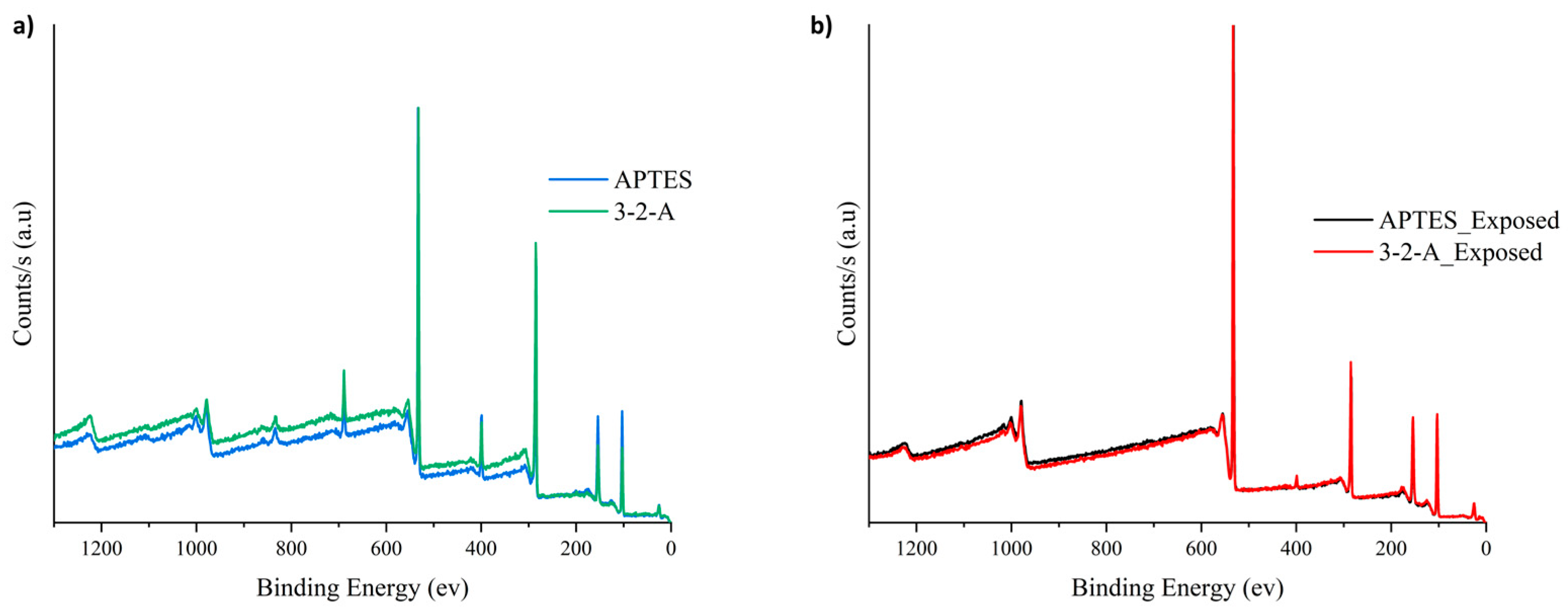



| Element (%) | O1s | Si2p | C1s | N1s | F1s | Cl2p | Si/N | C/O | |
|---|---|---|---|---|---|---|---|---|---|
| MSNs + APTES | Before | 29.18 | 22.14 | 37.01 | 8.86 | 2.81 | 0.00 | 2.50 | 1.268 |
| After | 40.75 | 22.56 | 34.45 | 2.24 | 0.00 | 0.00 | 10.07 | 0.845 | |
| MSNs + 3-2-A | Before | 23.23 | 11.07 | 56.26 | 5.9 | 3.24 | 0.30 | 1.88 | 2.422 |
| After | 38.65 | 26.93 | 32.24 | 1.99 | 0.20 | 0.00 | 13.55 | 0.834 |
| Physicochemical Parameters | Untreated Wastewater | Treated Wastewater (MSNs-APTES) | Treated Wastewater (MSNs-3-2-A) |
|---|---|---|---|
| Turbidity (UTN) | 292.5 ± 116 | 52 ± 0.14 | 145 ± 5.65 |
| Dissolved oxygen (mg/L) | 3.5 ± 0.16 | 7495 ± 0.28 | 7.43 ± 0.02 |
| pH | 3.8 ± 1.68 | 4 ± 0.07 | 2.43 ± 0.056 |
| Conductivity (μs) | 1621 ± 17 | 1480 ± 1 | 1638.5 ± 14 |
| Cl− (mg/L) | 559 ± 57 | 866.68 ± 57 | 843.99 ± 25 |
| SO42− (mg/L) | 552 ± 113 | 154.08 ±17 | 144,835 ± 5.35 |
| NO2− (mg/L) | 5.87 ± 0.25 | 0.075 ± 0.01 | 0.074 ± 0.002 |
| NO3− (mg/L) | 4.78 ± 0.27 | 0.542 ± 0.02 | 0.821 ± 0.014 |
Disclaimer/Publisher’s Note: The statements, opinions and data contained in all publications are solely those of the individual author(s) and contributor(s) and not of MDPI and/or the editor(s). MDPI and/or the editor(s) disclaim responsibility for any injury to people or property resulting from any ideas, methods, instructions or products referred to in the content. |
© 2026 by the authors. Licensee MDPI, Basel, Switzerland. This article is an open access article distributed under the terms and conditions of the Creative Commons Attribution (CC BY) license.
Share and Cite
Talavera-Pech, W.A.; Chan-Keb, C.A.; Bacelis-Jiménez, Á.A.; Ruiz-Hernández, J.; Aguilar-Melo, V.; Agraz-Hernández, C.M. Effect of the ORMOSIL Used for the Functionalization of MSNs in the Removal of Anionic Contaminants from Sugarcane Processing Wastewater. Nanomaterials 2026, 16, 368. https://doi.org/10.3390/nano16060368
Talavera-Pech WA, Chan-Keb CA, Bacelis-Jiménez ÁA, Ruiz-Hernández J, Aguilar-Melo V, Agraz-Hernández CM. Effect of the ORMOSIL Used for the Functionalization of MSNs in the Removal of Anionic Contaminants from Sugarcane Processing Wastewater. Nanomaterials. 2026; 16(6):368. https://doi.org/10.3390/nano16060368
Chicago/Turabian StyleTalavera-Pech, William A., Carlos A. Chan-Keb, Ángel A. Bacelis-Jiménez, Judith Ruiz-Hernández, Valentina Aguilar-Melo, and Claudia M. Agraz-Hernández. 2026. "Effect of the ORMOSIL Used for the Functionalization of MSNs in the Removal of Anionic Contaminants from Sugarcane Processing Wastewater" Nanomaterials 16, no. 6: 368. https://doi.org/10.3390/nano16060368
APA StyleTalavera-Pech, W. A., Chan-Keb, C. A., Bacelis-Jiménez, Á. A., Ruiz-Hernández, J., Aguilar-Melo, V., & Agraz-Hernández, C. M. (2026). Effect of the ORMOSIL Used for the Functionalization of MSNs in the Removal of Anionic Contaminants from Sugarcane Processing Wastewater. Nanomaterials, 16(6), 368. https://doi.org/10.3390/nano16060368