Next Article in Journal
Attention Bidirectional Recurrent Neural Zero-Shot Semantic Classifier for Emotional Footprint Identification
Previous Article in Journal
Advances in Single-Cell Sequencing for Understanding and Treating Kidney Disease
 
 
Due to scheduled maintenance work on our servers, there may be short service disruptions on this website between 11:00 and 12:00 CEST on March 28th.
Article

Multiphysics Modelling and Experimental Validation of Road Tanker Dynamics: Stress Analysis and Material Characterization


1
Crossland Tankers Ltd., Maghera BT46 5QZ, UK
2
School of Mechanical and Aerospace Engineering, Queen’s University Belfast, Belfast BT9 5AH, UK
*
Author to whom correspondence should be addressed.
Computation 2026, 14(1), 7; https://doi.org/10.3390/computation14010007
Submission received: 30 May 2025 / Revised: 11 September 2025 / Accepted: 19 December 2025 / Published: 2 January 2026
(This article belongs to the Section Computational Engineering)

Abstract

Crossland Tankers is a leading manufacturer of bulk-load road tankers in Northern Ireland. These tankers transport up to forty thousand litres of liquid over long distances across diverse road conditions. Liquid sloshing within the tank has a significant impact on driveability and the tanker’s lifespan. This study introduces a novel Multiphysics model combining Smooth Particle Hydrodynamics (SPH) and Finite Element Analysis (FEA) to simulate fluid–structure interactions in a full-scale road tanker, validated with real-world road test data. The model reveals high-stress zones under braking and turning, with peak stresses at critical chassis locations, offering design insights for weight reduction and enhanced safety. Results demonstrate the approach’s effectiveness in optimising tanker design, reducing prototyping costs, and improving longevity, providing a valuable computational tool for industry applications.

1. Introduction

The dynamic behavior of liquid-filled vehicles and related fluid–structure interactions has been extensively studied using a variety of numerical and experimental methodologies. In particular, modelling the transient response of partially filled road tankers during complex maneuvers such as braking in a turn has been addressed through both analytical and simulation-based approaches. Yu and Chu [1] developed a roll-stability optimization model for tanker trucks, demonstrating improved prediction accuracy of rollover thresholds. Li et al. [2] introduced a model-free adaptive controller to stabilize tank truck roll dynamics, verifying its effectiveness through co-simulation with a high-fidelity vehicle model. More recently, Zhang et al. [3] investigated longitudinal braking stability in lightweight storage vehicles, highlighting the importance of coupling fluid dynamics with vehicle suspension characteristics.
The mitigation of liquid sloshing via internal baffle design has likewise attracted significant attention. Siraye et al. [4] performed cornering experiments on partially filled tanker trucks fitted with various baffle geometries, revealing that perforated baffles reduced slosh amplitude by up to 35%. Unnikrishnan et al. [5] optimized baffle placement in water-distribution tankers, employing Computational Fluid Dynamics (CFD) to minimize slosh-induced pressure spikes. Yu et al. [6] applied a multi-objective genetic algorithm (NSGA-II) to refine T-shaped anti-sloshing baffles, achieving a more than 20% reduction in hydrodynamic loads under stochastic excitation.
Numerical formulations for sloshing analysis have evolved from grid-based methods to mesh-free particle techniques. Cai et al. [7] conducted a comparative study between CFD, Smoothed Particle Hydrodynamics (SPH), and Arbitrary Lagrangian–Eulerian (ALE) methods, concluding that SPH offers superior handling of violent free-surface flows albeit at higher computational cost. Zheng et al. [8] provided a comprehensive review of liquid sloshing hydrodynamics, emphasizing the strengths and limitations of SPH in capturing interfacial instabilities. Yang et al. [9] contrasted finite-volume and lattice Boltzmann approaches for slosh prediction, underscoring the need for hybrid methods in three-dimensional applications.
Foundational SPH validation studies remain pivotal for confidence in modern simulations. Trimulyono et al. [10] compared single- and two-phase SPH against prismatic tank sloshing experiments, finding very good agreement in pressure time-histories. Green et al. [11] extended these validations to long-duration, violent three-dimensional sloshing, demonstrating SPH’s capacity to resolve complex wave impacts. Kargbo et al. [12] explored multiphase sloshing interactions with baffles and submerged blocks, confirming that SPH can accurately predict wave breaking and interfacial mixing.
Earlier studies further refined SPH schemes for sloshing in two dimensions. Marrone et al. [13] introduced diffusive terms (δ-SPH) to suppress numerical noise in weakly compressible SPH, significantly enhancing stability for violent flows. Akyıldız et al. [14] conducted experimental investigations of ring baffles in cylindrical tanks, offering benchmarks for SPH model calibration. Colagrossi and Broglia [15] presented an alternative SPH formulation incorporating Riemann solvers, which improved shock-capturing capabilities in sloshing simulations.
Pressure loading on tank walls under slosh conditions has been another key focus. Xue et al. [16] analyzed pressure distributions across storage vessel geometries using SPH, identifying critical zones prone to fatigue. Wu and Chen [17] applied a time-independent finite-difference method to model three-dimensional sloshing, highlighting resonance effects on wall pressures. Green et al. [18] further confirmed SPH’s reliability for long-term sloshing pressure predictions, correlating numerical results with full-scale tank tests.
The dam-break problem remains a canonical validation for SPH in free-surface flows over wet beds. He et al. [19] combined experimental and SPH studies to quantify impact forces on obstacles, while Ansari et al. [20] investigated parameter sensitivity in wet-bed dam-break SPH simulations. Kweon, Kim, and Oh [21] conducted a comprehensive SPH parameter study on dam-break evolution, emphasizing smoothing length and viscosity formulations.
Beyond fluid dynamics, accurately capturing material behavior under large strains is critical for simulating vessel deformation. Kweon et al. [22] refined techniques to derive true stress–strain curves for stainless steels (Type 304/316) by coupling tensile tests with FE analysis. Kamaya and Kawakubo [23] utilized digital image correlation to extend stress–strain data beyond necking in ductile metals. Cabezas and Celentano [24] combined experimental and numerical tensile tests on sheet specimens to validate constitutive models.
For low-alloy steels such as SA-508, Kweon et al. [25] proposed a methodology to obtain true stress–strain curves via inverse FE identification. Hertele et al. [26] introduced a two-stage work-hardening model applicable to a broad class of metals, while Kamaya [27] demonstrated true stress–strain acquisition for irradiated stainless steel, extending validity under extreme conditions.
Finally, the interaction between liquid cargo and vehicle dynamics has been addressed through coupled modelling approaches. Romero Navarrete et al. [28] developed an experimental–theoretical framework for lateral sloshing in rail tankers, integrating SPH with multi-body dynamics. Kolaei et al. [29] assessed the validity of linear slosh theory for transient roll stability in tank vehicles, identifying regimes where nonlinear effects dominate. Yan and Rakheja [30] presented a fully coupled fluid–vehicle simulation, quantifying the impact of slosh suppression strategies on braking performance.
Figure 1 illustrates the comprehensive Multiphysics Tanker Model developed in this study. This model integrates various simulation domains essential for analysing the tanker’s behavior under realistic conditions, including SPH fluid modelling, FEA for the chassis, and suspension and road dynamics. The diagram highlights the approach’s holistic nature, encompassing fluid–structure interactions (FSI) between the sloshing fluid, modelled with SPH, and the tanker structure, modelled with explicit dynamic Finite Element Analysis (FEA). This integration enables a comprehensive examination of the interactions between the fluid and the tanker’s structural components under various driving scenarios. The SPH model, coupled with a robust suspension and road dynamics representation, provides a dynamic view of the fluid sloshing and its impact on the tanker’s stability and structural integrity.
The objective of this study is to develop and validate a Multiphysics model within Ls-Dyna that integrates Smooth Particle Hydrodynamics (SPH) and Finite Element Analysis (FEA) to optimize road tanker design by addressing liquid sloshing effects on drivability, safety, and structural longevity.
The novelty of our study lies in the comprehensive application of SPH in tandem with explicit and implicit dynamic FEA to accurately model and validate the complex fluid–structure interactions within road tankers. In contrast to prior studies that focused on simplified or isolated aspects of sloshing, this research integrates a full-scale Multiphysics simulation encompassing fluid behavior, the tanker structure, suspension dynamics, and road interactions. This approach, validated through extensive real-world testing, provides critical insights into the structural integrity and driveability of road tankers under realistic conditions. By coupling advanced material characterization techniques with a model of 304 stainless steel under high-cycle fatigue, our study delivers enhanced realism and applicability for improved tanker design and safety. This integrated framework not only sets a benchmark for future research but also offers practical applications for optimising tanker design to withstand dynamic operational stresses.
While prior studies have explored isolated aspects of sloshing or used simplified models, this research uniquely integrates a full-scale Multiphysics approach with real-world validation through road tests, incorporating suspension dynamics and material characterization for S304 stainless steel.

2. Methodology

2.1. Use of Smooth Particle Hydrodynamics (SPH) for Fluid Modelling

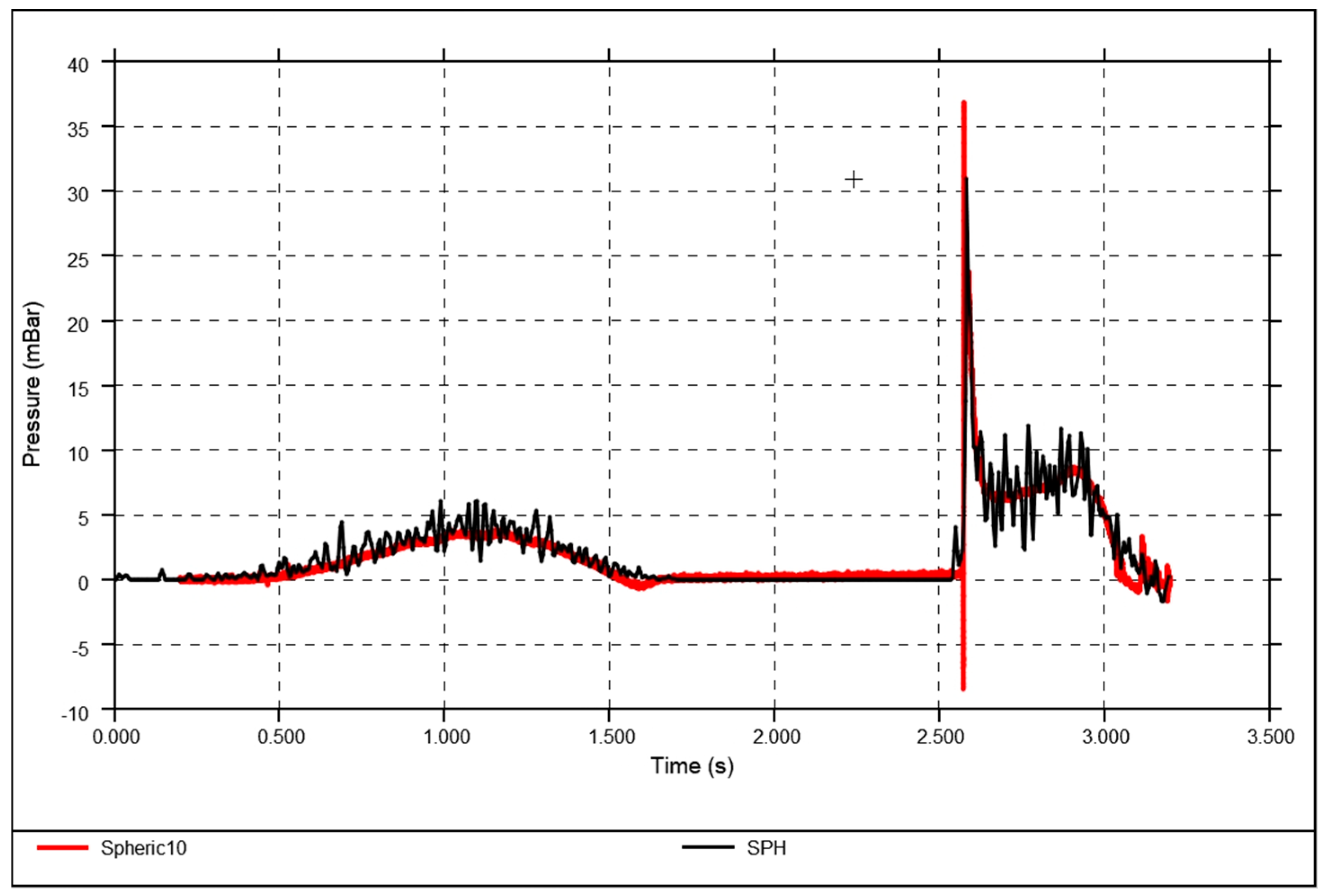
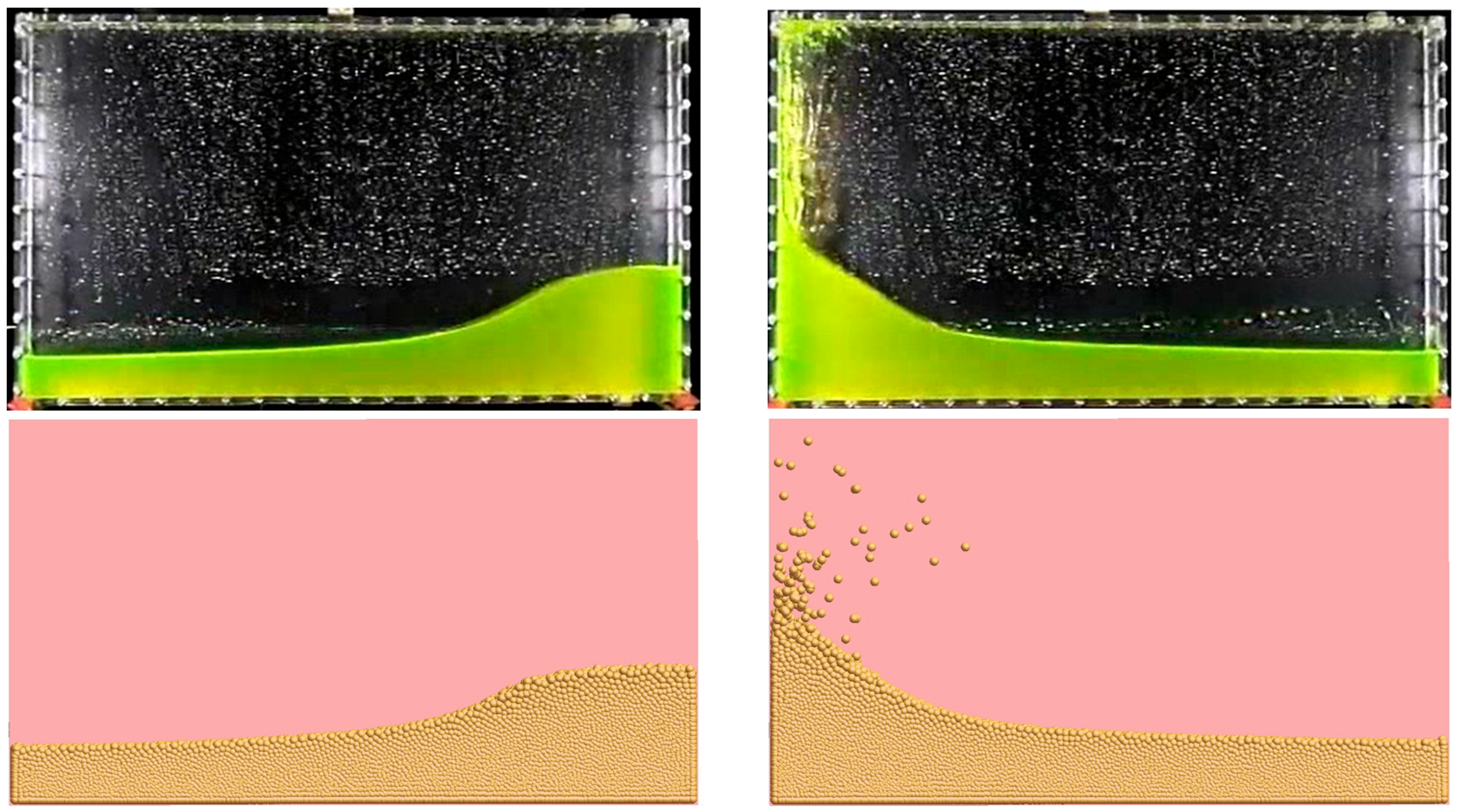
Achieving high resolution in SPH simulations is essential for accurately capturing the fluid’s intricate flow features and dynamic interactions. Ls-Dyna served as the foundation for creating the entire Multiphysics model. Using the Spheric10 load cases [31], we tested the ls-dyna SPH code shown in Figure 2 and Figure 3.
For this simulation we used a particle spacing of 5 mm for a total of roughly 45,000 particles. We used the same SPH and *CONTROL parameters as used in the validated Ls-Dyna Wave–Structure interaction example [32].
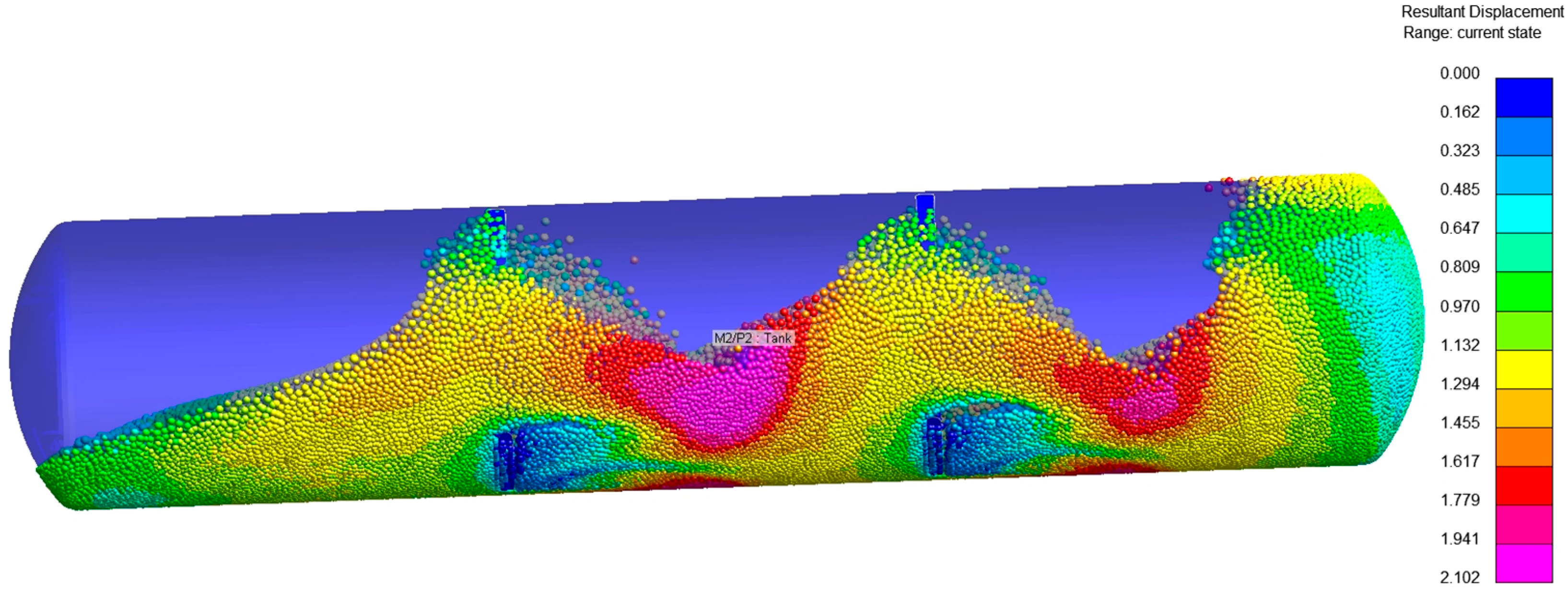
The next step was to create an SPH simulation of a typical barrel at 60% fill undergoing dynamic braking. A 60% fill level was chosen to reflect typical operating conditions with significant sloshing effects. The tank, modelled as a rigid structure, has a length of 9 m, a diameter of 2 m, and hemispherical end caps, with 2 internal partitions. The fluid (water) is represented by approximately 1.2 million SPH particles, with a particle spacing of 50 mm, a smoothing length of 75 mm, a density of 1000 kg/m3, and a viscosity of 0.001 Pa·s. To mimic braking, a constant acceleration of 3.5 m/s2 was applied, while the tank base was fixed to prevent motion. Figure 4 illustrates the resulting fluid free surface behavior at 2 s.
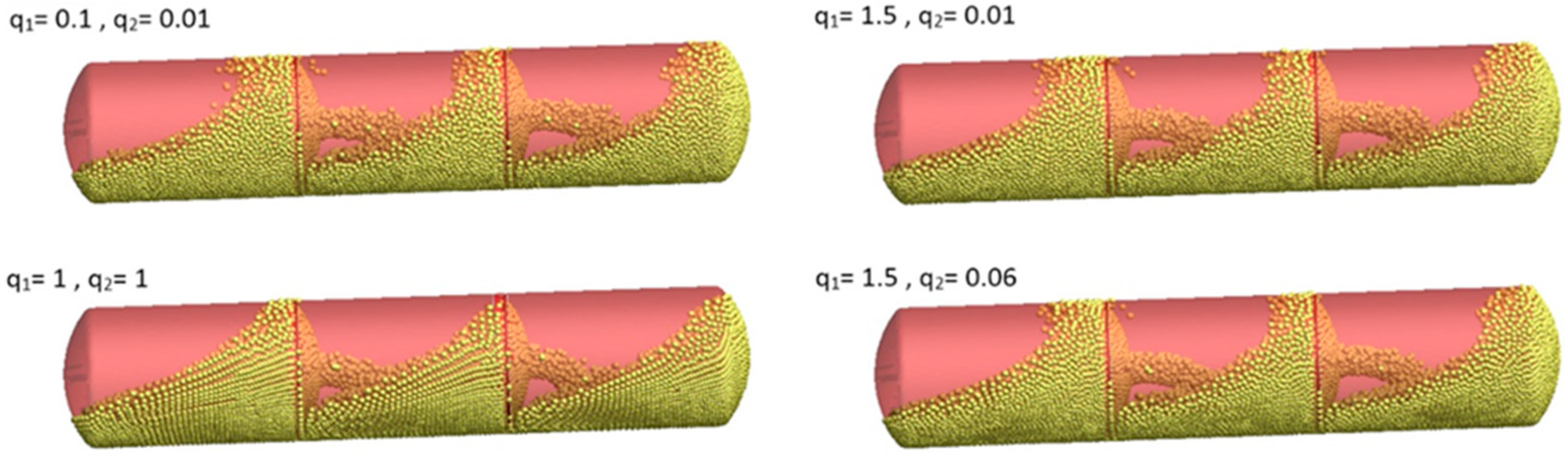
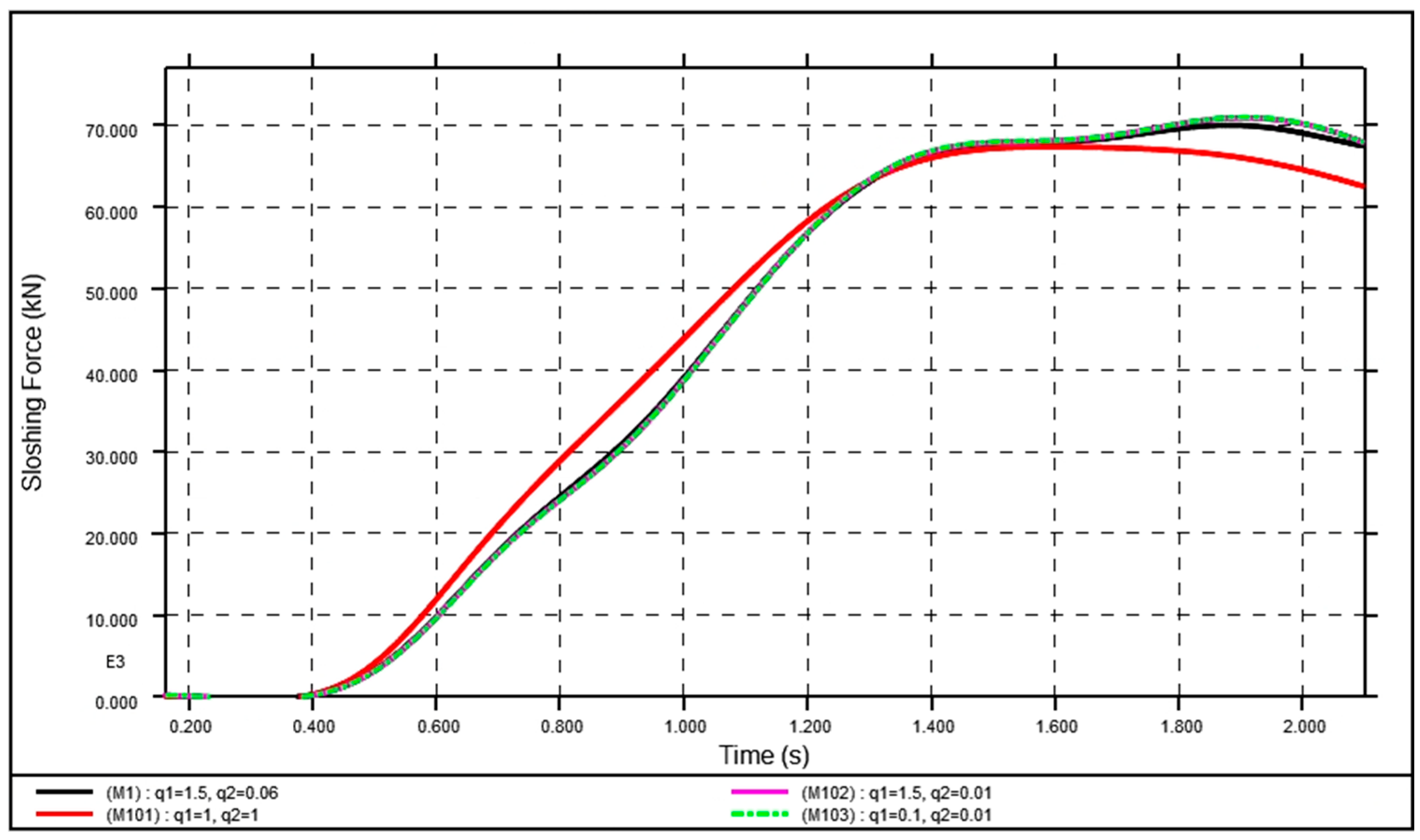
To study the effects of artificial viscosity parameters q1 and q2 on fluid sloshing, a parametric study was conducted, with 4 configurations of q1 (linear viscosity) and q2 (quadratic viscosity) at 4 different particle resolutions giving a total of 16 simulations. The 4 different coefficients were selected based on values commonly used by other sources. The artificial viscosity parameters q1 and q2 regulate numerical stability in SPH simulations. q1 damps velocity differences, while q2 addresses shock effects, impacting sloshing force and free surface dynamics.
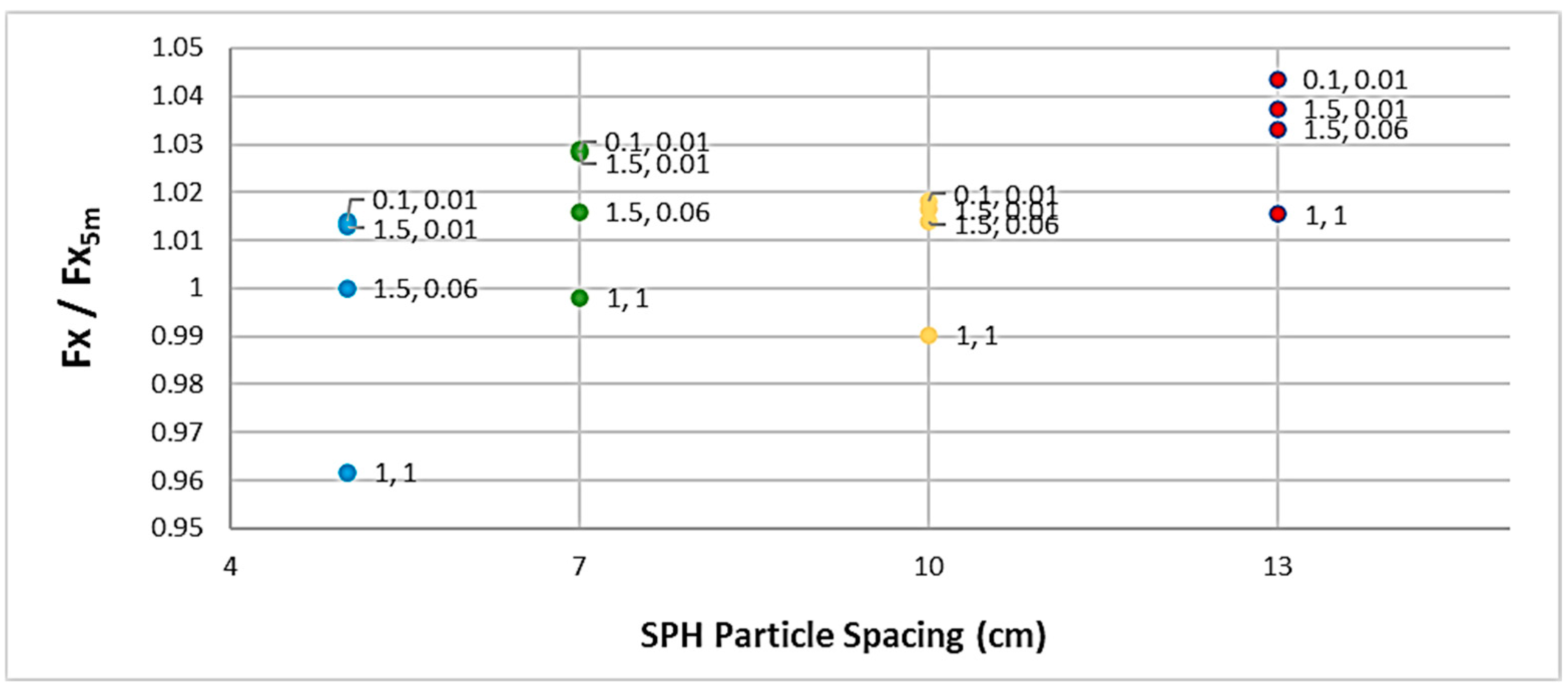
Figure 5 compares the resulting free surface profiles for the 4 different viscosity coefficients for the 5 cm spacing simulation. Visually the difference is small; however, the lower viscosity values (q1 = 0.1, q2 = 0.01) lead to less damped, more dynamic fluid motion, while Figure 6 shows the forces plotted together and Figure 7 quantifies the impact on peak sloshing forces.
The maximum horizontal sloshing force was normalised using the default artificial viscosity values (q1 = 1.5, q2 = 0.06) for the highest resolution case (5 cm). This normalization was necessary to facilitate a meaningful comparison across different resolutions and can show clearly in percentages the difference in max sloshing force between each configuration of viscosity values. Since the highest-resolution case is expected to provide the most accurate representation of free-surface features, it serves as the benchmark for evaluating the effects of varying artificial viscosity parameters across particle resolutions.
The difference in maximum force output is within 2% for the lowest 3 particle spacing. This is an acceptable tolerance for use to assume convergence after the 10 mm spacing option. Our analysis revealed that as the SPH particle spacing rises, the fluid produces a higher peak force and becomes more viscous. By adding more damping by setting the artificial viscosity constants to q1 = 1 and q2 = 1, this resulted in a lower sloshing force and less viscous fluid behavior across all particle resolutions. In the case where q2 was the same and q1 was varied, there is essentially no difference and this indicates that the choice of q2 has a much more pronounced impact on the fluid’s viscosity than q1. Based on the values used in the Spheric10 and Ls-Dyna validation studies, we assume that the values used q1 = 0.1, q2 = 0.01 for the highest resolution case best reflect real-life conditions. Therefore, adjusting the artificial viscosity parameters at lower resolutions to a higher value can yield comparable results to a higher resolution simulation e.g., q1 = 1.5, q2 = 0.06 at 7 cm spacing has the same max sloshing force. This adjustment compensates for the reduced resolution by enhancing the damping effects, thereby maintaining the accuracy of the simulation. The parametric study underscores the importance of fine-tuning artificial viscosity parameters to achieve realistic fluid behavior in SPH simulations. A compromise must be made between particle resolution and computation time, and this study suggests optimal viscosity settings to mitigate the effects of lowering resolution. For our Road Tanker sloshing model, we went with particle spacing of 10 cm and q1 = 1.5, q2 = 0.06.

2.2. Fluid-Structure Contact Algorithm

Within LS-DYNA, a penalty-based contact algorithm is used to model the interactions between the fluid and the interior surfaces of the tank. The penalty-based approach is highly versatile and capable of handling both implicit and explicit analyses, making it particularly suitable for our general-purpose fluid–structure interaction model.
A penalty-based contact algorithm calculates the interaction force based on the penetration depth between contacting bodies. When two surfaces come into contact, the algorithm introduces a virtual spring between the nodes (agent nodes) of one body and the nearest surface segment (the master segment) of the other body. The contact force exerted by these virtual springs is proportional to the penetration depth, thereby preventing excessive overlap of the contacting surfaces. This method offers a realistic and computationally efficient approach to modelling complex interactions between fluid particles and tank walls.
Using linear springs to represent contact forces ensures the algorithm can accommodate various scenarios, from gentle fluid–wall interactions to more intense impact events. This flexibility is crucial for accurately simulating the dynamic behavior of fluids within a tanker, where the interactions between the fluid and the tank structure can vary significantly depending on driving conditions and fill levels.

2.3. Challenges and Limitations

The simulated tank is 9 m long and 2 m in diameter. Given the substantial size of the tank, it is necessary to strike a balance between achieving a high enough resolution to accurately capture the flow features and maintaining a feasible computational run time. This trade-off is crucial for ensuring that the simulations are both accurate and computationally efficient. For our simulations, we aim to implement a two-way contact algorithm that checks the penetration of nodes bidirectionally. This means that the interactions between the fluid particles and the tank walls are dynamically updated in both directions, enhancing the realism of the simulation. However, this approach significantly increases the computational load. Specifically, the total CPU time spent on SPH calculations and their respective contact algorithms can be considerable, accounting for approximately 25–40% of the total computational time for the full tanker model, depending on the chosen SPH resolution.
Our primary interest lies in capturing the broader dynamics of the free surface within the tank and understanding its impact on its structural integrity. While extreme resolution is not necessary for visualising minute details of the free surface features, it is essential to achieve sufficient resolution to accurately represent the overall behavior of the fluid and its interactions with the tank structure. Therefore, a balance must be found between these two factors to optimize the simulation’s accuracy and efficiency. Simulating a large tank poses a significant challenge, necessitating careful consideration of resolution and computational feasibility. By focusing on the significant dynamics of the free surface and structural effects, we can ensure that our simulations provide valuable insights while effectively managing the computational demands.

2.4. FE Techniques for Chassis Modelling

All deformable modelled components, including the chassis, tank, bearers, and hangers, are constructed from S304 stainless steel with elastic properties E = 195 GPa and ν = 0.3.
As the Tanker is constructed mainly of folded sheet metal, a Mid Surface Extraction tool is used to batch process the 3D model assembly into a 2D shell mesh. The middle plane of each sheet metal part is extracted and has the thickness applied. These sheet metal parts are welded together during construction, potentially represented by hundreds of tied connections.
Using the Weld parts feature, this tool can be set up to batch process sub-assemblies, allowing any parts within a certain distance tolerance to be “welded” together and defeatured of any unwanted holes or notches in the part geometry.
The chassis and tank were meshed using 4-node quadrilateral shell elements with the Belytschko–Tsay formulation, chosen for its efficiency in explicit dynamics. The elements employ the Mindlin–Reissner theory with a shear correction factor of 5/6 for transverse shear stresses. The mesh features a typical element size of 5 mm, which kept our simulation timestep > 1 × 10⁻⁶ s. This shell mesh size was also preferred as it kept our element aspect ratio close to 1 when modelling the 3–6 mm thick sheet metal that makes up the majority of the chassis. Three through-thickness integration points were used to capture bending, with fully integrated elements in critical regions to prevent hourglassing.
In conclusion, utilising ANSA for surface extraction, meshing, and part welding provides a quick and efficient method for preparing the complete tanker assembly for finite element analysis. This streamlined process ensures that the complex geometry of the tanker chassis is accurately represented, enabling a detailed and dependable structural analysis.

2.5. Suspension Elements

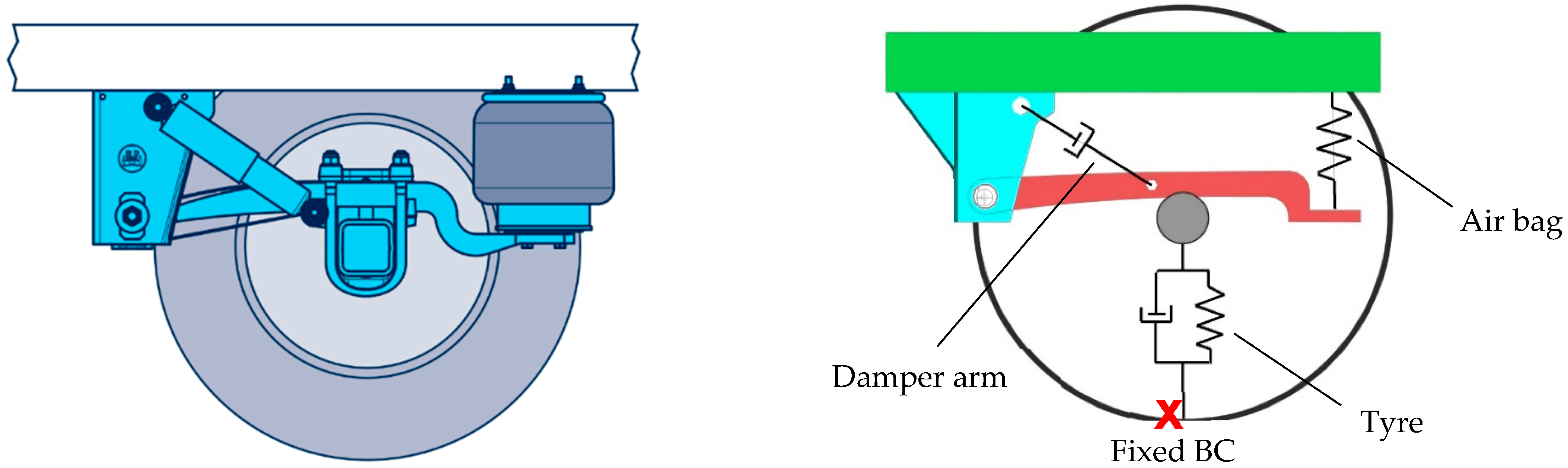
The axle operates on a suspension arm that pivots on a hanger mounted to the bottom of the chassis. An airbag spring and a linear damper are connected to the arm and the chassis, respectively, via the hanger. Together, they provide the essential suspension characteristics.
The finite element model represents the spring and damper elements using beam elements with the material model MAT_074 (ELASTIC_SPRING_DISCRETE_BEAM) and element formulation ELFORM = 6 (DISCRETE Beam). The behavior of these elements is described in Ls-Dyna as either a constant or load curve. An axle manufacturer has provided the parameters for the suspension elements: a constant spring stiffness (k) of 150,000 N/mm and a damping load curve ranging from 10,000 to 50,000 N/(mm/s).
As shown in Figure 8, this representation enables the direct incorporation of the manufacturer-provided stiffness and damping values into the simulation. This ensures that the dynamic response of the suspension system is accurately captured.
The tyre is represented using the same spring-damper beam element formulation as before with k = 100,000, d = 10,000 obtained from a supplier. One node is attached to the axle and the other node is displacement constrained in all directions. This addition simulates the tyre’s cushioning effect and contribution to the overall suspension dynamics as described by IMECHE [33]. Future validation of this part of the model can be achieved by using accelerometer data collected directly from the axle and the chassis above it. By comparing the simulated responses of the sprung mass with real-world measurements, we can fine-tune the suspension beams to reflect the physical behavior of the suspension system even more accurately.

3. Material Characterization

This section characterizes S304 stainless steel, including plastic behavior, to provide a comprehensive material model for current elastic analyses and future scenarios involving plastic deformation and fatigue, such as crash simulations or cyclical loading, which are critical for industry design optimization.
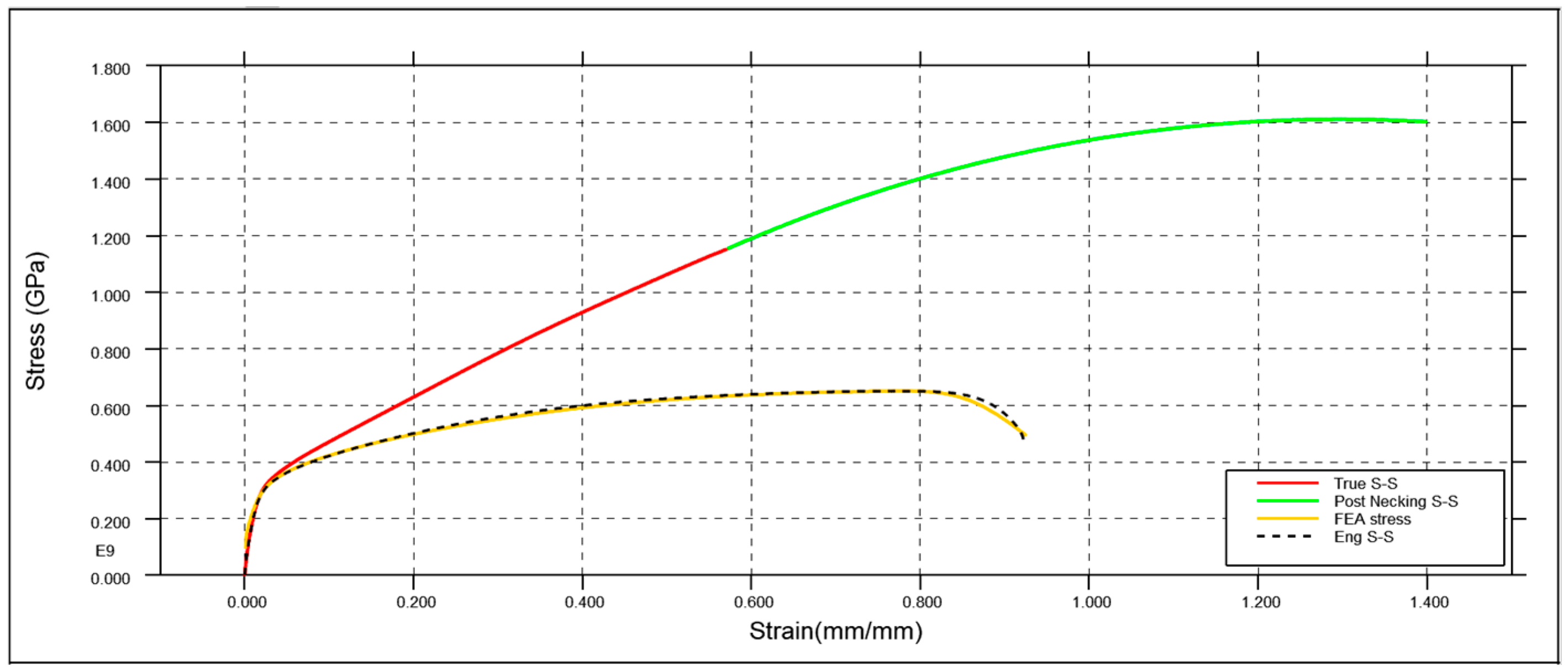
S304 was characterized through tensile tests at Queen’s University Material Labs. The elastic properties (Young’s modulus: 195 GPa, Poisson’s ratio: 0.3) were derived alongside true stress–strain. The MAT_24 model in LS-DYNA incorporated this data, including S-N curves for future fatigue analysis, and was validated through FEA simulations (Figure 9).
Failure generally occurs through two primary mechanisms: (1) crack propagation from areas of high stress, where localized forces exceed the material’s fatigue threshold, and (2) crack propagation due to cumulative fatigue over time. To accurately capture these failure modes, the material model selected for simulation is *MAT_24 in LS-DYNA. This model effectively incorporates S-N curves (fatigue data), stress–strain relationships, and various failure criteria. This enables the simulation to predict fatigue life in regions subjected to repeated loading, providing valuable insights into stress distribution and durability under real-world conditions.
Kweon et al. [8] describe a methodology for calculating true stress–strain relationships from uniaxial tensile load tests and guide the validation of these curves using a finite element analysis (FEA) model. Following the standardized procedure in BS ISO 1099 [34], S304, stainless steel test samples were prepared. These samples are representative of the materials used in the actual tanker components. Five tensile load tests were conducted at Queen’s University Material Labs to obtain the necessary data.
This detailed material characterization is essential for predicting potential failure points and improving Crossland’s tankers’ overall design and durability.
In conclusion, combining physical tensile testing with detailed FEA simulations in LS-DYNA enables a comprehensive and accurate characterization of the S304 Stainless Steel material. The strong agreement between the experimental and simulated stress– strain curves validates the robustness of the material model, ensuring it accurately represents the material’s behavior under various loading conditions.

4. Model Validation

4.1. Road Testing

We conducted real-world testing on a tanker carrying water to validate our LS-DYNA numerical models. According to the industry standards outlined by Romero et al. [10], braking-in-turn (BIT) maneuvers are typically used as the critical load case. In this case the max stress is achieved due to the rapid deceleration and the turning shifting the weight to one side. However, for practical reasons and due to the availability of a suitable testing location, we opted to perform separate braking and turning maneuvers on a disused airstrip. These maneuvers were conducted by first maintaining an initial velocity to allow the liquid to settle and then performing the maneuvers. The tests were repeated at different initial velocities and fill levels of 100% and 60% to evaluate the impact on the tanker’s behavior. The setup included a portable Digital Acquisition Device (DAQ), which was wired into the power supply within the cab, allowing for easy operation and data recording by the driver.
The primary objective of these tests was to record the acceleration at the axles and the strain throughout the chassis. By capturing the acceleration-time data, we could apply these real-world measurements to our numerical model in LS-DYNA to perform a comparative analysis. This involved using a fixed boundary condition at the axles and then applying the recorded acceleration profiles as a *LOAD_BODY, comparing the resulting stress with the experimental recordings. This validation process allowed us to assess the accuracy and reliability of our numerical models, ensuring they accurately reflect the real-world behavior of the tanker under similar conditions. The strong correlation between the test results and the FEA simulations confirmed the robustness of our model, thereby enhancing confidence in its predictive capabilities for future design and optimization of road tankers.

4.2. Collection of Acceleration and Strain Data

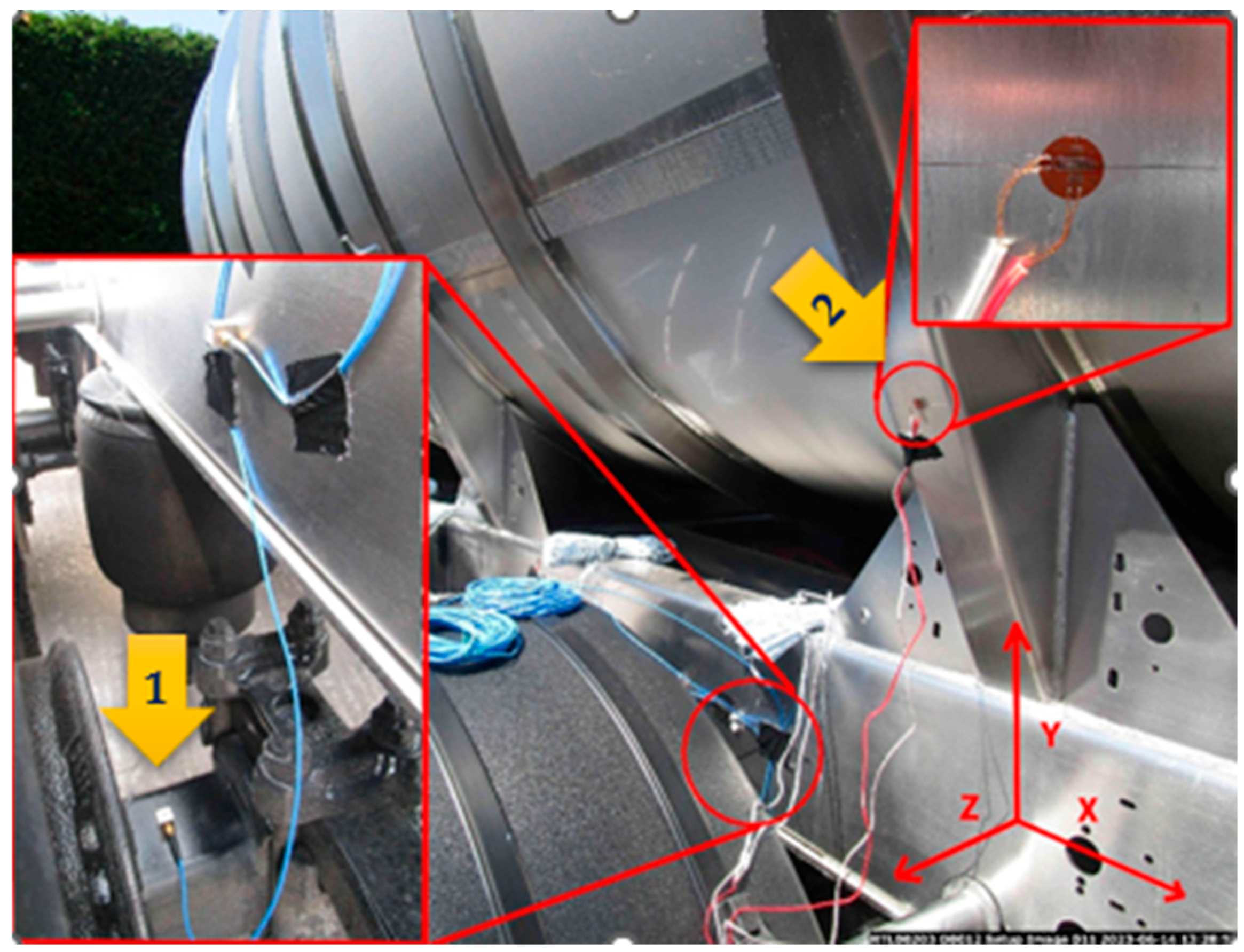
Type B T-rosette strain gauges (Vishay CEA-06-125UT-350, gauge factor ~2.1) were used to measure strain in two orthogonal directions. In Test 1, twelve gauges were placed on the chassis and bearers (Figure 10(2)). In Test 2, due to budget constraints, four linear gauges with gauge length 5 mm were used at critical locations, sufficient for validating stress distributions alongside acceleration data.
The selection and placement of accelerometers and strain gauges are crucial for collecting comprehensive dynamic data to validate the LS-DYNA numerical models. We chose MEMS (Micro-electro-mechanical system) accelerometers, which can measure dynamic and steady-state accelerations. For accuracy, it is essential to select accelerometers with appropriate sensitivity and range that can capture the expected acceleration levels without saturating or omitting subtle details. As a rule of thumb, the sampling frequency should be 10x the maximum frequency you expect to measure. Because tankers experience a broad spectrum of dynamic forces, accelerometers with a wide measurement range are advantageous. Road vibrations from Prażnowski et al. [35] are shown to reach levels of ~500 Hz; therefore 5G 5 kHz MEMS we selected.
By mounting an accelerometer at the axle, we capture the dynamic responses of the suspension system to road irregularities and driving maneuvers. Additionally, mounting accelerometers vertically above the axle on the chassis captures the transmission of forces from the axle through the suspension to the chassis. This is essential for characterising the suspension model and understanding the vertical dynamics of the chassis.
In addition to accelerometers, linear strain gauges are chosen to capture detailed strain data at critical points on the tanker chassis. High-sensitivity gauges are necessary for detecting the small strains that will be induced in our non-destructive road testing. Temperature compenzation should also be considered to ensure accuracy, especially if tests are conducted under varying environmental conditions. Proper installation is crucial for accurate strain measurements; thus, a material-compatible adhesive is used as well as a rubber sealant to help negate the effects of weather and temperature.
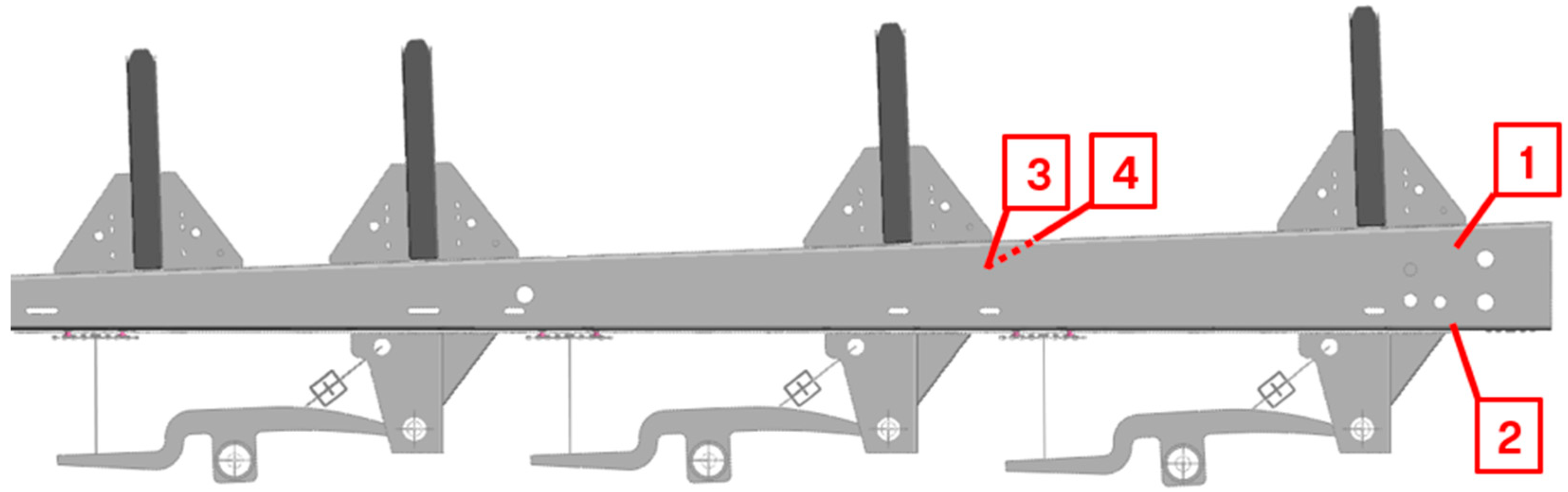
Strain gauges on the chassis rails help analyse the stress distribution along the length of the chassis, identifying potential weak points and areas susceptible to fatigue. Placing strain gauges near critical welded joints is also essential, as these areas often serve as stress concentrators and are potential failure points, particularly in regions exposed to high cyclic loading. Finally, strain gauges positioned near suspension mounts enable an evaluation of the suspension’s effectiveness in mitigating road-induced stresses and its impact on the chassis. After using the FEA model to help inform where there might be areas of high stress, the sensor locations shown in Figure 10 were chosen to best meet the previously stated requirements. Because we only had capacity for 4 strain gauges, we chose to place them vertically to measure the Y-Direct strain, which showed the highest magnitude and variability over the load case. This placement strategy ensures that the collected data provides valuable insights into the tanker chassis’ dynamic behavior for braking and turning maneuvers with only a limited number of sensors.
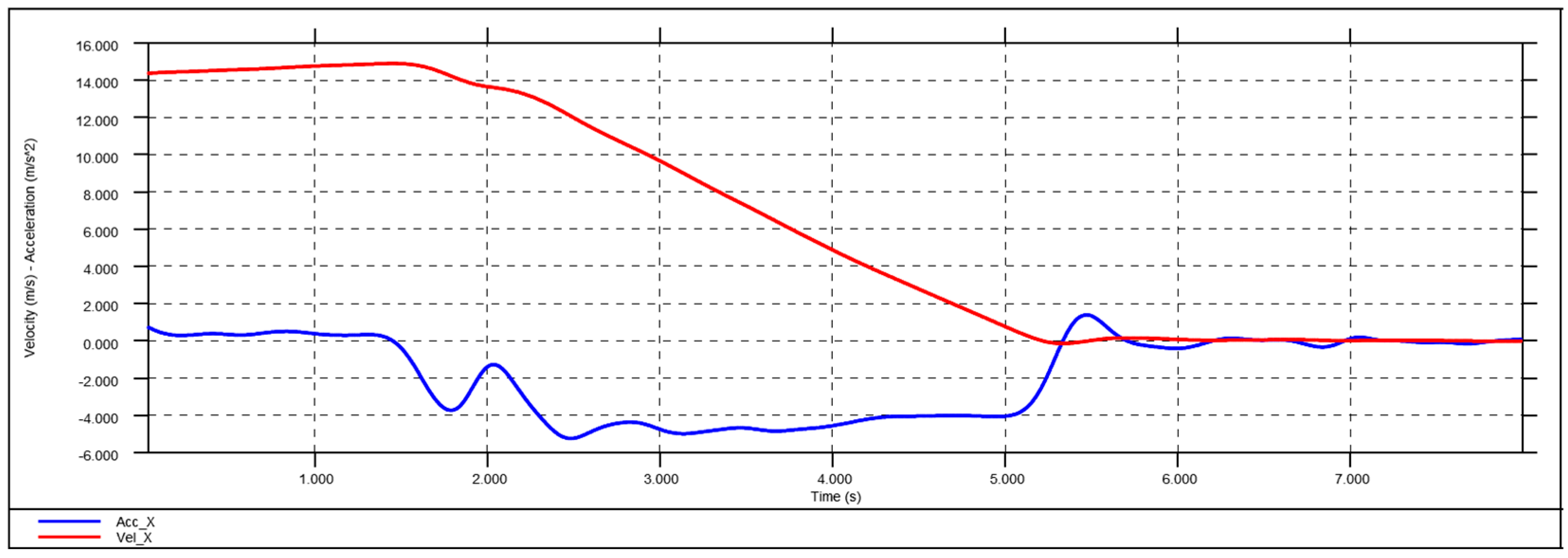
To validate our LS-DYNA model, we conducted an initial road test (Test 1) with piezoelectric accelerometers, but the data revealed their inability to capture steady-state acceleration. This meant we had no useable acceleration data to apply to our FEA model. This unsuccessful test provided critical insights into experimental design, leading to the adoption of MEMS accelerometers in Test 2, which yielded validated data (see Figure 11). The setup for Test 2 remained the same, but we replaced the IECP accelerometers with MEMS and executed the same maneuvers.

4.3. Comparison of Simulation Results with Real-World Data

Figure 11 presents reliable acceleration and velocity data from Test 2, capturing expected braking dynamics and sloshing effects, which were used to validate the LS-DYNA model. The recorded acceleration was integrated to achieve the velocity data.
The acceleration data presents all the expected features: the initial spike in deceleration, followed by a return to 0 when the slosh hits the front of the tank; a subsequent return to consistent deceleration; and finally, a small spike in the opposite direction when the sloshing impacts the rear of the tank. The velocity curve initially increases slowly due to the driver not holding the speed precisely but then shows a speed decrease from 14 to 0 m/s.
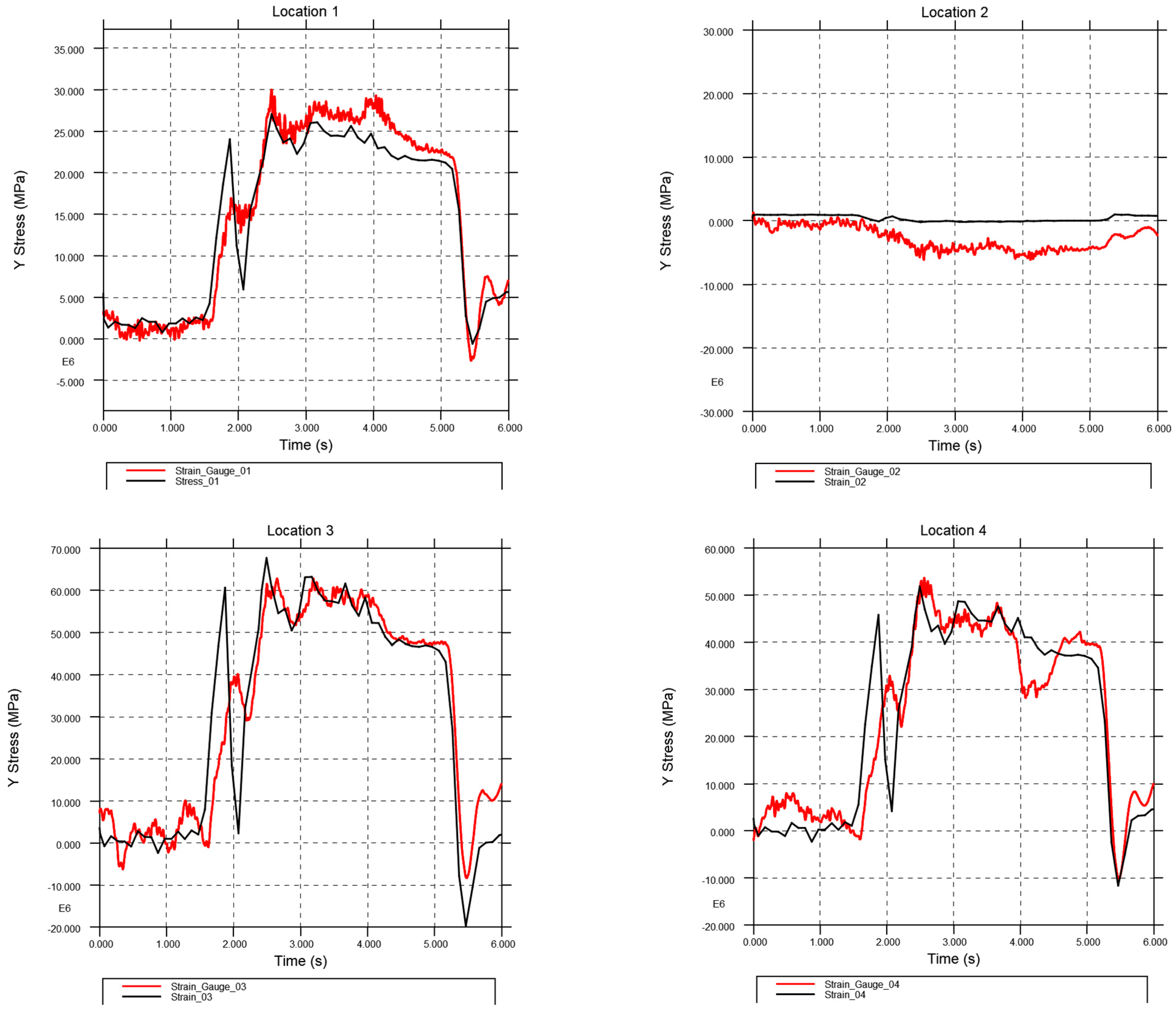
We validated the model using the Test 2 strain and acceleration data from 3 load cases presented in order bellow: 30 mph Harsh Braking, 20 mph Gentle Braking, and Slalom maneuver. Ideally, each load case would begin the tanker at a constant velocity with zero acceleration, but due to poor runway conditions it was difficult to achieve this. The stress comparison data has been zeroed to protect company IP.
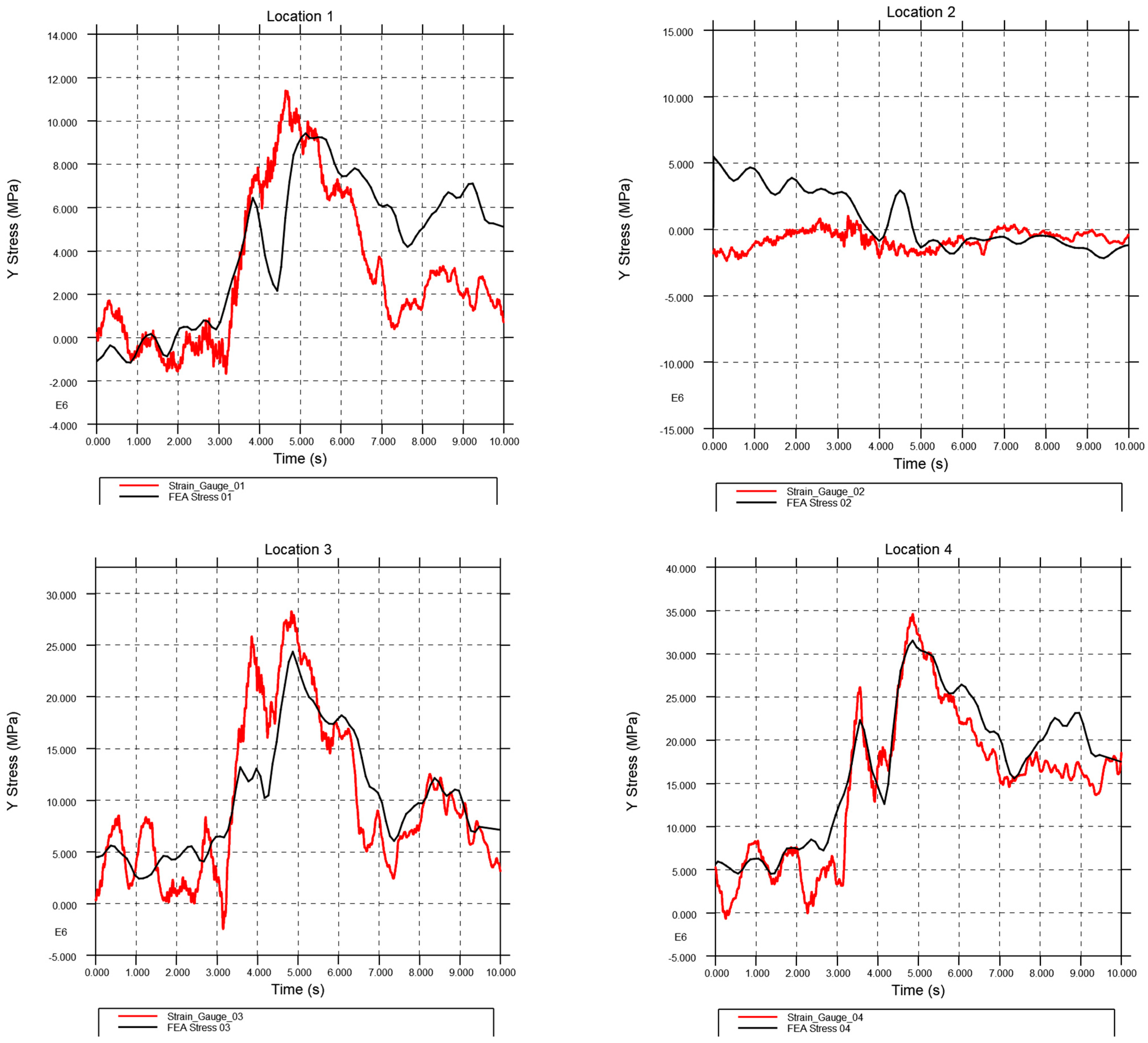
LC1: The peak deceleration is 5 m/s2. Figure 12 shows the Y-Direct stress comparison between strain gauges and the corresponding location on the FEA model shown in Figure 13. There is good conformity between the results at locations 1, 3, and 4, with some variation, mainly in the initial braking region. The model exhibits behavior typical of an underdamped system, where the initial stress ramps up too high and then bounces back too low before reaching the correct stress level. With further iterations to the tyre and suspension, this damping could be tuned to better represent the real system. Location 2 is positioned just above the axle hanger and cannot capture the 5 MPa shown in red. The relatively low stress extracted from the FEA model may be due to the rigid hanger’s proximity, which could artificially stiffen this area. Considering the area has such low stress, it was deemed a necessary compromise to model this component as rigid.
LC2: The peak deceleration is 2 m/s2. This is less than half of LC1, and as such the strains recorded are about half as well. Figure 14 shows that locations 1, 3, and 4 again show good correlation in curve shape and magnitude; however, there are smaller features that are not captured. The acceleration data we apply to the FEA starts a second before the braking begins and so doesn’t carry any of the dynamic oscillations that the real-world tanker has before it begins breaking. This could explain some of the missing features.
Location 2 is similar also to LC1 in that there is little stress over the maneuver, so the low magnitude of stress makes this correlation harder. A different location for the gauge will be used in future tests.
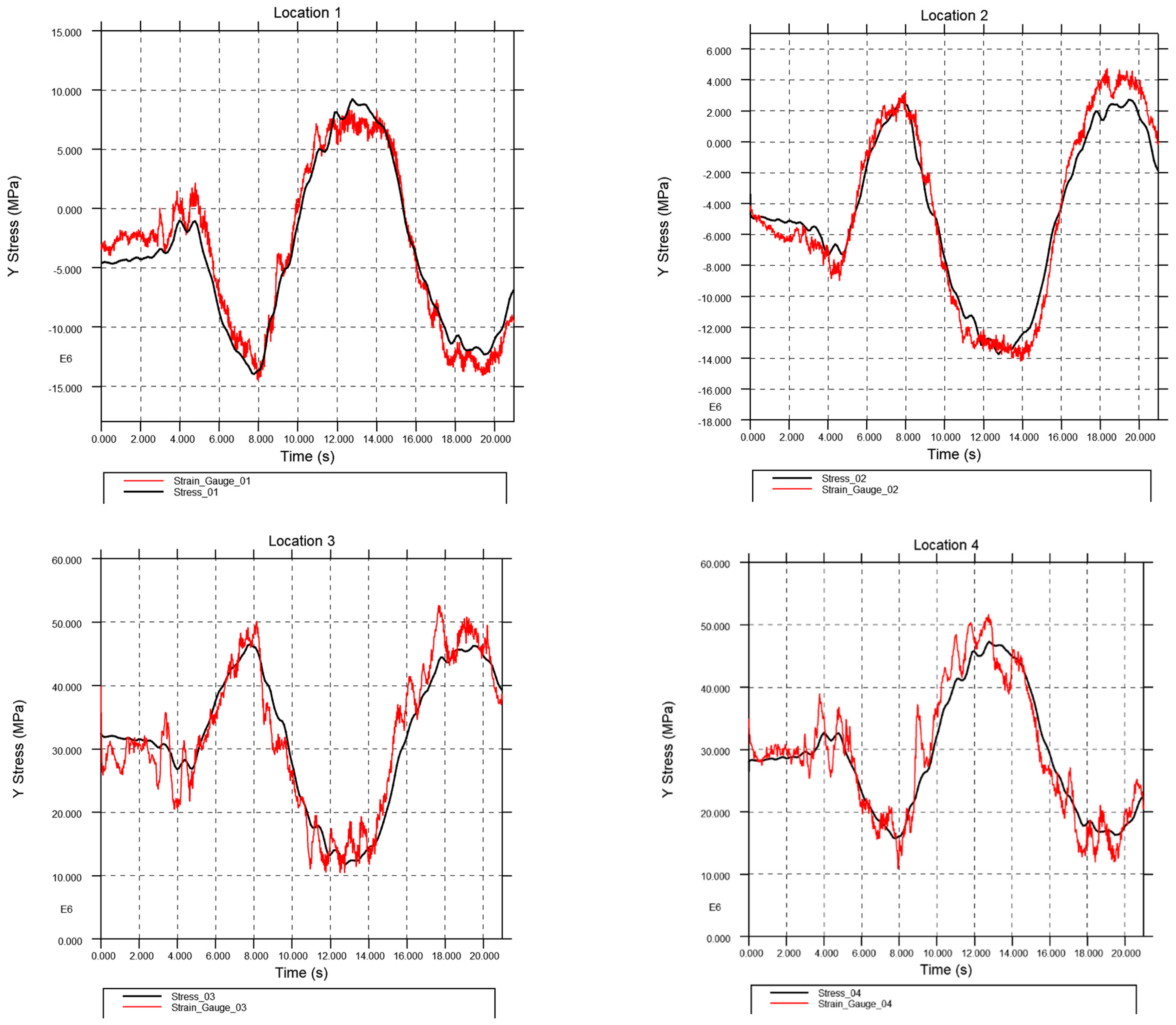
LC3: The turning load case involved the tank driving at 30 mph while performing a slalom maneuver, turning from left to right. Figure 15 shows the results comparison. The results at all locations show a good correlation; however, the higher stress levels at locations 3 and 4 display more noise and oscillations. Considering that the surface we were driving on was very uneven and would induce much noise, the correlation is sufficient for us to regard the model as validated using the 3 representative datasets shown.

5. Simulation Results

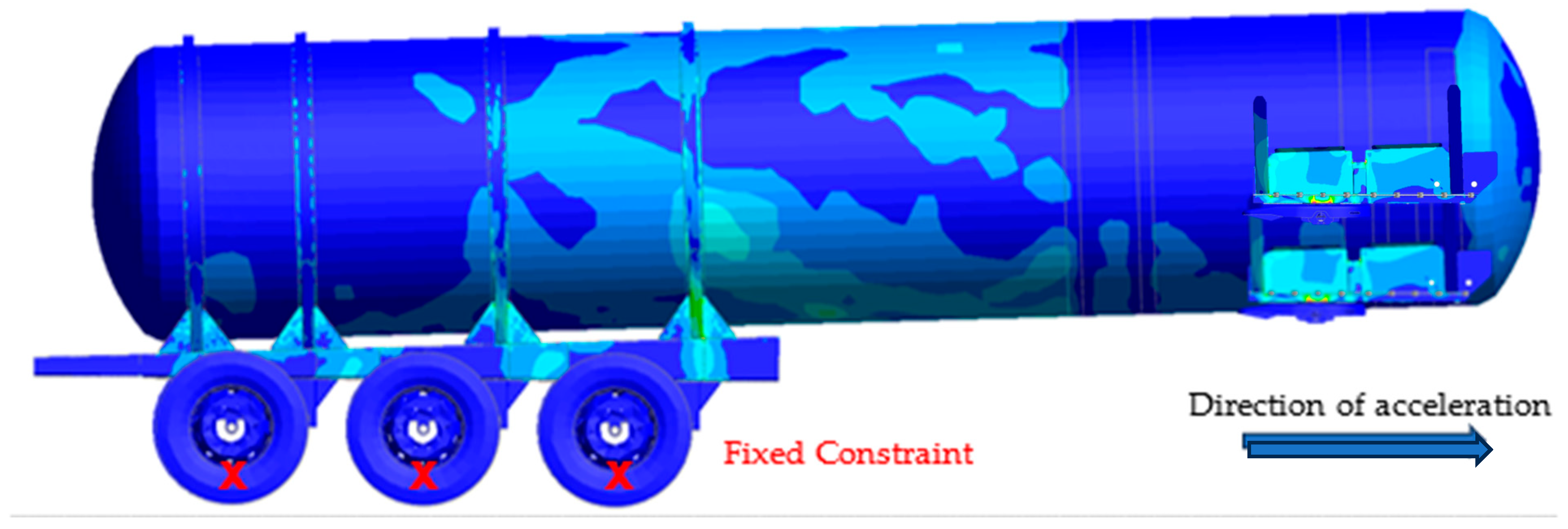
Satisfied that the model had been validated for a range of dynamic behavior, we felt confident in the results that we were seeing for the full tanker model. This enabled us to identify three primary areas for future development. Figure 16 shows the stress throughout the structure. We were able to confirm that the load of the tank is split roughly 60/40 between the rear chassis and the front rubbing plate. Looking at the rear of the tank, we can see that the front ring and bearer take the largest portion of the load. This confirms what Crossland engineers already believed to be true. All stress diagrams that follow show a relative contour gradient where the peak stress is not revealed. It was found that no area exceeded its factor of safety and all the following comments are recommendations for improvement only.

5.1. Rubbing Plate

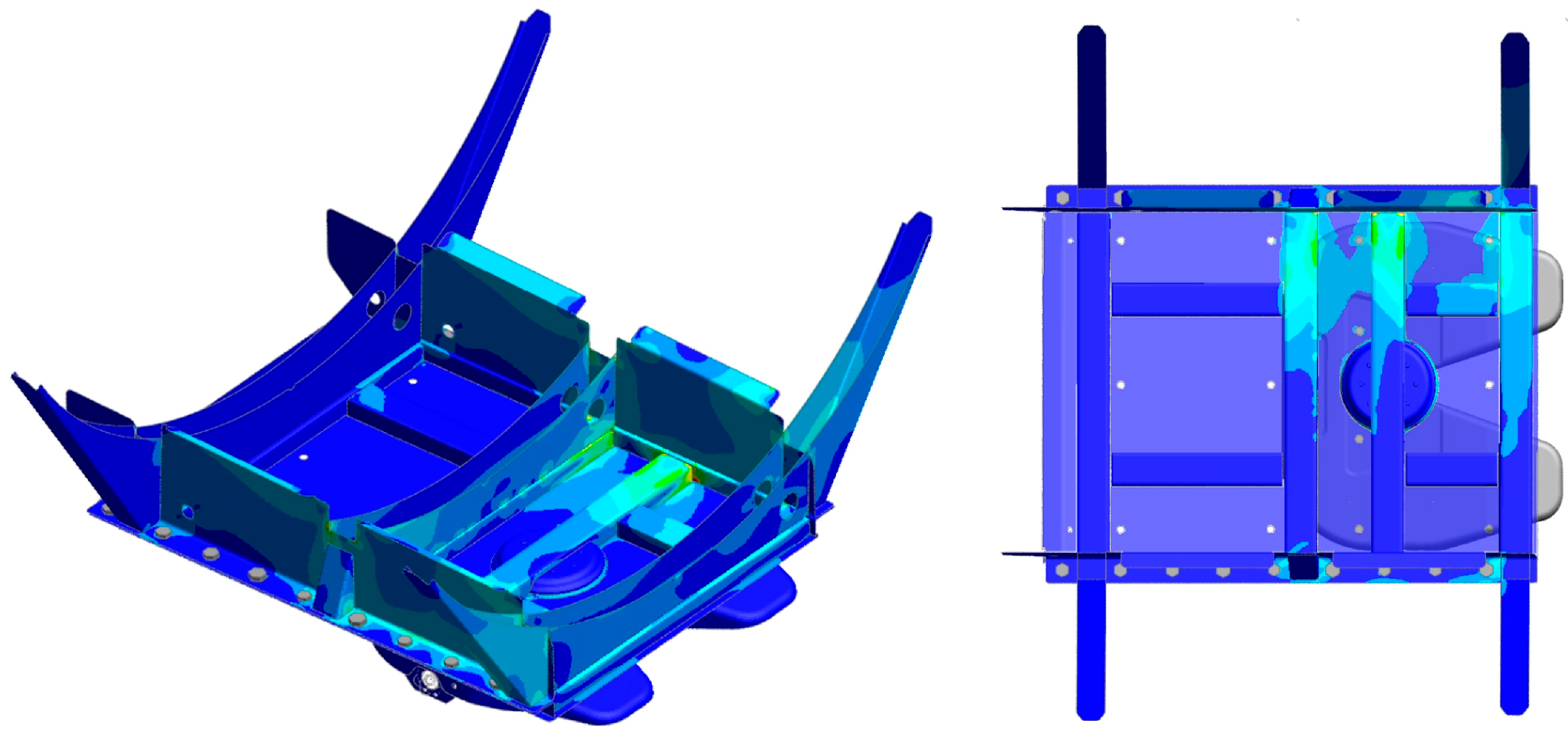
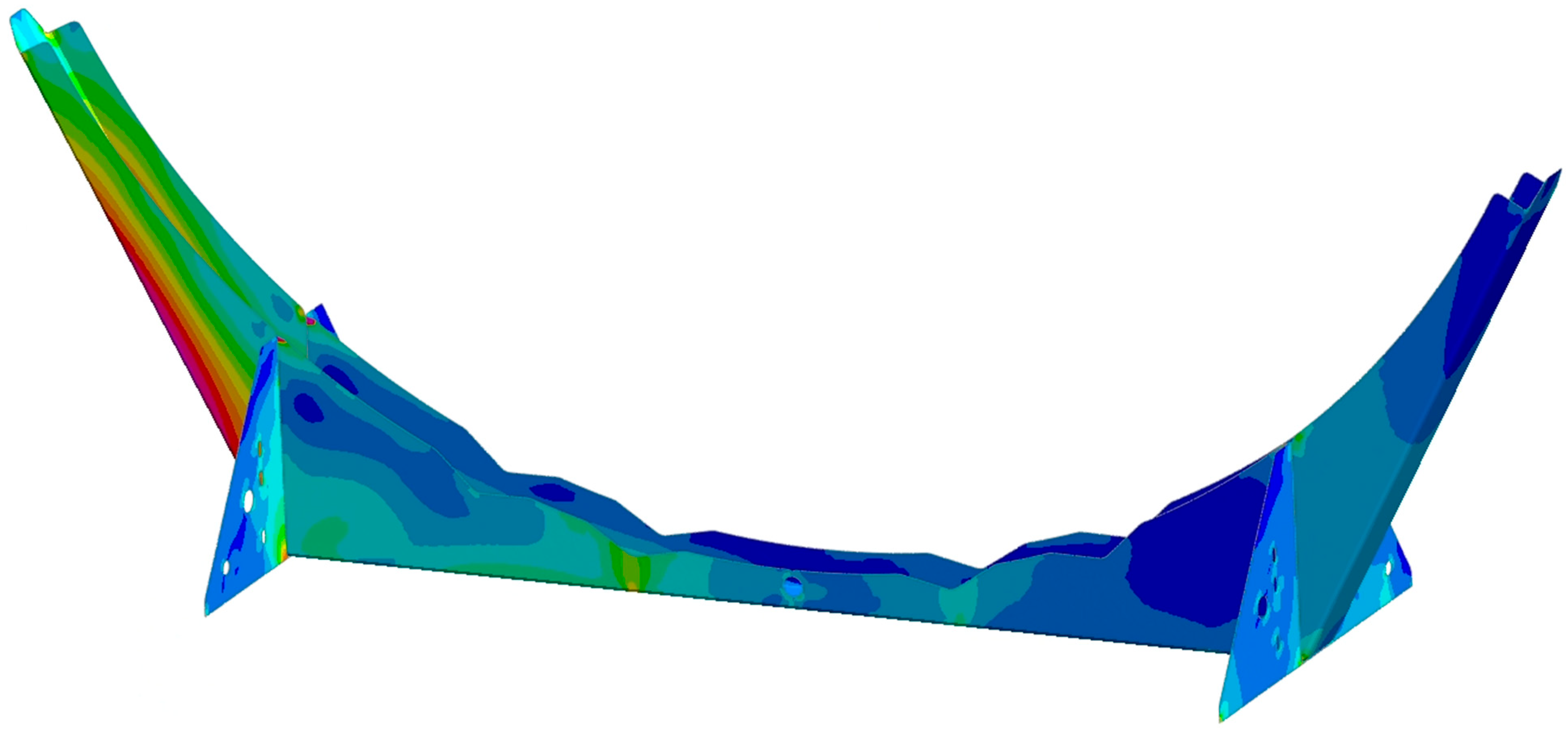
The Rubbing Plate serves as the main connection point between the lorry and the trailer, and as a result it sees significant stress around the king pin. All the braking, accelerating, and turning forces exerted on the tank see an opposite reaction at the king pin area. It can be seen from Figure 17 that the channel pieces welded over the top of the king pin are very much necessary to add stiffness during turning. These channels could be rearranged and made taller to increase their stiffness and further strengthen this area. It can also be seen particularly in Figure 18 that the channels and bearers in front of the fifth wheel are underutilized. The area directly above the fifth wheel takes most of the load, and so the areas not being utilized can be the focus of major weight reduction.

5.2. Bearers

The bearers are the structure that connects the rings of the tank to the chassis, and as such, they experience significant stresses, especially under turning, when they are loaded unsymmetrically. Figure 18 shows the stresses on one arm.
In this area, the three components move in different directions, creating a concentration of forces at the seam weld. One potential improvement is to merge the two parallel parts into a single component, removing the need for a weld and simplifying the design. The bearer typically performs well during braking, as the load remains balanced on both sides of the arm.

5.3. Bogie

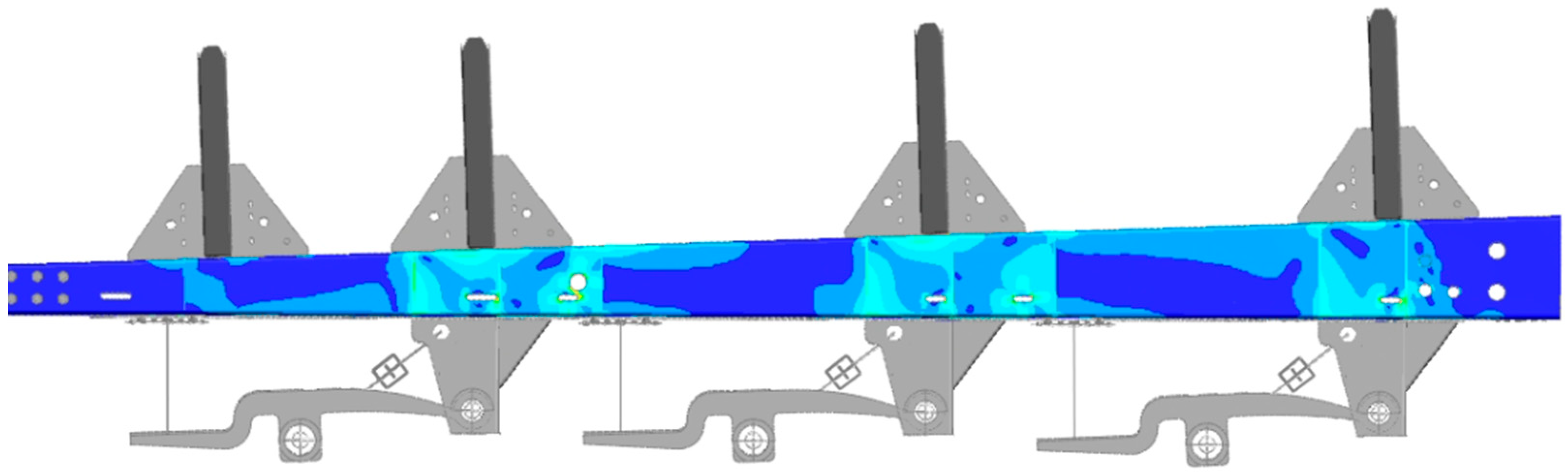
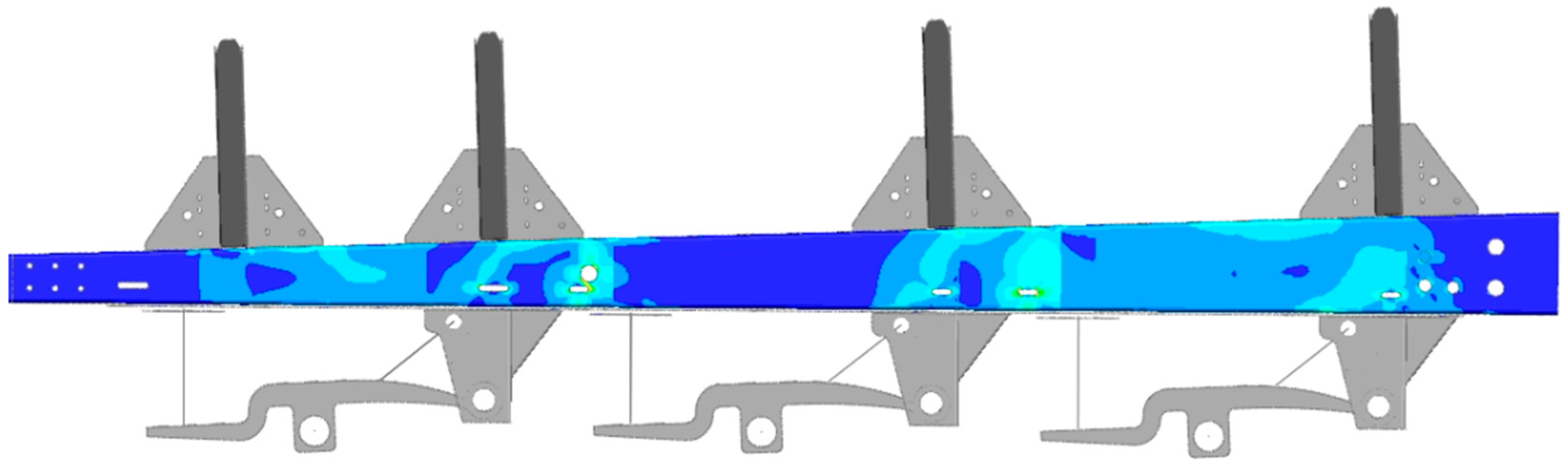
The bogie refers to the main chassis rails that connect the bearers and axles. Figure 19 shows the relatively low stress in the vertical line between the bearer and hangers. In these areas, the bogie is loaded in uniaxial compression. The bearers and hangers are placed in line for this reason, as offsetting them would generate shear forces in the bogie which is a much weaker mode of loading. There also is not too much variation in this stress pattern between the turning and braking load cases. For both load cases, the areas in between see very little stress at all, and this implies that some focused weight reduction can be very effective while maintaining strength in the key areas.

5.4. Comparing Load Case Results

Again, to protect company IP, the actual values of stress have been given as a ratio to the Static GVW load case for each component. For the Static 60% fill, the max stress experienced in each component is on average 79% of that for the GVW. Only in the Hanger during Braking does the 60% fill result in the same stress as GVW. The Bearer is also the only component to experience more stress under Braking than Turning.

6. Discussion

6.1. Summary of Key Findings

From our Multiphysics Road Tanker model, it was determined that the tanker under GVW is worse than the 60% fill at all locations for all load cases and should be used as the main load case for tanker design. Table 1 shows that stresses at GVW during static, braking, and turning are much higher than those experienced at 60% fill. Turning results in higher stress throughout most of the chassis, but the bearers experience higher stress under braking than turning. This highlights the need to include both braking and turning load cases. Future testing could perform BIT maneuvers to include both braking and turning in a single load case.
Dynamic loads caused by sloshing significantly impact driveability and generate shock loads to the tank; however, the full weight of a fully loaded vehicle creates a higher peak stress on the chassis. SPH sloshing simulations are an important part of the design process and have numerous applications for baffle and rollover safety; however, sloshing is negligible at GVW (~95% fill). This means that during the initial design phases, the SPH can be substituted for cheaper solid elements to speed up the simulation time.
Using real-world data collected from accelerometers and strain gauges, we were able to validate the FEA model with good accuracy and have confidence in integrating FEA into the design process at Crossland.
We have identified the following three areas that could be optimized as part of a weight reduction redesign for the chassis: Rubbing Plate, Bearers, and Bogie.
FEA results highlight areas of loading, particularly where multiple components are joined by welds.
To optimize these regions, future designs will aim to consolidate parts into single components where feasible, reducing the need for welding. This approach also offers benefits such as simplified manufacturing and reduced reliance on highly specialized welders.

6.1.1. Implications

The study of road tanker design, focusing on liquid sloshing and Multiphysics modelling, has several important implications for the industry, namely the following:
  • The knowledge base at Crossland was strengthened through the use of clear explanations and visualizations that support ongoing engineering development.
  • Enhanced Design Optimization: By identifying high-stress areas like the crossmembers, bearers, and hangers, the research can lead to lighter, safer, and more durable tankers, potentially reducing material costs and improving fuel efficiency.
  • Validation of Computational Models: The successful validation with real-world data (e.g., accelerometers, strain gauges) suggests these models are reliable for predicting tanker behavior, possibly reducing the need for costly physical prototypes and speeding up design cycles.
  • Industry Standards and Safety: The findings could influence updates to safety regulations, especially for structural integrity under dynamic loads, potentially leading to better design guidelines for manufacturers.

6.1.2. Recommendations

Based on the study’s outcomes, here are suggestions for future steps:
  • Further Develop the Model: Enhance the Multiphysics model by adding road vibration data for noise, vibration, and harshness (NVH) analysis and detailed fatigue testing to better predict long-term performance.
  • Apply to Other Tankers: Use the validated approach for different tanker sizes and configurations to ensure the findings are widely applicable and optimize designs across the product range.
  • Collaborate with Industry: Share the research with other manufacturers and stakeholders to explore implementing these design methods, potentially through partnerships or industry workshops.
  • Train Engineers: Create training programs to teach engineers how to use Multiphysics modelling, ensuring the workforce is ready to adopt these advanced techniques.
  • Long-Term Studies: Monitor tankers designed with this method over time, comparing them to traditional designs to confirm improvements in safety, durability, and efficiency, possibly through field trials.

7. Conclusions

This study developed and validated a Multiphysics model for road tanker design, yielding the following key conclusions:
  • A coupled SPH-FEA model accurately predicts tanker stresses under braking and turning, validated with strain gauge and accelerometer data.
  • Peak stresses at the crossmembers, bearers, and hangers dominate at full load (GVW), with sloshing negligible but significant at partial loads.
  • Material characterization of S304 stainless steel enables robust design analysis, supporting weight reduction and safety improvements.
  • The model facilitates digital prototyping, reducing costs and enhancing tanker longevity for industry applications.

Author Contributions

Conceptualization, G.A. and P.M.; methodology, C.R. and G.A.; software, C.R.; validation, C.R., G.A. and C.Q.; formal analysis, C.R. and G.A.; investigation, C.R.; resources, P.M. and C.Q.; data curation, C.R.; writing—original draft preparation, C.R. and G.A.; writing—review and editing, G.A., P.M. and C.Q.; visualization, C.R. and G.A.; supervision, G.A.; project administration, G.A.; funding acquisition, G.A. All authors have read and agreed to the published version of the manuscript.

Funding

This research was funded by Innovate UK grant number KTP013009.

Data Availability Statement

The data presented in this study are not publicly available due to commercial confidentiality and company privacy restrictions.

Conflicts of Interest

Authors Conor Robb, Pearse McKeefry and Conor Quinn were employed by the company Crossland Tankers Ltd. The remaining authors declare that the research was conducted in the absence of any commercial or financial relationships that could be construed as a potential conflict of interest.

References

  1. Yu, D.; Chu, J. Study on roll-stability model optimization for partially filled tanker trucks. Adv. Mech. Eng. 2019, 11. [Google Scholar] [CrossRef]
  2. Li, X.S.; Ren, Y.Y.; Zheng, X.L. Model-free adaptive control for tank truck rollover stabilization. Math. Probl. Eng. 2021, 2021, 8417071. [Google Scholar] [CrossRef]
  3. Zhang, C.; Cao, X.; Xu, L.; Wang, Y.; He, Y.; Liu, X. Analysis of longitudinal braking stability of lightweight liquid storage vehicles. Appl. Sci. 2024, 14, 7780. [Google Scholar] [CrossRef]
  4. Siraye, W.; Wakjira, A.; Nallamothu, R.B. An analysis of fuel oil sloshing in partially filled tanker trucks under cornering using various baffle systems. J. Eng. 2023, 2023, 9941864. [Google Scholar] [CrossRef]
  5. Unnikrishnan, G.; Anoop, F.R.; Suryan, A.; Pramoj Sanker, P.S. Efficacious slosh suppression technique in road tankers to enhance the effectiveness of drinking water distribution. Chemosphere 2023, 310, 136752. [Google Scholar] [CrossRef]
  6. Yu, L.; Zhang, L.; Zhong, S.; Huang, B. Multi-objective optimization of a T-shaped anti-sloshing baffle based on NSGA-II. Front. Energy Res. 2022, 10, 810937. [Google Scholar] [CrossRef]
  7. Cai, Z.; Topa, A.; Djukic, L.P.; Herath, M.T.; Pearce, G.M.K. Evaluation of rigid-body force in liquid sloshing of a partially filled tank: CFD/SPH/ALE comparative study. Ocean Eng. 2022, 236, 112641. [Google Scholar] [CrossRef]
  8. Zheng, J.; Xue, M.A.; Dou, P.; He, Y. A review on liquid sloshing hydrodynamics. J. Hydrodyn. 2022, 33, 1089–1104. [Google Scholar] [CrossRef]
  9. Yang, C.; Niu, R.; Zhang, P. Numerical analyses of liquid slosh by finite volume and lattice Boltzmann methods. Aerosp. Sci. Technol. 2021, 113, 106681. [Google Scholar] [CrossRef]
  10. Trimulyono, A.; Hashimoto, H.; Matsuda, A. Experimental validation of single- and two-phase SPH on sloshing in a prismatic tank. J. Mar. Sci. Eng. 2019, 7, 247. [Google Scholar] [CrossRef]
  11. Green, M.D.; Zhou, Y.; Dominguez, J.M.; Gesteira, M.G.; Peiró, J. Smooth particle hydrodynamics simulations of long-duration violent three-dimensional sloshing in tanks. Ocean Eng. 2021, 229, 108925. [Google Scholar] [CrossRef]
  12. Kargbo, O.; Xue, M.-A.; Zheng, J. Multiphase sloshing and interfacial wave interaction with a baffle and submersed block. J. Fluids Eng. 2019, 141, 071301. [Google Scholar] [CrossRef]
  13. Antuono, M.; Colagrossi, A.; Marrone, S. Numerical diffusive terms in weakly-compressible SPH schemes (δ-SPH model for violent flows). Comput. Phys. Commun. 2012, 183, 2570–2580. [Google Scholar] [CrossRef]
  14. Akyıldız, H.; Ünal, N.E.; Aksoy, H. Experimental investigation of the effects of ring baffles on liquid sloshing in a cylindrical tank. Ocean Eng. 2013, 59, 190–197. [Google Scholar] [CrossRef]
  15. Colagrossi, A.; Landrini, M. Numerical simulation of interfacial flows by smoothed particle hydrodynamics. J. Comput. Phys. 2003, 191, 448–475. [Google Scholar] [CrossRef]
  16. Xue, M.-A.; Chen, Y.; Zheng, J.; Qian, L.; Yuan, X. Fluid dynamics analysis of sloshing pressure distribution in storage vessels of different shapes. Ocean Eng. 2019, 192, 106582. [Google Scholar] [CrossRef]
  17. Wu, C.H.; Chen, B.F. Sloshing waves and resonance modes in a 3D tank by a time-independent finite difference method. Ocean Eng. 2009, 36, 500–510. [Google Scholar] [CrossRef]
  18. Green, M.D.; Peiró, J. Long duration SPH simulations of sloshing in tanks with a low fill ratio and high stretching. Comput. Fluids 2018, 174, 179–199. [Google Scholar] [CrossRef]
  19. He, Z.; Wang, X.; Zhao, L.; Ji, C. Numerical and experimental study of dam-break flow impact on obstacles using SPH. Water 2020, 12, 1142. [Google Scholar] [CrossRef]
  20. Ansari, A.; Khavasi, E.; Ghazanfarian, J. Experimental and SPH studies of wet-bed dam-break flow over obstacles. Int. J. Mod. Phys. C 2021, 32, 2150098. [Google Scholar] [CrossRef]
  21. Kweon, H.D.; Kim, J.W.; Oh, D. Simulation of dam-break evolution over a wet bed with SPH: A parameter study. Eng. Anal. Bound. Elem. 2019, 102, 115–127. [Google Scholar] [CrossRef]
  22. Kweon, H.D.; Kim, J.W.; Song, O.; Oh, D. Determination of true stress–strain curve of type 304 and 316 stainless steels using a tensile test and FEA. Nucl. Eng. Technol. 2021, 53, 647–656. [Google Scholar] [CrossRef]
  23. Kamaya, M.; Kawakubo, M. True stress–strain curve over a large strain range via digital image correlation and FE analysis. Mech. Mater. 2011, 43, 243–253. [Google Scholar] [CrossRef]
  24. Cabezas, E.E.; Celentano, D.J. Experimental and numerical analysis of the tensile test using sheet specimens. Finite Elem. Anal. Des. 2004, 40, 555–575. [Google Scholar] [CrossRef]
  25. Kweon, H.D.; Heo, E.J.; Lee, D.H.; Kim, J.W. Methodology for determining the true stress–strain curve of SA-508 low alloy steel from a tensile test with FEA. J. Mech. Sci. Technol. 2018, 32, 3137–3143. [Google Scholar] [CrossRef]
  26. Hertele, S.; De Waele, W.; Denys, R. A generic stress–strain model for metals with two-stage hardening behavior. Int. J. Non-Linear Mech. 2011, 46, 519–531. [Google Scholar] [CrossRef]
  27. Kamaya, M. True stress–strain curve acquisition for irradiated stainless steel beyond necking. J. Nucl. Mater. 2015, 465, 316–324. [Google Scholar] [CrossRef]
  28. Romero Navarrete, J.A.; Otremba, F.; Lozano Guzmán, A.A. Experimental–theoretical modelling of lateral sloshing in rail tankers. Int. J. Heavy Veh. Syst. 2021, 28, 435–454. [Google Scholar] [CrossRef]
  29. Kolaei, A.; Rakheja, S.; Richard, M.J. Range of applicability of the linear fluid slosh theory for predicting transient lateral slosh and roll stability of tank vehicles. J. Sound Vib. 2014, 333, 263–282. [Google Scholar] [CrossRef]
  30. Yan, G.; Rakheja, S. Straight-line braking dynamic analysis of a partly filled baffled and unbaffled tank truck. Proc. Inst. Mech. Eng. Part D J. Automob. Eng. 2009, 223, 11–26. [Google Scholar] [CrossRef]
  31. SPHERIC. Test Case 10: Wave Impact Against a Structure. Available online: https://www.spheric-sph.org/tests/test-10 (accessed on 1 May 2023).
  32. LS-DYNA Examples. SPH Intermediate Example: Wave Structure Interaction. Available online: https://www.dynaexamples.com/sph/intermediate-examples/wavestructure (accessed on 1 August 2022).
  33. Miège, A.J.P.; Popov, A.A. Truck tyre modelling for rolling resistance calculations under a dynamic vertical load. Proc. Inst. Mech. Eng. Part D J. Automob. Eng. 2005, 219, 441–456. [Google Scholar] [CrossRef]
  34. BS ISO 1099:2017; Metallic Materials—Fatigue Testing—Axial Force-Controlled Method. BSI: London, UK, 2017.
  35. Prażnowski, K.; Mamala, J. Classification of the road surface condition on the basis of vibrations of the sprung mass in a passenger car. IOP Conf. Ser. Mater. Sci. Eng. 2016, 148, 012022. [Google Scholar] [CrossRef]
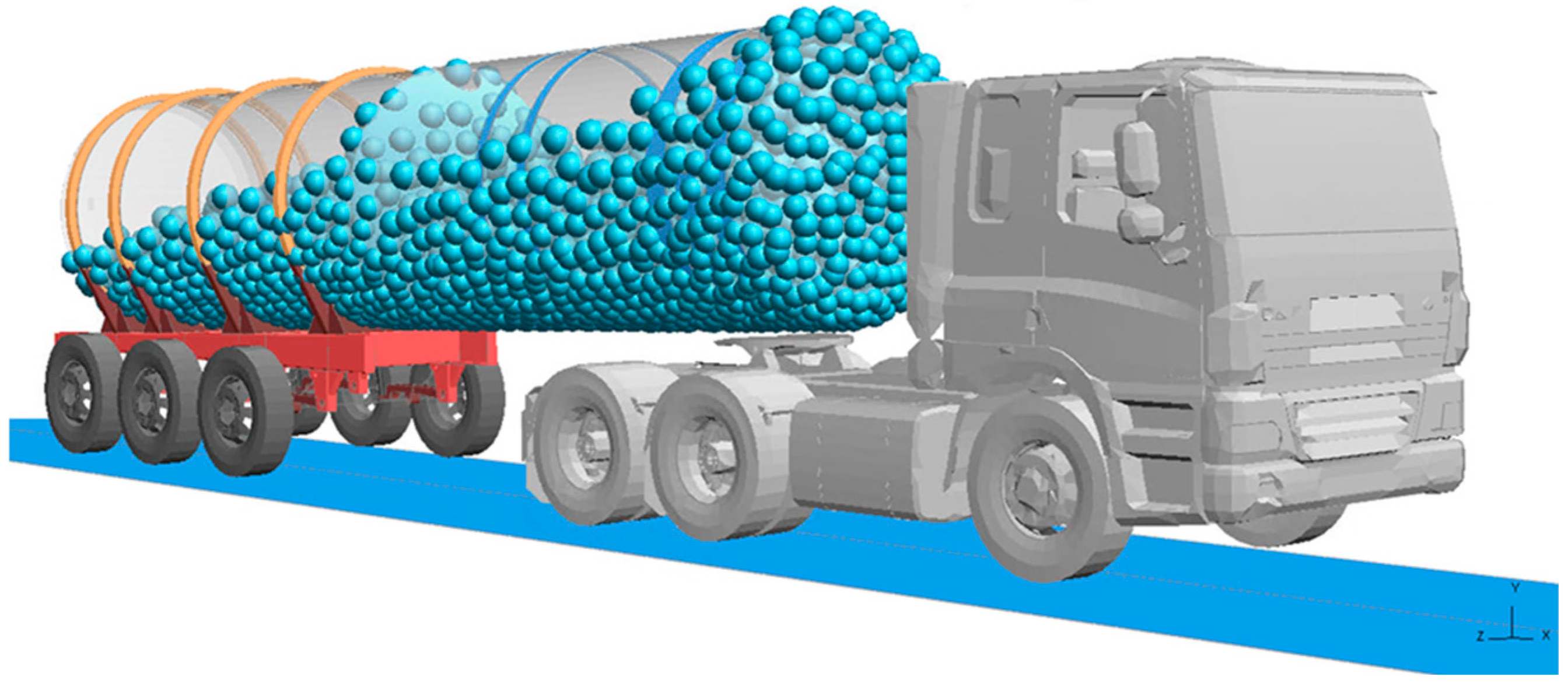
Figure 1. Multiphysics Tanker Model.
Computation 14 00007 g001
Figure 2. Spheric10 Lateral Water Impact Pressure vs. SPH Simulation.
Computation 14 00007 g002
Figure 3. Spheric10 Lateral Water Impact Case Wave Forms vs. SPH Simulation.
Computation 14 00007 g003
Figure 4. SPH simulation of fluid sloshing in a rigid tank under 3.5 m/s2 acceleration, with colour contours representing fluid pressure magnitude.
Computation 14 00007 g004
Figure 5. Comparison of fluid free surface profiles of 5 mm particle Spacing with 4 different Viscosity Coefficients.
Computation 14 00007 g005
Figure 6. Comparison of lateral sloshing force for different viscosity coefficients.
Computation 14 00007 g006
Figure 7. Comparison of max sloshing force for different particle spacing and viscosity coefficients.
Computation 14 00007 g007
Figure 8. Axle suspension and FEA model.
Computation 14 00007 g008
Figure 9. Corrected true Stress–Strain curves and FEA results.
Computation 14 00007 g009
Figure 10. Accelerometers and strain sensor locations.
Computation 14 00007 g010
Figure 11. Test 2 Acceleration and Velocity from MEMS.
Computation 14 00007 g011
Figure 12. LC1 Braking Direct Y stress comparison of FE results to strain gauge data.
Computation 14 00007 g012
Figure 13. Strain Gauge locations of Chassis.
Computation 14 00007 g013
Figure 14. LC2 Braking Direct Y stress comparison of FE results to strain gauge data.
Computation 14 00007 g014
Figure 15. LC3 Turning Direct Y stress comparison of FE results to strain gauge data.
Computation 14 00007 g015
Figure 16. Von Mises stress plot for the whole tanker under Static Load.
Computation 14 00007 g016
Figure 17. Closeup of Rubbing Plate area undergoing turning.
Computation 14 00007 g017
Figure 18. Von Mises stress plot for bearer under turning.
Computation 14 00007 g018
Figure 19. Von Mises stress plot for Bogie under turning and Braking.
Computation 14 00007 g019aComputation 14 00007 g019b
Table 1. Comparison of Peak von Mises Stresses for Different Loading Conditions.
ComponentLoad CaseStress at GVWStress at 60%
Rubbing PlateStatic10.74
Braking1.251.02
Turning4.43.43
BearerStatic10.81
Braking1.471.14
Turning1.280.82
BogieStatic10.82
Braking1.381.38
Turning5.524.45
Disclaimer/Publisher’s Note: The statements, opinions and data contained in all publications are solely those of the individual author(s) and contributor(s) and not of MDPI and/or the editor(s). MDPI and/or the editor(s) disclaim responsibility for any injury to people or property resulting from any ideas, methods, instructions or products referred to in the content.