

The Legal Foundations of Religious Cultural Heritage Protection

Abstract
:1. Introduction
[…] developing a taxonomy of sacred places is virtually impossible in the same way that creating an exhaustive list of types of religion or beliefs or religious symbols is also impossible […].
2. The International Legal Framework
2.1. Binding Legal Instruments
[…] the basic idea is the same, that the cultural or spiritual heritage covers objects whose value transcends geographical boundaries, and which are unique in character and are intimately associated with the history and culture of a people.5
‘the wide diffusion of culture, and the education of humanity for justice and liberty and peace [which] are indispensable to the dignity of man and constitute a sacred duty which all the nations must fulfil in a spirit of mutual assistance and concern’.8
2.2. Quasi-Legal Instruments
Where necessary to ensure the preservation of a holy site, the relevant authorities should consider establishing a protective zone around it, prohibiting or restricting construction or development, without prejudice to property rights. If a holy site is subjected to certain restrictions due to its designation as a national heritage site, these should not be such as to unduly limit its continued functioning as a holy site under these restrictions.11
3. Patterns of National Protection
- (i)
- the religious character may be acknowledged as an additional, yet unique, attribute of specific places or objects, that fall within the ambit of general legal provisions (lex generalis).14 In this rationale, sacred places constitute, in essence, the subject of general civil law protection, as elements of cultural importance. For example, according to the provisions of the National Heritage Resources Act of South Africa (issued in 1999), a certain place may be considered part of the national patrimony, if it has cultural significance or other special values because of ‘its strong or special association with a particular community or cultural group for […] spiritual reasons’ (Art. 3 § 3).15 Similar provisions may be found in Swaziland (The National Trust Commission Act, Parts IV-V), in Togo (Loi No 90-24 relative á la protection du patrimoine culturel national, Art. 2), in Madagascar (Ordonnance n°82-029 relative à la protection, la sauvegarde et la conservation du patrimoine national, Art. 1) or in Nigeria (Loi n° 97-002 du 30 juin 1997 relative à la protection, la conservation et la mise en valeur du patrimoine culturel national, Art. 3 § 2). In Europe, the same legislative pattern may be found, for instance, in Portugal (Act No. 107/2001, Art. 4), in Poland (Act of 23 July 2003, Art. 6 § 3), in the Netherlands (Monumentenwet, Art. 1 e), or in Sweden (Heritage Conservation Act, Chapter 4). Similar provisions have been incorporated across the individual German States (Länder), in which the legal protection of sacred heritage entails the respect of both the spiritual and the social function of its various cultural aspects (Tsivolas 2014, pp. 142–48). In Austria, the protection of religious heritage assets balances on the principle of ‘including neutrality’ (Kalb et al. 2003, pp. 42–43), and the need for co-operation between the State and the legally recognized owners of major cultural monuments, namely the recognized churches and religious societies (Wieshaider 2002, p. 135). In Greece, in view of the relevant provisions of Act No. 3028/2002 ‘on the protection of antiquities and cultural heritage in general’, any intervention in the vicinity of a religious monument must be compatible with its unique sacred character. This is, at its best, exemplified by the relevant case-law, according to which the Court has protected the ‘sacred character’ and ‘aesthetic value’ of the Metropolitan Cathedral of Athens against the perilous expansion of subway construction works,16 as well as the historical significance of the Patmian Monastery of Saint John the Theologian against incompatible private constructions on the ‘sacred island’ of Patmos.17
- (ii)
- the religious character of certain elements may justify the application of special rules of protection, particularly in cases of sites or places marked with an exceptional religious gravity and unique historical importance (lex specialis). For instance, according to the Protection of Holy Places Law (passed in 1967), Jerusalem’s landmarks and monuments: ‘shall be protected from desecration and any other violation and from anything likely to violate the freedom of access of the members of the different religions to the places sacred to them or their feelings with regard to those places’.18 Similarly in Greece, the Meteora monastic complex (where a network of cliff-top Byzantine monasteries has existed for centuries) has been protected since 1995 as an integrated ‘sacred area’, pursuant to a special legislative framework,19 also in light of the Constitutional provisions of Art. 13 (religious freedom) and Art. 24 (protection of the cultural environment). Likewise, the peninsula of Mount Athos, which is, in accordance with its ancient privileged status, ‘a self-governed part of the Greek State’20 and specifically protected according to its own Constitutional Charter (Konidaris 2017, p. 192 f.; Tsivolas 2013, p. 176 f.). Similar special attention has been paid also to other religious sites, such as the sacred mountain of Croagh Patrick (St Patrick) in Ireland,21 and the Isle of Iona on the western coast of Scotland, or other major pilgrimage sites, including Lourdes in the Pyrenees and Fatima in Portugal (Tsivolas 2014, p. 75). Moreover, in the same scheme of lex specialis, one could also add the various Concordats that have been signed, over the years, between the various States and the Catholic Church, regarding the maintenance and preservation of specific historical places of worship. For instance, according to the Agreement of 1984 between the Italian Republic and the Holy See (Accordo di Villa Madama),22 it has been acknowledged that ‘The Holy See shall retain the power to dispose of the Christian catacombs that exist underground at Rome and other parts of the Italian territory and […] subject to the laws of the State […] shall be at liberty to proceed with any necessary excavation and removal of sacred relics’.23 Similar individual agreements between the religious and the local public authorities have been also established in Spain (Tsivolas 2014, pp. 159–63). It is self-evident that in many cases the special protection (and, at the same time, the corresponding subsidies) afforded to certain sites or places is interwoven with their intangible values and traditions: see, for example, the provisions of Law 891/2004 regarding the Holly Week processions and the Popayan Religious Musical Festival in Colombia24 or the provisions of Law 1812/2016 ”by means of which the celebration of Holy Week of the Parroquia Santa Gertrudis La Magna de Envigado, Antioquia is declared as Intangible Cultural Heritage of the Nation”.25
- (iii)
- the religious character may justify an exclusion from the general application of the pertinent legal provisions (without prejudice, of course, to mandatory provisions of national laws or jus cogens, e.g., the legislation on cultural heritage or environmental protection), because of its uniqueness, and, primarily, its direct relation to worship (privilegium). In Great Britain, for example, as far as listed buildings are concerned, official exemptions from State control and relevant restrictions are being provided (under specific conditions) for edifices in current use for worship (Mynors 2006). Whereas, in France, by virtue of the relevant provisions of the Act of 1905,26 as well as of the Act of 1907 concerning the public exercise of religion,27 the allocation (affectation légale) of the religious edifices that belong to the public domain (i.e., pre-1905 structures), guarantees their prime destination and perpetual function as places of worship. This legal ‘affectation’, which is ‘gratuite, exclusive et perpétuelle’ (Benelbaz 2011, p. 475), offers, through the allocation of the edifices to the public sphere, a solid legal basis for the effective protection against the possibility of insufficient maintenance or improper use and correlates, in practice, with both the cultural and the religious allocation (affectation culturelle et cultuelle) of the same religious structures (Fornerod 2013, p. 39 f., 155 f.). Within this framework, any organized visit to a legally assigned place of worship depends upon the prior authorization of the competent religious authority; this privilege functions, in essence, as a right of veto indented, primarily, to protect the sacred dimension of such listed edifices.28 Similarly, in Quebec, the Historic Sites and Monuments Act has been adopted since 1922 (as it has been revised several times since), which is closer to the French legislative pattern, than to the Common Law and the listing system that governs the heritage in the United States, as well as in the other Canadian provinces (Noppen and Morisset 2012).
4. The Human Rights—Based Protection
Similarly, as the European Court of Human Rights has expressed in an obiter dictum:[…] The custodial faith communities, in addition to serving the needs of their community, shall take all necessary and reasonable steps to protect and preserve the physical and living spiritual integrity of the holy sites in the interests of humankind, and for the benefit of future generations […] The custodial faith communities shall provide and grant access to “public” spaces within the holy sites not only to believers within their own traditions, but to all people of faith and others seeking enlightenment.30
[…] au vu des instruments internationaux et des dénominateurs communs des normes de droit international, fussent-elles non contraignantes […], la Cour est prête à considérer qu’il existe une communauté de vue européenne et internationale sur la nécessité de protéger le droit d’accès à l’héritage culturel. Cependant, force est de constater que cette protection vise généralement les situations et des réglementations portant sur le droit des minorités de jouir librement de leur propre culture ainsi que sur le droit des peuples autochtones de conserver, contrôler et protéger leur héritage culturel.31
While human rights might temper the realization of a group’s assertion of cultural identity, reliance on the freedom of religion or belief as grounds for protecting a group’s sacred space can enhance the desired protection to be accorded to cultural property and heritage of such groups […]33
The freedom to manifest religion or belief in worship […] encompasses a broad range of acts […] including the building of places of worship, the use of ritual formulae and objects, the display of symbols […]35
One of the clearest manifestations of religion within a community is the presence of religious structures. Religious buildings are a symbolic presence in and of themselves and their distinctive architecture and adornment, as well as the activities which take place in and around them, again take on a symbolic meaning which is both ’conceptual’ and ‘tangible’: the presence of a minaret or church tower dominating the skyline in a town or village is more than the mere display of a symbol but is a statement of a physical presence within the community, with the size and location of such buildings being similarly significant.
mutual understanding and acceptance of the World Heritage significance and specificity of each heritage place, and its associated spiritual and religious values.36
5. The Legal Status of res mixtae
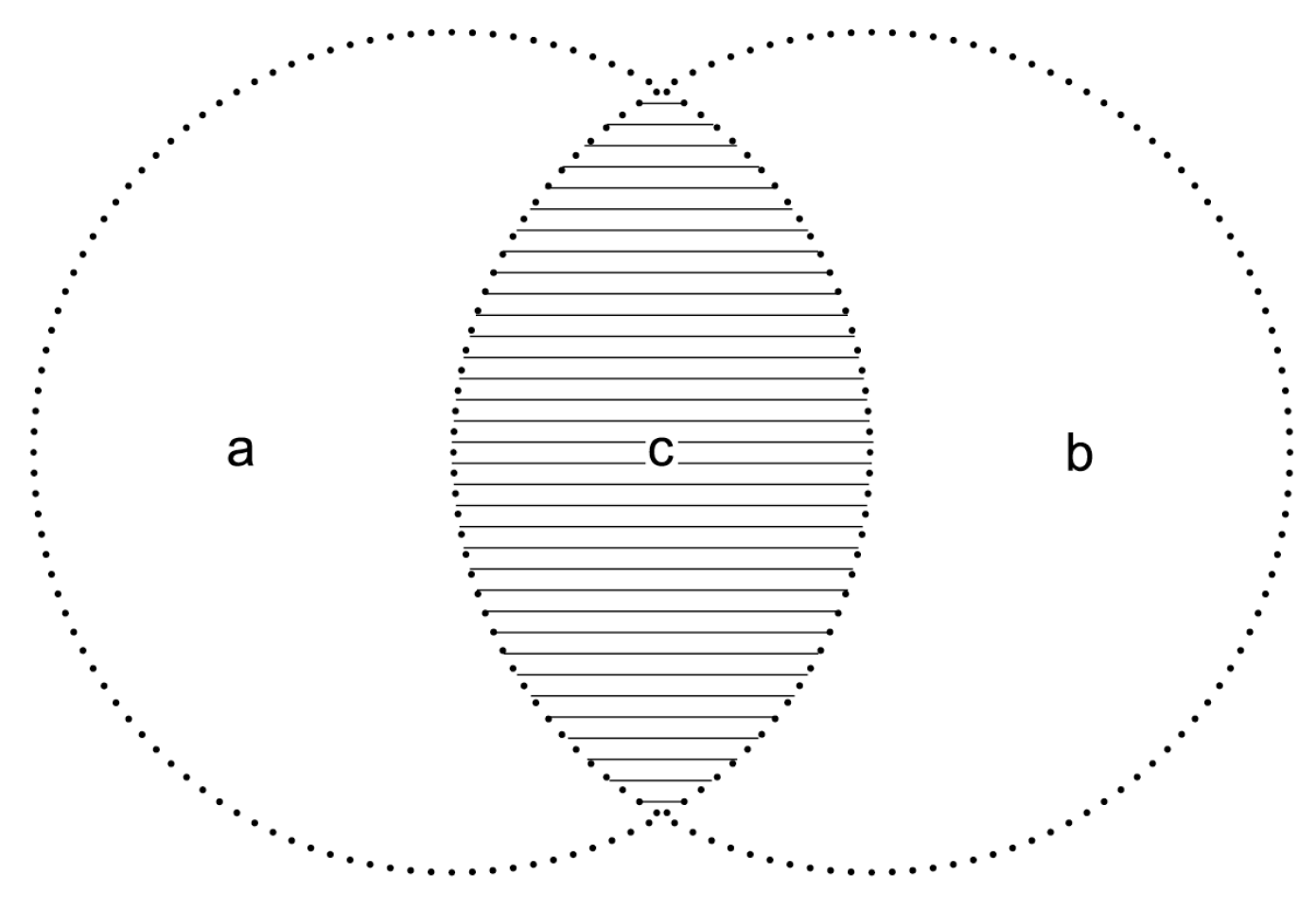
By manifesting the sacred, any object becomes something else, yet it continues to remain itself, for it continues to participate in its surrounding cosmic milieu. A sacred stone remains a stone […] but for those to whom a stone reveals itself as sacred, its immediate reality is transmuted into a supernatural reality.
A monumental work, like a musical one […] has a horizon of meaning: a specific or indefinite multiplicity of meanings, a shifting hierarchy in which now one, now another meaning comes momentarily to the fore, by means of—and for the sake of—a particular action. The social and political operation of a monumental work traverses the various ‘systems’ and ‘subsystems’, or codes and subcodes, which constitute and found the society concerned. But it also surpasses such codes and subcodes, and implies a ‘supercoding’, in that it tends towards the all-embracing presence of the totality.
[R]eligious heritage constitutes an intangible part of European cultural heritage; […] historical religious heritage, including architecture and music, must be preserved for its cultural value, regardless of its religious origin […]39
[…] protect properties of astronomical and sacred interest through use of the precautionary principle and appropriate legal and practical measures, preserve astronomical alignments and skylines by appropriate spatial planning measures such as the creation of buffer zones.40
Funding
Conflicts of Interest
References
- Ballester, José Mária. 2001. The Council of Europe and Cultural Heritage, 1954–2000: Intergovernmental Work: Basic Texts. Strasbourg: Council of Europe Publishing. [Google Scholar]
- Benelbaz, Clément. 2011. Le principe de laïcité en droit public français. Paris: L’Harmattan. [Google Scholar]
- Blake, Janet. 2000. On defining the cultural heritage. International and Comparative Law Quarterly 49: 61–85. [Google Scholar] [CrossRef]
- Burton, Lloyd. 2002. Worship and Wilderness: Culture, Religion, and Law in Public Lands Management. Madison: University of Wisconsin Press. [Google Scholar]
- Coomans, Thomas. 2012. Reuse of Sacred Places. Perspectives for a long Tradition. In Loci Sacri. Understanding Sacred Places. Edited by Rajesh Heynickx, Thomas Coomans, Herman De Dijn, Jan De Maeyer and Bart Verschaffel. Leuven: Leuven University Press, pp. 221–41. [Google Scholar]
- Davies, John Gordon. 1968. The Secular Use of Church Buildings. New York: The Seabury Press. [Google Scholar]
- Doe, Norman. 2011. Law and Religion in Europe. A Comparative Introduction. Oxford: Oxford University Press. [Google Scholar]
- Donders, Yvonne. 2002. Towards a Right to Cultural Identity? Antwerp: Intersentia. [Google Scholar]
- Durkheim, Émile. 2001. The Elementary Forms of the Religious Life. Translated by Carol Cosman. Oxford: Oxford University Press. [Google Scholar]
- Eliade, Mircea. 1959. The Sacred and the Profane: The Nature of Religion. Boston: Houghton Mifflin Harcourt. [Google Scholar]
- Evans, Malcolm. 2010. Religious Symbols: An Introduction. In Law and Religion in the 21st Century: Relations between States and Religious Communities. Edited by Silvio Ferrari and Rinaldo Cristofori. Farnham: Ashgate. [Google Scholar]
- Fornerod, Anne. 2012. The places of worship in France and the public/private divide. In Religion in Public Spaces: A European Perspective. Edited by Silvio Ferrari and Sabrina Pastorelli. Farnham: Ashgate, pp. 323–36. [Google Scholar]
- Fornerod, Anne. 2013. Le régime juridique du patrimoine religieux. Paris: L’Harmattan. [Google Scholar]
- Fornerod, Anne, ed. 2015. Funding Religious Heritage. Farnham: Ashgate. [Google Scholar]
- Frigo, Manilo. 2004. ‘Cultural Property v. Cultural Heritage: A battle of concepts in international law?’. International Review of the Red Cross 86: 367–68. [Google Scholar] [CrossRef]
- Gabrielli, Virginie. 1998. Le droit de l’urbanisme et les ‘nouveaux mouvements religieux’: le cas des Témoins de Jéhovah. Mémoire polygraphié. Sophia Antipolis: Université de Nice. [Google Scholar]
- Guinn, David. 2006. Protecting Jerusalem’s Holy Sites: A Strategy for Negotiating a Sacred Peace. Cambridge: Cambridge University Press. [Google Scholar]
- Hammer, Leonard. 2017. Cultural Heritage Protection and Sacred Spaces considering alternative approaches from within the human rights framework. Columbia Human Rights Law Review 49: 73–113. [Google Scholar]
- Heckel, Martin. 1968. Staat, Kirche, Kunst: Rechtsfragen kirchlicher Kulturdenkmäler; Tübingen: Mohr.
- Kalb, Herbert, Richard Potz, and Brigitte Schinkele. 2003. Religionsrecht. Wien: WUV Universitätsverlag. [Google Scholar]
- Knott, Kim. 2015. The Location of Religion: A Spatial Analysis. London: Routledge. [Google Scholar]
- Konidaris, Ioannis. 2005. Legal Theory and Practice on Jehovah’s Witnesses. Athens: Ant. Sakkoulas, p. 448 f. [Google Scholar]
- Konidaris, Ioannis. 2017. Particular Religious Jurisdictions within the Greek Territory. Athens-Thessaloniki: Sakkoulas Publications. [Google Scholar]
- Lefebvre, Henri. 1991. The Production of Space. Translated by Donald Nicholson-Smith. Oxford: Blackwell. [Google Scholar]
- Lupu, Ira, and Robert Tuttle. 2002. Historic Preservation Grants to Houses of Worship: A Case Study in the Survival of Separationism. Boston College Law Review 43. No 5. Available online: https://scholarship.law.gwu.edu/cgi/viewcontent.cgi?article=2148&context=faculty_publications (accessed on 18 April 2019). [CrossRef]
- Mackenzie, Thomas. 1862. Studies in Roman law, with comparative views of the laws of France, England, and Scotland. Edinburgh and London: W. Blackwood & Sons. [Google Scholar]
- Munawar, Nour. 2017. Reconstructing Cultural Heritage in Conflict Zones: Should Palmyra be Rebuilt? Journal of Archaeology 2: 33–48. [Google Scholar]
- Mynors, Charles. 2006. Listed Buildings, Conservation Areas and Monuments. London: Sweet & Maxwell. [Google Scholar]
- Noppen, Luc, and Lucie Morisset. 2012. ‘Heritagization’ of Church Buildings. Quebec and North American Perspectives. In Loci Sacri. Understanding Sacred Places. Edited by Rajesh Heynickx, Thomas Coomans, Herman De Dijn, Jan De Maeyer and Bart Verschaffel. Leuven: Leuven University Press, pp. 243–55. [Google Scholar]
- Petkoff, Peter. 2014. Finding a Grammar of Consent for ‘Soft Law’ Guidelines on Sacred Places: The Legal Protection of Sacred Places within the Existing Public International Law Instruments and Grass-root Approaches. In Between Cultural Diversity and Common Heritage: Legal and Religious Perspectives on the Sacred Places of the Medierranean. Edited by Silvio Ferrari and Andrea Benzo. Farnham: Ashgate Publishing, pp. 57–71. [Google Scholar]
- Schildgen, Brenda. 2008. Heritage or Heresy: Preservation and Destruction of Religious Art and Architecture in Europe. New York: Palgrave Macmillan. [Google Scholar]
- Smith, Jonathan. 1992. To Take Place: Toward Theory in Ritual. Chicago: University of Chicago Press. [Google Scholar]
- Taylor, Charles. 2007. A Secular Age. Cambridge: The Belknap Press of Harvard University Press. [Google Scholar]
- Tsivolas, Theodosios. 2013. The Legal Protection of Religious Cultural Goods [=Library of Ecclesiastical Law directed by Prof. Ioannis Konidaris, Series B: Studies]. Athens-Thessaloniki: Sakkoulas Publications. [Google Scholar]
- Tsivolas, Theodosios. 2014. Law and Religious Cultural Heritage in Europe. Heidelberg: Springer. [Google Scholar]
- Tsivolas, Theodosios. 2017. Sacredness as an underlying value of Cultural Heritage Law in Europe. Revue du Droit des Religions 3: 15–28. [Google Scholar]
- UNESCO. 2007. Standard-Setting in UNESCO, Conventions, Recommendations, Declarations and Charters Adopted by UNESCO (1948–2006). Edited by UNESCO. Leiden–Boston: Martinus Nijhoff Publishers. [Google Scholar]
- United Nations. 1979. UN Treaty 17512. In Treaty Series. New York: United Nations, vol. 1125-1. [Google Scholar]
- Villaroman, Noel. 2012. The Right to Establish and Maintain Places of Worship: The Development of its Normative Content under International Human Rights Law. In Religion in Public Spaces: A European Perspective. Edited by Silvio Ferrari and Sabrina Pastorelli. Farnham: Ashgate Publishing, pp. 295–322. [Google Scholar]
- Wieshaider, Wolfgang. 2002. Denkmalschutzrecht. Eine systematische Darstellung für die österreichische Praxis. Wien: Springer. [Google Scholar]
| 1 | See for example: (Munawar 2017). |
| 2 | |
| 3 | |
| 4 | |
| 5 | ICTY Prosecutor v. Kordic & Cerkez, Case No IT-95-14/2-T (Appeals Judgment of 17 December 2004) § 90. Available online: http://www.icty.org/x/cases/kordic_cerkez/acjug/en/cer-aj041217e.pdf (accessed on 24 March 2019). |
| 6 | Full Text. Available online: http://portal.unesco.org/en/ev.php-URL_ID=15244&URL_DO=DO_TOPIC&URL_SECTION=201.html (accessed on 24 March 2019). |
| 7 | Ahmad Al Faqi Al Mahdi was found guilty (in 2016) by the ICC and sentenced to 9 years, as a co-perpetrator, of the war crime of intentionally directing attacks against historic monuments and buildings dedicated to religion, including nine mausoleums and one mosque in Timbuktu, Mali, in June and July 2012. |
| 8 | ICC. The Prosecutor v. Ahmad Al Faqi Al Mahdi, Case No. ICC-01/12-01/15 (Trial Chamber VIII, Judgment of 27 September 2016) § 46 (available online: https://www.icc-cpi.int/mali/al-mahdi (accessed on 24 March 2019)). |
| 9 | Final document of conclusions and recommendations: Thematic Expert Consultation meeting on sustainable management of the World Heritage properties of religious interest, focused on Mediterranean and South-Eastern Europe (2016), UNESCO Headquarters, 16–18 February 2016, p. 4. |
| 10 | See the Full Text. Available online: https://www.sfcg.org/wp-content/uploads/2014/06/ucchs.pdf (accessed on 24 March 2019). |
| 11 | Universal Code on Holy Sites, Article 2. |
| 12 | The above notion of ‘church’ refers to any form of institutional church or organized religion. |
| 13 | See the Text of the Charter. Available online: http://www.international.icomos.org/charters/venice_e.pdf (accessed on 24 March 2019). |
| 14 | Of course, at the same time, there is an abundance of national statutes regarding the protection of cultural heritage that do not even mention the religious attribute as a separate or unique characteristic of the protected patrimony; see for example the relevant provisions of the Law of the People’s Republic of China on Protection of Cultural Relics (revised several times since its initial issuance in 1982) in relation to the protection of ancient tombs or temples on the sole basis of their ‘historical, artistic or scientific value’ (Article 2 § 1), or the Law on Cultural Heritage adopted by the National Assembly of the Socialist Republic of Vietnam (in 2001). |
| 15 | Full Text. Available online: https://en.unesco.org/sites/default/files/senghor1_droit%26patr2002_eorof_freorof_fretno.pdf (accessed on 13 April 2019). |
| 16 | Council of State, decision n° 2073/1997. |
| 17 | Council of State, decision n° 457/2010; see also Act No. 1155/1981 ‘Recognition of Patmos as a Sacred Island and other ecclesiastical issues’. |
| 18 | Protection of the Holy Places Law, 21 L.S.I. 76 (1966–67). Available online: https://mfa.gov.il/mfa/mfa-archive/1960-1969/pages/protection%20of%20holy%20places%20law-%201967-.aspx (accessed on 11 April 2019). |
| 19 | Act No. 2351/1995, ‘Recognition of the Meteora area as a sacred site’. |
| 20 | Greek Constitution, Art. 105 §1. |
| 21 | See Tara Prospecting Ltd. v. Minister for Energy [1993] Irish Law Reports Monthly), p. 771. |
| 22 | The agreement was ratified by Legge n. 121 del 25 marzo 1985. |
| 23 | 1985. International Legal Materials, 24: 1589. |
| 24 | Ley 891 de 2004, ‘Por la cual se declara Patrimonio Cultural Nacional las Procesiones de Semana Santa y el Festival de Música Religiosa de Popayán, departamento del Cauca, se declara monumento Nacional un inmueble urbano, se hace un reconocimiento y se dictan otras disposiciones’; see also Decision No C-567/16 issued by the Constitutional Court of Colombia. Available online: http://www.corteconstitucional.gov.co/RELATORIA/2016/C-567-16.htm (accessed on 11 April 2019). |
| 25 | Ley 1812 de 2016 ‘Por medio de la cual se declara Patrimonio Cultural Inmaterial de la Nación la celebración de la Semana Santa de la Parroquia Santa Gertrudis La Magna de Envigado, Antioquia, y se dictan otras disposicione’; see also the recent Decision No C-034/19 issued by the Constitutional Court of Colombia. Available online: http://www.corteconstitucional.gov.co/relatoria/2019/C-034-19.htm#_ftn66 (accessed on 11 April 2019). |
| 26 | Loi du 9 décembre 1905 concernant la séparation des Églises et de l’État, Art. 13. |
| 27 | Loi du 2 janvier 1907 concernant l’exercice public des cultes, Art. 5. |
| 28 | See Council of State, Abbé Chalumey, 4 November 1994, No 135842; cf. Council of State, Commune de Massat, 25 August 2005, No 284307, where the relevant privilege was extended also to non-religious uses of listed places of worship. Specifically, in relation to non-religious uses of places of worship in France, see Art. 2124-31 of the General Code of Pubilc Property. |
| 29 | Full text available at: (Guinn 2006, pp. 191–95). |
| 30 | |
| 31 | ECHR Zeynep Ahunbay et autres v. la Turquie (Application No 6080/06, Decision issued in January 29, 2019) [the above excerpt could be freely translated as follows: […] in view of the relevant international instruments and the common ground contained in the norms of international law, even if these were not binding […], the Court is prepared to consider that there exists a shared European and international perception of the need to protect the right of access to the cultural heritage. However, that protection generally focussed on situations and regulations pertaining to the right of minorities to enjoy their own culture freely and the right of indigenous peoples to maintain, control and protect their cultural heritage]; cf. ECHR Zeynep Ahunbay et autres v. la Turquie, l’Autriche et l’Allemagne (Application No 6080/06 declared inadmissible against Austria and Germany). |
| 32 | See, for example, Art. 27 of the Universal Declaration of Human Rights: ‘everyone has the right freely to participate in the cultural life of the community, to enjoy the arts and to share in scientific advancement and its benefits.’ Cultural rights are, therefore, inseparable from human rights, as recognized in Article 5 of the 2001 UNESCO Declaration on Cultural Diversity, and can be defined as the right of access to, participation in and enjoyment of culture. This includes inter alia the right of individuals and communities to know, understand, visit, make use of, maintain, exchange and develop cultural heritage, as well as to benefit from the cultural heritage of others. |
| 33 | |
| 34 | See, for example, the case of Manoussakis v. Greece, Reports of Judgments and Decisions 1996-IV; cf. (Konidaris 2005). |
| 35 | Human Rights Committee. CCPR General Comment No. 22: Article 18 (Freedom of Thought, Conscience or Religion), 30 July 1993 (CCPR/C/21/Rev.1/Add. 4 § 4). |
| 36 | See the full text of the ‘Kyiv Statement on the Protection of Religious Properties within the Framework of the World Heritage Convention’ in: http://whc.unesco.org/en/religious-sacred-heritage/. Accessed on March 24, 2019; cf. Quebec Declaration on the Preservation of the Spirit of Place, adopted at the 16th General Assembly of ICOMOS in 2008, as well as the Resolution 17GA 2011/35’Protection and enhancement of sacred heritage sites, buildings and landscapes’ adopted at the 17th General Assembly of ICOMOS (available online at: whc.unesco.org. Accessed on March 24, 2019). |
| 37 | According to the Roman—and later Byzantine—law, things sacred, religious, and holy, were exempted from commerce, and held to be the property of no one: ‘Temples, churches, altarpieces, communion cups, and whatever was consecrated according to the forms prescribed by law, were held sacred, and could not be applied to profane uses’. (Mackenzie 1862, p. 163). |
| 38 | |
| 39 | Full Text. Available online: http://www.europarl.europa.eu/doceo/document/A-8-2015-0207_EN.html?redirect (accessed on 24 March 2019). |
| 40 | Full text of the Gran Canaria Recommendation (following the International Expert Meeting on Astronomical Heritage and Sacred Places in Gran Canaria, Spain, on May 2018). Available online: https://whc.unesco.org/en/news/1830 (accessed on 24 March 2019). |
© 2019 by the author. Licensee MDPI, Basel, Switzerland. This article is an open access article distributed under the terms and conditions of the Creative Commons Attribution (CC BY) license (http://creativecommons.org/licenses/by/4.0/).
Share and Cite
Tsivolas, T. The Legal Foundations of Religious Cultural Heritage Protection. Religions 2019, 10, 283. https://doi.org/10.3390/rel10040283
Tsivolas T. The Legal Foundations of Religious Cultural Heritage Protection. Religions. 2019; 10(4):283. https://doi.org/10.3390/rel10040283
Chicago/Turabian StyleTsivolas, Theodosios. 2019. "The Legal Foundations of Religious Cultural Heritage Protection" Religions 10, no. 4: 283. https://doi.org/10.3390/rel10040283
APA StyleTsivolas, T. (2019). The Legal Foundations of Religious Cultural Heritage Protection. Religions, 10(4), 283. https://doi.org/10.3390/rel10040283

