


Abstract
Installation in sand is sensitive to its evolving pore structure, yet design models rarely update permeability for real-time fabric changes. This study tracks the stress-dependent pore size distribution of coarse sand under laterally constrained compression using high-resolution X-ray nano-CT. Scans taken at six axial stress levels show that the distribution shifts toward smaller radii while keeping its log-normal shape. A single shifting factor, defined as the current median radius normalized by the initial value, captures this translation. The factor decays with axial stress according to a power law, and the exponent as well as the reference pressure are calibrated from void ratio data. The resulting closed-form expression links mean effective stress to pore radius statistics without extra fitting once the compressibility constants are known. This quantitative relation between effective stress and pore size distribution has great potential to be embedded into coupled hydro-mechanical solvers, enabling engineers to refresh hydraulic permeability at every computation step, improving predictions of excess pore pressure and soil resistance during suction anchor penetration for floating wind foundations.
1. Introduction
The escalating imperative to decarbonize the global energy mix has directed unprecedented attention toward offshore wind resources located in water depths exceeding 60 m, where bottom-fixed substructures become technically and economically unviable [1,2]. Floating wind turbines are thus emerging as the sole scalable option for exploiting these high-capacity wind belts [3]. A critical enabler for such floating systems is a mooring foundation that can be deployed rapidly, retrieved without trace, and reused at subsequent sites while withstanding multi-directional environmental loads [4]. Suction anchors satisfy these requirements. The device comprises a hollow steel cylinder closed at the top and open at the base [5,6]. Following initial skirt penetration under self-weight, a controlled under-pressure is generated inside the compartment by extracting pore water, thereby creating a differential pressure across the top plate that advances the anchor to the target embedment depth without pile-driving or extensive seabed preparation [7]. Upon service termination, pressure equalization allows for straightforward extraction and full component reuse, leaving negligible seabed disturbance [8]. Originally developed for deep-water oil and gas platforms and validated in depths surpassing 2000 m, suction anchors exhibit superior tensile capacity under undrained loading conditions, attributable to the soil plug mechanism [9,10]. Their proven load–displacement performance under combined vertical and horizontal loading, coupled with silent installation and minimal environmental footprint, position suction anchors as a strategically important foundation solution for the imminent large-scale deployment of floating wind energy [11,12].
Suction-assisted penetration of caisson anchors in sand is governed by an internal seepage field generated by water extraction [13,14]. The induced upward flow inside the caisson anchor reduces vertical effective stress and eliminates tip resistance, while the complementary downward flow outside increases external skin friction [15]. Field measurements indicate that the average hydraulic gradient within the caisson anchor can approach the critical value [13], leading to complete loss of tip resistance and internal friction as the soil approaches failure [15,16]. This condition is essential for penetration in dense sand [17,18]. Upward seepage forces cause the inner sand to loosen, forming a dilated plug with an increased void ratio and hydraulic permeability [19,20]. CPT data from centrifuge model tests confirm significant density reduction before and after installation [21]. To prevent soil failure, suction must be continuously controlled to remain below the critical threshold [22]. Additionally, soil heave observed in dense sand imposes a further constrain on allowable suction [18,23]. The critical hydraulic gradient, which is highly dependent on the void ratio, must account for this internal loosening. While the gradient is commonly estimated using a global value based on the mudline-to-tip pressure difference, this approach neglects the spatial variability induced by changing permeability [15,24]. Therefore, the gradient distribution should be evaluated over the penetration depth, incorporating the evolving soil properties. Reliable installation requires real-time updates of the gradient limit based on the current void ratio and hydraulic permeability of the loosened soil, ensuring optimal hydraulic assistance without exceeding the critical threshold.
Uplift of a suction anchor simultaneously activates transient seepage toward the anchor, elastoplastic deformation of the surrounding soil, and heave of the internal plug [25]. The pullout resistance is markedly influenced by the pressure deficit that can be maintained beneath the top plate [26]. In low permeability deposits, this deficit persists, an upward seepage force is sustained, and a hydraulic contribution is added to the reverse end bearing [27]. If the upward gradient loosens the sand, the void ratio increases, hydraulic permeability can rise several folds [28], pore pressure equalizes rapidly, and the suction component vanishes; capacity then drops to the drained value [9,29]. Published experiments and simulations [30,31] map excess pore pressures but invariably treat hydraulic permeability as constant and ignore the feedback between seepage, dilation, and fabric change; design equations likewise assume a static plug with fixed unit weight and constant hydraulic permeability [32,33]. Actually, the plug’s permeability evolves continuously during pullout, tracking the void ratio that is itself controlled by seepage velocity. A reliable capacity model must therefore update the hydraulic permeability at every step through a coupled hydro-mechanical law that relates it to current void ratio and local hydraulic gradient; only by accounting for this evolving internal permeability can the true uplift capacity and its potential loss be properly predicted.
In centrifuge model tests under suction installation and sustained uplift, monitoring the evolution of soil permeability inside suction anchors is technically difficult and economically costly. Large-deformation numerical simulations that couple seepage with soil deformation have therefore become a vital research tool, but they demand a reliable permeability model capable of accurate prediction [34]. The accompanying increase in the void ratio raises hydraulic permeability, but permeability is governed primarily by the pore size distribution (PSD) rather than by the void ratio alone [35,36]. Even at identical void ratios, different particle arrangements yield disparate PSD curves, pore shapes, and orientations, so the hydraulic response can differ markedly [37,38]. Experimental data show that the permeability of both natural and re-compacted specimens decreases systematically with increasing vertical net stress, yet most existing models equate this trend solely with void ratio reduction, ignoring stress-induced PSD evolution [28,39,40]. A recently proposed model introduces shifting and scaling factors to describe how the PSD curve evolves with mean effective stress [41,42]; however, the model parameters require microscopic experimental data for calibration, and such studies remain scarce. Consequently, direct measurements of PSD evolution under different stress paths are still urgently needed.
This study explores the stress-dependent pore structure of coarse sand through one-dimensional compression tests under fully laterally constrained conditions. High-resolution X-ray nano-computed tomography (X-ray nano-CT) scanning was conducted at selected load levels to quantify porosity and reconstruct PSD curves. The results reveal that the PSD evolves consistently with vertical stress: it shifts toward smaller pore sizes while maintaining its overall shape. This behavior is characterized by a stress-dependent shift factor that decreases with increasing stress and a scaling factor that remains nearly constant. A closed-form model was developed to calculate the shift factor, and a parameter sensitivity analysis was performed to identify its key controlling variables. Both factors are robust to image resolution and can be directly implemented into constitutive models. The derived relationships provide micro-mechanically based, stress-sensitive permeability inputs, offering a reliable benchmark for the hydro-mechanical modeling of suction anchor installation and uplift behavior.
2. Experimental Methods
2.1. Experimental Apparatus and Materials
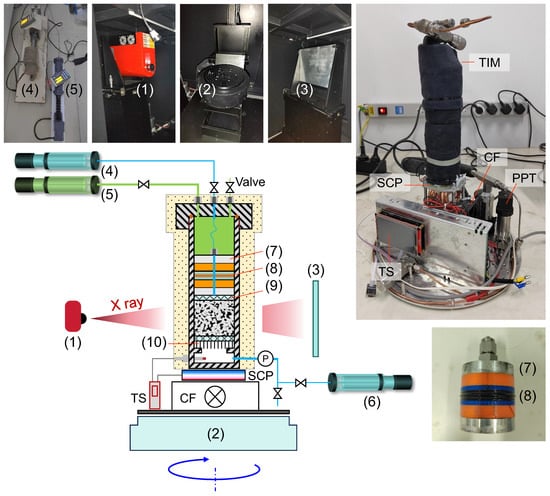
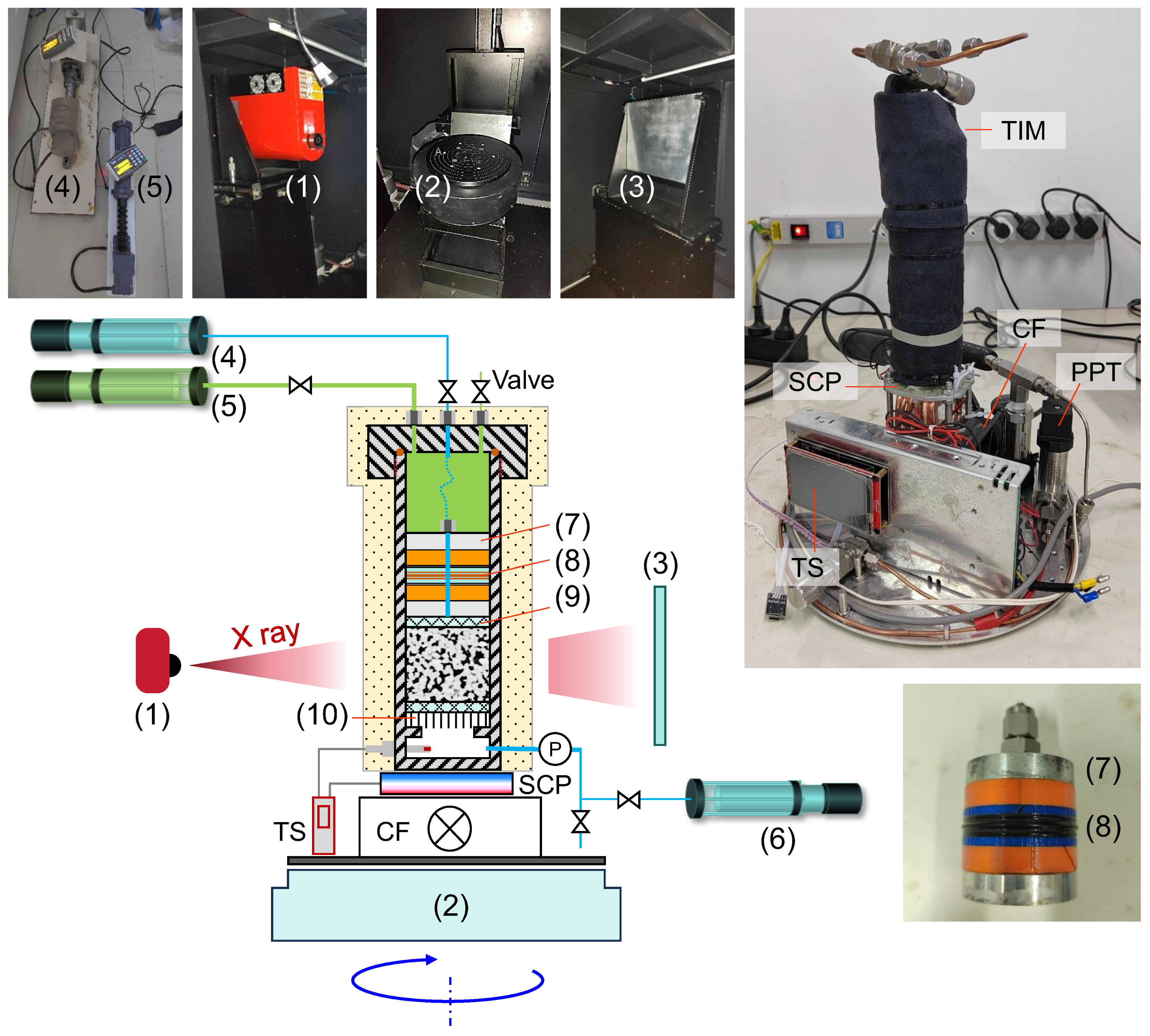
Figure 1 shows the instrumented core holder built for one-dimensional compression tests. It fits inside a Sanying nanoVoxel-2700 X-ray CT scanner (Sanying Precision Instruments Co., Ltd., Tianjin, China). The scanner has a 150 kV 30 W micro-focus source and a flat-panel detector with 2496 × 3008 pixels. The rotation stage carries 15 kg, turns 360°, and moves 300 mm vertically.
Figure 1.
Schematic configuration of the instrumented core holder assembly in the X-ray nano-CT scanner and pictures of major components. (1) X-ray source, (2) rotation stage, (3) X-ray detector, (4) syringe pump for pore fluid injection, (5) syringe pump for axial loading, (6) syringe pump for pore fluid reception, (7) piston, (8) sealing ring, (9) permeable stone, and (10) perforated support plate. CF = Cooling Fan, PPT = pore pressure transducer, SCP = Semiconductor Chilling Plate, TIM = Thermal Insulation Material, TS = Touch Screen.
The cell is machined from 7075-T6 aluminum alloy (yield strength 500 MPa). It is 40 mm inside and 5 mm thick. A piston with an O-ring and a thin film of petroleum jelly slides when the pressure difference across it is below 80 kPa, so axial motion is almost friction-free. Ethylene glycol above the piston transfers pressure from a syringe pump to the specimen; the maximum pressure is 32 MPa and resolution is 0.01 MPa. The cavity below the piston holds the soil, which is sandwiched between two porous stones. A perforated stainless-steel plate under the lower stone prevents breakage. Only the bottom port is open for drainage; the top port is closed in this study. A Pt100 sensor (±0.1 °C) and a pore pressure transducer (±0.01 MPa) sit just below the perforated plate.
Specimen temperature is controlled by a thermoelectric stage built around a TEC1-12705 Peltier module (127 couples, 5 A). The cold side is glued to the cell base with thermal paste (18 W m−1 K−1); the hot side is clamped to a fin-and-heat pipe sink cooled by a fan. An NTC 10 kΩ thermistor 1 mm from the wall feeds a TEC103L PID controller that keeps the set point within 0.01 °C. Multilayer insulation (density 0.19 g cm−3, conductivity 0.012 W m−1 K−1, and hydrophobicity > 99%) wraps the whole assembly to limit heat exchange.
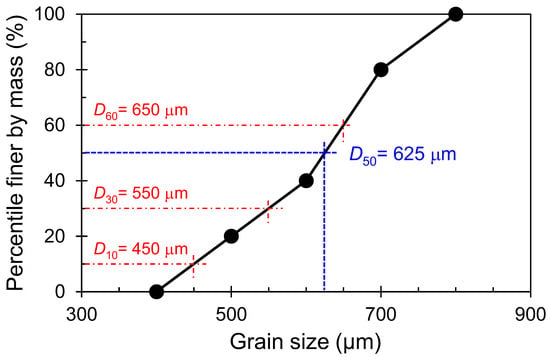
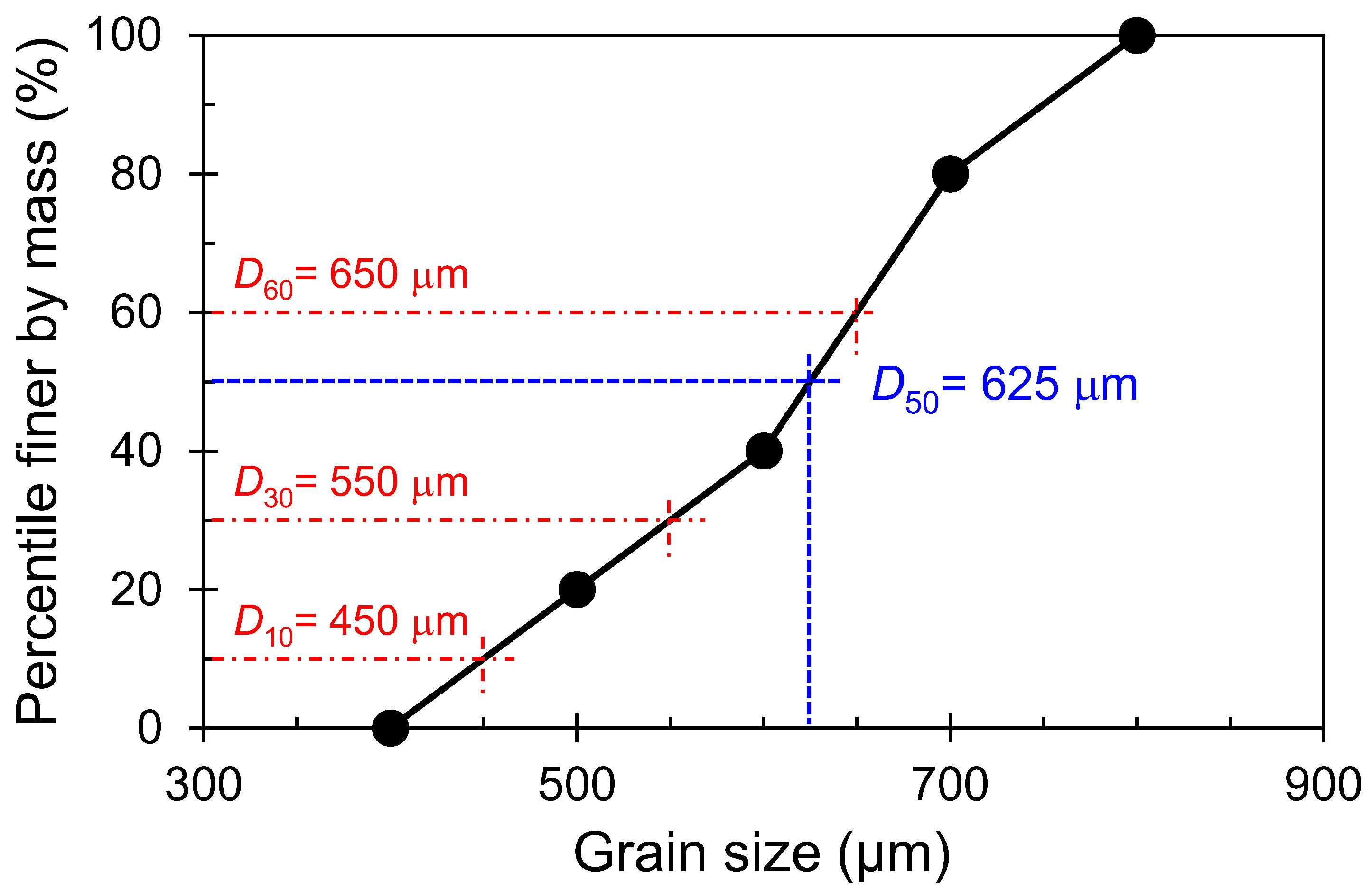
Figure 2 shows the grain size distribution curve of the Xiamen standard quartz sand used in the tests. Particles range from 400 µm to 800 µm and have a specific gravity of 2.65. The sand has a median diameter D50 of 625 µm, a uniformity coefficient Cu of 1.44, and a curvature coefficient Cc of 1.03, classifying it as coarse sand under GB/T 50123-2019.
Figure 2.
Grain size distribution of the quartz sand. The median grain size D50 is 625 μm. The effective grain size D10 is 450 μm and the control grain size D60 is 650 μm. The 30% finer grain size D30 is 550 μm.
2.2. Experimental Procedures
The soil specimen was prepared as follows. First, a thin film of silicone oil was brushed onto the inner wall of the cell. A stainless-steel spacer with drainage holes, a porous stone, and filter paper were then stacked from bottom to top to protect the stone. The moist sand was divided into three equal portions and placed in lifts. Each lift was leveled and compacted with a falling-weight hammer to a predetermined depth, and the interface between lifts was scarified to ensure continuity. After the final layer, a spacer of known height was set on the sample and the assembly was compressed with a jack until the target height was reached, giving every test the same initial void ratio. The jack was held for several minutes to confirm that no rebound occurred, after which it was removed. The piston, previously smeared with petroleum jelly, was inserted and gently pushed into contact with the sample by the same jack. Both drainage ports were closed to prevent evaporation or leakage, locking in the water content. The cell was transferred to the X-ray nano-CT stage and pre-scanned to verify that the pore structure was uniform along the height; any appreciable porosity gradient required remolding. Finally, the end cap was tightened, de-aired ethylene glycol was circulated above the piston, the insulation blanket was wrapped in place, and the cell was seated on the thermoelectric stage coated with a heat sink compound.
To keep the test conditions constant, the specimen temperature was held at 10 °C during drained axial compression. The axial stress was raised from 0.2 MPa to 20 MPa in three loading steps (5 MPa, 10 MPa, and 15 MPa) and then lowered back to 0.2 MPa in the same increments. Although the applied axial stress of 20 MPa far exceeds the in situ effective stresses typically encountered around anchors in offshore wind projects, this elevated level is deliberately imposed to capture the full load–displacement response and pore structure evolution, ensuring that the dataset is academically complete. Axial deformation was recorded continuously from the volume change in the ethylene glycol circuit, and the stress was held constant until the deformation stabilized. A step was deemed complete when the pump indicated a volume change of less than 5 mm3 per hour, equivalent to an axial displacement rate of 0.01 mm per hour. As soon as the deformation stabilizes at each stress level, an X-ray nano-CT scan was taken; an additional scan was taken immediately after specimen preparation to record the initial state. All scans were run at 120 kV, 150 mA, 2 s exposure, 2 × 2 binning, and 1800 angular frames, yielding about 1000 horizontal gray-scale slices with a voxel side length of 22 μm.
2.3. Image Processing and Phase Segmentation
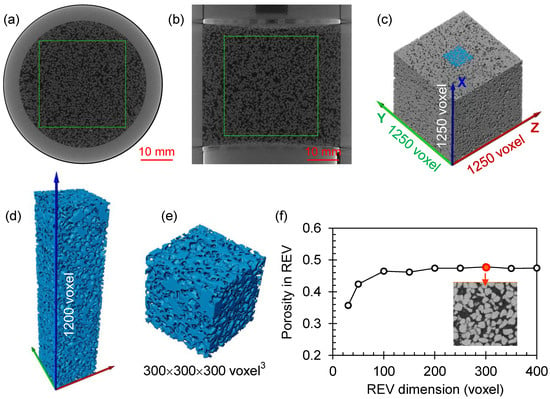
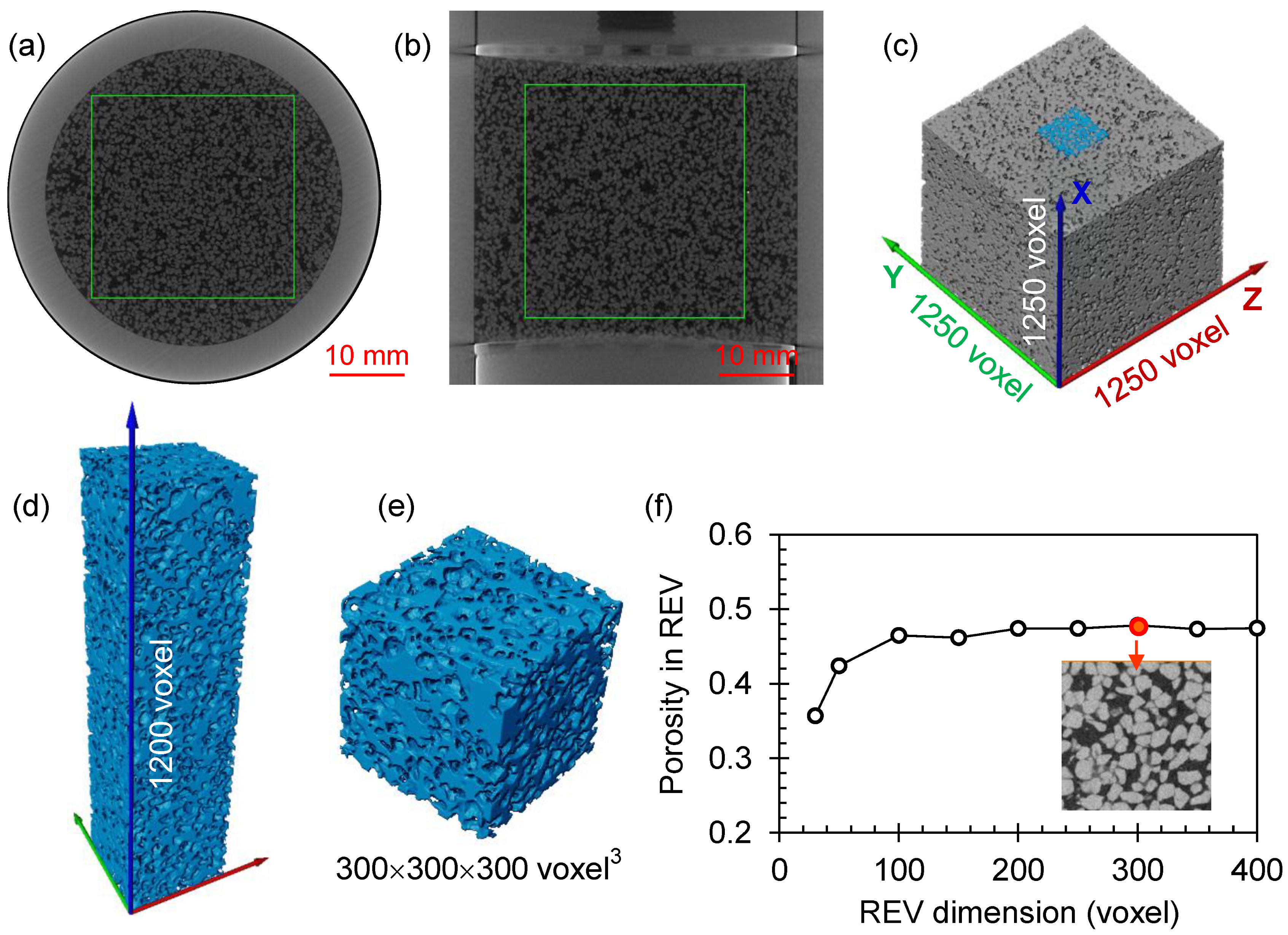
Raw images (Figure 3a) from the X-ray nano-CT scans were processed with Avizo 9.0 in this study. A Gaussian filter removed noise and smoothed the data, so pore fluid and sand grains could be clearly separated (Figure 3b). Next, the Image Gradient module sharpened the phase boundaries, and the Watershed Segmentation Wizard split the image into the solid matrix and pores [43].
Figure 3.
Cross-sectional (a) and longitudinal (b) X-ray CT images of the sand specimen and REV segmentation. In the green boxes, black denotes pores, while gray indicates sand grains. The sand skeleton within rectangular REVs of large (c), medium (d), and small (e) edge lengths. Even for the small edge length, the requirement that the volumetric porosity (f) is independent of the REV dimension is satisfied.
Three-dimensional volumes were first reconstructed from the projections with Nano Voxel Recon after beam-hardening correction. A sub-volume that fully enclosed the specimen was cropped, and a region 1250 × 1250 × 1250 voxels was selected to track porosity changes under different axial stresses (Figure 3c). From the center of this region, a representative column of 300 × 300 × 1200 voxels was extracted (Figure 3d). This column is large enough for pore size statistics and serves as the base model for microstructural analysis.
To improve statistics and to capture axial variation, four cubic sub-volumes (300 voxels on a side) were sampled at equal intervals along the column (Figure 3e). The cubes may overlap or be separated by a few voxels; each is treated as an independent realization for pore size distribution and other micro-parameters. A 300-voxel side length is already above the representative elementary volume, so the results are free of size-induced scatter (Figure 3f).
3. Results and Analysis
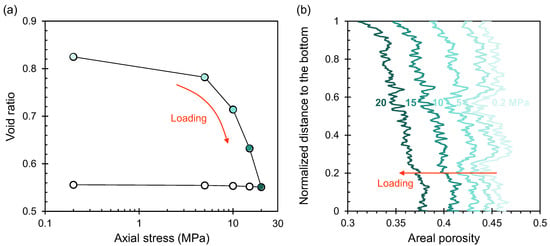
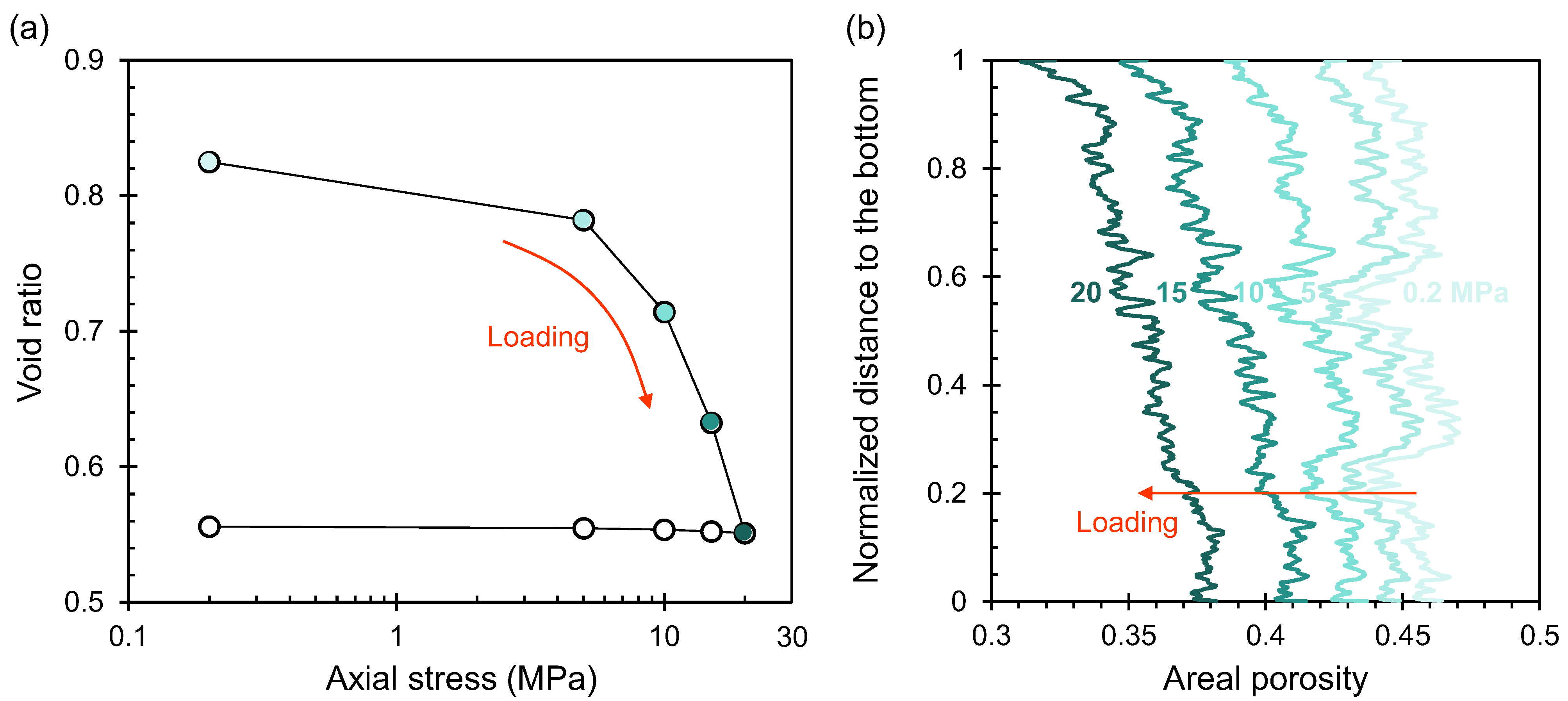
Figure 4a shows how the void ratio of the quartz sand changes during axial loading and unloading; each point is taken after the specimen has fully equilibrated at the given stress. The void ratio drops from 0.823 to 0.685 as the axial stress increases from 0.2 MPa to 20 MPa and rises to 0.695 when the stress is returned to 0.2 MPa. The negligible rebound observed in this sand upon unloading is consistent with previous experimental findings [39,44]. Figure 4b shows the corresponding areal porosity profiles along the specimen height. As the axial stress grows, the entire curve shifts left, so porosity falls everywhere, but not by the same amount. At low stress (0.2 MPa and 5 MPa), the profile is almost uniform; at higher stress (10 MPa, 15 MPa, and 20 MPa), it becomes non-uniform, with the upper part compacting more than the lower part. This means that the soil near the piston deforms more than the soil near the base under the same stress increment, mainly because of wall friction between the sand grains and the cell.
Figure 4.
Variation in void ratio (a) and areal porosity (b) with changes in axial stress. The void ratio denotes the volumetric void ratio of the entire sand specimen, whereas the areal porosity refers to that within the large REV shown in Figure 3c.
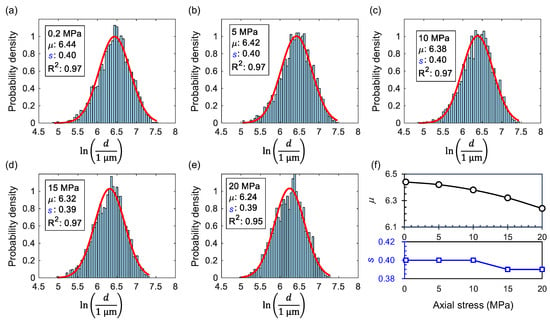
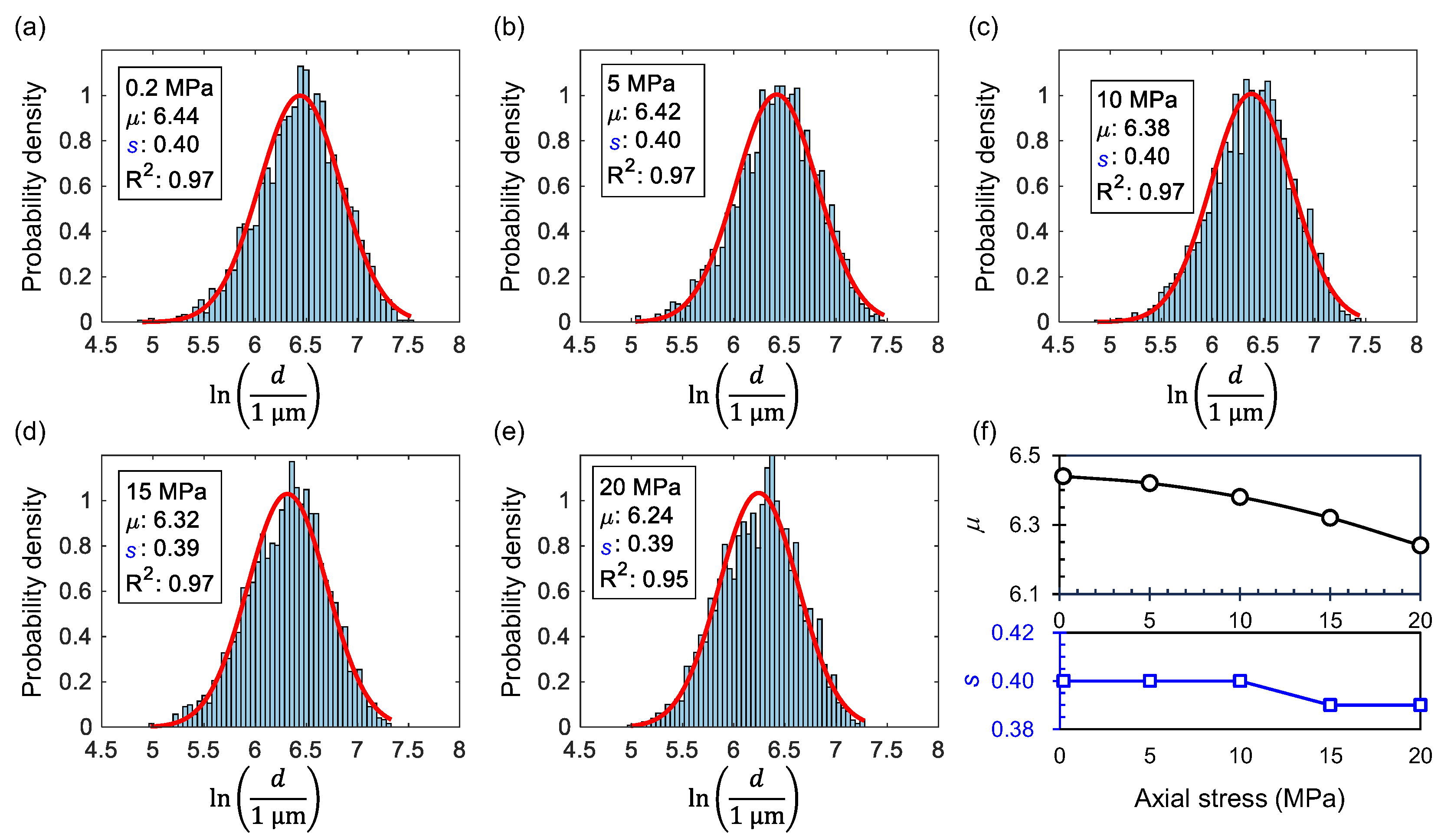
Figure 5 shows how the pore size distribution evolves during axial loading. All curves, regardless of axial stress, follow a log-normal distribution described by
Figure 5.
Pore size distribution at 0.2 (a), 5 (b), 10 (c), 15 (d), and 20 (e) MPa axial stress. All the pore size data are extracted from the medium REV shown in Figure 3d. (f) Mean (μ) and standard deviation (s) of the log-normal distribution. All the red curves represent the fitting results based on Equation (1).
In this equation, d is the pore size in mm; m is the scale parameter (also the median, dimensionless) that shifts the curve, defined as
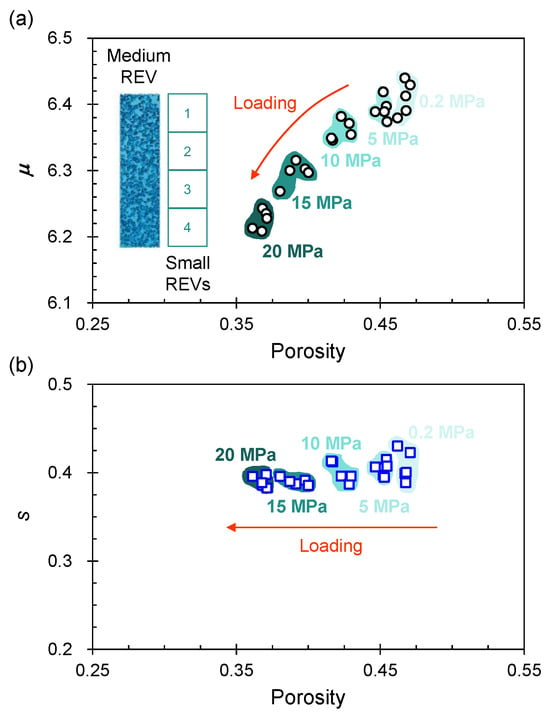
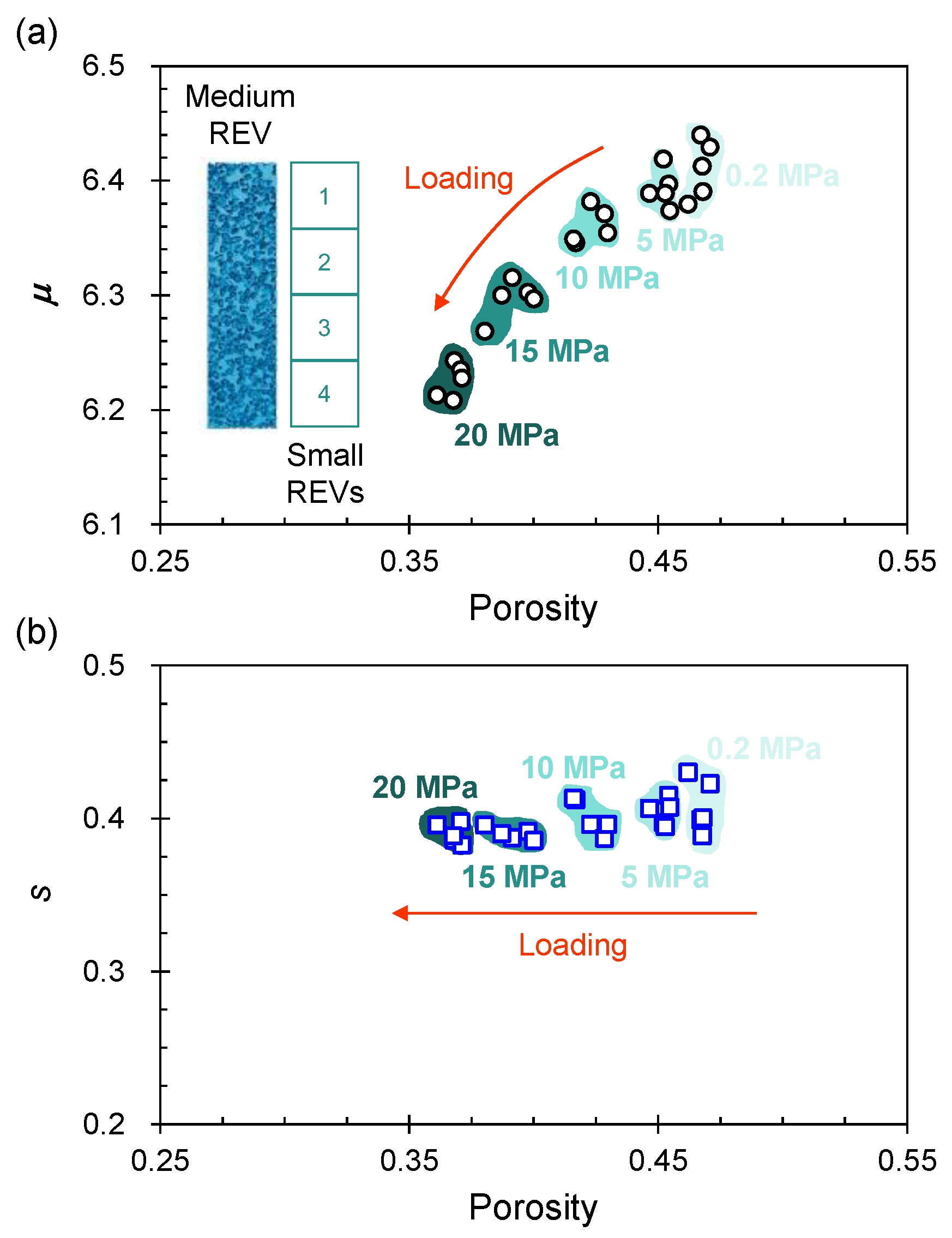
with as the average pore size; s is the shape parameter (also the log-normal deviation, dimensionless) that sets the spread. All the fits yield R2 ≥ 0.95. As axial stress rises from 0.2 MPa to 20 MPa, the scale parameter m falls from 6.44 to 6.24, whereas the shape parameter s remains essentially constant (0.39–0.40). Figure 6 confirms this: m declines with decreasing bulk porosity, while s merely fluctuates without trend. The porosity decrease itself reflects the increasing axial stress (Figure 3). We can, therefore, safely conclude that, as the axial stress increases, the pore size distribution of the sand specimen shifts leftward while its shape remains unchanged, indicating that both large and small pores have been compressed.
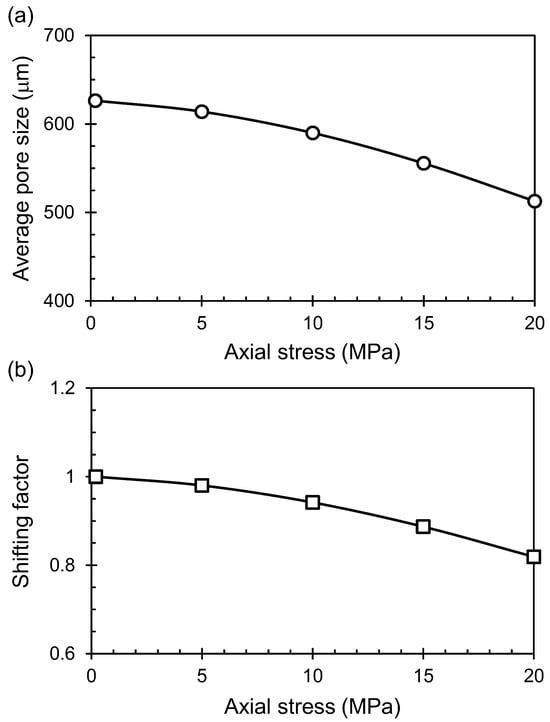
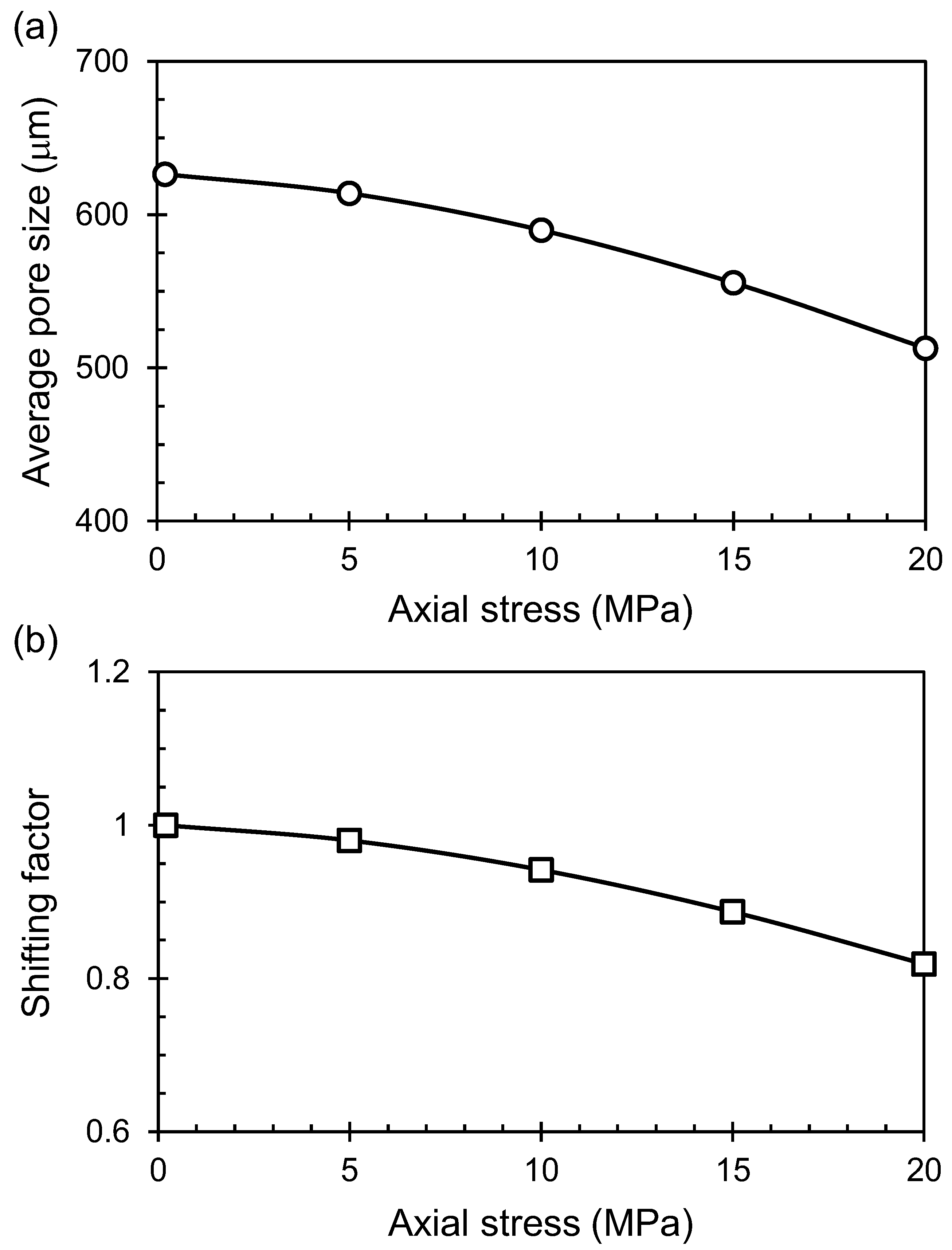
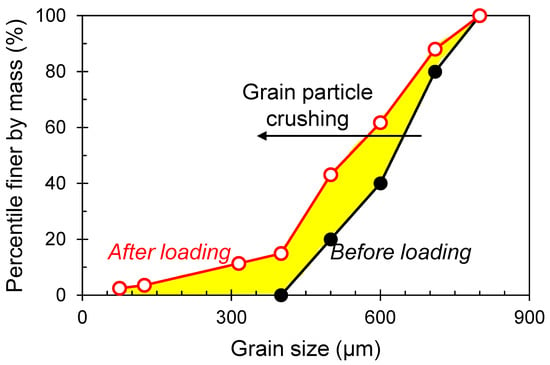
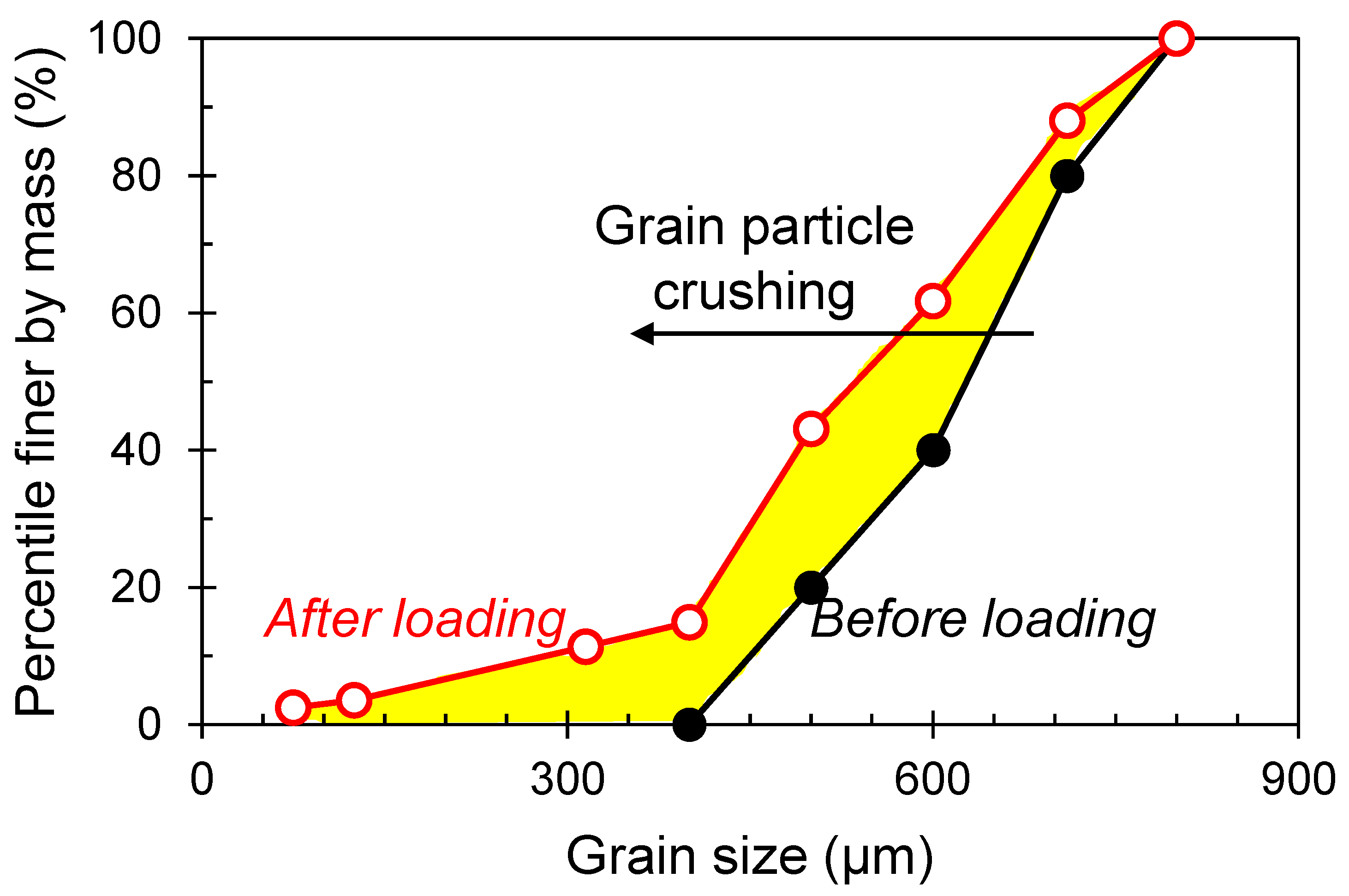
Figure 7a shows how the average pore size evolves during axial loading. As the axial stress increases from 0.2 MPa to 20 MPa, the average pore size decreases from 626.4 mm to 512.9 mm. This corresponds to a reduction in the shifting factor from 1 to 0.819, where the shifting factor is defined as
and is dimensionless [39,42]. In this equation, denotes the average pore size measured at an axial stress of 0.2 MPa. Reductions in the average pore size and the shifting factor are the direct result of sand compression, a process driven not only by the rearrangement and re-orientation of sand grains but also by grain crushing, which further amplifies the overall compressive strain. Grain size distributions of the quartz sands before and after loading are shown in Figure 8. As shown in the figure, after compression under a peak axial stress of 20 MPa, the sand exhibits a finer grain size distribution, with the most pronounced increase occurring in the finer fractions. This arises because the grains are not split in half but are instead chipped at their edges and corners, producing a marked rise in fine particles [45].
Figure 7.
Variation in average pore size (a) and shifting factor (b) with changes in axial stress.
Figure 8.
Grain size distributions of the quartz sands before and after loading.
4. An Analytical Model of the Shifting Factor
According to the definitions of Equations (2) and (3), the shifting factor could be expressed as
As the scale parameter decreases with decreasing porosity (Figure 6a), an empirical formula is proposed here as
In this equation, e is the void ratio and m and n are empirical parameters. Substituting Equation (5) into Equation (4) and rearranging results in
The stress-dependent void ratio is described by a concise expression:
where is mean effective stress, is matrix suction, is reference pressure, and are compressibility coefficients relative to mean effective stress and matrix suction, respectively, and the subscript 0 indicates initial states before any stress or suction change. This equation has been widely adopted in unsaturated soil constitutive models [46] and has also been exploited to build water retention [41,42,47] and hydraulic permeability [39] functions. As its last term can be dropped for coarse sands because their matric suction is negligible, this equation could be safely simplified as
where 0.2 MPa in this study. Substituting Equation (8) into Equation (6) and rearranging results in
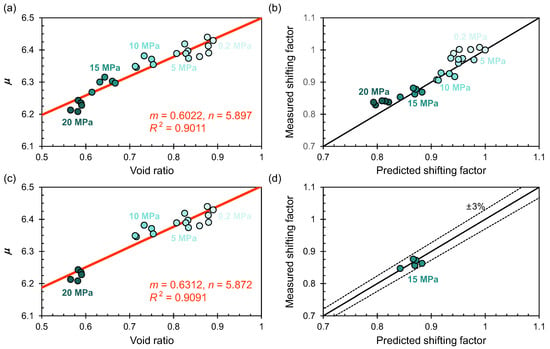
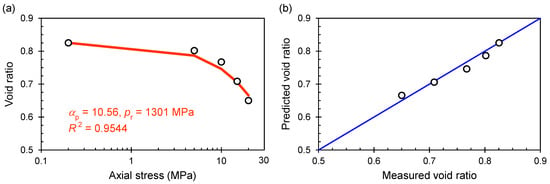
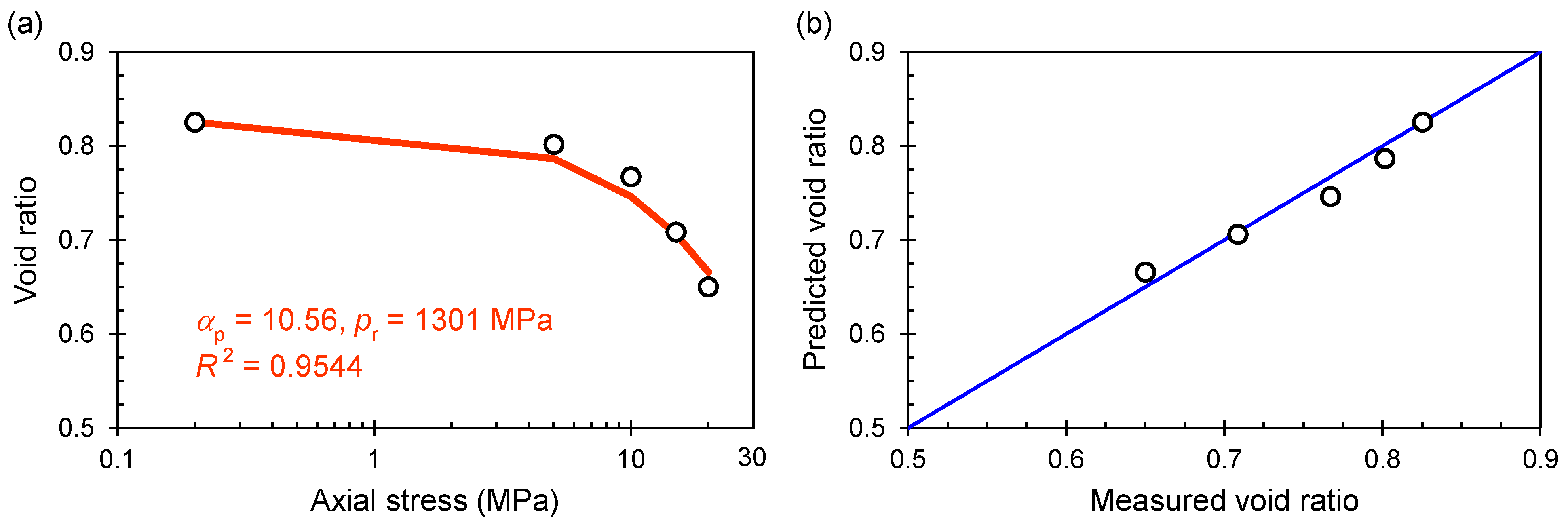
Figure 9a presents the best-fit of the complete experimental dataset with Equation (5), while Figure 9b compares the measured and predicted shifting factors. Figure 9c and Figure 9d illustrate, respectively, the fit to a randomly selected subset and the subsequent prediction of the remaining data using Equation (6). The results confirm that Equation (5) faithfully reproduces the physical mechanisms governing the evolution of the average pore size. For the full dataset, the optimized exponents are m = 0.6022 and n = 5.897; for the subset, they are m = 0.6312 and n = 5.872. Figure 10 displays the one-dimensional compression data fitted by Equation (8); the close agreement demonstrates that the expression captures the physics of void ratio variation under loading. The calibrated parameters for coarse sand are 10.56 and 1031 MPa.
Figure 9.
Verification of the average pore size model via two strategies. All (a) or a subset of (c) the experimental data were first used to calibrate the empirical parameters, and then the same dataset (b) or the remaining data (d) were predicted by the calibrated model. The red lines (a,c) are the best-fit curves obtained with Equation (5), and the black solid lines (b,d) are the 1:1 (45°) reference lines used to assess agreement between predicted and measured values.
Figure 10.
Verification of the void ratio model. The void ratio represents that of the entire sand specimen. The red broken line (a) is the best-fit line obtained with Equation (8), and the blue line (b) is the 1:1 (45°) reference line.
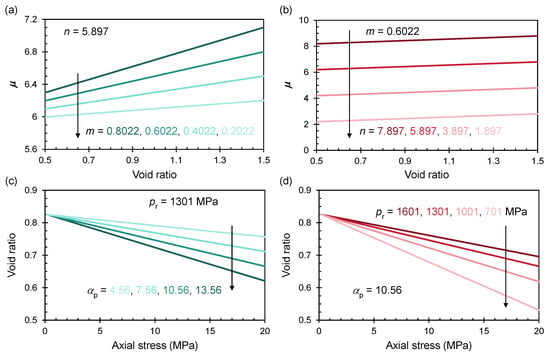
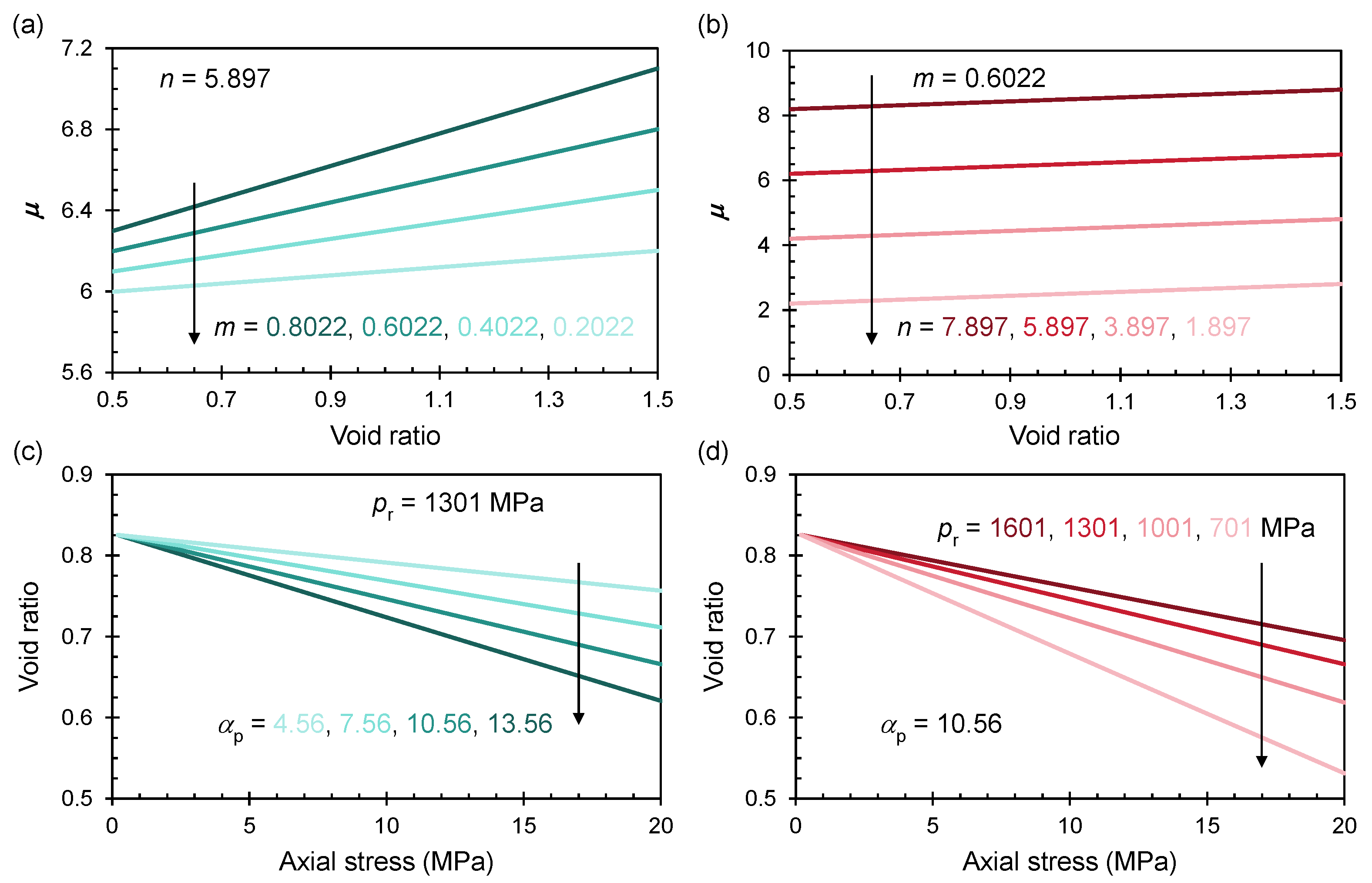
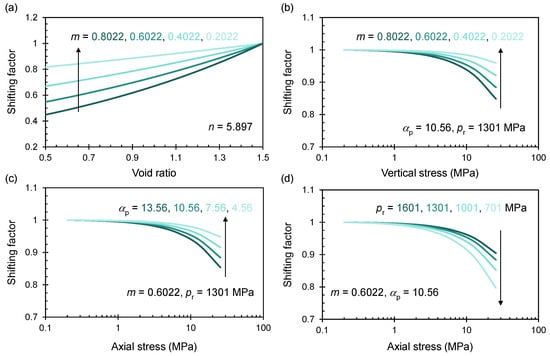
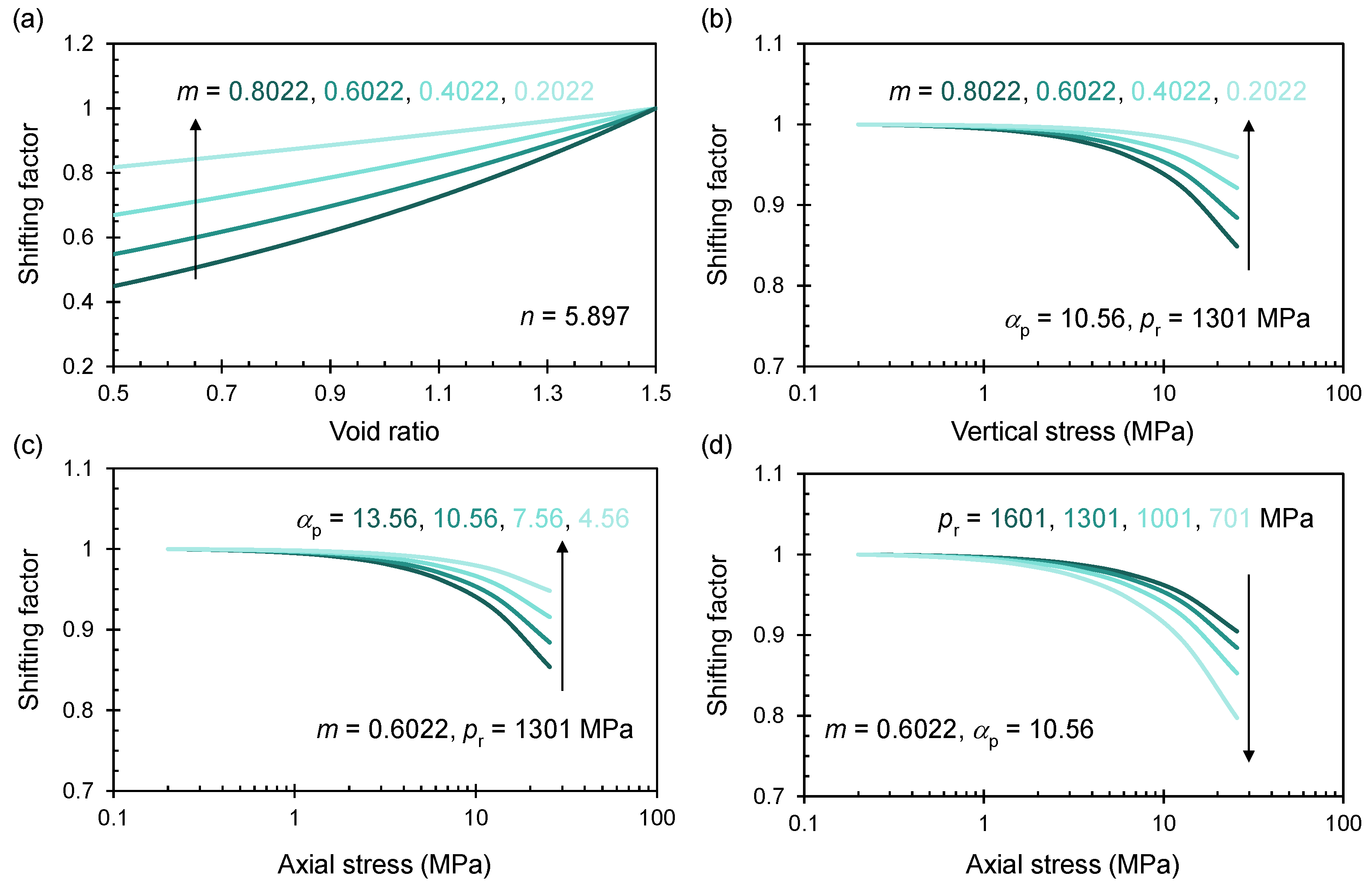
Figure 11a,b illustrate the sensitivity of Equation (5): a lower m postpones the rise in the scale factor as the void ratio increases. Figure 11c,d examine Equation (8): either raising the compressibility , or lowering the reference pressure , accelerates the void ratio drop under growing axial stress. Figure 12a reveals that Equation (6) behaves analogously, which is that reducing m retards the growth of the shifting factor with the void ratio. Figure 12b,c scrutinize Equation (9): diminishing either m or slows the decline of the shifting factor, whereas a smaller speeds it up. In every case, the spread in decay rates widens markedly once the axial stress becomes large.
Figure 11.
Sensitivity analyses of the empirical parameters m (a) and n (b) in the average pore size model (Equation (5)) and ap (c) and pr (d) in the void ratio model (Equation (8)).
Figure 12.
Sensitivity analyses of the empirical parameter m (a) in the shifting factor from the void ratio model (Equation (8)) and m (b), ap (c), and pr (d) in the shifting factor from the axial stress model (Equation (9)).
5. Implications and Limitations
Understanding how the pore size distribution evolves under varying stress levels provides the missing link between soil deformation and permeability [35,48]. By embedding the newly calibrated expressions for the shifting pore radius into a parallel-capillary or pore-network framework [49,50], the permeability ceases to be a fixed input; instead, it becomes a continuous function of the current effective stress field. This subtle refinement travels seamlessly into coupled seepage-deformation analyses that must follow the changing geometry of the soil as the suction anchor advances. Each increment of skirt penetration updates the local mean effective stress through the balance of total overburden and seepage-induced pore pressures, and the permeability is refreshed in the same loop without further laboratory information [51,52]. The feedback is particularly valuable in the plug region ahead of the caisson tip, where small changes in the void ratio translate into pronounced variations in hydraulic conductivity and, consequently, in the excess pore-pressure field that governs further penetration.
The practical payoff is felt throughout the installation narrative. A model that recognizes the stress-driven loss of large pores predicts a more compliant soil response; the resistance to skirt advance is lowered, and the suction required to reach target depth is reduced, relaxing the demand on deck pumps and shortening the critical path time [53,54]. Conversely, the same model guards against the opposite hazard; by allowing quicker dissipation as the soil compresses, it delays the build-up of hydraulic gradients that could trigger fluidization and loss of plug stability [53]. Beyond the instant of installation, the evolving permeability map can be transferred to long-term consolidation or retrieval analyses, ensuring that setup times or re-pullout capacities are forecast with the same physical consistency [55,56]. In short, the step from stress-dependent pore size data to updated permeability offers a low-cost, high-value amendment to offshore design practice, turning a conventional deformation calculation into one that continuously speaks the language of changing soil fabric.
The empirical constants are calibrated only for coarse-grained quartz sand in this study; calcareous sand, silts, clays, and varied initial densities remain to be explored. Their fragility, electrochemistry, and fabric may shift the exponents and compressibility factors. Additional oedometer tests, combined with hydraulic permeability measurements and pore size distribution analyses (via X-ray CT, low-field NMR, or mercury intrusion porosimetry), will refine the quantitative values; nevertheless, the core advances of a physics-based link between pore size and permeability in large deformation analyses stands intact.
6. Conclusions
This paper explored how the pore size distribution of coarse sand evolves under one-dimensional compression by coupling high-resolution X-ray CT with a laterally constrained oedometer. A log-normal shift model was proposed and calibrated to translate vertical effective stress into instantaneous pore radius statistics, furnishing a micro-based permeability update for large-deformation analysis. The principal findings are summarized as follows.
The entire distribution moves toward a smaller radius, while its shape remains self-similar, allowing a single stress-dependent shift factor to track the evolution. Specifically, as axial stress rose from 0.2 MPa to 20 MPa, the median pore diameter shrank from 626 µm to 513 µm, yet the log-normal standard deviation stayed locked at 0.39–0.40; no secondary peak appeared and the tail slope was preserved. This geometrically uniform contraction implies that every class of pores, from the largest throats down to the sub-angular recesses, participates in the same proportion of area reduction, so one scalar shift factor can describe the fabric re-organization that accompanies volumetric strain.
The shift factor decays as a power of relative mean stress, with physically stable exponents and reference pressures identified for the tested sand. Rewriting the shift factor as a function of the void ratio and then coupling it to a logarithmic stress–void ratio law yielded a single closed-form expression in which the normalized effective stress is raised to the negative product of compressibility and pore-scale exponent. Calibration across the full 0.2–20 MPa envelope returned m = 0.60 and = 10.6 values that remained within 5% when half of the dataset was intentionally withheld for blind prediction. The constancy of these constants, together with a reference pressure above 1 GPa, signals that the stress–fabric relationship is robust and can be transferred to other dense, angular quartz sands without re-tuning.
By embedding these closed-form links into seepage-deformation codes, engineers can now refresh permeability at every calculation step without extra laboratory work, leading to safer suction anchor installation sequences, leaner pump requirements, and more reliable pull-out forecasts for offshore renewable energy foundations.
Author Contributions
X.-T.Z. and L.-L.L.; Methodology: X.-T.Z., H.-L.M. and D.-F.F.; Formal Analysis: H.-L.M. and L.-L.L.; Investigation: C.-L.J. and H.-L.M.; Resources: X.-T.Z. and D.-F.F.; Writing—Original Draft: X.-T.Z. and H.-L.M.; Writing—Review and Editing: C.-L.J., L.-L.L. and D.-F.F.; Visualization: H.-L.M.; Supervision: L.-L.L.; Project Administration: X.-T.Z.; Funding Acquisition: L.-L.L. and D.-F.F. All authors have read and agreed to the published version of the manuscript.
Funding
Support for this work was jointly provided by the National Natural Science Foundation of China (through the grant of No. 52394251), the Natural Science Foundation of Shandong Province (Grant ZR2022YQ54), and the Taishan Scholars Programs.
Data Availability Statement
The original data presented in the study are openly available at https://data.mendeley.com/preview/nb9wymvcr5 (accessed on 22 November 2025, Doi: 10.17632/nb9wymvcr5.2).
Acknowledgments
The authors would like to acknowledge the consistent support provided by the National Natural Science Foundation of China, the Natural Science Foundation of Shandong Province and the Taishan Scholars Programs. Their support is gratefully acknowledged. We also thank three anonymous reviewers, whose insightful comments helped us significantly improve the quality of this paper.
Conflicts of Interest
Authors Xia-Tao Zhang and Cheng-Liang Ji are employed by the Shandong Electric Power Engineering Consulting Institute Corporation Limited. The remaining authors declare that the research was conducted in the absence of any commercial or financial relationships that could be construed as a potential conflict of interest.
References
- Evro, S.; Oni, B.A.; Tomomewo, O.S. Global Strategies for a Low-Carbon Future: Lessons from the US, China, and EU’s Pursuit of Carbon Neutrality. J. Clean. Prod. 2024, 461, 142635. [Google Scholar] [CrossRef] [Scilit]
- Edwards, E.C.; Holcombe, A.; Brown, S.; Ransley, E.; Hann, M.; Greaves, D. Evolution of Floating Offshore Wind Platforms: A Review of at-Sea Devices. Renew. Sustain. Energy Rev. 2023, 183, 113416. [Google Scholar] [CrossRef] [Scilit]
- Hong, S.; McMorland, J.; Zhang, H.; Collu, M.; Halse, K.H. Floating Offshore Wind Farm Installation, Challenges and Opportunities: A Comprehensive Survey. Ocean Eng. 2024, 304, 117793. [Google Scholar] [CrossRef] [Scilit]
- Zhang, J.; Wang, H. Development of Offshore Wind Power and Foundation Technology for Offshore Wind Turbines in China. Ocean Eng. 2022, 266, 113256. [Google Scholar] [CrossRef] [Scilit]
- Cerfontaine, B.; White, D.; Kwa, K.; Gourvenec, S.; Knappett, J.; Brown, M. Anchor Geotechnics for Floating Offshore Wind: Current Technologies and Future Innovations. Ocean Eng. 2023, 279, 114327. [Google Scholar] [CrossRef] [Scilit]
- Fu, D.; Zhang, Y.; Yan, Y.; Jostad, H.P. Effects of Tension Gap on the Holding Capacity of Suction Anchors. Mar. Struct. 2020, 69, 102679. [Google Scholar] [CrossRef] [Scilit]
- Lee, M.J.; Gilo, A.; Park, S.J.; Choo, Y.W. Centrifuge Model Test on the Bearing Capacity of Suction Anchors Subjected to Monotonic and Cyclic Inclined Pullout Loads in Clay. KSCE J. Civ. Eng. 2025, 29, 100113. [Google Scholar] [CrossRef] [Scilit]
- Mi, Y.; Ma, H.; Yi, E.; Sun, K. Extraction of Suction Anchors in Sand with Overpressure-Experimental Study and Numerical Analysis. Ocean Eng. 2024, 297, 117058. [Google Scholar] [CrossRef] [Scilit]
- Zhou, T.; Mu, L.; Lu, Y.; Chen, M.; Huang, M.; Li, Y. Rate-Dependent Uplift Behavior and Soil Failure Mechanisms of Suction Anchors in Loose Sand: A Transparent Soil PIV Study. Ocean Eng. 2025, 341, 122555. [Google Scholar] [CrossRef] [Scilit]
- Long, C.; Liang, R.; Zhou, M.; Li, J.; Zhang, X. Inclined Pullout Capacity of Suction Anchors in Clay-Silty Sand-Clay Soil Deposits. Appl. Ocean Res. 2025, 158, 104549. [Google Scholar] [CrossRef] [Scilit]
- Cheng, L.; Hossain, M.S.; Hu, Y.; Kim, Y.H.; Ullah, S.N. Failure Envelope of Suction Caisson Anchors Subjected to Combined Loadings in Sand. Appl. Ocean Res. 2021, 114, 102801. [Google Scholar] [CrossRef] [Scilit]
- Zhou, M.; Yang, N.; Tian, Y.; Zhang, X. Inclined Pullout Capacity of Suction Anchors in Clay over Silty Sand. J. Geotech. Geoenviron. Eng. 2023, 149, 4023030. [Google Scholar] [CrossRef] [Scilit]
- Erbrich, C.T.; Tjelta, T.I. Installation of Bucket Foundations and Suction Caissons in Sand-Geotechnical Performance. In Proceedings of the Offshore Technology Conference, Houston, TX, USA, 3–6 May 1999. [Google Scholar]
- Hogervorst, J.R. Field Trails with Large Diameter Suction Piles. In Proceedings of the Offshore Technology Conference, Houston, TX, USA, 5–8 May 1980. [Google Scholar]
- Harireche, O.; Mehravar, M.; Alani, A.M. Soil Conditions and Bounds to Suction during the Installation of Caisson Foundations in Sand. Ocean Eng. 2014, 88, 164–173. [Google Scholar] [CrossRef] [Scilit]
- Jin, Z.; Wu, S.-D.; Yang, J.; Yin, Z.-Y.; Chen, X. Failure Mechanism of Suction Anchor Based on FEM-SPH Method Considering Torsion Effect. Ocean Eng. 2025, 332, 121408. [Google Scholar] [CrossRef] [Scilit]
- Andersen, K.H.; Jostad, H.P.; Dyvik, R. Penetration Resistance of Offshore Skirted Foundations and Anchors in Dense Sand. J. Geotech. Geoenviron. Eng. 2008, 134, 106–116. [Google Scholar] [CrossRef] [Scilit]
- Tran, M.N.; Randolph, M.F.; Airey, D.W. Experimental Study of Suction Installation of Caissons in Dense Sand. In Proceedings of the ASME 2004 23rd International Conference on Offshore Mechanics and Arctic Engineering, Vancouver, BC, Canada, 20–25 June 2004. [Google Scholar]
- Kelly, R.B.; Houlsby, G.T.; Byrne, B.W. A Comparison of Field and Laboratory Tests of Caisson Foundations in Sand and Clay. Géotechnique 2006, 56, 617–626. [Google Scholar] [CrossRef] [Scilit]
- Tran, M.N.; Airey, D.W.; Randolph, M.F. Study of Seepage Flow and Sand Plug Loosening In Installation of Suction Caissons In Sand. In Proceedings of the Fifteenth International Offshore and Polar Engineering Conference, Seoul, Republic of Korea, 19–24 June 2005. [Google Scholar]
- Senders, M.; Randolph, M.F. CPT-Based Method for the Installation of Suction Caissons in Sand. J. Geotech. Geoenviron. Eng. 2009, 135, 14–25. [Google Scholar] [CrossRef] [Scilit]
- Huang, M.; Zhao, L.; Luo, X.; Shi, Z.; Shen, K.; Wang, B. Evaluating Installation of Suction Caisson in Sand via Accounting for Soil Seepage-Deformation Coupled Process. Ocean Eng. 2024, 310, 118728. [Google Scholar] [CrossRef] [Scilit]
- Allersma, H.G.B. Centrifuge Research on Suction Piles: Installation and Bearing Capacity. In BGA International Conference on Foundations: Innovations, Observations, Design and Practice, Proceedings of the International Conference Organised by British Geotechnical Association, Dundee, UK, 2–5 September 2003; Newson, T.A., Ed.; Emerald Publishing Limited: Leeds, UK, 2003; ISBN 978-0-7277-3904-9. [Google Scholar]
- Harireche, O.; Mehravar, M.; Alani, A.M. Suction Caisson Installation in Sand with Isotropic Permeability Varying with Depth. Appl. Ocean Res. 2013, 43, 256–263. [Google Scholar] [CrossRef] [Scilit]
- Mana, D.S.K.; Gourvenec, S.; Randolph, M.F. Numerical Modelling of Seepage beneath Skirted Foundations Subjected to Vertical Uplift. Comput. Geotech. 2014, 55, 150–157. [Google Scholar] [CrossRef] [Scilit]
- Singh, B.; Datta, M.; Gulhati, S.K. Pullout Behavior of Superpile Anchors in Soft Clay under Static Loading. Mar. Georesour. Geotechnol. 1996, 14, 217–236. [Google Scholar] [CrossRef] [Scilit]
- Shen, K.; Zhang, Y.; Wang, K.; Wang, B.; Zhao, X. Effect of Partial Drainage on the Pullout Behaviour of a Suction Bucket Foundation. Eur. J. Environ. Civ. Eng. 2022, 26, 5322–5350. [Google Scholar] [CrossRef] [Scilit]
- Ren, X.; Zhao, Y.; Deng, Q.; Kang, J.; Li, D.; Wang, D. A Relation of Hydraulic Conductivity—Void Ratio for Soils Based on Kozeny-Carman Equation. Eng. Geol. 2016, 213, 89–97. [Google Scholar] [CrossRef] [Scilit]
- Wang, X.; Yang, Q.; Tang, X. Responses of Suction Buckets Subjected to Sustained Vertical Uplift Loads in Sand. Mar. Georesour. Geotechnol. 2022, 40, 36–51. [Google Scholar] [CrossRef] [Scilit]
- Song, C.; Tang, X.; Uzuoka, R.; Luan, Y.; Wang, K.; Li, M. Suction Caisson Uplift Behavior in Multilayered Sand under Varying Drainage Conditions. Ocean Eng. 2025, 332, 121361. [Google Scholar] [CrossRef] [Scilit]
- Vaitkunaite, E.; Nielsen, B.; Ibsen, L. Bucket Foundation Response under Various Displacement Rates. Int. J. Offshore Polar Eng. 2016, 26, 116–124. [Google Scholar] [CrossRef] [Scilit]
- Xu, W.; Wu, K.; Luo, H.; Liu, Z.; Dou, Z.; Hao, D. Uplift Performance of Suction Foundations in Sandy Soils for Offshore Platforms. Geotech. Geol. Eng. 2024, 42, 2845–2859. [Google Scholar] [CrossRef] [Scilit]
- Wang, Y.; Yang, Y.; Yang, H.; Ren, Y.; Li, Y.; Wang, K.; Sun, Z. Micro-Macro Analysis of the Uplift Behavior of the Suction Anchor in Clay Based on the CFD-DEM Coupling Model. Comput. Geotech. 2024, 174, 106624. [Google Scholar] [CrossRef] [Scilit]
- Augarde, C.E.; Lee, S.J.; Loukidis, D. Numerical Modelling of Large Deformation Problems in Geotechnical Engineering: A State-of-the-Art Review. Soils Found. 2021, 61, 1718–1735. [Google Scholar] [CrossRef] [Scilit]
- Fujikura, Y. Estimation of Permeability for Sand and Gravel Based on Pore-Size Distribution Model. J. Mater. Civ. Eng. 2019, 31, 4019289. [Google Scholar] [CrossRef] [Scilit]
- Koestel, J.; Dathe, A.; Skaggs, T.H.; Klakegg, O.; Ahmad, M.A.; Babko, M.; Giménez, D.; Farkas, C.; Nemes, A.; Jarvis, N. Estimating the Permeability of Naturally Structured Soil from Percolation Theory and Pore Space Characteristics Imaged by X-Ray. Water Resour. Res. 2018, 54, 9255–9263. [Google Scholar] [CrossRef] [Scilit]
- Tang, Y.; Wei, H.; Chen, Y.; Huang, B.; Zhang, S. Modeling of Permeability for Granular Soils Considering the Particle Size Distribution. Granul. Matter 2023, 25, 35. [Google Scholar] [CrossRef] [Scilit]
- Liu, Y.F.; Jeng, D.-S. Pore Scale Study of the Influence of Particle Geometry on Soil Permeability. Adv. Water Resour. 2019, 129, 232–249. [Google Scholar] [CrossRef] [Scilit]
- Ma, H.-L.; Feng, X.-L.; Liu, L.-L.; Zhang, A.; Wang, D. Changes in the Effective Absolute Permeability of Hydrate-Bearing Sands during Isotropic Loading and Unloading. Pet. Sci. 2025, in press. [Google Scholar] [CrossRef] [Scilit]
- Zhang, Z.; Liu, L.; Ning, F.; Liu, Z.; Sun, J.; Li, X.; Sun, J.; Hyodo, M.; Liu, C. Effect of Stress on Permeability of Clay Silty Cores Recovered from the Shenhu Hydrate Area of the South China Sea. J. Nat. Gas Sci. Eng. 2022, 99, 104421. [Google Scholar] [CrossRef] [Scilit]
- Chang, Z.; Zhou, C. A New Model for Water Retention and Hydraulic Conductivity Curves of Deformable Unsaturated Soils. Water Resour. Res. 2025, 61, e2024WR037826. [Google Scholar] [CrossRef] [Scilit]
- Cheng, Q.; Ng, C.W.W.; Zhou, C.; Tang, C.S. A New Water Retention Model That Considers Pore Non-Uniformity and Evolution of Pore Size Distribution. Bull. Eng. Geol. Environ. 2019, 78, 5055–5065. [Google Scholar] [CrossRef] [Scilit]
- Cipriani, M.; Donato, S.; Alessandro, F.; Campilongo, G.; Cianflone, G.; Costanzo, A.; Guido, A.; Lanzafame, G.; Magarò, P.; Maletta, C.; et al. Can Crystal Imperfections Alter the Petrophysical Properties of Halite Minerals? Mar. Pet. Geol. 2024, 168, 107013. [Google Scholar] [CrossRef] [Scilit]
- Dong, J.; Wang, B.; Wang, Q.; Xu, X.; Yang, L. Experimental Study on Rebound and Recompression Deformation Characteristics of Different Soils. Environ. Earth Sci. 2023, 82, 223. [Google Scholar] [CrossRef] [Scilit]
- Kim, J.; Dai, S.; Jang, J.; Waite, W.F.; Collett, T.S.; Kumar, P. Compressibility and Particle Crushing of Krishna-Godavari Basin Sediments from Offshore India: Implications for Gas Production from Deep-Water Gas Hydrate Deposits. Mar. Pet. Geol. 2019, 108, 697–704. [Google Scholar] [CrossRef] [Scilit]
- Alonso, E.E.; Gens, A.; Josa, A. A Constitutive Model for Partially Saturated Soils. Géotechnique 1990, 40, 405–430. [Google Scholar] [CrossRef] [Scilit]
- Zhou, C.; Ng, C.W.W. A New and Simple Stress-Dependent Water Retention Model for Unsaturated Soil. Comput. Geotech. 2014, 62, 216–222. [Google Scholar] [CrossRef] [Scilit]
- Gao, Q.-F.; Zhao, D.; Zeng, L.; Dong, H. A Pore Size Distribution-Based Microscopic Model for Evaluating the Permeability of Clay. KSCE J. Civ. Eng. 2019, 23, 5002–5011. [Google Scholar] [CrossRef] [Scilit]
- Watanabe, K.; Flury, M. Capillary Bundle Model of Hydraulic Conductivity for Frozen Soil. Water Resour. Res. 2008, 44, W12402. [Google Scholar] [CrossRef] [Scilit]
- Zhang, Y.; Liu, L.; Luo, L.; Ma, J.; Ji, Y.; Xiao, T.; Wu, N. Permeability Prediction in Hydrate-Bearing Sediments via Pore Network Modeling. Adv. Geo-Energy Res. 2025, 16, 158–170. [Google Scholar] [CrossRef] [Scilit]
- Houlsby, G.T.; Byrne, B.W. Design Procedures for Installation of Suction Caissons in Clay and Other Materials. Proc. Inst. Civ. Eng. Geotech. Eng. 2005, 158, 75–82. [Google Scholar] [CrossRef]
- Houlsby, G.T.; Byrne, B.W. Design Procedures for Installation of Suction Caissons in Sand. Proc. Inst. Civ. Eng.-Geotech. Eng. 2005, 158, 135–144. [Google Scholar] [CrossRef]
- Liang, H.; Li, D.; Zhang, Y. Penetration Behaviors and Soil Plug Developing of the Scaled Suction Caisson during Installation. Ocean Eng. 2024, 310, 118737. [Google Scholar] [CrossRef] [Scilit]
- Park, S.; Hossain, M.S.; Kim, Y.; Ullah, S.N.; Hu, Y. Installation and Inclined Loading of a Suction Caisson Anchor in Calcareous Sand. Ocean Eng. 2025, 316, 119997. [Google Scholar] [CrossRef] [Scilit]
- Koh, K.X.; Hossain, M.S.; Kim, Y. Installation and Monotonic Pullout of a Suction Caisson Anchor in Calcareous Silt. J. Geotech. Geoenviron. Eng. 2017, 143, 4016098. [Google Scholar] [CrossRef] [Scilit]
- Zhang, M.-H.; Yin, Z.-Y.; Fu, Y. Numerical Investigation on the Pull-out Capacity of Suction Anchors in Sand Considering Torsional and Mooring Line Effects. Comput. Geotech. 2023, 160, 105524. [Google Scholar] [CrossRef] [Scilit]
Disclaimer/Publisher’s Note: The statements, opinions and data contained in all publications are solely those of the individual author(s) and contributor(s) and not of MDPI and/or the editor(s). MDPI and/or the editor(s) disclaim responsibility for any injury to people or property resulting from any ideas, methods, instructions or products referred to in the content. |
© 2025 by the authors. Licensee MDPI, Basel, Switzerland. This article is an open access article distributed under the terms and conditions of the Creative Commons Attribution (CC BY) license (https://creativecommons.org/licenses/by/4.0/).