


Abstract
To address the efficiency and safety challenges arising from the mixed operation of autonomous and human-driven container trucks during the automation transformation of traditional container terminals, this study designed a simulation-based optimization framework for mixed vehicle scheduling. A spatio-temporal graph dynamic scheduling model was constructed, incorporating node capacity, arc capacity, and path constraints, to establish a multi-objective optimization model aimed at minimizing the maximum completion time of internal trucks and the average waiting time of external trucks. An improved NSGA-II algorithm was employed to generate task assignment solutions, which were evaluated using discrete-event simulation, integrating a dynamic programming-based yard block selection strategy for external trucks and a congestion-aware path planning algorithm. Experimental results demonstrate that the dynamic priority strategy effectively adapts to different traffic flow scenarios: under low external truck flow, the autonomous internal truck priority strategy reduces task completion time by 18% to 25%, while under high flow, the external truck priority strategy significantly decreases the average waiting time. The optimal configuration ratio between internal and external trucks was identified as approximately 1:2. This research provides a theoretical basis and decision support for enhancing terminal operational efficiency and automation transformation.
1. Introduction
Container terminals serve as critical nodes in global supply chains, and their operational efficiency directly shapes international trade performance and regional economic development. With advances in intelligent transport and automation technologies, many traditional terminals are undergoing phased automation upgrades to improve productivity, service quality, and competitiveness [1]. A prevalent upgrade pathway, particularly in open-layout terminals, introduces Automated Container Trucks (ACTs) alongside existing Human-Driven Container Trucks (HDCTs). This configuration offers substantial advantages in cost reduction and implementation feasibility during automation transition phases [2,3].
However, this transition creates a distinct operational environment characterized by dynamic mixed traffic, defined as the real-time coexistence of autonomous and human-operated vehicles sharing the same yard lanes under continuously changing traffic, task, and interaction conditions. This hybrid traffic stream introduces new scheduling challenges. First, ACTs and HDCTs exhibit fundamentally different behavioral patterns, including safe-distance maintenance, acceleration profiles, and path-selection logic. Second, these heterogeneities increase the likelihood of traffic conflicts and local congestion in key yard segments, thereby reducing overall system efficiency. Consequently, terminal operators face a dual-objective problem: maximizing the internal transport efficiency of ACT fleets while simultaneously ensuring acceptable service levels and waiting times for external HDCTs.
To clarify the scope of the research problem, this study focuses on horizontal transport operations in a container terminal yard under mixed-traffic conditions. The system considered involves:
- Vehicle types: ACTs (internal autonomous fleet) and HDCTs (external trucks).
- Decisions addressed: task assignment for ACTs, conflict-free routing, and dynamic vehicle-interaction management.
- Operational constraints: right-of-way rules at intersections, safe time-distance headways, task release times for HDCTs, and yard-lane traffic interactions.
- Objectives: minimizing total task completion time of ACTs and minimizing the average waiting time of HDCTs.
Following this problem definition, the literature review is organized around the specific system elements above: (1) Scheduling of internal vehicles, (2) Scheduling of external vehicles, (3) Collaborative Scheduling between internal and external vehicles and (4) Mixed-traffic modeling of autonomous and human-driven vehicles. This structure highlights the gap that existing studies rarely address, namely, the simultaneous coordination of ACT and HDCT operations within a dynamic mixed-traffic environment.
The remainder of this paper is organized as follows. Section 2 reviews horizontal transport scheduling literature according to the system components defined above. Section 3 formulates the multi-objective mixed-traffic scheduling problem. Section 4 presents the simulation-based optimization framework integrating discrete-event simulation with an improved NSGA-II algorithm. Section 5 reports computational experiments evaluating the impact of external HDCT arrival intensity and the number of ACTs. Section 6 concludes the study and outlines directions for future research.
2. Literature Review
Container terminal scheduling optimization is a central topic in maritime logistics research, as the performance of horizontal transport systems has a direct influence on overall terminal efficiency. Based on the research problem outlined in the Introduction, this section reviews relevant work from four perspectives: internal vehicle scheduling, external truck scheduling, collaborative scheduling between internal and external vehicles, and mixed-traffic modeling of autonomous and human-driven vehicles.
2.1. Internal Vehicle Scheduling
Research on internal horizontal transport has predominantly focused on Automated Guided Vehicles (AGVs) and similar autonomous systems used in automated terminals. Early studies primarily emphasized task allocation. Angeloudis et al. [4] developed AGV dispatching method under diverse uncertain working conditions, while Hu et al. [5] jointly optimized AGV dispatching and yard storage allocation. Li et al. [6] proposed a two-stage stochastic programming model that integrates battery-swapping constraints, demonstrating improved robustness in dynamic task environments. However, early models generally neglected path conflicts and dynamic congestion, which limited their applicability in real operations. Consequently, recent research has shifted toward integrated task scheduling and conflict-free path planning, with representative contributions summarized in Table 1.
Table 1.
Summary of integrated AGV scheduling and conflict-free path planning studies.
Beyond vehicle-only scheduling, integrated scheduling with yard cranes and quay cranes has been explored to further improve system coordination [14,15,16,17,18]. These studies demonstrate the importance of coordinated multi-resource scheduling. However, they still focus primarily on autonomous internal vehicles, with no consideration of interactions with external human-driven trucks.
A parallel research direction introduces spatio-temporal network models to capture vehicle interactions and congestion. Tierney et al. [19] proposed an integer programming model based on a time-space graph, which integrates constraints such as traffic congestion and handling efficiency to optimize the scheduling strategies of vehicles in inter-terminal transportation. Murakami [20] developed a mixed-integer linear programming model based on a spatio-temporal network, achieving collaborative optimization under multiple constraints including collision avoidance, AGV capacity, and buffer limitations. Lu et al. [21] incorporated congestion-allocation and open-time assignment rules into a spatio-temporal network model, enabling conflict-free path planning through cooperative optimization algorithms. However, this line of research still optimizes single-type equipment, not the coordinated behavior of heterogeneous vehicles in shared lanes.
2.2. External Truck Scheduling
The scheduling of external trucks is another critical aspect of terminal operations. Prior studies focused on reducing truck turnaround time, sequencing pickup/delivery operations, and coordinating trucks with yard equipment. Zeng et al. [22] optimized pickup sequence under partial arrival information. He et al. [23] jointly optimized the external truck task allocation with Automated Rail-mounted Gantry (ARMG) crane scheduling. Ramírez-Nafarrate et al. [24] and Sun et al. [25] investigated the reduction in the total truck turnaround time in ports through truck appointment systems. Talaat et al. [26] developed a mixed-integer programming model for integrated scheduling of external trucks and yard cranes to reduce carbon emissions and shorten truck turnaround time. Bett et al. [27] integrated discrete-event simulation with a mixed-integer programming model to iteratively generate improved scheduling plans for external trucks. Although these studies improve external truck operations, they treat external trucks independently and do not consider interactions with internal autonomous vehicles, which is an essential feature of mixed vehicle operations in semi-automated terminals.
2.3. Collaborative Scheduling Between Internal and External Vehicles
With the gradual removal of physical segregation in modern terminals, mixed traffic flows of internal ACTs and external HDCTs have become increasingly common. This has prompted research into conflict-prone interactions and collaborative scheduling. Chen et al. [28] compared ACT-priority and HDCT-priority strategies using genetic algorithms for a scheduling model. Gao et al. [29] proposed a truck zoning-based multi-objective optimization model for integrated optimization of yard crane scheduling and coordination between internal and external trucks. Wang et al. [3] constructed a mixed-integer linear programming model and designed a customized branch-and-price heuristic algorithm to solve the cooperative scheduling of autonomous robotic transporters (ARTs) and external trucks. Yang et al. [30] introduced a refined collaborative scheduling model for double-cantilever rail cranes, AGVs, and external trucks, employing a practical adaptive co-evolutionary genetic algorithm to resolve the model. However, existing studies remain limitations in two aspects: (1) Most frameworks still focus on deterministic scheduling, lacking real-time modeling of vehicle interactions in mixed traffic. (2) The behavioral differences between ACTs and HDCTs, such as safe distance rules, reaction times, movement uncertainty, are rarely integrated into scheduling algorithms. As semi-automated terminals increasingly rely on both ACTs and HDCTs, there is a clear need for a unified scheduling framework that explicitly models their interactive behaviors and conflict patterns.
2.4. Mixed-Traffic Modeling of Autonomous and Human-Driven Vehicles
Current research on mixed traffic, largely conducted in road networks, focuses on microscopic dynamics rather than terminal-level scheduling. Mohajerpoor et al. [31] developed an analytical model to examine the impact of autonomous vehicle penetration rate and vehicle platooning order on saturated time headway in mixed traffic flow. Guo et al. [32] proposed a cellular automaton model incorporating various network interaction modes to simulate mixed traffic consisting of autonomous and human-driven vehicles, investigating the influence of communication range on autonomous vehicle traffic flow. Zeng et al. [33] addressed uncertainties in mixed traffic flow of connected autonomous vehicles (CAVs) and human-driven vehicles (HVs) by introducing a comprehensive car-following model framework that accounts for stochasticity and connectivity impacts. Wang et al. [34] developed a lane-changing model based on deep reinforcement learning to train autonomous vehicles in executing lane changes through interactions with diverse types of human drivers. Focusing on mixed traffic environments including connected autonomous trucks (CATs), Jiang et al. [35] evaluated the safety performance of mixed traffic flow on port highways; Wang et al. [36] analyzed the impact of surrounding vehicle actions (e.g., car-following and cutting-in) on platoon performance; Kang et al. [37] proposed an eight-mode classification framework considering vehicle type (passenger car/truck) and automation level (human-driven/AV); Sang et al. [38] introduced a shared dedicated lane strategy to optimize lane utilization and improve traffic flow efficiency. For scenarios such as inner lane closures in highway maintenance zones and ramp merging, related studies have proposed optimized control strategies for connected and autonomous vehicles through mixed traffic flow simulation and decision modeling [39,40]. These contributions provide valuable insights into heterogeneous traffic, but they focus on road networks rather than the confined and operationally constrained environment of container terminals. Meanwhile, they typically optimize microscopic interactions, not task-level scheduling required in yard operations.
Based on the above review, three major research gaps remain: (1) Most horizontal transport studies optimize AGVs or trucks separately, without modeling the joint behaviors of ACTs and HDCTs within shared operational lanes. (2) Few studies incorporate collision prediction, safe headway rules, or real-time conflict resolution between collaborative scheduling of ACTs and HDCTs. (3) Existing approaches often decouple simulation from optimization and cannot fully capture real-world mixed-traffic dynamics. To address these gaps, this study develops a collaborative scheduling framework that integrates discrete-event simulation, conflict prediction, and multi-objective optimization to coordinate ACT and HDCT operations under dynamic mixed-traffic conditions.
3. Problem Statement
3.1. Terminal Layout and Operational Workflow
The operational environment of open-layout container terminals features a hybrid transport system in which ACTs and HDCTs operate concurrently. The physical infrastructure consists of a set of interconnected functional nodes that support container transfers between the quayside and the yard. As shown in Figure 1, the terminal topology includes one quay crane area node (Q), four yard crane nodes (YC1–YC4), six internal road-intersection nodes (R1–R6), and two gates (Z1 for inbound entry and Z2 for outbound exit). Together, these components define the routing topology for all horizontal transport activities within the terminal.
Figure 1.
Topological structure of the terminal layout for mixed-traffic operations.
The overall workflow of export container operations is taken as an example. For ACTs, tasks are centrally dispatched by the terminal’s control system. An ACT departs from the quay crane Q, travels to a designated yard crane, receives a container loaded by the yard crane, receives a container through a loading operation, and then returns to Q for unloading to support quay crane vessel operations. After task completion, the ACT continues to its next assigned yard location, enabling continuous multi-task execution.
For HDCTs, their primary role is to deliver customer-sourced containers into the terminal. Upon arrival at gate Z1, the system assigns an appropriate yard crane based on real-time workload, equipment availability, and network congestion. The HDCT travels to the selected crane, completes the unloading operation, and exits through gate Z2. This workflow emphasizes responsiveness and service quality for external logistics users.
3.2. Mixed-Traffic Vehicle Scheduling Problem
The coexistence of ACTs and HDCTs introduces significant scheduling complexity. ACTs operate under centralized control with predictable routing patterns, while HDCTs exhibit stochastic arrivals and strict service-time expectations. Their interaction generates dynamic competition for shared resources, including yard cranes, road segments, intersections, and can lead to conflicts such as node congestion or simultaneous requests for the same service facility.
Delays in one part of the system propagate and affect subsequent operations of both ACTs and HDCTs, making static or sequential scheduling approaches insufficient. Real-time spatio-temporal interdependencies must be captured to avoid conflict-induced inefficiencies.
Given a fixed planning horizon and known HDCT arrival times, this study focuses on a multi-objective scheduling problem involving: (1) yard crane assignment for HDCTs, (2) task allocation for ACTs, and (3) conflict-free path planning for all vehicles.
The objective is to achieve a Pareto-optimal balance between two competing goals: (1) minimizing the makespan of internal ACTs, improving internal terminal efficiency, and (2) minimizing the average waiting time of HDCTs, improving external service performance. This problem involves dynamic resource contention, spatio-temporal conflict avoidance, and combinatorial decision-making, constituting an NP-hard optimization challenge that requires advanced modeling and algorithmic strategies.
3.3. Spatio-Temporal Network Representation
To effectively model the spatial structure and temporal evolution of mixed-traffic operations, this study adopts a spatio-temporal network framework. The construction of this model begins with a static base graph , where denotes the set of all physical nodes, including terminal nodes and intersection nodes, and represents the set of arcs describing physically feasible connections within the terminal layout. Let be the number of terminal nodes and the number of intersection nodes, thus . Each describes a valid travel segment between nodes. On the basis of , a spatio-temporal graph is constructed by introducing a temporal dimension, wherein denotes the set of spatio-temporal nodes, each representing the state of a base graph node at a specific time step, and represents the set of spatio-temporal arcs, which encodes the time consumption and resource occupancy associated with vehicle movement between nodes. This representation enables simultaneous modeling of spatial routing and temporal evolution within the terminal.
To characterize the waiting behavior of vehicles, stationary arcs are introduced to model the dwelling state of vehicles at the same physical node across consecutive time intervals. Let denote the set of stationary arcs, where . Stationary arcs are designed without capacity constraints to simulate unlimited vehicle waiting, whereas dynamic arcs are subject to strict capacity limits reflecting real-world throughput or
resource availability. When the flow on a dynamic arc exceeds its capacity constraint, excess vehicles are forced to transition to the corresponding node’s stationary arc, where they remain until downstream resources become available.
The spatio-temporal approach expands each physical node into time-indexed vertices. Arcs in the network represent either movement between locations or stationary operations such as loading, unloading, and waiting. This representation enables precise tracking of vehicle trajectories, delays, and operational interactions across time. Figure 2 illustrates an example of ACT and HDCT state transitions over time for two concurrent transport tasks (time step = 2).
Figure 2.
Spatio-temporal network representation of path and state transitions of ACTs and HDCTs in a mixed-traffic operation environment.
Task 1: performed by an ACT, includes empty travel from Q to YC4 (blue lines ①–③), a loading operation at YC4 (green dashed line ④), and loaded travel back to Q (green lines ⑤–⑥) via intersection R6.
Task 2: performed by an HDCT, includes travel from Z1 to YC3 (orange lines ⑦–⑧), unloading at YC3 (red dashed line ⑨), and outbound travel toward Z2 (red lines ⑩–⑬).
During this process, congestion at node R6 forces the HDCT into a waiting state for two-time units (pink dashed line ⑫), producing a corresponding delay cost. Meanwhile, the ACT must complete container delivery to Q before to avoid lateness penalties.
This spatio-temporal representation accurately captures operation durations, vehicle interactions, congestion-induced delays, and conflict patterns, making it an appropriate foundation for mixed-traffic scheduling optimization in container terminals.
4. Model and Problem Formulation
4.1. Model Assuptions
The model construction is based on the following fundamental assumptions:
- (1)
- All internal horizontal transport tasks within the terminal are performed by ACTs, whereas external container delivery tasks are independently completed by HDCTs.
- (2)
- Both ACTs and HDCTs travel at constant speeds along their designated routes. Speed variations caused by vehicle stops/starts, weather, or other conditions are not considered.
- (3)
- The operational efficiency of key handling equipment (e.g., quay cranes and yard cranes) is assumed to remain stable throughout the scheduling horizon. Loading and unloading times are fixed, and disruptions such as equipment breakdowns, scheduled maintenance, or variations in container characteristics (e.g., weight, type, or handling difficulty) are not included.
- (4)
- The arrival times of external trucks at the terminal gate follows a known, predetermined distribution.
- (5)
- Each ACT can handle only one container transport task at a time, and all trucks are limited to processing at most one job simultaneously.
4.2. Variabe Definition
Based on the above assumptions, this paper constructs an Integer Programming (IP) model to represent the vehicle scheduling problem in mixed traffic container terminals. The model aims to achieve multi-objective optimization, minimizing both the total completion time of ACT tasks and the average waiting time of HDCTs. The notations in the model are summarized in Table 2.
Table 2.
Notations.
4.3. Model Establishment
This study establishes a dual-objective optimization model designed to jointly enhance internal transport efficiency and external service quality in container terminals operating under mixed traffic conditions. The first objective aims to minimize the total task completion time of ACTs, thereby enhancing the operational efficiency of the automated transport system. By reducing the overall execution time for ACTs, including travel time, waiting time, and idle periods, it accelerates container circulation between quay cranes and yard blocks and supports smoother terminal operations. The second objective seeks to minimize the average waiting time of HDCTs. This reflects the service-oriented dimension of terminal operations, focusing on reducing congestion and delays experienced by external trucks at key processing points such as yard cranes and terminal gates. Lower waiting times directly contribute to improved service quality, higher customer satisfaction, and enhanced integration between terminal operations and hinterland logistics networks. Together, these two objectives capture the essential performance dimensions of a container terminal operating with both autonomous and human-driven vehicles. Their mathematical formulations are presented in Formulas (1) and (2), which jointly define the optimization goals of the proposed scheduling framework.
Formulas (3) and (4) jointly define the assignment constraints between vehicles and tasks in a mixed traffic environment. Equation Formula (3) ensures that each transportation task executed by an ACT adheres to the principle of unique assignment, meaning every task must be assigned to one and only one ACT, thereby strictly ensuring a one-to-one binding relationship between tasks and vehicles at the modeling level. Formula (4) imposes a constraint on the working area of HDCTs, stipulating that each HDCT must be assigned to exactly one yard crane for operation, thus defining a unique service location for external trucks within the yard and avoiding resource conflicts and scheduling ambiguities.
Formulas (5) to (11) collectively form a set of flow balance constraints that ensure the connectivity and feasibility of vehicle paths. Formula (5) serves as the origin constraint for Autonomous Container Trucks (ACTs), stipulating that each ACT task must commence from the source node . Consequently, any feasible path for an ACT must include an initial arc emanating from . Formula (6) defines the destination constraint for ACTs, requiring that each task must reach the destination node , and its path must incorporate a terminal arc entering . Formula (7) imposes an intermediate node flow balance constraint for ACT paths. It mandates that for every intermediate node, excluding the source and destination, the number of incoming arcs must equal the number of outgoing arcs. This ensures flow conservation within the network and maintains path continuity. Similarly, Formulas (8) to (10) correspond to the path constraints for HDCTs: Formula (8) specifies their origin constraint, compelling departure from a designated entry node; Formula (9) outlines the destination constraint, necessitating that paths terminate at a specified exit node; Formula (10) enforces an intermediate node flow balance constraint, analogous to Formula (7), requiring inflow-outflow equality for all non-terminal nodes. Formula (11) further constrains the operational positioning of HDCTs by mandating that each HDCT must arrive at its assigned yard crane loading/unloading node. This binding links transportation tasks to specific operational locations within the terminal yard.
Formula (12) is designed to accurately define the completion time of each ACT task, which corresponds to the moment the task arrives at its destination spatio-temporal node. Building upon this definition, it further determines the maximum completion time among all ACT tasks. This constraint ensures that the maximum completion time is no less than the actual arrival time of any task at its destination spatio-temporal node . Formulas (13) and (14) specify the start-time constraints for ACT tasks and HDCT tasks, respectively. These constraints require that any task can only commence execution after its predefined release time (for ACT) or (for HDCT), thereby ensuring that the scheduling process adheres to temporal logic and operational permission conditions.
Formulas (15) to (17) collectively define a set of capacity constraints for terminal resources and trafficability in a mixed operation environment, aimed at ensuring the feasibility of the scheduling solution under the limitations of the actual physical system and equipment capabilities. Formula (15) specifies the node capacity constraint, which sets the maximum number of ACTs and HDCTs that can simultaneously occupy any spatio-temporal node . Specifically, this constraint requires that the sum of the total vehicle inflow, dynamic outflow, and the equivalent instantaneous number of vehicles entering stationary arcs (after conversion) at the node must not exceed the node’s maximum instantaneous throughput capacity , thereby preventing congestion and operational failures caused by vehicle overload at the node. Formula (16) defines the arc capacity constraint, which limits the maximum number of vehicles occupying any spatio-temporal arc at the same time. This value must not exceed the physical capacity of the arc in the actual road network. To accurately count the vehicle occupancy on the arc at any time, spatio-temporal mapping based on the arc traversal duration is required: for the occupancy situation of the target arc at the end time , the start entry time must be deduced, thereby determining the time interval during which the vehicle set occupies the arc. The constraint requires that the total number of all trucks choosing arc within this interval must not exceed , ensuring path traffic efficiency and safe spacing. Formula (17) establishes the yard crane handling capacity constraint, aimed at limiting the maximum number of loading/unloading operations per unit time at each yard crane node. This constraint stipulates that for any yard crane node, within any consecutive time steps, the total number of loading/unloading operations performed by all ACTs and HDCTs must not exceed the maximum handling capacity of the yard crane configured at that node, thereby ensuring that yard resources are not over-utilized and maintaining the stability and efficiency of loading/unloading operations.
Formulas (18) and (19) jointly define the path access permission constraints for different types of container trucks in a mixed traffic environment, aiming to reduce conflict risks and enhance overall traffic order. Formula (18) explicitly specifies the path selection range for ACTs, constraining their travel paths to a predefined ACT-dedicated path set . Symmetrically, Formula (19) imposes a corresponding restriction on the path selection of external HDCTs, requiring their travel paths to be chosen exclusively from an HDCT-specified path set .
5. Simulation-Based Optimization Framework
5.1. Overall Architecture
Figure 3 illustrates the overall structure of the proposed simulation-based optimization framework. The framework adopts a hierarchical two-layer architecture in which the upper layer employs an Improved Non-dominated Sorting Genetic Algorithm II (NSGA-II) as the optimization engine, and the lower layer utilizes a discrete-event simulation model to represent the operational behavior of ACTs and HDCTs under dynamic mixed-traffic conditions. The tight integration between these two layers enables iterative coordination between solution generation and performance evaluation, forming a closed-loop process that ensures both theoretical optimality and operational feasibility.
Figure 3.
Simulation-based framework for mixed vehicle scheduling.
In the upper optimization layer, the Improved NSGA-II produces candidate task-assignment solutions for ACTs. These solutions are subsequently passed to the lower simulation layer. The discrete-event simulator replicates the detailed processes of container transportation within the terminal yard, including vehicle movements, loading and unloading operations, and the dynamic scheduling of both ACTs and HDCTs. Through a rule-based discrete decision-making mechanism, the simulator reproduces realistic task execution for each vehicle. Key operational rules incorporated into the simulator include vehicle priority strategies at intersections and dynamic headway-control mechanisms that maintain safe time–distance separation between vehicles.
Once a solution is simulated, the model computes operational performance metrics at both the vehicle and system levels. These metrics include travel time, waiting time, and container delivery time. Based on these detailed outputs, two aggregated performance indicators are derived: the total task completion time of ACTs and the average waiting time of HDCTs.
These performance metrics serve as fitness values for evaluating solutions in the optimization layer. The Improved NSGA-II applies its core evolutionary mechanisms—fast non-dominated sorting, crowding-distance calculation, and genetic operators (selection, crossover, and mutation)—to assess the population and guide the search toward high-quality solutions. Through iterative refinement, the framework converges to a well-distributed approximate Pareto-optimal solution set. This Pareto set reveals the inherent trade-off between minimizing ACT completion time and minimizing HDCT waiting time, thereby providing terminal operators with multiple efficient scheduling alternatives that balance internal operational efficiency with external service-level requirements.
5.2. Simulation Module
The simulation module serves as the core evaluation component within the proposed simulation–based optimization framework and must strictly adhere to the set of operational constraints defined by the spatio-temporal graph-based integer programming model when assessing the performance of candidate scheduling solutions. Utilizing the SimPy library in Python 3.11.1, the model is built upon discrete-event simulation logic. It provides a fine-grained and stochastic representation of mixed-traffic operations in the container yard. The model explicitly captures key operational elements, including vehicle motion constraints, resource interaction mechanisms, priority-based decision rules, and safety regulations, to ensure realistic reproduction of ACT and HDCT behavior. Based on the task-assignment decisions generated by the Improved NSGA-II and the known arrival schedule of HDCTs, the simulator executes the full operational workflow and computes two primary performance indicators: the total task completion time of ACTs and the average waiting time of HDCTs.
5.2.1. Discrete-Event Simulation Logic
This paper employs a multi-agent-based microscopic simulation modeling approach to dynamically simulate the entire operational process of ACTs and HDCTs in a mixed traffic environment. The model meticulously captures the real-time state changes in each container truck, the occupation and release processes of terminal resources (e.g., nodes, arcs, and yard cranes), and various discrete events triggered within the simulation timeframe, thereby ensuring that the entire model operation meets the constraints of the aforementioned mathematical programming. The core operational workflow for each container truck (ACT or HDCT) within the simulation is as follows:
- (1)
- Task Initiation: ACTs receive their assigned transport tasks from the central dispatching system. HDCTs arrive at the terminal gate according to predefined arrival times and subsequently enter the simulation environment. The arrival process follows a Poisson distribution, a standard assumption in modeling truck arrivals at container terminals. The arrival rate is scenario-dependent (e.g., 50–100 HDCTs per 30 min) and determines the expected arrival intensity for each simulation run.
- (2)
- Dynamic Yard Block Selection for External Trucks: Upon arrival at the gate, each HDCT utilizes an online yard block selection strategy based on Dynamic Programming (DP) (detailed in Section 5.3.2 of this paper) to dynamically determine its target yard crane.
- (3)
- Congestion-Aware Path Planning: Both ACTs and HDCTs utilize a dynamic congestion-aware path planning algorithm (detailed in Section 5.3.3). This algorithm is an enhancement of the classical Dijkstra’s algorithm. By incorporating real-time arc congestion weights and downstream propagation costs, it plans spatio-temporally optimal and congestion-avoiding paths from the vehicle’s current position to the next target node.
- (4)
- Resource Request and Movement Logic: A truck initiates movement by requesting occupancy of the first arc on its planned path. If the arc is at capacity or entering it would violate the safe time headway constraint with the preceding vehicle on that arc, the truck waits at the current node (occupying node capacity) and re-attempts the request in the next simulation step. Upon granted arc access, the truck occupies that arc resource until completely traversing it. Upon reaching the arc’s end node, the truck immediately requests entry into that node. If the node is at capacity or a conflict exists with higher-priority vehicles at the node entrance, the truck waits (while continuing to occupy the current arc resource) and reapplies for node entry permission in the next simulation step. Once node entry is granted, the truck releases the arc resource and switches to occupying node capacity.
- (5)
- Yard Block and Crane Operations: Upon reaching the target yard crane node, the truck requests yard crane service for loading/unloading operations. The crane’s service time is set as a fixed value. If the crane is busy, the truck joins a queue at the yard crane node to wait.
- (6)
- Task Completion: Task completion for an ACT is defined as successfully transporting a container from the yard block to the quay crane area and unloading it. After completing one task, if additional tasks are assigned, the ACT proceeds to execute the next task until all are finished. Task completion for an HDCT is defined as successfully unloading (or loading) a container at the designated yard crane and subsequently exiting through the terminal gate.
In the resource-intensive and dynamically complex environment of a container terminal, where transport vehicle paths intersect and traffic flow is dense, a high-risk mixed traffic network is formed. Therefore, effective control of safe time headway during resource requests and vehicle movement is a core mechanism for ensuring system safety and avoiding collisions. Without strict safe time headway constraints, overlapping and competition of vehicles on spatio-temporal paths would significantly increase collision probability. Concurrently, key nodes (e.g., intersections, loading/unloading points), due to their limited physical capacity, are prone to causing local congestion or even systemic delays, severely impacting overall operational efficiency. To address these issues, a fixed safe time headway control mechanism is incorporated into the simulation system. This mechanism intervenes in real-time when a vehicle initiates a movement request. Specifically, when a vehicle applies to enter a specific arc, the system executes a conflict detection logic: it verifies whether the vehicle’s intended entry time is greater than or equal to the entry time of the preceding vehicle into that arc plus the preset safe time headway threshold, as mathematically expressed in Formula (20). If this check fails, the vehicle must wait at its current node until the temporal condition is met before being granted permission to enter the next arc, thereby forcibly dispersing the vehicle flow in the spatio-temporal dimension and reducing the potential for conflicts.
In the node resource allocation decision-making within the mixed operation environment of container terminals, the vehicle passage priority strategy serves as a core mechanism for coordinating resource competition between ACTs and HDCTs, while balancing operational efficiency and scheduling fairness. To address the issue of node passage conflicts in terminals, this study designs and implements the following two dynamically adjustable priority strategies:
- External Truck Priority Strategy: This strategy defaults to assigning higher node passage priority to HDCTs to ensure the timeliness of their container gathering and dispersion operations, thereby maintaining efficient connectivity between the terminal and the external supply chain. To prevent ACTs from excessive waiting that could impact core ship loading/unloading operations, a waiting time threshold is set: if an ACT’s waiting time at a node exceeds a preset threshold, the system automatically elevates its priority above that of HDCTs, ensuring critical operational progress is not hindered.
- Internal Truck Priority Strategy: This strategy defaults to assigning higher priority to ACTs to minimize vessel port time and enhance the overall efficiency and competitiveness of terminal loading/unloading operations. To avoid issues such as cargo backlog, decreased customer satisfaction, and strained storage resources caused by prolonged waiting of HDCTs, a waiting time threshold mechanism is similarly introduced: when an HDCT’s waiting time at a node exceeds the preset threshold, its passage priority is automatically elevated above that of ACTs.
To accurately simulate vehicle interaction behaviors at actual terminal intersections, this study introduces a dynamic conflict detection mechanism based on spatio-temporal awareness into the simulation. As vehicles approach a target node, they dynamically detect the status of other vehicles on adjacent paths intending to pass through the same node. The system’s decision logic involves a two-tier detection: first, assessing whether higher-priority vehicles exist in the current node’s waiting queue; second, based on estimated arrival times, determining whether higher-priority vehicles are expected to arrive at the node from other paths within a set time threshold. If either condition is met, the current vehicle enters a waiting state and only proceeds with the passage command after all higher-priority vehicles have passed through.
5.2.2. Dynamic Programming-Based Yard Block Selection Strategy for External Trucks
In the simulation system, a prediction method based on Dynamic Programming (DP) is introduced to optimize the yard block selection decision for external trucks (HDCTs). By integrating real-time traffic conditions and task distribution data, this model constructs a multi-stage decision-making framework and state transition equations to dynamically simulate and optimize the yard block operation process. The core objective is to effectively balance the waiting time of external trucks with the overall resource utilization rate of the terminal, thereby enhancing the operational efficiency and responsiveness of the system.
The state space of the dynamic programming model is defined as an ordered pair composed of a yard crane node and the Estimated Time of Arrival (ETA), whose mathematical representation is given by Equation (21).
where denotes the yard crane node, and represents the estimated time of arrival of an external truck. Each state is associated with an expected waiting time for the external truck .
The state transition process is achieved through the temporal propagation of the task processing sequence. Its core mechanism lies in dynamically calculating the earliest available time slot based on the current resource status and task requirements, thereby predicting the idle period of resources. Let be the set of available time slots when the external truck arriving at yard crane node at time . This set is generated by integrating and merging the following three types of task intervals:
- (1)
- Confirmed tasks: a set of external truck tasks with pre-allocated time intervals stored via an interval tree data structure, denoted as ;
- (2)
- Tentative tasks: a set of external truck tasks awaiting confirmation within the prediction time window , denoted as ;
- (3)
- Future tasks: transportation tasks of autonomous trucks estimated to arrive based on path planning algorithms, denoted as , where is the standardized loading/unloading time.
The above three types of task intervals are sorted by their start times and processed with an interval merging algorithm to resolve overlaps, forming a unified conflict-free task sequence . Then, using Formula (22), the available time slots are initialized, comprehensively considering the capacity constraint of the yard crane node and the completion time of the currently executing task:
Based on the greedy strategy, the task is allocated to the currently earliest available time slot, and the set of available time slots in the system is updated accordingly. Finally, the calculation of the expected waiting time for external trucks can be summarized by the following recurrence Formula (23):
The core procedure of the dynamic programming-based yard block selection strategy for external trucks is divided into the following four steps:
Step 1: State definition and task data integration. Define the state space of the dynamic programming model; collect confirmed tasks, tentative tasks, and future tasks.
Step 2: Multi-task temporal integration and time window standardization. Sort the collected multi-source tasks by their start times to form a temporal task sequence. Apply an interval merging algorithm to process overlapping or consecutive task periods, eliminate redundancies, and generate a unified conflict-free time window set, providing standardized input for time slot analysis.
Step 3: Time slot initialization and greedy allocation strategy. Initialize the set of available time slots based on the capacity constraints of the yard crane node and the current resource occupancy state. Employ a greedy strategy to traverse the task sequence: assign each task to the earliest available time slot and update the time slot state in real time until the task’s end time. Ensure the time slots dynamically reflect changes in resource occupancy through iterative allocation, guaranteeing the feasibility of the assignment solution.
Step 4: Waiting time calculation and optimal yard crane decision. Calculate the waiting time for external trucks at each yard crane based on the updated time slot set (i.e., the difference between the earliest available time slot and the ETA). Compare the waiting times across all candidate yard cranes, select the crane with the minimum waiting time as the target location for the external truck, output the optimal yard block selection result, and complete the decision-making process.
5.2.3. Dynamic Congestion-Aware Path Planning Algorithm for Port Container Trucks
In the context of container truck path planning within container terminals, traditional path planning algorithms often struggle to effectively address real-time changing congestion conditions and access restrictions due to their lack of perception and responsiveness to dynamic traffic states. To enhance the accuracy and adaptability of path planning, this study improves the classical Dijkstra algorithm by introducing a dynamic congestion-aware mechanism, establishing it as the core algorithm for container truck path planning. The improved algorithm constructs a dynamic cost weight function that comprehensively considers multiple factors, including the base travel time of arcs, real-time congestion levels, and access prohibition constraints. This weight function can be updated in real time according to changes in the terminal’s traffic state, thereby endowing the path search process with dynamic responsiveness and enabling the generation of optimal paths that better align with actual conditions based on current road situations.
Formula (24) defines the calculation of the dynamic cost weight :
where is the congestion weight coefficient, which modulates the impact of congestion on the cost weight; represents the congestion degree of arc at time , defined as the ratio of the number of queuing vehicles on the arc to its capacity; is the access prohibition penalty coefficient; and is the access prohibition indicator, which takes a value of 1 if arc ais prohibited, and 0 otherwise.
Formula (25) defines the downstream propagation cost weight, which propagates the congestion state of downstream nodes back to the current arc:
where denotes the dynamic cost weight of the downstream arc , and represents the topological distance from node to the downstream node . This mechanism captures the indirect impact of downstream congestion on current path selection, with the influence decaying as the topological distance increases, thereby enabling a standardized assessment of the impact of different downstream paths.
Formula (26) specifies the total cost function for path planning, aiming to minimize the total cost of the vehicle’s travel path:
where denotes the base travel time of arc .
According to the aforementioned improvement strategy, during the initialization phase of the algorithm, the cost of the start node is set to zero and inserted into a priority queue. Subsequently, the algorithm progressively expands the path based on the current node with the minimum cost and traverses its adjacent nodes. For each adjacent node , a feasibility check is first performed to filter out prohibited arcs and invalid path segments. Then, the total cost increment is calculated by integrating the dynamic weight , the downstream propagation cost , and the safe time headway constraint. By comparing the accumulated cost to node with its historically recorded cost, if a new path yields a lower cost, the nodal cost value and predecessor pointer are dynamically updated, and the new state is inserted into the priority queue for subsequent expansion. Finally, when the algorithm reaches the destination node or the queue becomes empty, the complete optimal path P∗ is reconstructed in reverse order from the destination node by backtracking through the predecessor pointer array. Algorithm 1 describes the improved Dijkstra path search process based on dynamic congestion awareness.
| Algorithm 1 Path Search Algorithm Based on Improved Dijkstra |
| Input: Start node , destination node , current time Output: Optimal path 1: // Initialize a priority queue 2: Q.insert(,, []) // Initial state: (node, cost, path) 3: // Visited node set 4:, // Initialize parameters 5: // Define the set of forbidden arcs 6: while do 7: // Extract the path with the minimum cost 8: if then continue // Skip if node already visited 9: if then return // Destination reached 10: // Mark node as visited 11: for each do // Traverse adjacent nodes 12: if then continue // Skip forbidden arcs 13: if then continue // Skip invalid paths 14: compute using Equation (24) // Calculate dynamic weight 15: compute using Equation (25) // Calculate downstream propagation cost 16: // Entry time to the arc 17: // Retrieve last entry time 18: // Actual entry time 16: // Calculate total cost increment 17: if 18: // Update cost 19: // Update predecessor 20: // Insert updated state into Q 21: Path backtracking:From , traverse backwards via to to generate 22: return |
The container terminal vehicle operating environment exhibits high dynamism and uncertainty. Initial path planning often fails during practical execution due to various factors, including sudden congestion, dynamic adjustment of task priorities, and deviations in state prediction. Although traditional static path planning methods can adapt to environmental changes to a certain extent, their response is characterized by significant latency. Furthermore, full-scope replanning incurs substantial computational overhead, making it difficult to adjust paths in a timely manner before critical congestion occurs. Frequent global replanning can also lead to wasteful consumption of system resources. To overcome these limitations, this paper proposes an event-triggered incremental dynamic replanning mechanism. This mechanism ensures path stability while enabling a precise and efficient response to dynamic environmental changes. Let denote the estimated completion cost of the current path and denote the estimated cost of a new path. The path stability index is defined by Formula (27) as follows:
This mechanism employs a cost ratio threshold as the triggering condition: if (where (where θ is a predefined expected value, e.g., 0.9), meaning the new path cost is lower than 90% of the original path cost, the system initiates an incremental replanning process.
The complete computational workflow of the algorithm is illustrated in Figure 4, and its main steps can be systematically summarized as follows:
Figure 4.
Flowchart of the dynamic congestion-aware path planning algorithm for port container trucks.
- (1)
- Dynamic cost weight calculation and update: This step involves real-time collection of traffic flow data for each arc segment. Based on a predefined congestion evaluation model, the weight factors are dynamically updated to reflect instantaneous changes in network traversal resistance.
- (2)
- Path search using an improved Dijkstra algorithm (see Algorithm 1): The algorithm initializes a priority queue. Leveraging the dynamic cost weights, it expands nodes within the spatio-temporal network and generates the current optimal path through a backtracking mechanism.
- (3)
- Dynamic replanning decision: The path stability indicator is calculated. If this indicator falls below the preset expected threshold, the path replanning mechanism is triggered, and the vehicle proceeds to follow the newly generated optimized path.
- (4)
- Safety headway control and capacity constraint verification: The system performs real-time detection of collision risks between vehicles to ensure compliance with minimum safety headway requirements. It also dynamically verifies that the number of vehicles on each arc and node does not exceed their physical capacity limits.
- (5)
- Path execution and state update: The vehicle travels along the planned path while the system continuously updates the queue status. The algorithm terminates once the vehicle reaches the destination of its task.
5.3. Optimization Module
The optimization module addresses the dual-objective scheduling problem (i.e., minimizing the maximum completion time of ACTs and minimizing the average waiting time of HDCTs), by employing an improved Non-dominated Sorting Genetic Algorithm II (NSGA-II) to generate a set of high-quality scheduling solutions along the Pareto front. Each solution produced by the optimizer is subsequently evaluated through the integrated simulation module to ensure operational feasibility and realistic performance under mixed-traffic conditions.
5.3.1. Hierarchical Chromosome Encoding Scheme
To represent candidate solutions, a hierarchical chromosome encoding scheme is adopted. This scheme captures the assignment of container transport tasks to ACTs by structuring each chromosome as a concatenation of multiple sub-chromosomes, where each sub-chromosome corresponds to the ordered task sequence of a single ACT. Gene encoding utilizes unique task identifiers to guarantee that every task is assigned exactly once. During initialization, task sequences are randomly permuted within each sub-chromosome to reflect feasible operational orders, and all sub-chromosomes are stitched together according to ACT identifiers to form a complete chromosome representing a full scheduling plan. As illustrated in Figure 5, the chromosome consists of three sub-chromosomes: Sub-chromosome 1 assigns task sequence “3, 1, 6” to ACT 1; Sub-chromosome 2 assigns task sequence “2, 5, 7” to ACT 2; and Sub-chromosome 3 assigns task sequence “4, 9, 8” to ACT 3. A task identifier “0” is used as a separator between sub-chromosomes. This hierarchical encoding clearly represents how tasks are distributed among ACTs and in what order they will be executed, forming the structural basis for generating valid scheduling solutions within the optimization framework.
Figure 5.
Chromosome representation of ACT task assignments using concatenated sub-chromosomes.
5.3.2. Algorithm Operations
The evolutionary process of the chromosome population is illustrated in Figure 6. Its core steps include fitness-based sorting, elitism, crossover, mutation, and random interactive learning, ultimately ensuring the distribution quality of the solution set through crowding distance calculation. The specific workflow is as follows: First, all chromosomes in the population are sorted based on their fitness values. Subsequently, an elitism strategy is employed to directly preserve the top 10% of individuals with the highest fitness into the next generation’s population. The remaining 90% of chromosomes undergo genetic operations to generate new individuals: 10% of these individuals undergo mutation operations, while the other 80% are paired for crossover operations. After completing the aforementioned crossover and mutation operations, 20% of the newly generated offspring individuals (excluding the elite individuals) are randomly selected, constituting 18% of the total population, to undergo random interactive learning, thereby further enhancing population diversity.
Figure 6.
Schematic of the chromosome evolution.
- (1)
- Crossover Operation
The crossover used in this study is the Partially Matched Crossover (PMX), which preserves the permutation integrity of task sequences while enhancing global search capability. During crossover, the separator “0”, which serves only as a structural delimiter between sub-chromosomes representing different ACTs, is temporarily removed so that PMX operates solely on the task permutation. After crossover, the separators are restored to reconstruct the hierarchical chromosome structure. As illustrated in Figure 7, two cut points are randomly selected on the parent chromosomes, and the segment between them is designated as the crossover fragment. The fragments are exchanged between the parents, and a mapping relationship is established according to the paired genes within the swapped fragment. This mapping is then applied to resolve conflicts outside the crossover region. Specifically, if a gene in the offspring duplicates a gene already inherited from the exchanged segment, the mapping rule directs the replacement of the conflicting gene with its corresponding mapped value. This ensures that each task appears exactly once in the offspring chromosome. Through this mapping-based conflict-correction mechanism, PMX generates offspring that are valid permutations rather than simple copies or inversions of parental sequences. As a result, the crossover process maintains gene uniqueness, preserves meaningful gene order, and supports robust exploration of the solution space.
Figure 7.
Schematic of partially matched crossover.
- (2)
- Mutation Operation
The insertion mutation operator is employed to preserve the relative integrity of the gene sequence in the chromosome. This operator randomly selects a gene within the chromosome and inserts it into another randomly chosen position. As illustrated in Figure 8, two loci, denoted as w(1) and w(2), are first generated randomly. The gene located at w(1) is then inserted into the position w(2), and the subsequent genes after w(2) are shifted sequentially backward to accommodate the insertion.
Figure 8.
Schematic of insertion mutation.
- (3)
- Selection Operation
The elitism strategy is adopted to preserve the individuals with the highest fitness during each generational evolution, preventing the loss of high-quality solutions due to genetic operations. The specific procedure is as follows: in each iteration, crossover and mutation are first performed on the parent population to generate an offspring population. The parent and offspring populations are then merged and sorted according to fitness. Finally, individuals are selected based on their fitness rankings to form a new generation population of the same size as the original population.
- (4)
- Random Interactive Learning Mechanism
To enhance the global search capability and population diversity, a random interactive learning mechanism is introduced. Two individuals are randomly selected from the population, and partial matched crossover (PMX) is performed at a certain interaction rate to generate new individuals. The fitness of the offspring (e.g., minimizing the maximum completion time of internal trucks and the average waiting time of external trucks) is evaluated. If the offspring dominates the parents (i.e., it is not worse in all objectives and strictly better in at least one objective), the parent individuals are replaced by the offspring.
- (5)
- Crowding Distance Calculation
To achieve a uniform distribution of solutions along the Pareto front in multi-objective optimization, a crowding distance metric is used to evaluate the distribution density of individuals. The specific steps include: first, merging the parent population and the offspring population to form a combined population . Then, non-dominated sorting is applied to to classify individuals into Pareto ranks. Finally, the crowding distance of individuals within the same non-dominated front is calculated according to Formula (28).
where denotes the number of objective functions (in this study, ), and represent the maximum and minimum values of the -th objective function within the current non-dominated front, respectively, and and denote the objective values of the adjacent solutions to individual after sorting by the -th objective. A larger crowding distance indicates sparser solutions around the individual, reflecting better distribution characteristics. To preserve the boundary solutions of the Pareto front, the crowding distances of individuals at both ends of each front are set to infinity, thereby ensuring broad coverage of the solution set across the objective space.
5.3.3. Pareto Sorting and Selection Strategy
Pareto sorting, as a core component of multi-objective optimization algorithms, fundamentally functions by analyzing the dominance relationships among individuals to achieve hierarchical classification of the solution set, thereby providing a structured basis for subsequent selection and retention operations. The fast non-dominated sorting algorithm systematically compares the performance of individuals in a population across various objective functions to construct a Pareto front solution set with clear hierarchical relationships. The execution process of this algorithm involves: First, counting the number of times each individual is dominated by others, and classifying those not dominated by any solution into the first non-dominated layer; Then, iteratively removing the already classified individuals and updating the domination counts of the remaining individuals, thereby progressively identifying the second; Third, and subsequent layers of non-dominated solution sets. In the container terminal truck scheduling problem, the dual optimization objectives are to minimize the maximum completion time of internal truck tasks and minimize the average waiting time of external truck tasks. Based on this, we adopt a binary dominance criterion: solution is considered to dominate solution if it is not worse in all objectives and strictly better in at least one objective. This criterion provides a rigorous mathematical basis for the hierarchical classification of the solution set. This layering mechanism not only effectively distinguishes the quality differences among solutions but also delineates a clear optimization direction for the algorithm’s subsequent selection operations, significantly promoting stable convergence of the algorithm toward the global Pareto front.
Building upon this layering, the tournament selection strategy employs a dual-criterion screening mechanism of “non-dominated layer priority, crowding distance assistance,” effectively balancing convergence speed and population diversity. Specifically, when selecting individuals from the parent population to generate offspring , a group of individuals is randomly selected each time to form a competition pool. Priority is given to individuals from higher non-dominated layers; if multiple individuals belong to the same layer, the solution with a larger crowding distance is selected to maintain uniformity and diversity in the distribution of the Pareto front.
To further ensure the stable cross-generational inheritance of high-quality genes, this study introduces an elite retention strategy, which preserves high-performance individuals through a cross-generational population merger and hierarchical screening mechanism. This strategy merges the parent and offspring populations, applies fast non-dominated sorting to uniformly layer all individuals, and preferentially selects individuals from higher layers to form the new population. If the number of individuals in the same non-dominated layer exceeds the population capacity limit, a secondary screening based on crowding distance is conducted, prioritizing the retention of boundary solutions to ensure broad coverage of the front. This mechanism effectively prevents the loss of excellent individuals due to the randomness of genetic operations, ensures that the optimal solutions from each generation are retained for the next, and significantly accelerates the convergence process toward the global Pareto front.
Overall, the Pareto sorting system not only clearly defines the quality differences in solutions through non-dominated layers but also maintains the diversity of the solution set distribution through crowding distance, while the elite retention mechanism guarantees the stable inheritance of high-quality solutions. Ultimately, in the typical dual-objective optimization problem of container terminal truck scheduling, it achieves an efficient balance between convergence speed and the uniformity of solution distribution.
6. Experiment Results and Analysis
6.1. The Instances
During the automation and intelligent transformation of traditional container terminals, their existing horizontal layout road network often becomes the core physical environment for the operation of ACTs. To verify the correctness and applicability of the proposed model, we first constructed a small-scale numerical example based on the network layout shown in Figure A1. The corresponding arc capacities and travel times are provided in Table A1, and the solution results are summarized in Table A2, with additional illustrations reported in the Appendix A. We then developed a large-scale case based on a representative traditional container terminal (as shown in Figure 9). This map includes gate nodes (Z1, Z2), road nodes (black dots), quay crane nodes (Q1–Q6), and yard crane loading/unloading nodes (white dots), totaling 125 nodes and 191 arcs. Each arc is annotated with the actual travel time.
Figure 9.
Example map.
According to the “Technical Requirements for Port Autonomous Driving Container Trucks”, the recommended configuration ratio between quay cranes and autonomous container trucks during ship loading/unloading operations is suggested to be between 1:4 and 1:6. Based on this standard, this study sets multiple quay crane-to-ACT configuration ratios to simulate multi-vehicle cooperative operation scenarios. In terms of driving safety, for the car-following behaviors of different types of container trucks, this study sets the following safety time headways: 2 s between ACTs, 3 s between HDCTs, and also 3 s for mixed platooning involving both ACTs and HDCTs. Furthermore, the yard crane loading/unloading time is uniformly set to 120 s, and quay crane processing time is temporarily not considered in this case. Regarding node capacity configuration, the yard crane node capacity is set to 6, capable of simultaneously serving 2 container trucks for loading/unloading operations, road node capacity is set to 1, and no capacity constraints are set for the remaining nodes.
Based on field observation data, the average time required for both internal and external container trucks to complete a single container transportation task within the yard is approximately 10–15 min. Within a half-hour operational cycle, each internal truck can handle an average of 2–3 container tasks. Based on the assumed average quay crane-to-ACT ratio of 1:5 and 3 tasks per vehicle, this study predefines a total of 90 container tasks to be executed.
For the arrival process of external trucks (HDCTs), this study considers six scenarios: 50, 60, 70, 80, 90, and 100 HDCTs arriving within 30 min, with their arrivals following a Poisson distribution. By analyzing the impact of different external truck arrival volumes on terminal operational efficiency, the resource allocation and scheduling strategies for the port area can be further optimize.
6.2. Impacts of External Truck Arrival Intensity
This study constructs a large-scale cooperative operation scenario based on a 1:5 configuration ratio between quay cranes and ACTs, meaning 30 ACTs simultaneously execute 90 transportation tasks. It focuses on analyzing the disparities in scheduling performance for varying arrival intensities of HDCT under different scheduling strategies. Relying on the proposed simulation optimization framework, this case was solved (with 100 iterations), and the results are illustrated in Figure 10.
Figure 10.
Pareto front distribution of two priority strategies across various traffic scenarios: (a) HDCT priority strategy; (b) ACT priority strategy.
Experimental results indicate a significant interactive effect between the arrival intensity of HDCTs and the priority strategy, collectively influencing the terminal’s overall operational efficiency:
Low-Flow Scenarios (HDCT arrival rate ≤ 70 trucks/30 min): The ACT priority strategy demonstrates superior system resource coordination capability. Specifically, when HDCT arrivals reach 50 trucks, this strategy slightly outperforms the comparative strategy in balancing HDCT waiting times. Although the difference in task completion time is minor, resource allocation is more balanced. At 60 HDCT arrivals, the HDCT priority strategy leads to an increase in the peak HDCT waiting time due to prolonged ACT completion times. When HDCT arrivals reach 70 trucks, the Pareto solution set generated by the ACT priority strategy shows an ACT maximum completion time ranging from 1822 to 1921 s and an HDCT average waiting time between 22.4 and 33.3 s. In contrast, under the HDCT priority strategy, the ACT completion time extends to 1839–1972 s, and the HDCT waiting time increases to 28.2–58.3 s. These data indicate that the ACT priority strategy reduces job interference, shortening the ACT completion time by 8–12% while controlling the peak HDCT waiting time within 35 s, validating the effectiveness of prioritizing ACT operations under low-load conditions for enhancing vessel turnover efficiency.
High-Flow Scenarios (HDCT arrival rate ≥ 80 trucks/30 min): System pressure intensifies, and the performance divergence between the two strategies becomes more pronounced. At 80 HDCT arrivals, the HDCT priority strategy sees its peak HDCT waiting time rise to 65.1 s, with further extension in ACT completion time and the emergence of congestion effects. Although the ACT priority strategy controls the HDCT waiting time under 45 s, the distribution of ACT completion times begins to disperse. At 90 arrivals, the HDCT priority strategy results in pronounced resource-allocation imbalances, causing a substantial increase in ACT completion time and large fluctuations in HDCT waiting time. The ACT priority strategy, while maintaining the HDCT waiting time between 34.2 and 41.5 s, struggles to curb the rising trend in ACT completion time, bringing the system load close to critical levels. When HDCT arrivals reach 100 trucks, under the ACT priority strategy, the ACT completion time ranges from 1805 to 2125 s, and the peak HDCT waiting time reaches 54.9 s, indicating severe efficiency degradation. Although the HDCT priority strategy performs relatively stably, the overall operational efficiency declines significantly, suggesting that the ultra-high arrival intensity exceeds the regulatory capacity of the strategies themselves.
Integrating efficiency across multiple scenarios and strategy adaptability, the following conclusions can be drawn: under low external truck arrival intensity (≤70 trucks/30 min), adopting the ACT priority strategy can shorten the ACT completion time by 18–25%. Conversely, switching to the HDCT priority strategy in high-flow scenarios helps reduce the average HDCT waiting time, thereby balancing supply chain timeliness and terminal operational efficiency. Under the conditions set in this study of 30 ACTs executing 90 transportation tasks, the reasonable threshold for external truck arrival intensity can be defined as within an average of 70 trucks per 30 min. This implies maintaining a quantity ratio between ACTs and HDCTs at approximately 1:2, which can control the average HDCT waiting time within 35 s, ensure over 90% of ACT transportation tasks are completed within 30 min, and ultimately achieve a high level of coordination between internal and external container truck operations.
6.3. Impacts of the Configuration Quantity of Autonomous Container Trucks
In container terminal scheduling systems with mixed operations of HDCTs and ACTs, the configuration quantity of ACTs is a core factor influencing system performance. Its variation significantly affects task allocation efficiency, safe time headway control, the execution effectiveness of priority strategies, and the overall performance of path planning.
For the scenario where the arrival intensity of external trucks (HDCTs) is fixed at an average of 60 trucks per 30 min, this study employs numerical experiments (results shown in Figure 11) to identify the effective optimization range for the configuration quantity of ACTs under different scheduling strategies and the critical point of diminishing marginal returns.
Figure 11.
Pareto front distribution of two priority strategies under different ACT quantities: (a) HDCT priority strategy; (b) ACT priority strategy.
Under the HDCT-priority strategy, configuring 24 to 36 ACTs can effectively alleviate the resource squeeze on internal scheduling caused by the priority given to external trucks. For instance, with 24 ACTs, the completion time for internal truck transportation tasks ranges from 2241 to 2375 s, and the waiting time for external trucks ranges from 16.7 to 42.1 s. Compared to a configuration with 18 ACTs, the task completion time is reduced by approximately 15%, preliminarily mitigating the scheduling pressure from HDCT priority. When the number of ACTs increased to 36, despite the high frequency of resource preemption by external trucks, the efficiency of internal trucks improves significantly. Through dynamic path avoidance and task distribution, the completion time for internal truck tasks is further optimized to 1679–1843 s, and the waiting time for external trucks is 32.2–54.9 s, achieving a balance between external priority and internal efficiency. However, when the number of ACTs increases to 42, significant diminishing marginal returns appear. The completion time for internal truck tasks is 1600–1845 s, only a 4.7% improvement compared to the 36-ACT configuration, but the peak waiting time for external trucks exceeds 60 s, a 10.7% increase compared to the 36-ACT scenario. This indicates that the occupancy rate of key resources, such as loading/unloading equipment, has exceeded 70%, leading to intensified system congestion.
Under the ACT-priority strategy, a configuration of 30 to 36 ACTs demonstrates significant efficiency advantages. With 30 ACTs, the completion time for internal truck tasks is 1793–1877 s, and the waiting time for external trucks is 26.9–46.2 s. When the number of ACTs is increased to 36, the completion time for internal tasks is further shortened to 1744–1785 s, without a significant increase in the waiting time for external trucks (23.8–50.4 s), reflecting a positive “quantity-efficiency” synergy. However, when the number of ACTs reaches 42, although the theoretical shortest completion time (1464 s) is achieved, the waiting time for external trucks rises significantly to 58.8 s, accompanied by increased data dispersion and an ACT idle rate as high as 15%. This reflects the decline in resource utilization and system performance degradation caused by over-configuration.
In summary, for the scenario with an average arrival of 60 external trucks per 30 min, the optimal configuration range for the number of ACTs is 30 to 36. When the number of ACTs falls below 30, insufficient system processing capacity easily leads to task backlog and a significant prolongation of internal truck completion time. When the number exceeds 36, system resources tend to saturate, scheduling complexity increases sharply, which can instead trigger efficiency decline and waiting time fluctuations. In practical terminal operations, configuration decisions should serve the core operational objectives: if prioritizing the operational efficiency of ACTs, configuring 30 ACTs usually suffices to meet basic requirements; if needing to simultaneously balance the operational efficiency and waiting time of external trucks, the upper limit for the number of ACTs can be set at 36 to avoid ineffective resource investment and system performance degradation.
This study also found that when the quantitative ratio between autonomous container trucks and external trucks is maintained at 1:2 (e.g., 36 ACTs handling 60 external trucks), the system can demonstrate the best synergistic effect. This ratio fully ensures the operational efficiency of ACTs while effectively alleviating the processing pressure from external trucks.
7. Conclusions
As a core hub of the global logistics network, the operational efficiency of a container terminal’s yard directly impacts vessel turnaround costs and the synergistic effectiveness of the entire supply chain. In the typical operational scenario where ACTs and HDCTs operate in a mixed-traffic environment, these two types of vehicles undertake distinct tasks: HDCTs are primarily responsible for the container gathering (gate-in) and dispersion (gate-out) transportation, while ACTs focus on short-distance shuttle operations for ship loading and unloading between the yard and the quay cranes. The two types of vehicles form complex spatio-temporal interactions through sharing yard crane resources, path overlaps, and node transits. During peak operational periods, intensified resource competition can easily lead to operational conflicts and localized congestion. Consequently, balancing the maximum completion time of ACTs and the average waiting time of HDCTs under limited spatio-temporal constraints has become a key scheduling challenge in the construction of smart ports.
To address the aforementioned issues, this study constructs a multi-objective scheduling model based on a spatio-temporal graph and designs a simulation-based optimization framework for mixed vehicle scheduling. This framework employs an improved NSGA-II to generate scheduling solutions. Within the simulation environment, it strictly adheres to safe time headway control and dynamic priority rules to simulate the operation of these solutions in a realistic terminal setting. The output results of the simulation are used to evaluate the fitness of individuals in the NSGA-II algorithm, thereby enabling the quantitative assessment and iterative optimization of the scheduling solutions. The main contributions of this study are as follows:
- (1)
- A simulation-based optimization framework for mixed vehicle scheduling is proposed. This framework consists of two layers: The upper layer is an improved NSGA-II algorithm that incorporates a stochastic interactive learning mechanism, using real-number encoding to transform the complex spatio-temporal resource allocation problem into an optimizable task sequence. The lower layer is a discrete-event simulation-based system that simulates mixed operations at the terminal, taking the solutions generated by the upper-layer algorithm as input to conduct high-fidelity simulation of dynamic terminal operations. Within the simulation system, a dynamic programming model is integrated to predict the waiting time of HDCTs at yard cranes, and the optimal yard crane is dynamically selected based on real-time task queues and path travel times, overcoming the inefficiency of traditional static yard block selection strategies. Simultaneously, an improved Dijkstra’s algorithm with dynamic congestion awareness was developed. By introducing real-time congestion weights and prohibited arc constraints, it adaptively adjusts path planning and strictly enforces safe time headway control, significantly enhancing scheduling robustness in complex mixed-traffic scenarios.
- (2)
- The flow adaptation mechanism of dynamic priority strategies and the threshold for resource allocation are revealed, providing a scientific basis for strategy switching and equipment configuration guidance for mixed vehicle scheduling at terminals. Research indicates that under low external truck flow scenarios (≤70 trucks/30 min), adopting an ACT-priority strategy can reduce the completion time of internal truck tasks by approximately 18–25%. In high-flow scenarios (≥80 trucks/30 min), switching to an HDCT-priority strategy can effectively reduce the average waiting time of external trucks, achieving collaborative optimization between supply chain timeliness and terminal operational efficiency. Furthermore, sensitivity analysis revealed that the system’s synergistic effect is optimal when the quantitative ratio of ACTs to HDCTs is maintained at 1:2; exceeding this ratio significantly increases the risk of delays. These results provide precise decision-making support for selecting scheduling strategies and planning equipment scale during terminal automation transformation, helping to balance efficiency, cost, and risk.
In addition to the contributions of this study, several limitations should be acknowledged. First, the current framework focuses primarily on the collaborative scheduling of ACTs and HDCTs, while quay crane sequencing and yard crane allocation are treated as exogenous inputs. Future research should move beyond isolated truck scheduling and develop an integrated quay crane–yard crane–horizontal transport optimization framework that jointly coordinates QC sequencing, YC resource allocation, and ACT/HDCT dispatching under congestion-aware path-planning mechanisms. Such system-level optimization would enable container terminals to shift from localized decision-making toward holistic operational improvement. Second, although this study adopted widely used NSGA-II parameter settings, a systematic parameter sensitivity analysis was not conducted. Incorporating structured tuning or robustness testing of evolutionary algorithm parameters would provide deeper insight into the stability of optimization performance across varying operational conditions. Finally, some sources of operational uncertainty, such as variable crane service times, fluctuating truck speeds, and occasional equipment disruptions, were simplified in the simulation model. Expanding the simulation environment to incorporate these stochastic factors represents an important direction for enhancing the realism and real-world applicability of the proposed framework.
Author Contributions
Conceptualization, W.W. and F.H.; methodology, F.H.; software, F.H. and J.H.; validation, W.W., F.H. and Y.W.; formal analysis, W.W. and F.H.; investigation, F.H. and J.H.; resources, F.H. and Y.W.; data curation, J.H. and Y.W.; writing—original draft preparation, W.W. and F.H.; writing—review and editing, W.W.; visualization, F.H. and J.H.; supervision, W.W.; project administration, W.W.; funding acquisition, W.W. All authors have read and agreed to the published version of the manuscript.
Funding
This research was funded by Natural Science Foundation of Shanghai (No. 25ZR1402187).
Data Availability Statement
The raw data supporting the conclusions of this article will be made available by the authors on request.
Conflicts of Interest
The authors declare no conflicts of interest.
Abbreviations
The following abbreviations are used in this manuscript:
| ACT | Automated Container Truck |
| HDCT | Human-Driven Container Truck |
| AGV | Automated Guided Vehicle |
Appendix A
Numerical Example
To verify the correctness and applicability of the proposed model, a small-scale numerical example was constructed based on the network layout shown in Figure A1. The layout consists of two quay crane nodes (Q1 and Q2), four yard crane nodes (CY1–CY4), and several intermediate road nodes. All trucks travel at a constant speed of 5 m/s. To ensure safe operations, different safety headways are applied according to vehicle type: 2 s for ACT–ACT following, and 3 s for ACT–HDCT and HDCT–HDCT following. The service time of each yard crane is fixed at 120 s, whereas quay crane operations are not considered in this example.
Figure A1.
Network layout used in the numerical example.
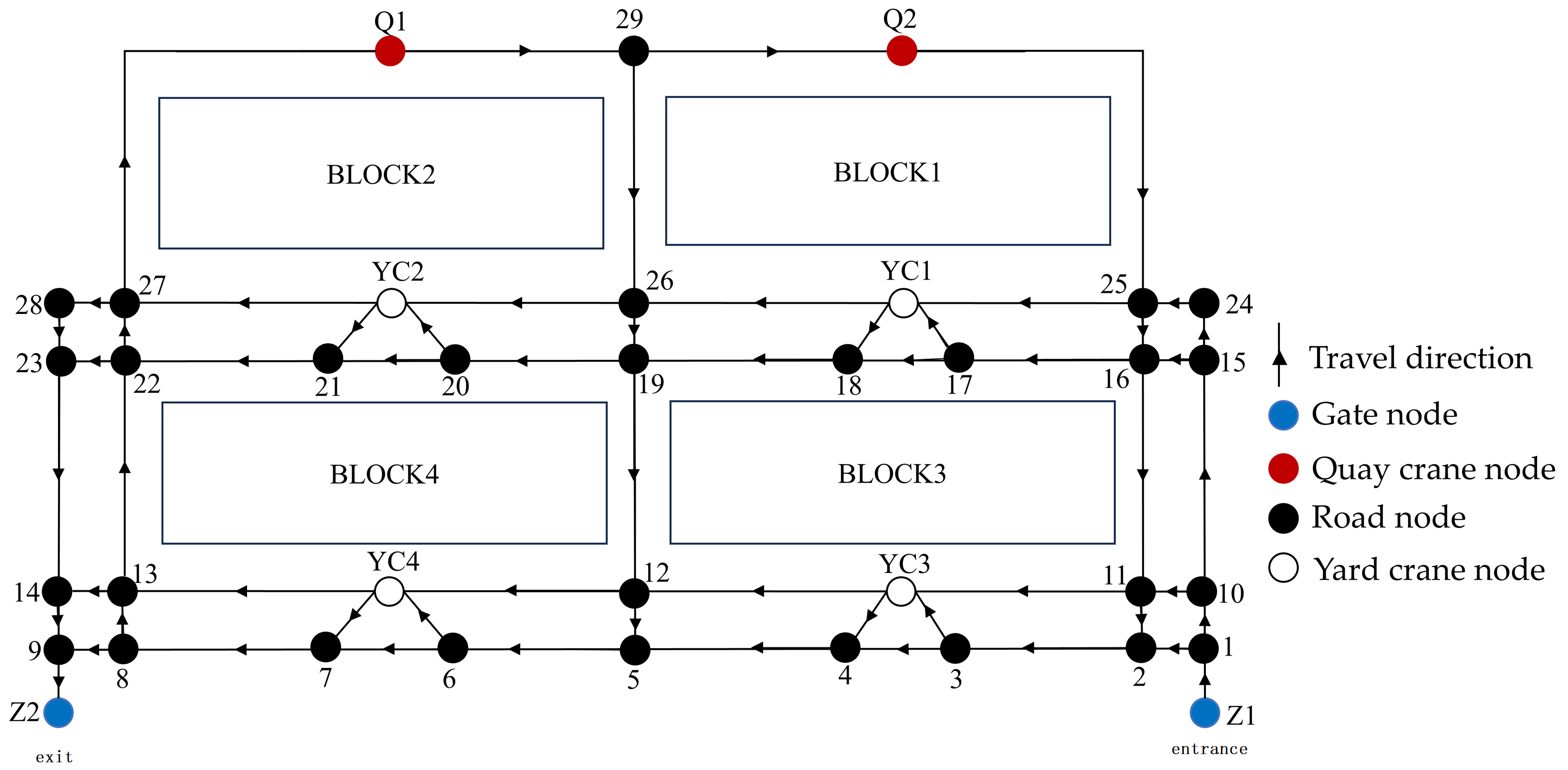
Node capacities are specified as follows: quay crane nodes have a capacity of 4; yard crane nodes have a capacity of 6 and can serve up to two trucks simultaneously; all remaining nodes have a capacity of 1. Each arc is assigned a predetermined travel time and capacity, as listed in Table A1. ACT task locations are pre-specified and evenly distributed among the four yard blocks. HDCT arrival times follow a Poisson process with an average inter-arrival time of 10 s. Task information for all ACTs and HDCTs is provided in Table A2.
Table A1.
Arc capacities and travel times.
Table A2.
Solution results.
The numerical experiments were conducted on a computer equipped with an AMD Ryzen 7 5800H CPU (3.20 GHz) and 16 GB RAM. The Improved NSGA-II was configured with a population size of 50, mutation probability of 0.1, crossover probability of 0.8, elite retention rate of 10%, and a cooperative learning proportion of 20% per iteration. The algorithm was executed for a total of 200 iterations.
A representative Pareto-optimal solution obtained under the HDCT-priority strategy is selected for detailed illustration. The ACT task allocation results are shown in Table A3, the HDCT yard-block selection results in Table A4, and complete routing and time-window information in Table A5. For this solution, the maximum ACT completion time is 1045 s, and the average HDCT waiting time is 71.6 s.
The simulation results confirm strict adherence to all operational constraints. For instance, ACT-7 was initially scheduled to enter node 25 at = 64 s, but the system detected that HDCT-5 was expected to arrive at = 65 s. According to the safety headway rule, ACT-7 was required to delay entry until = 68 s. This behavior is fully consistent with the imposed priority rules and safety constraints. Similarly, yard crane CY4 concurrently processed tasks from ACT-1 and HDCT-3 during the time interval 150–245 s, which complies with its two-truck service capacity. Throughout the entire example, no violations of node capacities, arc capacities, or yard crane service limits occurred. These results confirm that the generated schedules are feasible under the comprehensive operational constraints embedded in the proposed model.
Table A3.
Task allocation of ACTs.
Table A4.
Yard block selection results of HDCTs.
Table A5.
Path planning solution results.
References
- Gharehgozli, A.; Zaerpour, N.; de Koster, R. Container terminal layout design: Transition and future. Marit. Econ. Logist. 2020, 22, 610–639. [Google Scholar] [CrossRef] [Scilit]
- Kavakeb, S.; Nguyen, T.T.; McGinley, K.; Yang, Z.; Jenkinson, I.; Murray, R. Green vehicle technology to enhance the performance of a European port: A simulation model with a cost-benefit approach. Transp. Res. Part C Emerg. Technol. 2015, 60, 169–188. [Google Scholar] [CrossRef] [Scilit]
- Wang, Z.; Zeng, Q.; Li, X.; Qu, C. A branch-and-price heuristic algorithm for the ART and external truck scheduling problem in an automated container terminal with a parallel layout. Transp. Res. Part E Logist. Transp. Rev. 2024, 184, 103464. [Google Scholar] [CrossRef] [Scilit]
- Angeloudis, P.; Bell, M.G.H. An uncertainty-aware AGV assignment algorithm for automated container terminals. Transp. Res. Part E Logist. Transp. Rev. 2010, 46, 354–366. [Google Scholar] [CrossRef] [Scilit]
- Hu, H.; Chen, X.; Wang, T.; Zhang, Y. A three-stage decomposition method for the joint vehicle dispatching and storage allocation problem in automated container terminals. Comput. Ind. Eng. 2019, 129, 90–101. [Google Scholar] [CrossRef] [Scilit]
- Li, L.; Li, Y.; Liu, R.; Zhou, Y.; Pan, E. A Two-stage Stochastic Programming for AGV scheduling with random tasks and battery swapping in automated container terminals. Transp. Res. Part E Logist. Transp. Rev. 2023, 174, 103110. [Google Scholar] [CrossRef] [Scilit]
- Lyu, X.; Song, Y.; He, C.; Lei, Q.; Guo, W.-F. Approach to integrated scheduling problems considering optimal number of automated guided vehicles and conflict-free routing in flexible manufacturing systems. IEEE Access 2019, 7, 74909–74924. [Google Scholar] [CrossRef] [Scilit]
- Zhong, M.; Yang, Y.; Dessouky, Y.; Postolache, O. Multi-AGV scheduling for conflict-free path planning in automated container terminals. Comput. Ind. Eng. 2020, 142, 106371. [Google Scholar] [CrossRef] [Scilit]
- Hu, Y.; Dong, L.; Xu, L. Multi-AGV dispatching and routing problem based on a three-stage decomposition method. Math. Biosci. Eng. 2020, 17, 5150–5172. [Google Scholar] [CrossRef] [Scilit]
- Xu, B.; Jie, D.; Li, J.; Zhou, Y.; Wang, H.; Fan, H. A hybrid dynamic method for conflict-free integrated schedule optimization in U-shaped automated container terminals. J. Mar. Sci. Eng. 2022, 10, 1187. [Google Scholar] [CrossRef] [Scilit]
- Wu, M.; Gao, J.; Li, L.; Wang, Y. Control optimisation of automated guided vehicles in container terminal based on Petri network and dynamic path planning. Comput. Electr. Eng. 2022, 104, 108471. [Google Scholar] [CrossRef] [Scilit]
- Li, S.; Fan, L.; Jia, S. A hierarchical solution framework for dynamic and conflict-free AGV scheduling in an automated container terminal. Transp. Res. Part C Emerg. Technol. 2024, 165, 104724. [Google Scholar] [CrossRef] [Scilit]
- Chu, L.; Gao, Z.; Dang, S.; Zhang, J.; Yu, Q. Optimization of joint scheduling for automated guided vehicles and unmanned container trucks at automated container terminals considering conflicts. J. Mar. Sci. Eng. 2024, 12, 1190. [Google Scholar] [CrossRef] [Scilit]
- Chen, J.; Zhou, J.; Zheng, Y.; Ma, R. Optimal scheduling model based on unmanned collector truck arrival time variation field bridge under balanced strategy. J. Phys. Conf. Ser. 2022, 2258, 012043. [Google Scholar] [CrossRef] [Scilit]
- Yue, L.; Fan, H.; Ma, M. Optimizing configuration and scheduling of double 40 ft dual-trolley quay cranes and AGVs for improving container terminal services. J. Clean. Prod. 2021, 292, 126019. [Google Scholar] [CrossRef] [Scilit]
- Hong, C.; Guo, Y.; Wang, Y.; Li, T. The Integrated Scheduling Optimization for Container Handling by Using Driverless Electric Truck in Automated Container Terminal. Sustainability 2023, 15, 5536. [Google Scholar] [CrossRef] [Scilit]
- Hsu, H.P.; Wang, C.N.; Fu, H.P.; Dang, T.-T. Joint scheduling of yard crane, yard truck, and quay crane for container terminal considering vessel stowage plan: An integrated simulation-based optimization approach. Mathematics 2021, 9, 2236. [Google Scholar] [CrossRef] [Scilit]
- Wang, N.; Guo, J.; Li, J.; Wang, J.; Li, J. Optimization of AGV Scheduling in Automated Container Terminal Based on Improved Genetic Algorithm. In Proceedings of the 4th International Conference on Artificial Intelligence and Computer Engineering, Dalian, China, 17–19 November 2023; pp. 1069–1074. [Google Scholar] [CrossRef] [Scilit]
- Tierney, K.; Voß, S.; Stahlbock, R. A mathematical model of inter-terminal transportation. Eur. J. Oper. Res. 2014, 235, 448–460. [Google Scholar] [CrossRef] [Scilit]
- Murakami, K. Time-space network model and MILP formulation of the conflict-free routing problem of a capacitated AGV system. Comput. Ind. Eng. 2020, 141, 106270. [Google Scholar] [CrossRef] [Scilit]
- Lu, J.; Ren, C.; Shao, Y.; Zhu, J.; Lu, X. An automated guided vehicle conflict-free scheduling approach considering assignment rules in a robotic mobile fulfillment system. Comput. Ind. Eng. 2023, 176, 108932. [Google Scholar] [CrossRef] [Scilit]
- Zeng, Q.; Feng, Y.; Yang, Z. Integrated optimization of pickup sequence and container rehandling based on partial truck arrival information. Comput. Ind. Eng. 2019, 127, 366–382. [Google Scholar] [CrossRef] [Scilit]
- He, J.; Zhang, L.; Deng, Y.; Yu, H.; Huang, M.; Tan, C. An allocation approach for external truck tasks appointment in automated container terminal. Adv. Eng. Inform. 2023, 55, 101864. [Google Scholar] [CrossRef] [Scilit]
- Ramírez-Nafarrate, A.; González-Ramírez, R.G.; Smith, N.R.; Guerra-Olivares, R.; Voß, S. Impact on yard efficiency of a truck appointment system for a port terminal. Ann. Oper. Res. 2017, 258, 195–216. [Google Scholar] [CrossRef] [Scilit]
- Sun, S.; Zheng, Y.; Dong, Y.; Li, N.; Jin, Z.; Yu, Q. Reducing external container trucks’ turnaround time in ports: A data-driven approach under truck appointment systems. Comput. Ind. Eng. 2022, 174, 108787. [Google Scholar] [CrossRef] [Scilit]
- Talaat, A.; Gheith, M.; Eltawil, A. A multi-stage approach for external trucks and yard cranes scheduling with CO2 emissions considerations in container terminals. Logistics 2023, 7, 87. [Google Scholar] [CrossRef] [Scilit]
- Bett, D.K.; Ali, I.; Gheith, M.; Eltawil, A. Simulation-based optimization of truck appointment systems in container terminals: A dual transactions approach with improved congestion factor representation. Logistics 2024, 8, 80. [Google Scholar] [CrossRef] [Scilit]
- Chen, H.; Xu, X.; Wang, W. The impact of conflict avoidance strategies of internal and external container trucks on the traffic scheduling in automated container terminals. In Proceedings of the 3rd International Conference on Internet of Things and Smart City (IoTSC 2023), Chongqing, China, 24–26 March 2023; SPIE: Bellingham, WA, USA, 2023; Volume 12708, pp. 750–757. [Google Scholar] [CrossRef] [Scilit]
- Gao, Y.; Ge, Y.E. Integrated scheduling of yard cranes, external trucks, and internal trucks in maritime container terminal operation. Marit. Policy Manag. 2023, 50, 629–650. [Google Scholar] [CrossRef] [Scilit]
- Yang, Y.; Sun, S.; Zhong, M.; Feng, J.; Wen, F.; Song, H. A refined collaborative scheduling method for multi-equipment at U-shaped automated container terminals based on rail crane process optimization. J. Mar. Sci. Eng. 2023, 11, 605. [Google Scholar] [CrossRef] [Scilit]
- Mohajerpoor, R.; Ramezani, M. Mixed flow of autonomous and human-driven vehicles: Analytical headway modeling and optimal lane management. Transp. Res. Part C 2019, 109, 194–210. [Google Scholar] [CrossRef] [Scilit]
- Guo, X.Y.; Zhang, G.; Jia, A.F. Study on mixed traffic of autonomous vehicles and human-driven vehicles with different cyber interaction approaches. Veh. Commun. 2023, 39, 100550. [Google Scholar] [CrossRef] [Scilit]
- Zeng, Q.; Hao, S.Y.; Zhao, N.L.; Liu, R. Modeling and Analysis of Mixed Traffic Flow Considering Driver Stochasticity and CAV Connectivity Uncertainty. Sensors 2025, 25, 2806. [Google Scholar] [CrossRef] [Scilit]
- Wang, Z.; Huang, H.; Tang, J.; Hu, L. A deep reinforcement learning-based approach for autonomous lane-changing velocity control in mixed flow of vehicle group level. Expert Syst. Appl. 2024, 238, 122158. [Google Scholar] [CrossRef] [Scilit]
- Jiang, C.; Yin, S.; Yao, Z.; He, J.; Jiang, R.; Jiang, Y. Safety evaluation of mixed traffic flow with truck platoons equipped with (cooperative) adaptive cruise control, stochastic human-driven cars and trucks on port freeways. Phys. A Stat. Mech. Its Appl. 2024, 643, 129802. [Google Scholar] [CrossRef] [Scilit]
- Wang, Y.Q.; Chen Fu, Z.X.; Li, P.K.; Yu, L. Impact Analysis of Surrounding Vehicle Behavior on Autonomous Truck Platooning. Transp. Res. Rec. 2025, 2679, 666–691. [Google Scholar] [CrossRef] [Scilit]
- Kang, N.; Qian, C.; Zhou, Y.Y.; Luo, W.T. Operational Evaluation of Mixed Flow on Highways Considering Trucks and Autonomous Vehicles Based on an Improved Car-Following Decision Framework. Sustainability 2025, 17, 6450. [Google Scholar] [CrossRef] [Scilit]
- Sang, X.; Hou, K.N.; Liu, C.; Zheng, F.F.; Liu, X.B. A shared strategy of dedicated autonomous truck lanes for enhancing sustainability and efficiency in mixed freeway traffic. Transp. B-Transp. Dyn. 2025, 13, 2449484. [Google Scholar] [CrossRef] [Scilit]
- Wang, A.; Qi, L.; Luan, W.J.; Lu, T. Highway On-Ramp Truck Platooning Based on Deep Reinforcement Learning. Transp. Res. Rec. 2024, 2679, 815–832. [Google Scholar] [CrossRef] [Scilit]
- Chen, L.; Jia, N.N.; Li, Q.R.; Zhao, Y.X. Modeling and Simulation of Mixed Traffic Flow in Maintenance Operation Zone Considering the Impact of Trucks in an Intelligent Connected Environment. Transp. Res. Rec. 2025, 2679, 683–705. [Google Scholar] [CrossRef] [Scilit]
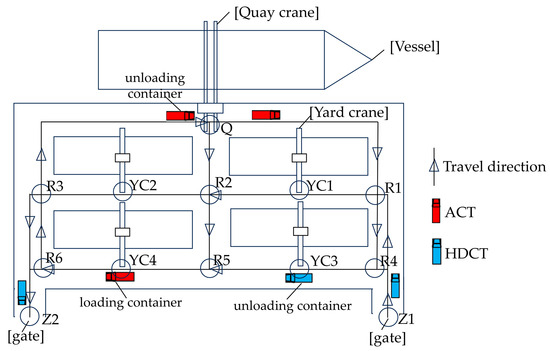
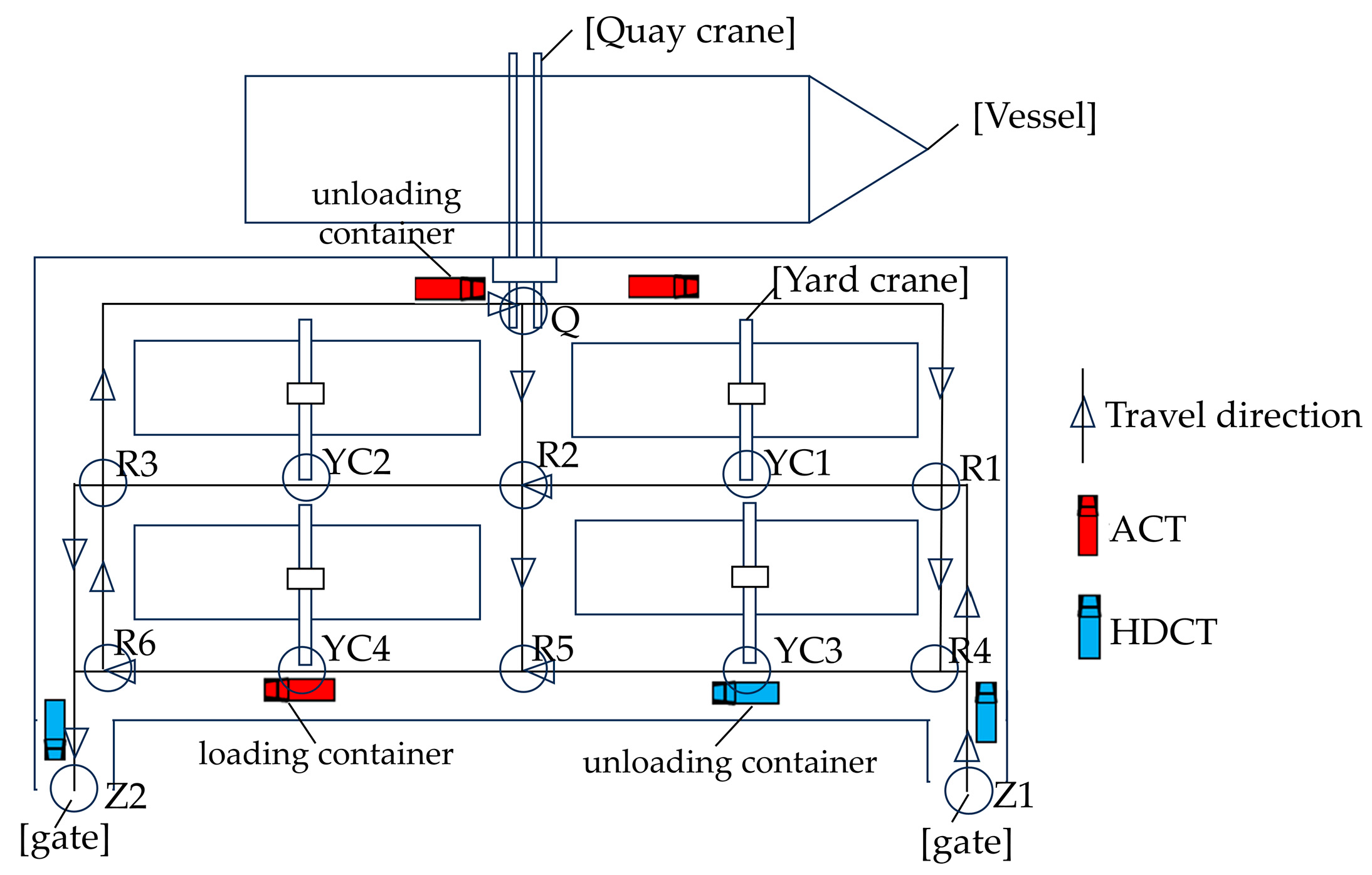
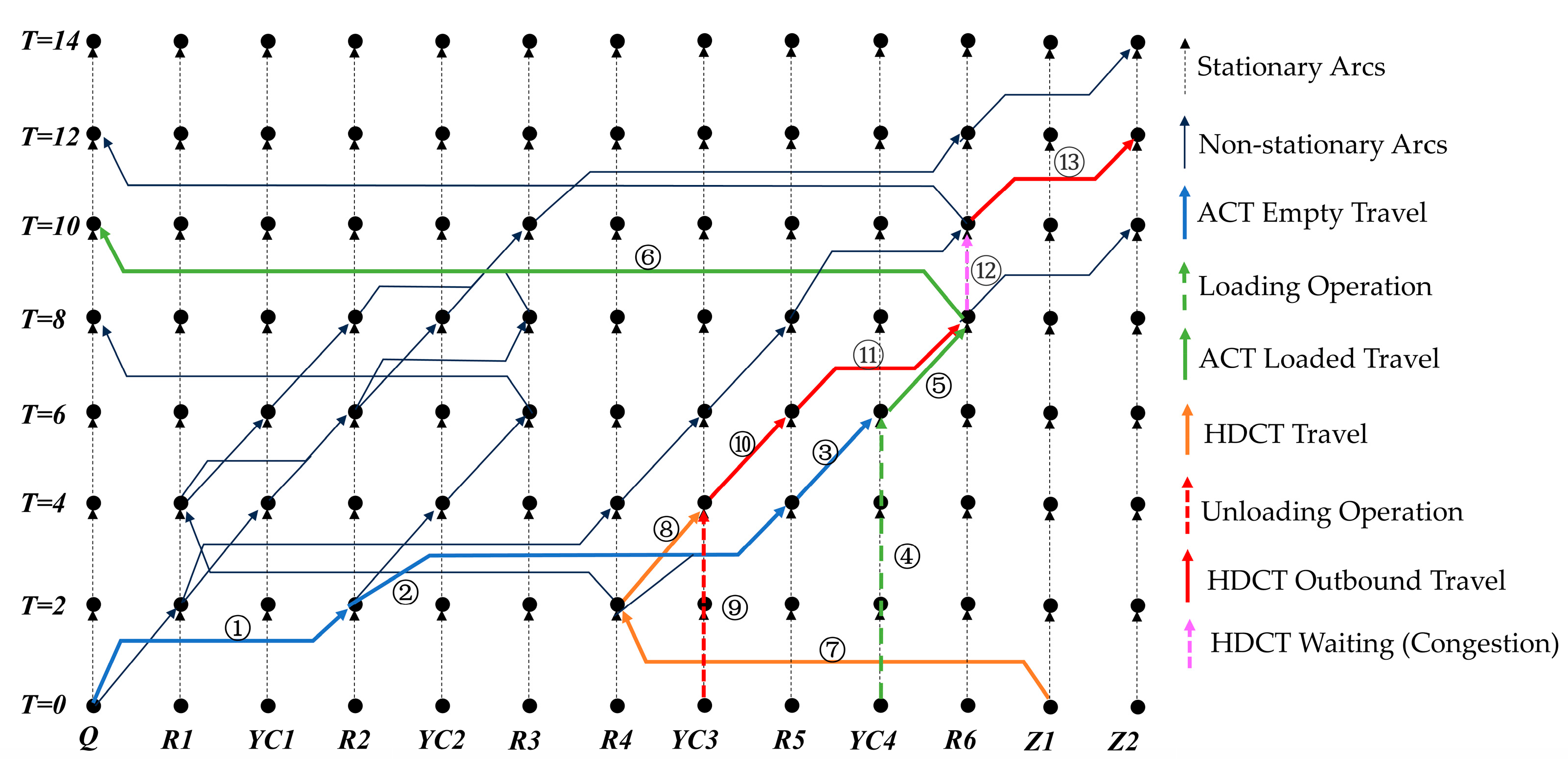
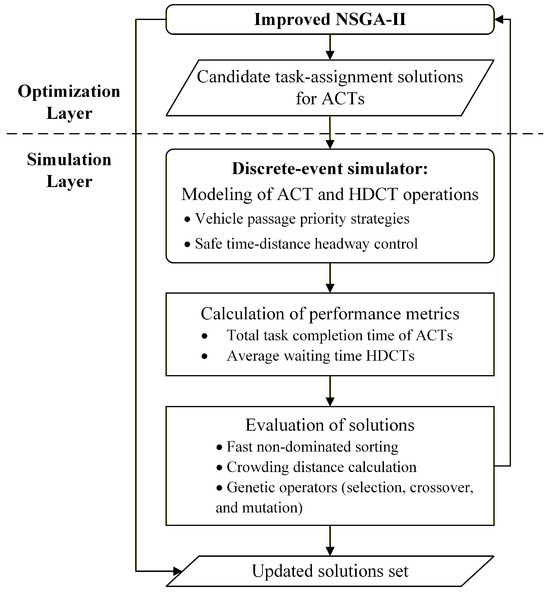
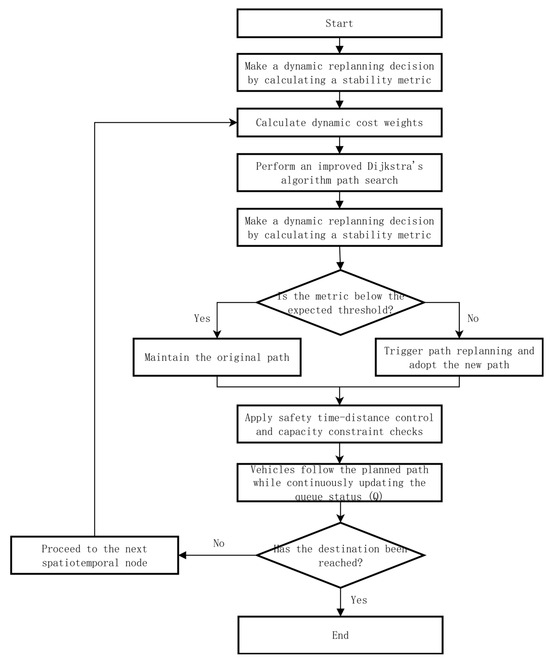
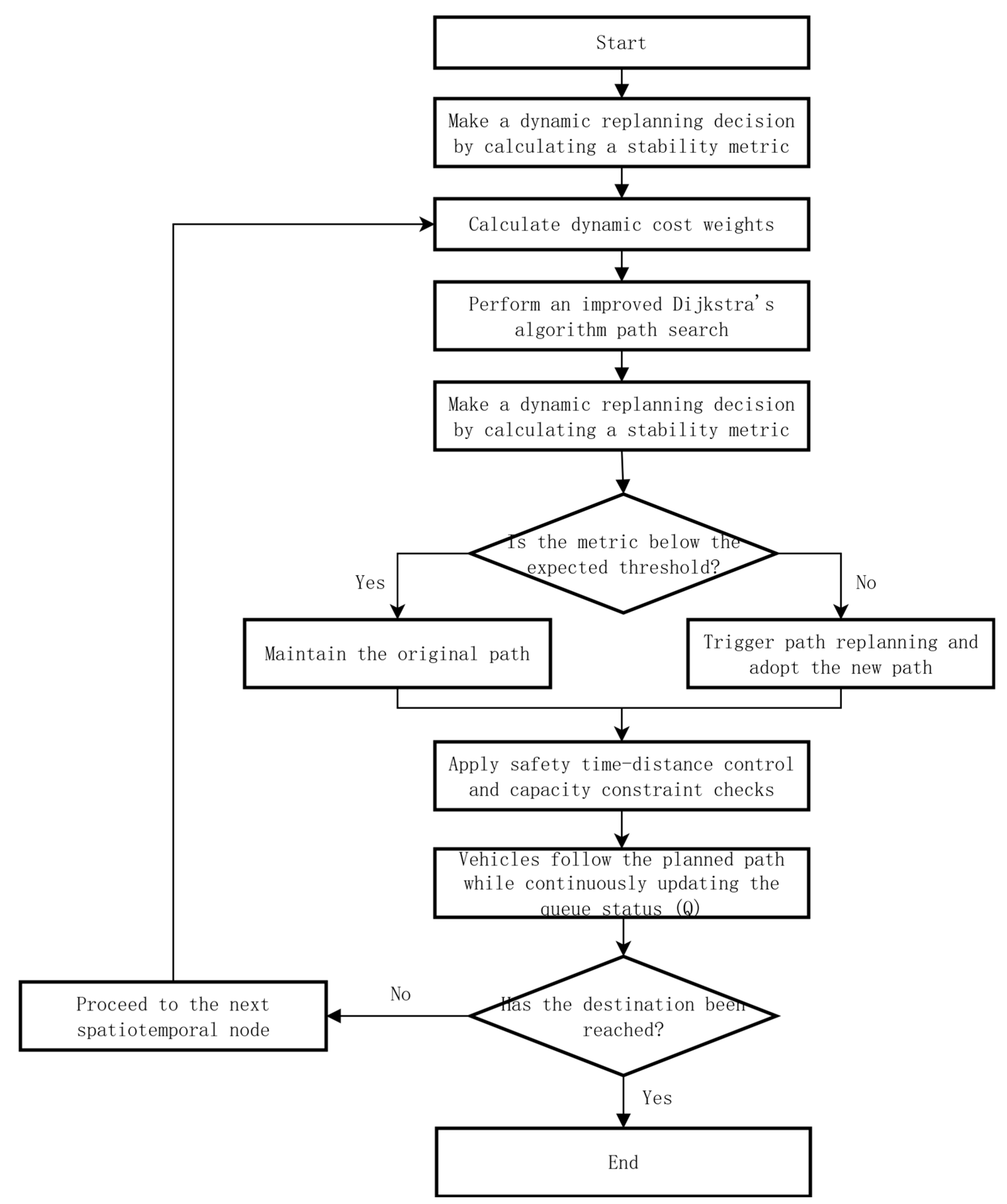
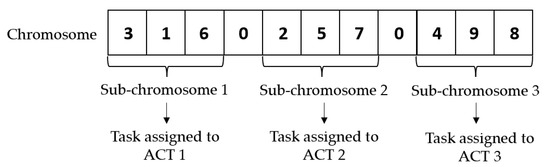
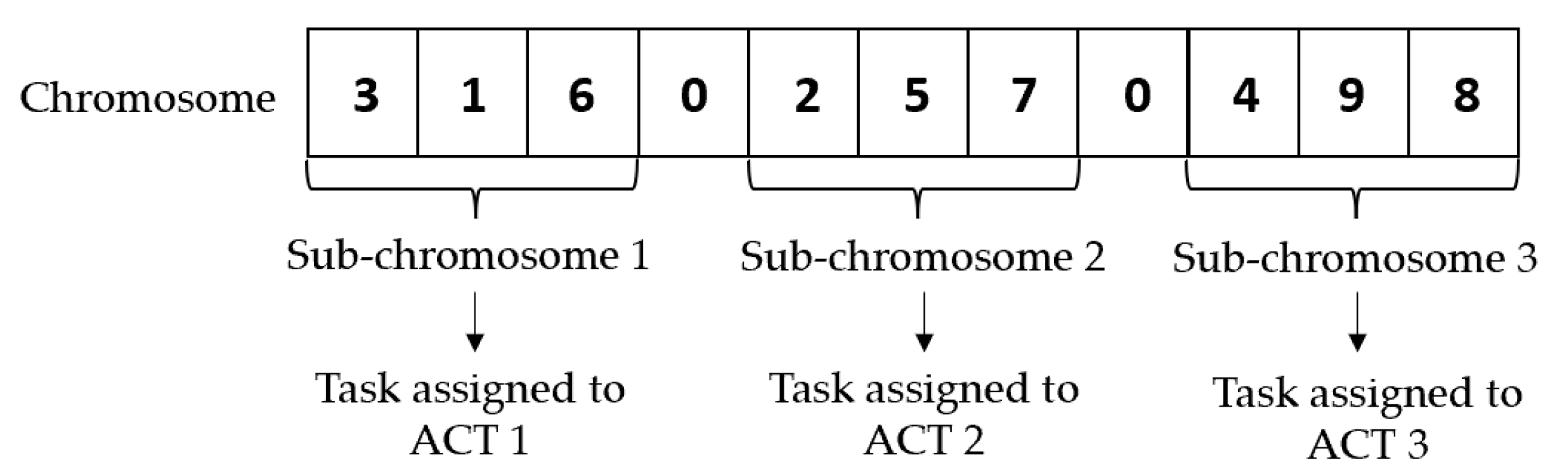
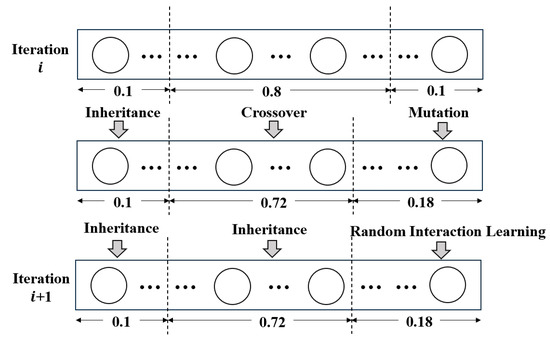
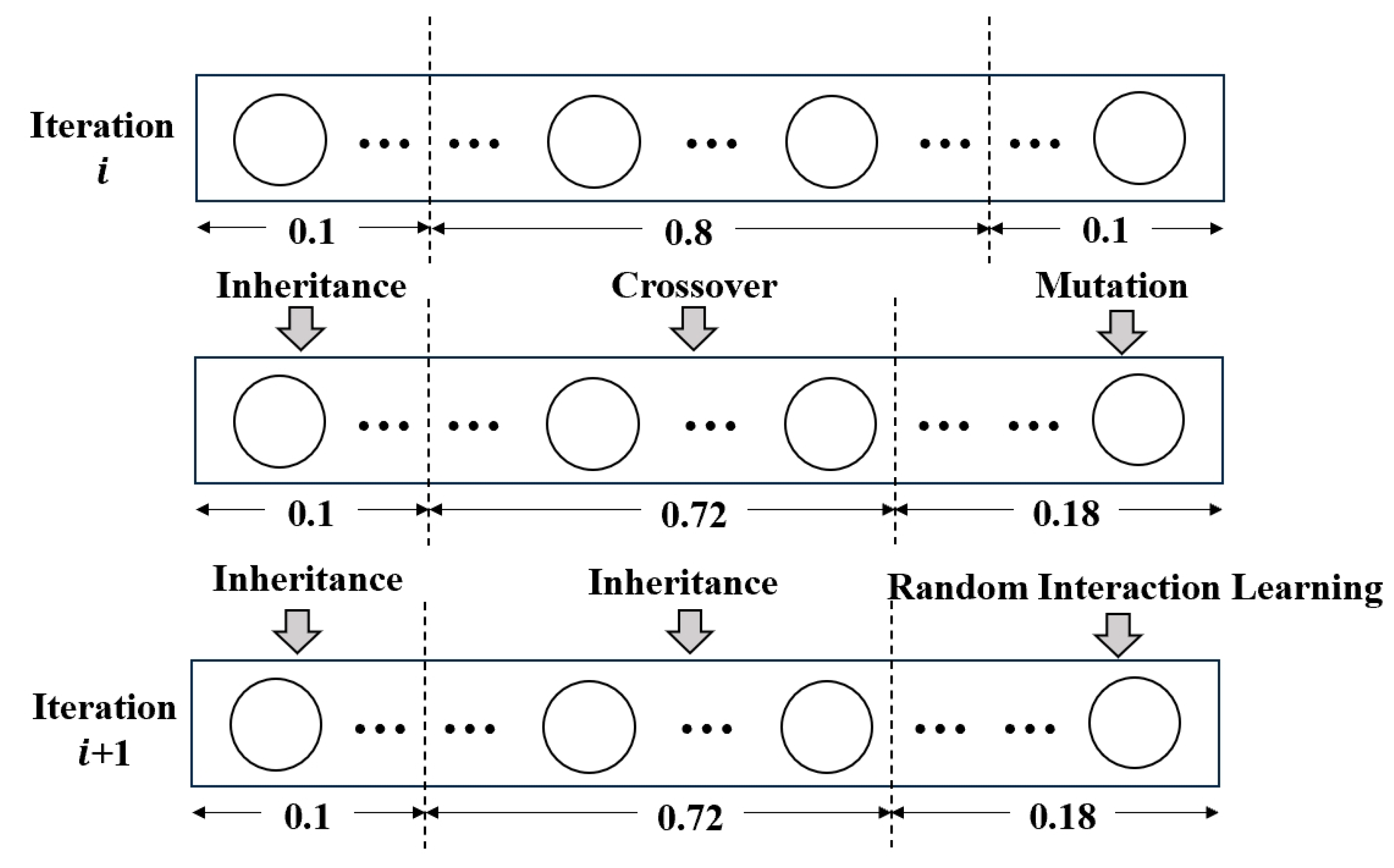
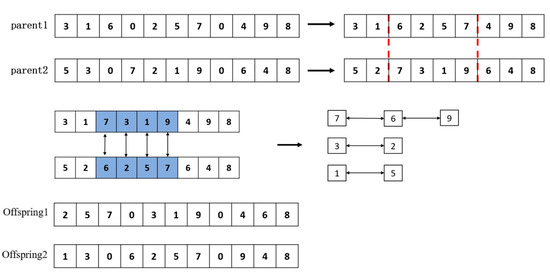
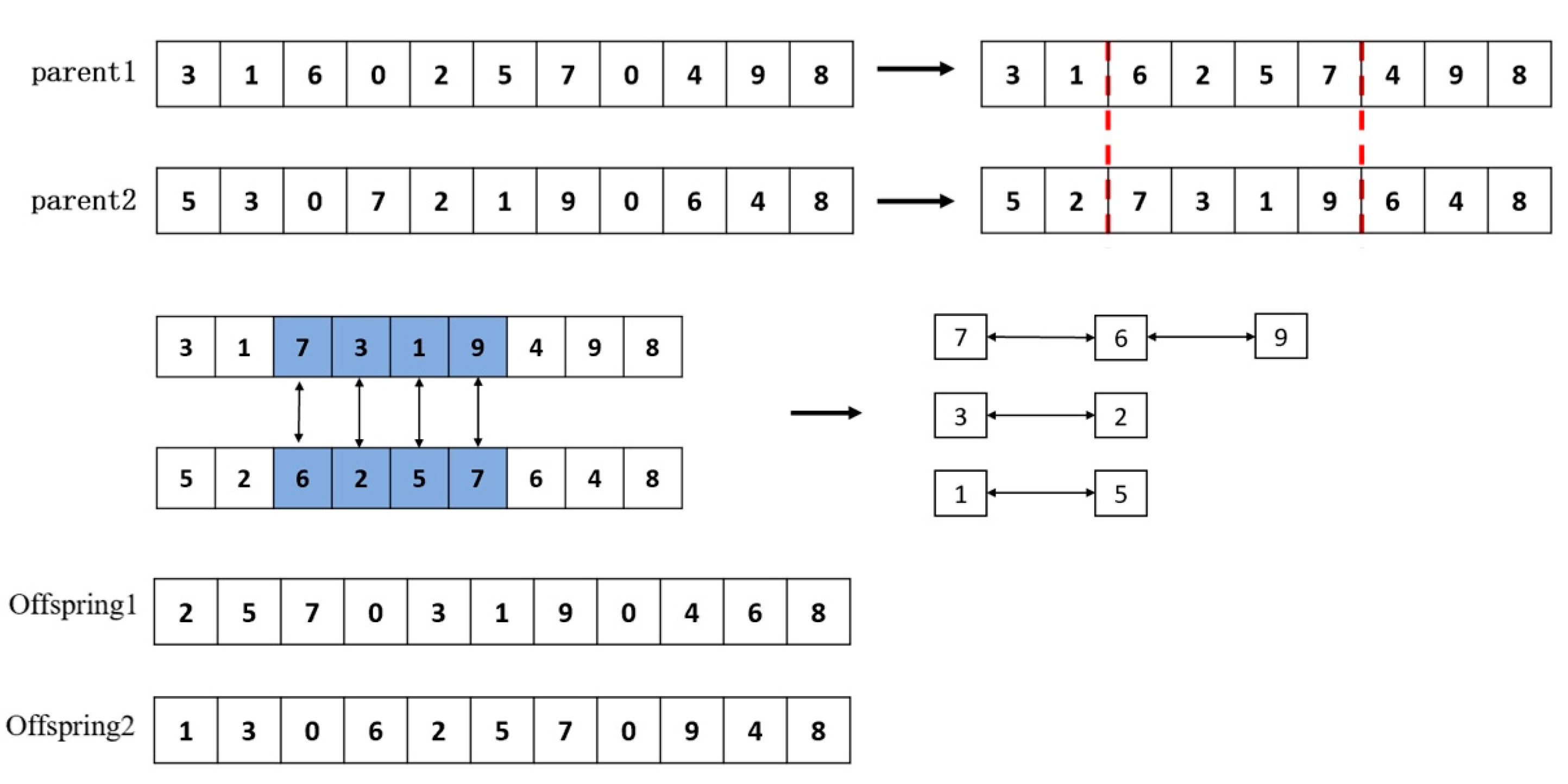
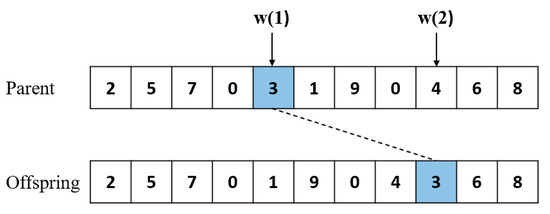
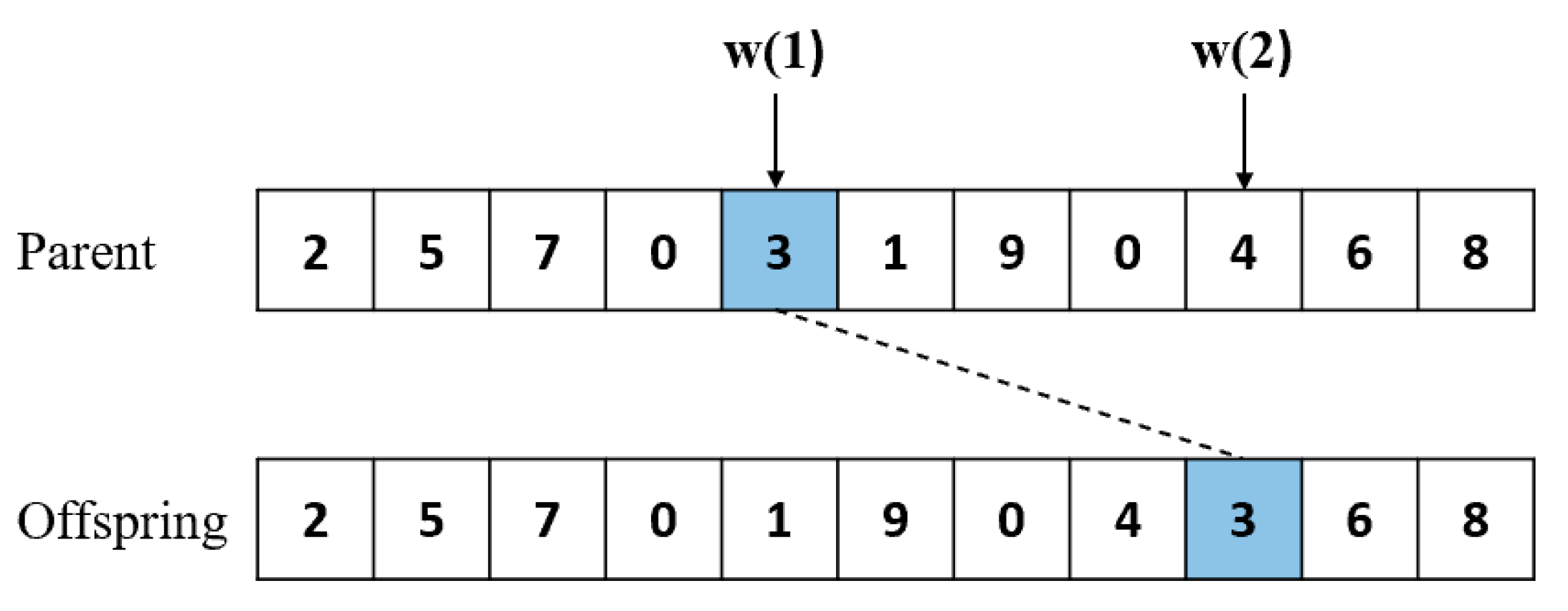
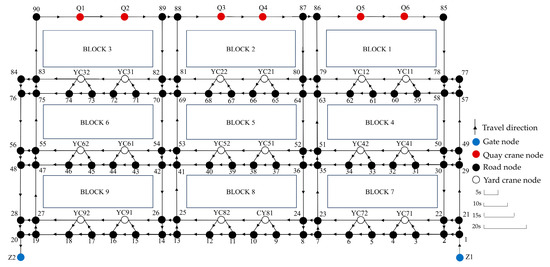
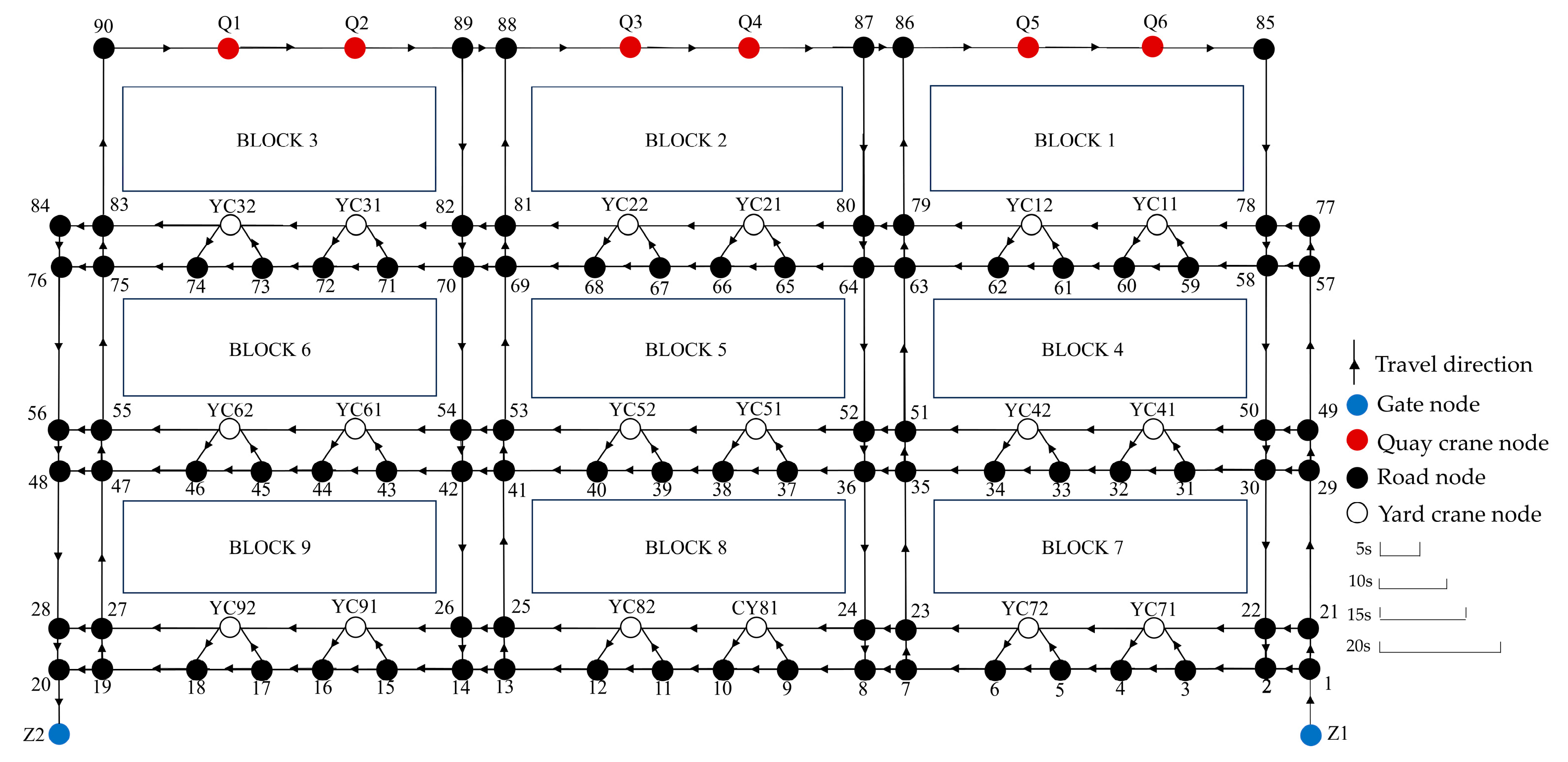
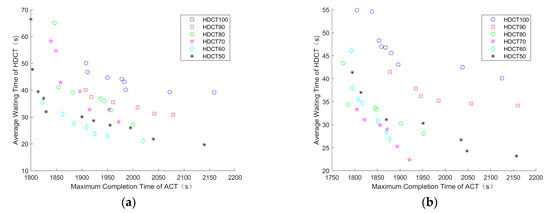
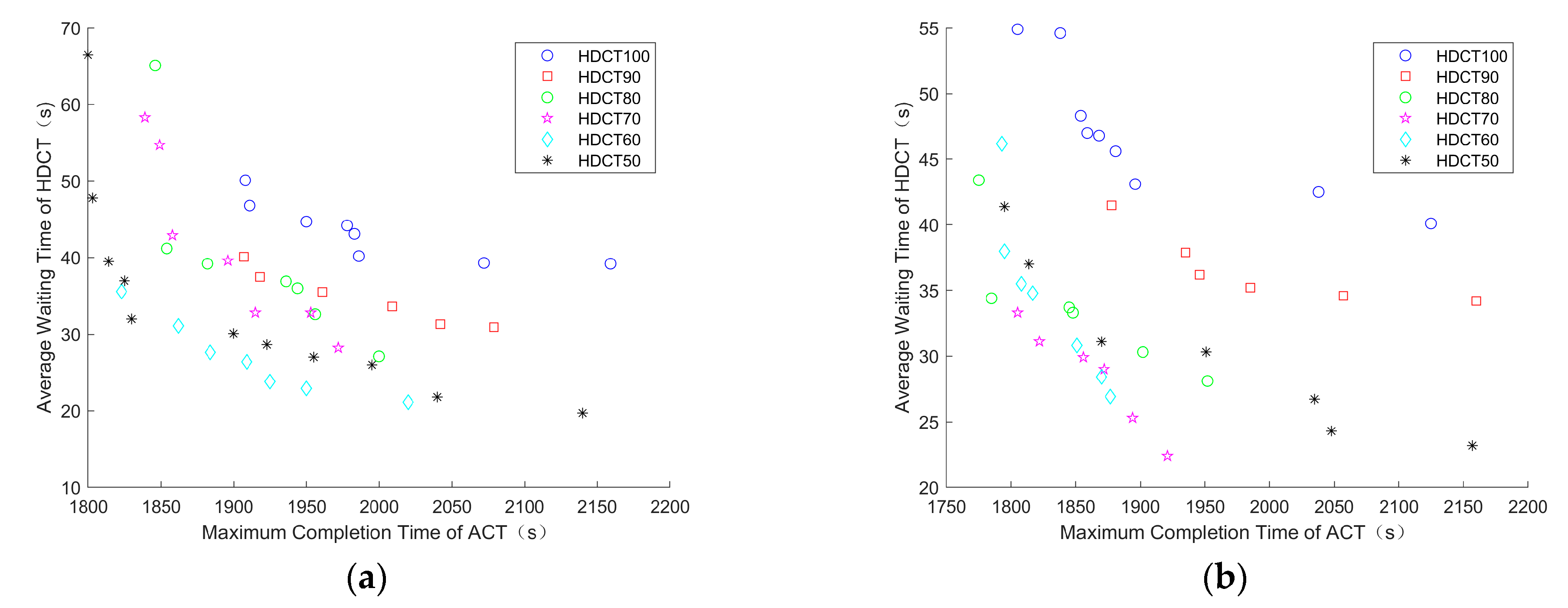
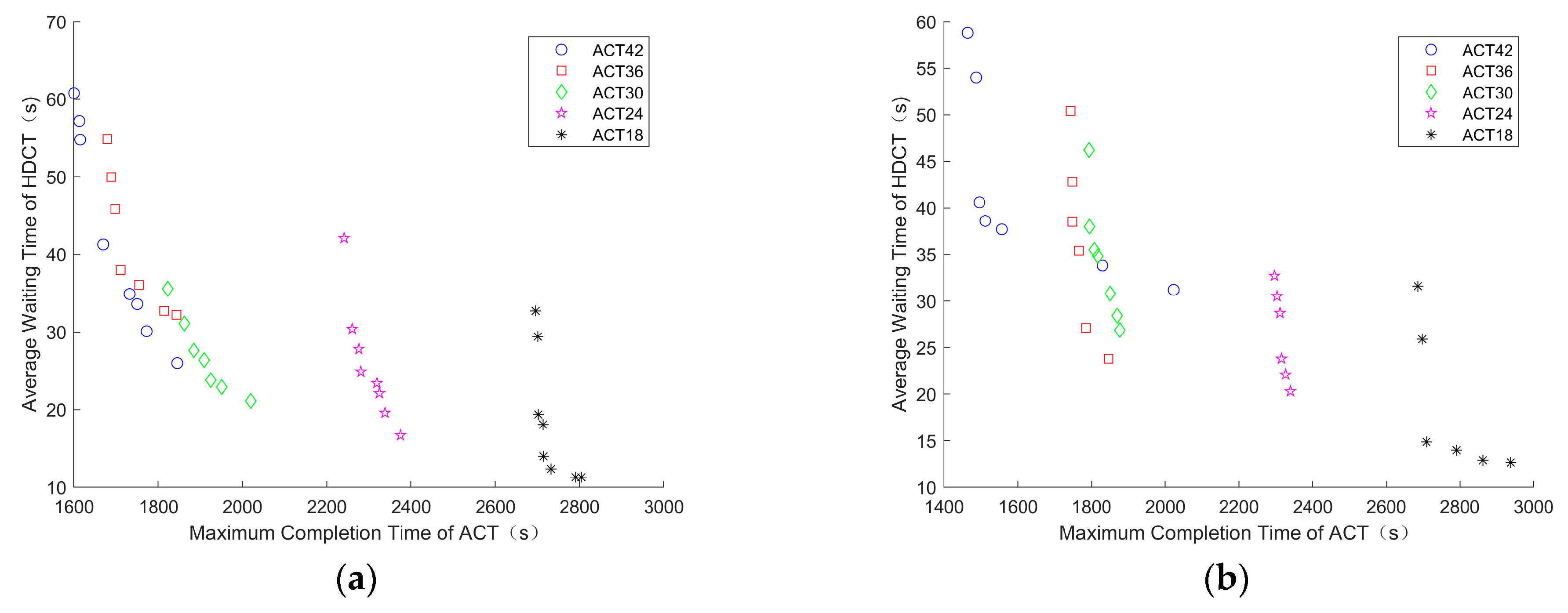

Disclaimer/Publisher’s Note: The statements, opinions and data contained in all publications are solely those of the individual author(s) and contributor(s) and not of MDPI and/or the editor(s). MDPI and/or the editor(s) disclaim responsibility for any injury to people or property resulting from any ideas, methods, instructions or products referred to in the content. |
© 2025 by the authors. Licensee MDPI, Basel, Switzerland. This article is an open access article distributed under the terms and conditions of the Creative Commons Attribution (CC BY) license (https://creativecommons.org/licenses/by/4.0/).