Article

Drivers of Farmers’ Adoption Intention for Soil Nutrient Analyzers: Roles of Awareness, Perceived Usefulness, and Ease of Use

by
Adisak Suvittawat
School of Management Technology, Suranaree University of Technology, Nakhon Ratchasima 30000, Thailand
Agriculture 2026, 16(3), 390; https://doi.org/10.3390/agriculture16030390 (registering DOI)
Submission received: 4 January 2026 / Revised: 26 January 2026 / Accepted: 5 February 2026 / Published: 6 February 2026
(This article belongs to the Section Agricultural Economics, Policies and Rural Management)

Abstract

Soil nutrient analyzers are integral to precision agriculture, yet their adoption among smallholder farmers remains uneven. This study investigates the behavioral determinants of farmers’ adoption intention toward soil nutrient analyzers by extending the Technology Acceptance Model (TAM) to incorporate technology awareness as an upstream construct. Survey data were collected from smallholder farmers with prior experience using soil nutrient analyzers in Chanthaburi, Kanchanaburi, and Udon Thani provinces in Thailand. Structural equation modeling was employed to examine the direct and indirect effects of technology awareness on adoption intention through perceived usefulness and perceived ease of use. The results reveal that technology awareness exerts a significant direct influence on adoption intention and indirect effects mediated by both perceived usefulness and ease of use. In addition, perceived ease of use positively enhances perceived usefulness, reinforcing farmers’ willingness to adopt the technology. By empirically positioning technology awareness as a foundational driver within an extended TAM framework, this study advances understanding of smallholder farmers’ technology acceptance in precision agriculture. The findings offer practical insights for policymakers, extension services, and technology developers, emphasizing awareness-building initiatives and user-centered design to accelerate the diffusion of soil nutrient analyzers among smallholder farming communities.

1. Introduction

1.1. General Information

Agriculture plays a vital role in securing global food supplies, substantially supporting economic activities and offering employment opportunities across the world. Beyond sustaining food production, agriculture is a key catalyst for reducing extreme poverty and fostering economic development [1]. Agricultural growth has demonstrated a two to threefold greater impact on poverty alleviation compared to equivalent growth in other sectors, with the most pronounced benefits observed among the poorest communities. Nevertheless, increasing population pressures and the escalating effects of climate change present substantial challenges to agricultural systems, underscoring the urgent need to transition toward more efficient and sustainable practices [2]. Soil health is fundamental to agricultural productivity and forms the foundation for sustainable farming practices. The effective management of nutrients, particularly through the accurate and targeted application of fertilizers, is essential to maintaining soil fertility and supporting long-term agricultural sustainability [3]. Conventional soil testing techniques frequently exhibit limited accuracy, which can result in the application of either excessive or inadequate amounts of fertilizer. Such practices may adversely impact crop productivity as well as environmental sustainability [4].
In this context, soil nutrient analyzers have become innovative instruments that overcome the shortcomings of conventional soil testing methods and align effectively with contemporary precision agriculture practices. By employing advanced technologies, these devices deliver accurate, real-time information on soil nutrient content, empowering farmers to make informed, data-driven decisions about fertilizer management [5]. Although soil nutrient analyzers have proven benefits, including minimizing resource waste and enhancing crop productivity, their adoption varies significantly across regions and among different farmer demographics. Understanding the underlying factors contributing to this uneven uptake is essential for devising strategies that facilitate the effective and equitable dissemination of this technology [6].

1.2. Implementation of Soil Nutrient Analyzer

The deployment of soil nutrient analyzers entails the combination of advanced sensing technologies with intuitive, user-friendly interfaces designed to provide farmers with practical and actionable information. These instruments employ sophisticated techniques including spectrometry, electrochemical sensors, and remote sensing methods to precisely assess the nutrient composition of soil samples [7]. The results are presented in an accessible format, highlighting specific nutrient deficiencies or surpluses, along with tailored recommendations for corrective measures. Such advancements underscore the critical role of soil nutrient analyzers in modern precision agriculture by enhancing decision-making processes and improving overall farm productivity [8].
Governments and agricultural organizations across various countries have introduced initiatives to encourage the adoption of soil nutrient analyzers. These initiatives include subsidies, farmer training programs, and awareness campaigns designed to educate stakeholders about the advantages and applications of this technology [9]. However, despite these efforts, the uptake of soil nutrient analyzers remains notably low among smallholder farming communities, particularly in developing regions. This limited adoption highlights the pressing need for targeted interventions that address key barriers faced by farmers, such as financial constraints, technical challenges, and insufficient awareness [10].
Additionally, the effectiveness of soil nutrient analyzers largely depends on supporting infrastructure, including calibration facilities, technical assistance, and integration with complementary precision agriculture technologies. Consequently, promoting the adoption of these analyzers necessitates a comprehensive approach that incorporates both technological capabilities and socio-economic considerations.

1.3. Background and Research Gap

Extensive research has underscored the critical role of precision agriculture technologies in enhancing crop yields and optimizing resource use. Among these innovations, soil nutrient analyzers have received considerable attention, particularly concerning their technical capabilities and agronomic advantages. Nevertheless, there remains a notable research gap regarding the behavioral dimensions influencing farmers’ adoption of these tools, including their perceptions, attitudes, and decision-making processes.
A well-established theoretical framework frequently employed in technology adoption research is the Technology Acceptance Model (TAM), which emphasizes perceived usefulness and ease of use as key factors influencing users’ intentions to adopt new technologies. Although TAM has been widely used across various fields, its applicability to agricultural technology, specifically soil nutrient analyzers, has received limited scholarly attention. Additionally, prior research primarily addresses adoption in large-scale agricultural settings, creating a notable research gap concerning the technology adoption behaviors of smallholder farmers, who constitute the largest segment of the global agricultural workforce.
An additional research gap exists in the absence of comprehensive frameworks that integrate both psychological and contextual factors. Although technology awareness is frequently identified as a fundamental prerequisite for adoption, its interaction with mediating variables such as perceived usefulness and ease of use remains underexplored, particularly in the context of soil nutrient analyzers. Furthermore, the impact of socio-economic factors, including education level, farm size, and accessibility to extension services, on the adoption process requires more in-depth examination.

1.4. Scope and Psychological Variables Selection

This study seeks to address the identified gaps by examining farmers’ perceptions and behavioral intentions toward soil nutrient analyzers. It employs a conceptual framework that positions technology awareness as an exogenous factor, while perceived usefulness, ease of use, and intention to adopt serve as endogenous variables. These constructs are thoughtfully chosen due to their alignment with the Technology Acceptance Model (TAM) and support from prior empirical research on agricultural technology adoption.

1.4.1. Scope of the Study

This research encompasses both theoretical and practical dimensions. From a theoretical perspective, it aims to advance the existing literature by refining the application of the Technology Acceptance Model (TAM) within the context of precision agriculture technologies. Practically, the study intends to offer actionable recommendations for policymakers, agricultural extension agents, and technology developers to facilitate increased adoption of soil nutrient analyzers among farming communities.

1.4.2. Psychological Variables Selection

Technology Awareness: Awareness serves as a critical foundation for the adoption of technology. It involves farmers’ understanding of the presence, operation, and advantages of soil nutrient analyzers. In the absence of such awareness, farmers are unable to assess the relevance or potential benefits of the technology.
Perceived Usefulness refers to the degree to which farmers believe that utilizing a soil nutrient analyzer can improve their farming productivity and decision-making capabilities. This variable serves as a direct predictor of their intention to adopt the technology, as established by the Technology Acceptance Model (TAM).
Ease of Use: This variable reflects farmers’ perceptions regarding the simplicity and user-friendliness of soil nutrient analyzers. Technologies perceived as easy to operate are more likely to be adopted, as they minimize the effort needed for both learning and practical use.
Adoption Intention: As the ultimate dependent variable, adoption intention represents the likelihood of farmers integrating soil nutrient analyzers into their agricultural practices. It is influenced by both perceived usefulness and ease of use, as well as other contextual factors.
Through the analysis of these variables within an integrated framework, this study aims to offer a comprehensive insight into the factors facilitating or impeding the adoption of soil nutrient analyzers. The results are expected to inform the development of targeted strategies to encourage the uptake of this technology, thereby supporting sustainable advancements in agricultural practices.

2. Literature Review

Soil nutrient analyzers play a crucial role in modern agriculture by significantly reducing the time required for soil nutrient analysis. While traditional testing methods often take an extended period to yield results, these devices can deliver accurate readings within just five minutes. Farmers can lower their fertilizer expenses by accurately identifying the nutrient deficiencies in their soil and determining the precise amount of fertilizer required to fulfill their plants’ needs, thereby preventing the losses associated with over-application. Furthermore, fertilizing based on the specific nutrient requirements of plants leads to improved crop yields and enhanced quality of the harvested produce. The literature review employed a systematic approach to examine the factors influencing farmers’ intentions to adopt soil nutrient testing technologies. Furthermore, multiple theoretical frameworks concerning farmers’ intentions to adopt soil nutrient testing technologies were employed to develop the conceptual framework for this study.

2.1. Customer Perception Theory

Customer Perception Theory is a fundamental framework in consumer behavior research that emphasizes how consumers perceive and evaluate products or services. This evaluation is shaped by their experiences, expectations, and the value derived from using the product or service. This theory posits that consumers’ attitudes toward a product or service are shaped by their expectations, the perceived value, and the quality associated with it. Farmers’ intentions to adopt soil nutrient detectors including their likelihood of purchase, willingness to invest, recommendations to others, and intent for regular use are critical factors. When these needs are effectively addressed, farmers tend to demonstrate higher demand and greater satisfaction with the technology [11].

2.2. Technology Adoption Model

The Technology Adoption Model describes how individuals come to embrace and implement new technologies, highlighting two principal determinants of adoption: the perceived usefulness of the technology and its perceived ease of use. Perceived usefulness is defined as an individual’s conviction that employing a particular technology will enhance task performance or increase overall efficiency. Perceived ease of use is defined as the extent to which an individual believes that employing a technology will be straightforward and free of complexity.
Both perceived usefulness and perceived ease of use exerted significant effects on individuals’ behavioral intentions to adopt the technology. Overall, the decision to adopt a technology is shaped by multiple psychological factors including purchase intent, willingness to invest in the innovation, propensity to recommend it to others, and commitment to its ongoing use. Technology Adoption Models Theory offers a comprehensive examination of the psychological and content-related determinants that drive the uptake of new technologies [11].
Comprehending how farmers’ awareness of a technology influences their perception of its usefulness is essential for facilitating its adoption. Empirical studies demonstrate that enhanced awareness acquired through targeted information, hands-on training, and practical exposure strengthens farmers’ judgments of a technology’s utility, thereby increasing their propensity to adopt it. The users’ perceptions of Ag 5.0 technologies’ usefulness and ease of use are markedly influenced by their levels of technological anxiety, self-efficacy, and social influence. Moreover, an individual’s attitude toward Ag 5.0 strongly predicts their intention to adopt these innovations. To foster positive attitudes, public-sector initiatives should include hands-on demonstrations of new methods and their outcomes, guided visits to high-technology farms for beginners, and subsidies for advanced equipment and machinery [12].
Examining how farmers’ awareness of emerging technologies influences their perceived ease of use is essential for encouraging the uptake of agricultural innovations. Empirical evidence consistently demonstrates that when farmers possess greater technological awareness, they are more likely to view those innovations as user-friendly and that positive perception, in turn, significantly increases their willingness to adopt new tools and practices. The analysis indicated that, among young farmers’ personal characteristics, innovation and self-efficacy and, among their environmental characteristics, social influence significantly shaped their intention to adopt innovative technologies [13]. External elements most notably the market availability of the technology significantly influenced individuals’ intentions to adopt new technologies, even when they perceived themselves as having the requisite skills to manage their implementation [14].
Awareness of new agricultural technologies is a vital determinant of farmers’ intentions to adopt them; a deeper understanding consistently correlates with both stronger willingness to embrace innovations and higher actual uptake. This dynamic is shaped by a blend of individual characteristics and broader contextual influences, underscoring the complex interplay between personal motivation and environmental factors. Greater engagement with emerging technologies via field demonstrations, targeted training sessions, and information campaigns enhances farmers’ understanding and, in turn, accelerates and increases the likelihood of uptake. When producers grasp a technology’s advantages and operational requirements, their intention to adopt and subsequent usage rise markedly, particularly once initial obstacles (such as financial outlays) are mitigated [15]. Farmers who are aware of a technology tend to view it as more useful and easier to operate perceptions that strongly influence their intention to adopt it. Additionally, social influence and confidence in one’s own ability further shape these beliefs Both the intention to adopt new agricultural technologies and their actual usage are positively influenced by performance expectancy, effort expectancy, and hedonic motivation [16]. Perceptions of usefulness serve as a crucial determinant of farmers’ willingness to adopt novel agricultural technologies. Empirical evidence from multiple studies shows that as perceived usefulness increases, so too does the intention to integrate these innovations into agricultural practice. Perceived usefulness exerts a strong, positive influence on farmers’ intentions to embrace innovations such as smart farming tools, Agriculture 5.0 applications, and eco-friendly production techniques. When growers believe a technology will enhance productivity, efficiency, or profitability, their propensity to adopt it increases substantially. Social influence emerged as the primary driver of farmers’ intentions to adopt variable fertilization technology, underscoring the importance of social networks especially guidance from experienced demonstration households in decision making. Moreover, both perceived usefulness and perceived ease of use of the technology positively and significantly influenced adoption intentions, with ease of use exerting a stronger overall effect than usefulness [17]. The perception of ease of use plays a pivotal role in research on farmers’ willingness to embrace new agricultural technologies. A wealth of empirical studies shows that when growers find a technology straightforward and user-friendly, their intention to adopt it rises markedly. Perceived ease of use exerts a consistently strong, positive influence on farmers’ intentions to adopt novel agricultural technologies often matching or even exceeding the impact of perceived usefulness. This effect has been documented across diverse applications, including smart farming, agricultural automation, information systems, and green production technologies [18]. In contexts where technologies are novel or inherently complex, perceived ease of use often exerts a stronger influence on users’ adoption intentions than perceived usefulness. Analysis indicates that the technological context of learning management systems (LMSs) plays a critical role in shaping users’ perceptions of both usefulness and ease of use, whereas the environmental context influences only perceived usefulness. Organizational factors, by contrast, exert no significant effect on either construct. Furthermore, perceived ease of use is positively associated with perceived usefulness, a linkage that in turn fosters a more favorable attitude toward LMSs and ultimately strengthens the behavioral intention to adopt them [19]. Farmers particularly those working in remote or resource-constrained environments find devices and systems that are user-friendly, portable, and demand minimal training to be especially advantageous. The ability to obtain soil data quickly and with ease fosters trust in the technology and motivates its use, as growers recognize its potential to boost yields and lower production cost [20]. This discussion also highlights the clear benefits of smartphone-based approaches chiefly their convenience and user-friendliness alongside their principal drawback, namely the comparatively low accuracy of the data they produce. Overall, researchers are increasingly keen to deploy this technology in the field to deliver fast, cost-effective soil analyses [21]. Research has consistently demonstrated that farmers’ familiarity with agricultural innovations markedly shapes their willingness to adopt soil analyzers and related technologies, with perceived usefulness serving as a key mediating factor. Specifically, as farmers become more cognizant of soil-analysis tools and recognize their practical benefits, their assessment of the tools’ value rises, thereby reinforcing their intention to implement them [22]. Research employing frameworks such as the Technology Acceptance Model and structural equation modeling has demonstrated that perceived usefulness and perceived ease of use are powerful determinants of adoption intention, and that perceived usefulness frequently mediates the influence of awareness and other antecedent factors on actual adoption behavior. Key socioeconomic determinants encompass the household head’s age and educational attainment, farm size, and the degree of land parcel fragmentation, while geographic determinants include terrain features, drainage performance, irrigation capacity, and topsoil depth. Moreover, both the identity of the technology provider and farmers’ perceived usefulness of the innovation critically shape their willingness to adopt new technologies [23].

2.3. Research Hypothesis Development

2.3.1. The Relationship Between Technology Awareness Factor and Perceived Usefulness Factor

Awareness of technology encompassing both innovative and financial aspects directly strengthens users’ perceptions of its usefulness and their intentions to adopt it. Furthermore, perceived usefulness serves as a mediator, translating that awareness into actual adoption behavior. Perceptions of usefulness, ease of use, innovation awareness, and financial awareness each exert a positive and statistically significant influence on individuals’ intentions to adopt FinTech applications. Furthermore, perceived usefulness serves as a mediator in the relationship between perceived ease of use and behavioral intention [24]. Behavioral attitudes, subjective norms, and perceived behavioral control jointly shape cotton farmers’ intentions to adopt Smart Agriculture (SA) technologies, and they can also affect actual adoption behavior both directly and indirectly through those intentions. Within the behavioral belief dimension, cotton farmers recognize the advantageous impact of perceived usefulness; however, concerns about the technology’s inherent risks diminish their intention to adopt it [25].
Hypothesis 1.
The technology awareness factor has a significant positive effect on the perceived usefulness factor.

2.3.2. The Relationship Between Technology Awareness Factor and Ease of Use Factor

Farmers are most inclined to embrace new technologies when their profitability and user-friendliness are clearly demonstrated; indeed, the expectation or realization of economic returns from such investments is the principal driver of adoption. Furthermore, the degree of trust farmers place in the technology or its provider modulates how strongly anticipated financial benefits translate into actual uptake [26]. Information awareness exerts a positive effect on the uptake of Green Prevention and Control Technologies (GPCT), indicating that enhancing farmers’ access to and understanding of relevant information can raise their propensity to adopt these practices. A deeper examination of the underlying mechanisms reveals that information awareness facilitates GPCT adoption by broadening farmers’ social networks, thereby highlighting the pivotal role that network expansion plays in driving technology uptake among agricultural communities [27].
Hypothesis 2.
The technology awareness factor has a significant positive effect on the ease of use factor.

2.3.3. The Relationship Between Technology Awareness Factor and Adoption Intention Factor

By furnishing information, facilitating demonstrations, and leveraging peer influence, social networks, extension services, and organizational support amplify the impact of awareness and thereby reinforce intentions to adopt. The uptake of diverse agricultural technologies is positively associated with farmers’ educational attainment, household size, landholding area, access to credit, tenure security, availability of extension services, and participation in agricultural organizations [28]. Structured outreach initiatives such as field days and demonstration trials that systematically expose farmers to emerging technologies have been shown to significantly strengthen their intentions to adopt, particularly when those innovations entail substantial upfront costs. Facilitating farmers’ familiarity with zero-tillage practices by organizing field days and demonstration trials and by granting first-time users complimentary access to otherwise expensive zero-tillage seeders substantially enhances the likelihood, pace, and depth of technology adoption [29].
Hypothesis 3.
The technology awareness factor has a significant positive effect on the adoption intention factor.

2.3.4. The Relationship Between Perceived Usefulness Factor and Adoption Intention Factor

Although both perceived usefulness and perceived ease of use significantly influence adoption intentions, research suggests that ease of use may exert an even stronger effect, while perceived usefulness remains a consistently robust predictor. Farmers’ intention to adopt rice shrimp cropping technology was predominantly and positively shaped by their behavioral attitudes, subjective norms, and perceived behavioral control [30]. Leveraging social networks, demonstration farms, and peer endorsements can strengthen users’ perceptions of usefulness, which in turn fosters greater intention to adopt the innovation. The analysis revealed that government regulations and social networks each exert a positive influence on the adoption of AGPTs, with their effects fully mediated by users’ perceptions of usefulness, ease of use, and price value. In addition, risk perception was shown to moderate both the link between perceived ease of use and adoption behavior and the link between price value and adoption behavior, indicating that individuals’ sensitivity to risk alters how these factors drive AGPT uptake [31]. The degree to which farmers perceive a technology as beneficial fundamentally shapes their willingness to adopt it. Consequently, initiatives that bolster these perceptions such as targeted training, leveraging peer networks, and enacting supportive policy frameworks can substantially elevate the uptake of innovations in agriculture.
Hypothesis 4.
The perceived usefulness factor has a significant positive effect on the adoption intention factor.

2.3.5. The Relationship Between Ease of Use Factor and Adoption Intention Factor

The three dimensions of agricultural information systems not only exert a direct, positive influence on farmers’ intentions to adopt them but are also positively associated with perceived usefulness and perceived ease of use, thereby indirectly fostering those intentions. These findings highlight the imperative for system developers and policymakers to prioritize the design of dependable, user-friendly platforms that proactively address issues farmers encounter in practice, ensuring stronger uptake and sustained use [32]. Social and individual factors were negatively associated with perceived usefulness, and social factors likewise showed a negative relationship with perceived ease of use, whereas all other variables exhibited significant positive associations. Overall, the findings indicate that the more clearly individuals recognize the benefits of automation, the greater their propensity to adopt it [33]. Farmers’ intentions to adopt new agricultural technologies hinge largely on how effortless they perceive their use to be. Consequently, simplifying technological processes, delivering targeted training, and incorporating intuitive, user-centered designs are indispensable strategies for elevating adoption rates within the agricultural sector.
Hypothesis 5.
The ease of use factor has a significant positive effect on the adoption intention factor.

2.3.6. The Relationship Between Ease of Use Factor and Perceived Usefulness Factor

In agricultural contexts, the interplay between usability and perceived value is fundamental to technology uptake. Empirical studies consistently demonstrate that when farming tools and systems are designed for greater ease of use, they are judged as more beneficial thereby markedly enhancing their adoption among practitioners. Optimism and a keen interest in innovation both enhance users’ perceptions of a technology’s usefulness and its ease of use. However, feelings of insecurity diminish perceived usefulness without affecting ease of use, whereas discomfort when interacting with the technology impairs perceived ease of use but leaves perceived usefulness intact. Moreover, perceived ease of use positively reinforces perceptions of usefulness. Ultimately, both perceived usefulness and perceived ease of use significantly increase users’ intention to adopt Amino-KP 2 [34]. Farmers’ adoption of water-saving irrigation technologies is driven primarily by their perceived ease of use, whereas perceived usefulness exerts no significant influence. Moreover, government regulations moderate the relationship between ease of use and adoption behavior. In addition to ease of use and formal training, large-scale farmers’ decisions are further shaped by government advocacy efforts and technology subsidies, while smallholders rely chiefly on their perceptions of a technology’s usefulness [35].
Hypothesis 6.
The ease of use factor has a significant positive effect on perceived usefulness factor.

2.3.7. The Relationship Between Awareness of Technology Factor and Adoption Intention Factor as Perceived Usefulness a Mediator Factor

The direct influence of perceived value on farmers’ willingness to adopt Agricultural Green Production (AGP) was stronger than that of either perceived benefits or perceived risks. Nevertheless, farmers perceived benefits emerged as the critical determinant of AGP willingness, because perceived value served as an active mediator in the relationship between perceived benefits and the intention to engage in green production [36]. Perceived ease of use and perceived usefulness of the technique, labor availability, the effectiveness of agricultural extension services, farmers’ educational attainment, and their degree of risk preference all exerted significant positive effects on their willingness to adopt the innovation. In contrast, adoption intensity was positively driven by perceived ease of use and usefulness, access to funding, effective media publicity, robust extension services, and farmers’ education level, but negatively impacted by the frequency of neighbor interactions, gender, and risk preference [37]. Recent studies demonstrate a robust linkage between farmers’ familiarity with agricultural technologies, their perceived utility of those technologies, and their subsequent intention to adopt them, particularly in the case of soil analyzers. Initial awareness functions as a vital foundation by deepening farmers’ understanding of the tool, it elevates perceived utility, which in turn serves as a key mediating factor. As soon as farmers regard a soil analyzer as user-friendly, beneficial, or capable of enhancing productivity, their intention to adopt the device increases significantly.
Hypothesis 7.
The awareness of technology factor has a significant positive effect on adoption intention factor as perceived usefulness factor a mediator factor.

2.3.8. The Relationship Between Awareness of Technology Factor and Adoption Intention Factor as Ease of Use a Mediator Factor

Gaining insights into how farmers’ awareness of technology influences their intention to adopt precision instruments such as soil analyzers is crucial for advancing modern agriculture. Studies in this area often draw upon the Technology Acceptance Model (TAM), which frequently positions perceived ease of use as a mediating factor between initial awareness and ultimate adoption behavior. Despite widespread awareness of IoT technologies in agriculture, actual uptake remains low only 26.4% of respondents reported using IoT on their farms. Perceived usefulness is a significant predictor of IoT adoption, whereas awareness alone does not drive uptake. Consequently, efforts should prioritize enhancing both perceived usefulness and ease of use to encourage broader adoption. Future research should explore how government support and infrastructure improvements might further facilitate IoT integration among agropreneurs [38]. Farmers’ environmental values, information awareness, and social networks all show a positive relationship with their uptake of STFFT. Moreover, strong social ties can amplify both environmental values and information awareness, further encouraging technology adoption. In practice, farmers who are well informed about STFFT share relevant knowledge and insights within their networks, which not only deepens technical understanding but also reduces perceived risks, ultimately fostering broader acceptance of the technology [39]. Extensive empirical research demonstrates that perceived ease of use serves as a critical mediator between technology awareness and farmers’ intention to adopt innovations in agricultural settings. In the specific case of soil analyzers, merely raising awareness is insufficient; it must be coupled with targeted measures such as hands-on training, live demonstrations, and the cultivation of social proof to enhance users’ perceptions of usability and thereby drive adoption.
Hypothesis 8.
The awareness of technology factor has a significant positive effect on adoption intention factor as ease of use factor a mediator factor.
Table 1 showed the drawing on a comprehensive review of existing studies examining the determinants that influence farmers’ decisions to adopt soil nutrient testers. Technology awareness, perceived usefulness, and perceived ease of use emerged as critical determinants of farmers’ intentions to adopt soil nutrient testers. Notably, perceived usefulness and ease of use mediated the relationship between technology awareness and adoption intention. The literature indicates that, in order to bolster farmers’ awareness of soil nutrient testing technologies, service providers must emphasize three key elements: the dissemination of relevant knowledge, the advantages conferred by technology use, and farmers’ perceptions of the testing process.
Following an exhaustive review of the literature on farmers’ use of soil nutrient sensor technology, the relevant variables can be identified. The study’s conceptual framework was developed by systematically deriving key variables identified through a comprehensive review of the relevant literature. Drawing on the conceptual framework presented in Figure 1, eight hypotheses have been developed to examine the relationships among the variables. Within the structural equation modeling framework, technology awareness was specified as an exogenous latent construct and measured by four observed indicators: awareness of the technology’s existence, understanding of its benefits, familiarity with its usage processes, and perceptions of its accessibility. Within the endogenous variables, three latent constructs are identified one of which is perceived usefulness operationalized by the observable indicators of enhanced decision-making, increased productivity, cost savings, and environmental benefits. For the endogenous construct, the second latent factor perceived ease of use is represented by four observable indicators: operational simplicity, user-interface friendliness, accessibility and maintainability, and efficiency in time and effort. The third latent variable, adoption intention is operationalized by four observable indicators: likelihood of purchase, willingness to invest, propensity to recommend to others, and intention to use the technology regularly.

3. Materials and Methods

3.1. Research Design and Study Context

Drawing on a systematic review of the relevant literature, this study identifies latent constructs and observable indicators derived from farmers’ perceptions of soil-nutrient analyzer use. Focusing on farmer perceptions, the study examines determinants of farmers’ intention to adopt soil nutrient analyzer technology. The research explores the interrelationships among technology awareness, perceived usefulness, and perceived ease of use (as latent variables) and their combined impact on farmers’ adoption intention. Furthermore, relationships among the latent constructs were assessed, focusing on perceived usefulness and perceived ease of use as mediators between technology awareness and adoption intention. This study was conducted in Thailand, focusing on smallholder farming communities located in Chanthaburi, Kanchanaburi, and Udon Thani. These provinces represent distinct agro-climatic zones that capture Thailand’s agricultural diversity.

3.2. Sample Selection and Data Collection

This study adopted a quantitative research design, employing a structured questionnaire as the primary data-collection instrument. The questionnaire comprised two sections; the first collected demographic characteristics of farmers with prior experience using soil nutrient analyzers. The second part of the instrument analyzed the associations between technology awareness, perceived usefulness, and ease of use, as well as their combined effect on farmers’ intention to adopt the technology. A five-point Likert scale, anchored from 1 (strongly disagree) to 5 (strongly agree), measured farmers’ attitudes and opinions regarding technology adoption. Following completion of questionnaire collection, statistical analyses were performed to derive the study’s findings and document them in the research report. The questionnaire was delivered in person, preceded by a detailed explanation of the study’s aims to secure respondents’ informed understanding. The study used stratified sampling to capture a representative cross-section of farmers experienced in soil nutrient analyzer use. Data collection will follow a structured framework, targeting farmers with prior exposure to soil nutrient analyzer, and will be carried out in prespecified areas. The authors should acknowledge and discuss the potential for selection bias arising from the sampling strategy, as the survey exclusively targeted farmers with prior experience using soil nutrient analyzers. This focus may systematically exclude non-users or early-stage adopters, thereby limiting the generalizability of the findings and potentially inflating positive perceptions of usefulness, ease of use, and adoption intention.

3.3. Measurement Instruments and Variables

Statistical analysis examines associations among variables and quantifies their strength and direction using correlation coefficients. The questionnaire, used as the research instrument, comprised two sections: Section I captured background and usage information from farmers with prior experience operating soil nutrient detectors; Section II measured perceptions of technology awareness, perceived usefulness, and perceived ease of use, which were hypothesized to influence adoption intention. The instrument uses a structured five-point Likert scale to capture opinions, ordered from “strongly disagree” through to “strongly agree. After collecting the survey data, the researcher applied statistical methods to analyze and interpret the results, culminating in a concise summary of the study’s outcomes.

3.4. Data Analysis Techniques

Data analysis entails systematic verification of survey responses to confirm their accuracy and validity before interpreting results in line with the intended aims. Several validation procedures are implemented to screen for and rectify data inconsistencies and errors before the dataset is analyzed statistically. SPSS (Version 26) is used to examine patterns of missingness and implement suitable treatments, such as mean substitution or deviation-oriented methods. Multivariate outliers are identified through Mahalanobis distance, enabling the detection and correction of substantial deviations. With data quality ensured, SEM is performed in AMOS to refine model specifications and confirm the relationships among constructs. An outlier detection criterion of p < 0.001 was employed. After detailed inspection of each flagged observation, 10 were deemed spurious and eliminated from the original 400-case dataset. This quality-assurance procedure increased precision and underpinned the robustness of later findings [40].
Using confirmatory factor analysis (CFA), the measurement model’s construct representation was validated. Maximum likelihood estimation (MLE) was subsequently applied to estimate parameters and evaluate overall model fit in Structural Equation Modelling (SEM). Following outlier exclusion, the dataset will be examined for construct validity and reliability. Loadings greater than 0.70 will be considered acceptable, confirming construct validity. Questionnaire reliability will be assessed using Cronbach’s alpha, with a minimum threshold of 0.70 for internal consistency [41]. Rigorous data cleaning minimizes error and bias and, in turn, increases the accuracy of SEM-based results that model relationships across all constructs.

4. Results

4.1. Demographic Information and Details of Using Soil Nutrient Analyzer

Table 2 provided the demographic information and details of using soil nutrient analyzer. The sample was slightly dominated by female respondents (56.9%), while males accounted for 43.1%. This indicates that both genders are substantially engaged in soil analyzer usage, with a modest predominance of female farmers.
The majority of respondents were middle-aged. Farmers aged 40–49 years represented the largest group (73.8%), highlighting the predominance of experienced agricultural workers. Younger participants aged 20–29 years (7.7%) and 30–39 years (9.0%) were fewer, while those above 49 years comprised 9.5%. This reflects limited involvement from younger generations in soil analyzer usage.
The income distribution shows a concentration in the middle range. Most farmers reported a monthly income of USD 573–800 (62.0%), while lower-income groups—less than USD 343 (12.8%) and USD 344–572 (12.5%)—were relatively small. Only 12.7% earned above USD 800, suggesting that soil analyzer adoption is more common among farmers with moderate financial capacity.
Crop distribution was relatively balanced among the main categories. Orange (34.1%) and rice (34.1%) were the most frequently cultivated crops, followed by durian (31.8%). A smaller segment of farmers (13.0%) reported cultivating other crops with lower economic value. This demonstrates that soil analyzers are being adopted across both staple and high-value crop groups.
Farmers primarily learned about soil analyzers from friends (41.1%), underscoring the role of peer networks in technology dissemination. The internet (20.5%) and other sources (20.5%) also contributed significantly, but personal recommendations remained the most influential channel. In terms of practical exposure, the majority of farmers had used the analyzer only once (55.3%), while 23.5% reported two uses, and 21.2% had more than two experiences. This suggests that, although adoption has started, regular and sustained usage remains limited among the farming population.

4.2. Validity and Reliability Results

Convergent validity assesses whether indicators intended to measure the same latent construct are strongly interrelated typically examined in SEM through substantial factor loadings and adequate average variance extracted. Reliability is evaluated via internal consistency, for which Cronbach’s alpha is widely used to judge the extent to which questionnaire items consistently reflect the underlying construct, thereby supporting the dependability of the survey instrument. Convergent validity was assessed using confirmatory factor analysis (CFA), emphasizing whether indicators cohered empirically with their latent constructs and aligned with the study’s objectives and theoretical model. Reliability was examined using Cronbach’s alpha and composite reliability (CR), while convergent validity was evaluated with average variance extracted (AVE).
In structural equation modeling, the Average Variance Extracted (AVE) quantifies the mean proportion of variance that a construct’s indicators capture relative to measurement error, indicating how well the latent variable explains the observed indicators and supporting convergent validity. Average Variance Extracted (AVE) is computed as the mean of the squared standardized factor loadings for a construct’s indicators and serves as a key criterion for convergent validity. An AVE of 0.50 or higher is generally considered adequate, indicating that the construct explains at least half of the variance in its measures [42]. Cronbach’s alpha was used to evaluate the internal consistency of each multi-item construct in the SEM. Following common guidelines, coefficients of ≥0.70 indicate acceptable reliability [42]. As shown in Table 2, all constructs exhibit alpha values between 0.82 and 0.84, surpassing this benchmark and demonstrating strong internal consistency, thereby supporting the measurement model’s adequacy for assessing relationships among the latent variables.
From Table 3. Constructs & loadings. All four latent variables show solid item performance, with standardized factor loadings mostly in the 0.63–0.74 range: Awareness of Technology (AT): 0.630–0.676 (4 items), Perceived Usefulness (PU): 0.670–0.691 (4 items), Ease of Use (EU): 0.633–0.706 (4 items), Adoption Intention (AI): 0.653–0.739 (4 items).
Reliability. Internal consistency is strong across constructs: Cronbach’s α = 0.826–0.843 and Composite Reliability (CR) = 0.824–0.843, exceeding common benchmarks for SEM measurement models. Convergent validity. Average Variance Extracted (AVE) values are all above the 0.50 threshold, AT = 0.560, PU = 0.541, EU = 0.572, AI = 0.604 indicating that each construct explains a majority of variance in its indicators. Discriminant validity. The table is presented as evidence of discriminant validity; although the excerpt does not provide explicit Fornell–Larcker or HTMT statistics, the reported AVE values demonstrate convergent validity and align with acceptable discriminant validity when the square roots of AVE exceed the inter-construct correlations. The measurement model demonstrates adequate item loadings, strong internal consistency (α, CR), and satisfactory convergent validity (AVE) for all constructs supporting the use of these scales in subsequent structural analyses.

Normality and Multicollinearity of the Data

Assessment of data normality and multicollinearity is a critical prerequisite for structural equation modeling (SEM), particularly when maximum likelihood estimation (MLE) is employed. In this study, preliminary data screening procedures were conducted to ensure that these assumptions were not violated, thereby supporting the robustness and interpretability of the estimated parameters.
With respect to normality, the use of MLE in AMOS presupposes approximate multivariate normality. Prior to model estimation, the dataset was examined for extreme values and distributional abnormalities. Multivariate outliers were identified using Mahalanobis distance at a stringent significance threshold (p < 0.001), and ten observations were removed following careful inspection. This procedure reduced undue influence from aberrant cases and improved the overall distributional properties of the data. At the univariate level, the Likert-scale indicators exhibited acceptable dispersion and symmetry, which is commonly considered sufficient for SEM applications with sample sizes of this magnitude. Furthermore, the excellent model fit indices obtained (e.g., CFI, TLI, RMSEA, and χ2/df) provide indirect but compelling evidence that departures from normality, if present, were not severe enough to bias parameter estimates or compromise model fit.
Multicollinearity was also evaluated to ensure that the latent constructs retained conceptual and statistical distinctiveness. High multicollinearity can inflate standard errors and obscure the unique effects of predictors within the structural model. The correlation structure among constructs, together with the confirmatory factor analysis results, indicates that this concern was adequately addressed. Specifically, the average variance extracted (AVE) values for all constructs exceeded the recommended threshold of 0.50, while composite reliability and Cronbach’s alpha values were well above 0.70. These findings suggest that each construct explains a substantial proportion of variance in its indicators, while remaining empirically distinguishable from other constructs. In addition, the moderate magnitude of inter-construct relationships and the absence of unstable or excessively large path coefficients further indicate that multicollinearity did not pose a threat to model estimation.
Taken together, the diagnostic results suggest that the data satisfy the key assumptions of normality and multicollinearity required for SEM using MLE. Consequently, the structural relationships identified among technology awareness, perceived usefulness, perceived ease of use, and adoption intention can be interpreted with confidence, reinforcing the credibility and methodological rigor of the study’s findings

4.3. Findings Derived from the Structural Equation Modeling (SEM) Analysis

We applied path analysis within the SEM framework to estimate the effects of awareness of technology (AT), perceived usefulness (PU), and ease of use (EU) on farmers’ intention to adopt the soil nutrient analyzer and to test the study’s hypotheses.
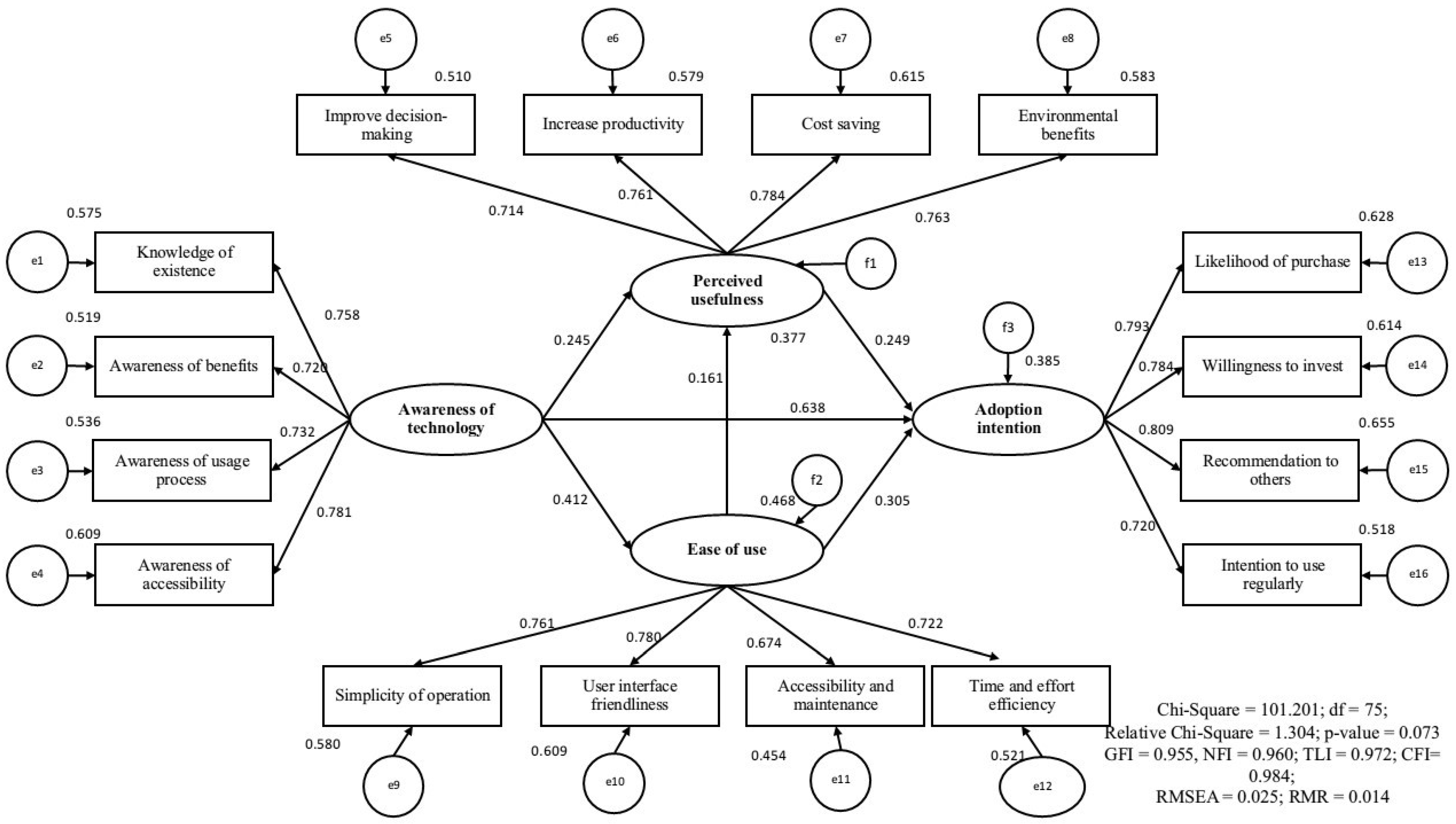
Figure 2 illustrates the structural relationships among awareness of technology (AT), perceived usefulness (PU), ease of use (EU), and farmers’ adoption intention (AI) regarding the use of soil nutrient analyzers in agriculture. The findings show coefficient of determination (R2) values of 0.377 for perceived usefulness (PU), 0.468 for ease of use (EU), and 0.385 for adoption intention (AI), with an overall model R2 of 0.578, indicating meaningful explanatory power. As a rule of thumb, R2 benchmarks of approximately 0.25, 0.50, and 0.75 for endogenous constructs are often interpreted as weak, moderate, and substantial explanatory strength, respectively. In this study, the constructs generally fall within the moderate range, and the overall model approaches the upper bound of that category, reflecting robust model performance. Model fit. The structural model demonstrates excellent fit: χ2/df ≈ 1.30, p > 0.05, CFI = 0.984–0.991, TLI = 0.972–0.988, GFI ≈ 0.955–0.961, RMSEA = 0.025–0.027, and RMR ≈ 0.014, all within or better than conventional thresholds. All six hypotheses (H1–H6) were supported, indicating that awareness of technology (AT), perceived usefulness (PU), and ease of use (EU) exert positive and statistically significant effects on farmers’ adoption intention of soil nutrient analyzer (AI).
As reported in Table 4, the path analysis indicates that coefficients with absolute values below one and statistically different from zero reflect substantive causal influence. Consistent with H1, awareness of technology (AT) exerts a positive and statistically significant effect on perceived usefulness (PU), with a standardized estimate of β = 0.245 and p = 0.007.
Technology awareness (AT) plays a pivotal role in shaping both ease of use (EU) and adoption intention (AI), as evidenced by significant paths in H2 (β = 0.412, p < 0.001) and H3 (β = 0.638, p = 0.006). Perceived usefulness (PU) also exhibits a positive, significant effect on AI (H4: β = 0.249, p < 0.001), while EU similarly and positively predicts AI (H5: β = 0.305, p = 0.007). In addition, EU significantly enhances PU (H6: β = 0.161, p < 0.005).

4.4. Mediation Analysis

Table 5 reports the mediation analysis within the SEM framework, evaluating whether the influence of technology awareness on adoption intention is transmitted through the mediating constructs of perceived usefulness and perceived ease of use. In line with the study design, perceived usefulness and ease of use are specified as mediators linking awareness of technology to adoption intention. The analysis is introduced by testing the indirect pathway in which perceived usefulness mediates the relationship between awareness of technology and adoption intention (H7). Subsequently, the analysis evaluates how awareness of technology influences adoption intention, while perceived ease of use functions as the mediator in this relationship (H8). The mediation analysis supported H7, indicating that awareness of technology influences adoption intention indirectly through perceived value (indirect effect = 0.042, p = 0.035), consistent with partial mediation. Similarly, for H8, ease of use functioned as a mediating mechanism between awareness of technology and adoption intention (indirect effect = 0.071, p = 0.041), again evidencing partial mediation in this relationship.

5. Discussion

These findings align with customer perception theory and TAM, emphasizing that technology awareness, perceived usefulness, and ease of use significantly shape farmers’ adoption intentions for soil nutrient analyzer use in agriculture. The findings indicate that soil nutrient analyzer adoption is concentrated among middle-aged, moderately income-earning farmers, especially those cultivating rice, oranges, and durians. Peer influence appears to be the strongest driver of awareness, though actual hands-on experience remains shallow, as more than half of the farmers have only tried the technology once. This highlights the need for training programs, continuous support, and awareness campaigns to promote regular and sustained adoption.
Farmers’ adoption intentions are chiefly shaped by technology awareness, perceived usefulness, and ease of use. Structural equation modeling (SEM) indicates a significant positive effect of technology awareness on perceived usefulness of the soil nutrient analyzer which supporting the role of awareness in enhancing perceived value and, in turn, encouraging adoption. Awareness of technology (AT) demonstrates a meaningful positive influence on perceived usefulness (PU), consistent with H1. Farmers’ awareness of agricultural technologies is closely associated with their perceptions of usefulness. As awareness increases, farmers gain a clearer understanding of potential benefits, which in turn enhances perceived usefulness in farm operations [33]. Adoption intention toward digital technology is positively shaped by both perceived ease of use and perceived usefulness, with ease of use also elevating perceived usefulness. Furthermore, government support and competitive advantage enhance cooperatives’ evaluations of ease of use and usefulness, whereas organizational competency is essential for fostering ease of use [43]. Digital technologies were acknowledged to increase production yet were judged to be high-cost, to widen digital inequalities, and to displace Indigenous Knowledge. Perceptions were generally positive among cattle rearing but strongly negative among sheep and goat rearing. These attitudes were rooted in economic realities, social-justice perspectives, and traditional norms, and were significantly conditioned by farmers’ socio-economic profiles [44]. Raising awareness of agricultural technologies through multiple channels, complemented by hands-on demonstrations and training, enhances farmers’ perceived usefulness of these tools. This improvement fosters favorable attitudes toward adoption and, ultimately, advances farming practices and productivity.
Results provide robust evidence that farmers’ technology awareness positively influences the perceived ease of use of soil nutrient analyzers. This indicates that higher levels of technology awareness are associated with greater perceived operational simplicity. Awareness of technology (AT) is positively and meaningfully associated with ease of use (EU), in support of H2. Grounded in the Technology Acceptance Model (TAM), farmers’ technology awareness (AT) exhibits a positive, substantive association with perceived ease of use (EU). Greater awareness cultivated through training and practical exposure enhances understanding of a tool’s functions and operation, thereby improving perceptions of usability [45]. Farmer awareness built through training, field demonstrations, and communication initiatives clarifies how the technology works, thereby demystifying its use. As familiarity grows, self-efficacy increases and perceived ease of use improves; by comparison, insufficient awareness and knowledge are associated with poorer ease-of-use perceptions. Research on smallholders in developing countries identifies inadequate knowledge as a central impediment to adoption; this deficit promotes the belief that the technology lacks user-friendliness, which, in turn, diminishes perceived ease of use [46]. Awareness equips farmers with the informational resources needed to surmount usability barriers. For instance, those familiar with a new farm-management app know where to access support, documentation, and training, enabling more effective navigation of the technology.
The findings provide strong evidence that farmers’ technology awareness positively influences their intention to adopt soil nutrient analyzers. In practical terms, higher levels of technology awareness are associated with greater adoption intention. Awareness of technology (AT) is positively and statistically significant in predicting adoption intention (AI), consistent with H3. A growing body of evidence indicates that farmers’ awareness of modern technologies is central to forming intentions to adopt them. Awareness operates as both a cognitive antecedent and a motivational driver: it sharpens perceived value, diminishes uncertainty, and strengthens perceived behavioral control, thereby elevating adoption intention. The association is seldom linear, however. Its magnitude is conditioned by farmer and farm characteristics such as age, farm size, and digital literacy and by contextual enablers, including exposure to extension services and access to financing. Farmers’ adoption and use of new agricultural technology are driven by performance and effort expectancy, hedonic motivation, and facilitating conditions. Age shows no moderation, whereas usage experience moderates expectancy intention and price value–intention links. Adoption intention positively mediates effects on actual use [20]. Four distinct configurations underpin effective online marketing performance; each reflects a multidimensional bundle of strategies that small agricultural operators can deploy to scale their businesses and strengthen acceptance of online marketing, enabling them to realize the benefits of e-commerce sales. Targeted knowledge transfer serves as a pivotal policy lever to enhance farmers’ awareness and foster willingness to implement smart agricultural technologies [47].
Perceived usefulness demonstrates a positive and statistically significant influence on farmers’ intention to adopt new technologies (H4). Perceived usefulness is a primary determinant of farmers’ adoption intention across technologies, from mobile tools to AI. Evidence from TAM/UTAUT and extensions shows that beliefs about gains in productivity, profitability, and sustainability reliably heighten adoption propensity, underscoring utility-driven decision-making in agricultural technology acceptance. Despite high smartphone availability, adoption is hindered particularly for older farmers by digital illiteracy, labor demands, and infrastructure deficits. The study recommends training, subsidies, and improved connectivity, extends TAM with digital readiness and financial capacity, and calls for longitudinal and multi-regional research to validate scalability and generalizability [48]. Farmers’ adoption intentions are chiefly shaped by perceived usefulness, attitude toward behavior, self-efficacy, and personal innovativeness; perceived advantages, ease of use, knowledge, and behavioral controllability show no direct effects. Perceived usefulness most strongly informs attitudes. Recommended interventions include short- and long-term training, communication networks, and innovation-supportive cultures [49].
Consistent with H5, ease of use shows a positive and statistically significant effect on farmers’ intention to adopt soil nutrient analyzers. This evidence indicates that improving the technology’s ease of use elevates farmers’ adoption intentions. Empirical evidence grounded in TAM shows perceived ease of use strongly predicts farmers’ adoption intention for digital and agronomic innovations. This effect is context-dependent: socio-economic conditions, governmental support, internet connectivity, and perceived usefulness each moderate the PEOU–AI relationship among smallholders and agro-entrepreneurs. Among farmers with limited literacy, perceived ease of use outweighs perceived usefulness in determining adoption of agricultural technologies; the study quantifies how infrastructural and technical constraints mediate behavioral intentions; and it delivers policy-relevant guidance that prioritizes skills development and value-chain strengthening over narrowly framed economic incentives [50]. Within a TOE framework, relative advantage, organizational readiness, competitive pressure, and government support positively influence e-commerce adoption, while cost is nonsignificant. Entrepreneurial orientation shows no moderating effects on organizational or environmental links, moderating only the relationship between technological relative advantage and adoption [51].
Aligned with H6, ease of use exerts a positive and statistically significant influence on farmers’ perceived usefulness of soil nutrient analyzers. These results suggest that enhancing the technology’s usability meaningfully increases how useful farmers judge the technology to be. Across studies, perceived ease of use (PEOU) and perceived usefulness (PU) are central determinants of farmers’ technology adoption, consistent with TAM. PEOU elevates PU and intention directly and indirectly. In high-complexity or high-cost contexts, training access, financial risk, age, and digital literacy further condition adoption decisions. Evidence indicates that perceived ease of use, perceived usefulness, and technological readiness are strongly linked to e-commerce adoption performance. The pattern corroborates the literature showing that embracing e-commerce enhances SMEs’ operational and competitive outcomes [52]. Adoption of mobile applications was influenced by farmers’ age and educational attainment, while farm size showed no significant association with uptake. Furthermore, perceptions of the benefits and drawbacks of these applications varied across user segments: current users, non-users, and prospective users. Notably, non-users and prospective users assigned the lowest ratings to the managerial advantages of mobile applications for farm operations [53].
Awareness of technology exerts a positive and statistically significant influence on adoption intention, with perceived usefulness serving as the mediating mechanism (H7). The mediation analysis indicates partial mediation: perceived usefulness transmits part of the effect of technology awareness to adoption intention. The indirect pathway is significant and implying that heightened awareness strengthens farmers’ intentions to adopt primarily by increasing the perceived usefulness of the soil nutrient analyzer. Perceived usefulness boosts positive evaluations of agricultural information technology (AIT), forming a favorable attitude. That attitude is the proximal driver of intention: when cooperatives believe AIT enhances performance, they like it more, and this favorable attitude significantly increases their intention to adopt [54]. Performance and effort expectations, social influence, and facilitating conditions increase farmers’ willingness to upgrade; facilitating conditions and stronger willingness also raise actual upgrading. The study reveals a multifactor interplay shaping intelligent pig-farm decisions, offering insights into agricultural technology adoption and a basis for strategies to accelerate innovation across farming contexts [55].
Awareness of technology exhibits a positive and statistically significant association with adoption intention, with perceived ease of use operating as the mediating construct (H8). The mediation analysis indicates partial mediation: the indirect pathway from awareness to adoption intention via ease of use is significant. These results suggest that strengthening farmers’ technology awareness can elevate their intention to adopt the soil nutrient analyzer, in part by enhancing perceptions of its ease of use. Farmers’ adoption intention is shaped by multiple antecedents namely performance expectancy, effort expectancy, social influence, personal innovativeness, and perceived risk. Personal innovativeness functions as a mediator linking effort expectancy to adoption intention, while perceived risk moderates the association between personal innovativeness and adoption intention [56]. Adoption intention toward D. alatus technology is strongly shaped by perceived ease of use and by attitudes informed by users’ prior experience and environmental consciousness. The study extends the Technology Acceptance Model (TAM), offering insights into decision-making processes in which technology itself does not constitute a limiting barrier [57].
While all hypothesized paths in the structural model are statistically significant, a deeper interpretation of the standardized path coefficients (β values) provides more meaningful insight into the relative strength, behavioral relevance, and policy implications of the determinants shaping farmers’ adoption intention toward soil nutrient analyzers.
The strongest direct predictor of adoption intention is technology awareness (β = 0.638), indicating a large and practically substantial effect. This magnitude suggests that awareness is not merely an informational prerequisite but a dominant behavioral driver. In practical terms, a one-standard-deviation increase in farmers’ awareness corresponds to more than a half-standard-deviation increase in adoption intention, even after accounting for perceived usefulness and ease of use. This finding implies that interventions focused on awareness building—such as demonstrations, peer learning, and extension campaigns—are likely to yield immediate and meaningful gains in adoption propensity, particularly in smallholder contexts where exposure remains uneven.
Perceived ease of use also demonstrates a notable direct effect on adoption intention (β = 0.305), exceeding that of perceived usefulness (β = 0.249). Although both effects are moderate in size, the stronger coefficient for ease of use indicates that operational simplicity plays a more influential role than performance expectations in shaping farmers’ behavioral intentions. Practically, this suggests that farmers prioritize technologies that reduce cognitive and operational burden, especially under conditions of limited time, labor, and technical support. Incremental improvements in interface design, maintenance simplicity, and procedural clarity may therefore generate adoption gains comparable to, or greater than, improvements in functional performance alone.
The path from technology awareness to perceived ease of use (β = 0.412) is substantively strong, highlighting awareness as a key mechanism through which usability perceptions are formed. This relationship implies that ease of use is not solely an intrinsic design property but is partially constructed through learning, familiarity, and experience. From an implementation perspective, usability can be enhanced not only through engineering design but also through training and repeated exposure, which effectively “lower” perceived complexity.
In contrast, the effect of technology awareness on perceived usefulness (β = 0.245) is more modest, indicating that while awareness contributes to value recognition, usefulness perceptions are also shaped by experiential and contextual factors such as observed outcomes, cost savings, and peer validation. This reinforces the importance of coupling awareness campaigns with tangible evidence of agronomic and economic benefits to strengthen perceived usefulness.
The positive linkage between ease of use and perceived usefulness (β = 0.161)—though smaller in magnitude—has important practical implications. It confirms that usability improvements indirectly enhance adoption intention by elevating usefulness perceptions. Even incremental gains in ease of use can therefore trigger a cascading effect, strengthening perceived value and, ultimately, behavioral intention.
Finally, the mediation analysis reveals that the indirect effects of awareness through ease of use (β = 0.071) and perceived usefulness (β = 0.042) are smaller than the direct effect of awareness, indicating partial rather than full mediation. This pattern suggests that awareness operates both cognitively (through beliefs about usefulness and usability) and motivationally (by reducing uncertainty and increasing confidence). For practitioners, this implies that awareness-oriented interventions retain intrinsic value beyond their influence on specific perceptions.
Overall, the relative magnitudes of the β coefficients suggest a clear prioritization for practice: awareness creation should be the primary leverage point, followed by usability enhancement, with performance communication reinforcing—but not replacing—these efforts. Rather than treating perceived usefulness and ease of use as abstract psychological constructs, the findings demonstrate how they translate into concrete design, training, and extension strategies capable of accelerating adoption among smallholder farmers.

Strength of Direct Effects in the Structural Model

The persistence of strong direct effects in the structural model indicates that key antecedent constructs exert an independent and substantive influence on adoption intention beyond the indirect pathways operating through mediators. In this study, technology awareness demonstrates a particularly strong direct effect on adoption intention, even when perceived usefulness and perceived ease of use are included as mediators. This pattern suggests partial rather than full mediation, implying that awareness functions not only as a cognitive precursor to evaluative beliefs but also as a direct motivational driver of behavioral intention.
One explanation lies in the study context: respondents were farmers with prior experience using soil nutrient analyzers. For such users, awareness is likely to encompass concrete knowledge, firsthand exposure, and social validation, which can translate directly into adoption intention without requiring full cognitive processing through usefulness or ease-of-use perceptions. This experiential familiarity reduces uncertainty and perceived risk, enabling awareness to act as an immediate determinant of intention.
Moreover, the robustness of direct effects reflects the salience and practicality of the technology. When a technology addresses visible, task-relevant problems—such as fertilizer efficiency and decision accuracy—farmers may form adoption intentions directly from awareness of its existence and benefits. In SEM terms, this indicates that the exogenous construct captures variance in the outcome that is not fully absorbed by mediators, reinforcing its theoretical importance as a foundational driver.
Overall, the strong direct effects highlight that, in applied agricultural technology contexts, informational and experiential factors retain explanatory power alongside perceptual mediators, underscoring the need to model both direct and indirect pathways in technology adoption research

6. Conclusions

6.1. Theoretical Contribution

This study makes a clearly delimited theoretical contribution to farmer behavior and the agricultural technology adoption literature by refining the application of the Technology Acceptance Model (TAM) within the context of precision agriculture. Specifically, it advances existing theory by explicitly conceptualizing technology awareness as an upstream antecedent, rather than a peripheral or descriptive factor, and by empirically demonstrating its dual indirect pathways through perceived usefulness and perceived ease of use. In doing so, the study clarifies the mechanism through which informational and cognitive foundations translate into adoption intention among farmers. The findings further reinforce the hierarchical relationship between ease of use and perceived usefulness, confirming ease of use as both a direct predictor of adoption intention and an antecedent to usefulness perceptions. By validating this structured pathway in the context of soil nutrient analyzers, the study extends TAM beyond generic technology settings and situates it firmly within smallholder-oriented agricultural decision-making. Overall, the research contributes a theoretically bounded, empirically supported framework that enhances explanatory precision regarding how awareness-driven perceptions shape farmers’ adoption intentions for precision agriculture technologies.

6.2. Practical Implication

For practitioners and policymakers, the findings prioritize awareness-building plus usability enablement. First, targeted extension—hands-on demonstrations, field days, and peer-led trials—should convert awareness into perceived ease and usefulness, which in turn elevate adoption. Second, design for operational simplicity (intuitive interface, low setup burden, clear maintenance routines) because ease of use both raises perceived usefulness and directly boosts intention. Third, amplify social proof via champion farmers and cooperative networks, reflecting the strong role of peer information channels. Fourth, reduce adoption frictions through calibration services, training, and after-sales support, paired with smart subsidies or financing for first-time users. Segment programs toward middle-income, crop-diverse, mid-career farmers while ensuring inclusive access for younger and lower-income groups through mobile clinics and digital literacy. Finally, embed monitoring (usage frequency) and agronomic feedback loops so measured gains in yield, input efficiency, and environmental outcomes reinforce continued use and accelerate scale-up.

6.3. Research Limitations

This study employs a cross-sectional, self-report survey of farmers with prior exposure to soil nutrient analyzers, which constrains causal inference and may inflate associations via common-method variance. The sampling frame stratified among experienced users limits external validity to non-users and early-stage adopters, while the predominance of middle-aged and mid-income respondents further narrows generalizability. Measurement focused on psychological determinants (awareness, perceived usefulness, ease of use, intention) and did not directly model economic and institutional frictions (device cost, service availability, credit, extension intensity) or supply-side heterogeneity across analyzer types. Although reliability and convergent validity met accepted thresholds and model fit indices were strong, the explained variance was moderate, and mediation effects were partial, indicating omitted mechanisms (e.g., risk perception, social capital, digital literacy). Finally, outcomes relied on intention rather than observed adoption behavior or agronomic performance (yield, fertilizer efficiency), and usage history was shallow for many respondents, which may bias perceptions of usability and value.

6.4. Future Research Areas

Future work should adopt longitudinal or panel designs to track transitions from intention to sustained use and to estimate causal paths, complemented by field experiments (e.g., training, calibration services, financing) that test intervention effects on awareness, usability, and uptake. Multi-region, multi-crop comparative studies can probe contextual moderators such as extension access, market connectivity, digital literacy, and climate risk. Measurement should integrate objective outcomes device logs, fertilizer optimization, yield and profitability linking behavioral constructs to agronomic and environmental performance. Model expansions could incorporate cost–benefit perceptions, risk and trust, social-network diffusion, and provider/service quality; alternative frameworks (UTAUT/UTAUT2, TOE) and latent-class or multigroup SEM can capture heterogeneity across non-users, trial users, and committed adopters. Finally, supply-side analyses comparing analyzer features, accuracy, and after-sales support would clarify how product design and service ecosystems condition perceived ease, perceived usefulness, and retention, informing evidence-based policy and vendor strategies.

Funding

This research was funded by Suranaree University of Technology, grant number IRD-2-205-68-12-31 and The APC was funded by Suranaree University of Technology.

Institutional Review Board Statement

The study was conducted in accordance with the Declaration of Helsinki, and approved by the Ethics Committee of Suranaree University of Technology (protocol code COE no.67/2568 and 1 June 2025).

Data Availability Statement

The original contributions presented in this study are included in the article. Further inquiries can be directed to the corresponding author.

Acknowledgments

The author wants to express his gratitude to Research and Development Fund at Suranaree University of Technology (SUT).

Conflicts of Interest

The author declares no conflicts of interest.

References

  1. Christiaensen, L.; Martin, W. Agriculture, structural transformation and poverty reduction: Eight new insights. World Dev. 2018, 109, 413–416. [Google Scholar] [CrossRef]
  2. Tal, A. The Environmental Impacts of Overpopulation. Encyclopedia 2025, 5, 45. [Google Scholar] [CrossRef]
  3. Adnan, N.; Nordin, S.M.; Rahman, I.; Noor, A. The effects of knowledge transfer on farmers decision making toward sustainable agriculture practices: In view of green fertilizer technology. World J. Sci. Technol. Sustain. Dev. 2018, 15, 98–115. [Google Scholar] [CrossRef]
  4. Mdoda, L.; Mdiya, L. Factors affecting the using information and communication technologies (ICTs) by livestock farmers in the Eastern Cape province. Cogent Soc. Sci. 2022, 8, 2026017. [Google Scholar] [CrossRef]
  5. Najdenko, E.; Lorenz, F.; Dittert, K.; Olfs, H.-W. Rapid in-field soil analysis of plant-available nutrients and pH for precision agriculture—A review. Precis. Agric. 2024, 25, 3189–3218. [Google Scholar] [CrossRef]
  6. Xu, Y.; Liu, H.; Lyu, J.; Xue, Y. What Influences Farmers’ Adoption of Soil Testing and Formulated Fertilization Technology in Black Soil Areas? An Empirical Analysis Based on Logistic-ISM Model. Int. J. Environ. Res. Public Health 2022, 19, 15682. [Google Scholar] [CrossRef]
  7. Reza, M.N.; Lee, K.-H.; Karim, M.R.; Haque, M.A.; Bicamumakuba, E.; Dey, P.K.; Jang, Y.Y.; Chung, S.-O. Trends of Soil and Solution Nutrient Sensing for Open Field and Hydroponic Cultivation in Facilitated Smart Agriculture. Sensors 2025, 25, 453. [Google Scholar] [CrossRef]
  8. Kiyomi, Y. The Role of Soil Nutrient Analysis: Essential Component of Precision Agriculture. Agrotechnology 2024, 13, 394. [Google Scholar]
  9. Pandian, K.; Mustaffa, M.R.A.F.; Mahalingam, G.; Paramasivam, A.; John Prince, A.; Gajendiren, M.; Rafiqi Mohammad, A.R.; Varanasi, S.T. Synergistic conservation approaches for nurturing soil, food security and human health towards sustainable development goals. J. Hazard. Mater. Adv. 2024, 16, 100479. [Google Scholar] [CrossRef]
  10. Agyekum, T.P.; Antwi-Agyei, P.; Dougill, A.J.; Stringer, L.C. Benefits and barriers to the adoption of climate-smart agriculture practices in West Africa: A systematic review. Clim. Resil. Sustain. 2024, 3, e279. [Google Scholar] [CrossRef]
  11. Bhattacherjee, A. Understanding Information Systems Continuance: An Expectation-Confirmation Model. MIS Q. 2001, 25, 351–370. [Google Scholar] [CrossRef]
  12. Mishra, N.; Bhandari, N.; Maraseni, T.; Devkota, N.; Khanal, G.; Bhusal, B.; Basyal, D.; Paudel, U.; Danuwar, R. Technology in farming: Unleashing farmers’ behavioral intention for the adoption of agriculture 5.0. PLoS ONE 2024, 19, e0308883. [Google Scholar] [CrossRef]
  13. Lee, N.-S.; Cha, J.-E.; Jang, D.-H. A Study on the Acceptance of Innovative Technology by Young Farmers: Focusing on Young Farmers Who Grow Strawberries. Korean J. Agric. Manag. Policy 2022, 49, 212–244. [Google Scholar] [CrossRef]
  14. Caffaro, F.; Micheletti Cremasco, M.; Roccato, M.; Cavallo, E. Drivers of farmers’ intention to adopt technological innovations in Italy: The role of information sources, perceived usefulness, and perceived ease of use. J. Rural Stud. 2020, 76, 264–271. [Google Scholar] [CrossRef]
  15. Geng, W.; Liu, L.; Zhao, J.; Kang, X.; Wang, W. Digital Technologies Adoption and Economic Benefits in Agriculture: A Mixed-Methods Approach. Sustainability 2024, 16, 4431. [Google Scholar] [CrossRef]
  16. Zhang, X.; Yang, Q.; Al Mamun, A.; Masukujjaman, M.; Masud, M.M. Acceptance of new agricultural technology among small rural farmers. Humanit. Soc. Sci. Commun. 2024, 11, 1641. [Google Scholar] [CrossRef]
  17. Yu, J.; Li, J.; Lo, K.; Huang, S.; Li, Y.; Zhao, Z. Farmers’ adoption of smart agricultural technologies for black soil conservation and utilization in China: The driving factors and its mechanism. Front. Sustain. Food Syst. 2025, 9, 1561633. [Google Scholar] [CrossRef]
  18. Dixit, K.; Aashish, K.; Kumar Dwivedi, A. Antecedents of smart farming adoption to mitigate the digital divide—Extended innovation diffusion model. Technol. Soc. 2023, 75, 102348. [Google Scholar] [CrossRef]
  19. Sobhani, S.; Jamshidi, O.; Fozouni, Z. Cultivating knowledge: The adoption experience of learning management systems in agricultural higher education. Front. Educ. 2025, 10, 1551546. [Google Scholar] [CrossRef]
  20. Pathiraja, M.A.; Wijesinghe, W.A.S.; Kumara, A.P. Smart Agro Soil Analyzer for Sustainable Farming. In Proceedings of the 2024 International Conference on Image Processing and Robotics (ICIPRoB), Colombo, Sri Lanka, 9–10 March 2024. [Google Scholar]
  21. Tobiszewski, M.; Vakh, C. Analytical applications of smartphones for agricultural soil analysis. Anal. Bioanal. Chem. 2023, 415, 3703–3715. [Google Scholar] [CrossRef]
  22. Nigus, G.; Ketema, M.; Haji, J.; Sileshi, M. Determinants of adoption of urban agricultural practices in eastern Haraghe zone of Oromia region and Dire Dawa City administration, eastern Ethiopia. Heliyon 2024, 10, e26758. [Google Scholar] [CrossRef]
  23. Qi, X.; Liang, F.; Yuan, W.; Zhang, T.; Li, J. Factors influencing farmers’ adoption of eco-friendly fertilization technology in grain production: An integrated spatial–econometric analysis in China. J. Clean. Prod. 2021, 310, 127536. [Google Scholar] [CrossRef]
  24. Wu, G.; Peng, Q. Bridging the Digital Divide: Unraveling the Determinants of FinTech Adoption in Rural Communities. Sage Open 2024, 14, 21582440241227770. [Google Scholar] [CrossRef]
  25. Li, J.; Liu, G.; Chen, Y.; Li, R. Study on the influence mechanism of adoption of smart agriculture technology behavior. Sci. Rep. 2023, 13, 8554. [Google Scholar] [CrossRef] [PubMed]
  26. Yeo, M.; Keske, C. From profitability to trust: Factors shaping digital agriculture adoption. Front. Sustain. Food Syst. 2024, 8, 1456991. [Google Scholar] [CrossRef]
  27. Liu, R.; Wang, J.; Tian, M.; Nian, Y.; Ren, W.; Ma, H.; Liang, F. Farmers’ adoption of green prevention and control technology in China: Does information awareness matter? Humanit. Soc. Sci. Commun. 2025, 12, 49. [Google Scholar] [CrossRef]
  28. Ruzzante, S.; Labarta, R.; Bilton, A. Adoption of agricultural technology in the developing world: A meta-analysis of the empirical literature. World Dev. 2021, 146, 105599. [Google Scholar] [CrossRef]
  29. Yigezu, Y.A.; Mugera, A.; El-Shater, T.; Aw-Hassan, A.; Piggin, C.; Haddad, A.; Khalil, Y.; Loss, S. Enhancing adoption of agricultural technologies requiring high initial investment among smallholders. Technol. Forecast. Soc. Change 2018, 134, 199–206. [Google Scholar] [CrossRef]
  30. Dong, H.; Wang, H.; Han, J. Understanding Ecological Agricultural Technology Adoption in China Using an Integrated Technology Acceptance Model—Theory of Planned Behavior Model. Front. Environ. Sci. 2022, 10, 927668. [Google Scholar] [CrossRef]
  31. Dai, Q.; Cheng, K. What Drives the Adoption of Agricultural Green Production Technologies? An Extension of TAM in Agriculture. Sustainability 2022, 14, 14457. [Google Scholar] [CrossRef]
  32. Duong, P.B.; Pham, T.T.L.; Quynh, N.N.; Doanh, N.K. Farmers’ adoption and effects of three aspects of agricultural information systems in emerging economies: Microanalysis of household surveys. Inf. Dev. 2024, 02666669241247769. [Google Scholar] [CrossRef]
  33. Salimi, M.; Pourdarbani, R.; Asgarnezhad Nouri, B. Factors Affecting the Adoption of Agricultural Automation Using Davis’s Acceptance Model (Case Study: Ardabil). Acta Technol. Agric. 2020, 23, 30–39. [Google Scholar] [CrossRef]
  34. Panyasit, K.; Singhavara, M.; Srihirun, J.; Wangsathian, S.; Nonthapot, S. A study to assess the readiness of rice farmers to use agricultural technology for production in Nong Khai Province, Thailand. Int. J. Innov. Res. Sci. Stud. 2024, 7, 607–617. [Google Scholar] [CrossRef]
  35. Wang, Y.; Wang, Z.; Zhao, M.; Li, B. The influence of technology perceptions on farmers’ water-saving irrigation technology adoption behavior in the North China Plain. Water Policy 2024, 26, 170–188. [Google Scholar] [CrossRef]
  36. Li, M.; Wang, J.; Zhao, P.; Chen, K.; Wu, L. Factors affecting the willingness of agricultural green production from the perspective of farmers’ perceptions. Sci. Total Environ. 2020, 738, 140289. [Google Scholar] [CrossRef]
  37. Gao, Y.; Zhang, X.; Lu, J.; Wu, L.; Yin, S. Adoption behavior of green control techniques by family farms in China: Evidence from 676 family farms in Huang-huai-hai Plain. Crop Prot. 2017, 99, 76–84. [Google Scholar] [CrossRef]
  38. Jumbri, I.A.; Alias, M.R.M.; Fauzan, A.F.; Ismail, M.F.; Widjajanti, K.; Kurnianingrum, D.; Karmagatri, M. Awareness and Acceptance of the Internet of Things (IOT) among Agropreneurs. Int. J. Acad. Res. Bus. Soc. Sci. 2024, 14, 1712–1737. [Google Scholar] [CrossRef]
  39. Tian, M.; Liu, R.; Wang, J.; Liang, J.; Nian, Y.; Ma, H. Impact of Environmental Values and Information Awareness on the Adoption of Soil Testing and Formula Fertilization Technology by Farmers—A Case Study Considering Social Networks. Agriculture 2023, 13, 2008. [Google Scholar] [CrossRef]
  40. Hair, J.; Page, M.; Brunsveld, N. Essentials of Business Research Methods, 4th ed.; Routledge: New York, UK, 2019; p. 520. [Google Scholar] [CrossRef]
  41. Cohen, J. Statistical Power Analysis for the Behavioral Sciences, 2nd ed.; Routledge: New York, UK, 1988; p. 567. [Google Scholar] [CrossRef]
  42. Hair, J.; Black, W.; Babin, B.; Anderson, R.; Tatham, R. Multivariate Data Analysis, 6th ed.; Pearson Prentice Hall: Upper Saddle River, NJ, USA, 2006. [Google Scholar]
  43. Cao, A.; Guo, L.; Li, H. Understanding farmer cooperatives’ intention to adopt digital technology: Mediating effect of perceived ease of use and moderating effects of internet usage and training. Int. J. Agric. Sustain. 2025, 23, 2464523. [Google Scholar] [CrossRef]
  44. Bontsa, N.V.; Mushunje, A.; Ngarava, S. Factors Influencing the Perceptions of Smallholder Farmers towards Adoption of Digital Technologies in Eastern Cape Province, South Africa. Agriculture 2023, 13, 1471. [Google Scholar] [CrossRef]
  45. Okai, G.; Agangiba, W.; Agangiba, M. Assessment of Farmers’ Acceptance of Intelligent Agriculture System Using Technology Acceptance Model. Int. J. Comput. Appl. 2024, 186, 16–22. [Google Scholar] [CrossRef]
  46. Bontsa, N.V.; Mushunje, A.; Ngarava, S.; Zhou, L. Awareness and Perception of Digital Technologies by Smallholder Farmers in the Eastern Cape Province, South Africa. S. Afr. J. Agric. Ext. 2024, 52, 73–93. [Google Scholar] [CrossRef]
  47. Piot-Lepetit, I. Editorial: Strategies of digitalization and sustainability in agrifood value chains. Front. Sustain. Food Syst. 2025, 9, 1565662. [Google Scholar] [CrossRef]
  48. Aung, E.D.; Sasaki, N.; Tsusaka, T.W.; Silpasuwanchai, C. Investigating farmers’ adoption of mobile Agri-Tech: A TAM-Based study of KaseChar in Eastern Thailand. Glob. Transit. 2025, 7, 441–455. [Google Scholar] [CrossRef]
  49. Tohidyan Far, S.; Rezaei-Moghaddam, K.; Shokri koochak, S. An integrated model for analyzing farmers’ behavioral intention towards the acceptance of environmental technologies. Discov. Environ. 2025, 3, 119. [Google Scholar] [CrossRef]
  50. Barati, A.A.; Asadi, A.; Sardar Shahraki, H.; Dehghani Pour, M.; Naroui Rad, M.R. Farmers’ attitude and intention towards medicinal plants cultivation: Experiences from semi-arid areas of Iran. J. Arid Environ. 2025, 231, 105465. [Google Scholar] [CrossRef]
  51. Li, H.; Liow, G.; Yuan, S. E-commerce adoption among micro agri-business enterprise in Longsheng, China: The moderating role of entrepreneurial orientation. Front. Psychol. 2022, 13, 972543. [Google Scholar] [CrossRef]
  52. Arshad, Y.; Azmey, M.; Syed Ibrahim, S. E-Commerce Adoption Among Malaysian SMEs: Key Drivers and Business Performance Implications. IJRISS 2025, IX, 802–813. [Google Scholar] [CrossRef]
  53. Kamondetdacha, R. Adoption of Mobile Applications in Agriculture among Farmers in Nan, Thailand. J. Digit. Commun. 2022, 6, 69–96. Available online: https://so04.tci-thaijo.org/index.php/NBTC_Journal/article/view/260371 (accessed on 4 February 2026).
  54. Wang, Y.-n.; Jin, L.; Mao, H. Farmer Cooperatives’ Intention to Adopt Agricultural Information Technology—Mediating Effects of Attitude. Inf. Syst. Front. 2019, 21, 565–580. [Google Scholar] [CrossRef]
  55. Wang, J.; Zhang, S.; Zhang, L. Intelligent Hog Farming Adoption Choices Using the Unified Theory of Acceptance and Use of Technology Model: Perspectives from China’s New Agricultural Managers. Agriculture 2023, 13, 2067. [Google Scholar] [CrossRef]
  56. Sun, R.; Zhang, S.; Wang, T.; Hu, J.; Ruan, J.; Ruan, J. Willingness and Influencing Factors of Pig Farmers to Adopt Internet of Things Technology in Food Traceability. Sustainability 2021, 13, 8861. [Google Scholar] [CrossRef]
  57. Saengavut, V.; Jirasatthumb, N. Smallholder decision-making process in technology adoption intention: Implications for Dipterocarpus alatus in Northeastern Thailand. Heliyon 2021, 7, e06633. [Google Scholar] [CrossRef]
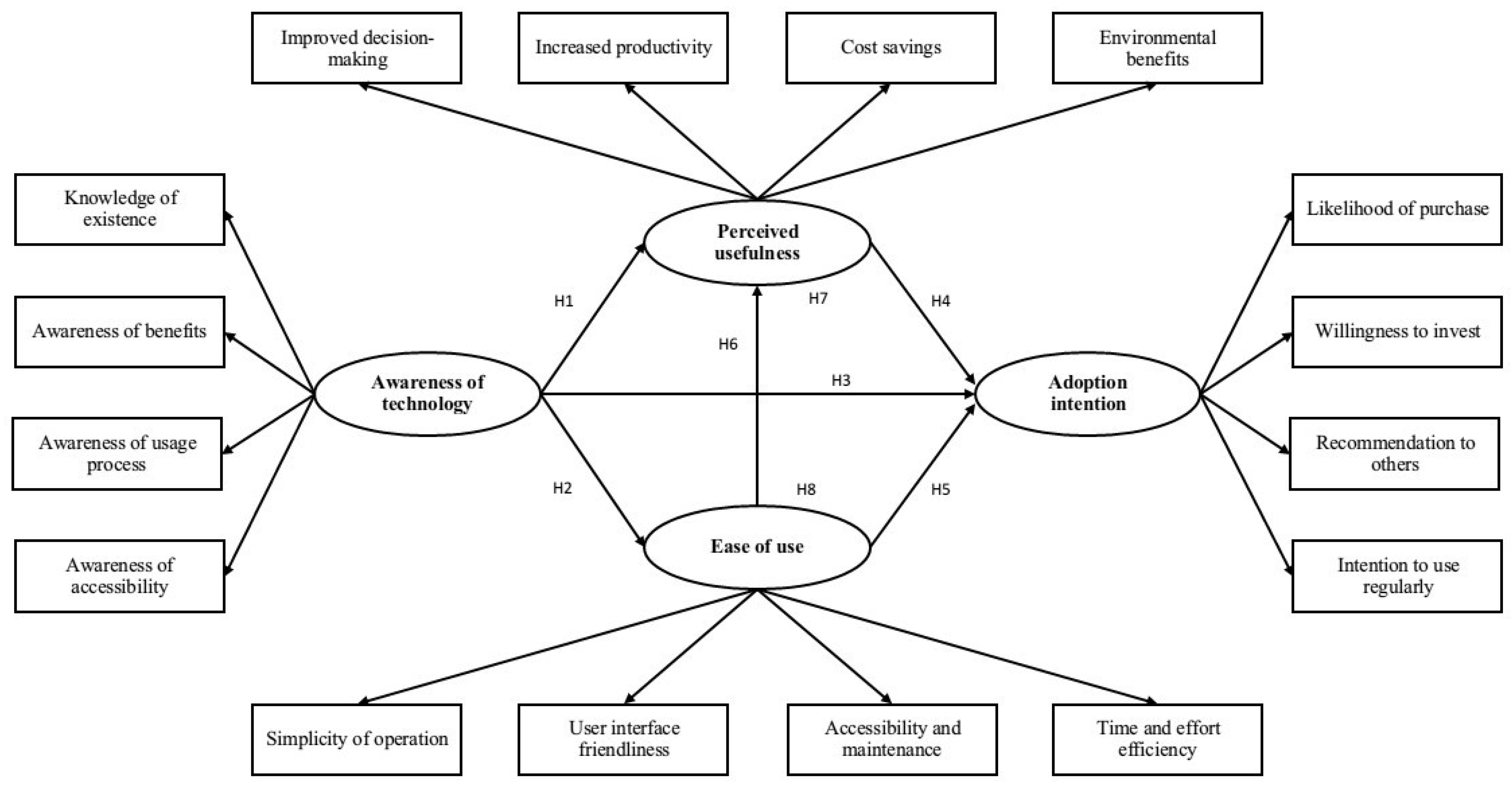
Figure 1. The conceptual framework of adoption intention for soil nutrient analyzer.
Agriculture 16 00390 g001
Figure 2. The path analysis and R2 value.
Agriculture 16 00390 g002
Table 1. The summary of eight hypotheses.
HypothesisRelationshipDescription (Farmer Perception Perspective)
H1Technology Awareness → Perceived UsefulnessHigher awareness of soil nutrient analyzers enhances farmers’ perceptions of their usefulness in improving productivity and decision-making.
H2Technology Awareness → Ease of UseGreater awareness leads farmers to perceive soil nutrient analyzers as easier to operate and understand.
H3Technology Awareness → Adoption IntentionFarmers with higher awareness show stronger intention to adopt soil nutrient analyzers.
H4Perceived Usefulness → Adoption IntentionWhen farmers perceive the technology as beneficial, their intention to adopt it increases.
H5Ease of Use → Adoption IntentionTechnologies perceived as simple and user-friendly positively influence farmers’ adoption intention.
H6Ease of Use → Perceived UsefulnessGreater perceived ease of use enhances farmers’ perceptions of the technology’s usefulness.
H7Technology Awareness → Perceived Usefulness → Adoption IntentionPerceived usefulness mediates the relationship between technology awareness and adoption intention.
H8Technology Awareness → Ease of Use → Adoption IntentionEase of use mediates the relationship between technology awareness and adoption intention.
Source: Author.
Table 2. Demographic information of 390 samples who used to use soil analyzer testing.
ItemsDetailsFrequencyPercentage
GenderMale16843.1
Female22256.9
Age20–29 years307.7
30–39 years359.0
40–49 years28873.8
More than 49 years379.5
Monthly income (USD)Less than 3435012.8
344–5724912.5
573–80024262.0
More than 8004912.7
Planted cropDurian12431.8
Orange13334.1
Rice13334.1
Sources of information about soil analyzerFamily7017.9
Friend16041.1
Internet8020.5
Others8020.5
1 Time21655.3
Number of Using experience2 Times9223.5
More than 2 times8221.2
Table 3. Convergent validity, discriminant validity, and reliability results.
ConstructVariablesFactor LoadingCRAVER2MSVASVCronbach’s Alpha
Awareness of technologyKnowledge of existence0.6300.8360.5600.5650.4330.3210.826
Awareness of benefits0.6750.520
Awareness of usage process0.6760.544
Awareness of accessibility0.6510.612
Perceived
usefulness
Improve decision-making0.6810.8240.5410.5750.843
Increased productivity0.6780.607
Cost saving0.6700.542
Environmental benefits0.6910.522
Ease of useSimplicity of operation0.6330.8420.5720.5110.842
User interface friendliness0.7050.573
Accessibility and maintenance0.7060.517
Time and effort efficiency0.6720.577
Adoption intentionLikelihood of purchase0.7390.8430.6040.6820.843
Willingness to invest0.6530.615
Recommendation to others0.6870.543
Intention to use regularly0.6700.612
Awareness of technology: AT1 = Knowledge of existence; AT2 = Awareness of benefits; AT3 = Awareness of usage process; AT4 = Awareness of accessibility: Perceived usefulness: PU1 = Improve decision-making; PU2 = Increased productivity; PU3 = Cost saving; PU4 = Environmental benefits. Ease of use: EU1 = Simplicity of operation; EU2 = User interface friendliness; EU3 = Accessibility and maintenance; EU4 = Time and effort efficiency. Adoption intention: AI1 = Likelihood of purchase; AI2 Willingness to invest; AI3 = Recommendation to others; AI4 = Intention to use regularly.
Table 4. Hypothesis testing.
HypothesisPathsPath Coefficientp-ValueRelationship
H1AT → PU0.245 **0.007Supported
H2AT → EU0.412 ***<0.001Supported
H3AT → AI0.638 **0.006Supported
H4PU → AI0.249 ***<0.001Supported
H5EU → AI0.305 **0.007Supported
H6EU → PU0.161 *0.005Supported
Note: * p < 0.05, ** p < 0.01, *** p < 0.001. Source: Author.
Table 5. Mediation analysis.
HypothesisPathsDirect EffectIndirect Effectp-ValueMediationRelationship
H7AT → AI0.347 *** 0.006PartialSupported
AT → PU → AI 0.042 *0.035Supported
H8AT → AI0.307 ** 0.003PartialSupported
AT → EU → AI 0.071 *0.041Supported
Note: * p < 0.05, ** p < 0.01, *** p < 0.001. Source: Author.
Disclaimer/Publisher’s Note: The statements, opinions and data contained in all publications are solely those of the individual author(s) and contributor(s) and not of MDPI and/or the editor(s). MDPI and/or the editor(s) disclaim responsibility for any injury to people or property resulting from any ideas, methods, instructions or products referred to in the content.