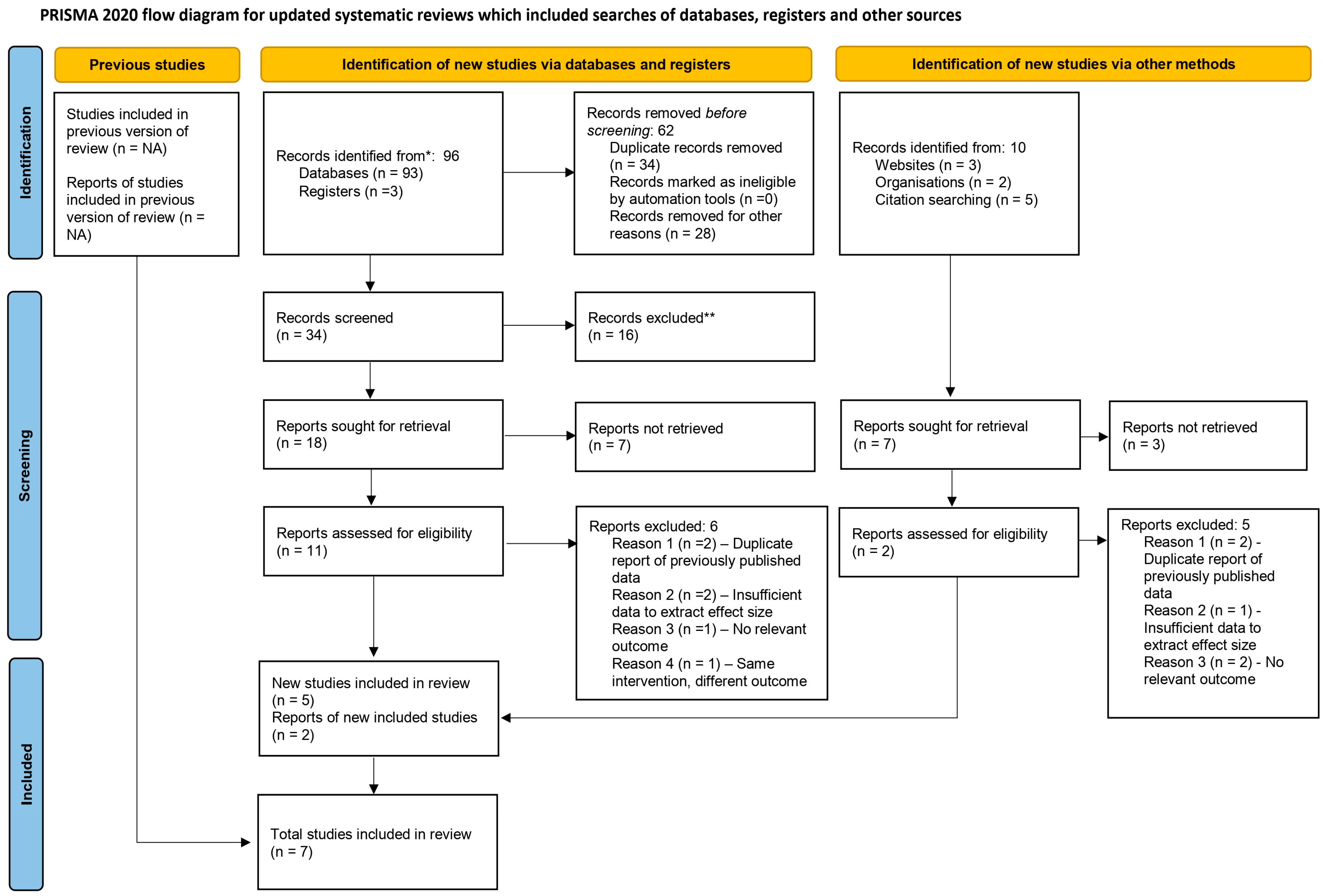

Effectiveness of Autologous Plasma Rich in Growth Factors on Healing of Extraction Socket—A Systematic Review

 , ,
, ,
Abstract
1. Introduction
2. Materials and Methods
2.1. Questions
2.2. Study Eligibility
2.3. Study Identification
2.4. Study Selection
2.5. Risk of Bias Assessment
2.6. Data Extraction and Data Synthesis
3. Results
4. Discussion
5. Conclusions
Supplementary Materials
Author Contributions
Funding
Institutional Review Board Statement
Informed Consent Statement
Data Availability Statement
Conflicts of Interest
Abbreviations
| PRGF | Plasma Rich in Growth Factors |
References
- Kostares, E.; Kostare, G.; Kostares, M.; Kantzanou, M. Prevalence of fibrinolytic alveolitis following extraction of impacted mandibular third molars: A systematic review and meta-analysis. J. Stomatol. Oral Maxillofac. Surg. 2024, 125, 101810. [Google Scholar] [CrossRef]
- Herrera-Barraza, V.; Arroyo-Larrondo, S.; Fernández-Córdova, M.; Catricura-Cerna, D.; Garrido-Urrutia, C.; Ferrer-Valdivia, N. Complications post simple exodontia: A systematic review. Dent. Med. Probl. 2022, 59, 593–601. [Google Scholar] [CrossRef]
- Araújo, M.G.; Dias, D.R.; Matarazzo, F. Anatomical characteristics of the alveolar process and basal bone that have an effect on socket healing. Periodontology 2000 2023, 93, 277–288. [Google Scholar] [CrossRef] [PubMed]
- Udeabor, S.E.; Heselich, A.; Al-Maawi, S.; Alqahtani, A.F.; Sader, R.; Ghanaati, S. Current Knowledge on the Healing of the Extraction Socket: A Narrative Review. Bioengineering 2023, 10, 1145. [Google Scholar] [CrossRef] [PubMed]
- Hayashi, M.; Morimoto, Y.; Iida, T.; Tanaka, Y.; Sugiyama, S. Risk of Delayed Healing of Tooth Extraction Wounds and Osteonecrosis of the Jaw among Patients Treated with Potential Immunosuppressive Drugs: A Retrospective Cohort Study. Tohoku J. Exp. Med. 2018, 246, 257–264. [Google Scholar] [CrossRef]
- Miron, R.J.; Zucchelli, G.; Pikos, M.A.; Salama, M.; Lee, S.; Guillemette, V.; Fujioka-Kobayashi, M.; Bishara, M.; Zhang, Y.; Wang, H.L.; et al. Use of platelet-rich fibrin in regenerative dentistry: A systematic review. Clin. Oral Investig. 2017, 21, 1913–1927. [Google Scholar] [CrossRef] [PubMed]
- Khachatryan, H.; Hovhannisyan, M.; Hakobyan, G. Management of alveolar osteitis: New regenerative techniques in patients with type 2 diabetes. Oral Maxillofac. Surg. 2025, 29, 77. [Google Scholar] [CrossRef]
- Hajibagheri, P.; Basirat, M.; Tabari-Khomeiran, Z.; Asadi-Aria, A. The efficacy of platelet-rich fibrin (PRF) in post-extraction hard and soft tissue healing and associated complications: A systematic review and meta-analysis of split-mouth randomized clinical trials. BMC Oral Health 2025, 25, 869. [Google Scholar] [CrossRef]
- Dragonas, P.; Schiavo, J.H.; Avila-Ortiz, G.; Palaiologou, A.; Katsaros, T. Plasma rich in growth factors (PRGF) in intraoral bone grafting procedures: A systematic review. J. Cranio-Maxillo-Facial Surg. Off. Publ. Eur. Assoc. Cranio-Maxillo-Facial Surg. 2019, 47, 443–453. [Google Scholar] [CrossRef]
- Siawasch, S.A.M.; Yu, J.; Castro, A.B.; Dhondt, R.; Teughels, W.; Temmerman, A.; Quirynen, M. Autologous platelet concentrates in alveolar ridge preservation: A systematic review with meta-analyses. Periodontol. 2000 2025, 97, 104–130. [Google Scholar] [CrossRef]
- Shah, N.; Cairns, M. Autologous Platelet Concentrates to improve post extraction outcomes. Evid.-Based Dent. 2018, 19, 118–119. [Google Scholar] [CrossRef]
- Farina, R.; Bressan, E.; Taut, A.; Cucchi, A.; Trombelli, L. Plasma rich in growth factors in human extraction sockets: A radiographic and histomorphometric study on early bone deposition. Clin. Oral Implant. Res. 2013, 24, 1360–1368. [Google Scholar] [CrossRef] [PubMed]
- Nishiyama, K.; Okudera, T.; Watanabe, T.; Isobe, K.; Suzuki, M.; Masuki, H.; Okudera, H.; Uematsu, K.; Nakata, K.; Kawase, T. Basic characteristics of plasma rich in growth factors (PRGF): Blood cell components and biological effects. Clin. Exp. Dent. Res. 2016, 2, 96–103. [Google Scholar] [CrossRef] [PubMed]
- Anitua, E.; Sánchez, M.; Orive, G. Potential of endogenous regenerative technology for in situ regenerative medicine. Adv. Drug Deliv. Rev. 2010, 62, 741–752. [Google Scholar] [CrossRef]
- Anitua, E.; Tejero, R.; Zalduendo, M.M.; Orive, G. Plasma rich in growth factors promotes bone tissue regeneration by stimulating proliferation, migration, and autocrine secretion in primary human osteoblasts. J. Periodontol. 2013, 84, 1180–1190. [Google Scholar] [CrossRef]
- Walch, B.; Kolk, A.; Scheibl, D.; Guarda, M.; Maier, S.C.; Denk, L. The Effect of Advanced Platelet-Rich Fibrin Plus (A-PRF+) on Graft Stability in Dental Implants and Alveolar Ridge Augmentation Procedures: A New Low-Speed Standardized Centrifugation Protocol. Dent. J. 2024, 12, 349. [Google Scholar] [CrossRef]
- Ravi, S.; Malaiappan, S.; Varghese, S.; Jayakumar, N.D.; Prakasam, G. Additive Effect of Plasma Rich in Growth Factors With Guided Tissue Regeneration in Treatment of Intrabony Defects in Patients With Chronic Periodontitis: A Split-Mouth Randomized Controlled Clinical Trial. J. Periodontol. 2017, 88, 839–845. [Google Scholar] [CrossRef] [PubMed]
- Mozzati, M.; Martinasso, G.; Pol, R.; Polastri, C.; Cristiano, A.; Muzio, G.; Canuto, R. The impact of plasma rich in growth factors on clinical and biological factors involved in healing processes after third molar extraction. J. Biomed. Mater. Res. Part A 2010, 95, 741–746. [Google Scholar] [CrossRef]
- O’Sullivan, L.; Gallagher, C.; Ní Ríordáin, R. Effect of plasma rich in growth factors on quality of life following mandibular third molar removal: A double-blind randomized controlled trial. Int. J. Oral Maxillofac. Surg. 2022, 51, 1237–1244. [Google Scholar] [CrossRef]
- Rutkowski, J.L.; Johnson, D.A.; Radio, N.M.; Fennell, J.W. Platelet rich plasma to facilitate wound healing following tooth extraction. J. Oral Implantol. 2010, 36, 11–23. [Google Scholar] [CrossRef]
- Sammartino, G.; Tia, M.; Marenzi, G.; di Lauro, A.E.; D’Agostino, E.; Claudio, P.P. Use of autologous platelet-rich plasma (PRP) in periodontal defect treatment after extraction of impacted mandibular third molars. J. Oral Maxillofac. Surg. Off. J. Am. Assoc. Oral Maxillofac. Surg. 2005, 63, 766–770. [Google Scholar] [CrossRef]
- Stumbras, A.; Januzis, G.; Gervickas, A.; Kubilius, R.; Juodzbalys, G. Randomized and Controlled Clinical Trial of Bone Healing After Alveolar Ridge Preservation Using Xenografts and Allografts Versus Plasma Rich in Growth Factors. J. Oral Implantol. 2020, 46, 515–525. [Google Scholar] [CrossRef] [PubMed]
- Solakoglu, Ö.; Heydecke, G.; Amiri, N.; Anitua, E. The use of plasma rich in growth factors (PRGF) in guided tissue regeneration and guided bone regeneration. A review of histological, immunohistochemical, histomorphometrical, radiological and clinical results in humans. Ann. Anat. Anat. Anz. Off. Organ Anat. Ges. 2020, 231, 151528. [Google Scholar] [CrossRef] [PubMed]
- Brazdeikytė, V.; Baliutavičiūtė, D.; Rokicki, J.P. Influence of PRGF and PRF on postextractive alveolus regeneration: A randomised controlled trial. Quintessence Int. 2021, 53, 58–67. [Google Scholar] [PubMed]
- Paknejad, M.; Shayesteh, Y.S.; Yaghobee, S.; Shariat, S.; Dehghan, M.; Motahari, P. Evaluation of the Effect of Plasma Rich in Growth Factors (PRGF) on Bone Regeneration. J. Dent. 2012, 9, 59–67. [Google Scholar]
- Anitua, E.; Zalduendo, M.; Tierno, R.; Alkhraisat, M.H. Plasma Rich in Growth Factors in Bone Regeneration: The Proximity to the Clot as a Differential Factor in Osteoblast Cell Behaviour. Dent. J. 2024, 12, 122. [Google Scholar] [CrossRef]
- King, E.M.; Cerajewska, T.L.; Locke, M.; Claydon, N.C.A.; Davies, M.; West, N.X. The Efficacy of Plasma Rich in Growth Factors for the Treatment of Alveolar Osteitis: A Randomized Controlled Trial. J. Oral Maxillofac. Surg. Off. J. Am. Assoc. Oral Maxillofac. Surg. 2018, 76, 1150–1159. [Google Scholar] [CrossRef]
- Anitua, E.; Murias-Freijo, A.; Alkhraisat, M.H.; Orive, G. Clinical, radiographical, and histological outcomes of plasma rich in growth factors in extraction socket: A randomized controlled clinical trial. Clin. Oral Investig. 2015, 19, 589–600. [Google Scholar] [CrossRef]
- Page, M.J.; McKenzie, J.E.; Bossuyt, P.M.; Boutron, I.; Hoffmann, T.C.; Mulrow, C.D.; Shamseer, L.; Tetzlaff, J.M.; Akl, E.A.; Brennan, S.E.; et al. The PRISMA 2020 statement: An updated guideline for reporting systematic reviews. MetaArXiv 2020. [Google Scholar] [CrossRef]
- Sterne, J.A.C.; Savović, J.; Page, M.J.; Elbers, R.G.; Blencowe, N.S.; Boutron, I.; Cates, C.J.; Cheng, H.Y.; Corbett, M.S.; Eldridge, S.M.; et al. RoB 2: A revised tool for assessing risk of bias in randomised trials. BMJ 2019, 366, l4898. [Google Scholar] [CrossRef]
- Fok, M.R.; Jin, L. Learn, unlearn, and relearn post-extraction alveolar socket healing: Evolving knowledge and practices. J. Dent. 2024, 145, 104986. [Google Scholar] [CrossRef]
- Laforgia, A.; Inchingolo, A.D.; Riccaldo, L.; Avantario, P.; Buongiorno, S.; Malcangi, G.; Bordea, I.R.; Palermo, A.; Inchingolo, F.; Inchingolo, A.M.; et al. The Use of Platelet-Rich Fibrin (PRF) in the Management of Dry Socket: A Systematic Review. Int. J. Mol. Sci. 2024, 25, 10069. [Google Scholar] [CrossRef] [PubMed]
- Al-Maawi, S.; Becker, K.; Schwarz, F.; Sader, R.; Ghanaati, S. Efficacy of platelet-rich fibrin in promoting the healing of extraction sockets: A systematic review. Int. J. Implant. Dent. 2021, 7, 117. [Google Scholar] [CrossRef]
- Ahmed, N.; Gopalakrishna, V.; Shetty, A.; Nagraj, V.; Imran, M.; Kumar, P. Efficacy of PRF vs PRF + biodegradable collagen plug in post-extraction preservation of socket. J. Contemp. Dent. Pract. 2019, 20, 1323–1328. [Google Scholar]
- Alzahrani, A.A.; Murriky, A.; Shafik, S. Influence of platelet rich fibrin on post-extraction socket healing: A clinical and radiographic study. Saudi Dent. J. 2017, 29, 149–155. [Google Scholar] [CrossRef] [PubMed]
- Anitua, E.; Andia, I.; Sánchez, M. PRGF plasma rich growth factors. Dent Dialogue 2004, 3, 1–9. [Google Scholar]
- Anitua, E.; Sánchez, M.; Orive, G.; Andía, I. The potential impact of the preparation rich in growth factors (PRGF) in different medical fields. Biomaterials 2007, 28, 4551–4560. [Google Scholar] [CrossRef]
- Anwandter, A.; Bohmann, S.; Nally, M.; Castro, A.B.; Quirynen, M.; Pinto, N. Dimensional changes of the post-extraction alveolar ridge, preserved with leukocyte and platelet-rich fibrin: A clinical pilot study. J. Dent. 2016, 52, 23–29. [Google Scholar] [CrossRef]
- Asutay, F.; Yolcu, Ü.; Geçör, O.; Acar, A.; Öztürk, S.; Malkoç, S. Evaluation of platelet-rich fibrin on postoperative morbidities after lower third molar surgery. Niger. J. Clin. Pract. 2017, 20, 1531–1536. [Google Scholar] [CrossRef]
- Borsani, E.; Bonazza, V.; Buffoli, B.; Nocini, P.F.; Albanese, M.; Zotti, F.; Inchingolo, F.; Rezzani, R.; Rodella, L.F. Beneficial effects of concentrated growth factors and resveratrol on human osteoblasts in vitro treated with bisphosphonates. BioMed Res. Int. 2018, 2018, 4597321. [Google Scholar] [CrossRef]
- Castro, A.B.; Van Dessel, J.; Temmerman, A.; Jacobs, R.; Quirynen, M. Effect of different platelet-rich fibrin matrices for ridge preservation in multiple tooth extractions: A split-mouth randomized controlled clinical trial. J. Clin. Periodontol. 2021, 48, 984–992. [Google Scholar] [CrossRef]
- Choukroun, J.; Diss, A.; Simonpieri, A.; Girard, M.O.; Schoeffler, C.; Dohan, S.L.; Dohan, A.J.J.; Mouhyi, J.; Dohan Ehrenfest, D.M. Platelet-rich fibrin (PRF): A second-generation platelet concentrate. Part IV: Clinical effects on tissue healing. Oral Surg. Oral Med. Oral Pathol. Oral Radiol. Endodontology 2006, 101, 56–60. [Google Scholar] [CrossRef]
- Clark, D.; Rajendran, Y.; Paydar, S.; Ho, S.; Cox, D.; Ryder, M.; Holmes, J.; Hughes, F. Advanced platelet-rich fibrin and freeze-dried bone allograft for ridge preservation: A randomized controlled clinical trial. J. Periodontol. 2018, 89, 379–387. [Google Scholar] [CrossRef]
- Dohan Ehrenfest, D.M.; Del Corso, M.; Inchingolo, F.; Sammartino, G.; Charrier, J.-B. Platelet-rich plasma (PRP) and platelet-rich fibrin (PRF) in human cell cultures: Growth factor release and contradictory results. Oral Surg. Oral Med. Oral Pathol. Oral Radiol. Endodontology 2010, 110, 418–421. [Google Scholar] [CrossRef]
- Dohan Ehrenfest, D.M.; Bielecki, T.; Jimbo, R.; Barbe, G.; Del Corso, M.; Inchingolo, F.; Sammartino, G. Do the fibrin architecture and leukocyte content influence the growth factor release of platelet concentrates? Curr. Pharm. Biotechnol. 2012, 13, 1145–1152. [Google Scholar] [CrossRef] [PubMed]
- Dutta, S.R.; Passi, D.; Singh, P.; Sharma, S.; Singh, M.; Srivastava, D. A randomized comparative prospective study of platelet-rich plasma, platelet-rich fibrin, and hydroxyapatite as a graft material for mandibular third molar extraction socket healing. Natl. J. Maxillofac. Surg. 2016, 7, 45–51. [Google Scholar]
- Fang, D.; Li, D.; Li, C.; Yang, W.; Xiao, F.; Long, Z. Efficacy and safety of concentrated growth factor fibrin on the extraction of mandibular third molars: A prospective, randomized, double-blind controlled clinical study. J. Oral Maxillofac. Surg. 2022, 80, 700–708. [Google Scholar] [CrossRef] [PubMed]
- Girish Kumar, N.; Chaudhary, R.; Kumar, I.; Arora, S.S.; Kumar, N.; Singh, H. To assess the efficacy of socket plug technique using platelet-rich fibrin with or without the use of bone substitute in alveolar ridge preservation: A prospective randomized controlled study. Oral Maxillofac. Surg. 2018, 22, 135–142. [Google Scholar] [CrossRef] [PubMed]
- Ghanaati, S.; Herrera-Vizcaino, C.; Al-Maawi, S.; Lorenz, J.; Miron, R.J.; Nelson, K.; Sader, R. Fifteen years of platelet-rich fibrin (PRF) in dentistry and oromaxillofacial surgery: How high is the level of scientific evidence? J. Oral Implantol. 2018, 44, 471–482. [Google Scholar] [CrossRef]
- Giudice, A.; Esposito, M.; Bennardo, F.; Brancaccio, Y.; Buti, J.; Fortunato, L. Dental extractions for patients on oral antiplatelet: A within-person randomised controlled trial comparing haemostatic plugs, advanced-platelet-rich fibrin (A-PRF+) plugs, leukocyte- and platelet-rich fibrin (L-PRF) plugs and suturing alone. Int. J. Oral Implantol. 2019, 12, 77–87. [Google Scholar]
- Guo, X.; Lu, H.; Liu, C.; Zhang, Y.; Bi, L. Effects of super-activated platelet lysate on early healing of tooth extraction sockets in rats. Drug Des. Dev. Ther. 2022, 16, 2213–2227. [Google Scholar] [CrossRef]
- Hauser, F.; Gaydarov, N.; Badoud, I.; Vazquez, L.; Bernard, J.-P.; Ammann, P. Clinical and histological evaluation of post-extraction platelet-rich fibrin socket filling: A prospective randomized controlled study. Implant. Dent. 2013, 22, 295–303. [Google Scholar] [CrossRef] [PubMed]
- Hatakeyama, I.; Marukawa, E.; Takahashi, Y.; Omura, K. Effects of platelet-poor plasma, platelet-rich plasma, and platelet-rich fibrin on healing of extraction sockets with buccal dehiscence in dogs. Tissue Eng. Part A 2014, 20, 874–882. [Google Scholar] [CrossRef] [PubMed]
- Kamal, A.; Salman, B.; Abdul Razak, N.H.; Qabbani, A.A.; Samsudin, A.R. The efficacy of concentrated growth factor in the healing of alveolar osteitis: A clinical study. Int. J. Dent. 2020, 2020, 9038629. [Google Scholar] [CrossRef]
- Kobayashi, E.; Flückiger, L.; Fujioka-Kobayashi, M.; Sawada, K.; Sculean, A.; Schaller, B.; Miron, R.J. Comparative release of growth factors from PRP, PRF, and advanced-PRF. Clin. Oral Investig. 2016, 20, 2353–2360. [Google Scholar] [CrossRef]
- Kubesch, A.; Barbeck, M.; Al-Maawi, S.; Orlowska, A.; Booms, P.F.; Sader, R.A.; Kirkpatrick, C.J.; Ghanaati, S. A low-speed centrifugation concept leads to cell accumulation and vascularization of solid platelet-rich fibrin: An experimental study in vivo. Platelets 2018, 30, 329–340. [Google Scholar] [CrossRef]
- Mogharehabed, A.; Birang, R.; Torabinia, N.; Nasiri, S.; Behfarnia, P. Socket preservation using demineralized freeze-dried bone allograft with and without plasma rich in growth factor: A canine study. Dent. Res. J. 2014, 11, 460–468. [Google Scholar]
- Mozzati, M.; Tumedei, M.; Gallesio, G.; Menicucci, G.; Manzella, C.; Testori, T.; Del Fabbro, M. Healing of alveolar sockets treated with concentrated growth factors: A split-mouth study. Materials 2022, 15, 4859. [Google Scholar] [CrossRef]
- Santos Pereira, V.B.; Barbirato, D.S.; do Lago, C.A.P.; Vasconcelos, B.C.E. The effect of advanced platelet-rich fibrin in tissue regeneration in reconstructive and graft surgery: Systematic review. J. Craniofacial Surg. 2023, 34, 1217–1221. [Google Scholar] [CrossRef] [PubMed]
- Schär, M.O.; Diaz-Romero, J.; Kohl, S.; Zumstein, M.A.; Nesic, D. Platelet-rich concentrates differentially release growth factors and induce cell migration in vitro. Clin. Orthop. Relat. Res. 2015, 473, 1635–1643. [Google Scholar] [CrossRef]
- Semkin, V.A.; Gurin, A.N.; Vitrenko, D.V.; Levchenko, D.D. Prevention of inflammatory complications after surgical extraction of mandibular third molars. Stomatologiia 2022, 101, 38–43. [Google Scholar] [CrossRef] [PubMed]
- Simon, B.I.; Zatcoff, A.L.; Kong, J.J.; O’Connell, S.M. Clinical and histological comparison of extraction socket healing following the use of autologous platelet-rich fibrin matrix (PRFM) to ridge preservation procedures employing demineralized freeze-dried bone allograft material and membrane. Open Dent. J. 2009, 3, 92–99. [Google Scholar] [CrossRef]
- Srinivas, B.; Das, P.; Rana, M.M.; Qureshi, A.Q.; Vaidya, K.C.; Raziuddin, S.J.A. Wound healing and bone regeneration in post-extraction sockets with and without platelet-rich fibrin. Ann. Maxillofac. Surg. 2018, 8, 28–34. [Google Scholar]
- Starzyńska, A.; Kaczoruk-Wieremczuk, M.; Lopez, M.A.; Passarelli, P.C.; Adamska, P. The growth factors in advanced platelet-rich fibrin (A-PRF) reduce postoperative complications after mandibular third molar odontectomy. Int. J. Environ. Res. Public Health 2021, 18, 13343. [Google Scholar] [CrossRef]
- Tatullo, M.; Marrelli, M.; Cassetta, M.; Pacifici, A.; Stefanelli, L.V.; Scacco, S.; Dipalma, G.; Pacifici, L.; Inchingolo, F. Platelet-rich fibrin in reconstructive surgery of atrophied maxillary bones: Clinical and histological evaluations. Int. J. Med. Sci. 2012, 9, 872–880. [Google Scholar] [CrossRef]
- Thakkar, D.J.; Deshpande, N.C.; Dave, D.H.; Narayankar, S.D. A comparative evaluation of extraction socket preservation with demineralized freeze-dried bone allograft alone and along with platelet-rich fibrin: A clinical and radiographic study. Contemp. Clin. Dent. 2016, 7, 371–376. [Google Scholar] [CrossRef]
- Higgins, J.P.T.; Thomas, J.; Chandler, J.; Cumpston, M.; Li, T.; Page, M.J.; Welch, V.A. (Eds.) Cochrane Handbook for Systematic Reviews of Interventions. Version 6.3; Wiley Online Library: Hoboken, NJ, USA, 2022. [Google Scholar]
- Ucer, C.; Khan, R.S. Alveolar Ridge Preservation with Autologous Platelet-Rich Fibrin (PRF): Case Reports and the Rationale. Dent. J. 2023, 11, 244. [Google Scholar] [CrossRef] [PubMed]
- Vitenson, J.; Starch-Jensen, T.; Bruun, N.H.; Larsen, M.K. The Use of Advanced Platelet-Rich Fibrin after Surgical Removal of Mandibular Third Molars: A Systematic Review and Meta-Analysis. Int. J. Oral Maxillofac. Surg. 2022, 51, 962–974. [Google Scholar] [CrossRef]
- Ustaoğlu, G.; Göller Bulut, D.; Gümüş, K. Evaluation of different platelet-rich concentrates effects on early soft tissue healing and socket preservation after tooth extraction. J. Stomatol. Oral Maxillofac. Surg. 2019, 121, 539–544. [Google Scholar] [CrossRef] [PubMed]


| Study | Reason for Exclusion |
|---|---|
| Fok & Jin (2024) [31] | Review article—not original research/not RCT |
| Laforgia et al. (2024) [32] | Systematic review—secondary evidence |
| Al-Maawi et al. (2021) [33] | Systematic review—not primary RCT data |
| Ahmed et al. (2019) [34] | PRF used; not PRGF |
| Alzahrani et al. (2017) [35] | PRF used; not PRGF |
| Anitua et al. (2004) [36] | Narrative description; not clinical study |
| Anitua et al. (2007) [37] | Not extraction study; PRGF conceptual, not used for extraction socket healing |
| Anwandter et al. (2016) [38] | PRF (L-PRF) used; not PRGF |
| Asutay et al. (2017) [39] | PRF used, not PRGF |
| Borsani et al. (2018) [40] | In vitro study; not human clinical trial |
| Castro et al. (2021) [41] | PRF variants; not PRGF |
| Choukroun et al. (2006) [42] | PRF method; not PRGF |
| Clark et al. (2018) [43] | Mixed interventions; not PRGF-only |
| Dohan Ehrenfest et al. (2010) [44] | In vitro cell culture; not human clinical study |
| Dohan Ehrenfest et al. (2012) [45] | In vitro comparative analysis |
| Dutta et al. (2016) [46] | Comparison included PRP/PRF/HA; not PRGF-specific |
| Fang et al. (2022) [47] | PRGF not used; CGF fibrin |
| Girish Kumar et al. (2018) [48] | PRF used; not PRGF |
| Ghanaati et al. (2018) [49] | Review article |
| Giudice et al. (2019) [50] | Not PRGF; APRF & LPRF used |
| Guo et al. (2022) [51] | Animal study (rats) |
| Hauser et al. (2013) [52] | PRF used; not PRGF |
| Hatakeyama et al. (2014) [53] | Animal study (dogs) |
| Kamal et al. (2020) [54] | Condition not relevant (alveolar osteitis) |
| Kobayashi et al. (2016) [55] | In vitro growth factor release study |
| Kubesch et al. (2018) [56] | Animal study (in vivo experimental) |
| Mogharehabed et al. (2014) [57] | Animal study (dogs) |
| Mozzati et al. (2022) [58] | CGF used; not PRGF |
| Santos Pereira et al. (2023) [59] | Systematic review—secondary evidence |
| Schär et al. (2015) [60] | In vitro study |
| Semkin et al. (2022) [61] | Non-English publication (Russian) |
| Simon et al. (2009) [62] | Comparative study with bone grafts; not PRGF-only |
| Srinivas et al. (2018) [63] | PRF used; not PRGF |
| Starzyńska et al. (2021) [64] | Advanced platelet-rich fibrin (A-PRF), NOT PRGF |
| Tatullo et al. (2012) [65] | PRF used, not PRGF |
| Thakkar et al. (2016) [66] | DFDBA with PRF; not PRGF |
| Authors/Year | Study Type | Population | Intervention | Control | Follow-Up Period | Primary Outcomes | Secondary Outcomes | Conclusion |
|---|---|---|---|---|---|---|---|---|
| O’Sullivan L. et al./2022 [19]. | Prospective Double-blind Randomized Controlled Trial, parallel group design | 74 patients (36 PRGF,38 Control) aged 18–40 (28.1 ± 5.8) undergoing impacted mandibular third molar removal | Autologous PRGF application in surgical sockets | Standard surgical procedure without PRGF | 3 days and 7 days | Pain (NRS scale), Quality of Life (OHIP-14), Postoperative Symptom Severity (PoSSe) | Mouth opening (MIO), dry socket incidence, socket healing (Landry index), analgesic consumption | Pain scores slightly higher in PRGF group on day 3. No significant differences in OHIP-14 or PoSSe. Secondary outcomes showed no significant differences. |
| Brazdeikytė V. et al./2021 [24]. | prospective, single-center parallel multiple-group randomized Controlled Trial | 43 patients (33 female, 10 male) with mandibular molar extraction (mean age 28.6 y) (aged 18–48 years) | PRGF and PRF application for socket regeneration | Hemostatic sponge with gentamicin | 1 day and 7 days | Bone regeneration evaluated via CBCT, pain (VAS) | Vertical and diagonal bone loss in alveolus | PRGF had better osteoblastic properties and lower postoperative pain than PRF. Vertical dimensions were preserved in PRGF group but reduced in PRF group. |
| Stumbras A. et al./2020 [22]. | Randomized Controlled parallel-design Trial | 60 patients with alveolar ridge preservation | PRGF application vs. xenografts and allografts | Control group without socket preservation | 12 weeks | Bone regeneration, ridge width preservation | CBCT measurements | PRGF was equally effective as xenografts/allografts in ridge preservation and bone regeneration. |
| King E.M. et al./2018 [27]. | Single-center, single-blind parallel Randomized Controlled Trial | 38 patients (20 male and 18 female) mean age 40.7 ± 17.3, with alveolar osteitis (44 sockets) | PRGF applied in sockets | Alvogyl treatment | 3 days, 7 days | Pain, bone coverage, inflammation, halitosis | Quality of life, dysgeusia | PRGF showed faster bone coverage, reduced inflammation, and halitosis but no differences in pain or quality of life. |
| Anitua E. et al./2015 [28]. | Randomized, conventional-treatment, Controlled parallel-design Clinical Trial | 60 patients (Median 57 y for PRGF, 53.0 Y control) with mandibular molar extraction 36 subjects PRGF, 24 Control | Autologous PRGF application in extraction sockets | Conventional healing with blood clot | 3 days, 7 days, 15 days | Percentage of regenerated socket volume ≥ 75%, bone density | Pain, inflammation, soft tissue healing scores, histological outcomes | PRGF showed significant improvement in socket regeneration, reduced pain, and inflammation, with enhanced soft tissue healing and bone density. |
| Farina R. et al./2013 [12]. | Parallel-arm, open-label, Controlled Clinical Trial | 28 patients (mean age-55.2 y, 13 male 15 female). | PRGF application in sockets | Spontaneous healing | 4 to 6 weeks, 7 to 10 weeks | Bone volume, tissue mineral content, bone deposition | Histomorphometric markers (CD68+, OCN) | No significant enhancement in early bone deposition with PRGF compared to control. |
| Mozzati M. et al./2010 [18]. | Split-mouth Clinical Trial | 60 patients (18–35 y, 22.5 y mean) undergoing bilateral third molar extractions. | Autologous PRGF application in one socket; control with standard care | No PRGF application | 2 h and 7 days | Pain, swelling, and healing time | Cytokine production (TNF-α, IL-6) | PRGF reduced pain and swelling and accelerated healing. Cytokine levels were modulated in PRGF-treated sockets. |
| Authors | Mineralized Tissue (PRGF Group) | Mineralized Tissue (Control) | Non-Mineralized Tissue (PRGF Group) | Non-Mineralized Tissue (Control) | Healing Index (PRGF Group) | Healing Index (Control) | Pain (PRGF Group) | Pain (Control) | p-Value |
|---|---|---|---|---|---|---|---|---|---|
| O’Sullivan L. et al./2022 [19]. | NR | NR | NR | NR | Landry 3.6 ± 1.2 | Landry 4.0 ± 1.2 | NRS 2.7 ± 2.2 | NRS 3.2 ± 2.6 | p > 0.05 |
| Brazdeikytė V. et al./2021 [24]. | 8.2–10.3 mm | 7.5–10.0 mm | NR | NR | NR | NR | VAS 4.4 ± 2.6 * | VAS 5.1 ± 2.8 | p < 0.05 |
| Stumbras A. et al./2020 [22]. | 75.5 ± 16.3% * | 46.5 ± 15.2% | 24.4 ± 16.3% * | 53.5 ± 15.2% | NR | NR | NR | NR | p < 0.05 |
| King E.M. et al./2018 [27]. | NR | NR | Bone coverage faster (PRGF) | Slower coverage (Alvogyl) | Landry 6.7 ± 2.7 | Landry 5.6 ± 2.9 | VAS 2.0 ± 2.0 | VAS 2.4 ± 2.6 | p > 0.05 pain; Sig inflammation |
| Anitua E. et al./2015 [28]. | 450.0 ± 106.7 HU ** | 318.2 ± 113.0 HU | 415.4 ± 140.7 (units) ** | 274.8 ± 36.0 | 4.97 ± 0.2 ** | 3.96 ± 0.6 | VAS 0.0 | VAS 0.0 | p = 0.0001 |
| Farina R. et al./2013 [12]. | 485.8 ± 73.1 mg/cm3 | 538.4 ± 106.6 mg/cm3 | NR | NR | NR | NR | NR | NR | p > 0.05 |
| Mozzati M. et al./2010 [18]. | NR | NR | Col I: 12 ± 2.8; Col III: 7 ± 1.8 (units) | Col I: 4 ± 0.9; Col III: 1.9 ± 0.3 (units) | NR | NR | VAS 0.19 cm | VAS 0.49 cm | p < 0.05 |
| Study | Randomization Bias | Deviations from Interventions Bias | Missing Data Bias | Outcome Measurement Bias | Reported Results Bias | Overall Risk |
|---|---|---|---|---|---|---|
| L. O’Sullivan et al. [19]. | Low | Low | Low | Low | Low | Low |
| Brazdeikytė V. et al. [24] | Low | Moderate | Low | Moderate | Moderate | Moderate |
| Stumbras A. et al. [22]. | Low | Low | Low | Low | Low | Low |
| King E.M. et al. [27] | Low | Low | Moderate | Low | Low | Low |
| Anitua E. et al. [28] | Low | Low | Low | Low | Low | Low |
| Farina R. et al. [12] | Low | Low | Low | Low | Low | Low |
| Mozzati M. et al. [18] | Moderate | Low | Moderate | Low | Low | Moderate |
Disclaimer/Publisher’s Note: The statements, opinions and data contained in all publications are solely those of the individual author(s) and contributor(s) and not of MDPI and/or the editor(s). MDPI and/or the editor(s) disclaim responsibility for any injury to people or property resulting from any ideas, methods, instructions or products referred to in the content. |
© 2026 by the authors. Licensee MDPI, Basel, Switzerland. This article is an open access article distributed under the terms and conditions of the Creative Commons Attribution (CC BY) license.
Share and Cite
Eid Al-Thobaiti, Y.; Al Thomali, Y.; Basha, S.; Noor Mohamed, R.; Alhazmi, A.O.; Alzahrani, T.E.; Khalil Fahmi, M.; Alqarni, A. Effectiveness of Autologous Plasma Rich in Growth Factors on Healing of Extraction Socket—A Systematic Review. J. Clin. Med. 2026, 15, 593. https://doi.org/10.3390/jcm15020593
Eid Al-Thobaiti Y, Al Thomali Y, Basha S, Noor Mohamed R, Alhazmi AO, Alzahrani TE, Khalil Fahmi M, Alqarni A. Effectiveness of Autologous Plasma Rich in Growth Factors on Healing of Extraction Socket—A Systematic Review. Journal of Clinical Medicine. 2026; 15(2):593. https://doi.org/10.3390/jcm15020593
Chicago/Turabian StyleEid Al-Thobaiti, Yasser, Yousef Al Thomali, Sakeenabi Basha, Roshan Noor Mohamed, Azzah O. Alhazmi, Thamer E. Alzahrani, Mohammed Khalil Fahmi, and Ali Alqarni. 2026. "Effectiveness of Autologous Plasma Rich in Growth Factors on Healing of Extraction Socket—A Systematic Review" Journal of Clinical Medicine 15, no. 2: 593. https://doi.org/10.3390/jcm15020593
APA StyleEid Al-Thobaiti, Y., Al Thomali, Y., Basha, S., Noor Mohamed, R., Alhazmi, A. O., Alzahrani, T. E., Khalil Fahmi, M., & Alqarni, A. (2026). Effectiveness of Autologous Plasma Rich in Growth Factors on Healing of Extraction Socket—A Systematic Review. Journal of Clinical Medicine, 15(2), 593. https://doi.org/10.3390/jcm15020593