Metabolic Syndrome Components and Cancer Risk in Normal-Weight Subjects: Systematic Review and Meta-Analysis in over 18 Million Individuals

 ,
,  , and
, and
Abstract
1. Introduction
2. Materials and Methods
2.1. Ethical Considerations
2.2. Protocol and Registration
2.3. Eligibility Criteria
2.4. Information Sources and Search Strategy
2.5. Selection Process
2.6. Data Collection Process
2.7. Risk of Bias Assessment
2.8. Data Synthesis and Analysis
2.9. Additional Analyses
3. Results
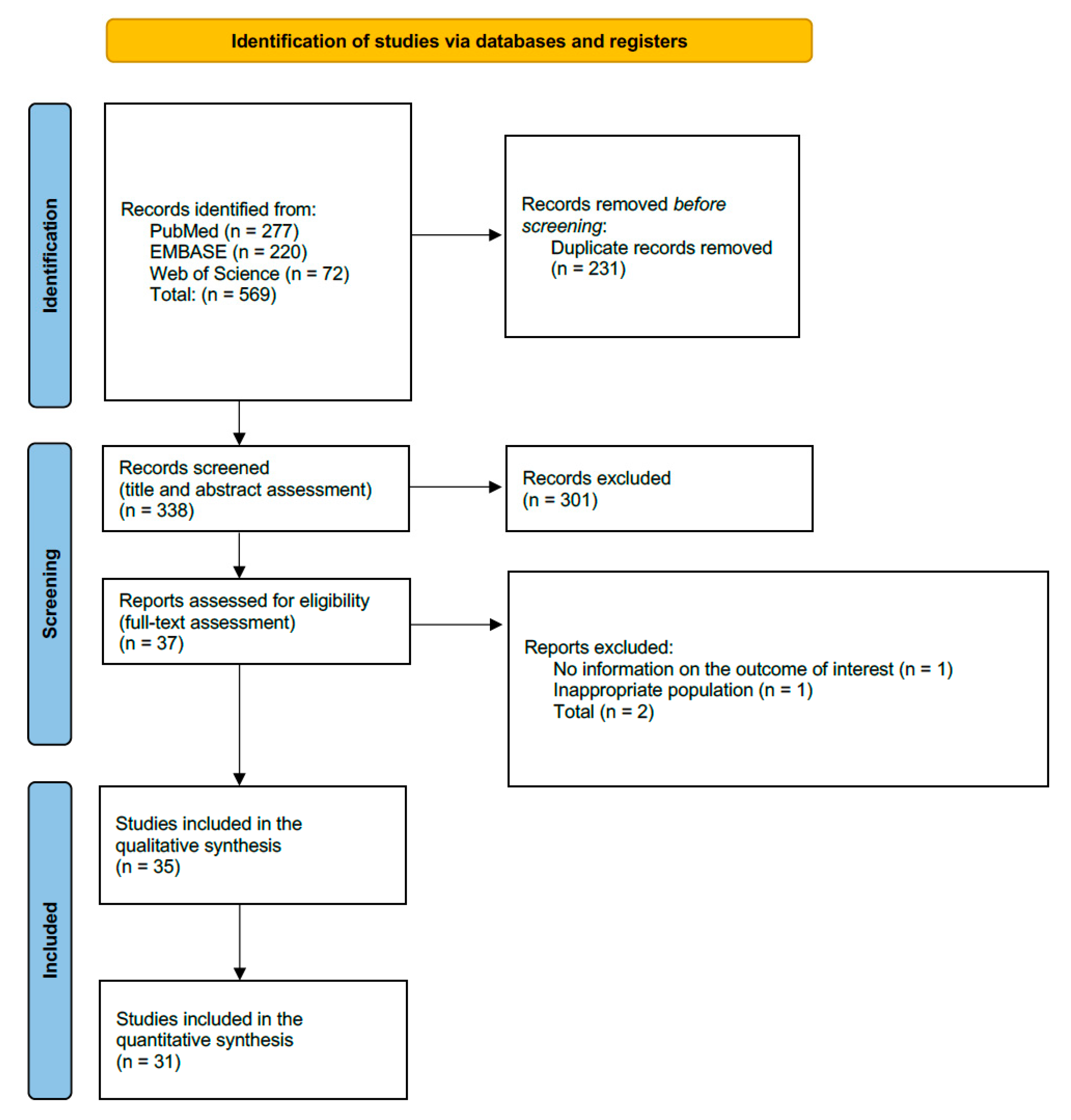
3.1. Study Selection
3.2. Study Characteristics
3.3. Risk of Bias in Studies
3.4. Synthesis of Results and Additional Analysis
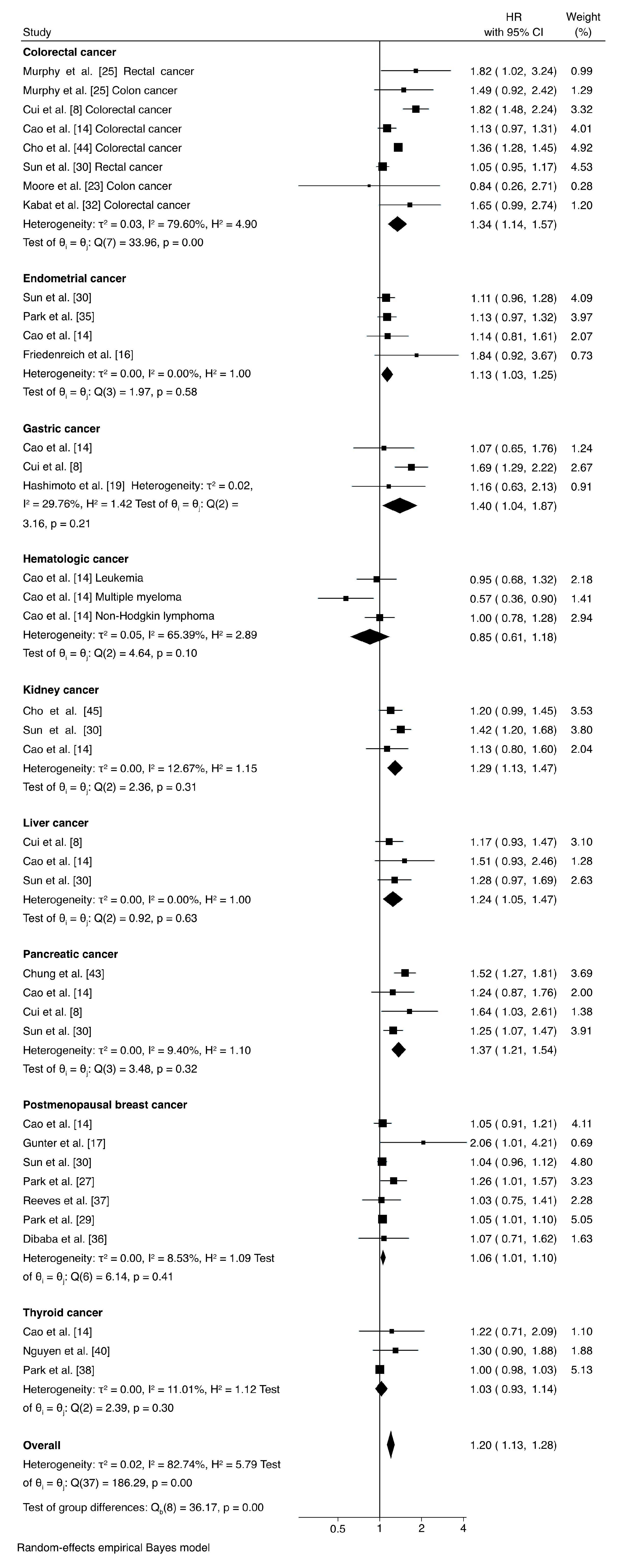
3.4.1. Cancer Risk in Normal-Weight Individuals with Metabolic Syndrome (Using Any Definition)
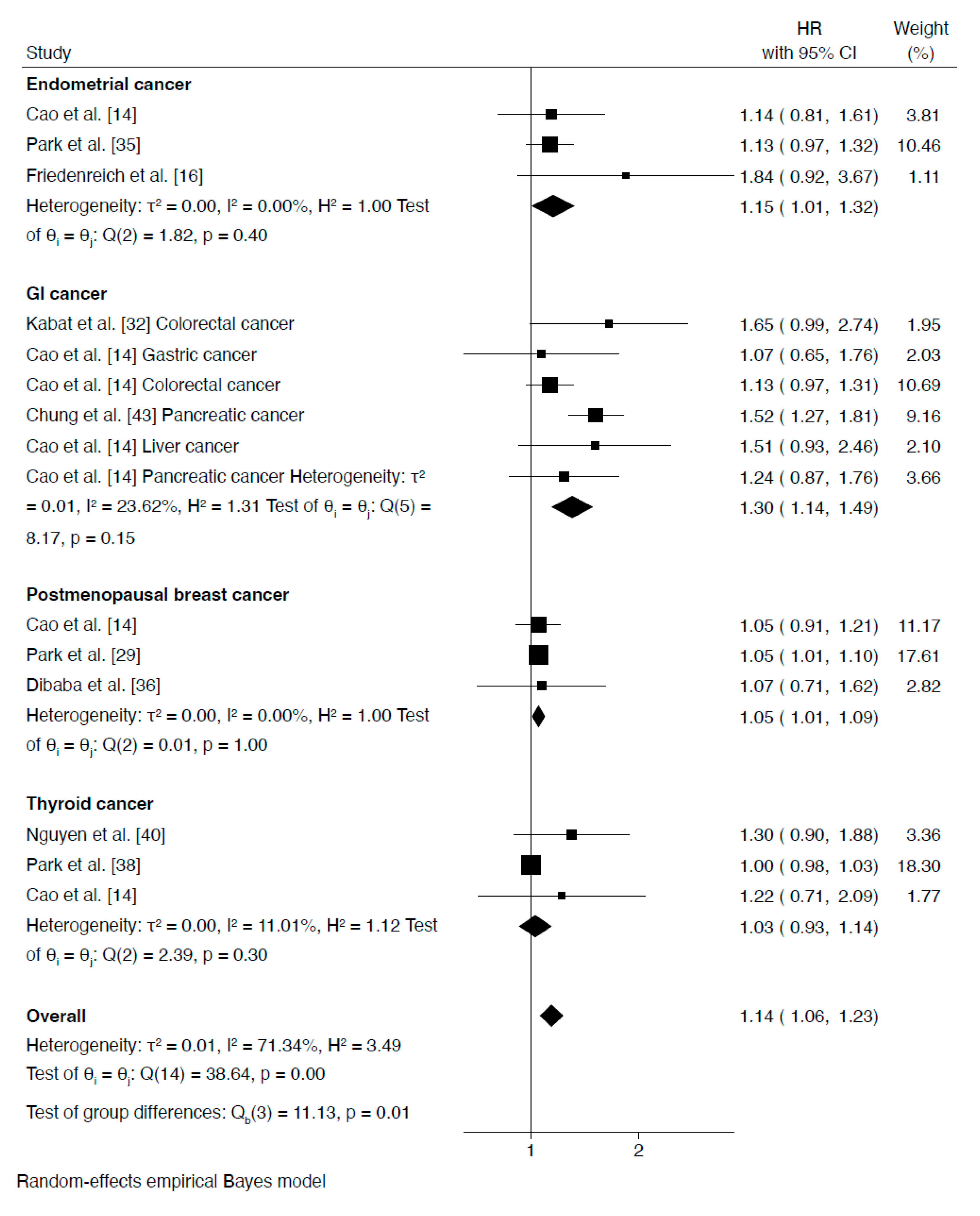
3.4.2. Cancer Risk in Normal-Weight Individuals with Metabolic Syndrome (Defined by 3 or More Criteria)
3.4.3. Cancer Risk Associated with Single Metabolic Components in Normal-Weight Participants
3.4.4. Additional Analyses
4. Discussion
4.1. Clinical Applications
4.2. Strengths and Limitations
5. Conclusions
Supplementary Materials
Author Contributions
Funding
Institutional Review Board Statement
Informed Consent Statement
Data Availability Statement
Conflicts of Interest
Abbreviations
| BMI | Body mass index |
| CI | Confidence interval |
| DNA | Deoxyribonucleic acid |
| HDL | High-density lipoprotein |
| HOMA-IR | Homeostatic Model Assessment for Insulin Resistance |
| HR | Hazard ratio |
| JBI | Joanna Briggs Institute |
| LDL | Low-density lipoprotein |
| LFK | Luis Furuya Kanamori |
| MUNW | Metabolically unhealthy normal-weight |
| PRISMA | Preferred Reporting Items for Systematic Reviews and Meta-Analyses |
References
- Lingvay, I.; Cohen, R.V.; le Roux, C.W.; Sumithran, P. Obesity in adults. Lancet 2024, 404, 972–987. [Google Scholar] [CrossRef] [PubMed]
- Dai, H.; Alsalhe, T.A.; Chalghaf, N.; Riccò, M.; Bragazzi, N.L.; Wu, J. The global burden of disease attributable to high body mass index in 195 countries and territories, 1990–2017: An analysis of the Global Burden of Disease Study. PLoS Med. 2020, 17, e1003198. [Google Scholar] [CrossRef]
- Phelps, N.H.; Singleton, R.K.; Zhou, B.; Heap, R.A.; Mishra, A.; Bennett, J.E.; Paciorek, C.J.; Lhoste, V.P.F.; Carrillo-Larco, R.M.; Stevens, G.A.; et al. Worldwide trends in underweight and obesity from 1990 to 2022: A pooled analysis of 3663 population-representative studies with 222 million children, adolescents, and adults. Lancet 2024, 403, 1027–1050. [Google Scholar] [CrossRef] [PubMed]
- Anderson, A.S.; Renehan, A.G.; Saxton, J.M.; Bell, J.; Cade, J.; Cross, A.J.; King, A.; Riboli, E.; Sniehotta, F.; Treweek, S.; et al. Cancer prevention through weight control—Where are we in 2020? Br. J. Cancer 2021, 124, 1049–1056. [Google Scholar] [CrossRef]
- Liu, B.; Giffney, H.E.; Arthur, R.S.; Rohan, T.E.; Dannenberg, A.J. Cancer risk in normal weight individuals with metabolic obesity: A narrative review. Cancer Prev. Res. 2021, 14, 509–520. [Google Scholar] [CrossRef]
- Karra, P.; Winn, M.; Pauleck, S.; Bulsiewicz-Jacobsen, A.; Peterson, L.; Coletta, A.; Doherty, J.; Ulrich, C.M.; Summers, S.A.; Gunter, M.; et al. Metabolic dysfunction and obesity-related cancer: Beyond obesity and metabolic syndrome. Obesity 2022, 30, 1323–1334. [Google Scholar] [CrossRef]
- Ärnlöv, J.; Ingelsson, E.; Sundström, J.; Lind, L. Impact of Body Mass Index and the Metabolic Syndrome on the Risk of Cardiovascular Disease and Death in Middle-Aged Men. Circulation 2010, 121, 230–236. [Google Scholar] [CrossRef]
- Cui, H.; Tian, F.; Chen, Y.; Ma, X. Association between Metabolically Healthy Status and Risk of Gastrointestinal Cancer. Cancer Res. Treat. 2024, 56, 238–246. [Google Scholar] [CrossRef]
- Putra, I.C.S.; Kamarullah, W.; Prameswari, H.S.; Pramudyo, M.; Iqbal, M.; Achmad, C.; Akbar, M.R.; Tiksnadi, B.B. Metabolically unhealthy phenotype in normal weight population and risk of mortality and major adverse cardiac events: A meta-analysis of 41 prospective cohort studies. Diabetes Metab. Syndr. 2022, 16, 102635. [Google Scholar] [CrossRef]
- Langan, D.; Higgins, J.P.T.; Simmonds, M. Comparative performance of heterogeneity variance estimators in meta-analysis: A review of simulation studies. Res. Synth. Methods 2017, 8, 181–198. [Google Scholar] [CrossRef] [PubMed]
- Higgins, J.P.T.; Thompson, S.G. Quantifying heterogeneity in a meta-analysis. Stat. Med. 2002, 21, 1539–1558. [Google Scholar] [CrossRef] [PubMed]
- Furuya-Kanamori, L.; Barendregt, J.J.; Doi, S.A.R. A new improved graphical and quantitative method for detecting bias in meta-analysis. Int. J. Evid.-Based Healthc. 2018, 16, 195–203. [Google Scholar] [CrossRef] [PubMed]
- Arthur, R.S.; Dannenberg, A.J.; Kim, M.; Rohan, T.E. The association of body fat composition with risk of breast, endometrial, ovarian and colorectal cancers among normal weight participants in the UK Biobank. Br. J. Cancer 2021, 124, 1592–1605. [Google Scholar] [CrossRef]
- Cao, Z.; Zheng, X.; Yang, H.; Li, S.; Xu, F.; Yang, X.; Wang, Y. Association of obesity status and metabolic syndrome with site-specific cancers: A population-based cohort study. Br. J. Cancer 2020, 123, 1336–1344. [Google Scholar] [CrossRef]
- Florio, A.A.; Campbell, P.T.; Zhang, X.; Zeleniuch-Jacquotte, A.; Wactawski-Wende, J.; Smith-Warner, S.A.; Sinha, R.; Simon, T.G.; Sesso, H.D.; Schairer, C.; et al. Abdominal and gluteofemoral size and risk of liver cancer: The liver cancer pooling project. Int. J. Cancer 2020, 147, 675–685. [Google Scholar] [CrossRef]
- Friedenreich, C.M.; Biel, R.K.; Lau, D.C.; Csizmadi, I.; Courneya, K.S.; Magliocco, A.M.; Yasui, Y.; Cook, L.S. Case–control study of the metabolic syndrome and metabolic risk factors for endometrial cancer. Cancer Epidemiol. Biomark. Prev. 2011, 20, 2384–2395. [Google Scholar] [CrossRef] [PubMed]
- Gunter, M.J.; Xie, X.; Xue, X.; Kabat, G.C.; Rohan, T.E.; Wassertheil-Smoller, S.; Ho, G.Y.; Wylie-Rosett, J.; Greco, T.; Yu, H.; et al. Breast cancer risk in metabolically healthy but overweight postmenopausal women. Cancer Res. 2015, 75, 270–274. [Google Scholar] [CrossRef]
- Han, D.E.; Ahn, S.T.; Kim, J.W.; Oh, M.M.; Moon, D.G.; Han, K.; Park, H.S. A Study on Metabolic Health Status as a Risk Factor for Female Bladder Cancer Incidence: Analysis From the National Health Checkups Database of Korea. Korean J. Urol. Oncol. 2021, 19, 223–231. [Google Scholar] [CrossRef]
- Hashimoto, Y.; Hamaguchi, M.; Obora, A.; Kojima, T.; Fukui, M. Impact of metabolically healthy obesity on the risk of incident gastric cancer: A population-based cohort study. BMC Endocr. Disord. 2020, 20, 11. [Google Scholar] [CrossRef]
- Iyengar, N.M.; Arthur, R.; Manson, J.E.; Chlebowski, R.T.; Kroenke, C.H.; Peterson, L.; Cheng, T.D.; Feliciano, E.C.; Lane, D.; Luo, J.; et al. Association of body fat and risk of breast cancer in postmenopausal women with normal body mass index: A secondary analysis of a randomized clinical trial and observational study. JAMA Oncol. 2019, 5, 155–163. [Google Scholar] [CrossRef]
- Kim, J.W.; Ahn, S.T.; Oh, M.M.; Moon, D.G.; Han, K.; Park, H.S. Incidence of Prostate Cancer according to Metabolic Health Status: A Nationwide Cohort Study. J. Korean Med. Sci. 2019, 34, e49. [Google Scholar] [CrossRef]
- Kwon, H.; Chang, Y.; Cho, A.; Ahn, J.; Park, S.E.; Park, C.Y.; Lee, W.-Y.; Oh, K.-W.; Park, S.-W.; Shin, H.; et al. Metabolic Obesity Phenotypes and Thyroid Cancer Risk: A Cohort Study. Thyroid 2019, 29, 349–358. [Google Scholar] [CrossRef]
- Moore, L.L.; Chadid, S.; Singer, M.R.; Kreger, B.E.; Denis, G.V. Metabolic Health Reduces Risk of Obesity-Related Cancer in Framingham Study Adults. Cancer Epidemiol. Biomark. Prev. 2014, 23, 2057. [Google Scholar] [CrossRef] [PubMed]
- Liang, X.; Margolis, K.L.; Hendryx, M.; Rohan, T.E.; Groessl, E.J.; Thomson, C.A.; Kroenke, C.H.; Simon, M.S.; Lane, D.; Stefanick, M.; et al. Metabolic phenotype and risk of colorectal cancer in normal-weight postmenopausal women. Cancer Epidemiol. Biomark. Prev. 2017, 26, 155–161. [Google Scholar] [CrossRef]
- Murphy, N.; Cross, A.J.; Abubakar, M.; Jenab, M.; Aleksandrova, K.; Boutron-Ruault, M.C.; Dossus, L.; Racine, A.; Kühn, T.; A Katzke, V.; et al. A Nested Case-Control Study of Metabolically Defined Body Size Phenotypes and Risk of Colorectal Cancer in the European Prospective Investigation into Cancer and Nutrition (EPIC). PLoS Med. 2016, 13, e1001988. [Google Scholar] [CrossRef]
- Ogundiran, T.O.; Huo, D.; Adenipekun, A.; Campbell, O.; Oyesegun, R.; Akang, E.; Adebamowo, C.; Olopade, O.I. Body fat distribution and breast cancer risk: Findings from the Nigerian breast cancer study. Cancer Causes Control. 2012, 23, 565–574. [Google Scholar] [CrossRef]
- Park, Y.M.; White, A.J.; Nichols, H.B.; O’Brien, K.M.; Weinberg, C.R.; Sandler, D.P. The association between metabolic health, obesity phenotype and the risk of breast cancer. Int. J. Cancer 2017, 140, 2657–2666. [Google Scholar] [CrossRef]
- Shin, C.M.; Han, K.; Lee, D.H.; Choi, Y.J.; Kim, N.; Park, Y.S.; Yoon, H. Association Among Obesity, Metabolic Health, and the Risk for Colorectal Cancer in the General Population in Korea Using the National Health Insurance Service-National Sample Cohort. Dis. Colon. Rectum 2017, 60, 1192–1200. [Google Scholar] [CrossRef]
- Park, B.; Kim, S.; Kim, H.; Cha, C.; Chung, M.S. Associations between obesity, metabolic health, and the risk of breast cancer in East Asian women. Br. J. Cancer 2021, 125, 1718–1725. [Google Scholar] [CrossRef] [PubMed]
- Sun, M.; Fritz, J.; Häggström, C.; Bjørge, T.; Nagel, G.; Manjer, J.; Engeland, A.; Zitt, E.; van Guelpen, B.; Stattin, P.; et al. Metabolically (un) healthy obesity and risk of obesity-related cancers: A pooled study. JNCI J. Natl. Cancer Inst. 2023, 115, 456–467. [Google Scholar] [CrossRef] [PubMed]
- Winn, M.; Karra, P.; Freisling, H.; Gunter, M.J.; Haaland, B.; Litchman, M.L.; Doherty, J.A.; Playdon, M.C.; Hardikar, S. Metabolic obesity phenotypes and obesity-related cancer risk in the National Health and Nutrition Examination Survey. Endocrino Diabet. Metabol. 2023, 6, e433. [Google Scholar] [CrossRef]
- Kabat, G.C.; Kim, M.Y.; Stefanick, M.; Ho, G.Y.F.; Lane, D.S.; Odegaard, A.O.; Simon, M.S.; Bea, J.W.; Luo, J.; Wassertheil-Smoller, S.; et al. Metabolic obesity phenotypes and risk of colorectal cancer in postmenopausal women. Int. J. Cancer 2018, 143, 543–551. [Google Scholar] [CrossRef] [PubMed]
- Lin, C.J.; Chang, Y.C.; Hsu, H.Y.; Tsai, M.C.; Hsu, L.Y.; Hwang, L.C.; Chien, K.-L.; Yeh, T.-L. Metabolically healthy overweight/obesity and cancer risk: A representative cohort study in Taiwan. Obes. Res. Clin. Pract. 2021, 15, 564–569. [Google Scholar] [CrossRef]
- Kliemann, N.; Ould Ammar, R.; Biessy, C.; Gicquiau, A.; Katzke, V.; Kaaks, R.; Tjønneland, A.; Olsen, A.; Sánchez, M.-J.; Crous-Bou, M.; et al. Metabolically defined body size phenotypes and risk of endometrial cancer in the European prospective investigation into cancer and nutrition (EPIC). Cancer Epidemiol. Biomark. Prev. 2022, 31, 1359–1367. [Google Scholar] [CrossRef]
- Park, B. Associations between obesity, metabolic syndrome, and endometrial cancer risk in East Asian women. J. Gynecol. Oncol. 2022, 33, e35. [Google Scholar] [CrossRef]
- Dibaba, D.T.; Braithwaite, D.; Akinyemiju, T. Metabolic syndrome and the risk of breast cancer and subtypes by race, menopause and BMI. Cancers 2018, 10, 299. [Google Scholar] [CrossRef]
- Reeves, K.W.; McLaughlin, V.; Fredman, L.; Ensrud, K.; Cauley, J.A. Components of metabolic syndrome and risk of breast cancer by prognostic features in the study of osteoporotic fractures cohort. Cancer Causes Control. 2012, 23, 1241–1251. [Google Scholar] [CrossRef] [PubMed]
- Park, J.H.; Choi, M.; Kim, J.H.; Kim, J.; Han, K.; Kim, B.; Kim, D.-H.; Park, Y.-G. Metabolic Syndrome and the Risk of Thyroid Cancer: A Nationwide Population-Based Cohort Study. Thyroid 2020, 30, 1496–1504. [Google Scholar] [CrossRef]
- Shao, F.; Chen, Y.; Xu, H.; Chen, X.; Zhou, J.; Wu, Y.; Tang, Y.; Wang, Z.; Zhang, R.; Lange, T.; et al. Metabolic Obesity Phenotypes and Risk of Lung Cancer: A Prospective Cohort Study of 450,482 UK Biobank Participants. Nutrients 2022, 14, 3370. [Google Scholar] [CrossRef]
- Nguyen, D.N.; Kim, J.H.; Kim, M.K. Association of Metabolic Health and Central Obesity with the Risk of Thyroid Cancer: Data from the Korean Genome and Epidemiology Study. Cancer Epidemiol. Biomark. Prev. 2022, 31, 543–553. [Google Scholar] [CrossRef] [PubMed]
- Moon Sgeun Park, B. The Association Between Metabolic Syndrome and Colorectal Cancer Risk by Obesity Status in Korean Women: A Nationwide Cohort Study. J. Prev. Med. Public Health 2022, 55, 475–484. [Google Scholar] [CrossRef] [PubMed]
- Mahamat-Saleh, Y.; Rinaldi, S.; Kaaks, R.; Biessy, C.; Gonzalez-Gil, E.M.; Murphy, N.; Le Cornet, C.; Huerta, J.M.; Sieri, S.; Tjønneland, A.; et al. Metabolically defined body size and body shape phenotypes and risk of postmenopausal breast cancer in the European Prospective Investigation into Cancer and Nutrition. Cancer Med. 2023, 12, 12668–12682. [Google Scholar] [CrossRef]
- Chung, H.S.; Lee, J.S.; Song, E.; Kim, J.A.; Roh, E.; Yu, J.H.; Kim, N.H.; Yoo, H.J.; A Seo, J.; Kim, S.G.; et al. Effect of Metabolic Health and Obesity Phenotype on the Risk of Pancreatic Cancer: A Nationwide Population-Based Cohort Study. Cancer Epidemiol. Biomark. Prev. 2021, 30, 521–528. [Google Scholar] [CrossRef]
- Cho, Y.K.; Lee, J.; Kim, H.S.; Park, J.; Lee, W.J.; Kim, Y.; Jung, C.H. Metabolic health is a determining factor for incident colorectal cancer in the obese population: A nationwide population-based cohort study. Cancer Med. 2021, 10, 220–229. [Google Scholar] [CrossRef]
- Cho, Y.K.; Kim, H.S.; Park, J.Y.; Lee, W.J.; Kim, Y.J.; Jung, C.H. Implications of metabolic health status and obesity on the risk of kidney cancer: A nationwide population-based cohort study. Front. Endocrinol. 2022, 13, 976056. [Google Scholar] [CrossRef]
- Zheng, X.; Peng, R.; Xu, H.; Lin, T.; Qiu, S.; Wei, Q.; Yang, L.; Ai, J. The Association Between Metabolic Status and Risk of Cancer Among Patients With Obesity: Metabolically Healthy Obesity vs. Metabolically Unhealthy Obesity. Front. Nutr. 2022, 9, 783660. [Google Scholar] [CrossRef]
- Johnson, A.R.; Justin Milner, J.; Makowski, L. The inflammation highway: Metabolism accelerates inflammatory traffic in obesity. Immunol. Rev. 2012, 249, 218–238. [Google Scholar] [CrossRef]
- Wu, Y.; Antony, S.; Meitzler, J.L.; Doroshow, J.H. Molecular mechanisms underlying chronic inflammation-associated cancers. Cancer Lett. 2014, 345, 164–173. [Google Scholar] [CrossRef]
- Rubinstein, M.M.; Brown, K.A.; Iyengar, N.M. Targeting obesity-related dysfunction in hormonally driven cancers. Br. J. Cancer 2021, 125, 495–509. [Google Scholar] [CrossRef] [PubMed]
- Schröter, D.; Höhn, A. Role of Advanced Glycation End Products in Carcinogenesis and their Therapeutic Implications. CPD 2019, 24, 5245–5251. [Google Scholar] [CrossRef] [PubMed]
- Murphy, N.; Song, M.; Papadimitriou, N.; Carreras-Torres, R.; Langenberg, C.; Martin, R.M.; Tsilidis, K.K.; Barroso, I.; Chen, J.; Frayling, T.M.; et al. Associations Between Glycemic Traits and Colorectal Cancer: A Mendelian Randomization Analysis. JNCI J. Natl. Cancer Inst. 2022, 114, 740–752. [Google Scholar] [CrossRef] [PubMed]
- Han, L.; Ma, Q.; Li, J.; Liu, H.; Li, W.; Ma, G.; Xu, Q.; Zhou, S.; Wu, E. High Glucose Promotes Pancreatic Cancer Cell Proliferation via the Induction of EGF Expression and Transactivation of EGFR. Guan X yuan, editor. PLoS ONE 2011, 6, e27074. [Google Scholar] [CrossRef]
- Lai, Y.; Sun, C. Association of abnormal glucose metabolism and insulin resistance in patients with atypical and typical endometrial cancer. Oncol. Lett. 2017, 15, 2173–2178. [Google Scholar] [CrossRef]
- Bhardwaj, P.; Au, C.C.; Benito-Martin, A.; Ladumor, H.; Oshchepkova, S.; Moges, R.; Brown, K.A. Estrogens and breast cancer: Mechanisms involved in obesity-related development, growth and progression. J. Steroid Biochem. Mol. Biol. 2019, 189, 161–170. [Google Scholar] [CrossRef]
- Page, M.J.; McKenzie, J.E.; Bossuyt, P.M.; Boutron, I.; Hoffmann, T.C.; Mulrow, C.D.; Moher, D. The PRISMA 2020 statement: An updated guideline for reporting systematic reviews. BMJ 2021, 372, n71. [Google Scholar] [CrossRef]
- Barberio, A.M.; Alareeki, A.; Viner, B.; Pader, J.; Vena, J.E.; Arora, P.; Friedenreich, C.M.; Brenner, D.R. Central body fatness is a stronger predictor of cancer risk than overall body size. Nat. Commun. 2019, 10, 383. [Google Scholar] [CrossRef] [PubMed]
- Pasqual, E.; O’Brien, K.; Rinaldi, S.; Sandler, D.P.; Kitahara, C.M. Obesity, obesity-related metabolic conditions, and risk of thyroid cancer in women: Results from a prospective cohort study (Sister Study). Lancet Reg. Health–Am. 2023, 23, 100537. [Google Scholar] [CrossRef] [PubMed]



| Criteria | |
|---|---|
| Participants | Normal-weight individuals (BMI within normal range per study-specific or regional thresholds) who are free of cancer at baseline. |
| Exposure | Metabolically unhealthy status, defined as the presence of at least one metabolic abnormality, such as insulin resistance, dyslipidemia, hypertension, hyperglycemia, or central adiposity. |
| Comparator | Metabolically healthy individuals (absence of metabolic abnormalities). |
| Outcome | Incident cancer, determined via clinical diagnosis and confirmed through medical records. |
| Study Design | Longitudinal studies with ≥1 year of follow-up. |
| Study (Year) | Country | Follow-Up (Years) | n (Females) | Age | Definition of Normal Weight | Definition of Metabolically Unhealthy | Type of Cancer | Confounders |
|---|---|---|---|---|---|---|---|---|
| Ärnlöv et al. [7] | Sweden | 30 | 955 (0) | 49.6 | BMI < 25 kg/m2 | Metabolic syndrome present if 3 or more of the following criteria are fulfilled:
| Overall cancer | Age, smoking, and LDL-c |
| Arthur et al. [13] | England, Wales and Scotland | 7 | 149,928 (149,928) | 53 | BMI = 18.5–24.9 kg/m2 | Body fat measures using BIA (Quintiles): WC, WHR, trunk fat mass index, fat mass index | Postmenopausal breast, endometrium, ovary and colon/rectum | Age at enrollment, education, age at menarche, age at first full-term birth and parity combined, HRT status, age at menopause, height, physical activity, alcohol intake, smoking |
| Cao et al. [14] | England, Wales and Scotland | 7.8 | 126,857 (81,158) | 56.3 | BMI = 18.5–24.9 kg/m2 | MU if ≥2 of the following criteria is fulfilled, otherwise MH: (1) elevated BP, defined as a systolic BP ≥ 130 and/or a diastolic BP ≥ 85 mmHg and/or the use of antihypertensive medication at baseline, (2) hypertriglyceridemia, defined as TG ≥ 1.7 mmol/L (150 mg/dL) or current use of lipid-lowering medication at baseline, (3) low HDL-c, defined as <1.0 mmol/L (40 mg/dL) for men and <1.3 mmol/L (50 mg/dL) for women, (4) hyperglycaemia, defined as FBG ≥ 5.6 mmol/L or use of medications for diabetes at baseline (e.g., insulin or oral antidiabetic medications) | Oral, oesophagus, stomach, colorectal, liver, gallbladder, pancreas, lung, malignant melanoma, postmenopausal breast, cervix, endometrium, ovary, prostate, kidney, bladder, brain and thyroid cancers, and non-Hodgkin lymphoma, multiple myeloma and leukaemia | Sex, age, education attainment, employment, ethnicity, Townsend deprivation index, alcohol intake and smoking status. Models for cervix, ovary and endometrium cancers are additionally adjusted for HRT use, oral contraceptive use and menopause after excluding females with history of hysterectomy. Models for postmenopausal breast cancer were additionally adjusted for HRT and oral contraceptive use |
| Cho et al. [44] | South Korea | 2 | 204,602 (100,036) | 58.8 | BMI < 25 kg/m2 | Metabolic health was defined as having none or one of the following risk factors: (1) systolic BP ≥ 130 mmHg and/or diastolic BP ≥ 85 mmHg and/or taking antihypertensive medications, (2) TG level ≥ 150 mg/dL and/or taking lipid-lowering medications, (3) FPG level ≥ 100 mg/dL and/or taking antidiabetic medications, (4) HDL-c levels < 40 mg/dL in men and <50 mg/dL in women. | Colorectal | Age, sex, income, smoking, alcohol drinking, and presence of inflammatory bowel disease |
| Cho et al. [45] | South Korea | 5.4 | 205,093 (97,182) | 60 | BMI < 25 kg/m2 | Having two or more of the following risk factors: (1) systolic BP ≥ 130 mmHg and/or diastolic BP ≥ 85 mmHg and/or taking antihypertensive medications; (2) TG level ≥ 150 mg/dL and/or taking lipid-lowering medications; (3) FPG level ≥ 100 mg/dL and/or taking antidiabetic medications; and (4) HDL-c levels < 40 mg/dL in men and <50 mg/dL in women | Kidney cancer | Age, sex, smoking habits, drinking habits, physical activity, and estimated glomerular filtration rate level |
| Chung et al. [43] | South Korea | 6.1 | 227,102 (106,650) | 62 | BMI < 25 kg/m2 | The presence of ≥3 of the following components: (1) WC ≥ 80 cm; (2) elevated FBG levels, defined as FPG levels ≥ 100 mg/dL; (3) TG levels ≥ 150 mg/dL; (4) HDL-c levels < 50 mg/dL for women; and (5) elevated BP (systolic BP ≥ 130 mmHg or diastolic BP ≥ 85 mmHg) | Pancreas cancer | Age, sex, smoking status, alcohol intake, physical activity, income level, and levels of hemoglobin, creatinine, alanine aminotransferase, and total cholesterol |
| Cui et al. [8] | China | 13.76 | 93,956 (18,790) | 51.08 | BMI < 28 kg/m2 | Metabolic status was defined as the presence of any one of four components: (1) serum TG ≥ 150 mg/dL or drug treatment for elevated TG; (2) serum HDL-c < 50 mg/dL in women or <40 mg/dL in men or drug treatment; (3) systolic BP ≥ 130 mmHg or diastolic BP ≥ 85 mmHg or drug treatment for elevated BP; and (4) FBG ≥ 100 mg/dL or drug treatment for elevated FBG. | Gastrointestinal cancer (esophageal cancer, gastric cancer, liver cancer, biliary cancer, pancreatic cancer, and colorectal cancer) | Age, sex, educational level, drinking, smoking, physical exercise, family history of cancer, salt intake, highly sensitive C-reactive protein, and alanine transaminase |
| Dibaba et al. [36] | USA | 14 | 43,546 (43,546) | NR | BMI < 25 kg/m2 | Presence of at least 3 metabolic factors, including: (1) high WC > 88 cm for women, (2) dyslipidemia or self-reported history of elevated cholesterol level, (3) high BP or self-reported history of hypertension, and (4) self-reported history of diabetes | Breast cancer | Age, race, BMI, education, region, physical activity, smoking, marital status, family history of breast cancer, ovary status, hysterectomy, hormonal therapy use, and ovary status BMI interaction |
| Florio et al. [15] | North America | 1,168,733 (708,468) | 64 | BMI < 25 kg/m2 | WC and WHR above the 75th percentiles | Primary liver cancer | Age, ethnicity, sex, alcohol consumption, cigarette smoking and study | |
| Friedenreich et al. [16] | Canada | NA | 406 (406) | 48 years and 61.9 years | BMI < 25 kg/m2 | Presence of 3 of the following risk factors: WC > 88 cm, TG > 150 mg/dL, HDL-c < 50 mg/dL, treatment of previously diagnosed hypertension, and FBG > 100 mg/dL | Endometrial cancer | Age, age at menarche, number of pregnancies > 20 weeks of gestation, type of HRT |
| Gunter et al. [17] | USA | 8.2 | 917 (917) | 65 | BMI < 25 kg/m2 | Insulin sensitivity (HOMA-IR–based definition of metabolic health, or insulin-based definition of metabolic health) | Postmenopausal Breast cancer | Age, ethnicity, age at menarche and menopause, parity, first-degree relative with breast cancer, education, alcohol consumption, physical activity, which of the two Woman Health Initiative studies each subject was enrolled in and, among those who participated in the clinical trials, which specific clinical trial arm they were assigned to and whether they were a member of the placebo or treatment group |
| Han et al. [18] | South Korea | 5.4 | 8,406,308 (8,406,308) | 48 | BMI < 25 kg/m2 | Defined as 3 or more of the 5 diagnostic criteria: abdominal circumference ≥ 90 cm, serum TG ≥ 150 mg/dL, serum HDL-c < 40 mg/dL, BP ≥ 130/85 mmHg or taking antihypertensive medication, and finally, FBG ≥ 100 mg/dL or taking antidiabetic medication. | Bladder cancer | Age, smoking history, alcohol history, exercise history, and income level |
| Hashimoto et al. [19] | Japan | 5.5 | 15,607 (7023) | 45.5 | BMI < 25 kg/m2 | Presence of one or more of the following four metabolic factors: (FBG, TG, HDL-c and BP) | Gastric cancer | Age, sex, alcohol consumption, smoking and exercise |
| Iyengar et al. [20] | USA | 16 | 3460 (3460) | 63.6 | BMI < 25 kg/m2 | Body fat including: whole body fat mass, whole-body fat, trunk fat mass index, fat mass index, fat mass of trunk, fat mass of leg at 75th percentiles | Breast cancer postmenopausal | Age at enrollment, educational attainment, race/ethnicity, age at menarche, age at first full-term birth, parity, age at menopause, oral contraceptive use, use of combined estrogen and progesterone therapy, use of unopposed estrogen therapy, physical activity, alcohol intake, and smoking |
| Kabat et al. [32] | USA | 10 | 5175 (5175) | 66.8 | BMI < 25 kg/m2 | Defined as having equal to or greater than 3 of the 5 following criteria: WC > 88 cm, TG > 150 mg/dL, HDL-c < 50 mg/dL, glucose > 100 mg/dL and systolic/diastolic BP > 130/85 mmHg or treatment for hypertension | Colorectal cancer | Age, smoking status, pack-years of smoking, alcohol intake, physical activity, aspirin intake, dietary calcium intake, dietary folate intake, caloric intake, oral contraceptives, HRT, parous/nulliparous, family history of colorectal cancer in first-degree relative, education, ethnicity, allocation to the Observational study component or specific arm of clinical trials |
| Kim et al. [21] | South Korea | 5.4 | 7,421,410 (0) | 46.5 | BMI < 25 kg/m2 | Defined as the presence ≥ 3 components of the metabolic syndrome | Prostate cancer | Age, smoking, alcohol drinking, exercise, and income |
| Kliemann et al. [34] | Multicountry (Denmark, Italy, the Netherlands, Spain, and the United Kingdom. In France, Germany, and Greece) | NA | 694 (694) | 54.8 | BMI < 25 kg/m2 | Based on the distribution of C-peptide concentration amongst the control population (tertile cut-points: 2.96 ng/mL and 4.74 ng/mL), and were classified as MH if below the first tertile of C-peptide and MU if above | Endometrial cancer | Study center, fasting status, age at blood collection, time of day at blood collection, menopausal status, exogenous hormone use, phase of menstrual cycle at blood collection, age at menopause, age at menarche, parity, hormone use, physical activity index, smoking status, educational level, alcohol intake, height, energy intake, and diabetes |
| Kwon et al. [22] | South Korea | 5.3 | 255,051 (109,683) | 38 | BMI = 18.5–22.9 kg/m2 | At least 1 of the following metabolic abnormalities: (i) FBG ‡100 mg/dL or current use of glucose-lowering agents; (ii) BP ‡130/85mmHg or current use of BP-lowering agents; (iii) elevated TG level (>150 mg/dL) or current use of lipid-lowering agents; (iv) low HDL-c (<40 mg/dL in men or <50 mg/dL in women); or (v) insulin resistance, defined as a HOMA-IR score > 2.5 | Thyroid cancer | NR |
| Liang et al. [24] | USA | 5068 (5068) | 66.7 | BMI < 25 kg/m2 | Defined as having 3 or more of the 5 following criteria: WC > 88 cm, TG > 150 mg/dL, HDL-c < 50 mg/dL, glucose > 100 mg/dL and systolic/diastolic BP > 130/85 mmHg or treatment for hypertension | Colorectal and colon cancer | Age, ethnicity, smoking, alcohol consumption, physical activity, total energy intake, dietary fiber, percent calories from fat, family history of colorectal cancer, non-steroid anti-inflammatory drugs use, and treatment arm in each clinical trial | |
| Lin et al. [33] | Taiwan | 13.7 | 5324 (1936) | 44.1 | BMI = 18.5–23.9 kg/m2 | Presence of all the following conditions: FBG > 100 mg/dL; BP > 130/85 mmHg; fasting TG level > 150 mg/dL; HDL-c level < 40 mg/dL in men or <50 mg/dL in women | Cancer incidence overall | Sex, age, smoking status, alcohol use, regular exercise, marital status, education, average monthly income |
| Mahamat-Saleh et al. [42] | Multicountry (Denmark, Italy, the Netherlands, Spain, and the United Kingdom. In France, Germany, and Greece) | 3 | 1740 (1740) | 60.5 | BMI < 25 kg/m2 | Based on the distribution of C-peptide concentration amongst the control population (tertile cut-points: 2.96 ng/mL and 4.74 ng/mL), and were classified as MH if below the first tertile of C-peptide and MU if above the first tertile | Postmenopausal breast cancer | Age at blood collection, time of day at blood collection, fasting status at blood collection, age at menarche, age at first full-term pregnancy and parity, age at menarche, age at first full term pregnancy and parity, age at menopause, breastfeeding, ever use of contraceptive pills, ever use of menopausal hormonal therapy, physical activity index, alcohol consumption, smoking status, educational level, height, and energy intake |
| Moon et al. [41] | South Korea | 8.7 | 2,668,255 (2,668,255) | 55.85 | BMI = 18.5–23 kg/m2 | Presence of at least 3 of the 5 following criteria: (1) WC ≥ 88 cm, (2) TG ≥ 150 mg/dL, (3) HDL-c < 50 mg/dL, (4) glucose ≥ 100 mg/ dL, and (5) systolic/diastolic BP ≥ 130/85 mmHg or treatment for hypertension | Colorectal | Age, smoking, alcohol consumption, vigorous physical activity, moderate physical activity, walking, age at menarche, age at menopause, parity, breastfeeding, oral contraceptive use, and first-degree family history of cancer |
| Moore et al. [23] | USA | 30 | 1528 (1010) | 56 | BMI < 25 kg/m2 | Elevated non-FBG (>125 mg/dL) | Obesity-related cancers (postmenopausal breast cancer, female reproductive (i.e., cervical, endometrial, and uterine), colon, liver, gallbladder, pancreas, kidney, and esophageal adenocarcinoma) | Age, sex, height, education level, alcohol, cigarettes/day, and physical activity, BMI, WC, occurrence of elevated glucose and obesity during follow-up |
| Murphy et al. [25] | Multicountry (Denmark, Italy, the Netherlands, Spain, and the United Kingdom. In France, Germany, and Greece) | 3.7 | 259 (119) | 57.6 | BMI < 25 kg/m2 | Based on the distribution of C-peptide concentration amongst the control population (tertile cut-points: 2.96 ng/mL and 4.74 ng/mL), and were classified as MH if below the first tertile of C-peptide and MU if above the first tertile | Colorectal cancer, colon cancer, rectal cancer | Matching factors, height, smoking status, physical activity, education level, alcohol consumption, and dietary intakes of total energy, red and processed meats, and fibre |
| Nguyen et al. [40] | South Korea | 4.9 | 107,332 (74,311) | 57.8 | BMI < 25 kg/m2 | Participants with abnormalities in three of these indices were considered MU: (1) TG, (2) BP, (3) HDL-c, (4) WC, and (5) FBG | Thyroid cancer | Age, sex, smoking, alcohol consumption, physical activity, and education |
| Ogundiran et al. [26] | Nigeria | 10 | 1208 (1208) | 47 | BMI < 25 kg/m2 | Presence of WHR > 0.87, or WC > 82 cm | Breast cancer | Age at diagnosis or interview (categorical), ethnicity, education (categorical), age at menarche (continuous), number of live birth (categorical), age at first live birth (continuous), duration of breastfeeding (categorical), menopausal status, family history of breast cancer, benign breast disease, hormonal contraceptive use, alcohol drinking, and height (continuous) |
| Park et al. [27] | USA | 6.4 | 16,619 (16,619) | 60.2 | BMI < 25 kg/m2 | Metabolic abnormalities considered included: high WC (>88 cm); elevated BP (>130/85 mmHg or antihypertensive medication); previously diagnosed diabetes or antidiabetic drug treatment; and cholesterol-lowering medication use | Breast cancer | Age at baseline, race, education, age at menarche, breastfeeding history, age at first live birth, parity, HRT, oral contraceptive use, menopausal status at baseline, sister age at diagnosis of breast cancer, smoking history, alcohol consumption, and physical activity |
| Park et al. [38] | South Korea | 7.2 | 6,713,278 (3,088,108) | 54.6 | BMI < 25 kg/m2 | Defined as the presence of ≥3 of the following components: (1) WC ≥ 80 cm; (2) elevated FBG levels, defined as FPG levels ≥ 100 mg/dL; (3) TG levels ≥ 150 mg/dL; (4) HDL-c levels < 50 mg/dL for women; and (5) elevated BP (systolic BP ≥ 130 mmHg or diastolic BP ≥ 85 mmHg) | Thyroid cancer | Age, smoking status, alcohol consumption, physical activity, income, and chronic kidney disease |
| Park et al. [29] | South Korea | 9 | 1,935,800 (1,935,800) | 59.5 | BMI < 25 kg/m2 | Defined as the presence of ≥3 of the following components: (1) WC ≥ 80 cm; (2) elevated FBG levels, defined as FPG levels ≥100 mg/dL; (3) TG levels ≥ 150 mg/dL; (4) HDL-c levels < 50 mg/dL for women; and (5) elevated BP (systolic BP ≥ 130 mmHg or diastolic BP ≥ 85 mmHg) | Postmenopausal breast cancer | Age, age at menarche, age at menopause, hormone replacement therapy use after menopause, delivery, duration of breastfeeding, oral contraceptive use, family history of any cancer, drinking frequency per week during the last 1 year, smoking, and physical activity including vigorous physical activity, moderate physical activity, and walking per week |
| Park et al. [35] | South Korea | 9 | 2,649,564 (2,649,564) | 51.5 | BMI < 23 kg/m2 | Defined as the presence of ≥3 of the following components: (1) WC ≥ 80 cm; (2) elevated FBG levels, defined as FPG levels ≥ 100 mg/dL; (3) TG levels ≥ 150 mg/dL; (4) high HDL-c levels < 50 mg/dL for women; and (5) elevated BP (systolic BP ≥ 130 mmHg or diastolic BP ≥ 85 mmHg) | Endometrial cancer | Age, smoking, drinking, vigorous physical activity, moderate physical activity, walking, age at menarche, age at menopause, number of children, breast feeding, oral contraceptive use, and family history of cancer |
| Reeves et al. [37] | USA | 14.4 | 7588 (7588) | 71 | BMI < 25 kg/m2 | Having at least one of the following metabolic abnormalities: (1) elevated WC, (2) hypertension, and (3) diabetes | Postmenopausal breast cancer | Age, current hormone use, and family history of breast cancer |
| Shao et al. [39] | England, Wales and Scotland | 9.1 | 1,475,692 (79,687) | 56 | BMI < 25 kg/m2 | Participants who met 4 of the 6 criteria above were considered healthy: (i) systolic diastolic BP < 130/85 mmHg; (ii) C-reactive protein < 3 mg/L; (iii) triacylglycerols < 2.3 mmol/L; (iv) LDL-C < 3 mmol/L and no cholesterol-lowering medications; (v) HDL-c > 1 mmol/L; (vi) HbA1c < 42 mmol/mol and no diabetes medications | Lung cancer | Age, sex, education level, ethnicity, smoking status, smoking duration, family history of lung cancer, and personal history of emphysema/bronchitis |
| Shin et al. [28] | South Korea | 9 | 185,743 (0) | NR | BMI = 18.5–23 kg/m2 | Defined as ≥1 claim per year for the prescription of oral hyperglycemics or insulin medication, or a FBG ≥ 7 mmol/L (obtained from the health examination database). Hypertension was defined as the presence of ≥1 yearly claim for the prescription of an antihypertensive agent or systolic/diastolic BP ≥ 140/90 mmHg. Dyslipidemia was defined as the presence of ≥1 yearly claim for the prescription of an antihyperlipidemic agent or total cholesterol ≥ 6.21 mmol/L (obtained from the health examination database) | Colorectal cancer | Age and sex, smoking, drinking, exercise, and income |
| Sun et al. [30] | Multicountry (Sweden, Norway, Austria) | 20 | 434,232 (247,495) | 42.8 | BMI < 25 kg/m2 | Defined as the top tertile of the metabolic score. The metabolic score comprised midblood pressure, FPG, and TG | Rectal cancer, pancreatic cancer, renal cell cancer, liver, intrahepatic bile ducts, gallbladder cancer, other obesity-related cancers | Sex, baseline age, and smoking status and pack-years and stratified by cohort and date of birth |
| Winn et al. [31] | USA | 9 | 6190 (3095) | NR | BMI < 25 kg/m2 | Defined as the presence of ≥3 of the following components: hyperglycaemia (FBG ≥ 100 mg/dL), hypertension (diastolic BP ≥ 85 mmHg or systolic BP ≥ 130 mmHg), abdominal obesity (WC > 88 cm (female) or >102 cm (male)), elevated TG (≥150 mg/dL) and low HDL-c (<50 mg/dL (female) or <40 mg/dL (male)) or drug treatment for these parameters] | Breast, colorectal, uterine, ovarian, pancreatic, liver, gallbladder, kidney and thyroid cancer | Age, sex, race/ethnicity, education, household income, smoking status, alcohol use, daily hours sedentary, weekly physical activity, average daily caloric intake and survey year |
Disclaimer/Publisher’s Note: The statements, opinions and data contained in all publications are solely those of the individual author(s) and contributor(s) and not of MDPI and/or the editor(s). MDPI and/or the editor(s) disclaim responsibility for any injury to people or property resulting from any ideas, methods, instructions or products referred to in the content. |
© 2026 by the authors. Licensee MDPI, Basel, Switzerland. This article is an open access article distributed under the terms and conditions of the Creative Commons Attribution (CC BY) license.
Share and Cite
Ezzatvar, Y.; Olivares-Arancibia, J.; Páez-Herrera, J.; Yáñez-Sepúlveda, R.; Caballero, Ó. Metabolic Syndrome Components and Cancer Risk in Normal-Weight Subjects: Systematic Review and Meta-Analysis in over 18 Million Individuals. J. Clin. Med. 2026, 15, 538. https://doi.org/10.3390/jcm15020538
Ezzatvar Y, Olivares-Arancibia J, Páez-Herrera J, Yáñez-Sepúlveda R, Caballero Ó. Metabolic Syndrome Components and Cancer Risk in Normal-Weight Subjects: Systematic Review and Meta-Analysis in over 18 Million Individuals. Journal of Clinical Medicine. 2026; 15(2):538. https://doi.org/10.3390/jcm15020538
Chicago/Turabian StyleEzzatvar, Yasmin, Jorge Olivares-Arancibia, Jacqueline Páez-Herrera, Rodrigo Yáñez-Sepúlveda, and Óscar Caballero. 2026. "Metabolic Syndrome Components and Cancer Risk in Normal-Weight Subjects: Systematic Review and Meta-Analysis in over 18 Million Individuals" Journal of Clinical Medicine 15, no. 2: 538. https://doi.org/10.3390/jcm15020538
APA StyleEzzatvar, Y., Olivares-Arancibia, J., Páez-Herrera, J., Yáñez-Sepúlveda, R., & Caballero, Ó. (2026). Metabolic Syndrome Components and Cancer Risk in Normal-Weight Subjects: Systematic Review and Meta-Analysis in over 18 Million Individuals. Journal of Clinical Medicine, 15(2), 538. https://doi.org/10.3390/jcm15020538