

Mechanical Power and Driving Pressure: Mechanisms of Lung Injury, Markers of Pathophysiology, or Therapeutic Targets?


Abstract
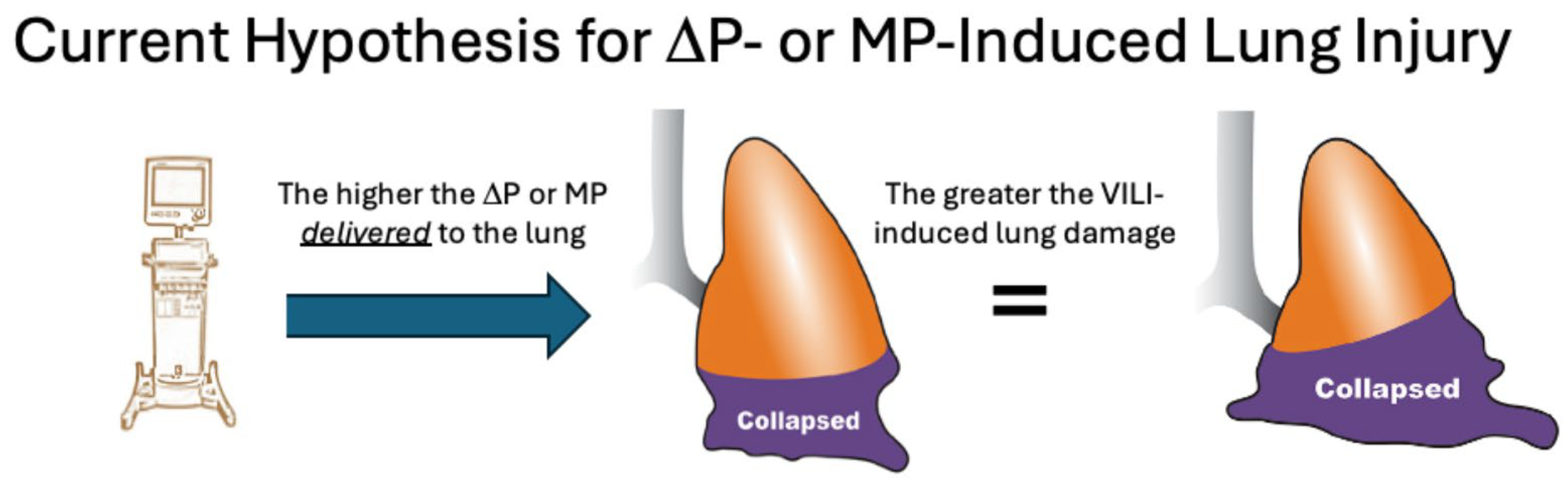
- This perspective study confirms that, for patients with ARDS, the current strategy to reduce the mechanical power of the respiratory system (MPrs) to minimize ventilator-induced lung injury (VILI) involves lowering ventilator settings, such as tidal volume, peak and end-expiratory pressures, or respiratory rate.
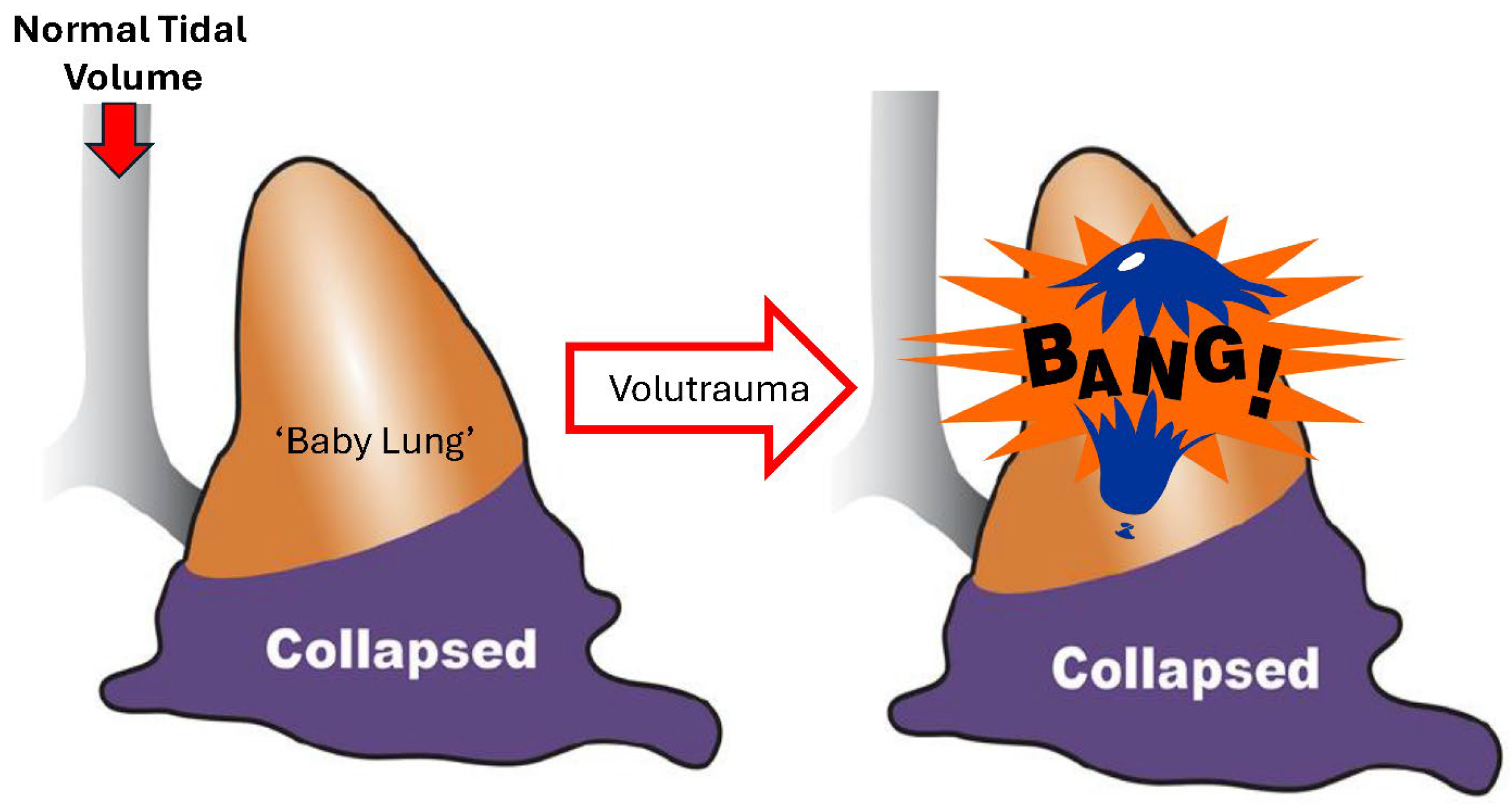
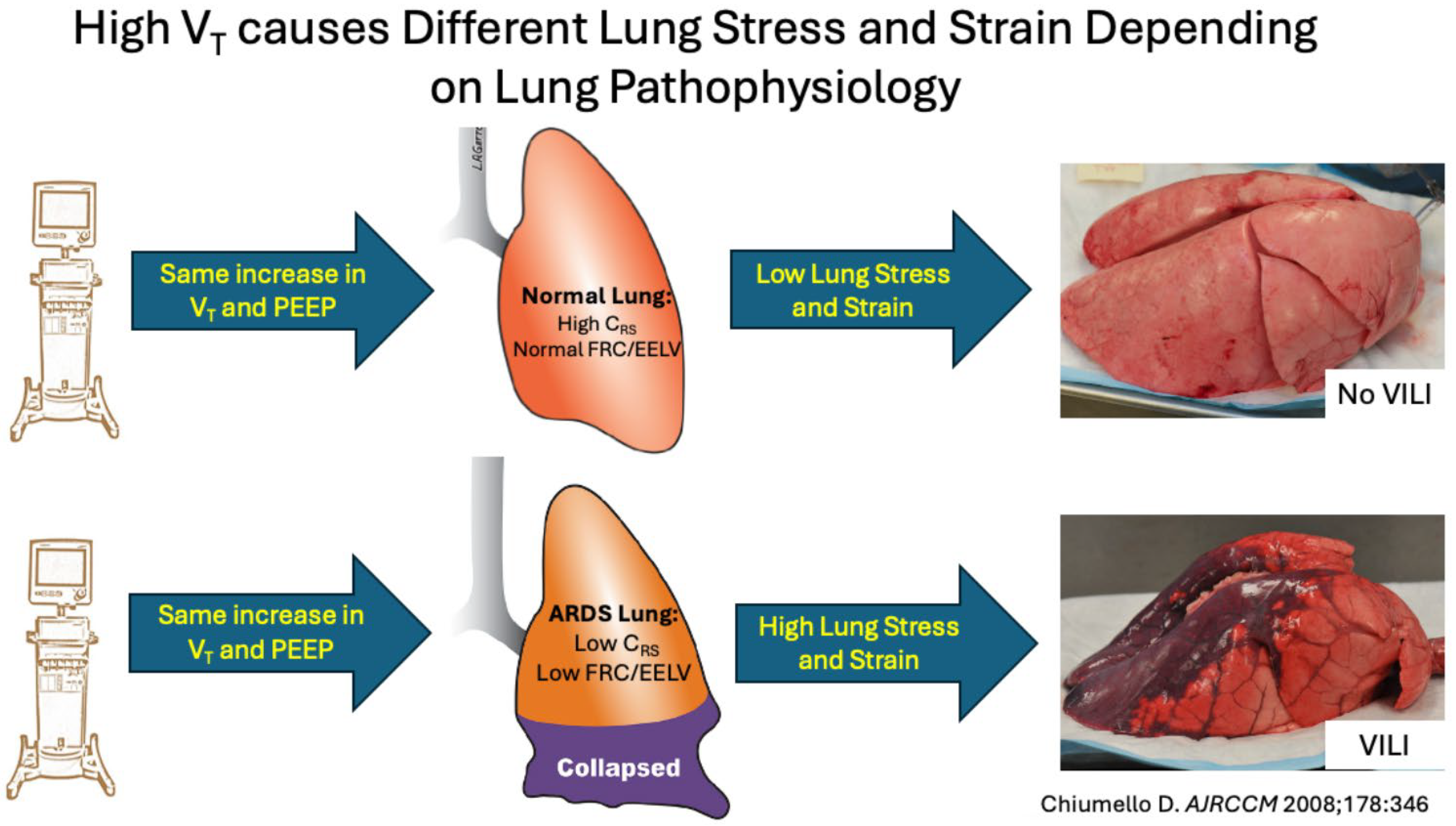
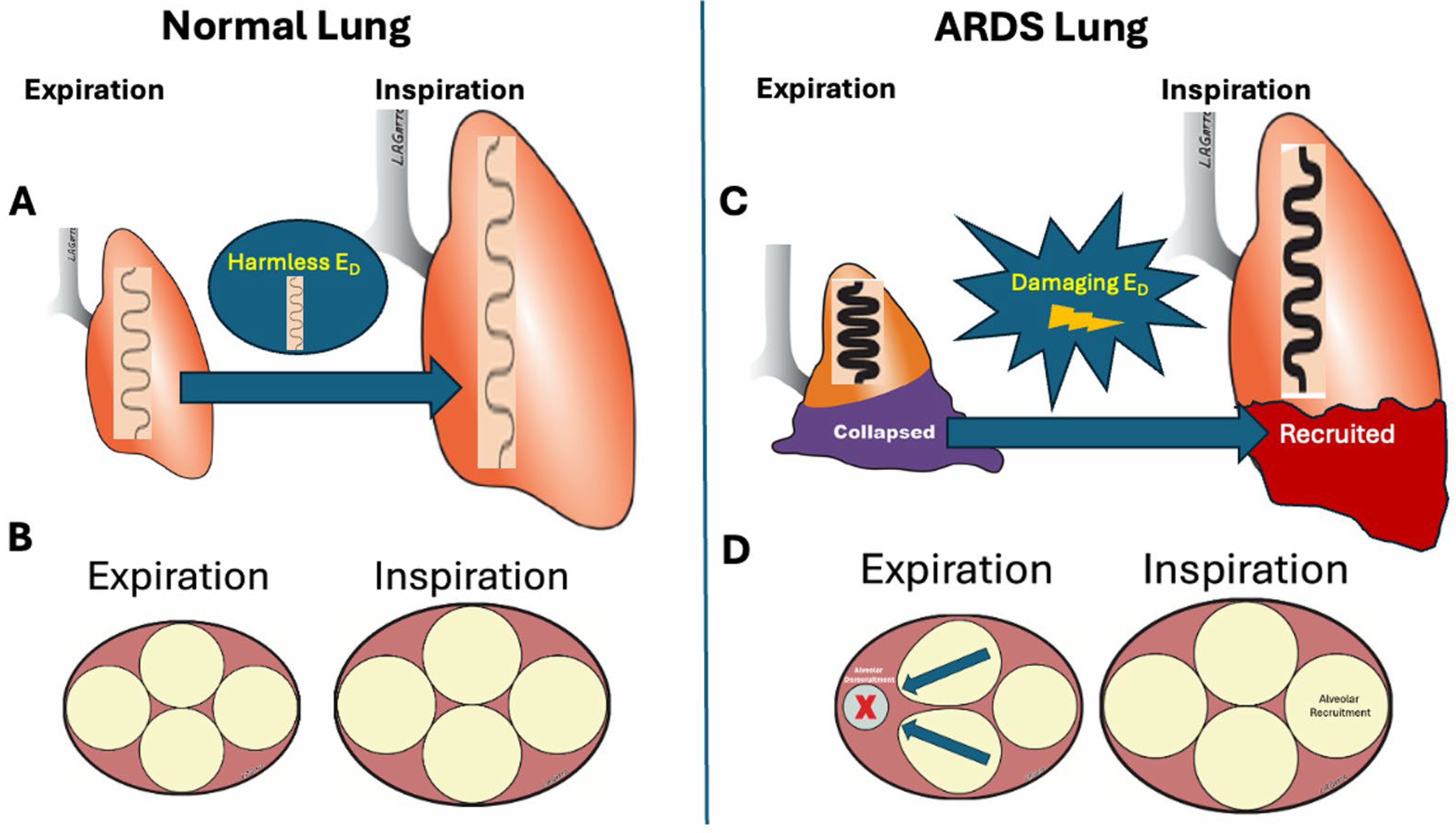
- New evidence indicates that, to measure VILI effectively, MPrs must be normalized to respiratory system compliance (CRS) or end-expiratory lung volume (EELV), suggesting that lung pathophysiology and morphology are as crucial as elevated MPrs in causing VILI.
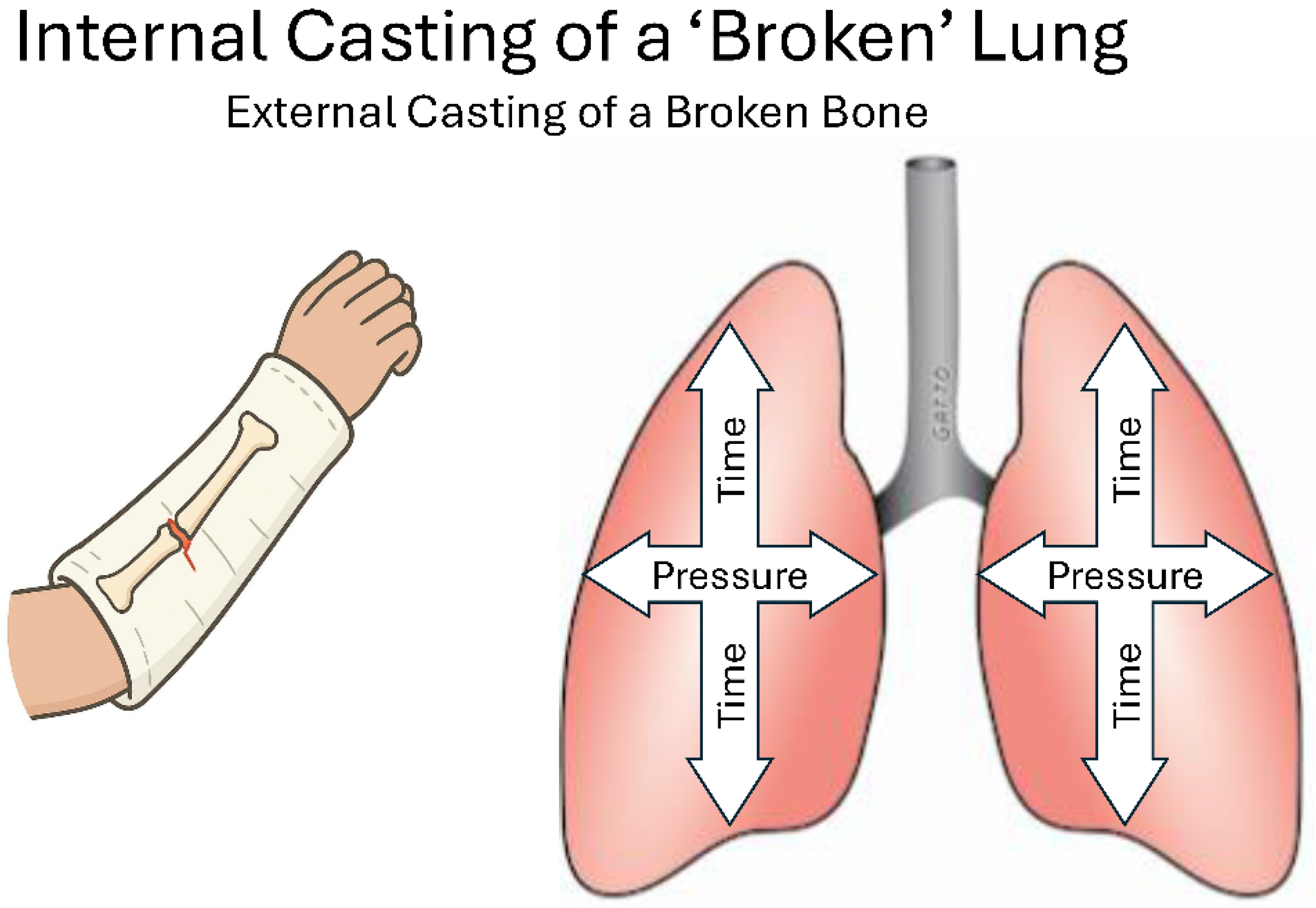
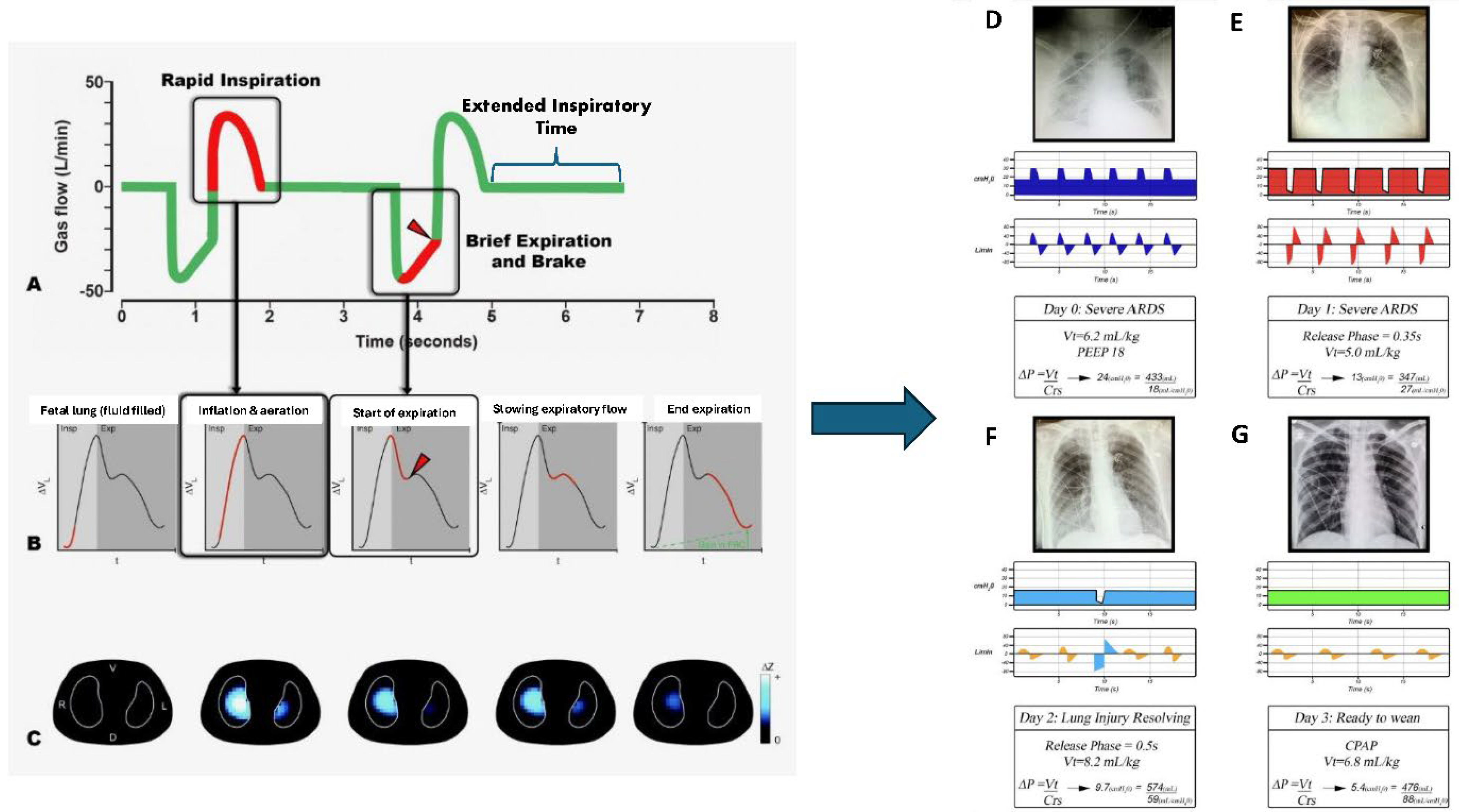
- Therefore, a better goal for reducing MPrs is to focus on gradually re-expand the ARDS lung, restoring normal CRS and EELV. This approach would lower MPrs at any given ventilator setting.
1. Introduction
2. Mechanical Power, Driving Pressure, and Ventilator-Induced Lung Injury (VILI)
3. Emerging Concepts in the Mechanisms of VILI-Induced Lung Damage
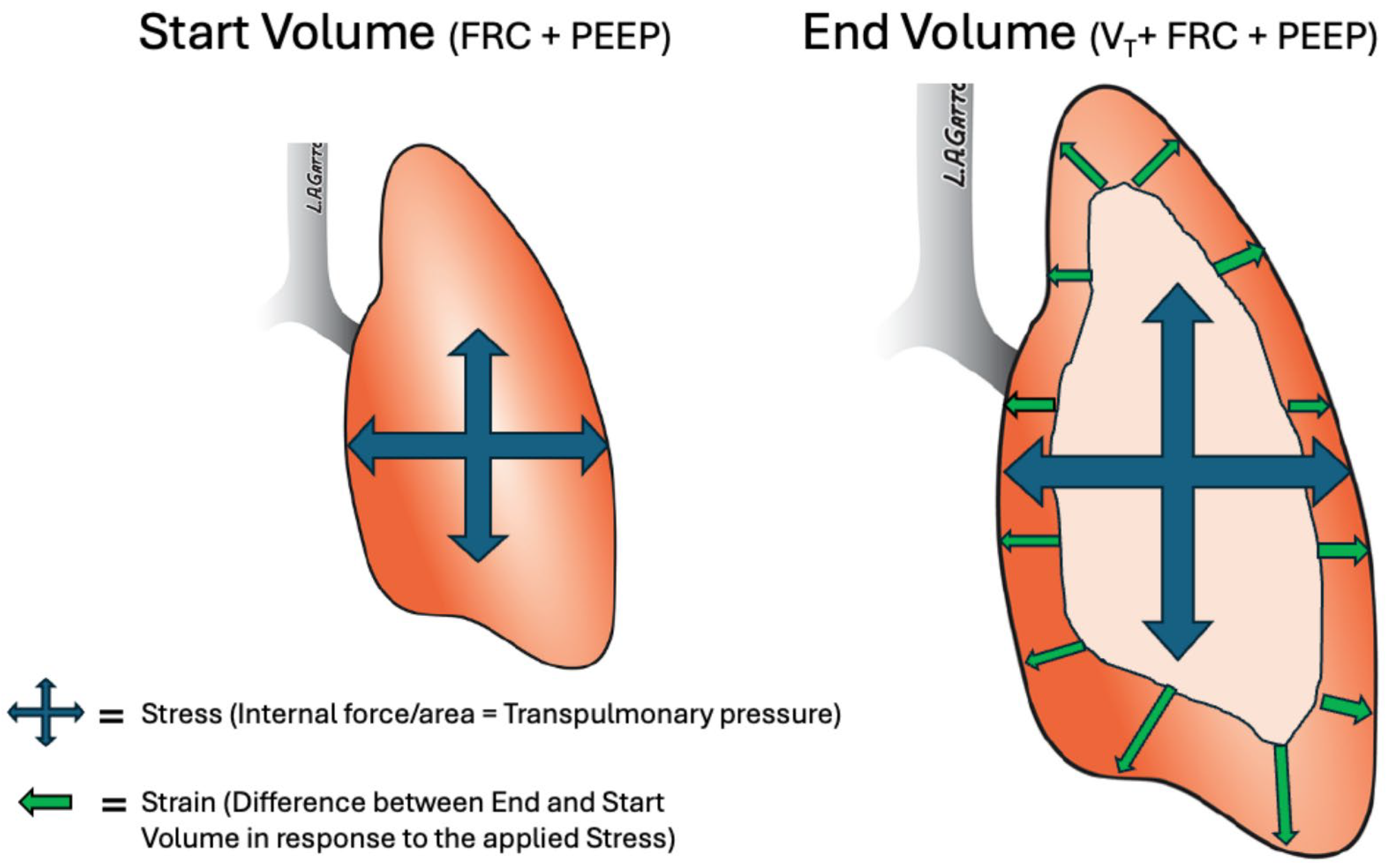
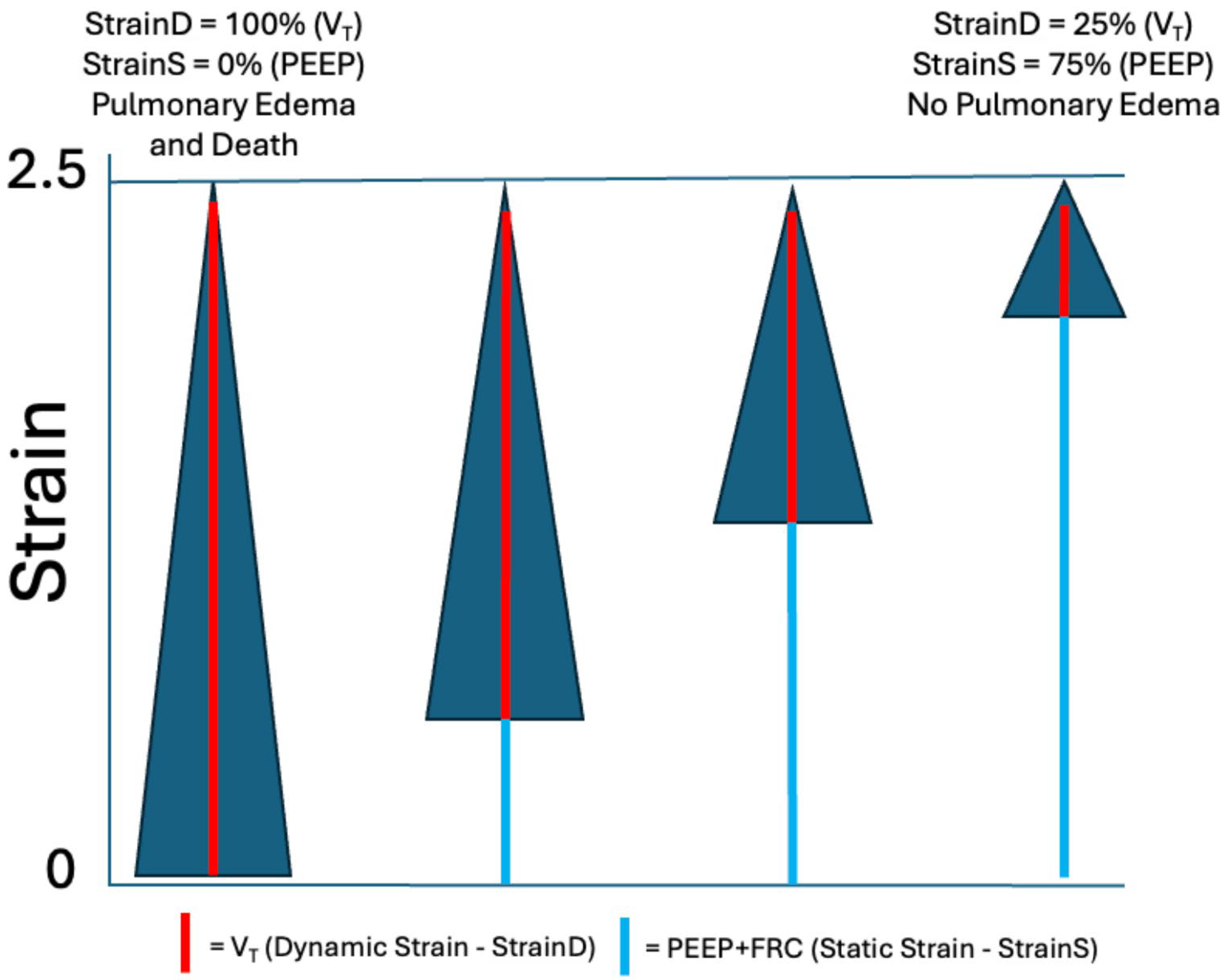
4. VILI Mechanisms: Global Static and Dynamic Strain
5. Treat the Lung, Not the Ventilator

6. Summary
Author Contributions
Funding
Institutional Review Board Statement
Informed Consent Statement
Data Availability Statement
Conflicts of Interest
References
- Al-Husinat, L.; Azzam, S.; Al Sharie, S.; Araydah, M.; Battaglini, D.; Abushehab, S.; Cortes-Puentes, G.A.; Schultz, M.J.; Rocco, P.R.M. A narrative review on the future of ARDS: Evolving definitions, pathophysiology, and tailored management. Crit. Care 2025, 29, 88. [Google Scholar] [CrossRef] [PubMed]
- Bates, J.H.T.; Smith, B.J. Ventilator-induced lung injury and lung mechanics. Ann. Transl. Med. 2018, 6, 378. [Google Scholar] [CrossRef] [PubMed]
- Del Sorbo, L.; Goligher, E.C.; McAuley, D.F.; Rubenfeld, G.D.; Brochard, L.J.; Gattinoni, L.; Slutsky, A.S.; Fan, E. Mechanical Ventilation in Adults with Acute Respiratory Distress Syndrome. Summary of the Experimental Evidence for the Clinical Practice Guideline. Ann. Am. Thorac. Soc. 2017, 14, S261–S270. [Google Scholar] [CrossRef] [PubMed]
- Nieman, G.F.; Habashi, N.M. Applied Physiology to Reduce Ventilator Induced Lung Injury: Clinical Applications for the Acutely Injured Lung; Springer Nature: Cham, Switzerland, 2024. [Google Scholar]
- Villar, J.; Blanco, J.; Anon, J.M.; Santos-Bouza, A.; Blanch, L.; Ambros, A.; Gandia, F.; Carriedo, D.; Mosteiro, F.; Basaldua, S.; et al. The ALIEN study: Incidence and outcome of acute respiratory distress syndrome in the era of lung protective ventilation. Intensive Care Med. 2011, 37, 1932–1941. [Google Scholar] [CrossRef]
- Bellani, G.; Laffey, J.G.; Pham, T.; Fan, E.; Brochard, L.; Esteban, A.; Gattinoni, L.; van Haren, F.; Larsson, A.; McAuley, D.F.; et al. Epidemiology, Patterns of Care, and Mortality for Patients with Acute Respiratory Distress Syndrome in Intensive Care Units in 50 Countries. JAMA 2016, 315, 788–800. [Google Scholar] [CrossRef]
- Amato, M.B.; Meade, M.O.; Slutsky, A.S.; Brochard, L.; Costa, E.L.; Schoenfeld, D.A.; Stewart, T.E.; Briel, M.; Talmor, D.; Mercat, A.; et al. Driving pressure and survival in the acute respiratory distress syndrome. N. Engl. J. Med. 2015, 372, 747–755. [Google Scholar] [CrossRef]
- Gattinoni, L.; Tonetti, T.; Cressoni, M.; Cadringher, P.; Herrmann, P.; Moerer, O.; Protti, A.; Gotti, M.; Chiurazzi, C.; Carlesso, E.; et al. Ventilator-related causes of lung injury: The mechanical power. Intensive Care Med. 2016, 42, 1567–1575. [Google Scholar] [CrossRef]
- Nieman, G.F.; Satalin, J.; Andrews, P.; Habashi, N.M.; Gatto, L.A. Lung stress, strain, and energy load: Engineering concepts to understand the mechanism of ventilator-induced lung injury (VILI). Intensive Care Med. Exp. 2016, 4, 16. [Google Scholar] [CrossRef]
- Marini, J.J.; Rocco, P.R.M.; Gattinoni, L. Static and Dynamic Contributors to Ventilator-induced Lung Injury in Clinical Practice. Pressure, Energy, and Power. Am. J. Respir. Crit. Care Med. 2020, 201, 767–774. [Google Scholar] [CrossRef]
- van Egmond, J.; Speight, C.; Mulier, J.P. Is mechanical power truly the culprit in VILI? Rethinking causality in light of airway closure. Intensive Care Med. 2025, 51, 1964–1965. [Google Scholar] [CrossRef]
- Dreyfuss, D.; Soler, P.; Basset, G.; Saumon, G. High inflation pressure pulmonary edema. Respective effects of high airway pressure, high tidal volume, and positive end-expiratory pressure. Am. Rev. Respir. Dis. 1988, 137, 1159–1164. [Google Scholar] [CrossRef] [PubMed]
- Coppola, S.; Caccioppola, A.; Froio, S.; Formenti, P.; De Giorgis, V.; Galanti, V.; Consonni, D.; Chiumello, D. Effect of mechanical power on intensive care mortality in ARDS patients. Crit. Care 2020, 24, 246. [Google Scholar] [CrossRef] [PubMed]
- Protti, A.; Andreis, D.T.; Milesi, M.; Iapichino, G.E.; Monti, M.; Comini, B.; Pugni, P.; Melis, V.; Santini, A.; Dondossola, D.; et al. Lung anatomy, energy load, and ventilator-induced lung injury. Intensive Care Med. Exp. 2015, 3, 34. [Google Scholar] [CrossRef] [PubMed]
- Gattinoni, L.; Pesenti, A. The concept of “baby lung”. Intensive Care Med. 2005, 31, 776–784. [Google Scholar] [CrossRef]
- Bos, L.D.J.; Ware, L.B. Acute respiratory distress syndrome: Causes, pathophysiology, and phenotypes. Lancet 2022, 400, 1145–1156. [Google Scholar] [CrossRef]
- Makiyama, A.M.; Gibson, L.J.; Harris, R.S.; Venegas, J.G. Stress concentration around an atelectatic region: A finite element model. Respir. Physiol. Neurobiol. 2014, 201, 101–110. [Google Scholar] [CrossRef]
- Albert, R.K.; Smith, B.; Perlman, C.E.; Schwartz, D.A. Is Progression of Pulmonary Fibrosis due to Ventilation-induced Lung Injury? Am. J. Respir. Crit. Care Med. 2019, 200, 140–151. [Google Scholar] [CrossRef]
- Ma, B.; Bates, J.H. Mechanical interactions between adjacent airways in the lung. J. Appl. Physiol. 2014, 116, 628–634. [Google Scholar] [CrossRef]
- Retamal, J.; Bergamini, B.C.; Carvalho, A.R.; Bozza, F.A.; Borzone, G.; Borges, J.B.; Larsson, A.; Hedenstierna, G.; Bugedo, G.; Bruhn, A. Non-lobar atelectasis generates inflammation and structural alveolar injury in the surrounding healthy tissue during mechanical ventilation. Crit. Care 2014, 18, 505. [Google Scholar] [CrossRef]
- Gaver, D.P., 3rd; Kollisch-Singule, M.; Nieman, G.; Satalin, J.; Habashi, N.; Bates, J.H.T. Mechanical ventilation energy analysis: Recruitment focuses injurious power in the ventilated lung. Proc. Natl. Acad. Sci. USA 2025, 122, e2419374122. [Google Scholar] [CrossRef]
- Kasiak, P.; Kowalski, T.; Rebis, K.; Klusiewicz, A.; Ladyga, M.; Sadowska, D.; Wilk, A.; Wiecha, S.; Barylski, M.; Poliwczak, A.R.; et al. Is the Ventilatory Efficiency in Endurance Athletes Different?-Findings from the NOODLE Study. J. Clin. Med. 2024, 13, 490. [Google Scholar] [CrossRef]
- Chiumello, D.; Carlesso, E.; Brioni, M.; Cressoni, M. Airway driving pressure and lung stress in ARDS patients. Crit. Care 2016, 20, 276. [Google Scholar] [CrossRef] [PubMed]
- Guerin, C.; Papazian, L.; Reignier, J.; Ayzac, L.; Loundou, A.; Forel, J.M.; on behalf of the investigators of the Acurasys and Proseva trials. Effect of driving pressure on mortality in ARDS patients during lung protective mechanical ventilation in two randomized controlled trials. Crit. Care 2016, 20, 384. [Google Scholar]
- Goligher, E.C.; Costa, E.L.V.; Yarnell, C.J.; Brochard, L.J.; Stewart, T.E.; Tomlinson, G.; Brower, R.G.; Slutsky, A.S.; Amato, M.P.B. Effect of Lowering Vt on Mortality in Acute Respiratory Distress Syndrome Varies with Respiratory System Elastance. Am. J. Respir. Crit. Care Med. 2021, 203, 1378–1385. [Google Scholar] [CrossRef] [PubMed]
- Marini, J.J.; Thornton, L.T.; Rocco, P.R.M.; Gattinoni, L.; Crooke, P.S. Practical assessment of risk of VILI from ventilating power: A conceptual model. Crit. Care 2023, 27, 157. [Google Scholar] [CrossRef] [PubMed]
- Costa, E.L.V.; Slutsky, A.S.; Brochard, L.J.; Brower, R.; Serpa-Neto, A.; Cavalcanti, A.B.; Mercat, A.; Meade, M.; Morais, C.C.A.; Goligher, E.; et al. Ventilatory Variables and Mechanical Power in Patients with Acute Respiratory Distress Syndrome. Am. J. Respir. Crit. Care Med. 2021, 204, 303–311. [Google Scholar] [CrossRef]
- Cressoni, M.; Gotti, M.; Chiurazzi, C.; Massari, D.; Algieri, I.; Amini, M.; Cammaroto, A.; Brioni, M.; Montaruli, C.; Nikolla, K.; et al. Mechanical Power and Development of Ventilator-induced Lung Injury. Anesthesiology 2016, 124, 1100–1108. [Google Scholar] [CrossRef]
- Tonetti, T.; Vasques, F.; Rapetti, F.; Maiolo, G.; Collino, F.; Romitti, F.; Camporota, L.; Cressoni, M.; Cadringher, P.; Quintel, M.; et al. Driving pressure and mechanical power: New targets for VILI prevention. Ann. Transl. Med. 2017, 5, 286. [Google Scholar] [CrossRef]
- Huhle, R.; Serpa Neto, A.; Schultz, M.J.; Gama de Abreu, M. Is mechanical power the final word on ventilator-induced lung injury?-no. Ann. Transl. Med. 2018, 6, 394. [Google Scholar]
- Seah, A.S.; Grant, K.A.; Aliyeva, M.; Allen, G.B.; Bates, J.H. Quantifying the roles of tidal volume and PEEP in the pathogenesis of ventilator-induced lung injury. Ann. Biomed. Eng. 2011, 39, 1505–1516. [Google Scholar] [CrossRef]
- Gattarello, S.; Pozzi, T.; Galizia, M.; Busana, M.; Ghidoni, V.; Catozzi, G.; Donati, B.; Nocera, D.; Giovanazzi, S.; D’Albo, R.; et al. Impact of Fluid Balance on the Development of Lung Injury. Am. J. Respir. Crit. Care Med. 2025, 211, 331–338. [Google Scholar] [CrossRef] [PubMed]
- Dianti, J.; Matelski, J.; Tisminetzky, M.; Walkey, A.J.; Munshi, L.; Del Sorbo, L.; Fan, E.; Costa, E.L.; Hodgson, C.L.; Brochard, L.; et al. Comparing the Effects of Tidal Volume, Driving Pressure, and Mechanical Power on Mortality in Trials of Lung-Protective Mechanical Ventilation. Respir. Care 2021, 66, 221–227. [Google Scholar] [CrossRef] [PubMed]
- Acute Respiratory Distress Syndrome Network; Brower, R.G.; Matthay, M.A.; Morris, A.; Schoenfeld, D.; Thompson, B.T.; Wheeler, A. Ventilation with lower tidal volumes as compared with traditional tidal volumes for acute lung injury and the acute respiratory distress syndrome. N. Engl. J. Med. 2000, 342, 1301–1308. [Google Scholar] [PubMed]
- Sadana, D.; Kaur, S.; Sankaramangalam, K.; Saini, I.; Banerjee, K.; Siuba, M.; Amaral, V.; Gadre, S.; Torbic, H.; Krishnan, S.; et al. Mortality associated with acute respiratory distress syndrome, 2009–2019: A systematic review and meta-analysis. Crit. Care Resusc. 2022, 24, 341–351. [Google Scholar] [CrossRef]
- Protti, A.; Andreis, D.T.; Monti, M.; Santini, A.; Sparacino, C.C.; Langer, T.; Votta, E.; Gatti, S.; Lombardi, L.; Leopardi, O.; et al. Lung stress and strain during mechanical ventilation: Any difference between statics and dynamics? Crit. Care Med. 2013, 41, 1046–1055. [Google Scholar] [CrossRef]
- Spinelli, E.; Damia, A.; Damarco, F.; Gregori, B.; Occhipinti, F.; Busani, Z.; Leali, M.; Battistin, M.; Lonati, C.; Zhao, Z.; et al. Pathophysiological profile of non-ventilated lung injury in healthy female pigs undergoing mechanical ventilation. Commun. Med. 2024, 4, 18. [Google Scholar] [CrossRef]
- Marini, J.J.; Gattinoni, L. Time Course of Evolving Ventilator-Induced Lung Injury: The “Shrinking Baby Lung”. Crit. Care Med. 2020, 48, 1203–1209. [Google Scholar] [CrossRef]
- Deans, K.J.; Minneci, P.C.; Cui, X.; Banks, S.M.; Natanson, C.; Eichacker, P.Q. Mechanical ventilation in ARDS: One size does not fit all. Crit. Care Med. 2005, 33, 1141–1143. [Google Scholar] [CrossRef]
- Cereda, M.; Emami, K.; Xin, Y.; Kadlecek, S.; Kuzma, N.N.; Mongkolwisetwara, P.; Profka, H.; Pickup, S.; Ishii, M.; Kavanagh, B.P.; et al. Imaging the interaction of atelectasis and overdistension in surfactant-depleted lungs. Crit. Care Med. 2013, 41, 527–535. [Google Scholar] [CrossRef]
- Mead, J.; Takishima, T.; Leith, D. Stress distribution in lungs: A model of pulmonary elasticity. J. Appl. Physiol. 1970, 28, 596–608. [Google Scholar] [CrossRef]
- Fujioka, H.; Halpern, D.; Gaver, D.P., 3rd. Predictions of Atelectasis-Induced Microvolutrauma: A Key Pathway to Ventilator-Induced Lung Injury. J. Biomech. Eng. 2025, 147, 101003. [Google Scholar] [CrossRef] [PubMed]
- Steinberg, J.M.; Schiller, H.J.; Halter, J.M.; Gatto, L.A.; Lee, H.M.; Pavone, L.A.; Nieman, G.F. Alveolar instability causes early ventilator-induced lung injury independent of neutrophils. Am. J. Respir. Crit. Care Med. 2004, 169, 57–63. [Google Scholar] [PubMed]
- Cereda, M.; Xin, Y.; Meeder, N.; Zeng, J.; Jiang, Y.; Hamedani, H.; Profka, H.; Kadlecek, S.; Clapp, J.; Deshpande, C.G.; et al. Visualizing the Propagation of Acute Lung Injury. Anesthesiology 2016, 124, 121–131. [Google Scholar] [CrossRef] [PubMed]
- Gaver, D.P., 3rd; Nieman, G.F.; Gatto, L.A.; Cereda, M.; Habashi, N.M.; Bates, J.H.T. The POOR Get POORer: A Hypothesis for the Pathogenesis of Ventilator-induced Lung Injury. Am. J. Respir. Crit. Care Med. 2020, 202, 1081–1087. [Google Scholar] [CrossRef]
- Albert, K.; Krischer, J.M.; Pfaffenroth, A.; Wilde, S.; Lopez-Rodriguez, E.; Braun, A.; Smith, B.J.; Knudsen, L. Hidden Microatelectases Increase Vulnerability to Ventilation-Induced Lung Injury. Front. Physiol. 2020, 11, 530485. [Google Scholar] [CrossRef]
- Pistillo, N.; Castelluccio, P.; Suzuki, I.; Castiblanco, L. Mechanical Power Correlates with Stress, Strain, and Atelectrauma Only When Normalized to Aerated Lung Size in Patients with Acute Respiratory Distress Syndrome. Crit. Care Explor. 2023, 5, e0982. [Google Scholar] [CrossRef]
- Chiumello, D.; Carlesso, E.; Cadringher, P.; Caironi, P.; Valenza, F.; Polli, F.; Tallarini, F.; Cozzi, P.; Cressoni, M.; Colombo, A.; et al. Lung stress and strain during mechanical ventilation for acute respiratory distress syndrome. Am. J. Respir. Crit. Care Med. 2008, 178, 346–355. [Google Scholar] [CrossRef]
- Nieman, G.F.; Andrews, P.; Satalin, J.; Wilcox, K.; Kollisch-Singule, M.; Madden, M.; Aiash, H.; Blair, S.J.; Gatto, L.A.; Habashi, N.M. Acute lung injury: How to stabilize a broken lung. Crit. Care 2018, 22, 136. [Google Scholar] [CrossRef]
- Young, D.; Lamb, S.E.; Shah, S.; MacKenzie, I.; Tunnicliffe, W.; Lall, R.; Rowan, K.; Cuthbertson, B.H.; Group, O.S. High-frequency oscillation for acute respiratory distress syndrome. N. Engl. J. Med. 2013, 368, 806–813. [Google Scholar] [CrossRef]
- Ferguson, N.D.; Cook, D.J.; Guyatt, G.H.; Mehta, S.; Hand, L.; Austin, P.; Zhou, Q.; Matte, A.; Walter, S.D.; Lamontagne, F.; et al. High-frequency oscillation in early acute respiratory distress syndrome. N. Engl. J. Med. 2013, 368, 795–805. [Google Scholar] [CrossRef]
- Writing Group for the Alveolar Recruitment for Acute Respiratory Distress Syndrome Trial (ART) Investigators; Cavalcanti, A.B.; Suzumura, E.A.; Laranjeira, L.N.; Paisani, D.M.; Damiani, L.P.; Guimaraes, H.P.; Romano, E.R.; Regenga, M.M.; Taniguchi, L.N.T.; et al. Effect of Lung Recruitment and Titrated Positive End-Expiratory Pressure (PEEP) vs. Low PEEP on Mortality in Patients with Acute Respiratory Distress Syndrome: A Randomized Clinical Trial. JAMA 2017, 318, 1335–1345. [Google Scholar]
- Nieman, G.F.; Herrmann, J.; Satalin, J.; Kollisch-Singule, M.; Andrews, P.L.; Habashi, N.M.; Tingay, D.G.; Gaver, D.P., 3rd; Bates, J.H.T.; Kaczka, D.W. Ratchet recruitment in the acute respiratory distress syndrome: Lessons from the newborn cry. Front. Physiol. 2023, 14, 1287416. [Google Scholar] [CrossRef]
- Tingay, D.G.; Farrell, O.; Thomson, J.; Perkins, E.J.; Pereira-Fantini, P.M.; Waldmann, A.D.; Ruegger, C.; Adler, A.; Davis, P.G.; Frerichs, I. Imaging the Respiratory Transition at Birth: Unraveling the Complexities of the First Breaths of Life. Am. J. Respir. Crit. Care Med. 2021, 204, 82–91. [Google Scholar] [CrossRef]
- Kollisch-Singule, M.; Emr, B.; Smith, B.; Roy, S.; Jain, S.; Satalin, J.; Snyder, K.; Andrews, P.; Habashi, N.; Bates, J.; et al. Mechanical breath profile of airway pressure release ventilation: The effect on alveolar recruitment and microstrain in acute lung injury. JAMA Surg. 2014, 149, 1138–1145. [Google Scholar]
- Albert, S.P.; DiRocco, J.; Allen, G.B.; Bates, J.H.; Lafollette, R.; Kubiak, B.D.; Fischer, J.; Maroney, S.; Nieman, G.F. The role of time and pressure on alveolar recruitment. J. Appl. Physiol. 2009, 106, 757–765. [Google Scholar] [CrossRef]
- Nieman, G.; Kollisch-Singule, M.; Ramcharran, H.; Satalin, J.; Blair, S.; Gatto, L.A.; Andrews, P.; Ghosh, A.; Kaczka, D.W.; Gaver, D.; et al. Unshrinking the baby lung to calm the VILI vortex. Crit. Care 2022, 26, 242. [Google Scholar] [CrossRef] [PubMed]


Disclaimer/Publisher’s Note: The statements, opinions and data contained in all publications are solely those of the individual author(s) and contributor(s) and not of MDPI and/or the editor(s). MDPI and/or the editor(s) disclaim responsibility for any injury to people or property resulting from any ideas, methods, instructions or products referred to in the content. |
© 2025 by the authors. Licensee MDPI, Basel, Switzerland. This article is an open access article distributed under the terms and conditions of the Creative Commons Attribution (CC BY) license.
Share and Cite
Nieman, G.F.; Araos, J.; Satalin, J.; Andrews, P.; Habashi, N. Mechanical Power and Driving Pressure: Mechanisms of Lung Injury, Markers of Pathophysiology, or Therapeutic Targets? J. Clin. Med. 2026, 15, 79. https://doi.org/10.3390/jcm15010079
Nieman GF, Araos J, Satalin J, Andrews P, Habashi N. Mechanical Power and Driving Pressure: Mechanisms of Lung Injury, Markers of Pathophysiology, or Therapeutic Targets? Journal of Clinical Medicine. 2026; 15(1):79. https://doi.org/10.3390/jcm15010079
Chicago/Turabian StyleNieman, Gary Frank, Joaquin Araos, Joshua Satalin, Penny Andrews, and Nader Habashi. 2026. "Mechanical Power and Driving Pressure: Mechanisms of Lung Injury, Markers of Pathophysiology, or Therapeutic Targets?" Journal of Clinical Medicine 15, no. 1: 79. https://doi.org/10.3390/jcm15010079
APA StyleNieman, G. F., Araos, J., Satalin, J., Andrews, P., & Habashi, N. (2026). Mechanical Power and Driving Pressure: Mechanisms of Lung Injury, Markers of Pathophysiology, or Therapeutic Targets? Journal of Clinical Medicine, 15(1), 79. https://doi.org/10.3390/jcm15010079