Reconstructive Strategies After Mastectomy: Comparative Outcomes, PMRT Effects, and Emerging Innovations


Abstract
1. Introduction
2. Methods
2.1. Search Strategy and Study Selection
2.2. Eligibility Criteria
2.3. Data Extraction and Outcomes
2.4. Quality Assessment
2.5. Definitions and Harmonization
2.6. Effect Measures and Synthesis Approach
2.7. Subgroups and Sensitivity Analyses
2.8. Reporting
2.9. Statistical Considerations
3. Results
3.1. Study Characteristics
3.2. Comparative Outcomes
3.3. Patient-Reported Outcomes (PROs)
3.4. Innovations and Oncologic Context
3.5. Oncologic Outcomes and Long-Term Safety
4. Discussion
4.1. Overview of Main Findings
4.2. Interpretation and Clinical Relevance
4.3. Limitations of Current Evidence
4.4. Future Directions
4.5. Clinical Implications and Summary Table
5. Conclusions
Supplementary Materials
Author Contributions
Funding
Institutional Review Board Statement
Informed Consent Statement
Data Availability Statement
Acknowledgments
Conflicts of Interest
Abbreviations
| ABR | Autologous Breast Reconstruction |
| ADM | Acellular Dermal Matrix |
| BRCA | Breast Cancer gene (contextually implied, though not shown in snippet) |
| BREAST-Q | Patient-reported outcome measure for breast surgery |
| DIEP flap | Deep Inferior Epigastric Perforator flap |
| n. | Number (used in cohort or sample notation) |
| RR | Relative Risk (contextually implied) |
| SD | Standard Deviation (commonly used but not explicitly seen) |
| SE | Standard Error (contextually possible, not explicit) |
| SP | Study Period (implied from journal citations) |
| T | Tumor (contextual abbreviation, not explicitly shown) |
Appendix A. Search Strategy and Exclusion Log
| PubMed/MEDLINE Search String (“breast reconstruction” OR “implant-based” OR “autologous” OR “flap”) AND (“mastectomy” OR “postmastectomy”) AND (“radiotherapy” OR “postmastectomy radiotherapy” OR “PMRT”) AND (“complications” OR “failure” OR “outcomes” OR “BREAST-Q”). |
| Embase Search String (“breast reconstruction”:ti,ab OR “autologous”:ti,ab OR “implant”:ti,ab) AND (“mastectomy”:ti,ab OR “postmastectomy”:ti,ab) AND (“radiotherapy”:ti,ab OR “PMRT”:ti,ab) AND (“complication”:ti,ab OR “BREAST-Q”:ti,ab). |
| Exclusion Log Full-text articles were excluded if they:
|
Appendix B

| Author (Year) | Design/Country | Tool Applied | Score/Rating | Quality Level | Key Notes |
|---|---|---|---|---|---|
| Cordeiro (2015) [4] | Retrospective cohort, USA | NOS | 7/9 stars | Moderate | Long follow-up; single-center bias |
| Santosa (2018) [1] | Prospective cohort (MROC), USA | NOS | 8/9 stars | High | Robust multicenter design |
| Jagsi (2018) [2] | Prospective cohort (MROC), USA | NOS | 8/9 stars | High | Well-defined PMRT stratification |
| Bennett (2018) [3] | Prospective cohort (MROC), USA | NOS | 7/9 stars | Moderate-High | Large sample, some attrition bias |
| Toyserkani (2020) [10] | Systematic review/meta-analysis, Denmark | AMSTAR-2 | 9/11 | High | Strong methods, minor reporting limits |
| Eriksson (2020) [5] | Registry cohort, Sweden | NOS | 7/9 stars | Moderate | Registry data, limited control variables |
| Beugels (2021) [26] | Prospective cohort, Netherlands | NOS | 8/9 stars | High | Clear endpoints, limited generalizability |
| Khajuria (2020) [7] | Meta-analysis, UK | AMSTAR-2 | 9/11 | High | Transparent selection and synthesis |
| Sigalove (2017) [8] | Prospective cohort, USA | NOS | 7/9 stars | Moderate | Small sample, adequate reporting |
| Peled et al. (2018) [15] | Retrospective cohort, USA | NOS | 6/9 stars | Moderate | Potential selection bias |
| Naoum (2020) [11] | Retrospective cohort, USA | NOS | 7/9 stars | Moderate-High | Balanced PMRT subgroups |
| Shauly, O. et al. (2023) [19] | Meta-analysis, USA | AMSTAR-2 | 10/11 | High | Comprehensive data synthesis, strong comparative evaluation of PROs |
References
- Santosa, K.B.; Qi, J.; Kim, H.M.; Hamill, J.B.; Wilkins, E.G.; Pusic, A.L. Long-term Patient-Reported Outcomes in Postmastectomy Breast Reconstruction. JAMA Surg. 2018, 153, 891–899. [Google Scholar] [CrossRef] [PubMed]
- Jagsi, R.; Momoh, A.O.; Qi, J.; Hamill, J.B.; Billig, J.; Kim, H.M.; Pusic, A.L.; Wilkins, E.G. Impact of Radiotherapy on Complications and Patient-Reported Outcomes after Breast Reconstruction. J. Natl. Cancer Inst. 2018, 110, 157–165. [Google Scholar] [CrossRef] [PubMed]
- Bennett, K.G.; Qi, J.; Kim, H.M.; Hamill, J.B.; Pusic, A.L.; Wilkins, E.G. Comparison of 2-Year Complication Rates among Common Techniques for Postmastectomy Breast Reconstruction. JAMA Surg. 2018, 153, 901–908. [Google Scholar] [CrossRef] [PubMed]
- Cordeiro, P.G.; Albornoz, C.R.; McCormick, B.; Hudis, C.A.; Hu, Q.; Heerdt, A.; Matros, E. What Is the Optimum Timing of Postmastectomy Radiotherapy in Two-Stage Prosthetic Reconstruction: Radiation to the Tissue Expander or Permanent Implant? Plast. Reconstr. Surg. 2015, 135, 1509–1517. [Google Scholar] [CrossRef] [PubMed Central]
- Eriksson, M.; Anveden, L.; Celebioglu, F.; Dahlberg, K.; Meldahl, I.; Lagergren, J.; Eriksen, C.; de Boniface, J. Radiotherapy in implant-based immediate breast reconstruction: Risk factors, surgical outcomes, and patient-reported outcome measures in a large Swedish multicenter cohort. Breast Cancer Res. Treat. 2013, 142, 591–601. [Google Scholar] [CrossRef]
- Maheta, B.; Yesantharao, P.S.; Thawanyarat, K.; Akhter, M.F.; Rowley, M.; Nazerali, R.S. Timing of Autologous Fat Grafting in Implant-Based Breast Reconstruction: Best Practices Based on Systematic Review and Meta-Analysis. J. Plast. Reconstr. Aesthet. Surg. 2023, 86, 273–279. [Google Scholar] [CrossRef]
- Khajuria, A.; Prokopenko, M.; Greenfield, M.; Smith, O.; Pusic, A.L.; Mosahebi, A. A Meta-analysis of Clinical, Patient-Reported Outcomes and Cost of DIEP versus Implant-Based Breast Reconstruction. Plast. Reconstr. Surg. Glob. Open 2019, 7, e2486. [Google Scholar] [CrossRef]
- Sigalove, S.; Maxwell, G.P.; Sigalove, N.M.; Storm-Dickerson, T.L.; Pope, N.; Rice, J.; Gabriel, A. Prepectoral Implant-Based Breast Reconstruction: Rationale, Indications, and Preliminary Results. Plast. Reconstr. Surg. 2017, 139, 287–294. [Google Scholar] [CrossRef]
- Lentz, R.B.; Piper, M.L.; Gomez-Sanchez, C.; Sbitany, H. Correction of Breast Animation Deformity following Prosthetic Breast Reconstruction. Plast. Reconstr. Surg. 2017, 140, 643e–644e. [Google Scholar] [CrossRef] [PubMed]
- Toyserkani, N.M.; Jorgensen, M.G.; Tabatabaeifar, S.; Damsgaard, T.E.; Sorensen, J.A. Autologous versus implant-based breast reconstruction: A systematic review and meta-analysis of BREAST-Q patient-reported outcomes. J. Plast. Reconstr. Aesthet. Surg. 2020, 73, 278–285. [Google Scholar] [CrossRef]
- Naoum, G.E.; Salama, L.; Niemierko, A.; Vieira, B.L.; Belkacemi, Y.; Colwell, A.S.; Winograd, J.; Smith, B.; Ho, A.; Taghian, A.G. Single Stage Direct-to-Implant Breast Reconstruction Has Lower Complication Rates Than Tissue Expander and Implant and Comparable Rates to Autologous Reconstruction in Patients Receiving Postmastectomy Radiation. Int. J. Radiat. Oncol. Biol. Phys. 2020, 106, 514–524. [Google Scholar] [CrossRef] [PubMed]
- Lin, T.E.; Wong, A.W.; Cheong, D.C.; Kuo, W.L.; Tsai, H.P.; Huang, J.J. Strategically shifting paradigms: The new era of DIEP flaps with minimally invasive mastectomy: A retrospective cross-sectional study. BMC Cancer 2024, 24, 1072. [Google Scholar] [CrossRef] [PubMed] [PubMed Central]
- Tereanu, C.; Baili, P.; Berrino, F.; Micheli, A.; Furtunescu, F.L.; Minca, D.G.; Sant, M. Recent Trends of Cancer Mortality in Romanian Adults: Mortality Is Still Increasing, Although Young Adults Do Better Than the Middle-Aged and Elderly Population. Eur. J. Cancer Prev. 2013, 22, 199–209. [Google Scholar] [CrossRef] [PubMed]
- Page, M.J.; McKenzie, J.E.; Bossuyt, P.M.; Boutron, I.; Hoffmann, T.C.; Mulrow, C.D.; Shamseer, L.; Tetzlaff, J.M.; Akl, E.A.; Brennan, S.E.; et al. The reference 2020 Statement: An Updated Guideline for Reporting Systematic Reviews. BMJ 2021, 372, n71. [Google Scholar] [CrossRef]
- Peled, A.W.; Sears, M.; Wang, F.; Foster, R.D.; Alvarado, M.; Wong, J.; Ewing, C.A.; Sbitany, H.; Esserman, L.J.; Fowble, B. Complications After Total Skin-Sparing Mastectomy and Expander-Implant Reconstruction: Effects of Radiation Therapy on the Stages of Reconstruction. Ann. Plast. Surg. 2018, 80, 10–13. [Google Scholar] [CrossRef] [PubMed]
- Tsoi, B.; Ziolkowski, N.I.; Thoma, A.; Campbell, K.; O’Reilly, D.; Goeree, R. Systematic review on the patient-reported outcomes of tissue-expander/implant versus autologous abdominal tissue breast reconstruction in postmastectomy breast cancer patients. J. Am. Coll. Surg. 2014, 218, 1038–1048. [Google Scholar] [CrossRef]
- Gürbüz, M.C.; Cankorur, M.A.; Uzun, C.; Doğan, S.; Şahiner, A.; Alagöz, M.Ş. The Impact of Subpectoral Tissue Expander Applications on Thoracic Deformity: Retrospective Analytic Study on Mastectomy Patients. Aesthetic Plast. Surg. 2025, 49, 4864–4872. [Google Scholar] [CrossRef] [PubMed] [PubMed Central]
- Wang, Q.; Chen, S.R.; Xie, H.T.; Gu, J.; Xu, Y.; Wang, M.; Yuan, S.M. Immediate Breast Reconstruction with Latissimus Dorsi Flap and Implant: The Innovation of Flap Design and Transfer. Aesthetic Plast. Surg. 2025, 49, 3680–3687. [Google Scholar] [CrossRef] [PubMed]
- Shauly, O.; Olson, B.; Marxen, T.; Menon, A.; Losken, A.; Patel, K.M. Direct-to-implant versus autologous tissue transfer: A meta-analysis of patient-reported outcomes after immediate breast reconstruction. J. Plast. Reconstr. Aesthetic Surg. 2023, 84, 93–106. [Google Scholar] [CrossRef] [PubMed]
- Asaad, M.; Mitchell, D.; Murphy, B.; Liu, J.; Selber, J.C.; Clemens, M.W.; Bedrosian, I.; Butler, C.E. Surgical Outcomes of Implant versus Autologous Breast Reconstruction in Patients with Previous Breast-Conserving Surgery and Radiotherapy. Plast. Reconstr. Surg. 2023, 151, 190e–199e. [Google Scholar] [CrossRef] [PubMed]
- Francis, S.D.; Kang, A.W.; Maheta, B.J.; Sangalang, B.R.; Salingaros, S.; Wu, R.T.; Nazerali, R.S. National trends in revision procedures in post-mastectomy breast reconstruction: Autologous vs implant-based approaches. J. Plast. Reconstr. Aesthetic Surg. 2024, 95, 127–133. [Google Scholar] [CrossRef] [PubMed] [PubMed Central]
- Royse, K.E.; Smith, T.M.; Tan, C.M.; Lin, E.Y.; Neumann, R.G.; Harris, J.E.; Paxton, E.W.; Tong, W. Comparing 90-Day Reoperations in 23, 301 Breast Reconstructions: Immediate Versus Delayed Direct-to-Implant or Autologous Reconstructions. Ann. Plast. Surg. 2025, 95, 138–145. [Google Scholar] [CrossRef] [PubMed]
- Bogdan, R.G.; Helgiu, A.; Cimpean, A.M.; Ichim, C.; Todor, S.B.; Iliescu-Glaja, M.; Bodea, I.C.; Crainiceanu, Z.P. Assessing Fat Grafting in Breast Surgery: A Narrative Review of Evaluation Techniques. J. Clin. Med. 2024, 13, 7209. [Google Scholar] [CrossRef]
- Sungkar, A.Y.; Yarso, K.Y.; Nugroho, D.F.; Wahid, D.I.; Permatasari, C.A. Patients’ Satisfaction after Breast Reconstruction Surgery Using Autologous versus Implants: A Meta-Analysis. Asian Pac. J. Cancer Prev. 2024, 25, 1205–1212. [Google Scholar] [CrossRef]
- Koonce, S.L.; Barnavon, Y.; Newman, M.I.; Hwee, Y.K. Perfusion zones of extended transverse skin paddles in muscle-sparing latissimus dorsi myocutaneous flaps for breast reconstruction. Plast. Reconstr. Surg. 2019, 143, 920e–926e. [Google Scholar] [CrossRef]
- Beugels, J.; Bijkerk, E.; Lataster, A.; Heuts, E.M.; van der Hulst, R.R.W.J.; Tuinder, S.M.H. Nerve Coaptation Improves the Sensory Recovery of the Breast in DIEP Flap Breast Reconstruction. Plast. Reconstr. Surg. 2021, 148, 273–284. [Google Scholar] [CrossRef]
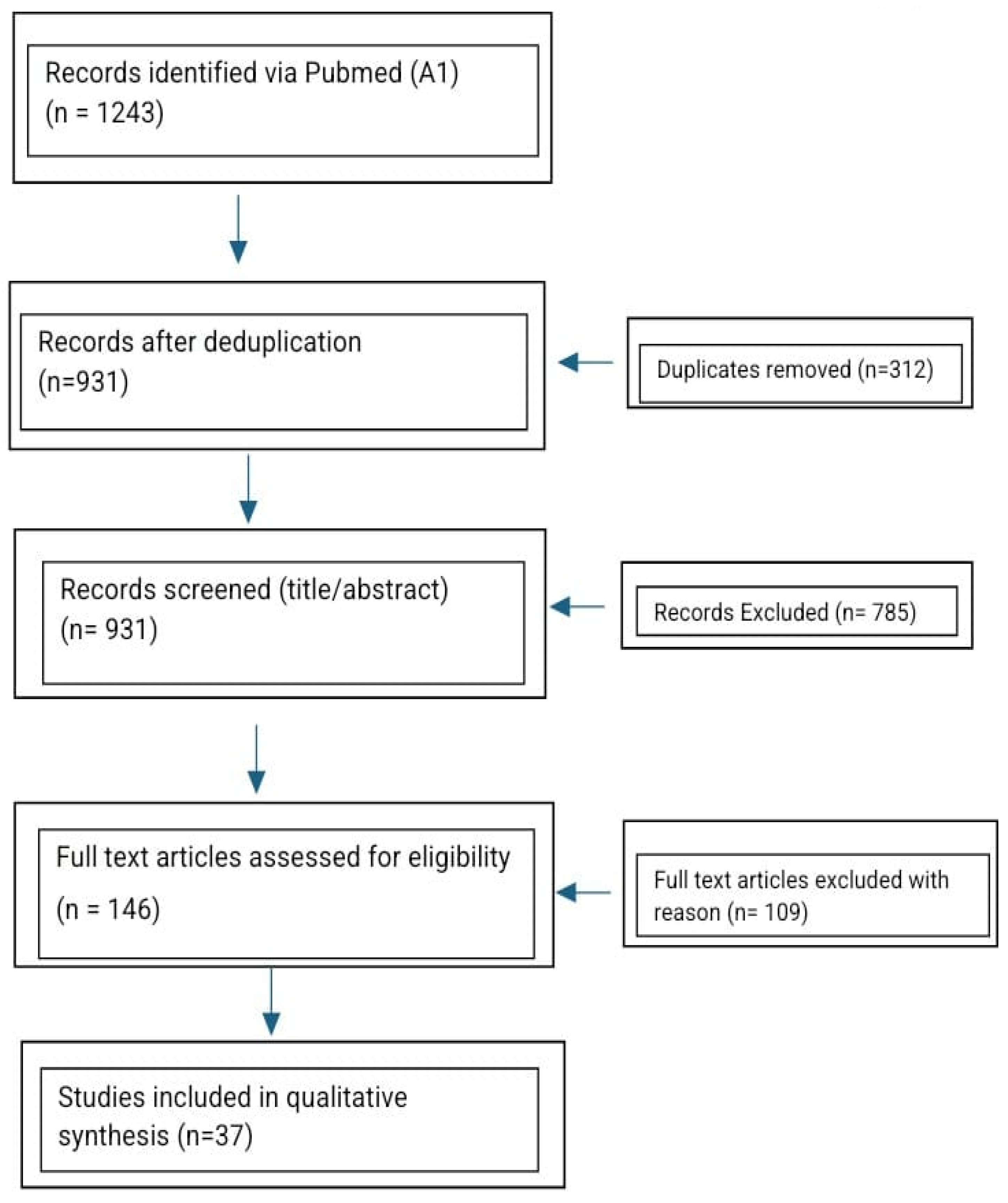


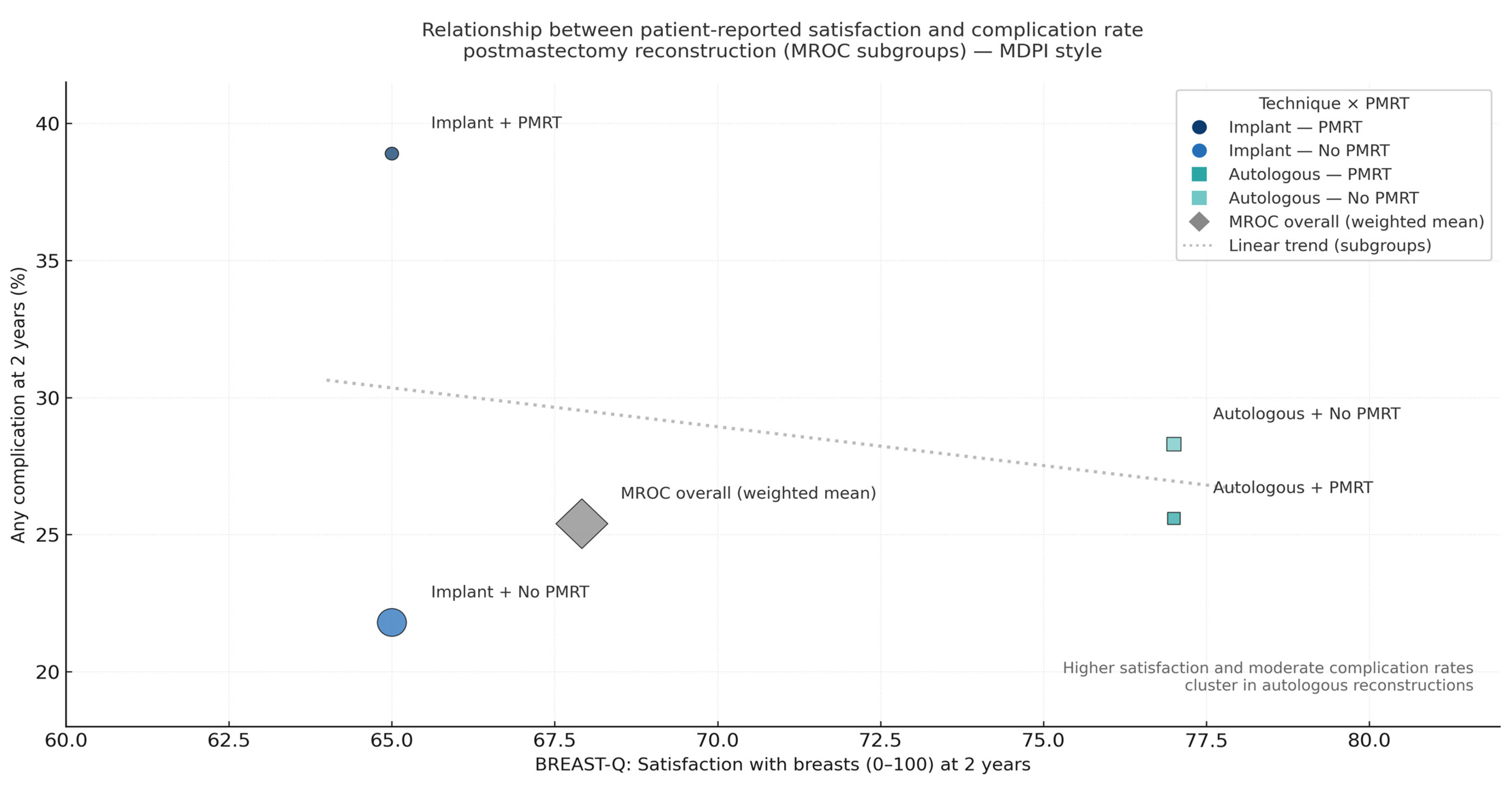

| Database/Source | Search Period | Search Terms (Key Concepts) | Language | Eligible Records After Screening (n) | Study Design | Reconstruction Type | Notes |
|---|---|---|---|---|---|---|---|
| PubMed/MEDLINE | January 2014–December 2024 | breast reconstruction, mastectomy, implant, autologous, postmastectomy radiotherapy, complications, BREAST-Q | English | 1243 → 931 after deduplication | 22 observational; 4 meta-analyses | Implant/Autologous/Hybrid | Main source of indexed articles |
| Embase | January 2014–December 2024 | Same MeSH/EMTREE terms adapted | English | 612 → 215 unique | 6 registry-based; 3 systematic reviews | Implant/Autologous | Additional European studies |
| Manual reference screening | 2014–2024 | Reference lists of key reviews | English | 12 | 2 cohort + 1 meta-analysis | Implant/Autologous | Complementary evidence |
| Final inclusion | — | — | English | 37 studies | 0 RCT; 27 observational; 5 registry; 5 meta-analyses | 26 IBR; 11 ABR | Included in synthesis |
| Author (Year) | Country/Setting | Design | Sample Size (Per Arm) | Procedure/Technique | Radiotherapy (Timing) | Follow-Up (Median; Range) | Primary Outcomes | Key Citation |
|---|---|---|---|---|---|---|---|---|
| Santosa (2018) [1] | Multicenter (USA)—MROC | Prospective cohort (multicenter) | — | Autolog vs. Implant; PROs (BREAST-Q) | PMRT stratified | ≈24 months | Satisfaction (BREAST-Q), complications | Ann Surg 2018 |
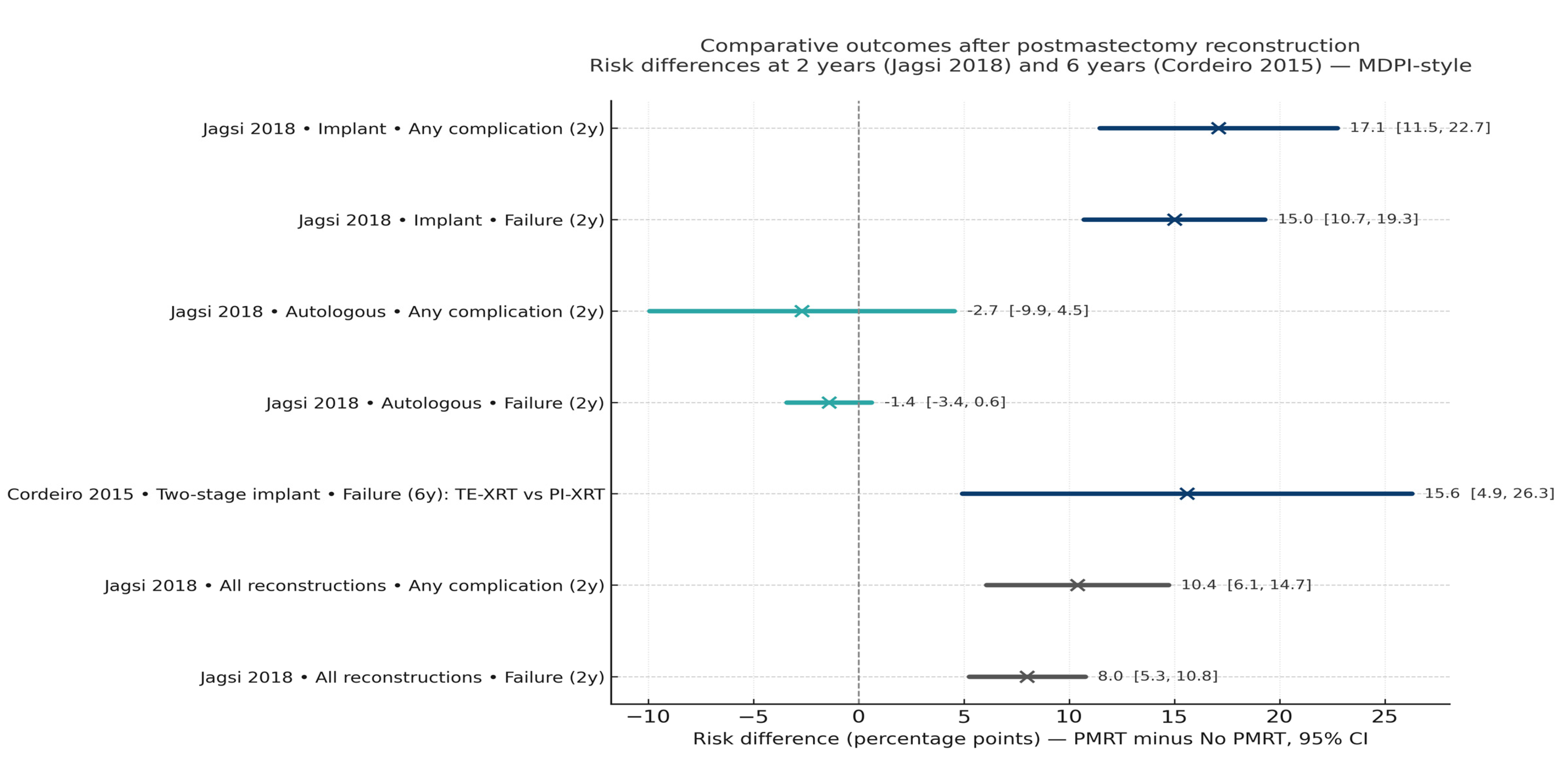
| Jagsi (2018) [2] | Multicenter (USA)—MROC | Prospective cohort (multicenter) | — | Autolog vs. Implant; RT exposure documented | PMRT vs. no-PMRT | 24 months | Complications; PROs | JNCI 2018 |
| Bennett (2018) [3] | Multicenter (USA)—MROC | Prospective cohort (multicenter) | N = 2343 overall | Autolog vs. Implant | PMRT stratified | 24 months (criterion) | Any/reoperative complications; infection | JAMA Surg 2018 |
| Cordeiro (2015) [4] | Single center (USA) | Cohort (single-center) | TE-XRT n = 94; PI-XRT n = 210; no RT n = 1486 | Two-stage implant | TE vs. PI timing of PMRT | Up to 6–12 years (KM modeled) | Reconstructive failure; capsular contracture; satisfaction | PRS 2015 |
| Eriksson (2020) [5] | National registry | Registry-based cohort | — | Implant and/or autologous (registry categories) | RT recorded | — | Complications; revisions | PRS Global Open 2020 |
| Study/Year/Design | Reconstruction Type(s) | Sample Size | Key PRO Findings (BREAST-Q) | Reference (PMID) |
|---|---|---|---|---|
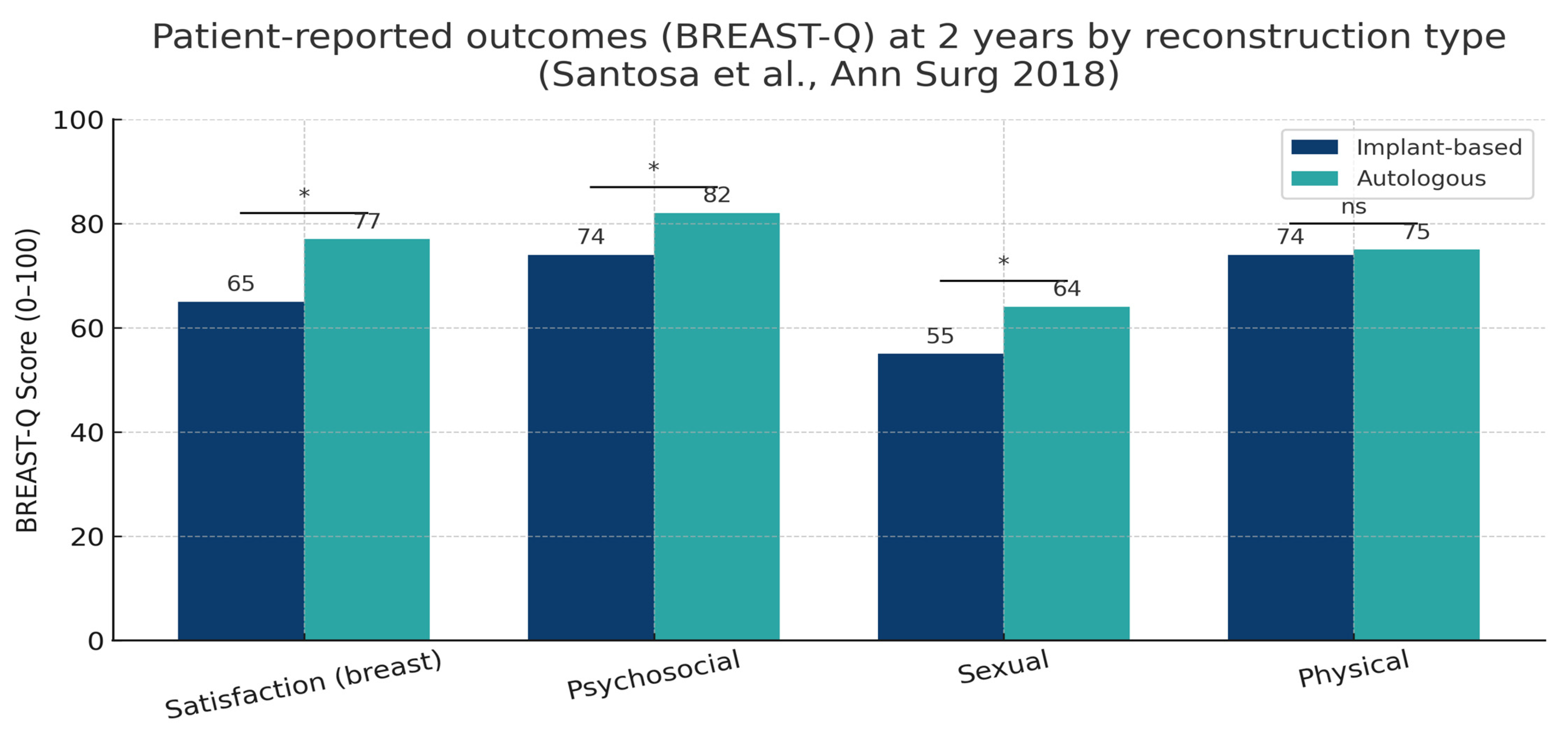
| Santosa et al., 2018 [1] (Prospective multicenter cohort, MROC) | IBR vs. ABR | 1996 IBR/1420 ABR | ABR showed significantly higher satisfaction with breasts (+10–12 points) and psychosocial well-being; physical well-being similar | 29334532 |
| Jagsi et al., 2018 [2] (Prospective cohort, MROC subanalysis) | IBR vs. ABR, ±PMRT | 552 irradiated/1481 non-irradiated | PMRT reduced satisfaction in both groups, but decline was greater after IBR (−20 points vs. −5 in ABR) | 29334533 |
| Toyserkani et al., 2020 [10] (Meta-analysis of 9 studies) | IBR vs. ABR | 2129 IBR/825 ABR | ABR had higher satisfaction (+9–10 points); psychosocial domains superior; physical well-being not significantly different | 31711862 |
| Khajuria et al., 2020 [7] (Systematic review, 15 cohorts) | IBR vs. ABR | >3000 total | Sexual and overall satisfaction higher with ABR; quality-of-life domains stable at ≥2 years | 35295877 |
| Shauly et al., 2023 [19] (Meta-analysis, JPRAS) | Direct-to-implant (DTI) vs. ABR | 412 total | Aesthetic and psychosocial outcomes favored ABR; differences modest but consistent | 37329749 |
| Study/Design | Exposure | LRR/DFS/OS | Effect of Delays | Additional Notes | Reference |
|---|---|---|---|---|---|
| Systematic reviews/large cohorts | Immediate or delayed reconstruction | No increase in LRR, DFS, or OS detriment | — | Comparable outcomes to mastectomy alone when therapy timely | [10,11] |
| Pooled analyses (fat grafting) | Autologous fat grafting | No increased recurrence signal | — | Supports oncologic safety of fat grafting | [6,10] |
| Cohort analyses | Complication-related delays | Potential negative impact on DFS/OS | Delays in chemo/RT drive risk | Emphasizes complication prevention and coordination | [20] |
| Domain | Implant-Based Reconstruction (IBR) | Autologous Breast Reconstruction (ABR) |
|---|---|---|
| Aesthetic/Breast Satisfaction | Lower in most studies; more implant-related complications | Higher satisfaction; more durable results |
| Patient-Reported Outcomes (Psychosocial/Sexual) | Lower overall scores; variable between techniques | Higher psychosocial and sexual well-being; improved quality of life |
| Oncologic Safety | Comparable LRR, DFS, and OS if adjuvant therapy not delayed | Comparable or better long-term outcomes; fewer failures under PMRT |
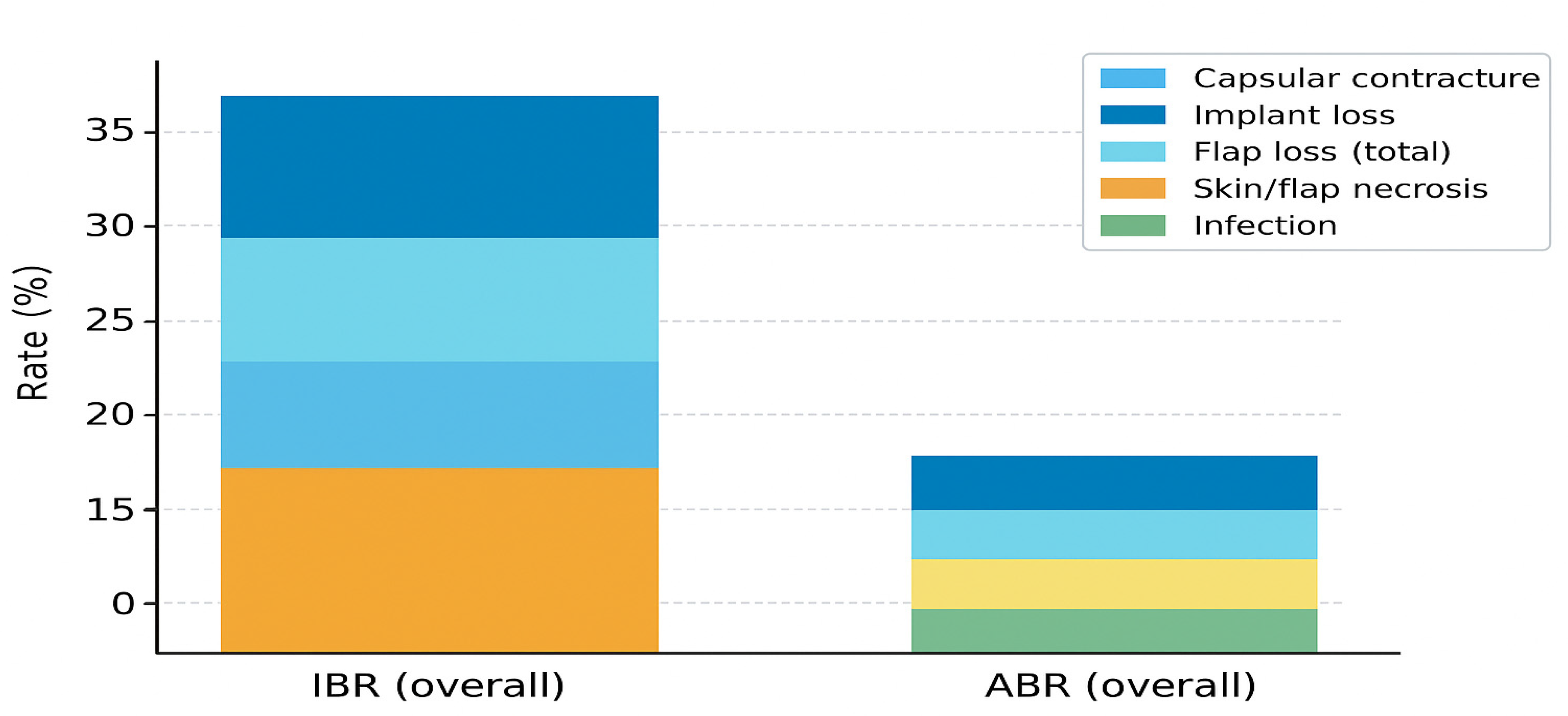
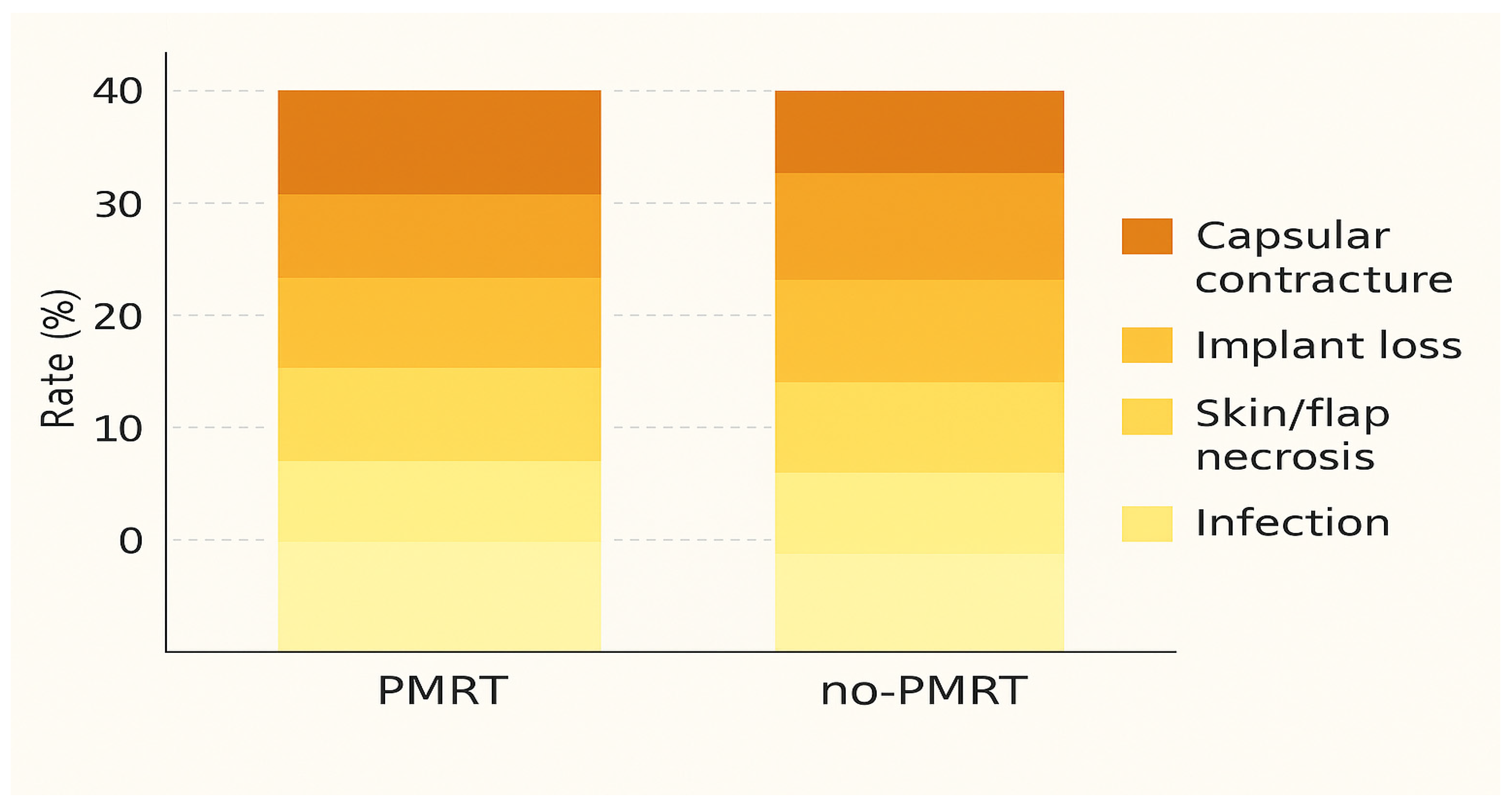
| Complications | Higher capsular contracture and implant loss under RT | Donor-site morbidity; longer surgery; lower long-term failure rates |
| Cost Considerations | Lower upfront cost; higher long-term revision rates | Higher initial cost; potentially fewer reoperations long-term |
Disclaimer/Publisher’s Note: The statements, opinions and data contained in all publications are solely those of the individual author(s) and contributor(s) and not of MDPI and/or the editor(s). MDPI and/or the editor(s) disclaim responsibility for any injury to people or property resulting from any ideas, methods, instructions or products referred to in the content. |
© 2025 by the authors. Licensee MDPI, Basel, Switzerland. This article is an open access article distributed under the terms and conditions of the Creative Commons Attribution (CC BY) license.
Share and Cite
Stana, M.; Sanda, N.A.; Ristea, M.R.; Bordeianu, I.; Costache, A.; Georgescu, F.T. Reconstructive Strategies After Mastectomy: Comparative Outcomes, PMRT Effects, and Emerging Innovations. J. Clin. Med. 2026, 15, 147. https://doi.org/10.3390/jcm15010147
Stana M, Sanda NA, Ristea MR, Bordeianu I, Costache A, Georgescu FT. Reconstructive Strategies After Mastectomy: Comparative Outcomes, PMRT Effects, and Emerging Innovations. Journal of Clinical Medicine. 2026; 15(1):147. https://doi.org/10.3390/jcm15010147
Chicago/Turabian StyleStana, Mihai, Nicoleta Aurelia Sanda, Marius Razvan Ristea, Ion Bordeianu, Adrian Costache, and Florin Teodor Georgescu. 2026. "Reconstructive Strategies After Mastectomy: Comparative Outcomes, PMRT Effects, and Emerging Innovations" Journal of Clinical Medicine 15, no. 1: 147. https://doi.org/10.3390/jcm15010147
APA StyleStana, M., Sanda, N. A., Ristea, M. R., Bordeianu, I., Costache, A., & Georgescu, F. T. (2026). Reconstructive Strategies After Mastectomy: Comparative Outcomes, PMRT Effects, and Emerging Innovations. Journal of Clinical Medicine, 15(1), 147. https://doi.org/10.3390/jcm15010147