Article

Impact of High Risk of Obstructive Sleep Apnea on Health-Related Quality of Life: The Korean National Health and Nutrition Survey 2019–2021

1
Department of Internal Medicine, Yonsei University Wonju College of Medicine, Wonju 26426, Republic of Korea
2
Department of Medical Informatics and Biostatistics, Yonsei University Wonju College of Medicine, Wonju 26426, Republic of Korea
*
Author to whom correspondence should be addressed.
J. Clin. Med. 2024, 13(15), 4360; https://doi.org/10.3390/jcm13154360
Submission received: 27 June 2024 / Revised: 19 July 2024 / Accepted: 24 July 2024 / Published: 25 July 2024
(This article belongs to the Section Respiratory Medicine)

Abstract

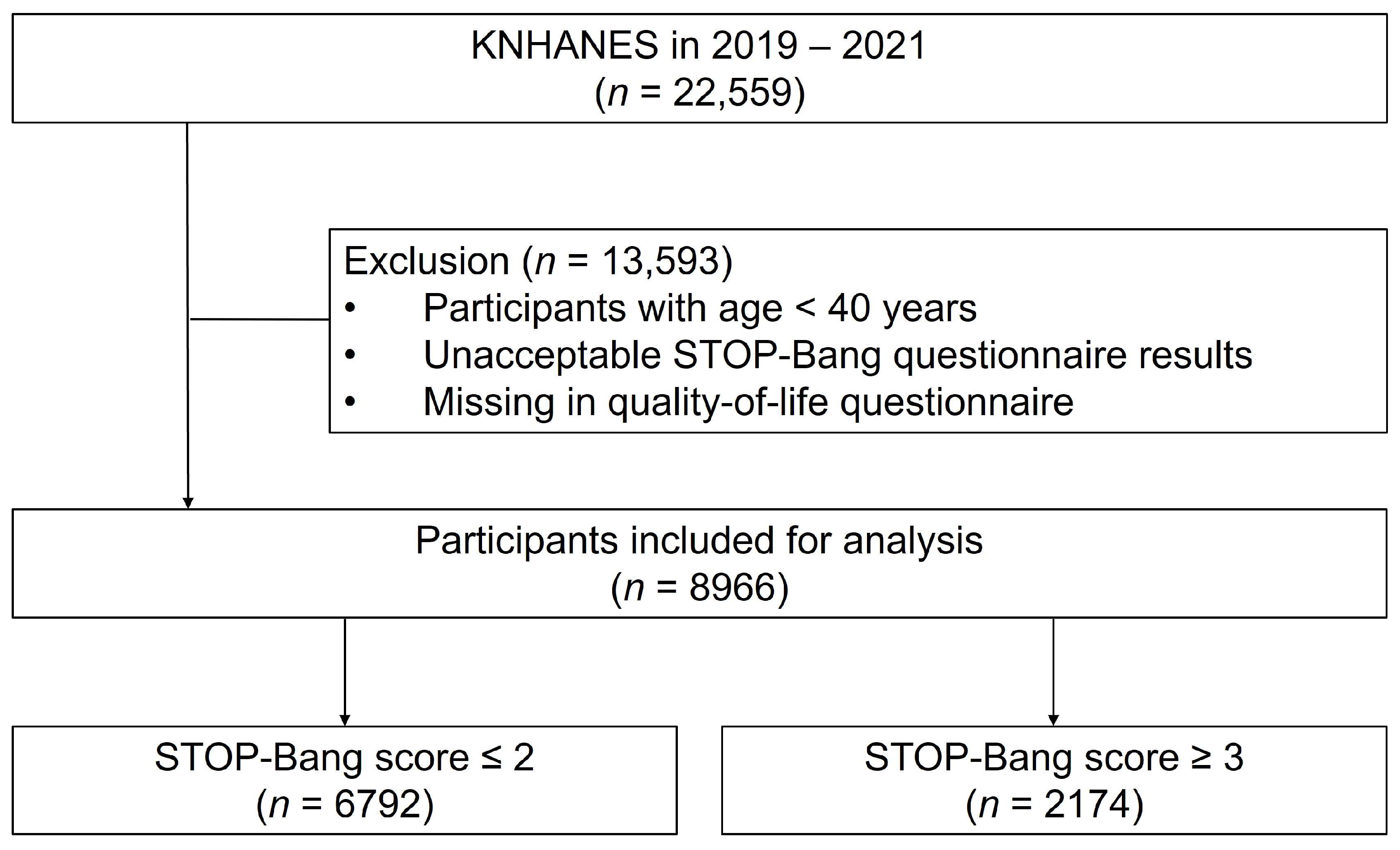
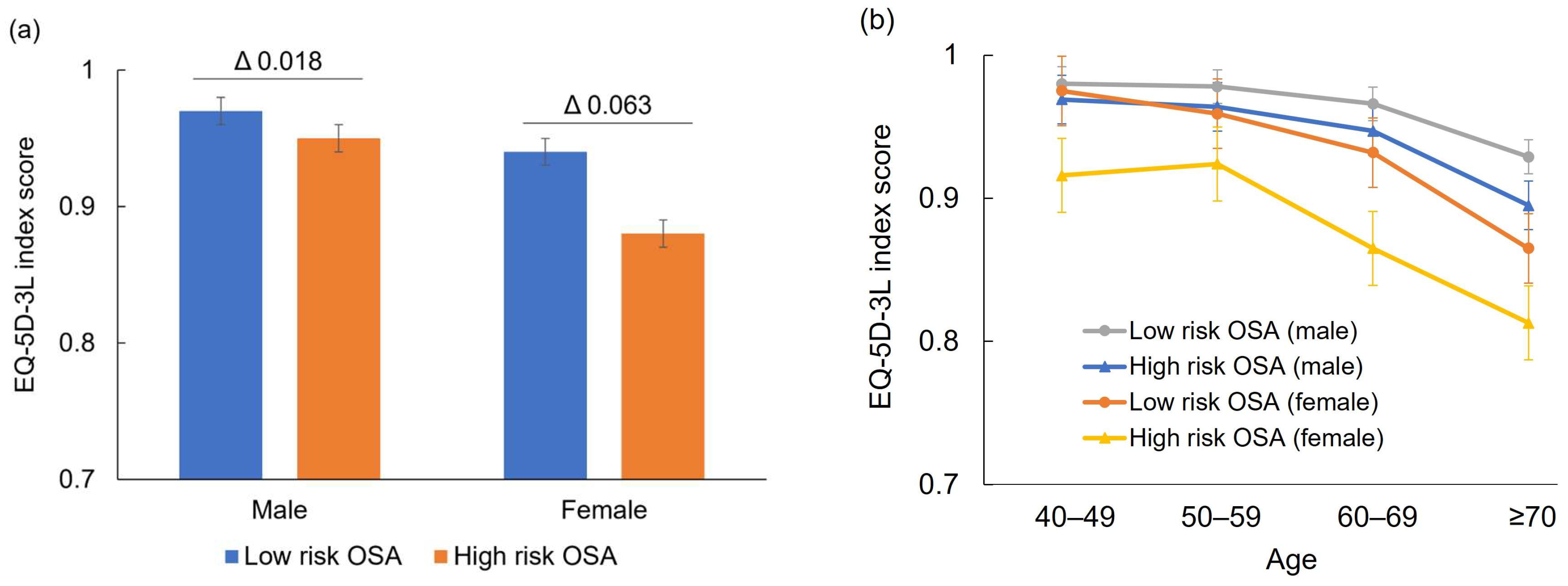
Background/Objectives: Obstructive sleep apnea (OSA) impairs quality of life (QoL). However, its disease burden in the general population remains unknown. We aimed to investigate the association between OSA and health-related QoL in the general Korean population. Methods: This study analyzed cross-sectional datasets of adults (≥40 years) in the Korean National Health and Nutrition Examination Survey 2019–2021. QoL was assessed using the 3-level EuroQoL 5-dimension component (EQ-5D-3L). The high risk of OSA was determined using the STOP-Bang questionnaire (score ≥ 3). Demographic and clinical factors were included in linear regression analyses to identify the factors associated with EQ-5D-3L. Results: Of the 8966 total participants, 6792 (75.8%) and 2174 (24.2%) were classified as having a low risk and high risk of OSA, respectively. The high risk OSA group showed significantly lower QoL scores when compared with the low risk OSA group (0.939 ± 0.003 vs. 0.951 ± 0.002, p < 0.001). However, the mean difference was within the minimal clinically important difference (MCID) of EQ-5D-3L. Only females exceeded the MCID for the EQ-5D-3L. Elderly females with a high risk of OSA showed the lowest QoL. The regression coefficient of high risk OSA in the multivariate model was −0.018 (95% CI: −0.025–−0.01, p < 0.001). Patient demographics and comorbidities also showed significant associations with the EQ-5D-3L. Their regression coefficient was higher than that of high risk OSA. Conclusions: The impact of high risk OSA on QoL manifested differently according to age and sex. The impact of comorbidities on QoL was greater than that of high risk OSA, highlighting the important role of comorbidities and the need for their adjustment in the assessment of QoL.
Keywords: obstructive sleep apnea; quality of life; comorbidities obstructive sleep apnea; quality of life; comorbidities