
Review

Nanomaterial-Based Therapeutic Delivery: Integrating Redox Biology, Genetic Engineering, and Imaging-Guided Treatment


by
Dorota Bartusik-Aebisher
1,
Daniel Roshan Justin Raj
2 and
David Aebisher
3,*
1
Department of Biochemistry and General Chemistry, Collegium Medicum, Faculty of Medicine, University of Rzeszow, 35-310 Rzeszow, Poland
2
English Division Science Club, Collegium Medicum, Faculty of Medicine, University of Rzeszow, 35-310 Rzeszow, Poland
3
Department of Photomedicine and Physical Chemistry, Collegium Medicum, Faculty of Medicine, University of Rzeszow, 35-310 Rzeszow, Poland
*
Author to whom correspondence should be addressed.
Antioxidants 2026, 15(4), 430; https://doi.org/10.3390/antiox15040430
Submission received: 20 February 2026 / Revised: 22 March 2026 / Accepted: 25 March 2026 / Published: 30 March 2026

Abstract

Nanomaterials are emerging versatile platforms for therapeutic delivery, as they offer precise control over drug, antioxidant, and genetic payload transport across biological barriers. Inorganic, organic, hybrid, and biomimetic systems are the major classes of nanomaterials, which all have different physicochemical properties such as size, surface charge, and surface functionalization. These properties collectively influence stability, biodistribution, cellular uptake, and release kinetics. Engineering strategies are increasingly using stimuli-responsive designs that are triggered by pH, reactive oxygen species (ROS), and intracellular redox gradients to perform spatially and temporally controlled delivery. Antioxidant and redox-modulating nanocarriers are of great importance as they overcome the limited bioavailability and nonspecific activity of conventional antioxidants by improving stability, targeting oxidative microenvironments, and allowing for regulated release. Improvements in lipid, polymeric, and inorganic nanoplatforms have also developed gene delivery applications, including siRNA, mRNA, and CRISPR/Cas systems, to provide better cytosolic release and precise therapeutics. When diagnostic imaging is integrated with therapy through theranostic nanoparticles, real-time monitoring and personalized intervention are possible. Safety, scalable manufacturing, and regulatory alignment are some challenges that show the need for standardization and translational procedures to utilize the potential of theranostic nanomedicine.

1. Introduction

Nanomaterials in the world of modern biomedicine are finely engineered structures that typically range from 1 to 100 nm in size and can act as drugs, imaging agents, or most commonly as delivery vehicles, which are controlled by nanoscale interfacial effects [1]. A practical classification that is used in nanomedicine groups existing systems into lipid-based carriers, polymeric nanocarriers, dendrimers, and inorganic/metal or carbon-based nanomaterials, with “hybrid” designs becoming more common [2,3]. Historically, the development of the sector was accelerated when liposomal and polymer-based systems had become clinically validated products, exemplified by PEGylated liposomal doxorubicin, also known as “Doxil®” or “Caelyx®,” which was approved in 1995 and is often cited as the first FDA-approved nanodrug [4]. The amount and diversity of approved and clinical-stage nanopharmaceuticals have grown since the 1980s–1990s, spanning across various fields such as oncology, imaging, and much more, as seen in surveys of marketed nanomedicines [5]. Their small size is a key physiochemical property that controls circulation, biodistribution, clearance, and tissue penetration while also providing rationale for the accumulation of tumors passively through the enhanced permeability and retention (EPR) effect [6,7]. Surface charge, which is often quantified as zero potential, strongly influences the formation of protein corona, stability of colloids, and cell interactions, with both experimental and review literature linking charge to its uptake mechanisms and fate in vivo [8,9]. Surface functionalization, which is PEGylation for “stealth” and ligands such as antibodies and peptides for active targeting, is considered an important design lever to improve biocompatibility, circulation time, and receptor-mediated delivery, allowed by modern bioconjugation toolkits [10,11,12]. Phase engineering, heterostructure designs, and highly advanced surface modifications are emerging strategies that can further improve the redox-related performance of nanomaterials. Crystal structure and defect density can be tuned with phase engineering which will influence the electron transfer and ROS catalytic activity. Heterostructures can improve the overall efficiency of redox cycling by promoting interfacial charge separation. Defect engineering and functional coatings are some surface modification techniques that are able to improve electron transfer pathways and reactive oxygen species (ROS) interactions. This will determine antioxidant or pro-oxidant behavior. In general, these approaches give a mechanistic basis for parameters such as stability, catalytic activity, and therapeutic specificity in redox-responsive nanomedicines [13].
Reactive oxygen species (ROS) can sometimes be a “double-edged” signaling molecule, as moderate increases can drive redox signaling that supports the proliferation, survival, angiogenesis, and metastasis of many types of cancers, while excessive amounts of ROS can trigger the death of tumor cells [14]. Oxidative stress in neurodegeneration, for example, damages lipids, proteins, and nucleic acids and is linked to Alzheimer’s disease and other disorders with increasing brain vulnerability due to high oxygen use and relatively limited antioxidant defenses [15]. ROS from sources such as NADPH oxidases, mitochondria, and endothelial dysfunction in cardiovascular diseases contribute to atherosclerosis, remodeling, arrhythmias, and the progression of heart failure [16]. Inflammatory signaling is also very closely associated with redox biology, as ROS are able to activate or repress nuclear factor-kappa B (NF-κB) in some contexts, and NF-κB can also induce pro-oxidant genes, which further adds to inflammation-oxidation stress loops [17,18]. These roles have made oxidative stress an attractive therapeutic target, but “blanket” antioxidant scavenging has struggled due to ROS being compartmentalized, short-lived, and also being required for normal signaling and host defense [19]. Conventional supplementation trials have often shown null or even harmful outcomes, including the meta-analytic signals of increased mortality with a higher dose of beta-carotene and vitamin E in some settings [20]. A key limitation of antioxidant therapy is the “antioxidant paradox,” that is, when excessive or misplaced antioxidants can cause reductive (antioxidative) stress or even fail to reach the relevant ROS source, which limits their effectiveness. These limitations have caused a shift in therapeutic strategies toward targeting the production of ROS at its source, such as inhibiting enzymatic generators like NADPH oxidases (NOX), rather than neutralizing reactive species indiscriminately throughout the cell [21].
Many antioxidants, including polyphenols, have been limited clinically by factors such as poor aqueous visibility, rapid metabolism, and chemical photosensitivity. Because of this, many nanocarriers are widely being used to improve bioavailability and stability by protecting unstable molecules from degradation and also by enhancing apparent solubility and absorption [22]. This rationale is demonstrated very well for curcumin, where some formulation strategies, including nanoparticles, have been repeatedly linked to a higher systemic exposure and better performance than the free compound [23], and also in resveratrol, where more importance has been placed on nanoencapsulation in order to be protected from instability and improve delivery [24]. Beyond exposure, nanomaterials allow for controlled release and reduced systemic toxicity by way of tuning the composition and morphology of carriers to regulate release kinetics and maintain therapeutic levels while limiting adverse effects related to peaks [25]. Targeted nanoparticle delivery is also often referred to as a route to better efficacy with a lower off-target burden [26], while safety-focused reviews have highlighted that nanotoxicity must be evaluated alongside these benefits [27]. As many antioxidants are potent in vitro but exposure is limited in vivo, nanodelivery addresses the main translational issues by getting stable, sufficient concentrations to the correct tissues over time [28].
In recent times, nanomaterial-based drug delivery, antioxidant nanomedicine, gene delivery systems, and theranostic platforms have studied individually in many reviews. These topics are however discussed in isolation and there is a lack of integration between redox biology and the design of nanomaterials for application. In this review, redox-responsive nanomaterials are taken into perspective as the central mechanistic framework. It will also study the design, functional engineering, and translational potential of nanomaterials for therapeutic delivery, with more focus put on antioxidant, redox-responsive genetic applications. It discusses the advances in targeted drug delivery, gene therapeutics, and theranostic nanoplatforms while also critically evaluating the pharmacokinetics, safety considerations, and translational challenges that are involved with the future of precision nanomedicine. By forming a connection between these domains, this review will provide a framework that is more integrated and translationally relevant in comparison with existing literature.
To guide the reader through this review, the following sections have been structured so that they progressively build on the fundamental principles to translational applications. Section 2 provides an outline of the classification of nanomaterials and their physicochemical properties that control biological interactions. Section 3 discusses the design and engineering behind nanomaterial-based drug delivery with an emphasis on redox-modulating therapies. Section 4 focuses on the various strategies used in targeted delivery including active, passive, and redox-responsive approaches. Section 5 examines how nanomaterial platforms are used for gene delivery, highlighting the intracellular barrier and redox-triggered release mechanisms. Section 6 presents imaging and therapy that can be integrated through theranostic nanoparticles. And finally, Section 7 addresses the safety and regulatory challenges as well as the field’s future directions.
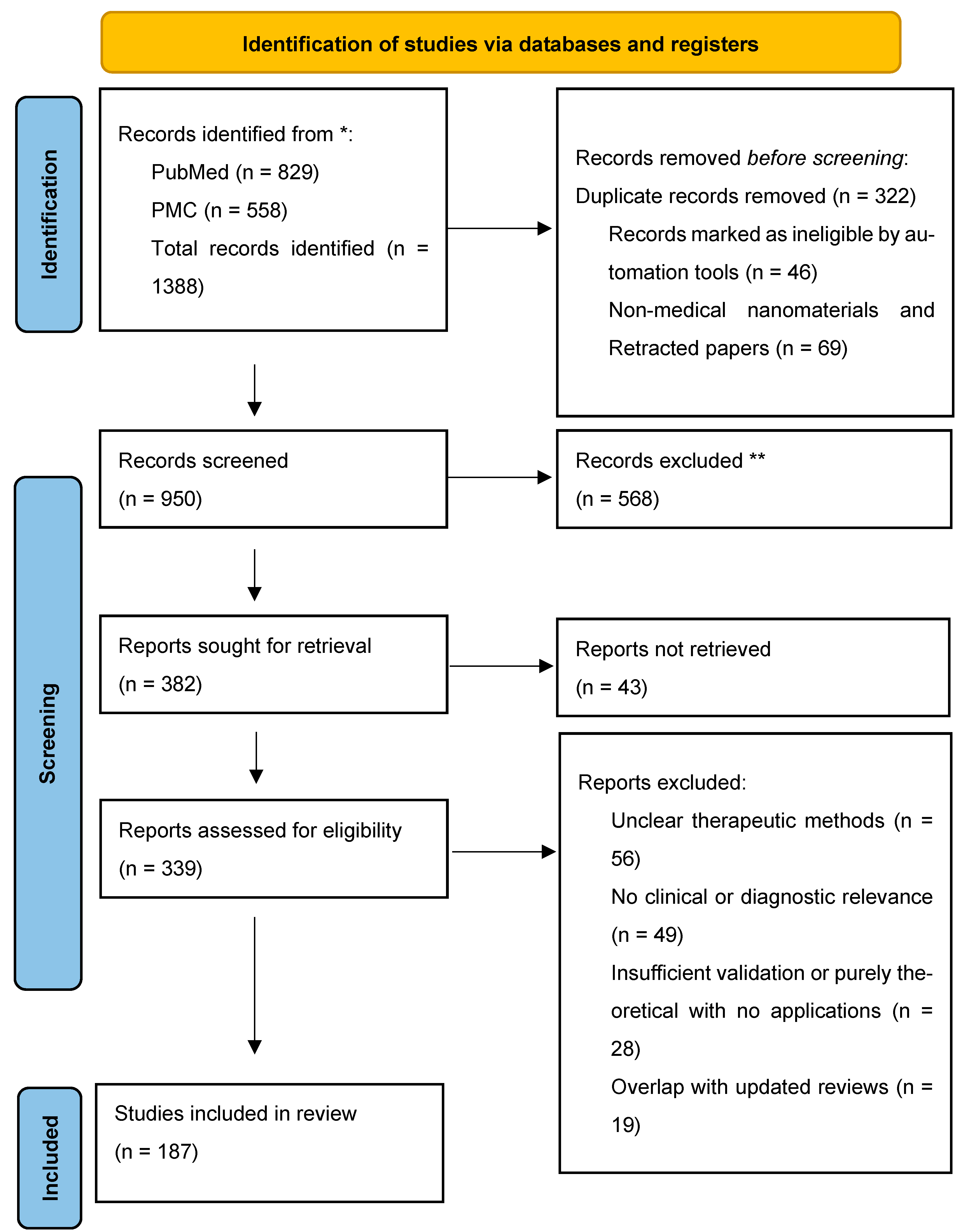
This review is in accordance with PRISMA guidelines to ensure a transparent and systemic selection of studies, which is visualized in Figure 1. A comprehensive search of the PubMed and PubMed Central (PMC) databases provided 1388 records. After the removal of duplicates (n = 322), marked ineligible (n = 46), and non-medical or retracted publications (n = 69), 950 records were further screened. Following abstract screening, 382 reports were sought for full-text retrieval, out of which 339 were assessed for eligibility. Studies were then further excluded for their unclear therapeutic methodology, the lack of clinical or diagnostic relevance, insufficient validation, or overlap with updated reviews. In the final analysis, 187 studies met the inclusion criteria and were incorporated in the qualitative synthesis. Beyond these methodological criteria, more importance was placed on the studies that had provided mechanistic insight into nano-bio interactions and redox-responsive or disease-targeted functionality. Their relevance to clinically translatable delivery systems is key, as it guides the thematic focus of the review.

2. Nanomaterials for Biomedical Therapeutic Delivery

2.1. Types of Nanomaterials

Nanomaterials that are used in biomedical and pharmaceutical research are commonly classified as inorganic, organic, and hybrid or biomimetic systems, which is according to the various differences in their composition, physicochemical behavior, and biological interactions. The material classes that are discusses in this section were chosen based on their established roles in therapeutic delivery and also because they can be rationally engineered for redox modulation, targeting, controlled release and other functions. Although there are many other emerging nanomaterials, the systems discussed here have the strongest experimental validation and translational relevance. Inorganic nanomaterials include gold, iron oxide, silica, and ceria nanoparticles, with each of them offering unique functional advantages as seen in Table 1. Gold nanoparticles have chemically stable cores and highly tunable surfaces, which are favorable and allow for conjugation with drugs, biomolecules, or targeting ligands while also allowing for optical and photothermal applications due to localized surface plasmon resonance [29]. Iron oxide nanoparticles have superparamagnetic properties that allow for magnetic resonance imaging contrast, magnetic targeting, and therapies based on hyperthermia, with surface coatings playing an important role in determining biocompatibility and circulation behavior [30]. Silica nanoparticles, particularly mesoporous silica systems, possess high surface area and tunable pore architectures, which help make drug loading and stimuli-responsive release efficient while also allowing for extensive surface functionalization [31]. A unique inorganic nanomaterial is cerium oxide because of its reversible redox cycling between Ce3+ and Ce4+ states, providing enzyme-mimetic antioxidant behavior that is strongly influenced by the surrounding biological environment [32]. In contrast, organic nanomaterials are usually composed of lipids or polymers and are often designed for biodegradability and long-term toxicity reduction. Lipid nanoparticles have become the leading platforms for nucleic acid delivery, as they are able to encapsulate and protect RNA and DNA, assist with cellular uptake, and promote endosomal escape through carefully balanced lipid compositions [33]. Polymeric nanoparticles, including systems that are based on biodegradable polymers such as poly lactic-co-glycolic acid (PLGA) or PEG-modified architectures, allow for controlled and sustained drug release while also providing flexibility in size, surface chemistry, and payload compatibility [34]. A structurally precise subclass of organic nanomaterials is dendrimers, which are characterized by branched architectures and multivalent surfaces that allow for high-density functionalization and drug conjugation, even though their biological performance is strongly influenced by the surface charge and generation number [35]. Combining inorganic and organic categories together are the hybrid and biomimetic nanomaterials, which connect multiple components to provide stability, functionality, and biological compatibility. This strategy is illustrated effectively on lipid–polymer hybrid nanoparticles by integrating polymeric cores with lipid shells to obtain robust structures and ideal biointerfaces [2]. Biomimetic nanomaterials such as cell-membrane-coated nanoparticles build on this concept even more by using natural cellular membranes to mask synthetic cores, which allows for immune evasion, prolonged circulation, and biologically relevant targeting while at the same time causing new challenges in manufacturing consistency and large-scale clinical implementation [36].

2.2. Physicochemical Properties Relevant to Delivery

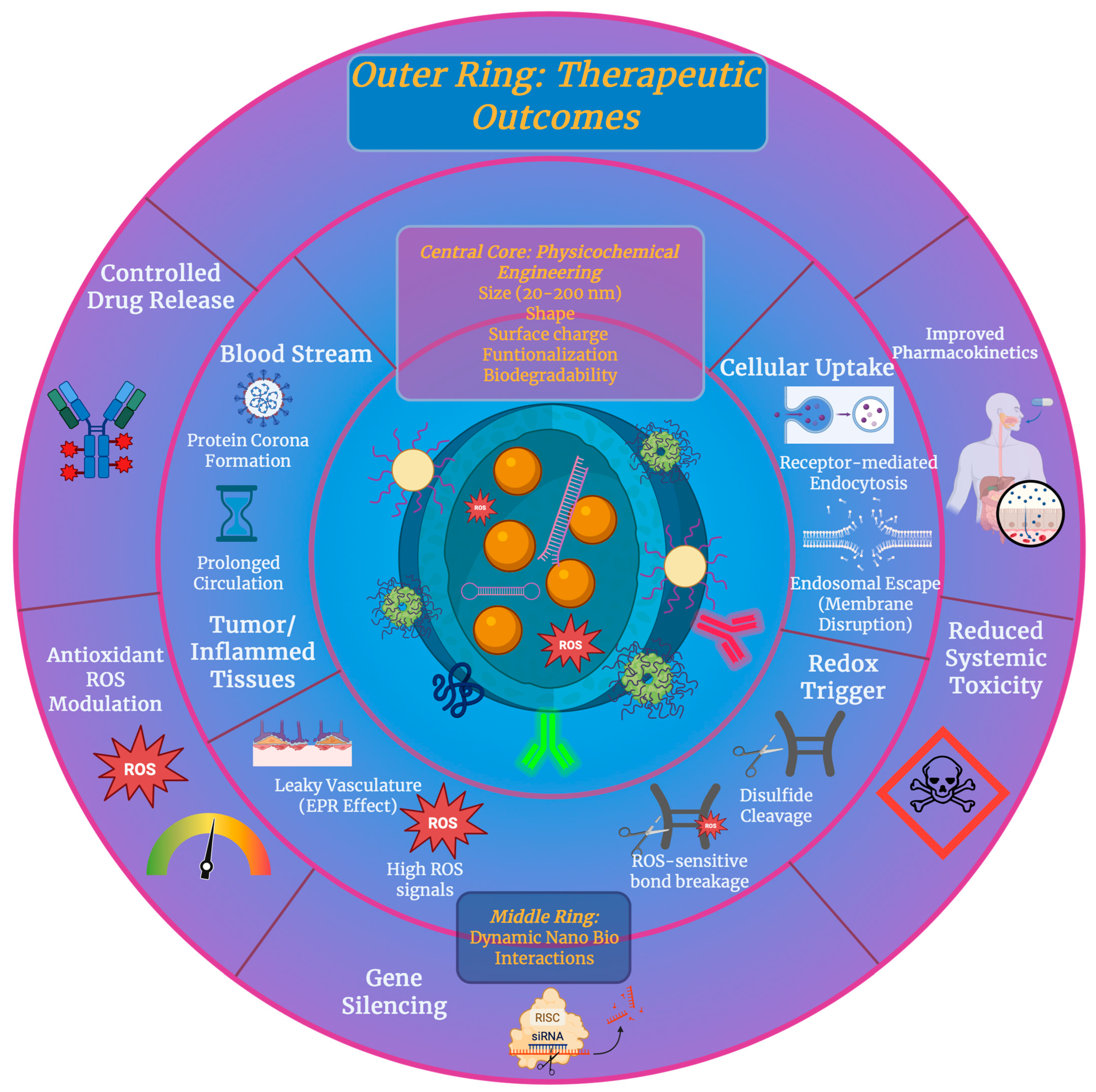
The efficiency and safety of nano- and micro-scale delivery systems are largely based on a defined set of physicochemical properties, which include size, shape, surface charge, surface functionalization including redox responsiveness, and biocompatibility with controlled biodegradability. Together, these parameters influence the stability of colloids in biological fluids, biodistribution, cellular uptake, intracellular trafficking, and payload release. Most importantly, they function as an interdependent system rather than as isolated variables [37,38]. Particle size is a huge factor that controls circulation behavior and cellular internalization. Numerous studies have reported the optimal uptake of nanoparticles in non-phagocytic cells that range around tens of nanometers, which shows a balance between membrane-wrapping energetics and endocytic efficiency. Size also determines the clearance pathways of particles, with smaller particles undergoing renal elimination and larger ones by the uptake of the mononuclear phagocyte system [39]. Shape is another layer of control, where non-spherical carriers such as rods and disks show an altered margination in blood flow, different adhesion to endothelial surfaces, and distinct uptake kinetics in comparison with spherical particles. Differences that are shape-dependent come from changes in contact area and membrane deformation during internalization [40]. Surface charge affects interactions with cell membranes, protein corona formation, and colloidal stability. Enhanced cellular uptake is often seen in positively charged carriers due to the electrostatic attraction to negatively charged membranes, but they are also related to an increase in cytotoxicity and nonspecific interactions. Neutral or slightly negative surfaces usually reduce unwanted protein absorption and prolong circulation; however, to ensure an efficient uptake, they may require more targeting strategies [37]. Surface functionalization is used when it is needed to tune biological interactions by introducing stealth properties, targeting ligands, or stimuli-responsive elements. Redox-responsive systems are particularly relevant as intercellular environments, and many pathological tissues are significantly different in redox state from blood plasma. By integrating disulfide bonds into carrier backbones or crosslinks, the rise in intracellular glutathione levels had been utilized, which enables extracellular stability followed by rapid intracellular degradation and cargo release, which is illustrated in Figure 2 [41,42]. On top of reduction-sensitive designs, oxidation-responsive motifs that target ROS have also been developed, supporting selective release in inflamed or tumor tissues characterized by oxidative stress. Redox-triggered strategies improve spatial and temporal control over delivery and reduce premature release [43]. Biocompatibility and biodegradability are crucial factors in clinical translation, meaning that materials must be able to degrade into non-toxic byproducts at a controlled rate while avoiding long-term accumulation or immune activation. A good example where this can be seen is in PLGA, where it degrades into lactic and glycolic acids that enter natural metabolic pathways. It is possible to tune its degradation kinetics and release profiles through factors such as polymer composition and molecular weight [44]. Overall, a well-designed delivery system requires an excellent optimization of physicochemical properties.
Table 1. Overview of major nanomaterial classes used for biomedical therapeutic delivery and their key properties.
Representative MaterialsNanomaterial ClassKey Physicochemical FeaturesMain Functional Advantages for DeliveryLimitations/ChallengesTypical Therapeutic Applications
Gold nanoparticles [29]InorganicChemically inert core, easily tunable surface chemistry, strong plasmonic/optical responseStraightforward conjugation of drugs and targeting ligands, allowing photothermal and optical theranosticsNon-biodegradable core, risk of long-term tissue accumulationTargeted drug delivery, photothermal cancer therapy, optical imaging
Iron oxide nanoparticles [30]InorganicSuperparamagnetic behavior, magnetic field responsivenessMRI contrast, magnetic targeting, and magnetically induced hyperthermiaRapid uptake by mononuclear phagocyte system without stealth coatingsImage-guided therapy, magnetically targeted delivery
Mesoporous silica nanoparticles [31]InorganicVery high surface area, tunable pore size and volume, robust frameworkHigh drug loading and stimuli-responsive release; extensive surface functionalizationRelatively slow biodegradation, potential silica-related toxicity at high dosesControlled and triggered release of small molecules and biomacromolecules
Cerium oxide nanoparticles [32]Inorganic (redox-active)Reversible Ce3+/Ce4+ redox cycling, catalytic ROS scavengingEnzyme-mimetic, self-regenerating antioxidant and redox-modulating activityBiological effects strongly depend on local environment and surface chemistryAntioxidant and anti-inflammatory therapies
Lipid nanoparticles (LNPs) [33]Organic (lipid-based)Amphiphilic, self-assembled lipid structures, encapsulate nucleic acidsProtect and deliver RNA/DNA, promote cellular uptake and endosomal escape, biodegradableFormulation and storage stability issues; possible innate immune activationMessenger RNA (mRNA)/small interfering RNA (siRNA) and gene delivery
PLGA and PEGylated polymeric nanoparticles [34,44]Organic (polymeric)Biodegradable polymers with tunable molecular weight and compositionControlled and sustained drug release, adaptable size and surface chemistryBurst release and local acidification during degradation is possibleLong-acting small-molecule and protein delivery
Dendrimers [35]Organic (dendritic)Highly branched, monodisperse, multivalent architectureHigh-density attachment of drugs/ligands, precise structural controlSurface charge–dependent cytotoxicity, complex and costly synthesisTargeted drug and gene conjugate delivery
Lipid–polymer hybrid nanoparticles [2]HybridPolymeric core with lipid shell combining rigidity and biomimetic interfaceImproved structural stability with favorable biointerface and circulationMore complex and less scalable manufacturingMultifunctional and combination drug delivery
Cell membrane–coated nanoparticles [36]BiomimeticNatural cell membrane proteins and lipids cloaking a synthetic coreImmune evasion, prolonged circulation, and biologically relevant targetingBatch variability and scale-up challengesTargeted therapy for cancer and inflammatory diseases
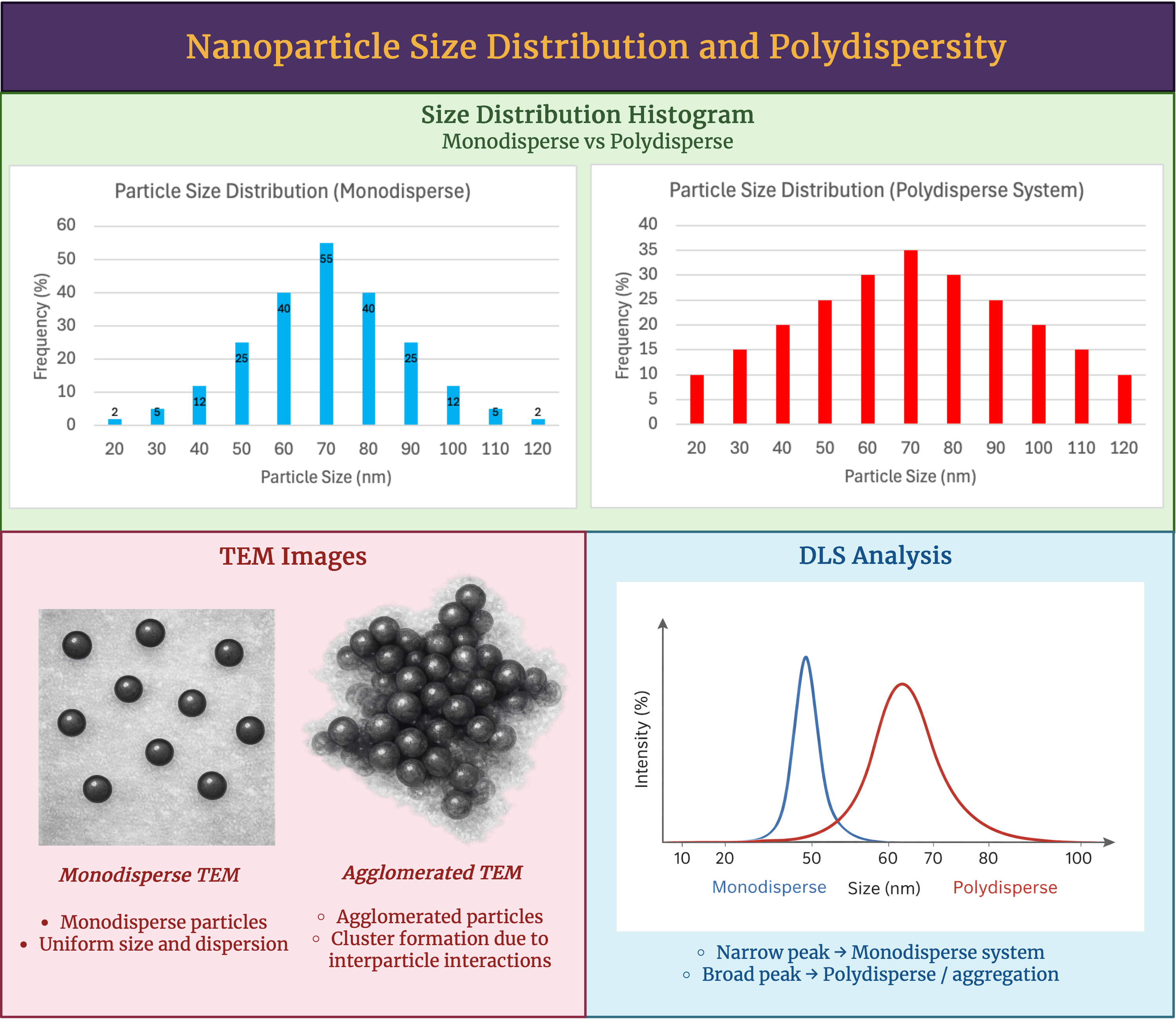
A technique that is largely used to describe the surface chemistry of nanoparticles is the Fourier-transform infrared (FTIR) spectroscopy. It can also be used particularly in the phytochemical-assisted synthesis to confirm the presence of capping agents [45]. On top of the basic functional group identifications, evidence of nanoparticle and biomolecule interactions can be seen in the characteristic band shifts such as hydroxyl (–OH), carbonyl (C=O), and aromatic (C=C) groups. The changes in peak position, intensity, or broadening that is relative to the precursor extracts may indicate a metal-ligand coordination between various phytochemicals such as polyphenols and flavonoids, and the surface of the nanoparticle. These spectral features support the presence of phytochemical capping [46]. This can improve colloidal stability, reduce agglomeration, and influence the biological interactions. Thus, FTIR analysis is not only a qualitative tool that is being used in functional group assignment but also serves a purpose of being a mechanistic indicator of surface functionalization [47]. It is important to not only consider the size of the average particle but also the particle size distribution as that will be vital to better describe the morphology of the nanomaterial. This is usually shown in a histogram such as the one in Figure 3, because it can depict the population heterogeneity and polydispersity [48]. Uniform synthesis and improved stability can be seen in narrow distributions. Whereas broader distributions can suggest a presence of secondary particle populations and variability. Additionally, agglomeration effects should also be considered as the interparticle interactions and insufficient surface stabilization are factors that may lead to clustering in solution. This can show larger hydrodynamic sizes when compared to the primary particle dimensions that were observed by microscopy. Such an aggregation behavior has potential to significantly influence the stability of colloids, cellular uptake, and biodistribution [49]. Therefore, it is considered as a crucial parameter while evaluating the performance of nanomaterials.

3. Nanomaterial-Based Drug Delivery Systems

3.1. Design and Engineering of Drug Delivery Systems

Nanomaterial-based drug delivery systems (DDS) are designed to encapsulate certain therapeutic molecules and release them at the desired targeted sites in a controlled and stimuli-responsive manner, which will help overcome some challenges surrounding conventional drugs, such as poor solubility, rapid clearance, and systemic toxicity. This section focuses on nanomaterial systems that have design principles that are directly related to therapeutic performance, particularly in redox sensitivity and controlled release behavior. Systems that do not have a clear linkage between the properties of materials and delivery outcomes have not been emphasized. Table 2 discusses various different types of DDS and their functional engineering strategies. These systems are engineered to have control over drug encapsulation and conjugation strategies, as well as the integration of stimuli-responsive functions that utilize pathological microenvironments for on-demand drug release. Attaining efficient drug encapsulation and conjugation within nanoscale carriers while also preserving the activity and stability of the drug remains a design challenge in DDS engineering. Therapeutic agents can be incorporated through physical encapsulation or chemical linkage in nanocarriers such as polymeric nanoparticles, liposomes, and prodrug conjugates. Chemical conjugation, which is often via acid-labile bonds or polymer-drug linkages, is known to improve drug load and pharmacokinetics, allowing for a sustained release and enhanced accumulation at target sites [50,51]. Controlled drug release is a defining feature of advanced DDS. Systems that are designed with stimuli-responsive mechanisms release their payloads in response to endogenous triggers such as pH gradients, redox potential, enzymes, or ROS. In tumor microenvironments, for example, there are elevated ROS levels and an acidic pH compared to normal tissues, which give unique triggers for site-specific drug activation [52,53]. pH-responsive systems use these acidic microenvironments to trigger some structural changes in nanocarriers, such as swelling, dissociation, or cleavage of pH-labile bonds, which results in the localized drug release at tumor tissues or within acidic organelles such as endosomes and lysosomes [54]. These systems help prevent the premature leakage of drugs during circulation, which improves therapeutic effectiveness while limiting the exposure of healthy tissues. ROS-sensitive DDS, on the other hand, use the high oxidative stress in diseased tissues to trigger drug release. ROS-responsive polymer carriers contain motifs that are stable under physiological conditions but degrade in the presence of an increased number of ROS, which allows for an on-demand release of therapeutics [55]. Additionally, dual responsive systems that combine both ROS and pH sensitivity show synergistic release kinetics that are adapted to complex microenvironments, improving anticancer efficacy and minimizing off-target effects [56]. The rational design of nanomaterial-based drug delivery systems integrates advanced drug encapsulation strategies with stimuli-responsive release mechanisms to provide precise control over drug biodistribution and therapeutic action.

3.2. Delivery of Antioxidants and Redox-Modulating Therapeutics

The delivery of antioxidants and redox-modulating therapeutics has been transformed by nanomaterial-based DDS as they address fundamental limitations that are inherent to conventional antioxidant agents, such as unstable pharmacokinetics, rapid biological degradation, and the lack of tissue specificity. Nanomaterial antioxidant activity at the mechanistic level is driven by redox reactions that are surface-mediated. These reactions involve direct electron transfer and catalytic cycling. In order to neutralize reactive oxygen species, many nanoparticles act as electron acceptors or donors. Surface defect sites such as oxygen vacancies and undercoordinated atoms that serve as centers are key factors that control the efficiency. Recent studies that have been conducted on transition-metal-doped nanomaterials and engineered heterostructures show that redox and catalytic performance can have significant improvements through the regulation of the electronic structure and interfacial charge dynamics. When transition metals are incorporated, defect states are introduced and the band structure is modified. This supports electron transfer and further increases the density of catalytically active sites, such as oxygen vacancies. Similar to this is the formation of the heterostructure which generates built-in electric fields at the material interface. It will also promote more efficient charge separation and directional electron migration while keeping recombination well under control. All of these effects together improve catalytic redox cycling and all activities regarding ROS [57]. Continuous ROS scavenging through regenerative redox cycling is further supported by reversible valence transitions (Ce3+/Ce4+) in redox active systems such as cerium oxide. Additionally, the electron transfer kinetics can be governed by the local electronic structure and surface charge. This will be helpful in determining whether nanomaterials exhibit behavior that is antioxidant or pro-oxidant under certain biological conditions. Table 2 shows the traditional small molecule antioxidants, such as ascorbic acid or polyphenols, have often shown lower cellular uptake and rapid systemic clearance, which results in their clinical utility being restricted in oxidative stress-mediated diseases. Nanocarrier systems such as polymeric nanoparticles, liposomes, solid lipid nanoparticles, and hybrid platforms provide a means to protect, stabilize, and control the release of these small molecules, which improves therapeutic efficiency and bioavailability [58]. Small molecule antioxidants that are encapsulated within nanostructures have benefits such as increased protection against premature degradation and controlled release profiles that can extend systemic circulation and reduce the frequency of doses. These nanoscale systems can be engineered to have surface modifications that allow for better cell membrane penetration and target the tissue with a high level of oxidative stress [59]. For example, factors like stability and sustained activity have been improved by nanoencapsulation strategies and have given strong therapeutic results in preclinical models of oxidative stress [58]. Apart from small molecules, nanocarrier technology has also enhanced the delivery of protein-based antioxidants such as superoxide dismutase (SOD), catalase, and other endogenous enzymes. The encapsulation of enzymes within lipid–polymer hybrid nanoparticles or mesoporous silica systems has been shown to significantly improve enzyme stability and also protects against proteolytic degradation, which supports targeted delivery to the sites of inflammation or injury [60,61]. Such nanoformulations have shown increased retention in biological compartments and improved catalytic activity compared to free enzymes, thereby highlighting their potential for treating certain conditions such as inflammatory bowel disease and neurological oxidative damage [60]. Redox imbalances, for example, in tumor microenvironments with high glutathione levels, are used by stimuli-responsive nanocarriers to allow for the triggered release of therapeutic payloads and further precision in delivery [62]. These designs do not just facilitate the spatiotemporal control of antioxidant and redox-active drugs but also support the synergistic modulation of oxidative stress pathways in conjunction with conventional therapies. Importantly, the main factors that are driving the clinical interest in nanomaterial carriers are improved stability and bioavailability. By way of protecting labile therapeutics from degradation and supporting transport across biological barriers such as in mucus or in the blood–brain barrier (BBB), nanocarrier systems are able to achieve higher localized concentrations at target sites with a reduction in systemic exposure [59,60]. To ensure reproducibility and statistical reliability during the antioxidant activity evaluation, independent experimental replicates must be used. Assays such as 1,1-diphenyl-2-picrylhydrazyl (DPPH), 2,2′-azino-bis (3-ethylbenzothiazoline-6-sulfonic acid) (ABTS), or ROS scavenging measurements in most nanomaterial-based antioxidant studies are performed in triplicates or greater. The results are usually reported as mean ± standard deviation. Replicate measurements will reduce the variability of the experiment while also allowing for a better comparison between the different formulations. Whenever applicable, statistical analyses will also further support the validity of the differences that can be observed in the performance of antioxidants. Through the continued optimization of factors such as nanoparticle composition, surface chemistry, and targeting ligands, we can expect further improvements in the delivery of antioxidants and redox-modulating therapeutics in diverse disease contexts.

3.3. Pharmacokinetics and Biodistribution in Nanomaterial-Based Drug Delivery Systems

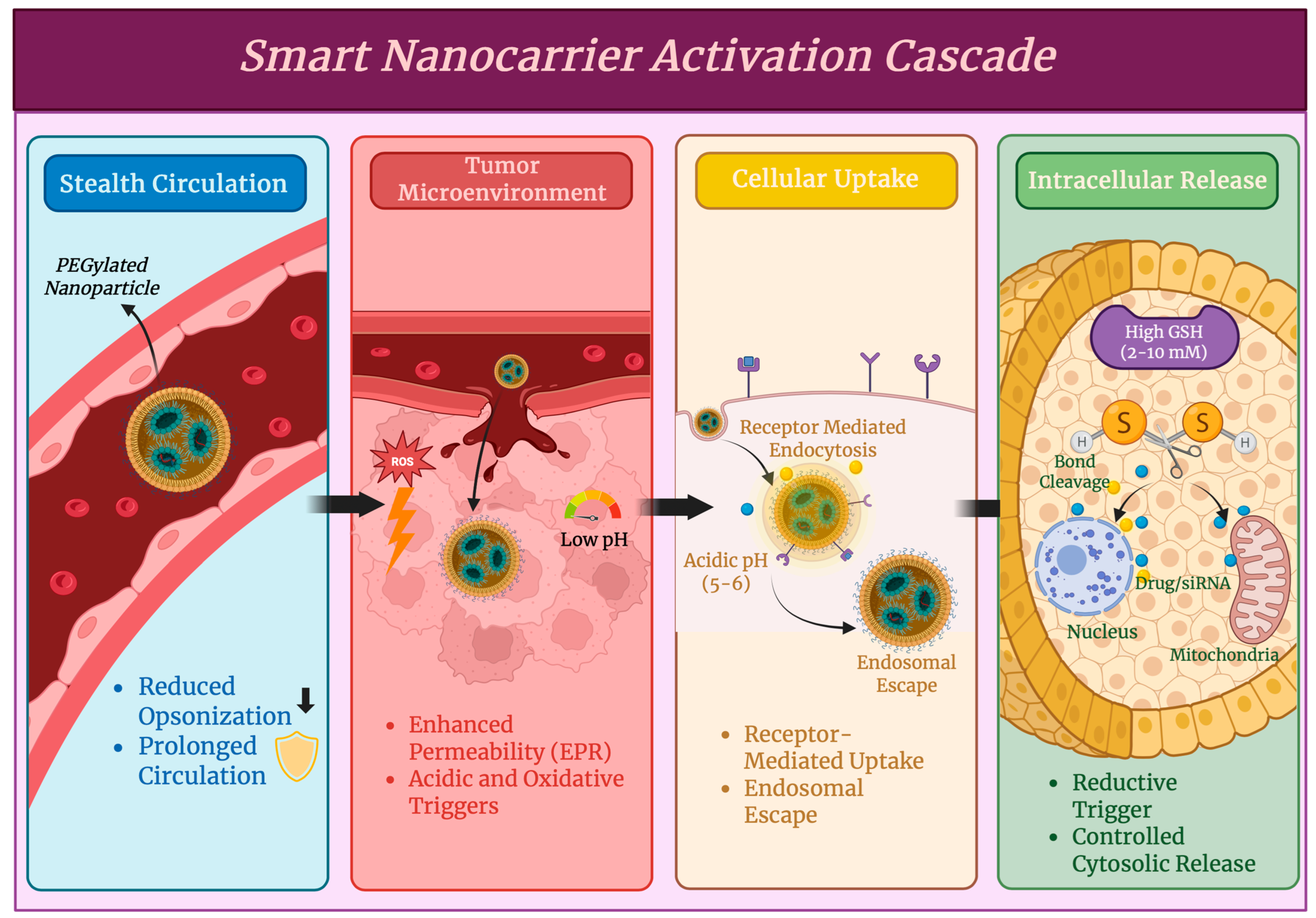
In vivo pharmacokinetics and biodistribution profiles are important factors that determine the success of a given nanomaterial-based system, as they determine the therapeutic efficacy, dosing schedules, safety, and off-target toxicity. Nanocarriers can alter the traditional absorption, distribution, metabolism, and elimination (ADME) of drugs, as they are able to modify how the payload and carrier circulate and localize within tissues compared to small molecules [63]. The nanocarrier’s physicochemical properties, such as size, surface charge, surface chemistry, and composition, play a huge role in circulation time and tissue accumulation. Nanoparticles that are in the size range of 20–200 nm can often achieve longer systemic circulation as they avoid rapid renal filtration since they are larger than 10 nm, and excessive mononuclear phagocyte system (MPS) uptake since they are smaller than 200 nm, which allows for effective tissue accumulation and improved drug exposure at target sites [64]. Opsonization by serum proteins can be reduced by surface modification techniques such as polyethylene glycol conjugation (PEGylation) or zwitterionic coatings, as shown in Figure 4, and minimizes recognition by phagocytic cells and extends circulation half-life [65,66]. Blood residence has been prolonged, and tumor accumulation has been improved through passive mechanisms such as the enhanced permeability and retention (EPR) effect in tumor vasculature. Apart from passive targeting, active targeting through surface ligands, such as antibodies and peptides, is known to direct carriers to specific cellular receptors, leading to an increased local drug concentration and improved therapeutic index while also reducing distribution to healthy tissues [67]. However, effective tissue accumulation must balance carrier stability, controlled release, and target specificity to avoid issues such as premature clearance and nonspecific uptake [63]. The clearance and metabolism of nanomaterials is very different from conventional drug clearance. Nanoparticles are primarily removed by the MPS, particularly in the liver and spleen, and may also undergo size-dependent renal elimination if they are below the glomerular filtration threshold [64]. Designing biodegradable or renally clearable carriers is a major design objective, as the duration of systemic exposure and the potential for chronic toxicity are heavily influenced by organ clearance [63]. Biodistribution studies provide key PK data for translation by often using advanced imaging, radiolabeling, or mass spectrometry methods to measure organ-specific accumulation and elimination pathways [68]. The understanding and optimization of these pharmacokinetic and biodistribution parameters will be key in the advancement of nanomedicine directly to the bedside, improvements in the precision of drug delivery, and outcomes across oncologic, inflammatory, and genetic disease contexts [63].
Table 2. Summary of functional engineering strategies and therapeutic benefits of nanomaterial-based drug delivery systems.
DDS Functional FeatureNanomaterial StrategyMechanistic AdvantageExample Therapeutic ApplicationMain Translational Benefit
Targeting modality (passive vs. active targeting) [69]Ligand-modified liposomes, antibody-functionalized polymeric nanoparticlesReceptor-mediated endocytosis improves cellular specificityHuman epidermal growth factor 2 (HER2)-targeted breast cancer therapyReduced off-target toxicity and improved tumor uptake
Endosomal escape enhancement [70]Ionizable lipid nanoparticles and proton sponge polymer systemsDisrupts endosomal membrane allowing for cytosolic payload releasemRNA and siRNA therapeuticsIncreased nucleic acid delivery efficiency
Biological barrier penetration [71]Surface-modified nanoparticles (PEGylation, cell-penetrating peptides)Reduces opsonization and improves tissue diffusionBlood–brain barrier delivery of neuroprotective drugsExtended circulation and CNS drug delivery
Multidrug co-delivery systems [34]Lipid–polymer hybrid nanoparticles or mesoporous silica nanocarriersAllows for the synchronized delivery of multiple therapeutic agentsCombination chemotherapy and chemo-sensitizer deliveryOvercomes drug resistance and improves therapeutic synergy
Stimuli-responsive release (tumor microenvironment) [72]ROS-responsive polymer carriers and pH-sensitive micellesControlled degradation that is triggered by pathological conditionsTumor-selective chemotherapySpatially controlled drug activation
Immune system modulation and stealth delivery [73]Cell membrane-coated nanoparticles (erythrocyte, cancer cell, or macrophage membranes)Mimics natural biological surfaces to evade immune clearanceInflammatory disease therapy and cancer targetingProlonged circulation and improved biodistribution
Enzyme/protein therapeutic stabilization [74]Polymeric nanocapsules and silica-based enzyme carriersProtects proteins from denaturation and proteolysisDelivery of antioxidant enzymes such as SOD, catalaseImproved enzymatic activity and therapeutic half-life
Controlled pharmacokinetic tuning [75]Biodegradable polymer nanoparticles (PLGA, polycaprolactone (PCL) systems)Tunable degradation rate controls the sustained drug releaseLong-acting injectable formulationsReduced dosing frequency and improved patient compliance
Theranostic integration [76]Metal–organic frameworks, gold or iron-oxide hybrid nanoparticlesCombines imaging and therapy into a single platformImage-guided cancer therapyEnables real-time treatment monitoring

4. Targeted Drug Delivery Strategies

4.1. Passive and Active Targeting

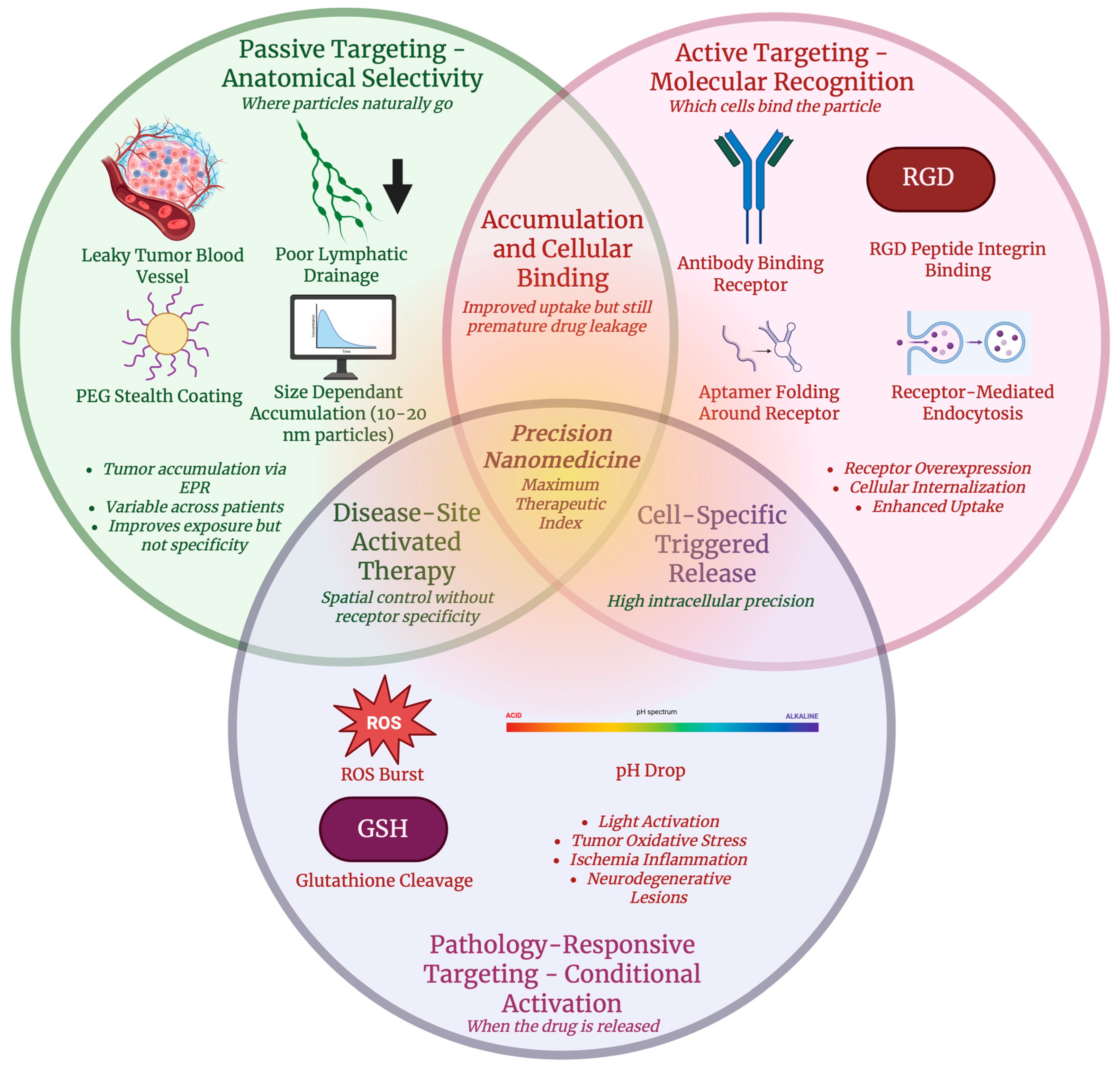
Targeted drug delivery methods aim to accumulate therapeutic agents at disease sites while keeping systemic toxicity to a minimum. Biological relevance and translational applicability were key parameters for the selection of the targeting strategies discussed in this section. More focus was put on mechanisms that allowed for selective accumulation, receptor-mediated uptake, and microenvironment responsive activation. Passive targeting and active targeting are two paradigms that are foundational in nanomedicine and in the research of oncological drug delivery, which is further explained in Table 3 along with other targeted drug delivery methods [77]. Passive targeting utilizes the pathophysiological differences between diseased and healthy tissues. Abnormal vasculature with larger endothelial gaps, along with decreased lymphatic drainage in solid tumors, allows for macromolecules and nanoparticles typically sized between 10 and 200 nm to extravasate and preferentially accumulate in tumor interstitium, which is called the enhanced permeability and retention (EPR) effect [78]. The EPR effect has formed the basis for many nanocarrier-based therapeutics, including PEGylated liposomes such as Doxil®, that have shown improved tumor accumulation in comparison with free drugs through this mechanism [79]. However, an increasing number of limitations are observed with the EPR effect. Due to the differences in vascular density, interstitial fluid pressure, and stromal barriers, the intensity and uniformity of EPR-mediated accumulation vary significantly between tumor types, among patients, and even within different regions of the same tumor [80]. Moreover, since the EPR effect is more often pronounced in small animal models than in human tumors, it is difficult to translate many of these nanomedicines into successful clinical products [79]. To overcome these intrinsic physiological barriers, methods such as vascular modulation and imaging-guided delivery are being tested to improve or complement existing EPR [81]. Active targeting, on the other hand, builds on passive accumulation by functionalizing the surface of nanocarriers with molecular ligands that can bind specifically to receptors or antigens that are overexpressed on target cells or in the tumor microenvironment [82]. Active targeting attempts to increase selective uptake, and intracellular delivery of therapeutic payloads to increase overall safety and effectiveness by binding to specific receptors or molecular targets on cells [83]. Antibodies, peptides, and aptamers are some common targeting ligands, with each of them having their own benefits and limitations [84]. Antibodies and antibody fragments provide a high level of specificity and affinity for cell-surface markers such as epidermal growth factor receptor (EGFR) and HER2, and are often used in antibody-drug conjugates (ADCs) to precisely deliver cytotoxic agents to cancer cells [85]. Despite their benefits, their large size is a restriction and can limit the level of tissue penetration and also raises questions regarding immunogenicity [86]. Peptides such as cyclic arginylglycylaspartic acid (RGD) peptides that target integrins on tumor vasculature are smaller, easier to synthesize, and can penetrate tissues more readily, although it is often with lower affinities than antibodies [87]. Aptamers are short, single-stranded oligonucleotides that can fold into three-dimensional structures that bind to targets with high selectivity. Versatile conjugation to nanoparticles and drugs is possible due to their small size and chemical manufacturability, with recent reviews stating their potential as smart ligands in targeted cancer therapy [88]. Active targeting can work together with passive targeting, which is depicted in Figure 5, where nanocarriers first accumulate at tumor sites through EPR, then engage specific cellular receptors through ligand binding to improve cellular internalization and retention [89].

4.2. Targeting Oxidative Stress-Associated Microenvironments

Oxidative stress is defined as the imbalance between reactive oxygen species generation and antioxidant defenses and is also considered a hallmark of various pathological microenvironments, such as tumors, inflamed or ischemic tissues, and neurodegenerative disease sites. When these redox abnormalities are exploited by drug delivery strategies, it can allow for selective activation or the accumulation of therapeutics at disease sites while keeping systemic toxicity to a minimum [90,91]. The tumor microenvironment (TME) shows increased ROS levels and redox homeostasis that is altered compared to normal tissues, which create an opportunity for ROS-responsive drug carriers to perform site-specific delivery and release. The ROS-responsive liposomal systems are engineered in such a way that higher oxidative levels in the tumor trigger structural changes and controlled drug release, thereby improving therapeutic selectivity and efficiency [92]. Targeted redox-manipulating nanocarriers can selectively intensify the oxidative stress within tumor cells either by photodynamic agents generating ROS or by depleting antioxidant defenses such as glutathione, which pushes for tumor cell death while sparing normal healthy tissue [93]. Transferrin receptor-targeted nanosystems is one of the recent advancements that generates ROS under near-infrared light to break ROS-responsive linkages and increase payload release in tumors, which is helpful for phototherapy and immunogenic tumor cell killing [94]. Inflammation and ischemia further intensify oxidative stress by producing excessive ROS, which makes ROS-sensitive delivery systems particularly more attractive. Nanomedicines that are designed to target inflammatory cells in the ischemic myocardium have the ability to deliver antioxidants, for example quercetin, neutralize ROS, and promote a reparative macrophage phenotype that will improve cardiac repair [95]. In cerebral ischemia–reperfusion injury, ROS-targeted nanomedicines that can penetrate the ischemic penumbra and deliver antioxidant agents have shown potential in diminishing oxidative neuronal damage and reperfusion injury [96]. Similarly, ROS-responsive systems that were designed for brain ischemia can cross the blood–brain barrier and selectively search for ROS to regulate the post-ischemic inflammation and also maintain neuronal function [97]. Reviews of antioxidant nanotherapies have stated that there was limited efficacy due to poor targeting in conventional antioxidant drugs, which is an issue that ROS-responsive carriers can control in inflammatory disease contexts [98]. Neurodegenerative diseases such as Alzheimer’s, Parkinson’s, and other related disorders are closely linked to chronic oxidative stress, which can cause protein aggregation, mitochondrial dysfunction, and neuronal death [90]. Nanotechnology-based, stimuli-responsive systems, such as the ROS-sensitive carriers, have improved the delivery of neuroprotective agents across the blood–brain barrier and released them when signaled by oxidative cues at disease sites [99]. Such platforms provide improved specificity and reduce systemic side effects that are often seen with conventional therapies [100]. Many pathophysiological features, such as oxidative damage, inflammation, and protein aggregation, can be simultaneously addressed by ROS-responsive nanocarriers that are designed to detect oxidative microenvironments in neurodegenerative lesions and thus hold significant therapeutic potential [101].
Table 3. Translational performance of targeted drug delivery strategies and their comparative design principles.
Targeting StrategyTargeting Ligand or TriggerBiological Target or MicroenvironmentExample of Delivery VehicleQuantitative Performance MetricClinical/Translational Status
Passive Targeting (EPR-based accumulation) [7]Size optimization, PEG stealth coatingLeaky tumor vasculature, impaired lymphatic drainagePEGylated liposomes, for example Doxil®Tumor to plasma drug concentration ratio, circulation half-lifeClinically approved nanomedicines
Antibody-Mediated Active Targeting [102]Monoclonal antibodies such as anti-HER2, anti-EGFROverexpressed tumor cell surface receptorsAntibody-drug conjugates or antibody-functionalized nanoparticlesBinding affinity (Kd), receptor internalization rateMultiple FDA-approved ADCs
Peptide-Based Targeting [103]RGD peptides, tumor-homing peptidesIntegrins and angiogenic endothelial markersPolymeric nanoparticles, liposomesCellular uptake efficiency, endothelial adhesion rateSeveral preclinical and early clinical trials
Aptamer-Guided Targeting [104]Nucleic acid aptamers for example AS1411 nucleolin aptamerCancer cell membrane proteins or tumor stromal markersAptamer-decorated lipid or polymeric nanocarriersLigand specificity index, target-to-non-target uptake ratioEmerging clinical-stage ligand platforms
Redox/ROS-Responsive Targeting [105]ROS-cleavable linkers, thioketal polymersHigh oxidative stress tumor or inflammatory microenvironmentsROS-sensitive polymer micelles or liposomesTriggered release percentage under ROS conditionsRapidly developing preclinical development
pH-Responsive Targeting [106]Acid-cleavable linkers, protonatable polymersAcidic tumor interstitium or endosomal compartmentspH-sensitive polymeric nanoparticles or micellesDrug release rate at pH 5–6 vs. physiological pHPreclinical and translational research stage
Biomimetic/Cell Membrane Targeting [107]Cancer-cell, macrophage, or erythrocyte membrane coatingsImmune evasion and homologous tumor recognitionCell membrane-coated nanoparticlesCirculation time extension, immune clearance reductionEarly translational and experimental stage

5. Nanomaterials for Gene Delivery and Genetic Therapeutics

5.1. Challenges in Gene Delivery and Lipid, Polymeric, and Inorganic Nanocarriers

One of the most difficult challenges in genetic therapeutics is effective gene delivery, which is mainly due to the biological barriers that limit the stability, cellular uptake, and intracellular trafficking of nucleic acids. Nanocarrier systems that have been discussed here, were prioritized based on their efficiency in overcoming any key intracellular barriers. These include their compatibility with clinically relevant nucleic acid therapeutics, as well as endosomal escape and cytosolic release. Naked DNA, mRNA, and siRNA are very susceptible to enzymatic degradation in biological fluids and show poor permeability across cellular membranes, which causes rapid clearance and therapeutic engagement that is often not enough. The stability of genetic cargo in systemic circulation and protection from nuclease degradation is very important, as therapeutic nucleic acids can be quickly degraded before they reach the target cells without vector protection [108]. For cellular uptake to be efficient, it needs nanocarrier surfaces to interact with negatively charged cell membranes, which requires modified surface chemistries and targeting ligands [109]. A critical hurdle after internalization through endocytosis is endosomal escape, which is the movement of genetic cargo from the vesicles into the cytosol before lysosomal degradation. Endosomal entrapment will reduce therapeutic efficiency, which has pushed for extensive research into pH-responsive nanomaterials that can facilitate endosomal membrane disruption or fusion [110]. Currently, not even advanced lipid nanoparticles (LNPs) can achieve a high percentage of endosomal escape success, which further highlights the need for designs that escape endosomes effectively and safely [111]. Today, lipid-based nanocarriers, including LNPs and liposomes, are the most clinically advanced non-viral delivery platforms. Ionizable lipids that are neutral in physiological pH but become positively charged in acidic endosomes, have the ability to interact with endosomal lipids, help with membrane fusion, and stimulate the release of nucleic acid [112]. As LNPs had shown scalability and high delivery efficacy, particularly in siRNA and mRNA applications, they are considered central to the success of modern nucleic acid therapeutics [108]. Gene payloads and their nanomaterial platforms are discussed in Table 4. However, lipid systems still have challenges surrounding limited endosomal escape efficiency and their stability during storage, which calls for further development [111]. Polymeric nanocarriers have tunable physicochemical properties and often show better stability and prolonged circulation levels in comparison to lipids. Cationic polymers such as polyethylenimine (PEI) and poly (β-amino esters) can condense nucleic acids into polyplexes and allow for cellular uptake, although cytotoxicity and reproducibility remain as obstacles. Up-and-coming polymeric micellar structures and block copolymers have the potential to improve endosomal disruption through proton sponge effects or membrane destabilization, which will provide better safety and efficiency [113]. Inorganic nanocarriers such as gold, silica, and magnetic nanoparticles are other platforms with unique imaging and functionalization features. While functioning as theranostic agents, these materials can also deliver nucleic acids; however, there are concerns surrounding their biocompatibility and long-term toxicity [114]. They have rigid cores that provide structural stability and surface modifications with polymers or peptides that are used to improve uptake and endosomal escape. Despite several advancements in all classes of nanocarriers, challenges remain, mainly around scalable manufacturing, predictable biodistribution, targeted delivery, and having a high cytosolic release of genetic cargo that is required for strong therapeutic outcomes [109].

5.2. Genetic Therapeutics and Redox-Responsive Gene Delivery

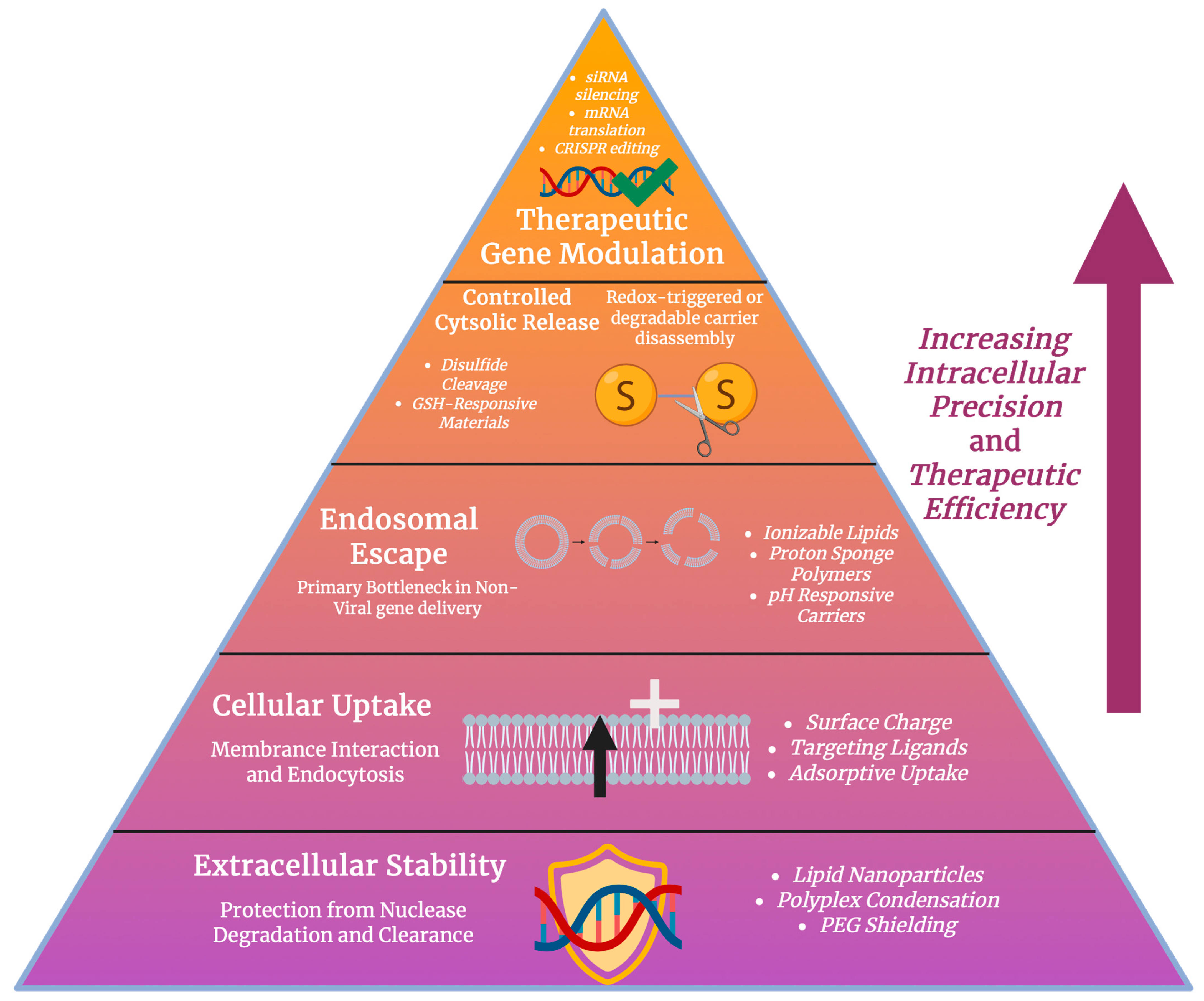
Nanomaterials have transformed gene delivery and genetic therapeutics by allowing for the efficient and targeted transport of nucleic acid cargos such as siRNA, mRNA, and clustered regularly interspaced short palindromic repeats (CRISPR/Cas) components. Nanocarriers overcome issues usually faced by regular delivery methods, such as poor stability, limited cellular uptake, and the rapid degradation of nucleic acids, through their physicochemical properties that improve circulation, targeting, and intracellular release [115]. siRNA mediates specific gene silencing through RNA interference but also requires effective carriers to protect it from nucleases and allow for cellular uptake. Studies have been widely conducted on nanocarriers such as lipid nanoparticles, polymers, and inorganic nanostructures for this purpose [116]. Lipid and polymeric core–shell nanoparticles provide an improvement in stability and endosomal escape, which enhances the gene knockdown efficacy [117]. Redox-responsive polymers and nanomaterials that respond to high intracellular glutathione concentrations allow for the controlled release of siRNA within target cells, thus improving silencing potency [118]. mRNA therapeutics require carriers that can protect the negatively charged, large molecules and deliver them to the cytosol for translation, as seen in Figure 6. Lipid nanoparticles are now considered as the predominant platform for mRNA vaccines and therapeutics, with tunable lipid compositions supporting organ targeting, cellular uptake, and the controlled release of cargo [119]. The therapeutic index for both vaccination and protein replacement strategies can be increased by programmable lipid nanoparticles that are engineered to improve organ tropism and intracellular trafficking [120]. CRISPR/Cas systems present huge therapeutic potential when used in precision genome editing, although there are challenges surrounding the delivery of CRISPR components such as Cas protein or mRNA and guide RNA to specific tissues. To encapsulate and deliver these components safely and efficiently, nanomaterials such as polymeric, lipid, and inorganic carriers have been adapted [121]. Redox-specific nanomaterials use the differences between extracellular and intracellular redox potential, particularly the high glutathione levels inside cells, to trigger the release of cargo [122]. Nanocarriers containing disulfide and diselenide bonds are stable in circulation but disintegrate quickly when inside the reducing intracellular environment, which supports the on-demand release of siRNA, mRNA, or CRISPR reagents. To exploit this glutathione gradient between extracellular and cytosolic compartments, mesoporous silica carriers, polymersomes, and polymeric micelles have been designed with redox-cleavable linkages that help with cytoplasmic delivery [123]. Nanomaterials can also interact with cellular antioxidant systems. Redox-manipulating carriers can reduce the levels of intracellular glutathione to sensitize cancer cells or regulate oxidative stress pathways, which will improve therapeutic efficacy when co-delivering genetic cargo [62]. Antioxidant nanoparticles, including nanoceria, have displayed redox sensitivity that can be controlled for responsive release and for the therapeutic regulation of oxidative pathways [122]. Nanomaterials for gene delivery have provided versatile platforms for siRNA, mRNA, and CRISPR/Cas therapeutics, with redox-responsive systems having precise control over intracellular release, which is particularly important in diseases with aberrant antioxidant and redox pathways.
Table 4. Intracellular delivery mechanisms, translational readiness, and safety factors of nanomaterial platforms for genetic therapeutics.
Type of Gene PayloadNanomaterial PlatformPrimary Intracellular Release MechanismMain Efficient Design FeatureMajor Safety or Translational LimitationRepresentative Therapeutic Application
siRNA [124]Lipid Nanoparticles (LNPs)Ionizable lipid-mediated endosomal membrane fusionpH-responsive lipid protonation enhances cytosolic releaseLimited escape efficiency, inflammatory responsesGene silencing in liver metabolic disorders
siRNA [125]Redox-responsive polymeric nanoparticlesGlutathione-triggered disulfide cleavageIntracellular redox gradient exploitation for controlled siRNA releaseBatch reproducibility and polymer toxicity concernsTumor gene knockdown therapy
mRNA [126]Programmable lipid nanoparticlesEndosomal destabilization and membrane fusionTunable lipid composition controlling organ tropismStorage instability and temperature sensitivitymRNA vaccination and protein replacement therapy
mRNA [127]Polymer–lipid hybrid nanoparticlesDual release via lipid fusion and polymer degradationStructural stabilization improves circulation and cargo protectionManufacturing scale complexityCancer immunotherapy and antigen expression
CRISPR/Cas RNP [128]Polymeric nanocapsules or micellesProton sponge-induced osmotic swelling and vesicle ruptureEfficient condensation of Cas protein and sgRNAPotential cytotoxicity from cationic polymer densityPrecision genome editing in inherited diseases
CRISPR/Cas mRNA/sgRNA [129]Lipid nanoparticlesEndosomal fusion releasing translation-ready mRNAHigh transfection efficiency and transient expression safetyThere is a risk of Off-target editingGene editing for transthyretin amyloidosis
Multi-gene payload delivery [130]Mesoporous silica nanoparticlesRedox-cleavable gatekeepers controlling pore releaseHigh loading capacity with simultaneous cargo deliverySlow biodegradation and long-term tissue accumulationCombination gene regulation and drug co-delivery
siRNA or CRISPR components [131]Gold nanoparticle conjugatesSurface ligand cleavage or photothermal-triggered releasePrecise surface functionalization and imaging integrationLong-term accumulation and clearance concernsTheranostic gene delivery and photothermal therapy
Gene cargo with antioxidant modulation [132]Nanoceria-integrated hybrid carriersROS/redox-regulated carrier degradationSimultaneous oxidative stress modulation and gene releaseEnvironment-dependent catalytic activity variabilityNeurodegenerative and inflammatory gene therapy

6. Theranostic Nanoparticles for Integrated Therapy and Diagnosis

6.1. Design and Applications of Imaging-Guided Theranostic Nanocarriers

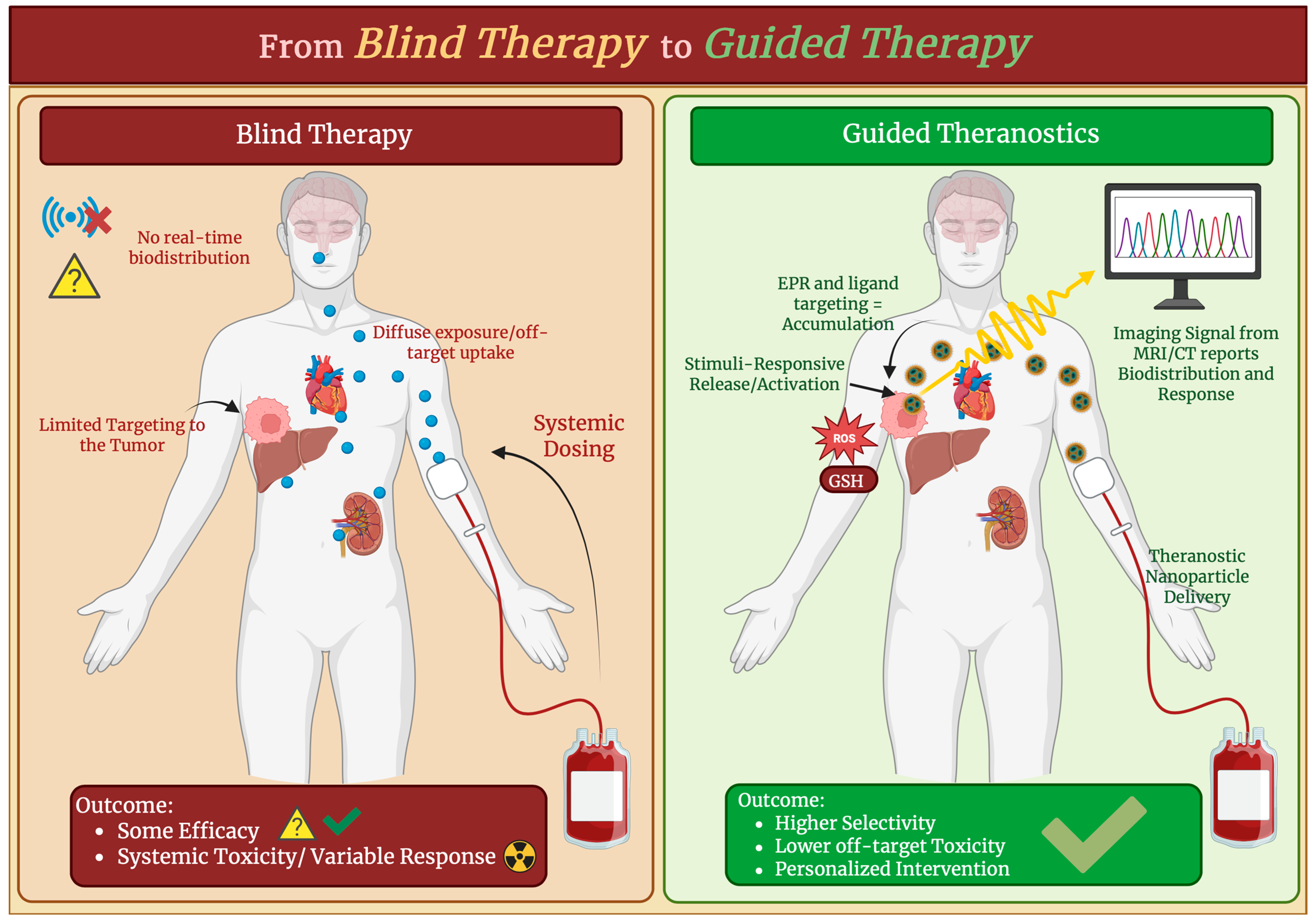
Theranostic nanoparticles are part of an advanced class of multifunctional nanomedicine that are designed to combine diagnostic imaging and therapeutic delivery in a single platform to give more precise and individualized treatment strategies. The selected theranostic systems here were chosen based on their ability to integrate imaging and therapy within a single platform. They should be able to do this while maintaining the biological relevance and functional responsiveness to disease-associated microenvironments such as oxidative stress. The various different types of theranostic platforms and their imaging modalities can be seen in Table 5. In order to support the real-time monitoring of drug delivery, biodistribution, and therapeutic efficacy, a high level of importance is placed on the integration of imaging agents such as MRI contrast moieties and fluorescence dyes with drugs, genes, photothermal elements, or other therapeutic payloads. Through this dual function, some limitations of conventional therapies can be addressed by providing spatial and temporal insights into the progression of treatment while also improving targeted therapy at disease sites such as tumors [133]. Many different design principles make up the concept and design of theranostic nanoparticles. One of which is that the nanoparticle must have a multimodal architecture that can carry and release therapeutic agents in response to specific biological cues such as pH levels and enzymes while also providing detectable imaging signals. Some examples include polymeric carriers, liposomes, metal and metal-oxide cores, and mesoporous silica frameworks that are functionalized with targeting ligands to utilize the EPR effect or active ligand-receptor interactions for tumor localization [134]. Another key design principle is the integration of imaging contrasts, including optical, magnetic, and nuclear, as it allows for the visualization of nanoparticles in vivo behavior, which is necessary to diagnose disease states and image-guided therapy [135]. As seen in Figure 7, these theranostic platforms are used by imaging-guided drug and gene delivery to direct and monitor therapeutic intervention. For example, when under image guidance, nanoplatforms that co-deliver chemotherapeutic agents and gene silencers have shown a higher anticancer efficacy with off-target effects that are minimal in preclinical models [136]. In another study, HER-2-targeted theranostic nanoparticles were loaded with cisplatin and had allowed for the non-invasive MRI tracking of drug delivery and therapeutic responses in heterogeneous ovarian cancer models [137]. Image-guided surgery and targeted drug delivery were demonstrated by nanotheranostic H-dots, which helped improve surgical precision and therapeutic outcomes [138]. Theranostic nanoparticles have also been engineered for gene therapy integration, where multifunctional platforms allow for the simultaneous delivery of DNA or siRNA with imaging tracers, which helps with the spatial control of gene modulation while tracking the delivery status through imaging modalities [134].

6.2. Redox-Responsive Theranostic Nanoparticles for Disease-Targeted Imaging and Treatment

The unique biochemical features of different pathological environments, such as elevated ROS in tumors or oxidative stress in neurodegeneration, allow for the selective activation or modulation of nanoparticle function, which improves specificity and reduces off-target effects. The tumor microenvironment in cancer is characterized by its high levels of ROS and glutathione. This oxidative imbalance is exploited by specifically designed redox-responsive nanocarriers that trigger the release of the payload and simultaneous imaging signal activation. These systems often combine ROS-sensitive linkages or catalysts with imaging agents to improve contrast in magnetic resonance or optical imaging while also increasing cytotoxic ROS levels or reducing antioxidant defenses to promote the death of tumor cells [139]. An example use of this strategy had achieved integrated imaging and therapy in preclinical cancer models through copper ferrite nanospheres that generate ROS from photoenhanced Fenton reactions and provided high relaxivity for MRI [140]. TME signals are also exploited to trigger release and immune activation against colon tumors by ROS-sensitive mesoporous silica nanoparticles that co-deliver immunogenic components [141]. In neurological disorders such as Alzheimer’s, chronic oxidative stress is a defining pathological factor. Recently, there has been an up-and-coming field of antioxidant nanomedicines that are designed to scavenge ROS while allowing for diagnostic imaging. For example, ROS-scavenging nanoparticles with intrinsic antioxidant activity or loaded antioxidants have shown potential in reducing oxidative damage, regulating the pathology of amyloids, and behaving as contrast agents for neuroimaging [142]. Nanocarriers that are capable of crossing the blood–brain barrier while simultaneously delivering therapeutic and diagnostic functions are key highlights in the field of theranostic nanotechnology in neurodegenerative diseases [143]. Overall, a continued development of redox-sensitive chemistries, biocompatibility, and imaging modalities will be essential for its clinical translation (Table 5).
Table 5. Various theranostic nanoplatforms and their imaging modalities, signal activating strategies, and translational advantages.
Theranostic Nanoplatform TypeIntegrated Imaging ModalityTherapeutic MechanismSignal Activation StrategyDisease Application ModelTranslational or Clinical Advantage
Gold nanorods/nanoshells [144]Photoacoustic imaging, CT, optical imagingPhotothermal therapy (PTT), drug deliveryLocalized surface plasmon resonance enhancing photothermal conversion and imaging contrastSolid tumors and metastatic cancersAllows for real-time optical/thermal tumor ablation monitoring
Iron oxide nanoparticle hybrids [145]Magnetic resonance imagingMagnetic hyperthermia, drug or gene deliverySuperparamagnetic relaxation signal enhancement and heat generation under alternating magnetic fieldBrain tumors, prostate cancerClinically translatable MRI compatibility and magnetic targeting
Mesoporous silica theranostic nanoparticles [146]Fluorescence imaging, MRI, PET (when radiolabeled)Controlled chemotherapy or immunotherapy releaseStimuli-responsive gatekeepers such as ROS, pH, enzyme-triggered pore openingColon cancer and inflammatory diseaseHigh cargo loading and multiplex therapeutic delivery
Metal–organic framework (MOF) nanoplatforms [147]MRI, fluorescence, radionuclide imagingPhotodynamic therapy (PDT), chemotherapy, enzyme-mimetic therapyPorous catalytic ROS generation enhancing imaging and therapeutic cytotoxicity simultaneouslyHypoxic tumors and drug-resistant cancersHigh tunability of composition and multifunctional payload integration
Upconversion nanoparticle-based theranostics [148]Near-infrared fluorescence imagingPhotodynamic therapy and gene deliveryNIR-to-visible photon conversion allowing for deep tissue imaging and controlled drug activationDeep-seated tumors and orthotopic cancer modelsAllows deeper tissue penetration with low autofluorescence background
Copper or manganese-based Fenton catalytic nanoparticles [149]MRI, photoacoustic imagingChemodynamic therapy (ROS-generating Fenton reactions)Tumor microenvironment-activated ROS generation raises imaging signal and cytotoxicityAggressive or hypoxic tumorsMicroenvironment-responsive activation improves specificity
Lipid–polymer hybrid theranostic nanoparticles [150]Fluorescence imaging, MRI or radionuclide labelingCo-delivery of chemotherapy and nucleic acids (siRNA/mRNA)Stimuli-responsive polymer degradation combined with lipid fusion-mediated cytosolic releaseMultidrug-resistant cancersSupports the combination of gene-drug therapy with imaging-guided dosing
Nanoceria or antioxidant redox-responsive nanoparticles [151]MRI or optical redox imagingROS scavenging, neuroprotective or anti-inflammatory therapyRedox cycling catalytic activity allowing self-regenerating antioxidant imaging probesNeurodegenerative diseases and ischemic injurySimultaneous disease biomarker detection and oxidative stress therapy

7. Limitations, Safety, and Future Perspectives Discussion

7.1. Safety and Toxicological Considerations

The unique physicochemical properties of nanomaterials in therapeutic delivery pose some distinct safety concerns. A major issue in nanomedicine is nanomaterial-induced oxidative stress, where cellular damage, mitochondrial dysfunction, and lipid peroxidation are caused by ROS generation. This is explained further along with other limitations in Table 6. Studies have shown that metal and metal-oxide nanoparticles can significantly increase oxidative markers, disrupt protein function, and induce apoptosis, which requires the need of a careful assessment of redox balance in design strategies [152]. Oxidative stress also causes further implications in neurological and vascular toxicity, where an elevated ROS will adversely alter cellular pathways, which pushes for the need for antioxidant migration strategies during development [153]. Immunogenicity and long-term effects are also very important, as engineered nanocarriers can be recognized as foreign bodies by immune systems, causing immunostimulation, immunosuppression, or other hypersensitivity reactions. Immune activation will reduce efficacy and produce side effects such as complement activation or cytokine release, highlighting the need for nano-immune interaction profiling [154]. The long-term safety of nanomaterials in therapeutic delivery is not fully understood either. The chronic exposure of degradable nanomaterials can lead to tissue accumulation, alterations in the microbiome, and organ perturbations, and the byproducts of biodegradable carriers affect immunogenicity and barrier integrity unpredictably [155]. To address these complicated risks, serious regulatory considerations and standardized toxicological assays must be implemented [156]. Mechanistic toxicology and advanced nanodesign should be integrated into future designs, using strategies like predictive models and surface modifications to reduce oxidative and immune related toxicities [157].

7.2. Translational and Regulatory Barriers in Nanotherapeutics

Significant translational and regulatory challenges block the clinical translation of nanomaterials for therapeutic delivery, particularly by issues like manufacturing scalability and regulatory approval pathways. Nanomedicines often have complex physicochemical properties that are difficult to consistently reproduce at an industrial scale. Size, surface charge, and drug loading can vary batch-to-batch, affecting pharmacokinetics, biodistribution, and therapeutic outcomes, which makes the transition from laboratory synthesis to good manufacturing practice (GMP) production a hurdle [158]. On top of the general manufacturing challenges, batch-to-batch reproducibility and synthesis yield are critical issues that must be evaluated for nanomaterial translation. It is through independent synthesis batches that are under controlled conditions, the reproducibility is assessed. This ensures that there will be consistency in physicochemical characteristics such as the distribution of particle size, morphology, and surface charge [159]. The performance of nanomaterials can be significantly affected by even the smallest variations in synthesis parameters such as precursor concentration, reaction temperature, and mixing dynamics [160]. The reporting of synthesis yield is also an equally important factor. It shows how efficient and scalable it is for clinical production. This is also why it is important to implement Quality-by-Design (QbD) frameworks so that we can ensure batch consistency is reliable and the biological outcomes are reproducible [161]. The control of critical quality features and the reproducibility of manufacturing processes are crucial for adoption on the industrial level, yet they remain poorly standardized [162]. Regulatory frameworks are also using conventional drug approval pathways for nanomedicines, which is an insufficient way of addressing their individual nanoscale behaviors, immunogenicity, or biodistribution profiles [163]. Since there are no internationally set guidelines, assessments are made case-by-case by authorities such as the FDA and EMA, which block global development strategies [158]. There have been recommendations like Quality by Design (QbD) and risk-based approaches to ensure safety and efficacy, but they are not widely adopted [164]. Dual evaluations under different regulatory centers are required as regulatory pathways of nanomedicine must withstand products that are combination therapeutics and devices [165]. Additionally, appropriate analytical methods for nanocharacterization and predictive preclinical models are still developing and further add to approval timelines [158]. Structural characterization also plays a major factor and must be reported with greater standardization. This is especially important when it comes to crystalline inorganic and hybrid nanomaterials. Studies that utilize X-ray diffraction (XRD) to estimate the size of the crystallite must clearly discuss the Scherrer equation parameters [166]. These include the shape factor (K), X-ray wavelength (λ), full width at half maximum (β), Bragg angle (θ), and whether or not instrumental broadening correction was done [167]. Phase purity should also be assessed in comparison with the reference diffraction patterns. Any secondary reflections that could possibly indicate impurity phases, incomplete crystallization, or residual precursor-derived materials should also be kept in consideration. This kind of reporting is crucial as structural heterogeneity may affect important parameters such as redox behavior, colloidal stability, and batch reproducibility. All of these factors will ultimately decide the overall translational reliability [168]. Academia, industry, and regulators must come together and form strategic collaborations to address these concerns to make nanotherapeutic innovations accessible to patients [169].

7.3. Future Directions in Therapeutic Nanomedicine

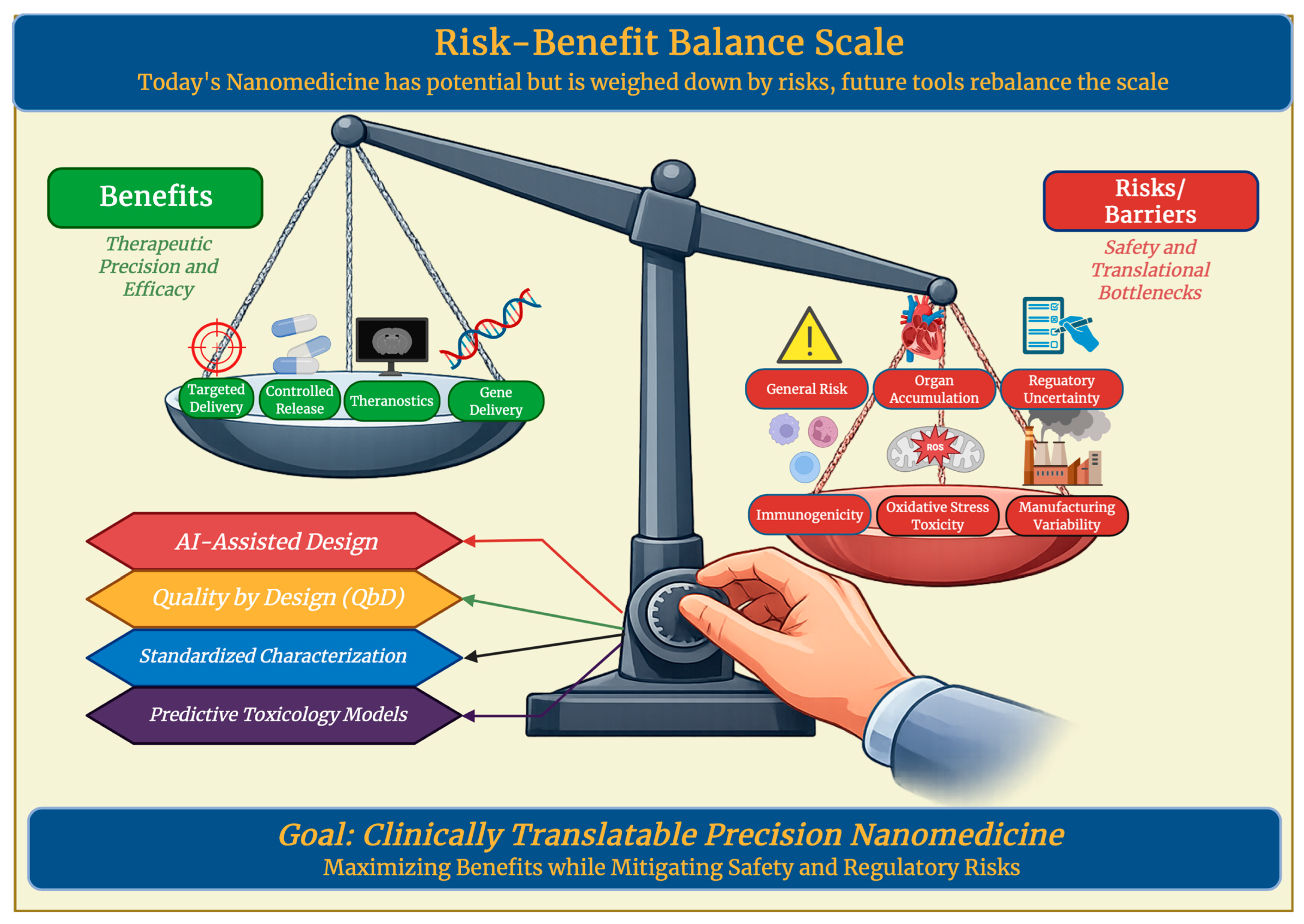
The future perspectives for nanomaterials in therapeutic delivery mainly surround personalized and precision nanomedicine, AI-assisted design, and upcoming antioxidant nanotherapies. In personalized nanomedicine, biological data from a specific patient is integrated with smart nanocarriers to provide therapy to an individual’s disease profile. Recent advances have shown programmable nanoparticles that utilize omics and imaging data for active targeting and controlled release, which is further described in Figure 8, showing a shift from conventional passive carriers to truly precision-guided platforms in oncology [170]. Tumor heterogeneity and microenvironmental barrier are both addressed by precision nanomedicine strategies that will improve immunotherapy and drug delivery with better outcomes [171]. Artificial intelligence (AI)-assisted nanomaterial designs optimize nanoparticle properties and predict the nano-bio interactions, which would benefit therapeutics in the future. Across synthesis, pharmacokinetics, and biodistribution predictions, machine learning models have been used, which significantly accelerated design cycles and supported adaptive carrier systems [172]. Reviews have also highlighted how deep learning and graph neural networks can reduce experimental workload and improve predictive accuracy in nanocarrier performance [173]. Moreover, intelligent nanoplatforms that were engineered with AI showed potential in synergizing diagnosis and treatment with multifunctional systems [174]. Given these advances, challenges remain in standardizing data frameworks and regulatory pathways that make AI-assisted nanomedicine difficult to implement [173]. The emerging antioxidant nanotherapies are particularly interesting as they target reactive oxygen species (ROS) and oxidative stress, which are key factors in inflammation and disease progression. Traditional antioxidants are affected by poor bioavailability and non-specific distribution, whereas antioxidants based on nanoparticles have given improved targeting, stability, and intrinsic ROS-scavenging capacity [98]. Nanozymes with catalase, SOD, and GPx-like activities are examples of rational designing being used to regulate oxidative pathways [175]. Moving forward, research should focus more on safety, controlled activation, and clinical translation so that we can realize the full therapeutic potential of antioxidant nanomedicines [176].
Table 6. Safety assessment and translational risk-mitigation strategies in nanotherapeutics.
Limitation CategoryAssessment Model or ToolKey Parameters MeasuredExample Nanomaterial ContextTranslational Relevance
Oxidative stress and redox imbalance [177]High-content ROS imaging and mitochondrial stress assaysIntracellular ROS, ΔΨm, lipid peroxidation, Nuclear factor erythroid 2-related factor 2 (NRF2) activationMetal/metal-oxide nanoparticlesEarly hazard identification and redox profiling
Complement activation and Complement activation-related pseudoallergy (CARPA) [178]Human whole-blood complement assaysC3a, C5a, SC5b-9 levelsLiposomes, lipid nanoparticlesPredict infusion reactions
Protein corona unpredictability [179]Quantitative proteomics corona mappingCorona composition, opsonin enrichmentPEGylated nanoparticlesImproves PK predictability
Long-term accumulation [180]Radiolabel tracing and Inductively Coupled Plasma Mass Spectrometry(ICP-MS) biodistributionOrgan retention kineticsGold, silica nanoparticlesChronic toxicity forecasting
Immunotoxicity [181]Humanized mouse modelsCytokine release, adaptive immune activationPolymeric carriersBetter human immune prediction
Blood–brain barrier safety assessment [182]Microfluidic human BBB-on-chipTransepithelial Electrical Resistance (TEER), permeability coefficientNeuro-nanotherapeuticsPredict CNS toxicity
Manufacturing variability [183]Quality-by-Design (QbD) frameworksCritical Quality Attributes (CQA)PLGA, lipid nanoparticle systemsGood Manufacturing Practice (GMP) reproducibility
Analytical nanocharacterization gaps [184]Multi-angle dynamic light scattering, Nanoparticle Tracking Analysis (NTA), and Cryogenic Transmission Electron Microscopy (cryo-TEM) standardizationSize distribution, aggregation indexHybrid nanoparticlesBatch consistency validation
Regulatory classification ambiguity [185]Risk-based regulatory science modelProduct categorization criteriaTheranostic nanoparticlesHarmonized approval pathway
AI-driven safety prediction [186]Machine learning nano-quantitative structure–activity relationship (QSAR) modelingStructure–toxicity relationshipsEngineered nanomaterialsPreclinical risk reduction
Microbiome interaction [187]16S rRNA sequencing after nanoparticle exposureGut flora diversity changesOral nanocarriersLong-term systemic safety
Redox-adaptive design [177]Catalytic antioxidant coatingsROS modulation thresholdNanoceria hybridsMinimized oxidative cytotoxicity

8. Conclusions

Nanomaterials have proved themselves as transformative platforms in modern therapeutic delivery, as they now provide great control over drug, antioxidant, and genetic payload transport across complex biological barriers. Nanoscale systems have addressed some persistent limitations of conventional therapeutics, such as poor solubility, rapid degradation, limited bioavailability, and off-target toxicity, by intelligently engineering their size, surface chemistry, charge, and stimuli-responsiveness. These nanoparticles help with controlled release, improved pharmacokinetics, and better accumulation at disease sites through methods like passive and active targeting mechanisms. A particularly significant development is that of redox-responsive and ROS-sensitive nanocarriers, which use the oxidative stress-associated microenvironments in cancer, inflammatory diseases, ischemia, and neurodegeneration. Through the integration of antioxidant modulation with site-specific drug or gene release, these platforms go beyond nonspecific scavenging and towards spatially and temporally controlled therapeutic intervention. Similarly, there have been many advances in lipid nanoparticles, polymeric systems, and inorganic carriers that have pushed gene delivery technologies for siRNA, mRNA, and CRISPR/Cas applications, while intracellular release strategies that are redox triggered improve cytosolic bioavailability and therapeutic precision. Theranostic nanoplatforms are also excellent examples of the combination of therapy and diagnostics, as they support the real-time imaging of biodistribution and treatment response while also delivering therapeutic payloads. Such an integration helps with adaptive, image-guided interventions and aligns well with the principles of precision medicine. Despite these developments, there are challenges surrounding its safety, long-term toxicity, manufacturing reproducibility, and regulatory acceptance, all of which remain as barriers to its widespread clinical translation. It will be necessary to address these issues through standardized characterization, adaptable production methods, and collaborative regulatory systems. Ultimately, the continued convergence of material science, redox biology, genetic engineering, and imaging technologies places nanomedicine at the forefront of next-generation, patient-specific therapeutic strategies.

Author Contributions

Conceptualization, D.B.-A., D.R.J.R. and D.A.; methodology, D.B.-A., D.R.J.R. and D.A.; software, D.B.-A., D.R.J.R. and D.A.; validation, D.B.-A., D.R.J.R. and D.A.; formal analysis, D.B.-A., D.R.J.R. and D.A.; investigation, D.B.-A., D.R.J.R. and D.A.; resources, D.B.-A., D.R.J.R. and D.A.; data curation, D.B.-A. and D.A.; writing—original draft preparation, D.B.-A. and D.A.; writing—review and editing, D.B.-A., D.R.J.R. and D.A.; visualization, D.B.-A., D.R.J.R. and D.A.; supervision, D.B.-A., D.R.J.R. and D.A.; project administration, D.A.; funding acquisition, D.A. All authors have read and agreed to the published version of the manuscript.

Funding

This research received no external funding.

Institutional Review Board Statement

Not applicable.

Informed Consent Statement

Not applicable.

Data Availability Statement

No new data were created or analyzed in this study. Data sharing is not applicable to this article.

Conflicts of Interest

The authors declare no conflicts of interest.

References

  1. Choi, Y.H.; Han, H.K. Nanomedicines: Current status and future perspectives in aspect of drug delivery and pharmacokinetics. J. Pharm. Investig. 2018, 48, 43–60, Erratum in J. Pharm. Investig. 2019, 49, 201. https://doi.org/10.1007/s40005-018-00412-0. [Google Scholar] [CrossRef] [PubMed] [PubMed Central]
  2. Lu, H.; Zhang, S.; Wang, J.; Chen, Q. A Review on Polymer and Lipid-Based Nanocarriers and Its Application to Nano-Pharmaceutical and Food-Based Systems. Front. Nutr. 2021, 8, 783831. [Google Scholar] [CrossRef] [PubMed] [PubMed Central]
  3. Egwu, C.O.; Aloke, C.; Onwe, K.T.; Umoke, C.I.; Nwafor, J.; Eyo, R.A.; Chukwu, J.A.; Ufebe, G.O.; Ladokun, J.; Audu, D.T.; et al. Nanomaterials in Drug Delivery: Strengths and Opportunities in Medicine. Molecules 2024, 29, 2584. [Google Scholar] [CrossRef] [PubMed] [PubMed Central]
  4. Barenholz, Y. Doxil®—The first FDA-approved nano-drug: Lessons learned. J. Control. Release 2012, 160, 117–134. [Google Scholar] [CrossRef] [PubMed]
  5. Farjadian, F.; Ghasemi, A.; Gohari, O.; Roointan, A.; Karimi, M.; Hamblin, M.R. Nanopharmaceuticals and nanomedicines currently on the market: Challenges and opportunities. Nanomedicine 2019, 14, 93–126. [Google Scholar] [CrossRef] [PubMed] [PubMed Central]
  6. Hoshyar, N.; Gray, S.; Han, H.; Bao, G. The effect of nanoparticle size on in vivo pharmacokinetics and cellular interaction. Nanomedicine 2016, 11, 673–692. [Google Scholar] [CrossRef] [PubMed] [PubMed Central]
  7. Maeda, H.; Nakamura, H.; Fang, J. The EPR effect for macromolecular drug delivery to solid tumors: Improvement of tumor uptake, lowering of systemic toxicity, and distinct tumor imaging in vivo. Adv. Drug Deliv. Rev. 2013, 65, 71–79. [Google Scholar] [CrossRef] [PubMed]
  8. He, C.; Hu, Y.; Yin, L.; Tang, C.; Yin, C. Effects of particle size and surface charge on cellular uptake and biodistribution of polymeric nanoparticles. Biomaterials 2010, 31, 3657–3666. [Google Scholar] [CrossRef] [PubMed]
  9. Fleischer, C.C.; Payne, C.K. Nanoparticle surface charge mediates the cellular receptors used by protein-nanoparticle complexes. J. Phys. Chem. B 2012, 116, 8901–8907. [Google Scholar] [CrossRef] [PubMed] [PubMed Central]
  10. Suk, J.S.; Xu, Q.; Kim, N.; Hanes, J.; Ensign, L.M. PEGylation as a strategy for improving nanoparticle-based drug and gene delivery. Adv. Drug Deliv. Rev. 2016, 99, 28–51. [Google Scholar] [CrossRef] [PubMed] [PubMed Central]
  11. Mout, R.; Moyano, D.F.; Rana, S.; Rotello, V.M. Surface functionalization of nanoparticles for nanomedicine. Chem. Soc. Rev. 2012, 41, 2539–2544. [Google Scholar] [CrossRef] [PubMed] [PubMed Central]
  12. Yi, G.; Son, J.; Yoo, J.; Park, C.; Koo, H. Application of click chemistry in nanoparticle modification and its targeted delivery. Biomater. Res. 2018, 22, 13. [Google Scholar] [CrossRef] [PubMed] [PubMed Central]
  13. Reddy, B.P.; Ravindran, E.; Rosaiah, P.; Karim, M.R.; Suh, Y.; Park, S.H.; Mangiri, R. Hierarchical copper indium sulfide and MXene composites: Synergistic effects for enhanced lithium-ion battery performance and photocatalytic hydrogen production. Ceram. Int. 2025, 51, 51723–51733. [Google Scholar] [CrossRef]
  14. Schieber, M.; Chandel, N.S. ROS function in redox signaling and oxidative stress. Curr. Biol. 2014, 24, R453–R462. [Google Scholar] [CrossRef] [PubMed] [PubMed Central]
  15. Uttara, B.; Singh, A.V.; Zamboni, P.; Mahajan, R.T. Oxidative stress and neurodegenerative diseases: A review of upstream and downstream antioxidant therapeutic options. Curr. Neuropharmacol. 2009, 7, 65–74. [Google Scholar] [CrossRef] [PubMed] [PubMed Central]
  16. Dubois-Deruy, E.; Peugnet, V.; Turkieh, A.; Pinet, F. Oxidative Stress in Cardiovascular Diseases. Antioxidants 2020, 9, 864. [Google Scholar] [CrossRef] [PubMed] [PubMed Central]
  17. Lingappan, K. NF-κB in Oxidative Stress. Curr. Opin. Toxicol. 2018, 7, 81–86. [Google Scholar] [CrossRef] [PubMed] [PubMed Central]
  18. Morgan, M.J.; Liu, Z.G. Crosstalk of reactive oxygen species and NF-κB signaling. Cell Res. 2011, 21, 103–115. [Google Scholar] [CrossRef] [PubMed] [PubMed Central]
  19. Birben, E.; Sahiner, U.M.; Sackesen, C.; Erzurum, S.; Kalayci, O. Oxidative stress and antioxidant defense. World Allergy Organ. J. 2012, 5, 9–19. [Google Scholar] [CrossRef] [PubMed] [PubMed Central]
  20. Bjelakovic, G.; Nikolova, D.; Gluud, C. Meta-regression analyses, meta-analyses, and trial sequential analyses of the effects of supplementation with beta-carotene, vitamin A, and vitamin E singly or in different combinations on all-cause mortality: Do we have evidence for lack of harm? PLoS ONE 2013, 8, e74558. [Google Scholar] [CrossRef] [PubMed] [PubMed Central]
  21. Poljsak, B.; Milisav, I. The neglected significance of “antioxidative stress”. Oxid. Med. Cell. Longev. 2012, 2012, 480895. [Google Scholar] [CrossRef] [PubMed] [PubMed Central]
  22. Yusuf, A.; Almotairy, A.R.Z.; Henidi, H.; Alshehri, O.Y.; Aldughaim, M.S. Nanoparticles as Drug Delivery Systems: A Review of the Implication of Nanoparticles’ Physicochemical Properties on Responses in Biological Systems. Polymers 2023, 15, 1596. [Google Scholar] [CrossRef] [PubMed] [PubMed Central]
  23. Tabanelli, R.; Brogi, S.; Calderone, V. Improving Curcumin Bioavailability: Current Strategies and Future Perspectives. Pharmaceutics 2021, 13, 1715. [Google Scholar] [CrossRef] [PubMed]
  24. Sharifi-Rad, J.; Quispe, C.; Mukazhanova, Z.; Knut, E.; Turgumbayeva, A.; Kipchakbayeva, A.; Seitimova, G.; Mahomoodally, M.F.; Lobine, D.; Koay, A.; et al. Resveratrol-Based Nanoformulations as an Emerging Therapeutic Strategy for Cancer. Front. Mol. Biosci. 2021, 8, 649395. [Google Scholar] [CrossRef] [PubMed] [PubMed Central]
  25. Lee, J.H.; Yeo, Y. Controlled Drug Release from Pharmaceutical Nanocarriers. Chem. Eng. Sci. 2015, 125, 75–84. [Google Scholar] [CrossRef] [PubMed] [PubMed Central]
  26. Yao, Y.; Zhou, Y.; Liu, L.; Xu, Y.; Chen, Q.; Wang, Y.; Wu, S.; Deng, Y.; Zhang, J.; Shao, A. Nanoparticle-Based Drug Delivery in Cancer Therapy and Its Role in Overcoming Drug Resistance. Front. Mol. Biosci. 2020, 7, 193. [Google Scholar] [CrossRef] [PubMed] [PubMed Central]
  27. Wolfram, J.; Zhu, M.; Yang, Y.; Shen, J.; Gentile, E.; Paolino, D.; Fresta, M.; Nie, G.; Chen, C.; Shen, H.; et al. Safety of Nanoparticles in Medicine. Curr. Drug Targets 2015, 16, 1671–1681. [Google Scholar] [CrossRef] [PubMed] [PubMed Central]
  28. Lv, Y.; Li, W.; Liao, W.; Jiang, H.; Liu, Y.; Cao, J.; Lu, W.; Feng, Y. Nano-Drug Delivery Systems Based on Natural Products. Int. J. Nanomed. 2024, 19, 541–569. [Google Scholar] [CrossRef] [PubMed] [PubMed Central]
  29. Khan, M.S.; Vishakante, G.D.; Siddaramaiah, H. Gold nanoparticles: A paradigm shift in biomedical applications. Adv. Colloid Interface Sci. 2013, 199–200, 44–58. [Google Scholar] [CrossRef] [PubMed]
  30. Arias, L.S.; Pessan, J.P.; Vieira, A.P.M.; Lima, T.M.T.; Delbem, A.C.B.; Monteiro, D.R. Iron Oxide Nanoparticles for Biomedical Applications: A Perspective on Synthesis, Drugs, Antimicrobial Activity, and Toxicity. Antibiotics 2018, 7, 46. [Google Scholar] [CrossRef] [PubMed] [PubMed Central]
  31. Narayan, R.; Nayak, U.Y.; Raichur, A.M.; Garg, S. Mesoporous Silica Nanoparticles: A Comprehensive Review on Synthesis and Recent Advances. Pharmaceutics 2018, 10, 118. [Google Scholar] [CrossRef] [PubMed] [PubMed Central]
  32. Nelson, B.C.; Johnson, M.E.; Walker, M.L.; Riley, K.R.; Sims, C.M. Antioxidant Cerium Oxide Nanoparticles in Biology and Medicine. Antioxidants 2016, 5, 15. [Google Scholar] [CrossRef] [PubMed] [PubMed Central]
  33. Jung, H.N.; Lee, S.Y.; Lee, S.; Youn, H.; Im, H.J. Lipid nanoparticles for delivery of RNA therapeutics: Current status and the role of in vivo imaging. Theranostics 2022, 12, 7509–7531. [Google Scholar] [CrossRef] [PubMed] [PubMed Central]
  34. Beach, M.A.; Nayanathara, U.; Gao, Y.; Zhang, C.; Xiong, Y.; Wang, Y.; Such, G.K. Polymeric Nanoparticles for Drug Delivery. Chem. Rev. 2024, 124, 5505–5616. [Google Scholar] [CrossRef] [PubMed] [PubMed Central]
  35. Mittal, P.; Saharan, A.; Verma, R.; Altalbawy, F.M.A.; Alfaidi, M.A.; Batiha, G.E.; Akter, W.; Gautam, R.K.; Uddin, M.S.; Rahman, M.S. Dendrimers: A New Race of Pharmaceutical Nanocarriers. Biomed. Res. Int. 2021, 2021, 8844030. [Google Scholar] [CrossRef] [PubMed] [PubMed Central]
  36. Liu, H.; Su, Y.Y.; Jiang, X.C.; Gao, J.Q. Cell membrane-coated nanoparticles: A novel multifunctional biomimetic drug delivery system. Drug Deliv. Transl. Res. 2023, 13, 716–737. [Google Scholar] [CrossRef] [PubMed] [PubMed Central]
  37. Ma, N.; Ma, C.; Li, C.; Wang, T.; Tang, Y.; Wang, H.; Moul, X.; Chen, Z.; Hel, N. Influence of nanoparticle shape, size, and surface functionalization on cellular uptake. J. Nanosci. Nanotechnol. 2013, 13, 6485–6498. [Google Scholar] [CrossRef] [PubMed]
  38. Foroozandeh, P.; Aziz, A.A. Insight into Cellular Uptake and Intracellular Trafficking of Nanoparticles. Nanoscale Res. Lett. 2018, 13, 339. [Google Scholar] [CrossRef] [PubMed] [PubMed Central]
  39. Kettler, K.; Veltman, K.; van de Meent, D.; van Wezel, A.; Hendriks, A.J. Cellular uptake of nanoparticles as determined by particle properties, experimental conditions, and cell type. Environ. Toxicol. Chem. 2014, 33, 481–492. [Google Scholar] [CrossRef] [PubMed]
  40. Jindal, A.B. The effect of particle shape on cellular interaction and drug delivery applications of micro- and nanoparticles. Int. J. Pharm. 2017, 532, 450–465. [Google Scholar] [CrossRef] [PubMed]
  41. Guo, X.; Cheng, Y.; Zhao, X.; Luo, Y.; Chen, J.; Yuan, W.E. Advances in redox-responsive drug delivery systems of tumor microenvironment. J. Nanobiotechnology 2018, 16, 74. [Google Scholar] [CrossRef] [PubMed] [PubMed Central]
  42. Abed, H.F.; Abuwatfa, W.H.; Husseini, G.A. Redox-Responsive Drug Delivery Systems: A Chemical Perspective. Nanomaterials 2022, 12, 3183. [Google Scholar] [CrossRef] [PubMed] [PubMed Central]
  43. Yang, Y.; Sun, W. Recent advances in redox-responsive nanoparticles for combined cancer therapy. Nanoscale Adv. 2022, 4, 3504–3516. [Google Scholar] [CrossRef] [PubMed] [PubMed Central]
  44. Su, Y.; Zhang, B.; Sun, R.; Liu, W.; Zhu, Q.; Zhang, X.; Wang, R.; Chen, C. PLGA-based biodegradable microspheres in drug delivery: Recent advances in research and application. Drug Deliv. 2021, 28, 1397–1418. [Google Scholar] [CrossRef] [PubMed] [PubMed Central]
  45. Ahmed, S.; Ahmad, M.; Swami, B.L.; Ikram, S. A review on plants extract mediated synthesis of silver nanoparticles for antimicrobial applications: A green expertise. J. Adv. Res. 2016, 7, 17–28. [Google Scholar] [CrossRef] [PubMed] [PubMed Central]
  46. Aslam, M.; Fozia, F.; Gul, A.; Ahmad, I.; Ullah, R.; Bari, A.; Mothana, R.A.; Hussain, H. Phyto-Extract-Mediated Synthesis of Silver Nanoparticles Using Aqueous Extract of Sanvitalia procumbens, and Characterization, Optimization and Photocatalytic Degradation of Azo Dyes Orange G and Direct Blue-15. Molecules 2021, 26, 6144. [Google Scholar] [CrossRef] [PubMed] [PubMed Central]
  47. Ansari, M.; Ahmed, S.; Abbasi, A.; Khan, M.T.; Subhan, M.; Bukhari, N.A.; Hatamleh, A.A.; Abdelsalam, N.R. Plant mediated fabrication of silver nanoparticles, process optimization, and impact on tomato plant. Sci. Rep. 2023, 13, 18048. [Google Scholar] [CrossRef] [PubMed] [PubMed Central]
  48. Danaei, M.; Dehghankhold, M.; Ataei, S.; Hasanzadeh Davarani, F.; Javanmard, R.; Dokhani, A.; Khorasani, S.; Mozafari, M.R. Impact of Particle Size and Polydispersity Index on the Clinical Applications of Lipidic Nanocarrier Systems. Pharmaceutics 2018, 10, 57. [Google Scholar] [CrossRef] [PubMed] [PubMed Central]
  49. Albanese, A.; Tang, P.S.; Chan, W.C. The effect of nanoparticle size, shape, and surface chemistry on biological systems. Annu. Rev. Biomed. Eng. 2012, 14, 1–16. [Google Scholar] [CrossRef] [PubMed]
  50. Deirram, N.; Zhang, C.; Kermaniyan, S.S.; Johnston, A.P.R.; Such, G.K. pH-Responsive Polymer Nanoparticles for Drug Delivery. Macromol. Rapid Commun. 2019, 40, e1800917. [Google Scholar] [CrossRef] [PubMed]
  51. Li, D.; Tang, G.; Yao, H.; Zhu, Y.; Shi, C.; Fu, Q.; Yang, F.; Wang, X. Formulation of pH-responsive PEGylated nanoparticles with high drug loading capacity and programmable drug release for enhanced antibacterial activity. Bioact. Mater. 2022, 16, 47–56. [Google Scholar] [CrossRef] [PubMed] [PubMed Central]
  52. Zhuo, S.; Zhang, F.; Yu, J.; Zhang, X.; Yang, G.; Liu, X. pH-Sensitive Biomaterials for Drug Delivery. Molecules 2020, 25, 5649. [Google Scholar] [CrossRef] [PubMed] [PubMed Central]
  53. Gao, W.; Chan, J.M.; Farokhzad, O.C. pH-Responsive nanoparticles for drug delivery. Mol. Pharm. 2010, 7, 1913–1920. [Google Scholar] [CrossRef] [PubMed] [PubMed Central]
  54. Ding, H.; Tan, P.; Fu, S.; Tian, X.; Zhang, H.; Ma, X.; Gu, Z.; Luo, K. Preparation and application of pH-responsive drug delivery systems. J. Control. Release 2022, 348, 206–238. [Google Scholar] [CrossRef] [PubMed]
  55. Xu, X.; Saw, P.E.; Tao, W.; Li, Y.; Ji, X.; Bhasin, S.; Liu, Y.; Ayyash, D.; Rasmussen, J.; Huo, M.; et al. ROS-Responsive Polyprodrug Nanoparticles for Triggered Drug Delivery and Effective Cancer Therapy. Adv. Mater. 2017, 29, 1700141. [Google Scholar] [PubMed] [PubMed Central]
  56. Yuan, J.; Chen, Q.; Zuo, M.; Li, X.; Ou, C.; Chen, Q.; Yu, D.; Li, H.; Hao, C.; Yang, J.; et al. Enhanced combination therapy through tumor microenvironment-activated cellular uptake and ROS-sensitive drug release using a dual-sensitive nanogel. Biomater. Sci. 2025, 13, 1554–1567. [Google Scholar] [CrossRef] [PubMed]
  57. Kumar, Y.A.; Kalla, R.M.N.; Al-Sehemi, A.G.; Ravindran, E.; Mangiri, R. Emerging group-VA 2D materials: Antimonene and bismuthene for nanoelectronics and energy storage. J. Alloys Compd. 2025, 1044, 184331. [Google Scholar] [CrossRef]
  58. Khalil, I.; Yehye, W.A.; Etxeberria, A.E.; Alhadi, A.A.; Dezfooli, S.M.; Julkapli, N.B.M.; Basirun, W.J.; Seyfoddin, A. Nanoantioxidants: Recent Trends in Antioxidant Delivery Applications. Antioxidants 2019, 9, 24. [Google Scholar] [CrossRef] [PubMed] [PubMed Central]
  59. Eftekhari, A.; Dizaj, S.M.; Chodari, L.; Sunar, S.; Hasanzadeh, A.; Ahmadian, E.; Hasanzadeh, M. The promising future of nano-antioxidant therapy against environmental pollutants induced-toxicities. Biomed. Pharmacother. 2018, 103, 1018–1027. [Google Scholar] [CrossRef] [PubMed]
  60. Le, Z.; He, Z.; Liu, H.; Liu, L.; Liu, Z.; Chen, Y. Antioxidant Enzymes Sequestered within Lipid-Polymer Hybrid Nanoparticles for the Local Treatment of Inflammatory Bowel Disease. ACS Appl. Mater. Interfaces 2021, 13, 55966–55977. [Google Scholar] [CrossRef] [PubMed]
  61. Klyachko, N.L.; Manickam, D.S.; Brynskikh, A.M.; Uglanova, S.V.; Li, S.; Higginbotham, S.M.; Bronich, T.K.; Batrakova, E.V.; Kabanov, A.V. Cross-linked antioxidant nanozymes for improved delivery to CNS. Nanomedicine 2012, 8, 119–129. [Google Scholar] [CrossRef] [PubMed] [PubMed Central]
  62. Meng, X.; Shen, Y.; Zhao, H.; Lu, X.; Wang, Z.; Zhao, Y. Redox-manipulating nanocarriers for anticancer drug delivery: A systematic review. J. Nanobiotechnology 2024, 22, 587. [Google Scholar] [CrossRef] [PubMed] [PubMed Central]
  63. Tripathi, D.; Pandey, P.; Sharma, S.; Rai, A.K.; Prabhu, B.H.M. Advances in nanomaterials for precision drug delivery: Insights into pharmacokinetics and toxicity. Bioimpacts 2024, 15, 30573. [Google Scholar] [CrossRef] [PubMed] [PubMed Central]
  64. Tsourkas, A. Developing Targeted Theranostic Nanoparticles: Challenges and Potential Solutions. In Frontiers of Engineering: Reports on Leading-Edge Engineering from the 2018 Symposium; National Academy of Engineering; National Academies Press: Washington, DC, USA, 2019. Available online: https://www.ncbi.nlm.nih.gov/books/NBK538695 (accessed on 21 March 2026).
  65. Ou, H.; Cheng, T.; Zhang, Y.; Liu, J.; Ding, Y.; Zhen, J.; Shen, W.; Xu, Y.; Yang, W.; Niu, P.; et al. Surface-adaptive zwitterionic nanoparticles for prolonged blood circulation time and enhanced cellular uptake in tumor cells. Acta Biomater. 2018, 65, 339–348. [Google Scholar] [CrossRef]
  66. Yoo, J.W.; Chambers, E.; Mitragotri, S. Factors that control the circulation time of nanoparticles in blood: Challenges, solutions and future prospects. Curr. Pharm. Des. 2010, 16, 2298–2307. [Google Scholar] [CrossRef] [PubMed]
  67. Ernsting, M.J.; Murakami, M.; Roy, A.; Li, S.D. Factors controlling the pharmacokinetics, biodistribution and intratumoral penetration of nanoparticles. J. Control. Release 2013, 172, 782–794. [Google Scholar] [CrossRef] [PubMed] [PubMed Central]
  68. Skotland, T.; Iversen, T.G.; Llorente, A.; Sandvig, K. Biodistribution, pharmacokinetics and excretion studies of intravenously injected nanoparticles and extracellular vesicles: Possibilities and challenges. Adv. Drug Deliv. Rev. 2022, 186, 114326. [Google Scholar] [CrossRef]
  69. Zahmatkeshan, M.; Gheybi, F.; Rezayat, S.M.; Jaafari, M.R. Improved drug delivery and therapeutic efficacy of PEgylated liposomal doxorubicin by targeting anti-HER2 peptide in murine breast tumor model. Eur. J. Pharm. Sci. 2016, 86, 125–135. [Google Scholar] [CrossRef] [PubMed]
  70. Li, X.; Li, J.; Wei, J.; Du, W.; Su, C.; Shen, X.; Zhao, A.; Xu, M. Design Strategies for Novel Lipid Nanoparticle for mRNA Vaccine and Therapeutics: Current Understandings and Future Perspectives. MedComm 2025, 6, e70414. [Google Scholar] [CrossRef] [PubMed] [PubMed Central]
  71. Olivier, J.C. Drug transport to brain with targeted nanoparticles. NeuroRx 2005, 2, 108–119. [Google Scholar] [CrossRef] [PubMed] [PubMed Central]
  72. Zhou, W.; Jia, Y.; Liu, Y.; Chen, Y.; Zhao, P. Tumor Microenvironment-Based Stimuli-Responsive Nanoparticles for Controlled Release of Drugs in Cancer Therapy. Pharmaceutics 2022, 14, 2346. [Google Scholar] [CrossRef] [PubMed] [PubMed Central]
  73. Hu, J.; Arvejeh, P.M.; Bone, S.; Hett, E.; Marincola, F.M.; Roh, K.H. Nanocarriers for cutting-edge cancer immunotherapies. J. Transl. Med. 2025, 23, 447. [Google Scholar] [CrossRef] [PubMed] [PubMed Central]
  74. Zhang, W.; Jiang, Y.; He, Y.; Boucetta, H.; Wu, J.; Chen, Z.; He, W. Lipid carriers for mRNA delivery. Acta Pharm. Sin. B 2023, 13, 4105–4126. [Google Scholar] [CrossRef] [PubMed] [PubMed Central]
  75. Zhang, W.; Mehta, A.; Tong, Z.; Esser, L.; Voelcker, N.H. Development of Polymeric Nanoparticles for Blood-Brain Barrier Transfer-Strategies and Challenges. Adv. Sci. 2021, 8, 2003937. [Google Scholar] [CrossRef] [PubMed] [PubMed Central]
  76. Mi, P. Stimuli-responsive nanocarriers for drug delivery, tumor imaging, therapy and theranostics. Theranostics 2020, 10, 4557–4588. [Google Scholar] [CrossRef] [PubMed] [PubMed Central]
  77. Torchilin, V.P. Passive and active drug targeting: Drug delivery to tumors as an example. In Handbook of Experimental Pharmacology; Springer: Berlin/Heidelberg, Germany, 2010; Volume 197, pp. 3–53. [Google Scholar] [CrossRef] [PubMed]
  78. Wu, J. The Enhanced Permeability and Retention (EPR) Effect: The Significance of the Concept and Methods to Enhance Its Application. J. Pers. Med. 2021, 11, 771. [Google Scholar] [CrossRef] [PubMed] [PubMed Central]
  79. Kim, J.; Cho, H.; Lim, D.K.; Joo, M.K.; Kim, K. Perspectives for Improving the Tumor Targeting of Nanomedicine via the EPR Effect in Clinical Tumors. Int. J. Mol. Sci. 2023, 24, 10082. [Google Scholar] [CrossRef] [PubMed] [PubMed Central]
  80. Sharifi, M.; Cho, W.C.; Ansariesfahani, A.; Tarharoudi, R.; Malekisarvar, H.; Sari, S.; Bloukh, S.H.; Edis, Z.; Amin, M.; Gleghorn, J.P.; et al. An Updated Review on EPR-Based Solid Tumor Targeting Nanocarriers for Cancer Treatment. Cancers 2022, 14, 2868. [Google Scholar] [CrossRef] [PubMed] [PubMed Central]
  81. Golombek, S.K.; May, J.N.; Theek, B.; Appold, L.; Drude, N.; Kiessling, F.; Lammers, T. Tumor targeting via EPR: Strategies to enhance patient responses. Adv. Drug Deliv. Rev. 2018, 130, 17–38. [Google Scholar] [CrossRef] [PubMed] [PubMed Central]
  82. Attia, M.F.; Anton, N.; Wallyn, J.; Omran, Z.; Vandamme, T.F. An overview of active and passive targeting strategies to improve the nanocarriers efficiency to tumour sites. J. Pharm. Pharmacol. 2019, 71, 1185–1198. [Google Scholar] [CrossRef]
  83. Bi, Y.; Hao, F.; Yan, G.; Teng, L.; Lee, R.J.; Xie, J. Actively Targeted Nanoparticles for Drug Delivery to Tumor. Curr. Drug Metab. 2016, 17, 763–782. [Google Scholar] [CrossRef] [PubMed]
  84. Zhong, Y.; Meng, F.; Deng, C.; Zhong, Z. Ligand-directed active tumor-targeting polymeric nanoparticles for cancer chemotherapy. Biomacromolecules 2014, 15, 1955–1969. [Google Scholar] [CrossRef] [PubMed]
  85. Sanjanwala, D.; Meng, Y.; Guo, Z.; Bordeau, B. A review of targeted drug delivery with antibody-drug complexes. J. Pharmacol. Exp. Ther. 2025, 392, 103732. [Google Scholar] [CrossRef] [PubMed] [PubMed Central]
  86. Srinivasarao, M.; Low, P.S. Ligand-Targeted Drug Delivery. Chem. Rev. 2017, 117, 12133–12164. [Google Scholar] [CrossRef]
  87. Mekuria, S.L.; Debele, T.A.; Tsai, H.C. PAMAM dendrimer based targeted nano-carrier for bio-imaging and therapeutic agents. RSC Adv. 2016, 6, 63761–63772. [Google Scholar] [CrossRef]
  88. Wei, Z.; Zhou, Y.; Wang, R.; Wang, J.; Chen, Z. Aptamers as Smart Ligands for Targeted Drug Delivery in Cancer Therapy. Pharmaceutics 2022, 14, 2561. [Google Scholar] [CrossRef] [PubMed]
  89. Fu, Z.; Xiang, J. Aptamer-Functionalized Nanoparticles in Targeted Delivery and Cancer Therapy. Int. J. Mol. Sci. 2020, 21, 9123. [Google Scholar] [CrossRef]
  90. Chen, X.; Guo, C.; Kong, J. Oxidative stress in neurodegenerative diseases. Neural Regen. Res. 2012, 7, 376–385. [Google Scholar] [CrossRef] [PubMed] [PubMed Central]
  91. Chasara, R.S.; Ajayi, T.O.; Leshilo, D.M.; Poka, M.S.; Witika, B.A. Exploring novel strategies to improve anti-tumour efficiency: The potential for targeting reactive oxygen species. Heliyon 2023, 9, e19896. [Google Scholar] [CrossRef] [PubMed] [PubMed Central]
  92. Mustafa, M.B.; Lou, J.; Best, M.D. Development of ROS-responsive liposomes toward targeted drug delivery. Expert Opin. Drug Deliv. 2025, 22, 1709–1725. [Google Scholar] [CrossRef]
  93. Yu, D.; Yuan, J.; Ou, C.; Chen, Q.; Li, H.; Hao, C.; Zheng, J.; Liu, S.; Li, M.; Cheng, D. Bidirectional amplification of oxidative stress through the mitochondria-targeted Co-Delivery of nanogolds and chlorin e6 Using ROS-responsive organosilica nanocarriers. Acta Biomater. 2025, 195, 309–320. [Google Scholar] [CrossRef] [PubMed]
  94. Li, S.; Liu, Y.; Zhang, X.; Liu, Y.; Si, L.; Jiang, S.; Wang, A.; Che, X.; Chen, J.; Hu, J. Multi-pathway oxidative stress amplification via controllably targeted nanomaterials for photoimmunotherapy of tumors. J. Nanobiotechnology 2025, 23, 33. [Google Scholar] [CrossRef] [PubMed] [PubMed Central]
  95. Hu, D.; Li, R.; Li, Y.; Wang, M.; Wang, L.; Wang, S.; Cheng, H.; Zhang, Q.; Fu, C.; Qian, Z.; et al. Inflammation-Targeted Nanomedicines Alleviate Oxidative Stress and Reprogram Macrophages Polarization for Myocardial Infarction Treatment. Adv. Sci. 2024, 11, e2308910. [Google Scholar] [CrossRef] [PubMed] [PubMed Central]
  96. Hou, Z.; Brenner, J.S. Developing targeted antioxidant nanomedicines for ischemic penumbra: Novel strategies in treating brain ischemia-reperfusion injury. Redox Biol. 2024, 73, 103185. [Google Scholar] [CrossRef] [PubMed] [PubMed Central]
  97. Zhang, Y.; Zhang, H.; Zhao, F.; Jiang, Z.; Cui, Y.; Ou, M.; Mei, L.; Wang, Q. Mitochondrial-targeted and ROS-responsive nanocarrier via nose-to-brain pathway for ischemic stroke treatment. Acta Pharm. Sin. B 2023, 13, 5107–5120. [Google Scholar] [CrossRef] [PubMed] [PubMed Central]
  98. Li, C.W.; Li, L.L.; Chen, S.; Zhang, J.X.; Lu, W.L. Antioxidant Nanotherapies for the Treatment of Inflammatory Diseases. Front. Bioeng. Biotechnol. 2020, 8, 200. [Google Scholar] [CrossRef] [PubMed] [PubMed Central]
  99. Gao, L.; Wang, J.; Bi, Y. Nanotechnology for Neurodegenerative Diseases: Recent Progress in Brain-Targeted Delivery, Stimuli-Responsive Platforms, and Organelle-Specific Therapeutics. Int. J. Nanomed. 2025, 20, 11015–11044. [Google Scholar] [CrossRef] [PubMed] [PubMed Central]
  100. Dhariwal, R.; Jain, M.; Mir, Y.R.; Singh, A.; Jain, B.; Kumar, P.; Tariq, M.; Verma, D.; Deshmukh, K.; Yadav, V.K.; et al. Targeted drug delivery in neurodegenerative diseases: The role of nanotechnology. Front. Med. 2025, 12, 1522223. [Google Scholar] [CrossRef] [PubMed] [PubMed Central]
  101. Hu, Y.; Yang, Z.; Wang, X.; Li, X.; Wei, M. Oxidative Stress and Lysosomal Dysfunction in Neurodegenerative Diseases: Underlying Mechanisms and Nanotherapeutic Targeting Strategies. Antioxidants 2026, 15, 73. [Google Scholar] [CrossRef] [PubMed] [PubMed Central]
  102. Beck, A.; Goetsch, L.; Dumontet, C.; Corvaïa, N. Strategies and challenges for the next generation of antibody-drug conjugates. Nat. Rev. Drug Discov. 2017, 16, 315–337. [Google Scholar] [CrossRef] [PubMed]
  103. Danhier, F.; Le Breton, A.; Préat, V. RGD-based strategies to target alpha(v) beta(3) integrin in cancer therapy and diagnosis. Mol. Pharm. 2012, 9, 2961–2973. [Google Scholar] [CrossRef] [PubMed]
  104. Zhou, J.; Rossi, J. Aptamers as targeted therapeutics: Current potential and challenges. Nat. Rev. Drug Discov. 2017, 16, 181–202, Erratum in Nat. Rev. Drug Discov. 2017, 16, 440. https://doi.org/10.1038/nrd.2017.86. [Google Scholar] [CrossRef] [PubMed] [PubMed Central]
  105. Wilson, D.S.; Dalmasso, G.; Wang, L.; Sitaraman, S.V.; Merlin, D.; Murthy, N. Orally delivered thioketal nanoparticles loaded with TNF-α-siRNA target inflammation and inhibit gene expression in the intestines. Nat. Mater. 2010, 9, 923–928. [Google Scholar] [CrossRef] [PubMed] [PubMed Central]
  106. Bae, Y.H.; Park, K. Targeted drug delivery to tumors: Myths, reality and possibility. J. Control. Release 2011, 153, 198–205. [Google Scholar] [CrossRef]
  107. Fang, R.H.; Kroll, A.V.; Gao, W.; Zhang, L. Cell Membrane Coating Nanotechnology. Adv. Mater. 2018, 30, e1706759. [Google Scholar] [CrossRef] [PubMed]
  108. Moazzam, M.; Zhang, M.; Hussain, A.; Yu, X.; Huang, J.; Huang, Y. The landscape of nanoparticle-based siRNA delivery and therapeutic development. Mol. Ther. 2024, 32, 284–312. [Google Scholar] [CrossRef] [PubMed] [PubMed Central]
  109. Wang, F.; Liang, L.; Wang, C.; Zhang, C.; Ye, Y.; Dou, L.; Shi, L.; Zhou, D.; Sun, X. Non-Viral Gene Delivery Systems: Current Advances and Therapeutic Applications. Chem. Asian J. 2025, 20, e00684. [Google Scholar] [CrossRef] [PubMed]
  110. Wang, H.; Qin, L.; Zhang, X.; Guan, J.; Mao, S. Mechanisms and challenges of nanocarriers as non-viral vectors of therapeutic genes for enhanced pulmonary delivery. J. Control. Release 2022, 352, 970–993. [Google Scholar] [CrossRef] [PubMed] [PubMed Central]
  111. Golubovic, A.; Tsai, S.; Li, B. Bioinspired Lipid Nanocarriers for RNA Delivery. ACS Bio Med Chem Au 2023, 3, 114–136. [Google Scholar] [CrossRef] [PubMed] [PubMed Central]
  112. Wang, J.; Chen, R.; Xie, Y.; Qin, X.; Zhou, Y.; Xu, C. Endo/Lysosomal-Escapable Lipid Nanoparticle Platforms for Enhancing mRNA Delivery in Cancer Therapy. Pharmaceutics 2025, 17, 803. [Google Scholar] [CrossRef] [PubMed] [PubMed Central]
  113. Deng, S.; Shao, H.; Shang, H.; Pang, L.; Chen, X.; Cao, J.; Wang, Y.; Zhao, Z. Development of a Cationic Polymeric Micellar Structure with Endosomal Escape Capability Enables Enhanced Intramuscular Transfection of mRNA-LNPs. Vaccines 2024, 13, 25. [Google Scholar] [CrossRef] [PubMed] [PubMed Central]
  114. Loh, X.J.; Lee, T.C. Gene delivery by functional inorganic nanocarriers. Recent. Pat. DNA Gene Seq. 2012, 6, 108–114. [Google Scholar] [CrossRef] [PubMed]
  115. Mollé, L.M.; Smyth, C.H.; Yuen, D.; Johnston, A.P.R. Nanoparticles for vaccine and gene therapy: Overcoming the barriers to nucleic acid delivery. Wiley Interdiscip. Rev. Nanomed. Nanobiotechnol. 2022, 14, e1809. [Google Scholar] [CrossRef] [PubMed] [PubMed Central]
  116. Morales-Becerril, A.; Aranda-Lara, L.; Isaac-Olivé, K.; Ocampo-García, B.E.; Morales-Ávila, E. Nanocarriers for delivery of siRNA as gene silencing mediator. EXCLI J. 2022, 21, 1028–1052. [Google Scholar] [CrossRef] [PubMed] [PubMed Central]
  117. Yu, C.; Li, L.; Hu, P.; Yang, Y.; Wei, W.; Deng, X.; Wang, L.; Tay, F.R.; Ma, J. Recent Advances in Stimulus-Responsive Nanocarriers for Gene Therapy. Adv. Sci. 2021, 8, 2100540. [Google Scholar] [CrossRef] [PubMed] [PubMed Central]
  118. Xu, X.; Wu, J.; Liu, S.; Saw, P.E.; Tao, W.; Li, Y.; Krygsman, L.; Yegnasubramanian, S.; De Marzo, A.M.; Shi, J.; et al. Redox-Responsive Nanoparticle-Mediated Systemic RNAi for Effective Cancer Therapy. Small 2018, 14, e1802565. [Google Scholar] [CrossRef] [PubMed] [PubMed Central]
  119. Navid Talemi, M.; Ramezani Farani, M.; Alipour Eskandani, N.; Mirzaee, D.; Alipourfard, I.; Huh, Y.S. Programmable lipid nanoparticles for RNA therapeutics: Design principles and clinical translation. Mater. Today Bio 2026, 37, 102774. [Google Scholar] [CrossRef] [PubMed] [PubMed Central]
  120. Joshi, R.; Sharma, S.; Kapoor, D.U.; Prajapati, B.G.; Huanbutta, K.; Sriamornsak, P. mRNA-Based Therapeutics: Advances in Drug Delivery, Comparative Innovations, and Biomedical Applications. Mol. Pharm. 2026, 23, 583–621. [Google Scholar] [CrossRef] [PubMed]
  121. Chen, C.; Zhong, W.; Du, S.; Li, Y.; Zeng, Y.; Liu, K.; Yang, J.; Guan, X.; Han, X. Intelligent nanotherapeutic strategies for the delivery of CRISPR system. Acta Pharm. Sin. B 2023, 13, 2510–2543. [Google Scholar] [CrossRef] [PubMed] [PubMed Central]
  122. Xu, L.; Cao, Y.; Xu, Y.; Li, R.; Xu, X. Redox-Responsive Polymeric Nanoparticle for Nucleic Acid Delivery and Cancer Therapy: Progress, Opportunities, and Challenges. Macromol. Biosci. 2024, 24, e2300238. [Google Scholar] [CrossRef] [PubMed]
  123. Gisbert-Garzarán, M.; Vallet-Regí, M. Redox-Responsive Mesoporous Silica Nanoparticles for Cancer Treatment: Recent Updates. Nanomaterials 2021, 11, 2222. [Google Scholar] [CrossRef] [PubMed] [PubMed Central]
  124. Lin, Q.; Chen, J.; Zhang, Z.; Zheng, G. Lipid-based nanoparticles in the systemic delivery of siRNA. Nanomedicine 2014, 9, 105–120. [Google Scholar] [CrossRef] [PubMed]
  125. Li, S.; Saw, P.E.; Lin, C.; Nie, Y.; Tao, W.; Farokhzad, O.C.; Zhang, L.; Xu, X. Redox-responsive polyprodrug nanoparticles for targeted siRNA delivery and synergistic liver cancer therapy. Biomaterials 2020, 234, 119760, Erratum in Biomaterials 2023, 293, 121951. https://doi.org/10.1016/j.biomaterials.2022.121951. [Google Scholar] [CrossRef] [PubMed]
  126. Hou, X.; Zaks, T.; Langer, R.; Dong, Y. Lipid nanoparticles for mRNA delivery. Nat. Rev. Mater. 2021, 6, 1078–1094, Correction in Nat. Rev. Mater. 2022, 7, 65. [Google Scholar] [CrossRef]
  127. Meyer, R.A.; Hussmann, G.P.; Peterson, N.C.; Santos, J.L.; Tuesca, A.D. A scalable and robust cationic lipid/polymer hybrid nanoparticle platform for mRNA delivery. Int. J. Pharm. 2022, 611, 121314. [Google Scholar] [CrossRef] [PubMed]
  128. Li, Y.; Li, C.; Yan, J.; Liao, Y.; Qin, C.; Wang, L.; Huang, Y.; Yang, C.; Wang, J.; Ding, X.; et al. Polymeric micellar nanoparticles for effective CRISPR/Cas9 genome editing in cancer. Biomaterials 2024, 309, 122573. [Google Scholar] [CrossRef] [PubMed]
  129. Miller, J.B.; Zhang, S.; Kos, P.; Xiong, H.; Zhou, K.; Perelman, S.S.; Zhu, H.; Siegwart, D.J. Non-Viral CRISPR/Cas Gene Editing In Vitro and In Vivo Enabled by Synthetic Nanoparticle Co-Delivery of Cas9 mRNA and sgRNA. Angew. Chem. Int. Ed. Engl. 2017, 56, 1059–1063. [Google Scholar] [CrossRef] [PubMed] [PubMed Central]
  130. Chang, J.H.; Tsai, P.H.; Chen, W.; Chiou, S.H.; Mou, C.Y. Dual delivery of siRNA and plasmid DNA using mesoporous silica nanoparticles to differentiate induced pluripotent stem cells into dopaminergic neurons. J. Mater. Chem. B 2017, 5, 3012–3023. [Google Scholar] [CrossRef] [PubMed]
  131. Kanu, G.A.; Parambath, J.B.M.; Abu Odeh, R.O.; Mohamed, A.A. Gold Nanoparticle-Mediated Gene Therapy. Cancers 2022, 14, 5366. [Google Scholar] [CrossRef] [PubMed] [PubMed Central]
  132. Niemiec, S.M.; Hilton, S.A.; Wallbank, A.; Azeltine, M.; Louiselle, A.E.; Elajaili, H.; Allawzi, A.; Xu, J.; Mattson, C.; Dewberry, L.C.; et al. Cerium oxide nanoparticle delivery of microRNA-146a for local treatment of acute lung injury. Nanomedicine 2021, 34, 102388. [Google Scholar] [CrossRef] [PubMed] [PubMed Central]
  133. Janib, S.M.; Moses, A.S.; MacKay, J.A. Imaging and drug delivery using theranostic nanoparticles. Adv. Drug Deliv. Rev. 2010, 62, 1052–1063. [Google Scholar] [CrossRef] [PubMed] [PubMed Central]
  134. Iyer, A.K.; He, J.; Amiji, M.M. Image-guided nanosystems for targeted delivery in cancer therapy. Curr. Med. Chem. 2012, 19, 3230–3240. [Google Scholar] [CrossRef]
  135. Anani, T.; Rahmati, S.; Sultana, N.; David, A.E. MRI-traceable theranostic nanoparticles for targeted cancer treatment. Theranostics 2021, 11, 579–601. [Google Scholar] [CrossRef]
  136. Li, C.; Yang, X.Q.; Zhang, M.Z.; Song, Y.Y.; Cheng, K.; An, J.; Zhang, X.S.; Xuan, Y.; Liu, B.; Zhao, Y.D. In vivo Imaging-Guided Nanoplatform for Tumor Targeting Delivery and Combined Chemo-, Gene- and Photothermal Therapy. Theranostics 2018, 8, 5662–5675. [Google Scholar] [CrossRef]
  137. Satpathy, M.; Wang, L.; Zielinski, R.J.; Qian, W.; Wang, Y.A.; Mohs, A.M.; Kairdolf, B.A.; Ji, X.; Capala, J.; Lipowska, M.; et al. Targeted Drug Delivery and Image-Guided Therapy of Heterogeneous Ovarian Cancer Using HER2-Targeted Theranostic Nanoparticles. Theranostics 2019, 9, 778–795. [Google Scholar] [CrossRef] [PubMed] [PubMed Central]
  138. Yin, X.; Cui, Y.; Kim, R.S.; Stiles, W.R.; Park, S.H.; Wang, H.; Ma, L.; Chen, L.; Baek, Y.; Kashiwagi, S.; et al. Image-guided drug delivery of nanotheranostics for targeted lung cancer therapy. Theranostics 2022, 12, 4147–4162. [Google Scholar] [CrossRef] [PubMed]
  139. Chen, M.; Liu, D.; Liu, F.; Wu, Y.; Peng, X.; Song, F. Recent advances of redox-responsive nanoplatforms for tumor theranostics. J. Control. Release 2021, 332, 269–284. [Google Scholar] [CrossRef] [PubMed]
  140. Liu, Y.; Zhen, W.; Jin, L.; Zhang, S.; Sun, G.; Zhang, T.; Xu, X.; Song, S.; Wang, Y.; Liu, J.; et al. All-in-One Theranostic Nanoagent with Enhanced Reactive Oxygen Species Generation and Modulating Tumor Microenvironment Ability for Effective Tumor Eradication. ACS Nano 2018, 12, 4886–4893. [Google Scholar] [CrossRef] [PubMed]
  141. Huang, Y.; Nahar, S.; Alam, M.M.; Hu, S.; McVicar, D.W.; Yang, D. Reactive Oxygen Species-Sensitive Biodegradable Mesoporous Silica Nanoparticles Harboring TheraVac Elicit Tumor-Specific Immunity for Colon Tumor Treatment. ACS Nano 2023, 17, 19740–19752. [Google Scholar] [CrossRef] [PubMed]
  142. Hasan, I.; Guo, B.; Zhang, J.; Chang, C. Advances in Antioxidant Nanomedicines for Imaging and Therapy of Alzheimer’s Disease. Antioxid. Redox Signal. 2024, 40, 863–888. [Google Scholar] [CrossRef] [PubMed]
  143. Ramanathan, S.; Archunan, G.; Sivakumar, M.; Tamil Selvan, S.; Fred, A.L.; Kumar, S.; Gulyás, B.; Padmanabhan, P. Theranostic applications of nanoparticles in neurodegenerative disorders. Int. J. Nanomed. 2018, 13, 5561–5576. [Google Scholar] [CrossRef] [PubMed] [PubMed Central]
  144. Kim, T.; Zhang, Q.; Li, J.; Zhang, L.; Jokerst, J.V. A Gold/Silver Hybrid Nanoparticle for Treatment and Photoacoustic Imaging of Bacterial Infection. ACS Nano 2018, 12, 5615–5625. [Google Scholar] [CrossRef] [PubMed] [PubMed Central]
  145. Zhao, S.; Yu, X.; Qian, Y.; Chen, W.; Shen, J. Multifunctional magnetic iron oxide nanoparticles: An advanced platform for cancer theranostics. Theranostics 2020, 10, 6278–6309. [Google Scholar] [CrossRef] [PubMed] [PubMed Central]
  146. Baeza, A.; Vallet-Regí, M. Mesoporous Silica Nanoparticles as Theranostic Antitumoral Nanomedicines. Pharmaceutics 2020, 12, 957. [Google Scholar] [CrossRef] [PubMed] [PubMed Central]
  147. Chen, Y.; Yang, Y.; Du, S.; Ren, J.; Jiang, H.; Zhang, L.; Zhu, J. Mitochondria-Targeting Upconversion Nanoparticles@MOF for Multiple-Enhanced Photodynamic Therapy in Hypoxic Tumor. ACS Appl. Mater. Interfaces 2023, 15, 35884–35894. [Google Scholar] [CrossRef] [PubMed]
  148. Zhang, C.; Zhang, Y.; Liang, M.; Shi, X.; Jun, Y.; Fan, L.; Yang, K.; Wang, F.; Li, W.; Zhu, R. Near-infrared upconversion multimodal nanoparticles for targeted radionuclide therapy of breast cancer lymphatic metastases. Front. Immunol. 2022, 13, 1063678. [Google Scholar] [CrossRef] [PubMed] [PubMed Central]
  149. Dong, S.; Xu, J.; Jia, T.; Xu, M.; Zhong, C.; Yang, G.; Li, J.; Yang, D.; He, F.; Gai, S.; et al. Upconversion-mediated ZnFe2O4 nanoplatform for NIR-enhanced chemodynamic and photodynamic therapy. Chem. Sci. 2019, 10, 4259–4271. [Google Scholar] [CrossRef] [PubMed] [PubMed Central]
  150. Dong, Y.; Chen, H.; Chen, C.; Zhang, X.; Tian, X.; Zhang, Y.; Shi, Z.; Liu, Q. Polymer-Lipid Hybrid Theranostic Nanoparticles Co-Delivering Ultrasmall Superparamagnetic Iron Oxide and Paclitaxel for Targeted Magnetic Resonance Imaging and Therapy in Atherosclerotic Plaque. J. Biomed. Nanotechnol. 2016, 12, 1245–1257. [Google Scholar] [CrossRef] [PubMed]
  151. KJohnson, K.; Kopecky, C.; Koshy, P.; Liu, Y.; Devadason, M.; Holst, J.; AKilian, K.; CSorrell, C. Theranostic Activity of Ceria-Based Nanoparticles toward Parental and Metastatic Melanoma: 2D vs. 3D Models. ACS Biomater. Sci. Eng. 2023, 9, 1053–1065. [Google Scholar] [CrossRef] [PubMed]
  152. Wang, Y.L.; Lee, Y.H.; Chou, C.L.; Chang, Y.S.; Liu, W.C.; Chiu, H.W. Oxidative stress and potential effects of metal nanoparticles: A review of biocompatibility and toxicity concerns. Environ. Pollut. 2024, 346, 123617. [Google Scholar] [CrossRef] [PubMed]
  153. Egbuna, C.; Parmar, V.K.; Jeevanandam, J.; Ezzat, S.M.; Patrick-Iwuanyanwu, K.C.; Adetunji, C.O.; Khan, J.; Onyeike, E.N.; Uche, C.Z.; Akram, M.; et al. Toxicity of Nanoparticles in Biomedical Application: Nanotoxicology. J. Toxicol. 2021, 2021, 9954443. [Google Scholar] [CrossRef] [PubMed] [PubMed Central]
  154. Jiao, Q.; Li, L.; Mu, Q.; Zhang, Q. Immunomodulation of nanoparticles in nanomedicine applications. Biomed. Res. Int. 2014, 2014, 426028. [Google Scholar] [CrossRef] [PubMed] [PubMed Central]
  155. Yang, C.; Merlin, D. Challenges to Safe Nanomedicine Treatment. Nanomaterials 2023, 13, 1171. [Google Scholar] [CrossRef] [PubMed] [PubMed Central]
  156. Sharma, S.; Parveen, R.; Chatterji, B.P. Toxicology of Nanoparticles in Drug Delivery. Curr. Pathobiol. Rep. 2021, 9, 133–144. [Google Scholar] [CrossRef] [PubMed] [PubMed Central]
  157. Kyriakides, T.R.; Raj, A.; Tseng, T.H.; Xiao, H.; Nguyen, R.; Mohammed, F.S.; Halder, S.; Xu, M.; Wu, M.J.; Bao, S.; et al. Biocompatibility of nanomaterials and their immunological properties. Biomed. Mater. 2021, 16, 042005. [Google Scholar] [CrossRef] [PubMed] [PubMed Central]
  158. Đorđević, S.; Gonzalez, M.M.; Conejos-Sánchez, I.; Carreira, B.; Pozzi, S.; Acúrcio, R.C.; Satchi-Fainaro, R.; Florindo, H.F.; Vicent, M.J. Current hurdles to the translation of nanomedicines from bench to the clinic. Drug Deliv. Transl. Res. 2022, 12, 500–525. [Google Scholar] [CrossRef] [PubMed] [PubMed Central]
  159. Faria, M.; Björnmalm, M.; Thurecht, K.J.; Kent, S.J.; Parton, R.G.; Kavallaris, M.; Johnston, A.P.R.; Gooding, J.J.; Corrie, S.R.; Boyd, B.J.; et al. Minimum information reporting in bio-nano experimental literature. Nat. Nanotechnol. 2018, 13, 777–785. [Google Scholar] [CrossRef] [PubMed] [PubMed Central]
  160. Blanco, E.; Shen, H.; Ferrari, M. Principles of nanoparticle design for overcoming biological barriers to drug delivery. Nat. Biotechnol. 2015, 33, 941–951. [Google Scholar] [CrossRef] [PubMed] [PubMed Central]
  161. Alshaer, W.; Nsairat, H.; Lafi, Z.; Hourani, O.M.; Al-Kadash, A.; Esawi, E.; Alkilany, A.M. Quality by Design Approach in Liposomal Formulations: Robust Product Development. Molecules 2022, 28, 10. [Google Scholar] [CrossRef] [PubMed] [PubMed Central]
  162. Stucchi, F.; Li, M.; Castellano, G.; Cellesi, F. Regulatory framework for polymer-based nanotherapeutics in clinical translation. Front. Bioeng. Biotechnol. 2026, 14, 1735885. [Google Scholar] [CrossRef] [PubMed] [PubMed Central]
  163. Mangla, B.; Kumar, P.; Javed, S.; Pathan, T.; Ahsan, W.; Aggarwal, G. Regulating nanomedicines: Challenges, opportunities, and the path forward. Nanomedicine 2025, 20, 1911–1927. [Google Scholar] [CrossRef] [PubMed] [PubMed Central]
  164. Csóka, I.; Ismail, R.; Jójárt-Laczkovich, O.; Pallagi, E. Regulatory Considerations, Challenges and Risk-based Approach in Nanomedicine Development. Curr. Med. Chem. 2021, 28, 7461–7476. [Google Scholar] [CrossRef] [PubMed]
  165. Parvin, N.; Joo, S.W.; Mandal, T.K. Biodegradable and Stimuli-Responsive Nanomaterials for Targeted Drug Delivery in Autoimmune Diseases. J. Funct. Biomater. 2025, 16, 24. [Google Scholar] [CrossRef] [PubMed] [PubMed Central]
  166. Bushell, M.; Beauchemin, S.; Kunc, F.; Gardner, D.; Ovens, J.; Toll, F.; Kennedy, D.; Nguyen, K.; Vladisavljevic, D.; Rasmussen, P.E.; et al. Characterization of Commercial Metal Oxide Nanomaterials: Crystalline Phase, Particle Size and Specific Surface Area. Nanomaterials 2020, 10, 1812. [Google Scholar] [CrossRef] [PubMed] [PubMed Central]
  167. Ibanescu, A.; Olariu, D.I.; Lutic, D.; Hulea, V.; Dragoi, B. Engineering the Morphostructural Properties and Drug Loading Degree of Organic-Inorganic Fluorouracil-MgAl LDH Nanohybrids by Rational Control of Hydrothermal Treatment. ACS Omega 2023, 8, 26102–26121. [Google Scholar] [CrossRef] [PubMed] [PubMed Central]
  168. Mourdikoudis, S.; Pallares, R.M.; Thanh, N.T.K. Characterization techniques for nanoparticles: Comparison and complementarity upon studying nanoparticle properties. Nanoscale 2018, 10, 12871–12934. [Google Scholar] [CrossRef] [PubMed]
  169. Joyce, P.; Allen, C.J.; Alonso, M.J.; Ashford, M.; Bradbury, M.S.; Germain, M.; Kavallaris, M.; Langer, R.; Lammers, T.; Peracchia, M.T.; et al. A translational framework to DELIVER nanomedicines to the clinic. Nat. Nanotechnol. 2024, 19, 1597–1611. [Google Scholar] [CrossRef] [PubMed]
  170. Younas, A.; Wang, S.; Asad, M.; Al Mamun, A.; Majeed, S.; Sharif, A.; Zhou, Q.; Liu, Y.; Geng, P.; Shao, C.; et al. Recent advances in cancer nanomedicine: From smart targeting to personalized therapeutics—Pioneering a new era in precision oncology. Mater. Today Bio 2025, 36, 102660. [Google Scholar] [CrossRef] [PubMed] [PubMed Central]
  171. Sabit, H.; Pawlik, T.M.; Radwan, F.; Abdel-Hakeem, M.; Abdel-Ghany, S.; Wadan, A.S.; Elzawahri, M.; El-Hashash, A.; Arneth, B. Precision nanomedicine: Navigating the tumor microenvironment for enhanced cancer immunotherapy and targeted drug delivery. Mol. Cancer 2025, 24, 160. [Google Scholar] [CrossRef] [PubMed] [PubMed Central]
  172. Wang, Q.; Liu, Y.; Li, C.; Xu, B.; Xu, S.; Liu, B. Machine Learning-Enhanced Nanoparticle Design for Precision Cancer Drug Delivery. Adv. Sci. 2025, 12, e03138. [Google Scholar] [CrossRef] [PubMed] [PubMed Central]
  173. Sarhan, O.M.; Gebril, M.I.; Elsegaie, D. Artificial intelligence-enabled nanomedicine: Enhancing drug design and predictive modeling in pharmaceutics. J. Pharm. Pharmacol. 2025, 78, rgaf113. [Google Scholar] [CrossRef] [PubMed]
  174. Zhao, L.; Liu, X.; Deng, X. AI-engineered multifunctional nanoplatforms: Synergistically bridging precision diagnosis and intelligent therapy in next-generation oncology. J. Nanobiotechnology 2025, 24, 73. [Google Scholar] [CrossRef] [PubMed] [PubMed Central]
  175. Thao, N.T.M.; Do, H.D.K.; Nam, N.N.; Tran, N.K.S.; Dan, T.T.; Trinh, K.T.L. Antioxidant Nanozymes: Mechanisms, Activity Manipulation, and Applications. Micromachines 2023, 14, 1017. [Google Scholar] [CrossRef] [PubMed] [PubMed Central]
  176. Liu, P.; Li, Y.; Wang, R.; Ren, F.; Wang, X. Oxidative Stress and Antioxidant Nanotherapeutic Approaches for Inflammatory Bowel Disease. Biomedicines 2021, 10, 85. [Google Scholar] [CrossRef] [PubMed] [PubMed Central]
  177. Zielińska, A.; Costa, B.; Ferreira, M.V.; Miguéis, D.; Louros, J.M.S.; Durazzo, A.; Lucarini, M.; Eder, P.; Chaud, M.V.; Morsink, M.; et al. Nanotoxicology and Nanosafety: Safety-By-Design and Testing at a Glance. Int. J. Environ. Res. Public Health 2020, 17, 4657. [Google Scholar] [CrossRef] [PubMed] [PubMed Central]
  178. Neun, B.W.; Ilinskaya, A.N.; Dobrovolskaia, M.A. Analysis of Complement Activation by Nanoparticles. Methods Mol. Biol. 2018, 1682, 149–160. [Google Scholar] [CrossRef] [PubMed]
  179. Qin, M.; Zhang, J.; Li, M.; Yang, D.; Liu, D.; Song, S.; Fu, J.; Zhang, H.; Dai, W.; Wang, X.; et al. Proteomic analysis of intracellular protein corona of nanoparticles elucidates nano-trafficking network and nano-bio interactions. Theranostics 2020, 10, 1213–1229. [Google Scholar] [CrossRef] [PubMed] [PubMed Central]
  180. Shi, Y.; Li, X.; Li, Z.; Sun, J.; Gao, T.; Wei, G.; Guo, Q. Nano-formulations in disease therapy: Designs, advances, challenges, and future directions. J. Nanobiotechnology 2025, 23, 396. [Google Scholar] [CrossRef] [PubMed] [PubMed Central]
  181. Hofer, S.; Hofstätter, N.; Punz, B.; Hasenkopf, I.; Johnson, L.; Himly, M. Immunotoxicity of nanomaterials in health and disease: Current challenges and emerging approaches for identifying immune modifiers in susceptible populations. Wiley Interdiscip. Rev. Nanomed. Nanobiotechnol. 2022, 14, e1804. [Google Scholar] [CrossRef] [PubMed] [PubMed Central]
  182. An, L.; Zhang, J.; Wang, X.; Ge, Y.; Sun, K.; Dong, J.; Wang, P.; Li, W.; Li, M.; Hu, X.; et al. Nanocarriers based therapy and diagnosis of brain diseases: Cross the blood-brain barrier. Sci. Technol. Adv. Mater. 2025, 26, 2554048. [Google Scholar] [CrossRef] [PubMed] [PubMed Central]
  183. Gressler, S.; Hipfinger, C.; Part, F.; Pavlicek, A.; Zafiu, C.; Giese, B. A systematic review of nanocarriers used in medicine and beyond—Definition and categorization framework. J. Nanobiotechnology 2025, 23, 90. [Google Scholar] [CrossRef] [PubMed] [PubMed Central]
  184. Ramos, T.I.; Villacis-Aguirre, C.A.; López-Aguilar, K.V.; Santiago Padilla, L.; Altamirano, C.; Toledo, J.R.; Santiago Vispo, N. The Hitchhiker’s Guide to Human Therapeutic Nanoparticle Development. Pharmaceutics 2022, 14, 247. [Google Scholar] [CrossRef] [PubMed] [PubMed Central]
  185. Havelikar, U.; Ghorpade, K.B.; Kumar, A.; Patel, A.; Singh, M.; Banjare, N.; Gupta, P.N. Comprehensive insights into mechanism of nanotoxicity, assessment methods and regulatory challenges of nanomedicines. Discov. Nano 2024, 19, 165. [Google Scholar] [CrossRef] [PubMed] [PubMed Central]
  186. Li, J.; Wang, C.; Yue, L.; Chen, F.; Cao, X.; Wang, Z. Nano-QSAR modeling for predicting the cytotoxicity of metallic and metal oxide nanoparticles: A review. Ecotoxicol. Environ. Saf. 2022, 243, 113955. [Google Scholar] [CrossRef] [PubMed]
  187. Pandey, R.P.; Vidic, J.; Mukherjee, R.; Chang, C.M. Experimental Methods for the Biological Evaluation of Nanoparticle-Based Drug Delivery Risks. Pharmaceutics 2023, 15, 612. [Google Scholar] [CrossRef] [PubMed] [PubMed Central]
Figure 1. Preferred Reporting Items for Systematic Reviews and Meta-Analyses (PRISMA) flow diagram that represents the methods behind the selection of literature included in the review. The initial record is marked with (*) and excluded record is marked with (**).
Antioxidants 15 00430 g001
Figure 2. A conceptual system that illustrates the precise engineering behind redox-responsive nanomaterials for biomedical therapeutic delivery. The central core represents physicochemical design parameters such as size, charge, functionalization, and biodegradability which are responsible for nano-bio interactions including stability during circulation, targeting, cellular uptake, and redox-triggered release. These processes ultimately support controlled payload delivery, oxidative stress modulation, and improved therapeutic outcomes. Created in BioRender. Roshan, D. (2026) https://BioRender.com/jgcr2ep, accessed on 21 March 2026.
Antioxidants 15 00430 g002
Figure 3. Particle size distribution histograms show the monodisperse and polydisperse populations which depicts the differences between synthesis uniformity and heterogeneity. The schematic TEM images reveal the difference in the morphology of the particles in monodisperse and agglomeration. DLS intensity distribution curves show the hydrodynamic size profiles, where narrow peaks reflect the homogeneous populations and broader peaks indicate an increase in polydispersity and potential aggregation. The figure serves as a concept and does not represent any experimental data. Created in BioRender. Roshan, D. (2026) https://BioRender.com/02yff1z, accessed on 21 March 2026.
Antioxidants 15 00430 g003
Figure 4. Schematic illustration of the sequential activation of a stimuli-responsive nanocarrier. After systemic administration, PEGylated nanoparticles avoid opsonization and prolong circulation. The accumulation at disease sites is due to improved permeability and retention (EPR), where the acidic pH and high reactive oxygen species (ROS) initiate structural destabilization. The following receptor-mediated endocytosis will allow for cellular internalization, followed by endosomal escape. High levels of intracellular glutathione (GSH) concentrations will trigger the cleavage of disulfide bonds, resulting in the controlled release of therapeutic payloads such as drugs or siRNA. This design allows for spatially and temporally regulated delivery while keeping off-target toxicity to a minimum. Created in BioRender. Roshan, D. (2026) https://BioRender.com/oj6a3ui, accessed on 21 March 2026.
Antioxidants 15 00430 g004
Figure 5. Venn diagram showing how modern nanocarriers have achieved therapeutic selectivity through the integration of three complementary mechanisms. Firstly, passive targeting through improved permeability and retention (EPR)-mediated accumulation in diseased tissues. Secondly, active targeting through ligand-receptor interactions that develop cellular binding and internalization. Lastly, pathology-responsive targeting, which is triggered by disease-associated microenvironmental signals such as ROS, acidic pH, or redox gradients. The overlapping regions represent higher levels of specificity, while the central intersection stands for precision nanomedicine, where spatial accumulation, cellular recognition, and conditional release all combine together to maximize the therapeutic efficiency and minimize off-target toxicity across cancer, ischemia, and neurodegenerative conditions. Created in BioRender. Roshan, D. (2026) https://BioRender.com/bb2sv5h, accessed on 21 March 2026.
Antioxidants 15 00430 g005
Figure 6. The requirements for achieving functional nucleic acid therapeutics are shown in the pyramid diagram. After entering systemic circulation, nanocarriers must be able to protect genetic cargo from extracellular degradation, allow for cellular uptake through membrane interactions, overcome endosomal entrapment, which is the biggest challenge in non-viral delivery, go through stimuli-responsive intracellular disassembly to release cargo into the cytosol, and ultimately provide therapeutic gene modulation, including siRNA silencing, mRNA translation, or CRISPR-mediated editing. Created in BioRender. Roshan, D. (2026) https://BioRender.com/fjxez6p, accessed on 21 March 2026.
Antioxidants 15 00430 g006
Figure 7. Conventional systemic drug administration only offers diffuse biodistribution, limited targeting, and a lack of real-time treatment monitoring, which leads to a variable efficacy and off-target toxicity. In comparison, theranostic nanoparticles co-deliver therapeutic and imaging components, accumulate at diseased tissue through passive and ligand-mediated targeting, and undergo microenvironment-triggered activation. The imaging signal allows for the real-time assessment of biodistribution and therapeutic response, making the adaptive adjustment of treatment strategy and closed-loop precision intervention possible. Created in BioRender. Roshan, D. (2026) https://BioRender.com/5w5c63j, accessed on 21 March 2026.
Antioxidants 15 00430 g007
Figure 8. Nanocarrier platforms provide major benefits such as targeted delivery, controlled release, theranostic monitoring, gene cargo transport, and redox modulation, but are counterweighted by the safety risks that include oxidative stress, immunogenicity, and long-term accumulation, and translational hurdles like manufacturing variability and regulatory uncertainty. The developing solutions such as AI-assisted nanomaterial design, Quality-by-Design Manufacturing, standardized nanocharacterization, and predictive toxicology aim to rebalance this scale for clinically translatable precision nanomedicine. Created in BioRender. Roshan, D. (2026) https://BioRender.com/1tknc4h, accessed on 21 March 2026.
Antioxidants 15 00430 g008
Disclaimer/Publisher’s Note: The statements, opinions and data contained in all publications are solely those of the individual author(s) and contributor(s) and not of MDPI and/or the editor(s). MDPI and/or the editor(s) disclaim responsibility for any injury to people or property resulting from any ideas, methods, instructions or products referred to in the content.