Magnetic Field-Driven Regulation of Bioactive Metabolites and Metabolic Enzyme Inhibition in Sanghuangporus vaninii

 , and
, and 
Abstract
1. Introduction
2. Materials and Methods
2.1. Materials
2.2. Single-Factor Experiment
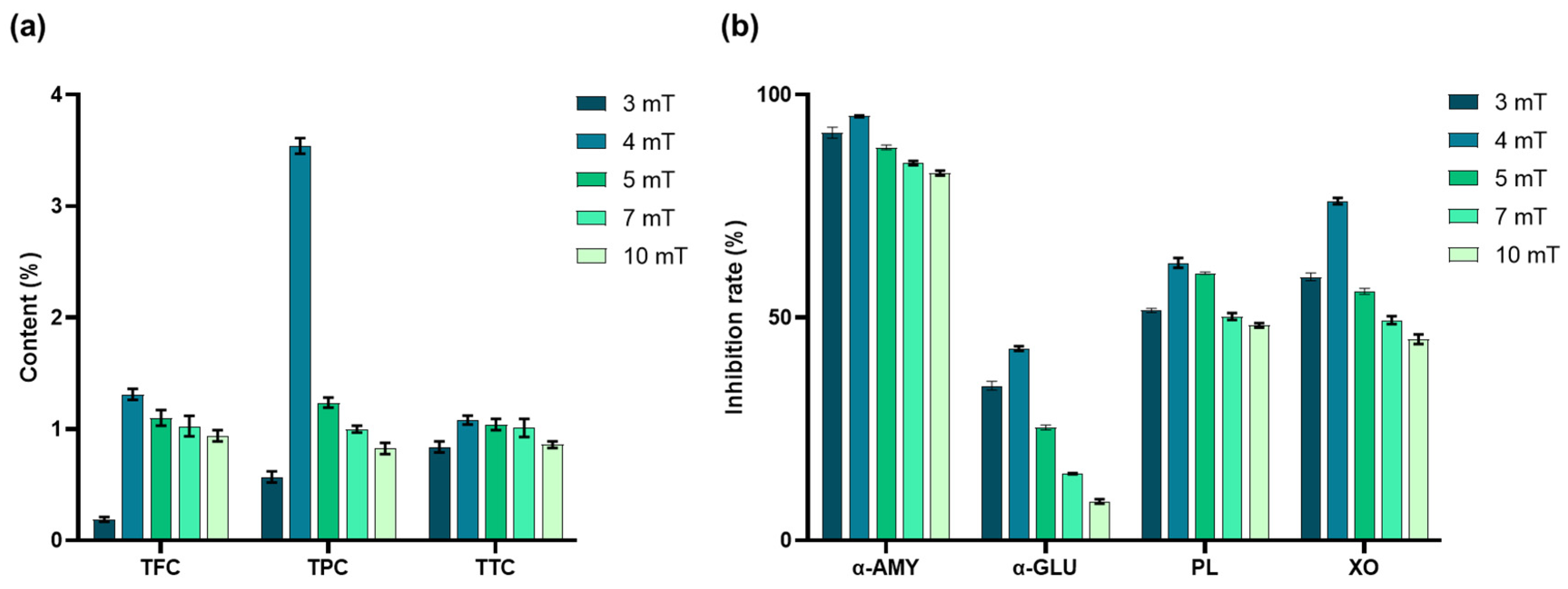
2.2.1. Selection of SMF Intensity
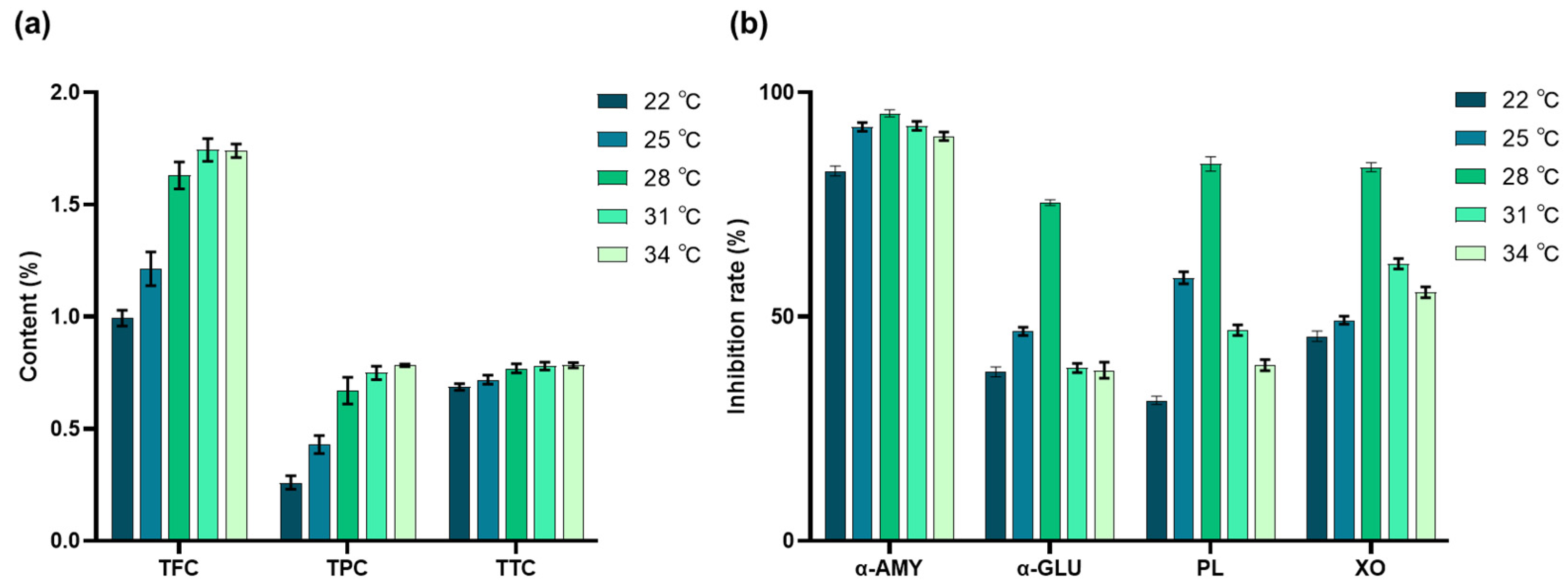
2.2.2. Selection of Culture Temperature
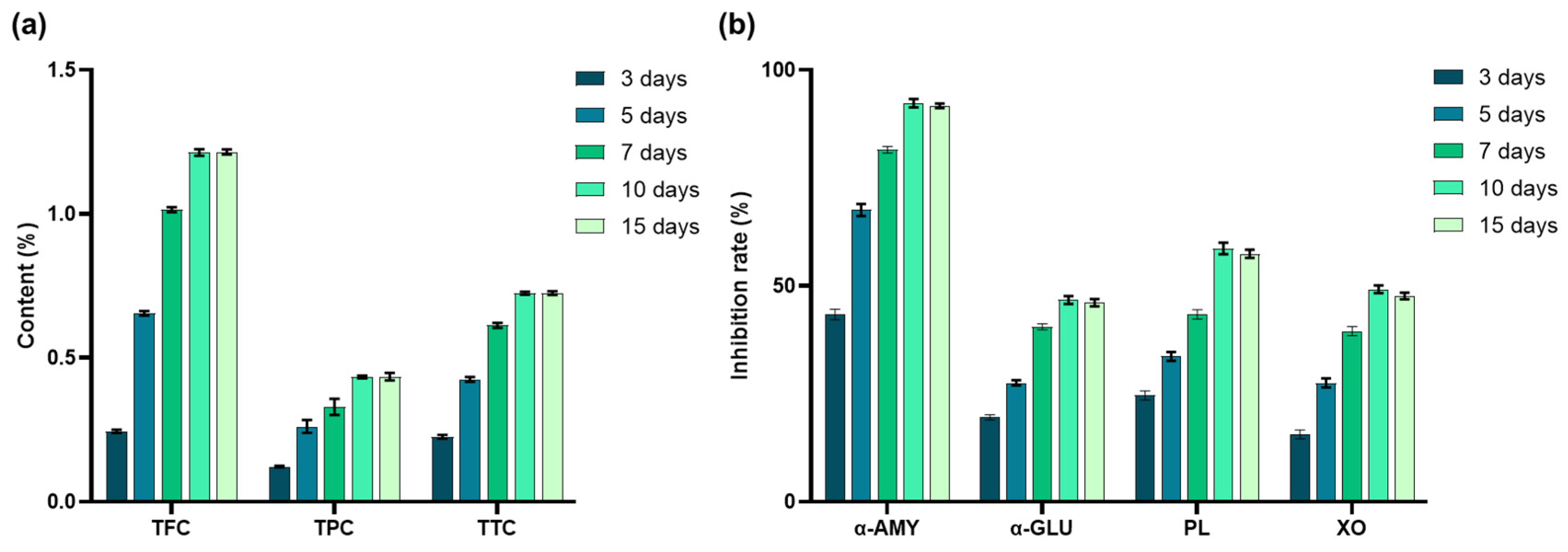
2.2.3. Selection of Culture Time
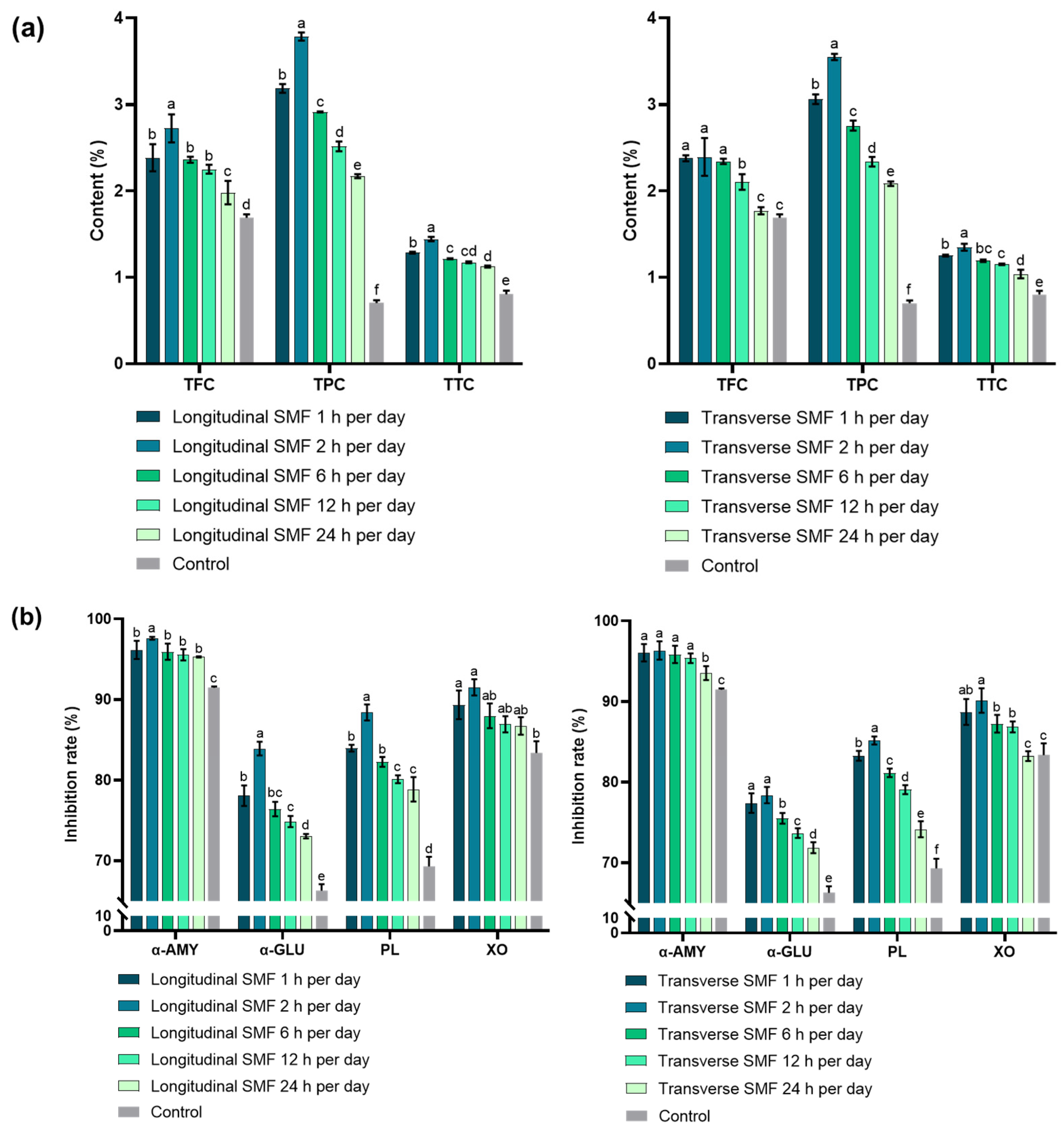
2.2.4. Selection of Magnetic Treatment Time
2.3. Orthogonal Experiment
2.4. Cultivation of Sanghuangporus vaninii (SV) and Extract Preparation
2.5. Determination of Secondary Metabolites
2.5.1. Total Flavonoid Content (TFC)
2.5.2. Total Polyphenol Content (TPC)
2.5.3. Total Triterpenoid Content (TTC)
2.6. Determination of Enzyme Inhibition Rate
2.6.1. α-Amylase
2.6.2. α-Glucosidase
2.6.3. Pancreatic Lipase
2.6.4. Xanthine Oxidase
2.7. Isolation of Major Metabolites from SMF-Treated SV
2.7.1. D-(+)-Trehalose (1)
2.7.2. 5,7-Dihydroxy-3,4′-dimethoxyflavone (2)
2.7.3. Pinolenic acid (3)
2.8. Determination of IC50 Values and Positive Control Experiments
2.9. Statistical Analysis
3. Results
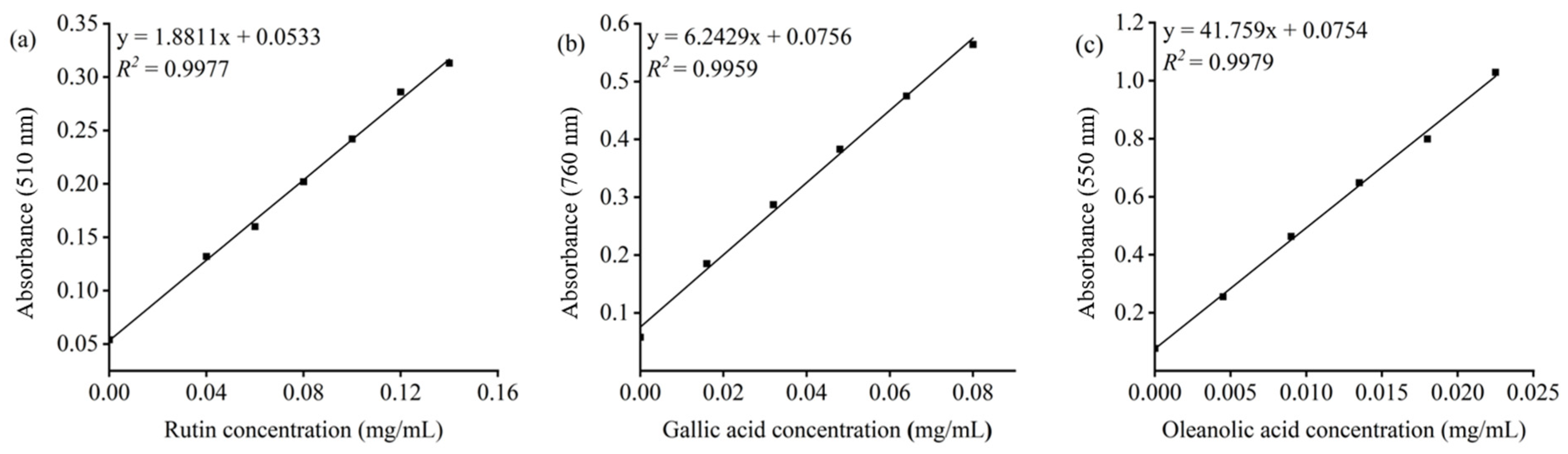
3.1. Standard Curves for Metabolite Quantification
3.2. Influence of SMF Intensity on Metabolite Content and Enzyme Inhibition
3.3. Influence of Culture Temperature on Metabolite Content and Enzyme Inhibition
3.4. Influence of Culture Time on Metabolite Content and Enzyme Inhibition
3.5. Influence of SMF Exposure Time on Metabolite Content and Enzyme Inhibition
3.6. Orthogonal Experiment on Optimization of Culture Conditions
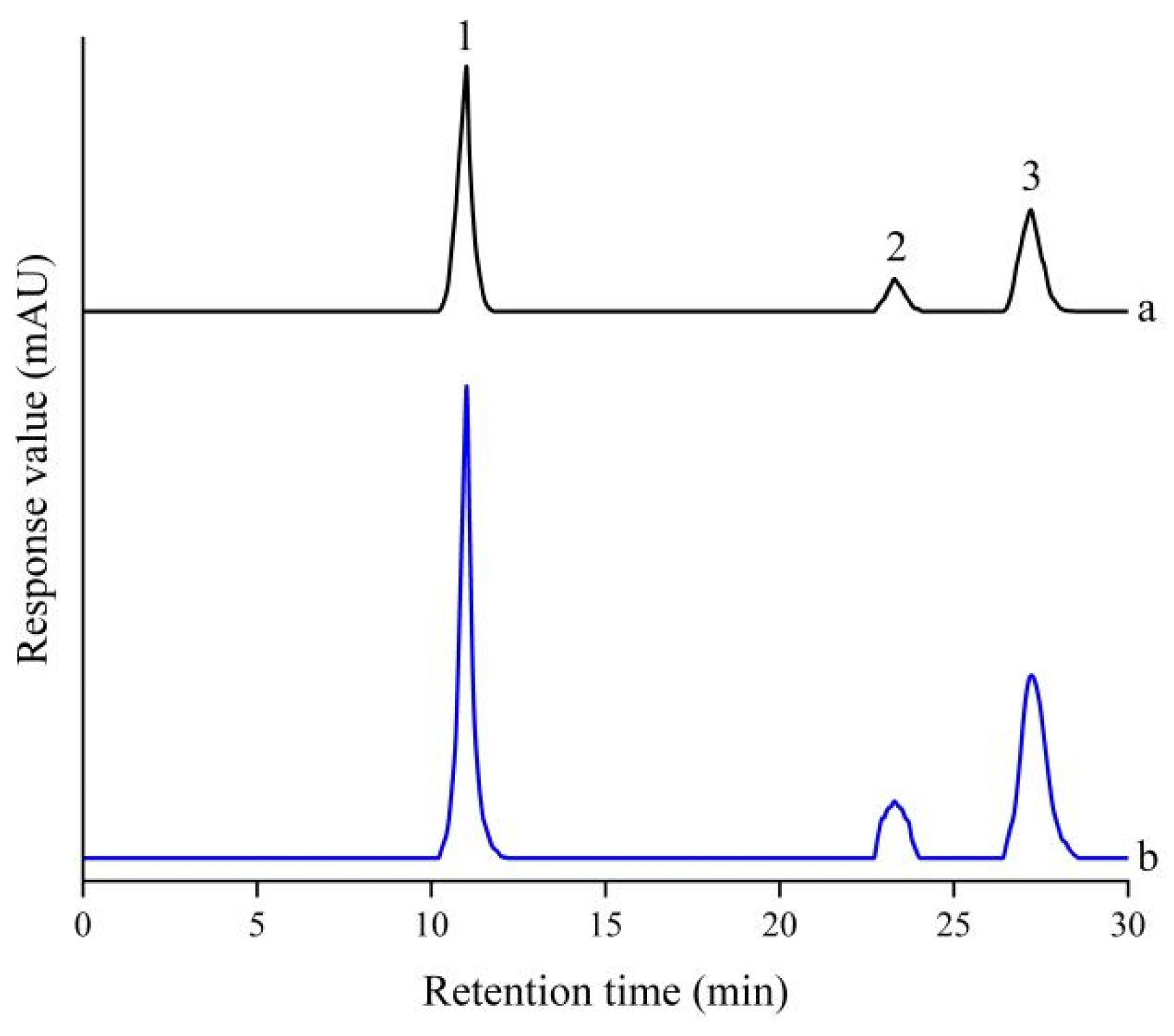
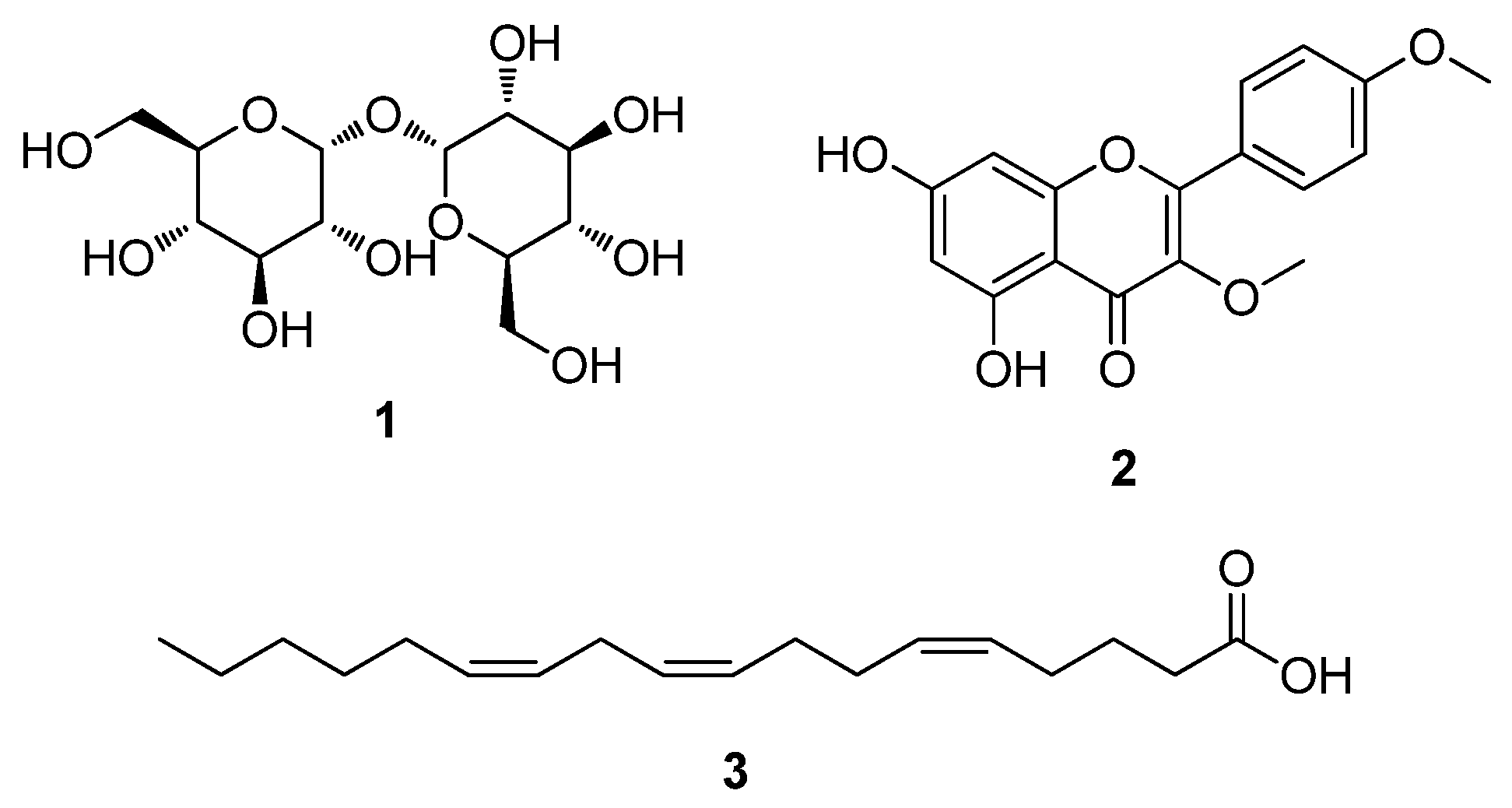
3.7. Comparison of Major Metabolites and Their Separation
3.8. Enzyme Inhibitory Activities of Isolated Compounds at 100 μg/mL
3.9. Enzyme Inhibitory Activities and IC50 Values of Isolated Compounds
4. Discussion
5. Conclusions
Author Contributions
Funding
Institutional Review Board Statement
Informed Consent Statement
Data Availability Statement
Acknowledgments
Conflicts of Interest
References
- Luan, F.; Peng, X.; Zhao, G.; Zeng, J.; Zou, J.; Rao, Z.; Liu, Y.; Zhang, X.; Ma, H.; Zeng, N. Structural diversity and bioactivity of polysaccharides from medicinal mushroom Phellinus spp.: A review. Food Chem. 2022, 397, 133731. [Google Scholar] [CrossRef]
- Thanh, N.T.; Tuan, N.N.; Kuo, P.C.; Dung, D.M.; Phuong, D.L.; Giang, D.T.T.; Wu, T.S.; Thang, T.D. Chemical constituents from the fruiting bodies of Phellinus igniarius. Nat. Prod. Res. 2018, 32, 2392–2397. [Google Scholar] [CrossRef] [PubMed]
- Dai, Y.C.; Zhou, L.W.; Cui, B.K.; Chen, Y.Q.; Decock, C. Current advances in Phellinus sensu lato: Medicinal species, functions, metabolites and mechanisms. Appl. Microbiol. Biotechnol. 2010, 87, 1587–1593. [Google Scholar] [CrossRef]
- Karigidi, K.O.; Olaiya, C.O. Effects of Curculigo pilosa supplementation on antioxidant and antidiabetic activities of yam flour. J. Food Sci. Technol. 2021, 58, 4110–4117. [Google Scholar] [CrossRef]
- Kim, S.W.; Hwang, H.J.; Park, J.P.; Cho, Y.J.; Song, C.H.; Yun, J.W. Mycelial growth and exo-biopolymer production by submerged culture of various edible mushrooms under different media. Lett. Appl. Microbiol. 2002, 34, 56–61. [Google Scholar] [CrossRef]
- Li, H.X.; Zhang, X.Y.; Gu, L.L.; Li, Q.; Ju, Y.; Zhou, X.B.; Hu, M.; Li, Q. Anti-gout effects of the medicinal fungus Phellinus igniarius in hyperuricaemia and acute gouty arthritis rat models. Front. Pharmacol. 2022, 12, 801910. [Google Scholar] [CrossRef] [PubMed]
- Zhou, J.F.; Wang, W.J.; Yin, Z.P.; Zheng, G.D.; Chen, J.G.; Li, J.E.; Chen, L.L.; Zhang, Q.F. Quercetin is a promising pancreatic lipase inhibitor in reducing fat absorption in vivo. Food Biosci. 2021, 43, 101248. [Google Scholar] [CrossRef]
- Zhou, S.Y.; Huang, G.L. The inhibitory activity of natural products to xanthine oxidase. Chem. Biodivers. 2023, 20, e202300005. [Google Scholar] [CrossRef]
- Luo, Y.Z.; Cobb, R.E.; Zhao, H.M. Recent advances in natural product discovery. Curr. Opin. Biotechnol. 2014, 30, 230–237. [Google Scholar] [CrossRef]
- Chen, J.Z.; Lo, H.C.; Lin, F.Y.; Chang, S.L.; Hsieh, C.; Liang, Z.C.; Ho, W.J.; Hsu, T.H. Effects of medium components and culture conditions on mycelial biomass and the production of bioactive ingredients in submerged culture of Xylaria nigripes (Ascomycetes), a Chinese medicinal fungus. Int. J. Med. Mushrooms 2014, 16, 431–447. [Google Scholar] [CrossRef]
- Xie, L.M.; Xie, J.H.; Chen, X.X.; Tao, X.; Xie, J.Y.; Shi, X.Y.; Huang, Z.B. Comparative transcriptome analysis of Monascus purpureus at different fermentation times revealed candidate genes involved in exopolysaccharide biosynthesis. Food Res. Int. 2022, 160, 111700. [Google Scholar] [CrossRef] [PubMed]
- Batcioglu, K.; Dogan, M.; Uyumlu, A.B.; Satilmis, B.; Bayri, N.; Atalay, S.; Demirtas, H. Investigation of a weak magnetic field effect on the in vitro catalytic activity of adenosine deaminase and xanthine oxidase. Gen. Physiol. Biophys. 2011, 30, 410–414. [Google Scholar] [CrossRef] [PubMed]
- Liu, D.D.; Zhu, L.P.; Guo, Y.T.; Zhao, Y.M.; Betchem, G.; Yolandani, Y.; Ma, H.L. Enhancing submerged fermentation of Antrodia camphorata by low-frequency alternating magnetic field. Innov. Food Sci. Emerg. Technol. 2023, 86, 103382. [Google Scholar] [CrossRef]
- Luo, X.Y.; Li, D.D.; Tao, Y.; Wang, P.; Yang, R.Q.; Han, Y.B. Effect of static magnetic field treatment on the germination of brown rice: Changes in α-amylase activity and structural and functional properties in starch. Food Chem. 2022, 383, 132392. [Google Scholar] [CrossRef]
- Machado, B.R.; Duarte, S.H.; Santos, L.O. Extracellular lipase production by Yarrowia lipolytica under magnetic fields. World J. Microbiol. Biotechnol. 2023, 39, 239. [Google Scholar] [CrossRef]
- Sarraf, M.; Kataria, S.; Taimourya, H.; Santos, L.O.; Menegatti, R.D.; Jain, M.; Ihtisham, M.; Liu, S. Magnetic field (MF) applications in plants: An overview. Plants 2020, 9, 1139. [Google Scholar] [CrossRef] [PubMed]
- Deamici, K.M.; Santos, L.O.; Costa, J.A.V. Use of static magnetic fields to increase CO2 biofixation by the microalga Chlorella fusca. Bioresour. Technol. 2019, 276, 103–109. [Google Scholar] [CrossRef]
- Nezammahalleh, H.; Ghanati, F.; Adams, T.A., II; Nosrati, M.; Shojaosadati, S.A. Effect of moderate static electric field on the growth and metabolism of Chlorella vulgaris. Bioresour. Technol. 2016, 218, 700–711. [Google Scholar] [CrossRef]
- Yao, Y.N.; Li, Y.; Yang, Y.Q.; Li, C.Y. Effect of seed pretreatment by magnetic field on the sensitivity of cucumber (Cucumis sativus) seedlings to ultraviolet-B radiation. Environ. Exp. Bot. 2005, 54, 286–294. [Google Scholar] [CrossRef]
- Radhakrishnan, R. Seed pretreatment with magnetic field alters the storage proteins and lipid profiles in harvested soybean seeds. Physiol. Mol. Biol. Plants 2018, 24, 343–347. [Google Scholar] [CrossRef]
- Santos, L.O.; Deamici, K.M.; Menestrino, B.C.; Garda-Buffon, J.; Costa, J.A.V. Magnetic treatment of microalgae for enhanced product formation. World J. Microbiol. Biotechnol. 2017, 33, 169. [Google Scholar] [CrossRef] [PubMed]
- Chu, F.J.; Wan, T.J.; Pai, T.Y.; Lin, H.W.; Liu, S.H.; Huang, C.F. Use of magnetic fields and nitrate concentration to optimize the growth and lipid yield of Nannochloropsis oculata. J. Environ. Manag. 2020, 253, 109680. [Google Scholar] [CrossRef] [PubMed]
- Pacini, S.; Vannelli, G.B.; Barni, T.; Ruggiero, M.; Sardi, I.; Pacini, P.; Gulisano, M. Effect of 0.2 T static magnetic field on human neurons: Remodeling and inhibition of signal transduction without genome instability. Neurosci. Lett. 1999, 267, 185–188. [Google Scholar] [CrossRef]
- Socorro, A.; García, F. Simulation of magnetic field effect on a seed embryo cell. Int. Agrophys. 2012, 26, 167–173. [Google Scholar] [CrossRef]
- Esmaeili, S.; Azizian, S.; Shahmoradi, B.; Moradi, S.; Shahlaei, M.; Khodarahmi, R. Dipyridamole inhibits α-amylase/α-glucosidase at sub-micromolar concentrations; in-vitro, in-vivo and theoretical studies. Bioorg. Chem. 2019, 88, 102972. [Google Scholar] [CrossRef]
- Pacher, P.; Nivorozhkin, A.; Szabo, C. Therapeutic effects of xanthine oxidase inhibitors: Renaissance half a century after the discovery of allopurinol. Pharmacol. Rev. 2006, 58, 87–114. [Google Scholar] [CrossRef] [PubMed]
- Lee, S.; Jang, M.; Ryoo, R.; Roh, J.; Ko, S.-K.; Kim, K.H. New autophagy-modulating lanostane-type triterpenoids from a hallucinogenic poisonous mushroom Gymnopilus orientispectabilis. Arch. Pharm. Res. 2024, 47, 272–287. [Google Scholar] [CrossRef]
- Bridget, A.F.; Budhathoki, R.; Huo, C.; Joshi, S.; Parajuli, N.; Sohng, J.K.; Kim, K.H. Activation of cryptic biosynthetic pathways in Saccharopolyspora spinosa through deletion of the spinosyn gene cluster: Induction of cryptic and bioactive natural products. Arch. Pharm. Res. 2025, 48, 514–527. [Google Scholar] [CrossRef]
- Gil, T.-Y.; Kim, H.-J.; Kim, H.-M.; Sim, H.-Y.; Choi, W.; Lee, B.S.; Kim, K.H.; An, H.-J. Aster glehni ethanol extract inhibits inflammatory responses regulating skin barrier molecules in human keratinocytes. Nat. Prod. Sci. 2024, 30, 262–267. [Google Scholar] [CrossRef]
- Cho, C.H.; Chae, S.H.; Kim, S.H.; Kim, K.H. Phenolic compounds isolated from Juncus decipiens and their effects on osteoblast differentiation in the mouse mesenchymal stem cell line C3H10T1/2. Nat. Prod. Sci. 2024, 30, 135–142. [Google Scholar] [CrossRef]
- Chang, C.C.; Yang, M.H.; Wen, H.M.; Chern, J.C. Estimation of total flavonoid content in propolis by two complementary colorimetric methods. J. Food Drug Anal. 2002, 10, 178–182. [Google Scholar]
- Matic, P.; Sabljic, M.; Jakobek, L. Validation of spectrophotometric methods for the determination of total polyphenol and total flavonoid content. J. AOAC Int. 2017, 100, 1795–1803. [Google Scholar] [CrossRef] [PubMed]
- Pedrosa, A.M.; de Castro, W.V.; Castro, A.H.F.; Duarte-Almeida, J.M. Validated spectrophotometric method for quantification of total triterpenes in plant matrices. DARU J. Pharm. Sci. 2020, 28, 281–286. [Google Scholar] [CrossRef] [PubMed]
- Apostolidis, E.; Kwon, Y.I.; Shetty, K. Inhibitory potential of herb, fruit, and fungal-enriched cheese against key enzymes linked to type 2 diabetes and hypertension. Innov. Food Sci. Emerg. Technol. 2007, 8, 46–54. [Google Scholar] [CrossRef]
- Pistia-Brueggeman, G.; Hollingsworth, R.I. A preparation and screening strategy for glycosidase inhibitors. Tetrahedron 2001, 57, 8773–8778. [Google Scholar] [CrossRef]
- Kim, Y.S.; Lee, Y.M.; Kim, H.; Kim, J.; Jang, D.S.; Kim, J.H.; Kim, J.S. Anti-obesity effect of Morus bombycis root extract: Anti-lipase activity and lipolytic effect. J. Ethnopharmacol. 2010, 130, 621–624. [Google Scholar] [CrossRef]
- Nile, S.H.; Park, S.W. Antioxidant, α-glucosidase and xanthine oxidase inhibitory activity of bioactive compounds from maize (Zea mays L.). Chem. Biol. Drug Des. 2014, 83, 119–125. [Google Scholar] [CrossRef]
- Matsuur, H.; Asakawa, C.; Kurimoto, M.; Mizutani, J. Alpha-glucosidase inhibitor from the seeds of balsam pear (Momordica charantia) and the fruit bodies of Grifola frondosa. Biosci. Biotechnol. Biochem. 2002, 66, 1576–1578. [Google Scholar] [CrossRef]
- Dimayuga, R.E.; Murillo, J.; Malmstrøm, G.; Christophersen, C. Constituents of Haplopappus sonorensis. Fitoterapia 1999, 70, 536–537. [Google Scholar] [CrossRef]
- Wu, X.; Bao, S.; Sun, L.; Zhang, M.; Yu, L.; Wang, Y.; Fu, Y. A new integrated strategy for high purity pinolenic acid production from Pinus koraiensis sieb. Et zucc seed oil and evaluation of its hypolipidemic activity in vivo. Fitoterapia 2024, 175, 105842. [Google Scholar] [CrossRef]
- Kaltia, S.; Matikainen, J.; Ala-Peijari, M.; Hase, T. Synthesis of Ethyl 5 Z, 9 Z, 12 Z-octadecatrienoate (ethyl pinolenate) and Methyl 12 Z, 15 Z-octadecadienoate. J. Am. Oil Chem. Soc. 2008, 85, 561–565. [Google Scholar] [CrossRef]
- Xie, L.; Zhu, Y.; Gao, M.; Chen, S.; Li, L.; Liu, Y.; Gu, T.; Zhang, J. Mechanisms of the increase triterpenoids content of morchella eximia induced by salicylic acid and magnetic field. Food Bioprod. Process. 2024, 145, 21–31. [Google Scholar] [CrossRef]
- Xu, C.C.; Li, Z.J.; Li, R.; Liu, D.K.; Guo, C.X. Static magnetic field exposure improved the volatile composition and aroma attribute of fresh-cut flower mushrooms (Lentinus edodes (berk) sing). LWT–Food Sci. Technol. 2023, 188, 115453. [Google Scholar] [CrossRef]
- Nasiri, M.; Hassanpour, H.; Sorahinobar, M.; Niknam, V. Impact of static magnetic field on the callogenesis, phytochemical production and antioxidant enzymes in Anthemis gilanica. Russ. J. Plant Physiol. 2022, 69, 77. [Google Scholar] [CrossRef]
- Bagri, P.; Chester, K.; Khan, W.; Ahmad, S. Aspects of extraction and biological evaluation of naturally occurring sugar-mimicking sulfonium-ion and their synthetic analogues as potent α-glucosidase inhibitors from Salacia: A review. RSC Adv. 2017, 7, 28152–28790. [Google Scholar] [CrossRef]
- Papoutsis, K.; Zhang, J.Y.; Bowyer, M.C.; Brunton, N.; Gibney, E.R.; Lyng, J. Fruit, vegetables, and mushrooms for the preparation of extracts with α-amylase and α-glucosidase inhibition properties: A review. Food Chem. 2021, 338, 128119. [Google Scholar] [CrossRef]
- Gao, H.; Nishioka, T.; Kawabata, J.; Kasai, T. Structure-activity relationships for α-glucosidase inhibition of baicalein, 5,6,7-trihydroxyflavone: The effect of a-ring substitution. Biosci. Biotechnol. Biochem. 2004, 68, 369–375. [Google Scholar] [CrossRef]
- Kobayashi, M.; Ichitani, M.; Suzuki, Y.; Unno, T.; Sugawara, T.; Yamahira, T.; Kato, M.; Takihara, T.; Sagesaka, Y.; Kakuda, T. Black-tea polyphenols suppress postprandial hypertriacylglycerolemia by suppressing lymphatic transport of dietary fat in rats. J. Agric. Food Chem. 2009, 57, 7131–7136. [Google Scholar] [CrossRef]
- Kaufmann, C.M.; Grassmann, J.; Letzel, T. Hplc method development for the online-coupling of chromatographic Perilla frutescens extract separation with xanthine oxidase enzymatic assay. J. Pharm. Biomed. Anal. 2016, 124, 347–357. [Google Scholar] [CrossRef]
- Wang, Z.; Kwon, S.H.; Hwang, S.H.; Kang, Y.H.; Lee, J.Y.; Lim, S.S. Competitive binding experiments can reduce the false positive results of affinity-based ultrafiltration-hplc: A case study for identification of potent xanthine oxidase inhibitors from Perilla frutescens extract. J. Chromatogr. B Analyt. Technol. Biomed. Life Sci. 2017, 1048, 30–37. [Google Scholar] [CrossRef]
- Liu, Y.D.; Tang, N.; Lin, D.B.; Deng, W.; Li, Z.G. Integration of multi-omics analyses highlights the secondary metabolism response of tomato fruit to low temperature storage. Food Res. Int. 2023, 173, 113316. [Google Scholar] [CrossRef]
- Xia, Y.; Wang, Y.; Zhang, B.; Xu, G.; Ai, L. Effect of cultural conditions on antrodin C production by basidiomycete Antrodia camphorata in solid-state fermentation. Biotechnol. Appl. Biochem. 2014, 61, 724–732. [Google Scholar] [CrossRef] [PubMed]
- Xiao, J.H.; Chen, D.X.; Xiao, Y.; Liu, J.W.; Liu, Z.L.; Wan, W.H.; Fang, N.; Tan, B.B.; Liang, Z.Q.; Liu, A.Y. Optimization of submerged culture conditions from mycelial polysaccharide production in Cordyceps pruinosa. Process Biochem. 2004, 39, 2241–2247. [Google Scholar] [CrossRef]
- Deamici, K.M.; de Morais, M.G.; dos Santos, L.O.; Gros, F.; Costa, J.A.V.; Laroche, C. Magnetic field action on Limnospira indica pcc8005 cultures: Enhancement of biomass yield and protein content. Appl. Sci. 2022, 12, 1533. [Google Scholar] [CrossRef]
- Deamici, K.M.; Silva, P.G.P.; Costa, J.A.V.; Santos, L.O. Low electromagnetic fields applied to Chlorella fusca cultivation to increase production of microalga-based carbohydrates. BioEnergy Res. 2023, 16, 1548–1555. [Google Scholar] [CrossRef]
- Ribeiro, R.A.; Bourbon-Melo, N.; Sá-Correia, I. The cell wall and the response and tolerance to stresses of biotechnological relevance in yeasts. Front. Microbiol. 2022, 13, 953479. [Google Scholar] [CrossRef]
- Elbein, A.D.; Pan, Y.T.; Pastuszak, I.; Carroll, D. New insights on trehalose: A multifunctional molecule. Glycobiology 2003, 13, 17R–27R. [Google Scholar] [CrossRef] [PubMed]
- Jain, N.K.; Roy, I. Effect of trehalose on protein structure. Protein Sci. 2009, 18, 24–36. [Google Scholar] [CrossRef]
- Magazù, S.; Calabrò, E.; Campo, S. Effects of static magnetic field on biomolecules: The role of trehalose in protecting protein structure. Int. J. Biol. Macromol. 2012, 50, 1308–1313. [Google Scholar]



| Level | A SMF Intensity (mT) | B Culture Temperature (°C) | C Culture Time (days) | D Magnetic Treatment Time (h Per day) |
|---|---|---|---|---|
| 1 | 3 | 25 | 7 | 1 |
| 2 | 4 | 28 | 10 | 2 |
| 3 | 5 | 31 | 15 | 6 |
| Sample (μL) | Phosphate Buffer (pH 6.8) (μL) | α-Amylase (μL) | Starch Solution (μL) | DNS (μL) | Ultra-Pure Water (μL) | |
|---|---|---|---|---|---|---|
| A1 | 50 | 0 | 50 | 50 | 100 | 1000 |
| A2 | 50 | 50 | 0 | 50 | 100 | 1000 |
| A0 | 0 | 50 | 50 | 50 | 100 | 1000 |
| A3 | 0 | 100 | 0 | 50 | 100 | 1000 |
| Sample (μL) | Phosphate buffer (pH 6.8) (μL) | α-Glucosidase (μL) | PNPG (μL) | Na2CO3 (μL) | |
|---|---|---|---|---|---|
| A1 | 50 | 0 | 50 | 100 | 100 |
| A2 | 50 | 50 | 0 | 100 | 100 |
| A0 | 0 | 50 | 50 | 100 | 100 |
| A3 | 0 | 100 | 0 | 100 | 100 |
| Sample (μL) | Tris-HCl Buffer (pH 8.2) (μL) | Pancreatic Lipase (μL) | 4-Nitrophenyl Laurate (μL) | |
|---|---|---|---|---|
| A1 | 50 | 350 | 150 | 450 |
| A2 | 50 | 500 | 0 | 450 |
| A0 | 0 | 400 | 150 | 450 |
| A3 | 0 | 550 | 0 | 450 |
| Sample (μL) | Tris-HCl Buffer (pH 7.5) (μL) | Xanthine Oxidase (μL) | Xanthine Solution (μL) | |
|---|---|---|---|---|
| A1 | 50 | 0 | 50 | 100 |
| A2 | 50 | 50 | 0 | 100 |
| A0 | 0 | 50 | 50 | 100 |
| A3 | 0 | 100 | 0 | 100 |
| Group | A | B | C | D | y1 (TPC %) | y2 (Xanthine Oxidase Inhibition Rate %) | |
|---|---|---|---|---|---|---|---|
| 1 | 1 | 1 | 1 | 1 | 0.49 | 50.35 | |
| 2 | 1 | 2 | 3 | 2 | 0.66 | 67.48 | |
| 3 | 1 | 3 | 2 | 3 | 0.52 | 55.80 | |
| 4 | 2 | 1 | 3 | 3 | 3.29 | 70.12 | |
| 5 | 2 | 2 | 2 | 1 | 3.73 | 84.57 | |
| 6 | 2 | 3 | 1 | 2 | 3.50 | 73.48 | |
| 7 | 3 | 1 | 2 | 2 | 1.51 | 69.99 | |
| 8 | 3 | 2 | 1 | 3 | 1.07 | 48.49 | |
| 9 | 3 | 3 | 3 | 1 | 1.37 | 62.46 | |
| TPC | k1 | 0.56 | 1.77 | 1.69 | 1.86 | ||
| k2 | 3.51 | 1.82 | 1.92 | 1.89 | |||
| k3 | 1.31 | 1.79 | 1.77 | 1.62 | |||
| R1 | 2.95 | 0.05 | 0.23 | 0.24 | |||
| Primary and secondary order | A > D > C > B | ||||||
| Optimal combination | A2B2C2D2 | ||||||
| Xanthine oxidase | k1′ | 57.88 | 63.49 | 57.44 | 65.79 | ||
| k2′ | 76.06 | 66.84 | 70.12 | 70.31 | |||
| k3′ | 60.31 | 63.91 | 66.69 | 58.13 | |||
| R2 | 15.75 | 2.93 | 3.43 | 7.66 | |||
| Primary and secondary order | A > D > C > B | ||||||
| Optimal combination | A2B2C2D2 | ||||||
| Compounds | Conditions | Inhibition Rate (%) at 100 μg/mL | ||
|---|---|---|---|---|
| α-Amylase | α-Glucosidase | Pancreatic Lipase | ||
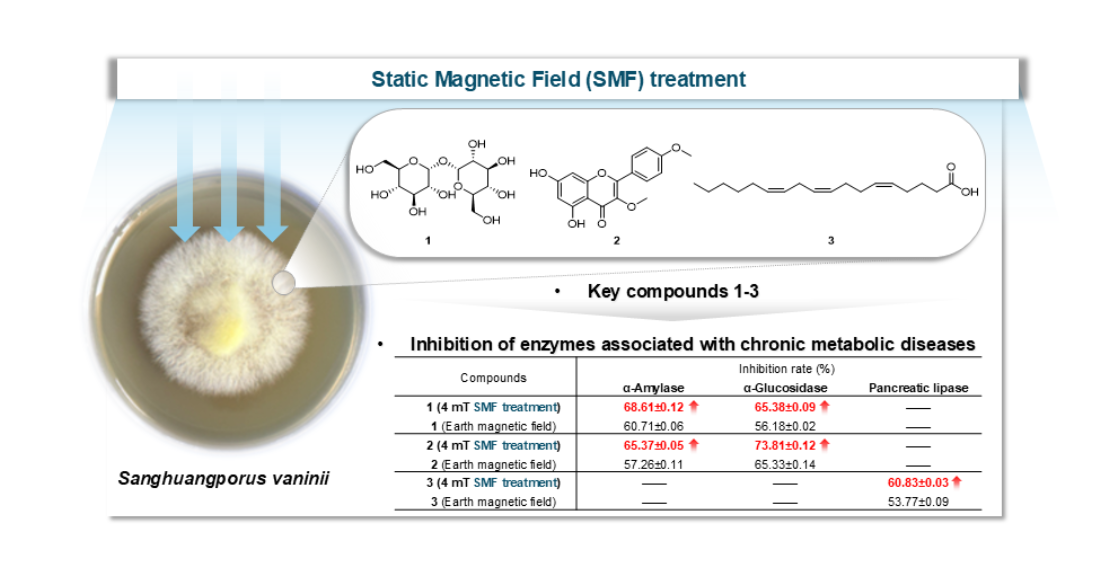
| 1 | 4 mT static magnetic field | 68.61 ± 0.12 | 65.38 ± 0.09 | —— |
| Earth magnetic field | 60.71 ± 0.06 | 56.18 ± 0.02 | —— | |
| 2 | 4 mT static magnetic field | 65.37 ± 0.05 | 73.81 ± 0.12 | —— |
| Earth magnetic field | 57.26 ± 0.11 | 65.33 ± 0.14 | —— | |
| 3 | 4 mT static magnetic field | —— | —— | 60.83 ± 0.03 |
| Earth magnetic field | —— | —— | 53.77 ± 0.09 | |
| Compounds | Conditions | IC50 (μg/mL) | ||
|---|---|---|---|---|
| α-Amylase | α-Glucosidase | Pancreatic Lipase | ||
| 1 | 4 mT static magnetic field | 82.34 ± 3.21 | 76.58 ± 2.89 | >500 |
| Earth magnetic field | 108.67 ± 4.53 | 112.43 ± 4.17 | >500 | |
| 2 | 4 mT static magnetic field | 45.62 ± 1.87 | 38.74 ± 1.56 | >500 |
| Earth magnetic field | 67.89 ± 2.43 | 58.91 ± 2.12 | >500 | |
| 3 | 4 mT static magnetic field | >500 | >500 | 42.15 ± 1.78 |
| Earth magnetic field | >500 | >500 | 58.36 ± 2.24 | |
| Acarbose b | —— | 52.18 ± 2.06 | 35.42 ± 1.43 | NT |
| Orlistat b | —— | NT | NT | 8.76 ± 0.54 |
| Allopurinol b | —— | 5.23 ± 0.31 | NT | NT |
Disclaimer/Publisher’s Note: The statements, opinions and data contained in all publications are solely those of the individual author(s) and contributor(s) and not of MDPI and/or the editor(s). MDPI and/or the editor(s) disclaim responsibility for any injury to people or property resulting from any ideas, methods, instructions or products referred to in the content. |
© 2026 by the authors. Licensee MDPI, Basel, Switzerland. This article is an open access article distributed under the terms and conditions of the Creative Commons Attribution (CC BY) license.
Share and Cite
Ma, Q.; Lee, S.Y.; Liu, Z.; Zhang, S.; Wang, J.; Zaman, K.A.U.; Bai, H.; Kim, K.H. Magnetic Field-Driven Regulation of Bioactive Metabolites and Metabolic Enzyme Inhibition in Sanghuangporus vaninii. Antioxidants 2026, 15, 406. https://doi.org/10.3390/antiox15040406
Ma Q, Lee SY, Liu Z, Zhang S, Wang J, Zaman KAU, Bai H, Kim KH. Magnetic Field-Driven Regulation of Bioactive Metabolites and Metabolic Enzyme Inhibition in Sanghuangporus vaninii. Antioxidants. 2026; 15(4):406. https://doi.org/10.3390/antiox15040406
Chicago/Turabian StyleMa, Qiurui, Seo Yoon Lee, Zi Liu, Shuo Zhang, Jing Wang, KH Ahammad Uz Zaman, Helong Bai, and Ki Hyun Kim. 2026. "Magnetic Field-Driven Regulation of Bioactive Metabolites and Metabolic Enzyme Inhibition in Sanghuangporus vaninii" Antioxidants 15, no. 4: 406. https://doi.org/10.3390/antiox15040406
APA StyleMa, Q., Lee, S. Y., Liu, Z., Zhang, S., Wang, J., Zaman, K. A. U., Bai, H., & Kim, K. H. (2026). Magnetic Field-Driven Regulation of Bioactive Metabolites and Metabolic Enzyme Inhibition in Sanghuangporus vaninii. Antioxidants, 15(4), 406. https://doi.org/10.3390/antiox15040406