1. Introduction
Osteosarcoma (OS) is a highly aggressive primary bone malignancy that primarily affects children and adolescents [
1]. Despite advances in surgical techniques and multi-agent chemotherapy, the prognosis for patients with metastatic or recurrent OS remains poor, with a five-year survival rate below 30% [
2,
3]. This highlights the urgent need for novel therapeutic strategies that not only inhibit tumor proliferation but also modulate the tumor microenvironment.
In recent years, increasing attention has been paid to the interplay between innate immune signaling and redox regulation in cancer therapy [
4,
5]. Immunotherapy has demonstrated promising outcomes in several solid tumors, but its efficacy in OS is limited due to immune evasion, low tumor antigenicity, and insufficient infiltration of cytotoxic T cells [
6]. These challenges necessitate approaches that activate innate immune pathways while restoring immune-responsive conditions within the tumor microenvironment [
7,
8].
The cyclic GMP-AMP synthase (cGAS)–stimulator of interferon genes (STING) pathway is a key cytosolic DNA-sensing mechanism that triggers the phosphorylation of interferon regulatory factor 3 (IRF3) via TANK-binding kinase 1 (TBK1), leading to the production of type I interferons and other inflammatory mediators [
9,
10,
11]. STING activation has been reported to reduce OS metastasis, enhance dendritic cell maturation, and improve CD8
+ T cell function, highlighting its therapeutic potential [
8,
12].
Nitric oxide (NO), a small gaseous signaling molecule primarily generated by inducible nitric oxide synthase (iNOS), exerts diverse roles in tumor biology depending on its concentration and context. At high levels, NO contributes to oxidative stress, induces DNA damage, and promotes apoptosis, whereas at low or sustained levels, it may facilitate tumor progression, angiogenesis, and immune suppression [
13,
14,
15,
16]. Moreover, increasing evidence suggests a functional link between STING signaling and NO production, though the regulatory mechanisms are not fully understood [
17]. Notably, NO serves as a redox mediator, and its interplay with innate immune activation represents a promising axis for anticancer interventions [
15].
Carnosic acid (CA), a phenolic diterpene extracted from
Rosmarinus officinalis, possesses well-documented antioxidant properties and broad antitumor activity against various cancers, including those of the prostate, lung, colon, and stomach [
18]. Beyond its antioxidant potential, CA has been shown to interfere with cancer cell proliferation, migration, and mitochondrial function by modulating redox status and key signaling pathways such as PI3K/Akt, mTOR, and JAK/STAT3 [
19,
20,
21,
22,
23]. More recently, CA has been implicated in immunomodulation and NO regulation, positioning it as a candidate molecule at the intersection of oxidative and immune signaling [
9,
24].
In this study, we investigated the pro-apoptotic effects of CA in osteosarcoma cells and delineated the involvement of the STING/IRF3 axis and NO signaling. Our findings suggest that CA mediates its antitumor effects through activation of innate immune and redox pathways. Although CA’s anticancer properties have been described in other malignancies, its specific actions in osteosarcoma remain insufficiently explored. A prior report demonstrated that CA selectively targets OS cells over healthy bone cells in vitro, but mechanistic and in vivo validation are lacking [
25]. Our study aims to fill this gap and provide insights into the therapeutic potential of redox-active phytochemicals in osteosarcoma.
2. Materials and Methods
2.1. Reagents and Antibodies
Carnosic acid (CA, purity ≥ 98%) (MedChemExpress, Monmouth Junction, NJ, USA; Cat# HY-N0644R) was dissolved in dimethyl sulfoxide (DMSO) to obtain a 100 mM stock solution. The STING inhibitor H-151 (Cat# HY-112693) was also sourced from MCE. The nitric oxide assay kit based on the Griess reaction was provided by Beyotime Biotechnology (Shanghai, China). Dulbecco’s Modified Eagle’s Medium (DMEM), fetal bovine serum (FBS), penicillin–streptomycin solution, and trypsin–EDTA were obtained from Gibco (Thermo Fisher Scientific, Waltham, MA, USA).
Small interfering RNAs (siRNAs) specific for human STING (siSTING) and the negative control (siCTL) were synthesized by GenePharma (Shanghai, China). Transient transfections were performed using Lipofectamine™ 3000 reagent (Thermo Fisher Scientific, Waltham, MA, USA; Cat# L3000008) according to the manufacturer’s instructions.
For Western blotting and immunohistochemistry, primary antibodies included anti-STING (CST, Danvers, MA, USA; Cat# 13647), anti-TBK1 (CST, Cat# 3504), anti-p-TBK1 (Ser172, CST, Cat# 5483), anti-IRF-3 (CST, Cat# 11904), anti-p-IRF-3 (Ser396, CST, Cat# 4947), anti-cleaved caspase-3 (CST, Cat# 9664), anti-PARP (CST, Cat# 9542), anti-Bax (CST, Cat# 5023), anti-Bcl-2 (CST, Cat# 3498), anti-Bak (CST, Cat# 12105), anti-Bcl-xL (CST, Cat# 2764), and anti-α-Tubulin (CST, Cat# 2148). Alexa Fluor 488- or 594-conjugated secondary antibodies (Thermo Fisher Scientific, Waltham, MA, USA) were used for immunofluorescence. Enhanced chemiluminescence (ECL) detection reagents were purchased from Bio-Rad Laboratories (Hercules, CA, USA).
All chemicals were of analytical grade or higher, and deionized water was used throughout the experiments.
2.2. Cell Culture and Treatments
Human osteosarcoma cell lines HOS (catalog no. TCHu167) and MG63 (catalog no. TCHu124) were obtained from the Cell Bank of the Chinese Academy of Sciences (Shanghai, China). These cell lines represent osteoblast-like osteosarcoma models with distinct biological characteristics. MG63 cells are generally considered to exhibit an immature osteoblast-like phenotype with relatively high proliferative capacity, whereas osteosarcoma cell lines such as HOS represent heterogeneous osteoblastic phenotypes with different differentiation characteristics [
26,
27,
28]. For the in vivo xenograft experiments, MG63 cells were selected because they are widely used in osteosarcoma tumorigenicity studies and exhibit stable tumor formation in nude mice. Cells were maintained in DMEM supplemented with 10% FBS, 100 U/mL penicillin, and 100 μg/mL streptomycin, under standard conditions of 37 °C in a humidified atmosphere containing 5% CO
2.
Primary human bone marrow-derived mesenchymal stem cells (hBMSCs) were isolated from bone marrow aspirates collected during hip arthroplasty procedures performed on five female patients (aged 60–65 years) at the Affiliated Hospital of Guangdong Medical University. Written informed consent was obtained from all donors. The protocol adhered to the Declaration of Helsinki and received approval from the Medical Ethical Committee of the Affiliated Hospital of Guangdong Medical University (Approval No. GXB2024-001-02). Mononuclear cells were separated by density gradient centrifugation with Histopaque-1077 (Sigma-Aldrich, St. Louis, MO, USA). The buffy coat was seeded into culture flasks containing α-MEM (Gibco, Thermo Fisher Scientific, Waltham, MA, USA) supplemented with 10% (v/v) FBS, 10 U/mL penicillin G, and 10 μg/mL streptomycin, and maintained at 37 °C in a 5% CO2 incubator. Medium was refreshed every three days. When cell confluence reached approximately 90%, cultures were digested with 0.25% trypsin–EDTA and subcultured at a 1:3 ratio. Cells from passages 4–7 were used in subsequent assays.
For in vitro experiments, CA stock solution (prepared in DMSO) was diluted in culture medium to final concentrations of 5, 10, 20, or 40 μM. The final DMSO concentration did not exceed 0.1%. Control cells received the same volume of vehicle. For STING pathway inhibition, cells were pre-incubated with the selective STING inhibitor H-151 (10 μM) for 1 h prior to CA treatment. Gene knockdown was performed in HOS and MG63 cells using 100 nM siRNA targeting STING (siSTING) or scrambled control siRNA (siCTL) (GenePharma, Shanghai, China) delivered with Lipofectamine™ 3000 reagent (Thermo Fisher Scientific, USA) following the manufacturer’s protocol. Knockdown efficiency was confirmed by Western blotting 48 h after transfection.
In experiments assessing NO signaling, cells were pretreated with the non-selective NOS inhibitor NG-monomethyl-L-arginine (L-NMMA; Sigma-Aldrich, St. Louis, MO, USA) for 4 h before CA exposure. The working concentration of L-NMMA was determined based on prior literature and preliminary optimization. All assays were performed in triplicate and independently repeated at least three times to ensure reproducibility.
2.3. Cell Viability and Proliferation Assays
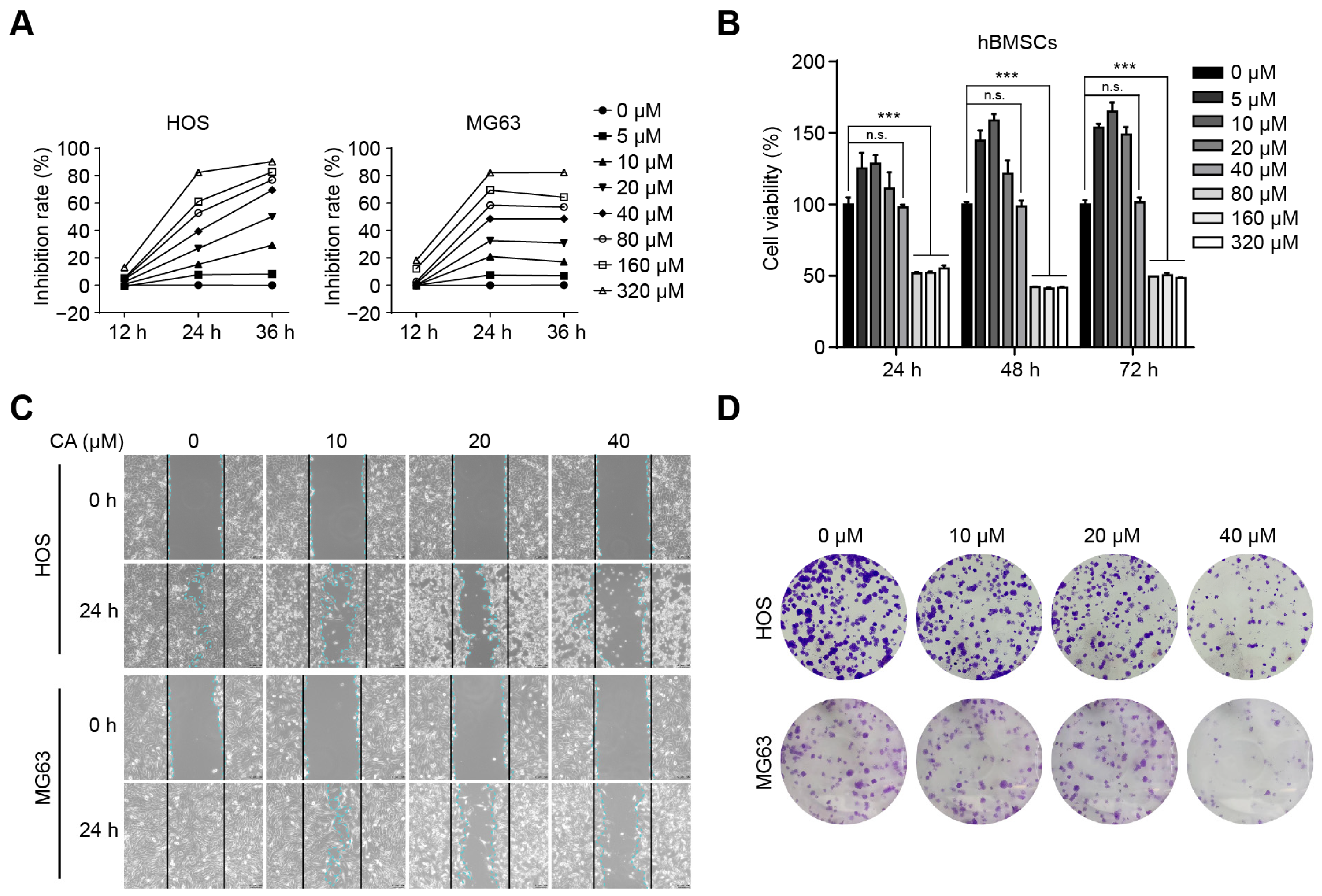
Cell viability was determined using the CellTiter 96® AQueous One Solution Cell Proliferation Assay kit (MTS assay; Promega, Madison, WI, USA) following the manufacturer’s protocol. HOS and MG63 cells were seeded into 96-well plates (5 × 10³ cells/well) and allowed to adhere overnight before treatment with CA at final concentrations of 0~320 μM for 12, 24, or 36 h. At each time point, 20 μL of MTS reagent was added to each well, followed by incubation at 37 °C for 2 h. Absorbance was read at 490 nm using a microplate reader (BioTek Instruments, Winooski, VT, USA). Data were expressed as the percentage of viable cells relative to untreated controls.
Colony formation ability was evaluated to assess long-term proliferative potential. HOS and MG63 cells were seeded in 6-well plates (500 cells/well) and allowed to attach for 24 h prior to treatment with CA (0~40 μM) or vehicle control (0.1% DMSO). Cultures were maintained for 10–14 days, with medium replaced every three days. Colonies were then fixed in 4% paraformaldehyde (15 min) and stained with 0.1% crystal violet (30 min).
2.4. Wound Healing and Migration Assay
The influence of CA on osteosarcoma cell migration was assessed using a scratch wound assay. HOS and MG63 cells were seeded into 6-well plates and cultured until a confluent monolayer (90–100%) was formed. A sterile 200 μL pipette tip was then used to generate a straight scratch across the monolayer. Detached cells were removed by washing twice with phosphate-buffered saline (PBS), and cultures were maintained in serum-free DMEM containing CA (0~40 μM). Images of the wound area were captured at 0 h and 24 h using a phase-contrast microscope (Olympus Corporation, Tokyo, Japan) for subsequent analysis.
2.5. Flow Cytometry for Apoptosis
Apoptosis induction by CA was quantified via Annexin V-FITC/propidium iodide (PI) staining followed by flow cytometric analysis. HOS and MG63 cells were seeded into 6-well plates and exposed to CA (40 μM) for 24 h. Where indicated, cells were pre-incubated with the STING inhibitor H-151 (10 μM) for 1 h before CA treatment. After exposure, both adherent and floating cells were collected, washed twice with cold PBS, and resuspended in 1× binding buffer at a final density of 1 × 10⁶ cells/mL. Cell suspensions were stained with 5 μL Annexin V-FITC and 5 μL PI (Annexin V-FITC/PI Apoptosis Detection Kit; Beyotime Biotechnology, Shanghai, China) for 15 min in the dark at room temperature. Stained samples were analyzed within 1 h using a BD FACSCanto™ II flow cytometer (BD Biosciences, San Jose, CA, USA). Data were processed with FlowJo software (version 10.8, BD Biosciences, Ashland, OR, USA), and the percentages of early (Annexin V+/PI−) and late (Annexin V+/PI+) apoptotic cells were determined. The sum of both populations represented the total apoptotic fraction. All assays were independently repeated at least three times, and results were reported as mean ± SD.
2.6. NO Detection and NOS Expression
NO levels in osteosarcoma cell cultures were quantified using a Griess Reagent Kit (Beyotime Biotechnology, Shanghai, China) in accordance with the manufacturer’s protocol. HOS and MG63 cells were seeded into 6-well plates and treated with CA at final concentrations of 0, 10, or 20 μM for 24 h. In designated groups, cells were pre-incubated with the STING inhibitor H-151 (10 μM) for 1 h prior to CA exposure or transfected with STING-targeting siRNA (siSTING) 48 h before CA treatment. For NO determination, cells were washed and subsequently incubated in phenol red–free DMEM containing low serum (1% FBS) during the NO measurement period to minimize background interference from serum components. Following treatment, supernatants were collected and centrifuged at 1000× g for 10 min at room temperature to eliminate debris. Equal volumes (50 μL) of the clarified supernatant and Griess reagent were combined in a 96-well plate and incubated for 10 min at room temperature in the dark. Absorbance was read at 540 nm using a microplate reader (BioTek Instruments, Winooski, VT, USA). A sodium nitrite standard curve was generated, and NO concentrations in samples were calculated accordingly.
Total RNA was isolated from cells using TRIzol reagent (Invitrogen, Thermo Fisher Scientific, Waltham, MA, USA) and reverse-transcribed with the PrimeScript RT Reagent Kit (Takara Bio Inc., Kusatsu, Japan). Quantitative PCR was performed using TB Green Premix Ex Taq II (Takara Bio Inc., Kusatsu, Japan) on a CFX96 Real-Time PCR Detection System (Bio-Rad Laboratories, Hercules, CA, USA). Expression of NOS isoforms was normalized to GAPDH, and relative changes were calculated by the 2−ΔΔCt method. The primers used were as follows: nNOS forward: 5′-ACA CGC ATG TCT GGA AAG GCA C-3′; nNOS reverse: 5′-CTC TGT GGC ATA GAG GAT GGT C-3′; eNOS forward: 5′-GAA GGC GAC AAT CCT GTA TGG C-3′; eNOS reverse: 5′-TGT TCG AGG GAC ACC ACG TCA T-3′; iNOS forward: 5′-GCT CTA CAC CTC CAA TGT GAC C-3′; iNOS reverse: 5′-CTG CCG AGA TTT GAG CCT CAT G-3′; GAPDH forward: 5′-GAA GGT GAA GGT CGG AGT C-3′; GAPDH reverse: 5′-GAA GAT GGT GAT GGG ATT TC-3′. All qPCR reactions were performed in triplicate. Relative mRNA expression levels were reported as mean ± SD and analyzed using one-way ANOVA followed by Dunnett’s post hoc test.
2.7. Western Blot Analysis
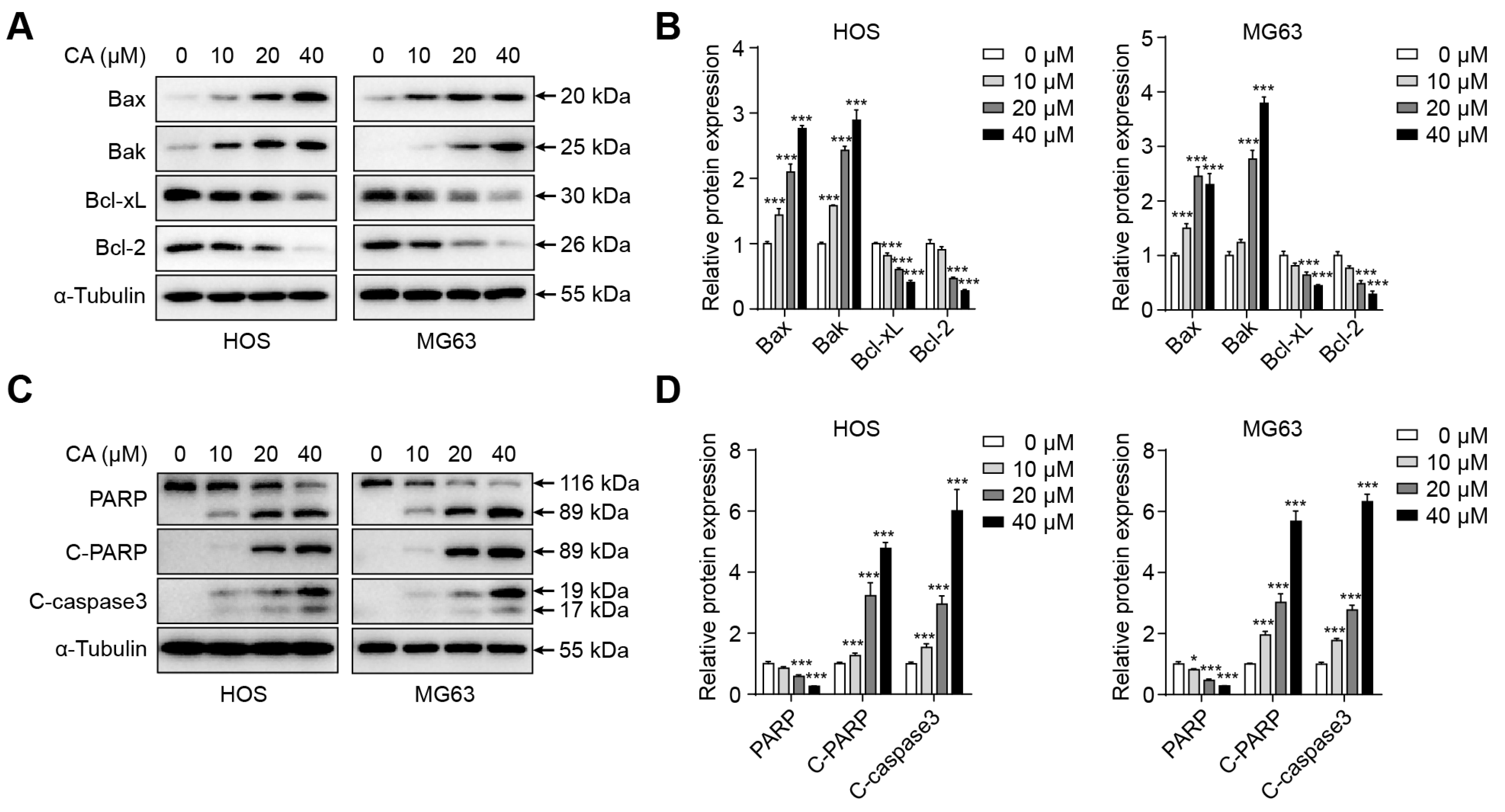
Western blotting was performed to evaluate the expression of apoptosis-related proteins and STING signaling molecules in osteosarcoma cells. Following the indicated treatments with CA, H-151, or siSTING, HOS and MG63 cells were lysed in RIPA buffer (Beyotime, China) supplemented with protease and phosphatase inhibitors. Protein concentrations were determined using a BCA assay kit (Beyotime, China). Equal amounts of protein (30–40 μg) were resolved on 10–12% SDS-PAGE gels and transferred onto polyvinylidene fluoride (PVDF) membranes (Millipore, Billerica, MA, USA). Membranes were blocked in 5% non-fat milk prepared in Tris-buffered saline with 0.1% Tween-20 (TBST) for 1 h at room temperature, followed by overnight incubation at 4 °C with primary antibodies against STING, TBK1, p-TBK1 (Ser172), IRF-3, p-IRF-3 (Ser396), cleaved caspase-3, PARP, Bax, Bcl-2, and α-Tubulin as loading control. After TBST washes, membranes were incubated with horseradish peroxidase (HRP)-conjugated secondary antibodies (1:5000) for 1 h at room temperature. Protein signals were detected using an ECL ultra-sensitive chemiluminescent substrate (Merck Millipore, Darmstadt, Germany; Cat# WBKLS0100) and visualized with a ChemiDoc MP imaging system (Bio-Rad, USA). Band intensities were quantified using ImageJ software (version 1.53, National Institutes of Health, Bethesda, MD, USA). A consistent region of interest (ROI) was applied to each band, and background signal was subtracted before densitometric measurement. Protein expression levels were normalized to α-Tubulin. For cytoplasmic and nuclear protein fractionation, fibrillarin and α-Tubulin were used as nuclear and cytoplasmic markers, respectively, to confirm fraction purity. For phosphorylated proteins, band intensities were additionally normalized to their respective total protein levels where indicated. Relative protein expression was calculated by setting the control group to 1.0. All Western blot experiments were independently repeated at least three times. Quantitative data are presented as mean ± SD. Statistical comparisons were performed using one-way ANOVA followed by Dunnett’s post hoc test, with the control group serving as the reference.
2.8. Immunofluorescence Staining
Immunofluorescence staining was used to determine the subcellular distribution of STING and phosphorylated IRF-3 (p-IRF-3) in osteosarcoma cells after CA exposure. HOS and MG63 cells were seeded on sterile glass coverslips placed in 24-well plates and treated with CA (10 or 20 μM) for 24 h, with or without prior incubation with the STING inhibitor H-151 (10 μM). Following treatment, cells were fixed in 4% paraformaldehyde for 15 min at room temperature, permeabilized with 0.1% Triton X-100 for 10 min, and blocked with 5% bovine serum albumin (BSA) for 1 h. Primary antibody incubation was performed overnight at 4 °C using anti-STING (1:200) or anti–p-IRF-3 (1:200). After PBS washes, cells were incubated with Alexa Fluor 488– or 594–conjugated secondary antibodies (1:500, Thermo Fisher Scientific, USA) for 1 h at room temperature in the dark. Nuclei were stained with DAPI (1 μg/mL) for 5 min. Coverslips were mounted in antifade mounting medium and examined using a Nikon A1 confocal laser scanning microscope (Nikon Corporation, Tokyo, Japan). All images were acquired under identical exposure conditions. ImageJ software was used for fluorescence intensity quantification and analysis of nuclear localization. Representative images from at least three independent experiments were evaluated.
2.9. siRNA Transfection
Small interfering RNAs (siRNAs) targeting human STING were designed and synthesized by GenePharma (Shanghai, China) using a “3 + 1 guarantee” strategy, in which three primary candidate sequences and one additional backup sequence were provided to ensure effective gene silencing. Four independent siRNA oligonucleotides were generated, designated as STING-homo-679, STING-homo-806, STING-homo-886, and STING-homo-1047. The siRNA sequences were as follows: STING-homo-679: Sense: 5′- GCC CUU CAC UUG GAU GCU UTT-3′, Antisense: 5′-AAG CAU CCA AGU GAA GGG CTT-3′; STING-homo-806: Sense: 5′-GGG CUG GCA UGG UCA UAU UTT-3′, Antisense: 5′-AAU AUG ACC AUG CCA GCC CTT-3′; STING-homo-886: Sense: 5′-GCA UUA CAA CAA CCU GCU ATT-3′, Antisense: 5′-UAG CAG GUU GUU GUA AUG CTT-3′; STING-homo-1047: Sense: 5′-GGG UUU ACA GCA ACA GCA UTT-3′, Antisense:5′-AUG CUG UUG CUG UAA ACC CTT-3′. Each siRNA candidate was individually transfected into HOS and MG63 cells, and knockdown efficiency was evaluated by Western blot analysis 48 h post-transfection. Among the four tested sequences, STING-homo-1047 consistently exhibited the highest knockdown efficiency and was therefore selected for all subsequent mechanistic and functional experiments. For transfection, HOS and MG63 cells were seeded into 6-well plates and transfected at ~60–70% confluence using Lipofectamine™ 3000 reagent (Thermo Fisher Scientific, USA) in accordance with the manufacturer’s protocol. For each well, 100 nM siRNA was diluted in Opti-MEM™ and combined with Lipofectamine™ 3000 for 15 min before being added to the cultures. After 6 h of incubation, the transfection medium was replaced with fresh complete medium, and cells were maintained for an additional 42–48 h prior to downstream experiments. Knockdown efficiency was verified by Western blot analysis. Following transfection, cells were subjected to NO quantification, apoptosis assays, and Western blotting to evaluate downstream signaling changes and functional outcomes. All transfection procedures were independently performed at least three times.
2.10. In Vivo Xenograft Tumor Model
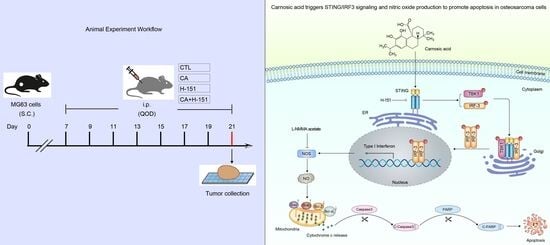
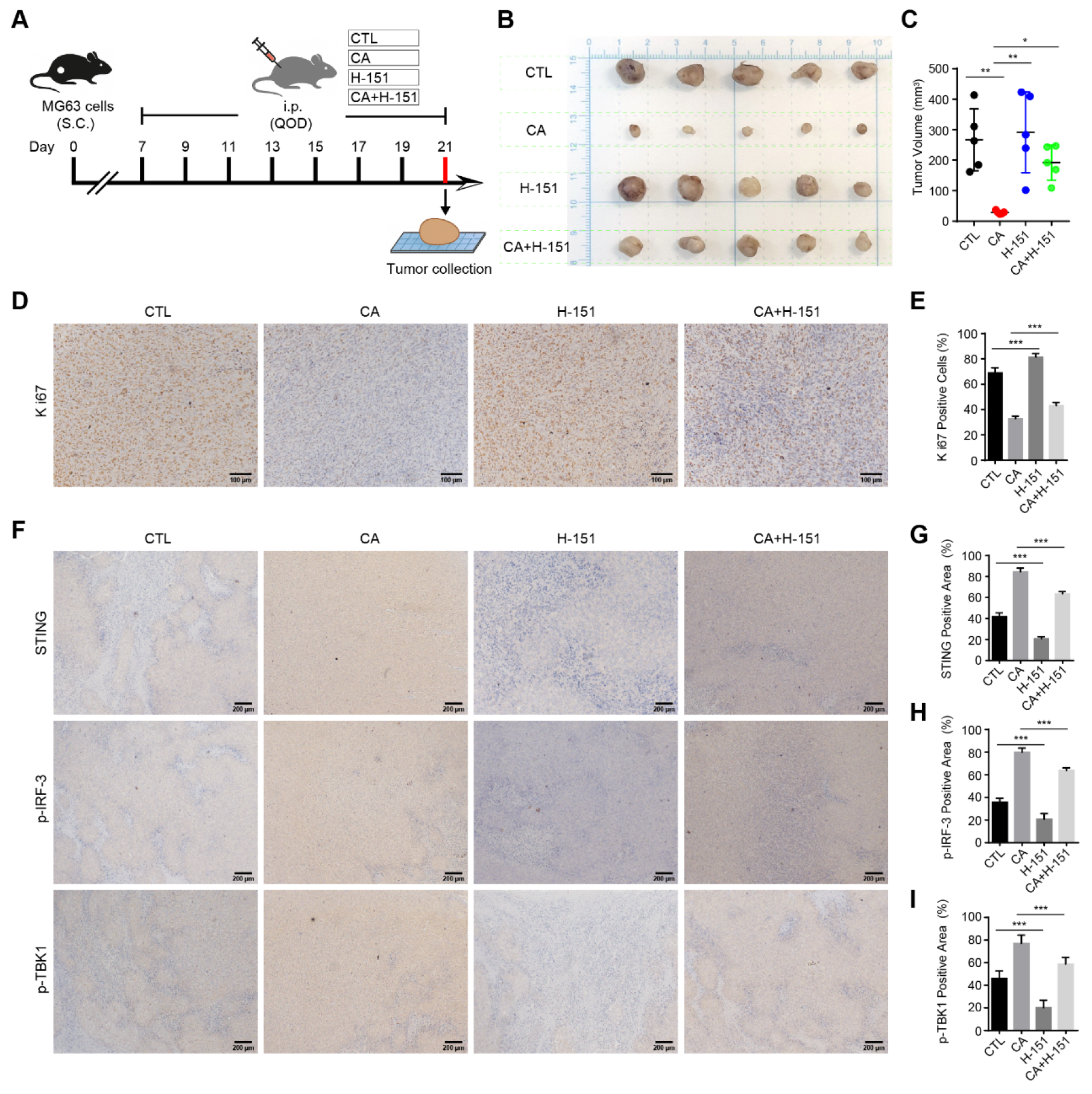
A human osteosarcoma xenograft model was employed to assess the antitumor activity of CA in vivo. All procedures were reviewed and approved by the Ethical Review Committee of Guangdong Medical University (Approval No. AHGDMU-LAC-A-202403-013) and were conducted in accordance with national and institutional guidelines for the care and use of laboratory animals. Male BALB/c nude mice (6 weeks old, 18–22 g) were obtained from Changsheng Bio-Technology Inc. (Benxi City, Liaoning, China) and maintained under specific pathogen-free (SPF) conditions at 22 ± 2 °C, 55 ± 5% relative humidity, and a 12 h light/dark cycle, with ad libitum access to standard chow and water. MG63 cells were selected for the xenograft model because this osteosarcoma cell line is widely used in tumorigenicity studies and is known to exhibit reliable and stable tumor formation in nude mice [
29,
30]. MG63 cells (5 × 10
6) suspended in 100 μL PBS were injected subcutaneously into the right flank. When tumor volumes reached ~100 mm
3, animals were randomly assigned to four groups (
n = 5 per group): vehicle control (PBS), CA (30 mg/kg every 2 days, intraperitoneal injection), H-151 (10 mg/kg every 2 days, intraperitoneal injection), and CA + H-151 combination. Treatments continued for 14 consecutive days. At study termination, mice were euthanized, and tumors were excised, photographed, and processed for histological examination (fixed in 4% paraformaldehyde) or snap-frozen in liquid nitrogen for protein extraction. Tumor volumes were calculated using the formula: volume = (length × width
2)/2. The effects of CA and H-151 on tumor growth were evaluated based on tumor volume and molecular analysis of tumor tissue (IHC and Western blotting).
2.11. Histological and Immunohistochemical Analysis
Tumor specimens were fixed in 4% paraformaldehyde for 24 h, dehydrated, paraffin-embedded, and sectioned at 4 μm thickness. For histopathological examination, hematoxylin and eosin (H&E) staining was performed, and slides were observed under a light microscope (Nikon Corporation, Tokyo, Japan). For immunohistochemical (IHC) staining, paraffin sections were deparaffinized with xylene and rehydrated through graded ethanol solutions. Antigen retrieval was achieved by heating the sections in 10 mM sodium citrate buffer (pH 6.0) using a microwave for 15 min, followed by cooling to room temperature. Endogenous peroxidase activity was blocked with 3% hydrogen peroxide for 10 min, and nonspecific binding was reduced by incubation with 5% bovine serum albumin (BSA) for 1 h. Sections were then incubated overnight at 4 °C with primary antibodies targeting Ki67 (1:200, CST, Cat# 9027), STING (1:200, CST, Cat# 13647), p-TBK1 (1:200, CST, Cat# 5483), and p-IRF-3 (1:200, CST, Cat# 4947). The following day, slides were incubated with HRP-conjugated secondary antibodies for 1 h and developed using DAB (3,3′-diaminobenzidine) substrate. Nuclei were counterstained with hematoxylin. Images were captured using a Nikon DS-Fi3 digital microscope (Nikon Corporation, Tokyo, Japan), and five random high-power fields (×400) per section were analyzed.
2.12. Statistical Analysis
All quantitative data are presented as mean ± standard deviation (SD) from at least three independent biological experiments unless otherwise stated. Statistical analyses were performed using GraphPad Prism software (version 9.0, San Diego, CA, USA). Comparisons between two groups were conducted using an unpaired two-tailed Student’s t test. For comparisons among multiple groups, one-way or two-way analysis of variance (ANOVA) was applied as appropriate. When multiple treatment groups were compared with a single control group, Dunnett’s post hoc test was used. Tukey’s post hoc test was applied when all pairwise comparisons among groups were required. Tumor growth curves were analyzed using two-way ANOVA with repeated measures. For flow cytometry and Western blot densitometric analyses, quantitative values represent independent experimental replicates. For immunohistochemical analysis, staining was quantified where indicated, and analyses were performed in a blinded manner. A p value < 0.05 was considered statistically significant.
4. Discussion
Osteosarcoma is an aggressive primary bone tumor for which treatment advances have been limited in recent decades [
31]. The search for new therapeutic agents that can both suppress tumor progression and modulate the tumor immune microenvironment remains a priority for improving clinical outcomes. In the present work, we identified for the first time that CA, a phenolic diterpenoid compound derived from
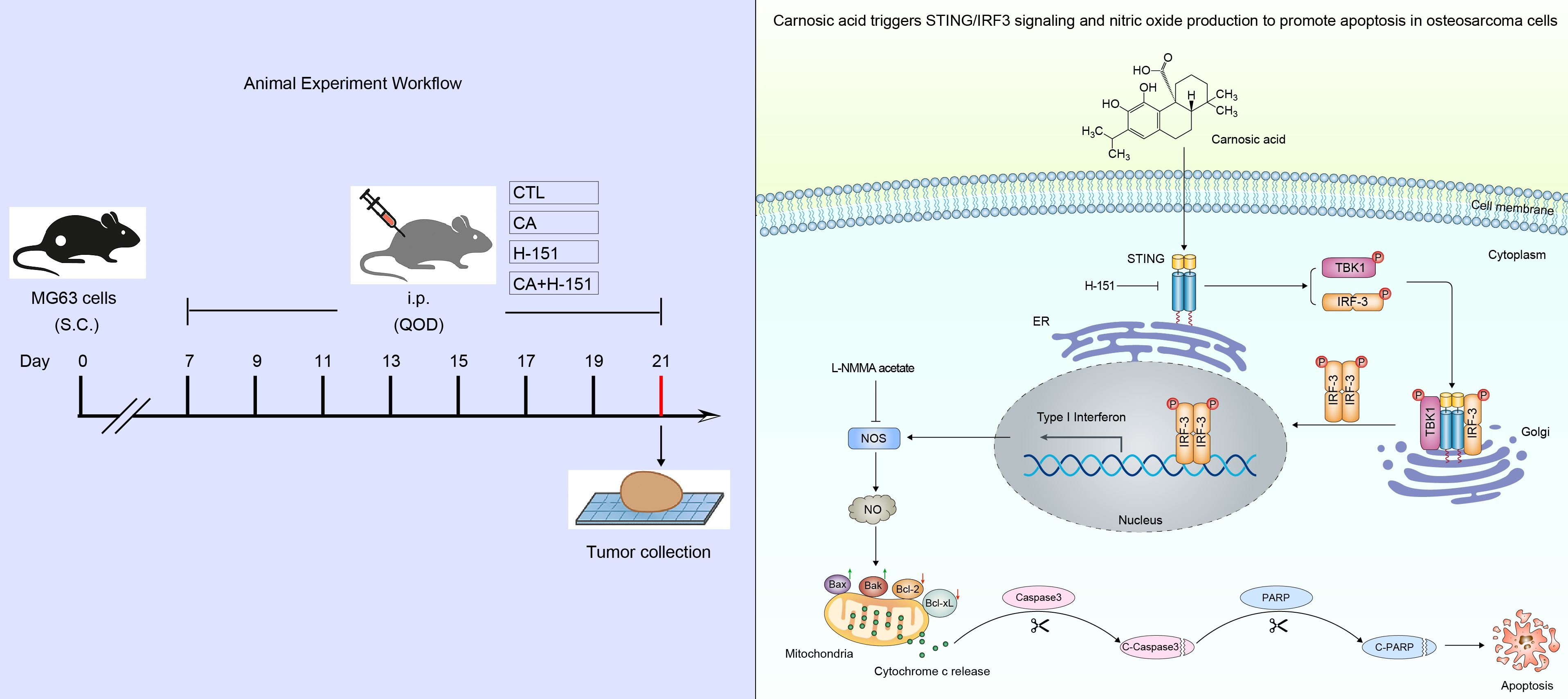
Rosmarinus officinalis, exerts potent anti-osteosarcoma activity through a concerted mechanism involving activation of the STING/IRF-3 pathway, induction of NO production, and mitochondrial-mediated apoptosis. Notably, recent findings have suggested that CA directly targets the C-terminal tail of STING and promotes its activation, providing strong mechanistic support for our observations [
24]. Although that study primarily focused on inflammatory disease models, the demonstration of CA as a direct STING agonist strengthens the plausibility of our proposed pathway in osteosarcoma cells.
Previous investigations have documented the anti-proliferative and pro-apoptotic activities of CA in a variety of malignancies, such as lung, colon, gastric, and melanoma cancers [
32,
33]. Our research extends these findings to osteosarcoma and highlights a previously unrecognized mechanism by which CA exerts its antitumor effects—through direct engagement of the STING pathway. The STING axis plays a critical role in innate immunity and cancer immunosurveillance [
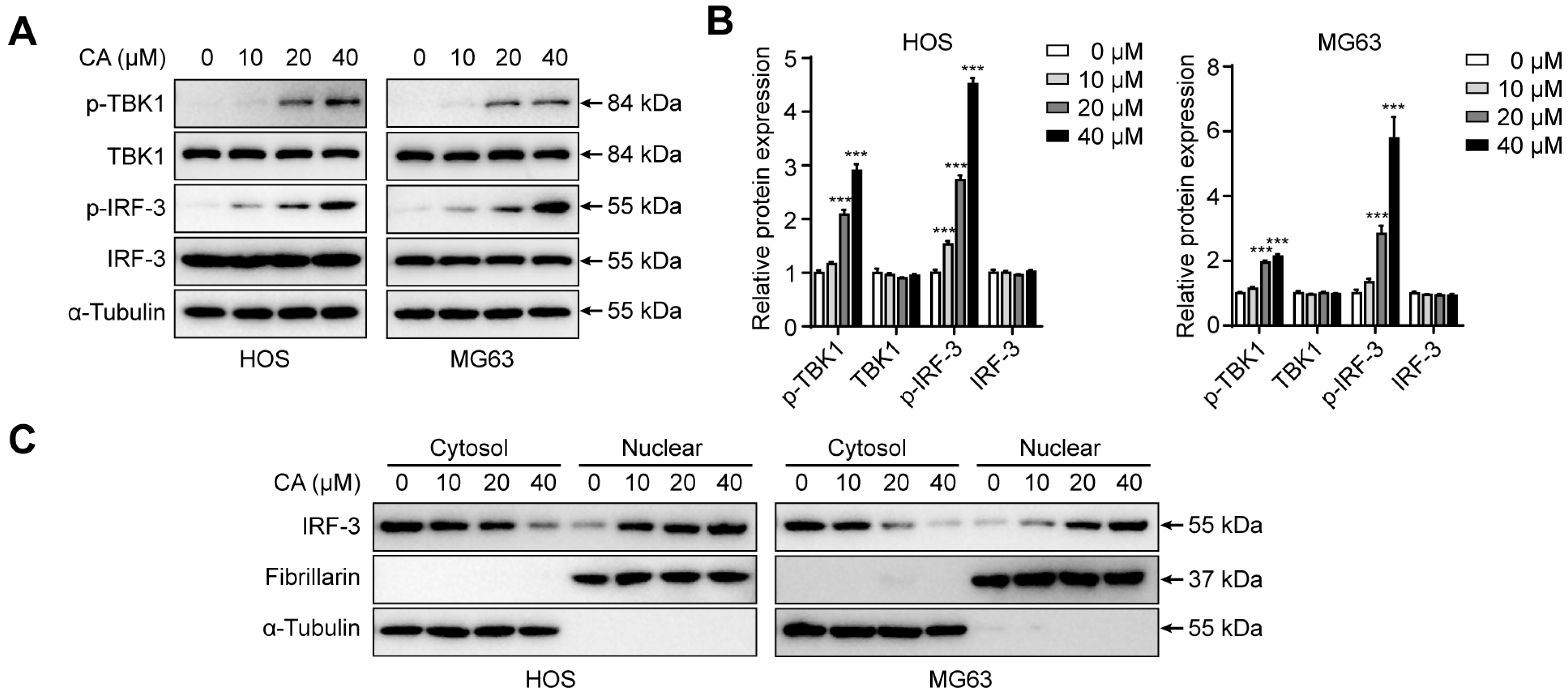
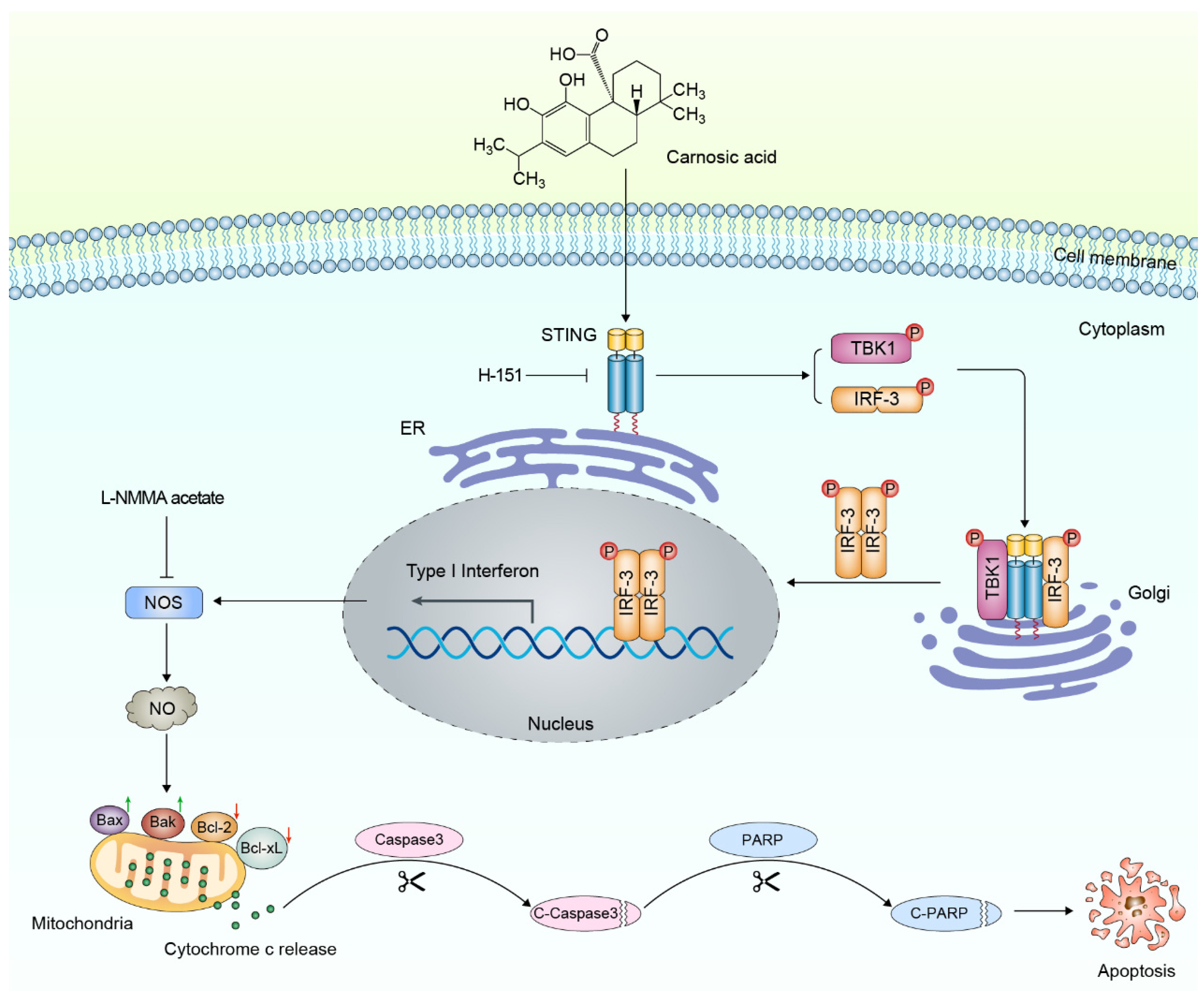
34]. Upon activation, STING interacts with and activates TBK1, which subsequently phosphorylates IRF-3, promoting its nuclear translocation and initiating transcription of type I interferons and other pro-inflammatory mediators [
35]. Recent studies have explored pharmacological STING agonists as promising cancer immunotherapeutic agents [
9,
11,
35]. In our study, CA significantly increased STING, TBK1, and phosphorylated IRF-3 protein levels in osteosarcoma cells, and this activation was abrogated by the STING inhibitor H-151, affirming that CA functions, at least in part, as a STING activator. While CA’s anticancer potential has been widely studied in other tumor types, its effect on osteosarcoma remains largely unexplored. A prior study reported that CA selectively reduced the viability of osteosarcoma cells in both 2D and 3D culture systems, while exhibiting less cytotoxicity toward healthy bone-derived cells, suggesting differential tolerance and potential tumor selectivity [
25]. Our findings build upon this early evidence and provide mechanistic and in vivo validation that expand CA’s anticancer spectrum into the osteosarcoma context.
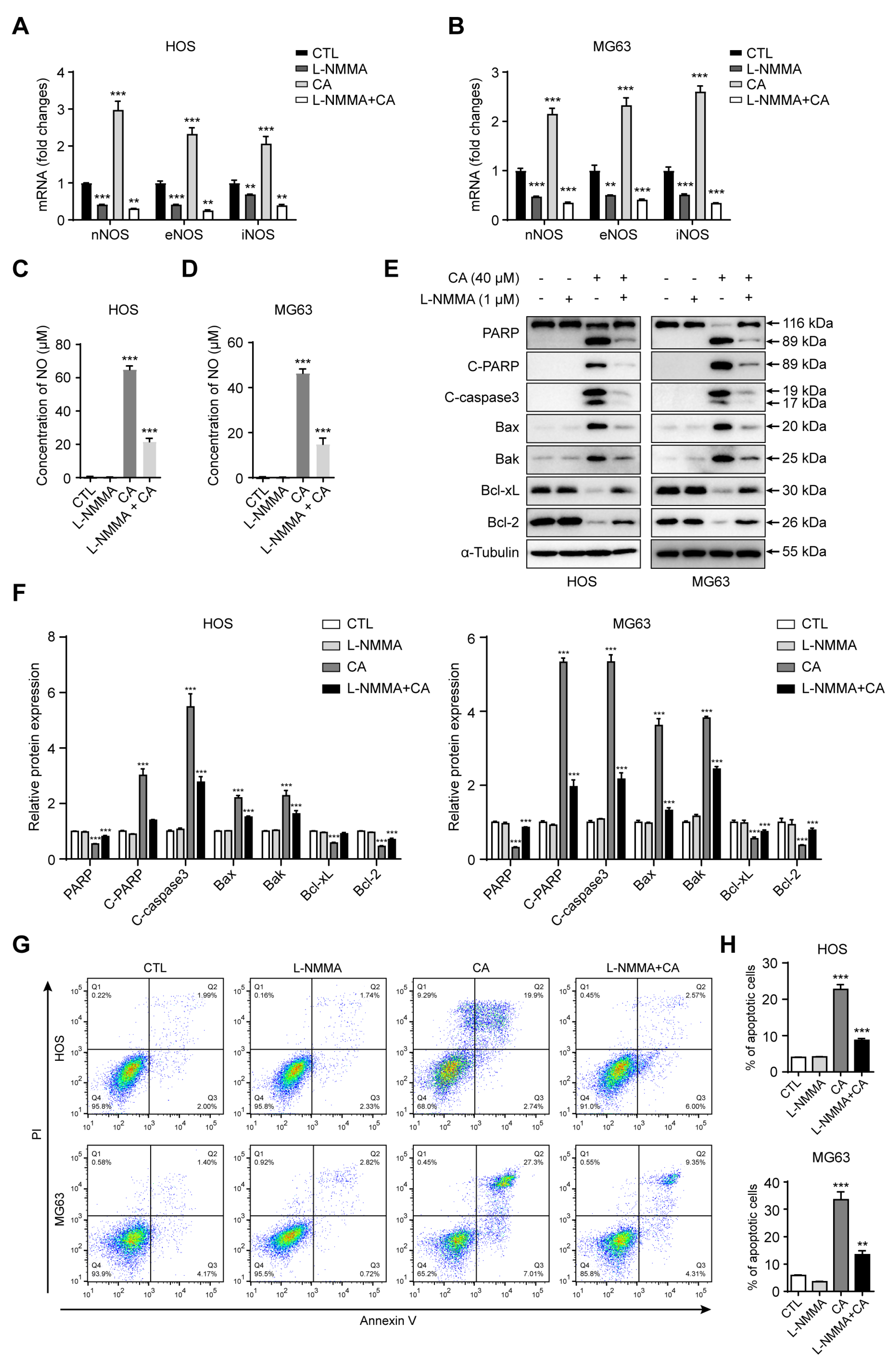
Importantly, we discovered that STING activation by CA led to robust upregulation of inducible iNOS and increased production of NO. Nitric oxide plays a dual role in cancer; low levels support angiogenesis and tumor survival, while high levels promote DNA damage, oxidative stress, and apoptosis [
13,
14,
15]. Our data indicate that CA induces high-level NO production sufficient to trigger apoptosis in osteosarcoma cells, which was mitigated by L-NMMA, an NOS inhibitor. These findings align with previous reports that STING signaling can transcriptionally upregulate iNOS expression through IRF-3 and NF-κB-dependent mechanisms [
12,
36]. Beyond direct induction of tumor cell death, STING pathway activation has also been shown to remodel the tumor microenvironment [
37]. Recent work demonstrated that STING-activating nanoparticles not only enhanced nitric oxide–driven tumor clearance but also normalized the vascular-immune interface, thereby amplifying the efficacy of immune checkpoint inhibitors such as anti–PD-1/PD-L1 therapy [
38]. This underscores the potential of STING-targeted interventions, including CA, to elicit both cytotoxic and immunomodulatory antitumor responses.
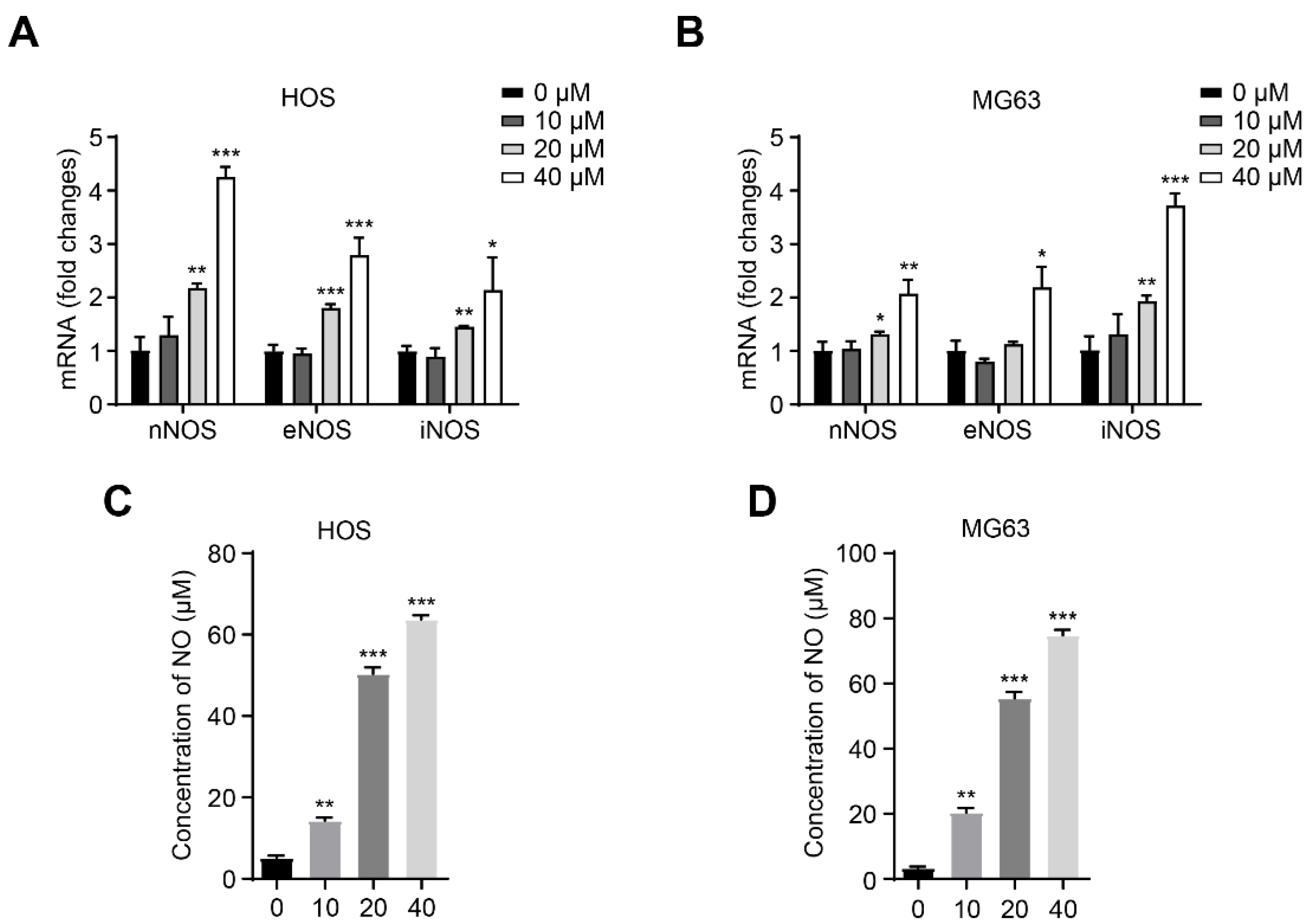
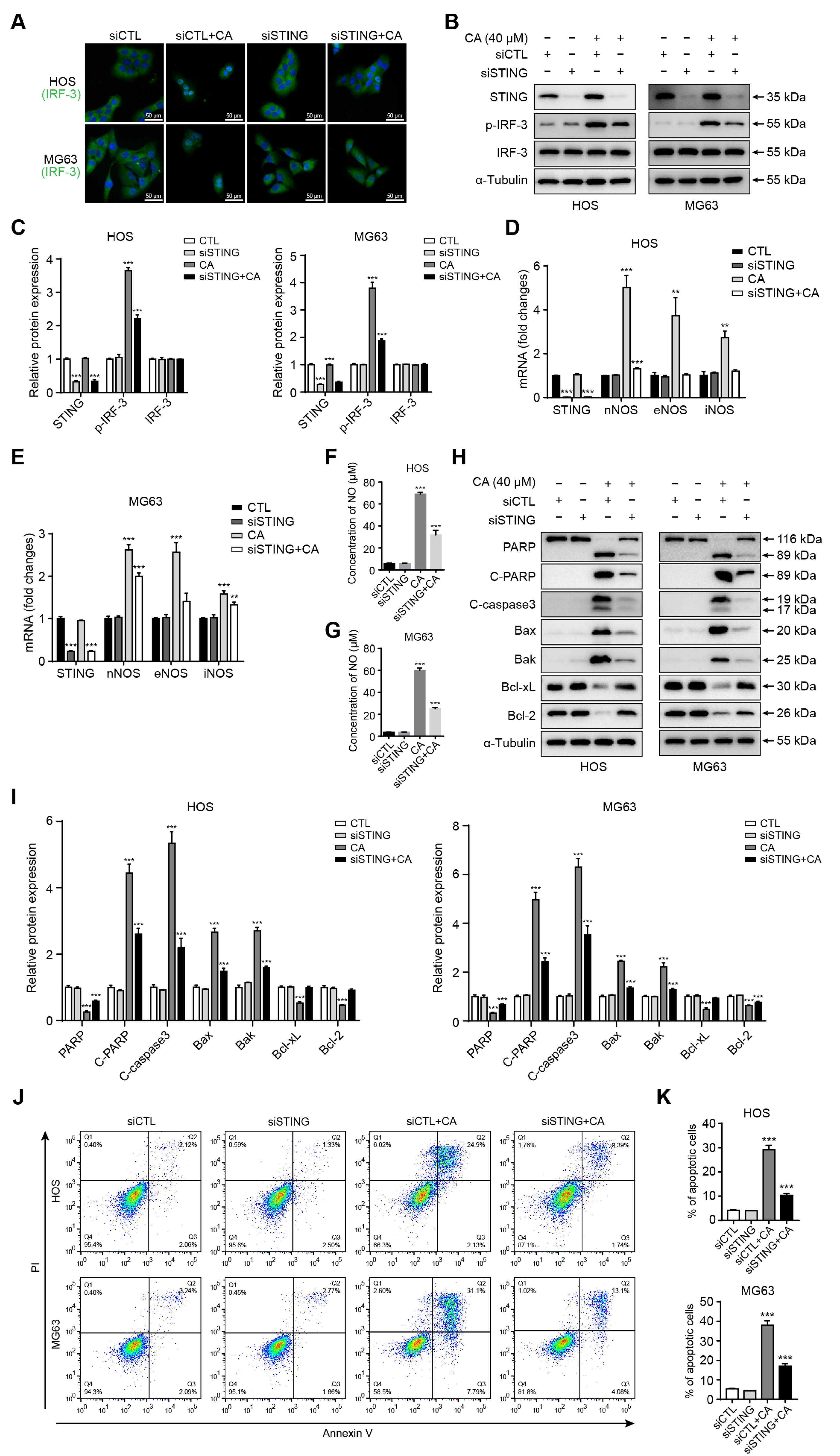
In the present study, we demonstrate that CA induces pronounced apoptosis in osteosarcoma cells through activation of the STING/TBK1/IRF3 signaling pathway, accompanied by a significant increase in intracellular NO levels. Pharmacological inhibition or siRNA-mediated knockdown of STING markedly attenuated CA-induced NO production and apoptotic cell death, indicating that NO acts as a critical downstream effector of STING activation in this context. Notably, our results showed that CA treatment upregulated the expression of all three NOS isoforms, including nNOS, eNOS, and iNOS. However, among these isoforms, iNOS exhibited the most prominent induction following CA exposure. This observation is of particular relevance, as iNOS is well recognized as the primary source of sustained and high-output NO production in tumor cells, in contrast to the low-level and tightly regulated NO generated by nNOS and eNOS under physiological conditions. In cancer cells, iNOS-derived NO has been widely implicated in the regulation of redox stress and apoptosis [
39,
40]. Therefore, although CA broadly enhances NOS expression, our data support the notion that iNOS is the dominant contributor to the elevated NO levels observed in CA-treated osteosarcoma cells. Consistent with this interpretation, pharmacological blockade of NO synthesis using the NOS inhibitor L-NMMA significantly reversed CA-induced mitochondrial membrane potential collapse, cytochrome c release, and caspase-dependent apoptosis, further confirming a central role for NO in mediating CA-triggered mitochondrial apoptotic signaling. Together, these findings establish a mechanistic link between STING activation and iNOS-dependent NO overproduction, which ultimately drives mitochondrial apoptosis in osteosarcoma cells.
Beyond STING/IRF3 signaling, recent studies have demonstrated that CA modulates additional redox-sensitive pathways, particularly the PTEN/AKT axis [
41]. For example, CA has been shown to upregulate PTEN phosphorylation and suppress AKT activation in bone-related pathological models, primarily through attenuation of ROS signaling. Interestingly, in that context, CA exhibited minimal effects on canonical NF-κB activation, suggesting that its regulatory effects may preferentially target redox-sensitive survival pathways rather than broadly suppress inflammatory transcription factors. Given that ROS serves as a common upstream modulator of both STING activation and PI3K/AKT signaling, it is conceivable that CA-mediated redox modulation may coordinate innate immune activation with suppression of pro-survival AKT signaling in osteosarcoma cells. Although MAPK pathways such as JNK and p38 have been implicated in bone tumor progression, their interaction with STING signaling in osteosarcoma remains to be clarified. Further studies integrating phospho-proteomic or pathway inhibition approaches will be necessary to delineate the relative contribution of these signaling networks.
Mechanistically, CA-induced NO appears to promote mitochondrial outer membrane permeabilization (MOMP), enabling cytochrome c release and subsequent activation of caspase-3, culminating in PARP cleavage—key events in mitochondrial apoptosis. This process was accompanied by increased expression of pro-apoptotic proteins (Bax, Bak) and suppression of anti-apoptotic factors (Bcl-2, Bcl-xL), corroborating the engagement of the intrinsic apoptotic pathway (
Figure 8). The elevated levels of cleaved caspase-3 and cleaved PARP in CA-treated cells further validated the involvement of the mitochondrial apoptotic cascade. In addition to its tumoricidal effects, STING activation may also enhance antitumor immunity. Previous studies have shown that STING signaling in tumor and stromal cells stimulates type I IFN production, T cell infiltration, and tumor regression [
11,
42]. Notably, potent STING activation has also been linked to the induction of immunogenic cell death (ICD), characterized by the release of damage-associated molecular patterns (DAMPs) that promote dendritic cell maturation and adaptive immune priming. For instance, Wang-Bishop et al. demonstrated in a neuroblastoma model that strong STING activation led to robust ICD and enhanced antitumor immune responses [
43]. These findings support our hypothesis that CA, through STING/IRF3/NO-mediated apoptosis, may also trigger ICD and thereby contribute to a more immunostimulatory tumor microenvironment.
Recent single-cell RNA sequencing analyses have revealed significant cellular heterogeneity within osteosarcoma tissues, identifying multiple malignant and non-malignant cell populations, including mesenchymal progenitors, immune infiltrates, endothelial cells, and tumor-associated stromal cells [
44,
45]. Although our study primarily investigated tumor-intrinsic STING signaling in osteosarcoma cell lines, it is plausible that CA may exert broader effects within the tumor microenvironment. Given the established role of STING in innate immune activation, CA-mediated STING activation could potentially modulate immune cell subsets, cytokine production, or stromal remodeling. Future studies employing single-cell approaches or immunocompetent models will be necessary to dissect these complex interactions.
While this study provides important mechanistic insights, several limitations should be acknowledged. First, although our data strongly suggest STING pathway activation by CA, direct biochemical evidence of CA–STING binding remains to be established through molecular docking or structural studies, such as surface plasmon resonance or co-crystallization with the STING protein. Moreover, although STING involvement was validated using siRNA-mediated knockdown and pharmacologic inhibition with H-151, additional genetic approaches such as multiple independent siRNAs, rescue experiments with siRNA-resistant constructs, or CRISPR-mediated knockout would further strengthen causal inference. Second, while CA-induced NOS transcription and NO production were significantly attenuated by STING knockdown, direct transcriptional regulation of NOS genes by IRF3 was not experimentally confirmed. Chromatin immunoprecipitation or promoter-reporter assays would be required to determine whether IRF3 directly binds to NOS promoters. In addition, although L-NMMA was used to demonstrate functional dependence on NOS activity, it does not distinguish among individual NOS isoforms. Isoform-specific genetic silencing or selective inhibitors would help clarify whether iNOS, eNOS, or nNOS serves as the dominant mediator of apoptosis in this context. Third, the upstream trigger responsible for STING activation by CA remains undefined. Future studies should investigate whether CA induces cytosolic DNA accumulation, modulates cGAS activity, or enhances cGAMP production to achieve mechanistic completeness. Finally, the in vitro nature of our cellular experiments and the use of immunodeficient nude mice limit the ability to assess contributions from adaptive immune components such as T cells or dendritic cells. Future investigations employing immunocompetent or syngeneic animal models will be essential to evaluate the immunomodulatory impact of CA within a physiologically relevant tumor microenvironment.