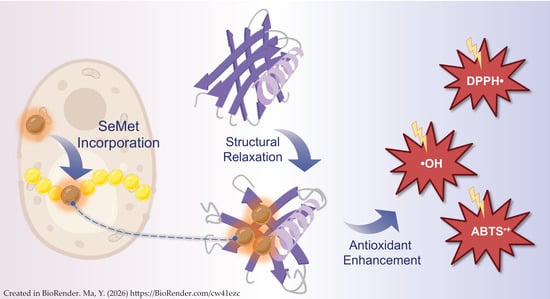
Elucidating the Effects of Selenium Enrichment on the Structure and Antioxidant Properties of Selenium-Containing Proteins in Yeast Cells


Abstract
1. Introduction
2. Materials and Methods
2.1. Materials
2.2. Microorganism and Cultivation
2.3. Preparation of Yeast Proteins
2.4. Determination of Biomass and Se Content in Yeast
2.5. Determination of Protein Content and Protein Se Content
2.6. Se Speciation Analysis
2.7. UV-Vis Absorption Spectroscopy
2.8. Fourier-Transform Infrared Spectroscopy (FTIR)
2.9. Fluorescence Spectroscopy
2.10. Circular Dichroism Spectroscopy
2.11. Determination of Surface Hydrophobicity (H0)
2.12. Detection of Antioxidant Activity
2.13. Statistical Analysis
3. Results
3.1. Strain-Specific Biomass Response and Se Accumulation
3.2. Impact of Se on Protein Yield and Se-Containing Proteins Formation
3.3. Selenium-Induced Alterations in Protein Structure
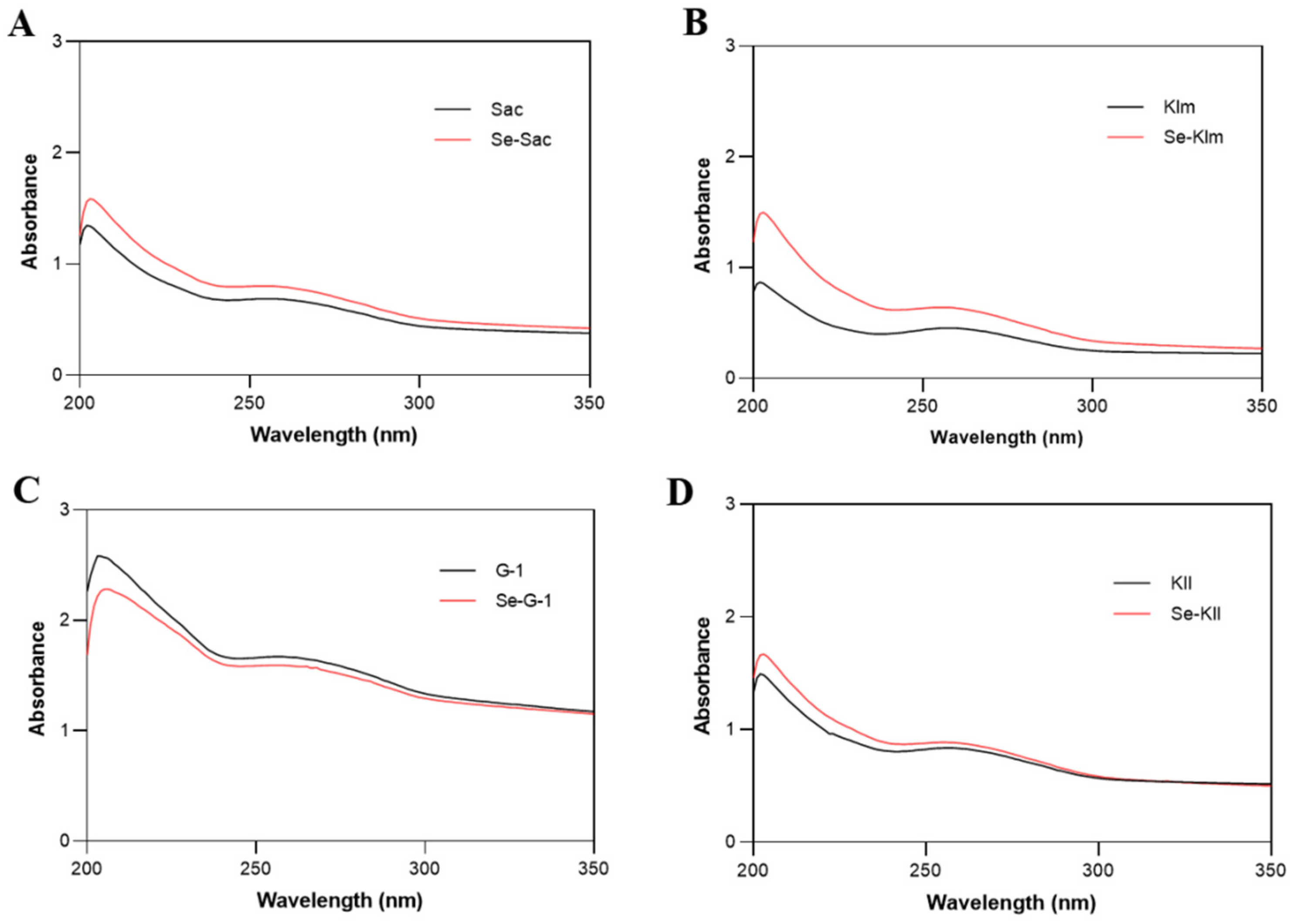
3.3.1. UV-Vis Spectral Characteristics
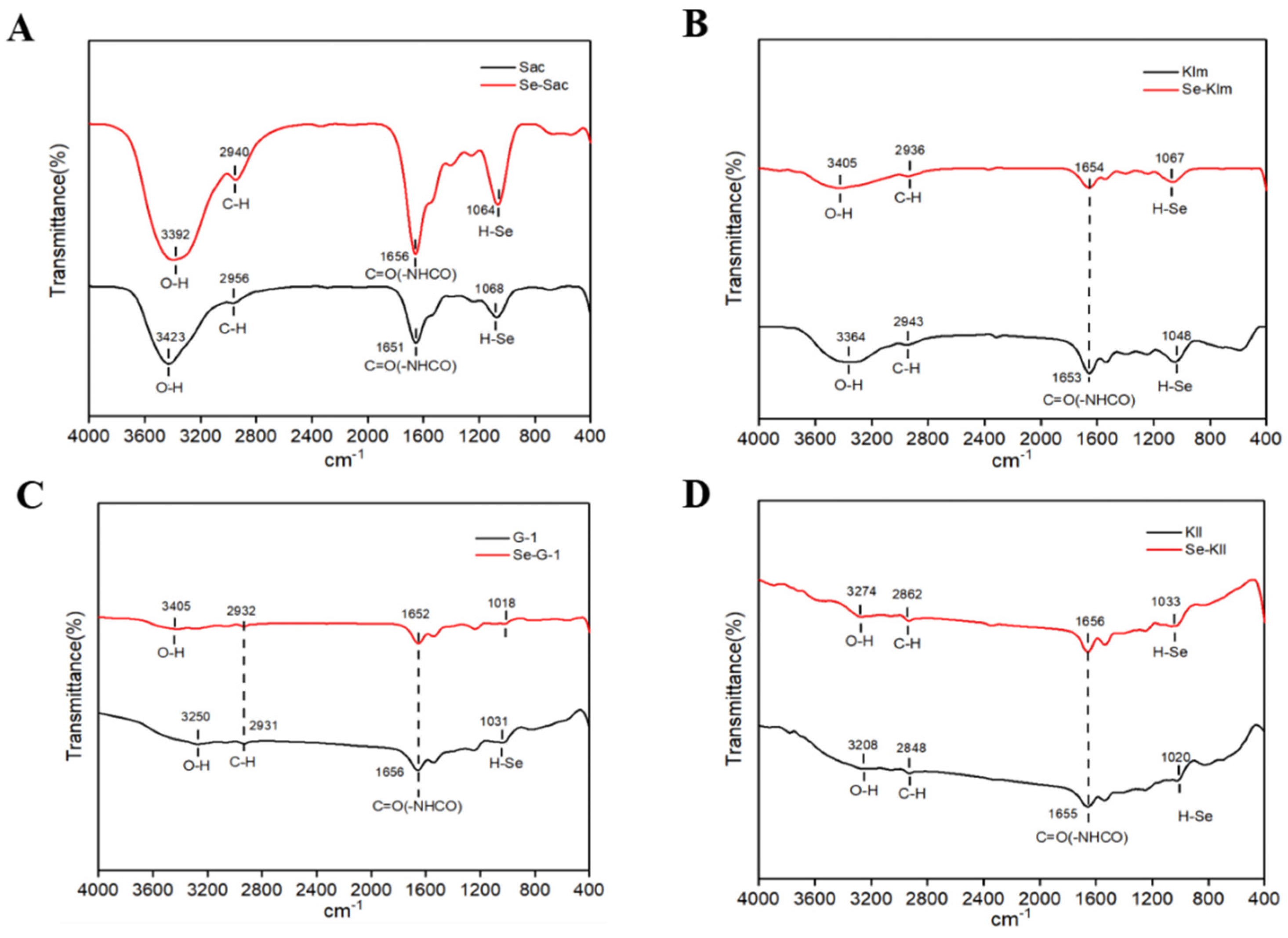
3.3.2. FTIR Spectroscopy
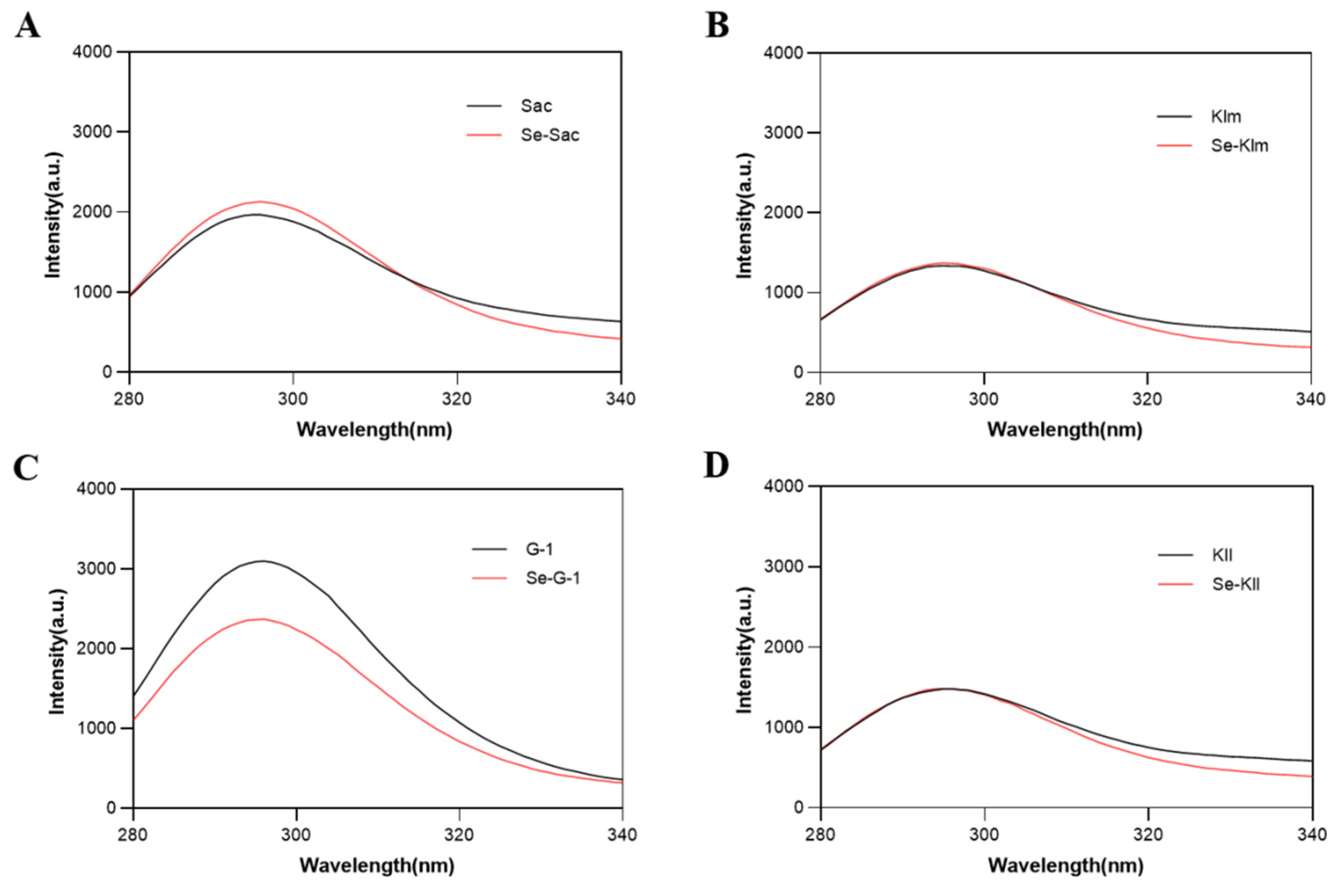
3.3.3. Fluorescence Spectral Characteristics
3.3.4. Secondary Structure (CD)
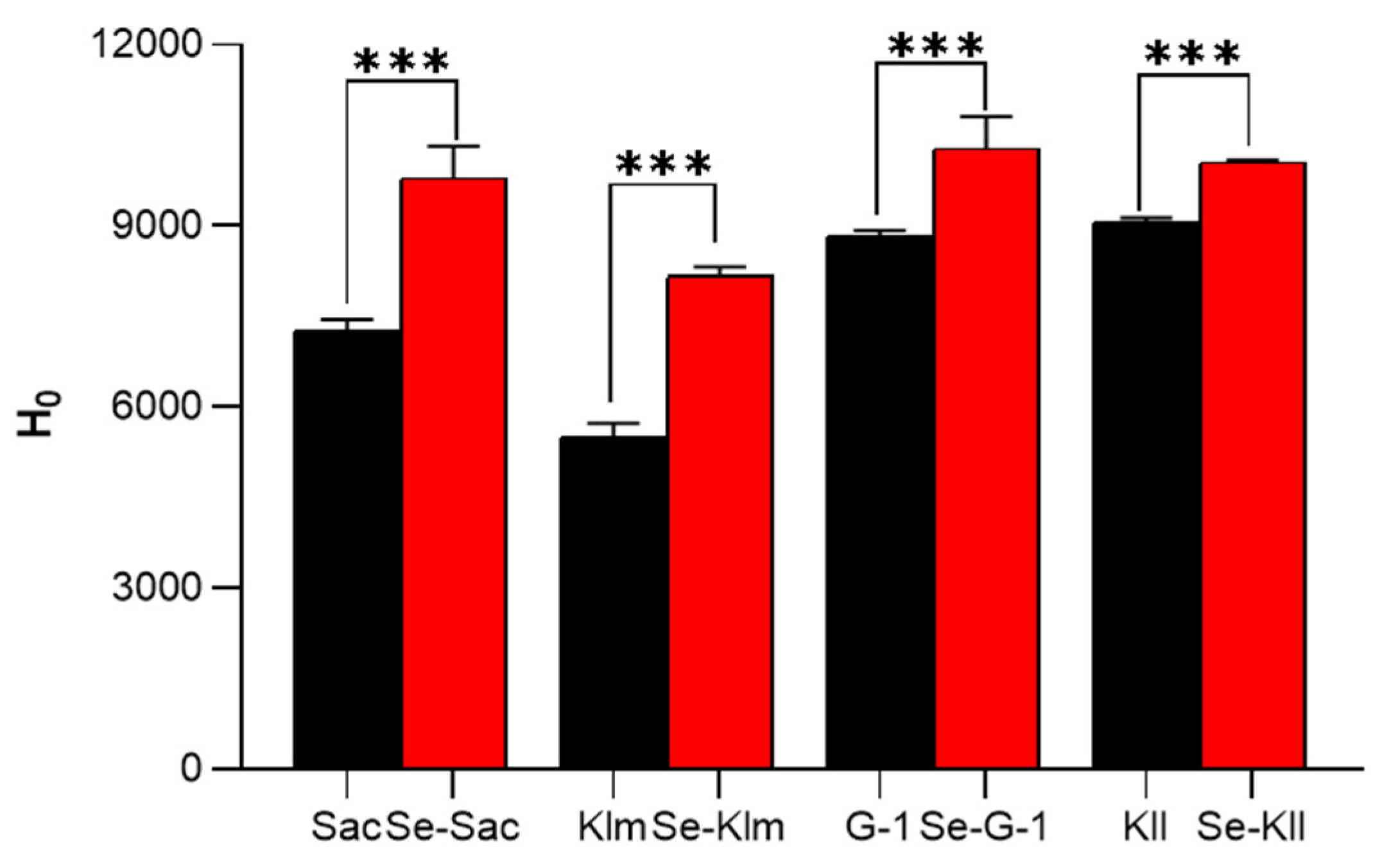
3.3.5. Surface Hydrophobicity (H0)
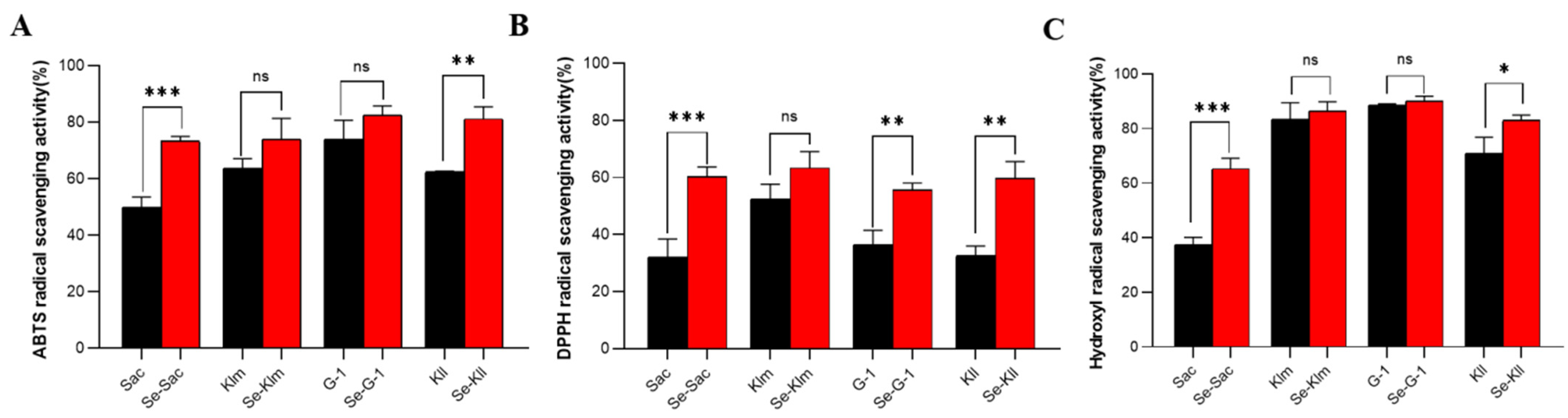
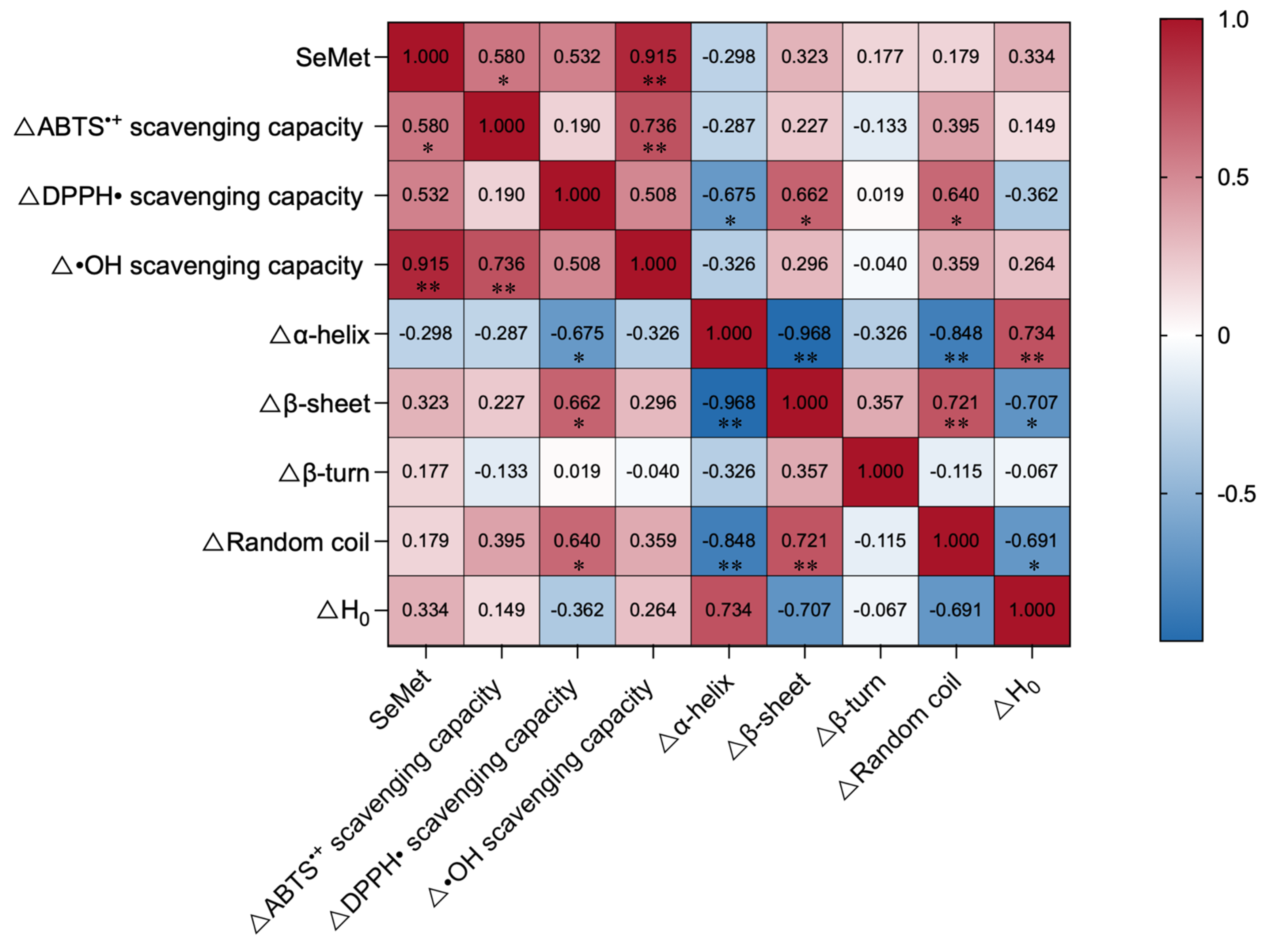
3.4. Enhanced Antioxidant Capacity of Selenoproteins
3.5. Technical Challenges and Future Directions for Commercial Applications
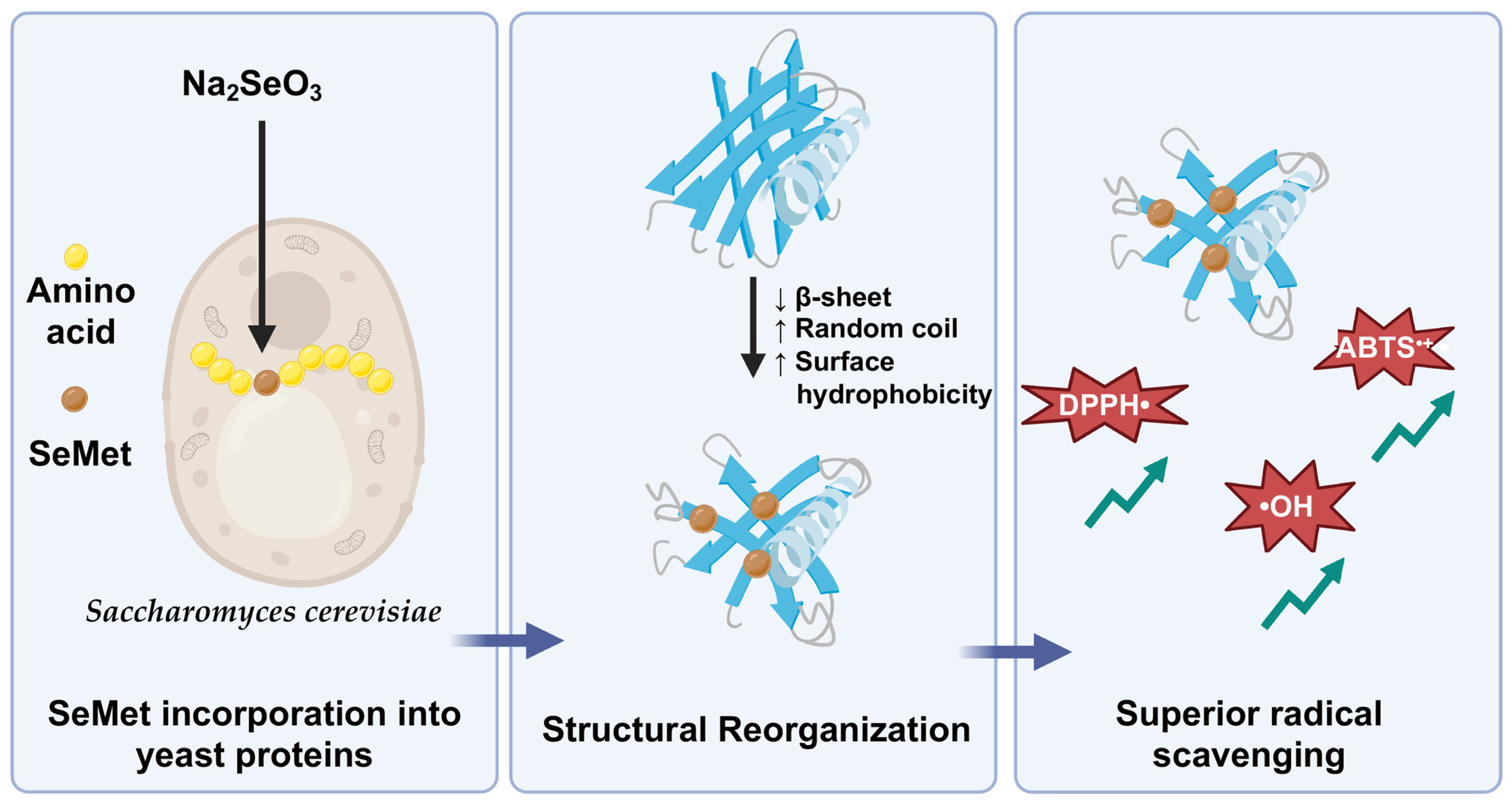
4. Conclusions
Supplementary Materials
Author Contributions
Funding
Institutional Review Board Statement
Informed Consent Statement
Data Availability Statement
Conflicts of Interest
References
- Liang, X.; Xue, Z.; Zheng, Y.; Li, S.; Zhou, L.; Cao, L.; Zou, Y. Selenium supplementation enhanced the expression of selenoproteins in hippocampus and played a neuroprotective role in LPS-induced neuroinflammation. Int. J. Biol. Macromol. 2023, 234, 123740. [Google Scholar] [CrossRef] [PubMed]
- Rayman, M.P. The importance of selenium to human health. Lancet 2000, 356, 233–241. [Google Scholar] [CrossRef]
- Kipp, A.P.; Strohm, D.; Brigelius-Flohe, R.; Schomburg, L.; Bechthold, A.; Leschik-Bonnet, E.; Heseker, H. Revised reference values for selenium intake. J. Trace Elem. Med. Biol. 2015, 32, 195–199. [Google Scholar] [CrossRef]
- Han, F.; Liu, Y.; Wang, Q.; Huang, Z. Dietary Reference Intakes of Selenium for Chinese Residents. J. Nutr. 2025, 155, 2508–2518. [Google Scholar] [CrossRef]
- Rayman, M.P. Selenium and human health. Lancet 2012, 379, 1256–1268. [Google Scholar] [CrossRef] [PubMed]
- Alcantara, D.B.; Dionisio, A.P.; Artur, A.G.; Silveira, B.K.S.; Lopes, A.F.; Guedes, J.A.C.; Luz, L.R.; Nascimento, R.F.; Lopes, G.S.; Hermsdorff, H.H.M.; et al. Selenium in Brazil nuts: An overview of agronomical aspects, recent trends in analytical chemistry, and health outcomes. Food Chem. 2022, 372, 131207. [Google Scholar] [CrossRef]
- Wang, P.; Chen, B.; Huang, Y.; Li, J.; Cao, D.; Chen, Z.; Li, J.; Ran, B.; Yang, J.; Wang, R. Selenium intake and multiple health-related outcomes: An umbrella review of meta-analyses. Front. Nutr. 2023, 10, 1263853. [Google Scholar] [CrossRef]
- Qi, Z.; Duan, A.; Ng, K. Selenosugar, selenopolysaccharide, and putative selenoflavonoid in plants. Compr. Rev. Food Sci. Food Saf. 2024, 23, e13329. [Google Scholar] [CrossRef]
- Niels, H.; Gitte, R.-H. Absorption, distribution, metabolism and excretion (ADME) of oral selenium from organic and inorganic sources: A review. J. Trace Elem. Med. Biol. 2021, 67, 126801. [Google Scholar] [CrossRef]
- Shahidin; Wang, Y.; Wu, Y.; Chen, T.; Wu, X.; Yuan, W.; Zhu, Q.; Wang, X.; Zi, C. Selenium and Selenoproteins: Mechanisms, Health Functions, and Emerging Applications. Molecules 2025, 30, 437. [Google Scholar] [CrossRef] [PubMed]
- Zhao, B.; Zhang, S.; Li, K.; Guo, Y. Bioaccumulation and biotransformation of selenium nanoparticles in soybean and natto, and the bioaccessibility of multi-elements and amino acids. Food Chem. 2024, 463, 141034. [Google Scholar] [CrossRef]
- Kieliszek, M.; Kot, A.M.; Kolotylo, V. Bioaccumulation of selenium and production of carotenoids by the yeast Rhodotorula mucilaginosa. Biocatal. Agric. Biotechnol. 2023, 53, 102903. [Google Scholar] [CrossRef]
- Yang, D.; Hu, C.; Wang, X.; Shi, G.; Li, Y.; Fei, Y.; Song, Y.; Zhao, X. Microbes: A potential tool for selenium biofortification. Metallomics 2021, 13, mfab054. [Google Scholar] [CrossRef]
- Zhang, Z.; Zhu, L.; Zhang, H.; Yu, D.; Yin, Z.; Zhan, X. Comparative Study on the Effects of Selenium-Enriched Yeasts with Different Selenomethionine Contents on Gut Microbiota and Metabolites. Int. J. Mol. Sci. 2025, 26, 3315. [Google Scholar] [CrossRef]
- Mohammed, D.; Hicham, E.A.; Naima, E.G. Biodegradation of environmental pollutants by marine yeasts. In Marine Organisms: A solution to Environmental Pollution? Uses in Bioremediation and in Biorefinery; Springer: Berlin, Germany, 2023; pp. 79–91. [Google Scholar]
- Yasumitsu, O.; Maya, S.; Kazuaki, T.; Yasumi, A. Biotransformation of organic selenium compounds in budding yeast, Saccharomyces cerevisiae. Metallomics 2018, 10, 1257–1263. [Google Scholar] [CrossRef] [PubMed]
- Wang, F.; Li, X.; Wang, X.; Kurtovic, I.; Yan, M.; Wei, J.; Zhang, T.; Zeng, X.; Yuan, Y.; Yue, T. Accumulation and metabolism of selenium in the rare yeast Kazachstania unispora during the selenium enrichment process. Food Chem. 2024, 459, 140375. [Google Scholar] [CrossRef]
- Yang, J.; Yang, H. Recent development in Se-enriched yeast, lactic acid bacteria and bifidobacteria. Crit. Rev. Food Sci. Nutr. 2021, 63, 11–15. [Google Scholar] [CrossRef] [PubMed]
- Che, X.; Shang, X.; Xu, W.; Xing, M.; Wei, H.; Li, W.; Li, Z.; Teng, X.; Geng, L. Selenium-enriched Lactiplantibacillus plantarum alleviates alkalinity stress-induced selective hepatic insulin resistance in common carp. Int. J. Biol. Macromol. 2025, 305, 141204. [Google Scholar] [CrossRef] [PubMed]
- Guo, H.; Guo, S.; Liu, H. Antioxidant activity and inhibition of ultraviolet radiation-induced skin damage of Selenium-rich peptide fraction from selenium-rich yeast protein hydrolysate. Bioorg. Chem. 2020, 105, 104431. [Google Scholar] [CrossRef]
- Sun, Y.; Liang, L.; Yi, Y.; Meng, Y.; Peng, K.; Jiang, X.; Wang, H. Synthesis, characterization and anti-inflammatory activity of selenium nanoparticles stabilized by aminated yeast glucan. Int. J. Biol. Macromol. 2023, 245, 125187. [Google Scholar] [CrossRef]
- Wang, C.; Abbas, M.; Wantz, G.; Kawabata, K.; Takimiya, K. “Heavy-atom effects” in the parent [1]benzochalcogenopheno [3,2-b][1]benzochalcogenophene system. J. Mater. Chem. C 2020, 8, 15119–15127, Correction in J. Mater. Chem. C 2022, 10, 11810. https://doi.org/10.1039/D2TC90146C. [Google Scholar] [CrossRef]
- Wang, K.; Zhang, R.; Hu, W.; Dang, Y.; Huang, M.; Wang, N.; Du, S.; Gao, X. Effect of exogenous selenium on physicochemical, structural, functional, thermal, and gel rheological properties of mung bean (Vigna radiate L.) protein. Food Res. Int. 2024, 191, 114706. [Google Scholar] [CrossRef]
- Barros, M.H.; Netto, L.E.S.; Kowaltowski, A.J. H2O2 generation in Saccharomyces cerevisiae respiratory pet mutants: Effect of cytochrome c. Free Radic. Biol. Med. 2003, 35, 179–188. [Google Scholar] [CrossRef]
- Isakova, E.P.; Matushkina, I.N.; Popova, T.N.; Dergacheva, D.I.; Gessler, N.N.; Klein, O.I.; Semenikhina, A.V.; Deryabina, Y.I.; La Porta, N.; Saris, N.-E.L. Metabolic Remodeling during Long-Lasting Cultivation of the Endomyces magnusii Yeast on Oxidative and Fermentative Substrates. Microorganisms 2020, 8, 91. [Google Scholar] [CrossRef]
- Lee, J.; Godon, C.; Lagniel, G.; Spector, D.; Garin, J.; Labarre, J.; Toledano, M.B. Yap1 and Skn7 control two specialized oxidative stress response regulons in yeast. J. Biol. Chem. 1999, 274, 16040–16046. [Google Scholar] [CrossRef]
- Rahmanto, A.S.; Davies, M.J. Catalytic activity of selenomethionine in removing amino acid, peptide, and protein hydroperoxides. Free Radic. Biol. Med. 2011, 51, 2288–2299. [Google Scholar] [CrossRef]
- Ye, S.; Shen, F.; Jiao, L.; Xu, Z.; Wang, F. Biosynthesis of selenoproteins by Saccharomyces cerevisiae and characterization of its antioxidant activities. Int. J. Biol. Macromol. 2020, 164, 3438–3445. [Google Scholar] [CrossRef]
- Liu, D.; Zhang, J.; Wang, L.; Yang, T.; Liu, X.; Hemar, Y.; Regenstein, J.M.; Zhou, P. Membrane-based fractionation, enzymatic dephosphorylation, and gastrointestinal digestibility of β-casein enriched serum protein ingredients. Food Hydrocoll. 2019, 88, 1–12. [Google Scholar] [CrossRef]
- Kieliszek, M.; Bierla, K.; Jiménez-Lamana, J.; Kot, A.M.; Alcántara-Durán, J.; Piwowarek, K.; Błażejak, S.; Szpunar, J. Metabolic Response of the Yeast Candida utilis During Enrichment in Selenium. Int. J. Mol. Sci. 2020, 21, 5287. [Google Scholar] [CrossRef]
- Varela, J.A.; Puricelli, M.; Ortiz-Merino, R.A.; Giacomobono, R.; Braun-Galleani, S.; Wolfe, K.H.; Morrissey, J.P. Origin of lactose fermentation in Kluyveromyces lactis by interspecies transfer of a neo-functionalized gene cluster during domestication. Curr. Biol. 2019, 29, 4284–4290.e2. [Google Scholar] [CrossRef] [PubMed]
- Cheng, Y.; Geng, S.; Zhang, J.; Zhao, X.; Jiang, J.; Liang, Y.; Mu, H.; Li, W.; Qin, Y.; Liu, Y.; et al. A comprehensive study on fermentation and aroma contributions of Torulaspora delbrueckii in diverse wine varieties: Insights from pure and co-fermentation studies. Food Res. Int. 2025, 199, 115340. [Google Scholar] [CrossRef]
- Kieliszek, M.; Waśko, A.; Michalak, K.; Kot, A.M.; Piwowarek, K.; Winiarczyk, S. Effect of selenium and methods of protein extraction on the proteomic profile of Saccharomyces yeast. Open Life Sci. 2022, 17, 1117–1128. [Google Scholar] [CrossRef]
- He, Y.; Lai, H.; Liang, J.; Cheng, L.; He, L.; Wang, H.; Teng, Q.; Cai, W.; Wang, R.; Zhu, L.; et al. Optimization Co-Culture of Monascus purpureus and Saccharomyces cerevisiae on Selenium-Enriched Lentinus edodes for Increased Monacolin K Production. J. Fungi 2024, 10, 503. [Google Scholar] [CrossRef]
- Wu, G.; Liu, F.; Sun, X.; Lin, X.; Zhan, F.; Fu, Z. Preparation of Selenium-Enriched Yeast by Re-Using Discarded Saccharomyces cerevisiae from the Beer Industry for Se-Supplemented Fodder Applications. Appl. Sci. 2019, 9, 3777. [Google Scholar] [CrossRef]
- Marie, Y.; Fabrice, B.; Stéphanie, F.; Antoine, P.; JeanMarie, L.; Emmanuel, P.; Isabelle, M.; Christian, R. Reliable Approach for Pure Yeast Cell Wall Protein Isolation from Saccharomyces cerevisiae Yeast Cells. ACS Omega 2022, 7, 29702–29713. [Google Scholar] [CrossRef]
- Yan, L.; Yiran, X.; Jinghong, H.; Shuangxi, F.; Ruifang, D.; Haihong, Z.; Chaojie, L.; Yingyan, H. Effects of selenate and selenite on selenium accumulation and speciation in lettuce. Plant Physiol. Biochem. 2022, 192, 162–171. [Google Scholar] [CrossRef]
- Naxin, S.; Qi, J.; Jianqiu, T.; Huiping, L. Apoptosis of hepatocellular carcinoma HepG2 cells induced by seleno-ovalbumin (Se-OVA) via mitochondrial pathway. Int. J. Biol. Macromol. 2021, 192, 82–89. [Google Scholar] [CrossRef]
- Li, Y.; He, Y.; Zhou, H.; Kinyoro, I.S.; Ma, S.; Wang, J.; Zhang, S.; Wu, C.; Liu, X. Ultrasonic-microwave assisted extraction of selenium-rich rice bran protein: A study on its structural and physicochemical properties. LWT 2024, 212, 116940. [Google Scholar] [CrossRef]
- Yang, Y.; Fan, L.; Lin, Y.; Huang, Y.; Zhang, J.; Li, S.; Ma, C.; Cheng, X.; Koh, W.Y.; Tan, T.C. Optimization of instant sweet osmanthus white tea: Formulation, sensory evaluation, and antioxidant properties. Front. Nutr. 2025, 12, 1538848. [Google Scholar] [CrossRef]
- Kieliszek, M.; Kot, A.M.; Piwowarek, K.; Błażejak, S. Accumulation of Selenium in Candida utilis Growing in Media of Increasing Concentration of this Element. Appl. Sci. 2020, 10, 1439. [Google Scholar] [CrossRef]
- Sek, W.; Kot, A.M.; Kieliszek, M. The Impact of Selenium on the Physiological Activity of Yeast Cells Saccharomyces cerevisiae ATCC 7090 and Rhodotorula glutinis CCY 20-2-26. Front. Biosci.-Landmark 2025, 30, 26692. [Google Scholar] [CrossRef]
- Angaïts, A.; Bierla, K.; Szpunar, J.; Lobinski, R. Extraction recovery and speciation of selenium in Se-enriched yeast. Anal. Bioanal. Chem. 2024, 416, 5111–5120. [Google Scholar] [CrossRef]
- Wang, F.; Yan, M.; Zhang, T.; Tian, Z.; Niu, X.; Guo, Z.; Wang, X.; Li, X.; Song, W.; Luo, Y.e.; et al. Insight into sodium selenite-induced metabolic reprogramming in response to main seleno-amino acid enrichment in Saccharomyces cerevisiae using metabolomics. Food Biosci. 2024, 59, 103997. [Google Scholar] [CrossRef]
- Dania, S.; Teresa, R.; Carolina, G.; Anne, G.; Melchor, A.; Lorena, A. Physiological and transcriptome analyses of Kluyveromyces marxianus reveal adaptive traits in stress response. Appl. Microbiol. Biotechnol. 2023, 107, 1421–1438. [Google Scholar] [CrossRef] [PubMed]
- LeBlanc, K.L.; Mester, Z. Compilation of selenium metabolite data in selenized yeasts. Metallomics 2021, 13, mfab031. [Google Scholar] [CrossRef] [PubMed]
- Bertels, L.-K.; Murillo, L.F.; Heinisch, J.J. The Pentose Phosphate Pathway in Yeasts–More Than a Poor Cousin of Glycolysis. Biomolecules 2021, 11, 725. [Google Scholar] [CrossRef]
- Kieliszek, M.; Sęk, W.; Angaïts, A.; Szpunar, J. Biotransformation of Selenium in Yeast—Speciation and Nanostructural Analysis. Biol. Trace Elem. Res. 2025. [Google Scholar] [CrossRef]
- Marek, K.; Stanisław, B.; Anna, B.-W. Influence of Selenium Content in the Culture Medium on Protein Profile of Yeast Cells Candida utilis ATCC 9950. Oxid. Med. Cell. Longev. 2015, 2015, 659750. [Google Scholar] [CrossRef]
- Wu, J.; Hong, L.; Shi, M. Production of Methylselenocysteine in Saccharomyces cerevisiae LG6 by continuous fermentation. Bioresour. Technol. Rep. 2021, 13, 100627. [Google Scholar] [CrossRef]
- Silvia, G.; Luciana, R.; Michele, D.M.; Angelo, S.R.C. The Effect of Different Sources of Selenium Supplementation on the Meat Quality Traits of Young Charolaise Bulls during the Finishing Phase. Antioxidants 2021, 10, 596. [Google Scholar] [CrossRef] [PubMed]
- Zhong, Y.; Jin, Y.; Zhang, Q.; Mao, B.; Tang, X.; Huang, J.; Guo, R.; Zhao, J.; Cui, S.; Chen, W. Comparison of Selenium-Enriched Lactobacillusparacasei, Selenium-Enriched Yeast, and Selenite for the Alleviation of DSS-Induced Colitis in Mice. Nutrients 2022, 14, 2433. [Google Scholar] [CrossRef] [PubMed]
- Jia, J.; Liu, Q.; Liu, H.; Yang, C.; Zhao, Q.; Xu, Y.; Wu, W. Structure characterization and antioxidant activity of abalone visceral peptides-selenium in vitro. Food Chem. 2024, 433, 137398. [Google Scholar] [CrossRef]
- Qin, X.-Y.; Zhang, J.-T.; Li, G.-M.; Cai, M.-Y.; Lu, J.; Gu, R.-Z.; Liu, W.-Y. Selenium-chelating corn oligopeptide as a potential antioxidant supplement: Investigation of the protein conformational changes and identification of the antioxidant fragment composition. Int. J. Food Eng. 2020, 16, 20190166. [Google Scholar] [CrossRef]
- Yang, S.; Hou, Y.; Huang, J.; Zhang, Q.; Liao, A.; Shen, X.; Yuan, X.; Lu, M. Preparation, structural characterization and functional properties of a novel selenium chelating peptide derived from the hydrolyzate of wheat protein. Int. J. Food Prop. 2023, 26, 3241–3260. [Google Scholar] [CrossRef]
- Chen, L.; Nie, M.; Yang, J.; Zhang, W.; Hsiang, T.; Jiang, Y.; Xie, B.; Chen, B. Structural Identification and Molecular Interaction Modeling Analysis of Antioxidant Activity Selenium-Enriched Peptides from Selenium-Enriched Pleurotus eryngii. Antioxidants 2025, 14, 586. [Google Scholar] [CrossRef]
- Xiong, Y.; Chen, Z.-H.; Zhang, F.-L.; Yu, Z.-Y.; Liu, B.; Zhang, C.; Zhao, L.-N. A specific selenium-chelating peptide isolated from the protein hydrolysate of Grifola frondosa. RSC Adv. 2021, 11, 10272–10284. [Google Scholar] [CrossRef]
- Tang, H.-Y.; Huang, Q.; Wang, Y.-L.; Yang, X.-Q.; Su, D.-X.; He, S.; Tan, J.-C.; Zeng, Q.-Z.; Yuan, Y. Development, structure characterization and stability of food grade selenium nanoparticles stabilized by tilapia polypeptides. J. Food Eng. 2020, 275, 109878. [Google Scholar] [CrossRef]
- Zhu, J.; Chen, X.; Li, F.; Wei, K.; Chen, J.; Wei, X.; Wang, Y. Preparation, Physicochemical and Hypoglycemic Properties of Natural Selenium-Enriched Coarse Tea Glycoproteins. Plant Foods Hum. Nutr. 2022, 77, 258–264. [Google Scholar] [CrossRef]
- Oztekin, E.K.; Hahn, D.W. Differential Laser-Induced Perturbation Spectroscopy for Analysis of Mixtures of the Fluorophores l-Phenylalanine, l-Tyrosine and L-Tryptophan Using a Fluorescence Probe. Photochem. Photobiol. 2016, 92, 658–666. [Google Scholar] [CrossRef] [PubMed]
- Luo, L.; Zhang, J.; Zhang, K.; Wen, Q.; Ming, K.; Xiong, H.; Ning, F. Peanut selenium distribution, concentration, speciation, and effects on proteins after exogenous selenium biofortification. Food Chem. 2021, 354, 129515. [Google Scholar] [CrossRef]
- Tamás, P.; Arash, M.; Béla, N. Properties of Selenolate-Diselenide Redox Equilibria in View of Their Thiolate-Disulfide Counterparts. Antioxidants 2023, 12, 822. [Google Scholar] [CrossRef]
- Wang, Y.; Feng, L.-J.; Sun, X.-D.; Zhang, M.; Duan, J.-L.; Xiao, F.; Lin, Y.; Zhu, F.-P.; Kong, X.-P.; Ding, Z.; et al. Incorporation of Selenium Derived from Nanoparticles into Plant Proteins in Vivo. ACS Nano 2023, 17, 15847–15856. [Google Scholar] [CrossRef]
- Reem, M.; Rebecca, N.D.; Norman, M. Selenium and Selenocysteine in Protein Chemistry. Angew. Chem. Int. Ed. 2017, 56, 15818–15827. [Google Scholar] [CrossRef]
- Hu, Z.; Cheng, Y.; Suzuki, N.; Guo, X.; Xiong, H.; Ogra, Y. Speciation of Selenium in Brown Rice Fertilized with Selenite and Effects of Selenium Fertilization on Rice Proteins. Int. J. Mol. Sci. 2018, 19, 3494. [Google Scholar] [CrossRef]
- Płóciniczak, A.; Olech, E.B.; Wysocka, E. The Complexity of Oxidative Stress in Human Age-Related Diseases—A Review. Metabolites 2025, 15, 479. [Google Scholar] [CrossRef]
- Xiong, L.; Zhang, H.; Zhan, K.; Zhang, H.; Wang, L.; Wang, F.; Song, H.; Shen, X. Proteomic study on structural characteristics of wheat germ protein induced by lipid rancidity during storage. Int. J. Biol. Macromol. 2025, 315, 144200. [Google Scholar] [CrossRef] [PubMed]
- Du, W.-T.; Wei, Y.-R.; Zhao, X.; Gou, Q.-Q.; Ali, O.H.; Wang, W.-D.; Xu, J.-N.; Feng, Z.-P.; Zhang, X.-G. Efficient Biosynthesis of Selenium-Enriched Saccharomyces cerevisiae via Siderophore-Assisted selenite uptake and biotransformation. Bioresour. Technol. 2026, 445, 134145. [Google Scholar] [CrossRef] [PubMed]
- Chong, Z.Z.; Souayah, N. Oxidative Stress: Pathological Driver in Chronic Neurodegenerative Diseases. Antioxidants 2025, 14, 696. [Google Scholar] [CrossRef]
- Morris, G.; Gevezova, M.; Sarafian, V.; Maes, M. Redox regulation of the immune response. Cell. Mol. Immunol. 2022, 19, 1079–1101. [Google Scholar] [CrossRef] [PubMed]
- Wani, Z.A.; Sharma, A.K.; Muzamil, S.; Mir, M.N.; Malik, I.A.; Naik, R.A.; Malik, S.S.; Badroo, I.A.; Hurra, A.R.; Lone, Y. Molecular pathways of oxidative stress in diabetes: Redox imbalance and insulin pathway dysregulation. Mol. Biol. Rep. 2025, 53, 222. [Google Scholar] [CrossRef] [PubMed]



| Yeast | Biomass (g/L) | Se Content in Biomass (μg/g d.w.) | Protein Yield (mg/g Biomass) | Se Content in Protein (μg/g) |
|---|---|---|---|---|
| Sac | 5.00 ± 0.03 | 2.99 ± 0.46 | 535.95 ± 9.37 | 5.49 ± 2.20 |
| Se-Sac | 4.48 ± 0.23 * | 1915.68 ± 107.00 *** | 484.00 ± 12.44 ** | 3529.55 ± 132.07 *** |
| Klm | 5.09 ± 0.09 | 2.05 ± 0.18 | 499.35 ± 4.09 | 5.02 ± 1.13 |
| Se-Klm | 3.68 ± 0.14 *** | 1389.12 ± 237.16 *** | 521.79 ± 10.63 * | 2781.03 ± 275.80 *** |
| G-1 | 0.52 ± 0.02 | 1.67 ± 0.23 | 585.55 ± 9.37 | 3.29 ± 1.29 |
| Se-G-1 | 0.48 ± 0.02 ns | 1164.00 ± 297.27 *** | 538.32 ± 8.91 ** | 1973.79 ± 159.82 *** |
| Kll | 4.94 ± 0.11 | 3.88 ± 0.27 | 594.99 ± 17.47 | 7.04 ± 0.27 |
| Se-Kll | 4.85 ± 0.02 ns | 2858.70 ± 245.22 *** | 479.28 ± 9.37 *** | 4884.13 ± 405.66 *** |
| Protein | Parameter | SeCys2 | MeSeCys | Se(IV) | SeMet | Se(VI) |
|---|---|---|---|---|---|---|
| Se-Sac | Conc. (μg/g) | 0.81 ± 0.32 c | 1.94 ± 0.58 a | 0.45 ± 0.19 a | 19.60 ± 0.96 a | 0.06 ± 0.02 a |
| Rel. (%) | 3.57 ± 1.56 C | 8.42 ± 2.34 C | 1.93 ± 0.77 BC | 85.80 ± 1.48 A | 0.28 ± 0.09 C | |
| Se-Klm | Conc. (μg/g) | 2.45 ± 0.44 b | 1.38 ± 0.21 a | 0.32 ± 0.03 a | 0.12 ± 0.01 d | 0.03 ± 0.01 b |
| Rel. (%) | 56.71 ± 7.55 A | 32.26 ± 6.46 A | 7.56 ± 1.07 A | 2.74 ± 0.17 D | 0.73 ± 0.19 B | |
| Se-G-1 | Conc. (μg/g) | 7.03 ± 0.88 a | 1.82 ± 0.24 a | 0.38 ± 0.10 a | 2.15 ± 0.32 c | 0.02 ± 0.01 b |
| Rel. (%) | 61.56 ± 4.41 A | 15.94 ± 1.30 B | 3.29 ± 0.68 B | 19.01 ± 3.89 C | 0.21 ± 0.06 C | |
| Se-Kll | Conc. (μg/g) | 1.97 ± 0.29 b | 0.39 ± 0.03 b | 0.05 ± 0.01 b | 3.81 ± 0.18 b | 0.08 ± 0.01 a |
| Rel. (%) | 31.16 ± 2.46 B | 6.24 ± 0.96 C | 0.86 ± 0.05 C | 60.53 ± 1.36 B | 1.21 ± 0.19 A |
| Protein | Percentage Composition of Secondary Structure (%) | |||
|---|---|---|---|---|
| α-Helix | β-Sheet | β-Turn | Random Coil | |
| Sac | 1.90 ± 0.26 | 64.37 ± 1.23 | 0.23 ± 0.40 | 33.47 ± 0.61 |
| Se-Sac | 4.63 ± 0.84 ** | 55.27 ± 3.33 * | 2.70 ± 1.15 * | 37.43 ± 1.43 * |
| Klm | 2.23 ± 0.06 | 61.17 ± 0.49 | 0.00 ± 0.00 | 36.63 ± 0.40 |
| Se-Klm | 29.77 ± 0.35 *** | 36.90 ± 0.90 *** | 0.00 ± 0.00 ns | 33.40 ± 0.56 *** |
| G-1 | 0.00 ± 0.00 | 57.80 ± 0.71 | 1.65 ± 0.07 | 40.50 ± 0.85 |
| Se-G-1 | 0.00 ± 0.00 ns | 50.50 ± 1.98 *** | 6.70 ± 0.28 *** | 42.80 ± 1.70 * |
| Kll | 21.35 ± 0.07 | 51.80 ± 1.13 | 0.00 ± 0.00 | 26.85 ± 1.06 |
| Se-Kll | 14.70 ± 0.28 *** | 45.95 ± 0.21 *** | 0.00 ± 0.00 ns | 39.35 ± 0.49 *** |
Disclaimer/Publisher’s Note: The statements, opinions and data contained in all publications are solely those of the individual author(s) and contributor(s) and not of MDPI and/or the editor(s). MDPI and/or the editor(s) disclaim responsibility for any injury to people or property resulting from any ideas, methods, instructions or products referred to in the content. |
© 2026 by the authors. Licensee MDPI, Basel, Switzerland. This article is an open access article distributed under the terms and conditions of the Creative Commons Attribution (CC BY) license.
Share and Cite
He, L.; Wang, X.; Xiao, J.; Qiao, J.; Ma, Y.; He, Y. Elucidating the Effects of Selenium Enrichment on the Structure and Antioxidant Properties of Selenium-Containing Proteins in Yeast Cells. Antioxidants 2026, 15, 370. https://doi.org/10.3390/antiox15030370
He L, Wang X, Xiao J, Qiao J, Ma Y, He Y. Elucidating the Effects of Selenium Enrichment on the Structure and Antioxidant Properties of Selenium-Containing Proteins in Yeast Cells. Antioxidants. 2026; 15(3):370. https://doi.org/10.3390/antiox15030370
Chicago/Turabian StyleHe, Lixia, Xu Wang, Jiangrong Xiao, Jie Qiao, Ying Ma, and Yi He. 2026. "Elucidating the Effects of Selenium Enrichment on the Structure and Antioxidant Properties of Selenium-Containing Proteins in Yeast Cells" Antioxidants 15, no. 3: 370. https://doi.org/10.3390/antiox15030370
APA StyleHe, L., Wang, X., Xiao, J., Qiao, J., Ma, Y., & He, Y. (2026). Elucidating the Effects of Selenium Enrichment on the Structure and Antioxidant Properties of Selenium-Containing Proteins in Yeast Cells. Antioxidants, 15(3), 370. https://doi.org/10.3390/antiox15030370