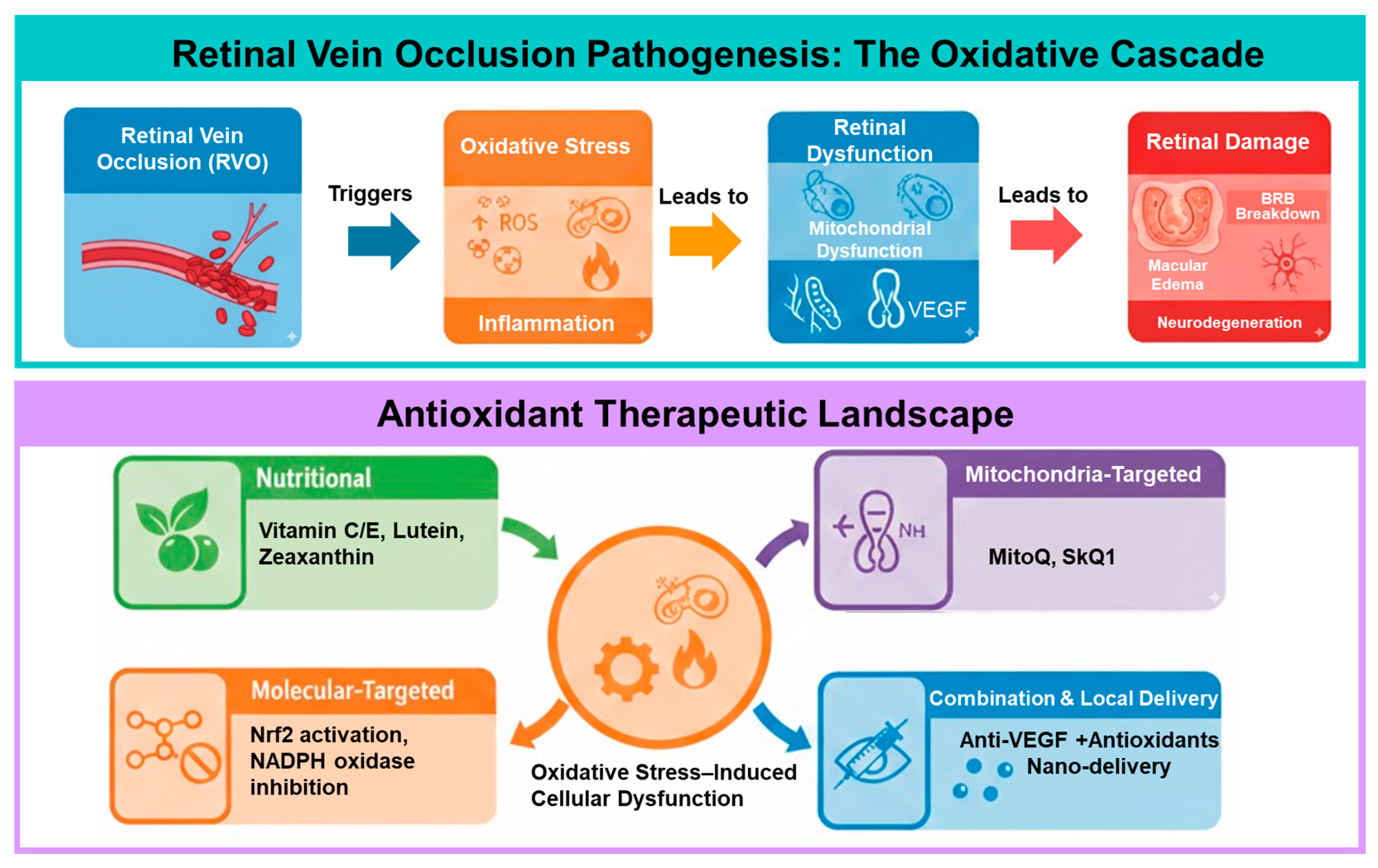
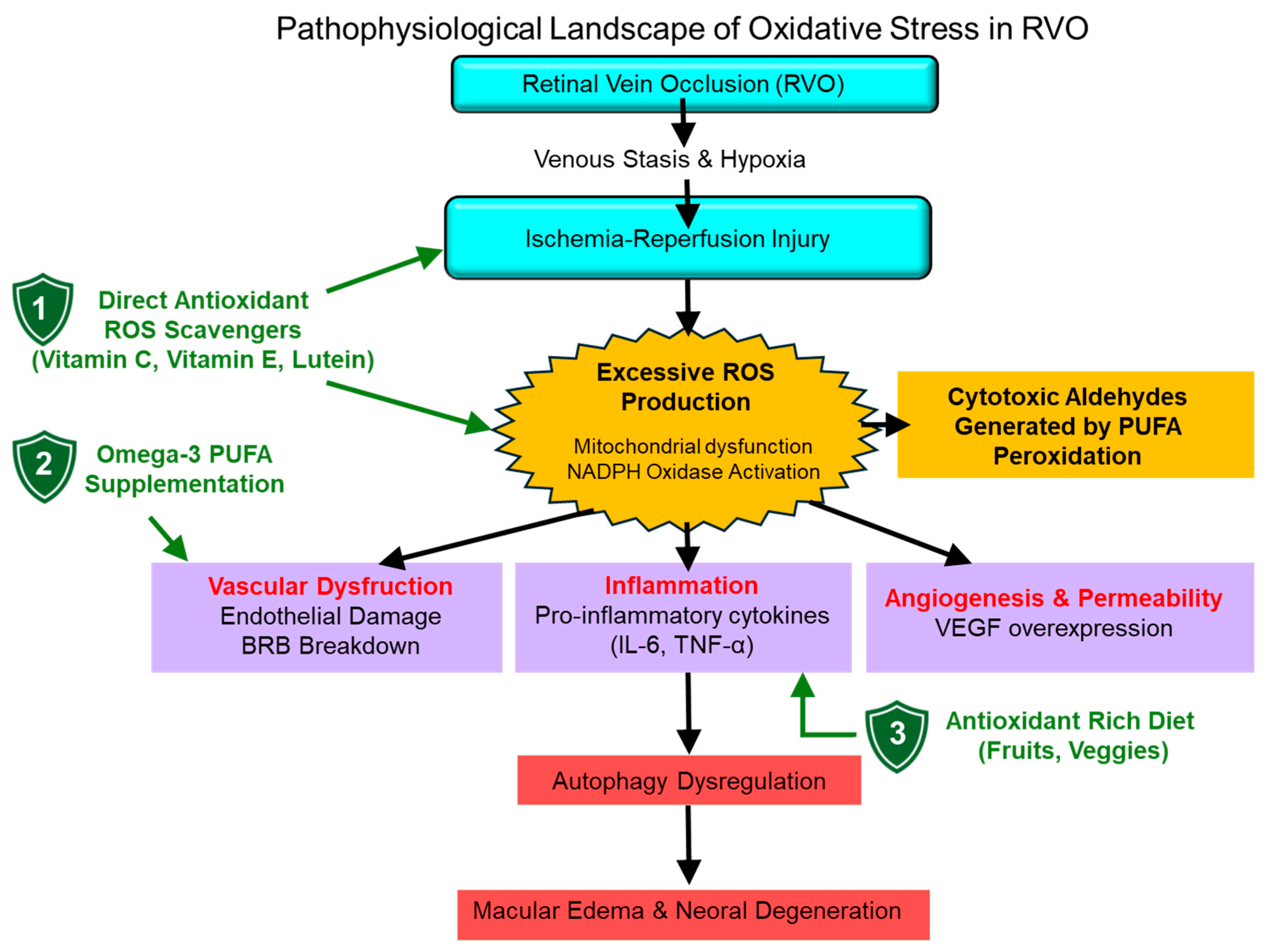
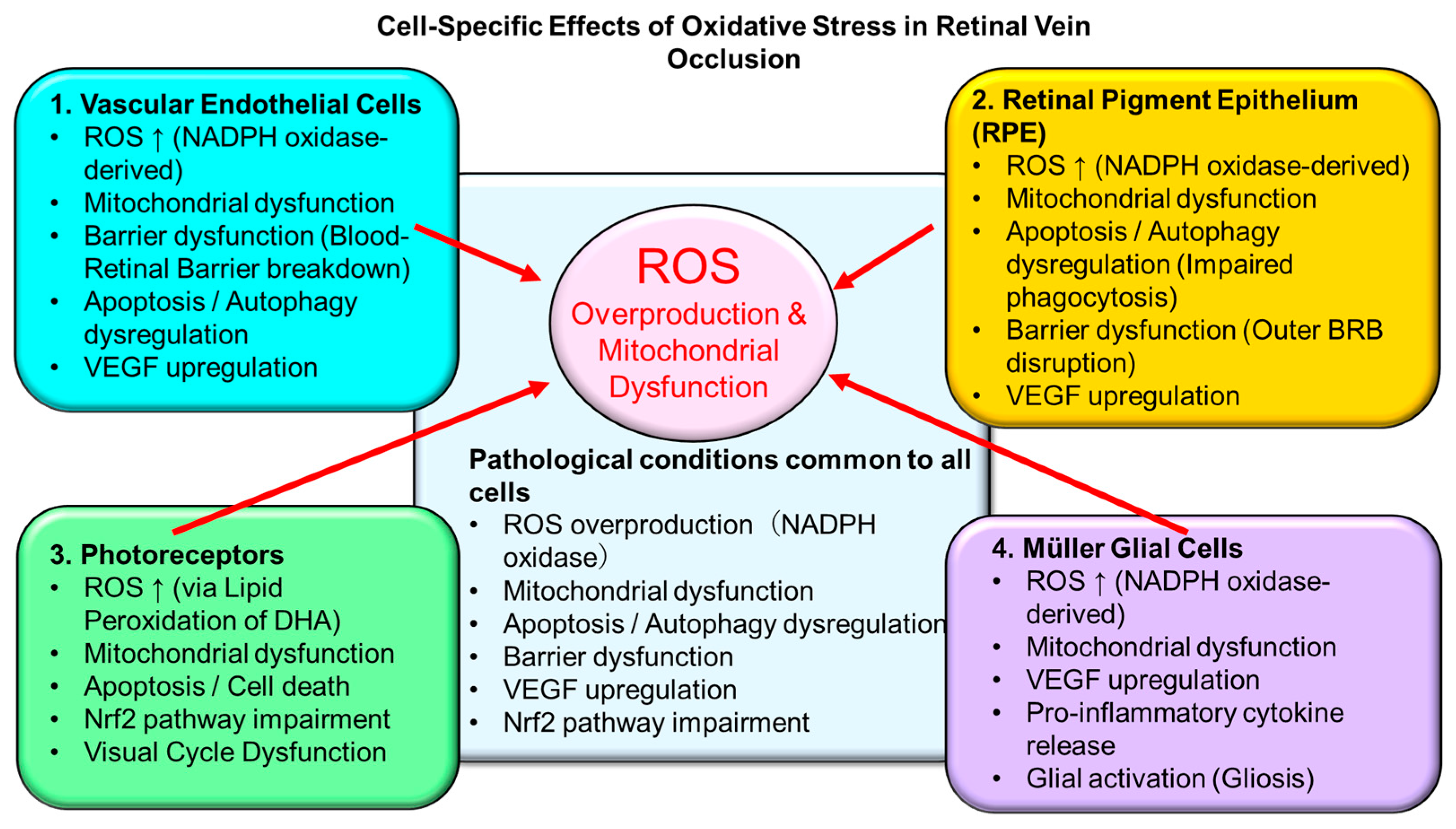
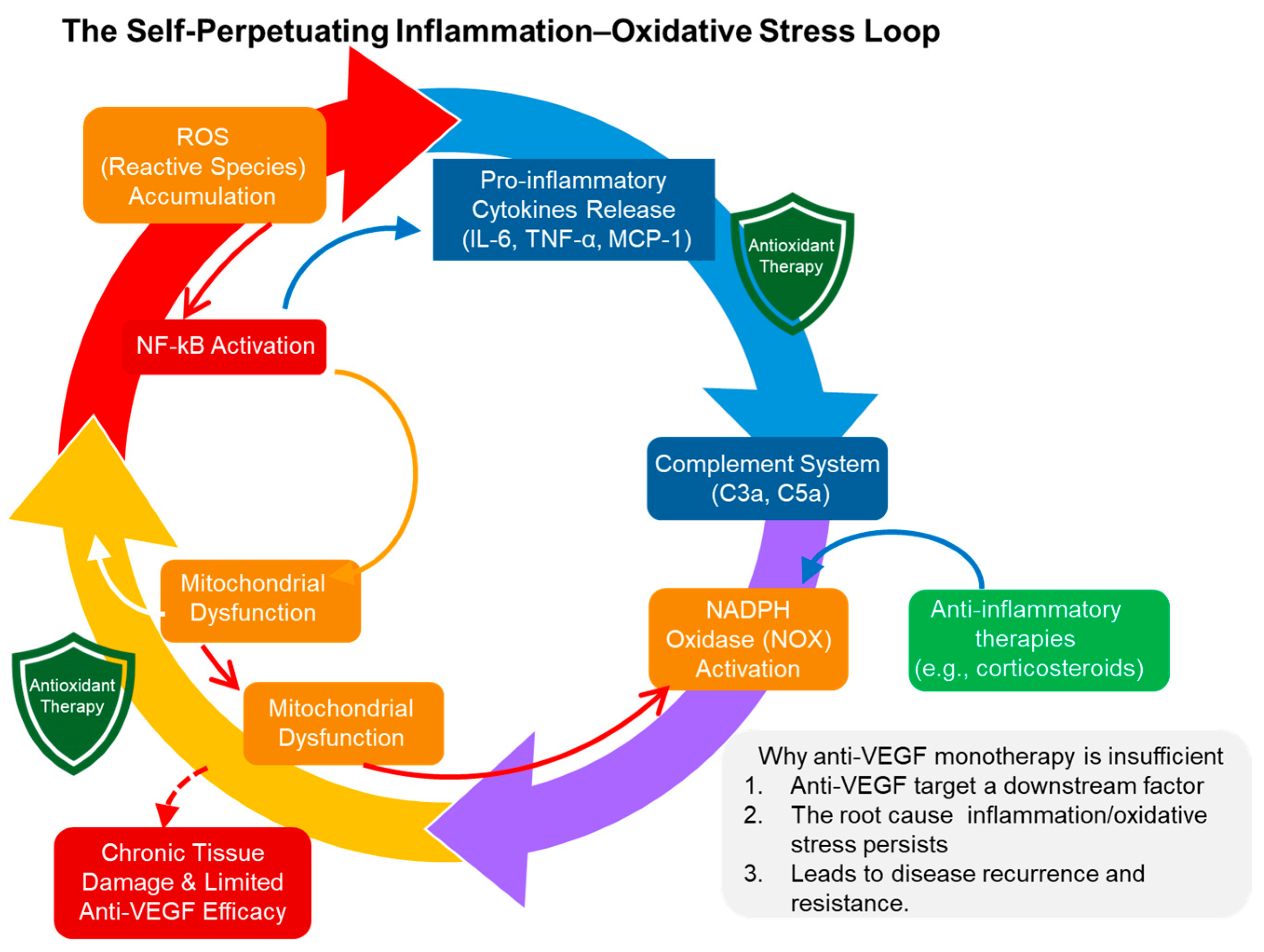
Pathophysiological Roles of Oxidative Stress and the Translational Potential of Antioxidant Therapy in Retinal Vein Occlusion



Abstract
1. Introduction
1.1. Epidemiology and Clinical Significance of Retinal Vein Occlusion (Central and Branch Types)
1.2. Multifactorial Pathogenesis of RVO: Vascular, Metabolic, and Inflammatory Components
1.3. Evidence for the Involvement of Oxidative Stress in RVO and the Potential Significance of Antioxidant Therapy
2. Retinal Vulnerability to Oxidative Stress
2.1. Imbalance Between Oxygen Supply and Demand Induced by Reduced Retinal Blood Flow and Venous Stasis
2.2. High Metabolic Activity, Lipid-Rich Retinal Tissue, and Susceptibility to ROS
2.3. Phototoxicity and Oxidative Modifications of Blood Components Associated with Hemodynamic Disturbance
3. Sources of Oxidative Stress in RVO
3.1. Oxidative Stress Derived from Hemodynamic Disturbance and Blood Components
3.1.1. Hypoxia and Ischemia–Reperfusion Injury Induced by Venous Stasis
3.1.2. ROS Production by Activated Platelets and Leukocytes
3.1.3. Hematological Risk Factors: Hyperhomocysteinemia and Dyslipidemia
3.2. Oxidative Stress Derived from Intracellular and Local Retinal Factors
3.2.1. Mitochondrial Dysfunction in Retinal Pigment Epithelium (RPE), Capillary Endothelial Cells, and Photoreceptors
3.2.2. Cytokine-Induced Activation of NADPH Oxidase and Sustained ROS Production
3.2.3. Reduced Antioxidant Capacity Associated with Aging and Comorbidities
3.3. Summary of Sources of Oxidative Stress in RVO
4. Molecular and Cellular Mechanisms by Which Oxidative Stress Drives RVO Pathology
4.1. Endothelial Dysfunction and Disruption of the BRB
4.2. Lipid Peroxidation and Oxidative Modification of Proteins in Vascular and Coagulation Abnormalities
4.3. Crosstalk with the Complement System and Inflammatory Responses: The Inflammation–Oxidative Stress Loop
4.4. Retinal Damage via Dysregulation of Apoptosis, Necrosis, and Autophagy
4.5. Summary of Molecular and Cellular Mechanisms Linking Oxidative Stress to RVO Pathology
5. Clinical and Experimental Evidence
5.1. Oxidative Stress Markers in the Serum and Vitreous of Patients with RVO
5.2. Associations Between Imaging Findings and Oxidative Stress-Related Changes
6. Antioxidant Therapeutic Strategies and Supporting Evidence
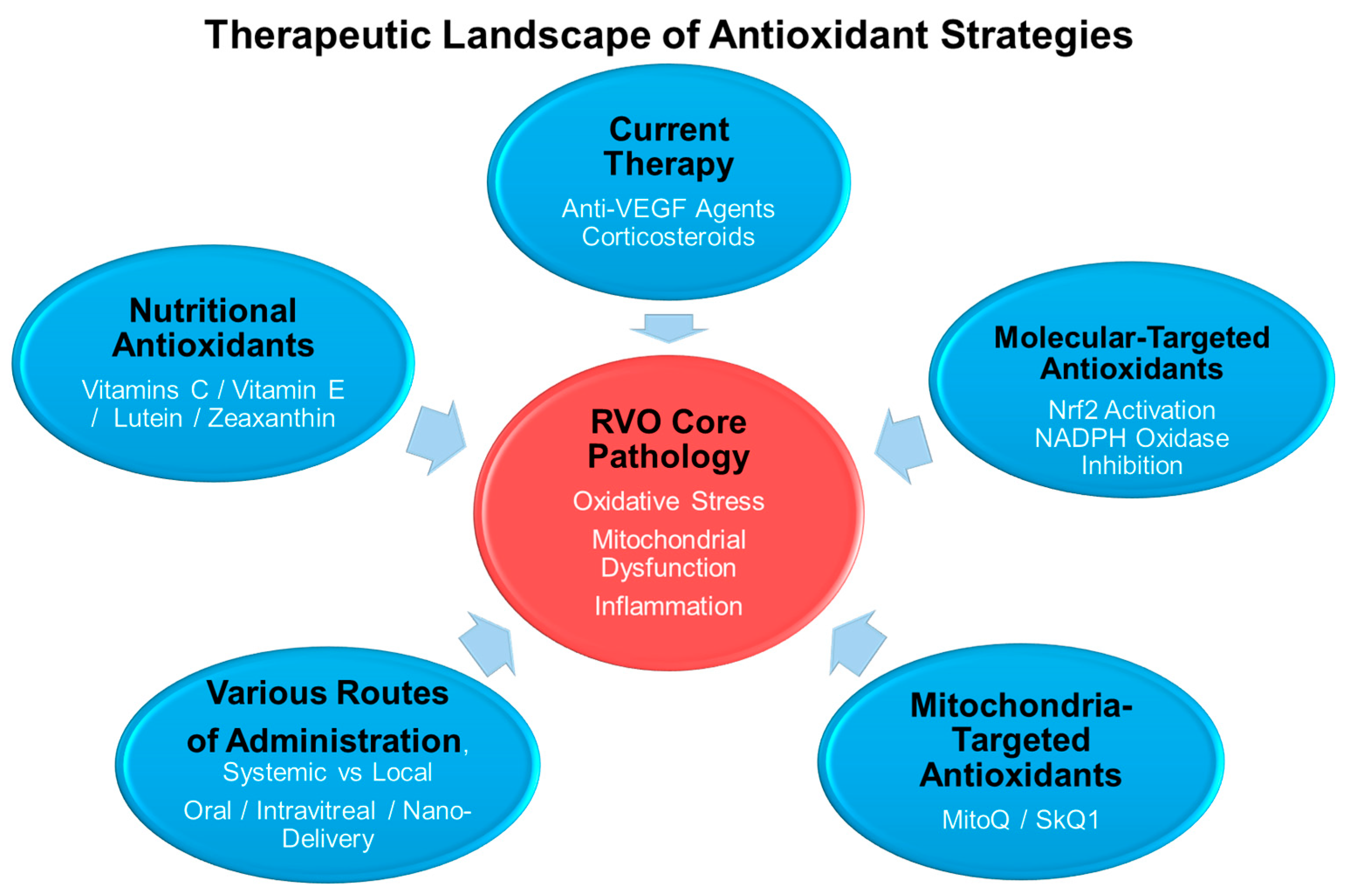
6.1. Integration with Current Clinical Approaches
6.1.1. Positioning of Antioxidant Interventions in Combination with Anti-VEGF and Steroid Therapies
6.1.2. Management of Systemic Risk Factors and Antioxidant Nutrition
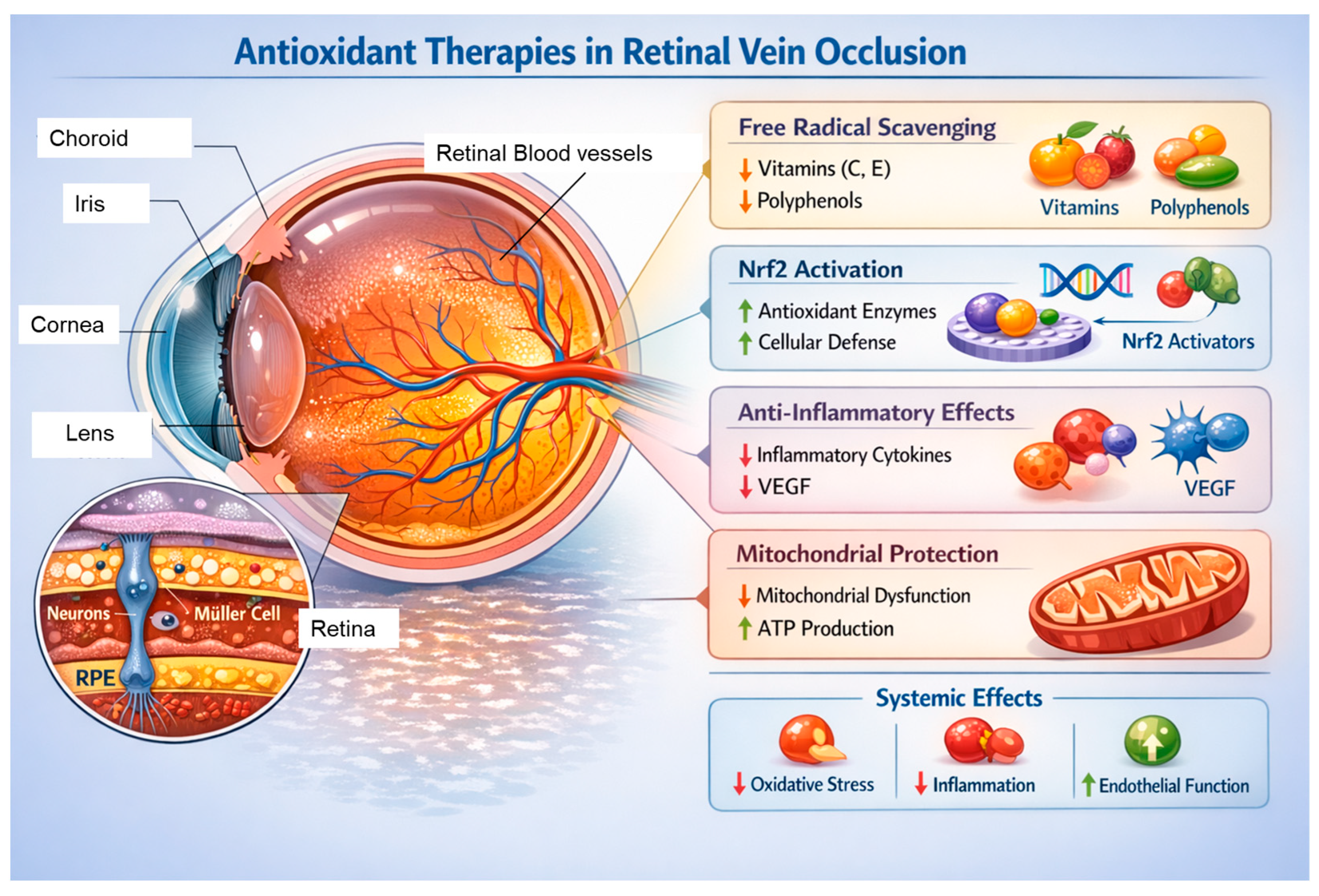
6.2. Types of Antioxidants and Supporting Evidence
6.2.1. Nutritional Antioxidants: Vitamins and Carotenoids
6.2.2. Mitochondria-Targeted Antioxidants and Intracellular ROS Regulation
6.2.3. NADPH Oxidase Inhibition and Activation of the Nrf2 Pathway
6.2.4. Combined Antioxidant–Anti-Inflammatory Agents and Advanced Delivery Strategies
6.3. Clinical Trials and Current Limitations
6.3.1. Effects of Oxidative Stress-Targeted Interventions in Animal Models
6.3.2. Current Evidence and Gaps in Antioxidant Clinical Trials for RVO
6.3.3. Challenges in Administration Route, Dosage, Treatment Duration, and Endpoint Selection
7. Challenges in Clinical Translation and Future Research Directions
7.1. Optimization of Patient Selection and Treatment Timing (Central vs. Branch RVO; Acute vs. Chronic Phases)
7.2. Biomarker-Based Individualized Therapy (Precision Medicine)
7.3. Safety and Drug–Drug Interaction Assessment of Antioxidant Therapies
7.4. Translational Models and Long-Term Follow-Up Studies Bridging Bench and Bedside
7.5. Future Research Directions and Their Potential Impact on Visual Outcomes in RVO
8. Summary of the Role of Oxidative Stress in RVO
8.1. Summary of the Role of Oxidative Stress in RVO and Its Clinical Implications
8.2. Translational Potential and Practical Challenges of Antioxidant Strategies
9. Conclusions (Final Remarks)
Author Contributions
Funding
Data Availability Statement
Acknowledgments
Conflicts of Interest
Abbreviations
| AMD | Age-related macular degeneration |
| AP-1 | Activator protein-1 |
| AREDS | Age-Related Eye Disease Study |
| BRB | blood–retinal barrier |
| BRVO | Branch retinal vein occlusion |
| CRVO | Central retinal vein occlusion |
| DHA | Docosahexaenoic acid |
| DNA | Deoxyribonucleic acid |
| GSH | Glutathione |
| HMGB1 | High mobility group box 1 |
| IL-6 | Interleukin-6 |
| MAC | Membrane attack complex |
| MAPK | Mitogen-activated protein kinase |
| MCP-1 | Monocyte chemoattractant protein-1 |
| MDA | Malondialdehyde |
| MitoQ | Mitoquinone (mitochondria-targeted antioxidant) |
| MPO | Myeloperoxidase |
| NADPH | Nicotinamide adenine dinucleotide phosphate |
| NETs | Neutrophil extracellular traps |
| NF-κB | Nuclear factor kappa-light-chain-enhancer of activated B cells |
| NHANES | National Health and Nutrition Examination Survey |
| NO | Nitric oxide |
| NOX | NADPH oxidase |
| Nrf2 | Nuclear factor erythroid 2-related factor 2 |
| LDL | Low-density lipoprotein |
| OCT | Optical coherence tomography |
| OSI | Oxidative stress index |
| PUFA(s) | Polyunsaturated fatty acid(s) |
| RPE | Retinal pigment epithelium |
| ROS | Reactive oxygen species |
| RVO | Retinal vein occlusion |
| SIRT1 | Sirtuin 1 |
| SkQ1 | 10-(6′-plastoquinonyl) decyltriphenylphosphonium |
| SOD | Superoxide dismutase |
| TAC | Total antioxidant capacity |
| TAS | Total antioxidant status |
| TNF-α | Tumor necrosis factor alpha |
| VEGF | Vascular endothelial growth factor |
| ZO-1 | Zonula occludens-1 |
| 4-HNE | 4-hydroxynonenal |
| 8-OHdG | 8-hydroxy-2′-deoxyguanosine |
References
- Rogers, S.; McIntosh, R.L.; Cheung, N.; Lim, L.; Wang, J.J.; Mitchell, P.; Kowalski, J.W.; Nguyen, H.; Wong, T.Y. International Eye Disease Consortium. The prevalence of retinal vein occlusion: Pooled data from population studies from the United States, Europe, Asia, and Australia. Ophthalmology 2010, 117, 313–319.e1. [Google Scholar] [CrossRef] [PubMed]
- Hayreh, S.S. Classification of central retinal vein occlusion. Ophthalmology 1983, 90, 458–474. [Google Scholar] [CrossRef]
- Rehak, M.; Wiedemann, P. Retinal vein thrombosis: Pathogenesis and management. J. Thromb. Haemost. 2010, 8, 1886–1894. [Google Scholar] [CrossRef]
- Beatty, S.; Koh, H.; Henson, D.; Boulton, M. The role of oxidative stress in the pathogenesis of age-related macular degeneration. Surv. Ophthalmol. 2000, 45, 115–134. [Google Scholar] [CrossRef]
- Campochiaro, P.A.; Bhisitkul, R.B.; Shapiro, H.; Rubio, R.G. Vascular endothelial growth factor promotes progressive retinal nonperfusion in patients with retinal vein occlusion. Ophthalmology 2013, 120, 795–802. [Google Scholar] [CrossRef]
- Noma, H.; Mimura, T.; Shimada, K. Role of inflammation in previously untreated macular edema with branch retinal vein occlusion. BMC Ophthalmol. 2014, 14, 67. [Google Scholar] [CrossRef]
- Masuda, T.; Shimazawa, M.; Hara, H. Retinal diseases associated with oxidative stress and the effects of a free radical scavenger (edaravone). Oxidative Med. Cell. Longev. 2017, 2017, 9208489. [Google Scholar] [CrossRef] [PubMed]
- Song, P.; Xu, Y.; Zha, M.; Zhang, Y.; Rudan, I. Global epidemiology of retinal vein occlusion: A systematic review and meta-analysis of prevalence, incidence, and risk factors. J. Glob. Health 2019, 9, 010427. [Google Scholar] [CrossRef]
- Kalva, P.; Akram, R.; Zuberi, H.Z.; Kooner, K.S. Prevalence and risk factors of retinal vein occlusion in the United States: The National Health and Nutrition Examination Survey, 2005–2008. Bayl. Univ. Med. Cent. Proc. 2023, 36, 335–340. [Google Scholar] [CrossRef] [PubMed]
- Jaulim, A.; Ahmed, B.; Khanam, T.; Chatziralli, I.P. Branch retinal vein occlusion: Epidemiology, pathogenesis, risk factors, clinical features, diagnosis, and complications. Retina 2013, 33, 901–910. [Google Scholar] [CrossRef]
- Valeriani, E.; Paciullo, F.; Porfidia, A.; Pignatelli, P.; Candeloro, M.; Di Nisio, M.; Donadini, M.P.; Mastroianni, C.M.; Pola, R.; Gresele, P.; et al. Antithrombotic treatment for retinal vein occlusion: A systematic review and meta-analysis. J. Thromb. Haemost. 2023, 21, 284–293. [Google Scholar] [CrossRef] [PubMed]
- Noma, H.; Yasuda, K.; Nonaka, R.; Sasaki, S.; Shimura, M. Anti-vascular endothelial growth factor therapy with or without initial steroid therapy for macular edema in branch retinal vein occlusion. Clin. Ophthalmol. 2023, 17, 2267–2275. [Google Scholar] [CrossRef]
- Altinisik, M.; Koytak, A.; Elbay, A.; Toklu, E.; Sezer, T.; Kocyigit, A. Oxidant–antioxidant balance in the aqueous humor of patients with retinal vein occlusion. Semin. Ophthalmol. 2018, 33, 675–682. [Google Scholar] [CrossRef]
- Zhang, J.; Xie, X.; Mo, Y. Exploring the role of oxidative stress in retinal vein occlusion: An updated and comprehensive review on the pathophysiology and treatment perspectives. Int. Ophthalmol. 2025, 45, 358. [Google Scholar] [CrossRef]
- Chen, K.H.; Hsiang, E.L.; Hsu, M.Y.; Chou, Y.C.; Lin, T.C.; Chang, Y.L.; Tsai, C.Y.; Li, T.H.; Woung, L.C.; Chen, S.J.; et al. Elevation of serum oxidative stress in patients with retinal vein occlusions. Acta Ophthalmol. 2019, 97, e290–e295. [Google Scholar] [CrossRef]
- Becatti, M.; Marcucci, R.; Gori, A.M.; Mannini, L.; Grifoni, E.; Alessandrello Liotta, A.; Sodi, A.; Tartaro, R.; Taddei, N.; Rizzo, S.; et al. Erythrocyte oxidative stress is associated with cell deformability in patients with retinal vein occlusion. J. Thromb. Haemost. 2016, 14, 2287–2297. [Google Scholar] [CrossRef]
- Wang, Q.; Zennadi, R. Oxidative stress and thrombosis during aging: The roles of oxidative stress in RBCs in venous thrombosis. Int. J. Mol. Sci. 2020, 21, 4259. [Google Scholar] [CrossRef]
- Liu, Y.; Zhang, D.; Wu, Y.; Ji, B. Docosahexaenoic acid aggravates photooxidative damage in retinal pigment epithelial cells via lipid peroxidation. J. Photochem. Photobiol. B 2014, 140, 85–93. [Google Scholar] [CrossRef]
- Cheng, Y.S.; Linetsky, M.; Gu, X.; Ayyash, N.; Gardella, A.; Salomon, R.G. Light-induced generation and toxicity of docosahexaenoate-derived oxidation products in retinal pigmented epithelial cells. Exp. Eye Res. 2019, 181, 325–345. [Google Scholar] [CrossRef] [PubMed]
- Hu, L.; Guo, J.; Zhou, L.; Zhu, S.; Wang, C.; Liu, J.; Hu, S.; Yang, M.; Lin, C. Hydrogen sulfide protects retinal pigment epithelial cells from oxidative stress-induced apoptosis and affects autophagy. Oxid. Med. Cell. Longev. 2020, 2020, 8868564. [Google Scholar] [CrossRef] [PubMed]
- Granger, D.N.; Kvietys, P.R. Reperfusion injury and reactive oxygen species: The evolution of a concept. Redox Biol. 2015, 6, 524–551. [Google Scholar] [CrossRef]
- Wang, J.; Li, M.; Geng, Z.; Khattak, S.; Ji, X.; Wu, D.; Dang, Y. Role of oxidative stress in retinal disease and the early intervention strategies: A review. Oxid. Med. Cell. Longev. 2022, 2022, 7836828. [Google Scholar] [CrossRef]
- Lessiani, G.; Vazzana, N.; Cuccurullo, C.; Di Michele, D.; Laurora, G.; Sgrò, G.; Di Ruscio, P.; Simeone, E.; Di Iorio, P.; Lattanzio, S.; et al. Inflammation, oxidative stress and platelet activation in aspirin-treated critical limb ischaemia: Beneficial effects of iloprost. Thromb. Haemost. 2011, 105, 321–328. [Google Scholar] [CrossRef]
- Fuchs, T.A.; Brill, A.; Duerschmied, D.; Schatzberg, D.; Monestier, M.; Myers, D.D., Jr.; Wrobleski, S.K.; Wakefield, T.W.; Hartwig, J.H.; Wagner, D.D. Extracellular DNA traps promote thrombosis. Proc. Natl. Acad. Sci. USA 2010, 107, 15880–15885. [Google Scholar] [CrossRef] [PubMed]
- Devi, V.L.J.; Panigrahi, P.K.; Minj, A.; Hanisha, D. Clinical profile of patients with retinal vein occlusion and its correlation with serum homocysteine levels. BMC Ophthalmol. 2025, 25, 458. [Google Scholar] [CrossRef] [PubMed]
- Hankey, G.J.; Eikelboom, J.W. Homocysteine and vascular disease. Lancet 1999, 354, 407–413. [Google Scholar] [CrossRef]
- Jiang, H.; Zhou, Y.; Nabavi, S.M.; Sahebkar, A.; Little, P.J.; Xu, S.; Weng, J.; Ge, J. Mechanisms of oxidized LDL-mediated endothelial dysfunction and its consequences for the development of atherosclerosis. Front. Cardiovasc. Med. 2022, 9, 925923. [Google Scholar] [CrossRef] [PubMed]
- Jarrett, S.G.; Lin, H.; Godley, B.F.; Boulton, M.E. Mitochondrial DNA damage and its potential role in retinal degeneration. Prog. Retin. Eye Res. 2008, 27, 596–607. [Google Scholar] [CrossRef]
- Bedard, K.; Krause, K.H. The NOX family of ROS-generating NADPH oxidases: Physiology and pathophysiology. Physiol. Rev. 2007, 87, 245–313. [Google Scholar] [CrossRef]
- Ungvari, Z.; Tarantini, S.; Donato, A.J.; Galvan, V.; Csiszar, A. Mechanisms of vascular aging. Circ. Res. 2018, 123, 849–867. [Google Scholar] [CrossRef]
- Antonetti, D.A.; Barber, A.J.; Bronson, S.K.; Freeman, W.M.; Gardner, T.W.; Jefferson, L.S.; Kester, M.; Kimball, S.R.; Krady, J.K.; LaNoue, K.F.; et al. JDRF Diabetic Retinopathy Center Group. Diabetic retinopathy: Seeing beyond glucose-induced microvascular disease. Diabetes 2006, 55, 2401–2411. [Google Scholar] [CrossRef]
- Ayala, A.; Muñoz, M.F.; Argüelles, S. Lipid peroxidation: Production, metabolism, and signaling mechanisms of malondialdehyde and 4-hydroxy-2-nonenal. Oxid. Med. Cell. Longev. 2014, 2014, 360438. [Google Scholar] [CrossRef]
- Zipfel, P.F.; Skerka, C. Complement regulators and inhibitory proteins. Nat. Rev. Immunol. 2009, 9, 729–740. [Google Scholar] [CrossRef]
- Redza-Dutordoir, M.; Averill-Bates, D.A. Activation of apoptosis signalling pathways by reactive oxygen species. Biochim. Biophys. Acta Mol. Cell Res. 2016, 1863, 2977–2992. [Google Scholar] [CrossRef]
- Markitantova, Y.; Simirskii, V. Retinal pigment epithelium under oxidative stress: Chaperoning autophagy and beyond. Int. J. Mol. Sci. 2025, 26, 1193. [Google Scholar] [CrossRef]
- Shen, D.; Li, M.; Sun, W.; Tao, Z. Diagnostic and prognostic predictive value of serum selenium and redox biomarkers in retinal vein occlusion. Int. J. Gen. Med. 2025, 18, 5731–5742. [Google Scholar] [CrossRef]
- Kumari, N.; Cher, J.; Chua, E.; Hamzah, H.; Wong, T.Y.; Cheung, C.Y. Association of serum lutein and zeaxanthin with quantitative measures of retinal vascular parameters. PLoS ONE 2018, 13, e0203868. [Google Scholar] [CrossRef] [PubMed]
- Connor, K.M.; SanGiovanni, J.P.; Lofqvist, C.; Aderman, C.M.; Chen, J.; Higuchi, A.; Hong, S.; Pravda, E.A.; Majchrzak, S.; Carper, D.; et al. Increased dietary intake of omega-3 polyunsaturated fatty acids reduces pathological retinal angiogenesis. Nat. Med. 2007, 13, 868–873. [Google Scholar] [CrossRef] [PubMed]
- Ahsanuddin, S.; Rios, H.A.; Otero-Marquez, O.; Macanian, J.; Zhou, D.; Rich, C.; Rosen, R.B. Flavoprotein fluorescence elevation is a marker of mitochondrial oxidative stress in patients with retinal disease. Front. Ophthalmol. 2023, 3, 1110501. [Google Scholar] [CrossRef] [PubMed]
- Garay-Aramburu, G.; Hunt, A.; Arruabarrena, C.; Mehta, H.; Invernizzi, A.; Gabrielle, P.H.; Guillaumie, T.; Wolff, B.; Gillies, M.C.; Zarranz-Ventura, J. Initial response and 12-month outcomes after commencing dexamethasone or vascular endothelial growth factor inhibitors for retinal vein occlusion in the FRB registry. Sci. Rep. 2024, 14, 6122. [Google Scholar] [CrossRef]
- Xu, X.; Han, N.; Zhao, F.; Fan, R.; Guo, Q.; Han, X.; Liu, Y.; Luo, G. Inefficacy of anti-VEGF therapy reflected in VEGF-mediated photoreceptor degeneration. Mol. Ther. Nucleic Acids 2024, 35, 102176. [Google Scholar] [CrossRef] [PubMed]
- Lendzioszek, M.; Mrugacz, M.; Bryl, A.; Poppe, E.; Zorena, K. Prevention and treatment of retinal vein occlusion: The role of diet—A review. Nutrients 2023, 15, 3237. [Google Scholar] [CrossRef] [PubMed]
- Daneshvar, K.; Akhlaghi, M.; Iranpour, S.; Irajpour, M.; Pourazizi, M. Vitamin D deficiency in patients with retinal vein occlusion: A systematic review and meta-analysis. Int. J. Retin. Vitr. 2024, 10, 52. [Google Scholar] [CrossRef]
- Age-Related Eye Disease Study Research Group. A randomized, placebo-controlled, clinical trial of high-dose supplementation with vitamins C and E, beta carotene, and zinc for age-related macular degeneration and vision loss: AREDS report no. 8. Arch. Ophthalmol. 2001, 119, 1417–1436. [Google Scholar] [CrossRef]
- Tang, D.; Liu, X.; Chen, J. Mitoquinone intravitreal injection ameliorates retinal ischemia–reperfusion injury in rats involving the SIRT1/Notch1/NADPH axis. Drug Dev. Res. 2022, 83, 800–810. [Google Scholar] [CrossRef]
- Perepechaeva, M.L.; Grishanova, A.Y.; Rudnitskaya, E.A.; Kolosova, N.G. The mitochondria-targeted antioxidant SkQ1 downregulates aryl hydrocarbon receptor-dependent genes in the retina of OXYS rats with AMD-like retinopathy. J. Ophthalmol. 2014, 2014, 530943. [Google Scholar] [CrossRef]
- Pan, H.; He, M.; Liu, R.; Brecha, N.C.; Yu, A.C.; Pu, M. Sulforaphane protects rodent retinas against ischemia-reperfusion injury through activation of the Nrf2/HO-1 antioxidant pathway. PLoS ONE 2014, 9, e114186. [Google Scholar] [CrossRef]
- Chien, J.Y.; Chou, Y.Y.; Ciou, J.W.; Liu, F.Y.; Huang, S.P. The effects of two Nrf2 activators, bardoxolone methyl and omaveloxolone, on retinal ganglion cell survival during ischemic optic neuropathy. Antioxidants 2021, 10, 1466. [Google Scholar] [CrossRef]
- Saito, Y.; Geisen, P.; Uppal, A.; Hartnett, M.E. Inhibition of NAD(P)H oxidase reduces apoptosis and avascular retina in an animal model of retinopathy of prematurity. Mol. Vis. 2007, 13, 840–853. [Google Scholar]
- Wood, J.P.M.; Chidlow, G.; Wall, G.M.; Casson, R.J. N-acetylcysteine amide and di-N-acetylcysteine amide protect retinal cells in culture via an antioxidant action. Exp. Eye Res. 2024, 248, 110074. [Google Scholar] [CrossRef] [PubMed]
- Chronopoulos, P.; Manicam, C.; Zadeh, J.K.; Laspas, P.; Unkrig, J.C.; Göbel, M.L.; Musayeva, A.; Pfeiffer, N.; Oelze, M.; Daiber, A.; et al. Effects of resveratrol on vascular function in retinal ischemia-reperfusion injury. Antioxidants 2023, 12, 853. [Google Scholar] [CrossRef]
- Shahror, R.A.; Fouda, A.Y. Recent advances and future challenges in nanosystems for ocular drug delivery. J. Pharmacol. Exp. Ther. 2025, 392, 103738. [Google Scholar] [CrossRef]
- Naguib, S.; Backstrom, J.R.; Gil, M.; Calkins, D.J.; Rex, T.S. Retinal oxidative stress activates the NRF2/ARE pathway: An early endogenous protective response to ocular hypertension. Redox Biol. 2021, 42, 101883. [Google Scholar] [CrossRef]
- Khayat, M.; Lois, N.; Williams, M.; Stitt, A.W. Animal models of retinal vein occlusion. Investig. Ophthalmol. Vis. Sci. 2017, 58, 6175–6192. [Google Scholar] [CrossRef]
- Wang, P.; Chin, E.K.; Almeida, D. Antioxidants for the treatment of retinal disease: Summary of recent evidence. Clin. Ophthalmol. 2021, 15, 1621–1628. [Google Scholar] [CrossRef]
- Hidaka, Y.; Nakamura, S.; Nishinaka, A.; Takajo, Y.; Inamasu, S.; Yomoda, S.; Shimazawa, M.; Hara, H. Arctigenin prevents retinal edema in a murine retinal vein occlusion model. Biol. Pharm. Bull. 2023, 46, 473–481. [Google Scholar] [CrossRef]
- Long, P.; Yan, W.; He, M.; Zhang, Q.; Wang, Z.; Li, M.; Xue, J.; Chen, T.; An, J.; Zhang, Z. Protective effects of hydrogen gas in a rat model of branch retinal vein occlusion via decreasing VEGF-α expression. BMC Ophthalmol. 2019, 19, 112. [Google Scholar] [CrossRef]
- Darabuş, D.M.; Dărăbuş, R.G.; Munteanu, M. The diagnosis and treatment of branch retinal vein occlusions: An update. Biomedicines 2025, 13, 105. [Google Scholar] [CrossRef] [PubMed]
- Hatamnejad, A.; Nanji, K.; Grad, J.; El-Sayes, A.; Mihalache, A.; Gemae, M.; Huang, R.; Waheed, N.K.; Sarraf, D.; Sadda, S.R.; et al. Predicting treatment response in retinal vein occlusions using baseline optical coherence tomography biomarkers: A systematic review. Surv. Ophthalmol. 2026, 71, 100–118. [Google Scholar] [CrossRef] [PubMed]
- Campa, C.; Alivernini, G.; Bolletta, E.; Parodi, M.B.; Perri, P. Anti-VEGF therapy for retinal vein occlusions. Curr. Drug Targets 2016, 17, 328–336. [Google Scholar] [CrossRef] [PubMed]



| Author | Year | RVO Type | Study Population | Sample | Oxidative Stress Markers | Key Findings |
|---|---|---|---|---|---|---|
| Chen et al. [15] | 2019 | CRVO/BRVO | RVO patients vs. healthy controls | Serum | MDA, 8-OHdG, H2O2, SOD, Catalase | Significantly higher levels of MDA, 8-OHdG, and H2O2, with reduced SOD and catalase activity in RVO patients, indicating increased systemic oxidative stress |
| Masuda et al. [7] | 2024 | BRVO | RVO patients | Vitreous fluid | MDA, 8-OHdG | Vitreous levels of lipid peroxidation and DNA oxidation markers were significantly elevated, supporting the role of local retinal oxidative stress |
| Shen et al. [36] | 2025 | CRVO/BRVO | RVO patients | Serum | HMGB1, NO, GSH, SOD, Selenium | Increased oxidative stress-related factors (HMGB1, NO) and decreased antioxidant capacity (GSH, SOD, selenium); several markers were associated with visual prognosis |
| Zhang et al. [14] | 2025 | Mixed RVO | RVO patients | Serum | MDA, TAC, SOD | Elevated oxidative stress markers and reduced total antioxidant capacity (TAC) correlated with disease severity |
| Kumari et al. [37] | 2018 | Retinal vascular disease | Patients with retinal vascular disorders | Serum | Carotenoids, Oxidative index | Lower carotenoid levels were associated with increased oxidative burden and retinal vascular dysfunction |
| Connor et al. [38] | 2007 | Retinal circulation-related risk | High-risk population | Serum | PUFA, Oxidative markers | Reduced antioxidant nutrient status was associated with increased oxidative stress and impaired retinal vascular health |
| Imaging Finding (OCT/FA) | Oxidative Stress-Related Factors | Pathophysiological Significance |
|---|---|---|
| Retinal edema/Macular edema | Reactive oxygen species (ROS), VEGF | Breakdown of the blood–retinal barrier (BRB) and increased vascular permeability |
| Increased inner retinal thickness (OCT) | Oxidative stress markers | Structural retinal changes associated with oxidative injury and inflammation |
| Microaneurysms/Microhemorrhages (FA) | ROS, Inflammatory mediators | Oxidative stress-induced microvascular damage |
| Capillary non-perfusion areas (FA) | Hypoxia, Oxidative stress | Ischemia–reperfusion injury and progression of retinal ischemia |
| Increased vascular leakage (FA) | VEGF, ROS | BRB disruption and oxidative stress-mediated endothelial dysfunction |
| Increased flavoprotein fluorescence | Mitochondrial oxidative stress | Indicator of mitochondrial dysfunction and oxidative stress burden |
| Category | Representative Agents | Primary Targets/Mechanisms | Level of Evidence | Key References |
|---|---|---|---|---|
| Nutritional antioxidants | Vitamin | Direct scavenging of ROS; Reduction in lipid peroxidation | Observational studies | Lendzioszek 2023 [42]; Daneshvar 2024 [43] |
| Nutritional antioxidants | Lutein, Zeaxanthin | Macular antioxidant activity; Blue light filtering; Vascular protection | Observational studies | AREDS 2001 [44] |
| Mitochondria-targeted antioxidants | MitoQ | Reduction in mitochondrial ROS; Protection against ischemia–reperfusion injury | Animal studies | Tang 2022 [45] |
| Mitochondria-targeted antioxidants | SkQ1 | Mitochondrial membrane stabilization; ROS suppression | Experimental/Animal studies | Perepechaeva 2014 [46] |
| Nrf2 pathway activators | Sulforaphane | Activation of Nrf2-dependent antioxidant genes (HO-1, NQO1) | Experimental/Animal studies | Pan 2014 [47] |
| Nrf2 pathway activators | Bardoxolone methyl | Enhancement of endogenous antioxidant responses via Nrf2 | Experimental studies | Chien 2021 [48] |
| NADPH oxidase inhibitors | Apocynin | Inhibition of ROS production via NADPH oxidase | Animal studies | Saito 2007 [49] |
| GSH-related agents | N-acetylcysteine (NAC) | GSH replenishment; Intracellular redox balance | Experimental/Limited clinical data | Wood 2024 [50] |
| Combined antioxidant–anti-inflammatory agents | Polyphenols (e.g., resveratrol) | ROS reduction; Inhibition of inflammatory signaling | Animal studies | Chronopoulos 2023 [51] |
| Advanced delivery strategies | Nanoparticle-based antioxidants | Targeted retinal delivery; BRB protection | Preclinical studies | Shahror 2025 [52] |
| Model | Intervention | Outcome | Limitations |
|---|---|---|---|
| Animal-MitoQ [45] | MitoQ | Improved retinal ischemia–reperfusion injury, reduced ROS, suppressed apoptosis, improved retinal function | Preclinical; not yet tested in RVO patients; Mechanism via SIRT1/Notch1/NADPH axis |
| Animal-Arctigenin [56] | Arctigenin (oral polyphenol) | Reduced retinal edema in RVO mouse model by preserving junction proteins, lowered VEGF and TNFα expression | Preclinical; antioxidant + anti-inflammatory effects; Clinical translation untested |
| Animal-Edaravone [7] | Edaravone (free radical scavenger) | Decreased oxidative damage, apoptosis, and angiogenesis in retinal disease models including RVO | Evidence mostly from combined retinal disease models; Specific RVO outcome measures limited |
| Animal-Hydrogen gas inhalation [57] | Hydrogen gas | Alleviated retinal edema, shortened occlusion reopening, improved retinal function; possibly via decreased VEGF-α | Preclinical; mechanism not fully defined; Human data lacking |
| Clinical-Antioxidant indices (aqueous humor/serum) [13] | Natural antioxidant status (TAS, OSI) | Higher oxidative stress associated with macular edema severity in RVO patients | Observational; Not an interventional study |
| Challenge | Key Issues | Potential Strategies |
|---|---|---|
| Patient selection | Heterogeneity between CRVO and BRVO, and between acute and chronic disease stages | Stratification based on RVO subtype and disease stage; Subtype-specific and stage-specific analyses in clinical trials |
| Optimal treatment timing | Uncertainty regarding the therapeutic window for antioxidant intervention | Prospective studies comparing early versus delayed intervention; Definition of the optimal therapeutic window |
| Lack of standardized biomarkers | Inconsistent measurement methods and cut-off values for oxidative stress markers | Standardization of circulating and intraocular oxidative stress biomarkers (e.g., GSH, SOD, HMGB1) |
| Limited precision medicine approaches | Large inter-individual variability in oxidative stress burden and treatment response | Integration of molecular biomarkers with imaging parameters (OCT/OCTA) to enable personalized therapy |
| Safety and drug–drug interactions | Insufficient data on interactions with anti-VEGF agents and corticosteroids | Dedicated combination studies assessing safety, pharmacodynamics, and interactions with standard therapies |
| Insufficient long-term safety data | Unknown systemic effects, Especially in elderly patients with comorbidities | Long-term follow-up studies evaluating systemic safety and visual outcomes |
| Limitations of current animal models | Incomplete recapitulation of human RVO pathology and oxidative stress dynamics | Development and validation of refined animal models that better mimic human RVO |
| Translational gap between preclinical and clinical studies | Difficulty translating preclinical antioxidant efficacy into clinical benefit | Identification of translational biomarkers linking preclinical outcomes to clinical endpoints |
| Endpoint selection in clinical trials | Overreliance on short-term visual acuity outcomes | Inclusion of long-term endpoints such as retinal integrity, recurrence rates, and neovascular complications |
Disclaimer/Publisher’s Note: The statements, opinions and data contained in all publications are solely those of the individual author(s) and contributor(s) and not of MDPI and/or the editor(s). MDPI and/or the editor(s) disclaim responsibility for any injury to people or property resulting from any ideas, methods, instructions or products referred to in the content. |
© 2026 by the authors. Licensee MDPI, Basel, Switzerland. This article is an open access article distributed under the terms and conditions of the Creative Commons Attribution (CC BY) license.
Share and Cite
Noma, H.; Mimura, T. Pathophysiological Roles of Oxidative Stress and the Translational Potential of Antioxidant Therapy in Retinal Vein Occlusion. Antioxidants 2026, 15, 338. https://doi.org/10.3390/antiox15030338
Noma H, Mimura T. Pathophysiological Roles of Oxidative Stress and the Translational Potential of Antioxidant Therapy in Retinal Vein Occlusion. Antioxidants. 2026; 15(3):338. https://doi.org/10.3390/antiox15030338
Chicago/Turabian StyleNoma, Hidetaka, and Tatsuya Mimura. 2026. "Pathophysiological Roles of Oxidative Stress and the Translational Potential of Antioxidant Therapy in Retinal Vein Occlusion" Antioxidants 15, no. 3: 338. https://doi.org/10.3390/antiox15030338
APA StyleNoma, H., & Mimura, T. (2026). Pathophysiological Roles of Oxidative Stress and the Translational Potential of Antioxidant Therapy in Retinal Vein Occlusion. Antioxidants, 15(3), 338. https://doi.org/10.3390/antiox15030338