Next-Generation Dietary Antioxidants in Women’s Reproductive Health: Mechanisms, Reproductive Outcomes, and Therapeutic Potential




Abstract
1. Introduction
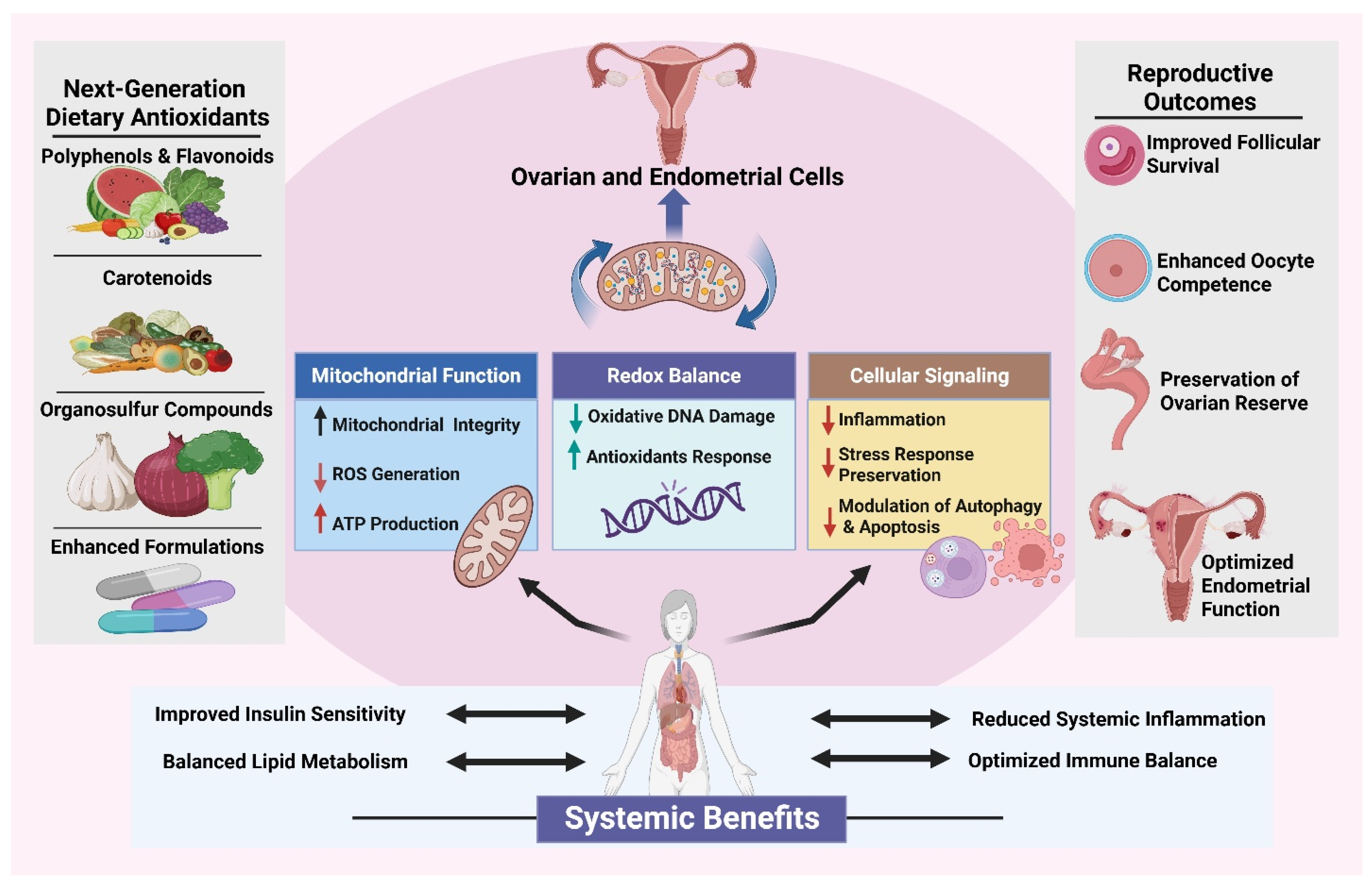
2. Next-Generation Dietary Antioxidants in Reproductive Outcomes
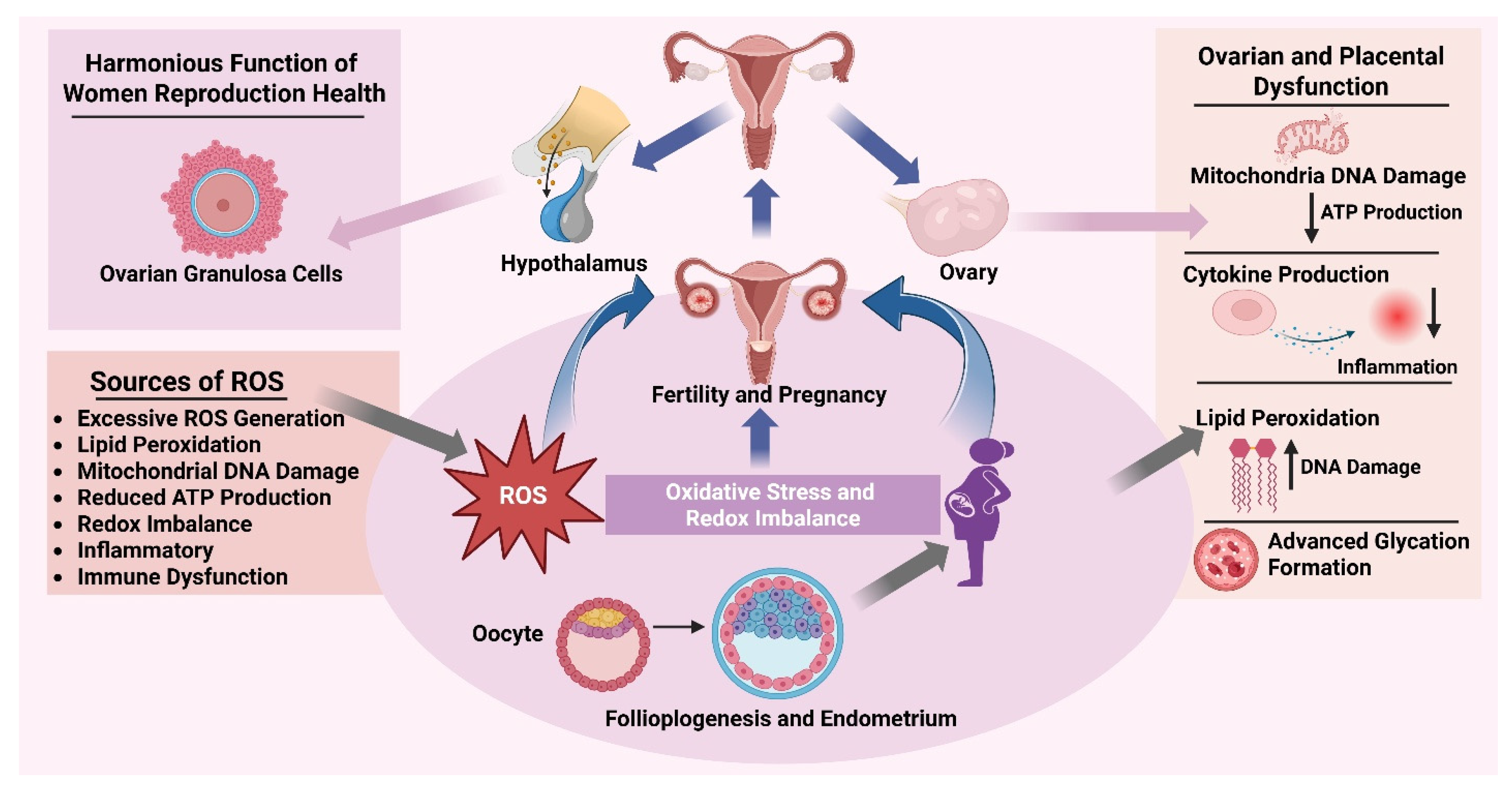
3. Women’s Reproductive Health and Oxidative Stress and Redox Signaling
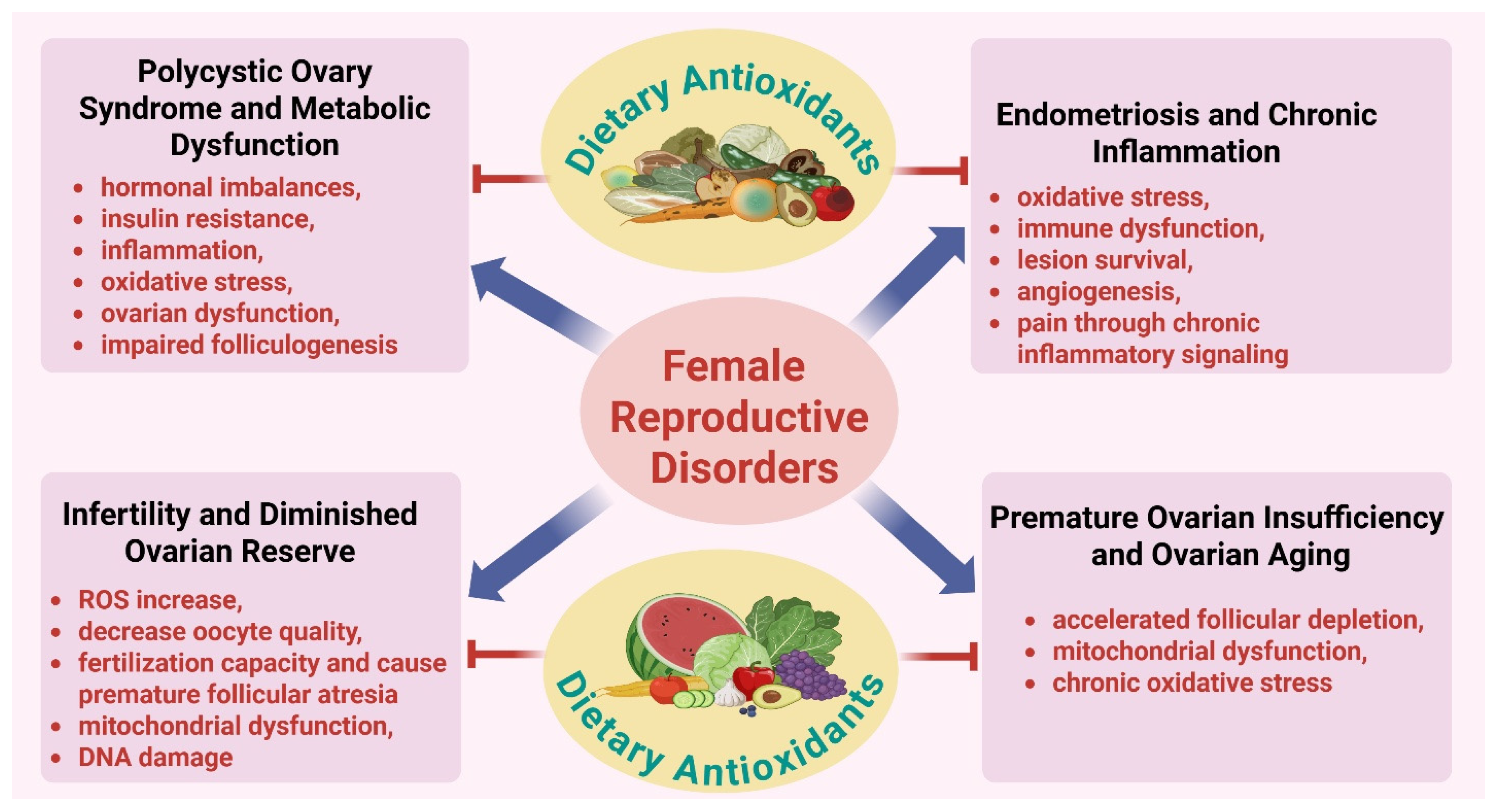
4. Female Reproductive Disorders
4.1. Infertility and Diminished Ovarian Reserve
4.2. Polycystic Ovary Syndrome and Metabolic Dysfunction

4.3. Endometriosis and Chronic Inflammation
4.4. Premature Ovarian Insufficiency and Ovarian Aging
5. Molecular Mechanisms of Dietary Antioxidants in Female Reproduction Management
5.1. Regulation of Mitochondrial Function and Energy Metabolism
5.2. Modulation of Inflammation and Redox-Sensitive Signaling Pathways
5.3. Antioxidant Control of Autophagy and Apoptosis
5.4. Hormonal Regulation and Endocrine Crosstalk
5.5. Antioxidant Vitamins as Major Contributors to Antioxidant Activity
6. Dietary Antioxidants and Delayed Reproductive Aging: Implications for Ovarian Longevity
7. Clinical and Translational Evidence Supporting Dietary Antioxidants
8. Regulatory Status and Clinical Approval of Antioxidant Compounds
9. Dietary Antioxidants as Specific Food Sources and Their Health Benefits for Public Translation
10. Dietary Antioxidants and Assisted Reproductive Technology (ART) Outcomes
11. Limitations, Challenges, and Knowledge Gaps
12. Future Perspectives and Emerging Directions
13. Conclusions
Author Contributions
Funding
Institutional Review Board Statement
Informed Consent Statement
Data Availability Statement
Conflicts of Interest
References
- Lu, J.; Wang, Z.; Cao, J.; Chen, Y.; Dong, Y. A novel and compact review on the role of oxidative stress in female reproduction. Reprod. Biol. Endocrinol. 2018, 16, 80. [Google Scholar] [CrossRef] [Scilit]
- Immediata, V.; Ronchetti, C.; Spadaro, D.; Cirillo, F.; Levi-Setti, P.E. Oxidative stress and human ovarian response—From somatic ovarian cells to oocytes damage: A clinical comprehensive narrative review. Antioxidants 2022, 11, 1335. [Google Scholar] [CrossRef] [Scilit] [PubMed]
- Aitken, R.J.; Bromfield, E.G.; Gibb, Z. Oxidative stress and reproductive function: The impact of oxidative stress on reproduction: A focus on gametogenesis and fertilization. Reproduction 2022, 164, F79–F94. [Google Scholar] [CrossRef] [Scilit] [PubMed]
- Meli, R.; Monnolo, A.; Annunziata, C.; Pirozzi, C.; Ferrante, M.C. Oxidative stress and BPA toxicity: An antioxidant approach for male and female reproductive dysfunction. Antioxidants 2020, 9, 405. [Google Scholar] [CrossRef] [Scilit] [PubMed]
- Song, J.; Xiao, L.; Zhang, Z.; Wang, Y.; Kouis, P.; Rasmussen, L.J.; Dai, F. Effects of reactive oxygen species and mitochondrial dysfunction on reproductive aging. Front. Cell Dev. Biol. 2024, 12, 1347286. [Google Scholar] [CrossRef] [Scilit]
- Yan, F.; Zhao, Q.; Li, Y.; Zheng, Z.; Kong, X.; Shu, C.; Liu, Y.; Shi, Y. The role of oxidative stress in ovarian aging: A review. J. Ovarian Res. 2022, 15, 100. [Google Scholar] [CrossRef] [Scilit]
- Firdous, S.M.; Pal, S.; Mandal, S.; Sindhu, R.K. Antioxidants in inflammatory diseases. Antioxid. Nature’s Def. Against Dis. 2025, 83–126. [Google Scholar]
- Tretter, V.; Hochreiter, B.; Zach, M.L.; Krenn, K.; Klein, K.U. Understanding Cellular Redox Homeostasis: A Challenge for Precision Medicine. Int. J. Mol. Sci. 2021, 23, 106. [Google Scholar] [CrossRef] [Scilit]
- Williamson, J.; Davison, G. Targeted Antioxidants in Exercise-Induced Mitochondrial Oxidative Stress: Emphasis on DNA Damage. Antioxidants 2020, 9, 1142. [Google Scholar] [CrossRef] [Scilit]
- Nosrati, N.; Bakovic, M.; Paliyath, G. Molecular Mechanisms and Pathways as Targets for Cancer Prevention and Progression with Dietary Compounds. Int. J. Mol. Sci. 2017, 18, 2050. [Google Scholar] [CrossRef] [Scilit]
- Marroqui, L.; Tudurí, E.; Alonso-Magdalena, P.; Quesada, I.; Nadal, Á.; Dos Santos, R.S. Mitochondria as target of endocrine-disrupting chemicals: Implications for type 2 diabetes. J. Endocrinol. 2018, 239, R27–R45. [Google Scholar] [CrossRef] [Scilit] [PubMed]
- Santini, S.J.; Cordone, V.; Falone, S.; Mijit, M.; Tatone, C.; Amicarelli, F.; Di Emidio, G. Role of Mitochondria in the Oxidative Stress Induced by Electromagnetic Fields: Focus on Reproductive Systems. Oxid. Med. Cell. Longev. 2018, 2018, 5076271, Erratum in Oxid. Med. Cell. Longev. 2020, 2020, 5203105. [Google Scholar] [CrossRef] [Scilit] [PubMed]
- Cacciottola, L.; Camboni, A.; Cernogoraz, A.; Donnez, J.; Dolmans, M.M. Role of apoptosis and autophagy in ovarian follicle pool decline in children and women diagnosed with benign or malignant extra-ovarian conditions. Hum. Reprod. 2023, 38, 75–88. [Google Scholar] [CrossRef] [Scilit] [PubMed]
- Khamineh, Y.; Ghiasvand, M.; Panahi-Alanagh, S.; Rastegarmand, P.; Zolghadri, S.; Stanek, A. A Narrative Review of Quercetin’s Role as a Bioactive Compound in Female Reproductive Disorders. Nutrients 2025, 17, 1118. [Google Scholar] [CrossRef] [Scilit]
- He, L.; He, T.; Farrar, S.; Ji, L.; Liu, T.; Ma, X. Antioxidants maintain cellular redox homeostasis by elimination of reactive oxygen species. Cell. Physiol. Biochem. 2017, 44, 532–553. [Google Scholar] [CrossRef] [Scilit]
- Hotamisligil, G.S.; Davis, R.J. Cell signaling and stress responses. Cold Spring Harb. Perspect. Biol. 2016, 8, a006072. [Google Scholar] [CrossRef] [Scilit]
- Ellery, S.J.; Walker, D.W.; Dickinson, H. Creatine for women: A review of the relationship between creatine and the reproductive cycle and female-specific benefits of creatine therapy. Amino Acids 2016, 48, 1807–1817. [Google Scholar] [CrossRef] [Scilit]
- Jorge, S.; Chang, S.; Barzilai, J.J.; Leppert, P.; Segars, J.H. Mechanical signaling in reproductive tissues: Mechanisms and importance. Reprod. Sci. 2014, 21, 1093–1107. [Google Scholar] [CrossRef] [Scilit]
- Kruk, J.; Aboul-Enein, H.Y.; Kładna, A.; Bowser, J.E. Oxidative stress in biological systems and its relation with pathophysiological functions: The effect of physical activity on cellular redox homeostasis. Free Radic. Res. 2019, 53, 497–521. [Google Scholar] [CrossRef] [Scilit]
- Das, A.; Roychoudhury, S. Reactive Oxygen Species in the Reproductive System: Sources and Physiological Roles. Adv. Exp. Med. Biol. 2022, 1358, 9–40. [Google Scholar]
- Kala, M.; Shaikh, M.V.; Nivsarkar, M. Equilibrium between anti-oxidants and reactive oxygen species: A requisite for oocyte development and maturation. Reprod. Med. Biol. 2017, 16, 28–35. [Google Scholar] [CrossRef] [Scilit] [PubMed]
- Hajam, Y.A.; Rani, R.; Ganie, S.Y.; Sheikh, T.A.; Javaid, D.; Qadri, S.S.; Pramodh, S.; Alsulimani, A.; Alkhanani, M.F.; Harakeh, S.; et al. Oxidative Stress in Human Pathology and Aging: Molecular Mechanisms and Perspectives. Cells 2022, 11, 552. [Google Scholar] [CrossRef] [Scilit] [PubMed]
- Kobayashi, H.; Nishio, M.; Umetani, M.; Shigetomi, H.; Imanaka, S.; Hashimoto, H. Endometrial Aging and Reproductive Decline: The Central Role of Mitochondrial Dysfunction. Int. J. Mol. Sci. 2025, 26, 5060. [Google Scholar] [CrossRef] [Scilit] [PubMed]
- He, F.; Ru, X.; Wen, T. NRF2, a Transcription Factor for Stress Response and Beyond. Int. J. Mol. Sci. 2020, 21, 4777. [Google Scholar] [CrossRef] [Scilit]
- Shi, Y.Q.; Zhu, X.T.; Zhang, S.N.; Ma, Y.F.; Han, Y.H.; Jiang, Y.; Zhang, Y.H. Premature ovarian insufficiency: A review on the role of oxidative stress and the application of antioxidants. Front. Endocrinol. 2023, 14, 1172481. [Google Scholar] [CrossRef] [Scilit]
- Wang, L.; Tang, J.; Wang, L.; Tan, F.; Song, H.; Zhou, J.; Li, F. Oxidative stress in oocyte aging and female reproduction. J. Cell. Physiol. 2021, 236, 7966–7983. [Google Scholar] [CrossRef] [Scilit]
- Rodríguez-Varela, C.; Labarta, E. Clinical Application of Antioxidants to Improve Human Oocyte Mitochondrial Function: A Review. Antioxidants 2020, 9, 1197. [Google Scholar] [CrossRef] [Scilit]
- Dri, M.; Klinger, F.G.; De Felici, M. The ovarian reserve as target of insulin/IGF and ROS in metabolic disorder-dependent ovarian dysfunctions. Reprod. Fertil. 2021, 2, R103–R112. [Google Scholar] [CrossRef] [Scilit]
- Ansari, P.; Khan, J.T.; Chowdhury, S.; Reberio, A.D.; Kumar, S.; Seidel, V.; Abdel-Wahab, Y.H.A.; Flatt, P.R. Plant-Based Diets and Phytochemicals in the Management of Diabetes Mellitus and Prevention of Its Complications: A Review. Nutrients 2024, 16, 3709. [Google Scholar] [CrossRef] [Scilit]
- Cuffaro, F.; Russo, E.; Amedei, A. Endometriosis, Pain, and Related Psychological Disorders: Unveiling the Interplay among the Microbiome, Inflammation, and Oxidative Stress as a Common Thread. Int. J. Mol. Sci. 2024, 25, 6473. [Google Scholar] [CrossRef] [Scilit]
- Nani, A.; Murtaza, B.; Sayed Khan, A.; Khan, N.A.; Hichami, A. Antioxidant and Anti-Inflammatory Potential of Polyphenols Contained in Mediterranean Diet in Obesity: Molecular Mechanisms. Molecules 2021, 26, 985. [Google Scholar] [CrossRef] [Scilit]
- Najafi, A.; Asadi, E.; Benson, J.D. Ovarian tissue cryopreservation and transplantation: A review on reactive oxygen species generation and antioxidant therapy. Cell Tissue Res. 2023, 393, 401–423. [Google Scholar] [CrossRef] [Scilit] [PubMed]
- Budani, M.C.; Tiboni, G.M. Effects of Supplementation with Natural Antioxidants on Oocytes and Preimplantation Embryos. Antioxidants 2020, 9, 612. [Google Scholar] [CrossRef] [Scilit] [PubMed]
- Podolak, A.; Woclawek-Potocka, I.; Lukaszuk, K. The Role of Mitochondria in Human Fertility and Early Embryo Development: What Can We Learn for Clinical Application of Assessing and Improving Mitochondrial DNA? Cells 2022, 11, 797. [Google Scholar] [CrossRef] [Scilit] [PubMed]
- Rani, A.; Saini, K.C.; Bast, F.; Mehariya, S.; Bhatia, S.K.; Lavecchia, R.; Zuorro, A. Microorganisms: A Potential Source of Bioactive Molecules for Antioxidant Applications. Molecules 2021, 26, 1142. [Google Scholar] [CrossRef] [Scilit]
- Cortés-Rojo, C.; Rodríguez-Orozco, A.R. Importance of oxidative damage on the electron transport chain for the rational use of mitochondria-targeted antioxidants. Mini Rev. Med. Chem. 2011, 11, 625–632. [Google Scholar] [CrossRef] [Scilit]
- Strohm, L.; Mihalikova, D.; Czarnowski, A.; Schwaibold, Z.; Daiber, A.; Stamm, P. Sex-Specific Antioxidant and Anti-Inflammatory Protective Effects of AMPK in Cardiovascular Diseases. Antioxidants 2025, 14, 615. [Google Scholar] [CrossRef] [Scilit]
- Gałęska, E.; Kowalczyk, A.; Wrzecińska, M.; García, M.C.; Czerniawska-Piątkowska, E.; Gwoździewicz, S.; Witkiewicz, W.; Dobrzański, Z. The Importance of Mitochondrial Processes in the Maturation and Acquisition of Competences of Oocytes and Embryo Culture. Int. J. Mol. Sci. 2025, 26, 4098. [Google Scholar] [CrossRef] [Scilit]
- Okamoto, N.; Sato, Y.; Kawagoe, Y.; Shimizu, T.; Kawamura, K. Short-term resveratrol treatment restored the quality of oocytes in aging mice. Aging 2022, 14, 5628–5640. [Google Scholar] [CrossRef] [Scilit]
- Jiao, Y.; Wang, Y.; Jiang, T.; Wen, K.; Cong, P.; Chen, Y.; He, Z. Quercetin protects porcine oocytes from in vitro aging by reducing oxidative stress and maintaining the mitochondrial functions. Front. Cell Dev. Biol. 2022, 10, 915898. [Google Scholar] [CrossRef] [Scilit]
- Huang, K.; Li, C.; Gao, F.; Fan, Y.; Zeng, F.; Meng, L.; Li, L.; Zhang, S.; Wei, H. Epigallocatechin-3-Gallate Promotes the in vitro Maturation and Embryo Development Following IVF of Porcine Oocytes. Drug Des. Devel Ther. 2021, 15, 1013–1020. [Google Scholar] [CrossRef] [Scilit] [PubMed]
- Duan, H.; Yang, S.; Yang, S.; Zeng, J.; Yan, Z.; Zhang, L.; Ma, X.; Dong, W.; Zhang, Y.; Zhao, X.; et al. The mechanism of curcumin to protect mouse ovaries from oxidative damage by regulating AMPK/mTOR mediated autophagy. Phytomedicine 2024, 128, 155468. [Google Scholar] [CrossRef] [Scilit] [PubMed]
- Ben-Meir, A.; Burstein, E.; Borrego-Alvarez, A.; Chong, J.; Wong, E.; Yavorska, T.; Naranian, T.; Chi, M.; Wang, Y.; Bentov, Y.; et al. Coenzyme Q10 restores oocyte mitochondrial function and fertility during reproductive aging. Aging Cell 2015, 14, 887–895. [Google Scholar] [CrossRef] [Scilit] [PubMed]
- Song, C.; Peng, W.; Yin, S.; Zhao, J.; Fu, B.; Zhang, J.; Mao, T.; Wu, H.; Zhang, Y. Melatonin improves age-induced fertility decline and attenuates ovarian mitochondrial oxidative stress in mice. Sci. Rep. 2016, 6, 35165. [Google Scholar] [CrossRef] [Scilit]
- Liu, X.; Lin, X.; Zhang, S.; Guo, C.; Li, J.; Mi, Y.; Zhang, C. Lycopene ameliorates oxidative stress in the aging chicken ovary via activation of Nrf2/HO-1 pathway. Aging 2018, 10, 2016–2036. [Google Scholar] [CrossRef] [Scilit]
- He, J.; Zhong, Y.; Li, Y.; Liu, S.; Pan, X. Astaxanthin Alleviates Oxidative Stress in Mouse Preantral Follicles and Enhances Follicular Development Through the AMPK Signaling Pathway. Int. J. Mol. Sci. 2025, 26, 2241. [Google Scholar] [CrossRef] [Scilit]
- Zhang, M.; Sun, L.; Zhang, Z.; Shentu, L.; Zhang, Y.; Li, Z.; Zhang, Y.; Zhang, Y. Alpha-lipoic acid supplementation restores the meiotic competency and fertilization capacity of porcine oocytes induced by arsenite. Front. Cell Dev. Biol. 2022, 10, 943757. [Google Scholar] [CrossRef] [Scilit]
- Wonnacott, K.E.; Kwong, W.Y.; Hughes, J.; Salter, A.M.; Lea, R.G.; Garnsworthy, P.C.; Sinclair, K.D. Dietary omega-3 and -6 polyunsaturated fatty acids affect the composition and development of sheep granulosa cells, oocytes and embryos. Reproduction 2010, 139, 57–69. [Google Scholar] [CrossRef] [Scilit]
- Rahoui, S.; Chaoui, A. The Role of Oxidative Stress and Reactive Oxygen Species in Human Disease: Mechanisms, Consequences, and Preventive Strategies. EC Pharmacol. Toxicol. 2026, 14, 01–08. [Google Scholar]
- Voros, C.; Chatzinikolaou, F.; Papadimas, G.; Polykalas, S.; Mavrogianni, D.; Koulakmanidis, A.-M.; Athanasiou, D.; Kanaka, V.; Bananis, K.; Athanasiou, A.; et al. Oxidative Stress and SIRT1-Nrf2 Anti-Ferroptotic Pathways in Granulosa Cells: A Molecular Key to Follicular Atresia and Ovarian Aging. Int. J. Mol. Sci. 2026, 27, 950. [Google Scholar] [CrossRef] [Scilit]
- Ibrahim, K.M.; Ahmed, H.I.; Ramadan, L.; Balah, A. A low dose of naloxone mitigates autoimmune hepatitis by regulating TLR4/NF-κB and Nrf2/HO-1 signaling pathways: KM Ibrahim. Inflammopharmacology 2023, 31, 2467–2478. [Google Scholar] [CrossRef] [Scilit]
- Yu, C.; Wang, D.; Yang, Z.; Wang, T. Pharmacological effects of polyphenol phytochemicals on the intestinal inflammation via targeting TLR4/NF-κB signaling pathway. Int. J. Mol. Sci. 2022, 23, 6939. [Google Scholar] [CrossRef] [Scilit] [PubMed]
- Jaiswal, A.K. Nrf2 signaling in coordinated activation of antioxidant gene expression. Free Radic. Biol. Med. 2004, 36, 1199–1207. [Google Scholar] [CrossRef] [Scilit] [PubMed]
- Vašková, J.; Klepcová, Z.; Špaková, I.; Urdzík, P.; Štofilová, J.; Bertková, I.; Kľoc, M.; Rabajdová, M. The importance of natural antioxidants in female reproduction. Antioxidants 2023, 12, 907. [Google Scholar] [CrossRef] [Scilit] [PubMed]
- Zhu, H.; Li, X.; Qiao, M.; Sun, X.; Li, G. Resveratrol Alleviates Inflammation and ER Stress Through SIRT1/NRF2 to Delay Ovarian Aging in a Short-Lived Fish. J. Gerontol. A Biol. Sci. Med. Sci. 2023, 78, 596–602. [Google Scholar] [CrossRef] [Scilit]
- Ma, X.; Hu, C.; An, Y.; Feng, X.; Cao, P.; Ma, Y.; Ma, Y. EGCG Alleviates H(2)O(2)-Induced Inflammatory Injury and Apoptosis in Bovine Mammary Epithelial Cells Through Nrf2 Pathway Activation and p38MAPK Pathway Inhibition. Food Sci. Nutr. 2025, 13, e4687, Erratum in Food Sci. Nutr. 2025, 13, e70202. [Google Scholar] [CrossRef] [Scilit]
- Shen, W.; Qu, Y.; Jiang, H.; Wang, H.; Pan, Y.; Zhang, Y.; Wu, X.; Han, Y.; Zhang, Y. Therapeutic effect and safety of curcumin in women with PCOS: A systematic review and meta-analysis. Front. Endocrinol. 2022, 13, 1051111. [Google Scholar] [CrossRef] [Scilit]
- Zhang, X.; Zhang, D.; Fan, A.; Zhou, X.; Yang, C.; Zhou, J.; Shen, M.; Liu, H.; Zou, K.; Tao, J. A novel effect of sulforaphane on promoting mouse granulosa cells proliferation via the NRF2-TKT pathway. J. Adv. Res. 2025, 74, 25–41. [Google Scholar] [CrossRef] [Scilit]
- Zhang, J.; Liu, W.; Cui, F.; Kolehmainen, M.; Chen, J.; Zhang, L.; Zarei, I. Exploring the potential protective role of anthocyanins in mitigating micro/nanoplastic-induced reproductive toxicity: A steroid receptor perspective. J. Pharm. Anal. 2025, 15, 101148. [Google Scholar] [CrossRef] [Scilit]
- Regidor, P.A.; Mueller, A.; Sailer, M.; Gonzalez Santos, F.; Rizo, J.M.; Egea, F.M. Chronic Inflammation in PCOS: The Potential Benefits of Specialized Pro-Resolving Lipid Mediators (SPMs) in the Improvement of the Resolutive Response. Int. J. Mol. Sci. 2020, 22, 384. [Google Scholar] [CrossRef] [Scilit] [PubMed]
- Soni, M.; Prakash, C.; Dabur, R.; Kumar, V. Protective Effect of Hydroxytyrosol Against Oxidative Stress Mediated by Arsenic-Induced Neurotoxicity in Rats. Appl. Biochem. Biotechnol. 2018, 186, 27–39. [Google Scholar] [CrossRef] [Scilit] [PubMed]
- Kim, S.O.; Chun, K.S.; Kundu, J.K.; Surh, Y.J. Inhibitory effects of [6]-gingerol on PMA-induced COX-2 expression and activation of NF-kappaB and p38 MAPK in mouse skin. Biofactors 2004, 21, 27–31. [Google Scholar] [CrossRef] [Scilit] [PubMed]
- Wang, X.; Wang, L.; Xiang, W. Mechanisms of ovarian aging in women: A review. J. Ovarian Res. 2023, 16, 67. [Google Scholar] [CrossRef] [Scilit]
- Shen, Y.H.; Peng, S.; Zhu, T.; Shen, M.J. Mechanisms of Granulosa Cell Programmed Cell Death and Follicular Atresia in Polycystic Ovary Syndrome. Physiol. Res. 2025, 74, 31–40. [Google Scholar] [CrossRef] [Scilit]
- Cai, M.; Sun, H.; Huang, Y.; Yao, H.; Zhao, C.; Wang, J.; Zhu, H. Resveratrol protects rat ovarian luteinized granulosa cells from H2O2-induced dysfunction by activating autophagy. Int. J. Mol. Sci. 2023, 24, 10914. [Google Scholar] [CrossRef] [Scilit]
- Zhu, L.; Han, M.B.; Gao, Y.; Wang, H.; Dai, L.; Wen, Y.; Na, L.X. Curcumin triggers apoptosis via upregulation of Bax/Bcl-2 ratio and caspase activation in SW872 human adipocytes. Mol. Med. Rep. 2015, 12, 1151–1156. [Google Scholar] [CrossRef] [Scilit]
- Zhou, D.; Sun, M.-H.; Jiang, W.-J.; Li, X.-H.; Lee, S.-H.; Heo, G.; Niu, Y.-J.; Ock, S.A.; Cui, X.-S. Epigallocatechin-3-gallate protects porcine oocytes against post-ovulatory aging through inhibition of oxidative stress. Aging 2022, 14, 8633. [Google Scholar] [CrossRef] [Scilit]
- Duan, H.; Wang, F.; Wang, K.; Yang, S.; Zhang, R.; Xue, C.; Zhang, L.; Ma, X.; Du, X.; Kang, J.; et al. Quercetin ameliorates oxidative stress-induced apoptosis of granulosa cells in dairy cow follicular cysts by activating autophagy via the SIRT1/ROS/AMPK signaling pathway. J. Anim. Sci. Biotechnol. 2024, 15, 119. [Google Scholar] [CrossRef] [Scilit]
- Jin, R.; Chen, A.; Ye, Y.; Ren, Y.; Lu, J.; Xuan, F.; Zhou, W. Effect of berberine combined with metformin on autophagy in polycystic ovary syndrome by regulating AMPK/AKT/mTOR pathway. Mol. Reprod. Dev. 2024, 91, e23768. [Google Scholar] [CrossRef] [Scilit] [PubMed]
- Su, X.; He, Y.; Li, H.; Yu, T.; Sun, Q.; Chen, M.; Zhang, B.; Wang, W.; Ju, S.; Li, Q. Melatonin protects porcine oocytes from gossypol-induced meiosis defects via regulation of SIRT1-mediated mitophagy. Food Chem. Toxicol. 2025, 195, 115122. [Google Scholar] [CrossRef] [Scilit] [PubMed]
- Sohel, M.M.H.; Amin, A.; Prastowo, S.; Linares-Otoya, L.; Hoelker, M.; Schellander, K.; Tesfaye, D. Sulforaphane protects granulosa cells against oxidative stress via activation of NRF2-ARE pathway. Cell Tissue Res. 2018, 374, 629–641, Erratum in Cell Tissue Res. 2018, 374, 679–685. [Google Scholar] [CrossRef] [Scilit] [PubMed]
- Malloy, K.M.; Wang, J.; Clark, L.H.; Fang, Z.; Sun, W.; Yin, Y.; Kong, W.; Zhou, C.; Bae-Jump, V.L. Novasoy and genistein inhibit endometrial cancer cell proliferation through disruption of the AKT/mTOR and MAPK signaling pathways. Am. J. Transl. Res. 2018, 10, 784. [Google Scholar]
- Pietrocola, F.; Lachkar, S.; Enot, D.P.; Niso-Santano, M.; Bravo-San Pedro, J.M.; Sica, V.; Izzo, V.; Maiuri, M.C.; Madeo, F.; Mariño, G.; et al. Spermidine induces autophagy by inhibiting the acetyltransferase EP300. Cell Death Differ. 2015, 22, 509–516. [Google Scholar] [CrossRef] [Scilit]
- Jing, K.; Song, K.-S.; Shin, S.; Kim, N.; Jeong, S.; Oh, H.-R.; Park, J.-H.; Seo, K.-S.; Heo, J.-Y.; Han, J.; et al. Docosahexaenoic acid induces autophagy through p53/AMPK/mTOR signaling and promotes apoptosis in human cancer cells harboring wild-type p53. Autophagy 2011, 7, 1348–1358. [Google Scholar] [CrossRef] [Scilit]
- Caroppi, P.; Sinibaldi, F.; Fiorucci, L.; Santucci, R. Apoptosis and human diseases: Mitochondrion damage and lethal role of released cytochrome C as proapoptotic protein. Curr. Med. Chem. 2009, 16, 4058–4065. [Google Scholar] [CrossRef] [Scilit]
- Bhardwaj, A.; Sethi, G.; Vadhan-Raj, S.; Bueso-Ramos, C.; Takada, Y.; Gaur, U.; Nair, A.S.; Shishodia, S.; Aggarwal, B.B. Resveratrol inhibits proliferation, induces apoptosis, and overcomes chemoresistance through down-regulation of STAT3 and nuclear factor-kappaB-regulated antiapoptotic and cell survival gene products in human multiple myeloma cells. Blood 2007, 109, 2293–2302. [Google Scholar] [CrossRef] [Scilit]
- Zhou, J.; Gong, J.; Ding, C.; Chen, G. Quercetin induces the apoptosis of human ovarian carcinoma cells by upregulating the expression of microRNA-145. Mol. Med. Rep. 2015, 12, 3127–3131. [Google Scholar] [CrossRef] [Scilit]
- Jana, S.; Paul, S.; Swarnakar, S. Curcumin as anti-endometriotic agent: Implication of MMP-3 and intrinsic apoptotic pathway. Biochem. Pharmacol. 2012, 83, 797–804. [Google Scholar] [CrossRef] [Scilit]
- Manohar, M.; Fatima, I.; Saxena, R.; Chandra, V.; Sankhwar, P.L.; Dwivedi, A. (-)-Epigallocatechin-3-gallate induces apoptosis in human endometrial adenocarcinoma cells via ROS generation and p38 MAP kinase activation. J. Nutr. Biochem. 2013, 24, 940–947. [Google Scholar] [CrossRef] [Scilit] [PubMed]
- Thasni, K.A.; Rojini, G.; Rakesh, S.N.; Ratheeshkumar, T.; Babu, M.S.; Srinivas, G.; Banerji, A.; Srinivas, P. Genistein induces apoptosis in ovarian cancer cells via different molecular pathways depending on Breast Cancer Susceptibility gene-1 (BRCA1) status. Eur. J. Pharmacol. 2008, 588, 158–164. [Google Scholar] [CrossRef] [Scilit] [PubMed]
- Rai, R.; Gong Essel, K.; Mangiaracina Benbrook, D.; Garland, J.; Daniel Zhao, Y.; Chandra, V. Preclinical Efficacy and Involvement of AKT, mTOR, and ERK Kinases in the Mechanism of Sulforaphane against Endometrial Cancer. Cancers 2020, 12, 1273. [Google Scholar] [CrossRef] [Scilit] [PubMed]
- Park, S.; Lim, W.; Bazer, F.W.; Song, G. Apigenin induces ROS-dependent apoptosis and ER stress in human endometriosis cells. J. Cell. Physiol. 2018, 233, 3055–3065. [Google Scholar] [CrossRef] [Scilit]
- Ham, S.; Kim, K.H.; Kwon, T.H.; Bak, Y.; Lee, D.H.; Song, Y.S.; Park, S.H.; Park, Y.S.; Kim, M.S.; Kang, J.W.; et al. Luteolin induces intrinsic apoptosis via inhibition of E6/E7 oncogenes and activation of extrinsic and intrinsic signaling pathways in HPV-18-associated cells. Oncol. Rep. 2014, 31, 2683–2691. [Google Scholar] [CrossRef] [Scilit]
- Zeng, L.; Gao, J.; Zhang, R. Study on anti-tumor effect of cyanidin-3-glucoside on ovarian cancer. Zhongguo Zhong Yao Za Zhi 2012, 37, 1651–1654. [Google Scholar]
- Rakha, S.I.; Ateya, A.I.; Safhi, F.A.; Abdellatif, A.M. Ameliorative Effect of Lycopene on Follicular Reserve Depletion, Oxidative Damage, Apoptosis Rate, and Hormonal Profile during Repeated Superovulations in Mice. Vet. Sci. 2024, 11, 414. [Google Scholar] [CrossRef] [Scilit]
- Bendarska-Czerwińska, A.; Zmarzły, N.; Morawiec, E.; Panfil, A.; Bryś, K.; Czarniecka, J.; Ostenda, A.; Dziobek, K.; Sagan, D.; Boroń, D.; et al. Endocrine disorders and fertility and pregnancy: An update. Front. Endocrinol. 2022, 13, 970439. [Google Scholar] [CrossRef] [Scilit]
- Chainy, G.B.N.; Sahoo, D.K. Hormones and oxidative stress: An overview. Free Radic. Res. 2020, 54, 1–26. [Google Scholar] [CrossRef] [Scilit]
- Wang, S.; He, G.; Chen, M.; Zuo, T.; Xu, W.; Liu, X. The Role of Antioxidant Enzymes in the Ovaries. Oxid. Med. Cell. Longev. 2017, 2017, 4371714. [Google Scholar] [CrossRef] [Scilit]
- Michalakis, K.; Mintziori, G.; Kaprara, A.; Tarlatzis, B.C.; Goulis, D.G. The complex interaction between obesity, metabolic syndrome and reproductive axis: A narrative review. Metabolism 2013, 62, 457–478. [Google Scholar] [CrossRef] [Scilit]
- Banaszewska, B.; Wrotyńska-Barczyńska, J.; Spaczynski, R.Z.; Pawelczyk, L.; Duleba, A.J. Effects of resveratrol on polycystic ovary syndrome: A double-blind, randomized, placebo-controlled trial. J. Clin. Endocrinol. Metab. 2016, 101, 4322–4328. [Google Scholar] [CrossRef] [Scilit] [PubMed]
- Vaez, S.; Parivr, K.; Amidi, F.; Rudbari, N.H.; Moini, A.; Amini, N. Quercetin and polycystic ovary syndrome; inflammation, hormonal parameters and pregnancy outcome: A randomized clinical trial. Am. J. Reprod. Immunol. 2023, 89, e13644. [Google Scholar] [CrossRef] [Scilit] [PubMed]
- Dutta, S.; Sengupta, P.; Rao, S.; Elgarawany, G.E.; Samrot, A.V.; Rosas, I.M.; Roychoudhury, S. Targeting Polycystic Ovary Syndrome (PCOS) Pathophysiology with Flavonoids: From Adipokine–Cytokine Crosstalk to Insulin Resistance and Reproductive Dysfunctions. Pharmaceuticals 2025, 18, 1575. [Google Scholar] [CrossRef] [Scilit]
- Heshmati, J.; Moini, A.; Sepidarkish, M.; Morvaridzadeh, M.; Salehi, M.; Palmowski, A.; Mojtahedi, M.F.; Shidfar, F. Effects of curcumin supplementation on blood glucose, insulin resistance and androgens in patients with polycystic ovary syndrome: A randomized double-blind placebo-controlled clinical trial. Phytomedicine 2021, 80, 153395. [Google Scholar] [CrossRef] [Scilit]
- Nadjarzadeh, A.; Dehghani-Firouzabadi, R.; Daneshbodi, H.; Lotfi, M.H.; Vaziri, N.; Mozaffari-Khosravi, H. Effect of omega-3 supplementation on visfatin, adiponectin, and anthropometric indices in women with polycystic ovarian syndrome. J. Reprod. Infertil. 2015, 16, 212. [Google Scholar]
- Saha, S.; Sadhukhan, P.; C Sil, P. Genistein: A phytoestrogen with multifaceted therapeutic properties. Mini Rev. Med. Chem. 2014, 14, 920–940. [Google Scholar] [CrossRef] [Scilit]
- Wu, W.-H.; Kang, Y.-P.; Wang, N.-H.; Jou, H.-J.; Wang, T.-A. Sesame ingestion affects sex hormones, antioxidant status, and blood lipids in postmenopausal women. J. Nutr. 2006, 136, 1270–1275. [Google Scholar] [CrossRef] [Scilit]
- Bentov, Y.; Hannam, T.; Jurisicova, A.; Esfandiari, N.; Casper, R.F. Coenzyme Q10 supplementation and oocyte aneuploidy in women undergoing IVF-ICSI treatment. Clin. Med. Insights Reprod. Health 2014, 8, CMRH-S14681. [Google Scholar] [CrossRef] [Scilit]
- Moridi, I.; Chen, A.; Tal, O.; Tal, R. The association between vitamin D and anti-Müllerian hormone: A systematic review and meta-analysis. Nutrients 2020, 12, 1567. [Google Scholar] [CrossRef] [Scilit]
- Gerli, S.; Papaleo, E.; Ferrari, A.; Di Renzo, G. Randomized, double blind placebo-controlled trial: Effects of myo-inositol on ovarian function and metabolic factors in women with PCOS. Eur. Rev. Med. Pharmacol. Sci. 2007, 11, 347–354. [Google Scholar]
- Muzammil, A.; Waqas, M.; Umar, A.; Sufyan, M.; Rehman, A.; Haider, A.; Akram, H.; Khan, S.A.; Afzal, M.; Wajid, M. Anti-aging natural compounds and their role in the regulation of metabolic pathways leading to longevity. Mini Rev. Med. Chem. 2021, 21, 2630–2656. [Google Scholar] [CrossRef] [Scilit] [PubMed]
- Marwicka, J.; Zięba, A. Antioxidants as a defence against reactive oxygen species. Aesthetic Cosmetol. Med. 2021, 10, 271–276. [Google Scholar] [CrossRef] [Scilit]
- Ohnishi, Y.; Tsuji, D.; Itoh, K. Oxidative stress impairs autophagy via inhibition of lysosomal transport of VAMP8. Biol. Pharm. Bull. 2022, 45, 1609–1615. [Google Scholar] [CrossRef] [Scilit] [PubMed]
- Karim, M.R.; Kadowaki, M. Effect and proposed mechanism of vitamin C modulating amino acid regulation of autophagic proteolysis. Biochimie 2017, 142, 51–62. [Google Scholar] [CrossRef] [Scilit]
- Hong, R.; Min, S.; Huang, J.; Zou, M.; Zhou, D.; Liang, Y. High-dose vitamin C promotes mitochondrial biogenesis in HCT116 colorectal cancer cells by regulating the AMPK/PGC-1α signaling pathway. J. Cancer Res. Clin. Oncol. 2025, 151, 167. [Google Scholar] [CrossRef] [Scilit]
- GAO, B. Interactions Between Flavonoids, Vitamin C and Vitamin E in Protecting Membranes Against Oxidative Stress. Ph.D. Thesis, University of Saskatchewan, Saskatoon, SK, Canada, 2012. [Google Scholar]
- Lewis, E.D.; Meydani, S.N.; Wu, D. Regulatory role of vitamin E in the immune system and inflammation. IUBMB Life 2019, 71, 487–494. [Google Scholar] [CrossRef] [Scilit]
- Wu, S.; Sun, J. Vitamin D, vitamin D receptor, and macroautophagy in inflammation and infection. Discov. Med. 2011, 11, 325. [Google Scholar]
- Canistro, D.; Chiavaroli, A.; Cicia, D.; Cimino, F.; Curro, D.; Dell’Agli, M.; Ferrante, C.; Giovannelli, L.; Leone, S.; Martinelli, G. The pharmacological basis of the curcumin nutraceutical uses: An update. Pharmadvances 2021, 3, 421–466. [Google Scholar] [CrossRef] [Scilit]
- Ross, A.C. Vitamin A and retinoic acid in T cell–related immunity. Am. J. Clin. Nutr. 2012, 96, 1166S–1172S. [Google Scholar] [CrossRef] [Scilit] [PubMed]
- Anguiano, J.; Garner, T.P.; Mahalingam, M.; Das, B.C.; Gavathiotis, E.; Cuervo, A.M. Chemical modulation of chaperone-mediated autophagy by retinoic acid derivatives. Nat. Chem. Biol. 2013, 9, 374–382, Erratum in Nat. Chem. Biol. 2013, 9, 746. [Google Scholar] [CrossRef] [Scilit] [PubMed]
- Conti, V.; Izzo, V.; Corbi, G.; Russomanno, G.; Manzo, V.; De Lise, F.; Di Donato, A.; Filippelli, A. Antioxidant supplementation in the treatment of aging-associated diseases. Front. Pharmacol. 2016, 7, 24. [Google Scholar] [CrossRef] [Scilit] [PubMed]
- Ou, H.; Cai, H.; Wang, Z. Joint association of dietary and lifestyle oxidative balance score with infertility among reproductive-aged US female: A cross-sectional study. Hum. Fertil. 2025, 28, 2480079. [Google Scholar] [CrossRef] [Scilit]
- Ly, C.; Yockell-Lelièvre, J.; Ferraro, Z.M.; Arnason, J.T.; Ferrier, J.; Gruslin, A. The effects of dietary polyphenols on reproductive health and early development. Hum. Reprod. Update 2015, 21, 228–248. [Google Scholar] [CrossRef] [Scilit]
- Agarwal, A.; Gupta, S.; Sharma, R.K. Role of oxidative stress in female reproduction. Reprod. Biol. Endocrinol. 2005, 3, 28. [Google Scholar] [CrossRef] [Scilit]
- Alesi, S.; Villani, A.; Mantzioris, E.; Takele, W.W.; Cowan, S.; Moran, L.J.; Mousa, A. Anti-Inflammatory Diets in Fertility: An Evidence Review. Nutrients 2022, 14, 3914. [Google Scholar] [CrossRef] [Scilit]
- Montoya-Estrada, A.; García-Cortés, A.Y.; Romo-Yañez, J.; Ortiz-Luna, G.F.; Arellano-Eguiluz, A.; Belmont-Gómez, A.; Lopéz-Ugalde, V.; León-Reyes, G.; Flores-Pliego, A.; Espejel-Nunñez, A. The Administration of Resveratrol and Vitamin C Reduces Oxidative Stress in Postmenopausal Women—A Pilot Randomized Clinical Trial. Nutrients 2024, 16, 3775. [Google Scholar] [CrossRef] [Scilit]
- Rezasoltani, P.; Elliyoun, N.; Ziaie, T.; Sobhani, A.; Kazemnezhjad Leyli, E.; Kazemi Aski, S. Double-blind controlled trial of vitamin E effects on serum lipid profile in menopausal women. Diabetes Metab. Syndr. Obes. 2021, 14, 1053–1060. [Google Scholar] [CrossRef] [Scilit]
- Wang, J.; Gaman, M.-A.; Albadawi, N.I.; Salem, A.; Kord-Varkaneh, H.; Okunade, K.S.; Alomar, O.; Al-Badawi, I.A.; Abu-Zaid, A. Does omega-3 fatty acid supplementation have favorable effects on the lipid profile in postmenopausal women? A systematic review and dose–response meta-analysis of randomized controlled trials. Clin. Ther. 2023, 45, e74–e87. [Google Scholar] [CrossRef] [Scilit] [PubMed]
- Dludla, P.V.; Orlando, P.; Silvestri, S.; Marcheggiani, F.; Cirilli, I.; Nyambuya, T.M.; Mxinwa, V.; Mokgalaboni, K.; Nkambule, B.B.; Johnson, R. Coenzyme Q10 supplementation improves adipokine levels and alleviates inflammation and lipid peroxidation in conditions of metabolic syndrome: A meta-analysis of randomized controlled trials. Int. J. Mol. Sci. 2020, 21, 3247. [Google Scholar] [CrossRef] [Scilit] [PubMed]
- Alehagen, U.; Aaseth, J.; Johansson, P. Reduced cardiovascular mortality 10 years after supplementation with selenium and coenzyme Q10 for four years: Follow-up results of a prospective randomized double-blind placebo-controlled trial in elderly citizens. PLoS ONE 2015, 10, e0141641. [Google Scholar] [CrossRef] [Scilit] [PubMed]
- Capasso, I.; Esposito, E.; Maurea, N.; Montella, M.; Crispo, A.; De Laurentiis, M.; D’Aiuto, M.; Frasci, G.; Botti, G.; Grimaldi, M. Combination of inositol and alpha lipoic acid in metabolic syndrome-affected women: A randomized placebo-controlled trial. Trials 2013, 14, 273. [Google Scholar] [CrossRef] [Scilit]
- Tadayon, M.; Movahedi, S.; Abedi, P.; Syahpoosh, A. Impact of green tea extract on serum lipid of postmenopausal women: A randomized controlled trial. J. Tradit. Complement. Med. 2018, 8, 391–395. [Google Scholar] [CrossRef] [Scilit]
- Sadeghzadeh, Z.; Ostadrahimi, A.; Ranjbar, M.; Farshbaf-Khalili, A. The Efficacy of Nigella sativa L. and Curcumin Nanomicelle Alone or Together on Lipid Profile, Glycemic Control Indices, and Serum 17-Β Estradiol in Postmenopausal Women. J. Caring Sci. 2023, 12, 163. [Google Scholar] [CrossRef] [Scilit]
- Yang, S.; Zeng, Q.; Huang, X.; Liang, Z.; Hu, H. Effect of isoflavones on blood lipid alterations in postmenopausal females: A systematic review and meta-analysis of randomized trials. Adv. Nutr. 2023, 14, 1633–1643. [Google Scholar] [CrossRef] [Scilit]
- Lucas, E.A.; Wild, R.D.; Hammond, L.J.; Khalil, D.A.; Juma, S.; Daggy, B.P.; Stoecker, B.J.; Arjmandi, B.H. Flaxseed improves lipid profile without altering biomarkers of bone metabolism in postmenopausal women. J. Clin. Endocrinol. Metab. 2002, 87, 1527–1532. [Google Scholar] [CrossRef]
- Mackinnon, E.; Rao, A.; Josse, R.; Rao, L. Supplementation with the antioxidant lycopene significantly decreases oxidative stress parameters and the bone resorption marker N-telopeptide of type I collagen in postmenopausal women. Osteoporos. Int. 2011, 22, 1091–1101. [Google Scholar] [CrossRef] [Scilit]
- Garcia-Yu, I.A.; Garcia-Ortiz, L.; Gomez-Marcos, M.A.; Rodriguez-Sanchez, E.; Agudo-Conde, C.; Gonzalez-Sanchez, J.; Maderuelo-Fernandez, J.A.; Recio-Rodriguez, J.I. Effects of cocoa-rich chocolate on blood pressure, cardiovascular risk factors, and arterial stiffness in postmenopausal women: A randomized clinical trial. Nutrients 2020, 12, 1758. [Google Scholar] [CrossRef] [Scilit]
- Mohammadzaheri, F.; Sheikhhossein, F.; Hemmati, A.; Ghoreishy, S.M.; Mohammadi-Sartang, M.; Shiraseb, F.; Keshavarz, S.A. The effect of pomegranate products on glycemic profile in adults: A GRADE-assessed systematic review and dose-response meta-analysis of randomized controlled trials. BMC Nutr. 2025, 11, 168. [Google Scholar] [CrossRef] [Scilit] [PubMed]
- Goyal, A.; Terry, P.D.; Superak, H.M.; Nell-Dybdahl, C.L.; Chowdhury, R.; Phillips, L.S.; Kutner, M.H. Melatonin supplementation to treat the metabolic syndrome: A randomized controlled trial. Diabetol. Metab. Syndr. 2014, 6, 124. [Google Scholar] [CrossRef] [Scilit] [PubMed]
- Young, A.L.; Bass, I.S. The dietary supplement health and education act. Food Drug LJ 1995, 50, 285. [Google Scholar]
- Wawryk-Gawda, E.; Budzyńska, B.; Lis-Sochocka, M.; Chylińska-Wrzos, P.; Zarobkiewicz, M.; Jodłowska-Jędrych, B. Dietary supplements–consumer assessment based on questionnaire survey. Przegląd Epidemiol.-Epidemiol. Rev. 2018, 72, 111–120. [Google Scholar]
- Dominguez, L.J.; Farruggia, M.; Veronese, N.; Barbagallo, M. Vitamin D sources, metabolism, and deficiency: Available compounds and guidelines for its treatment. Metabolites 2021, 11, 255. [Google Scholar] [CrossRef] [Scilit]
- Chen, X.; Li, H.; Zhang, B.; Deng, Z. The synergistic and antagonistic antioxidant interactions of dietary phytochemical combinations. Crit. Rev. Food Sci. Nutr. 2022, 62, 5658–5677. [Google Scholar] [CrossRef] [Scilit]
- Ahmed, K.R.; Rahman, M.M.; Islam, M.N.; Fahim, M.M.H.; Rahman, M.A.; Kim, B. Antioxidants activities of phytochemicals perspective modulation of autophagy and apoptosis to treating cancer. Biomed. Pharmacother. 2024, 174, 116497, Erratum in Biomed. Pharmacother. 2024, 176, 116757. [Google Scholar] [CrossRef] [Scilit]
- Proteggente, A.R.; Pannala, A.S.; Paganga, G.; Buren, L.v.; Wagner, E.; Wiseman, S.; van de Put, F.; Dacombe, C.; Rice-Evans, C.A. The antioxidant activity of regularly consumed fruit and vegetables reflects their phenolic and vitamin C composition. Free Radic. Res. 2002, 36, 217–233. [Google Scholar] [CrossRef] [Scilit]
- Liu, Y.; Dong, Y.; Cao, Z.; Ji, Y.; Cheng, X.; Zheng, X. The Multi-Dimensional Action Map of Resveratrol Against Alzheimer’s Disease: Mechanism Integration and Treatment Strategy Optimization. Nutrients 2025, 17, 3451. [Google Scholar] [CrossRef] [Scilit]
- Tufail, T.; Bader Ul Ain, H.; Noreen, S.; Ikram, A.; Arshad, M.T.; Abdullahi, M.A. Nutritional benefits of lycopene and beta-carotene: A comprehensive overview. Food Sci. Nutr. 2024, 12, 8715–8741. [Google Scholar] [CrossRef] [Scilit]
- Oso, A.A.; Ashafa, A.O. Nutritional composition of grain and seed proteins. In Grain and Seed Proteins Functionality; IntechOpen: Rijeka, Croatia, 2021. [Google Scholar]
- Meiners, F.; Ortega-Matienzo, A.; Fuellen, G.; Barrantes, I. Gut microbiome-mediated health effects of fiber and polyphenol-rich dietary interventions. Front. Nutr. 2025, 12, 1647740. [Google Scholar] [CrossRef] [Scilit] [PubMed]
- Poggioli, R.; Hirani, K.; Jogani, V.; Ricordi, C. Modulation of inflammation and immunity by omega-3 fatty acids: A possible role for prevention and to halt disease progression in autoimmune, viral, and age-related disorders. Eur. Rev. Med. Pharmacol. Sci. 2023, 27, 7380–7400. [Google Scholar] [PubMed]
- Tosti, V.; Bertozzi, B.; Fontana, L. Health benefits of the Mediterranean diet: Metabolic and molecular mechanisms. J. Gerontol. Ser. A 2018, 73, 318–326. [Google Scholar] [CrossRef] [Scilit] [PubMed]
- Rockenbach, M.K.; Rohweder, R.; Schuler-Faccini, L.; Sanseverino, M.T.V.; Kowalski, T.W. Scientific and public health challenges in folic acid supplementation: Insights from Brazil and global implications. Nutrients 2025, 17, 2752. [Google Scholar] [CrossRef] [Scilit]
- Mauchart, P.; Vass, R.A.; Nagy, B.; Sulyok, E.; Bódis, J.; Kovács, K. Oxidative stress in assisted reproductive techniques, with a focus on an underestimated risk factor. Curr. Issues Mol. Biol. 2023, 45, 1272–1286. [Google Scholar] [CrossRef] [Scilit]
- Jamil, M.; Debbarh, H.; Aboulmaouahib, S.; Filali, O.A.; Mounaji, K.; Zarqaoui, M.; Saadani, B.; Louanjli, N.; Cadi, R. Reactive oxygen species in reproduction: Harmful, essential or both? Zygote 2020, 28, 255–269. [Google Scholar] [CrossRef] [Scilit]
- Alara, O.R.; Ukaegbu, C.I.; Abdurahman, N.H.; Alara, J.A.; Ali, H.A. Plant-sourced antioxidants in human health: A state-of-art review. Curr. Nutr. Food Sci. 2023, 19, 817–830. [Google Scholar] [CrossRef] [Scilit]
- Alexandru, I.; Nistor, D.; Motofelea, A.C.; Cadar, B.-A.; Crintea, A.; Tatu, C.; Pop, G.N.; Csep, A.N. Vitamins, coenzyme Q10, and antioxidant strategies to improve oocyte quality in women with gynecological cancers: A comprehensive review. Antioxidants 2024, 13, 1567. [Google Scholar] [CrossRef] [Scilit]
- Kazemi, A.; Ramezanzadeh, F.; Nasr-Esfahani, M.H. The relations between dietary antioxidant vitamins intake and oxidative stress in follicular fluid and ART outcomes. Iran. J. Reprod. Med. 2015, 13, 533. [Google Scholar]
- Tawfik, H.N.; Kandil, O.M.; Ahmad, I.M.; Mansour, M.; El-Debaky, H.A.; Ali, K.A.; Ismail, E.A.; Abedelaziz, S.A. Effect of melatonin-loaded chitosan nanoparticles (cmn) on gene expression of in-vitro matured buffalo oocyte. J. Adv. Vet. Res. 2023, 13, 656–663. [Google Scholar]
- Saleh, R.; Sallam, H.; Elsuity, M.A.; Dutta, S.; Sengupta, P.; Nasr, A. Antioxidant therapy for infertile couples: A comprehensive review of the current status and consideration of future prospects. Front. Endocrinol. 2024, 15, 1503905. [Google Scholar] [CrossRef] [Scilit]
- Shahidi, F.; Pan, Y. Influence of food matrix and food processing on the chemical interaction and bioaccessibility of dietary phytochemicals: A review. Crit. Rev. Food Sci. Nutr. 2022, 62, 6421–6445. [Google Scholar] [CrossRef] [Scilit]
- Vincent, H.K.; Innes, K.E.; Vincent, K.R. Oxidative stress and potential interventions to reduce oxidative stress in overweight and obesity. Diabetes Obes. Metab. 2007, 9, 813–839. [Google Scholar] [CrossRef] [Scilit]
- Tyuryaeva, I.; Lyublinskaya, O. Expected and unexpected effects of pharmacological antioxidants. Int. J. Mol. Sci. 2023, 24, 9303. [Google Scholar] [CrossRef] [Scilit]
- Paulsen, G.; Cumming, K.T.; Hamarsland, H.; Børsheim, E.; Berntsen, S.; Raastad, T. Can supplementation with vitamin C and E alter physiological adaptations to strength training? BMC Sports Sci. Med. Rehabil. 2014, 6, 28. [Google Scholar] [CrossRef] [Scilit]
- Chavda, V.P.; Patel, A.B.; Mistry, K.J.; Suthar, S.F.; Wu, Z.X.; Chen, Z.S.; Hou, K. Nano-Drug Delivery Systems Entrapping Natural Bioactive Compounds for Cancer: Recent Progress and Future Challenges. Front. Oncol. 2022, 12, 867655. [Google Scholar] [CrossRef] [Scilit]



| Dietary Antioxidant | Major Dietary Source | Key Mitochondrial Targets | Mechanism of Action | Reproductive Relevance | Study Type/Model (In Vitro/In Vivo) | Human Clinical/ Epidemiological Investigations | Ref. |
|---|---|---|---|---|---|---|---|
| Resveratrol | Grapes, berries, red wine | AMPK, PGC-1α, SIRT1 | Enhances mitochondrial biogenesis and ATP production, reduces ROS | Improves oocyte quality and delays ovarian aging | In vitro (granulosa cells), In vivo (animal ovarian aging models) | Limited clinical evidence, small human fertility studies | [39] |
| Quercetin | Onions, apples, citrus fruits | Mitochondrial membrane potential | Stabilizes mitochondrial membranes, reduces oxidative damage | Supports follicular survival and oocyte competence | Primarily in vitro, some animal models | Limited direct clinical evidence | [40] |
| Epigallocatechin gallate | Green tea | Electron transport chain complexes | Improves mitochondrial efficiency and reduces ROS generation | Enhances oocyte maturation and embryo development | In vitro (oocyte models), In vivo (rodent studies) | Limited epidemiological data | [41] |
| Curcumin | Turmeric | AMPK, mitochondrial ROS | Promotes mitochondrial biogenesis and antioxidant enzyme expression | Protects ovarian reserve and improves energy metabolism | In vitro and in vivo models | No standardized clinical ART trials | [42] |
| Coenzyme Q10 | Meat, fish, whole grains | Electron transport chain (Complex I–III) | Facilitates electron transport and ATP synthesis | Improves oocyte mitochondrial function and fertilization outcomes | In vivo animal models | Randomized clinical trials in women with diminished ovarian reserve | [43] |
| Melatonin | Fruits, grains, endogenous synthesis | Mitochondrial permeability transition pore | Preserves mitochondrial integrity and reduces oxidative stress | Enhances oocyte quality and embryo viability | In vitro and in vivo models | Clinical trials in IVF patients | [44] |
| Lycopene | Tomatoes, watermelon | Mitochondrial lipid membranes | Prevents lipid peroxidation and mitochondrial damage | Supports ovarian function under oxidative stress | Primarily animal studies | Limited epidemiological data | [45] |
| Astaxanthin | Algae, seafood | Mitochondrial ROS scavenging | Protects mitochondrial membranes and improves bioenergetics | Preserves follicular integrity and reduces aging-related decline | In vitro and animal models | Emerging clinical observations, limited RCT data | [46] |
| Alpha-lipoic acid | Spinach, broccoli | Mitochondrial redox enzymes | Regenerates antioxidants and improves mitochondrial metabolism | Improves ovarian mitochondrial efficiency | In vitro and animal models | Some small clinical trials in metabolic and fertility contexts | [47] |
| Omega-3 fatty acids | Fish oil, flaxseed | Mitochondrial membrane fluidity | Enhances mitochondrial membrane function and energy metabolism | Supports follicular development and metabolic balance | In vitro and animal models | Epidemiological and some interventional reproductive studies | [48] |
| Dietary Antioxidant | Dietary Source | Redox and Inflammatory Targets | Anti-Inflammatory and Redox Actions | Reproductive Relevance | Study Type/Model (In Vitro/In Vivo) | Human Clinical/ Epidemiological Investigations | Ref. |
|---|---|---|---|---|---|---|---|
| Resveratrol | Grapes, berries, red wine | NF-κB, Nrf2, SIRT1, AMPK | Suppresses NF-κB cytokine signaling, activating Nrf2 antioxidant response | Improves ovarian microenvironment, supports oocyte competence in oxidative stress | In vitro (granulosa/endothelial cells), In vivo (rodent models | Limited small clinical fertility studies; no large RCTs | [55] |
| Quercetin | Onions, apples, citrus | NF-κB, MAPKs (ERK, JNK, p38), Nrf2 | Reduces TNF-α and IL-6, limits MAPK-driven inflammation, enhances antioxidant enzymes | Mitigates inflammatory stress affecting folliculogenesis and endometrial receptivity | Primarily in vitro, some animal models | Limited direct human reproductive trials | [14] |
| Epigallocatechin gallate | Green tea | NF-κB, MAPKs, Nrf2 | Decreases COX-2 and pro-inflammatory mediators, strengthens antioxidant defenses | Supports biology implantation and reduces oxidative inflammation in reproductive tissues | In vitro and rodent models | Observational associations; limited fertility-specific RCTs | [56] |
| Curcumin | Turmeric | NF-κB, Nrf2, STAT3, MAPKs | Inhibits NF-κB and COX-2 signaling, activates Nrf2, reduces inflammatory cytokines | Relevant for endometriosis-associated inflammation and fertility impairment | In vitro and in vivo animal models | Limited small-scale fertility and PCOS clinical data | [57] |
| Sulforaphane | Broccoli sprouts, cruciferous vegetables | Nrf2, Keap1, NF-κB | Strong Nrf2 activator, enhances phase II detox enzymes, suppresses NF-κB activation | Protects against oxidative toxicant exposure impacting ovarian and endometrial function | In vitro and animal toxicology models | Limited epidemiological evidence; few controlled fertility studies | [58] |
| Lycopene | Tomato, watermelon | NF-κB, oxidative lipid signaling | Reduces lipid peroxidation, downregulates inflammatory mediators | May improve oxidative inflammatory status linked to PCOS and reproductive aging | Primarily in vivo animal models | Some observational studies in PCOS/metabolic health | [45] |
| Anthocyanins | Berries, purple grapes, purple cabbage | NF-κB, Nrf2, MAPKs | Suppress inflammatory cascades and strengthen antioxidant gene expression | Supports ovarian function, may reduce inflammatory burden affecting fertility | In vitro and animal models | Limited epidemiological fertility associations | [59] |
| Omega-3 fatty acids | Fatty fish, flaxseed, chia | NF-κB, eicosanoid pathways | Shifts eicosanoid profile toward pro-resolving mediators, reduces cytokine signaling | Improves metabolic inflammation in PCOS and supports pregnancy immune balance | In vivo models | Multiple clinical trials in PCOS and reproductive outcomes | [60] |
| Extra-virgin olive oil polyphenols | Olive oil | NF-κB, Nrf2, cytokine signaling | Decreases inflammatory mediator expression and promotes antioxidant defenses | Supports endometrial health and systemic metabolic-inflammatory homeostasis | In vitro and animal models | Epidemiological evidence within Mediterranean diet studies | [61] |
| Gingerols (ginger) | Ginger | NF-κB, COX-2, MAPKs | Inhibits COX-2 and inflammatory cytokines, reduces oxidative stress signaling | Potential benefits in inflammatory reproductive conditions and implantation stress | Mainly in vitro and animal models | Very limited human reproductive data | [62] |
| Dietary Antioxidant | Major Dietary Source | Autophagy Targets and Markers | Autophagy Effect | Reproductive Relevance and Context | Study Type/Model (In Vitro/In Vivo) | Human Clinical/ Epidemiological Investigations | Ref. |
|---|---|---|---|---|---|---|---|
| Resveratrol | Grapes, berries, peanuts | AMPK, SIRT1, mTOR, LC3-II, Beclin-1, p62 | Promotes protective autophagy, supports mitochondrial quality control | Oocyte quality, ovarian aging, oxidative stress protection in ovarian cells | In vitro (ovarian cells), In vivo (rodent ovarian aging models) | Limited small clinical fertility studies; no large RCTs | [65] |
| Curcumin | Turmeric | AMPK, PI3K/AKT/mTOR, LC3, Beclin-1, p62 | Restores autophagic flux, limits inflammation-driven damage | Endometriosis-like inflammation, ovarian stress, follicular survival support | In vitro and animal models | Limited clinical data in PCOS/endometriosis; no large ART trials | [66] |
| Epigallocatechin gallate | Green tea | AMPK, mTOR, MAPKs, LC3, p62 | Enhance stress-adaptive autophagy, reduces ROS-linked injury | Oocyte maturation support under oxidative stress, endometrial cellular resilience | In vitro and rodent models | Observational dietary associations; limited fertility-specific RCTs | [67] |
| Quercetin | Onion, apple, citrus | AMPK, mTOR, LC3, Beclin-1, Bax/Bcl-2 crosstalk | Normalizes dysregulated autophagy, reduces oxidative apoptosis | Follicular function and granulosa cell protection in inflammatory stress | Primarily in vitro; some animal inflammation models | Very limited reproductive clinical studies | [68] |
| Berberine | Barberry, goldenseal (nutraceutical use common) | AMPK, mTOR, ULK1, LC3, p62 | Improves autophagy and mitophagy, supports metabolic homeostasis | PCOS-related metabolic stress, ovarian function support via AMPK activation | In vitro and in vivo PCOS models | Clinical trials in PCOS and metabolic infertility | [69] |
| Melatonin | Present in some foods, endogenous | Mitophagy regulators, mPTP, LC3, PINK1/Parkin (reported) | Enhances mitophagy, preserves mitochondria, reduces ROS | Oocyte competence, embryo development support, ovarian oxidative injury reduction | In vitro (oocyte models) and in vivo animal studies | Clinical studies in IVF patients showing improved oocyte quality | [70] |
| Sulforaphane | Broccoli sprouts, crucifers | Nrf2, Keap1, AMPK, LC3, p62 | Coordinates antioxidant defense with autophagy regulation | Protects ovarian and endometrial cells from oxidative and toxicant stress | In vitro and toxicology animal models | Limited epidemiological evidence; no large fertility RCTs | [71] |
| Genistein | Soy, legumes | PI3K/AKT/mTOR, ER signaling crosstalk, LC3 | Modulates autophagy in hormone responsive contexts | Endometrial biology and endocrine-linked oxidative stress conditions | In vitro and animal endocrine models | Observational studies in soy-rich diets and reproductive health | [72] |
| Spermidine | Wheat germ, soy, mushrooms, aged cheese | EP300 inhibition (reported), autophagy induction, LC3 | Induces autophagy, supports cellular housekeeping | Reproductive aging models, improves cellular stress tolerance in reproductive tissues | In vitro and lifespan animal models | Limited human aging studies; no specific reproductive RCTs | [73] |
| Omega-3 fatty acids | Fatty fish, flaxseed, chia | AMPK, mTOR, inflammatory lipid mediators, LC3 | Supports balanced autophagy and reduces inflammatory stress | PCOS metabolic inflammation, pregnancy-related inflammatory balance, ovarian protection | In vivo animal models | Multiple clinical trials in PCOS and fertility outcomes | [74] |
| Dietary Antioxidant | Dietary Sources | Female Reproductive Condition, Model | Apoptosis-Related Mechanisms | Study Type/Model (In Vitro/In Vivo) | Human Clinical/Epidemiological Investigations | Ref. |
|---|---|---|---|---|---|---|
| Resveratrol | Grapes, berries, peanuts | Endometrial cancer, in vitro | Increased sub-G1 fraction, Bax upregulation, caspase-3 activation, Bcl-2 downregulation | In vitro (endometrial cancer cell lines) | No direct clinical trials in endometrial cancer | [76] |
| Quercetin | Onions, apples, citrus | Ovarian carcinoma, in vitro | Extrinsic and intrinsic apoptosis activation, death receptor and mitochondrial pathways, caspase involvement | In vitro (ovarian cancer cell lines) | No specific human fertility or oncology RCTs; limited observational evidence | [77] |
| Curcumin | Turmeric | Endometriosis, in vivo and lesion tissue context | Regression of endometriosis with enhanced apoptosis in endometriomas and inhibition of inflammatory signaling (NF-κB) | In vivo (animal models) and lesion tissue analysis | Limited small clinical studies in endometriosis; not standardized therapy | [78] |
| EGCG (epigallocatechin-3-gallate) | Green tea | Endometrial cancer, Ishikawa cells and primary adenocarcinoma cells | Annexin V/PI apoptosis induction, anti-proliferative activity with apoptosis readouts | In vitro (cancer cells) | Epidemiological associations with green tea intake | [79] |
| Genistein | Soy foods | Ovarian cancer, BG-1 variants | Induces apoptosis (reported caspase-8 dependent pathway in specific settings), ER-related effects | In vitro (ovarian cancer models) | Observational studies in soy consumption and reproductive health | [80] |
| Sulforaphane | Broccoli sprouts, cruciferous vegetables | Endometrial cancer, cell lines and preclinical evaluation | Mitochondrial-mediated apoptosis, with pathway links to AKT/mTOR and stress signaling | In vitro and preclinical in vivo models | Limited epidemiological evidence for cruciferous intake; no targeted RCTs in endometrial cancer | [81] |
| Apigenin | Parsley, celery, chamomile | Endometriosis, human endometriosis cell lines | ROS-dependent apoptosis, mitochondrial membrane potential disruption, Bax and cytochrome-c changes | In vitro | No human interventional trials in endometriosis | [82] |
| Luteolin | Celery, green pepper, herbs | Cervical cancer (HPV-associated), in vitro | Induces apoptosis via intrinsic and extrinsic pathways, caspase-3 and caspase-8 activation, E6/E7 suppression | In vitro | No specific cervical cancer clinical supplementation trials | [83] |
| Anthocyanin (Cyanidin-3-glucoside, C3G) | Berries, purple grapes, purple cabbage | Ovarian cancer, in vitro and in vivo | Growth inhibition with apoptosis-related effects in ovarian cancer models | In vitro and in vivo (animal cancer models) | Limited observational dietary data; no RCTs | [84] |
| Lycopene | Tomatoes, watermelon | Ovarian oxidative injury/follicular reserve impairment, preclinical | Reduced ovarian damage with changes consistent with lowered apoptotic signaling, including caspase-3–positive cells reported | In vivo (preclinical ovarian injury models) | Observational associations in reproductive aging and PCOS; limited interventional fertility data | [85] |
| Dietary Antioxidant | Major Dietary Source | Endocrine Targets and Pathways | Main Hormonal and Metabolic Actions | Reproductive Relevance | Study Type/Model (In Vitro/In Vivo) | Human Clinical/Epidemiological Investigations | Ref. |
|---|---|---|---|---|---|---|---|
| Resveratrol | Grapes, berries, peanuts | SIRT1, AMPK, aromatase regulation, insulin signaling | Enhances insulin sensitivity and regulates steroidogenesis-related signaling. | Facilitates ovulatory activity under metabolic stress, pertinent to PCOS and reproductive aging. | In vitro and in vivo animal models | Randomized clinical trials in PCOS showing improved insulin and androgen profiles | [90] |
| Quercetin | Onions, apples, citrus | PI3K/AKT, AMPK, inflammatory hormone crosstalk | Mitigates oxidative inflammation that impairs gonadotropin responsiveness | May enhance the follicular milieu and hormonal response | In vitro and animal models | Limited clinical trials in PCOS and metabolic parameters | [91] |
| Epigallocatechin gallate | Green tea | AMP-activated protein kinase, insulin signaling pathways, androgen-related pathways | Enhances metabolic indicators associated with hyperandrogenism | Possible advantage for endocrine dysregulation associated with PCOS | In vitro and in vivo rodent PCOS models | Some human interventional studies in PCOS | [92] |
| Curcumin | Turmeric | NF-κB, insulin-related pathways, steroidogenic enzymes | Reduces inflammatory signals and promotes metabolic hormone equilibrium. | May enhance ovarian steroidogenesis and menstrual cycle regularity in inflammatory conditions. | In vitro, in vivo animal studies | Clinical trials in PCOS demonstrating improved metabolic markers | [93] |
| Omega-3 fatty acids | Fatty fish, flaxseed, chia | Eicosanoid pathways, insulin signaling, adipokines | Enhances adiponectin and inflammatory lipid mediators, promotes metabolic endocrine equilibrium | Facilitates ovulatory function and maintains immune-endocrine homeostasis during pregnancy | In vivo animal studies | Multiple RCTs in PCOS and fertility outcomes | [94] |
| Genistein | Soy, legumes | Estrogen receptors (ERα/ERβ), endocrine modulation | Phytoestrogen activity influences estrogen receptor signaling and gene expression. | Pertinent to endometrial function and menopausal symptoms, necessitates dose-dependent interpretation. | In vitro and animal endocrine models | Observational studies and limited interventional trials | [95] |
| Lignans (e.g., secoisolariciresinol) | Flaxseed, sesame | Estrogen metabolism, SHBG modulation (reported) | Affects estrogen metabolism and the binding of circulating hormones | May facilitate hormonal equilibrium throughout reproductive age and menopause. | Mainly in vivo dietary models | Epidemiological associations in menopausal women | [96] |
| Coenzyme Q10 | Meat, fish, whole grains | Mitochondrial steroidogenic support, ovarian energetics | Facilitates ATP-dependent steroidogenesis and mitochondrial activity | May enhance ovarian reserve indicators and oocyte viability in aged | In vivo animal models | RCTs in diminished ovarian reserve and IVF patients | [97] |
| Vitamin D | Fatty fish, fortified foods, sunlight | VDR signaling, AMH, insulin sensitivity, inflammation | Regulates endocrine and immune signals, enhances metabolic profile | Linked to ovarian reserve indicators and metabolic characteristics of PCOS | In vitro and in vivo studies | Large epidemiological studies and clinical supplementation trials | [98] |
| Myo-inositol | Fruits, beans, grains | Insulin signaling, FSH signaling, oocyte maturation | Enhances insulin sensitivity and ovarian responsiveness | Frequently utilized in polycystic ovary syndrome to enhance ovulation and hormonal equilibrium. | In vivo metabolic models | Multiple RCTs in PCOS and ART outcomes | [99] |
| Dietary Antioxidant/Intervention | Typical Clinical Population | Key Endpoints Reported | Main Findings Relevant to Menopause and Metabolic Dysfunction | Study Type/Model (In Vitro/In Vivo) | Human Clinical/ Epidemiological Investigations | Ref. |
|---|---|---|---|---|---|---|
| Resveratrol (often with vitamin C) | Postmenopausal women | Oxidative stress biomarkers, insulin resistance | Reduced oxidative stress, studies also target insulin resistance and cardiometabolic risk | Primarily in vivo clinical supplementation | Randomized clinical trials in postmenopausal cohorts | [116] |
| Vitamin C | Postmenopausal women (often combined) | Total antioxidant capacity, oxidative stress | Used as redox support, commonly paired with polyphenols in interventions | Clinical supplementation | Observational and interventional studies | [116] |
| Vitamin E | Menopausal women | Lipid profile, menopausal outcomes | Results are mixed: some trials report limited lipid effects, broader reviews discuss vascular and symptom outcomes | Clinical supplementation studies | RCTs and meta-analyses in menopausal women | [117] |
| Omega-3 fatty acids (fish oil) | Postmenopausal women | Triglycerides, HDL, LDL | Reduced triglycerides with modest lipid changes overall, supports inflammation-lipid axis | In vivo and clinical trials | Multiple RCTs in postmenopausal and metabolic syndrome populations | [118] |
| Coenzyme Q10 | Metabolic risk groups, also women focused cohorts | Adipokines, inflammation, insulin resistance (context dependent) | Meta-analytic evidence suggests improved adipokine profiles in metabolic syndrome trials, mechanistically consistent with mitochondrial support | In vivo metabolic models | Meta-analyses and RCTs in metabolic syndrome | [119] |
| Selenium + Coenzyme Q10 | Older adults with low selenium status (sex analyses available) | Cardiovascular outcomes, oxidative stress related endpoints | Long-term RCT follow-up shows reduced cardiovascular mortality, relevant to menopause cardiometabolic risk biology | In vivo clinical RCT | Long-term randomized controlled trial data | [120] |
| Alpha-lipoic acid + inositol | Postmenopausal women with metabolic syndrome features | Insulin resistance, metabolic syndrome components | Combination improved insulin sensitivity and metabolic syndrome features in postmenopausal women | In vivo clinical study | Interventional clinical trial | [121] |
| Green tea extract (catechins, EGCG-rich) | Postmenopausal women, including overweight groups | Lipids, adipose dysfunction markers | RCTs suggest improvements in lipid profile in postmenopausal women, some studies report adipose tissue related benefits | In vivo and clinical intervention | RCTs in postmenopausal women | [122] |
| Curcumin (including enhanced formulations) | Menopausal women, metabolic risk contexts | Lipids, metabolic markers, symptoms | Trials in menopausal contexts exist, and meta-analyses evaluate postmenopausal outcomes, with growing interest in bioavailable formulations | In vivo and clinical supplementation | Clinical trials and meta-analyses | [123] |
| Soy isoflavones (genistein, daidzein) | Postmenopausal women | Lipids, triglycerides, HDL | Evidence suggests lipid benefits in pooled analyses, although older individual trials show variability | In vivo clinical supplementation | RCTs and epidemiological soy intake studies | [124] |
| Flaxseed (lignans, ALA) | Postmenopausal women | Total cholesterol, LDL-C | RCT evidence supports lipid profile improvement in postmenopausal women | In vivo clinical trial | Randomized clinical trial evidence | [125] |
| Lycopene | Postmenopausal women | Oxidative stress markers (and related health endpoints) | Supplementation increased antioxidant capacity and reduced oxidative stress, relevant to menopause-linked aging biology | In vivo clinical study | Supplementation trials in postmenopausal cohorts | [126] |
| Cocoa flavanols (polyphenol-rich cocoa) | Adult women, including postmenopausal vascular research | Insulin resistance, vascular function, BP | Systematic reviews report improvements in vascular function and insulin resistance measures in some contexts | In vivo and clinical settings | Systematic reviews and RCTs | [127] |
| Pomegranate products (juice, extracts) | Adults with metabolic syndrome and cardiometabolic risk, includes women-focused discussions | Blood pressure, glycemic markers, insulin resistance | Meta-analyses show improvements in glycemic indices in adults, and trials report BP benefits in metabolic syndrome, relevant to menopausal cardiometabolic risk | In vivo clinical research | Meta-analyses and RCTs | [128] |
| Melatonin (diet-associated, also supplement) | Adults with metabolic syndrome (includes women) | BP, lipids, glucose, waist circumference | Pilot RCTs in metabolic syndrome populations support a role in metabolic components, relevant to menopause-related sleep-metabolic interactions | In vivo and pilot RCTs | Pilot randomized clinical trials | [129] |
Disclaimer/Publisher’s Note: The statements, opinions and data contained in all publications are solely those of the individual author(s) and contributor(s) and not of MDPI and/or the editor(s). MDPI and/or the editor(s) disclaim responsibility for any injury to people or property resulting from any ideas, methods, instructions or products referred to in the content. |
© 2026 by the authors. Licensee MDPI, Basel, Switzerland. This article is an open access article distributed under the terms and conditions of the Creative Commons Attribution (CC BY) license.
Share and Cite
Rahman, M.A.; Jalouli, M.; Al-Zharani, M.; Harrath, A.H. Next-Generation Dietary Antioxidants in Women’s Reproductive Health: Mechanisms, Reproductive Outcomes, and Therapeutic Potential. Antioxidants 2026, 15, 319. https://doi.org/10.3390/antiox15030319
Rahman MA, Jalouli M, Al-Zharani M, Harrath AH. Next-Generation Dietary Antioxidants in Women’s Reproductive Health: Mechanisms, Reproductive Outcomes, and Therapeutic Potential. Antioxidants. 2026; 15(3):319. https://doi.org/10.3390/antiox15030319
Chicago/Turabian StyleRahman, Md Ataur, Maroua Jalouli, Mohammed Al-Zharani, and Abdel Halim Harrath. 2026. "Next-Generation Dietary Antioxidants in Women’s Reproductive Health: Mechanisms, Reproductive Outcomes, and Therapeutic Potential" Antioxidants 15, no. 3: 319. https://doi.org/10.3390/antiox15030319
APA StyleRahman, M. A., Jalouli, M., Al-Zharani, M., & Harrath, A. H. (2026). Next-Generation Dietary Antioxidants in Women’s Reproductive Health: Mechanisms, Reproductive Outcomes, and Therapeutic Potential. Antioxidants, 15(3), 319. https://doi.org/10.3390/antiox15030319