Short-Term Consumption of Low-Molecular Weight Polyphenols (Oligonol) Is Associated with Improved Post-Exercise Recovery in Healthy Young Men: A Randomized Single-Blind Crossover Study

Abstract
1. Introduction
2. Materials and Methods
2.1. Study Subjects
2.2. Study Design
2.3. Nutrition Quotient
2.4. Exercise Load Test
2.5. Anthropometric Parameters and Blood Pressure
2.6. The Measurement of Lactate and Glucose in Whole Blood
2.7. Blood Collection
2.8. Fatigue Parameters
2.9. Oxidative Stress-Related Markers
2.10. Statistical Analysis
3. Results
3.1. General Information of the Study Subjects
3.2. Exercise Performance, Fasting Glucose, and Blood Pressure of Subjects According to LMWP Consumption
3.3. Comparison of Heart Rate Changes According to LMWP Consumption
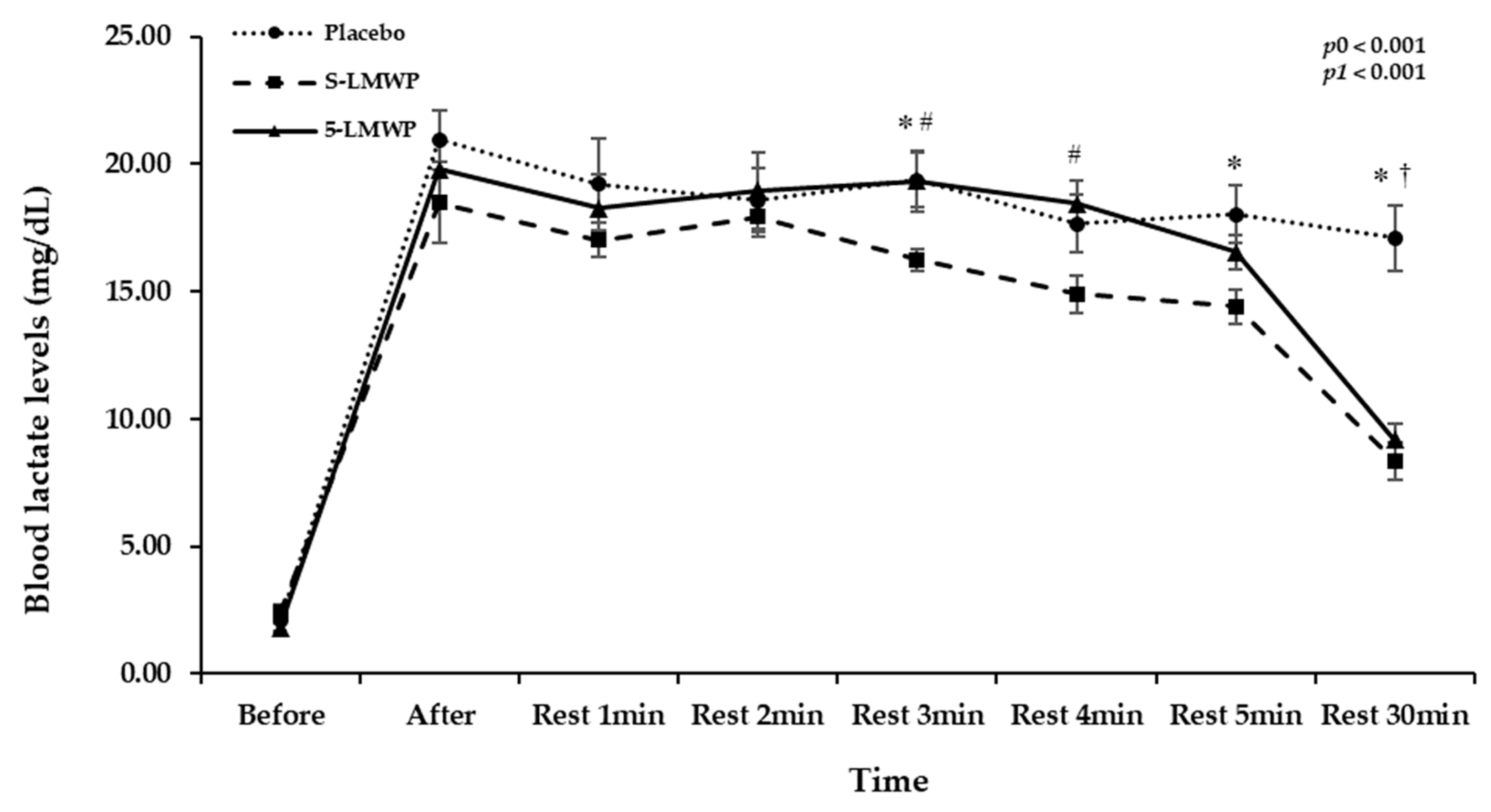
3.4. Comparison of Blood Lactate Levels According to LMWP Consumption
3.5. Comparison of Fatigue Metabolism and Oxidative Stress-Related Markers Levels According to LMWP Consumption
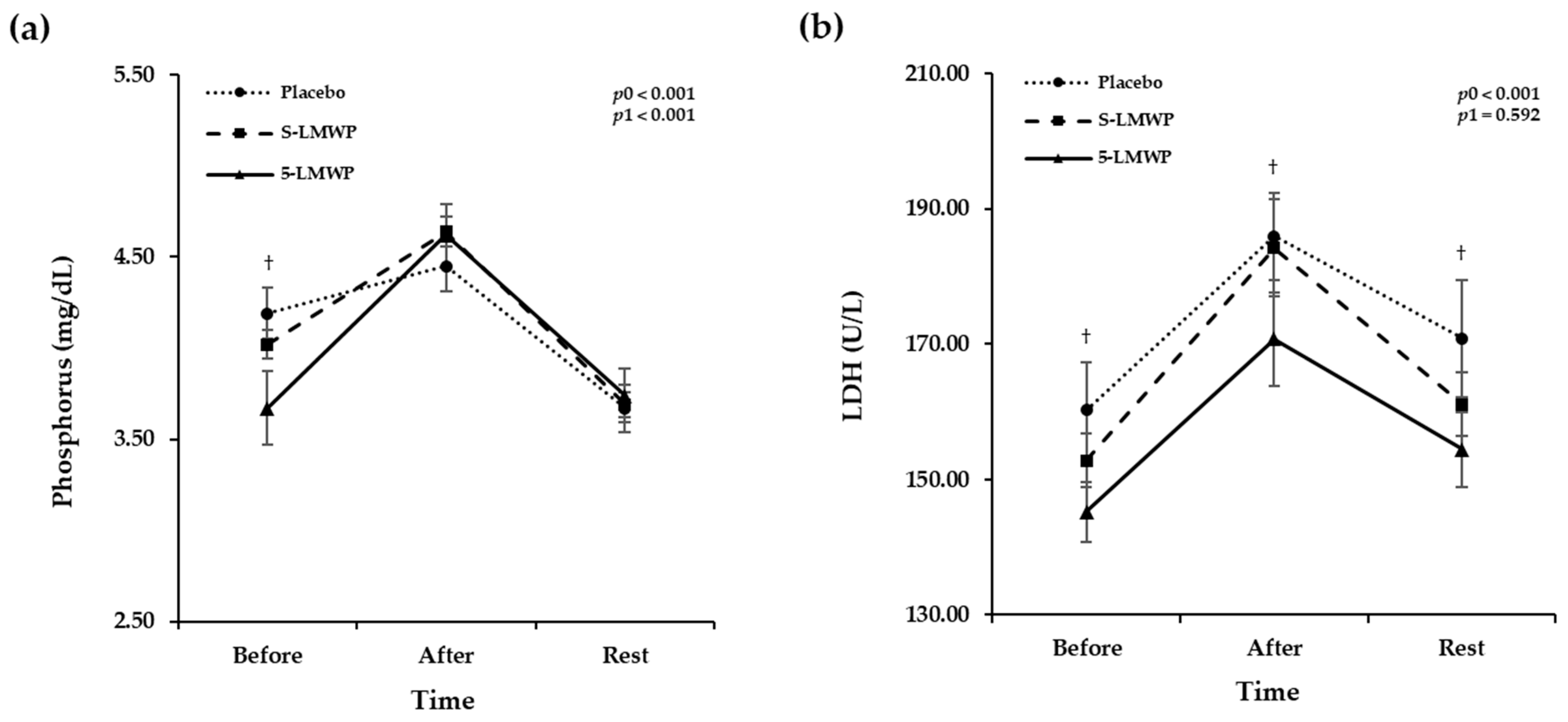
3.6. Changes of Phosphorus and LDH Levels According to LMWP Consumption
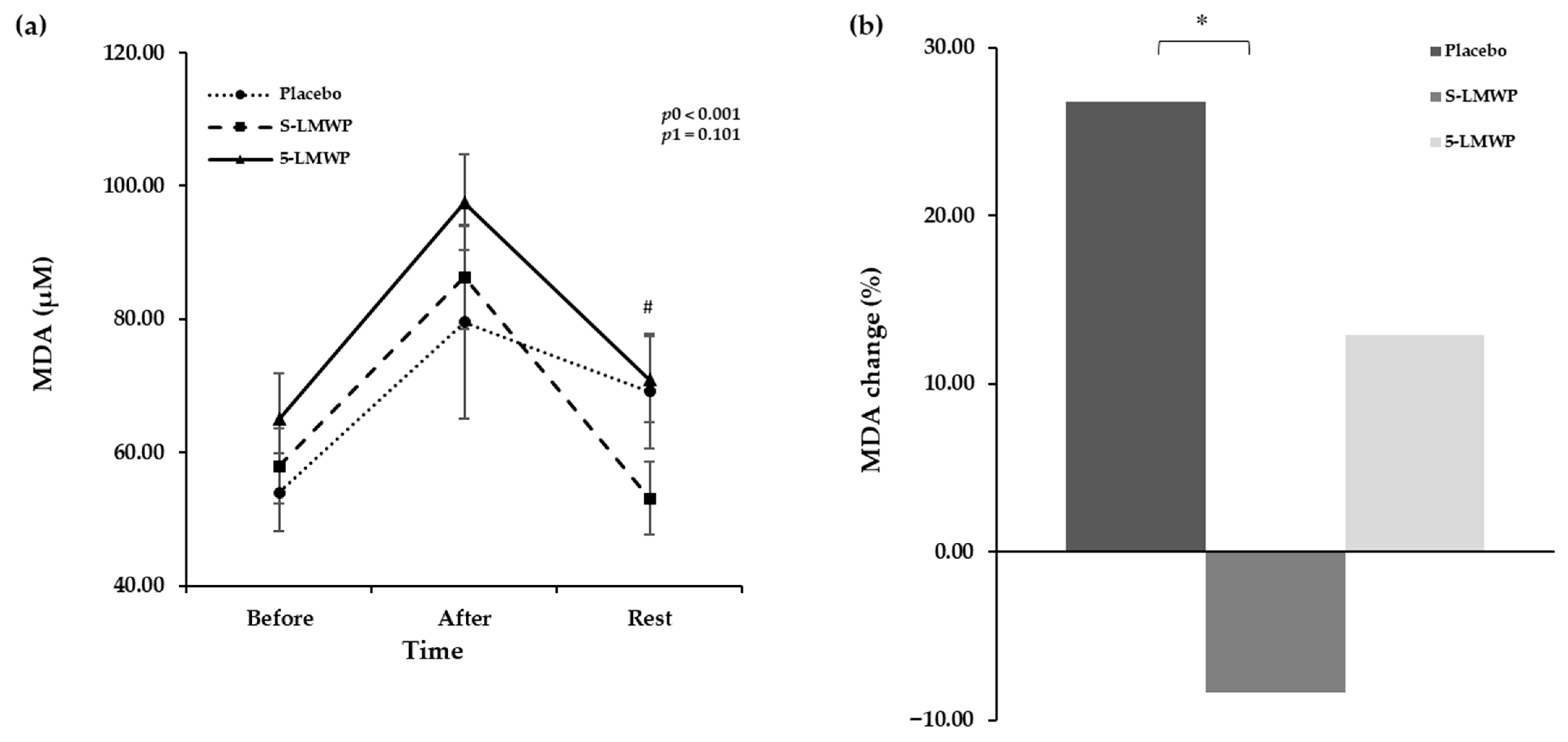
3.7. Changes in MDA Levels According to LMWP Consumption
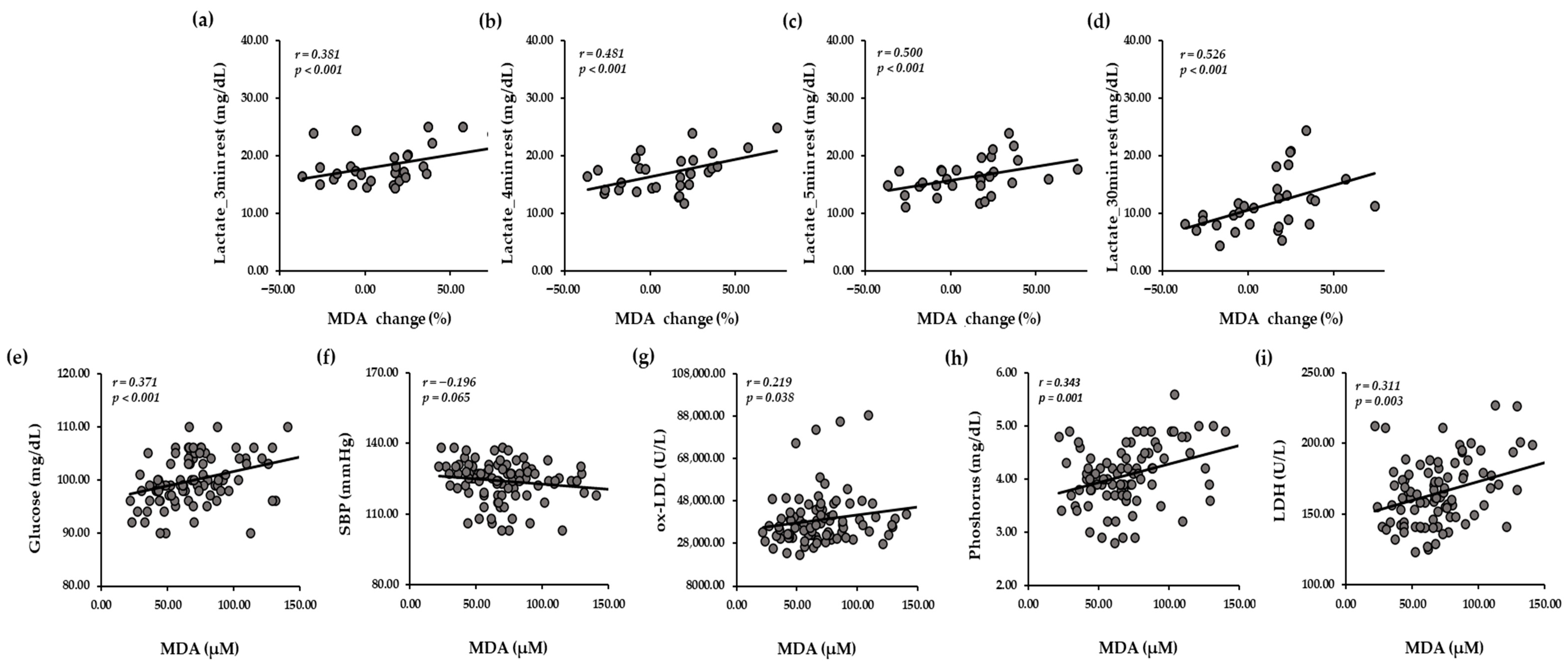
3.8. Relationships Between Oxidative Stress-Related Markers and Biochemical Markers
4. Discussion
5. Conclusions
Author Contributions
Funding
Institutional Review Board Statement
Informed Consent Statement
Data Availability Statement
Acknowledgments
Conflicts of Interest
References
- Pingitore, A.; Lima, G.P.; Mastorci, F.; Quinones, A.; Iervasi, G.; Vassalle, C. Exercise and oxidative stress: Potential effects of antioxidant dietary strategies in sports. Nutrients 2015, 31, 916–922. [Google Scholar] [CrossRef]
- Bull, F.C.; Al-Ansari, S.S.; Biddle, S.; Borodulin, K.; Buman, M.P.; Cardon, G.; Carty, C.; Chaput, J.-P.; Chastin, S.; Chou, R.; et al. World Health Organization 2020 guidelines on physical activity and sedentary behaviour. Br. J. Sports Med. 2020, 54, 1451–1462. [Google Scholar] [CrossRef]
- Powers, S.K.; Deminice, R.; Ozdemir, M.; Yoshihara, T.; Bomkamp, M.P.; Hyatt, H. Exercise-induced oxidative stress: Friend or foe? J. Sport Health Sci. 2020, 9, 415–425. [Google Scholar] [CrossRef]
- Simioni, C.; Zauli, G.; Martelli, A.M.; Vitale, M.; Sacchetti, G.; Gonelli, A.; Neri, L.M. Oxidative stress: Role of physical exercise and antioxidant nutraceuticals in adulthood and aging. Oncotarget 2018, 9, 17181–17198. [Google Scholar] [CrossRef]
- Pisoschi, A.M.; Pop, A.; Iordache, F.; Stanca, L.; Predoi, G.; Serban, A.I. Oxidative stress mitigation by antioxidants—An overview on their chemistry and influences on health status. Eur. J. Med. Chem. 2021, 209, 112891. [Google Scholar] [CrossRef]
- Wang, F.; Wang, X.; Liu, Y.; Zhang, Z. Effects of Exercise-Induced ROS on the Pathophysiological Functions of Skeletal Muscle. Oxid. Med. Cell. Longev. 2021, 2021, 3846122. [Google Scholar] [CrossRef]
- Bartoloni, B.; Mannelli, M.; Gamberi, T.; Fiaschi, T. The Multiple Roles of Lactate in the Skeletal Muscle. Cells 2024, 13, 1177. [Google Scholar] [CrossRef]
- Brooks, G.A. The science and translation of lactate shuttle theory. Cell Metab. 2018, 27, 757–785. [Google Scholar] [CrossRef]
- Gladden, L.B. Lactate metabolism: A new paradigm for the third millennium. J. Physiol. 2004, 558, 5–30. [Google Scholar] [CrossRef]
- Manach, C.; Scalbert, A.; Morand, C.; Rémésy, C.; Jiménez, L. Polyphenols: Food sources and bioavailability. Am. J. Clin. Nutr. 2004, 79, 727–747. [Google Scholar] [CrossRef]
- Wan, M.L.Y.; Co, V.A.; El-Nezami, H. Dietary polyphenol impact on gut health and microbiota. Crit. Rev. Food Sci. Nutr. 2021, 61, 690–711. [Google Scholar] [CrossRef]
- Costa, C.; Tsatsakis, A.; Mamoulakis, C.; Teodoro, M.; Briguglio, G.; Caruso, E.; Tsoukalas, D.; Margina, D.; Dardiotis, E.; Kouretas, D.; et al. Current evidence on the effect of dietary polyphenols intake on chronic diseases. Food Chem. Toxicol. 2017, 110, 286–299. [Google Scholar] [CrossRef]
- Di Lorenzo, C.; Colombo, F.; Biella, S.; Stockley, C.; Restani, P. Polyphenols and human health: The role of bioavailability. Nutrients 2021, 13, 273. [Google Scholar] [CrossRef]
- Bowtell, J.; Kelly, V. Fruit-derived polyphenol supplementation for athlete recovery and performance. Sports Med. 2019, 49, 3–23. [Google Scholar] [CrossRef]
- Cases, J.; Romain, C.; Marín-Pagán, C.; Chung, L.H.; Rubio-Pérez, J.M.; Laurent, C.; Gaillet, S.; Prost-Camus, E.; Prost, M.; Alcaraz, P.E. Supplementation with a polyphenol-rich extract, PerfLoad®, improves physical performance during high-intensity exercise: A randomized, double blind, crossover trial. Nutrients 2017, 9, 421. [Google Scholar] [CrossRef]
- Murphy, C.A.; Cook, M.D.; Willems, M.E. Effect of New Zealand blackcurrant extract on repeated cycling time trial performance. Sports 2017, 5, 25. [Google Scholar] [CrossRef]
- Sánchez Díaz, M.; Martín-Castellanos, A.; Fernández-Elías, V.E.; López Torres, O.; Lorenzo Calvo, J. Effects of polyphenol consumption on recovery in team sport athletes of both sexes: A systematic review. Nutrients 2022, 14, 4085. [Google Scholar] [CrossRef]
- Mason, S.A.; Trewin, A.J.; Parker, L.; Wadley, G.D. Antioxidant supplements and endurance exercise: Current evidence and mechanistic insights. Redox Biol. 2020, 35, 101471. [Google Scholar] [CrossRef]
- Fernández-Lázaro, D.; Arribalzaga, S.; Gutiérrez-Abejón, E.; Azarbayjani, M.A.; Mielgo-Ayuso, J.; Roche, E. Omega-3 Fatty Acid Supplementation on Post-Exercise Inflammation, Muscle Damage, Oxidative Response, and Sports Performance in Physically Healthy Adults-A Systematic Review of Randomized Controlled Trials. Nutrients 2024, 16, 2044. [Google Scholar] [CrossRef]
- Rickards, L.; Lynn, A.; Harrop, D.; Barker, M.E.; Russell, M.; Ranchordas, M.K. Effect of Polyphenol-Rich Foods, Juices, and Concentrates on Recovery from Exercise Induced Muscle Damage: A Systematic Review and Meta-Analysis. Nutrients 2021, 13, 2988. [Google Scholar] [CrossRef]
- Paulsen, G.; Cumming, K.T.; Holden, G.; Hallén, J.; Rønnestad, B.R.; Sveen, O.; Skaug, A.; Paur, I.; Bastani, N.E.; Østgaard, H.N.; et al. Vitamin C and E supplementation hampers cellular adaptation to endurance training in humans: A double-blind, randomised, controlled trial. J. Physiol. 2014, 592, 1887–1901. [Google Scholar] [CrossRef]
- Owens, D.J.; Twist, C.; Cobley, J.N.; Howatson, G.; Close, G.L. Exercise-induced muscle damage: What is it, what causes it and what are the nutritional solutions? Eur. J. Sport Sci. 2019, 19, 71–85. [Google Scholar] [CrossRef]
- Nie, F.; Liu, L.; Cui, J.; Zhao, Y.; Zhang, D.; Zhou, D.; Wu, J.; Li, B.; Wang, T.; Li, M.; et al. Oligomeric Proanthocyanidins: An Updated Review of Their Natural Sources, Synthesis, and Potentials. Antioxidants 2023, 12, 1004. [Google Scholar] [CrossRef]
- Fujii, H.; Sun, B.; Nishioka, H.; Hirose, A.; Aruoma, O.I. Evaluation of the safety and toxicity of the oligomerized polyphenol Oligonol. Food Chem Toxicol. 2007, 45, 378–387. [Google Scholar] [CrossRef]
- Park, C.H.; Noh, J.S.; Fujii, H.; Roh, S.S.; Song, Y.O.; Choi, J.S.; Chung, H.Y.; Yokozawa, T. Oligonol, a low-molecular-weight polyphenol derived from lychee fruit, attenuates gluco-lipotoxicity-mediated renal disorder in type 2 diabetic db/db mice. Drug Discov. Ther. 2015, 9, 13–22. [Google Scholar] [CrossRef]
- Nishioka, H.; Fujii, H.; Sun, B.; Aruoma, O.I. Comparative efficacy of oligonol, catechin and (−)-epigallocatechin 3-O-gallate in modulating the potassium bromate-induced renal toxicity in rat. Toxicology 2006, 226, 181–187. [Google Scholar] [CrossRef]
- Yum, H.Y.; Zhong, X.; Park, J.; Na, H.K.; Kim, N.; Lee, H.S.; Surh, Y.J. Oligonol inhibits dextran sulfate sodium-induced colitis and colonic adenoma formation in mice. Antioxid. Redox Signal. 2013, 19, 102–114. [Google Scholar] [CrossRef]
- Kim, K.J.; Park, J.M.; Lee, J.S.; Kim, Y.S.; Kangwan, N.; Han, Y.M.; Kang, E.A.; An, J.M.; Park, Y.K.; Hahm, K.B. Oligonol prevented the relapse of dextran sulfate sodium-ulcerative colitis through enhancing NRF2-mediated antioxidative defense mechanism. J. Physiol. Pharmacol. 2018, 69, 359–371. [Google Scholar]
- Bak, J.; Je, N.K.; Chung, H.Y.; Yokozawa, T.; Yoon, S.; Moon, J.Y. Oligonol ameliorates CCl4-induced liver injury in rats via the NF-Kappa B and MAPK signaling pathways. Oxid. Med. Cell. Longev. 2015, 2016, 3935841. [Google Scholar] [CrossRef]
- Choi, Y.Y.; Maeda, T.; Fujii, H.; Yokozawa, T.; Kim, H.Y.; Cho, E.J.; Shibamoto, T. Oligonol improves memory and cognition under an amyloid β25-35-induced Alzheimer’s mouse model. Nutr. Res. 2014, 34, 595–603. [Google Scholar] [CrossRef]
- Lee, J.B.; Shin, Y.O.; Min, Y.K.; Yang, H.M. The effect of oligonol intake on cortisol and related cytokines in healthy young men. Nutr. Res. Pract. 2010, 4, 203–207. [Google Scholar] [CrossRef]
- Kawamura, A.; Hashimoto, S.; Suzuki, M.; Ueno, H.; Sugita, M. Oligomerized polyphenols in lychee fruit extract supplements may improve high-intensity exercise performance in male athletes: A pilot study. Phys. Act. Nutr. 2021, 25, 8–15. [Google Scholar] [CrossRef]
- Faul, F.; Erdfelder, E.; Lang, A.G.; Buchner, A. GPower 3: A flexible statistical power analysis program for the social, behavioral, and biomedical sciences. Behav. Res. Methods 2007, 39, 175–191. [Google Scholar] [CrossRef] [PubMed]
- Lee, J.S.; Kim, H.Y.; Hwang, J.Y.; Kwon, S.; Chung, H.R.; Kwak, T.K.; Kang, M.H.; Choi, Y.S. Development of nutrition quotient for Korean adults: Item selection and validation of factor structure. J. Nutr. Health 2018, 51, 340–356. [Google Scholar] [CrossRef]
- Yook, S.M.; Lim, Y.S.; Lee, J.S.; Kim, K.N.; Hwang, H.J.; Kwon, S.; Hwang, J.Y.; Kim, H.Y. Revision of Nutrition Quotient for Korean adults: NQ-2021. J. Nutr. Health 2022, 55, 278–295. [Google Scholar] [CrossRef]
- Barrera, G.; Pizzimenti, S.; Daga, M.; Dianzani, C.; Arcaro, A.; Cetrangolo, G.P.; Giordano, G.; Cucci, M.A.; Graf, M.; Gentile, F. Lipid Peroxidation-Derived Aldehydes, 4-Hydroxynonenal and Malondialdehyde in Aging-Related Disorders. Antioxidants 2018, 7, 102. [Google Scholar] [CrossRef]
- Powers, S.K.; Jackson, M.J. Exercise-induced oxidative stress: Cellular mechanisms and impact on muscle force production. Physiol. Rev. 2008, 88, 1243–1276. [Google Scholar] [CrossRef]
- Alessio, H.M. Exercise-induced oxidative stress. Med. Sci. Sports Exerc. 1993, 25, 218–224. [Google Scholar] [CrossRef]
- Thompson, D.; Williams, C.; McGregor, S.J.; Nicholas, C.W.; McArdle, F.; Jackson, M.J.; Powell, J.R. Prolonged vitamin C supplementation and recovery from demanding exercise. Int. J. Sport Nutr. Exerc. Metab. 2001, 11, 466–481. [Google Scholar] [CrossRef]
- Kawamura, T.; Muraoka, I. Exercise-Induced Oxidative Stress and the Effects of Antioxidant Intake from a Physiological Viewpoint. Antioxidants 2018, 7, 119. [Google Scholar] [CrossRef]
- Powers, S.K.; Smuder, A.J.; Kavazis, A.N.; Hudson, M.B. Experimental guidelines for studies designed to investigate the impact of antioxidant supplementation on exercise performance. Int. J. Sport Nutr. Exerc. Metab. 2010, 20, 2–14. [Google Scholar] [CrossRef]
- Brown, S.J.; Child, R.B.; Day, S.H.; Donnelly, A.E. Exercise-induced skeletal muscle damage and adaptation following repeated bouts of eccentric muscle contractions. J. Sports Sci. 1997, 15, 215–222. [Google Scholar] [CrossRef]
- Rodrigues, B.M.; Dantas, E.; de Salles, B.F.; Miranda, H.; Koch, A.J.; Willardson, J.M.; Simão, R. Creatine kinase and lactate dehydrogenase responses after upper-body resistance exercise with different rest intervals. J. Strength Cond. Res. 2010, 24, 1657–1662. [Google Scholar] [CrossRef]
- Callegari, G.A.; Novaes, J.S.; Neto, G.R.; Dias, I.; Garrido, N.D.; Dani, C. Creatine Kinase and Lactate Dehydrogenase Responses after Different Resistance and Aerobic Exercise Protocols. J. Hum. Kinet. 2017, 58, 65–72. [Google Scholar] [CrossRef]
- Howatson, G.; McHugh, M.P.; Hill, J.A.; Brouner, J.; Jewell, A.P.; van Someren, K.A.; Shave, R.E.; Howatson, S.A. Influence of tart cherry juice on indices of recovery following marathon running. Scand. J. Med. Sci. Sports 2010, 20, 843–852. [Google Scholar] [CrossRef]
- Hooper, D.R.; Orange, T.; Gruber, M.T.; Darakjian, A.A.; Conway, K.L.; Hausenblas, H.A. Broad spectrum polyphenol supplementation from tart cherry extract on markers of recovery from intense resistance exercise. J. Int. Soc. Sports Nutr. 2021, 18, 47. [Google Scholar] [CrossRef]
- Huang, C.C.; Lee, M.C.; Ho, C.S.; Hsu, Y.J.; Ho, C.C.; Kan, N.W. Protective and recovery effects of resveratrol supplementation on exercise performance and muscle damage following acute plyometric exercise. Nutrients 2021, 13, 3217. [Google Scholar] [CrossRef] [PubMed]
- Carmona, G.; Roca, E.; Guerrero, M.; Cusso, R.; Barcena, C.; Mateu, M.; Cadefau, J.A. Fibre-type-specific and mitochondrial biomarkers of muscle damage after mountain races. Int. J. Sports Med. 2019, 40, 253–262. [Google Scholar] [CrossRef] [PubMed]
- Santos, S.A.; Silva, E.T.; Caris, A.V.; Lira, F.S.; Tufik, S.; Dos Santos, R.V. Vitamin E supplementation inhibits muscle damage and inflammation after moderate exercise in hypoxia. J. Hum. Nutr. Diet. 2016, 29, 516–522. [Google Scholar] [CrossRef] [PubMed]
- Lu, H.K.; Hsieh, C.C.; Hsu, J.J.; Yang, Y.K.; Chou, H.N. Preventive effects of spirulina platensis on skeletal muscle damage under exercise-induced oxidative stress. Eur. J. Appl. Physiol. 2006, 98, 220–226. [Google Scholar] [CrossRef]
- You, L.J.; Zhao, M.M.; Regenstein, J.M.; Ren, J.Y. In vitro antioxidant activity and in vivo anti-fatigue effect of loach (Misgurnus anguillicaudatus) peptides prepared by papain digestion. Food Chem. 2011, 124, 188–194. [Google Scholar] [CrossRef]
- Kang, S.W.; Hahn, S.; Kim, J.J.; Yang, S.M.; Park, B.J.; Lee, S.C. Oligomerized lychee fruit extract (OLFE) and a mixture of vitamin C and vitamin E for endurance capacity in a double blind randomized controlled trial. J. Clin. Biochem. Nutr. 2012, 50, 106–113. [Google Scholar] [CrossRef] [PubMed][Green Version]
- Lovlin, R.; Cottle, W.; Pyke, I.; Kavanagh, M.; Belcastro, A.N. Are indices of free radical damage related to exercise intensity. Eur. J. Appl. Physiol. Occup. Physiol. 1987, 56, 313–316. [Google Scholar] [CrossRef]
- Davies, K.J.; Quintanilha, A.T.; Brooks, G.A.; Packer, L. Free radicals and tissue damage produced by exercise. Biochem. Biophys. Res. Commun. 1982, 107, 1198–1205. [Google Scholar] [CrossRef] [PubMed]
- Jenkins, R.R. Exercise and oxidative stress methodology: A critique. Am. J. Clin. Nutr. 2000, 72, 670S–674S. [Google Scholar] [CrossRef]
- Morel, D.W.; Hessler, J.R.; Chisolm, G.M. Low density lipoprotein cytotoxicity induced by free radical peroxidation of lipid. J. Lipid Res. 1983, 24, 1070–1076. [Google Scholar] [CrossRef]
- Williamson, G. The role of polyphenols in modern nutrition. Nutr. Bull. 2017, 42, 226–235. [Google Scholar] [CrossRef]
- Herrlinger, K.A.; Chirouzes, D.M.; Ceddia, M.A. Supplementation with a polyphenolic blend improves post-exercise strength recovery and muscle soreness. Food Nutr. Res. 2015, 59, 30034. [Google Scholar] [CrossRef]



| Variables | Mean | ± | SE | Min | Max |
|---|---|---|---|---|---|
| Age (years) | 24.00 | ± | 0.52 | 22.00 | 27.00 |
| Height (cm) | 177.47 | ± | 1.87 | 166.70 | 188.10 |
| Weight (kg) | 80.32 | ± | 2.79 | 67.70 | 93.50 |
| BMI (kg/m2) | 25.52 | ± | 0.81 | 23.50 | 30.00 |
| LBM (kg) | 61.34 | ± | 1.93 | 50.90 | 70.30 |
| SMM (kg) | 34.39 | ± | 1.10 | 28.50 | 39.80 |
| BFM (kg) | 18.98 | ± | 1.89 | 8.90 | 28.80 |
| BFP (%) | 23.37 | ± | 1.75 | 11.20 | 30.80 |
| NQ1 (balance) | 28.88 | ± | 4.45 | 3.93 | 47.00 |
| NQ2 (moderation) | 38.76 | ± | 3.17 | 25.90 | 53.90 |
| NQ3 (practice) | 58.82 | ± | 2.41 | 48.06 | 67.76 |
| NQ4 (total) | 43.82 | ± | 2.18 | 34.90 | 56.57 |
| Variables | Placebo | S-LMWP | 5-LMWP | p-Value | ||||||
|---|---|---|---|---|---|---|---|---|---|---|
| Weight (kg) | 80.32 | ± | 2.79 ab | 80.87 | ± | 3.01 a | 80.35 | ± | 2.98 b | 0.125 |
| BMI (kg/m2) | 25.52 | ± | 0.81 ab | 25.80 | ± | 0.85 a | 25.57 | ± | 0.86 b | 0.124 |
| LBM (kg) | 61.34 | ± | 1.93 | 62.23 | ± | 2.01 | 61.66 | ± | 1.89 | 0.452 |
| SMM (kg) | 34.39 | ± | 1.10 | 34.91 | ± | 1.14 | 34.59 | ± | 1.07 | 0.452 |
| BFM (kg) | 18.98 | ± | 1.89 a | 18.64 | ± | 1.92 b | 18.69 | ± | 2.00 ab | 0.358 |
| BFP (%) | 23.37 | ± | 1.75 a | 22.78 | ± | 1.71 b | 22.94 | ± | 1.07 ab | 0.031 |
| Variables | Placebo | S-LMWP | 5-LMWP | p-Value | ||||||
|---|---|---|---|---|---|---|---|---|---|---|
| VO2max (mL/kg/min) | 47.29 | ± | 1.39 | 47.85 | ± | 1.63 | 47.06 | ± | 1.41 | 0.273 |
| HRmax (bpm) | 190.80 | ± | 2.21 ab | 189.30 | ± | 1.92 b | 193.00 | ± | 1.61 a | 0.006 |
| ET (s) | 736.00 | ± | 12.49 | 741.50 | ± | 18.80 | 755.50 | ± | 16.37 | 0.085 |
| AT (s) | 502.50 | ± | 19.99 | 508.00 | ± | 23.43 | 486.50 | ± | 21.20 | 0.132 |
| GL (kg) | 43.41 | ± | 1.25 a | 41.21 | ± | 1.32 b | 40.22 | ± | 0.88 b | 0.003 |
| GR (kg) | 45.87 | ± | 1.93 a | 43.77 | ± | 2.23 b | 42.87 | ± | 2.13 b | 0.061 |
| BMS (kg) | 152.45 | ± | 5.94 | 143.60 | ± | 6.26 | 146.00 | ± | 8.21 | 0.122 |
| Glucose (mg/dL) | 98.40 | ± | 1.07 | 99.80 | ± | 1.82 | 101.60 | ± | 1.31 | 0.256 |
| SBP (mmHg) | 129.10 | ± | 1.57 a | 122.40 | ± | 3.21 ab | 120.20 | ± | 2.47 b | 0.014 |
| DBP (mmHg) | 80.50 | ± | 3.46 a | 73.70 | ± | 2.24 b | 73.40 | ± | 1.78 b | 0.199 |
| Time | Placebo | S-LMWP | 5-LMWP | p0 | p1 | ||||||
|---|---|---|---|---|---|---|---|---|---|---|---|
| Exercise | <0.001 | 0.293 | |||||||||
| Before | 65.60 | ± | 2.57 | 62.70 | ± | 1.78 | 63.40 | ± | 1.63 | ||
| After | 191.30 | ± | 2.07 | 189.30 | ± | 1.92 | 192.00 | ± | 1.50 | ||
| Rest | |||||||||||
| 1 min | 116.30 | ± | 4.97 b | 123.70 | ± | 1.97 ab | 130.80 | ± | 3.97 a | ||
| 2 min | 111.90 | ± | 4.57 b | 117.10 | ± | 2.12 ab | 120.50 | ± | 3.22 a | ||
| 3 min | 108.90 | ± | 5.69 | 111.10 | ± | 1.68 | 115.00 | ± | 2.80 | ||
| 4 min | 113.40 | ± | 3.31 | 110.20 | ± | 2.16 | 115.70 | ± | 2.53 | ||
| 5 min | 110.60 | ± | 3.04 ab | 107.00 | ± | 2.03 b | 113.50 | ± | 1.95 a | ||
| 30 min | 96.50 | ± | 3.84 | 96.10 | ± | 3.47 | 102.10 | ± | 2.61 | ||
| Variables | Placebo | S-LMWP | 5-LMWP | p-Value | ||||||||
|---|---|---|---|---|---|---|---|---|---|---|---|---|
| Each timepoint value | p0 | p1 | ||||||||||
| UA (mg/dL) | Before | 6.71 | ± | 0.27 | 6.57 | ± | 0.16 | 6.50 | ± | 0.23 | <0.001 | 0.089 |
| After | 6.56 | ± | 0.26 | 6.60 | ± | 0.19 | 6.56 | ± | 0.23 | |||
| Rest | 8.37 | ± | 0.34 a | 7.85 | ± | 0.31 b | 8.27 | ± | 0.33 ab | |||
| CK (U/L) | Before | 153.60 | ± | 18.41 b | 203.00 | ± | 32.40 a | 139.80 | ± | 11.70 ab | <0.001 | 0.008 |
| After | 178.10 | ± | 21.66 b | 238.40 | ± | 39.26 a | 167.20 | ± | 14.73 b | |||
| Rest | 163.20 | ± | 19.53 b | 211.20 | ± | 33.77 a | 152.40 | ± | 12.73 ab | |||
| CK-MB (ng/dL) | Before | 1.64 | ± | 0.20 | 1.48 | ± | 0.14 | 1.43 | ± | 0.16 | <0.001 | 0.139 |
| After | 1.89 | ± | 0.24 | 1.74 | ± | 0.17 | 1.71 | ± | 0.20 | |||
| Rest | 1.70 | ± | 0.20 | 1.57 | ± | 0.16 | 1.58 | ± | 0.17 | |||
| ox-LDL (mU/L) | Before | 35,985.37 | ± | 2515.65 | 35,152.11 | ± | 2672.22 | 34,060.01 | ± | 3167.76 | <0.001 | 0.250 |
| After | 44,276.02 | ± | 4940.21 | 42,444.66 | ± | 2452.35 | 43,410.29 | ± | 5461.12 | |||
| Rest | 40,597.81 | ± | 4153.36 | 36,440.74 | ± | 2478.22 | 40,847.47 | ± | 4772.95 | |||
| Change values (Δ) | p2 | |||||||||||
| UA (mg/dL) | 1.66 | ± | 0.40 | 1.28 | ± | 0.31 | 1.77 | ± | 0.24 | 0.388 | ||
| CK (U/L) | 9.60 | ± | 1.33 | 8.20 | ± | 2.66 | 12.60 | ± | 1.85 | 0.273 | ||
| CK-MB (ng/dL) | 0.06 | ± | 0.03 b | 0.10 | ± | 0.03 ab | 0.15 | ± | 0.02 a | 0.041 | ||
| ox-LDL (mU/L) | 4612.44 | ± | 2686.06 ab | 1288.64 | ± | 2140.35 b | 6787.46 | ± | 2592.04 a | 0.006 | ||
Disclaimer/Publisher’s Note: The statements, opinions and data contained in all publications are solely those of the individual author(s) and contributor(s) and not of MDPI and/or the editor(s). MDPI and/or the editor(s) disclaim responsibility for any injury to people or property resulting from any ideas, methods, instructions or products referred to in the content. |
© 2026 by the authors. Licensee MDPI, Basel, Switzerland. This article is an open access article distributed under the terms and conditions of the Creative Commons Attribution (CC BY) license.
Share and Cite
Kim, H.; Park, J.; Hwang, S.M.; Oh, S.; Kim, B.; Woo, J.-H.; Kim, O.Y. Short-Term Consumption of Low-Molecular Weight Polyphenols (Oligonol) Is Associated with Improved Post-Exercise Recovery in Healthy Young Men: A Randomized Single-Blind Crossover Study. Antioxidants 2026, 15, 250. https://doi.org/10.3390/antiox15020250
Kim H, Park J, Hwang SM, Oh S, Kim B, Woo J-H, Kim OY. Short-Term Consumption of Low-Molecular Weight Polyphenols (Oligonol) Is Associated with Improved Post-Exercise Recovery in Healthy Young Men: A Randomized Single-Blind Crossover Study. Antioxidants. 2026; 15(2):250. https://doi.org/10.3390/antiox15020250
Chicago/Turabian StyleKim, Hyojin, Jihyun Park, Su Min Hwang, Sumin Oh, Byounghyeon Kim, Jin-Hee Woo, and Oh Yoen Kim. 2026. "Short-Term Consumption of Low-Molecular Weight Polyphenols (Oligonol) Is Associated with Improved Post-Exercise Recovery in Healthy Young Men: A Randomized Single-Blind Crossover Study" Antioxidants 15, no. 2: 250. https://doi.org/10.3390/antiox15020250
APA StyleKim, H., Park, J., Hwang, S. M., Oh, S., Kim, B., Woo, J.-H., & Kim, O. Y. (2026). Short-Term Consumption of Low-Molecular Weight Polyphenols (Oligonol) Is Associated with Improved Post-Exercise Recovery in Healthy Young Men: A Randomized Single-Blind Crossover Study. Antioxidants, 15(2), 250. https://doi.org/10.3390/antiox15020250