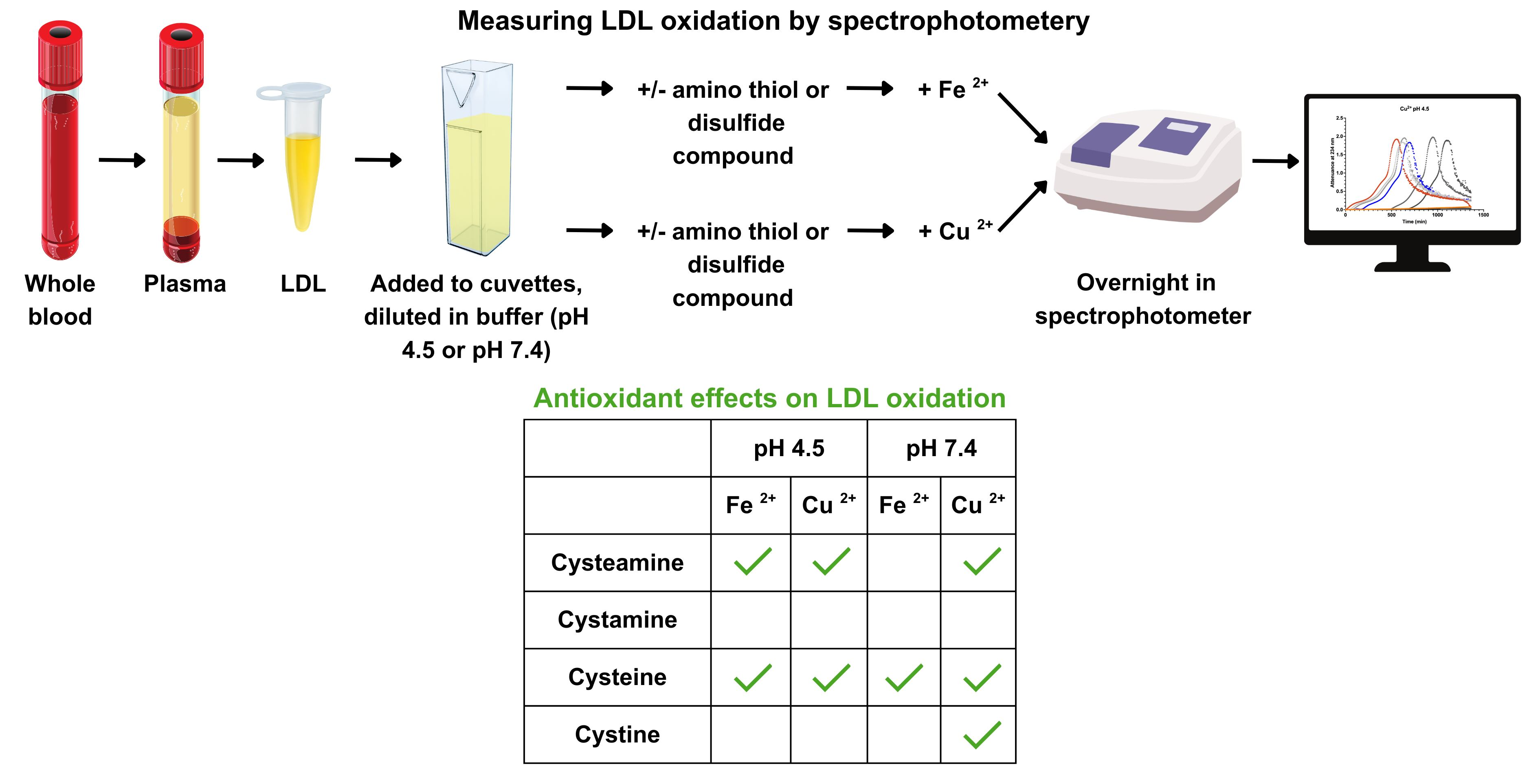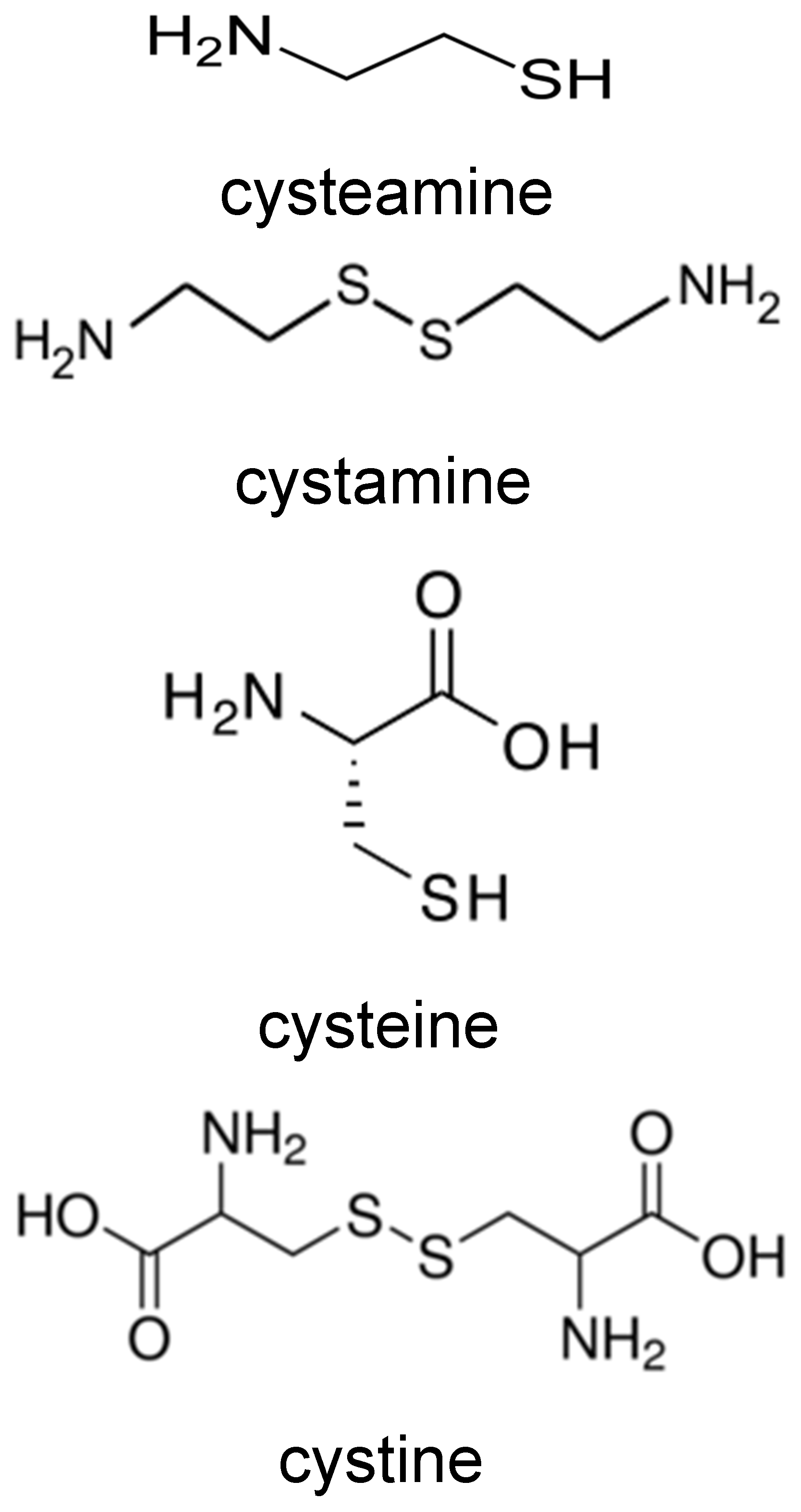


Inhibition of Low-Density Lipoprotein Oxidation by Cysteamine, Cystamine, Cysteine and Cystine at Lysosomal pH and pH 7.4

 , , , ,
Abstract
1. Introduction
2. Materials and Methods
2.1. Materials
2.2. LDL Isolation
2.3. Measuring Oxidation of LDL by Spectrophotometry at 234 nm
2.4. Statistical Analysis
3. Results
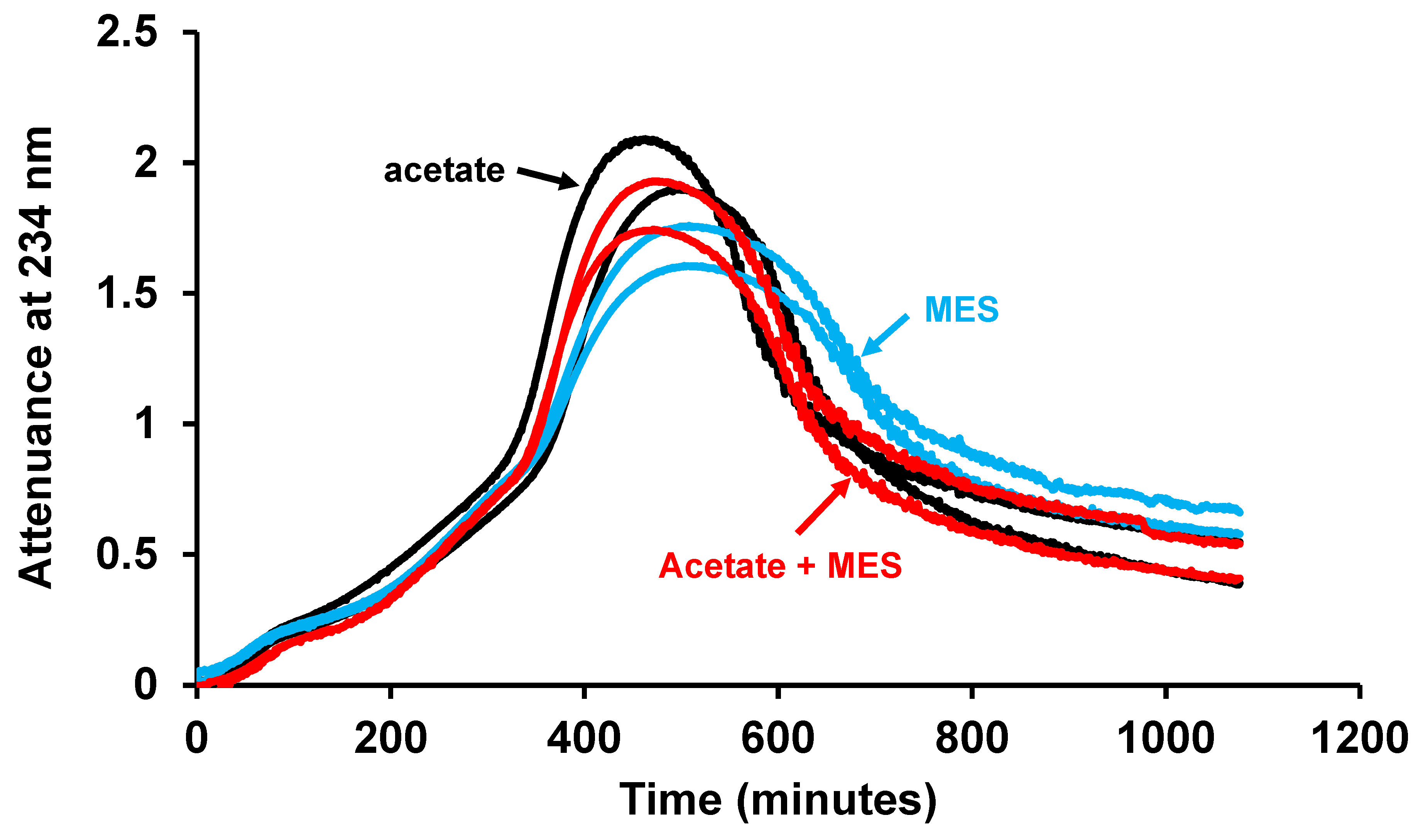
3.1. Effects of Buffer on LDL Oxidation by Iron at pH 4.5
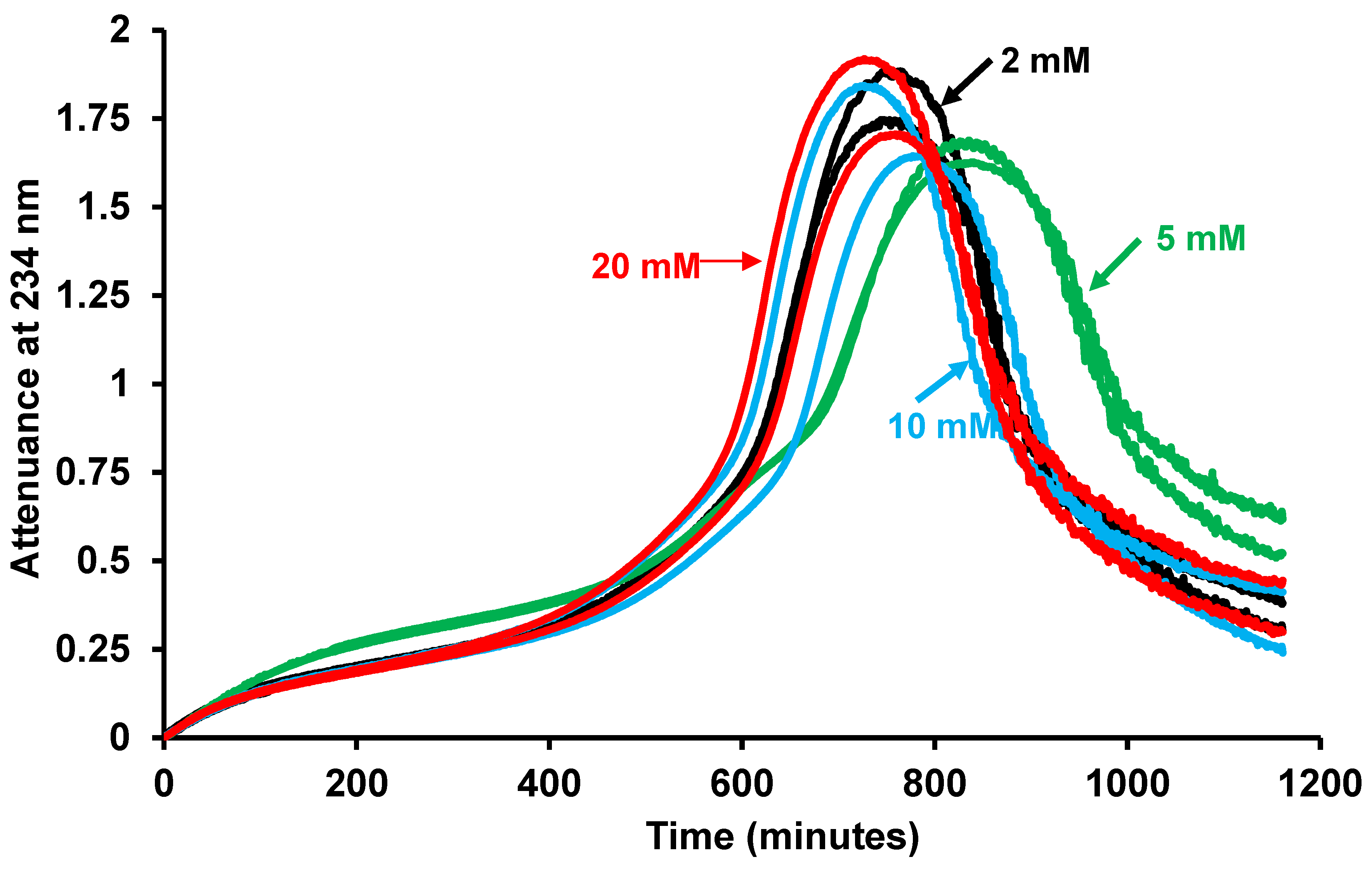
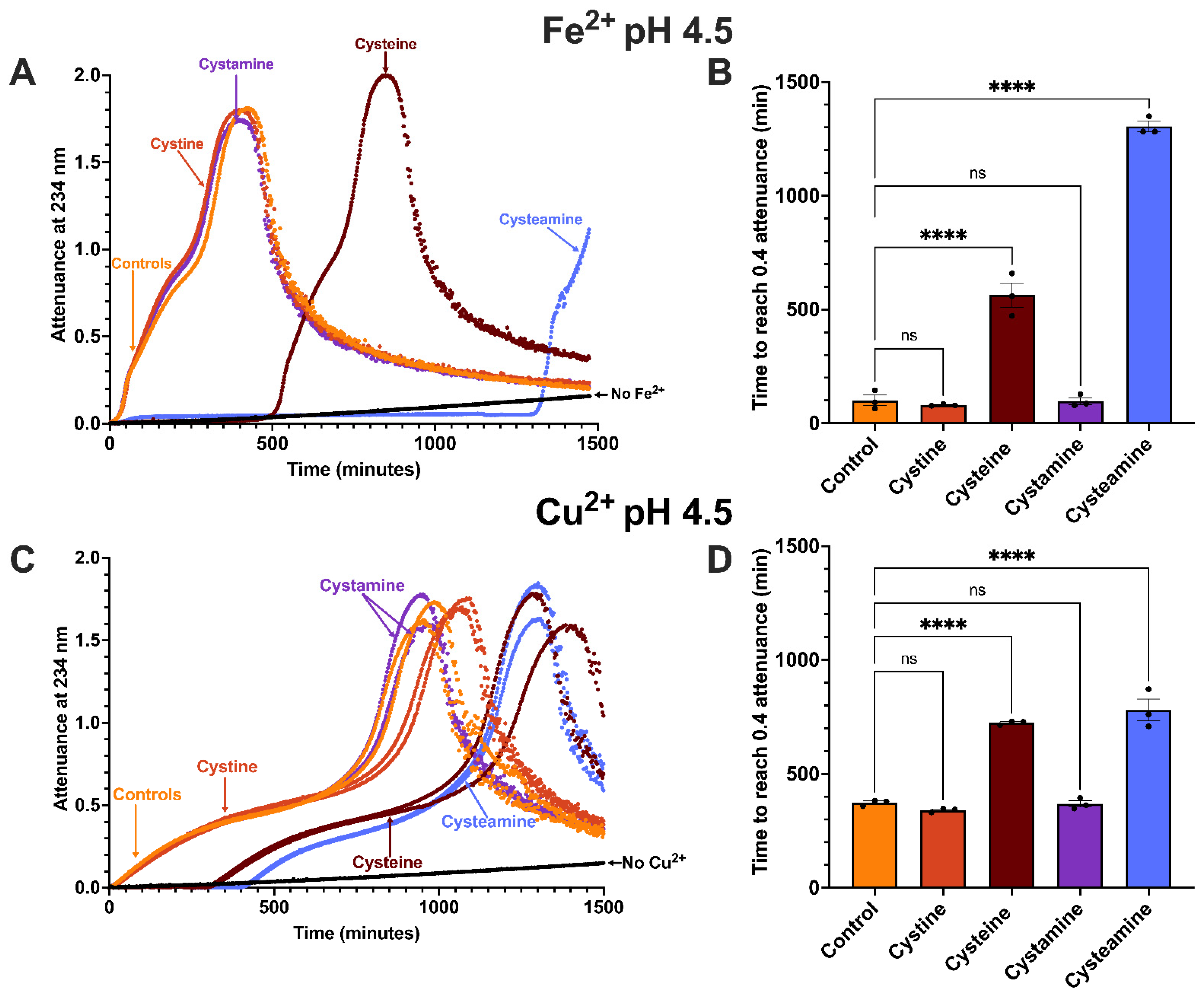
3.2. Effect of Cysteamine, Cysteine, Cystamine and Cystine on LDL Oxidation by Iron at pH 4.5
3.3. Effect of Cysteamine, Cysteine, Cystamine and Cystine on LDL Oxidation by Copper at pH 4.5
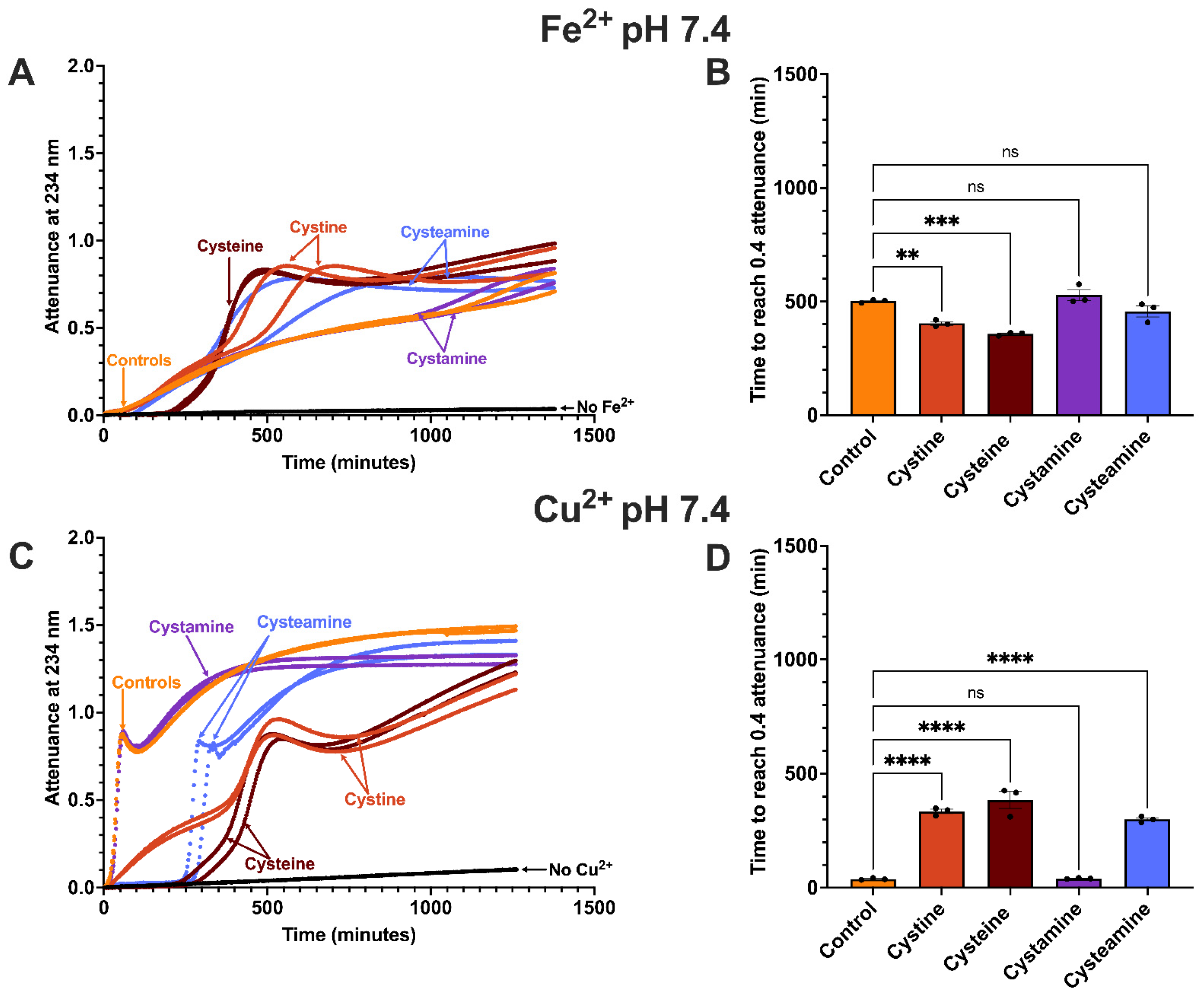
3.4. Effect of Cysteamine, Cysteine, Cystamine and Cystine on LDL Oxidation by Iron at pH 7.4
3.5. Effect of Cysteamine, Cysteine, Cystamine and Cystine on LDL Oxidation by Copper at pH 7.4
4. Discussion
5. Conclusions
Author Contributions
Funding
Institutional Review Board Statement
Informed Consent Statement
Data Availability Statement
Acknowledgments
Conflicts of Interest
References
- Bjorkegren, J.L.M.; Lusis, A.J. Atherosclerosis: Recent developments. Cell 2022, 185, 1630–1645. [Google Scholar] [CrossRef]
- Tsimikas, S.; Witztum, J.L. Oxidized phospholipids in cardiovascular disease. Nat. Rev. Cardiol. 2024, 21, 170–191. [Google Scholar] [CrossRef] [PubMed]
- Lorey, M.B.; Oorni, K.; Kovanen, P.T. Modified lipoproteins induce arterial wall inflammation during atherogenesis. Front. Cardiovasc. Med. 2022, 9, 841545. [Google Scholar] [CrossRef]
- Steinberg, D. The LDL modification hypothesis of atherogenesis: An update. J. Lipid Res. 2009, 50, S376–S381. [Google Scholar] [CrossRef]
- Dabbagh, A.J.; Frei, B. Human suction blister interstitial fluid prevents metal ion-dependent oxidation of low density lipoprotein by macrophages and in cell-free systems. J. Clin. Investig. 1995, 96, 1958–1966. [Google Scholar] [PubMed]
- Kris-Etherton, P.M.; Lichtenstein, A.H.; Howard, B.V.; Steinberg, D.; Witztum, J.L.; Amer Heart Assoc Council, N. Antioxidant vitamin supplements and cardiovascular disease. Circulation 2004, 110, 637–641. [Google Scholar] [CrossRef]
- Rychter, A.M.; Hryhorowicz, S.; Somski, R.; Dobrowolska, A.; Krela-Kazmierczak, I. Antioxidant effects of vitamin E and risk of cardiovascular disease in women with obesity—A narrative review. Clin. Nutr. 2022, 41, 1557–1565. [Google Scholar]
- Collins, R.; Armitage, J.; Parish, S.; Sleight, P.; Peto, R. MRC/BHF Heart Protection Study of antioxidant vitamin supplementation in 20536 high-risk individuals: A randomised placebo-controlled trial. Lancet 2002, 360, 23–33. [Google Scholar]
- Lonn, E.; Bosch, J.; Yusuf, S.; Sheridan, P.; Pogue, J.; Arnold, J.M.O.; Ross, C.; Arnold, A.; Sleight, P.; Probstfield, J.; et al. Effects of long-term vitamin E supplementation on cardiovascular events and cancer—A randomized controlled trial. JAMA-J. Am. Med. Assoc. 2005, 293, 1338–1347. [Google Scholar]
- Yusuf, S.; Phil, D.; Dagenais, G.; Pogue, J.; Bosch, J.; Sleight, P. Vitamin E supplementation and cardiovascular events in high-risk patients. N. Engl. J. Med. 2000, 342, 154–160. [Google Scholar] [PubMed]
- Wen, Y.; Leake, D.S. Low density lipoprotein undergoes oxidation within lysosomes in cells. Circ. Res. 2007, 100, 1337–1343. [Google Scholar] [CrossRef]
- Mitchinson, M.J.; Hothersall, D.C.; Brooks, P.N.; Deburbure, C.Y. The distribution of ceroid in human atherosclerosis. J. Pathol. 1985, 145, 177–183. [Google Scholar] [CrossRef]
- Wen, Y.; Ahmad, F.; Mohri, Z.; Weinberg, P.D.; Leake, D.S. Cysteamine inhibits lysosomal oxidation of low density lipoprotein in human macrophages and reduces atherosclerosis in mice. Atherosclerosis 2019, 291, 9–18. [Google Scholar] [CrossRef]
- Brown, A.J.; Leong, S.-L.; Dean, R.T.; Jessup, W. 7-Hydroperoxycholesterol and its products in oxidized low density lipoprotein and human atherosclerotic plaque. J. Lipid Res. 1997, 38, 1730–1745. [Google Scholar] [CrossRef]
- Yuan, X.M.; Li, W.; Olsson, A.G.; Brunk, U.T. Iron in human atheroma and LDL oxidation by macrophages following erythrophagocytosis. Atherosclerosis 1996, 124, 61–73. [Google Scholar] [CrossRef]
- Lee, F.Y.; Lee, T.S.; Pan, C.C.; Huang, A.L.; Chau, L.Y. Colocalization of iron and ceroid in human atherosclerotic lesions. Atherosclerosis 1998, 138, 281–288. [Google Scholar] [CrossRef] [PubMed]
- Yuan, X.M. Apoptotic macrophage-derived foam cells of human atheromas are rich in iron and ferritin, suggesting iron-catalysed reactions to be involved in apoptosis. Free Radic. Res. 1999, 30, 221–231. [Google Scholar] [CrossRef]
- Yu, Z.Q.; Persson, H.L.; Eaton, J.W.; Brunk, U.T. Intralysosomal iron: A major determinant of oxidant-induced cell death. Free Radic. Biol. Med. 2003, 34, 1243–1252. [Google Scholar] [CrossRef] [PubMed]
- Settembre, C.; Perera, R.M. Lysosomes as coordinators of cellular catabolism, metabolic signalling and organ physiology. Nat. Rev. Mol. Cell Biol. 2024, 25, 223–245. [Google Scholar] [CrossRef]
- Dohil, R.; Gangoiti, J.A.; Cabrera, B.L.; Fidler, M.; Schneider, J.A.; Barshop, B.A. Long-term treatment of cystinosis in children with twice-daily cysteamine. J. Pediatrics 2010, 156, 823–827. [Google Scholar] [CrossRef] [PubMed]
- Besouw, M.; Masereeuw, R.; van den Heuvel, L.; Levtchenko, E. Cysteamine: An old drug with new potential. Drug Discov. Today 2013, 18, 785–792. [Google Scholar] [CrossRef] [PubMed]
- Jezegou, A.; Llinares, E.; Anne, C.; Kieffer-Jaquinod, S.; O’Regan, S.; Aupetit, J.; Chabli, A.; Sagne, C.; Debacker, C.; Chadefaux-Vekemans, B.; et al. Heptahelical protein PQLC2 is a lysosomal cationic amino acid exporter underlying the action of cysteamine in cystinosis therapy. Proc. Natl. Acad. Sci. USA 2012, 109, E3434–E3443. [Google Scholar] [CrossRef] [PubMed]
- Ahmad, F.; Mitchell, R.D.; Houben, T.; Palo, A.; Yadati, T.; Parnell, A.J.; Patel, K.; Shiri-Sverdlov, R.; Leake, D.S. Cysteamine decreases low-density lipoprotein oxidation, causes regression of atherosclerosis, and improves liver and muscle function in low-density lipoprotein receptor-deficient mice. J. Am. Heart Assoc. 2021, 10, e017524. [Google Scholar] [CrossRef]
- Ueda, M.; O’Brien, K.; Rosing, D.R.; Ling, A.; Kleta, R.; McAreavey, D.; Bernardini, I.; Gahl, W.A. Coronary artery and other vascular calcifications in patients with cystinosis after kidney transplantation. Clin. J. Am. Soc. Nephrol. 2006, 1, 555–562. [Google Scholar] [CrossRef]
- Santanam, N.; Parthasarathy, S. Cellular cysteine generation does not contribute to the initiation of LDL oxidation. J. Lipid Res. 1995, 36, 2203–2211. [Google Scholar] [CrossRef]
- Patterson, R.A.; Lamb, D.J.; Leake, D.S. Mechanisms by which cysteine can inhibit or promote the oxidation of low density lipoprotein by copper. Atherosclerosis 2003, 169, 87–94. [Google Scholar] [CrossRef]
- Lynch, S.M.; Frei, B. Physiological thiol compounds exert pro- and anti-oxidant effects, respectively, on iron- and copper-dependent oxidation of human low-density lipoprotein. Biochim. Biophys. Acta 1997, 1345, 215–221. [Google Scholar] [CrossRef]
- Burkitt, M.J. A critical overview of the chemistry of copper-dependent low density lipoprotein oxidation: Roles of lipid hydroperoxides, a-tocopherol, thiols, and ceruloplasmin. Arch. Biochem. Biophys. 2001, 394, 117–135. [Google Scholar] [CrossRef]
- Morgan, J.; Leake, D.S. Oxidation of low density lipoprotein by iron or copper at acidic pH. J. Lipid Res. 1995, 36, 2504–2512. [Google Scholar] [CrossRef] [PubMed]
- Parthasarathy, S. Oxidation of low-density lipoprotein by thiol compounds leads to its recognition by the acetyl LDL receptor. Biochim. Biophys. Acta 1987, 917, 337–340. [Google Scholar] [CrossRef]
- Graham, A.; Wood, J.L.; O’Leary, V.J.; Stone, D. Human (THP-1) macrophages oxidize LDL by a thiol-dependent mechanism. Free Radic. Res. 1994, 21, 295–308, Erratum in Free Radic. Res. 1996, 25, 181–192. [Google Scholar] [CrossRef] [PubMed]
- Heinecke, J.W.; Rosen, H.; Suzuki, L.A.; Chait, A. The role of sulfur-containing amino acids in superoxide production and modification of low density lipoprotein by arterial smooth muscle cells. J. Biol. Chem. 1987, 262, 10098–10103. [Google Scholar] [CrossRef]
- Sparrow, C.P.; Olszewski, J. Cellular oxidation of low density lipoprotein is caused by thiol production in media containing transition metal ions. J. Lipid Res. 1993, 34, 1219–1228. [Google Scholar] [CrossRef] [PubMed]
- Wood, J.L.; Graham, A. Structural requirements for oxidation of low-density lipoprotein by thiols. FEBS Lett. 1995, 366, 75–80. [Google Scholar] [CrossRef]
- Adelmann, C.H.; Traunbauer, A.K.; Chen, B.; Condon, K.J.; Chan, S.H.; Kunchok, T.; Lewis, C.A.; Sabatini, D.M. MFSD12 mediates the import of cysteine into melanosomes and lysosomes. Nature 2020, 588, 699–704. [Google Scholar] [CrossRef]
- Kalatzis, V.; Cherqui, S.; Antignac, C.; Gasnier, B. Cystinosin, the protein defective in cystinosis, is a H+-driven lysosomal cystine transporter. EMBO J. 2001, 20, 5940–5949. [Google Scholar] [CrossRef]
- Zhou, W.T.; Tang, F.L.; Zhang, Y.; Wang, K.; Shu, W.; Li, D.P.; Xiao, H.B. Investigating Lysosomal Reactive Sulphur Species with Small Molecular Fluorescent Probes. ChemistrySelect 2023, 8, e202302472. [Google Scholar] [CrossRef]
- Wilkins, G.M.; Leake, D.S. The effect of inhibitors of free radical generating-enzymes on low-density lipoprotein oxidation by macrophages. Biochim. Biophys. Acta-Lipids Lipid Metab. 1994, 1211, 69–78. [Google Scholar] [CrossRef] [PubMed]
- Alboaklah, H.K.M.; Leake, D.S. Effect of vitamin E on low density lipoprotein oxidation at lysosomal pH. Free Radic. Res. 2020, 54, 574–584. [Google Scholar] [CrossRef]
- Esterbauer, H.; Striegl, G.; Puhl, H.; Rotheneder, M. Continuous monitoring of in vitro oxidation of human low density lipoprotein. Free Radic. Res. Commun. 1989, 6, 67–75. [Google Scholar] [CrossRef]
- Esterbauer, H.; Gebicki, J.; Puhl, H.; Jürgens, G. The role of lipid peroxidation and antioxidants in oxidative modification of LDL. Free Radic. Biol. Med. 1992, 13, 341–390. [Google Scholar] [CrossRef]
- Satchell, L.; Leake, D.S. Oxidation of low-density lipoprotein by iron at lysosomal pH: Implications for atherosclerosis. Biochemistry 2012, 51, 3767–3775. [Google Scholar] [CrossRef]
- van Stein, C.; Klank, S.; Grüneberg, M.; Ottolenghi, C.; Grebe, J.; Reunert, J.; Harms, E.; Marquardt, T. A comparison of immediate release and delayed release cysteamine in 17 patients with nephropathic cystinosis. Orphanet J. Rare Dis. 2021, 16, 387. [Google Scholar] [CrossRef] [PubMed]
- De Duve, C.; Debarsy, T.; Poole, B.; Trouet, A.; Tulkens, P.; Vanhoof, F. Lysosomotropic agents. Biochem. Pharmacol. 1974, 23, 2495–2531. [Google Scholar] [CrossRef] [PubMed]
- Fu, X.Y.; Cate, S.A.; Dominguez, M.; Osborn, W.; Ozpolat, T.; Konkle, B.A.; Chen, J.M.; Lopez, J.A. Cysteine disulfides (Cys-ss-X) as sensitive plasma biomarkers of oxidative stress. Sci. Rep. 2019, 9, 115. [Google Scholar] [CrossRef]
- Ahmad, F.; Leake, D.S. Antioxidants inhibit low density lipoprotein oxidation less at lysosomal pH: A possible explanation as to why the clinical trials of antioxidants might have failed. Chem. Phys. Lipids 2018, 213, 13–24. [Google Scholar] [CrossRef]
- Pinchuk, I.; Lichtenberg, D. Continuous monitoring of intermediates and final products of oxidation of low density lipoprotein by means of UV-spectroscopy. Free Radic. Res. 1996, 24, 351–360. [Google Scholar] [CrossRef] [PubMed]
- Cardey, B.; Enescu, M. Cysteine oxidation by the superoxide radical: A theoretical study. Chemphyschem 2009, 10, 1642–1648. [Google Scholar] [CrossRef]
- Bedwell, S.; Dean, R.T.; Jessup, W. The action of defined oxygen-centred free-radicals on human low-density lipoprotein. Biochem. J. 1989, 262, 707–712. [Google Scholar] [CrossRef]
- Adams, G.; Armstrong, R.; Charlesby, A.; Micheal, B.; Willson, R. Pulse radiolysis of sulphur compounds. Part 3.-Repair by hydrogen transfer of a macromolecule irradiated in aqueous solution. Trans. Faraday Soc. 1969, 65, 732–742. [Google Scholar] [CrossRef]
- Riauba, L.; Niaura, G.; Eicher-Lorka, O.; Butkus, E. A study of cysteamine ionization in solution by Raman spectroscopy and theoretical modeling. J. Phys. Chem. A 2006, 110, 13394–13404. [Google Scholar] [CrossRef] [PubMed]
- Awoonor-Williams, E.; Rowley, C.N. Evaluation of methods for the calculation of the pKa of cysteine residues in proteins. J. Chem. Theory Comput. 2016, 12, 4662–4673. [Google Scholar] [CrossRef] [PubMed]
- Romero-Silva, A.; Mora-Diez, N.; Alvarez-Idaboy, J.R. Theoretical study of the reactivity and selectivity of various free radicals with cysteine residues. Acs Omega 2018, 3, 16519–16528. [Google Scholar] [CrossRef] [PubMed]


Disclaimer/Publisher’s Note: The statements, opinions and data contained in all publications are solely those of the individual author(s) and contributor(s) and not of MDPI and/or the editor(s). MDPI and/or the editor(s) disclaim responsibility for any injury to people or property resulting from any ideas, methods, instructions or products referred to in the content. |
© 2025 by the authors. Licensee MDPI, Basel, Switzerland. This article is an open access article distributed under the terms and conditions of the Creative Commons Attribution (CC BY) license.
Share and Cite
Parkes, E.J.; Cruz, A.M.; Kaur, A.; Clark, G.R.; Pulford, T.E.; Ness, C.; Ahmad, F.; Wen, Y.; Leake, D.S. Inhibition of Low-Density Lipoprotein Oxidation by Cysteamine, Cystamine, Cysteine and Cystine at Lysosomal pH and pH 7.4. Antioxidants 2026, 15, 20. https://doi.org/10.3390/antiox15010020
Parkes EJ, Cruz AM, Kaur A, Clark GR, Pulford TE, Ness C, Ahmad F, Wen Y, Leake DS. Inhibition of Low-Density Lipoprotein Oxidation by Cysteamine, Cystamine, Cysteine and Cystine at Lysosomal pH and pH 7.4. Antioxidants. 2026; 15(1):20. https://doi.org/10.3390/antiox15010020
Chicago/Turabian StyleParkes, Emily J., Ana M. Cruz, Amanpreet Kaur, Georgina R. Clark, Thomas E. Pulford, Christopher Ness, Feroz Ahmad, Yichuan Wen, and David S. Leake. 2026. "Inhibition of Low-Density Lipoprotein Oxidation by Cysteamine, Cystamine, Cysteine and Cystine at Lysosomal pH and pH 7.4" Antioxidants 15, no. 1: 20. https://doi.org/10.3390/antiox15010020
APA StyleParkes, E. J., Cruz, A. M., Kaur, A., Clark, G. R., Pulford, T. E., Ness, C., Ahmad, F., Wen, Y., & Leake, D. S. (2026). Inhibition of Low-Density Lipoprotein Oxidation by Cysteamine, Cystamine, Cysteine and Cystine at Lysosomal pH and pH 7.4. Antioxidants, 15(1), 20. https://doi.org/10.3390/antiox15010020