
Medicinal Plants for Major Depressive Disorder

 ,
,
Highlights
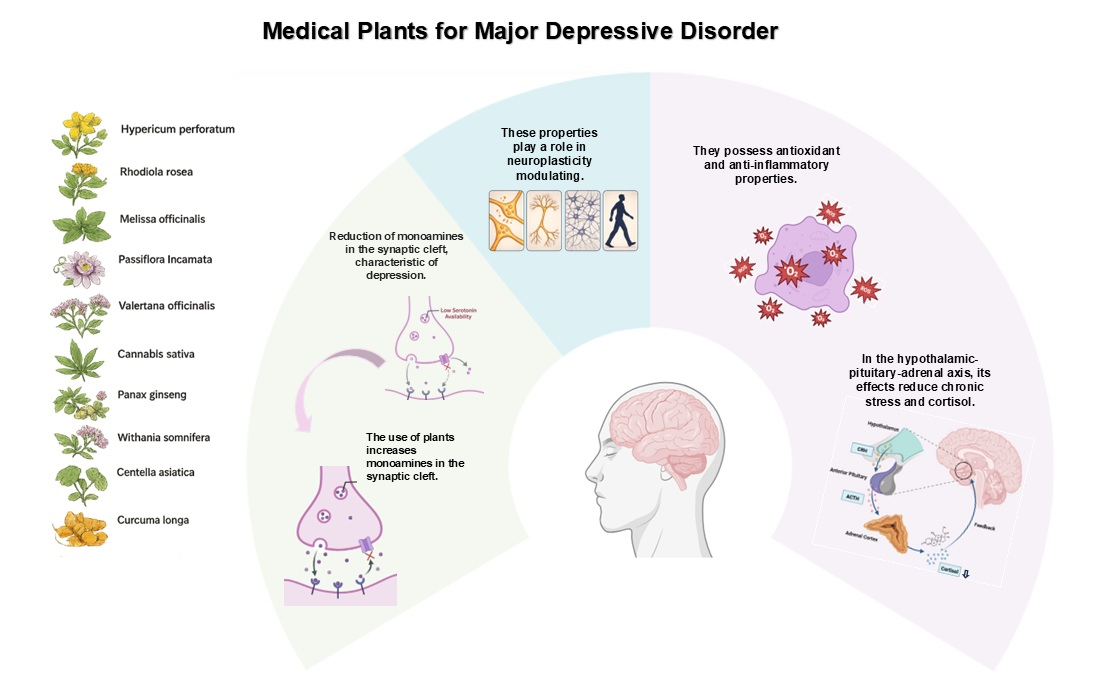
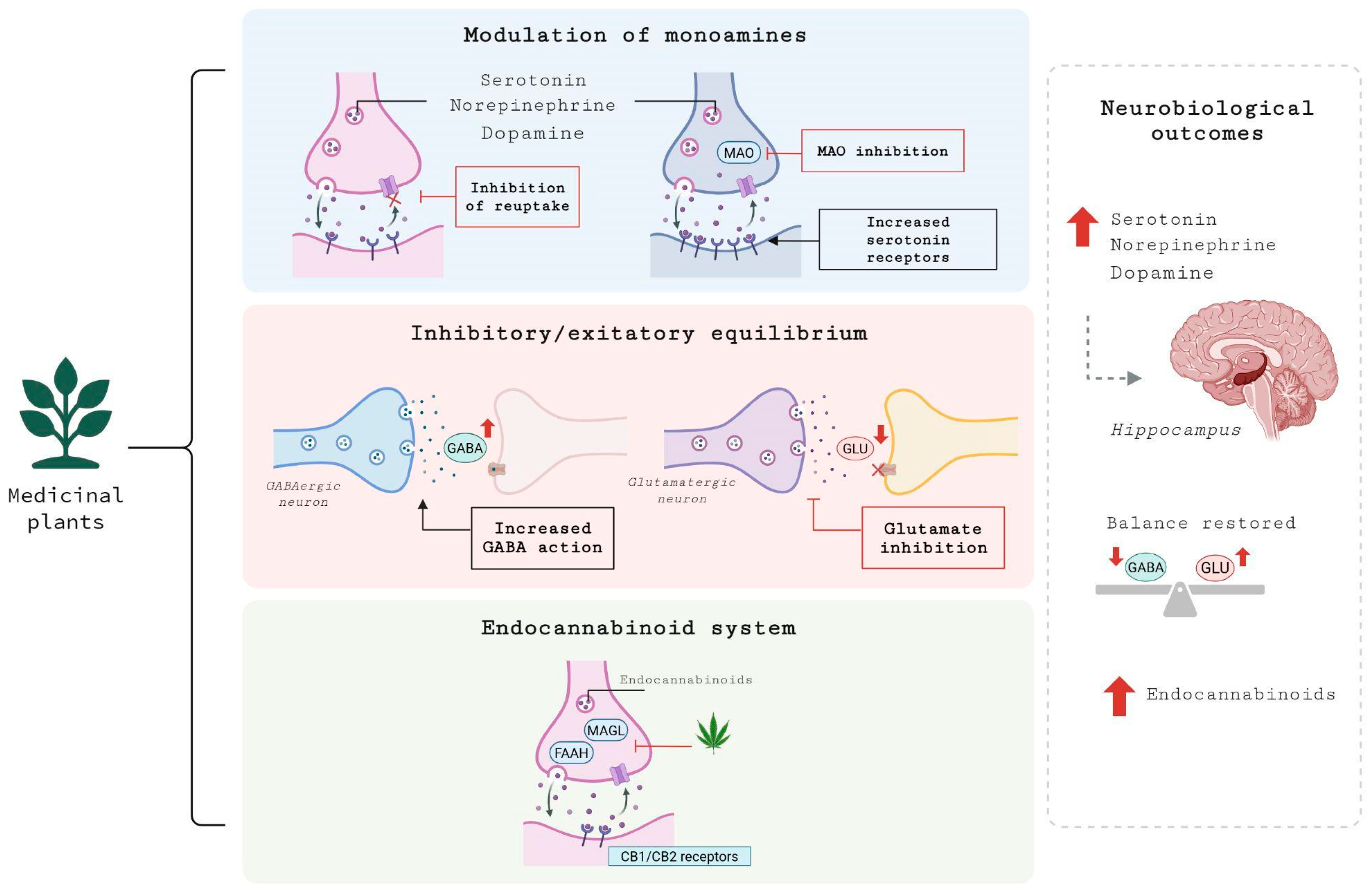
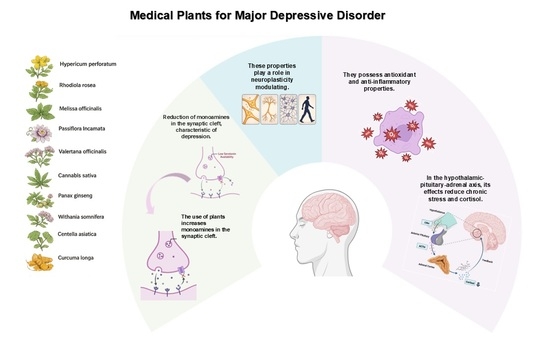
- Medicinal plants modulate neurotransmitters, neuroplasticity, and the HPA axis to treat MDD.
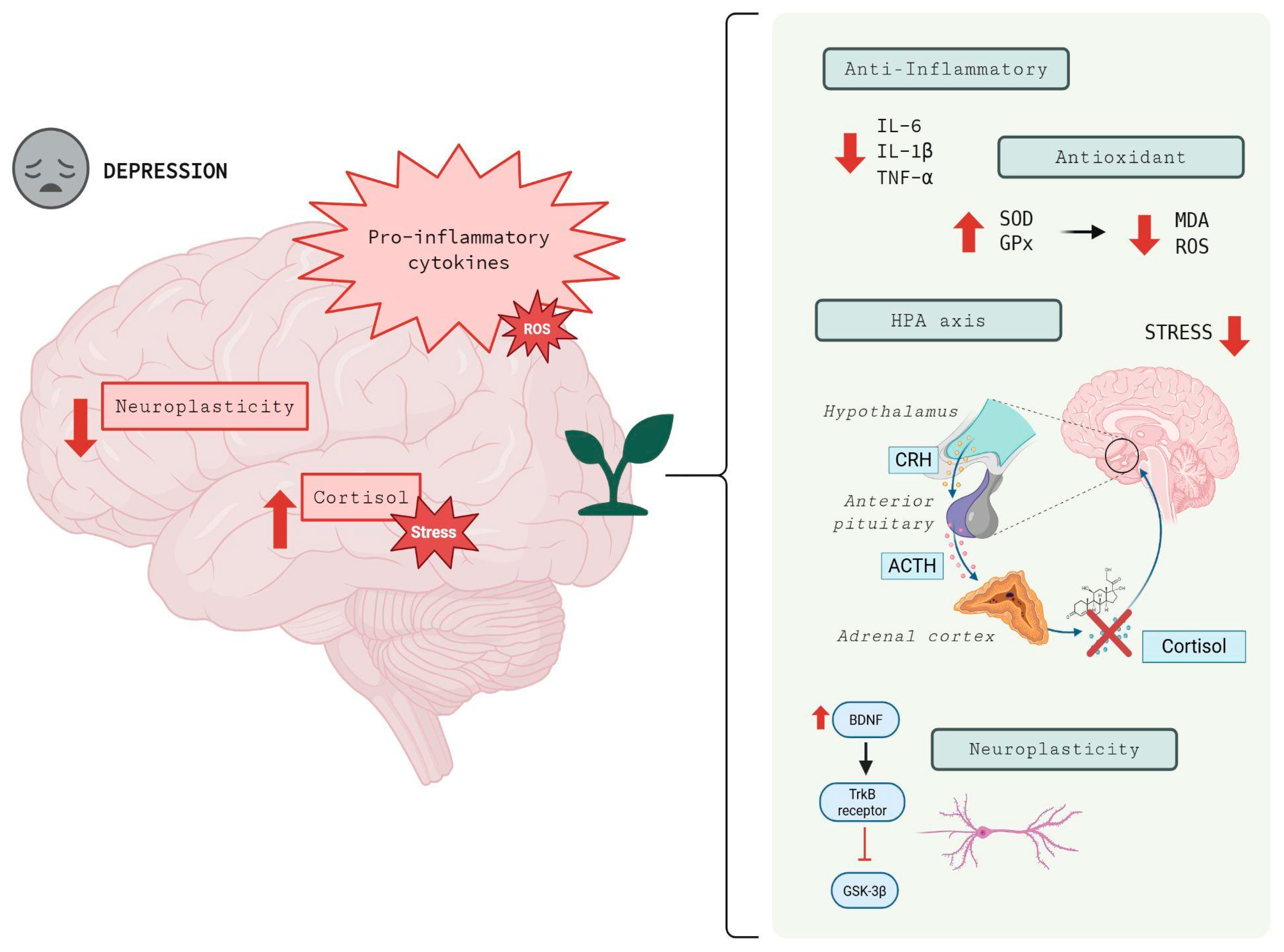
- Some bioactive compounds reduce neuroinflammation and oxidative stress by inhibiting pro-inflammatory cytokines.
- Some plants offer promising therapeutic or adjunct alternatives for MDD.
- Clinical integration requires rigorous attention to safety regarding hepatotoxicity risks and significant herb–drug interactions.
Abstract
1. Introduction
2. Main Medicinal Plants with Antidepressant Potential
2.1. Hypericum perforatum
2.2. Rhodiola rosea
2.3. Melissa officinalis
2.4. Passiflora incarnata
2.5. Valeriana officinalis
2.6. Cannabis sativa
2.7. Emerging Plants
3. Pharmacokinetics Regarding Medicinal Plants for Major Depressive Disorder
4. Elucidating Neurobiological Mechanisms of Action
4.1. Interaction with Neurotransmitter Systems
4.2. Anti-Inflammatory and Antioxidant Properties
4.3. Impact on Neuroplasticity and Cell Signaling
4.4. Modulation of the HPA Axis
5. Adverse Effects of Medicinal Plants for Major Depressive Disorder
6. Translational Limitations and Regulatory Challenges
7. Discussion and Final Considerations

| Medicinal Plant | Main Compounds | Mechanisms of Action | References |
|---|---|---|---|
| Cannabis sativa | Cannabinoids, terpenes | Modulation of neurotransmitter signaling | [55,144] |
| Centella asiatica | Asiaticoside, madecassoside, asiatic acid, madecassic acid | Modulates neurotransmitters (serotonin, dopamine), increases BDNF/TrkB expression, and inhibits iNOS/COX-2 (reducing oxidative stress) | [80,81,107,192,193] |
| Curcuma longa | Curcumin | Increased levels of BDNF and serotonin, possibly acting through modulation of NMDA and 5-HT7A-mediated pathways | [70,71] |
| Hypericum perforatum | Hypericin, hyperforin, flavonoids | Reuptake inhibition of serotonin, norepinephrine, dopamine, and glutamate | [12] |
| Melissa officinalis | Triterpenoids, volatile compounds, flavonoids, and phenolic acids | Increases serum BDNF concentration | [25,26] |
| Panax ginseng | Ginsenoside | It acts on the dopaminergic and serotonergic systems, modulating BDNF expression | [77] |
| Passiflora incarnata | Polyphenols, carotenoids, indole alkaloids | Modulation of neurotransmitter signaling | [34,139,141] |
| Rhodiola rosea | Rhodioloside, salidroside | Improve 5-HT level, induce neural stem cell proliferation, decrease pro-inflammatory cytokine levels, and increase BDNF | [21,22] |
| Valeriana officinalis | Valerenic acid, flavonoids, caffeoylshinic acid | Modulation of the GABA system | [130,226] |
| Withania somnifera | Withanolides | Modulates inflammatory and biochemical markers and increases BDNF and serotonin levels | [74,76] |
Author Contributions
Funding
Institutional Review Board Statement
Informed Consent Statement
Data Availability Statement
Conflicts of Interest
Abbreviations
| 5-HT | 5-hydroxytryptamine |
| 7-COOH-CBD | 7-carboxycannabidiol |
| 7-OH-CBD | 7-hydroxycannabidiol |
| Aβ | beta-amyloid |
| AcOEt | ethyl acetate |
| ACTH | adrenocorticotropic hormone |
| AE | aqueous extract |
| Akt | protein kinase B |
| AUC | area under the plasma concentration curve |
| BBB | blood–brain barrier |
| BDI | Beck Depression Inventory |
| BDNF | brain-derived neurotrophic factor |
| BuOH | butanol |
| CBD | cannabidiol |
| CGI | Clinical Global Impression |
| CMS | chronic mild stress |
| CNS | central nervous system |
| COX-2 | cyclooxygenase-2 |
| CPZ | chlorpromazine |
| CREB | cAMP response element-binding protein |
| CRH | corticotropin-releasing hormone |
| CYP | cytochrome P450 |
| Cmax | maximum concentration reached |
| FAAH | fatty acid amide hydrolase |
| FST | forced swim test |
| GABA | gamma-aminobutyric acid |
| GLU | glutamate |
| GPx | glutathione peroxidase |
| GR | glucocorticoid receptor |
| GSK-3β | glycogen synthase kinase-3beta |
| HAM-D | Hamilton Depression Rating Scale |
| HE | ethanol extract |
| HILI | herb-induced liver injury |
| HO-1 | heme oxygenase-1 |
| HPA | hypothalamic–pituitary–adrenal |
| Hp-C | conventional Hypericum perforatum |
| Hp-MF | multi-fractionated Hypericum perforatum |
| ICAM-1 | intercellular adhesion molecule-1 |
| IL-1β | interleukin-1 beta |
| IL-6 | interleukin-6 |
| iNOS | inducible nitric oxide synthase |
| LPS | lipopolysaccharide |
| LTP | long-term potentiation |
| MAGL | monoacylglycerol lipase |
| MAO | monoamine oxidase |
| MAPK | mitogen-activated protein kinase |
| MDA | malondialdehyde |
| MDD | Major Depressive Disorder |
| mRNA | messenger ribonucleic acid |
| NADPH | nicotinamide adenine dinucleotide phosphate |
| NF-κB | nuclear factor-kappa B |
| NLRP3 | NOD-like receptor family pyrin domain containing 3 |
| NMDA | N-Methyl-D-Aspartate |
| Nrf2 | nuclear factor erythroid 2-related factor 2 |
| NA | Not available |
| OBX | olfactory bulbectomy |
| P-gp | P-glycoprotein |
| PSD-95 | postsynaptic density protein 95 |
| ROS | reactive oxygen species |
| SJW | St. John’s wort |
| SOD | superoxide dismutase |
| SSRIs | selective serotonin reuptake inhibitors |
| SYP | synaptophysin |
| THC | Δ-9-tetrahydrocannabinol |
| Tmax | time to maximum concentration |
| TNF-α | tumor necrosis factor-alpha |
| TrkB | tropomyosin receptor kinase B |
| TST | tail suspension test |
| t½ | elimination half-life |
| UHPLC-MS/MS | ultra-high-pressure liquid chromatography with mass spectrometry |
| UGTs | uridine 5′-diphospho-glucuronosyltransferases |
| USA | United States of America |
| VCAM-1 | vascular cell adhesion molecule-1 |
References
- Arora, V.; Saji, A.; Kheni, D.A.; Sajad, S. Comparative Efficacy of Antidepressants in the Treatment of Major Depressive Disorder (MDD) in Adult’s. Int. J. Multidiscip. Res. 2025, 7, 38971. [Google Scholar] [CrossRef]
- Pappa, S.; Shah, M.; Young, S.; Anwar, T.; Ming, T. Care Pathways, Prescribing Practices and Treatment Outcomes in Major Depressive Disorder and Treatment-Resistant Depression: Retrospective, Population-Based Cohort Study. BJPsych Open 2024, 10, e32. [Google Scholar] [CrossRef] [PubMed]
- Remali, J.; Aizat, W.M. Medicinal Plants and Plant-Based Traditional Medicine: Alternative Treatments for Depression and Their Potential Mechanisms of Action. Heliyon 2024, 10, e38986. [Google Scholar] [CrossRef]
- Dobrek, L.; Głowacka, K. Depression and Its Phytopharmacotherapy—A Narrative Review. Int. J. Mol. Sci. 2023, 24, 4772. [Google Scholar] [CrossRef]
- Nurzyńska-Wierdak, R. Plants with Potential Importance in Supporting the Treatment of Depression: Current Trends, and Research. Pharmaceuticals 2024, 17, 1489. [Google Scholar] [CrossRef]
- Estela-Zape, J.L.; Sanclemente-Cardoza, V.; Noreña-Buitrón, L.D.; Ordoñez-Mora, L.T. Utilization of Medicinal Plants in Mental Disorders: Neuroplasticity and Neuroprotection in Biomodels. Brain Sci. 2025, 15, 366. [Google Scholar] [CrossRef]
- Başaran, N.; Paslı, D.; Başaran, A.A. Unpredictable Adverse Effects of Herbal Products. Food Chem. Toxicol. 2022, 159, 112762. [Google Scholar] [CrossRef]
- Czigle, S.; Nagy, M.; Mladěnka, P.; Tóth, J.; The OEMONOM. Pharmacokinetic and Pharmacodynamic Herb-Drug Interactions—Part I. Herbal Medicines of the Central Nervous System. PeerJ 2023, 11, e16149. [Google Scholar] [CrossRef]
- Kumar, S.; Jaiswal, A.K.; Aggarwal, M.; Ekbbal, R.; Gaurav, G.G. A Review on Quality Control Aspects of Indian Medicinal Plants. Pharmacogn. Rev. 2023, 17, 276–286. [Google Scholar] [CrossRef]
- Warhade, V.R.; Dighe, A. A Review on Quality Control and Standardization of Herbals. Res. J. Sci. Technol. 2022, 14, 247–252. [Google Scholar] [CrossRef]
- Nobakht, S.Z.; Akaberi, M.; Mohammadpour, A.; Tafazoli Moghadam, A.; Emami, A. Hypericum Perforatum: Traditional Uses, Clinical Trials, and Drug Interactions. Iran. J. Basic Med. Sci. 2022, 25, 1045. [Google Scholar] [CrossRef]
- Kandilarov, I.K.; Zlatanova, H.I.; Georgieva-Kotetarova, M.T.; Kostadinova, I.I.; Katsarova, M.N.; Dimitrova, S.Z.; Lukanov, L.K.; Sadakov, F. Antidepressant Effect and Recognition Memory Improvement of Two Novel Plant Extract Combinations—Antistress I and Anti-Stress II on Rats Subjected to a Model of Mild Chronic Stress. Folia Med. 2018, 60, 110–116. [Google Scholar] [CrossRef]
- Bussmann, H.; Bremer, S.; Hernier, A.M.; Drewe, J.; Häberlein, H.; Franken, S.; Freytag, V.; Boonen, G.; Butterweck, V. St. John’s Wort Extract Ze 117 and Escitalopram Alter Plasma and Hippocampal Lipidome in a Rat Model of Chronic-Stress-Induced Depression. Int. J. Mol. Sci. 2024, 25, 12667. [Google Scholar] [CrossRef]
- Seifritz, E.; Hatzinger, M.; Holsboer-Trachsler, E. Efficacy of Hypericum Extract WS® 5570 Compared with Paroxetine in Patients with a Moderate Major Depressive Episode—A Subgroup Analysis. Int. J. Psychiatry Clin. Pract. 2016, 20, 126–132. [Google Scholar] [CrossRef]
- Linde, K.; Berner, M.M.; Kriston, L. St John’s Wort for Major Depression. Cochrane Database Syst. Rev. 2008, 2008, CD000448. [Google Scholar] [CrossRef] [PubMed]
- Di Pierro, F.; Risso, P.; Settembre, R. Role in Depression of a Multi-Fractionated versus a Conventional Hypericum Perforatum Extract. Panminerva Med. 2018, 60, 156–160. [Google Scholar] [CrossRef] [PubMed]
- Xiang, Y.; Wang, L.; Gu, P.; Wang, C.; Tian, Y.; Shi, W.; Deng, F.; Zhang, Y.; Gao, L.; Wang, K.; et al. A Randomized, Double-Blind, Positive-Controlled, Multicenter Clinical Trial on the Efficacy and Safety of ShuganJieyu Capsule and St. John’s Wort for Major Depressive Disorder with Somatic Complaints. Int. J. Ment. Health Addict. 2025, 23, 2151–2166. [Google Scholar] [CrossRef]
- Lu, Y.; Deng, B.; Xu, L.; Liu, H.; Song, Y.; Lin, F. Effects of Rhodiola Rosea Supplementation on Exercise and Sport: A Systematic Review. Front. Nutr. 2022, 9, 856287. [Google Scholar] [CrossRef] [PubMed]
- Chen, Q.G.; Zeng, Y.S.; Qu, Z.Q.; Tang, J.Y.; Qin, Y.J.; Chung, P.; Wong, R.; Hägg, U. The Effects of Rhodiola Rosea Extract on 5-HT Level, Cell Proliferation and Quantity of Neurons at Cerebral Hippocampus of Depressive Rats. Phytomedicine 2009, 16, 830–838. [Google Scholar] [CrossRef]
- Vasileva, L.V.; Saracheva, K.E.; Ivanovska, M.V.; Petrova, A.P.; Sucouglu, E.; Murdjeva, M.A.; Getova-Spasova, D.P. Beneficial Effect of Chronic Treatment with Extracts from Rhodiola rosea L. and Curcuma longa L. on the Immunoreactivity of Animals Subjected to a Chronic Mild Stress Model. Folia Med. 2017, 59, 443–453. [Google Scholar] [CrossRef]
- Yang, S.-J.; Yu, H.-Y.; Kang, D.-Y.; Ma, Z.-Q.; Qu, R.; Fu, Q.; Ma, S.-P. Antidepressant-like Effects of Salidroside on Olfactory Bulbectomy-Induced pro-Inflammatory Cytokine Production and Hyperactivity of HPA Axis in Rats. Pharmacol. Biochem. Behav. 2014, 124, 451–457. [Google Scholar] [CrossRef]
- Zhang, X.; Du, Q.; Liu, C.; Yang, Y.; Wang, J.; Duan, S.; Duan, J. Rhodioloside Ameliorates Depressive Behavior via Up-Regulation of Monoaminergic System Activity and Anti-Inflammatory Effect in Olfactory Bulbectomized Rats. Int. Immunopharmacol. 2016, 36, 300–304. [Google Scholar] [CrossRef]
- Mao, J.J.; Xie, S.X.; Zee, J.; Soeller, I.; Li, Q.S.; Rockwell, K.; Amsterdam, J.D. Rhodiola Rosea versus Sertraline for Major Depressive Disorder: A Randomized Placebo-Controlled Trial. Phytomedicine 2015, 22, 394–399. [Google Scholar] [CrossRef]
- Gao, L.; Wu, C.; Liao, Y.; Wang, J. Antidepressants Effects of Rhodiola Capsule Combined with Sertraline for Major Depressive Disorder: A Randomized Double-Blind Placebo-Controlled Clinical Trial. J. Affect. Disord. 2020, 265, 99–103. [Google Scholar] [CrossRef] [PubMed]
- Shakeri, A.; Sahebkar, A.; Javadi, B. Melissa officinalis L.—A Review of Its Traditional Uses, Phytochemistry and Pharmacology. J. Ethnopharmacol. 2016, 188, 204–228. [Google Scholar] [CrossRef]
- Hatami, K.; Hassanpourezatti, M.; Khalili, M. Melissa Officinalis Extract Improved High-Fat-Diet-Induced Anxiety-like Behaviors Depression and Memory Impairment by Regulation of Serum BDNF Levels in Rats. Avicenna J. Phytomed. 2024, 14, 617. [Google Scholar] [CrossRef]
- Ghazizadeh, J.; Hamedeyazdan, S.; Torbati, M.; Farajdokht, F.; Fakhari, A.; Mahmoudi, J.; Araj-Khodaei, M.; Sadigh-Eteghad, S. Melissa officinalis L. Hydro-alcoholic Extract Inhibits Anxiety and Depression through Prevention of Central Oxidative Stress and Apoptosis. Exp. Physiol. 2020, 105, 707–720. [Google Scholar] [CrossRef]
- Talebi, S.; Rahmati, B.; Jorjani, M.; Emadi, F.; Ghaffari, F.; Naseri, M. Synergistic Effects of Nepeta menthoides and Melissa officinalis Aqueous Extracts on Reserpine-induced Depressive-like Behaviors in Mice. Phytother. Res. 2022, 36, 2481–2494. [Google Scholar] [CrossRef] [PubMed]
- Bano, A.; Hepsomali, P.; Rabbani, F.; Farooq, U.; Kanwal, A.; Saleem, A.; Bugti, A.A.; Khan, A.A.; Khalid, Z.; Bugti, M.; et al. The Possible “Calming Effect” of Subchronic Supplementation of a Standardised Phospholipid Carrier-Based Melissa officinalis L. Extract in Healthy Adults with Emotional Distress and Poor Sleep Conditions: Results from a Prospective, Randomised, Double-Blinded, Placebo-Controlled Clinical Trial. Front. Pharmacol. 2023, 14, 1250560. [Google Scholar] [CrossRef]
- Araj-Khodaei, M.; Noorbala, A.A.; Yarani, R.; Emadi, F.; Emaratkar, E.; Faghihzadeh, S.; Parsian, Z.; Alijaniha, F.; Kamalinejad, M.; Naseri, M. A Double-Blind, Randomized Pilot Study for Comparison of Melissa officinalis L. and Lavandula angustifolia Mill. with Fluoxetine for the Treatment of Depression. BMC Complement. Med. Ther. 2020, 20, 207. [Google Scholar] [CrossRef] [PubMed]
- Safari, M.; Asadi, A.; Aryaeian, N.; Huseini, H.F.; Shidfar, F.; Jazayeri, S.; Malek, M.; Hosseini, A.F.; Hamidi, Z. The Effects of Melissa officinalis on Depression and Anxiety in Type 2 Diabetes Patients with Depression: A Randomized Double-Blinded Placebo-Controlled Clinical Trial. BMC Complement. Med. Ther. 2023, 23, 140. [Google Scholar] [CrossRef] [PubMed]
- Miroddi, M.; Calapai, G.; Navarra, M.; Minciullo, P.L.; Gangemi, S. Passiflora incarnata L.: Ethnopharmacology, Clinical Application, Safety and Evaluation of Clinical Trials. J. Ethnopharmacol. 2013, 150, 791–804. [Google Scholar] [CrossRef] [PubMed]
- Ravi, M. The Active Compounds of Passiflora spp. and Their Potential Medicinal Uses from Both in Vitro and in Vivo Evidences. J. Adv. Biomed. Pharm. Sci. 2021, 4, 45–55. [Google Scholar] [CrossRef]
- Fonseca, L.R.D.; Rodrigues, R.D.A.; Ramos, A.D.S.; Da Cruz, J.D.; Ferreira, J.L.P.; Silva, J.R.D.A.; Amaral, A.C.F. Herbal Medicinal Products from Passiflora for Anxiety: An Unexploited Potential. Sci. World J. 2020, 2020, 6598434. [Google Scholar] [CrossRef]
- Hamid, H.A.; Ramli, A.N.M.; Yusoff, M.M. Indole Alkaloids from Plants as Potential Leads for Antidepressant Drugs: A Mini Review. Front. Pharmacol. 2017, 8, 96. [Google Scholar] [CrossRef] [PubMed]
- Jawna-Zboińska, K.; Blecharz-Klin, K.; Joniec-Maciejak, I.; Wawer, A.; Pyrzanowska, J.; Piechal, A.; Mirowska-Guzel, D.; Widy-Tyszkiewicz, E. Passiflora incarnata L. Improves Spatial Memory, Reduces Stress, and Affects Neurotransmission in Rats. Phytother. Res. 2016, 30, 781–789. [Google Scholar] [CrossRef]
- Jafarpoor, N.; Abbasi-Maleki, S.; Asadi-Samani, M.; Khayatnouri, M.H. Evaluation of Antidepressant-like Effect of Hydroalcoholic Extract of Passiflora Incarnata in Animal Models of Depression in Male Mice. J. HerbMed Pharmacol. 2014, 3, 41–45. [Google Scholar]
- Santosh, P.; Venugopl, R.; Nilakash, A.S.; Kunjbihari, S.; Mangala, L. Antidepressant Activity of Methanolic Extract of Passiflora Foetida Leaves in Mice. Int. J. Pharm. Pharm. Sci. 2011, 3, 112–115. [Google Scholar]
- Ayres, A.S.F.S.J.; Santos, W.B.; Junqueira-Ayres, D.D.; Costa, G.M.; Ramos, F.A.; Castellanos, L.; Alves, J.S.F.; Asth, L.; Medeiros, I.U.D.; Zucolotto, S.M.; et al. Monoaminergic Neurotransmission Is Mediating the Antidepressant-like Effects of Passiflora edulis Sims fo. edulis. Neurosci. Lett. 2017, 660, 79–85. [Google Scholar] [CrossRef]
- Alves, J.S.F.; Silva, A.M.D.S.; Da Silva, R.M.; Tiago, P.R.F.; De Carvalho, T.G.; De Araújo Júnior, R.F.; De Azevedo, E.P.; Lopes, N.P.; Ferreira, L.D.S.; Gavioli, E.C.; et al. In Vivo Antidepressant Effect of Passiflora edulis f. flavicarpa into Cationic Nanoparticles: Improving Bioactivity and Safety. Pharmaceutics 2020, 12, 383. [Google Scholar] [CrossRef]
- Rodríguez-Landa, J.F.; German-Ponciano, L.J.; Puga-Olguín, A.; Olmos-Vázquez, O.J. Pharmacological, Neurochemical, and Behavioral Mechanisms Underlying the Anxiolytic- and Antidepressant-like Effects of Flavonoid Chrysin. Molecules 2022, 27, 3551. [Google Scholar] [CrossRef]
- Filho, C.B.; Jesse, C.R.; Donato, F.; Del Fabbro, L.; De Gomes, M.G.; Goes, A.T.R.; Souza, L.C.; Giacomeli, R.; Antunes, M.; Luchese, C.; et al. Neurochemical Factors Associated with the Antidepressant-like Effect of Flavonoid Chrysin in Chronically Stressed Mice. Eur. J. Pharmacol. 2016, 791, 284–296. [Google Scholar] [CrossRef]
- Filho, C.B.; Jesse, C.R.; Donato, F.; Del Fabbro, L.; Gomes De Gomes, M.; Rossito Goes, A.T.; Souza, L.C.; Boeira, S.P. Chrysin Promotes Attenuation of Depressive-like Behavior and Hippocampal Dysfunction Resulting from Olfactory Bulbectomy in Mice. Chem. Biol. Interact. 2016, 260, 154–162. [Google Scholar] [CrossRef]
- German-Ponciano, L.J.; Rosas-Sánchez, G.U.; Ortiz-Guerra, S.I.; Soria-Fregozo, C.; Rodríguez-Landa, J.F. Effects of Chrysin on mRNA Expression of 5-HT1A and 5-HT2A Receptors in the Raphe Nuclei and Hippocampus. Rev. Bras. Farmacogn. 2021, 31, 353–360. [Google Scholar] [CrossRef]
- Bao, H.; Pan, X.; Tao, Q.; Zhang, G.; Ding, W.; Li, G.; Peng, D.; Du, B.; Li, P. Safety Evaluation of Aqueous Extract from Valeriana officinalis L. Roots: Genotoxicity, Acute, Subchronic and Teratology Toxicity. J. Ethnopharmacol. 2024, 335, 118687. [Google Scholar] [CrossRef]
- Valente, V.; Machado, D.; Jorge, S.; Drake, C.L.; Marques, D.R. Does Valerian Work for Insomnia? An Umbrella Review of the Evidence. Eur. Neuropsychopharmacol. 2024, 82, 6–28. [Google Scholar] [CrossRef]
- Çelik, C.; Kırmızıbekmez, H. The Genus Valeriana L.: Ethnopharmacology, Phytochemistry and Biological Activities—An Updated Review. Phytochem. Rev. 2025, 24, 3337–3441. [Google Scholar] [CrossRef]
- Gavzan, H.; Araghi, A.; Marzban Abbasabadi, B.; Talebpour, N.; Golshahi, H. Antidepressant Effects of a Persian Herbal Formula on Mice with Chronic Unpredictable Mild Stress. Avicenna J. Phytomed. 2023, 13, 562. [Google Scholar] [CrossRef] [PubMed]
- Merkeb, F.; Yoseph, T.; Amsalu, B. Enhancing Nutrient Composition and Bioavailability in Common Beans Using Combined Zinc and Iron Fertilizers. Recent Adv. Food Nutr. Agric. 2025, Online ahead of print. [Google Scholar] [CrossRef] [PubMed]
- Lv, P.; Xiang, F.; Zhang, S.; Lei, D.; Zhou, C.; Wei, G.; Yan, Z. Valeriana jatamansi Jones Improves Depressive Behavior in CUMS Mice by Modulating Vitamin B12-Related Ileal Homeostasis. J. Ethnopharmacol. 2025, 342, 119392. [Google Scholar] [CrossRef]
- Zhao, S.; Ji, X.; Li, J.; Han, D.; Yang, L.; Huang, Y.; Tan, R.; Yan, Z.; Jiang, H. Valeriana jatamansi: An Overview of Phytochemistry, Pharmacology, Clinical Prospects, and Network Analysis of Drug Targets. Am. J. Chin. Med. 2025, 53, 1027–1063. [Google Scholar] [CrossRef]
- Choi, J.H.; Lee, M.J.; Chang, Y.; Lee, S.; Kim, H.-J.; Lee, S.W.; Kim, Y.O.; Cho, I.-H. Valeriana fauriei Exerts Antidepressant-Like Effects Through Anti-Inflammatory and Antioxidant Activities by Inhibiting Brain-Derived Neurotrophic Factor Associated with Chronic Restraint Stress. Rejuvenation Res. 2020, 23, 245–255. [Google Scholar] [CrossRef]
- Ren, M.; Tang, Z.; Wu, X.; Spengler, R.; Jiang, H.; Yang, Y.; Boivin, N. The Origins of Cannabis Smoking: Chemical Residue Evidence from the First Millennium BCE in the Pamirs. Sci. Adv. 2019, 5, eaaw1391. [Google Scholar] [CrossRef]
- Shin, J.; Choi, S.; Park, A.Y.; Ju, S.; Kweon, B.; Kim, D.-U.; Bae, G.-S.; Han, D.; Kwon, E.; Hong, J.; et al. In Vitro and In Vivo Anti-Inflammatory and Antidepressant-like Effects of Cannabis sativa L. Extracts. Plants 2024, 13, 1619. [Google Scholar] [CrossRef]
- Shin, J.; Kim, D.-U.; Bae, G.-S.; Han, J.-Y.; Lim, D.-W.; Lee, Y.-M.; Kim, E.; Kwon, E.; Han, D.; Kim, S. Antidepressant-like Effects of Cannabis sativa L. Extract in an Lipopolysaccharide Model: Modulation of Mast Cell Activation in Deep Cervical Lymph Nodes and Dura Mater. Pharmaceuticals 2024, 17, 1409. [Google Scholar] [CrossRef]
- Lucindo, M.S.S.; Albuquerque, A.L.S.; Pereira, K.A.; Salgado, K.D.C.B.; Oliveira, L.A.M.; Engel, D.F.; Nogueira, K.O.P.C. Chronic Cannabidiol Administration Modulates Depressive and Cognitive Alterations Induced by Social Isolation in Male Mice. Behav. Brain Res. 2025, 480, 115408. [Google Scholar] [CrossRef] [PubMed]
- Poudel, B.; Bany, B.M.; Hales, D.B.; Cheatwood, J.L. Effects of Cannabidiol (CBD) on Doxorubicin-Induced Anxiety and Depression-like Behaviors and mRNA Expression of Inflammatory Markers in Rats. Brain Sci. 2024, 14, 999. [Google Scholar] [CrossRef]
- Ribeiro De Novais Júnior, L.; Vicente Da Silva, T.; Da Silva, L.M.; Metzker De Andrade, F.; Da Silva, A.R.; Meneguzzo, V.; De Souza Ramos, S.; Michielin Lopes, C.; Bernardo Saturnino, A.; Inserra, A.; et al. Repeated Administration of a Full-Spectrum Cannabidiol Product, Not a Cannabidiol Isolate, Reverses the Lipopolysaccharide-Induced Depressive-Like Behavior and Hypolocomotion in a Rat Model of Low-Grade Subchronic Inflammation. Cannabis Cannabinoid Res. 2025, 10, 236–246. [Google Scholar] [CrossRef] [PubMed]
- Pérez-Valenzuela, E.; Hudson, R.; Uzuneser, T.; De Felice, M.; Szkudlarek, H.; Rushlow, W.; Laviolette, S.R. Sex-Dependent Synergism of an Edible THC: CBD Formulation in Reducing Anxiety and Depressive-like Symptoms Following Chronic Stress. Curr. Neuropharmacol. 2024, 22, 2059–2078. [Google Scholar] [CrossRef]
- Fang, G.; Wang, Y. Hippocampal CB1 Receptor Mediates Antidepressant-like Effect of Synthetic Cannabinoid-HU210 in Acute Despair Reaction Model in Mice. Neurosci. Lett. 2023, 792, 136953. [Google Scholar] [CrossRef]
- Ahn, Y.; Han, S.H.; Kim, M.G.; Hong, K.-B.; Kim, W.J.; Suh, H.J.; Jo, K. Anti-Depressant Effects of Ethanol Extract from Cannabis sativa (Hemp) Seed in Chlorpromazine-Induced Drosophila melanogaster Depression Model. Pharm. Biol. 2021, 59, 996–1005. [Google Scholar] [CrossRef] [PubMed]
- Silote, G.P.; Gatto, M.C.; Eskelund, A.; Guimarães, F.S.; Wegener, G.; Joca, S.R.L. Strain-, Sex-, and Time-Dependent Antidepressant-like Effects of Cannabidiol. Pharmaceuticals 2021, 14, 1269. [Google Scholar] [CrossRef] [PubMed]
- Wolinsky, D.; Mayhugh, R.E.; Surujnarain, R.; Thrul, J.; Vandrey, R.; Strickland, J.C. Acute and Chronic Effects of Medicinal Cannabis Use on Anxiety and Depression in a Prospective Cohort of Patients New to Cannabis. J. Affect. Disord. 2025, 390, 119829. [Google Scholar] [CrossRef] [PubMed]
- Graczyk, M.; Łukowicz, M.; Dzierzanowski, T. Prospects for the Use of Cannabinoids in Psychiatric Disorders. Front. Psychiatry 2021, 12, 620073. [Google Scholar] [CrossRef]
- Hindley, G.; Beck, K.; Borgan, F.; Ginestet, C.E.; McCutcheon, R.; Kleinloog, D.; Ganesh, S.; Radhakrishnan, R.; D’Souza, D.C.; Howes, O.D. Psychiatric Symptoms Caused by Cannabis Constituents: A Systematic Review and Meta-Analysis. Lancet Psychiatry 2020, 7, 344–353. [Google Scholar] [CrossRef]
- Henderson, R.G.; Lefever, T.W.; Heintz, M.M.; Trexler, K.R.; Borghoff, S.J.; Bonn-Miller, M.O. Oral Toxicity Evaluation of Cannabidiol. Food Chem. Toxicol. 2023, 176, 113778. [Google Scholar] [CrossRef]
- Bright, U.; Akirav, I. Modulation of Endocannabinoid System Components in Depression: Pre-Clinical and Clinical Evidence. Int. J. Mol. Sci. 2022, 23, 5526. [Google Scholar] [CrossRef]
- García-Gutiérrez, M.S.; Navarrete, F.; Gasparyan, A.; Austrich-Olivares, A.; Sala, F.; Manzanares, J. Cannabidiol: A Potential New Alternative for the Treatment of Anxiety, Depression, and Psychotic Disorders. Biomolecules 2020, 10, 1575. [Google Scholar] [CrossRef]
- Sarris, J.; Sinclair, J.; Karamacoska, D.; Davidson, M.; Firth, J. Medicinal Cannabis for Psychiatric Disorders: A Clinically-Focused Systematic Review. BMC Psychiatry 2020, 20, 24. [Google Scholar] [CrossRef]
- Jahromi, M.H.; Charousaei, H.; Charousaei, A. Evaluation of Nanocurcumin Effects on Depressive-Like Behaviors in Rats and Determination of Serum BDNF and Serotonin Levels. Brain Behav. 2025, 15, e70320. [Google Scholar] [CrossRef]
- Oh, K.-N.; Oh, D.-R.; Kim, Y.; Kim, S. Protective Effects of Curcuma longa L. on Corticosterone-Induced Neurotoxicity and Anti-Depression-Like Behavior: Involvement of NMDA and 5-HT7A Receptors. J. Microbiol. Biotechnol. 2025, 35, e2506005. [Google Scholar] [CrossRef] [PubMed]
- Lopresti, A.L.; Drummond, P.D. Efficacy of Curcumin, and a Saffron/Curcumin Combination for the Treatment of Major Depression: A Randomised, Double-Blind, Placebo-Controlled Study. J. Affect. Disord. 2017, 207, 188–196. [Google Scholar] [CrossRef]
- Kanchanatawan, B.; Tangwongchai, S.; Sughondhabhirom, A.; Suppapitiporn, S.; Hemrunrojn, S.; Carvalho, A.F.; Maes, M. Add-on Treatment with Curcumin Has Antidepressive Effects in Thai Patients with Major Depression: Results of a Randomized Double-Blind Placebo-Controlled Study. Neurotox. Res. 2018, 33, 621–633. [Google Scholar] [CrossRef]
- Dawane, J.; Seok, S.; Dhande, P.; Langade, D.; Han, H.; Kim, S.-B.; Ju, J.-Y. Evaluation of the Anxiolytic and Antidepressant Effects of Standardized Ashwagandha (Withania somnifera) Root Extract in Wistar Rats. Prev. Nutr. Food Sci. 2024, 29, 414–421. [Google Scholar] [CrossRef]
- Gokdemir, G.S.; Seker, U.; Baksi, N.; Baylan, M.; Demirtaş, B.; Gokdemir, M.T. Antidepressant-like Effects of Ashwagandha (Withania Somnifera) on Chronic Unpredictable Mild Stress-Induced Depression in Adolescent Rats. Psychopharmacology 2025, 243, 117–132. [Google Scholar] [CrossRef]
- Majeed, M.; Nagabhushanam, K.; Murali, A.; Vishwanathan, D.T.; Mamidala, R.V.; Mundkur, L. A Standardized Withania somnifera (Linn.) Root Extract with Piperine Alleviates the Symptoms of Anxiety and Depression by Increasing Serotonin Levels: A Double-Blind, Randomized, Placebo-Controlled Study. J. Integr. Complement. Med. 2024, 30, 459–468. [Google Scholar] [CrossRef]
- Chou, T.; Huang, H.-S.; Panyod, S.; Huang, Y.-J.; Sheen, L.-Y. Korean Red Ginseng Water Extract Produces Antidepressant-like Effects through Involving Monoamines and Brain-Derived Neurotrophic Factor in Rats. J. Ginseng Res. 2023, 47, 552–560. [Google Scholar] [CrossRef]
- Zheng, Q.-L.; Zhu, H.-Y.; Xu, X.; Chu, S.-F.; Cui, L.-Y.; Dong, Y.-X.; Liu, Y.-J.; Zhan, J.-H.; Wang, Z.-Z.; Chen, N.-H. Korean Red Ginseng Alleviate Depressive Disorder by Improving Astrocyte Gap Junction Function. J. Ethnopharmacol. 2021, 281, 114466. [Google Scholar] [CrossRef]
- Lee, K.H.; Bahk, W.-M.; Lee, S.-J.; Pae, C.-U. Effectiveness and Tolerability of Korean Red Ginseng Augmentation in Major Depressive Disorder Patients with Difficult-to-Treat in Routine Practice. Clin. Psychopharmacol. Neurosci. 2020, 18, 621–626. [Google Scholar] [CrossRef]
- Bertollo, A.G.; Mingoti, M.E.D.; de Medeiros, J.; da Silva, G.B.; Capoani, G.T.; Lindemann, H.; Cassol, J.; Manica, D.; de Oliveira, T.; Garcez, M.L.; et al. Hydroalcoholic Extract of Centella Asiatica and Madecassic Acid Reverse Depressive-Like Behaviors, Inflammation and Oxidative Stress in Adult Rats Submitted to Stress in Early Life. Mol. Neurobiol. 2024, 61, 10182–10197. [Google Scholar] [CrossRef] [PubMed]
- Wang, L.; Guo, T.; Guo, Y.; Xu, Y. Asiaticoside Produces an Antidepressant-like Effect in a Chronic Unpredictable Mild Stress Model of Depression in Mice, Involving Reversion of Inflammation and the PKA/pCREB/BDNF Signaling Pathway. Mol. Med. Rep. 2020, 22, 2364–2372. [Google Scholar] [CrossRef] [PubMed]
- Ng, Q.X.; Koh, S.S.H.; Chan, H.W.; Ho, C.Y.X. Clinical Use of Curcumin in Depression: A Meta-Analysis. J. Am. Med. Dir. Assoc. 2017, 18, 503–508. [Google Scholar] [CrossRef]
- Altemimi, A.; Lakhssassi, N.; Baharlouei, A.; Watson, D.G.; Lightfoot, D.A. Phytochemicals: Extraction, Isolation, and Identification of Bioactive Compounds from Plant Extracts. Plants 2017, 6, 42. [Google Scholar] [CrossRef]
- Butterweck, V.; Schmidt, M. St. John’s Wort: Role of Active Compounds for Its Mechanism of Action and Efficacy. Wien. Med. Wochenschr. 2007, 157, 356–361. [Google Scholar] [CrossRef]
- Schulz, H.-U.; Schürer, M.; Bässler, D.; Weiser, D. Investigation of Pharmacokinetic Data of Hypericin, Pseudohypericin, Hyperforin and the Flavonoids Quercetin and Isorhamnetin Revealed from Single and Multiple Oral Dose Studies with a Hypericum Extract Containing Tablet in Healthy Male Volunteers. Arzneimittelforschung 2005, 55, 561–568. [Google Scholar] [CrossRef] [PubMed]
- Rombolà, L.; Scuteri, D.; Marilisa, S.; Watanabe, C.; Morrone, L.A.; Bagetta, G.; Corasaniti, M.T. Pharmacokinetic Interactions between Herbal Medicines and Drugs: Their Mechanisms and Clinical Relevance. Life 2020, 10, 106. [Google Scholar] [CrossRef]
- Pu, W.; Zhang, M.; Bai, R.; Sun, L.; Li, W.; Yu, Y.; Zhang, Y.; Song, L.; Wang, Z.; Peng, Y.; et al. Efeitos Anti-Inflamatórios Da Rhodiola rosea L.: Uma Revisão. Biomed. Pharmacother. 2020, 121, 109552. [Google Scholar] [CrossRef]
- Panossian, A.; Wikman, G. Effects of Adaptogens on the Central Nervous System and the Molecular Mechanisms Associated with Their Stress-Protective Activity. Pharmaceuticals 2010, 3, 188–224. [Google Scholar] [CrossRef]
- Thu, O.K.; Spigset, O.; Nilsen, O.G.; Hellum, B. Effect of Commercial Rhodiola Rosea on CYP Enzyme Activity in Humans. Eur. J. Clin. Pharmacol. 2016, 72, 295–300. [Google Scholar] [CrossRef]
- Qi, T.; Ge, B.-K.; Zhao, L.; Ma, Y.; Li, X.-R.; Xu, P.-X.; Xue, M. Cytosolic β-Glucosidase Inhibition and Renal Blood Flow Suppression Are Leading Causes for the Enhanced Systemic Exposure of Salidroside in Hypoxic Rats. RSC Adv. 2018, 8, 8469–8483. [Google Scholar] [CrossRef]
- Petersen, M.; Simmonds, M.S.J. Rosmarinic Acid. Phytochemistry 2003, 62, 121–125. [Google Scholar] [CrossRef]
- Kim, S.-B.; Kim, K.-S.; Kim, D.-D.; Yoon, I.-S. Metabolic Interactions of Rosmarinic Acid with Human Cytochrome P450 Monooxygenases and Uridine Diphosphate Glucuronosyltransferases. Biomed. Pharmacother. 2019, 110, 111–117. [Google Scholar] [CrossRef]
- Nakazawa, T.; Ohsawa, K. Metabolism of Rosmarinic Acid in Rats. J. Nat. Prod. 1998, 61, 993–996. [Google Scholar] [CrossRef] [PubMed]
- Patel, S.S.; Saleem, T.S.M.; Ravi, V.; Shrestha, B.; Verma, N.K.; Gauthaman, K. Passiflora incarnata Linn: A Phytopharmacological Review. Int. J. Green Pharm. 2009, 3, 277–280. [Google Scholar] [CrossRef]
- Tremmel, M.; Kiermaier, J.; Heilmann, J. In Vitro Metabolism of Six C-Glycosidic Flavonoids from Passiflora incarnata L. Int. J. Mol. Sci. 2021, 22, 6566. [Google Scholar] [CrossRef] [PubMed]
- Hendriks, H.; Bos, R.; Allersma, D.P.; Malingré, T.M.; Koster, A.S. Pharmacological Screening of Valerenal and Some Other Components of Essential Oil of Valeriana Officinalis. Planta Med. 1981, 42, 62–68. [Google Scholar] [CrossRef]
- Anderson, G.D.; Elmer, G.W.; Taibi, D.M.; Vitiello, M.V.; Kantor, E.; Kalhorn, T.F.; Howald, W.N.; Barsness, S.; Landis, C.A. Pharmacokinetics of Valerenic Acid after Single and Multiple Doses of Valerian in Older Women. Phytother. Res. 2010, 24, 1442–1446. [Google Scholar] [CrossRef]
- Yuan, C.-S.; Mehendale, S.; Xiao, Y.; Aung, H.H.; Xie, J.-T.; Ang-Lee, M.K. The Gamma-Aminobutyric Acidergic Effects of Valerian and Valerenic Acid on Rat Brainstem Neuronal Activity. Anesth. Analg. 2004, 98, 353–358. [Google Scholar] [CrossRef]
- Perucca, E.; Bialer, M. Critical Aspects Affecting Cannabidiol Oral Bioavailability and Metabolic Elimination, and Related Clinical Implications. CNS Drugs 2020, 34, 795–800. [Google Scholar] [CrossRef]
- Jaisupa, N.; Ashton, M.; Birgersson, S. Cannabidiol Metabolism in Vitro: The Role of Antiseizure Medications and CYP2C19 Genotypes. Xenobiotica Fate Foreign Compd. Biol. Syst. 2025, 55, 246–255. [Google Scholar] [CrossRef]
- Grotenhermen, F. Pharmacokinetics and Pharmacodynamics of Cannabinoids. Clin. Pharmacokinet. 2003, 42, 327–360. [Google Scholar] [CrossRef]
- Heuberger, J.A.A.C.; Guan, Z.; Oyetayo, O.-O.; Klumpers, L.; Morrison, P.D.; Beumer, T.L.; van Gerven, J.M.A.; Cohen, A.F.; Freijer, J. Population Pharmacokinetic Model of THC Integrates Oral, Intravenous, and Pulmonary Dosing and Characterizes Short- and Long-Term Pharmacokinetics. Clin. Pharmacokinet. 2015, 54, 209–219. [Google Scholar] [CrossRef]
- Consroe, P.; Laguna, J.; Allender, J.; Snider, S.; Stern, L.; Sandyk, R.; Kennedy, K.; Schram, K. Controlled Clinical Trial of Cannabidiol in Huntington’s Disease. Pharmacol. Biochem. Behav. 1991, 40, 701–708. [Google Scholar] [CrossRef]
- Gannon, J.M.; Brar, J.; Rai, A.; Chengappa, K.N.R. Effects of a Standardized Extract of Withania somnifera (Ashwagandha) on Depression and Anxiety Symptoms in Persons with Schizophrenia Participating in a Randomized, Placebo-Controlled Clinical Trial. Ann. Clin. Psychiatry Off. J. Am. Acad. Clin. Psychiatr. 2019, 31, 123–129. [Google Scholar] [CrossRef]
- Sanmukhani, J.; Satodia, V.; Trivedi, J.; Patel, T.; Tiwari, D.; Panchal, B.; Goel, A.; Tripathi, C.B. Efficacy and Safety of Curcumin in Major Depressive Disorder: A Randomized Controlled Trial. Phytother. Res. 2014, 28, 579–585. [Google Scholar] [CrossRef]
- Wang, Y.; Mou, C.; Hu, Y.; He, Z.; Cho, J.Y.; Kim, J.H. In Vivo Metabolism, Pharmacokinetics, and Pharmacological Activities of Ginsenosides from Ginseng. J. Ginseng Res. 2025, 49, 479–487. [Google Scholar] [CrossRef]
- Bylka, W.; Znajdek-Awiżeń, P.; Studzińska-Sroka, E.; Brzezińska, M. Centella Asiatica in Cosmetology. Postepy Dermatol. Alergol. 2013, 30, 46–49. [Google Scholar] [CrossRef] [PubMed]
- Anukunwithaya, T.; Tantisira, M.H.; Tantisira, B.; Khemawoot, P. Pharmacokinetics of a Standardized Extract of Centella Asiatica ECa 233 in Rats. Planta Med. 2017, 83, 710–717. [Google Scholar] [CrossRef] [PubMed]
- Gokara, M.; Malavath, T.; Kalangi, S.K.; Reddana, P.; Subramanyam, R. Unraveling the Binding Mechanism of Asiatic Acid with Human Serum Albumin and Its Biological Implications. J. Biomol. Struct. Dyn. 2014, 32, 1290–1302. [Google Scholar] [CrossRef]
- Sun, B.; Wu, L.; Wu, Y.; Zhang, C.; Qin, L.; Hayashi, M.; Kudo, M.; Gao, M.; Liu, T. Therapeutic Potential of Centella asiatica and Its Triterpenes: A Review. Front. Pharmacol. 2020, 11, 568032. [Google Scholar] [CrossRef]
- Anand, P.; Kunnumakkara, A.B.; Newman, R.A.; Aggarwal, B.B. Bioavailability of Curcumin: Problems and Promises. Mol. Pharm. 2007, 4, 807–818. [Google Scholar] [CrossRef]
- Luca, S.V.; Macovei, I.; Bujor, A.; Miron, A.; Skalicka-Woźniak, K.; Aprotosoaie, A.C.; Trifan, A. Bioactivity of Dietary Polyphenols: The Role of Metabolites. Crit. Rev. Food Sci. Nutr. 2020, 60, 626–659. [Google Scholar] [CrossRef]
- Hoehle, S.I.; Pfeiffer, E.; Metzler, M. Glucuronidation of Curcuminoids by Human Microsomal and Recombinant UDP-Glucuronosyltransferases. Mol. Nutr. Food Res. 2007, 51, 932–938. [Google Scholar] [CrossRef] [PubMed]
- Schneider, C.; Gordon, O.N.; Edwards, R.L.; Luis, P.B. Degradation of Curcumin: From Mechanism to Biological Implications. J. Agric. Food Chem. 2015, 63, 7606–7614. [Google Scholar] [CrossRef]
- Dai, T.; Jiang, W.; Guo, Z.; Wang, Z.; Huang, M.; Zhong, G.; Liang, C.; Pei, X.; Dai, R. Studies on Oral Bioavailability and First-Pass Metabolism of Withaferin A in Rats Using LC-MS/MS and Q-TRAP. Biomed. Chromatogr. BMC 2019, 33, e4573. [Google Scholar] [CrossRef]
- Gupta, S.K.; Jadhav, S.; Gohil, D.; Panigrahi, G.C.; Kaushal, R.K.; Gandhi, K.; Patil, A.; Chavan, P.; Gota, V. Safety, Toxicity and Pharmacokinetic Assessment of Oral Withaferin-A in Mice. Toxicol. Rep. 2022, 9, 1204–1212. [Google Scholar] [CrossRef]
- Vaidya, V.G.; Naik, N.N.; Ganu, G.; Parmar, V.; Jagtap, S.; Saste, G.; Bhatt, A.; Mulay, V.; Girme, A.; Modi, S.J.; et al. Clinical Pharmacokinetic Evaluation of Withania somnifera (L.) Dunal Root Extract in Healthy Human Volunteers: A Non-Randomized, Single Dose Study Utilizing UHPLC-MS/MS Analysis. J. Ethnopharmacol. 2024, 322, 117603. [Google Scholar] [CrossRef]
- Butterweck, V.; Liefländer-Wulf, U.; Winterhoff, H.; Nahrstedt, A. Plasma Levels of Hypericin in Presence of Procyanidin B2 and Hyperoside: A Pharmacokinetic Study in Rats. Planta Med. 2003, 69, 189–192. [Google Scholar] [CrossRef]
- Zhang, Y.; Li, L.; Lin, L.; Liu, J.; Zhang, Z.; Xu, D.; Xiang, F. Pharmacokinetics, Tissue Distribution, and Excretion of Salidroside in Rats. Planta Med. 2013, 79, 1429–1433. [Google Scholar] [CrossRef]
- Noguchi-Shinohara, M.; Ono, K.; Hamaguchi, T.; Iwasa, K.; Nagai, T.; Kobayashi, S.; Nakamura, H.; Yamada, M. Pharmacokinetics, Safety and Tolerability of Melissa officinalis Extract which Contained Rosmarinic Acid in Healthy Individuals: A Randomized Controlled Trial. PLoS ONE 2015, 10, e0126422. [Google Scholar] [CrossRef] [PubMed]
- Grundmann, O.; Wang, J.; McGregor, G.P.; Butterweck, V. Anxiolytic Activity of a Phytochemically Characterized Passiflora Incarnata Extract Is Mediated via the GABAergic System. Planta Med. 2008, 74, 1769–1773. [Google Scholar] [CrossRef] [PubMed]
- Anderson, G.D.; Elmer, G.W.; Kantor, E.D.; Templeton, I.E.; Vitiello, M.V. Pharmacokinetics of Valerenic Acid after Administration of Valerian in Healthy Subjects. Phytother. Res. 2005, 19, 801–803. [Google Scholar] [CrossRef]
- Millar, S.A.; Stone, N.L.; Yates, A.S.; O’Sullivan, S.E. A Systematic Review on the Pharmacokinetics of Cannabidiol in Humans. Front. Pharmacol. 2018, 9, 1365. [Google Scholar] [CrossRef]
- Liu, H.; Yang, J.; Du, F.; Gao, X.; Ma, X.; Huang, Y.; Xu, F.; Niu, W.; Wang, F.; Mao, Y.; et al. Absorption and Disposition of Ginsenosides after Oral Administration of Panax Notoginseng Extract to Rats. Drug Metab. Dispos. 2009, 37, 2290–2298. [Google Scholar] [CrossRef]
- Patil, D.; Gautam, M.; Mishra, S.; Karupothula, S.; Gairola, S.; Jadhav, S.; Pawar, S.; Patwardhan, B. Determination of Withaferin A and Withanolide A in Mice Plasma Using High-Performance Liquid Chromatography-Tandem Mass Spectrometry: Application to Pharmacokinetics after Oral Administration of Withania somnifera Aqueous Extract. J. Pharm. Biomed. Anal. 2013, 80, 203–212. [Google Scholar] [CrossRef]
- Chaurasiya, N.D.; Leon, F.; Muhammad, I.; Tekwani, B.L. Natural Products Inhibitors of Monoamine Oxidases-Potential New Drug Leads for Neuroprotection, Neurological Disorders, and Neuroblastoma. Molecules 2022, 27, 4297. [Google Scholar] [CrossRef]
- Zhang, Y.; Li, L.; Zhang, J. Curcumin in Antidepressant Treatments: An Overview of Potential Mechanisms, Pre-clinical/Clinical Trials and Ongoing Challenges. Basic Clin. Pharmacol. Toxicol. 2020, 127, 243–253. [Google Scholar] [CrossRef]
- Ramaholimihaso, T.; Bouazzaoui, F.; Kaladjian, A. Curcumin in Depression: Potential Mechanisms of Action and Current Evidence—A Narrative Review. Front. Psychiatry 2020, 11, 572533. [Google Scholar] [CrossRef]
- Kumar, N.K.; Nageshwar, M.; Reddy, K.P. Protective Effect of Curcumin on Hippocampal and Behavior Changes in Rats Exposed to Fluoride During Pre- and Post-Natal Period. Basic Clin. Neurosci. 2020, 11, 289–299. [Google Scholar] [CrossRef] [PubMed]
- Khom, S.; Baburin, I.; Timin, E.; Hohaus, A.; Trauner, G.; Kopp, B.; Hering, S. Valerenic Acid Potentiates and Inhibits GABAA Receptors: Molecular Mechanism and Subunit Specificity. Neuropharmacology 2007, 53, 178–187. [Google Scholar] [CrossRef]
- Steinholtz, L.; Bodén, R.; Wall, A.; Lubberink, M.; Fällmar, D.; Persson, J. Alterations in Gamma-Aminobutyric Acid and Glutamate Neurotransmission Linked to Intermittent Theta-Burst Stimulation in Depression: A Sham-Controlled Study. Transl. Psychiatry 2025, 15, 133. [Google Scholar] [CrossRef] [PubMed]
- Park, C.W.; Hong, K.-B.; Suh, H.J.; Ahn, Y. Sleep-Promoting Activity of Amylase-Treated Ashwagandha (Withania somnifera L. Dunal) Root Extract via GABA Receptors. J. Food Drug Anal. 2023, 31, 27–288. [Google Scholar] [CrossRef] [PubMed]
- Zhang, H.; Zhou, Z.; Chen, Z.; Zhong, Z.; Li, Z. Ginsenoside Rg3 Exerts Anti-Depressive Effect on an NMDA-Treated Cell Model and a Chronic Mild Stress Animal Model. J. Pharmacol. Sci. 2017, 134, 45–54. [Google Scholar] [CrossRef]
- Wang, G.-L.; He, Z.-M.; Zhu, H.-Y.; Gao, Y.-G.; Zhao, Y.; Yang, H.; Zhang, L.-X. Involvement of Serotonergic, Noradrenergic and Dopaminergic Systems in the Antidepressant-like Effect of Ginsenoside Rb1, a Major Active Ingredient of Panax Ginseng C.A. Meyer. J. Ethnopharmacol. 2017, 204, 118–124. [Google Scholar] [CrossRef]
- Darbinyan, V.; Aslanyan, G.; Amroyan, E.; Gabrielyan, E.; Malmström, C.; Panossian, A. Clinical Trial of Rhodiola rosea L. Extract SHR-5 in the Treatment of Mild to Moderate Depression. Nord. J. Psychiatry 2007, 61, 343–348. [Google Scholar] [CrossRef]
- Gao, L.; Wu, C.; Liao, Y.; Zhang, S.; Zhao, J. Herba Rhodiolae Alleviates Depression via the BDNF/TrkB-GSK-3β Signaling Pathway. Ann. Transl. Med. 2021, 9, 1758. [Google Scholar] [CrossRef]
- Lin, S.-H.; Chou, M.-L.; Chen, W.-C.; Lai, Y.-S.; Lu, K.-H.; Hao, C.-W.; Sheen, L.-Y. A Medicinal Herb, Melissa officinalis L. Ameliorates Depressive-like Behavior of Rats in the Forced Swimming Test via Regulating the Serotonergic Neurotransmitter. J. Ethnopharmacol. 2015, 175, 266–272. [Google Scholar] [CrossRef]
- Mathews, I.M.; Eastwood, J.; Lamport, D.J.; Cozannet, R.L.; Fanca-Berthon, P.; Williams, C.M. Clinical Efficacy and Tolerability of Lemon Balm (Melissa officinalis L.) in Psychological Well-Being: A Review. Nutrients 2024, 16, 3545. [Google Scholar] [CrossRef]
- Carminati, M.; Tondello, M.; Zanardi, R. Passiflora incarnata L., Herba, in Benzodiazepine Tapering: Long-Term Safety and Efficacy in a Real-World Setting. Front. Psychiatry 2024, 15, 1471083. [Google Scholar] [CrossRef]
- Campos, V.M.S.; Yabrude, A.T.Z.; Lima, R.D.T.; Wagner, F.; Oliva, H.N.P. A Systematic Review of Neurobiological Mechanisms of Passiflora: Beyond GABA Modulation. BioChem 2025, 5, 21. [Google Scholar] [CrossRef]
- Blecharz-Klin, K.; Pyrzanowska, J.; Piechal, A.; Joniec-Maciejak, I.; Wawer, A.; Jawna-Zboińska, K.; Mirowska-Guzel, D.; Widy-Tyszkiewicz, E. Effect of Passiflora incarnata L. Extract on Exploratory Behaviour and Neurotransmitters Level in Structures Involved in Motor Functions in Rats. J. Pre-Clin. Clin. Res. 2024, 1, 1–10. [Google Scholar] [CrossRef]
- De Gregorio, D.; McLaughlin, R.J.; Posa, L.; Ochoa-Sanchez, R.; Enns, J.; Lopez-Canul, M.; Aboud, M.; Maione, S.; Comai, S.; Gobbi, G. Cannabidiol Modulates Serotonergic Transmission and Reverses Both Allodynia and Anxiety-like Behavior in a Model of Neuropathic Pain. Pain 2019, 160, 136–150. [Google Scholar] [CrossRef] [PubMed]
- Linge, R.; Jiménez-Sánchez, L.; Campa, L.; Pilar-Cuéllar, F.; Vidal, R.; Pazos, A.; Adell, A.; Díaz, Á. Cannabidiol Induces Rapid-Acting Antidepressant-like Effects and Enhances Cortical 5-HT/Glutamate Neurotransmission: Role of 5-HT1A Receptors. Neuropharmacology 2016, 103, 16–26. [Google Scholar] [CrossRef] [PubMed]
- Miao, Y.; Zhao, F.; Guan, W. A Novel Insight into the Antidepressant Effect of Cannabidiol: Possible Involvement of the 5-HT1A, CB1, GPR55, and PPARγ Receptors. Int. J. Neuropsychopharmacol. 2025, 28, pyae064. [Google Scholar] [CrossRef]
- Correia, A.S.; Cardoso, A.; Vale, N. Oxidative Stress in Depression: The Link with the Stress Response, Neuroinflammation, Serotonin, Neurogenesis and Synaptic Plasticity. Antioxidants 2023, 12, 470. [Google Scholar] [CrossRef] [PubMed]
- Dang, C.; Wang, Q.; Li, Q.; Xiong, Y.; Lu, Y. Chinese Herbal Medicines for the Treatment of Depression: A Systematic Review and Network Meta-Analysis. Front. Pharmacol. 2024, 15, 1295564. [Google Scholar] [CrossRef]
- Langosch, J.M.; Zhou, X.-Y.; Heinen, M.; Kupferschmid, S.; Chatterjee, S.S.; Nöldner, M.; Walden, J. St John’s Wort (Hypericum Perforatum) Modulates Evoked Potentials in Guinea Pig Hippocampal Slices via AMPA and GABA Receptors. Eur. Neuropsychopharmacol. J. Eur. Coll. Neuropsychopharmacol. 2002, 12, 209–216. [Google Scholar] [CrossRef]
- Sánchez-Reus, M.I.; Gómez del Rio, M.A.; Iglesias, I.; Elorza, M.; Slowing, K.; Benedí, J. Standardized Hypericum Perforatum Reduces Oxidative Stress and Increases Gene Expression of Antioxidant Enzymes on Rotenone-Exposed Rats. Neuropharmacology 2007, 52, 606–616. [Google Scholar] [CrossRef]
- Khalil, H.M.A.; El Henafy, H.M.A.; Khalil, I.A.; Bakr, A.F.; Fahmy, M.I.; Younis, N.S.; El-Shiekh, R.A. Hypericum perforatum L. Nanoemulsion Mitigates Cisplatin-Induced Chemobrain via Reducing Neurobehavioral Alterations, Oxidative Stress, Neuroinflammation, and Apoptosis in Adult Rats. Toxics 2023, 11, 159. [Google Scholar] [CrossRef]
- Lee, Y.; Jung, J.-C.; Jang, S.; Kim, J.; Ali, Z.; Khan, I.A.; Oh, S. Anti-Inflammatory and Neuroprotective Effects of Constituents Isolated from Rhodiola Rosea. Evid.-Based Complement. Altern. Med. 2013, 2013, 514049. [Google Scholar] [CrossRef]
- Mimica-Dukic, N.; Bozin, B.; Sokovic, M.; Simin, N. Antimicrobial and Antioxidant Activities of Melissa officinalis L. (Lamiaceae) Essential Oil. J. Agric. Food Chem. 2004, 52, 2485–2489. [Google Scholar] [CrossRef]
- Draginic, N.; Jakovljevic, V.; Andjic, M.; Jeremic, J.; Srejovic, I.; Rankovic, M.; Tomovic, M.; Nikolic Turnic, T.; Svistunov, A.; Bolevich, S.; et al. Melissa officinalis L. as a Nutritional Strategy for Cardioprotection. Front. Physiol. 2021, 12, 661778. [Google Scholar] [CrossRef]
- Draginic, N.; Andjic, M.; Jeremic, J.; Zivkovic, V.; Kocovic, A.; Tomovic, M.; Bozin, B.; Kladar, N.; Bolevich, S.; Jakovljevic, V.; et al. Anti-Inflammatory and Antioxidant Effects of Melissa officinalis Extracts: A Comparative Study. Iran. J. Pharm. Res. 2022, 21, e126561. [Google Scholar] [CrossRef]
- Saberi, A.; Abbasloo, E.; Sepehri, G.; Yazdanpanah, M.; Mirkamandari, E.; Sheibani, V.; Safi, Z. The Effects of Methanolic Extract of Melissa officinalis on Experimental Gastric Ulcers in Rats. Iran. Red Crescent Med. J. 2016, 18, e24271. [Google Scholar] [CrossRef]
- Michael, H.S.R.; Mohammed, N.B.; Ponnusamy, S.; Edward Gnanaraj, W. A Folk Medicine: Passiflora incarnata L. Phytochemical Profile with Antioxidant Potency. Turk. J. Pharm. Sci. 2022, 19, 287–292. [Google Scholar] [CrossRef]
- Cao, D.; Li, H.; Yi, J.; Zhang, J.; Che, H.; Cao, J.; Yang, L.; Zhu, C.; Jiang, W. Antioxidant Properties of the Mung Bean Flavonoids on Alleviating Heat Stress. PLoS ONE 2011, 6, e21071. [Google Scholar] [CrossRef]
- Sudati, J.H.; Fachinetto, R.; Pereira, R.P.; Boligon, A.A.; Athayde, M.L.; Soares, F.A.; de Vargas Barbosa, N.B.; Rocha, J.B.T. In Vitro Antioxidant Activity of Valeriana Officinalis against Different Neurotoxic Agents. Neurochem. Res. 2009, 34, 1372–1379. [Google Scholar] [CrossRef]
- Rodríguez-Cruz, A.; Romo-Mancillas, A.; Mendiola-Precoma, J.; Escobar-Cabrera, J.E.; García-Alcocer, G.; Berumen, L.C. Effect of Valerenic Acid on Neuroinflammation in a MPTP-Induced Mouse Model of Parkinson’s Disease. IBRO Rep. 2020, 8, 28–35. [Google Scholar] [CrossRef] [PubMed]
- Santos, G.; Giraldez-Alvarez, L.D.; Ávila-Rodriguez, M.; Capani, F.; Galembeck, E.; Neto, A.G.; Barreto, G.E.; Andrade, B. SUR1 Receptor Interaction with Hesperidin and Linarin Predicts Possible Mechanisms of Action of Valeriana officinalis in Parkinson. Front. Aging Neurosci. 2016, 8, 97. [Google Scholar] [CrossRef] [PubMed]
- Han, K.H.; Lim, S.; Ryu, J.; Lee, C.-W.; Kim, Y.; Kang, J.-H.; Kang, S.-S.; Ahn, Y.K.; Park, C.-S.; Kim, J.J. CB1 and CB2 Cannabinoid Receptors Differentially Regulate the Production of Reactive Oxygen Species by Macrophages. Cardiovasc. Res. 2009, 84, 378–386. [Google Scholar] [CrossRef] [PubMed]
- Atalay, S.; Jarocka-Karpowicz, I.; Skrzydlewska, E. Antioxidative and Anti-Inflammatory Properties of Cannabidiol. Antioxidants 2019, 9, 21. [Google Scholar] [CrossRef] [PubMed]
- Pan, H.; Mukhopadhyay, P.; Rajesh, M.; Patel, V.; Mukhopadhyay, B.; Gao, B.; Haskó, G.; Pacher, P. Cannabidiol Attenuates Cisplatin-Induced Nephrotoxicity by Decreasing Oxidative/Nitrosative Stress, Inflammation, and Cell Death. J. Pharmacol. Exp. Ther. 2009, 328, 708–714. [Google Scholar] [CrossRef]
- Shao, Z.-H.; Xie, J.-T.; Vanden Hoek, T.L.; Mehendale, S.; Aung, H.; Li, C.-Q.; Qin, Y.; Schumacker, P.T.; Becker, L.B.; Yuan, C.-S. Antioxidant Effects of American Ginseng Berry Extract in Cardiomyocytes Exposed to Acute Oxidant Stress. Biochim. Biophys. Acta 2004, 1670, 165–171. [Google Scholar] [CrossRef]
- Xie, J.-T.; Shao, Z.-H.; Vanden Hoek, T.L.; Chang, W.-T.; Li, J.; Mehendale, S.; Wang, C.-Z.; Hsu, C.-W.; Becker, L.B.; Yin, J.-J.; et al. Antioxidant Effects of Ginsenoside Re in Cardiomyocytes. Eur. J. Pharmacol. 2006, 532, 201–207. [Google Scholar] [CrossRef]
- Choi, J.H.; Lee, M.J.; Jang, M.; Kim, H.-J.; Lee, S.; Lee, S.W.; Kim, Y.O.; Cho, I.-H. Panax Ginseng Exerts Antidepressant-like Effects by Suppressing Neuroinflammatory Response and Upregulating Nuclear Factor Erythroid 2 Related Factor 2 Signaling in the Amygdala. J. Ginseng Res. 2018, 42, 107–115. [Google Scholar] [CrossRef]
- Samadi Noshahr, Z.; Shahraki, M.R.; Ahmadvand, H.; Nourabadi, D.; Nakhaei, A. Protective Effects of Withania somnifera Root on Inflammatory Markers and Insulin Resistance in Fructose-Fed Rats. Rep. Biochem. Mol. Biol. 2015, 3, 62–67. [Google Scholar]
- Tiwari, S.; Gupta, S.K.; Pathak, A.K. A Double-Blind, Randomized, Placebo-Controlled Trial on the Effect of Ashwagandha (Withania somnifera Dunal.) Root Extract in Improving Cardiorespiratory Endurance and Recovery in Healthy Athletic Adults. J. Ethnopharmacol. 2021, 272, 113929. [Google Scholar] [CrossRef]
- Alam, N.; Hossain, M.; Khalil, M.I.; Moniruzzaman, M.; Sulaiman, S.A.; Gan, S.H. High Catechin Concentrations Detected in Withania somnifera (Ashwagandha) by High Performance Liquid Chromatography Analysis. BMC Complement. Altern. Med. 2011, 11, 65. [Google Scholar] [CrossRef]
- Vedi, M.; Rasool, M.; Sabina, E.P. Amelioration of Bromobenzene Hepatotoxicity by Withania somnifera Pretreatment: Role of Mitochondrial Oxidative Stress. Toxicol. Rep. 2014, 1, 629–638. [Google Scholar] [CrossRef] [PubMed]
- Oyenihi, A.B.; Chegou, N.N.; Oguntibeju, O.O.; Masola, B. Centella Asiatica Enhances Hepatic Antioxidant Status and Regulates Hepatic Inflammatory Cytokines in Type 2 Diabetic Rats. Pharm. Biol. 2017, 55, 1671–1678. [Google Scholar] [CrossRef] [PubMed]
- Gray, N.E.; Harris, C.J.; Quinn, J.F.; Soumyanath, A. Centella asiatica Modulates Antioxidant and Mitochondrial Pathways and Improves Cognitive Function in Mice. J. Ethnopharmacol. 2016, 180, 78–86. [Google Scholar] [CrossRef] [PubMed]
- Hewlings, S.J.; Kalman, D.S. Curcumin: A Review of Its Effects on Human Health. Foods 2017, 6, 92. [Google Scholar] [CrossRef]
- Panossian, A.; Wikman, G.; Sarris, J. Rosenroot (Rhodiola rosea): Traditional Use, Chemical Composition, Pharmacology and Clinical Efficacy. Phytomedicine Int. J. Phytother. Phytopharm. 2010, 17, 481–493. [Google Scholar] [CrossRef]
- Bonaterra, G.A.; Schwendler, A.; Hüther, J.; Schwarzbach, H.; Schwarz, A.; Kolb, C.; Abdel-Aziz, H.; Kinscherf, R. Neurotrophic, Cytoprotective, and Anti-Inflammatory Effects of St. John’s Wort Extract on Differentiated Mouse Hippocampal HT-22 Neurons. Front. Pharmacol. 2018, 8, 955. [Google Scholar] [CrossRef]
- Gibon, J.; Deloulme, J.-C.; Chevallier, T.; Ladevèze, E.; Abrous, D.N.; Bouron, A. The Antidepressant Hyperforin Increases the Phosphorylation of CREB and the Expression of TrkB in a Tissue-Specific Manner. Int. J. Neuropsychopharmacol. 2013, 16, 189–198. [Google Scholar] [CrossRef]
- Duda, P.; Hajka, D.; Wójcicka, O.; Rakus, D.; Gizak, A. GSK3β: A Master Player in Depressive Disorder Pathogenesis and Treatment Responsiveness. Cells 2020, 9, 727. [Google Scholar] [CrossRef]
- Bouron, A. Cellular Neurobiology of Hyperforin. Phytother. Res. 2024, 38, 636–645. [Google Scholar] [CrossRef]
- Neshatdoust, S.; Saunders, C.; Castle, S.M.; Vauzour, D.; Williams, C.; Butler, L.; Lovegrove, J.A.; Spencer, J.P.E. High-Flavonoid Intake Induces Cognitive Improvements Linked to Changes in Serum Brain-Derived Neurotrophic Factor: Two Randomised, Controlled Trials. Nutr. Healthy Aging 2016, 4, 81–93. [Google Scholar] [CrossRef] [PubMed]
- Zeng, J.; Xie, Z.; Chen, L.; Peng, X.; Luan, F.; Hu, J.; Xie, H.; Liu, R.; Zeng, N. Rosmarinic Acid Alleviate CORT-Induced Depressive-like Behavior by Promoting Neurogenesis and Regulating BDNF/TrkB/PI3K Signaling Axis. Biomed. Pharmacother. Biomedecine Pharmacother. 2024, 170, 115994. [Google Scholar] [CrossRef] [PubMed]
- Janda, K.; Wojtkowska, K.; Jakubczyk, K.; Antoniewicz, J.; Skonieczna-Żydecka, K. Passiflora Incarnata in Neuropsychiatric Disorders—A Systematic Review. Nutrients 2020, 12, 3894. [Google Scholar] [CrossRef]
- Amini, F.; Amini-Khoei, H.; Haratizadeh, S.; Setayesh, M.; Basiri, M.; Raeiszadeh, M.; Nozari, M. Hydroalcoholic Extract of Passiflora Incarnata Improves the Autistic-like Behavior and Neuronal Damage in a Valproic Acid-Induced Rat Model of Autism. J. Tradit. Complement. Med. 2023, 13, 315–324. [Google Scholar] [CrossRef] [PubMed]
- Malva, J.O.; Santos, S.; Macedo, T. Neuroprotective Properties of Valeriana Officinalis Extracts. Neurotox. Res. 2004, 6, 131–140. [Google Scholar] [CrossRef]
- Mineo, L.; Concerto, C.; Patel, D.; Mayorga, T.; Paula, M.; Chusid, E.; Aguglia, E.; Battaglia, F. Valeriana officinalis Root Extract Modulates Cortical Excitatory Circuits in Humans. Neuropsychobiology 2017, 75, 46–51. [Google Scholar] [CrossRef]
- Esposito, G.; De Filippis, D.; Maiuri, M.C.; De Stefano, D.; Carnuccio, R.; Iuvone, T. Cannabidiol Inhibits Inducible Nitric Oxide Synthase Protein Expression and Nitric Oxide Production in Beta-Amyloid Stimulated PC12 Neurons through P38 MAP Kinase and NF-kappaB Involvement. Neurosci. Lett. 2006, 399, 91–95. [Google Scholar] [CrossRef]
- Pacher, P.; Haskó, G. Endocannabinoids and Cannabinoid Receptors in Ischaemia-Reperfusion Injury and Preconditioning. Br. J. Pharmacol. 2008, 153, 252–262. [Google Scholar] [CrossRef]
- Huang, X.; Li, N.; Pu, Y.; Zhang, T.; Wang, B. Neuroprotective Effects of Ginseng Phytochemicals: Recent Perspectives. Molecules 2019, 24, 2939. [Google Scholar] [CrossRef]
- Liang, J.; Yu, Y.; Wang, B.; Lu, B.; Zhang, J.; Zhang, H.; Ge, P. Ginsenoside Rb1 Attenuates Oxygen-Glucose Deprivation-Induced Apoptosis in SH-SY5Y Cells via Protection of Mitochondria and Inhibition of AIF and Cytochrome c Release. Molecules 2013, 18, 12777–12792. [Google Scholar] [CrossRef] [PubMed]
- Wang, R.; Li, Y.-H.; Xu, Y.; Li, Y.-B.; Wu, H.-L.; Guo, H.; Zhang, J.-Z.; Zhang, J.-J.; Pan, X.-Y.; Li, X.-J. Curcumin Produces Neuroprotective Effects via Activating Brain-Derived Neurotrophic Factor/TrkB-Dependent MAPK and PI-3K Cascades in Rodent Cortical Neurons. Prog. Neuropsychopharmacol. Biol. Psychiatry 2010, 34, 147–153. [Google Scholar] [CrossRef] [PubMed]
- Li, G.; Wu, Q.; Wang, C.; Deng, P.; Li, J.; Zhai, Z.; Li, Y. Curcumin Reverses Cognitive Deficits through Promoting Neurogenesis and Synapse Plasticity via the Upregulation of PSD95 and BDNF in Mice. Sci. Rep. 2025, 15, 1135. [Google Scholar] [CrossRef]
- Fanibunda, S.E.; Kukkemane, K.; Ghai, U.; Kolthur-Seetharam, U.; Hingorani, L.; Vaidya, A.D.B.; Vaidya, V.A. Withania somnifera Regulates Mitochondrial Biogenesis and Energetics in Rat Cortical Neurons: Role of BDNF and SIRT1. Mol. Neurobiol. 2025, 62, 10277–10295. [Google Scholar] [CrossRef]
- Della Porta, M.; Maier, J.A.; Cazzola, R. Effects of Withania somnifera on Cortisol Levels in Stressed Human Subjects: A Systematic Review. Nutrients 2023, 15, 5015. [Google Scholar] [CrossRef]
- Sari, D.C.R.; Arfian, N.; Tranggono, U.; Setyaningsih, W.A.W.; Romi, M.M.; Emoto, N. Centella asiatica (Gotu Kola) Ethanol Extract up-Regulates Hippocampal Brain-Derived Neurotrophic Factor (BDNF), Tyrosine Kinase B (TrkB) and Extracellular Signal-Regulated Protein Kinase 1/2 (ERK1/2) Signaling in Chronic Electrical Stress Model in Rats. Iran. J. Basic Med. Sci. 2019, 22, 1218–1224. [Google Scholar] [CrossRef]
- Sbrini, G.; Brivio, P.; Fumagalli, M.; Giavarini, F.; Caruso, D.; Racagni, G.; Dell’Agli, M.; Sangiovanni, E.; Calabrese, F. Centella asiatica L. Phytosome Improves Cognitive Performance by Promoting Bdnf Expression in Rat Prefrontal Cortex. Nutrients 2020, 12, 355. [Google Scholar] [CrossRef]
- Xia, N.; Li, J.; Wang, H.; Wang, J.; Wang, Y. Schisandra Chinensis and Rhodiola Rosea Exert an Anti-Stress Effect on the HPA Axis and Reduce Hypothalamic c-Fos Expression in Rats Subjected to Repeated Stress. Exp. Ther. Med. 2016, 11, 353–359. [Google Scholar] [CrossRef]
- Makhathini, K.B.; Mabandla, M.V.; Daniels, W.M.U. Rosmarinic Acid Reverses the Deleterious Effects of Repetitive Stress and Tat Protein. Behav. Brain Res. 2018, 353, 203–209. [Google Scholar] [CrossRef]
- Feliú-Hemmelmann, K.; Monsalve, F.; Rivera, C. Melissa officinalis and Passiflora caerulea Infusion as Physiological Stress Decreaser. Int. J. Clin. Exp. Med. 2013, 6, 444–451. [Google Scholar] [PubMed]
- Munawar, N.; Ahsan, K.; Ahmad, A. Chapter 11—Natural Molecules in the Treatment of Schizophrenia. In Natural Molecules in Neuroprotection and Neurotoxicity; de Oliveira, M.R., Ed.; Academic Press: Cambridge, MA, USA, 2024; pp. 259–280. ISBN 978-0-443-23763-8. [Google Scholar]
- Cservenka, A.; Lahanas, S.; Dotson-Bossert, J. Marijuana Use and Hypothalamic-Pituitary-Adrenal Axis Functioning in Humans. Front. Psychiatry 2018, 9, 472. [Google Scholar] [CrossRef] [PubMed]
- Balsevich, G.; Petrie, G.N.; Hill, M.N. Endocannabinoids: Effectors of Glucocorticoid Signaling. Front. Neuroendocrinol. 2017, 47, 86–108. [Google Scholar] [CrossRef] [PubMed]
- Rubio, P.; De Fonseca, F.R.; Martín-Calderón, J.L.; Del Arco, I.; Bartolomé, S.; Villanúa, M.A.; Navarro, M. A Exposição Materna a Baixas Doses de Δ9—Tetrahidrocanabinol Facilita o Condicionamento Espacial Induzido Por Morfina Em Filhotes Machos Adultos. Pharmacol. Biochem. Behav. 1998, 61, 229–238. [Google Scholar] [CrossRef]
- Wang, Y.-Y.; Wu, Y.; Yu, K.-W.; Xie, H.-Y.; Gui, Y.; Chen, C.-R.; Wang, N.-H. Ginsenoside Rg1 Promotes Non-Rapid Eye Movement Sleep via Inhibition of Orexin Neurons of the Lateral Hypothalamus and Corticotropin-Releasing Hormone Neurons of the Paraventricular Hypothalamic Nucleus. J. Integr. Med. 2024, 22, 719–728. [Google Scholar] [CrossRef]
- Er, B.; Ozmen, B.; Sahin, E.; Orhan, C.; Sahin, N.; Morde, A.A.; Padigaru, M.; Sahin, K. A Novel Ashwagandha (Withania somnifera) Formulation Mitigates Sleep Deprivation-Induced Cognitive Impairment and Oxidative Stress in a Rat Model. Biomolecules 2025, 15, 710. [Google Scholar] [CrossRef]
- Chen, Y.; Han, T.; Rui, Y.; Yin, M.; Qin, L.; Zheng, H. Effects of total triterpenes of Centella asiatica on the corticosterone levels in serum and contents of monoamine in depression rat brain. Zhong Yao Cai Zhongyaocai J. Chin. Med. Mater. 2005, 28, 492–496. [Google Scholar]
- Bangaru, M.L.Y.; Woodliff, J.; Raff, H.; Kansra, S. Growth Suppression of Mouse Pituitary Corticotroph Tumor AtT20 Cells by Curcumin: A Model for Treating Cushing’s Disease. PLoS ONE 2010, 5, e9893. [Google Scholar] [CrossRef]
- Xu, Y.; Ku, B.; Tie, L.; Yao, H.; Jiang, W.; Ma, X.; Li, X. Curcumin Reverses the Effects of Chronic Stress on Behavior, the HPA Axis, BDNF Expression and Phosphorylation of CREB. Brain Res. 2006, 1122, 56–64. [Google Scholar] [CrossRef]
- Sile, I.; Teterovska, R.; Onzevs, O.; Ardava, E. Safety Concerns Related to the Simultaneous Use of Prescription or Over-the-Counter Medications and Herbal Medicinal Products: Survey Results among Latvian Citizens. Int. J. Environ. Res. Public. Health 2023, 20, 6551. [Google Scholar] [CrossRef] [PubMed]
- Van Strater, A.C.P.; Bogers, J.P.A.M. Interaction of St John’s Wort (Hypericum perforatum) with Clozapine. Int. Clin. Psychopharmacol. 2012, 27, 121–124. [Google Scholar] [CrossRef] [PubMed]
- Zahner, C.; Kruttschnitt, E.; Uricher, J.; Lissy, M.; Hirsch, M.; Nicolussi, S.; Krähenbühl, S.; Drewe, J. No Clinically Relevant Interactions of St. John’s Wort Extract Ze 117 Low in Hyperforin With Cytochrome P450 Enzymes and P-glycoprotein. Clin. Pharmacol. Ther. 2019, 106, 432–440. [Google Scholar] [CrossRef]
- Bansal, S.; Zamarripa, C.A.; Spindle, T.R.; Weerts, E.M.; Thummel, K.E.; Vandrey, R.; Paine, M.F.; Unadkat, J.D. Evaluation of Cytochrome P450-Mediated Cannabinoid-Drug Interactions in Healthy Adult Participants. Clin. Pharmacol. Ther. 2023, 114, 693–703. [Google Scholar] [CrossRef]
- Nasrin, S.; Watson, C.J.W.; Perez-Paramo, Y.X.; Lazarus, P. Cannabinoid Metabolites as Inhibitors of Major Hepatic CYP450 Enzymes, with Implications for Cannabis-Drug Interactions. Drug Metab. Dispos. 2021, 49, 1070–1080. [Google Scholar] [CrossRef]
- Doohan, P.T.; Oldfield, L.D.; Arnold, J.C.; Anderson, L.L. Cannabinoid Interactions with Cytochrome P450 Drug Metabolism: A Full-Spectrum Characterization. AAPS J. 2021, 23, 91. [Google Scholar] [CrossRef] [PubMed]
- Nagao, M.; Nakano, Y.; Tajima, M.; Sugiyama, E.; Sato, V.H.; Inada, M.; Sato, H. Nonlinear Disposition and Metabolic Interactions of Cannabidiol Through CYP3A Inhibition In Vivo in Rats. Cannabis Cannabinoid Res. 2020, 5, 318–325. [Google Scholar] [CrossRef] [PubMed]
- McDonald, K.L.; Raichura, Z.; Pondugula, S.R.; Marney, L.; Yang, L.; Choi, J.; Salamat, J.M.; Brandes, M.S.; Neff, C.; Adams, K.; et al. Ashwagandha (Withania somnifera) Plant Extracts Affect the Cytochrome P450 System and Cytotoxicity of Primary Human Hepatocytes. J. Diet. Suppl. 2025, 22, 613–639. [Google Scholar] [CrossRef]
- Kasprzyk, P.G.; Tremaine, L.; Fahmi, O.A.; Weng, J.-K. In Vitro Evaluation of the Potential for Drug Interactions by Salidroside. Nutrients 2023, 15, 3723. [Google Scholar] [CrossRef]
- Douros, A.; Bronder, E.; Andersohn, F.; Klimpel, A.; Kreutz, R.; Garbe, E.; Bolbrinker, J. Herb-Induced Liver Injury in the Berlin Case-Control Surveillance Study. Int. J. Mol. Sci. 2016, 17, 114. [Google Scholar] [CrossRef]
- Koenig, G.; Callipari, C.; Smereck, J.A. Acute Liver Injury After Long-Term Herbal “Liver Cleansing” and “Sleep Aid” Supplement Use. J. Emerg. Med. 2021, 60, 610–614. [Google Scholar] [CrossRef]
- Abegg, V.F.; Panajatovic, M.V.; Mancuso, R.V.; Allard, J.A.; Duthaler, U.; Odermatt, A.; Krähenbühl, S.; Bouitbir, J. Mechanisms of Hepatocellular Toxicity Associated with the Components of St. John’s Wort Extract Hypericin and Hyperforin in HepG2 and HepaRG Cells. Toxicol. Lett. 2024, 393, 1–13. [Google Scholar] [CrossRef]
- Stojanović, N.M.; Randjelović, P.J.; Mladenović, M.Z.; Ilić, I.R.; Petrović, V.; Stojiljković, N.; Ilić, S.; Radulović, N.S. Toxic Essential Oils, Part VI: Acute Oral Toxicity of Lemon Balm (Melissa officinalis L.) Essential Oil in BALB/c Mice. Food Chem. Toxicol. 2019, 133, 110794. [Google Scholar] [CrossRef]
- Hashemnia, M.; Rezaei, F.; Nikousefat, Z.; Bahiraei, M. Toxicological Evaluation of Chronic Oral Administration of Melissa officinalis Hydro-Ethanol Extract in Sprague-Dawley Rats. Vet. Sci. Dev. 2017, 7, 26–31. [Google Scholar] [CrossRef]
- Deepika, B.; Gowtham, P.; Raghavan, V.; Isaac, J.B.; Devi, S.; Kiran, V.; Mercy, D.J.; Sofini, P.S.S.; Harini, A.; Girigoswami, A.; et al. Harmony in Nature’s Elixir: A Comprehensive Exploration of Ethanol and Nano-Formulated Extracts from Passiflora incarnata Leaves: Unveiling in Vitro Cytotoxicity, Acute and Sub-Acute Toxicity Profiles in Swiss Albino Mice. J. Mol. Histol. 2024, 55, 977–994. [Google Scholar] [CrossRef] [PubMed]
- Ewing, L.E.; Skinner, C.M.; Quick, C.M.; Kennon-McGill, S.; McGill, M.R.; Walker, L.A.; El Sohly, M.A.; Gurley, B.J.; Koturbash, I. Hepatotoxicity of a Cannabidiol-Rich Cannabis Extract in the Mouse Model. Molecules 2019, 24, 1694. [Google Scholar] [CrossRef]
- Chen, S.; Li, X.; Wu, Q.; Li, Y.; Puig, M.; Moulin, F.; Choudhuri, S.; Gingrich, J.; Guo, L. Investigation of Cannabidiol-Induced Cytotoxicity in Human Hepatic Cells. Toxicology 2024, 506, 153884. [Google Scholar] [CrossRef] [PubMed]
- Spiess, D.; Winker, M.; Dolder Behna, A.; Gründemann, C.; Simões-Wüst, A.P. Advanced in Vitro Safety Assessment of Herbal Medicines for the Treatment of Non-Psychotic Mental Disorders in Pregnancy. Front. Pharmacol. 2022, 13, 882997. [Google Scholar] [CrossRef]
- Kahyaoğlu, F.; Gökçimen, A.; Demirci, B. Investigation of the Embryotoxic and Teratogenic Effect of Hypericum Perforatum in Pregnant Rats. J. Turk. Soc. Obstet. Gynecol. 2018, 15, 87–90. [Google Scholar] [CrossRef]
- DeVuono, M.V.; Nashed, M.G.; Sarikahya, M.H.; Kocsis, A.; Lee, K.; Vanin, S.R.; Hudson, R.; Lonnee, E.P.; Rushlow, W.J.; Hardy, D.B.; et al. Prenatal Tetrahydrocannabinol and Cannabidiol Exposure Produce Sex-Specific Pathophysiological Phenotypes in the Adolescent Prefrontal Cortex and Hippocampus. Neurobiol. Dis. 2024, 199, 106588. [Google Scholar] [CrossRef]
- Suciu, F.; Mihai, D.P.; Ungurianu, A.; Andrei, C.; Pușcașu, C.; Chițescu, C.L.; Ancuceanu, R.V.; Gird, C.E.; Stefanescu, E.; Blebea, N.M.; et al. Investigation of Anticonvulsant Potential of Morus alba, Angelica archangelica, Valeriana officinalis, and Passiflora incarnata Extracts: In Vivo and In Silico Studies. Int. J. Mol. Sci. 2025, 26, 6426. [Google Scholar] [CrossRef]
- Cases, J.; Ibarra, A.; Feuillère, N.; Roller, M.; Sukkar, S.G. Pilot Trial of Melissa officinalis L. Leaf Extract in the Treatment of Volunteers Suffering from Mild-to-Moderate Anxiety Disorders and Sleep Disturbances. Mediterr. J. Nutr. Metab. 2011, 4, 211–218. [Google Scholar] [CrossRef]
- Movafegh, A.; Alizadeh, R.; Hajimohamadi, F.; Esfehani, F.; Nejatfar, M. Preoperative Oral Passiflora Incarnata Reduces Anxiety in Ambulatory Surgery Patients: A Double-Blind, Placebo-Controlled Study. Anesth. Analg. 2008, 106, 1728–1732. [Google Scholar] [CrossRef]
- Bent, S.; Padula, A.; Moore, D.; Patterson, M.; Mehling, W. Valerian for Sleep: A Systematic Review and Meta-Analysis. Am. J. Med. 2006, 119, 1005–1012. [Google Scholar] [CrossRef]
- Campos, A.C.; de Paula Soares, V.; Carvalho, M.C.; Ferreira, F.R.; Vicente, M.A.; Brandão, M.L.; Zuardi, A.W.; Zangrossi, H.; Guimarães, F.S. Involvement of Serotonin-Mediated Neurotransmission in the Dorsal Periaqueductal Gray Matter on Cannabidiol Chronic Effects in Panic-like Responses in Rats. Psychopharmacology 2013, 226, 13–24. [Google Scholar] [CrossRef]
- Turna, J.; Patterson, B.; Van Ameringen, M. Is Cannabis Treatment for Anxiety, Mood, and Related Disorders Ready for Prime Time? Depress. Anxiety 2017, 34, 1006–1017. [Google Scholar] [CrossRef] [PubMed]
- Kim, H.J.; Kim, P.; Shin, C.Y. A Comprehensive Review of the Therapeutic and Pharmacological Effects of Ginseng and Ginsenosides in Central Nervous System. J. Ginseng Res. 2013, 37, 8–29. [Google Scholar] [CrossRef]
- Reay, J.L.; Scholey, A.B.; Kennedy, D.O. Panax ginseng (G115) Improves Aspects of Working Memory Performance and Subjective Ratings of Calmness in Healthy Young Adults. Hum. Psychopharmacol. Clin. Exp. 2010, 25, 462–471. [Google Scholar] [CrossRef]
- Chandrasekhar, K.; Kapoor, J.; Anishetty, S. A Prospective, Randomized Double-Blind, Placebo-Controlled Study of Safety and Efficacy of a High-Concentration Full-Spectrum Extract of Ashwagandha Root in Reducing Stress and Anxiety in Adults. Indian J. Psychol. Med. 2012, 34, 255–262. [Google Scholar] [CrossRef]
- Lopresti, A.L.; Smith, S.J.; Malvi, H.; Kodgule, R. An Investigation into the Stress-Relieving and Pharmacological Actions of an Ashwagandha (Withania somnifera) Extract: A Randomized, Double-Blind, Placebo-Controlled Study. Medicine 2019, 98, e17186. [Google Scholar] [CrossRef] [PubMed]
- Gray, N.E.; Alcazar Magana, A.; Lak, P.; Wright, K.M.; Quinn, J.; Stevens, J.F.; Maier, C.S.; Soumyanath, A. Centella asiatica—Phytochemistry and Mechanisms of Neuroprotection and Cognitive Enhancement. Phytochem. Rev. Proc. Phytochem. Soc. Eur. 2018, 17, 161–194. [Google Scholar] [CrossRef] [PubMed]
- Lopresti, A.L.; Maes, M.; Maker, G.L.; Hood, S.D.; Drummond, P.D. Curcumin for the Treatment of Major Depression: A Randomised, Double-Blind, Placebo Controlled Study. J. Affect. Disord. 2014, 167, 368–375. [Google Scholar] [CrossRef] [PubMed]


| Medical Plants | Compound/Extract | Model | Cmax | Tmax | Half-Life (t½) | References |
|---|---|---|---|---|---|---|
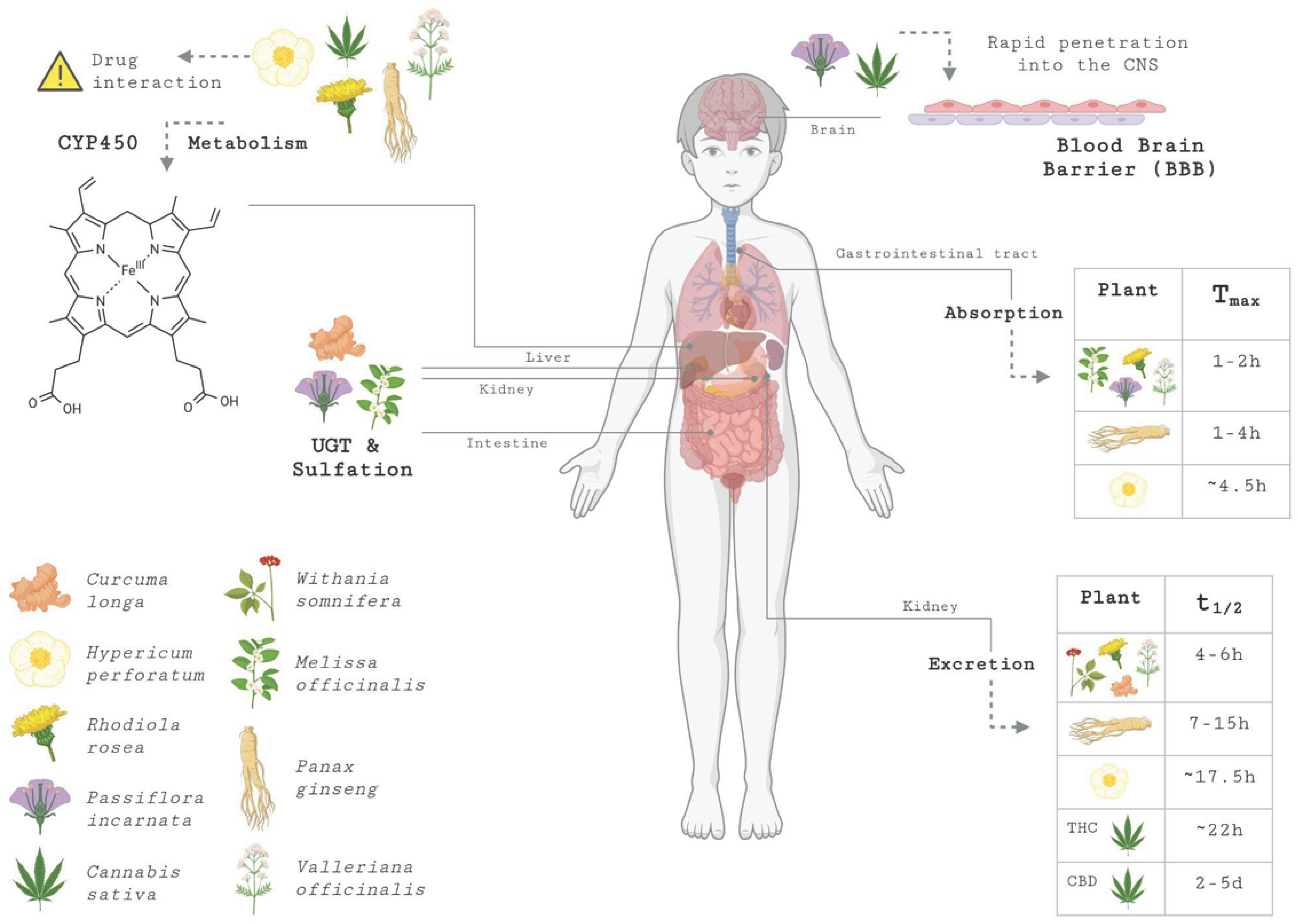
| Hypericum perforatum | Hypericin/Hyperforin | Human | 8–15 ng/mL | 4.5 h | 17.5 h | [118] |
| Rhodiola rosea | Salidroside | Rat | 2.5 µg/mL | 0.5 h | 1.1 h | [119] |
| Melissa officinalis | Rosmarinic acid | Human | 1.8 µg/mL | 0.7 h | 1.5 h | [120] |
| Passiflora incarnata | Flavonoid-rich extract | NA | NA | NA | NA | [121] |
| Valeriana officinalis | Valerenic acid | Rat | 0.8 ng/mL | 2 h | 5 h | [122] |
| Cannabis sativa | Cannabidiol (CBD) | Human | 114 ng/mL | 3 h | 18–32 h | [123] |
| Panax ginseng | Ginsenosides | Human | 10–50 ng/mL | 2–6 h | 7–15 h | [124] |
| Withania somnifera | Withanolides | Rat | 1.2 µg/mL | 0.6 h | 0.6 h | [125] |
| Centella asiatica | Madecassoside/Asiaticoside | Rat | 2.0 µg/mL | 0.3 h | 0.3 h | [108] |
| Curcuma longa | Curcumin | Human | 0.5–2.0 µM | 1–2 h | 1–2 h | [111] |
| Medical Plants | Preclinical Evidence | Clinical Evidence | Clinical Sample Size (n) | Main Results | Limitations | References |
|---|---|---|---|---|---|---|
| Hypericum perforatum | Tests in rodent models; inhibition of monoamine reuptake. | Several randomized clinical trials and meta-analyses | N > 2000 | A reduction in scores on the Hamilton Depression Rating Scale, similar to that observed with SSRIs | Drug interactions, variable extracts | [15,82] |
| Rhodiola rosea | Chronic stress models; increased BDNF expression | Small clinical trials | N ~ 60–120 | Improved depressive symptoms | Small samples, short duration | [135] |
| Melissa officinalis | Rodent anxiety/depression models | There are no robust randomized clinical trials | - | - | Lack of clinical trials | [227] |
| Passiflora incarnata | Animal models of anxiety/depression | Limited clinical studies (not specific for MDD) | N < 50 | Anxiolytic effects | Weak evidence for depression | [228] |
| Valeriana officinalis | GABAergic modulation in rodents | There are no robust randomized clinical trials | - | - | Mainly studied for sleep disorders | [229] |
| Cannabis sativa | Rodent depression models; anti-inflammatory effects | Observational studies and small clinical trials | Variable | Mixed antidepressant outcome | Regulatory and methodological limitations | [230,231] |
| Panax ginseng | Chronic stress rodent models | Small clinical trials | N ~ 40–100 | Mood improvement | Not MDD-specific, heterogeneous outcomes | [232,233] |
| Withania somnifera | Stress-induced rodent models | Small clinical trials | N ~ 60–80 | Reduced stress and depression scores | Short follow-up, mixed populations | [234,235] |
| Centella asiatica | Neuroinflammation and CUMS models | No randomized clinical trials were found. | - | - | Only preclinical evidence | [236] |
| Curcuma longa | Rodent depression models | Meta-analyses of randomized clinical trials | N > 1000 | Reduced depressive symptoms | Bioavailability issues | [82,237] |
Disclaimer/Publisher’s Note: The statements, opinions and data contained in all publications are solely those of the individual author(s) and contributor(s) and not of MDPI and/or the editor(s). MDPI and/or the editor(s) disclaim responsibility for any injury to people or property resulting from any ideas, methods, instructions or products referred to in the content. |
© 2026 by the authors. Licensee MDPI, Basel, Switzerland. This article is an open access article distributed under the terms and conditions of the Creative Commons Attribution (CC BY) license.
Share and Cite
Bertollo, A.G.; Spohr, L.; Bearzi, A.É.; Kreuz, K.M.; Ignácio, Z.M. Medicinal Plants for Major Depressive Disorder. Brain Sci. 2026, 16, 223. https://doi.org/10.3390/brainsci16020223
Bertollo AG, Spohr L, Bearzi AÉ, Kreuz KM, Ignácio ZM. Medicinal Plants for Major Depressive Disorder. Brain Sciences. 2026; 16(2):223. https://doi.org/10.3390/brainsci16020223
Chicago/Turabian StyleBertollo, Amanda Gollo, Luiza Spohr, Ana Élica Bearzi, Kelli Maria Kreuz, and Zuleide Maria Ignácio. 2026. "Medicinal Plants for Major Depressive Disorder" Brain Sciences 16, no. 2: 223. https://doi.org/10.3390/brainsci16020223
APA StyleBertollo, A. G., Spohr, L., Bearzi, A. É., Kreuz, K. M., & Ignácio, Z. M. (2026). Medicinal Plants for Major Depressive Disorder. Brain Sciences, 16(2), 223. https://doi.org/10.3390/brainsci16020223