Neurobiophilia



Abstract
1. Introduction
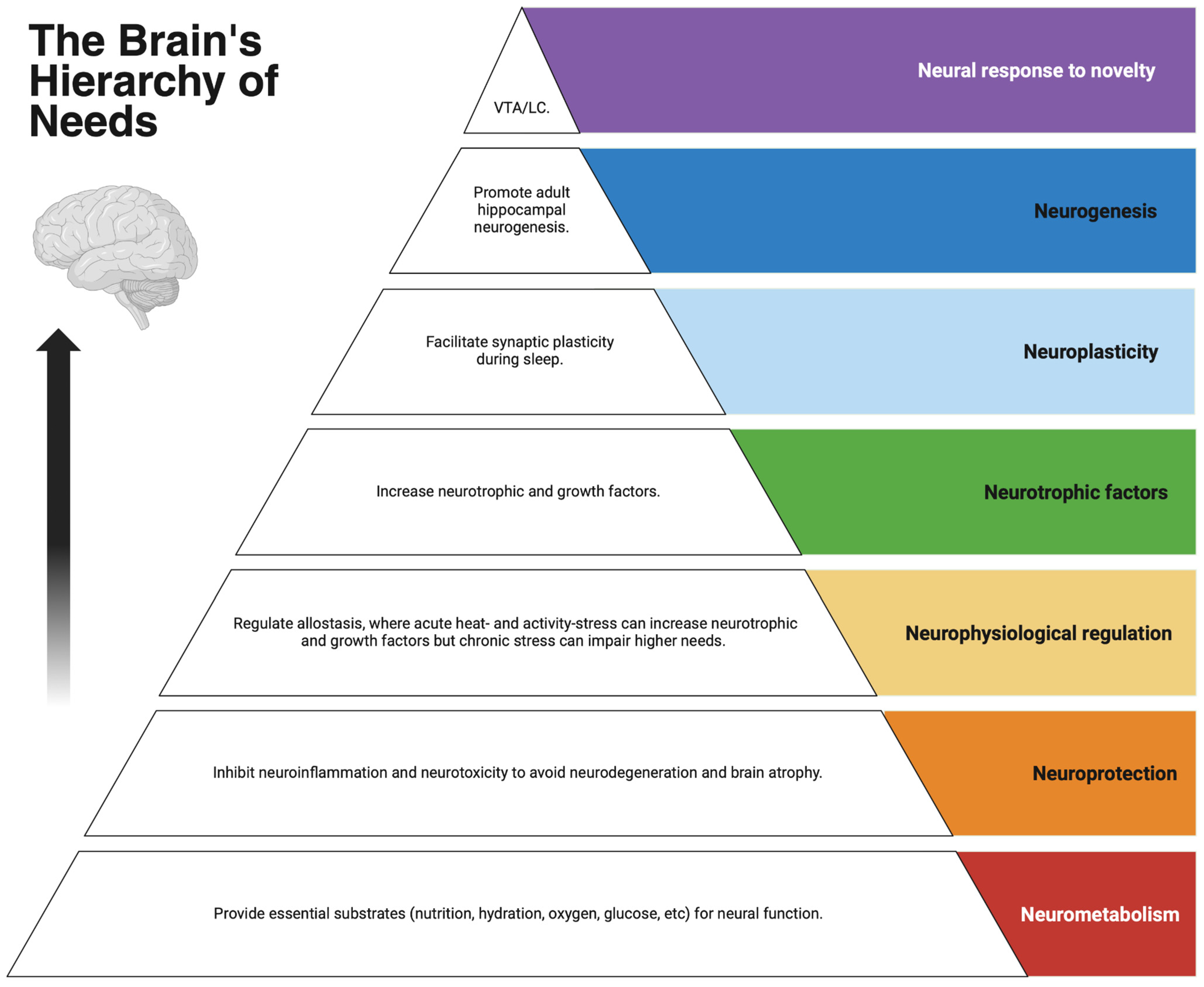
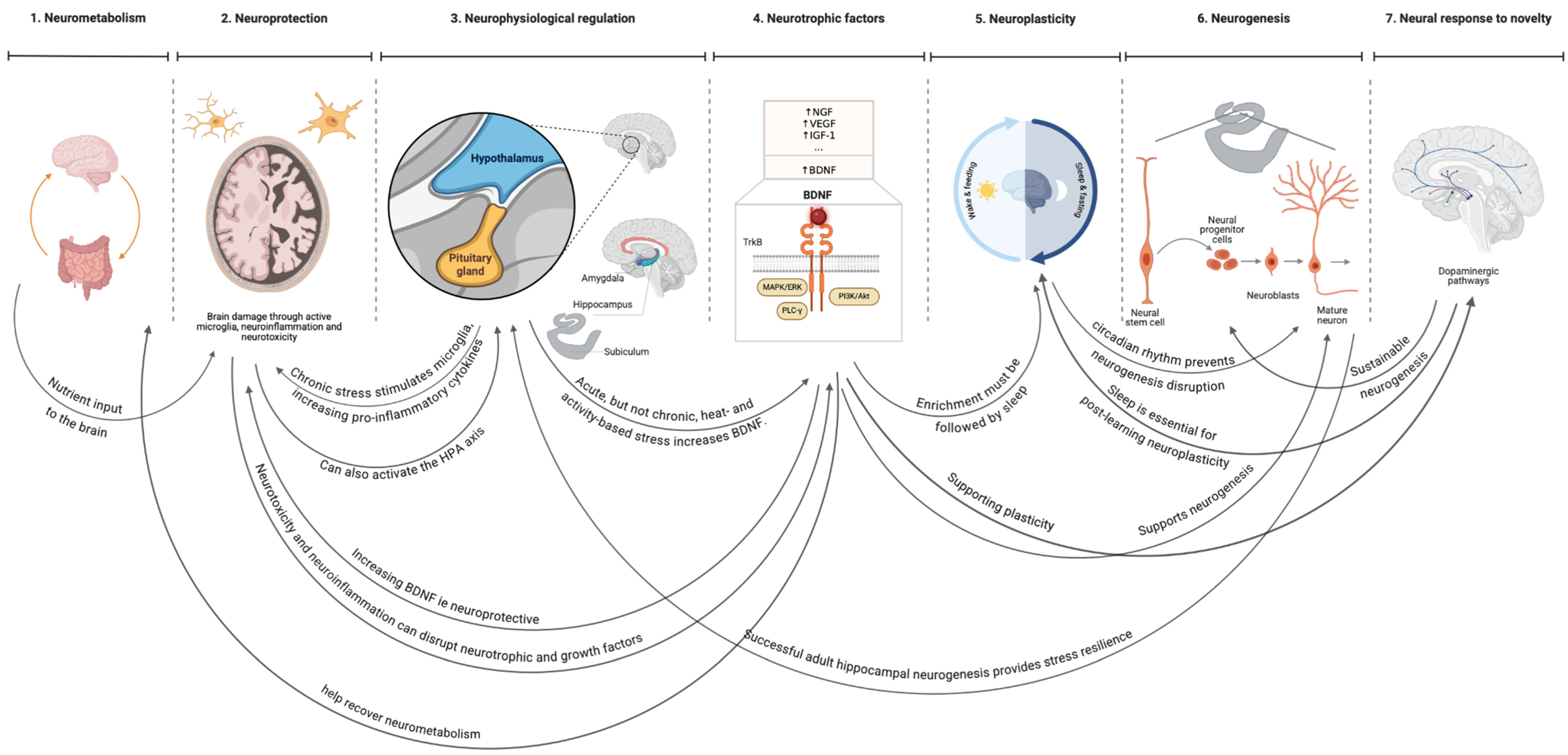
2. The Brain’s Seven Neuro-Needs (7NNs)
2.1. Neurometabolism
2.2. Neuroprotection
2.3. Neurophysiological Regulation
2.4. Neurotrophic Factors
2.5. Neuroplasticity
2.6. Neurogenesis: Adult Hippocampal Neurogenesis
2.7. Neural Responses to Novelty
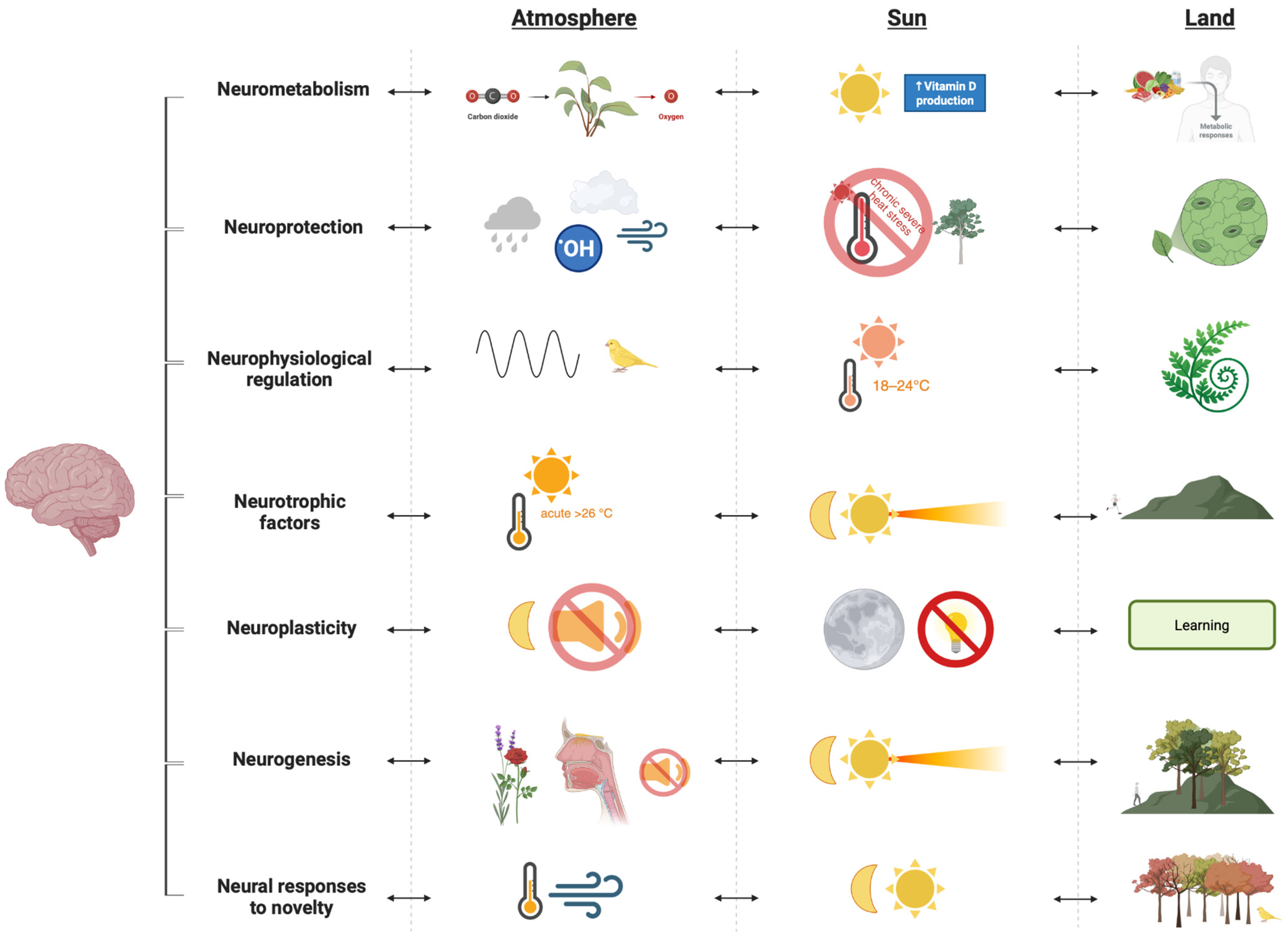
3. How Nature Fulfils the Brain’s Neuro-Needs
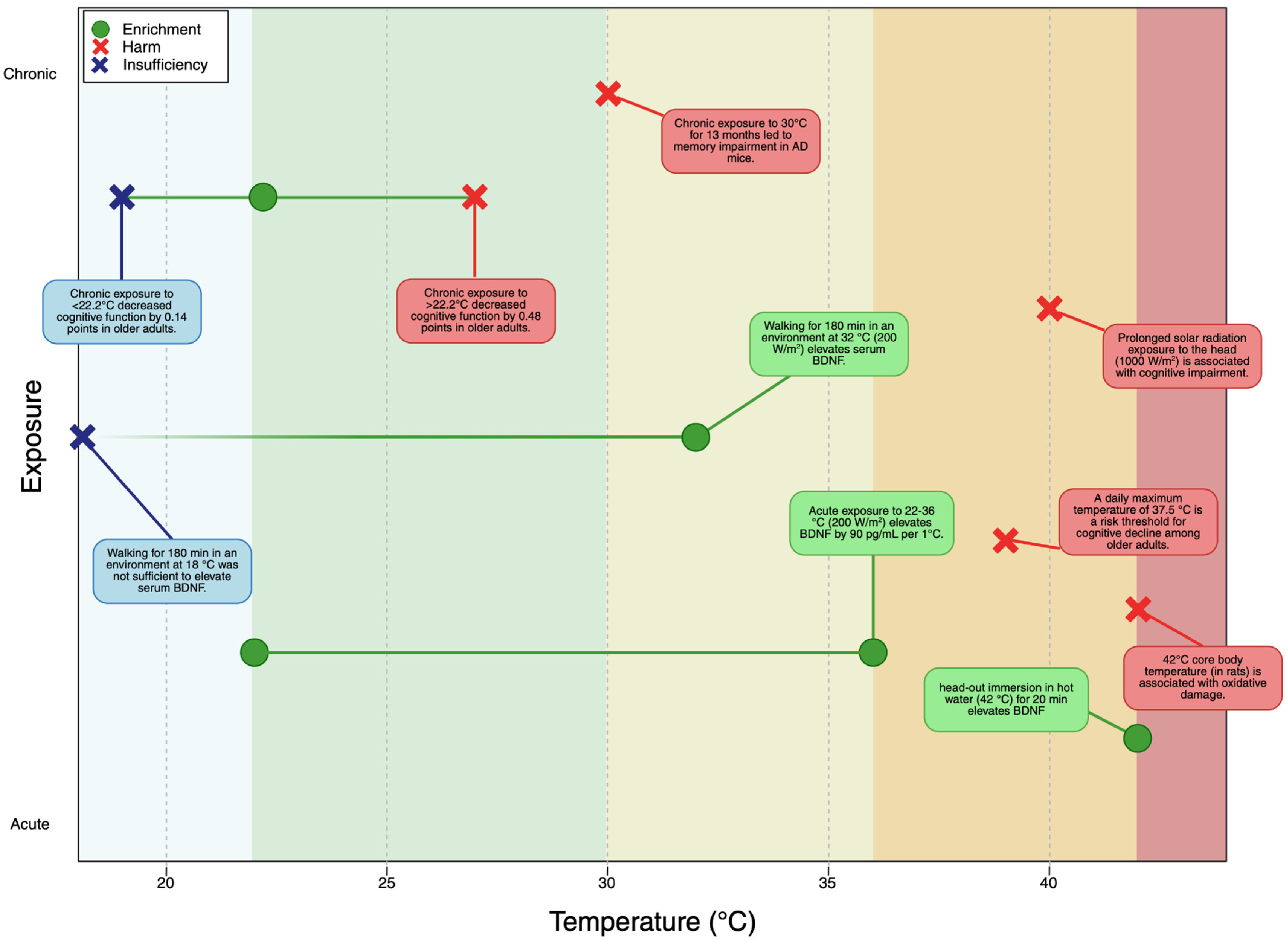
4. The Potential Impact of Climate Change on Nature’s Enrichment
5. Variability in Built Environment Enrichment
6. Future Research
7. Conclusions
Author Contributions
Funding
Data Availability Statement
Acknowledgments
Conflicts of Interest
References
- Soga, M.; Gaston, K.J. Global synthesis reveals heterogeneous changes in connection of humans to nature. One Earth 2023, 6, 131–138. [Google Scholar] [CrossRef]
- Ritchie, H.; Samborska, V.; Roser, M. Urbanization; Our World in Data: Oxford, UK, 2024. [Google Scholar]
- Lefosse, D.C.; Duarte, F.; Sanatani, R.P.; Kang, Y.; van Timmeren, A.; Ratti, C. Feeling Nature: Measuring perceptions of biophilia across global biomes using visual AI. NPJ Urban Sustain. 2025, 5, 4. [Google Scholar] [CrossRef]
- Kühn, S.; Düzel, S.; Mascherek, A.; Eibich, P.; Krekel, C.; Kolbe, J.; Goebel, J.; Gallinat, J.; Wagner, G.G.; Lindenberger, U. Urban green is more than the absence of city: Structural and functional neural basis of urbanicity and green space in the neighbourhood of older adults. Landsc. Urban Plan. 2021, 214, 104196. [Google Scholar] [CrossRef]
- Kühn, S.; Banaschewski, T.; Bokde, A.L.; Buechel, C.; Quinlan, E.B.; Desrivieres, S.; Flor, H.; Grigis, A.; Garavan, H.; Gowland, P.; et al. Trees for brains: Current residential tree cover density and its association with brain structure in young adults. J. Environ. Psychol. 2023, 89, 102047. [Google Scholar] [CrossRef]
- Kühn, S.; Schmalen, K.; Beijers, R.; Tyborowska, A.; Roelofs, K.; Weerth, C.D. Green is not the same as green: Differentiating between the Association of Trees and Open Green Spaces with Children’s brain structure in the Netherlands. Environ. Behav. 2023, 55, 311–334. [Google Scholar] [CrossRef]
- Khalil, M.H. Neurosustainability. Front. Hum. Neurosci. 2024, 18, 1436179. [Google Scholar] [CrossRef]
- Wilson, E.O. Biophilia; Harvard University Press: Cambridge, MA, USA, 1986. [Google Scholar]
- Kellert, S.R.; Wilson, E.O. The Biophilia Hypothesis; PhilPapers: London, ON, Canada, 1995. [Google Scholar]
- Tekin, B.H.; Izmir Tunahan, G.; Disci, Z.N.; Ozer, H.S. Biophilic design in the built environment: Trends, gaps and future directions. Buildings 2025, 15, 2516. [Google Scholar] [CrossRef]
- Thys, T. Neurobiophilia. 2015. Available online: https://www.mindsettle.com/single-post/2017/09/05/neurobiophilia (accessed on 6 January 2026).
- Raichle, M.E.; Gusnard, D.A. Appraising the brain’s energy budget. Proc. Natl. Acad. Sci. USA 2002, 99, 10237–10239. [Google Scholar] [CrossRef]
- Zauner, A.; Daugherty, W.P.; Bullock, M.R.; Warner, D.S. Brain oxygenation and energy metabolism: Part I—Biological function and pathophysiology. Neurosurgery 2002, 51, 289–302. [Google Scholar] [CrossRef]
- Ryu, W.I.; Bormann, M.K.; Shen, M.; Kim, D.; Forester, B.; Park, Y.; So, J.; Seo, H.; Sonntag, K.C.; Cohen, B.M. Brain cells derived from Alzheimer’s disease patients have multiple specific innate abnormalities in energy metabolism. Mol. Psychiatry 2021, 26, 5702–5714. [Google Scholar] [CrossRef]
- Chen, B.; de Launoit, E.; Meseguer, D.; Garcia Caceres, C.; Eichmann, A.; Renier, N.; Schneeberger, M. The interactions between energy homeostasis and neurovascular plasticity. Nat. Rev. Endocrinol. 2024, 20, 749–759. [Google Scholar] [CrossRef]
- van Galen, K.A.; Schrantee, A.; Ter Horst, K.W.; la Fleur, S.E.; Booij, J.; Constable, R.T.; Schwartz, G.J.; DiLeone, R.J.; Serlie, M.J. Brain responses to nutrients are severely impaired and not reversed by weight loss in humans with obesity: A randomized crossover study. Nat. Metab. 2023, 5, 1059–1072. [Google Scholar] [CrossRef]
- De Marzio, M.; Lasky-Su, J.; Chu, S.H.; Prince, N.; Litonjua, A.A.; Weiss, S.T.; Kelly, R.S.; Glass, K.R. The metabolic role of vitamin D in children’s neurodevelopment: A network study. Sci. Rep. 2024, 14, 16929. [Google Scholar] [CrossRef]
- Spencer, P.S.; Lein, P.J. Neurotoxicity. In Encyclopedia of Toxicology; UC Davis: Davis, CA, USA, 2024. [Google Scholar]
- Iqubal, A.; Ahmed, M.; Ahmad, S.; Sahoo, C.R.; Iqubal, M.K.; Haque, S.E. Environmental neurotoxic pollutants. Environ. Sci. Pollut. Res. 2020, 27, 41175–41198. [Google Scholar] [CrossRef]
- Cory-Slechta, D.A.; Merrill, A.; Sobolewski, M. Air pollution–related neurotoxicity across the life span. Annu. Rev. Pharmacol. Toxicol. 2023, 63, 143–163. [Google Scholar] [CrossRef]
- Costa, L.G.; Cole, T.B.; Coburn, J.; Chang, Y.C.; Dao, K.; Roqué, P.J. Neurotoxicity of traffic-related air pollution. Neurotoxicology 2017, 59, 133–139. [Google Scholar] [CrossRef] [PubMed]
- Haghani, A.; Morgan, T.E.; Forman, H.J.; Finch, C.E. Air pollution neurotoxicity in the adult brain: Emerging concepts from experimental findings. J. Alzheimer’s Dis. 2020, 76, 773–797. [Google Scholar] [CrossRef]
- Kalenik, S.; Zaczek, A.; Rodacka, A. Air pollution-induced neurotoxicity: The relationship between air pollution, epigenetic changes, and neurological disorders. Int. J. Mol. Sci. 2025, 26, 3402. [Google Scholar] [CrossRef] [PubMed]
- Thomson, E.M. Air pollution, stress, and allostatic load: Linking systemic and central nervous system impacts. J. Alzheimer’s Dis. 2019, 69, 597–614. [Google Scholar] [CrossRef] [PubMed]
- Chauhan, N.R.; Kumar, R.; Gupta, A.; Meena, R.C.; Nanda, S.; Mishra, K.P.; Singh, S.B. Heat stress induced oxidative damage and perturbation in BDNF/ERK1/2/CREB axis in hippocampus impairs spatial memory. Behav. Brain Res. 2021, 396, 112895. [Google Scholar] [CrossRef]
- Calcia, M.A.; Bonsall, D.R.; Bloomfield, P.S.; Selvaraj, S.; Barichello, T.; Howes, O.D. Stress and neuroinflammation: A systematic review of the effects of stress on microglia and the implications for mental illness. Psychopharmacology 2016, 233, 1637–1650. [Google Scholar] [CrossRef]
- White, A.G.; Elias, E.; Orozco, A.; Robinson, S.A.; Manners, M.T. Chronic stress-induced neuroinflammation: Relevance of rodent models to human disease. Int. J. Mol. Sci. 2024, 25, 5085. [Google Scholar] [CrossRef] [PubMed]
- McEwen, B.S. Allostasis and allostatic load: Implications for neuropsychopharmacology. In Stress and the Brain; Taylor & Francis Group: Abingdon, UK, 2013; pp. 2–18. [Google Scholar]
- McEwen, B.S. Brain on stress: How the social environment gets under the skin. Proc. Natl. Acad. Sci. USA 2012, 109, 17180–17185. [Google Scholar] [CrossRef] [PubMed]
- Pfaltz, M.C.; Schnyder, U. Allostatic load and allostatic overload: Preventive and clinical implications. Psychother. Psychosom. 2023, 92, 279–282. [Google Scholar] [CrossRef]
- Godoy, L.D.; Rossignoli, M.T.; Delfino-Pereira, P.; Garcia-Cairasco, N.; de Lima Umeoka, E.H. A comprehensive overview on stress neurobiology: Basic concepts and clinical implications. Front. Behav. Neurosci. 2018, 12, 127. [Google Scholar] [CrossRef] [PubMed]
- Zhang, X.; Ge, T.T.; Yin, G.; Cui, R.; Zhao, G.; Yang, W. Stress-induced functional alterations in amygdala: Implications for neuropsychiatric diseases. Front. Neurosci. 2018, 12, 367. [Google Scholar] [CrossRef]
- O’Mara, S. The subiculum: What it does, what it might do, and what neuroanatomy has yet to tell us. J. Anat. 2005, 207, 271–282. [Google Scholar] [CrossRef]
- Noushad, S.; Ahmed, S.; Ansari, B.; Mustafa, U.H.; Saleem, Y.; Hazrat, H. Physiological biomarkers of chronic stress: A systematic review. Int. J. Health Sci. 2021, 15, 46. [Google Scholar]
- Podyma, B.; Parekh, K.; Güler, A.D.; Deppmann, C.D. Metabolic homeostasis via BDNF and its receptors. Trends Endocrinol. Metab. 2021, 32, 488–499. [Google Scholar] [CrossRef]
- Marosi, K.; Mattson, M.P. BDNF mediates adaptive brain and body responses to energetic challenges. Trends Endocrinol. Metab. 2014, 25, 89–98. [Google Scholar] [CrossRef]
- Chen, S.D.; Wu, C.L.; Hwang, W.C.; Yang, D.I. More insight into BDNF against neurodegeneration: Anti-apoptosis, anti-oxidation, and suppression of autophagy. Int. J. Mol. Sci. 2017, 18, 545. [Google Scholar] [CrossRef]
- Linz, R.; Puhlmann, L.M.; Apostolakou, F.; Mantzou, E.; Papassotiriou, I.; Chrousos, G.P.; Engert, V.; Singer, T. Acute psychosocial stress increases serum BDNF levels: An antagonistic relation to cortisol but no group differences after mental training. Neuropsychopharmacology 2019, 44, 1797–1804. [Google Scholar] [CrossRef]
- Kojima, D.; Nakamura, T.; Banno, M.; Umemoto, Y.; Kinoshita, T.; Ishida, Y.; Tajima, F. Head-out immersion in hot water increases serum BDNF in healthy males. Int. J. Hyperth. 2018, 34, 834–839. [Google Scholar] [CrossRef] [PubMed]
- Kirby, N.V.; Meade, R.D.; McCormick, J.J.; King, K.E.; Kenny, G.P. Brain-derived neurotrophic factor response to daylong exposure to extreme heat in young and older adults: A secondary analysis. Appl. Physiol. Nutr. Metab. 2025, 50, 1–9. [Google Scholar] [CrossRef] [PubMed]
- Kirby, N.V.; Meade, R.D.; McCormick, J.J.; King, K.E.; Notley, S.R.; Kenny, G.P. Brain-derived neurotrophic factor in older adults exposed to simulated indoor overheating. Eur. J. Appl. Physiol. 2025, 125, 769–780. [Google Scholar] [CrossRef]
- Chauhan, N.R.; Kapoor, M.; Singh, L.P.; Gupta, R.K.; Meena, R.C.; Tulsawani, R.; Nanda, S.; Singh, S.B. Heat stress-induced neuroinflammation and aberration in monoamine levels in hypothalamus are associated with temperature dysregulation. Neuroscience 2017, 358, 79–92. [Google Scholar] [CrossRef]
- Ribeiro, D.; Petrigna, L.; Pereira, F.C.; Muscella, A.; Bianco, A.; Tavares, P. The impact of physical exercise on the circulating levels of BDNF and NT 4/5: A review. Int. J. Mol. Sci. 2021, 22, 8814. [Google Scholar] [CrossRef]
- Behrendt, T.; Kirschnick, F.; Kröger, L.; Beileke, P.; Rezepin, M.; Brigadski, T.; Leßmann, V.; Schega, L. Comparison of the effects of open vs. closed skill exercise on the acute and chronic BDNF, IGF-1 and IL-6 response in older healthy adults. BMC Neurosci. 2021, 22, 71. [Google Scholar] [CrossRef]
- Park, S.; Lee, A.Y.; Park, H.G.; Lee, W.L. Benefits of gardening activities for cognitive function according to measurement of brain nerve growth factor levels. Int. J. Environ. Res. Public Health 2019, 16, 760. [Google Scholar] [CrossRef]
- Li, Q.; Zhang, L.; Zhang, Z.; Wang, Y.; Zuo, C.; Bo, S. A shorter-bout of HIIT is more effective to promote serum BDNF and VEGF-A levels and improve cognitive function in healthy young men. Front. Physiol. 2022, 13, 898603. [Google Scholar] [CrossRef]
- Philpotts, R.; Gillan, N.; Barrow, M.; Seidler, K. Stress-induced alterations in hippocampal BDNF in the pathophysiology of major depressive disorder and the antidepressant effect of saffron. J. Affect. Disord. Rep. 2023, 14, 100630. [Google Scholar] [CrossRef]
- Shi, S.S.; Shao, S.H.; Yuan, B.P.; Pan, F.; Li, Z.L. Acute stress and chronic stress change brain-derived neurotrophic factor (BDNF) and tyrosine kinase-coupled receptor (TrkB) expression in both young and aged rat hippocampus. Yonsei Med. J. 2010, 51, 661–671. [Google Scholar] [CrossRef] [PubMed]
- Costandi, M. Neuroplasticity; MIT Press: Cambridge, MA, USA, 2016. [Google Scholar]
- Joshua, A.M. Neuroplasticity. In Physiotherapy for Adult Neurological Conditions; Springer Nature: Singapore, 2022; pp. 1–30. [Google Scholar]
- Gorgoni, M.; D′Atri, A.; Lauri, G.; Rossini, P.M.; Ferlazzo, F.; De Gennaro, L. Is sleep essential for neural plasticity in humans, and how does it affect motor and cognitive recovery? Neural Plast. 2013, 2013, 103949. [Google Scholar] [CrossRef]
- Heller, H.C.; Ruby, N.F.; Rolls, A.; Makam, M.; Colas, D. Adaptive and pathological inhibition of neuroplasticity associated with circadian rhythms and sleep. Behav. Neurosci. 2014, 128, 273. [Google Scholar] [CrossRef]
- Bedrosian, T.A.; Nelson, R.J. Timing of light exposure affects mood and brain circuits. Transl. Psychiatry 2017, 7, e1017. [Google Scholar] [CrossRef]
- Zhou, Y.; Su, Y.; Yang, Q.; Li, J.; Hong, Y.; Gao, T.; Zhong, Y.; Ma, X.; Jin, M.; Liu, X.; et al. Cross-species analysis of adult hippocampal neurogenesis reveals human-specific gene expression but convergent biological processes. Nat. Neurosci. 2025, 28, 1820–1829. [Google Scholar] [CrossRef]
- Elliott, T.; Liu, K.Y.; Hazan, J.; Wilson, J.; Vallipuram, H.; Jones, K.; Mahmood, J.; Gitlin-Leigh, G.; Howard, R. Hippocampal neurogenesis in adult primates: A systematic review. Mol. Psychiatry 2025, 30, 1195–1206. [Google Scholar] [CrossRef]
- Liu, P.Z.; Nusslock, R. Exercise-mediated neurogenesis in the hippocampus via BDNF. Front. Neurosci. 2018, 12, 52. [Google Scholar] [CrossRef] [PubMed]
- Charou, D.; Rogdakis, T.; Latorrata, A.; Valcarcel, M.; Papadogiannis, V.; Athanasiou, C.; Tsengenes, A.; Papadopoulou, M.A.; Lypitkas, D.; Lavigne, M.D.; et al. Comprehensive characterization of the neurogenic and neuroprotective action of a novel TrkB agonist using mouse and human stem cell models of Alzheimer’s disease. Stem Cell Res. Ther. 2024, 15, 200. [Google Scholar] [CrossRef]
- Spalding, K.L.; Bergmann, O.; Alkass, K.; Bernard, S.; Salehpour, M.; Huttner, H.B.; Boström, E.; Westerlund, I.; Vial, C.; Buchholz, B.A.; et al. Dynamics of hippocampal neurogenesis in adult humans. Cell 2013, 153, 1219–1227. [Google Scholar] [CrossRef]
- Boldrini, M.; Fulmore, C.A.; Tartt, A.N.; Simeon, L.R.; Pavlova, I.; Poposka, V.; Rosoklija, G.B.; Stankov, A.; Arango, V.; Dwork, A.J.; et al. Human hippocampal neurogenesis persists throughout aging. Cell Stem Cell 2018, 22, 589–599. [Google Scholar] [CrossRef]
- Sorrells, S.F.; Paredes, M.F.; Cebrian-Silla, A.; Sandoval, K.; Qi, D.; Kelley, K.W.; James, D.; Mayer, S.; Chang, J.; Auguste, K.I.; et al. Human hippocampal neurogenesis drops sharply in children to undetectable levels in adults. Nature 2018, 555, 377–381. [Google Scholar] [CrossRef]
- Cipriani, S.; Ferrer, I.; Aronica, E.; Kovacs, G.G.; Verney, C.; Nardelli, J.; Khung, S.; Delezoide, A.L.; Milenkovic, I.; Rasika, S.; et al. Hippocampal radial glial subtypes and their neurogenic potential in human fetuses and healthy and Alzheimer’s disease adults. Cereb. Cortex 2018, 28, 2458–2478. [Google Scholar] [CrossRef]
- Moreno-Jiménez, E.P.; Terreros-Roncal, J.; Flor-García, M.; Rábano, A.; Llorens-Martín, M. Evidences for adult hippocampal neurogenesis in humans. J. Neurosci. 2021, 41, 2541–2553. [Google Scholar] [CrossRef]
- Tobin, M.K.; Musaraca, K.; Disouky, A.; Shetti, A.; Bheri, A.; Honer, W.G.; Kim, N.; Dawe, R.J.; Bennett, D.A.; Arfanakis, K.; et al. Human hippocampal neurogenesis persists in aged adults and Alzheimer’s disease patients. Cell Stem Cell 2019, 24, 974–982. [Google Scholar] [CrossRef]
- Moreno-Jiménez, E.P.; Flor-García, M.; Terreros-Roncal, J.; Rábano, A.; Cafini, F.; Pallas-Bazarra, N.; Ávila, J.; Llorens-Martín, M. Adult hippocampal neurogenesis is abundant in neurologically healthy subjects and drops sharply in patients with Alzheimer’s disease. Nat. Med. 2019, 25, 554–560. [Google Scholar] [CrossRef]
- Dumitru, I.; Paterlini, M.; Zamboni, M.; Ziegenhain, C.; Giatrellis, S.; Saghaleyni, R.; Björklund, Å.; Alkass, K.; Tata, M.; Druid, H.; et al. Identification of proliferating neural progenitors in the adult human hippocampus. Science 2025, 389, 58–63. [Google Scholar] [CrossRef] [PubMed]
- Márquez-Valadez, B.; Gallardo-Caballero, M.; Llorens-Martín, M. Human adult hippocampal neurogenesis is shaped by neuropsychiatric disorders, demographics, and lifestyle-related factors. Cell Stem Cell 2025, 32, 1577–1594. [Google Scholar] [CrossRef] [PubMed]
- Taliaz, D.; Loya, A.; Gersner, R.; Haramati, S.; Chen, A.; Zangen, A. Resilience to chronic stress is mediated by hippocampal brain-derived neurotrophic factor. J. Neurosci. 2011, 31, 4475–4483. [Google Scholar] [CrossRef]
- Levone, B.R.; Cryan, J.F.; O’Leary, O.F. Role of adult hippocampal neurogenesis in stress resilience. Neurobiol. Stress 2015, 1, 147–155. [Google Scholar] [CrossRef]
- Surget, A.; Belzung, C. Adult hippocampal neurogenesis shapes adaptation and improves stress response: A mechanistic and integrative perspective. Mol. Psychiatry 2022, 27, 403–421. [Google Scholar] [CrossRef]
- Anacker, C.; Luna, V.M.; Stevens, G.S.; Millette, A.; Shores, R.; Jimenez, J.C.; Chen, B.; Hen, R. Hippocampal neurogenesis confers stress resilience by inhibiting the ventral dentate gyrus. Nature 2018, 559, 98–102. [Google Scholar] [CrossRef]
- Kelberman, M.A.; Weinshenker, D. A novel link between locus coeruleus activity and amyloid-related cognitive decline. Trends Neurosci. 2022, 45, 651–653. [Google Scholar] [CrossRef]
- Sara, S.J.; Vankov, A.; Hervé, A. Locus coeruleus-evoked responses in behaving rats: A clue to the role of noradrenaline in memory. Brain Res. Bull. 1994, 35, 457–465. [Google Scholar] [CrossRef] [PubMed]
- Bunzeck, N.; Düzel, E. Absolute coding of stimulus novelty in the human substantia nigra/VTA. Neuron 2006, 51, 369–379. [Google Scholar] [CrossRef]
- Li, S.; Cullen, W.K.; Anwyl, R.; Rowan, M.J. Dopamine-dependent facilitation of LTP induction in hippocampal CA1 by exposure to spatial novelty. Nat. Neurosci. 2003, 6, 526–531. [Google Scholar] [CrossRef]
- Lorents, A.; Ruitenberg, M.F.L.; Schomaker, J. Novelty-induced memory boosts in humans: The when and how. Heliyon 2023, 9, e14410. [Google Scholar] [CrossRef]
- Schomaker, J.; Meeter, M. Short-and long-lasting consequences of novelty, deviance and surprise on brain and cognition. Neurosci. Biobehav. Rev. 2015, 55, 268–279. [Google Scholar] [CrossRef] [PubMed]
- Gómez-Pinilla, F. Brain foods: The effects of nutrients on brain function. Nat. Rev. Neurosci. 2008, 9, 568–578. [Google Scholar] [CrossRef] [PubMed]
- Anjum, I.; Jaffery, S.S.; Fayyaz, M.; Samoo, Z.; Anjum, S. The role of vitamin D in brain health: A mini literature review. Cureus 2018, 10, e2960. [Google Scholar] [CrossRef]
- Zhou, Z.; Zhou, R.; Zhang, Z.; Li, K. The association between vitamin D status, vitamin D supplementation, sunlight exposure, and Parkinson’s disease: A systematic review and meta-analysis. Med. Sci. Monit. Int. Med. J. Exp. Clin. Res. 2019, 25, 666. [Google Scholar] [CrossRef] [PubMed]
- Wang, W.; Li, Y.; Meng, X. Vitamin D and neurodegenerative diseases. Heliyon 2023, 9, e12877. [Google Scholar] [CrossRef] [PubMed]
- Wu, Y.; Liu, J.; Zhai, J.; Cong, L.; Wang, Y.; Ma, W.; Zhang, Z.; Li, C. Comparison of dry and wet deposition of particulate matter in near-surface waters during summer. PLoS ONE 2018, 13, e0199241. [Google Scholar] [CrossRef]
- Tian, X.; Cui, K.; Sheu, H.L.; Hsieh, Y.K.; Yu, F. Effects of rain and snow on the air quality index, PM2. 5 levels, and dry deposition flux of PCDD/Fs. Aerosol Air Qual. Res. 2021, 21, 210158. [Google Scholar] [CrossRef]
- Corada, K.; Woodward, H.; Alaraj, H.; Collins, C.M.; de Nazelle, A. A systematic review of the leaf traits considered to contribute to removal of airborne particulate matter pollution in urban areas. Environ. Pollut. 2021, 269, 116104. [Google Scholar] [CrossRef]
- Liu, Z.; Shen, L.; Yan, C.; Du, J.; Li, Y.; Zhao, H. Analysis of the Influence of Precipitation and Wind on PM2. 5 and PM10 in the Atmosphere. Adv. Meteorol. 2020, 2020, 5039613. [Google Scholar] [CrossRef]
- Cheng, I.; Al Mamun, A.; Zhang, L. A synthesis review on atmospheric wet deposition of particulate elements: Scavenging ratios, solubility, and flux measurements. Environ. Rev. 2021, 29, 340–353. [Google Scholar] [CrossRef]
- Cordero, P.R.; Bayly, K.; Man Leung, P.; Huang, C.; Islam, Z.F.; Schittenhelm, R.B.; King, G.M.; Greening, C. Atmospheric carbon monoxide oxidation is a widespread mechanism supporting microbial survival. ISME J. 2019, 13, 2868–2881. [Google Scholar] [CrossRef]
- Conrad, R.; Seiler, W. Role of microorganisms in the consumption and production of atmospheric carbon monoxide by soil. Appl. Environ. Microbiol. 1980, 40, 437–445. [Google Scholar] [CrossRef]
- Shaamala, A.; Yigitcanlar, T.; Nili, A.; Nyandega, D. Strategic tree placement for urban cooling: A novel optimisation approach for desired microclimate outcomes. Urban Clim. 2024, 56, 102084. [Google Scholar] [CrossRef]
- Li, H.; Cui, F.; Wang, T.; Wang, W.; Zhang, D. The impact of sunlight exposure on brain structural markers in the UK Biobank. Sci. Rep. 2024, 14, 10313. [Google Scholar] [CrossRef]
- Kühn, S.; Düzel, S.; Eibich, P.; Krekel, C.; Wüstemann, H.; Kolbe, J.; Martensson, J.; Goebel, J.; Gallinat, J.; Wagner, G.G.; et al. In search of features that constitute an “enriched environment” in humans: Associations between geographical properties and brain structure. Sci. Rep. 2017, 7, 11920. [Google Scholar] [CrossRef]
- Sudimac, S.; Sale, V.; Kühn, S. How nature nurtures: Amygdala activity decreases as the result of a one-hour walk in nature. Mol. Psychiatry 2022, 27, 4446–4452. [Google Scholar] [CrossRef]
- Sudimac, S.; Kühn, S. Can a nature walk change your brain? Investigating hippocampal brain plasticity after one hour in a forest. Environ. Res. 2024, 262, 119813. [Google Scholar] [CrossRef]
- Zeng, C.; Lin, W.; Li, N.; Wen, Y.; Wang, Y.; Jiang, W.; Zhang, J.; Zhong, H.; Chen, X.; Luo, W.; et al. Electroencephalography (EEG)-based neural emotional response to the vegetation density and integrated sound environment in a green space. Forests 2021, 12, 1380. [Google Scholar] [CrossRef]
- Bai, Z.; Zhang, S. Effects of different natural soundscapes on human psychophysiology in national forest park. Sci. Rep. 2024, 14, 17462. [Google Scholar] [CrossRef]
- Molendijk, M.L.; Haffmans, J.P.; Bus, B.A.; Spinhoven, P.; Penninx, B.W.; Prickaerts, J.; Voshaar, R.C.; Elzinga, B.M. Serum BDNF concentrations show strong seasonal variation and correlations with the amount of ambient sunlight. PLoS ONE 2012, 7, e48046. [Google Scholar] [CrossRef]
- Castillo-Aguilar, M.; Mabe-Castro, D.; Mabe-Castro, M.; Mendes, T.T.; Concha, Y.; Guzmán-Muñoz, E.; Núñez-Espinosa, C. The winter is coming: Seasonal variations in BDNF levels among older adults in a high-latitude region—A preliminary study. Front. Psychiatry 2025, 16, 1692566. [Google Scholar] [CrossRef]
- Herrmann, S.D.; Willis, E.A.; Ainsworth, B.E.; Barreira, T.V.; Hastert, M.; Kracht, C.L.; Schuna, J.M., Jr.; Cai, Z.; Quan, M.; Tudor-Locke, C.; et al. 2024 Adult Compendium of Physical Activities: A third update of the energy costs of human activities. J. Sport Health Sci. 2024, 13, 6–12. [Google Scholar] [CrossRef] [PubMed]
- Park, S.A.; Son, S.Y.; Lee, A.Y.; Park, H.G.; Lee, W.L.; Lee, C.H. Metabolite profiling revealed that a gardening activity program improves cognitive ability correlated with BDNF levels and serotonin metabolism in the elderly. Int. J. Environ. Res. Public Health 2020, 17, 541. [Google Scholar] [CrossRef] [PubMed]
- Goulet, N.; McCormick, J.J.; King, K.E.; Notley, S.R.; Goldfield, G.S.; Fujii, N.; Amano, T.; Kenny, G.P. Elevations in serum brain-derived neurotrophic factor following occupational heat stress are not influenced by age or common chronic disease. Temperature 2023, 10, 454–464. [Google Scholar] [CrossRef]
- Logan, R.W.; McClung, C.A. Rhythms of life: Circadian disruption and brain disorders across the lifespan. Nat. Rev. Neurosci. 2019, 20, 49–65. [Google Scholar] [CrossRef]
- Fares, R.P.; Belmeguenai, A.; Sanchez, P.E.; Kouchi, H.Y.; Bodennec, J.; Morales, A.; Georges, B.; Bonnet, C.; Bouvard, S.; Sloviter, R.S.; et al. Standardized environmental enrichment supports enhanced brain plasticity in healthy rats and prevents cognitive impairment in epileptic rats. PLoS ONE 2013, 8, e53888. [Google Scholar] [CrossRef]
- Santoso, D.I.I.; Yolanda, S.; Redjeki, S.; Andraini, T.; Ivanali, K. Continuous environmental enrichment and aerobic exercise improves spatial memory: Focus on rat hippocampal BDNF and NGF. Comp. Exerc. Physiol. 2020, 16, 121–128. [Google Scholar] [CrossRef]
- Crouzier, L.; Gilabert, D.; Rossel, M.; Trousse, F.; Maurice, T. Topographical memory analyzed in mice using the Hamlet test, a novel complex maze. Neurobiol. Learn. Mem. 2018, 149, 118–134. [Google Scholar] [CrossRef] [PubMed]
- Ramanpong, J.; Tsao, C.; Yin, J.; Wu, C.D.; Huang, Y.C.; Yu, C.P. Effects of forest bathing and the influence of exposure levels on cognitive health in the elderly: Evidence from a suburban forest recreation area. Urban For. Urban Green. 2025, 104, 128667. [Google Scholar] [CrossRef]
- Lövdén, M.; Schaefer, S.; Noack, H.; Bodammer, N.C.; Kühn, S.; Heinze, H.J.; Düzel, E.; Bäckman, L.; Lindenberger, U. Spatial navigation training protects the hippocampus against age-related changes during early and late adulthood. Neurobiol. Aging 2012, 33, 620–629. [Google Scholar] [CrossRef] [PubMed]
- Rusznák, Z.; Sengul, G.; Paxinos, G.; Kim, W.S.; Fu, Y. Odor enrichment increases hippocampal neuron numbers in mouse. Exp. Neurobiol. 2018, 27, 94. [Google Scholar] [CrossRef]
- Woo, C.C.; Miranda, B.; Sathishkumar, M.; Dehkordi-Vakil, F.; Yassa, M.A.; Leon, M. Overnight olfactory enrichment using an odorant diffuser improves memory and modifies the uncinate fasciculus in older adults. Front. Neurosci. 2023, 17, 1200448. [Google Scholar] [CrossRef]
- Fujioka, A.; Fujioka, T.; Tsuruta, R.; Izumi, T.; Kasaoka, S.; Maekawa, T. Effects of a constant light environment on hippocampal neurogenesis and memory in mice. Neurosci. Lett. 2011, 488, 41–44. [Google Scholar] [CrossRef] [PubMed]
- Hirakawa, H.; Terao, T.; Hatano, K.; Shirahama, M.; Kugimiya, T.; Kohno, K.; Ishii, N.; Matsuta, H.; Shimomura, T.; Fujiki, M. Increase in the left hippocampal dentate gyrus head volume after a 4-week bright light exposure in healthy participants: A randomized controlled study. J. Psychiatr. Res. 2022, 145, 1–5. [Google Scholar] [CrossRef]
- Hirakawa, H.; Terao, T.; Hatano, K.; Shirahama, M.; Kugimiya, T.; Kohno, K.; Matsuta, H.; Shimomura, T.; Fujiki, M. Increased volume of the left hippocampal dentate gyrus after 4 weeks of bright light exposure in patients with mood disorders: A randomized controlled study. Transl. Psychiatry 2023, 13, 394. [Google Scholar] [CrossRef]
- Kwon, S.J.; Park, J.; Park, S.Y.; Song, K.S.; Jung, S.T.; Jung, S.B.; Park, I.R.; Choi, W.S.; Kwon, S.O. Low-intensity treadmill exercise and/or bright light promote neurogenesis in adult rat brain. Neural Regen. Res. 2013, 8, 922–929. [Google Scholar]
- Kirste, I.; Nicola, Z.; Kronenberg, G.; Walker, T.L.; Liu, R.C.; Kempermann, G. Is silence golden? Effects of auditory stimuli and their absence on adult hippocampal neurogenesis. Brain Struct. Funct. 2015, 220, 1221–1228. [Google Scholar] [CrossRef] [PubMed]
- Sisodiya, S.M.; Gulcebi, M.I.; Fortunato, F.; Mills, J.D.; Haynes, E.; Bramon, E.; Chadwick, P.; Ciccarelli, O.; David, A.S.; De Meyer, K.; et al. Climate change and disorders of the nervous system. Lancet Neurol. 2024, 23, 636–648. [Google Scholar] [CrossRef] [PubMed]
- Gulcebi, M.I.; Leddy, S.; Behl, K.; Dijk, D.J.; Marder, E.; Maslin, M.; Mavrogianni, A.; Tipton, M.; Werring, D.J.; Sisodiya, S.M. Imperatives and co-benefits of research into climate change and neurological disease. Nat. Rev. Neurol. 2025, 21, 216–228. [Google Scholar] [CrossRef]
- Hou, K.; Xu, X. Ambient temperatures associated with reduced cognitive function in older adults in China. Sci. Rep. 2023, 13, 17414. [Google Scholar] [CrossRef]
- Piil, J.F.; Christiansen, L.; Morris, N.B.; Mikkelsen, C.J.; Ioannou, L.G.; Flouris, A.D.; Lundbye-Jensen, J.; Nybo, L. Direct exposure of the head to solar heat radiation impairs motor-cognitive performance. Sci. Rep. 2020, 10, 7812. [Google Scholar] [CrossRef]
- Jung, C.G.; Kato, R.; Zhou, C.; Abdelhamid, M.; Shaaban, E.I.A.; Yamashita, H.; Michikawa, M. Sustained high body temperature exacerbates cognitive function and Alzheimer’s disease-related pathologies. Sci. Rep. 2022, 12, 12273. [Google Scholar] [CrossRef]
- Falchetta, G.; De Cian, E.; Sue Wing, I.; Carr, D. Global projections of heat exposure of older adults. Nat. Commun. 2024, 15, 3678. [Google Scholar] [CrossRef]
- Frank, L.D.; Bigazzi, A.; Hong, A.; Minaker, L.; Fisher, P.; Raine, K.D. Built environment influences on healthy eating and active living: The NEWPATH study. Obesity 2022, 30, 424–434. [Google Scholar] [CrossRef]
- Bhave, V.M.; Oladele, C.R.; Ament, Z.; Kijpaisalratana, N.; Jones, A.C.; Couch, C.A.; Patki, A.; Garcia Guarniz, A.L.; Bennett, A.; Crowe, M.; et al. Associations between ultra-processed food consumption and adverse brain health outcomes. Neurology 2024, 102, e209432. [Google Scholar] [CrossRef] [PubMed]
- Polemiti, E.; Hese, S.; Schepanski, K.; Yuan, J.; Environmental Consortium; Schumann, G. How does the macroenvironment influence brain and behaviour—A review of current status and future perspectives. Mol. Psychiatry 2024, 29, 3268–3286. [Google Scholar] [CrossRef]
- Min, K.D.; Kim, J.S.; Park, Y.H.; Shin, H.Y.; Kim, C.; Seo, S.W.; Kim, S.Y. New assessment for residential greenness and the association with cortical thickness in cognitively healthy adults. Sci. Total Environ. 2021, 778, 146129. [Google Scholar] [CrossRef]
- Tewari, K.; Tewari, M.; Niyogi, D. Need for considering urban climate change factors on stroke, neurodegenerative diseases, and mood disorders studies. Comput. Urban Sci. 2023, 3, 4. [Google Scholar] [CrossRef]
- Rojas-Carvajal, M.; Sequeira-Cordero, A.; Brenes, J.C. The environmental enrichment model revisited: A translatable paradigm to study the stress of our modern lifestyle. Eur. J. Neurosci. 2022, 55, 2359–2392. [Google Scholar] [CrossRef] [PubMed]
- Lederbogen, F.; Kirsch, P.; Haddad, L.; Streit, F.; Tost, H.; Schuch, P.; Wüst, S.; Pruessner, J.C.; Rietschel, M.; Deuschle, M.; et al. City living and urban upbringing affect neural social stress processing in humans. Nature 2011, 474, 498–501. [Google Scholar] [CrossRef]
- Binter, A.C.; Granés, L.; Bannier, E.; de Castro, M.; Petricola, S.; Fossati, S.; Vrijheid, M.; Chevrier, C.; El Marroun, H.; Nieuwenhuijsen, M.; et al. Urban environment during pregnancy and childhood and white matter microstructure in preadolescence in two European birth cohorts. Environ. Pollut. 2024, 346, 123612. [Google Scholar] [CrossRef] [PubMed]
- Harris, J.C.; Liuzzi, M.T.; Cardenas-Iniguez, C.; Larson, C.L.; Lisdahl, K.M. Gray space and default mode network-amygdala connectivity. Front. Hum. Neurosci. 2023, 17, 1167786. [Google Scholar] [CrossRef]
- Bos, I.; Jacobs, L.; Nawrot, T.S.; De Geus, B.; Torfs, R.; Panis, L.I.; Degraeuwe, B.; Meeusen, R. No exercise-induced increase in serum BDNF after cycling near a major traffic road. Neurosci. Lett. 2011, 500, 129–132. [Google Scholar] [CrossRef]
- Khalil, M.H.; Steemers, K. Brain Booster Buildings: Modelling Stair Use as a Daily Booster of Brain-Derived Neurotrophic Factor. Buildings 2025, 15, 3730. [Google Scholar] [CrossRef]
- Hiroshi, O.H.; Umemoto, Y.; Kojima, D.; Nishimura, Y.; Mikami, Y.; Kouda, K.; Ogawa, T.; Tajima, F. Hot bathing has the potential to provide a new means of secreting brain-derived neurotrophic factor. Cogn. Rehabil. 2021, 2, 77–86. [Google Scholar]
- Song, Y.; Kim, S.; Joo, Y.; Ha, E.; Shim, Y.; Lee, H.; Jeong, H.; Lyoo, I.; Yoon, S.; Lee, S. Impact of sleep disturbance in shift workers on hippocampal volume and psychomotor speed. Sleep 2024, 47, zsae100. [Google Scholar] [CrossRef]
- Lazar, R.; Fazlali, F.; Dourte, M.; Epple, C.; Stefani, O.; Spitschan, M.; Cajochen, C. Afternoon to early evening bright light exposure reduces later melatonin production in adolescents. npj Biol. Timing Sleep 2025, 2, 25. [Google Scholar] [CrossRef]
- Gooley, J.J.; Chamberlain, K.; Smith, K.A.; Khalsa, S.B.; Rajaratnam, S.M.; Van Reen, E.; Zeitzer, J.M.; Czeisler, C.A.; Lockley, S.W. Exposure to room light before bedtime suppresses melatonin onset and shortens melatonin duration in humans. J. Clin. Endocrinol. Metab. 2011, 96, E463–E472. [Google Scholar] [CrossRef] [PubMed]
- Berbegal-Sáez, P.; Gallego-Landin, I.; Macía, J.; Valverde, O. Irregular light schedules disrupt daily rhythms and dysregulate genes involved in neuroplasticity, motivation, and stress responses. Pharmacol. Biochem. Behav. 2025, 255, 174075. [Google Scholar] [CrossRef]
- Shin, N.; Rodrigue, K.M.; Yuan, M.; Kennedy, K.M. Geospatial environmental complexity, spatial brain volume, and spatial behavior across the Alzheimer’s disease spectrum. Alzheimer’s Dement. Diagn. Assess. Dis. Monit. 2024, 16, e12551. [Google Scholar] [CrossRef] [PubMed]
- Klepeis, N.E.; Nelson, W.C.; Ott, W.R.; Robinson, J.P.; Tsang, A.M.; Switzer, P.; Engelmann, W.H. The National Human Activity Pattern Survey (NHAPS): A resource for assessing exposure to environmental pollutants. J. Expo. Sci. Environ. Epidemiol. 2001, 11, 231–252. [Google Scholar] [CrossRef]
- Sharkey, P. Homebound: The long-term rise in time spent at home among US adults. Sociol. Sci. 2024, 11, 553–578. [Google Scholar] [CrossRef] [PubMed]
- Shi, H.; Goulias, K.G. Long-term effects of COVID-19 on time allocation, travel behavior, and shopping habits in the United States. J. Transp. Health 2024, 34, 101730. [Google Scholar] [CrossRef]
- Vrijen, C.; Schenk, H.M.; Hartman, C.A.; Oldehinkel, A.J. Measuring BDNF in saliva using commercial ELISA: Results from a small pilot study. Psychiatry Res. 2017, 254, 340–346. [Google Scholar] [CrossRef]
- Sahay, A.; Scobie, K.N.; Hill, A.S.; O’Carroll, C.M.; Kheirbek, M.A.; Burghardt, N.S.; Fenton, A.A.; Dranovsky, A.; Hen, R. Increasing adult hippocampal neurogenesis is sufficient to improve pattern separation. Nature 2011, 472, 466–470. [Google Scholar] [CrossRef] [PubMed]
- Wang, Z.; Yang, K.; Sun, X. Effect of adult hippocampal neurogenesis on pattern separation and its applications. Cogn. Neurodyn. 2024, 18, 1–14. [Google Scholar] [CrossRef] [PubMed]
- Elliott, B.L.; O’Brien, K.; Fain, M.; Ellman, L.M.; Murty, V.P. Synergistic Neural Circuits for Novelty and Goal-Directed Behavior. bioRxiv 2024. [Google Scholar] [CrossRef]



| 7NNs | Nature’s Enrichment | ||
|---|---|---|---|
| Atmosphere | Sun | Land | |
| Neurometabolism | Provision of oxygen for neural function | Sunlight enabling vitamin D synthesis for brain function | Nutrients water and diverse food sources |
| Neuroprotection | Filter pollutants through wet/dry deposition | Non-chronic heat exposure (before climate change) | Plant stomata and soil microorganisms |
| Neurophysiological regulation | Natural soundscapes facilitate stress recovery | Natural daylight and temperature 18–24 °C | Vegetation density and moderate fractal dimensions |
| Neurotrophic factors | Brief exposure to heat stress > 26 °C | Bright light > 10,000 lux, and dark/light cycles | Affordances for activity > 3.5 metabolic equivalents |
| Neuroplasticity | Lowest noise levels at night | Light–dark cycles facilitate sleep-dependent plasticity | Learning through the environment |
| Neurogenesis | Natural scents and the absence of sounds at night | Bright light > 10,000 lux, and dark/light cycles | Activity > 3.5 METs and complex navigation |
| Neural responses to novelty | Atmospheric and temperature changes | Day and night variations and duration dynamics | Seasonal changes and duration dynamics |
| Exposure Type | Temperature | Duration | Outcome |
|---|---|---|---|
| Head-out water immersion | 42 °C | 20 min | ↑ BDNF (beneficial) [39] |
| Ambient heat (healthy adults) | 22–36 °C | Acute (unspecified) | ↑ BDNF 90 pg/mL per 1 °C [41] |
| Walking + heat (200 W/m2) | 32 °C vs. 18 °C | 180 min | Greater BDNF at 32 °C [99] |
| Core body temperature | 42 °C | N/A | Oxidative damage [25,42] |
| Solar radiation (head) | 1000 W/m2 | Hours (unspecified) | Cognitive impairment [116] |
| Ambient heat (AD mice) | 30 °C | 13 months | Memory impairment [117] |
| Population heat exposure (older adults) * | Deviation from 22.2 °C | Chronic/seasonal | Cognitive decline per 1 °C increase than per 1 °C decrease [115] |
| Population heat exposure (older adults) * | >37.5 °C | Daily maximum | Cognitive decline risk [118] |
| 7NNs | Natural Environment | Urban Environment | Indoor Environment |
|---|---|---|---|
| Neurometabolism | Nutrients from diverse food sources; vitamin D from sunlight; physical activity through terrain navigation. | Reduced walkability; increased access to ultra-processed foods; insufficient physical activity opportunities. | Sedentary behaviour; lack of natural light for vitamin D synthesis; controlled access to food quality varies by setting. |
| Neuroprotection | Elimination of neurotoxins via wet/dry deposition, but prolonged sun exposure reduces brain volume. | Air, noise, and light pollution; tree cover density and sky visibility associated with larger brain volumes. | Air filtration systems can protect from outdoor pollution. |
| Neurophysiological regulation | Forests reduce amygdala activity; stress recovery after brief nature walks. | City living increases amygdala activity, and it fails to reduce its activity after acute stress. | Sedentary behaviour and stress lead to Type 2 allostatic overload. |
| Neurotrophic factors | Heat stress increases BDNF (90 pg/mL per 1 °C, 22–36 °C) and supports physical activity-induced BDNF; seasonal BDNF variation can be impacted by climate change. | Infrastructure lacking affordances for physical activity > 3 METs; pollution inhibits BDNF increases even with physical activity opportunities. | Controlled solutions available: saunas, hot tubs provide acute heat stress; stair use can increase BDNF, but requires prolonged use. |
| Neuroplasticity | Natural light–dark cycles support sleep and circadian rhythms essential for neuroplasticity. | Noise pollution disrupts sleep; extended commercial hours prevent proper sleep patterns. | Artificial lighting disrupts natural light-dark cycles, increasing evening lifestyles that delay circadian phase. |
| Neurogenesis | Navigational challenges; olfactory enrichment; bright natural light; silence opportunities. | Variable effects: high geospatial complexity → larger hippocampus, lower AD risk; urban infrastructure affordances for physical activity are critical. | Architectural affordances for physical activity (e.g., stair design); architectural/indoor complexity may provide navigational challenges. |
| Neural responses to novelty | Seasonal changes; weather variations; diverse flora/fauna encounters; gradual and cyclical novelty; circadian and seasonal variations urge investigation. | Potentially higher novelty through architectural diversity, social encounters; rapid and frequent stimuli; unclear if understimulation, optimal stimulation, or overstimulation; accessibility often restricted. | Monotonous environments with limited spatial variation; repetitive daily routines; insufficient novelty in the built environment. |
Disclaimer/Publisher’s Note: The statements, opinions and data contained in all publications are solely those of the individual author(s) and contributor(s) and not of MDPI and/or the editor(s). MDPI and/or the editor(s) disclaim responsibility for any injury to people or property resulting from any ideas, methods, instructions or products referred to in the content. |
© 2026 by the authors. Licensee MDPI, Basel, Switzerland. This article is an open access article distributed under the terms and conditions of the Creative Commons Attribution (CC BY) license.
Share and Cite
Khalil, M.H.; Steemers, K. Neurobiophilia. Brain Sci. 2026, 16, 85. https://doi.org/10.3390/brainsci16010085
Khalil MH, Steemers K. Neurobiophilia. Brain Sciences. 2026; 16(1):85. https://doi.org/10.3390/brainsci16010085
Chicago/Turabian StyleKhalil, Mohamed Hesham, and Koen Steemers. 2026. "Neurobiophilia" Brain Sciences 16, no. 1: 85. https://doi.org/10.3390/brainsci16010085
APA StyleKhalil, M. H., & Steemers, K. (2026). Neurobiophilia. Brain Sciences, 16(1), 85. https://doi.org/10.3390/brainsci16010085