


Abstract
Soft-ground-story configurations in high-rise buildings present a critical vulnerability during seismic events, often leading to disproportionate structural damage and collapse. This study focuses on the systematic identification of soft-ground-story high-rise structures in Bucharest, a city located in a high seismic hazard zone influenced by Vrancea intermediate-depth earthquakes. The research employs a multi-step methodology combining field surveys, structural documentation, and analysis of architectural layouts from various sources to detect soft-ground-story irregularities across the urban building stock in Bucharest. The findings reveal that such configurations remain prevalent in mixed-use structures along major boulevards, where open ground floors were historically favoured for commercial purposes. The results provide a database of soft-ground-story high-rise buildings in Bucharest, highlighting their prevalence in distinct urban districts and their potential impact on seismic risk. Quantitative screening indicators, vertical element area ratio and mean axial stress in ground-story columns, are proposed for rapid vulnerability assessment. Dynamic measurements confirm a 33–38% increase in fundamental eigenperiods after the 1977 earthquake, indicating moderate-to-extensive damage states. These findings underscore the urgent need for targeted retrofitting strategies and inform seismic risk mitigation policies. The study provides a foundation for future integration of advanced diagnostic tools, such as image-based deep learning and vibration monitoring, into citywide seismic resilience planning.
1. Introduction
Bucharest, the capital of Romania, lies in one of Europe’s most seismically active regions, primarily influenced by intermediate-depth earthquakes originating in the Vrancea zone. The city’s building stock includes a significant number of pre-1977 high-rise structures, some of which exhibit soft-ground-story configurations, a structural irregularity that can critically compromise seismic performance. Soft-ground-story structures are multi-story buildings where one level, typically the ground floor, has significantly less stiffness or strength than the stories above, creating a vertical irregularity that makes them highly vulnerable during earthquakes. This condition can be intentional in design, such as for open commercial spaces, or occur due to the absence of masonry infill walls at the ground level while upper floors remain infilled (as in the case of parking spaces). One such structure collapsed in Bucharest during the Vrancea 1977 earthquake (moment magnitude Mw = 7.4 and focal depth h = 94 km) [1]. Identifying these vulnerable configurations is a fundamental step toward improving urban resilience and reducing seismic risk. Recent advances in remote sensing and AI-driven image analysis offer promising tools for rapid identification of structural irregularities, complementing traditional field surveys, as well as the analysis of various structural documentations.
The seismic hazard for Romania was evaluated using a probabilistic approach in the study of Pavel et al. [2]. Significant hazard values (peak ground accelerations exceeding 0.3 g) have been observed in the areas that are under the influence of the Vrancea intermediate-depth seismic source. The same observation regarding the significant seismic hazard values for these areas can be inferred from the results obtained in the recent European Seismic Hazard Model 2020 (ESHM20) [3]. The paper of Pavel and Carale [4] evaluates the seismic performance of a low-code high-rise soft-ground-story reinforced concrete structure typical of Bucharest, Romania, using fragility functions based on pushover and incremental dynamic analyses. Results reveal brittle behaviour of ground-story vertical elements, significant directional strength–displacement capacity discrepancies, and comparable collapse probabilities for both principal directions under Vrancea intermediate-depth earthquakes. A seismic rehabilitation solution for this structure was proposed in the study of Chesca et al. [5]. A structure having a similar layout to the one described in the previous study collapsed in Bucharest during the Vrancea 1977 intermediate-depth earthquake [6]. The paper of Lungu et al. [7] reviews seismic risk reduction efforts in Romania, emphasizing the identification of vulnerable buildings in Bucharest, including those with soft-ground-story configurations. Past initiatives mapped and classified pre-1940 and pre-1977 tall RC structures with flexible ground floors as high-risk, forming the basis for prioritizing retrofitting strategies. The study of Verderame et al. [8] investigates the collapse mechanism of an RC building during the 2009 Abruzzo earthquake, confirming through nonlinear time-history analysis that local infill–frame interaction, inadequate column detailing, and strong vertical ground motion were primary causes of brittle failure. In reference [9], the economic feasibility of strengthening various low-code RC structures in Bucharest through seismic risk analysis and loss modelling is assessed, revealing that soft-ground-story RC buildings are the most cost-effective to retrofit, while RC dual systems are the least feasible. The paper of Pavel et al. [10] reviews the evolution of reinforced concrete design practices in Romania and their influence on seismic exposure and vulnerability. The study of Luo et al. [11] examines the seismic behaviour of soft-ground-story reinforced concrete frames through shaking table tests and numerical simulations, focusing on column performance and axial compression ratios. Results show that buildings with open first stories and low axial load ratios exhibit significant displacement capacity and reduced collapse risk, even under high seismic accelerations. The 1999 Kocaeli earthquake exposed the vulnerability of reinforced concrete frame buildings with uniformly distributed masonry infill walls, as many collapsed due to soft-ground-story failures in the lower stories [12]. Reference [12] demonstrates that when ground motion exceeds a critical intensity and both global and element ductilities are low, combined with brittle infill walls, a soft-ground-story mechanism develops, significantly increasing the likelihood of collapse. The research of Mulas et al. [13] examines the partial collapse of the “Casa dello Studente” building during the 2009 L’Aquila earthquake, where a soft-ground-story failure at the ground floor and column failures throughout the height were observed in the North wing. A multidisciplinary investigation of material properties, seismic input, and structural behaviour before and after refurbishment provides a comprehensive explanation of the collapse mechanism and identifies its mechanical causes in the context of the original design criteria. The 2020 Samos earthquake caused severe damage to mid-rise reinforced concrete buildings in Izmir’s Bayrakli district despite relatively low recorded ground accelerations, highlighting critical seismic vulnerabilities [14]. Field investigations revealed that poor construction quality, soft-ground-story mechanisms, and the influence of masonry infill walls significantly contributed to structural failures and collapses. Buildings with flexible ground floors in Mexico City suffered severe damage and collapses during the 19 September 2017 intraplate earthquake (moment magnitude Mw 7.1) [15]. A total of 57% of the collapse buildings in Mexico City during the 2017 earthquake exhibited soft-ground-story mechanisms [16]. Soft-ground-story structures collapses were also observed as a result of the February 2023 Kahramanmaraş earthquake sequence in Türkiye [17]. The paper of Pesaralanka et al. [18] examines how the location of a soft story in multi-story RC buildings influences seismic performance and non-structural component demands, revealing that middle soft-story configurations produce the highest floor acceleration amplification. In reference [19], the causes of soft-ground-story and weak-story formations in low- and mid-rise RC buildings in Türkiye are analyzed, proposing revised code limits for ground floor heights and identifying infill wall configurations that significantly increase weak-story risk. A solution for a rapid detection of seismic vulnerability features and for the estimation of the building height based on a deep learning-based two-step framework using YOLOv5 and facade image analysis is developed in reference. [20]. The paper of Manos et al. [21] evaluates a combined RC infill and jacketing retrofit for soft-ground-story RC frames, demonstrating through experimental and numerical analyses that the approach significantly enhances stiffness, strength, and energy dissipation while emphasizing the critical role of steel tie detailing. In reference [22], the technical, regulatory, and socio-economic factors driving the persistence of soft-ground-story designs are explored, emphasizing the need for interdisciplinary strategies that integrate engineering solutions with cultural and economic considerations to achieve resilient urban development.
The study of Agha Beigi [23] analyses repair cost drivers for non-ductile RC frame buildings with full and partial infills, showing that soft-ground-story configurations increase collapse risk but can reduce upper-story losses, and proposes retrofit strategies to enhance deformation capacity at the ground story while preserving isolation benefits. The paper of Jaimes et al. [24] examines the seismic performance of weak first-story reinforced concrete structures retrofitted with inerter dampers under narrow-band earthquake excitations. Results show that inerter-based retrofits significantly reduce seismic demands for high-intensity motions, though their effectiveness may diminish under moderate intensities, particularly on soft soil sites. The paper of Mallikarjuna et al. [25] validates a retrofit strategy designed using a displacement-based approach, which employs partial infill RC shear walls, preserved functional space and improved lateral strength, stiffness, and energy dissipation. The results shown by Adane and Kim [26] highlight the fact that while steel jacketing effectively improves performance for fixed-base conditions, stronger measures such as steel bracing are required when soil–structure interaction is considered, highlighting its critical role in retrofit design. The paper of Javidan and Kim [27] proposes a seismic retrofit system for reinforced concrete soft-ground-story structures using pin-jointed steel frames combined with rotational friction dampers to enhance lateral performance without compromising functional space. Experimental and analytical evaluations confirm that the system effectively prevents collapse and limits interstory drift ratios to code-specified limits, demonstrating its efficiency as a practical retrofit solution. The research of Matiyas et al. [28] provides a comprehensive review of global and local retrofit strategies, including shear walls, infill walls, steel bracing, wall thickening, mass reduction, base isolation, and jacketing techniques. Comparative analysis indicates that column and joint jacketing remains one of the most cost-effective local solutions for targeted deficiencies, while steel bracing offers advantages in reducing foundation loads and minimizing added weight to the structural frame.
Capacity curves play a critical role in assessing seismic fragility and risk for structures, particularly high-rise reinforced concrete buildings in Romania. The paper of Pavel [29] reviews existing capacity curves, compares them with earthquake recordings and ambient vibration data, and proposes updated curves for pre-1977 high-rise residential structures to improve seismic risk evaluations.
The main objectives of this study are to analyze the residential building stock in Bucharest, with a particular focus on identifying soft-ground-story high-rise structures that present significant vulnerability during earthquakes. To achieve this, the research aims to develop and apply a systematic methodology for detecting soft-ground-story configurations using building inventory data and structural characteristics, followed by mapping and quantifying their distribution across the city. Furthermore, the study seeks to assess the implications of these findings for seismic risk evaluation and urban resilience planning, providing a foundation for future vulnerability assessments and targeted mitigation strategies.
2. Residential Building Exposure in Bucharest
The residential building exposure in Bucharest was presented in a detailed manner in reference [30], using the data collected during the 2011 national census. The exposure data analysis reveals that about 2500 buildings having more than six stories were constructed for residential purposes in the period between the end of WWII and 1977. These buildings account for 2/3 of the total number of apartments built in this period.
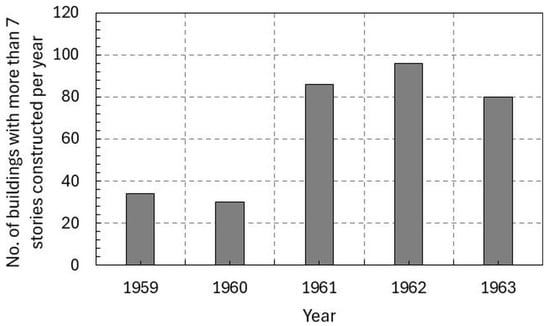
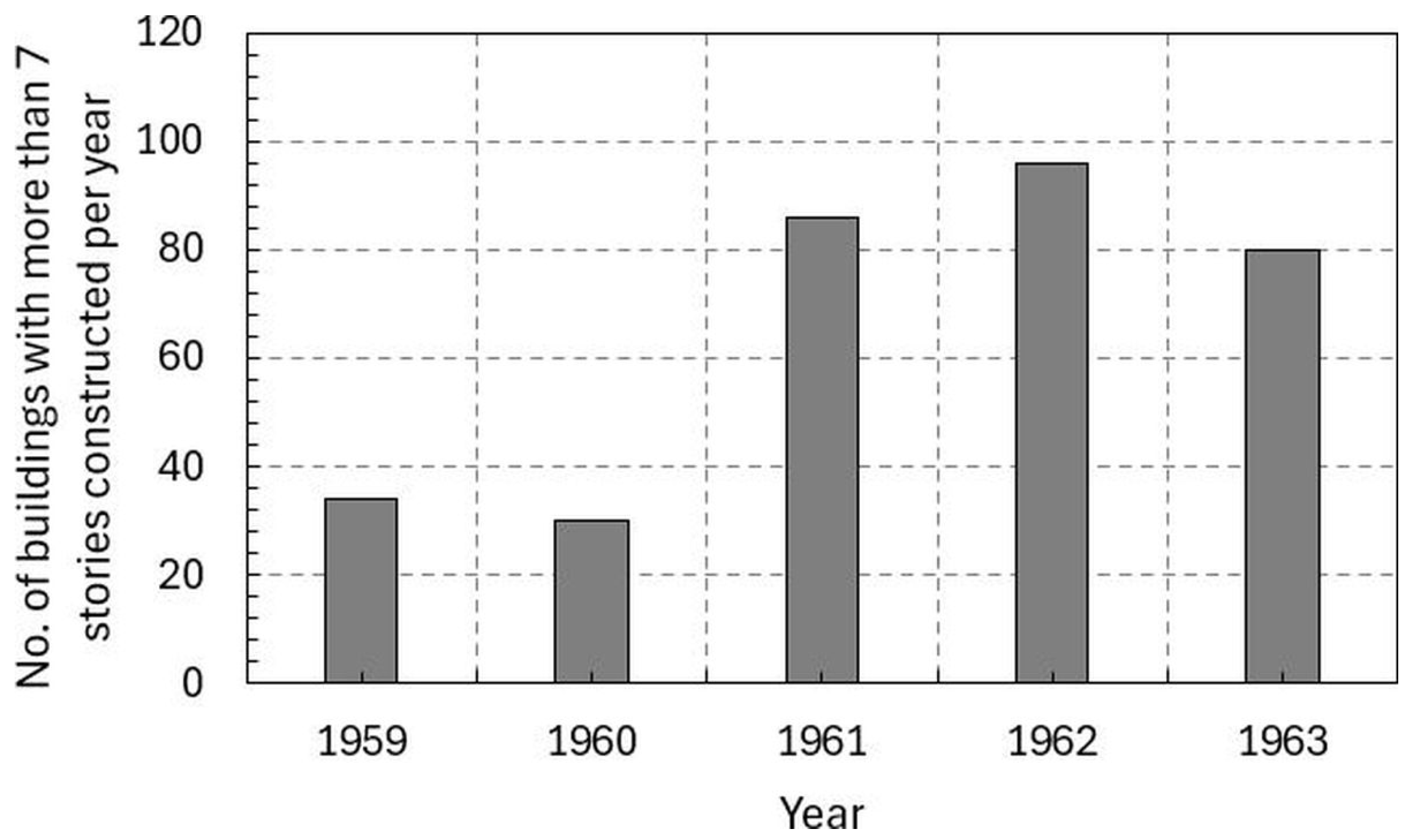
Additional information regarding the structural systems employed for residential buildings located in Bucharest in the period 1948–1977 can be found in reference [31]. A more detailed view of the number of high-rise buildings (having more than seven stories) constructed in Bucharest in the period 1959–1963 is shown in Figure 1. This period marks a significant phase of urban development in Romania, characterized by the rapid expansion of reinforced concrete structures to accommodate growing housing demands. In addition, this period marks a transition toward standardized reinforced concrete systems in Romanian residential architecture, which began to be used later on. The distribution shown in the figure highlights the increase in construction activity during these years.
Figure 1.
Histogram with the total number of high-rise buildings (having more than 7 stories) constructed in Bucharest in the period 1959–1963.
From a structural system perspective, the majority of buildings constructed between 1948 and 1977 employed reinforced concrete (RC) shear wall systems, while frame structures accounted for less than 10% of the building stock. Within the category of RC shear wall systems, four subtypes can be distinguished, although their relative prevalence is undocumented, namely: (i) RC structures utilizing shear walls exclusively as the lateral force-resisting system; (ii) RC dual systems incorporating both shear walls and frames; (iii) RC structures with soft-ground-stories and (iv) large panels structures consisting of prefabricated RC shear walls.
3. Design Methods and Materials Employed for High-Rise Soft- Ground-Story RC Structures
As previously mentioned, in the period in which the case-study structures were constructed, there was no officially enforced seismic design code in Romania. Thus, their design was based on various drafts of the P13–P63 code [32] and on instructions issued by each design institute. The design of the reinforced concrete sections (beams and columns) was based on STAS 1546-50 [33], which employed the ultimate strength method. In the ultimate strength design method, the allowable stress is determined by dividing the element’s calculated breaking strength by a safety factor. Unlike the allowable stress method, the safety factors are differentiated based on the type of loading and the mode of section failure, with values ranging from 1.6 to 2.4.
In 1950, STAS 503-49 [34] came into effect, addressing construction loads. This document, which was employed in the design of the case-study structures, classified loads into fundamental (permanent weights, live loads, etc.), accidental (wind, snow, temperature), and extraordinary (seismic loads), and allowed combinations of fundamental and accidental loads with one extraordinary load (e.g., wind load acting simultaneously with earthquake load). For example, a 1.6 safety factor for the fundamental and extraordinary loads was employed in the design of the high-rise RC soft-ground-story structure, which collapsed in Bucharest during the Vrancea 1977 earthquake [6]. From the perspective of construction materials, the concrete classes utilized in the case-study structures exhibited mean compressive strengths in the range of approximately 15–20 N/mm2. In certain instances, material testing revealed significantly higher strengths, up to two to three times greater than the aforementioned values, indicating possible substantial variability in material quality. The steel reinforcement employed consisted mainly of hot-rolled plain bars (named OB38) having a minimum yield strength of 240 N/mm2 and a minimum ultimate strength of 380 N/mm2. However, in some instances, reinforcement produced by cold twisting around the bar’s axis of round rolled profiles made from OL 38 steel (called TOR47) was employed, as well. While this process increased yield strength, it significantly reduced ductility and cyclic performance, properties essential for energy dissipation under earthquake loading. Subsequent research and post-earthquake observations revealed poor weldability, inadequate bond with concrete, and a tendency toward brittle failure under repeated loading, leading to the discontinuation of TOR47 bars by the late 1960s [35]. Consequently, given the documented poor performance of TOR47 cold-twisted reinforcement under cyclic loading, its presence significantly increases seismic vulnerability in RC structures. Therefore, identifying and prioritizing buildings that incorporate TOR47 bars is essential for targeted retrofitting and risk mitigation strategies. It should be noted that the presence of TOR47 reinforcement cannot be reliably identified during preliminary screening, as its detection requires invasive investigations or access to original construction documentation. Nevertheless, its presence is associated with increased structural vulnerability when compared to buildings reinforced with more conventional reinforcement systems.
4. Identification of Soft-Ground-Story Structures in Bucharest
The soft-ground-story structures combining commercial and residential functions were commonly built in Bucharest before the first seismic design code of 1963. Although initially recommended and promoted, this structural system was abandoned for residential buildings by the mid-1960s, as noted in the IPB report following the 1977 earthquake [36]. Consequently, considering the functionality of these buildings, they are most commonly encountered along the main streets in Bucharest. Various planar layouts were adopted for these buildings based on the shape of the available terrain. The geometry of the unoccupied land strongly influenced the configuration of these structures.
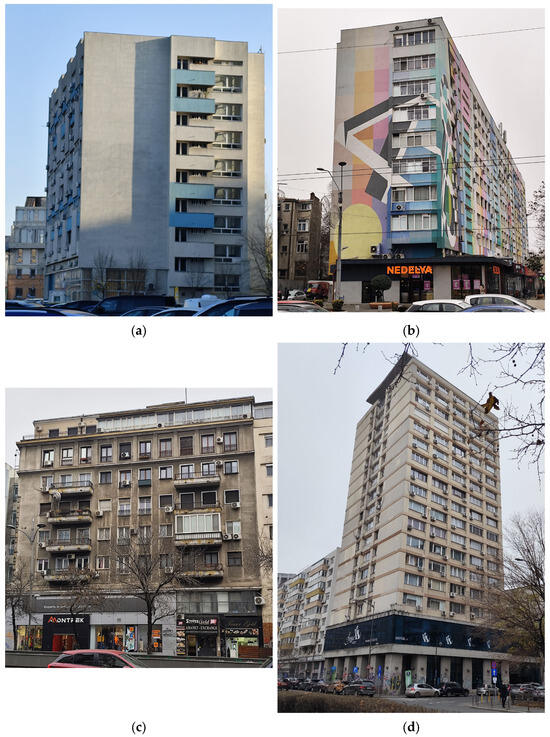
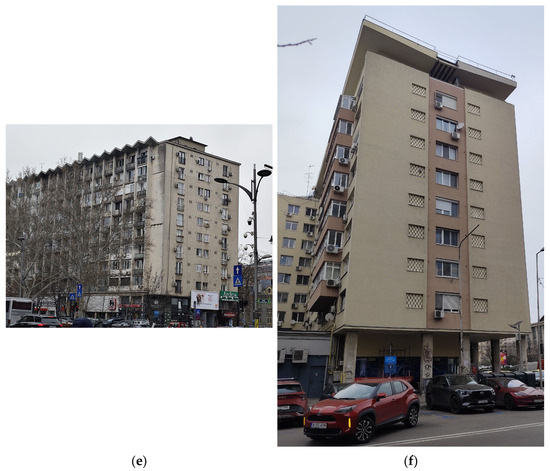
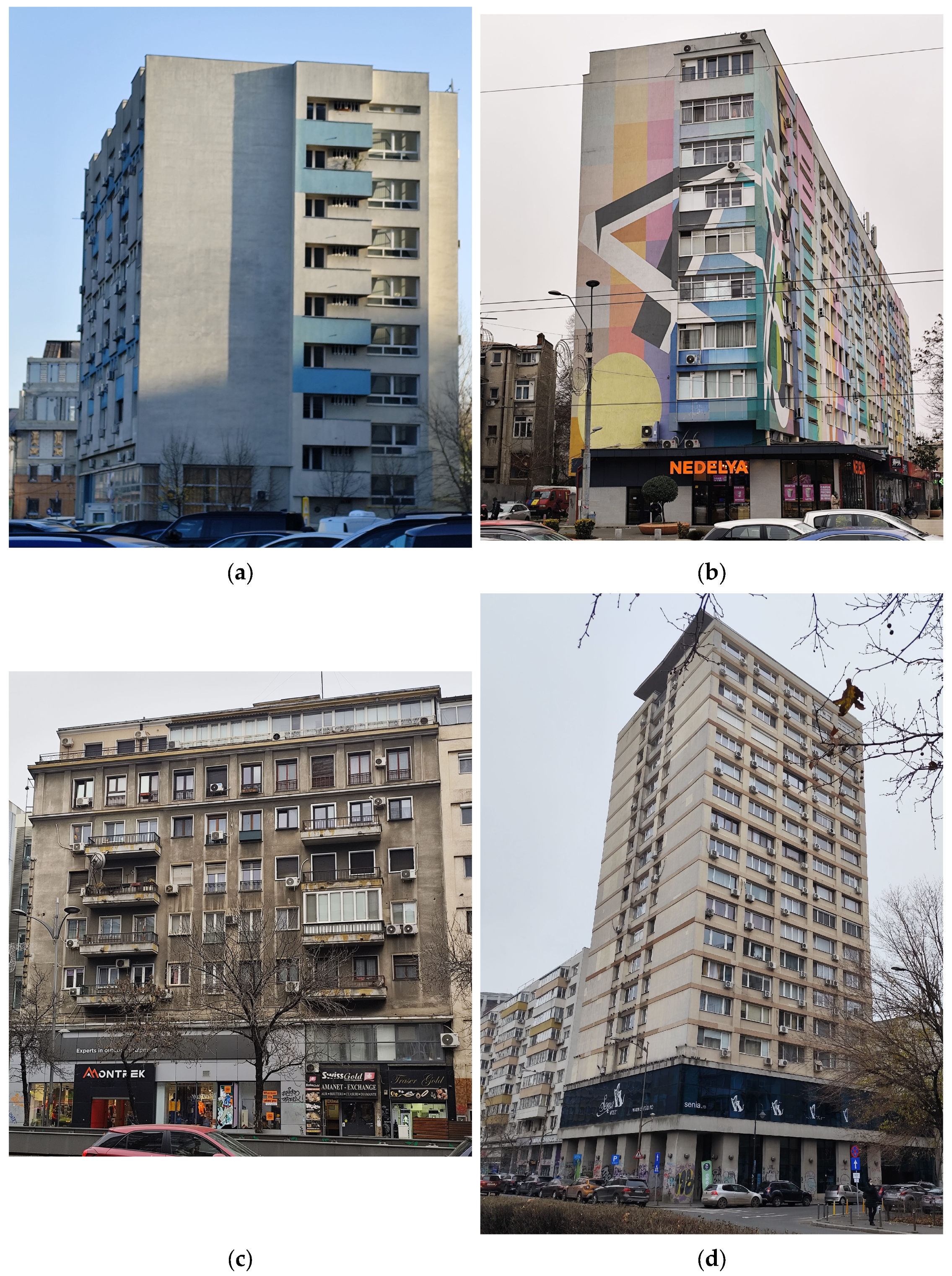
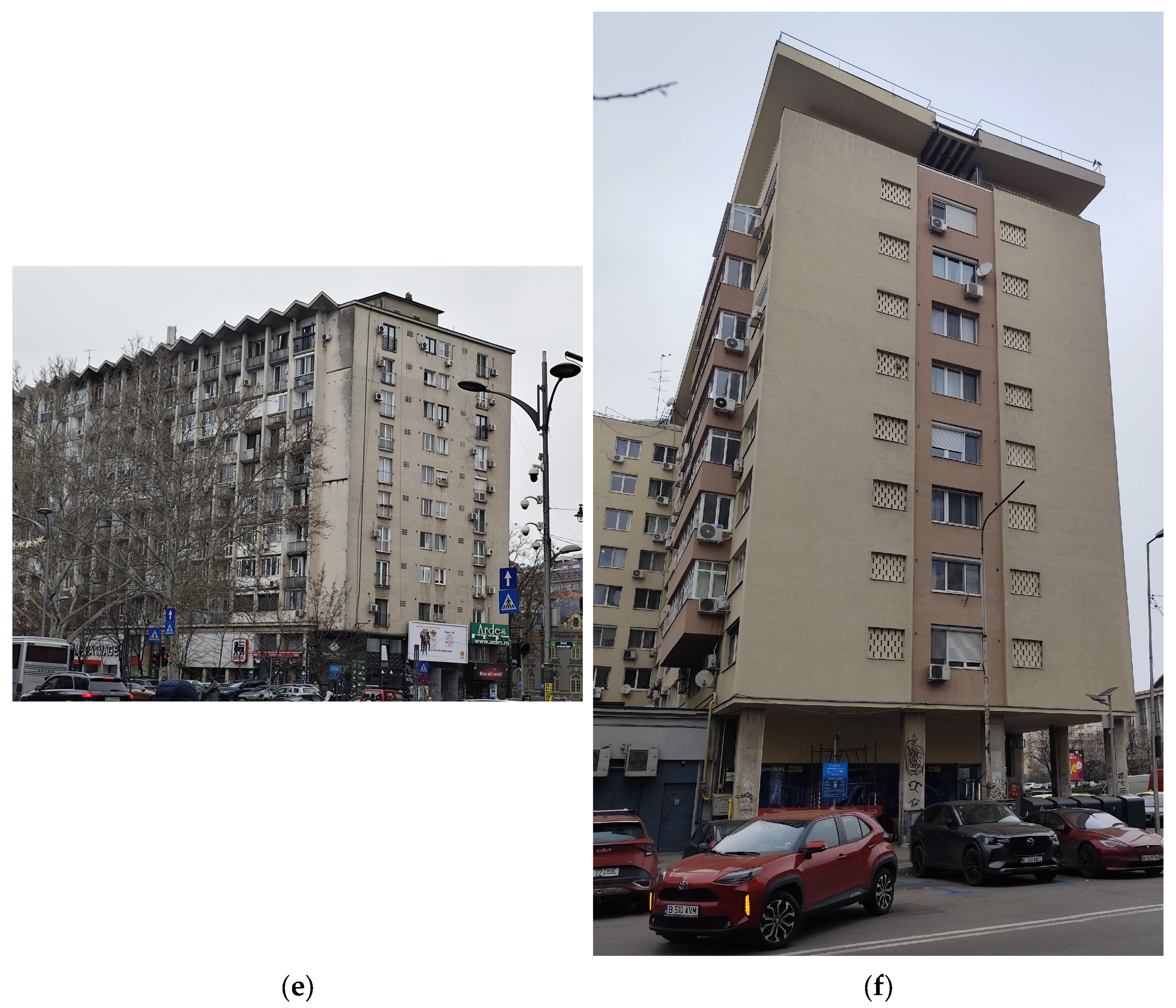
A past identification of the high-rise RC soft-ground-story structures in Bucharest was performed in the study of Lungu et al. [7], who listed 42 such structures having between 7 and 13 stories. In this research, this identification procedure is updated using additional information from various sources. Structural layouts of such structures located in Bucharest can be found in additional references, such as [37,38,39,40]. In several cases, the façades of certain buildings still exhibit visible traces of previous repair interventions and localized structural strengthening, even though these surfaces have subsequently undergone thermal rehabilitation works. Examples of case-study structures from Bucharest are shown in Figure 2. Figure 2 illustrates six representative high-rise RC buildings in Bucharest with soft-ground-story configurations, showing large open bays and a limited number of lateral elements at the ground level. These examples highlight the structural irregularity that significantly reduces stiffness at the first story compared to upper floors, increasing vulnerability to seismic damage.
Figure 2.
(a–f) Examples of high-rise soft-ground-story RC structures located in Bucharest and constructed before 1963.
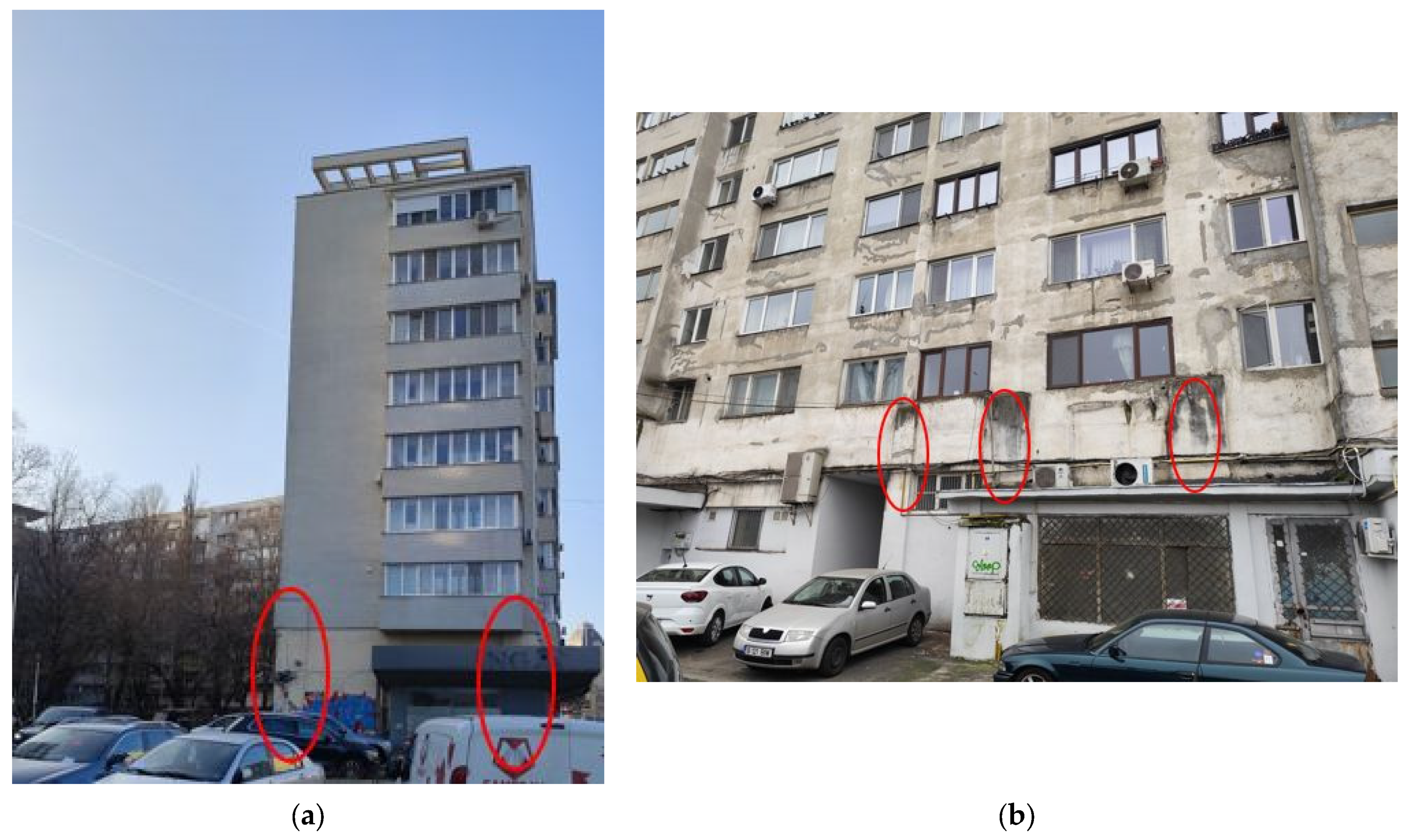
Examples of interventions and localized strengthening works performed on various high-rise soft-ground-story RC structures located in Bucharest after the Vrancea 1977 earthquake are illustrated in Figure 3. These measures typically included column jacketing and localized beam–column joint strengthening aimed at improving lateral stiffness and ductility at the ground level. Such interventions played a pivotal role in enhancing the seismic performance of these structures during the subsequent Vrancea intermediate-depth earthquakes of 1986 and 1990, although many buildings still exhibit visible traces of these repairs beneath subsequent thermal rehabilitation layers, underscoring the long-term challenges of maintaining structural integrity in ageing urban housing stock.
Figure 3.
(a,b) Examples of interventions consisting of localized strengthening works performed on the ground-story columns of high-rise RC structures located in Bucharest after the Vrancea 1977 earthquake. The interventions performed after 1977 earthquake are marked with red.
The identification of soft-ground-story structures performed in this study was conducted using a multi-step screening methodology combining: (i) archival structural documentation and design drawings; (ii) architectural plan comparison between ground and typical upper stories; and (iii) field surveys and façade inspections. Buildings were preliminarily classified as soft-ground-story structures when the ground floor exhibited a significantly reduced density of vertical–lateral-load-resisting elements and large open bays for commercial use.
Although Bucharest is used as the application case, the proposed identification workflow is not city-specific and is intended as a transferable screening methodology for high-rise reinforced concrete buildings with potential soft-ground-story configurations. The workflow integrates multi-source information that is commonly available in many urban environments. Consequently, the approach can be applied to other cities with similar pre-code or low-code building stocks, particularly where comprehensive structural data are unavailable.
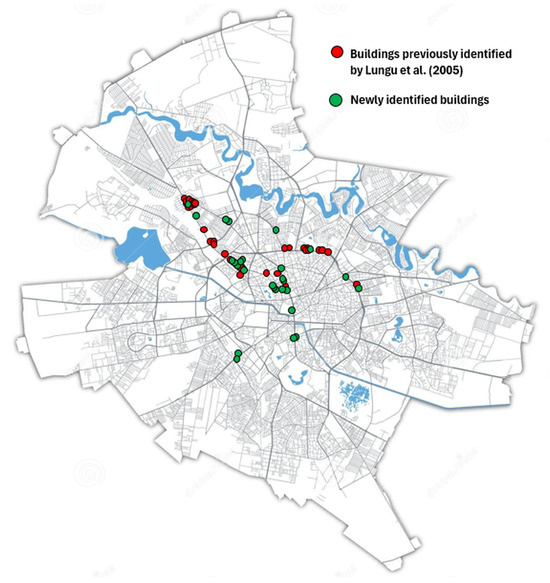
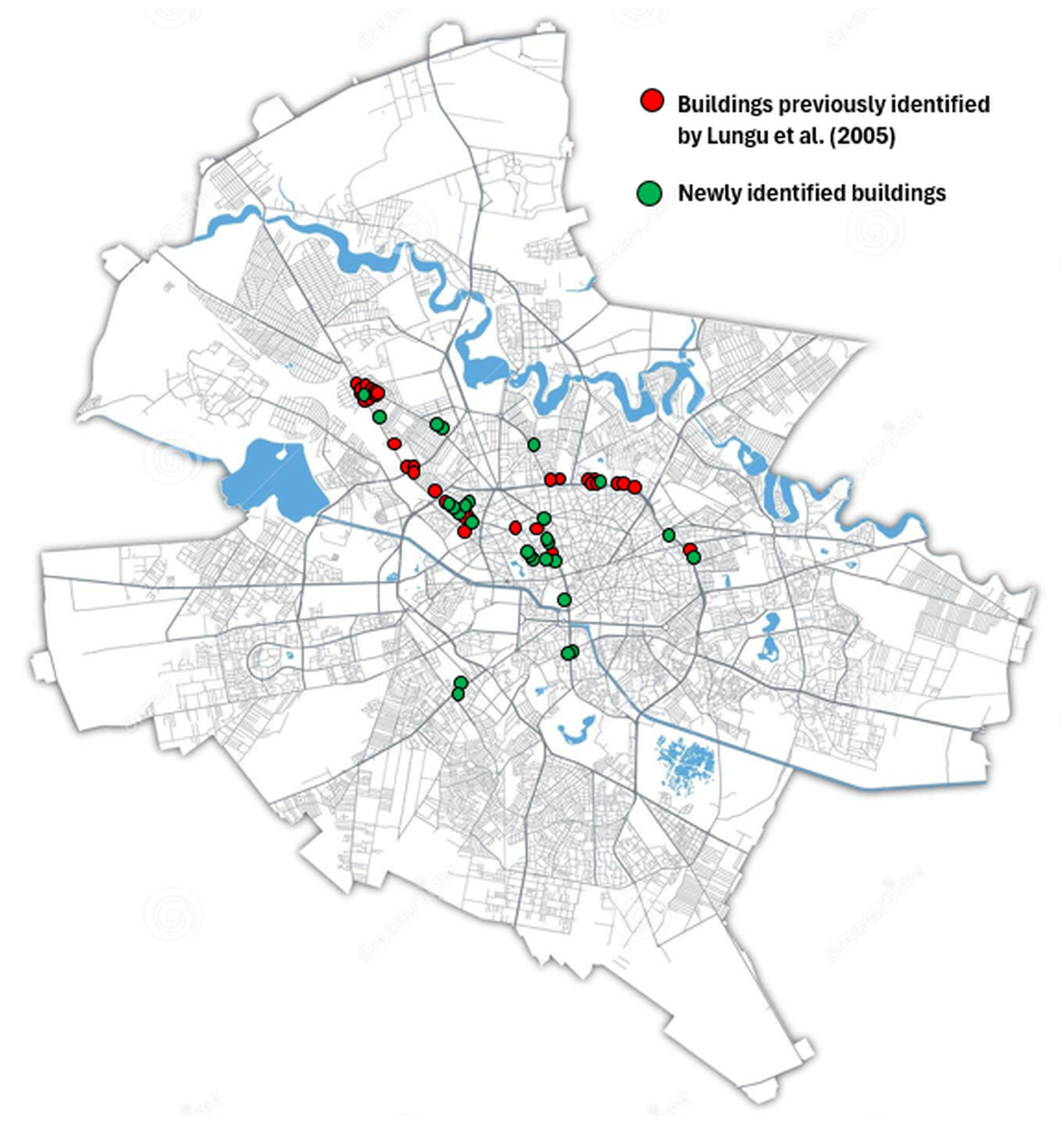
Figure 4 shows the locations of previously identified high-rise soft-ground-story RC structures in Bucharest, as reported by Lungu et al. [7], along with the locations of newly identified structures. The concentration of the case-study structures is visible along major boulevards, confirming the prevalence of mixed-use layouts with open ground floors in these areas. The identified buildings account for approximately 3% of the entire residential building stock constructed between 1948 and 1977, and more than 20% of those built during the phase of 1959–1963.
Figure 4.
Location of previously identified high-rise soft-ground-story RC structures located in Bucharest by Lungu et al. [7] and location of newly identified structures in this study.
5. Implications for Seismic Risk Assessment
According to ASCE 7-22 [41], a stiffness–soft story irregularity occurs when a story’s lateral stiffness is less than 70% of that in the story above, or, if there are at least three stories above, less than 80% of the average stiffness of those three stories. A stiffness–extreme soft story irregularity exists when a story’s lateral stiffness is less than 60% of that in the story above, or, if there are at least three stories above, less than 70% of the average stiffness of those three stories. The above-mentioned criteria from ASCE 7-22 [41] are purely mentioned as a benchmarking reference for a stiffness-based classification of soft-ground-story structures.
Two indicators different than the criteria mentioned in ASCE 7-22 [41] were adopted in this study, namely the vertical element area ratio at ground-story level and the mean axial stress in ground-story columns, and are intended as first-order screening parameters rather than substitutes for detailed structural analysis. They were selected due to their direct physical relevance to stiffness degradation and brittle failure mechanisms observed in soft-ground-story structures, and because they can be derived from limited information, rather than through nonlinear numerical simulations. The mechanical rationale of the proposed screening indicators is directly linked to the governing failure mechanisms of soft-ground-story structures. A low vertical element area ratio at the ground-story level is associated with a significant reduction in lateral stiffness and redundancy, leading to drift concentration and the formation of a soft-story mechanism under seismic loading. Simultaneously, elevated mean axial stress in ground-story columns reduces available deformation capacity and increases susceptibility to brittle axial–shear or compression-controlled failures when combined with cyclic lateral forces. When these two conditions coexist, low vertical element density and high axial demand, the probability of column-dominated collapse mechanisms increases substantially. The unfavourable combination of these indicators observed for the structure that collapsed during the 1977 Vrancea earthquake provides empirical support for their use as first-order vulnerability screening parameters.
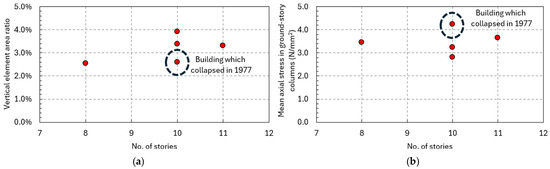
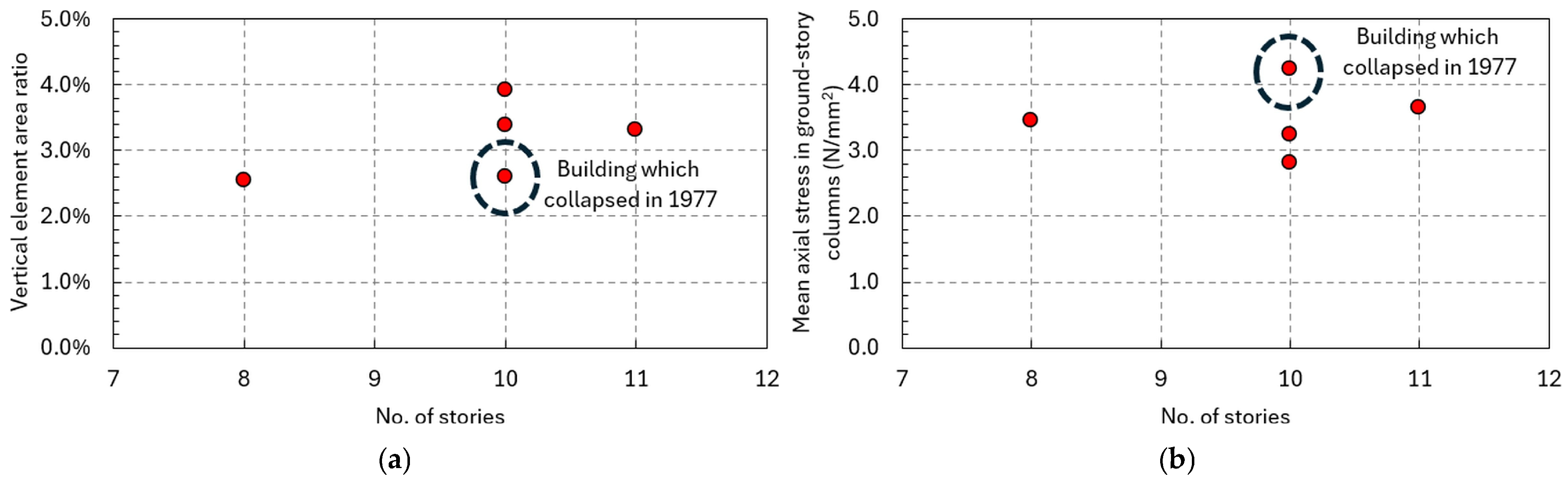
The vertical element area ratio (ratio between the area of the vertical elements at ground-story level and the floor area) and the mean axial stress in the ground-story columns are illustrated in Figure 5a,b for five high-rise RC soft-ground-story structures in Bucharest. The results computed for the structure that collapsed during the Vrancea 1977 earthquake are also shown for comparison purposes. It can be observed from Figure 5 that the collapsed 1977 building exhibits the most unfavourable combination of these parameters. It is important to note that the base shear coefficient employed in the design of this structure was only 2.4% of the building′s weight, significantly below modern code requirements, which further exacerbated its vulnerability. These findings underscore the necessity of considering both vertical element area ratio and mean axial stress as primary indicators of seismic vulnerability. Their combined effect provides a rational basis for screening and prioritizing retrofitting interventions for high-rise RC buildings with soft- ground-stories, particularly in regions of high seismicity such as Bucharest. Incorporating these parameters into rapid assessment methodologies could significantly improve the accuracy of risk evaluation and resource allocation for seismic rehabilitation programmes.
Figure 5.
Screening indicators for selected high-rise RC soft-ground-story structures in Bucharest: (a) Vertical element area ratio for five high-rise RC soft-ground-story structures in Bucharest; (b) mean stress in the ground-story columns for five high-rise RC soft-ground-story structures in Bucharest. The results obtained for the building that collapsed during the Vrancea 1977 earthquake are highlighted.
The seismic retrofitting of the identified high-rise soft-ground-story structures should directly address the vulnerability mechanisms highlighted by the proposed screening indicators. Thus, the low vertical element area ratios and elevated axial stresses in ground-story columns indicate a significant probability for column-dominated, brittle failure modes. In this context, local strengthening solutions, such as fibre-reinforced polymer (FRP) confinement or similar ductility-enhancing techniques, are particularly suitable, as they increase deformation capacity and confinement without significantly altering the global stiffness or fundamental eigenperiod of the structure. By preventing premature column failure at the ground story, such interventions allow stable inelastic energy dissipation while avoiding the migration of seismic demand to the unstrengthened upper stories.
Early Romanian seismic codes (P13 series from 1963 [32] and 1970 [42]) introduced an amplification factor of 1.25 for the loading effects occurring at the ground-story level. These amplifications were sometimes used for buildings constructed before the P13-63 code came into effect, reflecting early efforts to address the structural issues of these buildings. Larger amplification factors were documented for some buildings in Bucharest, leading to a favourable seismic performance during the Vrancea 1977 earthquake [43,44]. Thus, the superior performance of such structures during the Vrancea 1977 earthquake can be attributed to the amplification factors applied for the loading effects occurring at the ground-story level.
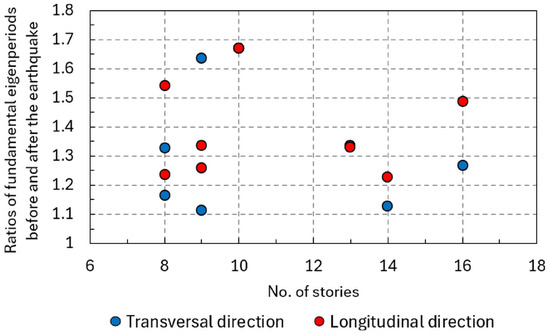
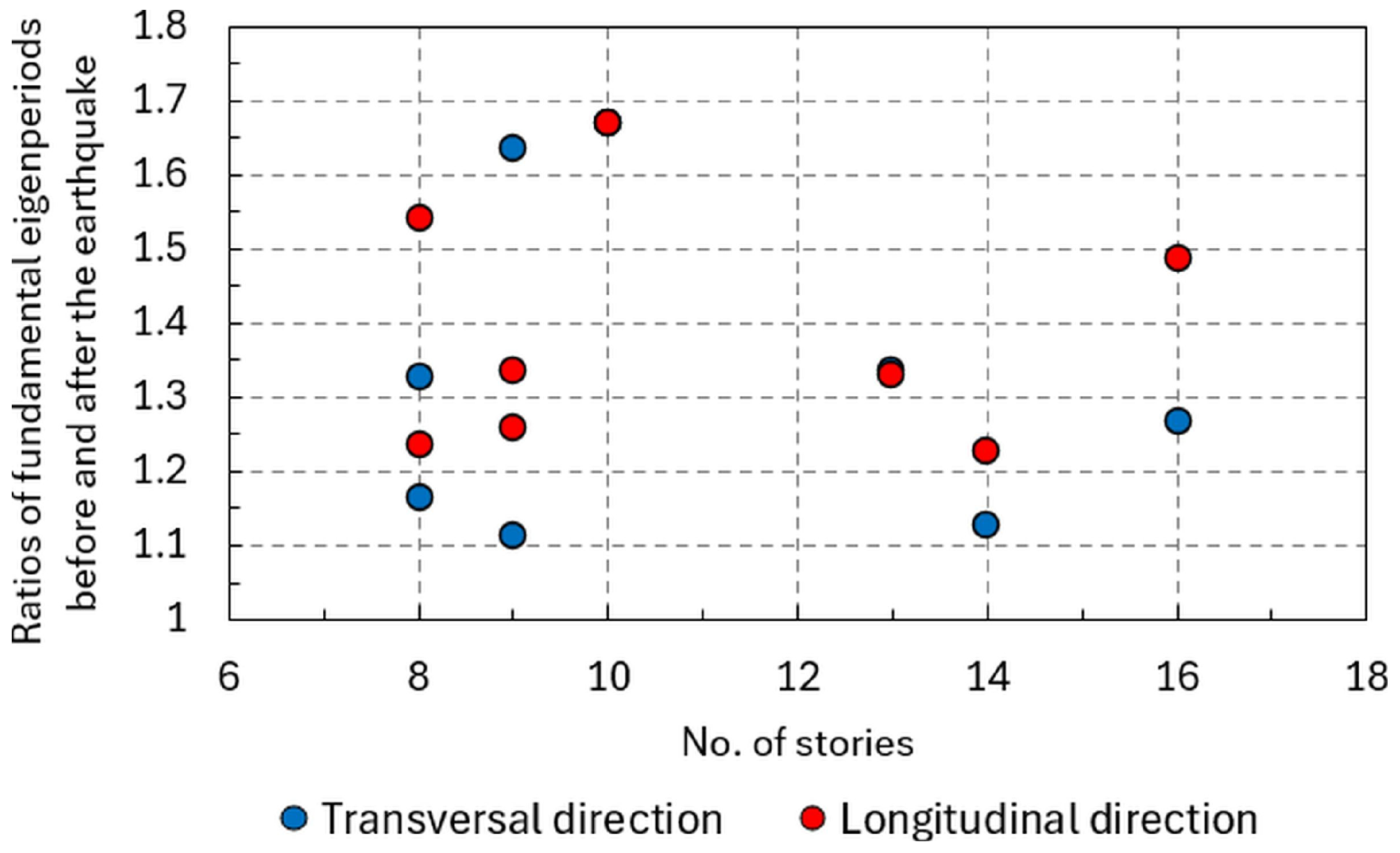
The dynamic characteristics reported herein are derived from post-earthquake measurements performed after the 4 March 1977 Vrancea earthquake, using ambient vibration testing compiled in Balan et al. [6]. Figure 6 illustrates the ratios between the fundamental eigenperiods in the two principal directions of the structure, both before and after the earthquake, plotted as a function of the number of stories. This comparison highlights the variation in dynamic properties due to the seismic event of March 4, 1977, and also reflects the damage level. A correspondence between the increase in the fundamental eigenperiods of the structure and the damage level can be found in the paper of Vidal et al. [45] using data collected after the Lorca 2011 earthquake. The increase in the fundamental eigenperiod highlighted in Figure 6 reveals a moderate to extensive damage state for these structures. However, no trend in the ratios between the fundamental eigenperiods in the two principal directions of the structure, both before and after the earthquake, with the height, can be inferred from Figure 6. The mean fundamental eigenperiod increase is of 33% in the transversal direction and 38% in the longitudinal direction. The study of Ditommaso et al. [46] empirically estimated the fundamental eigenperiod of 68 reinforced concrete buildings in L’Aquila after the 2009 earthquake, considering four damage levels defined by EMS-98. Results show that the fundamental eigenperiod increases with damage, with the increase never exceeding 100% even at near-collapse states. For lower damage states, the increase in the fundamental eigenperiod was about 60%.
Figure 6.
Ratios of measured fundamental eigenperiods in the two principal directions before and after the Vrancea 1977 earthquake as a function of the number of stories for high-rise soft-ground-story RC structures located in Bucharest [6].
6. Conclusions
This paper focused on the systematic identification of high-rise RC soft-ground-story structures carried out using past research, field surveys, structural documentation, and architectural layout analysis, resulting in a comprehensive database of such vulnerable structures. While developed and demonstrated using the Bucharest building stock, the methodology is applicable to other urban contexts characterized by pre-code or low-code reinforced concrete construction. Its reliance on accessible data sources and simplified mechanical indicators makes it suitable for large-scale urban screening prior to detailed seismic assessment. The most relevant observations of this study are summarized below:
- The identification process successfully expanded the inventory of high-rise RC soft-ground-story buildings from 42 to 70, revealing a pronounced clustering along major boulevards in Bucharest. This represents about 3% of the residential building stock constructed in Bucharest in the period between the end of WWII and 1977.
- The use of amplification factors for the loading effects occurring at the ground-story level reflects a continuous effort from the designers to mitigate soft-ground-story vulnerabilities and improve the seismic performance of high-rise RC soft-ground-story structures.
- The presence of TOR47 cold-twisted reinforcement in RC structures represents a critical seismic vulnerability due to its poor performance under cyclic loading and limited bond with concrete. Consequently, identifying buildings that incorporate TOR47 bars should be a priority in screening programmes.
- The increase in the fundamental eigenperiod of some high-rise RC soft-ground-story structures in Bucharest reveals a moderate-to-extensive damage state for these structures, as a result of the Vrancea 1977 intermediate-depth earthquake.
- While past structural interventions have improved the seismic performance of many soft-ground-story buildings, the persistence of structural irregularities and ageing materials underscores the necessity for ongoing monitoring and periodic retrofit evaluations. Implementing advanced diagnostic techniques, such as image-based deep learning or vibration-based assessments, can help detect emerging vulnerabilities and guide cost-effective rehabilitation programmes to maintain urban resilience.
- Analytical results confirm that soft-ground-story RC buildings constitute the most cost-effective category for seismic retrofitting. Targeted interventions in these structures yield substantial reductions in expected seismic losses at comparatively lower investment levels, making them a priority for resource allocation in citywide risk mitigation programmes.
- Measurements following the Vrancea 1977 earthquake revealed a 33% increase in eigenperiods in the transverse direction and 38% in the longitudinal direction, confirming severe stiffness degradation and progressive damage in high-rise RC soft-ground-story structures. These findings validate the use of dynamic properties as key indicators for post-event vulnerability assessment.
- The collapsed 1977 building exhibited the lowest vertical element area ratio and the highest mean axial stress among all analyzed cases, reinforcing these two parameters as critical vulnerability indicators. Their integration into rapid screening methodologies can significantly improve prioritization for retrofitting and reduce seismic risk in urban environments. The seismic retrofitting of the case-study structures through the application of fibre-reinforced polymer (FRP) or other similar materials allows for a local, cost-effective, and targeted enhancement of ductility and confinement without significantly altering the lateral stiffness or strength of the ground level. By increasing the ultimate drift capacity of the columns while keeping the building’s fundamental eigenperiod constant, this intervention prevents the migration of seismic demands to the upper stories, which are not strengthened. Consequently, the structure can dissipate energy through stable inelastic deformation at the ground floor without inducing the amplified inertial forces typically associated with traditional stiffening techniques.
This study relies on archival plans and field observations that may not fully capture post-construction modifications, introducing classification uncertainty. The proposed screening indicators, vertical element area ratio and mean axial stress are simplified proxies and do not account for torsional irregularities, diaphragm discontinuities, or soil–structure interaction. Dynamic eigenperiod data available after the 1977 earthquake are limited in sample size and measurement consistency, which constrains damage-state calibration and precludes any additional quantitative validation beyond the evidence presented in this study.
Future work should focus on expanding the building inventory using machine-readable attributes derived from archival plans and façade imagery, enabling automated or semi-automated screening at the city scale. Pilot applications of image-based vulnerability detection should be conducted on representative subsets of the building stock to evaluate classification robustness. In parallel, ambient vibration measurements may be used to further correlate screening indicators with dynamic properties, and simplified numerical models will be employed to explore indicator sensitivity under different retrofit scenarios. Community awareness programmes and stakeholder collaboration are essential to accelerate retrofitting and enhance urban resilience. Beyond technical interventions, increasing public understanding of seismic risk and engaging residents in decision-making processes can significantly improve compliance and support for mitigation measures.
Funding
This work was supported by a National Research Grants of the UTCB, project number GNaC ARUT 2025-UTCB-3.
Institutional Review Board Statement
Not applicable.
Informed Consent Statement
Not applicable.
Data Availability Statement
The raw data supporting the conclusions of this article will be made available by the authors on request.
Acknowledgments
During the preparation of this manuscript, the author used M365 Copilot (GPT-5 chat model) for the purposes of writing assistance and proofreading support.
Conflicts of Interest
The author declares no conflicts of interest.
References
- ROMPLUS Earthquake Catalog. Available online: http://www.infp.ro/data/romplus.txt (accessed on 31 January 2022).
- Pavel, F.; Vacareanu, R.; Douglas, J.; Radulian, M.; Cioflan, C.; Barbat, A. An Updated Probabilistic Seismic Hazard Assessment for Romania and Comparison with the Approach and Outcomes of the SHARE Project. Pure Appl. Geophys. 2016, 173, 1881–1905. [Google Scholar] [CrossRef] [Scilit]
- Danciu, L.; Weatherill, G.; Rovida, A.; Basili, R.; Bard, P.-Y.; Beauval, C.; Nandan, S.; Pagani, M.; Crowley, H.; Sesetyan, K.; et al. The 2020 European Seismic Hazard Model: Milestones and Lessons Learned. In Proceedings of the Progresses in European Earthquake Engineering and Seismology; Vacareanu, R., Ionescu, C., Eds.; Springer International Publishing: Cham, Switzerland, 2022; pp. 3–25. [Google Scholar]
- Pavel, F.; Carale, G. Seismic Assessment for Typical Soft-Storey Reinforced Concrete Structures in Bucharest, Romania. Int. J. Disaster Risk Reduct. 2019, 41, 101332. [Google Scholar] [CrossRef] [Scilit]
- Chesca, A.B.; Seki, M.; Vacareanu, R.; Okada, T.; Georgescu, B.; Kaminosono, T.; Kato, H. Seismic Rehabilitation of an Existing Soft and Weak Groundfloor Building. Case Study. In Proceedings of the International Symposium on Seismic Risk Reduction the JICA Technical Cooperation Project in Romania, Bucharest, Romania, 23–24 November 2000; Editura Orizonturi Universitare: Bucharest, Romania, 2007; pp. 195–206. [Google Scholar]
- Balan, S.; Cristescu, V.; Cornea, I. The March 4, 1977 Romanian Earthquake; Editura Academiei: Bucharest, Romania, 1982. [Google Scholar]
- Lungu, D.; Aldea, A.; Demetriu, S.; Craifaleanu, I. Seismic Strengthening of Buildings and Seismic Instrumentation—Two Priorities for Seismic Risk Reduction in Romania. Acta Geod. Geophys. Hung. 2005, 39, 233–258. [Google Scholar] [CrossRef] [Scilit]
- Verderame, G.M.; De Luca, F.; Ricci, P.; Manfredi, G. Preliminary Analysis of a Soft-Storey Mechanism after the 2009 L’Aquila Earthquake. Earthq. Eng. Struct. Dyn. 2011, 40, 925–944. [Google Scholar] [CrossRef] [Scilit]
- Pavel, F.; Noroozinejad Farsangi, E. Risk-Based Evaluation of Economic Feasibility for Strengthening of Low-Code RC Structures. Pract. Period. Struct. Des. Constr. 2021, 26, 05020013. [Google Scholar] [CrossRef] [Scilit]
- Pavel, F.; Crowley, H.; Romão, X.; Vladut, R.; Pereira, N.; Ozsarac, V. Evolution of National Codes for the Design of RC Structures in Romania. Bull Earthq. Eng 2024, 22, 911–949. [Google Scholar] [CrossRef] [Scilit]
- Luo, R.; Lata, A.; Dong, X.; Wang, B.; Luo, Z.; Liang, Y.; Guo, X. Seismic Response of Soft-Story Reinforced Concrete Frames: Challenging Traditional Collapse Mechanisms. Structures 2025, 76, 108894. [Google Scholar] [CrossRef] [Scilit]
- Dolsek, M.; Fajfar, P. Soft Storey Effects in Uniformly Infilled Reinforced Concrete Frames. J. Earthq. Eng. 2001, 5, 1–12. [Google Scholar] [CrossRef] [Scilit]
- Mulas, M.G.; Perotti, F.; Coronelli, D.; Martinelli, L.; Paolucci, R. The Partial Collapse of “Casa Dello Studente” during L’Aquila 2009 Earthquake. Eng. Fail. Anal. 2013, 34, 566–584. [Google Scholar] [CrossRef] [Scilit]
- Demirel, I.O.; Yakut, A.; Binici, B. Seismic Performance of Mid-Rise Reinforced Concrete Buildings in Izmir Bayrakli after the 2020 Samos Earthquake. Eng. Fail. Anal. 2022, 137, 106277. [Google Scholar] [CrossRef] [Scilit]
- Jara, J.M.; Florio, E.; Olmos, B.A. Seismic Evaluation and Reliability Index of Soft Story Buildings on Flexible Soils by Using Old and Current Seismic Regulations in Mexico. Eng. Struct. 2023, 286, 116048. [Google Scholar] [CrossRef] [Scilit]
- Galvis, F.A.; Miranda, E.; Heresi, P.; Dávalos, H.; Ruiz-García, J. Overview of Collapsed Buildings in Mexico City after the 19 September 2017 (Mw7.1) Earthquake. Earthq. Spectra 2020, 36, 83–109. [Google Scholar] [CrossRef] [Scilit]
- Vuran, E.; Serhatoğlu, C.; Timurağaoğlu, M.Ö.; Smyrou, E.; Bal, İ.E.; Livaoğlu, R. Damage Observations of RC Buildings from 2023 Kahramanmaraş Earthquake Sequence and Discussion on the Seismic Code Regulations. Bull Earthq. Eng 2025, 23, 1153–1182. [Google Scholar] [CrossRef] [Scilit]
- Pesaralanka, V.; Challagulla, S.P.; Vicencio, F.; Chandra Babu, P.S.; Hossain, I.; Jameel, M.; Ramakrishna, U. Influence of a Soft Story on the Seismic Response of Non-Structural Components. Sustainability 2023, 15, 2860. [Google Scholar] [CrossRef] [Scilit]
- Ulutaş, H. Investigation of the Causes of Soft-Storey and Weak-Storey Formations in Low- and Mid-Rise RC Buildings in Türkiye. Buildings 2024, 14, 1308. [Google Scholar] [CrossRef] [Scilit]
- Yavariabdi, A.; Asik, M.F.; Dogan, G.; Arslan, M.H. Vision-Based Analysis of Soft Story, Short Columns, and Vertical Geometry in RC Structures. Structures 2025, 80, 109951. [Google Scholar] [CrossRef] [Scilit]
- Manos, G.C.; Katakalos, K.; Soulis, V.; Melidis, L. Earthquake Retrofitting of “Soft-Story” RC Frame Structures with RC Infills. Appl. Sci. 2022, 12, 11597. [Google Scholar] [CrossRef] [Scilit]
- Morales-Beltran, M. Understanding 60 Years of Soft Storey in Türkiye: An Interdisciplinary Perspective. Nat. Hazards 2025, 121, 11297–11336. [Google Scholar] [CrossRef] [Scilit]
- Agha Beigi, H.; Sullivan, T.J.; Christopoulos, C.; Calvi, G.M. Factors Influencing the Repair Costs of Soft-Story RC Frame Buildings and Implications for Their Seismic Retrofit. Eng. Struct. 2015, 101, 233–245. [Google Scholar] [CrossRef] [Scilit]
- Jaimes, M.A.; Niño, M.; Franco, I.; Trejo, S.; Godínez, F.A.; García-Soto, A.D. Seismic Risk of Weak First-Story RC Structures with Inerter Dampers Subjected to Narrow-Band Seismic Excitations. Buildings 2023, 13, 929. [Google Scholar] [CrossRef] [Scilit]
- Mallikarjuna, A.; Yadav, D.; Bhartiya, R.; Oinam, R.M.; Sahoo, D.R. Seismic Retrofitting of an Existing Non-Ductile Open-Ground Story RC Frame by Partial Infilling with RC Shear Walls: An Experimental Study. Eng. Struct. 2025, 335, 120397. [Google Scholar] [CrossRef] [Scilit]
- Adane, M.; Kim, J. Seismic Retrofit of a Soft First Story Structure Considering Soil Effect. Earthq. Struct. 2023, 24, 345–352. [Google Scholar]
- Javidan, M.M.; Kim, J. Seismic Retrofit of Soft-First-Story Structures Using Rotational Friction Dampers. J. Struct. Eng. 2019, 145, 04019162. [Google Scholar] [CrossRef] [Scilit]
- Matiyas, S.; Workeluel, N.; Mohanty, T.; Saha, P. Review of Different Analysis and Strengthening Techniques of Soft Story Buildings. Mater. Today Proc. 2023. [Google Scholar] [CrossRef] [Scilit]
- Pavel, F. Ground Motion Recording-Based Validation of Capacity Curves for High-Rise Reinforced Concrete Structures in Romania Constructed Before 1977. Buildings 2025, 15, 549. [Google Scholar] [CrossRef] [Scilit]
- Pavel, F.; Vacareanu, R.; Calotescu, I.; Sandulescu, A.-M.; Arion, C.; Neagu, C. Impact of Spatial Correlation of Ground Motions on Seismic Damage for Residential Buildings in Bucharest, Romania. Nat. Hazards 2017, 87, 1167–1187. [Google Scholar] [CrossRef] [Scilit]
- IPB. Monograph of the Project Bucharest Institute; IPB: Bucharest, Romania, 1992. [Google Scholar]
- P13-63; Code for the Design of Civil and Industrial Buildings in Seismic Regions. CSCAS: Bucharest, Romania, 1963.
- STAS 1546-50; Instructions for the Design of Reinforced Concrete Sections According to the Ultimate Strength Method. Ministry of Constructions and Construction Materials Industry: Bucharest, Romania, 1952.
- STAS 503-49; Loads in Constructions. Classification. OSS: Bucharest, Romania, 1949.
- Carare, T. High-Grade Steels for Reinforced Concrete and Prestressed Concrete; Editura Tehnica: Bucharest, Romania, 1969. [Google Scholar]
- IPB. Interim Report Regarding the Effects of the March 4, 1977 Earthquake Effects on New Buildings in Bucharest; IPB: Bucharest, Romania, 1977. [Google Scholar]
- Avram, C. Reinforced Concrete in Romania; Editura Tehnica: Bucharest, Romania, 1987; Volume 2. [Google Scholar]
- Cismigiu, A.; Badea, D.; Popp, T. Aseismic celullar structure for multi-storey residential buildings. Constructii 1961, 1961, 57–69. [Google Scholar]
- Pretorian, A. The Design of Civil Buildings; MatrixRom: Bucharest, Romania, 2000; Volume 2. [Google Scholar]
- Serban, I. The Urban Housing 1959–1961; Editura Tehnica: Bucharest, Romania, 1962. [Google Scholar]
- ASCE/SEI 7-22; Minimum Design Loads and Associated Criteria for Buildings and Other Structures. ASCE: Reston, VA, USA, 2021.
- P13-70; Code for the Design of Civil and Industrial Buildings in Seismic Regions. INCERC: Bucharest, Romania, 1970.
- Cismigiu, A. After March 4, 1977. Arhitecture 1977, 4, 1–23. [Google Scholar]
- ICCPDC. Research on the Ductility of Reinforced Concrete Shear Walls in Multi-Story Residential Buildings Under Seismic Conditions; ICCPDC: Bucharest, Romania, 1977. [Google Scholar]
- Vidal, F.; Navarro, M.; Aranda, C.; Enomoto, T. Changes in Dynamic Characteristics of Lorca RC Buildings from Pre- and Post-Earthquake Ambient Vibration Data. Bull Earthq. Eng 2014, 12, 2095–2110. [Google Scholar] [CrossRef] [Scilit]
- Ditommaso, R.; Vona, M.; Gallipoli, M.R.; Mucciarelli, M. Evaluation and Considerations about Fundamental Periods of Damaged Reinforced Concrete Buildings. Nat. Hazards Earth Syst. Sci. 2013, 13, 1903–1912. [Google Scholar] [CrossRef] [Scilit]
Disclaimer/Publisher’s Note: The statements, opinions and data contained in all publications are solely those of the individual author(s) and contributor(s) and not of MDPI and/or the editor(s). MDPI and/or the editor(s) disclaim responsibility for any injury to people or property resulting from any ideas, methods, instructions or products referred to in the content. |
© 2026 by the author. Licensee MDPI, Basel, Switzerland. This article is an open access article distributed under the terms and conditions of the Creative Commons Attribution (CC BY) license.