Calculation of Morphological Characteristic Parameters of Sand Particles Based on Deep Learning


Abstract
1. Introduction
2. Morphological Identification and Characteristic Parameter Calculation Method of Sand Particles
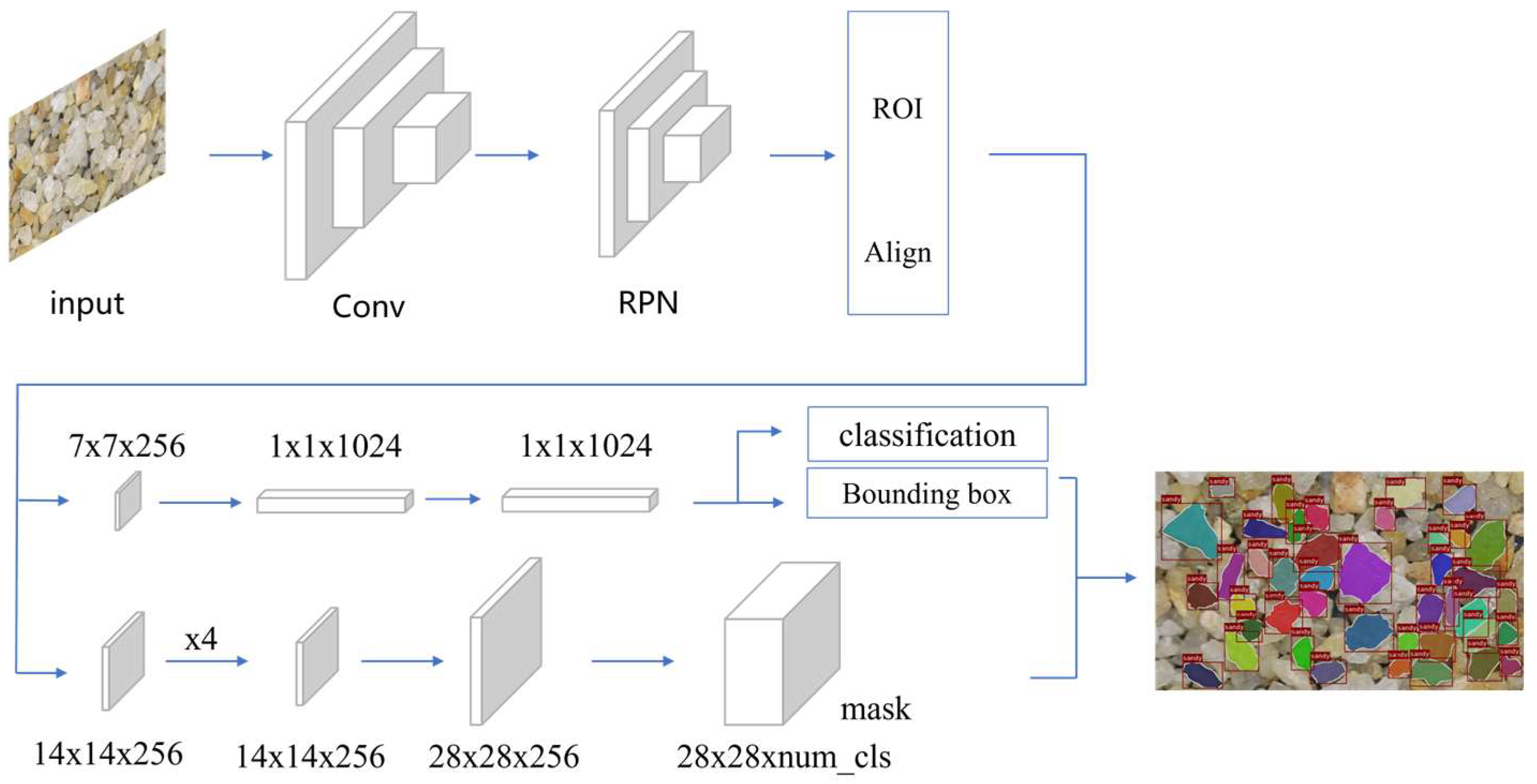
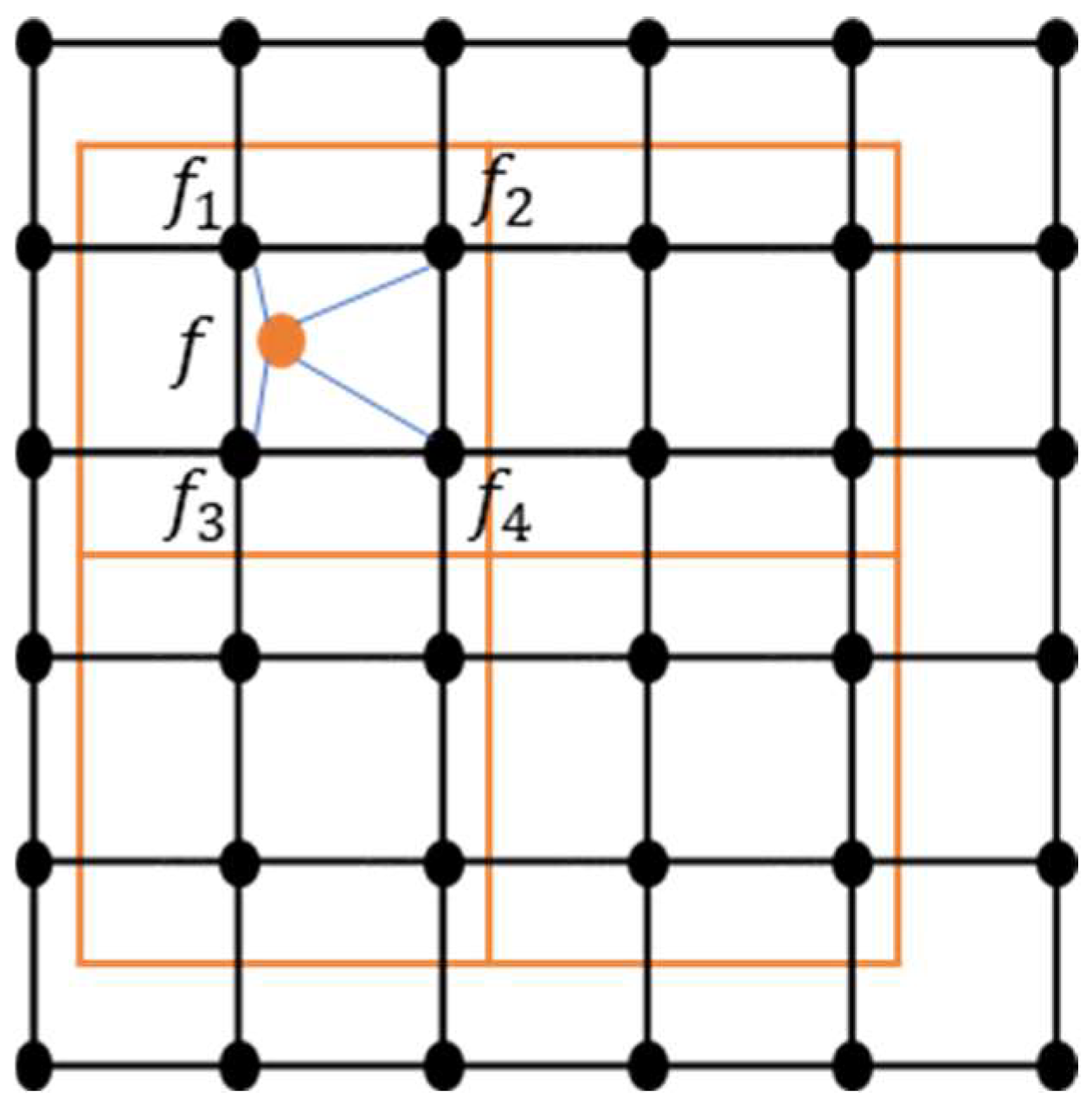
2.1. Instance Segmentation Algorithm
2.2. Particle Morphology Calculation Method
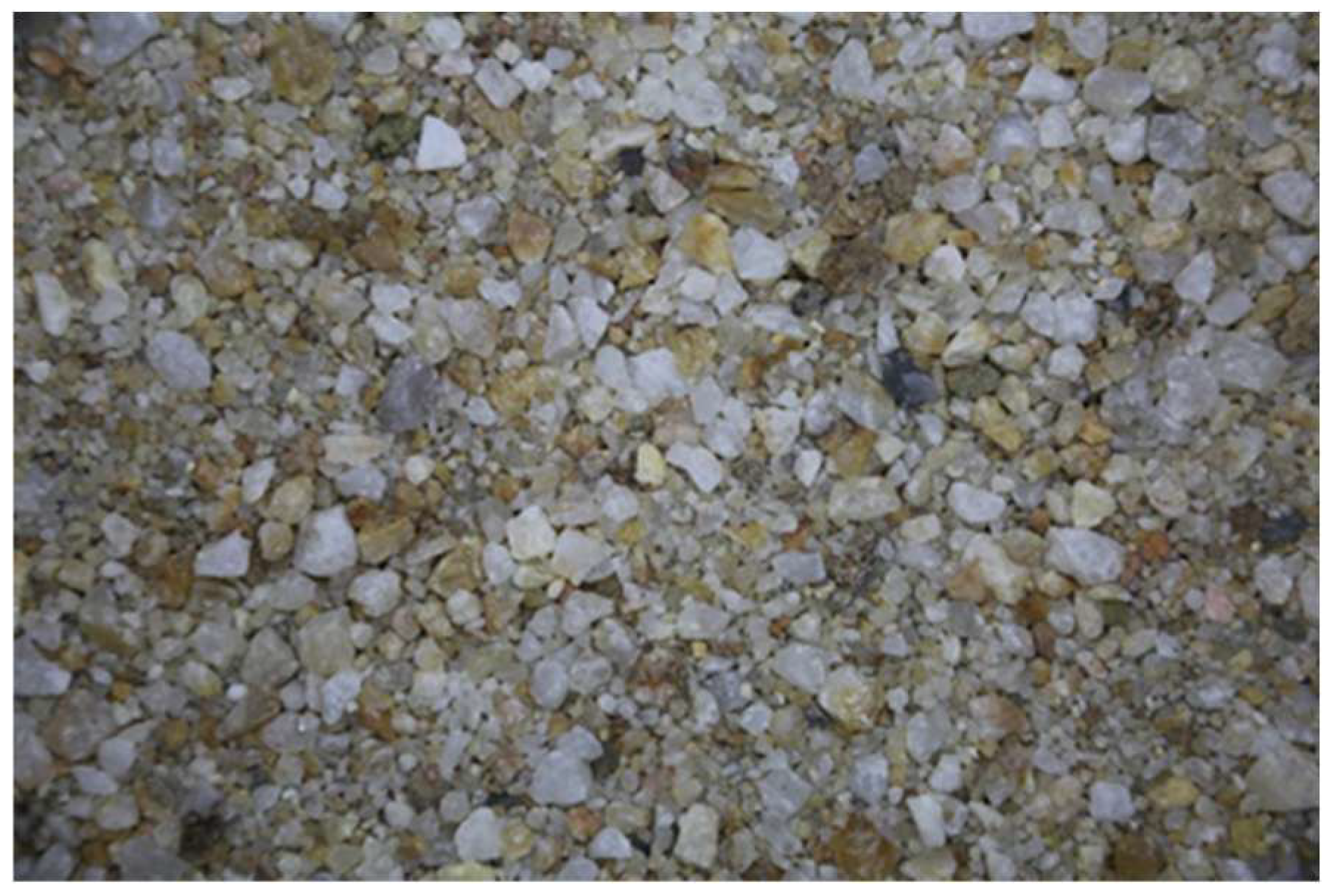
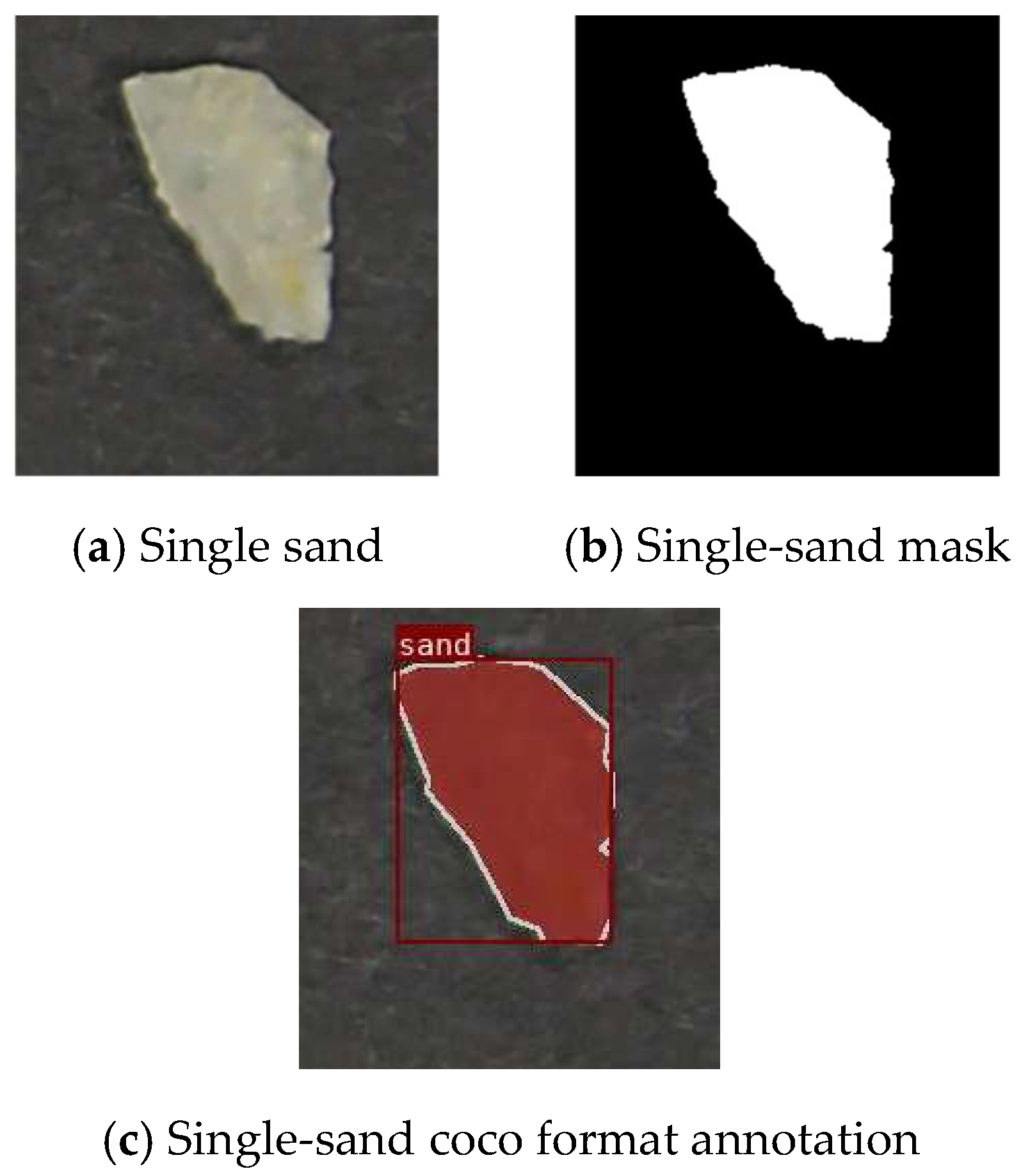
3. Dataset Preparation
4. Model Training Results
4.1. Model Quality Verification
- (a)
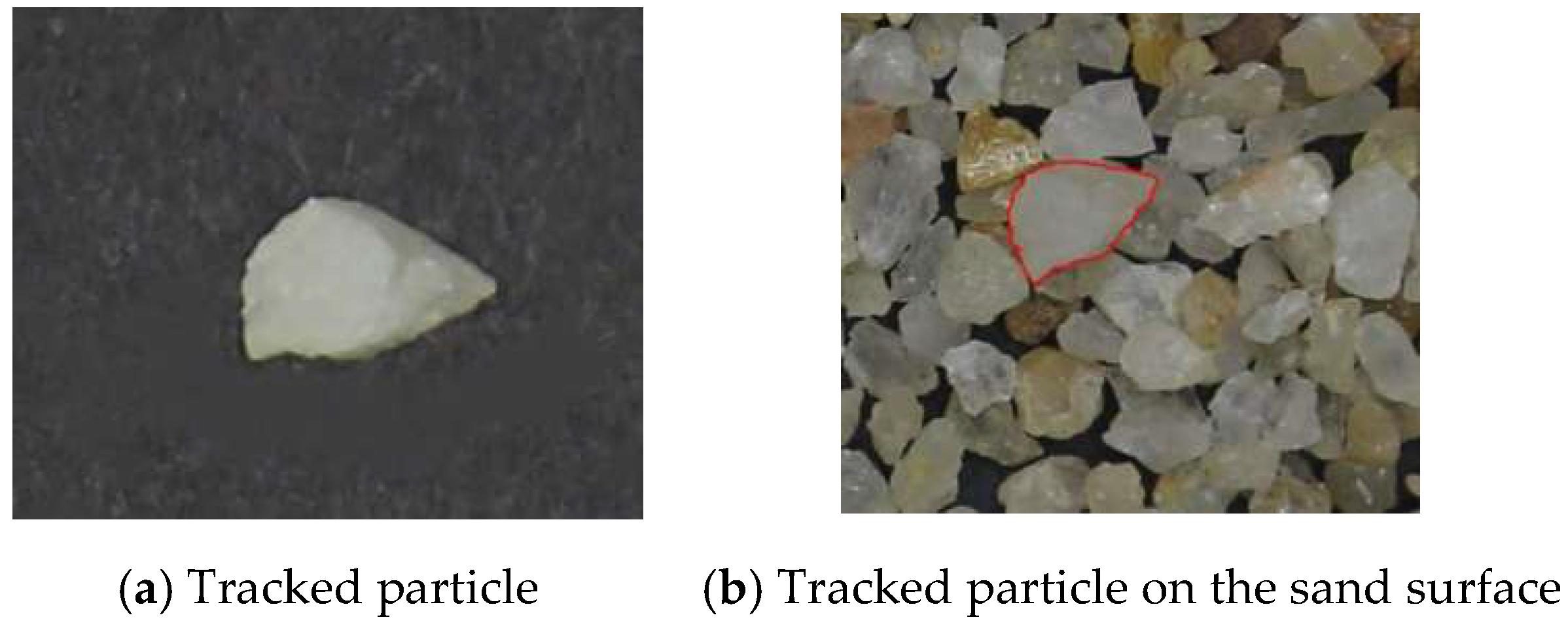
- Single-particle images of 10 sand particles are collected, and their binary mask images are calculated and generated.
- (b)
- These particles are randomly placed on the surface of the sand, and each particle is placed so that its two-dimensional projection shape is consistent with the single-particle image.
- (c)
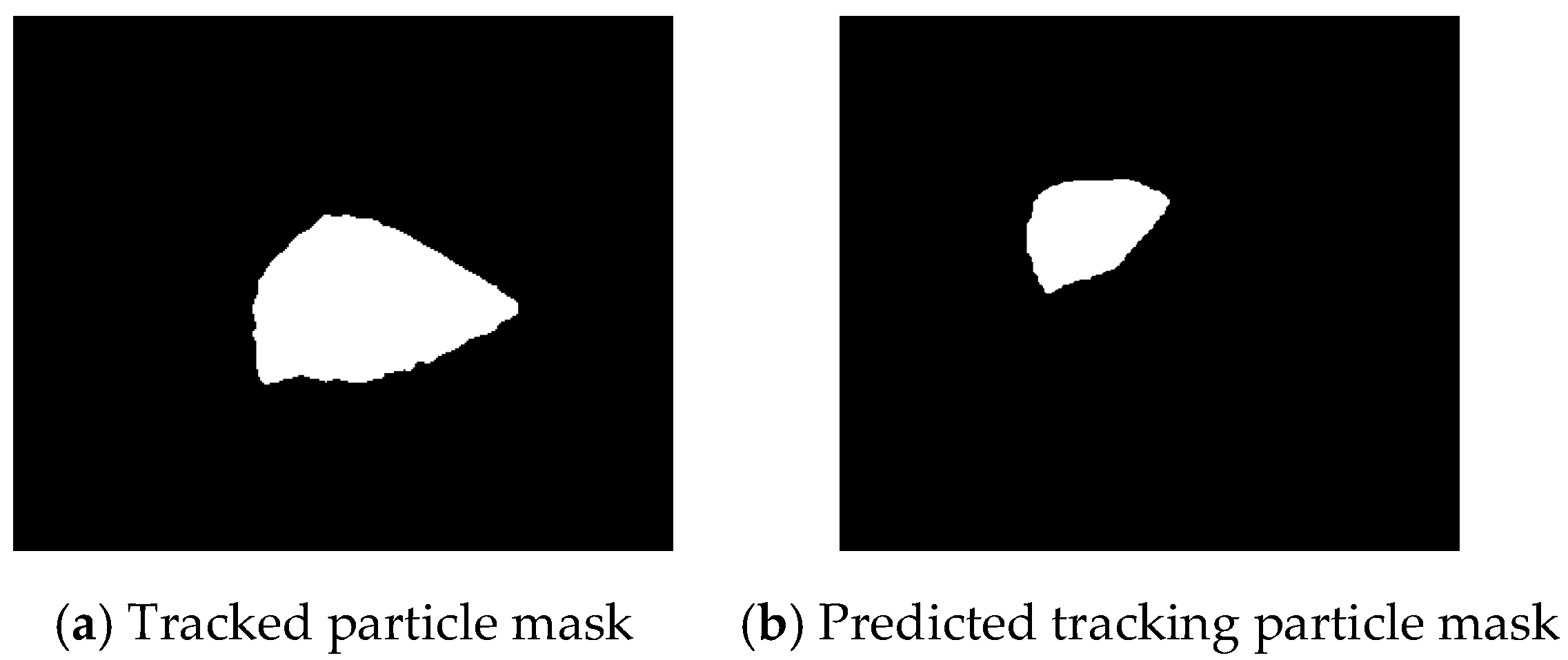
- The sand surface is photographed to obtain image data, and the image data is input into the trained segmentation model to obtain the mask image of the sand particles predicted by the model.
- (d)
- The particle max feret diameter, min feret diameter, perimeter and area values of the mask images obtained by the two methods are calculated and compared, and the relative error is calculated.
4.2. Calculation of Morphological Characteristics of Sand Particles
5. Conclusions
- (1)
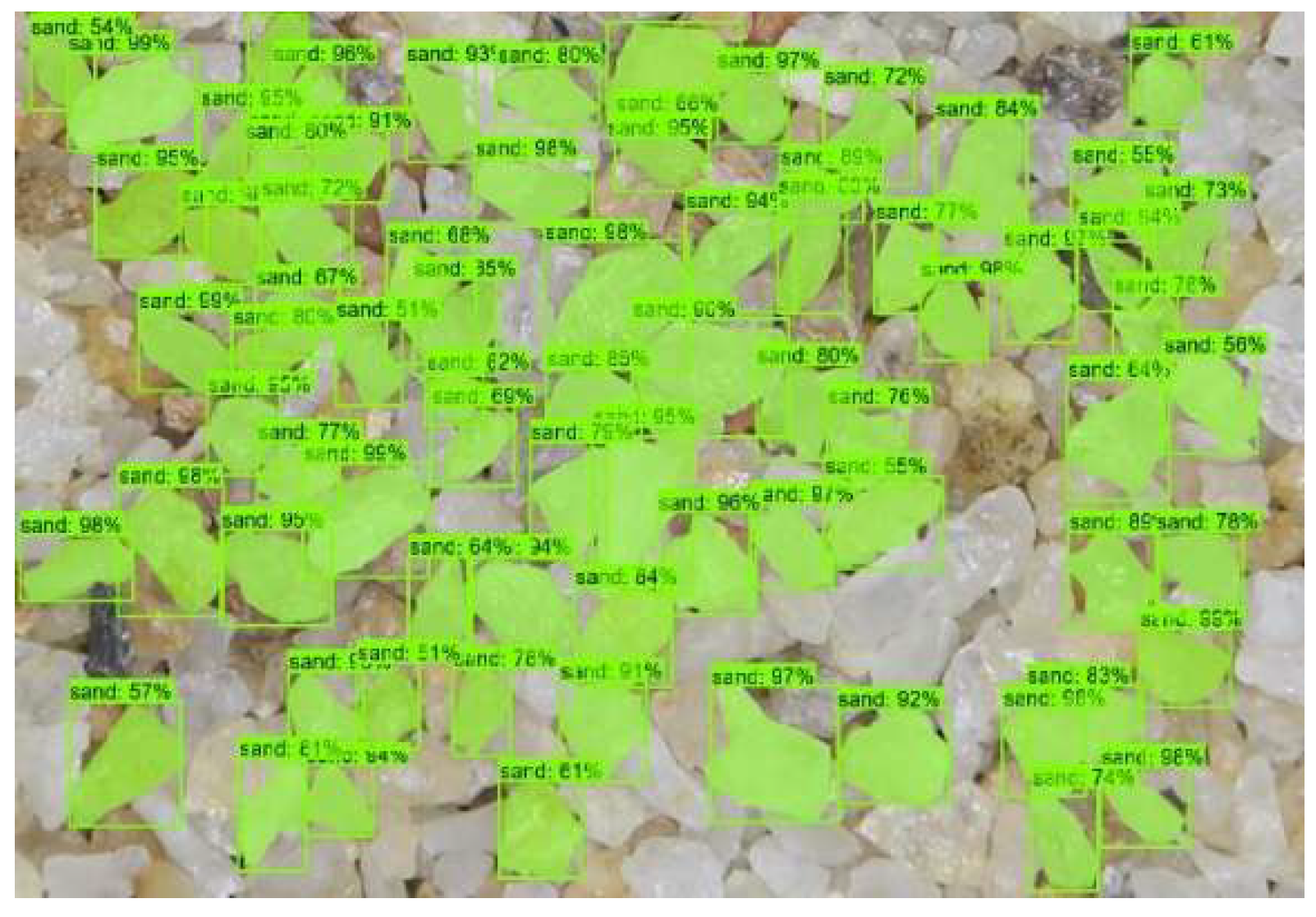
- The average inference time required for photos with a size of 900 × 1000 is related to the average number of sand particles identified and the particle gradation. For photos of different gradations, the maximum inference time required is 0.25 s, and the minimum is 0.08 s. The maximum number of identified particles is 50.4, and the minimum is 23.5.
- (2)
- By comparing the mask image obtained by predicting the same particle on the sand surface with the mask image calculated by the Otsu algorithm under the single-particle situation, the relative errors of the four predicted values are all within 5%. That is, the prediction accuracy is higher than 95%, and the model’s prediction accuracy is high.
- (3)
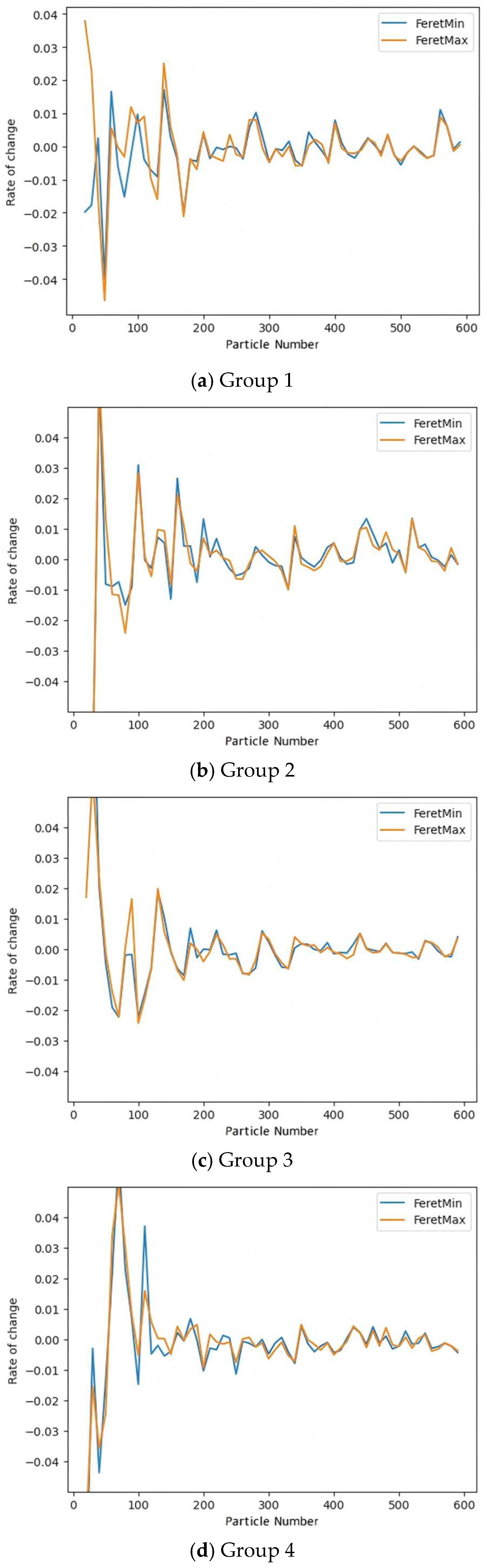
- When the number of identified particles reaches 450, the characteristic value of the particle group changes basically steadily, with a change rate of less than 1%. The number of images required to identify the required number of particles is three.
Author Contributions
Funding
Institutional Review Board Statement
Informed Consent Statement
Data Availability Statement
Conflicts of Interest
References
- Ikeda, A.; Berthier, L.; Biroli, G. Dynamic criticality at the jamming transition. J. Chem. Phys. 2013, 138, 12A507. [Google Scholar] [CrossRef] [PubMed]
- Ji, S.Y.; Sun, S.S.; Chen, X.D. Shear cell test on transition of shear flow states of granular materials. Chin. J. Theor. Appl. Mech. 2016, 48, 1061–1072. [Google Scholar]
- Paredes, J.; Michels, M.A.; Bonn, D. Rheology across the zero-temperature jamming transition. Phys. Rev. Lett. 2013, 111, 015701. [Google Scholar] [CrossRef] [PubMed]
- Yang, X.J.; Ma, G.; Zhou, H.; Lu, X.; Li, Y.A.; Zhou, W. Study on precursors of diffuse instability of granular materials based on complex network theory. Rock Soil Mech. 2022, 43, 1978–1988. [Google Scholar] [CrossRef]
- Necochea, J.E.; Sáez, E.; Hanley, K.J. Effect of sand particle shape on micromechanical modeling in direct shear testing. Comput. Geotech. 2024, 169, 106222. [Google Scholar] [CrossRef]
- Zhou, Z.; Li, Z.; Zhang, J.; Li, X.; Yang, H. DEM investigation on sandy soil behaviors under the influence of particle shape. Powder Technol. 2024, 441, 119835. [Google Scholar] [CrossRef]
- Irani, N.; Salimi, M.; Golestaneh, P.; Tafili, M.; Wichtmann, T.; Lederer, J. Deep learning-based analysis of true triaxial DEM simulations: Role of fabric and particle aspect ratio. Comput. Geotech. 2024, 173, 106529. [Google Scholar] [CrossRef]
- Zhou, Y. Study on Mechanical Behavior of Sand Incorporating the Real Particle Shape and Fluid-Particle Interactions. Ph.D. Thesis, Huazhong University of Science and Technology, Wuhan, China, 2023. [Google Scholar] [CrossRef]
- Nie, J. Probabilistic Characterization of Particle Morphology and Its Effects on the Macro-Micro Mechanical Behaviours of Sands. Ph.D. Thesis, Wuhan University, Wuhan, China, 2020. [Google Scholar] [CrossRef]
- Wu, J. Predictive Analysis of Sand Shear Properties Based on Particle Characteristics. Master’s Thesis, Yangzhou University, Yangzhou, China, 2022. [Google Scholar] [CrossRef]
- Xiao, Y.; Fang, Q.; Stuedlein, A.W.; Matthew Evans, T. Effect of Particle Morphology on Strength of Glass Sands. Int. J. Geomech. 2023, 23, 04023117. [Google Scholar] [CrossRef]
- Xiao, Y.; Yuan, Z.; Lin, J.; Ran, J.; Dai, B.; Chu, J.; Liu, H. Effect of particle shape of glass beads on the strength and deformation of cemented sands. Acta Geotech. 2019, 14, 2123–2131. [Google Scholar] [CrossRef]
- Donghwi, K.; Heejung, Y. Classifying roundness and sphericity of sand particles using CNN regression models to alleviate data imbalance. Acta Geotech. 2024, 19, 6569–6584. [Google Scholar] [CrossRef]
- Fu, R.; Hu, X.; Zhou, B. Discrete element modeling of crushable sands considering realistic particle shape effect. Comput. Geotech. 2017, 91, 179–191. [Google Scholar] [CrossRef]
- Kim, Y.; Ma, J.; Lim, S.Y.; Song, J.Y.; Yun, T.S. Determination of shape parameters of sands: A deep learning approach. Acta Geotech. 2022, 17, 1–11. [Google Scholar] [CrossRef]
- Kootahi, K.; Leung, A.K.; Jiang, Z.; Liu, J.; Qi, R.; Lourenço, S.D.; Lai, Z.; Gao, Z. Evaluation of the Methods of Particle Morphology Characterization: CT Scanning, Digital Imaging and Light Microscopy. Comput. Geotech. 2024, 174, 106648. [Google Scholar] [CrossRef]
- Detert, M.; Weitbrecht, V. Determining image-based grain size distribution with suboptimal conditioned photos. River Flow 2020, 2020, 1045–1052. [Google Scholar]
- Hu, Y.; Wang, J.; Wang, X.; Guan, T. Occlusion-aware particle size distribution detection of gravel material based on the improved Bilayer Convolutional Network. Constr. Build. Mater. 2023, 404, 133263. [Google Scholar] [CrossRef]
- Lei, Y.; Chen, Z.; Yu, S.; Wen, Y.; Wang, Y.; Li, Y. Research on intelligent detection method of soil and rock gradation based on depth threshold convolution model. J. Hydraul. Eng. 2021, 52, 369–380. [Google Scholar] [CrossRef]
- Yu, S.; Wen, Y.; Chen, Z.; Zhang, G.; Wang, Y.; Hao, J.; Zhang, Q. A rapid gradation detection system for earth and stone materials based on digital image. Adv. Civ. Eng. 2021, 2021, 6660301. [Google Scholar] [CrossRef]
- Feng, W. Research and Platform Construction of Soil Texture Recognition Method in Lingnan Based on DLAC-CNN-RF. Master’s thesis, Guangzhou University, Guangzhou, China, 2022. [Google Scholar]
- Pang, Y.-E.; Li, X.; Chen, Z.-Y. Recognizing gradations of coarse soils based on big artificial samples and deep learning. Soils Found. 2024, 64, 101526. [Google Scholar] [CrossRef]
- He, K.; Zhang, X.; Ren, S.; Sun, J. Deep residual learning for image recognition. In Proceedings of the IEEE Conference on Computer Vision and Pattern Recognition, Las Vegas, NV, USA, 27–30 June 2016; pp. 770–778. [Google Scholar]
- Diao, J. Research on the Trafficability Routing of Wheeled Vehicles Based on Satellite Remote Sensing Images and Terramechanics. Master’s thesis, National University of Defense Technology, Changsha, China, 2020. [Google Scholar]
- He, K.; Gkioxari, G.; Dollár, P.; Girshick, R. Mask r-cnn. In Proceedings of the IEEE International Conference on Computer Vision, Venice, Italy, 27–29 October 2017; pp. 2961–2969. [Google Scholar]
- Ren, S.; He, K.; Girshick, R.; Sun, J. Faster R-CNN: Towards real-time object detection with region proposal networks. IEEE Trans. Pattern Anal. Mach. Intell. 2016, 39, 1137–1149. [Google Scholar] [CrossRef]
- Gross-Rother, J.; Blech, M.; Preis, E.; Bakowsky, U.; Garidel, P. Particle detection and characterization for biopharmaceutical applications: Current principles of established and alternative techniques. Pharmaceutics 2020, 12, 1112. [Google Scholar] [CrossRef]
- Jia, X.; Liu, R.; Ren, H.; Han, Y.; Ouyang, J.; Zheng, H.; Peng, C.; Zheng, J. Particle shape characterizations for energetic materials by computational geometry and stereology method. SN Appl. Sci. 2022, 4, 147. [Google Scholar] [CrossRef]
- Liu, X.; Liu, R.; Lyu, K.; Gu, Y. A quantitative evaluation of size and shape characteristics for desert sand particles. Minerals 2022, 12, 581. [Google Scholar] [CrossRef]
- Chen, J. Quantitative Characterization of Particle Morphology by Image Processing Method. Master’s thesis, Shandong University of Technology, Zibo, China, 2023. [Google Scholar]
- Kong, L.; Ji, L.; Cao, J. The mesoscopic mechanism of stress path and particle size matching effect on sand deformation. Chin. J. Rock Mech. Eng. 2013, 32, 2334–2341. [Google Scholar]
- Owolabi, A.T.; Torres-Cruz, L.A.; Vermeulen, N. Effect of gradation and particle shape on the limiting compression curves of sand-sized siliceous materials. J. Geotech. Geoenviron. Eng. 2021, 147, 06021007. [Google Scholar] [CrossRef]
- Zhu, F.; Zhao, J. Interplays between particle shape and particle breakage in confined continuous crushing of granular media. Powder Technol. 2021, 378, 455–467. [Google Scholar] [CrossRef]
- Zhang, Z.; Yin, X.; Yan, Z. Rapid data annotation for sand-like granular instance segmentation using mask-RCNN. Autom. Constr. 2022, 133, 103994. [Google Scholar] [CrossRef]
- Lv, J. Research and implementation of image binarization algorithm. J. Libr. Inf. Sci. 2004, 14, 266–267. [Google Scholar]




| Group | 1–2.5 mm | 2.5–5 mm | 5–10 mm |
|---|---|---|---|
| 1 | 20% | 60% | 20% |
| 2 | 60% | 20% | 20% |
| 3 | 40% | 60% | 0 |
| 4 | 60% | 40% | 0 |
| Group | Time/s | Number |
|---|---|---|
| 1 | 0.0622 | 23.52 |
| 2 | 0.2336 | 46.18 |
| 3 | 0.2508 | 39.81 |
| 4 | 0.2358 | 50.44 |
| Feature | ||||
|---|---|---|---|---|
| error | 3.80% | 1.74% | 2.44% | 3.50% |
| Group | /mm | /mm | ||
|---|---|---|---|---|
| group 1 | 3.68 | 5.49 | 1.52 | 0.0311 |
| group 2 | 2.32 | 3.50 | 1.54 | 0.0495 |
| group 3 | 2.92 | 4.32 | 1.51 | 0.0388 |
| group 4 | 2.44 | 3.65 | 1.53 | 0.0456 |
| Group | |||
|---|---|---|---|
| group 1 | 0.0257 | 33.09 | 0.983 |
| group 2 | 0.0407 | 21.15 | 0.990 |
| group 3 | 0.0319 | 26.21 | 0.985 |
| group 4 | 0.0373 | 22.18 | 0.989 |
Disclaimer/Publisher’s Note: The statements, opinions and data contained in all publications are solely those of the individual author(s) and contributor(s) and not of MDPI and/or the editor(s). MDPI and/or the editor(s) disclaim responsibility for any injury to people or property resulting from any ideas, methods, instructions or products referred to in the content. |
© 2026 by the authors. Licensee MDPI, Basel, Switzerland. This article is an open access article distributed under the terms and conditions of the Creative Commons Attribution (CC BY) license.
Share and Cite
Li, F.; Liang, Z.; Wu, J.; Wang, J.; Cheng, P. Calculation of Morphological Characteristic Parameters of Sand Particles Based on Deep Learning. Appl. Sci. 2026, 16, 3231. https://doi.org/10.3390/app16073231
Li F, Liang Z, Wu J, Wang J, Cheng P. Calculation of Morphological Characteristic Parameters of Sand Particles Based on Deep Learning. Applied Sciences. 2026; 16(7):3231. https://doi.org/10.3390/app16073231
Chicago/Turabian StyleLi, Fei, Zhifeng Liang, Jinkai Wu, Jinan Wang, and Pengda Cheng. 2026. "Calculation of Morphological Characteristic Parameters of Sand Particles Based on Deep Learning" Applied Sciences 16, no. 7: 3231. https://doi.org/10.3390/app16073231
APA StyleLi, F., Liang, Z., Wu, J., Wang, J., & Cheng, P. (2026). Calculation of Morphological Characteristic Parameters of Sand Particles Based on Deep Learning. Applied Sciences, 16(7), 3231. https://doi.org/10.3390/app16073231