


Abstract
Corrosion damage is a vital factor that causes strength weakening or even failure of offshore derrick. To study the influence of local corrosion on the derrick, a regular spherical pitting model was adopted to analyze the evolution mode of pitting corrosion damage and the corresponding pitting corrosion damage models with different morphology. The connection technique for the across-scale interface was discussed, a method for constructing multi-scale models of derrick with pitting corrosion damage was proposed. The pitting damage simulation and ultimate bearing capacity analysis are carried out for an offshore derrick in service. The results show that the interaction between meso-scale pitting corrosion damage and macro-scale structure can be effectively considered, the stress distribution of the pitting corrosion damage and its effect on stress concentration coefficient can be obtained, and the influence of local random pitting distribution location, style, and density on the ultimate bearing capacity can be determined. In addition, the ultimate bearing capacity can be predicted. It provides a new idea for bearing capacity prediction and safety assessment of large steel frame structures in service with local damage.
1. Introduction
Offshore derrick is installed on offshore platforms and is the key equipment for the development of marine oil resources. Due to its long-term service in the humid marine environment, severe corrosion has led to material degradation and a reduction in load-bearing capacity, which poses potential safety hazards for offshore drilling operations [1,2].
Current research on the load-bearing capacity of offshore derricks considering corrosion damage is mainly focused on two aspects: damage detection and numerical simulation [3,4]. Some scholars have also combined the two by using equivalent simplification or model modification methods to simulate various types of damage. However, only limited test information can be obtained through the detection methods, and pitting corrosion is difficult to be accurately detected and is prone to cause significant stress concentration. Numerical simulations mostly remain at a single macroscopic scale, and details such as local component corrosion, especially pitting corrosion and node failure, are often overlooked or simplified [5]. These local details are precisely the ones that firstly enter plasticity and subsequently continue to evolve, becoming the dominant factors leading to the overall structure failure. Then, adopting a fully refined small-scale model would significantly increase computational time and resource demands. To balance this trade-off, it is an effective and feasible approach by constructing a multi-scale model and numerical simulation.
At present, the application of multi-scale analysis and numerical simulation methods in structural damage and safety evaluation have been widely adopted in various fields. Zhaoxia Li et al. [6] systematically analyzed and discussed the multi-scale issues in the deterioration process of bridge structure damage. Feiyang Wang et al. [7] established a consistent multi-scale equivalent model of concrete beams with cracks using cohesive elements to simulate the influence of cracks and their expansion on the mechanical properties of service concrete structures. Qing Zhang et al. [8] proposed a multi-scale reconstruction method based on limited acceleration and strain data for safety performance evaluation and damage identification of the transmission tower. Meng Zhang et al. [9] performed wind-induced vibration analysis and fatigue life prediction of the hybrid tower structure combining an upper steel tube with a lower steel truss. Oleksandr Kozak et al. [10] used numerical simulation methods to comprehensively analyze structural solutions for the design of lattice cell towers on compact foundations in mountainous terrain. Andrii Velychkovych et al. [11] built a numerical model of the shell damper and solved a boundary value problem for the frictional interaction between the shell cut along the helical line and the weakly compressible filler. Pengzhen Lu et al. [12] propose a method to connect multi-scale models to space grillage models for the mechanical behavior of composite box beams. Renhua Wang et al. [13] established a multi-scale model of the structure under pitting damage to study the nonlinear behavior and residual strength of the marine platform structure. However, in the evaluation of the strength of offshore derrick structures, there are few studies on multi-scale simulation, especially for multi-scale simulation studies under corrosion or pitting damage, and such studies are rarely reported in the literature. The above research provides a broader engineering context in which local damage mechanisms and their interactions with global structural behavior are recognized as key factors governing structural safety and reliability, and a valuable reference for the study of offshore derrick considering local damage. Therefore, this paper adopts the multi-scale finite element method, taking an in-service derrick of an offshore platform as an example, to establish a cross-scale model of the structure considering local pitting damage, and to study the structural mechanical properties of the offshore derrick under pitting damage.
2. Pitting Corrosion Model of Offshore Derrick
2.1. Analysis of Pitting Corrosion Damage
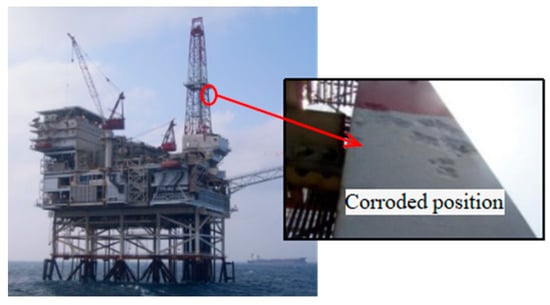
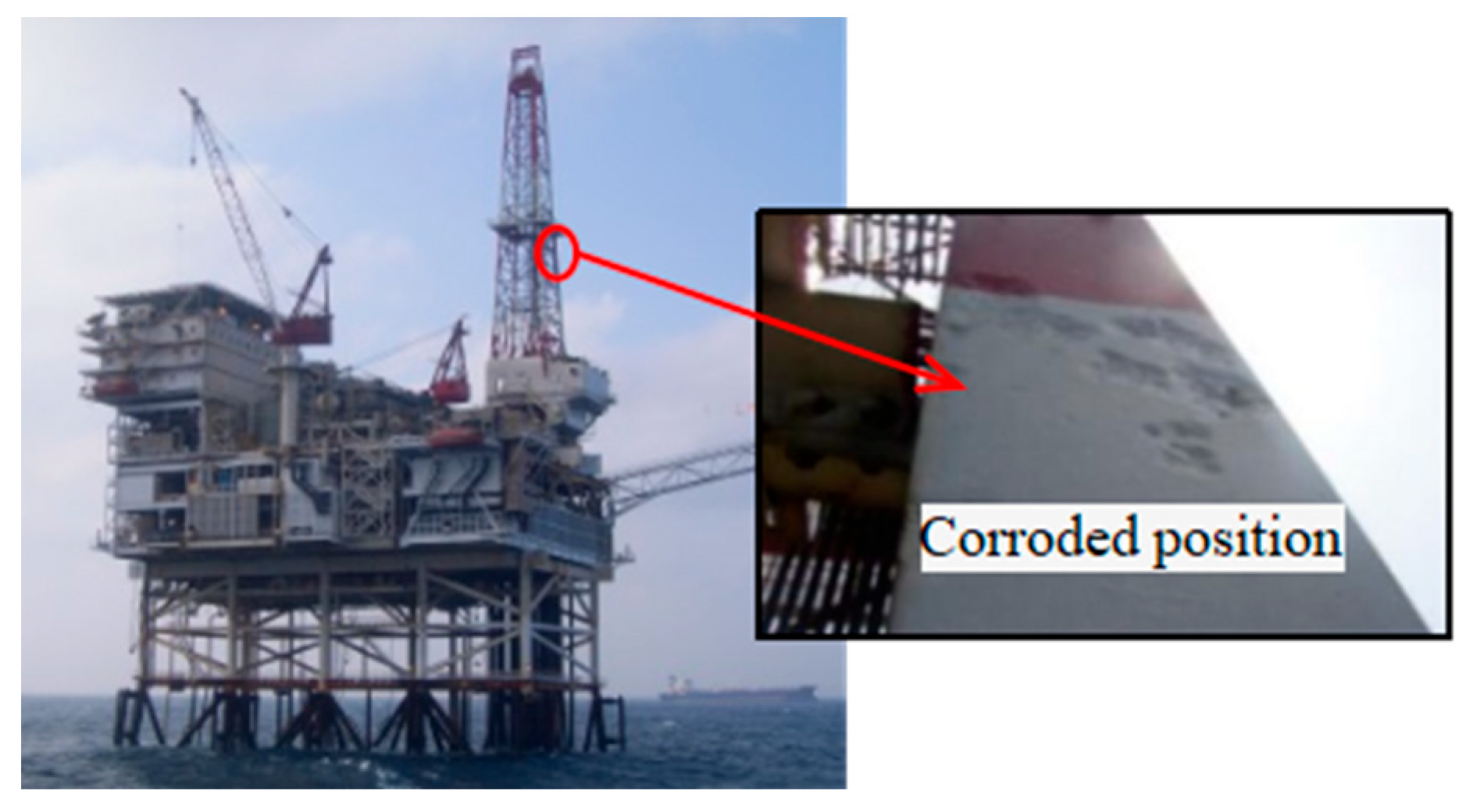
The offshore derrick is constantly serviced in the harsh marine environment of high temperature, high humidity, high salt spray and strong radiation. The components often suffer various types of corrosion damage. Pitting corrosion is one of the most common types, mainly caused by the uneven physical and chemical properties of the component materials, which results in the formation of various-sized pits on the surface. These pits mostly occur in localized areas of the component and have diverse and irregular shapes. Figure 1 shows a local corrosion of the main load-bearing columns of a certain offshore platform’s derrick. The corrosion pits have a large area and a deep depth, and the depth of the pits varies within the range of approximately 1–5 mm. Once such damage exists, it becomes time-dependent. The length and depth of the pits will continuously change over time, and the position of the pits will exhibit a stress concentration phenomenon, thereby causing nonlinear behaviors in the plasticity and structure of the material near the pit location. The development process of pitting corrosion is relatively slow, but its potential harm is enormous.
Figure 1.
Corrosion damage of local components on a platform derrick.
2.2. Pitting Corrosion Model
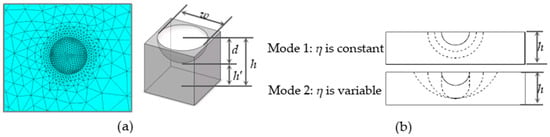
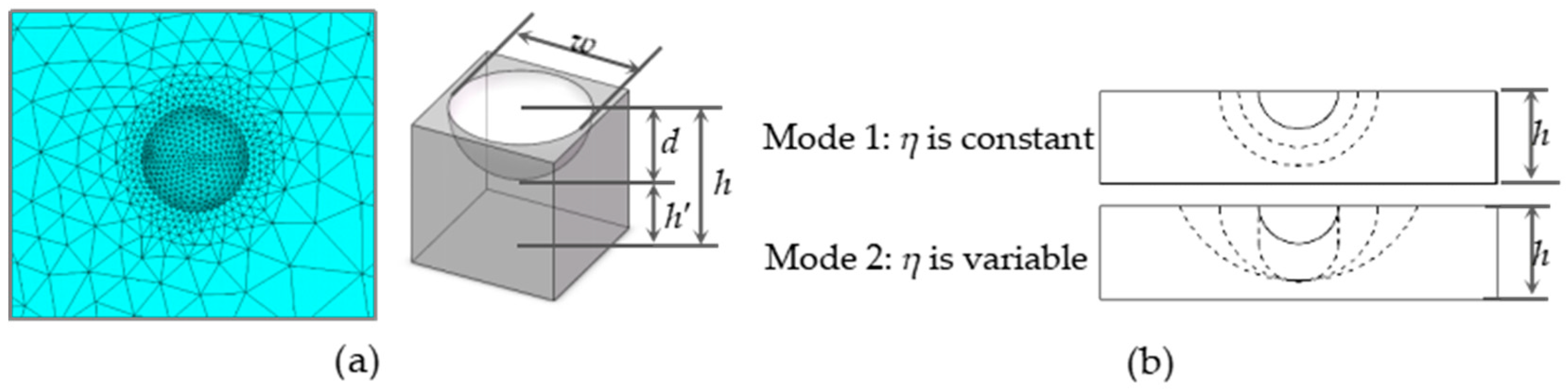
The formation process of pitting corrosion is random and its morphology is complex. Some scholars have conducted research on the growth shape of corrosion pits in metals under salt solutions, and found that the corrosion pits are mostly spherical in shape, and will gradually become semi-elliptical in the later stage of development [14,15,16,17,18]. Therefore, the following assumptions are made when establishing the pitting corrosion model in this paper: the material density near the pitting area is constant, the shape of the pitting is regular, and the corrosion pit is simplified as a hemisphere, a semi-ellipsoid, or a combination of a hemisphere and a cylindrical surface. The pitting model is shown in Figure 2. In the figure, w and d represent the width and depth of the pitting and h is the thickness of the component where the pitting is located. If the corroded part is the flange of an I-beam, then h is the thickness of the flange, and h′ is the residual thickness of the component after pitting.
Figure 2.
Schematic diagram of pitting corrosion damage model. (a) Pitting corrosion pit model; (b) the growth pattern of pitting corrosion.
During the analysis, the geometric shape of the corrosion pits is characterized by width and depth. The specific shape of the corrosion pits is determined by the width–depth ratio η, and the expression is as follows:
If the degree of corrosion is expressed by the volume of the pits, then the volume of the pits is as follows:
When η is constant, the growth rates of the width and depth of the corrosion pits are the same. The corrosion pits usually grow according to Mode 1 as shown in Figure 2. However, in general, the growth rate of the width of the corrosion pits is greater than that of the depth. As the value of η gradually increases, they grow according to Mode 2 as shown in Figure 2. When η = 2, the corrosion pit is spherical; when η > 2, the corrosion pit is semi-ellipsoidal; when η < 2, the corrosion pit penetrates in the depth direction and is a combination of a spherical shape and a cylindrical surface.
3. Multi-Scale Model of Offshore Derrick Pitting Corrosion Damage
Taking a certain offshore derrick shown in Figure 1 as an example, its main load-bearing column is H-shaped steel, and the overall structure is a spatial lattice-type steel frame structure formed by welding or bolting together H-shaped steel and double-angle steel. The cross-section of the column is H310 × 305 × 10.8 × 16. The material is Q345, the yield strength is 345 MPa, the elastic modulus is 2.06 × 10⁵ MPa, the Poisson’s ratio is 0.3, and the mass density is 7830 kg/m3. The total height of the structure is 49 m, divided into five sections from bottom to top. The wheel system is 6 × 7 and the maximum design hook load is 4500 kN.
3.1. Multi-Scale Interface Coupling Method
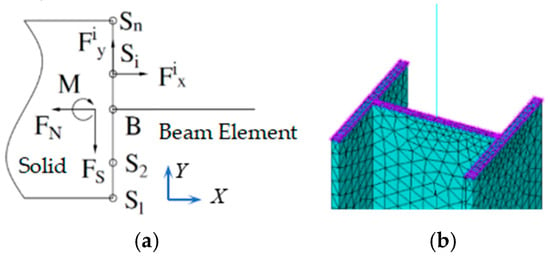
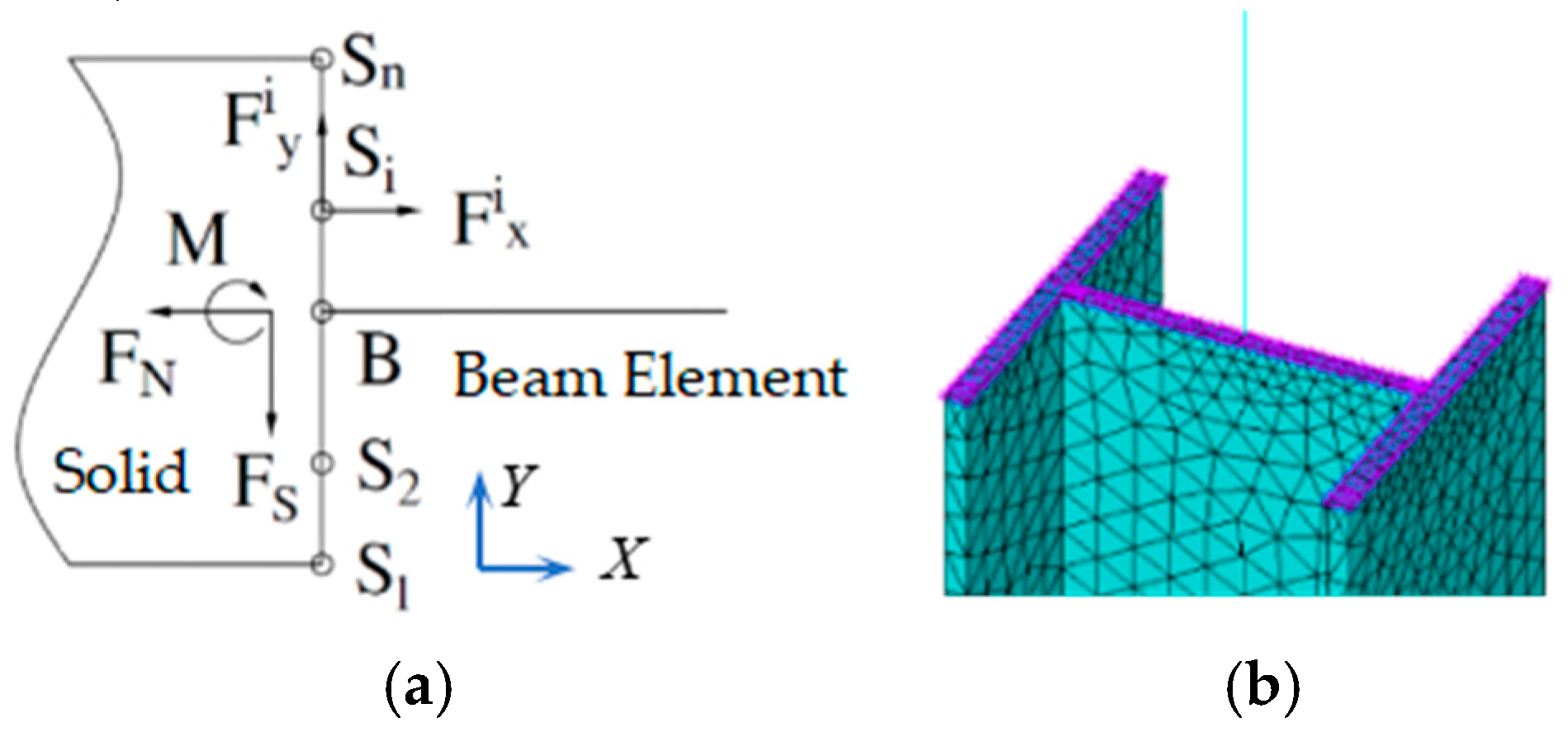
The macroscopic scale of the structure is set as beam elements, with their scale typically ranging from 100 m and above. The microscopic scale of component damage is set as solid elements, with their scale ranging from 10−3 m and below. The key to multi-scale simulation is how to ensure that the interface information can be effectively transmitted during cross-scale connection. Mainly, through constraint equations, the mechanical behavior of beam element nodes is equivalently transferred to the nodes of solid elements by using the principle of force balance [19]. As shown in Figure 3a, at the interface of cross-scale connection, the solid element is divided into n nodes, where Si is any point, and B is the beam element node at the interface connection. According to the force balance, the relationship between the internal forces within the cross-scale interface is established as follows:
Figure 3.
Multi-scale interfaces connection. (a) Cross-scale interface connection; (b) constraint equation.
In the formula, , and represent the axial and tangential forces and bending moments at the node B of the beam element; , denote the internal forces at the node Si of the solid element in the X-axis and Y-axis directions; is the distance from point Si to point B. Thus, a cross-scale connection between the macroscopic overall beam structure and the pitting corrosion damage component can be established, as shown in Figure 3b.
3.2. The Construction Method of the Multi-Scale Model of the Derrick
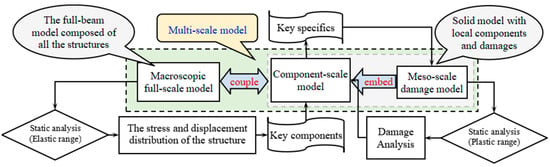
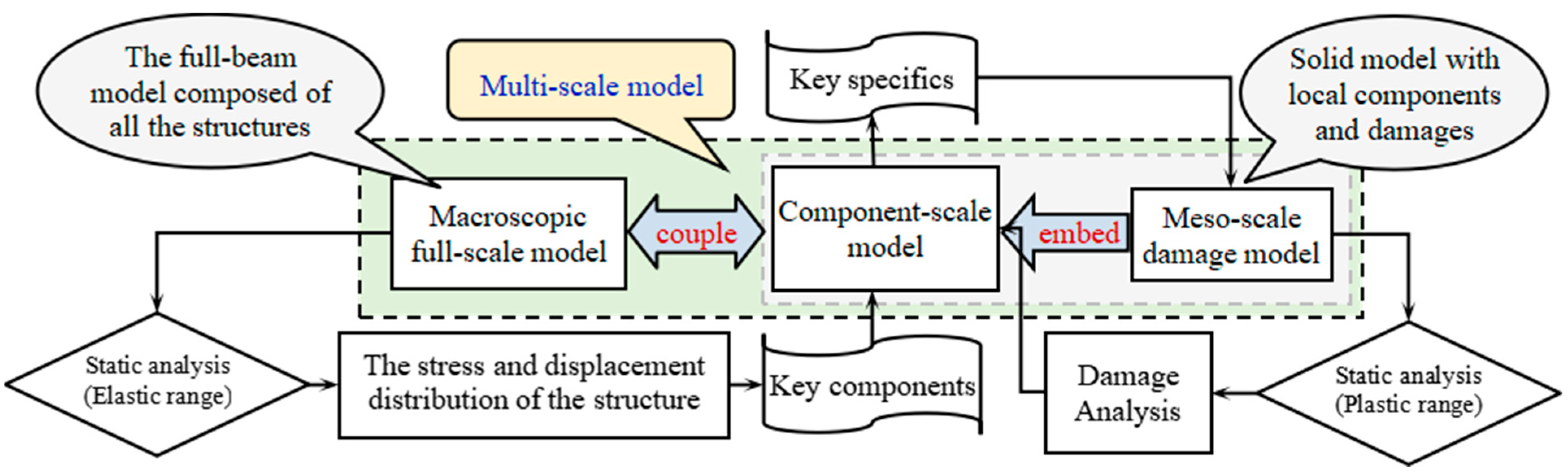
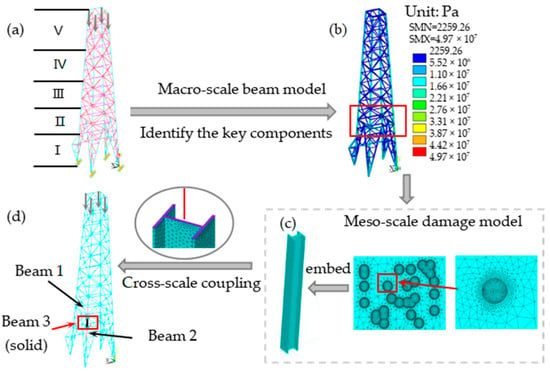
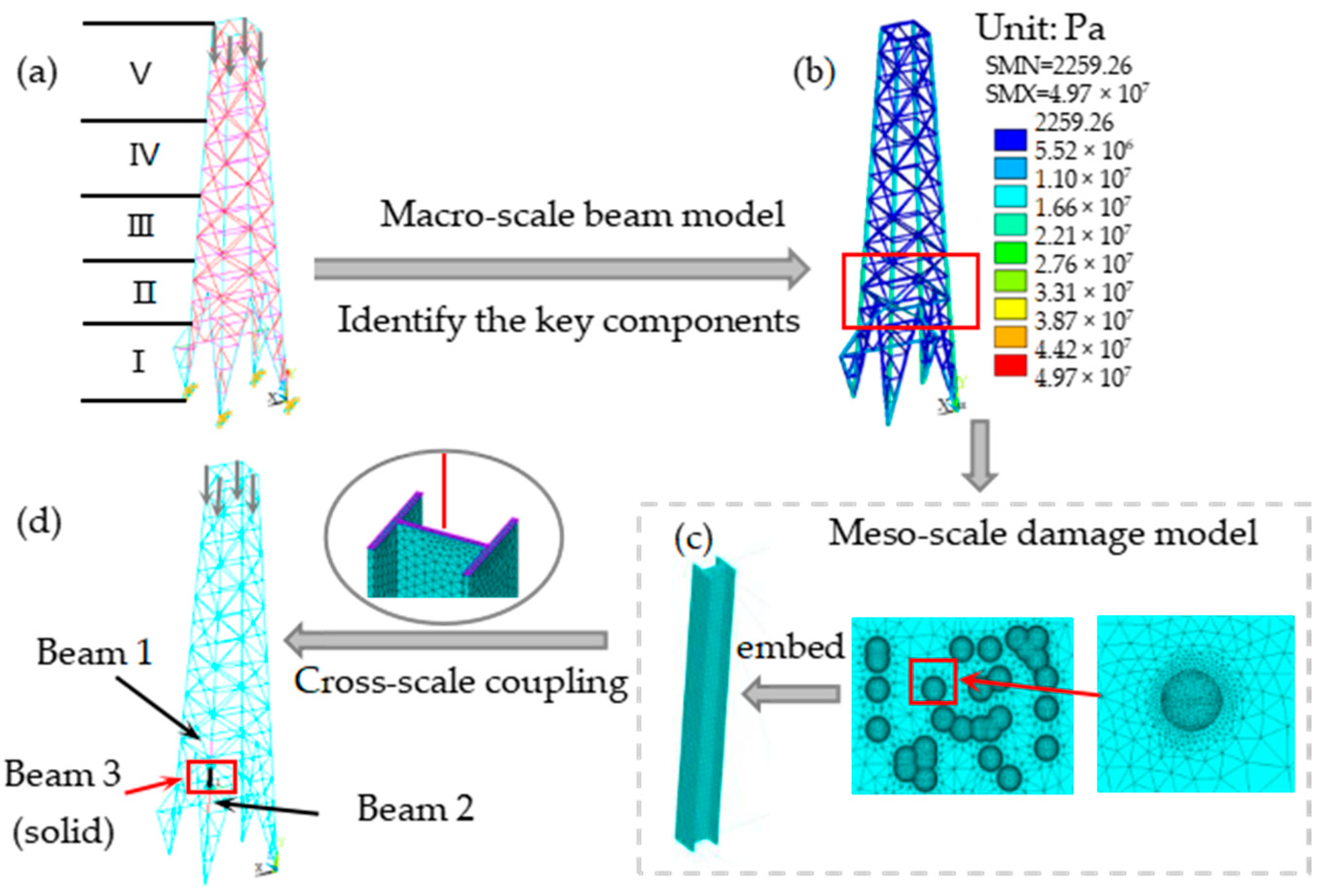
Taking into account both the local pitting corrosion damage and the force characteristics of the overall structure, the construction process of the multi-scale model for the offshore derrick structure is determined, as shown in Figure 4. Firstly, a macro-scale model of the entire derrick structure is established using beam elements, and static analysis is conducted within the elastic range to obtain the stress and displacement distribution of the overall structure, thereby identifying the main load-bearing components and dangerous areas as key components; then, a scale model of the local key components is established using solid elements to further determine the key details within the components; finally, considering the pitting corrosion damage, it is embedded into the local components to establish a refined model at the microscopic damage scale. A cross-scale interface coupling equation is used to achieve the multi-scale coupling of the offshore derrick damage model, as shown in Figure 5.
Figure 4.
Flowchart of the multi-scale model creation for offshore derrick damage.
Figure 5.
Multi-scale model of offshore derrick damage. (a) Finite element beam model; (b) stress cloud map; (c) meso-scale damage model; (d) multi-scale model.
3.3. Multi-Scale Simulation and Model Validation
Figure 5a shows the full beam model using the nonlinear spatial beam element BEAM188. To determine the key load-bearing components, a static analysis was conducted within the elastic range, and it was found that the component subjected to the most severe load was the wellhead column, with section 2 near the wellhead gate being particularly significant, as shown in Figure 5b. Therefore, the column in the section 2 was selected as the key research object. It was assumed that pitting occurred on the flange of the I-beam column, as shown in Figure 5c. The pitting model was embedded into the solid I-beam, with the solid element being SOLID187, and a tetrahedral mesh was used. The mesh was denser near the pitting area and gradually became sparser away from the pitting area, following the principle of denser inside and sparser outside. Then, the cross-scale model of the wellhead was established by coupling the connection equation with the full-beam model, as shown in Figure 5d.
In the present study, the cross-scale coupling between the global beam model and the local solid model is established based on the principles of force equilibrium and displacement compatibility at the interface. The constraint equations ensure that axial forces, bending moments and corresponding deformations are consistently transferred across scales.
To avoid artificial stiffening or unloading effects at the beam–solid interface, the analysis results of the multi-scale model are compared with those of the full-beam model under load 472.5 kN, as shown in Table 1. From the table, it can be seen that the axial stress of the derrick column plays a dominant beam, while the bending moment has a relatively small effect. Compared with the solid Beam 3 and the full beam model, the axial and Von Mises stresses of the two beams connected to it have very small errors, and the bending stress has a slight error, but all these errors are within the acceptable range. This indicates that the adopted interface connection method is effective, and the multi-scale model can be used for further mechanical performance analysis.
Table 1.
Comparison of analysis results between the multi-scale model and the full-beam model.
Furthermore, the plastic constitutive behavior is introduced only at the material level of the solid elements, and no additional constraints or penalty stiffness are imposed at the interface. Therefore, the redistribution of stiffness and internal forces during the non-elastic stage is governed by material yielding rather than numerical artifacts introduced by the coupling method.
4. Ultimate Bearing Capacity Analysis of Offshore Derrick with Pitting Corrosion
4.1. The Influence of Pitting Corrosion Parameters on the Stress Concentration Coefficient
In order to study the influencing factors of pitting corrosion on the structural strength, the stress concentration coefficient is introduced:
In the formula, represents the structural stress value with corrosion damage, while represents the structural stress value without corrosion damage. The strength should meet the Von Mises criterion [20]; that is,
In the formula, represent the first, second, and third principal stresses of the structure respectively.
Under the corrosion mode shown in Figure 2b, the multi-scale model of the derrick was analyzed, considering three situations:
- (1)
- When the pit width w = 2, 4, 6, 8, 10 mm, the influence of the depth on the stress concentration coefficient is analyzed.
- (2)
- When the pit depth d = 1, 2, 3, 4 mm, the influence of the width on the stress concentration coefficient is analyzed.
- (3)
- When the pit depth d = 1, 2, 3, 4 mm, the influence of the width-to-depth ratio on the stress concentration coefficient is analyzed.
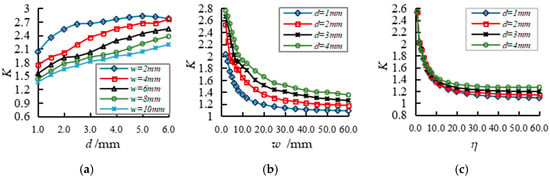
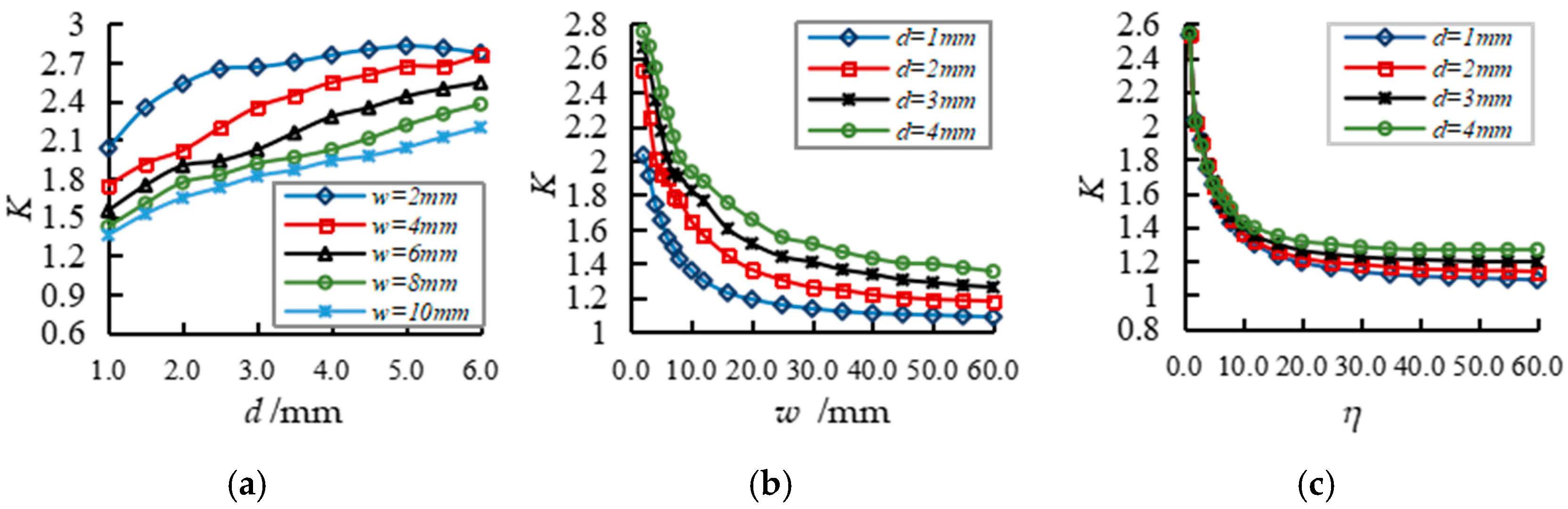
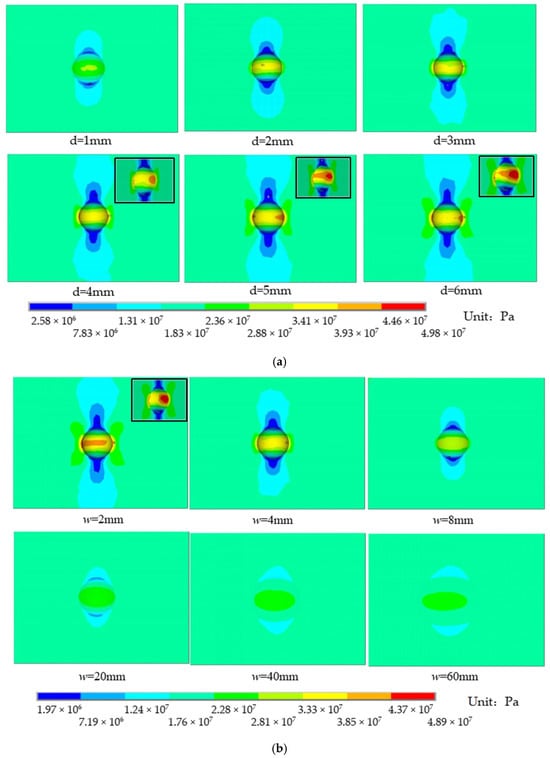
The relationship curve of the stress concentration coefficient and the damage parameter was obtained, as shown in Figure 6. Also, the stress cloud map of pitting at different pitting corrosion parameters was obtained, as shown in Figure 7.
Figure 6.
Relationship curve between the stress concentration coefficient and pitting corrosion parameters. (a) The relationship curve of K with d; (b) the relationship curve of K with w; (c) the relationship curve of K with η.
Figure 7.
The influence of pitting corrosion parameters on the stress cloud map of pitting. (a) Stress cloud map of pitting at different depths (w = 6 mm); (b) stress cloud map of pitting at different widths (d = 2 mm); (c) stress cloud map of pitting at different width-to-depth ratios (d = 4 mm).
As shown in the figure, when the depth is constant, the stress concentration coefficient decreases as the width of the erosion pit increases. When the width increases to a certain extent, the stress concentration coefficient tends to a constant value. When the width is constant, the stress concentration coefficient gradually increases with the increase in depth, and when the width is 2 mm, there is a tendency to approach a certain value. When the depth is constant, the stress concentration coefficient decreases as the width–depth ratio η increases. When η is less than or equal to 4, the pitting corrosion pits with the same width–depth ratio have almost the same stress concentration factor. This indicates that within a certain range, the stress concentration factor depends on the morphology of the pitting corrosion pits rather than their actual size. When η is greater than 4, as η continues to increase, the stress concentration factor approaches a certain value, and this value varies with the depth. Overall, when the position and width–depth ratio are the same, the greater the depth is, the greater the stress concentration factor is.
It should be noted that the conclusion regarding the dominant role of pit morphology over absolute pit size is obtained under controlled geometric and numerical conditions. In the present study, the cross-sectional dimensions of the H-shaped steel member, plate thickness, and meshing strategy are kept consistent to isolate the influence of pitting parameters.
Under these conditions, the stress concentration coefficient is primarily governed by the pit morphology, characterized by the width-to-depth ratio, rather than by the absolute pit dimensions. This indicates that stress redistribution around the pit is mainly controlled by geometric discontinuity effects.
Nevertheless, for members with significantly different thicknesses, cross-sectional proportions, or mesh resolutions, the relative importance of pit morphology and absolute size may vary. The extension of this conclusion to other structural configurations requires further investigation and is beyond the scope of the present study.
The influences of pitting corrosion parameters on the stress concentration coefficient are summarized in Table 2.
Table 2.
Influence of pitting corrosion parameters on stress concentration coefficient.
4.2. The Influence of Pitting Corrosion Parameters on the Ultimate Bearing Capacity
In this paper, an ideal elastic–plastic material model is established using the BKIN constitutive relationship in ANSYS (2022R1). When analyzing the influence of pit parameters on the ultimate bearing capacity, three situations are considered:
- (1)
- The pit depth is the same, but the width is different. Take d = 4 mm, and when η ≤ 4, select three pit widths of w = d, 2d, and 3d; when η > 4, select three pit widths of w = 10d, 13d, 16d.
- (2)
- The pit morphology is the same (i.e., the width-to-depth ratio is the same), but the depth is different. Take η = 2, and d = 5, 7, 9, 11 mm.
- (3)
- The pit volume is the same, but the width and depth are different (i.e., the width-to-depth ratio is different), and take V = 134 mm3, η = 2, 3, 4.
In this study, it is necessary to distinguish between local material failure in the pitting corrosion region and the global bearing capacity of the derrick system. The initiation of yielding in the pitting area represents a local limit state associated with material strength degradation, whereas it does not necessarily indicate the loss of load-carrying the capacity of the entire structure.
The ultimate bearing capacity reported in this paper corresponds to a system-level limit state, which is identified by a pronounced reduction in global stiffness accompanied by the expansion of plastic zones beyond the local pitting region. This criterion reflects the inability of the structure to sustain further load increments, rather than the first occurrence of local yielding.
Therefore, local yielding around corrosion pits and the global ultimate bearing capacity of the derrick are treated as two distinct limit states in the analysis.
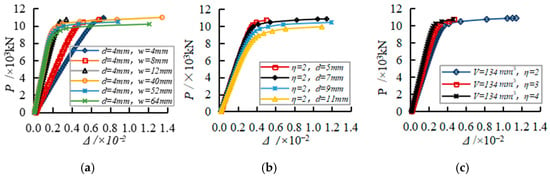
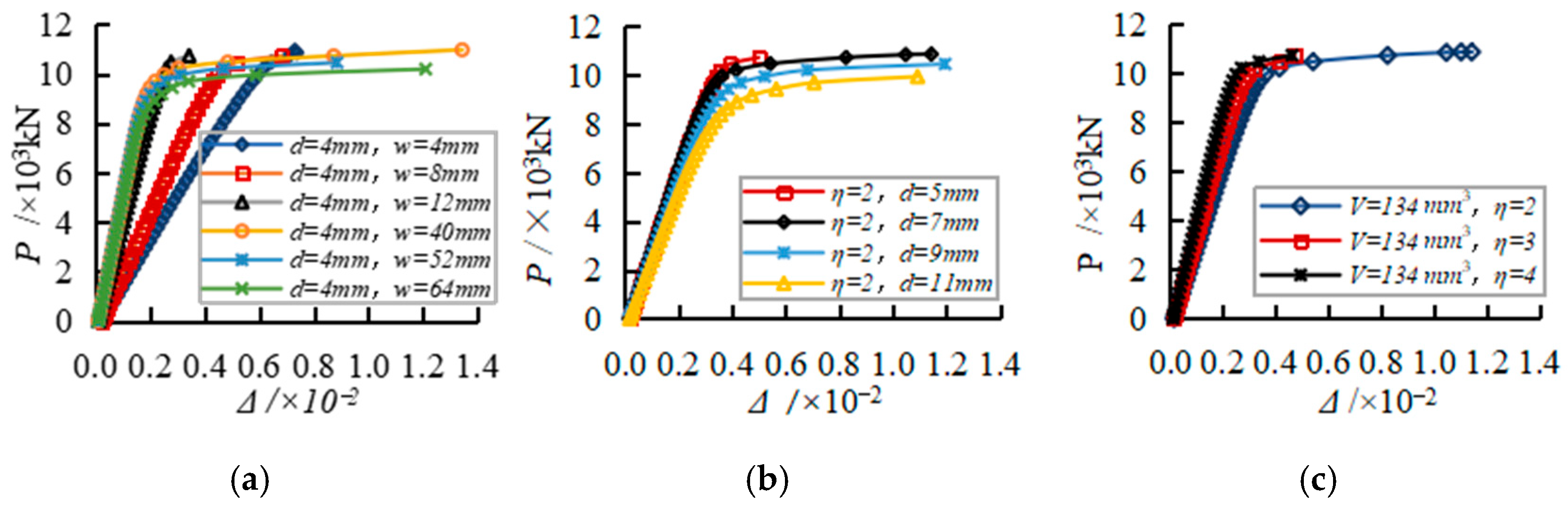
The load–deformation relationship curve was obtained, as shown in Figure 8. The slope of the curve represents the magnitude of the local stiffness of the pitting, and when the curve approaches the horizontal, the size of the hook load represents the local bearing limit at the pitting. Analysis shows that when the pitting depth is the same, for η ≤ 4, the pitting width is wider, the local stiffness is greater, and the local bearing limit value is slightly lower. For η > 4, the pitting width is wider and the local stiffness is actually smaller. At this time, the difference in the local bearing limit value is significant, and the local bearing limit value decreases significantly as the pitting width increases. When the pitting morphology is the same, the local stiffness is almost the same, and the local bearing limit value decreases with the increase in depth. When the pitting volume is the same, the local stiffness is significantly different. The smaller the aspect ratio of width to depth is, the greater the stress concentration coefficient is, and the local stiffness is smaller. However, the local bearing limit value is very similar. Thus, it can be concluded that (1) the magnitude of the local bearing limit value of the pitting is mainly determined by the pitting volume; (2) the magnitude of the local stiffness of the pitting is jointly determined by its stress concentration coefficient and the pitting volume, with the stress concentration coefficient being the dominant factor.
Figure 8.
Relationship curve between load and deformation at different pitting corrosion parameters. (a) d is the same but w is different; (b) η is the same but d is different; (c) V is the same but η is different.
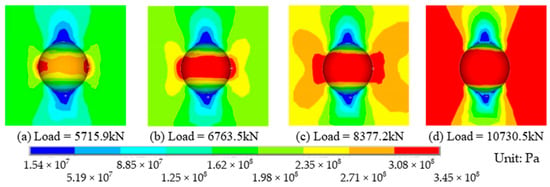
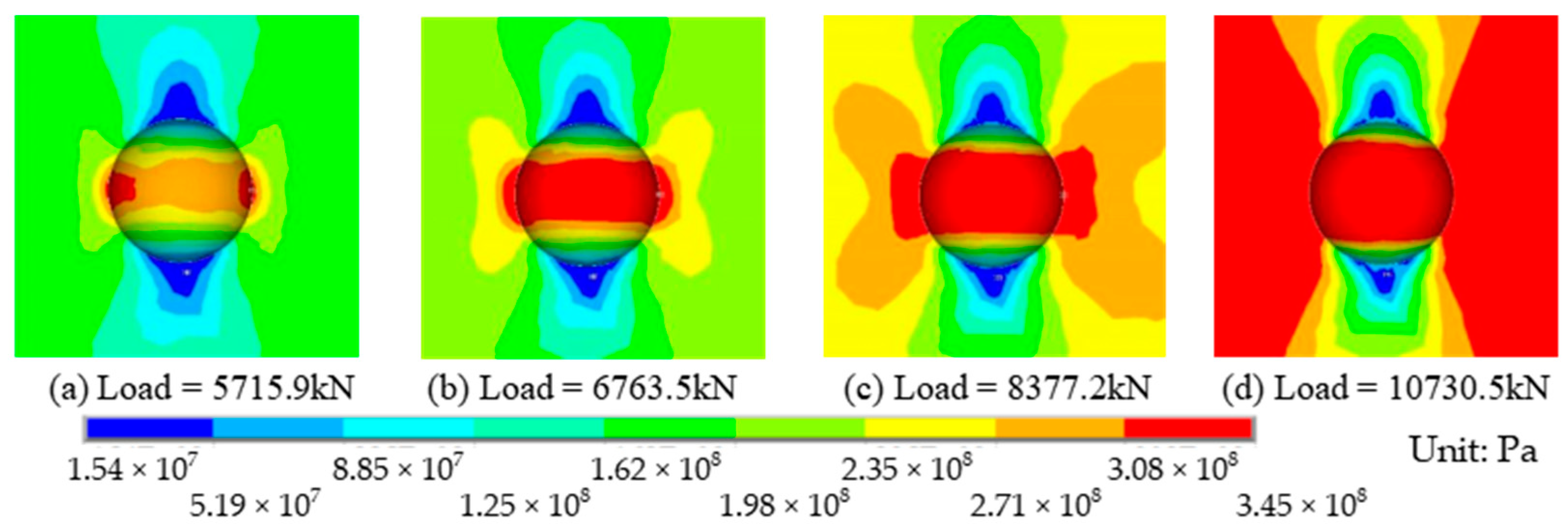
Select a pitting corrosion damage with a diameter of 4 mm and a width of 8 mm, and calculate its ultimate strength. The stress cloud map of pitting at different loads was obtained, as shown in Figure 9.
Figure 9.
Stress cloud map of pitting at different loads.
From the figure, the gradient change trend of the damage can be observed. When the corrosion pit just enters the yield state, the hook load is 5715.9 kN, and the yield occurs at the edge positions on both sides of the corrosion pit; as the yield surface expands, when the transverse section penetrates the entire erosion pit surface, the hook load is 6763.5 kN, and at this time, the yield in the area outside the corrosion pit is not obvious; further increasing the load, the yield surfaces inside and outside the corrosion pit will further expand, and Figure 9c shows the state when the hook load is 8377.2 kN; when the hook load is 10,730.5 kN, at this time, the yield area outside the corrosion pit expands rapidly and far exceeds the area of the corrosion pit, and the structure begins to undergo local yield. This analysis result is lower than the analysis result of the full beam model that ignores the local pitting corrosion damage, and is also lower than the analysis result of the model correction method described in reference [5] that simplifies the local pitting corrosion damage. Also, reference [5] only obtained the ultimate load capacity when some members entered the yield state based on the component scale, but failed to analyze the microscopic scale of the pitting corrosion damage. If the pitting corrosion degree is more severe, the ultimate strength will be lower. Thus, it can be known that considering the local microscopic scale of pitting corrosion damage to analyze the ultimate load capacity of the corroded offshore derrick is necessary.
The influences of pitting parameters on local stiffness and ultimate bearing capacity are summarized in Table 3.
Table 3.
Influence of pitting parameters on stiffness and ultimate bearing capacity.
4.3. The Influence of Local Random Pitting Distribution Location and Style on the Ultimate Bearing Capacity
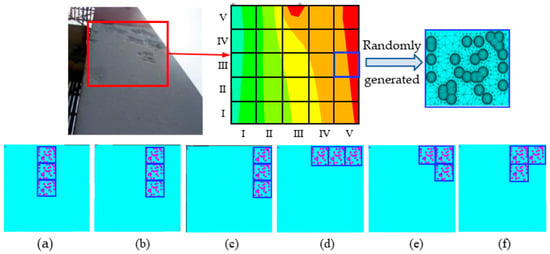
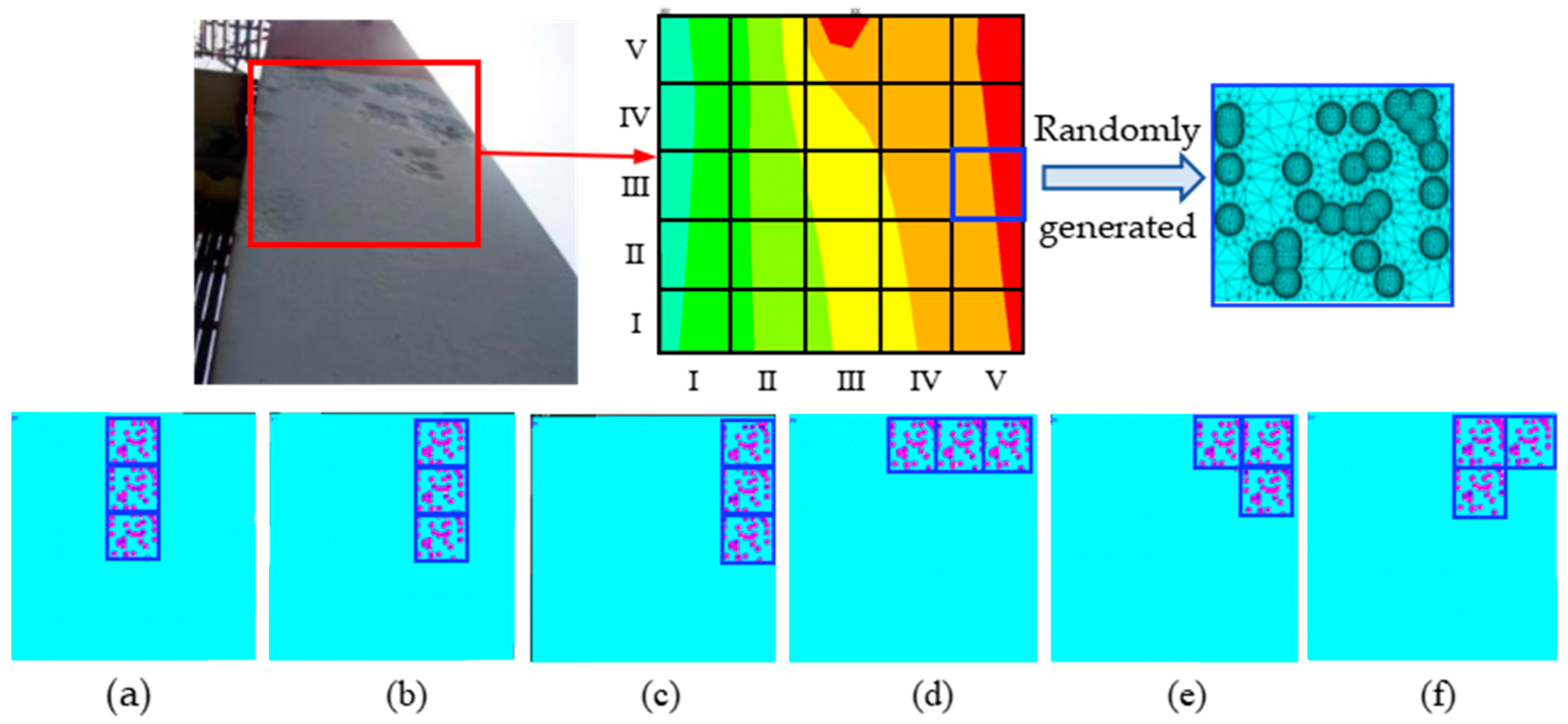
Due to the randomness of the formation process of pitting corrosion, the distribution location and style of pitting pits is also random. In order to study the influence of local random pitting distribution location and style on the ultimate bearing capacity, the random pitting model was established in this paper. The pitting area was first evenly divided into five small square areas. In the square area, the coordinates of pitting pits can randomly be generated in MATLAB (R2018b) using a random number generation method, based on a hemispherical pitting model with a radius of 4 mm. According to the actual service structure and its analysis results, three specific square areas were selected to randomly generate pitting pits in areas III–V, and a local random pitting distribution model is generated. The specific distribution mode is shown in Figure 10, which is divided into six different types: vertical row in location III, vertical row in location IV, vertical row in location V, horizontal row, triangular row, and inverted triangular row.
Figure 10.
Random distribution pitting model. (a) Vertical row in location III; (b) vertical row in location IV; (c) vertical row in location V; (d) horizontal row; (e) triangular row; (f) inverted triangular row.
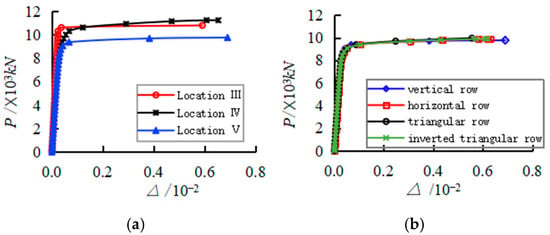
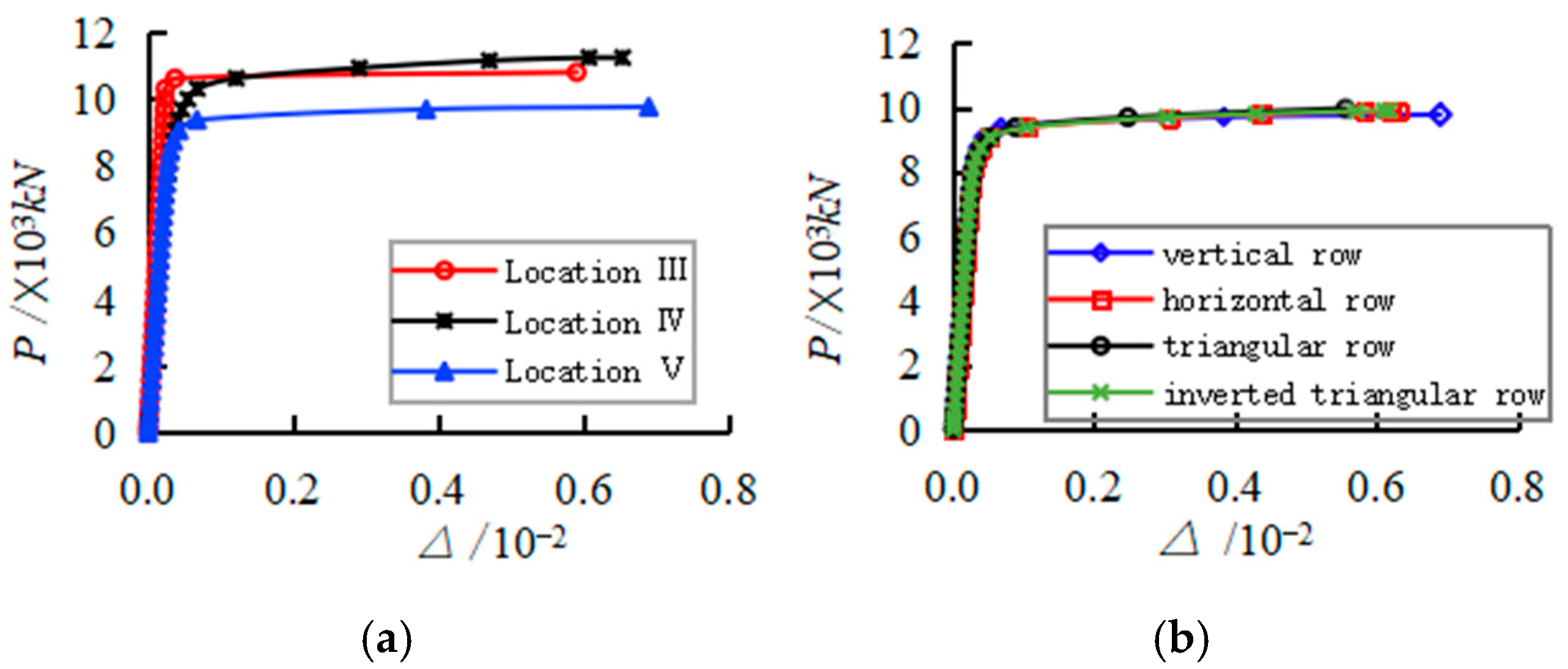
The influence of the pitting corrosion of six distribution modes on the bearing capacity of derrick will be analyzed. The load–deformation relationship curve affected by the distribution location and distribution type was obtained, as shown in Figure 11. From the figures, the pitting distribution location has an obvious influence on the bearing capacity of the derrick. When the pitting is in location V, the bearing capacity is lowest, with a ultimate load of 8418 kN.
Figure 11.
Relationship curve between load and deformation. (a) Local random pitting distribution location; (b) local random pitting distribution style.
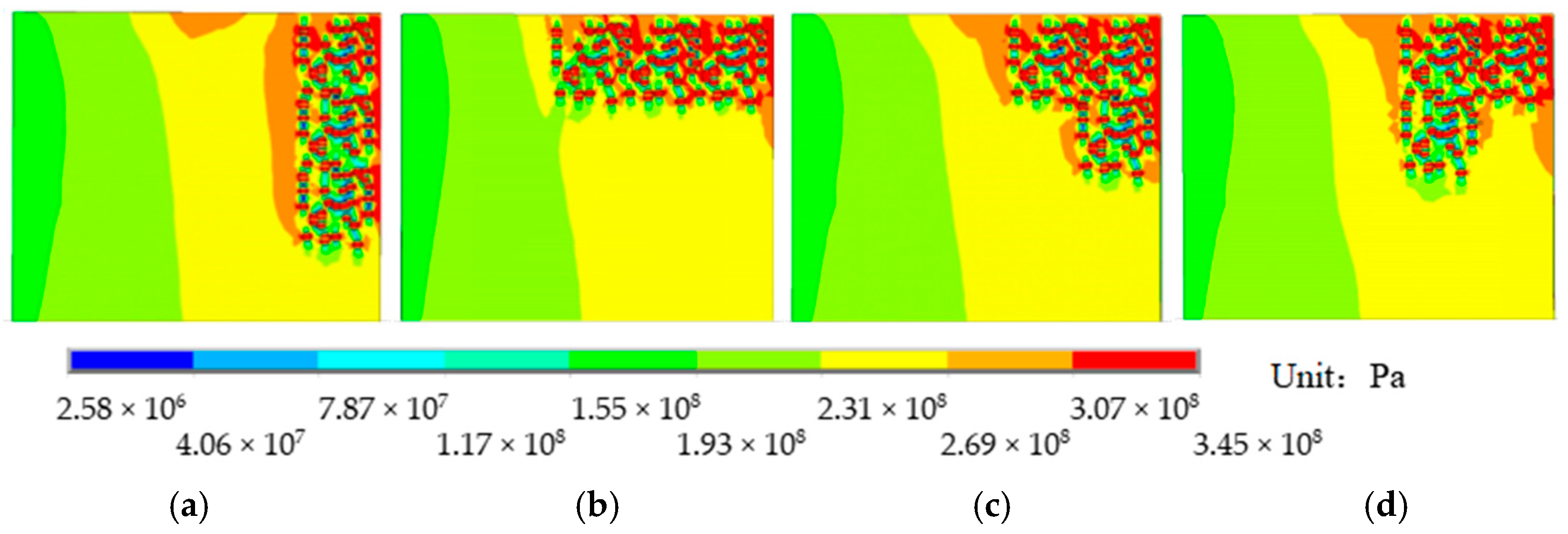
The stress cloud map of different pitting distribution types, when load is 8418 kN, is shown in Figure 12. At the same location, the pitting distribution type has little influence on the bearing capacity. Obvious stress concentration occurs near the pitting corrosion areas, which can greatly reduce the ultimate load-bearing capacity of the derrick.
Figure 12.
Stress cloud map of different pitting distribution types when load is 8418 kN. (a) Vertical row; (b) horizontal row; (c) triangular row; (d) inverted triangular row.
The influences of random pitting distribution location and distribution type on the ultimate bearing capacity are summarized in Table 4.
Table 4.
Influence of random pitting distribution location and type.
4.4. The Influence of Local Random Pitting Distribution Density on the Ultimate Bearing Capacity
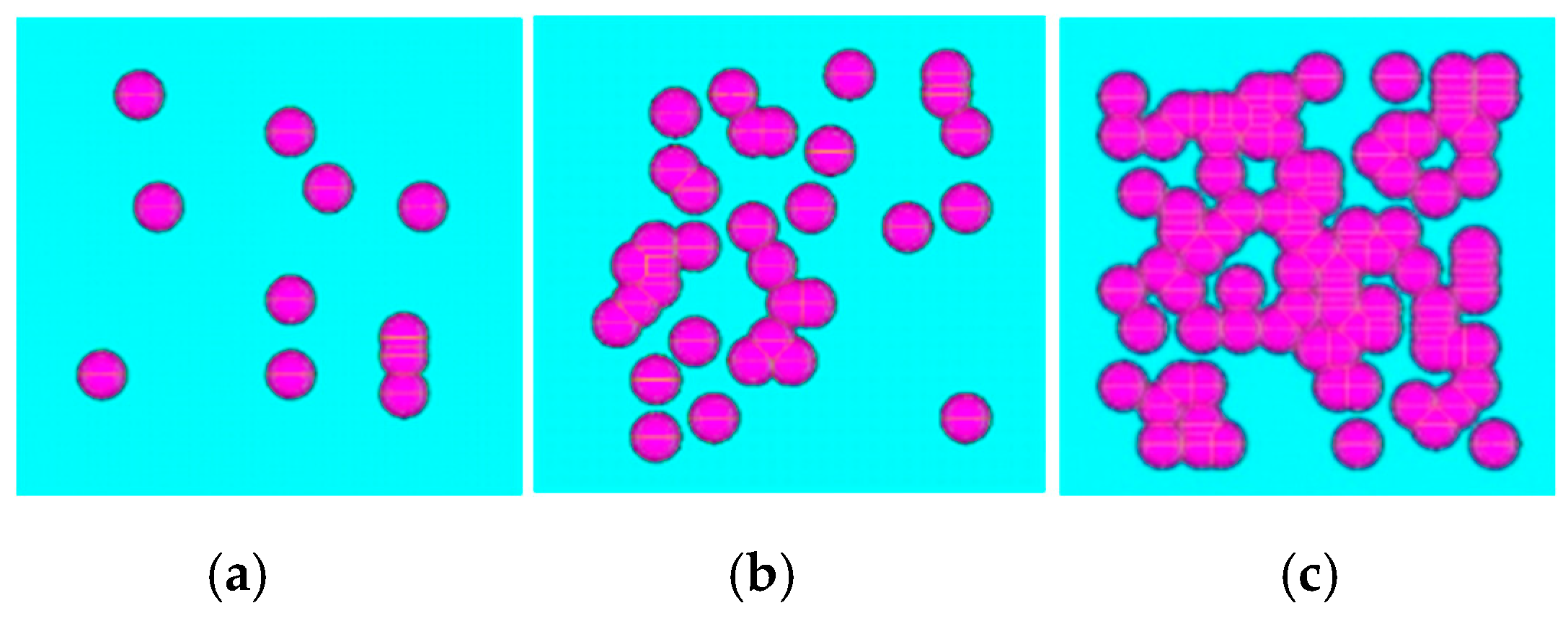
Due to the time-varying of the formation process of pitting corrosion, the pittings gradually increase in number and deepen over time, and to a certain extent, they tend to show obvious aggregation. Therefore, in order to study the influence of pitting distribution density on the bearing capacity of the derrick, random pitting corrosion damage models were established under different pitting densities, as shown in Figure 13.
Figure 13.
Random pitting corrosion damage model under different pitting densities. (a) 11 pits; (b) 33 pits; (c) 99 pits.
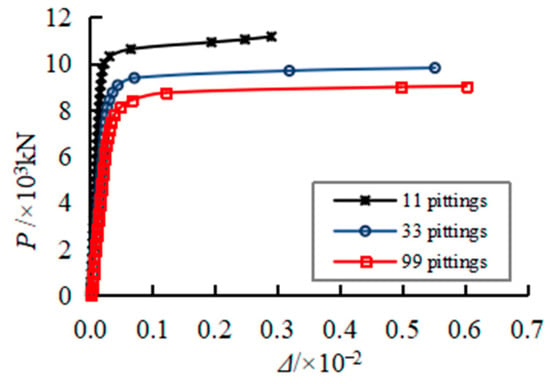
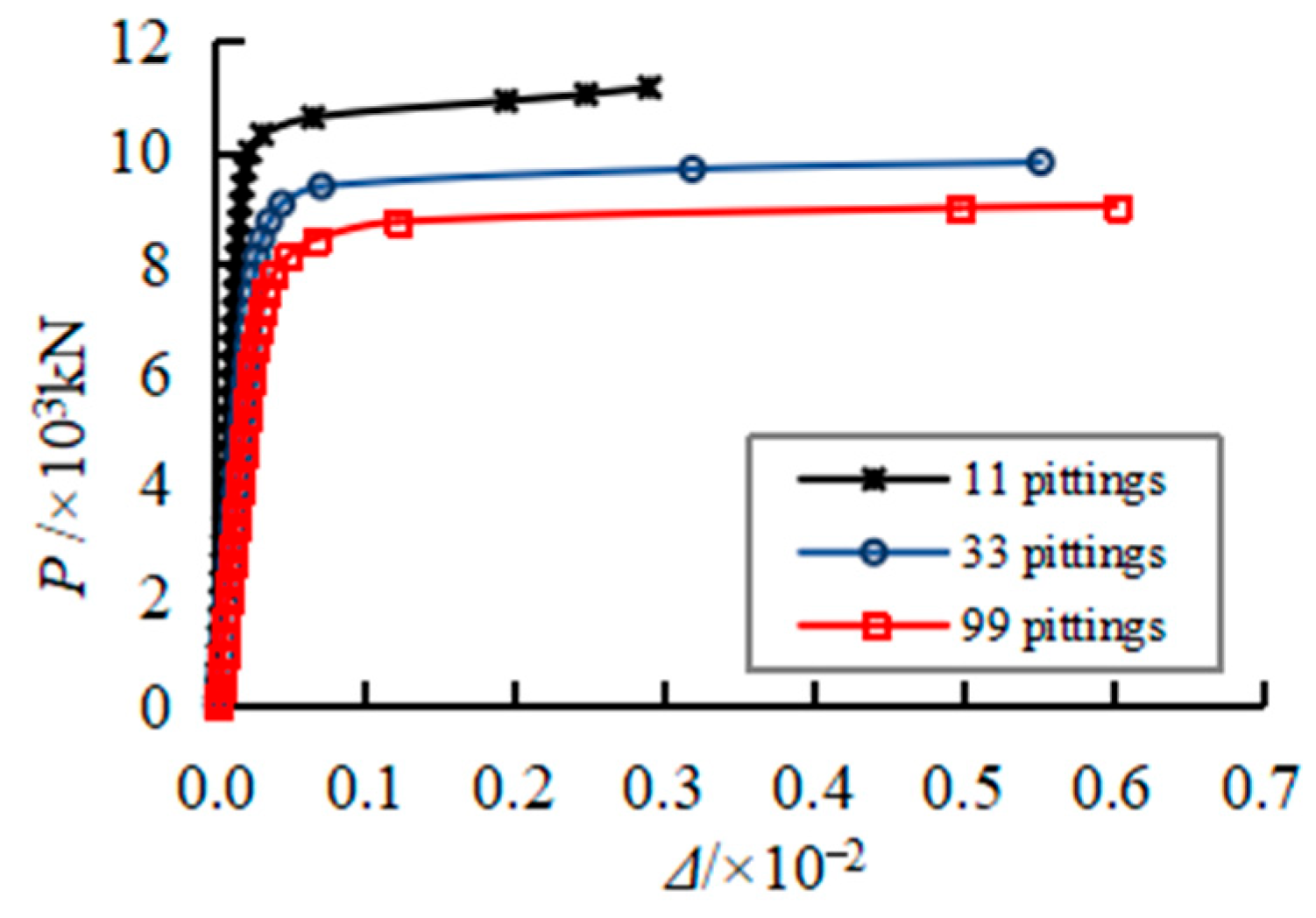
The relationship curve between load and deformation at different pitting densities was obtained, as shown in Figure 14. From the figures, the pitting distribution density is the higher and the ultimate bearing capacity of the derrick is the lower. Compared with reference [5], by simplifying the local component corrosion and using the stratified model updating method, the ultimate load of the derrick is obtained as 11,767.0 kN, which is significantly higher than the results in this paper. This also validates the necessity of considering local pitting corrosion damage when predicting the ultimate bearing capacity.
Figure 14.
Relationship curve between load and deformation at different pitting densities.
The influence of pitting distribution density on the ultimate bearing capacity is summarized in Table 5.
Table 5.
Influence of pitting density on ultimate bearing capacity.
5. Conclusions
In this study, a multi-scale finite element modeling framework was proposed to investigate the bearing capacity of an offshore derrick considering local pitting corrosion damage. By combining a global beam element model with locally refined solid element submodels, the interaction between local corrosion-induced damage and global structural behavior was effectively captured while maintaining reasonable computational efficiency.
The numerical results demonstrate that pitting corrosion has a pronounced influence on the load-bearing capacity of the offshore derrick. Compared with the intact or simplified structural model, the ultimate bearing capacity exhibits a quantifiable reduction ranging from approximately 8% under mild pitting conditions to nearly 30% under severe and unfavorably distributed pitting scenarios. In particular, pitting corrosion located at critical load-transfer nodes leads to early local yielding and accelerates the progressive failure of the overall structure.
Furthermore, the study reveals that traditional global beam models that neglect local corrosion details may significantly overestimate the structural capacity and safety margin of in-service offshore derricks. The proposed multi-scale approach provides a more realistic assessment of structural performance by explicitly accounting for the local stress concentration and plastic evolution induced by pitting corrosion.
The findings of this work highlight the engineering significance of local corrosion damage in offshore derrick structures and provide a reliable numerical basis for the structural safety evaluation, maintenance prioritization, and residual capacity assessment of aging offshore platforms.
Author Contributions
Conceptualization, J.L.; methodology, Z.Q. and J.L.; software, X.C.; validation, Z.Q.; formal analysis, Z.Q.; investigation, Z.Q. and X.C.; data curation, X.C.; writing—original draft preparation, Z.Q.; writing—review and editing, J.L.; supervision, J.L. All authors have read and agreed to the published version of the manuscript.
Funding
This research received no external funding.
Data Availability Statement
The data presented in this study are available upon request from the corresponding authors.
Conflicts of Interest
The authors declare no conflicts of interest.
References
- Zeng, L.; Cai, C.; Liao, F.L. Mechanical strength and fatigue performance of offshore derricks after corrosion. Sci. Technol. Eng. 2024, 24, 14911–14920. (In Chinese) [Google Scholar]
- Yu, S.X. Research on the erosion mechanism of pipelines through deck holes in offshore oil platforms. Chem. Manag. 2018, 34, 159–161. (In Chinese) [Google Scholar]
- Nie, B.L.; Liu, Y.; Li, Y. Defect location for offshore tower masts based on curvature mode difference. Pet. Mach. 2015, 43, 59–62. (In Chinese) [Google Scholar]
- Han, D.Y.; Li, Z.F.; Zhou, G.Q. Ultimate bearing capacity analysis of derrick steel structures based on partial model updating theory. Eng. Mech. 2007, 24, 175–179, 185. (In Chinese) [Google Scholar]
- Liu, J.M.; Zhou, G.Q. Bearing capacity analysis of in-service drilling derricks based on static and dynamic performance. Eng. Mech. 2014, 31, 250–256. (In Chinese) [Google Scholar]
- Li, Z.; Wang, Y.; Wu, B.; Wang, C.; Chen, Z. Multi-scale modeling and analysis of structural deterioration and damage in long-span bridges and its application. Acta Mech. Solida Sin. 2010, 31, 731–756. (In Chinese) [Google Scholar]
- Wang, F.Y.; Huang, H.W.; Zhang, D.M.; Sun, Y. Multi scale simulation method of mechanical behavior of existing concrete structures with cracks. J. Build. Struct. 2019, 40, 155–162. (In Chinese) [Google Scholar]
- Zhang, Q.; Fu, X.; Jiang, W. Multi-scale response reconstruction of transmission tower structure with limited dual-type sensors. J. Civ. Struct. Health Monit. 2025, 15, 2819–2834. [Google Scholar] [CrossRef] [Scilit]
- Zhang, M.; Xie, C.; Li, T.; Hossain, M.N.; Zhao, G. Wind-induced response analysis and fatigue life prediction of a hybrid wind turbine tower combining an upper steel tube with a lower steel truss. Buildings 2024, 14, 1441. [Google Scholar] [CrossRef] [Scilit]
- Kozak, O.; Velychkovych, A.; Andrusyak, A. Practical design of lattice cell towers on compact foundations in mountainous terrain. Eng 2025, 6, 269. [Google Scholar] [CrossRef] [Scilit]
- Velychkovych, A.; Mykhailiuk, V.; Andrusyak, A. Numerical model for studying the properties of a new friction damper developed based on the shell with a helical cut. Appl. Mech. 2025, 6, 1. [Google Scholar] [CrossRef] [Scilit]
- Lu, P.; Ding, Y.; Qi, Z.; Ying, W.; Liu, Y. Multi-scale-space grillage mixed method of mechanical behavior of composite box beams with finite element method (FEM). Arab. J. Sci. Eng. 2025, 50, 7847–7862. [Google Scholar] [CrossRef] [Scilit]
- Wang, R.H.; Fang, Y.Y.; Lin, Z.D.; Dou, P.L. Multi-scale analysis of residual strength of offshore platforms with pitting corrosion. Eng. Mech. 2016, 33, 238–245. (In Chinese) [Google Scholar]
- Chen, Y.L.; Zhang, Z.Z.; Zhang, Y.; Bian, G.; Huang, H.; Li, J.; Zhang, Y.; Wu, S. Numerical simulation on the effect of pitting damage on stress concentration of 30CrMnSiNi2A steel under impact loading. J. Chongqing Univ. Technol. (Nat. Sci. Ed.) 2020, 34, 69–78. (In Chinese) [Google Scholar]
- Wang, W.; Shi, J.P. Study on the load-bearing behavior of underground steel structures with pitting corrosion damage. Appl. Sci. 2025, 15, 6667. [Google Scholar] [CrossRef] [Scilit]
- Zhang, Q.; Wang, P.F.; Xu, P.N.; Yang, H. Evaluation of ultimate strength of stiffened panel structures with corrosion damage. J. Huazhong Univ. Sci. Technol. (Nat. Sci. Ed.) 2021, 49, 93–97, 104. (In Chinese) [Google Scholar]
- Zhao, Z.W.; Mo, S.J.; Gao, T. Axial compression capacity of rectangular CFST columns under random pitting corrosion. Structures 2023, 48, 1230–1243. [Google Scholar] [CrossRef] [Scilit]
- Chen, J.; Zhong, L.; Shao, Y.S.; Li, J.; Guo, L. Experimental and numerical investigation of Q690 high-strength steel welded I-section columns with pitting corrosion. Thin-Walled Struct. 2023, 190, 110961. [Google Scholar] [CrossRef] [Scilit]
- Zhang, Y.; Sun, G.J.; Li, H.J. Interface connection methods for multi-scale models. In Proceedings of the 23rd National Conference on Structural Engineering; Springer Nature: Beijing, China, 2014; Volume II. (In Chinese) [Google Scholar]
- Xue, S.Y. Elasto-Plastic Mechanics; China Building Materials Industry Press: Beijing, China, 2005. (In Chinese) [Google Scholar]

Disclaimer/Publisher’s Note: The statements, opinions and data contained in all publications are solely those of the individual author(s) and contributor(s) and not of MDPI and/or the editor(s). MDPI and/or the editor(s) disclaim responsibility for any injury to people or property resulting from any ideas, methods, instructions or products referred to in the content. |
© 2026 by the authors. Licensee MDPI, Basel, Switzerland. This article is an open access article distributed under the terms and conditions of the Creative Commons Attribution (CC BY) license.