Pressure Characteristics of Underwater High-Voltage Pulsed Discharge Shock Waves Using Needle-Mesh Electrode


Abstract
1. Introduction
2. Materials and Methods
3. Results
3.1. Effect of Electrode Distance
3.2. Effect of Electrode Curvature Radius
3.3. Effect of Water Conductivity
4. Discussion
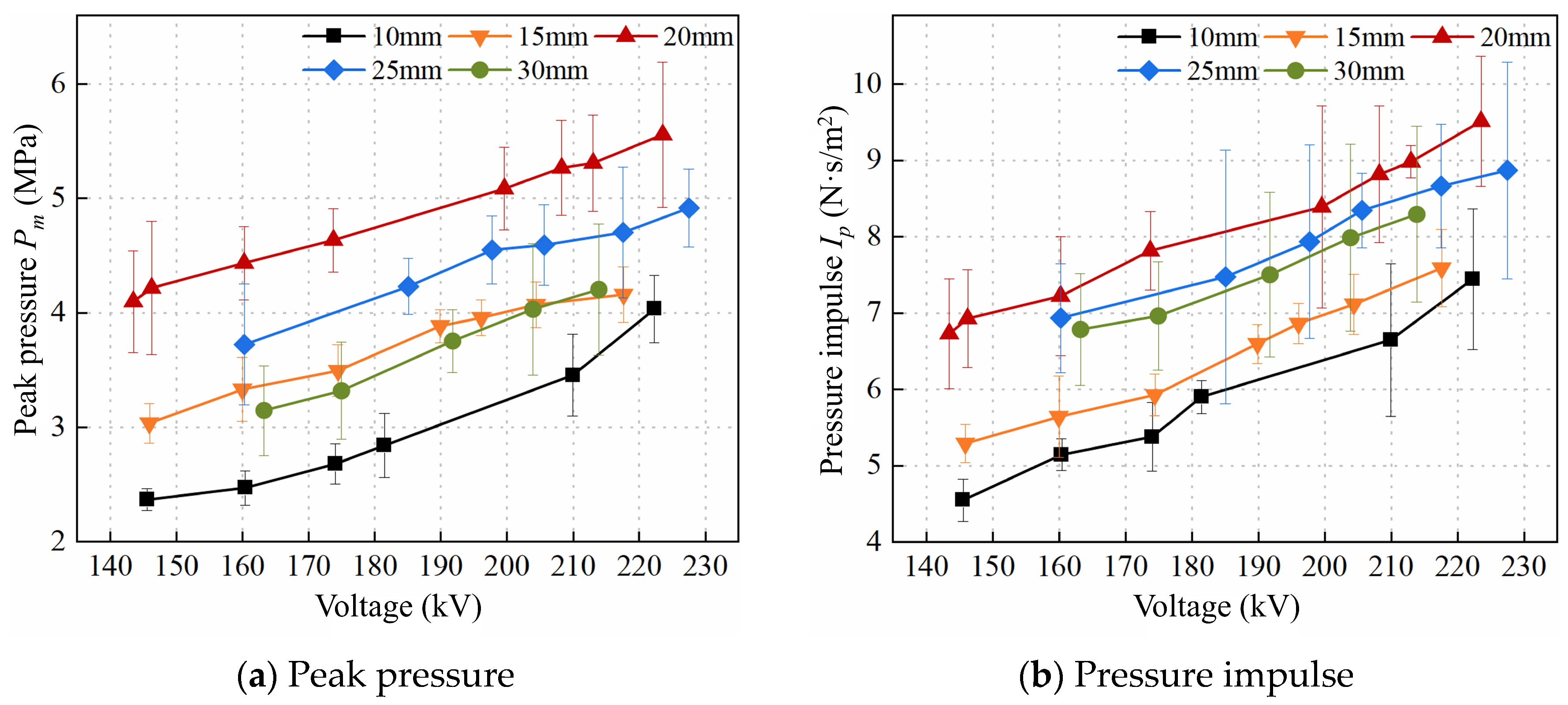
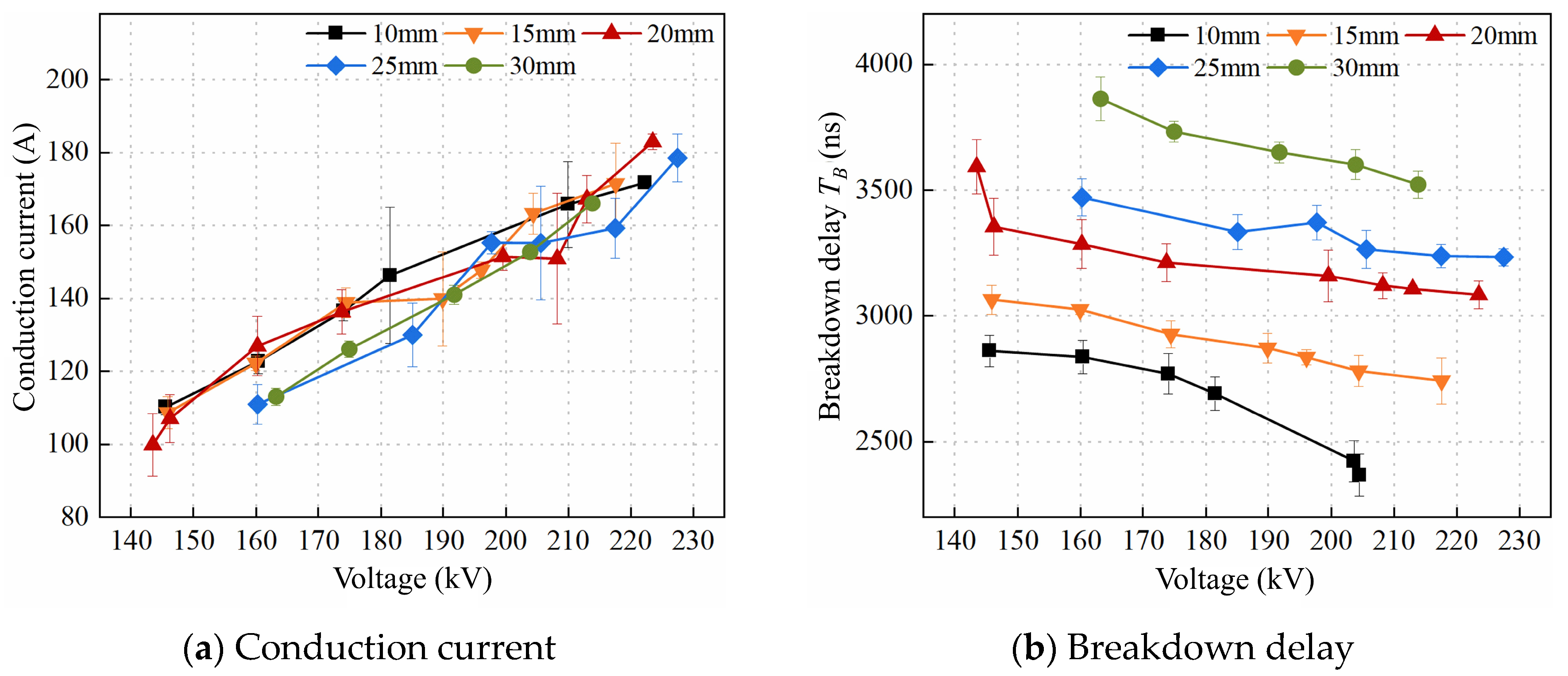
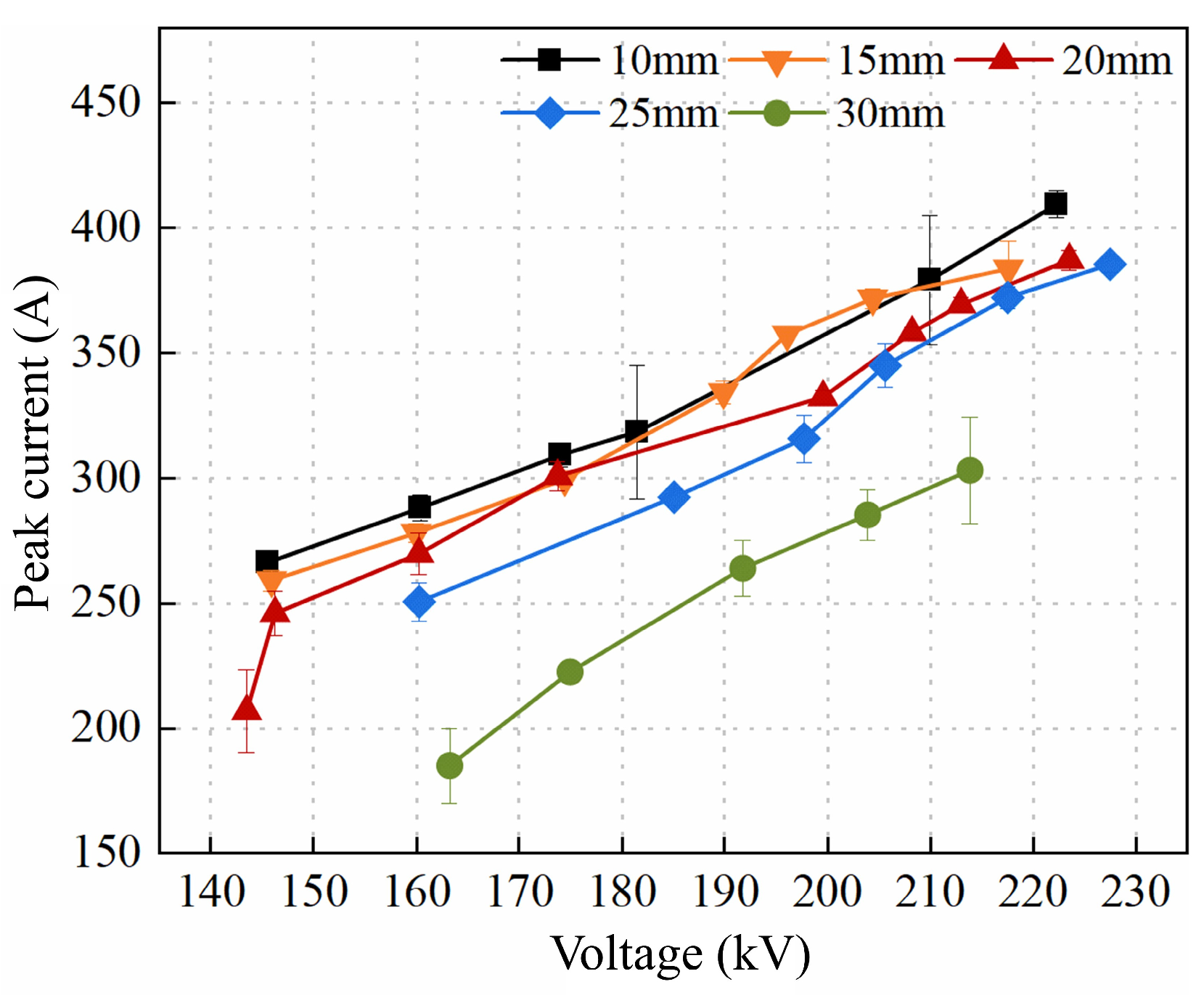
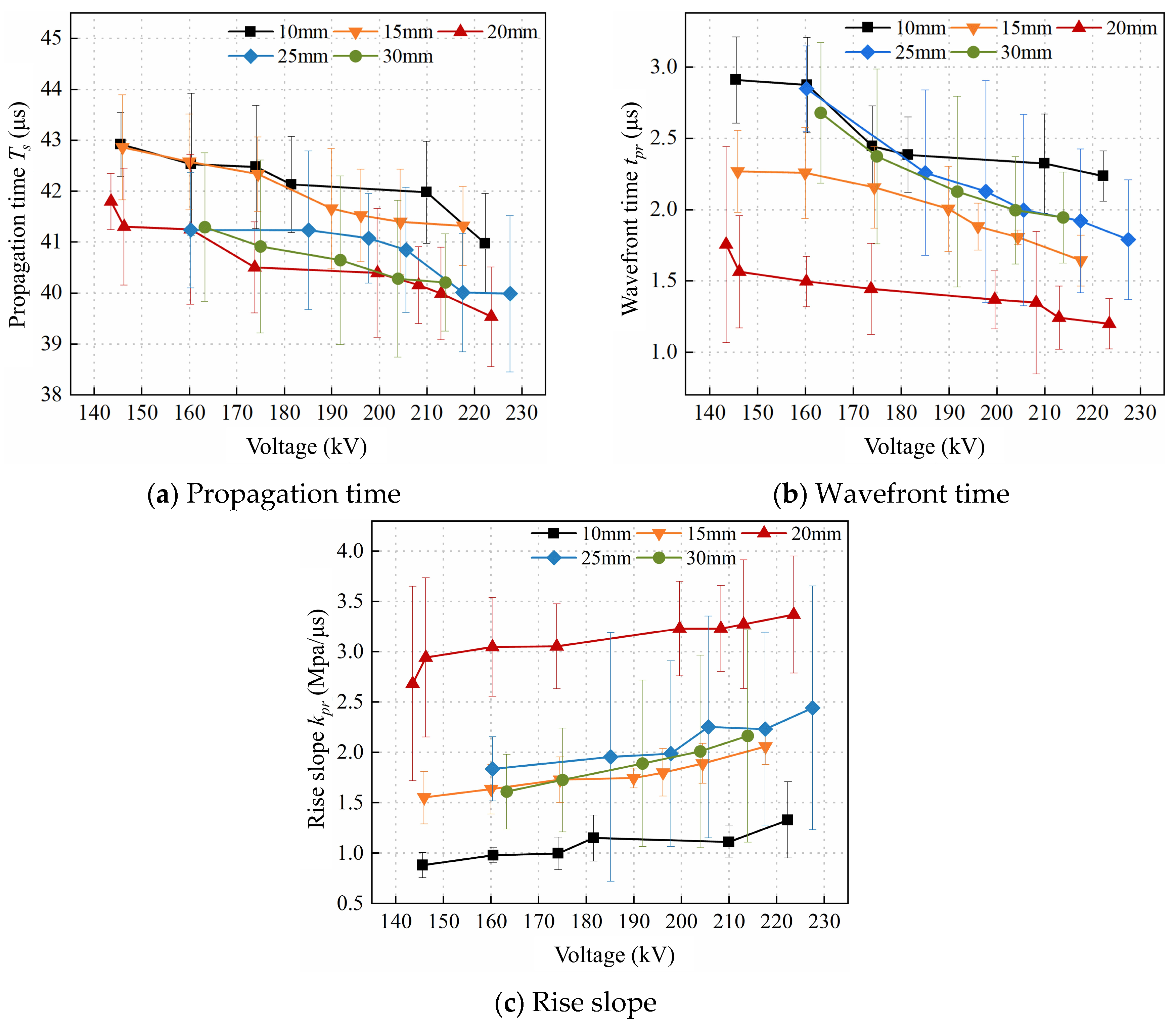
- As the electrode spacing increases, the extended propagation path of the streamer channel leads to a longer breakdown time delay and reduced breakdown efficiency. However, the equivalent resistance of the water gap also increases with larger spacing, which reduces the breakdown current and thereby decreases energy loss in the external circuit, improving the mechanical energy conversion efficiency. As a result, there exists an optimal electrode spacing that maximizes the energy converted into the shock wave. Under the conditions of this study, the optimal spacing is 20 mm, which corresponds to the highest equivalent wave velocity, the shortest wavefront time, and the steepest rise slope.
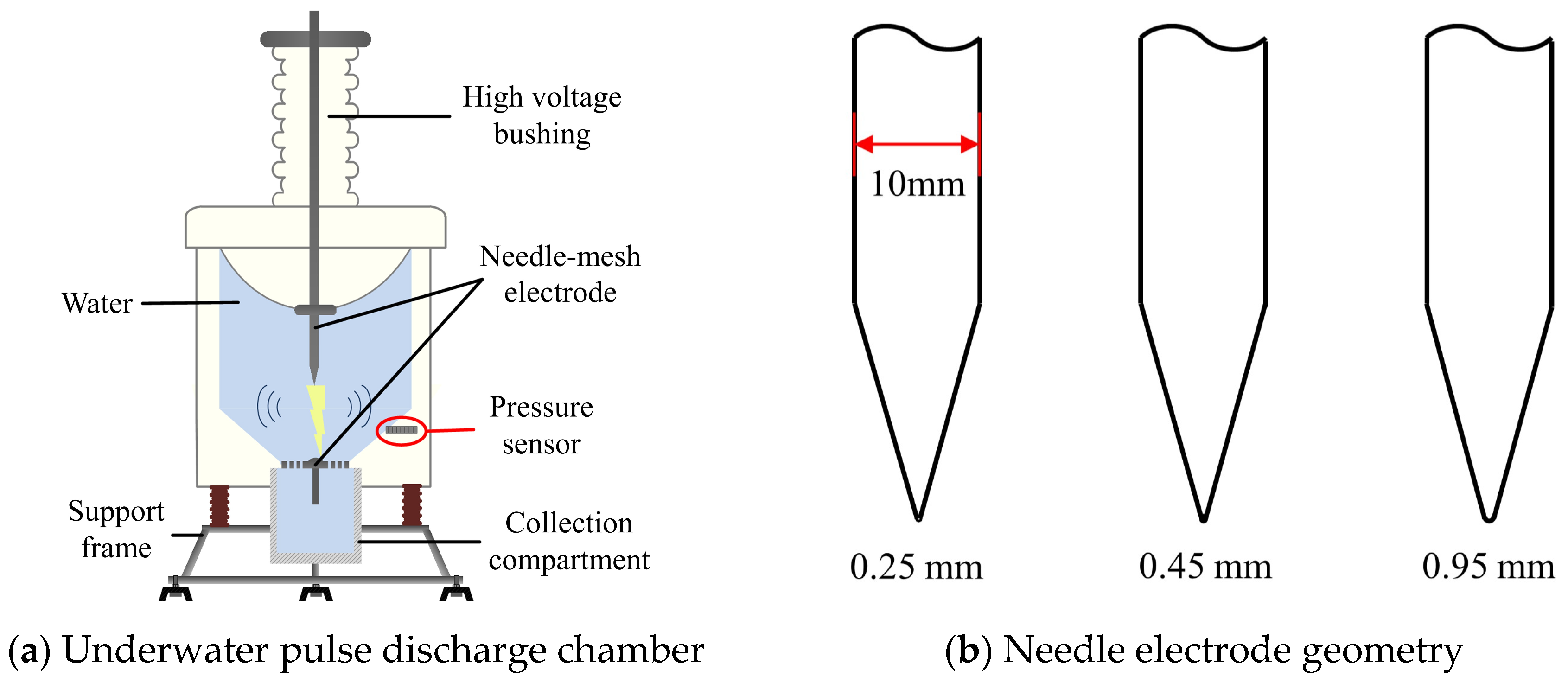
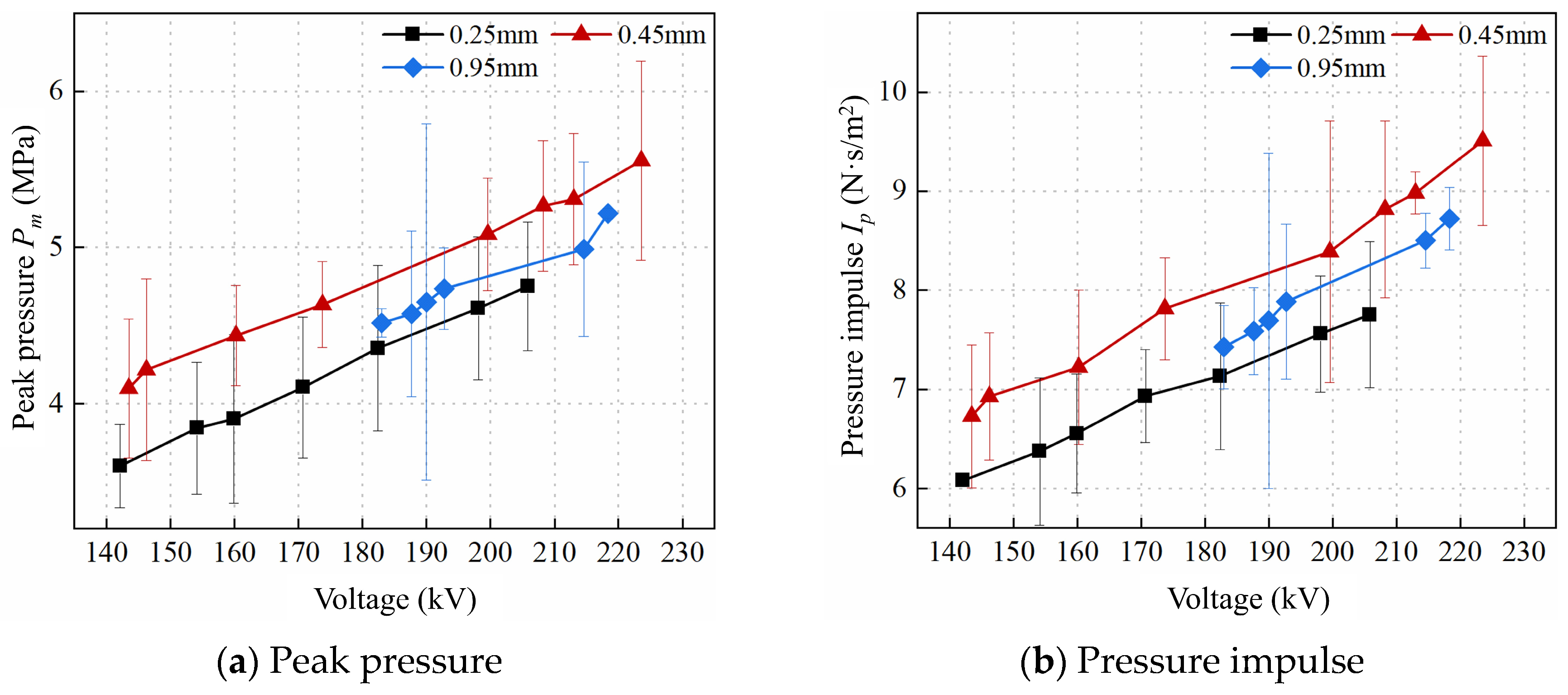
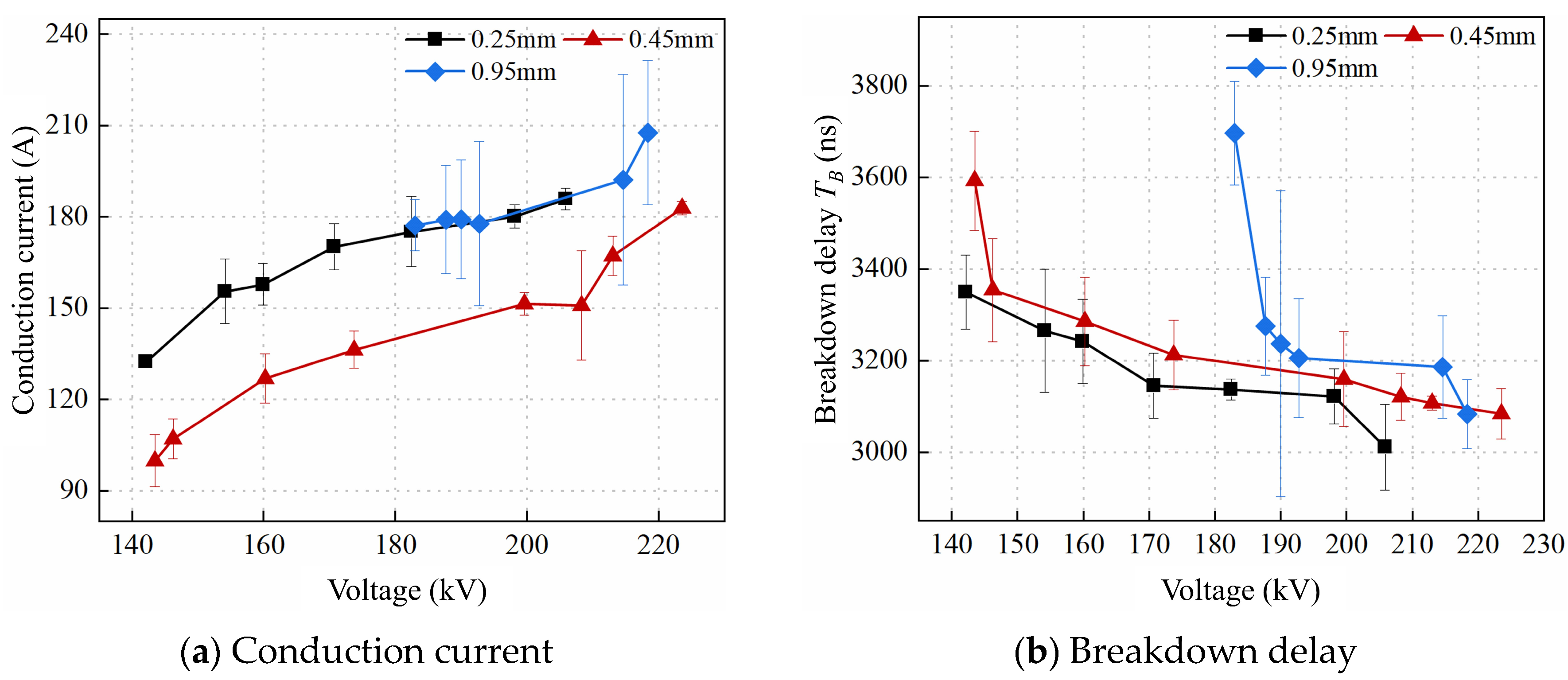
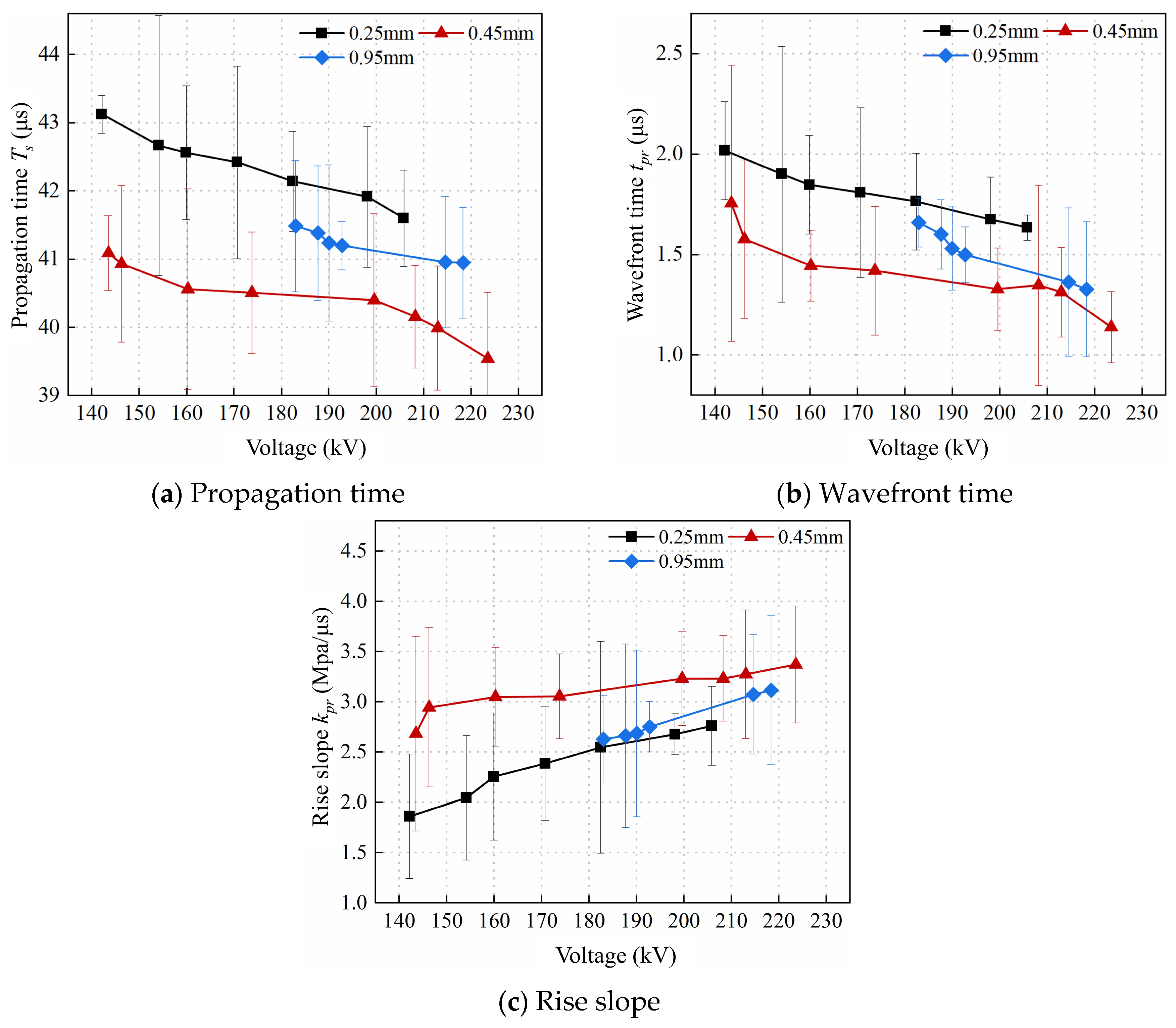
- A larger curvature radius reduces the electric field intensity at the electrode tip, slowing down the development of the streamer channel and increasing the breakdown time delay tB. On the other hand, the larger curvature radius enlarges the discharge channel radius and reduces the equivalent gap resistance, causing the conduction current to first decrease and then increase. The reduced electric field gradient also diminishes its attenuating effect on vaporization heating at the streamer head, increasing the energy input power. Therefore, the actual conversion efficiency first increases and then decreases with larger curvature radii. Under the experimental conditions herein, the 0.45 mm curvature radius yielded optimal performance, producing the highest shock wave intensity, equivalent wave velocity, and rise slope, along with the shortest wavefront time.
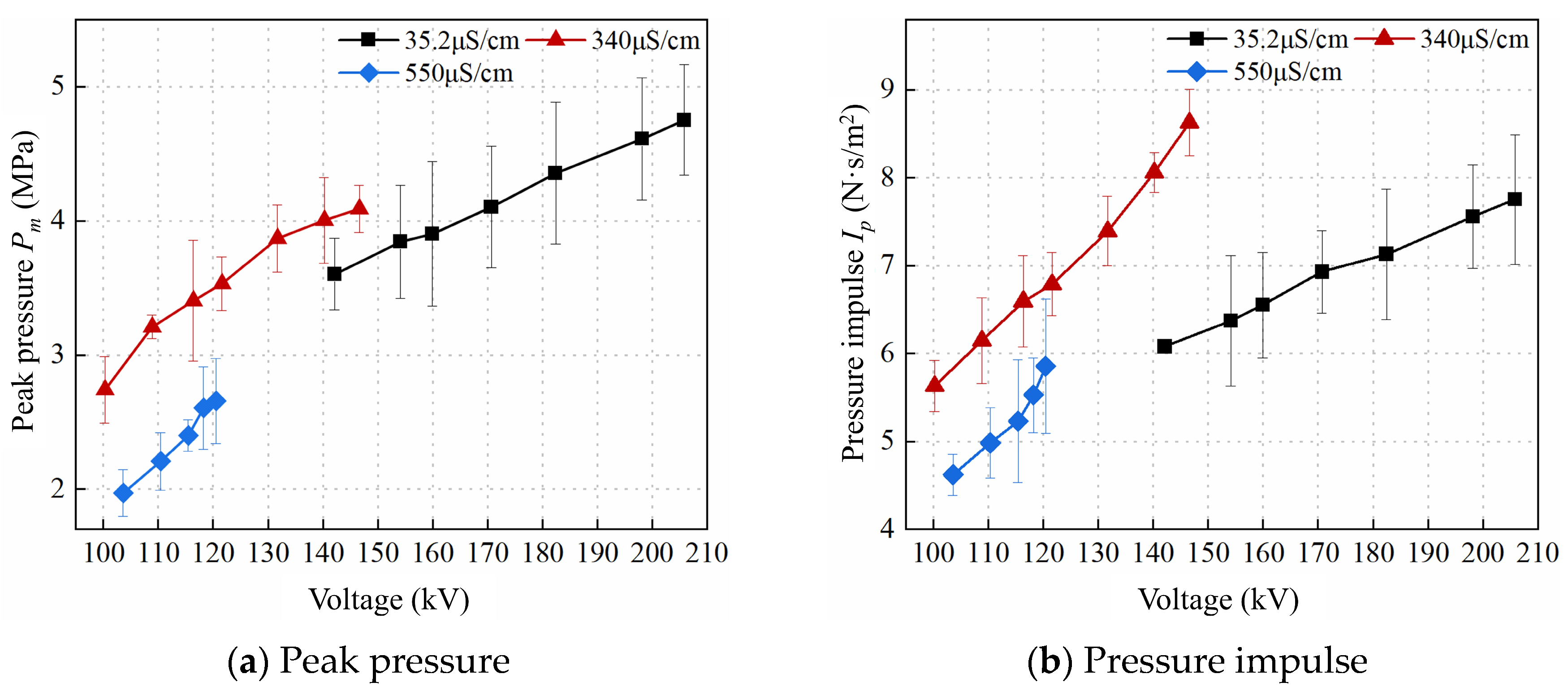
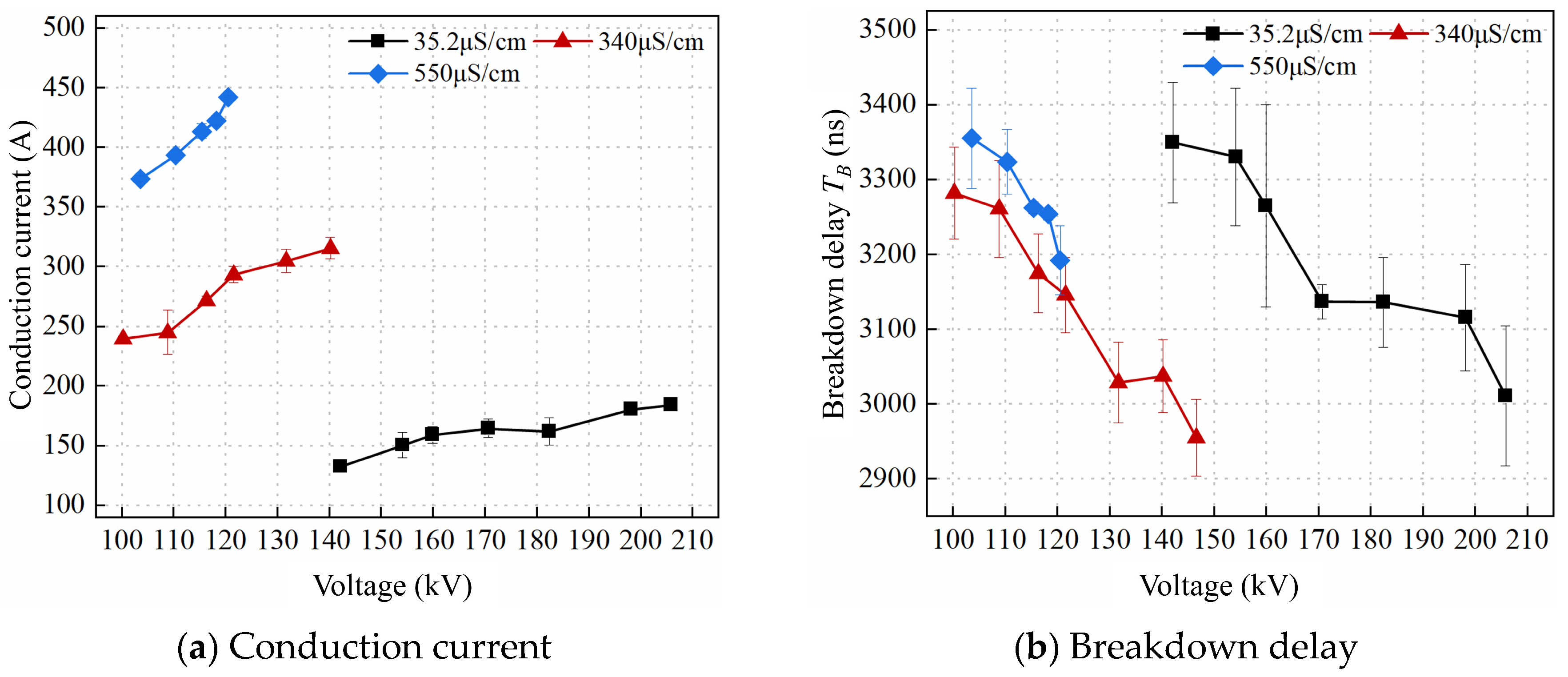
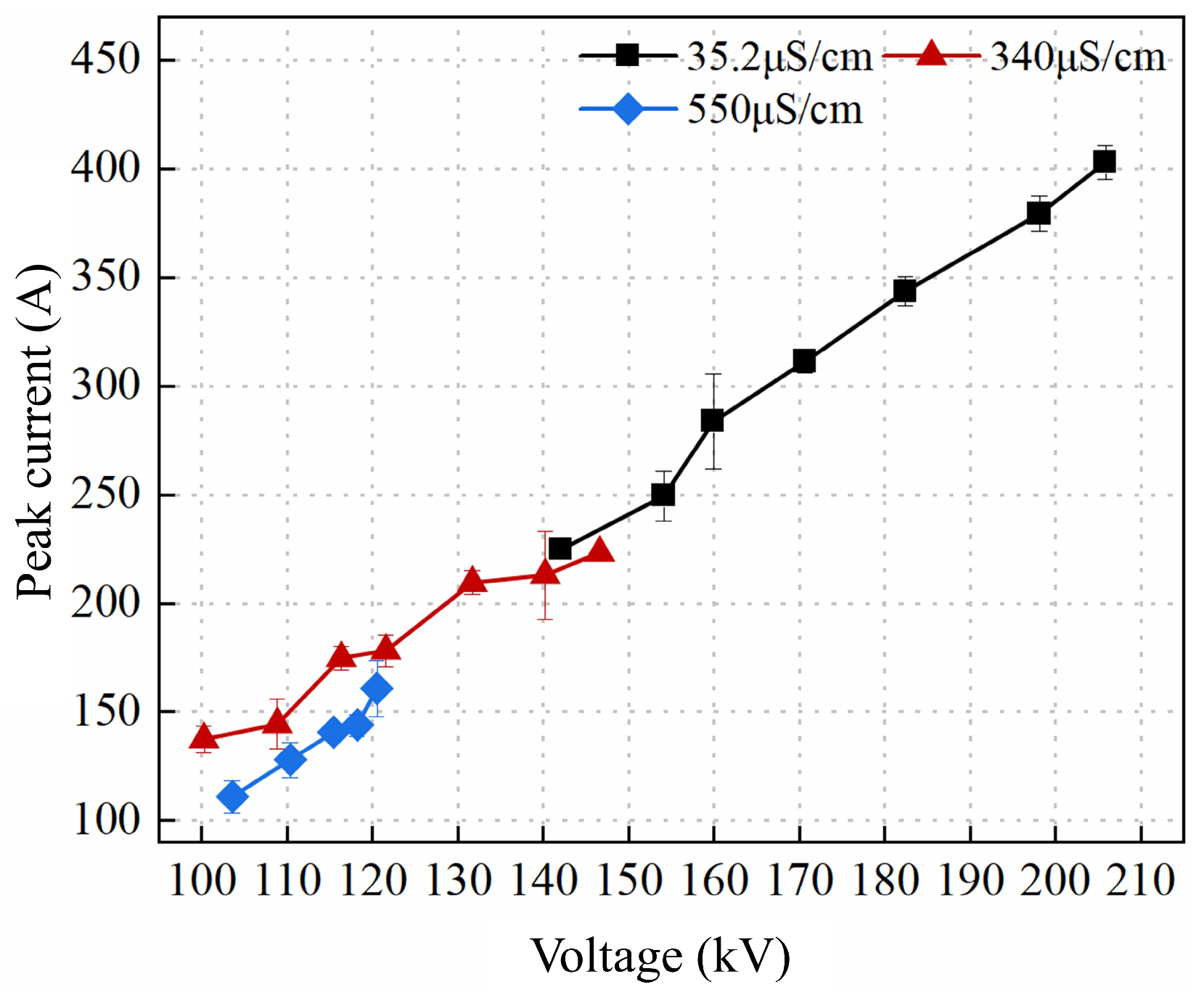
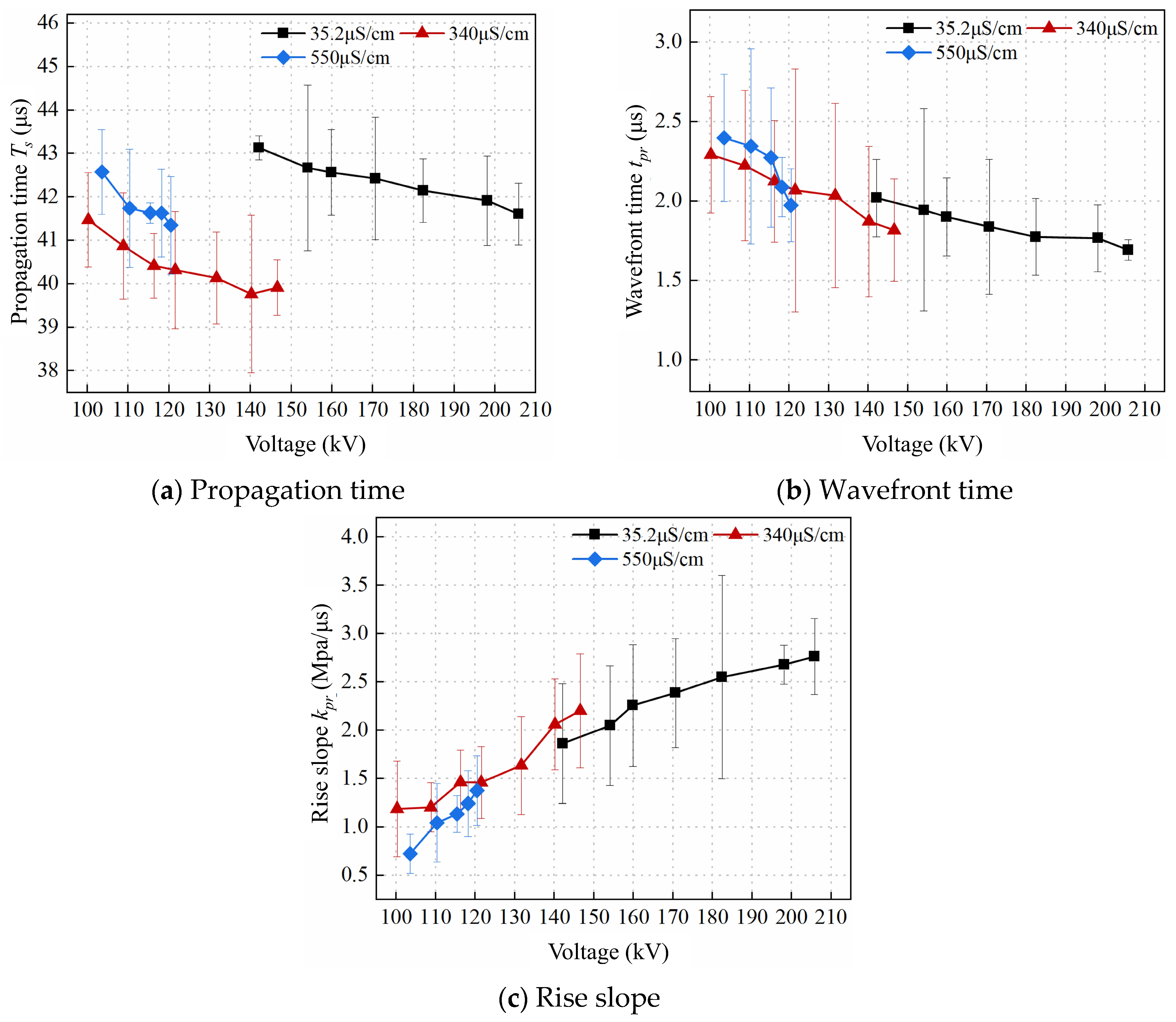
- When water conductivity increases within a moderate range, the elevated ionic current accelerates the vaporization and heating process of the water medium, promoting streamer propagation toward the ground electrode and reducing the breakdown time delay. In contrast, at higher conductivity levels, the conduction current in the gap increases significantly, leading to greater energy loss per unit time during streamer development. This weakens the electric field in the water gap, slows down streamer propagation, and increases the breakdown time delay. Hence, an optimal water conductivity exists that minimizes the breakdown time delay and maximizes the breakdown efficiency. In this study, a conductivity of 340 μS/cm resulted in the highest peak pressure, impulse, and equivalent wave velocity. Additionally, water conductivity had no significant influence on the rise slope or wavefront time.
5. Conclusions
Author Contributions
Funding
Institutional Review Board Statement
Informed Consent Statement
Data Availability Statement
Acknowledgments
Conflicts of Interest
Abbreviations
| HVF | High-Voltage Fragmentation |
References
- Zhang, X.L.; Lin, B.Q.; Zhu, C.J.; Yan, F.Z.; Liu, T.; Liu, T.; Li, Y.J. Petrophysical variation of coal treated by cyclic high-voltage electrical pulse for coalbed methane recovery. J. Pet. Sci. Eng. 2019, 178, 795–804. [Google Scholar] [CrossRef]
- Jiang, C.B.; Huang, C.Y.; Wu, J.Y.; Wang, D.Y.; Nie, B.S.; Wang, A.W.; Zhu, Y.R. Optimization Effects of Ionic Solutions on Coal Fracturing Using High-Voltage Electric Pulse. Energy Fuels 2025, 39, 3528–3539. [Google Scholar] [CrossRef]
- Wang, Z.; Cao, Y.; Xing, Z.; Wang, J.; Li, G. Experimental Study on Fragmentation of Magnesite Ores by Pulsed High-Voltage Discharge. Trans. China Electrotech. Soc. 2019, 34, 863–870. [Google Scholar]
- Che, L.; Gu, X.H.; Li, H.D. Numerical analysis and experimental research on hard rock fragmentation by high voltage pulse discharge. Miner. Eng. 2021, 168, 106942. [Google Scholar] [CrossRef]
- Fu, R.; Sun, Y.; Xu, X.; Yan, P. Effect of hydrostatic pressure on fracture of rock subjected to plasma impact. Explos. Shock Waves 2018, 38, 1051–1056. [Google Scholar]
- Duan, C.L.; Han, J.; Zhao, S.; Gao, Z.L.; Qiao, J.P.; Yan, G.H. The stripping effect of using high voltage electrical pulses breakage for waste printed circuit boards. Waste Manag. 2018, 77, 603–610. [Google Scholar] [CrossRef] [PubMed]
- Nevala, S.M.; Hamuyuni, J.; Junnila, T.; Sirviö, T.; Eisert, S.; Wilson, B.P.; Serna-Guerrero, R.; Lundström, M. Electro-hydraulic fragmentation vs conventional crushing of photovoltaic panels—IMPact on recycling. Waste Manag. 2019, 87, 43–50. [Google Scholar] [CrossRef]
- Kocik, M.; Dors, M.; Podlinski, J.; Mizeraczyk, J.; Kanazawa, S.; Ichiki, R.; Sato, T. Characterisation of pulsed discharge in water. Eur. Phys. J. Appl. Phys. 2013, 64, 825–831. [Google Scholar] [CrossRef]
- Lu, X.P.; Pan, Y.; Zhang, H.H. The electrical and acoustical characteristics of pulsed discharge in water. Acta Phys. Sin. 2002, 51, 1549–1553. [Google Scholar]
- Tu, Y.L.; Xia, H.L.; Yang, Y.; Lu, X.P. Time-resolved imaging of electrical discharge development in underwater bubbles. Phys. Plasmas 2016, 23, 013507. [Google Scholar] [CrossRef]
- Lu, X.P.; Pan, H.; Zhang, H.H. A study on the characteristic of plasma and bubble break process of pulsed discharge in water. Acta Phys. Sin. 2002, 51, 1768–1772. [Google Scholar]
- Li, X.; Liu, Y.; Li, Z.; Zhou, G.; Zhang, Q.; Lin, F.; Pan, Y. Observation of Underwater Pulse Discharge and Influence of Deposited Energy on Shock Wave in Non-uniform Electric Field. Proc. Chin. Soc. Electr. Eng. 2017, 37, 3028–3036. [Google Scholar]
- Liu, Y.; Li, Z.; Li, X.; Zhou, G.; Zhang, Q.; Lin, F.; Pan, Y. Effect Factors of the Characteristics of Shock Waves Induced by Underwater High Current Pulsed Discharge. Proc. Chin. Soc. Electr. Eng. 2017, 37, 2741–2750. [Google Scholar]
- Liu, Y.; Huang, S.; Zhao, Y.; Lin, F.; Ren, Y. Analysis of Arc Impedance Characteristics of High Current Pulsed Discharge in Liquid. High Volt. Eng. 2021, 47, 2591–2598. [Google Scholar]
- Jia, W.; Qiu, A.; Sun, F.; Guo, J. Effects of the pressure under the several hundred nanosecond pulse on the breakdown characteristics of the water switch. High Volt. Eng. 2006, 32, 50–51. [Google Scholar]
- Li, X.; Chao, Y.; Wu, J.; Jia, S.; Qiu, A. One-Dimensional Simulation for Shock Waves Generated by Underwater Electrical Wire Explosion. J. Xian Jiaotong Univ. 2015, 49, 1–5. [Google Scholar]
- Han, R.; Wu, J.; Ding, W.; Zhou, H.; Qiu, A.; Zhang, Y. Characteristics of Underwater Electrical Explosion of a Copper Wire Under Different Pulsed Currents. Proc. Chin. Soc. Electr. Eng. 2019, 39, 1251–1259. [Google Scholar]
- Li, Y.; Sun, Y.; Liu, Y.; Zhang, L.; Zheng, J.; Huang, Y.; Xu, X.; Sun, Y. Electrohydraulic Effect and Sparker Source: Current Situation and Prospects. High Volt. Eng. 2021, 47, 753–765. [Google Scholar]
- Blumh, H.; Frey, W.; Giese, H.; Hoppe, P.; Schultheiss, C.; Strassner, R. Application of pulsed HV discharges to material fragmentation and recycling. IEEE Trans. Dielectr. Electr. Insul. 2000, 7, 625–636. [Google Scholar] [CrossRef]
- Giese, J.; Seward, D.; Stuart, F.M.; Wüthrich, E.; Gnos, E.; Kurz, D.; Eggenberger, U.; Schreurs, G. Electrodynamic disaggregation: Does it affect apatite fission-track and (U-Th)/He analyses. Geostand. Geoanalytical Res. 2010, 34, 39–48. [Google Scholar] [CrossRef]
- Wang, Y.B.; Wang, S.W.; Zeng, X.W.; Reess, T. A Semiempirical model for the pre-breakdown-heating process in the underwater discharge acoustic source. IEEE. Trans. Plasma Sci. 2012, 40, 98–111. [Google Scholar] [CrossRef]
- Kedrinslii, V.K. Kirkwood-Bethe approximation for an underwater explosion with cylindrical symmetry. Combust. Explos. Shock Waves 1972, 8, 94–100. [Google Scholar] [CrossRef]
- Zhu, T.; Wang, X.; Zhang, Q.; Yang, L. Generation of large volume discharges in water. J. Xian Jiaotong Univ. 2008, 42, 723–727. [Google Scholar]
- Wang, Y.B.; Wang, S.W.; Zeng, X.W. A theoretical estimation of the pre-breakdown-heating time in the underwater discharge acoustic source. Chin. Phys. B 2012, 21, 055203. [Google Scholar] [CrossRef]


Disclaimer/Publisher’s Note: The statements, opinions and data contained in all publications are solely those of the individual author(s) and contributor(s) and not of MDPI and/or the editor(s). MDPI and/or the editor(s) disclaim responsibility for any injury to people or property resulting from any ideas, methods, instructions or products referred to in the content. |
© 2026 by the authors. Licensee MDPI, Basel, Switzerland. This article is an open access article distributed under the terms and conditions of the Creative Commons Attribution (CC BY) license.
Share and Cite
Zhang, Y.; Li, B.; Zhang, S.; Zhao, G.; Cao, K.; Song, B. Pressure Characteristics of Underwater High-Voltage Pulsed Discharge Shock Waves Using Needle-Mesh Electrode. Appl. Sci. 2026, 16, 1361. https://doi.org/10.3390/app16031361
Zhang Y, Li B, Zhang S, Zhao G, Cao K, Song B. Pressure Characteristics of Underwater High-Voltage Pulsed Discharge Shock Waves Using Needle-Mesh Electrode. Applied Sciences. 2026; 16(3):1361. https://doi.org/10.3390/app16031361
Chicago/Turabian StyleZhang, Yunxiao, Bowen Li, Shaofeng Zhang, Guangjin Zhao, Kehan Cao, and Baipeng Song. 2026. "Pressure Characteristics of Underwater High-Voltage Pulsed Discharge Shock Waves Using Needle-Mesh Electrode" Applied Sciences 16, no. 3: 1361. https://doi.org/10.3390/app16031361
APA StyleZhang, Y., Li, B., Zhang, S., Zhao, G., Cao, K., & Song, B. (2026). Pressure Characteristics of Underwater High-Voltage Pulsed Discharge Shock Waves Using Needle-Mesh Electrode. Applied Sciences, 16(3), 1361. https://doi.org/10.3390/app16031361