

Studies on Submersible Short-Circuit Blowing Based on Orthogonal Experiments, Back Propagation Neural Network Prediction, and Pearson Correlation Analysis

Abstract
1. Introduction
- First, in Section 2, seven detailed influencing factors across three levels of high-pressure short-circuit blowing are identified, and a corresponding proportional model test bench is constructed, as well as L18(37) orthogonal experiments;
- Second, in Section 3, extreme variance and standard variance analyses yield correlation coefficients for blowing duration (0.6535), sea tank back pressure (0.8105), gas blowing pressure from the cylinder group (0.5569), and sea valve flowing area (0.5373). Notably, the F-ratio for blowing duration exceeds the critical value of 3.24;
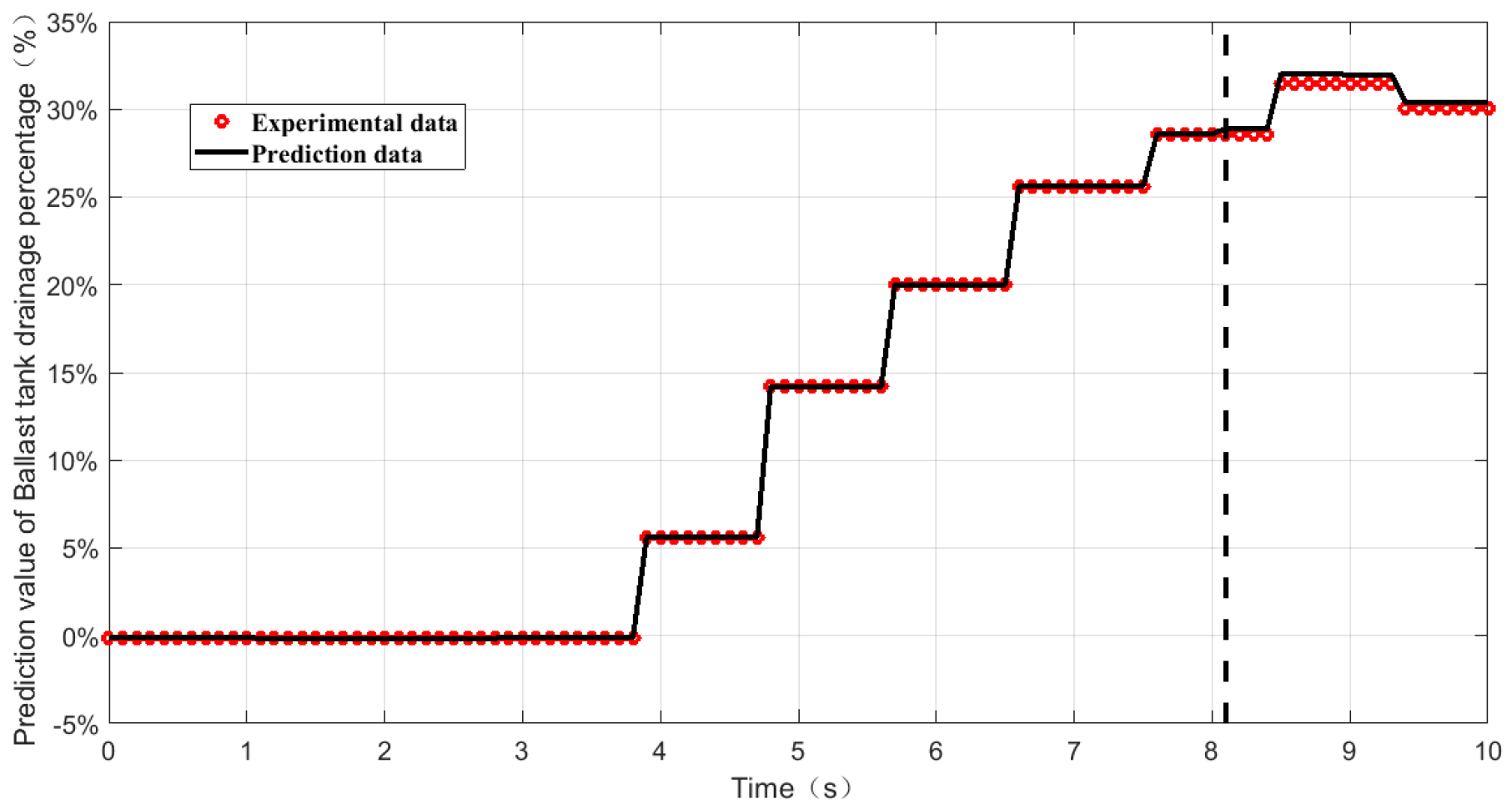
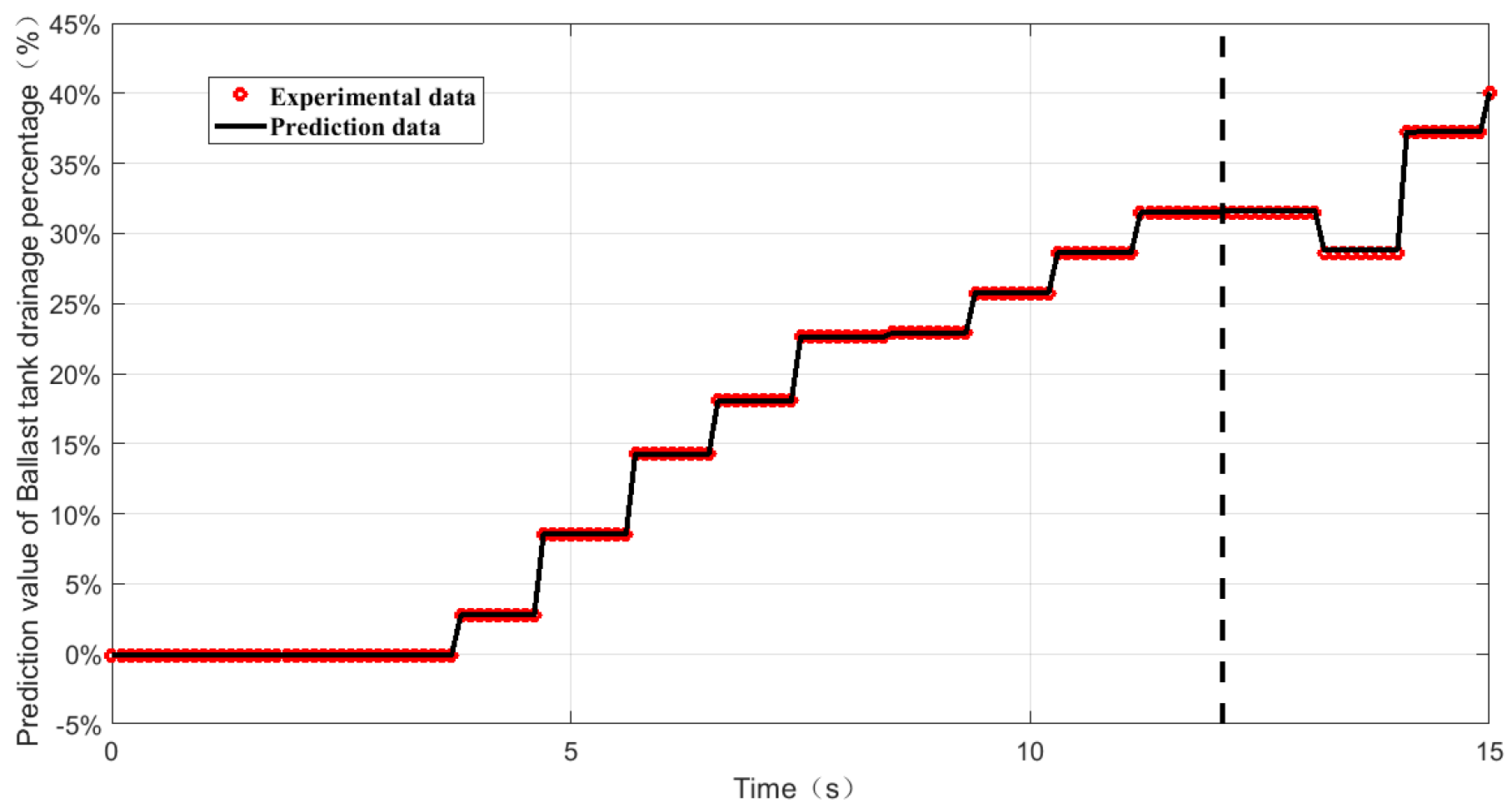
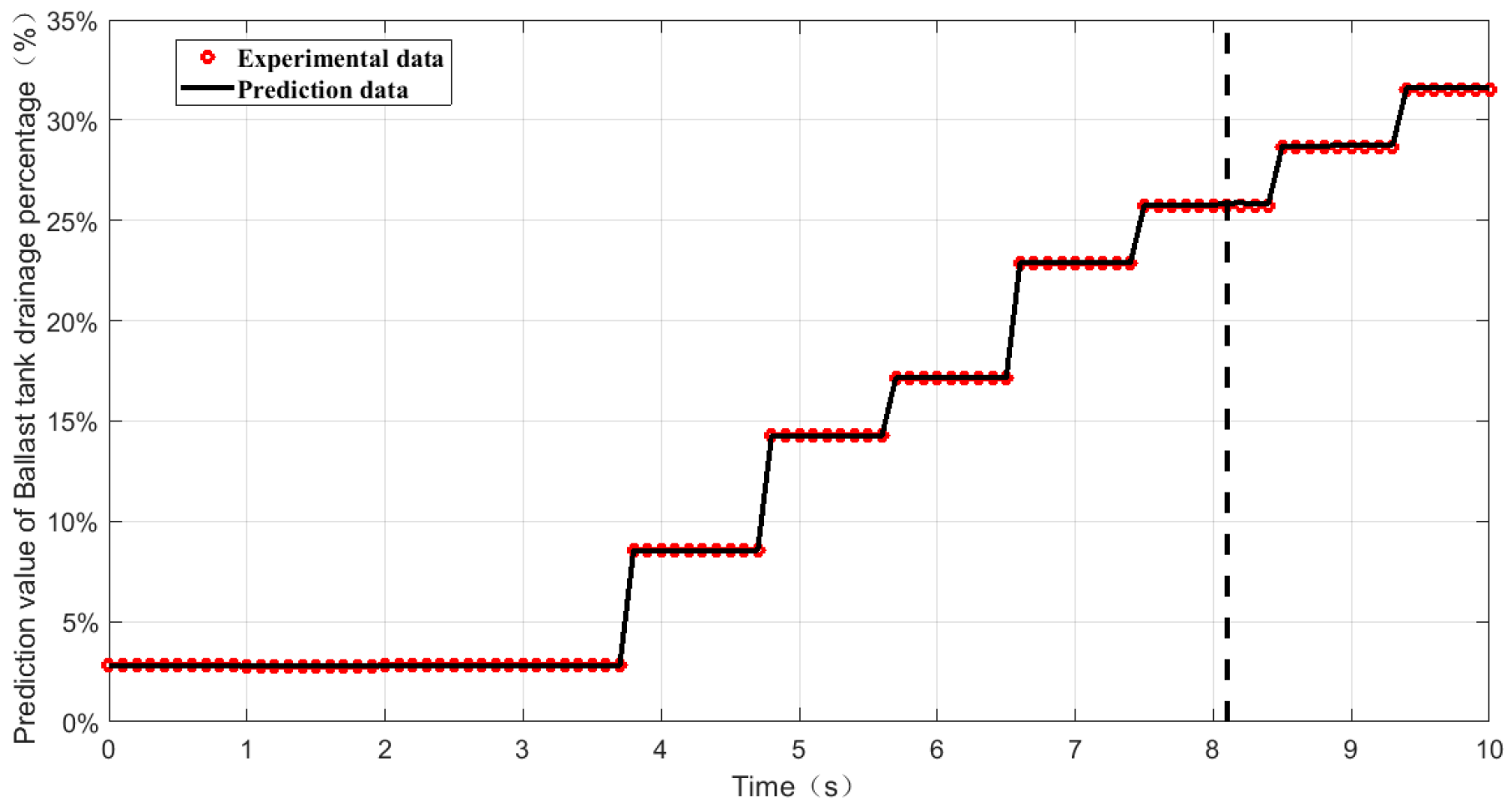
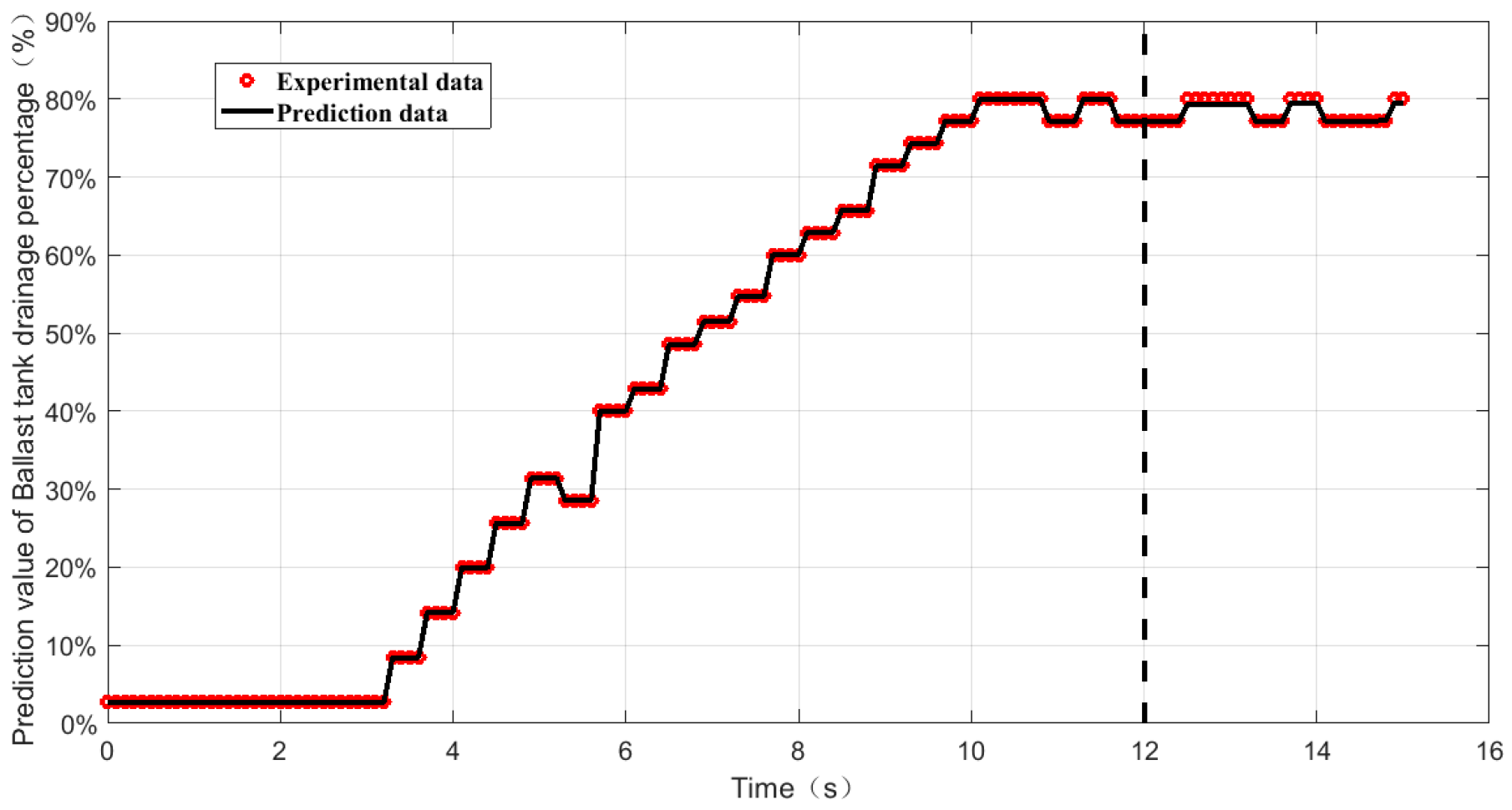
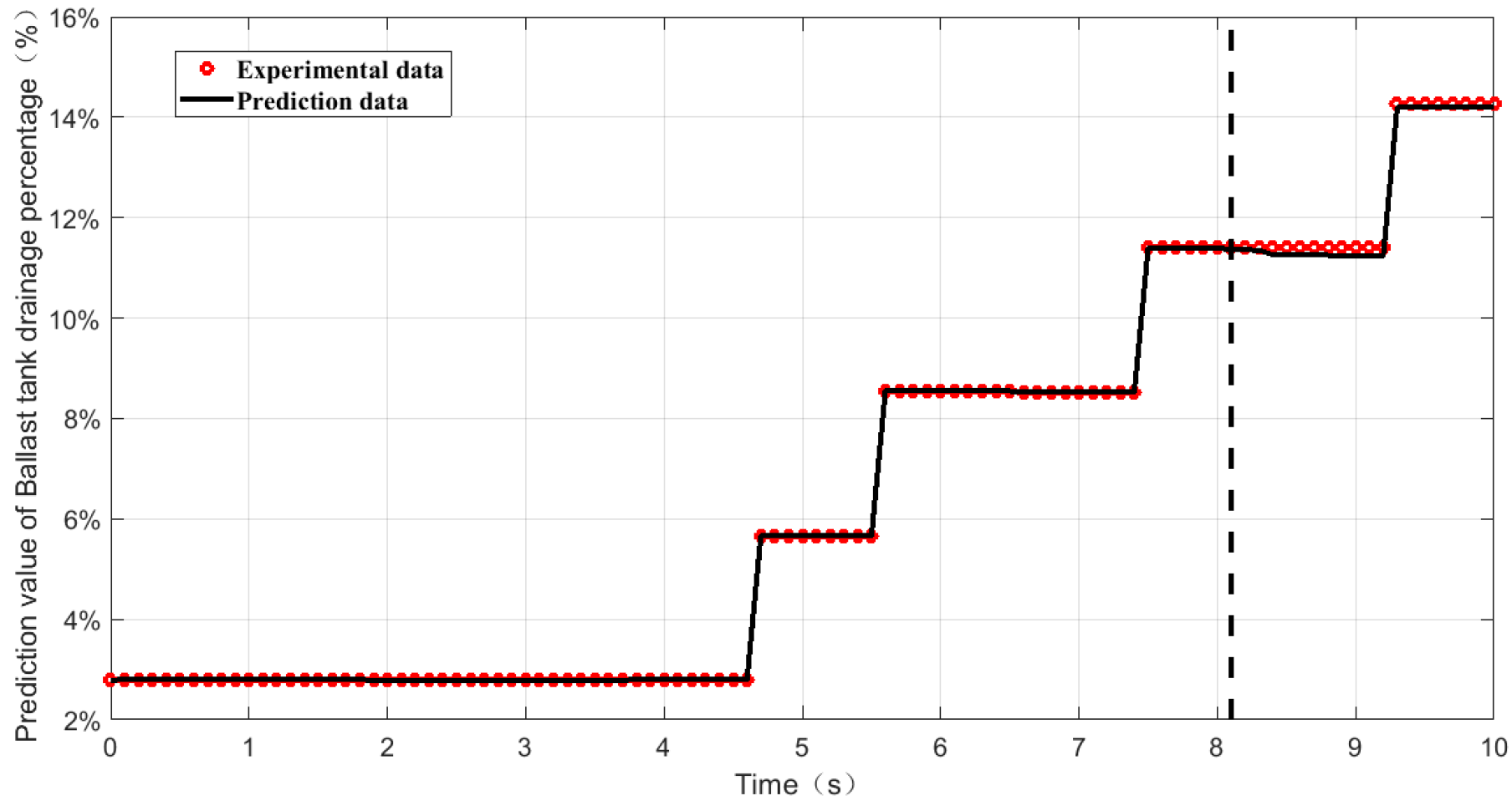
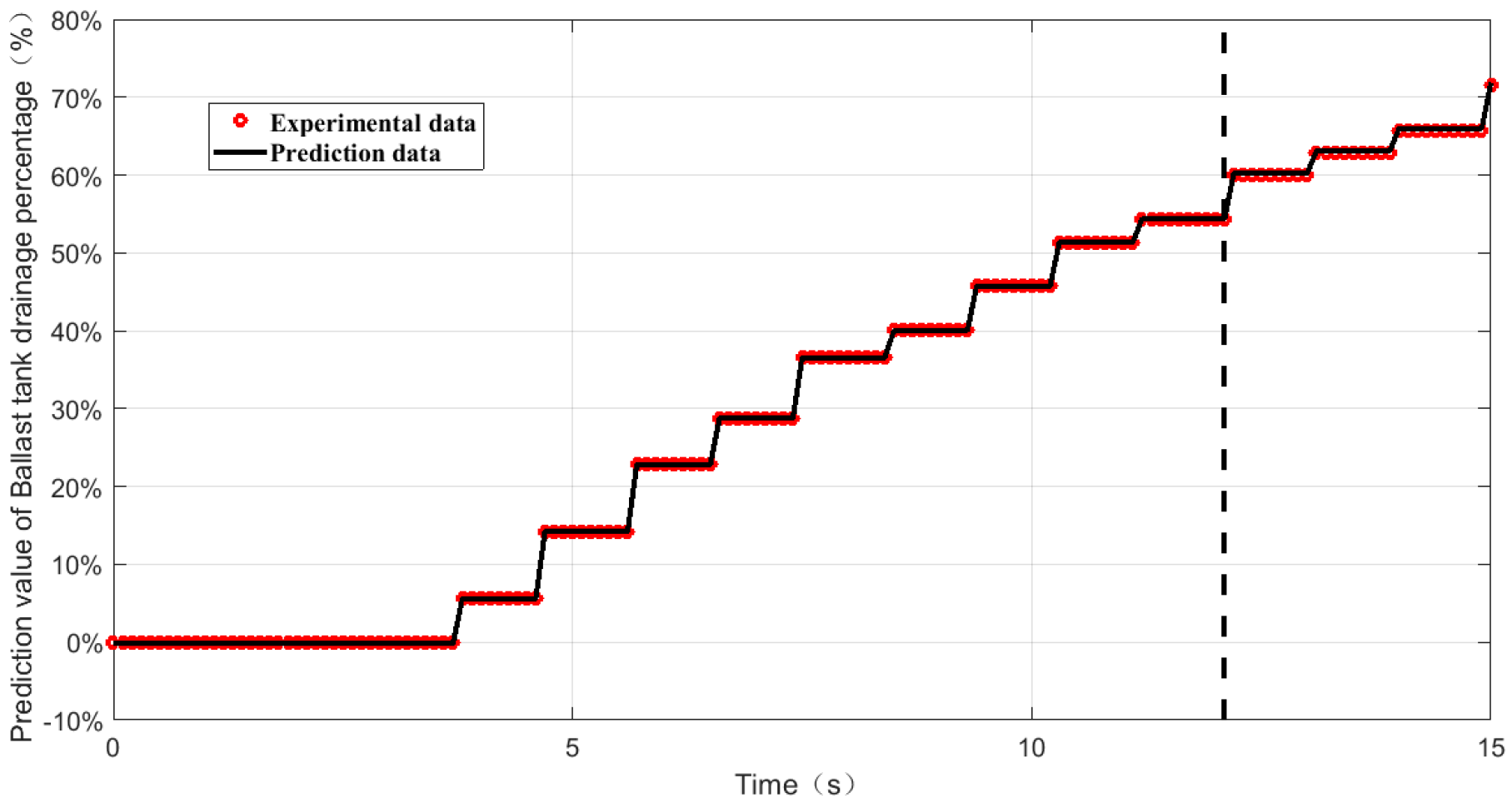
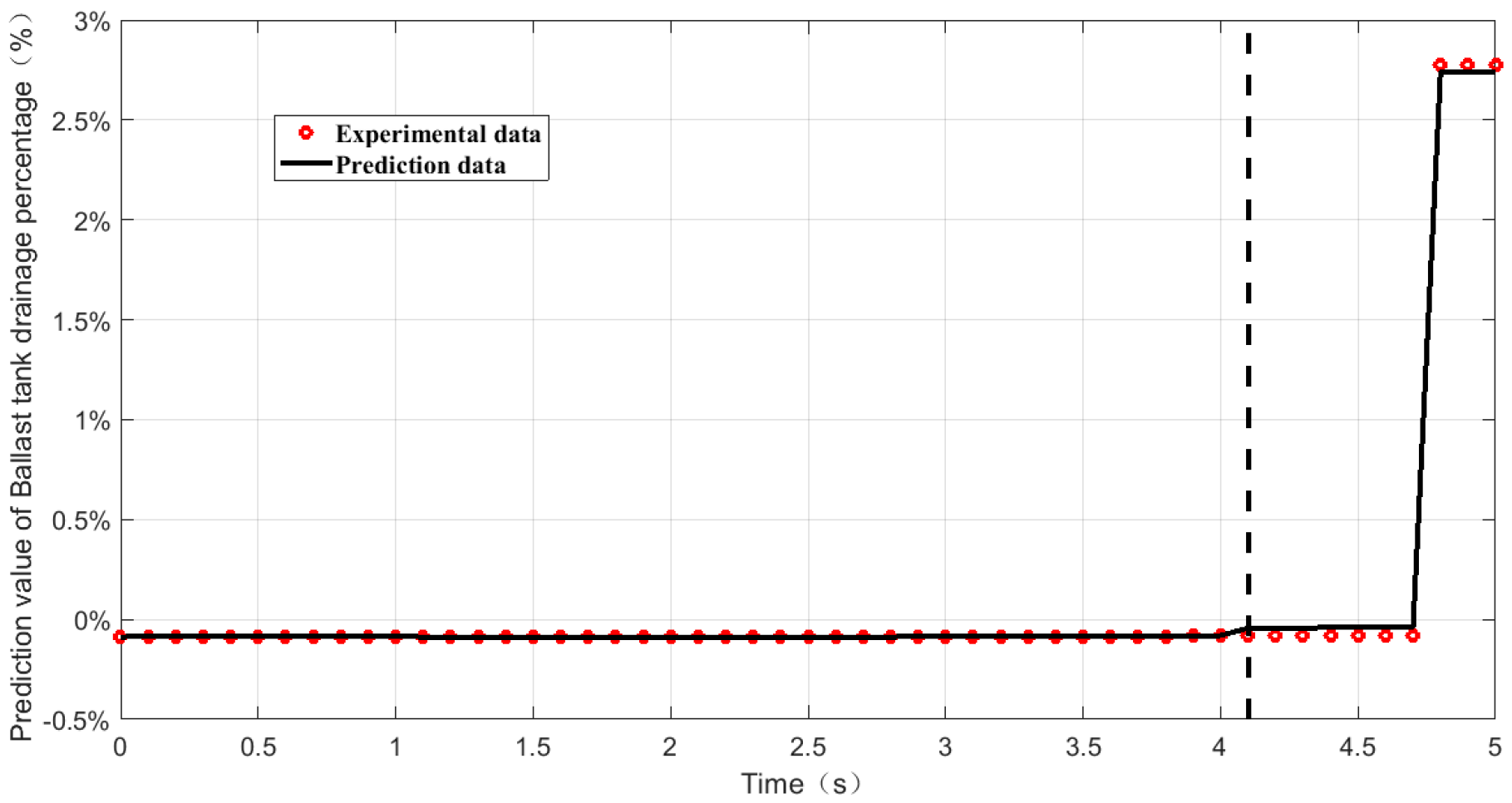
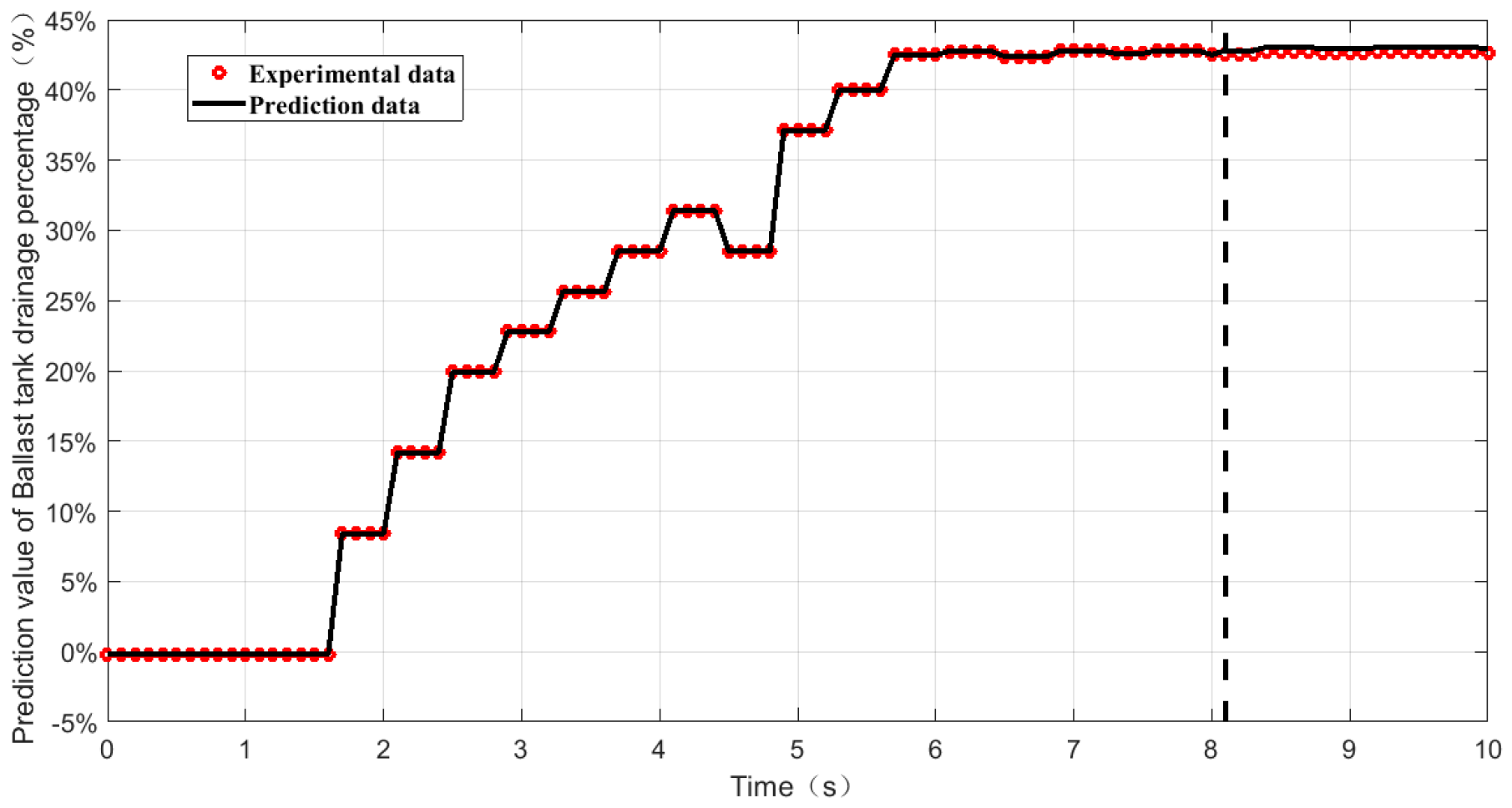
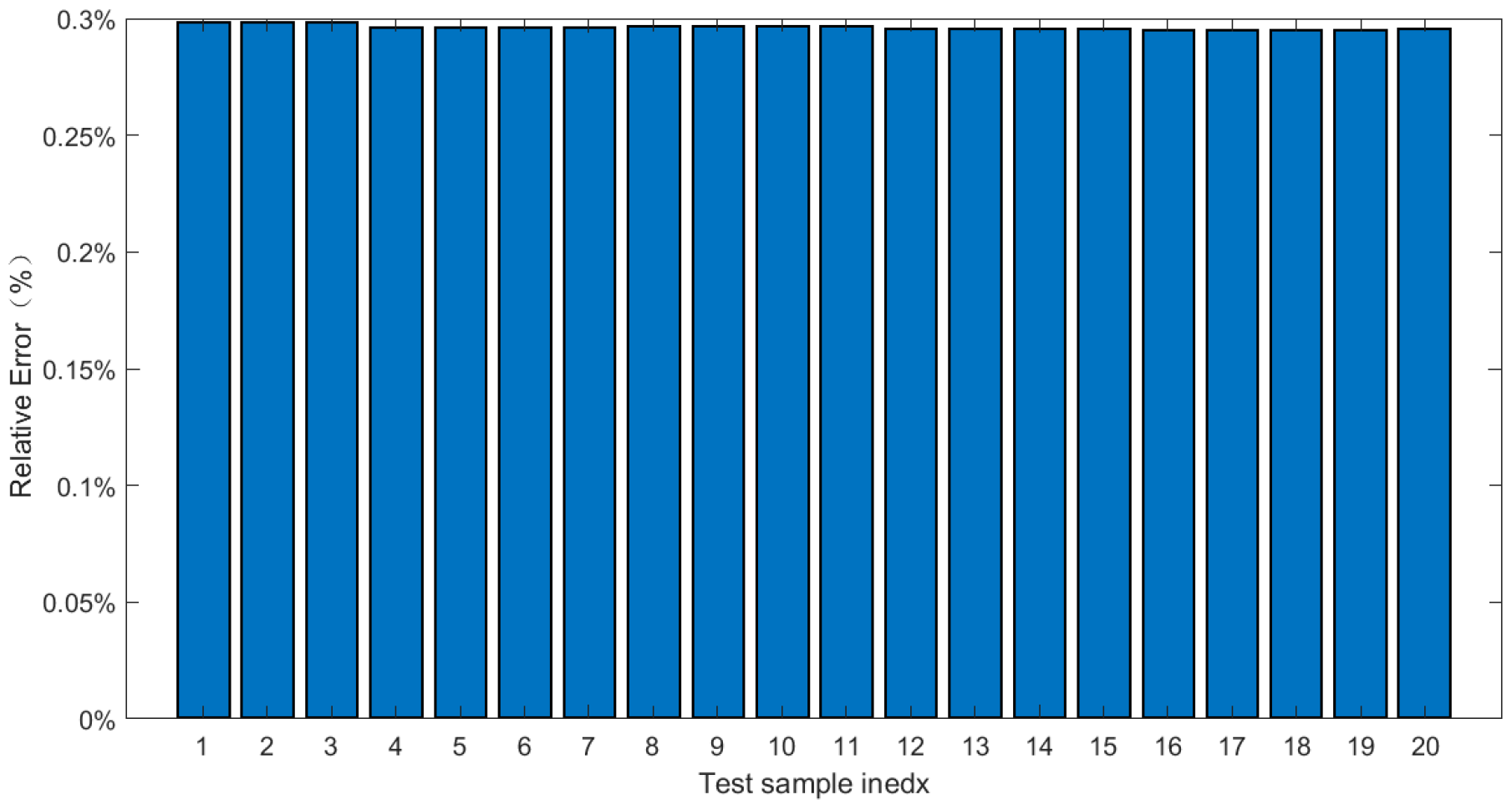
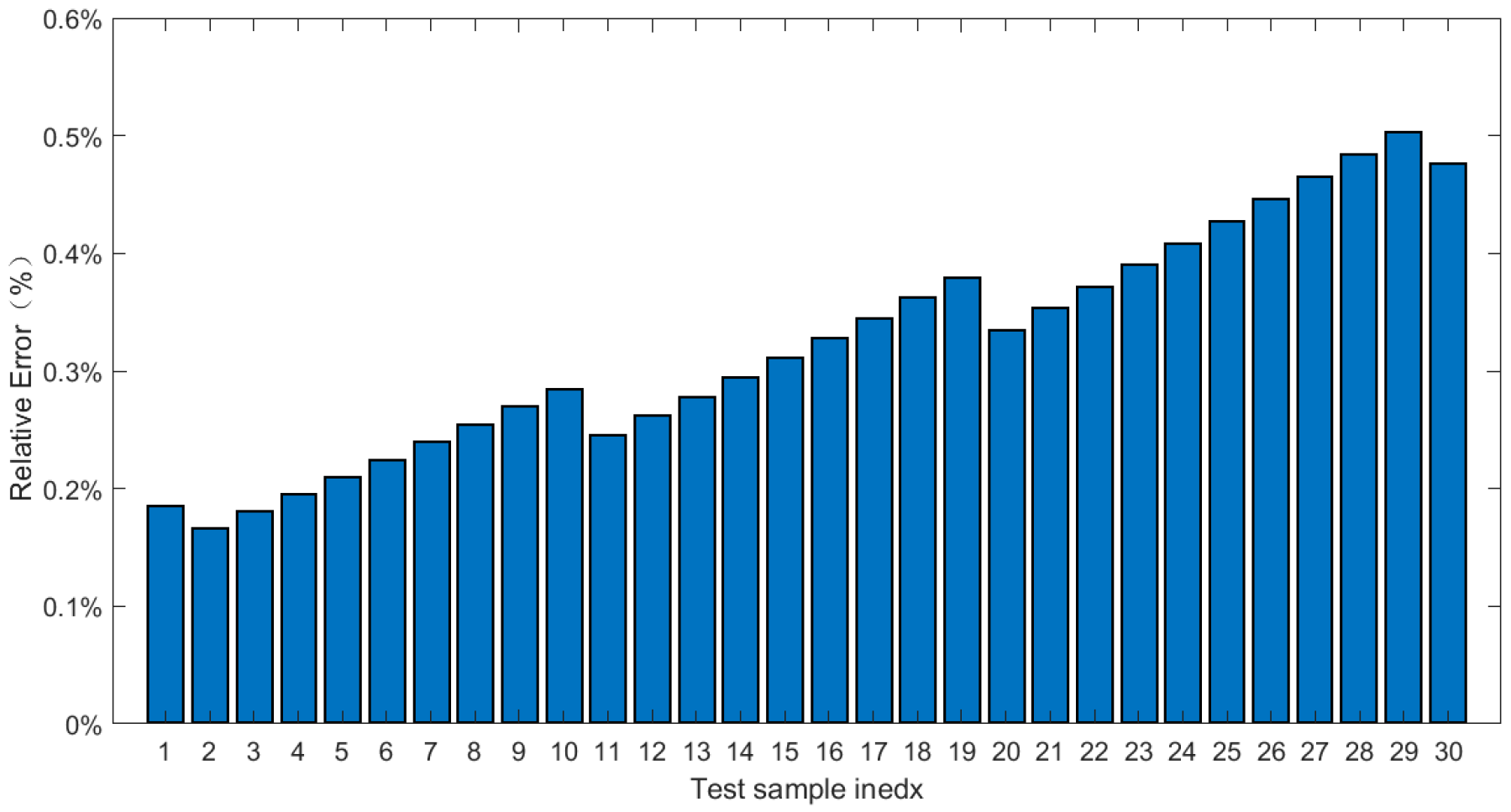
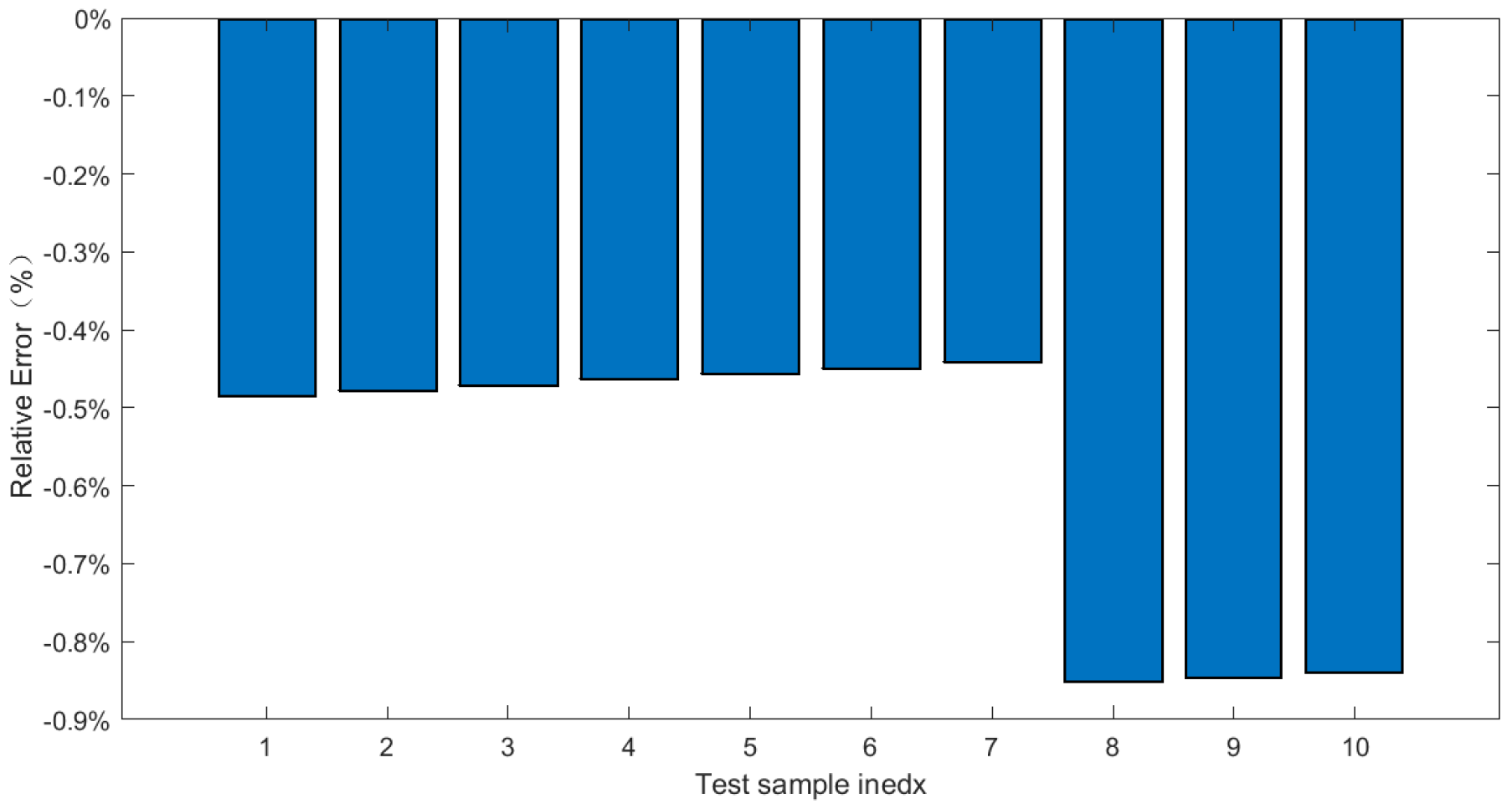
- Third, in Section 4.1, the orthogonal experimental data are trained using a BPNN, resulting in statistical indicators ranging between 10−1 and 10−12, with relative prediction errors below 3% and an accuracy rate of 100%;
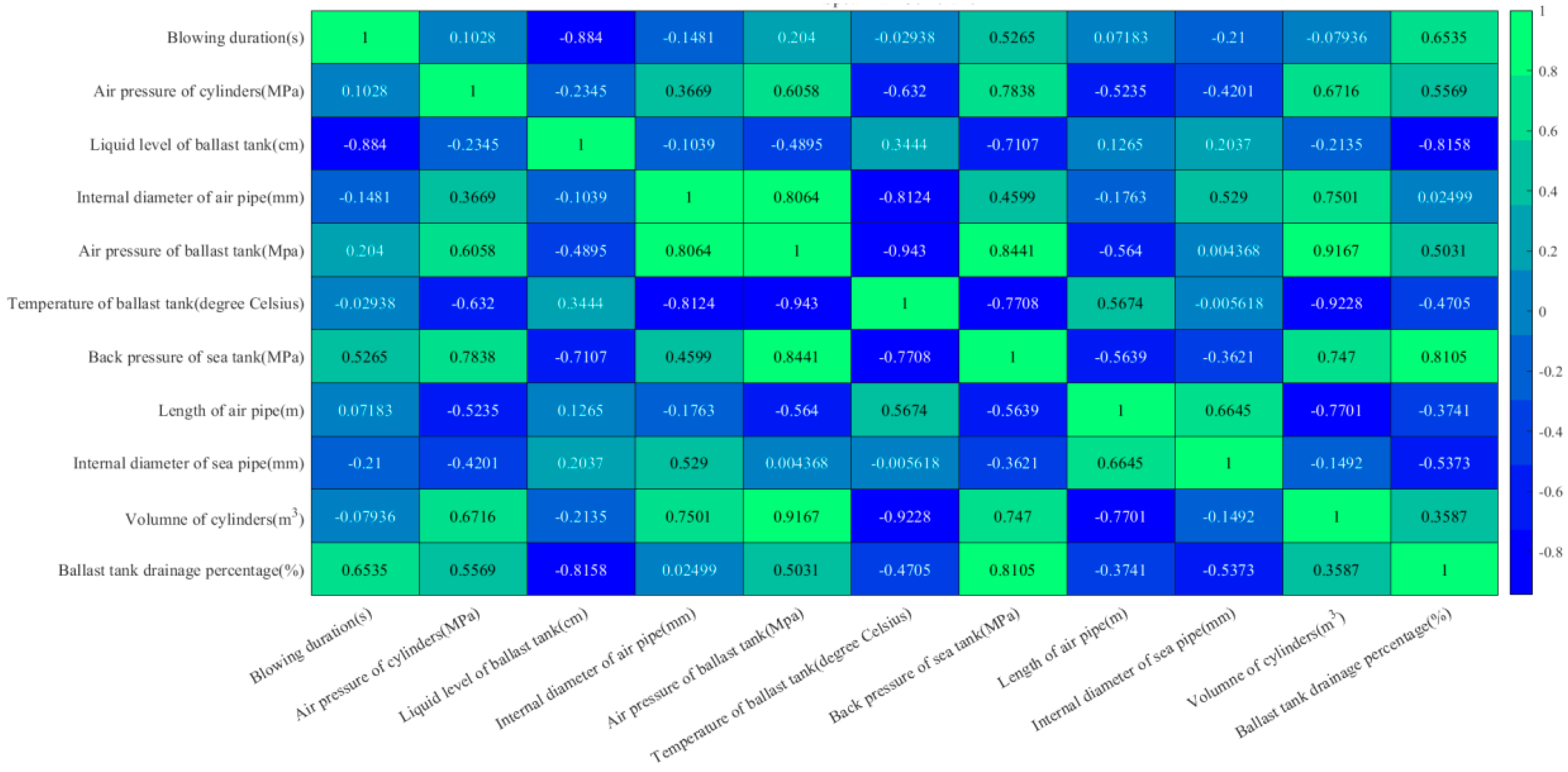
- Fourth, in Section 4.2, Pearson correlation analysis based on orthogonal experimental data is performed to explore the correlation coefficient between individual factors and blowing performance, proving significant insights that complement our findings from the orthogonal experiments.
2. Proportional Short-Circuit Blowing Model Test Bench and Orthogonal Experiment Design
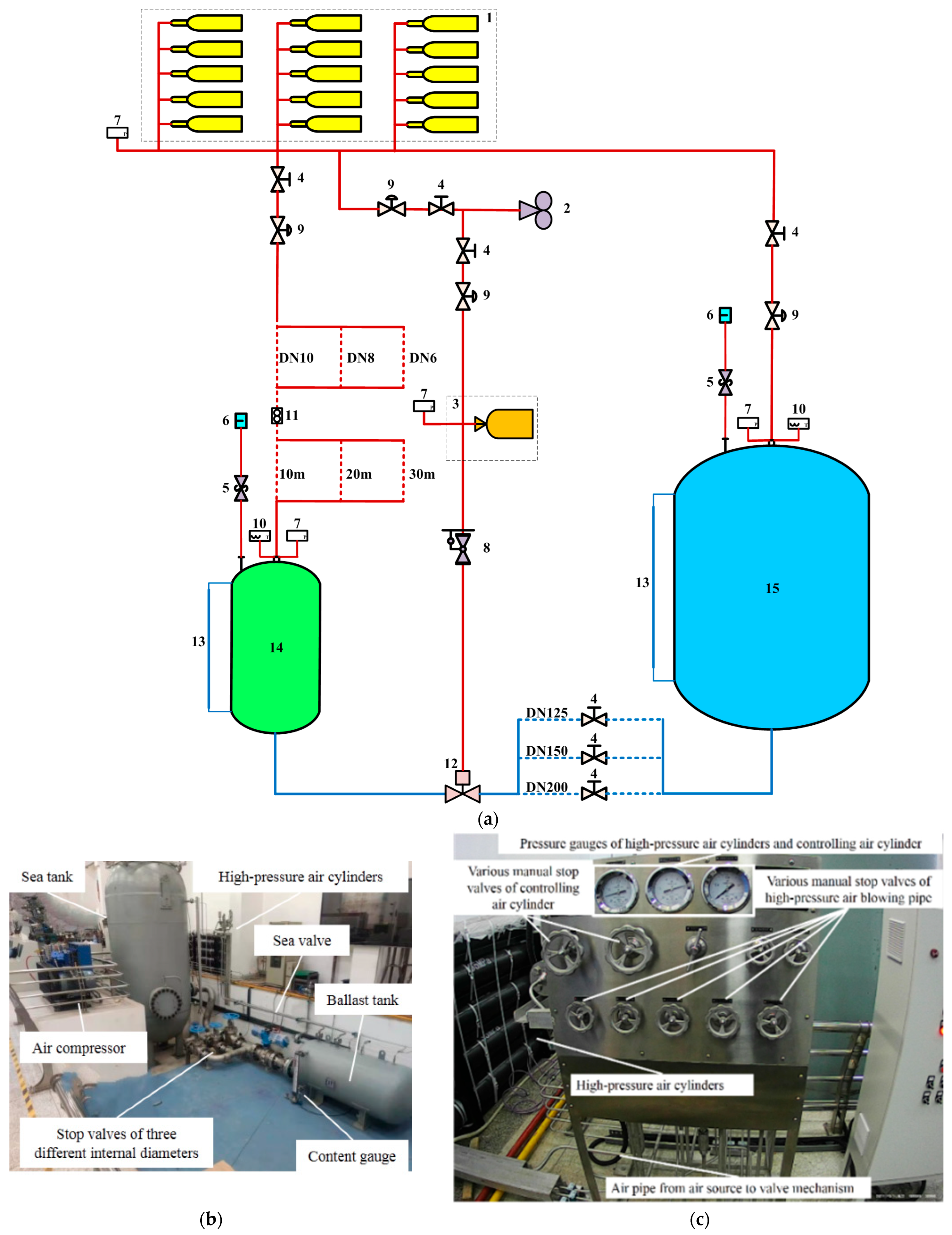
2.1. Detailed Setup of Model Test Bench
2.2. Orthogonal Experiment Design
- First, A signifies the gas cylinder group volume with three levels: 1–250 (L), 2–500 (L), and 3–750 (L);
- Second, B denotes the gas supply pipeline length across three levels: 1–10 (m), 2–20 (m), and 3–30 (m);
- Third, C refers to the sea valve as the inner diameter at three levels: 1–125 (mm), 2–150 (mm), and 3–200 (mm);
- Fourth, D indicates the blowing duration with three options: 1–5 (s), 2–10 (s), and 3–15 (s);
- Fifth, E represents the inner diameter measurements for the gas supply pipeline and the three levels 1–6 (mm), 2–8 (mm), and 3–10 (mm);
- Sixth, F corresponds to the blowing pressure from the gas cylinder group across the pressures 1–10 (MPa), 2–15 (MPa), and 3–20 (MPa);
- Lastly, G pertains to the back pressure within the sea tank measured at 1–0.2 (MPa), 2–0.5 (MPa), and 3–1.0 (MPa).
3. Orthogonal Experimental Data Analysis
3.1. Analysis of Extreme Variance
- Firstly, factor D3 contributed 39.16%. A duration of 15 (s) corresponded to the maximum blowing, ensuring that gas was introduced into the ballast tank to its fullest capacity;
- Secondly, factor G1 accounted for 33.35%. A back pressure of 0.2 (MPa) represented the minimum threshold required to optimize the blowing efficiency [18];
- Thirdly, factor F3 contributed 10.94%, with the maximum blowing pressure from the cylinder group set at 20 (MPa), which further enhanced blowing effectiveness [3];
- Fourthly, factor C3 contributed 9.02%. A flowing area of 200 (mm), corresponding to the sea valve’s aperture, could maximize the water discharge volume per unit time [19];
- Fifthly, factor B1 constituted 6.42%, with a gas supply pipeline length limited to just 10 (m); this ensured sufficient gas mass flowed into the ballast tank within each time interval [17];
- Sixthly, factor A2 contributed 4.99%, where a volume of 500 (L) established an optimal balance between gas and water interactions in the ballast tank and facilitated adequate high-pressure gas for an improved blowing effect [3];
- Lastly, factor E3 accounted for a contribution of 3.62%, wherein the inner diameter of the gas supply pipe measuring 10 (mm) ensured maximum gas mass flow into the ballast tank during each period.
3.2. Analysis of Variance
4. BP Neural Network and Pearson Correlation Analysis
4.1. Model Setting
4.1.1. Principles of Mathematics
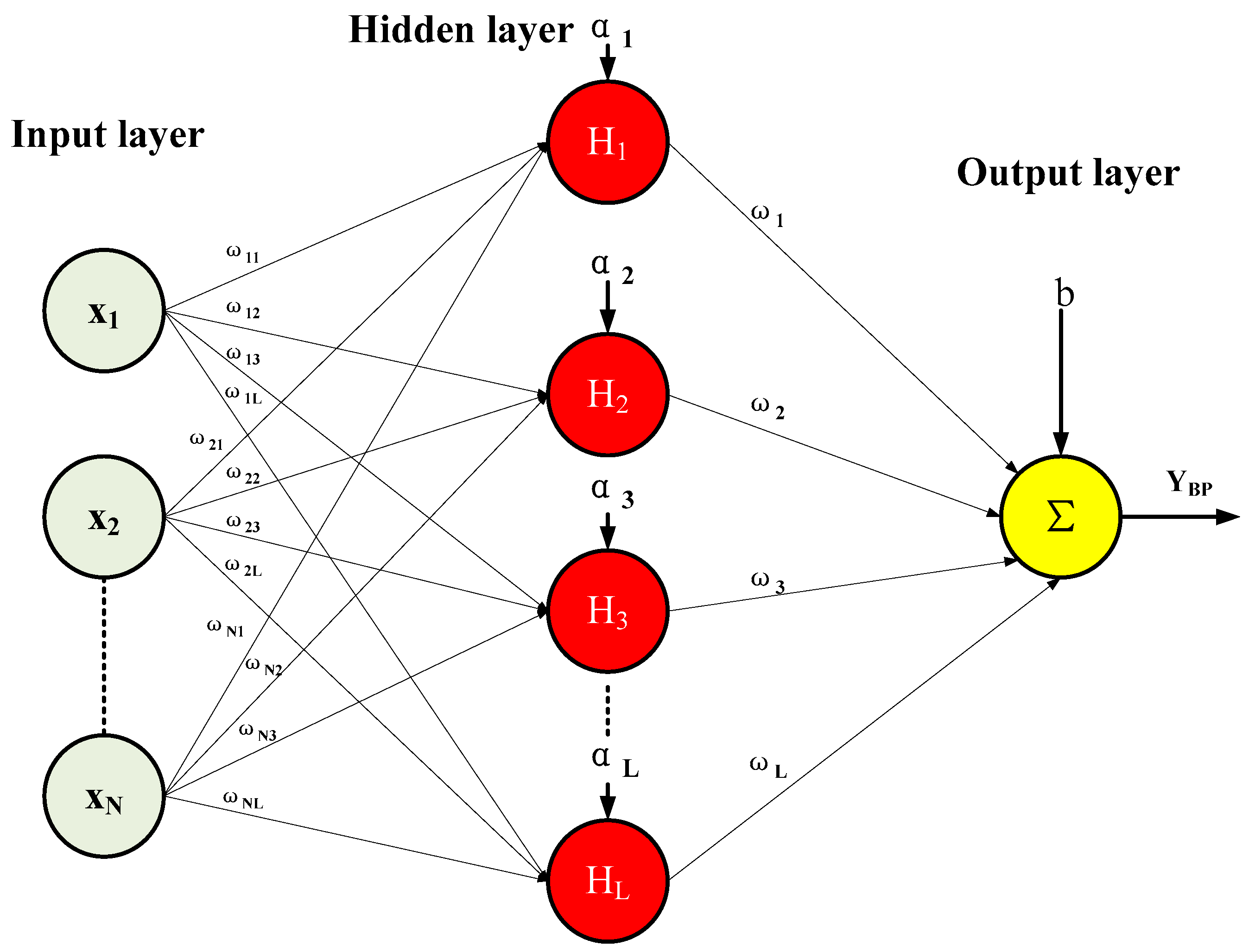
- First, L represent the number of neurons in the hidden layer and N denote the number of neurons in the input layer, with M signifying the number of neurons in the output layer. The index i for the input layer ranges from 1 to N, while index j spans from 1 to L in the hidden layer;
- Second, the input layer consists of parameters such as the cylinder group volume and gas pressure, gas pipeline length and inner diameter, sea valve inner diameter, blowing duration, sea tank back pressure, ballast water tank level considerations, temperature variations, and the gas volume within the ballast tank; thus, N is set at 10, with X1 to XN representing these corresponding inputs;
- Third, Hj(t) denotes the output from each neuron in the jth hidden layer with specific weights assigned between this hidden layer and other layers. The computation for Hj(t) is expressed below:
- Fourth, the drainage percentage of the ballast tank is selected as the output result sampled by the output layer; thus, M is assigned a value of 1. The output from the BPNN, denoted as YBP(t), can be calculated using the following equation:
- Fifth, function L (ω, b, X, Y) is defined to quantify the loss between YBP(t) and the actual value Y:
4.1.2. Evaluation Indicators
- The precision percentage (PP%) employs an indicator function that equals 1 if the condition in parentheses is met; otherwise, it is 0;
- The relative error (δ) measures the percentage ratio of the absolute difference between Xi and Yi for the absolute value of Xi;
- The square sum of errors (ESSE) computes the total errors between Yi and Xi. While easy to calculate, it can be affected by outliers, distorting the overall error distribution;
- The mean absolute error (EMAE) calculates the average absolute differences between Yi and Xi. It remains stable against outliers but may miss some distribution details;
- The mean absolute percentage error (EMAP) evaluates the prediction error percentage between Yi and Xi. Like EMAE, it is unaffected by anomalies but can become unstable when the actual values are zero;
- The mean square error (EMSE) reflects the average derived from ESSE. Although more robust than other metrics, it remains sensitive to outliers that might overshadow smaller errors;
- The root mean square error (ERMSE), being the square root of EMSE, enables the measurement of prediction errors across different dimensions on a common scale. Similar to EMSE, ERMSE also shows sensitivity toward larger discrepancies.
4.1.3. Proposed Algorithm
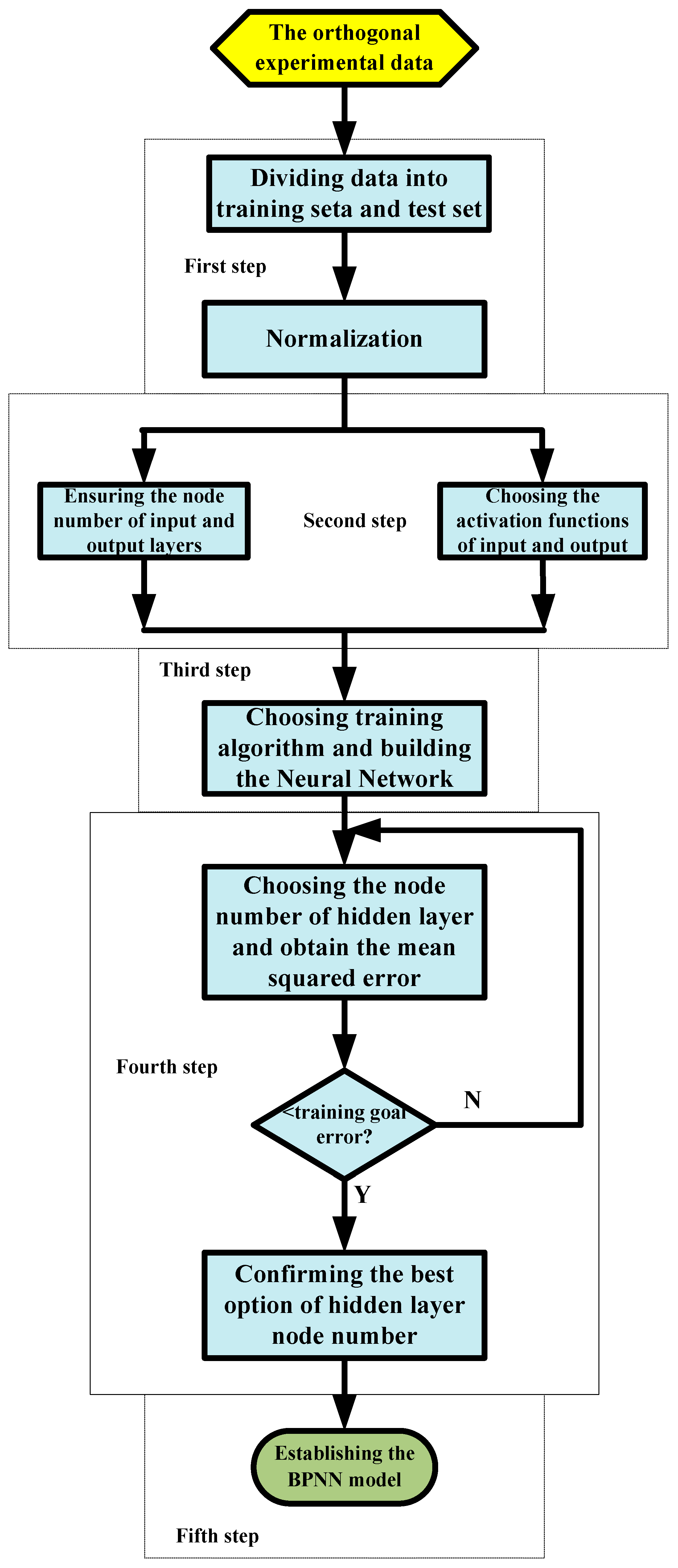
- First, the orthogonal experimental data were collected and divided into training and testing sets. Subsequently, normalization was performed to accurately capture the inherent characteristics of the data while eliminating scale restrictions [29];
- Second, the number of input and output nodes was determined based on the criteria outlined in Section 4.1.1, with the activation functions of both the input and output layers set to tansy and purlin by default;
- Third, the Levenberg–Marquard algorithm was selected for training, establishing a neural network with parameters including 1000 training epochs, a 0.01 learning rate, and a 10−5 minimal training goal error;
- Fourth, the number of hidden layers was chosen according to Equation (13), utilizing the specified training in the prepared neural network to calculate the mean square error. If this value falls below the specified training goal error, then the corresponding number of hidden layer nodes is confirmed as optimal;
- Fifth, confirming the BPNN model is achieved by incorporating all the relevant data and information above before commencing predictions.
4.2. Computation Analysis
4.2.1. Evaluation of Working Conditions
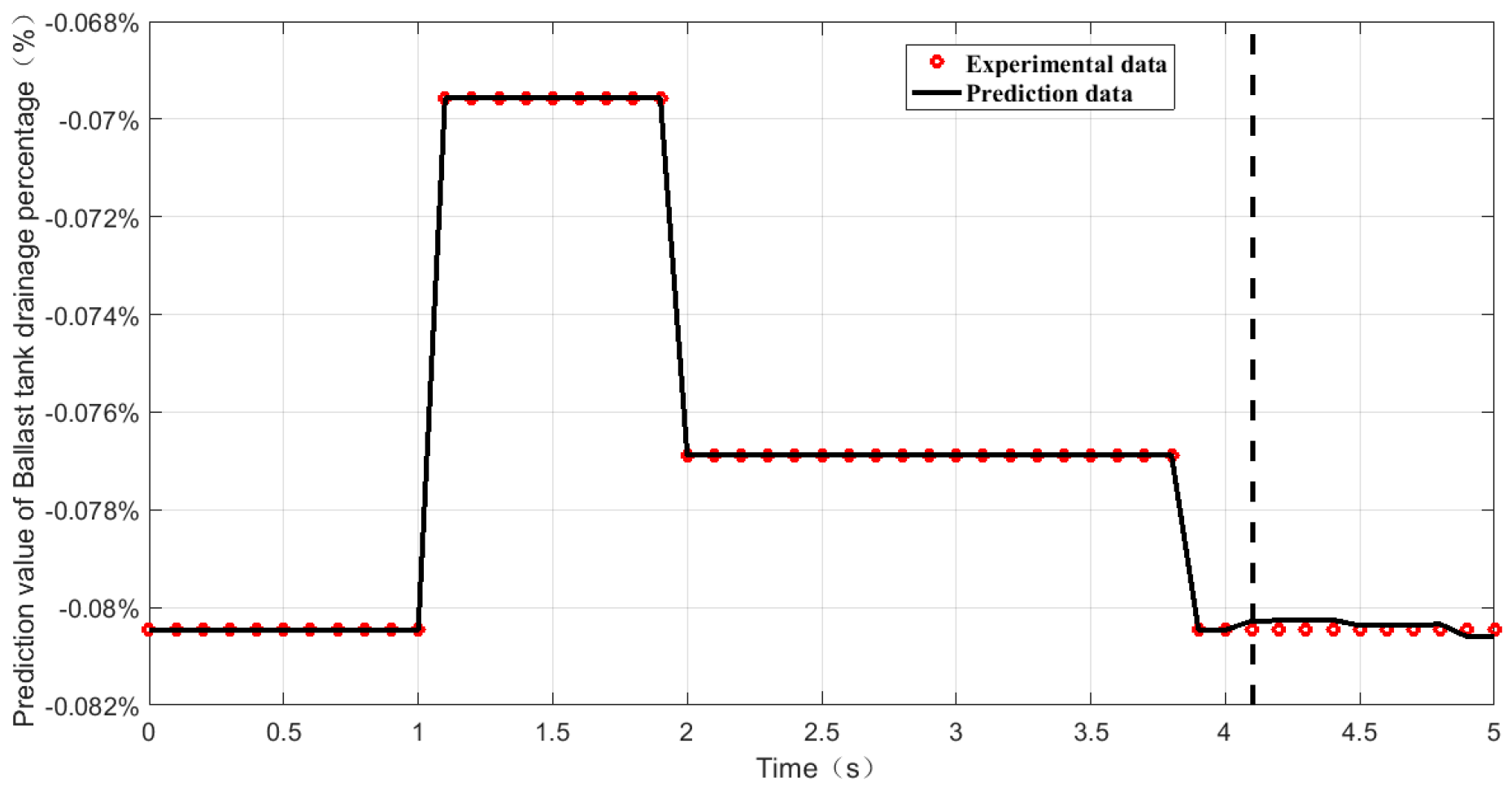
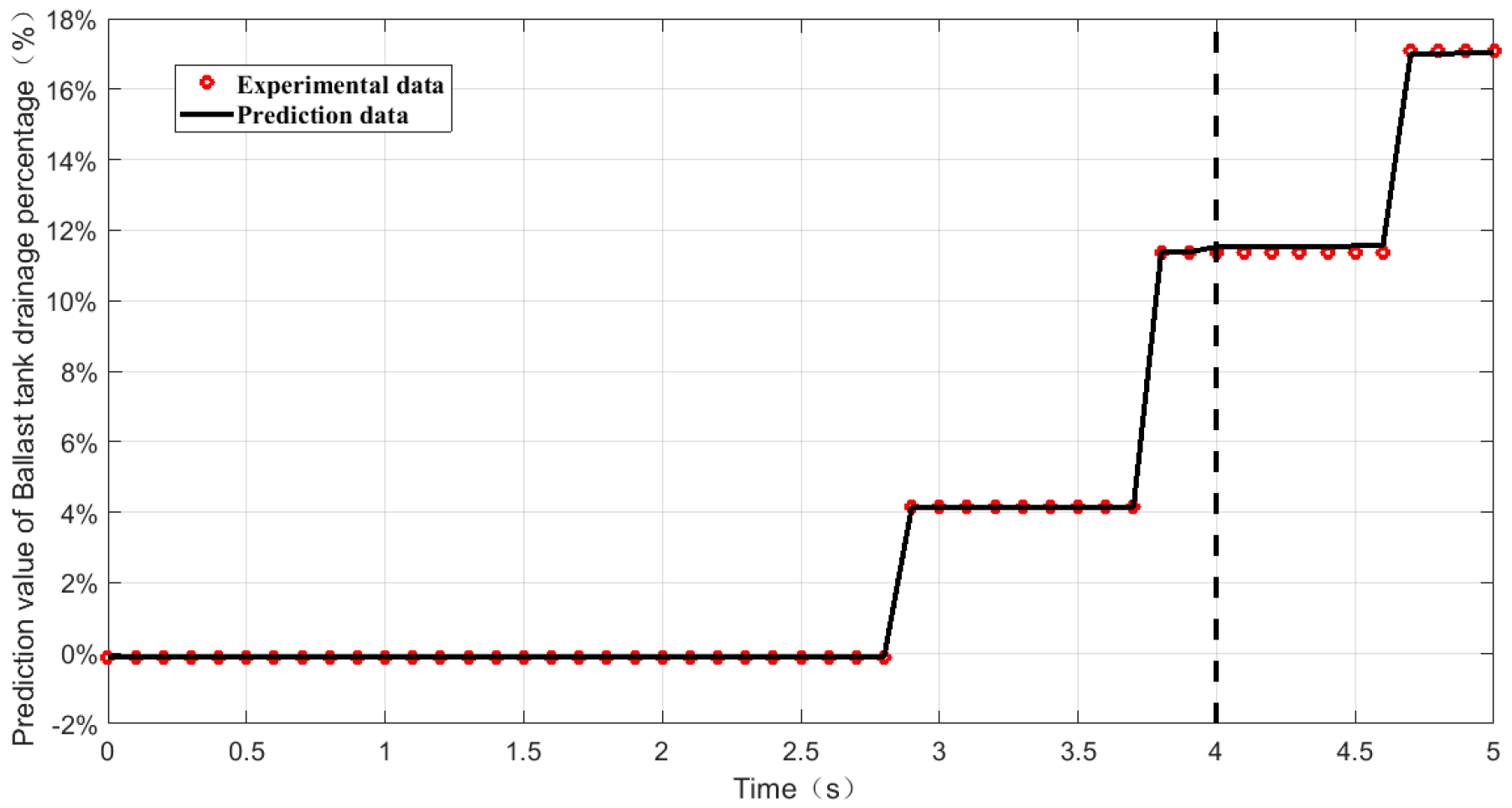
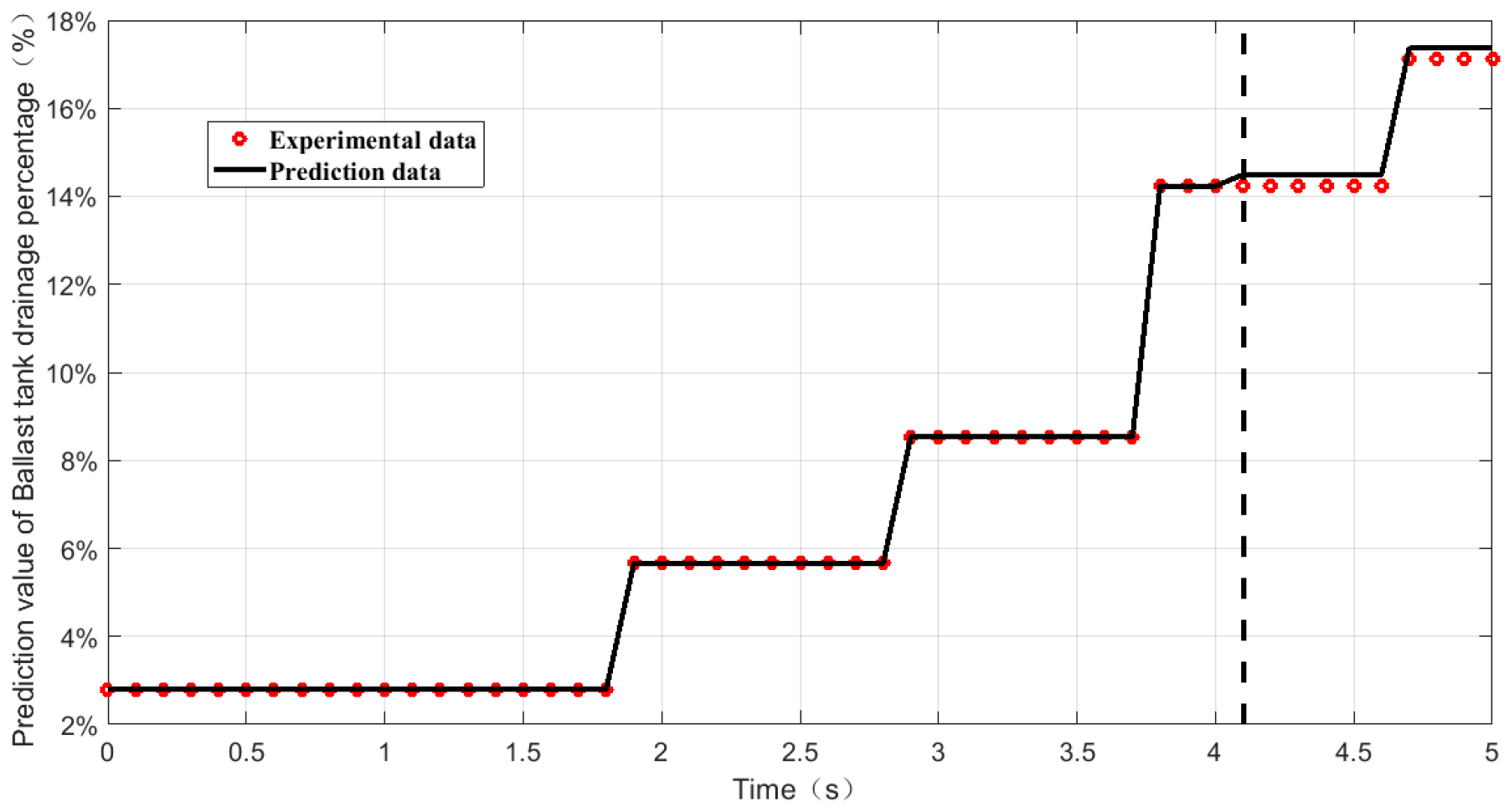
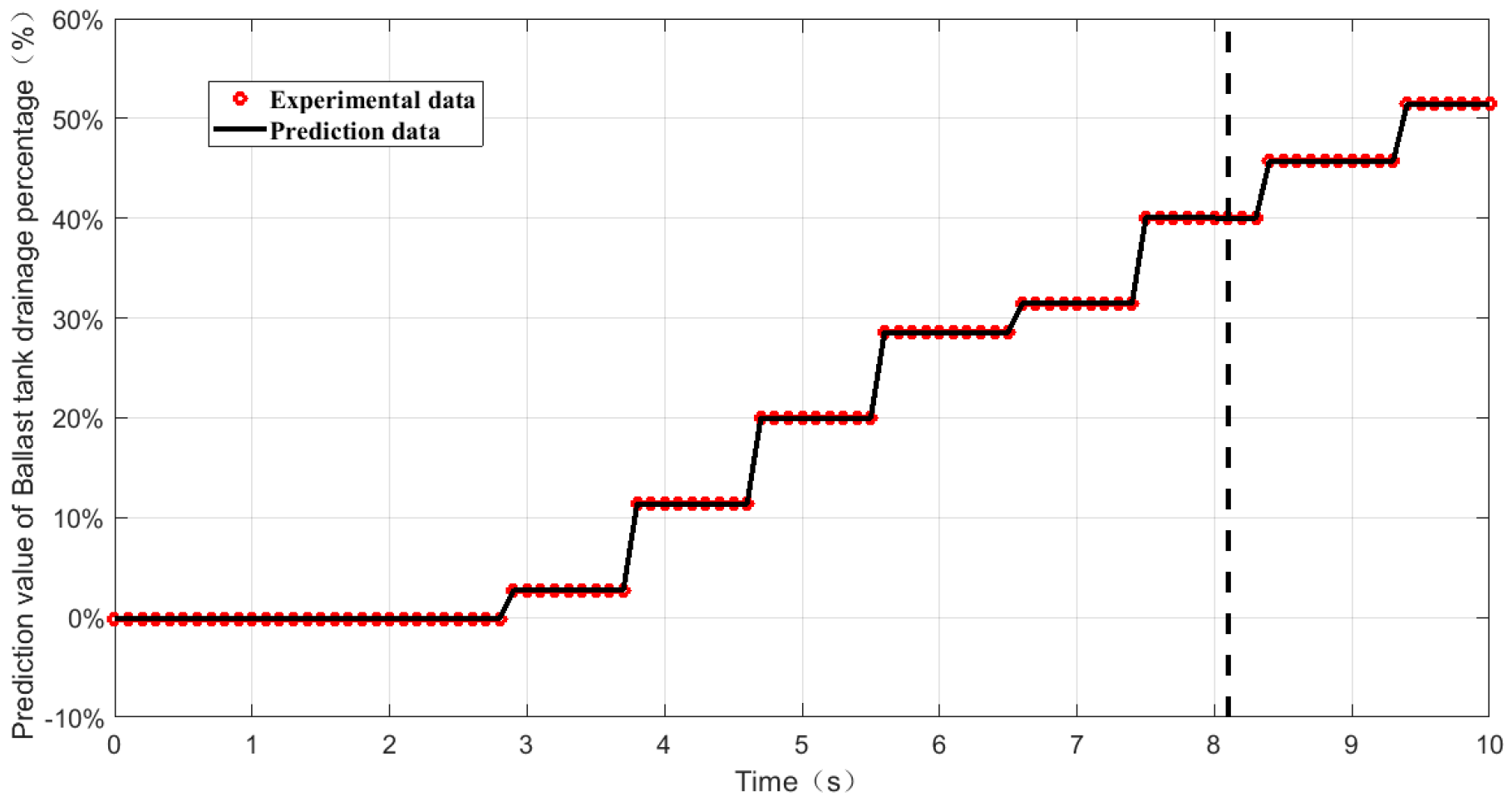
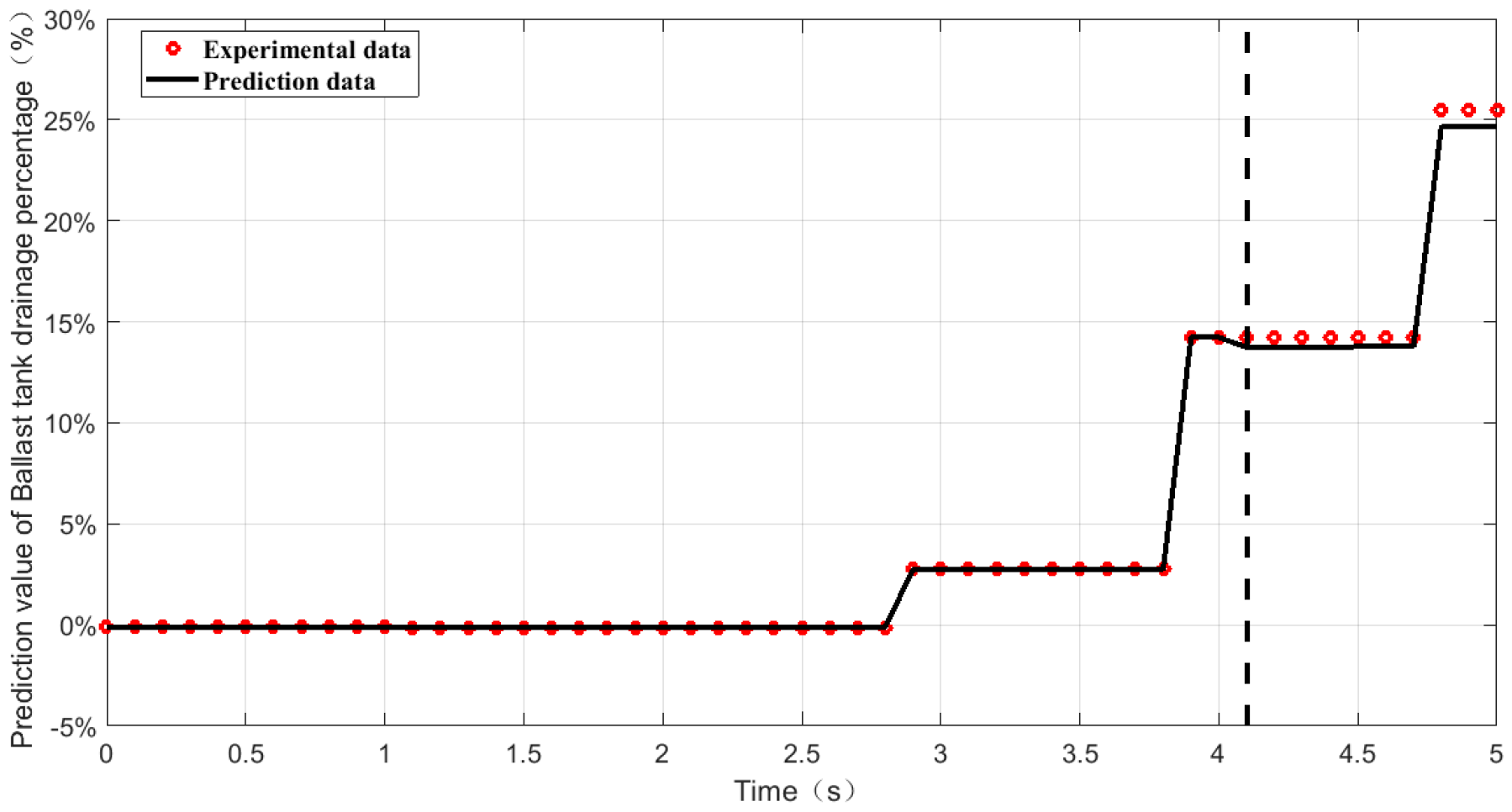
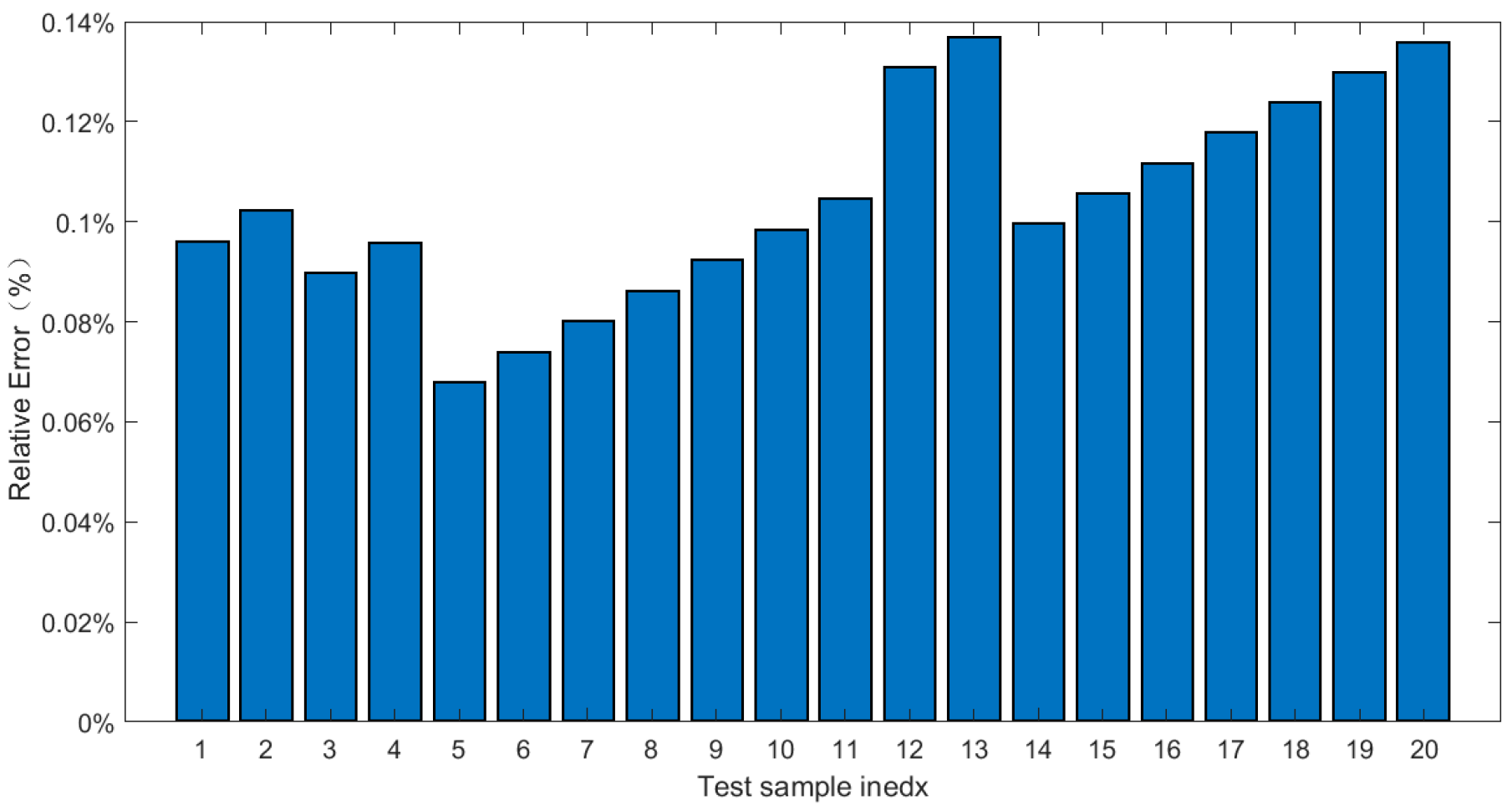
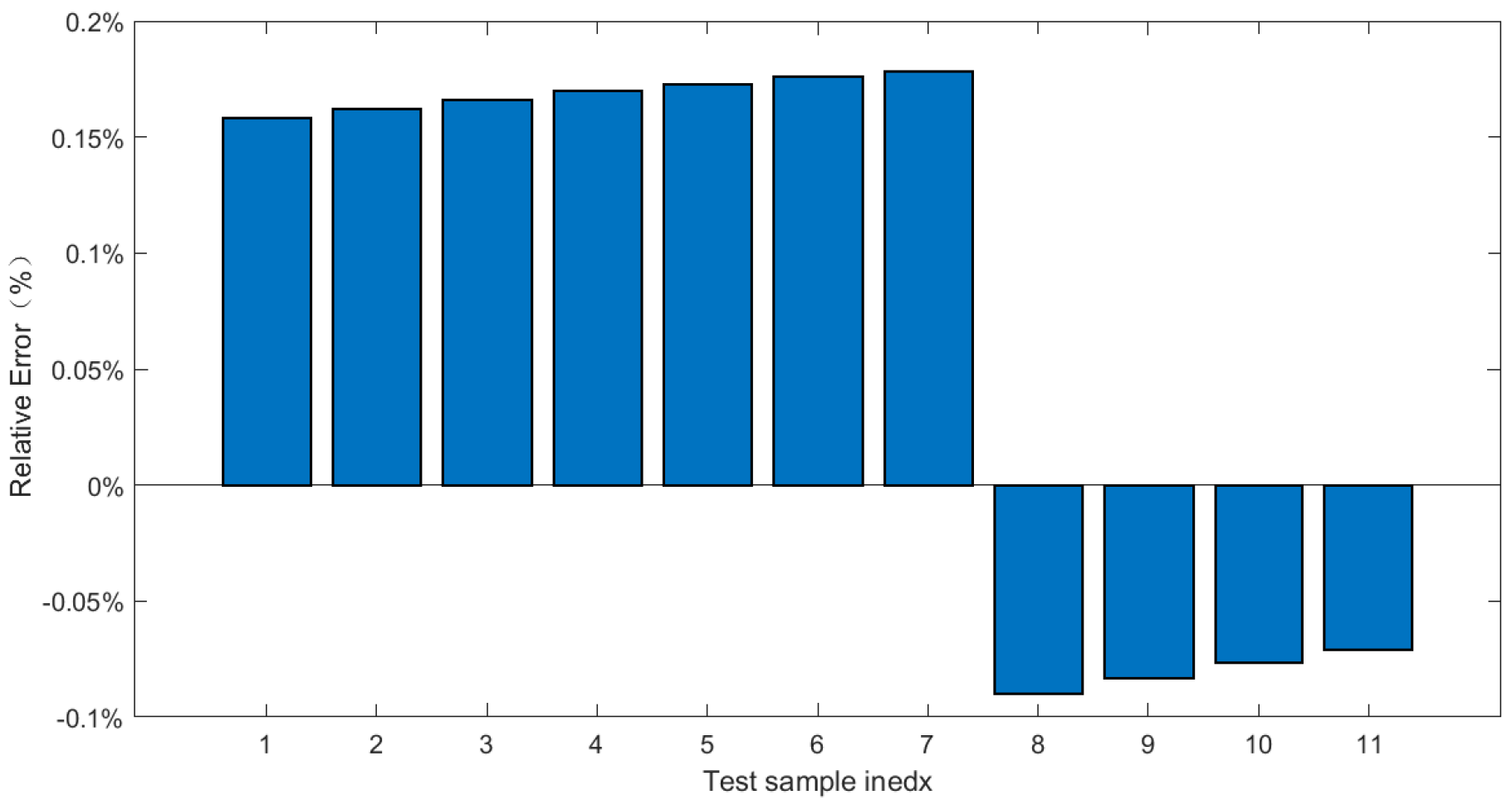
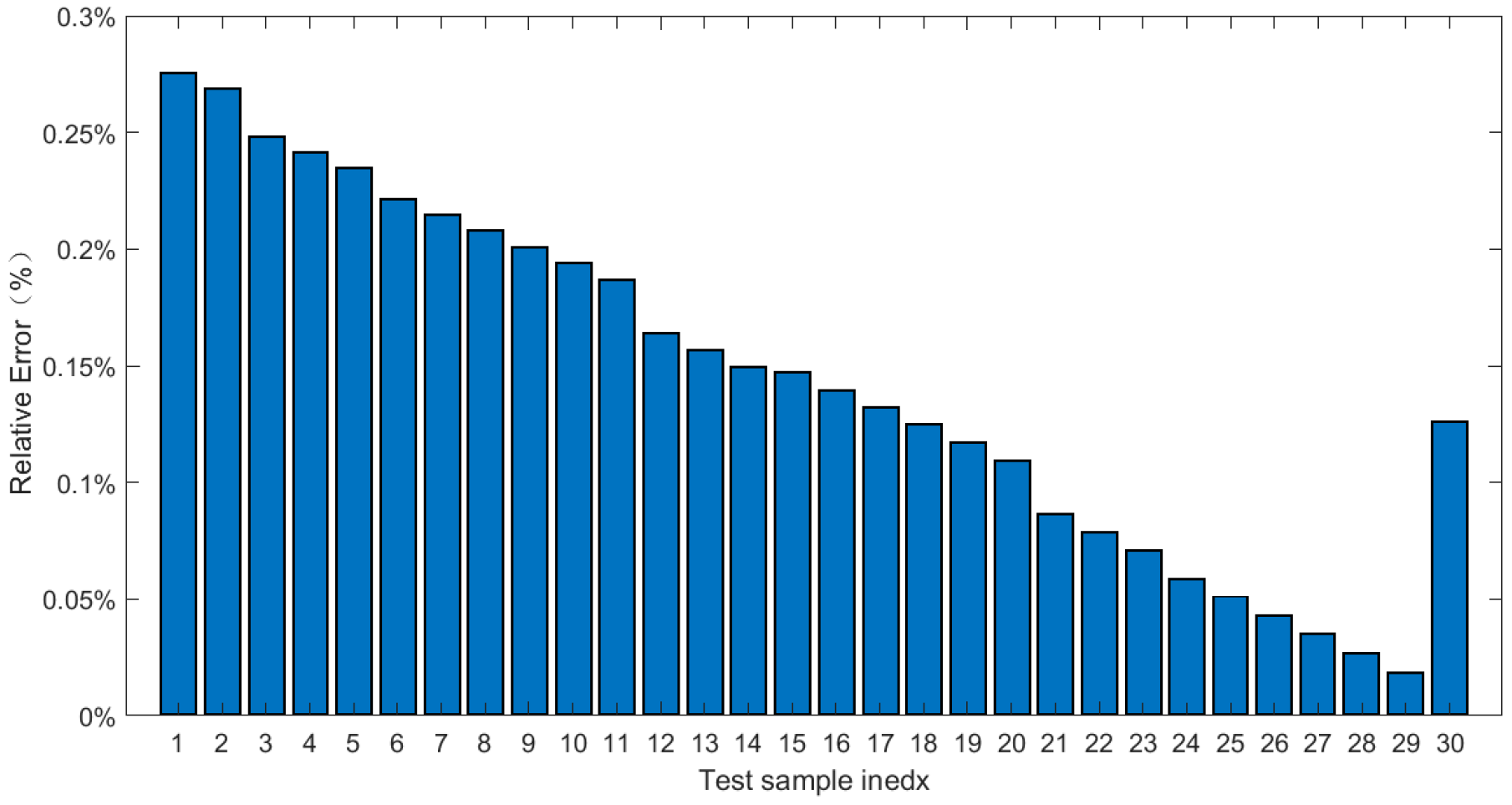
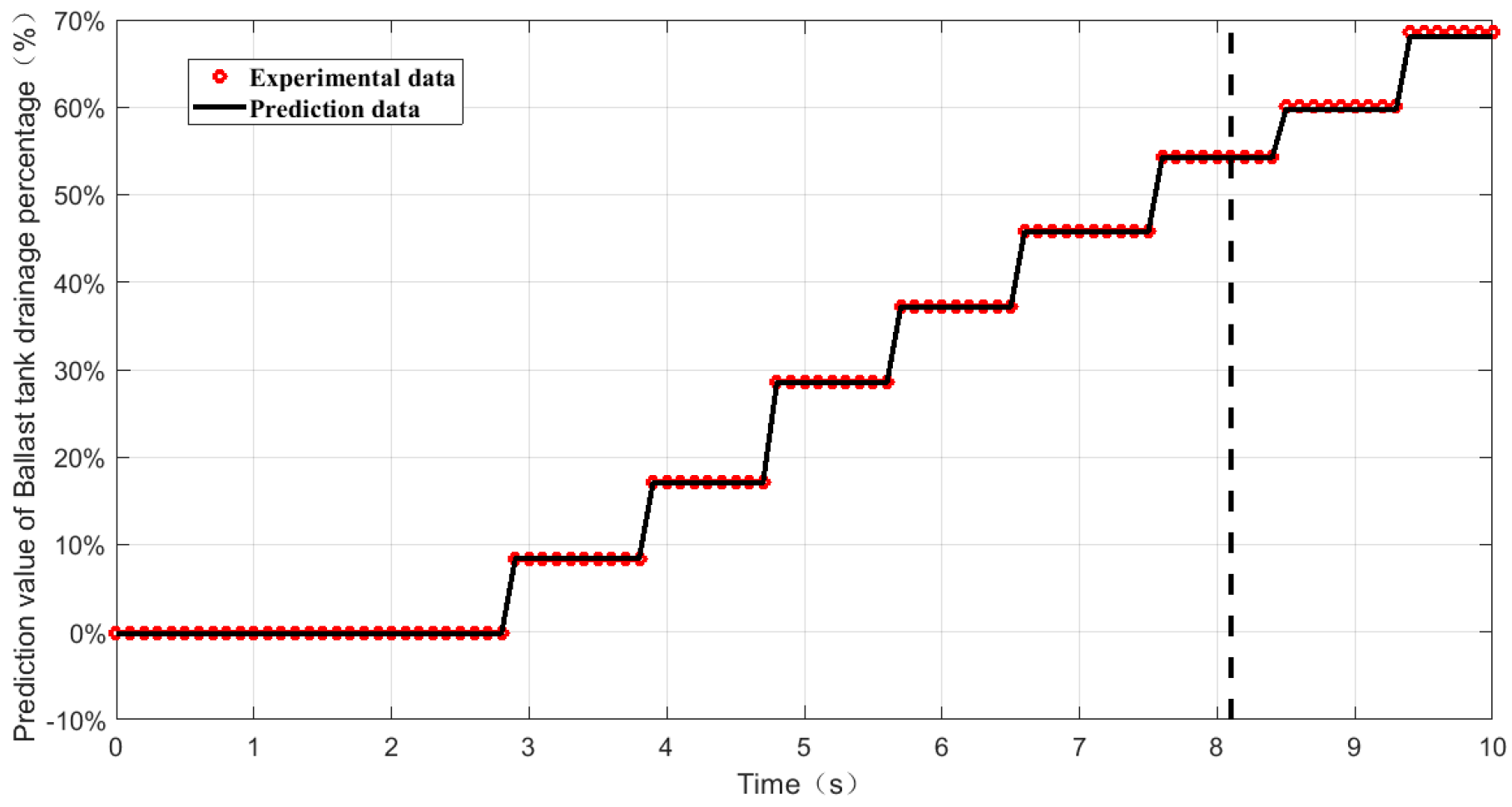
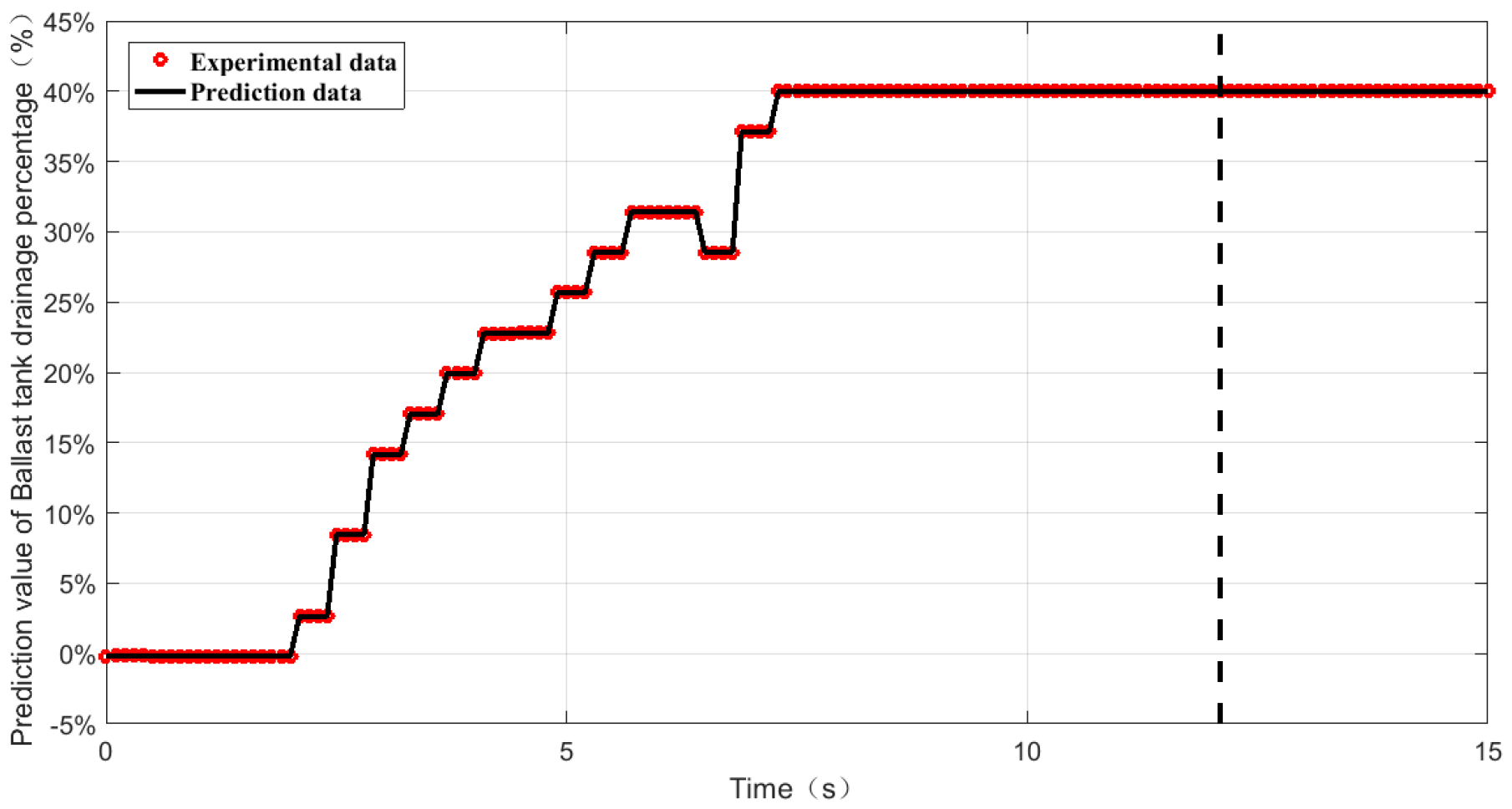
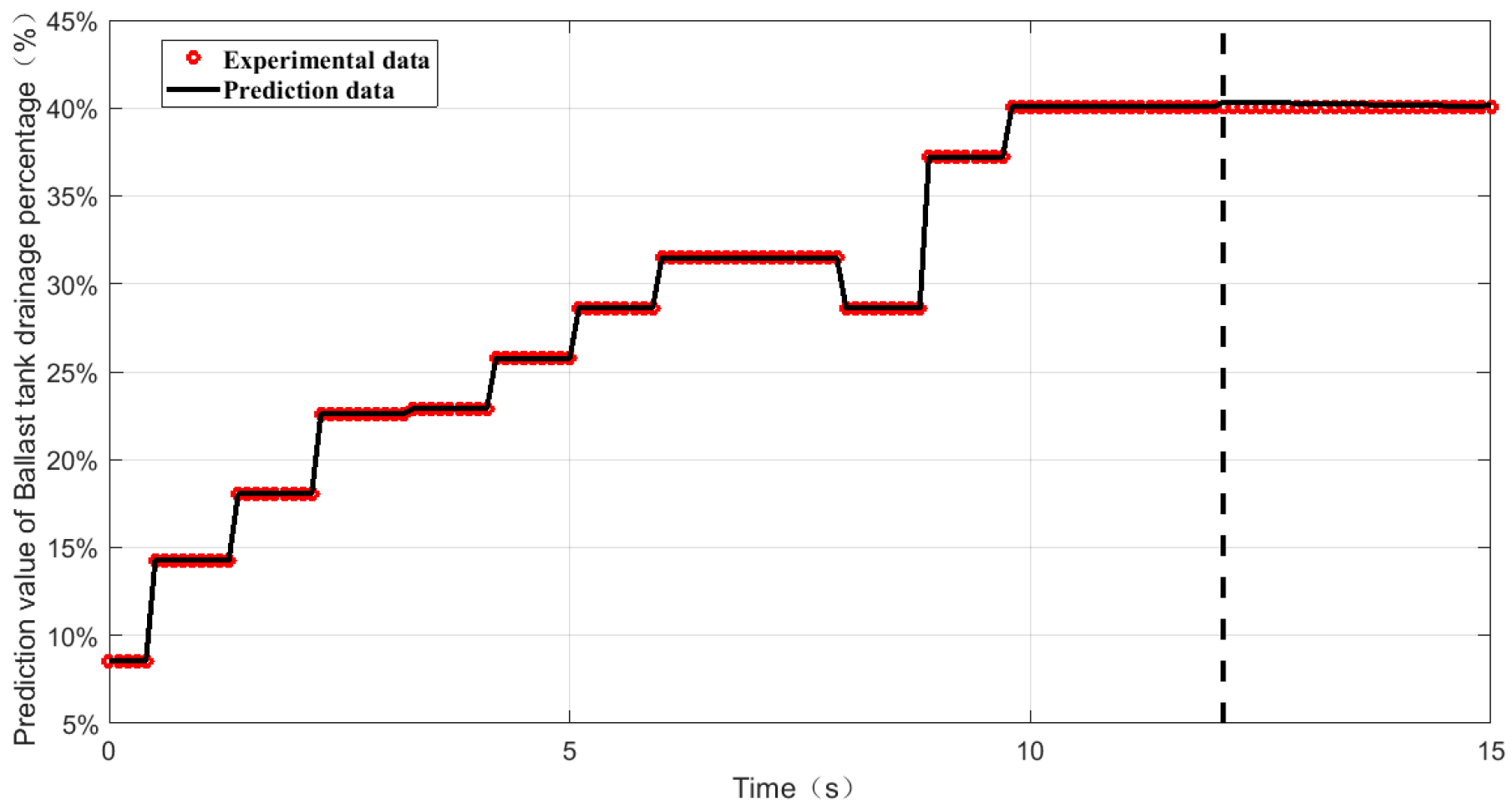
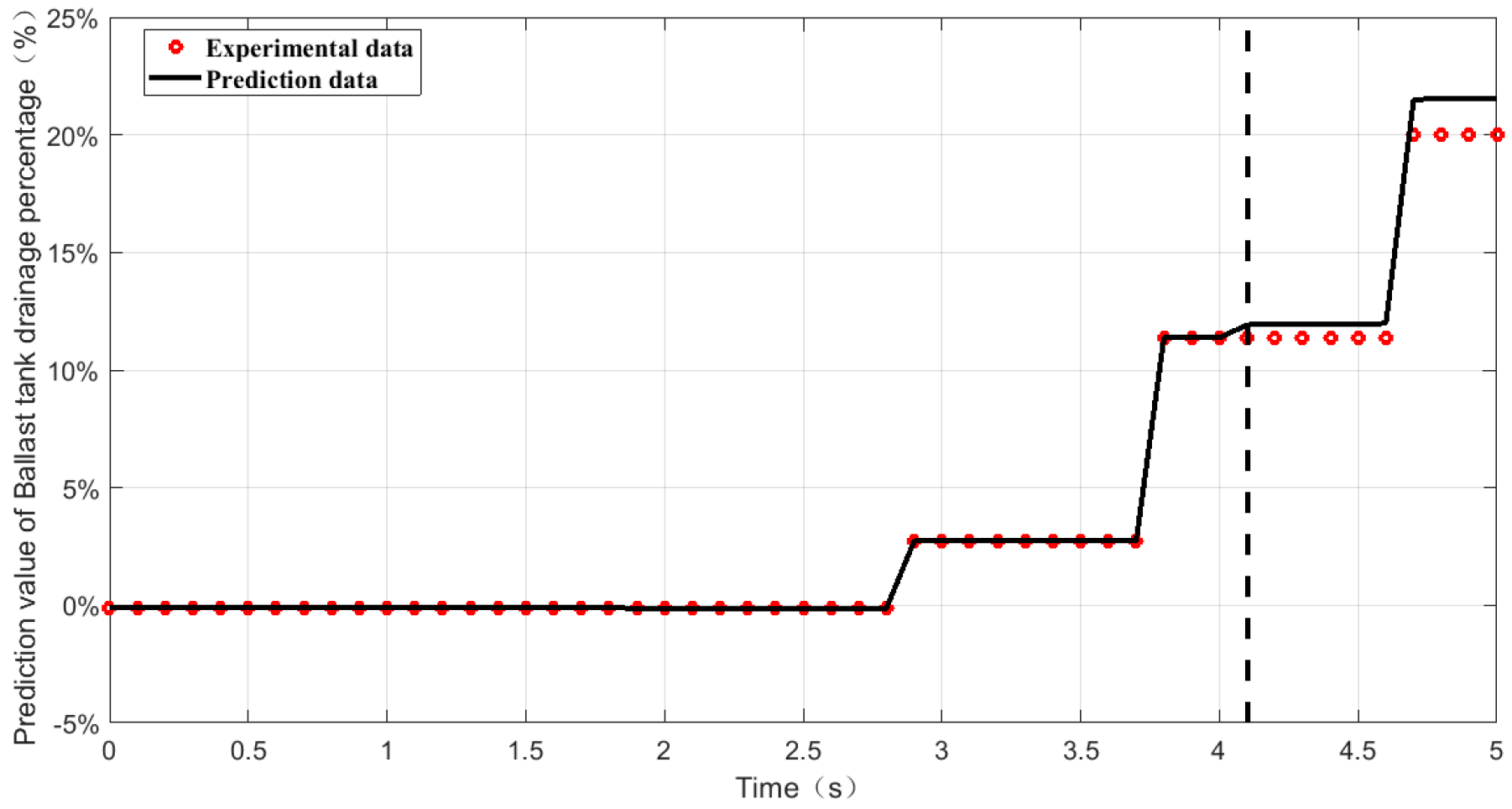
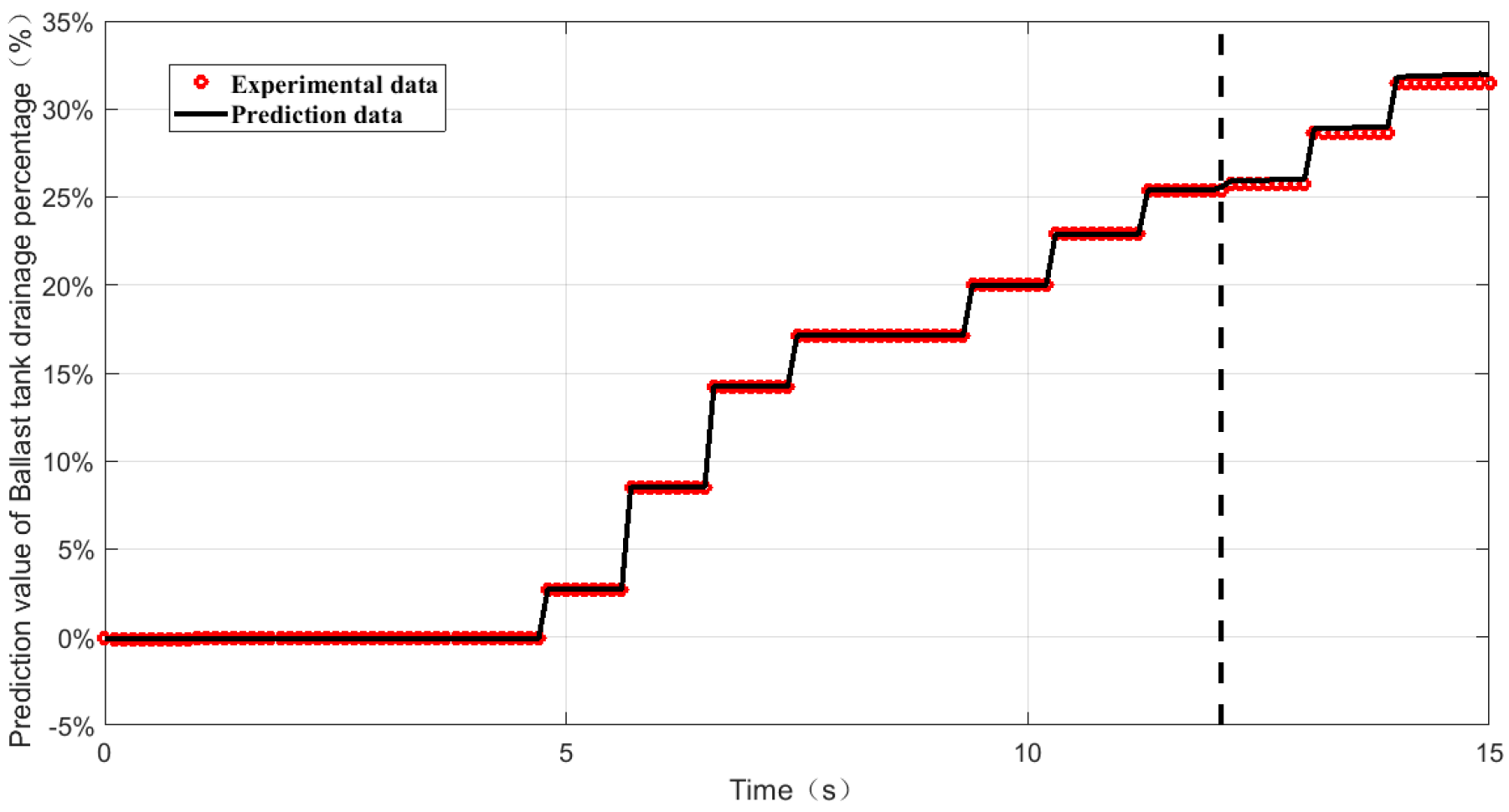
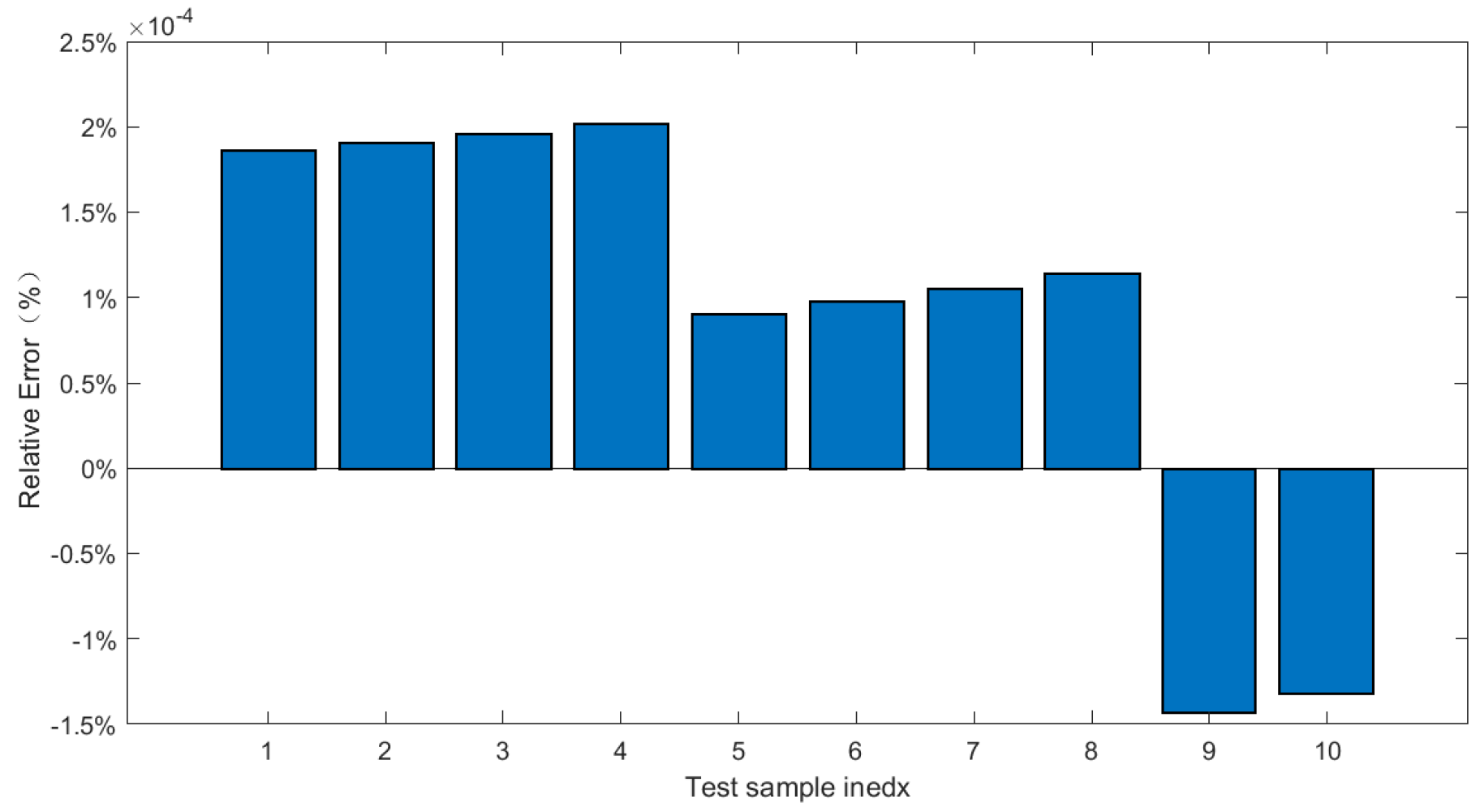
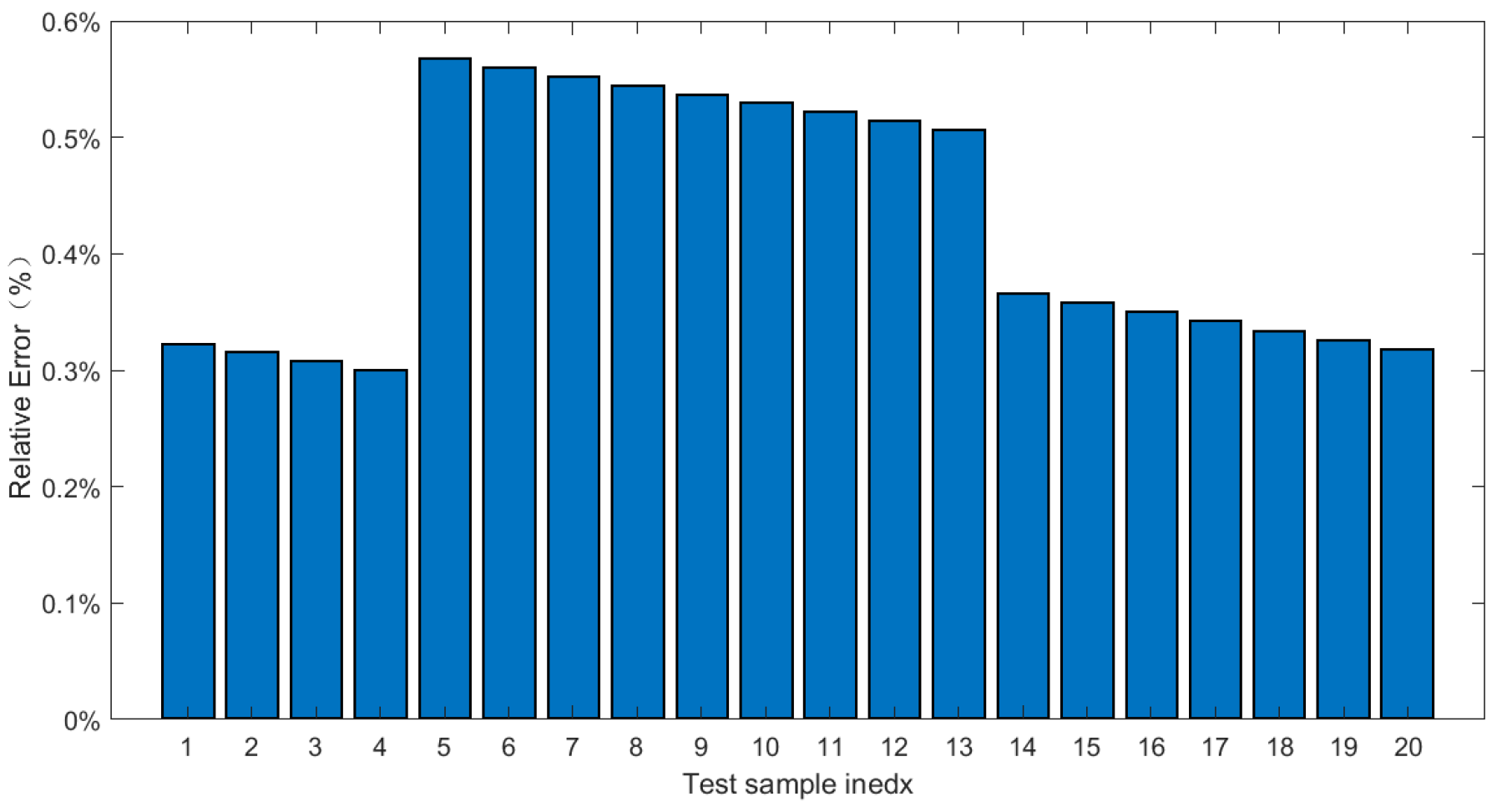
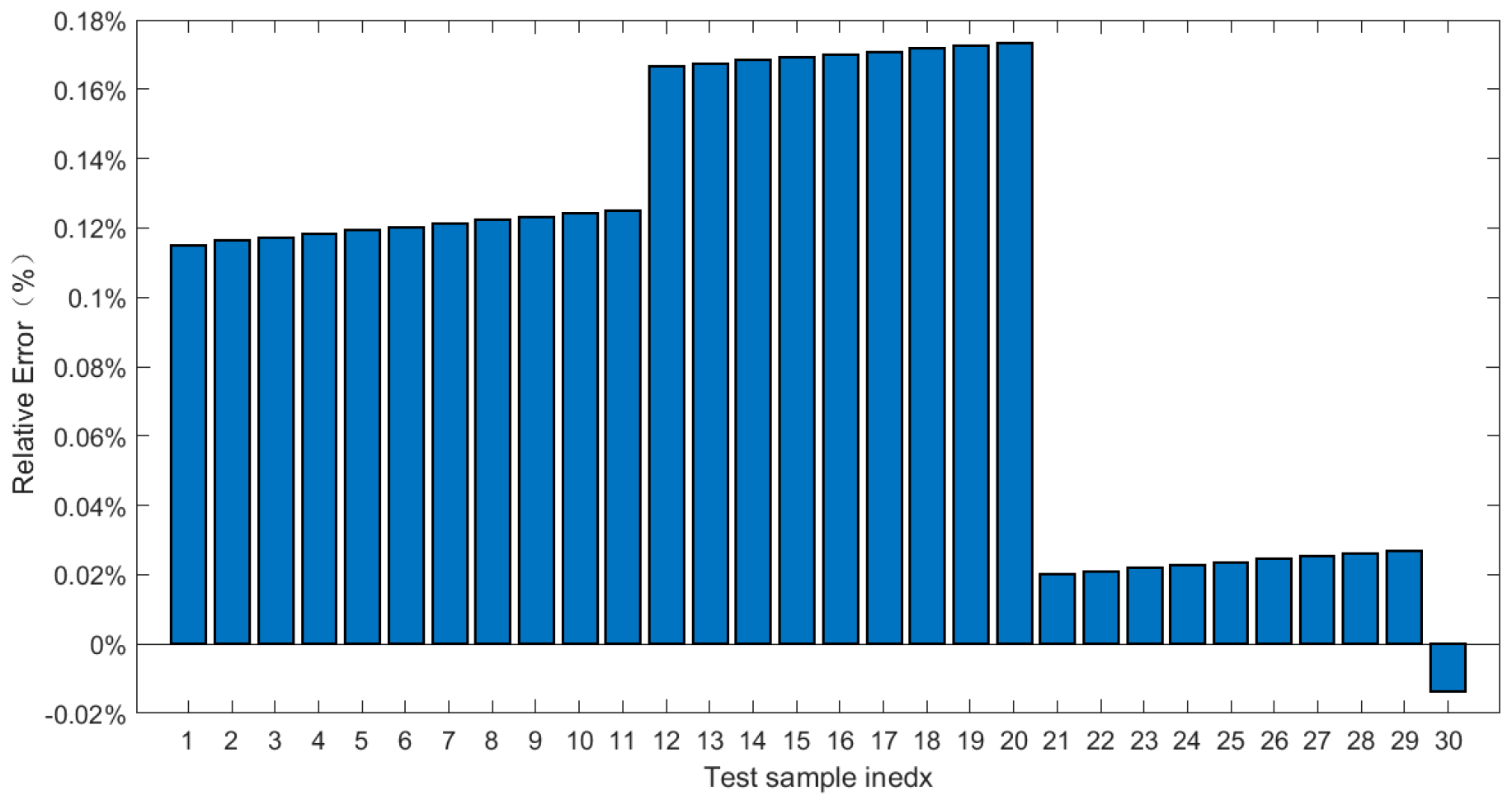
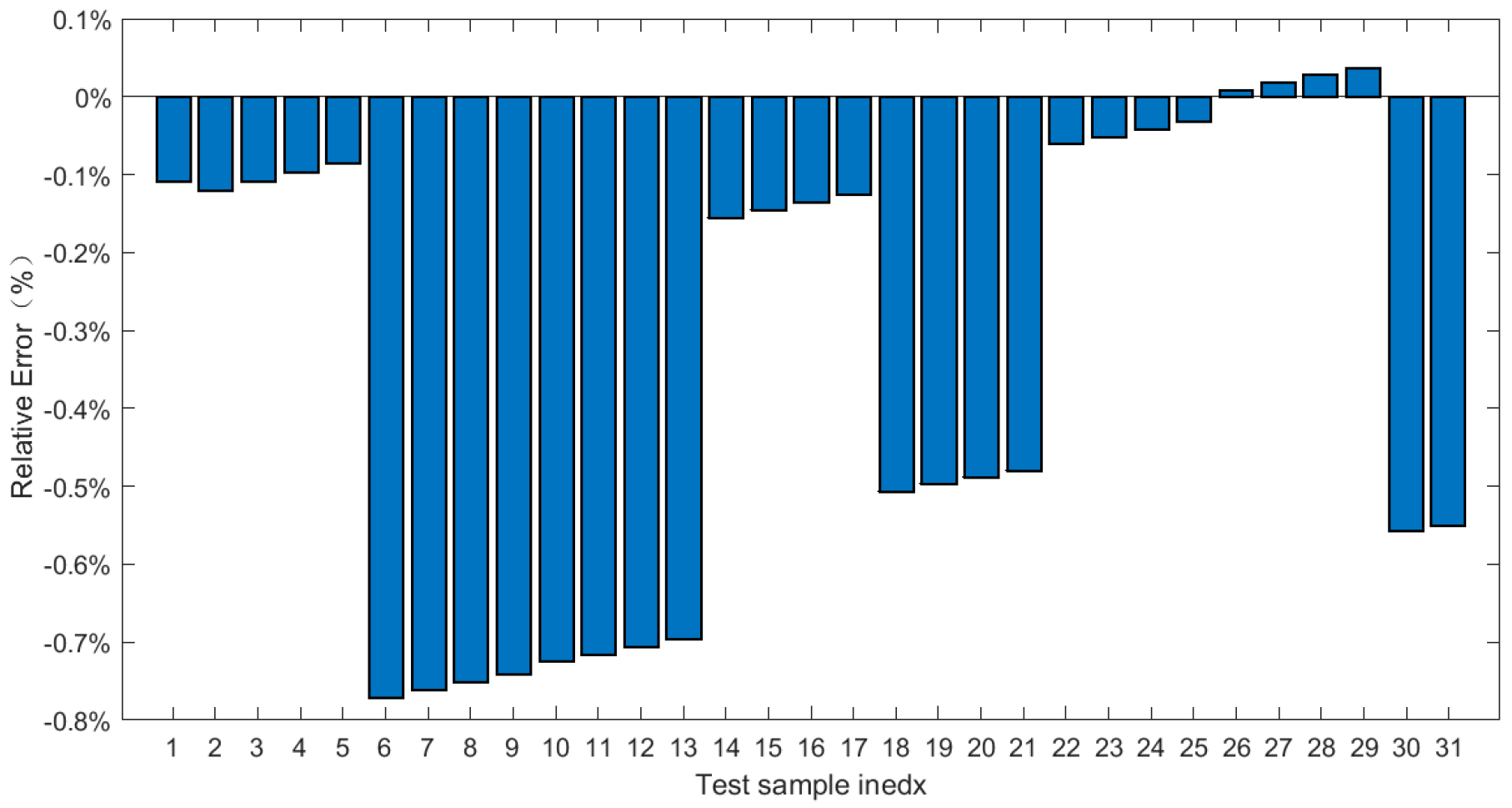
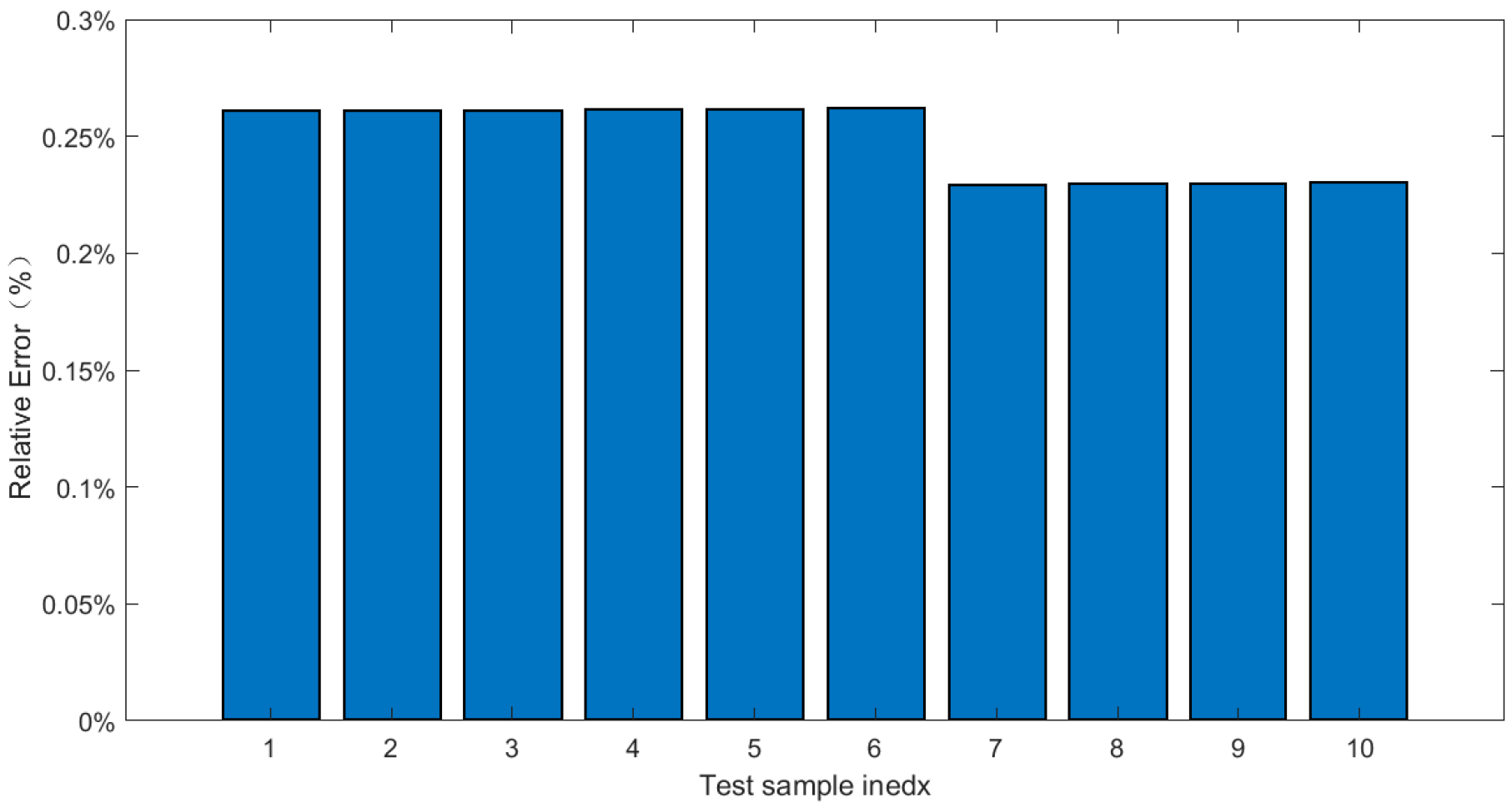
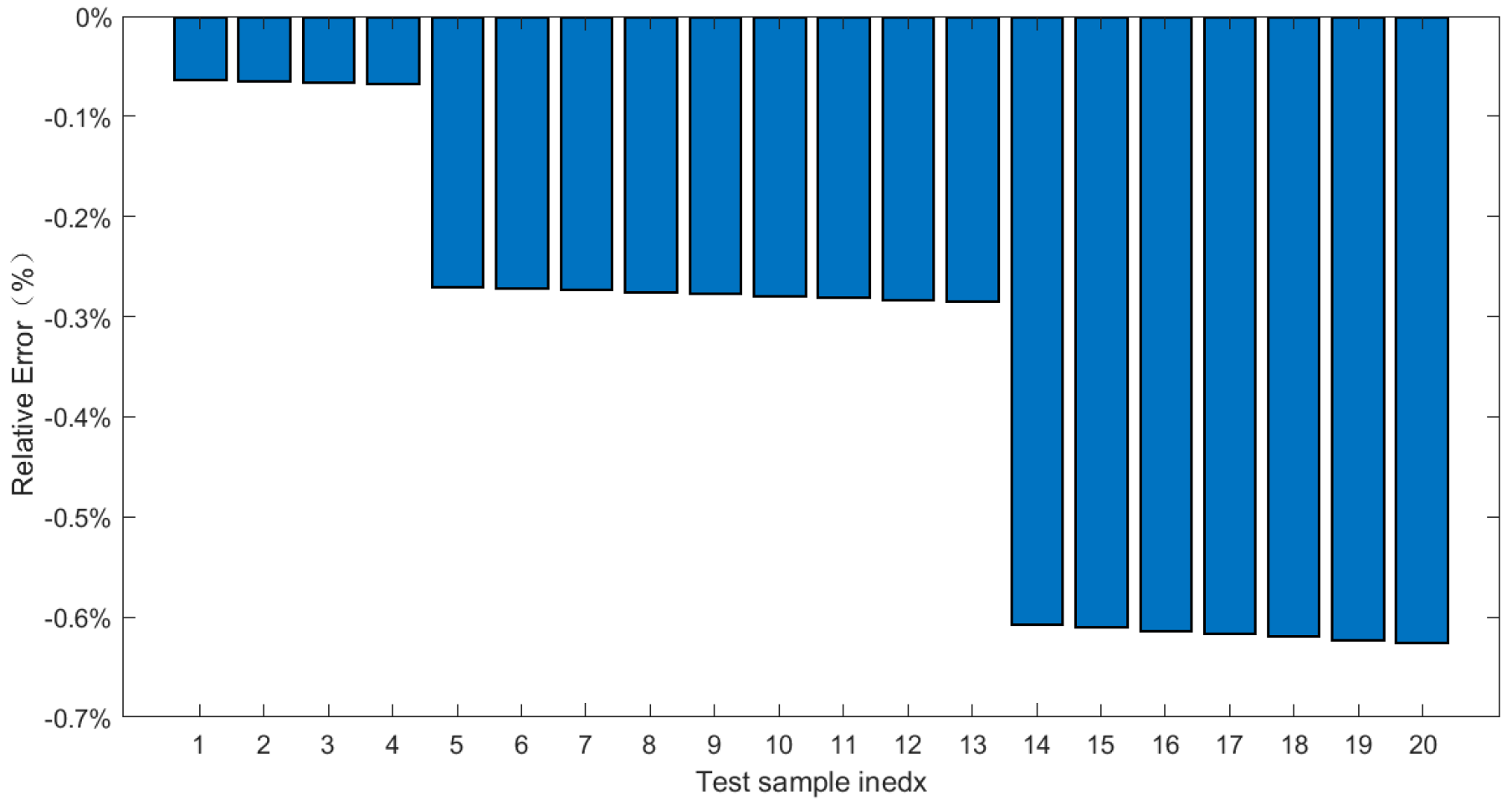
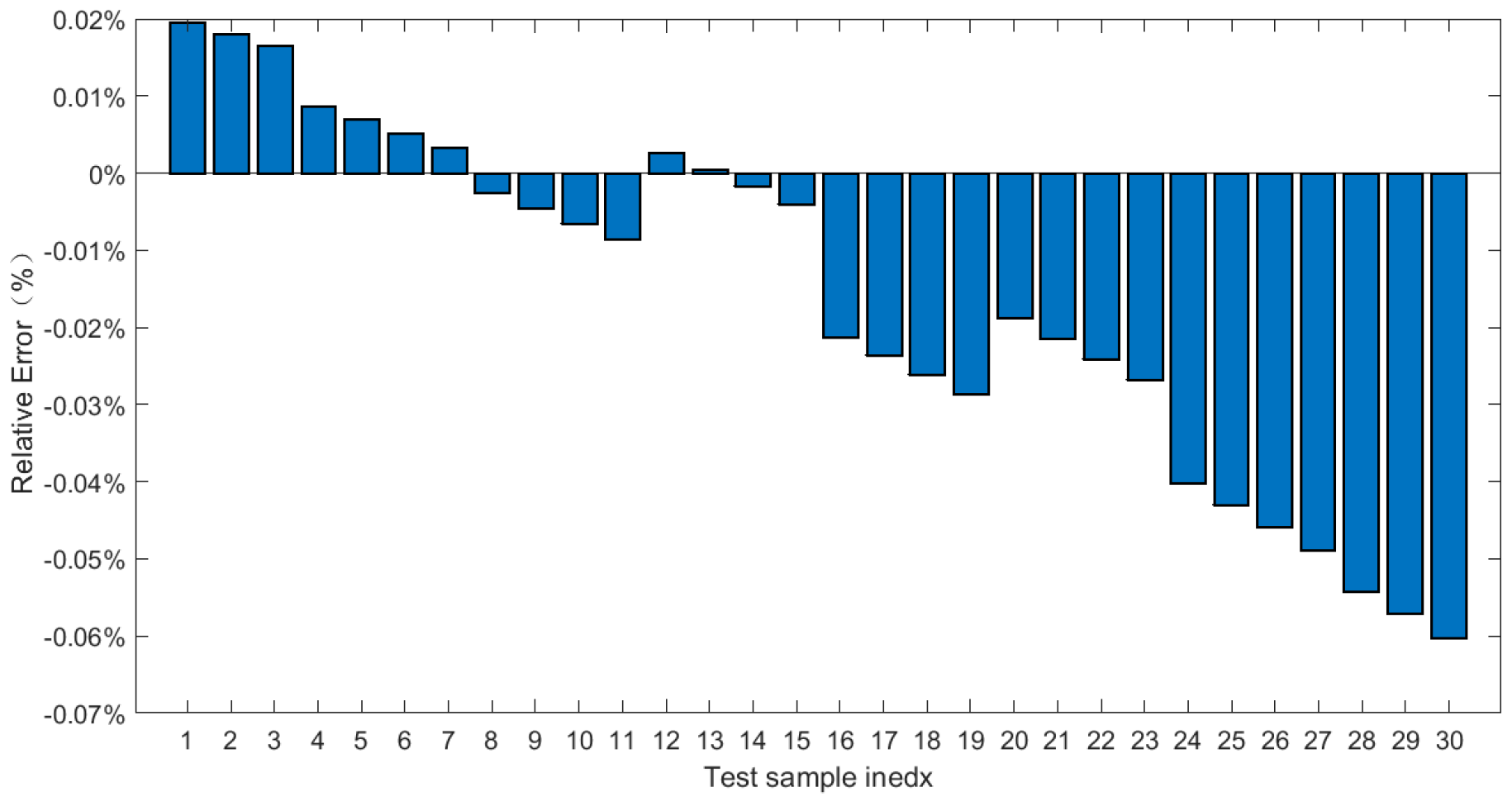
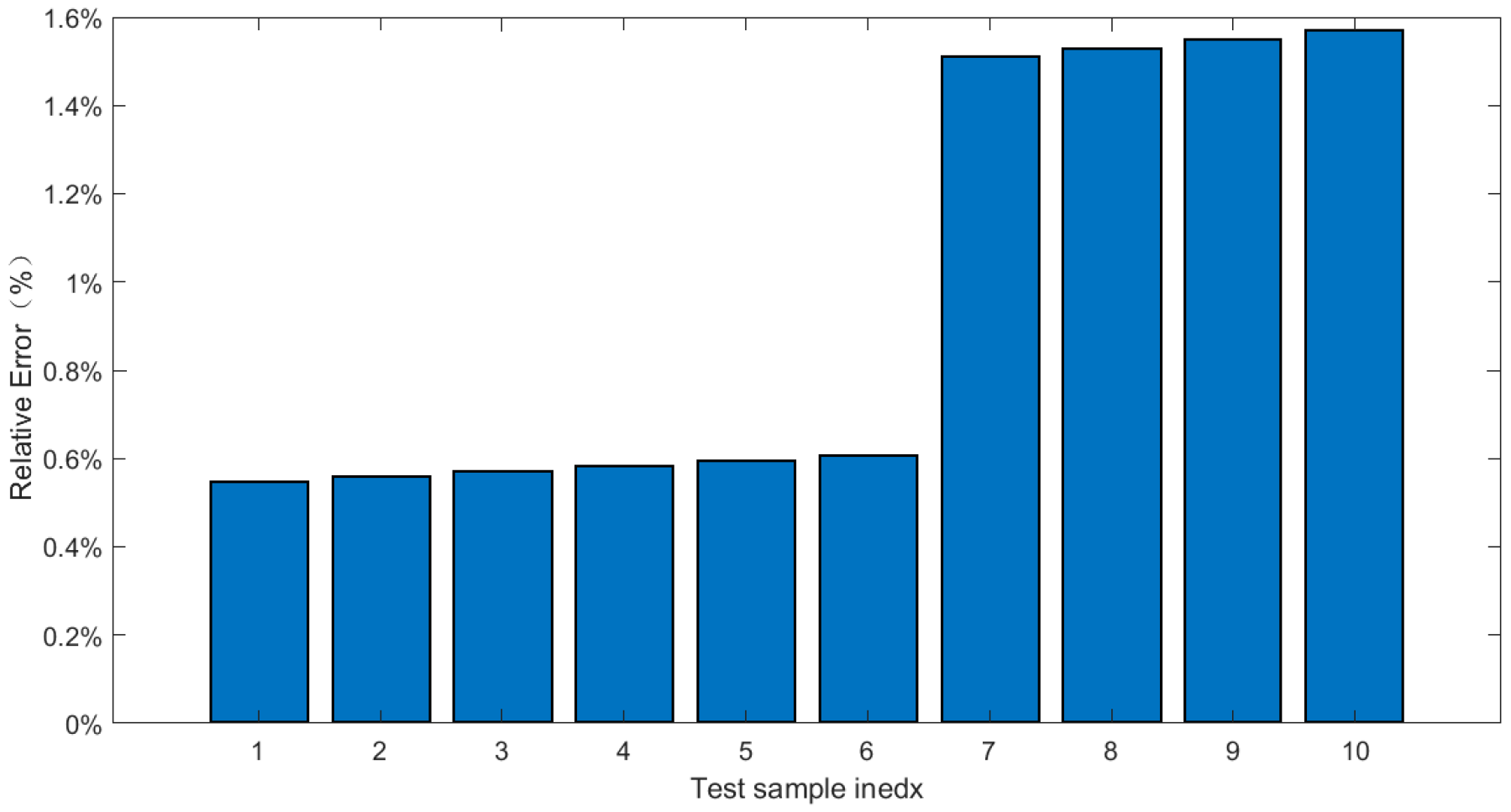
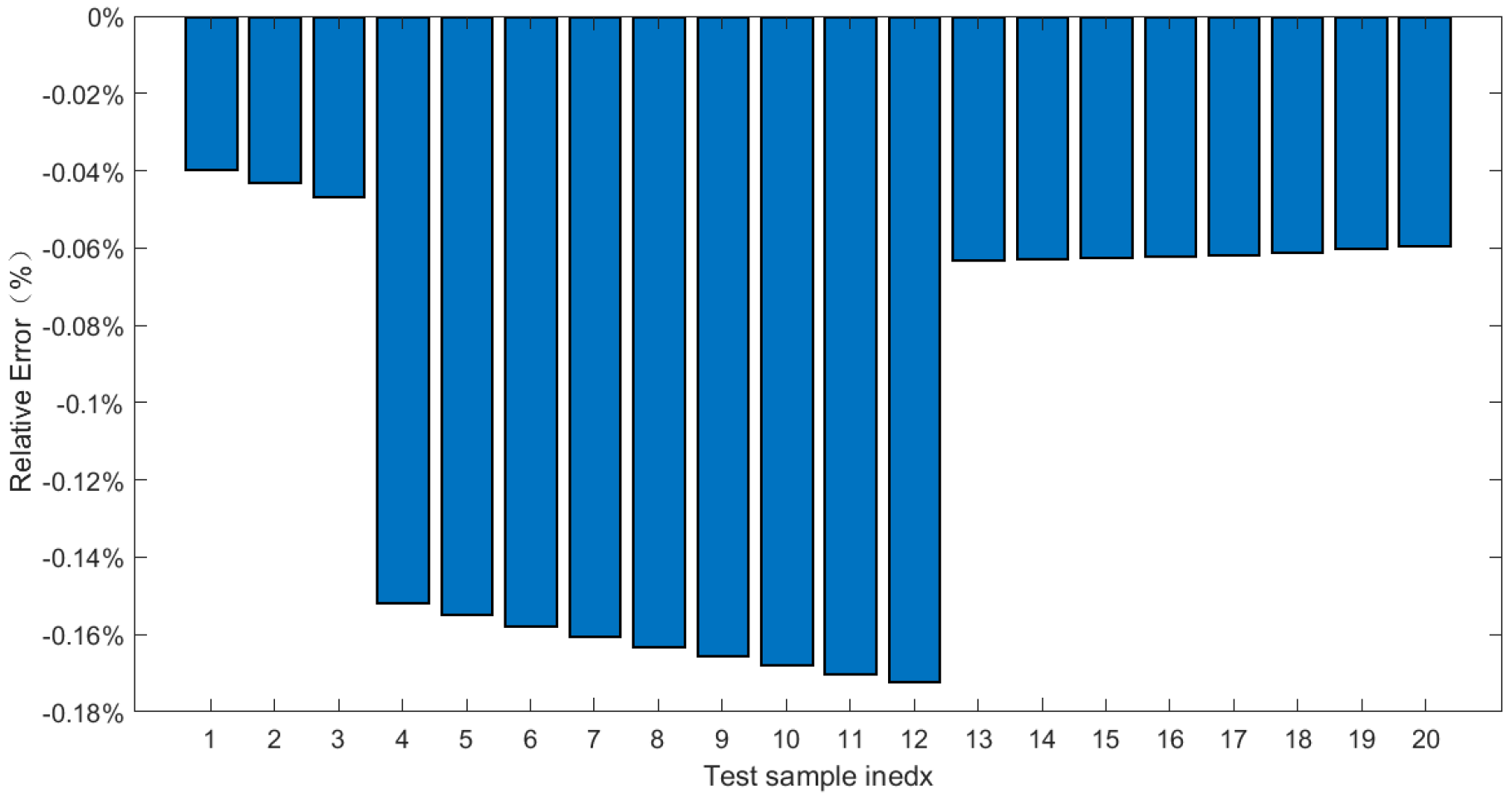
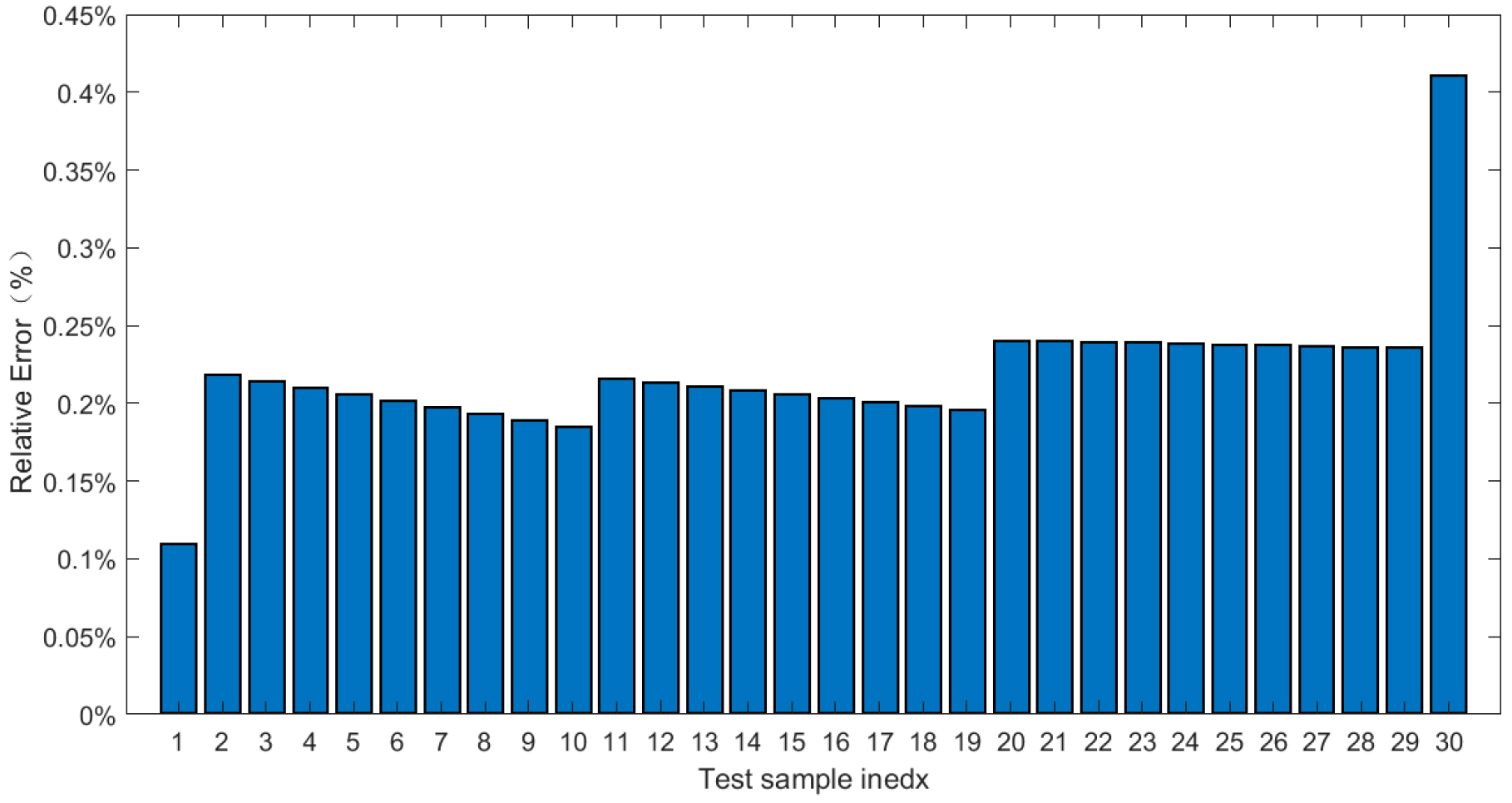
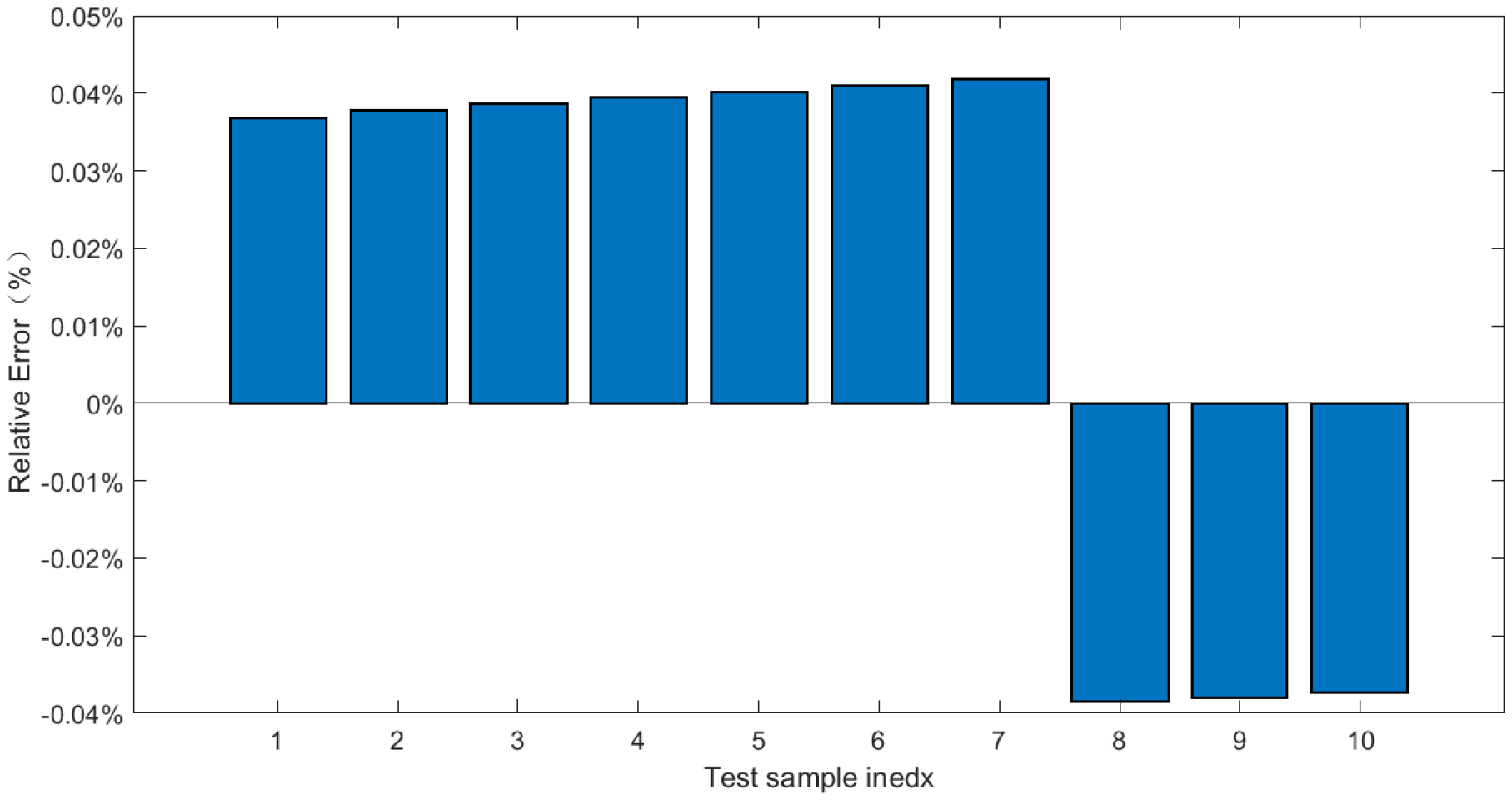
4.2.2. Relative Error and Prediction Accuracy Analysis
4.2.3. Correlation Analysis of Individual Influencing Factors
- First, the blowing duration exhibited a correlation coefficient of 0.6535, indicating a strong positive correlation. Theoretically, a longer gas supply duration resulted in a greater amount of water being expelled [31];
- Second, the sea tank back pressure had a value of 0.8105, reflecting an extremely strong positive correlation. This suggests that the ballast tank drainage was closely related to the outboard back pressure through a complex relationship. Specifically, the variations in back pressure influenced the pressure changes during blowing within the ballast tank [12,32]. Additionally, back pressure affected the dynamic balance between gas and water, as well as the corresponding blowing efficiency [2,31]. Finally, it impacted energy consumption and system efficiency during blowing operations [12,32];
- Third, the volume of the gas cylinder group was associated with a correlation coefficient of 0.3587, indicating a weak positive correlation. According to the aerodynamic computation theories, there exists a direct relationship between gas consumption and ballast tank drainage [32];
- Fourth, the gas pressure within the cylinder group registered at 0.5569, indicating a moderately strong positive correlation and suggesting that higher gas pressure significantly affected blowing effectiveness [13];
- Fifth, the inner diameter of the gas supply pipeline showed a value of 0.02499, and this represents a very weak positive correlation. Theoretically speaking, a larger inner diameter would have increased the gas supply efficiency over time, which would facilitate the quicker establishment of gas cushions at the top of the ballast tank, thereby improving the overall blowing performance [12]. However, due to size constraints on the flow dynamics caused by only having pipe diameters available at 6 (mm), 8 (mm), and 10 (mm), with lengths limited to just 0.3 (m);
- Sixth, the length of the gas supply pipeline was −0.3741, indicating a medium-strength negative correlation. This finding confirms that shorter pipeline lengths yielded better blowing effects under constant conditions and further validates the advantage of short-circuit blowing over conventional methods [12];
- Seventh, the internal diameter of the sea valve was measured to be 0.5373, demonstrating a moderately positive correlation. It indicates that increasing the sea valve flowing area enhanced the drainage rates per unit of time while improving the blowing efficiency [13].
4.2.4. Comparison Analysis with Existing Results
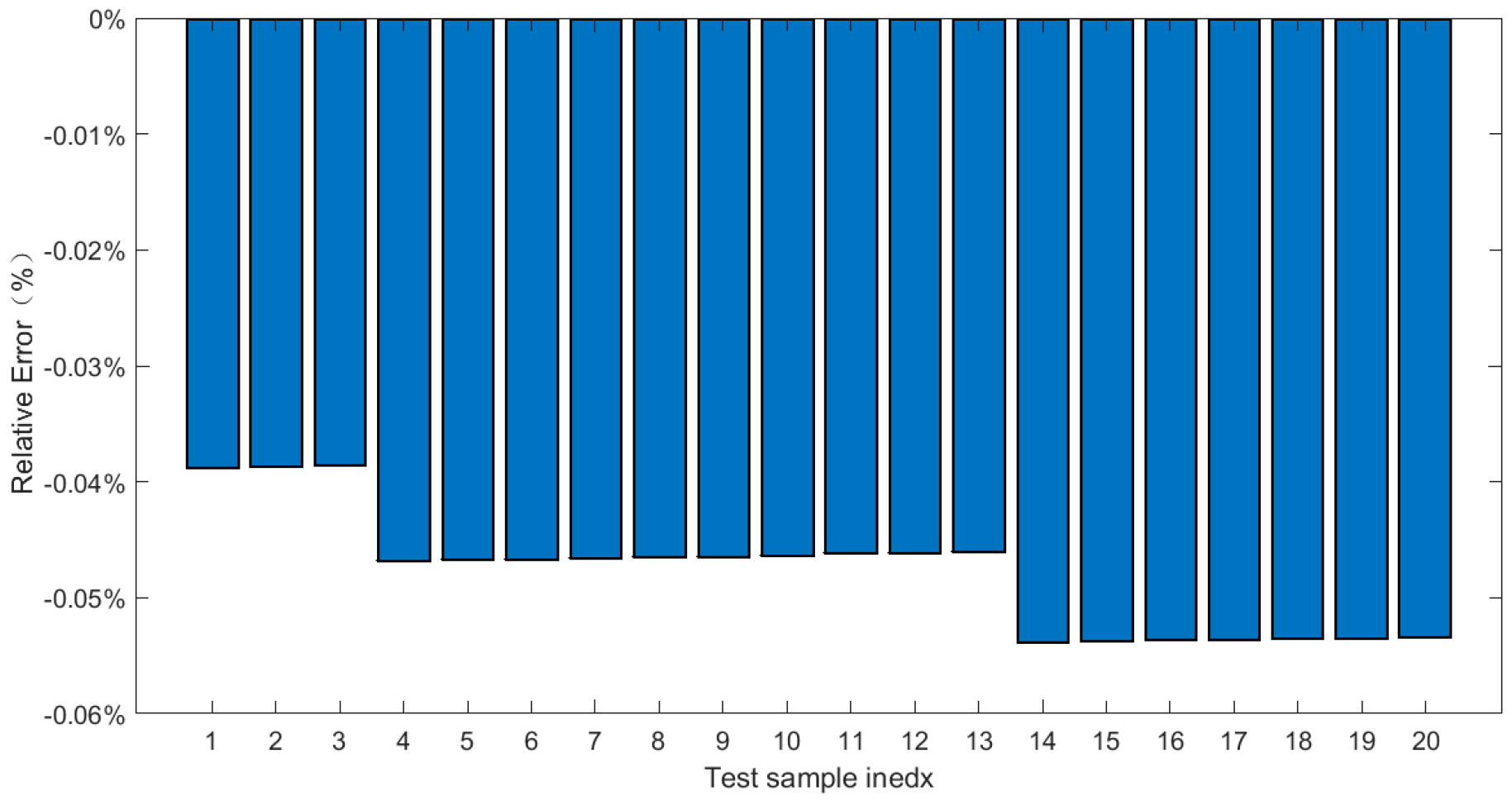
- In ref. [2], Table 8 indicates that the relative errors of peak pressure in ballast tanks, directly associated with the drainage percentage, ranged from 0.53% to 39.17%, significantly exceeding the results shown in Table 7 of Section 4.2.2;
- In refs. [10,11], the small-scale short-circuit experimental test bench focused on the flow rate of high-pressure gas cylinder groups closely linked to the ballast tank drainage percentage. Their relative error was found to be 8%, considerably larger than the maximum relative error reported in Table 7 of Section 4.2.2;
- In refs. [8,9], using a gas jet blowing-off method similar to short-circuit blowing resulted in a relative error for the drainage percentage below 5% and individually below 10%. However, these values still exceeded those presented in Table 7 of Section 4.2.2;
- From this comparative analysis, it could be inferred that the BPNN method demonstrates significantly higher prediction accuracy than traditional numerical modeling; furthermore, no statistical correlation studies were identified between the manipulation factors and the blowing process in Section 3.1, Section 3.2 and Section 4.2.3.
5. Conclusions
- First, an extreme variance method was utilized to analyze the data from the orthogonal experiments, identifying the optimal combination of several factors: blowing duration (accounting for 39.16%), back pressure (accounting for 33.35%), gas blowing group pressure (accounting for 10.94%), and sea valve flow area (9.02%). Among these variables, blowing duration proved to be the most sensitive factor, with an F-ratio of 3.27;
- Second, a BPNN was implemented for both training and prediction based on the orthogonal experimental data. The findings indicate that the BPNN’s robust nonlinear fitting capability effectively predicted high-pressure gas short-circuit blowing. The statistical evaluation metrics ranged from 10−1 to 10−12, the relative errors remained within a threshold of 3%, and the prediction accuracy achieved up to 100%. This validates the BPNN as a credible AI-based predictive approach for submersible short-circuit blowing;
- Third, Pearson correlation analysis was conducted on the BPNN’s training set data to explore the relationship between the individual factors and outcomes. The results reveal positive correlations among the following: blowing duration (with a correlation coefficient of 0.6535), sea tank back pressure (0.8105), gas cylinder group pressure (with a correlation coefficient of 0.5569), and internal diameter of the sea valve (0.5373). In contrast, a negative correlation (-0.3741) with the gas supply pipeline length indicates the better efficiency of short-circuit blowing compared to conventional methods.
- First, concerning blowing techniques, short-circuit blowing exhibits superior efficiency compared to conventional methods due to its reduced length of gas supply pipelines;
- Second, in terms of engineering design, several manipulation factors, including the increased volume and pressure of the cylinder group, as well as the enlarged flow area of the sea valve, have a positive impact on blowing performance. Additionally, it is crucial to establish appropriate specifications for the gas supply pipeline, including its inner diameter and length;
- Third, concerning operations, it is of vital importance to ensure that the optimal duration of blowing corresponds to the variations in the outboard back pressure during the operation process.
Author Contributions
Funding
Institutional Review Board Statement
Informed Consent Statement
Data Availability Statement
Conflicts of Interest
Nomenclature
| Orthogonal experiment | |
| The sum of the experimental results of either factor | |
| The ratio of the sum of the experimental results of either factor to total number of levels | |
| The average of the results of all orthogonal experiments | |
| The offset between and | |
| The extreme variance | |
| The total square sum of the deviations of all the experimental results, i.e., the variance | |
| The square sum of individual factor x’s deviations, i.e., the variance | |
| The sum of squared error deviations | |
| The total degree of freedom | |
| m | The number of levels of each factor |
| n | The number of orthogonal experiments |
| The degree of freedom of each factor | |
| The error degree of freedom | |
| The mean square of | |
| The mean square of | |
| The F-ratio of individual factor x | |
| BPNN and Pearson correlation analysis | |
| L | The number of neurons in the hidden layer |
| N | The number of neurons in the input layer |
| M | The number of neurons in the output layer |
| a | Constant taken to be between 1 and 10 |
| ωj | The weight of the the j-th hidden neuron |
| b | The bias term of the output neuron |
| YBP(t) | Output of the BPNN |
| Hj(t) | The output of the j-th hidden neuron |
| ωij | The connection weight between the i-th input neuron and the j-th hidden neuron |
| xi(t) | The input from the i-th neuron at time t |
| αj | The bias term for the j-th hidden neuron |
| f(x) | The activation function of the hidden layer |
| α | The rake ratio of activation function |
| PP% | Predictive accuracy |
| δ | Relative Error Percentage |
| ESSE | Sum of Squared Errors |
| EMAE | Mean Absolute Error |
| EMAP | Mean absolute Percentage Error |
| EMSE | Mean Square Error |
| ERMSE | Root Mean Squared Error |
| R | Pearson’ linear correlation coefficient |
| S | The number of data |
| Xi | the actual value |
| the average of the actual values | |
| Yi | the predicted value |
| the average of the actual values | |
References
- Zhang, J.H.; Hu, K.; Liu, C.B. Numerical simulation on compressed gas blowing ballast tank of submarine. J. Ship Mech. 2015, 19, 363–368. (In Chinese) [Google Scholar] [CrossRef]
- Yi, Q.; Lin, B.; Zhang, W.; Qian, Y.; Zou, W.; Zhang, K. Simulation and experimental verification of main ballast tank blowing based on short circuit blowing model. Chin. J. Ship Res. 2022, 17, 246–252. [Google Scholar] [CrossRef]
- Wang, X.; Wang, X.; Zhang, Z.; Feng, D. Experiment and Mathematics Model of High Pressure Air Blowing. Chin. J. Ship Res. 2014, 9, 80–86. [Google Scholar] [CrossRef]
- Zhang, J.; Huang, H.; Liu, G.; Hu, K. Numerical simulation of blowing characteristics of submarine main ballast tanks using VOF model. J. Ordnance Equip. Eng. 2022, 43, 234–239. [Google Scholar] [CrossRef]
- Zhang, J.; Hu, K.; Huang, H.; Wei, J. Analysis of the influence of 90° elbow on the pressure loss along the submarine high pressure gas pipe. Ship Sci. Technol. 2020, 42, 93–97. [Google Scholar]
- Jin, T.; Liu, H.; Wang, J.; Yang, F. Emergency recovery of submarine with flooded compartment. J. Ship Mech. 2010, 14, 34–43. [Google Scholar]
- Wilgenhof, J.D.; Giménez JJ, C.; Peláez, J.G. Performance of the main ballast tank blowing system. In Proceedings of the Undersea Defense Technology Conference 2011, London, UK, 7–9 June 2011. [Google Scholar]
- Sheng, Y.; Yu, J.; Cheng, D.; Gong, S. Theoretical analysis and experimental validation on gas jet blowing-off process of submarine emergency. J. Beijing Univ. Aeronaut. Astronaut. 2009, 35, 411–416. [Google Scholar]
- Yang, S.; Yu, J.Z.; Cheng, D. Numerical simulation and experimental validation on gas jet blowing-off process of submarine emergency. J. Beijing Univ. Aeronaut. Astronaut. 2010, 36, 227–230. [Google Scholar] [CrossRef]
- Liu, H.; Pu, J.; Li, Q.; Wu, X. The experiment research of submarine high-pressure air blowing off main ballast tanks. J. Harbin Eng. Univ. 2013, 34, 34–39. [Google Scholar] [CrossRef]
- Liu, H.; Li, Q.X.; Wu, X.J.; Li, Z. The establishing of pipe flow model and experimental analysis on submarine high pressure air blowing system. Ship Sci. Technol. 2015, 37, 52–55. [Google Scholar] [CrossRef]
- Liu, H.; Pu, J.; Jin, T. Research on system model of high pressure air blowing submarine’s main ballast tanks. Ship Sci. Technol. 2010, 32, 26–30. [Google Scholar] [CrossRef]
- Yi, Q.; Lin, B.; Zhang, W.; Chen, S.; Zou, W.; Zhang, K. CFD simulation and experimental verification of blowing process of main ballast tank. J. Ship Mech. 2023, 27, 218–226. [Google Scholar]
- Yi, Q.; Lin, B.; Zhang, W. Analysis of the blowing process of high pressure air from the bottom into the main ballast tank. Ship Sci. Technol. 2020, 42, 60–63. [Google Scholar] [CrossRef]
- Wang, C.; Fang, Y.; Su, G.; Tian, W.; Qiu, S. A High Temperature and High Flowing Rate Gas Flow Heat Transfer Experimental Device and Experimental Method. International Patent Application No. 201910377151.1, 10 July 2020. (In Chinese). [Google Scholar]
- Yang, X.; Ren, Z. Design and Analyses of Orthogonal Test with Null Ratio Factor. J. Biomath. 2006, 2, 291–296. [Google Scholar]
- Wu, W.; Xu, Z.; Teng, K.; Yan, S.; Zhang, L. Process Parameters Optimization for 2AL2 Aluminum Alloy Laser Cutting Based on Orthogonal Experiment and BP Neural Network. Mach. Tool Hydraul. 2018, 46, 13–17. [Google Scholar] [CrossRef]
- Assani, N.; Matic, P.; Kastelan, N.; Cavka, I.R. A review of artificial neural networks application in Maritime Industry. IEEE Access 2023, 11, 139823–139848. [Google Scholar] [CrossRef]
- Zhang, Y.; Hu, Q.W.; Li, H.L.; Li, J.Y.; Liu, T.C.; Chen, Y.T.; Ai, M.Y.; Dong, J.Y. A Back Propagation Neural Network-Based Radiometric Correction Method (BPNNRCM) for UAV Multispectral Image. IEEE J. Sel. Top. Appl. Earth Obs. Remote Sens. 2022, 16, 112–125. [Google Scholar] [CrossRef]
- Zhang, H.; Han, D.; Guo, C. Modeling of the principal dimensions of large vessels based on a BPNN trained by an improved PSO. J. Harbin Eng. Univ. 2012, 33, 806–810. [Google Scholar] [CrossRef]
- Pān, J.; Shàn, P. Fundamentals of Gas Dynamics, 1st ed.; National Defense Industry Press: Beijing, China, 2017; p. 164. (In Chinese) [Google Scholar]
- Liu, M. Variance Analysis of Orthogonal Experimental Design. Master’s Thesis, Northeast Forestry University, Harbin, China, April 2011. [Google Scholar]
- Yang, K. Design and Key Technology Research on High Pressure Pneumatic Blowing Valve with Differential Pressure Control. Master’s Thesis, Wuhan Institute of Technology, Wuhan, China, 2015. [Google Scholar]
- Hao, H. Times Series Forecasting Based on Feed-Forward Neural Networks. Master’s Thesis, Nanjing University, Nanjing, China, 2021. [Google Scholar]
- Panda, J.P. Machine learning for naval architecture, ocean and marine engineering. J. Mar. Sci. Technol. 2023, 28, 1–26. [Google Scholar] [CrossRef]
- Huang, L.; Pena, B.; Liu, Y.; Anderlini, E. Machine learning in sustainable ship design and operation: A review. Ocean. Eng. 2022, 266, 112907. [Google Scholar] [CrossRef]
- Shi, Y. Ship Structure Optimization Based on PSO-BP Neural Network; Dalian Maritime University: Dalian, China, 2015. [Google Scholar]
- Shao, M.; Yu, Y. Optimization of Gas-liquid Two-phase Flow Liquid Hold-up Prediction Model with BP Neural Network Based on Genetic Algorithm. J. Xi’an Shiyou Univ. (Nat. Sci. Ed.) 2019, 34, 44–49. [Google Scholar] [CrossRef]
- Wang, Y. Analysis of Normalization for Deep Neural Networks. Master’s Thesis, Nanjing University of Posts and Telecommunications, Nanjing, China, 2019. [Google Scholar]
- Barnett, I.; Mukherjee, R.; Lin, X. The generalized higher criticism for testing SNP-Set Effects in Genetic Association studies. J. Am. Stat. Assoc. 2017, 112, 64–76. [Google Scholar] [CrossRef] [PubMed]
- Font, R.; Garcia-Peláez, J. On a submarine hovering system based on blowing and venting of ballast tanks. Ocean. Eng. 2013, 72, 441–447. [Google Scholar] [CrossRef]
- Chen, L.; Yang, P.; Li, S.; Liu, K.; Wang, K.; Zhou, X. Online modeling and prediction of maritime autonomous surface ship maneuvering motion under ocean waves. Ocean. Eng. 2023, 276, 114183. [Google Scholar] [CrossRef]










| Researching Field | Methodology | Disadvantage |
|---|---|---|
| Mathematical modeling | Short-circuit blowing within the framework of Laval nozzle theory [6]. | Lacking specific experimental evaluations and universality because of ignoring entire manipulation factors. |
| Modeling the evolution of gas–liquid two-phase interface during blowing [1]. | ||
| Simulation accounting for the flowing area of sea valves in blowing processes [3]. | ||
| Simulation incorporating outboard back pressure, high-pressure cylinder group gas pressure, and cylinder volume in blowing scenarios [4]. | ||
| Simulation considering both gas and water supply pipelines [5]. | ||
| Real-ship or bench experiments | Emergency short-circuit blowing tests were conducted on a Spanish S-80 submarine [7]. | Too risky. |
| Experiments performed at a depth of 100 (m) [8,9]. | Restriction of scale effect. | |
| Small-scale experiments utilizing a short-circuit blowing test bench [10,11]. | ||
| Proportional model tests for short-circuit blowing analysis [2]. | Incomplete working conditions, ignoring certain factors. |
| Index | Apparatus | Main Parameters | Remark |
|---|---|---|---|
| 1 | Air compressor | Maximum air inflation pressure: 20.0 (MPa) | |
| 2 | Gas cylinder group | Maximum air working pressure: 35 (MPa) Volume: 750 (L) | Gas source for blowing and back pressure in the sea tank |
| 3 | Ballast tank | Volume: 1.2 (m3) Pressure handling capacity: 7 (MPa) | |
| 4 | Sea tank | Volume: 13 (m3) Pressure handling capacity: 5 (MPa) | The back pressure exceeds the maximum working depth of the actual ship. |
| 5 | Gas supply pipeline | Three length specifications available: 10 (m), 20 (m), and 30 (m) | The inlet is equipped with three replaceable pipe sections with internal diameters of 6 (mm), 8 (mm), and 10 (mm), each measuring 0.3 (m) in length. |
| 6 | Sea pipeline | Internal diameters available: 125 (mm), 150 (mm), and 200 (mm) | Connection between the ballast tank outlet and seawater tank inlet. |
| Index of Experiment | The Impacted Factors | ||||||
|---|---|---|---|---|---|---|---|
| A | B | C | D | E | F | G | |
| 1 | 1 | 1 | 1 | 1 | 1 | 1 | 1 |
| 2 | 1 | 2 | 2 | 2 | 2 | 2 | 2 |
| 3 | 1 | 3 | 3 | 3 | 3 | 3 | 3 |
| 4 | 2 | 1 | 1 | 2 | 2 | 3 | 3 |
| 5 | 2 | 2 | 2 | 3 | 3 | 1 | 1 |
| 6 | 2 | 3 | 3 | 1 | 1 | 2 | 2 |
| 7 | 3 | 1 | 2 | 1 | 3 | 2 | 3 |
| 8 | 3 | 2 | 3 | 2 | 1 | 3 | 1 |
| 9 | 3 | 3 | 1 | 3 | 2 | 1 | 2 |
| 10 | 1 | 1 | 3 | 3 | 2 | 2 | 1 |
| 11 | 1 | 2 | 1 | 1 | 3 | 3 | 2 |
| 12 | 1 | 3 | 2 | 2 | 1 | 1 | 3 |
| 13 | 2 | 1 | 2 | 3 | 1 | 3 | 2 |
| 14 | 2 | 2 | 3 | 1 | 2 | 1 | 3 |
| 15 | 2 | 3 | 1 | 2 | 3 | 2 | 1 |
| 16 | 3 | 1 | 3 | 2 | 3 | 1 | 2 |
| 17 | 3 | 2 | 1 | 3 | 1 | 2 | 3 |
| 18 | 3 | 3 | 2 | 1 | 2 | 3 | 1 |
| Parameters | A | B | C | D | E | F | G |
|---|---|---|---|---|---|---|---|
| K1 | 213.56% | 263.62% | 197.98% | 105.98% | 226.47% | 189.25% | 329.18% |
| K2 | 243.51% | 225.09% | 224.78% | 227.95% | 213.33% | 230.70% | 216.61% |
| K3 | 217.80% | 260.53% | 252.11% | 340.94% | 235.07% | 254.92% | 129.08% |
| k1 | 35.59% | 43.94% | 33.00% | 17.66% | 37.74% | 31.54% | 54.86% |
| k2 | 40.58% | 37.52% | 37.46% | 37.99% | 35.56% | 38.45% | 36.10% |
| k3 | 36.30% | 43.42% | 42.02% | 56.82% | 39.18% | 42.49% | 21.51% |
| T1 | −1.90% | 6.44% | −4.50% | −19.83% | 0.25% | −5.95% | 17.37% |
| T2 | 3.09% | 0.02% | −0.03% | 0.50% | −1.94% | 0.96% | −1.39% |
| T3 | −1.19% | 5.93% | 4.53% | 19.33% | 1.69% | 4.99% | −15.98% |
| Rx | 4.99% | 6.42% | 9.02% | 39.16% | 3.62% | 10.94% | 33.35% |
| Priority | D > G > F > C > B > A > E | ||||||
| Optimal level | A2 | B1 | C3 | D3 | E3 | F3 | G1 |
| Parameters | A | B | C | D | E | F | G |
|---|---|---|---|---|---|---|---|
| K1 | 213.56% | 263.62% | 197.98% | 105.98% | 226.47% | 189.25% | 329.18% |
| K2 | 243.51% | 225.09% | 224.78% | 227.95% | 213.33% | 230.70% | 216.61% |
| K3 | 217.80% | 260.53% | 252.11% | 340.94% | 235.07% | 254.92% | 129.08% |
| k1 | 35.59% | 43.94% | 33.00% | 17.66% | 37.74% | 31.54% | 54.86% |
| k2 | 40.58% | 37.52% | 37.46% | 37.99% | 35.56% | 38.45% | 36.10% |
| k3 | 36.30% | 43.42% | 42.02% | 56.82% | 39.18% | 42.49% | 21.51% |
| T1 | −1.90% | 6.44% | −4.50% | −19.83% | 0.25% | −5.95% | 17.37% |
| T2 | 3.09% | 0.02% | −0.03% | 0.50% | −1.94% | 0.96% | −1.39% |
| T3 | −1.19% | 5.93% | 4.53% | 19.33% | 1.69% | 4.99% | −15.98% |
| Sx | 0.11% | 1.25% | 0.61% | 11.80% | 0.00% | 1.06% | 9.05% |
| fx | 2 | 2 | 2 | 2 | 2 | 2 | 2 |
| 0.05% | 0.62% | 0.30% | 5.90% | 0.00% | 0.53% | 4.53% | |
| F-ratio | 0.03 | 0.35 | 0.17 | 3.27 | 0.00 | 0.29 | 2.51 |
| Critical value, α = 0.05 | 3.24 | 3.24 | 3.24 | 3.24 | 3.24 | 3.24 | 3.24 |
| Effect | insignificant | insignificant | insignificant | significant | insignificant | insignificant | insignificant |
| Index | Evaluation Indicators | Data | Remarks |
|---|---|---|---|
| Working condition 1 | Sum of Square Errors, ESSE | 1.8906∙10−12 | Fit between predicted and actual values |
| Mean Absolute Error, EMAE | 4.4939∙10−7 | Average absolute difference between predicted and actual values | |
| Mean Absolute Percentage Error, EMAP | 0.00055853 | Error across datasets with varying magnitudes | |
| Mean Square Error, EMSE | 2.7008∙10−13 | Mean square error of prediction discrepancies | |
| Root Mean Square Error, ERMSE | 5.1969∙10−7 | The square root of the mean square differences between predicted and actual values | |
| Working condition 2 | Sum of Square Errors, ESSE | 0.00012022 | Fit between predicted and actual values |
| Mean Absolute Error, EMAE | 0.001514 | Average absolute difference between predicted and actual values | |
| Mean Absolute Percentage Error, EMAP | 0.0036052 | Error across datasets with varying magnitudes | |
| Mean Square Error, EMSE | 2.4043∙10−6 | Mean square error of prediction discrepancies | |
| Root Mean Square Error, ERMSE | 0.0015506 | The square root of the mean square differences between predicted and actual values | |
| Working condition 3 | Sum of Square Errors, ESSE | 0.00016132 | Fit between predicted and actual values |
| Mean Absolute Error, EMAE | 0.0011673 | Average absolute difference between the predicted and actual values | |
| Mean Absolute Percentage Error, EMAP | 0.0029131 | Error across datasets with varying magnitudes | |
| Mean Square Error, EMSE | 1.9436∙10−6 | Mean square error of prediction discrepancies | |
| Root Mean Square Error, ERMSE | 0.0013941 | The square root of the mean square differences between predicted and actual values | |
| Working condition 4 | Sum of Square Errors, ESSE | 0.0061557 | Fit between predicted and actual values |
| Mean Absolute Error, EMAE | 0.0096929 | Average absolute difference between the predicted values and actual values | |
| Mean Absolute Percentage Error, EMAP | 0.023948 | Error across datasets with varying magnitudes | |
| Mean Square Error, EMSE | 0.00012311 | Mean square error of prediction discrepancies | |
| Root Mean Square Error, ERMSE | 0.011096 | The square root of the mean square differences between predicted and actual values | |
| Working condition 5 | Sum of Square Errors, ESSE | 0.001105 | Fit between predicted and actual values |
| Mean Absolute Error, EMAE | 0.0046973 | Average absolute difference between the predicted values and actual values | |
| Mean Absolute Percentage Error, EMAP | 0.0059697 | Error across datasets with varying magnitudes | |
| Mean Square Error, EMSE | 2.21∙10−5 | Mean square error of prediction discrepancies | |
| Root Mean Square Error, ERMSE | 0.004701 | The square root of the mean square differences between predicted and actual values | |
| Working condition 6 | Sum of Square Errors, ESSE | 0.0064002 | Fit between predicted and actual values |
| Mean Absolute Error, EMAE | 0.0080078 | Average absolute difference between the predicted and actual values | |
| Mean Absolute Percentage Error, EMAP | 0.028729 | Error across datasets with varying magnitudes | |
| Mean Square Error, EMSE | 9.1432∙10−5 | Mean square error of prediction discrepancies | |
| Root Mean Square Error, ERMSE | 0.009562 | The square root of the mean square differences between predicted and actual values | |
| Working condition 7 | Sum of Square Errors, ESSE | 5.5945∙10−5 | Fit between predicted and actual values |
| Mean Absolute Error, EMAE | 0.00081209 | Average absolute difference between the predicted and actual values | |
| Mean Absolute Percentage Error, EMAP | 0.004057 | Error across datasets with varying magnitudes | |
| Mean Square Error, EMSE | 1.1189∙10−6 | Mean square error of prediction discrepancies | |
| Root Mean Square Error, ERMSE | 0.0010578 | The square root of the mean square differences between predicted and actual values | |
| Working condition 8 | Sum of Square Errors, ESSE | 0.00635 | Fit between predicted and actual values |
| Mean Absolute Error, EMAE | 0.0095017 | Average absolute difference between the predicted and actual values | |
| Mean Absolute Percentage Error, EMAP | 0.011281 | Error across datasets with varying magnitudes | |
| Mean Square Error, EMSE | 0.00010583 | Mean square error of prediction discrepancies | |
| Root Mean Square Error, ERMSE | 0.010288 | The square root of the mean square differences between predicted and actual values | |
| Working condition 9 | Sum of Square Errors, ESSE | 0.00030943 | Fit between predicted and actual values |
| Mean Absolute Error, EMAE | 0.0024449 | Average absolute difference between the predicted and actual values | |
| Mean Absolute Percentage Error, EMAP | 0.0061119 | Error across datasets with varying magnitudes | |
| Mean Square Error, EMSE | 6.1887∙10−6 | Mean square error of prediction discrepancies | |
| Root Mean Square Error, ERMSE | 0.0024877 | The square root of the mean square differences between predicted and actual values | |
| Working condition 10 | Sum of Square Errors, ESSE | 7.5391∙10−5 | Fit between predicted and actual values |
| Mean Absolute Error, EMAE | 0.0011243 | Average absolute difference between the predicted and actual values | |
| Mean Absolute Percentage Error, EMAP | 0.0028055 | Error across datasets with varying magnitudes | |
| Mean Square Error, EMSE | 1.5078∙10−6 | Mean square error of prediction discrepancies | |
| Root Mean Square Error, ERMSE | 0.0012279 | The square root of the mean square differences between predicted and actual values | |
| Working condition 11 | Sum of Square Errors, ESSE | 8.0629∙10−5 | Fit between predicted and actual values |
| Mean Absolute Error, EMAE | 0.0016049 | Average absolute difference between the predicted and actual values | |
| Mean Absolute Percentage Error, EMAP | 0.0064002 | Error across datasets with varying magnitudes | |
| Mean Square Error, EMSE | 5.0393∙10−6 | Mean square error of prediction discrepancies | |
| Root Mean Square Error, ERMSE | 0.0022448 | The square root of the mean square differences between predicted and actual values | |
| Working condition 12 | Sum of Square Errors, ESSE | 0.00011633 | Fit between predicted and actual values |
| Mean Absolute Error, EMAE | 0.0011062 | Average absolute difference between the predicted and actual values | |
| Mean Absolute Percentage Error, EMAP | 0.0066337 | Error across datasets with varying magnitudes | |
| Mean Square Error, EMSE | 1.2245∙10−6 | Mean square error of prediction discrepancies | |
| Root Mean Square Error, ERMSE | 0.0011066 | The square root of the mean square differences between predicted and actual values | |
| Working condition 13 | Sum of Square Errors, ESSE | 0.00021467 | Fit between predicted and actual values |
| Mean Absolute Error, EMAE | 0.0012303 | Average absolute difference between the predicted and actual values | |
| Mean Absolute Percentage Error, EMAP | 0.0015655 | Error across datasets with varying magnitudes | |
| Mean Square Error, EMSE | 2.9009∙10−6 | Mean square error of prediction discrepancies | |
| Root Mean Square Error, ERMSE | 0.0017032 | The square root of the mean square differences between predicted and actual values | |
| Working condition 14 | Sum of Square Errors, ESSE | 0.00014928 | Fit between predicted and actual values |
| Mean Absolute Error, EMAE | 0.0011504 | Average absolute difference between the predicted and actual values | |
| Mean Absolute Percentage Error, EMAP | 0.010992 | Error across datasets with varying magnitudes | |
| Mean Square Error, EMSE | 1.3951∙10−6 | Mean square error of prediction discrepancies | |
| Root Mean Square Error, ERMSE | 0.0011812 | The square root of the mean square differences between predicted and actual values | |
| Working condition 15 | Sum of Square Errors, ESSE | 0.00017113 | Fit between predicted and actual values |
| Mean Absolute Error, EMAE | 0.0015861 | Average absolute difference between the predicted and actual values | |
| Mean Absolute Percentage Error, EMAP | 0.0023651 | Error across datasets with varying magnitudes | |
| Mean Square Error, EMSE | 2.5542∙10−6 | Mean square error of prediction discrepancies | |
| Root Mean Square Error, ERMSE | 0.0015982 | The square root of the mean square differences between predicted and actual values | |
| Working condition 16 | Sum of Square Errors, ESSE | 0.00094847 | Fit between predicted and actual values |
| Mean Absolute Error, EMAE | 0.0072352 | Average absolute difference between the predicted and actual values | |
| Mean Absolute Percentage Error, EMAP | 0.017463 | Error across datasets with varying magnitudes | |
| Mean Square Error, EMSE | 5.2693∙10−5 | Mean square error of prediction discrepancies | |
| Root Mean Square Error, ERMSE | 0.007259 | The square root of the mean square differences between predicted and actual values | |
| Working condition 17 | Sum of Square Errors, ESSE | 0.00049875 | Fit between predicted and actual values |
| Mean Absolute Error, EMAE | 0.002734 | Average absolute difference between the predicted and actual values | |
| Mean Absolute Percentage Error, EMAP | 0.0077481 | Error across datasets with varying magnitudes | |
| Mean Square Error, EMSE | 9.975∙10−6 | Mean square error of prediction discrepancies | |
| Root Mean Square Error, ERMSE | 0.0031583 | The square root of the mean square differences between predicted and actual values | |
| Working condition 18 | Sum of Square Errors, ESSE | 0.0043433 | Fit between predicted and actual values |
| Mean Absolute Error, EMAE | 0.0063359 | Average absolute difference between the predicted and actual values | |
| Mean Absolute Percentage Error, EMAP | 0.012839 | Error across datasets with varying magnitudes | |
| Mean Square Error, EMSE | 5.6407∙10−5 | Mean square error of prediction discrepancies | |
| Root Mean Square Error, ERMSE | 0.0075104 | The square root of the mean square differences between predicted and actual values |
| Index | Maximal Value of δ | Prediction Accuracy PP% |
|---|---|---|
| Working condition 1 | 0.00% | 100% |
| Working condition 2 | 0.57% | 100% |
| Working condition 3 | 0.17% | 100% |
| Working condition 4 | 0.14% | 100% |
| Working condition 5 | 0.77% | 100% |
| Working condition 6 | 0.18% | 100% |
| Working condition 7 | 0.26% | 100% |
| Working condition 8 | 0.63% | 100% |
| Working condition 9 | 0.06% | 100% |
| Working condition 10 | 0.28% | 100% |
| Working condition 11 | 1.57% | 100% |
| Working condition 12 | 0.17% | 100% |
| Working condition 13 | 0.41% | 100% |
| Working condition 14 | 0.04% | 100% |
| Working condition 15 | 0.05% | 100% |
| Working condition 16 | 0.30% | 100% |
| Working condition 17 | 0.50% | 100% |
| Working condition 18 | 0.85% | 100% |
| Index of Literature | Relative Error | Research Objects |
|---|---|---|
| Ref. [2] | 0.53–39.17% | Peak pressure of ballast tank, which was directly related to drainage percentage |
| Refs. [10,11] | 8% | The flowing rate of the high-pressure gas cylinder group, which was closely related to the drainage percentage |
| Ref. [8] | <5% | Drainage percentage by gas jet blowing-off, which is a similar method to short-circuit blowing |
| Ref. [9] | <10% | Drainage percentage by gas jet blowing-off, which is a similar method to short-circuit blowing |
| This study | 0.00–1.57% | Drainage percentage of ballast tank during short-circuit blowing |
Disclaimer/Publisher’s Note: The statements, opinions and data contained in all publications are solely those of the individual author(s) and contributor(s) and not of MDPI and/or the editor(s). MDPI and/or the editor(s) disclaim responsibility for any injury to people or property resulting from any ideas, methods, instructions or products referred to in the content. |
© 2024 by the authors. Licensee MDPI, Basel, Switzerland. This article is an open access article distributed under the terms and conditions of the Creative Commons Attribution (CC BY) license (https://creativecommons.org/licenses/by/4.0/).
Share and Cite
He, X.; Huang, B.; Peng, L.; Chen, J. Studies on Submersible Short-Circuit Blowing Based on Orthogonal Experiments, Back Propagation Neural Network Prediction, and Pearson Correlation Analysis. Appl. Sci. 2024, 14, 10321. https://doi.org/10.3390/app142210321
He X, Huang B, Peng L, Chen J. Studies on Submersible Short-Circuit Blowing Based on Orthogonal Experiments, Back Propagation Neural Network Prediction, and Pearson Correlation Analysis. Applied Sciences. 2024; 14(22):10321. https://doi.org/10.3390/app142210321
Chicago/Turabian StyleHe, Xiguang, Bin Huang, Likun Peng, and Jia Chen. 2024. "Studies on Submersible Short-Circuit Blowing Based on Orthogonal Experiments, Back Propagation Neural Network Prediction, and Pearson Correlation Analysis" Applied Sciences 14, no. 22: 10321. https://doi.org/10.3390/app142210321
APA StyleHe, X., Huang, B., Peng, L., & Chen, J. (2024). Studies on Submersible Short-Circuit Blowing Based on Orthogonal Experiments, Back Propagation Neural Network Prediction, and Pearson Correlation Analysis. Applied Sciences, 14(22), 10321. https://doi.org/10.3390/app142210321