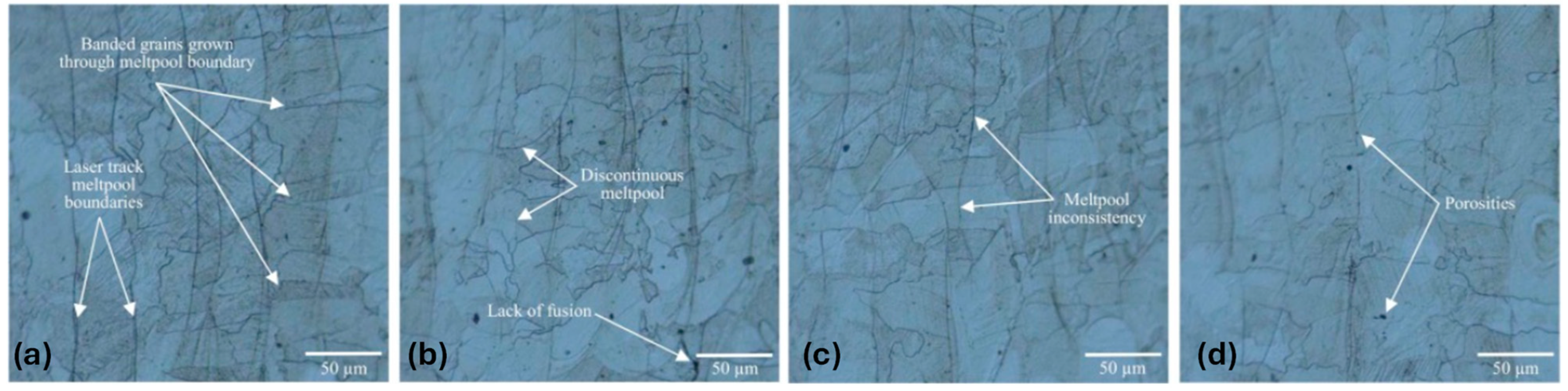
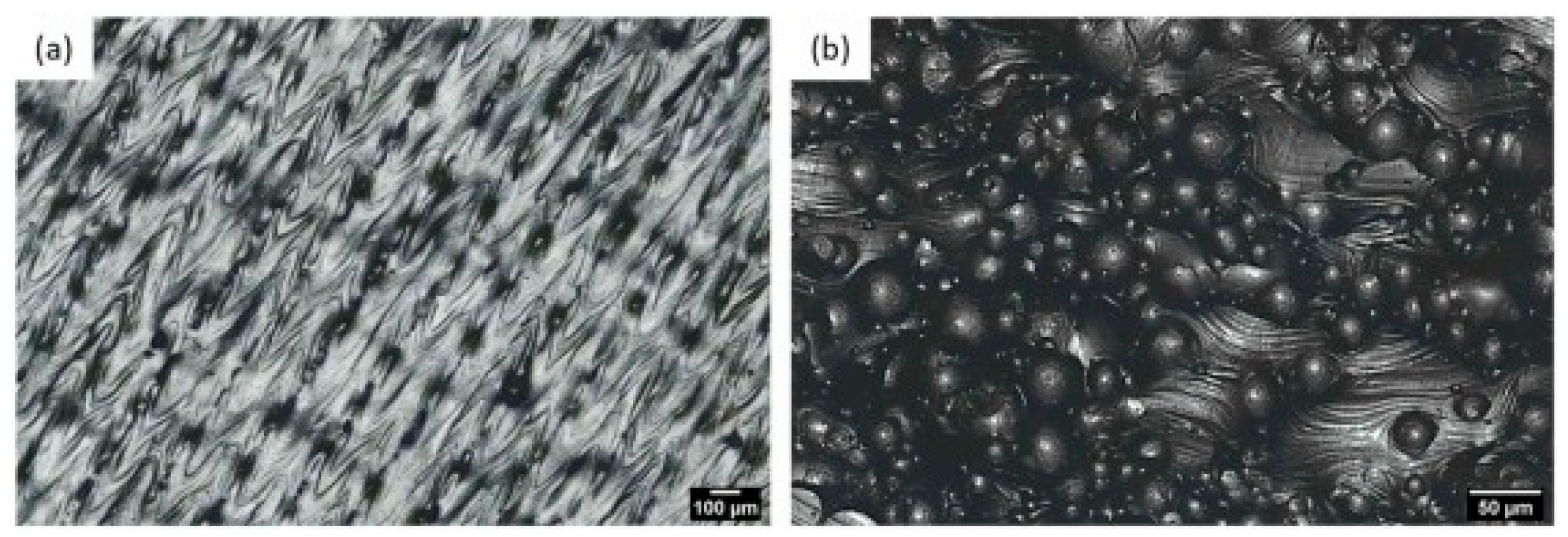
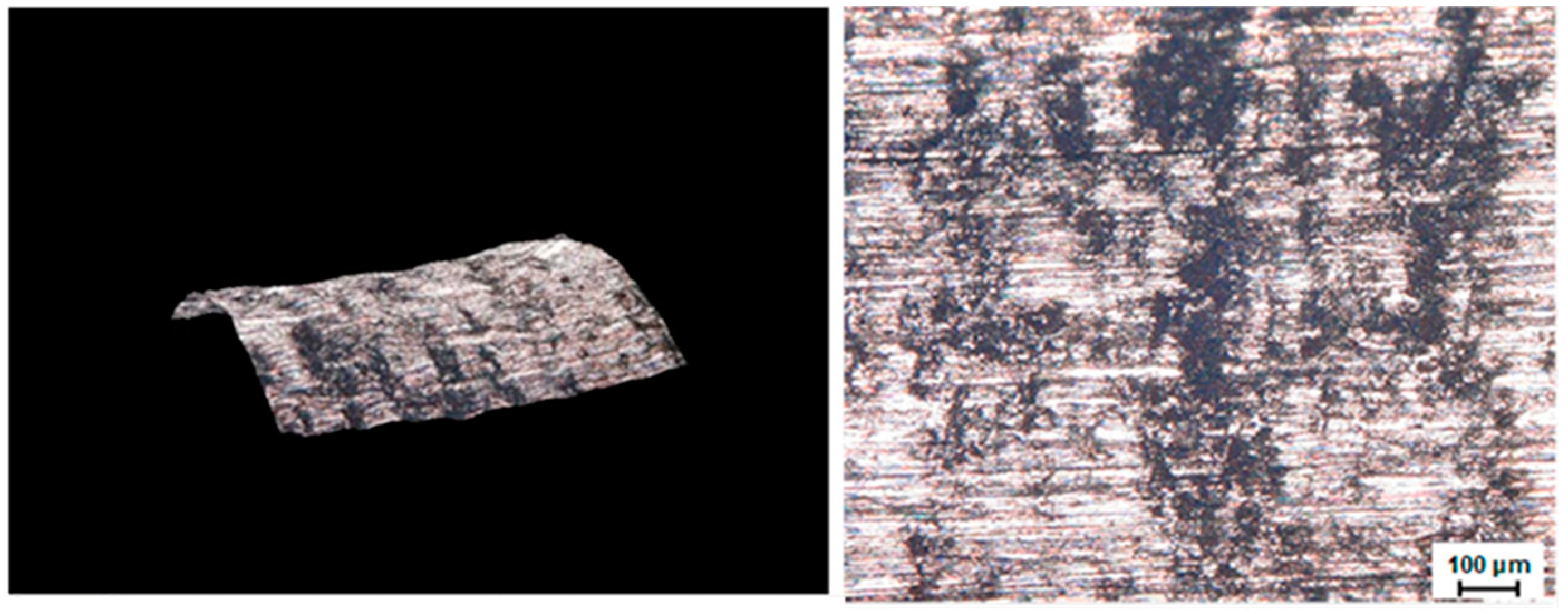
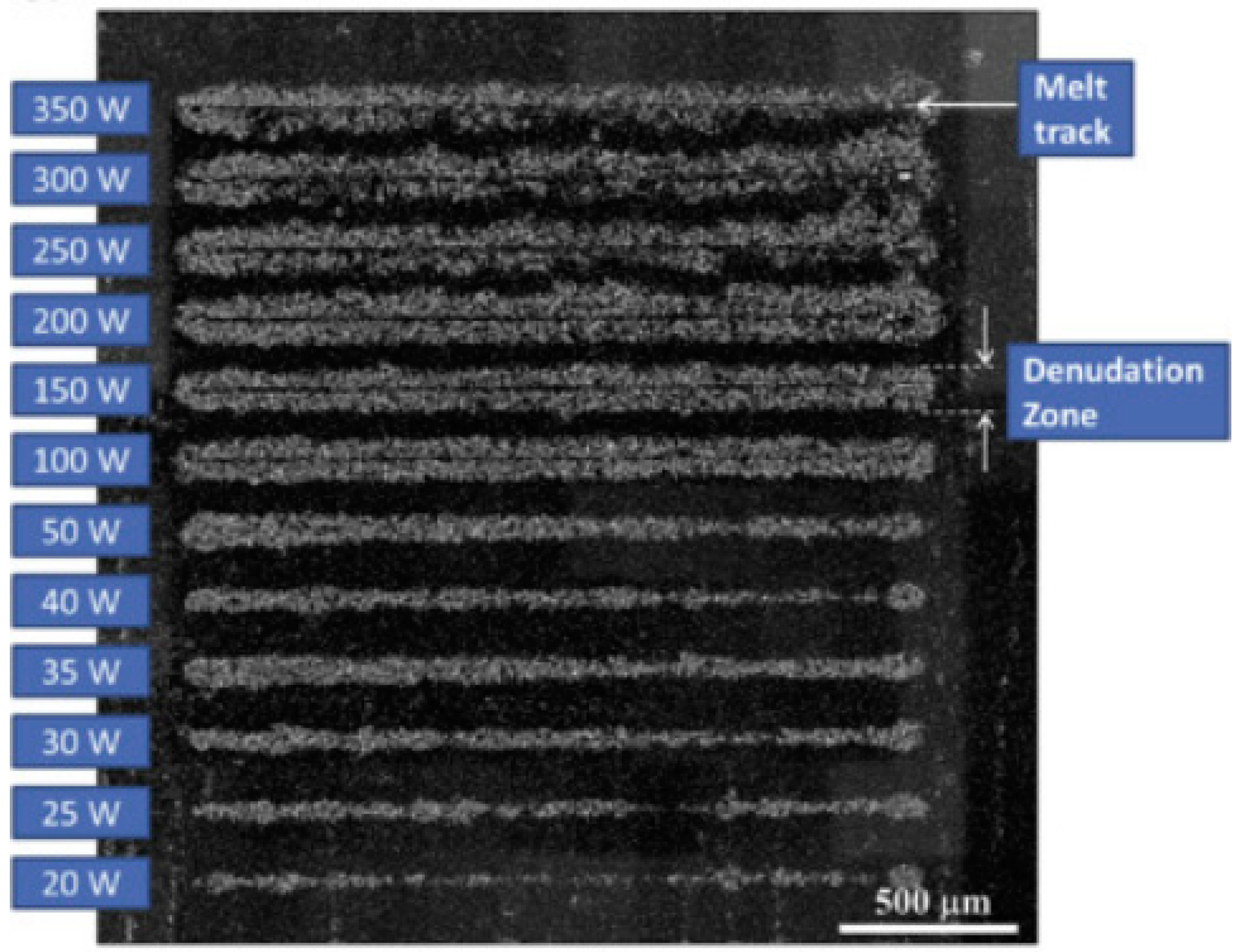
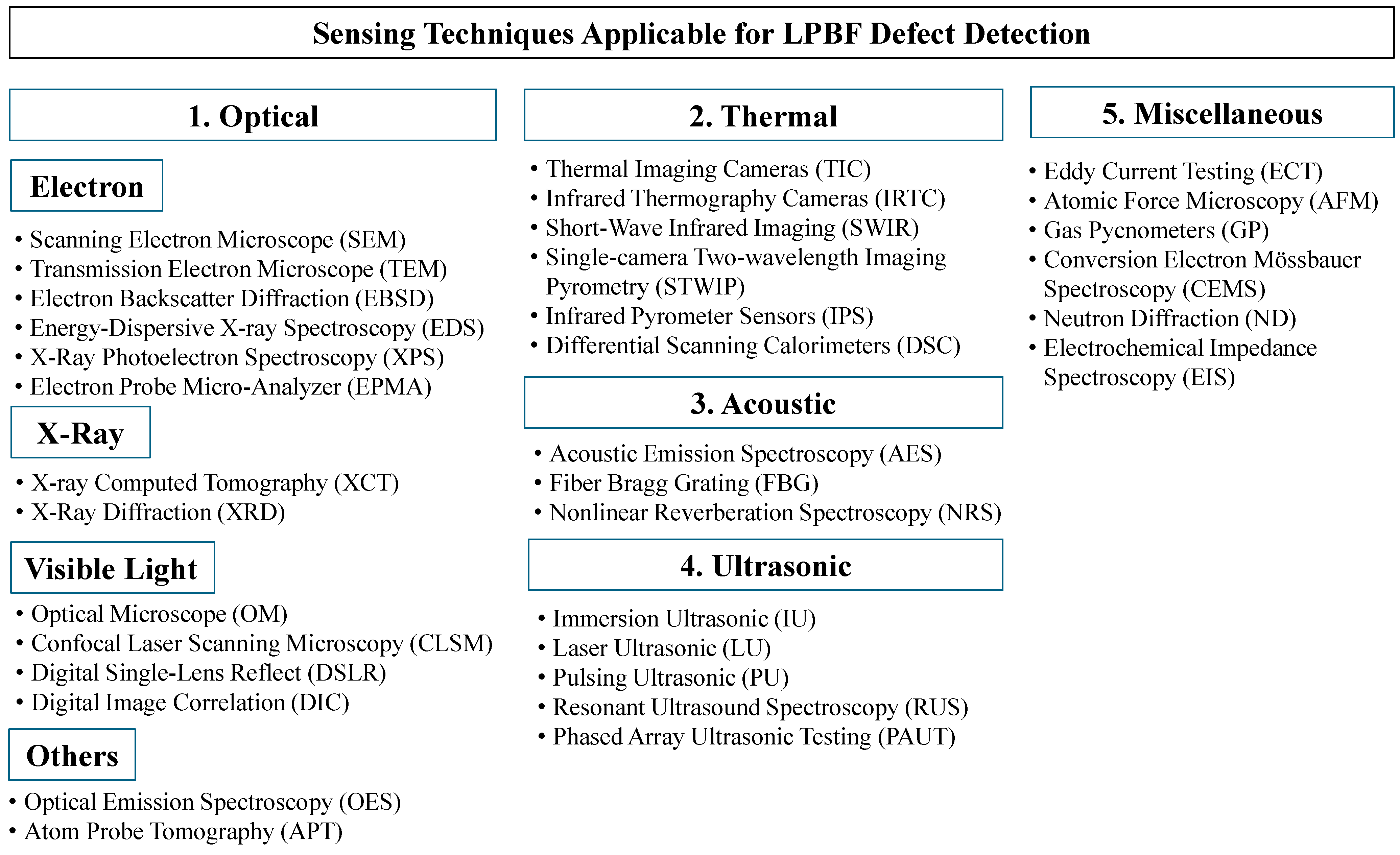
3.2. Thermal Techniques
Thermal techniques utilize differences in temperature and light to assess part quality and detect defects. Thermal techniques can be implemented in situ to monitor the melt pool behavior in LPBF printing. Infrared and thermal imaging cameras (1400–3000 nm and 3000–15,000 nm wavelength range) and pyrometers are used. After solidifying the melt pool, they provide indicative information regarding the specific defects’ location, type, and size. Other observed techniques, such as differential scanning calorimeters (DSC), can monitor the changes in heat flow during metal alloys’ heating or cooling processes. The heat flow enables tracking temperatures associated with phase transitions to point out potential defect formations.
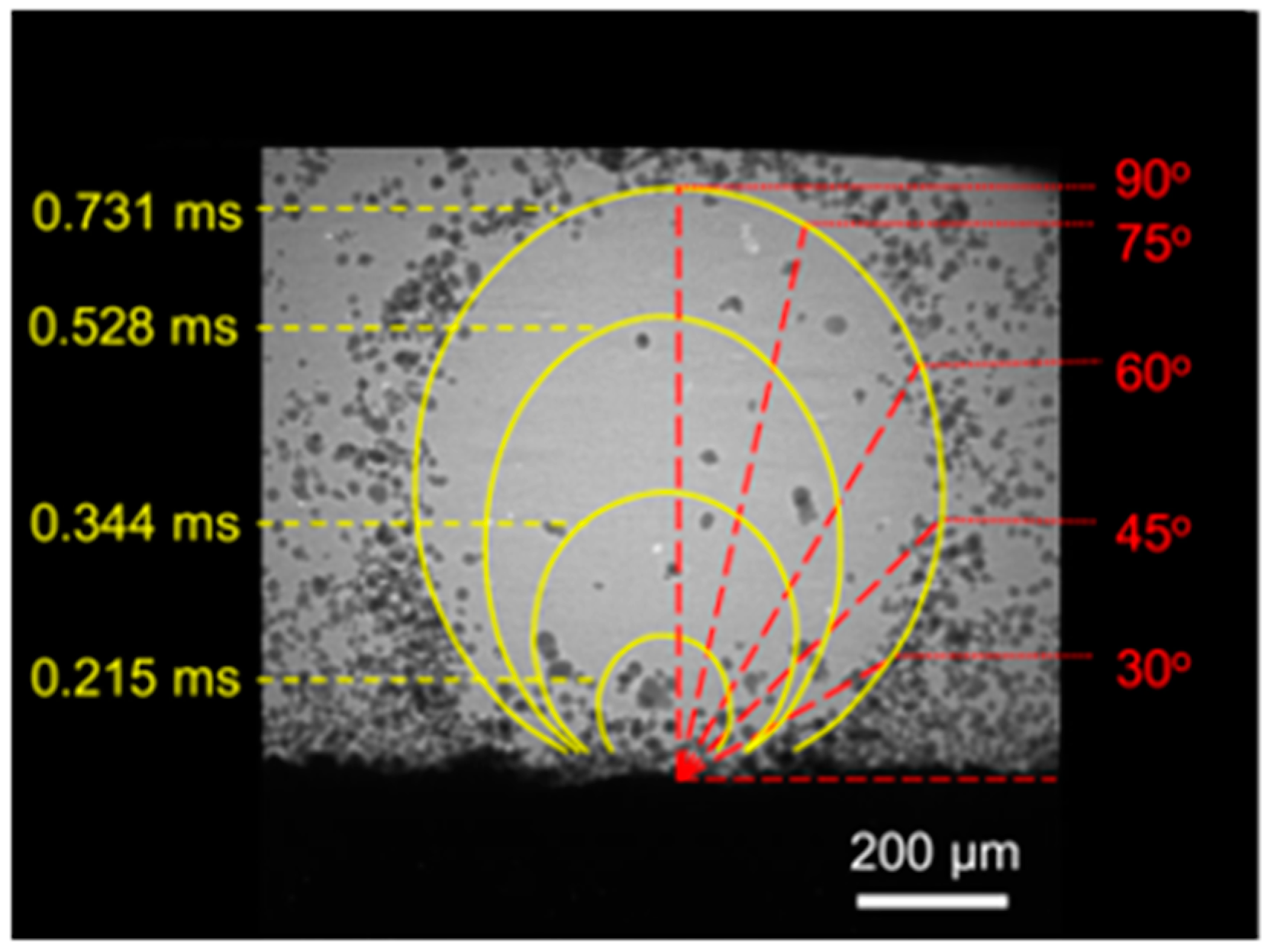
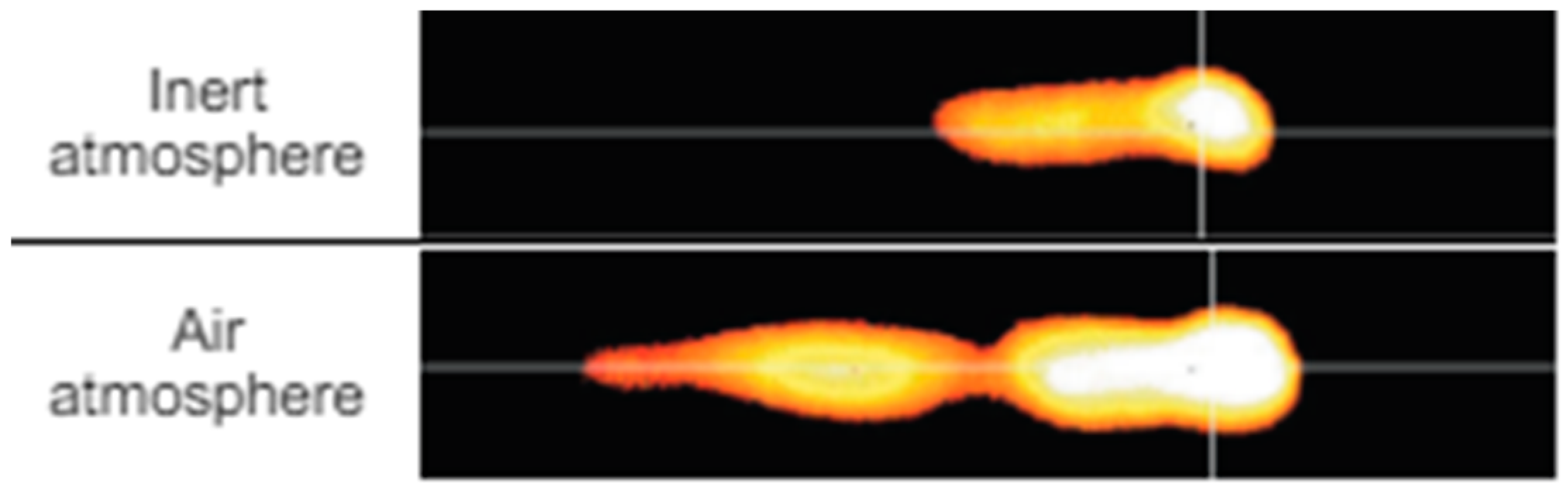
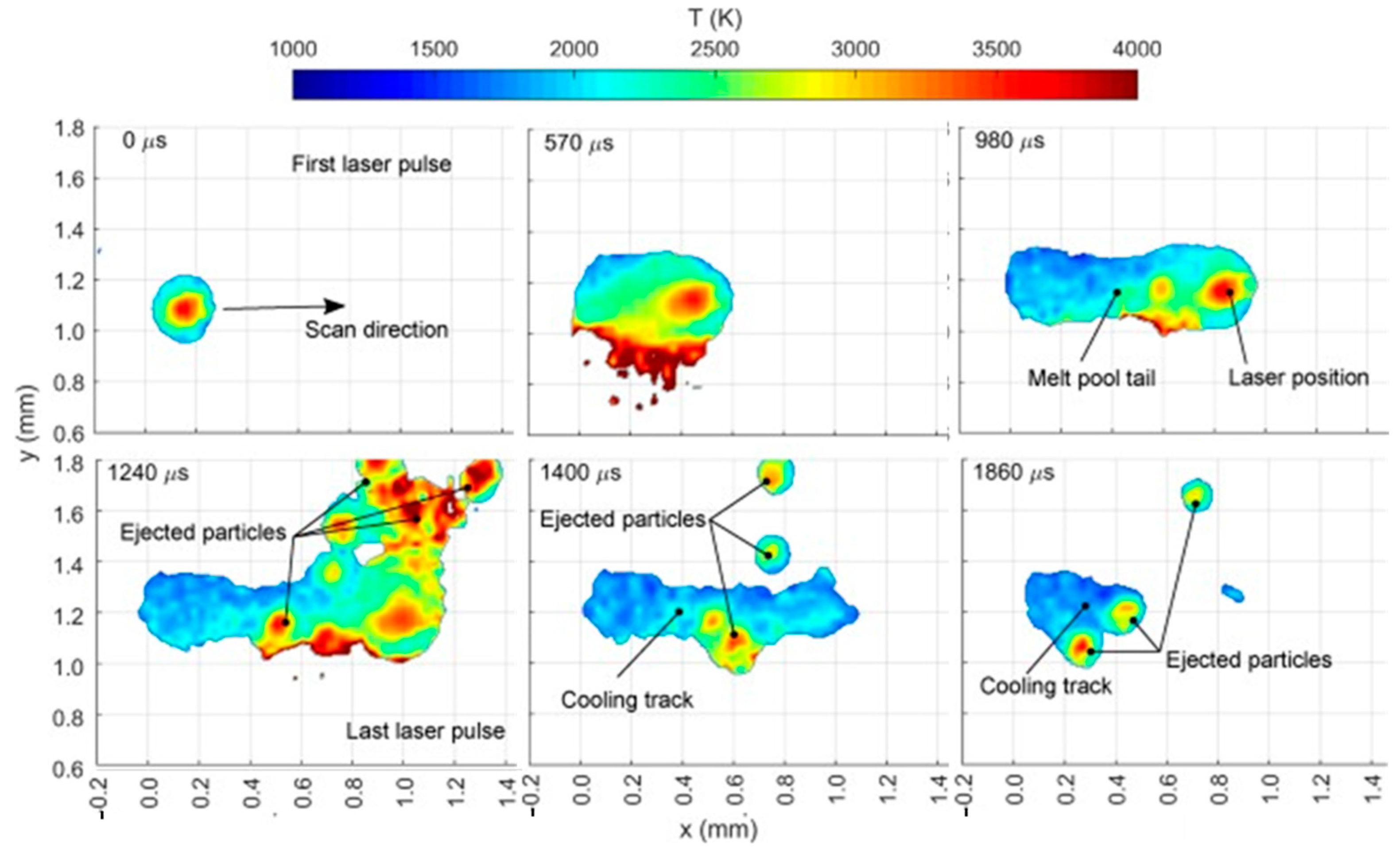
Thermal imaging cameras (TIC) provide data on temperature variations concerning the subject’s absolute temperature and surroundings. Typically, filters are applied to two high-speed cameras that capture two wavelength intensities in thermal imaging. The intensity ratio between the two images can be correlated to temperature values. TIC enabled the analysis of the melt pool dynamics, tracking ejected particles from the LPBF printing process, as shown in
Figure 26 [
149].
Infrared thermography cameras (IRTC) capture images by detecting short IR energy wavelengths emitted by an object and converting them to temperature values. Defects are detected by locating disturbances in the temperature profile. Santospirito et al. [
150] utilized an IR camera to detect defects in LPBF components. A similar study monitored the melt pool characteristics of Ti6Al4V, AlSi10Mg, and NiTinol LPBF-printed parts using a high-speed NIR thermal CMOS camera [
151]. Observations made using the NIR camera were compared with XCT measurements of the cut samples, indicating excellent compatibility between the actual defects and what was observed from in situ quality control. A forward-looking infrared (FLIR) camera was used to capture temperature measurements of the molten pool surface of SS316L [
152]. Unstable melt track characteristics were observed using the IR camera, which showed spherical formations akin to balling. The evolution of the generated thermal footprint during the LPBF printing process using an IR camera to detect artificially created laser defects was evaluated [
153]. The IRTC detected the typical micrometric defects inside the AM part. Artificially created micro-drilled defects in titanium alloy LPBF-printed acetabular cup prostheses using an FLIR camera were captured in a study by Montinaro et al. [
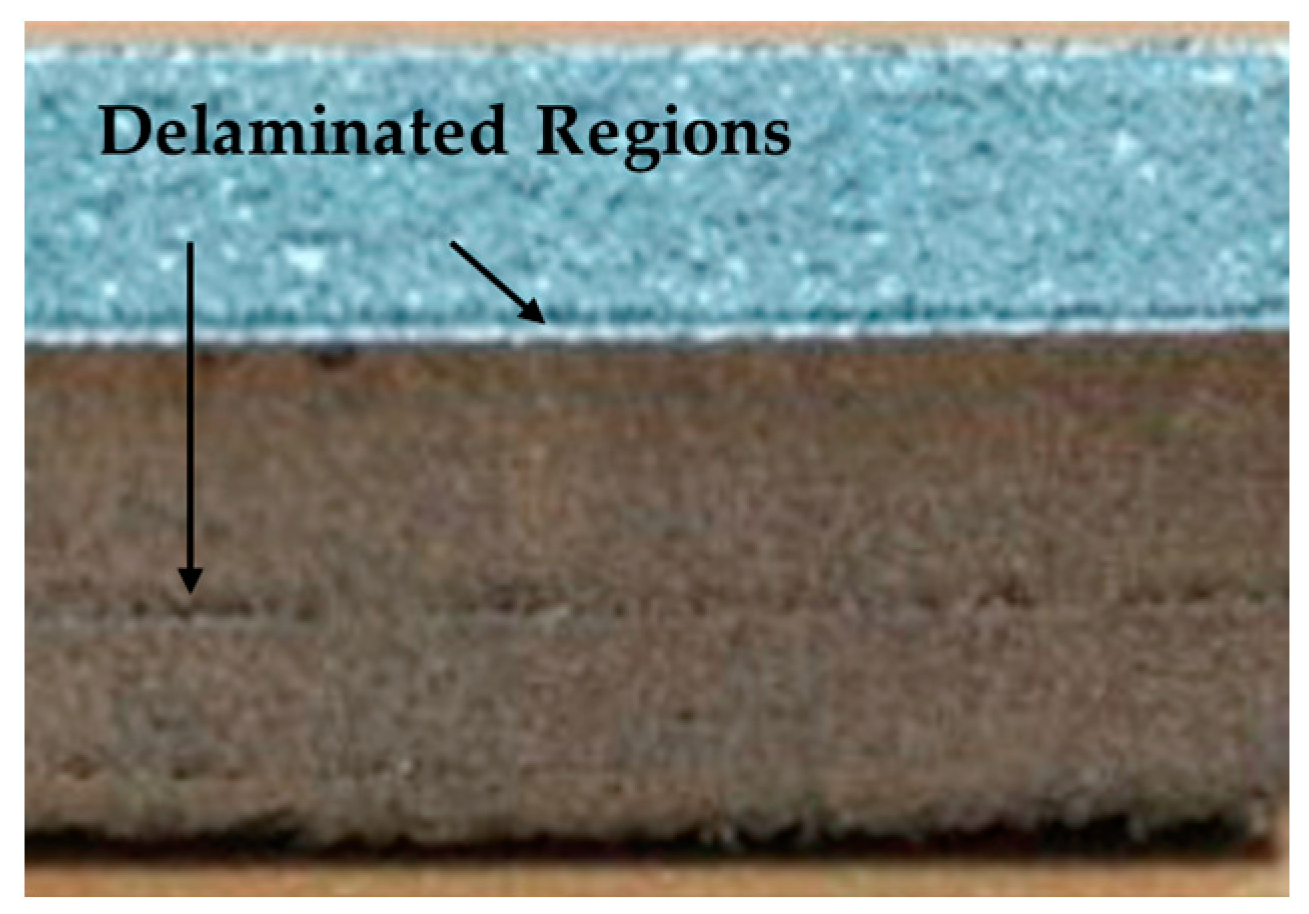
154]. Subsurface defects were detected up to a depth of 1.3 mm in the part. The IRTC captured plume and spatter signatures using near-infrared (NIR) imagery. The intensity and dynamic nature of the plume and spatter during the LPBF printing process were caused by the melting instabilities, including defects such as lack of fusion, cracks, warps, or delamination, which were successfully captured [
154]. A method for reliable characterization of the calorimetric signature of fatigue damage was developed using IRTC [
25].
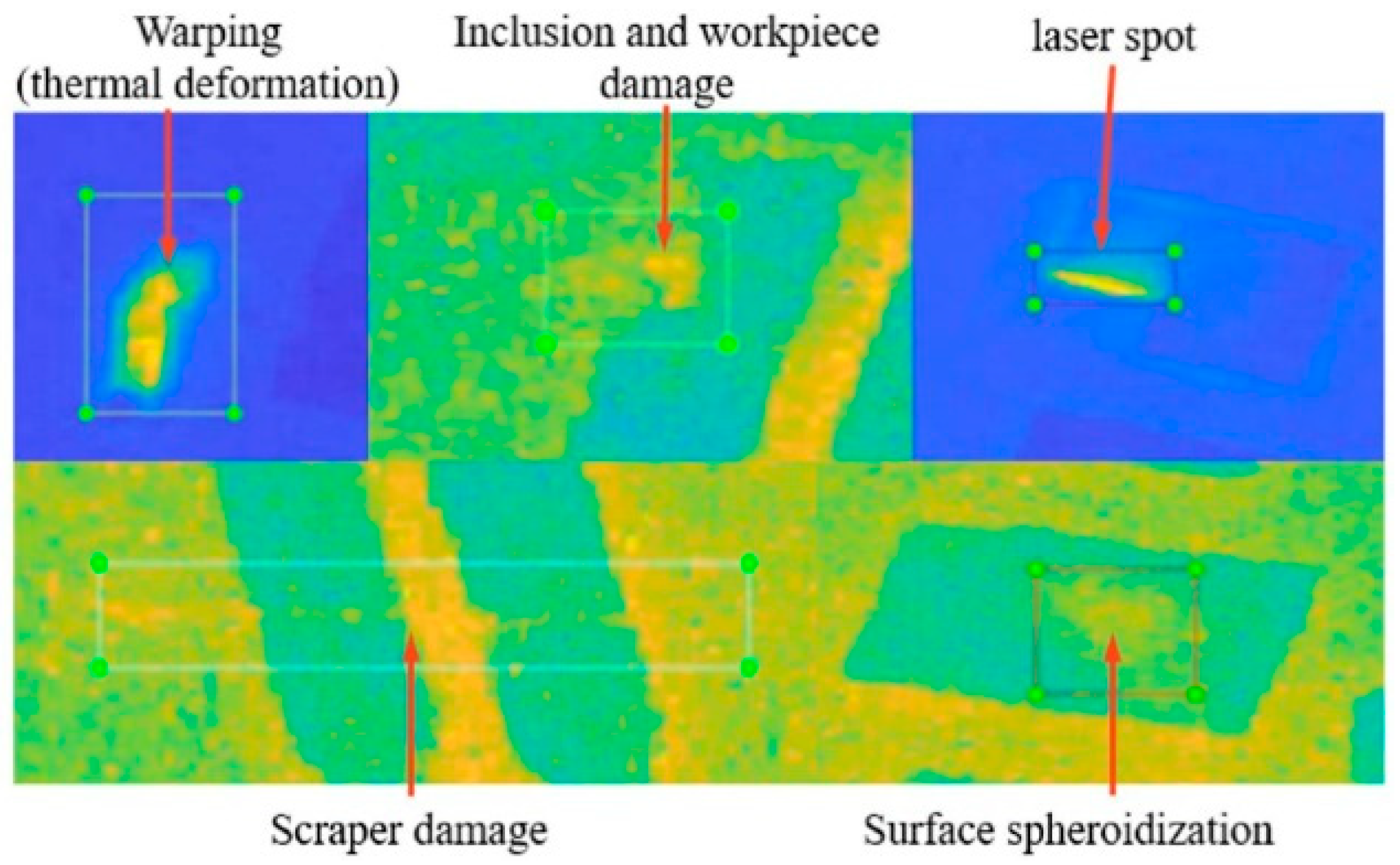
Figure 27 shows IR camera images capturing the location of defects and damage to the LPBF-printed part [
155].
Short-wave infrared imaging (SWIR) cameras capture wavelengths between 900 and 2500 nm. The SWIR cameras are superior to alternative thermal cameras for capturing fast dynamic events at high temperatures, such as melt pool dynamics [
156]. The radiance sensitivity of the SWIR wavelength band regarding the blackbody temperature is much higher than that of NIR, as well as medium-wave and long-wave infrared imagery cameras. Lough et al. [
156] captured the fast melt pool dynamics critical to the microstructure formation of SS304 LPBF-printed parts. The thermal features for each voxel for spatial and temporal domains were extracted using SWIR imaging during the LPBF printing process. The thermal features extracted from the SWIR data for each voxel could indicate whether the voxel contains pore defects. SWIR tracked the thermal history of different voxels during the LPBF process to determine the location and characteristics of defects in another study [
157].
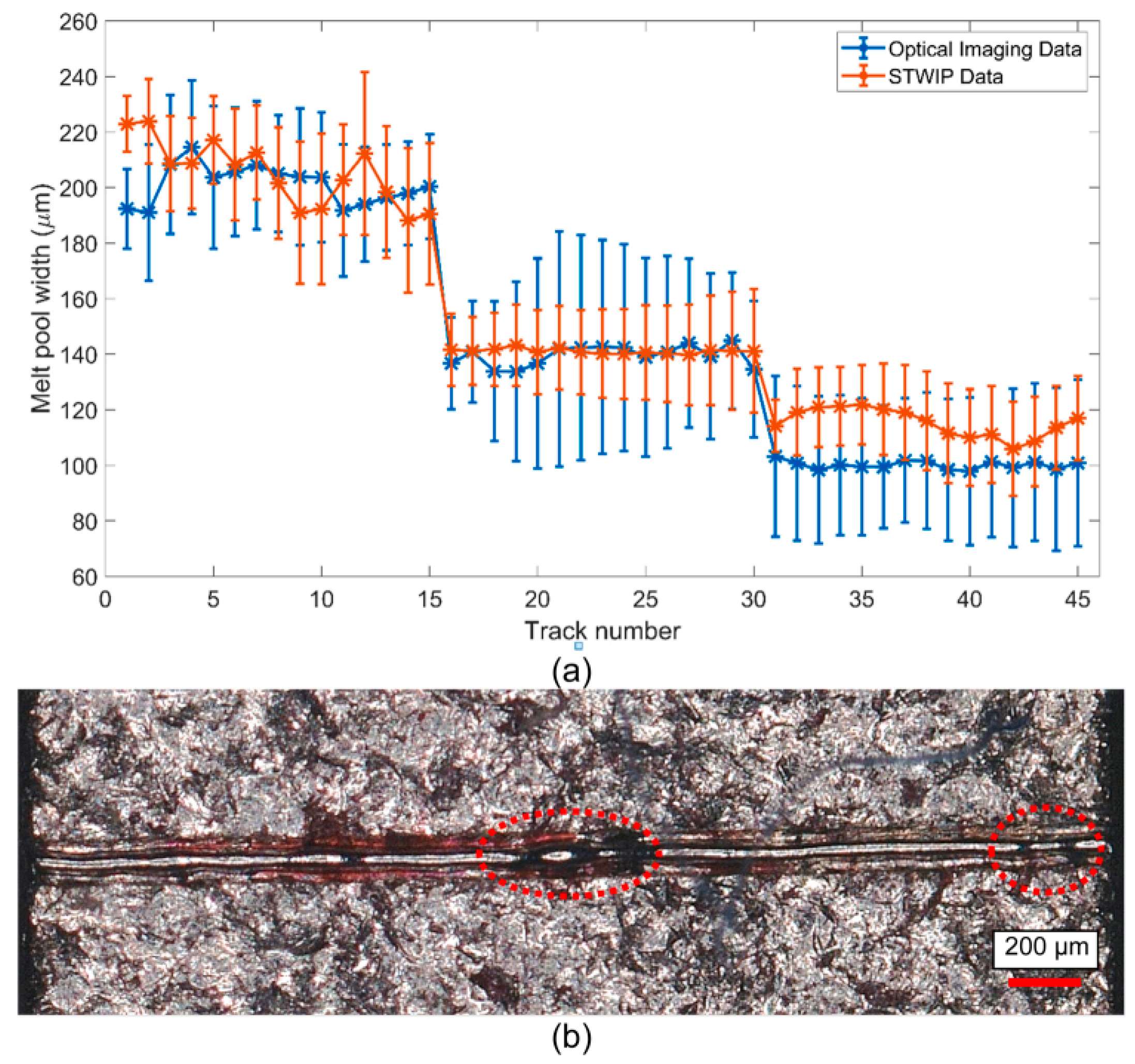
Single-camera two-wavelength imaging pyrometry (STWIP) systems utilize a high-speed camera to monitor melt pool dynamics and estimate pool morphology and temperature. In STWIP systems, the melt pool is imaged at two different wavelengths using two photodiodes, and the temperature is estimated using the Imaging Pyrometry method. The estimated temperature is created by extracting the intensity ratio of the melt pool from the STWIP system. STWIP circumvents potential issues caused by multiple camera sensors, such as errors induced by different imaging sensors and the relative location of the melt pool depending on the location of the sensor. Vallabh and Zhao [
158] utilized an STWIP system to measure melt pool temperature profiles in NiCr alloy LPBF-printed fatigue bar samples. Disparate temperature profiles in the fatigue bars could indicate potential process anomalies or part defects. An investigation to estimate the melt pool temperature, morphology, and intensity profiles of IN718 LPBF-printed specimens using STWIP was reported [
159]. The melt pool temperature signatures collected from the STWIP system were correlated with ex situ microscopy-characterized melt pool depths and average grain lengths. The fusion defects were not observed in the tracks comparing the optical microscopy imaging and STWIP data (see
Figure 28). Zhang et al. [
160] mapped the STWIP-measured melt pool to detect process anomalies and part defects in IN718 LPBF-printed specimens.
Infrared pyrometer sensors (IPS) monitor light emitted from the LPBF melt pool and associate specific signatures with certain printing defects. Infrared pyrometer sensors have a fast response time and are dependably repeatable. It is a non-destructive and physically small sensor. However, they are affected by smoke and dust particles. IR pyrometer and photodiode sensors captured the SS316L melt pool thermal emission wavelengths [
161]. The thermal signatures obtained through the IR pyrometer correspond to various melt pool modes and can hint towards pore formations and predict defect creation. Duong et al. [
162] collected pyrometry measurements during the LPBF printing process of Inconel. A correlation between the pyrometer signal and pore distribution was established, and a probability curve for a given pyrometer signal was derived. Kozjek et al. [
163] estimated the melt pool temperature of the AlSi10Mg LPBF-printed part by capturing thermal emission Planck (TEP) process signatures.
The individual TEP signatures were obtained using two photodiodes to collect two light intensity measurements. A system monitored the LPBF printing process of SS316L single tracks, increasing laser power and velocity using high-speed infrared diode-based pyrometry optical imaging signals [
98]. The pyrometry signal showed distinct signatures of conduction-to-keyhole mode transitions. A probability correlation predicting pore formation was derived.
Differential scanning calorimeters (DSC) are thermoanalytical devices that measure a material’s specific heat capacity change. DSC measures the changes in heat flow (exothermic or endothermic) during metal alloys’ heating or cooling processes. These measurements determine the thermodynamic temperatures associated with phase transitions such as solidification and melting [
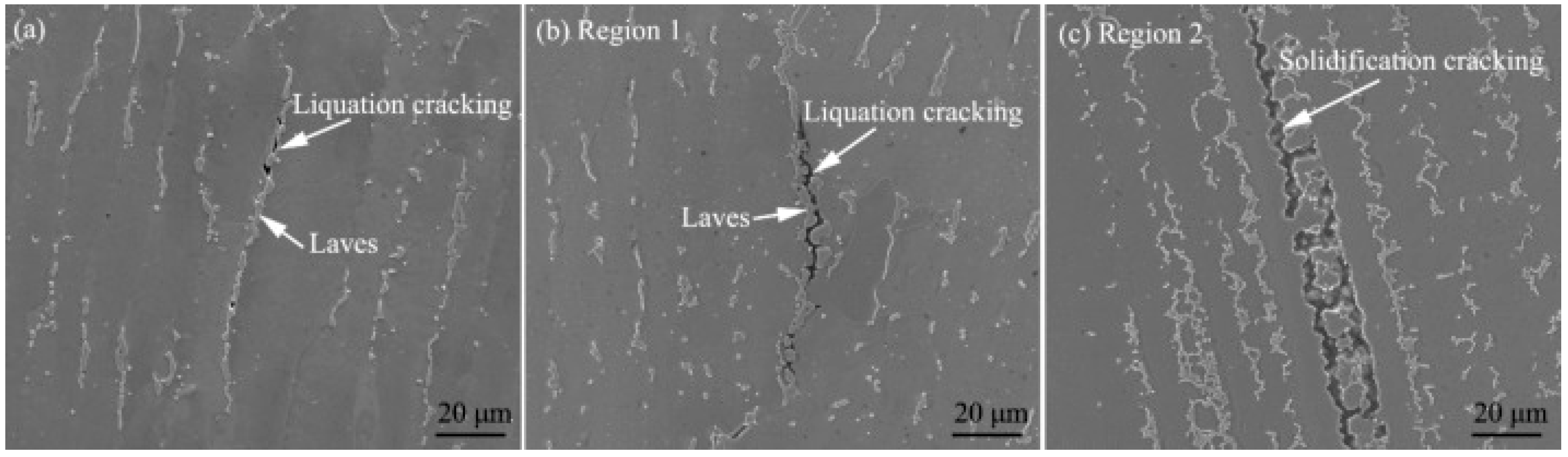
164]. DSC is considered relatively inexpensive but reproducibly difficult. Regarding LPBF printing, DSC has been used to quantify phase transformation temperatures, behaviors, and solidification temperature ranges. The solidification phase change behavior of the printed alloy observed by DSC can hint toward cracking phenomena [
165]. The observed undercooling of the alloy powder using a differential DSC was correlated with specific inoculation variants, such as cracks. At the lowest undercooling scenarios, the fewest number of cracks were observed. Chen et al. [
61] utilized DSC to determine the phase transformation temperatures of as-fabricated TiNi LPBF-printed samples. The phase transformation temperature was shown using DSC to be significantly affected by the alloy’s proportion of Ti and Ni elements.
The Ni element was reported to be disproportionately lost due to the melting process, producing a martensitic transformation temperature difference. Guo et al. [
62] similarly investigated the Ni evaporation occurring during the LPBF printing process of NiTi alloys using DSC. The resulting precipitation, dislocations, and internal stresses concerning the phase transformation temperature were also observed. Another study compared DSC measurements with SEM microstructure imagery regarding the variation in the solidification microstructure of AlSi10Mg powder, such as microstructure inhomogeneities [
166]. Liu et al. [
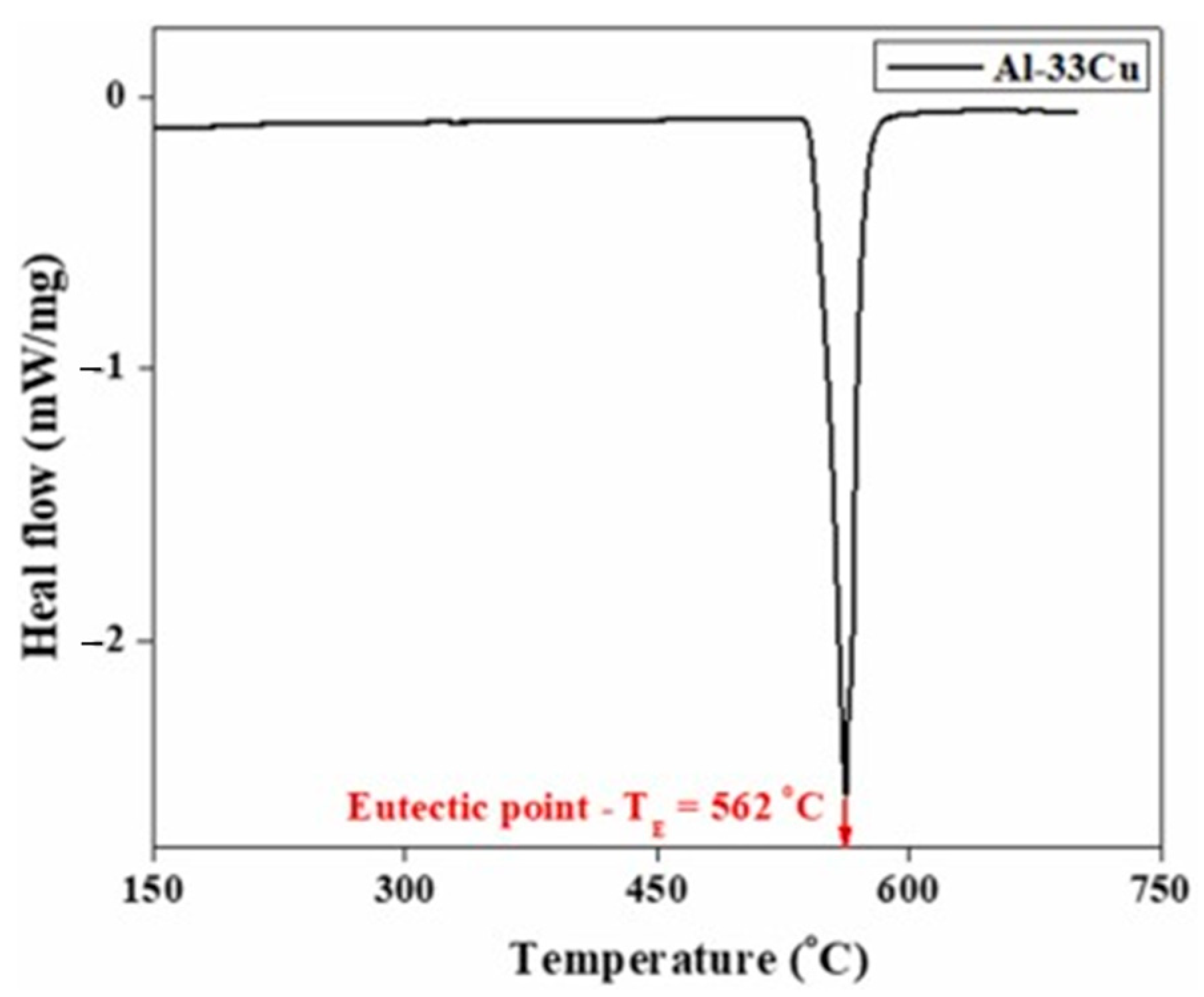
113] measured the STR of an experimental high W-content nickel-based superalloy using DSC. It was observed that solidification cracking always occurred in the fragile mushy zone where the liquid and solids coexist. This observation concluded that a decreased solidus temperature leads to the formation of low-melting-point liquid films and increases the tendency for liquid cracking. DSC was used to produce thermograms, pointing to a thermal stability regime and a single sharp endotherm temperature, as shown in
Figure 29 [
75].
3.3. Acoustic Techniques
Also referred to as resonance techniques, acoustic techniques detect the excited vibrations in a specimen to assess part quality and detect defects. By collecting the acoustic emissions (AE) generated from the LPBF printing process, the correlation between the anomaly signals and the location can provide insight into the location and size of defects, including internal defects.
Acoustic emission spectroscopy (AES) measures the continuous release of energy from where transient elastic waves are generated in a material. There are two significant components in AE spectroscopy, namely, a fault that is the cause of energy release in the material (event) and the transducer that gathers the data from the produced event. The fault generated from the AE signal appears in high-frequency sound waves [
167]. AE spectroscopy has been mainly used for dynamic damage characterization, specifically for crack propagation monitoring. Other internal structural defects can be detected from acoustic signals. AE spectroscopy is a non-destructive technology that can quickly generate valuable data about the location of defects [
167]. However, the description generated from the AE cannot accurately describe the size and shape of defects.
Strantza et al. [
168] used AE to monitor the fatigue crack growth behavior of LPBF-printed Ti6Al4V components. Two AE broadband “pico” type sensors were attached to the side of the printed specimen. The time delay between the two AE signals and the wave velocity of the material simultaneously were used to determine the crack location. A study performed acoustic resonance testing of SS316L and 6802 T6 aluminum alloy samples to measure the modulus of LPBF-printed lattice samples with a high degree of loose powder adhesion [
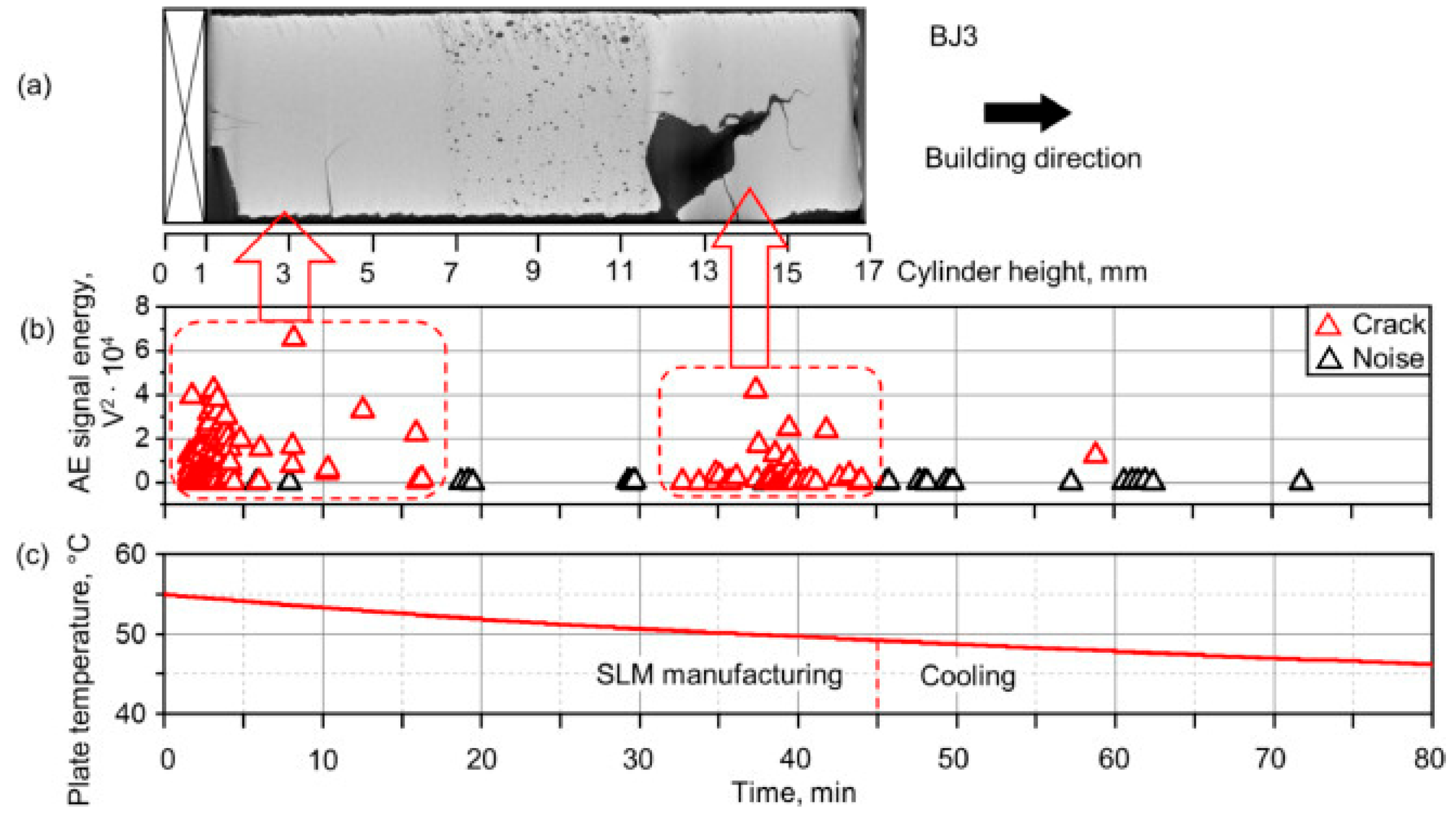
169]. The samples were excited with a small impact, and a microphone was used to record the AE signals. The resulting AR test results were reportedly feasible in providing a metric of loose powder adhesion and other structural characteristics. Multiple studies used AE signals to characterize the corrosion behavior of AlSi10mg specimens [
170] and monitoring techniques to detect crack formation in a high-strength Al92Mn6Ce2 alloy LPBF-printed component, as shown in
Figure 30 [
171].
A combination using laser Doppler vibrometry (LDV) with vibrational resonance spectroscopy to develop a laser acoustic resonance spectroscopy (LARS) system was introduced [
172]. The LARS system reportedly identified defects rapidly in LPBF cubic components. Acoustic signals generated during the LPBF printing process of SS304 using an equipped nominal microphone attached to the LPBF were collected [
173]. Melting states such as overheating, slight overheating, standard, and slight balling in the LPBF printing process are obtained by the relationship between acoustic signals, energy densities, and track formation.
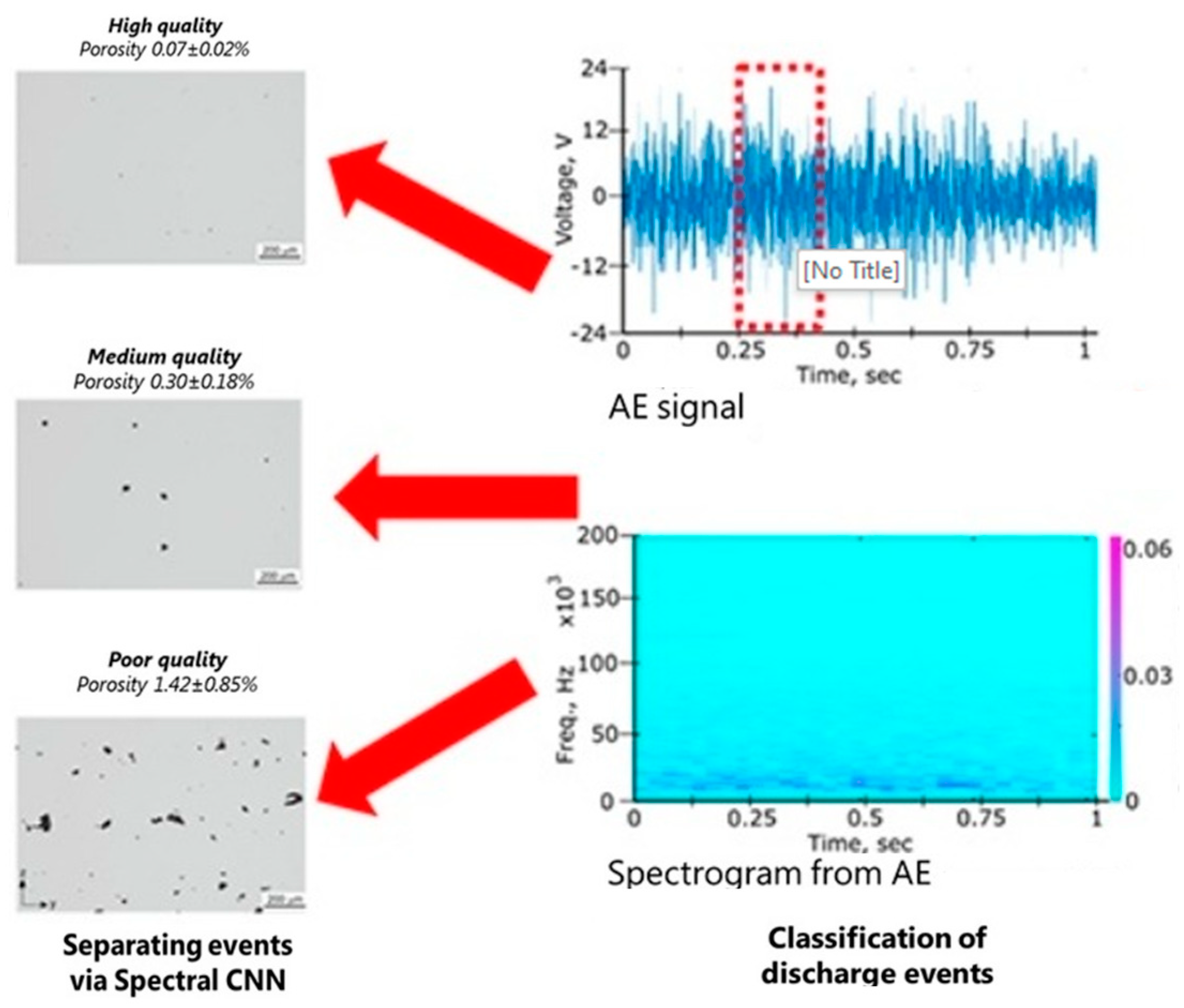
A high-frequency structure-borne sensor was used to detect AE activity associated with cracking. Drissi-Daoudi et al. [
174] used a microphone to record the AE signals during the LPBF printing process of SS316L cubic samples. After post-processing, spectrograms were created from the extracted AE signals, revealing the location of defects in the samples. Kononenko et al. [
175] collected AE signals during and after the LPBF printing process of Al92Mn6Ce2 cylindrical specimens using a high-temperature structure-borne sensor. The processed AE signal data were used to train various ML algorithms to recognize crack signals.
Fiber Bragg grating (FBG) sensors are one of the most sensitive sensor types for acoustic and pressure wave detection [
176]. For FBGs, AE signals are collected through fiber optic sensors, where the strain sensitivity is correlated with the AE measurements. Due to the change in the grating pitch and refractive index through the strain optic effect, the Bragg wavelength exhibits a change when an external strain is applied [
177]. FBG sensors are more compact and lighter than standard AE detectors, although they are known to be thermally sensitive, so they have difficulty discriminating wavelength shifts from temperature and strain changes. Wasmer et al. [
178] quantified the levels of porosity concentration in SS316L cuboid-shaped samples using a fiber Bragg grating (FBG) optoacoustic sensor. Shevchik et al. [
179] used an FBG sensor to detect airborne AE signals generated during the LPBF process. Tubular defects were prevalent at the most considerable energy input, and the lack of fusion defects was dominant at the lowest energy inputs (see
Figure 31). Shevchik et al. [
180] presented a novel solution for in situ and real-time quality monitoring based on detecting the AE signals emitted during the LPBF printing process.
Nonlinear reverberation spectroscopy (NRS) exploits the amplitude-dependent changes in the resonance frequency of a sample. Once the sample is excited near resonance, the immediate vibration frequency of the decaying reverberation signal decays with decreasing amplitude. The nonlinearity of the material that defects can cause can be determined by frequency–amplitude dependence. NRS is a non-destructive measurement technique that can rapidly measure AE so that thermal drift is primarily reduced. However, similar to other AE detectors, it cannot describe the defect’s characteristics.
Johnson et al. [
181] demonstrated the sensitivity of acoustic nonlinearity and loss to small changes in porosity of LPBF-printed custom alloyed Al (0.2 at. % Zn) and commercial Al7075 cylinders. The acoustic signals were generated using non-contacting electromagnetic-acoustic transduction. The relative frequency shift measurements collected from the NRS method exceeded the best-reported precision of nonlinear resonant ultrasound spectroscopy (NRUS) by two orders of magnitude.
3.4. Ultrasonic Techniques
Like acoustic techniques, ultrasonic techniques utilize generated mechanical waves to analyze the quality of LPBF parts. One of the main differences between ultrasonic and acoustic emissions is that for ultrasonic techniques, the ultrasonic waves in the sample are artificially created by forced interaction with an external source. Typically, ultrasonic techniques are performed ex situ.
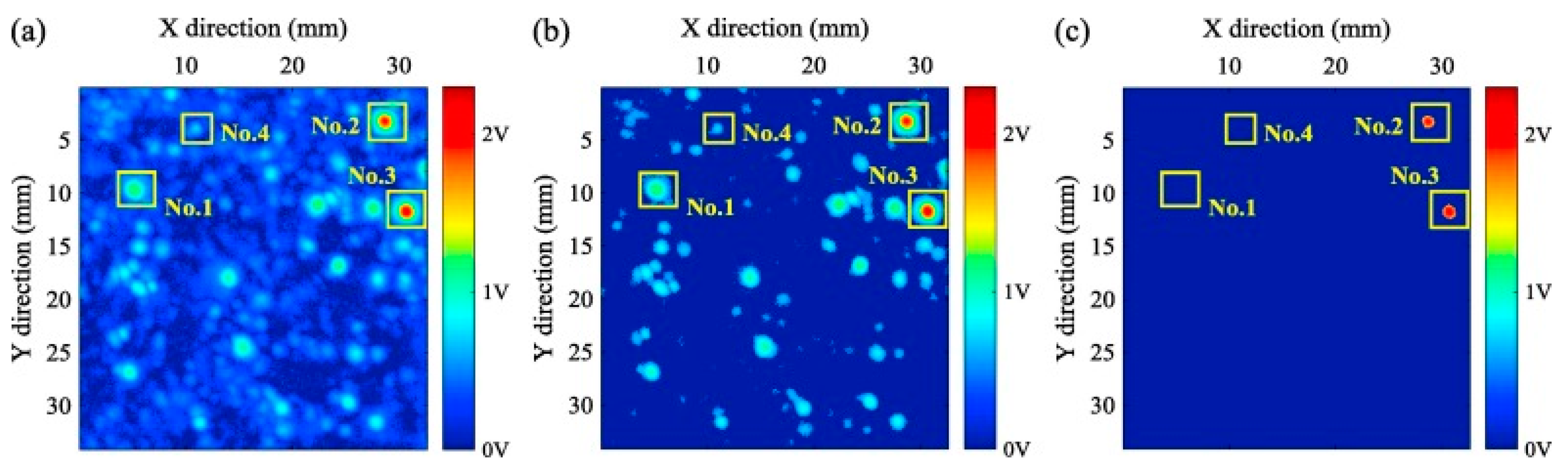
Immersion ultrasonic (IU) systems are conducted in a water immersion tank with a pulser/receiver and focused transducer to collect routine incidence pulse/echo measurements. A study used IU-measured ex situ ultrasonic backscattering data induced by the microstructure in LPBF-printed samples using a conventional immersion ultrasonic C-scan system and expected frequencies (see
Figure 32) [
182]. The ultrasonic backscattering data collected from the immersion ultrasonic system effectively detected the flaws of SS316L samples fabricated using LPBF.
Davis et al. [
183] performed IU testing using Parametric© NDT immersion focus probes with the sample mounted inside a plexiglass tank filled with water. Porosities were observed from the IU data, and the average porosity size was about 0.3 mm. Honarvar et al. [
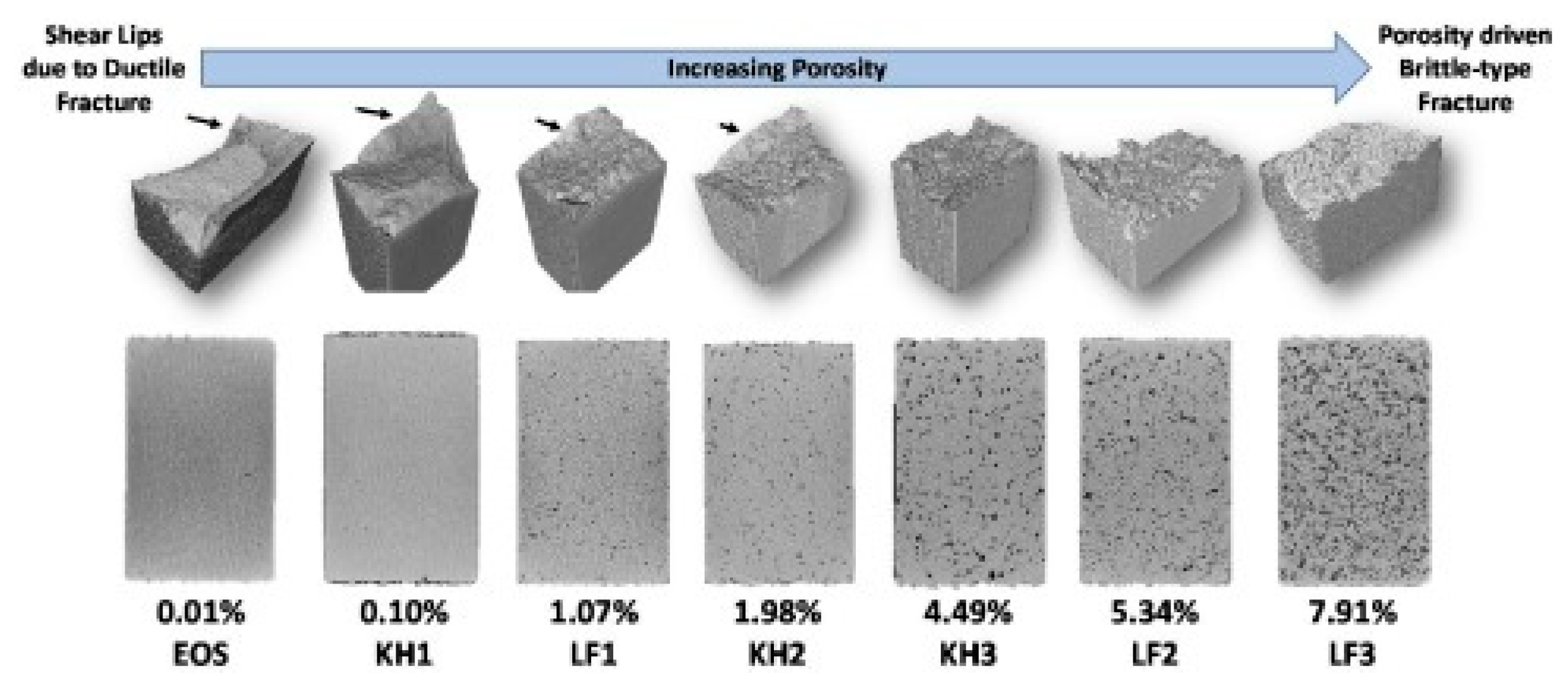
184] used linear phased array probes to perform IU experiments to detect artificially embedded defects with various shapes and sizes in AlSi10Mg cubic samples. The IU system could detect defects as small as 0.75 mm, and the IU defect detection capabilities were validated with XCT data.
Laser ultrasonic (LU) systems typically comprise two pulsed lasers and a recording device such as an interferometer or laser Doppler vibrometer (LDV) recording device. The two pulsed lasers trigger the absorption of the incident laser light pulse, which can cause plasma to form directly above the impact point. Once the energy of the plasma reaches a certain level, the expanding plasma is ejected from the surface of the sample and generates ultrasonic waves from the impulsive recoil force that propagates into and along the sample [
185]. The interferometer records two pieces of information: (1) a DC monitor signal, which is proportional to the power of the detector beam signal and is a measure of the light reflected from the sample surface, and (2) an AC voltage corresponding to the instantaneous out-of-plane surface displacement. The returning reflected and diffracted ultrasonic wave signals can distinguish the different propagation modes, which can be used to predict the presence of subsurface or surface defects in the area between or adjacent to the two lasers [
186]. LU has high reproducibility, fast scanning, and is usable in harsh environments, though it is less sensitive than piezoelectric-based ultrasonic inspection systems. Another challenge the LU system has is that ultrasonic waves’ generation efficiency depends on the material’s absorption properties.
Additionally, laser safety precautions are necessary. Using a laser ultrasonic system, manually introduced subsurface and surface-breaking micro-defects of LPBF metallic samples were successfully detected [
150]. Everton et al. [
185,
186] investigated the capabilities of LU techniques to detect manufactured subsurface defects in Ti6Al4V LPBF samples. At various depths, subsurface porosities and spherical voids below the surface were successfully detected using LU.
Cerniglia et al. [
153] compared the inspection capabilities of LU and laser thermography on IN 600 LPBF samples. Flaws were purposefully created to establish the sensitivity to detect defects. LU effectively detected the typical micrometric defects of AM products. The B-scan images allowed an accurate evaluation of the flaw’s location, size, and depth. Liu et al. [
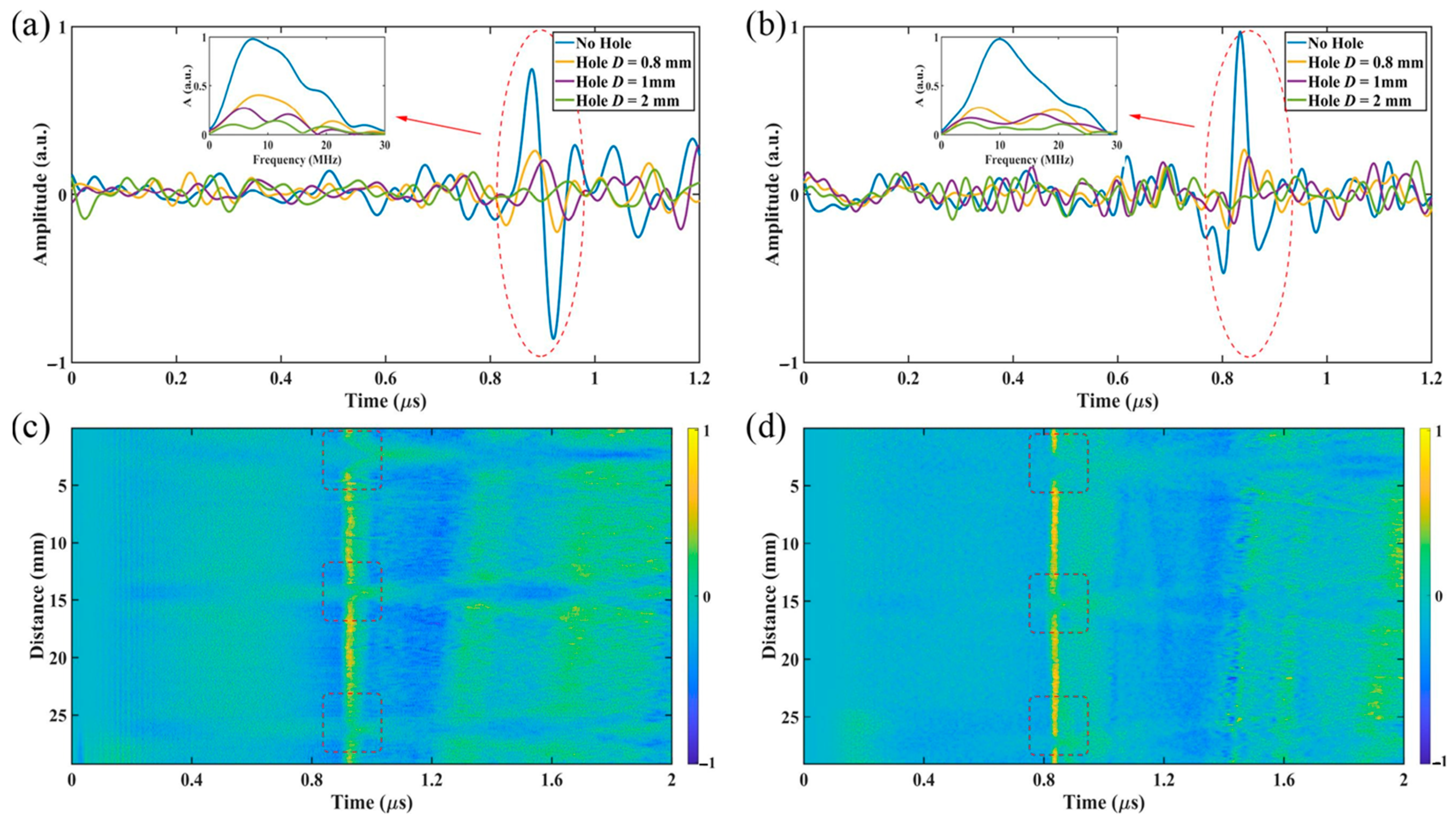
187] utilized a laser ultrasonic technique to detect defects in LPBF-printed NiTi-based alloy samples. Results and validation of the ultrasonic data using XCT indicated that the pulsed laser-generated ultrasonic waves were sensitive to internal defects, and thus, LU testing can identify certain defects at the sub-millimeter level (
Figure 33).
Hayashi et al. [
188] examined an LU method for detecting subsurface defects in an LPBF aluminum alloy flat plate with artificial defects. Subsurface circular defects could be detected for diameters below 1 mm that were undetectably small from previous studies. Chen et al. [
189] proposed an ultra-fast LU imaging method to monitor the LPBF process efficiently. A multi-circle combined scanning strategy and defect location algorithm were constructed to improve detection efficiency. A surface wave focusing algorithm (SWFA) was established to solve the low signal-to-noise ratio (SNR) problem induced by rough surface signals. The scanning efficiency of single-layer inspection was reportedly improved by more than 300% compared with the C-scan imaging method.
Pulsing ultrasonic (PU) systems collect ultrasonic waves through pulser-receivers, which generate electrical excitations in a transducer to create an ultrasound pulse-echo. Pulsing ultrasonic systems are non-destructive and highly sensitive, allowing for the detection of minimal flaws and high accuracy in determining the depths of internal flaws. However, pulsing ultrasonic systems cannot accurately estimate defects’ orientation, size, nature, and shape. Slotwinski et al. [
190] utilized a pulser-receiver to cause a shock-impulse excitation in CoCr LPBF-printed samples.
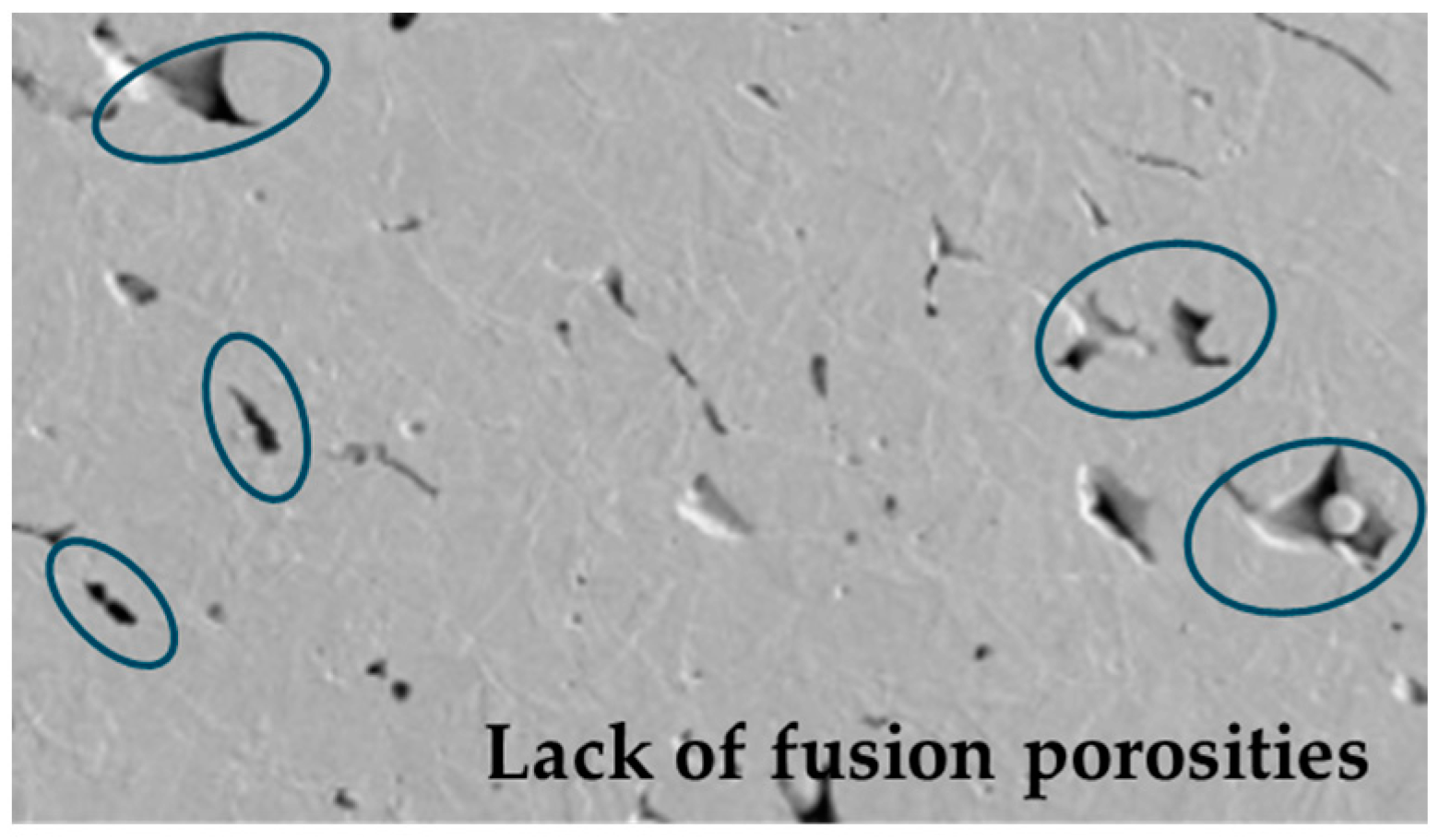
The ultrasonic contact pulse-echo velocity measurement method detected minor changes in the porosity concentration, hinting at the ability to detect process deviations such as pore defects in situ. Ladewig et al. [
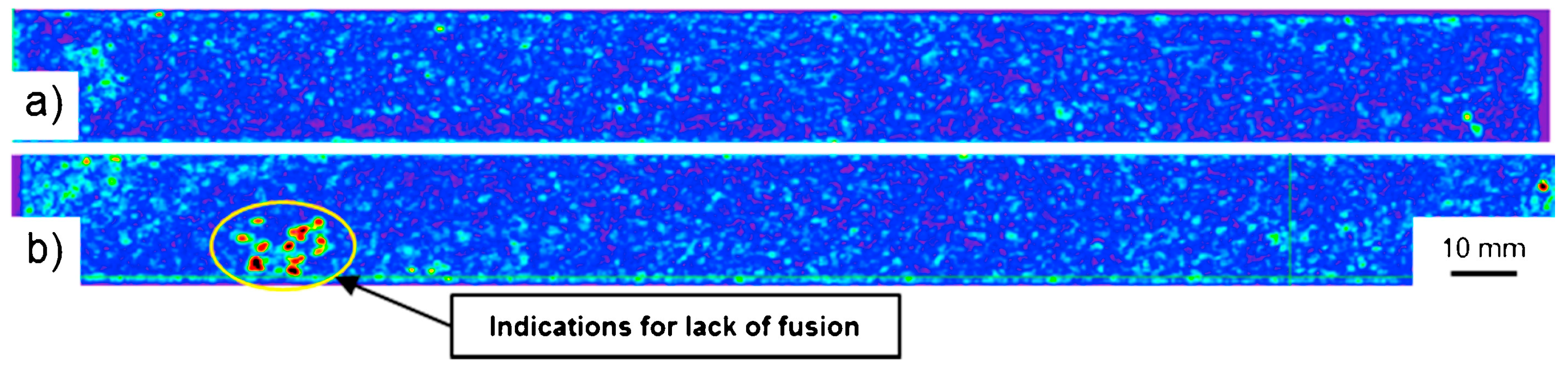
191] used ultrasonic testing to identify the lack of fusion defects of LPBF-printed parts, as shown in
Figure 34. Though the ultrasonic method used to generate the scan images was not mentioned, the data was assumed to be generated using a pulse receiver.
Roy et al. [
192] presented an ultrasound measurement of the segmental temperature distribution (US-MSTD) method for evaluating the microstructural heterogeneities and spatial variabilities of mechanical properties in LPBF-printed cylindrical 31 AL aluminum alloy samples. The segmental speed of sound in the sample was collected using a square wave pulse/receiver. The excitation pulse was sent to an ultrasonic transducer coupled to the flat base of the sample. The results obtained from the ultrasound were validated using XCT. Kim et al. [
193] studied the dependence of ultrasonic phase velocity on the defect formation of LPBF SS316L components by varying the hatch spacing. A pulse receiver was attached to the sample surface to generate the ultrasonic phase velocity. Lamb et al. [
92] measured the ultrasonic sound waves of SS316L LPBF-printed components using a pulser/receiver to recognize the spalling response loaded in different scanning orientations. Raffestin et al. [
194] utilized a pulse echo configuration and 10 MHz ultrasonic wave to determine the part quality of a 100Cr6 LPBF-printed part, determining the location of intentionally-created defects. Positives: non-destructive. Negatives: high sensitivity allows for the detection of minor flaws and high accuracy in determining the depth of internal flaws; negatives: cannot accurately estimate the size, orientation, and shape of the defect; cleaning and removing beforehand prep.
Resonant ultrasound spectroscopy (RUS) is a measuring technique to quantify the resonance frequency of a material sample following a mechanical excitation [
195]. RUS utilizes the excitation of the elastic stationary wave frequency inherent to a given material to determine the elastic tensor of the material and ultimately analyze part quality. Deviation from the natural frequency can indicate heterogeneities, such as part defects. The RUS technique can obtain the entire elastic tensor from a single crystal sample in a single rapid measurement [
196], allowing for relatively fast, contact-free measurements. RUS local resonance behavior data depends on the specimen’s local mechanical properties, often requiring assisting technologies to determine the exact locations of defects. Garlea et al. [
197] studied the elastic mechanical properties of LPBF-fabricated SS316L samples using RUS. Spectra characteristics obtained from the RUS results showed that the first frequency peak splits and the separation behavior become consistent with the creation of undesired texture and inhomogeneous porosity distributions in part. Bozek et al. [
198] investigated the utility of nonlinear RUS (NRUS) to predict fatigue life in cylindrical Ti6Al4V LPBF-printed samples. NRUS was reported to be most sensitive to defects close to the displacement nodes and least sensitive to defects close to the strain nodes.
McGuigan et al. [
195] investigated the feasibility of RUS for inspecting complex AM lattice structures with varying numbers of missing struts. Differences between pristine and defective lattices were distinctly identified using RUS. Rossin et al. [
199] utilized RUS to analyze SB-CoNi-10C LPBF specimen part quality. EBSD texturing results were quantitatively in agreement with RUS results. Bourdais et al. [
200] investigated the viability of RUS in predicting porosities in the AlSi7Mg0.6 LPBF-printed part. The RUS results successfully indicate the presence of a lack of fusion porosities.
Phased array ultrasonic testing (PAUT) is a technique that can transmit and receive ultrasonic wave information independently at different times using multi-element transducers. PAUT reportedly allows for reduced inspection times and can increase ultrasonic testing reliability and sensitivity [
201]. According to the literature, bulk ultrasonic wave data from ultrasonic probes can be collected using the total focusing method (TFM), plane wave imaging (PWI), or their Fourier-domain counterparts. In the PAUT process of LPBF part defects, the extracted ultrasonic data can be converted to 2D images, which can be used to detect defects. PAUT has a fast inspection rate, an excellent repeatability factor, and is highly effective in corrosion detection, though it is considered one of the more difficult and complex ultrasonic testing equipment to operate.
Additionally, PAUT is not advised for thin shell structures due to the presence of dead zones that can produce interface distortions of the image [
202]. Stratoudaki et al. [
203] detected defects in aluminum LPBF components using a laser-induced phased array (LIPA) technique. The LIPA technique detected cylindrical defects (0.5 mm or less in diameter and as deep as 26 mm on the sample surface). Honarvar et al. [
184] used a high-frequency PAUT to evaluate the part quality of a cubic AlSi10Mg sample fabricated using LPBF with intentional defects. XCT was used to validate the PAUT-produced data, and it showed excellent agreement, indicating that almost all artificial defects in the test sample were detected. Allam et al. [
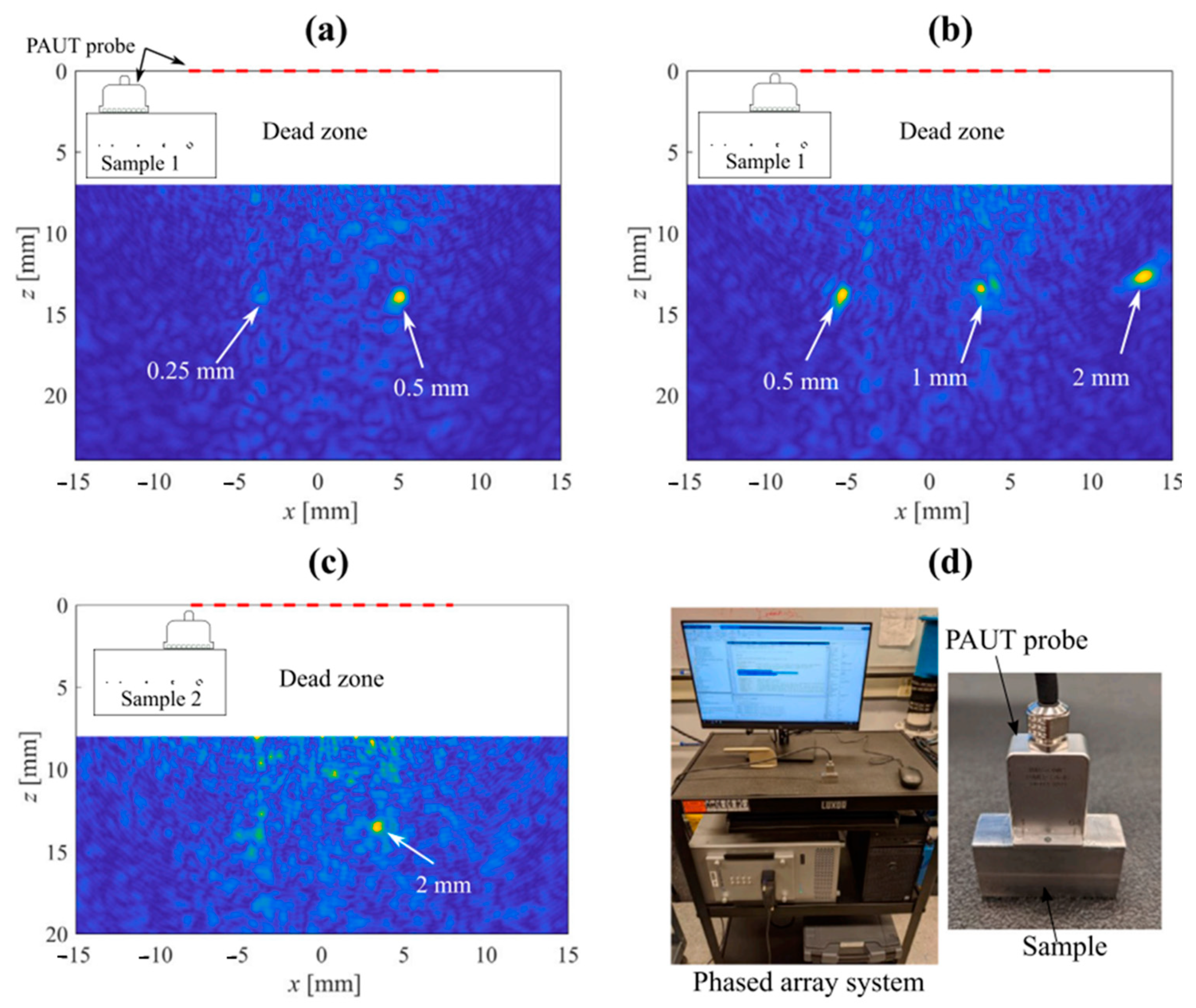
202] utilized PAUT to detect defects in thick parts fabricated by LPBF, as shown in
Figure 35. Practical defects, such as cylindrical lack of fusion defects, were generated by reducing the laser power at prespecified locations. For thin curved components, spatiotemporal guided waves were generated using piezoelectric transducers and measured using a scanning LDV. Cylindrical defects in the thin, curved part were detected and imaged using root mean square wavefield averaging. The defect’s shape and density detected using PAUT were verified using optical microscopy and XCT.
3.5. Miscellaneous Techniques
Many other techniques have been employed to determine the part quality and quantify defect characteristics in LPBF-printed parts. These include using electromagnetic induction, cantilevered probes, and gas pycnometers
Eddy current testing (ECT) detects and characterizes subsurface and surface defects of metallic components using electromagnetic induction. A magnetic field at a specified excitation frequency excites eddy currents in the metallic object. The EC flow pattern is perturbed in the presence of a defect, appearing as localized magnetic anomalies [
203].
EC testing is ideal for testing surface flaws, has very high accuracy in conductivity measurements, and requires very little sample preparation. However, EC testing cannot detect defects parallel to the surface and is considered unsuitable for complex geometries. Du et al. [
204] performed a feasibility test on an EC testing system’s subsurface defect detection capability. The EC method successfully detected subsurface defects in Ti6Al4V AM parts. The direct laser deposition (DLD) method was used to prepare the specimens, though EC in defect detection applies to LPBF.
Goodall et al. [
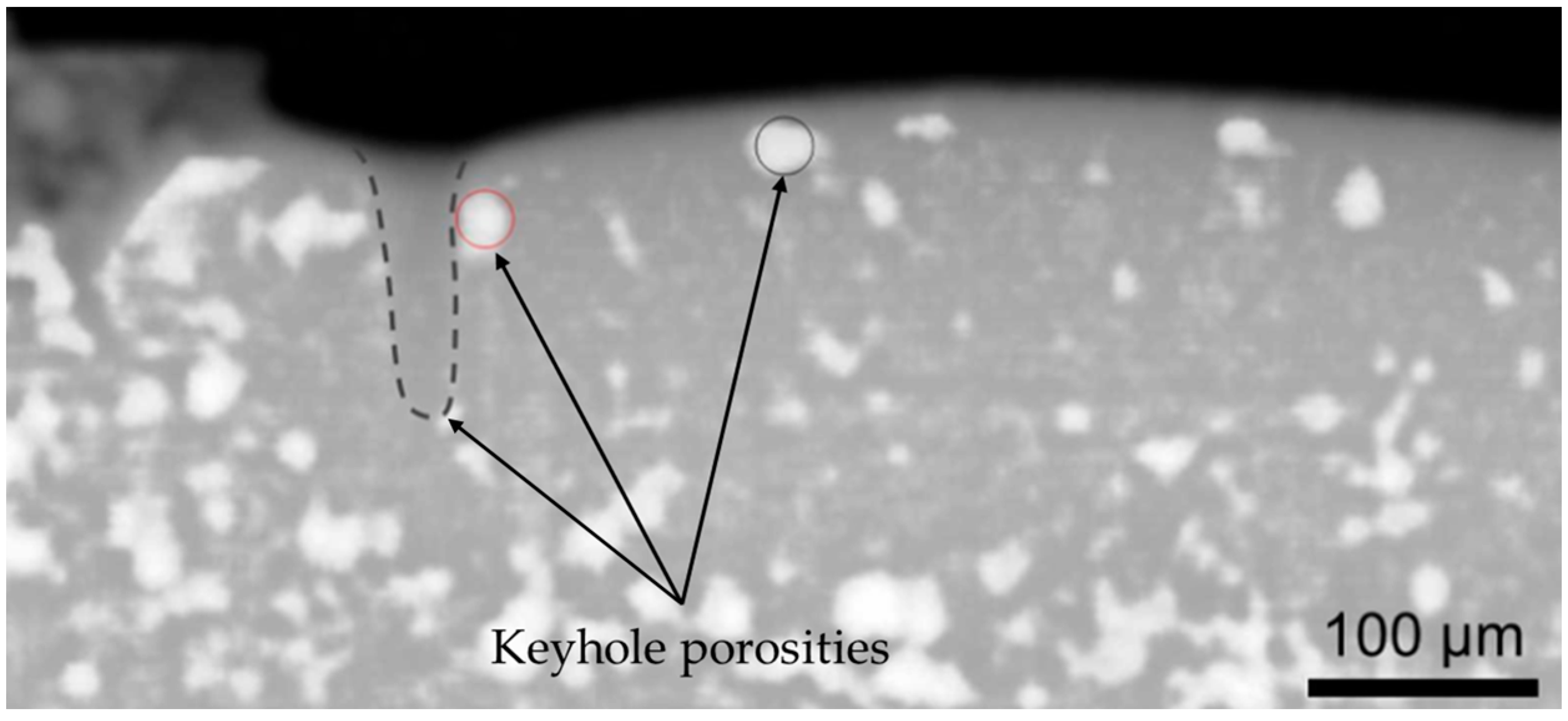
205] minimized EC losses in a high-silicon electrical steel (Fe-6.5%wt. Si) fabricated using LPBF to reduce defect population. Various cross-section designs were produced and analyzed regarding the EC losses. Various defects, such as lack of fusion, cracking, excessive surface roughness, electrical shorting between areas that should be isolated, and gas/keyhole porosities, were highlighted regarding unintended EC pathway circulation.
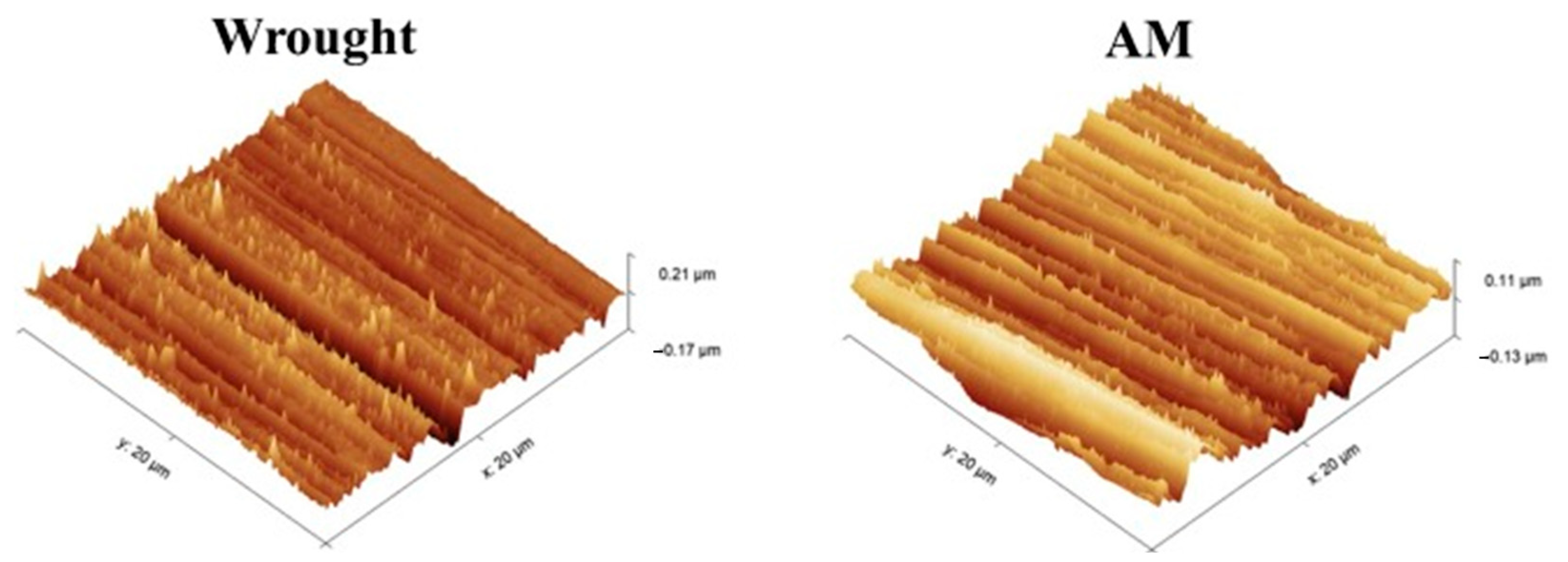
Atomic force microscopy (AFM) probes operate using a supported, tiny spring-like cantilever with a tip on one end and a piezoelectric element to oscillate the cantilever at its eigenfrequency on the other end. A detector located very close above the cantilever detects any deflection or motion of the cantilever. A 3D image of the topographical shape of the sample surface can be detected at a high resolution from the reaction of the probe to the forces the sample imposes on it. The AFM does not include lenses or beam irradiation, eliminating spatial resolution limitations caused by diffraction and aberration. The resolution has been noted to be higher than SEM and comparable with TEM, though AFM can only perform a single scan, which can be time-consuming and is affected by thermal drift and the hysteresis of the piezoelectric material. The forces applied to the probe over the sample are a function of their mutual separation and are used to measure its mechanical properties. Lodhi et al. [
146] utilized AFM to characterize the surface roughness of an SS316L LPBF-printed surface, as shown in
Figure 36. Mussatto et al. [
95] determined the surface topology of various hatching methods for SS316L LPBF-printed parts using AFM.
Gas pycnometers (GP) are devices used to measure the density of solid samples. A pathway connects two gas pycnometer chambers with a valve. The first chamber is a gas-tight chamber with a pressure transducer to house the solid sample, and the second chamber is a reference chamber with a fixed internal volume. A valve pushes pressurized gas into the first chamber and passes into the second chamber via the connection with a valve. The second chamber contains a vent valve. The sample volume can be directly estimated from the chamber volume, reference volume, and pressure ratios between the two chambers. The bulk relative density of LPBF-printed parts can be calculated using gas pycnometers. A gas pycnometer can help indicate whether the sample density is within the expected density range, which can help justify whether the part is fully dense or has significant porosities. Gas pycnometry has been used alongside the Archimedean method to determine the bulk density of LPBF-printed parts [
90,
92]. Positives of a gas pycnometer include high volumetric measurement accuracy, high reproducibility, and operation in a closed system, which eliminates many external factors. Negatives: It requires significant sample volumes, is challenging to clean and dry, is potentially time-consuming, and is expensive.
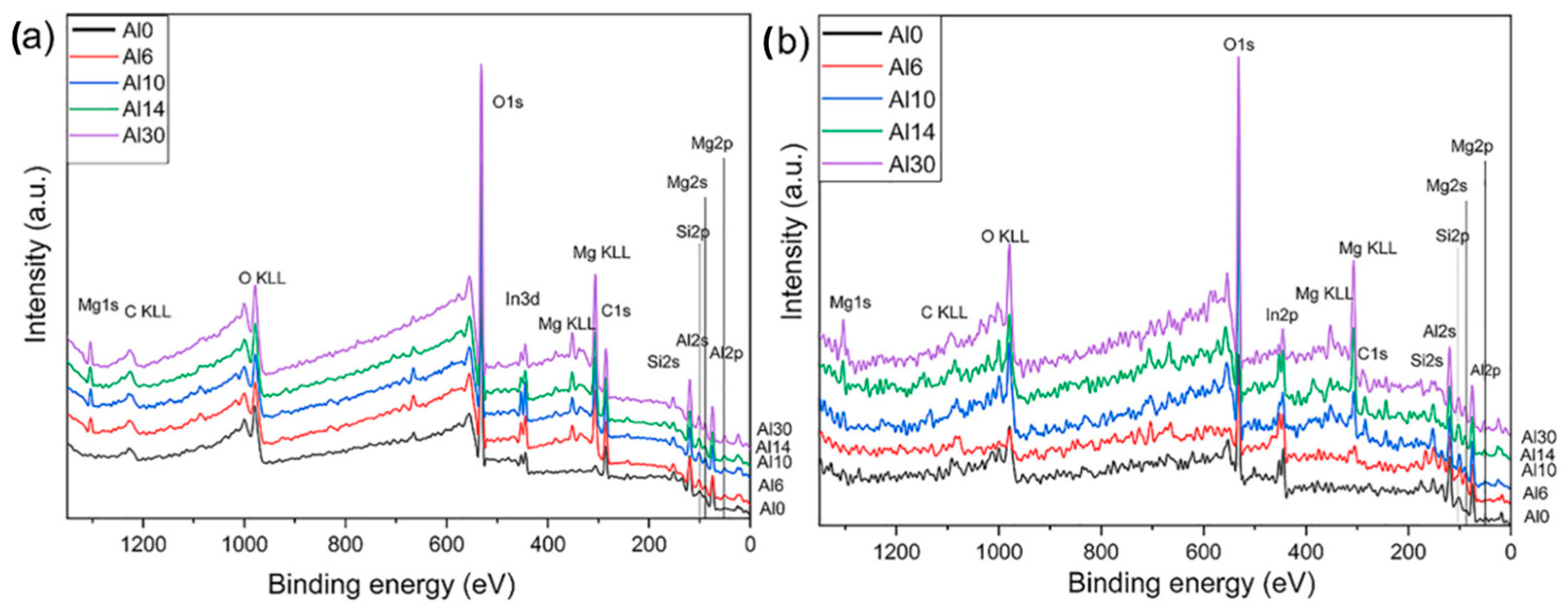
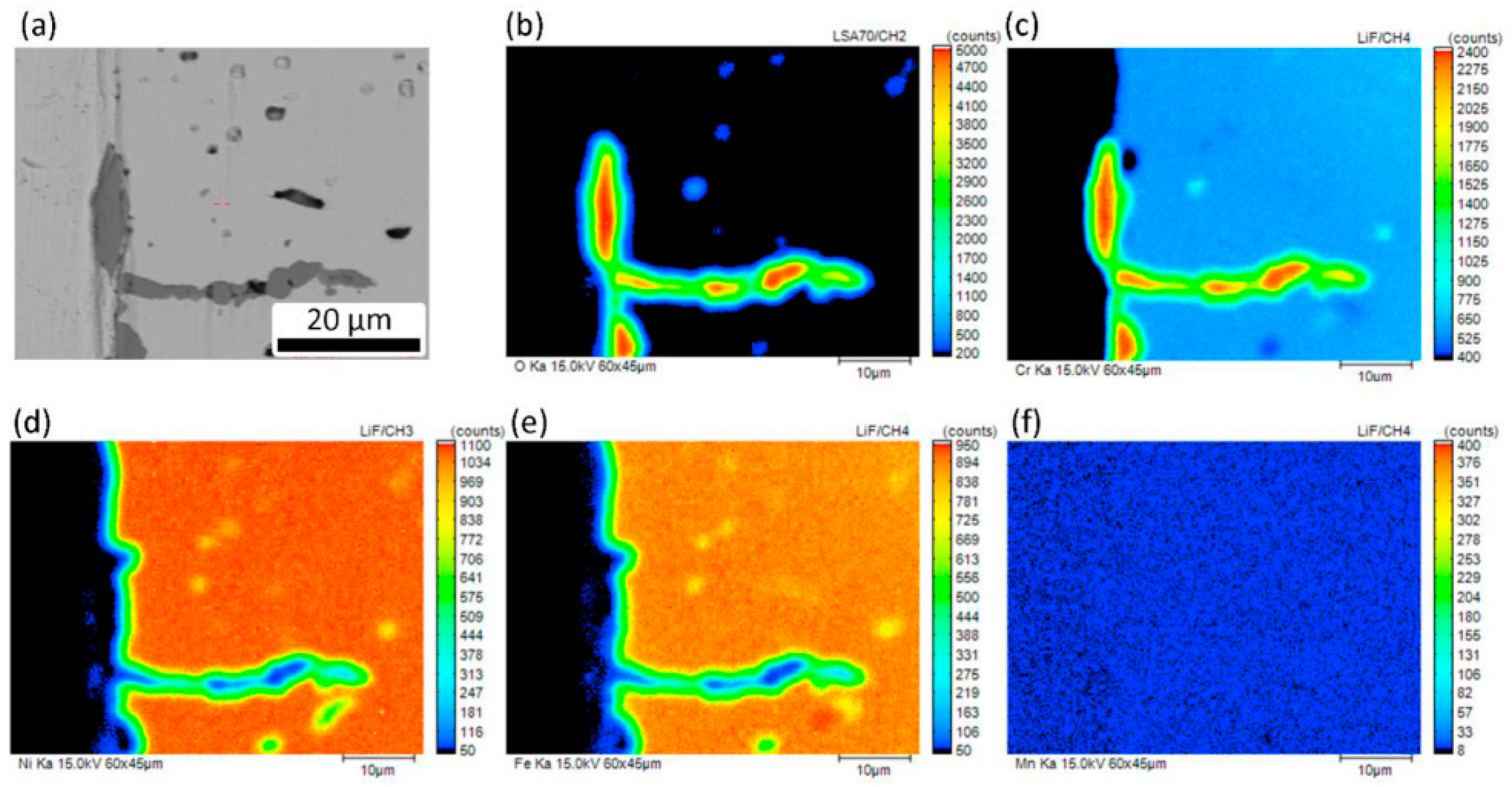
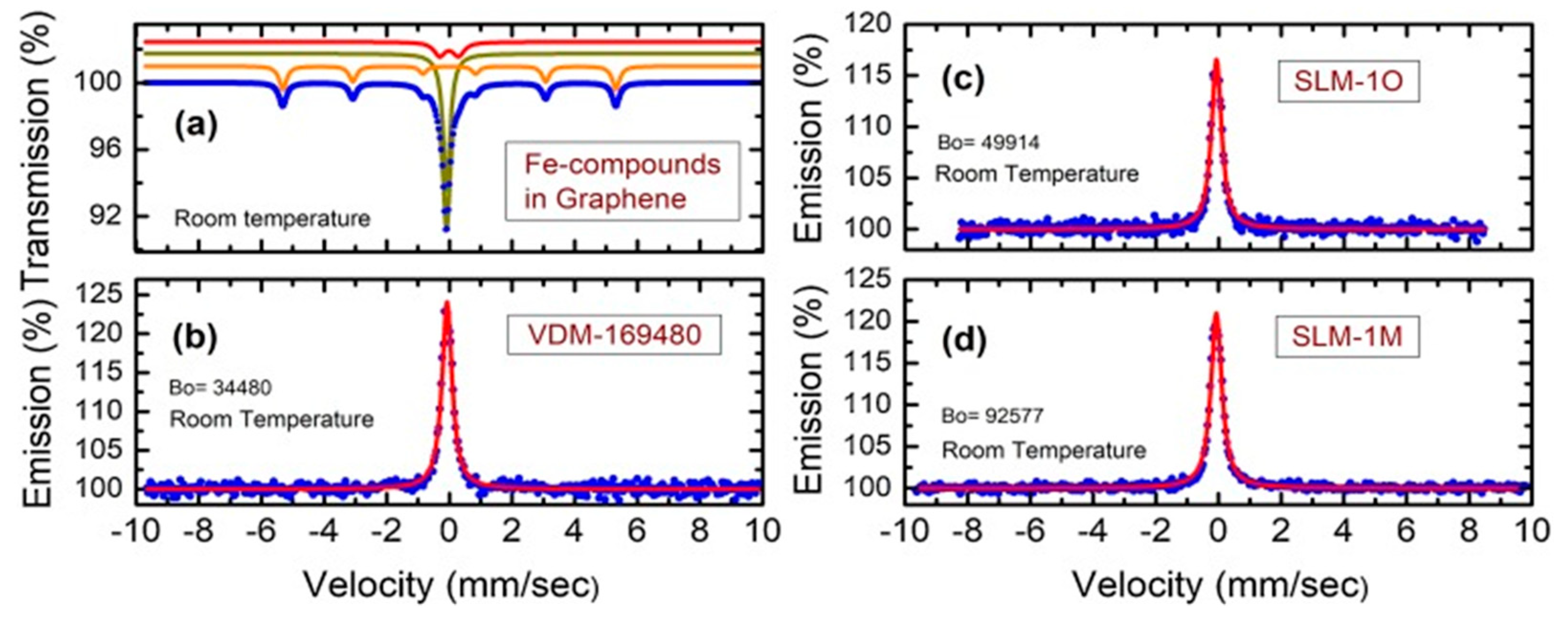
Conversion electron Mössbauer spectroscopy (CEMS) is a susceptible method for investigating the surface of complex, highly absorbing samples. Mossbauer spectroscopy examines iron’s valence state, which cannot be differentiated using EPMA. CEMS is a non-destructive technology that can provide high-resolution data; however, it is known to be vibrationally sensitive and requires cryogenic conditions. Gainov et al. [
97] investigated corrosion-resistant alloy 800H steel samples fabricated using LPBF, as shown in
Figure 37. CEMS proved that phase separation does not occur during the LPBF process and that the oxidation of the steel does not cause hot cracking in the samples.
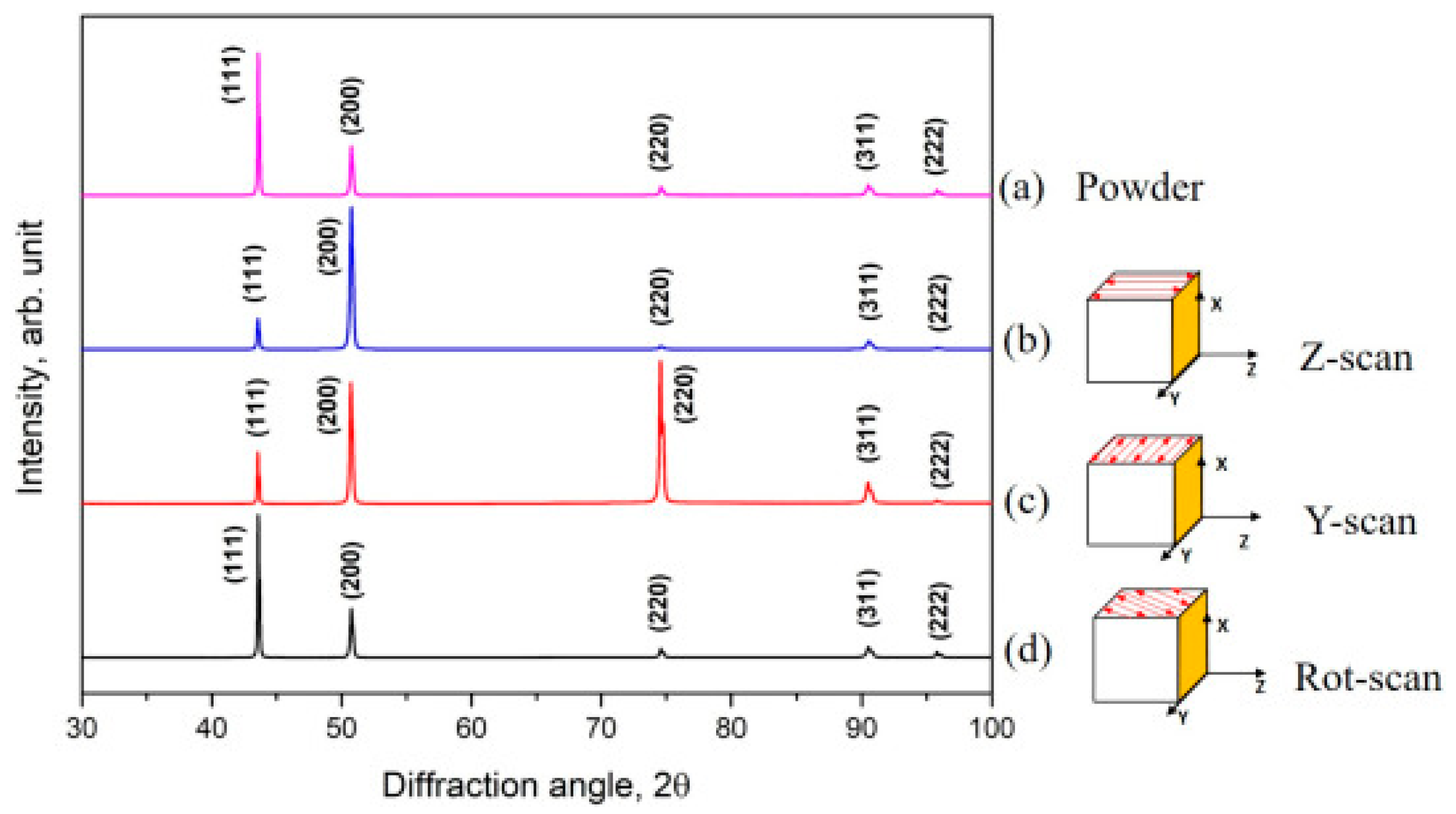
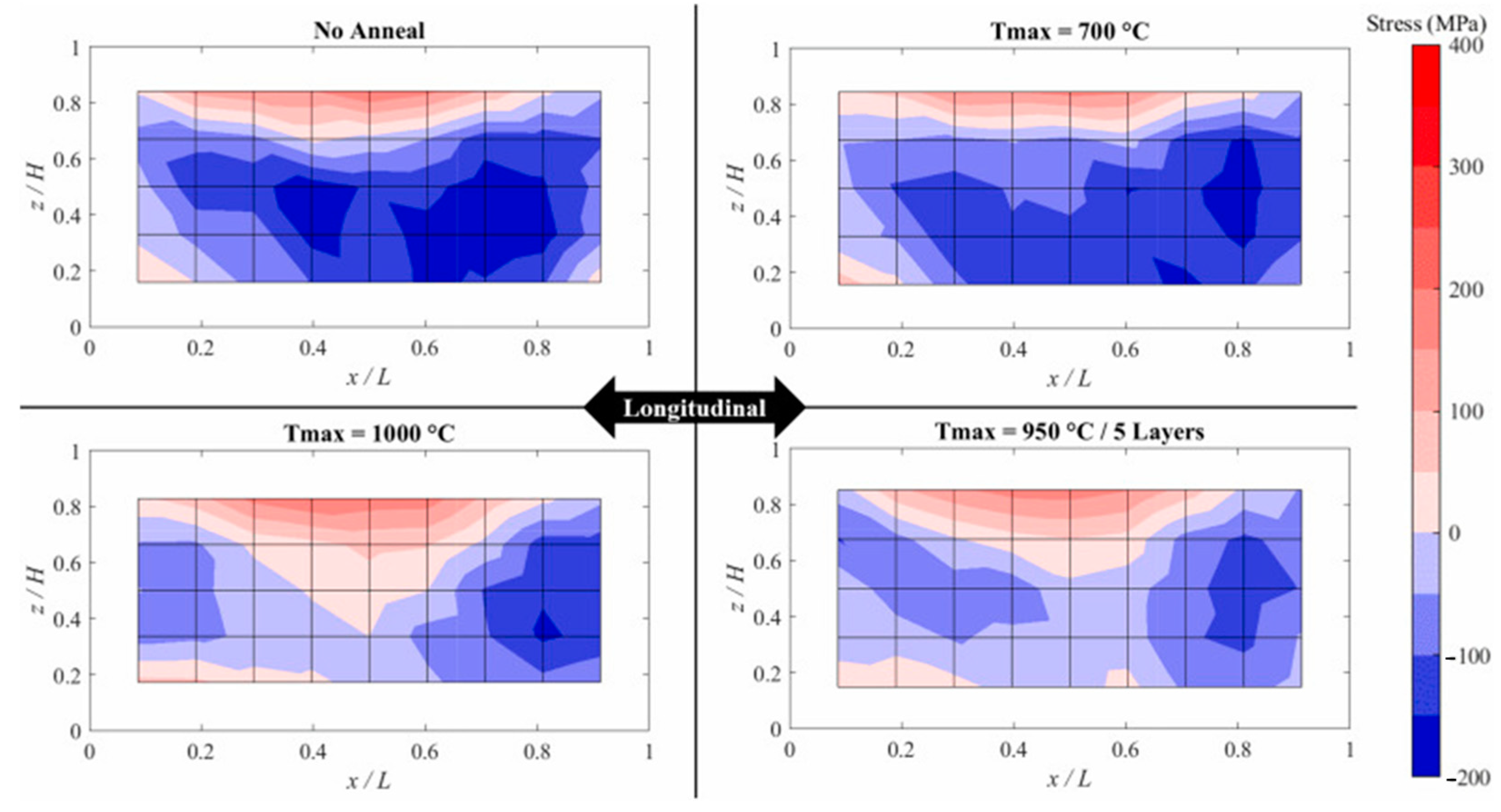
Neutron diffraction (ND) uses an accelerator to produce an incident neutron beam that can create a wavelength spectrum. The diffracted neutrons can be measured using detector banks. The through-thickness resolution of the specimen can be specified using a set of radial collimators in front of the detectors. Neutron diffraction is more reliable in determining elemental composition than X-ray or electron beam methods and can detect residual stresses beneath the surface of the investigated sample. However, significant energy is required to produce the large number of neutrons needed. Smith et al. [
206] used neutron diffraction to measure the longitudinal and transverse residual stresses in pre- and post-annealed SS316L LPBF parts, as shown in
Figure 38. Pant et al. [
68] measured bulk residual stresses in IN718 LPBF samples using the neutron diffraction technique. The sensitivity of the measured interplanar distance for stress-free sample strains in the three orthogonal directions could be attributed to the local variation in the microstructure defects.
Electrochemical impedance spectroscopy (EIS) is used to analyze the effects of corrosion on the microstructure and electrochemical behavior. The electrochemical value measured at the electrode interface reflects the magnitude of the property, and the concentration of chemical species is measured. The steady-state technique utilizes small signal analysis and probe signal relaxation over various applied frequencies. The corrosion rate is highly dependent on the microstructure, the difference between the constituent phases, and the density of the beta-grain boundaries [
206]. Due to the layered structure present in AM, mechanical properties and corrosion resistance differ from those of standard manufacturing. The corrosion resistance of LPBF samples is usually higher than that of standard manufactured parts [
206]. EIS is a quick and non-destructive method for analyzing corrosion effects on LPBF-printed microstructures. However, accuracy depends on prior measurements and developed models, which can be pretty complex. Zadeh et al. [
207] confirmed using EIS that LPBF-printed parts have better corrosion performance than EBM due to the higher charge transfer resistance of the LPBF-fabricated Ti6Al4V alloy at all immersion times. Chen et al. [
61] showed using EIS that the body fluid resistance (simulated body fluid resistance between the working and the reference electrode) of the LPBF TiNi printed sample is lower than that of the TiNi ingot. Still, the charge transfer resistance (resistance of the electrode reaction) is higher than that of the ingot, showing better corrosion resistance. Cheng et al. [
147] investigated the effect of various passivation times on the structure and the properties of the passivation film of an LPBF-printed IN718 sample using EIS. The results imply that as the film formation time increases, the passive film becomes more stable, containing fewer internal defects and better corrosion resistance.
Despite an expansive list of technologies and methods available for LPBF defect detection, there are a myriad of other sensing technologies used that are not elaborated on in this paper. Other sensing technologies used to detect, quantify and characterize LPBF defects include: surface characterization tools (surface profilometers [
208], Vickers hardness testers [
209] and Rockwell [
210] hardness testers), optical imaging technologies (X-ray ptychography (XRP) [
211]), thermal sensing technologies (pulsed infrared thermography (PIT) [
212], thermoreflectance thermal imaging (TTI) [
213] and thermal desorption spectroscopy (TDS) [
214]), acoustic and ultrasonic sensing technologies (scanning acoustic microscopy (SAM) [
215], spatially resolved acoustic spectroscopy (SRAS) [
216], electromagnetic acoustic transducer (EMAT) [
217], and advanced ultrasonic backscatter technique (AUBT) [
218]) and other miscellaneous sensing techniques (Mott–Schottky (M-S) [
219], Raman spectroscopy (RS) [
220], electrical resistance tomography (ER) [
221], secondary ion mass spectroscopy (SIMS), [
222], atomic absorption spectroscopy (AAS) [
223], replication metallography (RM) [
224], electronic speckle pattern interferometry (ESPI) [
225], magnetic force microscopy (MFM) [
226], giant magneto resistive (GMR) sensors [
227], alternating current potential drop (ACPD) [
228], magnetic Barkhausen noise (MBN) [
229], and dye penetrant testing (PT), [
230]).
Other sensing technologies proven to detect metal welding defects but have yet to be used in LPBF defect detection include X-ray computed laminography (CL), photocurrent spectroscopy (PS), frequency modulated thermography (FMT), micro-laser line thermography (μLLT), micro-laser spot thermography (μLST), Barker code laser infrared thermography (BCLIT), scanning thermal microscopy (SThM), Golay-coded thermal wave imaging (GCTWI), ultrasonic infrared thermography (UIT), magnetic flux leakage testing (MFL), magneto-acousto-electrical tomography (MAET), tunnel magneto resistive (TMR) sensors, lateral shearing interferometer (LSI), digital shearography (DS), alternating current field measurement (ACFM) method, magnetic particles testing (MT), metal magnetic memory testing (MMM), bacterial cells testing (BCT) ,and quantum dots fluorescent-penetrant testing (Qdots) [
231].