
Article

Digital Function Modeling in Graph-Based Design Languages
1
ifm ecomatic GmbH, 88079 Kressbronn, Germany
2
CFEngineering GmbH, 88250 Weingarten, Germany
3
School of Architecture and Design, Swinburne University of Technology, Hawthorne, VIC 3122, Australia
4
Faculty of Mechanical Engineering, Ravensburg-Weingarten University (RWU), 88250 Weingarten, Germany
5
Institute of Aircraft Design, University of Stuttgart, 70569 Stuttgart, Germany
*
Author to whom correspondence should be addressed.
Appl. Sci. 2022, 12(11), 5301; https://doi.org/10.3390/app12115301
Submission received: 23 February 2022 / Revised: 6 May 2022 / Accepted: 18 May 2022 / Published: 24 May 2022

Abstract

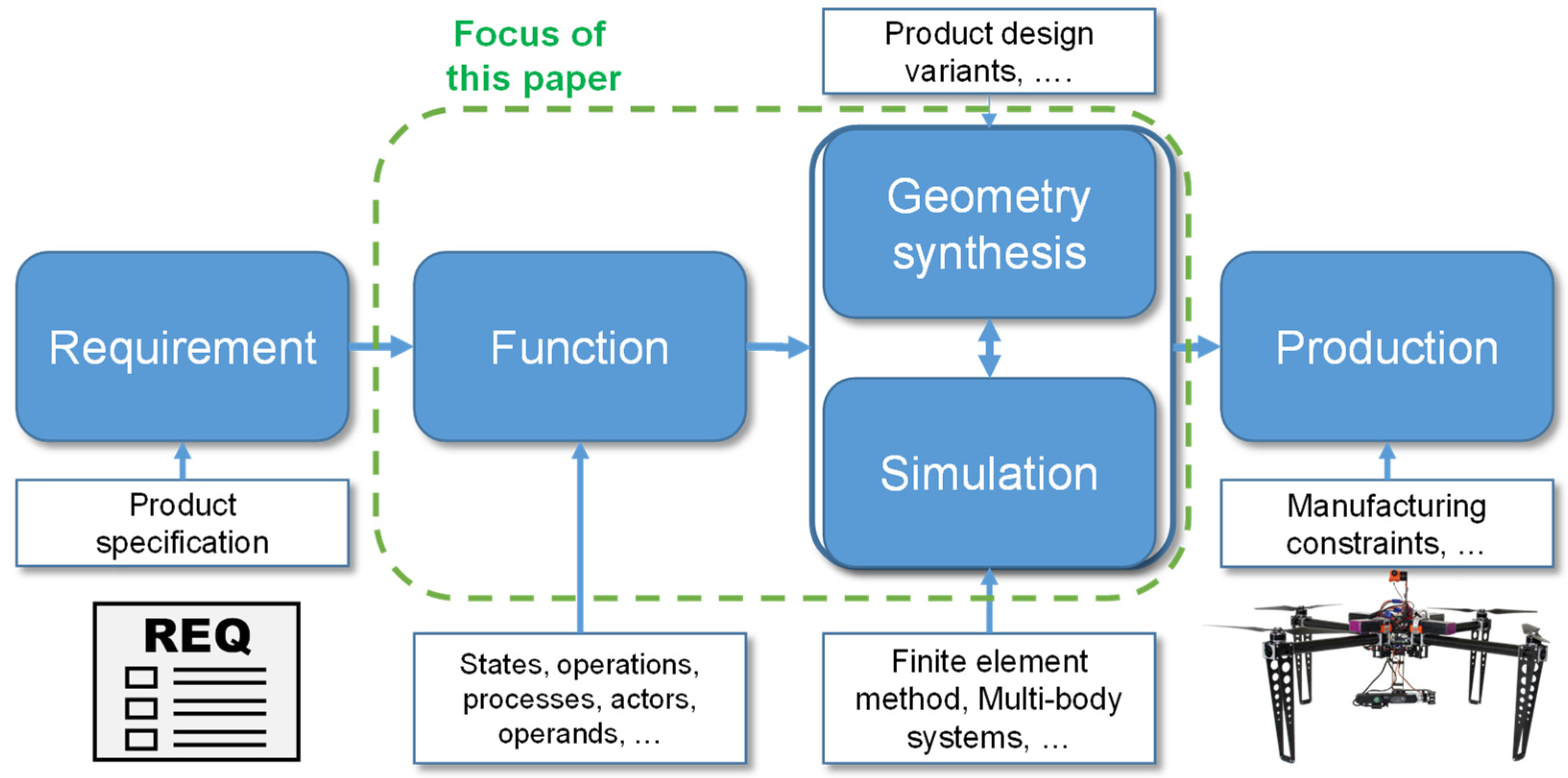
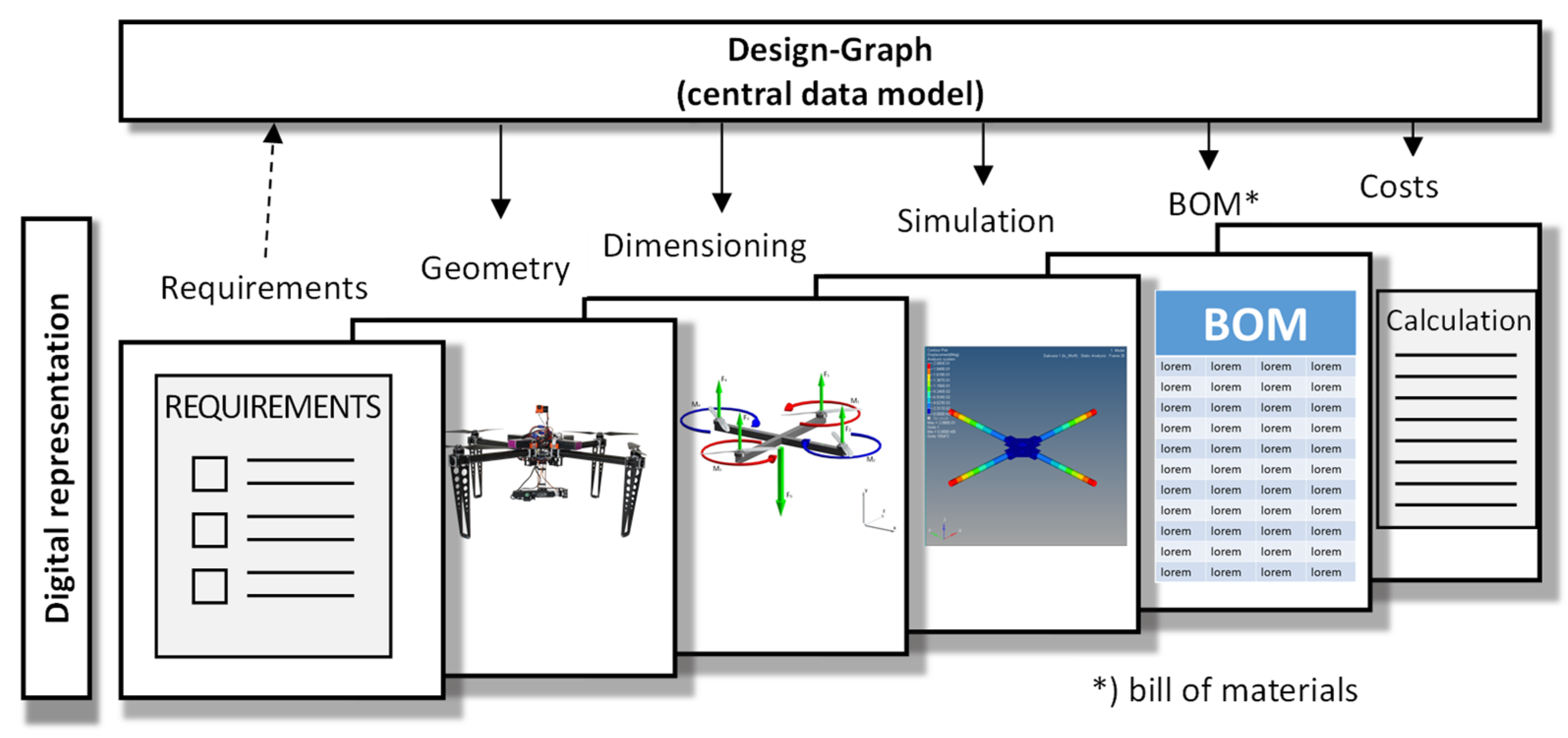
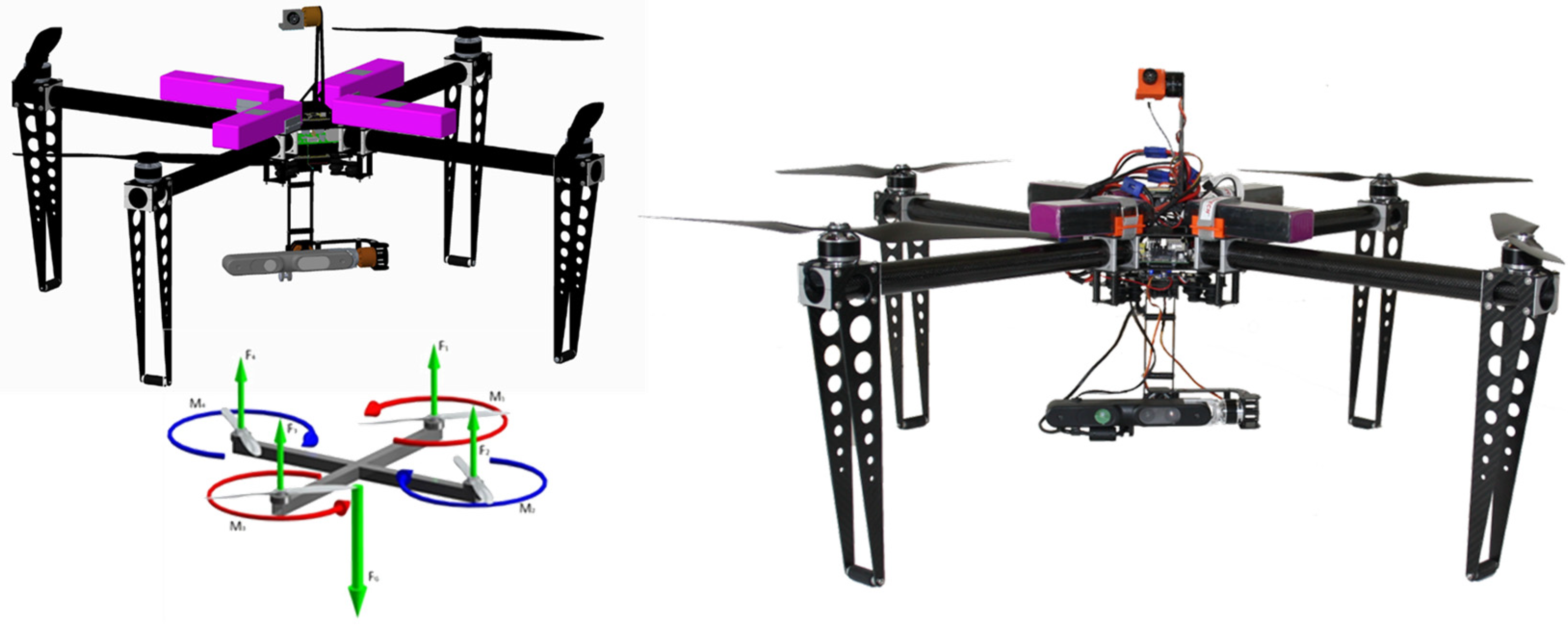
The main focus of this paper is the integration of an integrated function modeling (IFM) framework in an engineering framework based on graph-based design languages (GBDLs). Over the last decade, GBDLs have received increasing attention as they offer a promising approach for addressing several important challenges in engineering, such as the frequent and time-consuming transfer of data between different computer aided engineering (CAE) tools. This absorbs significant amounts of manual labor in engineering design projects. GBDLs create digital system models at a meta level, encompassing all relevant information concerning a certain product design and feeding this into the relevant simulation tools needed for evaluating the impact of possible design variations on the performance of the resulting products/parts. It is possible to automate this process using digital compilers. Because of this, it is also possible to realize systematic design variations for a very large number of parameters and topological variants. Therefore, these kinds of graph-based languages are a powerful means for creating a large number of viable design alternatives and for permitting fast evaluation processes against the given specifications. While, thus far, such analyses tend to be based on a more or less fully defined system, this paper proposes an expansion of the applicability of GBDLs into the domain of product functions to cohesively link conceptual with embodiment design stages. This will also help with early systematic, automated generation and the validation of design alternatives through relevant simulation tools during embodiment design. Further, it will permit the automated exploration of function paths and enable extended analysis possibilities, such as the detection of functional bottlenecks, while enhancing the traceability of the design over the development process. For these extended analysis possibilities, a function analysis tool was developed that adopts core ideas of the failure mode and effects analysis (FMEA). In this, the functional distinction between function carriers and function-related processes allows the goal-directed assessment of component reliabilities and the detectability and importance of processes in a technical system. In the paper, the graph-based modeling of functions and the function analysis tools are demonstrated on the example of a multicopter.
Keywords: function modeling; systems engineering; digital engineering; graph-based design function modeling; systems engineering; digital engineering; graph-based design