Systematic Review

E-Government/AI Integration State and Capacity in Developing Countries: A Systematic Review


by
Abisha Kampira
1,* and
Ricky Munyaradzi Mukonza
2
1
Department of Public Management, Faculty of Humanities, Tshwane University of Technology, Soshanguve 0152, South Africa
2
Department of Public Management, Faculty of Humanities, Tshwane University of Technology, Polokwane 0699, South Africa
*
Author to whom correspondence should be addressed.
Adm. Sci. 2025, 15(12), 482; https://doi.org/10.3390/admsci15120482 (registering DOI)
Submission received: 12 October 2025 / Revised: 23 November 2025 / Accepted: 26 November 2025 / Published: 10 December 2025

Abstract

The integration of artificial intelligence (AI) into e-government promises to transform public service delivery, efficiency, and transparency. This study investigates the required critical implementation capacities in e-government/AI integration in developing countries. Although there is a general understanding of e-government/AI integration issues, in-depth knowledge of this phenomenon is limited, especially in developing countries, where both AI and its integration into various technologies are relatively new aspects of digital transformation, highlighting a need for continuing research in this area. In response, we conducted a systematic review in accordance with PRISMA guidelines, employing thematic content analysis on conference papers and peer-reviewed studies published between 2020 and 2025. Findings indicate that e-government/AI integration remains largely in a potential state, with benefits theorised but not yet fully realised. The progression to an actual or desired state is contingent upon building strengths across seven domains: governance, regulation and ethics; strategic and implementation planning; technology and infrastructure development; organisational capacity development; human capital and expertise; AI adoption, implementation, and impact; and citizen engagement and participation. To realise the benefits of AI in e-government, developing countries need to invest in these capacities. In addition to identifying and detailing the above capacities, the study provides a framework for transforming this phenomenon from a theoretical reality into practice.

1. Introduction

E-government is a socially inclusive platform that utilises digital technology to deliver efficient, transparent, and accountable government services (Malodia et al., 2021), while artificial intelligence (AI) refers to technological systems that can execute tasks that previously required human thought (Hassani et al., 2020). A topical issue in the evolution of e-government is the combination of AI and the former (Bakhov et al., 2025), a phenomenon we refer to as e-government/AI integration in this paper. This integration can be front-end, allowing citizens to interface with and use it, as in the case of chatbots, or back-end, supporting the efficient operation of e-government applications. This study focuses on both. Furthermore, we examine general government services offered to the public across government-to-citizen (G2C), government-to-government (G2G), and government-to-business (G2B) channels as areas that could benefit from this integration. In an integrated form, e-government and AI promise a synergistic advantage, offering greater benefits to society than either system could provide alone (Almutairi, 2025; Totonchi, 2025). However, significant challenges hinder this integration. Both e-government and AI deployments face issues such as infrastructural, human capital, public perception, accessibility, and regulatory gaps (Muparadzi et al., 2024; Demaidi, 2025). The novelty of AI as a less-understood technology adds other layers to the above complications (Islam, 2024). Thus, e-government/AI integration as a phenomenon has newness and factor multiplicity as interacting issues.
Although there is a general understanding of e-government/AI integration issues, in-depth knowledge of how they interact is limited, especially in developing countries where this type of integration is relatively new (Srivastava & Sharma, 2025). To note, AI technology comes in when e-government maturity in developing countries is considered to be low due to various complexities, judging by the United Nations Department of Economic and Social Affairs (UNDESA) e-government development index (EGDI) (UNDESA, 2024). At the same time, AI is considered both a new and a rapidly evolving technology, complicating how society understands it (Toderas, 2025). Additionally, Grant et al. (2025) note that the rapid evolution of AI poses a challenge to effectively verifying its suitability for various domains.
Given the above views, incorporating AI as a major technological dynamic into a low-maturity e-government system immediately highlights potential challenges that require various capacities to address (UNDESA, 2024). The aim of this paper is to identify the required strengths and capacities and explore how they reflect the current state of e-government/AI integration in low-income countries (LICs), lower-middle-income countries (LMICs), and upper-middle-income countries (UMICs), collectively referred to as developing countries. It is limited to research focusing on developing countries carried out between 2020 and 2025. The study is guided by the following research questions:
  • What is the current state of e-government/AI integration in developing countries?
  • What are the critical strengths and factors in e-government/AI integration?
  • What framework could guide e-government/AI integration in developing countries?
This study thus contributes new knowledge to a rapidly evolving and under-researched field, particularly in the Global South. Practically, our findings will assist policymakers and governments in the exploratory classification of factors and components that require consideration when determining the general state of e-government/AI and identifying relevant capacities that need to be built.

2. Materials and Methods

The study employed a systematic review approach, adhering to the Preferred Reporting Items for Systematic Reviews and Meta-Analyses (PRISMA) reporting guidelines by Page et al. (2021).

2.1. Inclusion Criteria

We included articles focusing on one or more integration components between e-government systems, including digitally offered citizen services, public services, public administration and governance services, and AI. These articles needed to have concluded on the state of AI and e-government integration aspects within LMICs, UMICs, and LICs. We defined integration broadly as merging, combining, or embedding AI within existing e-government systems, such that the two operate in a single digital application. This follows the views of Reyes (2025), among others, who are scholars who have taken digital systems integration to include the combination or merging of two or more digital systems to achieve predetermined objectives. The articles needed to be peer-reviewed journal articles or conference papers published between 2020 and 2025 that met the Critical Appraisal Skills Programme (CASP) criteria (Appendix A).

2.2. Exclusion Criteria

We excluded dissertations, theses, non-peer-reviewed works, textbooks, systematic and bibliometric reviews, and book chapters. We also excluded any work published before 2020, as the field of AI has undergone rapid changes. Articles focusing on developed countries were excluded, as were those that examined AI and e-government independently, and articles that discussed public service or government digitalisation outside the context of e-government. We also filtered out articles solely focused on the general use of AI in government, outside of e-government. Articles that merely mentioned e-government/AI integration without drawing conclusions pertinent to this study were also excluded. Some articles that initially met the inclusion criteria but were identified as having a high bias risk, as assessed using the CASP checklist, were excluded.

2.3. Search Strategy

The study applied the PRISMA framework (Figure 1) for the identification and screening of papers for inclusion. On the selected databases and registries, the first attempt was to apply the following search string:
e-government OR digital government OR online government OR government-to-business OR smart government OR G2B AND artificial intelligence OR AI
Allintitle (Google Scholar): “e-government” AND “artificial intelligence”
e-government AND “artificial intelligence (will all system available synonyms enabled)
Full Text & Metadata: e-government) AND (“Full Text & Metadata”: artificial intelligence
E-Government OR digital government OR e-governance OR digital governance OR digital public services OR government digital services OR smart governance OR government-as-a-platform OR digital transformation OR digital public service delivery OR e-services AND artificial intelligence OR AI OR machine learning OR deep learning OR generative AI OR large language models OR natural language processing OR AI algorithms OR intelligent systems OR cognitive computing OR AI techniques OR AI models OR AI tools OR AI capabilities OR AI solutions OR AI technology OR chatbots OR bots
Databases and registries searched allowed for synonyms of the search terms, except on Google Scholar, where specific terms were requested to minimise the challenges of returning large masses of less relevant material. After conducting a title search, we reviewed the abstracts of the returned articles. Additionally, we reviewed the study aims to ensure they focused on the operational and strategic integration of AI and e-government, aligning with our review. Data searches were conducted between 1 June 2025, and 23 August 2024, and further updates were made between 26 October and 13 November 2025.

2.4. Data Charting

A data charting checklist, guided by the study’s three research questions, was used to extract relevant data from each of the included research articles. Other descriptive data collected included countries of study, dates, research methods applied, aim/purpose, and main data relating to the current state of e-government/AI integration.

2.5. Data Analysis

Data were analysed manually using thematic content analysis. Inductive coding was applied, which involved marking all data pieces (titles, subtitles, sentences, phrases, and words) that could be classified as success or critical factors, as well as the described state of e-government/AI integration. Themes and subthemes extracted from each study were tabulated on Microsoft Excel for presentation and analysis.

2.6. Data Evaluation

The study was conducted transparently, with all key procedures used in arriving at specific conclusions clearly highlighted. CASP checklists were used to assess the overall quality of the included articles, following the approaches applied by Montañés-Sánchez et al. (2025). In this regard, nine articles that met the preliminary screening criteria were excluded for using non-transparent and low-rigour methods. The reasons were the following: an inappropriate recruitment strategy for a given methodology, a lack of data collection transparency, low data analysis rigour, and a lack of a clear statement of findings. Thus, biases stemming from methodological issues were minimised. As a data evaluation step, an independent reviewer assessed the themes generated against the downloaded articles to eliminate coding biases. The findings yielded from these processes are discussed next.

2.7. Protocol Registration

A protocol was preregistered on 20 August 2025, with the Open Science Framework (OSF) under Registration DOI 10.17605/OSF.IO/GQKUW and https://osf.io/5pkvc (accessed on 24 November 2025) Major changes to the protocol included an increase in the article corpus beyond the previously stated 25 and changes to the study title. Additionally, strengths, weaknesses, and threats were redefined as benefits and capabilities.

3. Results

Figure 1 summarises findings on the article’s identification, screening and inclusion processes.
We filtered 1431 articles with 29 from Scopus, 16 from EBSCOhost, 58 from Google Scholar, 285 from Semantic Scholar, 48 from Web of Science, and 995 from IEEE Xplore. After removing 964 articles (90 duplicates and 874 records removed for other reasons), 467 remaining records were screened off by title, leading to the exclusion of 249 studies. Of the remaining 218 articles, 19 could not be retrieved, 53 could not meet the integration definition (Not on LMIC, LIC or UMIC), 43 were not relevant (Content not relevant 2), 44 were review and method studies, and 9 were excluded because of high risk of bias (Not meeting CASP), leaving 50 articles. A final sample of 50 articles was reached. Conducting a full review of these articles was justified by similar studies (Vigan & Giauque, 2018; Bawole et al., 2019) as well as by the concept of data saturation.

3.1. Characteristics of the Included Studies

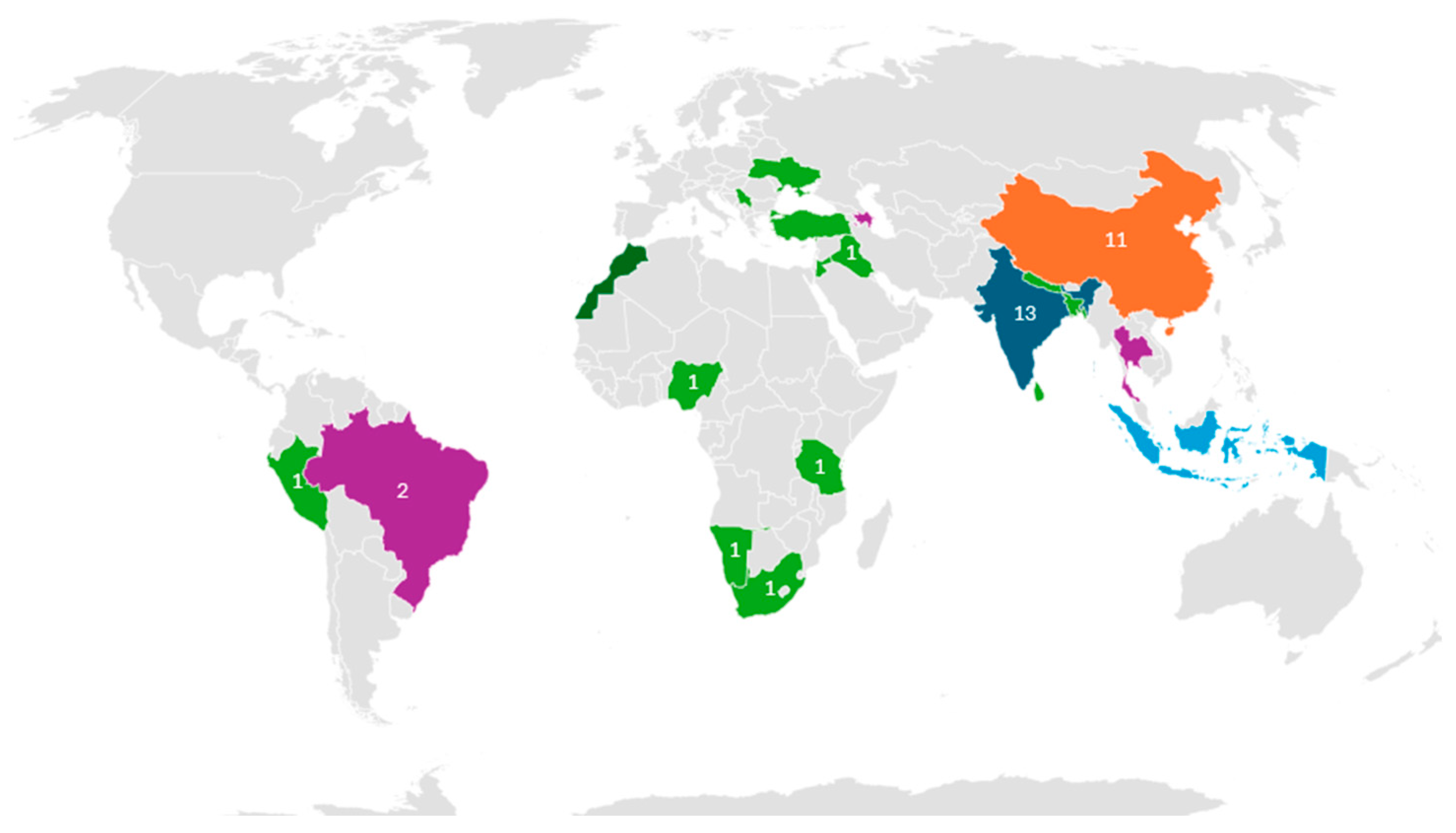
A total of 20 developing countries were represented in the corpus, and these are highlighted in Figure 2. In Figure 2 below, the colours indicate countries included in the study and the figures, the number of studies included from each of these countries.
Out of the 50 studies, India contributed 13 studies, China contributed 11 studies, Morocco 4 studies, and Indonesia 3 studies. Thailand, Azerbaijan, and Brazil each contributed two studies. The following countries each contributed one study: Nigeria, South Africa, Tanzania, Namibia, Nepal, Bangladesh, Sri Lanka, Jordan, Iraq, Ukraine, Turkey, Peru, and Serbia. The study had a wider reach in the Global South, albeit it also captured countries outside this region, specifically Serbia, the Ukraine, and Turkey.
Table 1 further summarises the corpus’s distribution, including by source country economic status.
Out of 50 relevant papers, 66% (n = 33) were qualitative studies, while 34% (n = 17) were quantitative studies. In terms of publication type, the corpus was slightly dominated by conference papers (56%, n = 28) compared to articles (44%, n = 22). From a developmental status perspective, the research had more papers from LMICs (52%, n = 26) compared to UMICs (48%, n = 24). Main findings are presented in three themes.
In terms of specific focus areas, out of the 50 studies, 20% (n = 10) examined chatbots as AI components of interest, 10% (n = 5) focused on data-driven decision-making and analytics, and 54% (n = 27) concentrated on AI in general. In terms of e-government interaction models, 35% (n = 18) focused on government-to-citizen (G2C) services, 22% (n = 11) on government-to-government (G2G) operations, while 44% (n = 22) took a general view of e-government. Thus, focus was mostly on AI and e-government integration in general, suggesting a foundational stage in the integration phenomenon. Table A2 (Appendix B) further highlights the above focus areas, including individual study aims or purposes. Themes are presented next.

3.2. Theme 1: The Current Realities in E-Government AI Integration

The first theme looks at the current reality in e-government/AI integration. It focuses on (1) e-government/AI integration benefits as a potential reality and (2) e-government/AI integration benefits as an actual reality as subthemes.

3.2.1. E-Government/AI Integration Benefits as a Potential Reality

Some scholars have found e-government/AI integration, along with its benefits, to be a potential reality. Based on findings, the potential reality is the discussed state where the comprehensive benefits of AI integration are theorised but largely unrealised. This state is characterised by little to no integration, where the anticipated advantages are debated or planned but not yet substantially felt by governments or citizens. Chinnasamy et al. (2023, p. 1), for instance, note that AI, as an e-government component, “still has a lot of obstacles to overcome before it can be ready for e-government applications”. Abdulkareem (2024, p. 87) notes the integration as one that “demonstrates intriguing potential to make governance more interactive” while Alqudah et al. (2021, p. 70) see AI as still “new and complex”, a factor that affects its effective integration with e-government systems. Efe (2023, p. 95) views government/AI integration as a swift advancement, although the benefits are still in the “potential” stage. Rathnayake et al. (2025) discuss it as a technological change with potential for public acceptance, while Suhendarto (2025) notes that e-government, in its current form, has been developmentally stagnant, making AI an opportune technological change to move it beyond this stagnancy.
Hakimi et al. (2023) and Febiandini and Sony (2023) also see the impact of AI on e-government as a promising development contingent upon the development of critical strengths. Hasan et al. (2021) note that while AI technologies, such as chatbots, were increasing the usability of e-government, they were still at a stage where they struggled to provide domain-specific knowledge—an indication of their potential. They (Hasan et al., 2021, p. 605) therefore describe e-government/AI integration benefits as “promising” rather than actual. Plantinga (2024, p. 332) discusses the integration with an element of doubt even in its potential, specifically highlighting uncertainties in managing risk in a manner that optimises benefit realisation, noting that public administration systems were still grappling with “how they harness its (the integration’s) benefits”.
Thus, scholarly perspectives point to integration as a potential reality that, however, could either fail to commence, proceed with challenges, or be successfully initiated. The nature of movement from potential to actual reality, including its successes, was contingent upon various capacities, such as governance, regulation, and ethics; strategic and implementation planning; and robust technology and infrastructure development (Theme 3).

3.2.2. E-Government/AI Integration Benefits as an Actual Reality

Some scholars have also found the e-government/AI integration process and its benefits to be an actual reality. This is an observed state, reflecting the verifiable results of current e-government and AI projects. It is generally characterised by limited and partial AI integration. The desired reality is the optimal and aspirational state where the e-government system has realised most or all of the major theoretical benefits of AI integration.
In an Indian study, Srivastava and Sharma (2025, p. 160) see e-government/AI integration as a phenomenon that has already produced visible results, as proven by “increasing public accountability, efficiency, and transparency”. This is despite noted accessibility, cybersecurity and use ethics challenges. In a Chinese study, Y. Zhang and Li (2025) note the integration was a current reality whose visible benefits included an increase in government service capacity. Scholars like Bakhov et al. (2025, p. e25019) note the “acceleration of digital transformation processes” as a current rather than potential reality, although marred with “advantages and potentials, and several challenges” in need of attention. Mazumder and Hossain (2024, p. 2118) note e-government/AI integration as current and ongoing, even though its benefits are still “ambitious” rather than realisable. Thus, a well-saturated view under this subtheme was that e-government/AI integration had commenced but at perceived varying rates and probabilities of success. Nonetheless, this does not necessarily contradict the potential reality view presented in the previous subtheme. Rather, it points to different observations and perspectives on the nature of e-government/AI integration.

3.3. Theme 2: Benefits and Opportunities in the Desired Reality

Findings reveal a desired reality that can be summarised as a position where governments and citizens perceive envisioned e-government/AI integration opportunities. In a desired state, e-government/AI integration offers significant benefits that include personalised interfaces for citizen engagement and improved user experience, thus facilitating increased e-government services utilisation (Alqudah et al., 2024; Hasan et al., 2021; Abdulkareem, 2024; Rathnayake et al., 2025; Y. Zhang & Li, 2025). It further supports efficiency in service delivery, cost, and time at both the citizen and government levels (Hasan et al., 2021; Hakimi et al., 2023; Chinnasamy et al., 2023; Efe, 2023; Jha & Jha, 2024; Y. Zhang & Li, 2025). In the desired state, the integration could also make services more accessible and inclusive (Hasan et al., 2021; Ishengoma et al., 2022; Abdulkareem, 2024; Bakhov et al., 2025; Y. Zhang & Li, 2025). This component is critical, considering digital divides as a major challenge in developing countries.
Beyond service delivery, AI in e-government enables data-driven governance by supporting intelligent resource allocation and strategic planning (Hakimi et al., 2023; Y. Zhang & Li, 2025; Bakhov et al., 2025) and facilitating evidence-based policymaking (Alqudah et al., 2021; Hakimi et al., 2023; Srivastava & Sharma, 2025). Enhanced knowledge management is also a key benefit, with scholars such as Alqudah et al. (2024) and Y. Zhang and Li (2025) exploring how AI can improve the development, storage, and dissemination of information. Integration also comes with the opportunity to strengthen cybersecurity and protect critical infrastructure (Jha & Jha, 2024; Rathnayake et al., 2025). E-government/AI integration offers opportunities for broader strategic goals, such as sustainable community development and national digital transformation alignment, as discussed by Bakhov et al. (2025), Rathnayake et al. (2025), Mazumder and Hossain (2024), and Y. Zhang and Li (2025).
The above points to a view that, in their desired state, the envisioned benefits of e-government/AI integration are worthwhile as they promise to transform public service into a proactive, efficient, and citizen-centric model. The above benefits, however, require specific strengths as preconditions. These are discussed as Theme 3.

3.4. Theme 3: Strengths and Capabilities for the Desired State

Consensus among scholars is the need to develop various capabilities that enable e-government/AI integration to move beyond mere potentiality and progress towards a desired state. Based on our findings, the strengths required for e-government/AI integration could be grouped into seven saturated interrelated subthemes with a total of 21 categories (Table 2).

3.4.1. Governance, Regulation and Ethics

A clear governance, regulatory, and ethical framework was identified as a required strength in e-government/AI integration by scholars (Plantinga, 2024; Ji et al., 2024; Rathnayake et al., 2025; Bakhov et al., 2025; Jha & Jha, 2024; Zhao et al., 2025) with Plantinga (2024, p. 344) framing this as “integration governance”. This involves establishing clear legal compliance requirements and data protection regulations (Efe, 2023; Hakimi et al., 2023; Ji et al., 2024; Jirari et al., 2025; Y. Zhang & Li, 2025). Furthermore, ethical governance was emphasised as critical in addressing algorithmic fairness regulation and accountability mechanisms (Efe, 2023; Jha & Jha, 2024; Hakimi et al., 2023; Arora et al., 2024; Xavier, 2023). The process must also be oriented towards public value creation, considering both operational and strategic outcomes as well as broader socio-economic impacts (Li et al., 2025; C. Wang et al., 2021; Chatterjee et al., 2022; Aminah & Saksono, 2021; Barodi & Lalaoui, 2023). Effective oversight mechanisms, including independent auditing and external monitoring, were also noted as essential for maintaining integrity within e-government/AI governance, ethics, and regulation ecosystems (Efe, 2023; Rathnayake et al., 2025; Y. Zhang & Li, 2025). Thus, the base strength and need of e-government/AI integration lies in political and governance matters that support a foundation for strategic and operational implementation, as well as citizen involvement and public value creation.

3.4.2. Strategic and Implementation Planning

The necessity of strategic planning was highlighted as an important strength by Srivastava and Sharma (2025), Efe (2023) and Y. Zhang and Li (2025). This included developing a coherent national AI strategy with clear digital transformation roadmaps (Y. Zhang & Li, 2025; Srivastava & Sharma, 2025; Efe, 2023; Suhendarto, 2025; Aminah & Saksono, 2021; Herdhiyanto et al., 2023; Barodi & Lalaoui, 2023). The importance of localisation strategies, including academic-industry collaboration and context-specific adaptation, was stressed as a key factor for relevance and success of e-government/AI integration in local settings, even in the presence of broader national strategies (Febiandini & Sony, 2023; Ishengoma et al., 2022; Bakhov et al., 2025; Plantinga, 2024; Aminah & Saksono, 2021). Thus the ability to tailor broader national strategies to meet community and niche settings including local government was critical in the e-government/AI integration journey.
A practical implementation plan, consisting of phased rollout approaches and pilot programmes, was considered a strength given AI’s newness (Ishengoma et al., 2022; Y. Zhang & Li, 2025; Abdulkareem, 2024; Tueiv & Schmitz, 2023). Adequate resource planning, including funding allocation and infrastructure development, were also mentioned among needed fundamental strengths (Efe, 2023; Mazumder & Hossain, 2024; Y. Zhang & Li, 2025; Srivastava & Sharma, 2025; Aminah & Saksono, 2021; Nawafleh et al., 2025; Tamilarasi et al., 2024). Of note, such strategic capabilities were enabled by a well-structured governance, regulatory, and ethical system mentioned in the previous subtheme.

3.4.3. Technology and Infrastructure Development

Technological strength was recognised as a critical enabling factor. Scholars pointed to the need for a resilient system architecture with scalable platform infrastructure and interoperability standards across government entities (Hasan et al., 2021; Chinnasamy et al., 2023; Alqudah et al., 2024; Aminah & Saksono, 2021; Garcia-Carrera et al., 2025). Developing advanced AI capabilities, including advanced algorithm development and specialised AI models such as large language models (LLMs) and generative AI (GenAI), to achieve expected goals was noted as critical (Chinnasamy et al., 2023; Alqudah et al., 2024; Jha & Jha, 2024; Z. Zhou et al., 2025b; Ji et al., 2024; Fang & Xu, 2023; Syahidi et al., 2025; Chiranjeevi et al., 2024; Ramathilagam et al., 2024). Furthermore, cybersecurity integration was emphasised as a major component of technological integration, given the persistent cyber threats (Alqudah et al., 2021; Hasan et al., 2021; Elisa et al., 2023; Tamilarasi et al., 2024; Ajay et al., 2024).
The success of integration also depends on selecting appropriate integration models and frameworks and developing AI-ready e-government platforms (Jha & Jha, 2024; Alqudah et al., 2024; Chinnasamy et al., 2023; Hasan et al., 2021; Efe, 2023; Srivastava & Sharma, 2025; Suhendarto, 2025). Robust data governance, ensuring data quality and management and promoting open data practices, forms another critical pillar (Herdhiyanto et al., 2023; Ji et al., 2024; Aminah & Saksono, 2021; Zhao et al., 2025; Spalević et al., 2023; Essabbar et al., 2024). The presence of adequate physical infrastructure, including reliable network infrastructure and sufficient computing and hardware resources, was also identified as a foundational strength (Plantinga, 2024; Efe, 2023; Hakimi et al., 2023; Aminah & Saksono, 2021; Chinnasamy et al., 2023; Hasan et al., 2021; Alqudah et al., 2024; Jha & Jha, 2024). These foundational strengths cannot be separated from strategic planning—the stage at which resource needs for e-government/AI integration are determined.

3.4.4. Organisational Capacity Development

Internal organisational capacity within government entities was highlighted as a necessary strength for the success of e-government and AI integration. Scholars emphasised the need for effective change management to promote an innovation culture and implement lifecycle management systems (Ishengoma et al., 2022; Osakwe et al., 2021; Chinnasamy et al., 2023; Suhendarto, 2025). Strong performance management through continuous evaluation mechanisms and value-based prioritisation of AI developments was also noted as critical (Efe, 2023; Suhendarto, 2025; Jirari et al., 2025; Alqudah et al., 2021; Bakhov et al., 2025; Tueiv & Schmitz, 2023). Furthermore, breaking down silos among implementation stakeholders through interagency coordination and multi-stakeholder engagement, including public/private partnerships, was identified as vital especially given the fragmentation of government systems in developing economy settings (Y. Zhang & Li, 2025; Ishengoma et al., 2022; Aminah & Saksono, 2021; Mazumder & Hossain, 2024; Hakimi et al., 2023). Thus, organisational structures and siloed cultures in governments needed to change, connecting e-government/AI integration success to public administration philosophies paradigm shifts.

3.4.5. Human Capital and Expertise

Investing in people was noted as a fundamental strength, given the critical challenge in digital transformation expertise. Continuous workforce development in e-government and AI domains through education, skills and training was identified as crucial in supporting e-government/AI integration (Alqudah et al., 2021; Abdulkareem, 2024; Osakwe et al., 2021; Herdhiyanto et al., 2023; Nawafleh et al., 2025). Promoting knowledge management by supporting research and knowledge development was important given the novelty and fast-evolving nature of AI-related technologies (Alqudah et al., 2021; Efe, 2023; Mazumder & Hossain, 2024; Jha & Jha, 2024; Bakhov et al., 2025). Furthermore, establishing learning systems that facilitate experience-based learning and research-driven adaptation is key to building long-term expertise in AI and governance (Plantinga, 2024; Abdulkareem, 2024; Cheng et al., 2021).

3.4.6. AI Adoption, Implementation, and Impact

Successful integration hinges on robust operational implementation and assimilation capabilities. This includes strategies for dual AI model deployment, effective human/AI interaction design, and managing the integration depth and breadth within government processes (Li et al., 2025; C. Wang et al., 2021; Song et al., 2025; Cheng et al., 2021; Chatterjee et al., 2022; S. Wang et al., 2024). This must be guided by strategic analysis and adoption planning, utilising frameworks like the technology/organisation/environment (TOE) frameworks and stakeholder influence mapping to navigate the adoption landscape (S. Wang et al., 2024; Z. Zhou et al., 2025b; W. Zhang et al., 2021; Rathnayake et al., 2025). Finally, continuous performance and impact evaluation is essential, measuring effects on government transparency, citizen satisfaction, and overall operational and strategic performance (Zhao et al., 2025; Chatterjee et al., 2022; El El Gharbaoui et al., 2024; C. Wang et al., 2021; Nawafleh et al., 2025; Jirari et al., 2025; Mohammed et al., 2022). The above highlights the criticality of the ability to move beyond both the governance, regulation, and ethics stages (Section 3.4.1) and the strategic planning and implementation stages (Section 3.4.2) towards operational, hands-on implementation that turns strategic theorisation into actions. Thus, scholars differentiated between strategic implementation and operational implementation, both of which are critical.

3.4.7. Citizen Engagement and Participation

Having citizen-centric systems was noted as a critical success factor by scholars who include Bakhov et al. (2025), Rathnayake et al. (2025), and Suhendarto (2025). Trust building through transparency mechanisms and public awareness campaigns was highlighted as key to increasing adoption of integrated systems (Rathnayake et al., 2025; Zhao et al., 2025; Spalević et al., 2023; Song et al., 2025; Osakwe et al., 2021). Views on trust-building were generally hinged on the perspectives that e-government systems had previously failed to yield maximum citizen trust in developing countries. Adding AI to them complicated the trust issues further as the latter, especially its data privacy management were less understood. Inclusive design, incorporating accessibility features and user-centric designs/approaches, was stressed to ensure equity, noting the lack of digital inclusivity as a challenge in LIC, UMIC and LMIC settings (Rathnayake et al., 2025; Bakhov et al., 2025; Tueiv & Schmitz, 2023; Abdulkareem, 2024; Cheng et al., 2021; M. Zhou et al., 2025a; Syahidi et al., 2025). Actively fostering public participation through citizen engagement mechanisms and community collaboration was also identified as essential to the integration process (Suhendarto, 2025; Bakhov et al., 2025; Rathnayake et al., 2025; M. Zhou et al., 2025a; Xavier, 2023; Cheng et al., 2021). The latter component was critical for building trust and fighting digital inequalities.

4. Discussion

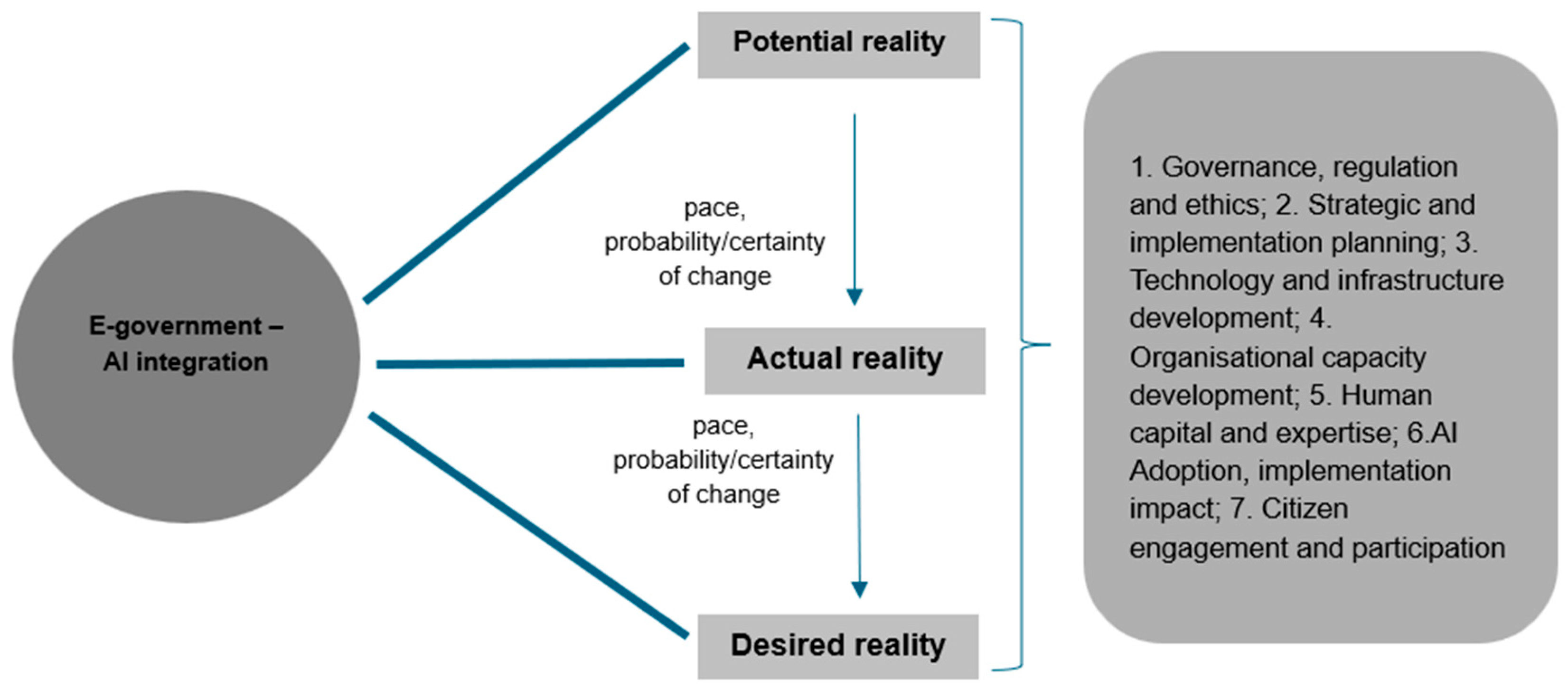
From the findings, we noted three perspectives on the state or reality of e-government/AI integration implementation and benefit realisation. These are shown in Figure 3 as the potential state, the actual reality, and the desired reality.
As highlighted earlier, critical strengths and capacities are what stand between potential and actual, as well as between the actual and desired states or realities. While none of the scholars consulted gave progression timeframes from one reality to another, there were views that the pace from one reality or state to another could be considerably quick, could be slow (Bakhov et al., 2025, p. e25019), or could even be stagnant (Efe, 2023), depending on how critical strengths are built. We termed this transformation pace. In addition to the pace of transformation progression, some scholars (Efe, 2023; Abdulkareem, 2024; Jha & Jha, 2024) mention or discuss how varying certainty levels in e-government/AI integration exist in some settings. We termed this transformation certainty. This relates to the probability that e-government/AI integration can transition from potential to a desired state, given the existence of certain strengths.
Given the historically slow implementation and adaptation progress of standalone e-government in developing country settings (Muparadzi et al., 2024), its integration with rapidly evolving AI (Islam, 2024) presents a pivotal question: Will this merger act as a catalyst for transformation or simply introduce new complexities that increase existing e-government implementation gaps in developing nations? In other words, how will the transformation pace and transformation certainty unravel? These are factors that the government and academia need to understand, given the novel nature of AI and the stagnant-to-slow growth of e-government in developing countries.
Developing regions have generally lagged behind on AI strategies as well, a component mentioned as a major strength in the integration process. Demaidi (2025) notes that by 2021, over 60 countries had established AI strategies for governance, most of these being developed countries. Monasterio Astobiza et al. (2022) notes that a major challenge in the developing world is the state of being AI technology consumers rather than producers, which affects their control. This highlights further issues in technological strength and capacity that could impact both the transformation pace and certainty. The findings also suggest a fear of slow or stagnant transformation in the realisation of e-government/AI integration, based on historically slow e-government maturity as a function of strategic, technological, human capital, and citizen-centric issues (UNDESA, 2024)—these being just part of the strengths needed in e-government/AI integration. Plantinga (2024) confirms this, noting that past experiences with digital government transformations could guide AI adoption in public service systems—e-government included.
Comparatively, the research reveals a clear strategic divergence in the focus on AI/e-government between different economic contexts, highlighting observable differences in both transformation pace and certainty. UMICs like China (Y. Zhang & Li, 2025) and Indonesia (Aminah & Saksono, 2021; Suhendarto, 2025) are refining advanced national strategies and developing sophisticated AI like LLMs China (Z. Zhou et al., 2025b; Fang & Xu, 2023), while their focus has shifted to optimising internal performance management, as seen in Turkey (Efe, 2023), and studying advanced human-AI collaboration models China (Li et al., 2025; C. Wang et al., 2021). Their citizen engagement efforts, exemplified by China (Song et al., 2025; Zhao et al., 2025) and Serbia (Spalević et al., 2023), concentrate on enhancing digital transparency and trust in mature digital ecosystems.
Conversely, LMICs are focused on establishing foundational pillars for integrating AI. Their research prioritises overcoming basic barriers, highlighting context-specific adaptation in India (Srivastava & Sharma, 2025) and funding challenges in Bangladesh (Mazumder & Hossain, 2024). Technologically, they emphasise securing systems and ensuring interoperability, as in India (Hasan et al., 2021; Chinnasamy et al., 2023) and Morocco (Essabbar et al., 2024). Organisationally, they stress building capacity through partnerships in Tanzania (Ishengoma et al., 2022) and Nigeria (Abdulkareem, 2024) while addressing urgent needs for basic digital literacy in Namibia (Osakwe et al., 2021) and Jordan (Nawafleh et al., 2025) and stakeholder-specific adoption barriers in India (Chatterjee et al., 2022) and Sri Lanka (Rathnayake et al., 2025). Their citizen participation models, such as those in Morocco (Barodi & Lalaoui, 2023) and Brazil (Tueiv & Schmitz, 2023), emphasise grassroots awareness and accessibility. This creates a complementary global knowledge base, where UMICs provide future-state roadmaps and LMICs deliver crucial implementation lessons for challenging environments.

5. Conclusions

We conclude that the integration of e-government and AI in developing nations raises concerns over the certainty, pace and success of transformation from an otherwise dominant theorised state towards a desired state, a challenge that is more notable in LMICs. To enhance transformation to a desired state characterised by service delivery efficiency, ethical governance, and transparency, it is recommended that governments prioritise developing strengths in the following domains: governance, regulation, and ethics; strategic and implementation planning; technology and infrastructure development; organisational capacity development; human capital and expertise; AI adoption, implementation, and impact; and citizen engagement and participation. To achieve the desired state of e-government/AI integration, developing countries should first establish governance and ethical frameworks, then implement strategic plans supported by robust technology and infrastructure. Organisational readiness, skilled human capital, and continuous citizen engagement are essential to ensure adoption, trust, and sustained impact. Citizen engagement forums, political goodwill-building, public/private stakeholder engagement, pilot tests and benchmarking current systems against proven global success stories are among the several actions governments could take.
In addition to the factorial recommendations, the provided simple framework can guide logic building in transitioning to an actual and desired reality. It challenges stakeholders to simultaneously consider the domains required in e-government/AI integration, alongside the time-bound and probabilistic aspects of integration start-up and success.
We also note that UMICs, such as China and South Africa, while facing their own struggles in e-government/AI implementation, help provide strategic direction as they appear to be ahead of UMICs in the journey towards the desired state.
Coming to future research, while most studies confirm AI in e-government is promising, future research must move beyond theoretical potential to conduct longitudinal case studies through regional collaborations, including under the auspices of regional bodies such as the Southern African Development Community (SADC). Such studies could focus on the success factors and failure points of specific integration projects over time. We also recommend research that develops maturity models specific to e-government/AI integration to better map the transformations of developing countries towards the desired state. Furthermore, a significant geographical research gap must be addressed by prioritising context-specific studies in LICs and across Africa, where unique challenges and opportunities may differ from those in more commonly studied emerging economies. Finally, the focus must shift to developing the necessary capacities to harness the noted opportunities and manage the weaknesses and threats of e-government/AI integration.

6. Limitations

The study relied primarily on qualitative conceptual studies, which can carry subjective views. Additionally, some studies employed non-systematic sampling approaches and used smaller samples, which impacted overall reliability. Secondly, the study excludes developed countries and is limited to literature published between 2020 and 2025. Additionally, it excludes any documents that were not classified as peer-reviewed articles or conference papers. Thirdly, few studies from African countries that fall into the LIC group could be found, creating the possibility that the findings may be more applicable to LMICs and UMICs.

Author Contributions

Conceptualization, A.K. and R.M.M.; methodology, A.K. and R.M.M.; software, A.K.; validation, R.M.M.; formal analysis, A.K.; investigation, A.K.; resources, R.M.M.; data curation, A.K.; writing—original draft preparation, A.K.; writing—review and editing, A.K.; visualization, A.K.; supervision, R.M.M.; project administration, A.K.; funding acquisition, R.M.M. All authors have read and agreed to the published version of the manuscript.

Funding

This research received no external funding.

Institutional Review Board Statement

Not applicable.

Informed Consent Statement

Not applicable.

Data Availability Statement

Data are available from the corresponding author.

Conflicts of Interest

The authors declare no conflicts of interest.

Abbreviations

The following abbreviations are used in this manuscript:
AIArtificial Intelligence
CASPCritical Appraisal Skills Programme
G2BGovernment to Business
G2CGovernment to Citizen
G2GGovernment to Government
PRISMAPreferred Reporting Items for Systematic Reviews and Meta-Analyses
UNDESAUnited Nations Department of Economic and Social Affairs

Appendix A

Table A1. CASP item results.
Qualitative12345678910
Abdulkareem (2024)* yyyctyctctctyy
Ajay et al. (2024)yyyyctctctyy
Alqudah et al. (2024)yyyctyctctyy
Alqudah et al. (2021)yyyctyctctctyy
Aminah and Saksono (2021)yyyctyctctctyy
Arora et al. (2024)yyyctyctctctyy
Bakhov et al. (2025)yyyyyctctyyy
Barodi and Lalaoui (2023)yyyyyctctyyy
Cheng et al. (2021)yyyyyctctyyy
Chinnasamy et al. (2023)yyyctyctctyyy
Efe (2023)yyyctyctcyyy
Essabbar et al. (2024)yyynycccyy
Febiandini and Sony (2023)yyynycccyy
Garcia-Carrera et al. (2025)yyynycccyy
Ji et al. (2024)yyynycccyy
Hasan et al. (2021)yyyyyycyyy
Ishengoma et al. (2022)yyyyyyyyyy
Jha and Jha (2024)yyyctctctctyyy
Krishna et al. (2023)yyyctctctctyyy
Li et al. (2025)yyyctctctctyyy
Mazumder and Hossain (2024)yyyctctctctyyy
Osakwe et al. (2021)yyyctctctctyyy
Plantinga (2024)yyyctyyctyyy
Spalević et al. (2023)yyyctyyctyyy
Srivastava and Sharma (2025)yyyctyctctctyy
Suhendarto (2025)yyyccccyyy
Mohammed et al. (2022)yyyccccyyy
Tamilarasi et al. (2024)yyyccccyyy
Xavier (2023)yyyccccyyy
W. Zhang et al. (2021)yyyccccyyy
Zhao et al. (2025)yyyccccyyy
Quantitative/Cross-Sectional1234567891011
Chatterjee et al. (2022)yyctctyyyyycty
Chinnapareddy et al. (2025)yyyctyyyyycty
Chiranjeevi et al. (2024)yyyctyyyyycty
El El Gharbaoui et al. (2024)yyctctyyyyycty
Elisa et al. (2023)yyyctyyyyycty
Fang and Xu (2023)yyyctyyyyycty
Herdhiyanto et al. (2023)yyyctyyyyycty
Jirari et al. (2025)yyyctyyyyycty
Nawafleh et al. (2025)yyyctyyyyycty
Ramathilagam et al. (2024)yyyctyyyyycty
Rathnayake et al. (2025)yyyyyyyyyyy
Song et al. (2025)yyctctyyyyycty
Syahidi et al. (2025)yyyctyyyyycty
Tueiv and Schmitz (2023)yyctctyyyyycty
S. Wang et al. (2024)yyctctyyyyycty
C. Wang et al. (2021)yyyctyyyyycty
Y. Zhang and Li (2025)yyyyyyyyyy
M. Zhou et al. (2025a)yyyctyyyyct
Z. Zhou et al. (2025b)yyyctyyyyct
* y = yes, n = no, ct = cannot tell.

Appendix B

Table A2. Final sample of studies.
AuthorsCountryAim/Focus/PurposeE-Government FocusAI Focus
Abdulkareem (2024)NigeriaExamines generative AI’s potential for boosting civic participation in NigeriaG2CGenerative AI
Alqudah et al. (2024)AzerbaijanDetermines AI’s impact on user confidence and government service qualityG2CGeneral AI
Efe (2023)TurkeyAnalyses AI potential and evaluates risks for new ethics principlesGeneral/StrategicGeneral AI
Suhendarto (2025)IndonesiaAnalyses AI integration to strengthen local governance and participationG2CGeneral AI
Ajay et al. (2024)IndiaExamines blockchain’s potential for e-governance in smart citiesGeneral/StrategicAI-Blockchain
Barodi and Lalaoui (2023)MoroccoHighlights Morocco’s imperative to overcome digital transformation challengesGeneral/StrategicGeneral AI
Cheng et al. (2021)ChinaExplores AI’s pros and cons via pandemic case studiesGeneral/StrategicGeneral AI
Chinnapareddy et al. (2025)IndiaIntroduces an AI-driven framework to automate e-government servicesG2CProcess Automation
Chinnasamy et al. (2023)IndiaAdvances e-government services using reliable AI approachesG2CGeneral AI
Chiranjeevi et al. (2024)IndiaProposes a chatbot for explaining government welfare schemesG2CChatbot
Essabbar et al. (2024)MoroccoEvaluates open data initiatives in MoroccoG2G (Government)Data Analytics
Fang and Xu (2023)ChinaDevelops an LLM-based system for answering citizen inquiriesG2CChatbot
Garcia-Carrera et al. (2025)PeruDescribes how AI tools are changing public managementGeneral/StrategicGeneral AI
Ji et al. (2024)ChinaFocuses on the government data governance systemG2G (Government)Data Analytics
Herdhiyanto et al. (2023)IndonesiaEvaluates AI readiness in Indonesian ministriesGeneral/StrategicGeneral AI
Jirari et al. (2025)MoroccoInvestigates AI’s contribution to managing Moroccan public schoolsG2G (Government)Data Analytics
Krishna et al. (2023)IndiaProvides an integrative overview of AI’s public sector applicationsGeneral/StrategicGeneral AI
Nawafleh et al. (2025)JordanExamines AI’s impact on improving e-government service efficiencyG2CGeneral AI
Osakwe et al. (2021)Namibia (focus on African)Calls attention to AI’s benefits for the public sectorGeneral/StrategicGeneral AI
Ramathilagam et al. (2024)IndiaDiscusses a chatbot for bridging government information gapsG2CChatbot
Syahidi et al. (2025)ThailandPresents a GPT-4-based system for citizen servicesG2CGenerative AI
Mohammed et al. (2022)IraqiInvestigates machine learning effects on e-governance in IraqGeneral/StrategicGeneral AI
Tamilarasi et al. (2024)IndiaIdentifies obstacles to cloud computing in e-governmentGeneral/StrategicOther Tech (Cloud)
Xavier (2023)BrazilReviews the natural language processing and machine learning project for monitoring government gazettesG2G (Government)NLP/Document Intelligence
Bakhov et al. (2025)UkraineAnalyses AI trends for the digital transformation of local governmentGeneral/StrategicGeneral AI
Jha and Jha (2024)NepalExplores AI integration into e-governance cybersecurityGeneral/StrategicAI & Security
Plantinga (2024)South AfricaSynthesises findings from digital government in Africa and considers the implications for AI useGeneral/StrategicGeneral AI
Y. Zhang and Li (2025)ChinaExamines AI’s impact on government services in Chinese citiesG2CGeneral AI
Alqudah et al. (2021)AzerbaijanIdentifies AI applications for supporting administrative decisionsG2G (Government)Data Analytics
Febiandini and Sony (2023)IndiaAssesses AI preparedness in the Indonesian governmentGeneral/StrategicGeneral AI
Hasan et al. (2021)IndiaPresents a conversational assistant for government servicesG2CChatbot
Ishengoma et al. (2022)TanzaniaCreates a modular framework for AIoT in the public sectorGeneral/StrategicAI and Infrastructure
Mazumder and Hossain (2024)BangladeshExplores the AI Hub concept for enhancing citizen servicesG2CGeneral AI
Srivastava and Sharma (2025)IndiaExamines AI’s role in improving transparency in IndiaGeneral/StrategicGeneral AI
Aminah and Saksono (2021)IndonesiaRecommends digital transformation strategies for Indonesian e-governmentGeneral/StrategicGeneral AI
Arora et al. (2024)IndiaInvestigates AI integration for data-driven policy makingG2G (Government)Data Analytics
Chatterjee et al. (2022)IndiaExamines AI’s impact on public service performance and satisfactionG2CGeneral AI
El El Gharbaoui et al. (2024)MoroccoInvestigates AI-chatbot effects on citizen satisfaction in MoroccoG2CChatbot
Elisa et al. (2023)ThailandProposes a decentralised e-government framework with threat detectionGeneral/StrategicAI & Security
Li et al. (2025)ChinaDevelop an understanding of how AI creates public value in local governanceGeneral/StrategicGeneral AI
Rathnayake et al. (2025)Sri LankaInvestigates AI-chatbot acceptance factors in developing countriesG2CChatbot
Song et al. (2025)ChinaCompares citizen trust in human versus AI-delivered servicesG2CGeneral AI
Spalević et al. (2023)SerbiaExamines AI utilisation within the e-government realmGeneral/StrategicGeneral AI
Tueiv and Schmitz (2023)BrazilCreates a method for optimising chatbot value in e-governmentG2CChatbot
S. Wang et al. (2024)ChinaAnalyses global factors influencing government AI adoptionGeneral/StrategicGeneral AI
C. Wang et al. (2021)ChinaDevelop an understanding of how AI’s dual role in creating public valueGeneral/StrategicGeneral AI
W. Zhang et al. (2021)ChinaSummarises factors influencing the Chinese government’s use of AIGeneral/StrategicGeneral AI
Zhao et al. (2025)ChinaShows how AI technology enhances government transparencyGeneral/StrategicGeneral AI
M. Zhou et al. (2025a)ChinaInvestigates how interaction type influences e-participation intentionG2CGeneral AI
Z. Zhou et al. (2025b)IndiaAnalyses factors influencing government adoption of Generative AIGeneral/StrategicGenerative AI

References

  1. Abdulkareem, A. K. (2024). E-government in Nigeria: Can generative AI serve as a tool for civic engagement? Public Governance, Administration and Finances Law Review, 9(1), 75–90. [Google Scholar] [CrossRef]
  2. Ajay, N., Shrihari, M. R., Suchitra, K. S., Usha, B. S., Nandini, V., & Vandana, S. R. (2024, April 18–19). Development of e-governance services in smart cities using artificial intelligence and blockchain [Conference paper]. International Conference on Knowledge Engineering and Communication Systems (ICKECS), Chikkaballapur, India. [Google Scholar]
  3. Almutairi, B. (2025). Integrating AI, blockchain, and cloud computing for enhanced e-government solutions. In Harnessing AI, blockchain, and cloud computing for enhanced e-government services (pp. 331–370). IGI Global Scientific Publishing. [Google Scholar]
  4. Alqudah, M. A., Muradkhanli, L., & Abuhashish, M. (2024). Implementation of artificial intelligence by using amazon web services to improve services in e-government. Problems of Information Society, 15(2), 71–81. [Google Scholar] [CrossRef]
  5. Alqudah, M. A., Muradkhanli, L., & Al-Awasa, M. (2021). Artificial intelligence applications that support: Business organizations and e-government in administrative decision. International Journal on Economics, Finance and Sustainable Development, 2(6), 56–73. [Google Scholar] [CrossRef]
  6. Aminah, S., & Saksono, H. (2021). Digital transformation of the government: A case study in Indonesia. Jurnal Komunikasi: Malaysian Journal of Communication, 37(2), 272–288. [Google Scholar]
  7. Arora, A., Vats, P., Tomer, N., Kaur, R., Saini, A. K., Shekhawat, S. S., & Roopak, M. (2024, August 11–12). Data-driven decision support systems in e-governance: Leveraging ai for policymaking [Conference paper]. International Conference on Artificial Intelligence on Textile and Apparel, Bangalore, India. [Google Scholar]
  8. Bakhov, I., Niema, O., Kravchenko, T., Borysenko, O., Kuspliak, I., & Zayats, D. (2025). Local self-government digital transformation in the context of sustainable development: Potential of artificial intelligence. International Journal of Interdisciplinary Studies, 6(2), e25019. [Google Scholar] [CrossRef]
  9. Barodi, M., & Lalaoui, S. (2023, October 5–6). Moroccan public administration in the era of artificial intelligence: What challenges to overcome? [Conference paper]. International Conference on Optimization and Applications (ICOA), AbuDhabi, United Arab Emirates. [Google Scholar]
  10. Bawole, J. N., Mensah, J. K., & Amegavi, G. B. (2019). Public service motivation scholarship in Africa: A systematic review and research agenda. International Journal of Public Administration, 42(6), 497–508. [Google Scholar] [CrossRef]
  11. Chatterjee, S., Khorana, S., & Kizgin, H. (2022). Harnessing the potential of artificial intelligence to foster citizens’ satisfaction: An empirical study on India. Government Information Quarterly, 39(4), 101621. [Google Scholar] [CrossRef]
  12. Cheng, J., Luo, H., Lin, W., & Hu, G. (2021, June 18–20). Pros and cons of artificial intelligence—Lessons from e-government services in the COVID-19 pandemic [Conference paper]. International Conference on Artificial Intelligence and Education (ICAIE), Chengdu, China. [Google Scholar]
  13. Chinnapareddy, S. V., Gangisetty, V., & Sabat, N. K. (2025, January 10–12). AI-powered framework for enhancing e-government service automation [Conference paper]. International Conference on Innovations in Intelligent Systems: Advancements in Computing, Communication, and Cybersecurity (ISAC3), Bhubaneswar, India. [Google Scholar]
  14. Chinnasamy, P., Tejaswini, D., Dhanasekaran, S., Ramprathap, K., Lakshmi Priya, K., & Kiran, A. (2023, January 23–25). E-governance services using artificial intelligence techniques [Conference paper]. International Conference on Computer Communication and Informatics (ICCCI), Coimbatore, India. [Google Scholar]
  15. Chiranjeevi, V. R., Senthil, P. S., Keerthana, H., Abhignya, P., Rajendiran, M., Priyadharshini, S., Sanjay, S., Santhosh, R., Sharan, S., Subiksha, S., Sujith, S., Tharun, V., Tharunika, S., Udhayakumar, S., Vaishnavi, V., Varsha, S., Vasanth, K., Venkatasalam, M., Vijay, A., … Yazhini, M. (2024, July 10–12). Chatbot for government schemes using SEQ2SEQ model [Conference paper]. International Conference on Advances in Information Technology (ICAIT), Bangkok, Thailand. [Google Scholar]
  16. Demaidi, M. N. (2025). Artificial intelligence national strategy in a developing country. AI & Society, 40(2), 423–435. [Google Scholar]
  17. Efe, A. (2023). An evaluation on the relationship of Society 5.0, e-government applications and artificial intelligence. Medeniyet ve Toplum Dergisi, 7(2), 95–113. [Google Scholar]
  18. El El Gharbaoui, O., El Boukhari, H., & Salmi, A. (2024). Chatbots and citizen satisfaction: Examining the role of trust in ai-chatbots as a moderating variable. TEM Journal, 13(3), 1825–1836. [Google Scholar] [CrossRef]
  19. Elisa, N., Yang, L., Chao, F., Naik, N., & Boongoen, T. (2023). A secure and privacy-preserving e-government framework using blockchain and artificial immunity. IEEE Access, 11, 8773–8789. [Google Scholar] [CrossRef]
  20. Essabbar, D., Chadli, S. Y., & Remmach, H. (2024, June 24–26). Evaluating government open data in Morocco for the advancement of artificial intelligence development [Conference paper]. International Conference on Global Aeronautical Engineering and Satellite Technology (GAST), Marrakesh, Morocco. [Google Scholar]
  21. Fang, K., & Xu, K. (2023, November 24–26). Automating government response to citizens’ questions: A large language model-based question-answering guidance generation system [Conference paper]. International Conference on Digital Society and Intelligent Systems (DSInS), Bangkok, Thailand. [Google Scholar]
  22. Febiandini, V. V., & Sony, M. S. (2023). Analysis of public administration challenges in the development of artificial intelligence Industry 4.0. IAIC Transactions on Sustainable Digital Innovation, 4(2), 164–168. [Google Scholar] [CrossRef]
  23. Garcia-Carrera, P., Bernardo, G., Fuentes-Calcino, A., & Auccahuasi, W. (2025, March 15–17). Application of artificial intelligence in public management processes [Conference paper]. International Conference on Sentiment Analysis and Deep Learning (ICSADL), Lima, Peru. [Google Scholar]
  24. Grant, E. S., Shao, S., Shi, Q., & Arinaitwe, M. (2025). Applying artificial intelligence in software development education. Engineering Proceedings, 92(1), 26. [Google Scholar] [CrossRef]
  25. Hakimi, M., Hamidi, M. S., Miskinyar, M. S., & Sazish, B. (2023). Integrating artificial intelligence into e-government: Navigating challenges, opportunities, and policy implications. International Journal of Academic and Practical Research, 2(2), 11–21. [Google Scholar]
  26. Hasan, I., Rizvi, S., Jain, S., & Huria, S. (2021, March 17–19). The AI enabled chatbot framework for intelligent citizen-government interaction for delivery of services [Conference paper]. 8th International Conference on Computing for Sustainable Global Development, New Delhi, India. [Google Scholar]
  27. Hassani, H., Silva, E. S., Unger, S., TajMazinani, M., & Mac Feely, S. (2020). Artificial Intelligence (AI) or Intelligence Augmentation (IA): What is the future? AI, 1(2), 8. [Google Scholar] [CrossRef]
  28. Herdhiyanto, A. D., Wirawan, & Rachmadi, R. F. (2023, July 26–27). Evaluation of AI readiness level in the ministries of Indonesia [Conference paper]. International Conference on Computer System, Information Technology, and Electrical Engineering (COSITE), Banda Aceh, Indonesia. [Google Scholar]
  29. Ishengoma, F. R., Shao, D., Alexopoulos, C., Saxena, S., & Nikiforova, A. (2022). Integration of artificial intelligence of things (AIoT) in the public sector: Drivers, barriers and future research agenda. Digital Policy, Regulation and Governance, 24(5), 449–462. [Google Scholar] [CrossRef]
  30. Islam, M. R. (2024). Administrative reform in Bangladesh civil service in the era of artificial intelligence. In Comparative governance reforms: Assessing the past and exploring the future (pp. 213–233). Springer Nature Switzerland. [Google Scholar]
  31. Jha, R. K., & Jha, M. (2024). Optimizing e-government cybersecurity through artificial intelligence integration. Journal of Trends in Computer Science and Smart Technology, 6(1), 67–87. [Google Scholar] [CrossRef]
  32. Ji, M., Gu, X., Guo, Q., & Ding, X. (2024, June 14–16). Research on government data governance in the era of large language model [Conference paper]. IEEE International Conference on Data Science in Cyberspace (DSC), Shanghai, China. [Google Scholar]
  33. Jirari, S., El Makkaoui, I., Benbrahim, M., El Khalfi, A., El Yadari, I., & Benaddy, F. (2025, April 18–19). Artificial intelligence and Morocco’s education system: A strategic tool for enhancing public management and institutional performance [Conference paper]. International Conference on Circuit, Systems and Communication (ICCSC), Rabat, Morocco. [Google Scholar]
  34. Krishna, S. H., Aljohani, N., Mishra, D., Garg, N., Verma, V., & Malathy, V. (2023, December 14–15). Applications of artificial intelligence in public sector and its challenges [Conference paper]. International Conference on Computation, Automation and Knowledge Management (ICCAKM), Dubai, United Arab Emirates. [Google Scholar]
  35. Li, Y., Fan, Y., & Nie, L. (2025). Making governance agile: Exploring the role of artificial intelligence in China’s local governance. Public Policy and Administration, 40(2), 276–301. [Google Scholar] [CrossRef]
  36. Malodia, S., Dhir, A., Mishra, M., & Bhatti, Z. A. (2021). Future of e-government: An integrated conceptual framework. Technological Forecasting and Social Change, 173, 121102. [Google Scholar] [CrossRef]
  37. Mazumder, R., & Hossain, M. A. (2024). AI hub: Idea to innovative service—An AI service hub for the citizens of Bangladesh to accelerate the implementation of Smart Bangladesh. International Journal of Scientific Research and Management, 12(5), 1217–1233. [Google Scholar] [CrossRef]
  38. Mohammed, S. T., Elbir, A., & Aydin, N. (2022, September 7–9). Enhancing e-governance in the Ministry of Electricity in Iraq using artificial intelligence [Conference paper]. Innovations in Intelligent Systems and Applications Conference (ASYU), Antalya, Türkiye. [Google Scholar]
  39. Monasterio Astobiza, A., Ausín, T., Liedo, B., Toboso, M., Aparicio, M., & López, D. (2022). Ethical governance of AI in the global south: A human rights approach to responsible use of AI. Proceedings, 81(1), 136. [Google Scholar] [CrossRef]
  40. Montañés-Sánchez, J., Sánchez-Fernández, M. D., Soares, J. R. R., & Ramón-Cardona, J. (2025). High performance work systems in the tourism industry: A systematic review. Administrative Sciences, 15(6), 195. [Google Scholar] [CrossRef]
  41. Muparadzi, T., Wissink, H., & McArthur, B. (2024). Towards a framework for accelerating e-government readiness for public service delivery improvement in Zimbabwe. Administratio Publica, 32(2), 96–119. [Google Scholar] [CrossRef]
  42. Nawafleh, S., Rawabdeh, I., Qaoud, G. A., & Alshoubaki, W. E. (2025). E-governance and AI impact on the improvement of e-government services: Transformative leadership as a mediator. International Journal of Electronic Governance, 17(1), 25–50. [Google Scholar] [CrossRef]
  43. Osakwe, J., Mutelo, S., & Shilamba, M. (2021, November 22–26). Artificial intelligence: A veritable tool for governance in developing countries [Conference paper]. International Multidisciplinary Information Technology and Engineering Conference (IMITEC), Windhoek, Namibia. [Google Scholar]
  44. Page, M. J., McKenzie, J. E., Bossuyt, P. M., Boutron, I., Hoffmann, T. C., Mulrow, C. D., & Moher, D. (2021). The PRISMA 2020 statement: An updated guideline for reporting systematic reviews. BMJ, 372, n71. [Google Scholar] [CrossRef]
  45. Plantinga, P. (2024). Digital discretion and public administration in Africa: Implications for the use of artificial intelligence. Information Development, 40(2), 332–352. [Google Scholar] [CrossRef]
  46. Ramathilagam, A., Gunasekaran, K., Pandian, E., Kumar, M. S., Ponkumar, D. D. N., & Saravanakumar, R. (2024, January 5–7). G-Bot: Revealing government programs with smarted assistance [Conference paper]. International Conference on Recent Trends in Microelectronics, Automation, Computing and Communications Systems (ICMACC), Hyderabad, India. [Google Scholar]
  47. Rathnayake, A. S., Nguyen, T. D. H. N., & Ahn, Y. (2025). Factors influencing AI chatbot adoption in government administration: A case study of Sri Lanka’s digital government. Administrative Sciences, 15(5), 157. [Google Scholar] [CrossRef]
  48. Reyes, D. (2025). Integration of IoT and edge computing in smart industrial environments. Technical Science Integrated Research, 1(1), 19–22. [Google Scholar]
  49. Song, Y., Natori, T., & Yu, X. (2025). Trusting humans or bots? Examining trust transfer and algorithm aversion in China’s e-government services. Administrative Sciences, 15(8), 308. [Google Scholar] [CrossRef]
  50. Spalević, Ž., Kaljević, J., Vučetić, S., & Milić, P. (2023). Enhancing legally-based e-government services in education through artificial intelligence. International Journal of Cognitive Research in Science, Engineering and Education, 11(3), 511–518. [Google Scholar] [CrossRef]
  51. Srivastava, M., & Sharma, N. (2025). E-governance and AI integration: A roadmap for smart governance practices. Samsad Journal, 2(1), 160–195. [Google Scholar] [CrossRef]
  52. Suhendarto, B. P. (2025). Integration of e-government and artificial intelligence to increase public participation in local governance. Law and Justice, 10(1), 1–10. [Google Scholar] [CrossRef]
  53. Syahidi, A. A., Kiyokawa, K., & Nuchitprasitchai, S. (2025, August 9). A fine-tuned GPT-4-based question answering system for e-government services using a custom-built dataset [Conference paper]. IEEE Symposium on Computers & Informatics (ISCI), Kuala Lumpur, Malaysia. [Google Scholar]
  54. Tamilarasi, R., Karthik, S., Priya, D., Ananth, V., & Sharma, A. (2024, February 28–March 1). Machine learning challenges of e-government models of cloud computing in developing countries [Conference paper]. International Conference on Computing for Sustainable Global Development (INDIACom), New Delhi, India. [Google Scholar]
  55. Toderas, M. (2025). Artificial intelligence for sustainability: A systematic review and critical analysis of AI applications, challenges, and future directions. Sustainability, 17(17), 8049. [Google Scholar] [CrossRef]
  56. Totonchi, A. (2025). Artificial intelligence in e-government: Identifying and addressing key challenges. Malaysian Journal of Information and Communication Technology, 10(1), 10–24. [Google Scholar]
  57. Tueiv, M., & Schmitz, E. (2023, September 26–29). Maximizing the value delivered of chatbots in e-Gov using the incremental funding method [Conference paper]. 16th International Conference on Theory and Practice of Electronic Governance, Belo Horizonte, Brazil. [Google Scholar]
  58. United Nations Department of Economic and Social Affairs (UNDESA). (2024). UN e-government survey 2024. United Nations Department of Economic and Social Affairs. [Google Scholar]
  59. Vigan, F. A., & Giauque, D. (2018). Job satisfaction in African public administrations: A systematic review. International Review of Administrative Sciences, 84(3), 596–610. [Google Scholar] [CrossRef]
  60. Wang, C., Teo, T. S., & Janssen, M. (2021). Public and private value creation using artificial intelligence: An empirical study of AI voice robot users in Chinese public sector. International Journal of Information Management, 61, 102401. [Google Scholar] [CrossRef]
  61. Wang, S., Xiao, Y., & Liang, Z. (2024). Exploring cross-national divide in government adoption of artificial intelligence: Insights from explainable artificial intelligence techniques. Telematics and Informatics, 90, 102134. [Google Scholar] [CrossRef]
  62. Xavier, H. S. (2023, June 21–24). Overseeing government with AI: Lessons learned from a Brazilian experience [Conference paper]. Iberian Conference on Information Systems and Technologies (CISTI), Aveiro, Portugal. [Google Scholar]
  63. Zhang, W., Zuo, N., He, W., Li, S., & Yu, L. (2021). Factors influencing the use of artificial intelligence in government: Evidence from China. Technology in Society, 66, 101675. [Google Scholar] [CrossRef]
  64. Zhang, Y., & Li, Y. (2025). The impact of artificial intelligence on government digital service capacity. International Review of Economics & Finance, 98, 104374. [Google Scholar]
  65. Zhao, X., Huo, Y., Abedin, M. Z., Shang, Y., & Alofaysan, H. (2025). Intelligent government: The impact and mechanism of government transparency driven by AI. Public Money & Management, 1–12. [Google Scholar] [CrossRef]
  66. Zhou, M., Liu, L., Zhang, J., & Feng, Y. (2025a). Exploring the role of chatbots in enhancing citizen e-participation in governance: Scenario-based experiments in China. Journal of Chinese Governance, 10(1), 1–32. [Google Scholar] [CrossRef]
  67. Zhou, Z., Liu, D., Chen, Z., & Pancho, M. (2025b). Government adoption of generative artificial intelligence and ambidextrous innovation. International Review of Economics & Finance, 98, 103953. [Google Scholar]
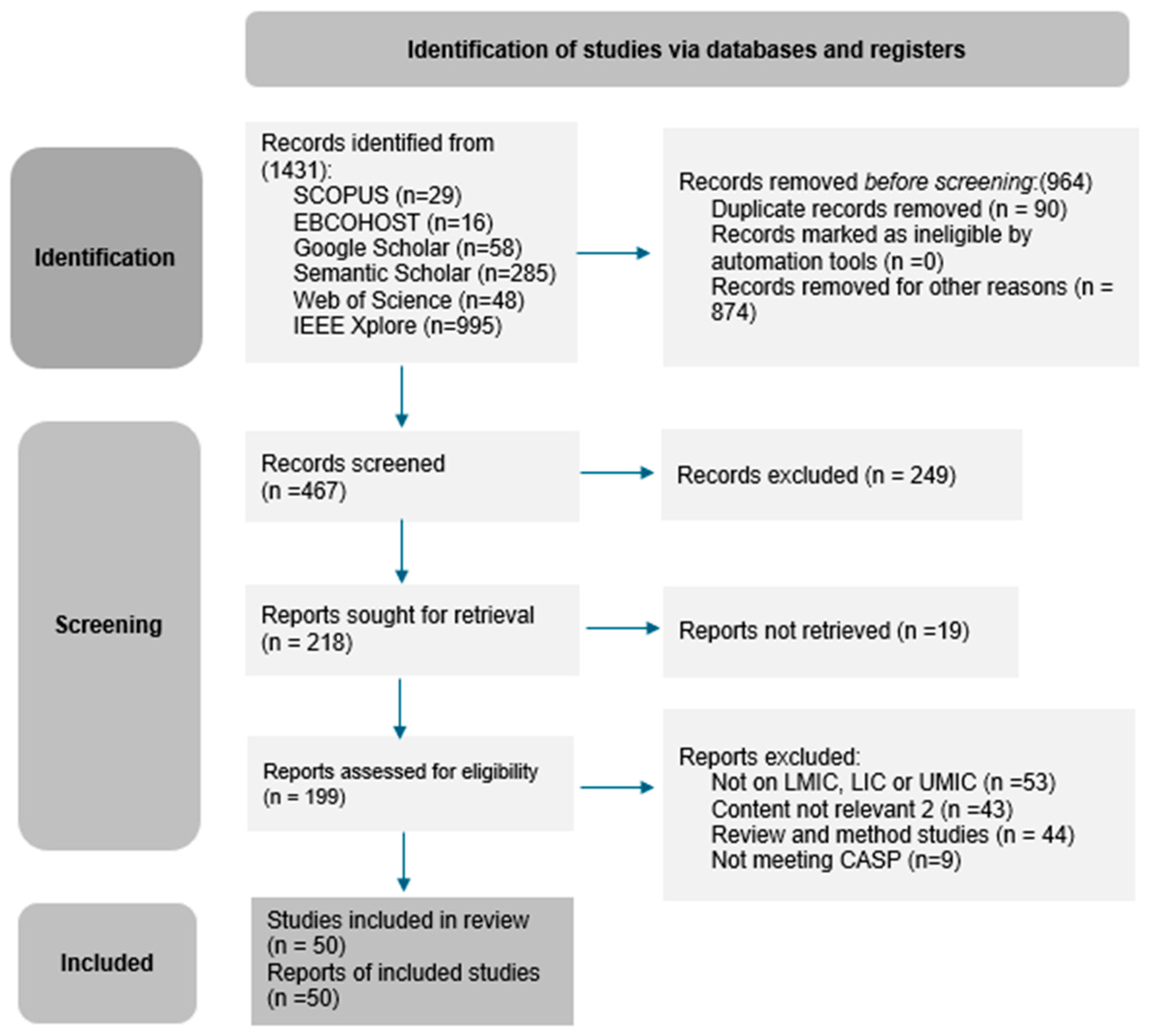
Figure 1. Stages of the study selection process.
Admsci 15 00482 g001
Figure 2. Countries represented in the study.
Admsci 15 00482 g002
Figure 3. The state of e-government/AI integration.
Admsci 15 00482 g003
Table 1. Selected studies’ characteristics.
DatabaseTotal PapersQualitativeQuantitativeArticlesConference PapersUMICLMIC
Web of Science1577114105
IEEE Xplore19128019910
Scopus4313131
Semantic Scholar7704307
Google Scholar3302121
EBSCO2112002
TOTAL5033 (66%)17 (34%)22 (44%)28 (56%)24 (48%)26 (52%)
Table 2. Strengths and capabilities for the desired state.
SubthemeCategorySpecific AreaScholars
Governance, regulation and ethicsRegulatory frameworksLegal compliance requirementsRathnayake et al. (2025); Bakhov et al. (2025); Jha and Jha (2024); Zhao et al. (2025); Ji et al. (2024)
Data protection regulationsY. Zhang and Li (2025); Efe (2023); Ji et al. (2024); Jirari et al. (2025)
Ethical governanceAlgorithmic fairness regulationEfe (2023); Jha and Jha (2024); Arora et al. (2024); Xavier (2023)
Accountability mechanismsEfe (2023); Rathnayake et al. (2025); Arora et al. (2024)
Public value and impactPublic value creation (operational and strategic)Li et al. (2025); C. Wang et al. (2021); Chatterjee et al. (2022)
Socio-economic impactAminah and Saksono (2021); Barodi and Lalaoui (2023)
Oversight mechanismsIndependent auditing and external monitoringEfe (2023); Rathnayake et al. (2025); Y. Zhang and Li (2025)
Strategic and implementation planningNational strategyAI strategy developmentY. Zhang and Li (2025); Srivastava and Sharma (2025); Aminah and Saksono (2021); Herdhiyanto et al. (2023)
Digital transformation roadmapsEfe (2023); Suhendarto (2025); Aminah and Saksono (2021); Barodi and Lalaoui (2023)
Localisation strategiesAcademic/industry collaborationFebiandini and Sony (2023); Ishengoma et al. (2022)
Context-specific adaptationBakhov et al. (2025); Plantinga (2024); Aminah and Saksono (2021)
Implementation planningPhased rollout approachIshengoma et al. (2022); Y. Zhang and Li (2025); Tueiv and Schmitz (2023)
Pilot programmesAbdulkareem (2024); Y. Zhang and Li (2025)
Resource planningFunding allocationEfe (2023); Mazumder and Hossain (2024); Y. Zhang and Li (2025)
Infrastructure developmentEfe (2023); Srivastava and Sharma (2025); Aminah and Saksono (2021); Nawafleh et al. (2025); Tamilarasi et al. (2024)
Technology and infrastructure developmentSystem architectureScalable platform infrastructureHasan et al. (2021); Chinnasamy et al. (2023)
Interoperability standardsAlqudah et al. (2024); Hasan et al. (2021); Aminah and Saksono (2021); Garcia-Carrera et al. (2025)
AI capabilitiesAdvanced algorithm developmentChinnasamy et al. (2023); Alqudah et al. (2024); Jha and Jha (2024); Chinnapareddy et al. (2025)
Appropriate specialised AI model developmentZ. Zhou et al. (2025b); Ji et al. (2024); Fang and Xu (2023); Syahidi et al. (2025); Chiranjeevi et al. (2024); Ramathilagam et al. (2024)
Cybersecurity integrationCybersecurity implementationAlqudah et al. (2021); Hasan et al. (2021); Elisa et al. (2023); Tamilarasi et al. (2024); Ajay et al. (2024)
Integration Models and FrameworksIntegration model/framework appropriatenessJha and Jha (2024); Alqudah et al. (2024); Chinnasamy et al. (2023); Hasan et al. (2021)
AI-ready e-government platformsHasan et al. (2021); Efe (2023); Alqudah et al. (2024); Srivastava and Sharma (2025); Suhendarto (2025)
Data governanceData quality and managementHerdhiyanto et al. (2023); Ji et al. (2024); Aminah and Saksono (2021)
Open Data PracticesZhao et al. (2025); Spalević et al. (2023); Essabbar et al. (2024)
Physical infrastructureNetwork infrastructurePlantinga (2024); Efe (2023); Hakimi et al. (2023); Aminah and Saksono (2021)
Computing and hardware resourcesChinnasamy et al. (2023); Hasan et al. (2021); Alqudah et al. (2024); Jha and Jha (2024)
Organisational capacity developmentChange managementInnovation culture developmentIshengoma et al. (2022); Osakwe et al. (2021)
Lifecycle management systemsChinnasamy et al. (2023); Suhendarto (2025)
Performance managementContinuous evaluation mechanismsEfe (2023); Suhendarto (2025); Jirari et al. (2025)
Value-based prioritisationAlqudah et al. (2021); Bakhov et al. (2025); Tueiv and Schmitz (2023)
Interagency coordinationCross-government collaborationY. Zhang and Li (2025); Ishengoma et al. (2022); Aminah and Saksono (2021)
Multi-stakeholder EngagementPublic-private partnershipsMazumder and Hossain (2024); Hakimi et al. (2023); Aminah and Saksono (2021)
Human capital and expertiseWorkforce developmentEducation, skills and training developmentAlqudah et al. (2021); Abdulkareem (2024); Osakwe et al. (2021); Herdhiyanto et al. (2023); Nawafleh et al. (2025)
Knowledge managementResearch and knowledge developmentAlqudah et al. (2021); Efe (2023); Mazumder and Hossain (2024); Jha and Jha (2024); Bakhov et al. (2025)
Learning systemsExperience-based learningPlantinga (2024); Abdulkareem (2024); Cheng et al. (2021)
Research-driven adaptationAbdulkareem (2024); Plantinga (2024)
AI adoption, implementation, and impactOperational implementation and assimilation capabilitiesHuman/AI interaction design/dual AI model deployment Cheng et al. (2021); C. Wang et al. (2021); Li et al. (2025); Song et al. (2025)
Integration depth and breadthChatterjee et al. (2022); S. Wang et al. (2024)
Strategic analysis and adoption planningFramework applicationS. Wang et al. (2024); Z. Zhou et al. (2025b)
Stakeholder influence mappingW. Zhang et al. (2021); Rathnayake et al. (2025)
Performance and impact evaluationImpact on government transparencyZhao et al. (2025)
Impact on citizen satisfactionChatterjee et al. (2022); El El Gharbaoui et al. (2024); C. Wang et al. (2021)
Impact on operational and strategic performanceChatterjee et al. (2022); Nawafleh et al. (2025); Jirari et al. (2025); Mohammed et al. (2022)
Citizen engagement and participationTrust buildingTransparency mechanismsRathnayake et al. (2025); Hakimi et al. (2023); Zhao et al. (2025); Spalević et al. (2023); Song et al. (2025)
Public awareness processesRathnayake et al. (2025); Osakwe et al. (2021)
Inclusive designAccessibility features assessmentRathnayake et al. (2025); Bakhov et al. (2025); Tueiv and Schmitz (2023)
User-centric designs/approachesAbdulkareem (2024); Cheng et al. (2021); M. Zhou et al. (2025a); Syahidi et al. (2025)
Public participationCitizen engagement mechanismsSuhendarto (2025); Bakhov et al. (2025); M. Zhou et al. (2025a); Xavier (2023)
Community collaborationRathnayake et al. (2025); Bakhov et al. (2025); Cheng et al. (2021)
Disclaimer/Publisher’s Note: The statements, opinions and data contained in all publications are solely those of the individual author(s) and contributor(s) and not of MDPI and/or the editor(s). MDPI and/or the editor(s) disclaim responsibility for any injury to people or property resulting from any ideas, methods, instructions or products referred to in the content.