
Bacteriophages in Hip and Knee Periprosthetic Joint Infections: A Promising Tool in the Era of Antibiotic Resistance
 , ,
, ,  ,
, 
 , and
, and 
Abstract
1. Introduction
2. Methods
2.1. Eligibility Criteria
2.2. Search Strategy
- Problem: PJIs;
- Intervention: bacteriophage therapy;
- Outcomes: clinical results and complications.
2.3. Selection and Data Collection
2.4. Data Items
2.5. Assessment of the Risk of Bias and Quality of the Recommendations
2.6. Synthesis Methods
3. Results
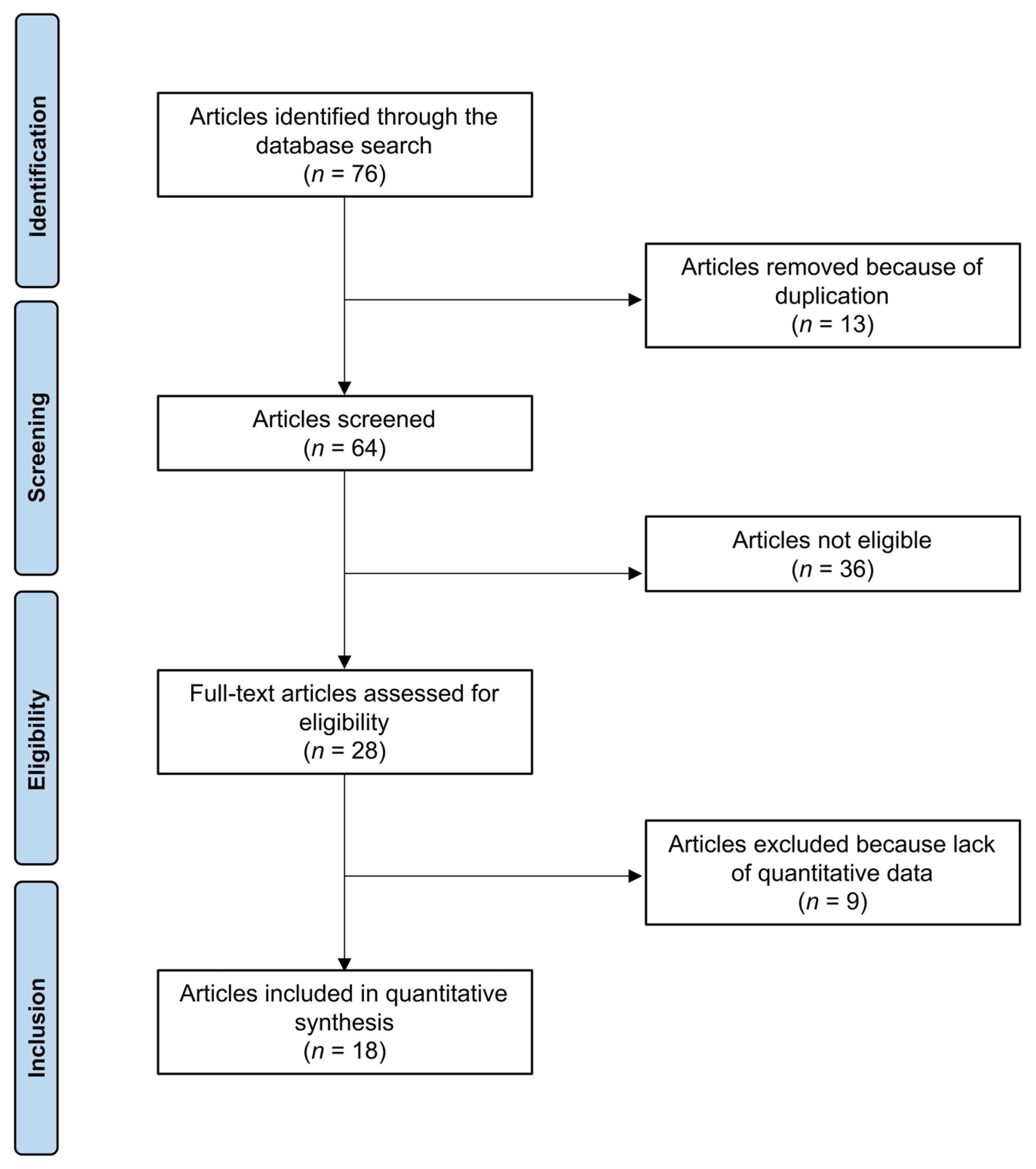
3.1. Study Selection
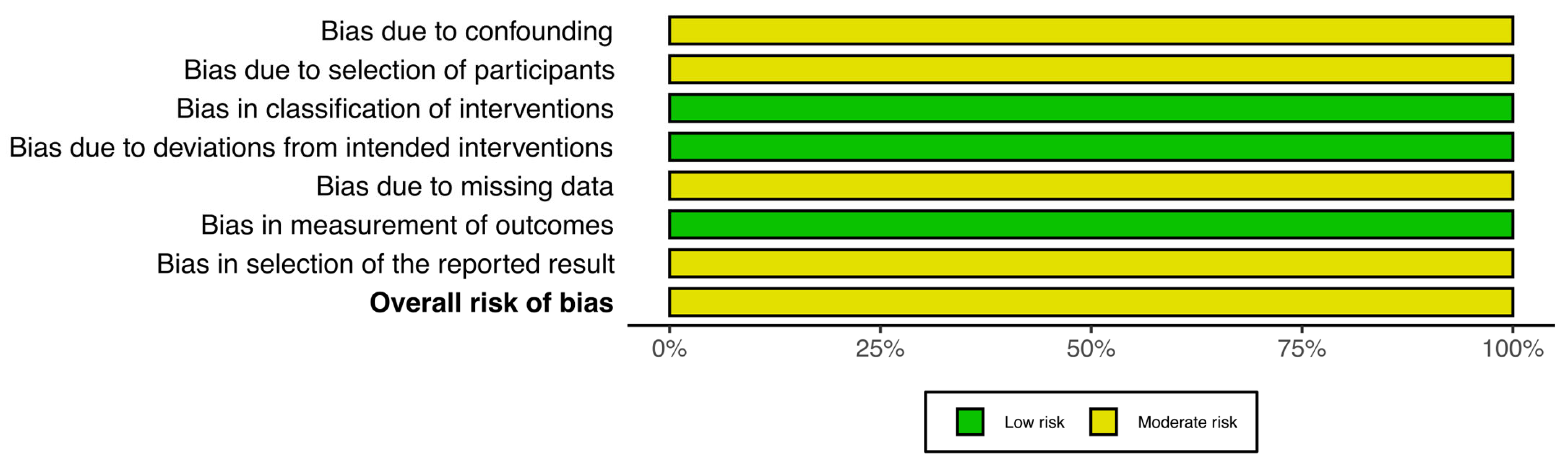
3.2. Methodological Quality Assessment
3.3. Study Characteristics and Results of Individual Studies
4. Discussion
5. Conclusions
Author Contributions
Funding
Institutional Review Board Statement
Informed Consent Statement
Data Availability Statement
Conflicts of Interest
References
- Macken, A.A.; Prkic, A.; Koenraadt-van Oost, I.; Buijze, G.A.; The, B.; Eygendaal, D. Can a single question replace patient-reported outcomes in the follow-up of elbow arthroplasty? A validation study. J. Orthop. Traumatol. 2024, 25, 49. [Google Scholar] [CrossRef] [Scilit] [PubMed]
- Zhang, X.; Shen, X.; Zhang, R.; Chen, M.; Ma, R.; Zhang, Z.; Zhang, H.; Yang, B.; Zhu, C. Radiographic evaluation of robot-assisted versus manual total hip arthroplasty: A multicenter randomized controlled trial. J. Orthop. Traumatol. 2024, 25, 33. [Google Scholar] [CrossRef] [Scilit]
- Migliorini, F.; Biagini, M.; Rath, B.; Meisen, N.; Tingart, M.; Eschweiler, J. Total hip arthroplasty: Minimally invasive surgery or not? Meta-analysis of clinical trials. Int. Orthop. 2019, 43, 1573–1582. [Google Scholar] [CrossRef] [Scilit] [PubMed]
- Migliorini, F.; Eschweiler, J.; Niewiera, M.; El Mansy, Y.; Tingart, M.; Rath, B. Better outcomes with patellar resurfacing during primary total knee arthroplasty: A meta-analysis study. Arch. Orthop. Trauma Surg. 2019, 139, 1445–1454. [Google Scholar] [CrossRef] [Scilit] [PubMed]
- Migliorini, F.; Maffulli, N.; Cuozzo, F.; Elsner, K.; Hildebrand, F.; Eschweiler, J.; Driessen, A. Mobile Bearing versus Fixed Bearing for Unicompartmental Arthroplasty in Monocompartmental Osteoarthritis of the Knee: A Meta-Analysis. J. Clin. Med. 2022, 11, 2837. [Google Scholar] [CrossRef] [Scilit]
- Migliorini, F.; Maffulli, N.; Knobe, M.; Eschweiler, J.; Tingart, M.; Baroncini, A. Arthroscopic labral repair for femoroacetabular impingement: A systematic review. Surgeon 2022, 20, e225–e230. [Google Scholar] [CrossRef] [Scilit]
- Migliorini, F.; Maffulli, N.; Velaj, E.; Bell, A.; Kammer, D.; Hildebrand, F.; Hofmann, U.K.; Eschweiler, J. Antithrombotic prophylaxis following total hip arthroplasty: A level I Bayesian network meta-analysis. J. Orthop. Traumatol. 2024, 25, 1. [Google Scholar] [CrossRef] [Scilit]
- Migliorini, F.; Driessen, A.; Colarossi, G.; El Mansy, Y.; Gatz, M.; Tingart, M.; Eschweiler, J. Short stems for total hip replacement among middle-aged patients. Int. Orthop. 2020, 44, 847–855. [Google Scholar] [CrossRef] [Scilit]
- Axenhus, M.; Mukka, S.; Magneli, M.; Skoldenberg, O. Comparative outcomes of uncemented and cemented stem revision in managing periprosthetic femoral fractures: A retrospective cohort study. J. Orthop. Traumatol. 2024, 25, 35. [Google Scholar] [CrossRef] [Scilit]
- Migliorini, F.; Maffulli, N.; Pilone, M.; Kammer, D.; Hofmann, U.K.; Nobili, A.; Velaj, E.; Bell, A. Subsidence of the Corail stem in total hip arthroplasty: No influence of bony contact. J. Orthop. Traumatol. 2024, 25, 53. [Google Scholar] [CrossRef] [Scilit]
- Pagano, S.; Plate, J.F.; Kappenschneider, T.; Reinhard, J.; Scharf, M.; Maderbacher, G. Polyethylene liner dissociation in total hip arthroplasty: A retrospective case-control study on a single implant design. J. Orthop. Traumatol. 2024, 25, 38. [Google Scholar] [CrossRef] [Scilit] [PubMed]
- Dewidar, A.A.; Mesregah, M.K.; Mesriga, M.M.; El-Behiry, A.M. Autogenous structural bone graft reconstruction of ≥10-mm-deep uncontained medial proximal tibial defects in primary total knee arthroplasty. J. Orthop. Traumatol. 2024, 25, 22. [Google Scholar] [CrossRef] [Scilit] [PubMed]
- Moret, C.S.; Masri, S.E.; Schelker, B.L.; Friederich, N.F.; Hirschmann, M.T. Unexpected early loosening of rectangular straight femoral Zweymuller stems with an alumina-reduced surface after total hip arthroplasty—A prospective, double-blind, randomized controlled trial. J. Orthop. Traumatol. 2024, 25, 12. [Google Scholar] [CrossRef] [Scilit] [PubMed]
- Ascione, T.; Balato, G.; Pagliano, P. Upcoming evidence in clinical practice of two-stage revision arthroplasty for prosthetic joint infection. J. Orthop. Traumatol. 2024, 25, 26. [Google Scholar] [CrossRef] [Scilit]
- Hamoudi, C.; Hamon, M.; Reiter-Schatz, A.; Debordes, P.A.; Gaudias, J.; Ronde-Oustau, C.; Jenny, J.Y. Cement loaded with high-dose gentamicin and clindamycin does not reduce the risk of subsequent infection after aseptic total hip or knee revision arthroplasty: A preliminary study. J. Orthop. Traumatol. 2024, 25, 37. [Google Scholar] [CrossRef] [Scilit]
- Lee, W.S.; Park, K.K.; Cho, B.W.; Park, J.Y.; Kim, I.; Kwon, H.M. Risk factors for early septic failure after two-stage exchange total knee arthroplasty for treatment of periprosthetic joint infection. J. Orthop. Traumatol. 2024, 25, 6. [Google Scholar] [CrossRef] [Scilit]
- Puetzler, J.; Hofschneider, M.; Gosheger, G.; Theil, C.; Schulze, M.; Schwarze, J.; Koch, R.; Moellenbeck, B. Evaluation of time to reimplantation as a risk factor in two-stage revision with static spacers for periprosthetic knee joint infection. J. Orthop. Traumatol. 2024, 25, 15. [Google Scholar] [CrossRef] [Scilit]
- Hofmann, U.K.; Eleftherakis, G.; Migliorini, F.; Fink, B.; Mederake, M. Diagnostic and prognostic relevance of plain radiographs for periprosthetic joint infections of the hip: A literature review. Eur. J. Med. Res. 2024, 29, 314. [Google Scholar] [CrossRef] [Scilit]
- Migliorini, F.; Hofmann, U.K. Editorial on the validity of plain radiographs in low-grade periprosthetic hip infections. Ann. Med. 2024, 56, 2352590. [Google Scholar] [CrossRef] [Scilit]
- Wang, D.; Li, H.; Zhang, W.; Li, H.; Xu, C.; Liu, W.; Li, J. Efficacy and safety of modular versus monoblock stems in revision total hip arthroplasty: A systematic review and meta-analysis. J. Orthop. Traumatol. 2023, 24, 50. [Google Scholar] [CrossRef] [Scilit]
- Descamps, J.; Teissier, V.; Graff, W.; Mouton, A.; Bouche, P.A.; Marmor, S. Managing early complications in total hip arthroplasty: The safety of immediate revision. J. Orthop. Traumatol. 2023, 24, 38. [Google Scholar] [CrossRef] [Scilit]
- Migliorini, F.; Weber, C.D.; Bell, A.; Betsch, M.; Maffulli, N.; Poth, V.; Hofmann, U.K.; Hildebrand, F.; Driessen, A. Bacterial pathogens and in-hospital mortality in revision surgery for periprosthetic joint infection of the hip and knee: Analysis of 346 patients. Eur. J. Med. Res. 2023, 28, 177. [Google Scholar] [CrossRef] [Scilit] [PubMed]
- Su, X.; Zhu, B.; Qin, L.; Yang, J.; Wei, L.; Xu, Z.; Wei, K.; Wang, J.; Chen, L.; Zhao, C.; et al. Joint fluid interleukin-6 combined with the neutral polymorphonuclear leukocyte ratio (PMN%) as a diagnostic index for chronic periprosthesis infection after arthroplasty. J. Orthop. Traumatol. 2023, 24, 34. [Google Scholar] [CrossRef] [Scilit] [PubMed]
- Chen, Z.; Lin, J.J.; Liu, W.G.; Zhou, Z.K.; Shen, B.; Yang, J.; Kang, P.D.; Pei, F.X. Distribution and drug resistance of pathogens causing periprosthetic infections after hip and knee arthroplasty. Zhongguo Gu Shang 2020, 33, 1032–1036. [Google Scholar] [CrossRef] [PubMed]
- Chang, C.Y.; Chien, W.C.; Chung, C.H.; Tsao, C.H.; Lin, F.H.; Chang, F.Y.; Shang, S.T.; Wang, Y.C. Protective effect of N-acetylcysteine in prosthetic joint infection: A nationwide population-based cohort study. J. Microbiol. Immunol. Infect. 2020, 53, 225–233. [Google Scholar] [CrossRef] [Scilit]
- Shoji, M.M.; Chen, A.F. Biofilms in Periprosthetic Joint Infections: A Review of Diagnostic Modalities, Current Treatments, and Future Directions. J. Knee Surg. 2020, 33, 119–131. [Google Scholar] [CrossRef] [Scilit]
- Van Belleghem, J.D.; Manasherob, R.; Miedzybrodzki, R.; Rogoz, P.; Gorski, A.; Suh, G.A.; Bollyky, P.L.; Amanatullah, D.F. The Rationale for Using Bacteriophage to Treat and Prevent Periprosthetic Joint Infections. Front. Microbiol. 2020, 11, 591021. [Google Scholar] [CrossRef] [Scilit]
- Sosa, B.R.; Niu, Y.; Turajane, K.; Staats, K.; Suhardi, V.; Carli, A.; Fischetti, V.; Bostrom, M.; Yang, X. 2020 John Charnley Award: The antimicrobial potential of bacteriophage-derived lysin in a murine debridement, antibiotics, and implant retention model of prosthetic joint infection. Bone Jt. J. 2020, 102, 3–10. [Google Scholar] [CrossRef] [Scilit]
- Faruk, O.; Jewel, Z.A.; Bairagi, S.; Rasheduzzaman, M.; Bagchi, H.; Tuha, A.S.M.; Hossain, I.; Bala, A.; Ali, S. Phage treatment of multidrug-resistant bacterial infections in humans, animals, and plants: The current status and future prospects. Infect. Med. 2025, 4, 100168. [Google Scholar] [CrossRef] [Scilit]
- Abedi, A.O.; Abedi, A.A.; Ferry, T.; Citak, M. Current Applications and the Future of Phage Therapy for Periprosthetic Joint Infections. Antibiotics 2025, 14, 581. [Google Scholar] [CrossRef] [Scilit]
- Mehta, N.; Nguyen, A.T.; Rodriguez, E.K.; Young, J. Smart Phages: Leveraging Artificial Intelligence to Tackle Prosthetic Joint Infections. Antibiotics 2025, 14, 949. [Google Scholar] [CrossRef] [Scilit]
- Parmar, K.; Chaudhry, W.; Fackler, J.R.; Sowers, J.M.; Vadlamudi, A.; Greenwood-Quaintance, K.; Patel, R. In vitro activity of phages against periprosthetic joint infection-associated staphylococcal biofilms. Sci. Rep. 2025, 15, 22199. [Google Scholar] [CrossRef] [Scilit] [PubMed]
- Chen, B.; Chitto, M.; Tao, S.; Wagemans, J.; Lavigne, R.; Richards, R.G.; Metsemakers, W.J.; Moriarty, T.F. Isolation and Antibiofilm Activity of Bacteriophages against Cutibacterium acnes from Patients with Periprosthetic Joint Infection. Viruses 2024, 16, 1592. [Google Scholar] [CrossRef] [Scilit] [PubMed]
- Doub, J.B.; Fogel, J.; Urish, K.L. The stability of Staphylococcal bacteriophages with commonly used prosthetic joint infection lavage solutions. J. Orthop. Res. 2024, 42, 555–559. [Google Scholar] [CrossRef] [Scilit] [PubMed]
- Rupp, M.; Ferry, T.; Khan Mirzaei, M.; Alt, V.; Deng, L.; Walter, N. Bacteriophages for the treatment of musculoskeletal infections-An overview of clinical use, open questions, and legal framework. Orthopadie 2025, 54, 904–912. [Google Scholar] [CrossRef] [Scilit]
- Paranos, P.; Vourli, S.; Pournaras, S.; Meletiadis, J. In Vitro Interactions Between Bacteriophages and Antibacterial Agents of Various Classes Against Multidrug-Resistant Metallo-beta-Lactamase-Producing Pseudomonas aeruginosa Clinical Isolates. Pharmaceuticals 2025, 18, 343. [Google Scholar] [CrossRef] [Scilit]
- Osman, A.H.; Darkwah, S.; Kotey, F.C.N.; Asante-Poku, A.; Donkor, E.S. Lytic bacteriophages as alternative to overcoming antibiotic-resistant biofilms formed by clinically significant bacteria. Ther. Adv. Infect. Dis. 2025, 12, 20499361251356057. [Google Scholar] [CrossRef] [Scilit]
- Shirzad-Aski, H.; Yazdi, M.; Mohebbi, A.; Rafiee, M.; Soleimani-Delfan, A.; Tabarraei, A.; Ghaemi, E.A. Isolation, characterization, and genomic analysis of three novel Herelleviridae family lytic bacteriophages against uropathogenic isolates of Staphylococcus saprophyticus. Virol. J. 2025, 22, 87. [Google Scholar] [CrossRef] [Scilit]
- Kim, S.G. Targeting bacterial persistence with bacteriophages: A next-generation antimicrobial strategy. Virology 2025, 611, 110649. [Google Scholar] [CrossRef] [Scilit]
- Lukasiak, A.; Wesolowski, W.; Neumann, J.; Lewandowska, N.; Weglinska, E.; Bloch, S.; Wegrzyn, G.; Nejman-Falenczyk, B. Groundwork for phage therapy: Multi-faceted comparative analysis of lytic bacteriophages infecting uropathogenic Escherichia coli. Virology 2025, 615, 110738. [Google Scholar] [CrossRef] [Scilit]
- Huang, Y.; Huang, Y.; Wu, Z.; Fan, Z.; Zheng, F.; Liu, Y.; Xu, X. Characterization and genomic insights into bacteriophages Kpph1 and Kpph9 against hypervirulent carbapenem-resistant Klebsiella pneumoniae. Virulence 2025, 16, 2450462. [Google Scholar] [CrossRef] [Scilit] [PubMed]
- Aslam, S.; Lampley, E.; Wooten, D.; Karris, M.; Benson, C.; Strathdee, S.; Schooley, R.T. Lessons Learned From the First 10 Consecutive Cases of Intravenous Bacteriophage Therapy to Treat Multidrug-Resistant Bacterial Infections at a Single Center in the United States. Open Forum Infect. Dis. 2020, 7, ofaa389. [Google Scholar] [CrossRef] [Scilit] [PubMed]
- Cano, E.J.; Caflisch, K.M.; Bollyky, P.L.; Van Belleghem, J.D.; Patel, R.; Fackler, J.; Brownstein, M.J.; Horne, B.; Biswas, B.; Henry, M.; et al. Phage Therapy for Limb-threatening Prosthetic Knee Klebsiella pneumoniae Infection: Case Report and In Vitro Characterization of Anti-biofilm Activity. Clin. Infect. Dis. 2021, 73, e144–e151. [Google Scholar] [CrossRef] [Scilit] [PubMed]
- Cesta, N.; Pini, M.; Mulas, T.; Materazzi, A.; Ippolito, E.; Wagemans, J.; Kutateladze, M.; Fontana, C.; Sarmati, L.; Tavanti, A.; et al. Application of Phage Therapy in a Case of a Chronic Hip-Prosthetic Joint Infection due to Pseudomonas aeruginosa: An Italian Real-Life Experience and In Vitro Analysis. Open Forum Infect. Dis. 2023, 10, ofad051. [Google Scholar] [CrossRef] [Scilit]
- Doub, J.B.; Ng, V.Y.; Johnson, A.J.; Slomka, M.; Fackler, J.; Horne, B.; Brownstein, M.J.; Henry, M.; Malagon, F.; Biswas, B. Salvage Bacteriophage Therapy for a Chronic MRSA Prosthetic Joint Infection. Antibiotics 2020, 9, 241. [Google Scholar] [CrossRef] [Scilit]
- Doub, J.B.; Ng, V.Y.; Wilson, E.; Corsini, L.; Chan, B.K. Successful Treatment of a Recalcitrant Staphylococcus epidermidis Prosthetic Knee Infection with Intraoperative Bacteriophage Therapy. Pharmaceuticals 2021, 14, 231. [Google Scholar] [CrossRef] [Scilit]
- Ferry, T.; Boucher, F.; Fevre, C.; Perpoint, T.; Chateau, J.; Petitjean, C.; Josse, J.; Chidiac, C.; L’Hostis, G.; Leboucher, G.; et al. Innovations for the treatment of a complex bone and joint infection due to XDR Pseudomonas aeruginosa including local application of a selected cocktail of bacteriophages. J. Antimicrob. Chemother. 2018, 73, 2901–2903. [Google Scholar] [CrossRef] [Scilit]
- Ferry, T.; Batailler, C.; Petitjean, C.; Chateau, J.; Fevre, C.; Forestier, E.; Brosset, S.; Leboucher, G.; Kolenda, C.; Laurent, F.; et al. The Potential Innovative Use of Bacteriophages Within the DAC((R)) Hydrogel to Treat Patients With Knee Megaprosthesis Infection Requiring “Debridement Antibiotics and Implant Retention” and Soft Tissue Coverage as Salvage Therapy. Front. Med. 2020, 7, 342. [Google Scholar] [CrossRef] [Scilit]
- Ferry, T.; Kolenda, C.; Batailler, C.; Gaillard, R.; Gustave, C.A.; Lustig, S.; Fevre, C.; Petitjean, C.; Leboucher, G.; Laurent, F.; et al. Case Report: Arthroscopic “Debridement Antibiotics and Implant Retention” With Local Injection of Personalized Phage Therapy to Salvage a Relapsing Pseudomonas aeruginosa Prosthetic Knee Infection. Front. Med. 2021, 8, 569159. [Google Scholar] [CrossRef] [Scilit]
- Neuts, A.S.; Berkhout, H.J.; Hartog, A.; Goosen, J.H.M. Bacteriophage therapy cures a recurrent Enterococcus faecalis infected total hip arthroplasty? A case report. Acta Orthop. 2021, 92, 678–680. [Google Scholar] [CrossRef] [Scilit]
- Ramirez-Sanchez, C.; Gonzales, F.; Buckley, M.; Biswas, B.; Henry, M.; Deschenes, M.V.; Horne, B.; Fackler, J.; Brownstein, M.J.; Schooley, R.T.; et al. Successful Treatment of Staphylococcus aureus Prosthetic Joint Infection with Bacteriophage Therapy. Viruses 2021, 13, 1182. [Google Scholar] [CrossRef] [Scilit] [PubMed]
- Schoeffel, J.; Wang, E.W.; Gill, D.; Frackler, J.; Horne, B.; Manson, T.; Doub, J.B. Successful Use of Salvage Bacteriophage Therapy for a Recalcitrant MRSA Knee and Hip Prosthetic Joint Infection. Pharmaceuticals 2022, 15, 177. [Google Scholar] [CrossRef] [Scilit] [PubMed]
- Tkhilaishvili, T.; Winkler, T.; Muller, M.; Perka, C.; Trampuz, A. Bacteriophages as Adjuvant to Antibiotics for the Treatment of Periprosthetic Joint Infection Caused by Multidrug-Resistant Pseudomonas aeruginosa. Antimicrob. Agents Chemother. 2019, 64, 10–1128. [Google Scholar] [CrossRef] [Scilit] [PubMed]
- Wahl, P.; Schlappi, M.; Loganathan, A.; Uckay, I.; Hodel, S.; Fritz, B.; Scheidegger, J.; Djebara, S.; Leitner, L.; McCallin, S. Bacteriophage therapy created the necessary conditions for successful antibiotic suppression in a periprosthetic hip joint infection: A Case Report. Front. Med. 2025, 12, 1564369. [Google Scholar] [CrossRef] [Scilit]
- Howick, J.C.I.; Glasziou, P.; Greenhalgh, T.; Heneghan, C.; Liberati, A.; Moschetti, I.; Phillips, B.; Thornton, H.; Goddard, O.; Hodgkinson, M. The 2011 Oxford CEBM Levels of Evidence; Oxford Centre for Evidence-Based Medicine: Oxford, UK, 2011; Available online: https://www.cebm.net/index.aspx?o=5653 (accessed on 30 August 2025).
- Page, M.J.; McKenzie, J.E.; Bossuyt, P.M.; Boutron, I.; Hoffmann, T.C.; Mulrow, C.D.; Shamseer, L.; Tetzlaff, J.M.; Akl, E.A.; Brennan, S.E.; et al. The PRISMA 2020 statement: An updated guideline for reporting systematic reviews. BMJ 2021, 372, n71. [Google Scholar] [CrossRef] [Scilit]
- Higgins, J.P.T.; Thomas, J.; Chandler, J.; Cumpston, M.; Li, T.; Page, M.J.; Welch, V.A. (Eds.) Cochrane Handbook for Systematic Reviews of Interventions Version 6.3; Cochrane: London, UK, 2022; Available online: www.training.cochrane.org/handbook (accessed on 30 August 2025).
- Moola, S.; Munn, Z.; Tufanaru, C.; Aromataris, E.; Sears, K.; Sfetcu, R.; Currie, M.; Qureshi, R.; Mattis, P.; Lisy, K. Systematic reviews of etiology and risk. Joanna Briggs Inst. Rev. Man. 2017, 5, 217–269. [Google Scholar]
- Munn, Z.; Barker, T.H.; Moola, S.; Tufanaru, C.; Stern, C.; McArthur, A.; Stephenson, M.; Aromataris, E. Methodological quality of case series studies: An introduction to the JBI critical appraisal tool. JBI Evid. Synth. 2020, 18, 2127–2133. [Google Scholar] [CrossRef] [Scilit]
- Sterne, J.A.; Hernan, M.A.; Reeves, B.C.; Savovic, J.; Berkman, N.D.; Viswanathan, M.; Henry, D.; Altman, D.G.; Ansari, M.T.; Boutron, I.; et al. ROBINS-I: A tool for assessing risk of bias in non-randomised studies of interventions. BMJ 2016, 355, i4919. [Google Scholar] [CrossRef] [Scilit]
- McGuinness, L.A.; Higgins, J.P.T. Risk-of-bias VISualization (robvis): An R package and Shiny web app for visualizing risk-of-bias assessments. Res. Synth. Methods 2020, 12, 55–61. [Google Scholar] [CrossRef] [Scilit]
- Doub, J.B.; Johnson, A.J.; Nandi, S.; Ng, V.; Manson, T.; Lee, M.; Chan, B. Experience Using Adjuvant Bacteriophage Therapy for the Treatment of 10 Recalcitrant Periprosthetic Joint Infections: A Case Series. Clin. Infect. Dis. 2023, 76, e1463–e1466. [Google Scholar] [CrossRef] [Scilit]
- Miedzybrodzki, R.; Fortuna, W.; Weber-Dabrowska, B.; Górski, A. A retrospective analysis of changes in inflammatory markers in patients treated with bacterial viruses. Clin. Exp. Med. 2009, 9, 303–312. [Google Scholar] [CrossRef] [Scilit] [PubMed]
- Munteanu, D.I.; Dunn, J.; Apjok, G.; Kintses, B.; Griselain, J.; Steurs, G.; Cochez, C.; Djebara, S.; Merabishvili, M.; Pirnay, J.P.; et al. Phage Therapy for Orthopaedic Infections: The First Three Cases from the United Kingdom. Antibiotics 2025, 14, 114. [Google Scholar] [CrossRef] [Scilit] [PubMed]
- Patey, O.; McCallin, S.; Mazure, H.; Liddle, M.; Smithyman, A.; Dublanchet, A. Clinical Indications and Compassionate Use of Phage Therapy: Personal Experience and Literature Review with a Focus on Osteoarticular Infections. Viruses 2018, 11, 18. [Google Scholar] [CrossRef] [Scilit] [PubMed]
- Ferry, T.; Kolenda, C.; Batailler, C.; Gustave, C.A.; Lustig, S.; Malatray, M.; Fevre, C.; Josse, J.; Petitjean, C.; Chidiac, C.; et al. Phage Therapy as Adjuvant to Conservative Surgery and Antibiotics to Salvage Patients with Relapsing S. aureus Prosthetic Knee Infection. Front. Med. 2020, 7, 570572. [Google Scholar] [CrossRef] [Scilit]
- Doub, J.B.; Urish, K.; Chan, B. Bacteriophage therapy for periprosthetic joint infections: Current limitations and research needed to advance this therapeutic. J. Orthop. Res. 2023, 41, 1097–1104. [Google Scholar] [CrossRef] [Scilit]
- Fedorov, E.; Samokhin, A.; Kozlova, Y.; Kretien, S.; Sheraliev, T.; Morozova, V.; Tikunova, N.; Kiselev, A.; Pavlov, V. Short-Term Outcomes of Phage-Antibiotic Combination Treatment in Adult Patients with Periprosthetic Hip Joint Infection. Viruses 2023, 15, 499. [Google Scholar] [CrossRef] [Scilit]
- Akturk, E.; Melo, L.D.R.; Oliveira, H.; Crabbe, A.; Coenye, T.; Azeredo, J. Combining phages and antibiotic to enhance antibiofilm efficacy against an in vitro dual species wound biofilm. Biofilm 2023, 6, 100147. [Google Scholar] [CrossRef] [Scilit]
- Al-Mustapha, A.I.; Raufu, I.A.; Ogundijo, O.A.; Odetokun, I.A.; Tiwari, A.; Brouwer, M.S.M.; Adetunji, V.; Heikinheimo, A. Antibiotic resistance genes, mobile elements, virulence genes, and phages in cultivated ESBL-producing Escherichia coli of poultry origin in Kwara State, North Central Nigeria. Int. J. Food Microbiol. 2023, 389, 110086. [Google Scholar] [CrossRef] [Scilit]
- Xiao, S.; Xie, L.; Gao, Y.; Wang, M.; Geng, W.; Wu, X.; Rodriguez, R.D.; Cheng, L.; Qiu, L.; Cheng, C. Artificial Phages with Biocatalytic Spikes for Synergistically Eradicating Antibiotic-Resistant Biofilms. Adv. Mater. 2024, 36, e2404411. [Google Scholar] [CrossRef] [Scilit]
- Wang, Y.; Zhang, Z.; Kang, J.; Chen, B.; Hong, W.; Lv, B.; Wang, T.; Qian, H. Phages in different habitats and their ability to carry antibiotic resistance genes. J. Hazard. Mater. 2024, 469, 133941. [Google Scholar] [CrossRef] [Scilit]
- Fletcher, J.; Manley, R.; Fitch, C.; Bugert, C.; Moore, K.; Farbos, A.; Michelsen, M.; Alathari, S.; Senior, N.; Mills, A.; et al. The Citizen Phage Library: Rapid Isolation of Phages for the Treatment of Antibiotic Resistant Infections in the UK. Microorganisms 2024, 12, 253. [Google Scholar] [CrossRef] [Scilit] [PubMed]
- Nazligul, A.S.; Guven, S.; Erdogan, Y.; Firat, A.; Dogan, M.; Akkaya, M. Periprosthetic Joint Infection in Unicompartmental vs. Total Knee Arthroplasty: Microbiological Spectrum and Management Outcomes. Antibiotics 2025, 14, 585. [Google Scholar] [CrossRef] [Scilit] [PubMed]
- Taylor Iv, W.L.; Bergstein, V.; Weinblatt, A.; Long, W.J. The financial burden of vancomycin as an alternative to cefazolin for periprosthetic joint infection prophylaxis in total knee arthroplasty. Arch. Orthop. Trauma Surg. 2025, 145, 272. [Google Scholar] [CrossRef] [Scilit] [PubMed]
- Werner, A.; Werkmeister, M.; Neumann, J.; Linke, P. Diagnostic value of preoperative joint aspiration for periprosthetic shoulder infection: Analysis of microbiological aspects and preoperative ICM minor criteria. Arch. Orthop. Trauma Surg. 2025, 145, 413. [Google Scholar] [CrossRef] [Scilit]
- Abdelnasser, M.K.; Bakhet, A.; Hosni, A.; Kamal, D.T.; Osman, O.B.; Abdelhameed, M.A.; Moustafa, M.M. Alpha defensin immunoassay is more effective for ruling out rather than diagnosing periprosthetic joint infection (PJI): A prospective cohort study. Arthroplasty 2025, 7, 52. [Google Scholar] [CrossRef] [Scilit]
- Lin, J.; Li, H.; Chen, Y.; Ding, H.; Wang, Q.; Lv, J.; Li, W.; Zhang, W.; Fang, X. Prosthetic articulating spacers as a preferred option for two-stage revision arthroplasty in chronic periprosthetic joint infection. Arthroplasty 2025, 7, 4. [Google Scholar] [CrossRef] [Scilit]
- Mu, W.; Lizcano, J.D.; Xu, B.; Guo, W.; Aimaiti, A.; Zhang, X.; Parvizi, J.; Cao, L. Monitoring the hematologic markers in patients undergoing single-stage exchange arthroplasty for periprosthetic joint infection. Arthroplasty 2025, 7, 46. [Google Scholar] [CrossRef] [Scilit]
- Bouhadana, A.; Steinberg, A. DAIR to Be Different: Successful Use of DAIR Regimen, a Novel Treatment Combination for EBV-induced HLH. Clin. Hematol. Int. 2025, 7, 21–26. [Google Scholar] [CrossRef] [Scilit]
- Zellner, A.A.; Watzlawik, N.; Roos, J.; Hischebeth, G.T.R.; Molitor, E.; Franz, A.; Froschen, F.S. Microbiological Profiles of Patients with Acute Periprosthetic Joint Infection Undergoing Debridement, Antibiotics, Irrigation and Implant Retention (DAIR). Antibiotics 2025, 14, 873. [Google Scholar] [CrossRef] [Scilit]
- McPherson, E.J.; Jones, R.M.; Sorial, R.M.; Chowdhry, M. We need a new acronym supplementing DAIR: Introducing DECRA. Arthroplasty 2025, 7, 43. [Google Scholar] [CrossRef] [Scilit]
- Zellner, A.A.; Watzlawik, N.; Roos, J.; Hischebeth, G.T.R.; Prangenberg, C.; Franz, A.; Froschen, F.S. Mid-term results after DAIR for patients with acute periprosthetic joint infections of the hip or knee. J. Orthop. Surg. Res. 2025, 20, 676. [Google Scholar] [CrossRef] [Scilit] [PubMed]
- Izzo, A.; Carbone, C.; Matteo, V.; Lintz, F.; Festa, E.; Balato, G.; Bernasconi, A. Eradication rate after debridement, antibiotics, and implant retention (DAIR), 1.5-stage revision or 2-stage revision in periprosthetic ankle joint infection: A systematic review. Foot Ankle Surg. 2025, 31, 695–702. [Google Scholar] [CrossRef] [Scilit] [PubMed]
- Sigmund, I.K.; Ferry, T.; Sousa, R.; Soriano, A.; Metsemakers, W.J.; Clauss, M.; Trebse, R.; Wouthuyzen-Bakker, M. Debridement, antimicrobial therapy, and implant retention (DAIR) as curative strategy for acute periprosthetic hip and knee infections: A position paper of the European Bone & Joint Infection Society (EBJIS). J. Bone Jt. Infect. 2025, 10, 101–138. [Google Scholar] [CrossRef] [Scilit] [PubMed]
- Sigmund, I.K.; Wouthuyzen-Bakker, M.; Ferry, T.; Metsemakers, W.J.; Clauss, M.; Soriano, A.; Trebse, R.; Sousa, R. Debridement, antimicrobial therapy, and implant retention (DAIR) as curative surgical strategy for acute periprosthetic hip and knee infections: A summary of the position paper from the European Bone & Joint Infection Society (EBJIS). J. Bone Jt. Infect. 2025, 10, 139–142. [Google Scholar] [CrossRef] [Scilit]
- Chandler, C.C.; Graham, S.D.; Hietpas, K.T.; Fehring, T.K.; Otero, J.E. Trends in Antibiotic-Resistant Bacteria in Surgically Treated Periprosthetic Joint Infection: A Decade of Experience at a Regional Referral Center. J. Arthroplast. 2025, in press. [Google Scholar] [CrossRef] [Scilit]
- Gomez-Junyent, J.; Lora-Tamayo, J.; Sorli, L.; Murillo, O. Challenges and strategies in the treatment of periprosthetic joint infection caused by multidrug-resistant Gram-negative bacteria: A narrative review. Clin. Microbiol. Infect. 2025, 31, 1458–1466. [Google Scholar] [CrossRef] [Scilit]
- Koepf, U.S.; Scheidt, S.; Hischebeth, G.T.R.; Strassburg, C.P.; Wirtz, D.C.; Randau, T.M.; Lutz, P. Increased rate of enteric bacteria as cause of periprosthetic joint infections in patients with liver cirrhosis. BMC Infect. Dis. 2022, 22, 389. [Google Scholar] [CrossRef] [Scilit]



| Database | Search Strategy (MeSH Terms and Keywords) |
|---|---|
| PubMed | ((“Bacteriophages” [MeSH Terms]) OR (“phage therapy”) OR (“bacteriophage therapy”) OR (“phage treatment”)) AND (“Prosthesis-Related Infections” [MeSH Terms]) OR (“Joint Prosthesis Infection”) OR (“Periprosthetic Joint Infection”)) |
| Web of Science | TS = (“bacteriophage therapy” OR “phage therapy” OR “phage treatment”) AND TS = (“periprosthetic joint infection” OR “prosthetic joint infection”) |
| Google Scholar | “bacteriophage therapy” AND (“periprosthetic joint infection” OR “prosthetic joint infection”) |
| Embase | (‘bacteriophage therapy’/exp OR ‘phage therapy’ OR ‘phage treatment’) AND (‘joint prosthesis infection’/exp OR ‘orthopedic infection’) |
| Author | Q1 | Q2 | Q3 | Q4 | Q5 | Q6 | Q7 | Q8 |
|---|---|---|---|---|---|---|---|---|
| Aslam et al., 2020 [42] | Y | Y | Y | Y | Y | Y | U | Y |
| Cano et al., 2021 [43] | Y | Y | Y | Y | Y | Y | Y | Y |
| Cesta et al., 2023 [44] | Y | Y | Y | Y | Y | Y | Y | Y |
| Doub et al., 2020 [45] | Y | Y | Y | Y | Y | Y | U | Y |
| Doub et al., 2021 [46] | Y | Y | Y | Y | Y | Y | Y | Y |
| Ferry et al., 2018 [47] | Y | Y | Y | Y | Y | Y | Y | Y |
| Ferry et al., 2020 [48] | Y | Y | Y | Y | Y | Y | Y | Y |
| Ferry et al., 2021 [49] | Y | Y | Y | Y | Y | Y | Y | Y |
| Neuts et al., 2021 [50] | Y | Y | Y | Y | Y | Y | Y | Y |
| Ramirez-Sanchez et al., 2021 [51] | Y | Y | Y | Y | Y | Y | Y | Y |
| Schoeffel et al., 2022 [52] | Y | Y | Y | Y | Y | Y | Y | Y |
| Tkhilaishvili et al., 2020 [53] | Y | Y | Y | Y | Y | Y | Y | Y |
| Wahl et al., 2025 [54] | Y | Y | Y | Y | Y | Y | U | Y |
| Author | Q1 | Q2 | Q3 | Q4 | Q5 | Q6 | Q7 | Q8 | Q9 | Q10 |
|---|---|---|---|---|---|---|---|---|---|---|
| Doub et al., 2023 [67] | Y | Y | Y | U | U | Y | Y | Y | N | N |
| Ferry et al., 2020 [66] | Y | Y | Y | Y | Y | Y | Y | Y | Y | Y |
| Munteanu et al., 2024 [64] | Y | Y | Y | N | Y | Y | Y | Y | Y | N |
| Patey et al., 2019 [65] | N | Y | Y | N | N | Y | Y | U | U | N |
| Author, Year | Journal | LoE | Follow-Up (Months) | Patients (n) | Women (n) | Age (Mean) | Joint | DAIR (y/n) | Pathogen | Bacteriophage |
|---|---|---|---|---|---|---|---|---|---|---|
| Aslam et al., 2020 [42] | Open Forum Infect Dis | IV | - | 1 | 1 | 61.0 | Knee | Y | S. aureus | AB-SA01, SaGR51ΦK |
| Cano et al., 2021 [43] | Clin Infect Dis | IV | 7.8 | 1 | 0 | 62.0 | Knee | N | K. pneumoniae | Φ2 (KpJH46Φ2) |
| Cesta et al., 2023 [44] | Open Forum Infect Dis | IV | 12 | 1 | 1 | 62.0 | Hip | Y | P. aeruginosa | Pa53 |
| Doub et al., 2020 [45] | Antibiotics (Basel) | IV | NR | 1 | 0 | 72.0 | Knee | N | MRSA | SaGR51Φ1 |
| Doub et al., 2021 [46] | Pharmaceuticals (Basel) | IV | 5 | 1 | 1 | 79.0 | Knee | Y | S. epidermidis | PM448 |
| Doub et al., 2023 [67] | Clin Infect Dis | IV | 14 | 5 | NR | NR | Knee, hip | Y | E. faecalis, S. epidermidis, S. lugdumensis, MRSA | EF-1, PM448, Mallokai, SaWIQ0488Φ1, SaGR51Φ1 |
| 4 | N | |||||||||
| Fedorov et al., 2023 [68] | Viruses | II | 12 | 23 | NR | 56.0 | Hip | N | MSSE, MRSE, MSSA, MRSA | H143, H178, H182, H184 |
| Ferry et al., 2018 [47] | Open Forum Infect Dis | IV | 18 | 1 | 1 | 80.0 | Hip | Y | MSSA | 1493, 1815, 1957 |
| Ferry et al., 2020 [48] | Front Med (Lausanne) | IV | 12 | 1 | 0 | 49.0 | Knee | Y | S. aureus | PP1493, PP1815 |
| Ferry et al., 2020 [66] | Front Med (Lausanne) | IV | 30 | 3 | 1 | 82.3 | Knee | Y | S. aureus | PP1493, PP1815, PP1957 |
| Ferry et al., 2021 [49] | Front Med (Lausanne) | IV | 12 | 1 | 0 | 88.0 | Knee | Y | P. aeruginosa | PP1450, PP1777, PP1792 |
| Munteanu et al., 2024 [64] | Antibiotics (Basel) | IV | 9 | 1 | NR | 84.0 | Hip | Y | MSSA, P. aeruginosa | ISP (Myovirus) |
| 1 | NR | 71.0 | Hip | N | K. pneumoniae, MSSA, C. striatum | ISP + SCM (Klebsiella phage) | ||||
| 1 | NR | 77.0 | Knee | N | S.epidermidis | COP-80B (S. epidermidis) | ||||
| Neuts et al., 2021 [50] | Acta Orthop | IV | 24 | 1 | 0 | 76.0 | Hip | N | E. faecalis | Pyophages and IntestiPhages in 10 mL vials as an oral suspension |
| Patey et al., 2019 [65] | Viruses | IV | NR | 1 | 1 | 80.0 | Knee | N | P. aeruginosa | Commercial broad spectrum multi-bacteriophage suspension |
| NR | 1 | 1 | 72.0 | Knee | Y | Staphylococcus sp. | Commercial anti-S. aureus suspension | |||
| Ramirez-Sanchez et al., 2021 [51] | Viruses | IV | 20 | 1 | 1 | 61.0 | Knee | N | MSSA | AB-SA01, J-Sa36, Sa83, Sa87, SaGR51ø1 |
| Schoeffel et al., 2022 [52] | Pharmaceuticals (Basel) | IV | 11 | 1 | 1 | 64.0 | Hip | N | MRSA | SaWIQ0488ø1 |
| Tkhilaishvili et al., 2020 [53] | Antimicrob Agents Chemother | IV | 10 | 1 | 1 | 80.0 | Knee | Y | P. aeruginosa | Both P. aeruginosa isolates were tested against the phage collection at the George Eliava Institute (Tbilisi, Georgia) |
| Wahl et al., 2025 [54] | Front Med (Lausanne) | IV | NR | 1 | 1 | 94.0 | Hip | N | MRSA | ISP phage (from Queen Astrid Military Hospital) |
Disclaimer/Publisher’s Note: The statements, opinions and data contained in all publications are solely those of the individual author(s) and contributor(s) and not of MDPI and/or the editor(s). MDPI and/or the editor(s) disclaim responsibility for any injury to people or property resulting from any ideas, methods, instructions or products referred to in the content. |
© 2025 by the authors. Licensee MDPI, Basel, Switzerland. This article is an open access article distributed under the terms and conditions of the Creative Commons Attribution (CC BY) license.
Share and Cite
Migliorini, F.; Schäfer, L.; Vaishya, R.; Eschweiler, J.; Oliva, F.; Driessen, A.; Pipino, G.; Maffulli, N. Bacteriophages in Hip and Knee Periprosthetic Joint Infections: A Promising Tool in the Era of Antibiotic Resistance. Med. Sci. 2026, 14, 9. https://doi.org/10.3390/medsci14010009
Migliorini F, Schäfer L, Vaishya R, Eschweiler J, Oliva F, Driessen A, Pipino G, Maffulli N. Bacteriophages in Hip and Knee Periprosthetic Joint Infections: A Promising Tool in the Era of Antibiotic Resistance. Medical Sciences. 2026; 14(1):9. https://doi.org/10.3390/medsci14010009
Chicago/Turabian StyleMigliorini, Filippo, Luise Schäfer, Raju Vaishya, Jörg Eschweiler, Francesco Oliva, Arne Driessen, Gennaro Pipino, and Nicola Maffulli. 2026. "Bacteriophages in Hip and Knee Periprosthetic Joint Infections: A Promising Tool in the Era of Antibiotic Resistance" Medical Sciences 14, no. 1: 9. https://doi.org/10.3390/medsci14010009
APA StyleMigliorini, F., Schäfer, L., Vaishya, R., Eschweiler, J., Oliva, F., Driessen, A., Pipino, G., & Maffulli, N. (2026). Bacteriophages in Hip and Knee Periprosthetic Joint Infections: A Promising Tool in the Era of Antibiotic Resistance. Medical Sciences, 14(1), 9. https://doi.org/10.3390/medsci14010009