Article

Modeling of Geomorphological Diversity in the Punta de Coles National Reserve, Port of Ilo, Moquegua, Perú, Using Geodetic GNSS Receivers


by
Juan Luis Ccamapaza Aguilar
1,2,
Hebert Hernán Soto Gonzales
1,2,
Sheda Méndez-Ancca
2,3,*,
Mario Ruiz Choque
3,
Luis Enrique Sosa Anahua
3,
Renzo Pepe-Victoriano
4,5,
Alex Guillermo Tejada Cáceres
6,
Danny Efrain Baldarrago Centeno
6,
Olegario Marín-Machuca
7 and
Jorge González Aguilera
8
1
Escuela Profesional de Ingeniería Ambiental, Facultad de Ingeniería, Universidad Nacional de Moquegua, Ilo 18601, Peru
2
Laboratorio de Biología Molecular y Biotecnología, Universidad Nacional de Moquegua, Ilo 18601, Peru
3
Escuela Profesional de Ingeniería Pesquera, Facultad de Ingeniería, Universidad Nacional de Moquegua, Ilo 18601, Peru
4
Facultad de Recursos Naturales Renovables, Universidad Arturo Prat, Iquique 1110939, Chile
5
Núcleo de Investigación Aplicada e Innovación en Ciencias Biológicas, Facultad de Recursos Naturales Renovables, Universidad Arturo Prat, Iquique 1110939, Chile
6
Laboratorio Costero de Ilo—Instituto del Mar del Perú (IMARPE), Ilo 18601, Peru
7
Grupo de Investigación en Sostenibilidad Ambiental (GISA), Departamento Académico de Ingeniería en Acuicultura, Facultad de Oceanografía, Pesquería, Ciencias Alimentarias y Acuicultura, Escuela Universitaria de Graduados (EUPG), Universidad Nacional Federico Villarreal, Lima 15088, Peru
8
Department of Crop Science, State University of Mato Grosso do Sul (UEMS), Campus Cassilândia, Cassilândia 79540-000, MS, Brazil
*
Author to whom correspondence should be addressed.
Geosciences 2026, 16(4), 151; https://doi.org/10.3390/geosciences16040151
Submission received: 10 February 2026 / Revised: 28 March 2026 / Accepted: 31 March 2026 / Published: 7 April 2026

Abstract

The geomorphological characterization of coastal–marine environments is essential for environmental management and biodiversity conservation. The objective of this study was to model the geomorphological diversity of the Punta de Coles National Reserve, located in Puerto de Ilo, Moquegua, Peru, using GNSS geodetic receivers, integrating topographic and bathymetric data to continuously represent both the emerged and submerged relief. The methodology involved establishing two “C”-order geodetic control points, implementing a closed polygon with 13 vertices, conducting a topographic survey, and recording bathymetric data along coastal transects extending 1 km offshore using an echo sounder and GNSS positioning. The data were processed in a GIS environment to generate a Coastal–Marine Digital Terrain Model (CM-DTM) with metric resolution. The results showed a total area of 171.451 ha, with elevation variations ranging from sea level to 71.617 m above sea level. Distinct geomorphological units were identified, such as coastal plains (0–5% slope), hills (15–35%), and cliffs (>45%), in addition to 16 rocky islets covering 1.537 ha. In the underwater environment, the model made it possible to identify submerged terraces, slopes, and local depressions down to a depth of −115 m, revealing a continuous transition between the land and sea topography; additionally, areas with a higher susceptibility to erosion and areas of high ecological importance were identified. This study’s contribution lies in the integration of GNSS geodetic data with topobathymetric surveys, which enabled the generation of a high-precision continuous model in an area with limited prior information, establishing a scientific baseline for coastal and marine management and conservation.

1. Introduction

While topobathymetric characterization is an essential requirement for the monitoring, conservation and sustainable management of protected areas [1,2,3], the study of the abiotic component known as “geodiversity” is less common [4,5]. The monitoring of the geomorphological transformation of geological heritage [6] without considering the omissions described can directly affect the conservation of biodiversity of the ecosystem and the provision of various socioeconomic and cultural benefits [7,8]. A similar situation is observed in the Punta de Coles National Reserve (PCRN) in Moquegua, where, despite its valuable geological heritage and biodiversity, it lacks accurate bathymetric data and a detailed terrestrial topographic study, a gap that severely limits the implementation of effective conservation strategies [9].
In recent years, the development of technologies for topographic measurement, such as LiDAR, TLS, and drones with GNSS/IMU and PPK, together with advanced geospatial processing, has revolutionized geomorphological analysis through precise digital terrain models [10,11]. These techniques improve the quality of geospatial data [12,13] and allow the generation of point clouds, polygonal and orthomosaic models and DSM/DTM indices, including bathymetry [14,15,16]. The integration of GeoAI and machine learning has facilitated the prediction of the terrain, the identification of vulnerable and diverse areas, and support for adaptive conservation plans [17]. In addition, satellite remote sensing with deep learning has been applied in the monitoring and evaluation of protection measures for fisheries [18], generating detailed maps of coastal geomorphology with scientific and aesthetic value for geo-tourism [19,20].
The integration of single-beam echo sounders with GNSS satellite positioning systems has been established as a reliable method for obtaining precise georeferenced bathymetric data in shallow coastal environments [21]. According to Wolf and Ghiliani [22], the synchronization of acoustic sounding with precise spatial coordinates is fundamental for minimizing positional errors and ensuring the accuracy of topographic models. This integrated approach allows for the generation of high-resolution digital terrain models and reliable bathymetric charts, which are essential for scientific monitoring.
The GNSS is essential for determining the horizontal positioning of sounding points, enabling the precise georeferencing of each bathymetric measurement. The accuracy of GNSS is decisive for the quality of the final product, since errors in the position directly translate into geometric distortions of the bathymetric model [22]. In addition, GNSS facilitates the control of navigation transects, ensuring a systematic and homogeneous coverage of the study area, a fundamental condition for the correct interpolation of underwater surfaces.
In coastal studies, the use of GNSS also allows the integration of bathymetric data with terrestrial topographic information, enabling the generation of continuous coastal–marine digital models (MDT-CM), which comprehensively represent the transition be-tween the emerged and submerged relief [23].
The echo sounder used is a model from Garmin’s ECHOMAP UHD series, USA. It is a high-resolution single-beam device designed for shallow water applications, combining traditional sonar technology with advanced seafloor visualization systems. Its ability to record depths in real time, together with adequate vertical resolution, allows the identification of morphological variations of the bottom, such as slopes, underwater terraces and local depressions [24].
The combination of GNSS and Garmin ECHOMAP UHD allows a reliable, georeferenced bathymetric database compatible with geographic information systems (GIS) to be obtained. This integration makes it possible to generate derived cartographic products, such as isobaths, bathymetric profiles, and digital models of the marine terrain, which are essential for the morphometric analysis of the underwater relief [25]. Previous studies validate the use of multiband GNSS drones in complex terrain, highlighting their subcentimetric precision and usefulness in areas of difficult access [26,27].
Therefore, the PCRN baseline study conducted coastal bathymetry up to a depth of 35 m, utilizing echosounder and perpendicular transects, with 143 sampling stations in a strip of 300 around the reserve [9]. However, the terrestrial topography lacked high-resolution spatial data, which prevents the identification of micro-topographic features essential for nesting sites of the ecosystem, and rugged geomorphology and limited technology make adequate cartography difficult [28,29]. In addition to these limitations, the use of conventional technology in previous measurements, whose limited accuracy resulted in incomplete and discontinuous data between land topography and bathymetry, has been identified as a gap in the use of technologies such as GNSS and drones, thereby limiting the generation of accurate and continuous topobathymetric models in the PCNR; this limitation hinders effective land-use planning and the implementation of conservation strategies based on scientific evidence.
In this context, the present study implemented an integrated topobathymetric survey in the PCNR by establishing certified geodetic control points, acquiring GNSS data in the PPK mode and performing bathymetric sampling with a Garmin echomap UHD. Our objectives were (i) to generate a high-resolution digital coastal–marine terrain model (DTM-CM); (ii) characterize the terrestrial and submarine morphometry (slopes, profiles and morphometric units); and (iii) discuss the applicability of cartographic products. This work will strengthen the comprehensive geomorphological knowledge of the PCNR, providing a robust scientific basis for the conservation and sustainable management of one of the most valuable marine ecosystems of Peru. High-resolution spatial data provide the foundation for future ecological interventions and adaptive management plans, ensuring informed decisions and promoting an ecosystem approach that guarantees ecological integrity [30,31].
Within this framework, the objective of this research was to model the geomorphological diversity of the Punta de Coles National Reserve (Moquegua, Peru) using GNSS geodetic receivers, integrating topographic and bathymetric information to generate a continuous terrain model. This approach seeks to contribute to the creation of an accurate geomorphological baseline to support environmental management and biodiversity conservation in the coastal–marine environment.

2. Materials and Methods

2.1. Study Area

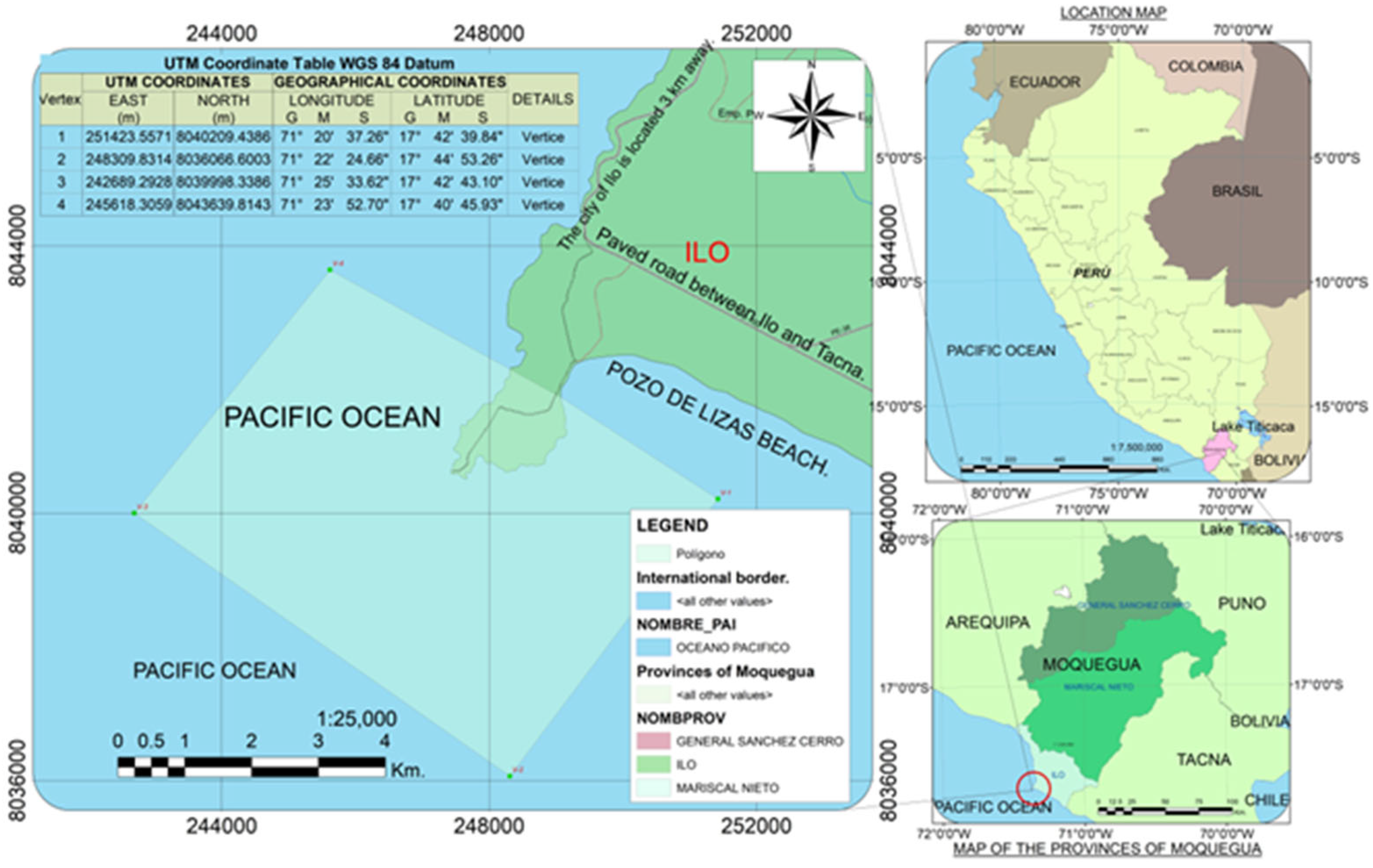
The study area corresponds to the PCNR, located in the province of Ilo, Moquegua Region, on the southern coast of Peru, approximately 7 km southwest of the city of Ilo. Geographically, it is located at coordinates 17°42′00″ S, 71°22′50″ W. This area is part of the System of Islands, Islets, and Puntas Guaneras (RNSIIPG) and is characterized by its high ecological importance due to the presence of marine birds and marine mammals, as well as the diversity of coastal and marine habitats (Figure 1). The research was conducted at the Molecular Biology and Biotechnology Laboratory (BIOMED) of the National University of Moquegua.
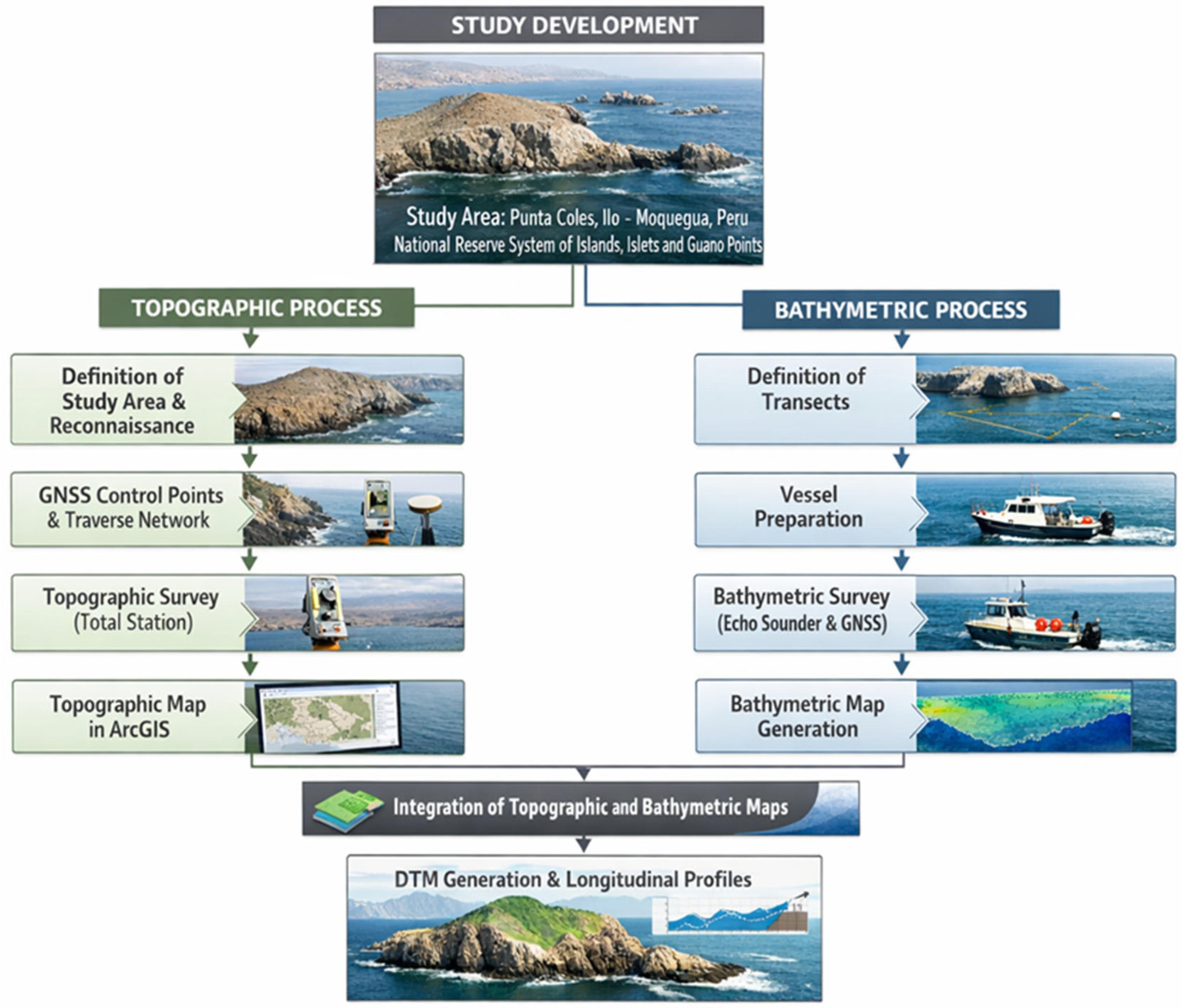
The PCNR, located on the active continental margin of the southeastern Pacific, is the result of the subduction of the Nazca Plate beneath the South American Plate, a phenomenon that controls the tectonic and geomorphological evolution of the southern coast of Peru [32]. It is characterized by the presence of rocky outcrops, low cliffs, reefs, boulders, isolated coastal rocks, and a marine abrasion platform shaped by the continuous action of waves and coastal currents (Figure 2), which generate coastal inlets and promontories, evidencing active processes of differential marine erosion characteristic of the Moquegua coastline [33,34,35]. Geomorphologically, the area features a varied landscape consisting of gently sloping coastal plains, undulating hills, steep cliffs, and rocky islets, all associated with marine erosion and coastal dynamics. In the underwater environment, submerged terraces, slopes, and depressions are identified, demonstrating the morphological continuity of the terrain down to the seafloor [36].

2.2. Instruments and Techniques

Geodetic control:
Two Order-C geodetic control points (MOQ03218 and MOQ03219) were established and linked to the National Geodetic Network using dual-frequency GNSS receivers (Static PP, Magnet Tools V6.10).
Terrestrial topography:
Topographic surveys were performed with a Trimble total station based on differential GNSS data, establishing a closed traverse of 13 vertices with corrected linear error.
Bathymetry:
It was carried out by integrating geodetic differential GNSS technologies and portable Garmin echomap UHD.
Digital processing:
ArcGIS 10.8 and AutoCAD Civil 3D 2022 were used for data integration, construction of the DTM-CM and preparation of cartographic products.

2.3. Procedure

2.3.1. Reconnaissance of the Field and Planning of Control Points

The PCNR field inspection revealed topographic details of the terrain and allowed us to establish the highest sites as initial points for geodetic control. These findings were vital for structuring the methodology and work plan. For this purpose, cartographic information at scales of 1:100,000 and 1:25,000 was considered, along with satellite images of the Reserve from Google Explorer.

2.3.2. Determination of Geodesic Control Points of Order “C”

According to the technical standards established by the National Geographic Institute of Peru, IGN, two geodesic control points of order “C” were established, materialized in the field by simple concrete milestones of 0.40 m × 0.40 m in section and 0.60 m in depth. In the upper part of each milestone, a circular bronze plaque 7 cm in diameter was embedded, with the following inscriptions: on the edge, the name of the institution National University of Moquegua and the phrase Destruction is prohibited; in the center, a 7 mm equilateral triangle, accompanied by the letter “C”, the code and the date of the point assigned by the IGN. The first control point was located on Gallinazo hill with the code MOQ03218, while the second point was located on El Mirador hill with the code MOQ03219. Observations were made on these points using a multiband GNSS receiver (L1 C/A, L2E, L2C, I5), from Topcon Positioning Systems, USA with coordinates recorded in the UTM system, zone 19K-South, horizontal datum WGS84 and vertical datum EGM2008. The observations were made for five continuous hours, in reference to the permanent tracking GNSS station located in the city of Ilo. Data processing was carried out in static postprocessing mode (static PP) using Magnet Tools V.6.10 (64 bits) software and final precise ephemeris and Rinex files. The fit yielded a precision of ±0.01 m in planimetry (H) and ±0.035 m in altimetry (V), guaranteeing the reliability of the established vertices; in this way, it was linked to the coordinates of the National Geodetic Network.

2.3.3. Terrestrial Topographic Study

Polygonation
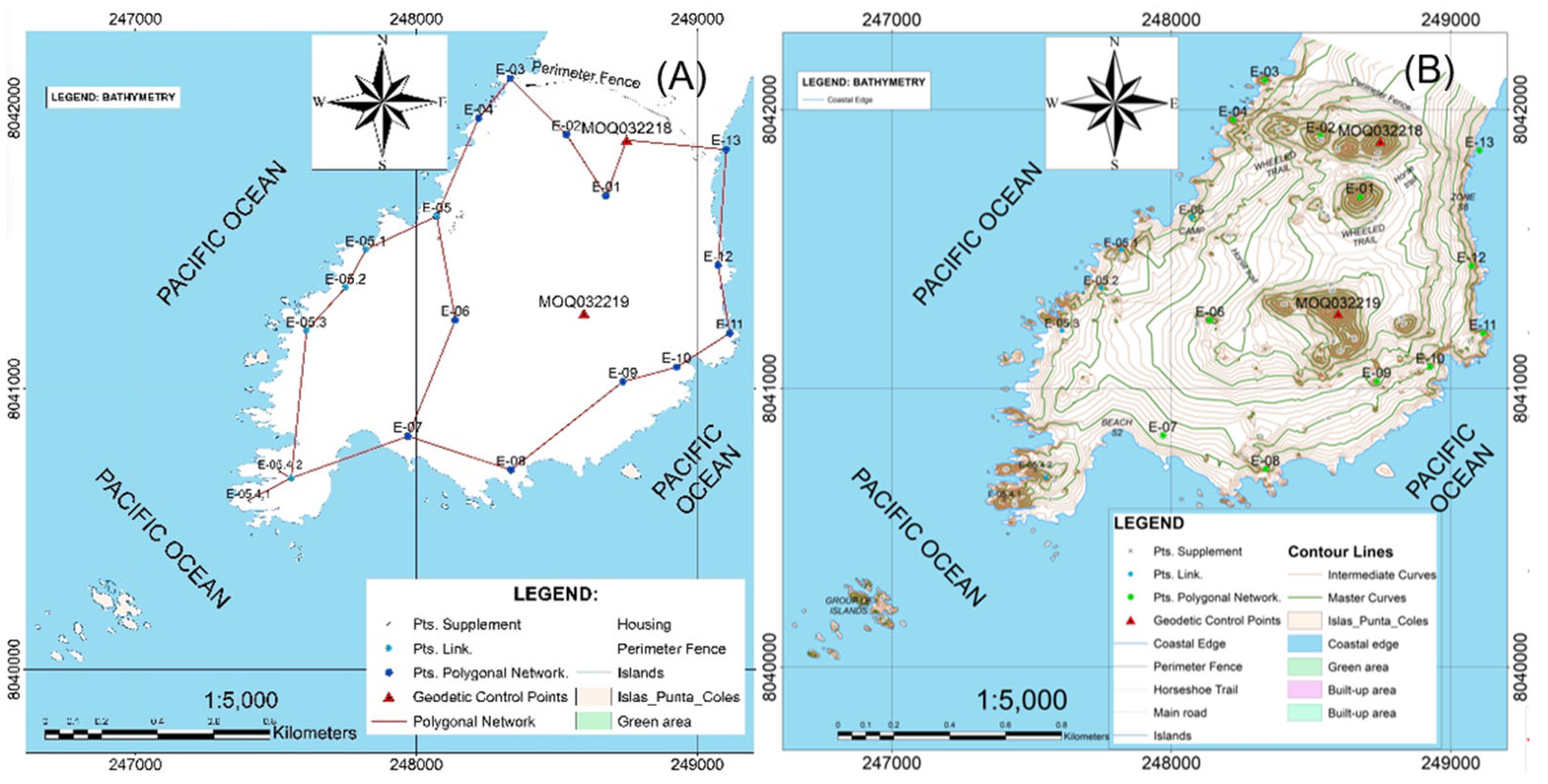
Based on the geodetic control points, a closed traverse consisting of 13 vertices and complementary points in the Punta de Coles National Reserve was determined. These vertices served as the initial and final reference of the circuit, ensuring the accuracy and geometric control of the survey [37].
Each vertex was materialized with visible marks on the ground and coded as E-01, E-02,…, E-13 strategically located; from these points, observations were made in a backward view (towards the previous vertex) and a forward view (towards the next vertex), following the procedure recommended in control surveys [22].
The measurement of horizontal and vertical angles and distances was carried out with a one-second angular precision Trimble total station, complemented by GNSS observations in differential mode to reinforce planimetric and altimetry georeferencing. The field records were noted in topographic notebooks and later downloaded for processing in the office. The relative coordinate error was executed using the method of successive approximations for the adjustment of traverses, which allowed the proportional distribution of the closing errors among the vertices [38]. The linear error of closure obtained was −0.149 m on the east–west axis, +0.096 m on the north–south axis and +0.201 m in altitude; these values were corrected until tolerances were obtained within the parameters established by the Peruvian technical norm [37]. In this way, the present study provides high-resolution geospatial information that can be integrated into the management plans of the National Service of Natural Areas Protected by the State, SERNANP and future actions for monitoring, conservation and ecological planning of the southern coast of Peru.
Topographic Survey
With the polygonal adjusted as a support network, the topographic details were obtained by applying the radiation method. From each station of the polygonal, several points were recorded, adding a total of 6670 secondary points that represented the main elements of the emerged relief, such as slopes, hills, rocky cuts and natural depressions. The east (E), north (N) and elevation (Z) coordinates of these points were calculated using the total station, taking as a reference the previously determined coordinates of each vertex of the polygon. In this way, the accuracy in the representation of the relief was guaranteed by the traditional topographic method of radiation, widely used in detailed topographic surveys.
Digital Topographic Plan
The UTM coordinate data obtained with the total station were transferred to a computer and subsequently imported into the AutoCAD Civil 3D platform, where they were processed to generate contour lines with an interval of 1 m. These curves were then exported from the DWG format to the SHP format for integration into the ArcGIS platform. In the ArcMap module, the information was organized by thematic layers to structure the topographic map of the study area. With these data, surface analysis and the construction of the digital terrain model (DTM) were performed, which accurately represents the terrestrial morphology of Punta de Coles. This procedure allowed the consolidation of a high-precision topographic baseline, which constitutes an essential input for subsequent integration into the geographic information system (GIS) and for future analyses of territorial management and conservation.

2.3.4. Bathymetric Records Along Coastal Transects

The bathymetric survey in the coastal zone of the Punta de Coles National Reserve was carried out by designing transects parallel to the coastline, with a separation of 50 m, that homogeneously covered the study area and guaranteed the representation of the submarine terrain. Each transect was traversed in a small boat equipped with a differential geodetic GNSS receiver and a Garmin ECHOMAP UHD, both of which were integrated by a real-time data acquisition system (X, Y, Z). This combination allowed accurate three-dimensional measurements of the surface of the seabed to be obtained.
During data acquisition, differential corrections were applied from a GNSS reference ground station, reducing positional uncertainty to centimeter-level precision. The bathymetric data collected were post-processed using MapSource and Excel software; version 2019 was used this data was exported to AutoCAD Civil 3D to generate contour lines with a 5 m interval; it was then exported to ArcGIS to convert it to SHP format, where it was defined as isobaths. This procedure ensured a reliable bathymetric characterization, which is indispensable for the integrated analysis of the terrestrial and submarine relief in the area of the reserve.

2.3.5. Integration and Adjustment of Data in GIS

The integration and adjustment of topographic and bathymetric data were performed within the ArcGIS software environment using the ArcMap module (ESRI), following this procedure:
The contour lines generated in AutoCAD Civil 3D were exported in vector format (DWG/DXF) and imported into the GIS environment via ArcGIS, where they were converted to geospatial format (shapefile). Subsequently, a process of data cleaning, topological validation, and reference system standardization was carried out, ensuring the consistency of coordinates in the UTM system, WGS 84 datum fundamental conditions for guaranteeing the spatial integrity of the data [39].
To represent the terrain continuously, the land surface contour lines were integrated with the isobaths obtained from the bathymetric survey, and the boundaries of the islands were incorporated into the model as emergent units. This process included verifying altimetric continuity in the coastal transition zone, avoiding geometric inconsistencies between emergent and submerged surfaces, which is key in the modeling of coastal marine systems [40].

2.3.6. Generation of the DTM-CM, Contour Lines, Isobaths, Profiles and Sections

The generation of the digital model of the coastal–marine terrain (DTM-CM) for the study area was generated from contour lines created in AutoCAD Civil 3D, which represent the elevation variations of the land surface and the seabed. These contour lines were exported in vector format (DWG/DXF) and imported into the GIS environment using ArcGIS, where they were converted to shapefile format (SHP) for spatial processing and analysis. This procedure is widely used to ensure the interoperability of geospatial data and its proper integration into geographic information systems [39].
Subsequently, the contour lines corresponding to the land surface were integrated with the isobaths derived from the bathymetric survey, which allowed for the generation of a continuous model that uniformly represents the emerged and submerged morphology of Punta Coles. To this end, the Triangulated Irregular Network (TIN) interpolation method was applied, which is suitable for representing surfaces with geomorphological variability and abrupt changes in slope, such as the cliffs present at Punta Coles [41].
Based on the generated DTM, longitudinal profiles were created, which allowed for the analysis of relief variation along defined sections, identifying the main topographic features in both the terrestrial environment (plains, hills, and cliffs) and the underwater environment (slopes, banks, and depressions). This type of analysis is a key tool for geomorphological interpretation and the study of landform dynamics [40].

3. Results

3.1. Geodesic Control Points

As a result of the GNSS postprocessing process, the UTM coordinates were obtained in the WGS84 datum zone 19 South, which is officially certified by the National Geographic Institute (IGN) for the geodetic control points MOQ03218 and MOQ03219 (Table 1). The accuracy evaluation revealed that both the planimetry and the altimetry are within the tolerances established by the current regulations, reaching a margin of error of less than ±0.02 m, which guarantees the reliability and validity of the established geodesic points.

3.2. Polygonal Support Network, Punta Columns

As a second result, based on the Order “C” geodetic control points (MOQ03218 and MOQ03219), the support polygonal network for the topographic survey was established, ensuring the geometric accuracy required for the proper preparation of the topographic map of the study area.
In the established polygon, the initial calculation yielded a linear closure error of 0.147 m on the east–west axis (PEO) and 0.096 m on the north–south axis (PNS), values that were subsequently corrected by fitting procedures, according to the established parameters. in terms of technical regulations. These adjustment techniques, widely recommended in the specialized literature [42], ensured the geometric reliability of the support network.
Table 2 shows the UTM coordinates of the traverse vertices, which constitute the basis for the detailed topographic survey of the study area.
According to Casanova [43], the traverse method is widely recognized as one of the topographic methods predominantly used to establish support networks in the execution of detailed topographic surveys and the production of plans.

3.3. Topographic Survey of the Punta de Coles National Reserve

One of the most relevant results obtained in the PCNR was the construction of the terrestrial morphology from a survey that included 6670 topographic points. This database allowed us to accurately represent the physiography of the area, generating a topographic plan with contour lines, developed in the AutoCAD Civil 3D platform, with an equidistance of 1 m between curves. The map shows elevation variations ranging from 1 m to 71,617 m above sea level, with the latter value corresponding to the highest point of the area.
The geographic area of Punta de Coles is 169.9142 ha. In the southwest sector, there are 16 islands with a total area of 1.5366 ha. Adding this to the main area results in a total area of 171.4508 ha in the entire contour of the reserve. The topography is characterized by moderately flat terrain, interrupted by low dome-shaped hills, covered with rocky outcrops and silty-sandy deposits. The maximum elevation is located on El Mirador hill, with an altitude of 71,617 m above sea level, where the geodesic point MOQ03219 is located, in proximity to the station of the Geophysical Institute of Peru, IGP.
With respect to the slopes, three main categories were identified: Gentle slopes (0–5%) and areas of marine flat and coastal terraces. Moderate slopes (15–35%) are associated with hills and transitions toward the interior. Steep slopes (>45%) are present in cliffs and mountainous sectors, mainly in the El Mirador, La Tetona and El cerro Gallinazo hills. These slope variations condition erosion processes, slope stability and accessibility, which are critical aspects in the planning and management of reserves [22].
From a geological point of view, the topographic plane allowed the consolidation of a geomorphological baseline of Punta de Coles. The area is made up of igneous, sedimentary and volcanic rocks, with predominantly andesitic and basaltic outcrops linked to the coastal batholith, with intrusions and dykes that form steep terrain and characteristic cliffs [44]. The interaction of these formations gives rise to plains, hills and cliffs, resulting in a diverse landscape whose interpretation is key for environmental management, geodynamic risk assessment and planning for the sustainable use of this natural protected area.
In the southwestern end of the Punta de Coles National Reserve, the presence of a coastal lighthouse was identified, which constitutes a relevant geographical reference point and a sector of high biodiversity. In this area, a high concentration of guano birds and marine mammals, particularly sea lion colonies, interfered with the topographic survey along the shoreline, restricting direct access to certain sectors.
As a result of these conditions, the on-site measurement of topographic points had to be interrupted on several occasions, due to operational restrictions and the need to avoid disturbance of wildlife. However, by using a Trimble Access total station, equipped with prismless measurement technology and an operational range of up to 1 km, distances and coordinates were recorded from safe positions outside the areas occupied by sea lion colonies. This strategy made it possible to complete the topographic survey of the coastal edge in the lighthouse sector and on the southern flank of the reserve, guaranteeing the spatial continuity of the data obtained.
The topographic surveys of the rocky islets, located approximately 400 m offshore, revealed a highly irregular surface morphology. As detailed in Figure 3, photogrammetric data integration allowed for a precise representation of these features, which are characterized by steep rock faces and ragged crests. These results complete the general topographic plan, providing a continuous view of the reserve’s offshore relief.
Based on the interpolation of the surveyed topographic points, a surface model with 1 m contour intervals was generated. This high-resolution representation reveals the detailed morphology of the terrain at the time of the survey, specifically highlighting the vertical transitions between the marine terraces and the coastal edge.

3.4. Bathymetric Plan and Submarine Morphometry of the Punta de Coles National Reserve

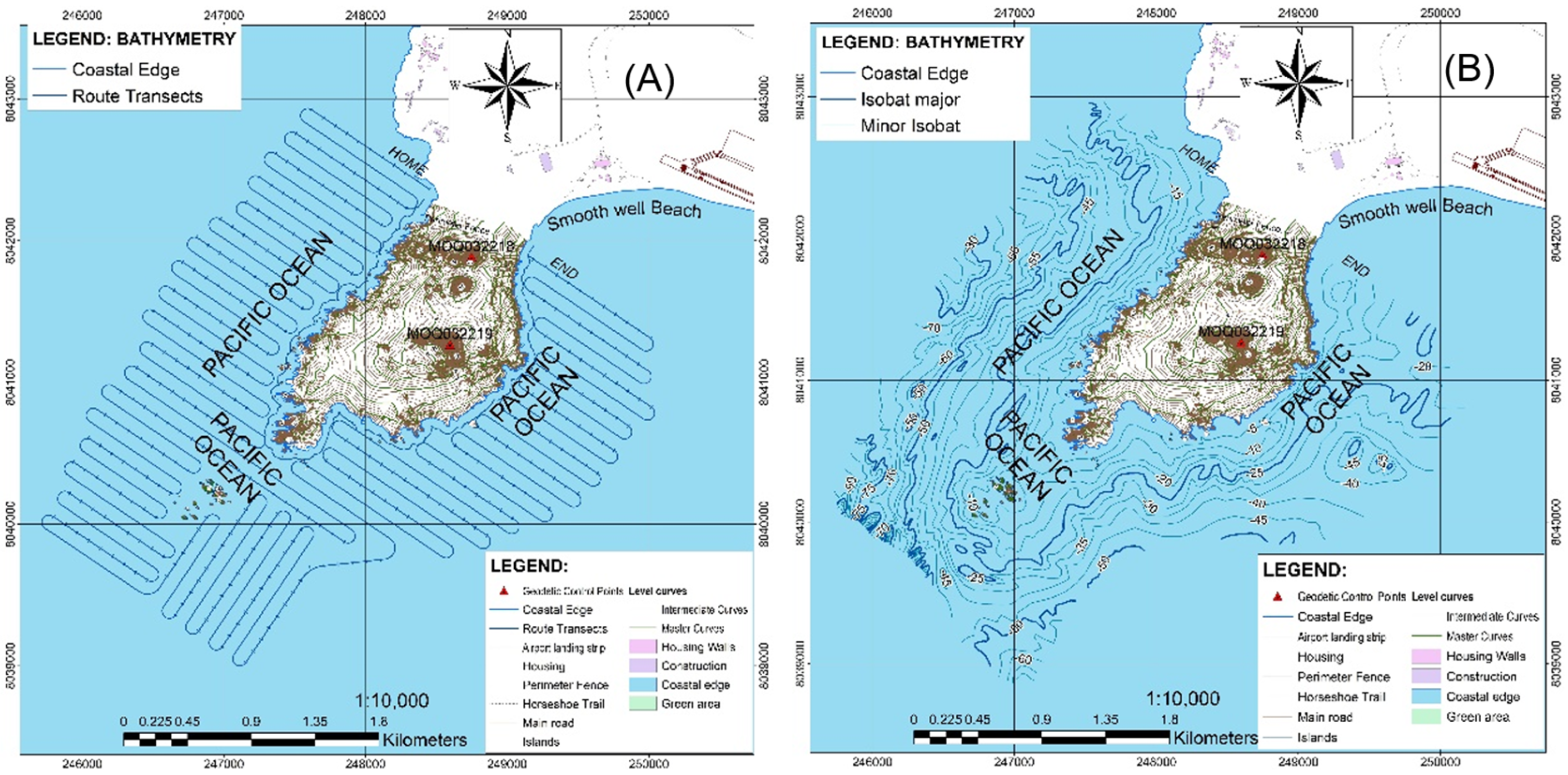
The transects were drawn parallel to the coastal edge, with a separation of approximately 100 m between them, covering up to 1 km offshore. This design allowed accurate recording of variations in the depth and morphology of the seabed, facilitating the interpolation of data to generate the bathymetric model.
The generated bathymetric model allowed accurate characterization of the submarine morphometry of the coastal strip between Punta de Coles and its immediate surroundings (Figure 2). From the integration of differential GNSS data and Garmin ECHOMAP UHD, a high-resolution digital model of the seabed (DMF) was constructed, with isobath curves of an equidistance of 5 m, which faithfully represent the variations in depth and the configuration of the submarine relief and the variations in depth [36].
The bathymetric model and submarine morphometry of the PCNR recorded depths between −2 m and −110 m, indicating a narrow continental shelf. Gentle slopes (0–10%) were identified in the northeast sector, where sandy and transitional bottoms predominated. The medium slopes (10–25%) are concentrated in front of the coastal cliffs, whereas steep slopes (>35%) are associated with ruptures of the seabed, interpreted as submarine cliffs [36].
Regarding submarine morphology and principal structures, stepped submarine terraces were observed, which reflect ancient levels of Quaternary marine abrasion (Figure 4). Localized depressions or submarine wells were identified, especially to the southwest, with depths greater than 90 m, linked to processes of differential erosion and tectonic subsidence. In summary, the seabed has a mixed morphology with rocky, sandy and silty-clayey deposits, which is a product of the interaction between marine dynamics and continental contributions [45].
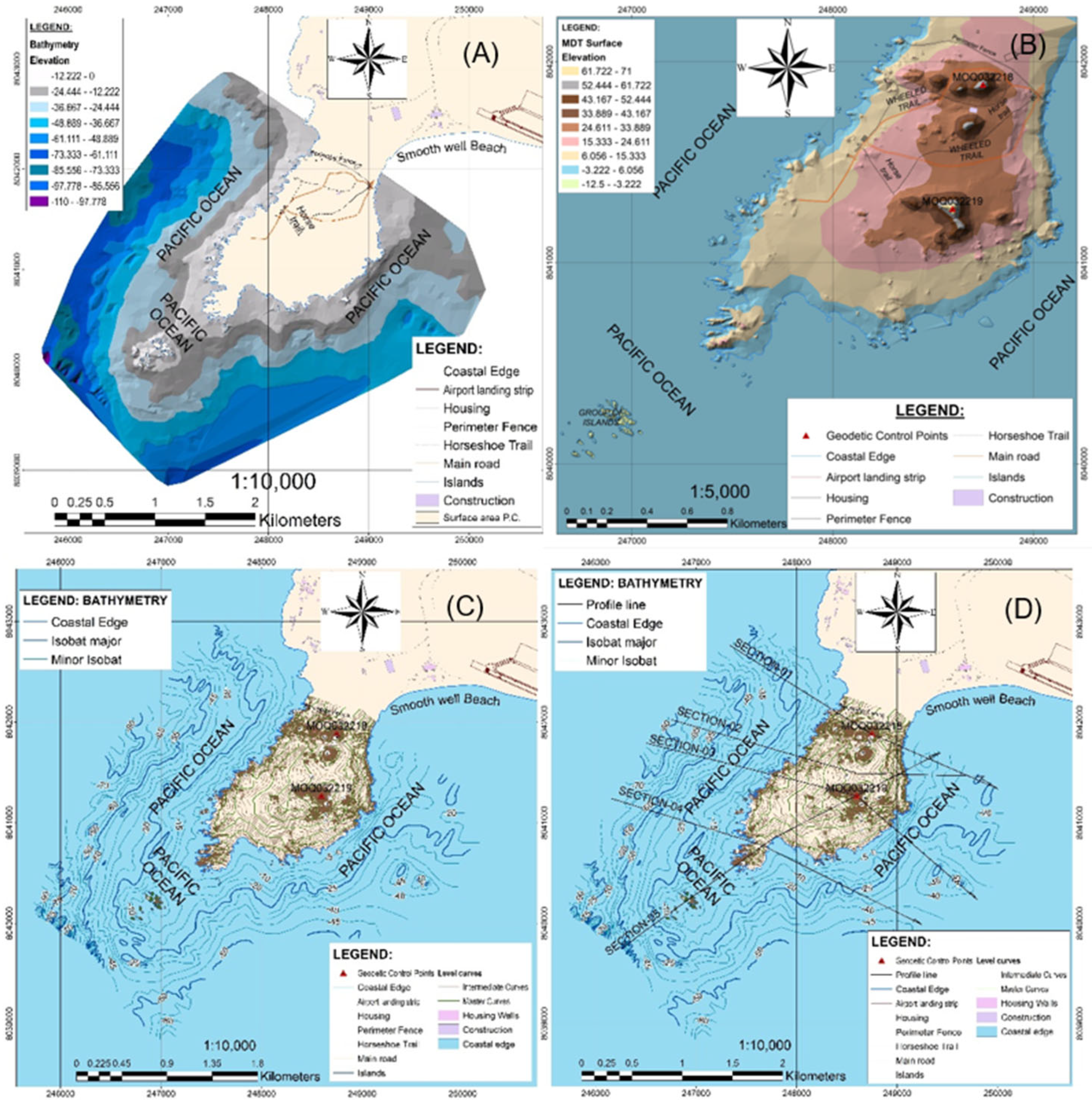
In terms of the relationship with the emerged relief, the cliffs and emerged coastal hills continue below sea level in the same form and submerged terraces, which show land–sea morpho-structural continuity, as in (Figure 5). This geomorphological transition demonstrates the progressive uplift of the southern coastal strip of Peru, which is associated with the active tectonic process of the continental margin [44,46].

3.5. Digital Coastal–Marine Terrain Model (DTM-CM)

The integrated topographic–bathymetric surface provides a high-precision three-dimensional representation of both the emerged and submerged terrain of the PCNR (Figure 5). The model reveals a continuous morphological transition from the coastal plains to the seabed, revealing the structural connection between the coastal batholith and the adjacent continental shelf. The modeled surface shows elevational variations from 71.617 m.a.s.l. to −110 m, indicating a coastal–marine relief of great geometric complexity.
In the terrestrial sector, the MDT-CM shows the following:
-
Gentle slopes (0%–5%) in plains and marine terraces in the north and northeast.
-
Moderate slopes (15%–35%) on the hills’ intermediate phases and transitions toward the interior.
-
Steep slopes (>45%) in cliffs and elevations such as El Mirador, La Tetona and El Gallinazo.
In the submarine sector, the model distinguishes three main morphometric units:
-
Internal platform (0–30 m): sandy bottoms and gentle slopes.
-
Middle platform (30–70 m): structural terraces with moderate ruptures.
-
External shelf (>70 m): submarine cliffs and deep depressions, reaching 110 m deep.
-
Morphometric analysis derived from the MDT-CM confirms the presence of stepped submarine terraces, erosion depressions and subtidal channels, which are typical features of an active continental margin subjected to tectonic uplift [45,46].
Likewise, the model allowed the generation of derived products of great analytical value:
-
Level curves (1 m equidistance) and isobath curves (5 m).
-
Longitudinal and transverse profiles that represent the continuity of the relief.
From the longitudinal profile and cross sections, hypsometric and slope maps can also be generated, which could be useful for evaluating erosion processes, coastal stability and marine dynamics. In summary, the DTM-CM constitutes a geospatial reference baseline for environmental monitoring, land use planning and sustainable use planning in the PCNR. Its integration in GIS platforms will allow the analysis of the geomorphological evolution of the area and strengthen the management of the coastal natural heritage of southern Peru; see Figure 6.

3.6. Longitudinal Profile and Cross Sections of the Coastal–Marine Relief

The analysis of the longitudinal profile and the cross sections is derived from the digital model of the coastal–marine terrain (DTM-CM), which allows us to show the morpho-structural continuity between the terrestrial and submarine relief of the PCNR; its description is carried out as follows; see Figure 5.

3.6.1. Longitudinal Profile

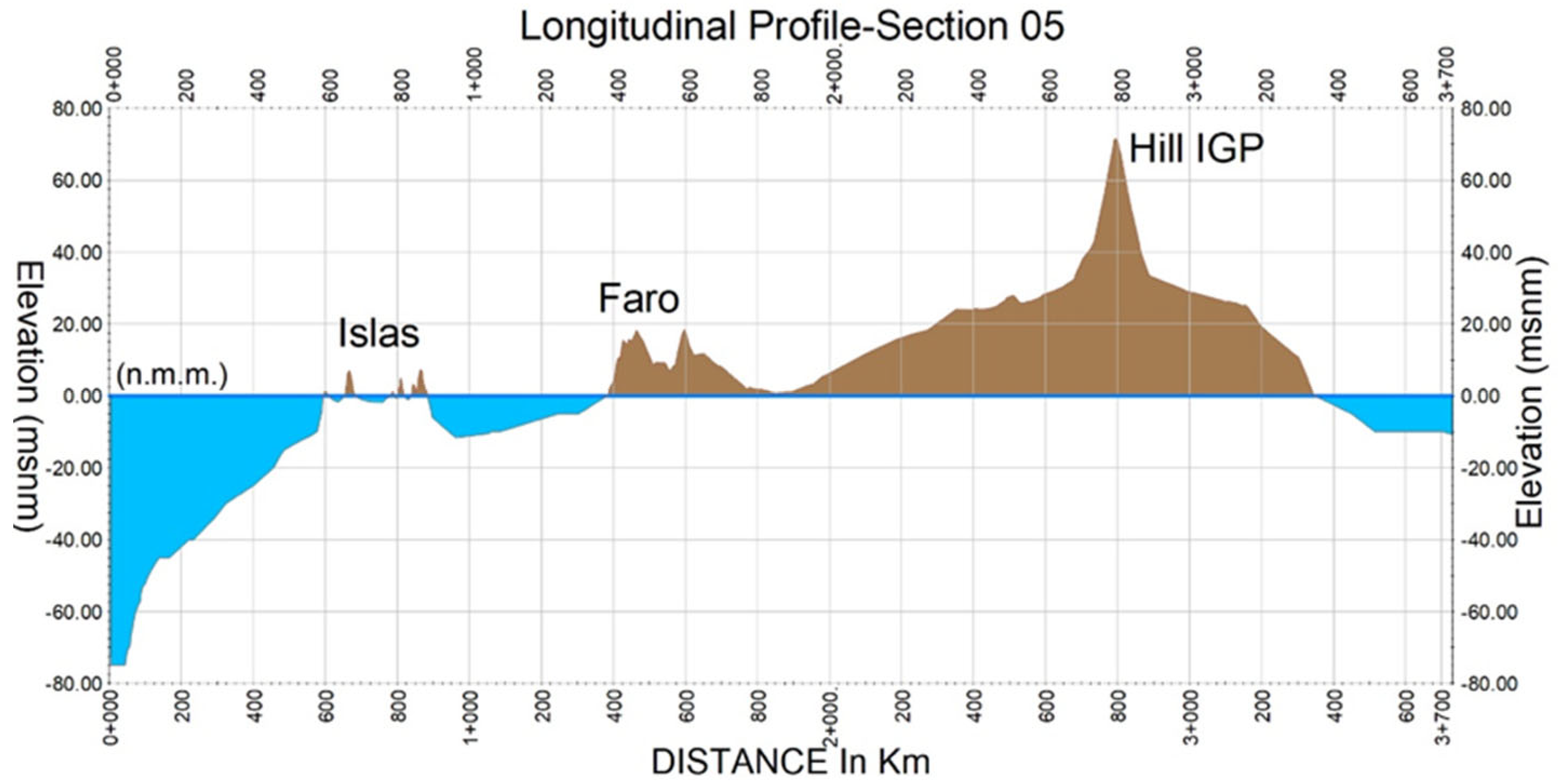
The longitudinal profile, drawn in a northeast–southwest direction, shows a general downward slope from El Mirador hill (71,617 m above sea level) to depths of −110 m at the edge of the submarine platform (Figure 6). This trend shows a progressive transition from the emerged to the submerged relief, characterized by three main sections:
Upper terrestrial section (0–71,617 m above sea level): this section consists of hills and hills with slopes of 10–35%, corresponding to andesitic volcanic formations.
Intertidal section (0 to –5 m): zone of active coastal abrasion, where the relief is abrupt and the cliffs show evidence of marine erosion and coastal retraction.
Submarine section (–5 to –110 m): characterized by a series of stepped terraces and submarine cliffs, product of the combined action of the tectonic uplift and marine scour processes [46].
The profile confirms that the coastal morphology of Punta de Coles is controlled by the geological structure of the coastal batholith (Figure 6), which determines the continuity of the relief that emerges below sea level [44].

3.6.2. Cross Sections

The cross sections, made at different representative points, show abrupt variations in slope and asymmetry between the coastal flanks, as in Figure 5.
In the northern sector, the slopes are gentler (<15%), with flat and marine terraces. In the central sector, the slopes are accentuated (>35%) by the presence of cliffs and structural ruptures. In the southwestern sector, the sections reveal deep submarine depressions (>90 m) and dome formations, possibly associated with the tectonic and erosional activity of the continental margin [45].
The sections show that the submarine relief is an extension of the emerged relief, and both form an integrated geomorphological unit in which the general slope of the terrain reflects the active dynamics of the Andean continental margin [47].
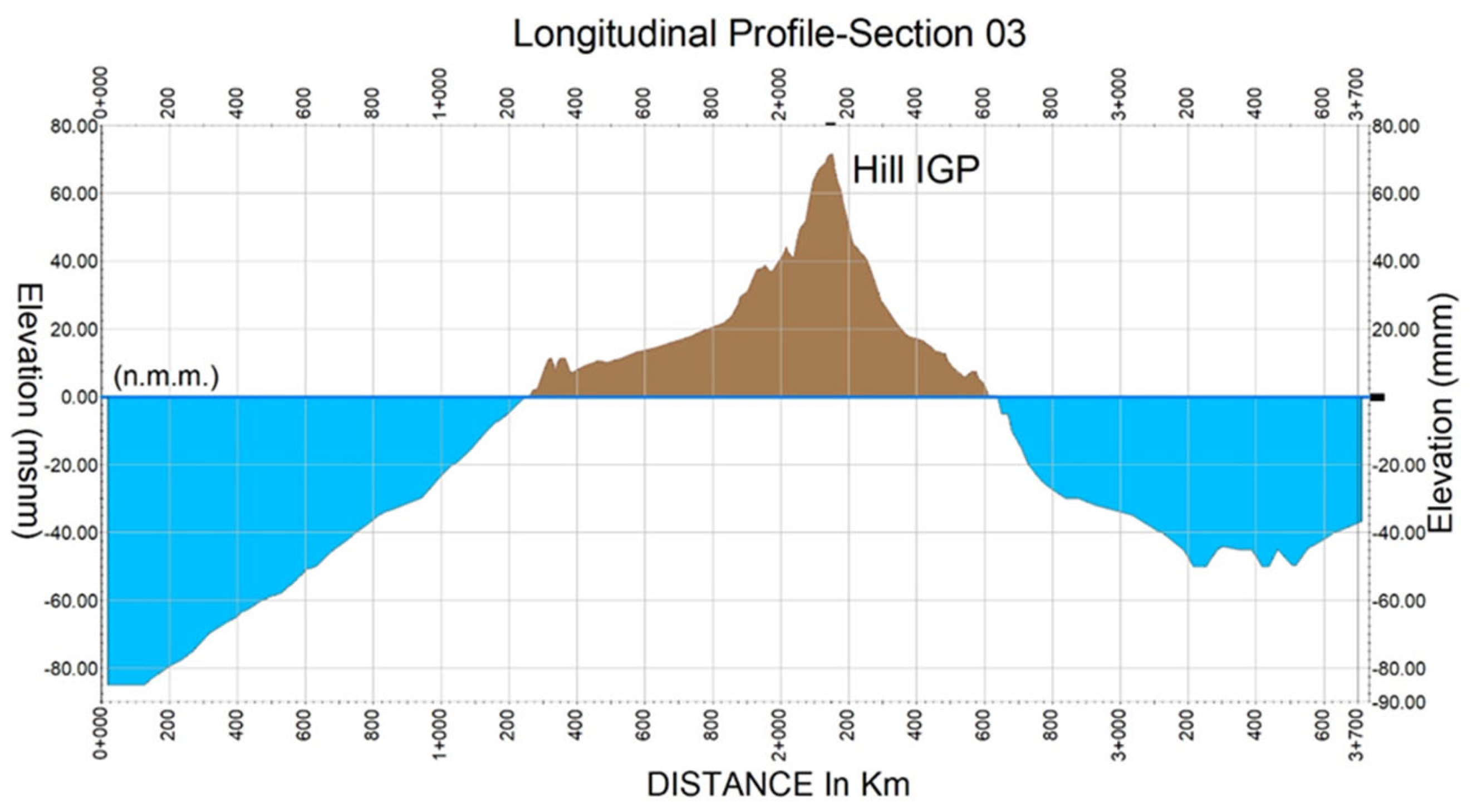
The highest point of the PCRN is located on the longitudinal profile of section 03, reaching 71.617 m above sea level to a depth of −80 m (Figure 7). In summary, the longitudinal profile as well as the cross sections allow us to identify the topographic continuity between the terrestrial and marine environments, confirming that Punta de Coles constitutes a structurally uplifted coastal system, with processes of erosion, accumulation and submarine modeling in dynamic equilibrium.
An integrated analysis of the Coastal–Marine Digital Elevation Model (DTM-CM), together with longitudinal profiles, made it possible to identify a variety of both emergent and submerged landforms, highlighting the interaction between active and legacy geomorphological processes. On land, gently sloping coastal plains associated with marine accumulation processes are recognized, as well as ridges and steep cliffs down to a depth of −115 m, resulting from differential erosion and the continuous action of waves on resistant rock types. In the underwater environment, submerged terraces, slopes, and local depressions are identified, reflecting phases of sea-level stabilization and processes of shaping by currents and sedimentary dynamics. The longitudinal profiles show a continuous and gradual transition between the terrestrial and marine relief, with variations in slope that indicate areas of greater erosive energy and sectors of accumulation. Taken together, these landforms reflect a geomorphological evolution shaped by the interaction between tectonic factors, sea-level variations, and current marine processes, forming a dynamic and heterogeneous coastal–marine landscape.
These results provide key geospatial evidence for understanding the geomorphological evolution of the southern coast of Peru and for the design of environmental management and coastal monitoring strategies.

4. Discussion

The PCNR exhibits an integrated topo-bathymetric system in which coastal plains, hills, cliffs, and rocky islets in the terrestrial domain are continuously connected to submerged terraces, slopes, and submarine depressions. The emerged sector is mainly composed of sedimentary rocks and reaches elevations of up to 71.617 m s.n.m., while the submarine domain exceeds depths of −110 m, hosting key ecological niches for fishery resources [9]. The diversity of supra-, meso- and infralittoral habitats within the PCNR supports benthic communities [48,49] characteristic of the cold waters of the Humboldt Current and rocky substrates [50], many of which are of commercial interest; therefore, extractive, tourism, and recreational activities are carried out in the area [51,52].
From a geomorphological perspective, the PCNR reflects a tectonically controlled system. The continuity between terrestrial and submarine relief evidences a coupled structural unit, where the coastal batholith maintains its rigidity against marine erosion, indicating active neotectonic uplift [44,46,53]. Terrestrial morphometry shows slopes ranging from gentle plains (0–5%) to steep areas (>45%), with landscapes dominated by hills, marine terraces, and cliffs. The moderate slopes (~10–20%) observed in submarine topography are consistent with previous studies in other coastal areas, where such gradients are typical of shallow continental shelves prior to the continental slope [54]. The presence of steep slopes exceeding ~70% in the southwest, associated with depths of up to −100 m, indicates the onset of the continental slope. This phenomenon, well documented in the literature, marks an abrupt transition on the continental shelf and reflects intense geological processes, such as submarine landslides or tectonic activity, which influence both biodiversity and sedimentary dynamics in the area [55,56]. This slope distribution coincides with the typical configuration of structural and erosional reliefs generated by the combined action of marine and tectonic processes [36]. In the emerged zone, knolls and hills display a dominant NE–SW orientation, consistent with regional structural trends [36,44].
Bathymetric analysis reveals a depth gradient reaching −110 m, indicating a narrow and dissected continental shelf. Stepped submarine terraces were identified, representing ancient levels of marine erosion, possibly associated with sea-level fluctuations during the Quaternary [46]. Likewise, deep depressions and subtidal channels were observed and interpreted as areas of local subsidence or differential erosion related to marine current dynamics [47]. The presence of localized depressions and submarine basins in the southeast, located approximately 500 m from the coastline, highlights their ecological relevance as critical areas for marine biodiversity. These bathymetric features function as unique habitats that concentrate nutrients and provide refuge, justifying their designation as priority zones for conservation and high-resolution monitoring [57].
The identified landforms reflect a complex geomorphological evolution shaped by the interaction of tectonic processes, sea-level fluctuations, and marine dynamics. Coastal plains and marine terraces indicate phases of relative sea-level stability, whereas cliffs and slopes reflect active coastal erosion and shoreline retreat processes [36]. In the submarine environment, terraces and depressions are associated with sediment redistribution and marine current activity, consistent with patterns described in coastal geomorphology and marine relief modeling studies [25].
In this context, the use of the DTM-CM and longitudinal profiles is established as an effective tool for interpreting the evolution of the coastal–marine landscape, as it enables the integration of topographic and bathymetric information into a continuous representation of the seabed [23]. Based on the DTM-CM, key morphometric parameters, elevation, slope, and profiles, were analyzed to interpret submarine morphology and structural controls; however, the analysis is limited to an offshore coverage of approximately 1 km and by the lack of sedimentological and oceanographic data. Nevertheless, its integration within a GIS framework facilitates access to otherwise inaccessible reliefs of the PCNR [58] without disturbing landscape geomorphology and ecology [23].
Finally, the determination of area topography is a key factor for biodiversity conservation, as it controls species distribution, habitat heterogeneity, and environmental gradients that regulate the presence and abundance of flora and fauna [59]. Therefore, it is necessary to implement integrated DTM-CM models to accurately define topo-bathymetric geomorphology, while promoting sustainable management strategies that harmonize the preservation of geophysical heritage with biodiversity protection and the socio-economic dynamics of local fishing communities that may modify maritime space use [51,52,60,61]. The main contribution of this research is the establishment of a quantitative geospatial baseline that goes beyond mere physical description, becoming an indispensable predictive tool for zoning, risk mitigation, marine spatial planning, and decision-making in the context of global change.

5. Conclusions

Geodetic, topographic and bathymetric surveys allowed the generation of a high-resolution digital coastal–marine terrain model DCM-TM, which accurately integrates the terrestrial and submarine relief of the Punta de Coles National Reserve.
The DCM-TM reveals a continuous morphometric transition between the emerged relief dominated by plains, hills and cliffs and the submerged relief characterized by submarine terraces and depressions, revealing the structural connection between the two environments.
Submarine depths reach up to −110 m, forming a narrow and rugged continental shelf, while terrestrial altitudes exceed 71.6 m.a.s.l., with slopes ranging from gentle (0–5%) to steep (>45%) with an area of 171.451 ha.
The coastal–marine morphology of Punta de Coles is determined by the tectonic activity of the coastal batholith, marine erosion and littoral sedimentation processes, confirming its condition as a geodynamically active area.
The DCM-TM model constitutes a geospatial baseline of great value for territorial planning, coastal monitoring and environmental conservation, facilitating decision-making in the sustainable management of this natural protected area.

Author Contributions

Conceptualization, H.H.S.G. and S.M.-A.; Data curation and Formal analysis, J.L.C.A., A.G.T.C. and D.E.B.C.; Funding acquisition, Investigation, Methodology and Project administration, H.H.S.G., S.M.-A., and J.L.C.A.; Software, J.L.C.A., A.G.T.C. and D.E.B.C.; Validation, M.R.C., R.P.-V. and O.M.-M.; Visualization, O.M.-M. and M.R.C.; Writing—original draft, S.M.-A., L.E.S.A., and J.G.A.; Writing—review and editing, S.M.-A., M.R.C., R.P.-V., L.E.S.A. and J.G.A. All authors have read and agreed to the published version of the manuscript.

Funding

This research was funded by the National University of Moquegua (UNAM) affiliate Ilo, Peru (Resolutions No. 1279-2019-UNAM and 0102-2020-UNAM).

Data Availability Statement

The original contributions presented in this study are included in the article. Further inquiries can be directed to the corresponding author(s).

Acknowledgments

The authors express their gratitude to the National University of Moquegua (UNAM) for the facilities provided at the Laboratory of Molecular Biology and Biotechnology UNAM subsidiary Ilo. This article was carried out in collaboration with the Euro-Latin Network of Symbiosis for Sustainable Aquaculture (SEASOS).

Conflicts of Interest

The authors declare that they have no conflicts of interest.

References

  1. Fernández-Lozano, J.; Andrés-Bercianos, R. On the origin of a remote mountainous natural reserve: Insights from a topo-bathymetry reconstruction of the glacial lake of Truchillas (NW Spain). Quat. Int. 2020, 566–567, 16–23. [Google Scholar] [CrossRef]
  2. Cruz-Ramírez, C.J.; Chávez, V.; Silva, R.; Muñoz-Pérez, J.J.; Rivera-Arriaga, E. Gestión Costera: Una Revisión de Elementos Clave para la Evaluación de la Vulnerabilidad. Rev. Cienc. Ing. Mar. 2024, 12, 386. [Google Scholar] [CrossRef]
  3. Shirgir, A.; Mojtahedi, A.; Dadashzadeh, M.; Gharehaghaji, A.H. Integrating soft computing and remote sensing for accurate bathymetric mapping in shallow saline lakes: A case study of Lake Urmia. Measurement 2026, 258, 119306. [Google Scholar] [CrossRef]
  4. Brilha, J.; Gray, M.; Pereira, D.I.; Pereira, P. Geodiversity: An integrative review as a contribution to the sustainable management of the whole of nature. Environ. Sci. Policy 2018, 86, 19–28. [Google Scholar] [CrossRef]
  5. Chakraborty, A.; Gray, M. A call for mainstreaming geodiversity in nature conservation research and praxis. J. Nat. Conserv. 2020, 56, 125862. [Google Scholar] [CrossRef]
  6. Otavo, S.; Echeverría, C. Fragmentación progresiva y pérdida de hábitat de bosques naturales en uno de los hotspot mundiales de biodiversidad. Rev. Mex. Biodivers. 2017, 88, 924–935. [Google Scholar] [CrossRef]
  7. Gordon, J.E.; Crofts, R.; Gray, M.; Tormey, D. Including geoconservation in the management of protected andcon served areas matters for all of nature and people. Int. J. Geoheritage Parks 2021, 9, 323–334. [Google Scholar] [CrossRef]
  8. Ruban, D.A.; Mikhailenko, A.V.; Yashalova, N.N. Valuable geoheritage resources: Potential versus exploitation. Resour. Policy 2022, 77, 102665. [Google Scholar] [CrossRef]
  9. SERNANP—Servicio Nacional de Áreas Naturales Protegidas por el Estado. Línea Base Biológica Terrestre y Marina de la Reserva Nacional Sistema de Islas, Islotes y Puntas Guaneras—Punta Coles (Ilo, Moquegua); SERNANP—Servicio Nacional de Áreas Naturales Protegidas por el Estado: Lima, Peru, 2016; 150p. [Google Scholar]
  10. Colcha, A.R.C.; Noboa, J.P.B.; Gavilanes, D.C.M.; Vaca, N.E.P. Determinación de curvas de nivel y pendientes con LIDAR para modelar crecidas en la quebrada las abras. Rev. Científica Multidiscip. InvestiGo 2025, 6, 749–767. [Google Scholar] [CrossRef]
  11. Gómez-Moya, D.A.; Garcés-Gómez, Y.A. Revisión temática de tecnologías de detección y medición de distancias por luz y fotogrametría en vehículos aéreos no tripulados: Comparación, ventajas y desventajas. Rev. Int. Ing. Eléctrica Informática 2025, 15, 3748–3758. [Google Scholar] [CrossRef]
  12. Oropeza, J. Análisis Comparativo de Productos Cartográficos Elaborados a Escala Grande, Obtenidos Mediante Fotogrametría con RPAS y Topografía con Tecnología GNSS–RTK. Bachelor’s Thesis, Universidad Nacional Mayor de San Marcos, Lima, Peru, 2023. [Google Scholar]
  13. Blando, C.D. Valoración de los Nuevos Índices Diagnósticos de la Topografía de Elevación en el Queratocono. 2016. Available online: https://uvadoc.uva.es/bitstream/handle/10324/19724/TFM-M284.pdf?sequence=1&isAllowed=y (accessed on 25 January 2025).
  14. Pinho, M.P.; Madureira, L.S.; Calliari, L.J.; Griep, G.H.; Cooke, C.V. Depósitos fosfáticos marinos en la costa sudeste y sul de Brasil: Potenciais áreas de ocorrência identificadas con datos de retroespalhamento acústico del fondo y sedimentológicos analizados sobre mapa batimétrico 3D. Rev. Bras. Geof. 2011, 29, 113–126. [Google Scholar] [CrossRef]
  15. Porras, H.; Cáceres, J.J.; Gallo, E.O. Modelos urbanos tridimensionales generados a partir de nubes de puntos de un escáner láser terrestre. Tecnura 2014, 18, 134–153. Available online: http://www.scielo.org.co/scielo.php?pid=S0123-921X2014000300011&script=sci_arttext (accessed on 24 January 2025). [CrossRef]
  16. Arévalo, B.; Bayona, E.; Rincón, I.K. Metodología para documentación 3D utilizando fotogrametría digital. Tecnura 2015, 19, 113–120. [Google Scholar] [CrossRef]
  17. Cerrillo-Cuenca, E.; Bueno-Ramírez, P. Predictive Archaeological Risk Assessment at Reservoirs with Multitemporal LiDAR and Machine Learning (XGBoost): The Case of Valdecañas Reservoir (Spain). Remote Sens. 2025, 17, 1306. [Google Scholar] [CrossRef]
  18. Infante, M.A.H.; Solís, V.V.; Liñán, M.E.O.; Agüero, J.A.R. Inteligencia geoespacial para la gestión del turismo en sitios de la Reserva de la Biosfera Tehuacán-Cuicatlán, México. Cuad. Geográficos Univ. Granada 2025, 64, 41–61. Available online: https://dialnet.unirioja.es/servlet/articulo?codigo=10028206 (accessed on 1 February 2026). [CrossRef]
  19. Kyriakou, A.; Marrero-Rodríguez, N.; Alonso, I.; Dóniz-Páez, J.; García-Romero, L. Integrating visitor reviews and nature-based solutions to explore geoconservation on urban beaches with erosive trends. Case Study of Martianez Beach (Tenerife, Canary Islands). Reg. Stud. Mar. Sci. 2025, 84, 104100. [Google Scholar] [CrossRef]
  20. Flor-Blanco, G.; Bruschi, V.; Adrados, L.; Domínguez-Cuesta, M.J.; Gracia-Prieto, F.J.; Llana-Fúnez, S.; Flor, G. Evolución geomorfológica de los acantilados calcáreos costeros del norte de la Península Ibérica (Asturias y Cantabria). Cienc. Estuarios Costas Plataforma 2022, 273, 107913. [Google Scholar] [CrossRef]
  21. Calder, B.R.; Mayer, L.A. Automatic processing of high-rate, high-density multibeam echo sounder data. Geochem. Geophys. Geosystems 2003, 4, 1–22. [Google Scholar] [CrossRef]
  22. Wolf, P.R.; Ghilani, C.D. Elementary Surveying: An Introduction to Geomatics, 13th ed.; Pearson: London, UK, 2012. [Google Scholar]
  23. Li, J.; Heap, A.D. Spatial Interpolation Methods Applied in the Environmental Sciences: A Review. Environ. Model. Softw. 2014, 53, 173–189. [Google Scholar] [CrossRef]
  24. Garmin. ECHOMAP UHD 62cv: Owner’s Manual; Garmin Ltd.: Olathe, KS, USA, 2021. [Google Scholar]
  25. Purkis, S.J.; Roelfsema, C.M. Habitat Mapping and Spatial Analysis Using Digital Bathymetric Models; Springer: Berlin/Heidelberg, Germany, 2019. [Google Scholar]
  26. Sancho Gómez-Zurdo, R. Aplicación de la Fotogrametría con Drones al Control Deformacional de Estructuras y Terreno. Doctoral Thesis, E.T.S.I. en Topografía, Geodesia y Cartografía (UPM), 2021. (accessed on 25 January 2025). [Google Scholar] [CrossRef]
  27. Settin Lugo, V.; Rodríguez Rodríguez, F.; Alvariza Banchero, G. Comparación de Resultados Topográficos Altimétricos en el Relevamiento de una Cantera Utilizando Drone Fotogramétrico, Drone RTK/PPK y Estación Escáner. Bachelor’s Thesis, Universidad de la República, Montevideo, Uruguay, 2019. Available online: https://www.colibri.udelar.edu.uy/jspui/handle/20.500.12008/22866 (accessed on 25 January 2025).
  28. Espitia-Moreno, I.C.; Arriola-Padilla, V.J.; Ortega-Rubio, A. Gestión, Manejo y Conservación en Áreas Naturales Protegidas; Universidad Michoacana de San Nicolás de Hidalgo: Morelia Michoacán, Mexico, 2017; 178p, Available online: https://cibnor.repositorioinstitucional.mx/jspui/handle/1001/1976 (accessed on 25 January 2025).
  29. Duval, V.S.; Gil, V.; Campo, A.M. La cartografía como instrumento de geoconservación en áreas protegidas. Anuário Inst. Geociências 2020, 43, 345–353. [Google Scholar] [CrossRef]
  30. Rossi, S.; Tsanakas, K.; Bucci, M.G.; Sakellariou, D.; Soldati, M.; Karymbalis, E. La cartografía geomorfológica integrada terrestre y submarina proporciona información sobre la evolución del paisaje cuaternario del golfo de Corinto, Grecia. J. Maps 2026, 22, 2621506. [Google Scholar] [CrossRef]
  31. Soldati, M.; Prampolini, M.; Foglini, F.; Savini, A. Paisajes y formas del relieve de las zonas terrestres y marinas: Un camino a seguir. Water 2021, 13, 1201. [Google Scholar] [CrossRef]
  32. Villegas, J.C.; Tavera, H.; Nocquet, J.M.; Chlieh, M. Cinemática de las placas Nazca y Sudamericana y zonas de acoplamiento en la interfaz de subducción del Perú a partir de datos GPS (Red LISN). In Proceedings of the XV Congreso Peruano de Geología; Sociedad Geológica del Perú: Lima, Peru, 2010. [Google Scholar]
  33. Trenhaile, A.S. The effect of Holocene changes in relative sea level on the morphology of rocky coasts. Geomorphology 2010, 114, 30–41. [Google Scholar] [CrossRef]
  34. Méndez-Ancca, S.; Pepe-Victoriano, R.; Gonzales, H.H.S.; Aguilar, J.L.C.; Meza, Y.A.; Pacho, M.A.Q.; Cáceres, A.T.; Baldarrago Centeno, D.E.; Aguilera, J.G. Discovering the Bathylithology and Bioengineering Organisms of the Punta Coles Marine Natural Reserve, Moquegua, Peru. J. Mar. Sci. Eng. 2024, 12, 2265. [Google Scholar] [CrossRef]
  35. Méndez-Ancca, S.; Pepe-Victoriano, R.; Meza, Y.A.; Gonzales, H.H.S.; Aguilar, J.L.C.; Tejada Cáceres, A.; Baldarrago Centeno, D.E.; Zambrano-Cabanillas, A.W.; Aguilera, J.G. Subtidal Biodiversity of the Punta de Coles Marine Reserve, Moquegua, Peru. J. Mar. Sci. Eng. 2025, 13, 1400. [Google Scholar] [CrossRef]
  36. Bird, E. Coastal Geomorphology: An Introduction; John Wiley & Sons: Hoboken, NJ, USA, 2008. [Google Scholar]
  37. IGN—Instituto Geográfico Nacional. Normas Técnicas para el Establecimiento de Puntos Geodésicos; Lima, Peru, 2022. [Google Scholar]
  38. Casanova, E. Topografía General y Aplicada; Alfaomega: Mexico City, Mexico, 2002. [Google Scholar]
  39. Burrough, P.A.; McDonnell, R.A.; Lloyd, C.D. Principles of Geographical Information Systems, 3rd ed.; Oxford University Press: Oxford, UK, 2015. [Google Scholar]
  40. Wilson, J.P.; Gallant, J.C. Terrain Analysis: Principles and Applications; 2000. [Google Scholar]
  41. Li, Z.; Zhu, Q.; Gold, C. Digital Terrain Modeling: Principles and Methodology; CRC Press: Boca Raton, FL, USA, 2005. [Google Scholar]
  42. Mikhail, E.M.; Gracie, G. Analysis and Adjustment of Survey Measurements; Van Nostrand Reinhold Co.: London, UK, 1981. [Google Scholar]
  43. Casanova, L. Topografía Plana; Venezuela. 2002. Available online: http://www.serbi.ula.ve/serbiula/libros-electronicos/Libros/topografia_plana/pdf/topografia.pdf (accessed on 6 April 2025).
  44. Palacios, O.; Rodríguez, R.; Quispe, C. Geología de la franja costera sur del Perú: Ilo–Moquegua. Boletín Soc. Geológica Perú 2013, 108, 55–68. [Google Scholar]
  45. Vargas, G.; Ortlieb, L.; Rutllant, J. Coastal uplift and tsunamigenic hazard along the Andean subduction margin. Earth-Sci. Rev. 2017, 173, 160–177. [Google Scholar]
  46. Ortlieb, L. Quaternary vertical movements and sealevel changes: Evidence from the coastal zone of northern Chile. Quat. Sci. Rev. 1996, 15, 819–831. [Google Scholar] [CrossRef]
  47. Lurton, X. An Introduction to Underwater Acoustics: Principles and Applications, 2nd ed.; Springer: Berlin/Heidelberg, Germany, 2010. [Google Scholar]
  48. Reyes, J.; Ocaña, O.; Sansón, M.; Brito, A.M. Descripción de comunidades bentónicas infralitorales en la Reserva Marina de La Graciosa e islotes del Norte de Lanzarote (islas Canarias). Vieraea Folia Sci. Biol. Canar. 2000, 28, 137–154. Available online: https://www.museosdetenerife.org/assets/downloads/publication-78594deb18.pdf (accessed on 1 February 2026).
  49. Figueroa, B. Biodiversidad Marina: Valoración, Usos y Perspectivas: ¿Hacia a Donde va Chile? Editorial Universitaria: Santiago, Chile, 2005; 299p. [Google Scholar]
  50. Gómez, R. Cadenas de valor, comercio exterior y diversidad biológica/Value Chains. Trade Biodivers. Apunt. 2013, 300, 143–174. [Google Scholar]
  51. Pascual, J.J. Del “mar es de todos” al mar reservado: Turistas, poblaciones de pescadores y reservas marinas en Canarias. PASOS Rev. Tur. Patrim. Cult. 2003, 1, 67–78. Available online: https://www.pasosonline.org/Publicados/1103/PASOS01.pdf#page=75 (accessed on 25 January 2025).
  52. De la Cruz Modino, R. Patrimonio Natural y reservas marinas. PASOS Rev. Tur. Patrim. Cult. 2004, 2, 179–192. Available online: https://www.pasosonline.org/Publicados/2204/PS030204.pdf (accessed on 1 February 2026). [CrossRef]
  53. Benavente, C.; García, B.; Rosell, L.; Aguirre, E.; Palomino, A. Neotectónica, Evolución del Relieve y Peligro Sísmico en la Región Moquegua; (Boletín Serie C: Geodinámica e Ingeniería Geológica, 2021. N.° 79); Instituto Geológico, Minero y Metalúrgico (INGEMMET): Lima, Peru, 2021; Available online: https://repositorio.ingemmet.gob.pe (accessed on 1 February 2026).
  54. Molina, A.; Molina, C.; Giraldo, L.; Parra, C.; Chevillot, P. Dinámica marina y sus efectos sobre la geomorfología del golfo de Morrosquillo. Boletín Científico CIOH 1994, 15, 93–113. [Google Scholar] [CrossRef]
  55. Popescu, I.; Lericolais, G.; Panin, N.; Normand, A.; Dinu, C.; Drezen, E.L. The Danube submarine canyon (Black Sea): Morphology and sedimentary processes. Mar. Geol. 2004, 206, 249–265. [Google Scholar] [CrossRef]
  56. Reuss, G.M. Caracterización del paisaje sumergido costero para la gestión de áreas marinas protegidas. Doctoral Dissertation, Universidad de Las Palmas de Gran Canaria, Gran Canaria, Spain, 2004. [Google Scholar]
  57. Rozzi, R. Áreas Protegidas y Ética Biocultural. In Naturaleza en Sociedad: Una Mirada a la Dimensión Humana de la Conservación de la Biodiversidad; Ocho Libros: Santiago, Chile, 2019; pp. 25–74. Available online: https://www.academia.edu/117262555/%C3%81REAS_PROTEGIDAS_Y_%C3%89TICA_BIOCULTURAL (accessed on 25 January 2025).
  58. SERNANP—Servicio Nacional de Áreas Naturales Protegidas por el Estado. Plan Maestro de la Reserva Nacional del Sistema de Islas, Islotes y Puntas Guaneras; SERNANP—Servicio Nacional de Áreas Naturales Protegidas por el Estado: Lima, Peru, 2020. [Google Scholar]
  59. Turner, M.G.; Gardner, R.H.; O’Neill, R.V. Landscape Ecology in Theory and Practice: Pattern and Process; Springer: New York, NY, USA, 2001. [Google Scholar]
  60. Martín-Sosa, P. La pesca artesanal y la conservación de la biodiversidad: Avances en la gestión integrada de la pesca y el medio ambiente en el mar de Canarias. Investig. Mar. 2017, 3, 71. [Google Scholar]
  61. Torres, S.L.; Franco, M.L.L.; Peralta, M.D.J.M. La pesca artesanal y deportiva en las áreas marinas protegidas y su incidencia en el desarrollo sostenible. Dominio Cienc. 2017, 3, 16–32. [Google Scholar]
Figure 1. Location map of the study area.
Geosciences 16 00151 g001
Figure 2. Diagram of the development of studies in the Punta de Coles Nature Reserve.
Geosciences 16 00151 g002
Figure 3. Polygonal network (A); topographic Punta de Coles (B).
Geosciences 16 00151 g003
Figure 4. Route transects (A); Punta Coles bathymetry (B).
Geosciences 16 00151 g004
Figure 5. Digital model MDT of submerged (A); MDT of terrestrial emerging elevations (B); emerged and submerged relief (C); cross sections (D).
Geosciences 16 00151 g005
Figure 6. Longitudinal profile section 05.
Geosciences 16 00151 g006
Figure 7. Longitudinal profile section 03.
Geosciences 16 00151 g007
Table 1. UTM coordinates of the geodesic points, Zone -19, datum WGS 84.
Code NumberEast (X)North (Y)AltitudeDetails
MOQ03218248,747.8878,041,886.26461.374Located at the top of a hill
MOQ03219248,596.3138,041,268.95871.806Located at the top of a hill
Note: Results of the coordinates after the GNSS 2021 postprocessing.
Table 2. UTM coordinates of the closed traverse.
Total Coordinates
VertexEastNorthElevation
MOQ03218248,747.8878,041,886.26461.374
E-01248,674.9298,041,687.48859.472
E-02248,533.8748,041,906.03849.389
E-03248,333.7288,042,106.03210.886
E-04248,221.0658,041,963.54612.231
E-05248,071.8818,041,615.40413.401
E-06248,138.3908,041,245.22827.906
E-07247,970.3498,040,831.79310.879
E-08248,336.5338,040,711.13911.528
E-09248,734.5388,041,026.11324.370
E-10248,925.9628,041,077.76413.649
E-11249,114.7908,041,198.30710.576
E-12249,073.3248,041,440.03711.950
E-13249,102.3238,041,853.0333.520
MOQ03218248,747.8878,041,886.26461.374
Disclaimer/Publisher’s Note: The statements, opinions and data contained in all publications are solely those of the individual author(s) and contributor(s) and not of MDPI and/or the editor(s). MDPI and/or the editor(s) disclaim responsibility for any injury to people or property resulting from any ideas, methods, instructions or products referred to in the content.