1. Introduction
The industrial and innovative focus in Kazakhstan is unthinkable without the accelerated development of the fuel and energy sector based on effective systems of coal deposit exploration, solid fuel production, and rational use. Successful resolution of these challenges largely depends on the timeliness, reliability, and completeness of the coal quality information.
The consumer value of coal used in fuel and energy generation and for industrial purposes is primarily determined by its ash content. The ash content is one of the key quality indicators of coal. The ash content information is crucial for commodity calculations and management of producing, processing, and utilizing processes. The existing standard sampling method regulated by the Interstate Standard (GOST 10742-71) requires such labor-intensive operations as collecting primary (spot) samples and combining, crushing, reducing, grinding, and directly analyzing them for the ash content using the thermal gravimetric method [
1].
The total duration of all the stages of the standard sampling method, including the thermal gravimetric analysis of analytical samples for the ash content, is approximately 5–6 h, which precludes the possibility of operational quality control during coal mining and processing. In addition to its high labor intensity, the existing standard method is characterized by low representativeness due to the natural heterogeneity of coals. Errors arise at each stage of standard sampling. As a result, the overall error is significantly higher than that of thermal gravimetric analysis.
The aforementioned shortcomings of the standard method and the growing need for updated means of operational coal quality control are driving the development of instrumental nuclear–physical methods of non-destructive quality control that offer increased speed, representativeness, and low labor intensity.
Numerous challenges arise during the development of instrumental nuclear–physical methods. Their complexity stems from the varying target requirements for instrumental methods depending on the physical and chemical properties of coal, including its particle size, moisture content, ash content, and component composition. The diversity of factors influencing the results of ash content determination by instrumental methods raises a number of urgent tasks: increasing the sensitivity to the ash content as a determined parameter and minimizing the sensitivity of the methods to interference, ensuring acceptable testing accuracy. In global practice, nuclear–physical methods based on the use of penetrating gamma and neutron radiation have become the most widely used ones.
Theoretical and applied aspects of various modifications to nuclear–physical coal quality control are described in a number of papers [
2,
3,
4,
5,
6]. Nuclear–physical methods for coal analysis cover a wide range of approaches, including gamma methods and neutron–gamma techniques, and are discussed in detail in the review paper in [
7]. In the context of ash content control, the most practical development has been given to radioisotope methods and industrial ash meters; their diagrams, metrological features and application area are described in papers [
8] and review materials on the operation of the devices [
9]. For the task of continuous ash content control in process flows (conveyor/material flow), methods and instrument solutions oriented at operational process control have been systematized [
10]. In geophysical and exploration applications, radiometric methods have been considered as part of a set of nuclear geophysical studies and monitoring of coal properties during drilling [
11,
12]. Historically, the first express approaches using radioactive radiation were presented in early publications [
13].
Summarized results of studies on assessing coal heterogeneity as an object of instrumental quality control are presented in [
14,
15,
16,
17].
A mathematical model for assessing the sensitivity of ash content determination depending on the component composition of the analyzed coal and the energy of the primary gamma radiation is given in [
18].
The theory and practical implementation of radiometric ash content control based on γ-radiation scattering have been developing in two directions: instrumental solutions for continuous monitoring in process flows and methodological modifications of registration geometry (backscattering and registration of forward/low-angle scattering). Design features and operational aspects of industrial ash meters are presented in instructions and applied publications on specific devices [
19,
20,
21,
22]. Methodological issues with recording scattered γ-radiation in the forward/low-angle geometry for ash content estimation are discussed in [
23] (as well as in early studies on rapid ash content determination using radioisotope sources [
24]). Separately, we should mention combined neutron–γ approaches that allow for simultaneous assessment of ash content and moisture content in bulk samples [
25]. The theoretical and practical aspects of the gamma-annihilation method as a tool for studying quasi-binary media, such as coal, are described in [
26,
27,
28].
The gamma-absorption method, which allows assessing the coal quality in large masses without special sample preparation, has been described in sufficient detail using the bulk density–ash content correlation [
2,
3].
Information has been given on the gamma-radiometric method based on measuring the intensity of the natural gamma radiation of natural radioactive elements found in coals [
3,
11]. The possibility of increasing the sensitivity and accuracy of determining the ash content from the natural radioactivity of coals based on spectrometry of gamma radiation of natural radionuclides U
238, Th
232, their decay products, and K
40 is demonstrated in [
29,
30].
The potential of deep neutron methods for monitoring the coal ash content and the integration of various modifications of instrumental neutron methods in the context of expanding their scope of application and increasing accuracy and sensitivity have been considered by various authors [
10,
31,
32].
An objective assessment of the metrological characteristics of any instrumental nuclear–physical method must be carried out based on the minimum value of the ratio of sensitivity to the i-th disturbing factor S
i to sensitivity to the ash content S
A as a determined parameter, taking into account the variance D
i of the disturbing factors.
2. Materials and Methods
The most widely used instrumental methods are those using gamma radiation (
Table 1), particularly gamma-ray backscatter methods that are often referred to as gamma-albedo methods.
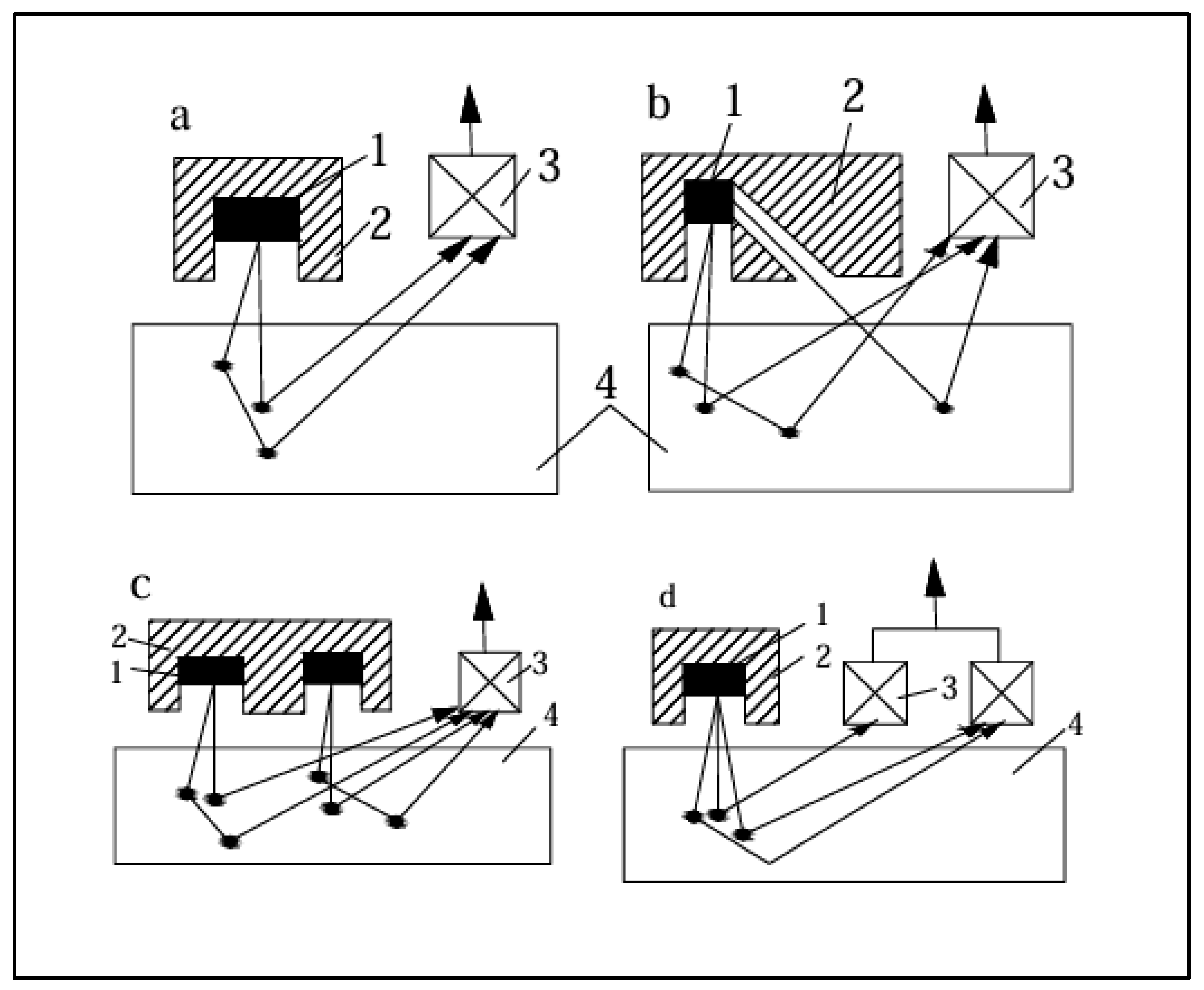
The method consists of recording gamma radiation scattered by the analyzed material in the geometry where the source of primary gamma radiation and the detector of scattered gamma radiation are located on the same side of the test object (
Figure 1).
Various modifications of the gamma-albedo method are primarily related to the energy of primary gamma radiation and characteristics of the test object (samples of varying degrees of preparation, streams), the depth of the method, and the metrological characteristics [
3,
4,
8,
13,
21].
Figure 1a demonstrates the conventional measurement geometry in the gamma-ray backscatter method. In the two-beam method (
Figure 1c), the primary gamma radiation flux falls on the control object at different angles, which makes it possible to achieve a certain invariance of the results when the air gap between the probe and the surface of the analyzed object is changed. The two-source probe (
Figure 1c) can comprise two gamma radiation sources of different energies in order to regulate the sensitivity of the method and accuracy of analysis under the conditions of variable air gap. A roughly similar problem is solved by a dual-detector probe (
Figure 1d), wherein selecting optimal probe lengths (source–detector distance) improves the metrological performance of the method.
The use of hard Cs-137 gamma radiation (661 keV) in the gamma-albedo method allows for a relatively high representativeness of coarse coal (~150 mm) sampling. This modification of the method is characterized by low sensitivity to the ash content [
3,
8]. However, significant differentiation of results is maintained with fluctuations in the content of heavy elements, particularly iron in the ash [
5,
7,
9]. Improved metrological characteristics have been achieved using scattered gamma-ray spectrometry [
21]. Optimal geometric and instrumental energy parameters have been found that reduce the bulk density and iron content effect.
Numerous developments have been made to measure the coal ash content using backscattering of gamma radiation from an Am-241 source (60 keV) [
19,
22,
24,
25]. A distinctive feature of such gamma-albedo ash meters is their increased sensitivity to the ash content over a fairly wide range of variation. However, there remains the disturbing effect of the bulk density (size) and the variability of the heavy-element content in the mineral portion of the coal.
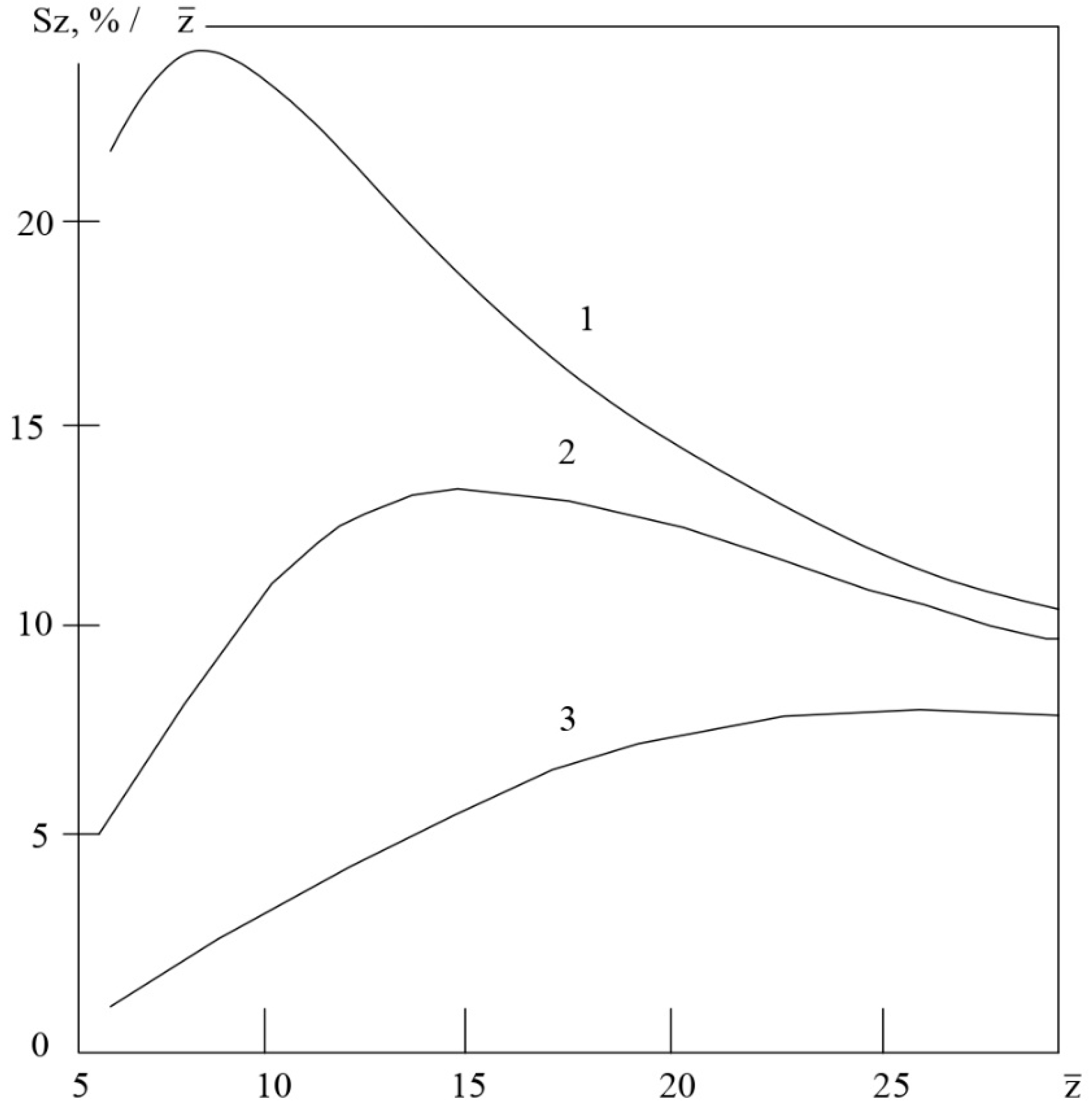
Using the single-scattering approximation of gamma radiation, a mathematical model has been developed for calculating the relative sensitivity of the method to the effective atomic number Z
eff of coal in reflection geometry [
18]. The model allows selecting optimal values of primary gamma radiation energy depending on the range of A
d (the coal ash content) variation (
Figure 2). It is shown that the dependence of the relative sensitivity of the gamma-albedo method to Z of the medium has an inversion character due to the gamma radiation energy with a maximum that shifts naturally towards higher values of Z with increasing energy.
Review papers [
2,
3,
5,
7,
8,
9,
10,
12,
13,
31] describe in considerable detail the hardware, design, and methodological features of gamma-albedo ash measurement instruments. These features primarily relate to the test object: coal in a formed flow, on a conveyor belt, in a measuring container of a certain size, various sample preparation systems, various electronic bases of the measuring instruments, etc. A fundamental feature of gamma-albedo instruments of this class is that, due to their hardware and design features, a certain independence from the effect of destabilizing factors (variations in the bulk density and moisture content of the analyzed coals) is achieved within relatively narrow limits. This means that satisfactory accuracy in ash determination can be achieved with low variance values for these interfering factors. A disadvantage of the gamma-albedo method that uses gamma radiation with an energy of ~60 keV is its significant sensitivity to iron, which limits its applicability.
The bulk density of coal, which is presented as an influencing factor in the results of ash content determination by the instrumental gamma-albedo method, is closely related to the ash content of coals [
3]. Changes in the bulk density ρ, correlated with the ash content A
d, are automatically taken into account in the calibration process, which consists of establishing the relationship between the intensity of backscattered gamma radiation and the ash content of coal. Therefore, the real contribution to methodological error in ash content determination is made by changes in density that are uncorrelated with the ash content, for example, due to fluctuations in the particle size distribution and the filling factor of the measuring volume. By analogy with formula (1), the error in ash content determination due to fluctuations in ρ that are uncorrelated with A
d, taking into account the actual sensitivity to the ash content, is found as follows [
38]:
where
is sensitivity to the density;
is sensitivity to the ash content; b is the coefficient characterizing the density increment for a unit change in ash content;
is the density dispersion; r is the correlation coefficient ρ (A
d).
In the previously discussed gamma-albedo methods using high- and medium-energy gamma radiation (
Table 1), coarse coal was typically the test object. Instrumental methods using soft gamma radiation (below ~30 keV) analyze finely ground coal with a particle size of less than ~0.2 mm. The primary interaction process is the photoelectric effect, and therefore the sensitivity of the method to coal ash content is determined by the differences in the coal gamma-attenuating properties, i.e., the difference in the effective atomic number.
The theory, practice, and fundamental principles of this modification of the method are described in [
3,
39,
40]. Maximum sensitivity to the ash content is observed at primary gamma radiation energies of ~10–20 keV. The main drawback of this method is a high error in the ash content measurement under conditions of variability in the component composition, particularly heavy elements. The physical significance of this is as follows. The mineral (ash-forming) component of coal consists primarily of Al, Si, S, Ca, and Fe. A constant ash composition guarantees an unambiguous relationship between coal Z
effcoal and the ash content. In practice, fluctuations in the Fe content lead to changes in ash z
effash. For 22 keV gamma radiation (Cd-109 source), the mass attenuation coefficient of Fe is more than 6 times higher than that of Al. Therefore, changes in the Fe concentration disrupt the unambiguous relationship between coal Z
effcoal and the ash content, which reduces the accuracy of the ash content estimation based on the intensity of scattered gamma radiation. To account for and compensate for the effect of Fe, it has been proposed to measure the integrated intensity of secondary radiation, including gamma radiation scattered by coal and X-ray fluorescence of Fe [
5,
7,
13,
31]. The compensation principle is that, for example, with increasing the iron content in ash, the intensity of scattered gamma radiation will decrease due to the increase in z
effash of the ash, while the intensity of Fe fluorescence radiation (6.4 keV) will increase. A qualitatively inverse change in the intensities of scattered N
S and fluorescent N
i radiation allows attenuating the disturbing effect of iron by measuring the total intensity of secondary radiation. Complete invariance of the integrated intensity of secondary radiation is achieved by additionally attenuating secondary radiation with a filter made of a light element. The problem of analytically determining the filter thickness is solved by the condition of equality of the inverse-sign absolute increments of scattered dN
S and fluorescent dN
i radiation for a single change in the content of a heavy element in the ash
. The compensation technique is particularly effective when the energies of scattered and fluorescent radiation are similar, for example, when determining the coal ash content using a tritium–zirconium target (~8 keV) and compensating for the effect of iron (~6.4 keV) [
3].
A significant increase in the accuracy of ash content determination in coals with a variable iron content has also been achieved by using primary gamma radiation with energy below the K-absorption edge of Fe (7.11 keV) [
41]. This approach, implemented with an Fe-55 primary radiation source (5.9 keV), is based on the fact that iron is comparable to aluminum in gamma-attenuating properties. However, calcium automatically becomes the “heaviest” ash-forming element, with the photo-absorption coefficient almost three times higher than that of the main ash-forming elements (Al, Si, Fe).
A similar problem of accounting for the disturbing effect of calcium variability is solved by a compensatory method consisting of measuring the total intensity of scattered and fluorescent Ca radiation attenuated by a filter, the optimal thickness of which is calculated based on data on sensitivities of scattered and fluorescent radiation to calcium and the attenuation coefficients of these radiations by the filter element [
42].
It is worth noting the work devoted to the simultaneous scattering of gamma radiation and fluorescence radiation [
33]. The ash content and the calcium concentration are determined by comparing the measured dependence of the radiation intensity on the filter thickness with a priori-established dependences with the known values of ash and calcium content.
There are known works that demonstrate the possibility of elemental analysis of the main ash-forming elements (Al, Si, Mg, S, Ca, etc.) based on the intensity of X-ray fluorescence [
7,
43,
44]. The X-ray fluorescence method is interesting from the point of view of non-destructive analysis of coal for many rare, toxic and the other elements but is not practical for operational monitoring of the ash content in coals due to its low representativeness, high labor intensity and uneconomical nature [
34,
45].
Gamma-annihilation method: The interaction of high-energy gamma radiation with energies significantly exceeding 1.022 MeV results in the formation of electron–positron pairs followed by their annihilation and emission of secondary gamma quanta with energies of 511 keV. The proportionality of the macroscopic cross-section for the pair’s formation to the atomic number of the absorber (the effective atomic number in the case of a complex medium) serves as the initial prerequisite for the use of annihilation gamma radiation for coal quality assessment and well logging.
The theoretical and practical aspects of the gamma-ray annihilation method implemented in reflection geometry for coal analysis are discussed in [
26,
27]. The great depth and, thus, the high representativeness of the sampling, the sufficient sensitivity of the method, and the minimal effect of the coal mineral part chemical composition variability serve as the basis for developing instruments for the operational control of the coal quality in large masses and transport flows [
28].
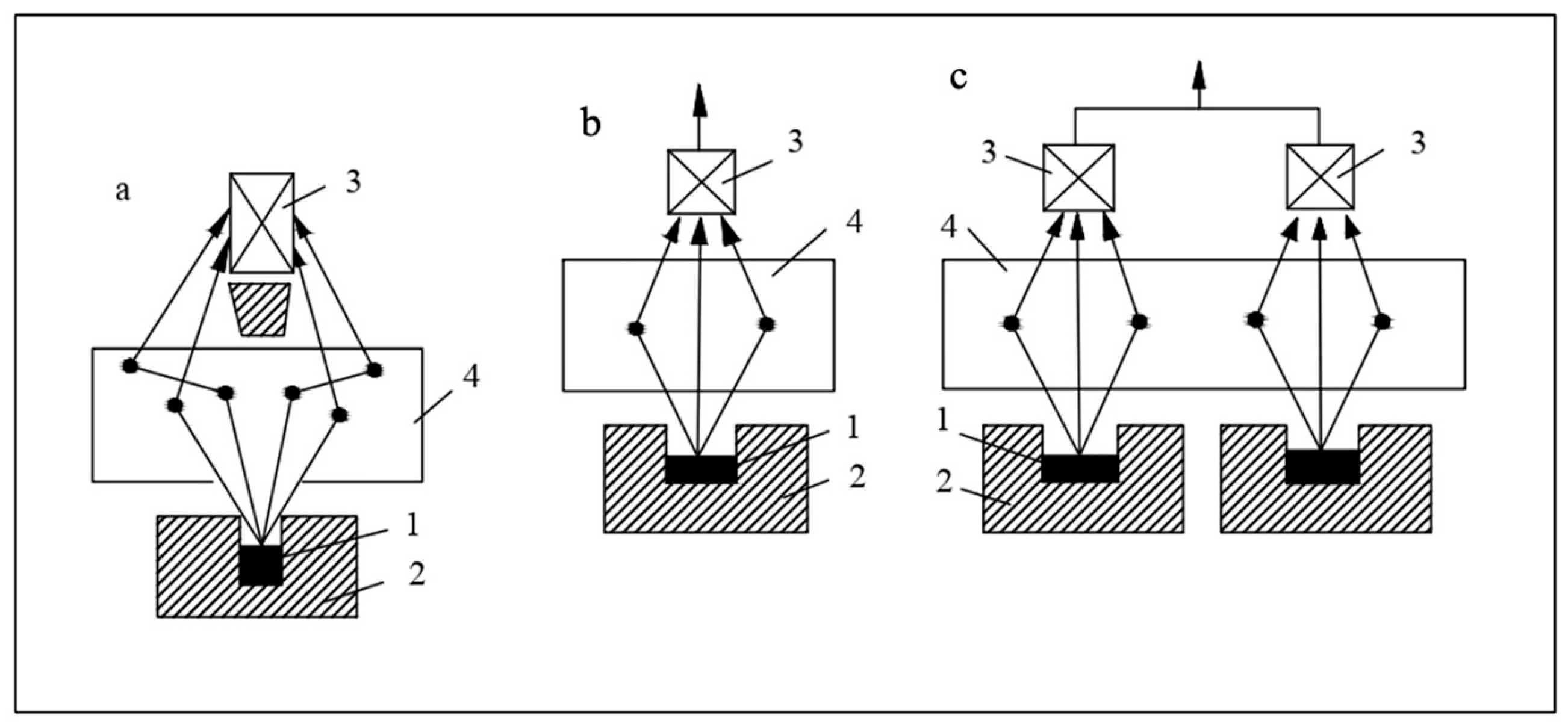
Forward scattered gamma radiation method: The fundamental feature of the method consists in the fact that the primary radiation source and the secondary radiation detector are located on opposite sides of the test object so that the detector receives predominantly gamma quanta scattered at small angles (
Figure 3a). The mathematical model of the method is given in [
23]. A distinctive feature of the method is the development of competing processes when measuring the coal ash content that is directed in such a way as to compensate for the effect of a number of disturbing factors (the bulk density, the moisture content, the coal layer thickness). This is achieved by selecting optimal scattering angles (5–10°) and the probe length. A disadvantage of the forward scattered gamma radiation method is a significant effect of variations in the iron content on the ash measurement results and a relatively small range of insensitivity to variations in the thickness of the analyzed coal layer [
5,
10]. Developments have been proposed [
8,
43] that make it possible to achieve an increased sensitivity to the ash content through spectrometry of gamma radiation scattered at small angles and selecting optimal geometric parameters.
A modification of the gamma-albedo method is determining the coal ash content based on the intensity of coherently and incoherently scattered gamma radiation. The method utilizes spectrometry of scattered low-energy gamma radiation, consisting of coherently and incoherently scattered components. These scattering components vary qualitatively depending on the energy of the primary gamma radiation and the elemental composition of the coal [
46].
The macroscopic incoherent scattering cross-section, which is a weak function of energy, depends almost exclusively on the effective atomic number, while the macroscopic coherent scattering cross-section increases with decreasing energy and increasing Z
eff. The ratio of incoherently and coherently scattered gamma radiation intensities, N
HK/N
K, is differentially related to ash content through mass differential scattering coefficients dμ
HK, dμ
K:
The need to use differential scattering coefficients is due to the anisotropy of the angular distribution of scattered gamma radiation. Incoherent scattering of low-energy gamma radiation is close to isotropic, while coherent scattering is characterized by a sharp forward directionality. These fundamental features allow coal ash content to be estimated from the intensity ratio of incoherently and coherently scattered gamma radiation. This method compares favorably with the gamma-albedo method in its relatively high sensitivity to the ash content and a comparatively low sensitivity to iron [
35,
47].
In conclusion of this review of the gamma-albedo method, it is worth highlighting the measurement geometries (
Figure 1b–d) that are widely used in nuclear geophysical practice for implementing the dual-beam (
Figure 1b), dual-source (
Figure 1c), and dual-detector (
Figure 1d) modifications of the method. By optimizing the probe parameters, it is possible to minimize the effect of fluctuations in the probe-to-surface distance on the method readings [
5].
Gamma-absorption method of determining the coal ash content: This method is implemented in the geometry of transillumination, when the source of primary gamma radiation and the detector are located coaxially on different sides of the test object (
Figure 3).
The theoretical aspects of the absorption method, concerning the selection of the optimal range of primary gamma radiation energy, the thickness of the analyzed coal layer, the ratio of sensitivities to the ash content and influencing factors, are presented in [
2,
3,
48]. The increment in the intensity of gamma radiation attenuated by the coal layer occurs due to changing the effective atomic number of coal Z
effcoal and its density with fluctuations in the ash content. A distinctive feature of the gamma absorption method is the ability to vary the sensitivity by selecting the thickness of the transilluminated layer. Disturbing factors that reduce the ash content assessment accuracy include fluctuations in the particle size distribution (fill factor), the moisture content, and the elemental composition. Depending on the energy of the primary gamma radiation, the sensitivity to the coal ash content and the aforementioned disturbing factors changes significantly. In the high-energy range, the predominant interaction of gamma radiation with matter is the Compton effect, and the density–ash correlation is effective (
Table 1), while the effect of the component composition variability of the coal mineral content is weak. This method, which is characterized by a high depth of investigation, allows sampling large masses and transport flows. The weaknesses of the gamma-absorption method using hard gamma radiation include its relatively low sensitivity to the ash content and its limited scope of application to cases where there is a close correlation between the bulk density of coals and their ash content [
8,
9,
31].
There are known developments for determining the coal ash content using the absorption principle with medium-energy gamma radiation. For this energy range, photoelectric absorption and Compton scattering predominate, and the “Z, ρ–ash” correlation is in effect. It follows that this modification of the gamma-absorption method is susceptible to the effect of the bulk density, the moisture content, and the chemical composition of the coal.
It is of practical interest, in the context of taking into account these influencing factors, to determine the coal ash content in laboratory samples weighing ~0.6 kg, stabilized in size (0–3 mm) and moisture content by vibratory compaction of the samples and moistening with a surfactant liquid [
8,
10,
13]. The main drawback of this modification of the absorption method is that it is impossible to exclude or to account for the destabilizing effect of variability in the elemental composition, particularly the content of heavy ash-forming elements.
A significant reduction in the effect of heavy elements on gamma absorption results was achieved by using gamma radiation with energies below the iron EK (7.11 keV). The most commonly used source, Fe-55 (5.9 keV), requires the analysis of analytical-size coal (less than 0.1 mm). However, the effect of calcium variability remains. Despite a high sensitivity to the ash content, strict standardization of the coal bed thickness and the bulk density remains necessary.
A variation of the gamma radiation attenuation method is the so-called dual-beam method that was first proposed in [
49] and further developed in [
2,
24]. The essence of the method consists of irradiating coal with two gamma radiation streams with sharply different energies (
Figure 3c). The intensity of the attenuated low-energy gamma radiation depends primarily on the coal elemental composition and the bulk density, while the intensity of the attenuated hard gamma radiation is a function of the density. The ash content is measured by the ratio of the logarithms of the measured intensities of the soft and hard radiation. The sensitivity of the dual-beam gamma absorption method is determined by the difference in the mass attenuation coefficients of gamma radiation of the selected energies of the analyzed coal. Along with a sufficient sensitivity to the ash content, the method makes it possible to significantly eliminate the effect of the bulk density and the thickness of the coal layer. However, the effects of moisture content and the chemical composition remain. There are developments that utilize a combination of the absorption principle and the scattering of gamma radiation by small coals [
8]. According to preliminary data, this combination improves the metrological characteristics of the method.
Coal ash content determination based on natural radio activity: The group of gamma methods should include a method of determining the ash content that consists of recording natural gamma radiation emitted by natural radioactive elements found in coal [
3,
11]. These include uranium-238 and its decay products, thorium-232 and its decay products, and potassium-40. The essence of the method, the fundamental feature of which is the absence of an external source of gamma radiation, lies in the use of the difference in the gamma activity of the organic and mineral components of coal. Based on the generalization of estimated data [
50], a relationship was established between the gamma activity of coal N
γ as a percentage of equivalent uranium from its ash content A
d:
The ambiguous nature of this dependence is the cause of significant errors in ash content determination [
7]. The advantage of the method implemented in the integral mode is the minimal effect of the heavy-element content variability on the ash content measurement results with a relatively low sensitivity to the ash content. A development is known [
51] that allows for increased sensitivity and accuracy in assessing the quality of coal in large masses using natural gamma radiation spectrometry.
Neutron Methods of the Coal Ash Content Control
Neutron methods, unlike previously discussed methods based on gamma scattering and absorption, are distinguished by high penetrating power (depth and representativeness of the study), selectivity, and the ability to analyze elements and determine a number of qualitative characteristics, such as ash content, heat of combustion, volatile content, etc. [
52].
Table 2 presents the main characteristics of neutron methods based on the detection of prompt and delayed gamma radiation generated during various nuclear reactions, in steady-state and pulsed modes.
Neutron activation method: The fundamental possibility of assessing the ash content of coal using the neutron activation method is based on the favorable activation characteristics of the ash-forming elements (Al and Si). The total content of aluminosilicates in coals is significantly related to the ash content. Activation of Al by thermal neutrons and Si by fast neutrons (
Table 2) leads to the formation of the Al
28 radionuclide that emits gamma radiation with the energy of 1.78 MeV. In most coal deposits worldwide, there is a correlation between the total aluminosilicates and the ash content [
3]. Therefore, the induced activity of the Al
28 radioisotope (the intensity of gamma radiation with an energy of 1.78 MeV) will be a function of the ash content of the coal. Accurate control of the ash content of coal is possible only with a relatively constant total aluminosilicate content in the ash-forming part of the coal. There are known examples of successful determination of the coal ash content using the neutron activation method in prepared coal samples [
47,
53], transport flow [
54,
55], and boreholes. Activation characteristics (activation time, measurement time) were selected depending on the type and power of the neutron source, the component composition, and the moisture content of the test object. In general, the activation method is characterized by high sensitivity and selectivity. The main factors reducing the accuracy of ash content measurements are variations in coal moisture content and fluctuations in aluminosilicates in the ash, leading to different partial sensitivities of the method to aluminum and silicon.
Method of inelastic scattering fast neutrons: The neutron method of inelastic fast neutron scattering is widely used for coal analysis [
3]. The relatively large cross-section of inelastic fast neutron scattering by carbon nuclei and the difference in the energies of gamma rays emitted by excited carbon nuclei and ash-forming elements provide the basis for quantitative assessment of carbon content. The presence of a close, almost functional, correlation between the carbon content of coal and its ash content allows determining the ash content of coal from the 4.43 MeV gamma radiation generated by the nn
/γC
12 reaction. A theoretical model of the method and a calculated assessment of the metrological characteristics are given in [
56]. Experimental studies [
57] have demonstrated the possibility of estimating the ash content of coal based on the intensity of 4.43 MeV gamma radiation.
The carbon content of a mixture of fuel and iron ore agglomerate was first analyzed using a Po-Be neutron source [
58]. In samples weighing ~100 kg, the carbon content was determined using an Am-Be source [
59]. A method of determining the ash content of coal by correlation with carbon in samples weighing ~40 kg with a sensitivity of ~1% abs. was described in [
60]. The possibilities of determining the ash content of coal using isotope alpha-neutron sources and a scintillation gamma spectrometer are described in [
61]. The analysis of a mixture of coal slag and iron ore for carbon content using a Pu-Be neutron source demonstrated the possibility of estimating the carbon content with a fairly high sensitivity [
62]. A well-known work [
63] uses inelastic scattering for quantitatively determining the content of individual ash-forming elements using ampoule radioisotope sources and neutron generators.
Along with the high resolution of the inelastic fast neutron scattering method, its weaknesses include the effect of the variable coal moisture content and interference from higher-energy gamma radiation accompanying the radiative capture of thermal neutrons by nuclei of ash-forming elements. To account for these disturbing factors, a development has been proposed aimed at minimizing the destabilizing effect of such factors and improving coal quality assessment through additional measurement of the gamma radiation intensity of inelastic scattering (GRIS) on nuclei of ash-forming elements with energies of 0.84–3.73 MeV and the flux of fast neutrons with energies exceeding the inelastic scattering threshold [
36].
Thermal neutron radiative capture method: The ability to determine the coal ash content using the thermal neutron radiative capture method is based on the AFEC-A
d correlation dependence (
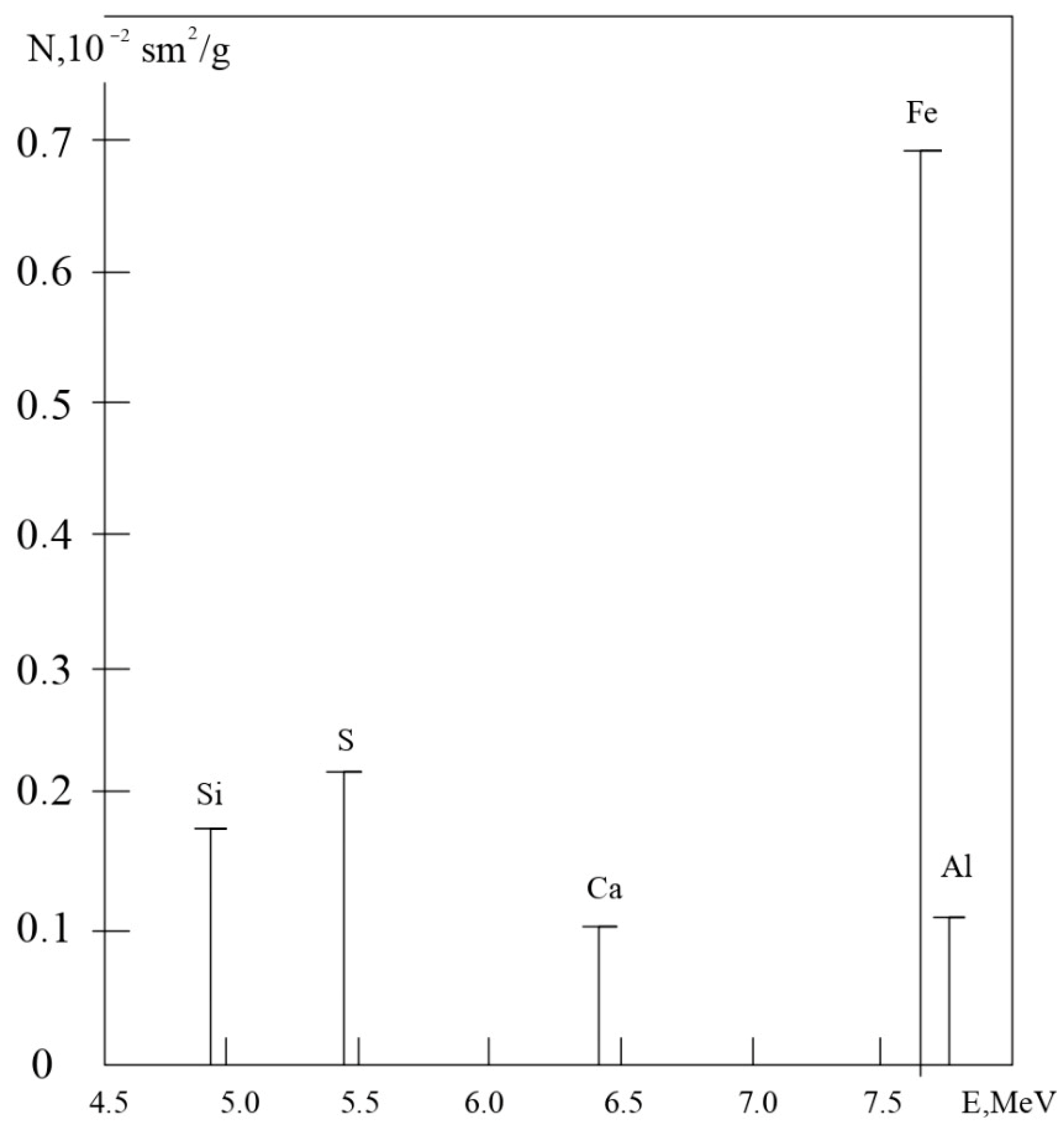
Table 2). The analysis of the neutron–physical properties of coal shows that the organic matter of coal (C, H) and the mineral matter (Al, Si, S, Ca, Fe) have different nuclear characteristics (
Figure 4). In the presented idealized radiative capture gamma-ray spectrum (RCGRS), the intensity values are expressed in macroscopic thermal neutron capture cross-sections. The reaction cross-section for (nγ)C is close to zero, while for (nγ)H, GRRC with the energy of 2.23 MeV is emitted. A significant difference in the energy composition of the GRRC of coal components determines the fundamental possibility of monitoring the ash content using the radiative capture method [
5]. In one of the first studies [
64], the ash content of coal samples weighing ~40 kg was determined using a Po-Be source based on the intensity of the GRRC with an energy of 5.0–7.8 MeV. The optimal thickness of the analyzed samples was chosen in terms of ensuring the invariance of the results with variations in moisture content.
The analysis of coal samples in large masses using a Cf-252 neutron source and a semiconductor detector in an optimized measurement geometry is considered in [
65]. The possibilities of elemental analysis of solid fuel for Al, Si and Fe using GRRC are considered in [
7]. The authors of [
66] demonstrated the possibility of analyzing coal in large masses using the intensity of GRRC with energy above 5 MeV based on the correction of the ash content determination results for variable iron and moisture content, taking into account the type of neutron source used (neutron energy) and the variability of the component-element composition (dispersion of moisture and Fe content). Data are available on the possibility of elemental analysis of coal for Al, Si, S, Ca, and Fe using GRRC [
5,
8]. The comparatively small values of the reaction macro cross-section (nγ) for most of the indicated elements, with the exception of Fe and H
2O, determine the need to use powerful neutron sources and precision spectrometers, ensuring the integration of inelastic scattering of fast neutrons and radiative capture of thermal neutrons.
The possibility of combining the reactions (nn γ) and (nγ) on elements of the organic and mineral parts of coal for the determination of ash content is conditioned by the favorable neutron–physical properties of coal in general and its main components (organic and mineral) in particular (
Table 3). Inelastic scattering on carbon nuclei generates gamma radiation with an energy of 4.43 MeV, and (nn
/γ) on ash-forming elements is accompanied by the emission of gamma radiation with an energy of (0.84–4.73) MeV. The probability of the reaction (nγ) on carbon is close to zero, and the radiative capture of thermal neutrons on ash-forming elements is accompanied by the emission of gamma radiation with energy of (4.96–7.73) MeV. The patented operating principle of combining inelastic fast scattering and radiative capture of thermal neutrons consists of measuring the ash content of coal based on the ratio of the intensity of the GRIS of thermal neutrons on nuclei of ash-forming elements with energy of (5–8) MeV to the intensity of the GRIS of fast neutrons on carbon nuclei with energy of 4.43 MeV [
67]. The optimal measurement parameters (the coal layer thickness, the probe length) using a Po-Be source with the power of ~107 neutrons/s and a scintillation detector were selected from the condition of obtaining maximum sensitivity to the ash content of coal [
68].
Studies have shown that the accuracy of coal analysis using the neutron–gamma-ray method, using the (nn
/γ) and (nγ) reactions, depends on variations in moisture content and the elemental composition of the mineral component, primarily iron, which has a high thermal neutron capture cross-section. The neutron–gamma-ray method has been improved by correcting the analysis results based on the measurement of additional instrumental signals of moisture content (hydrogen mean free path with energy of 2.23 MeV) and iron (Fe mean free path with energy of 7.64 MeV) normalized to account for the specific characteristics of neutron–gamma spectra [
69].
A modification of the neutron method has been proposed that improves sensitivity to the ash content by measuring the intensity of the fast neutron mean free path (FMP) on carbon at a layer thickness of less than 1 FPL (fast neutron free path length) and the FMP on ash-forming elements with thickness of more than 3 FPL [
70].
Pulsed neutron methods: Previously discussed stationary neutron methods examined the spatial and energy distribution of gamma radiation generated during coal irradiation with neutrons from a stationary (continuously emitting) source. This complicates a separate study of neutron interaction effects and does not allow obtaining the information of the secondary gamma radiation distribution over time.
A relatively new trend in the practice of instrumental testing of coals is pulsed neutron–gamma methods using pulsed neutron generators and nanosecond measuring equipment. The first analysis of coal using the pulsed neutron–gamma method was carried out by C. Parker [
71]. The carbon and oxygen contents were determined by the reaction (nn
/γ) using a pulsed neutron generator with a power of ~109 neutrons/s. The possibility of determining the carbon content by GRIS with energy of 4.43 MeV using a pulse generator with accuracy of ±1% abs. was also demonstrated [
72]. The analysis of the Al, Si and Fe content by GRIS of fast neutrons from a generator with energy of 3.29 MeV is dealt with in [
73].
More informative ash content assessment is achieved by using a pulsed method based on measuring the C/O—the ratio of the GRIS signals from carbon and oxygen—and the GRIS intensity on ash-forming elements (Al, Si, S, Ca, Fe) with energy of 0.84–3.73 MeV [
37].
A method of studying coal exploration boreholes using pulsed neutron–gamma spectrometry has been proposed, which combines the GRIS on carbon and ash-forming elements and the GRIS on ash-forming elements [
74]. A distinctive feature of the two-probe method is measuring instrumental signals at two probe lengths selected from reference coal and dense sandstone seams, taking into account optimal time parameters.
The far probe, located at a distance of at least three neutron diffusion lengths from the first one, measures the GRIS intensities on rock-forming elements (Al, Si, S, Ca, Fe) with energies of 4.93–7.73 MeV. The delay time t3 is selected to ensure maximum contrast between the measured GRIS intensities from the supporting coal and sandstone seams. The ash content is determined by the ratio of the GRIS intensity with an energy of 4.43 MeV to the GRIS intensity with an energy of 0.84–3.73 MeV, together with the GRIS intensity with an energy of 4.93–7.73 MeV. The optimal combination of the reactions (nn/γ) and (nγ), time and energy characteristics, and geometric parameters (the probe length) allows for highly sensitive coal quality assessment during borehole surveys and in large masses.
A modification of pulsed neutron sounding is proposed that consists of measuring the intensity of the fast neutron GRIS on the nuclei of carbon (4.43 MeV), oxygen (6.1 MeV) and ash-forming elements (4.93–7.73 MeV). To increase the sensitivity of the method to the ash content of the fuel, the intensity of the GRIS of thermal neutrons of ash-forming elements (4.93–7.73 MeV) is additionally measured. The energy interval ΔE in this region and the delay time t
3 are selected from the condition of ensuring the maximum contrast of the intensity measured in the found energy interval ΔE at the selected delay time t
3. The patented technique [
75] is characterized by increased sensitivity to the ash content over a wide range of its variation and minimal sensitivity to the fuel moisture.
3. Results
A discussion of the review results is appropriately based on the analysis of the key instrumental, methodological, and metrological characteristics of the existing instrumental methods and tools for coal quality control. Depending on the area of application of the quality control tools and the type of test object, four main areas are identified: methods and devices for analyzing crushed coal (
Table 4), methods and devices for analyzing laboratory samples (
Table 5), methods and devices for analyzing run-of-mine coal (
Table 6), and neutron methods of coal quality control.
Some data on metrological characteristics are borrowed from a number of sources [
5,
6,
7,
8,
9,
10,
13,
31]. The authors would like to especially note that the data on the accuracy of ash meters (the root-mean-square difference of instrumental and chemical analyses) presented in
Table 4,
Table 5 and
Table 6 should be treated with extreme caution due to the fact that the primary sources did not contain the information on the dispersion of disturbing factors D
i or the relative sensitivity of the method (device) to ash content S
A and disturbing factors S
i, without which an objective assessment of the accuracy of the instrumental method is not possible.
The Sendrex, RIZ-3, AERE (Atomic Energy Research Establishment, Harwell Laboratory, Harwell, Oxfordshire, UK), ZAR-3, BRA-9, and Sortex (Beno Balint and Sons Ltd., London, UK) ash analyzers for crushed coal utilize backscattered low-energy gamma radiation and X-ray fluorescence of heavy ash-forming elements (Fe and Ca). The primary gamma radiation sources used are radioisotope sources: Cd-109 (22 keV), Pu-238 (~16 keV), H3-Zr target (~8 keV), Fe-55 (5.9 keV), and X-ray tubes (5–30 keV).
The choice of the integrated intensity of scattered low-energy gamma radiation and X-ray fluorescence of the heavy element (Fe or Ca, depending on the primary gamma radiation energy) is necessary to compensate for the destabilizing effect of the heavy-element variable content. To ensure complete invariance of the integrated intensity of secondary (scattered and fluorescent) radiation, secondary radiation is additionally attenuated with a light-element filter [
3,
41]. To improve the representativeness of the control and to reduce error due to the heterogeneity of the crushed coal, a number of devices (Sendrex, AERE, ZAR-3, Sortex) include sample preparation systems followed by in-line coal analysis.
Instrumental methods of determining the coal ash content based solely on recording scattered low-energy gamma radiation have not found practical application due to their significant error, which is due to the effect of the heavy-element content variability in the mineral portion of the coal. The accuracy of coal ash content assessment under conditions of dispersion of interfering factors can be improved by spectrometry of incoherently and coherently scattered low-energy gamma radiation. These scattering components vary qualitatively depending on the energy of the primary gamma radiation and the component composition of the coal [
46]. The anisotropy of the angular distribution of scattered radiation (incoherent is close to isotropic, and coherent is sharply directed forward) allows evaluating the quality of coal based on the magnitude of the ratio of the intensities of incoherent NHK and coherent NK scattered gamma radiation, differentially related to the ash content of coal through mass differential scattering coefficients dμ
HK, dμ
K.
The method’s sensitivity to the ash content
is ensured by the difference in the ash-forming (A) and the organic (C) components of coals with differential coefficients of coherent scattering with the supposed equality
[
47]. This modification compares favorably with the low-energy gamma backscatter method in its increased sensitivity to ash content and decreased sensitivity to iron.
In methods based on the attenuation of low-energy gamma radiation (Minitek, GIZ-1), the primary interaction process is photoelectric absorption of gamma radiation. This results in high sensitivity not only to the coal ash content but also to disturbing factors (the bulk density, the moisture content, the elemental composition, and the thickness of the coal being transilluminated). In the Minitek instrument, the gamma absorption principle is implemented using an Fe-55 source (5.9 keV), which is below the iron EK (7.1 keV). This virtually eliminates the disturbing effect of iron variability. However, the effect of calcium becomes significant. A dried sample of analytical size (~0.1 mm) has been analyzed. Strict standardization of the thickness of the transilluminated coal layer remains necessary.
The GIZ-1 gamma absorption instrument with an Am-241 source (60 keV) analyzes coal samples weighing approximately 0.6 kg, stabilized for moisture and particle size by vibration compaction. The instrument is highly sensitive to the ash and iron content. It is recommended for analyzing coals with a consistent elemental composition.
In ash meters, backscattering of medium-energy gamma radiation (~60 keV) is primarily used to analyze laboratory samples (
Table 5). This primary gamma radiation energy provides relatively high sensitivity to ash content (up to 2.5% per 1% change in ash content) and a considerable depth of investigation, allowing the analysis of coarser-grained material (~10–50 mm). This explains the widespread use of gamma-albedo ash meters using medium-energy gamma radiation of ~60 keV.
In the G-2 ash meter [
5,
8,
10], the intensity of Am-241 gamma radiation backscattered by coal serves as a measure of ash content. Coal of class −20 mm is analyzed directly on the conveyor. A flow shaping device is located in the sensor area. A layer height sensor is provided.
The Simkar device utilizes a patented method for recording Am-241 gamma radiation scattered by coal. The prototype ash meter consists of a disk with a horizontal axis, onto which a crucible containing ~32 kg of coal is mounted. Upon completion of the measurement, the disk rotates, and the crucible with the coal is tipped onto a conveyor [
8].
The Wultex ash meter is designed for continuous determination of the ash content of 50 mm coal on a conveyor belt [
20]. A coal flow shaping system with a coal layer height sensor on the conveyor is included.
The RAM-1M analyzer measures the ash content by measuring the intensity of X-rays backscattered by coal. An X-ray tube is used as the primary gamma radiation source. The analyzer is designed for continuously monitoring the ash content of 13 mm coal on a conveyor belt [
76]. The prototype analyzer is equipped with a moisture meter that allows analyzing coals with variable moisture content.
In the Wedag ash meter, the ash content is measured in a 25 cm diameter plastic tube through which 10 mm coal is forced using an auger after enrichment and a drainage filter. The coal quality is determined by the intensity of backscattered Am-241 gamma radiation (60 keV). By averaging the analyzed coal and reducing the error due to non-uniformity, the required control accuracy of ±0.35% abs. is achieved.
The CEAZ instrument utilizes the gamma-albedo principle, which involves recording gamma radiation scattered at small angles [
8,
23]. The method consists of a coaxial primary radiation source and a scattered radiation detector, and a protective screen installed in front of the detector, completely attenuating direct gamma radiation along the source–detector line (
Figure 3a). The key feature of the method is the ability to compensate for a number of influencing factors, including variations in bulk density, moisture content, and coal layer thickness. The ash meter is designed for rapid ash content testing of laboratory samples weighing approximately 8 kg and 25 mm in size. It offers a relatively high analytical accuracy: ±0.3% abs. for enriched coal with an ash content of up to 10% under conditions of minimal dispersion of interfering factors, particularly iron content.
The RL instrument utilizes a dual-beam gamma absorption principle (
Figure 3c), based on irradiating the analyzed coal sample with gamma radiation with energies of 60 keV and 661 keV [
77]. The intensity of attenuated high-energy gamma radiation is a function of bulk density, while the intensity of attenuated soft gamma radiation is a function of elemental composition and bulk density. The ratio of the logarithms of the measured intensities serves as the coal ash content measure. Along with its advantages (weak dependence on layer thickness and bulk density), the results remain independent of variations in the content of heavy elements. During the analysis of laboratory samples with ash content up to 25% and size of 15 mm, the error was ±1% relative.
Hard gamma radiation is mainly used to control the quality of run-of-mine coals, which are broadly classified by particle size distribution (
Table 6). The RKTP-1 radioisotope solid-fuel concentrator implements the gamma-albedo principle in combination with Cs-137 scattered gamma-ray spectrometry. The ash meter is designed to determine the ash content of run-of-mine coal up to 300 mm in size in a flow. A distinctive feature of this ash meter is measuring the intensity of gamma radiation scattered by coal in three energy intervals of the secondary spectrum. The selection of optimal energy intervals and the chosen algorithm for processing instrumental signals made it possible to reduce the influence of variable bulk density and iron content in ash [
25]. The error in determining the ash content of run-of-mine coals in the range of 20–50% is ±10% rel. A disadvantage of ash meters based on hard gamma backscatter spectrometry is their relatively low sensitivity to ash content and the effect of variability in the effective atomic number of the ash-forming component of the fuel.
The RKTP-3 radioisotope ash meter for solid fuel is designed for continuously monitoring the fuel ash content directly on the conveyor belt. The ash content is measured by the intensity of small-angle scattered gamma radiation (Am-241). The analyzed coal, 100 mm in size, is formed on the conveyor belt by height and width. Selection of the optimal parameters (the fuel layer thickness, the source–detector distance, forward scattering angles) ensures the minimal effect of the bulk density variability. The ash meter is characterized by a relatively high sensitivity to the ash content. However, the interfering effect of fuel variability in the iron content and the moisture content remains [
76].
The gamma absorption principle has been successfully implemented in the VSK Z-1 ash meter [
2]. The computerized coal ash monitoring system is designed to monitor the ash content of run-of-mine coal in a flow of 150 mm in size. The system operates based on the relationship between the bulk density of coal and its ash content (
Figure 3c).
The bulk density is determined by the attenuation of gamma radiation by the coal layer of a fixed thickness (the source and detector are located on opposite sides of the feeder). The ash meter allows for in-flow coal quality assessment without sampling or sample preparation. However, its use is limited to cases where there is a close correlation between ash content and bulk density. In addition to low sensitivity to the ash content, the quality control results are affected by fluctuations in the elemental composition, particularly iron, and the moisture [
10,
76]. For low-ash coals, the error is ±1% abs., and for A > 10% it is ±3% abs.
The Coalscan gamma-annihilation ash meter is based on irradiating the analyzed coal with high-energy gamma radiation from the Ra-226 radionuclide and recording the annihilation gamma radiation with an energy of 0.511 MeV [
26,
27]. The gamma-annihilation method is characterized by satisfactory sensitivity to the ash content (~1% signal for a 1% abs. change in the ash content) and low sensitivity to the main influencing factors [
5,
28]. The capabilities of the annihilation method can be expanded by using higher-energy primary gamma radiation and optimal instrumental and energy parameters [
10]. The principle of the two-probe annihilation method consists in selecting geometrical and energy parameters of recording the optimal probe length L1L1, while providing the maximum sensitivity of the intensity of 511 keV annihilation γ-radiation to the change in ash content, as well as the probe length L2L2 and the energy interval ΔEΔE in the region of scattered radiation, at which the influence of ash content on the registered scattered component is minimal. Ash content is determined by the intensity of 511 keV measured with L1L1, taking into account the intensity of the scattered component in the interval ΔEΔE measured with L2L2 (a description of the method is given in the patent documentation) [
78,
79]. According to the test results, the sensitivity of ash content determination for the two-probe scheme increased by 22% rel.
An instrumental method involving the recording of natural gamma radiation emitted by naturally occurring radioactive elements present in coal is of interest. The main gamma emitters are U
238 and Th
232, their decay products, and K
40 [
11]. Many coal deposits exhibit a correlation between the coal ash content and its gamma activity (see formula (4)). It has been shown that ash content can be estimated from natural gamma activity with an error of 2.5–3.5% abs. [
80]. The error in determining the ash content of coals in the Donetsk Basin reached 5–7% abs. [
50].
The Zolar ash meter (
Table 6) is designed to determine the ash content of coal at storage points, in railcars, and in waste heaps. The ash content is measured by the intensity of natural gamma radiation emitted by the coal being analyzed. The device, weighing approximately 5 kg, is designed as a probe that is immersed directly into the coal. A modern processor and flexible software are used to implement the predefined ash measurement algorithm, taking into account the coal type and its radiogeochemical characteristics. A similar Walker instrument (
Table 6) also determines the ash content of run-of-mine coals in large masses without sample preparation based on the integrated intensity of natural gamma radiation. Its metrological characteristics are similar to those of the Zolar meter. However, the Walker’s performance characteristics are somewhat inferior to those of the Zolar.
The fundamental features of natural radioactivity ash meters are the absence of external gamma radiation sources, a comparatively high depth of investigation, and the consequent ability to assess the fuel quality in large masses without special sample preparation. A weakness of such ash meters is the need for frequent recalibration, due to the radiogeochemical distribution characteristics of natural radionuclides in coal. To systematize the calibration process under conditions of variability in radiogeochemical characteristics, it has been proposed [
81] to additionally use natural gamma radiation spectrometry, specifically measuring instrumental signals from uranium and thorium, which provides increased sensitivity to the ash content.
Various modifications of neutron quality control methods involve irradiating the analyzed coal with a neutron flux of varying energies and recording secondary gamma radiation generated by neutron activation of elements, inelastic scattering of fast neutrons, and radiative capture of thermal neutrons.
The neutron activation method for determining coal ash content is based on the favorable activation characteristics of the main ash-forming elements (Al and Si), which, under the effect of thermal and fast neutrons, are converted into the radioactive isotope Al
28 (
Table 2) followed by the emission of gamma radiation with energy of 1.78 MeV. The total aluminosilicate content is closely related to the ash content. The intensity of induced gamma radiation with energy of 1.78 MeV serves as a measure of the coal ash content. The neutron activation method is characterized by high sensitivity and selectivity due to the differences in the half-lives and energy of the emitted gamma radiation of the resulting radionuclides, as well as by the selection of optimal time parameters (activation time, cooling time, induced activity measurement time), and the energy characteristics of the neutron radiation and the recorded gamma radiation. The ash content of coal was determined by the induced activity of the radionuclide Al
28 in the transport flow, boreholes and samples using various sources (neutron generators, Po-Be, Po-B, Cf-252 isotope neutron sources). During neutron activation measurement of the ash content of coal in railcars using a Po-Be source, the root-mean-square error of analysis was ±1% abs. [
82]. The experiment of neutron activation of aluminosilicates using a Cf-252 source in moving railcars showed that the accuracy of the ash content measurement is ±10% rel. in the ash content variation range of 10–35% [
54]. One experiment focused on coal analysis on a conveyor belt using a semiconductor detector [
55]. The possibility of elemental analysis of small-mass samples using high-energy neutrons is described in [
83].
The accuracy of neutron activation ash content determination depends largely on the coal moisture content and the constancy of the aluminosilicate (Al + Si) content in the coal mineral mass. To account for and compensate for these interfering factors, optimal neutron activation parameters have been proposed, ensuring minimal contrast in the intensity of induced gamma radiation under conditions of variability in the material composition [
84].
Theoretical [
56] and experimental [
57] studies have demonstrated the feasibility of determining the coal ash content using 4.43 MeV gamma radiation, which occurs during inelastic scattering of fast neutrons by carbon nuclei. The close correlation between the carbon content and the ash content of coal allows the intensity of inelastic gamma radiation scattered by carbon to be considered a measure of coal ash content. The carbon content using 4.43 MeV GRIS was first determined in a fuel–sinter mixture using a Po-Be source [
58]. The accuracy of the analysis was ±0.5% abs. in the range of 2–16%. The possibility of analyzing carbon in a mixture of coke and slag using the GRIS method is described in [
10]. When using a Pu-Be source, the error was ±0.75% abs. The method of determining the ash content of solid fuel using the GINR method using isotopic neutron sources is described in [
61]. In large samples (5–100) kg, the ash content was determined with an absolute error of up to 1.5%. The carbon content in GRIS with energy of 4.43 MeV was monitored using a neutron generator in 400 g samples [
85].
An optimized method of determining the carbon content using the GRIS method in coal samples weighing approximately 40 kg has been proposed in [
57]. The key feature of the method is selecting the optimal coal layer thickness that achieves maximum relative sensitivity to carbon. An inverse change in sensitivity depending on the layer thickness has been established for the first time. The carbon content (the ash content) is estimated with an accuracy of 2% abs. The method is suitable for analyzing high-ash coals.
The application of the considered GRIS methods with energy of 4.43 MeV is limited to cases of minimal fluctuations in the coal moisture content. In terms of compensating for the interfering effect of humidity and taking into account the contribution of thermal neutrons to the inelastic scattering by nuclei of ash-forming elements, a patented method has been proposed. This method is distinguished by the fact that during the process of irradiating coal with fast neutrons, gamma radiation with energy of 0.84–3.73 MeV is additionally recorded. This radiation arises from the inelastic scattering of fast neutrons by nuclei of ash-forming elements (Al, Si, S, Ca, Fe) and the neutron flux density with an energy exceeding the inelastic scattering threshold [
36]. The method is currently at the laboratory research stage.
Neutron–gamma-ray method of radiative capture of thermal neutrons: The method is based on the irradiation of coal with neutrons and the recording of the prompt gamma radiation accompanying the radiative capture of thermal neutrons. The differences in the constituent components of coal with macroscopic cross-sections of radiative capture and energies of gamma radiation of radiative capture (GRRC) determine the possibility of determining the ash content of coal by this method (
Figure 4). Mass analysis of coal samples by GRRC with a Cf-252 source with a power of 108 n/s and a semiconductor detector is described in [
10]. The absolute error was ±0.5% in the ash content range of 25–40%. The authors of [
65] considered the possibility of elemental analysis of coal in boreholes by GRRC. A measuring probe consisting of a Cf-252 source and a semiconductor detector was used to measure the intensity of GRRC in the energy range of 4.9–8.0 MeV.
The ash content of coal in samples weighing ~40 kg and 25 mm in size was determined by the intensity of the GRRC with energy of 5.0–7.8 MeV [
64]. The analyzed sample was placed in a paraffin reflector between a Po-Be source with a power of ~107 neutrons/sec and an NaJ(Tl) scintillation detector measuring 80 × 80 mm. To protect against activation and to reduce background radiation, the detector was surrounded by a screen containing boron and protected from direct radiation of the source by a 10 cm high lead cone. The optimal thickness of the coal layer was determined from the condition of maximum independence of the measurement results from the moisture content of the coal. The intensity of the GRRC with energy of 5.0–7.8 MeV is used as the ash content measure. The accuracy of the analysis is 5% rel. with ash content of up to 50%.
A weakness of the neutron method based on GRRC is the sensitivity of the results to iron, which is an anomalous absorber of thermal neutrons (
Table 3). To account for the distorting effect of the variability in the Fe content, it was proposed to correct the ash content analysis results, taking into account the Fe concentration, by measuring an additional instrumental signal: the ratio of the GRC intensities in the energy ranges of 6.6–7.8 MeV and 4.0–5.0 MeV [
64]. This principle has found application in the analysis of coal samples with limited mass. When sampling large masses under conditions of variability in the component composition, in particular iron, a patented principle is more effective. It consists of finding the optimal width of the energy interval ΔE
i in the region of Fe capture γ radiation (~7.64 MeV), at which the maximum contrast of the GRRC intensity is achieved with changing the Fe content. The iron neutron flux density intensity measured at the determined energy interval width ΔE
i was selected as the correction signal [
66].
One variant of the neutron-radiation method determines the ash content of solid fuel, with results corrected for the variable moisture content by measuring the instrumental signal—the neutron flux density intensity of hydrogen nuclei with energy of 2.23 MeV [
10].
In one of the first studies that comprehensively utilized the fast neutron GRIS and thermal neutron GRRC signals, the ash content was determined based on the ratio of the GRIS intensity on the ash-forming element nuclei with energy of 5–8 MeV to the GRRC intensity on carbon nuclei with energy of 4.43 MeV [
67]. The patented principle of the instrumental method consists of selecting optimal parameters (coal layer thickness, probe length, energy characteristics) that ensure maximum sensitivity to the ash content of coal.
An innovative approach has been proposed that improves sensitivity to ash content by measuring the GRRC intensity on carbon at a coal layer thickness smaller than the fast neutron FPL, and measuring the intensity of the GRRC on ash-forming elements with a layer thickness greater than 3 times the FPL [
70].
Unlike steady-state neutron methods, pulsed neutron methods are more informative and have an increased depth and sensitivity [
4]. In one of the first studies using the pulsed neutron–gamma method, the carbon and oxygen contents in coal samples were determined [
71]. Using a pulsed neutron generator with a power of ~109 neutrons/s, the error in determining carbon and oxygen using the (nn’γ) reaction was 0.7–1.0% abs. Using the intensity of the GRIS of fast neutrons on carbon with energy of 4.43 MeV, the accuracy in determining the carbon content was ±1% abs. [
72]. In [
73], the elemental analysis of Al, Si, and Fe using a 3.29 MeV neutron generator was considered for the nn’γ reaction on Al (2.21 MeV), Si (1.78 MeV), and Fe (0.84 MeV).
An instrumental method of determining the coal ash content based on the C/O ratio using the pulsed neutron–gamma method with a correction for the variable material composition, in particular carbon-containing calcite, was developed in [
37]. The selected optimal energy and time parameters of the pulsed neutron method made it possible to achieve a high sensitivity to the ash content (2.5% abs.). The root-mean-square error in the ash content range of 23–46% was 1.67% abs.
A two-probe borehole survey technique based on an optimal combination of reactions (nn’γ) on carbon and ash-forming elements and (nγ) on ash-forming elements, as well as time, energy and geometric characteristics, taking into account pulse data from reference coal seams and dense sandstone, allows estimating ash content over a wide range of its variation with an accuracy of no worse than 2.5–3% abs. [
74]. A new modification of pulse sounding has been developed [
75], which allows estimating the ash content of coal under conditions of moisture dispersion by measuring the GRIS on carbon (4.43 MeV), oxygen (6.1 MeV) and the GRRC on ash-forming elements (4.93–7.73 MeV). A distinctive feature of the modified method is selecting the optimal energy interval ΔE in the GRRC region and the optimal delay time t
3 from the point of view of minimum sensitivity to the moisture and maximum sensitivity to the ash content.



 ,
,