1. Introduction
Rock blasting is one of the most important activities that is performed in underground construction projects. It requires achieving competent rock fragmentation, regulatory compliance, and personnel safety for all parties involved [
1], as well as for careful management of all engineering activities. The blasting operation affects excavation accuracy, structural stability, environmental management, and project economy efficiency. The complexities of geological sites, especially related to such factors as rock mass qualities, jointing, weathering, and groundwater conditions, have made the use of conventional blasthole design and empirical systems progressively more challenging [
2]. Powder factor (PF), expressed as the mass of explosive per unit volume of overburden, is one of the major variables impacting efficiency in blast operation [
3]. The powder factor is one of the most critical parameters to be optimized in order to obtain the fragmentation needed without generating excess vibration, flyrock, and overbreak, so that safety and environmental regulations are not at risk.
Blasting work, particularly in difficult geological conditions, has to comply with strict seismic safety requirements to keep vibration below the peak particle velocity (PPV) limit values allowed for underground structures, as excessive PPV causes deformation or damage [
4]. Conventional methods may not appropriately consider geological variability along a tunnel alignment, such that the design Q-values do not always faithfully characterize the real rock mass. Thus, it is now recognized that data-driven methods incorporating field data (including on-site Q-system mapping, blast geometry, and performance measures of the blast) are becoming an important part of the research, development, and deployment of reliable and site-specific powder factor models. This paper attempts to meet such a need by developing and proving a forward-looking powder factor equation for safer, more efficient, and greener tunnel blasting under complex rock mass conditions. Recent studies further emphasize the importance of integrating multi-source geological and blasting datasets into predictive frameworks to enhance tunnel blast design accuracy [
5].
The problem confronted in tunneling blast is that the powder factor selected at design stage could hardly match the nature of the in situ rock mass. Often, the powder factor is based on design Q-values taken from design drawings. However, these design Q-values often do not estimate the true geological variability, encountered along the tunnel line. Therefore, the applied powder factor may not be sufficiently accurate, leading to fragmentation issues such as oversized boulders, excessive overbreak, or underbreak, which hinder mucking efficiency, slow tunnel advancement, and increase the need for secondary breaking [
6]. The problem is more severe in soft or fractured zones, where a wrong selection of powder factor can lead to excessive vibration, endangering the safety and stability of underground constructions. This underscores the importance of a powder factor design which is indicative of the actual rock mass quality rather than theoretical assumptions.
Several models have been proposed to estimate powder factor, including the Kuz-Ram fragmentation model, the Langefors–Kihlström equation, RMR- and Q-based empirical correlations, the Blastability Index model [
7], and more recent empirical formulations by Moomivand and Vandyousefi (2020) and Bhatawdekar et al. (2020). However, these approaches largely rely on design Q-values or generic rock strength inputs and have not been adequately validated against site-specific mapping [
8]. These models are useful for theoretical purposes, but they do not always work well in the real-world context when geological complexity does not match up with what they think it will be. So, the suggested powder factor could either overcharge, which wastes explosives and makes more vibration, or undercharge, which causes bad breakage and expensive rework. This mismatch shows how important it is to have data-driven powder factor models that take into account real Q-values and blast geometry to accurately predict field needs and make fragmentation better [
9].
Tunneling in Malaysia faces many difficulties. The climate is tropical, the ground is deeply weathered, and the rocks vary a lot. All of these factors, when combined, makes controlling blasting performance unusually difficult and complicated [
10]. Tropical conditions generally refer to environments with high temperatures, heavy rainfall, and intense humidity, which may cause variations in rock strength and moisture content. These environmental aspects often lead to changes in how rocks respond to different energies [
11,
12,
13]. Sometimes these types of changes make fragmentation less predictable. Biological factors, on the other hand, relate to natural growth such as vegetation roots, soil microorganisms, and organic activity around rock surfaces [
14,
15].
These can create small fractures, weaken structural integrity, or even alter surface moisture over time. Their effects on blasting performance are not always simple to calculate, yet they are present. In some cases, such factors may reduce efficiency by absorbing part of the explosive energy or by creating uneven breakage. At the same time, ignoring these influences could make results look less realistic. Overall, defining these terms and noting their potential effects helps provide context, even if the impact is not fully measured in every case. The application of a common blasting pattern in different geological conditions can often lead to overbreak, spalling, flyrock, and fragmentation [
16]. As a result, there may be increased wastage of time and effort, escalated excavation costs, project delays, and heightened risks to personnel working on-site or near adjacent structures [
17].
In this paper, we present an innovative and adaptive blast design approach which categorizes the rock mass media into three geological zones: weathered, fractured, and massive. This classification is based on well-known geomechanical classification systems—the Q-system and Rock Mass Rating (RMR)—that consider rock quality, joint patterns, and degree of weathering.
The optimization method defines typical upper and lower powder factor (PF) limits for each geological zone by linking rock mass classification categories with historical blasting results, namely fragmentation quality and flyrock occurrence. This geologically based approach not only improves technical accuracy but also guarantees compliance with the regulatory standards set by the Department of Minerals and Geoscience Malaysia (JMG) and the Department of Occupational Safety and Health (DOSH), both of which underscore the significance of safe and verifiable blasting practices [
18,
19]. Integrating the rock mass categorization system into blast design layouts enhances excavation efficiency, diminishes equipment wear, and mitigates dangers associated with flyrock and vibration through enhanced fragmentation [
20]. This systematic approach closely correlates engineering design with real-world conditions, offering a comprehensive framework for safe, efficient, and regulatory-compliant tunnel blasting in Malaysia.
The link between Q-value and powder factor is not something completely new. A broad number of studies have explored this relationship, showing that as rock mass quality changes, the explosive requirement also changes. Powder factors vary with rock strength because poor rock breaks differently from stronger rock. However, many earlier studies have addressed this relationship only in broad terms. Researchers mainly focus on broad averages or sometimes they only used design values without checking against actual blasts. This means that there is still room to see what really happens on-site. On the other hand, in this study, the approach feels a little different, though the idea is still simple. The Q-value was mapped face by face, and then the actual powder factor was recorded and compared with fragmentation results. This makes the data less theoretical and more tied to real blasts.
Furthermore, the tropical setting, characterized by weathered rock and biological effects, is often overlooked or underrepresented in other studies This makes the conditions unusual, and that may be why the numbers do not always look neat. Occasionally, the powder factor appeared normal, while at other times it exceeded expectations; however, variations in geological classification partially explained these differences There are papers that use laboratory samples or clean hard rock, which look stable, but the tunnels in this study had weak zones and mixed layers [
21]. Consequently, the study ends up showing more irregular patterns, which may be closer to what engineers actually face.
3. Result and Discussion
3.1. Classification of Rock Mass
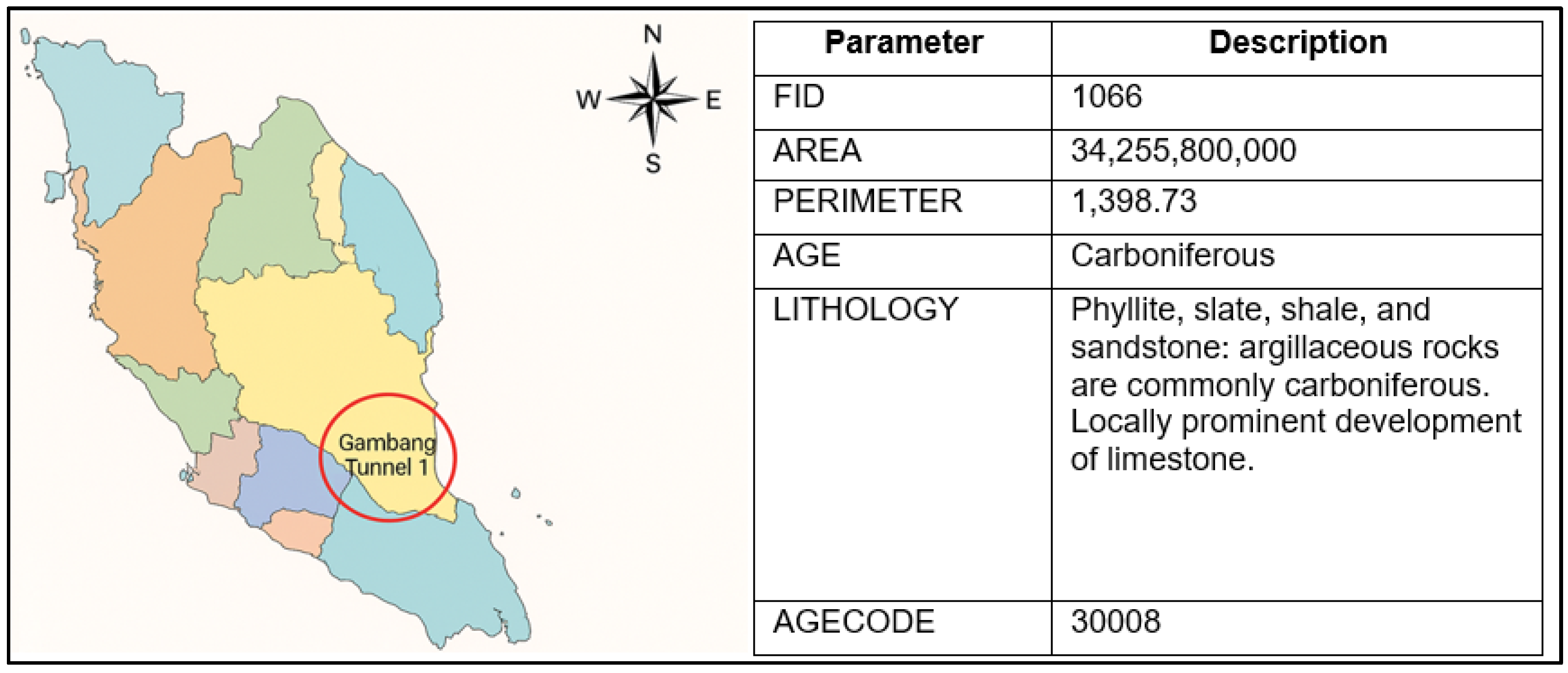
The method chosen for the accurate classification of rock mass quality in tunneling and underground construction in the present work is the worldwide recognized methodology, the Q-system. This system, first proposed by Barton, Lien, and Lunde (1974), provides a numerical prediction for the quality of a rock mass based on an amalgamation of intrinsic properties of its material and the state of discontinuities [
27].
The Q-value is determined by the product of six key parameters—RQD, Jn, Jr, Ja, Jw, and SRF—providing a multi-parameter framework that enables detailed and accurate characterization of rock masses. Such characterization is fundamental for designing appropriate tunnel support systems and ensuring excavation safety. The effectiveness of the Q-system has been widely recognized, with notable success documented in projects located in tropical regions, including Malaysia, where intense weathering processes and complex geological conditions strongly influence rock behavior and performance, thereby demonstrating the system’s adaptability and reliability under challenging environments [
43].
In accordance with the formulation of Barton et al. (1974), Grimstad and Barton (1993), and Barton (2002), the rock mass system between rocks and the Gambang Tunnel was divided into three geological categories with respective Q-values, which were obtained from in situ mapping and measurement were as follows:
- 1.
Weathered or Very Poor Rock (Q-values less than 1.0)
Rocks in this category are typically heavily weathered, sheared, or extensively broken, existing as simple blocks with minimal or no self-supporting capacity.
Such rocks demand fast, large, and often intrusive support systems, such as steel arches, lattice girders, or wire mesh-reinforced shotcrete, to avoid either collapse or large strains during excavation.
- 2.
Fractured or Poor-to-Fair Rock: Q-values ranging from 1.0 to 4.0
This rock mass is usually made up of blocky (or moderately) fractured volumes, so that it is mechanically sustained but needs assistance and well-controlled charges to limit overbreak, along with support for the rock structure during tunnel works.
- 3.
Massive or Good Rock (Q-values more than 4.0).
These are strong, discrete rock masses with low jointing and favorable engineering properties, usually requiring minimum or occasional support.
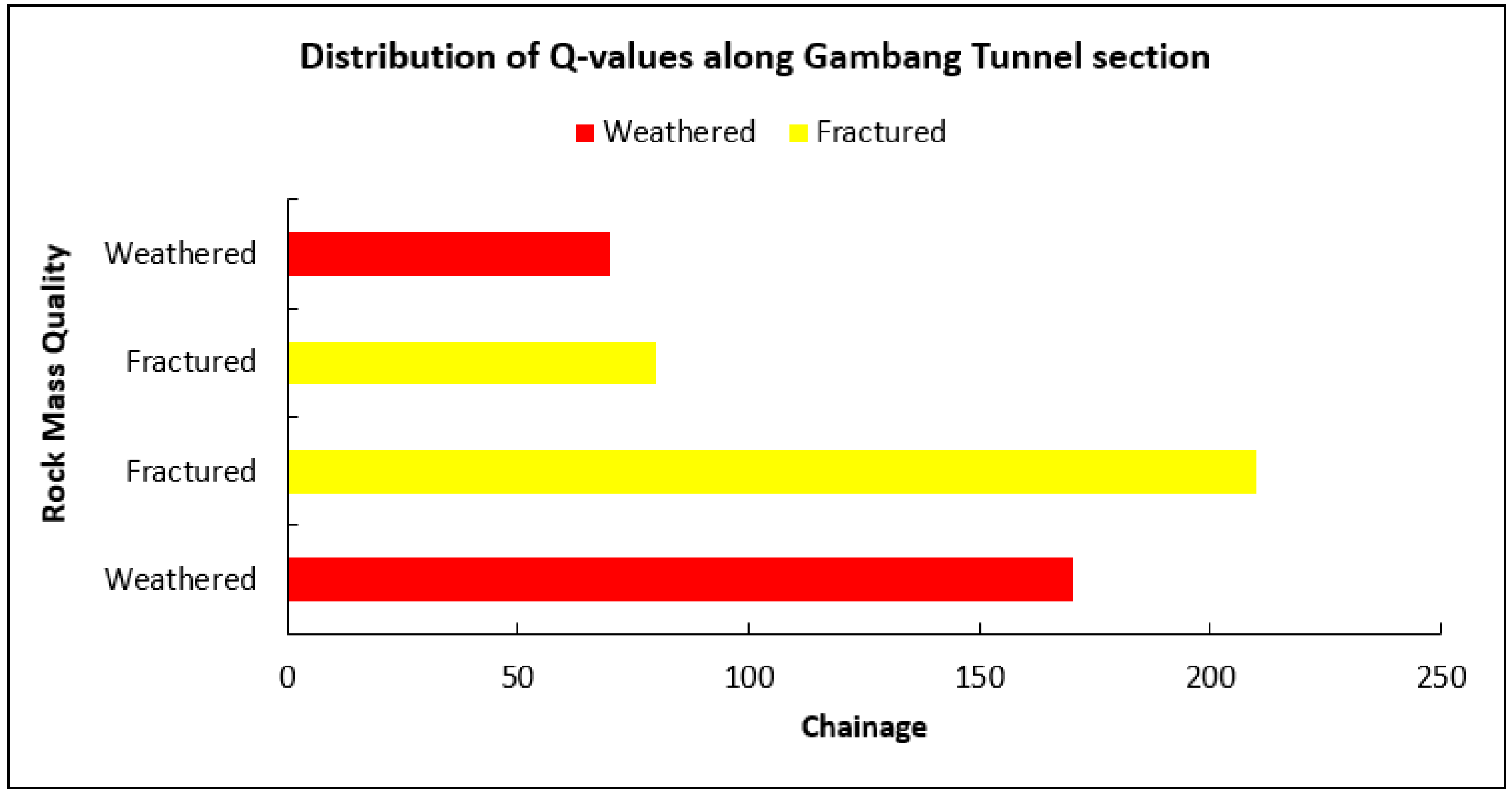
The variation in the Q-value distribution curve along the Gambang Tunnel alignment reflects the spatial variability of rock mass quality within the tunnel. As can be seen from the Q-value versus chainage chart (
Figure 7), the tunnel alignment is predominantly in poor or very poor rock (Q < 1.0), which is shown in red [
43].
These zones are located at the two ends of the tunnel’s alignment, within the interval of chainages 336 + 996–336 + 926 and 336 + 646–336 + 452, respectively.
This component applies to isolated parts of rock formations that are much worn out or heavily split, where undercrossing stability is highly prejudiced when a large amount of dyed-in-the-wool reinforcement is not introduced.
There are large areas of the longwall headgate of this type acting as living and working space for workers or coal miners, facing many engineering problems, including accurate blasting, swift ground support, and monitoring to eliminate ground collapse, excessive deformation, and personnel hazards.
On the contrary, few sections of the tunnel axis are characterized by a fractured or poor-to-fair Q-system (Q = 1.0–4.0), as indicated on the chart by the orange bars.
These zones are mostly located in the central section of the tunnel, particularly from chainages 336 + 916 to 336 + 746 and 336 + 676 to 336 + 656.
The rock mass conditions in these zones, while better than the totally incompetent ones, must still be reinforced using well-designed systematic support and specially tailored blasting to achieve safe excavation and minimize damage to the surrounding rock mass.
These areas have potential for tuning blast designs to balance fragmentation efficiency with vibration and overbreak control.
From the graph, it is evident that there is no Q-value that is higher than 4.0 for any section of the tunnel alignment.
A detailed classification of rock mass quality of the Gambang Tunnel complies with international tunneling requirements and is necessary for the development of a design approach for excavation and support according to the surrounding geology.
The findings of this study also emphasize that detailed rock mass classification is an integral part of the design and implementation of customized blast design, support systems, and safety measures.
Through the adoption of this data-driven approach, this project aims to deliver safer, more productive, and cost-effective tunneling along the route, while managing the environmental, safety, and operational risks associated with difficult ground conditions.
Figure 7 shows the distribution of Q-value along the Gambang Tunnel traverse.
Figure 7.
Distribution of Q-values along the Gambang Tunnel alignment.
Figure 7.
Distribution of Q-values along the Gambang Tunnel alignment.
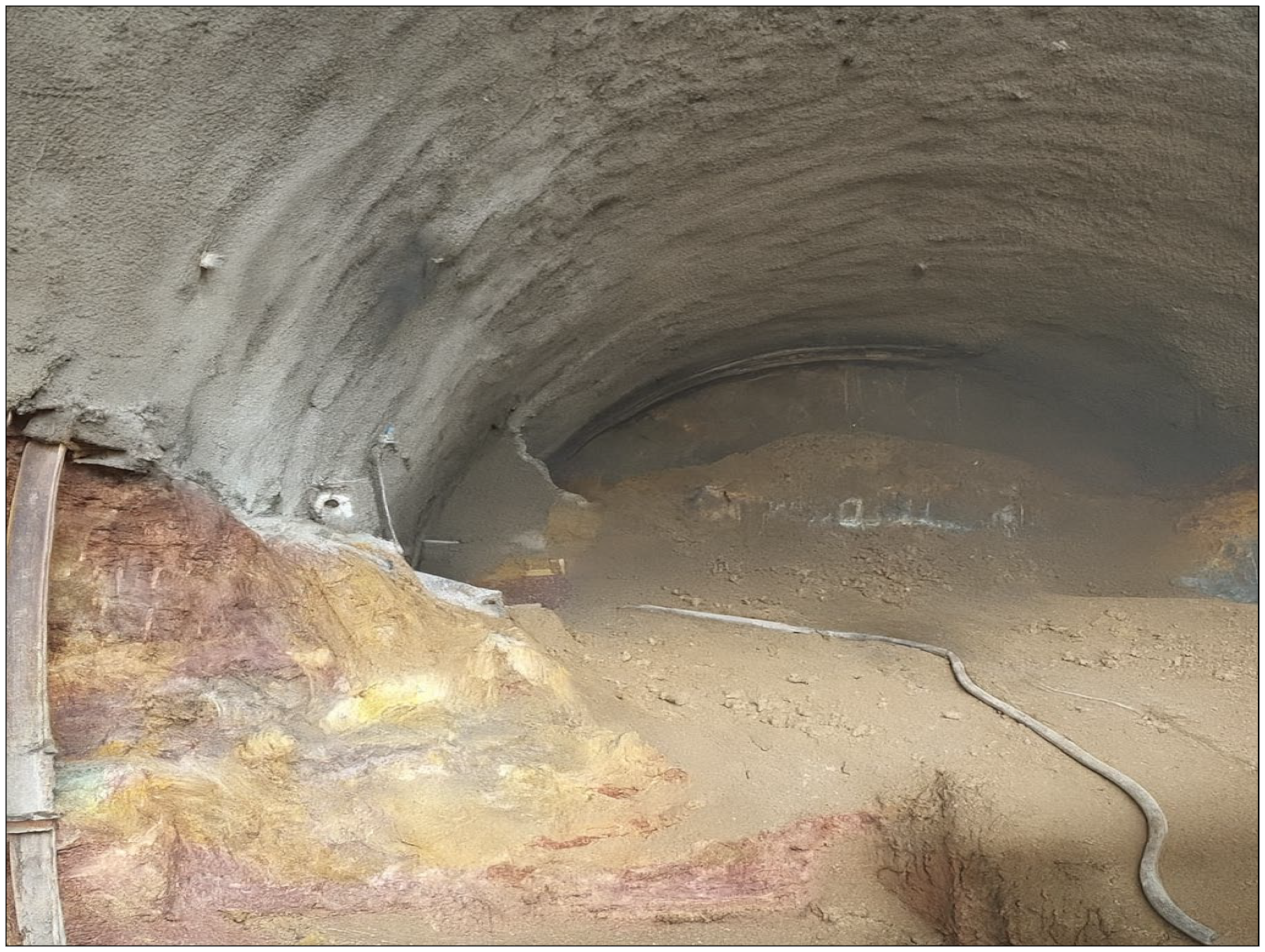
Distribution of Q-values along the Gambang Tunnel alignment was classified by rock mass type. The regional variability of rock mass quality, illustrated by rock condition at the tunnel face as shown in
Figure 8, was evaluated according to the Q-system categorization, with red bars indicating very poor rock mass (Q < 1.0), orange bars denoting poor-to-fair rock mass (Q = 1.0–4.0), and no parts displaying good rock mass (Q > 4.0). The classification relies on the Q-system established by Barton, Lien, and Lunde (1974), along with its later revisions [
27,
43].
Rock mass categorization within the Gambang Tunnel, indicating chainages influenced by weathered (very poor), fractured (poor-to-fair), and massive (excellent) rock mass characteristics according to Q-value ranges, is summarized in
Table 6. Classification adheres to the Q-system established by Barton and the interpretations provided.
3.2. Variation in Powder Factor Among Rock Mass Classes
3.2.1. Correlation Between Q-Value and the Applied Powder Factor
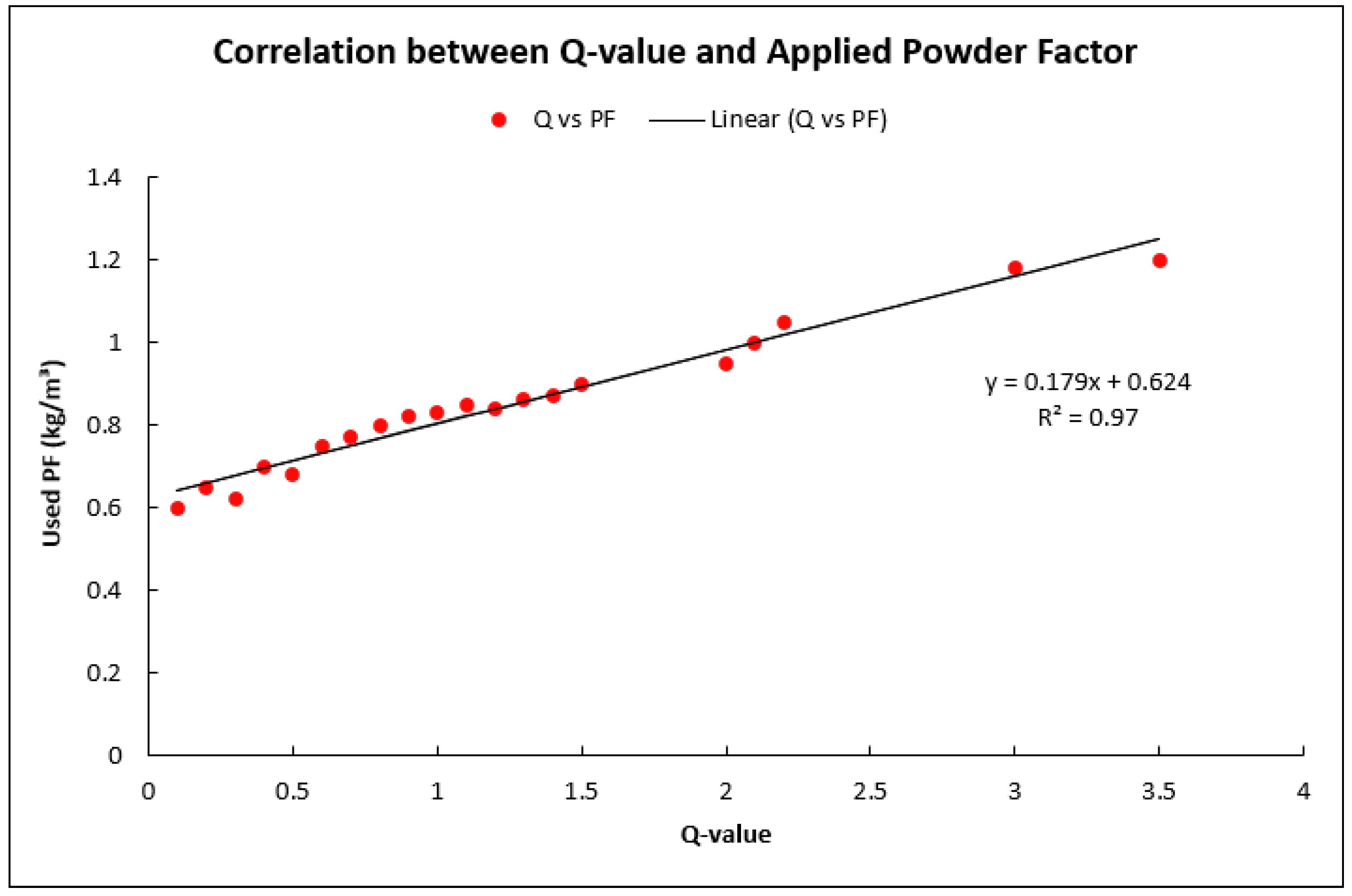
The correlation between Q-value and the powder factor (PF) applied along the Gambang Tunnel route is of central importance for understanding how blast design varied under different rock mass conditions. Rock Quality Designation (Q-value), developed through the Q-system classification of Barton, Lien, and Lunde (1974), served as the primary decision parameter for classifying ground conditions and determining appropriate blasting requirements. For weathered rock (Q < 1.0), the PF ranged between 0.58 and 0.82 kg/m
3, selected through empirical correlations from the Q-system and validated against previous tunneling experience. The target particle size distribution (PSD), with D50 values of approximately 100 mm and D80 around 200 mm, was used as an indicator of fragmentation performance and verified through post-blast field measurements [
41]. Since PF represents the explosive energy applied per cubic meter of in situ rock, it functioned as a critical monitoring parameter for both fragmentation efficiency and flyrock control, particularly in weaker rock zones where excessive explosive input could result in overbreak and unnecessary damage [
39].
Within the weathered rock category, the relatively low PF reflected the weak and highly disrupted condition of the mass, requiring only a limited energy input to achieve efficient breakage. The plotted relationship between Q-value and PF demonstrated that with very high explosive energy in low-Q zones, there was an elevated risk of overbreak and further destabilization of the surrounding ground, with most low-Q clusters positioned within the lower PF range. Nonetheless, cases of slightly higher PF values within this category suggested that adjustments were sometimes made in the field to address insufficient fragmentation when results were deemed unsatisfactory. These pragmatic modifications revealed how design strategies could be adapted dynamically to balance efficiency and safety during excavation. Thus, the adaptive use of PF not only respected the inherent weakness of weathered formations but also ensured that fragmentation targets could be achieved consistently without compromising tunnel stability [
39].
For fractured rock conditions categorized as Frequency 1 (Q-values between 1.0 and 4.0), the PF requirement was consistently higher, varying from 0.82 to 1.20 kg/m
3. This increase reflected the greater competence and resistance of these rock types, which required stronger explosive energy to achieve acceptable fragmentation outcomes [
16]. The rise in PF values, particularly for Q-values near the upper limit of the fractured rock category, indicated that higher blast energy was necessary as rock strength and continuity increased. This behavior demonstrated the principle of appropriately modifying blast energy to align with the mechanical properties of the rock mass, thus optimizing both fragmentation and safety [
30]. Notably, no data were collected for massive or good rock conditions, as Q-values above 4.0 were not encountered along the tunnel alignment. The geology of the Gambang Tunnel was dominated by poor-to-fair and very poor rock masses, reflecting the influence of tropical weathering processes [
43]. Overall, the analysis of Q-value and PF showed that the adjustments in blast energy were coherent and rational, with design modifications tailored to the prevailing rock mass quality. As shown in
Figure 9 this balance enhanced fragmentation efficiency, minimized overbreak, and reinforced excavation safety. Moreover, the covariance mapping underscored the necessity of adjusting blast design parameters to local geological factors, ensuring that tunneling operations were both technically effective and safely managed [
44]. The relationship between Q-value and the applied powder factor is illustrated in
Figure 9.
3.2.2. Modification of Powder Factor in Worn, Fractured, and Huge Rock Strata
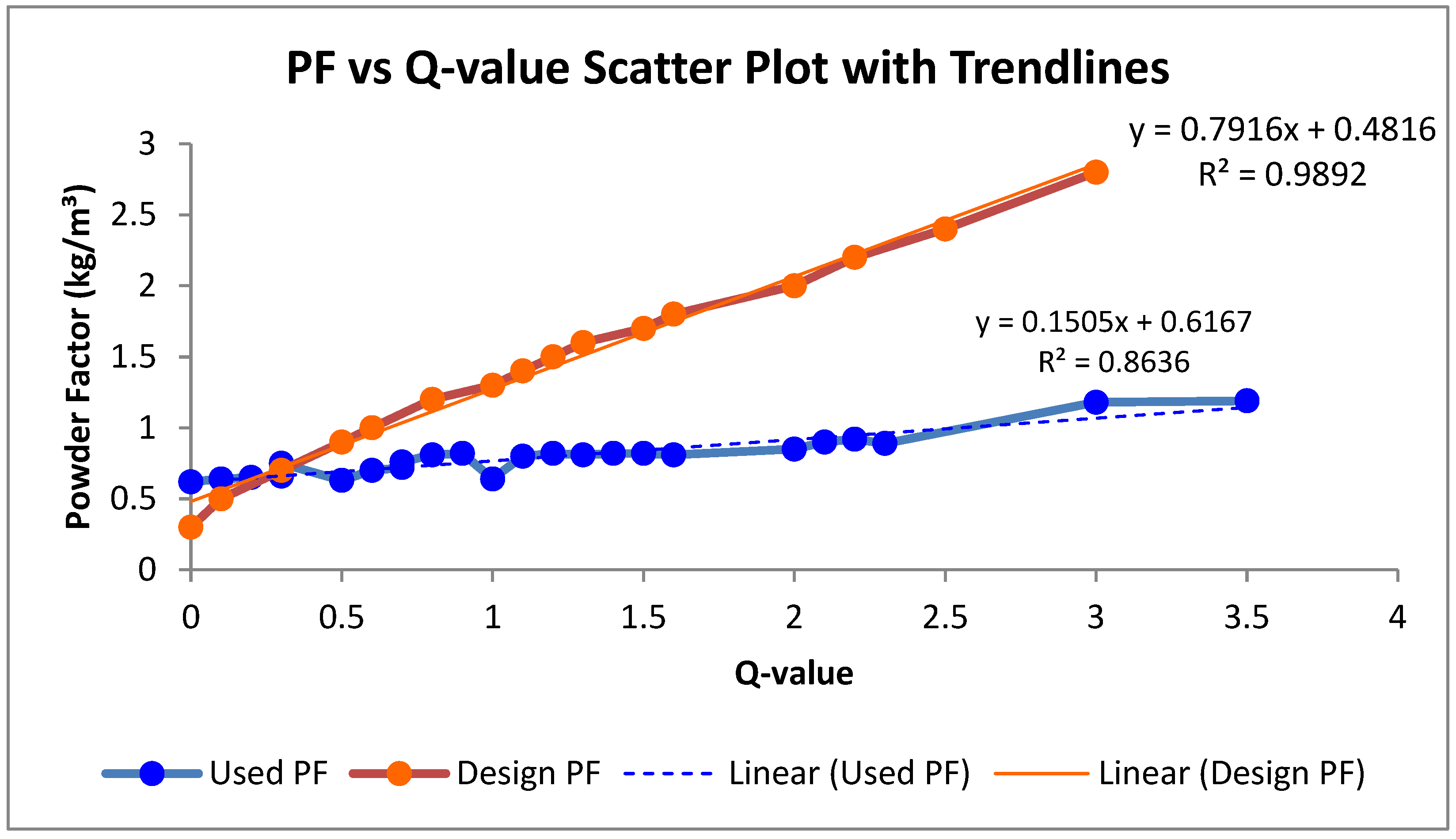
The correlation between Q-value and the powder factor (PF) applied along the Gambang Tunnel route is very important for understanding the variation in blast design across different rock mass conditions. Rock Quality Designation (Q-value), developed by the Q-system rock mass classification of Barton, Lien, and Lunde (1974), was employed as the main decision parameter for categorizing ground conditions [refers to
Figure 5]. The powder factor, expressed in kilograms per cubic meter of distributed energy (kg/m
3), serves as a critical indicator of the energy level of explosives used in each blast to achieve the desired rock fragment size [
30]. For the weathered rock category, defined by Q-values lower than 1.0, the applied powder factor generally varied between 0.58 kg/m
3 and 0.82 kg/m
3. This relatively low range indicated that the highly disrupted and weak rock masses required only limited explosive energy to achieve efficient breakage. The plotted correlation between Q-value and PF further showed that in low-Q-value sites, excessive explosive energy could result in overbreak and unnecessary damage to the surrounding rock. Consistent with this, most low-Q-value clusters were observed within the lower PF spectrum. However, some samples displayed slightly higher PF values, suggesting that adjustments were made in the field to enhance fragmentation when preliminary results did not meet operational expectations [
44].
For the next rock category, Frequency 1 (fragmented rocks with Q-values between 1.0 and 4.0), the required powder factor deviated upward, generally falling within a range of 0.82 kg/m
3 to 1.20 kg/m
3. This increase reflected the greater competence and strength of these rock masses, which necessitated higher explosive energy to obtain satisfactory fragmentation outcomes [
44]. As Q-values approached the upper boundary of the fragmented category, the maximum applied PF values indicated that the rock exhibited the highest degree of competence and resistance to breakage. The clear rise in PF across this category illustrated the principle of adapting blast energy according to the increasing strength and continuity of the rock mass [
35]. This behavior underscored the rational adjustment of blasting energy in line with geological conditions, where stronger rocks required proportionally greater energy to achieve desired fragmentation levels [
14]. Such adjustments not only ensured technical effectiveness in excavation but also maintained safety by preventing underbreak or poor fragmentation in harder sections of the tunnel. Importantly, the results highlighted that the PF ranges applied were consistent with expected values for tropical tunnel conditions, where fractured and moderately strong rocks dominate [
2].
In this study, no data were collected for massive or good rock conditions, defined by Q-values consistently greater than 4.0. The absence of such ground types along the tunnel alignment reflected the dominance of poor-to-fair and very poor rock masses, a condition typical of tropical weathered geological foundations [
2]. Despite this limitation, the overall study of Q-value and powder factor demonstrated that the modified blasting energy applied was coherent, rational, and consistent with the quality of the rock mass, as illustrated in
Figure 10 [
14,
44]. The balance achieved through careful adjustment of PF improved fragmentation efficiency, minimized overbreak, and upheld safety during excavation [
35]. Furthermore, the covariance map emphasized the importance of tailoring blast design parameters to site-specific geological conditions. Such adjustments ensured that blasting strategies were not only technically optimized but also aligned with safe tunneling practices under complex tropical ground conditions [
44]. This integration of empirical Q-system classification with applied powder factor highlighted the robustness of the method in guiding excavation decisions while reinforcing the value of systematic and adaptive design principles for tunnel blasting operations. The scatter plot of powder factor (PF) versus Q-value with trendlines (
Figure 10) illustrates the correlation between rock mass quality and the applied powder factor [
14].
3.2.3. Comparison Between Design Powder Factor and Utilized Powder Factor with Respect to Q-Value
The study of design and utilized powder factor in various rock mass classes provides valuable information for successful blasting application in the field [
45,
46,
47,
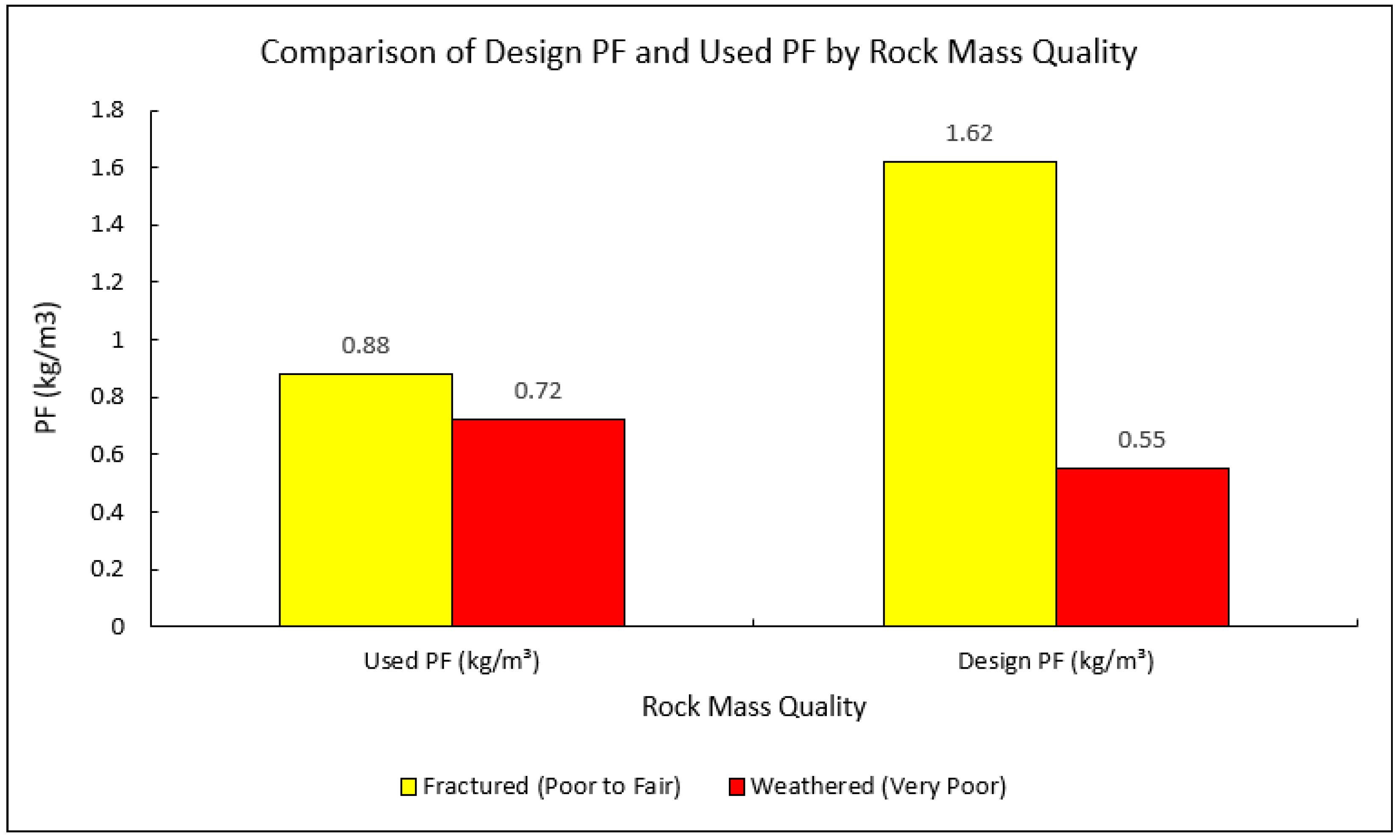
48]. For the poor rock zones (Q < 1.0), the average design powder factor was 0.57 kg/m
3. In fact, the implemented powder factor was only about 0.74 kg/m
3, implying that significant on-site changes (either towards better fragmentation or as a response to partial breakage) were needed to be made due to the suboptimal rock mass condition. The present modification is also in line with established blasting practices in which the powder factor is tailored to account for rock strength and discontinuities to achieve the desired fragmentation [
46,
48].
In the fractured to fragmented (poor-to-fair) rock types (Q = 1.0–4.0), the design powder factor was considerably higher, around 1.63 kg/m
3 on average, while the actual powder factor applied was approximately 0.86 kg/m
3. This means that even though the blast designs were conservatively designed to cater to the hard rock due to its robustness, the actual performance of the rock mass still allowed a reduction in the explosive energy without compromising the fragmentation quality and safety [
45,
47].
The study emphasizes the importance of flexibility and on-site decision making in blast performance. The design powder factors provided a reasonable starting point, but the ability to adjust in response to direct observations ensured that blasting was effective and consistent with real ground responses. This adaptive approach also conforms with best practices for safe and efficient blasting that are highlighted in the literature concerning burst factor assessment and site-specific adjustments [
42].
Additionally, Sasaoka et al. (2015) reported that fragmentation performance and powder-factor optimization are strongly influenced by rock-mass condition and adopted blasting standards, while Tomar et al. (2025) established that the relationship between rock-mass fractal dimension and powder factor provides valuable predictive capability for block-size distribution during controlled blasting [
46]. The comparison of design and actual powder factor by rock-mass classification is shown in
Figure 11 and
Table 7.
3.3. Fragmentation Efficacy by Rock Mass Classification
Analysis of fragmentation size also showed that in (Q < 1.0) weathered (very poor) rock areas, fragmentation varied from 45 to 59 cm. In spite of the weak and highly fragmented nature of the outcrops, the resulting fragment sizes were not as small as expected. The average fragmentation in these zones was approximately 50 cm, corresponding to moderate disintegration controlled by their own fragility and the powder ingredient [
2,
14].
In the broken (poor-to-fair) rock areas (Q = 1.0–4.0), the observed fragment sizes were typically concentrated between 50 cm and 66 cm, reflecting a more blocky pattern of fragmentation characteristic of stronger and more competent rock masses. The average size of fragmentation within this class was slightly higher, around 55 cm, which indicated that a greater energy input was necessary to induce effective breakage. However, no fragmentation information was reported for the Q > 4.0 (excellent) rock type, as there were insufficient sections of the tunnel alignment classified within this category [
24,
35]. This absence of competent rock conditions underscored the generally poor and challenging geotechnical nature of the project, as tropical weathering had limited the occurrence of intact rock along the entire investigated tunnel length. The relationship between powder factor and fragment size distribution was clearly demonstrated through scatter plot markers, where trends highlighted the dependency of fragmentation outcomes on the level of applied explosive energy [
24,
46]
In weathered rock areas, low and moderate powder factors—defined as less than 0.7 kg/m
3 and 0.7–1.0 kg/m
3, respectively—were generally sufficient to achieve acceptable fragmentation, although the high energy loss within the surrounding weak rock mass limited efficiency. Nevertheless, a slight improvement in fragmentation uniformity was noted with the application of moderate powder factors, suggesting that small increases in explosive energy could optimize outcomes without causing excessive overbreak [
19,
35]. By contrast, in fractured rock zones, higher powder factors (≥1.0 kg/m
3) were consistently associated with fragment sizes of less than 55 cm, confirming that competent and resistant rock types required stronger energy input to achieve effective breakage and reduce large particle fractions. Conversely, when lower or moderate powder factors were used in such conditions, fragmentation sizes tended to be larger, often exceeding 55 cm, reflecting insufficient energy transfer during blasting. These results collectively highlighted the importance of adjusting powder factor to match rock mass quality in order to achieve both efficient fragmentation and safe excavation practices [
46].
The study also aligns with the findings of Bhatawdekar et al. (2020), who demonstrated that blastability-index applications are essential to refine powder-factor estimation across varying rock-mass conditions, improving control of fragmentation and energy utilization [
45]. Moreover, Ramanathan and Abdullah (2019) observed that geological variability and proximity to sensitive urban zones in Malaysian blasting sites require careful regulation of explosive energy and powder-factor limits to minimize vibration and flyrock effects [
19].
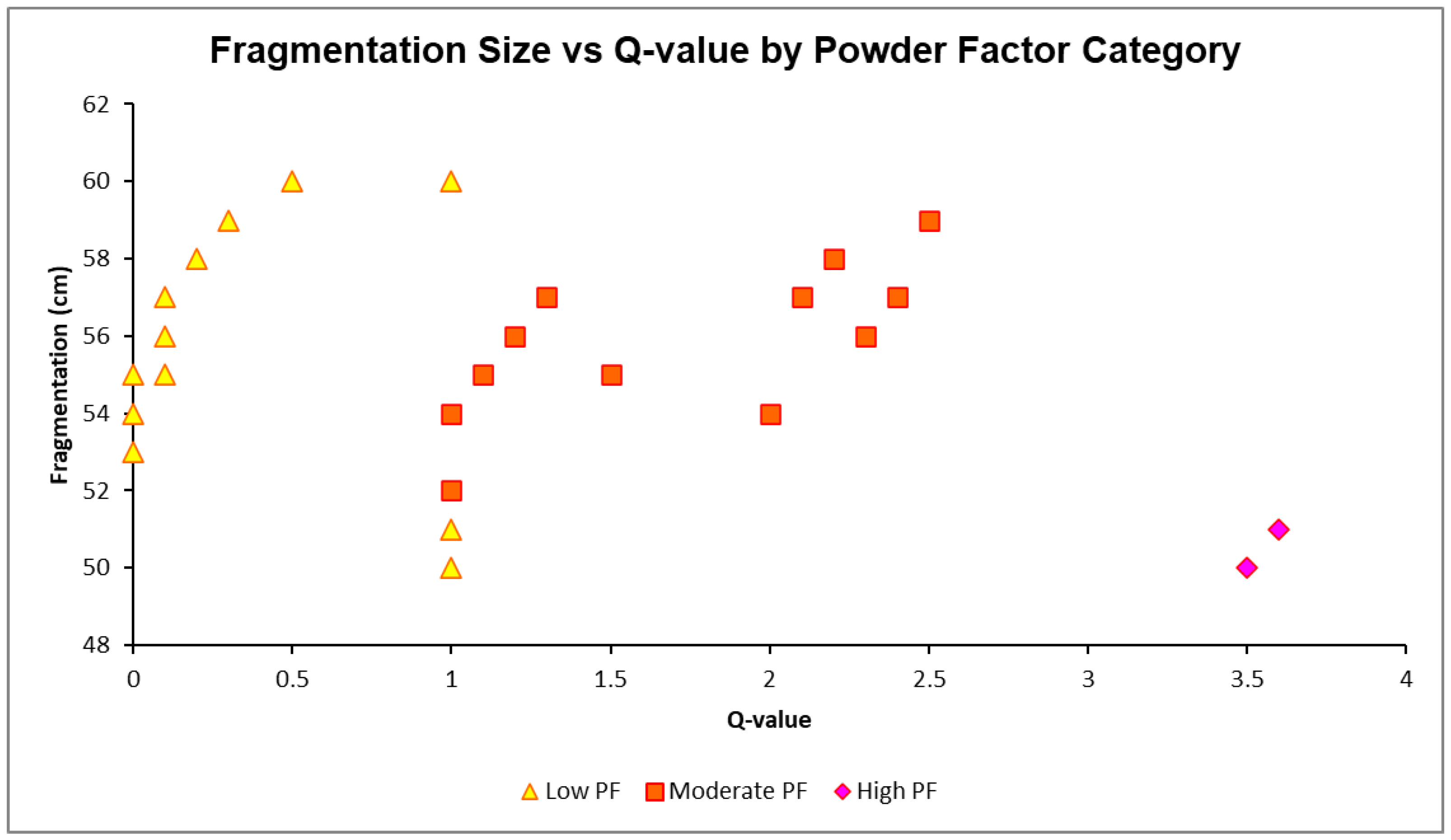
The study reported several cases where the fragmentation quality was unsatisfactory leading to oversized material or the requirement for secondary crushing. In the areas of abrasion with a low powder factor (<0.7 kg/m
3), few particles were sitting at the maximum, and fragmentation sizes occasionally reached 60 cm. Along lines of fracturing and a high powder factor, individual chainages experienced fragmentation close to 60 cm, indicating the possibility of boulders which could disrupt mucking. In blasted fragmented rock, a higher powder factor (≥1.0 kg/m
3) led to more regulated fragmentation, always with sizes < 55 cm, thus reducing the need for re-blasting or secondary processing. This highlights the importance of linking the powder factor to rock mass classification and immediate fragmentation performance to improve the productivity of tunneling [
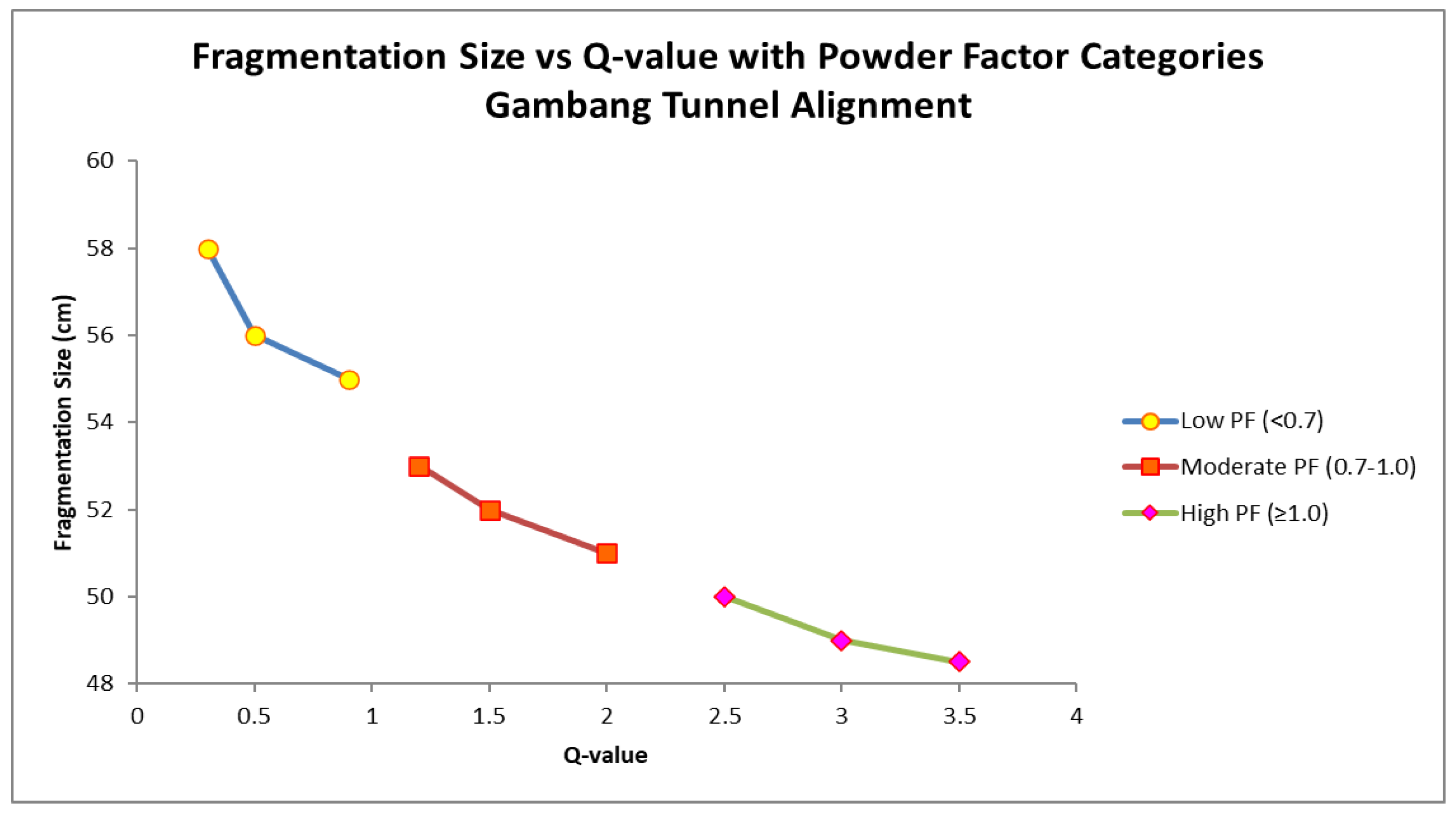
24]. The scatter plot illustrating fragmentation size in relation to Q-value along the Gambang Tunnel, with marker shapes denoting powder factor classifications, is shown in
Figure 12, and a summary overview is provided in
Table 8.
International guidelines for tunnel blasting generally provide indicative ranges of powder factor based on rock quality. For example, in 1971, reports mentioned nearly 3.8 billion cubic meters of rock and ore blasted worldwide, which is equal to almost one cubic meter of solid rock per individual [
49]. Additionally, it can be inferred that average PF values in hard and massive rock typically fall between 0.6 and 1.2 kg/m
3, while more jointed and weaker ground may require 1.0–1.8 kg/m
3 to achieve uniform fragmentation.
Similarly, the operation was carried out using two pneumatic rock drills, specifically Atlas Copco HR 658 models, running at 0.058 m3/s with 600 kPa, 34 Hz impact frequency, producing around 38–42 blastholes with integral hexagon shanks measuring 1.2 m long and 27 mm in diameter, all manually handled. Correspondingly, it can be stated that the average PF for competent hard rock tunneling is around 0.8–1.0 kg/m3, with higher values common in highly weathered zones. These ranges are used internationally as benchmarks, even though local geology often causes deviations.
Therefore, a specific guideline has been initiated by the International Tunneling Association (ITA) Working Group (WG) 22 to support BIM implementation in the tunneling industry. Hence, it can be possible to use proper BIM practices into tunneling aspects for the betterment of any project.
In comparison with existing findings, the outcomes of this investigation appear to demonstrate a general correspondence with international reference ranges. The tropical weathered category required approximately 0.75–1.00 kg/m3, which may be interpreted as being positioned toward the lower but still legitimate boundaries for weaker rock. Meanwhile, fractured zones around 1.10–1.30 kg/m3 fit within moderate recommendations, whereas massive rock values of 1.35–1.65 kg/m3 appear comparatively elevated relative to several documented cases. In order to be fair, the increase in PF for the massive class here is linked to the influence of high in situ stress and moisture, which reduces blast efficiency. Overall, the findings are consistent with international standards but also highlight how tropical conditions push the PF slightly above the typical range.
3.4. Integrated Analysis: Correlation Among Q-Value, Powder Factor, and Fragmentation
The detailed study of Q-value, powder factor, and fragmentation size provides valuable information about the effect of these parameters on blasting and excavation performance along the GT alignment. This portion describes the statistical correlation, trend analysis, and graphical representation of the data, in conjunction with a discussion on the implications for rock mass quality, powder factor selection, and fragmentation outcomes [
49].
The regression analysis indicated a positive relationship between Q-value and the dust ingredients. The powder factor used to cavitate increase progressively as the Q-value rose from very low (Q < 1.0) to poor-to-fair rock quality (Q = 1.0–4.0) [
5]. This trend reflects the reasonable amendment of explosive energy to suit heavier rock formations, which required enhanced energy to achieve better breakage. The relationship between Q-value and powder factor was confirmed with the scatter plot, but with a slightly upward trendline indicating the increase in applied powder factor as rock mass competence increased [
49].
This study has not seen any obvious connection between the Q-value to fragmentation size, but a weak trend for the Q-value to decrease with exchange of momentum from the remnant parton (suppressed events). It indicates in stronger rock masses like those tested the higher powder factor further allowed fragmentation control [
50]. The correlation between powder factor and fragmentation size was negative, indicating that higher powder factors generally lead to finer fragmentation size [
49]. The relationship was obviously not strong enough to be linear or predictive, but it has validated the field observations and the engineering judgment at the time of blasting [
51].
The Q-value classification for rock mass quality played a major role in the choice of powder factor and the corresponding fragmentation image. In the weathering zones, the highly weathered and heavily fractured rock required a limited amount of powder factors (usually <0.7 kg/m
3) to achieve adequate fragmentation. Small adjustments were made in some sites in order to compensate for the difference in breakage, using mild powder factors (0.7–1.0 kg/m
3) to improve ore fragmentation uniformity and diminish the oversized fraction [
49].
In the shock rock class (Q-value from 1.0 to 4.0), the stronger, jointed rock mass needed a higher powder factor to be detonated. The results show that powder factors >0.8 kg/m
3 were associated with good fragmentation outcomes, with average diameters less than 55 cm. Where insufficient powder factor was used, fragmentation was also sometimes found to be too large, even requiring further reduction. This highlights the need to correlate the powder factor selection with the actual rock mass quality and field performance to ensure successful excavation as well as to avoid excessive delays associated with large oversize and re-handling [
50].
The synergy between Q-value, powder factor, and fragmentation size among rock types is illustrated in the scatter plots and bar charts presented. The scatter plot of
Figure 12 represents fragmentation size against Q-value, with different marker shapes according to the powder factor categories. It shows the role of increased powder factor in the higher Q-value domain in improving fragmentation control. Circles, representing low powder, were largely concentrated in weathered areas and associated with higher fragmentation sizes. By contrast, squares and diamonds, which indicate moderate and higher powder factors, were observed at an increasing rate in the fractured zone, associated with average fragmentation sizes. The relationship between fragmentation size and Q-value is illustrated in
Figure 13.
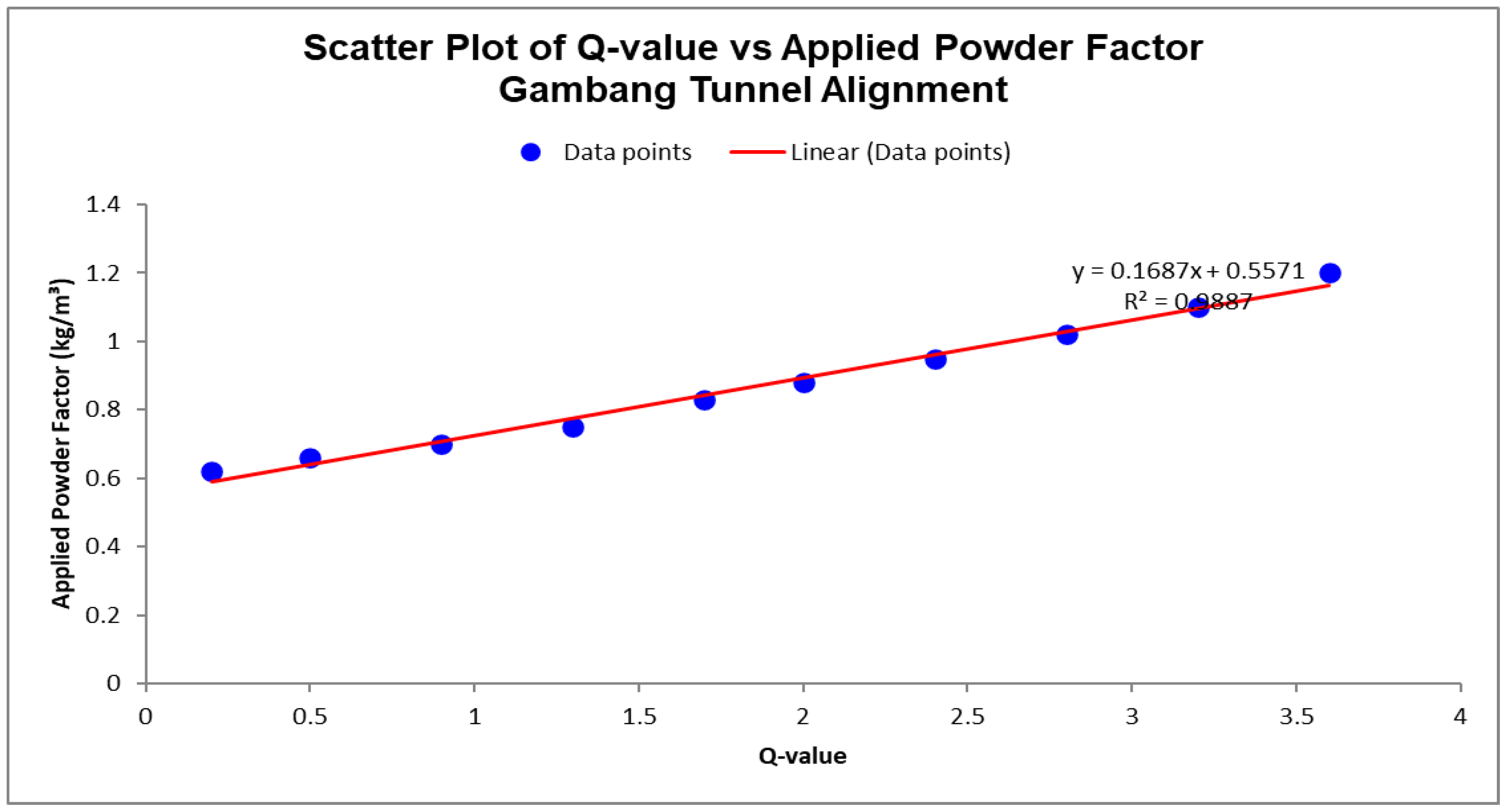
This correlation is represented in the scatter plot of Q-value versus applied powder factor (kg/m
3) along the Gambang Tunnel alignment (
Figure 14). The trendline reveals a positive relationship, with higher Q-values mostly being associated with more powder factors in order to support stronger rock masses.
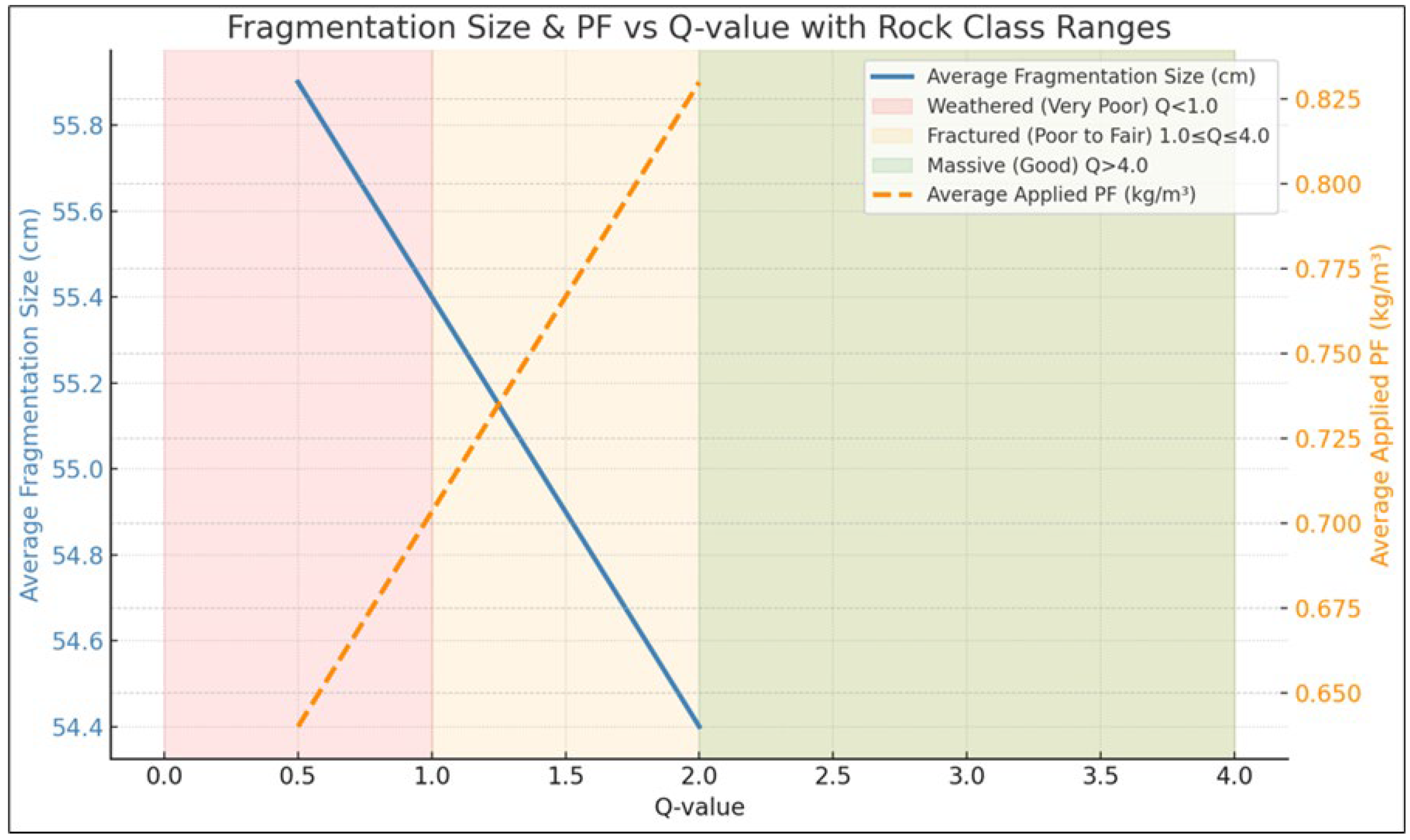
The bar chart illustrating average fragmentation size and powder factor by rock mass class (
Figure 15) further corroborated these findings. Fractured rock zones, when elevated powder factors were utilized, exhibited marginally smaller average fragmentation sizes than weathered zones. This graphical data substantiates the conclusion that powder factor modifications were appropriately correlated with rock mass classification, and that the coordinated management of these parameters facilitated efficient and regulated excavation performance along the tunnel alignment.
3.5. Engineering Implications and Optimization
The findings of this study provide important engineering implications on the relationship between rock mass quality, powder factor selection, and fragmentation performance, which are applicable to blast design optimization for the Gambang Tunnel. Q-value assessments were integrated into the blast design to inform changes that enhance the excavation quality and minimize undesirable effects, including overbreak and flyrock [
51].
The most relevant findings of this study are that the powder factor should be adjusted to the rock quality that is found in each tunnel face. The Q-value, as a well-established index for the state of rock mass, provides a strong basis for the difference between zones of weathered, shattered, and relatively intact zones of the bedrock in the area [
18]. Field adaptations showed that a single design for BLADE in varying rock types would often lead to a not-optimal fragmentation, at times resulting in “none-removable” overbreak (also not suitable) or later, difficult mucking operations. The study results showed that technicians generally used Q-value categorization to prescribe the powder factor, allowing them to opt for a homogeneous or constant dimension of fragmentation whilst reducing the need for a secondary blasting, allowing for better control of the excavation profile. This dynamic approach proved the need for the incorporation of geo-data into blast design as standard practice.
Furthermore, Nyong and Esu (2025) emphasized that geological structures and discontinuities exert significant control over blasting effectiveness and fragmentation uniformity, highlighting that tunnel blast designs must consider structural orientation and rock anisotropy for safety and productivity enhancement [
52]. In parallel, Persson, Holmberg, and Lee (2018) provided comprehensive guidelines on rock-blasting and explosives engineering that form a key technical foundation for modern tunneling optimization and safe blasting operations.
This work provides optimal powder factor ranges for future blasts at similar geological conditions according to the Q-value, applied powder factor, and the observed fragmentation result [
14]. The recommended powder factor range for severely weathered rock masses (Q-value < 1.0) is 0.65–0.85 kg/m
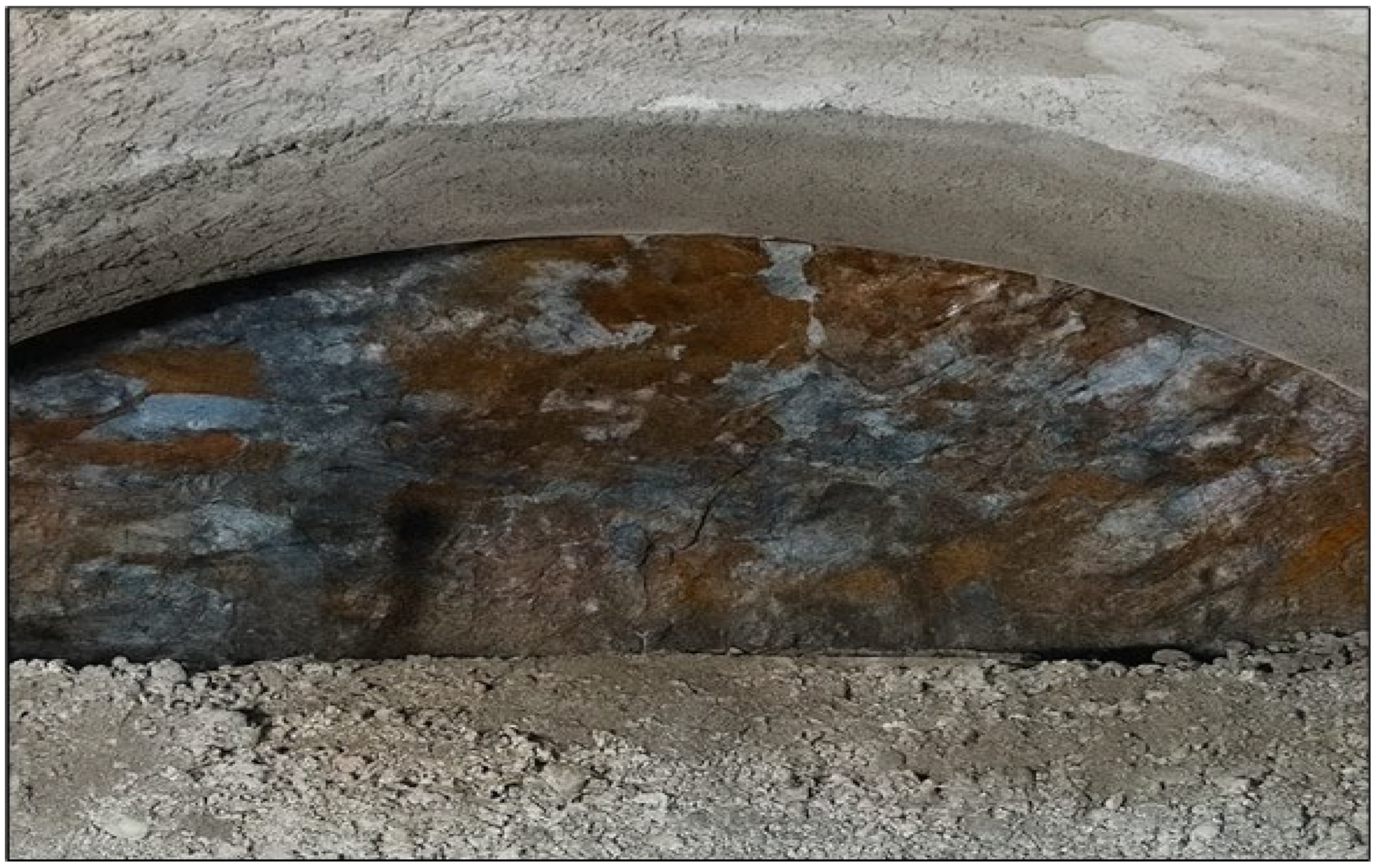
3. This range is expected to provide sufficient energy to incur continuous fragmentation with minimized overbreak or unwanted vibrations, which can lead to instability in broken ground. The typical fragmentation result achieved with these powder factors is shown in
Figure 16.
For a fractured rock mass with Q-value from 1.0 to 4.0, the suggested PF range is from 0.85 to 1.10 kg/m
3. In this range of PFs, fragmentation sizes remained under 55 cm for all blastholes and powder factors, producing muckable sizes [
16]. No measurements on solid rock masses (Q-value > 4.0) were carried out during the study. Based on the literature and standard practices, a potential powder factor range of approximately 1.20–1.50 kg/m
3 is suggested as a starting point, with site testing and adjustments. The proposed intervals provide a practical guideline for improving blast efficiency, considering site safety, economic effectiveness, and environmental consideration.
The positive impact on safety and economy was performed by applying adjustments of the powder factor by category [
16]. A proper value of the powder factor for each rock mass classification had been taken into account to control the overbreak of the blasting better and ensure less damage to the tunnel periphery, thus decreasing the risk of ground instability.
This step was particularly crucial in weathered zones, where excessive energy could have compromised tunnel support and re-entry safety. Additionally, less uniformity in fragmentation leads to a reduction in the degree to which overlarge boulders must be blasted, making for safer and more productive mucking. An application for one of these cases was during tunneling in Malaysia. Blast designs must provide a safe working environment, increase productively, and also comply with regulatory requirements where Q-values are introduced [
52]. The recommended powder factors for different rock mass classes are summarized in
Table 9, illustrating the tailored application based on rock classification.
5. Conclusions
Our findings from this study have established several key findings that allude to the importance of characterizing tunnel blast design for rock mass quality under tropical geological conditions. The principal result of the study is the development of a simple and flexible blasting model, in which PF is optimized by the empirical rock mass classification of the Q-system. This model is especially applicable to very weathered and structurally variable rock mass, like those in Malaysian tunneling works [
58].
The first conclusion is that a standard blast design on all geological formations leads to inefficient and non-uniform results. The fragmentation, flyrock control, and overbreak control become greatly enhanced if blast designs are modified in accordance with the Q-value classification of rock mass. Thus, it is no longer feasible to use a generic procedure for tunnel blasting in complex tropical terrains [
59].
The influence of geology on blasting performance is evident from the results of this study. In weathered rock masses (Q < 1.0), the highly fractured and weakened structure required only a limited explosive energy input, with PF values of 0.65–0.85 kg/m
3 yielding acceptable fragmentation around 50 cm. Applying higher PFs in such zones led to overbreak and instability of the tunnel boundary. In contrast, fractured rock masses (Q = 1.0–4.0) exhibited stronger, blocky behavior, requiring PF values of 0.85–1.10 kg/m
3 to achieve fragmentation sizes consistently below 55 cm. Where PF is set too low in these zones, large boulders and secondary blasting are necessary, reducing efficiency. The absence of good rock (Q > 4.0) limited direct data, but international standards suggest PFs above 1.20 kg/m
3 are appropriate [
59,
60]. These findings confirm that geological variability directly governs blast energy demand, and adopting uniform designs across different formations leads to uneven and inefficient outcomes.
Secondly, the work reiterates that the powder factor must not be viewed as a constant. Instead, PF should be adaptively set according to real-time geological observations as well as classification results. The study affirms recommended PF ranges for weathered (0.75–1.00 kg/m
3), fractured (1.10–1.30 kg/m
3), and massive (1.35–1.65 kg/m
3) rock zones, providing measurable references for future works [
53,
59]. International standards and guidance provide useful benchmarks for PF selection for various geological conditions, and their inclusion aids in the validation of the ranges outlined in this work.
The positive impact on safety and economy was achieved through adjustments of the powder factor by category, as recommended by the United States Mine Safety and Health Administration (MSHA, 2025). Additionally, a proper value of the powder factor for each rock mass classification was considered to better control overbreak during blasting, thereby reducing damage to the tunnel periphery and decreasing the risk of ground instability [
60]. Likewise, DGMS (2017) suggests 0.8–1.2 kg/m
3 for moderately jointed or fractured rock mass, with the higher values needed to ensure enough breakage whilst also restricting vibration and flyrock. International practice proposes PF values of 1.2–1.6 kg/m
3 as effective for big, stiff rocks (for blasting in tunnels and underground excavations, also recommended by ISRM, 2015) [
59].
These recommended values in this study (0.75–1.00 kg/m
3 for weathered zones, 1.10–1.30 kg/m
3 for fractured zones, and 1.35–1.65 kg/m
3 for massive zones) align well with recognized international standards. Although powder factor (PF) data for weathered rock masses with Q < 4.0 is not available for the Gambang Tunnel, our recommended values are based on the ISRM empirical approach, which is conservative yet practical and suitable for application in future projects. Therefore, combining field-based outcomes with international recommendations affirms the sensitivity of our PF recommendations and increases their transferability to other tunnel projects on different geological settings. These findings are consistent with international studies advocating data-driven, geo-condition-based predictive blast models, thereby strengthening the reliability and transferability of our proposed PF ranges [
55].
A further important result is that empirical rock mass classification (such as the Q-system) is not only still valid but is mandatory to promote safe and efficient blasting. However, these systems have to be accompanied by engineering expertise and site adaptability, since real conditions often differ from design assumptions.
Additionally, the results illustrate the importance of continuous control and feedback on blasting performance. The discrepancy found between design and real-life PF values indicates operation-related problems, which could only be eliminated by well-coordinated site management, experienced supervision, and design parameter calibration.
Finally, consistent with the author’s previous research, it is further demonstrated in this paper that a combination of experience-based data, sound planning with adaptable design, and safety safeguards is the best guarantee to ensure responsible and efficient tunnel blasting [
57,
59]. Ideally, for future development, attention should be paid to the improvement in data capturing techniques and to involve models for predicting activities, as well as site management aligned with the engineering standards and rules set by the authorities in Malaysia.
In conclusion, the results demonstrate that detailed insight into geological variability, along with accurate and flexible response can lead to tunnel blasting that is more controllable, safer, and better performing [
53,
60].




 and
and