


Climate Change Adaptation of Geo-Structures in Europe: Emerging Issues and Future Steps

 ,
,  , and
, and
Abstract
1. Introduction
2. Present and Future Climate Trends in Europe
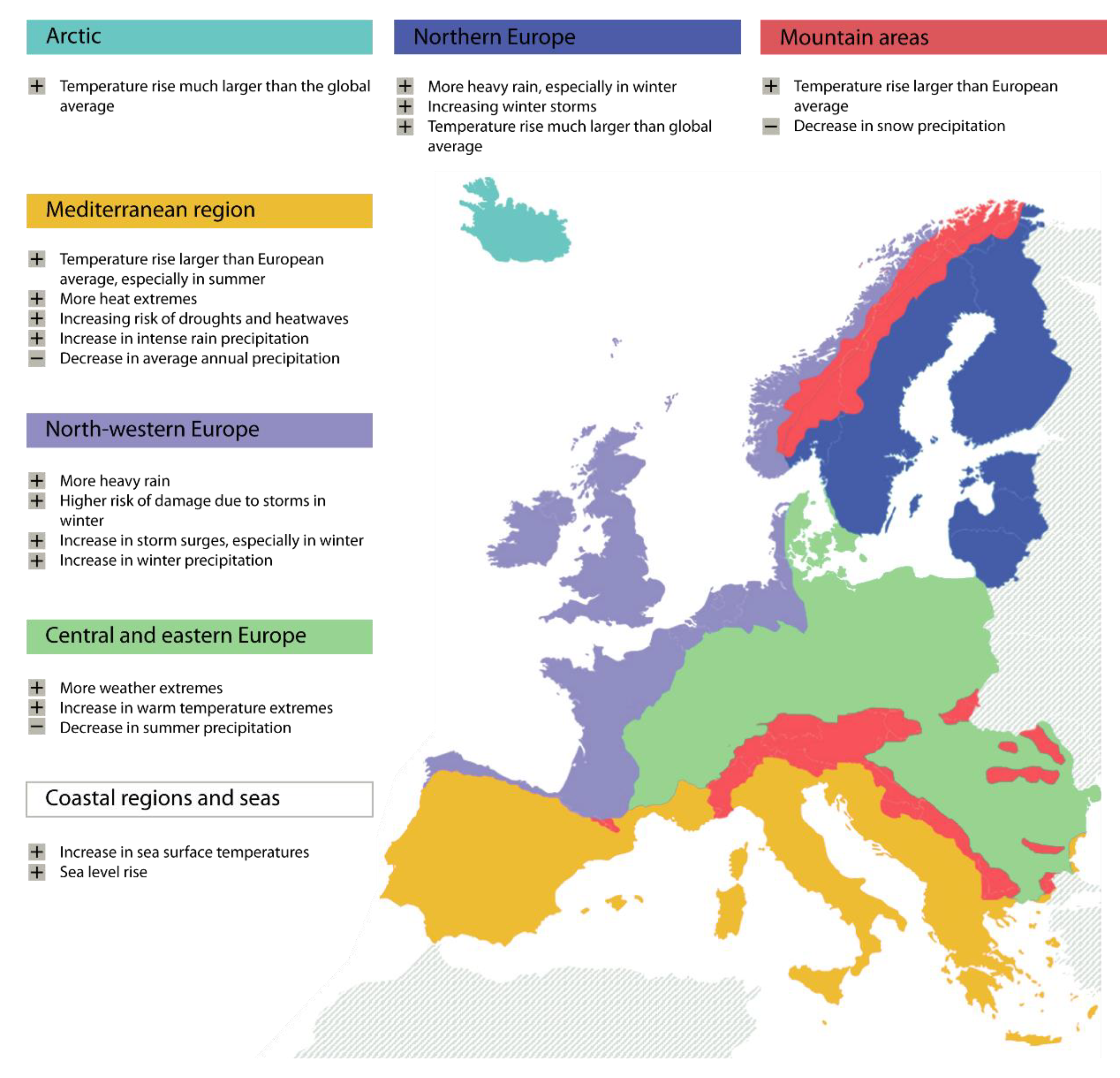
- An observed decreasing precipitation trend in parts of southern Europe, particularly in summer, whereas in northern Europe, an increase in annual precipitation of about 70 mm per decade is observed, mostly as winter precipitation [12]. This increase is also the result of more intense precipitation events in western Europe [13].
- Since 1950, high temperature extremes (e.g., hot days and heat waves) have become more frequent and long-lasting.
- The average sea level has been increasing (3 mm/year in recent decades according to [14]).
- Storm behaviour throughout Europe is variable in location, frequency and intensity. Frequency showed a general increase over the 1960s to 1990s, after which it decreased to the present [12].
3. Causal Chain Mapping and Significance Analysis of Climate Change Impacts on Geo-Structures
- Slopes, including natural slopes that could affect buildings and infrastructures, and engineered slopes such as road/railway slopes or open pit mines.
- Embankments, i.e., road embankments, railway embankments, earth dams, dikes and levees.
- Other engineered structures or structures in general, i.e., foundations (footings, piles and embankment foundations) and retaining structures (as gravity walls, cantilevered walls, anchored walls and geosynthetic reinforced walls).
4. Climate Change Adaptation Framework and Strategies as they Relate to Geo-Structures
- Strategic documents on CCA such as national adaptation plan and related action plans.
- Geo-related climate effects and impacts mentioned in these strategic documents.
- Specified actions.
- Responsible bodies for action (national, regional or municipal level).
5. Climate Change Adaptation Strategies: Hazard/Risk Assessment and Monitoring
5.1. Hazard/Risk Assessment
5.2. Hazard/Risk Monitoring
6. Summary and Conclusions
- In most of the countries considered, the climate signals that appear to have the most significant impact on geo-structures are “increased precipitation”, “decreased precipitation/increased drought periods”, “increased number of intense rain-drought cycles” and “sea level rise”. On the other hand, “increased wind speed’ and “increased air temperature and periods of warm weather in winter” are generally expected to have a lesser impact.
- The impacts considered to be most relevant for the geo-structures in Europe are the instability of slopes, embankments and other engineered structures; the damage/failure of engineered structures from flooding; and overtopping/breaching of dikes and levees.
- Specific provisions for geotechnical climate change adaptation are generally lacking in the national plans and programs of the countries considered in this paper and mainly come in the form of strategies for specific problems, e.g., reduction in risks related to a specific hazard.
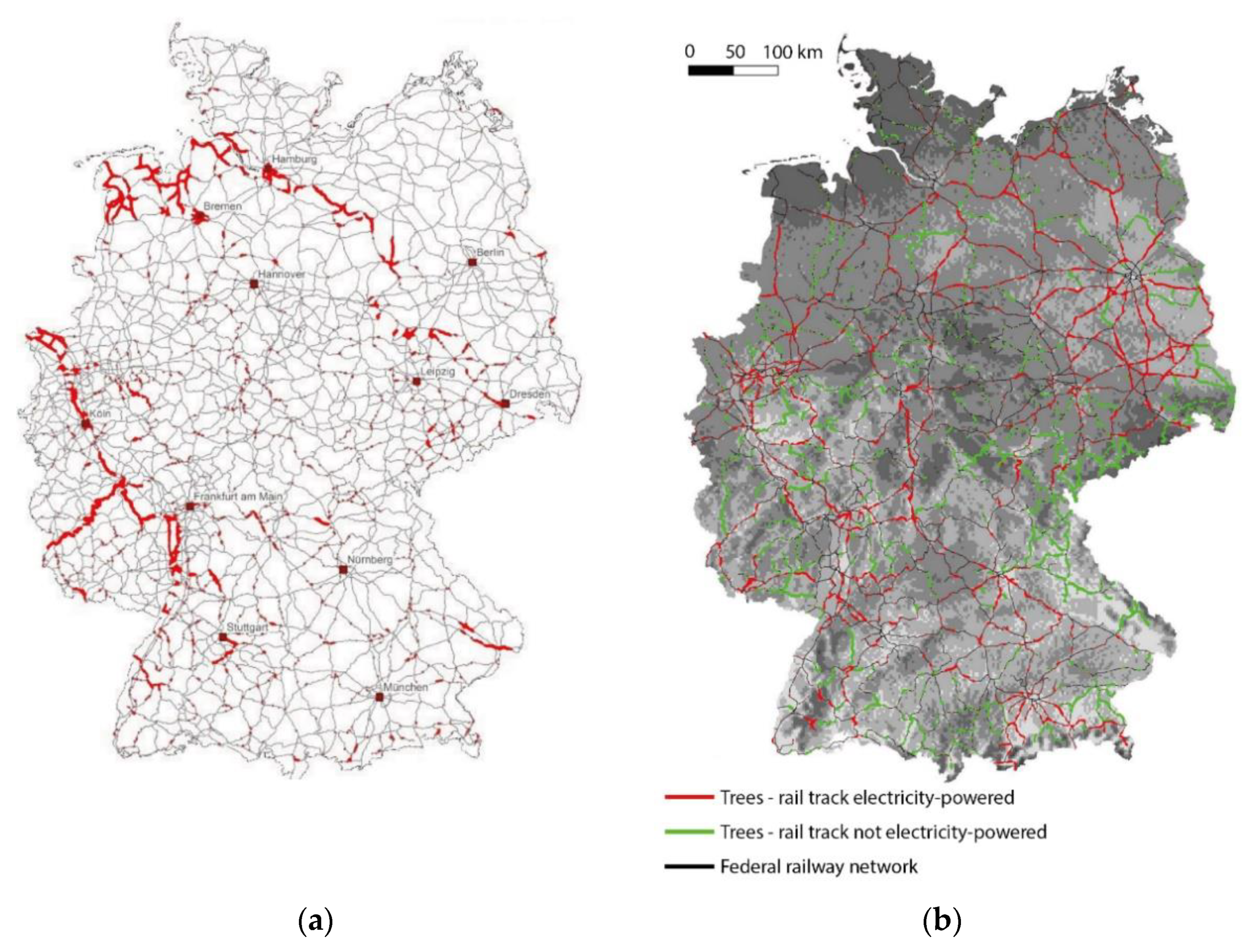
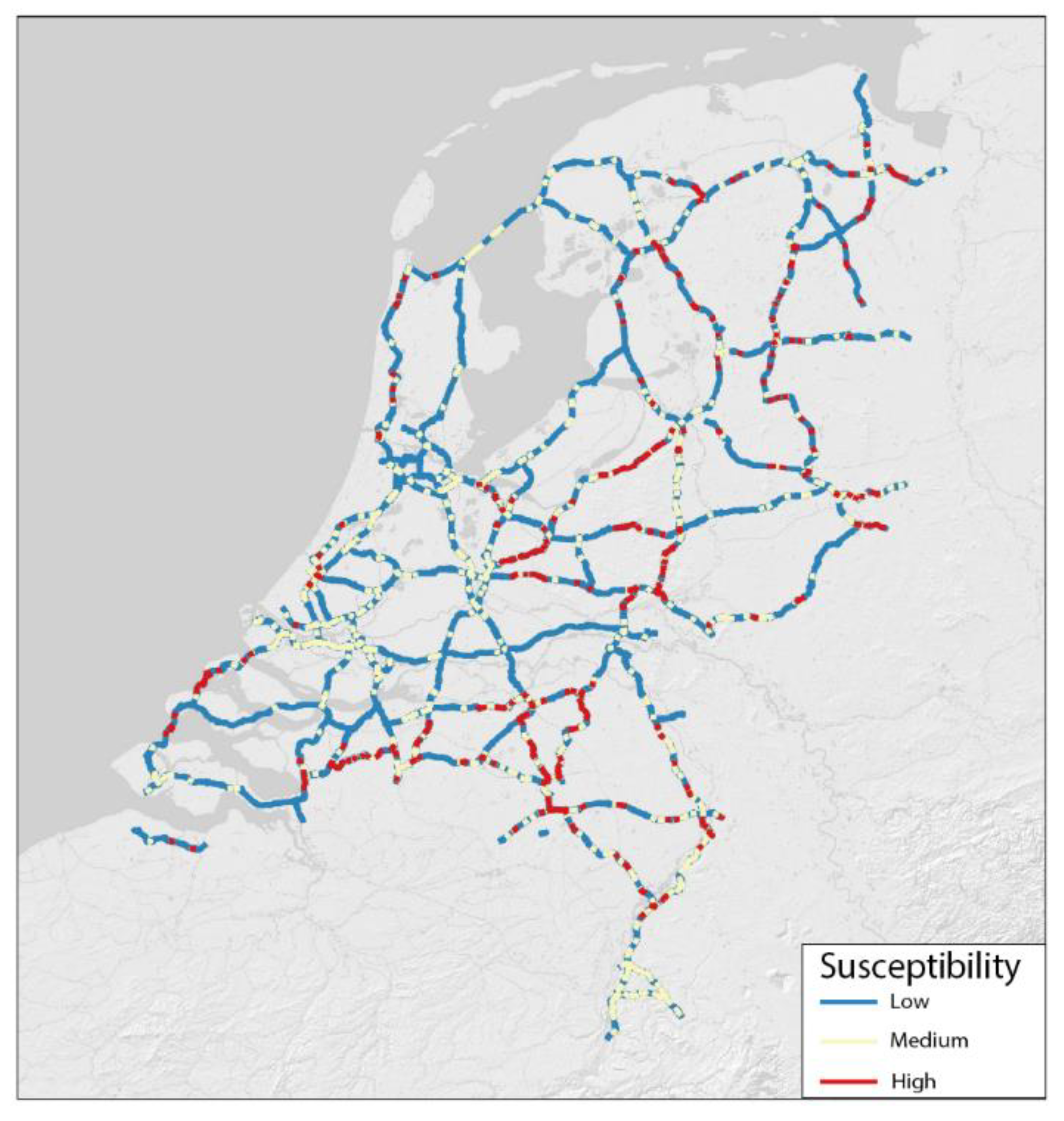
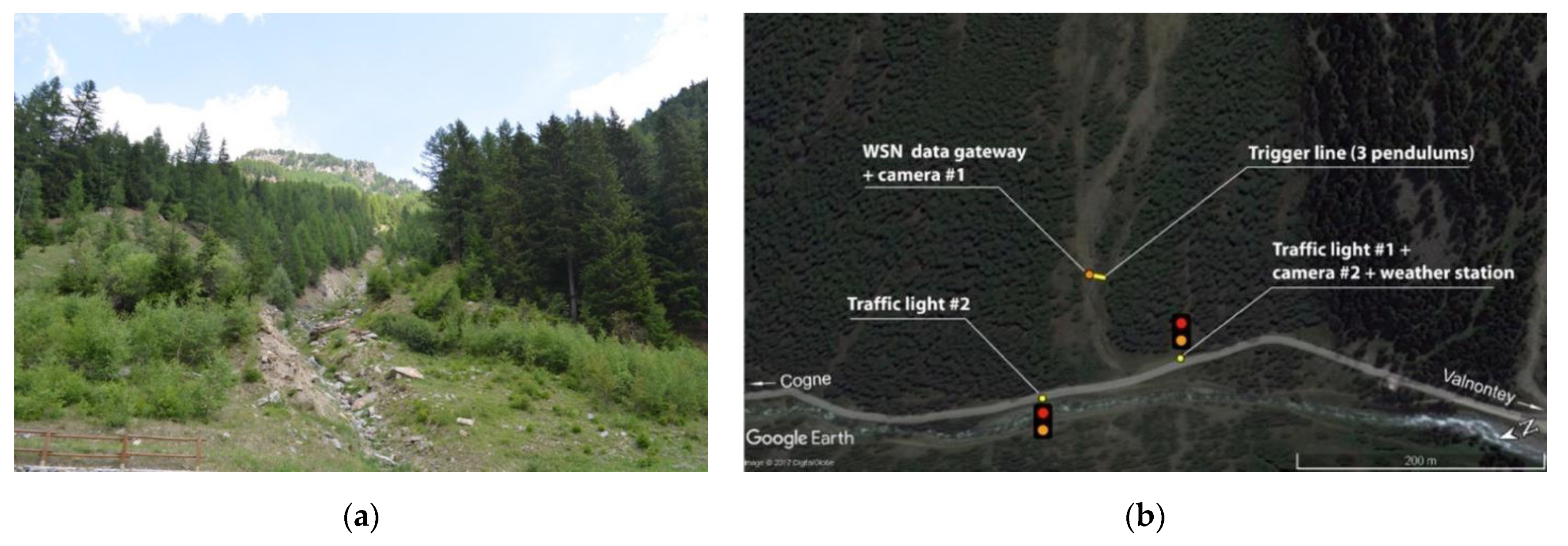
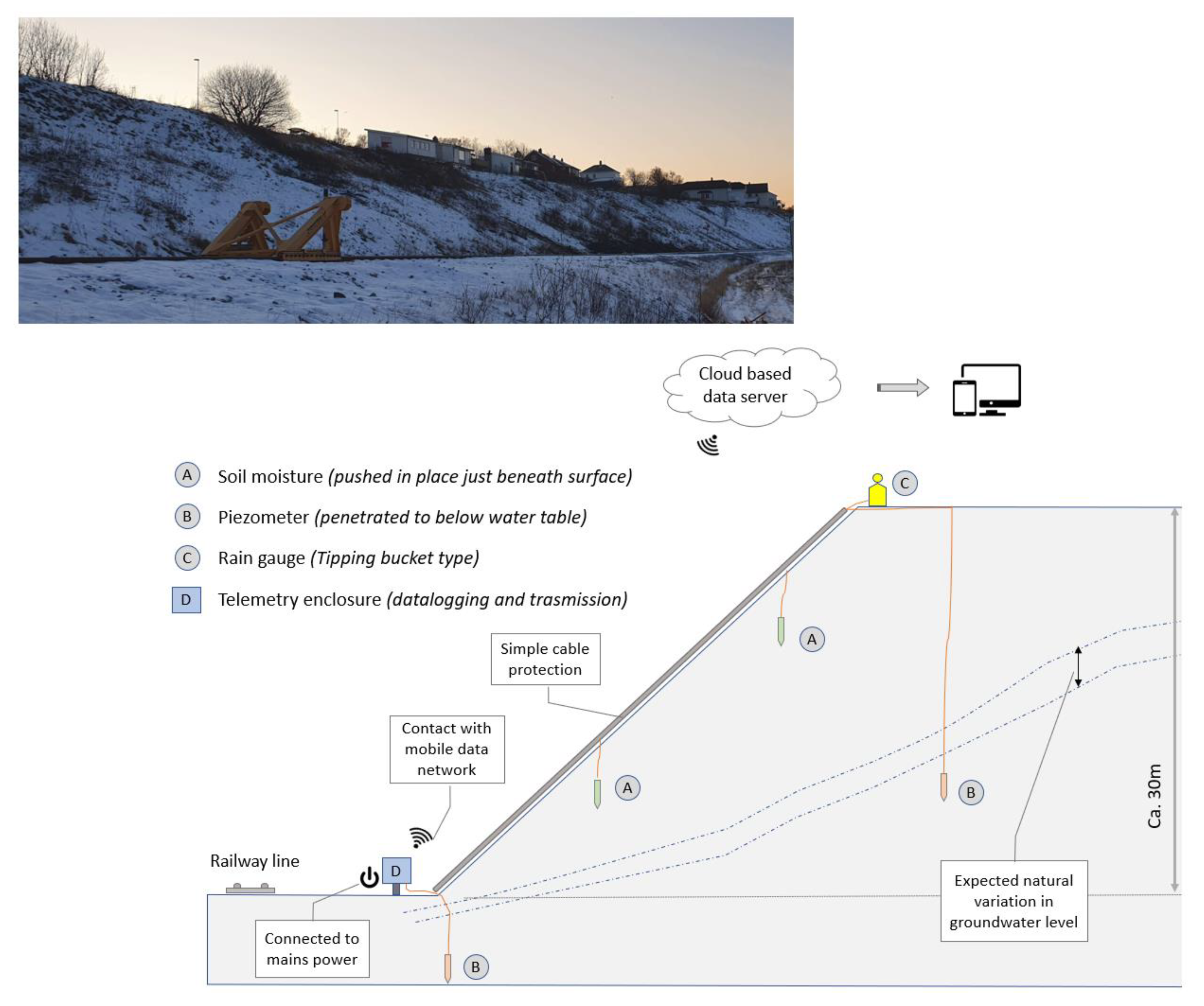
- Two adaptation strategies that are common and have become a standard for many countries are hazard/risk assessment and monitoring. Implementation of the said strategies is mainly in relation to slope stability. This is in line with the survey results, where slope instability is considered the most significant impact of climate change in most countries. This is also consistent with the finding that the majority of available literature on the impact of climate change on geo-structures are on natural and engineered slopes, far outnumbering those dealing with other geo-structures.
Author Contributions
Funding
Data Availability Statement
Acknowledgments
Conflicts of Interest
References
- IPCC. Summary for Policymakers. In Climate Change 2021: The Physical Science Basis. Contribution of Working Group I to the Sixth Assessment Report of the Intergovernmental Panel on Climate Change; Masson-Delmotte, V., Zhai, P., Pirani, A., Connors, S.L., Peéan, C., Berger, S., Caud, N., Chen, Y., Goldfarb, L., Gomis, M.I., et al., Eds.; Cambridge University Press: Cambridge, UK, 2021; in press. [Google Scholar]
- Vardon, P.J. Climatic influence on geotechnical infrastructure: A review. Environ. Geotech. 2015, 2, 166–174. [Google Scholar] [CrossRef] [Scilit]
- Vahedifard, F.; Williams, J.M.; AghaKouchak, A. Geotechnical Engineering in the Face of Climate Change: Role of Multi-Physics Processes in Partially Saturated Soils. In Proceedings of the IFCEE 2018: Advances in Geomaterial Modeling and Site Characterization, Orlando, FL, USA, 5–10 March 2018; Stuedlein, A.W., Lemnitzer, A., Suleiman, M.T., Eds.; pp. 353–364. [Google Scholar]
- Gariano, S.L.; Guzzetti, F. Landlides in a changing climate. Earth Sci. Rev. 2016, 162, 227–252. [Google Scholar] [CrossRef] [Scilit]
- Stoffel, M.; Tiranti, D.; Higgel, C. Climate change impacts on mass movement–Case studies from the European Alps. Sci. Total Environ. 2014, 493, 1255–1266. [Google Scholar] [CrossRef] [Scilit] [PubMed]
- Andersson-Sköld, Y.; Hultén, C.; Rankka, K.; Nilsson, G.; Rydell, B.; Lind, B.; Ottosson, E.; Rosqvist, H.; Starzec, P. Geotechnical approaches to climate change adaptation. WIT Trans. Ecol. Environ. 2006, 86, 429–438. [Google Scholar] [CrossRef] [Scilit]
- Tang, A.M.; Hughes, P.N.; Dijkstra, T.A.; Askarinejad, A.; Brenčič, M.; Cui, Y.J.; Diez, J.J.; Firgi, T.; Gajewska, B.; Gentile, F.; et al. Atmosphere–vegetation–soil interactions in a climate change context; impact of changing conditions on engineered transport infrastructure slopes in Europe. Quart. J. Eng. Geol. Hydrogeol. 2018, 51, 156–168. [Google Scholar] [CrossRef] [Scilit]
- Nadim, F.; Kalsnes, B.; Solheim, A. Plenary: Progress of living with landslide risk in Europe. In Landslide Science for a Safer Geoenvironment; Sassa, K., Canuti, P., Yin, Y., Eds.; Springer: Cham, Switzerland, 2014; pp. 3–20. [Google Scholar] [CrossRef] [Scilit]
- IPCC. Climate Change 2014: Impacts, Adaptation, and Vulnerability; Working Group II Contribution to the IPCC 5th Assessment Report 4; IPCC: Geneva, Switzerland, 2014. [Google Scholar]
- Tarantino, A.; Gallipoli, D.; Jommi, C.; Mendes, J.; Capotosto, A.; Amabile, A.; Pedrotti, M.; Pozzato, A.; Beneš, V.; Bottaro, F.; et al. Advances in the monitoring of geo-structure subjected to climate loading. In Proceedings of the 3rd European Conference on Unsaturated Soils–“E-UNSAT 2016”, Paris, France, 12–14 September 2016. [Google Scholar]
- Hughes, P.N.; Hen-Jones, R.; Stirling, R.A.; Glendinnning, S.; Gunn, D.A.; Chambers, J.E.; Dijkstra, T.A.; Smethurst, J.; Flesjo, K. Challenges in monitoring and managing engineered slopes in a changing climate. In Proceedings of the 3rd European Conference on Unsaturated Soils–“E-UNSAT 2016”, Paris, France, 12–14 September 2016. [Google Scholar]
- EEA (European Environment Agency). Climate Change, Impacts and Vulnerability in Europe 2016; An indicator-based report. EEA Report No. 1/2017; EEA: Copenhagen, Denmark, 2017; pp. 1–304.
- IPCC. Managing the Risks of Extreme Events and Disasters to Advance Climate Change Adaptation; A Special Report of Working Groups I and II of the Intergovernmental Panel on Climate Change; Cambridge University Press: Cambridge, UK; New York, NY, USA, 2012; pp. 1–582. [Google Scholar]
- EEA (European Environment Agency). Climate Change, Impacts and Vulnerability in Europe 2012; An indicator-based report. EEA Report No. 12/2012; EEA: Copenhagen, Denmark, 2012; pp. 1–304.
- Kovats, R.S.; Valentini, R.; Bouwer, L.M.; Georgopoulou, E.; Jacob, D.; Martin, E.; Rounsevell, M.; Soussana, J.F. Europe. In Climate Change 2014: Impacts, Adaptation, and Vulnerability. Part B: Regional Aspects. Contribution of Working Group II to the Fifth Assessment Report of the Intergovernmental Panel on Climate Change; Cambridge University Press: Cambridge, UK; New York, NY, USA, 2014; pp. 1267–1326. [Google Scholar]
- IPCC. Climate Change 2014: Synthesis Report; Contribution of Working Groups I, II and III to the Fifth Assessment Report of the Intergovernmental Panel on Climate Change; Pachauri, R.K., Meyer, L.A., Eds.; IPCC: Geneva, Switzerland, 2014; pp. 1–151. [Google Scholar]
- Goodess, C.; Jacob, D.; Déqué, M.; Guttiérrez, J.; Huth, R.; Kendon, E.; Leckebusch, G.; Lorenz, P.; Pavan, V. Downscaling methods, data and tools for input to impacts assessments. In ENSEMBLES: Climate Change and Its Impacts: Summary of Research and Results from the ENSEMBLES Project; van der Linden, P., et al., Eds.; Met Office Hadley Centre: Exeter, UK, 2009; pp. 59–78. [Google Scholar]
- Kjellström, E.; Nikulin, G.; Hansson, U.; Strandberg, G.; Ullerstig, A. 21st century changes in the European climate: Uncertainties derived from an ensemble of regional climate model simulations. Tellus 2011, 63A, 24–40. [Google Scholar] [CrossRef] [Scilit]
- IPCC. Annex II: Climate System Scenario Tables. In Climate Change 2013: The Physical Science Basis. Contribution of Working Group I to the Fifth Assessment Report of the Intergovernmental Panel on Climate Change; Stocker, T.F., Qin, D., Plattner, G.K., Tignor, M., Allen, S.K., Boschung, J., Nauels, A., Xia, Y., Bex, V., Midgley, P.M., Eds.; Cambridge University Press: Cambridge, UK; New York, NY, USA, 2013. [Google Scholar]
- Lowe, J.A.; Howard, T.P.; Pardaens, A.; Tinker, J.; Holt, J.; Wakelin, S.; Milne, G.; Leake, J.; Wolf, J.; Horsburgh, K.; et al. UK Climate Projections Science Report: Marine and Coastal Projections; Met Office Hadley Centre: Exeter, UK, 2009; pp. 1–97.
- Beniston, M.; Stephenson, D.B.; Christensen, O.B.; Ferro, C.A.T.; Frei, C.; Goyette, S.; Halsnaes, K.; Holt, T.; Jylhä, K.; Koffi, B.; et al. Future extreme events in European climate: An exploration of regional climate model projections. Clim. Chang. 2007, 81 (Suppl. 1), 71–95. [Google Scholar] [CrossRef] [Scilit]
- Lenderink, G.; Van Meijgaard, E. Increase in hourly precipitation extremes beyond expectations from temperature changes. Nat. Geosci. 2008, 1, 511–514. [Google Scholar] [CrossRef] [Scilit]
- Debernard, J.B.; Røed, L.P. Future wind, wave and storm surge climate in the Northern Seas: A revisit. Tellus 2008, 60, 427–438. [Google Scholar] [CrossRef] [Scilit]
- Sterl, A.; van den Brink, H.; de Vries, H.; Haarsma, R.; van Meijgaard, E. An ensemble study of extreme storm surge related water levels in the North Sea in a changing climate. Ocean Sci. 2009, 5, 369–378. [Google Scholar] [CrossRef] [Scilit]
- Republic of Croatia, Ministry of Environmental Protection, Physical Planning and Construction. Second, Third and Fourth National Communication of the Republic of Croatia under the United Nations Framework Convention on Climate Change; Ministry of Environmental Protection, Physical Planning and Construction: Zagreb, Croatia, 2006; 107p.
- IPCC. Climate Change 2014–Synthesis Report–Summary for Policymakers; IPCC: Geneva, Switzerland, 2014. [Google Scholar]
- Observatoire National Sur Les Effets du Réchauffement Climatiques. Stratégie Nationale D’adaptation Au Changement Climatique; La Documentation française: Paris, France, 2007; p. 95. Available online: https://www.ecologie.gouv.fr/sites/default/files/ONERC_Rapport_2006_Strategie_Nationale_WEB.pdf (accessed on 1 November 2021).
- Ministère de l’Ecologie, du Développement durable, des Transports et du Logement. Plan National D’adaptation de la France Aux Effets du Changement Climatique; 2011; p. 188. Available online: https://www.ecologie.gouv.fr/sites/default/files/ONERC_PNACC_1_complet.pdf (accessed on 1 November 2021).
- Ministère de la Transition Ecologique et Solidaire. Le Plan national D’adaptation au Changement Climatique (PNACC 2); 2017; p. 24. Available online: https://www.ecologie.gouv.fr/sites/default/files/2018.12.20_PNACC2.pdf (accessed on 1 November 2021).
- Die Bundesregierung. Deutsche Anpassungsstrategie an den Klimawandel; Die Bundesregierung: Berlin, Germany, 2008; 78p.
- Die Bundesregierung. Aktionsplan Anpassung der Deutschen Anpassungsstrategie an den Klimawandel; Die Bundesregierung: Berlin, Germany, 2011; 93p.
- Die Bundesregierung. Fortschrittsbericht zur Deutschen Anpassungsstrategie an den Klimawandel; Die Bundesregierung: Berlin, Germany, 2015; 275p.
- Die Bundesregierung. Zweiter Fortschrittsbericht zur Deutschen Anpassungsstrategie an den Klimawandel; Die Bundesregierung: Berlin, Germany, 2020; 127p.
- Ministero dell’Ambiente e della Tutela del Territorio e del Mare. Strategia Nazionale di Adattamento ai Cambiamenti Climatici; Ministero dell’Ambiente e della Tutela del Territorio e del Mare: Roma, Italy, 2015; 197p.
- Ministero dell’Ambiente e della Tutela del Territorio e del Mare. Piano Nazionale di Adattamento ai Cambiamenti Climatici, Giugno 2018 (under Approval); Ministero dell’Ambiente e della Tutela del Territorio e del Mare: Roma, Italy, 2018; 336p.
- Castellari, S.; Venturini, S.; Ballarin Denti, A.; Bigano, A.; Bindi, M.; Bosello, F.; Carrera, L.; Chiriacò, M.V.; Danovaro, R.; Desiato, F.; et al. Rapporto Sullo Stato delle Conoscenze Scientifiche su Impatti, Vulnerabilità ed Adattamento ai Cambiamenti Climatici in Italia; Ministero dell’Ambiente e della Tutela del Territorio e del Mare: Roma, Italy, 2014; 878p.
- Meijs, S.; Arbouw, G.; de Graaff, R.; van Helden-Solleveld, T.; Helmer, M.; van Hemert, P.; Hoorn, M.; van Nieuwaal, K.; Schoute, E.; Thijssen, M.; et al. Uitvoeringsprogramma 2018-2019 Nationale Klimaatadaptatiestrategie (NAS); Ministerie van Infrastructuur en Waterstaat: The Hague, The Netherlands, 2018; 44p.
- Ministerie van Infrstructuur en Waterstaat, Ministerie van Landbouw Natuur en Voedselkwaliteit, Ministerie van Binnenlandse Zaken en Koninkrijksrelaties. Deltaprogramma 2020; Ministerie van Infrstructuur en Waterstaat, Ministerie van Landbouw Natuur en Voedselkwaliteit, Ministerie van Binnenlandse Zaken en Koninkrijksrelaties: Amsterdam, The Netherlands, 2019; 112p.
- Norwegian Ministry of Climate and Environment. Climate change adaptation in Norway, Meld. St. 33 (2012-2013). Report to the Storting (White Paper); Norwegian Ministry of Climate and Environment: Oslo, Norway, 2013; 108p.
- Presidência do Conselho de Ministros. Resolução do Conselho de Ministros n.º 56/2015; 2015; 55p. Available online: https://dre.pt/dre/detalhe/resolucao-conselho-ministros/56-2015-69905665 (accessed on 25 November 2021).
- Presidência do Conselho de Ministros. Resolução do Conselho de Ministros n.º 130/2019; 2019; 36p. Available online: https://dre.tretas.org/dre/3808636/resolucao-do-conselho-de-ministros-130-2019-de-2-de-agosto (accessed on 25 November 2021).
- Ministerul Mediului Şi Schimbărilor Climatice. Strategia Naţională a României Privind Schimbările Climatice 2013–2020; Ministerul Mediului Şi Schimbărilor Climatice: Bucureşti, Romania, 2013; 74p.
- Ghid Privind Adaptarea la Efectele Schimbărilor Climatice. 2008, p. 40. Available online: https://www.meteoromania.ro/anm/images/clima/SSCGhidASC.pdf (accessed on 1 November 2021).
- Resolution on the Long-Term Climate Strategy of Slovenia until 2050; Official Gazette of the Republic of Slovenia. 2021, p. 98. Available online: https://unfccc.int/sites/default/files/resource/LTS1_SLOVENIA_EN.pdf (accessed on 1 November 2021).
- Integrated National Energy and Climate Plan of the Republic of Slovenia. 2020. Available online: https://ec.europa.eu/energy/sites/default/files/documents/si_final_necp_main_en.pdf (accessed on 1 November 2021).
- Vrčko, M.; Pelko, N.; Jurman, D. Resolution on the National Programme for the Development of Transport in the Republic of Slovenia until 2030; Ministry of Infrastructure: Ljubljana, Slovenia, 2017. Available online: https://www.dlib.si/?URN=URN:NBN:SI:DOC-QJ1BRRJ7 (accessed on 1 November 2021).
- Resolution on the National Environmental Action Programme 2020–2030. Republic of Slovenia. 2021. Available online: https://www.gov.si/assets/ministrstva/MOP/Dokumenti/ReNPVO2020_2030_ang.doc (accessed on 1 November 2021).
- The Swedish Government, Ministry of the Environment. Regeringens Proposition 2017/18:163–Nationell Strategi för Klimatanpassning; The Swedish Government: Stockholm, Sweden, 2017; 98p.
- The Swedish Government, Ministry of the Environment. SFS 2018:1428 Förordning om Myndigheters Klimatanpassningsarbete; The Swedish Government: Stockholm, Sweden, 2018; 3p.
- Crossrisk. Available online: https://www.crossrisk.eu/en/ (accessed on 16 October 2021).
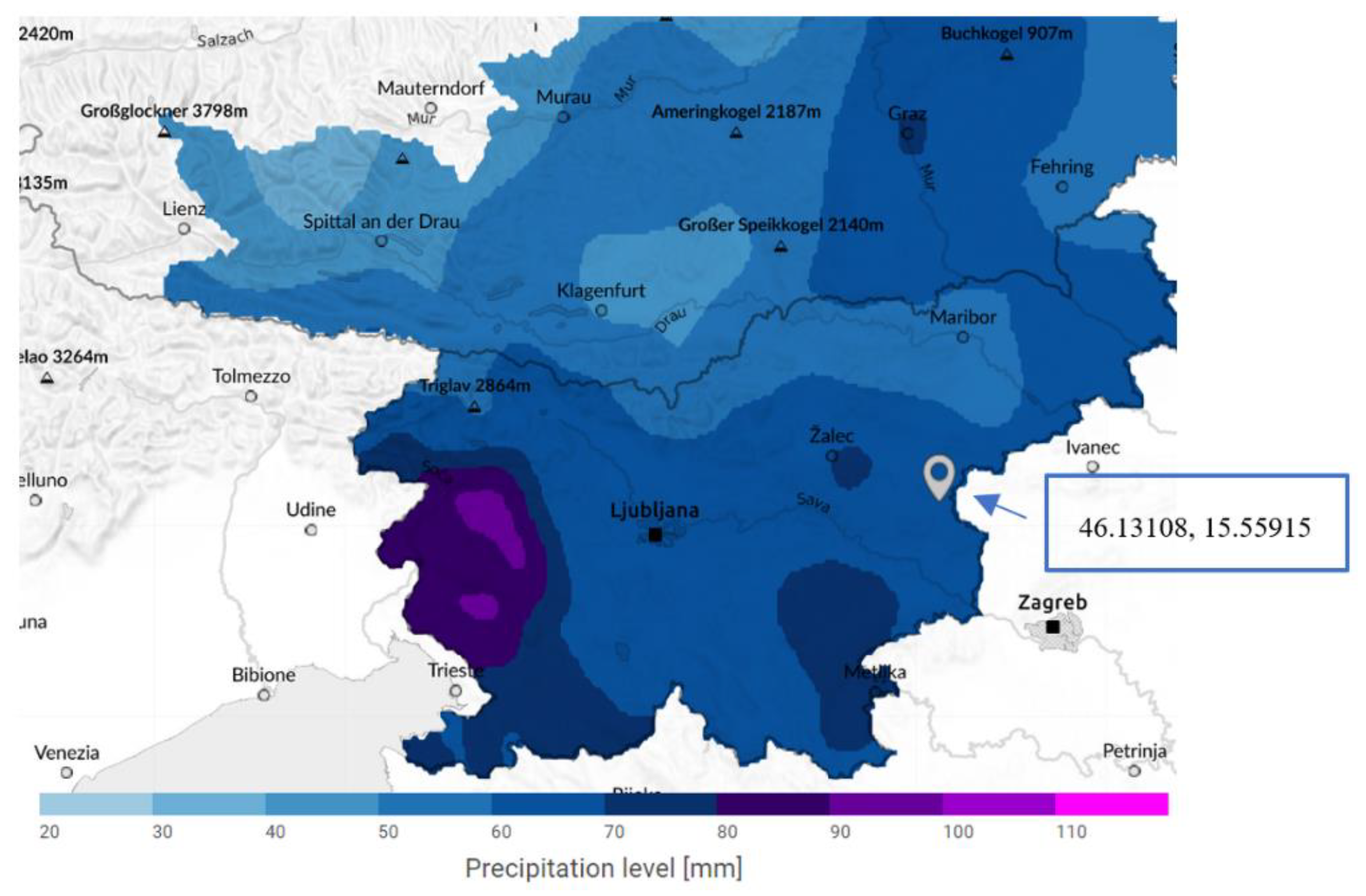
- Medved, A. Evaluation of Changes in Precipitation in the Surroundings of the Settlement Virštanj; ARSO: Ljubljana, Slovenia, 2021. (In Slovenian)
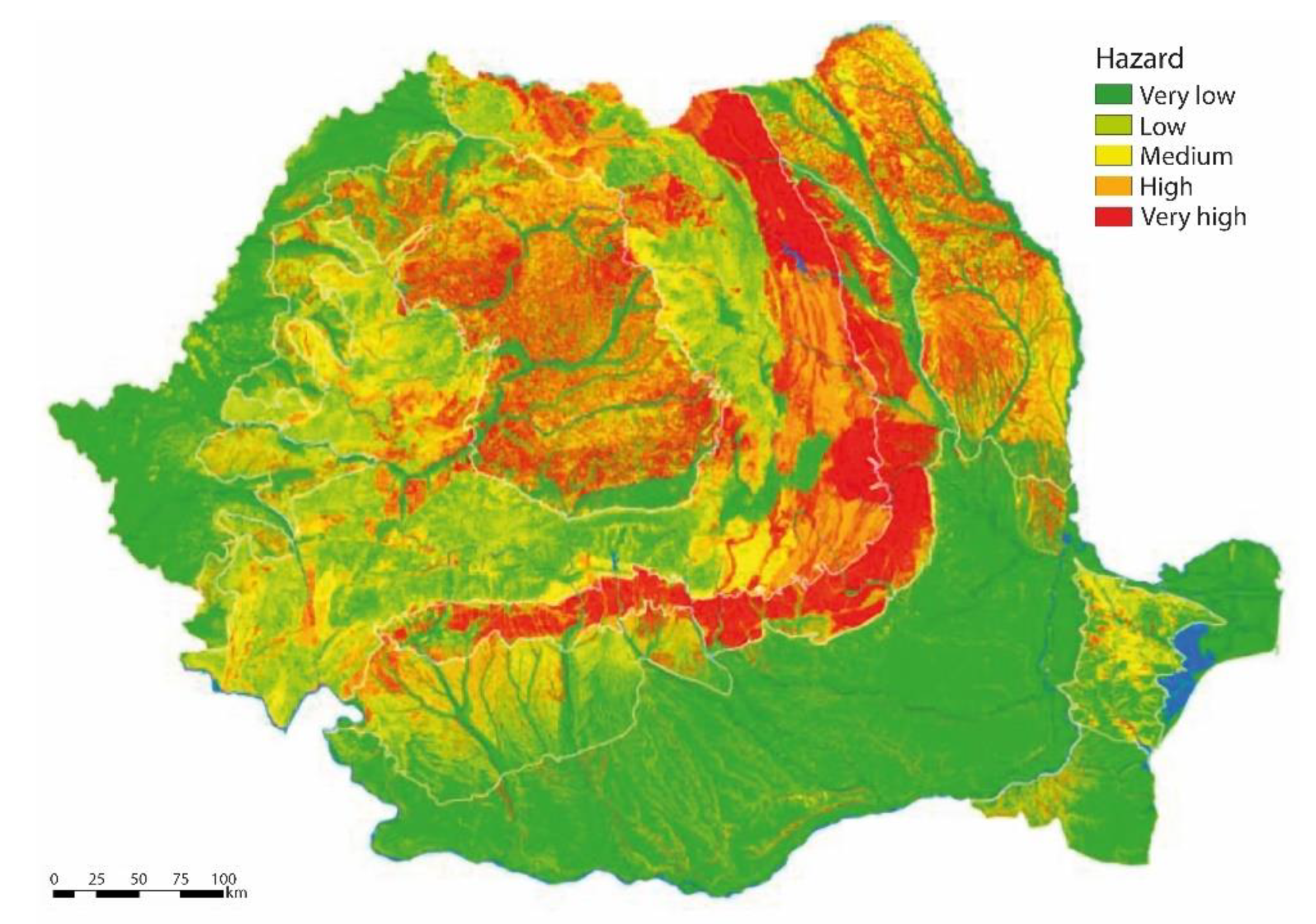
- RO-RISK-Disaster Risk Assessment at National Level-Project Co-Financed by the European Social Fund through the Operational Programme Administrative Capacity-Code SIPOCA 30. 2017. Available online: https://www.researchgate.net/project/DISASTER-RISKS-RESEARCH-AND-ASSESSMENT-AT-NATIONAL-LEVEL-Project-co-financed-by-the-European-Social-Fund-through-the-Operational-Programme-Administrative-Capacity-SIPOCA-30 (accessed on 25 November 2021).
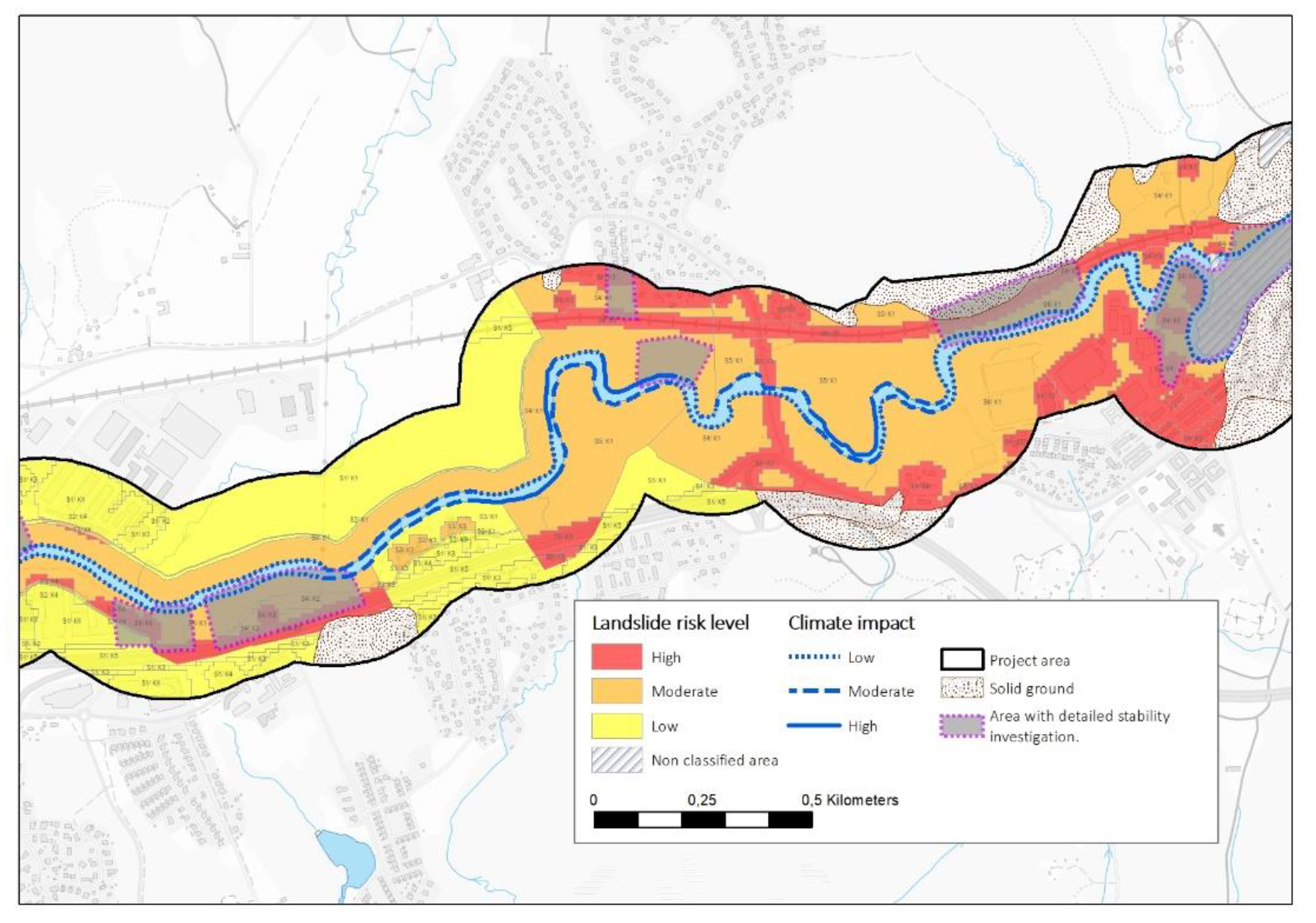
- Swedish Geotechnical Institute (SGI). Landslide Risks in a Changing Climate–Säveån River Valley, Part 1: Map Report and Summary of Results; Publication 38–1E: Linköping, Sweden, 2017. [Google Scholar]
- Odén, K.; Bergdahl, K.; Löfroth, H.; Göransson, G.; Jönsson, Å.; Kiilsgaard, R.; Öberg, M. Mapping of Landslide Risks in a Changing Climate – Development of Simplified Methodology. In Landslides in Sensitive Clays, Advances in Natural and Technological Hazards Research 46; Thakur, V., Ed.; Springer International Publishing AG: Berlin/Heidelberg, Germany, 2017; pp. 571–580. [Google Scholar]
- Swedish Geotechnical Institute (SGI). Available online: http://www.sgi.se/ (accessed on 1 November 2021).
- Lohrengel, A.F.; Brendel, C.; Herrmann, C.; Kirsten, J.; Forbriger, M.; Klose, M.; Stube, K. Klimawirkungsanalyse des Bundesverkehrssystems im Kontext gravitativer Massenbewegungen-Schlussbericht des Schwerpunktthemas Hangrutschungen (SP-105) im Themenfeld 1 des BMVI-Expertennetzwerks. 2020, p. 47. Available online: https://www.bmvi-expertennetzwerk.de/DE/Publikationen/TFSPTBerichte/SPT105.html (accessed on 25 November 2021). (In German) [CrossRef]
- Rauthe, M.; Brendel, C.; Helms., M.; Lohrengel, A.F.; Meine, L.; Nilson, E.; Norpoth, M.; Rasquin, C.; Rudolph, E.; Schade, N.H.; et al. Klimawirkungsanalyse des Bundesverkehrssystems im Kontext Hochwasser: Schlussbericht des Schwerpunktthemas Hochwassergefahren (SP-103) im Themenfeld 1 des BMVI-Expertennetzwerks. 2020, p. 136. Available online: https://www.bmvi-expertennetzwerk.de/DE/Publikationen/TFSPTBerichte/SPT103.html (accessed on 25 November 2021). (In German) [CrossRef]
- Bott, F.; Lohrengel, A.F.; Forbriger, M.; Ganske, A.; Haller, M.; Herrmann, C. Klimawirkungsanalyse des Bundesverkehrssystems im Kontext von Stürmen-Schlussbericht des Schwerpunktthemas Sturmgefahren (SP-104) im Themenfeld 1 des BMVI-Expertennetzwerks. 2020. Available online: https://www.bmvi-expertennetzwerk.de/DE/Publikationen/TFSPTBerichte/SPT104.html (accessed on 25 November 2021). (In German) [CrossRef]
- Bles, T.; van Muiswinkel, K. Stress testing the Dutch national highway network. In Proceedings of the 2nd International Conference on Resilience to Natural Hazards and Extreme Weather Events-Transportation Resilience 2019, Washington, DC, USA, 13–15 November 2019. [Google Scholar]
- Bles, T.; de Jong, J.; van Marle, M.; van Buren, R. Klimaatgevoeligheid Hofdwegennet, Hoofdvaarwegennet en Spoor Ten Behoeve Van De NMCA; 2021; p. 32. Available online: https://www.kimnet.nl/publicaties/publicaties/2021/07/01/bijlage-rapport-klimaatverandering-en-het-mobiliteitssysteem (accessed on 1 November 2021).
- Bigano, A.; Pauli, F. Dimensioni Socio-Economiche, Costi Dell’inazione e Strategie di Adattamento per L’impatto del Cambiamento Climatico Sul Sistema Idrogeologico Italiano; Agenzia per la Protezione dell’Ambiente e per i Servizi Tecnici: Naples, Italy, 2007; p. 55.
- Antolini, F.; Aiassa, S.; Barla, M. An Early Warning System for Debris Flows and Snow Avalanches. In Geotechnical Research for Land Protection and Development: Proceedings of CNRIG 2019; Calvetti, F., Cotecchia, F., Galli, A., Jommi, C., Eds.; Springer: Berlin/Heidelberg, Germany, 2020; Volume 40, pp. 338–347. [Google Scholar] [CrossRef] [Scilit]
- Giorgetti, A.; Lucchi, M.; Tavelli, E.; Barla, M.; Gigli, G.; Casagli, N.; Chiani, M.; Dardari, D. A Robust Wireless Sensor Network for Landslide Risk Analysis: System Design, Deployment, and Field Testing. IEEE Sens. J. 2016, 16, 6374–6386. [Google Scholar] [CrossRef] [Scilit]
- Klima2050. Available online: http://www.klima2050.no/ (accessed on 1 November 2021).

| Degree of Impact | Score |
|---|---|
| No impact or not applicable | - |
| Low impact | 1 |
| Medium impact | 2 |
| High impact | 3 |
| Climate Change Signal | Effect on Geotechnical/Geological Properties and Processes | Potential Impact on Geo-Structures | Score 2 | ||||||||||||
|---|---|---|---|---|---|---|---|---|---|---|---|---|---|---|---|
| AT | DE | ES | FR | GB | HR | IT | NL | NO | PT | RO | SE | SI | |||
| A. Increased precipitation 1 | A.1 Degradation of material strength due to increased saturation and physical weathering A.2 Increased mineral dissolution due to increased chemical weathering A.3 Increased water erosion A.4 Increased surface runoff A.5 Increased surface and ground water level and flow | Instability of slopes | 2 | 2 | 2 | 2 | 3 | 2 | 3 | 1 | 3 | 2 | 3 | 3 | 3 |
| Instability of embankments | 2 | 2 | 2 | 2 | 2 | 2 | 2 | 2 | 2 | 2 | 2 | 2 | 2 | ||
| Instability of other engineered structures | 2 | 2 | 2 | 2 | 2 | 1 | 2 | 2 | 2 | 2 | 2 | 2 | 2 | ||
| Structure collapse/damage on karstic topography | 1 | 1 | 1 | 2 | 2 | 1 | 2 | - | 1 | 2 | 2 | 1 | 2 | ||
| Damage/failure of structure from flooding | 2 | 2 | 2 | 2 | 3 | 2 | 2 | 2 | 2 | 2 | 2 | 2 | 3 | ||
| Overtopping/breaching of dams and dikes | 2 | 2 | 2 | 2 | 2 | 2 | 2 | 2 | 1 | 2 | 2 | 2 | 2 | ||
| B. Decreased precipitation/increased drought periods 1 | B.1 Degradation of material strength due to shrinkage/desiccation and increased physical weathering B.2 Decreased surface and ground water level and flow B.3 Increased wind erosion | Cracking and instability of slopes | 1 | 2 | 2 | 2 | 2 | 2 | 2 | 1 | 1 | 2 | 2 | 2 | 2 |
| Cracking and instability of embankments | 1 | 2 | 1 | 2 | 2 | 2 | 2 | 2 | 1 | 2 | 2 | 2 | 2 | ||
| Cracking and instability of other engineered structure | 1 | 2 | 1 | 2 | 2 | 1 | 2 | 1 | 1 | 1 | 2 | 1 | 1 | ||
| Structure settlement/subsidence | 1 | 2 | 2 | 2 | 2 | 1 | 2 | 2 | 1 | 2 | 2 | 2 | 2 | ||
| C. Increased air temperature and periods of warm weather in winter | C.1 Degradation of material strength from increased saturation and physical weathering due to snow and ice melting C.2 Changed geotechnical properties of perennially frozen soil/rocks C.3 Increased surface runoff from snow and ice melting C.4 Increased water erosion C.5 Increased surface and ground water level and flow C.6 Increased mineral dissolution due to increased chemical weathering | Instability of slopes | 2 | 1 | 1 | 1 | 1 | 1 | 2 | 1 | 2 | 1 | 2 | 2 | 2 |
| Instability of embankments | 1 | 1 | 1 | 1 | 1 | 1 | 1 | 1 | 2 | 1 | 2 | 2 | 1 | ||
| Instability of other engineered structures | 1 | 1 | 1 | 1 | 1 | 1 | 1 | 1 | 2 | 1 | 2 | 2 | 1 | ||
| Damage/failure of structure from flooding | 1 | 1 | 1 | 1 | 1 | 2 | 1 | 1 | 2 | 1 | 2 | 2 | 1 | ||
| Overtopping/breaching of dams and dikes | 1 | 1 | 1 | 1 | 1 | 1 | 1 | 1 | 1 | 1 | 2 | 2 | 1 | ||
| Structure collapse/damage on karstic topography | 1 | 1 | 1 | 1 | 1 | 1 | 1 | - | 1 | 1 | 2 | 1 | 1 | ||
| D. Increased number of intense rain/drought cycle | D.1 Degradation of material strength due to increased saturation/desiccation and increased weathering D.2 Increased shrink–swell behaviour of clay soils D.3 Increased water and wind erosion | Cracking and Instability of slopes | 2 | 2 | 2 | 2 | 2 | 2 | 3 | 1 | 2 | 2 | 2 | 2 | 3 |
| Cracking and instability of embankments | 2 | 2 | 2 | 2 | 3 | 2 | 2 | 2 | 2 | 2 | 2 | 2 | 2 | ||
| Cracking and instability of other engineered structures | 1 | 2 | 2 | 2 | 2 | 2 | 2 | 2 | 2 | 2 | 2 | 2 | 2 | ||
| E. Increased number of frost-thaw cycle | E.1 Degradation of material strength due to increased frost heave/thaw settlement and physical weathering | Cracking and Instability of slopes | 2 | 2 | 1 | 2 | 2 | 1 | 2 | 1 | 2 | 1 | 2 | 2 | 2 |
| Cracking and instability of embankments | 2 | 2 | 1 | 1 | 1 | 1 | 2 | 1 | 2 | 1 | 2 | 2 | 2 | ||
| Cracking and Instability of other engineered structures | 2 | 2 | 1 | 1 | 2 | 1 | 2 | 1 | 2 | 1 | 2 | 2 | 2 | ||
| F. Increased frequency and intensity of extratropical cyclones and storms | F.1 Degradation of material strength due to increased saturation and physical weathering F.2 Increased mineral dissolution due to increased chemical weathering F.3 Increased surface runoff F.4 Increased surface and ground water level and flow F.5 Frequent and higher sea water rise from storm surges F.6 Increased loading due to strong wind and wave action F.7 Increased water and wind erosion | Instability of slopes | 1 | 2 | 2 | 2 | 2 | 1 | 2 | 1 | 1 | 2 | 2 | 1 | 2 |
| Instability of embankments | 1 | 2 | 2 | 1 | 2 | 2 | 2 | 1 | 1 | 2 | 2 | 1 | 2 | ||
| Instability of other engineered structures | 1 | 2 | 1 | 2 | 2 | 1 | 2 | 1 | 1 | 2 | 2 | 1 | 2 | ||
| Structure collapse/damage on karstic topography | - | 1 | 1 | 1 | 1 | 1 | 1 | - | 1 | 1 | 1 | 1 | 1 | ||
| Damage/failure of structure from flooding and/or strong wave action | 1 | 2 | 2 | 2 | 2 | 1 | 2 | 2 | 2 | 2 | 1 | 2 | 2 | ||
| Overtopping/breaching of dams and dikes | 1 | 2 | 1 | 2 | 2 | 1 | 2 | 2 | 1 | 2 | 1 | 2 | 2 | ||
| Damage/failure of tall structure foundation from strong wind action | 1 | 1 | 1 | 2 | 2 | 1 | 2 | 1 | 1 | 2 | 1 | 2 | 1 | ||
| G. Sea level rise | G.1 Degradation of material strength due to increased saturation and increased weathering G.2 Increased water erosion G.3 Landward encroachment of the sea | Instability of coastal slopes | - | 2 | 2 | 2 | 3 | 2 | 2 | 2 | 2 | 3 | 2 | 2 | 2 |
| Instability of coastal embankments | - | 2 | 2 | 2 | 2 | 2 | 2 | 2 | 2 | 2 | 2 | 2 | 2 | ||
| Instability of other engineered coastal structures | - | 2 | 2 | 2 | 3 | 2 | 2 | 2 | 2 | 2 | 2 | 2 | 2 | ||
| Damage/failure of engineered coastal structures from flooding | - | 2 | 2 | 2 | 3 | 1 | 2 | 2 | 2 | 2 | 2 | 2 | 2 | ||
| Overtopping/breaching of dikes and levees | - | 2 | 2 | 2 | 2 | 2 | 2 | 3 | 1 | 2 | 2 | 2 | 2 | ||
| H. Increased wind speed | H.1 Increased wind erosion H.2 Increased dynamic load | Instability of slopes | 1 | 1 | 1 | - | 1 | 1 | 1 | 1 | 1 | 1 | 1 | 1 | 1 |
| Instability of embankments | - | 1 | 1 | - | 1 | 1 | 1 | 1 | 1 | 1 | 1 | 1 | 1 | ||
| Instability of other engineered structures | 1 | 1 | 1 | 1 | 1 | 1 | 1 | 1 | 2 | 2 | 1 | 2 | 2 | ||
| Damage/failure of tall structure foundation | 1 | 1 | 2 | 2 | 1 | 1 | 2 | 1 | 2 | 2 | 1 | 2 | 2 | ||
| Strategic Documents | Geo-Related Climate Effects and Impacts Mentioned | Suggested Actions | Responsibilities for Actions | |
|---|---|---|---|---|
| France |
| Flooding, soil movements due to swelling clays or rain/drought cycles, flow rates for streams and rivers. |
| Specialized commission of the National Council for Ecological Transition as a national adaptation monitoring committee. Measures put in place jointly by the state, the local authorities (the regions and the inter-municipal authorities) and the actors concerned to ensure the best possible articulation of adaptation policies from the national level to the local level. Coordination mechanism between the territorial levels and the national level, by developing and leading a network of regional adaptation committees as part of the development or the revision of regional guidelines dealing with adaptation to climate change. |
| Germany | Infrastructure cluster:
|
| Federal government in framework setting, in particular in the creation of legal framework; has also direct responsibilities in its capacity as the owner and developer of property, land and infrastructure. In collaboration with the Federal government, different states, municipalities and community groups are expected to conduct risk assessment at their level, identify areas for action, define targets, and develop and implement suitable measures for adaptation. | |
| Italy | Alterations in hydrogeological regime, subsequent increased risk of shallow or deep landslides, mud flows, debris flows, rock falls, erosion, subsidence, flash floods, effects on soils stability and road and rail infrastructures stability. |
| Several actors with specific competences (Ministry for Ecological Transition, Ministries Committee for intervention in the soil defence sector, state–regions conference, regions, basin authorities, NNational Civil Protection Sector, local and territorial entities such as municipalities, provinces, etc.) | |
| Netherlands | Impacts related to climate change are based on 4 climate scenarios. The effects are categorized in 4 themes: Drought related impact: Increase in soil subsidenceHeat related impact: Increase in number of heat days which may result in disruption of services, and increased corrosion and damages to roads and railways. Impacts resulting from flooding resulting in higher water levels and interruption of critical infrastructure and reduction in transport Waterlogging related impact: Waterlogging caused by short, severe precipitation (usually during summer), waterlogging caused by prolonged precipitation (usually during winter), excessive groundwater levels. |
| Ministry of Infrastructure and Climate Local governments (Municipalities, Provinces) | |
| Norway |
| Natural hazards such as landslides, floods, erosion, storm surge, mainly related to increased (intense) precipitation. |
| Municipalities must identify vulnerable elements, as well as climate related risks in their municipality. Municipalities to ensure that new constructions are according to rules, “construction owners” for design and implementation. |
| Portugal | Alterations in hydrogeological regime, coastal protection, subsequent increased risk of landslides, erosion, flash floods |
| Several entities with specific competences: government, ministries and local administration; business sector of the State; managing entities of infrastructures transport and communications; scientific and academic institutions | |
| Romania | Increased risk of landslides, flooding |
| Parliament for legislation and modification to current legislation in the context of climate change Ministry of the Environment and Ministry of Energy to initiate and provide support to climate change adaptation and mitigation National Agencies and Municipalities to propose programs to support climate change adaptation | |
| Slovenia |
| Increased risk of landslides, rock falls, mud flows, debris flows, erosion and floods |
| The Environment Agency of the Republic of Slovenia is responsible for the strategy formulation and implementation of climate change adaptation activities. |
| Sweden | Natural hazards such as flooding, landslides, debris flows, erosion along the coast and along water courses. Expected impacts for the transport system and infrastructure are, e.g., flooding and flushing away of road and railway embankments, damaged bridges and increased risk of erosion, landslides or debris flows. Expected impact on settlements and buildings are increased risk of flooding of nearshore settlements, increased risk of landslides, debris flows and erosion along the coast and water courses. |
| National authorities to initiate, support and evaluate the work with climate adaptation in their area of responsibility and develop action plans. The Swedish Meteorological and Hydrological Institute have been commissioned to follow up the work at national level. The National Board of Housing, Building and Planning has been commissioned to be the coordinating authority for climate adaptation regarding new and existing buildings. The Swedish Geotechnical Institute and the Swedish Contingencies Agency has been commissioned to identify risk areas with respect to landslides, flooding and erosion. |
| Rainfall Duration | Current Precipitation Level [50] | Precipitation Level 2050 (RCP4.5) [51] | ||||
|---|---|---|---|---|---|---|
| Min | Max | |||||
| [min] | [mm] | [L/s] (ha) | [mm] | [L/s] (ha) | [mm] | [L/s] (ha) |
| 5 | 19 | 633.33 | 20 | 666.67 | 24 | 800.00 |
| 10 | 33 | 550.00 | 35 | 583.33 | 41 | 683.33 |
| 15 | 41 | 455.56 | 43 | 477.78 | 51 | 566.67 |
| 20 | 46 | 383.33 | 48 | 400.00 | 57 | 475.00 |
| 30 | 54 | 300.00 | 56 | 311.11 | 67 | 372.22 |
| 120 | 77 | 106.94 | 81 | 112.50 | 95 | 131.94 |
| 180 | 84 | 77.78 | 88 | 81.48 | 104 | 96.30 |
| 1440 | 138 | 16.09 | 138 | 15.97 | 145 | 16.78 |
Publisher’s Note: MDPI stays neutral with regard to jurisdictional claims in published maps and institutional affiliations. |
© 2021 by the authors. Licensee MDPI, Basel, Switzerland. This article is an open access article distributed under the terms and conditions of the Creative Commons Attribution (CC BY) license (https://creativecommons.org/licenses/by/4.0/).
Share and Cite
Insana, A.; Beroya-Eitner, M.A.; Barla, M.; Zachert, H.; Žlender, B.; van Marle, M.; Kalsnes, B.; Bračko, T.; Pereira, C.; Prodan, I.; et al. Climate Change Adaptation of Geo-Structures in Europe: Emerging Issues and Future Steps. Geosciences 2021, 11, 488. https://doi.org/10.3390/geosciences11120488
Insana A, Beroya-Eitner MA, Barla M, Zachert H, Žlender B, van Marle M, Kalsnes B, Bračko T, Pereira C, Prodan I, et al. Climate Change Adaptation of Geo-Structures in Europe: Emerging Issues and Future Steps. Geosciences. 2021; 11(12):488. https://doi.org/10.3390/geosciences11120488
Chicago/Turabian StyleInsana, Alessandra, Mary Antonette Beroya-Eitner, Marco Barla, Hauke Zachert, Bojan Žlender, Margreet van Marle, Bjørn Kalsnes, Tamara Bračko, Carlos Pereira, Iulia Prodan, and et al. 2021. "Climate Change Adaptation of Geo-Structures in Europe: Emerging Issues and Future Steps" Geosciences 11, no. 12: 488. https://doi.org/10.3390/geosciences11120488
APA StyleInsana, A., Beroya-Eitner, M. A., Barla, M., Zachert, H., Žlender, B., van Marle, M., Kalsnes, B., Bračko, T., Pereira, C., Prodan, I., Szymkiewicz, F., & Löfroth, H. (2021). Climate Change Adaptation of Geo-Structures in Europe: Emerging Issues and Future Steps. Geosciences, 11(12), 488. https://doi.org/10.3390/geosciences11120488

