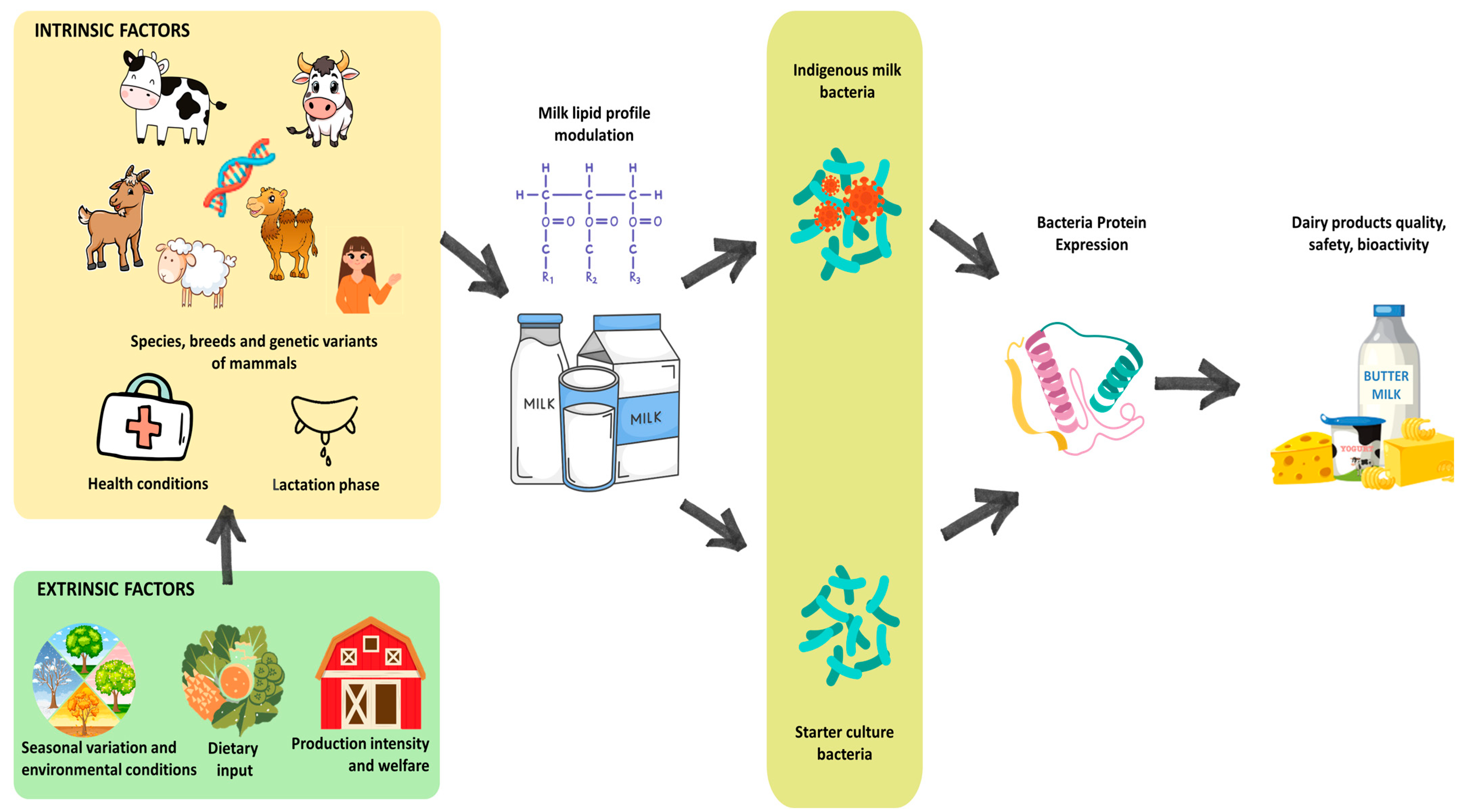
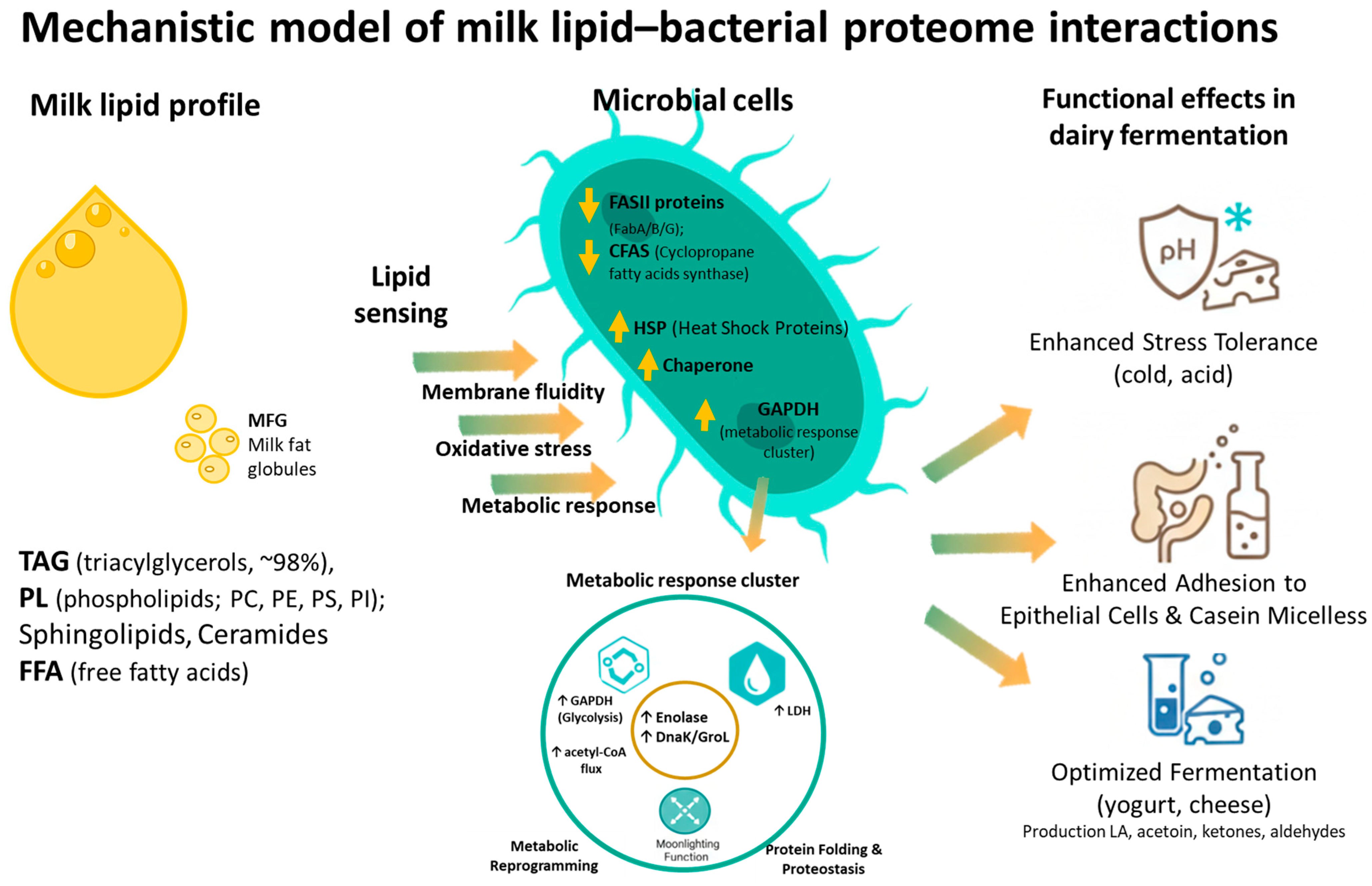
Milk Lipids as Bioactive Modulators of the Bacterial Proteome: Mechanisms Linking Dairy Management to Microbial Performance



Simple Summary
Abstract
1. Introduction
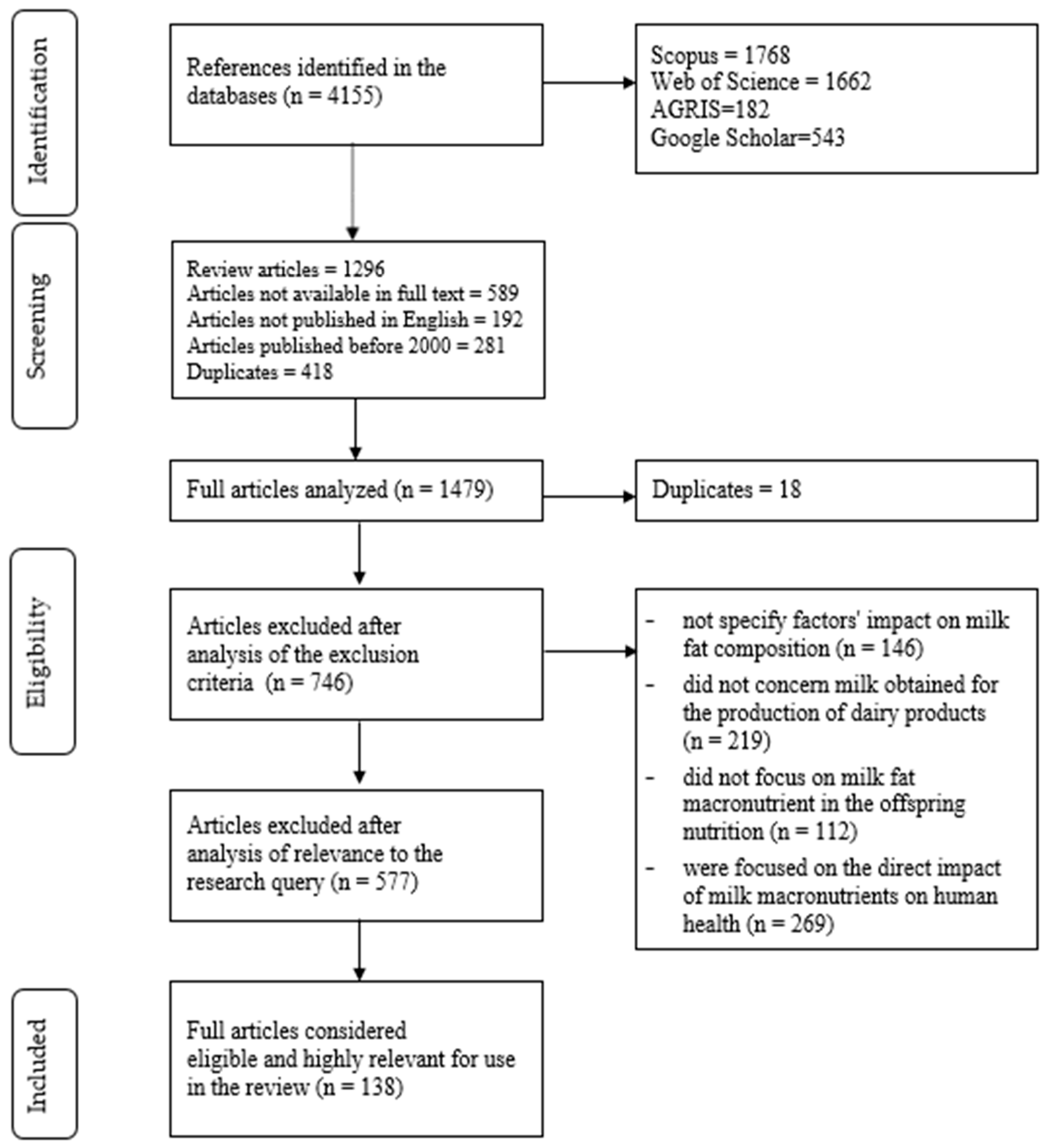
2. Materials and Methods
3. Results
3.1. Direct Influence of Intrinsic and Extrinsic Factors on Milk Lipid Profiles
3.1.1. Dietary Influence
3.1.2. Genetic Variation
Interspecies Variation
Breed and Genetic Variation
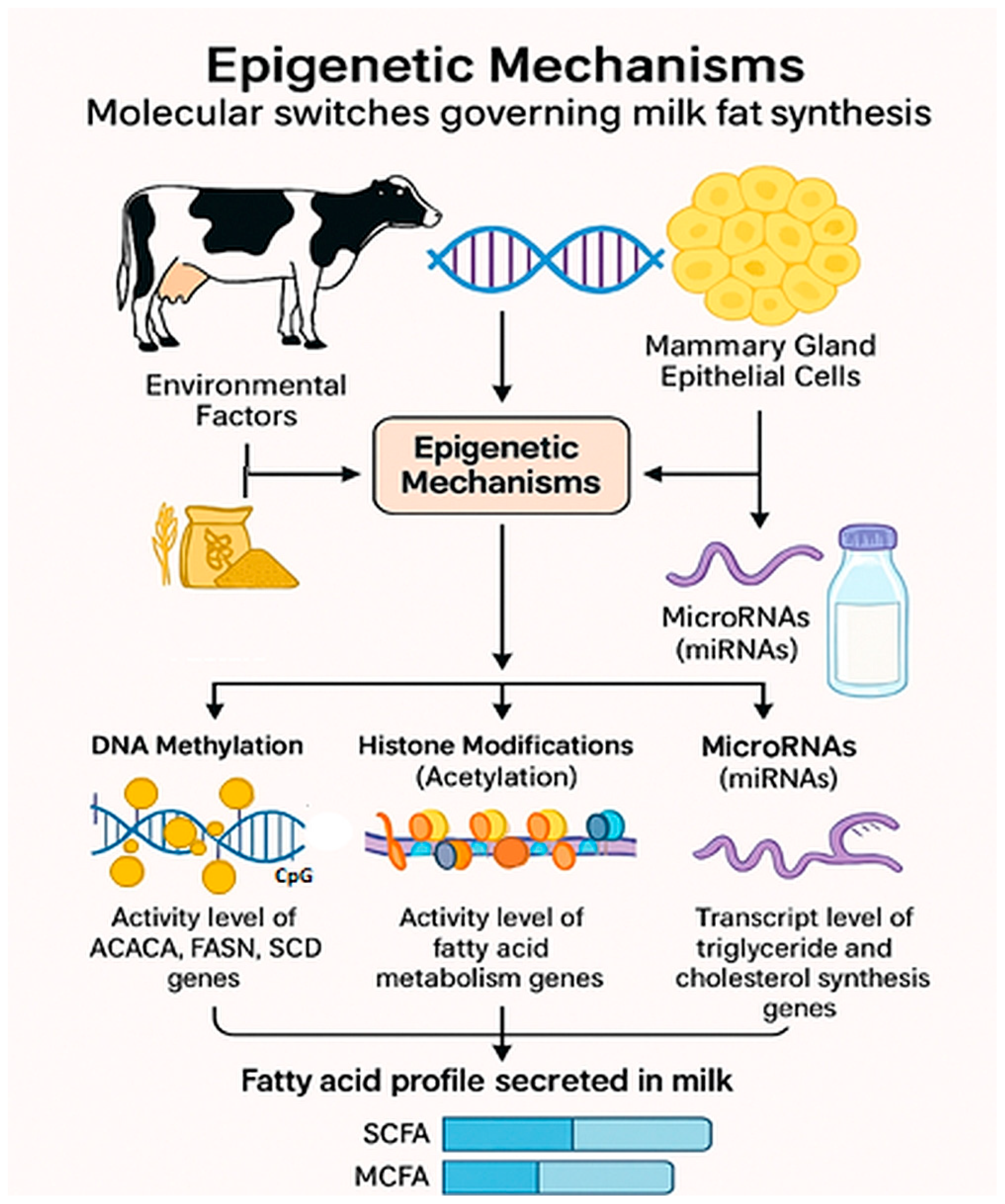
3.1.3. Epigenetic Mechanisms
DNA Methylation
Histone Modifications
MicroRNAs (miRNAs)
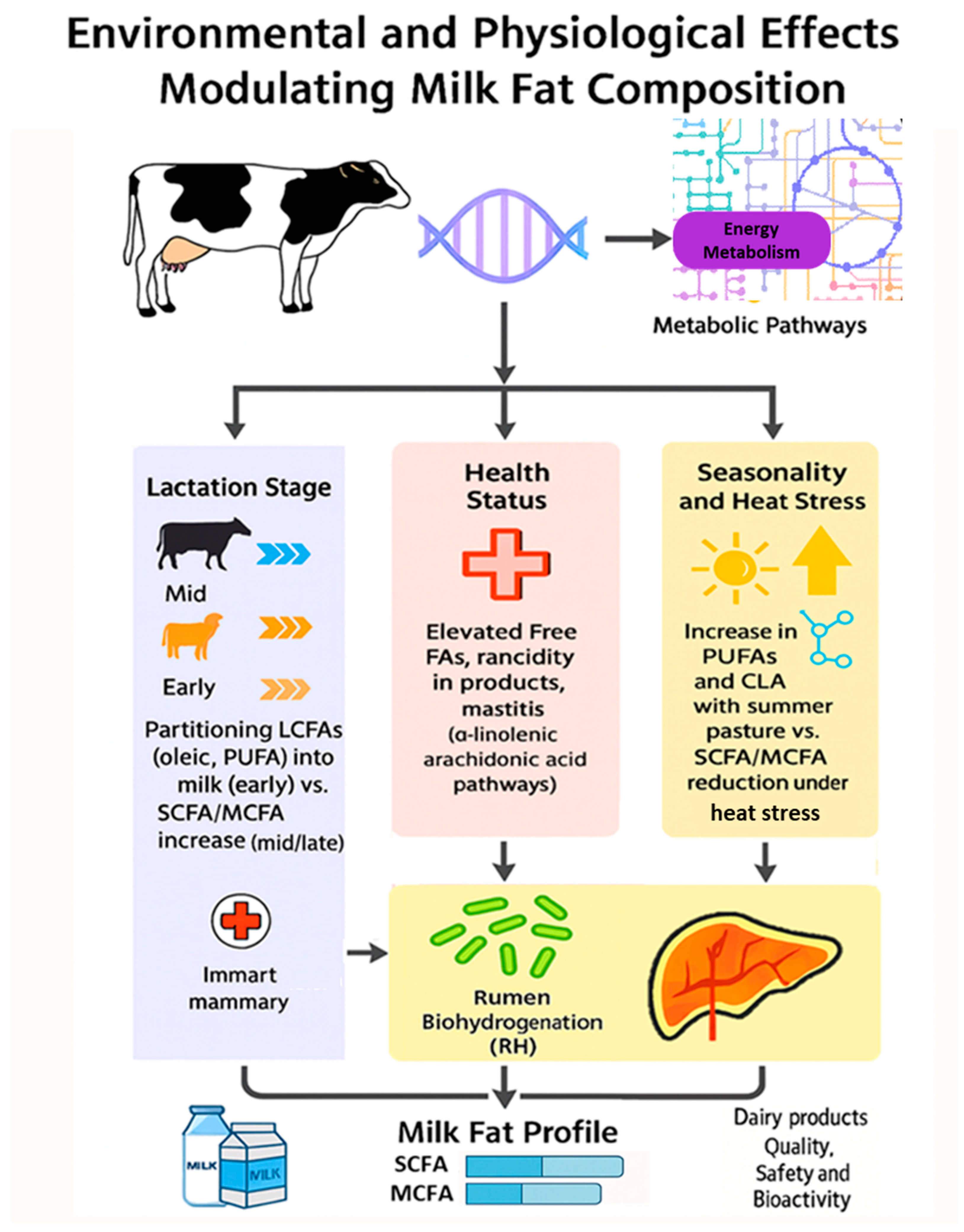
3.1.4. Environmental and Physiological Effects
Endogenous Factor—Lactation Stage
Endogenous Factor—Health Status
Environmental Modulation—Seasonality and Heat Stress
The Mediating Mechanism—Rumen Biohydrogenation
3.2. Influence of Milk Lipid Profiles on Bacterial Proteins Expression
3.2.1. Bacterial Protein Synthesis
Constitutive Proteins, Expression and Homology
Moonlighting Proteins
Scale of Microbial Protein Synthesis
3.2.2. Milk Lipid Composition and Its Mechanistic Roles in Bacterial Modulation
Triacylglycerols
Free Fatty Acids (FFAs)
Phospholipids
Sphingolipids
Distinct Lipid-Responsiveness of Native Microbiota vs. Starter Strains
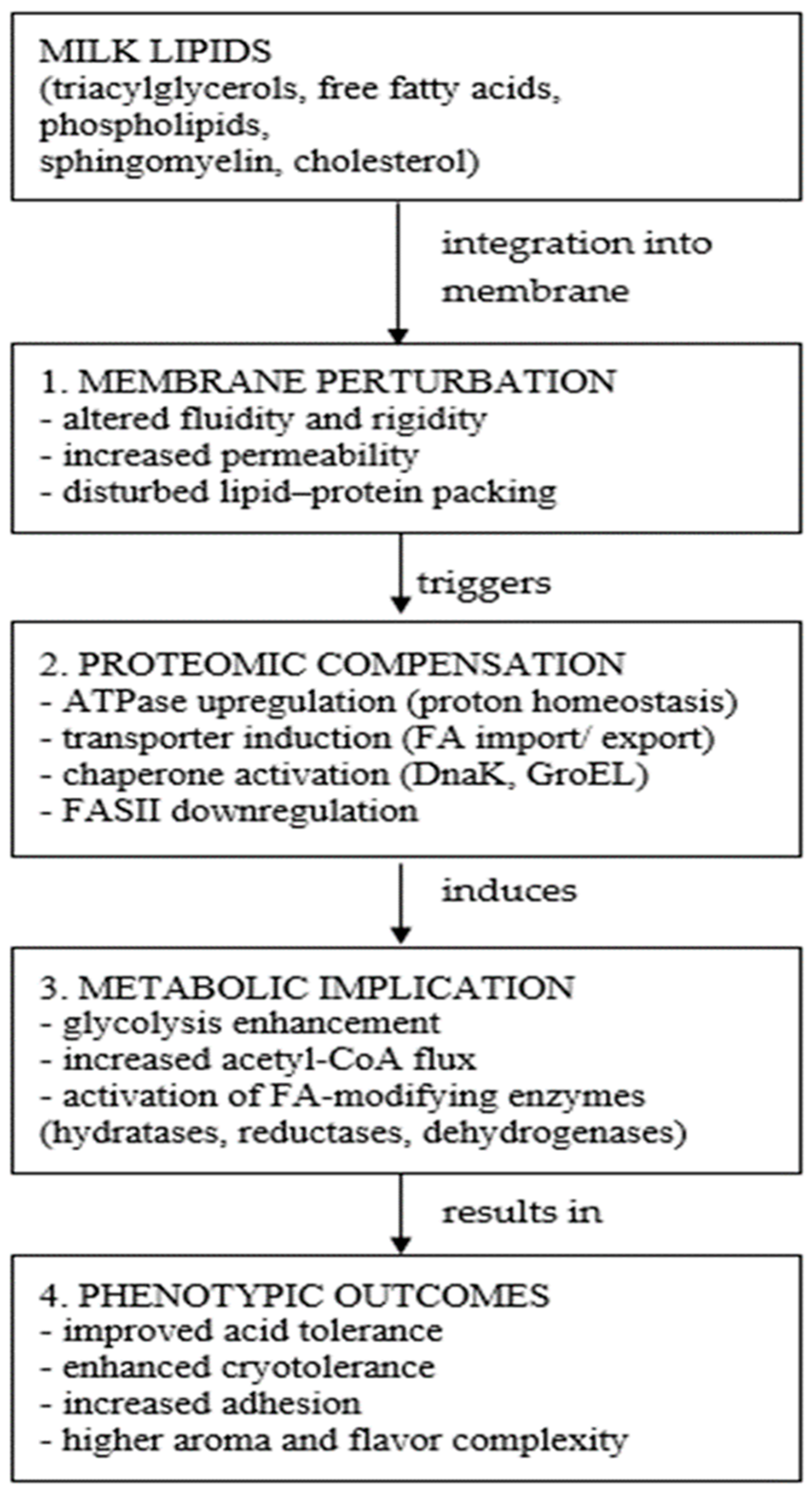
3.2.3. Molecular Mechanisms of Milk Lipids-Bacterial Proteome Interaction
Mechanistic Membrane Remodeling Induced by Milk Lipids
Lipid-Induced Metabolic Reprogramming
Proteostasis and Stress Response Systems Activated by Lipids
Cholesterol and Minor Lipid Fractions
3.2.4. Functional Consequences of Lipid-Induced Remodeling
4. Discussion
4.1. Theoretical Implications
4.2. Practical Implications
4.3. Agreement and Divergence Across Studies

| Comparison Criterion | Studies in Agreement | Studies in Divergence | Potential Explanations |
|---|---|---|---|
| Dietary influence | Most studies concur that supplementation with oilseeds (e.g., linseed, soybean), plant oils, marine lipids, and agro-industrial by-products successfully modify milk fatty acid (FA) profiles, enriching milk with conjugated linoleic acid (CLA), omega-3 PUFA, MUFA [45,47,91,92,117]. Protected fats and processing methods (extruded, formaldehyde-treated) also influence transfer efficiency and RH [119,211]. Similarly, multiple studies agree that pasture-based diets and supplementation with PUFA (e.g., flaxseed, rapeseed) increase beneficial UFA in milk and improve lipid profiles [1,33,34,43]. Specifically, feeding alfalfa silage or flaxseed enhances omega-3 PUFA content [33,39]. Conversely, diets rich in SFA increase milk fat production but reduce de novo FA synthesis [34]. | Some studies report limited or variable effects of diet on milk lipid profiles, especially depending on breed and lactation stage [4,28]. Inconsistent effects of specific lipid sources or supplementation levels on milk yield and fat content are also reported; for instance, the effects on milk yield and MFD vary with the type and amount of supplementary lipids [36,40], sometimes reducing milk fat but not yield, as seen with sunflower oil [47,91]. Furthermore, the impact of by-products like pumpkin or hempseed varies and requires further research [45]. | Variability in study outcomes regarding the effect of diet on milk composition is explained by multiple factors, including differences in lipid source types, levels of inclusion, cow breed, and lactation stage. Other key variables include experimental design (e.g., in vivo studies vs. meta-analysis), processing methods, and animal factors, which further modulate responses. Additionally, feed types (e.g., pasture vs. silage), study duration, and the overall diet formulation contribute to the observed variation. |
| Milk FA composition | Consensus exists that dietary supplementation increases beneficial FA like CLA, vaccenic acid, oleic acid, and omega-3 PUFA while decreasing SFA, including palmitic acid (C16:0) [34,37,82,91,92,117]. Feeding fresh pasture or grazing enhances milk CLA and omega-3 PUFA content relative to total mixed rations [17,89,90,203,212,213]. | The degree to which milk fat content and overall yield are affected diverges. Some meta-analyses indicate no effect on milk yield but reduced fat content [34,91]; others report variable MFD linked to specific FA isomers or lipid types [61,62]. Reports differ on the exact changes in minor FA and health-relevant isomers. | Variations stem from differences in animal breed, diet composition, rumen microbial populations, and study duration. The form of fat supplement (protected vs. unprotected) and RH patterns affect milk FA outcomes. |
| Genetic variation | Breed and genetic polymorphisms (e.g., DGAT1, SCD1, Protein acidic enriched protein) significantly affect milk FA composition and lipid synthesis pathways [5,23,24,35,66,75] with moderate effects, including on CLA and SFA proportions [68,69,70,71]. | Some studies find minor breed differences or low genetic variation impact, especially in native or dual-purpose breeds vs. mainstream breeds [5,23,71,72]. Differences in genomic markers’ effects across breeds are observed [5,35]. | Divergence in research findings is often attributed to the genetic architecture differences among breeds, including the fixation of specific polymorphisms (e.g., DGAT1 in Norwegian Red cattle). Further disparities arise from variations in the breeds studied, the sample sizes, the specific genetic markers assessed, and the resulting environmental-genetic interactions observed across studies. |
| Environmental and physiological effects | The lactation stage significantly influences milk FAs profiles, with changes in FA proportions reported across species during early, mid, and late lactation [1,22,28,73]. This effect is often related to the cow’s energy balance and metabolic status, with early lactation commonly linked to increased mobilization of SFA from body reserves [63,72]. Furthermore, environmental conditions and animal welfare status are also reported to modulate the overall milk lipid composition [2,30]. | Some studies note breed-specific responses to environmental factors; local breeds show healthier profiles under similar conditions compared to cosmopolitan breeds [44,73]. The magnitude of lactation stage effects varies [1,22]. | Different breeds and species respond variably to environmental stimuli; management practices and measurement timing during lactation influence outcomes. |
| RH modulation | Studies agree that RH extensively saturates dietary UFA, limiting their direct transfer to milk. Strategies using protected fats, processing (e.g., extrusion, formaldehyde treatment), and inclusion of marine lipids or plant secondary compounds modulate RH pathways to increase UFA outflow [72,91,93,119,120]. The role of rumenbacteria (e.g., Butyrivibrio) and protozoa in RH and FA protection is recognized [72]. | The extent to which different supplements inhibit RH or how rumen microbiota shifts affect milk FA varies. Some supplements (e.g., fish oil) can impair rumen fermentation and decrease feed intake [208], while others show inconsistent effects on RH inhibition [93]. | Differences in diet basal composition, dose, duration, and ruminal environment contribute. Species differences (cow vs. goat/sheep) and microbial community variability also explain inconsistencies. Protective technologies vary in effectiveness. |
| Health-related lipid outcomes | There is agreement that modifying milk fat to increase UFA, including CLA and omega-3 PUFA, holds potential to improve human health by reducing cardiovascular risk and providing bioactive lipids [19,40,72,82,117,121,143,209]. Milk fat’s complex matrix and minor components like dairy phospholipids add beneficial effects [204]. | Some debate remains on the cardiovascular impact of dairy SFA and trans fats, with recent studies questioning the negative associations and highlighting the importance of the food matrix [94,205]. The long-term effects of altered milk FA profiles on human health remain inconclusive [19,188,209]. | Variability due to study design (epidemiological vs. intervention), population heterogeneity, and incomplete understanding of dairy fat metabolism in humans. Differences in milk FA profile modifications and consumption patterns also contribute. |
| Analytical methodologies | Gas chromatography (GC), mass spectrometry (MS), liquid chromatography (LC), and mid-infrared spectroscopy (MIRS) are widely employed to profile milk lipids and FAs [1,5,23,33,124]. Combining untargeted proteomics and lipidomics provides insights into milk composition and bioactivity [31,67]. | Accuracy and predictive power of analytical methods vary by FA type, breed, and sample matrix; for example, MIRS predictions show biases for some FA [5,75,87]. Different lipid extraction and fractionation methods lead to variation in results [210]. | Variations in sample preparation, instrumentation sensitivity, calibration models, and breed-specific milk composition affect analytical outcomes and comparability across studies. |
4.4. Limitations of the Literature Data
4.5. Gaps and Future Research Directions in Milk Lipid Manipulation for Microbial Protein Modulation
5. Conclusions
Supplementary Materials
Author Contributions
Funding
Institutional Review Board Statement
Informed Consent Statement
Data Availability Statement
Acknowledgments
Conflicts of Interest
Abbreviations
References
- Kostovska, R.; Drouin, G.; Salas, J.J.; Venegas-Calerón, M.; Horan, B.; Tobin, J.T.; O’Callaghan, T.F.; Hogan, S.A.; Kelly, A.L.; Gómez-Mascaraque, L.G. Multispecies pasture diet and cow breed affect the functional lipid profile of milk across lactation in a spring-calving dairy system. J. Dairy Sci. 2025, 108, 1261–1284. [Google Scholar] [CrossRef]
- Cozma, A.; Miere, D.; Filip, L.; Banc, R.; Stanciu, O.; Andrei, S.; Loghin, F. Factors Influencing the Concentration of Certain Liposoluble Components in Cow and Goat Milk: A Review. Not. Sci. Biol. 2014, 6, 267–272. [Google Scholar] [CrossRef]
- Stanisiewski, E.P.; Mellenberger, R.W.; Anderson, C.R.; Tucker, H.A. Effect of Photoperiod on Milk Yield and Milk Fat in Commercial Dairy Herds. J. Dairy Sci. 1985, 68, 1134–1140. [Google Scholar] [CrossRef] [PubMed]
- Kala, R.; Samková, E.; Koubová, J.; Hasoňová, L.; Kvác, M.; Pelikánová, T.; Spicka, J.; Hanus, O. Nutritionally desirable fatty acids including CLA of cow’s milk fat explained by animal and feed factors. Acta Univ. Agric. Silvic. Mendel. Brun. 2018, 66, 69–76. [Google Scholar] [CrossRef]
- Van Maurice Eijndhoven, M. Genetic Variation of Milk Fatty Acid Composition Between and Within Dairy Cattle Breeds. Ph.D. Thesis, Wageningen University and Research, Wageningen, The Netherlands, 2014. [Google Scholar]
- Buitenhuis, B.; Lassen, J.; Noel, S.J.; Plichta, D.R.; Sørensen, P.; Difford, G.F.; Poulsen, N.A. Impact of the rumen microbiome on milk fatty acid composition of Holstein cattle. Genet. Sel. Evol. 2019, 51, 23. [Google Scholar] [CrossRef] [PubMed]
- Singh, K.; Erdman, R.A.; Swanson, K.M.; Molenaar, A.J.; Maqbool, N.J.; Wheeler, T.T.; Arias, J.A.; Quinn-Walsh, E.C.; Stelwagen, K. Epigenetic regulation of milk production in dairy cows. J. Mammary Gland. Biol. Neoplasia 2010, 15, 101–112. [Google Scholar] [CrossRef]
- Zhang, L.; García-Cano, I.; Jiménez-Flores, R. Effect of milk phospholipids on the growth and cryotolerance of lactic acid bacteria cultured and stored in acid whey-based media. JDS Commun. 2020, 1, 36–40. [Google Scholar] [CrossRef]
- Nalepa, B.; Markiewicz, L.H. Microbiological Biodiversity of Regional Cow, Goat and Ewe Milk Cheeses Produced in Poland and Antibiotic Resistance of Lactic Acid Bacteria Isolated from Them. Animals 2023, 13, 168. [Google Scholar] [CrossRef]
- Nalepa, B.; Olszewska, M.; Markiewicz, L.H.; Aljewicz, M. Composition and Significance of Bacterial Microbiota and Volatile Organic Compounds. Pol. J. Food Nutr. Sci. 2019, 69, 267–278. [Google Scholar] [CrossRef]
- Bove, C.G.; De Angelis, M.; Gatti, M.; Calasso, M.; Neviani, E. Metabolic and proteomic adaptation of Lactobacillus rhamnosus strains during growth under cheese-like environmental conditions compared to de Man, Rogosa, and Sharpe medium. Proteomics 2012, 12, 3206–3218. [Google Scholar] [CrossRef]
- Wróblewska, B.; Markiewicz, L.H.; Szyc, A.M.; Dietrich, M.A.; Szymkiewicz, A.; Fotschki, J. Lactobacillus casei LcY decreases milk protein immunoreactivity of fermented buttermilk but also contains IgE-reactive proteins. Food Res. Int. 2016, 83, 95–101. [Google Scholar] [CrossRef]
- Ogrodowczyk, A.M.; Jeż, M.; Wróblewska, B. The Manifold Bioactivity and Immunoreactivity of Microbial Proteins of Cow and Human Mature Milk in Late Lactation. Animals 2022, 12, 2605. [Google Scholar] [CrossRef] [PubMed]
- Kosmerl, E.; Rocha-Mendoza, D.; Ortega-Anaya, J.; Jiménez-Flores, R.; García-Cano, I. Improving human health with milk fat globule membrane, lactic acid bacteria, and bifidobacteria. Microorganisms 2021, 9, 341. [Google Scholar] [CrossRef] [PubMed]
- Bagga, N.; Mantry, H.; Maheshwari, A.; Rahman, M.M.; Frydrysiak-Brzozowska, A.; Badarch, J. Milk Fat Globules: 2024 Updates. Newborn 2024, 3, 19–37. [Google Scholar] [CrossRef] [PubMed]
- Verma, A.; Ghosh, T.; Bhushan, B.; Packirisamy, G.; Navani, N.K.; Sarangi, P.P.; Ambatipudi, K. Characterization of difference in structure and function of fresh and mastitic bovine milk fat globules. PLoS ONE 2019, 14, e0221830. [Google Scholar] [CrossRef]
- Benbrook, C.M.; Davis, D.R.; Heins, B.J.; Latif, M.A.; Leifert, C.; Peterman, L.; Butler, G.; Faergeman, O.; Abel-Caines, S.; Baranski, M. Enhancing the fatty acid profile of milk through forage-based rations, with nutrition modeling of diet outcomes. Food Sci. Nutr. 2018, 6, 681–700. [Google Scholar] [CrossRef]
- Sun, X.; Wang, Y.; Ma, X.; Li, S.; Wang, W. Producing natural functional and low-carbon milk by regulating the diet of the cattle—The fatty acid associated rumen fermentation, biohydrogenation, and microorganism response. Front. Nutr. 2022, 9, 955846. [Google Scholar] [CrossRef]
- Markey, O.; Vasilopoulou, D.; Givens, D.I.; Lovegrove, J.A. Dairy and cardiovascular health: Friend or foe? Nutr. Bull. 2014, 39, 161–171. [Google Scholar] [CrossRef]
- Vasilopoulou, D.; Markey, O.; Fagan, C.C.; Kliem, K.E.; Humphries, D.J.; Jackson, K.G.; Todd, S.; Givens, D.I.; Lovegrove, J.A. Chronic consumption of conventional and saturated-fat reduced dairy products have differential effects on low-density lipoprotein cholesterol levels in adults at moderate cardiovascular disease risk. Proc. Nutr. Soc. 2016, 75, 2089035. [Google Scholar] [CrossRef]
- Santin Junior, I.; Silva, K.; Cucco, D. Milk Fatty Acids Profile and the Impact on Human Health. J. Dairy Vet. Sci. 2019, 10, 555779. [Google Scholar] [CrossRef]
- Sinanoglou, V.J.; Koutsouli, P.; Fotakis, C.; Sotiropoulou, G.; Cavouras, D.; Bizelis, I. Assessment of lactation stage and breed effect on sheep milk fatty acid profile and lipid quality indices. Dairy Sci. Technol. 2015, 95, 509–531. [Google Scholar] [CrossRef]
- Devi, S.; Kapila, R.; Kapila, S. Interbreed Variation of Dairy Cow Milk in Terms of Specific Proteome and Lipidome for Establishing Criteria of Milk Selection. Nutr. Health 2025, 31, 1523–1532. [Google Scholar] [CrossRef] [PubMed]
- van Arendonk, J.A.M.; van Valenberg, H.J.F.; Bovenhuis, H. Exploiting Genetic Variation in Milk-Fat Composition of Milk from Dairy Cows; Woodhead Publishing Limited: Cambridge, UK, 2010; Volume 1, ISBN 9781845694388. [Google Scholar]
- Verma, A.; Meitei, N.S.; Gajbhiye, P.U.; Raftery, M.J.; Ambatipudi, K. Comparative analysis of milk triglycerides profile between jaffarabadi buffalo and holstein friesian cow. Metabolites 2020, 10, 507. [Google Scholar] [CrossRef]
- Siurana, A.; Cánovas, A.; Casellas, J.; Calsamiglia, S. Transcriptome Profile in Dairy Cows Resistant or Sensitive to Milk Fat Depression. Animals 2023, 13, 1199. [Google Scholar] [CrossRef] [PubMed]
- Suárez-Vega, A.; Gutiérrez-Gil, B.; Toral, P.G.; Frutos, P.; Loor, J.J.; Arranz, J.J.; Hervás, G. Elucidating genes and gene networks linked to individual susceptibility to milk fat depression in dairy goats. Front. Vet. Sci. 2022, 9, 1037764. [Google Scholar] [CrossRef]
- Rodríguez-Bermúdez, R.; Fouz, R.; Rico, M.; Camino, F.; Souza, T.K.; Miranda, M.; Diéguez, F.J. Factors Affecting Fatty Acid Composition of Holstein Cow’s Milk. Animals 2023, 13, 574. [Google Scholar] [CrossRef]
- Luo, Y.; Kong, Z.; Yang, B.; He, F.; Huan, C.; Li, J.; Yi, K. Relationship between Microflora Changes and Mammary Lipid Metabolism in Dairy Cows with Mastitis. Animals 2023, 13, 2773. [Google Scholar] [CrossRef]
- Giannuzzi, D.; Toscano, A.; Pegolo, S.; Gallo, L.; Tagliapietra, F.; Mele, M.; Minuti, A.; Trevisi, E.; Marsan, P.A.; Schiavon, S.; et al. Associations between Milk Fatty Acid Profile and Body Condition Score, Ultrasound Hepatic Measurements and Blood Metabolites in Holstein Cows. Animals 2022, 12, 1202. [Google Scholar] [CrossRef]
- Veshkini, A.; Hammon, H.M.; Vogel, L.; Viala, D.; Delosière, M.; Tröscher, A.; Déjean, S.; Ceciliani, F.; Sauerwein, H.; Bonnet, M. The skimmed milk proteome of dairy cows is affected by the stage of lactation and by supplementation with polyunsaturated fatty acids. Sci. Rep. 2024, 14, 23990. [Google Scholar] [CrossRef]
- Sterk, A.; Van Vuuren, A.M.; Hendriks, W.H.; Dijkstra, J. Effects of different fat sources, technological forms and characteristics of the basal diet on milk fatty acid profile in lactating dairy cows-a meta-analysis. J. Agric. Sci. 2012, 150, 495–517. [Google Scholar] [CrossRef]
- Liu, K.; Chen, M.; Huang, G.; Su, C.; Tang, W.; Li, N.; Wu, X.; Si, B.; Zhao, S.; Zheng, N.; et al. Variations of Milk Lipidomic Profile in Dairy Cow Fed Alfalfa Hay or Alfalfa Silage as Roughage. KeAi 2023, 1–35. [Google Scholar] [CrossRef]
- Gallardo, W.B.; Teixeira, I.A.M.A. Associations between Dietary Fatty Acid Profile and Milk Fat Production and Fatty Acid Composition in Dairy Cows: A Meta-Analysis. Animals 2023, 13, 2063. [Google Scholar] [CrossRef]
- Bykova, O.; Shevkunov, O.; Kostyunina, O. Overview of SNPs Associated with Trans Fat Content in Cow’s Milk. Agriculture 2023, 13, 1151. [Google Scholar] [CrossRef]
- Veshkini, A.; Ceciliani, F.; Bonnet, M.; Hammon, H.M. Review: Effect of essential fatty acids and conjugated linoleic acid on the adaptive physiology of dairy cows during the transition period. Animal 2023, 17, 100757. [Google Scholar] [CrossRef] [PubMed]
- Hu, L.; Shen, Y.; Zhang, H.; Ma, N.; Li, Y.; Xu, H.; Wang, M.; Chen, P.; Guo, G.; Cao, Y.; et al. Effects of dietary palmitic acid and oleic acid ratio on milk production, nutrient digestibility, blood metabolites, and milk fatty acid profile of lactating dairy cows. J. Dairy Sci. 2024, 107, 4370–4380. [Google Scholar] [CrossRef] [PubMed]
- Wanderley, A.M.; Ítavo, L.C.V.; dos Santos, G.T.; Ítavo, C.C.B.F.; Cunha, C.S.; dos Santos Difante, G.; Dias, A.M.; Mateus, R.G.; de Oliveira, M.V.M. Ruminal degradation kinetics of diets with different lipid sources and its influence on intake and milk yield of early lactation crossbred Holstein × Gir cows. Trop. Anim. Health Prod. 2021, 53, 516. [Google Scholar] [CrossRef]
- Huang, G.; Wang, J.; Liu, K.; Wang, F.; Zheng, N.; Zhao, S.; Qu, X.; Yu, J.; Zhang, Y.; Wang, J. Effect of Flaxseed Supplementation on Milk and Plasma Fatty Acid Composition and Plasma Parameters of Holstein Dairy Cows. Animals 2022, 12, 1898. [Google Scholar] [CrossRef]
- Jiang, M.; Meng, Z.; Cheng, Z.; Zhan, K.; Ma, X.; Yang, T.; Huang, Y.; Yan, Q.; Gong, X.; Zhao, G. Effects of Buffalo Milk and Cow Milk on Lipid Metabolism in Obese Mice Induced by High Fat. Front. Nutr. 2022, 9, 841800. [Google Scholar] [CrossRef]
- Givens, D.I.; Kliem, K.E. Improving the Nutritional Quality of Milk; Woodhead Publishing Limited: Cambridge, UK, 2009; ISBN 9781845693428. [Google Scholar]
- Kennelly, J.J. The fatty acid composition of milk fat as influenced by feeding oilseeds. Anim. Feed Sci. Technol. 1996, 60, 137–152. [Google Scholar] [CrossRef]
- Bhavsar, M.Y.; Pandya, P.R.; Patel, Y.G.; Shah, S.V.; Bhavsar, P.P. Effects of Feeding Flaxseeds and Rapeseeds on Milk Fatty Acid Composition in Crossbred Dairy Cattle. Indian J. Vet. Sci. Biotechnol. 2023, 19, 51–56. [Google Scholar] [CrossRef]
- Conte, G.; Palombo, V.; Serra, A.; Correddu, F.; D’andrea, M.; Macciotta, N.P.P.; Mele, M. Study of the Fatty Acid Profile of Milk in Different Sheep Breeds: Evaluation by Multivariate Factorial Analysis. Animals 2022, 12, 722. [Google Scholar] [CrossRef] [PubMed]
- Kokić, B.; Rakita, S.; Vujetić, J. Impact of Using Oilseed Industry Byproducts Rich in Linoleic and Alpha-Linolenic Acid in Ruminant Nutrition on Milk Production and Milk Fatty Acid Profile. Animals 2024, 14, 539. [Google Scholar] [CrossRef] [PubMed]
- Correddu, F.; Caratzu, M.F.; Nudda, A.; Lunesu, M.F.; Carta, S.; Pulina, G. Grape, Pomegranate, Olive, and Tomato By-Products Fed to Dairy Ruminants Improve Milk Fatty Acid Profile without Depressing Milk Production. Foods 2023, 12, 865. [Google Scholar] [CrossRef] [PubMed]
- Saran Netto, A.; Silva, T.H.; Martins, M.M.; Vidal, A.M.C.; Salles, M.S.V.; Roma Júnior, L.C.; Zanetti, M.A. Inclusion of Sunflower Oil, Organic Selenium, and Vitamin E on Milk Production and Composition, and Blood Parameters of Lactating Cows. Animals 2022, 12, 1968. [Google Scholar] [CrossRef]
- Liao, G.-Q.; Han, H.-L.; Wang, T.-C.; Li, H.-R.; Qian, Y.-Z.; Zhu, M.-X.; Jia, Q.; Qiu, J. Comparative analysis of the fatty acid profiles in goat milk during different lactation periods and their interactions with volatile compounds and metabolites. Food Chem. 2024, 460, 140427. [Google Scholar] [CrossRef]
- Kliem, K.E.; Humphries, D.J.; Reynolds, C.K.; Morgan, R.; Givens, D.I. Effect of oilseed type on milk fatty acid composition of individual cows, and also bulk tank milk fatty acid composition from commercial farms. Animal 2017, 11, 354–364. [Google Scholar] [CrossRef]
- Gebereyowhans, S. Potential strategies to enhance conjugated linoleic acid content of milk and dairy products: A review. Heliyon 2024, 10, e38844. [Google Scholar] [CrossRef]
- Ghasemi, E.; Golabadi, D.; Piadeh, A. Effect of supplementing palmitic acid and altering the dietary ratio of n-6:n-3 fatty acids in low-fibre diets on production responses of dairy cows. Br. J. Nutr. 2020, 126, 355–365. [Google Scholar] [CrossRef]
- Nudda, A.; Battacone, G.; Neto, O.B.; Cannas, A.; Francesconi, A.H.D.; Atzori, A.S.; Pulina, G. Feeding strategies to design the fatty acid profile of sheep milk and cheese. Rev. Bras. Zootec. 2014, 43, 445–456. [Google Scholar] [CrossRef]
- Machado, H.V.N.; Pereira, J.C.; Bettero, V.P.; Leonel, F.d.P.; Araújo, R.P.; Moreira, L.M.; Teixeira, R.B.; Zervoudakis, J.T. Influence of lipid supplementation on milk components and fatty acid profile. Rev. Bras. Zootec. 2017, 46, 910–916. [Google Scholar] [CrossRef]
- Chilliard, Y.; Glasser, F.; Ferlay, A.; Bernard, L.; Rouel, J.; Martin, B.; Martin, C.; Enjalbert, F.; Schmidely, P. Que peut-on at-tendre des pratiques d’élevage pour améliorer la qualité nutritionnelle des matières grasses du lait bovin et caprin? OCL 2010, 17, 22–29. [Google Scholar] [CrossRef][Green Version]
- Mk, T. Effect of Nutrition on Production, Composition, Fatty acids and Nutraceutical Properties of Milk. Adv. Dairy Res. 2015, 2, 1–5. [Google Scholar] [CrossRef]
- dos Santos, S.F.; Fonteles, N.L.O.; Sousa, R.T.; Gonçalves, J.L.; Barbosa, J.S.R.; Santos, S.F.; Bomfim, M.A.D. Inclusão gordura na alimentação caprinos e seu feito sobre o perfil lipídico no leite: Revisão. Pubvet 2016, 10, 343–351. [Google Scholar] [CrossRef]
- Moran, C.A.; Morlacchini, M.; Keegan, J.D.; Warren, H.; Fusconi, G. Dietary supplementation of dairy cows with a docosahexaenoic acid-rich thraustochytrid, Aurantiochytrium limacinum: Effects on milk quality, fatty acid composition and cheese making properties. J. Anim. Feed Sci. 2019, 28, 3–14. [Google Scholar] [CrossRef]
- Oliveira, R.; Faria, M.; Silva, R.; Bezerra, L.; Carvalho, G.; Pinheiro, A.; Simionato, J.; Leão, A. Fatty Acid Profile of Milk and Cheese from Dairy Cows Supplemented a Diet with Palm Kernel Cake. Molecules 2015, 20, 15434–15448. [Google Scholar] [CrossRef]
- Storry, J.E.; Brumby, P.E.; Tuckley, B.; Welch, V.A.; Stead, D.; Fulford, R.J. Effect of feeding protected lipid to dairy cows in early lactation on blood lipoproteins and milk fatty acids. J. Agric. Sci. 1980, 94, 503–516. [Google Scholar] [CrossRef]
- Rymer, C.; Givens, D.I.; Wahle, K.W.J. Dietary strategies for increasing docosahexaenoic acid (DHA) and eicosapentaenoic acid (EPA) concentrations in bovine milk: A review. CAB Rev. Perspect. Agric. Veter- Sci. Nutr. Nat. Resour. 2003, 2003, 9R–25R. [Google Scholar] [CrossRef]
- Lee, S.; Chouinard, Y.; Van, B.N. Conjugated linoleic acids alter milk fatty acid compositionand inhibit milk fat secretion in dairy cows. Asian-Australas. J. Anim. Sci. 2006, 19, 799–805. [Google Scholar]
- Baumgard, L.H.; Sangster, J.K.; Bauman, D.E. Milk fat synthesis in dairy cows is progressively reduced by increasing supplemental amounts of trans-10, cis-12 conjugated linoleic acid (CLA). J. Nutr. 2001, 131, 1764–1769. [Google Scholar] [CrossRef]
- Gross, J.; Van Dorland, H.A.; Bruckmaier, R.M.; Schwarz, F.J. Milk fatty acid profile related to energy balance in dairy cows. J. Dairy Res. 2011, 78, 479–488. [Google Scholar] [CrossRef]
- Neville, M.C.; Picciano, M.F. Regulation of milk lipid secretion and composition. Annu. Rev. Nutr. 1997, 17, 159–184. [Google Scholar] [CrossRef] [PubMed]
- Wang, M.; Bissonnette, N.; Dudemaine, P.L.; Zhao, X.; Ibeagha-Awemu, E.M. Whole genome dna methylation variations in mammary gland tissues from holstein cattle producing milk with various fat and protein contents. Genes 2021, 12, 1727. [Google Scholar] [CrossRef] [PubMed]
- Carvajal, A.M.; Huircan, P.; Dezamour, J.M.; Subiabre, I.; Kerr, B.; Morales, R.; Ungerfeld, E.M. Milk fatty acid profile is modulated by DGAT1 and SCD1 genotypes in dairy cattle on pasture and strategic supplementation. Genet. Mol. Res. 2016, 15. [Google Scholar] [CrossRef] [PubMed]
- Tacoma, R. Examination of the Effects Breed and Nutrition Have on the Milk Protein Profile Produced by Lactating Dairy Cattle. Master’s Thesis, The University of Vermont and State Agricultural College, Burlington, Vermont, 2016. [Google Scholar]
- Mele, M. Designing milk fat to improve healthfulness and functional properties of dairy products: From feeding strategies to a genetic approach. Ital. J. Anim. Sci. 2009, 8, 365–373. [Google Scholar] [CrossRef]
- Conte, G.; Serra, A.; Mele, M. Dairy Cow Breeding and Feeding on the Milk Fatty Acid Pattern; Elsevier Inc.: Amsterdam, The Netherlands, 2017; ISBN 9780128097625. [Google Scholar]
- Chaudhary, R.; Rai, S.; Sailo, L.; Bin Farooq, U.; Singh, A.; Naha, B.C.; Kumar, A. Genetic and Non-Genetic Factors Influencing Fatty Acid Composition of Dairy Milk: A Review. Indian J. Anim. Nutr. 2017, 34, 1. [Google Scholar] [CrossRef]
- Samková, E.; Špička, J.; Pešek, M.; Pelikánová, T.; Hanuš, O. Animal factors affecting fatty acid composition of cow milk fat: A review. S. Afr. J. Anim. Sci. 2012, 42, 83–100. [Google Scholar] [CrossRef]
- Bainbridge, M.L. Enhancing the Content of Bioactive Fatty Acids in Bovine Milk for Human Health Promotion and Disease Prevention. Ph.D. Thesis, The University of Vermont and State Agricultural College, Burlington, Vermont, 2017. [Google Scholar]
- Currò, S.; Manuelian, C.L.; De Marchi, M.; Claps, S.; Rufrano, D.; Neglia, G. Effects of breed and stage of lactation on milk fatty acid composition of Italian goat breeds. Animals 2019, 9, 764. [Google Scholar] [CrossRef]
- Nogalski, Z.; Momot, M.; Sobczuk-Szul, M.; Nogalska, A. The Health-Related Fatty Acid Profile of Milk from Holstein–Friesian Cows as Influenced by Production System and Lactation Stage. Animals 2024, 14, 3492. [Google Scholar] [CrossRef]
- Knutsen, T.M.; Olsen, H.G.; Tafintseva, V.; Svendsen, M.; Kohler, A.; Kent, M.P.; Lien, S. Unravelling genetic variation underlying de novo-synthesis of bovine milk fatty acids. Sci. Rep. 2018, 8, 2179. [Google Scholar] [CrossRef]
- Zinßius, L.; Keuter, L.; Krischek, C.; Jessberger, N.; Cramer, B.; Plötz, M. Influence of the β-Casein Genotype of Cow’s Milk (A1, A2) on the Quality and β-Casomorphin-7 (BCM-7) Content of a Semi-Hard Cheese During Production. Foods 2025, 14, 463. [Google Scholar] [CrossRef]
- Tian, P.; Luo, Y.; Li, X.; Tian, J.; Tao, S.; Hua, C.; Geng, Y.; Ni, Y.; Zhao, R. Negative effects of long-term feeding of high-grain diets to lactating goats on milk fat production and composition by regulating gene expression and DNA methylation in the mammary gland. J. Anim. Sci. Biotechnol. 2017, 8, 74. [Google Scholar] [CrossRef] [PubMed]
- Banovich, N.E.; Lan, X.; McVicker, G.; van de Geijn, B.; Degner, J.F.; Blischak, J.D.; Roux, J.; Pritchard, J.K.; Gilad, Y. Methylation QTLs Are Associated with Coordinated Changes in Transcription Factor Binding, Histone Modifications, and Gene Expression Levels. PLoS Genet. 2014, 10, e1004663. [Google Scholar] [CrossRef] [PubMed]
- Khoi, N.D. The Influence of Dietary Concentrates on Histone Acetylation and Gene Expression in Dairy Cows. Int. J. Res. Publ. Rev. 2025, 6, 2050–2055. [Google Scholar] [CrossRef]
- Hao, Z.; Wang, J.; Luo, Y.; Hu, J.; Liu, X.; Li, S.; Li, M.; Shi, B.; Hu, L.; Liu, Y.; et al. MicroRNA-200c Affects Milk Fat Synthesis by Targeting PANK3 in Ovine Mammary Epithelial Cells. Int. J. Mol. Sci. 2022, 23, 15601. [Google Scholar] [CrossRef]
- Lin, X.; Luo, J.; Zhang, L.; Zhu, J. MicroRNAs synergistically regulate milk fat synthesis in mammary gland epithelial cells of dairy goats. Gene Expr. 2013, 16, 1–13. [Google Scholar] [CrossRef]
- Kliem, K.E.; Shingfield, K.J. Manipulation of milk fatty acid composition in lactating cows: Opportunities and challenges. Eur. J. Lipid Sci. Technol. 2016, 118, 1661–1683. [Google Scholar] [CrossRef]
- Ali, A.H.; Khalifa, S.A.; Gan, R.-Y.; Shah, N.; Ayyash, M. Fatty acids, lipid quality parameters, and amino acid profiles of unripened and ripened cheeses produced from different milk sources. J. Food Compos. Anal. 2023, 123, 105588. [Google Scholar] [CrossRef]
- Thangaraj, S.V.; Ghnenis, A.; Pallas, B.; Vyas, A.K.; Gregg, B.; Padmanabhan, V. Comparative lipidome study of maternal plasma, milk, and lamb plasma in sheep. Sci. Rep. 2024, 14, 7401. [Google Scholar] [CrossRef]
- Czerniewicz, M.; Kieczewska, K.; Kruk, A. Comparison of some physicochemical properties of milk from holstein-friesian and jersey cows. Pol. J. Food Nutr. Sci. 2006, 15, 61–64. [Google Scholar]
- Kruk, A.; Szalunas, T. Comparison of physical and chemical properties and technological value of milk from HF cows imported from France with local population of BW cows. Pol. J. Food Nutr. Sci. 2003, 12, 63–66. [Google Scholar]
- Nudda, A.; Cannas, A.; Correddu, F.; Atzori, A.S.; Lunesu, M.F.; Battacone, G.; Pulina, G. Sheep and Goats Respond Differently to Feeding Strategies Directed to Improve the Fatty Acid Profile of Milk Fat. Animals 2020, 10, 1290. [Google Scholar] [CrossRef]
- Province, M. Correlations between polymorphic variants of milk proteins, and milk yield and chemical composition in black-and-white and jersey cows. Pol. J. Food Nutr. Sci. 2006, 15, 137–143. [Google Scholar]
- Brzostowski, H.; Zielazny, M. Effect of the feeding period on the chemical composition and fatty acid profile of milk from french alpine dairy goats. Pol. J. Food Nutr. Sci. 2006, 15, 51–55. [Google Scholar]
- Cis, I.; Trans, C.; Acid, C.L.A.; Fat, I.N.M.; Żegarska, Z.; Paszczyk, B.; Rafałowski, R.; Borejszo, Z. Annual changes in the content of unsaturated fatty acids with 18 carbon atoms, including cis9trans11 c18:2 (cla) acid, in milk fat. Pol. J. Food Nutr. Sci. 2006, 15, 409–414. [Google Scholar]
- Plata-Pérez, G.; Angeles-Hernandez, J.C.; Morales-Almaráz, E.; Del Razo-Rodríguez, O.E.; López-González, F.; Peláez-Acero, A.; Campos-Montiel, R.G.; Vargas-Bello-pérez, E.; Vieyra-Alberto, R. Oilseed Supplementation Improves Milk Composition and Fatty Acid Profile of Cow Milk: A Meta-Analysis and Meta-Regression. Animals 2022, 12, 1642. [Google Scholar] [CrossRef] [PubMed]
- Singh, A.; Nayak, S.; Baghel, R.; Khare, A.; Malapure, C.D.; Thakur, D.; Sharma, P.; Singh, B.P. Dietary manipulations to alter milk fat composition. J. Entomol. Zool. Stud. 2018, 6, 176–181. [Google Scholar]
- Toral, P.G.; Monahan, F.J.; Hervas, G.; Frutos, P.; Moloney, A.P. Review: Modulating ruminal lipid metabolism to improve the fatty acid composition of meat and milk. challenges and opportunities. Animal 2018, 12, S272–S281. [Google Scholar] [CrossRef]
- Muñoz-Alvarez, K.Y.; Gutiérrez-Aguilar, R.; Frigolet, M.E. Metabolic effects of milk fatty acids: A literature review. Nutr. Bull. 2024, 49, 19–39. [Google Scholar] [CrossRef]
- Rashid, R.; Nair, J.; Hao, M.; Long, K.; Gassiot, C. Depleting Cationic Lipids Involved in Antimicrobial Resistance Drives Adaptive Lipid Remodeling in Enterococcus faecalis. mBio 2023, 14, e03073-22. [Google Scholar] [CrossRef]
- de Vitte, K.; Kerziene, S.; Klementavičiūtė, J.; de Vitte, M.; Mišeikienė, R.; Kudlinskienė, I.; Čepaitė, J.; Dilbiene, V.; Stankevičius, R. Relationship of β-casein genotypes (A1A1, A1A2 and A2A2) to the physicochemical composition and sensory characteristics of cows’ milk. J. Appl. Anim. Res. 2022, 50, 161–166. [Google Scholar] [CrossRef]
- Giaccone, P.; Scatassa, M.L.; Todaro, M. The influence of somatic cell count on sheep milk composition and cheese-making properties. Ital. J. Anim. Sci. 2016, 4, 345–347. [Google Scholar] [CrossRef]
- Hunt, K.M.; Williams, J.E.; Shafii, B.; Hunt, M.K.; Behre, R.; Ting, R.; Mcguire, M.K.; McGuire, M.A. Mastitis is associated with increased free fatty acids, somatic cell count, and interleukin-8 concentrations in human milk. Breastfeed. Med. 2013, 8, 105–110. [Google Scholar] [CrossRef] [PubMed]
- Pan, Y.; Wu, Y.; Sun, Y.; Chen, R.; Li, Q.; Wang, X.; Zhang, Q.; Li, S.; Wang, Z. Comparison and correlation analysis of microbiota composition and short-chain fatty acid profile in Milk across 15 mammalian species. Food Chem. X 2025, 30, 102995. [Google Scholar] [CrossRef] [PubMed]
- Babakobi, M.D.; Reshef, L.; Gihaz, S.; Belgorodsky, B.; Fishman, A.; Bujanover, Y.; Gophna, U. Effect of maternal diet and milk lipid composition on the infant gut and maternal milk microbiomes. Nutrients 2020, 12, 2539. [Google Scholar] [CrossRef] [PubMed]
- Xi, M.; Na, X.; Ma, X.; Lan, H.; Sun, T.; Liu, W.H.; Hung, W.; Zhao, A. Maternal diet associated with infants’ intestinal microbiota mediated by predominant long-chain fatty acid in breast milk. Front. Microbiol. 2023, 13, 1004175. [Google Scholar] [CrossRef] [PubMed]
- Mai, T.T.; Tran, D.Q.; Roos, S.; Rhoads, J.M.; Liu, Y. Human breast milk promotes the secretion of potentially beneficial metabolites by probiotic lactobacillus reuteri DSM 17938. Nutrients 2019, 11, 1548. [Google Scholar] [CrossRef]
- Chen, Y.Y.; Liang, N.Y.; Curtis, J.M.; Gänzle, M.G. Characterization of linoleate 10-hydratase of Lactobacillus plantarum and novel antifungal metabolites. Front. Microbiol. 2016, 7, 1561. [Google Scholar] [CrossRef]
- Muller, J.A.; Ross, R.P.; Sybesma, W.F.H.; Fitzgerald, G.F.; Stanton, C. Modification of the technical properties of lactobacillus johnsonii NCC 533 by supplementing the growth medium with unsaturated fatty acids. Appl. Environ. Microbiol. 2011, 77, 6889–6898. [Google Scholar] [CrossRef]
- Ziarno, M.; Zaręba, D.; Ścibisz, I.; Kozłowska, M. Exploring the Cholesterol-Modifying Abilities of Lactobacilli Cells in Digestive Models and Dairy Products. Microorganisms 2023, 11, 1478. [Google Scholar] [CrossRef]
- Lidbury, I.D.E.A.; Borsetto, C.; Murphy, A.R.J.; Bottrill, A.; Jones, A.M.E.; Bending, G.D.; Hammond, J.P.; Chen, Y.; Wellington, E.M.H.; Scanlan, D.J. Niche-adaptation in plant-associated Bacteroidetes favours specialisation in organic phosphorus mineralisation. ISME J. 2021, 15, 1040–1055. [Google Scholar] [CrossRef]
- Geisel, N. Constitutive versus Responsive Gene Expression Strategies for Growth in Changing Environments. PLoS ONE 2011, 6, 23–25. [Google Scholar] [CrossRef]
- Merkeev, I.V.; Novichkov, P.S.; Mironov, A.A. PHOG: A database of supergenomes built from proteome complements. BMC Evol. Biol. 2006, 9, 52. [Google Scholar] [CrossRef] [PubMed][Green Version]
- Yu, C.; Desai, V.; Cheng, L.; Reifman, J. QuartetS-DB: A large-scale orthology database for prokaryotes and eukaryotes inferred by evolutionary evidence. BMC Bioinform. 2012, 13, 143. [Google Scholar] [CrossRef] [PubMed]
- Toledo-Arana, A.; Solano, C. Deciphering the physiological blueprint of a bacterial cell. Prospect. Overv. 2010, 32, 461–467. [Google Scholar] [CrossRef] [PubMed]
- Darby, C.A.; Stolzer, M.; Ropp, P.J.; Barker, D.; Durand, D. Xenolog classification. Bioinformatics 2017, 33, 640–649. [Google Scholar] [CrossRef]
- Koonin, E.V.; Makarova, K.S.; Aravind, L. Horizontal gene transfer in prokaryotes: Quantification and classification. Annu. Rev. Microbiol. 2001, 55, 709–742. [Google Scholar] [CrossRef]
- Jeffery, C.J. Moonlighting proteins. Trends Biochem. Sci. 1999, 24, 8–11. [Google Scholar] [CrossRef]
- Górska, S.; Dylus, E.; Rudawska, A.; Brzozowska, E.; Srutkova, D. Immunoreactive Proteins of Bifidobacterium longum ssp. longum CCM 7952 and Bifidobacterium longum ssp. longum CCDM 372 Identified by Gnotobiotic Mono-Colonized Mice Sera, Immune Rabbit Sera and Non-immune Human Sera. Front. Immunol. 2016, 7, 1537. [Google Scholar] [CrossRef]
- Doreau, M.; Bauchart, D.; Chilliard, Y. Enhancing fatty acid composition of milk and meat through animal feeding1. Anim. Prod. Sci. 2011, 51, 19–29. [Google Scholar] [CrossRef]
- Wright, T.C.; Holub, B.J.; McBride, B.W. Apparent transfer efficiency of docosahexaenoic acid from diet to milk in dairy cows. Can. J. Anim. Sci. 1999, 79, 565–568. [Google Scholar] [CrossRef]
- Kholif, A.E.; Olafadehan, O.A. Dietary strategies to enrich milk with healthy fatty acids—A review. Ann. Anim. Sci. 2022, 22, 523–536. [Google Scholar] [CrossRef]
- El-zeini, H.M. Microstructure, rheological and geometrical properties of fat globules of milk from different animal species. Pol. J. Food Nutr. Sci. 2006, 15, 147–153. [Google Scholar]
- Sterk, A. Ruminal Fatty Acid Metabolism; Wageningen University: Wageningen, The Netherlands, 2011; ISBN 9789461730206. [Google Scholar]
- Lock, A.L.; Bauman, D.E. Modifying milk fat composition of dairy cows to enhance fatty acids beneficial to human health. Lipids 2004, 39, 1197–1206. [Google Scholar] [CrossRef] [PubMed]
- Vasilopoulou, D.; Markey, O.; Kliem, K.E.; Fagan, C.C.; Grandison, A.S.; Humphries, D.J.; Todd, S.; Jackson, K.G.; Givens, D.I.; Lovegrove, J.A. Reformulation initiative for partial replacement of saturated with unsaturated fats in dairy foods attenuates the increase in LDL cholesterol and improves flow-mediated dilatation compared with conventional dairy: The randomized, controlled REplacement of SaturatEd fat in dairy on Total cholesterol (RESET) study. Am. J. Clin. Nutr. 2020, 111, 739–748. [Google Scholar] [CrossRef] [PubMed]
- Qureshi, M.S.; Azeemi, T.A. Dietary Manipulations for Enhancing Cardio-Protective Fatty Acids in the Milk of Dairy Cows; IntechOpen: London, UK, 2012; pp. 423–429. [Google Scholar]
- Needs, E.C.; Anderson, M. Lipid composition of milks from cows with experimentally induced mastitis. J. Dairy Res. 1984, 5, 239–249. [Google Scholar] [CrossRef]
- Tzompa-Sosa, D.A.; Meurs, P.P.; van Valenberg, H.J.F. Triacylglycerol Profile of Summer and Winter Bovine Milk Fat and the Feasibility of Triacylglycerol Fragmentation. Eur. J. Lipid Sci. Technol. 2018, 120, 1700291. [Google Scholar] [CrossRef]
- Villa, R.; Lotti, M.; Gatti-lafranconi, P. Components of the E. coli envelope are affected by and can react to protein over-production in the cytoplasm. Microb. Cell Factories 2009, 11, 32. [Google Scholar] [CrossRef]
- Berezhnoy, N.V.; Cazenave-gassiot, A.; Gao, L.; Foo, J.C.; Ji, S.; Regina, V.R.; Khee, P.; Yap, P.; Wenk, M.R.; Kjelleberg, S.; et al. Transient Complexity of E. coli Lipidome Is Explained by Fatty Acyl Synthesis and Cyclopropanation. Metaboliteses 2022, 12, 784. [Google Scholar] [CrossRef]
- Kankaanpää, P.; Yang, B.; Kallio, H.; Isolauri, E.; Salminen, S. Effects of Polyunsaturated Fatty Acids in Growth Medium on Lipid Composition and on Physicochemical Surface Properties of Lactobacilli. Appl. Environ. Microbiol. 2004, 70, 129–136. [Google Scholar] [CrossRef]
- Polak-Berecka, M.; Waśko, A.; Paduch, R.; Skrzypek, T.; Sroka-Bartnicka, A. The effect of cell surface components on adhesion ability of Lactobacillus rhamnosus. Antonie Leeuwenhoek Int. J. Gen. Mol. Microbiol. 2014, 106, 751–762. [Google Scholar] [CrossRef]
- Endo, Y.; Kamisada, S.; Fujimoto, K.; Saito, T. Trans fatty acids promote the growth of some Lactobacillus strains. J. Gen. Appl. Microbiol. 2006, 52, 29–35. [Google Scholar] [CrossRef] [PubMed][Green Version]
- Brinster, S.; Lamberet, G.; Staels, B.; Trieu-Cuot, P.; Gruss, A.; Poyart, C. Type II fatty acid synthesis is not a suitable antibiotic target for Gram-positive pathogens. Nature 2009, 458, 83–86. [Google Scholar] [CrossRef] [PubMed]
- Rosen, R.; Ron, E.Z. Proteome analysis in the study of the bacterial heat-shock response. Mass Spectrom. Rev. 2002, 21, 244–265. [Google Scholar] [CrossRef] [PubMed]
- Jordan, S.; Junker, A.; Helmann, J.D.; Mascher, T.; Al, J.E.T. Regulation of LiaRS-Dependent Gene Expression in Bacillus subtilis: Identification of Inhibitor Proteins, Regulator Binding Sites, and Target Genes of a Conserved Cell Envelope Stress-Sensing Two-Component System. J. Bacteriol. 2006, 188, 5153–5166. [Google Scholar] [CrossRef]
- Parrish, J.R.; Yu, J.; Liu, G.; Hines, J.A.; Chan, J.E.; Mangiola, B.A.; Zhang, H.; Pacifico, S.; Fotouhi, F. A proteome-wide protein interaction map for Campylobacter jejuni. Genome Biol. 2007, 8, R130. [Google Scholar] [CrossRef]
- Pan, Z.; Zhuo, L.; Wan, T.; Chen, R.; Li, Y. DnaK duplication and specialization in bacteria correlates with increased proteome complexity. mSystems 2024, 9, e0115423. [Google Scholar] [CrossRef]
- Mallo, D.; Martins, L.D.O.; Posada, D. Unsorted Homology within Locus and Species Trees. Syst. Biol. 2014, 63, 988–992. [Google Scholar] [CrossRef]
- Thornton, J.W.; Desalle, R. Gene family evolution and homology: Genomics meets phylogenetics. Annu. Rev. Genom. Hum. Genet. 2000, 1, 41–73. [Google Scholar] [CrossRef]
- Roux, B.; Bolot, S.; Guy, E.; Denancé, N.; Lautier, M.; Jardinaud, M.; Saux, M.F.; Portier, P.; Jacques, M.; Gagnevin, L.; et al. Genomics and transcriptomics of Xanthomonas campestris species challenge the concept of core type III effectome. BMC Genom. 2015, 16, 975. [Google Scholar] [CrossRef]
- Koonin, E.V. Evolutionary Genomics 1. Annu. Rev. Genet. 2005, 39, 309–338. [Google Scholar] [CrossRef]
- Hanuš, O.; Samková, E.; Křížová, L.; Hasoňová, L.; Kala, R. Role of Fatty Acids in Milk Fat and the Influence of Selected Factors on Their Variability—A Review. Molecules 2018, 23, 1636. [Google Scholar] [CrossRef] [PubMed]
- Barbulova, A.; Colucci, G.; Apone, F. New Trends in Cosmetics: By-Products of Plant Origin and Their Potential Use as Cosmetic Active Ingredients. Cosmetics 2015, 2, 82–92. [Google Scholar] [CrossRef]
- Clapperton, J.L.; Kelly, M.E.; Banks, J.M.; Rook, J.A.F. The production of milk rich in protein and low in fat, the fat having a high polyunsaturated fatty acid content. J. Sci. Food Agric. 1980, 31, 1295–1302. [Google Scholar] [CrossRef] [PubMed]
- Vasilopoulou, D. Impact of Partial Replacement of Saturated with Monounsaturated Fatty Acids in Dairy Foods on Markers of Cardiovascular Risk. Ph.D. Thesis, University of Reading, Reading, UK, 2017. [Google Scholar]
- Movaliya, J.; Dutta, K.; Savsani, H.; Patil, S. Nutritional strategy for designer milk with fat constituents beneficial for human health—A review. Agric. Rev. 2014, 35, 42–49. [Google Scholar] [CrossRef]
- Duncan, S.E.; Keenan, T.W.; McGilliard, M.L.; Vinson, W.E.; Webb, K.E. Modifying Fatty Acid Composition of Bovine Milk; Faculty of the Virginia Polytechnic Institute and State University: Blacksburg, VA, USA, 1997. [Google Scholar]
- Shorten, P.R.; Pleasants, T.B.; Upreti, G.C. A mathematical model for mammary fatty acid synthesis and triglyceride assembly: The role of stearoyl CoA desaturase (SCD). J. Dairy Res. 2004, 71, 385–397. [Google Scholar] [CrossRef]
- Sylvie; Sedláková, K.; Krížová, L.; Hadrová, S.M. Alternative and Unconventional Feeds in Dairy Diets and Their Effect on Fatty Acid Profile and Health Properties of Milk Fat. Animals 2021, 11, 1817. [Google Scholar] [CrossRef]
- Contarini, G.; Povolo, M. Phospholipids in Milk Fat: Composition, Biological and Technological Significance, and Analytical Strategies. Int. J. Mol. Sci. 2013, 14, 2808–2831. [Google Scholar] [CrossRef]
- Ji, Z.; Meng, L.; Sun, X.; Han, R.; Yang, Y.; Wang, J.; Zheng, N. Comprehensive analysis of species-specific differences in fatty acid composition and proteome of milk fat globules in human and animals. Food Chem. X 2025, 27, 102431. [Google Scholar] [CrossRef]
- Vala, A.B.; Dharaiya, C.N.; Mehta, B.M. Differences in milk fat composition across selected mammals—A review. Grasas Y Aceites 2024, 75, 2229. [Google Scholar] [CrossRef]
- Wu, Y.; Sun, Y.; Chen, R.; Qiao, Y.; Zhang, Q.; Li, Q.; Wang, X.; Pan, Y.; Li, S.; Wang, Z. Analysis for lipid nutrient differences in the milk of 13 species from a quantitative non-targeted lipidomics perspective. Food Chem. X 2023, 20, 101024. [Google Scholar] [CrossRef]
- Mollica, M.P.; Trinchese, G.; Cimmino, F.; Penna, E.; Cavaliere, G.; Tudisco, R.; Musco, N.; Manca, C.; Catapano, A.; Monda, M.; et al. Milk fatty acid profiles in different animal species: Focus on the potential effect of selected pufas on metabolism and brain functions. Nutrients 2021, 13, 1111. [Google Scholar] [CrossRef]
- Roca Fernandez, A.I.; Gonzalez Rodriguez, A. Effect of Dietary and Animal Factors on Milk Fatty Acids Composition of Grazing Dairy Cows: A Review. Iran. J. Appl. Anim. Sci. 2012, 2, 97–109. [Google Scholar]
- Palmquist, D.L.; Lock, A.L.; Shingfield, K.J.; Bauman, D.E. Biosynthesis of Conjugated Linoleic Acid in Ruminants and Humans. Adv. Food Nutr. Res. 2005, 50, 179–217. [Google Scholar] [CrossRef] [PubMed]
- Chen, C.; Liu, H.; Zabad, S.; Rivera, N.; Rowin, E.; Hassan, M.; De Jesus, S.M.G.; Llin, P.S.; Kravchenko, K.; Mikhova, M.; et al. MoonProt 3.0: An update of the moonlighting proteins database. Nucleic Acids Res. 2021, 49, 368–372. [Google Scholar] [CrossRef] [PubMed]
- Trautmann, H.S.; Ramsey, M. A Ribosomal Protein Homolog Governs Gene Expression and Virulence in a Bacterial Pathogen. J. Bacteriol. 2022, 204, e00268-22. [Google Scholar] [CrossRef] [PubMed]
- Qu, B.; Ma, Z.; Yao, L.; Gao, Z.; Zhang, S. New Tricks for an old molecule: Preserved antibacterial activity of ribosomal protein S15 during evolution 3 4. Mol Immunol. 2020, 127, 57–66. [Google Scholar] [CrossRef]
- Wool, I.G. Extraribosomal functions of ribosomal proteins. Trends Biochem. Sci. 1996, 21, 164–165. [Google Scholar] [CrossRef]
- Fernandez, A.; Ogawa, J.; Penaud, S.; Boudebbouze, S. Rerouting of pyruvate metabolism during acid adaptation in Lactobacillus bulgaricus. Proteomics 2008, 8, 3154–3163. [Google Scholar] [CrossRef]
- De Jong, A.; Hansen, M.E.; Kuipers, O.P.; Kilstrup, M.; Kok, J. The Transcriptional and Gene Regulatory Network of Lactococcus lactis MG1363 during Growth in Milk. PLoS ONE 2013, 8, e53085. [Google Scholar] [CrossRef]
- Taranto, M.P.; Murga, M.L.F.; Lorca, G.; De Valdez, G.F. Bile salts and cholesterol induce changes in the lipid cell membrane of Lactobacillus reuteri. J. Appl. Microbiol. 2003, 95, 86–91. [Google Scholar] [CrossRef]
- Hurtado-Rios, J.J.; Carrasco-Navarro, U.; Cesar, J. Ribosomes: The New Role of Ribosomal Proteins as Natural Antimicrobials. Int. J. Mol. Sci. 2022, 23, 9123. [Google Scholar] [CrossRef]
- Aseev, L.V.; Koledinskaya, L.S.; Boni, I.V. Extraribosomal Functions of Bacterial Ribosomal Proteins—An Update, 2023. Int. J. Mol. Sci. 2024, 25, 2957. [Google Scholar] [CrossRef] [PubMed]
- Aseev, L.V.; Boni, I.V. Extraribosomal Functions of Bacterial Ribosomal Proteins. Mol. Biol. 2011, 45, 739–750. [Google Scholar] [CrossRef]
- Jeffery, C.J. Moonlighting Proteins: Proteins with Multiple Functions; Cambridge University Press: Cambridge, UK, 2009; pp. 61–77. [Google Scholar] [CrossRef]
- Dolgalev, G.V.; Safonov, T.A.; Arzumanian, V.A.; Kiseleva, O.I.; Poverennaya, E.V. Estimating Total Quantitative Protein Content in Escherichia coli, Saccharomyces cerevisiae, and HeLa Cells. Int. J. Mol. Sci. 2023, 24, 2081. [Google Scholar] [CrossRef] [PubMed]
- Ho, B.; Baryshnikova, A.; Brown, G.W.; Ho, B.; Baryshnikova, A.; Brown, G.W. Unification of Protein Abundance Datasets Yields a Quantitative Saccharomyces cerevisiae Proteome. Cell Syst. 2018, 6, 192–205.e3. [Google Scholar] [CrossRef] [PubMed]
- Kainulainen, V.; Korhonen, T.K. Dancing to Another Tune—Adhesive Moonlighting Proteins in Bacteria. Biology 2014, 3, 178–204. [Google Scholar] [CrossRef]
- Antikainen, J.; Kuparinen, V.; Kaarina, L. Enolases from Gram-positive bacterial pathogens and commensal lactobacilli share functional similarity in virulence-associated traits. FEMS Immunol. Med. Microbiol. 2007, 51, 526–534. [Google Scholar] [CrossRef]
- Mori, M.; Zhang, Z.; Banaei-esfahani, A.; Lalanne, J.; Okano, H.; Collins, B.C.; Schmidt, A.; Schubert, O.T.; Lee, D. From coarse to fine: The absolute Escherichia coli proteome under diverse growth conditions. Mol. Syst. Biol. 2021, 17, e9536. [Google Scholar] [CrossRef]
- De Angelis, M.; Calasso, M.; Cavallo, N.; Di Cagno, R.; Gobbetti, M. Functional proteomics within the genus Lactobacillus. Proteomics 2016, 16, 946–962. [Google Scholar] [CrossRef]
- Koskenniemi, K.; Koponen, J.; Kankainen, M.; Savijoki, K.; Tynkkynen, S.; De Vos, W.M.; Kalkkinen, N.; Varmanen, P. Proteome Analysis of Lactobacillus rhamnosus GG Using 2-D DIGE and Mass Spectrometry Shows Differential Protein Production in Laboratory and Industrial-Type Growth Media research articles. J. Proteome Res. 2009, 8, 4993–5007. [Google Scholar] [CrossRef]
- Laakso, K.; Koskenniemi, K.; Koponen, J.; Kankainen, M.; Surakka, A.; Salusjärvi, T.; Auvinen, P.; Savijoki, K.; Nyman, T.A.; Kalkkinen, N.; et al. Growth phase-associated changes in the proteome and transcriptome of Lactobacillus rhamnosus GG in industrial-type whey medium. Microb. Biotechnol. 2011, 4, 746–766. [Google Scholar] [CrossRef]
- Weimer, B.C. Physiology and Stress Resistance. Encycl. Dairy Sci. 2011, 2, 87–92. [Google Scholar] [CrossRef]
- Gitton, C. Proteomic analysis of Lactococcus lactis, a lactic. Proteomics 2003, 3, 337–354. [Google Scholar] [CrossRef] [PubMed]
- Kankaanpää, P.E.; Salminen, S.J.; Isolauri, E.; Lee, Y.K. The influence of polyunsaturated fatty acids on probiotic growth and adhesion. FEMS Microbiol. Lett. 2001, 194, 149–153. [Google Scholar] [CrossRef] [PubMed]
- Zhang, T.; Yang, Y.; Zeng, X.; Wu, Z.; Pan, D.; Luo, H. Protective mechanism of milk fat globule membrane proteins on Lactobacillus acidophilus CICC 6074 under acid stress based on proteomic analysis. Food Chem. 2024, 434, 137297. [Google Scholar] [CrossRef]
- van den Berg, S.P.H.; Zoumaro-Djayoon, A.; Yang, F.; Bokinsky, G. Exogenous fatty acids inhibit fatty acid synthesis by competing with endogenously generated substrates for phospholipid synthesis in Escherichia coli. FEBS Lett. 2025, 599, 667–681. [Google Scholar] [CrossRef]
- Zhang, L.; García-Cano, I.; Jiménez-Flores, R. Characterization of adhesion between Limosilactobacillus reuteri and milk phospholipids by density gradient and gene expression. JDSC 2020, 1, 29–35. [Google Scholar] [CrossRef]
- Woodall, B.M.; Harp, J.R.; Brewer, W.T.; Tague, E.D.; Campagna, S.R.; Fozo, E.M. Enterococcus faecalis Readily Adapts Membrane Phospholipid Composition to Environmental and Genetic Perturbation. Front. Microbiol. 2021, 12, 616045. [Google Scholar] [CrossRef]
- Lee, B.; Tachon, S.; Eigenheer, R.A.; Phinney, B.S.; Marco, M.L.; Marco, M.L. Lactobacillus casei Low-Temperature, Dairy-Associated Proteome Promotes Persistence in the Mammalian Digestive Tract. J. Proteome Res. 2015, 7, 3136–3147. [Google Scholar] [CrossRef]
- Gitton, C.; Meyrand, M.; Wang, J.; Caron, C.; Trubuil, A.; Guillot, A.; Mistou, M. Proteomic Signature of Lactococcus lactis NCDO763 Cultivated in Milk. Appl. Environ. Microbiol. 2005, 71, 7152–7163. [Google Scholar] [CrossRef]
- Schott, A.-S.; Behr, J.; Geißler, A.J.; Kuster, B.; Hahne, H.; Vogel, R.F. Quantitative Proteomics for the Comprehensive Analysis of Stress Responses of Lactobacillus paracasei subsp. paracasei F19. J. Proteome Res. 2017, 16, 3816–3829. [Google Scholar] [CrossRef] [PubMed]
- Cecilia, M.M.; de Diego, M. Fatty acid synthesis and utilization in gram-positive bacteria: Insights from Bacillus subtilis. Microbiol. Mol. Biol. Rev. 2025, 89, e00069-23. [Google Scholar] [CrossRef] [PubMed]
- Hansen, M.R.W.; Clausen, A.; Ejsing, C.S.; Risbo, J. Modulation of the Lactobacillus acidophilus La-5 lipidome by different growth conditions. Microbiology 2015, 161, 1990–1998. [Google Scholar] [CrossRef] [PubMed]
- Selle, K.; Goh, Y.J.; Johnson, B.R.; Flaherty, S.O.; Andersen, J.M.; Barrangou, R.; Klaenhammer, T.R. Deletion of Lipoteichoic Acid Synthase Impacts Expression of Genes Encoding Cell Surface Proteins in Lactobacillus acidophilus. Front. Microbiol. 2017, 8, 553. [Google Scholar] [CrossRef]
- Kosmerl, E.; González-Orozco, B.D.; García-Cano, I.; Ortega-Anaya, J.; Jiménez-Flores, R. Milk phospholipids protect Bifidobacterium longum subsp. infantis during in vitro digestion and enhance polysaccharide production. Front. Nutr. 2023, 10, 1194945. [Google Scholar] [CrossRef]
- Alcantara, C.; Zuniga, M. Proteomic and transcriptomic analysis of the response to bile stress of Lactobacillus casei BL23. Microbiology 2012, 158, 1206–1218. [Google Scholar] [CrossRef]
- Reitermayer, D.; Kafka, T.A.; Lenz, C.A.; Vogel, R.F. Interrelation between Tween and the membrane properties and high pressure tolerance of Lactobacillus plantarum. BMC Microbiol. 2018, 13, 72. [Google Scholar] [CrossRef]
- Zhai, Z.; An, H.; Wang, G.; Guo, X.; Luo, Y.; Hao, Y. Proteomic characterization of the acid tolerance response in Lactobacillus delbrueckii subsp. bulgaricus CAUH1 and functional identification of a novel acid stress-related transcriptional regulator Ldb0677. Environ. Microbiol. 2014, 16, 1524–1537. [Google Scholar] [CrossRef]
- Nickels, J.D.; Elkins, J.G. Impact of Fatty-Acid Labeling of Bacillus subtilis Membranes on the Cellular Lipidome and Proteome. Front. Microbiol. 2020, 11, 914. [Google Scholar] [CrossRef]
- Caliskan, M.; Poschmann, G.; Gudzuhn, M.; Waldera-Lupa, D.; Molitor, R.; Heinrich, C.; Streit, W.R.; Jaeger, K.; Stühler, K.; Kovacic, F. BBA—Molecular and Cell Biology of Lipids Pseudomonas aeruginosa responds to altered membrane phospholipid composition by adjusting the production of two-component systems, proteases and iron uptake proteins. BBA-Mol. Cell Biol. Lipids 2023, 1868, 159317. [Google Scholar] [CrossRef]
- de Medeiros, N.S.; da Nóbrega, F.F.; Lopes, P.S.; de Assis, C.F.; de Sousa Júnior, F.C. Biotechnological potential of Lacticaseibacillus paracasei Shirota for bioemulsifier, bacteriocin and lipase production. Braz. J. Microbiol. 2024, 55, 3229–3238. [Google Scholar] [CrossRef] [PubMed]
- Adu, K.; Wilson, R.; Nichols, D.S.; Baker, A.L.; Bowman, P.; Britz, M.L. Proteomic analysis of Lactobacillus casei GCRL163 cell-free extracts reveals a SecB homolog and other biomarkers of prolonged heat stress. PLoS ONE 2018, 25, e0206317. [Google Scholar] [CrossRef] [PubMed]
- Chen, L.; Zheng, H.; Cheng, K.; Li, C.; Qin, X.; Wang, G.; Yang, F.; Du, H.; Wang, L.; Xu, Y. Deciphering the acidophilia and acid resistance in Acetilactobacillus jinshanensis dominating baijiu fermentation through multi-omics analysis. Food Microbiol. 2025, 125, 104655. [Google Scholar] [CrossRef] [PubMed]
- Rocha-Mendoza, D.; Kosmerl, E.; Miyagusuku-Cruzado, G.; Giusti, M.M.; Jiménez-Flores, R.; García-Cano, I. Growth of lactic acid bacteria in milk phospholipids enhances their adhesion to Caco-2 cells. J. Dairy Sci. 2020, 103, 7707–7718. [Google Scholar] [CrossRef]
- Ianni, A.; Bennato, F.; Martino, C.; Grotta, L.; Martino, G. molecules Volatile Flavor Compounds in Cheese as A ff ected by Ruminant Diet. Molecules 2020, 25, 461. [Google Scholar] [CrossRef]
- Chilliard, Y.; Ferlay, A.; Mansbridge, R.M.; Doreau, M. Ruminant milk fat plasticity: Nutritional control of saturated, polyunsaturated, trans and conjugated fatty acids. Anim. Res. 2000, 49, 181–205. [Google Scholar] [CrossRef]
- Chouinard, P.Y.; Corneau, L.; Barbano, D.M.; Metzger, L.E.; Bauman, D.E. Conjugated linoleic acids alter milk fatty acid composition and inhibit milk fat secretion in dairy cows. J. Nutr. 1999, 129, 1579–1584. [Google Scholar] [CrossRef]
- Lock, A.L.; Garnsworthy, P.C. Independent effects of dietary linoleic and linolenic fatty acids on the conjugated linoleic acid content of cows’ milk. Anim. Sci. 2002, 74, 163–176. [Google Scholar] [CrossRef]
- Dewhurst, R.J. Targets for milk fat research: Nutrient, nuisance or nutraceutical? J. Agric. Sci. 2005, 143, 359–367. [Google Scholar] [CrossRef]
- German, J.B.; Dillard, C.J. Composition, structure and absorption of milk lipids: A source of energy, fat-soluble nutrients and bioactive molecules. Crit. Rev. Food Sci. Nutr. 2006, 46, 57–92. [Google Scholar] [CrossRef]
- Lei, J.; He, Y.; Zhu, S.; Shi, J.; Tan, C.; Liu, Y.; Xu, Y. Approach for polyunsaturated fatty acids in milk. R. Soc. Chem. 2024, 149, 751–760. [Google Scholar] [CrossRef]
- Morales-Almaráz, E.; Soldado, A.; González, A.; Martínez-Fernández, A.; Domínguez-Vara, I.; De La Roza-Delgado, B.; Vicente, F. Improving the fatty acid profile of dairy cow milk by combining grazing with feeding of total mixed ration. J. Dairy Res. 2010, 77, 225–230. [Google Scholar] [CrossRef]
- Aleksejeva, S.; Ciprovica, I.; Meija, L. A Review: Dairy Phospholipids in Human Nutrition. Res. Rural Dev. 2022, 37, 89–92. [Google Scholar] [CrossRef]
- Lock, A.L.; Givens, D.I.; Bauman, D.E. Dairy fat: Perceptions and realities. In Milk and Dairy Products as Functional Foods; John Wiley & Sons, Inc.: Hoboken, NJ, USA, 2014; pp. 174–197. [Google Scholar] [CrossRef]
- Mohan, M.S.; O’Callaghan, T.F.; Kelly, P.; Hogan, S.A. Milk fat: Opportunities, challenges and innovation. Crit. Rev. Food Sci. Nutr. 2020, 61, 2411–2443. [Google Scholar] [CrossRef]
- Hillbrick, G.; Augustin, M.A. Interrelationships between innovation and market orientation in SMEs. Manag. Res. News 2007, 30, 878–891. [Google Scholar] [CrossRef]
- Lacasse, P.; Kennelly, J.J.; Delbecch, L.; Ahnadi, C.E. Addition of protected and unprotected fish oil to diets for dairy cows. I. Effects on the yield, composition and taste of milk. J. Dairy Res. 2002, 69, 511–520. [Google Scholar] [CrossRef] [PubMed]
- Markey, O.; Kliem, K.E. Does Modifying Dairy Fat Composition by Changing the Diet of the Dairy Cow Provide Health Benefits; Elsevier Inc.: Amsterdam, The Netherlands, 2020; ISBN 9780128156032. [Google Scholar]
- Aresta, A.; De Santis, S.; Carocci, A.; Barbarossa, A.; Ragusa, A.; De Vietro, N.; Clodoveo, M.L.; Corbo, F.; Zambonin, C. Determination of Commercial Animal and Vegetable Milks’ Lipid Profile and Its Correlation with Cell Viability and Antioxidant Activity on Human Intestinal Caco-2 Cells. Molecules 2021, 17, 5645. [Google Scholar] [CrossRef] [PubMed]
- Contarini, G.; Toppino, P.M.; Leardi, R.; Polidori, F.; Savoini, G.; Bertocchi, L. Lipid Supplementation of Dairy Cows’ Diets: Effects on Milk Fat Composition. J. Agric. Food Chem. 1996, 44, 3507–3511. [Google Scholar] [CrossRef]
- Nałęcz-Tarwacka, T.; Grodzki, H. Influence of early spring feeding on fatty acid levels of cow’s milk. Pol. J. Food Nutr. Sci. 2005, 14, 67–70. [Google Scholar]
- Nałęcz-Tarwacka, T.; Karaszewska, A.; Zdziarski, K. The influence of carrot addition to cow’s ration on the level of vitamins and fatty acids in cow milk. Pol. J. Food Nutr. Sci. 2003, 12, 53–56. [Google Scholar]


| Theme | Appears In Papers | Description |
|---|---|---|
| Dietary influence on milk lipid profile | 63/138 | Diet is confirmed as the primary modifiable factor influencing milk FA profiles. Strategies focus on altering diet composition—including pasture type (multispecies swards), forage preservation (silage vs. hay), and extensive lipid supplementation. Supplementation involves vegetable oils (linseed, soybean, sunflower, rapeseed), marine lipids (fish oil), and protected fats. These approaches significantly alter FA composition by affecting de novo synthesis and milk fat yield, leading to enrichment in beneficial FAs, such as n-3 PUFAs, CLA, and MUFAs. The modifications enhance the milk’s nutritional and techno-functional properties, typically without compromising milk yield [1,2,4,14,19,21,22,27,28,29,30,31,32,33,34,35,36,37,38,39,40,41,42,43,44,45,46,47,48,49,50,51,52,53,54,55,56]. |
| Use of alternative feed sources, protected fats, by-products | 26/138 | Incorporation of rumen-protected fats, oilseed industry by-products, and unconventional feeds (e.g., grape, pomegranate, olive by-products, microalgae) is effective in enriching milk with unsaturated fatty acids (UFA) without negatively affecting milk production. These strategies also offer sustainability benefits by utilizing agro-industrial residues and reducing feed cost [26,27,28,33,39,43,45,46,47,48,49,53,57,58,59,60]. |
| Regulation and metabolic effects on milk fat synthesis | 14/138 | Studies focus on the molecular regulation of milk fat synthesis, including the effects of specific FAs like trans-10, cis-12 CLA in inhibiting milk fat production. The metabolic consequences of milk FA on energy balance, inflammation, and lipid metabolism in dairy cows and humans are also examined [18,34,36,37,61,62,63,64,65]. |
| Genetics’ influence on milk fatty acid composition | 51/138 | Genetic factors, including breed differences (e.g., indigenous vs. cosmopolitan breeds) and polymorphisms in key enzymes such as stearoyl-CoA desaturase (SCD/SCD1), DGAT1, Protein acidic enriched protein, and Nuclear receptor coactivator 6 (NCOA6), are primary drivers of milk FA variability. Also, the co-occurrence of some fat parameters with casein genetic variants is noted. The genetic makeup influences de novo FA synthesis and the relative abundance of saturated vs. UFA. Breed-specific lipidomic and proteomic variations determine the functional and health-promoting properties of the milk. Utilizing genetic selection in combination with nutritional strategies offers a permanent method for long-term enhancement of milk fat quality [1,2,4,5,18,19,20,21,22,35,36,37,38,39,44,64,65,66,67,68,69,70,71,72,73,74,75,76]. |
| Epigenetic influence on milk FA composition | 6/138 | Epigenetic mechanisms (DNA methylation, histone modifications, and miRNAs) serve as molecular switches, providing the link between a dairy animal’s metabolic state and diet and the actual FA profile secreted into the milk. These nutrient-responsive processes regulate the accessibility and expression of key lipogenic genes (e.g., acetyl-CoA carboxylase, FASN, SCD), where modifications can either suppress de novo FA synthesis (e.g., via methylation) or activate it (e.g., via ω−3-promoted histone acetylation) to influence the final composition of milk fats [65,77,78,79,80,81]. |
| Comparative analysis across milk sources and species | 14/138 | Comparative studies highlight differences in lipid profiles among milk from cows, goats, sheep, and buffaloes, reflecting species-specific metabolic pathways and feeding practices. Such differences extend to TAG composition and lipid quality indices, with implications for product development and nutritional value. Cross-species analyses underscore the importance of tailored breeding and feeding strategies [21,36,44,52,56,72,74,81,82,83,84,85,86,87]. |
| Environmental and welfare factors influencing milk lipids | 21/138 | The animal’s physiological status and stage of lactation are essential modulators of milk FA composition. Early lactation, marked by body fat mobilization, shifts the profile toward decreased de novo FAs and increased long-chain FAs, whereas late lactation often shows an increase in saturated FAs. Metabolic health issues like ketosis and overall energy balance also substantially affect milk fat synthesis. Separately, environmental conditions, animal welfare, and management practices indirectly influence lipid profiles. Factors like seasonal variations and housing systems alter feed quality, animal health, and stress levels. The synergy of these physiological and environmental changes affects milk yield, metabolic stability, and the final nutritional/functional value of the milk, impacting the sustainability of dairy production [1,2,18,24,26,27,74,82,88,89,90]. |
| Ruminal biohydrogenation (RH) and microbial metabolism impact on milk lipid composition | 40/138 | The complex ruminal processes of lipolysis and RH substantially influence the saturation level and isomer profile of milk FAs. Research highlights the role of specific rumen bacteria and protozoa in converting UFA into saturated forms and bioactive intermediates like vaccenic acid and CLA. Manipulation of rumen microbial populations and RH pathways through diet or additives such as tannins and essential oils can improve the milk FA profile [13,17,30,31,32,33,35,38,52,71,82,84,85,86,91,92,93,94,95,96,97,98,99,100,101,102,103,104,105,106,107,108,109,110,111,112,113,114,115,116]. |
| Nutritional, health and technological implications | 94/138 | Processing technologies and biological interventions are actively explored to enhance both the healthfulness and the functional attributes of milk fat for diverse dairy products. Milk enriched with beneficial FAs, such as PUFAs and CLA, confers health advantages, including anti-inflammatory and cardioprotective effects. Alterations in milk fat composition not only affect nutritional quality but also critical technological properties like spreadability and cheese-making traits. Furthermore, these lipids influence the organoleptic properties and consumer acceptance of dairy products. Research is increasingly urging a nuanced understanding of milk fat’s effects within the dairy food matrix, moving beyond simple saturated fat content, to fully grasp its public health relevance and technological utility [1,13,14,15,16,17,30,31,32,33,35,40,41,45,46,47,50,55,60,62,65,66,68,69,70,71,81,84,85,86,87,88,89,90,91,92,93,94,95,96,97,98,99,100,101,102,103,104,105,106,107,108,109,110,111,112,113,114,117,118,119,120,121,122,123,124,125,126,127,128,129,130,131,132,133,134,135,136,137,138,139,140,141,142,143]. |
| Taxonomy | Native/Starter | Lipid Type Tested | Proteomics (Observed) | Membrane Remodeling | Metabolism | Stress Response | Adhesion | Fermentation Phenotype | Ref. |
|---|---|---|---|---|---|---|---|---|---|
| Lacticaseibacillus casei Shirota; formerly Lactobacillus casei Shirota * | Starter/probiotic | PUFA (linoleic, arachidonic) | ↑ Growth-linked proteins at low PUFA levels; ↓ protein abundance at high PUFA levels | Incorporates PUFAs → ↑ membrane fluidity | Low PUFA ↑ growth; high PUFA ↓ FAS pathways | Mixed: low PUFA ↑ tolerance; high PUFA causes stress | ↑ at low PUFA ↓ at high | Not reported | [127,175] |
| Limosilactobacillus reuteri DSM 17938; formerly Lactobacillus reuteri DSM 17938 | Native/probiotic | Breast-milk fatty acids | ↑ Pyruvate dehydrogenase, ↑ enolase, ↑ amino-acid enzymes | FA incorporation into membrane | ↑ Central carbon flux, ↑ Antioxidant precursors | ↑ Antioxidant/stress tolerance | Not reported | ↑ Survival/growth in milk | [102] |
| Lactiplantibacillus plantarum (various strains); formerly Lactobacillus plantarum * | Starter | FAs: oleic, linoleic, Tween 80 | ↓ FASII proteins; ↑ stress-tolerance proteins | ↑ Cyclopropane FA; membrane stiffening | ↓ De novo FA synthesis; ↑ FA incorporation | ↑ Tolerance to drying/high pressure (HHP) | Surface changes; adhesion-modifying | Improved industrial survival | [103,188] |
| Lacticaseibacillus gasseri (strain not specified); formerly Lactobacillus gasseri * | Native | Trans FAs | ↑ Metabolic proteins; ↑ growth-linked proteome | ↑ Cellular lipid content | ↑ Metabolic activity | Not highlighted | Not reported | ↑ Growth | [129] |
| Fructilactobacillus sanfranciscensis ATCC 27651; formerly Lactobacillus sanfranciscensis ATCC 27651 * | Starter | PUFA (oleic, linoleic) | ↓ Growth-related proteins (PUFA sensitivity) | Membrane FA incorporation; ↑ susceptibility | ↓ Growth; inhibition by PUFAs | ↑ Stress due to PUFA exposure | Altered surface properties | ↓ Fermentation performance | [103] |
| Lactobacillus delbrueckii subsp. bulgaricus | Starter | PUFA; endogenous PL classes | ↑ Glycolysis proteins; ↑ translation factors | Lipid profile variation (cardiolipin ↑ tolerance) | ↑ FA biosynthesis during acid adaptation | ↑ Acid-stress proteins | Not reported | Differences in drying survival | [189] |
| Lactobacillus rhamnosus GG | Starter/ porbiotic | Whey based media vs. MRS | ↑ Glycolysis proteins; ↑ transcription/translation factors | Membrane FA incorporation; ↑ ABC transporters | ↓ FA biosynthetic genes; ↓ FabZ, FabF and FabK, CFAS | ↑ Acid-stress tolerance; ↑ Shock protein production, growth phase related; | Surface changes; adhesion-modifying | Shift glucose to galactose utilization; the transition from homolactic to mixed acid fermentation | [171,172] |
| Escherichia coli (lab strains) | Native | Long-chain exogenous FA | ↓ FASII proteins (FabA/B/G); ↑ FA-uptake proteins | Acyl-ACP remodeling; ↑ exogenous FA incorporation | ↓ De novo FA synthesis; metabolic rerouting | ↑ Tolerance to drying/high pressure. Envelope stress activation | Not reported | Not a fermentation organism | [177] |
| Enterococcus faecalis mprF− | Native/pathogen | Loss of L-PG; palmitic/stearic FA rescue | ↓ Secretion proteins; ↓ FA synthesis proteins | Massive PL remodeling; ↑ long-chain acyl-ACP | ↓ Endogenous FA synthesis; ↑ exogenous FA rescue | ↑ Biofilm-linked stress pathways | ↑ Biofilm | Pathogenic (not fermentation) | [95,179] |
| Bacillus subtilis (wild type) | Native | Exogenous FA incorporation | ↓ Flotillin; ↓ MreB; ↑ FA enzyme remodeling | Altered membrane domains | ↑ FA degradation enzyme changes | Altered stress capacity | Not reported | Not a fermentation organism | [190] |
| Pseudomonas aeruginosa ΔPlaF | Pathogen | PL acyl-chain alteration | ↑ Proteases, ↑ iron-uptake; ↑ TCS regulation | Altered PL acyl-chains | Metabolic secretion changes | ↑ Biofilm regulatory stress | ↑ Biofilm potential | Pathogenic (not fermentation) | [191] |
| Streptococcus agalactiae | Pathogen | Serum FAs | ↓ FASII proteins (3–40×); ↑ FA-uptake | ↑ Exogenous FA incorporation | ↓ Endogenous FASII; ↑ metabolic bypass | Virulence stress preserved | Not reported | Virulence maintained | [130] |
| Lacticaseibacillus casei Shirota; formerly Lactobacillus casei Shirota * | Starter/probiotic | Endogenous glycerophospholipids | ↑/↓ survival-linked proteins; PL-correlated proteome | Distinct PL species predict tolerance | Metabolic pathways tied to PL composition | ↑ or ↓ tolerance to processing | Not reported | Strongly strain-dependent survival | [192] |
Disclaimer/Publisher’s Note: The statements, opinions and data contained in all publications are solely those of the individual author(s) and contributor(s) and not of MDPI and/or the editor(s). MDPI and/or the editor(s) disclaim responsibility for any injury to people or property resulting from any ideas, methods, instructions or products referred to in the content. |
© 2026 by the authors. Licensee MDPI, Basel, Switzerland. This article is an open access article distributed under the terms and conditions of the Creative Commons Attribution (CC BY) license.
Share and Cite
Ogrodowczyk, A.M.; Kowalska, K.; Kulasik, D. Milk Lipids as Bioactive Modulators of the Bacterial Proteome: Mechanisms Linking Dairy Management to Microbial Performance. Animals 2026, 16, 477. https://doi.org/10.3390/ani16030477
Ogrodowczyk AM, Kowalska K, Kulasik D. Milk Lipids as Bioactive Modulators of the Bacterial Proteome: Mechanisms Linking Dairy Management to Microbial Performance. Animals. 2026; 16(3):477. https://doi.org/10.3390/ani16030477
Chicago/Turabian StyleOgrodowczyk, Anna Maria, Karolina Kowalska, and Dominik Kulasik. 2026. "Milk Lipids as Bioactive Modulators of the Bacterial Proteome: Mechanisms Linking Dairy Management to Microbial Performance" Animals 16, no. 3: 477. https://doi.org/10.3390/ani16030477
APA StyleOgrodowczyk, A. M., Kowalska, K., & Kulasik, D. (2026). Milk Lipids as Bioactive Modulators of the Bacterial Proteome: Mechanisms Linking Dairy Management to Microbial Performance. Animals, 16(3), 477. https://doi.org/10.3390/ani16030477