Dose-Dependent Responses of Weaned Piglets to Multi-Species Solid-State Fermented Apple Pomace: Enhanced Growth Performance, Intestinal Health, and Gut Microbiota Modulation


Simple Summary
Abstract
1. Introduction
2. Materials and Methods
2.1. Preparation of Fermented Apple Pomace
2.2. Animal Trial Design and Management
2.3. Sample Collection
2.4. Measurements and Analytical Methods
2.5. Statistical Analysis
3. Results
3.1. Chemical Composition of Experimental Diets
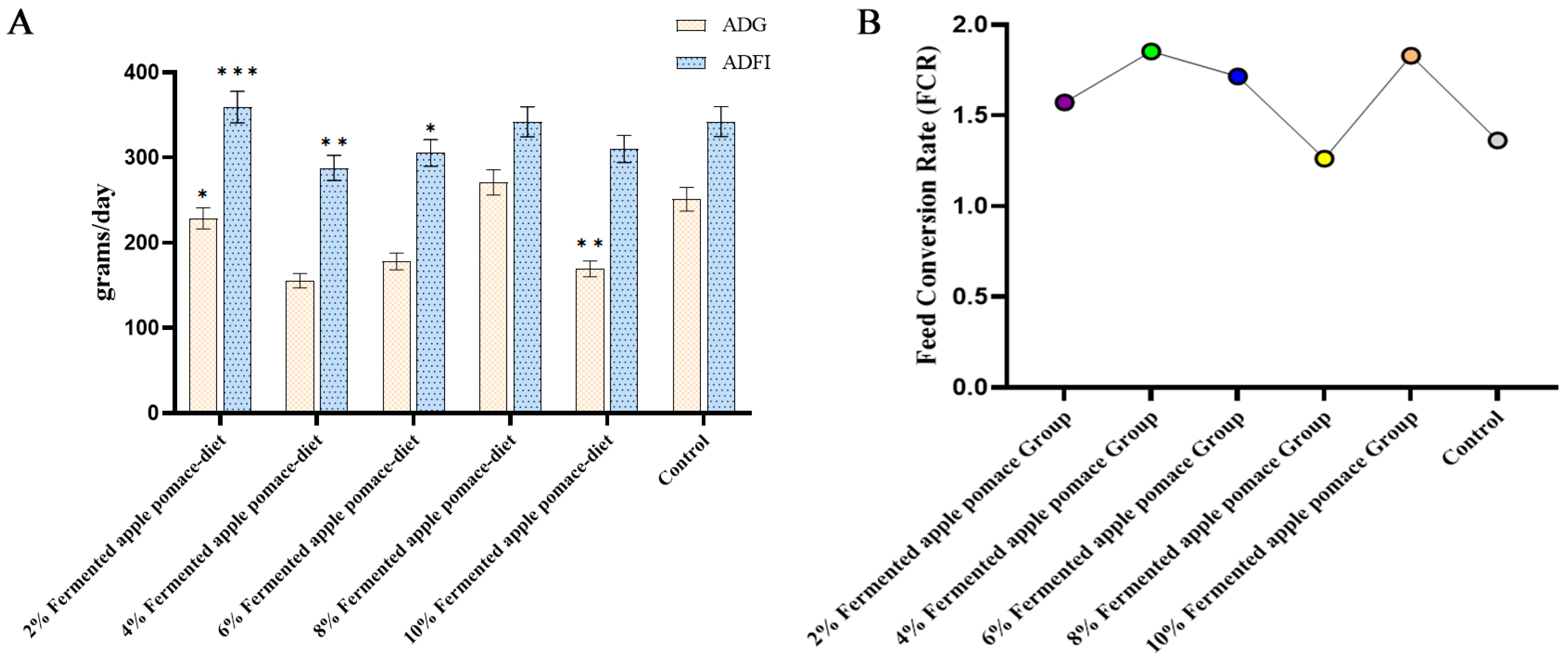
3.2. Growth Performance Responses to Fermented Apple Pomace Followed a Dose-Dependent Manner, with Beneficial Effects Observed Only at the 8% Inclusion Level
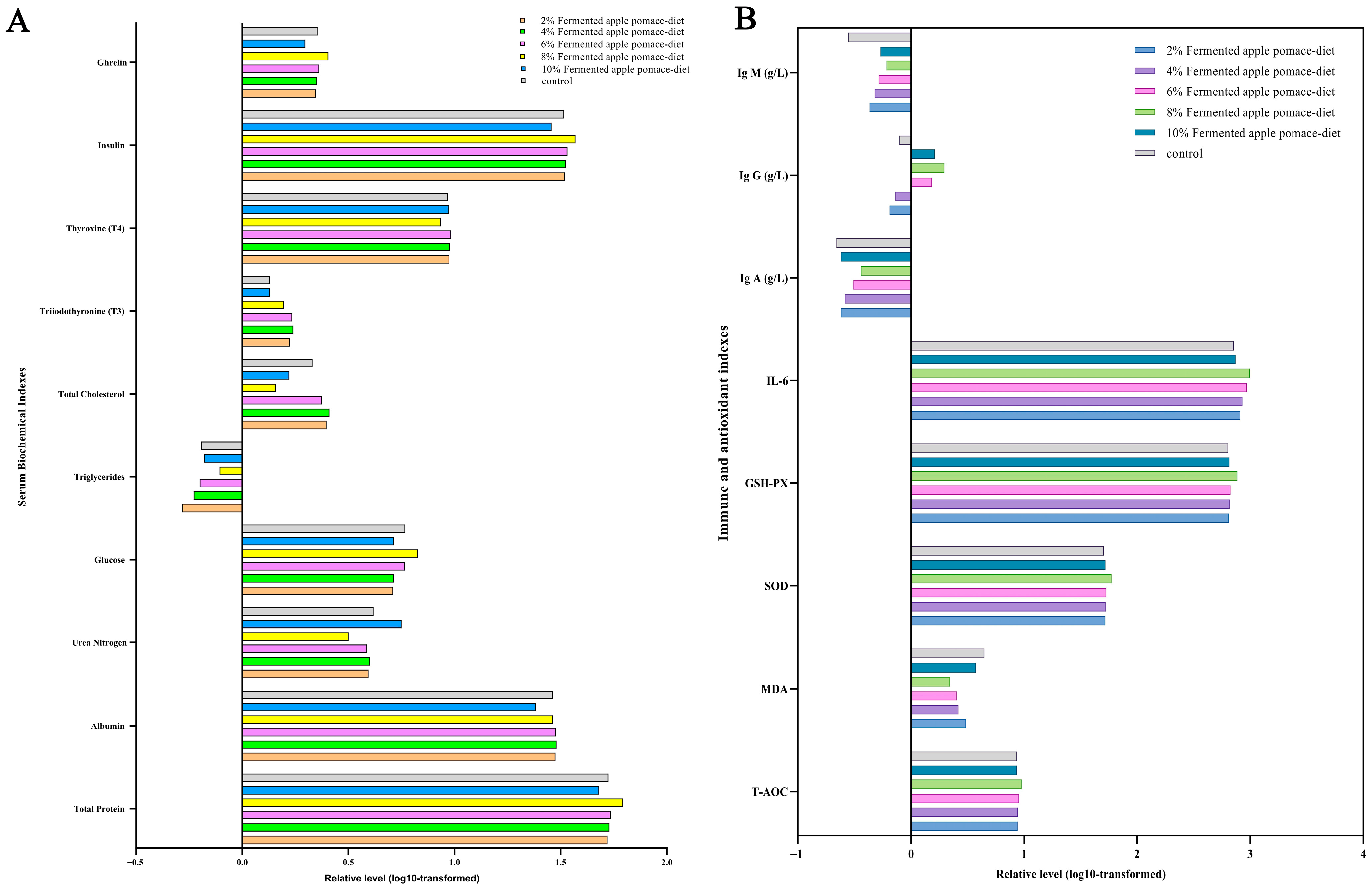
3.3. Dietary Fermented Apple Pomace at 8% Inclusion Synergistically Optimized Systemic Metabolism and Enhanced the Immune–Antioxidant Status in Weaned Piglets
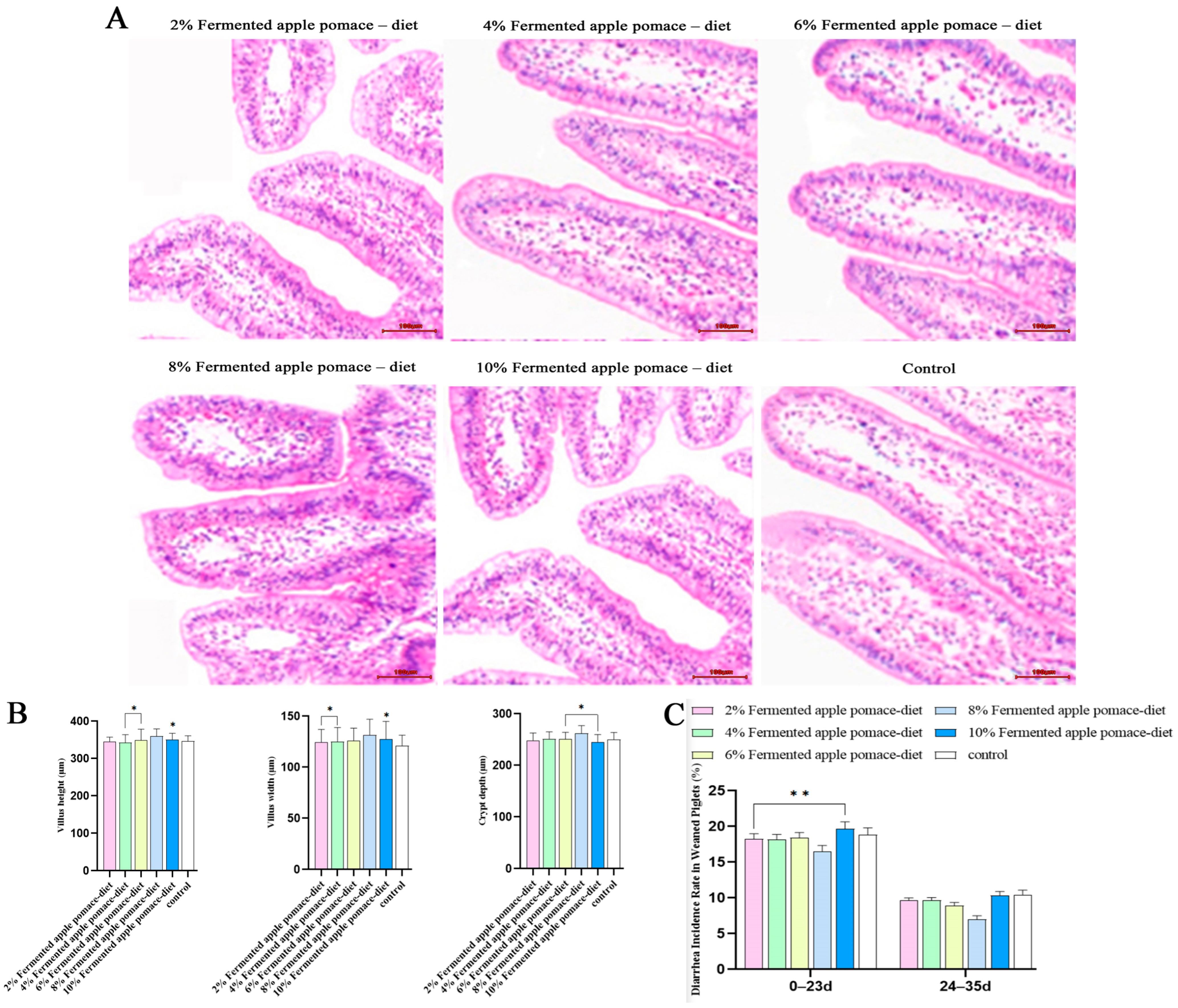
3.4. Optimization of Gut Microbiota and Mucosal Morphology Underlies the Reduction in Diarrhea Incidence by 8% Fermented Apple Pomace in Weaned Piglets
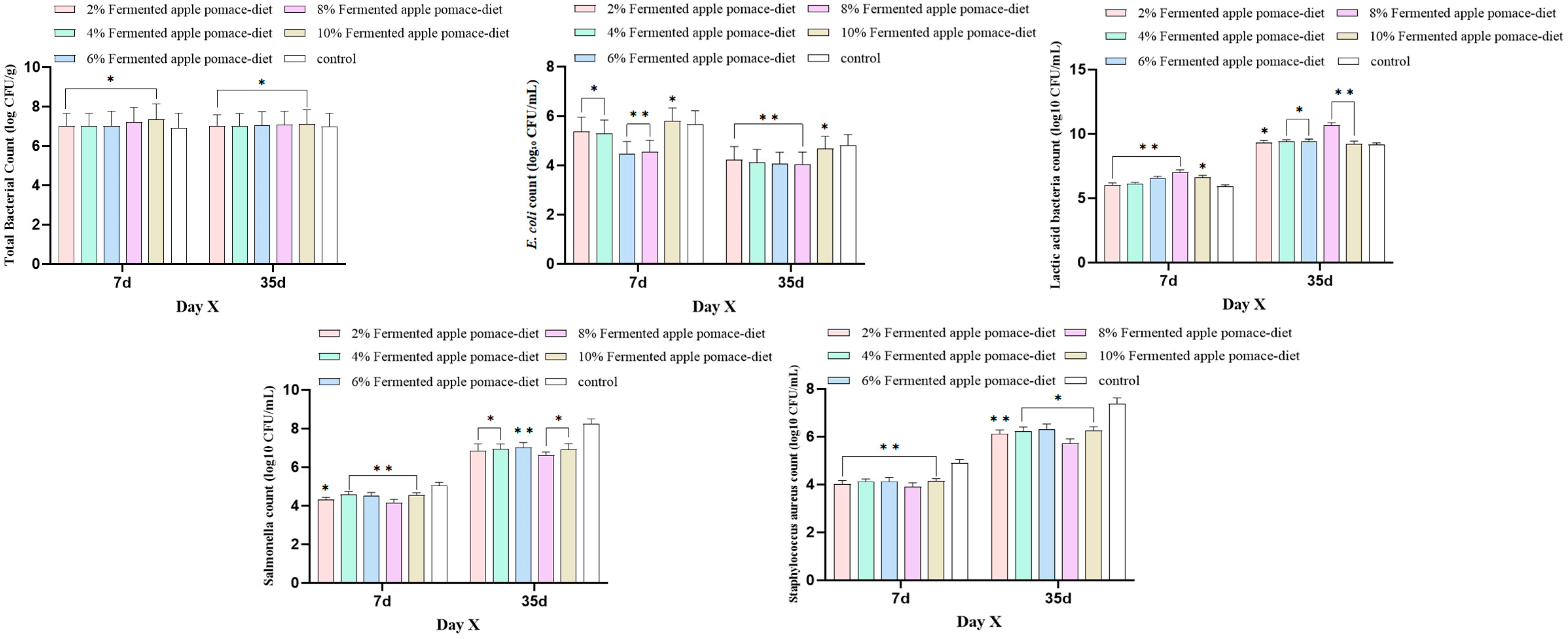
3.5. 8% Fermented Apple Pomace Modulates Gut Microbiota Homeostasis to Suppress Pathogens and Promote Beneficial Bacteria
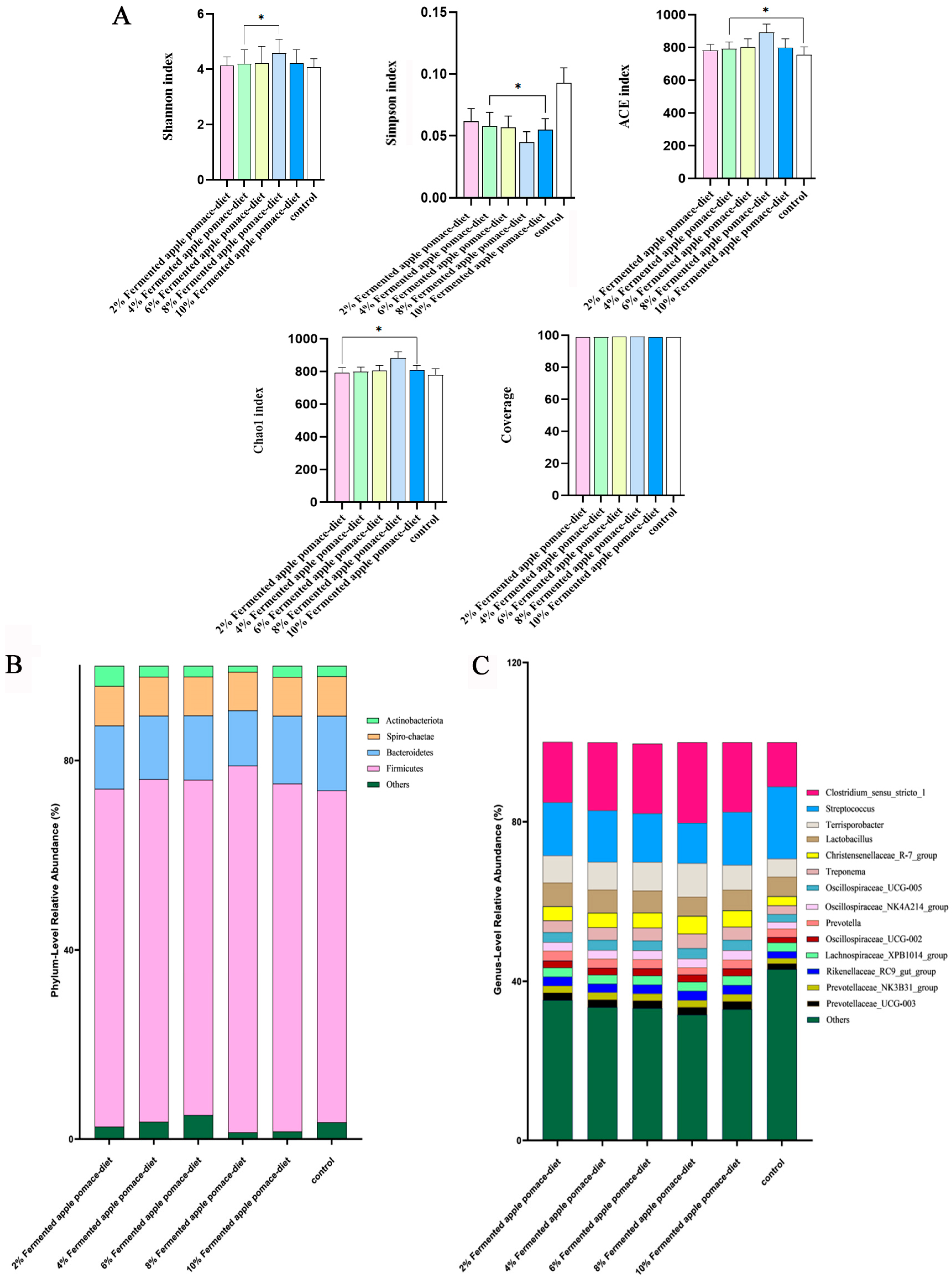
3.6. Fermented Apple Pomace Constructs a Beneficial Gut Microecosystem by Enhancing Diversity and Optimizing Microbiota Composition at the Phylum and Genus Levels
4. Discussion
5. Conclusions
Supplementary Materials
Author Contributions
Funding
Institutional Review Board Statement
Informed Consent Statement
Data Availability Statement
Acknowledgments
Conflicts of Interest
Abbreviations
| SSF | solid-state fermentation |
| T-AOC | the concentration of total antioxidant capacity |
| SOD | superoxide dismutase |
| GSH-Px | Glutathione Peroxidase |
| IgA | Immunoglobulin A |
| IgG | Immunoglobulin G |
| IgM | Immunoglobulin M |
| EMB | Eosin Methylene Blue |
| BS | Bismuth Sulfite |
| SEM | standard error of the mean |
| ADG | average daily gain |
| ADFI | average daily feed intake |
| F/G | feed-to-gain ratio |
| T3 | Triiodothyronine |
| T4 | Thyroxine |
| LAB | Lactic acid bacteria |
| SCFA | short-chain fatty acid |
| E. coli | Escherichia coli |
| B. subtilis | Bacillus subtilis |
Appendix A

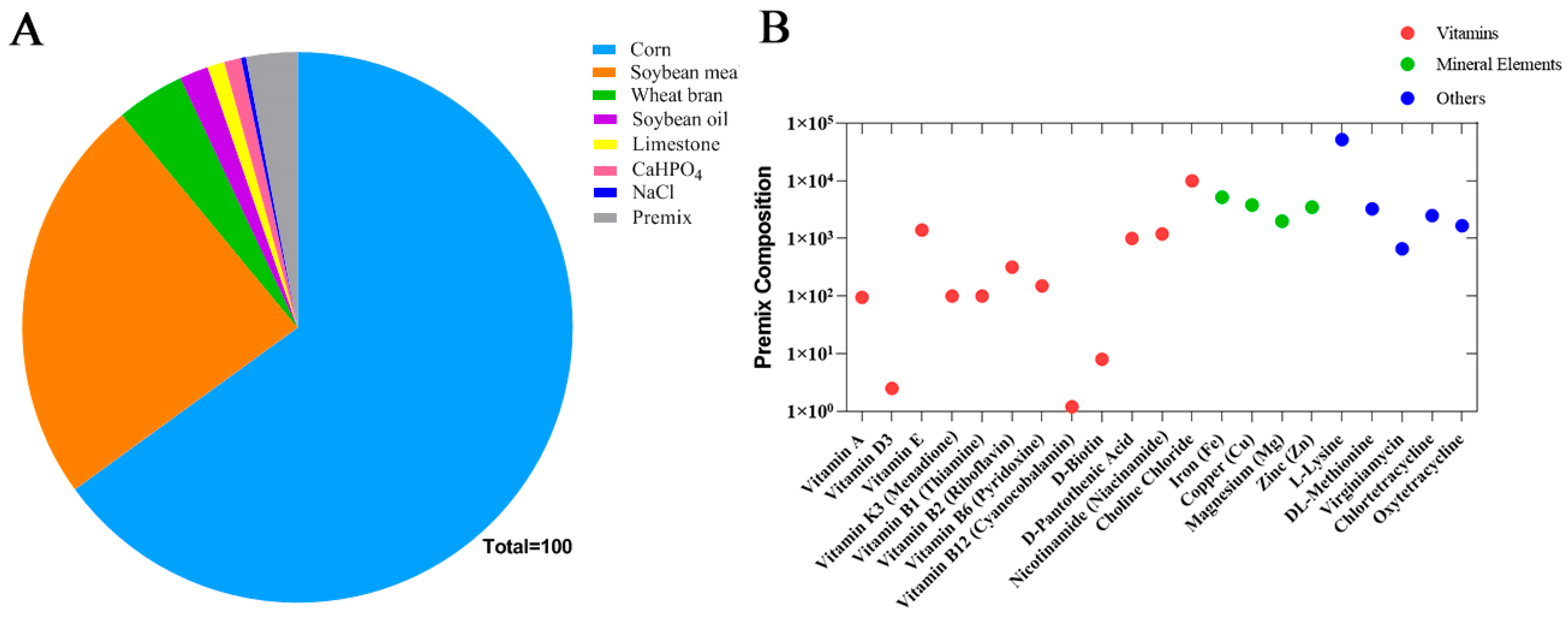
| Ingredient | Percentage (%) |
|---|---|
| Corn | 65 |
| Soybean meal | 24 |
| Wheat bran | 4 |
| Soybean oil | 1.7 |
| Limestone | 1 |
| CaHPO4 | 1 |
| NaCl | 0.3 |
| Premix | 3 |
| Ingredient | Dosage | Ingredient | Dosage |
|---|---|---|---|
| Vitamin A | 318.50 IU | Vitamin D3 | 100,000.00 IU |
| Vitamin E | 2.10 IU | Vitamin K3 | 100.00 mg |
| Vitamin B1 | 100.00 mg | Vitamin B2 | 320.00 mg |
| Vitamin B6 | 150.00 mg | Vitamin B12 | 1.20 mg |
| D-Biotin | 8.00 mg | D-Pantothenic acid | 1000.00 mg |
| Niacinamide | 1200.00 mg | Choline chloride | 10,000.00 mg |
| Iron (as Fe) | 5200.00 mg | Copper (as Cu) | 3833.00 mg |
| Magnesium (as Mg) | 2000.00 mg | Zinc (as Zn) | 3500.00 mg |
| L-Lysine | 52,000.00 mg | Virginiamycin | 666.70 mg |
| Methionine | 3282.00 mg | Chlortetracycline | 2500.00 mg |
| Oxytetracycline | 1667.00 mg |
| Nutrient | Content |
|---|---|
| Digestible energy | 14.18 MJ/kg |
| Crude protein | 17.52% |
| Calcium (Ca) | 0.77% |
| Phosphorus (P) | 0.43% |
| Lysine | 0.90% |
References
- Won, H.J.; Choi, A.J. Optimization of Pre-Treatments to Overcome Stickiness-Related Hurdles and Enhance Drying Efficiency in Apple Pomace. Food Sci. Nutr. 2025, 13, e70988. [Google Scholar] [CrossRef] [PubMed]
- Asif, M.; Javaid, T.; Razzaq, Z.U.; Khan, M.K.I.; Maan, A.A.; Yousaf, S.; Usman, A.; Shahid, S. Sustainable utilization of apple pomace and its emerging potential for development of functional foods. Environ. Sci. Pollut. Res. Int. 2024, 31, 17932–17950. [Google Scholar] [CrossRef]
- Bhushan, S.; Kalia, K.; Sharma, M.; Singh, B.; Ahuja, P.S. Processing of apple pomace for bioactive molecules. Crit. Rev. Biotechnol. 2008, 28, 285–296. [Google Scholar] [CrossRef] [PubMed]
- Vendruscolo, R.G.; Albuquerque, P.M.; Streit, F.; Esposito, E.; Ninow, J.L. Apple pomace: A versatile substrate for biotechnological applications. Crit. Rev. Biotechnol. 2008, 28, 1–12. [Google Scholar] [CrossRef]
- Rabetafika, H.N.; Behir, B.; Blecker, C.; Richel, A. Fractionation of polyphenol-enriched apple juice extracts to identify constituents with cancer chemopreventive potential. Mol. Nutr. Food Res. 2008, 52, S28–S44. [Google Scholar] [CrossRef]
- Rira, M.; Morgavi, D.P.; Popova, M.; Maxin, G.; Doreau, M. Doreau MMicrobial colonisation of tannin-rich tropical plants: Interplay between degradability, methane production and tannin disappearance in the rumen. Animal 2022, 16, 100589. [Google Scholar] [CrossRef]
- Green, S.; Eyres, G.T.; Agyei, D.; Kebede, B. Solid-state fermentation: Bioconversions and impacts on bioactive and nutritional compounds in oats. Compr. Rev. Food Sci. Food Saf. 2024, 23, e70070. [Google Scholar] [CrossRef] [PubMed]
- Rothmann, C.; Rothmann, L.; Viljoen, B.; Cason, E.D. Application of solid-state fermentation using mushrooms for the production of animal feed. J. Basic Microbiol. 2023, 63, 1153–1164. [Google Scholar] [CrossRef]
- Yang, Z.; Jiang, L.; Zhang, M.; Deng, Y.; Suo, W.; Zhang, H.; Wang, C.; Li, H. Bioconversion of Apple Pomace into Microbial Protein Feed Based on Extrusion Pretreatment. Appl. Biochem. Biotechnol. 2022, 194, 1496–1509. [Google Scholar] [CrossRef]
- Mattanovich, D.; Branduardi, P.; Dato, L.; Gasser, B.; Sauer, M.; Porro, D. Recombinant protein production in yeasts. Methods Mol. Biol. 2012, 824, 329–358. [Google Scholar]
- Pluske, J.R.; Turpin, D.L.; Kim, J.C. Gastrointestinal tract (gut) health in the young pig. Anim. Nutr. 2018, 4, 187–196. [Google Scholar] [CrossRef] [PubMed]
- Heo, J.M.; Opapeju, F.O.; Pluske, J.R.; Kim, J.C.; Hampson, D.J.; Nyachoti, C.M. Gastrointestinal health and function in weaned pigs: A review of feeding strategies to control post-weaning diarrhoea without using in-feed antimicrobial compounds. J. Anim. Physiol. Anim. Nutr. 2013, 97, 207–237. [Google Scholar] [CrossRef]
- Main, R.G.; Dritz, S.S.; Tokach, M.D.; Goodband, R.D.; Nelssen, J.L. Increasing weaning age improves pig performance in a multisite production system. J. Anim. Sci. 2004, 82, 1499–1507. [Google Scholar] [CrossRef]
- National Research Council. Nutrient Requirements of Swine: 11th Revised Edition; The National Academies Press: Washington, DC, USA, 2012. [Google Scholar]
- Zlender, T.; Brezočnik, L.; Podgorelec, V.; Rupnik, M. MicrobiomePrime: A primer pair selection tool for microbial source tracking validated on a comprehensive collection of animal gut and fecal waste microbiomes. Water Res. 2026, 289, 124990. [Google Scholar] [CrossRef]
- Hadj, S.J.; Bertani, G.; Levante, A.; Vezzosi, F.; Ricci, A.; Bernini, V.; Lazzi, C. Fermentation of Agri-Food Waste: A Promising Route for the Production of Aroma Compounds. Foods 2021, 10, 707. [Google Scholar] [CrossRef]
- Gorsuch, J.; LeSaint, D.; VanderKelen, J.; Buckman, D.; Kitts, C.L. A comparison of methods for enumerating bacteria in direct fed microbials for animal feed. J. Microbiol. Methods 2019, 160, 124–129. [Google Scholar] [CrossRef]
- Magne Ghomsi, S.O.; Nsangou Pechangou, S.; Maafo, R.S.; Tene Mouafo, H.; Etchu, A.K.; Bilong Bilong, F.C.; Moundipa, P.F. Assessment of the digestibility, growth performance, hematological and serum biochemical profile of Bandjock Local Pigs (BLP) and Duroc X Large White pigs (DLW). Vet. Anim. Sci. 2024, 25, 100370. [Google Scholar] [CrossRef]
- Ribeiro, D.M.; Luise, D.; Costa, M.; Carvalho, D.F.P.; Martins, C.F.; Correa, F.; Pinho, M.; Mirzapour-Kouhdasht, A.; Garcia-Vaquero, M.; Mourato, M.P.; et al. Impact of dietary Laminaria digitata with alginate lyase or carbohydrase mixture on nutrient digestibility and gut health of weaned piglets. Animal 2024, 18, 101189. [Google Scholar] [CrossRef]
- Tamura, Y.; Tomiya, S.; Takegaki, J.; Kouzaki, K.; Tsutaki, A.; Nakazato, K. Apple polyphenols induce browning of white adipose tissue. J. Nutr. Biochem. 2020, 77, 108299. [Google Scholar] [CrossRef] [PubMed]
- Liu, Z.; Li, N.; Zhou, X.; Zheng, Z.; Zhang, C.; Liang, S.; Li, Y.; Yan, J.; Li, Q.; Mu, S. Effects of Fermented Bamboo Powder Supplementation on Serum Biochemical Parameters, Immune Indices, and Fecal Microbial Composition in Growing-Finishing Pigs. Animals 2022, 12, 3127. [Google Scholar] [CrossRef] [PubMed]
- Xiao, X.; He, L.; Chen, Y.; Wu, L.; Wang, L.; Liu, Z. Anti-inflammatory and antioxidative effects of Camellia oleifera Abel components. Future Med. Chem. 2017, 9, 2069–2079. [Google Scholar] [CrossRef] [PubMed]
- Uerlings, J.; Schroyen, M.; Bautil, A.; Courtin, C.; Richel, A.; Sureda, E.A.; Bruggeman, G.; Tanghe, S.; Willems, E.; Bindelle, J.; et al. In vitro prebiotic potential of agricultural by-products on intestinal fermentation, gut barrier and inflammatory status of piglets. Br. J. Nutr. 2020, 123, 293–307. [Google Scholar] [CrossRef]
- Sigalet, D.L.; Lees, G.M.; Aherne, F.; Van Aerde, J.E.; Fedorak, R.N.; Keelan, M.; Thomson, A.B. The physiology of adaptation to small bowel resection in the pig: An integrated study of morphological and functional changes. J. Pediatr. Surg. 1990, 25, 650–657. [Google Scholar] [CrossRef]
- Akhlaghi, M. The role of dietary fibers in regulating appetite, an overview of mechanisms and weight consequences. Crit. Rev. Food Sci. Nutr. 2024, 64, 3139–3150. [Google Scholar] [CrossRef] [PubMed]
- Yang, Q.; Huang, X.; Zhao, S.; Sun, W.; Yan, Z.; Wang, P.; Li, S.; Huang, W.; Zhang, S.; Liu, L.; et al. Structure and Function of the Fecal Microbiota in Diarrheic Neonatal Piglets. Front. Microbiol. 2017, 8, 502. [Google Scholar] [CrossRef] [PubMed]
- Upadhaya, S.D.; Kim, I.H. Maintenance of gut microbiome stability for optimum intestinal health in pigs—A review. J. Anim. Sci. Biotechnol. 2022, 13, 140. [Google Scholar] [CrossRef]
- Taciak, M.; Barszcz, M.; Święch, E.; Tuśnio, A.; Bachanek, I. Interactive effects of protein and carbohydrates on production of microbial metabolites in the large intestine of growing pigs. Arch. Anim. Nutr. 2017, 71, 192–209. [Google Scholar] [CrossRef]
- Liu, H.; Wang, J.; He, T.; Becker, S.; Zhang, G.; Li, D.; Ma, X. Butyrate: A double-edged sword for health? Adv. Nutr. 2018, 9, 21–29. [Google Scholar] [CrossRef]
- Liu, C.; Wong, P.Y.; Wang, Q.; Wong, H.Y.; Huang, T.; Cui, C.; Zhang, N.; Cheung, W.H.; Wong, R.M.Y. Short-chain fatty acids enhance muscle mass and function through the activation of mTOR signalling pathways in sarcopenic mice. J. Cachexia Sarcopenia Muscle 2024, 15, 2387–2401. [Google Scholar] [CrossRef]
- Suzuki, T. Regulation of intestinal epithelial permeability by tight junctions. Cell. Mol. Life Sci. 2013, 70, 631–659. [Google Scholar] [CrossRef]




| Item | Group | |||||
|---|---|---|---|---|---|---|
| 2% Fermented Apple Pomace Group | 4% Fermented Apple Pomace Group | 6% Fermented Apple Pomace Group | 8% Fermented Apple Pomace Group | 10% Fermented Apple Pomace Group | Control Group | |
| Dry matter, % | 88.73 ± 1.39 a | 88.92 ± 2.46 b | 88.87 ± 3.35 a | 89.93 ± 2.36 a | 89.12 ± 1.94 b | 88.24 ± 2.06 a |
| Crude protein, % | 17.53 ± 1.82 a | 17.54 ± 1.52 a | 17.54 ± 1.04 a | 17.53 ± 1.26 b | 17.52 ± 1.24 b | 17.52 ± 1.64 b |
| Crude fiber, % | 3.89 ± 0.26 a | 3.91 ± 0.42 a | 3.93 ± 0.18 a | 3.95 ± 0.16 a | 3.96 ± 0.21 b | 3.84 ± 0.26 b |
| Ash, % | 5.31 ± 0.26 a | 5.36 ± 0.24 a | 5.37 ± 0.26 b | 5.46 ± 0.22 a | 5.48 ± 0.23 b | 5.34 ± 0.23 b |
| Calcium (Ca), % | 0.77 ± 0.03 | 0.80 ± 0.03 | 0.81 ± 0.04 | 0.81 ± 0.04 | 0.81 ± 0.02 | 0.77 ± 0.03 |
| Total phosphorus (P), % | 0.44 ± 0.02 | 0.45 ± 0.03 | 0.45 ± 0.03 | 0.46 ± 0.02 | 0.44 ± 0.03 | 0.43 ± 0.02 |
Disclaimer/Publisher’s Note: The statements, opinions and data contained in all publications are solely those of the individual author(s) and contributor(s) and not of MDPI and/or the editor(s). MDPI and/or the editor(s) disclaim responsibility for any injury to people or property resulting from any ideas, methods, instructions or products referred to in the content. |
© 2026 by the authors. Licensee MDPI, Basel, Switzerland. This article is an open access article distributed under the terms and conditions of the Creative Commons Attribution (CC BY) license.
Share and Cite
He, J.; Wang, S. Dose-Dependent Responses of Weaned Piglets to Multi-Species Solid-State Fermented Apple Pomace: Enhanced Growth Performance, Intestinal Health, and Gut Microbiota Modulation. Animals 2026, 16, 334. https://doi.org/10.3390/ani16020334
He J, Wang S. Dose-Dependent Responses of Weaned Piglets to Multi-Species Solid-State Fermented Apple Pomace: Enhanced Growth Performance, Intestinal Health, and Gut Microbiota Modulation. Animals. 2026; 16(2):334. https://doi.org/10.3390/ani16020334
Chicago/Turabian StyleHe, Jiongjie, and Shengyi Wang. 2026. "Dose-Dependent Responses of Weaned Piglets to Multi-Species Solid-State Fermented Apple Pomace: Enhanced Growth Performance, Intestinal Health, and Gut Microbiota Modulation" Animals 16, no. 2: 334. https://doi.org/10.3390/ani16020334
APA StyleHe, J., & Wang, S. (2026). Dose-Dependent Responses of Weaned Piglets to Multi-Species Solid-State Fermented Apple Pomace: Enhanced Growth Performance, Intestinal Health, and Gut Microbiota Modulation. Animals, 16(2), 334. https://doi.org/10.3390/ani16020334