Addressing Heterogeneity in Equine PRP Therapies: A Scoping Review of Methods, Evidence, and Commercial Validation


Simple Summary
Abstract
1. Introduction
2. Materials and Methods
2.1. Protocol for Peer Reviewed Documents
Eligibility Criteria for Publications and Protocol for Data Collection, Screening, and Inclusion
2.2. Data Charting and Integrated Quality Assessment
2.3. Internet Search for Commercial PRP Kits
3. Results
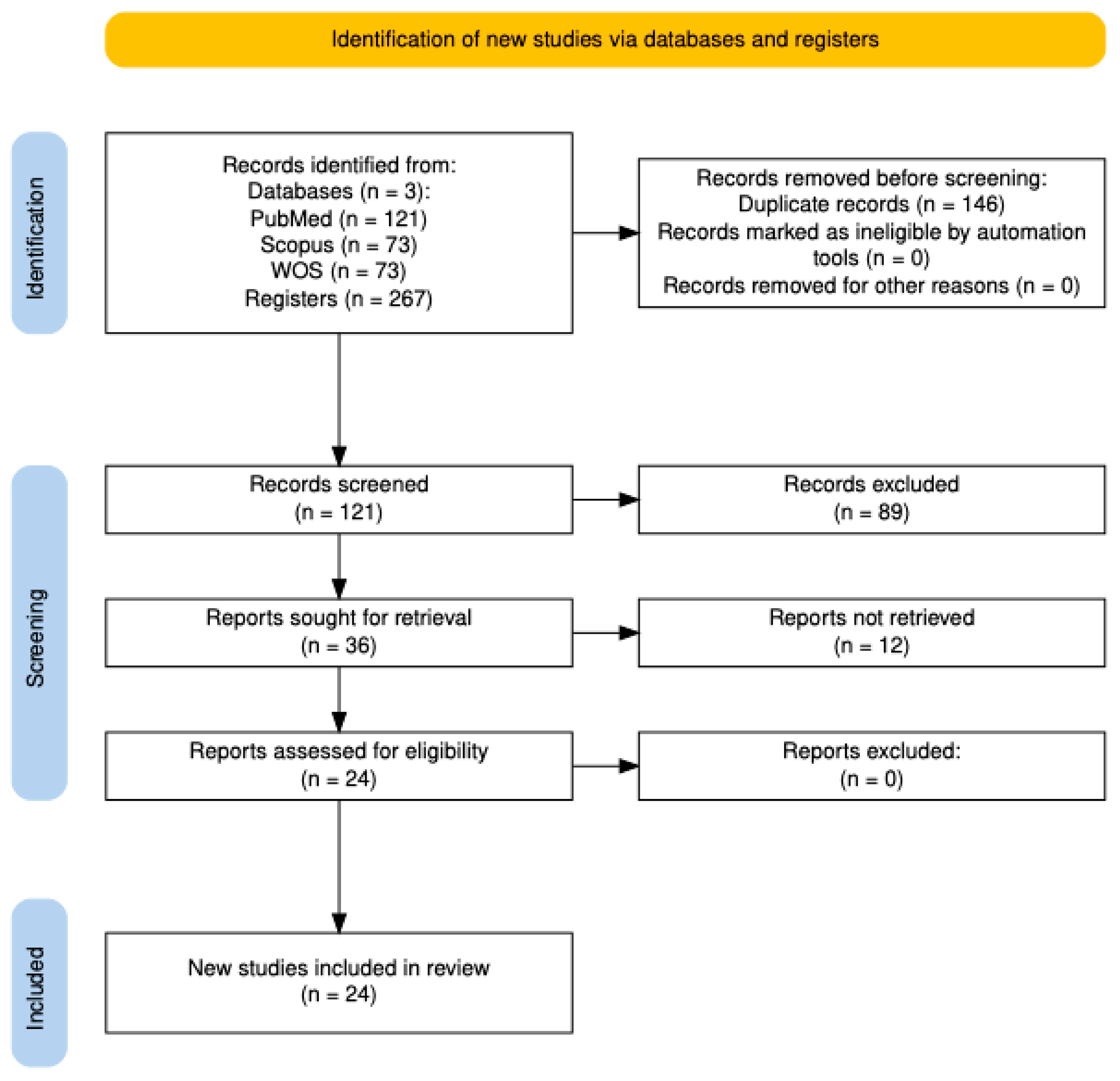
3.1. Study Selection
3.2. Study Population Characteristics: Sample Size, Breed Distribution, Sex, and Body Weight
3.3. Methodological Rigor and Transparency in PRP Characterization
3.3.1. Blood Source (C1): Autologous Versus Allogeneic Use
3.3.2. Anticoagulant Use, Blood Volume, and Processing Delay (C2)
3.3.3. PRP Preparation Method (C3): Manual Protocols Versus Commercial Systems
3.3.4. Centrifugation Protocol (C4): Spin Configuration, g-Force, and Duration
3.3.5. PRP Extraction Technique (C5): Buffy Coat Harvesting, Direct Plasma Collection, and Closed-System Recovery
- Manual Buffy Coat Harvesting
- Direct Plasma Collection (Supernatant Aspiration)
- Closed-System Recovery
3.3.6. Cellular Composition of Whole Blood and Resulting PRP (C6)
3.3.7. Concentration of Soluble Mediators in PRP (C7)
3.3.8. Platelet and Leukocyte Yield (C8)
3.3.9. Activation Strategy (C9): Physiological Versus Non-Physiological Methods
3.3.10. Observations: Methodological Insights, Limitations, and Comparative Efficacy
3.4. Methodological Quality Assessment: Overall Scores and Reporting Gaps
3.5. Commercially Available PRP Kits and Scientific Validation Status
3.6. Toward Standardization: Proposed Minimum Reporting Guidelines for Equine PRP Studies
- Minimum reporting checklist for equine PRP studies:
- Blood collection and pre-processing: (1) Specify the type and concentration of anticoagulant used. (2) Report the total volume of whole blood collected. (3) Provide the blood-to-anticoagulant ratio. (4) Indicate the time between blood collection and the start of centrifugation, and (5) report the temperature (°C) of centrifugation.
- PRP preparation: (1) State whether a manual method or commercial kit was used, including product name and manufacturer if applicable. (2) Report centrifugation parameters: relative centrifugal force (× g), duration, number of spins, and temperature and, (4) avoid reporting only in rpm. If used, provide rotor radius for conversion.
- PRP harvesting: (1) Describe the harvesting technique (e.g., buffy coat aspiration, plasma supernatant extraction), and (2) report the final volume of PRP obtained.
- Cellular characterization (mandatory): (1) Provide cell counts for both whole blood and the final PRP: platelets, white blood cells, and red blood cells. (2) Report platelet enrichment factor and platelet yield percentage, and (3) specify the analytical device used and whether it was the same for both measurements.
- Biochemical characterization (recommended): (1) Quantify growth factors or cytokines when possible. (2) Describe the physiological activation method (e.g., CaCl2, thrombin) or the lysis method (e.g., anionic detergent or freeze-thaw cycles) used for protein release.
- Protein enrichment controls (recommended for biochemical studies): (1) Include a negative control by measuring mediator levels in platelet-poor plasma and plasma. (2) Include a positive control using PRP lysed by detergent or freeze–thaw cycles, and (3) clarify that lysis is not platelet activation but cellular destruction.
- Clinical application (for in vivo studies): (1) State the tissue or condition being treated. (2) Report the volume administered per dose and the total number of doses. (3) Indicate whether PRP was activated before application. (4) If activated, report agent, concentration, and activation time. (5) If not activated, state this explicitly and explain the rationale. (6) Specify the delivery route and technique; (7) report monitoring duration and any adverse effects.
4. Discussion
5. Conclusions
Supplementary Materials
Author Contributions
Funding
Institutional Review Board Statement
Informed Consent Statement
Data Availability Statement
Conflicts of Interest
Abbreviations
| ACD | Acid Citrate Dextrose |
| ACD-A | Acid Citrate Dextrose-Formula A |
| ACD-B | Acid Citrate Dextrose-Formula B |
| ALL | Allogeneic |
| APC | Autologous Conditioned Plasma |
| AUT | Autologous |
| BC-PC | Buffy Coat Platelet Concentrate |
| BT | Bovine Thrombin |
| CaCl2 | Calcium Chloride |
| CBC | Complete Blood Count |
| CC | Calcium Chloride |
| CG | Calcium Gluconate |
| CPDA-1 | Citrate Phosphate Dextrose Adenine |
| CRISPR | Clustered Regularly Interspaced Short Palindromic Repeats |
| CSs | Case Series |
| DT | Detergent Treated |
| ECSs | Experimental Controlled Studies |
| EDTA | Ethylenediaminetetraacetic Acid |
| ESWT | Extracorporeal Shockwave Therapy |
| FTC | Freeze-Thaw Cycle |
| GFs | Growth Factors |
| Hct | Hematocrit |
| IGF-1 | Insulin-like Growth Factor 1 |
| IL | Interleukin |
| ISTH | International Society on Thrombosis and Haemostasis |
| L-PRP | Leukocyte-Rich Platelet-Rich Plasma |
| MPC | Mean Platelet Component |
| MSCs | Mesenchymal Stem Cells |
| MPV | Mean Platelet Volume |
| NA | Not Applicable |
| NO | Nitric Oxide |
| NR | Not Reported |
| NSAIDs | Non-Steroidal Anti-inflammatory Drugs |
| P-PRP | Pure Platelet-Rich Plasma |
| PC | Platelet Concentrate |
| PDGF | Platelet-Derived Growth Factor |
| PDGF-BB | Platelet-Derived Growth Factor-BB |
| PDW | Platelet Distribution Width |
| PLT | Platelets |
| PRG | Platelet-Rich Gel |
| PRISMA-ScR | Preferred Reporting Items for Systematic Reviews and Meta-Analyses Extension for Scoping Reviews |
| PRP | Platelet-Rich Plasma |
| RBC | Red Blood Cell |
| RCF | Relative Centrifugal Force |
| RCTs | Randomized Clinical Trials |
| rpm | Revolutions Per Minute |
| RT | Room Temperature |
| SC | Sodium Citrate |
| SD | Standard Deviation |
| SSC | Scientific and Standardization Committee |
| TGF-β | Transforming Growth Factor Beta |
| TNF-α | Tumor Necrosis Factor Alpha |
| VEGF | Vascular Endothelial Growth Factor |
| WB | Whole Blood |
| WBC | White Blood Cell |
| × g | Times Gravity |
References
- Baptista, P.M.; Atala, A. Regenerative medicine: The hurdles and hopes. Transl. Res. 2014, 163, 255–258. [Google Scholar] [CrossRef]
- Atala, A.; Murphy, S. Regenerative medicine. JAMA 2015, 313, 1413–1414. [Google Scholar] [CrossRef] [PubMed]
- Ortved, K. The current state of veterinary regenerative medicine. J. Am. Vet. Med. Assoc. 2024, 262 (Suppl. S1), S4–S6. [Google Scholar] [CrossRef] [PubMed]
- Julier, Z.; Park, A.J.; Briquez, P.S.; Martino, M.M. Promoting tissue regeneration by modulating the immune system. Acta Biomater. 2017, 53, 13–28. [Google Scholar] [CrossRef]
- Scala, P.; Rehak, L.; Giudice, V.; Ciaglia, E.; Puca, A.A.; Selleri, C.; Della Porta, G.; Maffulli, N. Stem Cell and Macrophage Roles in Skeletal Muscle Regenerative Medicine. Int. J. Mol. Sci. 2021, 22, 10867. [Google Scholar] [CrossRef]
- Voga, M.; Adamic, N.; Vengust, M.; Majdic, G. Stem Cells in Veterinary Medicine-Current State and Treatment Options. Front. Vet. Sci. 2020, 7, 278. [Google Scholar] [CrossRef] [PubMed]
- Caplan, A.I. Mesenchymal Stem Cells: Time to Change the Name! Stem Cells Transl. Med. 2017, 6, 1445–1451. [Google Scholar] [CrossRef]
- Salamanna, F.; Veronesi, F.; Maglio, M.; Della Bella, E.; Sartori, M.; Fini, M. New and emerging strategies in platelet-rich plasma application in musculoskeletal regenerative procedures: General overview on still open questions and outlook. BioMed Res. Int. 2015, 2015, 846045. [Google Scholar] [CrossRef]
- Cervelli, V.; Scioli, M.G.; Gentile, P.; Doldo, E.; Bonanno, E.; Spagnoli, L.G.; Orlandi, A. Platelet-rich plasma greatly potentiates insulin-induced adipogenic differentiation of human adipose-derived stem cells through a serine/threonine kinase Akt-dependent mechanism and promotes clinical fat graft maintenance. Stem Cells Transl. Med. 2012, 1, 206–220. [Google Scholar] [CrossRef]
- Kim, J.H.; Yang, H.; Kim, M.W.; Cho, K.S.; Kim, D.S.; Yim, H.E.; Atala, Z.; Ko, I.K.; Yoo, J.J. The Delivery of the Recombinant Protein Cocktail Identified by Stem Cell-Derived Secretome Analysis Accelerates Kidney Repair After Renal Ischemia-Reperfusion Injury. Front. Bioeng. Biotechnol. 2022, 10, 848679. [Google Scholar] [CrossRef]
- Egashira, K.; Sumita, Y.; Zhong, W.; Takashi, I.; Ohba, S.; Nagai, K.; Asahina, I. Bone marrow concentrate promotes bone regeneration with a suboptimal-dose of rhBMP-2. PLoS ONE 2018, 13, e0191099. [Google Scholar] [CrossRef]
- Doudna, J.A.; Charpentier, E. The new frontier of genome engineering with CRISPR-Cas9. Science 2014, 346, 1258096. [Google Scholar] [CrossRef]
- Pérez Fraile, A.; González-Cubero, E.; Martínez-Flórez, S.; Olivera, E.R.; Villar-Suárez, V. Regenerative Medicine Applied to Musculoskeletal Diseases in Equines: A Systematic Review. Vet. Sci. 2023, 10, 666. [Google Scholar] [CrossRef] [PubMed]
- Boone, L.; Peroni, J. Introduction to Equine Biologic and Regenerative Therapies. Vet. Clin. N. Am. Equine Pract. 2023, 39, 419–427. [Google Scholar] [CrossRef]
- Dahlgren, L.A. Regenerative Medicine Therapies for Equine Wound Management. Vet. Clin. N. Am. Equine Pract. 2018, 34, 605–620. [Google Scholar] [CrossRef]
- Ribitsch, I.; Oreff, G.L.; Jenner, F. Regenerative Medicine for Equine Musculoskeletal Diseases. Animals 2021, 11, 234. [Google Scholar] [CrossRef]
- Ortved, K.F. Regenerative Medicine and Rehabilitation for Tendinous and Ligamentous Injuries in Sport Horses. Vet. Clin. N. Am. Equine Pract. 2018, 34, 359–373. [Google Scholar] [CrossRef]
- Camargo Garbin, L.; Lopez, C.; Carmona, J.U. A Critical Overview of the Use of Platelet-Rich Plasma in Equine Medicine Over the Last Decade. Front. Vet Sci. 2021, 8, 641818. [Google Scholar] [CrossRef] [PubMed]
- Sutter, W.W.; Kaneps, A.J.; Bertone, A.L. Comparison of hematologic values and transforming growth factor-β and insulin-like growth factor concentrations in platelet concentrates obtained by use of buffy coat and apheresis methods from equine blood. Am. J. Vet. Res. 2004, 65, 924–930. [Google Scholar] [CrossRef]
- Argüelles, D.; Carmona, J.U.; Pastor, J.; Iborra, A.; Viñals, L.; Martínez, P.; Bach, E.; Prades, M. Evaluation of single and double centrifugation tube methods for concentrating equine platelets. Res. Vet. Sci. 2006, 81, 237–245. [Google Scholar] [CrossRef] [PubMed]
- Carmona, J.U.; Argüelles, D.; Climent, F.; Prades, M. Autologous Platelet Concentrates as a Treatment of Horses with Osteoarthritis: A Preliminary Pilot Clinical Study. J. Equine Vet. Sci. 2007, 27, 167–170. [Google Scholar] [CrossRef]
- Argüelles, D.; Carmona, J.U.; Climent, F.; Muñoz, E.; Prades, M. Autologous platelet concentrates as a treatment for musculoskeletal lesions in five horses. Vet. Rec. 2008, 162, 208–211. [Google Scholar] [CrossRef] [PubMed]
- Waselau, M.; Sutter, W.W.; Genovese, R.L.; Bertone, A.L. Intralesional injection of platelet-rich plasma followed by controlled exercise for treatment of midbody suspensory ligament desmitis in Standardbred racehorses. J. Am. Vet. Med. Assoc. 2008, 232, 1515–1520. [Google Scholar] [CrossRef]
- Smith, J.J.; Ross, M.W.; Smith, R.K.W. Anabolic effects of acellular bone marrow, platelet rich plasma, and serum on equine suspensory ligament fibroblasts in vitro. Vet. Comp. Orthop. Traumatol. 2006, 19, 43–47. [Google Scholar]
- Schnabel, L.V.; Mohammed, H.O.; Jacobson, M.S.; Fortier, L.A. Effects of platelet rich plasma and acellular bone marrow on gene expression patterns and DNA content of equine suspensory ligament explant cultures. Equine Vet. J. 2008, 40, 260–265. [Google Scholar] [CrossRef]
- Schnabel, L.V.; Mohammed, H.O.; Miller, B.J.; McDermott, W.G.; Jacobson, M.S.; Santangelo, K.S.; Fortier, L.A. Platelet Rich Plasma (PRP) enhances anabolic gene expression patterns in flexor digitorum superficialis tendons. J. Orthop. Res. 2007, 25, 230–240. [Google Scholar] [CrossRef]
- Carmona, J.U.; Carmona-Ramírez, L.H.; López, C. Platelet-Rich Plasma and Related Orthobiologics for the Treatment of Equine Musculoskeletal Disorders—A Bibliometric Analysis from 2000 to 2024. Vet. Sci. 2024, 11, 385. [Google Scholar] [CrossRef]
- Marx, R.E. Platelet-rich plasma (PRP): What is PRP and what is not PRP? Implant. Dent. 2001, 10, 225–228. [Google Scholar] [CrossRef]
- Ehrenfest, D.M.D.; Andia, I.; Zumstein, M.A.; Zhang, C.Q.; Pinto, N.R.; Bielecki, T. Classification of platelet concentrates (Platelet-Rich Plasma-PRP, Platelet-Rich Fibrin-PRF) for topical and infiltrative use in orthopedic and sports medicine: Current consensus, clinical implications and perspectives. Muscles Ligaments Tendons J. 2014, 4, 3–9. [Google Scholar] [CrossRef]
- Ehrenfest, D.M.D.; Rasmusson, L.; Albrektsson, T. Classification of platelet concentrates: From pure platelet-rich plasma (P-PRP) to leucocyte- and platelet-rich fibrin (L-PRF). Trends Biotechnol. 2009, 27, 158–167. [Google Scholar] [CrossRef] [PubMed]
- Willow, R.C.; Guzmán, K.E.; Panek, C.L.; Colbath, A.C. Stem cells and platelet-rich plasma for the treatment of naturally occurring equine tendon and ligament injuries: A systematic review and meta-analysis. J. Am. Vet. Med. Assoc. 2024, 262 (Suppl. S1), S50–S60. [Google Scholar]
- Peng, C.; Yang, L.; Labens, R.; Gao, Y.; Zhu, Y.; Li, J. A systematic review and meta-analysis of the efficacy of platelet-rich plasma products for treatment of equine joint disease. Equine Vet. J. 2024, 56, 858–869. [Google Scholar] [CrossRef]
- Montano, C.; Auletta, L.; Greco, A.; Costanza, D.; Coluccia, P.; Del Prete, C.; Meomartino, L.; Pasolini, M.P. The Use of Platelet-Rich Plasma for Treatment of Tenodesmic Lesions in Horses: A Systematic Review and Meta-Analysis of Clinical and Experimental Data. Animals 2021, 11, 793. [Google Scholar] [CrossRef] [PubMed]
- Carmona, J.U.; López, C. Efficacy of Platelet-Rich Plasma in the Treatment of Equine Tendon and Ligament Injuries: A Systematic Review of Clinical and Experimental Studies. Vet. Sci. 2025, 12, 382. [Google Scholar] [CrossRef] [PubMed]
- Del Prete, C.; Montano, C.; Cocchia, N.; de Chiara, M.; Gasparrini, B.; Pasolini, M.P. Use of regenerative medicine in the treatment of endometritis in mares: A systematic review and meta-analysis. Theriogenology 2024, 227, 9–20. [Google Scholar] [CrossRef]
- Nazaroff, J.; Oyadomari, S.; Brown, N.; Wang, D. Reporting in clinical studies on platelet-rich plasma therapy among all medical specialties: A systematic review of Level I and II studies. PLoS ONE 2021, 16, e0250007. [Google Scholar] [CrossRef]
- Chahla, J.; Cinque, M.E.; Piuzzi, N.S.; Mannava, S.; Geeslin, A.G.; Murray, I.R.; Dornan, G.J.; Muschler, G.F.; LaPrade, R.F. A Call for Standardization in Platelet-Rich Plasma Preparation Protocols and Composition Reporting: A Systematic Review of the Clinical Orthopaedic Literature. J. Bone Jt. Surg. Am. 2017, 99, 1769–1779. [Google Scholar] [CrossRef]
- Harrison, P.; Alsousou, J. Studies on platelet rich plasma—New editorial policy for “Platelets”. Platelets 2020, 31, 281–282. [Google Scholar] [CrossRef] [PubMed]
- Murray, I.R.; Geeslin, A.G.; Goudie, E.B.; Petrigliano, F.A.; LaPrade, R.F. Minimum Information for Studies Evaluating Biologics in Orthopaedics (MIBO): Platelet-Rich Plasma and Mesenchymal Stem Cells. J. Bone Jt. Surg. Am. 2017, 99, 809–819. [Google Scholar] [CrossRef]
- Tricco, A.C.; Lillie, E.; Zarin, W.; O’Brien, K.K.; Colquhoun, H.; Levac, D.; Moher, D.; Peters, M.D.; Horsley, T.; Weeks, L.; et al. PRISMA Extension for Scoping Reviews (PRISMA-ScR): Checklist and Explanation. Ann. Intern. Med. 2018, 169, 467–473. [Google Scholar] [CrossRef]
- Ouzzani, M.; Hammady, H.; Fedorowicz, Z.; Elmagarmid, A. Rayyan-a web and mobile app for systematic reviews. Syst. Rev. 2016, 5, 210. [Google Scholar] [CrossRef]
- Harrison, P.; Alsousou, J.; Andia, I.; Burnouf, T.; Ehrenfest, D.D.; Everts, P.; Langer, H.; Magalon, J.; Marck, R.; Gresele, P. The use of platelets in regenerative medicine and proposal for a new classification system: Guidance from the SSC of the ISTH. J. Thromb. Haemost. 2018, 16, 1895–1900. [Google Scholar] [CrossRef]
- Pedroso, A.C.B.D.R.; Peixoto, A.D.C.; Oliveira, E.D.; Dutra, H.T.; Basile, R.C.; Brandstetter, L.R.G.; Moura, V.M.B.D.D. Influencing factors for preparation of platelet-rich plasma in horses. Semin. Cienc. Agrar. 2021, 42, 2327–2337. [Google Scholar] [CrossRef]
- O’Shea, C.M.; Werre, S.R.; Dahlgren, L.A. Comparison of platelet counting technologies in equine platelet concentrates. Vet. Surg. 2015, 44, 304–313. [Google Scholar] [CrossRef]
- McClain, A.K.; McCarrel, T.M. The effect of four different freezing conditions and time in frozen storage on the concentration of commonly measured growth factors and enzymes in equine platelet-rich plasma over six months. BMC Vet. Res. 2019, 15, 292. [Google Scholar] [CrossRef] [PubMed]
- Brown, K.A.; Gregorio, E.N.; Barot, D.; Usimaki, A.; Linardi, R.L.; Missanelli, J.R.; You, Y.; Robinson, M.A.; Ortved, K.F. Single-dose nonsteroidal anti-inflammatory drugs in horses have no impact on concentrations of cytokines or growth factors in autologous protein solution and platelet-rich plasma. Am. J. Vet. Res. 2024, 85. [Google Scholar] [CrossRef]
- Brown, K.A.; Gregorio, E.N.; Barot, D.; Usimaki, A.; Linardi, R.L.; Missanelli, J.R.; You, Y.; Robinson, M.A.; Ortved, K.F. Prolonged administration of oral phenylbutazone and firocoxib in horses has no impact on selected cytokine and growth factor concentrations in platelet-rich plasma and autologous protein solution. Am. J. Vet. Res. 2024, 85. [Google Scholar] [CrossRef] [PubMed]
- Ionita, C.R.; Troillet, A.R.; Vahlenkamp, T.W.; Winter, K.; Brehm, W.; Ionita, J.C. Comparison of humoral insulin-like growth factor-1, platelet-derived growth factor-BB, transforming growth factor-β1, and interleukin-1 receptor antagonist concentrations among equine autologous blood-derived preparations. Am. J. Vet. Res. 2016, 77, 898–905. [Google Scholar] [CrossRef] [PubMed]
- Mageed, M.; Ionita, C.; Kissich, C.; Brehm, W.; Winter, K.; Ionita, J.C. Influence of cryopreservation and mechanical stimulation on equine Autologous Conditioned Plasma (ACP®). Tierarztl. Praxis. Ausg. G Grosstiere Nutztiere 2015, 43, 97–104. [Google Scholar] [CrossRef]
- Textor, J.A.; Murphy, K.C.; Leach, J.K.; Tablin, F. Ultrastructure and growth factor content of equine platelet-rich fibrin gels. Am. J. Vet. Res. 2014, 75, 392–401. [Google Scholar] [CrossRef]
- Ionita, J.C.; Kissich, C.; Gottschalk, J.; Einspanier, A.; Köller, G.; Winter, K.; Brehm, W. Comparison of cellular and growth factor concentrations in equine Autologous Conditioned Plasma® (ACP) and manually prepared Platelet Rich Plasma (mPRP). Pferdeheilkunde 2014, 30, 195–206. [Google Scholar] [CrossRef]
- Textor, J.A.; Tablin, F. Activation of equine platelet-rich plasma: Comparison of methods and characterization of equine autologous thrombin. Vet. Surg. 2012, 41, 784–794. [Google Scholar] [CrossRef]
- Ortved, K.F.; Alward, L.; Cowles, B.; Linardi, R.; Barot, D.; Usimaki, A.; Fedie, J.R.; Amodie, D.; Goodrich, L.R. Use of quantitative mass spectrometry-based proteomics and ELISA to compare the alpha 2 macroglobulin concentration in equine blood-based products processed by three different orthobiologic devices. Front. Vet. Sci. 2024, 11, 1335972. [Google Scholar] [CrossRef]
- Muir, S.M.; Reisbig, N.; Baria, M.; Kaeding, C.; Bertone, A.L. The Concentration of Plasma Provides Additional Bioactive Proteins in Platelet and Autologous Protein Solutions. Am. J. Sports Med. 2019, 47, 1955–1963. [Google Scholar] [CrossRef]
- Fantini, P.; Jimenez-Aristizabal, R.; Iborra, A.; Miranda, A.L.S.; Maranhão, R.D.P.A.; Leme, F.D.O.P.; Palhares, M.S.; Prades, M. Cellular components and TGF-β1 content of a closed Tube system for Platelet Rich Plasma acquisition in horse. Arq. Bras. Med. Vet. Zootec. 2022, 74, 93–100. [Google Scholar] [CrossRef]
- Segabinazzi, L.G.; Podico, G.; Rosser, M.F.; Nanjappa, S.G.; Alvarenga, M.A.; Canisso, I.F. Three Manual Noncommercial Methods to Prepare Equine Platelet-Rich Plasma. Animals 2021, 11, 1478. [Google Scholar] [CrossRef]
- Radtke, A.V.; Goodale, M.B.; Fortier, L.A. Platelet and Leukocyte Concentration in Equine Autologous Conditioned Plasma Are Inversely Distributed by Layer and Are Not Affected by Centrifugation Rate. Front. Vet. Sci. 2020, 7, 173. [Google Scholar] [CrossRef] [PubMed]
- Fukuda, K.; Kuroda, T.; Tamura, N.; Mita, H.; Kasashima, Y. Optimal activation methods for maximizing the concentrations of platelet-derived growth factor-BB and transforming growth factor-β1 in equine platelet-rich plasma. J. Vet. Med. Sci. 2020, 82, 1472–1479. [Google Scholar] [CrossRef] [PubMed]
- Seidel, S.R.; Vendruscolo, C.P.; Moreira, J.J.; Fülber, J.; Ottaiano, T.F.; Oliva, M.L.; Michelacci, Y.M.; Baccarin, R.Y. Does Double Centrifugation Lead to Premature Platelet Aggregation and Decreased TGF-β1 Concentrations in Equine Platelet-Rich Plasma? Vet. Sci. 2019, 6, 68. [Google Scholar] [CrossRef] [PubMed]
- Miranda, S.; Costa, M.F.M.; Rebouças, N.; Ramos, M.T.; Lessa, D.A.; Alencar, N.X. Protocols for preparation of platelet rich plasma (PRP) in Quarter Horses. Pesqui. Vet. Bras. 2019, 39, 614–621. [Google Scholar] [CrossRef]
- Lee, E.B.; Kim, J.W.; Seo, J.P. Comparison of the methods for platelet rich plasma preparation in horses. J. Anim. Sci. Technol. 2018, 60, 20. [Google Scholar] [CrossRef]
- Seabaugh, K.A.; Thoresen, M.; Giguère, S. Extracorporeal Shockwave Therapy Increases Growth Factor Release from Equine Platelet-Rich Plasma In Vitro. Front. Vet. Sci. 2017, 4, 205. [Google Scholar] [CrossRef] [PubMed]
- Giraldo, C.E.; Álvarez, M.E.; Carmona, J.U. Influence of calcium salts and bovine thrombin on growth factor release from equine platelet-rich gel supernatants. Vet. Comp. Orthop. Traumatol. 2017, 30, 1–7. [Google Scholar] [CrossRef] [PubMed]
- Conceição, M.L.; Alvarenga, M.L.; Souza, J.B.; Mattos, L.H.L.; Rodrigues, C.A.; Watanabe, M.J.; Hussni, C.A.; Alves, A.L.G. Comparative study of double spin and use of E-PET filter (Equine Platelet Enhancement Therapy) to obtain platelet rich plasma in horses. Pesqui. Vet. Bras. 2017, 37, 215–220. [Google Scholar] [CrossRef]
- Fantini, P.; Palhares, M.S.; Prades, M.; Macedo, V.C.; Silva Filho, J.M.; Leme, F.O.P.; Carmona, J.U. Equine platelet-rich plasma cryopreservation. Arq. Bras. Med. Vet. Zootec. 2016, 68, 73–81. [Google Scholar] [CrossRef]
- do Amaral Kwirant, L.A.; De La Corte, F.D.; Brass, K.E.; Rubin, M.I.B.; França, R.T.; Vieira, P.S.; Cocco, M. Cryopreservation protocol for equine platelet-rich plasma. Semin. Cienc. Agrar. 2016, 37, 1389–1396. [Google Scholar] [CrossRef]
- Hessel, L.N.; Bosch, G.; Van Weeren, P.R.; Ionita, J.C. Equine autologous platelet concentrates: A comparative study between different available systems. Equine Vet. J. 2015, 47, 319–325. [Google Scholar] [CrossRef]
- Giraldo, C.E.; Álvarez, M.E.; Carmona, J.U. Effects of sodium citrate and acid citrate dextrose solutions on cell counts and growth factor release from equine pure-platelet rich plasma and pure-platelet rich gel. BMC Vet. Res. 2015, 11, 60. [Google Scholar] [CrossRef]
- Giraldo, C.E.; López, C.; Álvarez, M.E.; Samudio, I.J.; Prades, M.; Carmona, J.U. Effects of the breed, sex and age on cellular content and growth factor release from equine pure-platelet rich plasma and pure-platelet rich gel. BMC Vet. Res. 2013, 9, 29. [Google Scholar] [CrossRef]
- da Fontoura Pereira, R.C.; Zacarias, G.V.F.; Cantarelli, C.; Corrêa, M.M.B.; da Silva, G.B.; Barbosa, A.L.T.; Brass, K.E.; De La Corte, F.D. Evaluation of seven platelet-rich plasma processing protocols in the equine species. Cienc. Rural. 2013, 43, 1122–1127. [Google Scholar]
- Zandim, B.M.; Souza, M.V.; Magalhães, P.C.; Benjamin, L.D.; Maia, L.; Oliveira, A.C.; Pinto, J.D.; Ribeiro Júnior, J.I. Platelet activation: Ultrastructure and morphometry in platelet-rich plasma of horses. Pesqui. Vet. Bras. 2012, 32, 83–92. [Google Scholar] [CrossRef]
- Vendruscolo, C.P.; Carvalho, A.D.M.; Moraes, L.F.; Maia, L.; Queiroz, D.L.; Watanabe, M.J.; Yamada, A.L.M.; Alves, A.L.G. Avaliação da eficácia de diferentes protocolos de preparo do Plasma Rico em Plaquetas para uso em Medicina Equina. Pesqui. Vet. Bras. 2012, 32, 106–110. [Google Scholar] [CrossRef]
- Kissich, C.; Gottschalk, J.; Lochmann, C.; Einspanier, A.; Bottcher, P.; Winter, K.; Brehm, W.; Ionita, J.C. Biochemical characteristics of the equine autologous conditioned Plasma® (ACP). Pferdeheilkunde 2012, 28, 258–267. [Google Scholar] [CrossRef]
- Fontenot, R.L.; Sink, C.A.; Werre, S.R.; Weinstein, N.M.; Dahlgren, L.A. Simple tube centrifugation for processing platelet-rich plasma in the horse. Can. Vet. J. 2012, 53, 1266–1272. [Google Scholar]
- Textor, J.A.; Norris, J.W.; Tablin, F. Effects of preparation method, shear force, and exposure to collagen on release of growth factors from equine platelet-rich plasma. Am. J. Vet. Res. 2011, 72, 271–278. [Google Scholar] [CrossRef]
- Carmona, J.U.; Argüelles, D.; Prades, M. Transforming growth factor beta-3 and nitric oxide levels in four autologous platelet concentrates and plasma derived from equine blood. Arch. Med. Vet. 2008, 40, 155–160. [Google Scholar]
- Bosch, G.; Moleman, M.; Barneveld, A.; van Weeren, P.R.; Van Schie, H.T.M. The effect of platelet-rich plasma on the neovascularization of surgically created equine superficial digital flexor tendon lesions. Scand. J. Med. Sci. Sports 2011, 21, 554–561. [Google Scholar] [CrossRef]
- Bosch, G.; van Schie, H.T.; de Groot, M.W.; Cadby, J.A.; van de Lest, C.H.; Barneveld, A.; van Weeren, P.R. Effects of platelet-rich plasma on the quality of repair of mechanically induced core lesions in equine superficial digital flexor tendons: A placebo-controlled experimental study. J. Orthop. Res. 2010, 28, 211–217. [Google Scholar] [CrossRef]
- Geburek, F.; Roggel, F.; van Schie, H.T.; Beineke, A.; Estrada, R.; Weber, K.; Hellige, M.; Rohn, K.; Jagodzinski, M.; Welke, B.; et al. Effect of single intralesional treatment of surgically induced equine superficial digital flexor tendon core lesions with adipose-derived mesenchymal stromal cells: A controlled experimental trial. Stem Cell Res. Ther. 2017, 8, 129. [Google Scholar] [CrossRef]
- Geburek, F.; Gaus, M.; van Schie, H.T.; Rohn, K.; Stadler, P.M. Effect of intralesional platelet-rich plasma (PRP) treatment on clinical and ultrasonographic parameters in equine naturally occurring superficial digital flexor tendinopathies—A randomized prospective controlled clinical trial. BMC Vet. Res. 2016, 12, 191. [Google Scholar] [CrossRef]
- Castelijns, G.; Crawford, A.; Schaffer, J.; Ortolano, G.A.; Beauregard, T.; Smith, R.K.W. Evaluation of a filter-prepared platelet concentrate for the treatment of suspensory branch injuries in horses. Vet. Comp. Orthop. Traumatol. 2011, 24, 363–369. [Google Scholar] [CrossRef]
- Maleas, G.; Mageed, M. Effectiveness of Platelet-Rich Plasma and Bone Marrow Aspirate Concentrate as Treatments for Chronic Hindlimb Proximal Suspensory Desmopathy. Front. Vet. Sci. 2021, 8, 678453. [Google Scholar] [CrossRef]
- Mirza, M.H.; Bommala, P.; Richbourg, H.A.; Rademacher, N.; Kearney, M.T.; Lopez, M.J. Gait Changes Vary among Horses with Naturally Occurring Osteoarthritis Following Intra-articular Administration of Autologous Platelet-Rich Plasma. Front. Vet. Sci. 2016, 3, 9. [Google Scholar] [CrossRef]
- Smit, Y.; Marais, J.H.; Thompson, P.N.; Mahne, A.T.; Goddard, A. Clinical findings, synovial fluid cytology and growth factor concentrations after intra-articular use of a platelet-rich product in horses with osteoarthritis. J. S. Afr. Vet. Assoc. 2019, 90, e1–e9. [Google Scholar] [CrossRef]
- Textor, J.A.; Willits, N.H.; Tablin, F. Synovial fluid growth factor and cytokine concentrations after intra-articular injection of a platelet-rich product in horses. Vet. J. 2013, 198, 217–223. [Google Scholar] [CrossRef] [PubMed]
- Park, C.S.; Jo, Y.J.; Eo, K.Y.; Park, T.M.; Cho, G.J. Therapeutic Effect of Equine Musculoskeletal Disease using Autogenous Platelet Rich Plasma. Int. J. Vet. Sci. 2022, 11, 520–525. [Google Scholar]
- Georg, R.; Maria, C.; Gisela, A.; Bianca, C. Autologous conditioned plasma as therapy of tendon and ligament lesions in seven horses. J. Vet. Sci. 2010, 11, 173–175. [Google Scholar] [CrossRef]
- Giunta, K.; Donnell, J.R.; Donnell, A.D.; Frisbie, D.D. Prospective randomized comparison of platelet rich plasma to extracorporeal shockwave therapy for treatment of proximal suspensory pain in western performance horses. Res. Vet. Sci. 2019, 126, 38–44. [Google Scholar] [CrossRef]
- Moran, J.A.M. PRP and hyaluronic acid reduce synovitis in horses after arthroscopic OCD removal in Andalusian horses. Res. Vet. Sci. 2025, 193, 105768. [Google Scholar] [CrossRef] [PubMed]
- Moran, J.A.M. Clinical and ultrasonographic evaluation of the treatment of naturally occurring front limb suspensory branch injuries in sport horses with a standardized leukocyte poor platelet-rich plasma. Emerg. Anim. Species 2022, 4, 100007. [Google Scholar] [CrossRef]
- McCarrel, T.M.; Minas, T.; Fortier, L.A. Optimization of leukocyte concentration in platelet-rich plasma for the treatment of tendinopathy. J. Bone Jt. Surg. 2012, 94, e143. [Google Scholar] [CrossRef]
- Brossi, P.M.; Moreira, J.J.; Machado, T.S.; Baccarin, R.Y. Platelet-rich plasma in orthopedic therapy: A comparative systematic review of clinical and experimental data in equine and human musculoskeletal lesions. BMC Vet. Res. 2015, 11, 98. [Google Scholar] [CrossRef]
- Carmona, J.U.; López, C. Platelet-Rich Plasma in Equine Osteoarthritis: A Systematic Review of Clinical and Experimental Evidence. Animals 2025, 15, 2647. [Google Scholar] [CrossRef]
- Ríos, D.L.; López, C.; Carmona, J.U. Evaluation of the anti-inflammatory effects of two platelet-rich gel supernatants in an in vitro system of cartilage inflammation. Cytokine 2015, 76, 505–513. [Google Scholar] [CrossRef] [PubMed]
- Ríos, D.L.; López, C.; Álvarez, M.E.; Samudio, I.J.; Carmona, J.U. Effects over time of two platelet gel supernatants on growth factor, cytokine and hyaluronan concentrations in normal synovial membrane explants challenged with lipopolysaccharide. BMC Musculoskelet. Disord. 2015, 16, 153. [Google Scholar] [CrossRef] [PubMed]
- Carmona, J.U.; Ríos, D.L.; López, C.; Álvarez, M.E.; Pérez, J.E. Proinflammatory and Anabolic Gene Expression Effects of Platelet-Rich Gel Supernatants on Equine Synovial Membrane Explants Challenged with Lipopolysaccharide. Vet. Med. Int. 2017, 2017, 6059485. [Google Scholar] [CrossRef] [PubMed]
- Castillo-Franz, C.; López, C.; Carmona, J.U. Evaluation of the Catabolic and Anabolic Gene Expression Effects and Histology Changes induced by Platelet-Rich Gel Supernatants in Equine Suspensory Ligament Explants Challenged with Lipopolysaccharide. Muscles Ligaments Tendons J. 2021, 11, 1–14. [Google Scholar] [CrossRef]
- Castillo-Franz, C.; López, C.; Álvarez, M.E.; Giraldo, C.E.; Carmona, J.U. Anti-inflammatory effects of two platelet-rich gel supernatants in an in vitro system of ligament desmitis. Muscles Ligaments Tendons J. 2019, 9, 506–516. [Google Scholar]
- Romero, A.; Barrachina, L.; Ranera, B.; Remacha, A.R.; Moreno, B.; De Blas, I.; Sanz, A.; Vázquez, F.J.; Vitoria, A.; Junquera, C.; et al. Comparison of autologous bone marrow and adipose tissue derived mesenchymal stem cells, and platelet rich plasma, for treating surgically induced lesions of the equine superficial digital flexor tendon. Vet. J. 2017, 224, 76–84. [Google Scholar] [CrossRef]
- Maia, L.; de Souza, M.V.; Júnior, J.I.R.; de Oliveira, A.C.; Alves, G.E.S.; dos Anjos Benjamin, L.; Silva, Y.F.R.S.; Zandim, B.M.; Moreira, J.D.C.L. Platelet-Rich Plasma in the Treatment of Induced Tendinopathy in Horses: Histologic Evaluation. J. Equine Vet. Sci. 2009, 29, 618–626. [Google Scholar] [CrossRef]
- Zandim, B.M.; De Souza, M.V.; Frassy, L.N.; Vilória, M.I.V.; Maia, L.; Fonseca, C.C.; Valente, F.L.; Moreira, J.D.C.L.; Magalhães, P.C. Immunohistochemistry of factor VIII, histology and morphometry in equine tendon treated with platelet—rich plasma. Rev. Bras. Med. Vet. 2013, 35, 169–184. [Google Scholar]
- Carvalho, A.M.; Badial, P.R.; Álvarez, L.E.C.; Yamada, A.L.M.; Borges, A.S.; Deffune, E.; Hussni, C.A.; Garcia Alves, A.L. Equine tendonitis therapy using mesenchymal stem cells and platelet concentrates: A randomized controlled trial. Stem Cell Res. Ther. 2013, 4, 85. [Google Scholar] [CrossRef]
- Alvarez, M.E.; Giraldo, C.E.; Carmona, J.U. Monitoring bacterial contamination in equine platelet concentrates obtained by the tube method in a clean laboratory environment under three different technical conditions. Equine Vet. J. 2010, 42, 63–67. [Google Scholar] [CrossRef] [PubMed]
- Carmona, J.U.; López, C.; Jurado-Grisales, C. A Simple Double Centrifugation Tube Method to Obtain Platelet-rich Plasma from Equine Blood. J. Vis. Exp. 2025, 222. [Google Scholar] [CrossRef] [PubMed]
- Carmona, J.U.; López, C. Questions statistical power of study on release of growth factors from platelet-rich plasma. Am. J. Vet. Res. 2011, 72, 998. [Google Scholar] [PubMed]


| Characteristic | Criterion | Operational Details for Scoring | Scoring Rule (0–10) |
|---|---|---|---|
| C1 | Source of blood | Specifies whether the source is autologous (AUT) or allogeneic (ALL), including confirmation within the study design or methods. | 0 = Not stated; 5 = Mentioned but unclear; 10 = Explicitly stated and confirmed (AUT or ALL). |
| C2 | Anticoagulant, volume, and blood age | Reports type of anticoagulant, blood-to-anticoagulant ratio or total volume, and time elapsed between collection and processing. | 0 = Missing; 5 = Anticoagulant type only; 10 = Type + volume ratio + processing time. |
| C3 | PRP preparation method | Describes the method or system used (manual, single/double spin, or commercial kit) with sufficient detail or citation of the manufacturer’s protocol. | 0 = Not reported; 5 = Mentioned without detail; 10 = Fully described or referenced manufacturer protocol. |
| C4 | Centrifugation conditions | Provides g-force (or rpm with rotor radius specified), duration, and temperature. Reporting “room temperature (RT)” counts as full compliance. | 0 = None; 5 = Partial (e.g., rpm/time only); 10 = All parameters clearly reported (g/time/temp). |
| C5 | PRP harvesting method and brand | Details how PRP was collected (buffy coat or plasma supernatant), including equipment type, needle/syringe/tube, and commercial brand if applicable. | 0 = Not stated; 5 = Generic description; 10 = Specific collection method and brand clearly identified. |
| C6 | Whole blood and PRP cellular composition | Reports platelet (PLT), white blood cell (WBC), and red blood cell (RBC) counts, ideally with SD or range. | 0 = None; 5 = PLT only; 10 = All three reported with variability. |
| C7 | PRP quality assessment | Provides data on cell or biochemical quality indicators (e.g., platelet proteins, growth factors). | 0 = None; 5 = Describing the quantitative concentration of at least one protein; 10 = Describing the quantitative concentration of at least two or more proteins. |
| C8 | Platelet and leukocyte yield | Reports the fold-increase in platelet and leukocyte concentration compared to whole blood and/or total platelet/leukocyte yield (×103/μL). | 0 = Absent; 5 = Qualitative (“increased” or “enriched”); 10 = Exact concentration factor or yield. |
| C9 | Activation protocol | Specifies whether PRP was activated prior to use, indicating the activating agent, concentration, and duration. If “no activation” is stated with rationale (e.g., in vivo activation), partial credit is given. | 0 = Not mentioned; 3 = Unclear; 6 = Explicit “no activation” justified; 10 = Activator fully described. |
| Study | C1 | C2 | C3 | C4 | C5 | C6 | C7 | C8 | C9 | Overall Score | Classification |
|---|---|---|---|---|---|---|---|---|---|---|---|
| Fantini et al. [55] | 10 | 10 | 10 | 10 | 10 | 10 | 5 | 10 | 0 | 75 | Good |
| Segabinazzi et al. [56] | 10 | 10 | 10 | 10 | 10 | 10 | 0 | 10 | 0 | 70 | Moderate |
| Radtke et al. [57] | 10 | 8 | 10 | 10 | 10 | 10 | 0 | 5 | 0 | 63 | Moderate |
| Fukuda et al. [58] | 10 | 8 | 10 | 10 | 10 | 10 | 10 | 10 | 10 | 88 | Good |
| Seidel et al. [59] | 10 | 10 | 10 | 10 | 10 | 10 | 5 | 10 | 10 | 85 | Good |
| Miranda et al. [60] | 10 | 10 | 10 | 10 | 10 | 5 | 5 | 10 | 0 | 70 | Moderate |
| Lee et al. [61] | 10 | 10 | 10 | 10 | 10 | 10 | 0 | 10 | 0 | 70 | Moderate |
| Seabaugh et al. [62] | 10 | 10 | 10 | 10 | 10 | 7 | 10 | 10 | 10 | 87 | Good |
| Giraldo et al. [63] | 10 | 10 | 10 | 10 | 10 | 10 | 10 | 10 | 10 | 90 | Good |
| Conceição et al. [64] | 10 | 5 | 10 | 10 | 10 | 10 | 10 | 10 | 0 | 75 | Good |
| Fantini et al. [65] | 10 | 10 | 10 | 10 | 10 | 5 | 5 | 0 | 10 | 70 | Moderate |
| do Amaral Kwirant et al. [66] | 10 | 10 | 10 | 10 | 10 | 5 | 5 | 0 | 10 | 70 | Moderate |
| Hessel et al. [67] | 10 | 10 | 10 | 10 | 10 | 10 | 10 | 10 | 10 | 90 | Good |
| Giraldo et al. [68] | 10 | 10 | 10 | 10 | 10 | 10 | 10 | 10 | 10 | 90 | Good |
| Giraldo et al. [69] | 10 | 10 | 10 | 10 | 10 | 10 | 10 | 10 | 10 | 90 | Good |
| da Fontoura Pereira et al. [70] | 10 | 10 | 10 | 10 | 10 | 10 | 5 | 10 | 10 | 85 | Good |
| Zandim et al. [71] | 10 | 5 | 10 | 10 | 10 | 5 | 5 | 5 | 10 | 70 | Moderate |
| Vendruscolo et al. [72] | 10 | 5 | 10 | 10 | 10 | 10 | 5 | 10 | 0 | 70 | Moderate |
| Kissich et al. [73] | 10 | 5 | 10 | 10 | 10 | 9 | 10 | 10 | 10 | 84 | Good |
| Fontenot et al. [74] | 10 | 10 | 10 | 10 | 10 | 10 | 0 | 10 | 0 | 70 | Moderate |
| Textor et al. [75] | 10 | 10 | 10 | 10 | 10 | 10 | 10 | 10 | 10 | 90 | Good |
| Carmona et al. [76] | 10 | 10 | 10 | 10 | 10 | 10 | 5 | 10 | 10 | 85 | Good |
| Argüelles et al. [20] | 10 | 10 | 10 | 10 | 10 | 10 | 5 | 10 | 10 | 85 | Good |
| Sutter et al. [19] | 10 | 10 | 10 | 10 | 10 | 10 | 10 | 10 | 10 | 90 | Good |
| Kit Name | Manufacturer | Country of Origin | Type of PRP Produced | Methodological Validation | Clinical or Experimental Validation |
|---|---|---|---|---|---|
| Restigen® PRP (Formerly GPS III®) | Zoetis, Parsippany, NJ | USA | Leucocyte- and platelet-rich plasma) L-PRP | [67] | [77,78,79] |
| Osteokine® PRP Device | Dechra Veterinary Products, Overland Park, KS | USA | L-PRP | Not reported (NR) | [80] |
| Veterinary Platelet Enhancement Therapy (V-PET™) | Pall Corporation, Port Washington, NY | USA | L-PRP | [64,67] | [81,82,83,84,85] |
| Arthrex ACP® Double-Syringe System | Arthrex Inc., Naples, FL | USA | Pure platelet-rich plasma (P-PRP) | [48,49,51,57,67] | [86,87,88] |
| RegenPRP™ | RegenPRP™ | RegenLab SA | Switzerland | NR | [89,90] |
| SmartPReP2® automated system | Harvest Technologies, Plymouth, MA | USA | L-PRP | [75] | NR |
| GenesisCS® | VetStem, Poway, CA | USA | L-PRP | [74] | NR |
| Magellan® | Arteriocyte Medical Systems, Hopkinton, MA | USA | L-PRP | [44] | [91] |
| Proteal® | Bioregenereative Solutions, Barcelona | Spain | P-PRP | [55] | NR |
| Sequire® | PPAI Medical, Ft Myers, FL | USA | L-PRP | [19] | [23] |
| Kit Name | Manufacturer | Country of Origin | Type of PRP (If Stated) | Claimed Mechanism | Notes |
|---|---|---|---|---|---|
| V-Pure™ PRP | Veterinary Biologics, San Diego, CA | USA | P-PRP | Closed syringe-based spin | Marketed for equine and canine use; no citations |
| RegenVet™ PRP System | RegenVet Biologics, Austin, TX | USA | Not specified | Manual double centrifugation | Promoted as GMP-certified; lacks equine data |
| HyCell® Veterinary PRP | HyCell Technologies GmbH, Munich | Germany | L-PRP | Multi-spin syringe kit | Data sheet available; no peer-reviewed validation |
| Equi-PRP® | MedSource Veterinary, Toronto, ON | Canada | P-PRP | Single-spin closed system | Marketed under human PRP label extension |
| PurePlate™ Vet PRP | HealthTech Solutions, Milan | Italy | P-PRP | Plasma filtration cassette | Website claims CE mark; no equine studies found |
| EquinoCell® PRP Kit | VetCell Therapeutics, Sydney | Australia | Not specified | Manual extraction | Promoted via field testimonials |
| BioPRP™ Animal | BioRegen Corp, Sand Diego, CA | USA | P-PRP | Gravity separation | “Suitable for horses” claimed; no scientific data |
| ReplaPlate Vet Kit | ReplaMed AG, Zug | Switzerland | Not specified | Semi-automated centrifuge | Cross-marketed with human PRP platform |
| PRP-Vet Pro® | CellThera Lab, Barcelona | Spain | P-PRP | Dual-chambered syringe | No equine data; promoted in CEU region |
| PlateletPro®-Vet Kit | AlfaMed Devices, São Paulo | Brazil | Not specified | One-step PRP processor | Designed for field use; lacks platelet yield data |
| ePRP® System | VetNova S.L., Madrid | Spain | Not specified | Closed single-spin device | Broad veterinary claims; no equine testing reported |
| Equine RegenKit® | RegenTech, London | UK | Not specified | Direct plasma recovery | Website cites human RegenKit® studies |
| PureCell Vet PRP® | PureCell Labs, Denver, CO | USA | P-PRP | Proprietary vacuum system | Includes training but no published data |
| PlatteX Veterinary PRP® | BiomedX, Boulder, CO | USA | P-PRP | Manual double extraction | Promoted for horses in sports medicine |
| Domain | Reporting Item | Specific Requirements | Mandatory/Recommended |
|---|---|---|---|
| 1. Blood Collection and Pre-processing | Anticoagulant type and concentration | Specify anticoagulant used (e.g., ACD-A, sodium citrate) and its concentration. | Mandatory |
| Total blood volume | Report volume of whole blood collected per animal (mL). | Mandatory | |
| Blood-to-anticoagulant ratio | Provide the exact ratio (e.g., 9:1). | Mandatory | |
| Time to centrifugation | Report elapsed time between venipuncture and start of centrifugation. | Mandatory | |
| Centrifugation temperature | Report centrifugation temperature (°C). | Mandatory | |
| 2. PRP Preparation | Method used | State whether a manual method or commercial kit was used; include product name and manufacturer. | Mandatory |
| Centrifugation parameters | Report relative centrifugal force (× g), spin duration (min), number of spins, and temperature. | Mandatory | |
| Revolutions per minute (RPM) reporting | Do not report rpm alone. If rpm is used, provide rotor radius (cm) for × g conversion. | Mandatory | |
| 3. PRP Harvesting | Harvesting technique | Describe technique used (e.g., buffy coat aspiration, plasma supernatant extraction). | Mandatory |
| Final PRP volume | Report final volume of PRP obtained (mL). | Mandatory | |
| 4. Cellular Characterization | Cell counts | Provide platelet, WBC, and RBC counts for both whole blood and PRP, ideally with variability (e.g., SD). | Mandatory |
| Enrichment and yield | Report platelet enrichment factor (PRP ÷ whole blood) and % platelet yield. | Mandatory | |
| Analytical device | Specify hematology analyzer used; state whether same device was used for both measurements. | Mandatory | |
| 5. Biochemical Characterization | Soluble mediator quantification | Quantify growth factors or cytokines (e.g., TGF-β1, PDGF-BB, IL-1β) when possible. | Recommended |
| Activation or lysis for assay | Describe physiological activation (e.g., CaCl2, thrombin) or lysis (e.g., detergent, freeze–thaw) used for protein release. | Recommended | |
| 6. Protein Enrichment Controls | Negative control | Measure mediator levels in platelet-poor plasma and/or native plasma. | Recommended |
| Positive control | Include PRP lysed with detergent or ≥3 freeze–thaw cycles to determine maximal protein release. | Recommended | |
| Activation clarification | Clarify that lysis is not platelet activation but cellular destruction (including leukocytes). | Recommended | |
| 7. Clinical or experimental Application (in vivo) | Treated tissue or condition | State anatomical site or clinical indication (e.g., tendon lesion, osteoarthritis). | Mandatory |
| Dose and number of applications | Report volume administered per dose (mL) and total number of doses. | Mandatory | |
| PRP activation status | Indicate whether PRP was activated before application. | Mandatory | |
| Activation details | If activated, report activating agent, concentration, and incubation time. | Mandatory | |
| Non-activation rationale | If not activated, state explicitly and provide the rationale. | Mandatory | |
| Delivery method | Specify route of administration and technique (e.g., US-guided injection, scaffold delivery). | Mandatory | |
| Monitoring and adverse effects | Report duration of follow-up and all observed adverse events, local or systemic. | Mandatory |
Disclaimer/Publisher’s Note: The statements, opinions and data contained in all publications are solely those of the individual author(s) and contributor(s) and not of MDPI and/or the editor(s). MDPI and/or the editor(s) disclaim responsibility for any injury to people or property resulting from any ideas, methods, instructions or products referred to in the content. |
© 2025 by the authors. Licensee MDPI, Basel, Switzerland. This article is an open access article distributed under the terms and conditions of the Creative Commons Attribution (CC BY) license (https://creativecommons.org/licenses/by/4.0/).
Share and Cite
Carmona, J.U.; López, C.; Argüelles, D. Addressing Heterogeneity in Equine PRP Therapies: A Scoping Review of Methods, Evidence, and Commercial Validation. Animals 2025, 15, 3586. https://doi.org/10.3390/ani15243586
Carmona JU, López C, Argüelles D. Addressing Heterogeneity in Equine PRP Therapies: A Scoping Review of Methods, Evidence, and Commercial Validation. Animals. 2025; 15(24):3586. https://doi.org/10.3390/ani15243586
Chicago/Turabian StyleCarmona, Jorge U., Catalina López, and David Argüelles. 2025. "Addressing Heterogeneity in Equine PRP Therapies: A Scoping Review of Methods, Evidence, and Commercial Validation" Animals 15, no. 24: 3586. https://doi.org/10.3390/ani15243586
APA StyleCarmona, J. U., López, C., & Argüelles, D. (2025). Addressing Heterogeneity in Equine PRP Therapies: A Scoping Review of Methods, Evidence, and Commercial Validation. Animals, 15(24), 3586. https://doi.org/10.3390/ani15243586