


Investigating Extracellular DNA Release in Staphylococcus xylosus Biofilm In Vitro


Abstract
1. Introduction
2. Materials and Methods
2.1. Bacterial Strain and Biofilm Formation
2.2. Confocal Laser Scanning Microscopy Analyses of the Biofilms
2.3. Phage Induction and Transmission Electron Microscopy
2.4. RNA Extraction, Labeling and Microarray Analyses
3. Results and Discussion
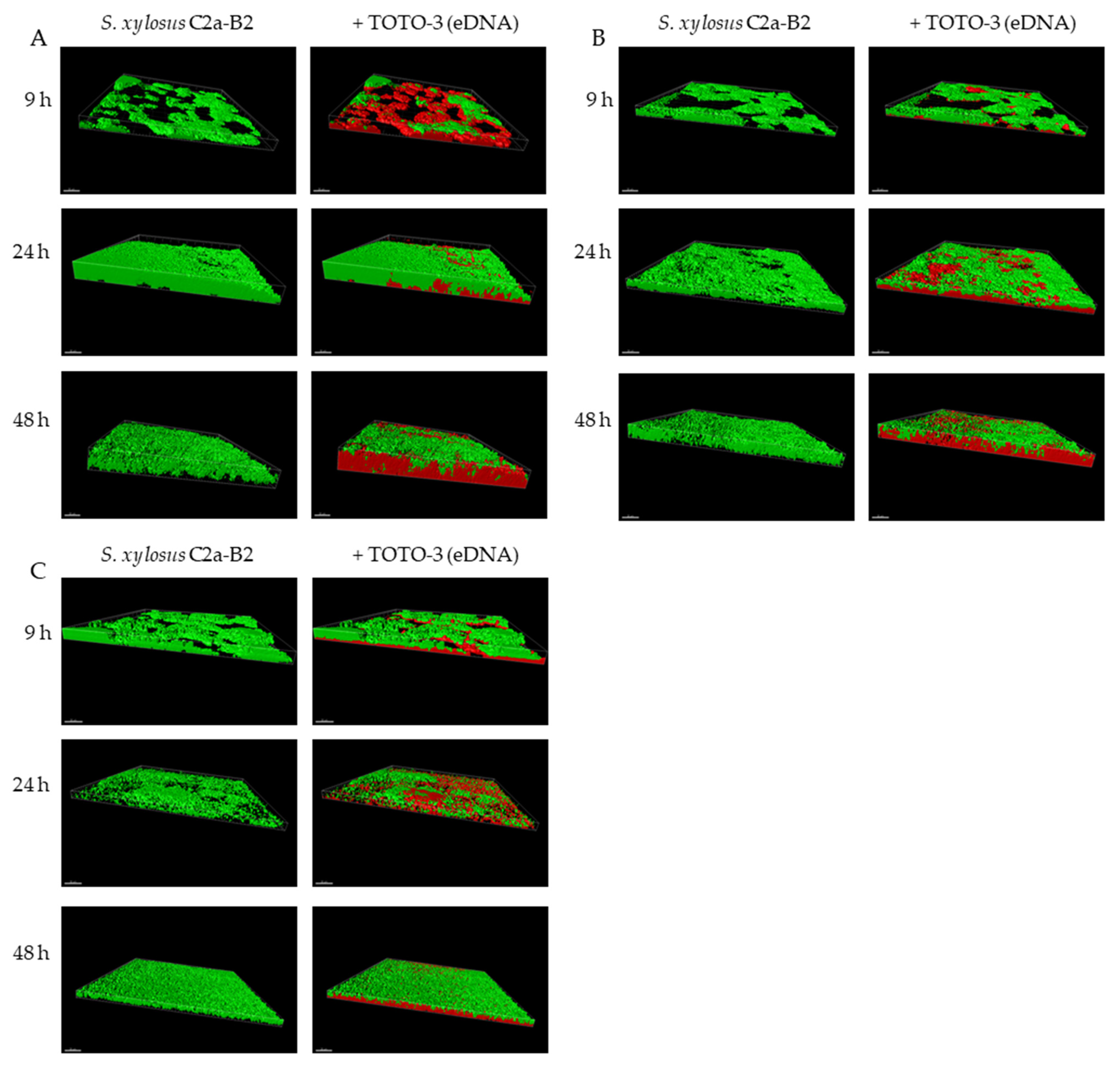
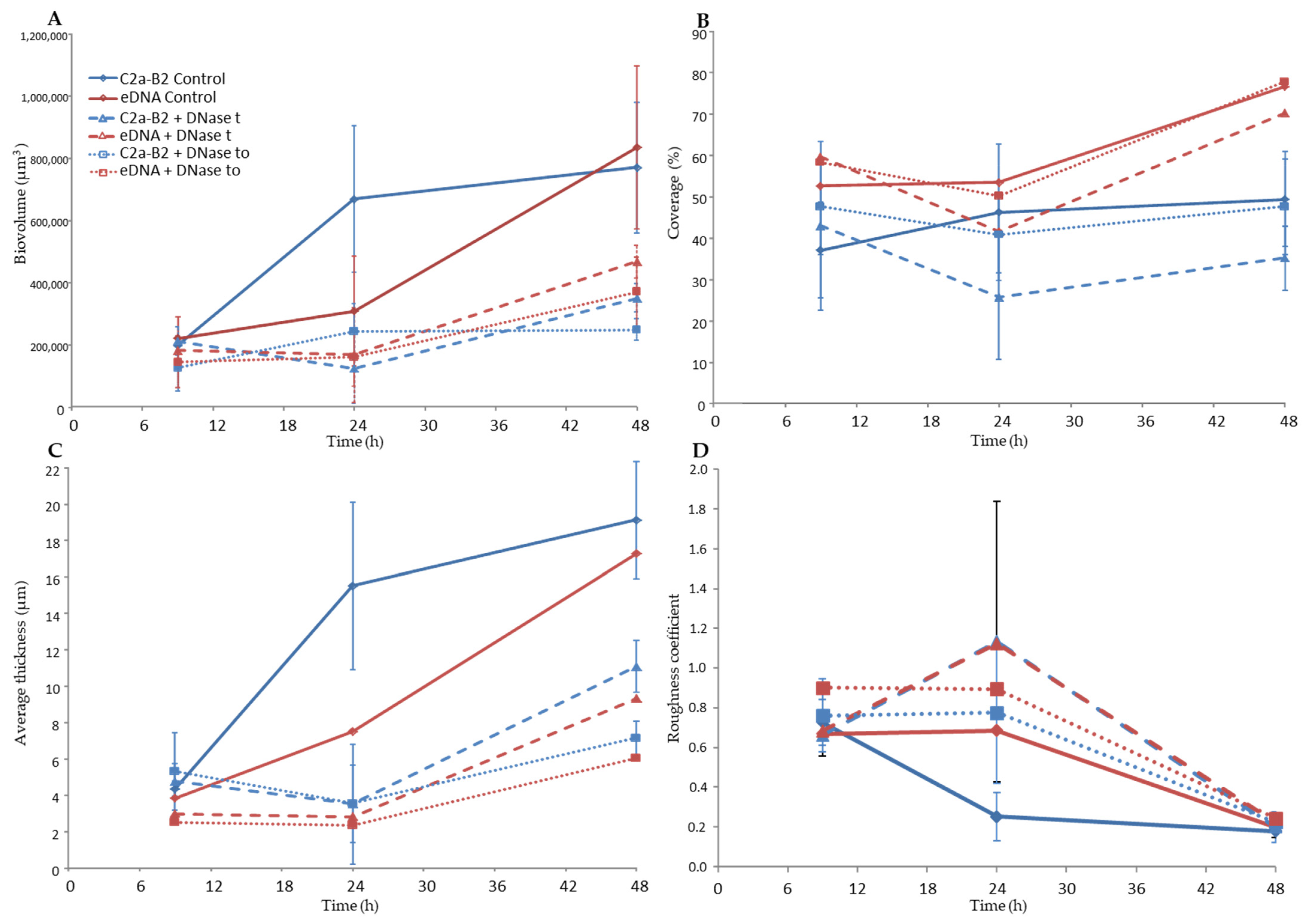
3.1. Evidence of Extracellular DNA by CLSM Analyses
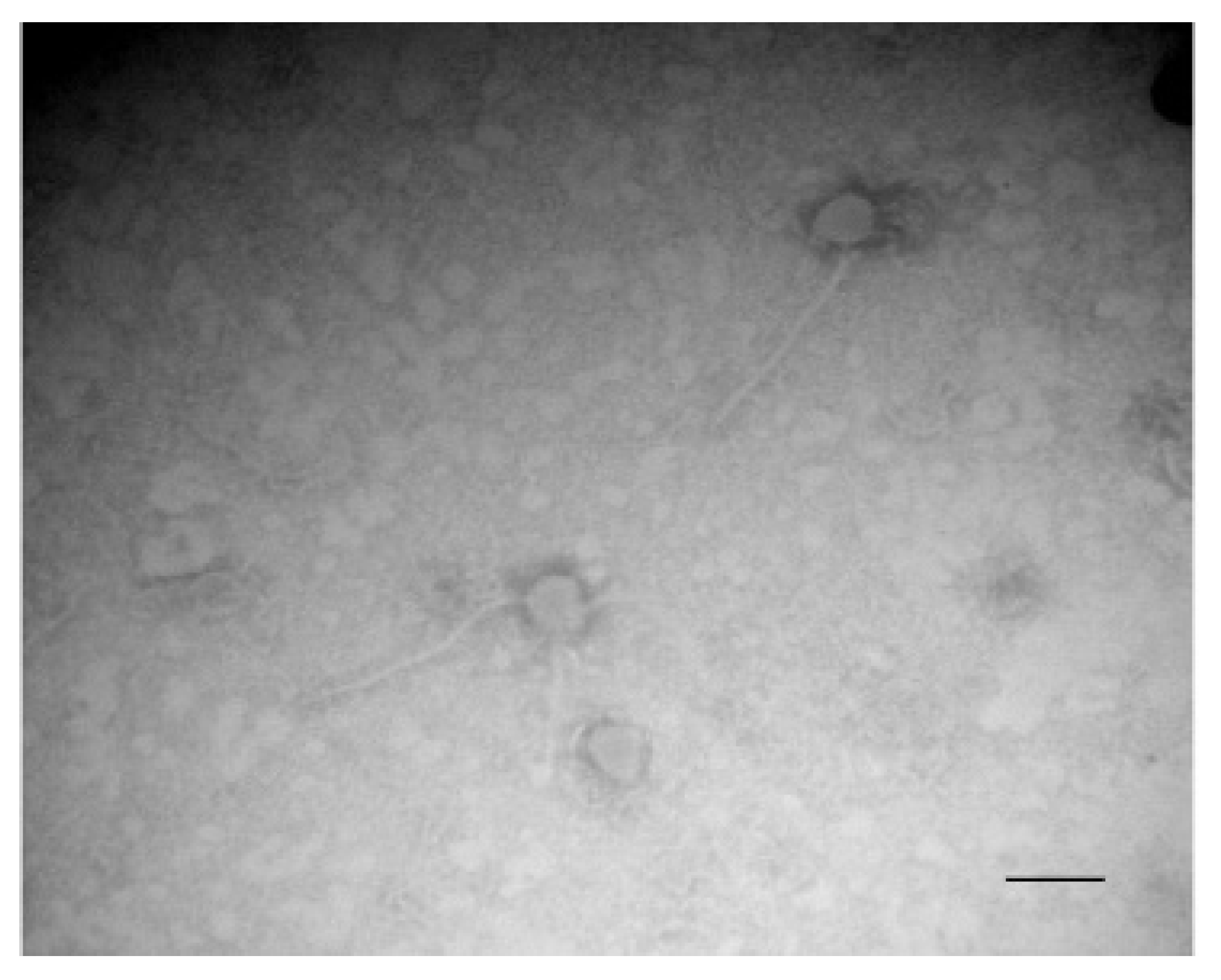
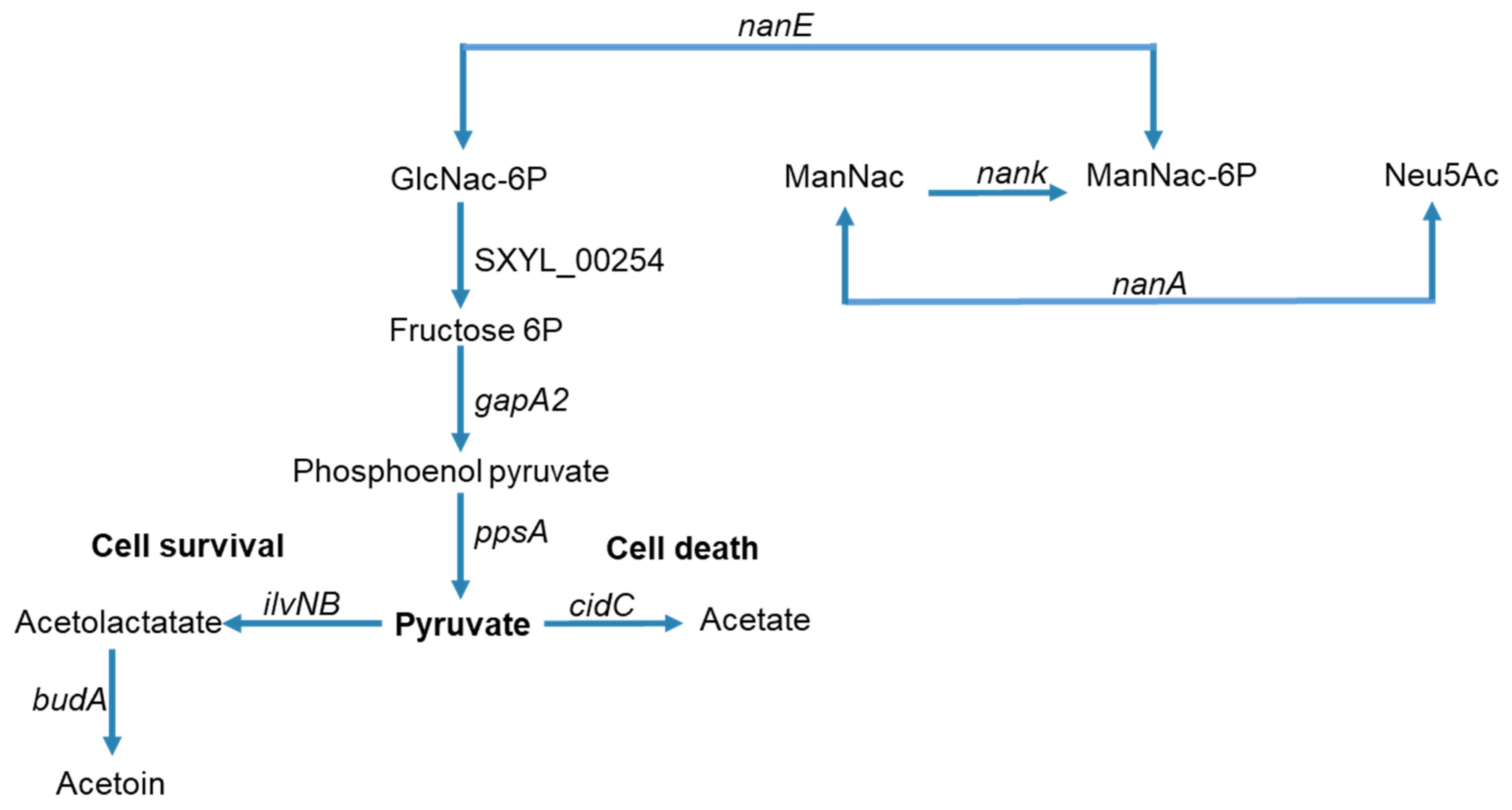
3.2. Cell Lysis
3.3. Slow Cellular Process in the Mature Biofilm
3.4. DNA/RNA, Protein Repair Systems
3.5. Pyrimidine and Purine Salvage
3.6. Amino Sugar Catabolism
3.7. Amino Acid Synthesis
3.8. Cofactor, Vitamin Synthesis
3.9. Inorganic Ion Transport
3.10. Response to Stress
4. Conclusions
Supplementary Materials
Author Contributions
Funding
Informed Consent Statement
Data Availability Statement
Acknowledgments
Conflicts of Interest
References
- Nagase, N.; Sasaki, A.; Yamashita, K.; Shimizu, A.; Wakita, Y.; Kitai, S.; Kawano, J. Isolation and species distribution of staphylococci from animal and human skin. J. Vet. Med. Sci. 2002, 64, 245–250. [Google Scholar] [CrossRef] [Scilit] [PubMed]
- Verdier-Metz, I.; Gagne, G.; Bornes, S.; Monsallier, F.; Veisseire, P.; Delbès-Paus, C.; Montel, M.C. Cow teat skin, a potential source of diverse microbial populations for cheese production. Appl. Environ. Microbiol. 2012, 78, 326–333. [Google Scholar] [CrossRef] [Scilit]
- Delbès, C.; Ali-Mandjee, L.; Montel, M.C. Monitoring bacterial communities in raw milk and cheese by culture-dependent and -independent 16S rRNA gene-based analyses. Appl. Environ. Microbiol. 2007, 73, 1882–1891. [Google Scholar] [CrossRef] [Scilit] [PubMed]
- Leroy, S.; Giammarinaro, P.; Chacornac, J.P.; Lebert, I.; Talon, R. Biodiversity of indigenous staphylococci of naturally fermented dry sausages and manufacturing environments of small-scale processing units. Food Microbiol. 2010, 27, 249–301. [Google Scholar] [CrossRef] [Scilit] [PubMed]
- Planchon, S.; Gaillard-Martinie, B.; Dordet-Frisoni, E.; Bellon-Fontaine, M.N.; Leroy, S.; Labadie, J.; Hébraud, M.; Talon, R. Formation of biofilm by Staphylococcus xylosus. Int. J. Food Microbiol. 2006, 109, 88–96. [Google Scholar] [CrossRef] [Scilit] [PubMed]
- Götz, F. Staphylococcus and biofilms. Mol. Microbiol. 2002, 43, 1367–1378. [Google Scholar] [CrossRef] [Scilit]
- Branda, S.S.; Vik, A.; Friedman, L.; Kolter, R. Biofilms: The matrix revisited. Trends Microbiol. 2005, 13, 20–26. [Google Scholar] [CrossRef] [Scilit]
- Moormeier, D.E.; Bayles, K.W. Staphylococcus aureus biofilm: A complex developmental organism. Mol. Microbiol. 2017, 140, 365–376. [Google Scholar] [CrossRef] [Scilit]
- Izano, E.A.; Amarante, M.A.; Kher, W.B.; Kaplan, J.B. Differential roles of poly-N-acetylglucosamine surface polysaccharide and extracellular DNA in Staphylococcus aureus and Staphylococcus epidermidis biofilms. Appl. Environ. Microbiol. 2008, 74, 470–476. [Google Scholar] [CrossRef] [Scilit]
- Arciola, C.R.; Campoccia, D.; Ravaioli, S.; Montanaro, L. Polysaccharide intercellular adhesin in biofilm: Structural and regulatory aspects. Front. Cell. Infect. Microbiol. 2015, 5, 7. [Google Scholar] [CrossRef] [Scilit]
- Planchon, S.; Desvaux, M.; Chafsey, I.; Chambon, C.; Leroy, S.; Hébraud, M.; Talon, R. Comparative subproteome analyses of planktonic and sessile Staphylococcus xylosus C2a: New insight in cell physiology of a coagulase-negative Staphylococcus in biofilm. J. Proteome Res. 2009, 8, 1797–1809. [Google Scholar] [CrossRef] [Scilit] [PubMed]
- Hussain, C.; Herrmann, M.; von Eiff, C.; Perdreau-Remington, F.; Peters, G. A 140-kilodalton extracellular protein is essential for the accumulation of Staphylococcus epidermidis strains on surfaces. Infect. Immun. 1997, 65, 519–524. [Google Scholar] [CrossRef] [Scilit] [PubMed]
- Cucarella, C.; Tormo, M.A.; Ubeda, C.; Trotonda, M.P.; Monzón, M.; Peris, C.; Amorena, B.; Lasa, I.; Penadès, J.R. Role of biofilm-associated protein bap in the pathogenesis of bovine Staphylococcus aureus. Infect. Immun. 2004, 72, 2177–2185. [Google Scholar] [CrossRef] [Scilit]
- Gross, M.; Cramton, S.E.; Götz, F.; Peschel, A. Key role of teichoic acid net charge in Staphylococcus aureus colonization of artificial surfaces. Infect. Immun. 2001, 69, 3423–3426. [Google Scholar] [CrossRef] [Scilit] [PubMed]
- Sadovskaya, I.; Vinogradov, E.; Li, J.; Jabbouri, S. Structural elucidation of the extracellular and cell-wall teichoic acids of Staphylococcus epidermidis RP62A, a reference biofilm-positive strain. Carbohydr. Res. 2004, 339, 1467–1473. [Google Scholar] [CrossRef] [Scilit] [PubMed]
- Mann, E.E.; Rice, K.C.; Boles, B.R.; Endres, J.L.; Ranjit, D.; Chandramohan, L.; Tsang, L.H.; Smeltzer, M.S.; Horswill, A.R.; Bayles, K.W. Modulation of eDNA release and degradation affects Staphylococcus aureus biofilm maturation. PLoS ONE 2009, 4, e5822. [Google Scholar] [CrossRef] [Scilit]
- Kavanaugh, J.S.; Flack, C.E.; Lister, J.; Ricker, E.B.; Ibberson, C.B.; Jenul, C.; Moormeier, D.E.; Delmain, E.A.; Bayles, K.W.; Horswill, A.R. Identification of extracellular DNA-binding proteins in the biofilm matrix. mBio 2019, 10, e01137-19. [Google Scholar] [CrossRef] [Scilit] [PubMed]
- Loza-Correa, M.; Ayala, J.A.; Perelman, I.; Hubbard, K.; Kalab, M.; Yi, Q.L.; Taha, M.; de Pedro, M.A.; Ramirez-Arcos, S. The peptidoglycan and biofilm matrix of Staphylococcus epidermidis undergo structural changes when exposed to human platelets. PLoS ONE 2019, 14, e0211132. [Google Scholar] [CrossRef] [Scilit] [PubMed]
- Whitchurch, C.B.; Tolker-Nielsen, T.; Ragas, P.C.; Mattick, J.S. Extracellular DNA required for bacterial biofilm formation. Science 2002, 295, 1487. [Google Scholar] [CrossRef] [Scilit] [PubMed]
- Jakubovics, N.S.; Shields, R.C.; Rajarajan, N.; Burgess, J.G. Life after death: The critical role of extracellular DNA in microbial biofilms. Lett. Appl. Microbiol. 2013, 57, 467–475. [Google Scholar] [CrossRef] [Scilit] [PubMed]
- Okshevsky, M.; Regina, V.R.; Meyer, R.L. Extracellular DNA as a target for biofilm control. Curr. Opin. Biotechnol. 2015, 33, 73–80. [Google Scholar] [CrossRef] [Scilit]
- Qin, Z.; Ou, Y.; Yang, L.; Zhu, Y.; Tolker-Nielsen, T.; Molin, S.; Qu, D. Role of autolysin-mediated DNA release in biofilm formation of Staphylococcus epidermidis. Microbiology 2007, 153, 2083–2092. [Google Scholar] [CrossRef] [Scilit]
- Bose, J.L.; Lehman, M.K.; Fey, P.D.; Bayles, K.W. Contribution of the Staphylococcus aureus Atl AM and GL Murein Hydrolase Activities in Cell Division, Autolysis, and Biofilm Formation. PLoS ONE 2012, 7, e42244. [Google Scholar] [CrossRef] [Scilit]
- Sadykov, M.R.; Bayles, K.W. The control of death and lysis in staphylococcal biofilms: A coordination of physiological signals. Curr. Opin. Microbiol. 2012, 15, 211–215. [Google Scholar] [CrossRef] [Scilit]
- Groicher, K.H.; Firek, B.A.; Fujimoto, D.F.; Bayles, K.W. The Staphylococcus aureus lrgAB operon modulates murein hydrolase activity and penicillin tolerance. J. Bacteriol. 2000, 182, 1794–1801. [Google Scholar] [CrossRef] [Scilit] [PubMed]
- Rice, K.C.; Bayles, K.W. Molecular control of bacterial death and lysis. Microbiol. Mol. Biol. Rev. 2008, 72, 85–109. [Google Scholar] [CrossRef] [Scilit]
- Rice, K.C.; Mann, E.E.; Endres, J.L.; Weiss, E.C.; Cassat, J.E.; Smeltzer, M.S.; Bayles, K.W. The cidA murein hydrolase regulator contributes to DNA release and biofilm development in Staphylococcus aureus. Proc. Natl. Acad. Sci. USA 2007, 104, 8113–8118. [Google Scholar] [CrossRef] [Scilit]
- Yang, S.J.; Dunman, P.M.; Projan, S.J.; Bayles, K.W. Characterization of the Staphylococcus aureus CidR regulon: Elucidation of a novel role for acetoin metabolism in cell death and lysis. Mol. Microbiol. 2006, 60, 454–468. [Google Scholar] [CrossRef] [Scilit] [PubMed]
- Webb, J.S.; Givskovy, M.; Kjelleberg, S. Bacterial biofilms: Prokaryotic adventures in multicellularity. Curr. Opin. Microbiol. 2003, 6, 578–585. [Google Scholar] [CrossRef] [Scilit] [PubMed]
- Webb, J.S.; Lau, M.; Kjelleberg, S. Bacteriophage and phenotypic variation in Pseudomonas aeruginosa biofilm development. J. Bacteriol. 2004, 186, 8066–8073. [Google Scholar] [CrossRef] [Scilit] [PubMed]
- Resch, A.; Fehrenbacher, B.; Eisele, K.; Schaller, M.; Götz, F. Phage release from biofilm and planktonic Staphylococcus aureus cells. FEMS Microbiol. Lett. 2005, 252, 89–96. [Google Scholar] [CrossRef] [Scilit]
- Vermassen, A.; Dordet-Frisoni, E.; de La Foye, A.; Micheau, P.; Laroute, V.; Leroy, S.; Talon, R. Adaptation of Staphylococcus xylosus to nutrients and osmotic stress in a salted meat model. Front. Microbiol. 2016, 7, 87. [Google Scholar] [CrossRef] [Scilit]
- Leroy, S.; Lebert, I.; Andant, C.; Talon, R. Interaction in dual species biofilms between Staphylococcus xylosus and Staphylococcus aureus. Int. J. Food Microbiol. 2020, 326, 108653. [Google Scholar] [CrossRef] [Scilit]
- Heydorn, A.; Nielsen, A.T.; Hentzer, M.; Sternberg, C.; Givskov, M.; Ersbøll, B.K.; Molin, S. Quantification of biofilm structures by the novel computer program COMSTAT. Microbiology 2000, 146, 2395–2407. [Google Scholar] [CrossRef] [Scilit]
- Vermassen, A.; de la Foye, A.; Loux, V.; Talon, R.; Leroy, S. Transcriptomic analysis of Staphylococcus xylosus in the presence of nitrate and nitrite in meat reveals its response to nitrosative stress. Front. Microbiol. 2014, 5, 691. [Google Scholar] [CrossRef] [Scilit]
- Smyth, G.K. Linear models and empirical bayes methods for assessing differential expression in microarray experiments. Stat. Appl. Genet. Mol. Biol. 2004, 3, 1–25. [Google Scholar] [CrossRef] [Scilit] [PubMed]
- Livak, K.; Schmittgen, T. Analysis of relative gene expression data using real-time quantitative PCR and the 2-ΔΔCT method. Methods 2001, 25, 402–408. [Google Scholar] [CrossRef] [Scilit] [PubMed]
- Schlafer, S.; Meyer, R.L. Confocal microscopy imaging of the biofilm matrix. J. Microbiol. Methods 2017, 138, 50–59. [Google Scholar] [CrossRef] [Scilit] [PubMed]
- Vilain, S.; Pretorius, J.M.; Theron, J.; Brözel, V.S. DNA as an adhesin: Bacillus cereus requires extracellular DNA to form biofilms. Appl. Environ. Microbiol. 2009, 75, 2861–2868. [Google Scholar] [CrossRef] [Scilit]
- Zetzmann, M.; Okshevsky, M.; Endres, J.; Sedlag, A.; Caccia, N.; Auchter, M.; Waidmann, M.S.; Desvaux, M.; Meyer, R.L.; Riedel, C.U. DNase-Sensitive and -Resistant Modes of Biofilm Formation by Listeria monocytogenes. Front. Microbiol. 2015, 6, 1428. [Google Scholar] [CrossRef] [Scilit]
- Pakkulnan, R.; Anutrakunchai, C.; Kanthawong, S.; Taweechaisupapong, S.; Chareonsudjai, P.; Chareonsudjai, S. Extracellular DNA facilitates bacterial adhesion during Burkholderia pseudomallei biofilm formation. PLoS ONE 2019, 14, e0213288. [Google Scholar] [CrossRef] [Scilit]
- Regina, V.R.; Lokanathan, A.R.; Modrzyński, J.J.; Sutherland, D.S.; Meyer, R.L. Surface physicochemistry and ionic strength affects eDNA’s role in bacterial adhesion to abiotic surfaces. PLoS ONE 2014, 9, e105033. [Google Scholar] [CrossRef] [Scilit]
- Deghorain, M.; Bobay, L.M.; Smeesters, P.R.; Bousbata, S.; Vermeersch, M.; Perez-Morga, D.; Dreze, P.A.; Rocha, E.P.; Touchon, M.; Van Melderen, L. Characterization of Novel Phages Isolated in Coagulase-Negative Staphylococci Reveals Evolutionary Relationships with Staphylococcus aureus phages. J. Bacteriol. 2012, 194, 5829–5839. [Google Scholar] [CrossRef] [Scilit] [PubMed]
- Deghorain, M.; Van Melderen, L. The Staphylococci phages family: An overview. Viruses 2012, 4, 3316–3335. [Google Scholar] [CrossRef] [Scilit] [PubMed]
- Levine, M.; Truesdell, S.; Ramakrishnan, T.; Bronson, M.J. Dual control of lysogeny by bacteriophage P22: An antirepressor locus and its controlling elements. J. Mol. Biol. 1975, 91, 421–438. [Google Scholar] [CrossRef] [Scilit]
- Carrolo, M.; Frias, M.J.; Pinto, F.R.; Melo-Cristino, J.; Ramirez, M. Prophage Spontaneous Activation Promotes DNA Release Enhancing Biofilm Formation in Streptococcus pneumoniae. PLoS ONE 2010, 5, e15678. [Google Scholar] [CrossRef] [Scilit] [PubMed]
- Gödeke, J.; Paul, K.; Lassak, J.; Thormann, K.M. Phage-induced lysis enhances biofilm formation in Shewanella oneidensis MR-1. ISME J. 2011, 5, 613–626. [Google Scholar] [CrossRef] [Scilit] [PubMed]
- Binnenkade, L.; Teichmann, L.; Thormann, K.M. Iron triggers λSo prophage induction and release of extracellular DNA in Shewanella oneidensis MR-1biofilms. Appl. Environ. Microbiol. 2014, 80, 5304–5316. [Google Scholar] [CrossRef] [Scilit]
- Thomas, V.C.; Sadykov, M.R.; Chaudhari, S.S.; Jones, J.; Endres, J.L.; Widhelm, T.J.; Ahn, J.S.; Jawa, R.S.; Zimmerman, M.C.; Bayles, K.W. A central role for carbon-overflow pathways in the modulation of bacterial cell death. PLoS Pathog. 2014, 10, e1004205. [Google Scholar] [CrossRef] [Scilit] [PubMed]
- Otto, M. Staphylococcal biofilms. Curr. Top. Microbiol. Immunol. 2008, 322, 207–228. [Google Scholar] [CrossRef] [Scilit]
- Dubrac, S.; Boneca, I.G.; Poupel, O.; Msadek, T. New insights into the WalK/WalR (YycG/YycF) essential signal transduction pathway reveal a major role in controlling cell wall metabolism and biofilm formation in Staphylococcus aureus. J. Bacteriol. 2007, 189, 8257–8269. [Google Scholar] [CrossRef] [Scilit]
- Gajdiss, M.; Monk, I.R.; Bertsche, U.; Kienemund, J.; Funk, T.; Dietrich, A.; Hort, M.; Sib, E.; Stinear, T.P.; Bierbaum, G. YycH and YycI Regulate Expression of Staphylococcus aureus Autolysins by Activation of WalRK Phosphorylation. Microorganisms 2020, 8, 870. [Google Scholar] [CrossRef] [Scilit]
- McKenzie, G.J.; Magner, D.B.; Lee, P.L.; Rosenberg, S.M. The dinB Operon and Spontaneous Mutation in Escherichia coli. J. Bacteriol. 2003, 185, 3972–3977. [Google Scholar] [CrossRef] [Scilit]
- Ayora, S.; Carrasco, B.; Cardenas, P.P.; Cesar, C.E.; Canas, C.; Yadav, T.; Marchisone, C.; Alonso, J.C. Double-strand break repair in bacteria: A view from Bacillus subtilis. FEMS Microbiol. Rev. 2011, 35, 1055–1081. [Google Scholar] [CrossRef] [Scilit] [PubMed]
- Yao, Y.; Daniel, E.; Sturdevant, D.E.; Otto, M. Genome wide analysis of gene expression in Staphylococcus epidermidis biofilms: Insights into the pathophysiology of S. epidermidis biofilms and the role of phenol-soluble modulins in formation of biofilms. J. Infect. Dis. 2005, 191, 289–298. [Google Scholar] [CrossRef] [Scilit]
- Hollis, T.; Lau, A.; Ellenberger, T. Structural studies of human alkyladenine glycosylase and E. coli 3-methyladenine glycosylase. Mutat. Res. DNA Repair 2000, 460, 201–210. [Google Scholar] [CrossRef] [Scilit]
- Iyer, L.M.; Zhang, D.; Rogozin, I.B.; Aravind, L. Evolution of the deaminase fold and multiple origins of eukaryotic editing and mutagenic nucleic acid deaminases from bacterial toxin systems. Nucleic Acids Res. 2011, 39, 9473–9497. [Google Scholar] [CrossRef] [Scilit]
- Domingues, S.; Moreira, R.N.; Andrade, J.M.; Dos Santos, R.F.; Bárria, C.; Viegas, S.C.; Arraiano, C.M. The role of RNase R in trans-translation and ribosomal quality control. Biochimie 2015, 114, 113–118. [Google Scholar] [CrossRef] [Scilit] [PubMed]
- Schuman, W.; Hecker, M.; Msadek, T. Regulation and function of heat-inducible genes in Bacillus subtilis. In Bacillus subtilis and Its Closest Relatives; American Society of Microbiology: Washington, DC, USA, 2002; pp. 359–368. [Google Scholar]
- Wang, P.; Dalbey, R.E. Inserting membrane proteins: The YidC/Oxa1/Alb3 machinery in bacteria, mitochondria, and chloroplasts. Biochim. et Biophys. Acta (BBA)—Biomembr. 2011, 1808, 866–875. [Google Scholar] [CrossRef] [Scilit]
- Switzer, R.L.; Zalkin, H.; Saxild, H.H. Purine, Pyrimidine, and Pyridine Nucleotide Metabolism. In Bacillus subtilis and Its Closest Relatives; American Society of Microbiology: Washington, DC, USA, 2002; pp. 255–269. [Google Scholar]
- Leroy, S.; Vermassen, A.; Ras, G.; Talon, R. Insight into the genome of Staphylococcus xylosus, a ubiquitous species well adapted to meat products. Microorganisms 2017, 5, 52. [Google Scholar] [CrossRef] [Scilit] [PubMed]
- Beenken, K.E.; Dunman, P.M.; McAleese, F.; Macapagal, D.; Murphy, E.; Projan, S.J.; Blevins, J.S.; Smeltzer, M.S. Global gene expression in Staphylococcus aureus biofilms. J. Bacteriol. 2004, 186, 4665–4684. [Google Scholar] [CrossRef] [Scilit] [PubMed]
- Vimr, E.R.; Kalivoda, K.A.; Deszo, E.L.; Steenbergen, S.M. Diversity of Microbial Sialic Acid Metabolism. Microbiol. Mol. Biol. Rev. 2004, 68, 132–153. [Google Scholar] [CrossRef] [Scilit] [PubMed]
- Borisov, V.B.; Gennis, R.B.; Hemp, J.; Verkhovsky, M.I. The cytochrome bd respiratory oxygen reductases. Biochim. Biophys. Acta 2011, 1807, 1398–1413. [Google Scholar] [CrossRef] [Scilit] [PubMed]
- Belitsky, B.R. Biosynthesis of amino acids of the glutamate and aspartate families, alanine, and polyamines. In Bacillus subtilis and Its Closest Relatives; American Society of Microbiology: Washington, DC, USA, 2002; pp. 203–231. [Google Scholar]
- Billot-Klein, D.; Gutmann, L.; Bryant, D.; Bell, D.; van Heijenoort, J.; Grewal, J.; Shlaes, D.M. Peptidoglycan synthesis and structure in Staphylococcus haemolyticus expressing increasing levels of resistance to glycopeptide antibiotics. J. Bacteriol. 1996, 178, 4696–4703. [Google Scholar] [CrossRef] [Scilit] [PubMed]
- Schleimer, N.; Kaspar, U.; Drescher, M.; Seggewiß, J.; von Eiff, C.; Proctor, R.A.; Peters, G.; Kriegeskorte, A.; Becker, K. The Energy-Coupling Factor Transporter Module EcfAA’T, a Novel Candidate for the Genetic Basis of Fatty Acid-Auxotrophic Small-Colony Variants of Staphylococcus aureus. Front. Microbiol. 2018, 9, 1863. [Google Scholar] [CrossRef] [Scilit] [PubMed]
- Fiegler, H.; Brückner, R. Identification of the serine acetyltransferase gene of Staphylococcus xylosus. FEMS Microbiol. Lett. 1997, 148, 181–187. [Google Scholar] [CrossRef]
- Kelliher, J.L.; Radin, J.N.; Kehl-Fie, T.E. PhoPR contributes to Staphylococcus aureus growth during phosphate starvation and pathogenesis in an environment-specific manner. Infect. Immun. 2018, 86, e00371-18. [Google Scholar] [CrossRef] [Scilit]
- Vermassen, A.; Talon, R.; Leroy, S. Ferritin, an iron source in meat for Staphylococcus xylosus? Int. J. Food Microbiol. 2016, 225, 20–26. [Google Scholar] [CrossRef] [Scilit]
- Haikarainen, T.; Papageorgiou, A.C. 2010. Dps-like proteins: Structural and functional insights into a versatile protein family. Cell. Mol. Life Sci. 2010, 67, 341–351. [Google Scholar] [CrossRef] [Scilit]
- Ma, Z.; Jacobsen, F.E.; Giedroc, D.P. Chemistry Controls Bacterial Metal Homeostasis. Chem. Rev. 2009, 109, 4644–4681. [Google Scholar] [CrossRef] [Scilit]
- Rosenstein, R.; Futter-Bryniok, D.; Götz, F. The choline-converting pathway in Staphylococcus xylosus C2a: Genetic and physiological characterization. J. Bacteriol. 1999, 181, 2273–2278. [Google Scholar] [CrossRef] [Scilit] [PubMed]
- Resch, A.; Rosenstein, R.; Nerz, C.; Götz, F. Differential gene expression profiling of Staphylococcus aureus cultivated under biofilm and planktonic conditions. Appl. Environ. Microbiol. 2005, 71, 2663–2676. [Google Scholar] [CrossRef] [Scilit] [PubMed]
- Beloin, C.; Ghigo, J.M. Finding gene-expression patterns in bacterial biofilms. Trends Microbiol. 2005, 13, 16–19. [Google Scholar] [CrossRef] [Scilit] [PubMed]

| Mean Ratio of Expression | ||||
|---|---|---|---|---|
| Gene ID | Gene Name | Description | 24 h/9 h | 48 h/9 h |
| CELL LYSIS | ||||
| SXYL_01051 | Phage integrase | 7.2 | 17.9 | |
| SXYL_01054-66 | Phage proteins | 5.7 * | 12.4 * | |
| SXYL_01727-84 | Phage proteins | 3.8 * | 3.1 * | |
| SXYL_00365-66 | cidAB | Holin-like protein CidA and CidB | 2.7 * | 13.5 * |
| SXYL_00367 | cidC | Pyruvate oxidase | 9.2 | |
| SXYL_00431 | budA | Alpha-acetolactate decarboxylase | 8.3 | 4.9 |
| SXYL_00873-74 | ilvNB | Acetolactate synthase | 2.1 * | |
| INFORMATION STORAGE, PROCESSING, CELLULAR PROCESSES | ||||
| Replication, recombination | ||||
| SXYL_01294 | dnaG | DNA primase | 2.2 | 2.1 |
| SXYL_00005-06 | gyrBA | DNA gyrase subunits B,A | 2.1 * | |
| Transcription | ||||
| SXYL_00212 | Transcriptional regulator | 2.1 | 2.6 | |
| SXYL_00418 | marR | MarR-family transcriptional regulator | 4.1 | 4.5 |
| SXYL_00690 | MarR family transcriptional regulator | 3.2 | 5.1 | |
| SXYL_00457 | Acetyltransferase | 2.5 | ||
| SXYL_00523 | PadR-like family transcriptional regulator | 5.9 | 7.0 | |
| SXYL_00786 | Transcriptional regulator, GntR family | 5.1 | ||
| SXYL_00904 | Transcriptional regulator, GntR family | 2.3 | ||
| SXYL_02403 | Transcriptional regulator, GntR family | 4.3 | 5.8 | |
| SXYL_01239 | mnmA | tRNA-specific 2-thiouridylase MnmA | 2.4 | 2.8 |
| SXYL_01352 | AraC-family transcriptional regulator | 2.3 | ||
| SXYL_02345 | LacI-family transcriptional regulator | 2.3 | 2.1 | |
| SXYL_02663 | Transcriptional regulator, LacI family | 2.3 | ||
| SXYL_02482 | Transcriptional regulator, MerR family | 2.1 | ||
| SXYL_02549 | Transcriptional regulator | 5.1 | 5.1 | |
| SXYL_02596 | HxlR family transcriptional regulator | 3.1 | ||
| SXYL_00022 | walK | Sensor protein kinase walK | 2.1 | |
| SXYL_00323 | isaA | Probable transglycosylase IsaA | 2.8 | |
| SXYL_00116 | sceD2 | Probable transglycosylase SceD 2 | 8.7 | 18.6 |
| SXYL_00117 | sceD1 | Probable transglycosylase SceD1 | 13.7 | 21.7 |
| Translation, ribosomal biogenesis | ||||
| SXYL_01279-80 | prmA | Ribosomal protein L11 methyltransferase | 3.6 * | 3.5 * |
| SXYL_01281 | rpsU | 30S ribosomal protein S21 | 2.1 | 2.0 |
| SXYL_01549 | rpsN | 30S ribosomal protein S14 | 3.5 | 3.5 |
| SXYL_01550 | rpmG2 | 50S ribosomal protein L33 2 | 2.0 | |
| SXYL_01615 | infB | Translation initiation factor IF-2 | 2.0 | |
| SXYL_01619 | rimP | Ribosome maturation factor RimP | 2.2 | |
| SXYL_01673 | Peptide deformylase-like | 2.1 | ||
| SXYL_02139 | queC | 7-cyano-7-deazaguanine synthase | 3.2 | 3.3 |
| SXYL_02689 | rsmG | Ribosomal RNA small subunit methyltransferase G | 2.8 | 2.5 |
| SXYL_02690-91 | mnmGE | tRNA uridine 5-carboxymethylaminomethyl, GTPase | 2.9 * | 2.6 * |
| DNA/RNA repair | ||||
| SXYL_00942 | dinB | DNA polymerase IV | 2.8 | 3.7 |
| SXYL_00004 | recF | DNA replication and repair protein RecF | 2.1 | |
| SXYL_01201 | tag | DNA-3-methyladenine glycosylase | 2.1 | |
| SXYL_01206 | DNA repair RadC family protein | 2.8 | ||
| SXYL_02062 | rnr | Ribonuclease R | 2.1 | |
| SXYL_01796 | uvrC | UvrABC system protein C | 3.7 | 2.1 |
| SXYL_02088-89 | uvrAB | UvrABC system protein A, B | 4.3 * | 3.5 * |
| SXYL_00943 | Putative exonuclease | 2.3 | 3.0 | |
| SXYL_02241 | Endonuclease III | 2.2 | ||
| Protein turnover | ||||
| SXYL_02399 | ctsR | Transcriptional regulator CtsR | 5.4 | 6.1 |
| SXYL_02396 | clpC | ATP-dependent Clp protease ATP-binding subunit ClpC | 4.9 | 4.8 |
| SXYL_01946 | clpB | Chaperone protein ClpB | 10.8 | 13.4 |
| SXYL_00898 | groS | 10 kDa chaperonin | 2.1 | |
| SXYL_01275 | hrcA | Heat-inducible transcription repressor HrcA | 3.8 | 4.6 |
| SXYL_01276 | grpE | Protein GrpE | 3.9 | 4.8 |
| SXYL_01277 | dnaK | Chaperone protein DnaK | 3.4 | 3.7 |
| SXYL_01278 | dnaJ | Chaperone protein dnaJ | 3.9 | 3.9 |
| SXYL_01192 | clpX | ATP-dependent Clp protease ATP-binding subunit ClpX | 2.2 | 2.1 |
| SXYL_01933 | mecA | Adapter protein MecA | 2.0 | |
| SXYL_02418 | hslO | 33 kDa chaperonin | 2.5 | 2.1 |
| SXYL_00548 | Heat shock protein Hsp20 | 7.6 | 7.3 | |
| SXYL_00549 | Heat shock protein Hsp20 | 9.5 | 8.8 | |
| SXYL_00505 | Membrane protein insertase, YidC/Oxa1 family | 2.2 | ||
| PYRIMIDINE, PURINES SALVAGE | ||||
| Pyrimidine | ||||
| SXYL_00796 | pdp | Pyrimidine-nucleoside phosphorylase | 2.1 | |
| SXYL_01688-91 | pyrCBPR | Pyrimidine synthesis | 8.2 * | |
| SXYL_01407 | Nucleoside-diphosphate-sugar epimerase | 2.1 | ||
| SXYL_02117-18 | nrdFE | Ribonucleoside-diphosphate reductase | 2.8 * | |
| Purine | ||||
| SXYL_00017 | purA | Adenylosuccinate synthetase | 2.2 | |
| SXYL_01548 | guaC | GMP reductase | 2.5 | 3.0 |
| SXYL_02435 | purR | Pur operon repressor | 2.0 | |
| CARBOHYDRATE CATABOLISM | ||||
| Amino sugar catabolism | ||||
| SXYL_00403 | nanE | N-acetylmannosamine-6-phosphate 2-epimerase | 2.5 | |
| SXYL_00404 | RpiR family transcriptional regulator | 2.1 | ||
| SXYL_00405 | nanK | N-acetylmannosamine kinase | 2.5 | |
| SXYL_00406 | nanA | N-acetylneuraminate lyase | 3.9 | 2.7 |
| SXYL_00254 | Glucosamine-6-phosphate deaminase | 3.4 | ||
| Glycolysis | ||||
| SXYL_00773-76 | mtlDFA | PTS system mannitol | 4.1 * | 5.4 * |
| SXYL_00253 | PTS system, glucose-specific IIBC component | 4.7 | 2.7 | |
| SXYL_01179 | gapA2 | Glyceraldehyde-3-phosphate dehydrogenase 2 | 2.7 | |
| SXYL_00207 | ppsA | Pyruvate phosphate dikinase | 5.6 | 5.6 |
| SXYL_00208 | Putative pyruvate, phosphate dikinase regulatory protein | 6.3 | 7.3 | |
| Pentose, glucuronate | ||||
| SXYL_01454 | Xylose isomerase-like protein | 2.3 | ||
| SXYL_00123 | araB | l-ribulokinase | 2.1 | |
| SXYL_00124 | araD | l-ribulose-5-phosphate 4-epimerase | 2.2 | 2.4 |
| SXYL_02343 | 2-keto-3-deoxygluconate kinase | 2.6 | 5.4 | |
| Energy | ||||
| SXYL_01849-50 | cydBA | Cytochrome bd-type quinol oxidase | 2.5 * | |
| AMINO ACID METABOLISM | ||||
| Transport | ||||
| SXYL_00264-66 | Amino acid ABC transporter | 4.1 * | ||
| SXYL_02464 | Ammonia permease | 2.7 | 4.3 | |
| SXYL_00661-65 | ABC-type amino acid transport system, Glutamate ABC transporter | 2.7 * | ||
| Glutamate/glutamine | ||||
| SXYL_02459 | gltD | NADH-glutamate synthase small unit | 2.4 | |
| SXYL_02460 | gltB | Glutamate synthase large subunit | 2.9 | 2.3 |
| SXYL_02461 | gltC | Transcription activator of glutamate synthase operon | 3.6 | |
| SXYL_01568-69 | glnA1R | Glutamine synthetase, repressor | 3.4 * | |
| SXYL_00107-08 | glnA2 | Glutamine synthetase, Aldehyde dehydrogenase | 6.7 * | 4.5 * |
| SXYL_01686-87 | carBA | Carbamoyl-phosphate synthase | 4.1 * | |
| Histidine | ||||
| SXYL_00008 | hutH | Histidine ammonia-lyase (Histidase) | 6.4 | 5.0 |
| SXYL_00617-18 | hutUI | Urocanate hydratase, Imidazolonepropionase | 2.9 * | 3.1 * |
| Valine/leucine/isoleucine | ||||
| SXYL_00867-74 | ilvADCBACNB | Valine, leucine, isoleucine synthesis | 2.7 * | |
| Glycine/serine/threonine | ||||
| SXYL_01317-19 | gcvTPAPB | Aminomethyltransferase, probable glycine dehydrogenase | 3.0 * | 2.3 * |
| Cysteine/methionine | ||||
| SXYL_02417 | cysK | Cysteine synthase | 2.3 | |
| SXYL_02636-37 | cysIJ | Sulfite reductase (NADPH) hemoprotein | 3.3 * | |
| SXYL_01238 | Putative cysteine desulfurase | 2.5 | 3.2 | |
| SXYL_01672 | fmt | Methionyl-tRNA formyltransferase | 2.2 | |
| Alanine/lysine | ||||
| SXYL_01473 | lysA | Diaminopimelate decarboxylase | 5.3 | 3.3 |
| SXYL_01474 | alr2 | Alanine racemase 2 | 11.9 | 7.6 |
| SXYL_01475 | Uncharacterized hydrolase | 12.1 | 7.6 | |
| SXYL_01476-78 | dapHBA | 2,3,4,5-tetrahydropyridine-2,6-dicarboxylate N-acetyltransferase, | 4.1 * | 2.5 * |
| 4-hydroxy-tetrahydrodipicolinate reductase, synthase | ||||
| SXYL_02665 | Dihydrodipicolinate synthase | 2.0 | 3.2 | |
| SXYL_00325 | ldhD | d-lactate dehydrogenase | 10.3 | 11.9 |
| COFACTOR, VITAMIN SYNTHESIS | ||||
| SXYL_01097-100 | ribDEBAH | Riboflavin biosynthesis | 2.8 * | 3.7 * |
| SXYL_00734-35 | ecfA2T | Energy-coupling factor transporter | 2.2 * | |
| SXYL_01194 | hemA | Glutamyl-tRNA reductase | 2.0 | |
| SXYL_01196 | hemC | Porphobilinogen deaminase | 2.5 | |
| SXYL_02635 | cobA | Uroporphyrin-III C-methyltransferase | 2.0 | 2.9 |
| SXYL_00839 | thiD | Hydroxymethylpyrimidine/phosphomethylpyrimidine kinase | 2.0 | |
| SXYL_01231 | HesA/MoeB/ThiF family protein | 2.1 | 2.0 | |
| SXYL_01893 | menF | Isochorismate synthase | 2.0 | 2.4 |
| SXYL_02295 | folE2 | GTP cyclohydrolase FolE2 | 2.2 | |
| INORGANIC ION TRANSPORT | ||||
| Phosphate | ||||
| SXYL_01484-86 | pstSCA | ABC-type phosphate transport system | 2.4 * | |
| Fe | ||||
| SXYL_01359 | fur | Ferric uptake regulation protein | 2.3 | 2.1 |
| SXYL_02216-18 | sitABC | ABC metal ion transport system, Iron/manganese/zinc | 2.0 * | 4.7 * |
| SXYL_00561-63 | Oxidoreductase, Monooxygenase, Transporter | 5.6 * | 12.4 * | |
| SXYL_00793 | dps | Dps family protein | 3.6 | 3.7 |
| Mn, Co, Zn, Cu | ||||
| SXYL_02659-60 | mtsC | Metal ion ABC transporter, manganese | 3.4 * | |
| SXYL_00416 | Putative ABC-type Mn Zn transport system periplasmic | 2.2 | ||
| SXYL_00783-84 | czrA | Co Zn Cd efflux system component, Zn, Co transport repressor CzrA | 11.6 * | 11.8 * |
| SXYL_00326-27 | copZA | Copper chaperone CopZ, Copper-exporting P-type ATPase A | 10.0 * | 13.2 * |
| SXYL_00512 | Putative cation efflux family protein | 4.5 | 3.4 | |
| RESPONSE TO STRESS | ||||
| Osmotic | ||||
| SXYL_00223 | cudT | Choline transporter | 2.4 | |
| SXYL_00224 | cudC | Putative transcriptional regulator | 4.9 | 5.6 |
| SXYL_00225 | cudA | Glycine betaine aldehyde dehydrogenase | 21.1 | 21.4 |
| SXYL_00226 | betA | Oxygen-dependent choline dehydrogenase | 13.4 | 12.3 |
| SXYL_02221-26 | mnhF2E2D2C2B2A2 | Na(+)/H(+) antiporter | 2.7 * | |
| SXYL_02219 | Putative NhaP-type Na+ H+ and K+ H+ antiporter | 2.1 | ||
| SXYL_00425 | Na(+)/H(+) exchanger | 2.1 | ||
| SXYL_00407 | Sodium:solute symporter family protein | 4.0 | 2.3 | |
| Oxidative | ||||
| SXYL_01551 | katB | Catalase B | 2.4 | |
| SXYL_02505 | katA | Catalase A | 4.2 | 5.7 |
| SXYL_01797 | trxA | Thioredoxin | 2.6 | |
| SXYL_02083 | trxB | Thioredoxin reductase | 2.3 | 2.3 |
| SXYL_02534-35 | ahpCF | Alkyl hydroperoxide reductase | 4.2 * | 4.2 * |
| SXYL_00895 | Nitroreductase family protein | 4.9 | 4.1 | |
Publisher’s Note: MDPI stays neutral with regard to jurisdictional claims in published maps and institutional affiliations. |
© 2021 by the authors. Licensee MDPI, Basel, Switzerland. This article is an open access article distributed under the terms and conditions of the Creative Commons Attribution (CC BY) license (https://creativecommons.org/licenses/by/4.0/).
Share and Cite
Leroy, S.; Lebert, I.; Andant, C.; Micheau, P.; Talon, R. Investigating Extracellular DNA Release in Staphylococcus xylosus Biofilm In Vitro. Microorganisms 2021, 9, 2192. https://doi.org/10.3390/microorganisms9112192
Leroy S, Lebert I, Andant C, Micheau P, Talon R. Investigating Extracellular DNA Release in Staphylococcus xylosus Biofilm In Vitro. Microorganisms. 2021; 9(11):2192. https://doi.org/10.3390/microorganisms9112192
Chicago/Turabian StyleLeroy, Sabine, Isabelle Lebert, Carine Andant, Pierre Micheau, and Régine Talon. 2021. "Investigating Extracellular DNA Release in Staphylococcus xylosus Biofilm In Vitro" Microorganisms 9, no. 11: 2192. https://doi.org/10.3390/microorganisms9112192
APA StyleLeroy, S., Lebert, I., Andant, C., Micheau, P., & Talon, R. (2021). Investigating Extracellular DNA Release in Staphylococcus xylosus Biofilm In Vitro. Microorganisms, 9(11), 2192. https://doi.org/10.3390/microorganisms9112192

