Biocontrol Efficiency of Endophytic Fungi Against Stem-Rot in Cymbidium goeringii

 , ,
, ,
Abstract
1. Introduction
2. Materials and Methods
2.1. Plant Materials
2.2. Isolation and Identification of Endophytic Fungi from C. goeringii
2.3. The Co-Cultivation of Endophytic Fungi with Arabidopsis Thaliana
2.4. The Ability of Endophytic Fungi to Synthesize IAA and Nitrogen-Fixing Capacity
2.5. Plate Confrontation Assays
2.6. The Effects of Endophytic Fungi on the Growth Status of Tissue-Cultured Seedlings of C. goeringii
2.7. The Antagonistic Effects of Endophytic Fungi Against F. oxysporum in Tissue-Cultured Seedlings of C. goeringii
2.8. The Effects of Endophytic Fungi Fermentation Broth on C. goeringii Seedlings
2.9. Statistical Analysis
3. Results
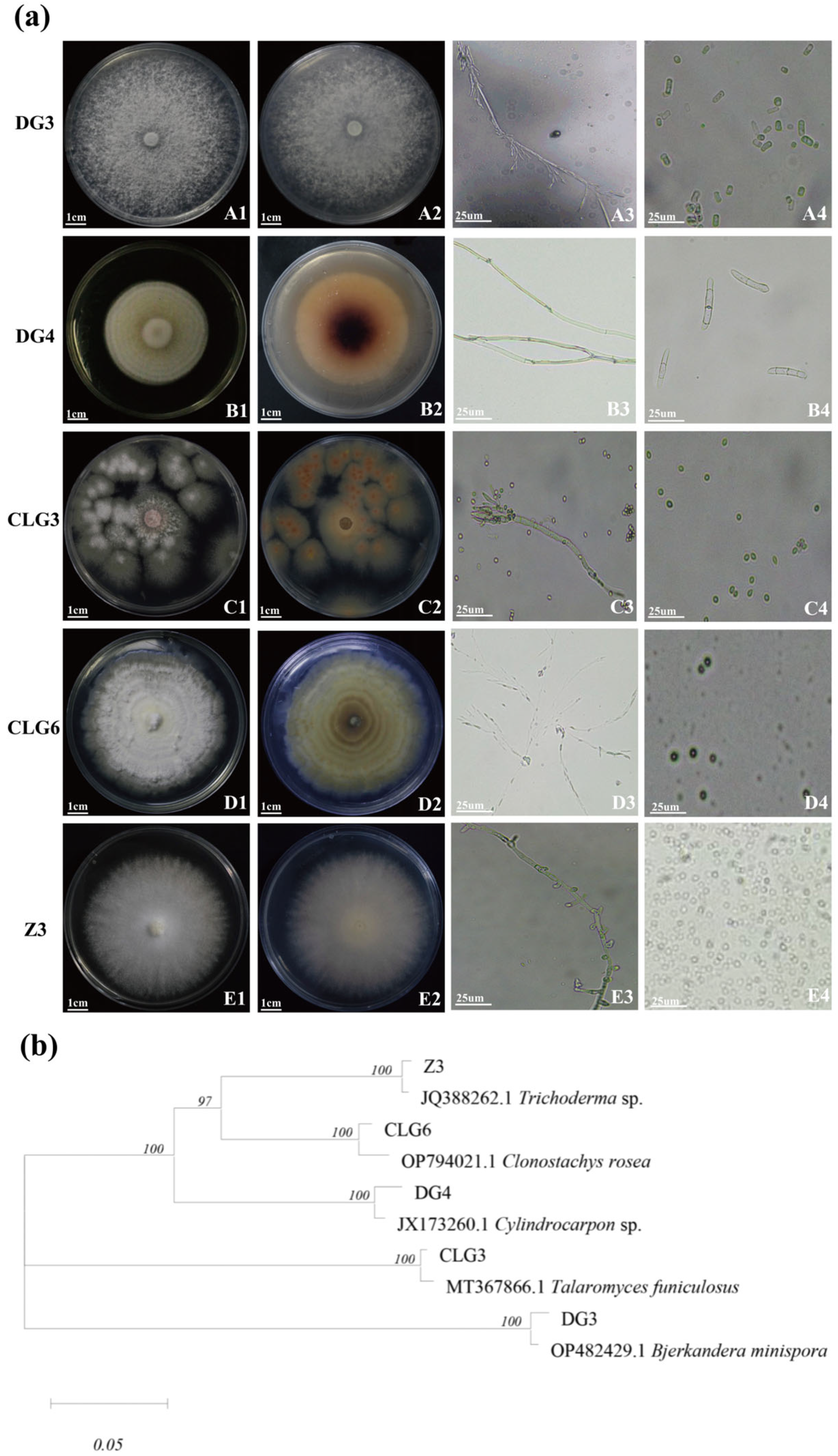
3.1. Isolation and Identification of Endophytic Fungi from C. goeringii
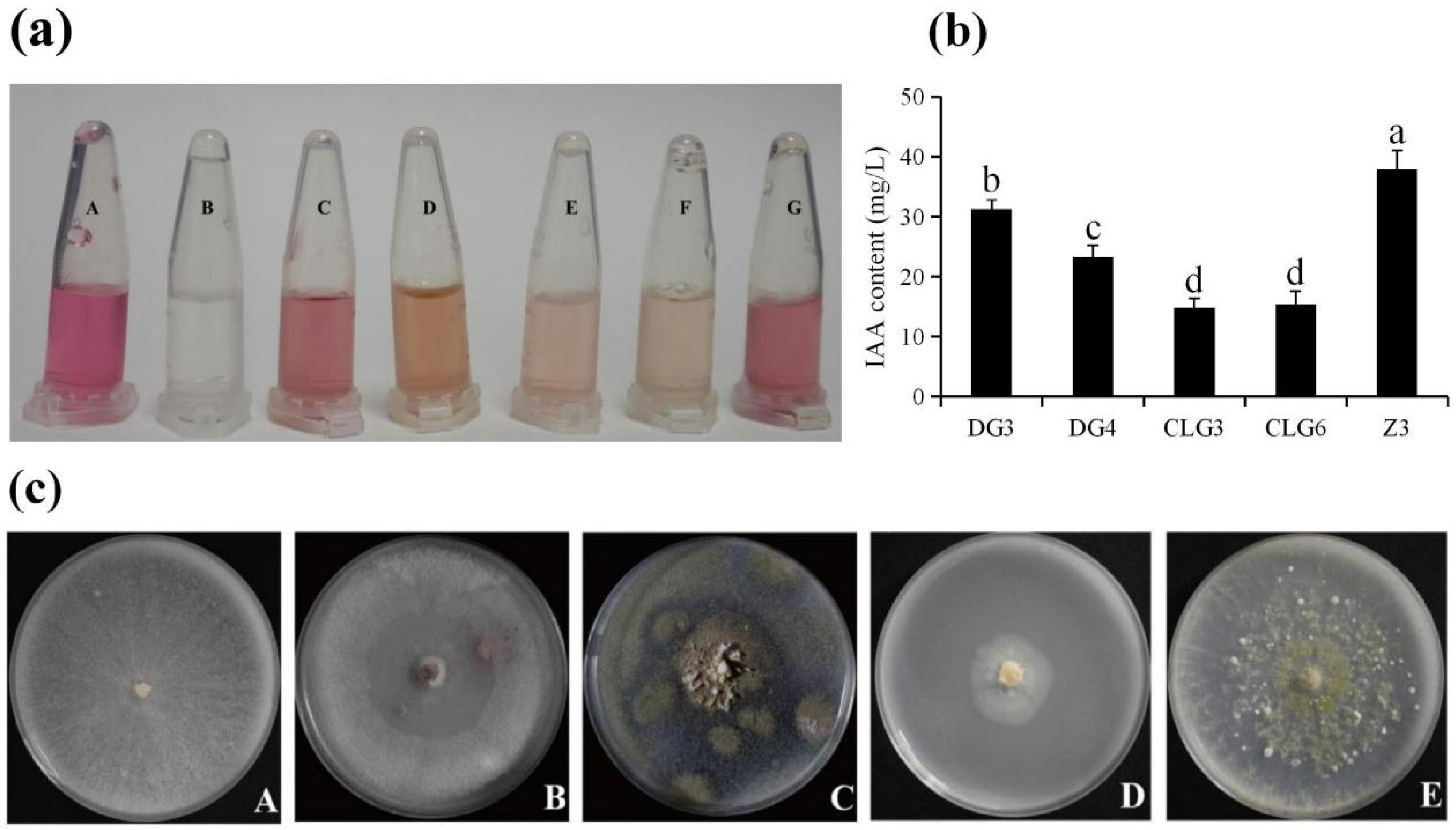
3.2. The Growth-Promoting Potential of Five Endophytic Fungal Strains
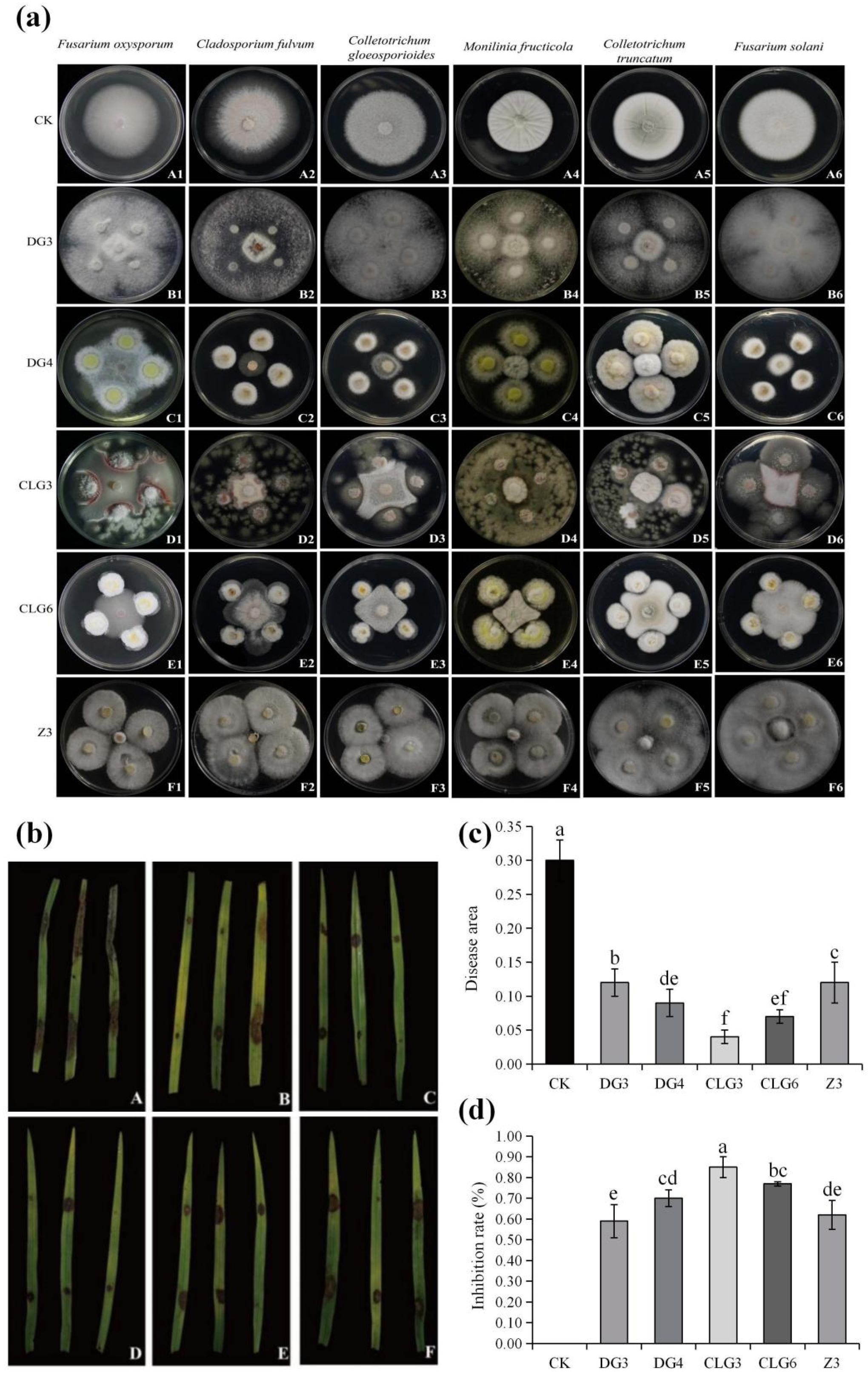
3.3. Antimicrobial Effects of Five Endophytic Fungal Strains In Vitro and In Vivo
3.4. The Growth-Promoting Effects of Five Endophytic Fungi on Seedlings of C. goeringii
3.5. The Antagonistic Effects of Five Endophytic Fungi Against Stem Rot in C. goeringii Seedlings
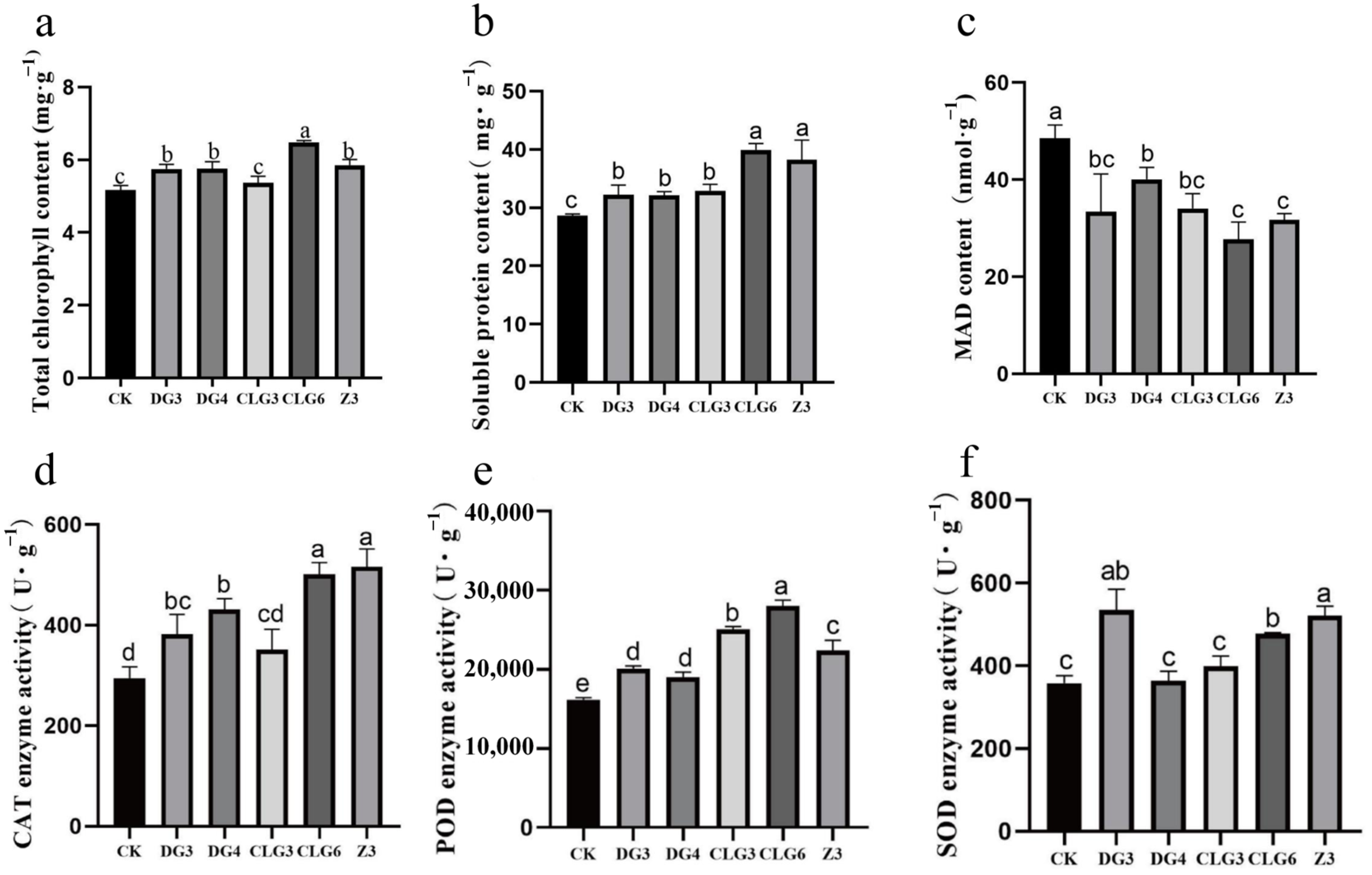
3.6. Effects of Five Endophytic Fungi on Physiological Indicators and Defense-Related Enzyme Activities in C. goeringii
4. Discussion
4.1. Isolation and Identification of Endophytic Fungi from C. goeringii
4.2. Growth-Promoting of Endophytic Fungi from C. goeringii
4.3. Biocontrol Potential of Endophytic Fungi from C. goeringii
4.4. Antagonistic Effect Against F. oxysporum of Endophytic Fungi from C. goeringii
5. Conclusions
Supplementary Materials
Author Contributions
Funding
Data Availability Statement
Acknowledgments
Conflicts of Interest
References
- He, X.J.; Yu, Z.C.; Wu, S.H. Impact of different cultivation substrates on the growth of Cymbidium goeringii. Plant Dis. Pests 2024, 15, 40–42. [Google Scholar] [CrossRef]
- Yao, J.A.; Huang, P.; Feng, C.X.; Yuan, D. Biological characteristics of Fusarium oxysporum, a pathogen of stem rot on Cymbidium ensifolium. Fujian J. Agric. Sci. 2018, 33, 190–194. [Google Scholar]
- Ni, Y.F.; Hui, L. Agricultural pollution control via developing organic agriculture. Environ. Sci. Manag. 2013, 38, 157–161. [Google Scholar]
- Mahdi, A.H.; Hassan, D.S. Chemical Control of Maize Weeds Under the Influence of Different Irrigation Intervals; IOP Publishing Ltd.: Bristol, UK, 2025. [Google Scholar] [CrossRef]
- Liu, T.X.; Chen, X.X. Biological control of aphids in china: Successes and prospects. Annu. Rev. Entomol. 2025, 70, 401–419. [Google Scholar] [CrossRef]
- Jiang, Z.X.; Peng, F.R.; Yu, J.P.; Li, Q. Plant growth-promoting effects and possible mechanisms of a plant endophytic fungus Aureobasidium sp. JRF1. Plant Physiol. Biochem. 2025, 222, 109724. [Google Scholar] [CrossRef]
- Misong, K.; Manh, H.N.; Sanggon, L.; Wonjong, H.; Minyoung, K.; Hyeongguk, J.; Jinheung, L.; Sangtea, S.; Namkyu, K.; Keumchul, S. Diversity of endophytic fungi isolated from Prunus yedoensis and their antifungal activity against wood decay fungi. Microorganisms 2025, 13, 617. [Google Scholar] [CrossRef]
- Bag, T.K.; Dutta, P.; Hubballi, M.; Kaur, R.; Mahanta, M.; Chakraborty, A.; Das, G.; Kataky, M.; Waghunde, R. Destructive Phytophthora on orchids: Current knowledge and future perspectives. Front. Microbiol. 2024, 14, 1139811. [Google Scholar] [CrossRef]
- Pardede, M.N.B.; Wirya, G.N.A.S.; Kalimi, K. Efektivitas Trichoderma sp. dan Gliocladium sp. untuk Pengendalian Penyakit Busuk Batang (Fusarium oxysporum sp.) pada Tanaman Vanili (Vanilla planifolia). J. Agric. Sci. 2022, 12, 63. [Google Scholar] [CrossRef]
- Wu, J.R.; Ma, H.C.; Li, M.; Han, S.F. Rhizoctonia fungi enhance the growth of the endangered orchid Cymbidium goeringii. Botany 2010, 88, 20–29. [Google Scholar] [CrossRef]
- Almanza-Álvarez, J.; Garibay-Orijel, R.; Salgado-Garciglia, R.; Fernández-Pavía, S.P.; Lappe-Oliveras, P.; Arellano-Torres, E.; Ávila-Díaz, I. Identification and control of pathogenic fungi in neotropical valued orchids (Laelia spp.). Trop. Plant Pathol. 2017, 42, 339–351. [Google Scholar] [CrossRef]
- Yu, Y.; Cui, Y.H.; Hsiang, T.; Zeng, Z.Q.; Yu, Z.H. Isolation and identification of endophytes from roots of Cymbidium goeringii and Cymbidium faberi (Orchidaceae). Nova Hedwig. 2015, 101, 57–64. [Google Scholar] [CrossRef]
- Manrique-Barros, S.; Flanagan, N.S.; Ramírez-Bejarano, E.; Mosquera-Espinosa, A.T. Evaluation of Tulasnella and Ceratobasidium as biocontrol agents of fusarium wilt on Vanilla planifolia. Agronomy 2023, 13, 2425. [Google Scholar] [CrossRef]
- Mosquera-Espinosa, A.T.; Bayman, P.; Prado, G.A.; Gómez-Carabalí, A.; Otero, J.T. The double life of Ceratobasidium: Orchid mycorrhizal fungi and their potential for biocontrol of Rhizoctonia solani sheath blight of rice. Mycologia 2013, 105, 141–150. [Google Scholar] [CrossRef] [PubMed]
- Tedsree, N.; Likhitwitayawuid, K.; Sritularak, B.; Tedsree, K.; Tanasupawat, S. Antifungal activity of endophytic Streptomyces strains from Dendrobium orchids and the secondary metabolites of strain DR7-3 with its genome analysis. J. Appl. Pharm. Sci. 2022, 12, 031–041. [Google Scholar] [CrossRef]
- Jiang, J.; Zhang, K.; Cheng, S.; Nie, Q.; Zhou, S.; Chen, Q.; Zhou, J.; Zhen, X.; Li, X.T.; Zhen, T.W.; et al. Fusarium oxysporum KB-3 from Bletilla striata: An orchid mycorrhizal fungus. Mycorrhiza 2019, 29, 531–540. [Google Scholar] [CrossRef]
- Kauserud, H. ITS alchemy: On the use of ITS as a DNA marker in fungal ecology. Fungal Ecol. 2023, 65, 101274. [Google Scholar] [CrossRef]
- Li, Y.; Gong, H.S.; Yang, B.Y.; Xiong, D.J. Application of nuclear Rdna molecular markers in study on Orchidaceae. Anhui Nongye Kexue 2013, 3, 4280–4282. [Google Scholar] [CrossRef]
- Macan, G.P.F.; Khalil, S.; Kalyandurg, P.B.; Pareek, N.; Vetukuri, R.R. A detached leaf assay for rapidly screening plant pathogen-biological control agents. In Plant Pathology: Method and Protocols; Springer: New York, NY, USA, 2022; pp. 449–458. [Google Scholar]
- Wong, C.K.F.; Teh, C.Y.; Vadamalai, G.; Saidi, N.B.; Zulperi, D. Development of detached root and leaf assays to evaluate the antagonistic properties of biocontrol agents against Fusarium wilt of banana. Arch. Phytopathol. Plant Prot. 2020, 53, 479–494. [Google Scholar] [CrossRef]
- Sour, V.; Phonpho, S.; Soytong, K. Isolation of Endophytic Fungi from Some Orchid Varieties. Int. J. Agric. Technol. 2015, 134, 273–279. [Google Scholar]
- Ding, T.; Sun, W.W.; Qi, Y.X.; Jiang, H.Y. Studies on some active components and antimicrobial activities of the fermentation broth of endophytic fungi DZY16 Isolated from Eucommia ulmoides Oliv. Afr. J. Biotechnol. 2013, 12, 1862–1868. [Google Scholar] [CrossRef]
- Wu, Y.H.; Chen, X.G.; Li, N.Q.; Anbazhakan, R.; Gao, J.Y. Core mycorrhizal fungi promote seedling growth in Dendrobium officinale: An important medicinal orchid. Plants 2025, 14, 1024. [Google Scholar] [CrossRef]
- Akila, S.J.; Krishnaveni, C. Isolation, identification and molecular characterization of endophytic fungi from the leaves of Coelogyne species, and their role as an antimicrobial agent. Res. J. Pharm. Technol. 2021, 14, 5613–5617. [Google Scholar] [CrossRef]
- Wen, S.; Hao, X.; Song, J. The characteristics of rhizosphere and endophytic fungi in two wild Cymbidium orchid species from the Qinling Mountains. Rhizosphere 2025, 35, 101125. [Google Scholar] [CrossRef]
- Zhan, M.T.; Tian, M.H.; Wang, W.G.; Li, G.P.; Lu, X.K.; Cai, G.L.; Yang, H.Y.; Du, G.; Huang, L.S.X. Draft genomic sequence of Armillaria gallica 012m: Insights into its symbiotic relationship with Gastrodia elata. Braz. J. Microbiol. 2020, 51, 1539–1552. [Google Scholar] [CrossRef] [PubMed]
- Rammitsu, K.; Abe, S.; Abe, T.; Kotaka, N.; Kudaka, M.; Kudaka, N.; Kinoshita, A.; Ogura-Tsujita, Y. The endangered epiphytic orchid Dendrobium okinawense has a highly specific mycorrhizal association with a single Tulasnellaceae fungus. J. For. Res. 2021, 26, 215–221. [Google Scholar] [CrossRef]
- Zhao, D.K.; Mou, Z.M.; Zhao, E.Q.; Bai, J.M.; Zhang, X.; Yuan, Z.H.; Wang, R.B.; Wang, Q.; Jacquemyn, H.; Ning, C. Phorophyte preference of an epiphytic orchid (Dendrobium wangliangii) is independent of orchid mycorrhizal fungi that promote seed germination. J. Ecol. 2024, 112, 1458–1472. [Google Scholar] [CrossRef]
- Xing, X.K.; Ma, X.T.; Men, J.X.; Chen, Y.H.; Guo, S.X. Phylogenetic constrains on mycorrhizal specificity in eight Dendrobium (Orchidaceae) species. Sci. China Life Sci. 2017, 60, 536–544. [Google Scholar] [CrossRef]
- Rose, S.D.; Kuga, Y.; Sillo, F.; Fochi, V.; Sakamoto, N.; Calevo, J.; Perotto, S.; Balestrini, R. Plant and fungal gene expression coupled with stable isotope labeling provide novel information on sulfur uptake and metabolism in orchid mycorrhizal protocorms. Plant J. 2023, 116, 416–431. [Google Scholar] [CrossRef]
- Condé, T.O.; Ramos, D.O.; Nogueira, P.T.S.; Pereira, O.L. Inside out: New root endophytic Penicillium and Talaromyces species isolated from Cattleya orchids (Orchidaceae) in Brazil. Fungal Syst. Evol. 2025, 15, 179–200. [Google Scholar] [CrossRef]
- Tan, X.-M.; Chen, X.-M.; Wang, C.-L.; Jin, X.-H.; Cui, J.-L.; Chen, J.; Guo, S.-X.; Zhao, L.-F. Isolation and identification of endophytic fungi in roots of nine holcoglossum plants (Orchidaceae) collected from Yunnan, Guangxi, and Hainan provinces of China. Curr. Microbiol. 2011, 64, 140–147. [Google Scholar] [CrossRef]
- Huang, Y.L.; Zimmerman, N.; Arnold, A. Observations on the early establishment of foliar endophytic fungi in leaf discs and living leaves of a model woody angiosperm, Populus trichocarpa (Salicaceae). J. Fungi 2018, 4, 58. [Google Scholar] [CrossRef] [PubMed]
- Jung, P.E.; Fong, J.J.; Park, M.S.; Oh, S.-Y.; Kim, C.; Lim, Y.W. Sequence validation for the identification of the white-rot fungi Bjerkandera in public sequence databases. J. Microbiol. Biotechnol. 2014, 24, 1301–1307. [Google Scholar] [CrossRef] [PubMed]
- Li, L.B.; Tao, H.; Kai, Y.; Zheng, T.; Zhuang, C.Y.; Liu, Z.J.; Reng, Z.H. AFLP diversity in the mycorrhizal fungi of Cymbidium plants. Acta Hortic. Sin. 2008, 30, 1083–1091. [Google Scholar] [CrossRef]
- Zhang, P.; Song, X.Q. Advances in diversity and promotion mechanism of endophytic bacteria associated with orchids. J. Trop. Subtrop. Bot. 2012, 20, 92–98. [Google Scholar] [CrossRef]
- Wang, S.Y.; Chen, S.M.; Wang, B.X.; Li, Q.X.; Zu, J.Q.; Yu, J.; Ding, Z.S.; Zhou, F.M. Screening of endophytic fungi from Cremastra appendiculata and their potential for plant growth promotion and biological control. Folia Microbiol. 2022, 68, 121–133. [Google Scholar] [CrossRef]
- Feng, H.L.; Guo, J.H.; Peng, C.H.; Kneeshaw, D.; Roberge, G.; Pan, C.; Ma, X.H.; Dan, Z.; Wang, W.F. Nitrogen addition promotes terrestrial plants to allocate more biomass to aboveground organs: A global meta-analysis. Glob. Change Biol. 2023, 29, 3970–3989. [Google Scholar] [CrossRef]
- Guo, K.Y.; Yang, J.; Yu, N.; Luo, L.; Wang, E. Biological nitrogen fixation in cereal crops: Progress, strategies, and perspectives. Plant Commun. 2023, 4, 100499. [Google Scholar] [CrossRef]
- Aarti, S.; Shivam, P.; Anil, K. Plant Growth Promoting Rhizobacteria: Their potential in sustainable Agriculture. J. Sci. Innov. Nat. Earth 2024, 4, 40–46. [Google Scholar] [CrossRef]
- Fochi, V.; Chitarra, W.; Kohler, A.; Voyron, S.; Singan, V.R.; Lindquist, E.A.; Barry, K.W.; Girlanda, M.; Grigoriev, I.V.; Martin, F.; et al. Fungal and plant gene expression in the Tulasnella calospora–Serapias vomeracea symbiosis provides clues about nitrogen pathways in orchid mycorrhizas. New Phytol. 2016, 213, 365–379. [Google Scholar] [CrossRef]
- Jenness, M.; Tayengwa, R.; House, L.; Cao, S.; Báez, R.R.; Nath, S.; Pritchard, C.A.; Sharma, A.; Mergner, J.; Rivière, F.; et al. Cytosolic- and membrane-localized oxidized indole-3-acetic acid formation regulates developmental auxin transients. Plant Physiol. 2025, 198, kiaf330. [Google Scholar] [CrossRef]
- Wu, Y.B.; Fei, Y.J.; Zhu, Q.; Zhang, Y.; Ma, C.Y.; Sun, K.; Dai, C.C. Endophytic fungus regulates the root secretion of IAA and ABA to increase rice nitrogen accumulation by promoting soil nitrogen fixation. Plant Growth Regul. 2024, 104, 1449–1464. [Google Scholar] [CrossRef]
- Arora, P.; Tabssum, R.; Gupta, A.P.; Kumar, S.; Gupta, S. Optimization of indole acetic acid produced by plant growth promoting fungus, aided by response surface methodology. Heliyon 2024, 10, e34356. [Google Scholar] [CrossRef] [PubMed]
- Shah, S.; Shah, B.; Sharma, R.; Rekadwad, B.; Shouche, Y.S.; Sharma, J.; Pant, B. Colonization with non-mycorrhizal culturable endophytic fungi enhances orchid growth and indole acetic acid production. BMC Microbiol. 2022, 22, 101. [Google Scholar] [CrossRef] [PubMed]
- Sharma, S.; Dhar, M.K.; Kaul, S. Antagonistic, plant growth promoting and extracellular hydrolytic enzyme activity of fungal endophytes of Dioscorea bulbifera L. Biocatal. Agric. Biotechnol. 2023, 50, 102694. [Google Scholar] [CrossRef]
- Hastuty, A.; Herawati, I.; Pikoli, M.R. Characterization of protease from endophytic fungi Fusarium sp. JE-DP4a. J. Ilmu Dasar 2023, 24, 129. [Google Scholar] [CrossRef]
- Mendieta, B.S.; Sayed, M.; Hamza, F.A.; Son, E.; Kim, D.S.; Plata, G.; Dávila, M.; Pyo, S.H. Identification, characterization, antimicrobial activity and biocontrol potential of four endophytic fungi isolated from Amazonian plants. Sci. Rep. 2025, 15, 39361. [Google Scholar] [CrossRef]
- Arasu, M.V.; Dhabi, N.A. Biological control of root rot disease-causing Rhizoctonia solani in tomato plant by an endophytic fungus and analysis of growth promoting activities in greenhouse and field. Physiol. Mol. Plant Pathol. 2023, 127, 102080. [Google Scholar] [CrossRef]
- Therby, V.R.; Lacombe, B.; Rhee, S.Y.; Nussaume, L.; Rouached, H. Mineral nutrient signaling controls photosynthesis: Focus on iron deficiency-induced chlorosis. Trends Plant Sci. 2022, 27, 502–509. [Google Scholar] [CrossRef]
- Qi, Y.; Lu, C.; Pang, C.; Huang, Y.; Yu, Y.; Yang, H.; Dong, C.H.; Yu, Y. The Arabidopsis RTH plays an important role in regulation of iron (Fe) absorption and transport. Plant Cell Rep. 2024, 43, 133. [Google Scholar] [CrossRef]
- Li, Q.; Lin, F.; Su, Z. Endophytic fungi—Big player in plant-microbe symbiosis. Curr. Plant Biol. 2025, 42, 100481. [Google Scholar] [CrossRef]
- Mishra, A.; Yadav, P.; Singh, K. Host response of Arabidopsis thaliana interaction with fungal endophytes involves microRNAs. Mol. Biotechnol. 2024, 67, 294–303. [Google Scholar] [CrossRef]
- Nong, Q.; Malviya, M.K.; Solanki, M.K.; Lin, L.; Xie, J.; Mo, Z.; Wang, Z.; Song, X.; Huang, X.; Li, C.; et al. Integrated metabolomic and transcriptomic study unveils the gene regulatory mechanisms of sugarcane growth promotion during interaction with an endophytic nitrogen-fixing bacteria. BMC Plant Biol. 2023, 23, 54. [Google Scholar] [CrossRef]
- Li, L.; Wang, X.; Li, H.; Ali, M.M.; Hu, X.; Oelmuller, R.; Yousef, A.F.; Alrefaei, A.F.; Liu, J.; Chen, F. The SWEET14 sugar transporter mediates mycorrhizal symbiosis and carbon allocation in Dendrobium officinale. BMC Plant Biol. 2025, 25, 416. [Google Scholar] [CrossRef]





| Disease Index | Symptom |
|---|---|
| 0 | The entire plant shows no disease symptoms. |
| 1 | The disease occurs on the leaf sheaths of basal leaves, spreading from the leaf base toward the leaf tip. |
| 2 | 25% or fewer leaves exhibit yellowing, and the base of the pseudobulb turns brown. |
| 3 | 26–50% of the leaves exhibit yellowing, and the outer layer of the pseudobulb shows decay. |
| 4 | 51–75% of the leaves exhibit yellowing, and the entire pseudobulb begins to decay. |
| 5 | More than 75% of the leaves exhibit yellowing, and the pseudobulb shows water-soaked soft rot. |
| Fungal Strain | Colony Morphology | Mycelial Morphology (40× Microscope) | Spore Morphology | Spore Dimensions |
|---|---|---|---|---|
| DG3 | regular and circular in shape, with neat edges, a loose texture, and a white color | dendritic, with septa, the hyphae have clamp connections | short rod-shaped or elliptical, blunt at the apex, with a single septum occasionally observed | 5–7 × 2–4 μm |
| DG4 | regularly circular in shape, with neat edges, spaced concentric rings on the colony, dense texture, and pale yellow in color | branched, with septa | cylindrical in shape, with 1–3 septa | 20–40 × 5–8 μm |
| CLG3 | irregular in shape, dense in texture, and produces a reddish pigment with a cyan-brown hue | the terminal end produces broom-like conidiophores | elliptical in shape, aseptate | 3–4 × 2–3 μm |
| CLG6 | circular in shape, with neat edges, distinctly spaced concentric rings on the colony, dense texture, and a color ranging from pale yellow to orange-red | tree-like branching | elliptical, aseptate | 9–12 × 3–4 μm |
| Z3 | circular in shape, with neat edges, radiating pattern, loose texture, and white in color | phialides are produced at the apex of conidiophores | ovoid in shape, without septa | 3–5 × 2–3 μm |
| Fungal Strain | Fusarium oxysporum | Cladosporium fulvum | Colletotrichum gloeosporioides | Monilinia fructicola | Colletotrichum truncatum | Fusarium solani |
|---|---|---|---|---|---|---|
| CK | 0.00 ± 0.00 d | 0.00 ± 0.00 e | 0.00 ± 0.00 d | 0.00 ± 0.00 e | 0.00 ± 0.00 e | 0.00 ± 0.00 d |
| DG3 | 78.64 ± 2.33 b | 73.77 ± 0.87 b | 68.33 ± 4.16 b | 72.14 ± 0.58 c | 74.03 ± 2.42 ab | 71.38 ± 1.02 a |
| DG4 | 73.02 ± 0.25 c | 70.14 ± 0.91 c | 71.83 ± 1.61 b | 75.57 ± 0.92 b | 73.64 ± 1.78 b | 75.00 ± 6.05 a |
| CLG3 | 73.01 ± 0.90 c | 70.27 ± 0.38 c | 68.67 ± 1.15 b | 71.63 ± 0.83 c | 62.79 ± 3.55 c | 59.06 ± 3.49 b |
| CLG6 | 76.11 ± 1.00 bc | 64.94 ± 0.89 d | 58.33 ± 0.58 c | 64.04 ± 1.28 d | 55.04 ± 2.68 d | 49.56 ± 2.72 c |
| Z3 | 86.30 ± 0.79 a | 95.33 ± 1.53 a | 83.87 ± 1.03 a | 81.87 ± 0.32 a | 78.67 ± 1.56 a | 75.47 ± 0.57 a |
| Fungal Strain | Disease Index | Control Effect (%) |
|---|---|---|
| CK | 60.52 ± 0.73 a | 00.00 ± 00.00 e |
| DG3 | 34.49 ± 0.74 d | 42.52 ± 1.24 c |
| DG4 | 42.86 ± 1.71 b | 28.57 ± 2.85 e |
| CLG3 | 38.41 ± 0.86 c | 35.98 ± 1.44 d |
| CLG6 | 21.67 ± 1.31 e | 63.88 ± 2.19 b |
| Z3 | 18.66 ± 1.10 f | 68.89 ± 1.83 a |
Disclaimer/Publisher’s Note: The statements, opinions and data contained in all publications are solely those of the individual author(s) and contributor(s) and not of MDPI and/or the editor(s). MDPI and/or the editor(s) disclaim responsibility for any injury to people or property resulting from any ideas, methods, instructions or products referred to in the content. |
© 2026 by the authors. Licensee MDPI, Basel, Switzerland. This article is an open access article distributed under the terms and conditions of the Creative Commons Attribution (CC BY) license.
Share and Cite
Ji, X.; Zhang, K.; Shen, T.; Duan, Y.; Xu, L.; Ai, Y.; Zhou, Y.; Peng, D. Biocontrol Efficiency of Endophytic Fungi Against Stem-Rot in Cymbidium goeringii. Microorganisms 2026, 14, 758. https://doi.org/10.3390/microorganisms14040758
Ji X, Zhang K, Shen T, Duan Y, Xu L, Ai Y, Zhou Y, Peng D. Biocontrol Efficiency of Endophytic Fungi Against Stem-Rot in Cymbidium goeringii. Microorganisms. 2026; 14(4):758. https://doi.org/10.3390/microorganisms14040758
Chicago/Turabian StyleJi, Xiaotong, Kaili Zhang, Tiankai Shen, Yanru Duan, Lu Xu, Ye Ai, Yuzhen Zhou, and Donghui Peng. 2026. "Biocontrol Efficiency of Endophytic Fungi Against Stem-Rot in Cymbidium goeringii" Microorganisms 14, no. 4: 758. https://doi.org/10.3390/microorganisms14040758
APA StyleJi, X., Zhang, K., Shen, T., Duan, Y., Xu, L., Ai, Y., Zhou, Y., & Peng, D. (2026). Biocontrol Efficiency of Endophytic Fungi Against Stem-Rot in Cymbidium goeringii. Microorganisms, 14(4), 758. https://doi.org/10.3390/microorganisms14040758