Abstract
Infections with the zoonotic pathogen Yersinia (Y.) pseudotuberculosis are commonly causing clinical diseases and acute deaths in various mammal and bird species in zoos. These findings prompted us to conduct a targeted study that included animals of 18 German and 1 Swiss zoo that had been affected by the pathogen previously. This study provides a comprehensive overview of susceptible zoo animal species, clinical signs, therapies, antimicrobial resistance, pathogen monitoring, and prophylactic measures. In addition, fecal samples from species with documented infections and organ samples from deceased mammals and birds from two of the participating zoos, the urban zoo Wilhelma and the rural Opel Zoo, were examined for Y. pseudotuberculosis using both direct plating and enrichment. The overall prevalence of Y. pseudotuberculosis was 3.1% at the Opel Zoo and 1.3% at the Wilhelma. Fecal samples yielded positive results in 1.4% of the tested samples from the Opel Zoo but none from the Wilhelma. Among carcasses, 16.7% and 1.7% tested positive at the Opel Zoo and the Wilhelma, respectively (p = 0.006). Y. pseudotuberculosis was significantly more frequently isolated during the cold season (p = 0.002). Affected animals often died suddenly, displaying no or only non-specific clinical signs, but postmortem examinations revealed septicemia with multiple bacterial organ abscesses. Rodents, ruminants, primates, and Piciformes were the most commonly affected orders. Considering the zoonotic potential of Y. pseudotuberculosis, this research underscores the importance of investigations in zoos in accordance with the targets of the One Health approach.
1. Introduction
Yersinia (Y.) pseudotuberculosis belongs to the family Yersiniaceae and is an important zoonotic pathogen that occurs worldwide [1,2]. Along with Y. enterocolitica and Y. pestis, Y. pseudotuberculosis is one of the three Yersinia species that are pathogenic to both humans and animals [3]. Rodents, game animals, and birds, especially free-living species, are a relevant reservoir for Y. pseudotuberculosis [2,4,5]. Wild rodents such as rats and mice are often asymptomatic carriers and shedders of this pathogen and are regarded as a fundamental link of the infection chains [6,7]. Y. pseudotuberculosis infections are commonly known as pseudotuberculosis and especially in rodents as rodentiosis.
In contrast to Y. pseudotuberculosis, pigs are the main reservoir of Y. enterocolitica. Although other species, including many zoo animals, can be infected with Y. enterocolitica, the infection is usually limited to the intestine and the course is usually asymptomatic and rarely lethal [8,9]. A further important pathogen is Y. pestis, which is closely related to Y. pseudotuberculosis. In endemic areas, a large number of animals species is susceptible, however, rodents are a well-studied reservoirs of Y. pestis, and they are usually asymptomatically affected. In contrast to other Yersinia spp., Y. pestis is transmitted by bites from infected arthropods or by droplet infection and characterized by endemic occurrence [10]. Infections with Y. pseudotuberculosis typically occur via the oral route and usually cause self-limiting gastrointestinal infections in humans and animals [11,12]. More rarely, symptoms such as “pseudoappendicitis” or severe illnesses in the form of enteritis, mesenteric lymphadenitis, fever, and, in rare cases, septicemia occur in humans [2,13]. On average, 2700 cases of human yersiniosis caused by Y. enterocolitica and Y. pseudotuberculosis are reported in Germany every year. However, the majority of these cases are caused by Y. enterocolitica [14,15]. In Germany, since the amendment of the Infection Protection Act (IfSG) in 2017, there has been a reporting obligation for proven cases of Y. enterocolitica as well as for Y. pseudotuberculosis in humans.
In animals, Y. pseudotuberculosis has a broad host range and has been detected in many different mammals and birds [16]. In most cases, these animals are asymptomatic carriers, and diseases emerge sporadically. However, outbreaks with high mortality rates were likewise described, especially among wild hares and zoo animals [16,17,18].
In zoos, non-human primates, several antelope species, rodents such as capybaras as well as various birds, especially representatives of the order Piciformes, are very sensitive to Y. pseudotuberculosis infections [2,7]. Acute pseudotuberculosis manifests as fulminant septicemia, often associated with sudden deaths or deaths after one to three days [19]. Some reports describe the isolation of Y. pseudotuberculosis from birds and mammals kept in zoos around the world that suddenly died from this infection [20]. In many of those animals, hepatitis, splenitis, and lymphadenitis of the mesenteric lymph nodes with miliary necrotic foci were observed during postmortem examinations [21,22].
This study analyzes the occurrence and relationships of the zoonotic pathogen Y. pseudotuberculosis in zoo animals living in an urban and a rural zoo in Germany. The prevalence and infectious sites of Y. pseudotuberculosis were determined by sampling of live and dead zoo animals and subsequent direct bacterial culture and Yersinia enrichment in both zoos as well as for wild small mammals and wild birds frequenting at the Wilhelma zoo. The results are intended to help assess risk factors and develop targeted biosecurity measures to prevent infections in animals and humans. In addition, retrospective clinical cases from other zoos, mainly from 18 German zoos and one Swiss zoo, as well as some case reports from the literature, are presented. This study provides an overview of the range of susceptible animal species, clinical signs, and postmortem findings in affected animals and the susceptibility patterns of the isolates obtained.
2. Materials and Methods
2.1. Sample Collection at the Wilhelma Zoo and the Opel Zoo
The occurrence of Y. pseudotuberculosis was examined in the urban Zoological-Botanical Garden Wilhelma in Stuttgart (Wilhelma) in the federal state of Baden-Wuerttemberg (Germany) and the rural Opel Zoo in Kronberg/Taunus (Opel Zoo) in the federal state of Hesse (Germany) over a period of twelve months from the beginning of June 2023 to the end of May 2024. Only samples collected at these two zoos were used for monitoring. The focus was on examinations of organ samples from deceased zoo animals from the Wilhelma and the Opel Zoo (vertebrates—except reptiles, amphibians, and fish), which were examined as part of the gross pathology at the Chemical and Veterinary Analysis Agency Stuttgart (CVUAS), Fellbach (Germany), and the Hessian State Laboratory (LHL), Giessen (Germany). Fecal samples from zoo animal species, in which clinical cases of Y. pseudotuberculosis infections had occurred, and fecal samples from animals with suspicious clinical signs were analyzed. In this context, mammals and birds that were tested positive in enclosures at the Wilhelma Zoo and the Opel Zoo within the past five years are referred to as ‘hotspot species’. At the Wilhelma, all wild small mammals, especially pest rodents, and birds found dead on the site of the Wilhelma were also examined in the in-house postmortem room.
The ‘hotspot species’ at the Wilhelma included the animal species bonobo (Pan paniscus), squirrel monkey (Saimiri sciureus), Goeldi’s marmoset (Callimico goeldii), maned wolf (Chrysocyon brachyurus), short-eared elephant shrew (Macroscelides proboscideus), pearl-necked dove (Spilopelia chinensis), red-rumped parrot (Psephotus haematonotus), serval (Leptailurus serval), and Seba’s short-tailed bats (Carollia perspicillata). Y. pseudotuberculosis could not be detected in previous preliminary investigations by cultivation in servals and Seba’s short-tailed bats, but the samples were positive for the ail gene by PCR. Therefore, these two animal species were included in the monthly sampling, as Y. pseudotuberculosis is known to occur particularly in Seba’s short-tailed bats [23].
The ‘hotspot species’ at the Opel Zoo included the species bush hyrax (Heterohyrax brucei), African pygmy goat (Capra aegagrus hircus), impala (Aepyceros melampus), blackbuck (Antilope cervicapra), and emperor tamarin (Saguinus imperator).
In addition to the zoo animals, small mammals and wild birds that had been found dead on the grounds of the Wilhelma Zoo were also examined by culture for Y. pseudotuberculosis using pooled intestinal and liver samples per animal. These included the animal species house mouse (Mus musculus), brown rat (Rattus norvegicus), Eurasian red squirrel (Sciurus vulgaris), brown hare (Lepus europaeus), dormouse (Glis glis), red fox (Vulpes vulpes), least weasel (Mustela nivalis), hedgehog (Erinaceus europaeus), gray heron (Ardea cinerea), sparrow (Passer domesticus and P. montanus), blue tit (Cyanistes caeruleus), domestic pigeon (Columba livia domestica), wood pigeon (Columba palumbus), green woodpecker (Picus viridis), common buzzard (Buteo buteo), mallard (Anas platyrhynchos), moorhen (Gallinula chloropus), and Egyptian goose (Alopochen aegyptiacus).
Furthermore, one-time fecal samples were collected from clinically healthy animals kept at the Wilhelma Zoo and the Opel Zoo, which were exposed to an increased risk of infection. These included animals in the same enclosure as ‘hotspot species’ animals in enclosures with high rodent infestation or species known to be very sensitive to Y. pseudotuberculosis infection, such as non-human primates.
2.2. Microbiological Examination of the Samples
Pooled liver and intestinal samples from all deceased zoo animals from both zoos, as well as small mammals and birds from the Wilhelma Zoo that died on the grounds, were used for bacteriological examinations. All feces and organ samples were streaked directly in a three-loop smear on CIN Yersinia selective agar according to Schiemann (CIN-Cefsulodin-IrgasanTM-Novobiocin agar; ThermoFisher Scientific, Darmstadt, Germany) followed by incubation for 24 ± 2 h at 30 ± 1 °C and then further for 24 ± 2 h at room temperature. For enrichment of Yersinia, 1 g of each sample was transferred to 9 mL of phosphate buffered peptone broth supplemented with 1% mannitol and 0.15% bile salt (PBSMBB; ThermoFisher Scientific, Darmstadt, Germany) and homogenized for 1 min by mechanical mixing. The PBSMSB enrichment was incubated aerobically at 25 ± 1 °C for 48 ± 4 h. Subsequently, 0.5 mL of the incubated enrichment broth was transferred to 4.5 mL of sterile 0.5% KOH (potassium hydroxide; ThermoFisher Scientific, Darmstadt, Germany) solution and mixed well with a pipette. After 20 ± 5 s, 100 µL were transferred to a CIN agar plate and incubated at 30 ± 1 °C for 24 ± 2 h and then further for 24 ± 2 h at room temperature.
For biosafety measures, masks and disposable materials like gloves were worn during the collection and examination of clinical samples. In the case of laboratory instruments (scissors, forceps), a separate instrument was used for each sample and then autoclaved before the next use.
After the first and the second incubation of the CIN agar plates, colonies suspected of containing Y. pseudotuberculosis, both from direct smear culture on CIN agar plates as well as cultures after enrichment, were pre-tested using MALDI-TOF MS (matrix-assisted laser desorption/ionization time-of-flight mass spectrometry, MALDI Biotyper® sirius system, Bruker Daltonics GmbH, Bremen, Germany). In case of multiple suspicious colonies, one representative colony was checked unless there were macroscopically visible phenotypic differences. Material was applied to two target positions per colony. Cultures of suspicious colonies were subcultured for 24 ± 2 h on Columbia agar with 5% sheep blood (BD, Heidelberg, Germany) and Gassner agar (Merck, Darmstadt, Germany) to obtain pure cultures for definite MALDI-TOF MS analysis.
After preparation of the colonies with the direct transfer protocol, MALDI-TOF mass spectra of the samples were identified using the commercial “research use only” (RUO) MBTK database (revision K, 2022; Bruker Daltonics GmbH, Bremen, Germany) and supplemented with user-made entries from the MALDI user platform MALDI-UP, as described previously [24,25]. The targeted identification of Y. pseudotuberculosis had been validated according to the technical guidelines created by the BVL working group MALDI-TOF MS [26]. If an identification score value between 2.0 and 3.0 was achieved for both target positions, the colony was accepted as confirmed Y. pseudotuberculosis according to the hints of the manufacturer (Bruker Daltonics GmbH, Bremen, Germany). Successfully retested subcultures were finally preserved by freezing at −80 ± 5 °C on ceramic beads in cryovials (Protect©, Transia, Ober-Mörlen, Germany).
In addition, the isolates were sent to the German Federal Institute for Risk Assessment (BfR) for antimicrobial susceptibility testing.
2.3. Antimicrobial Susceptibility Testing
Antimicrobial susceptibility testing of the Y. pseudotuberculosis isolates was carried out according to the CLSI protocol for the agar disc diffusion method on Mueller–Hinton (MH) agar (ThermoFisher Scientific, Darmstadt, Germany) incubated at 30 °C for 17 ± 1 h [27]. The antimicrobial discs (ThermoFisher Scientific, Darmstadt, Germany) used contained amoxicillin/clavulanate (AMC: 20/10 μg), amikacin (AK: 30 μg), ampicillin (AMP: 10 μg), cefepime (FEP: 30 μg), cefotaxime (CTX: 30 μg), ceftazidime (TAZ: 30 μg), chloramphenicol (CHL: 30 μg), ciprofloxacin (CIP: 5 μg), erythromycin (E: 15 μg), florfenicol (FFC: 30 μg), gentamicin (CN: 10 μg), imipenem (IMI: 10 μg), meropenem (MER: 10 μg), nalidixic acid (NAL: 30 μg), norfloxacin (NOR: 10 μg), streptomycin (S: 10 μg), tetracycline (TE: 30 μg), trimethoprim (W: 5 μg), and trimethoprim/sulfamethoxazole (SXT: 1.25/23.75 μg). Reference strains were used during testing as quality control (erythromycin discs: Staphylococcus aureus ATCC 25923; imipenem/meropenem discs: Pseudomonas aeruginosa ATCC 27853; amoxicillin/clavulanate discs: Escherichia (E.) coli ATCC 35218) according to the CLSI guidelines. The quality of the remaining discs was evaluated using E. coli ATCC 25922. The evaluation was based on the size of the measured inhibition zones according to the values of the clinical breakpoints for human medicine in the CLSI document M100 [27]. There are no validated clinical breakpoints for erythromycin and florfenicol, which is why the isolates were interpreted and described in comparison to each other. A classification was made into (1) no inhibition zone, (2) inhibition zone ≤ 10 mm for both substances, (3) inhibition zone > 10 mm for erythromycin or inhibition zone 11–24 mm for florfenicol, and (4) inhibition zone ≥ 25 mm for florfenicol.
2.4. Statistical Analysis
Statistical analysis of the data obtained in the course of the monitoring study at the Wilhelma Zoo and the Opel Zoo over a period of one year was carried out, together with the Unit for Biomathematics and Data Processing of the Faculty of Veterinary Medicine at the Justus Liebig University in Giessen, using the computer program SAS® 9.4 (Base SAS® 9.4 Procedures Guide: Statistical Procedures, 2nd edition ed., 2013, Statistical Analysis System Institute SAS® Inc., Cary, NC, USA). The data from the monitoring at the Wilhelma Zoo and the Opel Zoo were subjected to statistical evaluations using an exact Pearson chi-squared test. In instances where the total number (n) was insufficient for certain inquiries, a descriptive analysis of the data was conducted.
2.5. Collection of Y. pseudotuberculosis Cases from Other Zoos
In addition to the cases from the Wilhelma Zoo and the Opel Zoo, another 18 German zoos, 1 Swiss zoo, and a single case from a private keeping (Roklum, Lower Saxony, Germany) were included in the study. The 117 cases were retrospectively analyzed based on pathological findings and records of the course of the disease. The period under review spanned from 2007 to 2024. The data on external cases of Y. pseudotuberculosis were kindly provided by the German zoos in Berlin, Cottbus, Donnersberg, Dortmund, Duisburg, Erfurt, Frankfurt, Hamm, Heidelberg, Hodenhagen, Karlsruhe, Munich, Neuwied, Nuremberg, Schwerin, Walsrode, Wuppertal, the German Primate Center Göttingen, from an unnamed Swiss zoo and a private keeping in Lower Saxony upon request. A total of 138 additional Y. pseudotuberculosis isolates from wild and domestic mammals from the culture collection of the LHL Giessen and the CVUA Stuttgart were available from cryopreserved stocks and were included in the present study. These isolates from the culture collection were included for a number of investigations, particularly genome comparisons intended to be carried in future. In addition, zoo isolates were compared with non-zoo isolates. The focus of the evaluations was on affected animal species in zoos, the season in which the disease occurred, preliminary reports, the course of the disease, pathomorphological findings, and the Y. pseudotuberculosis isolates obtained from organs.
Both, the 132 isolates from the Wilhelma, the Opel Zoo, and external zoos as well as the 138 cryopreserved Y. pseudotuberculosis isolates from culture collections are going to be used for genome comparison in a further study. All 270 Y. pseudotuberculosis isolates were tested for antimicrobial susceptibility at the BfR in Berlin and were listed on the MALDI-UP catalogue for tracking MALDI-TOF mass spectra (https://maldi-up.ua-bw.de [accessed on 19 February 2025]).
3. Results
3.1. Data from the Monitoring of the Wilhelma and the Opel Zoo
Descriptive and Statistical Analysis
During the study period, a total of 772 samples were tested for Y. pseudotuberculosis at the Wilhelma Zoo (n = 613) and the Opel Zoo (n = 159) (Table 1).
Table 1.
Monitoring samples taken from animals at the Wilhelma Zoo and the Opel Zoo between June 2023 and May 2024.
From the 613 samples that originated from the Wilhelma Zoo, eight tested positive for Y. pseudotuberculosis. Two positive samples came from organs of deceased zoo animals, a red-rumped parrot (Psephotus haematonotus) and an eastern rosella (Platycercus eximius), which were found dead in the same aviary without prior clinical signs within five days. The red-rumped parrot was a ‘hotspot species’ that had shared an outdoor free-flight aviary with the eastern rosella and several other species of parakeets and cockatoos. The aviaries were accessible for wild birds and pest rodents. The six other positive samples came from wild small mammals (a brown hare, a Eurasian red squirrel, and four brown rats) that were found dead at the Wilhelma. One of the rats and the brown hare were found in the department from which two dead parakeets originated. The other wild small mammals originated from other enclosures of ‘hotspot species’ where cases of pseudotuberculosis had occurred in the last seven years. However, the four rats which were obtained as a part of the regular rodent control in this department showed no abnormalities during postmortem examinations. Two of the animals were juveniles. The Eurasian red squirrel was hit by a slow-moving vehicle on a service road between the outdoor free-flight aviary and the zoo’s depot, but it did not show any macroscopic organ changes.
In December 2023, a fecal sample from a healthy Mesopotamian fallow deer (Dama mesopotamica) tested positive for Y. pseudotuberculosis as part of a transport investigation at the Opel Zoo. Additionally, the impalas’ (‘hotspot species’) fecal samples were positive in December 2023. At the end of December, a juvenile impala (Aepyceros melampus) died due to a Y. pseudotuberculosis infection. At the beginning of January 2024, another young impala from the same enclosure and a young lesser flamingo (Phoeniconaias minor) died suddenly from pseudotuberculosis. In the postmortem examination, the two impalas showed acute catarrhal enteritis and purulent-necrotizing lymphadenitis of the mesenteric lymph nodes. The lesser flamingo had multiple miliary abscesses in the liver, reproductive organs, and serous membranes. All three animals were cachectic. All other fecal samples, including those from January 2024, tested negative. In total, four animals and one collective fecal sample were found positive for Y. pseudotuberculosis at the Opel Zoo (Table 1).
Overall, based on the total number of 772 samples examined, the prevalence of Y. pseudotuberculosis was 1.7% (n = 13). At the Wilhelma Zoo, the prevalence from the 613 samples was 1.3% (n = 8), and at the Opel Zoo, the prevalence from the 159 samples was 3.1% (n = 5). No significant difference in the prevalence was found between the two zoos (p = 0.1565).
Furthermore, 1.7% (n = 10) of the 573 samples from mammals and 1.5% (n = 3) of the 199 samples from birds tested positive for Y. pseudotuberculosis. No significant difference was calculated (p = 1.000).
Y. pseudotuberculosis was isolated from 1.7% (8 of 459) of the carcasses from the Wilhelma Zoo and 16.7% (3 of 18) of the carcasses from the Opel Zoo. Using the exact Pearson chi-squared test, this difference was statistically significant (p = 0.006). In contrast, none of the fecal samples in the Wilhelma Zoo were positive, but 1.4% (2 of 141) of the samples at the Opel Zoo tested positive, representing a statistically not significant difference (p = 0.228).
In total, 0.7% (n = 2) of the 295 fecal samples and 2.3% (n = 11) of the 477 carcasses from both zoos were positive. The difference in these results is not statistically significant (p = 0.147).
During the sample collection period, 311 small wild mammals and birds living in the wild were found dead at the Wilhelma. Of these, 1.9% (n = 6) tested positive for Y. pseudotuberculosis. Among the wild mammals found dead, 66.7% (n = 4) were rats, 16.7% (n = 1) represented a brown hare, and 16.7% (n = 1) represented an Eurasian red squirrel. All small mammals that tested positive were found dead in enclosures where a ‘hotspot species’ lived.
Although more than half of the animals examined were mice, Y. pseudotuberculosis could not be detected in any of the carcasses of these animals.
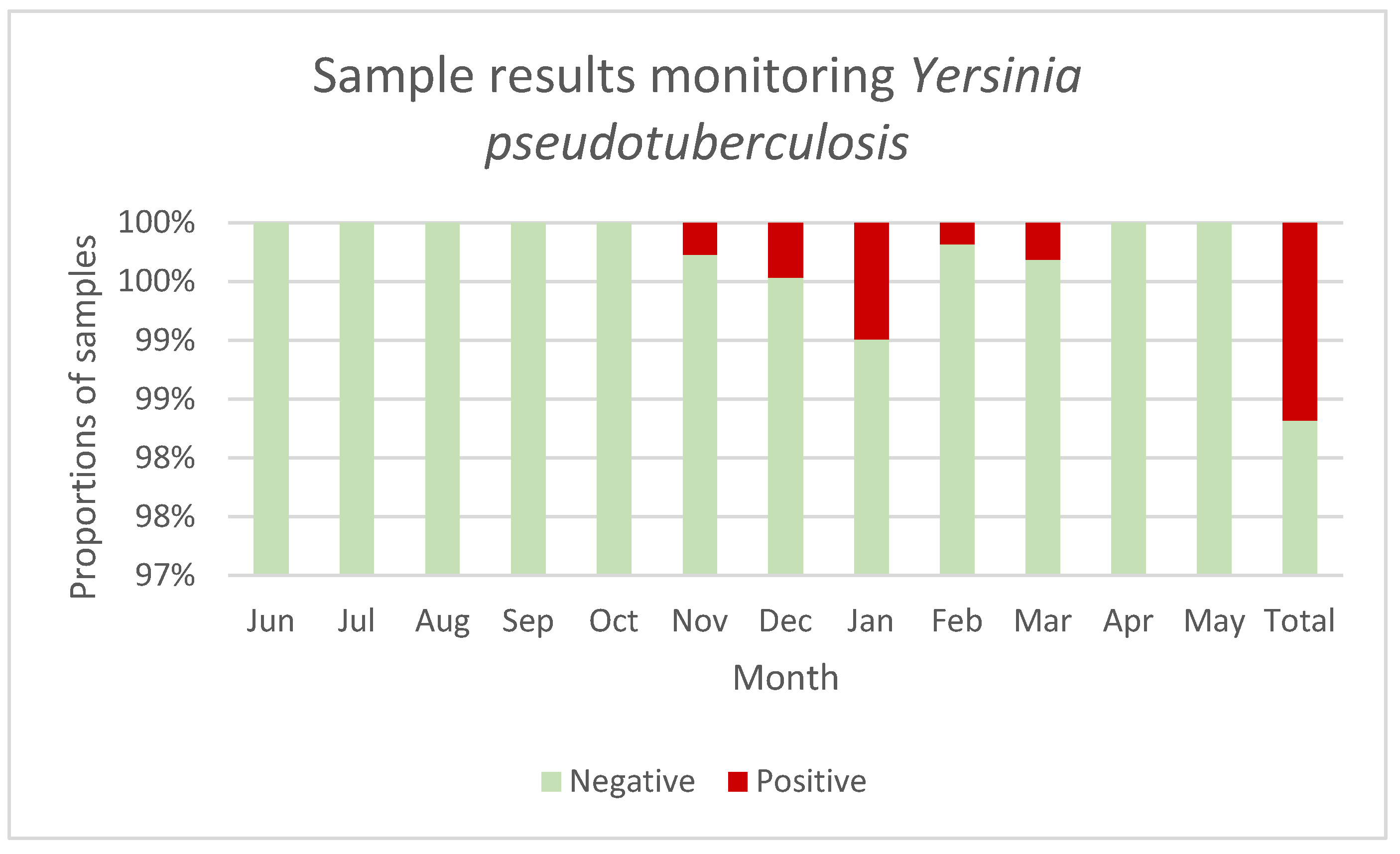
Evaluations of all data available for this study regarding the seasonal occurrence revealed that Y. pseudotuberculosis infections occurred significantly more frequently from November to March than in the other months of the year (p = 0.002) (Figure 1).
Figure 1.
Results of a total of 772 monitoring samples from the Opel Zoo and Wilhelma Zoo taken from June 2023 to May 2024.
3.2. Occurrence of Pseudotuberculosis in Mammals from All the 19 Zoos and the Private Keeping Included in This Study
The 117 cases of Y. pseudotuberculosis in zoo animals collected for the study came, with few exceptions, from the mammalian orders of Rodents, Primates, and Artiodactyls, especially ruminants. There were also few cases in the mammalian orders of Carnivores, Diprotodontes, Hyracoides, and Macroscelides.
Various orders and species of Y. pseudotuberculosis infections were also found in the bird class. Fatal cases occurred mainly in the orders Passeriformes, Piciformes, and Psittaciformes.
3.2.1. Rodents
Exotic rodent species kept in zoological institutions are sensitive to infection with Y. pseudotuberculosis. This becomes clear based on 23 pathological reports on rodents that died from acute Y. pseudotuberculosis infections in the zoos included in this study (Table 2). The affected rodents belonged to seven different species. During postmortem examinations, high-grade Y. pseudotuberculosis infections were detected that affected multiple organs, especially the liver, lungs, kidneys, spleen, intestines, and the associated lymph nodes. These organs showed multifocal, purulent-to-necrotizing gross lesions.
Table 2.
Information on rodent species (R) year, month, gross pathological findings, matrices from which Yersinia pseudotuberculosis was isolated, and the zoo of origin.
Looking at the seasonal occurrence of cases of Y. pseudotuberculosis, it is striking that all but one case (August 2017) occurred during the cold season between October and April.
3.2.2. Primates
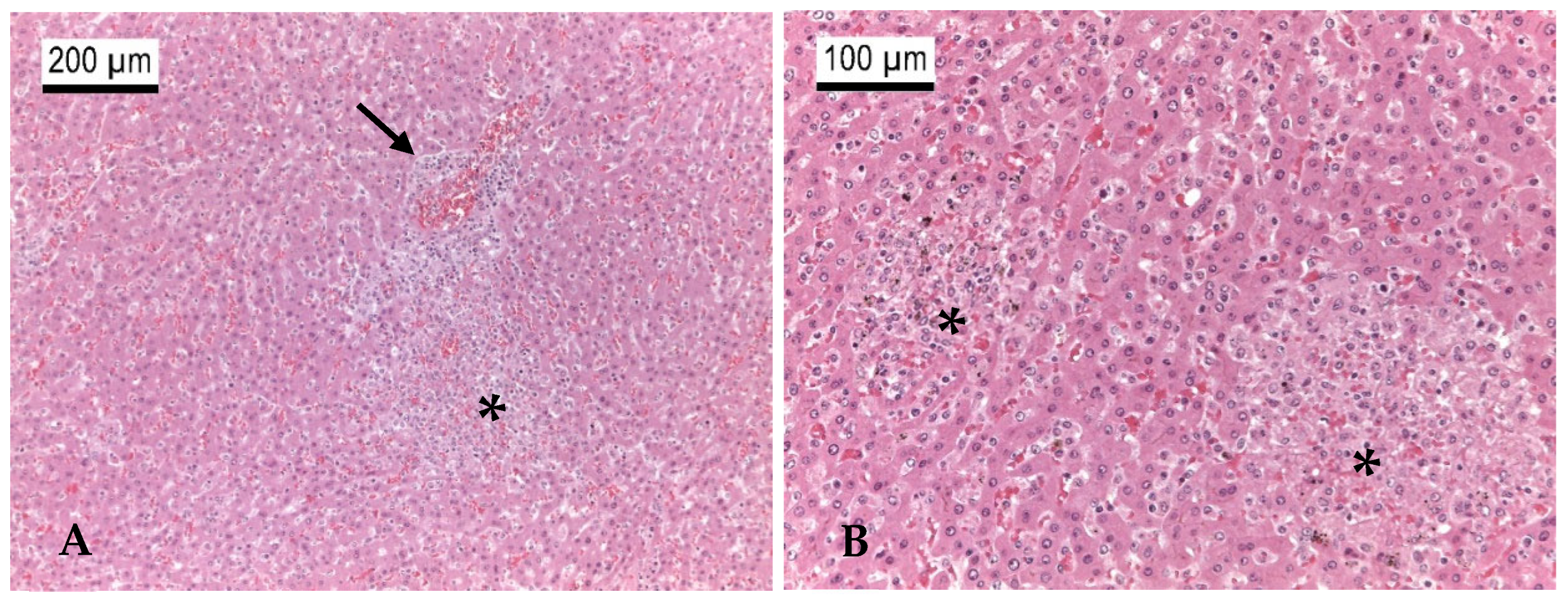
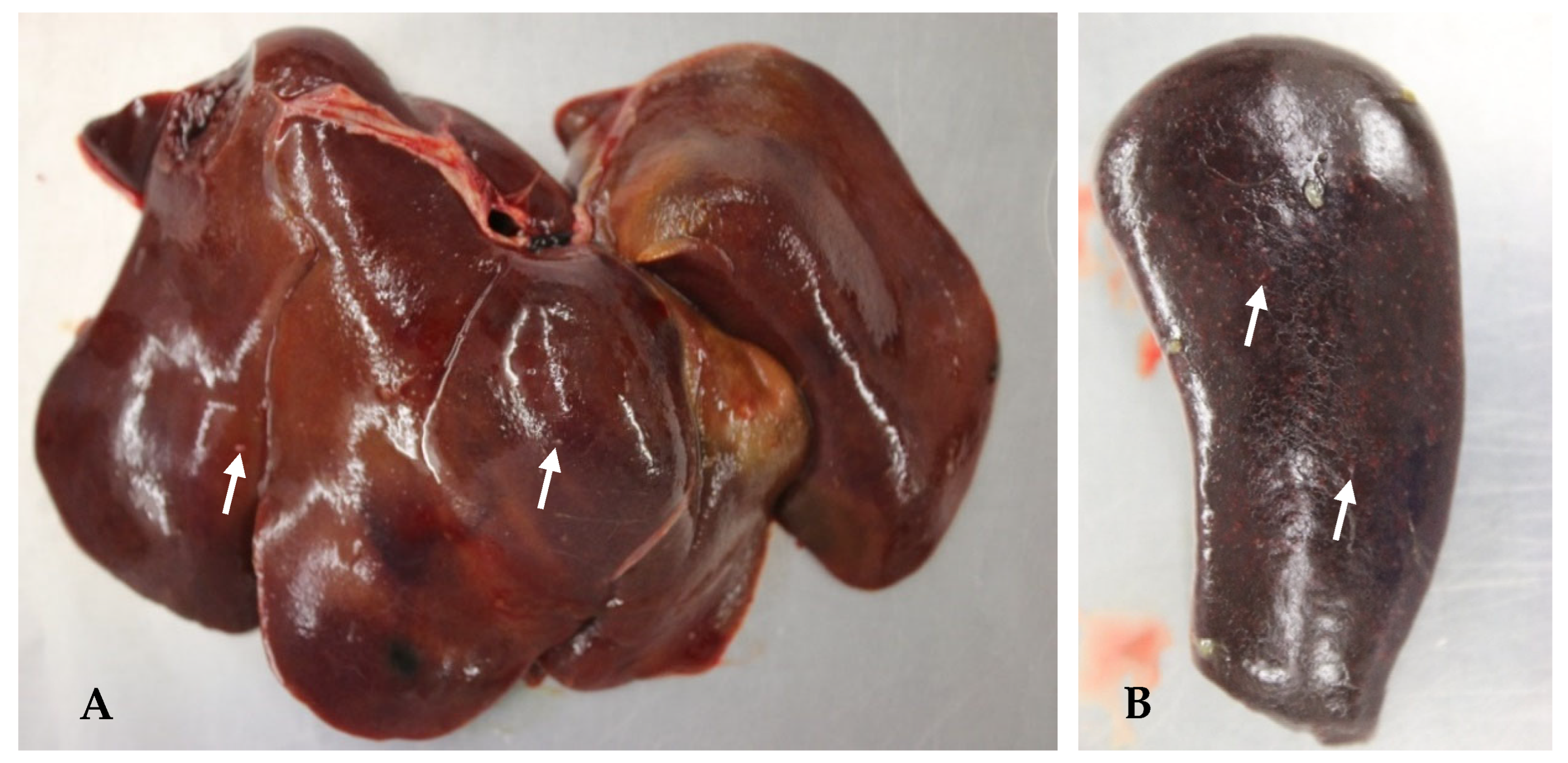
Between 2013 and 2023, several German zoos reported mortalities in primates from eleven different species due to infections with Y. pseudotuberculosis (Table 3). Black spider monkeys (Ateles fusciceps rufiventris), Geoffroy’s spider monkeys (Ateles geoffroyi), emperor tamarins (Saguinus imperator), spring tamarins (Callimico goeldii), cotton-headed tamarins (Saguinus oedipus), and representatives of the capuchin-like squirrel monkeys (Saimiri sciureus) were particularly frequently affected, as well as bonobos (Pan paniscus). The animals often died within a few hours to a few days after the onset of non-specific signs such as apathy or respiratory abnormalities. Therapeutic attempts were usually unsuccessful. During postmortem examinations, multifocal, miliary abscesses were found in the liver, spleen, lungs, intestines, and mesenteric lymph nodes in most cases, which were loaded with high-grade amounts of Y. pseudotuberculosis (Table 3). These typical changes were seen macroscopically and histologically in a patas monkey (Erythrocebus patas) infected with Y. pseudotuberculosis (Table 3, P17; Figure 2, Figure 3, Figure 4 and Figure 5).
Table 3.
Information on primate species (P), year, month, gross pathological findings, and matrices from which Yersinia pseudotuberculosis was isolated and the zoo of origin.
Figure 2.
Liver (A) and spleen (B) of a patas monkey (Erythrocebus patas) infected with Y. pseudotuberculosis with multifocal miliary lesions (two lesions of each organ are marked with white arrows). Y. pseudotuberculosis was isolated from both organs by bacteriological examination. Photos (A,B): Martin Peters, CVUA Westphalia.
Figure 3.
Histo-pathological sections of the liver of a patas monkey (s. Figure 2) with mild periportal lymphocytic infiltrates (black arrow) (A) and acute irregular necrotic to pyogranulomatous lesions (black stars) (A,B) as depicted in the higher magnification (B). H&E staining; 100× magnification (A), 200× magnification (B). Photos (A,B): Martin Peters, CVUA Westphalia.
Figure 4.
Histo-pathological sections of the spleen of a patas monkey (s. Figure 2). Severe congestion and multifocal acute coagulation necrosis (black star) (A) and pyogranulomatous foci depicted in the higher magnification (B). H&E staining at 100× magnification (A) and 200× magnification (B). Photos (A,B): Martin Peters, CVUA Westphalia.
There were various therapeutic attempts. In 2017, a 39-year-old female bonobo (Table 3, P7) who was nursing a young animal fell ill at the Wilhelma Zoo. The bonobo’s health status had been slowly deteriorating for a few weeks. Despite eating, she continued to lose weight, occasionally had diarrhea, and became more separated from the group. The reason for this was mainly seen in lactation. As a countermeasure, she was fed high-calorie food and multivitamins. The general health condition continued to deteriorate, and the bonobo showed respiratory signs with cough without sputum, wheezing, apathy, and fever. Therapy with the antimicrobial substance azithromycin (Zithromax dry juice for children, azithromycin 1500 mg/mL, Pfizer Pharma GmbH, Berlin, Germany) and antiphlogistic ibuprofen juice (Ibuflam 40 mg/mL ibuprofen, Zentiva Pharma GmbH, Frankfurt/Main, Germany) was started. The condition worsened, and the treatment was supplemented with cortisone dexamethasone (Dexamethason 4 mg/mL, Bela-Pharm GmbH & Co., KG, Vechta, Germany). On the fourth day after the onset of respiratory signs, the bonobo was found dead in the morning. Pathological examination revealed miliary necroses in the lungs and multifocal colliquation necroses with a margin of extracellular bacterial foci and inflammatory cells in the liver and spleen. Y. pseudotuberculosis was grown as a pure culture in high numbers from the lungs, liver, liver abscess, and kidneys. Due to pseudotuberculosis in the mother, a fecal sample from the child and two collective fecal samples from the bonobo group were also tested for Y. pseudotuberculosis. The pathogen was isolated from the fecal sample of the young bonobo (Table 3, P8). Conversely, the two collected pooled fecal samples from several animals in the remaining group were negative. Since none of the animals showed any clinical signs, no treatment was carried out. Furthermore, no further losses in the animal group were observed within the following seven years.
In December 2019, a female black-capped squirrel monkey (Saimiri sciureus; Table 3, P1) was apathetic and showed respiratory signs at the Wilhelma Zoo. The monkey was treated with ceftiofur (Naxcel, ceftiofur 200 mg/mL, Pfizer Pharma GmbH, Berlin, Germany) and isotonic sodium chloride solution (B. Braun SE, Melsungen, Germany) as liquid substitute. Nevertheless, the monkey died in the following night. During postmortem examination, necrotizing multifocal hepatitis, splenic hyperplasia with miliary-necrotizing inflammation, and an intestine with diphtheroid-necrotizing plaques were found. Y. pseudotuberculosis was detected in its liver, spleen, lungs, and intestine.
In February 2020, a male brown spider monkey (Ateles hybridus) in the Neuwied Zoo was apathetic and had a fever (39.6 °C) and respiratory signs (Table 3, P10). The spider monkey was taken to a veterinary clinic and received an antimicrobial treatment with amoxicillin/clavulanic acid (Synulox 50 mg [40 mg amoxicillin/10 mg clavulanic acid], Zoetis Germany GmbH, Berlin, Germany) and the non-steroidal anti-inflammatory drug (NSAID) meloxicam (Metacam 0.5 mg/mL, Boehringer Ingelheim Vetmedica GmbH, Rosenheim, Germany). The animal died the next morning, and the pathological examination revealed multifocal necrotizing hepatitis and splenitis, necrotizing myelitis with bacterial foci visible in patho-histology, and diffuse catarrhal enteritis.
Furthermore, there was a third case at the Wilhelma Zoo in December 2022. A female Goeldie’s marmoset (Callimico goeldii) was apathic and had a cough (Table 3, P16). Therefore, the monkey was treated with the antimicrobial enrofloxacin (Enro-K 25 mg/mL, bela-pharm GmbH & Co., KG, Vechta, Germany), with the NSAID meloxicam (Inflacam 1.5 mg/mL, Wirtschaftsgenossenschaft deutscher Tierärzte eG (WDT), Garbsen, Germany) and received a supportive treatment with bisolvon powder (Bisolvon 10 mg/g, Boehringer Ingelheim Vetmedica GmbH). The monkey died one day later. In the post-mortem examination, it showed multifocal pyogranulomatous hepatitis, diphtheroid-necrotizing enterocolitis with lymph follicle proliferation, and moderate splenomegaly.
Y. pseudotuberculosis was detected in the feces of a Black spider monkey (Ateles fusciceps rufiventris) and a bonobo (Pan paniscus) whose partners had recently died of acute pseudotuberculosis. The animals, from which the feces samples were taken, showed no clinical signs (Table 3, P6 and P8).
3.2.3. Ruminants
The participating zoos provided data on 23 cases of infections with Y. pseudotuberculosis in ruminants (Ru) from 12 different species between 2011 and 2024 (Table 4).
Table 4.
Information on ruminant species (Ru), year, month, gross pathological findings, and matrices from which Yersinia pseudotuberculosis was isolated and the zoo of origin.
Table 4.
Information on ruminant species (Ru), year, month, gross pathological findings, and matrices from which Yersinia pseudotuberculosis was isolated and the zoo of origin.
| Case No. | Species | Year | Month | Pathology | Source of Y. pseudotuberculosis | Zoo |
|---|---|---|---|---|---|---|
| Ru1 | African dwarf goat Capra aegagrus hircus | 2015 | March | Liver multifocal and spleen with focal acute purulent-necrotizing inflammation, severe acute necrotizing ileitis and colitis | Intestine, mesenteric lymph nodes, spleen, liver, lungs | Kronberg |
| Ru2 | Alpine ibex Capra ibex | 2024 | April | Multifocal necrotizing placentitis | Amniotic sac, stomach, liver, lungs, kidney of the fetus | Nuremberg |
| Ru3 | Alpine ibex Capra ibex | 2024 | April | Abortion | Feces | Nuremberg |
| Ru4 | Bactrian deer Cervus hanglu bactrianus | 2020 | December | Liver multifocal single cell necrosis, low-grade acute multifocal erosive-necrotizing ruminitis with intralesional bacteria, chronic multifocal purulent-necrotizing stomatitis, external ear with severe chronic purulent-necrotizing dermatitis | Liver, spleen, mucous membranes of the mouth | Kronberg |
| Ru5 | Blackbuck Antilope cervicapra | 2018 | April | Purulent-necrotizing inflammation in the lungs, liver, intestines, lymph nodes and in the navel area, bacterial foci in the spleen, hyperemia in the brain | Liver, lungs, spleen, kidney | Kronberg |
| Ru6 | Blackbuck Antilope cervicapra | 2022 | November | Multifocal, acute purulent-necrotizing inflammations with bacterial foci in the liver, spleen, kidneys, intestine, mesenteric lymph nodes, heart, and muscles; parasitosis with coccidia | Intestine | Kronberg |
| Ru7 | Blackbuck Antilope cervicapra | 2023 | February | Multifocal necrotizing hepatitis, lymphadenitis, and catarrhal enteritis | Spleen, kidney, lungs, bone marrow | Kronberg |
| Ru8 | Blackbuck Antilope cervicapra | 2018 | January | Multifocal necrotizing hepatitis and nephritis | Liver, lungs, kidneys, brain, intestine | Karlsruhe |
| Ru9 | Blackbuck Antilope cervicapra | 2020 | March | Acute purulent-necrotizing hepatitis and pneumonia | Liver, lungs, leptomeninx, myocardium | Karlsruhe |
| Ru10 | Blackbuck Antilope cervicapra | 2021 | February | Multifocal purulent-necrotizing pneumonia and hepatitis; high-grade embolic-purulent focal nephritis | Liver, lungs, kidney | Karlsruhe |
| Ru11 | Blackbuck Antilope cervicapra | 2023 | January | Acute purulent-necrotizing hepatitis, pneumonia and enteritis | Liver, lungs, intestine | Karlsruhe |
| Ru12 | Blackbuck Antilope cervicapra | 2023 | February | Diptheroid-necrotizing enteritis, parasitosis with gastrointestinal strongylids | Lungs, intestine | Karlsruhe |
| Ru13 | Fallow deer Dama dama | 2021 | February | Acute diffuse fibrinous-necrotizing enterocolitis, acute multifocal purulent-necrotizing lymphadenitis of the mesenteric lymph nodes | Intestine, mesenteric lymph nodes, feces | Zurich |
| Ru14 | Impala Aepyceros melampus | 2018 | January | Brain, lungs, lymph nodes, heart, spleen, liver, kidney, pancreas, intestine with moderate to severe multifocal embolic and purulent partly necrotizing inflammation | Liver, spleen, kidney, lungs, intestine, brain | Kronberg |
| Ru15 | Impala Aepyceros melampus | 2022 | November | Purulent-necrotizing hepatitis and enteritis, lymph node hyperplasia | Liver, spleen, kidney, lungs, intestine, lymph nodes | Kronberg |
| Ru16 | Impala Aepyceros melampus | 2023 | December | Necrotizing enteritis and lymphadenitis, darkening of the liver parenchyma | Liver, spleen, kidney, lungs, mesenteric lymph nodes, bone marrow, abdominal cavity | Kronberg |
| Ru17 | Impala Aepyceros melampus | 2024 | January | Purulent-abscessed lymphadenitis, acute catarrhal enteritis, pneumonia, white foci in the kidney | Intestine | Kronberg |
| Ru18 | Impala Aepyceros melampus | 2020 | February | Acute catarrhal-purulent inflammation with necrosis in the liver, lungs, spleen, intestines; mesenteric lymph nodes | Intestine | Kronberg |
| Ru19 | Markhor Capra falconeri | 2015 | n.a. 1 | Catarrhal enteritis, parasitosis with coccidia | Intestine | Berlin |
| Ru20 | Mesopotamian fallow deer Dama mesopotamica | 2020 | December | Acute purulent inflammation with necrosis in the liver, lungs, kidneys, spleen, intestines, lymph nodes | Liver, lungs, spleen, kidney | Kronberg |
| Ru21 | Mhorr’s gazelle Nanger dama mhorr | 2011 | n.a. 1 | Purulent-necrotizing mastitis, splenic hyperplasia and splenomegaly, liver with multiple white foci, purulent endometritis | Liver, spleen, udder, uterus | Berlin |
| Ru22 | Pudu Pudu puda | 2019 | April | Generalized swelling of the lymph nodes, multifocal purulent-necrotizing hepatitis | Liver, lungs, spleen | Wuppertal |
| Ru23 | Pudu Pudu puda | 2019 | January | Enterocolitis | Intestine | Wuppertal |
| Ru24 | Reindeer Rangifer tarandus | 2021 | September | Multifocal acute purulent hepatitis and pneumonia, mesenteric lymph nodes with bacterial foci, pyloric stenosis of the abomasum, hemosiderosis of the spleen | Liver, lungs, spleen, kidney | Wuppertal |
| Ru25 | White-lipped deer Cervus albirostris | 2024 | April | Stillbirth still attached to placenta, advanced stage of autolysis | Liver of the fetus | Berlin |
Berlin: Tierpark Berlin; Karlsruhe: Karlsruhe Zoo; Kronberg: Opel Zoo Kronberg; Wuppertal: Wuppertal Zoo; Zurich: Institute for Veterinary Pathology (IVP), University of Zurich; 1 n.a.: not available.
The majority of ruminants were in poor nutritional condition, and some were infested with endoparasites like coccidia (Table 4, Ru6 and Ru19) and gastrointestinal strongylids (Ru11). The animals, which came from five different zoological facilities, almost all suddenly died in the winter months from November to April, except for one animal (Ru24). Some animals had been diagnosed with a second cause of infection, such as omphalophlebitis (Ru5) or panophthalmia (Ru10). A blackbuck showed signs of illness due to a Listeria monocytogenes infection (Ru6). A bactrian deer suffered from a stomatitis and ear infection as well as from diarrhea (Ru4). Consequently, postmortem, Y. pseudotuberculosis was isolated in large numbers in multiple organs from these animals.
At the Nuremberg Zoo, three abortions occurred in the herd of Alpine ibex (Capra ibex) between the end of March and the beginning of April 2024. In one case of an abortion (Table 4, Ru2), Y. pseudotuberculosis was detected by bacterial culture with strong growth in the lungs, liver, and membranes of the fetus. The fetuses of the other two cases of abortions tested negative. Following the Yersinia-positive abortion, a collective fecal sample was taken from the ibex herd. The fecal sample (Table 4, Ru3) was also positive for Y. pseudotuberculosis. In the following period, no losses were observed among the lambs and adults in the ibex herd.
In April 2024, an approximately five-year-old female white-lipped deer (Cervus albirostris) at the Tierpark Berlin (Table 4, Ru25) showed hemorrhagic vaginal discharge and increased abdominal clenching. Otherwise, the animal showed no clinical signs nor signs of birth. Due to the clinical signs, the animal was immobilized and diagnosed to be in the birthing phase. Therefore, a cesarean section was performed and a dead, immature fetus, which was still attached to the placenta, was delivered. Bacteriological examination of the stillbirth revealed a high-grade growth of Y. pseudotuberculosis in the bacterial culture of the liver.
Another case of Y. pseudotuberculosis occurred in a female Mhorr’s gazelle (Nanger dama mhorr) in connection with a birth in 2011 (Table 4, Ru21). After giving birth to a weak fawn, the gazelle showed lochial discharge and therefore was treated with amoxicillin (Vetrimoxin LA 150 mg/mL, Ceva animal health GmbH, Dusseldorf, Germany) twice at intervals of two days. Despite the two treatments, the animal showed a moderately reduced general condition, and therefore, the therapy was continued with marbofloxacin (Marbox 100 mg/mL, Ceva animal health GmbH) per day. However, a week after the last application of antimicrobials, the animal’s general condition deteriorated significantly. Thus, the treatment with marbofloxacin was repeated, but the animal had to be euthanized on the second day. Pathological examination revealed multifocal acute purulent-necrotizing inflammation in the liver, spleen, udder, and uterus of the Mhorr’s gazelle. Y. pseudotuberculosis was detected in all organs mentioned.
3.2.4. Other Mammal Species
Carnivora
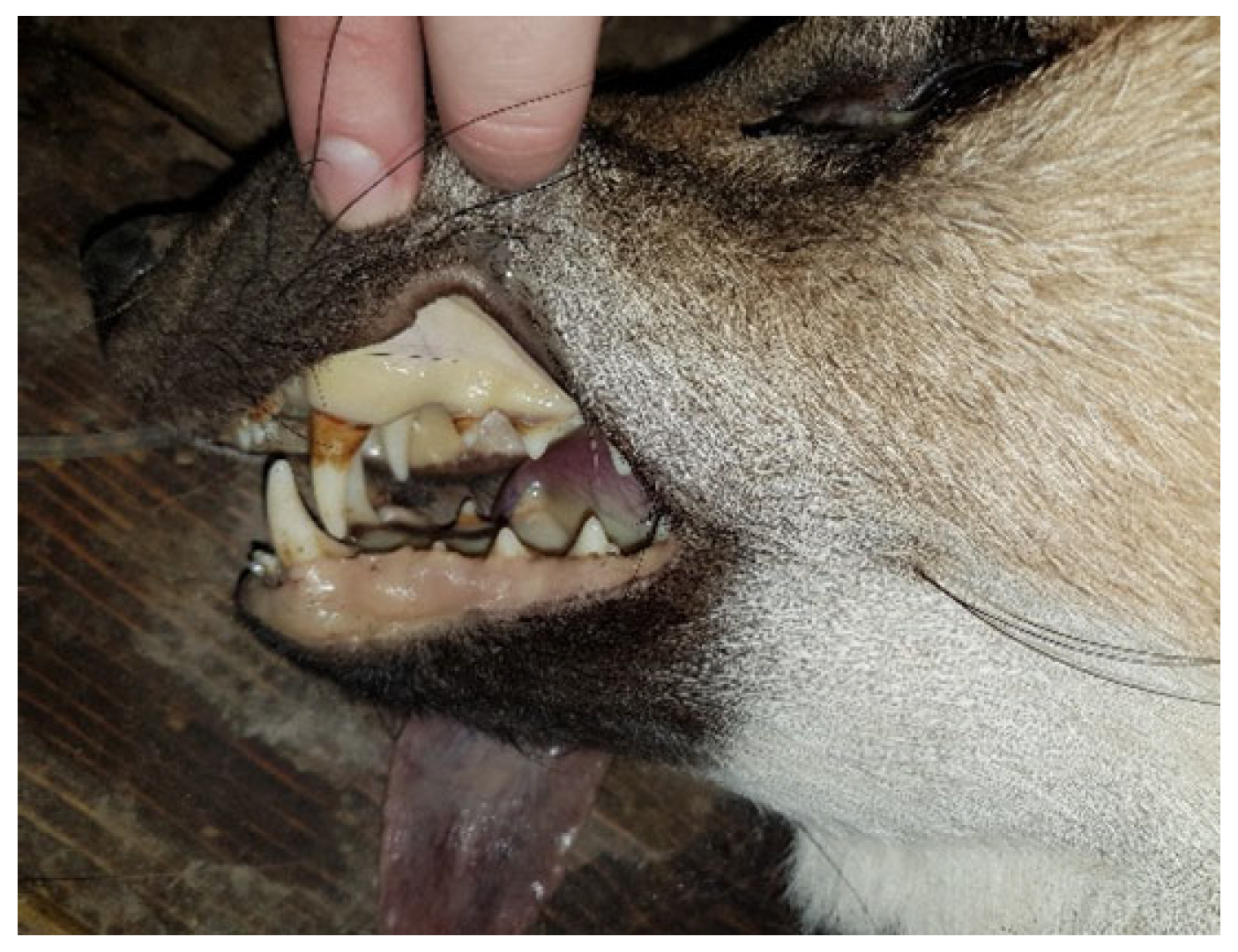
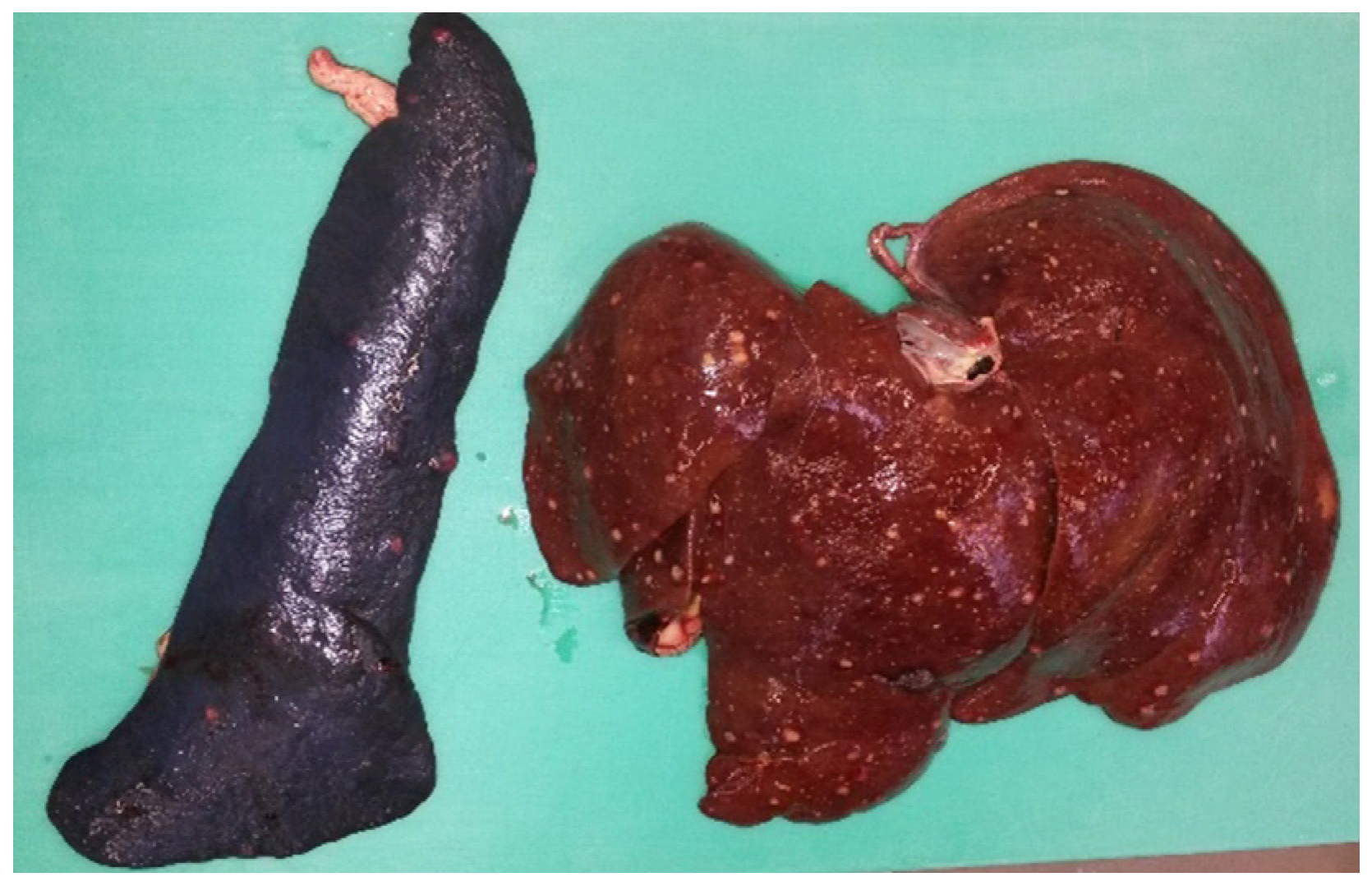
At the Wilhelma Zoo, a female maned wolf (Chrysocyon brachyurus) fell ill with a Y. pseudotuberculosis infection in December 2017. Previously, the animal had shown a reduced food intake for two days, had been increasingly apathic, and had diarrhea since the first day of illness. When examined under anesthesia, the mucous membranes were severely jaundiced, and the animal was severely dehydrated (Figure 5). In the abdominal sonography, liver cysts were suspected, and in the blood biochemestry, the kidney values for creatinine (CREA: value 150 µmol/L [normal range 27–124 µmol/L]) and blood urea nitrogen (BUN: value 29.2 µmol/L [normal range 2.5–8.9 µmol/L]) were highly elevated. This also applied for the liver values for alanin-amino-transferase (ALT: value 7951 nkat/L [normal range 167–1967 nkat/L]) and total bilirubin (TBIL: value 58.2 µmol/L [normal range 1.7–10.2 µmol/L]) accompanied by an anemia (erythrocyte count RBC: value 3.4 T/L [normal range 5.5–8.5 T/L]; the hematocrit HCT value was 0.26 L/L [normal range 0.37–0.55 L/L]). Due to the poor prognosis, the maned wolf was euthanized and subjected to postmortem examination. The maned wolf was in poor nutritional condition. The inspection of the inner organs revealed a hepatitis and splenitis with disseminated capsular neutrophilic microabscesses and coagulation necroses detected by patho-histology (Figure 6). In addition, ulcerative inflammations in the stomach and intestinal mucosa with superficial epithelial loss were found. Y. pseudotuberculosis was detected culturally with dense growth from the microabscesses.
Figure 6.
Spleen and liver of the maned wolf with multiple abscesses. Photo: CVUA Stuttgart.
Figure 5.
Maned wolf with icteric mucous membranes. Photo: Marco Roller, Zoo Karlsruhe.
Diprotodontia
At the Dortmund Zoo, in the period from 2013 to 2015, four red kangaroos (Osphranter rufus) developed motion disorders with hind limb lameness and weight loss. All four kangaroos were euthanized due to the severity of the disease. Postmortem examination revealed unilateral severe subacute to chronic purulent destructive coxarthritis in three animals and unilateral severe purulent gonitis with osteomyelitis in the fourth animal (Figure 7). The youngest of the four kangaroos was euthanized at the age of eight months with proliferative synovitis of the left hip joint and an abscess at the edge of the pouch. The oldest of the kangaroos was five years old and, in addition to the joint alterations, had formed an intestinal lymph node abscess. The altered joints of the four kangaroos, the pouch abscess from the youngest, the intestine, and the intestinal lymph node of the oldest animal were examined bacteriologically. Y. pseudotuberculosis could be cultivated from all samples.
Figure 7.
Severely swollen knee joint with skin ulcer (A) and its respective cut section (B) of a red kangaroo (Osphranter rufus) with purulent gonitis caused by Y. pseudotuberculosis. Photos: Martin Peters, CVUA Westphalia.
During the disease outbreak, two employees at the Dortmund Zoo developed a reactive arthritis. One of them had been temporarily in charge of the kangaroos. Both keepers were positive for anti-Yersinia IgG using a strip immunoassay.
At the Berlin Zoo, fatal cases of Y. pseudotuberculosis infection occurred in two western gray kangaroos (Macropus fuliginosus) in 2019 and 2021, respectively. In the first case in 2019, a female adult kangaroo was found in the morning with trembling, followed by an acute collapse and recumbency in the afternoon. The kangaroo was treated with an antimicrobial (Procain-Penicillin Susp. 300 mg/mL, Dechra Veterinary Products, Aulendorf, Germany) intramuscularly and cortisone (Prednisolone acetate injection suspension 10 mg/mL, CP-Pharma Handelsges. GmbH, Burgdorf, Germany). However, the animal was found dead the next day. The postmortem examination revealed a poor nutritional condition, and inspection of the abdominal cavity exhibited highly purulent, abscessing mesenteric and pyloric lymphadenitis and moderate serosanguinous ascites with lots of fibrin flakes. The bacteriological examination yielded Y. pseudotuberculosis in a dense culture.
In the second case in 2021, a female, juvenile western gray kangaroo died after an attack from an adult buck despite lacking external injuries. The postmortem examination revealed numerous pathological changes such as poor nutritional status, splenitis, and inflamed, enlarged lymph nodes in the intestine, groin, and esophagus. The liver displayed a fine bumpy surface interspersed with fine white-gray dots. Further changes included an abdominal cavity effusion and an erosive to ulcerative gastritis. High loads of Y. pseudotuberculosis and, as a secondary finding, Salmonella enterica (serogroup B) could be detected in bacterial culture obtained from the mesenteric lymph nodes, spleen, liver, stomach, ileum, cecum, and effusion.
In August 2024, at the Erfurt Zoo, a female adult western gray kangaroo showed a lack of appetite and poor general health. On the second day of illness, the animal was anaesthetized and examined in general with an additional sonographic examination. In the kidneys, stones were found and, as a secondary finding, an enlargement of the abdomen. The animal was euthanized, and a postmortem examination was carried out. A purulent abscess of the intestinal lymph node measuring 15 × 8 × 8 cm proved to be the cause of the enlarged abdomen, from which Y. pseudotuberculosis could be isolated. The animal also suffered from nephropathy with medullary and papillary necrosis with high-grade renal pelvic stone formation on both sides and, additionally, mitral valve endocardiosis.
Hyracoidea
In April 2015, a female bush hyrax (Heterohyrax brucei) suddenly died at the Opel Zoo. Postmortem examination of the cachectic animal revealed severe purulent-necrotizing hepatitis, rhinitis, and lymphadenitis of the mesenteric lymph nodes. In the latter as well as in the bone marrow and spleen, large numbers of microabscesses were found in all organs, from which Y. pseudotuberculosis was isolated in high numbers.
Macroscelidea
In January 2020 as well as in November 2022, a female adult short-eared elephant shrew (Macroscelides proboscideus) died suddenly in the Wilhelma Zoo without any previous abnormalities. The animal, which died in 2020, was in a good nutritional condition. Pathological examination revealed massive bacterial emboli in the heart with high-grade consecutive multifocal purulent-embolic myocarditis. The animal also suffered from a mild acute diffuse panlobular purulent hepatitis. The kidneys showed severe acute necrotizing tubulonephritis. Y. pseudotuberculosis could be obtained in culture from the liver, spleen, and kidneys.
In 2022, another short-eared elephant shrew died at the Wilhelma Zoo. The animal had a moderate nutritional condition. The histo-pathological examination revealed moderate fatty degeneration of the hepatocytes with miliary necroses and bacterial foci. In the small intestine, hemorrhagic enteritis with low-grade mononuclear infiltration of the mucosa was observed. Y. pseudotuberculosis could be cultured with high-grade growth from the liver, lungs, kidneys, and small intestine.
In November 2017, a male and a female short-eared elephant shrew died within five days without prior clinical signs at the Wuppertal Zoo. During postmortem and histological examinations of the organs, both animals showed multifocal miliary necroses with bacterial foci in the liver. High bacterial loads of Y. pseudotuberculosis were detected by culture from the liver, spleen, kidneys, and lungs.
3.3. Occurrence of Pseudotuberculosis in Birds from All the 19 Zoos Included in This Study
Birds of ten different orders and 25 species proved to be infected with Y. pseudotuberculosis (Table 5). In all cases, the zoos participating in this study reported sudden cases of death among them devoid of prior clinical signs. During the pathological examinations, the main findings in these animals were high-grade multifocal necroses in the liver and lungs but also in the spleens and kidneys, which were loaded with foci of rod-shaped bacteria and granulomas consisting of heterophils, lymphocytes, histiocytes, and multinucleated giant cells visible in histo-pathology. In addition, some of the affected birds suffered from catarrhal enteritis with lymphadenitis or granulomatous pneumonia. High loads of Y. pseudotuberculosis could be detected by culture in all affected organs (Table 5).
Table 5.
Information on the infected bird species (B), order, year, month, gross pathological findings, and matrices from which Yersinia pseudotuberculosis was isolated and the zoo of origin.
In February 2023, two toco toucans (Ramphastos toco) (Table 5, B37 and B38), which had hatched in Walsrode in spring 2022, died within a few days. The birds had been vaccinated twice, four weeks apart, with a flock-specific vaccine against Y. pseudotuberculosis and did not have access to the outdoor enclosure since October 2022. The indoor aviary was safe from rodents. One toucan died suddenly (Table 5, B37), and the other toucan (Table 5, B38) showed wheezing in the morning; therefore, an antimicrobial treatment with enrofloxacin (Enrofloxacin 2.5% WDT injection solution) intramuscularly administered was initiated. However, the bird died a few minutes later. During the pathological examination, highly multifocal necroses with patches of rod-shaped bacteria were found in the liver, lungs, and spleen of both toucans. High levels of Y. pseudotuberculosis were isolated from the liver, lungs, blood, and body cavity.
In November 2023, an eastern rosella (Platycercus eximius) (Table 5, B12) and a red-rumped parrot (Psephotus haematonotus) (Table 5, B31) died suddenly at the Wilhelma Zoo within five days from an infection with Y. pseudotuberculosis. The birds lived in the same outdoor free-flight aviary as the red-rumped parrot that had been considered a ‘hotspot species’, since it died suddenly from an infection with Y. pseudotuberculosis in January 2023 (Table 5, B30). Due to repeated cases of pseudotuberculosis, a collective fecal sample from the aviary was examined for Y. pseudotuberculosis every month starting from June 2023. However, all samples examined over the entire study period of one year were yielded negative results, including those taken immediately after the first animal from the aviary had died in November 2023. During pathological examinations, all three birds that died in 2023 showed moderate to poor nutritional conditions, miliary necrotizing granulomatous hepatitis, and splenitis with extracellular bacterial foci. Two animals suffered from pyogranulomas in the lungs, catarrhal enteritis, and granulomatous-necrotizing encephalitis. Already in November 2022, a spotted dove (Spilopelia chinensis) (Table 5, B32) and in January 2021 an adult common redshank (Tringa totanus) (Table 5, B11) from the same aviary died suddenly from Y. pseudotuberculosis infections. Y. pseudotuberculosis isolates were obtained from the liver, heart, and lungs of these birds. In addition, a brown rat (Rattus norvegicus) (Table 2, R1), a brown hare (Lepus europaeus), and an Eurasian red squirrel (Sciurus vulgaris) (Table 2, R11) were found dead in or very close to the outdoor aviary area during the study period. Organ samples of the animals tested positive for Y. pseudotuberculosis.
The isolates obtained from the zoo animals were cryopreserved, and a flock-specific vaccine was produced by Ceva BESTVAC (Dessau-Roßlau, Germany) on demand. This vaccine was administered at the Wilhelma Zoo starting in January 2024. All birds in the outdoor free-flight aviary were vaccinated in February and four weeks later in March. Birds that were newly integrated into the existing population were given a basic immunization during quarantine.
In January 2024, a female lesser flamingo (Phoeniconaias minor) died suddenly at the Opel Zoo (Table 5, B21). The bird suffered from cachexia and ascites, and granuloma-like proliferations were visible during postmortem examination. In addition, beige yellow pinhead-sized foci were found on the serous membranes. In the liver parenchyma, several beige yellow partly raised foci were visible. Y. pseudotuberculosis was detected by bacteriological examination in high numbers from in the kidneys, lungs, heart, ovary, and to a low degree from the liver.
3.4. Antimicrobial Susceptibility
The total of 270 Y. pseudotuberculosis isolates, comprising 132 from zoos and 138 from wild animals, were investigated for their antimicrobial resistance profiles. All isolates were not highly sensitive to erythromycin. In 92 antimicrobial susceptibility tests, no inhibition zone was observed. In 153 antibiograms, the inhibition zone was less than or equal to 10 mm in diameter. Only in 25 antibiograms was there an inhibition zone larger than 10 mm in diameter. However, the Y. pseudotuberculosis isolates were more sensitive to florfenicol than to erythromycin. Thus, florfenicol showed no inhibition zone in only two antibiograms, an inhibition zone of less than or equal to 10 mm in one antibiogram, and an inhibition zone with a diameter of greater than or equal to 25 mm in the remaining 267 antibiograms. None of the inhibition zones for florfenicol were in the range between 11 mm and 25 mm diameter. The results of the tests on other antimicrobial agents with available reference values from the CLSI version VET01-SEd7E guidelines for agar diffusion test are summarized in Table 6.
Table 6.
Antimicrobial resistance profiles of 270 Yersinia pseudotuberculosis isolates from zoos included in this study. Testing and evaluation of the results were performed according to the CLSI version VET01-SEd7E guidelines for agar diffusion test [27]. Sensitive (S), intermediate (I), and resistant (R).
4. Discussion
Y. pseudotuberculosis infections have a significant impact on animal health and, due to their zoonotic nature, on humans who come into close contact with animals or environmental contamination. Pseudotuberculosis is therefore an infectious disease that needs to be thoroughly investigated within the One Health approach, which includes humans, animals, and the environment. Since fatal infections with Y. pseudotuberculosis occur repeatedly in numerous zoos, the aim of the present study was to investigate the prevalence of and the impact of Y. pseudotuberculosis infections on such special epidemiological units.
As part of this study, numerous case reports of Y. pseudotuberculosis infections were collected and analyzed based on accessible literature. This overview was supplemented by cases which were personally communicated from zoo veterinarians from other zoos. Many cases were available from zoo animals of the orders of rodents (Table 2), primates (Table 3), and ruminants (Table 4), as well as from birds of the order Piciformes (Table 5).
4.1. Y. pseudotuberculosis Infections in Zoo Animals
The regular occurrence of Y. pseudotuberculosis in rodents like capybaras, maras, and guinea pigs is to be expected, since cases of Y. pseudotuberculosis infections in capybaras kept in zoos have been described previously [28,29]. During this study, cases also occurred in rodents in several German zoos, in particular in Patagonian maras (Dolichotis patagonum) in the Wuppertal Zoo (Table 2, R9–R10, R15–R18).
Cases of Y. pseudotuberculosis have also occurred in various primate species in several zoos, for example, in a bonobo at the Wilhelma Zoo (Table 3, P7 and P8) and mainly in non-human primates in other zoos in recent years. The importance of Y. pseudotuberculosis in primates is corroborated by numerous published case reports on cases in meerkats [30,31], a marmoset [32], cynomolgus monkeys [33,34,35], baboons and patas monkeys [35,36], spider monkeys [36], squirrel monkeys [31,37], and rhesus monkeys [38].
In recent years, there have also been cases of Y. pseudotuberculosis in different ruminant species at the Opel Zoo like in a fallow deer (Dama mesopotamica) and in impalas (Aepyceros melampus) (Table 4, Ru1, Ru4–Ru6, Ru12, Ru14–Ru18, Ru20). But there are not only wild ruminants that are susceptible to the pathogen. Domestic ruminants such as goats and sheep, which are very popular in petting zoos, are susceptible and can be sources of infections. This was proven by a case of a Y. pseudotuberculosis infection in an African dwarf goat at the Opel Zoo in 2015 (Table 4, Ru1). As part of various studies in Australia, Y. pseudotuberculosis was detected in sheep feces, and some of the animals suffered from diarrhea [23,24,25,26]. Enteritis caused by Y. pseudotuberculosis has also been reported for goats [39]. Moreover, goats were reported in a retrospective study to be the species that was mostly affected in California (USA) by this pathogen [40]. It should be kept in mind that many visitors, especially children, pet sheep and goats and thus potentially come into close contact with feces contaminated with Y. pseudotuberculosis and other numerous zoonotic pathogens [41,42,43].
Beyond enteral infections, cases of abortion and stillbirth in small ruminates caused by Y. pseudotuberculosis infections are documented [44,45,46]. Like the cases in the Alpine ibex herd at the Nuremberg Zoo, cumulated cases of abortion and stillbirth have been reported in small ruminants [47,48,49]. Thus, massive excretion of Y. pseudotuberculosis via lochia and placenta causing heavy environmental contamination should be considered in hygiene concepts [44].
Due to the wide host spectrum of Y. pseudotuberculosis, not only mammals but also various bird species are affected, thereby causing animal losses. During the monitoring period, Y. pseudotuberculosis infections were detected in a red-rumped parrot (Psephotus haematonotus) and an eastern rosella (Platycercus eximius) from the Wilhelma Zoo as well as in a lesser flamingo (Phoeniconaias minor) from the Opel Zoo. Some of these birds are still ‘hotspot species’. Cases of pseudotuberculosis in birds have been reported for numerous species such as toucans [2,40], crows [50], Amazon parrots (Amazona aestiva and Amazona oratrix) [51], pigeons (Nesoenas mayeri) [52], doves (Streptopelia decaocto) [53], and a bustard (Otis tarda) [54].
However, during our study, confirmed lethal infections also occurred in species that have not yet been recognized to be highly susceptible to Y. pseudotuberculosis infections. These include a maned wolf (Chrysocyon brachyurus; Wilhelma), short-eared elephant shrews (Macroscelides proboscideus; Wilhelma Zoo and Wuppertal Zoo), red kangaroos (Osphranter rufus; Dortmund Zoo) and lesser flamingo (Phoeniconaias minor; Opel Zoo; Table 5, B21). Similarly, several individual cases of pseudotuberculosis have been described in species in which infections were hardly expected, i.e., in two adult male lions (Panthera leo) in a zoo in North Carolina and infections in a colony of Egyptian fruit bats (Rousettus aegyptiacus) in Egypt [55,56]. This means that in epidemiological units such as zoos, the detection of Y. pseudotuberculosis in key species represents the tip of the iceberg, and thus, many other animals could be at risk.
The high lethality rate in all infected animal species associated with sudden deaths seldom preceded by unspecific clinical signs such as apathy or anorexia and consecutive treatments appeared to have had no prospects of success. Thus, Y. pseudotuberculosis infections were only diagnosed after death at the Wilhelma Zoo and the Opel Zoo in accordance with previous reports from other zoos [46,50,51,52,57]. In the London Zoo and the Whipsnade Zoo, 24 cases of Y. pseudotuberculosis infections occurred between 2001 and 2019 in primates, artiodactyls, and birds. Common clinical signs again included lethargy or death without prior notice. Poor general condition was common in mammals but often went undetected until postmortem examinations. Bacterial cultures were often obtained from the liver or spleen of primates and birds or from enlarged mesenteric lymph nodes in artiodactyls after postmortem examinations [21]. In addition to changes in internal organs such as the lungs, spleen, and liver, inflammations in the intestine and the mesenteric lymph nodes are striking findings in many perished animals. This indicates a rapid spread of pathogenic Y. pseudotuberculosis bacteria from the intestine via the lymph nodes due to a tropism to the lymphatic system and subsequent colonization of the internal organs [58,59].
In addition to the examinations of deceased zoo animals, a total of 168 fecal samples from ‘hotspot species’ were tested for Y. pseudotuberculosis on a monthly base for one year. Although these samples came from areas at the Wilhelma Zoo and the Opel Zoo where zoo animals had previously died of Y. pseudotuberculosis infection, only one sample from the Opel Zoo was found positive from an impala. A second positive fecal sample was taken from a healthy blackbuck as part of a transport requirement. Fecal samples from the Alpine ibex herd at the Nuremberg Zoo, in which Y. pseudotuberculosis was involved in several cases of abortions, tested positive. However, the majority of fecal samples must be regarded as negative like in the pooled fecal sample taken from the free-flight aviary at the Wilhelma Zoo, albeit a singing parakeet had died there on the same day. Another case was recorded at the Wilhelma Zoo in connection with Y. pseudotuberculosis infection in a bonobo in 2017. Y. pseudotuberculosis was detected in the feces of the offspring whose mother bonobo had died of pseudotuberculosis but not during control samplings within the same group. In total, only 0.7% of the fecal samples tested positive for Y. pseudotuberculosis in our study at the Wilhelma Zoo and the Opel Zoo. However, another study achieved higher values for the detection of Y. pseudotuberculosis during an outbreak of diarrhea in weaned Merino sheep in Australia. Out of 1,020 fecal samples, Y. pseudotuberculosis was the most frequently isolated pathogen (18.5%), followed by virulent Y. enterocolitica (13.6%) [60]. Nevertheless, fecal samples do not reliably reveal the shedding of Yersinia species [61], and it should be noted that the shedding of the pathogen depends on various factors and is not always associated with obvious clinical signs [46,60,62]. To this end, the spread of this pathogen to the environment through fecal shedding by systemically infected animals should be considered. Outbreaks can result in significant financial losses and have the potential to undermine conservation efforts by leading to increased mortality of threatened and endangered species [46]. Hence, all animals that die in zoos should be subjected to pathological and bacteriological examinations for monitoring purposes.
4.2. Y. pseudotuberculosis in Free-Living Animals
As part of a monitoring plan, 312 wild small mammals and birds found dead in and around the Wilhelma were considered as potential carriers and examined for Y. pseudotuberculosis. Six small mammals (4 out of 55 rats, one squirrel, and one hare) tested positive, corresponding to a prevalence of 2%. No specific Y. pseudotuberculosis proof was achieved in the 156 mice examined. Rats were caught as part of the rodent control program in the zoo from three enclosures where a ‘hotspot species’ lived, but they did not show any pathological organ changes postmortem. During a 2012 outbreak at the national zoo in Israel, which killed 15 zoo animals, no Yersinia bacteria were isolated from rodent samples [20]. Similarly, only 2 out of 1,840 free-ranging Finnish mice tested positive over a period of seven years [63], and in southeastern Poland, just 1 out of 214 small wild rodents carried the pathogen [6,7,41]. Nevertheless, rodents are considered asymptomatic vectors and important in the spread of the pathogen. Therefore, rodent control is essential.
However, it should be noted that Y. pseudotuberculosis is present in soil and can sometimes be detected in fresh, agriculturally produced plants, and root vegetables.
Thus, Y. pseudotuberculosis can infect both humans and animals through the consumption of contaminated food and water or contact with contaminated soil [64,65,66].
4.3. Preventive Measures
Zoonoses continue to pose a threat to human and animal health, and pathogen transmission from animals to humans is a key issue of the One Health approach [67,68]. For this very reason, research in this area is relevant, especially for pathogens that have received less attention and have the potential to emerge, particularly in those with already known as well as emerging histories [69].
Zoos represent unique artificial habitats, where a wide variety of animal species from disparate ecosystems live in close quarters, thereby increasing Y. pseudotuberculosis dissemination risks among species, including humans. Shedding of the pathogen via feces, particularly from asymptomatic animals, contaminates the environment and facilitates pathogen spread through the fecal–oral route [23]. The zoonotic potential of Y. pseudotuberculosis poses health risks to zookeepers and visitors, as illustrated in the Dortmund Zoo, where kangaroo keepers developed reactive arthritis and tested seropositive (L. Riede, personal communication). Detailed investigations and biosafety measures are essential to better protect humans, animals, and the environment.
The most effective measures to prevent infections with Y. pseudotuberculosis include regular hand hygiene. The COVID-19 pandemic has left a lasting impression on hand hygiene behavior [70]. Since then, practicing better hand hygiene through more frequent handwashing and sanitizing, especially in public, has been achieved and maintained by many. Therefore, the most effective protective measures include reminding the importance of hand hygiene and providing easy access to handwashing facilities [42,43,71]. At the Wilhelma Zoo, hand wash basins and disinfectant dispensers have been installed for visitors in front of the petting zoo enclosure and in the sanitary facilities.
The National Association of State Public Health Veterinarians (NASPHV, Inc.) and the Centers for Disease Control and Prevention (CDC) have jointly published comprehensive recommendations to reduce zoonotic disease risks associated with animals in public settings. The management of contact between the public and animals is also addressed regarding the design of facilities and animal housings, cleaning procedures, and during veterinary care and animal husbandry [41,72]. Regular hygiene training with a range of topics on zoonotic pathogens is important to ensure occupational safety and to protect the health of the staff.
Vaccination is another option to prevent spreading and is considered the most effective way to prevent and control zoonosis sustainably [73]. However, only a vaccine approved for cervids in New Zealand (Yersiniavax®, inactivated Y. pseudotuberculosis serotypes I, II, III, MSD Animal Health New Zealand) and a killed whole-cell vaccine used mainly in European zoos (Pseudovac®, Department of Veterinary Pathology, Utrecht University, The Netherlands) are currently commercially available. Thus, an autogenous inactivated vaccine has to be used for other purposes. The production and administration of autogenous vaccines must be based on isolates obtained from animals belonging to the same epidemiological entity [74]. These vaccines require the cultivation of current and relevant isolates, as zoo isolates often differ significantly [61]. Furthermore, this kind of vaccine lacks any proof of efficiency and innocuousness and should therefore be used with caution. At the Wilhelma Zoo, an autologous vaccine obtained from an avian Y. pseudotuberculosis isolate was produced on demand. Following the depicted losses, this vaccine was used to immunize birds from the outdoor free-flight aviary twice in spring 2024 at intervals of three to five weeks and so far did not have any side effects. An autologous vaccine was also produced at the Opel Zoo and used to vaccinate the impalas and lesser flamingos.
Overall, the use of vaccines against pseudotuberculosis has been controversially discussed. Bakker et al. (2007) thus concluded that vaccination was essential for the control of Yersinia spp. outbreaks in monkeys (marmosets and tamas) [32]. However, a study on Merino sheep demonstrated limited vaccine impact on seroconversion or fecal shedding of the pathogen [75]. Similarly, Quintard et al. (2010) found the inactivated vaccine Pseudovac® ineffective in guinea pigs, whereas oral vaccination with attenuated Y. pseudotuberculosis strains proved superior [76].
Encouraging data from immunizations based on orally administered attenuated live vaccines such as recombinant YopE vaccine [77], pTTSS mutants, recombinant YopE vaccines [58], and genetically engineered Lactococcus lactis used as a vaccine vector that provides the Y. pseudotuberculosis immunomodulatory LcrV protein [78,79,80,81] have been presented. These findings emphasize the need for tailored vaccination strategies, especially prior to an increased risk of infection in winter [32,58,60,75].
4.4. Antimicrobials
Antimicrobial therapies have proven to only be promising in the very early stages of infection due to the predominantly fulminant course of Y. pseudotuberculosis infections in zoo animals and therefore are of minor importance. Nevertheless, antimicrobials remain the treatment of choice in humans, guided by susceptibility testing. The Y. pseudotuberculosis isolates obtained in this study showed low levels of antimicrobial resistance in vitro. The isolates were sensitive to most of the tested antimicrobial agents such as amoxicillin/clavulanate, ciprofloxacin, gentamicin, norfloxacin, streptomycin, and trimethoprim/sulfamethoxazole. Of the antimicrobial agents tested on the 270 isolates in our study, resistance was frequently observed in the case of erythromycin, tetracycline, and occasionally to amoxicillin/clavulanate as well as ampicillin. This is a worrying trend, as ampicillin, amoxicillin/clavulanate, and tetracyclines are commonly used agents for a wide range of infections [82]. Alarmingly, 2.2% of the 270 isolates demonstrated resistance to meropenem, a last-resort treatment for multidrug-resistant infections [83]. Similar to the isolates included in this study, isolates obtained from an outbreak of pseudotuberculosis in a zoo in Israel and the London Zoo and Whipsnade Zoo were resistant to tilmicosin and clindamycin, respectively [20,21].
A study on the antimicrobial susceptibility of Y. pseudotuberculosis isolated from pig tonsils showed that all isolates were sensitive to all antimicrobials included, except ampicillin, amoxicillin/clavulanate, and tetracyclines, to which resistance occurred in our study [79]. This was also true for Y. pseudotuberculosis strains from different human (feces) and non-human (pig, wild boar, monkey, chinchilla, mara, capybara, and lettuce) sources that proved sensitive to all antimicrobial agents of various groups tested [84]. However, in a previous study on an outbreak of diarrhea (winter scours) in Australian merino sheep, 87% of the Y. pseudotuberculosis isolates revealed resistance to sulfafurazole [60].
Enrofloxacin is usually an effective antimicrobial for birds. However, the use of enrofloxacin against Y. pseudotuberculosis in canaries has been reported with varying degrees of success [85]. On the other hand, two studies performed in 1991 and 2021 reported on the administration of fluoroquinolones as the antimicrobial agent of choice to treat animals suspected to be infected with Y. pseudotuberculosis [61,86]. However, fluoroquinolones are last-resort antimicrobial agents that must not be used as first-line treatments but only if no alternatives are available [87]. Furthermore, it should be considered that antimicrobial susceptibility testing should be carried out in order to prevent the development of antimicrobial resistance [86], even though discrepancies between in vitro and in vivo effectiveness of antimicrobial agents occur [61,86]. Overall, the prudent use of antimicrobial agents should be promoted worldwide in the spirit of the One Health approach [82,88,89].
4.5. Seasonal Occurrence of Y. pseudotuberculosis Infections
Seasonal trends are a notable feature of pseudotuberculosis epidemiology, with cases peaking during autumn and winter [20,21,58,76,77,79]. At the Wilhelma Zoo and the Opel Zoo, two-thirds of the cases occurred in colder months (p = 0.0023). Similarly, in the Antwerp Zoo, Y. pseudotuberculosis was primarily isolated during winter over a period of five years [90], and in two zoos in the UK, 83% of 24 cases occurred in winter [21]. In the Ramat Gan Zoo (Israel), 15 animals died over two winter months in 2012, coinciding with heavy rainfall and cold temperatures, but neither diet or population changes were noted nor outbreaks in other Israeli zoos [20]. In Belgium (2013), Y. pseudotuberculosis was significantly more prevalent in winter (26.9%) and spring (24.3%) than in summer (6.3%) [91]. In an Australian study focusing on Yersinia infections in weaned Merino sheep with diarrhea, Y. pseudotuberculosis was found only in winter, while Y. enterocolitica could be isolated throughout the whole year [60]. Y. pseudotuberculosis also showed seasonal dependence in free-ranging hares, with the highest incidence in November and December [92]. The seasonal occurrence of this pathogen in different species may be due to environmental contamination and pathogen multiplication, even under adverse conditions [60,93]. For zoo animals, increased susceptibility during winter may also be attributed to closer confinement in barns, elevated infectious pressure, and stress-induced immune suppression. Additionally, cold-stressed or parasite-infested animals are particularly vulnerable. Rodents, as latent carriers, invade barns for food and shelter, amplifying risks.
4.6. Study Limitations
Small mammals and wild birds found dead at the Opel Zoo were not included in the study, as were generally all fish, amphibians, and reptiles. Moreover, the effect of the autogenous vaccine based on isolates from the Wilhelma Zoo and the Opel Zoo was not investigated.
No immunological or environmental data were collected as part of the sampling at the Wilhelma Zoo and the Opel Zoo, with the exception of the division into urban and rural zoos and the consideration of season.
Further in-depth analyses of the Y. pseudotuberculosis isolates obtained in this study and other zoos using molecular techniques like whole-genome sequencing are pending and will be published elsewhere. Such investigations need to be conducted for molecular epidemiological studies and to assess the present of resistance and virulence genes. Further research on these issues would exceed the scope of this study.
5. Conclusions
In zoos, many different animal species live in a confined area. The present study provides a comprehensive overview of the prevalence of the zoonotic pathogen Y. pseudotuberculosis in numerous animal species and reveals that a number of these species are highly susceptible. In addition, there is the aspect of zoonosis, which means the risk of transmission of the pathogen to zookeepers, veterinarians, and visitors due to close contact to the zoo animals. This situation renders zoos as unique epidemiological units. However, this issue has not yet received sufficient attention, especially regarding the One Health approach.
Thus, in zoos, prophylactic and infection surveillance measures such as pest control, postmortem examinations of all deceased zoo animals, hygiene management—especially focusing on hand hygiene—and targeted vaccination strategies before the cold season play a decisive role in the control of Y. pseudotuberculosis.
Author Contributions
Conceptualization, L.R, T.E., R.S. and T.K.-W.; methodology, L.L.R., T.E., K.S., R.S., J.A.H. and J.R.; software, K.B. and J.R.; validation, L.L.R., T.E., R.S., J.R. and J.A.H.; formal analysis, L.L.R., T.K.-W., U.W., R.B., K.S., K.B., J.R., D.F., L.G., M.R., A.F., S.H., J.A.H., C.J., C.O., M.P., R.S. and T.E.; investigation, L.L.R., J.R. and J.A.H.; resources, L.L.R., T.K.-W., U.W., R.B., K.S., K.B., J.R., D.F., L.G., M.R., A.F., S.H., J.A.H., C.J., C.O., M.P., R.S. and T.E.; data curation, L.L.R.; writing—original draft preparation, L.L.R., T.E. and R.S.; writing—review and editing, L.L.R., T.K.-W., U.W., R.B., K.S., K.B., J.R., D.F., L.G., M.R., A.F., S.H., J.A.H., C.J., C.O., M.P., R.S. and T.E.; visualization, L.L.R., M.R. and M.P; supervision, L.L.R., T.E., R.S. and T.K.-W. All authors have read and agreed to the published version of the manuscript.
Funding
This research was funded by the Grimminger-Stiftung für Zoonosen-Forschung, Stuttgart, Germany (project number 82302). The funders had no role in study design, data collection and interpretation, or the decision to submit the work for publication.
Institutional Review Board Statement
Ethical review and approval were waived for this study because the bacterial isolate used for this study was obtained from perished animals and fecal samples that were collected in the enclosures. Clinical data of diseased animals were collected retrospectively.
Informed Consent Statement
Not applicable.
Data Availability Statement
The original contributions presented in the study are included in the article, further inquiries can be directed to the corresponding author.
Acknowledgments
The authors thank all participating zoological institutions for providing data for the study, especially the German Primate Center (DPZ)—Leibniz Institute for Primate Research Göttingen, Institute for Zoo and Wildlife Research Berlin, Opel Zoo in Taunus, Serengeti Park Hodenhagen, Tiergarten Nuremberg, Tierpark Berlin, Tierpark Donnersberg, Tierpark Hamm, Tierpark Hellabrunn, World Bird Park Walsrode, Dortmund Zoo, Duisburg Zoo, Erfurt Zoo, Frankfurt Zoo, Heidelberg Zoo, Karlsruhe Zoo, Zoological-Botanical Garden Wilhelma Stuttgart, Neuwied Zoo, Schwerin Zoo, and Wuppertal Zoo.
Conflicts of Interest
The authors declare no conflict of interest.
References
- Mair, N.S. Yersiniosis in wildlife and its public health implications. J. Wildl. Dis. 1973, 9, 64–71. [Google Scholar] [CrossRef] [PubMed]
- Nakamura, S.; Hayashidani, H.; Sotohira, Y.; Une, Y. Yersiniosis caused by Yersinia pseudotuberculosis in captive toucans (Ramphastidae) and a Japanese squirrel (Sciurus lis) in zoological gardens in Japan. J. Vet. Med. Sci. 2016, 78, 297–299. [Google Scholar] [CrossRef] [PubMed]
- Hammerl, J.A.; Barac, A.; Bienert, A.; Demir, A.; Drüke, N.; Jäckel, C.; Matthies, N.; Jun, J.W.; Skurnik, M.; Ulrich, J.; et al. Birds kept in the German zoo “Tierpark Berlin” are a common source for polyvalent Yersinia pseudotuberculosis phages. Front. Microbiol. 2021, 12, 634289. [Google Scholar] [CrossRef] [PubMed]
- Hubbert, W.T. Yersiniosis in mammals and birds in the United States: Case reports and review. Am. J. Trop. Med. Hyg. 1972, 21, 458–463. [Google Scholar] [CrossRef] [PubMed]
- Reinhardt, M.; Hammerl, J.A.; Kunz, K.; Barac, A.; Nöckler, K.; Hertwig, S. Yersinia pseudotuberculosis prevalence and diversity in wild boars in Northeast Germany. Appl. Environ. Microbiol. 2018, 84, e00675-18. [Google Scholar] [CrossRef] [PubMed]
- Aleksić, S.; Bockemühl, J. Microbiology and epidemiology of Yersinia infections. Immun. Infekt. 1990, 18, 178–185. [Google Scholar]
- Platt-Samoraj, A.; Żmudzki, J.; Pajdak-Czaus, J.; Szczerba-Turek, A.; Bancerz-Kisiel, A.; Procajło, Z.; Łabuć, S.; Szweda, W. The prevalence of Yersinia enterocolitica and Yersinia pseudotuberculosis in small wild rodents in Poland. Vector Borne Zoonotic Dis. 2020, 20, 586–592. [Google Scholar] [CrossRef]
- Stamm, I.; Hailer, M.; Depner, B.; Kopp, P.A.; Rau, J. Yersinia enterocolitica in diagnostic fecal samples from European dogs and cats: Identification by fourier transform infrared spectroscopy and matrix-assisted laser desorption ionization-time of flight mass spectrometry. J. Clin. Microbiol. 2013, 51, 887–893. [Google Scholar] [CrossRef]
- Hicks, C.L.; Napier, J.E.; Armstrong, D.L.; Gladney, L.M.; Tarr, C.L.; Freeman, M.M.; Iwen, P.C. Clonal spread of Yersinia enterocolitica 1B/O:8 in multiple zoo species. J. Zoo Wildl. Med. 2020, 51, 170–176. [Google Scholar] [CrossRef]
- Rosario-Acevedo, R.; Biryukov, S.S.; Bozue, J.A.; Cote, C.K. Plague prevention and therapy: Perspectives on current and future strategies. Biomedicines 2021, 9, 1421. [Google Scholar] [CrossRef]
- Galindo, C.L.; Rosenzweig, J.A.; Kirtley, M.L.; Chopra, A.K. Pathogenesis of Y. enterocolitica and Y. pseudotuberculosis in human yersiniosis. J. Pathog. 2011, 2011, 182051. [Google Scholar] [CrossRef] [PubMed]
- Tomaso, H.; Mooseder, G.; Al Dahouk, S.; Bartling, C.; Scholz, H.C.; Strauss, R.; Treu, T.M.; Neubauer, H. Seroprevalence of anti-Yersinia antibodies in healthy Austrians. Eur. J. Epidemiol. 2006, 21, 77–81. [Google Scholar] [CrossRef] [PubMed]
- Sakata, N.; Nishioka, H. Strawberry tongue in Yersinia pseudotuberculosis infection. QJM 2023, 116, 447–448. [Google Scholar] [CrossRef] [PubMed]
- Robert Koch Institute. SurvStat@RKI 2.0; Robert Koch Institute: Berlin, Germany, 2022. [Google Scholar]
- Robert Koch Institute. RKI Guide for Infectious Diseases; RKI-Guide: Union City, CA, USA, 2019. [Google Scholar]
- Magistrali, C.F.; Cucco, L.; Pezzotti, G.; Farneti, S.; Cambiotti, V.; Catania, S.; Prati, P.; Fabbi, M.; Lollai, S.; Mangili, P.; et al. Characterisation of Yersinia pseudotuberculosis isolated from animals with yersiniosis during 1996-2013 indicates the presence of pathogenic and Far Eastern strains in Italy. Vet. Microbiol. 2015, 180, 161–166. [Google Scholar] [CrossRef]
- Le Guern, A.S.; Martin, L.; Savin, C.; Carniel, E. Yersiniosis in France: Overview and potential sources of infection. Int. J. Infect. Dis. 2016, 46, 1–7. [Google Scholar] [CrossRef]
- Fredriksson-Ahomaa, M.W.S. Enteropathogenic Yersinia: Pathogenicity, Disease, Diagnostics and Preventive Measures; Behr’s GmbH: Hamburg-Nord, Germany, 2019; Volume 2. [Google Scholar]
- Zhang, S.; Zhang, Z.; Liu, S.; Bingham, W.; Wilson, F. Fatal yersiniosis in farmed deer caused by Yersinia pseudotuberculosis serotype O:3 encoding a mannosyltransferase-like protein WbyK. J. Vet. Diagn. Investig. 2008, 20, 356–359. [Google Scholar] [CrossRef]
- Blum, S.; Perl, S. Outbreak of Yersinia pseudotuberculosis in a zoo in Israel. Isr. J. Vet. Med. 2023, 78, 3. [Google Scholar]
- Ceccolini, M.E.; Macgregor, S.K.; Spiro, S.; Irving, J.; Hedley, J.; Williams, J.; Guthrie, A. Yersinia pseudotuberculosis infections in primates, artiodactyls, and birds within a zoological facility in the United Kingdom. J. Zoo Wildl. Med. 2020, 51, 527–538, 512. [Google Scholar] [CrossRef]
- Walker, D.; Gibbons, J.; Harris, J.D.; Taylor, C.S.; Scott, C.; Paterson, G.K.; Morrison, L.R. Systemic Yersinia pseudotuberculosis as a cause of osteomyelitis in a captive ring-tailed Lemur (Lemur catta). J. Comp. Pathol. 2018, 164, 27–31. [Google Scholar] [CrossRef]
- Hahn, K.; Veiga, I.B.; Schediwy, M.; Wiederkehr, D.; Meniri, M.; Schneeberger, M.; den Broek, P.R.; Gurtner, C.; Fasel, N.J.; Kittl, S.; et al. Yersinia pseudotuberculosis serotype O:1 infection in a captive Seba’s short tailed-fruit bat (Carollia perspicillata) colony in Switzerland. BMC Vet. Res. 2021, 17, 92. [Google Scholar] [CrossRef]
- Rau, J.; Eisenberg, T.; Männig, A.; Wind, C.; Lasch, P.; Sting, R. MALDI-UP—An inter-net platform for the exchange of mass spectra—User guide for http://maldi-up.ua-bw.de/. Asp. Food Control. Anim. Health 2016, 1, 1–17. [Google Scholar]
- Rau, J.; Etter, D.; Frentzel, H.; Lasch, P.; Contzen, M. Reliable delineation of Bacillus cytotoxicus from other members of the Bacillus cereus group by MALDI-TOF MS—An extensive validation study. Food Control 2024, 167, 110825. [Google Scholar] [CrossRef]
- Rau, J.; Eisenberg, T.; Wind, C.; Huber, I.; Pavlovic, M.; Becker, R. Guidelines for vali-dating species identifications using ma-trix-assisted laser desorption/ionisation time-of-flight mass spectrometry (MALDI-TOF-MS) in a single laboratory or in laboratory networks. J. Cons. Prot. Food Saf. 2022, 17, 97–101. Available online: https://www.jidc.org/index.php/journal/article/download/32074095/2131 (accessed on 15 November 2024). [CrossRef]
- Clinical and Laboratory Standards Institute. CLSI M100 Performance Standards for Antimircobial Susceptibility Testing, 31st ed.; CLSI Supplement M100: Wayne, PA, USA, 2021; Volume 31. [Google Scholar]
- Fogelson, S.B.; Yau, W.; Rissi, D.R. Disseminated Yersinia pseudotuberculosis infection in a paca (Cuniculus paca). J. Zoo Wildl. Med. 2015, 46, 130–134, 135. [Google Scholar] [CrossRef] [PubMed]
- Cano-Terriza, D.; Beato-Benítez, A.; Rodríguez-Sánchez, B.; Agulló-Ros, I.; Guerra, R.; Jiménez-Martín, D.; Barbero-Moyano, J.; García-Bocanegra, I. Outbreak of Yersinia pseudotuberculosis in capybaras (Hydrochoerus hydrochaeris) kept in captivity. Comp. Immunol. Microbiol. Infect. Dis. 2022, 86, 101811. [Google Scholar] [CrossRef] [PubMed]
- Nakamura, S.; Hayashidani, H.; Yonezawa, A.; Suzuki, I.; Une, Y. Yersiniosis due to infection by Yersinia pseudotuberculosis 4b in captive meerkats (Suricata suricatta) in Japan. J. Vet. Diagn. Investig. 2015, 27, 641–644. [Google Scholar] [CrossRef]
- Plesker, R.; Claros, M. A spontaneous Yersinia pseudotuberculosis-infection in a monkey-colony. Zentralbl Vet. B 1992, 39, 201–208. [Google Scholar]
- Bakker, J.; Kondova, I.; de Groot, C.W.; Remarque, E.J.; Heidt, P.J. A report on Yersinia-related mortality in a colony of new world monkeys. ResearchGate 2007, 46, 11–15. [Google Scholar]
- Rosenberg, D.P.; Lerche, N.W.; Henrickson, R.V. Yersinia pseudotuberculosis infection in a group of Macaca fascicularis. J. Am. Vet. Med. Assoc. 1980, 177, 818–819. [Google Scholar] [CrossRef]
- MacArthur, J.A.; Wood, M. Yersiniosis in a breeding unit of Macaca fascicularis (cynomolgus monkeys). Lab. Anim. 1983, 17, 151–155. [Google Scholar] [CrossRef]
- Kageyama, T.; Ogasawara, A.; Fukuhara, R.; Narita, Y.; Miwa, N.; Kamanaka, Y.; Abe, M.; Kumazaki, K.; Maeda, N.; Suzuki, J.; et al. Yersinia pseudotuberculosis infection in breeding monkeys: Detection and analysis of strain diversity by PCR. J. Med. Primatol. 2002, 31, 129–135. [Google Scholar] [CrossRef]
- Welsh, R.D.; Ely, R.W.; Holland, R.J. Epizootic of Yersinia pseudotuberculosis in a wildlife park. J. Am. Vet. Med. Assoc. 1992, 201, 142–144. [Google Scholar]
- Buhles, W.C., Jr.; Vanderlip, J.E.; Russell, S.W.; Alexander, N.L. Yersinia pseudotuberculosis infection: Study of an epizootic in squirrel monkeys. J. Clin. Microbiol. 1981, 13, 519–525. [Google Scholar] [CrossRef] [PubMed]
- Zhao, N.; Li, M.; Amer, S.; Liu, S.; Luo, J.; Wang, S.; He, H. Mortality in captive Rhesus monkeys (Macaca mulatta) in China due to infection with Yersinia pseudotuberculosis serotype O:1a. Ecohealth 2016, 13, 597–601. [Google Scholar] [CrossRef] [PubMed]
- Seimiya, Y.M.; Sasaki, K.; Satoh, C.; Takahashi, M.; Yaegashi, G.; Iwane, H. Caprine enteritis associated with Yersinia pseudotuberculosis infection. J. Vet. Med. Sci. 2005, 67, 887–890. [Google Scholar]
- Giannitti, F.; Barr, B.C.; Brito, B.P.; Uzal, F.A.; Villanueva, M.; Anderson, M. Yersinia pseudotuberculosis infections in goats and other animals diagnosed at the California Animal Health and Food Safety Laboratory System: 1990–2012. J. Vet. Diagn. Investig. 2014, 26, 88–95. [Google Scholar]
- Dunn, J.R.; Behravesh, C.B.; Angulo, F.J. Diseases transmitted by domestic livestock: Perils of the petting zoo. Microbiol. Spectr. 2015, 3, 10–128. [Google Scholar] [CrossRef]
- Conrad, C.C.; Stanford, K.; Narvaez-Bravo, C.; Callaway, T.; McAllister, T. Farm fairs and petting zoos: A review of animal contact as a source of zoonotic enteric disease. Foodborne Pathog. Dis. 2017, 14, 59–73. [Google Scholar]
- Isler, M.; Wissmann, R.; Morach, M.; Zurfluh, K.; Stephan, R.; Nüesch-Inderbinen, M. Animal petting zoos as sources of Shiga toxin-producing Escherichia coli, Salmonella and extended-spectrum β-lactamase (ESBL)-producing Enterobacteriaceae. Zoonoses Public Health 2021, 68, 79–87. [Google Scholar] [PubMed]
- Karbe, E.; Erickson, E.D. Ovine abortion and stillbirth due to purulent placentitis caused by Yersinia pseudotuberculosis. Vet. Pathol. 1984, 21, 601–606. [Google Scholar] [CrossRef]
- Otter, A. Ovine abortion caused by Yersinia pseudotuberculosis. Vet. Rec. 1996, 138, 143–144. [Google Scholar] [PubMed]
- Peel, M. Clinical and pathologic presentations of yersiniosis in various nondomestic species: An investigation of Yersinia pseudotuberculosis outbreaks from four North American zoological institutions. J. Zoo Wildl. Med. 2024, 55, 1095–1103. [Google Scholar] [PubMed]
- van den Brom, R.; Lievaart-Peterson, K.; Luttikholt, S.; Peperkamp, K.; Wouda, W.; Vellema, P. Abortion in small ruminants in the Netherlands between 2006 and 2011. Tijdschr Diergeneeskd. 2012, 137, 450–457. [Google Scholar]
- Hannam, D.A. Bovine abortion associated with Yersinia pseudotuberculosis. Vet. Rec. 1993, 133, 372. [Google Scholar]
- Jerrett, I.V.; Slee, K.J. Bovine abortion associated with Yersinia pseudotuberculosis infection. Vet. Pathol. 1989, 26, 181–183. [Google Scholar]
- Otsuka, Y.; Okada, Y.; Makino, S.; Maruyama, T. Isolation of Yersinia pseudotuberculosis from city-living crows captured in a zoo. J. Vet. Med. Sci. 1994, 56, 785–786. [Google Scholar]
- Galosi, L.; Farneti, S.; Rossi, G.; Cork, S.C.; Ferraro, S.; Magi, G.E.; Petrini, S.; Valiani, A.; Cuteri, V.; Attili, A.R. Yersinia pseudotuberculosis, serogroup O:1A, infection in two amazon parrots (Amazona aestiva and amazona oratrix) with hepatic hemosiderosis. J. Zoo Wildl. Med. 2015, 46, 588–591. [Google Scholar]
- Shopland, S.; Barbon, A.R.; Cotton, S.; Whitford, H.; Barrows, M. Retrospective review of mortality in captive pink pigeons (Nesoenas mayeri) housed in European collections: 1977–2018. J. Zoo Wildl. Med. 2020, 51, 159–169. [Google Scholar]
- Stoute, S.T.; Cooper, G.L.; Bickford, A.A.; Carnaccini, S.; Shivaprasad, H.L.; Sentíes-Cué, C.G. Yersinia pseudotuberculosis in Eurasian collared doves (Streptopelia decaocto) and retrospective study of avian yersiniosis at the California animal health and food safety laboratory system (1990–2015). Avian Dis. 2016, 60, 82–86. [Google Scholar]
- Körmendy, B.; Illés, J.; Glávits, R.; Sztojkov, V. An outbreak of Yersinia pseudotuberculosis infection in a bustard (Otis tarda) flock. Acta Vet. Hung. 1988, 36, 173–176. [Google Scholar]
- Cabot, M.L.; Negrao Watanabe, T.T.; Womble, M.; Harrison, T.M. Yersinia Pseudotuberculosis infection in lions (Panthera leo) at a zoological park. J. Zoo Wildl. Med. 2022, 53, 593–599. [Google Scholar] [PubMed]
- Childs-Sanford, S.E.; Kollias, G.V.; Abou-Madi, N.; McDonough, P.L.; Garner, M.M.; Mohammed, H.O. Yersinia pseudotuberculosis in a closed colony of Egyptian fruit bats (Rousettus aegyptiacus). J. Zoo Wildl. Med. 2009, 40, 8–14. [Google Scholar] [PubMed]
- Baskin, G.B.; Montali, R.J.; Bush, M.; Quan, T.J.; Smith, E. Yersiniosis in captive exotic mammals. J. Am. Vet. Med. Assoc. 1977, 171, 908–912. [Google Scholar]
- Balada-Llasat, J.M.; Panilaitis, B.; Kaplan, D.; Mecsas, J. Oral inoculation with Type III secretion mutants of Yersinia pseudotuberculosis provides protection from oral, intraperitoneal, or intranasal challenge with virulent Yersinia. Vaccine 2007, 25, 1526–1533. [Google Scholar]
- Bliska, J.B.; Brodsky, I.E.; Mecsas, J. Role of the Yersinia pseudotuberculosis virulence plasmid in pathogen-phagocyte interactions in mesenteric lymph nodes. EcoSal Plus 2021, 9, eESP00142021. [Google Scholar]
- Stanger, K.J.; McGregor, H.; Larsen, J. Outbreaks of diarrhoea (‘winter scours’) in weaned Merino sheep in south-eastern Australia. Aust. Vet. J. 2018, 96, 176–183. [Google Scholar]
- Hammerl, J.A.; Vom Ort, N.; Barac, A.; Jackel, C.; Grund, L.; Dreyer, S.; Heydel, C.; Kuczka, A.; Peters, H.; Hertwig, S. Analysis of Yersinia pseudotuberculosis isolates recovered from deceased mammals of a German zoo animal collection. J. Clin. Microbiol. 2021, 59, e03125-20. [Google Scholar]
- Stanger, K.J.; McGregor, H.; Marenda, M.; Morton, J.M.; Larsen, J.W.A. A longitudinal study of faecal shedding of Yersinia enterocolitica and Yersinia pseudotuberculosis by Merino lambs in south-eastern Australia. Prev. Vet. Med. 2018, 153, 30–41. [Google Scholar]
- Joutsen, S.; Laukkanen-Ninios, R.; Henttonen, H.; Niemimaa, J.; Voutilainen, L.; Kallio, E.R.; Helle, H.; Korkeala, H.; Fredriksson-Ahomaa, M. Yersinia spp. in wild rodents and shrews in Finland. Vector Borne Zoonotic Dis. 2017, 17, 303–311. [Google Scholar] [PubMed]
- Martínez-Chavarría, L.C.; Vadyvaloo, V. Yersinia pestis and Yersinia pseudotuberculosis infection: A regulatory RNA perspective. Front. Microbiol. 2015, 6, 956. [Google Scholar]
- Santos-Montañez, J.; Benavides-Montaño, J.A.; Hinz, A.K.; Vadyvaloo, V. Yersinia pseudotuberculosis IP32953 survives and replicates in trophozoites and persists in cysts of Acanthamoeba castellanii. FEMS Microbiol. Lett. 2015, 362, fnv091. [Google Scholar]
- Amphlett, A. Far East scarlet-like fever: A review of the epidemiology, symptomatology, and role of superantigenic toxin: Yersinia pseudotuberculosis-derived mitogen A. Open Forum Infect. Dis. 2016, 3, ofv202. [Google Scholar] [CrossRef] [PubMed]
- Sinclair, J.R. Importance of a One Health approach in advancing global health security and the sustainable development goals. Rev. Sci. Tech. 2019, 38, 145–154. [Google Scholar]
- Zinsstag, J.; Crump, L.; Winkler, M. Biological threats from a ‘One Health’ perspective. Rev. Sci. Tech. 2017, 36, 671–680. [Google Scholar] [PubMed]
- Cardoen, S.; De Clercq, K.; Vanholme, L.; De Winter, P.; Thiry, E.; Van Huffel, X. Preparedness activities and research needs in addressing emerging infectious animal and zoonotic diseases. Rev. Sci. Tech. 2017, 36, 557–568. [Google Scholar] [PubMed]
- CleanLink. 5 Ways Handwashing Changed Since the Pandemic. Available online: https://www.cleanlink.com/news/article/5-Ways-Handwashing-Changed-Since-the-Pandemic--30874 (accessed on 6 May 2024).
- Lauterbach, S.E.; Nelson, S.W.; Martin, A.M.; Spurck, M.M.; Mathys, D.A.; Mollenkopf, D.F.; Nolting, J.M.; Wittum, T.E.; Bowman, A.S. Adoption of recommended hand hygiene practices to limit zoonotic disease transmission at agricultural fairs. Prev. Vet. Med. 2020, 182, 105116. [Google Scholar]
- Compendium of measures to prevent disease associated with animals in public settings, 2013. J. Am. Vet. Med. Assoc. 2013, 243, 1270–1288.
- American Association of Zoo Veterinarians (AAZV). The Infectious Disease Committee of the American Association of Zoo Veterinarians (AAZV) Publishes Infectious Diseases of Concern to Captive and Free-Ranging Wildlife in North America. One Health Initiative. 2011. Available online: https://onehealthinitiative.com/publication/the-infectious-disease-committee-of-the-american-association-of-zoo-veterinarians-aazv-publishes-infectious-diseases-of-concern-to-captive-and-free-ranging-wildlife-in-north-america/ (accessed on 15 November 2024).
- European Parliament. Regulation (EU) 2019/6 OF the European Parliament and of the Council of 11 December 2018 on Veterinary Medicinal Products and Repealing Directive 2001/82/EC; European Parliament: Strasbourg, France, 2019. [Google Scholar]
- Stanger, K.J.; McGregor, H.; Marenda, M.; Morton, J.M.; Larsen, J. Assessment of the efficacy of an autogenous vaccine against Yersinia pseudotuberculosis in young Merino sheep. N. Z. Vet. J. 2019, 67, 27–35. [Google Scholar]
- Quintard, B.; Petit, T.; Ruvoen, N.; Carniel, E.; Demeure, C.E. Efficacy of an oral live vaccine for veterinary use against pseudotuberculosis. Comp. Immunol. Microbiol. Infect. Dis. 2010, 33, e59–e65. [Google Scholar]
- González-Juarbe, N.; Shen, H.; Bergman, M.A.; Orihuela, C.J.; Dube, P.H. YopE specific CD8+ T cells provide protection against systemic and mucosal Yersinia pseudotuberculosis infection. PLoS ONE 2017, 12, e0172314. [Google Scholar]
- Daniel, C.; Sebbane, F.; Poiret, S.; Goudercourt, D.; Dewulf, J.; Mullet, C.; Simonet, M.; Pot, B. Protection against Yersinia pseudotuberculosis infection conferred by a Lactococcus lactis mucosal delivery vector secreting LcrV. Vaccine 2009, 27, 1141–1144. [Google Scholar] [PubMed]
- Bonardi, S.; Bruini, I.; D’Incau, M.; Van Damme, I.; Carniel, E.; Brémont, S.; Cavallini, P.; Tagliabue, S.; Brindani, F. Detection, seroprevalence and antimicrobial resistance of Yersinia enterocolitica and Yersinia pseudotuberculosis in pig tonsils in northern Italy. Int. J. Food Microbiol. 2016, 235, 125–132. [Google Scholar] [PubMed]
- Foligne, B.; Dessein, R.; Marceau, M.; Poiret, S.; Chamaillard, M.; Pot, B.; Simonet, M.; Daniel, C. Prevention and treatment of colitis with Lactococcus lactis secreting the immunomodulatory Yersinia LcrV protein. Gastroenterology 2007, 133, 862–874. [Google Scholar] [PubMed]
- Branger, C.G.; Torres-Escobar, A.; Sun, W.; Perry, R.; Fetherston, J.; Roland, K.L.; Curtiss, R., 3rd. Oral vaccination with LcrV from Yersinia pestis KIM delivered by live attenuated Salmonella enterica serovar Typhimurium elicits a protective immune response against challenge with Yersinia pseudotuberculosis and Yersinia enterocolitica. Vaccine 2009, 27, 5363–5370. [Google Scholar]
- Först, G.; Giesen, R.; Fink, G.; Sehlbrede, M.; Wimmesberger, N.; Allen, R.; Meyer, K.; Müller, S.; Niese, H.; Polk, S.; et al. An in-depth analysis of antimicrobial prescription quality in 10 non-university hospitals, in southwest Germany, 2021. Eurosurveillance 2024, 29, 2400156. [Google Scholar]
- Pascale, R.; Giannella, M.; Bartoletti, M.; Viale, P.; Pea, F. Use of meropenem in treating carbapenem-resistant Enterobacteriaceae infections. Expert. Rev. Anti. Infect. Ther. 2019, 17, 819–827. [Google Scholar]
- Bonke, R.; Wacheck, S.; Stüber, E.; Meyer, C.; Märtlbauer, E.; Fredriksson-Ahomaa, M. Antimicrobial susceptibility and distribution of β-lactamase A (blaA) and β-lactamase B (blaB) genes in enteropathogenic Yersinia species. Microb. Drug Resist. 2011, 17, 575–581. [Google Scholar]
- Iordanidis, P. A case of Yersinia pseudotuberculosis infection in canaries. J. Hell. Vet. Med. Soc. 2005, 56, 20–26. [Google Scholar]
- Lemaitre, B.C.; Mazigh, D.A.; Scavizzi, M.R. Failure of beta-lactam antibiotics and marked efficacy of fluoroquinolones in treatment of murine Yersinia pseudotuberculosis infection. Antimicrob. Agents Chemother. 1991, 35, 1785–1790. [Google Scholar]
- World Organisation for Animal Health. OIE List of Antimicrobial Agents of Veterinary Importance; World Organisation for Animal Health: Paris, France, 2021. [Google Scholar]
- Tufa, T.B.; Amenu, K.; Fasil, N.; Regassa, F.; Beyene, T.J.; Revie, C.W.; Hogeveen, H.; Stegeman, J.A. Prudent use and antimicrobial prescription practices in Ethiopian veterinary clinics located in different agroecological areas. BMC Vet. Res. 2024, 20, 538. [Google Scholar]
- Stegemann, M.; Trost, U. New developments in the fight against bacterial infections: Update on antiobiotic research, development and treatment. Inn. Med. 2023, 64, 1123–1128. [Google Scholar]
- Kageruka, P.; Mortelmans, J.; Vercruysse, J.; Beernaert-Declercq, C. Pseudotuberculosis in the Antwerp Zoo. Acta Zool. Pathol. Antverp. 1976, 66, 111–120. [Google Scholar]
- Rouffaer, L.O.; Baert, K.; Van den Abeele, A.M.; Cox, I.; Vanantwerpen, G.; De Zutter, L.; Strubbe, D.; Vranckx, K.; Lens, L.; Haesebrouck, F.; et al. Low prevalence of human enteropathogenic Yersinia spp. in brown rats (Rattus norvegicus) in Flanders. PLoS ONE 2017, 12, e0175648. [Google Scholar]
- Stĕrba, F. The incidence and seasonal dynamics of yersinioses (Y. pseudotuberculosis, Y. enterocolitica), staphylococcoses and pasteurelloses in hares from 1976 to 1982. Vet. Med. 1985, 30, 359–372. [Google Scholar]
- Keto-Timonen, R.; Pöntinen, A.; Aalto-Araneda, M.; Korkeala, H. Growth of Yersinia pseudotuberculosis strains at different temperatures, pH values, and NaCl and ethanol concentrations. J. Food Prot. 2018, 81, 142–149. [Google Scholar]
Disclaimer/Publisher’s Note: The statements, opinions and data contained in all publications are solely those of the individual author(s) and contributor(s) and not of MDPI and/or the editor(s). MDPI and/or the editor(s) disclaim responsibility for any injury to people or property resulting from any ideas, methods, instructions or products referred to in the content. |
© 2025 by the authors. Licensee MDPI, Basel, Switzerland. This article is an open access article distributed under the terms and conditions of the Creative Commons Attribution (CC BY) license (https://creativecommons.org/licenses/by/4.0/).